Posted in Publisher Proof

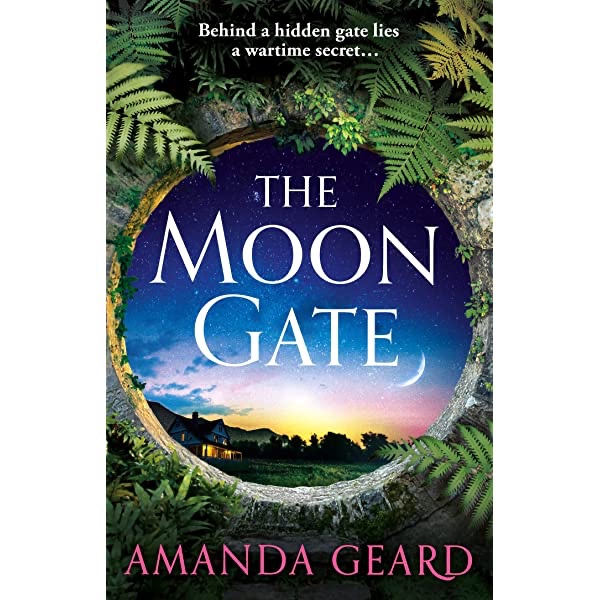
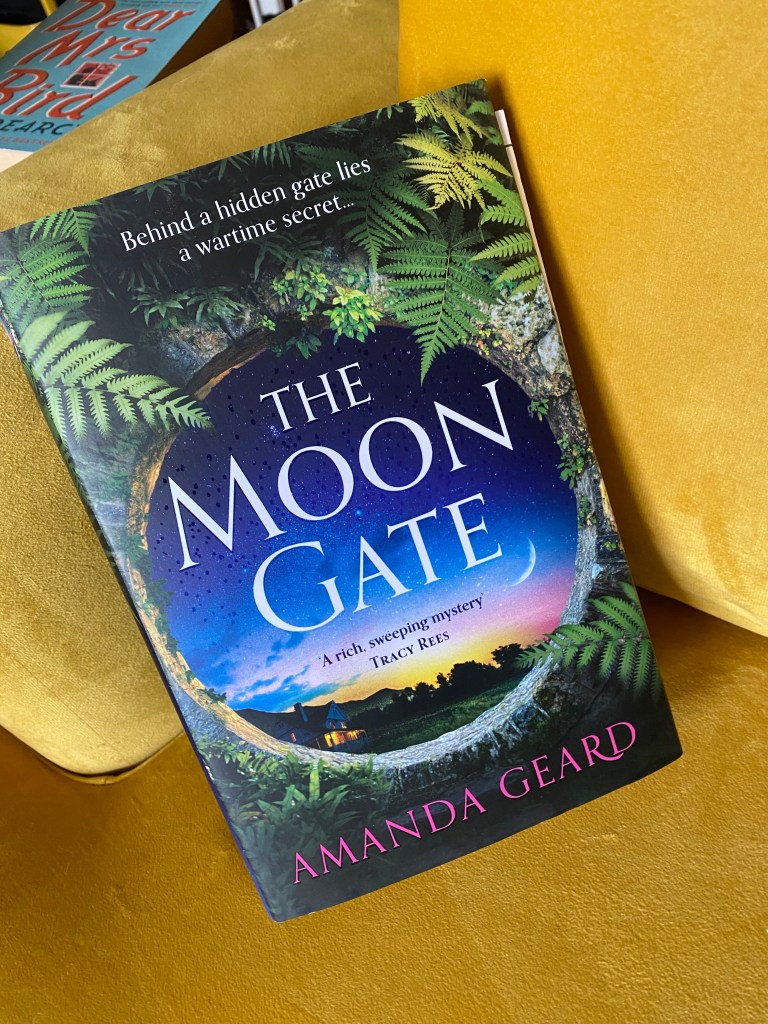
The Moon Gate by Amanda Geard.

1939 – Grace Grey lives in Grosvenor Place in London, with her mother Edeline who is a friend of the notorious Mosleys and wears the uniform of the Blackshirts. As war comes ever closer, Edeline makes the decision to send Grace and the housekeeper’s daughter Rose Munro to stay with her brother Marcus and his wife Olive in the north west coast of Tasmania. After an eight week voyage the girls are welcomed to Towerhurst, an unusual house with a whole tower where Uncle Marcus writes his poetry. Olive immediately takes to the beautiful Rose, but Marcus forms a bond with Grace over the poems of Banjo Patterson, an Australian ballad poet. Grace is reserved and shy, but is slowly coaxed out of her shell by Daniel McGillycuddy an Irish lad working at his aunt and uncle’s sawmill for Huron Pine. As war creeps ever nearer to their part of the Pacific there are dangerous emotional games at play between these young people with fall out that will extend over the rest of the century.

1975 – out of the blue Willow and Ben have been summoned to the north west of Tasmania because of a mysterious legacy. Willow has been left a house called Towerhurst, by an anonymous benefactor who placed it in trust. They decide it’s a great place for Ben to write and Willow to paint, but on their first visit Ben goes missing in the rainforest having fallen down an old mine shaft. What he finds there sends him on a quest that ends in London chasing a story about two young girls who lived at Towerhurst during WW2.

2004 – Libby has flown from Tasmania to London, wanting to claim the belongings of her father who died in the Moorgate Tube Station accident before she was born. Staying with her eccentric aunts in Grosvenor Square, she starts to follow the clues she finds in her father’s satchel: a publisher’s address, a book of ballads by poet D. McGillycuddy and the name Molly Munroe. Her quest will take her to a gentleman’s club, a narrow boat and eventually out to Ireland to solve a mystery that’s been laid buried for half a century.
I enjoyed Amanda Gerard’s first novel last year, so looked forward to reading her new one for a while. I was interested to see how her writing had developed over the last couple of years. To undertake a novel that takes in most of the 20th Century, three timelines and three different settings takes enormous confidence and she has definitely grown in confidence. This is a more complex novel, combining historical fiction with mystery and some romance too, but she pulls it off beautifully and I’ve absolutely loved it. From the historical perspective I learned a lot about living through WW2 in the Pacific Ocean, a completely different experience compared to Europe and the U.K. particularly. I thought Amanda beautifully captured how transient lives were at that time. This wasn’t just about the two English girls, Grace and Rose, uprooted from everything they knew and sent to the other side of the world. It was about the chaos of war, never knowing where your loved ones were, particularly if they were away fighting and whether they would ever come home again. For women that was especially difficult, left at home to wait but also left outside the experiences their men were having. Many women did their own war work, both to do their bit but also to feel a little closer to their men and as if they’re helping them to fight. War displaces people and there were huge shifts across the years of WW2 and afterwards as prisoners of war were slowly released and women who’d married a G.I. or perhaps a Polish airman travelled back to their native countries to start a new married life. It was a good time for people to disappear or slip away under the radar. I already knew a lot about the Blackshirts and their admiration of Hitler’s Nazi Party, but here I learned more about the women recruits and their activities. There was a breadth of research here, underpinning and enhancing the story across three different generations.

The main love story is so touching as the slightly awkward Grace is lured down to the beach by neighbour Daniel where he tries to kiss her. Sadly though it’s for a five shilling bet and as his mates turn up in a boat to witness her humiliation she runs away into the sea. It’s his friend Puds who has to rescue her, as she can’t swim and finds herself caught in an undertow. Daniel regrets his actions deeply, apologising the very next day and asking if Grace would perhaps share the book of ballads she’d been telling him about. They pass through the Moon Gate, a perfectly round doorway made of Atlantisite that leads to the waterfall and a small freshwater pool. Uncle Marcus claims that to pass through the gate is to become a new person and that certainly seems the case with Grace who not only forgives Daniel, but shares the ballad poems and agrees that he can teach her to swim. It’s so beautiful to watch them become close friends, but Grace knows that it’s Rose that Daniel finds attractive as everyone does at first. I felt for Grace deeply and I think a lot of other bookworms will too because she’s so uncomfortable in company, prefers solitude and loves words so much. My therapist side wanted to help her, because how does she learn to be herself and be confident in that, when even her own mother preferred Rose? When we’re not shown love from our parents, a child can’t understand that it’s a fault of the parent, so they learn there is something wrong with themselves. Grace is shocked by the help and affection she gets from Uncle Marcus, because her own mother is so austere and critical.

It was Rose who spent time with Edeline and became a member of the Blackshirts alongside her. Whereas Rose’s mother, the housekeeper Molly, can see something wonderful in Grace and so can her Uncle Marcus, it just needed to be coaxed out and nurtured. I was so invested in her feelings for Daniel and desperate for him to be clear about whether he had feelings for her. Rose is doing her bit in undermining and leading Grace to believe that Daniel only has eyes for her. She makes sure Grace knows when he writes from wherever he is in the world and if Grace shares news of her friend, Rose makes it clear she knew first. I’ve never wanted to slap a book character more! I wasn’t even sure that she genuinely loved Daniel, she’s just so used to getting one over on Grace that she hasn’t stopped to think it through. There are rumours in town about Rose and Uncle Marcus, she even winds Puds round her little finger but I wasn’t sure to what end? She certainly keeps her cards close to her chest, but when Rose takes up war work and isn’t around as much Grace can actually breathe. As I read I wasn’t sure what Rose was up to but I was certain there was something behind her manipulations and out of character support for the war effort. It’s a shock when her name comes up again in Libby’s investigations, was her father Ben simply interested in her fascist connections or is it something more personal?
There are definite echoes through the different time periods and motherhood is one of those themes that recurs. It’s an inter-generational trauma that starts with Edeline’s treatment of her daughter. Grace knows she isn’t her mother’s favourite, but is confused when this animosity seems to recur with her Aunt Olive. She asks a devastating question of her Uncle Marcus – ‘am I unloveable?’ because if her own mother can’t love her, why would anyone else? Willow has never known her birth parents, instead brought up with her two sisters who are twins. She never asked the question, even though she can see how different she is physically from her sisters. So when Towerhurst comes along, she starts to be intrigued by who created the trust and whether it could be one of her real parents. She finds out she’s pregnant alone, while Ben is over in London, but manages to tell him on the phone just before he is killed and they are both so happy in that moment. To then become a single parent, in such tragic circumstances must have been so difficult to come to terms with. Willow has never tried to collect Ben’s belongings despite knowing they were found and Libby clearly thinks her mother will disapprove of her choice to follow in his footsteps. Willow hasn’t been a terrible mother, just rather aloof and deeply engrossed in her work as a painter, where she demonstrates her terrible grief by only painting in black and white. She hasn’t grieved fully and I could see that Libby’s findings might bring those feelings to the surface. Luckily, Libby has had her eccentric aunts for support and it’s clear they adore her, but I hoped that Libby and Willow would have chance to talk and heal together.

As the mystery begins to unravel, there are revelations about these three generations that keep coming and a twist I truly didn’t expect. There are small disclosures, like the local police sergeant who helps the search for Ben is actually Puds, Daniel’s best friend who suffered a serious injury in the war and had to return home. How will he go about investigating what Ben finds in the mine shaft, when it might be better if they’d stayed buried? I was desperate to find the whereabouts of Rose, because all the hints are pointing to an answer I simply couldn’t bear! It seems possible that Grace never returned to England, but when Rose’s mother tells Ben she definitely saw Grace after the war he starts his search afresh. Could she have disappeared on this side of the world? I was constantly holding out a little bit of hope for the ending I wanted, so I had to keep reading – up till 2am again! There are so many layers to this story and often with dual timelines there’s a weaker section, but every timeline is intriguing, evocative and emotional. Tasmania sounds wild, dangerous, magical and atmospheric all at once. I loved the reference to the creature that lurks around the pool beyond the moon gate, could it be a shy Tasmanian devil? There’s such a massive difference between Tasmania and London, which feels more domestic than wild with very curated spaces like the old fashioned gentleman’s club and the minimalist narrow boat where Libby meets Sam. Then there’s Ireland, waiting like a promised land with all the answers and the beauty that Daniel shares with Grace right back at the beginning. We are left with an incredible tapestry of places and people full of colour, emotion and a yearning for home whether home is a place or a person.

Meet the Author

I have always loved dual-timeline novels, where stories from the past weave with those of the present day. I want to write books that transport you to another time and place, where secrets lie just beneath the surface if only the characters know where to look.

My new novel, The Moon Gate, is set across three locations I ADORE: Tasmania (my home state), London (where I rented a houseboat for many years) and County Kerry, Ireland (where I now live with my family). Each of these places is special to me and I hope you’ll feel you’re entering the temperate rainforest with Grace, opening the door to Towerhurst with Willow, walking through London’s layered history with Libby and stepping out to the heather-clad hills of County Kerry with … well, with several characters, the names of who I won’t reveal here!

The inspiration for my first novel, The Midnight House, appeared in the rafters of our Irish home, a two-hundred-year-old stone building perched on the edge of the Atlantic. Hidden there was a message, scratched into wood: ‘When this comes down, pray for me. Tim O’Shea 1911’. As I held that piece of timber in my hands, dust clinging to my paint-stained clothes, I was humbled that a person’s fingerprint could, in a thousand ways, transcend time, and I wanted nothing more than to capture that feeling of discovery on the page.

I’m also a geologist who loves to explore the world’s remote places. Luckily for me, writing novels provides a similar sense of wonder and discovery; but the warm office, fresh food and a shower in the evening make the conditions rather more comfortable! It’s also the perfect excuse to regularly curl up by a fire with a great book (often by the wonderful authors who write in my genre). I treasure my reading time, and I know you do too, so thank you for taking a chance on my books.

Come over to Instagram and Twitter (@amandageard) where I share plenty of photos of the wild settings in The Midnight House. You can also find me on Facebook (@amandageardauthor).

I love hearing from readers, so please get in touch!

From Amanda’s Amazon author page.
Posted in Squad Pod

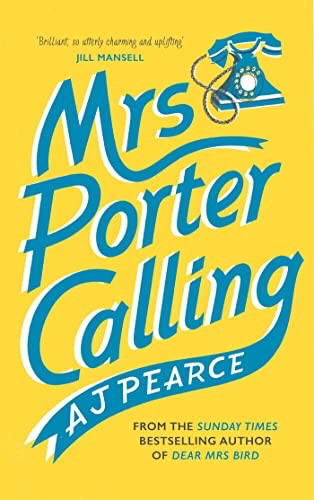
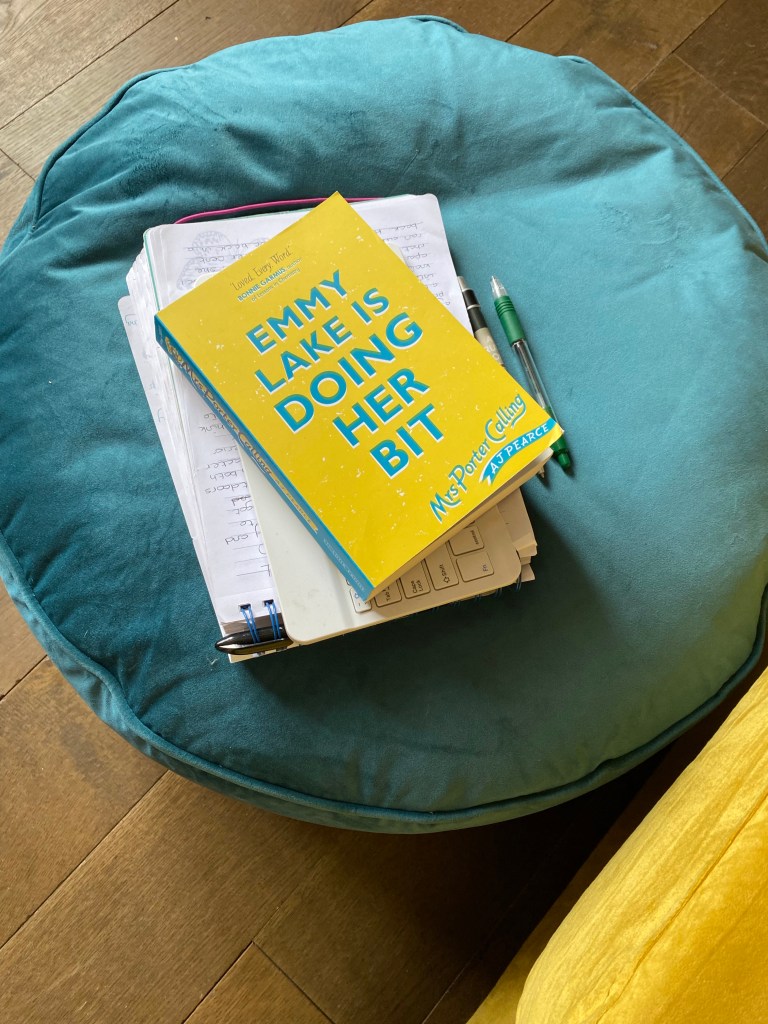
Mrs Porter Calling by A.J. Pearce.

I was new to A.J. Pearce’s world and her character Emmy Lake, so before reading Mrs Porter Calling, I decided to read the previous two novels; Dear Mrs Bird and Yours Cheerfully. Set in WW2, the books follow Emmy as she moves to London to start a career in journalism and soon finds herself in the middle of the Blitz, working for the fire brigade by night and living in her friend Bunty’s grandmother’s house. In Dear Mrs Bird, Emmy has taken up a job offer from Woman’s Friend magazine, working on the problem page. The formidable Mrs Bird is the agony aunt and Emmy must sort through the letters and weed out those that are deemed unsuitable – no funny business at all, not even a hint! Through the novel she moves from being engaged to single status, takes big risks in her job and works hard for the fire service at night dealing with the aftermath of the German bombing. I fell in love with this brave young woman who wants to move with the times and use her writing to help an extraordinary generation of women cope with the difficult situations they find themselves in. Over this and the next book, Yours Cheerfully, Emmy faces some serious challenges: being in love with someone far away and in danger; dealing with terrible loss; helping other young women who have been widowed or find themselves without a home. Yet this isn’t a tale of misery and hardship, there’s an almost relentless positivity to Emmy Lake that I absolutely loved. She’s perky, but not brittle. Her optimism and resilience seem to come completely naturally.

Yet in this latest book, Mrs Porter Calling, she will be facing some of her biggest challenges yet. Emmy has settled into being the lead on the magazine’s problem page and is continuing her series of articles on women who have taken on war work. Everything changes when the owner gifts Women’s Friend to his niece Mrs Porter in lieu of her inheritance. At first the team are optimistic about having a woman at the helm, but it soon becomes clear that Mrs Porter doesn’t want the magazine because of what it is. She wants to turn the magazine into her own scrapbook with society weddings and events alongside beauty and fashion articles that are a distraction from the war. Telling women what they should be rather than being a support. For a team who are used to teaching their readers to reuse and repurpose, this jump to expensive fashions and aspirational articles feels all wrong and Emmy thinks Mrs Porter has missed the whole point of the magazine. Women’s Friend is not aspirational, they don’t want to be dangling fripperies in front of their readers who can’t afford them. Emmy knows that if they change this much they will lose their readership. Even worse, Mrs Porter doesn’t want any more ‘dreary’ war work articles either. It seems that the realities of war haven’t reached her, the nightly bombs Emmy deals with must be muffled by all that jewellery and designer clothing. The team make a pact, to try and keep their beloved magazine as normal as possible while also introducing Mrs Porter’s ideas. In the meantime they will try everything to dishearten their new owner. Hopefully, if things become boring or difficult, she might drop her new hobby and move on. They just have to hope they have enough of a readership left when she does.

Away from the magazine, Bunty is still grieving for her fiancé and continuing her rehabilitation following the bomb blast they were caught in. However, there are signs that she is stating a tentative friendship with another fireman and Emmy has her fingers crossed that things may develop. Emmy and her husband Charles only had a two night honeymoon before he had to return to his posting, now he is moving into North Africa and Emmy depends on his letters. Both girls are forging new friendships with the women who work in a munitions factory and finding out it isn’t always easy to do your bit. I loved this aspect of the novel, because it taught me a lot about what WW2 was really like for women. Despite advocating that all women should find war work, to support their men overseas or help out on the home front, there were difficulties with this that the government seem to have overlooked. The author shows this through the factory women who have issues with childcare and finances. I was shocked to learn that when a Navy husband went missing his salary stopped immediately, but because he was missing and not dead, his wife couldn’t receive a widow’s pension. This loophole left women with no income and potentially homeless. If the factory women had children and worked awkward hours, they often couldn’t get childcare. Some women sneak their children into the factory and hide them so they can still work their shift and get paid, but if found they would be dismissed immediately. Emmy becomes involved in campaigning for factories to apply for the government grants available to set up a nursery for worker’s children. These are the women she wants to celebrate and help in her own time, but also in the magazine. These factory women don’t care about the lavish wedding of some honourable or other, they care about doing their bit, being able to keep a roof over their head and their man coming home.

Emmy has become a team player. Long gone are the early days of her career where she ran away with an idea without thinking of what it meant for those around her. What struck me so strongly was this sense of camaraderie and the sharing of everything – not just the hard stuff that the fire service go through together, but the food, celebrations, home, shelter and even families. I could see that Emmy was in exactly the right place to help when an unexpected loss devastates the factory women and Emmy herself. This tragedy could bring her the biggest challenge she’ll ever have, but I had no doubt she would rise to the occasion. I asked my partner whether he thought our current generation would pull together as well as this generation did and we weren’t sure, although we hoped so. Watching Emmy, exhausted from a day working, change into her uniform and put in a night shift on the fire service switchboard, then go home and reassure children whose house has been bombed out, made me wonder if I could do the same. The perky, excitable girl has become a woman, a woman with a core of steel. If you love historical fiction or just want an uplifting read about women dealing with daily adversity then this is the perfect book for you. I loved all three novels and have happily added them to my forever bookshelves.

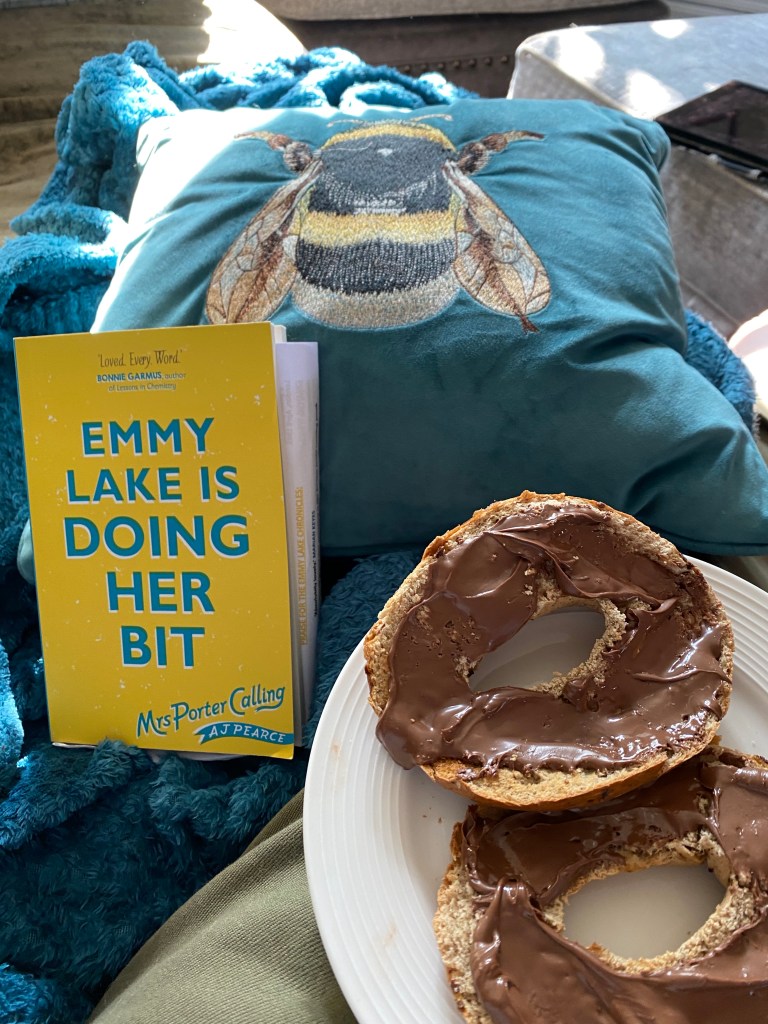
Weekend breakfast and a great book. Bliss!

Meet The Author

Pearce

AJ Pearce is the author of the Sunday Times Top 10 bestseller DEAR MRS BIRD, which was a Richard and Judy Book Club pick and shortlisted for Debut of the Year at the 2019 British Book Awards. It has been translated into fifteen languages and optioned for development for TV.Born in Hampshire, her favourite subjects at school were English and History, which now (finally!) seems to be making some sense. Her novel, Yours Cheerfully is the sequel to Dear Mrs Bird and is now available in paperback. AJ has just released the third novel in the Emmy Lake Chronicles series, Mrs Porter Calling. Follow AJ on Twitter, Instagram and Facebook: @ajpearcewrites

Posted in Orenda, Random Things Tours

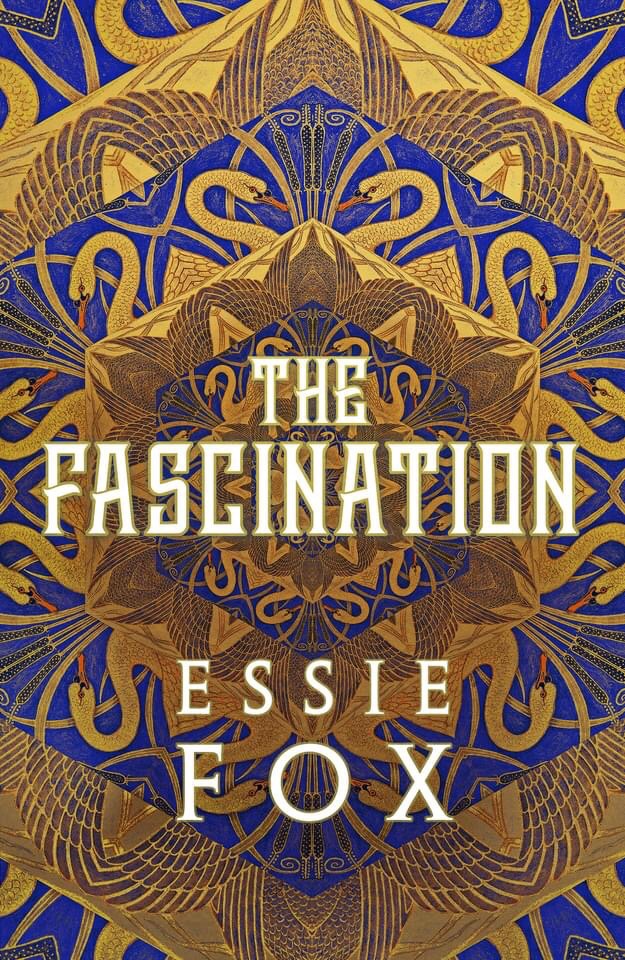
The Fascination by Essie Fox.

Victorian England. A world of rural fairgrounds and glamorous London theatres. A world of dark secrets and deadly obsessions…

Twin sisters Keziah and Tilly Lovell are identical in every way, except that Tilly hasn’t grown a single inch since she was five. Coerced into promoting their father’s quack elixir as they tour the country fairgrounds, at the age of fifteen the girls are sold to a mysterious Italian known as ‘Captain’.

Theo is an orphan, raised by his grandfather, Lord Seabrook, a man who has a dark interest in anatomical freaks and other curiosities … particularly the human kind. Resenting his grandson for his mother’s death in childbirth, when Seabrook remarries and a new heir is produced, Theo is forced to leave home without a penny to his name. Theo finds employment in Dr Summerwell’s Museum of Anatomy in London, and here he meets Captain and his theatrical ‘family’ of performers, freaks and outcasts.

But it is Theo’s fascination with Tilly and Keziah that will lead all of them into a web of deceits, exposing the darkest secrets and threatening everything they know…

Exploring universal themes of love and loss, the power of redemption and what it means to be unique, The Fascination is an evocative, glittering and bewitching gothic novel that brings alive Victorian London – and darkness and deception that lies beneath…

As regular readers to this blog know, I am never happier than when I’m reading a book about the seedy underbelly of Victorian society. I love being able to disabuse people of the notion that the Victorians were so buttoned up they would cover the legs of a grand piano! In fact the Victorians were no different to us, trying to keep a veneer of respectability on the surface whilst having all manner of private interests and lifestyles underneath. Essie Fox has created an absolute phantasmagoria of fairgrounds, travelling ‘snake oil’ salesmen, freak shows and private bestiaries. Her vivid descriptions really grabbed me early on and they create such a strong, colourful sense of place. This is the written equivalent of The Greatest Showman or a Baz Lurhmann film like Moulin Rouge, a dazzling spectacle that tantalises the senses. However, as with all shows, away from the bright lights and trickery there is a darker history and the author doesn’t shy away from showing it to us. There are those addicted to opium to dull their mental and physical pain and others who are dependent on the fake ‘cures’ offered by the twin’s father. Out of all people who are other, some find the relative safety of a troupe or family put together by someone like the Captain, others are less lucky and end up enslaved, forced into degrading displays with no means of escape. There are greedy men, pillaging the world for various specimens of flora and fauna, similarly there are more specialist collecting men like Lord Seabrook who keeps a private collection of human freaks with no understanding that these are people not specimens.

Women are shown to be particularly vulnerable to exploitation. Our central characters, Keziah and Matilda are sold, but are very lucky to end up with the Captain who keeps them and places Matilda in various pantomimes and shows in the West End. There’s a conflict here between our outlook on disability today and that of 150 years ago. We might look at freak shows and displays with distaste, but without a welfare state and with superstition and shame surrounding disabilities and disfigurements, they were a legitimate and lucrative way to earn money. If the decision to display their unusual body was an independent one and they received a decent portion of the money they earned it could allow a person with a disability to support themselves. Matilda has the addition of a beautiful voice, a talent that would interest London theatres rather than a freak show or circus. The vulnerability of all women is shown by those like Mrs Miller, friend and patron of our hero Theo, who admits to an unexpected pregnancy in her youth and a baby born with wings or shoulder blades that developed outside the skin. Her condition left her penniless and abandoned by her lover, then bereaved when she wakes after the birth to be told her child has died. Women with differences were exploited terribly, from freak shows to private displays in gentlemen’s clubs and large private homes, all the way to brothels who had workers for the more unusual tastes. I feared for the twins who are both vulnerable, but especially Matilda who craves the pretty clothes, the bright lights and the adulation of the crowd. The author fills her performances with a sense of wonder as she flies over the heads of her audience with her iridescent fairy wings. Her love for this incredible feeling does lead her down a dangerous path, with Keziah and the Captain worried for her life.

The twins path crosses with Theo’s as they travel with their father and the fairground, but it’s as he meets them again in London that their stories cross over and his fascination with them continues. His father, Lord Seabrook, has a love of human curiosities and the ruthless way he dispenses with his own son made me wonder what lengths he might go to if he sees something he wants for his collection. I enjoyed the crossover between Theo’s interest in medicine as a career and the way he ends up earning a living at Dr Summerwell’s Museum of Anatomy. Obviously, medical researchers are also interested in difference and disfigurement, just with a slightly different gaze. Yet I don’t think Theo expected to be in a shop with leathery bats wings hanging from the ceiling and a model of the insides of a pregnant woman on display. The history of medicine is fascinating and this type of medical study leads to the classification and medicalisation of disability we see today. The author cleverly explains the changes in how disfigurements were viewed in the character of Martha who has a hare lip and wears a veil outside to cover her face. In times past a ‘hare’ lip, now known as a cleft lip/palate, would have been viewed with superstition and it was thought to be caused by a hare startling the pregnant woman. It’s now known that the lip and palate don’t develop properly and it’s usually corrected by surgery. Here Essie Fox tells us about the new operations in the 19th Century using pieces of wood or a piece of flesh taken from the leg to stitch the skin over and close the gap. It shows how something once inexplicable goes from being magical or suspicious to become something medical to be cured. I really enjoyed and appreciated the background research lying underneath the fantastical surface.

This really is a magical bit of storytelling with a couple of great heroines who I was rooting for throughout and a hero I was very unsure of till the end. I admit to being a little bit in love with the Captain with his long silver hair, his musical talent and his lost love. Having a disability myself I was firmly on the side of those thought of as ‘other’ and there are messages here about accepting difference that are just as pertinent in the 21st Century. I also felt there were warnings about over-medicalising difference. Labels are important in some ways, but they can also restrict and mislead. When counselling, if I see people with my disability, multiple sclerosis, I remind them that this is known as the ‘snowflake’ disease; from a distance it’s the same, but when you look closer we’re all uniquely different. This is a wonderfully Gothic tale, but is also full of colour, humour, love and life – in all it’s wonderful forms.

Meet the Author

Essie Fox was born and raised in rural Herefordshire, which inspires much of her writing. After studying English Literature at Sheffield University, she moved to London where she worked for the Telegraph Sunday Magazine, then the book publishers George Allen & Unwin – before becoming self-employed in the world of art and design.

Always an avid reader, Essie now spends her time writing historical gothic novels. Her debut, The Somnambulist, was shortlisted for the National Book Awards, and featured on Channel 4’s TV Book Club. The Last Days of Leda Grey, set in the early years of silent film, was selected as The Times Historical Book of the Month. Her latest novel, The Fascination is based in Victorian country fairgrounds, the glamour of the London theatres, and an Oxford Street museum full of morbid curiosities.

Essie is also the creator of the popular blog: The Virtual Victorian She has lectured on this era at the V&A, and the National Gallery in London.

Posted in Publisher Proof, Random Things Tours

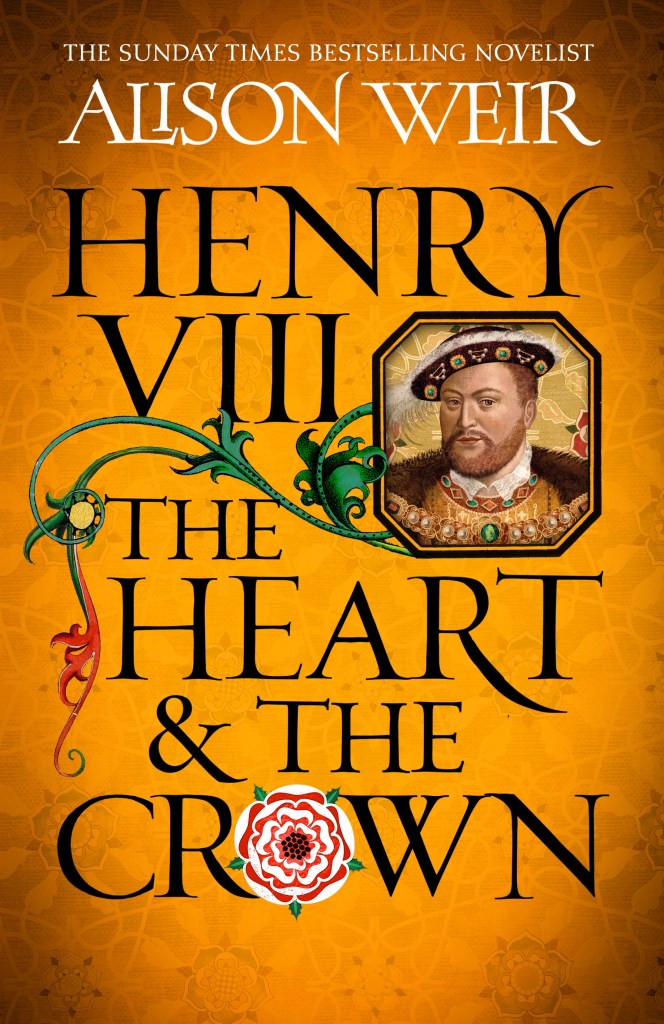
Henry VIII The Heart and the Crown by Alison Weir

I came to this book with quite a store of Henry knowledge – I promise not all of it comes from The Tudors, but this has been a great excuse to dig out the series again and enjoy Henry Cavill in leather trousers. In my previous home I had the alcoves each side of my fireplace turned into bookshelves and one side was all books on the Tudor period. A mix of novels and non-fiction it covered all the usual authors: David Starkey, Phillipa Gregory, Lucy Worsley, Alison Weir and many more. I have read each of Weir’s six wives series and her other novels on Elizabeth I and Lady Jane Grey. Her last novel was based on Elizabeth of York, Henry’s mother and daughter of Edward IV. All of them have been that brilliant mix of sound background research and an ability to get inside the characters and bring them to life. However, you don’t have to read any of her earlier work to enjoy this book, I’m just a Tudor Nerd! I wondered how Henry would fare, given that her previous books have shown great empathy for the position women found themselves in at the Tudor Court, especially where that ill treatment was at Henry’s hands. Interestingly, I read this alongside Prince Harry’s autobiography Spare, something that fascinated me given that Henry VIII’s story is largely influenced by that dynamic of ‘heir and spare.’ Henry is the man who was never intended to be king. Only the death of his brother Arthur, Prince of Wales, opened the way for a king who seemed almost meant to be. How could this well-built, ornately dressed and powerful man of the Holbein portrait not have been the King? It seems strange to think he was probably destined to be Duke of York and of much lesser importance than the huge presence he still is in our royal history. Did I see parallels between the man whose Twitter followers call Good King Harry and this similarly red-haired Tudor spare? Only a few!

I thought what Weir did really well was put Henry’s controversial and bloody reign into context. It’s easy to forget where Henry comes from and how violent and treacherous the route to the Crown was prior to his birth. As Weir explains, Henry’s maternal grandfather was Edward IV, a man who took the crown in the years of fighting between the York and Lancaster royal houses, known as the Wars of the Roses after the county emblems of the white and the red rose. However, it was also known as the Cousin’s Wars and to put that in a modern context it’s as if Princes Harry and William fought for the crown against Princesses Beatrice and Eugenie. It took a concerted effort by Henry’s grandmothers Margaret Beaufort and her rival Elizabeth Woodville to bring both houses together with a royal marriage and the new emblem of the Tudor Rose. Margaret was Henry VII’s mother and fought hard for her son to claim his crown, which he eventually did on the battlefield against Richard III. Elizabeth was Edward IV wife and despite losing both her sons, the rightful heirs to the throne who are believed to have been murdered in the Tower of London, she encouraged her daughter Elizabeth of York to make a political marriage to Henry Tudor, the new King. The emblem of their arranged marriage was a red rose for Lancaster with a white centre for York. These became known as the Tudor Rose and can be seen in many Tudor palaces and churches like York Minster. The country had endured years of in-fighting, from huge battles to hidden murders such as Edward IV and Richard, then Duke of York, allegedly murdering their brother by drowning him in a barrel of malmsey. Henry’s parents brought some stability to the country, despite Henry VII’s constant paranoia about usurpers and the lost Princes from the tower reappearing. If we imagine all of this followed by the death of Henry’s elder brother Arthur who died without heirs, it’s possible to see some of pressure upon the young king’s shoulders. Considering the paranoia he witnessed in his own father and his grandmother Margaret who drilled it into Henry that the only way to keep the crown secure was to have heirs, we can see the seeds of Henry’s own obsessions, paranoia and hatred of betrayal.

Often we only see the later King Henry on television and in fiction, because those latter years of his reign from meeting Anne Boleyn onwards are so dramatic. It’s easy to forget that Henry ruled and lived happily with his first wife and Arthur’s widow Catherine of Aragon from 1509 until he met Anne Boleyn in 1525, although he remained married to Catherine until 1533. There are only fourteen years between his marriage to Anne until his own death in 1547, in which he married, divorced or beheaded four more wives. I loved how Weir captures the earlier and often ignored years of Henry’s reign because we see something of the great prince that all of Europe were talking about. A tall, handsome and robust young man in direct contrast to his brother Arthur, he was also a great horseman and a competitive jouster. He was often reprimanded for missing lessons in order to go hunting or practising in the tilt yard with his companions, usually Charles Brandon. Yet he wasn’t just an imposing physical presence, Henry was very intelligent in that he spoke French and understood Latin and was even taught by the philosopher Erasmus. He could compose music and was an elegant dancer, with a definite eye for the ladies of the court. Even his early happy years with Catherine were littered with affairs, the most famous being Anne’s sister Mary Boleyn and Bessie Blount, both of whom were rumoured to have the King’s illegitimate children. It was interesting to read about Henry’s role in welcoming Catherine as Arthur’s bride and how much he admired her from a very young age. After Arthur’s death he was adamant he wanted to marry Catherine, with a dispensation sought from the Pope for their union. Henry’s father seemed reluctant to solemnise the match, despite a betrothal ceremony taking place. I have read elsewhere that the King had considered Catherine for himself and it was only when the King died that their marriage took place, in fact it was one of the first things Henry did as King. He may not have been faithful physically but there was a constancy in Henry’s feelings for Catherine, he admired her greatly and felt she would be a fitting queen for him.

Weir also shows how different Henry’s court was from his father’s. Henry VII had faults, but he was contemplative, careful when making decisions and had financially secured their reign after finding a depleted treasury due to years of war. Henry wanted to be a generous King, known to keep a a celebratory and ostentatious court. He undertook building new palaces, promoting art and culture, keeping a generous table and was determined to use some of the money saved by his father to take Calais and become King of France once more. He wanted to excel in all things, but this extravagance was also a sign of things to come, developing from generous young King to a petulant and spoiled man with a body ruined by greed, excess and risk taking. The most damaging risk being his jousting accident, where he was knocked out cold for some time and sustained a leg wound that never healed, caused intense pain and smelled terrible due to infection. I have often wondered whether it was possible that he sustained a head injury in this accident, because it does seem to be a turning point in his life, after which he made several questionable decisions. He decreed that his courtiers should acknowledge and accept his relationship with Anne Boleyn as well as his plan to make her Queen. His insistence on this point led to a relationship breakdown with one of his most trusted advisors, Sir Thomas More. The day he executed More was also a point of no return, I believe it haunted him for the rest of his life that he’d killed a good man, a man of God.

Weir made me look at Henry’s early life with more empathy than I have before. She brings to life the childhood loss of his mother (another event in common with our Prince Harry) and the huge impact it had. He remembers her softness and her gentle voice, a memory he needs when his father is preoccupied with duty. Henry has to grow up early, but little reminders of his mum pop up everywhere, especially her smell. I felt he could have been a different man if she had lived. There are some warning signs of the tyrant he becomes, because he’s jealous of Arthur from a young age. Arthur keeps his own court in Wales and Henry would love to have his own court, his own income and a bit of Arthur’s power, not to mention wanting Arthur’s bride from when she first arrived in the country. When all of it becomes his I did wonder whether there was a bit of survivor’s guilt. His father’s paranoia about losing the crown and his over-protectiveness after the death of his first son, mean he keeps Henry from carousing in bars with his friends and preserves some of his reputation for marriage. Weir shows us the weight of that history and expectation on the young prince’s shoulders. It’s something Henry is constantly pushing against, so that when he does unexpectedly become King he is determined to make changes. He has a tendency to promote men who are self-made, above the usual courtiers or advisors of his father’s. He relies on Cardinal Wolsey and after that he promotes Thomas Cromwell, a commoner and son of a blacksmith. The men who advised his father are old now and have known Henry his whole life, they’re aware of a recklessness in the young King that needs reigning in. Newly made men show the deference Henry expects as a King, but being younger and perhaps more aware of the way the world is changing they also allow him to take risks. We also see Henry’s own paranoia emerging when he and Catherine start to lose children, most particularly his two month old son. I felt like I understood Henry better after reading this novel and it was interesting to see some thoughts I’d had about Henry’s personality and behaviour placed in context. I didn’t like him more, but I did feel sorry for him in parts especially in his difficult relationship with his father. Weir provides possible reasons for the cruel and changeable behaviour that made Henry the most famous King in our history. I felt completely immersed in his psyche but also the whole Tudor court because Weir breathes life into a story we all know something about, turning historical caricatures into real people. Their problems also seem less far-fetched given Royal headlines over the last few years, although this spare ended up with the crown.

Many thanks to Headline Review and Caitlin Raynor for my proof copy of this novel and to Anne at Random Things Tours for my place on the blog tour and your support.

Meet the Author

Alison Weird is a bestselling historical novelist of Tudor fiction, and the leading female historian in the UK. She has published more than thirty books, including many leading works of non-fiction and has sold over three million copies worldwide. Her novels include the Tudor Rose trilogy which spans three generations of history’s most iconic family – The Tudors, and the highly acclaimed Six Tudor Queens series about the wives of Henry VIII, all of which were Sunday Times bestsellers. Alison is a fellow of the Royal Society of Arts and an honorary life patron of Historic Royal Palaces.

Posted in Netgalley

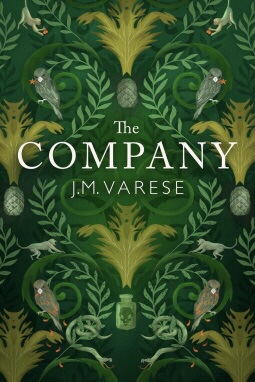
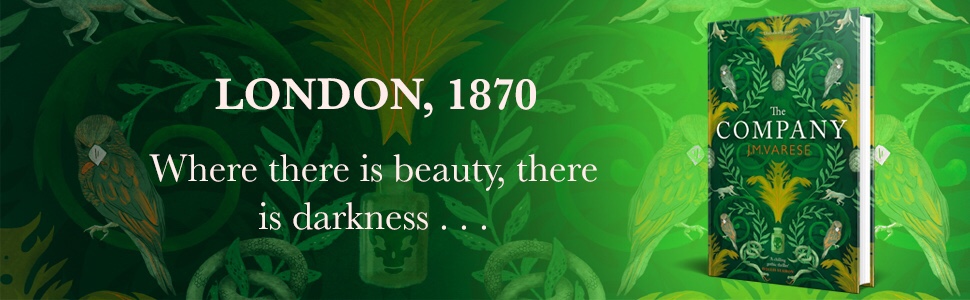
The Company by J.M. Varese

I once began a masters in Victorian Studies and did a lot of work around literature, art and visual culture. Through it I developed a lifelong love of the Pre-Raphaelites and the design of the Arts and Crafts period, so the scandal of Victorian wallpaper poisonings was something I’d researched and written about before. I was very keen to see how the author had used this moment in history to inspire a Gothic story and I was utterly seduced by that divine green cover. As the 19th century progressed, more intricate and vibrant wallpapers were the fashion, in much the shame way that they’re having a moment now. In the early part of the century a rich, vibrant green named Scheele’s Green had pemerged. The colour was so incredibly popular that by the 1850’s it was being used in the production of household items from wallpapers, paints, and candles, to clothes and children’s toys. A vibrant green called Schiele’s Green emerged in the 1850’s, but was manufactured using large amounts of copper arsenite. Arsenic had a completely unique property that enhanced colour pigments and stopped them from fading, perfect for items like wallpaper that would be affected by sunlight over time. Manufacturers knew that arsenic was toxic, but chose to promote the line that it was only harmful if ingested – a dangerous lie that lasted decades. As wallpaper became ever more popular, reports began of people suffering slow and agonising deaths. Damp homes amplified the problem because of toxic fumes released by moisture on the walls. Rooms with large fires created the same problem meaning that many Victorian homes were veritable death traps. Alison Matthews David, who wrote about the problem in ‘Fashion Victims: The Dangers Of Dress Past And Present’, explains that “arsenic didn’t fade and looked bright under lights. It was stunning and became hugely popular in clothes. A ball gown would contain enough arsenic to kill 200 people and a hair wreath 50. The amounts used were lethal.’ This background knowledge had me champing at the bit for some horrifying deaths and characters terrified by intricate, poisonous wallpaper.

Examples of Victorian wallpaper patterns using Scheile’s Green

Braithwaite and Company are a Victorian wallpaper company caught up in the arsenic scandal and murky work practices at their copper mines in Devon, where the family are from. When our heroine Lucy Braithwaite, along with her brothers Tom and John were young and living at the family’s country home there was an accident in the copper mine. There were small children from the village sent into the most remote and claustrophobic points of the mine, because only they could fit. They were all killed. Mr Braithwaite died soon after and the family chose to move to their London home, nearer to the company’s offices. The company ran under the management of long running manager Mr Luckhurst, who had worked closely with Mr Braithwaite for many years. Mrs Braithwaite concentrated on the home front, filling their home with the latest wallpaper patterns from the company. Apart from Being I love oLucy who chose to have her room painted in the palest blush pink to be a calm and quiet space in contrast to the rest of the house. Yet the family’s luck was still on a downward turn after the death of Tom, who seemingly declined while being tortured by terrible hallucinations. Were these visions from within or without?

Their luck seems set to change completely when Lucy is a young woman and a new, young and dynamic manager takes over after the death of old retainer Mr Luckhurst. Mr Rivers is young, handsome, gallant and personable, immediately charming Lucy’s mother and brother John. John is the obvious successor to the company, but he has become frail since moving to London. Lucy decided to move his bedroom down to their father’s old study so he doesn’t have to contend with stairs. His room is a combination of workplace and bedroom, the desk enabling to go through company papers and keep abreast of matters. He and Mr Rivers hit it off immediately and it’s soon common for them to retire to John’s bedroom after dinner and talk about the company. Lucy finds it strange that despite coming from Devon and apparently working under Mr Luckhurst for years, she has never met Rivers before. However, his knowledge of the company and it’s history is entirely accurate. I found Rivers suspicious straight away and I loved how the author creates this uneasiness in the description of his expressions, his speech and the sense that he’s saying all the right things, but is he just saying what the family want to hear? His name in a Victorian novel seemed significant, because my brain went immediately to Jane Eyre and St.John Rivers. The author’s description of Rivers and his gleaming eyes reminded me of the Jane Eyre character whose own eyes betrayed his fanaticism, of a religious kind in his case. Jane didn’t accept his proposal because there was no love there, but also due to this steeliness and determination, which meant he would pursue his aims to the end. I sensed this same determination in Rivers here but his aim seemed more dangerous and liable to bring harm to the family.

I loved the tension the author heightened towards the end and as I was reading on NetGalley I didn’t expect it to stop where it did. It felt rather sudden. Rivers assures Lucy and her mother that the recipe for the wallpaper colours is not being altered and isn’t causing any harm. However, his endless industrious meetings with brother John would suggest some sort of changes were being made. Also, John’s health is in serious decline. Lucy is called to his room in the night by screams of terror, apparently he sees phantoms but are they caused by his green wallpaper and it’s writhing botanical pattern? He insists on how much Rivers means to him and I started to wonder if there was more than a working connection. Was the attachment one that was considered unnatural? I felt like Rivers was trying to romance every member of the Braithwaite family, using whatever weakness he could find. I found Lucy intelligent, perceptive and able to think differently from her mother. Mrs Braithwaite really did want someone to sweep in and look after everything for her, whereas Lucy has been actively looking for evidence, befriending the boy Rivers uses as a lookout and appealing to those in their circle that they can still trust. Is there a chink in her armour? It’s perhaps likely that Rivers expects the archetypal Victorian heroine who might swoon at a mention of romance, but I was desperately hoping he was wrong. As the reckoning approaches would she be able to remain clear headed and courageous enough to form a plan? I found the final part of the book perplexing. It was exciting and nail-biting, but still with a shroud of mystery over certain details. I came away wondering and I still find myself thinking about it three or four days later. I know sooner or later I will have to pick it up and read it again. Another novel that left me with this feeling was The Turn of the Screw by Henry James; it’s scary and unsettling but difficult to pinpoint exactly what happens. I think this author wanted to wrap the reader in those toxic fumes till we were unsure which parts are real and where the supernatural creeps in, rather like Charlotte Perkins Gilman’s The Yellow Wallpaper. It doesn’t ruin the book, in fact it enhances that sense of the uncanny that always terrifies. Mysterious, gothic and brimming with historical detail I definitely recommend it, but don’t expect a mystery where every loose end is neatly tied.

Published by Baskerville 16th March 2023

Meet the Author

Jon Michael Varese (J.M. Varese) is an American novelist and literary historian whose first novel, The Spirit Photographer (2018), was published to critical acclaim. He has also written widely on Victorian literature and culture, and has served in various capacities, most recently as Director of Outreach, for The Dickens Project at the University of California for over two decades.

Posted in Random Things Tours

The Walled Garden by Sarah Hardy

I found this historical fiction debut absolutely captivating from the beginning. It begins with Lord and Lady Rayne who live in the big house, Oakburne Hall, with just enough room to avoid each other as much as possible. In fact since he returned from the war, Stephen has slept in a small room in the servant’s quarters while Alice lays alone in their marital bed. She finds refuge in their garden, hoping that even in these dark post-war years some seeds of hope will grow.

‘Some secrets are too terrible to tell. And in 1946 Britain is a country where most keep silent. What you witnessed during the war, what you sanctioned, what you are still afraid of, is left unsaid. For those bitter years of conflict and separation you buoyed yourselves up on sentiment, crooning ‘We’ll Meet Again’. And we did meet again, thinks Alice Rayne, only to discover we have nothing to say to one another.‘

No one survives war unscathed and though bodies are healing, their psychological wounds run deep. Those who were left behind are just as scarred as those who left to fight. Stephen Rayne was once sweet and gentle and his wife Alice truly loved him. Yet he has returned a man that she doesn’t recognised. He is bitter and angry, destroyed emotionally by what he has seen and done, holding on to secrets Alice can only guess at. She is lonely and although she hates to admit it, she is increasingly afraid of the man her husband has become, Alice is struggling to put together the pieces of her marriage and save Oakbourne Hall from total collapse. After two lots of death duties, money is incredibly tight so she begins with the walled garden and, as it starts to bear fruit, she finds the seeds of a new and forbidden love being sown.

I had so much empathy for Alice and all women who longed for the man they loved to return, only to find their relief and joy cut short when a stranger came home in their place. I’ve read a lot of novels set post-WW1, but not many set after WW2, but the same social changes come up in 1946. People are struggling financially, at the big house two world wars have taken two heirs in quick succession and the family can’t afford to repair or develop the hall. The villagers are coping with grief, poverty and rationing, and still waiting for men who’ve not yet returned. Women have once again stepped into the breech and taken on men’s jobs, giving them even more freedom and an unwillingness to be pushed back into their traditional roles. In this village, it’s not only Stephen and Alice who are suffering and as they come up against other people’s trauma the results are profoundly moving. The social change is well explored through the character of the village GP, another changed man whose longing for social justice leads to arguments with his wife and children, not to mention Stephen. Clergyman George holds so much guilt, because his ill health meant he didn’t go to fight. How can he minister to these men who’ve been through so much, things he can’t even imagine? As Stephen isolates himself more from his wife, Alice finds solace restoring the walled garden and in talking to George with whom she strikes up a friendship. He is learning about gardens and she is learning about his love of classical music.

As the friendship between George and Alice deepens, she has to think about what she wants. She has loved Stephen for so long, but his angry and violent outbursts are scaring her. Can she love this new person? George listens and appreciates her opinions, in a way she hasn’t had for a long time. When she takes a break from Oakbourne and visits her sister in London, she meets with George in a pub where his beautiful singing voice is in demand at the piano. This interlude is like a time outside of reality, where all worries and cares are set aside. With the late hour and room for George to stay at her sister’s flat will emotion boil over? In all this time, George is struggling with his ministry and his feelings for Alice. When Stephen also confides in him he has a terrible choice to make, does he guide Stephen towards speaking to his wife and saving his marriage? On the other hand, he could advise him in a way that would benefit his feelings for Alice. It’s a terrible choice to have to make, even worse he knows that his lungs are deteriorating and if he doesn’t take up the GP’s offer of treatment abroad he has only months to live. Will he follow his heart or will he sacrifice his own feelings to minister to this couple as their spiritual guide?

This is such an emotional crescendo, especially since we’re also sent back into the war and Stephen’s time infiltrating the french resistance and helping them to fight against the Germans. There, he has to make a horrible choice in order to save someone from a worse fate. His choice haunts him, although in reality he is forced to act by his knowledge of the barbarity of the German soldiers. The Maquis hail him a hero and now want to give him an honour, setting off terrible flashbacks, insomnia and guilt. Even if he tells Alice everything, can their marriage recover? I was so involved with these characters, they were so incredibly real and full of complex emotions. I loved the walled garden as a symbol of hope for the future and Alice’s work there is an act of faith, planting her hope in a symbolic gesture to her marriage and the country as a whole. I think the most moving thing about the whole novel is that this is a war that my grandparents lived through. We are so used to seeing this generation as an example, even recently our actions through Covid and the current cost of living crisis are meant to resemble their grit and determination. I believe the famous David Cameron quote is ‘we’re all in it together’ evoking the stiff upper lip of this very generation. I think because of this nostalgic view on WW2 we forget that this generation had the same emotions and complicated relationships that we do now. This book stopped me from thinking of that generation as a whole and instead to think about individuals and what they went through, how it affected them and their families and the emotional turmoil wrought by couples being apart for years. It was the wartime sections of Andrea Levy’s Small Island that first made me think about these issues and this novel woke those thoughts up again, just in a more rural setting. No generation is better than any other when it comes to trauma, we are all human. This is a stunning debut from Sarah Hardy and I’d love to read her work again.

Meet the Author

Sarah Hardy has lived for the last 10 years on the Suffolk coast which is where her novel is set. Before that she lived in London, Dublin and the Hebrides. She has worked on national magazines and newspapers.

Posted in Squad Pod

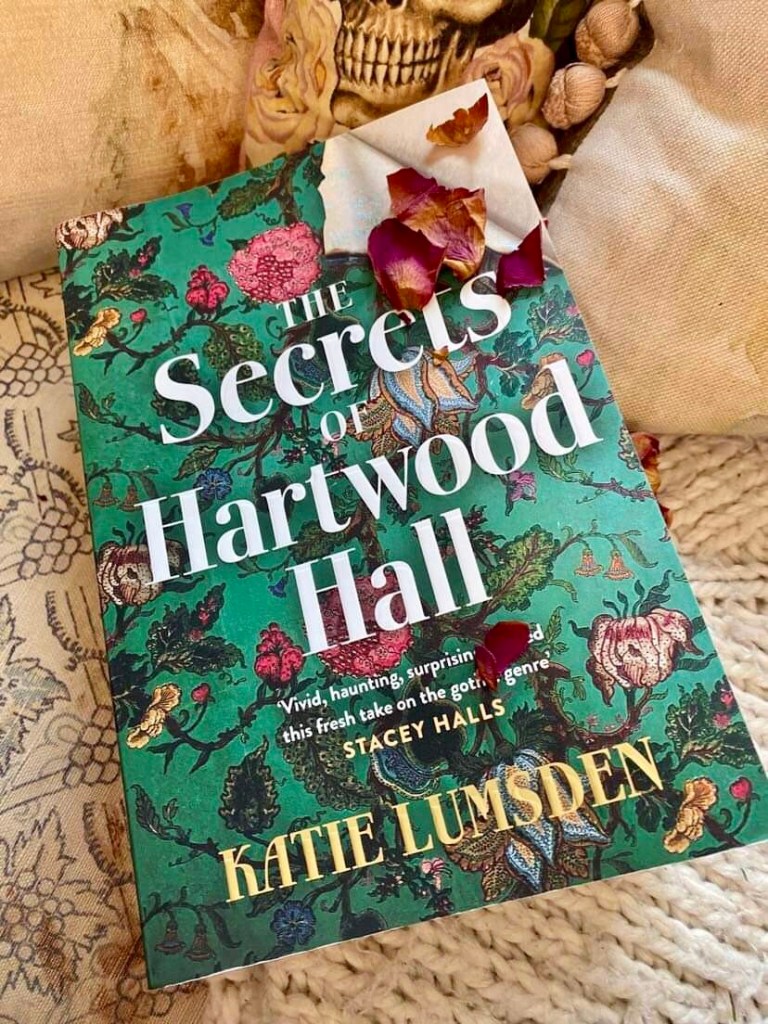
The Secret of Hartwood Hall by Katie Lumsden.

There couldn’t have been a better choice for a squad of female bookworms than this gothic mystery, full of spooky incidents, forbidden love, an orphan governess and within a house that holds many secrets. There was such a Jane Eyre feel about the book and also an hint of the Daphne Du Maurier opening as our narrator looks back to the hall’s approach.

‘when i think of Hartwood Hall, there are moments that come back to me again and again, moments that stain me, that cling like ink to my skin. My first view of the house: a glimpse of stone, of turrets and gables, tall windows and long grass’.

Our heroine is Margaret Lennox, recently widowed and forced to find paid work when her husband leaves his estate to his mother. She is offered a post by the mysterious Mrs Eversham, to educate her son Louis. This should be a moment of freedom for Margaret, but she notes the strange mood of the coach driver as soon as they enter the boundaries of the hall. Local people do not come near here. There is also a very clear rule: do not enter the East Wing of the house, because it is no longer used. As Margaret starts to find her way in Hartwood Hall and enjoys her time with Louis, she does notice a few strange things. She seems under suspicion from one of the existing staff, Susan. She has noticed Margaret’s response to a letter she receives at the breakfast table and is keen to find out more. Stranger than that, she has seen a distance figure in white out in the gardens and followed a figure with a candle down the stairs and towards the East Wing. Maybe the house is haunted, but there are other mysteries too such as what happened to Mr Eversham and why do people in the village treat this woman and her boy with such suspicion and fear?

I was hooked by this story straight away. Just like the author, Jane Eyre was the first grown up book I ever read and I was enthralled with it as a gothic story, years before I started to deconstruct it’s complexity at university. I was also hooked by the Sunday teatime BBC series starring Timothy Dalton as Mr Rochester. It’s the perfect mix of ghostly mystery, intrigue and romance. This book was inspired by the classic but breaks new ground of it’s own in terms of forbidden relationships, marital abuse, and freedom. The freedom of women making their own choices, having freedom of sexual expression and to earn their own living. The governess has always been a liminal figure in literature because they are educated more than other servants and even the woman of the house. They are usually single so have more freedom in their lifestyle and finances. Here Margaret is a widow, she chooses her own destiny and can shape her life as far as choosing where she works and for whom. She also has the choice of what to do with her spare time, no household chores or husband and family to consider. We learn that Margaret’s marriage was not a happy one and she has never felt the love that’s spoken of in literature and poetry. In fact she is surprised to learn it exists and it is joyous to watch her explore that chemistry, even if I did fear for her recklessness. She also becomes the face of Hartwood Hall in the village, choosing to take Louis to church and sit in the hall’s pew, whereas the hall’s gardener sits with his family. She even makes friends with the minister’s wife, although the rest of the village seem to avoid and ostracise them.

As always in these mysteries Margaret is drawn towards the very part of the house she is told not to enter, in fact it is a perfect way into the house after the main doors are locked at night. She is sure she’s seen a candle moving around the East Wing’s rooms when walking in the gardens one evening. There are also noises in the dead of night that can’t be accounted for, but for me the tension really arises at the less mysterious points in the novel. The sly, unpleasant Susan really made my pulse race at points and her blackmail of Margaret feels grubby. She really enjoys the power of knowing something that gives her power over the other person and she seems to enjoy taking something valuable or precious from her victim. The way she commits little acts of dissent when only Margaret is looking, such as stuffing bacon in her mouth in the breakfast room shows resentment about her position. As I could see Margaret settling and enjoying her new pupil I desperately didn’t want Susan to ruin it. The period where both Louis and Susan are ill was truly tense as the whole house waits for the fever of the measles virus to pass. The isolation of Mrs Eversham and her boy is brought into stark relief when they can’t secure a nurse from the village to care for the patients. Mrs Eversham is in despair:

‘So these people will let a child and a young woman die because they suspect me, because they distrust this house? […] Because they believe in ghosts and spirits and curses? Or because they think I am a woman of low character, that I have never had a husband?’

This speech reveals another possibility about their isolation, that Mrs Eversham’s widowhood is not what it seems. It also shows me that Mrs Eversham has a different set of morals to the Victorian norm, she is wiling to set aside ideas about decency and propriety when it comes to saving a life. Margaret is so relieved when Miss Davis appears from nowhere claiming she’s come from the further village of Medley because she heard there was a child who needed a nurse. Yet the other servants seem uncomfortable and even Mrs Eversham seems on edge. Margaret wonders whether Mrs Pulley knows something troubling about this young woman. This brings another yet another layer of mystery to the house: why isn’t Miss Davis as prejudiced against the hall as the locals? Where did she spring from so quickly? By this time I was fascinated and couldn’t stop myself from picking the book up at every opportunity to resolve all my suspicions. Needless to say that when the truth comes out, it was nothing I expected and I loved it! I loved that these strong, determined female characters were living according to their authentic selves. There’s a lot of discussion around the ending of Jane Eyre, I’ve even had an argument about it at a literature talk. A woman said that she felt let down by the ending and Jane’s choice to return to Rochester, because it betrayed her feminism. I argued that she goes back a different woman, with her own money and able to make her own choices. Rochester is her choice and their relationship is on her terms. The ending of Hartwood Hall definitely goes further. It was really heart-stopping, but also satisfying. Both Mrs Eversham and Margaret make their independent choices and decide to live life on their own terms. I throughly enjoyed this atmospheric gothic mystery and it’s strong, forward-thinking, female characters.

Meet the Author.

Katie Lumsden read Jane Eyre at the age of thirteen and never looked back. She spent her teenage years devouring Victorian literature. She has a degree in English Literature and History from the University of Durham and an MA in Creative Writing from Bath Spa University. Her short stories have been shortlisted for the London Short Story Prize and the Bridport Prize, and have been published in various literary magazines. Kate’s YouTube channel Book and Things has more than 20,000 subscribers and was long listed for the Book Vlogger of the Year Award at the London Book Fair Awards 2020. She lives in London and works in publishing.

Posted in Netgalley, Publisher Proof

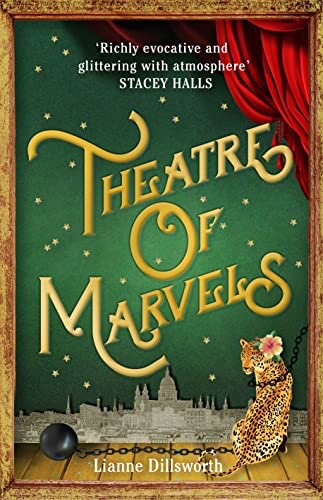
Theatre of Marvels by Leanne Dillsworth

You may have heard of Sarah Baartman, a Khoekhoe woman from South West Africa who was exhibited as a freak show attraction in 19th-century Europe under the name the Hottentot Venus. She was even exhibited after her death, with one showman dissecting her body and keeping her genitalia and skull. Another museum displayed her skeleton and a body cast, which were still exhibited up till the 1970’s. She was exhibited for her steatopygic body type, where body fat is concentrated on the bottom and thighs. This body type wasn’t seen in Europe and was perceived as a curiosity. She was also a subject of scientific interest, but through the gaze of racial bias and erotic projection. In the 19th Century her body could be viewed for two shillings and for a bit extra you could poke her with a stick. Her genitalia were of specific interest as they were said to show her sexual primitivism, although this was more about the men’s erotic projection than Sarah’s own sexuality or libido. Recently, black women in academia and culture have been using her story and reframing it as a source of empowerment, rejecting the ideals of white mainstream beauty, and embracing more curvaceous figures as a source of female beauty. This is the historical and social background that I had in mind while reading this fascinating debut novel from Lianne Dilsworth. I was swept up into her world straight away and my personal academic interest in disability and the display of ‘other’ bodies added to my enjoyment.

Our setting is a theatre and a group of performers from singers to magicians who perform a variety show under the watchful eye of Mr Crillick. His current headline act is Amazonia – a true African tribeswoman, dressed in furs and armed with a shield and spear, her native dancing brings down the house in Crillick’s show. The audience watch, transfixed with fear and fascination, never realising that she is a ‘fagged’ act. Zillah has never set foot in Africa and is in fact of mixed race heritage, born in East London. She is making her money by pretending to be what the, largely white, audience wants to see. It doesn’t sit well with Zillah, but she is alone in the world and does need to make money. Besides it’s better than the other options for a young woman who finds herself in poverty. She’s used to slipping between worlds on stage and in her private life, renting a room in the rough St Giles area of the city, but regularly making her way to a more salubrious area and the bed of a Viscount by night. She and Vincent have been lovers for some time, but he is estranged from his family and can easily keep her a secret, never even walking with her in public. Their shared bed is situated in the middle class home of her boss Crillick. Now, everything is about to change, as Zillah’s consciousness is raised in several ways.

First, she realises that Vincent will never admit to their relationship in public, as he yet again cancels plans to take her to Richmond for the day. Secondly, she meets a young black man called Lucien, who is campaigning in the street. He addresses her in Swahili, with a suggestion this may be the native language of her ancestors, and he places a question in her mind that she can’t shake off. How does it feel to earn money misrepresenting her ancestors? In fact she is representing her ancestors through the gaze of a white audience. The sense that this is wrong, has always been on the edge of her conscience, but Lucien gives her doubts a voice and opens a door towards embracing both sides of her identity. While she dismisses him at first, the thought of him seeing her as Amazonia seems to fill her with shame. Lucien is working on a campaign to relocate black and mixed race Londoners to Africa and the first site is in Sierra Leonne. Meanwhile, Crillick has returned from a trip abroad with shipping containers that suggest he’s been gathering props and it seems he’s been finding new acts too. He taunts Zillah with the suggestion he has found an act that may even eclipse her and one night at his house she sees a new act unveiled to a small group of people. She is horrified to see him parade a terrified women he’s called the ‘Leopard Lady’, with strange white patches all over her dark skin. The men in the party are fascinated, drawing near and touching her skin, even roughly scratching it to see if it comes off. When Zillah notices medical implements laid out on a tray, the horror of what might happen to this woman overwhelms her. She must rescue the Leopard Lady from Crillick’s clutches. There’s a freedom Zillah has compared to a lot of Victorian heroines we might remember, due to her station in life there are certain rules and etiquette of dress and behaviour that don’t apply. Although that freedom does come at a cost – poverty, not belonging anywhere, and the way she is viewed in more polite society. She knows that if she could be with someone like Lucien then she’d be settled in a place society expects of her, still in poverty but at least belonging to a community. Her feelings for Vincent can never come to anything, because his society would never accept her and they would always be a secret.

Through Zillah’s search for the Leopard Lady, we see the truth of a man wiling to make his money treating human beings as objects for display. Whereas before Zillah’s act has at least had the sheen of the theatre world, the Leopard Lady will not be afforded that excitement and sense of performance. This is because Zillah was acting a part, whereas this poor woman is being shown as she is because due to how she looks and where’s she’s from. Zillah chooses to put on her Amazonia costume and take to a stage, if living hand to mouth is ever a choice. Crillick’s plans revolve around his ‘Odditorium’, but in the meantime he plans to show his new acquisition privately to small groups of men. I could imagine these sordid gatherings taking place, with men enjoying an after dinner viewing where the woman is both viewed, potentially sexually assaulted and experimented on. It made me feel sick. I was willing Zillah on in her efforts to find and free the lady, and I found her quest tense and gripping. I thought Zillah’s awakening was handled really well, but I was in two minds about where I wanted her to story to end. Of course there’s an opportunity of relocation to a new life in Sierra Leone, but here I felt strangely similar feelings to those I had about another 19th Century heroine Jane Eyre. We know that Jane’s flight from Thornfield Hall, and the man she loves, is the right move for her. Yet despite the space and time it’s given her to process Rochester’s attempt at bigamy, I never warm to St John Rivers. Although he rescues her from the moors and gives her life purpose again, when he proposes, I can’t be the only reader who’s screaming ‘No’ in her head. As for Zillah, I though Lucien was a good, honest and intelligent man, but to me he feels like the wrong choice. The contrast between him and the passionate relationship she has with Vincent is rather like the two sides of her identity battling against each other. I was hoping that, for a while at least, she could find a way for herself, separate from them both.

This was an exciting and fascinating tale, with elements of the thriller and a central character who is resilient and brave in her quest. I found the settings of the theatre, and Crillick’s home, beautifully rich. Whereas the St Giles area is brought to life with descriptions of sights, smells, many bodies sharing rented rooms and even beds in an attempt to keep costs down. The author has backed up her tale with solid research into freak shows, the many layers of Victorian society and details of food, fashion and leisure time. Through her main character we get an insight into women’s lives, the realities of being bi-racial and the struggles of identity and belonging. I also enjoyed the themes of ‘otherness’ and how outsiders survive in society; the complexities of display and exploitation when weighed against poverty and deprivation. Can freak shows be acceptable if individuals make a choice to exhibit themselves? Or should any exhibition of ‘different’ bodies be unacceptable? This is a question that still needs debate in light of television shows that exhibit overweight and disabled bodies in a prurient way. I really liked Zillah‘s quest to rescue another woman in danger and her own personal journey too. I read this so quickly and will definitely be putting a finished copy on my bookshelves, because I know it’s one I’ll want to read again and again. I just know I’ll find more and more detail in this brilliantly atmospheric exploration of the dark corners of Victorian London.

Published Penguin 28th April 2022.

Meet The Author

Lianne Dillsworth

Lianne Dillsworth has MAs in Creative Writing and Victorian Studies and won a place on the London Library Emerging Writers Programme. She was first runner up in the 2020 SI Leeds Literary Prize for Black and Asian Women Writers in the UK. Lianne lives in London where she works on growing inclusion within the Civil Service. Theatre of Marvels is her debut novel.

Posted in Personal Purchase

Other Women by Emma Flint

It is 1923 and a country is in mourning. Thousands of husbands, fathers, sons and sweethearts were lost in the war, millions more returned home wounded and forever changed.

Beatrice Cade is an orphan, unmarried and childless. London is full of invisible women who struggle to find somewhere to work through their grief. But Bea is determined to make a new life for herself. She takes a room in a Bloomsbury ladies’ club and a job in the City. Just when her new world is taking shape, a fleeting encounter threatens to ruin everything.

Kate Ryan is an ordinary wife and mother. Following the end of the war, she has managed to build an enviable life with her husband and young daughter. To anyone looking in from the outside, they seem like a normal, happy family. But when two policemen knock on her door one morning and threaten to destroy the facade Kate has created, she knows what she has to do to protect the people she loves. And suddenly, two women who never should have met are connected for ever . . .

I can’t say enough great things about this incredible novel, but I’m going to try and do it justice. It’s a historical mystery, extraordinarily clever psychologically and made me think about feminism, sisterhood and the difference between what society expects women’s lives to look like and the life decisions we make for ourselves. Flint has told her story through the eyes of the Kate and Bea, two women who are strangers, but connected by one man. Bea was an orphan and is now an unmarried woman in her late thirties. She’s the book-keeper for a firm in London who has pretty much resigned herself to being a career girl and living in a woman’s hostel. All this changes when she meets the handsome and charming Tom Ryan, a salesman at her firm. Bea struggles to believe that this man, with his movie star looks, would be interested in a woman like her. She expects him to chat up the young women, who have noticed him and are giggling, but he makes a point of stopping at her desk. He comments on her name, telling her that Beatrice was the great love of a poet. Bea is smitten and agrees to meet him, despite the fact that he is married. She is mentally aware of his wife’s presence, the third person always standing between them. Despite this, will Bea allow herself to succumb to Tom’s advances and can it end any other way but heartbreak or disaster?

Flint’s setting is vitally important to this story. We can draw parallels between contemporary women and these two characters, but they are also very much products of their time. This is a post-war Britain and everything has been changed by a war so terrible it is known as the Great War. Men have come home destroyed by what they’ve experienced physically and mentally.

‘There were empty sleeves and eye patches that one must not stare at or draw attention to; there were crutches and bandages and dreadful ridges of thick pink skin; and sometimes there was simply an absence in a face where a man had left a part of himself – the brightest and most vital part – in a muddy foreign field.’

Whereas women could be said to have flourished. Yes, there’s the ever present weight of grief and loss, but some of the changes in women’s lives had been positive. Both Kate and Bea are working women, and represent the many women who became wage earners during the Great War, plugging the gap in the employment market as more men joined up to fight. This was liberating for many women, who were then reluctant to move back to the domestic sphere after the war. There were also a shortage of men in the marriage market, some women had lost their fiancé or husband but there were others who came of age just after WW1 for whom eligible men were scarce. Having the option of throwing themselves into an absorbing career instead proved very fulfilling for some, like Morley’s office manager who clearly expected Bea to be left on the shelf and had marked her out as a potential replacement. Women being outside the domestic sphere meant that the pre-war rigid barriers of social class started to be breached. Different classes of people mingled in work places and matches that would have been impossible a few years before became more common. Bea still longs for love, but as her personal life becomes complicated and painful she does muse on what she has lost. As a single working woman she had women friends and lived in a vibrant city where she could take herself to the theatre, to a museum or for tea with friends. Now that she can see the reality of a relationship, she wonders was she better off before?

Bea knows there is a difference between herself and the girls who have young men to wait for. These are carefree girls, full of life, ‘neat and slender – sleek hair, dainty ankles, flickering glances and quicksilver laughter.’ She’s of a different sort, in looks and class. Where her married sister Jane looks on career girls as modern, smart and fashionable Bea looks a little closer and sees

frizzed modern hairstyles that they’d seen in advertisements and that didn’t suit them; women with lines around their eyes that no amount of cream or powder would cover. And women who, despite the well-cut clothes, had red rough hands and nails cut to the quick.’

Bea is well aware she is plain and there are references to Jane Eyre in the way she sees herself. After talking to Tom, she sees herself in the bathroom mirror and is shocked at the difference between her tumultuous, rich inner life and this pale, plain outside. She feels such overwhelming emotions that she disassociates from her rather normal body; ‘how can all these feelings come out of this plain face and body?’ It immediately took me to the conversation between Jane and Rochester when she challenges him for underestimating her:

‘Do you think, because I am poor, obscure, plain, and little, I am soulless and heartless? You think wrong! I have as much soul as you, and full as much heart!…’

In fact Tom uses the comparison to flatter her, praising her strength and courage in living such a lonely life. Patronised by her sister too, she is full of anger inside and expresses the creeping fear that not only is she without a husband, she’s noticed younger, smarter girls starting to come into the workplace. Bright, young things who might be better at her job and quicker. She admits to being afraid of the day when the axe falls, her clothes become shabbier and she gets more desperate. Yet is it any better to be at the mercy of a man? As Kate’s story unfolds we can see that the state of being a wife, is just as unstable and scary, because where Bea has all the responsibility and makes decisions for herself Kate is powerless, entirely dependent on the whims of her husband. A husband who is capable of terrible things. The more Kate starts to learn about her husband, tiny jigsaw pieces start to slot together in her head. She has to admit to herself that she has always known there was something hidden underneath:

‘Hadn’t I known – hadn’t I always known – that he had something terrible inside him, something that lay rotting under the smooth surface of our normal life? I saw glimpses of it sometimes. I thought of his face as he persuaded me, sweet-talked me, into doing things I did not want to do. I thought of how dirty, how shamed, I felt afterwards.’

Set in the 1920’s, this story is based on the true case of Emily Kaye and her married lover Herbert Mahon. The novel’s aim was to give voice to Mahon’s wife and so Kate’s voice came to life, creating a brilliant interplay between her narration and Bea’s. I loved how well the pace was controlled, from relatively slow at the beginning to a breakneck pace towards the end as Kate makes sense of what has happened and holds the key to solve the mystery. I loved how the author showed us the truth of contemporary attitudes to women, that a man can do something terrible, but it will always be the woman’s fault. How Bea is simply disregarded as shameless, getting old and desperate, brazen and responsible for enticing Tom, despite him being married. It’s quite shocking, but then when I thought about our tabloid’s attitudes to women, I realised that women are judged every day for their appearance, their sexuality, their life choices and if ever there is a marital affair in the papers the ‘other woman’ is always blamed. It’s scary to think how little some people’s attitudes have changed, but thank goodness we can earn for ourselves, own property and have bank accounts. I loved the sense of sisterhood the author brings into the story and it made me think about how it’s the women in my life who have held me up when I couldn’t manage alone. I was on tenterhooks wondering whether Kate would realise that to choose the sisterhood is to change things for her own daughter. To make a decision towards a better world for women. This book was a brilliant piece of historical fiction, an addictive mystery that stirred up the emotions and had me completely hooked. As soon as I’d finished, I wanted to read it again.

Published by Picador 23rd February 2023

Meet The Author

Emma Flint was born and grew up in Newcastle upon Tyne. She graduated from the University of St Andrews with an MA in English Language and Literature, and later completed a novel-writing course at the Faber Academy. She lives and works in London.

Since childhood, she has been drawn to true-crime stories, developing an encyclopaedic knowledge of real-life murder cases from the early 20th century. Her first novel, Little Deaths, was longlisted for the Women’s Prize for Fiction, for the Desmond Elliott Prize, for the Crime Writers’ Association Gold Dagger Award, and for The Guardian’s Not the Booker Prize.

Other Women is her second novel.

Posted in Random Things Tours

The Venice Secret by Anita Chapman.

I’m sure amongst those who travel a lot, saying that Venice is your favourite travel destination is a bit of a cliché. I’d first wanted to go aged around ten years old, when I first read the children’s book What Katy Did Next. This third book in the Katy series followed the eponymous heroine as she travelled Europe as companion to a woman and her little girl and is lucky enough to be in Venice for Carnival. I first travelled there with my mum as a fortieth birthday celebration and we both fell completely in love. A couple of years later I visited again, this time with my best friend and enjoyed exploring more of the city, beyond the usual tourist sites. Mainly I enjoyed wandering the labyrinthine streets, taking photographs and soaking up the atmosphere. It has a magic that’s part romance and part mystical, with an edgy gothic darkness that can easily unnerve you – especially when the fog comes down, you’ve lost your way and keep finding lonely dead ends. There’s a little maze behind Teatro La Fenice where you can spend untold hours, wondering if you’re stuck in a time loop. It is one of those places where I wouldn’t have been surprised to turn a corner and find myself back in the 18th Century. So it seemed fitting to me that Venice is a backdrop to Anita Chapman’s debut, a dual timeline story with two narrators; firstly in 2019 with Rachel, then back to the late 18th Century with Phillipa. Both women are going through a period of upheaval and change, another uncanny similarity to fit a city that seems to be a ‘thin place’: a city without the normal barriers of space and time.

In the present we meet Rachel who is helping to sort through her grandmother’s belongings while temporarily living in her cottage. She will soon have to make a decision, to share a home with her mother and her horrible new partner, or become homeless. Rachel is feeling a bit lost and displaced, so needs a project to get her teeth into. She certainly gets more than she bargained for! She discovers what appears to be a Canaletto painting in her grandmother’s loft along with a note addressed to Philippa in 1782. With help from Jake at the local art gallery, Rachel endeavours to find out if the painting is an original and uncovers a secret from the past. The painting depicts a view of St Mark’s Square towards the Basilica from one of the south corners of the piazza. It seems to have some provenance and Rachel sets out to discover who painted it and whether it’s really as old as it’s style suggests. It purports to be a Canaletto, but can it really be genuine and if so, what is it doing in her grandmother’s attic? If it is the real deal, it could be the link between Rachel and our 18th Century narrator, Philippa. Phillipa has gone through a huge change in circumstances, following the death of her father who was a preacher. He has left behind a family struggling to make ends meet and Phillipa feels weighed down by responsibility for them. So she takes the decision to become a governess, leaving her family behind in order to earn enough money to keep them. She manages to get a position at the prestigious Chipford Hall, the family seat of the Duke of Oxon, who has two little girls. Yet, it isn’t long before Phillipa is forced on the move again but this time she’s asked to accompany a family friend, Lady Cordelia, on a trip to Venice, researching her latest novel. It was Phillipa’s part of the story that really engaged me as I felt a real kinship with her. She is quite a level-headed and sensible young woman, prepared to take on her father’s responsibilities. There was common sense, but also a deep kindness in her – she’s willing to give up any dreams of her own to keep the family going.

While I enjoyed aspects of Rachel’s story, I didn’t feel she was as strong and her character didn’t quite grab me in the same way Phillipa did. Rachel’s difficulties often seemed to come from her own choices, but I did feel sorry for her. Nevertheless, her sections do hold the story together well and the history of the painting she finds is fascinating and very well researched too. The author has the skill of bringing the historical aspects of the story to life, full of vivid details and characters. For someone who loves Venice, those sections of the story were particularly enjoyable, taking me back to those tiny streets and romantic canals, triggering some incredible memories along the way. I was also interested in the way the author used the figure of the governess, which ever since Jane Eyre has provided rich material for the writer of historical fiction. Governesses are in a position within the house as neither servant nor master, she is rather unique and potentially dangerous. She has access to the centre of the home, working upstairs with the children and often living with the family, rather than in the servant’s quarters. This position allowed the author to really open up the 18th Century for us, particularly in terms of society and it’s hierarchies. The pace is slower at first, but soon speeds up as the clues start to be revealed and we each time we get a bit closer to the truth and the link with Phillipa. We also come closer to the resolution of each woman’s inner journey. Would Phillipa’s be able to construct better boundaries and gain some wisdom in discerning someone’s character before trusting them? Would Rachel learn to stand on her own feet more, despite the difficulties in her background? I loved how we could see the changes in women’s lives since the 18th Century and how we were less at the mercy of the men in our lives, some of whom seemed perfectly happy to sacrifice a woman if it brought them closer to the power they sought. Each part of the story was woven together beautifully towards a satisfying conclusion, ensuring that I’ll be be looking forward to whatever Anita Chapman writes next.

Meet The Author

Anita Chapman enjoyed writing stories from a young age, and won a local writing competition when she was nine years old. Encouraged by this, she typed up a series of stories about a mouse on her mum’s typewriter and sent them to Ladybird. She received a polite rejection letter, her first.

Many of Anita’s summers growing up were spent with her family driving to Italy, and she went on to study French and Italian at university. As part of her degree, Anita lived in Siena for several months where she studied and au paired, and she spent a lot of time travelling around Italy in her twenties.

Anita likes to read journals and diaries from the past, and one of her favourite pastimes is visiting art galleries and country houses. Her first published novel, The Venice Secret is inspired by her mother taking her to see the Canalettos at The National Gallery in London as a child.

Since 2015, Anita has worked as a social media manager, training authors on social media, and helping to promote their books. She’s run several courses in London and York, and has worked as a tutor at Richmond and Hillcroft Adult Community College.