Posted in Q and A

Q & A with Clemmie Bennett Author of The Apple and the Tree.

Monday’s review of Clemmie Bennett’s book was interesting to write and brought up a lot of questions for me and I was lucky enough to be able to pose some of them to the author.

Q. I was inspired to read about the Tudors after seeing a copy of the Hans Holbein portrait of Henry VIII at Chatsworth House. What do you think first inspired you to be interested in the Tudor Court?

A. I watched the Showtime series The Tudors . In France, where I grew up, we do not learn about King Henry VIII and his wives at school. It was for me a completely new world and it compelled me. After each episode, I found myself researching on the true people behind the characters. I figured out quite quickly that the show was taking liberties with history, big ones even, but the deed had been done: I was hooked. Before I even finished watching the show, I was reading non-fiction books on Henry and his wives… I haven’t stopped yet!

Q. How does it feel to send a character back to one of the most tumultuous times in history, especially for women? ere you worried for her or did you know she was going to be okay?

A. I knew she would be okay, at least physically. It was always in the plot to make her survive Henry, maybe as some sort of revenge for the formidable women who did not. What was unexpected however, was Ella’s moral and psychological evolution. Without getting into too much detail, there were times when she was writing herself, giving herself an arc that I had not planned for. I am glad that she did. In the end, it does go back to your question: sending a character, especially a woman, in this tumultuous time in history is so dangerous that it was never likely that she would remain unscathed.

Q. Did you decide Ella would break the golden rule of time travel – don’t change anything in the past?

A. It was always the plan. One of the goals in the novel, was to show that some events in history were meant to happen, even if not necessarily in the same way. To a certain degree, I believe in determinism. The English Reformation was always going to happen, whether or not Ella changed the past. Besides, to me, the golden rule of time travel takes all the fun out of writing a time travel novel.

Q. Taking into account the legacy of the Wars of the Rose, the death of his brother and his uneasy relationship with his own father. Do you have empathy for Henry?

A. I use to. But now, not really. The way I see it, his main problem was the education he received. He was very intelligent and skilled in many things, but never learned to cope with the frustration of not getting what he wanted. During his childhood, the blame fell on the women who raised him ( as the second son he was not raised with his own, predominantly male household, but with his mother, sisters and female attendants) but as he grew older, one could have also expected him to also grow in control of himself and his desires. He did not, and it is the people closest to him who paid the price. Not only his wives, but also the men he loved, like Sir Thomas More, cardinal Thomas Wolsey or Thomas Cromwell. It is difficult to have empathy for someone who destroyed so many lives as a result of his tantrums, whether they had legitimate foundations or not. I do sympathise with his quest for a son, considering the threat of civil war, but this is overshadowed by the way he behaved for it.

Chatsworth House Portrait of Henry VIII

Q. Which of Henry’s wives do you identify with most? And which do you most empathise with?

A. Katherine Parr is the one I identify with most. She was, after all, the only one of them to publish a book. Under her name and written with her own hand! She was also the only one to survive Henry and even managed to marry the man she truly loved, Thomas Seymour. He was a questionable man, but that is another debate.

Queen Katherine of Aragon is the one for whom my heart breaks, because I believe she was the only one of the six, who actually loved her husband. The humiliation to be rejected by him would have probably have hurt her less than the rejection itself. Picture yourself in her shoes: married for over fifteen years to the man you love, only for him to unilaterally decide that your marriage has been a sham this whole time. If this was not cruel enough, his reasoning was: she had not given birth to a healthy boy, a male heir. Even in a world where losing a child was common, she had lost five of them and her grief was common knowledge. Henry used it, played on it, deciding that the death of their – born or unborn – children was God’s judgement on their marriage. Katherine had first been married to prince Arthur, Henry’s elder brother. When he died shortly after the wedding, the Pope granted a dispensation for her to marry Henry, on the basis that the marriage had not been consummated. By choosing to believe that God was punishing their union for it, Henry humiliated and dishonoured his wife; se was accused of lying for over a decade about her virginity, blamed for the death of her own children, separated from her daughter and exiled from court. I see her fate as the most tragic, most painful of the six.

Q. There are details about living in the sixteenth century that I have not found in other books, like people relieving themselves on the floor and even in the fireplaces. What made you include them?

A. I once read that Katherine of Aragon asked for male courtiers to stop relieving themselves in the fireplaces. I remember being appalled, thinking about the tench this would have created. It was important to me to include this aspect of Tudor life in the story. Very often, when we think about Royal Courts of Kings and Queens of the past, we picture the dances and the beautifully dressed women, dripping in jewels. I myself am guilty of this. I wanted Ella to remind the readers that hygiene was a real issue underneath the velvets and the diamonds. It was also a way for me to show a historical setting, peopled with historical characters that we only see portraits of, in a more human light.

Q. Was it important for you to represent the daily struggle of the women in the court? Ella finds the underwear situation weird and there are details of dealing with bodily functions too, like when Ella gets her period.

A. Absolutely. Ella’s character had to be the most relatable possible, so that when she would be sent five hundred years to the past, she would have concerns and struggles that would be understandable to the reader. Any woman reading a novel set before tampons were invented once asked herself how women used to go through their period – or am I the only one? I even did the last time I watched the Disney cartoon Mulan. Besides the most obvious difficulties that would come with time travelling to Tudor times, I honestly believe my most burdensome would be very trivial – sanitary products, underwear, shampoo etc.

Q. I was surprised when Queen Katherine’s lady in waiting gave birth to Henry’s last wife, Katherine Parr, during the book. It really made me notice the differences in age and power. Was it a conscious choice to highlight inequalities like this?

A. When I wrote the scene when Ella finds out about Maud parr’s daughter, I gave her my own reaction. A man marrying the goddaughter (Katherine Parr) of his first wife (Katherine of Aragon) was to me, quite surreal. I sometimes think people forget about the age differences between Henry and his wives. He was six years younger than his first one, but twenty-one years older than his last one … and thirty-three years older than the previous one, Katherine Howard! For time, and for his contemporaries, it was not necessarily shocking. I was once told that Katherine Parr had made some sort of choice in accepting the King in marriage, but I disagree; the choices that could be made as a woman were in a completely different category to the choices that could be made as a man – especially the King of England. This imbalance is reflected later on in the novel, in the very limited life choices presented to Ella.

Henry’s wives from left to right. Top: Katherine of Aragon, Anne Boleyn, Jane Seymour. Bottom: Anne of Cleves, Katherine Howard, Katherine Parr

Q. Ella’s grandmother Lolly says we can’t judge people from the Tudor period by our 21st Century values. Do you agree?

A. Yes. This was the main reason why I wanted a main character born in the 21st century. She had to be relatable to the reader, in a way that her thinking process would be more similar to them than the other characters in the story. As time passed, she would understand more their point of view, and her own thinking would change on certain topics. It is the duality that I wanted to show.

On a personal note, I think it is unfair to judge sixteenth century people with twenty-first century lenses. The world changes, people evolve. What would be shocking now could have been perfectly normal five centuries ago. And vice versa. However, I still maintain my judgement on Henry’s treatment of his wives, considering that even his contemporaries were divided by it, to say the least.

Q. I know a lot of book bloggers are aspiring writers so can you tell e a little bit about your writing routine and your route to getting published?

A. I actually do not have a writing routine. In the past I tried to follow other writers’ routines and pieces of advice – anything to feel in my heart that I was ‘doing it right’. It never really worked for me. i write when I can, mostly on evenings and weekends. I do try to write every day, but I work full-time so it is not always possible. When I have enough energy and inspiration, I usually pour myself a cup of tea and a sugary drink and I write. No music for me, as I end up focusing on the lyrics instead of my words. My current favourite spot is on my armchair by the window, but it can also be at my desk, my bed or even on the floor. It really depends on my mood.

The route to getting published was rocky. I queried many literary agents and publishing houses, hoping I would be traditionally published. It did not work out. It also brought to my attention the existence of something called a vanity press, which was an oddity to me, and I declined several of their propositions. In the end, I decided to use some of my savings to self-publish. I found lovely professionals on Reedsy: Matthew Kilburn for editing, Danna Mathias Steele for cover design and interior formatting, andJaime Witcomb as a publicist. It allowed me to keep complete control over my story and I am very happy with the final version.

Q. What are you writing next?

A. I am writing the sequel to The Apple and the Tree. I am not entirely sure yet if Ella’s story will be a duology or a trilogy, but it will be followed by a prequel on Lolly’s upbringing.

Clemmie Bennett

With Thanks to Clemmie Bennett and her P.R. Assistant Jaime Witcombe

Posted in Publisher Proof

The Apple and the Tree by Clemmie Bennett

For her debut novel Clemmie Bennet has chosen to write something so complex I have to take my hat off to her. Ella has recently lost her beloved grandmother, Lolly. They used to spend a lot of time together, exploring stately homes and royal residences, particularly those from the Tudor period. Lolly left her granddaughter a beautiful gold and sapphire ring, one that’s very precious to Ella as she remembers her grandmother wearing it every day on a chain around her neck. However, it’s when Ella puts the ring on her finger that something very strange happens. Ella feels dizzy and passes out, waking up in a field next to what looks like Eltham Palace. As a man walks towards her, Ella thinks she’s fainted in the middle of an historical reenactment. He’s dressed in the rich robes of a member of the Tudor court and his manners are impeccable, offering to let Ella rest in the palace until her memory returns. As Ella finds herself in the court, becoming one of Katherine of Aragons ladies, she is a fly on the wall for some of the most dramatic events in royal and religious history. Is it possible to remain an observer, or will Ella find herself tempted to intervene and perhaps change the course of history.

I’m fascinated by Tudor history, ever since I a painting (that was after Hans Holbein) of Henry VIIII in the Chatsworth library when I was a child. Henry seemed like a curiosity in our royal history with so many wives and scandals to his name. Once I’d read the David Starkey books and Phillipa Gregory’s novels from The Other Boleyn Girl onwards. I was also drawn to the glamour and dubious historical content of the Showtime series The Tudors, with Jonathon Rhys Meyers Henry and his best friend the Duke of Suffolk, as portrayed by the rather delicious Henry Cavill. What all these sources brought home to me was how uneven his marriages were – he was married to Katherine of Aragon for as long as he was to every other wife combined. That’s without noting his devotion to her from the moment she reached England for her marriage to Henry’s elder brother Arthur, a devotion that survived his teenage years, their marriage and his brother’s death. They were in love, he wasn’t faithful but Kings were not expected to be faithful. The idea of a character time travelling to that period threw up all sorts of questions and I was so impressed by the bravery of the writer. Writing historical fiction means researching your period throughly, so to do that and put your character in the middle of such a well- known series of events is brave.

I also applaud the author’s bravery in ripping up the rule book on time travel – we all know that it is important not to change anything in the past, but Ella ignores that rule. It’s a great choice because it gives her character more freedom, but I also think it makes an historical point too. I have always said that had I been in the Tudor court, I would do a Mary Boleyn and marry someone of little importance and get the hell out of there. I have always wondered while reading about the wives and friends of Henry why you would involve yourself in the political and religious machinations of the time. Wouldn’t a life in the country as a nobody be preferable? I think that the author allows Ella to get involved because she’s making the point that it would be impossible to live in that court and not become involved. It’s a game of survival and women are both marginalised and limited in their choices. They have a choice, to withdraw for a quiet life like Mary Boleyn or fight for their place and power like her sister Anne. Ella’s choices certainly raise the tension level! She’s playing a living game of chess, trying to keep within the rules but think three steps ahead of her opponent. Of course she has the benefit of hindsight and all the Tudor history her grandmother Lolly taught her, so she might be able to win.

I thought the book really brought to life the difficulties of the time period and being a subject of Henry VIII, particularly for women. We know there are ladies in waiting, but they’re often portrayed as companions the Queen and possible lovers of the King, but here we see more of their day to day activities and their emotional lives. Ella is a 21st Century woman and because of that we can see these women as being just like us. I loved the way she formed friendships and how the women supported each other. They are portrayed as emotionally open about their marriages and the dangers they face, whether from men or from their own bodies. Fertility plays a major part in the huge decisions of this court, in fact it still does today if we think of Prince Harry’s book Spare and the importance placed upon his father to marry and have both heir and spare. It’s always a huge part of the ‘King’s Great Matter’ that Katherine had not produced a male heir, but here the author explores what these struggles were like for the ordinary women at court. There’s a moment where Ella has to cope with getting her period in a time where underwear isn’t worn and she’s having all the same worries I remember having when starting my periods, all over again. It made me realise how vulnerable women were to sexual assault as well. It broke my heart to see how terrified women were of becoming pregnant, then dreading childbirth or losing their child. Having Ella there as a 21st Century comparison really heightened how different a woman’s lot really was and how the aristocratic practice of handing your child to someone else to look after caused such pain and grief.

I came away from this book with a different understanding of both the time and the court, even Henry himself. This Henry was intelligent, tender and seductive. Despite his shortcomings, there’s a compassion in Henry that seems missing from his actions in later years. It’s interesting to see how different the course of history might have been with just a few small changes. As Ella builds a friendship with Henry, I wondered how far her influence might reach and what might happen if she ever returned to her own time. This kept me reading and there was also a huge twist I didn’t expect! This was such an interesting premise and had me intrigued enough to keep me reading to the end. I recommend this to anyone who enjoys this time period and maybe thinks they know all there is to know about the court.

Independently Published and available on Kindle and in paperback.

Meet the Author

Clemmie Bennett is a writer, author of the historical fantasy “The Apple and the Tree.” A professional London-based French nanny, Clemmie has been working on her debut novel for over three years, but writing a book has been on her bucket list for as long as she can remember. When she is not writing or reading, she can be found wandering about ancient royal palaces or abbey ruins, most likely despairing that time travel is not a reality – like it is for her main character.

Posted in Sunday Spotlight

Spotlight: Fiction and the Tudors

Sometimes as book bloggers we struggle with maintaining our blogs, for many different reasons. Illness, bereavements, family issues, working lives, caring duties, mental ill health are just a few reasons – most of which I’ve encountered over the past four years – but there are others. Most book bloggers, have at various points in their reviewing journeys, had a complete crisis and felt imposter syndrome. We might question our abilities, feel burned out or just wonder why we spend so much of our time pursuing a hobby that can be thankless. Recently I’ve struggled with the double whammy of undergoing hospital treatment, feeling unwell and experiencing a loss so some authors and publicists perhaps didn’t get everything they’d asked for. I’ve been going back over my work and trying to fill in those gaps and now that my brain’s firing again, some of these books have inspired me to spotlight a review again and take them a bit further. So this week, thanks to going back over my review of Clemmie Burton’s The Apple and the Tree, I realised I needed to publish my Q and A with this lovely author and perhaps highlight a little bit about my favourite books set in the Tudor period, one of the biggest collections of books I have. So this week on The Lotus Readers blog it’s Tudor week!

We’ll be starting with a second look at Clemmie’s first novel in what will be a series, following 21st Century Ella when a piece of jewellery seems to transport her back to the Tudor court. This is a familiar place to Ella because her grandmother Lolly had spent time walking around Hampton Court with her, talking about Henry VIII in particular and all his wives. You will see from my Q and A with Clemmie tomorrow, that her inspiration for this time period came from watching Showtime’s The Tudors. For me, my interest came very early on a family day out to Chatsworth House where a portrait of Henry VIII stands in their library. I thought it was a copy of the Hans Holbein portrait, but the artist is Hans Eworth and it’s thought to be painted around 1560. In style it’s exactly like the famous Holbein painting, the stance and richness of the clothing is so similar. It exudes power, strength and wealth. I knew from school that he had six wives, but being primary school age I didn’t know any details about that. However, being a rather macabre child I did think a lot about ghostly Tudors wandering around with their heads under their arm. Living near to Gainsborough’s Old Hall with it’s resident Grey Lady, ghostly women were definitely on my radar.

I began to read historical fiction when I was a little older and a friend decided to lend me The Wise Woman by Phillipa Gregory. This interesting and slightly disturbing novel is set in Tudor England rather than the court, but Henry VIII’s policies directly affect the events of the story. Our heroine is Alys, a wise woman expelled from her sanctuary in a nunnery by the Reformation. Without a penny to her name, Alys has to return to the old cottage where she lived before and with only her own skills to support her, she returns to the magic and healing that are her natural gifts. However, when she falls for Hugo who is a feudal Lord and already someone else’s husband. She is tempted to use her gifts in a darker way, to remove her rival and secure the object of her desire. This then took me into reading her Wideacre series and eventually The Other Boleyn Girl, thought of as the start of her Tudor novels. While I was consuming the Phillipa Gregory series, I was also reading non-fiction by authors such as David Starkey and Alison Weir, giving me the facts behind the fiction. I loved the amount of reading that Philippa Gregory did to make her novels as authentic as possible, but it was also fascinating to read about those events where even historical researchers differ on their interpretation of primary sources like Henry VIII’s own letters. When Alison Weir moved into fiction I began to read her novels too, starting with a novel about Lady Jane Grey Innocent Traitor. I found myself enjoying these novels that gave voice to the women in and around the Tudor court. These novels explored what events must have been like from their point of view, bringing the human side of these, often silent, women to life. As Philippa Gregory moved into the years before Henry, exploring events of the Cousin’s Wars, it was interesting to follow the thread of events – to surmise who and what laid the groundwork for the Tudors and how their reign had stabilised England even though many noblemen resented Henry VIII and his father.

I will be talking about my favourite historical novels set in Tudor England later in the week. However, I can’t deny that I was also fascinated by television and film that portrayed this time period and controversial monarch. Like the author Clemmie Burton I was glued to The Tudors and yes, a lot of my fascination was down to Henry Caville as Charles Brandon, Duke of Suffolk. In the late 1990s there were so many great films that fired up public interest in the reign of Henry’s daughter Elizabeth. Shakespeare in Love was something widely used at university when looking at the Tudor theatre and Shakespeare in particular. It’s essentially a romance, but it’s period detail was brilliant and it was perfect for presenting post- modern representations of Shakespeare at university. For me Cate Blanchett’s turn as Elizabeth I in two films about her life that was more Oscar worthy. Again, they were largely inaccurate, but glorious to look at and with an incredibly strong performance from Blanchett especially in The Golden Age. A similarly strong performance was Anne Marie Duff as Young Elizabeth following the years before she became Queen and her love of Robert Dudley. I was so glad I’d done the reading when it came to Renaissance Literature at university, I had so much background knowledge in my head that I was easily able to place a poem or play within it’s historical context. It was like I’d done half the work already. Later in the week I’m going to list my favourite novels set around the Tudor period and perhaps inspire you to delve into this turbulent historical period a little more.

Posted in Publisher Proof

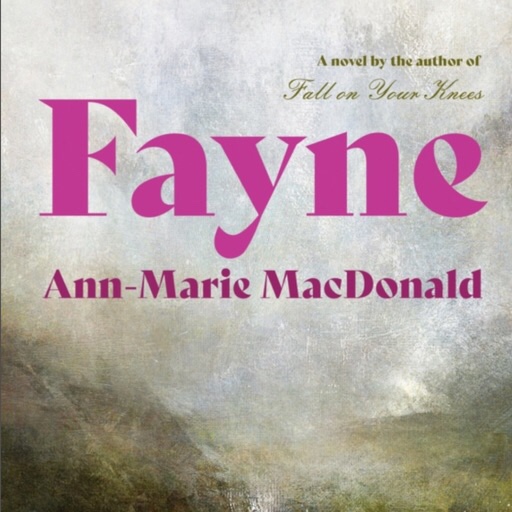
Fayne by Ann-Marie MacDonald

Fayne by Ann-Marie Macdonald

‘I do not wish to be a woman.’

‘My dear. I’m afraid we none of us has the choice.’

I do not wish to be a lady, then.’

‘I cannot blame you.’

The vast estate of Fayne lies to the southern border of Scotland, ruled by the Lord Henry Bell, Seventeenth Baron of the DC de Fayne, Peer of Her Majesty’s Realm of the United Kingdom of Great Britain and Ireland. The mysterious Lord Bell keeps to his rooms by day, appearing briefly at night to dote over his beloved and peculiarly gifted child. But even with all her gifts – intelligence, wit and strength of character – can Charlotte overcome the violently strict boundaries of contemporary society and establish her own place in the world? Fayne is the page-turning queer story of longing and belonging you’ve been waiting for.

I must admit to being slightly daunted when this novel came to the door. I say ‘to the door’ because it wouldn’t fit through the letterbox or into our postbox. It’s an absolutely brick of a novel, so much so that I had trouble holding it. Feeling a little overwhelmed I spoke to a fellow blogger who suggested that I mark it off into readable sections of about 150 pages. It was great advice and I’m glad I persevered with the novel, because it really was intriguing and original. Set in the late 19th Century and written in a similar style to a Victorian novel, Fayne is the story of Charlotte Bell. Charlotte is a precociously intelligent young woman with an insatiable curiosity that is starting to overcome the bounds of what her father and the estate’s library can teach her. This could be a dream existence, but there are shadows in her childhood. Charlotte’s mother died giving birth to her and her brother, the heir to Fayne House died at the age of two. Her father makes a break with tradition on her twelfth birthday, when a young woman would usually have a governess, he hires her a tutor instead. Lord Bell gives him one command for the education of his daughter, to teach her ‘as you would my son, had I one’. Charlotte’s only restriction up till now has been staying within the bounds of the estate. This is because she has a mysterious condition that may make her prone to catching illnesses from others. However, when she takes her tutor out to the bog, they find an unexpected artefact and take it home. Lord Bell suddenly announces he has arranged for her to be cured of this condition, turning Charlotte’s world completely upside down.

There is a feyness to her character, with her love of the boggy moorland and it’s mysterious mists that envelop walkers. She has learned both the ways of the bog and local folklore from Bryn, an elderly servant who seems to come with the estate. Yet the artefact she finds seems to be a mystery. The other mystery that confused me from the outset was the nature of Charlotte’s condition. Also, despite her curiosity about everything else, Charlotte seem strangely unaware of what it is and how it manifests. Her old nurse tells her there are all manner of miasmas and droughts that might carry off her ‘darling pet’. I kept waiting for her to ‘feel’ ill but that never seemed to happen. Another curiosity was her mode of dress, at a time when women were terribly restricted by their clothing which would have included a corset, possibly a bustle, and long cumbersome skirts and petticoats. Yet Charlotte is leaping around the moor, seemingly wearing a form of trousers, that she describes as a scarlet tunic and leggings. I was totally intrigued, imagining a type of female Robin Hood. In fact Charlotte herself says that if she did miss her footing in the bog and was discovered years later, she might be mistaken for a Roman centurion complete with a cape! She’s such an interesting and completely different Victorian female character I was fascinated with her. While still wondering what the mystery around her was, I became beguiled by her wit, intelligence and her endless wonder. As the answers started to come I was rooting for her to escape the rigid gender boundaries of her time and fulfil her potential. The author’s assertion that Charlotte is normal, it’s the world that’s trying to impose it’s order upon her, chimed very strongly with my disability theory background. The social model of disability asserts that all bodies are normal, but the way society is organised creates the disability. For example, if all exits and entrances to a building were ramped everyone can use it. It doesn’t matter if you’re sitting or standing.

It’s clear that the landscape at Fayne and Charlotte are inextricably linked. Despite eventually travelling away from it’s borders, it stands out as the one place she was allowed to be her true self with no restrictions or arbitrary boundaries. She didn’t have to choose who she was at Fayne, she could just be Charlotte. Fayne is a liminal space, existing somewhere between mythology and reality, between England and Scotland. I loved the way the author positions Fayne and the estate’s old folklore as authentic, as natural as Charlotte is before she moves to Edinburgh, which is a sharp contrast to the wilds of her childhood. I was desperate for Charlotte to retain this authenticity, but everything about a city imposes order – the signs, the roads, the hard surfaces. Then there’s ‘society’ and it’s arbitrary rules about gender. There are so many rigid ideas about how a woman should look and behave. The imprisonment of a Victorian woman’s clothing is so stifling that when we think of Charlotte’s tunic and leggings, it feels like being restrained. Yet there are other ways of being, even here, you just have to know where to look. It was great to be on that journey with Charlotte, as she finds that other people also defy expectations. There is so much more to the novel, different viewpoints and characters as well as some plot twists and turns. However, I was always happy to come back to the ever curious and irrepressible Charlotte. It will take all of Charlotte’s ingenuity and intelligence to unearth her family’s secrets and discover her own identity. In some ways I was reminded of another novel with an intersex character delving into her family history, Middlesex by Jeffrey Eugenides. I enjoyed both character’s journeys to find themselves, but also each book is so rich and full of history. I have read Middlesex more than once and Fayne will also benefit from a re-read, hopefully at a slower pace, as I’m sure there’s so much I missed or didn’t fully appreciate on first reading. Ann-Marie MacDonald is an extraordinary storyteller and I’m now interested to explore her other novels.

I knew from a very young age that I was wrong in the world. And the idea of looking through the eyes of somebody who’s born with an intersex trait has been quite compelling to me for a very long time. It’s not an exotic quality. That’s why I’ve decided not to treat it as a “spoiler.” That’s just who Charlotte is, that’s her body. That’s normal. It’s the world that has a problem and is going to make it a problem for her’.

Ann-Marie MacDonald Press Release from Tramp Press.

Meet the Author

Ann-Marie MacDonald is a novelist, playwright, actor and broadcast host. She was born in the former West Germany. After graduating from the National Theatre School of Canada in Montreal, she moved to Toronto where she distinguished herself as an actor and playwright. In 1996 her first novel Fall On Your Knees became an international bestseller, was translated into nineteen languages and sold three million copies. It won a Commonwealth Prize, the People’s Choice Award and the Libris Award. In 2002 it was an Oprah’s Book Club choice. In 2023, The Way the Crow Flies appeared and in 2014 Adult Onset, both of which had international success. In 2019 she was made an Officer of the Order of Canadafor her contribution to the arts and her LGBTQ25+ activism. She is married to theatre director Alisa Palmer with whom she has two children.

Posted in Netgalley, Publisher Proof

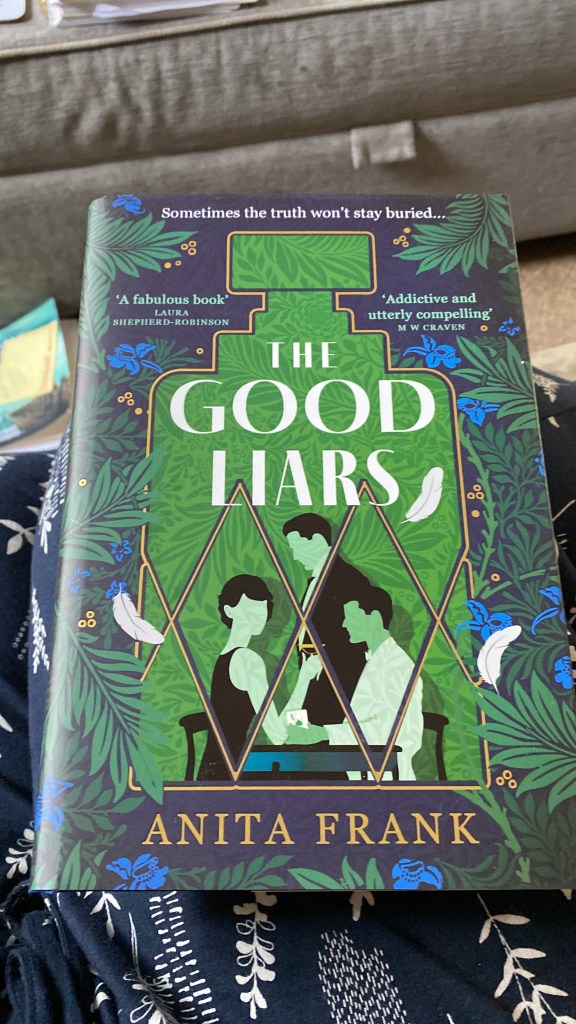
The Good Liars by Anita Frank

This is my favourite of Anita Frank’s novels so far. She’s chosen a fascinating period of history to set this gothic mystery and it adds something a little different to the ‘new servant in a creepy old house’ story. This is time when the country is traumatised, mired in grief and adjusting to the changes wrought by World War One. A time when loss looms large and people are searching for answers. Sarah is the new employee arriving at Darkacre, the family seat of the Stilwells. Like many aristocratic families, WW1 has wreaked havoc on the men in this family. When their father died, the eldest son Hugo became the heir of Darkacre. Yet his time as heir was very short, as he was killed on his return to the front leaving middle brother Maurice as heir to the Stilwell estate. Maurice was not prepared to be the master of the house and with double death duties already crippling the estate, he has learn fast. Unfortunately Maurice has returned from war a changed man, plagued by nightmares, flashbacks and extreme responses to loud noises, he has PTSD or what was then referred to as shell shock. With youngest brother Leonard severely disabled by his war injuries and struggling to come to terms with the loss of his limbs, the family are depleted and barely coping. However, as Leonard so cryptically tells us, perhaps it is no more than they deserve? Sarah’s arrival is the catalyst for this story and it isn’t just the relationship between family members that points to there being issues at Darkacre, soon a series of unexplained happenings start to gnaw away at the nerves of even the most stoic inhabitants.

Darkacre is the perfect gothic setting for the story and to some extent she represents the changes wrought on the aristocracy during this time period. Where before the war the family would have had several house servants, as well as gardeners, land agents, farm managers and so on, there is now just the brothers, Maurice’s wife Ida and Victor, a lifelong friend of Maurice. Due to the way army units were organised, Hugo Stilwell would have found himself the officer to a group of men he knew well, comprised of his brothers, tenants, young men and boys from the village. The losses were astronomical and not a single family in the parish missed out on their share of grief. This also left Maurice facing families of the young men he led to their deaths on a regular basis, including the upcoming ceremonies at the new war memorial. Servants were now in short supply and the tradition of going ‘into service’ had started to decline. We can see how social groupings have become blurred in the way Ida invites Sarah to eat with the family, instead of in the kitchen alone. They converse as equals, often as sitting together after dinner in the parlour. We can see how Ida has been craving female friendship and where it would be unsuitable to be passing confidences on to village women, Ida does start to confide in Sarah. Up till now it has very much been Victor’s role to inject a little levity into the proceedings and to amuse Ida. He confides to Sarah that both he and Maurice fell in love with her on sight, but she was more interested in Maurice and possibly the house and land that have her a title she craved.

On Sarah’s part there are few confidences shared and I found her rather mysterious and enigmatic. I was at first sure this was only a residue of the deference she had always shown employers in the past, but perhaps there is more to it than that. In a therapy situation, silence tends to draw the client forward and share confidences. In fact silence has often been my most powerful skill in terms of growth for the client and Sarah seemed to be using it for good effect. Is she simply trying to forge good relationships with her employers or is there something more sinister going on? The growing closeness between her and Leonard definitely feels genuine and I wondered what it was about their relationship that made Sarah relate to him differently. Was it that she saw him differently due to his disability, or is it a natural affinity? He seems to have different world views to the rest of the group, more compassionate and accepting of human imperfections. This is ironic given the family skeletons hiding out in closets and cupboards all over Darkacre. What was behind the sense of collaboration I felt between Ida and Victor? Why was Maurice so disturbed, not just by flashbacks and dreams, but possibly by his own conscience? Why is Ida unwelcome at the village’s ceremony for the new war memorial and does it have something to do with the disturbing parcel of an animal’s heart covered feathers that she receives?

Since I have a disability it would be remiss of me not to mention the veterans of WW1 left disabled by this horrifying war. Over one million men were killed in combat, but a further two million were left with some form of disability, 40,000 of which were amputees like Leonard Stilwell. He sits alongside such contemporary literary characters as Clifford Chatterley with a lot of the same emotional issues coping with the change of self-identity. Sarah represents a new stage in Leonard’s recovery, one he might resent, but yet they do become friends. On her first morning, Sarah arrives at Leonard’s room to find Victor smoking and Maurice laid across his brother’s bed rather like they’re still in barracks or the hospital. It’s a little glimpse into the institutionalisation of the men, more used to other male company in a military setting than the domestic sphere. Sarah could be seen as a barrier between Leonard and his fellow veterans, whereas before his care was kept within the sphere of the family now it is contracted out for money. Leonard could have felt as if he belonged, that his brother and Victor were still in the trenches with him, sharing the seismic shift his life has taken. His getting up routine was part of family life, whereas now it’s a job. A stranger has to perform the most intimate care for him and they are obliged to do it for money. He is now facing his disability alone. Yet he and Sarah muddle on quite well together, helped in part by Sarah’s training and professionalism, but also because they perhaps share the same anger and disdain for the futility of war.

Early on in the novel we see that Maurice is tormented by the memory of a young soldier who has half his face blown away. He can’t forget the horror of it, so it is perhaps fitting that the visiting Sergeant who arrives in the storm has a facial disfigurement. It’s as if Maurice’s worst nightmare has come knocking on the door. The inspector has only visited the day before and the sergeant seems to be following up, carrying out orders by interviewing the family. His disfigurement is covered by a copper mask, it’s smoothness belying the tangled and complex injuries underneath. For Maurice it almost seems worse that his injury is covered, because he can imagine in detail what’s actually there and imagination is worse than the reality. His mask also gives that element of disguise, it conceals his expression and leaves people wondering what he’s really thinking. There’s a definite Agatha Christie feel as a storm cuts the house off from civilisation and the family are trapped with these two outsiders. One of them a detective, trained to uncover secrets and the other has shown herself to have psychic tendencies. There are twists and turns, more than I expected in fact! I loved the atmosphere and Anita is brilliant at those little creepy happenings, that might have an innocent explanation, but start to unnerve you. The battle scenes are so well written too, perfectly capturing the chaos, the fear and a different kind of horror. This is a great read and Anita goes from strength to strength.

Published 17th August by HQ Stories.

Meet the Author

Born in Shropshire, Anita studied English and American History at the University of East Anglia. She now lives in Berkshire with her husband and three children.

You can connect with Anita via social media:

Twitter – @Ajes74

Instagram – @anitafrankauthor

Posted in Netgalley, Publisher Proof

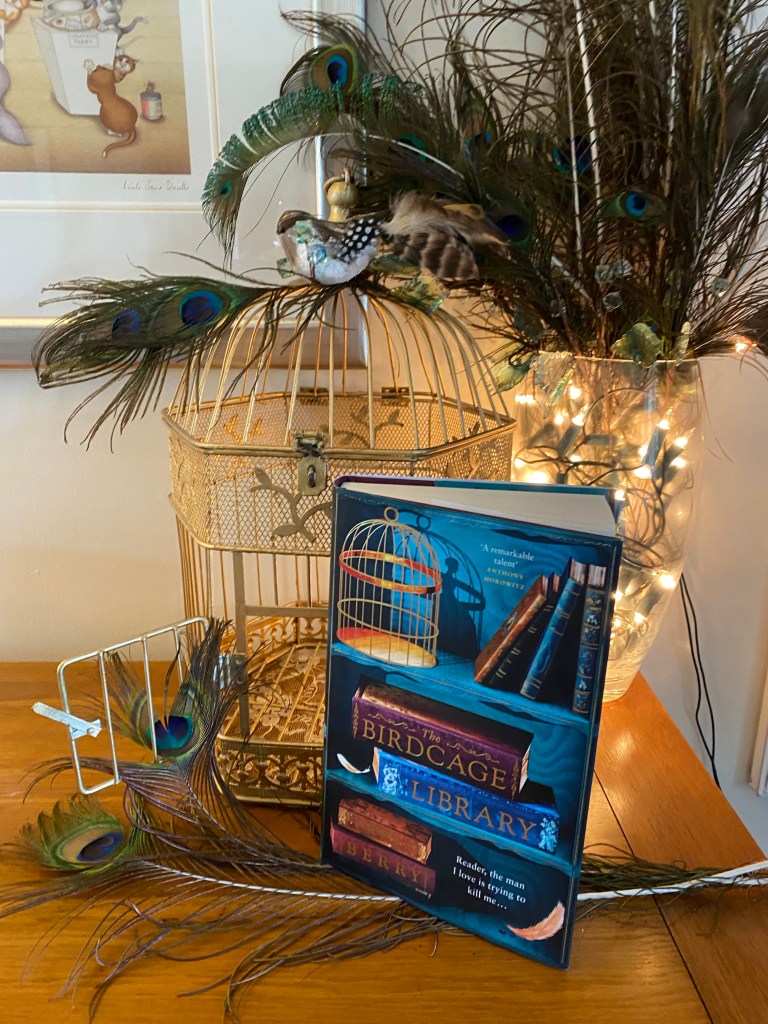
The Birdcage Library by Freya Berry

Dear Reader, the man I love is trying to kill me ….

In 1932 Emily Blackwood, an adventurer and plant collector, is employed by Heinrich Vogel to solve a puzzle. A treasure is hidden in his remote Scottish castle and he has employed her to find it. Her excavations take us back several years to New York and a young woman called Hester caught between two brothers and the family business of supplying rare animals to society homes and show business. As Emily follows the clues she discovers torn out clumps of pages from their hiding places around the castle. These tell Hester’s story in her own words and Emily starts to piece together this part of the Vogel’s family history. However, the discovery means she also starts to question her host, the isolated place she’s staying and whether or not she is safe within it’s walls. As Emily solves the clues and we race towards her final conclusions I found myself anxious and thoroughly addicted to Freya Berry’s intriguing and puzzling mystery.

I also found myself rather spellbound by the a book because it features one of my more macabre favourite things – I have to admit that vintage taxidermy has a strange fascination for me and the quirkier it is the better. Victorian tableaux with their anthropomorphised animals really do make my heart flutter. Rationally, I know it’s horrible and undignified for these beautiful creatures but I can’t resist a squirrel tea party. This book is set at a time when killing these beautiful living creatures and posing them for the collections of rich men is huge business. The Scottish castle has it’s owncollection, but we are also taken back a few years to Heinrich Vogel’s youth when he and his brother were the source of all these wondrous creatures. In one example, sourcing a vast collection of hummingbirds to be the talking point of an exotically themed gathering for the great and good of New York Society.

Emily rather reminded me of another incredible heroine, botanist Alma Whittaker in Elizabeth Gilbert’s wonderful novel The Signature of all Things. Like Alma she is intelligent, curious and forges her own path in the world of scientific discovery. I loved that Emily wasn’t like other women in society, usually depicted in fiction as diverted by dances and adorning themselves for the marriage market. She is an academic and sets foot in places across the world that many men haven’t yet reached, never mind the supposed fairer sex. That said, her biggest adventure and challenge is trying to be acknowledged for her expertise within an academic system that’s firmly a patriarchy. It is a lack of funds that put Emily in Vogel’s orbit, when he hears of her employment cataloguing the Rothschild’s butterfly collection. He feels that only the intelligent and ingenious Miss Blackwood will do as he wishes to catalogue his own incredible collection of taxidermy creatures. It doesn’t take long for Emily to discover there’s a more intriguing task though. Heinrich Vogel’s sister-in-law Hester famously threw herself to her death from the Brooklyn Bridge. From an old book entitled The Birdcage Library, Emily deciphers clues that lead her to the remains of Hester’s diary and her words pull Emily into a past filled with clues, explaining all that happened to the Vogel brothers and Hester’s relationship with them.

The highest form of love is indistinguishable from liberty.

Freya Berry uses her historical knowledge perfectly. It grounds the story within it’s time, using real people and places to anchor Hester’s account until it feels like part of history rather than fiction. The world she describes is so rich, alive with sound and colour, creating an all round sensory experience for the reader. I felt like I knew this world inside out. As many of you know, the birdcage is a potent symbol for me, one that I have tattooed on my body as a reminder to never let anyone put me inside one again. Here Freya Berry uses it as a metaphor for the way high society and wealth keep women from living the fullest lives they could. A cage is a cage, even if it’s a gilded one. The women in New York society may have money enough to adorn themselves with the feathers of birds of paradise, but they would never have the freedom that Emily has had to travel abroad and see these birds living in their native habitat – something infinitely more valuable than wearing them as a hat. Despite having a central role in the Vogel’s business operations, Hester is soon relegated to the parlour when her brother-in-low returns to New York. The business is going in a different direction, as her husband pursues the kind of fame and fortune earned by Barnum. Her creativity, business acumen and financial know how are sidelined and she finds herself bored and dissatisfied. Her distraction from the boredom and bewilderment of being relegated to the parlour, is a destructive one.

As Emily gets closer and closer to the final parts of Hester’s diary, she realises that the repercussions of what happened in New York are still playing out, but now she is in the middle. I was actually starting to be scared for her safety. The arrival of Vogel’s nephew Yves made me wonder if Emily could find an ally in this isolated castle? Or is she doomed to live out Hester’s life, caught between two Vogel men? The novel is the perfect combination of historical novel and mystery, with just the right edge of gothic darkness. There are echoes of both Jane Eyre and Rebecca here, two of my all time favourites. Freya Berry has created two interesting and intelligent heroines in Hester and Emily, and I was enthralled by their stories till the final page. I think you will be too.

I am no bird; and no net ensnares me

Jane Eyre by Charlotte Brontë

Meet the Author


Freya Berry always loved stories, but it took several years as a journalist to realise she loves the kind of truth that lies in fiction, not reality. (Or, to put it another way, making stuff up is more fun.) 

Her second novel, The Birdcage Library, is out now, a gothic mystery and literary treasure hunt packed with twists. A 1930s adventuress discovers an old book containing clues about the disappearance of a woman who vanished 50 years before. Set between a Scottish castle in the 1930s and an exotic animal emporium in Gilded Age New York, it’s a gothic tale of secrets, obsession and murder. Oh, and taxidermy. 

Her first novel The Dictator’s Wife, a high-stakes exploration of power, glamour and complicity, was published in 2022. It was shortlisted for the Authors’ Club First Novel Award, a pick for the BBC’s flagship book show Between The Covers, and The New European’s novel of the year. 

Freya lives in London and graduated with a double first in English from Cambridge. She spends more time reading smutty fantasy novels than she likes to admit.

Posted in Squad Pod

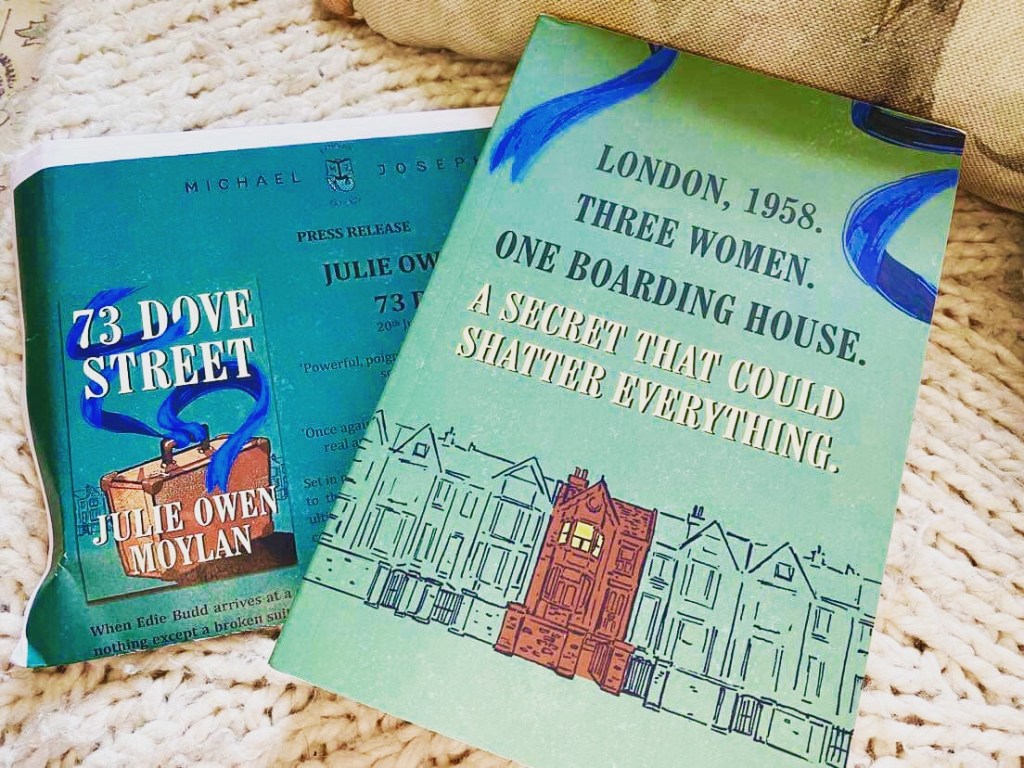
73 Dove Street by Julie Owen Moylan

What an incredible writer Julie Owen Moylan is, because within a few pages of starting her new novel I was absolutely immersed in 1950’s London. This is a London I haven’t visited too often in literature, the haunted and broken post-WW2 period rather than the supposed glory or the drama of the the war itself. Here the war has a ghostly presence, shown by children climbing piles of rubble or an incomplete street that looks like a mouth with one of it’s teeth missing. The story is told through three women; Edie, Tommie and Phyllis. It’s Edie we follow to 73 Dove Street where she hopes to look at a room, with just a single suitcase and an envelope full of cash. Edie is almost put off by the mattress and pile of men’s clothes burning fiercely just outside the yard, but a voice summons her from an upstairs window and she recognises a place she can lie low. What is she hiding from? Tommie lives in the room below and works for an eccentric socialite who was once wealthy and popular. Outside work Tommie is lured to the seedy nightlife of Soho and the man she can’t quit. Phyllis is the landlady of 73 Dove Street, burning her husband’s belongings in the street after she discovered a terrible betrayal. She puts on a good front, an armour that she needs to cope with a past she won’t talk about.

This author is absolutely brilliant at creating a feeling and time period, from the dark and depressing post-war London to the interiors of both No 73 and the more upmarket house where Tommie works.

“It was one of those London streets that had become a canvas of tatty boarding houses: windows filled with crooked pieces of cardboard saying ‘Room to Let’. The houses all looked the same: bay-fronted with scruffy front gardens filled with dustbins, and children loitering on doorsteps with their runny noses and scraped knees.“

She makes a beautiful observation about these streets, that where once there were hints of colour, London is now bombed back to dreary black and white. People are trying to drag their lives out of wartime monochrome, but fail every time. There are houses with the front ripped off and the contents still inside, looking like a grotesque full-size doll’s house. Through Tommie’s childhood experiences we can see what it was really like to be in one of those houses as she remembers a direct hit on her family home and being sat in the suffocating dark rubble until a hand breaks through to save her. These memories are so powerful and evocative, they really bring the reality of the Blitz to life. It’s clear that one of the reasons why London is so bleak is that it’s people are traumatised and numb. As well as the lack of money, rationing and their surroundings, these people haven’t even begun to recover. They’re vulnerable and in the case of our main characters, they’re trying to battle on alone.

I was immediately on board with Edie and loved the way the author built up her relationship with Frank. It was one of those situations where I could clearly see what was going to happen and I was mentally screaming at Edie to walk away. This is a man who knows how to choose the right woman, the one who will fall for his charms and become hooked on the way he operates. He likes to keep a woman on edge, waiting for his affection and easily moulded to what he wants by withholding that affection. Sadly it’s a pattern that’s only noticeable when you’ve been through it and Edie is a quiet, inexperienced girl who’s bowled over by his subtle manipulations. She’s so unformed and brought out such a protective mode in me. In a typical pattern he follows any glimpse of anger or violence with apologies and huge gestures.

“Frank’s pale blue eyes never left Edie’s face. Pleading with her without saying a word, desperate to make everything right between them. ‘Will you marry me, Edie? Say you will . . .’ The words tumbled out before Edie could stop and think about them. ‘Yes, of course I will.’ Her arms wrapped around his neck; her good wrist covering the bruises on the other one. His mouth felt tender and warm on hers and for that moment she couldn’t hear the daft comments or applause from the pub, it was just her and Frank”.

The abuse Edie suffers is a hard read, but such an authentic representation of domestic violence in all it’s forms. I am from a working class family, with some very strong women on both sides especially in those aunties old enough to get married during the war. They often comment on how the generations beneath theirs are too quick to split up or divorce and that marriages in their generation tended to stay together. Yet, when I hear the reality of some of their marriages – the drinking, gambling, physical and sexual violence, financial abuse and infidelity – I wonder what’s the point of a long marriage that has only left them grieving and traumatised? The author shows how economic and psychological difficulties prevented women from leaving terrible relationships. I was interested to read the author’s comments about her own family and how the strong women in it had given her inspiration for the book.

I haven’t spoken about Phyllis much, although towards the end of the book it was her experience that had tears pouring my down my face. At the beginning we see through Edie’s eyes the burning pile of men’s clothes outside No 73 and we could guess at what had happened in her marriage. She’s full of anger at her husband, but as the story develops we get the feeling there is something more underlying her feeling of being wronged. We get the picture of a marriage rather like the bombed out houses – a facade remains but it’s been empty for some time. When we hear the full story it is so emotional, I found it deeply moving and could identify with this woman whose abrupt manner is simply the amount of protection she needs to get through each day. It isn’t just the bombed houses that are missing. There are people locked in wartime, trying to carry on by avoidance, distraction or stepping around something there’s only one way through. I found this part of the book so beautifully rendered and deeply felt. Julie has dedicated this book to her grandmother and the strong, working class women in her family. She has really done them proud with this wonderful historical novel.

Published by Michael Joseph 20th July 2023

Meet the Author

Julie Owen Moylan was born in Cardiff and has worked in a variety of jobs, from trainee hairdresser and chip shop attendant at sixteen to business management consultant and college lecturer in her thirties.

She then returned to education to complete her Master’s degree in Film before going on to complete a further Master’s degree in Creative Writing. Julie is an alumna of the Faber Academy’s Writing a Novel course. She lives in Cardiff with her husband and two cats.

Julie can be found on Twitter: @JulieOwenMoylan

Posted in Random Things Tours

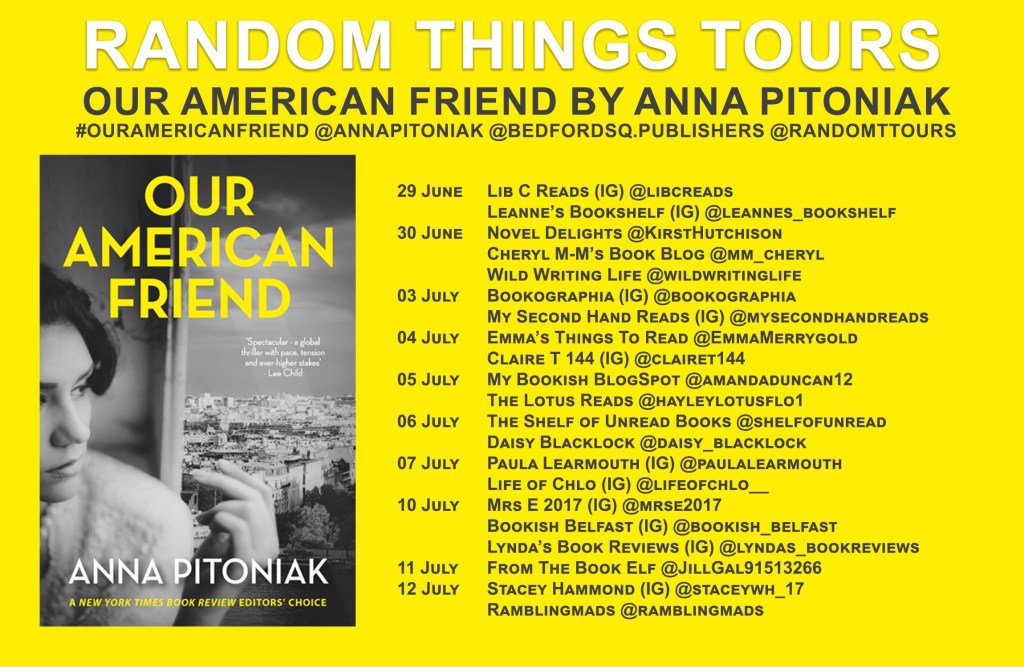
Our American Friend by Anna Pitoniak

A mysterious First Lady. The intrepid journalist writing her biography. And the secret that could destroy them both. Tired of covering the grating dysfunction of Washington and the increasingly outrageous antics of President Henry Caine, White House correspondent Sofie Morse quits her job and plans to leave politics behind. But when she gets a call from the office of First Lady Lara Caine, inviting her to come in for a private meeting with Lara, Sofie’s curiosity is piqued. Sofie, like the rest of the world, knows little about Lara – only that she was born in Soviet Russia, raised in Paris, and worked as a model before moving to America and marrying the notoriously brash future president. When Lara asks Sofie to write her official biography, and to finally fill in the gaps of her history, Sofie’s curiosity gets the better of her. She begins to spend more and more time in the White House, slowly developing a bond with Lara. As Lara’s story unfolds, Sofie can’t help but wonder why Lara is rehashing such sensitive information.Why tell Sofie? And why now? Suddenly, Sofie is in the middle of a game of cat and mouse that could have explosive ramifications.

I read a very odd tagline to a review for this book that likened it to Emily in Paris and the TV series Scandal – the comparison to either is inaccurate, because while this has the addictive quality of a thriller it goes much deeper and is clearly well-researched. The blurb immediately took me to Donald Trump and his rather enigmatic First Lady, Melania. A very different First Lady from her predecessor Michelle Obama, she certainly didn’t fit the usual mould and curiosity about their relationship and her past is certainly perfect material for a good thriller. I’m not the first to wonder whether they met at the notorious parties in NYC where very young models were supplied to meet wealthy and powerful men. The potted biography of our character Lara Caine certainly seemed to echo Melania’s journey towards becoming the President’s wife, so this hooked me straight away.

The author sets her characters within the current political climate, the era of fake news, conspiracy and what seems like a complete lack of accountability. I’m not alone in wondering who to believe any more and constantly searching for the truth beneath the headlines. The author certainly conjures up this complicated present and what it’s like to be a journalist within this maze of misinformation, but she also weaves in the fascinating Cold War era, a time absolutely ripe with complicated plots and conspiracies. It’s a clever combination, because when we think back to America and the Cold War we think of the containment of Russia, the Berlin Wall, the arms and space race between the US and USSR, and the Cuban Missile Crisis. At this time even a hint of collaboration between East and West rising to the surface, was investigated robustly and punishments were harsh. McCarthyism was the epitome of the type of paranoia on display as actors and other people working in Hollywood were interrogated and their movements restricted if any socialist or communist sympathies were found. In this country the Profumo affair brought to light a sexual scandal where our Secretary of State for war was having an extra-marital affair with 19 year old model Christine Keeler, who was also sleeping with a Russian naval attaché. Again the root of the problem was secret parties held by osteopath Stephen Ward, where he introduced young models that he knew to powerful men in politics and possibly in the Royal Family too, as portrayed in the series The Crown. This book contrasts these two moments in history as we travel back and forth in time to uncover Lara’s story. It seems that where there were once barriers, there are now complex financial and political relationships between old enemies. Russian financing seems to be behind many Western political campaigns including our own Brexit referendum. Is this simply business or have our old enemies found a more creative way to destabilise the West? I find these complicated collaborations fascinating, so this was fertile ground for a very enjoyable novel as we moved through Paris, Moscow, Washington and New York.

Anna Pitoniak uses the character and background of Lara to explore these contrasting time periods in politics. She could have been a cipher, but she’s more than that and is definitely intriguing from the start. Why would the First Lady approach a journalist who is retiring from politics and whose own political leanings are at odds with the President? Why is she choosing to share her life now, especially when there are so many secrets and who is her reader? Is she perhaps getting ahead of a narrative she knows will come out anyway, creating a chance to influence the story and perhaps gain sympathy from the reader. Sofie has to wonder whether she’s been chosen because the First Lady has had a change in outlook or because her choice of a liberal journalist will influence readers into thinking the book is a fair account, more balanced than if she’d chosen a right wing author. All of these questions were running through my head while reading, as if there aren’t enough on the page. I was full of suspicion, but Lara seems open and welcoming, giving Sofie access to her life. Slowly a relationship builds between these two very different women, potentially a friendship. There is trust but does it really work both ways? Lara gives Sofie previously hidden stories from her childhood and adolescence with access to close family members as a back up. Yet I understand Sofie’s confusion, as she starts to like this woman but remains opposed to everything about Lara’s husband – his politics, morality and the way he’s conducted himself in office. So when Lara discloses a huge secret, something serious enough to upset not just her family but global politics too, she may as well have handed Sofie a ticking time bomb. It’s a journalist’s dream to have such a scoop, but there’s a certain amount of trepidation too. This is a slow burn of a novel, but it is engaging and once you’re hooked you’ll want to see what happens. There are some twist and turns to keep the reader entertained, but the author always keeps it intelligent and historically factual underneath, especially in the Cold War sections. While I didn’t form an attachment to either character I did enjoy the story, showing how the things most important to us like love and family become threatened when pulled into the world of espionage. There are also themes of complicity and the lack of integrity rife in modern-day politics, so current as we go through scandals such as Partygate and see the daily revelations from the COVID Enquiry. I also enjoyed reading a political thriller with two women as the focus, something often lacking in this genre. This is my first novel by this author and I look forward to reading others.

Released by No Exit Press in the UK on 29 June 2023.

Meet the Author

Anna Pitoniak is the author of The Futures, Necessary People, Our American Friend, and the forthcoming The Helsinki Affair. She graduated from Yale, where she majored in English and was an editor at the Yale Daily News. She worked for many years in book publishing, most recently as a Senior Editor at Random House. Anna grew up in Whistler, British Columbia, and now lives in East Hampton and New York City.

Posted in Publisher Proof

The Apple and the Tree by Clemmie Bennett

For her debut novel Clemmie Bennet has chosen to write something so complex I have to take my hat off to her. Ella has recently lost her beloved grandmother, Lolly. They used to spend a lot of time together, exploring stately homes and royal residences, particularly those from the Tudor period. Lolly left her granddaughter a beautiful gold and sapphire ring, one that’s very precious to Ella as she remembers her grandmother wearing it every day on a chain around her neck. However, it’s when Ella puts the ring on her finger that something very strange happens. Ella feels dizzy and passes out, waking up in a field next to what looks like Eltham Palace. As a man walks towards her, Ella thinks she’s fainted in the middle of an historical reenactment. He’s dressed in the rich robes of a member of the Tudor court and his manners are impeccable, offering to let Ella rest in the palace until her memory returns. Her rescuer is Henry VIII. As Ella finds herself in the court, becoming one of Katherine of Aragons ladies, she is a fly on the wall for some of the most dramatic events in royal and religious history. Is it possible to remain an observer, or will Ella find herself tempted to intervene and perhaps change the course of history?

I’ve been fascinated by Tudor history, ever since I saw one of the Hans Holbein portraits of Henry VIIII in the Chatsworth library when I was a child. Henry seemed like a curiosity in our royal history with so many wives and scandals to his name. Once I’d read the David Starkey books and Phillipa Gregory’s novels from The Other Boleyn Girl onwards. I was also drawn to the glamour and dubious historical content of the Showtime series The Tudors, with Jonathon Rhys Meyers Henry and his best friend the Duke of Suffolk, as portrayed by the rather delicious Henry Cavill. What all these sources brought home to me was how uneven his marriages were – he was married to Katherine of Aragon for as long as he was to every other wife combined. That’s without noting his devotion to her from the moment she reached England for her marriage to Henry’s elder brother Arthur, a devotion that survived his teenage years, her first marriage and his brother’s death. They were in love, he wasn’t faithful but Kings were not expected to be faithful. The idea of a character time travelling to that period threw up all sorts of questions and I was so impressed by the bravery of the writer. Writing historical fiction means researching your period throughly, so to do that and put your character in the middle of such a well- known series of events is such a risk.

I also applaud the author’s bravery in ripping up the rule book on time travel – we all know that it is important not to change anything in the past, but Ella ignores that rule. It’s a great choice because it gives her character more freedom, but I also think it makes an historical point too. I have always said that had I been in the Tudor court, I would do a Mary Boleyn and marry someone of little importance and get the hell out of there. I have always wondered while reading about the wives and friends of Henry why you would involve yourself in the political and religious machinations of the time. Wouldn’t a life in the country as a nobody be preferable? I think that the author allows Ella to get involved because she’s making the point that it would be impossible to live in that court and not become involved. It’s a game of survival and women are both marginalised and limited in their choices. They have a choice, to withdraw for a quiet life like Mary Boleyn or fight for their place and power like her sister Anne. Ella’s choices certainly raise the tension level! She’s playing a living game of chess, trying to keep within the rules but think three steps ahead of her opponent. Of course she has the benefit of hindsight and all the Tudor history her grandmother Lolly taught her, so she might be able to win.

I thought the book really brought to life the difficulties of the time period and being a subject of Henry VIII, particularly for women. We know there are ladies in waiting, but they’re often portrayed as companions the Queen and possible lovers of the King, but here we see more of their day to day activities and their emotional lives. Ella is a 21st Century woman and because of that we can see these women as being just like us. I loved the way she formed friendships and how the women supported each other. They are portrayed as emotionally open about their marriages and the dangers they face, whether from men or from their own bodies. Fertility plays a major part in the huge decisions of this court, in fact it still does today if we think of Prince Harry’s book Spare and the importance placed upon his father to marry and have both heir and spare. It’s always a huge part of the ‘King’s Great Matter’ that Katherine had not produced a male heir, but here the author explores what these struggles were like for the ordinary women at court. There’s a moment where Ella has to cope with getting her period in a time where underwear isn’t worn and she’s having all the same worries I remember having when starting my periods, all over again. It made me realise how vulnerable women were to sexual assault as well. It broke my heart to see how terrified women were of becoming pregnant, then dreading childbirth or losing their child. Having Ella there as a 21st Century comparison really heightened how different a woman’s lot really was and how the aristocratic practice of handing your child to someone else to look after caused such pain and grief.

I came away from this book with a different understanding of both the time and the court, even Henry himself. This Henry was intelligent, tender and seductive. Despite his shortcomings, there’s a compassion in Henry that seems missing from his actions in later years. It’s interesting to see how different the course of history might have been with just a few small changes. As Ella builds a friendship with Henry, I wondered how far her influence might reach and what might happen if she ever returned to her own time. This kept me reading and there was also a huge twist I didn’t expect! This was such an interesting premise and kept me intrigued enough to read to the end. I recommend this to anyone who knows a bit about the time period and maybe thinks they know all there is to know about Henry’s court. I would be interested to know what the author would change if she went back to Henry’s court, or whether she would choose to lie low? This is such an interesting debut and I hope to see Clemmie flourish as a writer of historical fiction.

Meet the Author

Clemmie Bennett is a writer, author of the historical fantasy “The Apple and the Tree.” A professional London-based French nanny, Clemmie has been working on her debut novel for over three years, but writing a book has been on her bucket list for as long as she can remember. When she is not writing or reading, she can be found wandering about ancient royal palaces or abbey ruins, most likely despairing that time travel is not a reality – like it is for her main character.

Posted in Netgalley

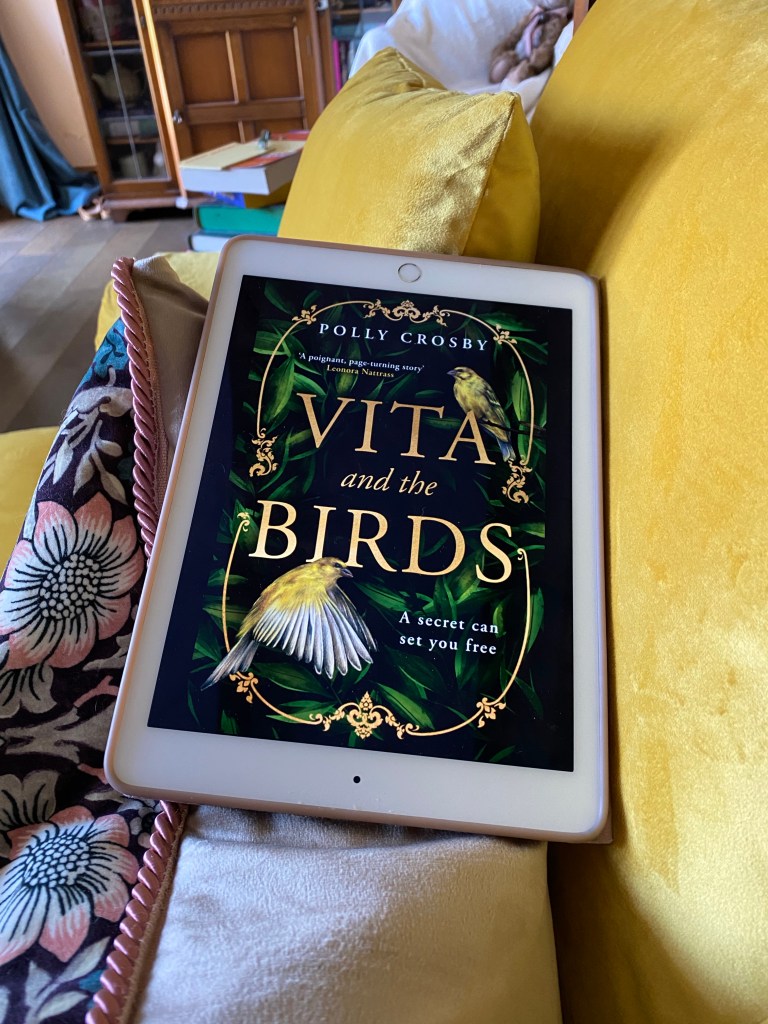
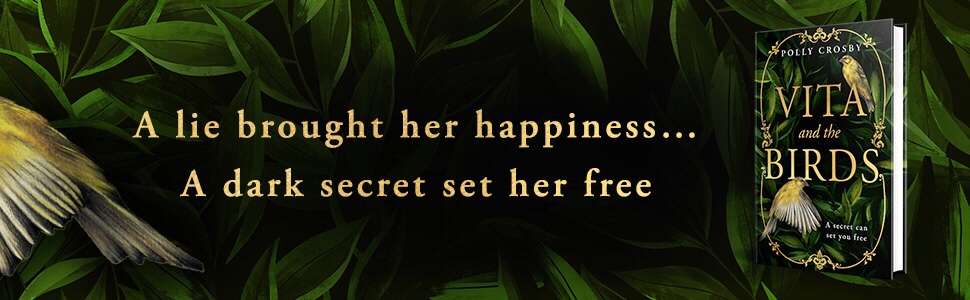
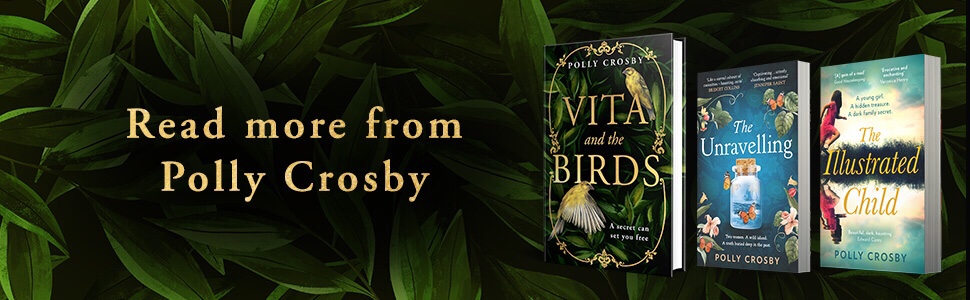
Vita and the Birds by Polly Crosby

1938: Lady Vita Goldsborough lives in the menacing shadow of her controlling older brother, Aubrey. But when she meets local artist Dodie Blakeney, the two women form a close bond, and Vita finally glimpses a chance to be free.

1997: Following the death of her mother, Eve Blakeney returns to the coast where she spent childhood summers with her beloved grandmother, Dodie. Eve hopes that the visit will help make sense of her grief. The last thing she expects to find is a bundle of letters that hint at the heart-breaking story of Dodie’s relationship with a woman named Vita, and a shattering secret that echoes through the decades.

What she discovers will overturn everything she thought she knew about her family – and change her life forever.

I’ve looked forward to the new Polly Crosby novel for a while, it was one of my most anticipated books of 2023. I love her writing so I gave myself a lovely sunny weekend to completely wallow in the story. It seemed fitting that I was outside, since nature plays a strong part in the novel both metaphorically and as an extra character that’s often more vivid than the inner spaces. Eve has felt adrift since her mum Angela died so her four brothers think it might be good for her to take a trip to the coast and clear out their grandmother’s studio. Grandmother Dodie was a painter and lived a fairly basic life in a small ramshackle studio just off the beach. Eve has fond memories of childhood holidays there, when her brothers would snuggle up with her like sleepy puppies on the studio floor at night. Close by is the strangely alluring Cathedral of the Marshes, a glass building so imposing it has the presence of such a holy building. Once, when she was a teenager, Eve had taken a dare to go into the cathedral with Elliot, one of the local boys. She remembers being terrified, but doesn’t remember much else about that night apart from seeing a painting standing on an easel. Strangely, it was a portrait of her and she ran out into the night, never to return. How will it feel to be back in a place that she has feared, but that still holds some of her best childhood memories? When she finds Dodie’s letters and reads of her relationship with Vita, she is plunged into a completely hidden part of her grandmother’s life.

This is a dual timeline novel, so through the letters we go back to the outbreak of WW2 and Dodie’s early years at the studio. She met one of her more notorious neighbours, Vita Goldsborough, resident of Goldsborough Hall and an owner of the glass cathedral. Vita and her brother Aubrey are the subject of gossip in the village. The stories are varied: Vita went mad and was put in a psychiatric hospital; Vita and Aubrey committed incest; they were to blame for ‘the vanishings’. They didn’t mix in the village and the stories around the siblings seemed to multiply and when a local girl vanished they were the first to be blamed by villagers. Strangely, as Eve arrives, a boy goes missing. It seems like an echo of the past, a foreshadowing, as if this is a thin place where memories and historical events seem close enough to touch. The physical sorting of her grandmother’s belongings is a simple enough task, she will just hire a skip, but when it comes to finding things that evoke memories and emotions they’re not so easily thrown away. Now Eve finds herself questioning the past and discovering things about this place and her beloved grandmother that she’d never imagined.

I thought this was a fascinating story highlighting women’s history and showing how much Victorian attitudes still prevailed in aristocratic society. The way Aubrey Goldsborough thinks feels around forty years out of date and the power he has over his sister we would now label as coercive control. Vita tries to explain to Dodie that his hold over her is so powerful he doesn’t have to force her, he simply has to tell her what to do and she obeys. He wants Vita to be respectable and only spend time with the right sort of people. Becoming friends with a bohemian artist like Dodie was definitely unexpected and she is the epitome of the wrong sort of company. Vita decides that Dodie must paint her portrait, something that her brother can’t really object to. Aubrey would like her to make a good marriage, but Vita’s interactions with men are fast and short-lived. Vita’s rebellions had to be passive aggressive – she gathers her jewels and keeps them in a box chained to the bottom of a pond in the glass cathedral. Hopefully, she can sell them without Aubrey knowing and have some financial freedom. She and Dodie hide in plain sight after Aubrey goes to war. They set up home in the cathedral, able to see everything around them, but thanks to the reed beds outside they are very unlikely to be seen. In another echo of her grandmother’s past, Eve meets an elderly lady in the village who asks to have her portrait painted. Eve isn’t usually a portrait painter, but can’t turn down the generous money offered for the work. She has the key to the cathedral and suggests they use it for their sitting, so Eve stands where her grandmother did many years before. What might this lady know about that time and her grandmother’s life?

The outside spaces seem to have an effect on Eve and I noticed a more natural, authentic part of her shine through. When she’s wild swimming or having a campfire on the beach with her brothers it feels like she belongs here. I was fascinated with how Polly plays with interior and exterior spaces, mirroring the parts of themselves her characters are revealing and concealing. Dodie’s studio has one glass side, leaving the whole living space open to view and her only concession to privacy is a screen where her models can undress. This is so in keeping with Dodie’s character, she is who she is and nothing is usually concealed. A beautiful detail comes when Eve is aware that putting the light on opens the space up to the outside like a stage set, but switching it off opens up the landscape outside. The cathedral is something of a paradox because I thought at first the glass would be very exposing, but Aubrey had designed it with living spaces that were kept private. I was imagining it like a Victorian glasshouse or orangery, very ornate with an almost tropical climate inside. The central ‘Turkish Room’ where Vita sits for her portrait has an otherworldly feel, with a smell of vegetation and rotting fruit. A large pool sits at the centre and church pews are placed around it upholstered with Turkish throws and pillows. There’s a sensuality to this space, the heavy warmth and the softness of pillows contrasts sharply with the glass. The room is hidden by the marsh reeds and it feels like a world apart, a feeling echoed by the ornamental bird cage engraved just for them. It holds Vita’s canaries, until one day they escape out through a hole in the roof. Yet they come back and visit Vita, eating out of her hand and filling the room with beautiful bird song. The name Eve finds scratched on the cage alongside that of Vita and Dodie should be no surprise. It’s a hope that person will return and bring a new generation back to the cathedral, represented by the flock of yellow and brown canaries Eve sees fly into the cathedral – the ancestors of those first two birds returning to their home.

As with previous novels, Polly really knows how to pile on the layers of mystery and create an undercurrent that’s quite unnerving: the painting that looks like Eve; the birdcage and the names engraved on it; the earrings Eve finds under the sink in the studio that she’s never seen her grandmother wear. Eve’s mind plays tricks on her, confused by the likeness between Vita and her grandmother, but also with herself. She’s still confused about that night when she was a teenager, when she went into the cathedral on a dare. Did she really hear a woman’s voice? Was she holding something when she ran away? Was it a shard of glass? As we move towards finding out what happened in the cathedral all those years ago the tension builds and I worried whether the two women would be safe from someone like Aubrey. Eve knows that he was found dead in the cathedral cut by a shard of glass, but was it suicide or murder? Whatever happened to Vita, someone her grandmother never talked about? There’s also the question of Eve’s mum Angela, born around the same time period but brought up by Dodie alone and has never known her father. As Goldsborough Hall was obliterated by a bomb during the war, only the cathedral remains and I wondered who owned it now? I was totally engrossed by this point and dishes went unwashed, the dog went unwalked and my other half, who knows when I’m lost in a story, kept me amply supplied with tea and toast. I do this strange thing when I’ve really enjoyed a book, I seem to hug it to my heart as if it can reach the characters inside. This was one of those books. It’s a beautiful hidden love story and an intriguing mystery as well, told with compassion and empathy.

Meet the Author

Polly Crosby grew up on the Suffolk coast, and now lives with her husband and son in the heart of Norfolk.

Polly’s third novel, Vita & the Birds, came out in May this year. Her first novel for young adults, This Tale is Forbidden – a dystopian fractured fairytale with hints of the Brother’s Grimm and The Handmaid’s Tale – is out in January next year with Scholastic.

In 2018, Polly won Curtis Brown Creative’s Yesterday Scholarship, which enabled her to finish her debut novel, The Illustrated Child. Later the same year, she was awarded runner-up in the Bridport Prize’s Peggy Chapman Andrews Award for a First Novel. Polly received the Annabel Abbs Creative Writing Scholarship at the University of East Anglia.

Polly can be found on Twitter, Instagram & Tiktok as @WriterPolly

Website: pollycrosby.com