
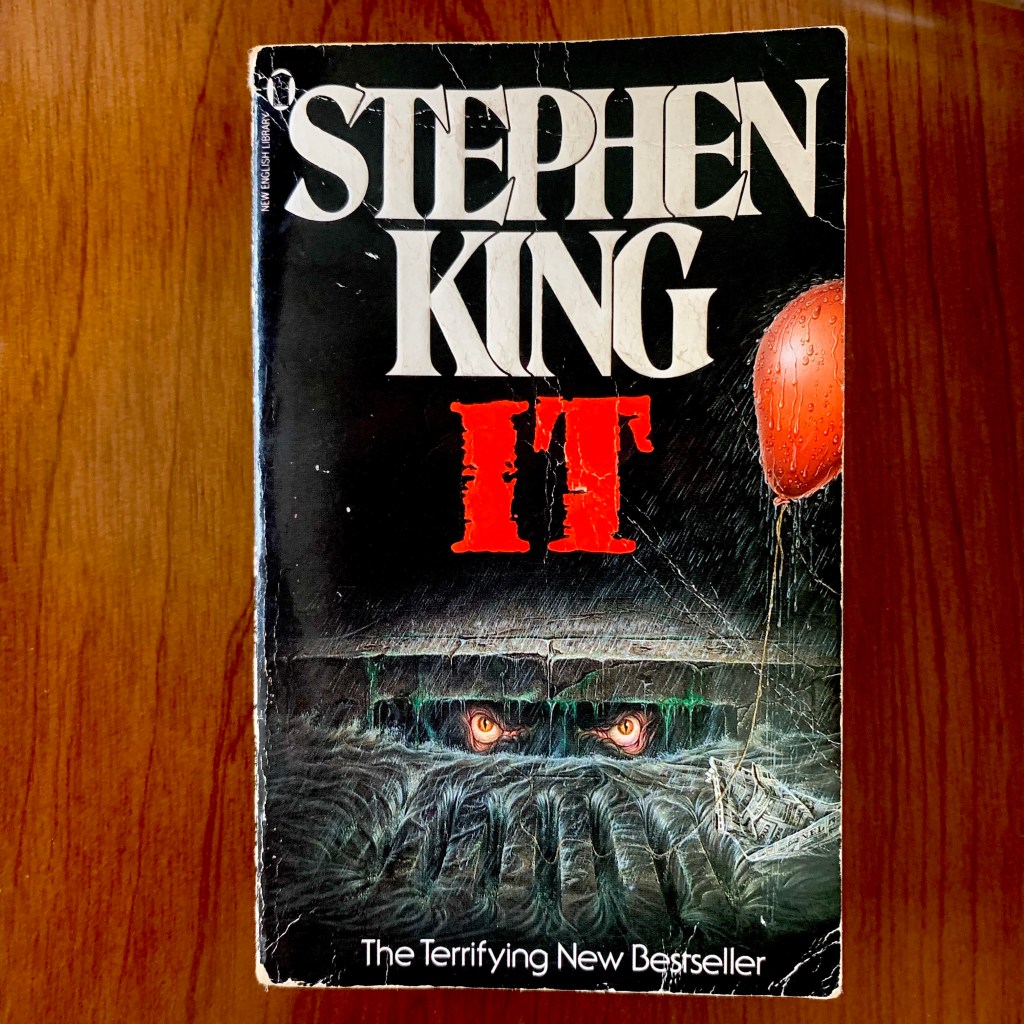
It by Stephen King. There are a lot of problems with this book, mostly the fact that his villain, Pennywise the Clown, is way more terrifying than the ‘It’ eventually encountered by the gang underground. I don’t think reading It started my clown phobia, but reading it as an impressionable teen certainly didn’t help. Now I’m terrified of anything that doesn’t show it’s real face, so masks, hoods, and make up always send a shiver up my spine. The scariest scene has to be when little Georgie Denborough, in his yellow Macintosh and hat, goes outside in the rain to play with his paper boat. The boat slips into the gutter and is washed into the storm drain. As Georgie approaches the drain he can see red tufted hair and floating balloons. They float, says Pennywise the clown. This clown has teeth and as Georgie reaches into the drain for a balloon he loses his arm. They all float down here.
The Turn of the Screw by Henry James. This is a distinctly odd book, with no real answers or clarity about what is happening at Bly. Are there real ghosts at the house with malicious intent? Is it the children, Flora and Miles, who are possessed by demons or just evil and manipulative towards their governess? Is the governess mad, hallucinating the ghosts of Bly’s former employees and terrifying the children? I definitely err on the side of the children being the problem, they are far too knowing and precocious for their years. It may be that the children have been affected by their time with previous employees Peter Quint and the last governess. Whichever it is the two children make me shiver and the final scene where Peter Quint appears at the window to the governess is doubly scary because we don’t know if they can both see him, or just the governess. As Miles falls down dead I wondered whether their aim to send the governess mad has worked and backfired spectacularly. Henry James plays with the Victorian ideal of childhood innocence and that’s what makes it so creepy, the thought that we might be in danger from those we consider vulnerable and incapable of evil is incredibly subversive.
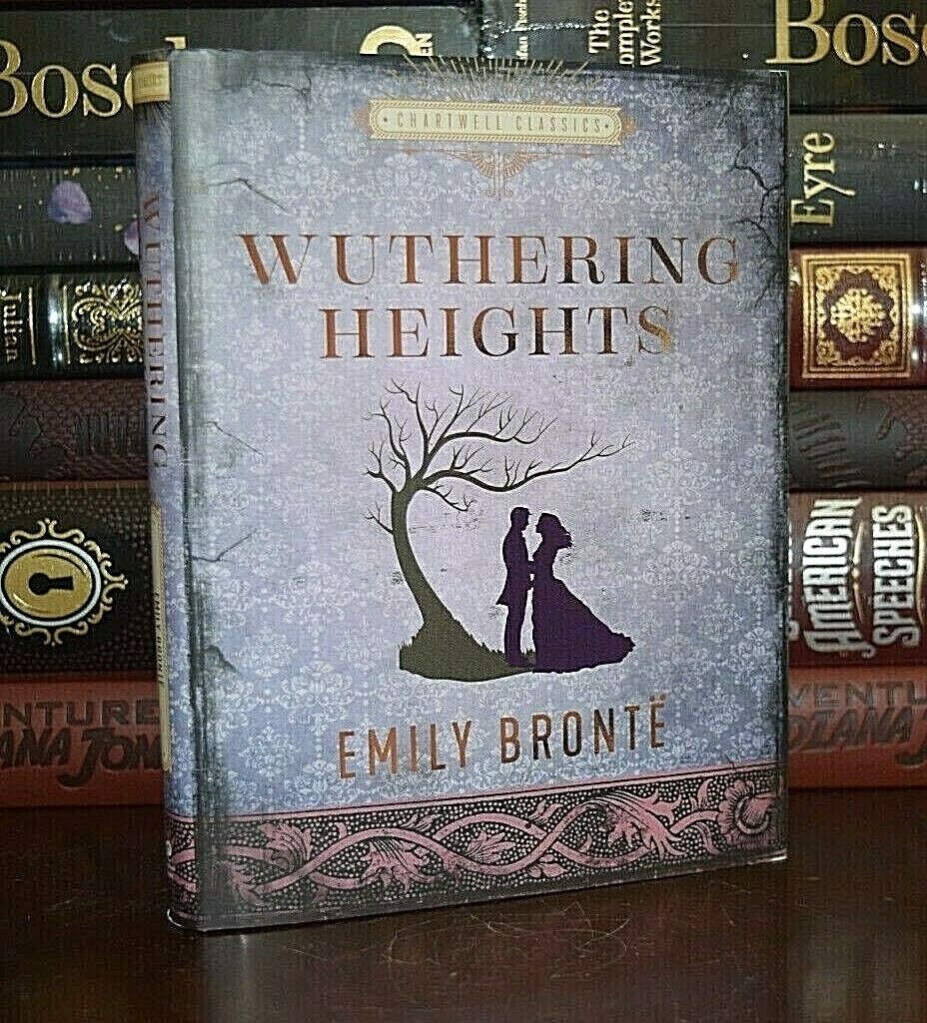
Wuthering Heights by Emily Brontë. Wuthering Heights is a story narrated by the family servant Nelly Dean, as told to a visitor to the farm, one of Heathcliff’s new tenants called Mr Lockwood. The weather worsens dramatically during his visit and as night falls it is clear that it’s unsafe to travel on horseback and he must stay. Heathcliff begrudgingly gives Lockwood a bed for the night, an old oak bed set under a window that overlooks the Moors. He wakes in the night, disoriented and disturbed by a tapping at the window. It is merely a branch and he concludes that he has been dreaming, influenced by Nelly’s tragic story of Catherine Earnshaw. He cannot unfasten the window, then resorts to breaking the glass to grasp the branch. The moment he reaches out to grab the branch but instead grabs an ‘ice-cold hand’ never fails to lift the hairs on the back of your neck. As he sees her white little face through the window he tries to pull his hand away but she won’t let go, begging him to let her in as she has lost her way on the moor. His solution is to grind the child’s wrist across the broken glass of the window until blood runs onto the bedclothes. This scene ensured that for my whole childhood I closed the curtains of any room I was in as soon as it was dark.
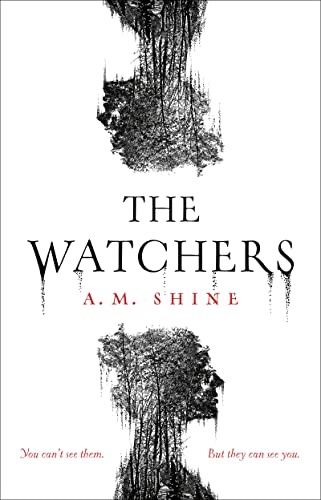
The Watchers by A.M. Shine. There’s so much to love in A.M.Shine’s debut novel, but one scene stands out for me, leaving me unsettled and unable to sleep. Set in rural Ireland, our heroine Mina is stranded in the middle of nowhere after her car breaks down as she does a strange favour for a friend. As sets off on a walk towards civilisation, she takes a wrong turn and ends up in the woods. The trees seem never ending and as afternoon starts to move towards dusk she has a strange sense of being watched. An unusual screeching noise unnerves her as she reaches a clearing and sees a woman shouting, urging Mina to run to a concrete bunker. As the door slams behind her, the building is besieged by screams. Mina finds herself in a room with a wall of glass, and an electric light that activates at nightfall, when the Watchers come above ground. These creatures emerge to observe their captive humans and terrible things will happen to anyone who doesn’t reach the bunker in time. This opening scene is so tense that when she reaches safety there’s a moment of relief, but only a moment. As the light comes on we realise that the glass window is full of creatures, staring in at their prey. I think the fact we never fully see a watcher makes it scarier as our imagination fills in the blanks. There is a twist to the ending that I can’t reveal, but I assure you it’s just as terrifying.
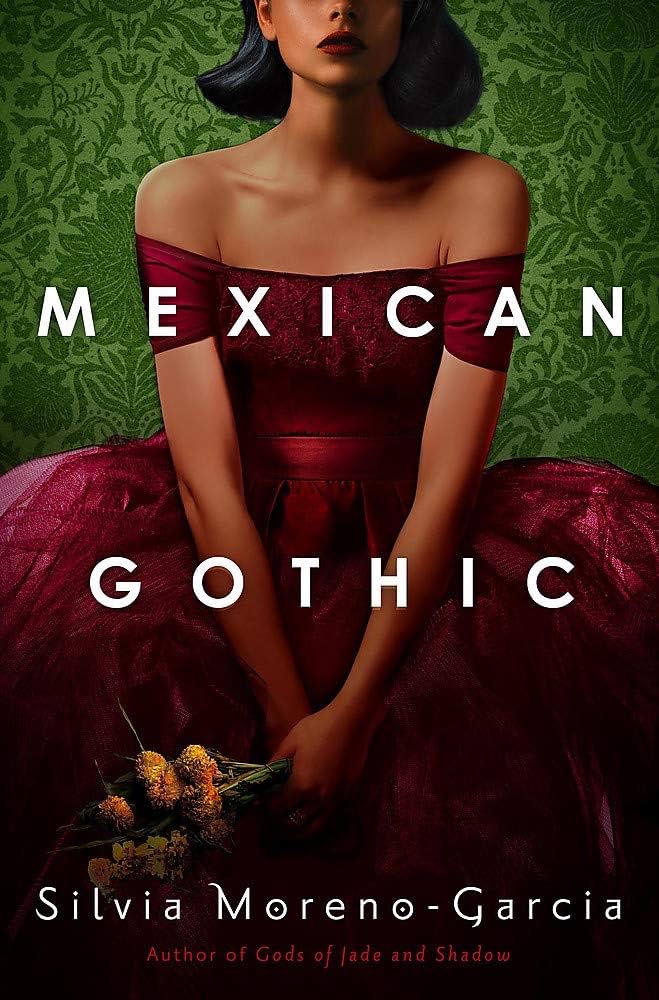
Mexican Gothic by Silvia Moreno-Garcia. I loved this brilliant horror novel that explores colonialism, feminism and eugenics as well as being downright scary. Noemi is a guest at High Place, wanting to spend time with her friend Catalina who has married into the wealthy Doyle family. Yet all is not well in the Doyle household. Noemi finds her time with her friend is very tightly controlled because Catalina has succumbed to a mystery illness. The family patriarch spouts his vile views on race and eugenics at the dinner table and what is going on with the mushroom wallpaper? It was Noemi’s strange dreams that I found most terrifying: she wanders the house covered with spores, has deeply sexual encounters with her friend’s husband and is haunted by a woman with a golden glow for a face who tries to communicate despite not having a mouth. However, nothing is more terrifying than coming face to face with the reality of the patriarch’s existence. Just as Noemi dreamed of the house becoming a mass of sores, his body is rotting to the touch. We are faced with blood, pus, bile and many other grotesque images, but even worse for Noemi there’s a threat of sexual violence culminating in the sort of kiss she really didn’t want. This made me physically retch! Oh, and you’ll be put off mushrooms for a little while.
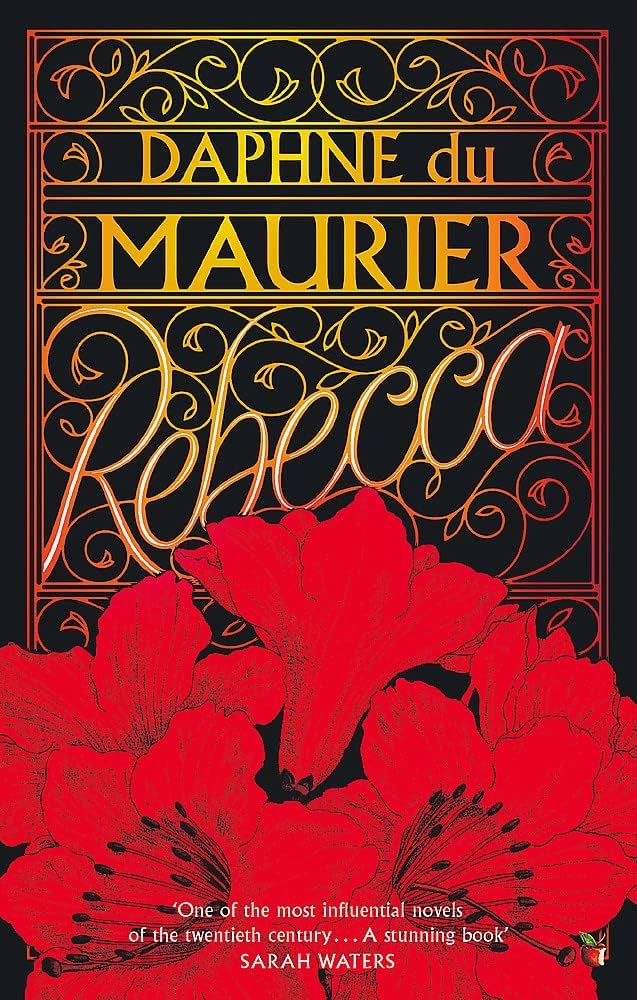
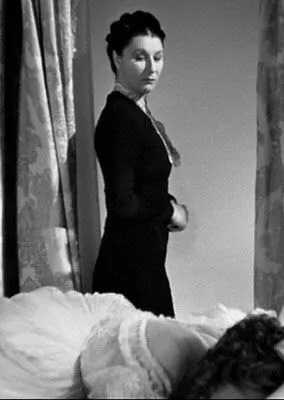
Rebecca by Daphne Du Maurier. I would argue that Daphne Du Maurier’s classic thriller is a ghost story, in fact in some ways both the women married to Maxim De Winter are haunting his home Manderley. Rebecca is dead, killed in a sailing accident, but her presence is still very much alive in the mansion: the west wing upstairs is off limits, still set up as her bedroom complete with her nightclothes laid out on the bed; her correspondence and address book is still out on her desk in the morning room with a huge ‘R’ on the cover; she even inhabits the cottage on the beach that her dog Jasper escapes whenever he can. The new Mrs De Winter is lost in this grand stately home and simply wanders to whichever room the servants direct her, servants who are still following the Rebecca’s routine. She doesn’t even have a name. However, the scariest part of Manderley is Rebecca’s servant Mrs Danvers installed as housekeeper after the to move to Maxim’s Cornish home. Described as wearing a long black dress, with gaunt features and deep set eyes that made her look like a skull she seems to slip between room silently, always seeing precisely the moments that the young Mrs De Winter would rather she didn’t. She encourages her new mistress to hold a costume ball like the old days and as an extra favour she suggests that she copies a costume from an ancestral painting on the stairs, not mentioning that Rebecca wore the same costume at the last ball. When Maxim first glimpses his wife on the stairs he thinks for a dreadful moment it is his dead wife and he is unnecessarily harsh. As she flees to the banned West Wing, Mrs Danvers torments her with Rebecca’s flimsy nightwear and the details of their routine. Her voice is hypnotic as she urges her new mistress to open the window to lean out for some air. The suspense as she tells her to jump, that she’s no use, she’s not loved and Maxim will always love Rebecca. A well timed shout and flare from a ship in distress are the only things that save her. This is the moment we know what this terrifyingly obsessed woman is capable of. Is Rebecca working through her, was she in love with her mistress, or was she simple unable to accept her death? Either way she is deadly dangerous and very creepy indeed.
Shining by Stephen King. We’re back to King now, the ultimate horror writer and one of my favourite novels in his back catalogue. Everything about this book is creepy, from the wasp’s nest to the twins in the corridor, but there’s one scene that puts the fear into me and that’s the woman in room 217. Jack Torrance has been slowly sinking into his alcoholism ever since his family arrived at The Overlook Hotel and his son Danny has been exploring the place, often unchecked since they’re so isolated they know there’s no one else around. The problem is that Danny has the ability to see things his parents can’t and while they’re sure no people are around, they can’t say the same about dead people. In a scene that’s written so well I can feel Danny’s terror, he makes his way into room 217 and notices the curtain drawn around the bathtub. As he pulls the curtain back, hoping his parents have left a surprise for him, he is horrified to see the grey, lifeless flesh of a woman. Except she’s not so lifeless. As Danny desperately tries to exit the room he hears the sound of her body slipping and sucking over the side of the bath. Her squelching footsteps as she chases him. Obviously King writes so much better than me, so when I first read this scene my heart was hammering in my chest so hard! I felt sick. Ever since, if I enter a bathroom and the shower curtain is pulled across my mind immediately goes back to this scene and I do feel a little unnerved.

Frankenstein by Mary Shelley ‘It was already one in the morning; the rain pattered dismally against the panes, and my candle was nearly burnt out, when, by the glimmer of the half-extinguished light, I saw the dull yellow eye of the creature open; it breathed hard, and a convulsive motion agitated its limbs.’ The various film adaptations of Frankenstein rarely do justice to the true horror of Mary Shelley’s words. I must admit that the 1990’s Kenneth Branagh version made me vomit, quite literally, into my popcorn bucket! Not a great look for a date, but there we are. That was about the way the creature slipped out of the bath of fluid he’d been kept it. It’s hard to describe but I have a horrible revulsion towards snotty egg whites and this was like a bath full of them and a naked Robert de Niro was sliding about in them like Bambi on a frozen pond. The sound was enough to induce retching and I’ve never been able to watch it without that reaction. The original words though strike fear into me, the sheer horror of what he’s created and the realisation that he’s concentrated all his efforts into achieving life, without once thinking what would happen next. The dull yellow eye feels reptilian to me and that fear of what exactly this creature is swirls around the mind.
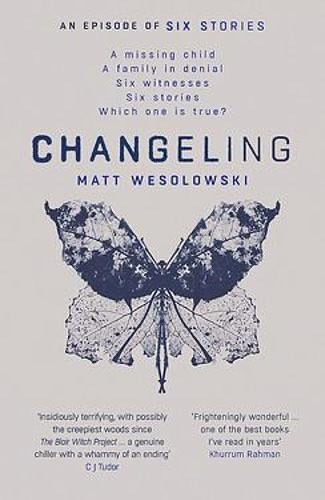
Changeling by Matt Wesolowski. This book really did get under my skin, possibly not helped by reading it in an unfamiliar and remote house where we were on holiday, not a million miles away from the forest in question. This starts as a missing child case, when Sorrel Marsden stops his car in a lay-by on the Wentshire Forest Pass on the Welsh Borders. As he investigates under the bonnet, hoping to find the cause of a strange knocking noise he has heard in the engine, he leaves son Alfie in his car seat. Minutes later, when he closes the bonnet, he glances up to see Alfie and finds him gone. He is never found. Scott King fronts a true crime podcast, a new one explored in each book of Wesolowski’s Six Stories series. Usually, the cases that Scott explores have a supernatural element and that’s definitely he case here, with the forest seemingly a hot spot for unusual unexplained noises, glitches in machinery and possible fairy sightings. However, room is also left for a more human explanation and it was the human aspects that really chilled here. A trainee teacher and her journals and reports form part of his investigation and her research into Child A takes on a sinister significance. She records a time when she was supervising the child alone and his lack of communication is a little unnerving. Then she starts to hear noises, strange knockings that she assumes are Child A banging under the desk. However, he isn’t moving. Then she hears muttering, as if he is talking under his breath to someone or taking instructions. Yet he is utterly still, eyes completely blank as if he has tuned out or is tuned in to something else. This scene did make me shiver. I didn’t know what scared me more: a child possessed or used as a conduit for something supernatural or a child that’s rather too knowing, deliberately setting out to unnerve their teacher.

The Ghost Woods by C.J. Cooke. We’re back in the gothic territory of monstrous births in this novel from C.J. Cooke and I loved the strange mix of the horrors of nature with the supernatural. In a room where he keeps his favourite specimens, Mr Whitlock has a wasp that’s been taken over by a fungus. The life cycle starts when the creature breathes in the spores, but then they slowly grow inside the insect until it bursts out of their body. It feels like there may be parallels here, especially for resident Mabel who is expecting a ghost baby. When our heroine Pearl arrives, this mini example of a parasitic fungus is overshadowed by the incredible fungal takeover in the west wing. Despite being closed off, she finds spores growing and multiplying on the outer stairs. Will it eventually take over the whole of Lichen Hall? There is a creeping sense of dread about the girl’s pregnancies because they do seem monstrous in their movements as seeing a tiny feet stretch out the skin of their abdomens. Mabel’s boy is beautiful, but its not long before she notices the strange lights appearing from under his skin. What do they signify? Is this the legacy of the ghosts? The atmosphere feels isolated and wild, but weirdly suffocating and claustrophobic at the same time. Everything builds slowly, keeping you on edge, but for sheer heart stopping terror it’s when walking outside in the woods that a shadowy figure awaits. I realised I was holding my breath when one of the girls fell trying to escape this creature and it grabbed her leg. In the seconds before she kicked it away she felt it’s purpose very clearly, a terrible intention to get ‘inside’ her skin.
New Spooky Recommendations
New releases to check out are Alix E. Harrow’s new novel Starling House from Tor Books out on November 1st and The Haunting in the Arctic by C.J.Cooke which is out now from Harper Collins.


 The Lotus Readers