Posted in Sunday Spotlight

Sunday Spotlight! Great Celebrity Memoirs.

I’m not a usual reader of celebrity memoirs. I know there’s a certain snobbery in bookish circles for the celebrity memoir, so I thought I’d get that in there before you click away to another blog. I’m all for whatever gets people reading to be honest, but it’s a rare book that sits above the usual ghost written Christmas fare. These are memoirs that sit above the ordinary, that have touched me emotionally or made me laugh, that have surprised me with the beauty of their writing or their inventiveness, or even revealed incredible stories that kept me gripped to the final page. Some you may have heard of while others are lesser known, but just as compelling.

Patient by Ben Watt.
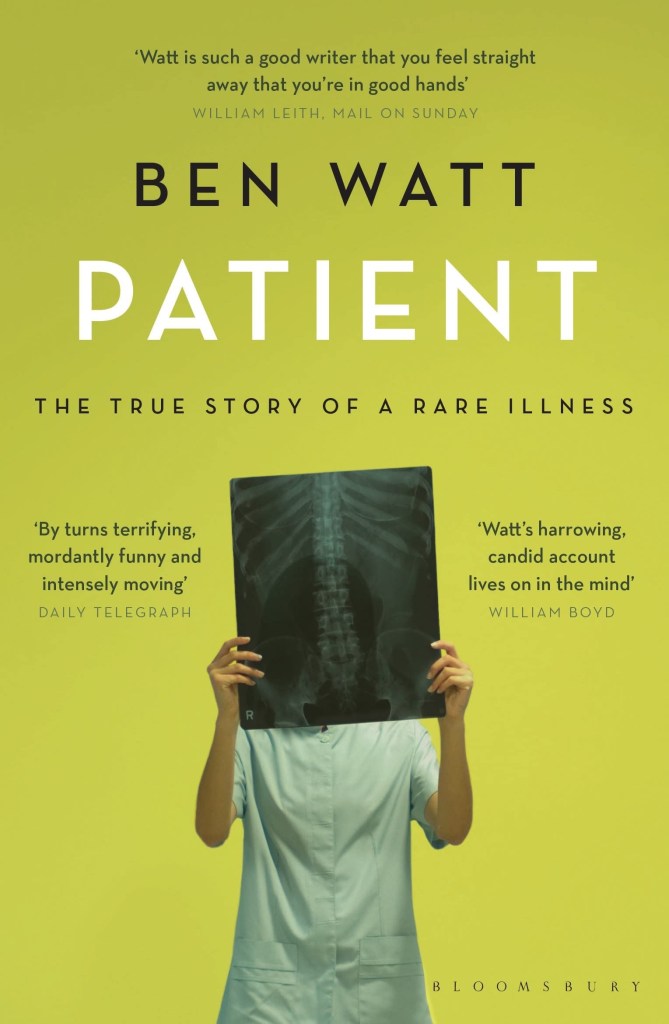
‘In the summer of 1992, on the eve of a trip to America, I was taken to a London hospital with bad chest pain and stomach pains. They kept me in for two and half months. I fell very ill – about as ill it is possible to be without actually dying – confronting a disease hardly anyone, not even some doctors, had heard of. People ask what was it like, and I say yes, of course it was dramatic and graphic and all that stuff, but at times it was just kind of comic and strange. It was, I suppose, my life-changing story.’

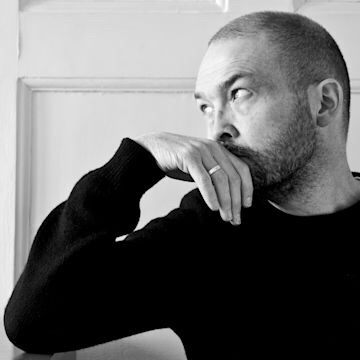
Benn Watt is half of the band Everything But The Girl and his short memoir covers a period when his bandmate Tracey Thorn was also his partner. In 1992, when I was taking my ALevels and listening to his band, Ben contracted a rare life-threatening illness that baffled doctors and required months of hospital treatment and operations. This is the story of his fight for survival and the effect it had on him and those nearest him. I recommend this book because it is beautifully written and captures the feeling of being seriously unwell perfectly. He describes coming institutionalised, so in sync with the day to day running of the ward that he could tell to the second when the newspaper lady was going to enter the ward. I love his play on ‘Patient’ as noun and verb at the same time, the patience it requires to endure the diagnostic process and to cope with what I call ‘hospital time’ – where ‘I’ll be a minute’ means half an hour. Only two years after his book is set, I was going through my own lengthy periods of hospitalisation, enduring unpleasant tests and realising there are limits to medical science. It’s an incredibly scary place to be and Ben conveys that so well, as well as the strange feeling when discharged when the patient goes from totally dependent to alone. I remember after a lengthy hospital stay, sitting in my flat thinking it was getting close to mealtime and that I was hungry, then a second later realising I had to make my own food! What he captures best is the realisation that what he expected to be a short interlude in his life, is actually becoming his life. The narrowing of his horizons from someone who toured the world to a resident of a single ward, or even to an individual bed.
Ben Watt

Red Carpets and Other Banana Skins by Rupert Everett
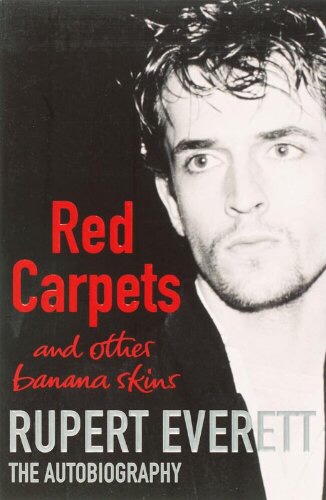
I became fascinated with Rupert Everett after seeing him on Graham Norton’s chat show and finding him both hilarious and painfully honest, both about himself and others. I loved his wit and comic timing in My Best Friend’s Wedding and especially in the Oscar Wilde films he starred in. I was pleased to find he was a devotee of Wilde, who wanted to make an honest film about his later life. My best friend from university always sends me a book at Christmas and I was lucky enough to receive a signed copy of his second memoir Vanished Years. I made sure I found a copy of his first memoir above so I could read them back to back. They both lived up to my expectations. I seem to remember first noticing him in conjunction with Madonna back in the 80’s and he had come across as a pretty boy in that context, but there is so much more to that rather spoiled exterior. His performance in Another Country was exceptional and his eventual film of Oscar Wilde was extraordinarily moving, but it is the drama of his private life that has attracted more attention than his talent. These memoirs show that he has always been surrounded by interesting and notorious people, becoming friends with Andy Warhol by the time he was 17. He has been friend to some of the most famous women in the world: Donatella Versace, Bianca Jagger, Sharon Stone and Faye Dunaway. This notoriety and films such as Dunstan Checks In overshadow incredible work with the RSC and I finally saw him shine on stage in the West End as Professor Higgins in Pygmalion.

I have always known, from his interview with Graham Norton, that Everett is a raconteur, but these memoirs show he can write a great story too. He has an uncanny ability to be at the centre of dramatic events: he was in Berlin when the wall came down, in Moscow at the end of Communism and in Manhattan on September 11th. The celebrity stories are deliciously gossipy and terribly honest. It seems Everett doesn’t hold anything back, whether he’s lampooning someone else or himself. His second memoir is again mischievous, but also touching with stories from childhood and early life. He takes the reader on an amazing journey around the world and from within the celebrity circus from LA to London. I loved the addition of family stories, such as a pilgrimage to Lourdes with his father that is both hilarious and moving. There’s a misguided step into reality TV that goes horribly wrong. A lot of celebrity authors are easy on themselves, writing solely from their own perspective rather than presenting life objectively. Everett is unfailingly honest, presenting his flaws and tragedies with the same scrutiny and irreverence he gives to others. Both books are incredibly enjoyable, a journey with the best and most disreputable storyteller you will ever meet.

Rupert Everett as Oscar Wilde

The Storyteller by Dave Grohl.

One of my favourite video clips recently was of the Westboro’ Baptist Church protesting outside a Foo Fighter’s gig. Then with perfect timing around the corner came a couple of majorettes, followed by a flat bed truck with a band playing The Beatle’s ‘All You Need Is Love’. On the back stood Dave Grohl with a microphone, shouting out their love for the protestors. I’ve always known that Grohl was a good guy and despite only enjoying some of the Foo Fighter’s music I’ve always thought he was an interesting and enlightened person. I’ve also wondered how he recovered following the suicide of Nirvana front man and personal friend Kurt Cobain, an event that stood out in my mind in the same way the death of John Lennon did for my parents. I loved Grohl’s humour and willingness to make an idiot of himself. My best friend and I rewatched the Tenacious D video for Tribute where Grohl is painted red and given an amazing pair of horns as Lucifer. I was bought this book last Christmas by my stepdaughters. However, it was only recently, after the death of another bandmate and friend Taylor Hawkins, that I picked it up and read a few pages every night in bed.

Grohl addresses my reservations about about celebrity memories straight away, stating that he’s even been offered a few questionable opportunities: ‘It’s a piece of cake! Just do four hours of interviews, find someone else to write it, put your face on the cover, and voila!’. Grohl writes his early experiences with fondness and an obvious nostalgia. He found the writing process much the same as writing songs, with the same eagerness to share the stories with the world. He has clearly linked back to old memories and emotions, feeling as if he was recounting ‘a primitive journal entry from a stained notebook’. He has definitely embraced the opportunity to show us what it was like to be a kid from Springfield, Virginia with all the crazy dreams of a young musician. He takes us from gigging with Scream at 18 years old, through his time in Nirvana to the Foo Fighters. What’s lovely is that same childlike enthusiasm while jamming with Iggy Pop, playing at the Academy Awards, dancing with AC/DC and the Preservation drumming for Tom Petty or meeting Sir Paul McCartney at Royal Albert Hall, hearing bedtime stories with Joan Jett or a chance meeting with Little Richard, to flying halfway around the world for one epic night with his daughters…the list goes on. We may know some of these stories, but what he promises is to help us reimagine these stories, focused through his eyes. I’ve seen reviews that claim he has glossed over or withheld some of the truth of his experiences, particularly around Kurt Cobain with Courtney Love absent from proceedings. I don’t think this is being disingenuous, I think this is what Dave Grohl is like – generous, humble and honest with regard to his own take on events. Perhaps he feels other people’s stories are their own and not his to tell. I was so impressed with how grounded he is and how aware of the most important things in his life: his family; his daughters; his friends; those who remind him of where he’s come from; and lastly, his music.

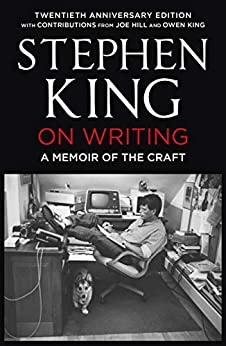
On Writing: A Memoir of the Craft by Stephen King.

Stephen King begins this memoir with the accident that he says has made the last twenty years of his life an incredible gift. With some humour he recounts being on his four mile daily walk and taking a break to relive himself in the woods. As he was returning to the road, a van driver was simultaneously trying to prevent one of his dogs rummaging in a beer cooler. This unlucky coincidence meant King was in a position to be struck as the van swerved off the road. A man who witnessed the crash watched as the impact threw King up and over the van, smashing the windscreen with his head and propelling him into a ditch 14 feet away. Local man, Donald Baker, found King ‘in a tangled-up mess, lying crooked, and had a heck of gash in his head. He kept asking what had happened.’ The van driver seemed devoid of emotion or panic, claiming he thought he’d hit a deer until he noticed King’s bloody glasses on his front seat. In a strange parody of his bestselling novel Misery King was left hospitalised with a shattered hip and pelvis, broken ribs, a punctured lung and fractured femur. The driver died only one year after the accident, from unrelated causes. It took King months to recover, with some limitations remaining to this day.

This strange hybrid book comes out of that time, from that trauma which affected him mentally as well as physically, back to his childhood, his early adult life, his marriage and the drinking that nearly cost him his relationship. If people read this hoping to read a masterclass or a shortcut to writing a bestseller, they’ll be disappointed. You don’t need a fancy masterclass to be a writer, you simply need to write. However, he does explore his own process and influences. There’s some practical advice on character building and plotting, showing how a spark of an idea was turned into Carrie. He also talks about pace, plots and presentation of a manuscript. He talks about he origins and development of certain books and uses examples of other writer’s work to illustrate what he’s advising. What he can’t do is identify that magic or spark that made him a No 1 bestseller for almost half a century. I enjoyed his stories about his early adult years when he was struggling financially, but was so persistent. The jobs he had to take to support his family, when the writing simply wasn’t paying. He was teaching by day and writing in the evenings. He also talks about the perceptions of him in the industry, perceptions I have always thought unfair, that despite incredible economic success and prolific output, he will never be considered a good writer. I loved his advice to write in a room with blinds and a closed door, if you’re not distracted by a view it is easy to disappear into a vista of your own making. He also plays loud rock music, but that wouldn’t be for me, I need silence or calm background music, no TV and no talking. It’s true that every writer needs their own best conditions for writing – although a closed door with no interruptions seems universal – you will need to find your own process. However, I do think he hits upon something important about life, like Dave Grohl, and that is the importance of family to ground us and stand by us while we create and especially when economic success does come.
Posted in Sunday Spotlight

Sunday Spotlight! Memoirs and Non-Fiction

I’m continuing my look at the books that have had a huge effect on me personally or helped me to make a difference in my life. If I’m facing a difficulty, challenge or setback in life I usually look for something to read about it. My late husband used to say that knowledge can’t be taken away from you and that the more knowledge you have, the more options you have too. I’m looking at four books today, all of them memoirs in different forms, but each quite different in how they communicate to the reader. Each one did make me think and I can honestly say I came out of each book feeling changed a little: whether it was energised and inspired; feeling less alone in the world; learning how to face life’s obstacles or reaching an emotional catharsis.

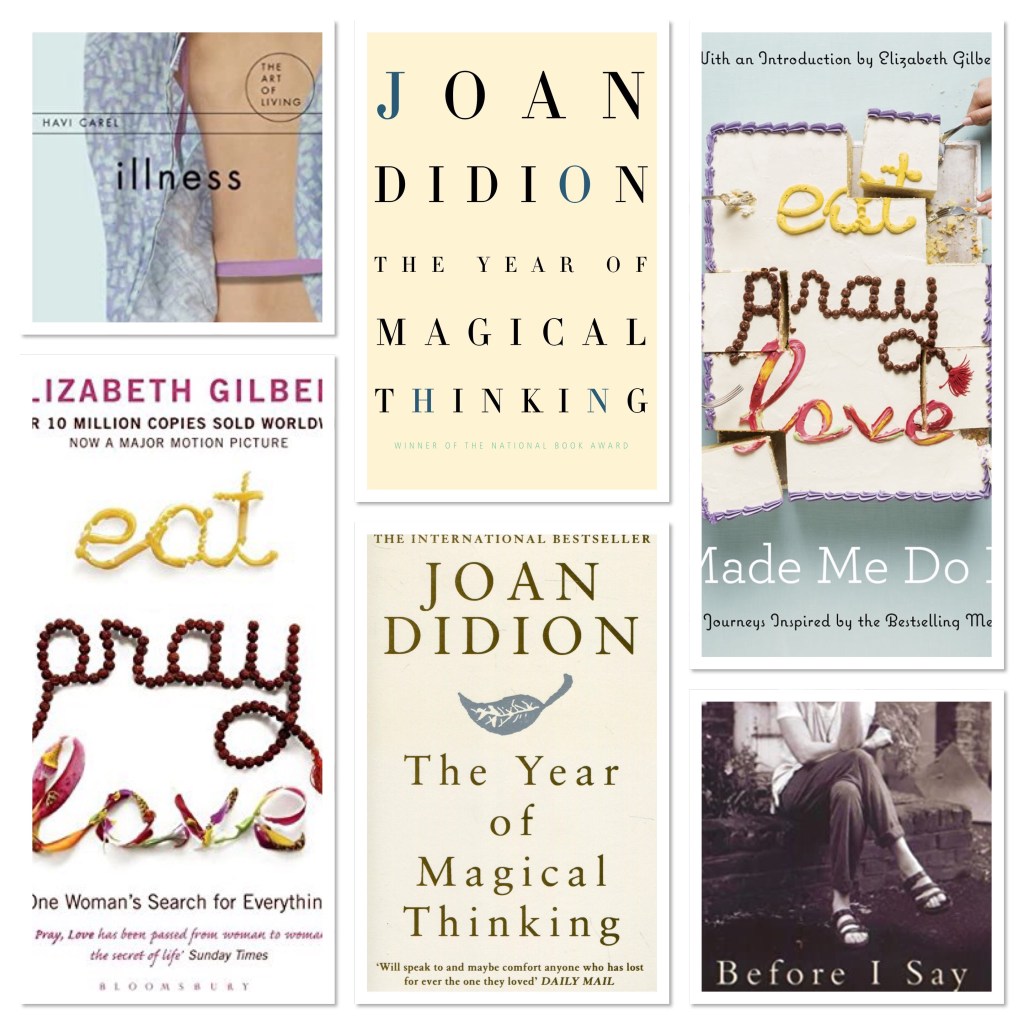
The Year of Magical Thinking by Joan Didion.

Joan Didion’s memoir is award winning for a reason. I found it a dense read in parts, but then my intelligence is probably far below Ms Didion’s level. However, there’s no denying the power of her opening chapter as she and her husband are preparing the table for dinner. Joan and her husband John had already been given the terrible news that their daughter had been placed on life support. Quintana had been suffering with flu symptoms, that became pneumonia and eventually septic shock. In the throes of grief, they are preparing for dinner when with no warning John collapses. John died from a heart attack instantly. In the maelstrom of emotions surrounding his death, Joan writes to make sense of what she’s thinking and feeling.

I found her writing raw and painful. I read this in my own grief and I recognised so much of the past year of my life in her descriptions. The way mind and body become disconnected; one carrying out the duties and routines of everyday life while the other is in another place. I felt like the bit that’s me, my ‘self’ had hunkered down deep inside the shell of my body, unable to cope with the shock of what happened. We were now in a world without my husband, where he didn’t exist. I think my ‘self’ was still in the one where he did. With her beautiful choice of words, Didion articulated a grief I didn’t have words for yet.

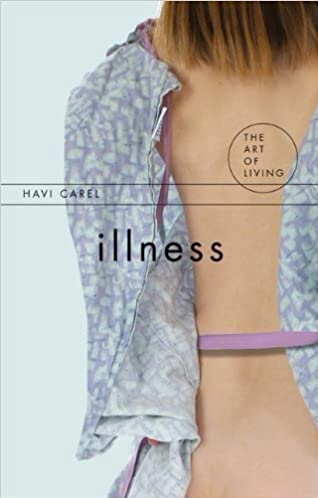
Illness by Havi Carel.

I came across this lesser known book when I was researching for a PhD. I was interested in the gap between a person’s perspective of their illness and the self presented in disability memoirs. My argument being that people write about their disability using certain tropes and archetypes – such as Christopher Reeve still presenting himself as superman. There is often a narrative of redemption or triumph that doesn’t relate to someone whose illness or disability is lifelong. I didn’t know whether these tropes were so ingrained in our society, there was only one acceptable way of writing about disability experience, or whether the truth simply doesn’t sell so publishers pressure writers to frame their disability this way. My supervisor suggested I needed to read Havi Carel’s book, because not only was she a professor in philosophy, she also had a long term illness that affects her lung function. What I was floundering around trying to describe was the phenomenology of illness – the ‘lived experience’ to you and me.

In some ways this is a text book, as Carel looks into what is illness? Is it a physiological dysfunction, a social label, or a way of experiencing the world? How do the physical, social, and emotional worlds of a person change when they become ill? Can there be well-being within illness?Carel explores these questions by weaving together the personal story of her own illness with insights and reflections drawn from her work as a philosopher. Carel’s fresh approach to illness raises some uncomfortable questions about how we all – whether healthcare professionals or not – view the ill, challenging us to become more thoughtful. A scene where Carel is devastated during a test of her lung function, because the result shows a decline, is so much worse because of the cold, unfeeling, practitioner. I had tears in my eyes reading it. Illness unravels the tension between the universality of illness and its intensely private, often lonely, nature. It offers a new way of looking at a matter that affects every one of us, because every one of us can become ill or disabled in our lifetime.

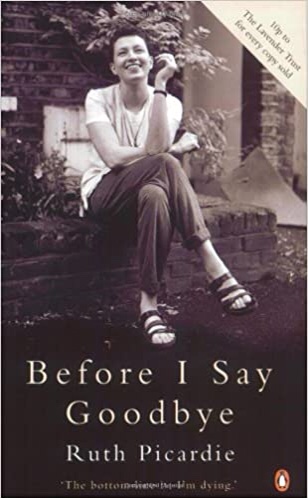
Before I Say Goodbye by Ruth Picardie.

Back in 1998, way before Dame Deborah James and You,Me and the Big C, there was Ruth Picardie. Her column in The Observer was read by millions and it was the cancer experience laid bare. Searingly honest and raw about her illness one minute and the next the day to day routine of being a Mum to two small babies. I loved how Picardie debunked those myths and archetypes of illness. How people still associate being ill with the old Victorian consumptive idea of wasting away. Those who are ill should at least be thin. However, as a result of steroid treatment for a secondary brain tumour, Picardie gains weight and has the characteristic ‘moon face’ that I remember from my own steroid days. She is angry with herself for being shallow, especially when she has to dress up for a wedding and nothing fits. She expected that being faced with death, she might be able to let go of the small stuff that doesn’t matter. It does matter though and she goes to Ghost to buy one of their flowy maxi dresses to make herself feel beautiful. She documents the progress of her cancer without holding back and when she can no longer do so, around two days before she died, her husband and sister Justine conclude.and put a frame around this collection of diary events from The Observer. This is a tough one, because I know the context is needed, but losing her narrative voice and hearing her sister Justine’s still chokes me up today. Ruth died from complications following the misdiagnosis of breast cancer in September 1997, leaving a young husband and two-year-old twins.

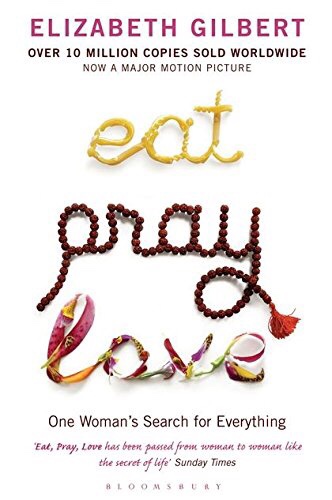
Eat, Pray, Love by Elizabeth Gilbert

I read Gilbert’s book before all the hype and the film version. I’d been on holiday and picked it up as an easy read and I was hooked by page one. Liz Gilbert has a way of writing that makes the reader feel like it’s just you and her, two friends having a catch up after a long time apart. It’s an intimate and honest account of how she found herself again after a marriage breakdown and a long term relationship that wasn’t healthy. She decided to take a long trip and broke it into sections, each one to feed part of her: body, spirit and heart. First she went to Italy for the eating part, then India for spirituality, then Bali which sounds like an absolute paradise and the perfect place to conclude a healing journey. If you read this as a simple travelogue you won’t be disappointed. Her descriptions of the food in Rome and Naples made me want to book a plane and the warmth in the friends she made there were really heartwarming. I found the discipline and struggle of ashram inspiring, it was her time to really go inside and work things out. She needed to confront what had happened in her marriage, forgive her husband and herself, then remember the parts that were good.

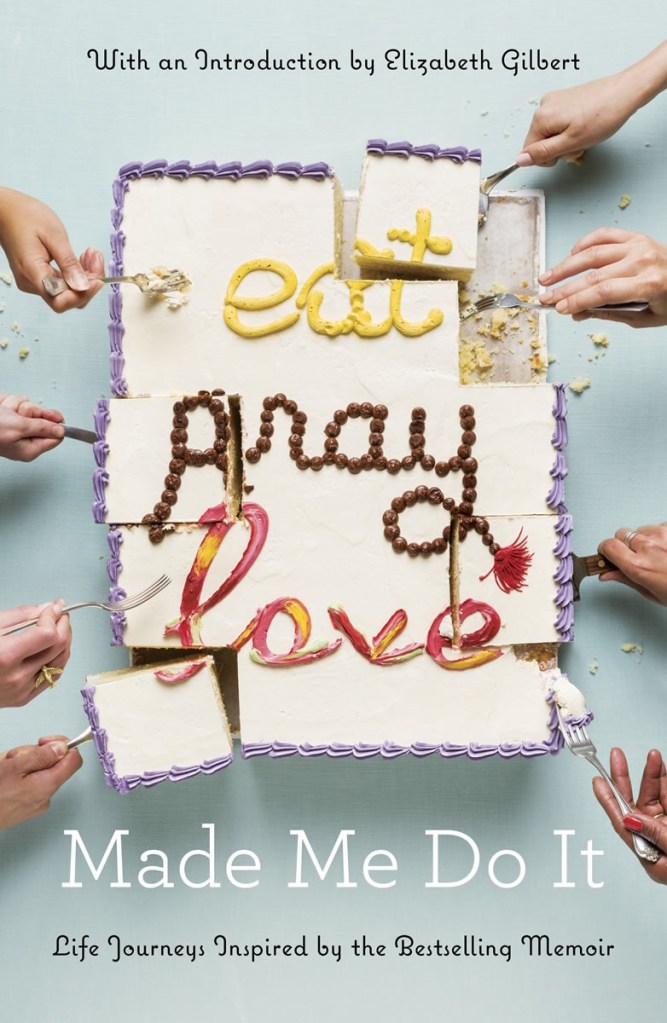
Bali is a like a warm place to land after all that mental work, where the people are welcoming and Liz finds work with a holy man transcribing his prayers and wisdom to make a book. Here she learns to love again and there was something that really chimed with me, when Liz meets a man at a party and they have a connection, she’s absolutely terrified about what it might lead to. She has worked hard and found her equilibrium and now her emotions are stirred up and unpredictable. She felt safe and grounded before, so she doesn’t want to lose it. I’d spent six years on my own, after the death of my husband I’d ended up in an abusive relationship and it had taken me a long time to recover. Then I met my current partner and I remembered back to this book and the wise friend who advised Liz to think of her life as a whole, it could only be balanced if it has periods of imbalance. Sometimes we have to throw ourselves into life. I used meditation a lot to keep grounded and it has changed my life in terms of improving mood and helping me cope with life’s difficulties. However, we can’t avoid life and stay in neutral all the time. When I read this with my book club there were mixed responses, the most negative being ‘it’s okay for some, able to swan off round the old and get paid for it’. It’s a valid point, but I never felt that. I thought she was in need of something drastic to get her life back on track and I didn’t begrudge her a moment of it. You might also like to try Eat, Pray, Love Made Me Do It. A series of stories about women’s journeys inspired by the book.

Posted in Publisher Proof, Sunday Spotlight

Sunday Spotlight: All About Evie by Matson Taylor

So I’m having a book blogger’s dilemma. The arrival of this book through the door made me do a little Snoopy dance! There are a few books I’ve earmarked as my most anticipated summer reads, but this is right up there as my mostest anticipated novel. I know, we bloggers do love to throw out superlatives here and there, but I’ve honestly been waiting for this book ever since I finished The Misadventures of Evie Epworth two summers ago. Now I’m in an awful quandary. I want to devour it in one go, but once I do, the moment will have passed and Evie is gone again. I don’t know whether Evie’s story ends this time, or whether there’s more to come, so I’m trying to hang on for a little while, at least until my fellow Squadettes are reading so we can talk about it.

If you haven’t read Matson Taylor’s first novel then where have you been? I think this is one book where reading the previous instalment of Evie’s adventures is really helpful. You have a whole new literary heroine to meet and I think knowing where Evie comes from is vital in understanding her. I’m not going to use spoilers so it’s safe to read on. In book one we met Evie in the 1960’s, the summer after O’Levels and before A Levels. Her only plans for the summer are reading, helping their elderly neighbour with her baking and, most importantly, getting rid of her dad’s girlfriend who would like to see Evie working through her summer at the local salon. Christine has moved in and is slowly trying to erase everything Evie loves about the farmhouse, including her Adam Faith wall clock and that won’t do. Evie and her dad would like things to stay as they were when her Mum was alive. They love their Aga and old country kitchen, but Christine wants Formica and a new cooker that’s easier to clean. Her wardrobes are wall to wall pink, synthetic fabrics and she colonises the kitchen with her Mum and lumpen friend, who’re usually in tow. Her dad can’t seem to see that his girlfriend and daughter don’t get along, there’s quite a lot of avoidance practised here, he’s often got his head in the newspaper or listening to the cricket scores, or just popping out for a pint. Whatever the tactic, it means he hasn’t heard anything. This problem needs another woman to solve it. So, when her neighbour has an accident and her daughter Caroline arrives to look after her, the three women put their heads together to deal with the problem, just in time for the village fete and baking competition.

All About Evie starts ten years on from the previous novel with Evie settled in London and working at the BBC. She has all the things a 70’s girl could wish for – including an Ozzie Clark poncho. Then disaster hits. An incident with Princess Anne and a Hornsea Pottery mug means she must have a rethink about her future. So what can she do next? Will she be too old to do it? Most importantly, will it involve cork soled sandals? I have no qualms in saying this is my most anticipated book of the summer. I think I’ll have to compromise and as soon as I have a two week gap from blog tours I’ll be delving in to find out what happens next….

I’ll keep you informed.

Published by Scribner U.K. 21st July 2022.

Posted in Publisher Proof, Random Things Tours

Freckles by Cecilia Ahern

It seems a strange admission to start a review with, but I’ve never liked Cecilia Ahern’s books. In fact P.S. I Love You brings me out in a rash. There has always been something too saccharin and sweet about them. So, when I was browsing NetGalley and saw her new novel I had pretty low expectations, but the blurb piqued my interest and here I am swallowing my words. So, when I had a chance to come on the blog tour, I had to take it. I wanted to let other readers, maybe those who hadn’t liked her other novels, know that Freckles is a fantastic read and I absolutely LOVED it.

Five people.

Five chances.

One woman’s search for happiness.

Allegra Bird’s arms are scattered with freckles, a gift from her beloved father. But despite her nickname, Freckles has never been able to join all the dots. So when a stranger tells her that everyone is the average of the five people they spend the most time with, it opens up something deep inside.

The trouble is, Freckles doesn’t know if she has five people. And if not, what does that say about her? She’s left her unconventional father and her friends behind for a bold new life in Dublin, but she’s still an outsider.

Now, in a quest to understand, she must find not one but five people who shape her – and who will determine her future.

Told in Allegra’s vivid, original voice, moving from modern Dublin to the fierce Atlantic coast, this is an unforgettable story of human connection, of friendship, and of growing into your own skin.

Our heroine, Allegra Bird, is quirky, surprising, incredibly loveable, and finds other human beings quite difficult to understand. She’s a parking warden in her little corner of Dublin and every day has a strict routine. She walks down to the bakery where owner, Spanner, greets her with a coffee and a Belgian waffle. She then follows her route, making sure that the same car is parked outside a certain hairdressers, then makes her way to where a yellow Ferrari is constantly illegally parked. She has a small flat in a large family home, with babysitting duties as part of the deal. On Fridays she goes to a small art gallery in town where there’s a life drawing class. It turns out she’s the regular model – I said she was surprising – and she is fascinated with how the artists approach her freckles. There are some freckles that she used to scratch into star constellations, and she’s fascinated to see if they ignore them or over dramatise them as if they’re huge, angry slashes. This is her daily routine, but when she gives the man with the yellow Ferrari his umpteenth ticket, something changes. He tells her she’s the sum of the five people she’s closest too and he doesn’t mean it as a compliment. As a reader we can see that from his perspective Allegra is a pernickety, humourless, jobsworth. However, we also know that Allegra is sensitive and this really hits home with her. She doesn’t have five people – but what if she could curate her five from people who inspire her or who are really successful? If the theory is correct, then by curating her five she could curate her life, becoming more successful in the process.

The joy I felt in this novel was from seeing how Allegra related to other people. For her, other people behave in totally illogical ways (and I have to say I was in agreement with her about some of them – particularly her dreadful landlady). I loved the relationship with Tristan, built from his inability to park his Ferrari legally. She thinks she’s simply being helpful by taking him forms for permits, so is baffled when he illogically persists in paying from hour to hour, relying on his rather lazy staff to keep an eye on the time. These two hate each other at first, but watching as they try to understand each other is wonderful. When Allegra goes back home to visit her Dad she thinks she might slot back into island life easily. She imagines, like people do when they move away, that nothing will have changed when they return. Will old friends be there for Allegra and make up her five? When she’s with her Dad, we see where some of her quirks come from, because he isn’t the best at picking up other people’s signals either. She finds out he’s been stopped from attending his choir because he’s made a pass at one of the administrators, who has felt uncomfortable and made a complaint. He’s a man stuck in the behaviour of an earlier decade, he seems baffled that just touching a woman on the knee is enough to be labelled a pervert. He has brought Allegra up by himself, but she had come to an age where she wanted to know more about her mother and life beyond this place stranded in the Atlantic. When the results of her search are revealed, I was genuinely surprised. I felt so protective of Allegra by this point, I was desperate for everything to work out the way she wanted. It was this hope that created so much tension towards the end, and I couldn’t stop reading.

I loved Allegra’s unique voice as she lets us into her mind and her world. This wouldn’t be a Cecilia Ahern book without being heartwarming and full of humour, but this story is more complex than that. There are darker characters, parts that are more painful or remain unresolved, that show a real maturity and development. It’s about being proud of where you’re from, but also finding your authentic self – a journey that sometimes needs some distance from where we grew up. The author contrasts genuine, warm and accepting people with the false, Instagram brigade who are more interested in how life looks than how it is. Her characters are brilliant here, more complex and nuanced than I’ve seen before. There are even some that turn out to be deeply narcissistic and I wanted to protect Allegra from them. I loved the contrast between the city streets of Dublin and the wild Atlantic island Allegra calls home. In a way this is the decision she has to make. Where is home? Which place truly suits the person she is instead of the woman she thought she had to be in order to be accepted. Does she know that when we are our authentic selves, we attract people to us anyway. Our true five perhaps? All through the novel I found myself responding emotionally to the story, but Allegra’s character simply made me smile and perspective on her world made me smile inside. Not that she needs it, because I know millions love her writing, but if Ahern keeps writing characters like Freckles, she has found herself a brand new fan.

Meet The Author


After completing a degree in Journalism and Media Communications, Cecelia wrote her first novel at 21 years old. Her debut novel, PS I Love You was published in January 2004, and was followed by Where Rainbows End (aka Love, Rosie) in November 2004. Both novels were adapted to films; PS I Love You starred Hilary Swank and Gerard Butler, and Love, Rosie starred Lily Collins and Sam Claflin. 

Cecelia has published a novel every year since then and to date has published 15 novels; If You Could See Me Now, A Place Called Here, Thanks for the Memories, The Gift, The Book of Tomorrow, The Time of My Life, One Hundred Names, How To Fall in Love, The Year I Met You, The Marble Collector, Flawed, Perfect and Lyrebird. 

To date, Cecelia’s books have sold 25 million copies internationally, are published in over 40 countries, in 30 languages. 

Along with writing novels, Cecelia has co-created the US ABC Comedy Samantha Who? and has created many other original TV projects.

Posted in Damp Pebbles Tour

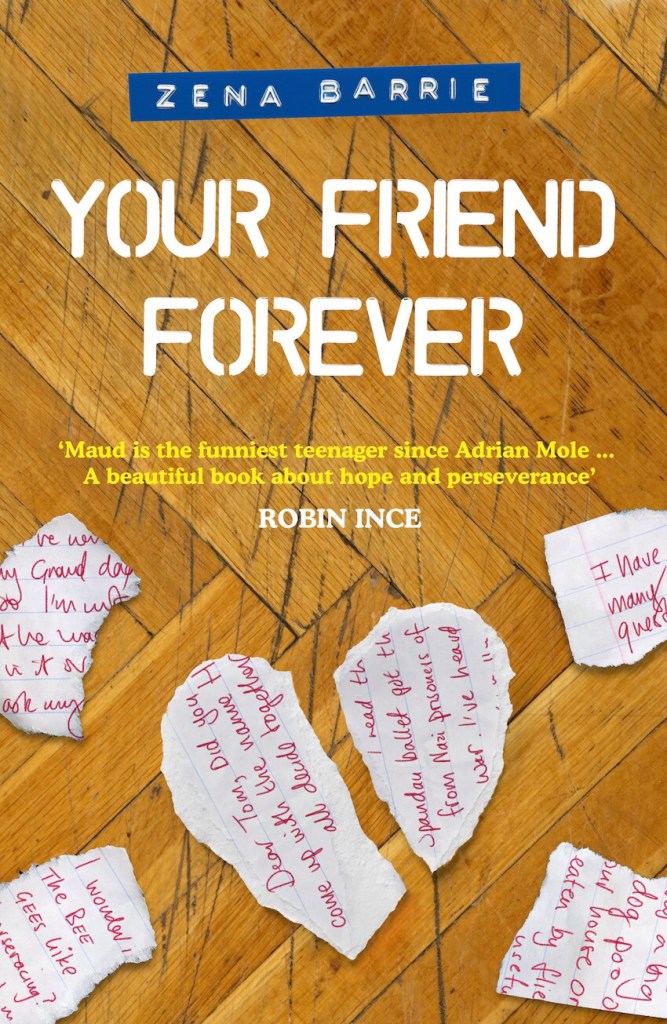
Your Friend Forever by Zena Barrie.

I was thrown back into a time warp with this book from Zena Barrie, because I was almost the same age as Maud at the same time. In the early eighties I was given my first cassette player and I loved Adam and the Ants – it think it was the same year I was given a stage make up kit so I could paint the white stripe across my face, although it didn’t have the same effect on an adolescent girl. I understood completely the place that Maud found herself in, a turbulent time at home and no one to talk to, plus being fascinated by a musician for the first time. I used to get Smash Hits and cut out lyrics and photos to collage on my note books. Maud picks up a pen and paper and writes to the lead singer of her favourite band Horsefly. While the family carries on with their own drama, Maud is asking Tom what to make of it, but also some of the bigger questions in life. Will her Mum and Dad get back together? Are teachers naturally clever people? Is her teacher Mr Hanson really having a wank in the stationery cupboard?

The author has that brilliant skill of making us laugh on one hand, while also being incredibly poignant at the same time. It reminded me of Sue Townsend and her wonderful teenage diarist Adrian Mole who manages to be hilariously funny while also worrying about life’s dramas that keep going on all around him. It’s not all fun for Maud as her Dad leaves, they can’t afford much so she’s often hungry, and the house is damp. Her clothes aren’t always washed and sometimes they don’t fit. Her mum is really struggling with depression, which comes across from her appearance and lack of care. The school don’t notice, which is so upsetting, although safeguarding in 1980 was different to the stringent regulations schools abide by now. Neglect is a very hard thing to call or prove, but terrible for the child involved. Yet through it all Maud is her charming, funny and endlessly questioning self. Not that she wants to make these enquiries of her friend Sarah, because she’s bound to get an answer that revolves around sex. In between there are snippets of interviews and exchanges of Tom’s that show us Maud really has very little idea about how a young music star would behave or spend his time.

We then jump to 2011 where Maud is 43 and married with two children. Tom meanwhile, is still trying to revive his career. Is Maud his only fan though? She begins corresponding with him again and I loved the brilliant way the author has written the narrative of a middle- aged woman, but with the same character that we’ve got to know from her teens. She’s still so open and confessional, but with some wisdom and experience. Tom is her sounding board, her journal, the person who has been there all the time. He hasn’t ‘known’ her, but she feels that connection, because he’s heard all her teenage secrets she’s held nothing back. In the same way she did as a girl, Maud uses her letters to Tom to understand herself and to stay sane in difficult times. The most poignant thing about her letters are that she hasn’t yet lost hope that things will get better. I think people will enjoy this, especially those who remember their teenage years with fondness.

Meet The Author.

Zena Barrie lives in Manchester and runs the Greater Manchester Fringe and the Camden Fringe. She ran the Kings Arms pub and Theatre in Salford for a while and also the Etcetera Theatre in Camden, as well as working in a wide variety of roles at the Edinburgh Fringe (from street performer to venue manager). In the 90s she did a degree in Drama and Theatre Arts specialising in playwriting. Up until recently she has been co-hosting the award winning spoken word night Verbose. She is also one half of performance art duo The Sweet Clowns. Your Friend Forever is her first novel. @ZenaBarrie