Posted in Publisher Proof

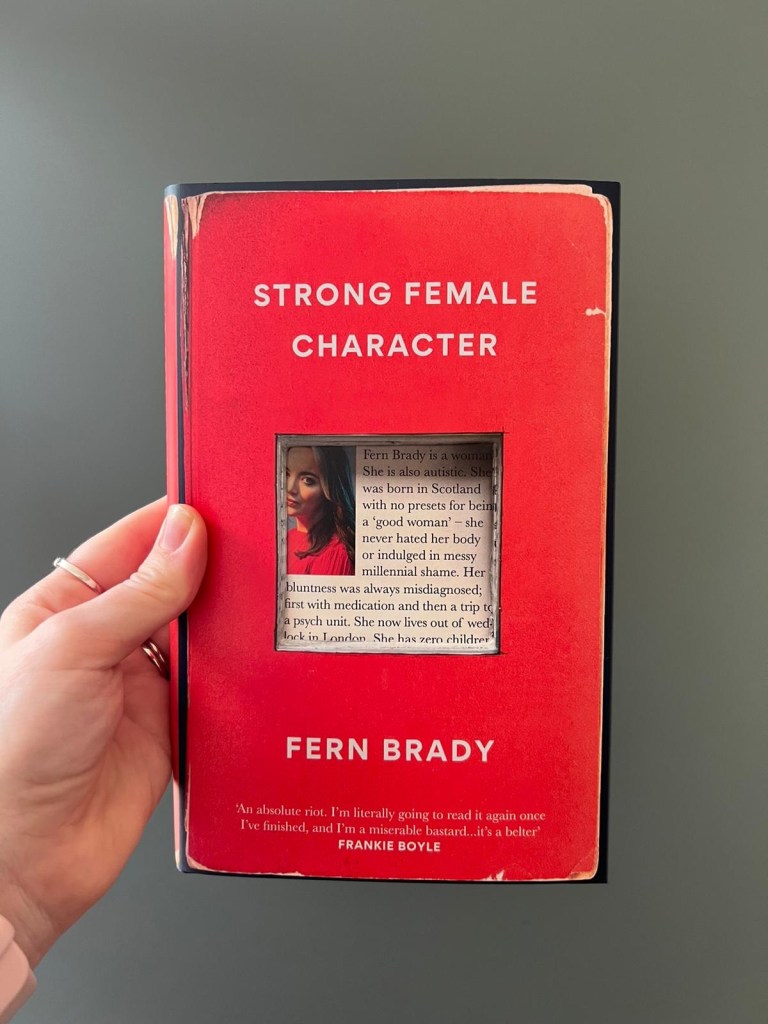
Strong Female Character by Fern Brady

When I received an email asking if I’d be interested in a finished copy of Fern Brady’s memoir I was typing ‘Yes please’ before I’d even finished reading the email. Something about Fern made me sit up and take notice when I was half-watching a late night showing of Live at the Apollo. She was such an interesting mix of intelligence, wit, forthrightness and that little bit of indefinable magic that captures an audience and takes them with you. By the time she appeared in Taskmaster I was a big fan. If you listen to my partner, this was because of her approach to tasks, which is very like my own. She dissected tasks in a very analytical way that was completely obvious to her, then when her team mates didn’t catch on (quite often in one case) she would speak to them as if they were insufferably stupid. Apparently the look in Fern’s eyes and her tone of voice reminded him of me watching a quiz show or reality series. Every Monday I become inexplicably wound up by Mastermind, especially when contestants pass questions instead of just throwing an answer out there. It’s obvious to me that if passes count against you in the tie-break situation, it would be better to simply shout ‘banana’ if you don’t know the answer. They might look stupid but they’d have no passes. So I guess I felt something of a kinship with her and the way our brains work, although in other respects we couldn’t be more different.

I had heard that Fern was recently diagnosed as on the autistic spectrum, a very hard won diagnosis for women and something I’ve had some experience of in my mental health work. Any mental health team has it’s share of people who are neuro-divergent, especially older people whose schools were simply unaware of the condition, whatever gender the individual might be. I’ve seen first hand the devastation that can be caused by undiagnosed autism. The inability to fit in at school, the crippling ‘shyness’ that leads to bullying, subsequent depression and anxiety, institutionalisation from long periods on psychiatric wards, coping strategies such as self-imposed isolation, drinking or drug taking. Then all the social issues that come along with these difficulties, like struggling to find or keep employment, poverty, neglect or even being preyed upon by those in society who look out for people to cuckoo or subject to modern slavery. This may sound extreme to some, but I’ve personally seen all of the above happen to people who were not diagnosed early. Not that diagnosis is the cure for all of these terrible life circumstances, but labelling does help because it enables the individual to access benefits, housing, support and some degree of protection in society. Fern was one of these people, born in an era when diagnosis was more common, but usually reserved for boys. The problem is that autism looks very different in women – women don’t fall into the Sheldon Cooper, no girlfriend, obsessive, Star Trek loving, nerd stereotype.

Fern was diagnosed exactly twenty years after she first told a doctor she had autism. Prior to that doctors told her she couldn’t possibly be autistic because she made eye contact and she’d had boyfriends (as if the ability to maintain a heterosexual relationship inoculated you from being neuro-divergent). One night after performing, Fern told her boyfriend that an audience member thought she might have Asperger’s and she should read a book called Aspergirls. She wasn’t sure she wanted to, but as her boyfriend started to read up on it he said to her ‘this is an exact description of you’. Often the signs of autism are simply missed in women because we have become too good at disguising or masking how we truly feel in a situation. Women are able, particularly in a work environment, to put on a mask. For example, all through school and university I was terrified of public speaking. I didn’t want everyone’s eyes on me, I would start to feel hot, sweaty and go completely purple in the face. Eventually I became so embarrassed about being purple in the face I became anxious about that too. These symptoms were exacerbated by a terrifying exercise at the beginning of teacher training where we had to pick a song that told a story and then sing it, unaccompanied in our seminar group. I felt like my mum’s pressure cooker, shuddering with heat and pressure until it gave a high pitched whistle and she would let the steam out. It felt like that but with nobody on hand to release the pressure. When things like this happened and even now when I’m involved in confrontation I’m right back there sweating, with a face like a giant blueberry. I didn’t last a term. However, if I am teaching a whole class of people, like one of my therapeutic writing workshops, I barely break a sweat. I have put on the mask of an expert, someone who knows what they’re talking about and how much it can help. So, as an expert, I can do the task.

Fern struggles to fit in wherever she goes in life, whether it’s school, college or work. She can’t fathom the unspoken social codes that govern our existence, especially in groups of women. Her obsessions are not the archetypal trains, sci-fi or comics. As a child she was obsessed with learning languages, culminating in a successful application to Edinburgh University to study Arabic and Persian. She had no desire to visit the countries where these languages were spoken, she just loved doing verb drills and was running out of languages. She played the piano incredibly well at a young age too, but because these were seen as ‘positive’ pastimes it never occurred to anyone to label them as autistic tendencies. She funded her studies at university by stripping, somewhere she felt that she fitted in. Although that was probably due to the fact that most stripper’s dressing rooms have their fair share of misfits. She didn’t have to be herself in the club, she put on a persona and got on with it. The early years of her comedy career were harder, mainly because there were more social codes to navigate, such as having to pretend she would like to have coffee and ‘get to know’ someone instead of just asking if she could be considered for a panel show slot. Sometimes it felt as if people wasted years playing games just to work with someone, when a simple ‘do you want to work together?’ Would have sufficed. She noticed that people didn’t like her to be so direct, particularly standing up in meetings and asking what the point was? This was something I used to do regularly in my last job as an advocate for people with disabilities. I had a huge case load on part-time hours so if someone called a meeting with no obvious point I would ask if they could quickly get to the point so I could assess if it was worth me sitting there. I remember saying that I’d like to get back to my desk and ‘do some real work’. I was there for the clients who needed me, not my colleagues. In hindsight I can see why our receptionist was terrified of me.

I loved the honesty of this book. Fern is brutally honest, even about those things that perhaps don’t show her in the best light. Her frankness about the autism, but also the mental health problems and addictions she experienced as a result of remaining undiagnosed, is admirable because it will help people who are in that destructive cycle. Her teenage years are particularly fraught and painful to read, mainly because she’s totally misunderstood by those who are supposed to love her. I found Fern’s retrospective take on those years and her post-diagnosis discussion with her mother was particularly moving. Fern is staunchly feminist and I loved that her inability to read social cues meant she didn’t internalise some of the bullshit that still exists in society about how women should behave. When in a shared flat at university, her flat mates basically slut-shamed her for having too many men at the flat. Hilariously, Fern replies that there seven days in a week and she’s shown restraint by only bringing a man back four times. There are other laugh out loud moments like this, where Fern is more than happy to create humour from her situation. There were some similarities in religious upbringing that resonated with me and made me smile.

This is not the typical redemptive narrative arc memoir where someone transcends their illness/situation in order to tie up any loose ends and become the ‘superhuman’ that we should all emulate. I have a disability and this is a narrative trope I can’t stand to see in disability memoirs. People don’t overcome a permanent disability, whether it’s visible or invisible; physical or mental. We learn to accommodate it and live alongside it if we’re lucky. Fern shows that beautifully by describing her difficulties working within her industry with her diagnosis. She describes the Taskmaster experience brilliantly and it’s refreshing to read a celebrity admitting to ongoing issues with their health. It’s more of that brutal honesty she’s famous for and it helps to know that what we see on TV doesn’t come without it’s difficulties, particularly the meltdowns which are a result of the stresses and strains of filming. As you can probably tell I identified strongly with this book and I have wondered if it might be worth mentioning to my GP that I have struggled with social codes; have been told that people are scared of my rather forthright opinions and ideas; have physical crashes after periods of stress; avoid parties; have repetitive mind games or movements that calm me and help me go to sleep; prefer to deal with people in writing; watch repetitive programs that are calming to me; prefer to see friends one to one rather than socialise in groups of women. These may just be personality quirks, but I have wondered and could see how a label might help me understand some of my behaviours. I really welcomed Fern’s story in terms of understanding myself better, whether diagnosed or not, but I also admired her ability to bare her soul and find the funny in her difficulties.

Meet the Author

Fern Marie Brady (born 26 May 1986) is a Scottish comedian, podcaster, and writer. Before becoming a stand-up comedian Brady worked as a journalist. She achieved fame as a stand-up comedian by entering stand-up competitions such as at the Edinburgh Film Theatre. As a result of her success as a stand-up she was invited on to comedy panel shows such as 8 Out Of Ten Cats. In 2020 she became a podcaster when she co-created a podcast entitled Wheel of Misfortune.

Brady was diagnosed as being on the autistic spectrum in 2021, as an adult. She has been active within the field of autism education since learning of her diagnosis. She has written how she has been dealing with the diagnosis in her 2023 memoir Strong Female Character.

Posted in Netgalley, Publisher Proof

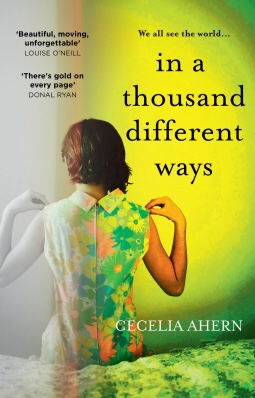
In A Thousand Different Ways by Cecilia Ahern

Cecilia Ahern gets better and better. I loved Freckles, which I’d tried despite hating her early books (especially P.S. I Love You, a book I hated with such a passion I wanted to throw it on the fire). This was such a profound book and touched me deeply. It was no stretch to believe in our heroine Alice and her ability to see people’s emotions as colours. I could also empathise with how difficult it is for her to cope with. I identified with our heroine so strongly, both physically and mentally. To explain, ever since I was diagnosed with MS I get strange crossed wires with my senses, especially around sight and taste. If I see a beautiful display of daffodils, I suddenly taste delightfully sour sherbet lemons and my mouth waters to the point of pain. Every so often, if I’m anxious, the smell and taste of Mum’s cottage pie drifts in and I can actually experience it as a physical sense. It’s obviously something that’s comforting to me. These experiences are as vivid and real as if what I smell and taste is directly in front of me. I think this ability to make strange connections and perceive senses in different ways also stretches to other people’s emotions. There are times when someone walks into a room when I can feel their emotion as strongly as my own. It goes beyond a knowledge of body language, I can actually feel their anger, confusion, grief or joy in my own body. As you can imagine this has been incredibly useful in my counselling work, but it’s also completely exhausting, especially when a lot of people are around.

Alice is from a dysfunctional family and we’re thrown directly into their daily life, where elder brother Hugh and Alice are desperately trying to keep their family together. Alice has to get her younger brother up and ready for school, trying so hard not to wake their mother Lily and incur her wrath. Sometimes when they return Lily still hasn’t surfaced, but if she has it’s still best to remain under the radar because she’s usually irritable, lethargic and unable to connect with her children. Other days they may come home and find Lily up, dressed and full of energy. She may be frantically cooking pancakes, multiples of them, while working out the overheads of running a mobile pancake van. This tendency to flit between extremes is spoken of in whispers between the children, quick warnings to brace themselves or expect the worst. One day after school Alice comes home and finds Lily still in bed, even worse there’s an eerie blue mist emanating from the bed and filling the room. Alice fears the worst and rings an ambulance, then runs into her room and hides. It’s only when she hears her mother screaming and swearing at the paramedics that she realises Lily is alive. What’s baffling to Alice is that no one else seems to see the blue colour emanating from her mum.

I absolutely loved the way the author described Alice’s adjustment to having this vivid colour display wherever there are people. In the school environment it’s a nightmare for her, everyone gives off a different mix of colours, moving and flashing at her eyes until she starts to suffer migraines. Her insistence on wearing sunglasses to school brings her to the teacher’s attention and they think she’s playing up and being insolent. Hugh knows though and seems to realise instinctively that it’s part of Alice’s hyper-sensitivity; the colours are simply a physical manifestation of her ability to feel other’s emotions. Alice is what might be called an empath, she has a highly tuned radar for the moods and sensitivities of people in close proximity to her. As a child she sees the negatives in her situation, mainly because she doesn’t have autonomy. If Lily is blue, red, or at worst black, there’s nothing Alice can do to avoid it. She can get out of the house if Lily hasn’t seen her, but that’s not always possible, leaving her at the mercy of her mother’s mood. The author brilliantly conveys Alice’s feeling of powerlessness and the fear she feels as she comes home, unsure of what will happen when she goes inside. Scenes where Lily is at her most angry, in one scene towards Hugh and his plans to go to university, the furious and messy black colour Alice can see is really menacing. Yet they go on hiding Lily’s condition, because the alternative is social services and possibly having to split the family up.

I found myself really worried for Alice, because in the swirl of colours and emotions that assail her every hour of the day how can she ever find peace? Between that and the terrible situation at home there’s never a moment for her to develop herself. We only know who Alice is in relation to everyone around her. She becomes subsumed by their emotions, needs and wants to such an extent that her own don’t get a look in. I was devastated by her choice to stay at home after leaving school with Lily and her little brother, who’s rapidly becoming a violent criminal. His antagonism towards Alice comes from being the baby of the family and not yet being able to view his mum objectively. Lily has the ability to threaten and manipulate quietly, deliberately under the radar of her youngest son. So he only sees Alice’s attempts to stick up for herself, which cause such a furore that in his eyes Alice is the problem. I was worried that she would never be able to leave home, follow a career or get married and have her own children. She has become so emotionally literate though and still worries about her family members, even the ones who treat her badly. I was worried she wouldn’t be able to discover her authentic self and develop the life she wants without leaving. One catalyst for change is the man she happens to see on his way to work. He stands out instantly because he isn’t giving off any colours and Alice is so fascinated that she follows him. Andy is a strange mix of both restful and mysterious. Alice has never had to work so hard on getting to know someone, it’s both scary and intoxicating to peel back the layers. However, when they’re just ‘being’ – taking a walk or watching a movie – Alice can relax fully, because she can’t sense all the colours lurking underneath the surface. I was intrigued to know whether this could mean he is Alice’s ‘one’, but also whether there were other colourless people in the world.

From the perspective of this reader with a disability it was so interesting to watch someone negotiate the world with a difference like this. I’d probably call it an ability rather than a disability. I loved discovering whether Alice grows to cope with her colours or moves beyond the difficulties of her childhood. As we moved through her life I forgot she wasn’t a real person, that’s how well-rounded a character she is. I felt like I was having a conversation with one of my counselling clients because of the depth the author goes to and the richness of her inner world. It was a surprise to see how her age and experience changes her relationships with other characters. I found the final sections of the novel, deeply moving and strangely comforting. I felt privileged to have moved through life with this extraordinary woman.

Meet the Author

After completing a degree in Journalism and Media Communications, Cecelia wrote her first novel at 21 years old. Her debut novel, PS I Love You was published in January 2004, and was followed by Where Rainbows End (aka Love, Rosie) in November 2004. Both novels were adapted to films; PS I Love You starred Hilary Swank and Gerard Butler, and Love, Rosie starred Lily Collins and Sam Claflin.

Cecelia has published a novel every year since then and to date has published 15 novels; If You Could See Me Now, A Place Called Here, Thanks for the Memories, The Gift, The Book of Tomorrow, The Time of My Life, One Hundred Names, How To Fall in Love, The Year I Met You, The Marble Collector, Flawed, Perfect and Lyrebird. To date, Cecelia’s books have sold 25 million copies internationally, are published in over 40 countries, in 30 languages.

Cecilia Ahern writes on her Amazon author page that the thread linking her work is in capturing that transitional period in people’s lives. She is drawn to writing about loss, to characters that have fallen and who feel powerless in their lives. She is “fascinated and inspired by the human spirit, by the fact that no matter how hopeless we feel and how dark life can be, we do have the courage, strength and bravery to push through our challenging moments. We are the greatest warriors in our own stories. I like to catch my characters as they fall, and bring them from low to high. My characters push through and as a result evolve, become stronger and better equipped for the next challenge that life brings. I like to mix dark with light, sadness with humour, always keeping a balance, and always bringing the story to a place of hope.”

Posted in Netgalley

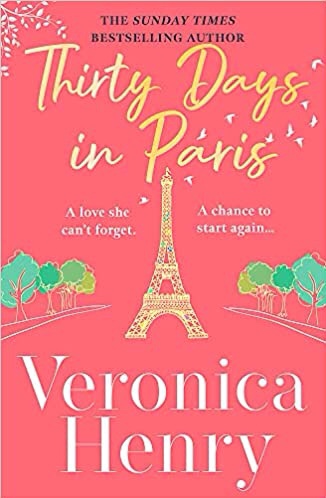
Thirty Days in Paris by Veronica Henry.

Because Paris is always a good idea…

Years ago, Juliet left a little piece of her heart in Paris – and now, separated from her husband and with her children flying the nest, it’s time to get it back! So she puts on her best red lipstick, books a cosy attic apartment near Notre-Dame and takes the next train out of London.

Arriving at the Gare du Nord, the memories come flooding back: bustling street cafés, cheap wine in candlelit bars and a handsome boy with glittering eyes. But Juliet has also been keeping a secret for over two decades – and she begins to realise it’s impossible to move forwards without first looking back.

Something tells her that the next thirty days might just change everything…

I hadn’t read any of Veronica Henry’s novels until I did a blog tour for her novel The Impulse Purchase. I found it delightfully escapist and optimistic while exploring female relationships, especially familial ones, in an interesting way. In her new novel we’re more focused on one woman; Juliet is a middle-aged, ghost-writer who’s at a huge crossroads in life. She and her husband have taken the very brave decision to separate as their last child leaves home for university. Most of their friends think they’re crazy, because the couple still get along, they’re probably the best of friends in fact. However, they feel they’ve drifted into two different paths. As her husband has embraced all things cycling – including the Lycra and the diet – Juliet isn’t enamoured and would rather curl up with a good book or go to the theatre. They’ve each become comfortable in their own routines and as the time to sell their large family home has come around, they can’t see the point of trying to meld their differing lifestyles into another joint home. So each will take half of the house sale and do their own thing and Juliet would like to take a trip into her past. Years ago, when she was still a teenager, Juliet went to work as an au pair in Paris, but returned in shame and sadness only a few month later. She has rented an apartment for a month to reacquaint herself with the city and spend some time writing her own story. However, revisiting the past is never easy and Juliet finds there are experiences she still needs to process and come to terms with.

I found reading this book a little lie watching Sex and the City or perhaps more aptly, Emily in Paris which I binge-watched over the Christmas period. Everything about Juliet’s time in Paris is simply gorgeous from the description of the patisseries near her apartment, to the clothes worn by her friend ….. and the work Juliet starts on her book project. Thanks to the two series mentioned, along with a teenage diet of Judith Krantz novels, I find Paris ridiculously romantic and imagine it full of quirky shops, artists, vintage bookshops and incredibly elegant women. Every walk she takes I was imagining the decorative shop windows, acres of pastel coloured macarons and fairy lit trees, not to mention the incredible bridges, cathedrals and art galleries. I’m also a sucker for transformation shows like the old Gok Wan and those wedding shows where people choose their dress and I also had that vibe too. This might seem like I’m making the book sound trivial or all about appearances, but it’s far from that. This isn’t just about visual transformation. The author takes what can be a difficult period in a woman’s life: empty nest syndrome; menopause; relationship breakdown and that sense of having lost who you are. Veronica Henry takes us into that process of grieving and growth and I kept reading in the hope Juliet would come to that place of finding herself – the person she is now and the way she wants the rest of her life to be. Before she can do that she needs to face what happened all those years ago when she was such a young girl and just starting out in life.

I really felt for the younger Juliet and these sections leapt off the page. I loved how brave she was in leaving her cozy home and family to do something completely different. That sense of being a fish out of water really comes across as she tries to settle into the apartment of the French family she’ll be living with. Her French is minimal and I could feel the nerves as she tries to fit in, especially when the children’s mother is quite volatile and erratic in mood. However, the father seems kind and tries to make Juliet feel at home by taking her out for Sunday lunch with the children. Juliet comes across as a kind young girl, good with the children and concerned about their mother whose moods fluctuate between treating Juliet like a little sister and angry, tearful outbursts. I warmed to Juliet because she doesn’t become angry or resentful, but is worried that her employer is struggling as a working mum of three children and perhaps needs extra support. I had concerns about the way the children’s father acted around Juliet early on and couldn’t decide whether he was trying to make her feel like family, or whether the late nights, sharing a bottle of wine, might lead to more. Juliet’s affections are completely engaged by Luke as soon as they meet. Her friend calls it a ‘coup de foudre’ or love at first sight and it does seem to be an immediate connection, as if their souls know each other before they even speak the same language. In the present day sections, Juliet hints at a disastrous ending to her time in Paris and a separation from Luke that leaves unfinished business. I wondered whether she would feel the urge to reconnect and explain what happened all those years before.

If you’re looking for an enjoyable, escapist read this winter/spring then this is definitely the book for you. Juliet is interesting and her earlier years in Paris really help us understand her character’s choices later on. I wondered how much her stable, but safe, marriage was a response to these early romantic mistakes and terrible heartbreak. I would say that her return to Paris, especially her rekindled friendship with Nathalie, brings out her spontaneous and playful side. Nathalie takes risks, from visiting less salubrious parts of the city, to accepting random invitations and wearing some quirky outfits. Their friendship picks up where they left off and I would definitely be the demographic buying Nathalie’s memoir and cookbook. I loved the way Juliet tackled what happened in the past and it showed the difference in attitudes between then and now; where once Juliet took on a lot of the blame, she can now see other people’s part in what happened and how they took advantage of her naivety. While I wasn’t necessarily rooting for a romantic ending to the story I was rooting for Juliet to build a totally new life for herself where she’s with the people who inspire her. I enjoyed the ending and felt it worked well for the character, especially when a call from home dangles her old safe life in front of her. I wanted her to continue growing and trying new things, because just reading about it felt like taking a holiday.

Meet The Author

I was so interested in reading Veronica’s author section on Amazon because it’s so personal. So I’ve reproduced part of it below.

‘People often ask me what kind of books I write and it’s a very difficult question to answer in one sentence. Primarily, I love to take my readers somewhere they might like to be, whether a gorgeous house in the countryside or on a seaside clifftop. There, my characters go through the trials and tribulation of everyday life, embroiled in situations and dilemmas we can all relate to. Love is at the heart of it, but all kinds of love, not just romantic: the love of friends and family, or a place, or a passion for what you enjoy (food, wine and books, in my case . . .)

I have a background in writing television drama (Heartbeat, Holby City) so that has been an influence – creating lots of characters whose lives impact on each other. Working on The Archers I was taught ‘Make ’em laugh; make ’em cry; but above all, make ’em wait’!

I hope my books are beautifully written, uplifting and a little bit escapist. I’d love to know what you think, so do leave a review. Or you can contact me via Twitter @veronica_henry, or on Facebook or Instagram @veronicahenryauthor

A little bit about me: I live by the sea and head to the beach every day with my dog Zelda. I love cooking and discovering new restaurants on city breaks, with a bit of yoga to offset the calories – and I’ve just bought an e-bike. My biggest writing influences are HE Bates, Nancy Mitford, Jilly Cooper and any book that has a big rambling house and an eccentric family.’ From http://www.amazon.co.uk

Posted in Paperback Publication, Squad Pod Collective

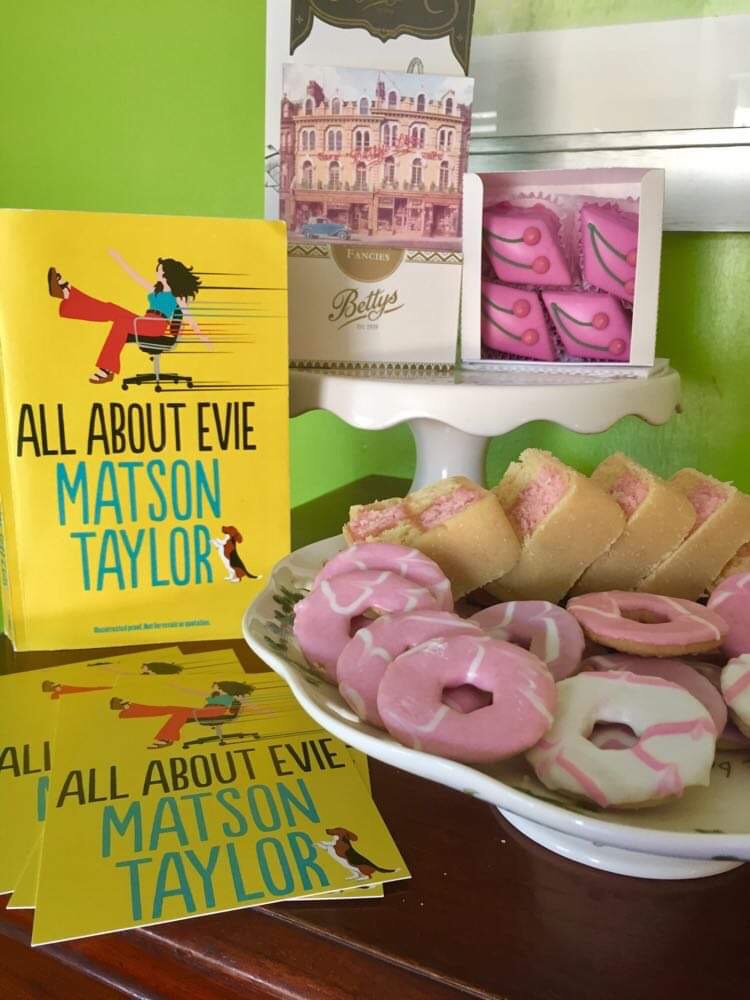
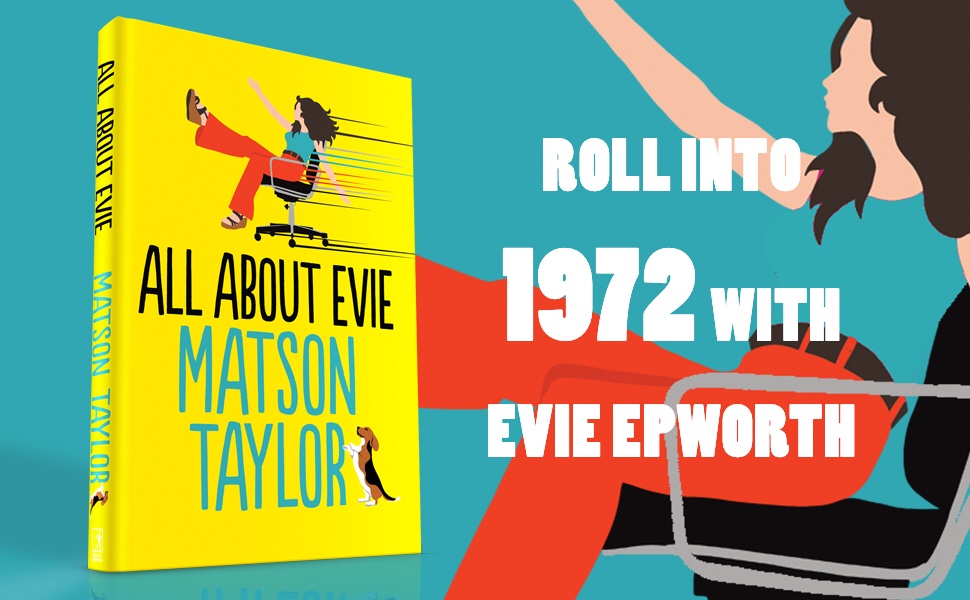
All About Evie by Matson Taylor

This novel is the second in Matson Taylor’s series following Evie Epworth (Yorkshirewoman, Fashion Lover, List Maker). So now, I can categorically say that each time I finish a book about Evie I have a big sunny smile on my face. Of course all books make us feel things, even if it’s to throw them out of the nearest window, but it’s a rare book that gives us a real physical reaction such as the spooky ones that give us goosebumps on the arms or lift the hairs on the back of our neck. I’ve only spontaneously burst into tears once, thanks to David Nicholls’s One Day and that twist none of us saw coming. Not only is Matson is great at those laugh out loud moments, such as the ‘cow incident’ that precipitated her car accident in the first book. As I finished All About Evie I found myself unable to stop smiling. This book feels like liquid sunshine being poured into your veins.

Our previous book ended as Evie is being waved off to an adventurous new life in London, alongside mentor Caroline, the unconventional and glamorous daughter of Evie’s lifelong neighbour and baking partner Mrs Scott-Pym. All About Evie starts ten years later in 1970’s London, where Evie is working in a junior role on BBC Radio Four’s Women’s Hour. Previously, we met Evie at time of great change and this novel is no different. Thanks to a terrible incident with a visiting Princess Anne and the misuse of a mug Evie is sacked from the BBC. Does this mean her life in her little London flat is in jeopardy? Caroline thinks this is an opportunity to try something new so Evie tries working in an art gallery. When it turns out art, particularly the modern variety, isn’t for her she lists things she’d like to do and falls upon the idea of writing for a magazine. She finds the magazine Right On in an office above a sex shop – handy windows for checking one’s hair before walking into the office – and asks for a job. Assuming she’s been a journalist at the BBC, NickStickUpBum and NickWithCollars agree to give her a trial on the listings pages, essentially long lists of what’s on in London across the arts from opera to poetry evenings. With the offer of help from Lolo (Radio Three producer, homosexual, basset owner) on the classical music listings, Evie decides to give it a go and sprinkle some sunshine over her work, in her own inimitable way.

In between Evie’s story there are a couple of flashbacks to other character’s lives. Evie’s neighbour Mrs Scott-Pym has died recently and we see her packing a case for Evie, with little artefacts to remind Evie of their time together – including a pestle and mortar wrapped in a tea towel of Bolton Abbey. Evie is grieving for her old friend, but the reminiscences become even more emotional when we realise that Mrs Scott-Pym was, aside from Dad Arthur, the only link back to Evie’s mum Diana. Preserving her memories of their friendship for Evie is so poignant and it does make Evie think about her future. Can she keep dating totally unsuitable men, who she carefully and comically lists for us, or does she want to meet someone she can share her life with? I thoroughly enjoyed the tension between Evie and her rather hippy dippy workmate Griffin. Griffin is a proponent of high culture and wants the magazine to remain intellectual rather than popular. So to try something a little more highbrow, Evie accepts Lola’s invitation to her first opera. Afterwards, NickWithCollars suggests she write a review for the magazine. This infuriates Griffin who thinks Evie is definitely low culture and would rather they published one of her own poems. When the men are out of the office, Griffin places herself in charge and gives Evie petty tasks to fulfil, often creating a mistake to trip Evie up or keep her working late. Evie tries to take the high road, but her yoga chant trick is absolutely brilliant and well deserved. I couldn’t wait for Griffin to receive her real comeuppance! Meanwhile, there’s a lovely friendship forming between Evie and Lolo, as well as his basset hound.

Yet underneath the humour, there’s so much more going on. A beautifully poignant thread running through the novel is that of motherhood. There are memories of Evie’s mum of course and we’re aware of all the life experiences Evie would have loved to share with her. Evie’s mum never got to see her grow and all that promise is encapsulated in one little throwaway object from the suitcase. Evie has many mother figures though, obviously Mrs Scott-Pym and her friend Mrs Swithenbank who gives Evie a call every week just to check in. Caroline and her lover Digby are disagreeing over the possibility of becoming parents, particularly as Caroline would have to carry the child and believes she doesn’t have that maternal instinct. However, both women have been invaluable to Evie, she even loves popping in and watering their plants while they’re away. Their house gives her the sense of having a family in the city, an anchor that keeps her from being swept away amongst the crowds. We see Evie draw on all these maternal figures when Mrs Swithenbank’s daughter Genevieve turns up in London in search of a fashion career. Genevieve carries just one suitcase, but is full of ideas and her outlandish outfits were so funny – one inflatable hoop dress brought back terrible memories of being stuck in a dress in Laura Ashley’s changing rooms and having to ring my Mum to get me out. Evie feeds Genevieve, lets her stay and starts introducing her to the right people. Every day she comes home, dejected from receiving lots of knockbacks, despite her inventive fashion portfolio. Every time Evie props her up and brings her spirit back. It was lovely to see Evie in this life stage, being the mentor and feeling so confident. As much as I love London, it was also nice to see her at home on the farm with old friends reunited and new ones being introduced, plus a very exciting finale which gives us a nod towards what Evie might do next. I can’t wait to celebrate this fantastic novel with a 1970s party. I’m hoping for a cheese and pineapple hedgehog and Babycham to toast this joyful new stage in the Evie story.

Published 21st July 2022 by Scribner UK

Meet The Author

Matson Taylor grew up in Yorkshire (the flat part not the Brontë part). He comes from farming stock and spent an idyllic childhood surrounded by horses, cows, bicycles, and cheap ice-cream. His father, a York City and Halifax Town footballer, has never forgiven him for getting on the school rugby team but not getting anywhere near the school football team.

Matson now lives in London, where he is a design historian and academic writing tutor at the V&A, Imperial College and the Royal College of Art. Previously, he talked his way into various jobs at universities and museums around the world; he has also worked on Camden Market, appeared in an Italian TV commercial and been a pronunciation coach for Catalan opera singers. He gets back to Yorkshire as much as possible, mainly to see family and friends but also to get a reasonably-priced haircut.

He has always loved telling stories and, after writing academically about beaded flapper dresses and World War 2 glow-in-the-dark fascinators, he decided to enrol on the Faber Academy ‘Writing A Novel’ course. All About Evie is his second novel.

Posted in Personal Purchase

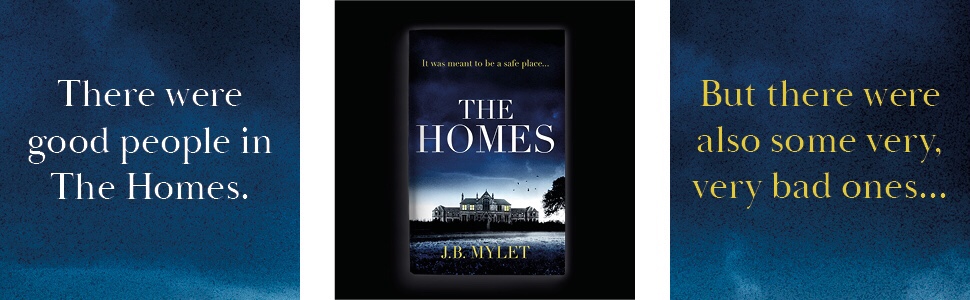
The Homes by J.B. Mylet

Lesley and Jonesy have been in foster care together ever since they can remember, in the same room and often in the same bed if Jonesy creeps in late at night. Our narrator is Lesley and she stands out as a little different from the other girls in the homes. She’s clever and goes to the grammar school instead of the one on site. She’s good at maths and seeing patterns in things, so what starts happening at the homes seems to her like a puzzle she can solve. Because someone at the homes is killing girls, possibly raping them and killing them. Who could it be?

The Homes are a sprawling institution made up of 30 cottages filled with the orphans of Glasgow and those needing care. So large, it has it’s own hospital, church and school, with every cottage run by a house mother and father with a Christian ethos. Set in the 1960’s and based on the Quarrier’s orphan village near the Bridge of Weir, where the author’s mother spent some of her childhood. He writes these girls as very isolated and dealt with at a distance, not just from their families, but from the staff too. He throws us in at the deep end with a morning that Lesley’s been dreading. Today she has to face the school bully Glenda, who lives a few cottages up. The adults know that Lesley is very likely to take a beating, but they do nothing. As she leaves for her school bus, Lesley can see a crowd of girls gathering at Glenda’s gate hoping for blood. It’s fair to say they get a bit of a surprise when the encounter doesn’t play out the way they expect. I felt as if the children were treated like animals, like when I’ve brought rescue cats home and left them to sort out their hierarchy amongst themselves. Even so, I would worry if any of them were distressed or fighting. These kids are fed, watered and disciplined, but they’re not cherished.

Only once called by her Christian name, Morag is known as Jonesey and she is a larger than life character. I loved the little characteristics that Lesley relates to us, such as the giggling in church, the constant chatter, and the way she often slips into Lesley’s bed at night but still isn’t restful. Even in her sleep Lesley is often woken by Jonesey’s jerking limbs, she’s like a puppy whose brain is asleep but whose body is still on the go. She’s absolutely irrepressible and incredibly loyal to Lesley, often waiting outside for her bus to arrive in the early evening, wriggling like that excited puppy again. By contrast, Lesley is outwardly very quiet. Her inner world is lively though, bright and full of questions. She has a dogged determination that helps her at school with tricky maths problems, but proves to be a nuisance to the police and the perpetrator of these terrible murders. Unfortunately, her amateur sleuthing is not quick enough to save the third victim. In between the case we learn a lot about the upheaval Lesley has suffered in life. She’s visited by her gran mostly, but she isn’t great at answering all the questions Lesley has. She’s clearly very fond of her granddaughter, but doesn’t want to get into the minutiae of why her mother placed her in care. Her mother visits less, but when the answers finally come there are painful truths to process. I was so glad she had Jonesey and her therapist Eadie but I worried for her going forwards and eventually leaving care. I bonded with Lesley, enjoying her intelligence and sense of fun as well as the way she coped with difficult situations.

A bit like Lesley I suspected every character along the way, knowing that people who work with children are not always doing it for the right reasons. There are people at the homes who are there for their own ends. There are various levels of abuse going on in the community. They’re forced into a religious upbringing they may not want and the expectations, particularly of girls, is tied up in that Christian morality. The discipline is down to each house parent and is always strict, but could also be violent and humiliating. At worst these children are preyed upon by the most horrific kinds of abuser and the tension builds towards a conclusion that not only unmasks a killer, but blows the lid open on everything that is wrong with the institution. I thought the historical setting was captured incredibly well, not so much the location but the emotional landscape of the 1960s. This was a time of secrets, when children were seen and not heard and definitely didn’t have rights. A time when young women were still shamed for their burgeoning sexuality and perfectly normal urges and their consequences. This was the time when my mother was growing up and it felt as if the author had the context just right. I thought the author perfectly balanced Lesley’s personal realisations and growth, with the tension of the murder investigation. As the inhabitants of Lesley’s cottage sit down for Sunday lunch with their houseparents, the Pattersons, she has a very grown up revelation. In the space of her week, this is the only time they feel ‘like a big normal family’ and it’s becoming apparent that all adults will eventually let her down. By the end I realised Lesley had drawn me into her story to such an extent I was wondering about her future. Despite the murders being solved, I was reluctant to close the book and leave her behind.

Published by Viper, 26th May 2022.

Meet the Author

J.B. Mylet was inspired to write The Homes based on the stories his mother told him about her childhood. She grew up in the infamous Quarrier’s Homes in Scotland in the 1960s, along with a thousand other orphaned or unwanted children, and did not realise that children were supposed to live with their parents until she was seven. He felt this was a story that needed to be told. He lives in London.

You can follow James on Twitter @JamesMylet, or find him on Facebook.

Posted in Netgalley

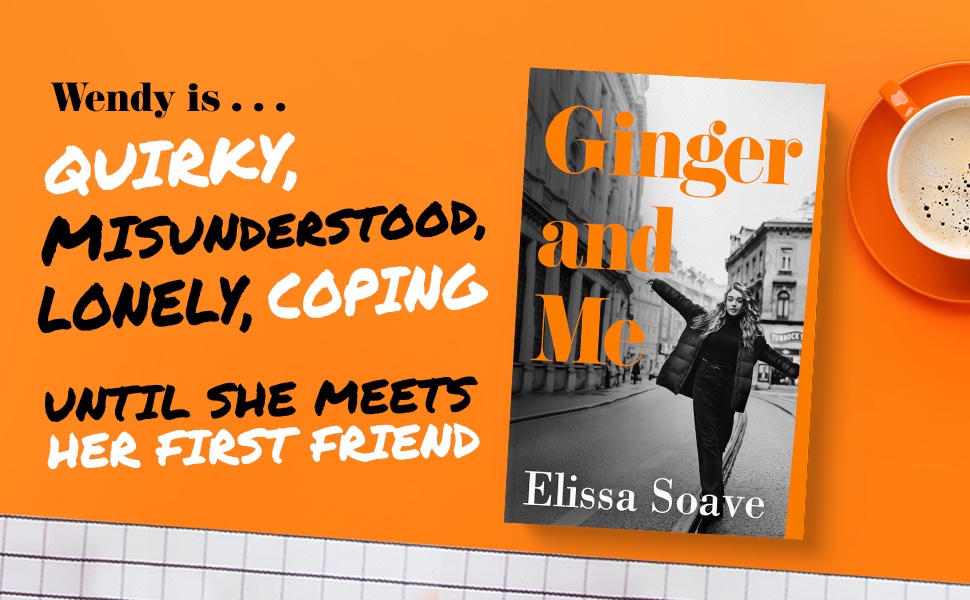
Ginger and Me by Elissa Soave.

Wendy is lonely but coping. All nineteen-year-old Wendy wants is to drive the 255 bus around Uddingston with her regulars on board, remember to buy milk when it runs out and just to be okay. After her mum died, there’s nobody to remind her to eat and what to do each day. And Wendy is ready to step out of her comfort zone. Each week she shows her social worker the progress she’s made, like the coasters she bought to spruce up the place, even if she forgets to make tea. And she even joins a writers’ group to share the stories she writes, like the one about a bullied boy who goes to Mars.

But everything changes when Wendy meets Ginger.
A teenager with flaming orange hair, Ginger’s so brave she’s wearing a coat that isn’t even waterproof. For the first time, Wendy has a real best friend. But as they begin the summer of their lives, Wendy wonders if things were simpler before. And that’s before she realizes just how much trouble Ginger is about to get them in…

I’ve worked for 25 years in mental health and one thing I’ve learned is that there are almost always reasons people behave the way they do, but also that there is no such thing as a ‘normal’ life. I love books that relate the extraordinary lives of ordinary people and Wendy certainly lives a simple life. She’s happy driving the 255 bus through Uddingston, reading books and having a good go at writing her own. Concerned that her social worker thinks she’s stagnating a little, since the death of her mother, Wendy makes a decision to reach out. She joins a writing group to build her confidence and starts to make friends with some of her passengers, but then Ginger comes along. Ginger is going to push Wendy completely out of her comfort zone.

This is a great novel that shows how mental health issues can creep up on young girls and when they’re as alone as Wendy is, there’s no one to notice things going wrong. Life is hard for her, because she feels like she doesn’t fit anywhere. She can see that society has rules, but she doesn’t understand them and her ignorance of the rules means she’s socially awkward. Instead of upsetting others, it sometimes seems easier to withdraw altogether. There is a sense in which Wendy’s being failed by the system, plus the double bereavement of losing her mum and dad has left her especially vulnerable. Being stepmum to two teenage girls I know only too well how problems can suddenly escalate and be made worse by social media. This is a gritty story and I knew very early on that something bad has happened to Wendy, so I did have a certain amount of suspicion most of the time. It felt to me like Wendy was heading down a dark road, but the addition of the rather wild Ginger seems to accelerate the downfall. I felt immediately protective of this girl, because it felt like she was out in the world with a layer of skin missing. I wanted to give her a big hug and have a heart to heart over a mug of tea. I found myself thinking about her long after the book finished, so bravo to the author for creating such an incredible character in her debut novel.

Posted in Netgalley

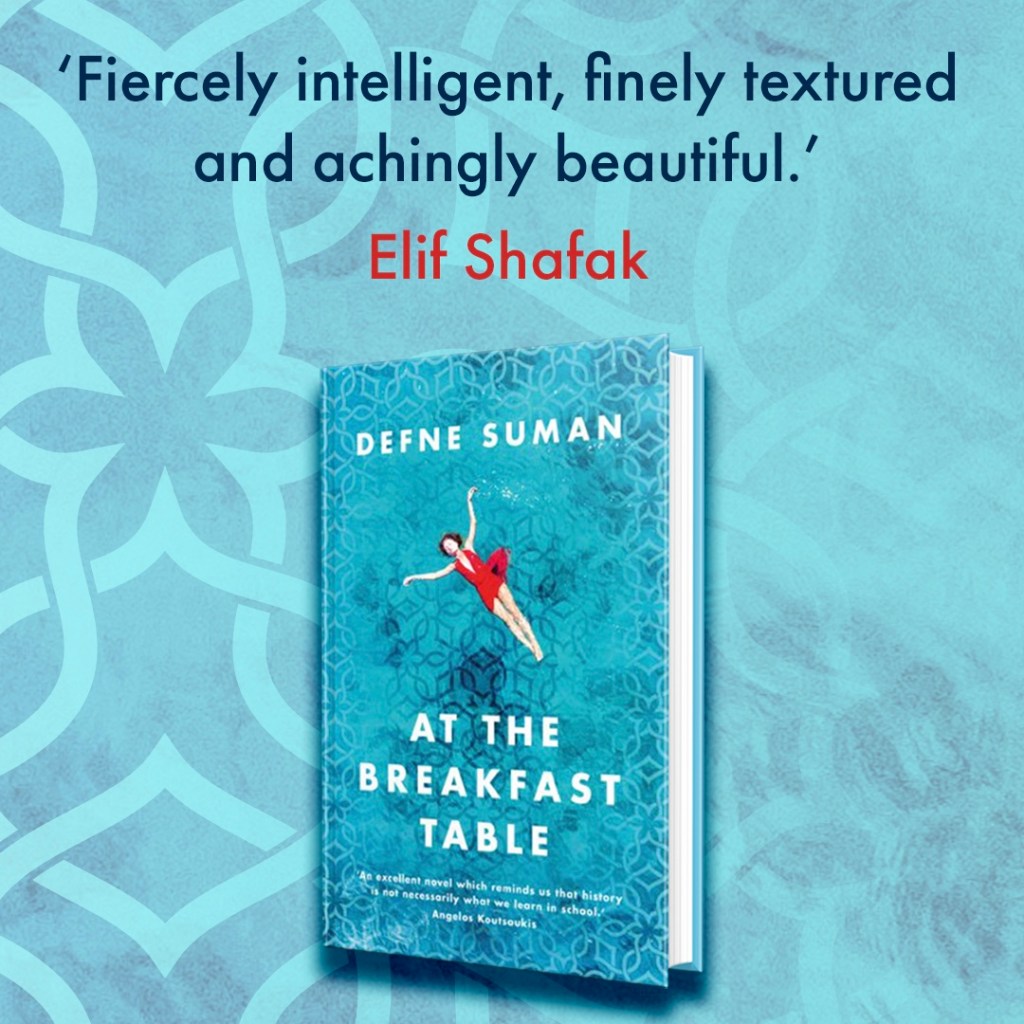
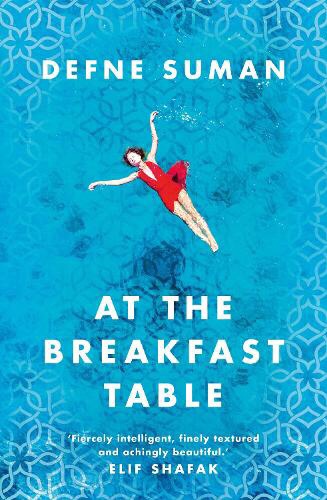
At The Breakfast Table by Defne Suman

I don’t know a lot about Turkey, so I jumped at the chance to read this book that delves into Turkish history and the heart of it’s people. Set in 2017, at Buyukada in Turkey we watch as a family gathers to celebrate the 100th birthday of the famous artist Shirin Saka. They are expecting reminiscences that are joyful, with everyone looking back on a long and succesful artistic career, and on family memories spanning almost a century. Some members of the family are set on this opportunity to delve into family history. However, for Shirin, the past is a place she has been happy to leave behind. In fact she has concealed some of her experiences even from her closest family. In particular her children and great-grandchildren have no idea what those experiences were, despite being aware of their psychological consequences. Some are thinking of Shirin and hoping she can open up and heal. Others want, perhaps, to find answers for their own struggles. In an attempt to persuade her into telling her full story, one of her grandchildren invites family friend and investigative journalist Burak, to celebrate her achievements but in the hope of helping her too. Burak has his own reasons for being there – he was once the lover of Shirin’s granddaughter. I wondered if the younger members of the family truly understood the well of pain that Shirin has kept from them? They have never gone through the type of experience and turbulence Shirin and those of her generation have. Unable to express her pain any other way, Shirin begins to paint her story. Using the dining room wall she reveals a history that’s been kept from her family, but also from the public’s consciousness, an episode from the last days of the Ottoman Empire.

As a believer in the healing power of many different art forms, including writing, I was very interested in how her family’s plan would work out. We don’t always know how people will react to opening up in this way, it’s why trained therapists like me are taught to create a safe space for people to talk and reveal their secrets. Even the client has no idea how they will react, so I felt Shirin’s family were playing with something they didn’t understand. Why would they think their grandmother would want to delve into her trauma on her birthday, let alone divulge her history to Burak? Surely therapy would have been more appropriate first? To tell her history, the author splits the narrative across four characters, each one is a member of Shirin’s family and friend group. This gives us a wide angle lens on the past. I loved the atmosphere created and the way the author didn’t exoticise Turkey. She still showed us a place of vibrancy and colour, but this wasn’t a tourist’s view. It was the Turkey of the people who work and live there. I felt there could have been more balance between the past and the present, because I was interested in Shirin’s recovery from these memories being dragged up, especially at such an emotional time. As it was, the book felt off balance, more heavily weighted in the past and from four different perspectives rather than just Shirin’s.

However, the four narrators did work in terms of showing the same events from different perspectives. There were times when one character’s view of the facts was so far from the truth it had an emotional effect on me! This is an emotionally intelligent author at work, she wants us to feel that dissonance so we can understand the painful consequences of these misunderstandings. I’m a big believer in generational trauma and how strong it’s effects can be. We see that, despite Shirin thinking she’s shielded her children and grandchildren from these events, they have still been deeply affected by her trauma. They are traumatised because of her pain and how it influenced her personality and her actions, without ever knowing the full story. I could imagine the relief of understanding why a parent has behaved a certain way, especially if it caused you pain. Despite me wishing I could have spent more time with them, we do see enough of the present to know that despite the stress fractures in this family, they still love each other. Their playfulness and sibling banter was realistic and touching. The dynamics of their interactions were so deeply rooted in the past, but we’re the only ones who can see it all with our privileged 360 degree view. This was a fascinating look at a family’s history and how their intertwined lives spiral out from one single event so long ago.

Translated by Betsy Göksel. Published by Apollo 1st September 2022

Meet The Author

Defne Suman was born in Istanbul and grew up on Buyukada Island. She gained a Masters in sociology from the Bosphorus University and then worked as a teacher in Thailand and Laos, where she studied Far Eastern philosophy and mystic disciplines. She later continued her studies in Oregon, USA and now lives in Athens with her husband. Her books include The Silence of Scheherazade and At The Breakfast Table. Her work is translated to many languages all around the world.

Posted in Sunday Spotlight

Sunday Spotlight! Great Celebrity Memoirs.

I’m not a usual reader of celebrity memoirs. I know there’s a certain snobbery in bookish circles for the celebrity memoir, so I thought I’d get that in there before you click away to another blog. I’m all for whatever gets people reading to be honest, but it’s a rare book that sits above the usual ghost written Christmas fare. These are memoirs that sit above the ordinary, that have touched me emotionally or made me laugh, that have surprised me with the beauty of their writing or their inventiveness, or even revealed incredible stories that kept me gripped to the final page. Some you may have heard of while others are lesser known, but just as compelling.

Patient by Ben Watt.

‘In the summer of 1992, on the eve of a trip to America, I was taken to a London hospital with bad chest pain and stomach pains. They kept me in for two and half months. I fell very ill – about as ill it is possible to be without actually dying – confronting a disease hardly anyone, not even some doctors, had heard of. People ask what was it like, and I say yes, of course it was dramatic and graphic and all that stuff, but at times it was just kind of comic and strange. It was, I suppose, my life-changing story.’

Benn Watt is half of the band Everything But The Girl and his short memoir covers a period when his bandmate Tracey Thorn was also his partner. In 1992, when I was taking my ALevels and listening to his band, Ben contracted a rare life-threatening illness that baffled doctors and required months of hospital treatment and operations. This is the story of his fight for survival and the effect it had on him and those nearest him. I recommend this book because it is beautifully written and captures the feeling of being seriously unwell perfectly. He describes coming institutionalised, so in sync with the day to day running of the ward that he could tell to the second when the newspaper lady was going to enter the ward. I love his play on ‘Patient’ as noun and verb at the same time, the patience it requires to endure the diagnostic process and to cope with what I call ‘hospital time’ – where ‘I’ll be a minute’ means half an hour. Only two years after his book is set, I was going through my own lengthy periods of hospitalisation, enduring unpleasant tests and realising there are limits to medical science. It’s an incredibly scary place to be and Ben conveys that so well, as well as the strange feeling when discharged when the patient goes from totally dependent to alone. I remember after a lengthy hospital stay, sitting in my flat thinking it was getting close to mealtime and that I was hungry, then a second later realising I had to make my own food! What he captures best is the realisation that what he expected to be a short interlude in his life, is actually becoming his life. The narrowing of his horizons from someone who toured the world to a resident of a single ward, or even to an individual bed.

Ben Watt

Red Carpets and Other Banana Skins by Rupert Everett

I became fascinated with Rupert Everett after seeing him on Graham Norton’s chat show and finding him both hilarious and painfully honest, both about himself and others. I loved his wit and comic timing in My Best Friend’s Wedding and especially in the Oscar Wilde films he starred in. I was pleased to find he was a devotee of Wilde, who wanted to make an honest film about his later life. My best friend from university always sends me a book at Christmas and I was lucky enough to receive a signed copy of his second memoir Vanished Years. I made sure I found a copy of his first memoir above so I could read them back to back. They both lived up to my expectations. I seem to remember first noticing him in conjunction with Madonna back in the 80’s and he had come across as a pretty boy in that context, but there is so much more to that rather spoiled exterior. His performance in Another Country was exceptional and his eventual film of Oscar Wilde was extraordinarily moving, but it is the drama of his private life that has attracted more attention than his talent. These memoirs show that he has always been surrounded by interesting and notorious people, becoming friends with Andy Warhol by the time he was 17. He has been friend to some of the most famous women in the world: Donatella Versace, Bianca Jagger, Sharon Stone and Faye Dunaway. This notoriety and films such as Dunstan Checks In overshadow incredible work with the RSC and I finally saw him shine on stage in the West End as Professor Higgins in Pygmalion.

I have always known, from his interview with Graham Norton, that Everett is a raconteur, but these memoirs show he can write a great story too. He has an uncanny ability to be at the centre of dramatic events: he was in Berlin when the wall came down, in Moscow at the end of Communism and in Manhattan on September 11th. The celebrity stories are deliciously gossipy and terribly honest. It seems Everett doesn’t hold anything back, whether he’s lampooning someone else or himself. His second memoir is again mischievous, but also touching with stories from childhood and early life. He takes the reader on an amazing journey around the world and from within the celebrity circus from LA to London. I loved the addition of family stories, such as a pilgrimage to Lourdes with his father that is both hilarious and moving. There’s a misguided step into reality TV that goes horribly wrong. A lot of celebrity authors are easy on themselves, writing solely from their own perspective rather than presenting life objectively. Everett is unfailingly honest, presenting his flaws and tragedies with the same scrutiny and irreverence he gives to others. Both books are incredibly enjoyable, a journey with the best and most disreputable storyteller you will ever meet.

Rupert Everett as Oscar Wilde

The Storyteller by Dave Grohl.

One of my favourite video clips recently was of the Westboro’ Baptist Church protesting outside a Foo Fighter’s gig. Then with perfect timing around the corner came a couple of majorettes, followed by a flat bed truck with a band playing The Beatle’s ‘All You Need Is Love’. On the back stood Dave Grohl with a microphone, shouting out their love for the protestors. I’ve always known that Grohl was a good guy and despite only enjoying some of the Foo Fighter’s music I’ve always thought he was an interesting and enlightened person. I’ve also wondered how he recovered following the suicide of Nirvana front man and personal friend Kurt Cobain, an event that stood out in my mind in the same way the death of John Lennon did for my parents. I loved Grohl’s humour and willingness to make an idiot of himself. My best friend and I rewatched the Tenacious D video for Tribute where Grohl is painted red and given an amazing pair of horns as Lucifer. I was bought this book last Christmas by my stepdaughters. However, it was only recently, after the death of another bandmate and friend Taylor Hawkins, that I picked it up and read a few pages every night in bed.

Grohl addresses my reservations about about celebrity memories straight away, stating that he’s even been offered a few questionable opportunities: ‘It’s a piece of cake! Just do four hours of interviews, find someone else to write it, put your face on the cover, and voila!’. Grohl writes his early experiences with fondness and an obvious nostalgia. He found the writing process much the same as writing songs, with the same eagerness to share the stories with the world. He has clearly linked back to old memories and emotions, feeling as if he was recounting ‘a primitive journal entry from a stained notebook’. He has definitely embraced the opportunity to show us what it was like to be a kid from Springfield, Virginia with all the crazy dreams of a young musician. He takes us from gigging with Scream at 18 years old, through his time in Nirvana to the Foo Fighters. What’s lovely is that same childlike enthusiasm while jamming with Iggy Pop, playing at the Academy Awards, dancing with AC/DC and the Preservation drumming for Tom Petty or meeting Sir Paul McCartney at Royal Albert Hall, hearing bedtime stories with Joan Jett or a chance meeting with Little Richard, to flying halfway around the world for one epic night with his daughters…the list goes on. We may know some of these stories, but what he promises is to help us reimagine these stories, focused through his eyes. I’ve seen reviews that claim he has glossed over or withheld some of the truth of his experiences, particularly around Kurt Cobain with Courtney Love absent from proceedings. I don’t think this is being disingenuous, I think this is what Dave Grohl is like – generous, humble and honest with regard to his own take on events. Perhaps he feels other people’s stories are their own and not his to tell. I was so impressed with how grounded he is and how aware of the most important things in his life: his family; his daughters; his friends; those who remind him of where he’s come from; and lastly, his music.

On Writing: A Memoir of the Craft by Stephen King.

Stephen King begins this memoir with the accident that he says has made the last twenty years of his life an incredible gift. With some humour he recounts being on his four mile daily walk and taking a break to relive himself in the woods. As he was returning to the road, a van driver was simultaneously trying to prevent one of his dogs rummaging in a beer cooler. This unlucky coincidence meant King was in a position to be struck as the van swerved off the road. A man who witnessed the crash watched as the impact threw King up and over the van, smashing the windscreen with his head and propelling him into a ditch 14 feet away. Local man, Donald Baker, found King ‘in a tangled-up mess, lying crooked, and had a heck of gash in his head. He kept asking what had happened.’ The van driver seemed devoid of emotion or panic, claiming he thought he’d hit a deer until he noticed King’s bloody glasses on his front seat. In a strange parody of his bestselling novel Misery King was left hospitalised with a shattered hip and pelvis, broken ribs, a punctured lung and fractured femur. The driver died only one year after the accident, from unrelated causes. It took King months to recover, with some limitations remaining to this day.

This strange hybrid book comes out of that time, from that trauma which affected him mentally as well as physically, back to his childhood, his early adult life, his marriage and the drinking that nearly cost him his relationship. If people read this hoping to read a masterclass or a shortcut to writing a bestseller, they’ll be disappointed. You don’t need a fancy masterclass to be a writer, you simply need to write. However, he does explore his own process and influences. There’s some practical advice on character building and plotting, showing how a spark of an idea was turned into Carrie. He also talks about pace, plots and presentation of a manuscript. He talks about he origins and development of certain books and uses examples of other writer’s work to illustrate what he’s advising. What he can’t do is identify that magic or spark that made him a No 1 bestseller for almost half a century. I enjoyed his stories about his early adult years when he was struggling financially, but was so persistent. The jobs he had to take to support his family, when the writing simply wasn’t paying. He was teaching by day and writing in the evenings. He also talks about the perceptions of him in the industry, perceptions I have always thought unfair, that despite incredible economic success and prolific output, he will never be considered a good writer. I loved his advice to write in a room with blinds and a closed door, if you’re not distracted by a view it is easy to disappear into a vista of your own making. He also plays loud rock music, but that wouldn’t be for me, I need silence or calm background music, no TV and no talking. It’s true that every writer needs their own best conditions for writing – although a closed door with no interruptions seems universal – you will need to find your own process. However, I do think he hits upon something important about life, like Dave Grohl, and that is the importance of family to ground us and stand by us while we create and especially when economic success does come.


Posted in Sunday Spotlight

Sunday Spotlight! Memoirs and Non-Fiction

I’m continuing my look at the books that have had a huge effect on me personally or helped me to make a difference in my life. If I’m facing a difficulty, challenge or setback in life I usually look for something to read about it. My late husband used to say that knowledge can’t be taken away from you and that the more knowledge you have, the more options you have too. I’m looking at four books today, all of them memoirs in different forms, but each quite different in how they communicate to the reader. Each one did make me think and I can honestly say I came out of each book feeling changed a little: whether it was energised and inspired; feeling less alone in the world; learning how to face life’s obstacles or reaching an emotional catharsis.

The Year of Magical Thinking by Joan Didion.

Joan Didion’s memoir is award winning for a reason. I found it a dense read in parts, but then my intelligence is probably far below Ms Didion’s level. However, there’s no denying the power of her opening chapter as she and her husband are preparing the table for dinner. Joan and her husband John had already been given the terrible news that their daughter had been placed on life support. Quintana had been suffering with flu symptoms, that became pneumonia and eventually septic shock. In the throes of grief, they are preparing for dinner when with no warning John collapses. John died from a heart attack instantly. In the maelstrom of emotions surrounding his death, Joan writes to make sense of what she’s thinking and feeling.

I found her writing raw and painful. I read this in my own grief and I recognised so much of the past year of my life in her descriptions. The way mind and body become disconnected; one carrying out the duties and routines of everyday life while the other is in another place. I felt like the bit that’s me, my ‘self’ had hunkered down deep inside the shell of my body, unable to cope with the shock of what happened. We were now in a world without my husband, where he didn’t exist. I think my ‘self’ was still in the one where he did. With her beautiful choice of words, Didion articulated a grief I didn’t have words for yet.

Illness by Havi Carel.

I came across this lesser known book when I was researching for a PhD. I was interested in the gap between a person’s perspective of their illness and the self presented in disability memoirs. My argument being that people write about their disability using certain tropes and archetypes – such as Christopher Reeve still presenting himself as superman. There is often a narrative of redemption or triumph that doesn’t relate to someone whose illness or disability is lifelong. I didn’t know whether these tropes were so ingrained in our society, there was only one acceptable way of writing about disability experience, or whether the truth simply doesn’t sell so publishers pressure writers to frame their disability this way. My supervisor suggested I needed to read Havi Carel’s book, because not only was she a professor in philosophy, she also had a long term illness that affects her lung function. What I was floundering around trying to describe was the phenomenology of illness – the ‘lived experience’ to you and me.

In some ways this is a text book, as Carel looks into what is illness? Is it a physiological dysfunction, a social label, or a way of experiencing the world? How do the physical, social, and emotional worlds of a person change when they become ill? Can there be well-being within illness?Carel explores these questions by weaving together the personal story of her own illness with insights and reflections drawn from her work as a philosopher. Carel’s fresh approach to illness raises some uncomfortable questions about how we all – whether healthcare professionals or not – view the ill, challenging us to become more thoughtful. A scene where Carel is devastated during a test of her lung function, because the result shows a decline, is so much worse because of the cold, unfeeling, practitioner. I had tears in my eyes reading it. Illness unravels the tension between the universality of illness and its intensely private, often lonely, nature. It offers a new way of looking at a matter that affects every one of us, because every one of us can become ill or disabled in our lifetime.

Before I Say Goodbye by Ruth Picardie.

Back in 1998, way before Dame Deborah James and You,Me and the Big C, there was Ruth Picardie. Her column in The Observer was read by millions and it was the cancer experience laid bare. Searingly honest and raw about her illness one minute and the next the day to day routine of being a Mum to two small babies. I loved how Picardie debunked those myths and archetypes of illness. How people still associate being ill with the old Victorian consumptive idea of wasting away. Those who are ill should at least be thin. However, as a result of steroid treatment for a secondary brain tumour, Picardie gains weight and has the characteristic ‘moon face’ that I remember from my own steroid days. She is angry with herself for being shallow, especially when she has to dress up for a wedding and nothing fits. She expected that being faced with death, she might be able to let go of the small stuff that doesn’t matter. It does matter though and she goes to Ghost to buy one of their flowy maxi dresses to make herself feel beautiful. She documents the progress of her cancer without holding back and when she can no longer do so, around two days before she died, her husband and sister Justine conclude.and put a frame around this collection of diary events from The Observer. This is a tough one, because I know the context is needed, but losing her narrative voice and hearing her sister Justine’s still chokes me up today. Ruth died from complications following the misdiagnosis of breast cancer in September 1997, leaving a young husband and two-year-old twins.

Eat, Pray, Love by Elizabeth Gilbert

I read Gilbert’s book before all the hype and the film version. I’d been on holiday and picked it up as an easy read and I was hooked by page one. Liz Gilbert has a way of writing that makes the reader feel like it’s just you and her, two friends having a catch up after a long time apart. It’s an intimate and honest account of how she found herself again after a marriage breakdown and a long term relationship that wasn’t healthy. She decided to take a long trip and broke it into sections, each one to feed part of her: body, spirit and heart. First she went to Italy for the eating part, then India for spirituality, then Bali which sounds like an absolute paradise and the perfect place to conclude a healing journey. If you read this as a simple travelogue you won’t be disappointed. Her descriptions of the food in Rome and Naples made me want to book a plane and the warmth in the friends she made there were really heartwarming. I found the discipline and struggle of ashram inspiring, it was her time to really go inside and work things out. She needed to confront what had happened in her marriage, forgive her husband and herself, then remember the parts that were good.

Bali is a like a warm place to land after all that mental work, where the people are welcoming and Liz finds work with a holy man transcribing his prayers and wisdom to make a book. Here she learns to love again and there was something that really chimed with me, when Liz meets a man at a party and they have a connection, she’s absolutely terrified about what it might lead to. She has worked hard and found her equilibrium and now her emotions are stirred up and unpredictable. She felt safe and grounded before, so she doesn’t want to lose it. I’d spent six years on my own, after the death of my husband I’d ended up in an abusive relationship and it had taken me a long time to recover. Then I met my current partner and I remembered back to this book and the wise friend who advised Liz to think of her life as a whole, it could only be balanced if it has periods of imbalance. Sometimes we have to throw ourselves into life. I used meditation a lot to keep grounded and it has changed my life in terms of improving mood and helping me cope with life’s difficulties. However, we can’t avoid life and stay in neutral all the time. When I read this with my book club there were mixed responses, the most negative being ‘it’s okay for some, able to swan off round the old and get paid for it’. It’s a valid point, but I never felt that. I thought she was in need of something drastic to get her life back on track and I didn’t begrudge her a moment of it. You might also like to try Eat, Pray, Love Made Me Do It. A series of stories about women’s journeys inspired by the book.

Posted in Publisher Proof, Sunday Spotlight

Sunday Spotlight: All About Evie by Matson Taylor

So I’m having a book blogger’s dilemma. The arrival of this book through the door made me do a little Snoopy dance! There are a few books I’ve earmarked as my most anticipated summer reads, but this is right up there as my mostest anticipated novel. I know, we bloggers do love to throw out superlatives here and there, but I’ve honestly been waiting for this book ever since I finished The Misadventures of Evie Epworth two summers ago. Now I’m in an awful quandary. I want to devour it in one go, but once I do, the moment will have passed and Evie is gone again. I don’t know whether Evie’s story ends this time, or whether there’s more to come, so I’m trying to hang on for a little while, at least until my fellow Squadettes are reading so we can talk about it.

If you haven’t read Matson Taylor’s first novel then where have you been? I think this is one book where reading the previous instalment of Evie’s adventures is really helpful. You have a whole new literary heroine to meet and I think knowing where Evie comes from is vital in understanding her. I’m not going to use spoilers so it’s safe to read on. In book one we met Evie in the 1960’s, the summer after O’Levels and before A Levels. Her only plans for the summer are reading, helping their elderly neighbour with her baking and, most importantly, getting rid of her dad’s girlfriend who would like to see Evie working through her summer at the local salon. Christine has moved in and is slowly trying to erase everything Evie loves about the farmhouse, including her Adam Faith wall clock and that won’t do. Evie and her dad would like things to stay as they were when her Mum was alive. They love their Aga and old country kitchen, but Christine wants Formica and a new cooker that’s easier to clean. Her wardrobes are wall to wall pink, synthetic fabrics and she colonises the kitchen with her Mum and lumpen friend, who’re usually in tow. Her dad can’t seem to see that his girlfriend and daughter don’t get along, there’s quite a lot of avoidance practised here, he’s often got his head in the newspaper or listening to the cricket scores, or just popping out for a pint. Whatever the tactic, it means he hasn’t heard anything. This problem needs another woman to solve it. So, when her neighbour has an accident and her daughter Caroline arrives to look after her, the three women put their heads together to deal with the problem, just in time for the village fete and baking competition.

All About Evie starts ten years on from the previous novel with Evie settled in London and working at the BBC. She has all the things a 70’s girl could wish for – including an Ozzie Clark poncho. Then disaster hits. An incident with Princess Anne and a Hornsea Pottery mug means she must have a rethink about her future. So what can she do next? Will she be too old to do it? Most importantly, will it involve cork soled sandals? I have no qualms in saying this is my most anticipated book of the summer. I think I’ll have to compromise and as soon as I have a two week gap from blog tours I’ll be delving in to find out what happens next….

I’ll keep you informed.

Published by Scribner U.K. 21st July 2022.