Posted in Random Things Tours

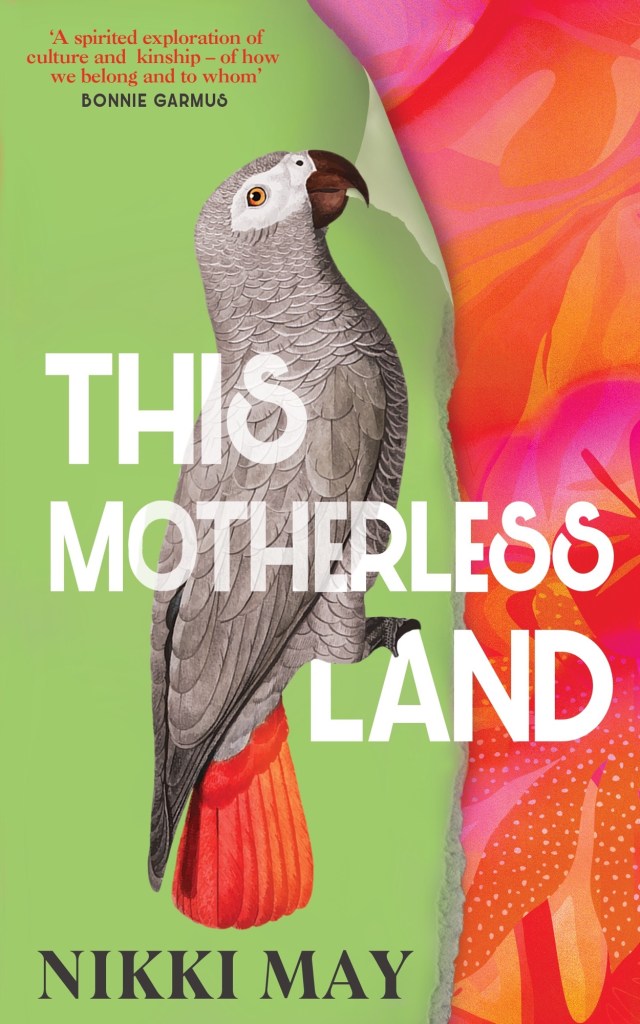
This Motherless Land by Nikki May.

This book was an absolute joy to read, which may sound strange considering the subject matter but somehow it awakened my senses, stirred my emotions and kept me reading. In fact I read it so quickly I was finished in an evening that turned into morning before I knew it. Funke lives in Nigeria with her mother, known as Misses Lissie to most people, her father and brother Femi. Mum is a teacher and Dad works at the university. Their entire world is shattered one morning as they make their normal run to school when their mother’s car fails to stop and ploughs directly under a lorry. The drivers side of the car is destroyed but Funke’s side is left completely unscathed. She loses her mother and brother in a moment. In his grief, her father Babatunde is inconsolable and he takes it out on Funke. How did she get out without a scratch? Encouraged by his superstitious mother, he calls Funke a witch and insists she must be protected by some magical being. Seeing how Funke will be treated by her grandmother, her aunties put their heads together and decide she should be sent for a while to her mother’s family in England. Her white family. Funke is ripped away from everything she knows and sent to The Ring, the mansion where her mother and Aunty Margot grew up. There, although she isn’t being hit or accused of evil spells, she feels the resentment of Aunt Margot and her cousin Dominic. They call her Kate, after all it’s easier than pronouncing Funke isn’t it? There’s no colour, bland food and where she was accused of being white in Nigeria, here she is seen as black – with all the racist connotations that come alongside it. Especially in white, upperclass Britain. England’s only saving grace is her cousin Liv. Liv scoops her up and feeds her comfort food. The problem is it’s not the food or the comfort she’s used to.

This is a book about being in between. Funke’s mother was ostracised by her family for marrying a Nigerian man. Aunt Margot sees Lizzie’s relationship with Babatunde as the reason for her own engagement being called off just before the wedding. In her eyes Lizzie was selfish, pursuing her own feelings at the expense of her family. She feels Lizzie had the looks, the charisma and the man she loved, while Margot was left heartbroken and with parents who seemed to miss Lizzie more than they enjoyed Margot’s presence. She sees Funke as her mother’s daughter and a threat to her own children. Her parents seem to love Kate, as they’ve christened her, and Margot doesn’t want her to take all the attention, the love and their eventual inheritance. She’s a bitter woman who is very hard to like. Sadly for Funke, history repeats itself and on the night of their prom a series of events mean they must drive home early. Liv is drunk and high. Yet even Funke, who is teetotal, feels unwell. Dominic throws caution to the wind and decides to drive them home, despite his own drinking, and a terrible accident occurs. Everyone survives but Liv suffers a bad break to her leg. In the aftermath Dominic asks Funke to admit to driving, which she agrees to, not knowing that covering for her cousins will lead to her life being uprooted for the second time.

Funke feels like she belongs nowhere. In Nigeria when her mother was alive they had a wonderful life, even if children would follow her singing a song about her pale skin. That’s nothing to the blatant racism she faces in England, but she faces it down and it fuels her will to succeed. Then she’s back in Nigeria and is again the odd one out. This time she’s in her dad’s new family and their lifestyle in the village is very different to the childhood she remembers on the university compound. His new wife and their children eat and live in ways her dad would have dismissed as ‘bush’ when Funke was a child. Her small brother and sister are black and fascinated with her pale, mixed race skin. Things are familiar, such as the spicy red stew and the heat, but it’s a changed land without her mother in it. At least in England she didn’t expect her mother to be there. Now she faced with the shock of her absence all over again. Will she ever find home? Meanwhile, back in Britain, when Liv finally comes round from the accident she asks for Kate. What will her mother tell her?

I thought the author brilliantly showed how different people cope with mental pain. Funke takes a bottle top from her mother’s hoard (for craft projects) and holds it in her hand so hard that it cuts into her palm. Liv is horrified that she’s hurt herself like this, but for Funke it’s the only thing that distracts her from the grief of losing her and her brother. Liv also deals with motherly absence, but externalises her feelings in a different way. She has a mother who is present, just not for her. Liv starts to drink excessively, uses marijuana and acid tabs to blank out the feelings that she isn’t loved and therefore isn’t worth anything. When we’re children and we’re rejected by a parent, we never assume it’s the parent’s fault and we don’t stop loving them. Instead we internalise their criticism and think we are the problem. Liv has a lot of casual sex because she thinks it sex is all she really has to offer. Meanwhile Funke struggles to give love and truly trust someone. She is in a relationship with a young man who is keeping his true sexuality under wraps, because it’s not accepted in his family or community. The younger people are aware he’s gay and call Funke his ‘beard’, but how far can she take this relationship? What if he suggests a more permanent arrangement and is Funke willing to give her life away so easily? The the same root cause, a loss of the mother figure they so needed, affects both girls, it just manifests in different ways. With them both on opposite continents, how will they ever find each other again? The spaces between can be painful and isolating places to be and the author depicts that with such tenderness and understanding. However, liminal spaces are also freeing. Being in-between gives us the space to choose, to take bits and pieces from each place, each family and make our own identity. I found the end chapter so uplifting and it gave me hope that we can each forge our own identity, once we’ve explored who we truly are. This is a fascinating, touching story about growing up and how we become who we are. It’s vibrant, atmospheric and an absolute must read.

Meet the Author

Born in Bristol, raised in Lagos, I’m proud to be Anglo-Nigerian. I ran a successful ad agency before turning to writing and now live in Dorset with my husband, two standard schnauzers, and way too many books.

My debut novel WAHALA was inspired by a long (and loud) lunch with friends. It was published around the world in January 2022 and is being adapted into a major BBC TV drama. This Motherless Land is my second novel.

Posted in Netgalley

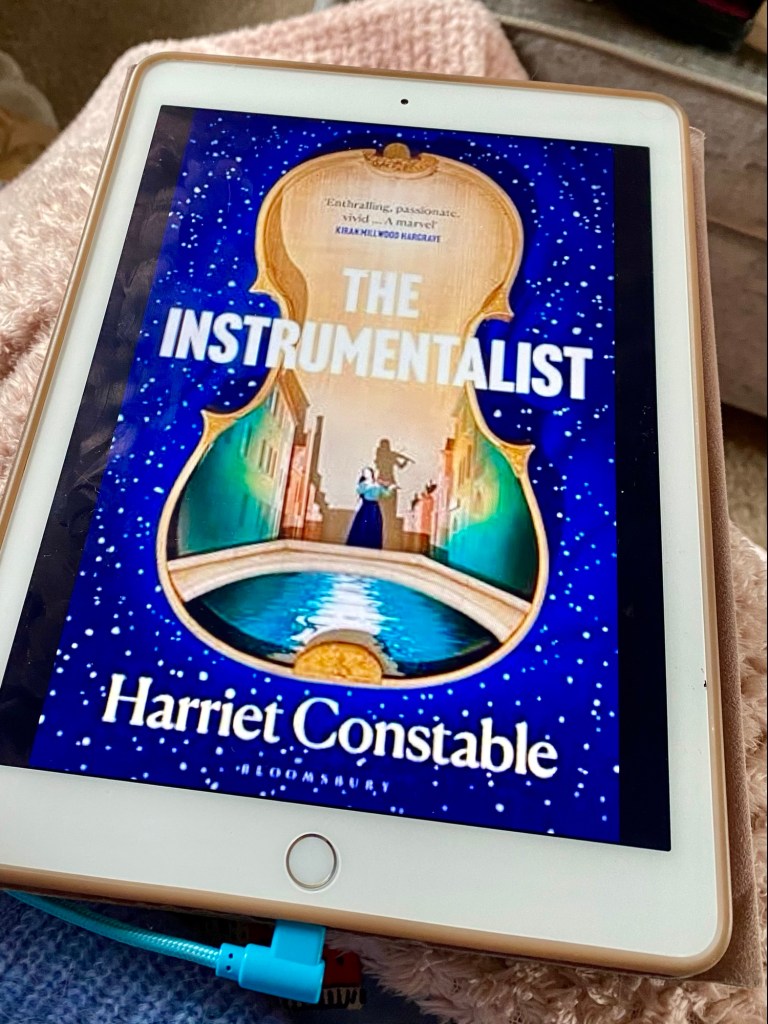
The Instrumentalist by Harriet Constable

Wow! What an incredible debut this is. I absolutely consumed this book and even found myself furtively reading in the middle of the night with a tiny torch. Anna Maria della Piétro is a fascinating heroine and while not always likeable, I found myself rooting for her. Like all the girls at the Piétro, Anna Maria is an orphan, posted through the tiny hatch in the Ospedale Della Pietá often with a note or keepsake from the unlucky girl who had leave her child behind. The author shows us the incredible splendour of Venice, a place I fell completely in love with, contrasted with it’s destitution and desperation. A state that seems more likely for women, especially those from a poorer background. The convent brings up it’s girls very strictly, according to the Catholic faith and the virtues of hard work from scrubbing the floors or working in the nursery. It is also a college of music. Each girl is taught at least one instrument with the best trying out for the orphanage’s orchestra, the figlio. Those chosen will work with the master of music and they will play in the some of the most beautiful basilicas and palazzos in all of Venice. Anna Maria’s great love is the violin and there’s no doubt she will try to become the best.

Anna Maria is a bundle of youthful exuberance, fireworks, talent and ambition. She practically leaps off the page and it seems impossible for her to fail. She starts by aiming to be noticed by the master of music and after that to be the youngest member of the figlio. No sooner is one ambition fulfilled then she’s already thinking of the next. The rewards are also intoxicating – not that Anna Maria cares much for the lace shawls from Burano, but she is partial to the small pastries with candied peel and spices that she loves to share with friends Paulina and ?? Through them we see the girl rather than the musician. They bring out a lightness of spirit, playfulness and a sense of sisterhood. The love she has for her custom made violin is absolutely infectious and when she becomes the favourite of the music master will those girlish aspects of her character remain? Constable shows us a dark underbelly, both to the Ospedale and their music programme. Although the alternatives are even worse. She also shows us huge disparity between the rich and poor in Venice. As visitors we only see the beauty and history of this incredible city, but once I did catch a glimpse of the systems that keep the city going. While waiting on a jetty to catch my water taxi one early morning I met the dustbin men of the city, having to negotiate tiny lanes and creaking jetties to clear up after all the visitors. When Anna Maria gets to play at private palazzos, the grandeur is overpowering. After her performances she is showered with lavish gifts that are at home where she plays but out of place in her bare room. She also notices that those orphans who don’t excel are easy pickings for the rich patrons of the Ospedale. Unsurprisingly, Anna Maria wants to escape the fate of becoming a wife to a much older man and putting aside her talent. As she is taken under the wing of a female patron, Elizabetta ?? She’s impressed by incredible dresses and Elizabetta’s elegant palazzo, but this patron also uses her wealth for good. She shows Anna Maria another fate for the cities’ poor women, by taking her to a brothel where the wealthy woman helps with supplies ensuring these women can make their living in safe and clean surroundings. She points out to Anna the danger in becoming a favourite – there are always people lining up to replace you. When the master is fickle or arrested by a newer, talented young girl what would happen to Anna? It makes her think about the person she replaced for the first time.

I loved the synaesthetic aspect to Anna Maria’s talent because it really added to my understanding of why she loves it so much. I have tastes that are related to colour, so if I see a garden full of beautiful yellow daffodils my mouth begins to water and I get the sensation and taste of lemon sherbet sweets. As Anna Maria plays, colours dance through her and the flurry of colour gives us a sense of how transformative it is for her to play. She is utterly lost in this moments. She’s floating within a rainbow of colour. Even when she begins to compose the written notes on the page are hastily drawn because she’s somewhere else experiencing a unique explosion of sound and colour. Even though she’s not always likeable I was still rooting for her. However some of her tougher decisions are made from within the context of survival. Only by being ruthless and getting to the position of power she craves can she feel safe. Then she can make better, more equitable decisions from a place of safety. This is an incredible story, made all the more powerful because Anna did exist. While this is a novelisation rather than an autobiography she was real and so was her music master . He is a mercurial and sometimes cruel man whose identity remains unspoken – although I did realise who he was part way through. I loved that this is written as a feminist counterpoint to his fame, highlighting a woman of equal talent who is cheated in a creative partnership and ends up with her woke stolen and uncredited. This is an abusive relationship characterised by manipulation, exploitation and a fascination with talented pre-pubescent young girls. Harriet has created a brilliant work of historical fiction that gives voice to one such young woman full of spark, talent and incredible drive to succeed. Her book is totally immersive, plunging us into a world where women were expendable, only there to parrot and enhance a man’s talent. It’s a powerful and compelling tale that I’m sure I’ll still remember when it comes to my end of year favourite books.

Out on 15th August from Bloomsbury

Meet the Author

Harriet Constable is an award-winning journalist and filmmaker living in London. Her work has been featured by the New York Times, the Economist, and the BBC, and she is a grantee of the Pulitzer Center. Raised in a musical family, The Instrumentalist is her first novel. It has been selected as one of the Top 10 Debuts of 2024 by the Guardian.

Posted in Publisher Proof

The Midnight Hour by Eve Chase.

I was looking forward to the new Eve Chase novel, but really surprised to win a competition for a hardback copy plus a vase of my favourite flowers, peonies. All I’d done was describe what I loved about Eve’s writing: her female characters; the secrets from the past just waiting to spill out; the gothic feel and atmosphere she creates, especially around old houses; lastly, it’s the dynamics she creates between the characters particularly the mothers and daughters. I feel that in this novel she has gathered all those aspects together beautifully with an intriguing plot and such a relatable central character in Maggie. Maggie is an author, living in Paris and struggling with writer’s blog. Something from her shared past with brother Kit keeps coming into her mind. Her mother Dee Dee died from cancer recently and Maggie was there for her, until her last moments. Her mind keeps being drawn back to her late teenage years when Dee Dee was a famous model, living in the Notting Hill area of London, close to the Portobello Road with it’s antique and collectible traders.

One summer morning, Maggie wakes up to find that Dee Dee hasn’t come home. This isn’t too unusual, late parties and sometimes modelling shoots can drag on into the night and she isn’t worried. She loves spending time with Kit anyway. Kit is using his skateboard when he has a fall, breaking one of the wheels. A stranger comes to their aid, dusting Kit down and trying to repair the wheel. He introduces himself as Wolf and when his eyes lock with Maggie’s they’re the clearest blue she’s ever seen, his name becomes him. There’s also an instant spark between them and for Maggie it’s instantaneous, first time and first sight love. He recognises the connection too. It’s what makes him take the skateboard back to his uncle’s antique shop so he can use his tools to fix Kit’s skateboard properly. Just so he has an excuse to go back. These are emotional days as Maggie navigates this new feeling, but also concern for her mother who still hasn’t come home. She calls Dee Dee’s friends and they rally round but still no one knows where she is. Maggie needs to leave her Paris flat and travel back to England and Aunt Cora’s house in the country. It’s time to ask some questions and catch up with Kit. Once in London she makes her way to the old Notting Hill house with the pink door and bumps into a man on his way out. She’s surprised to see this is a much older Marco, Dee Dee’s hairdresser. He tells Maggie he’s digging out the basement of the house, sending her into a complete panic. Maggie knows that secrets lurk in the garden of their old home and it might not be long before they’re found.

Eve really gives us time to get to know Maggie and Kit. As a child Kit was the baby of the family, adopted by Dee Dee when Maggie was a little older. His blonde curls and sunny disposition give him an angelic demeanour and he’s certainly noticed by Wolf who dotes on him. Even grumpy Gav at the antiques shop falls under Kit’s spell, especially when he sees his polishing skills! As an adult Kit is more wary, now a dealer and collector himself, he has learned that not every customer is as honest as they appear. He does have a big heart though, so when an old gentleman comes into his life asking Kit to source some pieces for his new home, he wants to help. Roy appears a little down on his luck and Kit senses a loneliness under the surface. Of course someone’s appearance isn’t necessarily indicative of how wealthy they are, so Kit takes his request at face value. It’s only when Roy starts to turn up unannounced, wants to go for dinner and then talks his way into Kit’s flat that he starts to wonder if Roy is what he appears to be. In fact he isn’t even sure he likes him. He needs to be firm to shake him off but Kit dislikes confrontation and wonders whether he should trust his instincts, or is he just being paranoid? It’s lovely to have Maggie back in the country, they’re still close, but she seems consumed by that summer years ago when they first met Wolf. Kit isn’t sure what happened that summer, but he knows that one night Maggie took him from their home in a hurry and they ended up on a train to Aunt Cora’s in Paris. He knows she was protecting him but doesn’t know why and he knows his mum was missing for a while. They never returned to the Notting Hill house, instead moving to Cora’s in the country, into the house of their grandparents. Kit promises to look for Wolf, finding his real name helps and soon Kit has him tracked down to one of the better auctioneers in London. Will seeing Wolf again put Maggie back on track?

I fell in love with Maggie. I was a similar age when I first fell I love and reading about her summer with Wolf brought back all those feelings. The wonderment when someone suddenly becomes your absolute world. The beautiful surprise when they feel exactly the same. The discovery of sexual chemistry, totally losing yourself in another person, being vulnerable physically and emotionally, it’s all here. In very delicate strokes Eve sketches a teenage girl who is emotional and intelligent. Little hints about her physical appearance makes us aware that she is a curvy girl, she wears glasses and is a little lacking in confidence. She’s astonished that Wolf loves these things about her and Eve captures that self-consciousness, the apprehension about revealing her body to this young man totally swept away by his obvious desire for her. It’s honestly so beautifully captured that it took me right back there. Maggie’s an incredible sister to Kit and nurtures him with a fiercely maternal love that I think comes from him being so much younger. It takes days before she starts to struggle a little with the responsibility, because Kit’s that age where he’s on all the time. Her feelings for her mother range from concern, to anger and incomprehension. It’s Aunt Cora who has always been the fuck-up of the family, an addict who would arrive at Christmas and grace everyone with her acerbic tongue and disappear again. However, she’s been clean for some time when Maggie and Kit arrive in Paris and it seems strange to Maggie that she’s so together and furious with Dee Dee for leaving them alone. Cora concentrates everything on Kit and Maggie, who is heartbroken and possibly hiding something about the last days they were in London.

You will be swept up by the romance, the mystery and the relationships between the women. I loved the atmosphere of the Notting Hill setting and I always love the smell and sound of an antique or junk shop: the library feel of quietness and reverence; the smell of beeswax; the ticking and chiming of several clocks. I always find myself drifting into another time when I’m in an antique shop. The mystery of adult Kit’s visitor grabbed me too, because his influence is subtle and I found myself questioning just like Kit does. Is he being manipulative or is this a coincidence? Did he intend to do that? Is he lingering for genuine reasons or for some other nefarious purpose? I wasn’t sure, but felt an undercurrent of danger for Kit if he didn’t keep his wits about him. What the story tells us is a therapist’s mantra really – unresolved emotions and trauma will always bring themselves to the surface. Whether through a similar event happening or a big change in our lives, these memories float to the surface with more resonance than they should all this time later. This is because they weren’t processed properly the first time. So Maggie is feeling a torrent of emotions as if she’s still a teenager and they’re just as confusing, painful, beautiful and overwhelming. She and Wolf never had a proper ending and I found myself longing for that closure to happen when she comes back to England. This was a wonderful read, deeply emotional but also a compelling mystery. I honestly think this is Eve’s best novel yet!

Out Now from Michael Joseph.

Meet the Author


Eve Chase is an internationally bestselling British novelist who writes rich, layered and suspenseful novels, thick with secrets, unforgettable characters and settings. Her latest novel, The Midnight Hour – ‘Her best yet…I loved every word’ – Claire Douglas – publishes June ’24, in the UK. Other novels include, The Birdcage, The Glass House (The Daughters of Foxcote Manor, US) a Sunday Times top ten bestseller and Richard and Judy Book Club pick, The Vanishing of Audrey Wilde (The Wildling Sisters, US) which was longlisted for the HWA Gold Crown Award, and Black Rabbit Hall, winner of Paris’ Saint-Maur en Poche prize for Best Foreign Fiction. She works in the Writer’s Shed at the bottom of her garden, usually with Harry, her golden retriever.

Say hello @evepollychase on Instagram, X, and Facebook

Posted in Netgalley

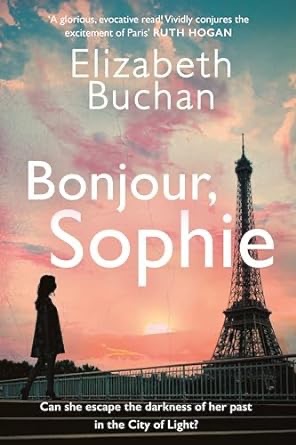
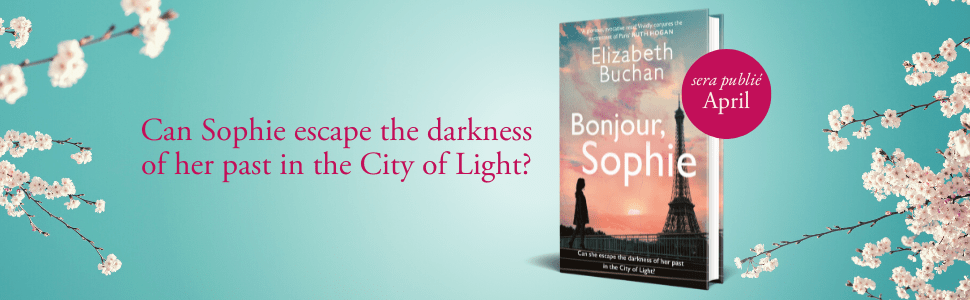
Bonjour Sophie by Elizabeth Buchan

Can she escape the darkness of her past in the City of Light?

It’s 1959 and time for eighteen-year-old Sophie’s real life to start. Her existence in the village of Poynsdean, Sussex, with her austere foster-father, the Reverend Osbert Knox, and his frustrated wife Alice, is stultifying. She finds diversion and excitement in a love affair, but soon realizes that if she wants to live life on a bigger canvas she must take matters into her own hands.

She dreams of escape to Paris, the wartime home her French mother fled before her birth. Getting there will take spirit and ingenuity, but it will be her chance to discover more about her family background, and, perhaps, to find a place where she can finally belong.

When Sophie eventually arrives in the Paris arising from the ashes of the war, it’s both everything she imagined, and not at all what she expected…

Most readers will know I have a fascination for the period directly after WWI, but recently I’ve been looking at books and films that have explored the aftermath of WW2. Originally I watched a film called The Aftermath starring the brilliant Jason Clarke and Alexander Skaarsgaard that followed a British colonel posted out to Nuremberg after the war ends. His job is to help rebuild and I remember being shocked that people were living in homes where their outer walls were missing, almost like looking into a doll’s house. Since then I’ve read novels set in the occupied countries like Poland and France and gaining other viewpoints makes you remember that the majority of people are caught up in a war they don’t want to fight, are tormented with memories of things they’ve done to survive and are still waiting for the return of those they love. I think we imagine that once the war was over, everything went back to normal, but that was far from the truth. Prisoners of war were kept, by us, for several years after the war ended, rationing only ended in 1954 and we were still rebuilding London till the mid 1970’s. It’s in this aftermath that we meet our heroine Sophie, just finishing boarding school in England with her friend Hettie. Sophie has a complicated past and her school years have been a temporary period of fun and friendship. Now she must return to the home and parish of clergyman Osbert Knox, an English village where her French mother ended up in dire straits during the war. Camille was pregnant and had fled Paris during the occupation, leaving behind Sophie’s father who was fighting in the Resistance. Lucky for the Knoxes, Camille had great housekeeping skills and she repaid their kindness in cooking, cleaning and implementing a household system that enabled them to concentrate on their parishioners. Sadly, Camille died and now the Knoxes are expecting Sophie to return from school and pick up where her mother left off, learning to keep house and support the couple. Sophie needs to earn back her keep and education, only then will Osbert return her mother’s precious savings book. This was money that Camille managed to save from her meagre allowance, knowing that Sophie would need something to restart her life with. Sophie dreams of returning to Paris, the home of her parents, but there’s only problem. She is sure that money is being taken from her mother’s savings. So she makes a decision to bring her escape forward, to find the savings book and flee with whatever is left to France and look for her father.

Sophie is a resilient girl, intelligent and able to read people. She doesn’t trust Osbert, but is still horrified to find that he expects her thanks to extend to much more than cooking and cleaning. Now she must escape and sooner rather than later. Sophie wants to build an independent life for herself, full of new experiences. She isn’t afraid about change, she’s quite matter of fact about those experiences she wants to try. She has a friendship with Johnny from the nearby farm and plans to lose her virginity with him, rationalising that it’s something she wants to get out of the way. This ability to single out what she wants and succeed in getting it will stand her in good stead once she gets to Paris. She has a deep yearning to connect with her history, even if her father hasn’t survived, she wants to know what he did during the war. Was he the hero that her mother painted him to be? Sophie knows that the scars of war run deep, that her father might have done terrible things to survive. The author writes about the moral compromises people make in war without judgement, allowing the reader to make their own decisions, but also reinforcing the point that no one knows what they’re capable of until they’re under duress. Finding her father isn’t easy though. She takes work in an art gallery and uses her wage to hire a private investigator. She finds out about the paintings looted from Jewish families during the occupation, removed by the Germans as the owners were transferred to concentration camps. However there were French collectors and gallery owners who collaborated in these deals, using a terrible atrocity as a business opportunity. She also finds that there are so many people looking for someone: husbands who never returned from the battlefield but are not amongst the dead; resistance fighters executed and thrown in a shallow grave; women killed for their collaboration with German soldiers during the war. There are vendettas and grudges still playing out and Sophie is warned that she might not like what she finds. Some secrets should remain buried. The buildings in Paris echo the the trauma still felt by the people, from a distance they look okay but close up it’s clear that there’s been no maintenance. The paintwork is peeling and the stone is damaged, but there is still beauty.

I really enjoyed the friendship between Sophie and Hettie, who has returned home to constraints of her own. She is trapped in within the expectations of her parents and her class. Hattie is expected to be a ‘deb’ and be presented for the London season. If she shines she might attract the right sort of husband. Her only route is marriage and children, no independence or career path. She has to be engaging but not appear too clever and put suitors off. Neither girl has any type of sex education, is not allowed her own bank account or make decisions about her own fertility. It’s scary to me that a lot of these restrictions lasted into my mother’s lifetime! Thankfully Hettie has a belated rebellion. I loved that the girl’s friendship lasts a lifetime and they give each other support and strength. This feel like a transitional period in time, where the world is trying to recover from war and it was a huge realisation to me that it took this long. I remembered reading that it was Ed Balls who, as chancellor, paid the final debts from WW2 and being so shocked. It takes people a lot longer to heal and return to themselves. My own father in law took many years after WW2 moving from the Siberian forest through the Middle East and North Africa and into Europe. He eventually settled in London, but his wartime experience still haunted him when he lived with us in the 2000s. I think Elizabeth Buchan has a way of writing about how we come to terms with generational trauma like this. Here she has mixed a thoughtful and complex historical period with a coming of age story. Just as Sophie is becoming a woman, the country she escapes to is also in the midst of a change. It is by finding out about WW2 and the terrible stories of living in Paris under occupation that she starts to understand her parent’s story and the courageous choices they made. Despite the pain and loss, Sophie’s experiences have a joy about them as she attempts to build herself a life with resilience and happiness. Buchan’s writing always has a melancholic, bittersweet feel. There’s a sense that life and the greater world are imperfect, even dangerous, but we can still live happily within it.

Out now from Corvus Books

Meet the Author

Elizabeth Buchan was a fiction editor at Random House before leaving to write full time. Her novels include the prize-winning Consider the Lily, international bestseller Revenge of the Middle-Aged Woman, The New Mrs Clifton and Two Women in Rome. Buchan’s short stories are broadcast on BBC Radio 4 and published in magazines. She has reviewed for the Sunday Times, The Times and the Daily Mail, and has chaired the Betty Trask and Desmond Elliot literary prizes. She was a judge for the Whitbread First Novel Award and for the 2014 Costa Novel Award. She is a patron of the Guildford Book Festival and co-founder of the Clapham Book Festival.

Posted in Squad Pod

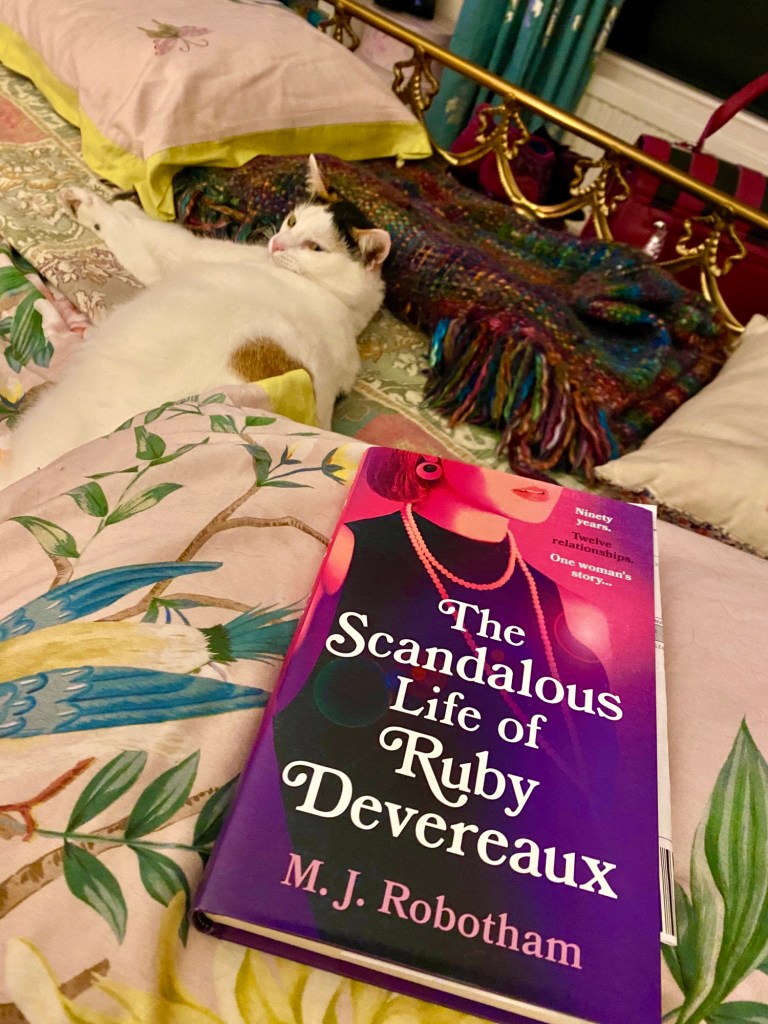
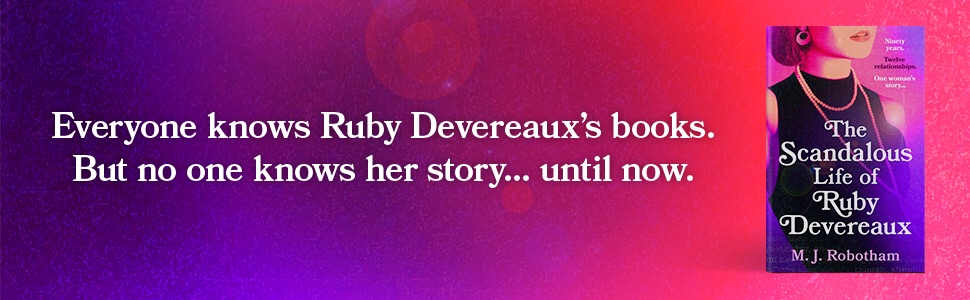
The Scandalous Life of Ruby Devereaux by MJ Robotham

Everyone knows Ruby Devereaux’s books. But no one knows her story… until now.

From a teenager in wartime England to a veteran of modern-day London – via 1950’s New York, the Swinging Sixties, Cold War Berlin, Venice and Vietnam – Ruby Devereaux has lived one hell of a life: parties, scandals and conflict zones, meeting men and adventure along the way. In a writing career spanning seven decades and more than twenty books, she’s distilled everything into her work. Or has she?

There were times during this novel where I wished I was the transcriber in the room, just so I could be the first to hear this lifetime of stories. Ruby Devereaux’s editor is under pressure from above. Ruby is almost 90 years old and the publisher is determined to get the one last book she owes them. So her editor suggests that she closes her illustrious writing career with a memoir. Ruby was on the verge of packing up her typewriter, but she does perhaps have one story left in her, or maybe twelve…

The bulk of the book is Ruby’s memoir as told to her transcriptionist Jude, each chapter named after a man in her life and telling the story of their relationship. Although it’s not as simple as that, through these affairs she takes us through the latter half of the 20th Century and right across the world. It takes us through one woman’s history, but also the ever changing landscape of the world around her, taking in those unforgettable moments and some fascinating social history too. I used to be fascinated with my 90 year old grandmother and the changes she’d seen over a lifetime in the countryside: from horse drawn ploughs to huge tractors; from cycling everywhere to her children owning cars; from handwritten letters to online communication. This has similar vibes, but on a bigger scale as Ruby moves from peacetime to war and across three continents with the world constantly changing beneath her. The author weaves together the social history, world events and Ruby’s growing up with romance and scandal. Ruby has spent seventy years telling her character’s stories, but now it’s time for her own. It’s definitely a life well lived as it’s taken her to the 1950’s New York of the Mad Men, Berlin and Budapest during the Cold War, into Vietnam and into relationships with twelve different men. These are the men who’ve inspired her novels. Make no mistake though, this isn’t really about the men in her life, this is about Ruby. Each relationship captures where Ruby is at that point in her life; a chapter in her personal growth. Ruby easily outshines her male counterparts because she has such a zest for life and breaks society’s rules and expectations about women everywhere she goes. As a young girl in post-war England she’s very matter of fact about her first sexual experience, wanting it out of the way before she leaves home. She’s an incredibly resilient character, despite experiencing loss and heartbreak at a very young age. She makes a promise to herself and the person she’s lost to keep going, grabbing opportunities whenever they arise. Never realising that all along she’s writing the most exciting story she’ll ever tell.

It’s this resilience and insistence on saying yes to experiences that take her across the globe. Starting in London, she lives and falls in love in the romantic city of Venice, via a terrible experience in New York that spawns her second book. She then explores Saigon and Budapest, before finally ending up in Cornwall. She spends time in a commune, dabbles in the world of spying and has assignments in war zones. Just as in her love life, she’s tough and doesn’t dwell on failures or knock backs, she chalks it up to experience and moves on. There is a danger of some of the men in her life becoming a mere backdrop to Ruby and her escapades, it’s very hard to keep up with her energy. However the later sections in England felt a little more detailed and because they’re not as filled with adventures, the men have more room to develop. Their relationships with Ruby feel deeper and more real. Ruby is always at the centre though and I loved following her character development. We can see which experiences have given her strength and a sense of boundaries. I love a scandal so this was definitely a fun romp in parts, whilst also having a sense of reflection and self-awareness as Ruby becomes an older lady. There’s a bravery in her willingness to share her life, particularly her emotions and those difficult parts of her life – relationships that went wrong, the loss, motherhood and her mental health. However, despite this we’re caught up in Ruby’s humour and ability to heal. I think the author has created a brilliant character and blended actual history with her life very well. Ruby is such an incredibly memorable character and I enjoyed spending time in her company.

Published by Aria 11th April 2024

Meet the Author

M J Robotham had wanted to write from a very young age, inspired by the book ‘Harriet the Spy’. However life got in the way and it was journalism and having a family keeping her occupied. She was a midwife for several years, but started to write seriously after completing an MA in Creative Writing. her first novel was A Woman of War followed by The Secret Messenger set in occupied Venice.

Her next two books were set in pre and post war Berlin, then wartime Norway, both are places she loves to visit. In her spare time she visits the gym, to knit unusual things and enjoys the music of Jack Savoretti,

Posted in Random Things Tours

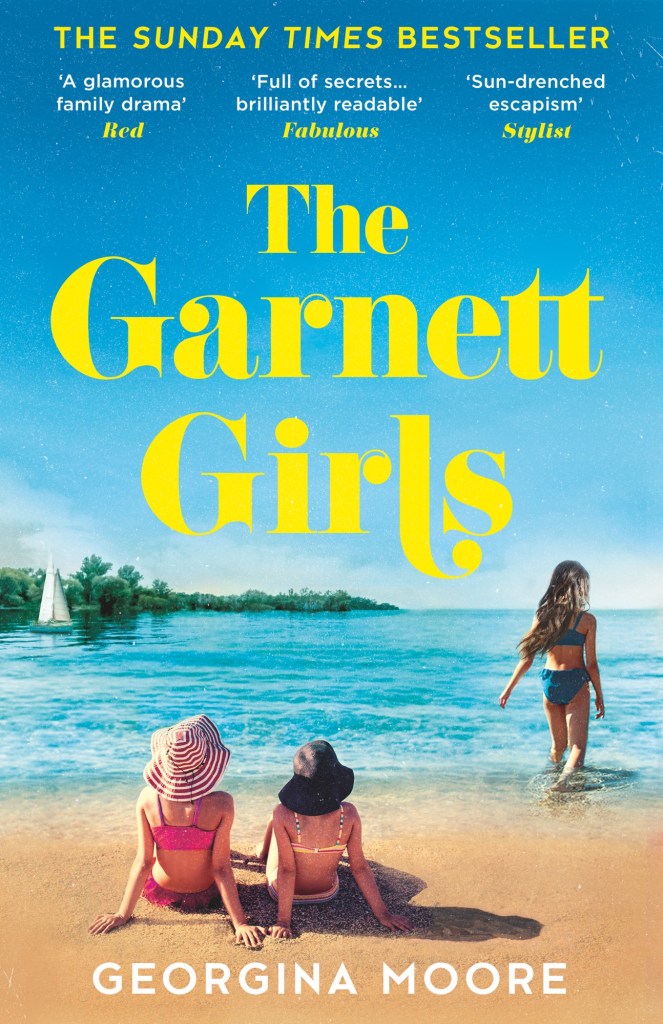
The Garnett Girls by Georgina Moore

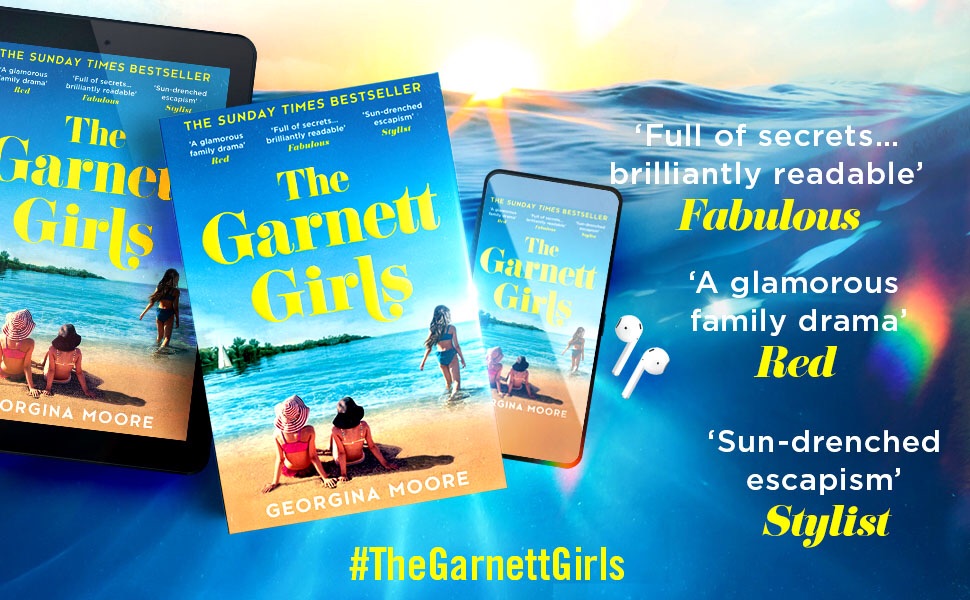
Regular readers will know how much I love stories of large families, their complicated dynamics and the psychological ins and outs of why they are, the way they are. This was the perfect read for me and I was immediately intrigued by the deep family secrets at the centre of the three sister’s relationships with their mother Margo. The three sisters are: eldest, Rachel married to Gabriel with two small girls and a career as a lawyer; Imogen, the playwright who is anticipating long term boyfriend William to conduct the perfect proposal while being unsure whether it’s what she wants. Then there’s Sasha, the fierce and rather wild youngest sister, who is struggling between her family and her coercive husband Phil while family friend Johnny watches on, wildly in love with her. The sisters live in the shadow of their mother Margo and father Richard’s tempestuous love affair and marriage which sadly ended in divorce. His drinking and their arguing lead to Richard walking out, to join his secret other family. None of the girls have ever seen their father since that day. Rachel remembers moving to their holiday home Sandycove from their house in London and Margo being unwell. She and Imogen, along with their Aunt Alice try to keep the house running, but Sasha is still a baby struggling to cope with Margo’s unavailability. In the present day, every one of the Garnett girls is carrying a secret, but Sasha’s secret has the potential to blow the family apart.

I loved the community on the island, where the family home has always stood. Rachel and Gabriel now live in Sandycove with their children. Rachel works in London during part of the week and Gabriel works as a counsellor but also looks after the home and the girls. Sandycove is still the official place where the Garnett family get together for special occasions and Margo is constantly popping in and out, helping with cooking and childcare. She now lives at at The Other Place, a bungalow up in the village. It’s here she conducts day to day life and her illicit love affairs, kept separate from her family, who often know a lot more than she realises. Because they’re together in the week, Gabriel and Margo often plan family get togethers and outings. This bothers Rachel who knows they’re only trying to take the burden from her, but she often feels like Sandycove isn’t their own, it belongs to everyone. In gaining the family legacy they’ve also lost something. Their close knit days of just the four of them are gone. Imi’s story starts in beautiful Venice where her perfect boyfriend William is set to propose. She knows this because Margo and Rachel are calling on a daily basis to hear what they’ve been up to. They’ve been a couple for a long time now and her family love William. They think he’s perfect too and Imi knows that if she vocalised her doubts to her mum or one of her sisters they’d think she’s lost her mind. On her return the read through of her play is set to begin and an up and coming Hollywood star has been cast in the lead role. Imi isn’t sure about Rowan and worries that it may be the worst kind of stunt casting, but from the moment she meets the actress, she can’t stop looking at her. Having always felt her relationship falls short of her parent’s great love, finally Imi knows what a coup de foudre feels like. Sasha has had a radical and fierce short haircut that she knows Margo will hate and will make her look very different from her sisters. Sasha is holding on to something else they’ll hate too, she is in contact with their father Richard and his family. Over the course of the novel, all the secrets hoarded by the sisters will come out. Can their close knit relationships survive?

Each of the three sisters are beautifully drawn by the author and became completely real to me very quickly. I loved their family dynamic too, even though I might find it a little bit suffocating if they were mine! Margo especially is a lot to take, with her daily phone calls and constant ‘pop-in’s’. There’s also the potential embarrassment of her sexual adventures, although I did enjoy her liberation and openness about having an active sex life as a grandmother. Sandycove has so many deep emotions buried in it’s walls. It almost runs like a stately home, with a list of annual events for family and friends that are a fixture in the village calendar. The family’s parties are incredible and I’d love to go to one! I thought the way the author used flashbacks was clever, because they helped me understand each of the women. So we see Sandycove as the home of 16 year old Margo who thinks she’s met the love of her life. Margo’s mother is unconvinced and is determined to keep this older man away from her daughter. Margo isn’t easily dissuaded from her love affair and ropes her sister Alice into helping her, eventually fleeing her childhood home with Richard in tow. Her self-awareness doesn’t stretch to realising that she’s now doing just the same with her own daughters – so sure that William is the one for Imi she’s planning the wedding before the proposal. We also go back to the moment when this family fell apart; this past event answered a lot of questions for me. I loved the moment of realisation for Rachel that her need for independence lies back there, in fact it was about survival. Yet she knows her independence made Margo feel unwanted and also masked a need to live up to her mother’s expectations and a fear of being unable to. She didn’t want to live somewhere that people came up to her in the street to tell her how like Margo she was. She wanted to live somewhere there was no Margo, maybe then there’d be enough space left for her to be Rachel. She knows that now these old feelings put a distance between her and Gabriel, in fact the whole family see strong, capable Rachel without thinking how exhausting it must be at times, how she can never be vulnerable.

Imi longs for someone to listen, so much so that on the day of her Venice proposal she drinks at the hotel bar with a young man just because he doesn’t talk over her, or assume what she wants in her life. When William proposes he uses the words ‘it’s what everyone wants’ before asking if it’s what she wants. It’s as if she’s ripe for rebellion, but doesn’t know how yet. Sasha’s rebellion is rather more visible, the short platinum blonde crop is a backlash against the long flowing hair that makes her a Garnett girl. Her identity is visible in the way she looks, with her slightly severe and spiky clothes and her red-soled high heels. She picks at Imi for accepting Margo’s bullying and interference, knowing straight away that Margo had bought Imi’s dress for the engagement party. Sasha can see that though she is beautiful she isn’t comfortable in it. In fact Imi wasn’t even comfortable with the party. Yet Sasha soon returns to Phil’s side, as he lurks in the doorway looking put out. He hates Garnett parties and prefers to have Sasha to himself; there are deep-seated reasons why Sasha has fallen into this possessive relationship, mistaking control for love. I thought these labyrinthine dynamics were brilliantly done, so real and perfectly in tune with coercive control and how intergenerational trauma works. I knew it was going to take the revelation of all the family secrets, probably in an explosive Garnett way, for these dynamics to change and for the girls and Margo to heal. I was so sucked into their world that I read the book in two sittings, desperate to see the girls speak their truth and start controlling their own lives. I also wanted healing for Margo too, because she’s been at war with an idea for the past twenty years. Her impression of the man who left her and the life he left her for is all in her head and it’s maybe time to face reality. The Garnett women can only move forward by being honest and real with each other and themselves. This was a wonderful read for people like me – the nosey and psychologically trained. It’s astute, beautifully written and full of strong women who are talented, ambitious and intelligent. It was a joy to read.

Published in paperback this month by HQ Stories.

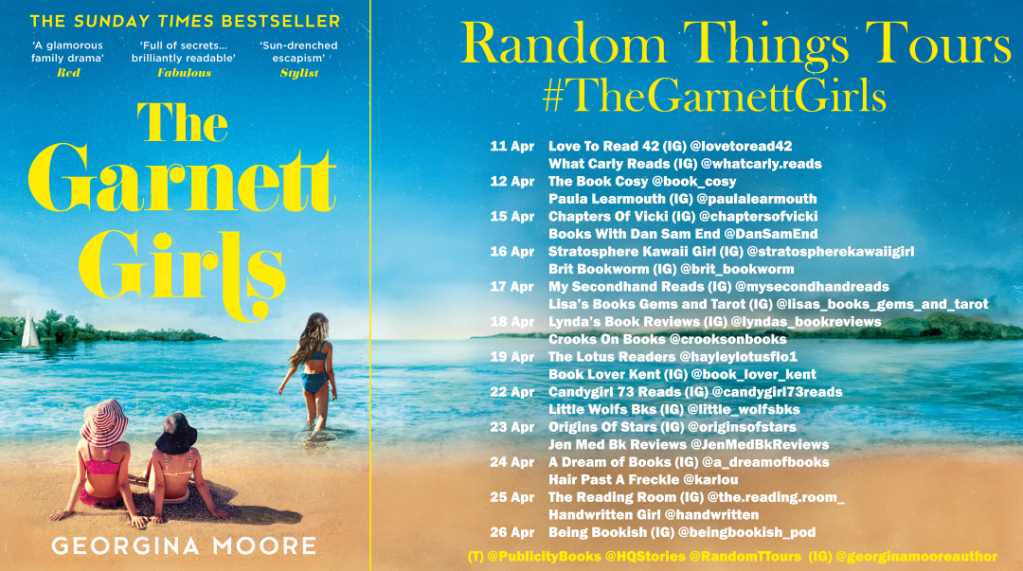
Check out the rest of the blog tour

Meet the Author

Georgina Moore grew up in London and lives on a houseboat on the River Thames with her partner, two children and Bomber, the Border Terrier.   The Garnett Girls is her first novel and is set on the Isle of Wight, where Georgina and her family have a holiday houseboat called Sturdy. Georgina is working on her second novel, Walnut Tree Island, which will be published in 2025.

Posted in Netgalley

Has Anyone Seen Charlotte Salter? by Nicci French.

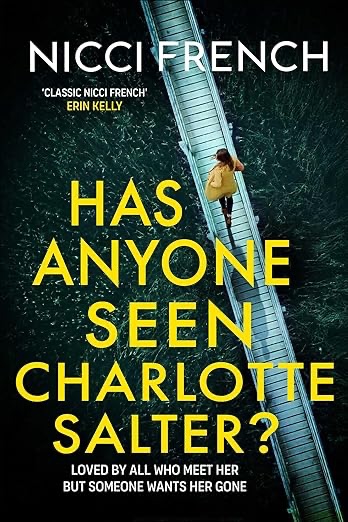
Charlotte and Alec Salter have four teenage children and live in the small village in East Anglia. We meet them on Alec’s 50th birthday where a big evening party is planned for most of the village as well as family. Yet at the beginning of the party there are no Salters present. Charlotte went for a walk and hasn’t returned. Alec did same, but they didn’t go together or in the same direction. Fourteen year old Etty is worried. The last of the Salters and yet to leave home she is starting to panic. She loves her mum, but if she is gone, for whatever reason, that means she has to spend two years at least in the company of her father. Just the two of them. Alone.

In the days that follow as the police investigate, there are rumours that Charlotte and family friend Duncan Ackerley were having an affair. Of course it was more widely known that Alec was seeing villager Mary Thorne, in fact his own daughter heard him on the phone to her from the other line the night of the party. When the Ackerleys invite the Salters for Christmas Day, only Lottie turns up at first, her brothers are late and Paul is probably giving it a swerve altogether. Yet Etty thinks it would be worse to sit at home, staring, worrying and jumping at every sound. As dinner time approaches, the Ackerley’s start to wonder where Duncan has got to. He’s been out for a walk, possibly down to the boat as there is a super high tide and he needs to move it. It’s Etty and Giles that start to look for him and he does try to shield her eyes as they come closer and see that Duncan is slumped in the water, dead. We move between the party night and the Christmas days that follow and twenty years later when all the Salters are once again in residence at the family home.

Everything about the house is dated and dilapidated, including their father Alec who is succumbing to dementia. Etty, ever the lawyer, is organising his move into a nursing home and the clearance of their parents possessions. For this job she has found a bright and organised woman called Bridget. She gathers the siblings and tells them that the easiest way is for them to put specific coloured post-its on their must have items, then she takes away the rest for sorting, selling and recycling. It’s emotional, especially since there are now only three of them. Their brother Paul never coped with life and the loss of their mother and sadly committed suicide on the anniversary of her disappearance. Meanwhile, now a TV personality, Morgan Ackerley is home to record a podcast on that Christmas, speculating on what happened to Charlotte and his father. This is going to stir up the village and make life difficult for both families. When a sudden event leads to yet another death, the police are called and a new detective looks at the old files as well as this new case. Are they linked in some way? Despite her boss seeming to warn against digging up what’s been long buried, this detective is determined to find out what happened to Charlotte Salter.

Seeing how much these families have changed over time is so interesting and I found myself wondering how different the Salters and Ackerleys might have been if this crime hadn’t happened. Etty melted my heart a little bit because she’s clearly so close to her mum and on the night of the party she’s the one who’s trying to raise the alarm because she knows something isn’t right. The boys are largely off doing their own thing and seem almost inured to the state of their parent’s marriage. The consensus is they’ve probably had a row, but Etty knows that despite a row, or their dad being on the phone to Mary Thorne at 2am the night before, there is no way that her mum wouldn’t turn up to his birthday party. She has always kept up appearances in that way. She even looks at her father and wonders whether he could have killed her. Her relationship with each parent couldn’t be more different, there’s a distance between Etty and her father both in the past and the present. In fact he doesn’t seem that invested in any of his children. Yet Etty can still imagine the smell of her mum’s perfume and what she would be wearing and I could imagine Charlotte hugging her daughter, her perfume just one of the many scents that signify home. With only the boys and her distant father left who will she go to for hugs? I could feel her panic as realises that after Christmas, the boys will go back to jobs and university and she will be left alone with their father for two years. I could also see the shadow of this huge loss in the adult Etty: an awkwardness about whether the family kiss to greet each other or not; keeping a lawyer’s professional manner at all times; doing all the organising and keeping busy so she can remain detached. She doesn’t cry, even when finding memories of their childhood. She holds herself stiffly, almost brittle and I wondered how much it would take for her to break.

There are many ghosts here. It’s not just Etty who was changed. They all feel the loss of their brother Paul deeply and he’s the empty chair at the table, even now. They tiptoe around each other, trying not to open old wounds but when a fire is started at Bridget’s home a new murder investigation is opened. Either the arsonist didn’t realise Bridget was at home, or didn’t care. Was their aim to kill the house clearer or was it to hide evidence that she’d unwittingly taken into her home alongside the Salter’s belongings? I found this mystery so intriguing that I couldn’t stop reading and I loved the psychological aspects of how these unsolved crimes had affected the families and the village as a whole. There were a couple of crucial points past and present where everyone I suspected seemed to be going for a walk alone – without even having a dog as an excuse! I was suspecting that Lottie’s husband wasn’t as advanced in dementia as she seemed, but couldn’t be sure. The reveals were satisfying, but it was the methods of concealment that really blew me away and I loved how thorough the investigating detective was. She wanted to be sure, whether or not it disturbed or upset some people and I loved that about her. Mainly I thought about how the author successfully showed the long term effects of a crime like this, even years on from the actual incident. These children were all changed forever and the villagers have lived under a fog of suspicion for years. Etty particularly left me thinking of all the events I’ve been able to enjoy with my mum over the last 50 years, that she and Charlotte had missed out on. Finding a balance between the real emotions that surround a crime and creating a page-turning mystery is difficult, but here I think the authors have really pulled it off.

Out 29th Feb in Hardback from Simon and Schuster

Meet the Author
Nicci French is the pseudonym of English husband-and-wife team Nicci Gerrard and Sean French, who write psychological thrillers together

Posted in Netgalley

The Unfinished Business of Eadie Browne by Freya North

Eadie lives an unusual life in her garden city home, situated next to a cemetery. Far from being macabre and frightening, the dead are often this lonely little girl’s best friends. They provide her with somewhere to go and talk, without censorship or interruption. Her Mum and Dad work jobs outside the home, one in the day and one at night, but the rest of their time is spent at their desks in the family living room each completely engrossed in their writing work. She is an outsider at school, without friends and a target for kids like Patrick Semple. Patrick is relentless in his bullying of Eadie and it takes her a long time to find her little tribe. Her friend Josh lives with his grandfather who has a convenience shop, he’s also a concentration camp survivor. She also makes friends with Celeste, who’s lived in France and her mother, Sandrine, is an alcoholic. These are her first friends her own age, as up until now she’s mainly hung out with Michael, an elderly man who tidies the cemetery and Ross who plays the bagpipes at funerals. Eadie is feeling so settled with her life, but these three young friends are on the cusp of a huge change. All three will be going to different universities and while Eadie likes to think nothing will change, distance does have an effect on relationships and the whirlwind of Fresher’s Week will immerse them in their new lives. Will they still have time for each other? More importantly, will Eadie be able to leave the difficulties of her childhood behind her and make a life in Manchester?

Freya North beautifully inhabits the world of a young child and the fears and preoccupations that are their daily lives. It immediately swept me back to my own childhood and moments when I was afraid or felt like I didn’t belong. In my first year of primary school at age 5 we lived so rurally I had to get on a public service bus and remember when to get off and how much to pay the driver. It left me anxious about public transport ever since. I was also bullied, being poor but having a place at the local grammar school wasn’t easy and I never had the right clothes. My family also went to an evangelical church which made me different and restricted my social life. I really identified with Eadie, for feeling that her background was less than perfect. I felt Eadie’s pain. As children, if people tell us we’re odd or wrong in some way we internalise that feeling and assume they’re right. Eadie’s parents are not neglectful, but they are a very definite twosome, seemingly unaware that their only daughter is achingly lonely and suffering from immensely low self-esteem. As adults we can step back and see that her bully is probably suffering too, but children don’t realise this. As the group of friends grow towards leaving school, the changes are not easy for Eadie to cope with. What will happen to their trio as they all go their separate ways? While Josh and Celeste are excited about what’s coming, Eadie is anxious. What will Manchester hold? Will she be accepted?

I love the North West of England, my family are originally from Liverpool but my best friend is a Mancunian and we’ve spent an enormous amount of time there over the years, mainly seeing gigs from Manchester bands like Elbow. However, I grew up in the late 1980s and early 1990s and I was an indie kid. I started with The Smiths and Morrissey through to the Madchester scene and although I was too young for the halcyon days of the Hacienda I did love New Order with a passion and Bizarre Love Triangle is one of my favourite ever tracks. I felt immediately transported back to the reign of Tony Wilson, when New Order would be in residence and the club was heaving. North captures perfectly the heady days of the summer of love – the advent of Acid House and Ecstasy. Here, having made friends, Eadie finds her place of worship. She loves ‘the Hac’. She can be found on the dance floor in just a sports bra and shorts combo, able to dance all night with a raging thirst from E and a feeling of well-being to the whole world. This is before and the terrible deaths that occurred. Eadie and her friends rent a house on Hathersage Road, across the road from the amazing Baths with its art nouveau interiors. This is her home now. In fact she becomes so comfortable in her life here that she stops going home, she stops writing to friends and lives completely in the moment. It’s when things start to change that Eadie begins to struggle. Housemates have plans for their second year, placements abroad, moving back into halls and Eadie starts to fall apart. An unexpected face from the past comes back to haunt her too. After a warning from the barman at the local pub where she works, that the Hacienda is being run by drug gangs and that means violence. This leads to an unexpected blast from the past and is the catalyst for a breakdown. Eadie finds herself unable to complete work and even starts to question whether to stay at university. With her housemates making different plans for next year, Eadie can feel the foundations of her life shaking.

Freya North captures perfectly how secrets and traumatic experiences can follow us through life. If left unaddressed, our life is like a wall with a fault in it’s foundations. It can only be fixed by removing the upper layers until you reach and remedy the original fault. Eadie has covered her trauma over with many different layers: her friendships with the residents of the cemetery; alcohol and E; the Hacienda and acid house. I felt something with Eadie’s story, because of my own recent experiences with old friends. We can experience so much difficulty and pain in life that we feel far removed from those friends we’ve had in the past, but often they’re still there, just waiting for a sign that they can help or support us. I loved Eadie’s relationship with Kip, which isn’t perfect but the love is all the more real for those imperfections. His love is shown in actions rather than words and is stretched to it’s limits at times. Eadie is one of those people who takes a long time to work out who she is and what she wants to do in life, that is until she takes care of her unfinished business and then she flies.

Out now from Mountain Leopard Press

Meet the Author

I’m the author of 15 bestselling novels and am so excited to bring you my 16th novel: THE UNFINISHED BUSINESS OF EADIE BROWNE. I know you can read the blurb here – but I wanted to tell you how important and personal this book is to me… Much of it was drawn from my own memories of leaving home for Manchester Uni in the late 80s and remembering what that FELT like. Also, I live outside Welwyn Garden City in Hertfordshire – and I became interested in the visionary ethos of the Garden City movement. Because lockdown cancelled all the lovely centenary celebrations planned for Welwyn Garden City, this novel also serves as my tribute to the town and its Founder. I hope you’ll enjoy the novel – unlike Little Wing, my previous novel which flew out of me in 4 months flat, I really toiled over Eadie Browne; writing and rewriting and REWRITING until I was confident I’d written my best book yet… this much I owe to you, my lovely readers.

2021 marked the 25th anniversary of the publication of my first novel Sally! My 15th novel Little Wing was written during the first lockdown. Set partly in the Outer Hebrides and interweaving the secrets and lies of two families over two time frames – it was a joy to research and write and certainly kept me sane during the Pandemic. I’ve always been focussed on a sense of place being a key feature of my writing – settings being a leading character, not merely a backdrop. Previous locations have included North Norfolk, British Columbia, Derbyshire, Vermont, France, Scotland, Wales, Cornwall… I’m an avid reader too – and the novels of Barbara Trapido, Jane Gardam, Rose Tremain and Mary Wesley inspired me to write. I hope you enjoy my books – please keep in touch via my website, Facebook, Twitter and Insta! Happy Reading! Sign up for my newsletter (via my website)

Posted in Publisher Proof

The London Bookshop Affair by Louise Fein

Books and Bramble, the perfect combination.

Historical fiction is one of the genres I enjoy most and I’m drawn to Louise Fein’s novels because she always finds an interesting time period then looks at it from an unexpected viewpoint. It makes you rethink events you thought you knew all about. Here she has chosen post-WW2 London and the dawning of the early 1960’s when Kennedy is president and the Cuban missile crisis is looming. Her heroine is Celia, an ordinary young woman with older parents who are stricter than most and perhaps don’t understand her modern preoccupations and ambitions. I always imagine the ‘swinging sixties’ when I think of London at that time, but progress like that hasn’t quite reached Southwark yet. Celia is working at a second hand bookshop, that specialises in antique and collectible books. Yet her heart yearns for adventure. The world is on the cusp of space travel, women’s liberation and the Beatles. It’s also rather closer to nuclear war than most realised as the USSR and USA start a terrifying game of brinkmanship. Celia wants to protest against the testing and gathering of weapons far more powerful than the Hiroshima bomb. She also chasing her dream career – she’s signed up for classes at Pitmans to gain the secretarial skills that might get her a job at the BBC. The little life her mum leads is not for her and she’s definitely not going to settle for Sam, the boy next door.

The catalyst for change is the bookshop’s new owner Mrs Denton, a dainty well dressed lady who is living alone in the flat above the shop. She seems more interested in shopping than books and offers Celia a raise to manage the shop as she sees fit. Mrs Denton has two regular male visitors: an older man called Mr Humphries who has wandering eyes and a scar down his face and a younger, handsome American called Septimus who Celia is drawn to. Could he be another pathway to a different life. The changes in Celia’s life are interspersed with a different timeline following a young woman called Anya Moreau who is dropped behind enemy lines in 1943. She’s been trained to help the French Resistance disrupt the Germans by sending messages back home via a wireless transmitter. She is betrayed by a double agent and faces torture to divulge her secrets, but she never betrays her cause. Meanwhile Celia finds a connection to this woman and in her desperation to know more she comes across the mysterious Miss Clarke who opens Celia’s eyes to the murky world of espionage running under the surface of everyday life. Possibly even in her own family. I felt for Celia’s parents who have always been protective of their girl, so much so that she sometimes feels suffocated. However their determination to keep Celia away from the past is understandable when we find out the truth.

I throughly enjoyed both timelines and Louise always has a wealth of research underpinning her story making it feel so real. I believed entirely in these two brave young women and their conviction to support their country. I loved seeing Celia’s political awakening as she talks to friend Daphne about the secret nuclear bunkers being dug out in the English countryside and the drastic measures to move works of art out of London – her shock at the immorality of a government that chooses to save art, but keeps it’s ordinary citizens in the dark is a real moment of growth. Her friendship with one of Mrs Denton’s visitors, Septimus, is also a place where she can freely discuss and share ideas about the world. This freedom to debate is new to Celia and you can see her growing all the time. At home her mum turns the tv off when the depressing news is on and Dad never talks about the war. In fact there seems to be a silence between them. I was excited and scared for Celia as her world opens up. The secrets she starts to discover will change her life forever, but will they leave her with the confidence to choose her own path and who will walk it with her? The emotional scenes between mum and daughter are really heart rending as finally everything is brought into the light. The pace of the novel really picked up towards the end as both stories come to their conclusions and different options start to open up before her. I really hoped Celia would choose wisely and not throw away everything about her home while still gaining some of the adventures she’s set her heart on. This was a great read and would make a fantastic film or TV series one day.

Published by William Morrow on Feb 29th 2024

Meet the Author

Louise writes historical fiction, focusing on unheard voices or from unusual perspectives. Her debut novel, Daughter of the Reich (entitled People Like Us in the UK edition) was published in 2020 into 13 territories and is set in 1930’s Leipzig. The book was shortlisted for the RSL Christopher Bland Prize 2021 and the RNA Historical Novel of the Year Award, 2021. Louise’s second novel, The Hidden Child, was published in 2021 and is centered around the eugenics movement in 1920’s England and America. It was a Globe & Mail bestseller in Canada. Her third novel, The London Bookshop Affair, about one woman’s journey to uncover secrets of her past, set against a backdrop of espionage and looming nuclear war in 1962 London, will be published in January 2024. 

Louise, previously a lawyer and banker, holds an MA in Creative Writing from St Mary’s University and now writes full time. Equally passionate about historical research and writing, she loves to look for themes which have resonance with today’s world. Louise lives in the Surrey countryside, UK, with her family, and is a slave to the daily demands of her pets.

For more information, go to https://www.louisefein.com and sign up to Louise’s newsletter. She also posts regularly to her blog at

https://www.louisefein.com/blog-and-news, or follow her on Facebook, https://www.facebook.com/louisefeinauthor; Twitter, https://twitter.com/FeinLouise; or Instagram, https://www.instagram.com/louisefeinauthor

Posted in Netgalley, Publisher Proof

Maud Horton’s Glorious Revenge by Lizzie Pook.

Maud’s sister Constance is on a ship sailing to the Northern Passage, on a mission to find Franklin’s expedition ship. She has always craved adventure and climbed out of her bedroom window, taking the disguise of a cabin boy called Jack Aldridge. Does she really comprehend the dangers that could befall her should the men on board discover a woman on their vessel? On the same voyage is the rather strange and macabre Edison Stowe who has managed to get aboard as a scientific officer – mainly involving the killing and gathering of animals, as bone specimens or in jars. When Constance is lost on the voyage, the rather quiet and timid Maud is determined to find out what has happened to her sister. She devises a plan to get close to and expose Edison Stowe. Telling her grandfather she’s on a trip to the country, she embarks on a rather ghoulish steam train journey. Stowe has a money making scheme to turn various public hangings into a tourist attraction and Maud becomes one of his tourists. The author uses three different narrative voices to tell her story. A diary written by Constance on the voyage was returned to her family and gives us a front row seat for the horrors but also the wonders of the voyage complete with edible arctic creatures, ‘esquimaux’ women and the northern lights playing overhead. Then in the present day there’s Edison Stowe’s narrative of his day to day life, living in Mr Inchbold’s bone shop and dodging debt collectors. His debts being the reason behind his execution tourism. Finally, there’s Maud, whose narrative hangs everything together and provides context with memories of the sister’s lives and her own relentless quest for the truth.

Maud and Constance are fascinating characters, both sisters with the hearts of lions and nerves of steel. It just takes Maud longer to realise she is every bit as adventurous and brave as her sister. Maud has the disarming advantage of beauty and a composed, modest manner that makes her seem the ideal ‘Angel in the House’. Her knowledge of pharmacy and toxicology is honed by years of helping her grandfather in his shop. She is proud of her sister and has never believed the official version of her death, but we never realise the extent of her plotting and planning until the final few chapters. What an opponent she has in the villainous Edison Stowe! Not since Uriah Heep have I felt so uncomfortable while reading about a character. He constantly made me want to wash my hands. He’s a strange contradiction in all sorts of ways: dressed like a gentleman but absolutely penniless; seemingly genteel but capable of moments of extreme violence against those weaker than himself, people or animals. He seems oddly unmoved by inflicting violence, but has strange fits of illness, where he appears to pass out as well as seeing and hearing things, including people long dead.

I was absolutely fascinated by this novel from start to finish. I love books that subvert what we think about the supposedly straight laced Victorians, especially women. She doesn’t downplay the dangers women faced, especially those that try and move outside of their boundaries. It was interesting that it was far more successful for Maud to use her strengths as a woman, than to try and be like a man like Constance. I enjoyed the more macabre and decadent tastes of the Victorians such as Mr Inchbold having a shop full of animal skeletons and a bear welcoming people at the door, the popularity of the gruesome murder room at Madame Tussaud’s and the fascination with collecting such ghoulish souvenirs as Staffordshire figures of the people they’ve just watch hang. Lizzie always creates such a fabulous sense of place and I was feeling the arctic cold and really smelling the crowds, both at the hangings and in the pub at the quay where sailors come unwashed and straight off the boats and monkeys are racing round the tables. These little extra details keep you immersed in her worlds. We even get an unexpected love story that further breaks the image people have of the Victorians. This is such an incredible story and a must for people who love their historical fiction to surprise and compel them.

Published by Picador, Hardback and Kindle Editions 1st Feb 2024.

Meet the Author

Lizzie is an award-winning writer and journalist. She is the author of Moonlight and the Pearler’s Daughter, a STYLIST and WOMAN & HOME ‘Best Books of 2022’ pick.

Lizzie began her career in women’s magazines, covering everything from feminist motorcycle gangs to conspiracy theorists, before moving into travel writing, contributing to publications including Condé Nast Traveller, Lonely Planet and the Sunday Times.

Her assignments have taken her to some of the most remote parts of the world, from the uninhabited east coast of Greenland in search of polar bears, to the trans-Himalayas to track snow leopards. She was inspired to write Moonlight and the Pearler’s Daughter, her debut, after taking a road trip through Australia with her twin sister after the death of their father. A chance visit to the Maritime Museum in Fremantle led her to an exhibition about a family of British settlers involved in the early pearl diving industry. Thus began an obsession and a research journey that would take Lizzie from the corridors of the British Library to isolated pearl farms in the farthest reaches of northwest Australia.

She lives in London.