Posted in Random Things Tours

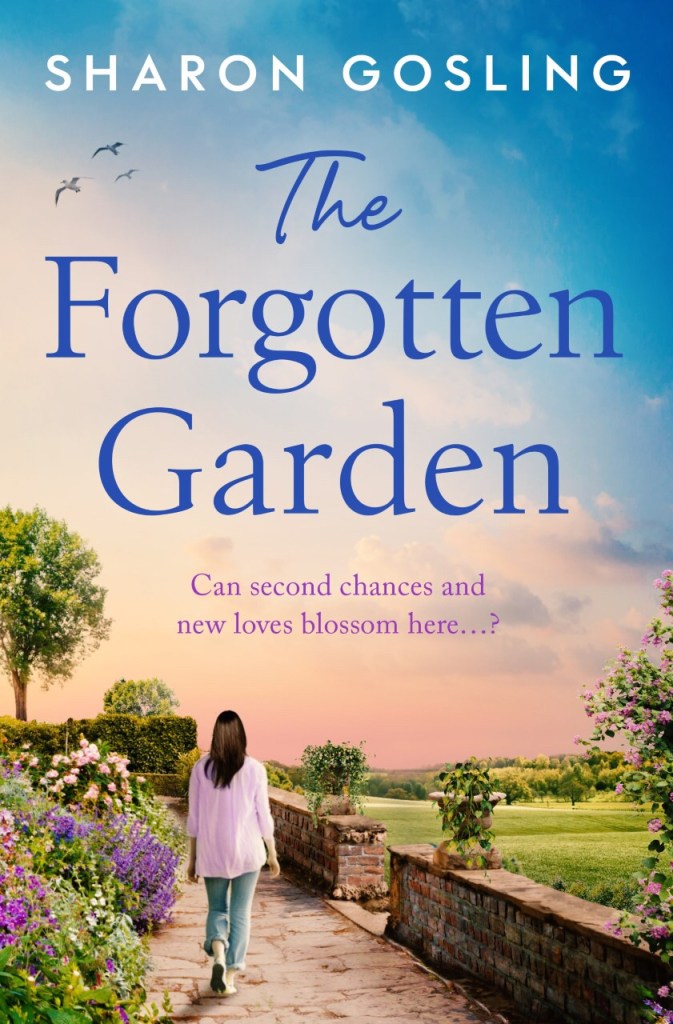
The Forgotten Garden by Sharon Gosling

Thanks to enjoying the blog tour for Sharon Gosling’s first novel, The House Beneath the Cliffs, she became an author I kept an eye on. I was on the look out for her next and The Lighthouse Bookshop confirmed for me that if I’m looking for an escapist read, she is one of my go-to authors. She seems to effortlessly blend a mix of sadness and heartache, secrets, warmth and potential romance into an engrossing read that’s so enjoyable. Our main character, Luisa McGregor, has allowed herself to become stuck. A life that once felt safe, secure and predictable is now starting to stifle Luisa and she needs more, a new challenge perhaps. Then into her lap falls great opportunity. Her friend Oliver presents a daunting, but tantalising proposition. Instead of carrying on as a gardening assistant to a woman she feels increasingly out of step with, she should check out an opportunity to build a whole new garden at a site near the Cumbrian coast. There’s a pot of money available to build a community garden on wasteland next to a gym and youth club. Luisa agrees to visit the site and is daunted by the amount of work needed, but also inspired by what could be achieved there. As we meet the people of this disadvantaged area of Collaton, we can see what a community garden could mean to these people. There’s teacher Cas, who is pouring all of his energy and spare time into the young people of the area. Harper is a teenager with a lot on her plate, but determined to find a way out of Collaton towards a different future. Can Luisa design a garden that brings both healing, inspiration and a stronger sense of community for the residents?

I did connect with Luisa and the position she has become stuck in. She has had to recover from the terrible trauma of losing her husband in an accident. She has dragged herself up from the darkest and most difficult days following her husband’s death, to a point where she feels she has rebuilt her life. She’s working in garden design, even if she doesn’t like her boss, she has a nice home and great support in her sister. Really though, she’s just treading water and terrified of stretching herself or reaching for something that she could lose. I loved the way the author shows Luisa coming alive again as she works on the new garden. She literally blooms alongside her plants and seems to gain something from working with others and passing on her skills. Without trying too hard, the garden draws in those who need it including a woman who’s been her husband’s carer since an accident paralysed him. He’s initially sceptical and annoyed that his wife’s attention has been captured by Luisa’s plans, but just a few hours a week gaining respite from her caring role has transformed her. It’s not long before he’s creating bespoke benches for the garden, adapting the way he uses his joinery skills to his disability. Harper is a character who really stands out, she’s a young girl brimming with potential, but struggling to escape the difficult circumstances of her life. She is the main caregiver for her younger brother, now that their mum has died and their father has escaped into the bottle. Harper has a skill for mechanics, engineering and invention. She spends her spare time either at the club with Cas or helping at the local garage where she’s doing up a battered old Mini that Cas has gifted to her. Harper’s story shows us how hard it can be for someone to escape where they live and their family circumstances. Her cousin Darren is out of prison and is back dealing drugs in the area again, Harper is devastated when he preys upon her younger brother, Max. Max is easily influenced, especially when it comes to friendships. He struggles to make friends and has been subjected to bullying, so when someone older and seemingly cool pays him attention it’s an easy conquest. Darren wants him as a drug runner or lookout, but Harper puts her foot down and offers herself up instead. I was on tenterhooks, knowing that this decision would have consequences in the future.

There are a few powerful scenes that really stand out. Max has a secret that he’s been working on in Harper’s absence, inspired by the garden and when it was unveiled I almost held my breath. I loved the idea for his garden and the description was so lush and vivid I could almost smell the vegetation and feel the warmth. I could imagine sitting there, early on a sunny morning and enjoying a coffee. I also kept thinking what an incredible wedding venue it would be. It’s clear as soon as Cas and Luisa meet that there is potential for romance, but I wondered if both of them were too hurt by their pasts to take the chance. I was sure it needed a catalyst and the author certainly gives us one. The scene where Darren’s thugs get into the garden was heartbreaking and heart-stopping. I could actually feel the fear of the volunteers and residents as Darren shows his true colours and the bad boy reputation he’s trying to create for himself in the community. However, the gang don’t expect to be challenged, with devastating results. I was rooting for Cas and Luisa, with their endeavours in the community and their potential romance too. I read to the end quickly, determined to see the garden succeed and whether Luisa would overcome her fear of love and inevitable loss. I took the book on holiday with me and it was an enjoyable and emotional read, with an ending that was truly satisfying. This is an author who understands that life has seasons and that women have an amazing capacity to accept life’s changes, as well as the resilience to reinvent themselves and start over again.

Published by Simon and Schuster UK 27th April 2023

Meet the Author

I’ve been writing since I was a teenager, which is now a distressingly long time ago! I started out as an entertainment journalist – actually, my earliest published work was as a reviewer of science fiction and fantasy books. I went on to become a staff writer and then an editor for print magazines, before beginning to write non-fiction making-of books tied in to film and television, such as The Art and Making of Penny Dreadful and Wonder Woman: The Art and Making of the Film. 

I now write both children’s and adult fiction – my first novel was called The Diamond Thief, a Victorian-set steampunk adventure book for the middle grade age group. That won the Redbridge Children’s prize in 2014, and I went on to write two more books in the series before moving on to other adventure books including The Golden Butterfly, which was nominated for the Carnegie Award in 2017, The House of Hidden Wonders, and a YA horror called FIR, which was shortlisted for the Lancashire Book of the Year Award in 2018. 

My debut adult novel was published by Simon & Schuster in August 2021. It was called The House Beneath the Cliffs and it was set in a very small coastal village in Scotland. The idea for it had lodged in my head years before. I have a love for unusual dwelling places and I came across a tiny house that completely captured my imagination. My adult fiction tends to centre on small communities – feel-good tales about how we find where we belong in life and what it means when we do. Although I have also published full-on adult horror stories, which are less about community and more about terror and mayhem…

I was born in Kent but now live in a very small house in an equally small village in northern Cumbria with my husband, who owns a bookshop in the nearby market town of Penrith.

Posted in Personal Purchase

Someone Else’s Shoes by Jojo Moyes.

MEET SAM
She’s not got much, but she’s grateful for what she has: a job she’s just about clinging on to and a family who depend on her for everything. She knows she’s one bad day away from losing it all – and just hopes today isn’t it . . .

MEET NISHA
She’s got everything she always dreamed of – and more: a phenomenally rich husband; an international lifestyle; and . . . she’s just been locked out of all of it after her husband initiates divorce proceedings . . .

Sam and Nisha should never have crossed paths. But after a bag mix-up at the gym, their lives become intertwined – even as they spiral out of control.

Each blames the other as they feel increasingly invisible, forgotten, lost – and desperately alone.

But they’re not.

No woman is an island. Look around. Family. Friends. Strangers.
Even the woman you believe just ruined your life might turn out to be your best friend.
Because together you can do anything – like take back what is yours . . .

When Sam and Nisha swap bags accidentally at the gym, one a Marc Jacobs knock-off, the other is the real deal, they are in very different places in life. Nish is living in the penthouse suite of the Bentley Hotel, even though her husband Carl owns several homes around the world. She is living the high life and has for the past eighteen years. She’s used to the best service and the bespoke experience, as Sam finds out when she opens the bag before a business meeting to find a pair of red Christian Louboutin heels instead of her trusty black pumps. Destined for a business meeting where she can’t turn up bare foot, Sam has to take the plunge and put them on. They’re the sort of shoes that get a woman noticed, not always for the right reasons. Sam is so easy to get to know and love, because if you’re a middle aged woman you’ve probably been there. She’s feeling the squeeze of still having a teenage daughter at home, while taking on the shopping and cleaning for her parents too. Husband Phil has been no further than the sofa for months, he lost his job and then his dad died. Since then Phil’s been suffering with depression, but won’t go for counselling or go to the GP for medication. He’s not touched the camper van he bought with the last of their savings and can’t even get up to let their geriatric dog Kevin out. Sam is greeted by dog mess in the hallway and a tired husband who immediately goes off to bed on her return. Yet this day feels different. When Sam notices clients looking at her shoes, they make her feel powerful. At the end of the day she’s made three out of four deals for the printing company, but will that appease new boss Simon who seems to have made a beeline for the only 40+ woman in the office?

Nisha is also facing massive changes since the bag swap. On her return to the hotel she is told that Carl has given orders to his security not to let her in. He’s locked her out of the penthouse, their bank accounts and his line of credit at the hotel. All she has is Sam’s bag and the clothes she’s standing up in. Left penniless and homeless after eighteen years, Nisha is mourning the loss of her life and the fact she can’t call her son in New York to let him know. Ray is in a mental health unit and usually they speak every day. Hoping to gain access to the penthouse and all of her clothes, Nisha dresses like one of the housekeeping staff but is mistaken for the real deal by Jasmine, a senior housekeeper who rushes Nisha through checks and has her working alongside her in minutes. Nish can’t believe she’s fallen from the penthouse, to scrubbing poo marks off a toilet bowl. However, she needs something to pay for the cheap B and B she’s found. All the time she’s scrubbing, she’s assessing her eighteen year marriage and realising she’s come out of it with no friends, no family and not a single person she can call for help. After a disastrous attempt to get her clothes, Jasmine stands up for her and fixes the issue. Once Nish has come clean, Jasmine becomes her guardian angel and takes her home to the little flat she shares with daughter Grace that’s covered with laundry and clothing needing alterations – Jasmine’s second job. When she finally gets to confront Carl she’s baffled by his position; there will be no financial settlement until she has the red Louboutins back. Nisha has no idea how to find them, but is determined try as it is the only way she can be reunited with her beloved son.

There is a little touch of romance in the novel, which was a lovely thread, but I loved the sense of sisterhood in the novel most, particularly those who come to learn the importance of the women in their lives. Nisha needs to learn about female friendship, having had only one friend in NYC who Carl persuaded her to give up. She’s stunned that Jasmine would help her and the depths of her generosity in giving her a job, a bed and a roof over her head. This flat that Jasmine shares with her daughter Grace is not large and what space they do have is often covered with clothes that she’s either laundering or altering. It’s amazing to Nish that someone who has so little, is prepared to share it. When Sam and her friend Andrea come along, the last thing Nish expected was to like her, but she’s also impressed with the way Sam lives. She notices that Sam’s home is a huge contrast to the way she’s been living. Having several homes and living in a hotel is impersonal. While she wouldn’t want Sam’s decor, she can see it’s a celebration of her family and their life together. This is something Nish has never had. She’s stayed in some of the most expensive places in the world, but has never had a home. Could this group of women become that for her? I loved how they all embraced each other and the times that they were all together simply leapt off the page. These are complex, funny and generous women who felt completely real and made me miss my women. I’m out of the habit of socialising after shielding during lockdown and I miss that camaraderie, swapping wisdom and having a laugh. It has inspired me to reach out to my friends and try to see them a bit more, because when it comes to those tough parts of life, it’s your women who hold you up and see you through.

Meet the Author

Jojo Moyes is a novelist and screenwriter. Her books include the bestsellers Me Before You, After You and Still Me, The One Plus One, The Giver of Stars, the forthcoming Someone Else’s Shoes and her short story collection Paris for One and Other Stories. Jojo’s novels have beentranslated into forty-six languages, have hit the number one spot in twelve countries and have sold fifty-one million copies worldwide. Me Before You has now sold over fifteen million copies worldwide and was adapted into a major film starring Sam Claflin and Emilia Clarke. Jojo lives in London.

Posted in Paperback Publication, Squad Pod Collective

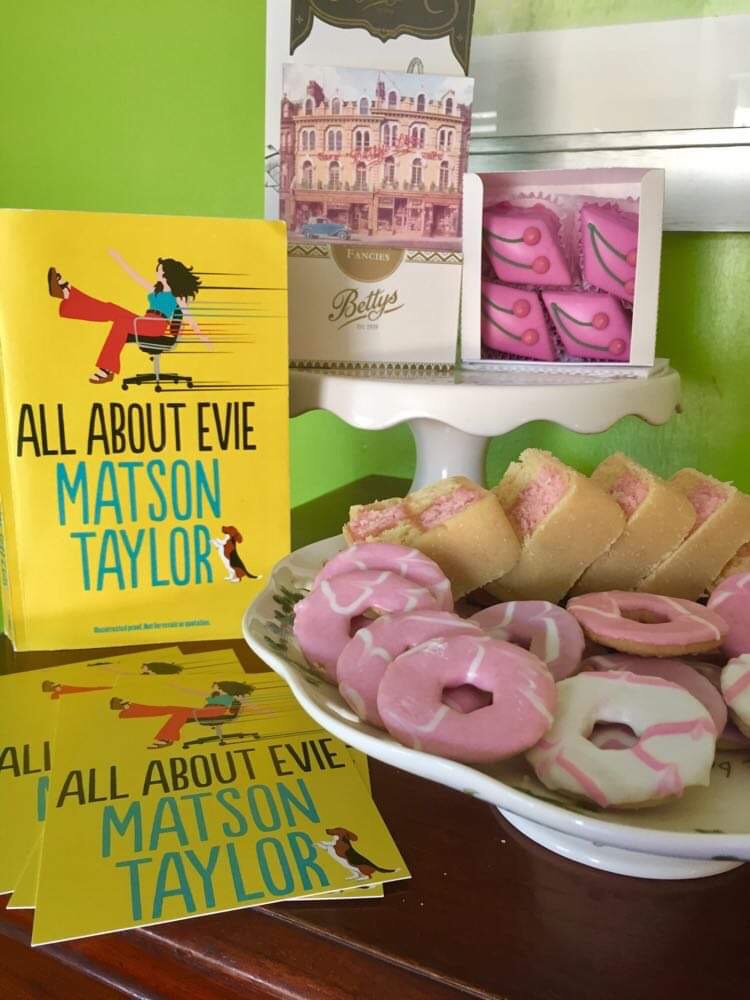
All About Evie by Matson Taylor

This novel is the second in Matson Taylor’s series following Evie Epworth (Yorkshirewoman, Fashion Lover, List Maker). So now, I can categorically say that each time I finish a book about Evie I have a big sunny smile on my face. Of course all books make us feel things, even if it’s to throw them out of the nearest window, but it’s a rare book that gives us a real physical reaction such as the spooky ones that give us goosebumps on the arms or lift the hairs on the back of our neck. I’ve only spontaneously burst into tears once, thanks to David Nicholls’s One Day and that twist none of us saw coming. Not only is Matson is great at those laugh out loud moments, such as the ‘cow incident’ that precipitated her car accident in the first book. As I finished All About Evie I found myself unable to stop smiling. This book feels like liquid sunshine being poured into your veins.

Our previous book ended as Evie is being waved off to an adventurous new life in London, alongside mentor Caroline, the unconventional and glamorous daughter of Evie’s lifelong neighbour and baking partner Mrs Scott-Pym. All About Evie starts ten years later in 1970’s London, where Evie is working in a junior role on BBC Radio Four’s Women’s Hour. Previously, we met Evie at time of great change and this novel is no different. Thanks to a terrible incident with a visiting Princess Anne and the misuse of a mug Evie is sacked from the BBC. Does this mean her life in her little London flat is in jeopardy? Caroline thinks this is an opportunity to try something new so Evie tries working in an art gallery. When it turns out art, particularly the modern variety, isn’t for her she lists things she’d like to do and falls upon the idea of writing for a magazine. She finds the magazine Right On in an office above a sex shop – handy windows for checking one’s hair before walking into the office – and asks for a job. Assuming she’s been a journalist at the BBC, NickStickUpBum and NickWithCollars agree to give her a trial on the listings pages, essentially long lists of what’s on in London across the arts from opera to poetry evenings. With the offer of help from Lolo (Radio Three producer, homosexual, basset owner) on the classical music listings, Evie decides to give it a go and sprinkle some sunshine over her work, in her own inimitable way.

In between Evie’s story there are a couple of flashbacks to other character’s lives. Evie’s neighbour Mrs Scott-Pym has died recently and we see her packing a case for Evie, with little artefacts to remind Evie of their time together – including a pestle and mortar wrapped in a tea towel of Bolton Abbey. Evie is grieving for her old friend, but the reminiscences become even more emotional when we realise that Mrs Scott-Pym was, aside from Dad Arthur, the only link back to Evie’s mum Diana. Preserving her memories of their friendship for Evie is so poignant and it does make Evie think about her future. Can she keep dating totally unsuitable men, who she carefully and comically lists for us, or does she want to meet someone she can share her life with? I thoroughly enjoyed the tension between Evie and her rather hippy dippy workmate Griffin. Griffin is a proponent of high culture and wants the magazine to remain intellectual rather than popular. So to try something a little more highbrow, Evie accepts Lola’s invitation to her first opera. Afterwards, NickWithCollars suggests she write a review for the magazine. This infuriates Griffin who thinks Evie is definitely low culture and would rather they published one of her own poems. When the men are out of the office, Griffin places herself in charge and gives Evie petty tasks to fulfil, often creating a mistake to trip Evie up or keep her working late. Evie tries to take the high road, but her yoga chant trick is absolutely brilliant and well deserved. I couldn’t wait for Griffin to receive her real comeuppance! Meanwhile, there’s a lovely friendship forming between Evie and Lolo, as well as his basset hound.

Yet underneath the humour, there’s so much more going on. A beautifully poignant thread running through the novel is that of motherhood. There are memories of Evie’s mum of course and we’re aware of all the life experiences Evie would have loved to share with her. Evie’s mum never got to see her grow and all that promise is encapsulated in one little throwaway object from the suitcase. Evie has many mother figures though, obviously Mrs Scott-Pym and her friend Mrs Swithenbank who gives Evie a call every week just to check in. Caroline and her lover Digby are disagreeing over the possibility of becoming parents, particularly as Caroline would have to carry the child and believes she doesn’t have that maternal instinct. However, both women have been invaluable to Evie, she even loves popping in and watering their plants while they’re away. Their house gives her the sense of having a family in the city, an anchor that keeps her from being swept away amongst the crowds. We see Evie draw on all these maternal figures when Mrs Swithenbank’s daughter Genevieve turns up in London in search of a fashion career. Genevieve carries just one suitcase, but is full of ideas and her outlandish outfits were so funny – one inflatable hoop dress brought back terrible memories of being stuck in a dress in Laura Ashley’s changing rooms and having to ring my Mum to get me out. Evie feeds Genevieve, lets her stay and starts introducing her to the right people. Every day she comes home, dejected from receiving lots of knockbacks, despite her inventive fashion portfolio. Every time Evie props her up and brings her spirit back. It was lovely to see Evie in this life stage, being the mentor and feeling so confident. As much as I love London, it was also nice to see her at home on the farm with old friends reunited and new ones being introduced, plus a very exciting finale which gives us a nod towards what Evie might do next. I can’t wait to celebrate this fantastic novel with a 1970s party. I’m hoping for a cheese and pineapple hedgehog and Babycham to toast this joyful new stage in the Evie story.

Published 21st July 2022 by Scribner UK

Meet The Author

Matson Taylor grew up in Yorkshire (the flat part not the Brontë part). He comes from farming stock and spent an idyllic childhood surrounded by horses, cows, bicycles, and cheap ice-cream. His father, a York City and Halifax Town footballer, has never forgiven him for getting on the school rugby team but not getting anywhere near the school football team.

Matson now lives in London, where he is a design historian and academic writing tutor at the V&A, Imperial College and the Royal College of Art. Previously, he talked his way into various jobs at universities and museums around the world; he has also worked on Camden Market, appeared in an Italian TV commercial and been a pronunciation coach for Catalan opera singers. He gets back to Yorkshire as much as possible, mainly to see family and friends but also to get a reasonably-priced haircut.

He has always loved telling stories and, after writing academically about beaded flapper dresses and World War 2 glow-in-the-dark fascinators, he decided to enrol on the Faber Academy ‘Writing A Novel’ course. All About Evie is his second novel.

Posted in Random Things Tours

All The Little Bird Hearts by Viktoria Lloyd-Barlow

What an intricately beautiful and nuanced novel this is! I had expected a story along the same lines as Eleanor Oliphant Is Completely Fine or Meredith Alone at first. The beautiful aesthetics of the setting and glamorous lifestyle dazzle us and everything on the surface seems benign as Sunday and her daughter Dolly start a relationship with their new neighbours. Vita is aristocratic in her manner and comes across as a likeable eccentric, perhaps a little pretentious but as my friend Nigel used to say, ‘a little bit of pretension doesn’t hurt anyone’. They love- bomb Sunday and her daughter with gifts and elaborate Friday night dinners. Vita and her husband Rollo are staying in the house next door while ‘Rols’ completes a plan to buy and convert a large institution for children in care nearby. Until this glamorous pair enter their lives, Sunday and Dolly lead a very quiet life. Divorced from Dolly’s father, they still live in a house on his family estate where Sunday works in the gardens. Sunday isn’t great with noise (especially several at once) only eats white food and struggles to read between the lines with others. She gets on best with David who works in the greenhouses with her and uses sign language to communicate. Extremes of anything, cause panic in Sunday, so the slow rhythms of nature and it’s subtle colouring are perfect for her. Sunday didn’t even know anything was missing in her life until Vita wants to become her friend. However, is Vita a genuine friend or does she have an ulterior motive? This is where the slightness of the story and the details of glamorous clothes, extravagant dinners and endless champagne started to remind me of Virginia Woolf and her clever way of hiding so much beneath a beautiful surface. Instead of being an uplifting tale about someone who struggles to make connections finding a friend and embracing their peculiarities, this promised to be something darker.

I felt a kinship with Sunday immediately and the tone is light at first as she meets new neighbour Vita and her comical little dog Beast. Vita is one of those people who never question themselves or worry about their interactions with others. She simply inserts herself into Sunday’s life, without any of the social angst over whether she’s wanted there. Vita and her husband Rollo are dazzling and disarming, from the clothes they wear to the hyperbole in their speech and the very best delicacies on the dinner table, including the most exquisitely wrapped and coloured petit fours. They are disarming in the way they present themselves, classy but bohemian and often a touch of carelessness like sitting on the front step in a silk kimono and old work boots. Is this nonchalance studied or natural? Conversely, Sunday can’t be what she isn’t and her ‘quirks’ are not affectations. She has learned to be less, to mask and try to make herself acceptable from a young age thanks to a mother who never showed her love. She constantly proclaimed Sunday was an ‘it’, a ‘what’, an unsavoury puzzle to be solved. We learn that this animosity towards her daughter worsened when a terrible family tragedy occurred. I loved how the author layered the voices in Sunday’s head: her daughter explaining that her dad and stepmum love each other so much, it’s just that Sunday is incapable of seeing it; her mother saying ‘you’re not wired right you’; her sister saying ‘I don’t know what you are Sunday’. At first, the friendship of Vita and Rollo soothes Sunday’s soul, because she feels accepted. They always make sure white rolls are available at the dinner table, in case the main course is too colourful or complex for her. They also make sure there is champagne or soda water, because Sunday will only drink cold, fizzy liquids. These attentions are simply there, neither one of the couple mention them, but they mean the world to Sunday:

‘their attention to my preferences touched me. I had not been known in this way before and found acceptable. There I was seen and approved of, even indulged’.

At first, Dolly and Sunday would often stay late next door after dinner, but subtle changes start to occur. Dolly wants to stay over with Vita on Friday nights. One night, after leaving for home, Sunday returns with her daughter’s favourite pyjamas and hears music as well as laughter next door. Yet when Rollo answers the door, he holds it closed behind him as he takes the pyjamas. He is perfectly polite, but does not step back as he once might have done to let Sunday inside. These subtleties make the reader nervous and I felt worse because I wasn’t sure whether Sunday could see what I was seeing.

‘painted subjects are easier to read than their physical counterparts […] in real life the details I am drawn to are often secondary, and these often mislead. That evening when I looked at Vita, I saw her pretty hair, her little wrists wrapped in gold chains, and her welcoming smile. I did not notice the grip of her hand on my daughter’s arm’.

I wanted to put myself between Sunday and these charming people. She recalls jealousy, but was it because she envied Dolly’s easy relationship with Vita or was she jealous of Vita’s relationship with her daughter? The subtle foreshadowing becomes more direct as Dolly relates the story of Vita simply taking a friend’s baby for a walk without telling the mother. Vita seemingly could not understand why the woman was so scared or why the police were called. Slowly, Sunday understands that her new friend is possibly not what she seems, by using a system of observation and noting patterns of behaviour. Yet I was still worried that she might underestimate the extent of Vita’s ability to create chaos. Sunday describes her way of analysing people, to look beyond their ‘fleeting expressions’ to see the repeated pattern on their heart. She looks beyond what they say and instead values and interprets them based on their repeated behaviour. Yet with Vita she declares herself too scared to look, because she isn’t sure whether the tick tock of her heart signifies a clock or a bomb.

Dolly’s changes are also subtle at first, but Sunday notices a new confidence and self-possession that she is acquiring from time spent with their neighbours. Whereas once Dolly might have been reserved with new people, Vita unlocks the young girl who is soon easily pushed to near hysteria over a shared joke. This quantity of feeling makes Sunday uneasy. Yet surely this new ease in her daughter’s manner can only make life easier for Dolly? She won’t share Sunday’s fears and awkwardness. The coming summer heralds a rollercoaster of change and emotions, first Dolly’s accent becomes more cut glass and she starts to dress differently, more like Vita. As exams loom and the renovation of the children’s home comes closer, the couple offer Dolly a job helping out with admin and interior design. She announces she’d like to do it for the holidays, but Sunday reminds her she does not need to work. Her father and grandparents get her everything her heart desires. Yet Sunday feels churlish refusing the opportunity, torn between what is best for her daughter’s future. I felt that Dolly used her mum’s inexperience against her at times, claiming that there were simply so many uses for her on site, but Sunday could never imagine them, because she’s only ever known the farm. If she refuses Dolly’s request to spend time in London with them, will it make Vita and Rollo’s offer even more attractive?

Vita isn’t above manipulation herself : ‘I’m so sorry Dolly, you know we love taking you out. And we had such fun planned in London. But…’

Sunday doesn’t know whether she can or should deny her daughter these experiences. It might help her get on in life. Should she be supporting her daughter to reach for something different? Should she be holding her back? However, some base instinct urges her to say no, to ban the trip and keep Dolly home for the summer, knowing this could backfire completely if their offer is benign, nothing more than a favour for the daughter of their friend. Sunday hasn’t had close friends before so can’t compare the situation. When Dolly receives her exam results, the dam breaks and out comes a voice Sunday has never heard before from her daughter, one filled with scorn, shame and no appreciation for her mother’s years of caring attention. Dolly sees her mother’s life as a failure and she will do anything not to be like her. The author cleverly contrasts this awful evening with the story of a fox that arrived in Sunday’s garden, a little too thin and straggly. It made it’s home under their shed for the winter and every day without fail Sunday would set milk and dog food down. In the spring the fox was sleek and flourishing because of Sunday’s steady and dutiful nature.

One of the most heartbreaking revelations for me is Sunday’s slow realisation that others have quirks and oddities, but it is still possible for people to be fond of them. To love them even. She had always thought it simply a fact of life that anyone with quirks like hers would be impossible to love, but that’s not the truth:

‘My mother could still have loved me had she chosen to’.

To befriend someone who has experienced this trauma, to make them feel loved and accepted, but then manipulate them for your own ends is evil. Yet the author keeps the reader unsure whether that’s what Vita is doing an I was constantly waiting for this ticking time bomb of a woman to explode. Yet whatever the outcome, I wasn’t sure that Vita was consciously acting this way. Her behaviour felt like a repeated pattern, possibly an enactment of her own traumas. Rollo knows though and when the truth starts to emerge he is openly affectionate to Sunday. Instead of serving up the usual air kisses, this is a hug that’s more substantial and perhaps honest. Showing a remarkable insight into his wife’s nature he tells Sunday:

‘It’s not you, darling. It’s Vee I’m afraid. She doesn’t think these things through. It might all change again by tomorrow’.

Yet he is willing to let her continue, to collude in destroying others casually and without consequence. At the very least she will offer friendship and take it away on a whim. They will simply slip into another life, with all the security their money and status gives them. Like Nick and Daisy in The Great Gatsby, Vita and Rollo are careless with other people, content to use others and leave them behind. Yet there are threads of hope in the conclusion, not least in Sunday’s ability to reflect on her own actions and feelings with more awareness. This novel is stunning, beautifully written and has such psychological complexity and insight. I loved it.

Meet the Author

Viktoria Lloyd-Barlow has a PhD in Creative Writing from the University of Kent. Like her protagonist, Sunday, in ALL THE LITTLE BIRD-HEARTS, Viktoria is autistic. She has presented her doctoral research internationally, most recently speaking at Harvard University on autism and literary narrative. Viktoria lives with her husband and children on the Kent coast.

Posted in Publisher Proof

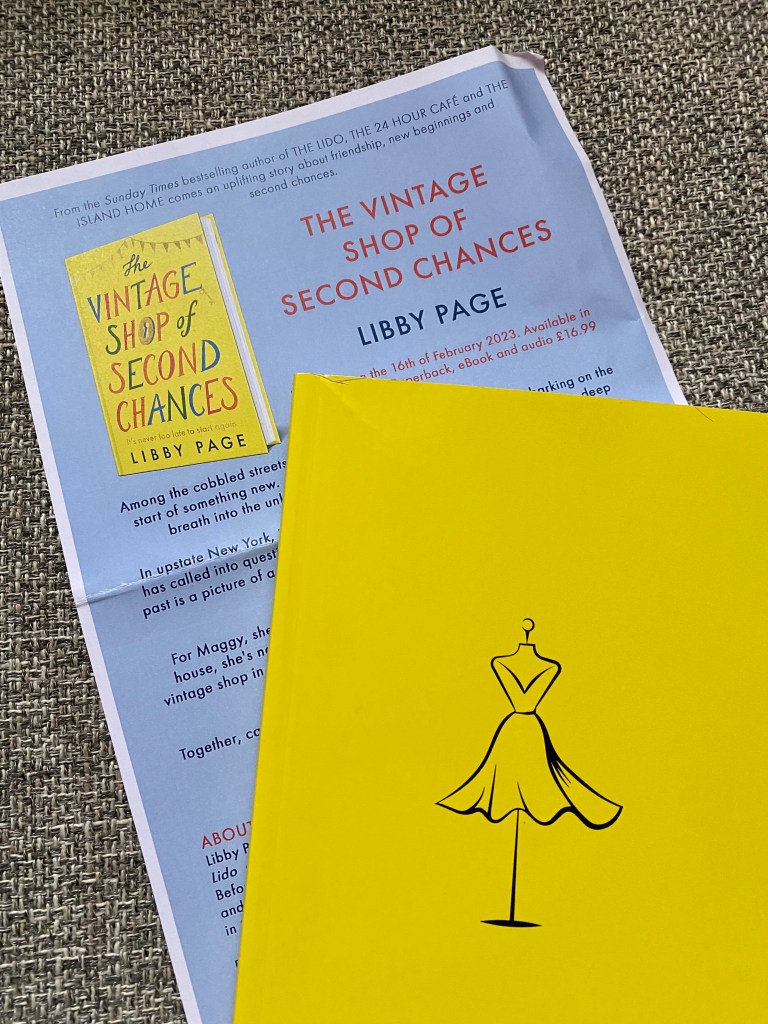
The Vintage Shop of Second Chances by Libby Page

Libby Page was one of those authors that completely passed me by until I started book blogging and this is the first of her novels that I’ve reviewed. I don’t know why I hadn’t picked up one of her books before, because reading this gave me the same feel as an Adriana Trigiani or Marian Keyes novel. There were strong female characters, female friendships, achieving ambitions and fulfilling long held dreams. There are deep emotional aspects bringing flavour and depth to her story, but also enough icing and sprinkles to lift the spirits. Here the sprinkles were one of my favourite things, vintage clothing. Our heroine is Lou, who moved to a small market town to care for her mother who was terminally ill. Since her death Lou has been working hard, selling the family home and buying a shop with flat above in the town centre. With builder Pete upstairs creating her living space, Lou has opened the shop and is looking at ways to save money and boost business. Pete puts her in touch with Maggie, another lady who has gone through a big change. Maggie’s a grandmother and often provides care for her grandchildren in the house that was the family home. However, her husband has recently left Maggie for a younger woman and she is rattling round in the big house. So, when Pete suggests that she rents a room to Lou until her flat is ready it turns out to be a lifeline for both of them. Finally, we have Donna, who works at her family’s hotel in the US. In a daily uniform of jeans and hotel sweatshirt, Donna follows a routine where she does the paperwork and the books and checks in on her elderly parents, but she too has a shock in store. When her mother suffers a sudden mini-stroke, her conscience causes her to disclose a family secret – they are not Donna’s birth parents, her mother was a woman from a small market town in England.

The thing that links these disparate women is a vintage dress. 1950’s in style and a stunning buttercup yellow this dress has a full circle skirt just made for dancing. Embroidered with meadow flowers, the dress hangs above the counter in Lou’s vintage shop and is the only item that isn’t for sale. It’s flanked by a picture of her mother Dorothy, the owner of the beautiful dress. I love vintage clothes and this dress, plus the descriptions of her shop really did draw me in. I love colour and just reading Lou’s outfits and her transformation of Maggie’s wardrobe made me smile and inspired me to be more colourful again. The warm feeling I got from Maggie and her beautiful home helped as well and within a couple of chapters I had completely relaxed into their world. Each woman had her own chapters throughout so we could see things through their viewpoint. While I felt an immediate kinship with Lou and Maggie, Donna seemed less accessible. She was very intent on routine and was considered abrupt or even rude by some people. I wondered if she was neuro divergent and suffering from anxiety, so her routines and uniform might have come from an inability to change or decide when under pressure. All these women face change and have to start life anew. In between their narratives are very short chapters from the past, where a young woman is making a yellow embroidered dress for a secret assignation with a man she’s fallen in love with.

I really enjoyed the journey to understanding the owner of the stunning dress and how it ended up at Lou’s shop. There is a revelation for all concerned when Donna gets on a plane and travels to England and to Lou’s shop. A series of letters between sisters add an extra clue to the mystery. Aside from this main story there are other subplots that also caught my imagination. I loved Maggie and her journey of rediscovery is a joyous one. When Lou arrives it’s clear Maggie is trained by years of looking after someone else: her husband, her children, guests. She’s not putting any love into herself and this shows in her completely black wardrobe. A little bit of input from Lou and she’s wearing orange with combinations of colours she didn’t expect. This small change and their growing friendship means that Maggie is busy for the first time in a long time. Her children can’t rely on her for free child care because she’s not home and this is just the start of Maggie accepting her divorce and creating a new life for who she is now. That’s partly a case of reconciling with her past and a summer in 1960’s London where she was the sort of girl who wore yellow Mary Quant boots and fell in love with an artist. There is romance here, but it’s not the only story. This story is about women supporting and inspiring each other and being our best selves. I liked that there was a lot of emphasis on self- care, from the colourful vintage clothes to taking control and finding our passion in life, instead of being the care givers we’re often expected to be. I came away from this story glad that society’s moral standards have changed and that for many women their lives are no longer ruined by shame or fear of what the neighbours might think. I felt like I’d been given a warm hug and I came away from the story smiling and inspired to wear some of my more colourful clothing.

Published on 16th Feb 2023 by Orion.

Libby Page graduated from The London College of Fashion with a BA in fashion journalism before going on to work as a journalist at The Guardian. After writing, her second passion is outdoor swimming. Libby lives in London, where she enjoys finding new swimming spots and pockets of community within the city. The Lido is her first novel. Follow her on Twitter @LibbyPageWrites and Instagram @TheSwimmingSisters

Posted in Personal Purchase

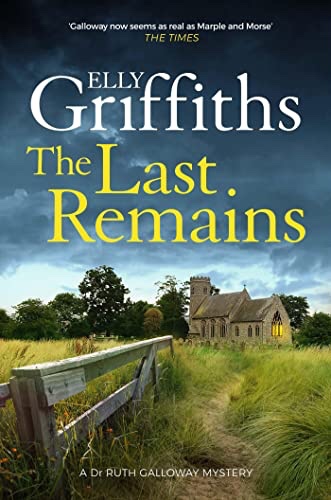
The Last Remains by Elly Griffiths

It’s always a treat to be back in Norfolk with Dr. Ruth Galloway, in fact it feels like I’m visiting an old friend. One of those friends you maybe only see once a year, but you just pick up where you left off like you’ve never been apart. This time we’re in the very North of Norfolk, branching into Cambridgeshire and even my home city of Lincoln too. The last book was set in the middle of the pandemic and in The Last Remains we’re still dealing with the aftermath. There’s a sense of dislocation from regular life, but weirdly there’s restlessness and a lsense of urgency too. An urge to start getting things done. It’s no surprise that several characters have big changes on the horizon. Ruth’s university are thinking of scrapping the archaeology department. Nelson remains single, but is still living in the marital home he shared with wife Michelle. Cathbad is still struggling with the ongoing symptoms of long COVID, much to his partner Judy’s concern. The group of friends are once again drawn together by a body. This one is walled up in an old cafe that’s being renovated. Ruth thinks the skeleton is female and has been placed there deliberately. She’s not ancient either, with Ruth ruling that the bones are not historic and likely to have only been there twenty years. What follows is a delve into the more recent past and a group of archaeology students spellbound by the knowledge of their tutor Leo Ballard. Could this go back to an evening of students and their tutor camping in the forest and talking about Norfolk mythology? At least there is one person to ask who’s very close to home and he’s always around where strange Norfolk legends are concerned.

The case is a complex one, with the themes of twinning and disguises. There are also interesting contemporary issues, especially for anyone like me who went to university for the first time in the 1990s. If we apply today’s standards of conduct to the relationships between students and tutors in the past, it’s clear the lines are more blurred. Leo Ballard was happy to have his students at his home and have camping trips with them too. The students would also congregate at the cafe where the body is found – The Green Man. The cafe was run by a man called Peter Webster who had two daughters- Gaia and Freya – who also studied archaeology. However, the walled up skeleton is a student from Lincoln called Emily who was on the receiving end of a blow to the head. Emily was a student at Cambridge University and went missing after the camping trip to Grimes Graves, a prehistoric flint mine. It was thought she had been travelling on the train to Lincoln to visit her parents, but was seen to get off at Ely and simply vanished. I was creeped out by Leo Ballard immediately and I didn’t like his manner when talking about young girls. He seemed to take advantage of his position to lure young students into relationships with him. Freya Webster points out that he never visited the cafe himself, but he felt present because of how much his students talked about him. His following of students felt like a cult, impressed by his knowledge and taken in by his stories. In fact he wasn’t above a bit of theatre, since all students remember seeing a strange figure with horns emerging from the woods when they were camping. Was this a group hallucination or did someone in the group want to genuinely scare the students?

Cathbad, everyone’s favourite druid, is not his usual self. He is still experiencing breathing problems when exerting himself, he sleeps more than he used to and has difficulties remembering things. It seems that even he is questioning his longevity and is acting out of character, such as taking the whole family to mass at Easter. So, when he goes missing, his partner Judy is distraught. I think she fears he’s gone walkabout, a spiritual walk taken when the individual knows they’re going to die. It’s a change that Ruth is struggling to deal with, especially since Cathbad has always seemed invincible. She’s facing enough changes of her own with the department of archaeology under threat of closure and she questions what more she could have done, but she’s written books and even had a television series. She’s probably the nose high profile archaeology tutor she can think of. She doesn’t like changes that threaten her and Kate’s settled existence on the salt marshes, next door to the sister she has only recently found. Kate is now at secondary school and is used to the changes of the last year. She is not surprised at the occasional presence of Nelson in the early morning and he also arrives most Saturday evenings bearing pizza. Ruth has a lot of respect for Nelson’s wife Michelle, who had the guts to break the endless deadlock of their three sided relationship. She has moved to Blackpool with Nelson’s youngest, George. Now that Nelson is free though, she isn’t sure what it means or what she wants. She senses Nelson moving ever closer to the big discussion of their future, but finds herself avoiding it. She can’t imagine ever being anywhere but here with Kate and Flint, looking out to sea from her little cottage. However, what if Michelle returned?

There’s plenty of tension here, in the case and in the relationships. The sequence with Ruth and Kate at Grimes Graves made me feel claustrophobic! Ruth has interest from David, another department member, and his declaration of love has surprised her, despite friend Shona saying it was obvious. David is going to work at Uppsala University in Sweden and would like Ruth to go with him, where a new post is waiting for her. If she stays at UNN there’s an assistant dean’s position possible. I felt like Ruth was waiting for a big gesture from Nelson. She doesn’t want him by default, just because Michelle has gone. When Michelle returns and is at their marital home, Ruth disengages. Nelson needs to choose and he needs to do it independently. Will he do this or will it just be easier to slip back into his marriage? Does Michelle even want that? I like that Ruth loves her independence and values her life without a man very highly. He has to prove what he will add to her life, because it’s really great as it is. I was on the edge of my seat wondering what she would choose. I was also worried for Cathbad, but loved the way these friends come together as a community. Judy and Ruth support each other and their children get along really well too, so they come together to wait for Cathbad’s return, trying not to think about the alternative. I will say that there’s a wedding a the end, but I’m not telling you which characters tie the knot. It’s going to be fascinating to see Ruth, perhaps in a new location and different job going forward. However, I think there will always be part of her and Flint’s spirit wandering the marshland.

Out now from Quercus

Meet The Author

Elly is the author of two crime series, the Dr Ruth Galloway books and the Brighton Mysteries. Last year she also published a stand-alone, The Stranger Diaries, and a children’s book, A Girl Called Justice. She has also previously written books under my real name, Domenica de Rosa (I know it sounds made up). The Ruth books are set in Norfolk, somewhere Elly went for holidays in her childhood, but it was a chance remark of my husband’s that gave me her idea for the first in the series, The Crossing Places. They were crossing Titchwell Marsh in North Norfolk when her husband, who’s an archaeologist, mentioned that prehistoric people thought that marshland was sacred ground. Because it’s neither land nor sea, but something in-between, they saw it as a bridge to the afterlife; neither land nor sea, neither life nor death. In that moment, she said, she saw Dr Ruth Galloway walking towards her out of the mist… Elly lives near Brighton with Andy. They have two grown-up children and a cat called Gus who accompanies her as she writes in the garden shed.

Posted in Netgalley

The Lodger by Helen Scarlett

I’d throughly enjoyed Helen’s last book The Deception of Harriet Fleet, so I was looking forward to this release. The Lodger is an interesting historical fiction novel set in the period post WW1 and the Spanish Flu epidemic.. It’s a period I’m particularly interested in and I was drawn to the premise and how it brought the changes of that time into the plot of the story. This was a time of personal and national mourning, with the war appearing like a scar cut right across the public’s consciousness that hasn’t yet had time to heal. Our heroine, Grace, has a family torn apart by grief. She lost her brother Edward at the front and her parents grieved very differently, with her father keeping quite stoic and her mother struggling to cope. Eventually it was decided that for her own good, Grace’s mother would go and rest in an institution where she could be cared for properly. Grace also lost her fiancé Robert at the Somme, a loss she’s struggling to come to terms with as she keeps seeing him on the street, in crowds and on buses. Yet she can never find him. In order to make ends meet and to further an ambition Grace has taken a job at a nursing newspaper and wants to become a journalist, something that would have been unthinkable a few years before. Similarly, to make ends meet in their London home, they have taken in a lodger. Many well-to-do families were forced to do this at the time and Grace has struck up quite a friendship with Elizabeth, a church going woman who was proving to be a great friend. So when Elizabeth is found dead in the river and the police quickly rule it a suicide, Grace is shocked but determined to leave no stone unturned in finding out about the death of her friend.

The historical background was woven into the story so well: a general sense of everyone mourning someone, the fact that women’s positions in society were changing and the difficulties for those returning from the horrors they’ve seen. It was great that this was sometimes incidental background, such as someone Grace goes to speak to having a bad morning, because it’s the anniversary of his son’s death. It gave a real sense that this was an all pervasive grief and hung over the whole country. We would see it in more depth in certain characters. Her friend Edward still has an air of the last century in the way he deals with what he’s seen. He’s very protective of Grace and doesn’t want to tell her things that might distress her, and you get the sense he will take his experiences to the grave. Whereas his friend Tom is willing to be more vulnerable and has clearly suffered mentally since he returned with PTSD. He’s more willing to share with Grace and be honest about what the war has cost him. A character that really shows a change in women’s behaviour is Lady Bunty Jaggers, a friend of Grace’s mother. Grace asks for help in reaching a society lady whose husband knew Elizabeth, so goes to meet Bunty in her London home. She is a very colourful character and has an interesting way of looking at her marriage and what it gives her. She could leave her husband, but at the moment she has the best of both worlds. She’s cushioned by his money and title, but he remains resolutely in the country and she stays in their London townhouse living entirely separate lives. She’s also very forthright about Grace’s mother, suggesting that all the care home does is medicate her to the point of being unconscious. She thinks Grace should take her away from there and simply let her cope with the grief unmedicated, after all grief is normal.

Grace uncovers a terrible story of Elizabeth’s past life, including sexual impropriety, blackmail and possibly murder. None of which seems to fit with the Elizabeth she knew. She will need to interview many people, some of the them wealthy and very dangerous, to get to the truth. Was Elizabeth a changed woman because of all the wrongs she’d committed before or is there more to this story than meets the eye. Grace will need all of her investigative skills to uncover what really happened and she needs to keep an eye out for whoever is watching her and potentially wants to stop her. There were parts of the book that were a little slow and it could have benefited from a chapter or two from Elizabeth’s point of view in a separate timeline. However, I did enjoy that this news about female friendship and going the extra mile for someone who has been good to you, no matter what others say. Grace’s loyalty and determination are evident here. She also shows loyalty to her mother and a willingness to defy her father when she thinks he’s wrong. I really enjoyed how their mother daughter relationship developed.over the book. Finally there’s a little bit of romance too and a choice to be made between a man who is loyal, kind and would keep her safe or a different man who is more progressive, open and would see her as a partner, not a dependent. I liked that this choice was left till late in the book, because it would signify how Grace saw her future and whether or not she was in charge of it.

Out now from Quercus.

Meet the Author

The Deception of Harriet Fleet’ is my first novel and is set in the north east of England. I’ve always loved the big, classic novels from the nineteenth century, with lots of governesses and intrigue, and I sometimes wonder whether I was born in the wrong era! Although the Victorian period was a time of huge changes, the inhabitants of Teesbank Hall are trapped in the past by the destructive secrets they hold. Teesbank Hall itself is fictional but most of the other settings in the novel are real and close to where I live with my husband and two daughters. I teach A Level English and write whenever I can grab a spare moment. (Taken from Helen’s Amazon Author Page).

You might also enjoy Helen’s first novel. A dark tale that’s brimming with suspense, an atmospheric Victorian chiller set in brooding County Durham for fans of Stacey Halls and Laura Purcell

1871. An age of discovery and progress. But for the Wainwright family, residents of the gloomy Teesbank Hall in County Durham the secrets of the past continue to overshadow their lives.

Harriet would not have taken the job of governess in such a remote place unless she wanted to hide from something or someone. Her charge is Eleanor, the daughter of the house, a fiercely bright eighteen-year-old, tortured by demons and feared by relations and staff alike. But it soon becomes apparent that Harriet is not there to teach Eleanor, but rather to monitor her erratic and dangerous behaviour – to spy on her.

Worn down by Eleanor’s unpredictable hostility, Harriet soon finds herself embroiled in Eleanor’s obsession – the Wainwright’s dark, tragic history. As family secrets are unearthed, Harriet’s own begin to haunt her and she becomes convinced that ghosts from the past are determined to reveal her shameful story.

For Harriet, like Eleanor, is plagued by deception and untruths.

Posted in Romance Rocks, Throwback Thursday

Throwback Thursday! In Five Years by Rebecca Searle for Romance Rocks.

This book surprised me, delighted me and broke my heart. It was not at all what I expected, but was all the more special for that. Cleverly, Serle wrong foots the reader into thinking this is a straight forward romance, but it really isn’t. It’s about love and just as our heroine Dannie is some times unsure what love looks like, so is the reader. We are used to certain conventions and have expectations about how a love story will unfold. It teaches us that sometimes we don’t notice or fully appreciate what we already have.

Dannie is a corporate lawyer, living in Manhattan and dating the eminently eligible David. David and Dannie live together after dating for two years. They have done everything according to an unspoken, but very correct timetable; everything about their relationship is planned and just right. In fact their relationship is so predictable that when David suggests dinner at the Rainbow Room, Dannie knows he’s going to propose. She says yes when he presents the perfect engagement ring, but they don’t plan their wedding. They continue to drift along as they are, until Dannie has the dream. This vivid dream shows a loft apartment in Dumbo with interior design details such as an art print of an optician’s chart with a witty slogan. It’s nowhere Dannie can imagine living. It’s trendy and edgy. She and David live in Gramercy Park. A perfect location for their work and fitting for where they are in life. Yet, the Dumbo apartment feels comfortable. Then a man appears. She’s never met him before but yet there is a connection, something she can’t define. As he moves closer she feels actual electricity. She has never felt this before. Like some huge force compels them to be together. When she wakes, Dannie feels strange, like she’s questioning everything around her.

Dannie has planned to see her friend Bella. They have been friends since boarding school and are still incredibly close. Bella takes more risks than Dannie and in some ways Dannie sees her as someone who doesn’t finish things, perhaps a bit of a flake. Bella loves art, she lives to travel and has a more bohemian outlook on life. Dannie has a more settled and perhaps, conventional life where work is the priority and her stable relationship with David simply ticks along. Up until now Bella hasn’t had a stable relationship in her life, but she has brought someone important to meet Dannie. When he walks in, Dannie is shocked to see the man from her dream. She panics and decides to do everything she can to stop her dream from coming true. But life can take strange turns and a series of events unfold that she never imagined. They make her rethink everything about how to live life and how to love.

I became so involved with Dannie and Bella’s story that it was hard to put the book down towards the end. The story crept up on me from something very light to an emotional tale about the strength of female friendship. These girls are life partners. Their presence sustains each other in ways that romantic relationships sometimes don’t. Bella’s mother lets slip that she purposely placed her daughter in the same school as Dannie, because she saw them together and could not part them. The very structure of the book teaches the reader something. We learn, at the same time as Dannie, that the happy ending is not always about a man, because love comes in many forms. Also, that loss and love are the same thing. When we grieve it just proves how much we loved. I found myself becoming very emotional towards the end of the book and that rarely happens. I found the writing so truthful and similar to my own experience of grief that I had a lump in my throat. I loved the ending and the fact it wasn’t predictable elevated the book above the ordinary. I will be hugging my friends a little closer and appreciating all the people in my life who love me.

Meet the Author

Rebecca Serle is an author and television writer who lives in New York and Los Angeles. Serle developed the hit TV adaptation of her YA series Famous in Love, and is also the author of The Dinner List, and YA novels The Edge of Falling and When You Were Mine. She received her MFA from the New School in NYC. Find out more at RebeccaSerle.com.

Her latest novel One Italian Summer came out in paperback last year and was a wonderful look at love, mothers and daughters, and the things we learn about ourselves through travelling.

Posted in Romance Rocks!

Valentine’s Reads – Jilly Cooper’s Rutshire Novels.

This month I’m supporting my fellow Squad Podders by highlighting writers of romance, whether that is their specific genre or just a part of their books mingled with fantasy, humour or mystery. If you want completely escapist romance with a side order of sexy, rich, characters cavorting around the English countryside then Jilly Cooper is your author. My first introduction to Jilly Cooper was finding her earlier 1970’s books on mum’s bookshelves. These weren’t the romances, but the humorous and witty digs at society found in her books on class and feminism. I remember very clearly my mum reading to me from one of them and as a working class family we found the middle classes utterly tragic so she would read descriptions of the Teale family. I’ll never forget Jen Teale who was so demure she wore six pairs of knickers. When mum was a bit low we would get a book down and I would read or act out the funnier bits and we’d all fall about laughing. It wasn’t until I was in sixth form that I encountered her handsome hero, Rupert Campbell-Black. One girl had brought Rivals into the common room and was reading out the filthy bits – ‘tit fault’ could be heard ringing round the tennis courts for weeks that summer term. I bought a copy of Riders and realised her work had so much story, as well as those famous rude bits. What I loved about Riders was the description of Penscombe and it’s jumble of treasures, dogs, books and grounds full of beautiful horses. Then as the rivalry became apparent between Rupert the school bully and his victim, the gypsy Jake Lovell I was completely caught up in the story. Her characters were well fleshed out and Rupert’s disastrous marriage to the American hunt saboteur Helen, was a fascinating clash of cultures, class and personality. I was soon utterly gripped by the world of showjumping, the bed hopping and the relationships sacrificed to ambition.

I think characters are a strength of Cooper’s even though some are almost caricatures and her rendering of Northern accents is hilariously wide of the mark. Each book tends to have a virtuous or kind woman – Taggie O’Hara, Kitty Rannaldini, Daisy or Lucy – who are perhaps not conventionally attractive, slightly shy and a bit downtrodden. It gives us someone to root for. On the other hand there are absolute horrors as well like narcissistic opera diva Hermione Harefield, the wicked but talented Roberto Rannaldini, or the chaotic and faithless Janey Lloyd-Foxe. It doesn’t matter that they’re not realistic, this is a romp through the upper classes – a part of society that Jilly Cooper knows more about than me. There’s always a lusty man to fall in love with too, someone tortured and secretive like the director Tristan de Montigny in Score, a bumbling innocent with looks to die for like Lysander Hawksley in The Man Who Made Husbands Jealous, or the gorgeous Luke Alderton in Polo, who loves the spoiled young polo player Perdita even when she chooses his brother Red. From showjumping, to television, to gigolos, polo players, orchestras, film making and horse racing Jilly takes us through each world with great knowledge and detail, often making the animals just as strong in character as the humans. I’m particularly fond of the labradors Mavis and Badger, and Taggie’s faithful little mongrel Gertrude.

Then there are the romances! There are several in every book and of course the over-arching love story of all – Rupert and Taggie. In Riders I felt so sad for Fenella whose hero worship of Billy Lloyd-Foxe becomes an unrequited crush, then a doomed love affair. In Polo I was rooting for Daisy, the mother of our heroine, who had been so focused on looking after others that she couldn’t believe the dashing polo player Ricky France-Lynch would be interested in her. I followed the fortunes of Rupert and Helen’s daughter Tabitha very closely. She’s impulsive and makes a passionate, but very difficult marriage to Isa Lovell, the eldest son of Rupert’s enemy Jake Lovell. Any chance she had of a more stable and loving relationship, through the novel Score particularly, had me keeping my fingers crossed. Of course it’s Rivals where the best and most beguiling love story begins and to see the bed-hopping Rupert Campbell-Black falling head over heels for the shy, dyslexic and unconventionally beautiful Taggie was deeply enjoyable. I was a similar age to Taggie when reading Rivals and still very romantic. Now I look at their relationship a little differently, but every few years I re-read a couple of the novels and I still feel a little starry eyed about them. They pop up in all the novels after Rivals and their relationship is probably the most successful in Cooper’s fictional Gloucestershire.

Cooper gives the reader a glimpse into a glamorous and wealthy world most of us would never know about. The hotels are 5 star, the fashion is designer, and the travel is first class. This is a world of elite sport and the game of kings – yes the Prince of Wales does pop up in Polo. There’s the world of classical music following the Rutshire orchestra in both Appassionata and Score, where the countryside becomes a backdrop for a twentieth century update to Don Giovanni. Pandora takes us into the art world and her latest Jump and Mount we’re back with horses, but in a horse-racing capacity rather than show jumping. Her only mis-steps for me are when she steps outside of this privileged world and tries to write about the working classes or a Northern character. Her book Wicked focuses on a struggling state school being mentored by the local public school where some of our usual suspects pop up, such as Rupert and Taggie Campbell Black’s children. I found her working class and city dwelling characters stereotypical and I inwardly cringed to such an extent I didn’t keep the book. Watch out for the accent of George Hungerford in Score for an example of how Northerners speak too. These are small quibbles though in a series of novels full of humour, bedroom romps, glamour, money and total escapism. The countryside is stunning and characters live in the most picturesque surroundings you’ll feel you’ve been on a holiday. Mainly though you’ll keep coming back for the love stories: hoping that the plump, bespectacled Kitty Rannaldini will escape the clutches of her evil husband with the handsome Lysander Hawksley; whether dog loving, shy, make-up artist Lucy will ever be noticed by the glamorous and mercurial Tristan de Montigny. Cooper uses all of the romantic conventions to her advantage. There are always obstacles to the couple’s love, distractions and conventions that can’t be crossed. There might be an age barrier, a man whose a confirmed bachelor, families that are locked into a bitter feud or a difficult marriage to negotiate. There are so many of these obstacles, that you’ll wait with your heart in your mouth as Taggie drives to collect Rupert Campbell-Black from his trip aboard, hoping desperately that he’ll overlook them and let her fall into his arms.

Meet the Author


Jilly Cooper is a journalist, author and media superstar. The author of many number one bestselling novels, she lives in Gloucestershire.

She has been awarded honorary doctorates by the Universities of Gloucestershire and Anglia Ruskin, and won the inaugural Comedy Women in Print lifetime achievement award in 2019. She was appointed CBE in 2018 for services to literature and charity.

Posted in Netgalley

The Back Up Man by Phoebe Luckhurst.

I was enticed into our heroine Anya’s world for two main reasons: Glasgow is one of my favourite cities and I too had a back up man. My best friend Elliot and I made a pact when we were moving on from sixth form. He didn’t know that I was head over heels in love with him, but he was my best friend and I didn’t want to ruin anything (we did ruin things a few years later, after university, but that’s another story). So we decided that if both of us were single at the age of 40, we’d get married. Life takes strange turns and although we were still in touch, Elliot had a long term partner and three children by then and I was a widow. We’ve all had a break up or other difficult life event and been overcome with a bout of nostalgia. Sometimes what has happened to us has been so scary and life changing, it makes more sense to lapse into the past, revisiting times and people who feel safe. We’re always doing this through rose tinted spectacles forgetting the negative aspects of the relationship or memory. So I could really understand Anya’s reasoning, especially after the shock she gets on a visit to Sunday lunch at her boyfriend’s mother’s home. In fact it’s on their way home, as they drop into a Shell garage, where Callum ends their four year relationship. Because he hadn’t wanted to upset his mum by doing it sooner. So Anya is facing a massive life change. The couple live together in Callum’s flat and while he can find somewhere to stay for a few days until she gets herself together, he will want her to move out by the end of the week. What else can go wrong?

Glasgow’s west end is a beautiful setting, giving both atmosphere and warmth to the story. I love the beautiful Victorian stone homes in the area and I have imagined myself living in one of them, but they’re pricey and only for the city’s professional classes. People like Anya’s cousin Claire. It’s her sister Georgie who suggests that Claire might want a lodger. Georgie gets on better with Claire than Anya does, because Anya finds her a bit stuck up and joyless. She also dislikes her creepy partner Richard. So once her best friend Paddy has helped her move to a single mattress in Claire’s back bedroom, Anya lies there wondering if life could get any worse? Then the next day she loses her job. As she’s going through her badly packed boxes she finds her old year book from school and a note from Euan. In her final year of school, Euan and Anya had a casual connection that could perhaps have become something more had he not been going away to university. They were never officially together, so they didn’t really break up, but they did make a pact. If they are both single when they are thirty years old they will make a go of it together. In a wave of nostalgia, borne out of feeling her life has fallen apart, Anya starts to search for Euan when she’s surprised by a message from a mutual friend. Jamie has also been looking for Euan, maybe they could join forces?

For me, this romcom worked because it is so much more than a simple boy meets girl. This period of time is transformative for Anya in so many different ways. She learns so much about herself and for me that is the most interesting part of the story. She and sister Georgie live in Glasgow with their parents living out in a suburb of the city. Anya and her mother have a spiky relationship because she has very set ideas about how life should be. Anya’s favourite pastime is cooking, in fact she finds that in the week where she’s alone in Callum’s flat, the night she cooks from scratch is when she feels most relaxed. For a little while she’s been running a page on Instagram called anyaeatstoomuch and her friend Paddy suggests that she could develop this hobby into a business. So she starts to look into turning it into a catering company, but in the meantime her mum isn’t going to let her sit around feeling sorry for herself. She finds her a job looking after the granddaughters of a woman she knows, their mother is working as a beauty influencer. These terrible twins are brilliant comic relief, being both unruly and sneaky, but subdued by Anya’s incredible food. It could be a complete waste of her time, or it could provide opportunities.

This is just one of the things that Anya has to learn. She can’t continue to drift and let life happen to her, she has to take control to get the life she wants. There was a sense of mystery too, in the search for Euan and the dead ends they find but I also wondered about Jamie. His interest legitimises Anya’s search, just when everyone else is telling her she’s behaving like a crazy person. I could understand her need to look back when everything else is falling apart, but what was Jamie’s reason for looking for Euan? I was also concerned about Claire’s fiancé Richard. He’s very furtive, lurking around corners and exercising his ability to soundlessly appear in the room. Their relationship also teaches Anya something important, just because someone’s life looks perfect it doesn’t mean it is. We all show a very edited version of life on social media and the reality is often very different. Another lesson is that having everything you want – the fiancé, the West End house, the great career – doesn’t necessarily mean you’re happy. It’s all these bits of learning and the potential growth Anya could make in her emotional life and career that really make this story. I was rooting her her to make the right choices, survive the terrible twins and forge an exciting life for herself, whether a man is involved or not.

Published 19th January 2023 by Penguin

Meet The Author

Phoebe Luckhurst is a journalist and author, who has written for publications including the Evening Standard, ES Magazine, ELLE, Grazia, Sunday Times Style, Guardian, Telegraph and Grazia. The Lock In is her first novel and this is her second.