Posted in Squad Pod

The King’s Witches by Kate Foster

Having only just read her debut The Maiden, I was very keen to get started on this second novel from Kate Foster. This novel is based during the reign of Elizabeth I and James VI of Scotland (James I of England). I knew of James VI’s obsession with witches after studying the Malleus Malificarum at university while writing about disability representation in fiction. I looked at witches while discussing how disfigurement and disability in novels is used as a symbol for evil. The Malleus Maleficarum was the bible for witch finders, describing all the behaviour and characteristics of possible witches and signs to look out for. The book features in this novel as a guide for James VI, who had been alarmed by news of witch hunts in Germany. His proposed bride, Princess Anna of Denmark, set sale for Scotland in 1590 and was driven back by catastrophic storms. The storms were blamed on witches in Denmark and when James travelled to meet her in Norway he heard allegations of witchcraft first hand. Around the same time, in North Berwick, a housemaid called Geillis Duncan was accused of sorcery and when tortured she implicated several other witches, allegedly conspiring with the Earl of Bothwell to take the throne from the King. Kate Foster has taken this history and weaves a story from three women’s points of view, giving a feminist slant on the witch trials that killed thousands over the next two centuries, the majority of them women over forty.

There are three narratives in the book, each one from women who hold different positions in society. Princess Anna of Denmark was a young girl of fourteen when he was betrothed to James VI and attempted to reach Scotland. This has been updated to seventeen in the novel, but at either age there’s an enormous pressure on her shoulders. She has been sent on the basis of a Scottish hand-fasting, if she should please James within the next year he will marry her. If not, she will be ruined for any other marriage and her future looks set to be a life within an abbey. Adding to the pressure, there is a witch burning just before they leave and Anna is compelled to watch, because burnings are a warning to all women. Anna is sickened by what she sees and can’t forget it, convinced as they set sail that the witch is stood on the harbour cursing the voyage and her union with the Scottish king. As it is the sailing does feel cursed because the weather is terrible, sea-sickness is rife and when Anna meets her Scottish tutor Henry every thought of the king is driven from her mind. Anna’s companion and lady-in-waiting is Kristen Sorenson, a pious woman who once lived in Scotland. She is charged with keeping Anna focused on her duty, but she also has her own personal reasons for wanting the royal marriage to be a success. Jura is a housemaid working in the house of the local bailie in North Berwick. Her mother was a cunning woman, treating local women’s ailments with natural ingredients and she passed her knowledge on to Jura. She heals the daughter of the house from a rash and redness on her face using an oatmeal poultice and soon other women in their circle are asking for cures of their own. However, she and the daughter clash over a dalliance with a local farmer’s son and when Baillie Kincaid starts to force his attentions on Jura she decides to flee to Edinburgh. All three women are now caught up in the witchcraft rumours and may have to come together in order to save themselves.

Within a few chapters of the book I felt taken right back to the 16th Century. The witch burning scene in Denmark is see through Anna’s eyes and it is sickening and barbaric to imagine people killed in this way. Before she sees Doritte Olsen burned Anna mentions that even though she is to be betrothed, she doesn’t feel like a woman yet. She doesn’t fully know who she is. She can’t eat and can’t sleep, smelling the smoke on her own hair and knowing that on the beach, Doritte Olsen is still burning down to ash. She starts to see that women have no power in this world and the burning is a lesson – this is what happens if women step outside their role. It left me knowing I was in a different world, where women’s roles are wholly defined by men. Jura senses freedom as she flees to the capital city. Her descriptions of Edinburgh are so vivid as she marvels at houses with four storeys that put the whole street in shadow. She is dazzled by Canongate with it’s gleaming shop fronts, tennis courts and cork-fighting pits. She marvels that her mother never told her such variety existed in one place. The use of Scottish dialect in Jura’s narrative really helps ground the reader in that place and her use of bawdy language made me smile and feel warm towards her.

Here and there, Kate uses letters between the chapters and they had the effect of reminding me that a true story lies behind this novel. After their first night together, she strategically places a letter to the king from his friend Douglas Murray, a fictional character who stands in for a series of lovers the king is known to have had. In a letter that is mainly keeping the king up to date with news from court, he signs off with a curious line:

‘Mostly I await your return […] so that we might embrace each other once more in the manner to which we have become so dearly accustomed’.

The consensus among 21st Century historians is that the king was homosexual or bisexual, but in the context of this story it makes us realise that Anna’s task is a difficult one. She truly will be a wife in duty only and she knows this as she tells Kristen it feels unnatural to be intimate with someone she doesn’t care for in the right way. Her role is to stay quiet and bear children, turning a blind eye to the king’s extra curricular activities. Anna’s description of their intimate relations made me feel sick for her, she senses there is no ‘longing’ in him and I realised that should she become Queen this is her life. She won’t be able to have lovers and her only romance in life would be the way she feels for her tutor Henry. In fact James seems more aroused when torturing potential witches. How I wanted her to run away.

The only women in the novel with a small amount of freedom are those able to earn their own money like Jura and her Aunt Mary who is a healer and cunning woman in Edinburgh. Mary lives alone on what she earns, not in any sort of luxury but at least she has autonomy. The ability to consult a cunning woman is vital for women who might want to stop a pregnancy, boost their fertility or need a charm for love or protection. In this way these autonomous women empower the women around them and accusations of witchcraft subdue not just the woman accused, but every woman in that area. When Jura heals Hazel Kincaid’s facial rash and gets the chance to meet with other local women who gather at the house, she glimpses the chance of a better life:

‘I like healing far better than I like polishing and sweeping and mibbie, one day, soothing grumbling guts and easing flaking skin will help me out of horrible Master Kincaid’s house and away from his prick, and able to rent a dwelling of my own.’

The hypocrisy of the men in the book is infuriating at times. The renowned witch finder Dr Hemmingsen from Copenhagen assures the king that he has a unique way to identify witches, using a bodkin to prick them and find the devil’s mark on their body – the only spot where it won’t hurt. In the same package he has sent the king a golden amulet for protection, carved by a man who knows how to ward off evil. It seems signs and charms are only witchcraft when a man says they are. In fact Anna has never heard so much about the practises of witches as she does from the king, regaling her with tales of baby-killing and orgies with man, woman and beast. Kristen tells Anna that James is becoming a danger to ordinary women and his fervour is a kind of madness, or a licence to abuse and degrade women. Anna has a realisation; a woman’s body is never truly her own, no matter what their position in society. Whether you’re a housemaid whose master decides you’re his property, a witch who can be stripped and examined by men who call themselves god-fearing, or a princess whose family hand-fasted her to James Stuart and didn’t ask her if it was what she wanted. Women must work together if they want to survive. These women are strong, but are they intelligent enough to try and outsmart a king? Kate is brilliant with twists and turns, so I wasn’t surprised to find a few revelations towards the end. I was driven to finish to know what happened to all three women and whether any of them would achieve the freedom they craved. This was a compelling and atmospheric read and cements Kate Foster’s position as a writer of historical fiction at it’s best.

Published on 6th June by Mantle Books

Meet the Author

Kate Foster has been a national newspaper journalist for over twenty years. Growing up in Edinburgh, she became fascinated by its history and often uses it as inspiration for her stories. The Maiden won the Bloody Scotland Pitch Perfect 2020 prize for new writers and is long-listed for the Women’s Prize for Fiction. She lives in Edinburgh with her two children.

Posted in Publisher Proof

The Bookshop Ladies by Faith Hogan

One sure way to entice us bookworms is to write a book about books and this one has all the warmth, friendship and female empowerment we would expect from a Faith Hogan novel. It’s like receiving a big warming hug, but in book form. Our central character is Joy and we meet her at a hugely traumatic point in her life. Joy lives in Paris with her husband Yves Bachand, a well-known art dealer who has made the career of many a new struggling artist. Joy has a very successful career of her own in public relations. Everything is turned upside down when Yves suffers a massive heart attack and in his dying moments manages to tell Joy he has a daughter. Over the next few weeks as Joy starts to comes to terms with losing her husband, she’s also trying to get her head around his dying words. Could he possibly have been unfaithful? The whole idea adds a new level of devastation because Joy and Yves couldn’t have children of their own. Their solicitor approaches Joy about an unusual request in his will, he has bequeathed a painting he owned to a girl called Robyn. When Joy returns home she goes into Yves’s office where the painting hangs and studies it, trying to see what he saw in this particular work of the Seine. Joy takes in the muddy coloured water, the litter and the green surroundings and thinks it could be a river anywhere. There is nothing to suggest this is the Seine that lovers travelling to Paris dream of walking along. Where are the honey coloured stones, the lampposts and the bridges? It takes time for her to notice anything about it she likes, but there is a streak of light that catches her eye in the top corner. The more she looks at it the more she wonders whether it was this glimmer that kept bringing Yves back to the painting. A promise that the grey cloud would lift and the sun would break through changing the whole scene to something altogether more hopeful. In this moment she makes a decision, she will travel to a Ireland and put this painting in the hands of Robyn herself.

We’re back in the gorgeous coastal village of Ballycove, where our other main character Robyn lives. Robyn has a small bookshop, with largely second hand books on various subjects from rare birds to trains. It’s been just ticking over for several years and while Robyn’s family own the building, including her flat above the shop, she has taken over the stock from it’s previous owner Douglas who has retired. To say the shop is a little tired is an understatement and it really needs some pizzazz to bring it back to life again. Yet it is lovely in it’s own way with it’s floor to ceiling bookshelves and their carvings of animals, little rooms for every subject and a darling little children’s section in a small nook. Although Robyn has put the stock onto online book sites she isn’t exactly turning a profit and she wonders if she’s made a big mistake. Her grandfather Albert suggests that she hire someone or find a volunteer to do a few hours in the shop to free Robyn up for business planning and working on her vision for the shop. Into this scenario walks Joy, renting the flat above Albert’s and hoping to stay for only a couple of weeks in order to pass on the painting. She can see that it belongs with Robyn as it was painted by her mother Fern. Joy both welcomes and dreads meeting Robyn and definitely her mother. If she can do it quickly, almost like ripping off a band aid, she can get the painting handed over and be back on a plane to Paris in no time. However, she hadn’t factored Robyn into the equation. She walks past the shop twice plucking up courage and when she does finally walk in she’s so taken aback by this girl who looks so much like Yves she could only be his daughter. Stunned into silence, Robyn’s chatter takes over and she assumes that Joy is there to apply for the position she advertised in the window. In her stunned state Joy doesn’t argue and soon she is Robyn’s new book assistant. Joy walks away wondering what on earth she’s done and how she’ll cope if Robyn’s mum turns up before she leaves.

I really enjoyed the women in this novel, especially Joy who is so resilient and generous with her time, her emotions and her heart. I felt like Ballycove worked it’s usual magic, but Joy matches it, bringing her enthusiasm and joie de vive to the bookshop. She’s using her professional skills of course, but there is just that touch of enchantment about her too. She’s like a bookish Mary Poppins, thinking up events and little touches to brighten the place including a toy train track which is one of my favourite parts of the brilliant Barter Books in Alnwick, Northumberland. Yet it’s the fact that she’s giving her time and expertise freely to her husband’s secret daughter that makes her all the more extraordinary. Yet I think she gets something special from Robyn too. Robyn allows her to spend time with someone with the characteristics and mannerisms of Yves and in a sense it seems to comfort her that he’s still here in the form of this shy, bookish girl. I also think Robyn balances some of the grief Joy went through when they lost their own baby who would have been a similar age. I was waiting to see what would happen when Robin’s mother Fern arrived. Would Fern immediately know who Joy was and what would it do to her relationship with Robyn? I felt sad that Joy might lose everything she’s built in Ballycove and the sense of family she’s enjoyed with Robyn and her grandfather. There’s a lovely little romantic subplot and a lot of personal growth on Robyn’s part, particularly the unresolved emotions around being bullied at school. The word that always best describes Faith’s writing is charming. It’s like making new best friends and although her stories are emotional and raise serious issues, they are always uplifting too. This felt like a lovely warm hug in a book and added lots of ideas to my imaginary future bookshop.

Meet the Author

Faith Hogan is an award-winning, million copy best selling author. She is a USA Today Bestseller, Irish Times Top Ten and Kindle Number 1 Best Selling writer of nine contemporary fiction novels. Her books have featured as Book Club Favorites, Net Galley Hot Reads and Summer Must Reads. She writes grown up women’s fiction which is unashamedly uplifting, feel-good and inspiring.

Her new summer read The Guest House By The Sea is out now and it’s a great big welcome back to Ballycove for her readers.

She writes twisty contemporary crime fiction as Geraldine Hogan.

She lives in the west of Ireland with her family and a sausage-loving Labrador named Penny. She’s a writer, reader, enthusiastic dog walker and reluctant jogger – except of course when it is raining!

http://www.faithhogan.com

http://www.Facebook/FaithHogan.com

Twitter @gerhogan

Instagram @faithhoganauthor

Posted in Netgalley, Personal Purchase

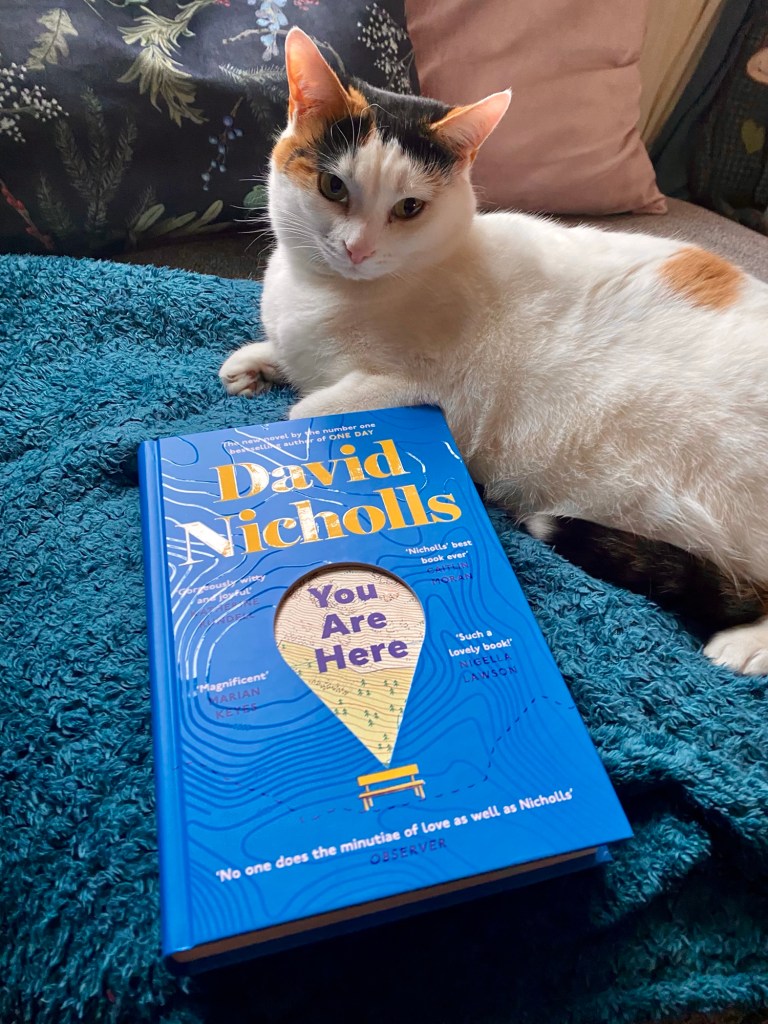
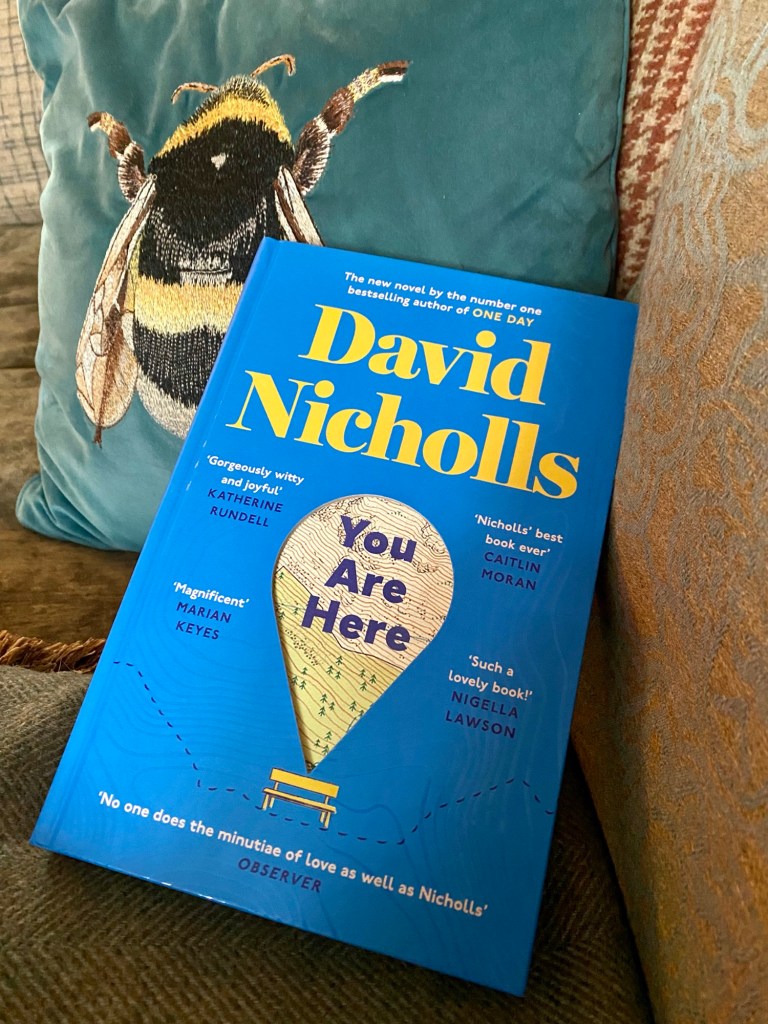
You Are Here by David Nicholls

I have had the joy of reading two books, each by one of my favourite authors, back to back on my holidays and I have genuinely loved it. David Nicholls has been a household name thanks to the new production of One Day on Netflix. The beauty of Nicholls’s novel about friends Emma and Dex makes it one of my favourites of all time and I’m definitely not alone. There was a time back in the 2000s where if you were on a train journey most of the people in your carriage were reading One Day. It was a book that utterly broke my heart because I believed in those characters so much and the shock of what happened is still with me, to such an extent that I haven’t been able to watch the last two episodes of the series. I can’t bear what’s coming. Similarly, both the book and BBC adaptation of his novel Us was deeply moving but utterly real. With the wonderful Tom Hollander as his lead, we become so emotionally invested in this couple, then just as they’re ready set to out for a once in a lifetime trip his wife asks for a divorce. Their plan, to spend all summer travelling around Europe, would be their last trip as a family, before their son leaves home for university. Can they set aside this bombshell and continue with their holiday? The set up in both these earlier novels is so simple and You Are Here is no different. A group of friends travel from London to the Lake District to walk some of Wainwright’s routes through Cumbria towards the Pennines. Cleo has invited four single friends; Conrad is meant for copy editor Marnie and Tessa is intended to get on with geography teacher and dedicated walker Michael who is extending his trip to walk the entire coast to coast, ending in Robin Hood’s Bay. Michael is still getting over separating from his wife so finds these social occasions difficult, much preferring solitude. Marnie spends much of her time alone too, so this will be a step out of their comfort zone for both of them. When the others bail out after a day of endless rain, Marnie and Michael are left to walk together. Can they both strike up a friendship?

David Nicholls has this amazing ability to articulate the minutiae of conversation and communication between the opposite sexes. He’s also brilliant with those tiny moments of shared humour, stolen glimpses and the body language of love. It may seem strange that a whole book is about two people walking across the country, but everything happens within that time spent together. After a couple of days Michael can see that Marnie is an inexperienced walker but determined, intelligent and well-read. She has been in relationships that eroded her confidence, has a keen sense of humour but tends to lose it a little when tired and hungry. Marnie is surprised by Michael. Although she knows little about geography she can appreciate how passionate he is about his subject, he wears his beard as a mask so that people keep their distance, is perfectly comfortable in his own company and is hurt very badly by the break-down of his marriage. This isn’t two young people swept up in the blind passions of love at first sight. This is a slow burn. It’s a potential romance that grows slowly and unexpectedly for both of them. It’s lovely to read a ‘real’ love story about people who are older and have been kicked about a bit by love in the past. Nicholls has alternated each character’s chapters, so we’re also taken into Marnie and Michael’s inner worlds. Within these chapters we have flashbacks through their lives and their past relationships, slowly learning what has built these people who are in front of us, trying to bring their lives together. We are also privy to private thoughts that let us know this couple could be perfect for each other. When bullied into social activity by friends we can see that they’re both introverts. Michael agrees to a plan just to make Cleo shut up. She means well, it’s just that for her the answer to a empty weekend is the presence of others, while it’s their absence that floats his boat. Similarly Marnie knows that a bit of socialising is expected, however…

‘She had become addicted to the buzz of the cancelled plan […]for the moment no words were sweeter to Marnie than ‘I’m sorry, I can’t make it.’ It was like being let off an exam that she expected to fail.’

I understood Marnie. I was the kid at school who was so excited to have finished the reading scheme by age eight, because while everyone else was reading to the teacher I had free library time. I would pull up a beanbag and disappear into the world of the Little Women or Jane Eyre, loving that I was alone, out of the hustle and bustle of the classroom I was free to be anywhere just by opening a book and stepping through a wardrobe. Marnie gives a similar description of her early reading years to mine, the weekly library visits and the devouring of anything I could find and making no distinction between what was deemed literature and what wasn’t. My only criteria was that I enjoyed it. I learned to enjoy activities with friends – ice skating, horse riding, cinema – but nothing beat that thrill of knowing a delicious book was waiting in my room.

‘Private, intimate, a book was something she could pull around and over herself, like a quilt.’

Reading is a little like Michael’s walking in that it takes me on a journey, but also helps me unplug from the stress of daily life. If I’m reading a physical book it’s even more separate from the world because it’s not alerting me to things on social media, emails or messages from friends with cat videos. Marnie wonders if her reserve and need for alone time comes from her upbringing with parents she’d describe as cautious and timid:

‘At no point did her parents move house, gamble, use an overdraft, change jobs, have affairs, go abroad, shout in public, park illegally, eat on the street or get drunk, and while they must have had sex at some point, this was covered up as carefully as a past murder. Marnie was the only evidence.’

Michael is taking in the world around him, but at a totally different pace. He can stop and concentrate slowly on a beautiful bird song or the reflection of the hills in a still lake. He is a Romantic with a capital ‘R’, perhaps not a flowers and surprise trip to Paris sort of man, but he can see poetry in the everyday. As they stroll the hills he truly does understand the Romantic poets, engaging Marnie in conversation about routes that William Wordsworth and his sister Dorothea might have taken. He tries to feel the state of the sublime and thinks he often finds it in a spectacular view that couldn’t have been seen any other way than walking off the beaten track. He is still so caught up in the breakdown of his last relationship, still to some extent thinking as part of a couple although it’s clear to his friends that his wife has definitely moved on. He’s been so disconnected from his wife, for so long that he didn’t know anything was wrong and the shock of the split was seismic. This is why Cleo invites him on the weekend in the first place, to try and point him forwards, rather than backwards. This is a spiritual and mental journey for him, as well as a physical one. Michael has that symptom of depression where you feel like you’re looking at the world through a thick pane of glass, removed from reality. This is a protective barrier too, he keeps his pain so deep inside himself he thinks no one can see it. It stops him from being able to express himself and he finds Marnie so performative at first. She rails against her sore feet, the weather, the mud – all things that are so part and parcel of hiking it wouldn’t occur to him to do the same. Her humour does break through occasionally.

‘You’re funny, but I’m the one with the lighter rucksack so who’s laughing?’ ‘That is true. I’ve got twelve pairs of pants in here, for three nights.’ ‘Why?’‘I don’t know. Maybe I worried I might shit myself four times a day.’ ‘Has that ever happened?’ ‘Not since my honeymoon.’

By the end my heart was breaking for these fledglings. I so wanted them both to be happy, even if they simply ended as friends. David Nicholls throws in one last obstacle that takes us by surprise, even while my heart was racing I could see how much it was needed for that character to have a final epiphany. He’s brilliant at creating that bittersweet feeling that comes as we’re older and have romantic baggage. At first when we lose someone the shock and pain is everything, then after time and doing a little bit of work on ourselves a day hopefully comes where we can look back and it not hurt. We can acknowledge the pain but not let it overwhelm us. In fact, eventually, we can look back and smile about the good times, the love that was shared and how glad we are that we experienced it. That we’re able to move forward and enjoy new adventures. I really understand this from my own life and I genuinely closed the book with a smile on my face, knowing that both Marnie and Michael have so much life to look forward to whether together or apart on their journey.

Out now from Hodder & Stoughton (Sceptre)

Meet the Author

David Nicholls is the bestselling author of Starter for Ten, The Understudy, One Day, Us, Sweet Sorrow and now You Are Here. One Day was published in 2009 to extraordinary critical acclaim: translated into 40 languages, it became a global bestseller, selling millions of copies worldwide. His fourth novel, Us, was longlisted for the Booker Prize for Fiction.

On screen, David has written adaptations of Far from the Madding Crowd, When Did You Last See Your Father? and Great Expectations, as well as of his own novels, Starter for Ten, One Day and Us. His adaptation of Edward St Aubyn’s Patrick Melrose, starring Benedict Cumberbatch, was nominated for an Emmy and won him a BAFTA for best writer.

He is also the Executive Producer and a contributing screenwriter on a new Netflix adaptation of One Day. His latest novel, You Are Here, is out now in hardback.

Posted in Netgalley

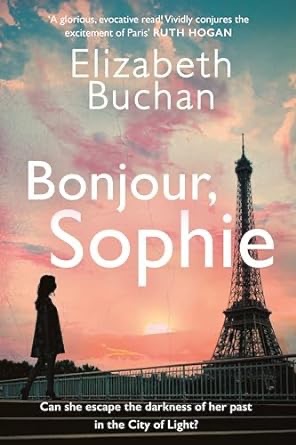
Bonjour Sophie by Elizabeth Buchan

Can she escape the darkness of her past in the City of Light?

It’s 1959 and time for eighteen-year-old Sophie’s real life to start. Her existence in the village of Poynsdean, Sussex, with her austere foster-father, the Reverend Osbert Knox, and his frustrated wife Alice, is stultifying. She finds diversion and excitement in a love affair, but soon realizes that if she wants to live life on a bigger canvas she must take matters into her own hands.

She dreams of escape to Paris, the wartime home her French mother fled before her birth. Getting there will take spirit and ingenuity, but it will be her chance to discover more about her family background, and, perhaps, to find a place where she can finally belong.

When Sophie eventually arrives in the Paris arising from the ashes of the war, it’s both everything she imagined, and not at all what she expected…

Most readers will know I have a fascination for the period directly after WWI, but recently I’ve been looking at books and films that have explored the aftermath of WW2. Originally I watched a film called The Aftermath starring the brilliant Jason Clarke and Alexander Skaarsgaard that followed a British colonel posted out to Nuremberg after the war ends. His job is to help rebuild and I remember being shocked that people were living in homes where their outer walls were missing, almost like looking into a doll’s house. Since then I’ve read novels set in the occupied countries like Poland and France and gaining other viewpoints makes you remember that the majority of people are caught up in a war they don’t want to fight, are tormented with memories of things they’ve done to survive and are still waiting for the return of those they love. I think we imagine that once the war was over, everything went back to normal, but that was far from the truth. Prisoners of war were kept, by us, for several years after the war ended, rationing only ended in 1954 and we were still rebuilding London till the mid 1970’s. It’s in this aftermath that we meet our heroine Sophie, just finishing boarding school in England with her friend Hettie. Sophie has a complicated past and her school years have been a temporary period of fun and friendship. Now she must return to the home and parish of clergyman Osbert Knox, an English village where her French mother ended up in dire straits during the war. Camille was pregnant and had fled Paris during the occupation, leaving behind Sophie’s father who was fighting in the Resistance. Lucky for the Knoxes, Camille had great housekeeping skills and she repaid their kindness in cooking, cleaning and implementing a household system that enabled them to concentrate on their parishioners. Sadly, Camille died and now the Knoxes are expecting Sophie to return from school and pick up where her mother left off, learning to keep house and support the couple. Sophie needs to earn back her keep and education, only then will Osbert return her mother’s precious savings book. This was money that Camille managed to save from her meagre allowance, knowing that Sophie would need something to restart her life with. Sophie dreams of returning to Paris, the home of her parents, but there’s only problem. She is sure that money is being taken from her mother’s savings. So she makes a decision to bring her escape forward, to find the savings book and flee with whatever is left to France and look for her father.

Sophie is a resilient girl, intelligent and able to read people. She doesn’t trust Osbert, but is still horrified to find that he expects her thanks to extend to much more than cooking and cleaning. Now she must escape and sooner rather than later. Sophie wants to build an independent life for herself, full of new experiences. She isn’t afraid about change, she’s quite matter of fact about those experiences she wants to try. She has a friendship with Johnny from the nearby farm and plans to lose her virginity with him, rationalising that it’s something she wants to get out of the way. This ability to single out what she wants and succeed in getting it will stand her in good stead once she gets to Paris. She has a deep yearning to connect with her history, even if her father hasn’t survived, she wants to know what he did during the war. Was he the hero that her mother painted him to be? Sophie knows that the scars of war run deep, that her father might have done terrible things to survive. The author writes about the moral compromises people make in war without judgement, allowing the reader to make their own decisions, but also reinforcing the point that no one knows what they’re capable of until they’re under duress. Finding her father isn’t easy though. She takes work in an art gallery and uses her wage to hire a private investigator. She finds out about the paintings looted from Jewish families during the occupation, removed by the Germans as the owners were transferred to concentration camps. However there were French collectors and gallery owners who collaborated in these deals, using a terrible atrocity as a business opportunity. She also finds that there are so many people looking for someone: husbands who never returned from the battlefield but are not amongst the dead; resistance fighters executed and thrown in a shallow grave; women killed for their collaboration with German soldiers during the war. There are vendettas and grudges still playing out and Sophie is warned that she might not like what she finds. Some secrets should remain buried. The buildings in Paris echo the the trauma still felt by the people, from a distance they look okay but close up it’s clear that there’s been no maintenance. The paintwork is peeling and the stone is damaged, but there is still beauty.

I really enjoyed the friendship between Sophie and Hettie, who has returned home to constraints of her own. She is trapped in within the expectations of her parents and her class. Hattie is expected to be a ‘deb’ and be presented for the London season. If she shines she might attract the right sort of husband. Her only route is marriage and children, no independence or career path. She has to be engaging but not appear too clever and put suitors off. Neither girl has any type of sex education, is not allowed her own bank account or make decisions about her own fertility. It’s scary to me that a lot of these restrictions lasted into my mother’s lifetime! Thankfully Hettie has a belated rebellion. I loved that the girl’s friendship lasts a lifetime and they give each other support and strength. This feel like a transitional period in time, where the world is trying to recover from war and it was a huge realisation to me that it took this long. I remembered reading that it was Ed Balls who, as chancellor, paid the final debts from WW2 and being so shocked. It takes people a lot longer to heal and return to themselves. My own father in law took many years after WW2 moving from the Siberian forest through the Middle East and North Africa and into Europe. He eventually settled in London, but his wartime experience still haunted him when he lived with us in the 2000s. I think Elizabeth Buchan has a way of writing about how we come to terms with generational trauma like this. Here she has mixed a thoughtful and complex historical period with a coming of age story. Just as Sophie is becoming a woman, the country she escapes to is also in the midst of a change. It is by finding out about WW2 and the terrible stories of living in Paris under occupation that she starts to understand her parent’s story and the courageous choices they made. Despite the pain and loss, Sophie’s experiences have a joy about them as she attempts to build herself a life with resilience and happiness. Buchan’s writing always has a melancholic, bittersweet feel. There’s a sense that life and the greater world are imperfect, even dangerous, but we can still live happily within it.

Out now from Corvus Books

Meet the Author

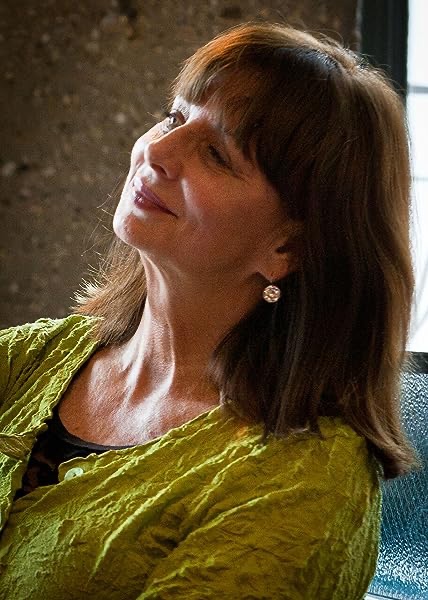
Elizabeth Buchan was a fiction editor at Random House before leaving to write full time. Her novels include the prize-winning Consider the Lily, international bestseller Revenge of the Middle-Aged Woman, The New Mrs Clifton and Two Women in Rome. Buchan’s short stories are broadcast on BBC Radio 4 and published in magazines. She has reviewed for the Sunday Times, The Times and the Daily Mail, and has chaired the Betty Trask and Desmond Elliot literary prizes. She was a judge for the Whitbread First Novel Award and for the 2014 Costa Novel Award. She is a patron of the Guildford Book Festival and co-founder of the Clapham Book Festival.

Posted in Personal Purchase

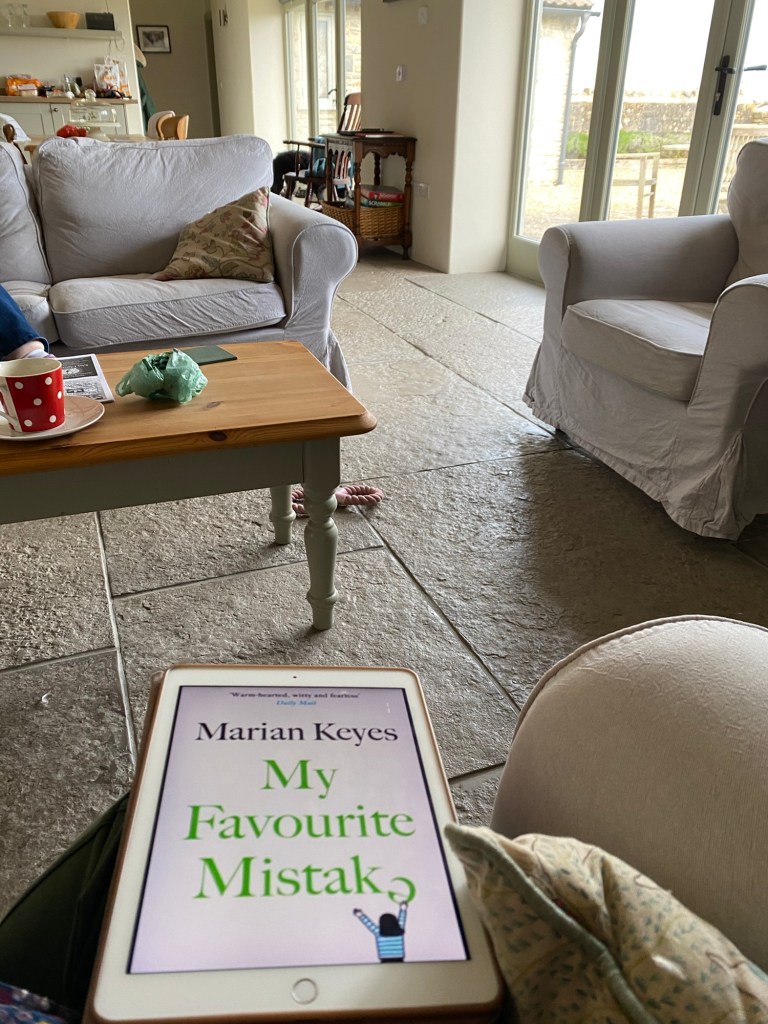
My Favourite Mistake by Marian Keyes

I’m going to say it.

I am a Marian Keyes superfan.

I love her tweets or whatever the hell we call them now. I love her honesty. I love her Strictly fandom. I especially love her sense of humour. I love that her books have drawn my stepdaughter into daily reading, because of course more than anything I love her writing. She puts all her quirk, wit and self-awareness into the characters she writes. She is a writing goddess! She gets better year on year and I loved this dive straight back into the Walsh family after Again, Rachel. Rachel has always been my favourite Walsh, but in this latest novel Anna really did steal my heart. Anna is nearing her fiftieth birthday and her high flying PR role in the beauty business is wearing a little thin. Although she’s always loved living in NYC, the pandemic left her feeling the distance from her family in Ireland. After losing her husband Aidan in a terrible car accident several years ago, her contact with his family in Boston has waned. Her subsequent relationship with Angelo – a ‘feathery stroker’ – has been conducted with respect, equality and a deep fondness, but never passionate, all consuming love. With a need to be near those she loves, she gives notice on her job, her apartment and her relationship.

Her family think she’s gone mad and she almost starts to think she’s made a huge mistake when a sudden job opportunity comes her way. Her sister’s friend Bridie has been building a luxury hotel and spa on farmland near the coast, but the project has hit the buffers. Locals have vandalised the site leaving machinery sabotaged and the luxury bungalows daubed with paint. Bridie and her husband have had the worst news, their daughter has been diagnosed with cancer and needs their total focus. What they need is an experienced but down to earth PR who will be able to converse with the locals in town, find out what their grievances are and hopefully, get the project moving forward again. Anna is booked into the local hotel and can be ready to hit the ground running, but there’s just one snag. The finance broker who has put together the deal for Bridie’s project is Joey Armstrong. Joey was part of the Irish ex-pat community in New York when Anna and Rachel first moved out there. He was also one of the ‘Real Men’, a group of long haired, tight jeaned, rock gods who included Rachel’s husband Luke. Joey was hot. All tawny haired, with the most kissable mouth Anna had ever seen, not to mention his jeans which were just on the wrong side of decent. The first night they met Anna felt an immediate vibe and was full of anticipation until her sister Helen walked in. She saw Joey’s eyes immediately slide over her and become laser focused on her beautiful sister. Anna was immediately slighted and when Helen and Joey left together she decided to dispel this particular lean hipped rock god to the back of her mind. However, this wasn’t the last time their paths crossed. Joey has always been a mix of old flame and thorn in Anna’s side. Can she put aside their past and work together on this project?

Anna has that wonderful characteristic that can’t be taught, she has an easy charm and an ability to talk to anyone from building contractors to the lady of the manor. She takes to M’town straight away, working out who are the cornerstones of the community and who has something to lose from the development at Bridie’s farm. Knowing that her NYC clothes won’t work in rural Ireland, she dresses in jeans and a waterproof coat and pulls her hair back in a ponytail. Minimal make-up leaves her looking fresh-faced and the facial scar from her accident with Aidan is exposed. She’s shrewd enough to realise that it gives her an advantage, no matter whether they people feel sorry for her, are curious or think it shows honesty and openness. She’s smart and has similar skills to her sister Rachel when it comes to communication. The openness, lack of judgement and appreciation that Rachel shows her clients in the counselling room, is equally fruitful when trying to get to the bottom of why certain people in town are against the development. Anna genuinely cares and within days can see where mistakes were made, where a concern was overlooked or an individual was inconvenienced. She can make the most insignificant person feel like the centre of her world and is soon making friends. We follow her investigation and watch her become more and more embedded in this quirky but beautiful little place. In between we see glimpses into Anna’s past, from the before and after devastation of Aidan’s death to her relationship with best friend Jackie and her daughter Trea. Jackie has been her best friend, a relationship that even survived Jackie’s fraught relationship with Joey. When Jackie becomes pregnant, Anna puts aside her own feelings for Joey and becomes her birthing partner and almost a co-parent to Trea. However, something happens to jeopardise their friendship and the women have barely spoken since.

A Marian Keyes romance is never just heart and flowers. It’s always about the heroine’s personal baggage and need for self-growth too. Often I prefer the inner growth to the potential relationship, but not in this case. I absolutely loved this couple and their story. We all have that someone who got away. For me it was a lanky and eccentric music lover called Glynn who would turn up at the door unannounced – often sporting flowers from the graveyard or my dad’s own flowerbeds. There was rarely any warning with Glynn, he might be waiting for me at school having invited himself for tea or have walked five miles from town with some song lyrics scribbled on a postcard that I just had to have. We would lie on my bed and listen to the Cocteau Twins, Ride and The Smiths. My dad would despair at his Joe Bloggs wide leg jeans with frayed hems that dragged mud and grass into the house. He had hair like Clint Boon from the Inspiral Carpets and a huge billowing parka that I stole and wore for two years straight. He also had a complicated home life and often reminded me of Snufkin from The Moomins, who loved the solidity and dependability of Moomin House but also needed time to wander alone whenever it suited him. I was hopelessly in love with him, but it took him three years to finally ask me out and I was scared that it was finally happening that I panicked and refused. Even now, every few months or so he sends me a Spotify track by House of Love or Northside and I love that little reminder of teenage love. Similarly, Joey and Anna have a very long history with several near misses and a deep friendship when he let her close. Although they’ve never had a romantic relationship it is Anna and not one of his many lovers who knows the truth about his upbringing and how damaging those years were. He has trusted her with his deepest secrets, but he has also hurt her, possibly more than anyone else in her life. He has also caused her to lose her closest friend. Yet Anna knows that once she also wounded Joey deeply, the details of which we only find out late in the story.

I loved the pace of the romance, with Marian Keyes knowing exactly when to drop in a flashback that explains everything and keeping that ‘will they/ won’t they’ tension without it seeming artificial. Often with rom coms I feel like obstacles are there just for the sake of it, but the flow is natural and I never felt like the outcome was a done deal. There were so many obstacles and items of baggage it felt like they were on the luggage conveyor belt at Gatwick. There’s everything from the past – him choosing Helen, then Jackie and then most of NYC if Mrs Walsh is to be believed, before Anna. Joey has so much work to do, not just about his childhood but about the here and now. Blending families isn’t easy and he has three adorable boys as well as Trea to think about. They’re both temporarily working on this project and in M’town so what happens when the hotel is built or if Birdie has enough and changes her plans? Anna might be healed physically, but her scar does bother her and has changed her life in ways she didn’t imagine. It does work as a filter, anyone it clearly bothers has no place in her bed. However, at times it does play on her confidence and when she sets up an online suggestion inbox for the locals there are enough hurtful comments to remind her of a time when she wasn’t okay. Joey is fit to murder the culprits but Anna rises above it and keeps moving forward, despite the hurt and the reminder that Joey didn’t even choose her before the accident. So, why would he choose her now? Is it possible to remain friends when they’re so close? Finally, there’s the beautiful setting, nobody does small town Ireland like Keyes and these people are imperfect, but hilarious. Some of their concerns are petty, but others are grounded in years and years of tradition. Work is hard to find in a small town so local tradesmen not being asked to contract was a huge mistake, but easily smoothed over once Anna explains the artistry and level of finish expected. Could Anna thrive somewhere like this, or is she just passing through? I loved, loved, loved this book and being on holiday I had the luxury of sitting in the garden in Glastonbury and reading right through to the end. This is peak Marian Keyes and if you don’t fall in love with Anna or her love story with Joey there’s clearly something a little bit wrong with you.

Meet the Author

Marian Keyes is the international bestselling author of Watermelon, Lucy Sullivan is Getting Married, Rachel’s Holiday, Last Chance Saloon, Sushi for Beginners, Angels, The Other Side of the Story, Anybody Out There, This Charming Man, The Brightest Star in the Sky , The Mystery of Mercy Close, The Woman Who Stole My Life, The Break and her latest Number One bestseller, Grown Ups. Her two collections of journalism, Making it up as I Go Along and Under the Duvet: Deluxe Edition are also available from Penguin.

Posted in Netgalley

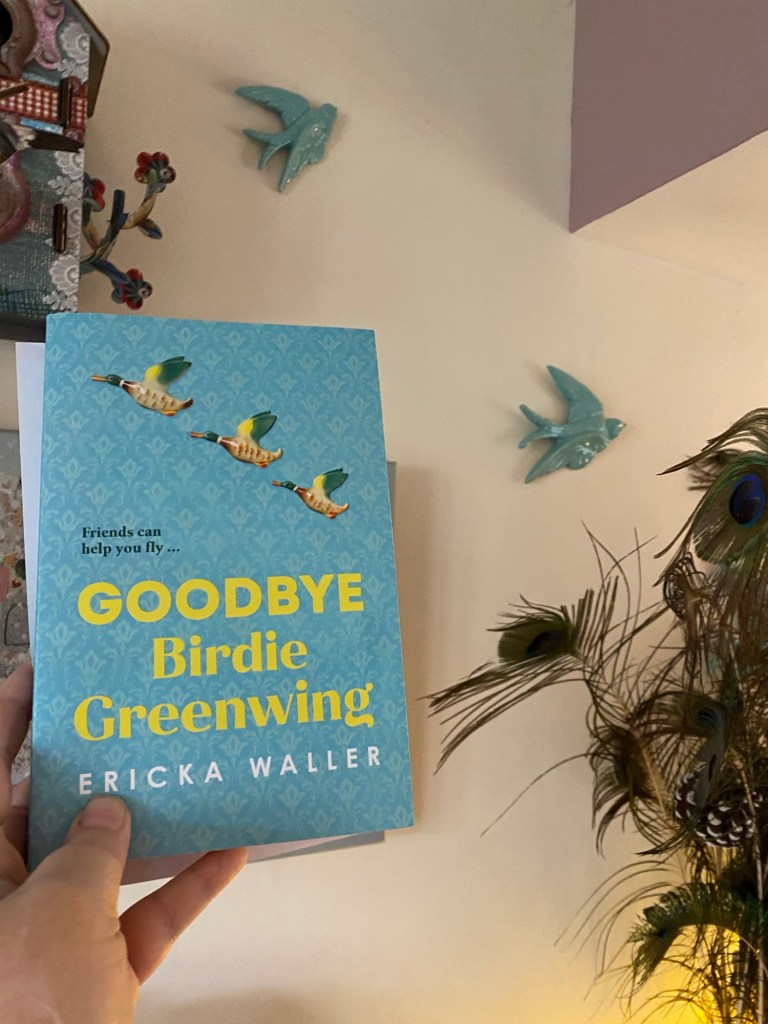
Goodbye Birdie Greenwing by Ericka Waller


Birdie Greenwing has been at a loose end ever since her beloved twin sister and husband passed away. Too proud and stubborn to admit she is lonely, Birdie’s world has shrunk. But then some new neighbours move in to the house next door. 

Jane has come to Brighton for a fresh start, away from her ferociously protective mother Min. While Jane finds it hard to stand up for herself, her daughter Frankie has no problem telling people what she does and doesn’t want. Ada Kowalski has come to England to follow her dreams, but her new life is harder than she expected.

When a series of incidents brings their lives crashing together, the three find that there is always more to a person than meets the eye …

Goodbye Birdie Greenwing celebrates relationships in all their quirky, complicated uniqueness. It is a story about the choices we make and how we justify them. About finding out who we are, not who other people think we should be.

I read Ericka’s novel in a day because I simply loved being in the presence of these lovable and contrasting characters. As I met each one I could see the impact they could have on each other’s lives. As the author takes us inside their everyday lives, their inner worlds and their pasts she looks at family dynamics, sisters, mothers and daughters, but also the whole question of being a woman in the 20th and 21st Century. In fact there was a point when I was reminded of America Ferrara’s speech in the film Barbie. It addresses the choices we make, the expectations placed on us within our families, by other women and by society at large. She takes us into that contrast of who we are, how we compare that to our internal and learned ideas of what the word ‘woman’ means. Birdie, our central character, is a elderly woman living alone in Brighton with her little dog Audrey. She lost her sister Rose and husband Arthur several years ago. She is stunned when tests at hospital confirm she has cancer, but before the doctor can give her more information and make a plan Birdie has walked out. Her oncologist Ada recognises that determined walk and the lift of Birdie’s chin. She realises that Birdie is going to face this alone and she worries that she will struggle without the help that can be offered. In fact Ada realises that Birdie lives on her street, so takes to walking past and checking for telltale signs that Birdie is struggling. Ada is also lonely after relocating to Britain from Poland. Used to life on an isolated farm and a very different society, Brighton can be a lot to take on. Despite friendly overtures from her secretary Denise and Connie in the WRVS cafe Ada is solitary, except for the time she spends helping Aleksey and Lech in the Polski Sklep. When a new intern starts on her team Ada’s teamwork skills will be tested, not to mention her social skills. Finally, there’s Jane and her daughter Frankie who have recently moved in next to Birdie from Bristol. Jane is struggling with the guilt of moving away from her mother Min, although her sister Suki is out in Asia just living her life as she chooses. They used to be so close, but now all she gets are emojis. Her daughter Frankie’s bluntness and practical nature might seem like a hindrance when forming new connections, it certainly gets Jane called into school enough, but could her lack of inhibitions and tact actually help them make friends?

There are two mysteries in the novel and I enjoyed watching them slowly unravel. There’s the mystery of what has happened to Birdie’s husband and sister, Arthur and Rose. At first I wondered if they’d run away together but Birdie’s guilt seems to have lasted for decades. The other mystery is what has broken the relationship between Jane and her sister Suki? Suki is distant and even when she rings to speak to Min, she’s very quick to end the call if Jane is present. Jane tries hard, sending her sister funny videos, memories of their childhood and information about Min but only gets emojis or a thumbs up in return. Each of the women have a sister and their relationships with them are fascinating. Birdie always felt responsible for Rose as she had rheumatoid arthritis. When she met Arthur and fell in love she hadn’t imagine she might have to make a choice, so when Arthur asks her to marry him she hesitates. What about Rose? Luckily Arthur had realised that the two sisters were a package deal. Birdie felt guilty that Rose wouldn’t have the same choices in life and whether there was something she did wrong, before they were born, that led to her sister’s disability. Birdie worried that she’d somehow pushed herself forward in the womb and take more than her share. Now Rose was ill as a result. Jane and Suki’s rift seems to date back to when the sisters went travelling together. Jane returned from Thailand with Frankie and moved back in with Min, but Suki stayed. They are very different women, with contrasting life choices but that shouldn’t stop them being sisters. Ada has a sister called Ania, but she has chosen a very different life. While Ada is saving lives in a different country, Ania lives close to their parents and is married with children.

I’ve never had a sister, but it seems as if they provide an instant comparison; they are the mirror in which your own life is reflected. Ada feels like the ‘bad’ sister, the one who followed her own dreams rather than staying to work the family farm. This choice has cut her off from the family in a way. She knows they sacrificed a lot for her education, so she sends part of her salary home every month and when she visits takes them gifts. She wants to show them that their sacrifice was worth it and she is doing well. However, this changes her standing in the family and while there’s no red carpet for Ania, when Ada comes home she is treated like a guest, placed in the best room and given the special soap saved for visitors. She feels like a stranger in her childhood home. She would be happy to throw on jeans and help with the animals but they won’t let her. It’s hard for her to accept these two sides of herself; the Ada who would happily muck out the cows and the Ada who wears a suit and saves lives. She thinks that her parents value Ania more because she made the ‘right’ choices and is still part of the community. Whereas Ada’s life is outside their experience and difficult to understand, her ambitions are perhaps unnatural as opposed to motherhood. Similarly, Jane had wanted to have children, a revelation that took her by surprise, whereas Suki knew she didn’t want motherhood. Could there misunderstanding be explained by this difference? Could Suki feel guilty or even selfish for not having children and making life choices based on what she wants? However, just because you’re childless, it doesn’t mean you can’t ‘mother’ people. There’s also a generational difference in the way they mother, with Min’s tactless and sometimes hurtful words seeming like they belong in another century. There’s a way in which Min and Frankie are very similar in character, but now everything has to have a label. Jane wonders why Frankie has to be pigeon-holed and defined in some way. Why is it always Frankie that’s in the wrong? She has a much softer way of mothering that ironically Frankie often sees as fussing and she much prefers the more practical attitude of grandmother Min.

Where Waller really moved me, was where these quirks of character benefitted someone else. Where even those aspects that you’d struggle to call positive found their place in the world. Frankie has no inhibitions and Jane is called into school when she gives a classmate a frank assessment of her braces, including the trapped cabbage. She doesn’t understand why the things she says are wrong when they’re true. When Birdie has a short stay in hospital and has the realisation that she might be in her final days it’s not medical professionals Jane or Ada that she needs. At first it’s Frankie who goes in and decides to help, making Birdie comfortable and making her some lunch. The two rub along nicely together, probably because there’s no fuss with Frankie and I understood that need for someone who isn’t flowery, overly chatty or phased by her illness. Similarly Min is the perfect carer for Birdie, she suggests that being of the same generation might make Birdie feel more comfortable and even Ada has to agree that their dynamic works. Min and Frankie’s help reminded me of how Ada’s parents would help their neighbours out. On her visit to family in Poland, Ada noticed how her mother’s farmhouse provided a quiet place for people to get away, like the neighbour who comes in on Saturday mornings to read his paper. This communal way of living is echoed by Aleksey and Lech who happily feed Ada; their fondness is shown in a practical way. Ada’s secretary Denise is stunned when, after years of finding her a bit of a cold fish, Ada offers her a home after the split from her husband. It shows we should accept people as they are, because we all show emotion and affection in different ways.

I felt like this was another book about connection, both with others and with ourselves. It’s a subject I find fascinating and I’m picking it up a lot lately in fiction. I wonder whether this is an unconscious response to the isolation of the pandemic. The author is brilliant at depicting those little inhibitions and we hear them in each woman’s narration. Jane hovers on the edge of a ‘huddle’ at work because she doesn’t know if she’ll be welcome or not. Ada doesn’t knock on Birdie’s door for professional reasons but also because she doesn’t want to impose. They all have to learn how to connect with who they are. Jane needs to learn to assert herself more, to accept her life choices and explore why she’s spent years of her life as a single woman. Suki’s guilt over the choices that were right for her stop her having a relationship with Jane and Frankie, but it was the right choice. As Ada compares herself with Ania she needs to see that it was right for Ania to stay near family and become a mum, but that moving away and using her skills to help others was the right choice for her. Even Birdie, who is the central character around which these interesting women revolve but she too has a lot of acceptance to do. She must accept this new vulnerability and need for help from others, as well as accepting she deserves it. Mostly she needs to forgive herself, for something that wasn’t even her fault. She has punished herself for years and it is the lovely Connie (whose collection of innuendo laden mugs rivals my own) in the hospital’s WRVS café who helps her see that while she still has time this is her time. While we still have life, we must live it. Whether we have months, days or hours left, we must live them.

Meet the Author

Ericka Waller is 38 and lives in Brighton with three daughters, too many pets and a husband.

She is an award winning blogger and columnist.

When not writing she can be found walking her dogs, reading in the bath or buying stuff off eBay.

Posted in Netgalley

The Unfinished Business of Eadie Browne by Freya North

Eadie lives an unusual life in her garden city home, situated next to a cemetery. Far from being macabre and frightening, the dead are often this lonely little girl’s best friends. They provide her with somewhere to go and talk, without censorship or interruption. Her Mum and Dad work jobs outside the home, one in the day and one at night, but the rest of their time is spent at their desks in the family living room each completely engrossed in their writing work. She is an outsider at school, without friends and a target for kids like Patrick Semple. Patrick is relentless in his bullying of Eadie and it takes her a long time to find her little tribe. Her friend Josh lives with his grandfather who has a convenience shop, he’s also a concentration camp survivor. She also makes friends with Celeste, who’s lived in France and her mother, Sandrine, is an alcoholic. These are her first friends her own age, as up until now she’s mainly hung out with Michael, an elderly man who tidies the cemetery and Ross who plays the bagpipes at funerals. Eadie is feeling so settled with her life, but these three young friends are on the cusp of a huge change. All three will be going to different universities and while Eadie likes to think nothing will change, distance does have an effect on relationships and the whirlwind of Fresher’s Week will immerse them in their new lives. Will they still have time for each other? More importantly, will Eadie be able to leave the difficulties of her childhood behind her and make a life in Manchester?

Freya North beautifully inhabits the world of a young child and the fears and preoccupations that are their daily lives. It immediately swept me back to my own childhood and moments when I was afraid or felt like I didn’t belong. In my first year of primary school at age 5 we lived so rurally I had to get on a public service bus and remember when to get off and how much to pay the driver. It left me anxious about public transport ever since. I was also bullied, being poor but having a place at the local grammar school wasn’t easy and I never had the right clothes. My family also went to an evangelical church which made me different and restricted my social life. I really identified with Eadie, for feeling that her background was less than perfect. I felt Eadie’s pain. As children, if people tell us we’re odd or wrong in some way we internalise that feeling and assume they’re right. Eadie’s parents are not neglectful, but they are a very definite twosome, seemingly unaware that their only daughter is achingly lonely and suffering from immensely low self-esteem. As adults we can step back and see that her bully is probably suffering too, but children don’t realise this. As the group of friends grow towards leaving school, the changes are not easy for Eadie to cope with. What will happen to their trio as they all go their separate ways? While Josh and Celeste are excited about what’s coming, Eadie is anxious. What will Manchester hold? Will she be accepted?

I love the North West of England, my family are originally from Liverpool but my best friend is a Mancunian and we’ve spent an enormous amount of time there over the years, mainly seeing gigs from Manchester bands like Elbow. However, I grew up in the late 1980s and early 1990s and I was an indie kid. I started with The Smiths and Morrissey through to the Madchester scene and although I was too young for the halcyon days of the Hacienda I did love New Order with a passion and Bizarre Love Triangle is one of my favourite ever tracks. I felt immediately transported back to the reign of Tony Wilson, when New Order would be in residence and the club was heaving. North captures perfectly the heady days of the summer of love – the advent of Acid House and Ecstasy. Here, having made friends, Eadie finds her place of worship. She loves ‘the Hac’. She can be found on the dance floor in just a sports bra and shorts combo, able to dance all night with a raging thirst from E and a feeling of well-being to the whole world. This is before and the terrible deaths that occurred. Eadie and her friends rent a house on Hathersage Road, across the road from the amazing Baths with its art nouveau interiors. This is her home now. In fact she becomes so comfortable in her life here that she stops going home, she stops writing to friends and lives completely in the moment. It’s when things start to change that Eadie begins to struggle. Housemates have plans for their second year, placements abroad, moving back into halls and Eadie starts to fall apart. An unexpected face from the past comes back to haunt her too. After a warning from the barman at the local pub where she works, that the Hacienda is being run by drug gangs and that means violence. This leads to an unexpected blast from the past and is the catalyst for a breakdown. Eadie finds herself unable to complete work and even starts to question whether to stay at university. With her housemates making different plans for next year, Eadie can feel the foundations of her life shaking.

Freya North captures perfectly how secrets and traumatic experiences can follow us through life. If left unaddressed, our life is like a wall with a fault in it’s foundations. It can only be fixed by removing the upper layers until you reach and remedy the original fault. Eadie has covered her trauma over with many different layers: her friendships with the residents of the cemetery; alcohol and E; the Hacienda and acid house. I felt something with Eadie’s story, because of my own recent experiences with old friends. We can experience so much difficulty and pain in life that we feel far removed from those friends we’ve had in the past, but often they’re still there, just waiting for a sign that they can help or support us. I loved Eadie’s relationship with Kip, which isn’t perfect but the love is all the more real for those imperfections. His love is shown in actions rather than words and is stretched to it’s limits at times. Eadie is one of those people who takes a long time to work out who she is and what she wants to do in life, that is until she takes care of her unfinished business and then she flies.

Out now from Mountain Leopard Press

Meet the Author

I’m the author of 15 bestselling novels and am so excited to bring you my 16th novel: THE UNFINISHED BUSINESS OF EADIE BROWNE. I know you can read the blurb here – but I wanted to tell you how important and personal this book is to me… Much of it was drawn from my own memories of leaving home for Manchester Uni in the late 80s and remembering what that FELT like. Also, I live outside Welwyn Garden City in Hertfordshire – and I became interested in the visionary ethos of the Garden City movement. Because lockdown cancelled all the lovely centenary celebrations planned for Welwyn Garden City, this novel also serves as my tribute to the town and its Founder. I hope you’ll enjoy the novel – unlike Little Wing, my previous novel which flew out of me in 4 months flat, I really toiled over Eadie Browne; writing and rewriting and REWRITING until I was confident I’d written my best book yet… this much I owe to you, my lovely readers.

2021 marked the 25th anniversary of the publication of my first novel Sally! My 15th novel Little Wing was written during the first lockdown. Set partly in the Outer Hebrides and interweaving the secrets and lies of two families over two time frames – it was a joy to research and write and certainly kept me sane during the Pandemic. I’ve always been focussed on a sense of place being a key feature of my writing – settings being a leading character, not merely a backdrop. Previous locations have included North Norfolk, British Columbia, Derbyshire, Vermont, France, Scotland, Wales, Cornwall… I’m an avid reader too – and the novels of Barbara Trapido, Jane Gardam, Rose Tremain and Mary Wesley inspired me to write. I hope you enjoy my books – please keep in touch via my website, Facebook, Twitter and Insta! Happy Reading! Sign up for my newsletter (via my website)

Posted in Netgalley

The Lifeline by Tom Ellen

If I learned one life lesson from Tom Ellen’s lovely romance novel, it’s that I’m not the only one who has a weird celebrity crush on Richard Ayoade. What a relief! Usually I get quizzical looks and awkward questions when I admit this, so I felt vindicated. I often say I don’t like romances, but I really did enjoy this story about Annie and Will. They met one day in Paris when Will’s band The Defectors were the next up and coming Indie band. Annie is sent out to interview them before a gig and hits it off with cute frontman Will Axford, who I was imagining as my Indie crush Damon Albarn. Annie finds his floppy hair, dimples and the gap between his front teeth very sexy. He seems to be clicking with her, but she’s still surprised when he catches up with her after the interview and suggests they spend the day together. Later as they watch the sunset from the Pont Alexandre III bridge, he asks if they can meet after his gig on the same spot. So, Annie is standing there at 11pm waiting for Will to arrive but when he still isn’t there at 11.30pm she gives herself a good talking to, fancy falling for the patter of a rock star. He’s probably with another girl already or tries this on every girl he meets. How stupid to think he would genuinely like her! As she pays for an extortionate last minute hotel room on her credit card, she’s already mentally writing up her interview full of anger and disappointment.

Fast forward five years and Annie works for an internet magazine, one of those that suck us into a blur of 1980’s celebrities and what they look like now or the best ever one hit wonders. It’s not what she wanted to do when she started out, with a pile of short stories and novel proposals, but it pays the bills and she loves her colleague Lexi. So, when she’s asked by her boss to write a new “Where Are They Now?’ series to go with some very lucrative advertising revenue, she jumps at the chance to do something more interesting. Then her boss asks her to track down The Defectors. Behind the scenes Annie is having a hard time. Her father died just over a year ago and her different approach to his cancer diagnosis has left her estranged from her mother and sister. Her live-in boyfriend Dom isn’t her dream man, they’re just muddling along while friends are making huge life changes like marriage and baby. The thought of losing Dom or her job scares her, but maybe a big change is exactly what she needs? As she tries to track down The Defectors she sees one of them has shared a phone number on a black background, which stands out in the usual technicolour of Instagram. It’s for a lifeline called Green Shoots, a listening ear for those who are bereaved, anxious and lonely. Annie needs someone to listen to everything that goes round in her mind, so decides to call using her middle name Pia. When Jack answers she finally feels she can open up.

Jack volunteers at the lifeline as often as he can but he doesn’t use his real name. Of course he has regulars and I fell in love with these callers, perhaps because they reminded me so much of my own work in mental health. Work I’m not well enough to do at the moment. I understood that fondness for certain callers, because it’s hard to avoid clicking with people, however we meet them. There’s Eric who calls and often makes hilarious commentary on whatever he’s watching. Some of these programmes, despite his advanced years, are things like Love Island and Made in Chelsea. I fell in love with him straight away and those times when he called feeling low I was heartbroken. Then there’s the breathing lady, who calls just to have someone to breathe with, until she feels calmer. Jack and Pia hit it off on the phone straight away, there’s energy between them. So when she says she’ll call back, he finds himself looking forward to her call. I really felt for Jack because working with people and their deepest emotions can forge strong connections, it’s hard to be detached from some callers. I loved that his friend and colleague Tanvi felt the same way too. He had been avoiding the get togethers and catch ups with other volunteers, mainly because he’s struggling with making friends and being social. Years before, there was a friend that Jack wished he could have been there for and he finds the guilt is crippling.

I felt for Annie too, especially her journey through grief and the struggle to cope when her father was diagnosed with terminal cancer. The author presents beautifully how even the closest people can grieve in their very different ways. There’s a need to give each other space and respect what they need to do in order to cope. It’s so hard when someone is terminally ill and perhaps their wishes don’t align with our own. It’s hard to let go of someone we love, even when we know they’re ready. I thought the author paced the story perfectly and the misunderstandings on the road to romance were believable, rather than formulaic ones that sometimes make me groan in romance novels. I really liked and understood these characters, so I was truly into their story and didn’t notice the romance tropes as much. Equally, I loved the revelations along the way, because as Annie found more dead ends in her search for Will Axford and his band, I began to wonder whatever did happen to him? This was a thoughtful, bittersweet novel about love and the people we lose along the way, and I read every word hoping our two main characters would find each other.

Out now from HQ

Meet the Author

Tom is an author and journalist from London, England. He is the co-writer of three critically acclaimed Young Adult novels: LOBSTERS (which was shortlisted for The Bookseller’s inaugural YA Book Prize), NEVER EVERS and FRESHERS. His solo adult debut novel is the romantic comedy ALL ABOUT US (HQ/HarperCollins, published October 2020). His books have been widely translated and are published in 20 countries. He is a regular contributor to Viz magazine, and has also written for Cosmopolitan, Empire, Evening Standard Magazine, The Daily Mash, Glamour, NME, ESPN, ShortList, Time Out London, Vice, Stylist and many more.

Posted in Netgalley

The Guest by B.A. Paris

I was so glued to this story about a group of friends and the entanglements between them that I read it in one sitting. The action focuses on two couples: Iris and Gabriel who live in a village with their daughter Beth who is currently enjoying a gap year at a dog rescue centre in Greece. Their friends are Laure and Pierre, who reside in Paris. The couples met on holiday, while Laure and Pierre were on honeymoon and Gabriel and Iris had only been married a year. They became firm friends, seeing each other every year and Laure even became their daughter Beth’s godmother. However, this visit is different. Laure has turned up alone, saying Pierre has confessed to having a daughter with a woman he spent the night with at the start of their marriage. Laure needs space to think and so does Pierre, could she stay with them for a short time? Of course the answer is yes, but it’s not an easy time. Gabriel is taking a long period of leave from his job as a GP, because he has struggled mentally after finding a teenage boy who fell into the nearby quarry. He did all he could for Charlie, but sadly he died before the ambulance arrived. Those last moments with the dying boy have weighed heavy on Gabriel, especially his final words. He has decided to use his time off restoring the walled garden that has grown wild over the years. Friends from their village, Esme and Hugh, offer their gardener and handyman Joseph to give Gabriel a hand with the more back breaking jobs. As these people collide over the summer, guests will outstay their welcome, relationships become strained, and huge secrets are on the verge of being disclosed as obsession and jealousy boil over. 

Our story is mainly told by Iris, who throws herself into looking after their new guest in a lull she has between interior design jobs (although she calls herself an ‘enhancer’). Laure is petite and chic, sometimes making Iris feel ungainly by comparison. The irritations are small at first – for some reason Laure hasn’t brought many clothes with her, but when she borrows from Iris’s wardrobe she always seems to pick the very thing Iris was planning to wear and it looks better on their guest. Then after a couple of weeks Laure rearranges their kitchen, meaning everyone is opening the wrong drawers and cupboards and any job takes twice as long. Iris asks her to put it back, but Laure meant no offence, she just thought it made more sense the new way. There are no signs of her seeing Pierre either. In fact no sign of him at all. Gabriel had extended an offer of help, could he perhaps go over to Paris and give him a listening ear? There’s no reply. It’s uncharacteristic of him. When Laure finally goes to Paris for talks, she’s back by evening of the same day saying that he didn’t turn up at the flat. As the summer moves along, the constant presence of another person starts to chafe at Iris’s goodwill. There are only so many times she can listen to the same story, or pull apart their relationship in every detail. Gabriel is also struggling but at least he has his garden escape, but he’s under pressure to speak to the mother of Charlie. He had passed Charlie’s last words to paramedics at the scene, but actually meeting his mother would be difficult. In some ways it might bring closure, but unfortunately Gabriel has kept something to himself. To save his mother more grief he told them Charlie sent his love to her, but that isn’t what Charlie said at all. 

The author has a brilliant way of creating our interest in these characters, even though I wasn’t particularly rooting for any one of them – although I did have enormous sympathy for Iris because Laure felt like an emotional vampire and I’m rubbish with houseguests too. However, I was addicted to finding out what would happen to them next. Which of the various secrets they were keeping from each other would actually be exposed? Joseph is very intriguing and seemingly very tempting for the women who meet him. He feels like a drifter, living in Hugo and Esme’s converted outhouse and picking up gardening jobs here and there. He’s rootless and very tight lipped about his life before arriving in the village, could he have something to hide? Iris certainly thinks so and wonders if there is a secret liaison going on, perhaps with Esme or even Laure as the summer lingers on with no sign of Pierre. As the tension grows and unease develops, you won’t want to stop reading. Even as events implode this small group of friends and you think you have all the answers, you don’t. This is a brilliant thriller, really cementing the author as a definite ‘must buy’ for me. 

Published 20th February 2023 by Hodder and Stoughton.

Meet the Author

B.A. Paris is the New York Times and Sunday Times bestselling author of seven novels including the word-of-mouth hit, Behind Closed Doors, and her latest thriller, The Guest.

Over 7 million editions of her work have been sold worldwide and her books have been translated into 41 languages. Three of her novels have been optioned for major screen adaptations with films of Behind Closed Doors, The Breakdown and The Therapist in development.

Before becoming an author, B.A. Paris, who spent most of her adult life living in France, worked in finance as a trader before retraining as an English teacher. She and her husband then ran a language school together whilst bringing up their five daughters. Today, she writes from her cottage in Hampshire, England.

Follow B.A. on Twitter and Instagram at @baparisauthor. You can also find her on Facebook, Goodreads, and BookBub. Sign up to her newsletter for teasers, giveaways and updates.

Posted in Squad Pod Collective

The Murder After The Night Before by Katy Brent

Something bad happened last night. My best friend Posey is dead. The police think it was a tragic accident. I know she was murdered.

I’ve woken up with the hangover from hell, a stranger in my bed, and I’ve gone viral for the worst reasons.

There’s only one thing stopping me from dying of shame. I need to find a killer.

But after last night, I can’t remember a thing…

This was a delicious pick me up for a winter weekend with unexpected depth! It was the perfect mix of witty fun, but also an interesting thriller that captures the moment with some serious social commentary. When Molly wakes up after the Sparkle magazine Christmas party she’s expecting a hangover of epic proportions. What she isn’t expecting is to wake up next to a complete stranger with no memory of the night before. She has a strange combination of complete amnesia, but underneath that a feeling of unease that won’t go away. He tries to reassure her that all he wanted to do was make sure she got home safely, considering the amount that she drank. Yet, his account of the night before doesn’t make any sense to her either and she starts to question everything. Things only get worse when she staggers into work to hear the worst news she could ever hear. Firstly, there’s a sexually explicit video of her at the party going viral on social media. Worse than that she finds out her best friend and flatmate Posey is dead after an awful accident. The version the authorities give Molly just doesn’t ring true though and she suspects her friend may have been murdered. So Molly starts her own investigation, hoping to unearth the truth of what happened that night but also who would want Posey dead and why?

Molly is such a sparky, likeable character and she brings a lightness to this dark story, just enough to keep a good balance. I warmed to her as it becomes clear how much she cared about her friend and the lengths she’s willing to go to for justice on her behalf. She’s a little clumsy in her investigation skills and has flaws, but that makes her more endearing. She’s far from perfect at first, drinking a lot and dealing with loss, struggling to focus and not remotely motivated by her job on a teen magazine. Molly allows the author to tackle some heavy themes within the novel, it’s her personality that makes these difficult subjects accessible to the reader. This is also brilliant because it accesses readers who might not ordinarily pick up a more ‘serious’ novel on these themes. It’s a fine line to tread, remaining serious about a subject while writing an entertaining and engaging story, but the author has pulled it off here.

The author shows incredible skill by weaving some pertinent social commentary into the plot, about the dangers of social media and misogyny, both online and in real life. Since the murder of Sarah Everard by a serving Met Police officer, the rise of the Incel movement online and influencers like Andrew Tate, the depths of the misogyny in our culture have come to light. I’ve never been more aware of the divides in our society when it comes to race, disability and sexism. The recent and very public ableism and misogyny towards comedian Rosie Jones has been staggering and as a disabled woman I was affected by reading it, goodness only knows how Rosie had felt as their target. I expected the ableism, but felt it was tinged with sexism too because the comedian Lost Voice Guy, who has the same disability as Rosie, doesn’t face this relentless wave of hate. The Wild West that is Twitter has given a toxic platform to men who enjoy gaslighting women and putting them down in the most insulting ways possible. I love that Katy Brent has tackled this misogyny within her story line, from the toxic culture of social media through to the terrible experience of sexual assault. The embarrassing viral video of Molly giving a blow job in the street gets a torrent of disgusting, but very authentic comments from trolls and keyboard warriors, not all of them men. It was just like reading Twitter. None of them were levelled at the man, all the negativity is focused on Molly, effectively bullying and slut-shaming her. It really highlights how there are still different societal standards of sexual behaviour for men and women, but now proliferating on social media.

I really enjoyed Molly’s character growth, at the beginning she’s all over the place, but her love for Posey really makes her focus and get results. Molly realises that Posey was working on an investigation that might have been the cause of her murder. So she has to follow the clues her friend has found, working out answers to the questions she had, all in the hope it will bring her closer to finding her killer. Of course that puts Molly in the same danger, but she wants to find the truth for her friend and shows real loyalty and courage. Molly’s flaws and her self- awareness about them, just make her all the more endearing. There’s some snappy dialogue that keeps the story moving, but also introduces an element of wit and humour. Yes, there are moments here that are truly funny, but the balance between the humour and the darker aspects is maintained throughout. The emotional depth of the characters and particularly Molly’s feelings for her friend really did elevate this above the average thriller, but as the truth starts to unfold, there are twists and turns that leave you wondering if we ever know anyone as well as we think we do.

Published in paperback on 1st February 2023 from HQ

Meet the Author

Katy is an author and award-winning journalist from the UK. She has worked on newspapers, magazines and websites since 2005, writing about popular culture. How To Kill Men and Get Away With It was her first novel and The Murder After the Night Before is her second.