Libby Page novels always touch on interesting and difficult subjects, but through a very cosy lens – a balance that’s very hard to achieve. Her focus is women’s lives and here our main characters are Kate and Phoebe, both of whom are going through big life changes. Kate has recently given birth to daughter Rosie and moved from London to a small village, nearer to her family. Kate and her husband wanted Rosie to grow up with a garden and to spend time with her wider family. While her husband sets up his photography business, Kate has found the first few months of motherhood hard and hasn’t bonded with her daughter in the way she hoped. She’s also missing her job in journalism, her best friends and the buzz of her London life. Phoebe has lived in the village for a while, in a flat above some shops with her boyfriend Max. She is a mental health nurse with flame red hair and visits her patients on a motorbike. It’s all change when Max decides he’s leaving and takes all the furniture. Phoebe doesn’t give herself time to process the break-up and keeps pushing herself to visit patients. She doesn’t realise that right now, she also needs help. Could the village’s wild swimming group be what both women need to restore them back to themselves?
I was immediately attracted to the character of Phoebe, having worked in similar roles most of my life. I thought this was a slightly sugar coated version of mental health work, that touched some of the realities without changing the feel of the book. It did show that no two days are the same and the difficult juggling act of seeing regular patients when another has a crisis and needs to seen immediately. Phoebe is very conscientious and usually ends up working longer hours and eating into her own downtime to ensure everyone is seen. I could see Phoebe was heading for burn out, always putting her own needs last and missing the people and activities that restore her soul. Ive never had a baby, but I have seen what a seismic change it is from my friend’s experiences. Their world’s shrink because they’re so overwhelmed by this small person who is so dependent on them. I didn’t always understand why friends hadn’t called or couldn’t come to events, but having stepdaughters has made me realise how all consuming parenthood is. I’ve definitely seen less of friends and sacrificed my own needs for theirs, and babies need so much more. What I noticed about both women was how difficult it was for them to admit they’re struggling. Phoebe is conditioned by her job to always put someone else first. Kate has been influenced by the Instagram yummy mummies and the perfection of her sister’s life. She feels inadequate next to them, not realising that social media is edited to show the best photos and most interesting experiences. It’s a case of comparison is the thief of joy. Could both these women change their lives by finding a moment for themselves by the river?
The story is set in an idyllic little village with cozy details like a coffee and cake van down by the river, an Italian deli under Phoebe’s flat and picturesque stone cottages. It’s clearly affluent but as Phoebe’s clients show, sorrow and illness can come into any home. It’s these cute and cozy details that make the book feel like a warm hug. I loved the camaraderie of the wild swimming group and the way they all pulled together when their swimming spot is threatened due to contaminated water. There’s a touch of romance too, in the rather gorgeous shape of Italian Luca from the deli. I enjoyed the humour too, especially the bridal boutique incident – the most disturbing boutique incident since Bridesmaids. Above everything it’s the female friendship that absolutely sings in this novel, confirming something I know to be true; it’s the women in our lives that hold us up when we fall, celebrate when we’re happy and stick with us through the seismic changes women experience in life.
Meet the Author
Libby Page is the Sunday Times bestselling author of The Lido and four other warm-hearted novels. She lives in Somerset, England with her family. Before becoming an author she worked in journalism and marketing. When not writing she can be found reading, and swimming outdoors.
A single man in possession of a large fortune must be in want of a wife – so why choose her?
Katie Lumsden’s first novel – The Secrets of Hartwood Hall – was a fantastically addictive Gothic mystery where nothing was as it seemed. This second novel has the feel of Jane Austen; light, witty and full of gossip. In this comedy of manners, where class and family reputation is everything, scandal is just around the corner. Amelia Ashpoint is comfortable with her life as it is. She and her brother Diggory live at home with their wealthy father and younger sister Ada in their newly built mansion in the county of Wickenshire. Summer 1841 and at the start of marriage season Amelia is 23 and her father has decided he wants to secure a husband for her. He has his hopes for Mr Montgomery Hurst, the most eligible bachelor in their social set and the owner of stately home Radcliffe Park. At previous dinners and dances, he has sought Amelia for his dance partner and they chat comfortably together at dinner. Their easy manner has been noted in society. However, at the next society ball there is intrigue and shock. Mr Hurst has been secretly engaged elsewhere, to an unknown widow with three children. Their friends are appalled but Amelia feels nothing but relief. She has no interest in marriage at all. It seems society has big expectations for Amelia, but her heart lies in a very different direction.
There’s so much to like in this Regency tale and Amelia is the centre of the centre of that. She’s an intelligent young woman who really knows her own mind and accepts who she is. She also knows where her heart lies but realises it can never be made public. It’s interesting to watch her slowly realise that she’s no longer a girl but is considered a grown-up and there are expectations on young women to marry. She imagined spending her days at the family home with her father, never having to marry but hasn’t realised what her father already knows. He isn’t going to be here forever. He’s becoming anxious about making sure she is settled, because the truth is all of them will have to marry. The house and estate will go to her brother and whoever he chooses to marry will become the mistress of Ashpoint Hall. Ada is still a girl but there won’t necessarily be room for Amelia. If only everyone could have as simple and happy a marriage as the new Mrs Hurst. When Amelia visits Radcliffe she is heartened by their easy manner with each other and the very natural relationship he seems to have built with his new stepchildren. Everyone around Amelia, including her best friend Clara and even her brother Diggory, appears to understand this unwritten rule – it’s time to find a mate.
The author portrays Wickenshire society beautifully, detailing how much traditional country society has changed. The differences can be seen in the village’s gentleman’s club The Lantern, where one floor is for those deemed gentlemen and downstairs is for tenants and tradespeople. People like the foreman of the Ashpoint Brewery Mr Lonsdale and military men like Major Alderton. The Ashpoints are not aristocracy themselves, in fact Ashpoint Hall is relatively new despite it’s grandeur. They may be new money, but the fact they have so much of it qualifies them as acceptable in polite society. The Earl and Countess of Wickford are the pinnacle of county society, so when they have a ball, they invite everybody, including the Major and Mr Lonsdale, but they can only get away with this behaviour because they’re aristocracy. If anyone else invited such men to a soirée it could reflect badly on the host. However, the author shows very strongly that just because someone is viewed as a gentleman it doesn’t mean they behave as one. Amelia’s brother Diggory is horrified to find that his best friend Alistair, Viscount of Salbridge and heir to the current Earl, has a guilty secret. His behaviour shows he has no regard for those reliant on him for their wages, the roof over their head, or even for a woman’s honour. This discovery leads to such a parting of the ways that Diggory starts to frequent downstairs at The Lantern. The usual downstairs clientele would be considered beneath him normally, but he’s growing up quickly and making his own life choices. Ever since he decided to propose to Lady Rose he’s started a steep learning curve, working every day in the brewery and preparing to take over from his father. He’s also keen on showing Lady Rose’s parents that his intentions are serious, realising that men are not born with integrity and honour. Money is also no guarantee of a man’s good character. Falling in love has set Diggory on the path to be a better man, also abstaining from drinking and the dangerous levels of gambling that have been the norm for him and the Viscount.
Amelia also has to grow up a lot throughout the novel. The subject of a woman’s honour and her marriageability are the strongest theme in the novel. It’s clear that societies like Wickenshire are in flux. Amelia has been insulated by her father’s money, so up until now the reality of a woman’s choices in life haven’t touched her. It is only her money that makes Mr Hurst a possible mate, otherwise he would be completely out of reach. Meanwhile, some titled families are beginning to find themselves financially unstable, meaning they are having to cast their nets wider to find suitable marriage partners. Where once only a title would do, families might need to consider new money and potential grooms may have to support the whole family or maintain a huge mansion. This could be good news for Diggory and Lady Rose, who is horrified to find her parents in dire straits and in a hurry to find her a husband. If Diggory doesn’t secure his bride, anyone reasonably respectable might do! For Amelia it’s her best friend Clara’s potential suitors that shock her the most as she’s always assumed they were of the same mind. However, Clara’s family don’t have the financial stability of the Ashpoints so she doesn’t have the luxury of turning down good offers, even if it isn’t her inclination to marry. Amelia grows up and gains a lot of perspective listening to her friend’s dilemma, realising how lucky she is to have a family who can support her for life and a fledgling writing career to fall back on should her father’s plans come to nothing. When rumours start to spread about Mrs Montgomery Hurst, Amelia realises how even a whiff of scandal can ruin a woman and how polite society shuns those who stray from the accepted conventions. Could there be a way for Amelia to use her position to still the gossiping tongues and sway polite society to accept the family? This is also a timely reminder that her own perpetual single status could be the cause of gossip.
I loved this wonderful homage to Austen. It has everything: characters of all classes; light comedy; smart social events; a dissection of Regency love and the marriage market. The author then brings in themes that we might consider more modern, such as infidelity, domestic abuse and LGBTQ+ relationships too. Just as Sarah Waters did with the Victorian novel, Katie uses the format of a Regency novel to show us that these types of relationships did exist when Austen was writing. It’s a form of writing back; she’s placing people and themes that were not included in literature of the time back into their historical context and exploring how they might fit in that time period. It gives us a richer and more varied sense of how society might have been, touching on subjects that didn’t really start to appear in literature until Queen Victoria was on the throne. It was only a few decades later that the Brontë’s wrote about more complex relationships: Jane Eyre’s love for a married man, Anne Brontë’s Tenant of Wildfell Hall escaping from an abusive and violent marriage or Emily Brontë’s slightly incestuous and abusive relationship between Cathy and Heathcliff. These are very different novels though with a darker tone.
Katie has instead taken all the lightness and wit of Austen, making her novel such a pleasure to read, but brining darker and more complex themes under the surface. The opening scene of chaos as the Ashpoint family get ready for a ball while Ada sobs at the unfairness of having to stay at home, is reminiscent of the Bennett sisters in a similar situation. For Austen, the comedy of Mrs Bennett’s nerves, the preposterous Mr Collins and Mr Elton, as well as the romance of the storylines disguised more complex themes of a woman’s place in society and their inability to inherit, not to mention the awful fate of an unhappy marriage. Upon the death of their father, girls were often left at the mercy of distant male relatives and had no say over their own fate. Our heroine Amelia simply wants to achieve the best outcome for herself, knowing she doesn’t want to marry. All she wants is to live in her childhood home, write her books and to enjoy the company of her brother’s family when he inherits. Most of all she wants to have the personal freedom that characters like Lady Rose and her friend Clara sadly can’t have. You’ll keep turning the pages, hoping she can achieve it.
Meet the Author
Katie Lumsden read Jane Eyre at the age of thirteen and never looked back. She spent her teenage years devouring nineteenth century literature, reading every Dickens, Brontë, Gaskell, Austen and Hardy novel she could find. She has a degree in English literature and history from the University of Durham and an MA in creative writing from Bath Spa University. Her short stories have been shortlisted for the London Short Story Prize and the Bridport Prize, and have been published in various literary magazines. Katie’s Youtube channel, Books and Things, has more than 25,000 subscribers. She lives in London and works as an editor.
Readers probably won’t believe this but this is my first Peter May novel. I’ve had his books on my ‘authors to explore’ list for when I’m second hand book shopping, but something always gets in the way of me reading them. So, when I was offered this blog tour I jumped at the chance to finally read one. I love books set in Scotland and I am a particular fan of Tartan Noir – crime novels and mystery novels from authors like Doug Johnstone and Val McDermid. I was immediately drawn into the incredible scenery and atmosphere of the Isle of Lewis. This is the fourth in a trilogy, so I’ve definitely got some catching up to do where Fin McLeod is concerned. Once a detective and now retired, Fin is drawn back to Lewis when Caitlin Black’s body is discovered on a remote beach. Only eighteen years old, Caitlin was a student at the Nicholson Institute. It emerges that she was having an illicit affair with Fionnlagh McLeod, her teacher and a married man twenty years her senior. Fionnlagh soon becomes the prime suspect and is arrested on suspicion of her rape and murder. He is also Finn’s son. Finn knows he must return to Lewis to support his daughter-in-law and granddaughter. He also knows, despite the evidence against him, that he must try to clear his son’s name. As Fin travels around the island, he is drawn into past memories and soon realises this crime has echoes back into his own teenage past on the island. A terrible accident at a salmon farm caused two deaths, just as the industry started to expand on the island and become a multi-million pound concern. This is a journey of family ties, secret relationships and a bleak and unforgiving landscape, where violence, revenge and revelations converge.
Fin and his wife Marsaili both grew up on the island, so it holds echoes of their relationship over the years. It’s strange for them to be back on Lewis after a ten year absence and awkward to turn up on Fionnlagh’s doorstep where his wife Donna is devastated by the possibility that her husband has killed his teenage lover. Their daughter Eilidh is happy to see her grandparents and currently oblivious about her father’s fate, but it’s clear to see the damage Fionnlagh’s exploits have had on Donna. These early chapters felt like being sucked down into a whirlpool of memories. There’s such an incredible sense of place and the use of Gaelic words and names feels foreign, strange and somehow magical at the same time. There are tourists enjoying the white sandy beaches, but we’re taken down below the surface to the realities of living somewhere so remote and bleak. Then further down to the horrors underneath where salmon are eaten alive by lice in their cages, where beached whales gasp their last agonising breath on the sand and a beautiful girl with her whole life ahead of her can be thrown over a cliff like rubbish.
“He finally reached the Black Loch just before seven-thirty. He parked above the beach as sunlight fanned out towards him across cut-crystal water, revealing the secret colours that concealed themselves on the shore, among rocks and boulders and the seaweed washed up to dry along the high-tide mark. To his right, cliffs of Lewisian gneiss rose steeply out of the water and he could just see the gables and chimneys of the house that stood above them overlooking the bay. He cast his eyes down again to the water’s edge and left footprints in the wet sand as he followed the curve of the day towards the looming black of the cliffs. Somewhere here Caitlin’s body had been washed ashore.”
Peter May has portrayed the environment, whilst also showing the extent to which climate change and the eco- industry have impacted the surroundings he’s known for his whole life. The old cottages are damp and battered, some being refurbed by incomers with money either as family homes or holiday cottages. New houses are squat, one-storey dwellings built to blend with the sand and the heather with large windows giving uninterrupted views of the landscape. Younger islanders are focused on eco-activism with Caitlin Black and her friend Isobel starring in a programme about the island’s ecology. They care about fish farming practices driven by the market across the globe for salmon. Practices that prevent wild salmon from swimming up river to spawn as well as terrible conditions for the farmed salmon too. Huge cages that once held a few hundred salmon now hold a hundred thousand, with such a high mortality rate they’re having to take them from the cages and dump them into rock crevices formed from by the tide. They lay there rotting until the sea washes them away.
“The activist’s aerial shots exposing the illegal dumping of dead fish, and the zombie salmon, half eaten by sea lice, swimming listlessly around in cages where anything up to twenty-five percent of fish were already dead. She listened in horror as he conjured up an image of the stinking, maggot-ridden morts […] and the 1000-litre containers of formaldehyde that a desperate Bradan Mor was using to try to kill the sea lice.”
Fin’s narrative takes us on his investigations around the island, trying to find evidence to disprove the police’s theory that his son is a killer. A task made much more difficult when his DNA matches samples taken from Caitlin’s body. Why would he rape someone he’s been sleeping with for months? This is according to locals who’d noticed their clandestine comings and goings from a derelict cottage by the sea. Despite the urgency of the present moment, Fin is also pulled inexorably into the past, because this island has a huge hold and power. I felt centuries of history in the land it’s people and their relationships. This is sometimes positive, as Fin remembers beach parties where he first met Masaili as a teenager and they make love on the beach in the present, grasping a tiny moment of happiness and connection in the hurt and devastation. The most terrible memories involve a scheme to steal fish from the fish farm and pass them off as wild salmon, for a ghillie from the estate to sell on. Fin goes along with it despite his misgivings, but the scheme is originally suggested by Niall. A group of teenagers meet and drive to the fish farm several times, but one night there’s an awful storm and a sense of foreboding. This enterprise leads to two deaths and creates a suspicion in Fin about his friend Niall. If he is willing to steal from his own family and brush aside the death of a friend, is he capable of murder? Niall’s surname is Black and Caitlin is his daughter.
It feels as if the island has a consciousness. It sees your past and your future as clearly as the present, almost as if they’re happening simultaneously. I felt it when Finn walked across the very place he stood with Masaili when they were first meeting at six years old and she had two pigtails. She also called him Finn for the first time, christening him with a nickname he still uses. This is a thin place, unchanged for centuries. It also said something about how we experience the world. We are rarely solidly who we are in the present, with past and future forgotten. We are simultaneously all the selves we’ve ever been. In this way Fionnlagh can be a good father, a talented teacher and a suspect in a murder. There are also darker moments from Fin and Marsaili’s past that come alive here. Her narration is a rare moment in the novel but she relives a night in Glasgow from their university years, when she found Finn in bed with another girl in their student flat? It makes us realise that Finn isn’t wholly the upstanding man we think he is, he was also the cause of so much hurt, rather like his son.
There’s a sense in which this trauma is generational, not just in individual families but in the island itself. The environment has always been harsh and people have found it to survive. It’s a hunting and fishing community and other nearby islands, like St.Kilda, became uninhabitable in the early Twentieth Century due to the difficulty of growing and catching enough food for the islanders. Fin takes us back to a conversation he had with his grandfather about the whaling industry, brutal tales of harpooning these majestic creatures and turning the sea red. It links to the beached whales in the bay, possibly drawn off course by one of them being unwell and in distress. As the vet assesses these giant creatures and people desperately try to save them he talks about a tradition in the Faroe Islands where they draw whales to the shore then hack them to pieces. Fin has violent memories of being forced to join a seasonal slaughter. In his last summer before university, Fin felt like a black cloud had descended because he and his friend Artair had been chosen to join the guga hunters. This was a four hundred year old tradition where twelve men would travel to An Sgeir, an island no more than a rock in the middle of the ocean. A guga was a young gannet, once hunted in a desperate need for food, their slaughter was now a rite of passage. Hunters killed two thousand birds in a fortnight, then they would be plucked and salted. Fin felt disgusted by the idea, but it seemed unavoidable and it would be dishonourable to give up your place.
“Neither Artair nor I wanted to spend two weeks on that bleak and inhospitable rock, scrambling among the blood and shit that covered the cliffs, slaughtering defenceless birds.”
This was a tense and complex case with so many possible suspects, and Peter May also keeps us guessing about Fionnlagh. Perhaps he could be the killer, after all he does confess. In a way this created a crime novel that didn’t revolve completely on whodunnit, but on the tensions between different characters and also their environment. He also creates a compelling picture of the beautiful and intelligent victim, Caitlin Black. A girl as embedded in the island as Fin, with a deep passion for the island’s environment and it’s flora and fauna. She epitomises the gap between generations, but also between those who want to protect the island and those who are making a generous living by exploiting and polluting it. I loved how deep the island and it’s history ran in these people, something I can understand having lived right next to the River Trent for most of my life. In fact the first thing I did when moving into my last village twelve years ago was go to the river bank and take off my sandals to feel the river bank under my feet. The river and it’s daily tidal bore, the smell of fresh cut hay, the cool of the forest, the crunch of dry pine needles underfoot as well as the smell of straw bales in the sun and freshly turned earth are all in my soul. They make up part of who I am and although I moved away for study, I have returned and unknowingly into the same village where my great-great grandmother is buried. Our ancestors call to us and this is definitely what Fin and Marsaili are feeling, as well as need to be close to Fionnlagh, Donna and Eilidh. This is something he couldn’t have imagined ten years ago, but now he wonders if it’s where they belong. Perhaps this means future additions to the series and on the basis of 5is novel, I’ll be the first in the queue if it does.
“He leaned over to kiss her and remembered that little girl with the pigtails who had walked him up the road from the school to Crobost Stores giving him the nickname that had stuck for the rest of his life.”
Out on 12th September from RiverRun Books, an imprint of Quercus.
Meet the Author
Peter May was born and raised in Scotland. He won Journalist of the Year at twenty-one and was a published novelist at twenty-six. When his first book was adapted as a major drama series for the BBC, he quit journalism and became one of Scotland’s most successful television dramatists. He created three prime-time drama series, led two of the highest-rated series in Scotland as a script editor and producer and worked on more than 1,000 episodes of ratings-topping drama before deciding to leave television and return to his first love, writing novels.
I quickly became fascinated with this mix of historical fiction, psychological suspense and the paranormal. We meet Annie Jackson as she tentatively starts her new job in a nursing home in the West End of Glasgow, hoping to get her life back on track. Annie suffers with terrible nightmares where she’s stuck in a car underwater. She also has the sensation that someone is holding her head under water until her lungs feel ready to burst. She also has debilitating headaches and she can feel one threatening as her new manager introduces her to resident Steve. Then something very odd happens, as a blinding pain in Annie’s head is followed by Steve’s face starting to shake, then reform. A whispering sound begins in her head and she sees Steve as a skull, followed by a vision of him falling in his room and suffering a debilitating stroke. She desperately wants to tell him but how can she without seeming like a lunatic? He becomes agitated and upset, as Annie starts to describe the layout of Steve’s bathroom and he asks her to stop. As she’s sent home from another job she starts to think back to her childhood and the first manifestations of her debilitating problem. Annie survived the terrible car accident that wiped her childhood memories and killed her mother. This strange supernatural phenomenon is why Annie is alone and struggles to make friends. These are ‘the murmurs’.
I felt so much compassion for Annie, as the story splits into two different timelines: we are part of Annie’s inner world as a child, but also in the present as fragments of memory slowly start to emerge. We also go back even further to the childhood of Annie’s mother Eleanor and her two sisters Bridget and Sheila. We experience their lives through other people’s stories and written correspondence, especially that of a nun who also works in a residential home. I enjoyed how this gave me lots of different perspectives and how the drip feed of information slowly made sense of what was happening in the present day. Different revelations have a huge effect on the adult Annie and because her memories have been buried for so long she experiences the shock and surprise at exactly the same time as we do. This brings an immediacy to the narrative and I felt like I was really there alongside her, in the moment. With my counselling brain I could see a psyche shattered by trauma, desperately looking for answers, she is piecing herself back together as she goes.
Teenage Annie had a similar vision about a girl called Jenny Burn, who went missing never to return. The murmurs awakened when her mum’s sister Aunt Sheila came to visit them. She tried to openly discuss an Aunt Bridget who also had a ‘gift’ but has ended up in a home. Eleanor, Annie’s mother, asks Sheila to leave, but it’s too late because Annie has already seen that her aunt is dying of cancer. Annie evades her mum and makes her way to the hotel, the only place Sheila can be staying. Unfortunately, Jenny is working on reception. Annie can see her climbing into a red car and she desperately wants to warn her, but she knows she’ll come across as a crazy person. Eleanor is desperately looking for a way to deal with her daughter, she’s a person of importance in the church and she can’t be seen to have a daughter who has visions. Pastor Mosley has Eleanor exactly where he wants her. There’s a control and fanaticism in him that scared me much more than Annie’s murmurs. When Eleanor takes Annie to the pastor, he demonstrates his control by holding her head firmly under his head as he prays for her. When she almost faints, he’s convinced there’s a demon in her. Annie is scared of him, she gets a terrible feeling about him but doesn’t know why. Religion is portrayed as sinister and controlling, with fervent followers who never question, but live in the way they’ve been instructed is Christian? story takes an interesting turn when Annie’s brother Lewis, a financial advisor, becomes involved with the church once more and it’s new pastor Christopher Jenkins, the son of their childhood neighbour. He’s revolutionised the church and through the internet he’s turning it into a global concern. He’s not just interested in saving souls though, he’s also amassing money from his internet appeals. He also seems very interested in meeting Annie.
As the book draws to a close the revelations come thick and fast as both past and future collide. The search for Aunts Bridget and Sheila seems to unearth more questions than answers. Annie finds out that Jenny wasn’t the only woman who went missing in Mossgaw all those years ago. As she starts to have suspicions about her childhood home, Chris seems very keen to draw her back there. Might he be planning a huge surprise? I was a bit confused at first with all these disparate elements, but as all the pieces started to slot together I was stunned by the truths that are unearthed. Then as Annie’s childhood memories were finally triggered I felt strangely terrified but also relieved for her all at once. I hoped that once she’d regained that past part of herself she would feel more confident and free, despite the strange gift she seemed to have inherited. Maybe by facing the past and leaning in to her relationship with her brother, she might feel more grounded and strong enough to cope with her ‘gift’. I thought the author brought that compassion he’s shown in previous novels but combined it with a spooky edge and some intriguing secrets. I really loved the way he showed mistakes of the past still bleeding into the present, as well as the elements of spiritual abuse that were most disturbing. This book lures you in and never lets go, so be prepared to be hooked.
Meet the Author
Michael J. Malone was born and brought up in the heart of Burns’ country, just a stone’s throw from the great man’s cottage in Ayr. Well, a stone thrown by a catapult, maybe.
He has published over 200 poems in literary magazines throughout the UK, including New Writing Scotland, Poetry Scotland and Markings.
BLOOD TEARS, his debut novel won the Pitlochry Prize (judge:Alex Gray) from the Scottish Association of Writers and when it was published he added a “J” to his name to differentiate it from the work of his talented U.S. namesake.
This is a fascinating read from Hazel Barkworth, capturing so much about the times we’re in while also exploring themes of identity, obsession, use of social media and modern day witch-hunts. Serena was born to swim. Her body is honed by years of training to be the best. When she thinks about her body, she imagines it sleek and pointed like an arrow shooting through the water. Her trainer Nico thinks she can go as far as the Olympics and within the family her winning streak makes her the centre of attention. Then one day it all goes wrong, because despite her training, focus and visualising the win, she loses. She can’t fathom why or what went wrong, but to add to her shock she then slips in the changing area and damages her knee. Now she’s on crutches and cannot swim at all. She knows she will not be ready to meet the next Olympics and the disappointment is crushing. Even worse, within her family, attention shifts to her cousin Zara. Zara has always had issues with her body image, but started an Instagram account promoting body positivity. Her curated Insta in shades of peach, teal and gold, is gathering momentum. She is blossoming in her success and has enough followers for companies to start sending her free products in the hope she might promote them. Just as Zara is making peace with her body and finding success, Serena has no idea who she is. With most of her time previously taken up with diet, exercise, warm-ups and time-splits, she doesn’t recognise herself. Her body only had one purpose and now it’s let her down. How can she be Serena, when the Serena she knew doesn’t even exist any more?
Serena decides to take up a place at university, at Leysham Hall, where her cousin already has a place. Here they both fall under the spell of their feminist lecturer in history, Jane. Serena meets her entirely by accident when walking the grounds one night. She sees a young woman poised by the edge of the river, that rushes downstream at this point of the campus. There have been warnings about this stretch of water, young women going missing and discussions about lighting the area always come to nothing. When the girl disappears, Serena rushes forward to help her. There is no hesitation when she realises the girl isn’t a strong swimmer and is in serious trouble. She leaps in and then Jane appears, just in time to help Serena bring the girl up to the surface and out. She doesn’t notice much about her that night, but she does end up in Jane’s history tutorial group and from that point on she feels drawn to the academic. It’s not a sexual attraction, she doesn’t want to be with her, it’s more that she wants to be like her. She loves the unfussy but stylish way that Jane dresses. She admires the knowledge and passion she has about her subject. Totally at odds with her dress sense, Jane’s tutorial room is a riot of colour turning the functional and boring space into something cozy and colourful. There are so many mementoes of places she’s been, feminist posters, colourful rugs and cushions. Mostly, I felt Serena is drawn to the fact that Jane seems so entirely sure of who she is.
A few of my reads this year have touched on a couple of very specific themes and when I thought about why, I could see that this is a product of the times we’re in. There’s the theme of witches and the witch hunting of the 17th Century which grew rife due to the obsession of James I /James VI of Scotland. The second was the influence and power gained by becoming part of all-male, elite, private school gangs like the Bullingdon Club, a club in which David Cameron, Boris Johnson and George Osborne were all members. The club carried out ‘pranks’ such as trashing the restaurant they met in and simply fixing the problem with family money. They burned ten and twenty pound notes in front of homeless people. I also believe this club may have been the source of the Infamous David Cameron and pig story. At Serena’s college it’s the Carnforth Club, named after their school founder they are robed from head to foot to keep their identities secret. As far as witches go, the words witch-hunt are being co-opted by men in powerful positions who don’t like it when their actions have consequences. We have seen it in the aftermath of the #MeToo movement, where men who are finally facing courts of law after years of abuse and sexual assault allegations, are claiming they are victims. The most recent is Russel Brand who has used his YouTube channel to protest his innocence, but has the tried to rehabilitate himself by becoming ‘born again’ and hiding within the Trump family, of all places. These and other men like Prince Andrew. Kevin Spacey, Jeffrey Epstein and Harvey Weinstein have all used the excuse that the media want to take them down. However, it’s not a witch-hunt when you’re one of the most privileged demographics of the world. If you’re moaning about witch-hunts you must genuinely be a victim and since most of these men are always punching down, I think we’re being gaslit.
The original witch-hunts were brutal and targeted mainly women. Jane tells them that witch trials took place where they now study and in fact, the place where Serena had jumped in to rescue a student was where witches were ducked. After a brutal interrogation that included torture, coercion and violation, suspected witches were taken to a river and ‘ducked’. If they drowned they were innocent but if they lived they were declared a witch and burned alive. Jane places this within a feminist framework. We know that ‘witches’ were usually women who lived alone, earned their own living from medical and herbal knowledge, often helped deliver babies in their area and helped other women. By offering advice on things like fertility, preventing pregnancy and helping girls in trouble, local ‘wise women’ gave the women around them some control and autonomy when it came to their own bodies. A woman like his is a threat to men and to the teachings of the established church. No wonder James I worked to the edict from Exodus ‘ thou shalt not suffer a witch to live’. Working as a counsellor and in chronic pain management for years I often realise I have quite a few friends who might come under suspicion from the witch finders.
Both Serena and Zara are dazzled by Jane, Serena has even wondered if Jane and Zara may be attracted to each other. Using Zara’s quite considerable social media platform, they encourage young women in the college to speak out about any sexist and misogynistic treatment they’ve suffered there, particularly if linked to the Carnforth Club. They are soon inundated with messages alleging everything from online abuse to sexual assault. Their anger comes to a head one night at a rally where both Zara and Jane will speak to any of the students who will turn up. Round a campfire they start to share their stories, with the evening rounded off with a call to arms. They must campaign for change. At the crucial moment, Zara is expecting the megaphone to be passed over, but instead Jane chooses to hand it to Serena. Fired up by the atmosphere Serena dives in and starts to rally the women and she is inspired. The night ends as Serena starts to lead a ritualistic dance and before she knows it she’s the leader, whipping up the women into a frenzy as they take off their clothes and follow her. Next day Serena is a little bemused at what happened, but it felt right at the time and she went with it. Even as she goes to sleep, someone is sharing a photograph of her naked and marching in the light from the campfire. It’s sent to the whole college. In the aftermath, Jane wants them to keep up the momentum and break into the hall, where a portrait of the college founder and instigator of the Carnforth Club has pride of place. While most of the group are happy to break in and cause mischief, Jane is considering something much darker and more dangerous. Will everyone go along with her plan? Since the rally, Serena has noticed that Zara is not herself. She seems to have lost some of her audience and her confidence seems to be following. Now that Serena is finding herself, it seems that Zara is losing herself.
The tension really builds here as the author takes us into final third of this thriller and I was fascinated to see how it turned out. I felt for Serena who seems to have found confidence and a sense of what kind of woman she wants to be, but is it real? She struck me as one of those children who’ve been pushed into specialising too early in life with no back-up plan. In all those dark, early mornings at the pool and the times she had to say no to social occasions to train, there’s someone who isn’t allowed to explore who she is and what she enjoys. Her time is so limited and she doesn’t form any meaningful friendships either. How do we know what we love in life if we’ve never tried anything else? She also has a very distant relationship with her own body that’s merely an athletic instrument. She’s used to ignoring aches and pains, divorcing her mind from how far she’s pushing her growing body and never seeing her it as a source of pleasure. Then suddenly she’s surplus to requirements and has no other plan. Placed into the chaos of fresher’s week and meeting so many different and strong characters must be bewildering. When people ask about herself, who is she? She struck me as a borderline personality, who takes on the issues and characteristics of whoever she’s with. She’s vulnerable, used to obeying authority figures and having them control everything down to her food. Zara seems equally fragile though, growing up in the shadow of a cousin who might go to the Olympics is not easy. She’s so proud of her influencer award and in a way, her Insta has been as much about her own validation and acceptance of her body, as it has about inspiring others. Once her star begins to fade, Zara’s confidence plummets and she becomes desperate to make her mark. The author shows us how fragile today’s young women can be with misogyny seemingly rife and the added pressure of a global audience on social media. I wasn’t sure how far either of these girls might go to impress their tutor and display who they are. That’s if this is who they are? This was a brilliant contemporary thriller that asks serious questions about how the authentic self forms within this confusing and dangerous world.
Published 1st August by Review.
Meet the Author
Hazel grew up in Stirlingshire and North Yorkshire before studying English at Oxford. She then moved to London where she spent her days working as a cultural consultant, and her nights dancing in a pop band at glam rock clubs. Hazel is a graduate of both the Oxford University MSt in Creative Writing and the Curtis Brown Creative Novel-Writing course. She now works in Oxford, where she lives with her partner. Heatstroke was her first novel and The Drownings is her second.
This book was an absolute joy to read, which may sound strange considering the subject matter but somehow it awakened my senses, stirred my emotions and kept me reading. In fact I read it so quickly I was finished in an evening that turned into morning before I knew it. Funke lives in Nigeria with her mother, known as Misses Lissie to most people, her father and brother Femi. Mum is a teacher and Dad works at the university. Their entire world is shattered one morning as they make their normal run to school when their mother’s car fails to stop and ploughs directly under a lorry. The drivers side of the car is destroyed but Funke’s side is left completely unscathed. She loses her mother and brother in a moment. In his grief, her father Babatunde is inconsolable and he takes it out on Funke. How did she get out without a scratch? Encouraged by his superstitious mother, he calls Funke a witch and insists she must be protected by some magical being. Seeing how Funke will be treated by her grandmother, her aunties put their heads together and decide she should be sent for a while to her mother’s family in England. Her white family. Funke is ripped away from everything she knows and sent to The Ring, the mansion where her mother and Aunty Margot grew up. There, although she isn’t being hit or accused of evil spells, she feels the resentment of Aunt Margot and her cousin Dominic. They call her Kate, after all it’s easier than pronouncing Funke isn’t it? There’s no colour, bland food and where she was accused of being white in Nigeria, here she is seen as black – with all the racist connotations that come alongside it. Especially in white, upperclass Britain. England’s only saving grace is her cousin Liv. Liv scoops her up and feeds her comfort food. The problem is it’s not the food or the comfort she’s used to.
This is a book about being in between. Funke’s mother was ostracised by her family for marrying a Nigerian man. Aunt Margot sees Lizzie’s relationship with Babatunde as the reason for her own engagement being called off just before the wedding. In her eyes Lizzie was selfish, pursuing her own feelings at the expense of her family. She feels Lizzie had the looks, the charisma and the man she loved, while Margot was left heartbroken and with parents who seemed to miss Lizzie more than they enjoyed Margot’s presence. She sees Funke as her mother’s daughter and a threat to her own children. Her parents seem to love Kate, as they’ve christened her, and Margot doesn’t want her to take all the attention, the love and their eventual inheritance. She’s a bitter woman who is very hard to like. Sadly for Funke, history repeats itself and on the night of their prom a series of events mean they must drive home early. Liv is drunk and high. Yet even Funke, who is teetotal, feels unwell. Dominic throws caution to the wind and decides to drive them home, despite his own drinking, and a terrible accident occurs. Everyone survives but Liv suffers a bad break to her leg. In the aftermath Dominic asks Funke to admit to driving, which she agrees to, not knowing that covering for her cousins will lead to her life being uprooted for the second time.
Funke feels like she belongs nowhere. In Nigeria when her mother was alive they had a wonderful life, even if children would follow her singing a song about her pale skin. That’s nothing to the blatant racism she faces in England, but she faces it down and it fuels her will to succeed. Then she’s back in Nigeria and is again the odd one out. This time she’s in her dad’s new family and their lifestyle in the village is very different to the childhood she remembers on the university compound. His new wife and their children eat and live in ways her dad would have dismissed as ‘bush’ when Funke was a child. Her small brother and sister are black and fascinated with her pale, mixed race skin. Things are familiar, such as the spicy red stew and the heat, but it’s a changed land without her mother in it. At least in England she didn’t expect her mother to be there. Now she faced with the shock of her absence all over again. Will she ever find home? Meanwhile, back in Britain, when Liv finally comes round from the accident she asks for Kate. What will her mother tell her?
I thought the author brilliantly showed how different people cope with mental pain. Funke takes a bottle top from her mother’s hoard (for craft projects) and holds it in her hand so hard that it cuts into her palm. Liv is horrified that she’s hurt herself like this, but for Funke it’s the only thing that distracts her from the grief of losing her and her brother. Liv also deals with motherly absence, but externalises her feelings in a different way. She has a mother who is present, just not for her. Liv starts to drink excessively, uses marijuana and acid tabs to blank out the feelings that she isn’t loved and therefore isn’t worth anything. When we’re children and we’re rejected by a parent, we never assume it’s the parent’s fault and we don’t stop loving them. Instead we internalise their criticism and think we are the problem. Liv has a lot of casual sex because she thinks it sex is all she really has to offer. Meanwhile Funke struggles to give love and truly trust someone. She is in a relationship with a young man who is keeping his true sexuality under wraps, because it’s not accepted in his family or community. The younger people are aware he’s gay and call Funke his ‘beard’, but how far can she take this relationship? What if he suggests a more permanent arrangement and is Funke willing to give her life away so easily? The the same root cause, a loss of the mother figure they so needed, affects both girls, it just manifests in different ways. With them both on opposite continents, how will they ever find each other again? The spaces between can be painful and isolating places to be and the author depicts that with such tenderness and understanding. However, liminal spaces are also freeing. Being in-between gives us the space to choose, to take bits and pieces from each place, each family and make our own identity. I found the end chapter so uplifting and it gave me hope that we can each forge our own identity, once we’ve explored who we truly are. This is a fascinating, touching story about growing up and how we become who we are. It’s vibrant, atmospheric and an absolute must read.
Meet the Author
Born in Bristol, raised in Lagos, I’m proud to be Anglo-Nigerian. I ran a successful ad agency before turning to writing and now live in Dorset with my husband, two standard schnauzers, and way too many books.
My debut novel WAHALA was inspired by a long (and loud) lunch with friends. It was published around the world in January 2022 and is being adapted into a major BBC TV drama. This Motherless Land is my second novel.
The year is 1939, and in Paris, France a young woman is about to commit a terrible betrayal…
For Iris, each visit to her mother in St Mabon’s Cove, Cornwall has been the same – a serene escape from the city. But today, as she breaths in the salt air on the doorstep of her beloved childhood home, a heavy weight of anticipation settles over her. Iris knows she’s adopted, but any questions about where she came from have always been shut down by her parents, who can’t bear to revisit the past.
Now, Iris can’t stop thinking about what she’s read on the official paperwork: BABY GIRL, FRANCE, 1939 – the year war was declared with Nazi Germany.
When Iris confronts her mother, she hits the same wall of pain and resistance as whenever she mentions the war. That is, until her mother tearfully hands her an old tin of letters, tucked neatly beside a delicate piece of ivory wool.
Retreating to the loft, Iris steels herself to at last learn the truth, however painful it might be. But, as she peels back each layer of history before her, a sensation of dread grows inside her. The past is calling, and its secrets are more intricate and tangled than Iris could ever have imagined.
I always say that we read books at the right time. Having COVID has left me in bed with very little to do except read between doses of Sudafed! So I’ve been catching up on some of those books still languishing unread on my NetGalley shelf, which is always overstuffed. How strange then that this pick had a link to a blog tour book I’m reading this month, both featuring mothers separated from their children but one set in a Cold War Berlin and this one set in pre-WWII Paris. I love books filled with emotion and those based in pivotal moments of history, especially disability history, so this one would sit perfectly within that Venn diagram. I was drawn in immediately by this gripping story, set across two timelines; one set in 1939 and the other in the 1960s. It didn’t take me long at all to get into ‘The Last Train From Paris’. In fact by the time I got to the end of the first few pages, I knew that I was in for a treat and from then on, I found it increasingly difficult to put the book to one side for any length of time. I was spot on too! I was moved by the story and by the bravery of these remarkable women. Nora and Sabine meet and a form a strong friendship in pre-war Paris, after Nora travels from the UK to join a catering course. In the later timeline, the early 1960s, we meet Iris, a young woman who has questions about the circumstances of her birth.
Juliet is a new author to me and I really enjoyed her style. Her characters feel genuine and show such bravery in turbulent times. She doesn’t stint on the gritty detail of wartime life in Paris and the darkness of occupation. She focuses on an aspect of the Nazi’s eugenicist policies that I think is only just coming to light in fiction. Many families were desperate to escape Europe, as the Nazis plans for the Jewish population start to become clear but Sabine’s little family have a different reason. To give you some background, it’s a lesser known fact that the Nazis targeted those with physical and mental disabilities by inciting a belief that they were a burden to the state. A programme of euthanasia was devised at a Tiergartenstrasse 4, the building giving the name of the plan as T4. In 1933 they passed a piece of legislation called The Law for the Protection of Hereditarily Diseased Offspring pushing forced sterilisation of those regarded as ‘unfit’. Their list ranged from conditions like epilepsy, but also suspected long-term illness and mental illness such as schizophrenia or addictions. They targeted nursing homes, asylums and special schools for their victims and over three years, even before the outbreak of war, had sterilised 360,000 people. Once war broke out they started to kill disabled children and adults, for this book the author has concentrated on the children. Children under three who had illnesses like Down’s Syndrome or Cerebral Palsy (or were thought to have an illness) were forwarded to a panel of medical experts to be assessed and approved for euthanasia. Parents were misled, told their children were receiving expert or enhanced care, then told they had died of illness or natural causes. The truth was they killed at least 200,000 people with disabilities in gas chambers that were also used to kill other marginalised people including, overwhelmingly, Jewish people from across Europe. This truth is deeply moving and horrifying to me as a disabled person and as someone who has spent their working life trying to support people coping with long term illness and disability. It is also why the disabled community fight so hard and shout so loud about any rhetoric from government that denigrates or devalues people with disabilities in today’s society. It is why many disabled people breathed a sigh of relief at the recent change in government as many perceive Conservative austerity measures and rhetoric to have led to the deaths of 180,000 disabled people since 2006. So you can imagine why this subject really spoke to my heart and my values.
If this sounds a little heavy, it really isn’t. The author weaves these historical facts into the story beautifully so we see it through the eyes of one of these horrified parents. Many of whom tried different ways of keeping their child away from the T4 programme, especially those who were developing disabilities. In 1939, as the Nazi march on Paris began, Nora is still in the middle of her chef’s training. This dream she has been realising has come to an end as she realises she has to take a last chance to escape. She really has left it until the last train leaving Paris before enemy arrives. As she gathers her things to leave and says goodbye to Sabine, out of the blue her friend has a last request. Having only just given birth, Sabine knows she must leave Paris too and will be travelling away from the city with her husband. She suspects one of her twins may have a disability and has heard about the T4 programme. She knows what could await her daughter if she’s right. Although it will break her heart, she has to put her daughter’s life first and asks Nora if she will take the baby back to England with her. She knows Nora well enough to be satisfied that her little girl will be safe, loved and well cared for. Nora agrees and takes the heart-wrenching choice to say goodbye to one of her daughters. Iris lives away from home, but often visits her adoptive parents in the the little fishing village in Cornwall where she grew up. She has always known she was adopted, but whenever she asks questions about the circumstances surrounding her birth her parents avoid or shut down the discussion. It has left Iris unsure about her identity and that inner feeling she has that something is missing. I kept thinking about the bond that twins have and how not knowing your other half would affect Iris’s sense of self. I desperately wanted her to find the answers she was looking for, but could understand how Nora might worry about how she would take the truth. I could also empathise with Sabine who must be desperately worried about how her daughter feels and also feel a desperate sense of loss for all those moments she wasn’t there. Would Iris feel betrayed? Would she understand the dangers they believed she was facing under occupation?
This was a story about an evil and previously unimaginable situation, faced by two friends whose trust in each other was absolute even at their most terrified. Most readers would empathise with Sabine’s sacrifice, but I could also see the sacrifice that Nora made. She expected to finish her training in the culinary capital of Europe and become a chef, instead she sacrificed all that out of love for her friend and for a little girl who could perhaps be saved from the fate of so many others. As Iris visits her mother, this time, Nora hands over a box full of letters and mementos, and Iris slowly discovers the true story of her life. She must also face the cruelty of what happened to children with disabilities in those years before the Germans invaded Iris’s origin story is one of bravery and a mother’s desperation, with secrets in store. These young women come alive in this story of a deep commitment made from one mother to another. It’s evocative and moving, reminding those of us who have never been in this position that such young women were capable and willing to make decisions like this that were heart-wrenching and ultimately life-saving. It reminds us that duty, often seen as such a dry word, is sometimes an expression of love and hope for the future.
Out now from Storm Publishing
Meet the Author
Juliet Greenwood is the author of eight historical novels, published by Orion and Storm Publishing. She has been a finalist for The People’s Book Prize, and her books have been top 100 kindle bestsellers in the UK and USA.
She has long been inspired by the histories of the women in her family, and in particular with how strong-minded and independent women have overcome the limitations imposed on them by the constraints of their time, and the way generations of women hold families and communities together in times of crisis, including during WW2.
Juliet now lives in a traditional quarryman’s cottage in Snowdonia, North Wales, set between the mountains and the sea, with an overgrown garden (good for insects!) and a surprisingly successful grapevine. She can be found dog walking in all weathers working on the plot for her next novel, camera to hand.
Pine Ridge is a small coastal village off the south coast, somewhere near Bournemouth and has that castaway feeling from the moment you cross on the car ferry. However, this idyllic village is the setting for discontent and divided loyalties between those DFL (down from London) residents and those who have grown up in Pine Ridge and mainly work servicing those August visitors. The ridge has a resort hotel, beach bar and spa to keep holiday makers happy, but some visitors have gone away dreaming of their own little slice of south coast heaven. One summer Pine Ridge becomes the centre of a dispute over second home ownership. This is a bad time for Amy and Linus who have just bought their own little bungalow with coastal views up on the ridge. It needs work, having been the home of an elderly couple, but she has a plan and builders starting this summer. She was inspired by friend Charlotte whose banker husband Perry used a huge bonus to buy their perfect holiday home with it’s own summer house overlooking the sea, nicknamed The Nook. It’s people like this that friends Robbie and Tate are angry about. They grew up here but are stuck living in static caravans on a temporary site because they can’t afford to buy or rent anywhere. The private rental market has shrunk as people refurb for the AirBnB market and no new houses are being built. People on service wages can’t hope to pay the prices of houses on the ridge, so they’re snapped up by Londoners who only come in August. This leaves huge homes empty all year while villagers are homeless, this is why the men have set up the NJFA – ‘Not Just For August’ Campaign. As tensions rise towards the August bank holiday, the NJFA are gearing up to make their final public protest of the summer. As the music festival gears up on the beach, people are interested in the design they’ve created on the sand, but they’re stopped in their tracks when half way through the day a summer house is bulldozed from the cliff and into the sea. Was this the NJFA plan all along or is something else going on?
Louise Candlish is brilliant at satirising the middle classes and she’s hit upon an issue that holiday destinations around the world are facing. I’ve always visited Venice in winter or early spring because I can’t stand cruise crowds and I was emotionally drawn in by the problem of keeping that balance between tourists and residents. They’ve addressed the cruise ship issue in recent years, have set up campaigns that show tourists which are the authentic Venetian restaurants and shops rather than the tourist traps. Authorities are now considering curbing numbers. Otherwise, it will become little more than a Disneyland experience; can Venice be the city it is, without it’s people? It’s a problem that areas like Devon and Cornwall have faced for years, with second home owners and holiday cottages turning whole villages into ghost towns in the winter. Even worse, it means the opinions of people who are not even year round residents, hold more sway in local matters than people trying to earn their livelihood. This came to the fore a few years ago in Cornwall where local fishermen’s need for a new jetty was being blocked by second home owners objecting to the planning application. There is always a tipping point and Candlish has demonstrated that exquisitely here. I had so much sympathy for Tate and his girlfriend Ellie, working in the beach bar and spa but not able to buy a home where they were born. They finished long shifts, only to broil all night in the heat of a static caravan. Tate’s friend Robbie is determined to take action and his NJFA campaign starts with throwing eggs and soup at DFL cars at the ferry stop. He pushes his agenda at council meetings and in the press, especially when he parks his caravan on the drive of a Pine Ridge home that’s been empty all year.
When we meet the DFL families their privilege is apparent. Candlish has this brilliant way of creating the stereotype we expect then subverting it. Perry is the archetypal banker – big car, egocentric and totally unapologetic about his banker’s bonus that allowed him to buy their holiday home and retire early. It’s easy to find fault with him; the drinking, the toxic masculinity and the absolute rejection of the type of ‘woke’ causes the younger people are hung up on. His son Benedict has brought girlfriend Tabitha to Pine Ridge, but she’s so ‘woke’ that she gets under Perry’s skin. Her sympathy for the NJFL cause grinds his gears, especially when she criticises his lifestyle while happy to enjoy the benefits for herself. Perry is simply incapable of keeping the peace, tearing up to the caravan park to give Robbie a piece of his mind and his fists. He’s also irritated by Linus, who is more aware of his impact on the world and travels everywhere in the village by bicycle. Perry finds his middle-aged Lycra wearing ridiculous and vents much of his rage on him and his bike. Yet there’s another side to Perry, a fear of being who he really is perhaps? He’s on the wagon after years of alcoholism and has formed an attachment to a resident at the halfway house for addicts where he volunteers in London. Charlotte is suspicious of his weekly drives back up to the city, but it’s fair to say doesn’t suspect the identity or gender of the object of his affections. It’s clear that Perry’s lies are starting to stack up and he won’t be able to hold his perfect life together for very long.
Another interesting character is Linus and Amy’s daughter Beatrice, who at 17 has blossomed into a goddess, something her mother realises when she sees her on the beach in a bikini. Beatrice could be an rich bitch, totally unaware of how privileged she is. Of course they’re not as well off as Perry and Charlotte, but still they can afford to renovate the bungalow as a second home and she has the usual teenage accoutrements of manicured nails, the latest iPhone and enough clothing to dress the whole family. Underneath Beatrice doesn’t seem happy though and when Charlotte notices a wrap she’s wearing on the beach is genuine designer and not the Vinted fake she claimed it was, her mind starts whirring. Where is Beattie getting the money for all these designer items? Candlish has all the right brands here including the designer collaboration Birkenstocks. It turns out that Beattie has a way of acquiring her goods that is less than savoury. I was expecting OnlyFans or an online sugar daddy! Yet what does Amy expect when she’s already going out of her way to keep up with Charlotte and Perry? It’s something that’s very apparent when she purchases her own summer house to sit overlooking the bay and christens it The Niche. Beattie has other secrets too, involving the The Niche and a certain beach barman. All hell will break loose if Linus finds out that this man, with a pregnant girlfriend, is hanging around his daughter. Tate is feeling ever more desperate and utterly trapped. He can’t bear the idea of the winter in the confines of their static with a screaming baby. He isn’t ready. While Ellie is planning to tell her parents and lobbying the council for more permanent housing, he is meeting his teenage lover and planning his escape.
There are so many strands to this story that by the time the summer house slides off the cliff and onto the beach I had no idea who had done it. The shockwaves ripple through the villagers when the police find a body in the wreckage and start a murder enquiry. Tate knows he and Robbie will be in the frame for their activist antics and their ability to use a bulldozer. I couldn’t help but think that it wouldn’t be as simple as that. Despite their circumstances driving them to criminal behaviour, they really aren’t bad boys. My money was on one of the DFL crowd: had Charlotte found out about Perry’s extra-curricular activities? Was Beattie so scared of her secrets coming to light she’d silenced someone? Had Perry been driven to distraction by Linus and his bike? We didn’t even know whose summer house was wrecked at first. This labyrinth of possibilities slowly unravels, including some fascinating twists and turns. I loved how Candlish highlighted a very real injustice, while weaving a unputdownable thriller around it. I genuinely felt for locals having to sofa surf, while huge houses stood empty all year. To then add insult to injury they then have to earn their money servicing these families and their houses, providing their massages in the spa and listening while they complain about their busy lives and seeing how much they spend without thinking on their food and drink. I could see why they were angry and it was interesting to see how those inequalities lead to other ideologies – when locals find out that asylum seekers might be housed nearby they are incensed. Their antipathy comes from fear that someone will jump them in the queue, but they’re missing who the real enemy is. Everybody has to do a lot of learning as we rush towards her conclusion, there’s some learning around respecting differing opinions, understanding why the other person thinks like they do and finding ways of working together. This is a fabulously current morality tale with some delicious satire and lots of secrets to uncover. The perfect summer read.
Out Now in Hardback from HQ
Meet the Author
Hello and welcome! You join me as my new thriller OUR HOLIDAY is published – it is out now in paperback, ebook and audio and was just announced as a Richard & Judy Book Club pick for the summer! It features my favourite ever love-to-hate characters (wait till you meet Perry and Charlotte!), second home owners in an idyllic beach resort who think they’re in town for another summer of sun, sea and rosé… But instead, they’re in for a bit of a reckoning…
I’m also celebrating my 20th year as an author this summer – that’s right, my first book came out in 2004, which somehow manages to feel both like yesterday AND a hundred years ago.
OUR HOUSE is the one you may know me for as it’s on our screens as a major four-part ITV drama starring Martin Compston, Tuppence Middleton and Rupert Penry-Jones (watch the full series free on ITVX). This is the novel that turned my career around – right when I was about to give up. It won the 2019 British Book Awards Book of the Year – Crime & Thriller and was shortlisted for the Goldsboro Books Glass Bell Award, the Capital Crime Amazon Publishing Best Crime Novel of the Year Award, and the Audible Sounds of Crime Award. It was also longlisted for the Theakston Old Peculier Crime Novel of the Year Award and the Specsavers National Book Awards.
It recently received a Nielsen Bestseller Silver Award for 250,000 copies sold and I feel so proud that readers are continuing to discover it and recommend it far and wide.
My 1990s-set thriller THE ONLY SUSPECT just won the 2024 Capital Crime Fingerprint Award for Thriller of the Year and I was recently nominated for a CWA Dagger in the Library Award, voted for by librarians and readers.
OUR HOLIDAY, THE ONLY SUSPECT, THE OTHER PASSENGER, THE SWIMMING POOL and THE DAY YOU SAVED MY LIFE have all been optioned for the screen – I’ll share development news on those as soon as I can.
A bit about me: I live in a South London neighbourhood not unlike the one in my books, with my husband, daughter (when she’s not at uni), and a fox-red Labrador called Bertie who is the apple of my eye. Books, TV and long walks are my passions – and drinking wine in the sun with family and friends. My favourite authors include Tom Wolfe, Patricia Highsmith, Barbara Vine and Agatha Christie.
Be the first to hear about new releases and price drops by clicking on the ‘Follow’ button under my pic or:
Venetia Hamilton-Hargreaves has just lost her husband Hawk and life is now going to be very different. Her son Heron and his wife are moving out to Paris for work and have decided that their son Kite will be attending his school as a boarder from now on. Hawk is worried about his mother and suggests that she employs a companion and home help. Liberty Bell is also grieving. Her mother has recently died after a short illness and a long-standing love affair has ended, but since her lover was also her married boss she has no job either. When she’s summoned to the solicitor she assumes it’s to deal with her mother’s will, but she’s shocked to find her mother’s wishes were not straightforward. She has left a photo album containing pictures of Liberty at different points in her life, alongside a cryptic message. She must commit to meeting with the solicitor every few weeks and when he is sure Liberty has met her mother’s expectations she will receive her inheritance. Yet with no idea of what those expectations are, how can Liberty succeed? Also, having moved in to look after her mother, she has now lost the roof over her head. She applies for the job with Venetia because it is a live-in position but isn’t sure that this vibrant and lively 74 year old actually needs help. Crow has been living in a hostel for some time, but struggles to deal with the chaos and noise. In the evenings he lets himself into a building that houses a spiritualist church and drop-in centre downstairs and an old ballroom upstairs. When the building is put up for sale he worries he may lose his sanctuary, not to mention all the people who receive help and support from the lady called Evangeline downstairs. When Venetia finds out that the old ballroom where she taught dance as a young woman is being sold for luxury flats she decides to take a look. So many of her memories are bound up in this place. It’s where she fell in love, with dance and with a very special man. She met her husband Hawk here and she can see the good work being done downstairs. She decides with the help of assistant Liberty that she will buy the building and restore the ballroom to its former glory, uncovering many secrets and changing lives along the way.
Ruth Hogan’s books are always whimsical, entertaining and uplifting so this book has been the perfect choice while battling COVID. She always creates fascinating and eccentric female characters who are going through a journey of personal growth. Here there was a very specific theme and a rather inspiring one, especially while feeling very unwell. This book was about what fear does to a person, whether that’s fear from a specific event or a long-standing fear of failure. Something I have learned the older I get is that you only fail if you stop trying. Liberty starts the book as quite a cautious person who is thrown totally out of her comfort zone. The job with Venetia gives her a roof over her head, but Venetia’s trust in her abilities really boosts her confidence. Soon she is helping with Kite, making lists for the renovation of the ballroom and supervising the work. However, I believe it is friendship that also makes the difference to Liberty. When Venetia’s eccentric sister-in-law Swan appears at the house Liberty finds her frankness and eccentricity a little startling, but they are soon a regular twosome with Swan even accompanying Liberty to her baffling meetings with the solicitor. I was hoping that some of Swan’s haughty and direct manner would rub off on Liberty and was rewarded with a startling display of assertiveness when Heron appears at the house. I also wanted some of Swan’s colour to inspire Liberty, giving her the courage to stand out and take up space. Venetia is less transparent and there were a few mysteries around her past life that I couldn’t work out. She’d clearly been an accomplished ballroom dancer until meeting her husband Hawk, but there was no real explanation for why she’d given it all up. She was a teacher as well as a competitor and Hawk didn’t seem to be the sort of man who would have insisted on her giving up something she loved. They were also incredibly different people and I didn’t feel that their relationship had been a lightning bolt of passion. There were little hints of a event in the past that changed Venetia and not just emotionally.
I thoroughly enjoyed untangling all these stories, including that of Crow, the homeless man who rescues Kite from bullies and spends his evenings in the quiet of the attic at the church. He’s mysterious and although he’s technically breaking and entering I didn’t get the feeling he was a bad guy, just in dire circumstances. I was interested to see where he would fit in to this group of characters who were very slowly becoming like family. Similarly, Venetia’s son Heron seems pompous and irritating but I sensed good intentions below the surface. He just needed some of these strong women to put him in his place and explain that his mother isn’t in her dotage. I was also fascinated with the mystery of two unknown men who’d appeared at Hawk’s funeral, along with the hidden book with a cryptic inscription. This was a beautiful side story that brought home the main theme of the book – we regret the things we haven’t done more than those we have. This is the sort of book that is perfect for summer holiday reading and which certainly cheered me up as I was stuck in bed with COVID.
Out Now From Corvus
Meet the Author
Ruth Hogan studied English and Drama at Goldsmiths College and went on to work in local government. A car accident and a subsequent run-in with cancer convinced her finally to get her act together and pursue her dream of becoming a writer. The result was her debut novel – The Keeper of Lost Things. She is now living the dream (and occasional nightmare) as a full-time author living with her husband and rescue dogs in a rambling Victorian house stuffed with treasure that inspires her novels.
I don’t often read short stories, because I’ve always got a novel on the go. So if I read them it’s usually in the same way I read poetry – keep them by the bed for when pain and insomnia hit and I want something short, that won’t have me tempted by one more page late at night. Or I carry them in my handbag for when I’m in a waiting room or on the train. I haven’t read a collection in one go since university when my American Fictions module introduced me to Katherine Mansfield, Zelda Fitzgerald and of course, Virginia Woolf. I’m so glad I read this collection in one go, because they are interrelated, but also because each story is like a jigsaw puzzle piece that once put together gives a picture of the lives lived by a group of young Black British Londoners.
Akilah’s writing is immediate: there are small visual chunks of description like Insta posts; short snappy dialogue like Tweets; never a character or a word too much. Yet they’re also incredibly romantic, something I didn’t expect from the Tinder generation. The opening introduction of a girl catching sight of a man on the Tube reading her favourite book is so lovely. She has a yearning to talk to him, but as she plucks up the courage to approach him she’s interrupted by a woman who notices she’s dropped her new bookmark. She’s intrigued by a man who chooses to read fiction and wonders what insights he might have. It’s a tiny moment of connection in an otherwise dislocated existence. Other passengers stay in their own bubble, either keeping their head down studying their phone or cut off by their AirPods. Some just have their eyes closed. There’s something almost intrusive about having to share space with others at this time in the morning, anything that creates some distance will do. I felt the chaos of the city in this opener, probably more pronounced because I’m 50 years old and live in a northern rural village that still has a little red phone box. I can opt out of the world whenever I want and I really felt that gap while reading – these young people have to live in this reality. It took me into a generation for whom life is lived in snippets of information whether it be a tweet, a WhatsApp or SnapChat message. Somehow they flit between them and keep it all in their head. As our narrator says, she can swap between iMessage and work mode with ease knowing that eventually her year will be all parcelled up in a Spotify playlist.
My heart broke for Gabby, in Good, Goodbye. At the age where everyone is getting married she’s always the bridesmaid – six times this year. She’s so obviously single that aunties commiserate with ‘your huzband is coming’. Obviously from the same friend circle, Jonathon is the resident clown, up for dancing, singing and even last minute MC’s duties. He played hard that summer and took so many photos for his Twitter Wedding Enjoyment posts. Yet he freezes at today’s wedding when he sees Gabby looking ‘like a goddess’. Gabby is the one who walked away from him five years ago. She felt like she wasted so much time on him and finally met up with him and drew a definite line under their ‘on again, off again’ relationship. I loved Gabby’s thoughts on the Maya Angelou quote about believing who people are the first time they show you. It’s a quote I kept in my mind in my younger, dating years, but a hard lesson to learn. Yet we also hear Jonathon’s thoughts – that Gabby was the one person who understood him and that actually he knows now she was the making of him. There’s such a gulf between what this young man says and what he deeply feels. He’s hiding behind polite conversation but inside remembers a wedding from years before, when her sister got married and he realised Gabby was the one. I yearned throughout this beautifully romantic story for one of them to tell the truth about their feelings.
We see more of Jonathon in a story called Ghana in December and we see the struggle of being split between London and the place that feels like home. The young men in the story are missing the food and the sun. He thinks about the expectations placed upon him as a young black man, especially once his father’s mental health declined, something he’s always kept to himself. He had to step up at home, be the man of the house and felt so much guilt for wanting to go to university. He tells his friend David that the London life ‘kills us in so many ways’. David gets it. It’s the micro-aggressions that chip away. Jokes passed off as banter. The hostility he felt from white and Caribbean kids. How he was talked down to as if all Africans are primitive and come from mud huts. He could never speak of his brother’s suicide and how returning to Accra brings out that grief. When he smells the food and sees the difference in the light he somehow feels united with him. It’s the place he needs to be in order to feel and allow himself to cry on a friend. I loved how the author shows the depths of these young men’s feelings and how they cope with this split identity. I really came up against my own privilege as the author wove the pandemic into her stories. There was so much able-bodied people took for granted in that period of time, my disability meant I had to shield for a year and become isolated from everyone. Yet black people were four times more likely to die from COVID than white and one story character is keen to set up a work support group for the 33% of employees who are black. She talks about the proportion of black and ethnicity minority people who work on the front line, the financial straits of the pandemic, the higher infection rates and she spends her spare time educating the employer about the disproportionate effect on black employees. Yet afterwards, when she’s encouraged to apply for a senior equalities post it goes to a white man. I could feel her powerlessness and the injustice of this decision. Our character doesn’t want to believe she’s facing racism and I’ve heard excuses made for these types of choices – it’s happened to me and I didn’t want to call it ableist in my younger years, but now I would. It’s a case of calling something what it is. Not letting yourself be gaslit about it.
My joy was unbounded when Gabby and Jonathon appear in the final story, set around a party. I had everything crossed for them, yet the author had other surprise reunions that I hadn’t expected. The stories that follow the pandemic have captured that sense of change. The reminder that we need to wear ‘proper clothes’ again made me smile because I’ve been aware of a big change in my wardrobe towards outfits that are really secret pyjamas. There’s nothing formal anymore, no high heels and certainly no work wear. There’s the strangeness of being with others, whilst knowing more social interaction is probably good for me. The author drops in these little clues and reminders of other places: the kente cloth bookmark; Ghana casually described as ‘home’; music used as a reminder of wider family and celebration. The references ground these stories within the community, the African diaspora in London. Not everything ends how we expect, but that just heightens the sense of realism and authenticity. This is a warm, inviting and illuminating collection that shows the pressures on young, Black British people. It was a different world from my own, a busy, urban city full of these sparky characters whose ambitions and dreams are so admirable, even if they are also tough on the character trying to achieve them. It shows how having your community and friends around you is vital, even if some of their expectations are grounded in a different time and place. Finally, it struck me how important it is to tap back into that home country through family, food, music or traditions because it’s something that keeps them grounded and replenished.
Out now from Magpie Publishing
Meet the Author
Shani Akilah is a Black-British Caribbean writer and screenwriter from South London. She is a book influencer, co-founder of the Nyah Network, a book club for Black women, and was a literary judge for the Nota Bene Prize 2023. Shani has a Masters degree in African Studies from Oxford University. For Such A Time As This is her debut short-story collection.
Thank you to the author, Magpie publishing and The Squad POD Collective for my copy of this collection.
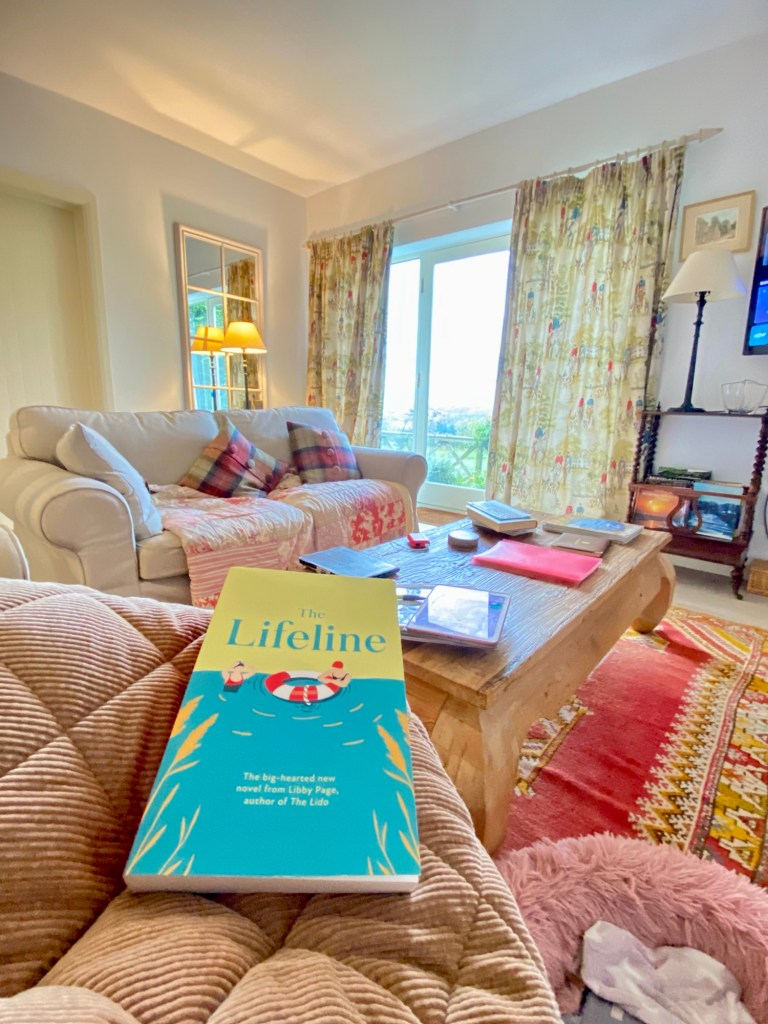
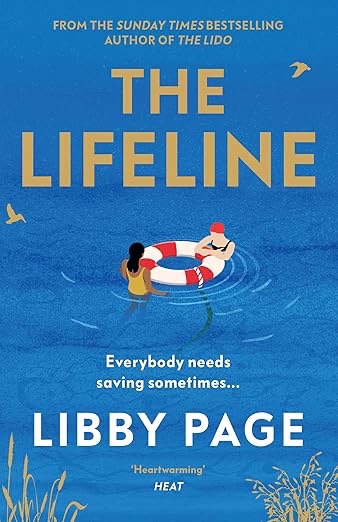

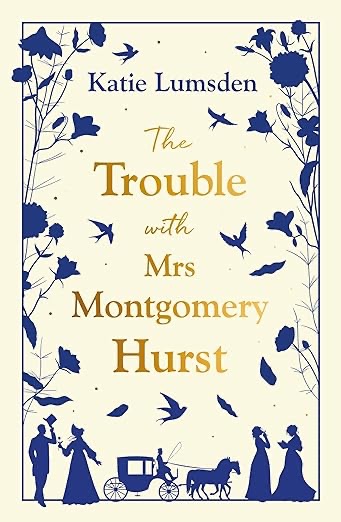


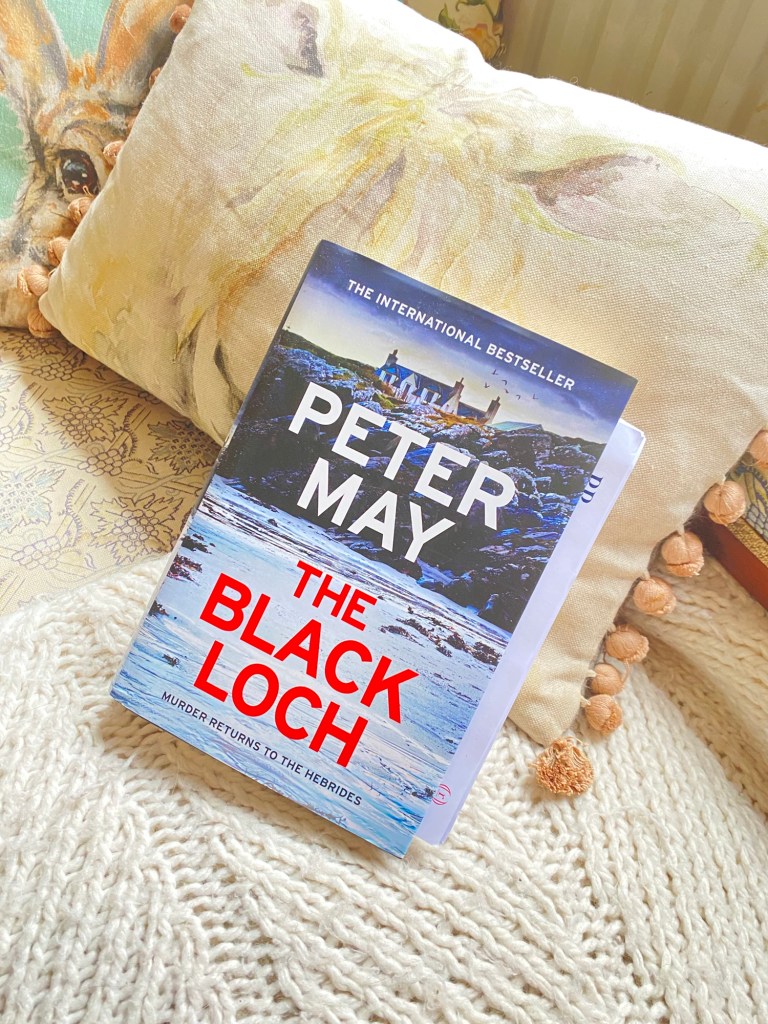

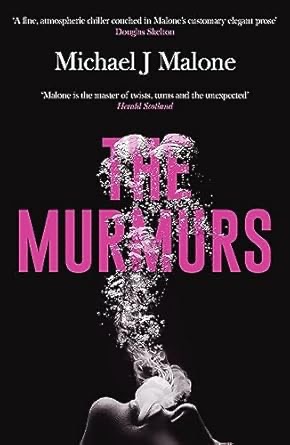

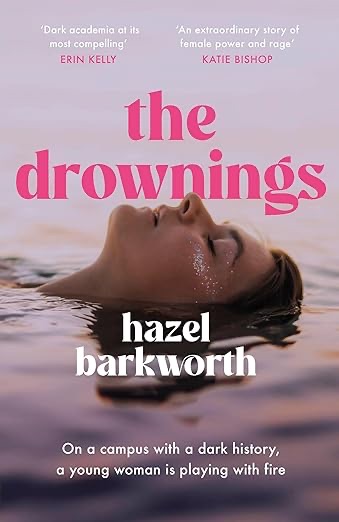
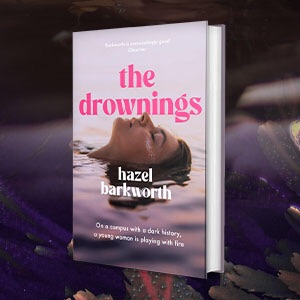

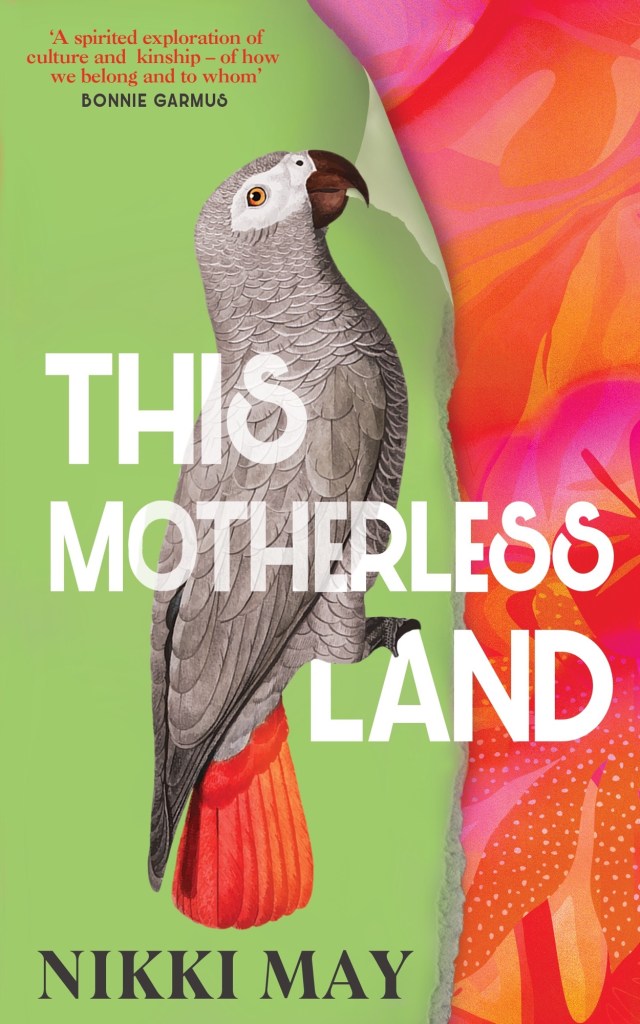


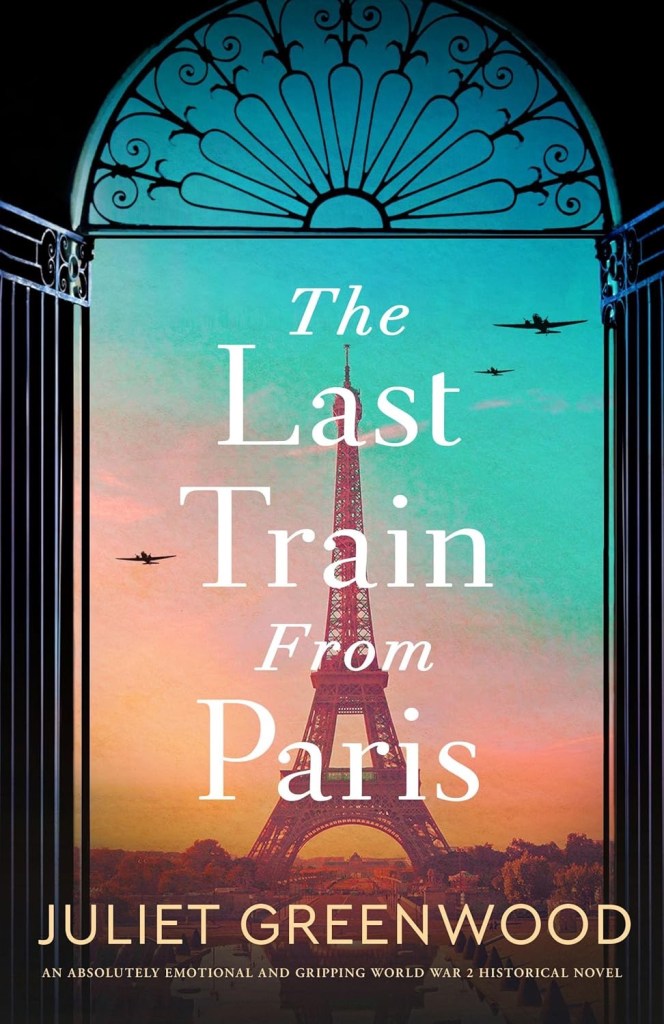


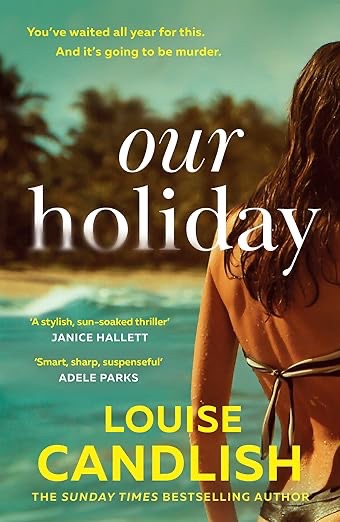

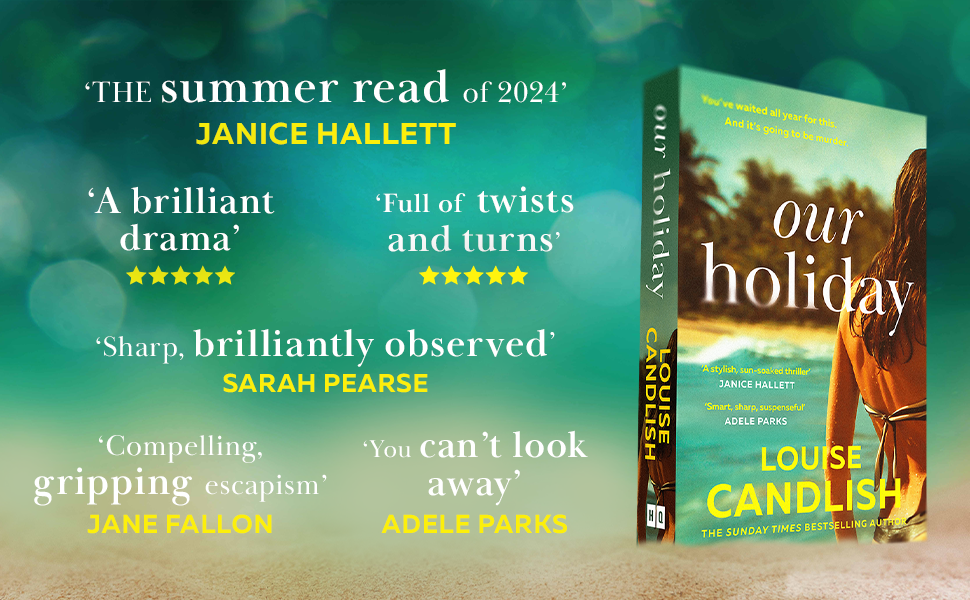




 The Lotus Readers