When I first read The Giver of Stars I felt it was a totally different type of Jojo Moyes novel. Using the historical setting of the Great Depression, she takes us to a town in rural Kentucky., where most people work in the Van Cleeve family’s mines and levels of rural poverty are high. In Kentucky, African-Americans are still subject to segregation and middle class women are expected to stay home and know their place. Women in poorer families are working hard while trying their best to feed and look after ever-growing families. Into this setting comes Alice, the English bride of the heir to the mining fortune, Bennet Van Cleeve. Bennet is handsome and considerate, and their marriage seems to start well but once they reach the family home things change. Bennet has lived with his father, following the death of his mother and the house is still being run to her exacting standards. Alice finds she has little to do, with a house is full of her late mother-in-laws ornaments and china dolls, especially since Mr Van Cleeve doesn’t like anything to be out of it’s normal place. More worrying is the change in Bennet now they are home. Despite showing some desire at the beginning, the proximity to his father is affecting their sex life. Several months down the line their marriage is still unconsummated and Mr Van Cleeve keeps hinting about grandchildren, adding to the pressure.
When a town meeting is called to discuss President Roosevelt’s initiative to get the rural poor reading, Alice senses an outlet for her energy. Margery O’Hare will head up the initiative, a wonderfully outspoken and self-sufficient women who doesn’t listen to the opinion of anyone else, particularly men. She opens a door for Alice, out of the claustrophobic Van Cleeve household and into the wild forests of Kentucky. Alice learns to ride a mule, and along with Margery and two other local women she sets out as a librarian for the Packhorse Library. At first, rural locals are suspicious of an Englishwoman coming to the door offering them books, but soon Alice finds a way in and starts to be trusted. She also finds she likes the open air, the smells of the forest and singing of the birds. There is also the freedom to be in more casual dress and the camaraderie she is building up with her fellow librarians. She is close to Margery and when she confides about her marriage, Margery loans her a book she has been sneaking out with the novels and recipes. It is an instruction book on married love and Margery has been loaning it to poor women on her rounds who are inundated with children and need educating about sex. Alice takes the book home and a series of events are set in motion that will change not only the Van Cleeve household, but the whole town.
Mr Van Cleeve is determined to deal with Margery O’Hare once and for all, as he vows to destroy the Packhorse Library altogether. Margery is sure that a devastating flood had more behind it than high rainfall and suspects the mines. She has left herself vulnerable though, with what Van Cleeve sees as transgressive behaviour: she is exposed as having a relationship out of wedlock, she has hired an African-American woman who used to run the coloured library and she is encouraging townswomen to take control of their own lives. She seems impervious to other people’s disapproval so what lengths will he have to go to in order to stop her?
This was a beautifully written book and was on holiday when reading. I encouraged my other half to go fishing so I could stay in the holiday cottage to read it. It is so well researched, with real and authentic characters I fell in love with. Moyes manages to capture the tensions and societal changes of the Depression, depicting rural poverty, domestic abuse, and the rise of feminine power. We can see new attitudes towards race and feminism particularly where marriage and sex are concerned. Progressive attitudes come up against old money and old values in a tragic way. It was interesting to re-read it with the backdrop of Trump’s America where such traditional values are being forced on women in many states. I found myself desperate for the progressive characters and attitudes to prevail and it was this that built the tension and kept me reading till 2am! This was real, romantic and simply great storytelling. It’s an absolute must read and one of her best novels to date.
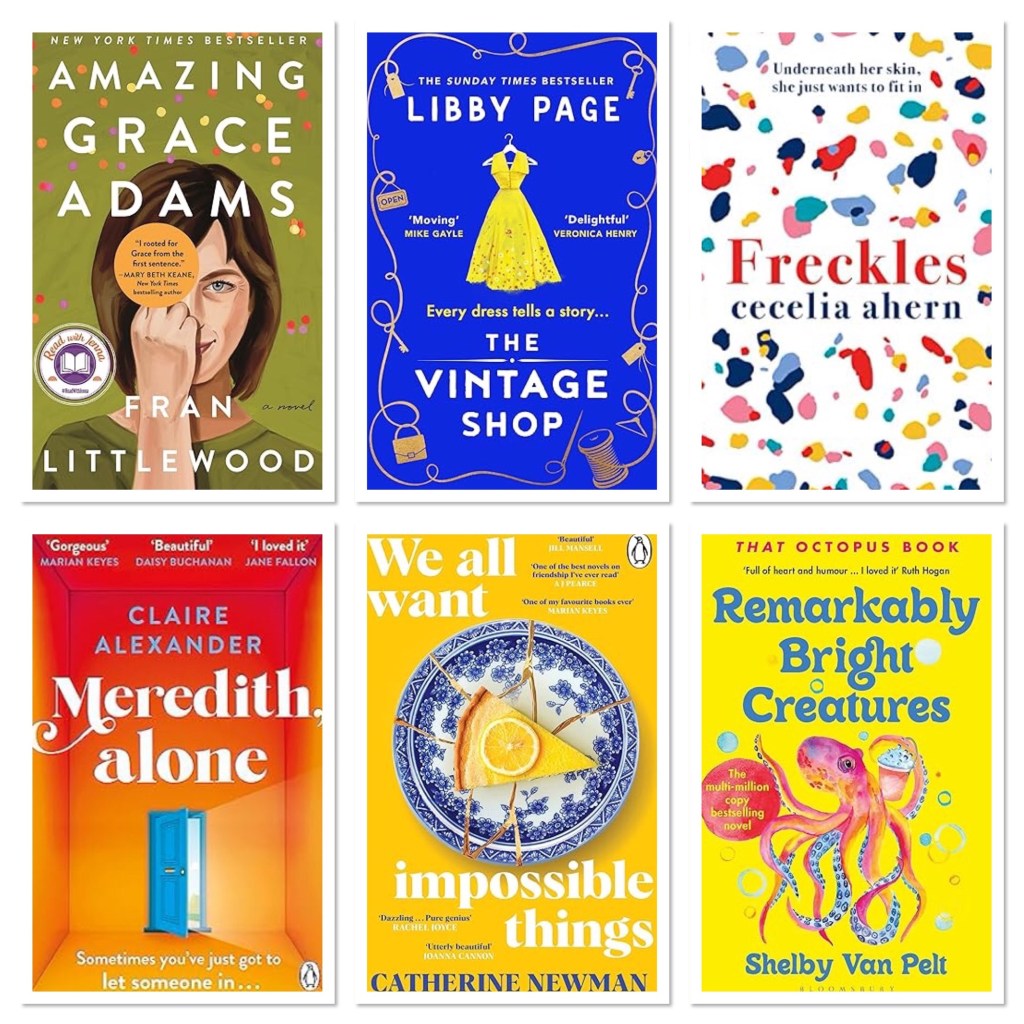
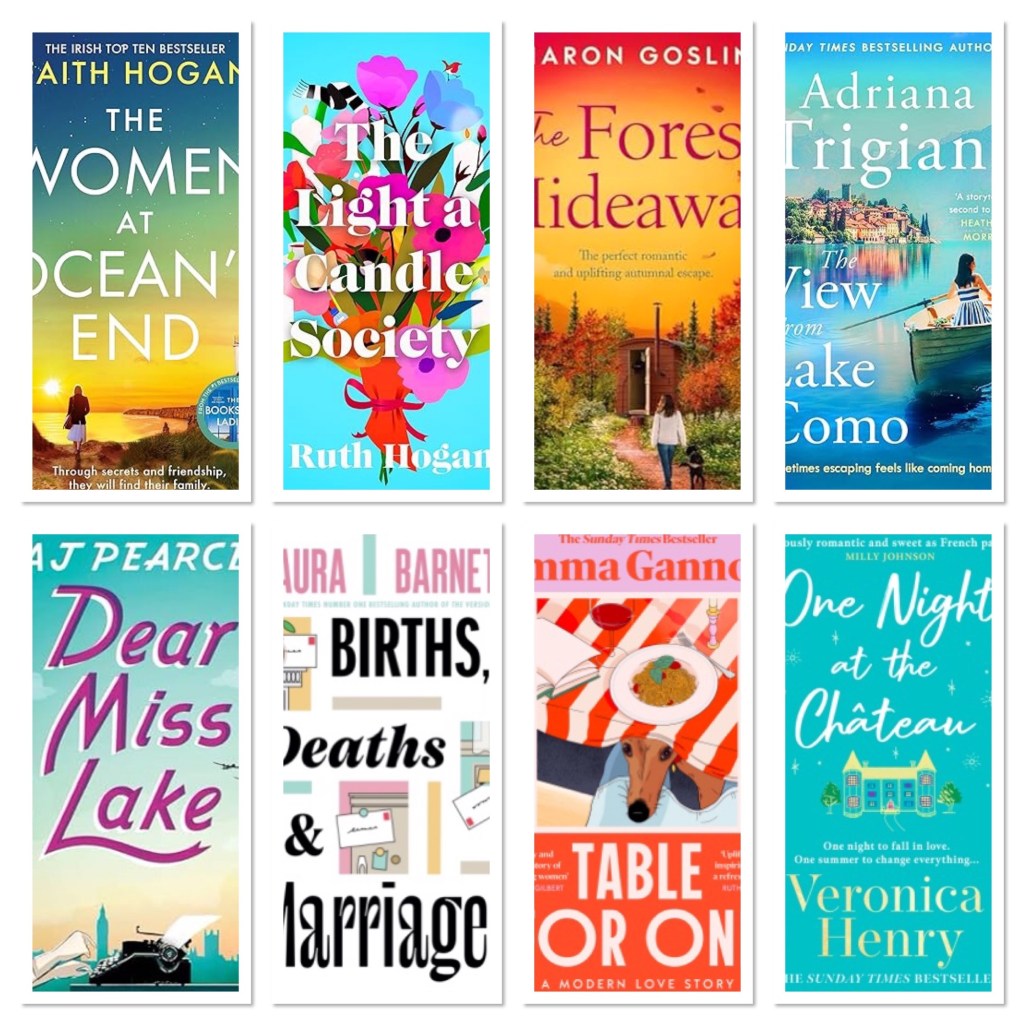
You know the world has really gone to hell when you click on a streaming service and they highlight a section as uplifting and good for your mental health. What with WW3 seemingly round every corner, every news programme hijacked by the antics of Trump and his attack dog JD Vance, Elon Musk waving a child or a chainsaw over his head and for me personally, the threat of losing my disability benefits. I’m also averaging at least one medical appointment every week as each test throws up something we never expected! Life is a wee bit stressful for all of us at the moment and I wondered whether it might be nice to spotlight some of my favourite authors who write uplifting and joyful fiction. I’m going to spotlight a few different authors on Sundays, suggesting some older novels and some that are worth keeping an eye out for through the rest of 2025. I will point out where there are tough themes in a novel, but even where there’s a lot to overcome in these novels the ending is always ultimately uplifting and inspiring.
I think it was my mum who first gave me one of Adriana Trigiani’s books to read and I think she got it from Oprah. My first taste of her work was one of her Valentina books, a series of books following an American Italian young woman as she starts to make her way in the world. Her family have been makers of custom wedding shoes since 1903. The Angelini Shoe Company trades from Greenwich Village, NYC and is one of the area’s last family run businesses. Now it’s in trouble and Valentina, working as apprentice to her grandmother Theodora, wants to bring their years of craftsman’s experience into the twenty-first century market. Valentine is juggling a lot of different commitments: her romance with chef Roman Falconi, her duty to her family and entering a design competition for a very prestigious competition for a department store. When she accompanies her grandmother to Italy they hope to find inspiration, she spends time in Tuscany and Capri. She’s overjoyed to find her artistic style but the trip changing her life in ways she never expected.
In the second book of the trilogy, Valentina’s plans have go awry. We start with a celebration as her grandmother marries the love of her life in Tuscany, but Valentina’s own romance is not going so well. It’s a second blow when her grandmother announces thar her brother Alfred is becoming her partner in the family business, not Valentine. She decides to devote herself to work and takes a trip to Buenos Aires for new connections and ideas. Emotionally though she’s caught between two loves, one who’s always nurtured her and another that promises to sustain her future. In the final book Valentine is living out her choices and continuing to modernise the firm. As she prepares to marry the man she has chosen, she is faced with painful choices and a fight for what she wants from life. Can the Angelina Shoe Company make it’s mark and will Valentine be able to savour the wonderful things she deserves. These books really are sumptuous, full of gorgeous fashion details and since I love shoes I really appreciate Valentine’s designs. We get the bustle and modernity of Manhattan, contrasted with her trips to Italy and Argentina to small artisan shoemakers. We get to be an armchair holiday maker too as we drink in the wonderful sights and food that she enjoys too. Of course there are challenges in Valentine’s life, some of the hardest life can throw at her, but ultimately we know she will triumph and get her happy ending.
Big Stone Gap is a sleepy village where kids get married and start families at eighteen, and stay for ever. So thirty-five-year old Ave Maria Mulligan is something of an oddity. A self-proclaimed spinster, as the local pharmacist she’s been keeping the townsfolk’s secrets for years. But Ave Maria is about to discover a scandal in her own family’s past that will blow the lid right off her quiet, uneventful life. Soon she’s juggling two unexpected marriage proposals and conducting a no-holds-barred family feud. The thought of spending the rest of her life in Big Stone Gap is suddenly overwhelming . .
In our second instalment, eight years have passed since town pharmacist and self-proclaimed spinster Ave Maria Mulligan married the man of her choice. Now they have a beautiful daughter, but for some reason her husband seems distant. In their comfortable stone house in the mountains there’s an empty room where their son slept. Ave and Jack haven’t found a way past their sadness and are struggling to share their feelings. In the town change is coming and is causing concern among the residents. With this backdrop, Ave must make decisions for her family and try to find a way back to her husband.
In the third part of the trilogy, Ave Maria feels time is slipping through her fingers as she watches her daughter growing up. It seems like a period of change for her friends too and her husband is desperate to reinvent himself in ways nobody could have predicted. Are they experiencing a mid-life crisis? Ave is about to have her foundations rocked and face the true test of love: letting go. I love this series because it’s so cozy and has that small town heart-warming feel. I found myself so invested in her family and seeing how they grow over time is a joy. I believe there is now a fourth novel in the series and I’m really looking forward to reading it.
More recently the author has moved to historical fiction and mid-century Italy, as well as a fascinating look at the golden age of Hollywood and a real-life scandal about Clark Gable. I’m so looking to her new novel out in July this year and perfect for summer holidays. Recently divorced, Jess Capodimonte Baratta helps her Uncle Louie with his marble business from her parents’ basement in Lake Como, New Jersey. An unexpected loss within the family unearths a long-buried secret and Jess questions where her loyalties lie. Deciding a change of scene is needed, she escapes to Italy – her ancestral home. We will be swept away to the majestic marble-capped mountains of Tuscany to the glittering streets of Milan and the enchanting shores of Lake Como, which despite a shared name could not be more different from her hometown, Jess soon feels a sense of belonging. And when she meets dreamy Angelo Strazza, a passionate artist, she know that this is where she is meant to be. But as further revelations about her family history come to light, it’s clear that Italy cannot be Jess’ hiding place forever. This sounds like the perfect comfort read to me.
Recently divorced, Jess Capodimonte Baratta helps her Uncle Louie with his marble business from her parents’ basement in Lake Como, New Jersey. But when an unexpected loss within the family unearths long-buried secrets, Jess questions where her loyalties lie. Deciding a change of scene is needed, she escapes to Italy – her ancestral home.
From the shadows of the majestic marble-capped mountains of Tuscany to the glittering streets of Milan and the enchanting shores of Lake Como, which despite a shared name could not be more different from her hometown, Jess soon feels a sense of belonging. And when she meets dreamy Angelo Strazza, a passionate artist, she know that this is where she is meant to be.
But as further revelations about her family history come to light, it’s clear that Italy cannot be Jess’ hiding place forever.
Will the dark truths of her ancestral past send her back home?
When one of my favourite authors writes a new book I always experience a confusing mix of emotions. Excitement and anticipation mix with fear; will I love it as much as I love their last book? I don’t want to be disappointed. Since there’s a new Liz Gilbert out this year I thought I’d share my review of her last novel, City of Girls. Like a lot of readers my first encounter with Gilbert’s writing was Eat, Pray, Love; a book that was nothing short of a cultural phenomenon, not to mention the following hit film. For me, it was her novel The Signature of All Things that caught the imagination. The combination of a sparky and intelligent heroine, the feminist theme and the historical detail came together in a beautifully woven story. So as the publication date approached for this new novel I desperately wanted it to live up to her first.
I shouldn’t have worried. City of Girls is a joyous, exhilarating riot of a book. Our narrator, Vivian, plunges us into 1940s Manhattan where she is sent by her parents after expulsion from Vassar. There she is placed in the care of her Aunt Peg who runs the, slightly ramshackle, Lily Theatre. I was suddenly immersed in the bohemian world of theatre people where Vivian soon finds her niche. At Vassar she made friends by creating outfits for the other girls on her trusty sewing machine. So, in her new rooms above the theatre she is soon surrounded by showgirls wanting costumes. I have an interest in fashion and sewing, so I really enjoyed the descriptions of Vivian’s creations, made on a shoestring with a lot of help from Lowtsky’s vintage clothing store downtown. Yet not everything is as it seems on the surface. Is her friendship with showgirl Celia as mutual as it appears? What influence does the matronly and doom laden Olive have over Aunt Peg? Where is Uncle Billy, whose rooms Vivian has been using since her arrival?
Some of these questions are answered during the production of the brand new play City of Girls. Aunt Peg’s friend Edna Parker Watson comes to stay after losing her London home during the Blitz. Edna is a talented theatre actress who is petite, beautiful and impeccably dressed. She arrives at the Lily with her huge wardrobe and her very famous and much younger husband, Arthur. Every member of the theatre company does their very best to get this musical off the ground and make it a success. Vivian works hard on her costume designs, but also finds herself becoming an unofficial PA and friend to Edna. Determined to put on the best show they can to turn the Lily Theatre’s fortunes around, Aunt Peg agrees to audition for new actors. When Vivian meets Anthony, the new leading man, she falls in love for the very first time. But alongside the awakening of first love, Vivian will also have her eyes opened to how cruel showbiz and the wider world can be. Several revelations teach her that not everyone can be trusted, the most unexpected people can come to your aid, and Vivian realises she has been walking around with her eyes closed. As the Second World War moves ever closer to their shores Vivian is left with a reckoning of her own. Does she want the respectable, quiet life her family expects or does she want to make her own way in a city and a career that is anything but quiet?
You will fall in love with Vivian as she takes you into her past and candidly shares her exploits in 1940s NYC. She takes you from theatre, to nightclub to a dingy apartment in Hell’s Kitchen where she conducts her first love affair. She holds nothing back and I felt her delight at encountering the bohemian characters of the theatre, her passion and ingenuity for costume work and her discovery of a city laid out before her like a playground. She allows us to experience her growing up with every triumph and mistake she makes along the way. Such an engaging central character is well matched with other beautifully drawn female characters from the dowdy killjoy Olive who has surprising depths, the enigmatic Edna Parker Watson, the brisk and sometimes foolhardy Aunt Peg to the glamorous showgirl Celia who leads our narrator into a world of nightclubs, make-up and disposable men. The women in this novel are strong, surprising and all teach Vivian something about the kind of woman she wants to be. The novel emphasises the importance of strong female role models or mentors in both our personal and working life. I found myself torn between bingeing on this book or savouring it slowly: I wanted to know what happened next but I didn’t want my adventures with Vivian to come to an end.
Meet the Author
Elizabeth Gilbert is an award-winning writer of both fiction and non-fiction. Her short story collection Pilgrims was a finalist for the PEN/Hemingway award, and her novel Stern Men was a New York Times notable book. In 2002, she published The Last American Man, which was a finalist for both the National Book Award and the National Book Critics’ Circle Award. She is best known for her 2006 memoir Eat, Pray, Love, which was published in over thirty languages and sold more than seven million copies worldwide. The film, released in 2010, stars Julia Roberts and Javier Bardem. Committed: A Sceptic Makes Peace with Marriage, a follow-up to Eat, Pray, Love, was published in 2010. Elizabeth Gilbert lives in New Jersey, USA.
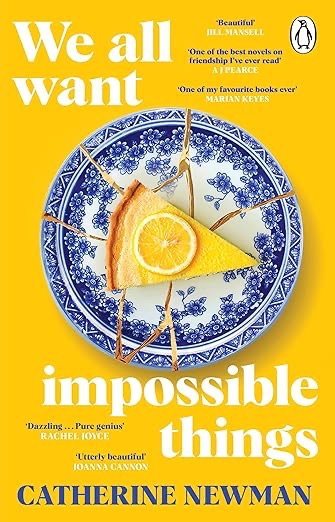
Ever since they first met at university, Beth and Nick have circled in and out of one another’s lives: supporting each other through grief, marriage, divorce, career crises and family dramas.
Fourteen years ago, when they were on the cusp of adulthood, they both survived a devastating fire that sent their lives in different directions. And they’ve been running ever since: from the pain, from the memories, and most devastatingly of all, from the guilt.
But no matter how hard they try, there’s something else they can’t run from. The inescapable, terrifying truth: they’re in love with each other.
But how can they move forward, when neither of them can stop looking back?
I always say I don’t like romance, then a book like this comes along and I’m all in. Maybe it’s being over 50, but stories of first love grab me in the feels. Especially tragic first love. The thing is we’ve all had the experience of love that’s come at the wrong place or the wrong time, so reading a love story like Beth and Nick’s brings up memories and feelings of nostalgia. Our first love experiences are so intense and when feeling are unrequited or interrupted they can stay with us for the rest of our lives. Beth and Nick have a brilliant first meeting. They’re placed in the same flat at university and Beth walks into the shared bathroom and gets an eyeful! Beth is the last person to join the flat because she’s been ill so relationships have already been established. The other two girls, Rosa and Anna, were best friends before university and Nick is already in a relationship with Anna. Beth senses some chemistry between her and Nick, but she tries hard to ignore it. Nobody wants to be the girl who steals their flatmate’s boyfriend in the first weeks of the first term. When he turns up to watch her in drama club she thinks he must feel the same.
It’s Nick who takes action. He breaks up with Anna and invites Beth on a late night walk. As they walk there’s just so much anticipation. The author builds to their first kiss with all that yearning and tension around who will make the first move. When they spot the fire in their building it’s already well ablaze and Anna is killed.
Wracked with survivor’s guilt, Nick leaves university. Beth struggles to cope, feeling like Nick has abandoned her. She decides to stay and finish her drama course. Lives move on. Yet feelings for each other and about the tragic start to their time at university, still linger. The author tells the story through both characters and over 15 years as they build careers and relationships. They both think of each other. They try to keep in touch as friends and their paths do meet from time to time, but they’re always held back by the past. They do try to support each other, so when Beth’s long-term relationship breaks down, she finds herself wanting to talk to Nick. I really felt their longing for that first love and their thoughts that maybe it could have worked. Then reality crashes in and those feelings of guilt cloud their hopes. Yet the novel isn’t schmaltzy. There are meaty issues here like domestic violence and mental health, not to mention those trauma related feelings they’ve never really shared with each other.
If there was ever a book to emphasise the importance of counselling or simply talking to each other, it’s this one. Until Nick and Beth talk through what happened and how it’s affected them since, they will always be haunted by Anna’s death. When trauma is left unresolved people find unhealthy ways to deal with those hidden emotions. Nick has a rescuer personality, developed because he never again wants to feel like he did back then as the cause of Anna’s sadness in her final hours. I love that Beth writes about what happened and her feelings for Nick because at least she’s processing the trauma, because the more we talk about it the less power it has. The tension in the novel comes from wondering if this pair will ever come together at the right time and place. Will they get the chance to put things right? Can they ever find their way back to each other? I was deeply invested and filled with hope for them. The author has written a beautiful love story, but it has impact because it isn’t a fairy tale and these two characters feel absolutely real. At the end I felt like comparisons to One Day, the archetypal friends to lovers classic, are entirely justified.
Out now in paperback from Aria.
Meet the Author
Charlotte Rixon is the pen name of Charlotte Duckworth, USA Today-bestselling author of suspense fiction published by Quercus. Charlotte studied Classics at Leeds University and went on to gain a PGDip in Screenwriting. She worked for many years as a magazine journalist, and is a graduate of the Faber Academy ‘Writing A Novel’ course. You can find out more about her on her website: charlotterixon.com.
There are three rules about ghosts. Rule #1: They can’t speak. | Rule #2: They can’t move. | Rule #3: They can’t hurt you.
Ezra Friedman grew up in the family funeral home which is complicated for someone who can see ghosts. Worst of all was his grandfather’s ghost and his disapproving looks at every choice Ezra made, from his taste in boys to his HRT-induced second puberty. It’s no wonder that since moving out, he’s stayed as far away from the family business as possible.
However, when his dream job doesn’t work out, his mother invites him to Passover Seder and announces she’s running away with the rabbi’s wife! Now Ezra finds himself back at the funeral home to help out and is soon in the thick of it. He has to deal with his loved ones and his crush on Jonathon, one of their volunteers. Jonathon is their neighbour so Ezra is trying to keep the crush under wraps while also dealing with Jonathon’s relative, a spectre who’s keen on breaking all the rules. Ezra must keep his family together and avoid heartbreak, but is starting to realise there’s more than one way to be haunted.
This book came totally out of left field and I didn’t know what to expect at all, but I fell in love with it. I do connect to books about grief and loss as it’s something I’ve gone through but I also loved it’s emphasis on family, culture and tradition. Yes the book is about grief, but it’s also about love. Ezra is a Jewish trans man so it’s also firmly based in the queer community and I enjoyed that too. The romance is quiet and more of a slow burn than the heat of passion, tempered by Jonathon’s recent loss of his father. It depicts the chaos and disruption of death beautifully, especially in how it affects family members differently and can come between them. Ezra and the funeral staff treat deceased persons with respect; they’re both gentle and caring in their work with them and their grieving families. The author takes us deeply into the customs and rituals surrounding a death in a Jewish family and I find this so interesting because we can all learn from each other’s ceremonies and traditions. I felt that their attention to detail and the respect they had for the people brought to their funeral home was ultimately life affirming. Their deference shows how precious life is and that our relationships with family are the most important thing of all.
I also loved the author’s focus on something that I think is the secret to a happy and contented life – being your authentic self. We can see how Ezra’s connection to his communities – family, religion and the queer community – grounds him and reminds him of who he is. When we’re not true to who we are we start to feel dislocated and uncomfortable. Through Ezra’s story we explore how to find yourself again and hopefully be your authentic self. The book felt so much more than a romance, because it’s really a family story too. With a delicate touch the author also brings a light humour to the story, softening the grief and loss without being disrespectful which is a difficult balance to find. It surprised me that this was a debut novel because she’s managed that balance perfectly. My only criticism is that I was hoping for more ghosts. They were more of a background feature than relevant to the plot and from the blurb and title I expected more. Having said that it’s still a great story and I’d love to read more from this writer.
Published Aug 2024 from Trapeze.
Meet the Author
Shelly Jay Shore (she/they) is a writer, digital strategist, and nonprofit fundraiser. She writes for anxious queer millennials, sufferers of Eldest Daughter Syndrome, recovering summer camp counselors, and anyone struggling with the enormity of being a person trying to make the world kinder, softer, and more tender. Her work on queer Jewish identity has been published by Autostraddle, Hey Alma, and the Bisexual Resource Center.
I was born in Scunthorpe in the the 1970s and our family had a fairly set weekend tradition. On Saturdays mum and dad would take us into town on Saturday mornings where we would visit the market and mum would take us to Scunthorpe Library. This was a huge brick building in a square full of pigeons and had a entrance that was a glass pyramid giving it a strange futuristic look. I was left in the children’s library to make my choices. I was always a voracious reader and started reading more grown-up novels when I was ten, my first being Jane Eyre. I loved it when all my classmates were reading the scheme in class and I was allowed to sit in the library alone and read by choice. I can still smell that library when I think about it. But it was in the Scunthorpe library that I first met the Moomins and I’ve been hooked ever since. These plump white hippo- like creatures were so cute and I loved the range of characters Tove Jansson had created. From the tiny light-up hattifatteners that brushed against your legs and felt like nettle stings to the determined and bitey Little My, I’d never read anything like it and I’m sure part of me thought there might be an unknown corner of Finland where they actually lived. Moomin House was a blue tower by a lake surrounded by snow and ice. I’ve recently found out that Finland doesn’t just have the Moominland theme park, there is a genuine Moomin House where you can spend your holiday. It’s the perfect combination for me and my other half, I can immerse myself in reading and he can fish the lake.
Despite having an actual theme park, the Moomin’s world created by Tove Jansson is not a sanitised pink Disney experience where everything is beautiful and everyone is safe. Yes, there are floating clouds you can ride, fantastical creatures full of character and the safe space of Moomin House, always welcoming and happy to see you. Yet, the family have ups and downs from comets, floods and an evil hobgoblin. In Comet in Moominland Moomintroll and his friend Snufkin set off on a quest to find out about a comet hurtling towards earth. In Moomin Summer Madness the Moomin are flooded out of their home and have to go on a trek to find another. In the final book Moominvalley in November, the other characters are waiting for the Moomins to arrive, but there’s no sign of them. As we wait with the others there is a palpable sense of absence and potentially loss. Our beloved friends are often in peril, suffering anxiety or are openly depressed and despairing of life. I realised when I was older just how carefully the books address worries that children and adults both have. Sometimes, it’s a worry or issue that is affecting the real world at the time Tove Jansson was writing. It’s easy to see the comet in the first book as an allegory of real world concerns about nuclear warfare. When read now we can see issues about climate change and the experience of being a refugee in Moominsummer Madness. The Snork Maiden is in love with Moomintroll and worries about her appearance, particularly her plumpness. Snufkin comes and goes from Moomin House, sometimes needing a quest with his friend and sometimes he needs quiet, only his fishing rod and flute for company. This could be read as the response to sensory overload experienced by introverts and people on the autistic spectrum. There’s the rather melancholy Hemulen, he’s a botanist who likes to wear dresses. Mymble is a single mother to Little My who’s a force to be reckoned with. All of these creatures seem to find solace and community spending time with the Moomins.
I always felt that the Moomin house was like my own. The welcoming, non-judgemental and loving Moomin Mamma and Papa are so like my mum and dad. My brother and I did have a penchant for waifs and strays, sometimes people and sometimes animals. We’d bring them home and look after them for a while. I had a friend who would ring my mum and ask if they could come for tea, then he’d wait for me outside school and go home with me on the bus. To be honest he did worry my dad a bit with his huge flared jeans and red Mohican. I was probably a square teenager, I didn’t really rebel and we were brought up in church. I did wonder sometimes what our friends got out of being with us, but at fifty years old I can see that some of our friends were drawn to the comfort and stability of my family. My mum was always home, was a great cook and accepted everyone. My dad was a bit more concerned, especially about boys, but he was a youth worker and used to relating with teenagers. My brother is Snufkin through and through, preferring solitude to being with people and enjoying nothing more than fishing with his dog. He walks off into nature for a weekend with his tent and a fishing rod on his back. My late husband was rather like the Hemulen, not that he wore dresses, but he had that professorial air and focus. I’m an absolute Snork Maiden, impossibly romantic and a little too plump.
I think Tove Jansson created beautiful, endearing characters that would appeal to children, but she doesn’t hold back when it comes to plot. That’s the enduring appeal of these books and the merchandising that has exploded over the years. If friends or family go to Covent Garden they always bring me something from The Moomin Store. I have jewellery, note books, Christmas baubles (including a Moomin House), posters, mugs and glasses. I have a beautiful shadow box and various travel mugs and water bottles. So I couldn’t resist this beautiful Folio Society anniversary edition of Finn Family Moomintroll. As you can see it has beautiful illustrations and I absolutely treasure it. This year is the 80th Anniversary of the book so I’m looking forward to a year of the comfort and nostalgia I still get from these beautiful books.
Meet the Author
In the nineteen-fifties and sixties, one of the most famous cartoonists in the world was a lesbian artist who lived on a remote island off the coast of Finland. Tove Jansson had the status of a beloved cultural icon—adored by children, celebrated by adults. Before her death, in 2001, at the age of eighty-six, Jansson produced paintings, novels, children’s books, magazine covers, political cartoons, greeting cards, librettos, and much more. But most of Jansson’s fans arrived by way of the Moomins, a friendly species of her invention—rotund white creatures that look a little like upright hippos, and were the subject of nine best-selling books and a daily comic strip that ran for twenty years.
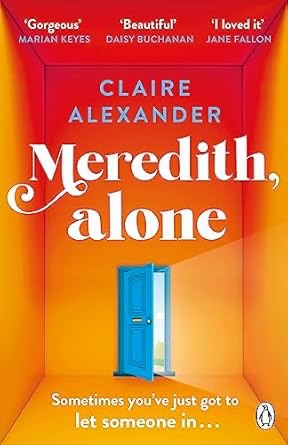
Lila’s life is built on shifting sands at the moment. Lila is a single mum to Celie and Violet since her husband died revealed his affair with Mayja, a yummy mummy from the school gates. His betrayal was made worse by the fact Lila was promoting her book, on how to have a successful marriage. Her mum died recently and stepdad Bill and has slowly moved himself from their bungalow a few doors away, into Lila’s house along with his piano and healthy eating regime. To add a further unexpected surprise her biological father Gene turns up looking for a bed. Gene is a hellraiser, a drinking and partying actor whose claim to fame is playing the captain of a starship in a 1960’s sci- fi series. He’s still living off that fame and Lila is unsure whether she can trust him. Bill and Gene can’t stand each other. However, she gives him the sofa bed in her office, where she’s trying to produce three chapters of a new book that her agent is chasing. Lila wanted to write something honest, but the publisher is looking for the humorous and sexy exploits of a newly divorced woman. How can she write in one dad’s bedroom, while her other dad is practising his piano and planning garden renovations. Not to mention dreading school pick-up and having to see her husband’s girlfriend wafting around like a butterfly, waiting for her son Hugo. The final nail in the coffin comes when Mayja announces she’s pregnant. The last thing Lila feels like doing is pursuing romance, but to keep her agent and publisher happy and the roof over their heads she is going to have to come up with some sexy exploits. Enter Jensen the gardener and Gabriel the architect, but can Lila carve out any time for them or herself?
Lila’s house is something quite rare in fiction, which sometimes feels full of American fridge freezers and Quooker taps. It has quirks like ancient coloured bathroom suites and a toilet that blocks regularly. Celie is 16 and clearly dealing with something at school that she won’t talk about. Violet has had to cope with a boy in her class now being her step-brother, not to mention no longer being the baby. Pressure builds for them all as Mayja becomes unwell and has to be at hospital until the birth of their baby. They are living of the last of Lila’s money from her first book, but it won’t last forever and submitting one of the most raw and honest pieces of writing she’s ever done only to see it rejected, is very hard to take. I had my hear set on Jensen from the minute he came to do the garden because there’s no barrier or mask with him, what you see is what you get. As he and Lila start to talk about Bill’s plans for the garden, often sharing a brew outdoors and chatting, there’s a clear friendship growing. He’s so easy to talk to and remarkably open. Gabriel is his polar opposite in a lot of ways, there’s an instant attraction for Lila and a lot of messaging back and forth but I could sense that he wanted to be in control of their interactions. I am very wary of men who pick you up and then put you away when they’re done, like a worn and boring plaything. There’s a lot of humour in Lila’s attempts to gather sexploits for her book, but there’s clearly potential for people to get hurt too. I also learned a few terms, most notably ‘bread crumbing’ which I’ve been subjected to a couple of times. Similarly, a previous partner described me as ‘too much’ so I had a t-shirt made with ‘too much’ on it and wore it proudly, sad for myself that I spent time on someone who wasn’t enough. This is something Lila comes to realise, maybe Dan’s affair was a symptom of their relationship going wrong? If only she’d known it was ok to take up space.
‘She thinks sometimes that she always felt she was a little too much for him, too needy, too angry, too sad, too hysterical.’
I really fell in love with this family, as unwieldy as it is somehow it does work. I admired Lila, who tries her best to be on board with the changes in her life especially around her marriage. She knows that the girls will have a sibling but can she accept Dan and Mayja as part of that family? Their relationship does hurt her, but her feelings aren’t going to stop them becoming parents and she wants her girls to have a good relationship with the baby. I thought she was incredibly brave to try and put herself back in the dating pool, something I’ve always avoided. I used to say that if someone comes into my life that’s fine, but I’m not wasting my free time on people I potentially don’t like, especially when there are good books waiting on my TBR! Luckily my husband did just that. He walked (fell) into my front door and I feel like we’ve never stopped talking since. You can see the work Lila has done on herself as she dispenses little bits of wisdom on the way:
The dynamic between Gene and Bill is funny too, it’s immediately antagonistic but their bickering made me smile. Bill is angry thanks to all the things Lila’s mother, Francesca, has told him and for his desertion of his wife and daughter. Bill sees Lila as his daughter and has never had any competition for her affections. There’s obviously a fear that Gene will pick Lila up and then drop her again, even worse there’s now Celie and Violet to consider. Bill has always shown love in the way he cooks healthy meals for the girls, picks them up from school and spends time with them. Gene wants to have fun with them, Violet is especially fond of snuggling up on the couch after school and watching her new Grandad’s old sci-fi series. Celie is more difficult to befriend, but Gene is surprisingly perceptive and works out what’s wrong, giving her good solid advice that works. Far from this being a bed for a couple of nights, Lila can actually see him fitting in with their family and that scares her. Especially when she finds out there are secrets about his relationship with her mother that surprise her and potentially hurt Bill.
I read this books so quickly because I felt I was observing a real family, with all the chaos and the rollercoaster of emotions that comes with it. I loved that in a family with so many people, there was always someone who could be there for somebody else, like Gene is there for Celie. There’s so much acceptance in this novel and it’s a great message for a New Year where we are pushed into thinking we need to detox, eat less, go the gym, run 5k and all that other rubbish. Lila learns to accept the change in her life, but will she move on when she’s ready, rather than for a book deal? She also has to accept that a person can have huge flaws, but still have a place and the ability to be a support for others. Bill has to accept Francesca is not coming back and the Gene who hurt Francesca all those years ago isn’t the Gene in front of him now. Both the girls have to accept that they now share their father, but could build a new relationship with Mayja and their new sibling that enhances their life. There are so many breakthroughs here that I can’t list them all, but I did identify hugely with a scene where Lila finally takes some time for herself and has a massage, encouraged by her friend. In the final throes of my last relationship I visited a Bowen Therapist and had a similar experience.
‘something wells in her, an emotion unlocked by the reality of another human being touching her, listening to Lila’s body, feeling its pain and its tensions and carefully remedying them. Suddenly, she feels a great swell of something overwhelming her. Grief ? Gratitude? She isn’t sure. She becomes aware that she is weeping, the tears running unchecked through the hole where her face is nestled, dropping onto the floor, her shoulders vibrating with an emotion she can no longer hold back.’
This was a beautifully written moment where someone is just there for Lila and the weight of holding everybody up can fall from her shoulders. It’s the first time she has taken for herself and all the emotions she’s kept in check can come out. I love how Jojo Moyes writes women and the mental load we carry for everyone around us. A load more exhausting than childcare, housework, career all rolled into one. Here she lets go and it’s the point at which she starts to rebuild her life. Does she pick the gardener or the sexy architect? I’ll leave that for you to find out.
Out on 11th Feb from Michael Joseph.
Meet the Author
Jojo Moyes is a novelist and journalist. Her books include the bestsellers Me Before You, After You and Still Me, The Girl You Left Behind, The One Plus One and her short story collection Paris for One and Other Stories. The Giver of Stars is her most recent bestseller and Reese Witherspoon Book Club Pick. Her novels have been translated into forty-six languages, have hit the number one spot in twelve countries and have sold over thirty-eight million copies worldwide.
Me Before You has now sold over fourteen million copies worldwide and was adapted into a major film starring Sam Claflin and Emilia Clarke. Jojo lives in Essex with her family.
This was my read for over Christmas week and having started a couple of novels only to put them down again, I was beginning to think I’d lost my reading mojo. I was crying out for something that would draw me in quickly so I went for a tried and tested genre. A genre that maybe has a title, but I don’t know it. A preference I blame on reading Jane Eyre as a very imaginative ten year old. The formula is: huge rambling country house; time period from Victorian – 1930’s; young unsure girl/woman; aristocratic families with huge secrets. This fantastic novel from Emily Critchley fit the bill perfectly and was the only thing that drew me away from watching Black Doves all in one go! Our heroine is Gillian Larking, a rather invisible girl at boarding school who does her best to fit in but has no real friends. Gillian has lost her mother and with her dad working in Egypt feels very much alone. However, when she gets a new roommate that feeling starts to change. Violet is a bright, lively girl whose first goal is to break school rules and sneak up onto the school roof to check out the view. Despite her mischievous and seemingly confident nature, Violet is anxious and has a series of rituals to perform that help her cope:
“She had to do certain things at certain times, like twirl around on the spot before she flushed the lavatory or touch a door handle twice before she opened a door. I often caught her whispering certain words to herself three times or counting to fifty on her fingers. When I asked her why she had to do these things, she struggled to tell me. For protection, was all she would say, or so that nothing bad will happen.”
She is also prone to emotional outbursts when things become overwhelming. Gillian is seemingly more aware that as young ladies of the middle and upper classes they must manage their emotions. She herself has had moments of despair and loneliness but has kept her tears for under the covers late at night. She also aware that girls in packs tend to sniff out weakness or odd behaviour and worries whether Violet’s rituals or ‘undoings’ as she calls them, could affect both their positions at school. Yet the other girls don’t seem to bother Violet and Gillian wonders whether that’s because she’s from a wealthy family. As Christmas approaches Gillian is delighted to receive an invitation from Violet to spend the holidays with her family at Thornleigh Hall. There she is dazzled by their slightly shabby country home, being waited on by the servants and Violet’s rather beautiful older sisters. Emmeline, the oldest and definitely in charge, wafts around in old Edwardian gowns whereas Laura is a rather more modern and fragile beauty. Both girls accept Gillian as one of their own, but their new friendship is tested by an incident on Boxing Day that will reverberate through the years.
I have a soft spot for books set between the two World Wars and this had a lot of the themes pertinent to aristocratic families of the time. Thornleigh Hall is badly in need of repair but has a faded grandeur that is still impressive to Gillian. They’re a family living a way of life that ended twenty years before. They clearly don’t have the funds to maintain their estate, but Gillian notices the lavish breakfasts laid out every morning under silver dishes. Emmeline, the eldest sister, is the family’s great hope. She must find a suitor with money and secure the family’s fortunes with a sensible marriage. She has a candidate in mind, much older than her but definitely of the right class and enough money to save the hall for another generation. Gillian is enthralled by the sister’s unique style and confidence and realises that to some extent her friend Violet is the odd one out. Her nervous rituals, like her need to read Peter Pan over and over, suggest a deep insecurity in her character and even a fear of growing up. She warns Gillian that her sisters are not all they seem to be, but Gillian feels accepted for the first time in her life. There was an element of L.P. Hartley’s The Go-Between in her relationship with the sisters because she is naive and doesn’t realise when she’s being manipulated. On that fateful Boxing Day, Emmeline takes charge as always, instructing Gillian and Laura to lie or even pass blame onto a man who lives in the lodge house. Gillian feels obliged to go along with the plan because they’ve been kind to her. Again there are shades of another book here, Ian McEwan’s Atonement, where naivety and misunderstanding could lead to a terrible end for an innocent man of a lower social status. The full implications of these lies are utterly life changing for Violet, but almost no one escapes unscathed.
The novel is structured into four parts, taking us to different points in the life of Gillian and her relationship to the events of that Christmas in 1938. I’ve already mentioned L.P.Hartley’s The Go-Between and the first section has echoes of it’s opening page, from the naivety and social position of Gillian to the sense of delving into a past that’s long dead with it’s own social codes; “the past is a foreign country – they do things differently there’. We start the novel in 1999 when Gillian visits Thornleigh Hall, now under the guardianship of the National Trust. Over a slice of lemon and poppy seed cake, she ponders life from her time as a guest here to the recent death of her husband and the diary from 1938 that she’s come across while clearing out cupboards. This 1999 visit to Thornleigh is like travelling into the past as she strolls the rooms now on show and sees Lord and Lady Claybourne in the dining room complaining about their eggs and Laura in her stockinged feet reading a book on the library sofa. There is so much about this first chapter that draws us in: the suggested tragic circumstances of some members of the family; the emotional state of Gillian as a young girl who has lost her mother and is desperate for a role model; there’s also the hint of darker secrets lurking underneath the surface of this beautiful stately home. In the other three parts we’re taken to the aftermath of that fateful day in 1938 and then to London in 1942 where Gillian bumps into Laura’s husband Charlie.
Finally part four brings us to the 1990s when Gillian and the Claybourne sisters are old women, taking us full circle to the beginning of the book. In each part there shocking revelations that leave Gillian in no doubt that the secrets from all those years ago are still having their effect. She has received a letter from Henry Cadwallander who has written to Gillian at his Aunt Violet’s request. Will she meet Violet and let her know that with the wisdom of experience she now understands her warning about the older sisters? I wondered if there would be closure or whether Gillian is always fated to be a horrified observer of the Claybourne’s family dynamics? This was an enthralling and fascinating look at a tumultuous time in history and it’s effects on one aristocratic family, observed through the eyes of a naive visitor. The author has created an incredible atmosphere that drew me in so strongly I felt like I was there. This is an amazing debut from Emily Critchley and I look forward to reading more of her work.
Out now from Zaffre Books
Meet the Author
Emily Critchley has an MA in Creative Writing from Birkbeck, University of London. She currently lives in Hertfordshire in the UK.
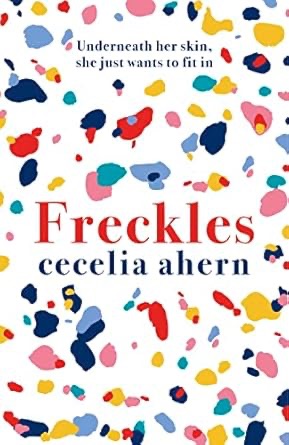
One wild night in the middle of December, local GP Enya is driving home from a house call in a dreadful storm and visibility is poor. She comes across a taxi parked in the middle of the road and a boy lying motionless on the wet ground. Oscar, the taxi driver, tells her he has just found the boy like this and he doesn’t know if he’s breathing. As the rain pours down Enya kneels in the road and performs CPR, desperately hoping she can save his life. After she’s questioned by the police and returns home she sits in the car for moment, soaked to the skin and thinks about her mother. Brigid, a rather eccentric and free-spirited woman, died at the age of 47 while swimming in the sea. For a while, as Enya battled to save the teenage boy’s life she felt the water running down her face and wondered if this was how her mother felt? Enya struggles in the aftermath of the incident and can’t seem to put it out of her mind. Is it because the boy was so like her son, of a similar age and wearing the same clothes? The storm propels her into huge life changes as she walks away from her loveless marriage and takes a job in the small town of Abbeydooley. There she lives in a remote spot, but with a rag tree in the garden that brings people from far and wide to tie their ribbons and fabric to it’s branches. Even though her days are filled with patients and she starts to make friends, that night in the rain just won’t leave her. As she looks out of the window at the sacred tree she is faced with the stories of all the people who’ve tied a memento there. Could it be time to face the truth of her own story as well as the memory of her mother?
We meet Enya in the middle of a crisis and the night of the storm is really the breaking point of that crisis. Enya is 46 and the day after her 47th birthday she will be older than her mother ever was. She has always had the sense that her mother was still going before her but from that day it’s only her. Alone. The grief hits her like a tsunami wave. There’s also the matter of her marriage and living situation. Xander made me feel cold. He comes across as clinical and controlling. The house they live in doesn’t feel like a home to Enya. Their home was the new build that she poured all her effort into, it’s where she had Ross and where she learned him to ride a bike in the garden. Now it’s their GP surgery and they’ve lived in Xander’s inherited family home ever since his parent’s death. There is nothing of Enya in the house and every ornament and painting is exactly where it was when Xander was a boy. If she moves the coat rack slightly or repositions an ornament it is soon quietly placed back where it should be. He even controls her relationship with Ross, having chosen his boarding school and at home telling her not to disturb him when all she wants is to spend time with her son. There’s an invisible barrier there and I could feel her sense of powerlessness. Enya has been struggling for some time: feeling overwhelmed at work; making small mistakes with forms and requests; desperately trying to find an escape, somewhere she can breathe. She has also struggled to let the injured boy go and has visited the hospital and made contact with the boy’s mum. When the offer comes to relocate to Abbeydooley she jumps at the chance.
Her introduction to Abbeydooley life isn’t a smooth one. The tree is baffling to her. It has filthy and torn rags all over it and completely obstructs her view from the window, taking all her light. She sees it as an eyesore and asks the maintenance person to come out and remove it. Margaret is a brilliant character and the women don’t get off to the best start. Margaret has assumed the tree is damaged and turns up the next morning with a chainsaw, but when she sees the tree is intact she refuses to touch it. Doesn’t Enya realise this is a rag tree, a sacred tree that’s watered by a spring from the site of the original abbey? People believe it’s a sacred site, that their prayers will be answered if they leave something to represent the person or problem they’re facing. It seems ridiculous to Enya, especially when a tour mini-bus arrives with a group of pensioners excited to see this symbol of pagan traditions. Alongside this observance of pagan religion, Enya also has to contend with the church. A visit from the parish priest makes her realise that traditionally the GP and priest have worked quite closely together, sharing information and forming a team to help parishioners and patients. Enya is reluctant, but is starting to learn that in these remote rural areas being a GP is a very different thing to the app led computerised system she and Xander used. Maybe she will have to adapt to a new way of working and living.
The whole book is a combination of a woman trying to find her way in the world and navigate emotional challenges, with a darker mystery woven in. The backdrop of Abbeydooley is almost like the light relief in the story, with it’s old-fashioned ways and humorous characters like Handyman Willy. I wondered whether it would be a redemption arc, where the town’s quirky ways would win Enya over and change her life. However it’s more complex than that. Abbeydooley becomes a space for Enya to breathe and think, but her demons have definitely followed her. We’re not sure whether she’s a narrator we can rely on. It’s not Xander’s opinion or the little slips at work that concerned me, it’s more about her rising paranoia and the small reveals that prove she isn’t telling us everything. When an agitated man turns up at the surgery to confront Enya we have no idea who he is or what bearing he might have the story. She sees another man through her window late at night, are they the same man or is someone making a late night visit to the tree? All this time Xander keeps her from her son so she’s reduced to leaving voice notes for him in the hope he’ll listen to them alone. Xander claims he’s protecting their son, but from what? I really enjoyed Margaret because she sees Enya at her worst and remains her friend. Margaret knows what it’s like to make a mistake and blow your own life apart. So she’s the best person for Enya to spend time with. What I found sad is that Enya has had support there all along. Although Xander has slowly controlled her, she has allowed her life to restrict her to the point where she felt her only choice was total escape. Yet she has her sister and brother-in-law, they are warm and welcomed her into their home when she first left. She could have made changes, been closer to her son and faced up to everything. Enya seems like a person who runs away: from grief, from her marriage, from the truth. I didn’t always understand her as a character, but her journey was fascinating. With my counsellor head on I wanted her to find a way to break free from all the restrictions she placed on herself. She would certainly make a fascinating client.
Meet the Author
Cecelia Ahern is an Irish novelist who wrote her debut novel PS, I LOVE YOU at the age of 21 years old, which was published in 2004. It became one of the biggest selling novels in recent years and was made into a hit film starring Hilary Swank, as was her second novel LOVE, ROSIE starring Lily Collins. She is published around the world in 40 countries, in over 30 languages and has sold over 25 million copies of her novels. She has published 19 novels, including a Young Adult series FLAWED and PERFECT, and the highly acclaimed collection of short stories ROAR. Her 20th novel INTO THE STORM will be published in October 2024.
She is the co-creator of TV comedy series SAMANTHA WHO? starring Christina Applegate and ROAR, the TV series, is streaming now on Apple TV+ starring Nicole Kidman.
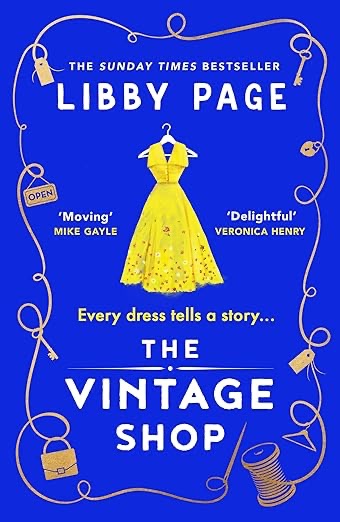
Libby Page novels always touch on interesting and difficult subjects, but through a very cosy lens – a balance that’s very hard to achieve. Her focus is women’s lives and here our main characters are Kate and Phoebe, both of whom are going through big life changes. Kate has recently given birth to daughter Rosie and moved from London to a small village, nearer to her family. Kate and her husband wanted Rosie to grow up with a garden and to spend time with her wider family. While her husband sets up his photography business, Kate has found the first few months of motherhood hard and hasn’t bonded with her daughter in the way she hoped. She’s also missing her job in journalism, her best friends and the buzz of her London life. Phoebe has lived in the village for a while, in a flat above some shops with her boyfriend Max. She is a mental health nurse with flame red hair and visits her patients on a motorbike. It’s all change when Max decides he’s leaving and takes all the furniture. Phoebe doesn’t give herself time to process the break-up and keeps pushing herself to visit patients. She doesn’t realise that right now, she also needs help. Could the village’s wild swimming group be what both women need to restore them back to themselves?
I was immediately attracted to the character of Phoebe, having worked in similar roles most of my life. I thought this was a slightly sugar coated version of mental health work, that touched some of the realities without changing the feel of the book. It did show that no two days are the same and the difficult juggling act of seeing regular patients when another has a crisis and needs to seen immediately. Phoebe is very conscientious and usually ends up working longer hours and eating into her own downtime to ensure everyone is seen. I could see Phoebe was heading for burn out, always putting her own needs last and missing the people and activities that restore her soul. Ive never had a baby, but I have seen what a seismic change it is from my friend’s experiences. Their world’s shrink because they’re so overwhelmed by this small person who is so dependent on them. I didn’t always understand why friends hadn’t called or couldn’t come to events, but having stepdaughters has made me realise how all consuming parenthood is. I’ve definitely seen less of friends and sacrificed my own needs for theirs, and babies need so much more. What I noticed about both women was how difficult it was for them to admit they’re struggling. Phoebe is conditioned by her job to always put someone else first. Kate has been influenced by the Instagram yummy mummies and the perfection of her sister’s life. She feels inadequate next to them, not realising that social media is edited to show the best photos and most interesting experiences. It’s a case of comparison is the thief of joy. Could both these women change their lives by finding a moment for themselves by the river?
The story is set in an idyllic little village with cozy details like a coffee and cake van down by the river, an Italian deli under Phoebe’s flat and picturesque stone cottages. It’s clearly affluent but as Phoebe’s clients show, sorrow and illness can come into any home. It’s these cute and cozy details that make the book feel like a warm hug. I loved the camaraderie of the wild swimming group and the way they all pulled together when their swimming spot is threatened due to contaminated water. There’s a touch of romance too, in the rather gorgeous shape of Italian Luca from the deli. I enjoyed the humour too, especially the bridal boutique incident – the most disturbing boutique incident since Bridesmaids. Above everything it’s the female friendship that absolutely sings in this novel, confirming something I know to be true; it’s the women in our lives that hold us up when we fall, celebrate when we’re happy and stick with us through the seismic changes women experience in life.
Meet the Author
Libby Page is the Sunday Times bestselling author of The Lido and four other warm-hearted novels. She lives in Somerset, England with her family. Before becoming an author she worked in journalism and marketing. When not writing she can be found reading, and swimming outdoors.