Posted in Netgalley

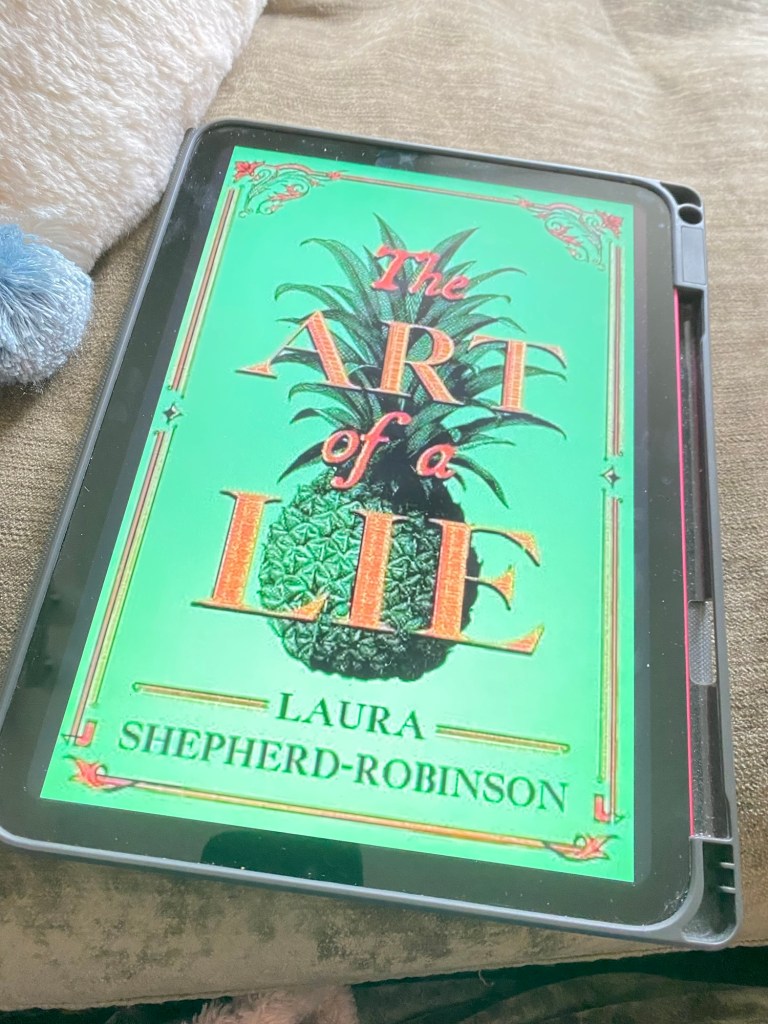
The Art of a Lie by Laura Shepherd-Robinson

I loved this book. It drew me in immediately and two days after I finished it I can’t let go of it. I can’t start another book. It’s left me bereft. Our setting is 18th Century London and George II is on the throne. On St James’s Street is a confectioner’s shop called the Punchbowl and Pineapple and running it is the newly widowed Hannah Cole. This was her grandfather’s shop and has been handed down the family. Her father realised he needed an apprentice to pass on his skills and to work with Hannah, so he employed a young lad called Jonas Cole. Jonas and Hannah grew close and fell in love, with Hannah losing her father only a few days after they were married. So until a couple of days ago Hannah and Jonas ran the shop, with Hannah becoming quite an accomplished businesswoman. Jonas could be hard and ruthless in his business dealings and of recent years they had grown apart, with Jonas often spending evenings away from home. Then two nights ago he did not return and was found further down the Thames minus his money, his watch and several teeth. Hannah has had to borrow, especially to re-open after his death, something that caused a minor scandal so soon. She can’t afford to be closed and is waiting on their savings being released from the bank so she may pay her suppliers. Then Henry Fielding pays a call. In his role as magistrate rather than novelist, he explains that all money will remain frozen while he investigates Jonas’s death. He isn’t sure this is a simple robbery and wonders whether he should be looking into his business or personal dealings. He informs Hannah that Jonas had money in the bank, more than the £200 she knew about. Fielding explains he wants to be sure that the money was obtained legally and above board. Luckily, at Jonas’s funeral Hannah meets William Devereux. An acquaintance of Jonas, he has never met Hannah before but is very sympathetic to her plight. He promises to visit her shop and discuss how he may help her with Fielding and Jonas’s life outside the home – was he gambling, womanising or getting into shady business dealings? He also mentions a delicacy his Italian grandmother used to make called iced cream. It has all the ingredients of a custard, but flavoured with fruit or chocolate and is then frozen and eaten as a desert. Hannah resolves to let William help her and to master the art of ice cream, but are either of them being fully honest with each other about who they are and what their purpose is? 
As with all Laura’s books we become fully immersed in the setting straight away and it’s the little details that stand out and make us believe in this world. I loved the descriptions of Hannah’s various confections and the way she can tell what people will choose, not to mention what it says about them. 

“He paused to take a bite of his Piccadilly Puff, washing it down with a generous gulp of green walnut wine. It is a favourite choice of the sybarite: the silken sweetness of the custard, the crunching layers of puff paste, the dusky depths of the spices mingling with the sourness of lemon. I might have guessed that Mr Fielding was a man who struggled to keep his appetites in check.”

I believed in Hannah as a businesswoman and confectioner very quickly thanks to these details and as she narrates she tells us her hopes and dreams, including a joint dream of her and Jonas, to buy the empty premises next door and extend the shop so they could have more tables and chairs, especially when her iced cream starts to become popular. I think we always imagine that people from the 18th and 19th Century are very genteel and well behaved, this comes of too many Austen adaptations and strange hybrid historical settings like Bridgerton. While lovely to watch they give us little idea of what these centuries were like for those of the lower classes in society and women who worked. Real life 18th Century London was rather more colourful than Pride and Prejudice, as depicted in some of Fielding’s novels like Tom Jones and Daniel Defoe’s Moll Flanders. The author gives us the dirt and the bawdy side of London life when Hannah takes a trip to the theatre. 

“The playhouse crowd gave a wide berth to the nest of alleys around the back of the Theatre Royal, home to brothels and bath houses, gin shops and squalid taverns. The residents started drinking over breakfast and then kept going. Groups of ragged men stood about on corners. One lot were fighting, skidding in vomit. Half-naked women leaned from the upper windows shouting encouragement.” 

The King openly has a mistress and there are brothels and gaming rooms everywhere, operating just on the edge of the law. This is a book with every vice on display, even when if it is just cake. As Hannah points out when she’s evaluating Fielding, every man has his personal struggle. She is incredibly astute when it comes to assessing character and has Fielding’s own psychological make-up worked out through reading his novels. William Devereux appears to be equally astute, visiting Fielding’s rooms he notes the perfectly bound volumes of his own books and the wine glasses etched with the crest of Eton College, it’s students described beautifully as the “school of the most selfsatisfied fucksters in the kingdom.” I thought there were some brilliant choices in terms of the book’s structure and the way the story passed from Hannah to William was brilliant. Often when reading from NetGalley there are little mistakes or quirks to the format that can ruin the reading of the book, but here reading from NetGalley was a benefit because with no gaps or idea how far I was into the book, when the shocks came they were huge. The author has cleverly used aspects of modern thriller writing and applied them to her story, so there are twists and turns aplenty. She uses sudden unexpected confessions or statements that mean we know something no one else does. Other times a character suddenly changed their demeanour or had a different inner compared to their outer voice that made me go back a few pages in confusion. Then just as I become comfortable with my narrator, they switched back again.

This is definitely a cat and mouse game between three characters, a battle of wits where you’re never quite sure who is on the right side. Fielding appears to be pursuing this case to make his point to parliament that a national police force is needed to deal with crimes like murder. He also has a good point, Jonas’s watch had belonged to Hannah’s father and had a Russian Imperial Eagle on the case. If that had been stolen, every pawn shop and jewellers in London would have remembered someone trying to sell it. So where is it? Has the thief taken it to be sold elsewhere or is it still with a murderer rather closer to home? Devereaux seems like a gentleman, he introduces Hannah to friends who seem wealthy and of good status and they all vouch for his honesty and charity. He even seems to be thinking of making a young boy belonging to a distant relative his ward, in order to give him a better life. Hannah had a hard life at Jonas’s hands, especially when she found she was unable to have children something they both wanted. I loved the author’s detail of them both saving some urine to pour on a seedling and if the seedling grew they were believed to be fertile. Hannah’s didn’t grow and she felt her husband hardened his heart to her at that point and perhaps looked elsewhere. She has her head turned by the handsome gentleman who wants to find out where Jonas was going at night and intervening with Fielding on her behalf. He wants to help her keep her shop too and his iced cream idea is proving a huge hit, with even an impromptu visit from the King’s mistress who reassures Hannah that a hint of scandal is not necessarily a bad thing: “virtue matters rather less once you are rich.” Devereaux has some ideas in that area, that maybe rather than leave her money in the bank she might like to meet some of the people who’ve invested in a company of his called Arcadia, based in a place called Bentoo. Is he genuine or not? Does he have feelings for her, because Hannah’s starting to have stirring feelings she hasn’t had for years. Surely though Devereaux’s  interest wouldn’t lie in the direction of an older widow? 
I was utterly entranced in this novel from the first page to the last, especially as the tensions mounted in the final third when Fielding makes his move. However, just when you think you’ve worked everything out another twist will come along and surprise you. I was rooting for Hannah to come out on top, but was very scared for her in parts. For both her heart and her liberty! I wanted her to live out her days as the grand proprietress of the Punchbowl and Pineapple. I very much feared that Fielding had the desire to see her face the hangman’s noose. While I didn’t trust Devereaux at first I did wonder if he had feelings for Hannah or whether he was some sort of confidence trickster. There is certainly sexual chemistry by the bucketload. I was working out in my head who might play Hannah in a film or TV adaptation because it would be a brilliant period thriller with lots of raunchy scenes perfect for Netflix. I was honestly hypnotised by this story and Laura’s talent. Bravo on such a fantastic story that I’m still thinking about four days after finishing it. Go beg, steal or borrow a copy of this one, it’s a cracker. 

Out now from Mantle Books

Meet the Author

Laura Shepherd-Robinson is the award-winning, Sunday Times and USA Today bestselling author of three historical novels. Her books have been featured on BBC 2’s Between the Covers and Radio 4’s Front Row and Open Book. Her fourth novel, The Art of a Lie, will be published in Summer 2025. She lives in London with her husband, Adrian.

Posted in Personal Purchase

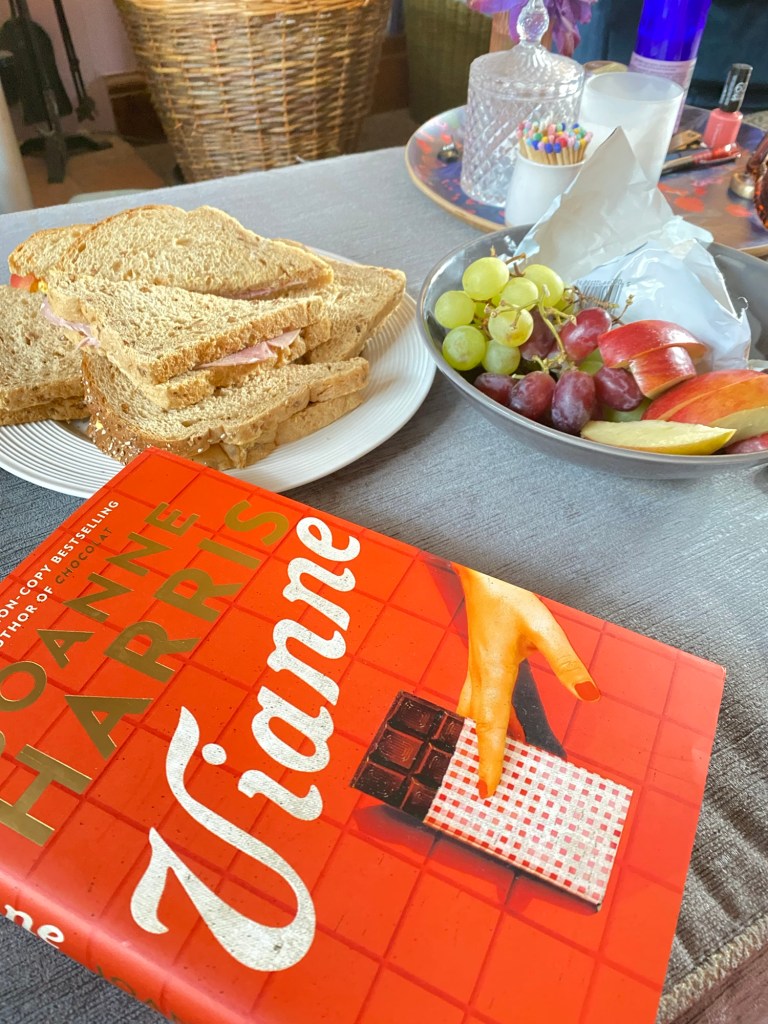
Vianne by Joanne Harris

As Vianne scatters her mother’s ashes in New York, she knows the wind has changed and it’s time to move on. She will return to France, solo except for her ‘little stranger’ who is no bigger than a cocoa bean but very present in her thoughts. Drawn to the sea she blows into Marseille and to a tiny bistrot where owner Louis is stuck, struggling with grief for decades after losing his wife Margot. She charms herself into a waitressing job for bed and board, but with his blessing she starts to cook for his regulars using the recipe book Margot left behind. Louis has one stipulation, she mustn’t change the recipe at all. She revives the herb garden and starts to make friends, including Guy who is working towards opening a chocolate shop. This is going to be the place to have her baby, but then she must move on. She can see her child at about six years old, paddling by some riverboats tethered nearby, but she can also see the man her mother feared. The man in black. Vianne has inherited a peculiar kind of magic that urges her to fix the lives of those around her and give them what their heart truly desires. This is fine when it’s discerning their favourite chocolate, but can cause problems when it becomes meddling. Her mother warned her that she shouldn’t settle too long in one place and Vianne knows she has the strength to leave whenever she feels it’s right, but is thinking about those around her? 

What a joy it is to be back in Vianne’s world. It’s like being back with an old friend and in a couple of sentences we’d picked up where we left off. This is a younger Vianne, aware of her burgeoning abilities, but inexperienced in the power she holds and it’s effects on others. Part of that ability is a natural charm and willingness to work hard. She takes time to win people over. She’s happy to take on a challenge whether it’s the recipe book, the garden or the chocolate shop. She merely softens the edges of all this with a ‘pretty’ here and there or tuning into someone’s colours. She has a natural ability to make the best of things, whether it’s adding a vase of flowers to a room or a pinch of chocolate spice here and there. It doesn’t do the work, it just deepens the flavours or enhances what’s there. There’s that little bit too much optimism, not fully reading a situation before wading in, that comes with youth and inexperience. She’s streetwise, used to watching her back. She knows how to protect herself and when to run, but lacks emotional intelligence. She’s unaware that breaking down someone’s defences can leave them vulnerable or even broken. Vianne doesn’t have a malicious bone in her body though, just youthful exuberance and emotional immaturity. 

As always there are wonderfully quirky characters with lots of secrets to uncover and others who become real through memory, artefacts or reviving something they loved and giving it life. Louis has a grumpy exterior, not as grumpy as his friend Emile, but definitely a tough shell and a rigid routine. Every day he cooks for his regulars never deviating from the recipes or her kitchen equipment. Vianne has to use specific pans for certain dishes and ancient utensils that could do with an update, but she doesn’t complain. On Sundays he visits the cemetery, but instead of going to the soulless high rise mausoleum where Margot is laid to rest, he visits her favourite poet and leaves a red rose. Vianne is touched by his adherence to this routine, but it’s only when she is in touch with Margot’s spirit that she can see the full, complicated picture. As she uses the kitchen she feels Margot’s sadness and anxiety. Her need for a baby comes through strongly. Was this the unhappiness at the centre of their marriage? Emile is very difficult to get a handle on, he doesn’t respond to Vianne’s charm or her chocolates. His concern is that she will take advantage of Louis, but the more she seems to settle the more hostile he gets. I enjoyed Guy and the chocolate shop, but it’s another occasion where she doesn’t get the bigger picture. Guy is quite similar to Vianne in temperament, drive and enthusiasm. He seems utterly different in character to his friend Mahmet. Vianne notices Mahmet’s more pessimistic nature and concerns about money. She puts it down to the friend’s different backgrounds and experience, but I could see that Mahmet was a realist and his concerns might be valid. It becomes clear that Guy is a dreamer and as a child of rich parents has never faced the consequences of disaster. He also has a tendency to bail out when things get difficult. 

Motherhood is the major theme of the book from Vianne’s pregnancy to the sadness of Margot and the relationship Vianne had with her own mother. There were memories of Vianne’s mother throughout and she has to battle with her mother’s voice constantly. She has internalised her mother’s voice to such a degree that it’s become one of her own inner voices. She fights against it, letting herself feel that natural urge to belong especially when Louis starts to get ready for the baby’s arrival. Part of her wants to stay, but her mother’s adage about becoming too comfortable is insistent. Is there something they were always running from? She’s angry with her mum in some ways, thinking about what she’s missed out on – a home, a wider family, school and friends her own age. It may be there was a good reason for their anonymity but her mum was all she knew making it all the more devastating when she died and Vianne was left utterly alone. Vianne’s own glimpses of motherhood are in the future, when her baby is a small child. She’s absolutely sure it’s a girl and the name Anouk comes to her. It seems that although her instinct and inner voice suggest they keep moving, she doesn’t want Anouk to have the upbringing she did. She wants Anouk to have a sense of belonging, a school and local friends, which gave me a lovely flash forward to Chocolat and Anouk running wild through the village with a pack of friends behind her. She remembers an instance when her mother insists they leave behind Vianne’s toy rabbit to teach her not to get attached to things. Is it Vianne’s memory of this incident and longing for that toy rabbit that conjures up her daughter’s later imaginary friend, the rabbi Pantoufle? I loved these little links to the future. 

The details and images they conjure up are always the best part of this series for me, because they take me on a visual journey. I was fascinated to read in her Amazon bio that she has synaesthesia, because I do with certain colours and I can feel that in her writing. The author weaves her magic in the detailed recipes of Margot’s book, the incredible chocolates that she and Guy create and the decorative details of their display window with it’s origami animals and chocolate babies. The most beautiful part is how Vianne brings people together. Yes, it’s partly magic but it’s also her kindness and lack of judgement. The noodle shop next door to the chocolate shop leaves rubbish and oil drums in the back alley which are an eyesore. When they’re reported the owner blames Mahmet, possibly due to his seemingly unfriendly demeanour. Vianne spends weeks taking them chocolates and chatting, slowly gaining their trust until they’re helping out for opening day. She even manages to get Louis and the fierce Emile to visit the shop, even though it’s in a part of the city Emile swears neither of them will visit. It’s when we see what Vianne can accomplish on days like this that we see her at her best – thinking forward to her Easter display window in her own shop or the meals cooked for friends under starlit skies. Vianne is a glowing lantern or a warm fire, she draws people to her light and to bask in her warmth. This is also why readers who love the Chocolat series return again and again. We simply want to be with Vianne and that’s definitely a form of literary magic. 

Out Now From ORION

Meet the Author

Joanne Harris (OBE, FRSL) is the internationally renowned and award-winning author of over twenty novels, plus novellas, cookbooks, scripts, short stories, libretti, lyrics, articles, and a self-help book for writers, TEN THINGS ABOUT WRITING. In 2000, her 1999 novel CHOCOLAT was adapted to the screen, starring Juliette Binoche and Johnny Depp. She holds honorary doctorates from the Universities of Sheffield and Huddersfield, is an honorary Fellow of St Catharine’s College, Cambridge, and a Fellow of the Royal Society of Literature.

Her hobbies are listed in Who’s Who as ‘mooching, lounging, strutting, strumming, priest-baiting and quiet subversion of the system’. She is active on social media, where she writes stories and gives writing tips as @joannechocolat; she posts writing seminars on YouTube; she performs in a live music and storytelling show with the #Storytime Band; and she works from a shed in her garden at her home in Yorkshire.

She also has a form of synaesthesia which enables her to smell colours. Red, she says, smells of chocolate.

Photo ©Frogspawn

Posted in Random Things Tours

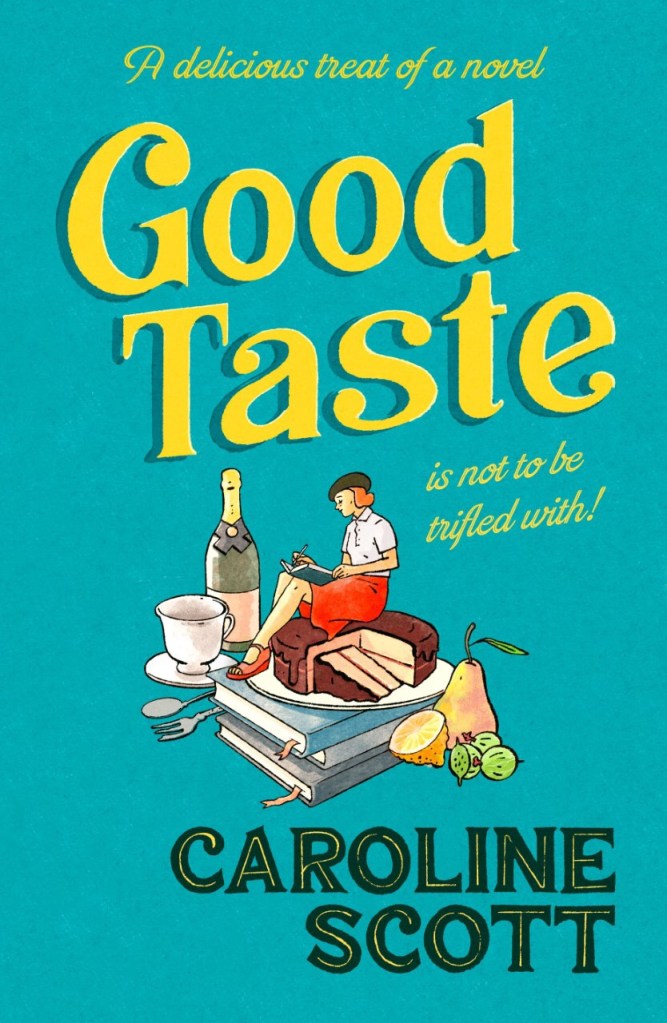
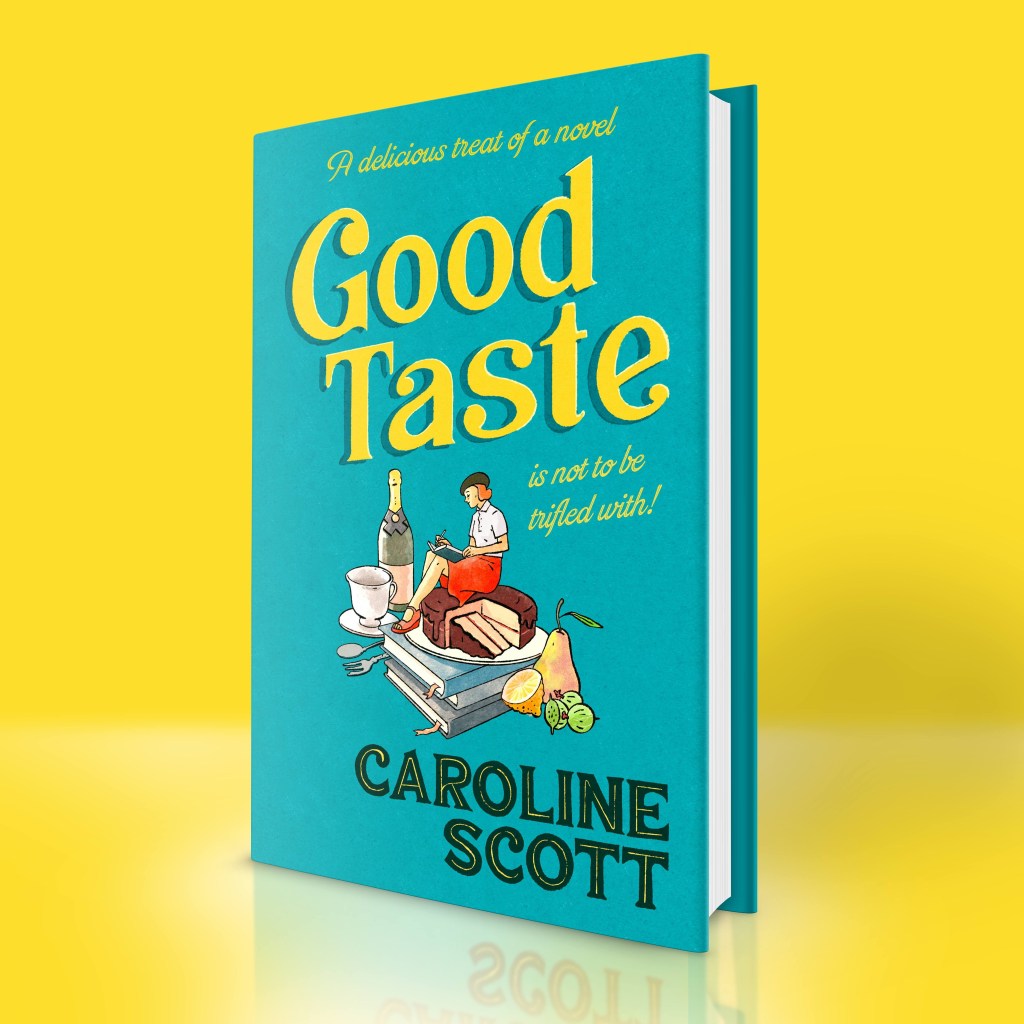
Good Taste by Caroline Scott.

In-between a couple of intense crime reads I was so ready for the comforting nostalgia of Caroline Scott’s new novel. Don’t let my description fool you though. Caroline has a wonderful way of keeping her writing light and soft, but the merest peek under that surface reveals themes that delve so much deeper into society and the historical period of our heroine Stella. Set in the fascinating time period between the two World Wars, England is struggling through a depression and Stella has had something of a life change. It’s 1932 and Stella is facing the first Christmas without her mother. With memories of her mother’s frailty last Christmas and the fear of that obvious empty chair, Stella has moved back from London to a small cottage in the West Riding of Yorkshire in order to be near her father. Money is tight, since her first book The Marvellous Mrs Raffald hasn’t done as well as she’d hoped. Celandine Cottage is rather shabby and Stella is surviving on the money she’s paid by a women’s magazine for writing a weekly article with five new recipes. When she’s summoned to London by her publisher, she’s half expecting her novel to be pulped and although she wants to write a biography of 18th Century cookery writer Hannah Glasse, she’s rather gloomy about her prospects. She’s shocked when he tasks her with a new project – a history of English food. He wants a book that will inspire English housewives and remind English men of a nostalgic past. Although as Stella starts to think about her research, she realises that a lot of food people consider to be quintessentially English, is actually from elsewhere. So she sends out a letter:

Sir,

Would any housewife in your region be kind enough to share a traditional recipe with which she may be acquainted? Is there a favourite pie made by your grandmother? A cake that you fondly recall from childhood? A dish that’s particular to your village? Perhaps a great-aunt left you a hand-written book of her recipes?

This knowledge and these flavours have been passed down to us through the generations. But an urgent effort is required to collect and catalogue these dishes. If you are able to assist with this task, you would be doing a great service.

Please correspond with the address below. I will gratefully acknowledge all contributions,

Stella Douglas

However, as she sets off on her planned route to meet food makers and the nation’s housewives her car breaks down. A dashing young man called Freddie comes to her rescue and her plans move in a different direction, perhaps toward something more imaginative.

I enjoyed Stella, mainly because she is very much the modern woman, living alone and paying her own way at a time when women’s lives changed enormously. During WW1 women were encouraged to work, because they were needed to fulfil job roles that men had left behind as they went to fight in the trenches. Women became more used to living alone, making their own way and working outside of the home so when the war ended and men returned, there was tension. Some men wanted their wives back in the home so they could be breadwinners of their family. However, so many men were lost and injured, so the changes did stand and the following generations of women were keen to shape their own destiny. Stella was enormously likeable and intelligent, very measured in her approach to the task and able to see immediately that it was much more complicated than expected. As she listed those foods seen as English she could see the influence of foreign imports in them, as well as in her spice rack. Even the humble potato conjured up images of the Crusader, Tudor explorers and Dutch horticulturist’s sailing off to the Far East for specimen plants. She spots the massive gap between the perception of Englishness and the reality. In her imagination, cricket teas and church spires clash with a colourful collection of influences, speaking more than a dozen languages. Which history does she want to write and which is her publisher expecting?

I was rooting for Stella from the start, especially when her plans started to go awry, and I found her reminiscences of her mother so touching. Caroline taps into that nostalgic aspect of food and the way foods from our childhood hold a particular place in our hearts, with just a whiff or taste bringing up strong emotions of where we were or who we were with. One sniff of a newly opened tin of Quality Street sends me rocketing back to the late 1970s and my Aunty Joan who would buy us one each year along with a goodie bag of colouring pens with colouring and puzzle books. Bread toasted under a gas grill with salted butter takes me to my grandma’s kitchen as she brushed my hair and put a bow in it. The beautifully hand-written notebooks that belonged to her mother are like a time machine for Stella, all the more emotive now her mother is gone after a battle with cancer. They cause tears to well up, but also allow Stella to smile at her precious memories of surreptitiously sharing the first slice of a roasted lamb joint. This is the first time she has been able to think of her mother with joy as well as sadness.

‘As Stella read, the shadows in the room lightened, the gramophone played again distantly and order seemed to return to the world

Another aspect of Caroline’s writing I love is the extensive research that lies underneath a relatively gentle tale. I felt immediately immersed in the 1930’s, with even little asides about fashion like Stella’s felt cloche with a frivolous ostrich feather and her Liberty & Co coat, placing her firmly in time. As Stella reminisces about her time in Paris with her friend Michael, we’re there as she wanders through cellar clubs and tastes cocktails in Montparnasse, it sounds like there’s a hint of romance in her memory of dancing barefoot with him on a warm pavement. Something about their relationship is alluring and it’s as if she’s only just started to really see her friend and his incredibly blue eyes. Her surprise when she finds out he’s in a new relationship is obvious and this isn’t just any woman he’s involved with, it’s Cynthia Palmer, a beautiful model and artist. Where will Stella fit in?

The historical detail of English food is fascinating and it was interesting to hear ideas from the early 20th Century that we still talk about today in terms of sustainability and frugality. When it comes to meat there’s ‘nose to tail’ eating, making sure every part of the animal is used – they clearly had a better stomach for offal than we do today. There’s the concept of eating locally and growing your own food. There were also criticisms that are obviously age old, such as feeling young people have forgotten how to cook from scratch and are becoming dependent on gadgets and what we now call time saving hacks. She seems to sense another trend that I thought was current; the concern that we almost fetishise food with our devotion to baking and other cooking shows, while at home we’re cooking from scratch less and less. When it comes to what and how we eat, and even what we call our mealtimes, there are definitely divides between town and country, between the wealthy and the poor, and variations between North and South. I loved the eccentricity of some of the characters she meets and neighbour Dilys was a favourite of mine. Having a mum who flirted with vegetarianism and haunted the health food shop, Dilys’s devotion to pulses and lentils stirred up a childhood food memory of my own – a terrible shepherd’s pie with no shepherds just acres of lentils, called Red Dragon Pie. The only red thing about it were the acres of ketchup we used to give it some flavour. I loved her bohemian air and she seemed startlingly modern compared to Stella who’s a little more ‘proper’. The roguish Freddie was also rather fun and very charming of course. Caroline has a wonderful way of balancing all this. She tantalises us with period detail and charming characters, throws in some humour, while also showing us the grittier underbelly of life in a depression and those moments of grief for her mother that Stella experiences, which are so beautifully rendered. Caroline makes this look incredibly easy when in reality it’s such a complex juggling act, one that she pulls off beautifully.

Meet The Author

Caroline completed a PhD in History at the University of Durham. She developed a particular interest in the impact of the First World War on thelandscape of Belgium and France, and in the experience of women during the conflict – fascinations that she was able to pursue while she spent several years working as a researcher for a Belgian company. Caroline is originally from Lancashire, but now lives in SouthWest France. Her book The Photographer of the Lost was a BBC Book Club pick.