Posted in Random Things Tours

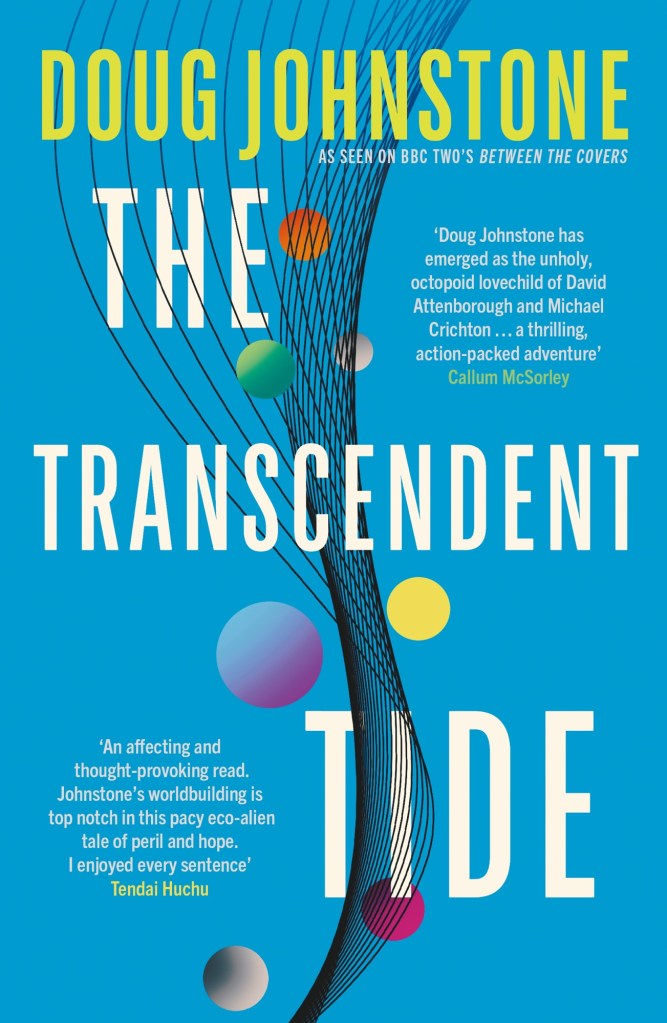
The Transcendent Tide by Doug Johnstone 

The Enceladons are back! We left them on the up, having destroyed the American facility that captured and tortured them with a tsunami wave. Lennox, Heather as well as Ava and her daughter Chloe were recovering from the torture they suffered and had to make a big decision, to leave for the Arctic as part of the Enceladon community or stay on land. Heather chose to leave with them. Now the remaining friends have established new lives. Lennox and his girlfriend Vonnie are studying together at university. Ava and Chloe are settled with Ava’s sister, but they all miss the group especially Heather, Sandy and Xander. It’s hard not to miss the extraordinary experiences they had, such as Lennox becoming part of Xander and flying off into space. It is Ava who brings everyone back together after Chloe appears to suffer a stroke, only to return back to normal, just as the friends did after first meeting Sandy. A follow-up MRI shows a brain tumour and Ava has a difficult decision to make: does she stay put and follow the medical route or does she try to find the Enceladons? She wonders whether the torture Chloe endured or her communications with the creatures could have caused this illness? She also remembers how Sandy cured Heather’s cancer and decides to take her daughter to Greenland. At the same time, Lennox and Vonnie are approached by an Norwegian tech billionaire who wants to meet the enceladons. Even the logo of his new company is a moon being held in giant tentacles. The couple are very unsure and inside I was screaming at them not to work with him, but when Ava contacts them about Chloe they both agree to work with him under certain conditions. Will those conditions be met and is this man as trustworthy as he seems? 

Niviaaq is our first new character, an Inuit woman who has lived in her small community on Greenland her whole life. The community still live like their ancestors with the principals of working with nature, not against it and they are feeling the effects of climate change. Glaciers are melting and species like polar bears are unable to hunt for food. Out on her boat, Niviaaq encounters another vessel, upturned and badly damaged. She also finds a man floating upside down in the water, hypothermic and barely alive. His coat has a symbol of a moon and octopus with the word ‘Sedna’, the name of an Inuit sea monster. She drags the man into her boat and takes him for medical help. The Inuit people have several legends of strange monsters  but lately the Northern Lights have been very active and people have seen strange glowing objects on the ice. Are these signals that something is going to happen? I loved this character throughout the book, mainly because she is so wholly and unselfconsciously her self. She is a strong woman, mentally and physically. She can take care of herself, taught from a young age how to use a rifle, to sail boats and fish on the ice floes. She doesn’t show off about this strength, it is simply part of her that can be used whenever it’s needed. She is used to long spells of time alone so she comes across as self-contained and very grounded. She is calm and gentle, not chatty but only speaking when necessary. I loved that she and Ava had an instant affinity and I could see how cozy and safe Ava would feel when with her, something she needs after her experiences with her violent husband. 

As always with Doug there are politics behind the actual story and setting it in Greenland, when it has been a constant topic in the media since Donald Trump came back into power had to be deliberate. It brought back to me how brash and ignorant the US Vice-President JD Vance appeared when he visited earlier this year. His first comment, that nobody had warned him how cold it was, just made me groan with embarrasment. It was no surprise that he was only welcome at the US Airforce Base. Their blatant and greedy desire for Greenland and parts of the Ukraine is all about mineral mining, taking what they need and further damaging the fragile ecosystem for its human and animal inhabitants. There are only two reasons a multi-billion dollar organisation would build a base there, either to exploit Greenland or the Enceladons. Probably both. Even though the business owner Karl Jensen initially impresses Lennox with his reaction to meeting the enceladons, while I was still very wary. He calls Sandy and Xander ‘they’ without prompting, because they don’t see themselves as individuals but as a collective. I loved this because it shows how easy it is to shift your perception and take care with other people’s feelings – it reminded me of the series of Taskmaster where I pointed out to my husband that Greg Davies had been using ‘they’ as Mae Martin’s pronoun for the whole series and he hadn’t even noticed. 

He seems to have a deep and profound experience on their first dive and when Sandy connects with him telepathically he suddenly understands everything that is wrong with the world. It’s the capitalism, the greed and simply exploiting every resource the earth has to give, without once considering whether it is ours to take. We don’t treat our fellow creatures as equals but as something we have dominion over and the right to kill for resources or for pleasure. We kill for yet more, when we already have so much. It’s an absolute tour de force of a speech and for a moment life is hopeful. However, as is pointed out by Vonnie, no one becomes a billionaire through philanthropy. Human nature intervenes suddenly and with finality, because it’s just so much easier to carry on as we are instead of making those personal and political changes. This is where Niviaaq is a brilliant contrast to mankind in general. When she and Ava have to take shelter in the hunting hut – one of several up and down the glacier, always ready for anyone to use – it made me realise how much the Inuit people have in common with the Enceladons. As she’s offered whale blubber to eat, Ava refuses it with a shudder. Niviaaq explains that the whale is suited to the environment they both live in and if they do hunt a whale, every single part of it is used. Eating two tiny chunks of it will give them the calories they need to survive the cold and the exertions of the journey ahead. To kill it, then refuse to use it for the purpose of staying alive is an insult. It made me realise that if people had stayed in their tribes and clans and used their original principles in this way – just like the Aboriginal and Māori people, and the Native Americans – we would have always lived in harmony with the earth. It’s possible certain animals wouldn’t be extinct and we might not have faced climate change. Their creation myths are so different too, not giving us dominion over the animals but being a harmonious whole. Or is human nature always determined to chase money and progress until we wipe ourselves out? 

I won’t divulge any more of the plot because that would ruin it for you. I get so excited about reading Doug’s books because reading them is a little like connecting with one of Sandy’s tentacles for a second. Ideas and light bulb moments appear in my brain and I have to write down all these weird notes and things to look up before I can review. Then I rabbit on about them to anyone who will listen for months to come! You can read these books on a surface level and they are still brilliant. The characters are full of heart and love for each other and their Enceladon friends. It’s also full of heart racing action sequences that would be amazing on screen – especially when all of the animals come along. You become so absorbed that you forget it’s all a bit weird, then you read a sentence like ‘Chloe was playing ball inside Sandy’ and it blows your mind. However, if you do delve under the surface it’s a profound comment on our times, our politics and capitalist lifestyles. Read the whole series and you’ll see how the author balances profundity, action, romance, sci-fi and humour like a magician. You’ll finish them, as I did, with a tear in your eye for these extraordinary creatures and a world with so much more variety and beauty than we’ll ever deserve. The Enceladons wake people up – yes I’m using that word ‘woke’ often thrown about as an insult these days, but why wouldn’t you want to shake an alien octopus’s tentacle and become enlightened, compassionate, open and perhaps your very best self? 

Out Now from Orenda Books

Meet the Author

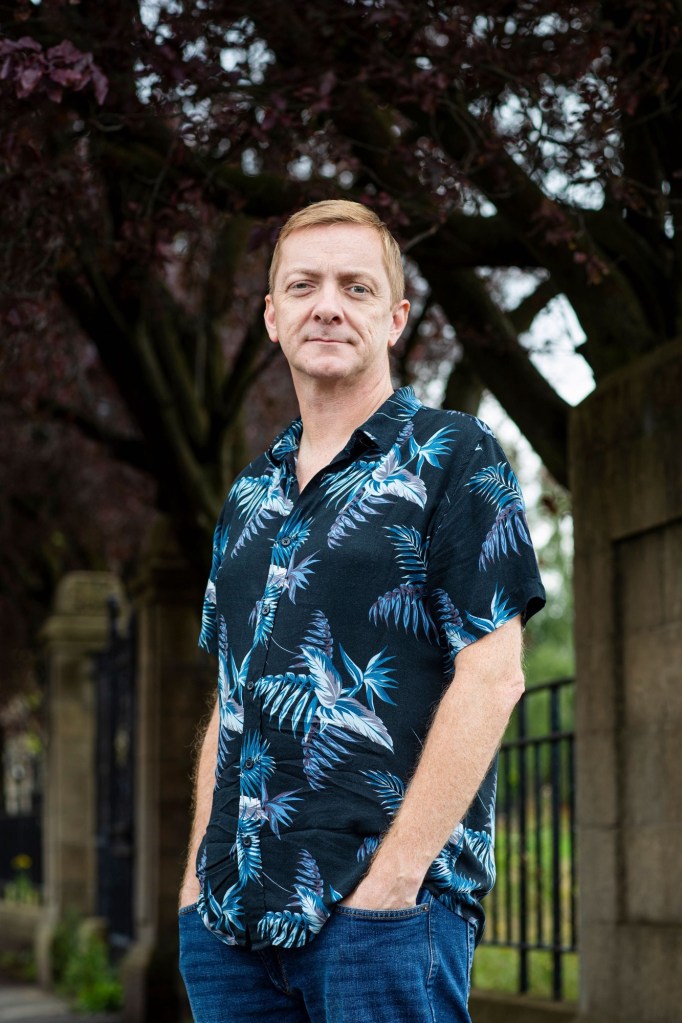
Doug Johnstone is the author of 18 previous novels, most recently Living Is a Problem (2024) and The Collapsing Wave (2024). The Big Chill (2020) was longlisted for Theakston Crime Novel of the Year, and Black Hearts was shortlisted for the same award. Three of his books, A Dark Matter (2020), Breakers (2019) and The Jump (2015), have been shortlisted for the McIlvanney Prize for Scottish Crime Novel of the Year.

He’s taught creative writing and been writer in residence at various institutions over the last decade, and has been an arts journalist for over twenty years. Doug is a songwriter and musician with six albums and three EPs released, and he plays drums for the Fun Lovin’ Crime Writers. He’s also co-founder of the Scotland Writers Football Club, and has a PhD in nuclear physics. He lives in Edinburgh.

Posted in Sunday Spotlight

Sunday Spotlight On The Moomins

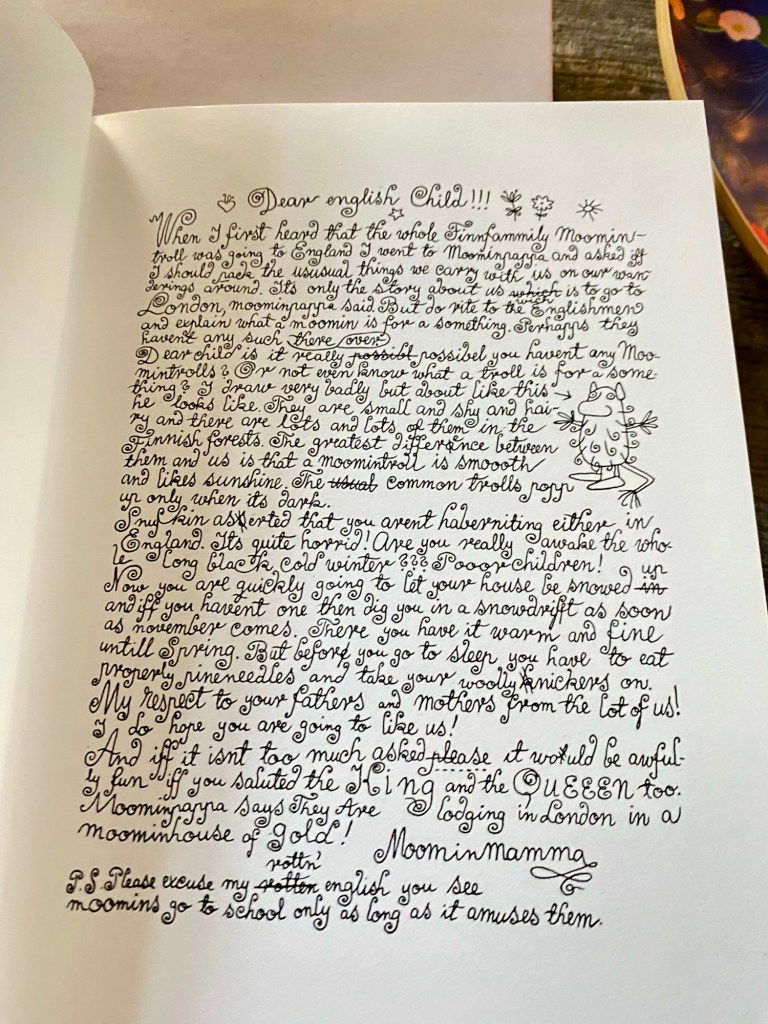
I was born in Scunthorpe in the the 1970s and our family had a fairly set weekend tradition. On Saturdays mum and dad would take us into town on Saturday mornings where we would visit the market and mum would take us to Scunthorpe Library. This was a huge brick building in a square full of pigeons and had a entrance that was a glass pyramid giving it a strange futuristic look. I was left in the children’s library to make my choices. I was always a voracious reader and started reading more grown-up novels when I was ten, my first being Jane Eyre. I loved it when all my classmates were reading the scheme in class and I was allowed to sit in the library alone and read by choice. I can still smell that library when I think about it. But it was in the Scunthorpe library that I first met the Moomins and I’ve been hooked ever since. These plump white hippo- like creatures were so cute and I loved the range of characters Tove Jansson had created. From the tiny light-up hattifatteners that brushed against your legs and felt like nettle stings to the determined and bitey Little My, I’d never read anything like it and I’m sure part of me thought there might be an unknown corner of Finland where they actually lived. Moomin House was a blue tower by a lake surrounded by snow and ice. I’ve recently found out that Finland doesn’t just have the Moominland theme park, there is a genuine Moomin House where you can spend your holiday. It’s the perfect combination for me and my other half, I can immerse myself in reading and he can fish the lake.

Despite having an actual theme park, the Moomin’s world created by Tove Jansson is not a sanitised pink Disney experience where everything is beautiful and everyone is safe. Yes, there are floating clouds you can ride, fantastical creatures full of character and the safe space of Moomin House, always welcoming and happy to see you. Yet, the family have ups and downs from comets, floods and an evil hobgoblin. In Comet in Moominland Moomintroll and his friend Snufkin set off on a quest to find out about a comet hurtling towards earth. In Moomin Summer Madness the Moomin are flooded out of their home and have to go on a trek to find another. In the final book Moominvalley in November, the other characters are waiting for the Moomins to arrive, but there’s no sign of them. As we wait with the others there is a palpable sense of absence and potentially loss. Our beloved friends are often in peril, suffering anxiety or are openly depressed and despairing of life. I realised when I was older just how carefully the books address worries that children and adults both have. Sometimes, it’s a worry or issue that is affecting the real world at the time Tove Jansson was writing. It’s easy to see the comet in the first book as an allegory of real world concerns about nuclear warfare. When read now we can see issues about climate change and the experience of being a refugee in Moominsummer Madness. The Snork Maiden is in love with Moomintroll and worries about her appearance, particularly her plumpness. Snufkin comes and goes from Moomin House, sometimes needing a quest with his friend and sometimes he needs quiet, only his fishing rod and flute for company. This could be read as the response to sensory overload experienced by introverts and people on the autistic spectrum. There’s the rather melancholy Hemulen, he’s a botanist who likes to wear dresses. Mymble is a single mother to Little My who’s a force to be reckoned with. All of these creatures seem to find solace and community spending time with the Moomins.

I always felt that the Moomin house was like my own. The welcoming, non-judgemental and loving Moomin Mamma and Papa are so like my mum and dad. My brother and I did have a penchant for waifs and strays, sometimes people and sometimes animals. We’d bring them home and look after them for a while. I had a friend who would ring my mum and ask if they could come for tea, then he’d wait for me outside school and go home with me on the bus. To be honest he did worry my dad a bit with his huge flared jeans and red Mohican. I was probably a square teenager, I didn’t really rebel and we were brought up in church. I did wonder sometimes what our friends got out of being with us, but at fifty years old I can see that some of our friends were drawn to the comfort and stability of my family. My mum was always home, was a great cook and accepted everyone. My dad was a bit more concerned, especially about boys, but he was a youth worker and used to relating with teenagers. My brother is Snufkin through and through, preferring solitude to being with people and enjoying nothing more than fishing with his dog. He walks off into nature for a weekend with his tent and a fishing rod on his back. My late husband was rather like the Hemulen, not that he wore dresses, but he had that professorial air and focus. I’m an absolute Snork Maiden, impossibly romantic and a little too plump.

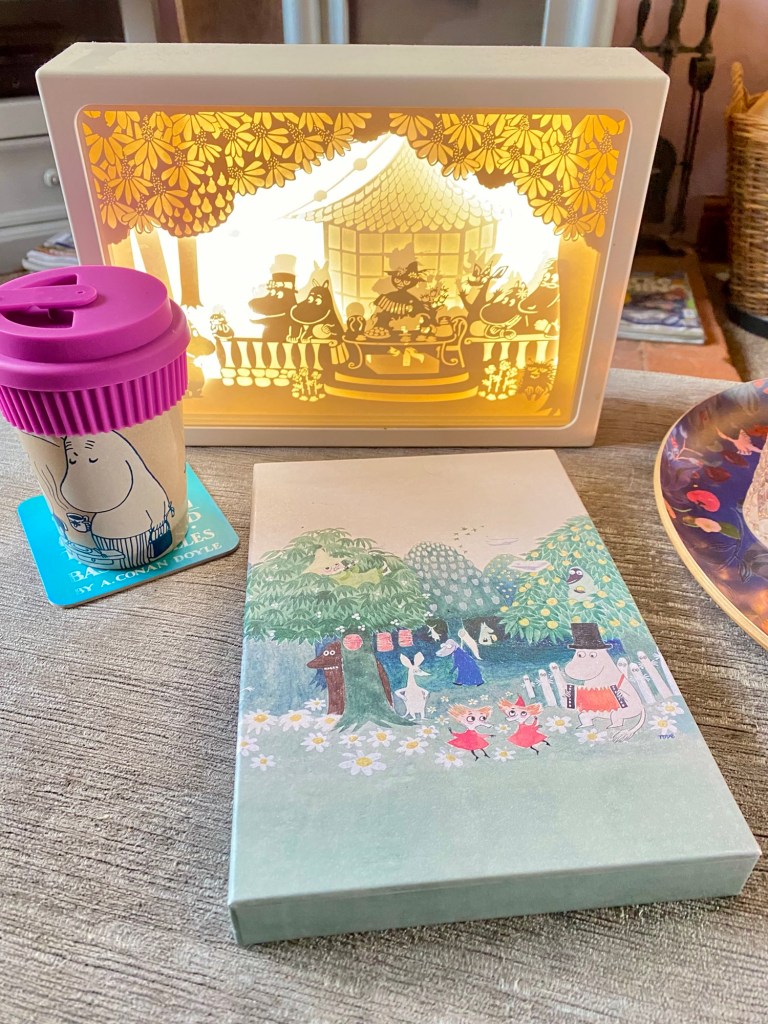
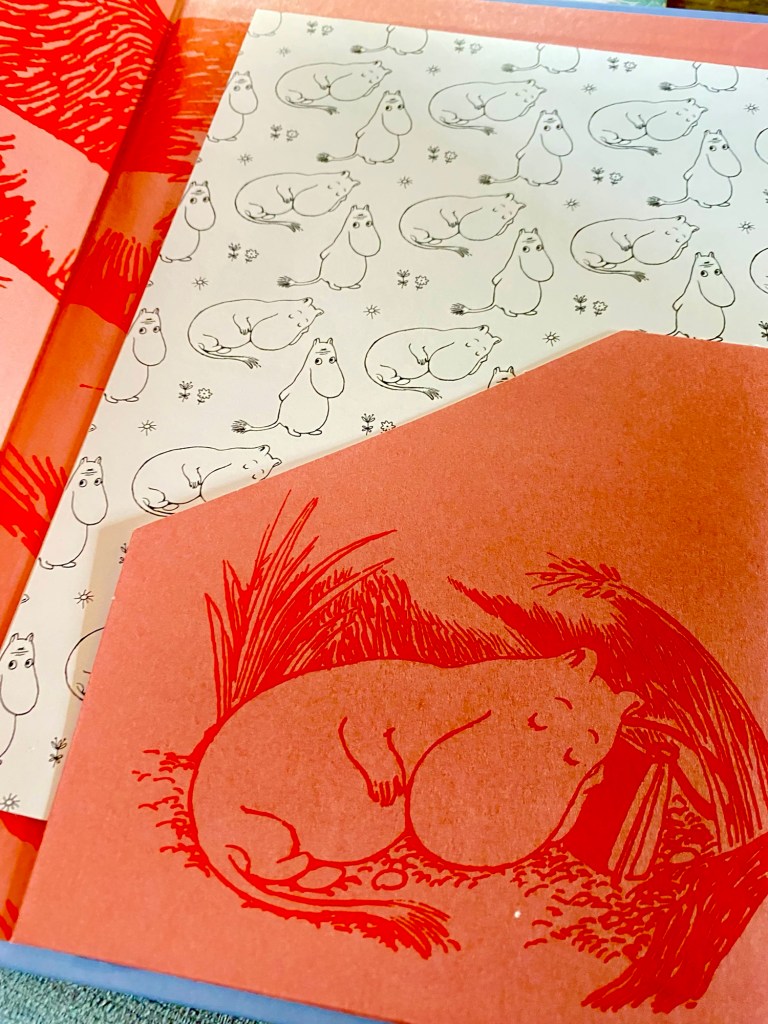
I think Tove Jansson created beautiful, endearing characters that would appeal to children, but she doesn’t hold back when it comes to plot. That’s the enduring appeal of these books and the merchandising that has exploded over the years. If friends or family go to Covent Garden they always bring me something from The Moomin Store. I have jewellery, note books, Christmas baubles (including a Moomin House), posters, mugs and glasses. I have a beautiful shadow box and various travel mugs and water bottles. So I couldn’t resist this beautiful Folio Society anniversary edition of Finn Family Moomintroll. As you can see it has beautiful illustrations and I absolutely treasure it. This year is the 80th Anniversary of the book so I’m looking forward to a year of the comfort and nostalgia I still get from these beautiful books.

Meet the Author

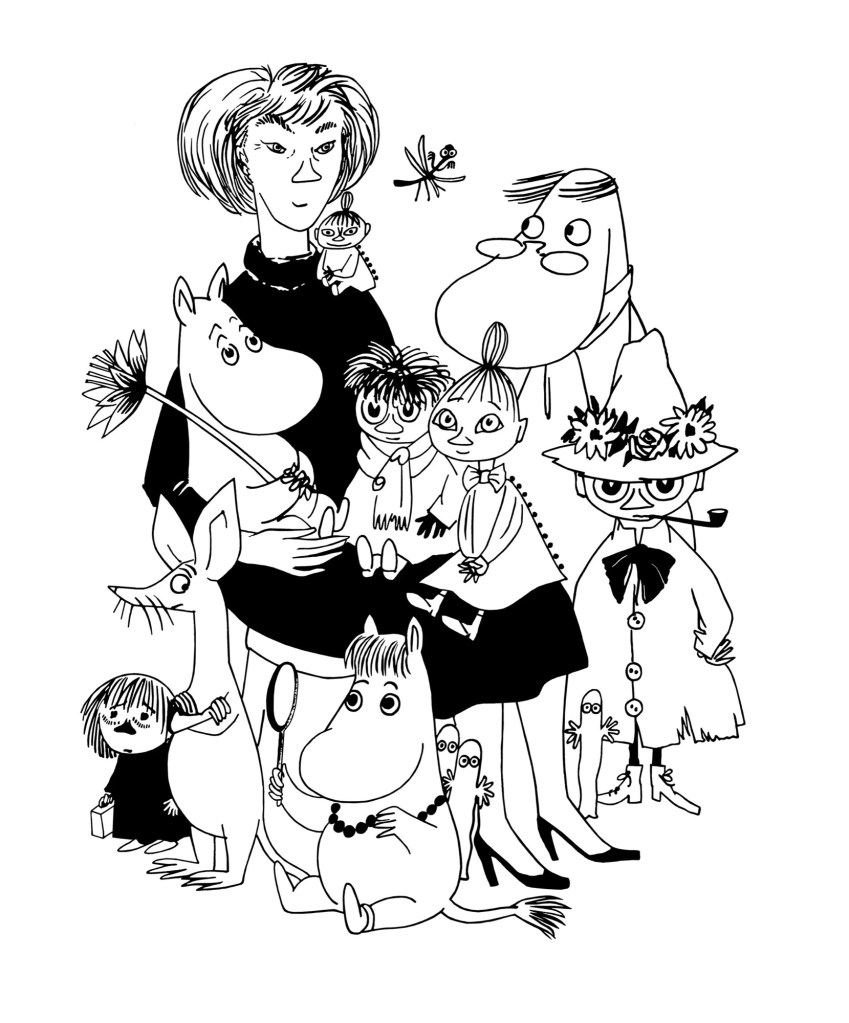
In the nineteen-fifties and sixties, one of the most famous cartoonists in the world was a lesbian artist who lived on a remote island off the coast of Finland. Tove Jansson had the status of a beloved cultural icon—adored by children, celebrated by adults. Before her death, in 2001, at the age of eighty-six, Jansson produced paintings, novels, children’s books, magazine covers, political cartoons, greeting cards, librettos, and much more. But most of Jansson’s fans arrived by way of the Moomins, a friendly species of her invention—rotund white creatures that look a little like upright hippos, and were the subject of nine best-selling books and a daily comic strip that ran for twenty years.

From the New Yorker:

https://www.newyorker.com/magazine/2020/04/06/inside-tove-janssons-private-universe

Posted in Squad Pod Collective, Sunday Spotlight

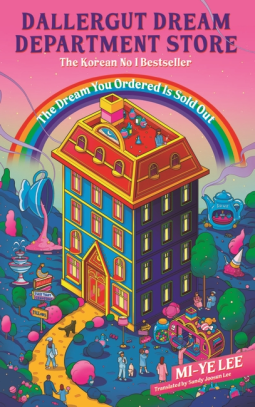
Spotlight On The Dallergut Department Store Series by Miye Lee. 

Dallergut Dream Department Store.

I’m a little late and probably too old for the sudden popularity of Korean culture. I’m aware of BTS and Squid Game, but have never listened to or watched either of them. Despite that, I’m aware from my step-daughters, nieces and nephews that Korean music and film-making are innovative and unique, two words I’d apply to these novels. I loved the premise, that there is a department store that supplies people with dreams. Our heroine Penny gets a job at the Dallergut Dream Department Store, somewhere she’s dreamed of working. There’s something hypnotic about the world this author has created, because it’s fantastical and unlike anything I’ve read since childhood. As Penny finds her feet we start to see the way the store works: the communication between the menagerie of unusual creatures who run each department and the actual dream makers who craft their dreams to the individual. These are the upper echelon of the organisation, craftsmen who have to weave a narrative that answers life’s questions, builds hope of love in the air and solves problems. When the dreamer comes in they are served by one of the staff in the store. As soon as I realised this, my mind drifted to the hope they were wearing pyjamas. Some don’t and have to be given something to put on, which maybe explains the strange clothes I’m often wearing I’m my dreams. After a spell of flying dreams I always wear pyjamas!

I really loved the quirkiness of how the store and the system worked. Each sleeper then discusses their needs or can be given hints by those who work in the store – sort of like an Apple Genius, but with dreams. We’re also shown how their dreams pan out with in the real world and whether they help the dreamer make a decision or help them unravel a sticky situation. The dreamer does have to pay for their nighttime adventure and they pay with emotions, which are then recycled by the dream-makers into even more detailed and elaborate dreamscapes. I’m such a sucker for whimsical stories and characters that are complex and quirky. The author delivers on both fronts here.

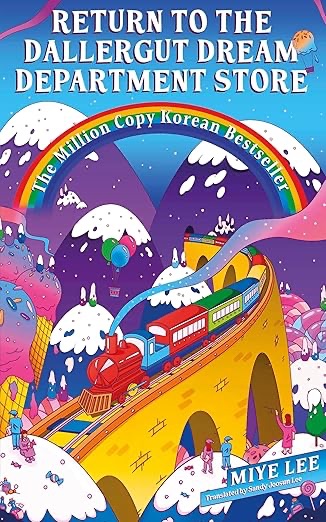
Return to Dallergut Dream Department Store

If you wish to delve deeper into the Dallergut Dream Department Store this is the second instalment. It takes the reader back to Penny and her colleagues drafting dreams. Penny has finished her first year at the store which means she is now officially part of the dreams industry. She can now go behind the scenes to the Company District, on a special express train of course, where the raw materials for dreams are stored. She’s hoping to have some of her questions answered by this peek behind the scenes. She wants to understand more about customers, especially those that buy a dream but don’t return to the store. It would be great if she could find a way to improve repeat custom. As always though, when we delve deeper behind the scenes of any industry, we see it’s darker side. There is a complaints process for customers and they end up at the Civil Complaints Centre where Penny starts to find answers about those non-returning customers. Their concerns were very relatable and it was interesting to see how customers with disabilities were being accommodated. They are striving to be inclusive and I loved that, having had many discussion with friends who have disabilities about whether they have a disability in their dreams (sometimes I do and sometimes I don’t). Alongside the emotional and slightly darker elements was the usual whimsical and quirky world of the first book, alongside the tiniest hint of romance. Ultimately, this is a warm-hearted fantasy that’s like a hug in a book.


Posted in Squad Pod

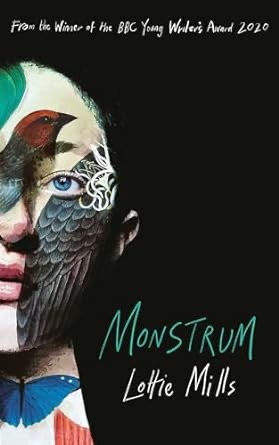
Monstrum by Lottie Mills

This is a very personal review, because when you have a disability it’s impossible to read a collection of stories about bodily difference and it not feel personal. I was diagnosed with Multiple Sclerosis in 1995, but originally broke my back at 11 years old and after years of pain developed Myofascial Pain Syndrome and disc degeneration. Disability and difference have been part of my life for so long but yet I never feel fully part of that world. That’s because my disabilities are usually invisible and I don’t really belong in either world. I even read this while struggling with my health and finally catching COVID. I’m typing up my review while in bed after a radio frequency denervation, where a heated needle is guided towards the compressed nerves and burns them to disrupt the pain messages that refer nerve pain to my legs and lower abdomen. All this goes on behind closed doors because I’m simply unable to get up and out. Then when I can go out, I appear to have very little wrong with me unless I’m using my stick or a crutch. I’m doing what’s called ‘passing’ – able to look like everyone else while having disabilities. So it’s hard to put across how moved I was by this collection portraying ‘otherness’ and how able-bodied people respond to it. Using mythology, fairy tales and a touch of Shakespeare, Lottie Mills has managed to put across so much about life with a disability and what happens when it brushes up against an able-bodied society that’s considered the norm. However, in her world these disabilities become abilities, sometimes magical ones.

The first story in the collection introduces us to a magical island where Cal and his daughter have a beautiful life of warm sand, sea and a night sky glittering with stars. He tells her stories about bear people and she asks him if they are bear people? Yes they are he says, although her mother wasn’t. She was from a human world that’s about to clash disastrously with theirs. In the human world, there’s so much that Cal can’t do because it isn’t set up like their island. In the human world Cal becomes disabled. We then see what happens when human agencies come up against their little family with disastrous consequences. Instead of concentrating on what he can do, they look at him through the prism of their own abilities and only the things he can’t do. How can he possibly look after his daughter properly when he’s so disadvantaged? Mills takes disability theory here and applied it to her character’s lives, which judging by the name Cal (Caliban) come from the type of magical island Shakespeare describes in The Tempest. Caliban has been more recently portrayed in productions of the play as a black man, a slave, or an asylum seeker rather than a monster. Mills makes the point that Caliban is only a monster when we make him one. The original model of disability is a medical one that assumes there is one ideal healthy body and anything that differs from that is wrong and needs to be fixed. When used in a social context it tells you that the things you can’t do in the world are down to your difference from the norm. However, the social model tells us that it is the way the world is set up that creates the disability. For example if all buildings eradicated stairs, creating ramps and lifts within the normal building model, the environment becomes accessible to all. If Cal is viewed in his own environment, he is capable of looking after his daughter. I was desperate for them to be reunited and I also felt a personal yearning to be part of Cal’s world. This fairy tale explains that while agencies like social services and the NHS might think they are doing the right thing for someone, there is often a better solution. That solution champions individuality and concentrates on what the person can do, rather than what they can’t.

In another story we meet a young disabled woman who craves the perfect pain- free body, something I could definitely identify with right now. However, when her wish is granted she finds it difficult to let go of her disabled identity. This was a fascinating exploration of how disability affects the person psychologically. If a disability is innate then it’s the only body that person has ever known. They know the world’s expectations of that body, their own perception of what they might achieve within that body and how able-bodied people perceive them. If the disability is acquired it can be a long and painful process to come to an acceptance of your new body. You must grieve the body you have lost, as well as all the things you expected to do with that body. I have heard many friends tell me that while they’d happily give up chronic pain or a particular aspect of their disability, they wouldn’t want to go through a reverse change and be able-bodied again. There is even a fear of becoming able-bodied again, with all the expectations that places on a person. This story perfectly encapsulates that fight within the self and how far our disabilities are assimilated into our idea of who we are. I loved Lottie’s use of horror and settings where disability has often found a home such as the circus or fairground. Freak shows were popular in the 19th Century, in both the UK and USA, with different bodies placed on show for entertainment and wonder. In fact Coney Island in New York was a hugely successful venue for such shows, where businessmen and entertainers like Barnum were making money from the display of people with differences and disabilities. It certainly wasn’t the wonderful musical extravaganza portrayed in The Greatest Showman. However, it was a place where someone with a disability could make their own money, live in a community where difference was appreciated and accommodated and achieve a level of fame. She lets us know that these issues are complex and look very different from person to person.

There is a beauty in this world of ‘otherness’ and it’s a world made up of an incredible mix of ingredients. Every person with a disability is different so the variety of experience is endless and hybrid bodies, unusual pairings/families and queer love thrives here. Lottie has found a way of balancing how the world sees us and how we see ourselves. She has used magic realism and alternative communities to show the strength there is in accepting disability and making a life with it, rather than constantly fighting to change yourself and remain in the able-bodied world. What was the most interesting thing to me was her understanding of how these issues affect the world of writing and how there are accepted narrative tropes around disability. I studied for a PhD, sadly never completed, where I was looking at how disability is portrayed in autobiography and memoir and whether this was driven by an author’s internalisation of society’s expectations or whether the publishing industry is biased towards narratives that are acceptable to able-bodied readers and they know will sell widely. The public like people who battle against their disability and illness, preferring words like ‘fight’, ‘overcome’ and ‘survive’. The accepted narrative trope is that of a journey from the dark days of diagnosis towards the rehabilitation and a triumphant ending of cure or a successful life, despite the disability. Often people with disabilities read these narratives and feel inadequate for struggling, for not achieving a similar level of ability and success. Mainly they don’t feel represented. Here Lottie shows us these stereotypes and gives us something different – individuality, community and love. Her narratives don’t follow the accepted tropes, instead focusing on acceptance, owning a disability and living with it in a way that works for the character rather than an able-bodied reader. Lottie’s writing manages to latch onto the reader and not let go, but for me it was her refusal to conform and instead confront people’s perceptions of disability. I’m hopeful for much more from this talented writer and that publishers are starting to see the value of individual and adventurous disability narratives that truly represent such a vibrant and varied community.

Published by Oneworld Publications May 2024.

Meet the Author

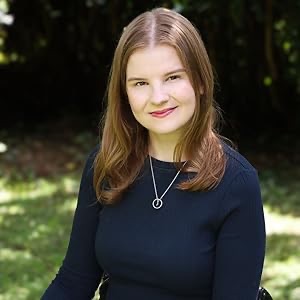
Lottie Mills was born in Hampshire and grew up in West Sussex, Hertfordshire, and Essex. She studied English at Newnham College, Cambridge, and contributed to Varsity and The Mays during her time there. In 2020, she won the BBC Young Writers’ Award for her short story ‘The Changeling’, having been previously shortlisted in 2018. Her work has been broadcast on BBC Radio 1 and BBC Radio 4, and she has appeared on programmes including Look East, Life Hacks, and Woman’s Hour to discuss her writing. Monstrum is her debut book.

Posted in Netgalley, Personal Purchase

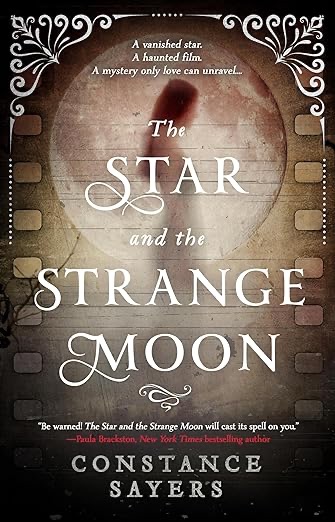
The Star and the Strange Moon by Constance Sayers.

Constance Sayer’s latest book has a lot of her literary trademarks: time slip narratives; a mystery to solve; magic realism and romance. She places her story in the world of Hollywood and film-making, with two main characters – the actress Gemma Turner and young film-maker Chris Kent. In 1968 Gemma is staying in London with her rock star lover Charlie Hicks when she is offered an unexpected film opportunity. Until now Gemma has been making a series of surfing films based in California, but she’s been longing to make something that has more critical acclaim. French director Thierry Valden is part of the nouvelle vague or new wave movement and has offered her the lead role in his next film L’Etrange Lune a vampire film set in 19th Century France. He seems open to changes and often works with improvisation so her long held skills as a writer might be needed too. However, when she gets to Thierry’s chateau the mood seems to have changed. She is greeted by Manon Valden, who warns Gemma off her husband immediately which isn’t very welcoming. Thierry doesn’t seem like the man she met before and when she reads the up to date script it still has the same stilted dialogue, despite the potential changes she had sent him. When she finally speaks to Thierry alone, he makes it clear that something has changed. He had envisioned more of a collaboration both on the script and possibly in the bedroom, but L’Etrange Lune will be his final film and he can’t afford to take risks. Gemma will have other opportunities for scriptwriting but he won’t. The next day as they’re filming in the nearby town of Amboise, Gemma has a scene where she runs down a darkened and cobbled alleyway, seconds after calling action the camera has suddenly lost her. Has she fallen on the cobbles? Are the dark shadows concealing her? Maybe she’s walked off in a huff. Yet it seems Gemma is genuinely gone and as they look back over the scene on film, frame by frame, she’s simply disappeared in front of their eyes.

Christopher Kent has had a strange fascination with the actress Gemma Turner since he was a child. Now at film school in 2007, his attachment to the actress stands out because she was never one of the greats – students aren’t usually hung up on obscure actresses from a handful of surf films. He remembers the day he first saw her, in a hotel where vintage black and white photos of actors were hung next to every door. In a very chaotic and traumatic childhood, this was one of those moments where he and his mum were without a roof over their heads. Chris could sense his mum was edgy and on the verge of a mood change, but as they approached their room and she saw the photo by the door she flew into a rage. She pulled the picture of Gemma Turner off the wall and smashed it, shouting personal insults and expletives. What was her link to the actress? Knowing Chris’s fascination with Gemma, his girlfriend and fellow student Ivy comes to him with a strange proposition. Every ten years Gemma’s final film, L’Etrange Lune, is shown to a select group of 65 guests at a randomly chosen cinema. Ivy’s father is one of the 65, but for this viewing he has offered Ivy his two place. They must wear a mask and cloak, but most importantly of all they must never approach or try to identify other members, nor can they talk about what they’ve seen. Chris doesn’t know what to make of the film. It seems to be a rather formulaic vampire movie, but there’s something odd about Gemma’s performance, almost haunting in fact. While in some places it’s fairly average, in other scenes there’s an incredible intensity to her acting. It’s almost as if she’s genuinely terrified.

I found the book a little slow at first, but once we reached Gemma’s disappearance I was hooked by this strange story. As we reach Gemma’s timeline in France and Chris starts investigating her disappearance several decades later, the pace of both timelines really picks up. There are suddenly enough strange and impossible happenings for the reader to start wondering what’s coming next. To be honest it felt like anything might happen! I loved the sense of evil created by the film – the strange melancholy that falls over those who see it, something that worsens if you keep going back every ten years. The rumours that the film changes in that decade are intriguing and suggest someone is still behind the lens. Could one of the 65 be playing tricks on the rest? Perhaps not letting on they have extra scenes that Thierry discarded, or that they have found an actress who is the double of Gemma Turner. Is something magical at work here? Despite all the warnings, I did understand Chris’s need to investigate, even when those he interviews start to feel the consequences of talking. This is such a clever concept and the author creates a real sense of mystery with wonderful period detail, especially in the 19th Century when there’s much discussion on the restriction and discomfort of women’s fashion especially in the summer. I also enjoyed 1960’s London where Gemma’s lover Charlie is part of a Fleetwood Mac-esque band where partners are swapped as readily as song lyrics. There’s even a very unexpected romance woven within this magical and unexpected series of times and worlds. What I wanted to see more than anything was for Chris to overcome the trauma of his childhood and fulfil his potential, wherever and whenever that might be.

Out in paperback from Piatkus 28th March 2024

Meet the Author

Constance Sayers is the author of A Witch in Time, The Ladies of the Secret Circus, and The Star and the Strange Moon from Hachette Book Group.

A finalist for Alternating Current’s Luminaire Award for Best Prose, her short fiction has been nominated for the Pushcart Prize and Best of the Net.

She received her master of arts in English from George Mason University and graduated magna cum laude with a bachelor of arts in writing from the University of Pittsburgh. She attended The Bread Loaf Writers Conference where she studied with Charles Baxter and Lauren Groff. A media executive, she’s twice been named one of the “Top 100 Media People in America” by Folio and included in their list of “Top Women in Media.”

She splits her time between Alexandria, Virginia and West Palm Beach, Florida.

Posted in Sunday Spotlight

Book Scenes That Gave Me Nightmares

A Halloween surprise

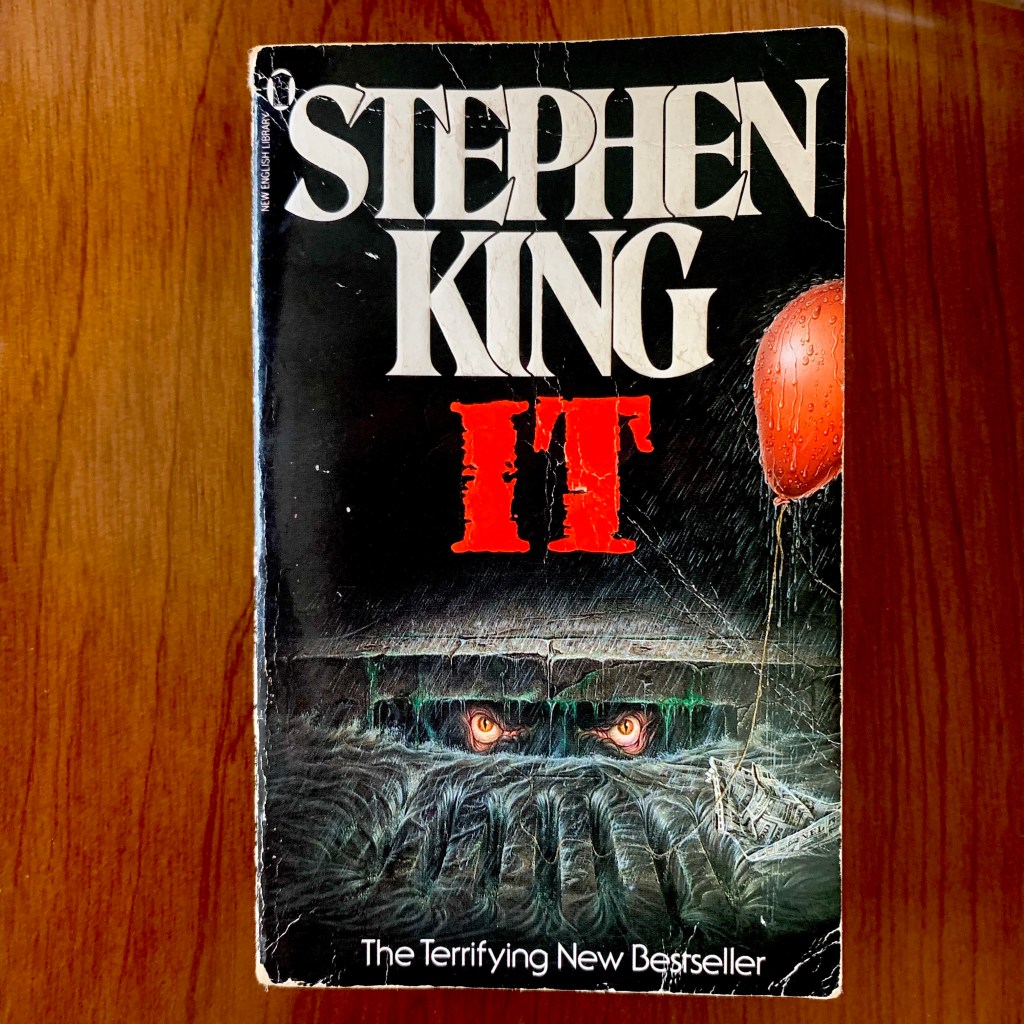
It by Stephen King. There are a lot of problems with this book, mostly the fact that his villain, Pennywise the Clown, is way more terrifying than the ‘It’ eventually encountered by the gang underground. I don’t think reading It started my clown phobia, but reading it as an impressionable teen certainly didn’t help. Now I’m terrified of anything that doesn’t show it’s real face, so masks, hoods, and make up always send a shiver up my spine. The scariest scene has to be when little Georgie Denborough, in his yellow Macintosh and hat, goes outside in the rain to play with his paper boat. The boat slips into the gutter and is washed into the storm drain. As Georgie approaches the drain he can see red tufted hair and floating balloons. They float, says Pennywise the clown. This clown has teeth and as Georgie reaches into the drain for a balloon he loses his arm. They all float down here.

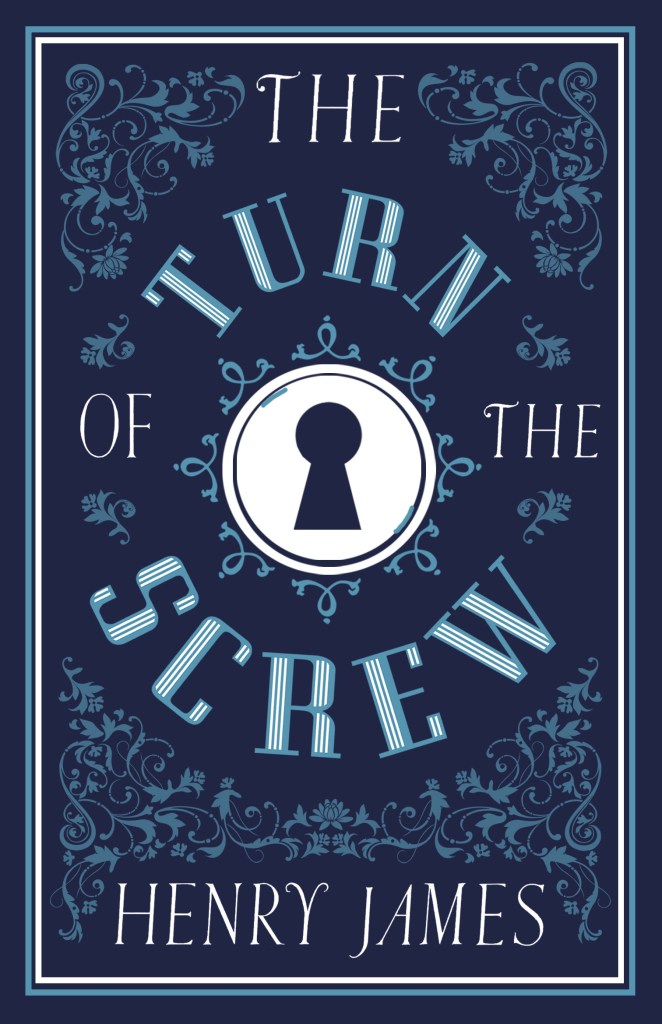
The Turn of the Screw by Henry James. This is a distinctly odd book, with no real answers or clarity about what is happening at Bly. Are there real ghosts at the house with malicious intent? Is it the children, Flora and Miles, who are possessed by demons or just evil and manipulative towards their governess? Is the governess mad, hallucinating the ghosts of Bly’s former employees and terrifying the children? I definitely err on the side of the children being the problem, they are far too knowing and precocious for their years. It may be that the children have been affected by their time with previous employees Peter Quint and the last governess. Whichever it is the two children make me shiver and the final scene where Peter Quint appears at the window to the governess is doubly scary because we don’t know if they can both see him, or just the governess. As Miles falls down dead I wondered whether their aim to send the governess mad has worked and backfired spectacularly. Henry James plays with the Victorian ideal of childhood innocence and that’s what makes it so creepy, the thought that we might be in danger from those we consider vulnerable and incapable of evil is incredibly subversive.

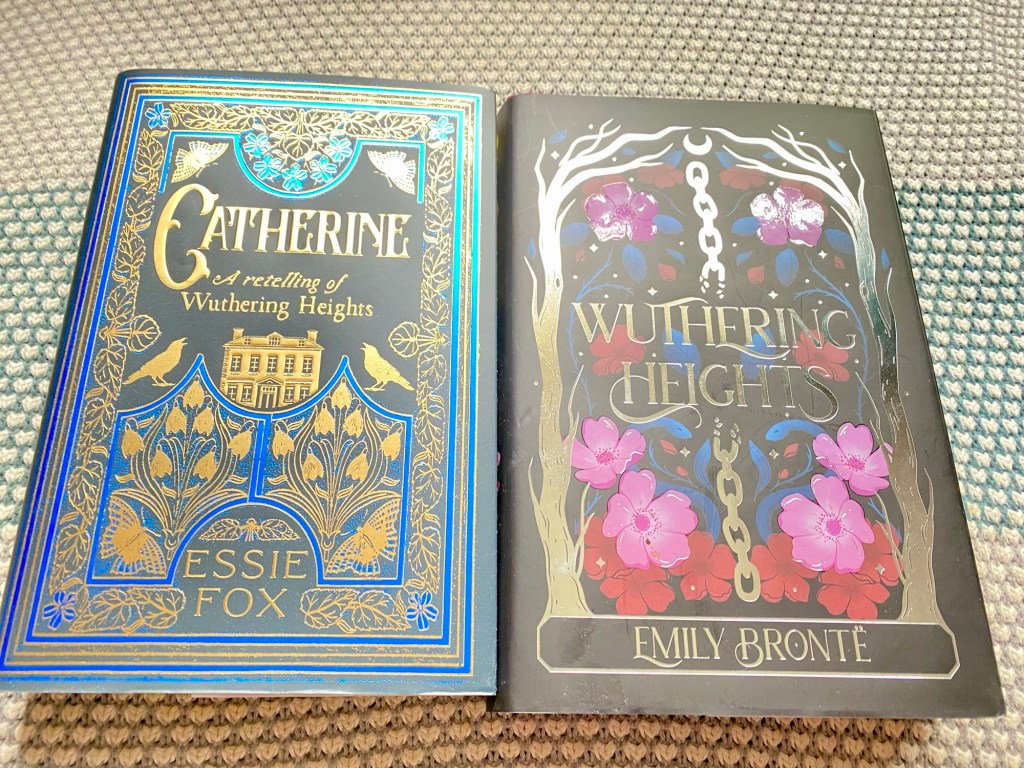
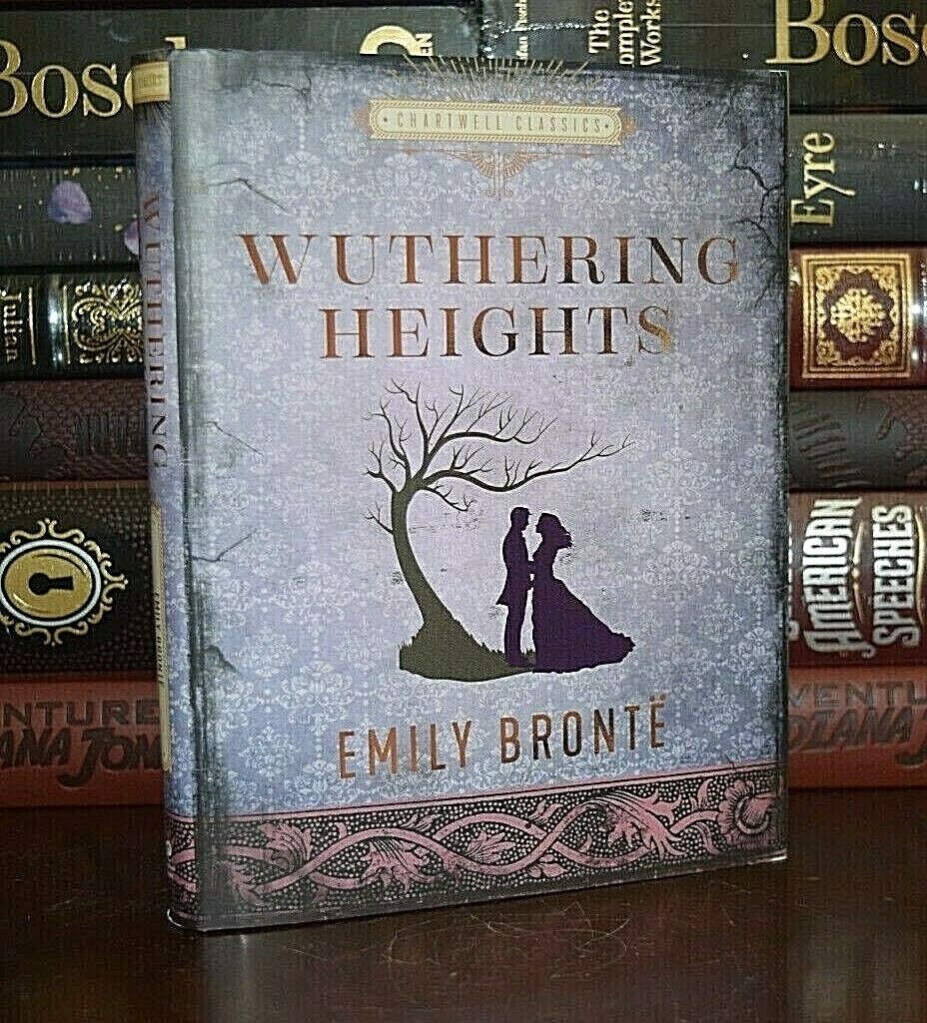
Wuthering Heights by Emily Brontë. Wuthering Heights is a story narrated by the family servant Nelly Dean, as told to a visitor to the farm, one of Heathcliff’s new tenants called Mr Lockwood. The weather worsens dramatically during his visit and as night falls it is clear that it’s unsafe to travel on horseback and he must stay. Heathcliff begrudgingly gives Lockwood a bed for the night, an old oak bed set under a window that overlooks the Moors. He wakes in the night, disoriented and disturbed by a tapping at the window. It is merely a branch and he concludes that he has been dreaming, influenced by Nelly’s tragic story of Catherine Earnshaw. He cannot unfasten the window, then resorts to breaking the glass to grasp the branch. The moment he reaches out to grab the branch but instead grabs an ‘ice-cold hand’ never fails to lift the hairs on the back of your neck. As he sees her white little face through the window he tries to pull his hand away but she won’t let go, begging him to let her in as she has lost her way on the moor. His solution is to grind the child’s wrist across the broken glass of the window until blood runs onto the bedclothes. This scene ensured that for my whole childhood I closed the curtains of any room I was in as soon as it was dark.

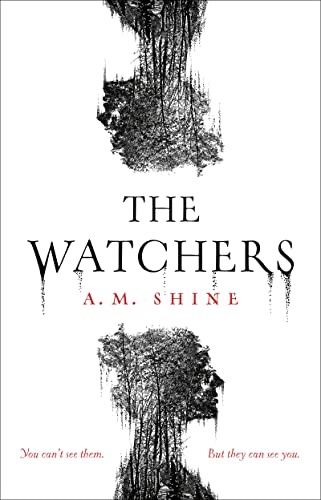
The Watchers by A.M. Shine. There’s so much to love in A.M.Shine’s debut novel, but one scene stands out for me, leaving me unsettled and unable to sleep. Set in rural Ireland, our heroine Mina is stranded in the middle of nowhere after her car breaks down as she does a strange favour for a friend. As sets off on a walk towards civilisation, she takes a wrong turn and ends up in the woods. The trees seem never ending and as afternoon starts to move towards dusk she has a strange sense of being watched. An unusual screeching noise unnerves her as she reaches a clearing and sees a woman shouting, urging Mina to run to a concrete bunker. As the door slams behind her, the building is besieged by screams. Mina finds herself in a room with a wall of glass, and an electric light that activates at nightfall, when the Watchers come above ground. These creatures emerge to observe their captive humans and terrible things will happen to anyone who doesn’t reach the bunker in time. This opening scene is so tense that when she reaches safety there’s a moment of relief, but only a moment. As the light comes on we realise that the glass window is full of creatures, staring in at their prey. I think the fact we never fully see a watcher makes it scarier as our imagination fills in the blanks. There is a twist to the ending that I can’t reveal, but I assure you it’s just as terrifying.

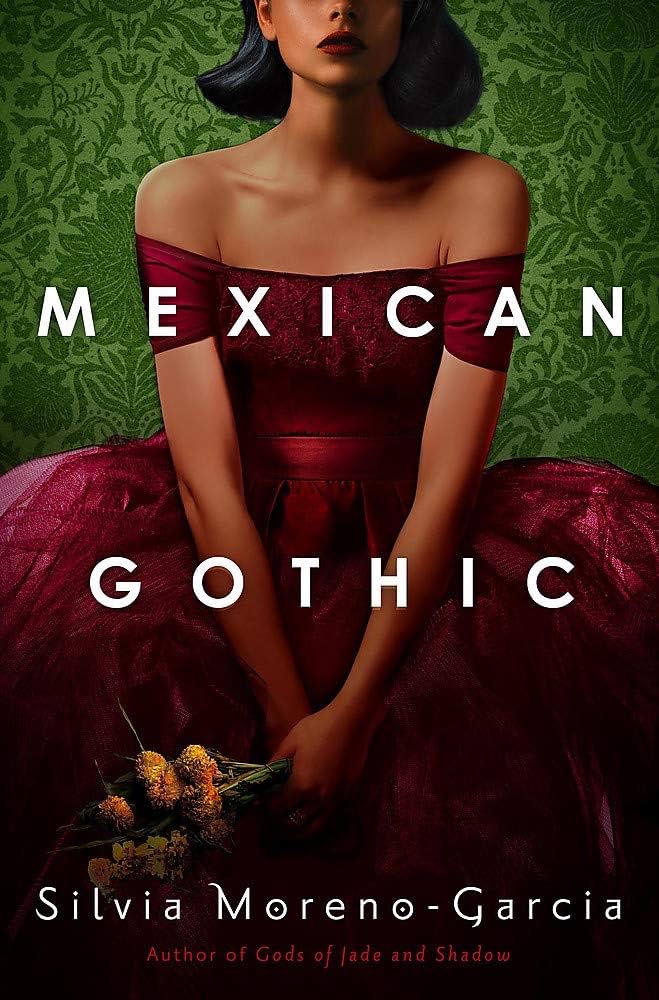
Mexican Gothic by Silvia Moreno-Garcia. I loved this brilliant horror novel that explores colonialism, feminism and eugenics as well as being downright scary. Noemi is a guest at High Place, wanting to spend time with her friend Catalina who has married into the wealthy Doyle family. Yet all is not well in the Doyle household. Noemi finds her time with her friend is very tightly controlled because Catalina has succumbed to a mystery illness. The family patriarch spouts his vile views on race and eugenics at the dinner table and what is going on with the mushroom wallpaper? It was Noemi’s strange dreams that I found most terrifying: she wanders the house covered with spores, has deeply sexual encounters with her friend’s husband and is haunted by a woman with a golden glow for a face who tries to communicate despite not having a mouth. However, nothing is more terrifying than coming face to face with the reality of the patriarch’s existence. Just as Noemi dreamed of the house becoming a mass of sores, his body is rotting to the touch. We are faced with blood, pus, bile and many other grotesque images, but even worse for Noemi there’s a threat of sexual violence culminating in the sort of kiss she really didn’t want. This made me physically retch! Oh, and you’ll be put off mushrooms for a little while.

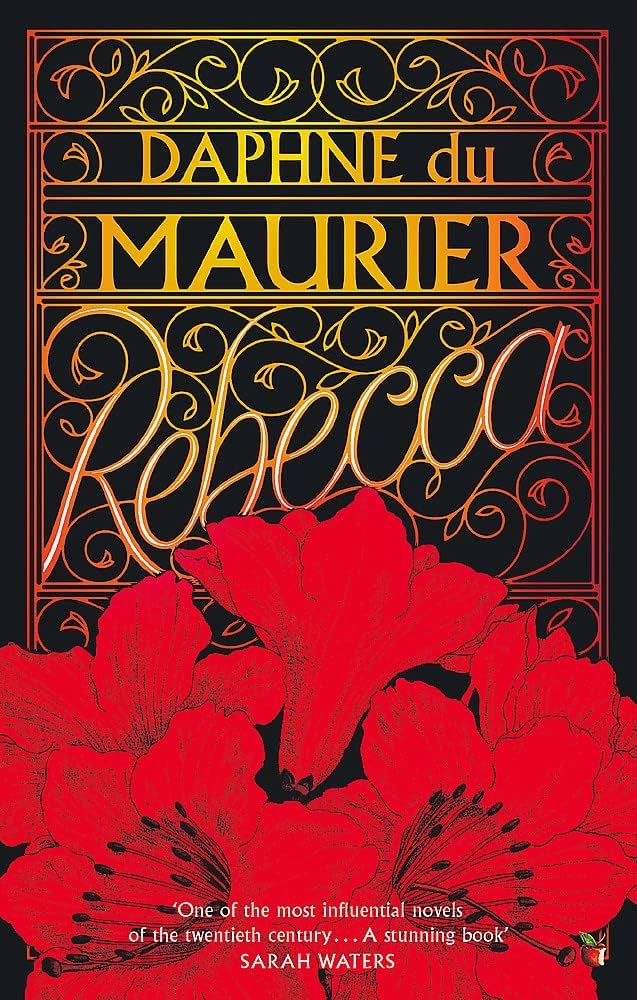
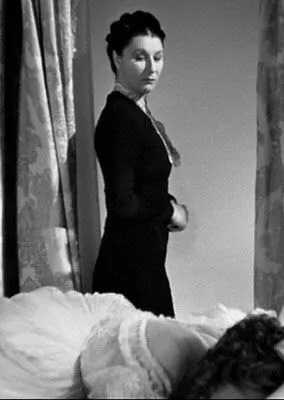
Rebecca by Daphne Du Maurier. I would argue that Daphne Du Maurier’s classic thriller is a ghost story, in fact in some ways both the women married to Maxim De Winter are haunting his home Manderley. Rebecca is dead, killed in a sailing accident, but her presence is still very much alive in the mansion: the west wing upstairs is off limits, still set up as her bedroom complete with her nightclothes laid out on the bed; her correspondence and address book is still out on her desk in the morning room with a huge ‘R’ on the cover; she even inhabits the cottage on the beach that her dog Jasper escapes whenever he can. The new Mrs De Winter is lost in this grand stately home and simply wanders to whichever room the servants direct her, servants who are still following the Rebecca’s routine. She doesn’t even have a name. However, the scariest part of Manderley is Rebecca’s servant Mrs Danvers installed as housekeeper after the to move to Maxim’s Cornish home. Described as wearing a long black dress, with gaunt features and deep set eyes that made her look like a skull she seems to slip between room silently, always seeing precisely the moments that the young Mrs De Winter would rather she didn’t. She encourages her new mistress to hold a costume ball like the old days and as an extra favour she suggests that she copies a costume from an ancestral painting on the stairs, not mentioning that Rebecca wore the same costume at the last ball. When Maxim first glimpses his wife on the stairs he thinks for a dreadful moment it is his dead wife and he is unnecessarily harsh. As she flees to the banned West Wing, Mrs Danvers torments her with Rebecca’s flimsy nightwear and the details of their routine. Her voice is hypnotic as she urges her new mistress to open the window to lean out for some air. The suspense as she tells her to jump, that she’s no use, she’s not loved and Maxim will always love Rebecca. A well timed shout and flare from a ship in distress are the only things that save her. This is the moment we know what this terrifyingly obsessed woman is capable of. Is Rebecca working through her, was she in love with her mistress, or was she simple unable to accept her death? Either way she is deadly dangerous and very creepy indeed.

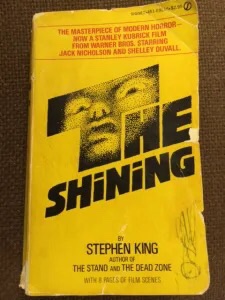
Shining by Stephen King. We’re back to King now, the ultimate horror writer and one of my favourite novels in his back catalogue. Everything about this book is creepy, from the wasp’s nest to the twins in the corridor, but there’s one scene that puts the fear into me and that’s the woman in room 217. Jack Torrance has been slowly sinking into his alcoholism ever since his family arrived at The Overlook Hotel and his son Danny has been exploring the place, often unchecked since they’re so isolated they know there’s no one else around. The problem is that Danny has the ability to see things his parents can’t and while they’re sure no people are around, they can’t say the same about dead people. In a scene that’s written so well I can feel Danny’s terror, he makes his way into room 217 and notices the curtain drawn around the bathtub. As he pulls the curtain back, hoping his parents have left a surprise for him, he is horrified to see the grey, lifeless flesh of a woman. Except she’s not so lifeless. As Danny desperately tries to exit the room he hears the sound of her body slipping and sucking over the side of the bath. Her squelching footsteps as she chases him. Obviously King writes so much better than me, so when I first read this scene my heart was hammering in my chest so hard! I felt sick. Ever since, if I enter a bathroom and the shower curtain is pulled across my mind immediately goes back to this scene and I do feel a little unnerved.

Frankenstein by Mary Shelley ‘It was already one in the morning; the rain pattered dismally against the panes, and my candle was nearly burnt out, when, by the glimmer of the half-extinguished light, I saw the dull yellow eye of the creature open; it breathed hard, and a convulsive motion agitated its limbs.’ The various film adaptations of Frankenstein rarely do justice to the true horror of Mary Shelley’s words. I must admit that the 1990’s Kenneth Branagh version made me vomit, quite literally, into my popcorn bucket! Not a great look for a date, but there we are. That was about the way the creature slipped out of the bath of fluid he’d been kept it. It’s hard to describe but I have a horrible revulsion towards snotty egg whites and this was like a bath full of them and a naked Robert de Niro was sliding about in them like Bambi on a frozen pond. The sound was enough to induce retching and I’ve never been able to watch it without that reaction. The original words though strike fear into me, the sheer horror of what he’s created and the realisation that he’s concentrated all his efforts into achieving life, without once thinking what would happen next. The dull yellow eye feels reptilian to me and that fear of what exactly this creature is swirls around the mind.

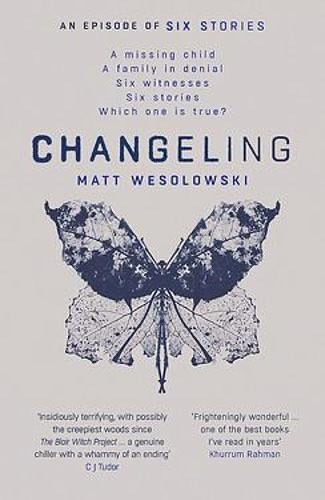
Changeling by Matt Wesolowski. This book really did get under my skin, possibly not helped by reading it in an unfamiliar and remote house where we were on holiday, not a million miles away from the forest in question. This starts as a missing child case, when Sorrel Marsden stops his car in a lay-by on the Wentshire Forest Pass on the Welsh Borders. As he investigates under the bonnet, hoping to find the cause of a strange knocking noise he has heard in the engine, he leaves son Alfie in his car seat. Minutes later, when he closes the bonnet, he glances up to see Alfie and finds him gone. He is never found. Scott King fronts a true crime podcast, a new one explored in each book of Wesolowski’s Six Stories series. Usually, the cases that Scott explores have a supernatural element and that’s definitely he case here, with the forest seemingly a hot spot for unusual unexplained noises, glitches in machinery and possible fairy sightings. However, room is also left for a more human explanation and it was the human aspects that really chilled here. A trainee teacher and her journals and reports form part of his investigation and her research into Child A takes on a sinister significance. She records a time when she was supervising the child alone and his lack of communication is a little unnerving. Then she starts to hear noises, strange knockings that she assumes are Child A banging under the desk. However, he isn’t moving. Then she hears muttering, as if he is talking under his breath to someone or taking instructions. Yet he is utterly still, eyes completely blank as if he has tuned out or is tuned in to something else. This scene did make me shiver. I didn’t know what scared me more: a child possessed or used as a conduit for something supernatural or a child that’s rather too knowing, deliberately setting out to unnerve their teacher.

The Ghost Woods by C.J. Cooke. We’re back in the gothic territory of monstrous births in this novel from C.J. Cooke and I loved the strange mix of the horrors of nature with the supernatural. In a room where he keeps his favourite specimens, Mr Whitlock has a wasp that’s been taken over by a fungus. The life cycle starts when the creature breathes in the spores, but then they slowly grow inside the insect until it bursts out of their body. It feels like there may be parallels here, especially for resident Mabel who is expecting a ghost baby. When our heroine Pearl arrives, this mini example of a parasitic fungus is overshadowed by the incredible fungal takeover in the west wing. Despite being closed off, she finds spores growing and multiplying on the outer stairs. Will it eventually take over the whole of Lichen Hall? There is a creeping sense of dread about the girl’s pregnancies because they do seem monstrous in their movements as seeing a tiny feet stretch out the skin of their abdomens. Mabel’s boy is beautiful, but its not long before she notices the strange lights appearing from under his skin. What do they signify? Is this the legacy of the ghosts? The atmosphere feels isolated and wild, but weirdly suffocating and claustrophobic at the same time. Everything builds slowly, keeping you on edge, but for sheer heart stopping terror it’s when walking outside in the woods that a shadowy figure awaits. I realised I was holding my breath when one of the girls fell trying to escape this creature and it grabbed her leg. In the seconds before she kicked it away she felt it’s purpose very clearly, a terrible intention to get ‘inside’ her skin.

New Spooky Recommendations

New releases to check out are Alix E. Harrow’s new novel Starling House from Tor Books out on November 1st and The Haunting in the Arctic by C.J.Cooke which is out now from Harper Collins.

Posted in Publisher Proof

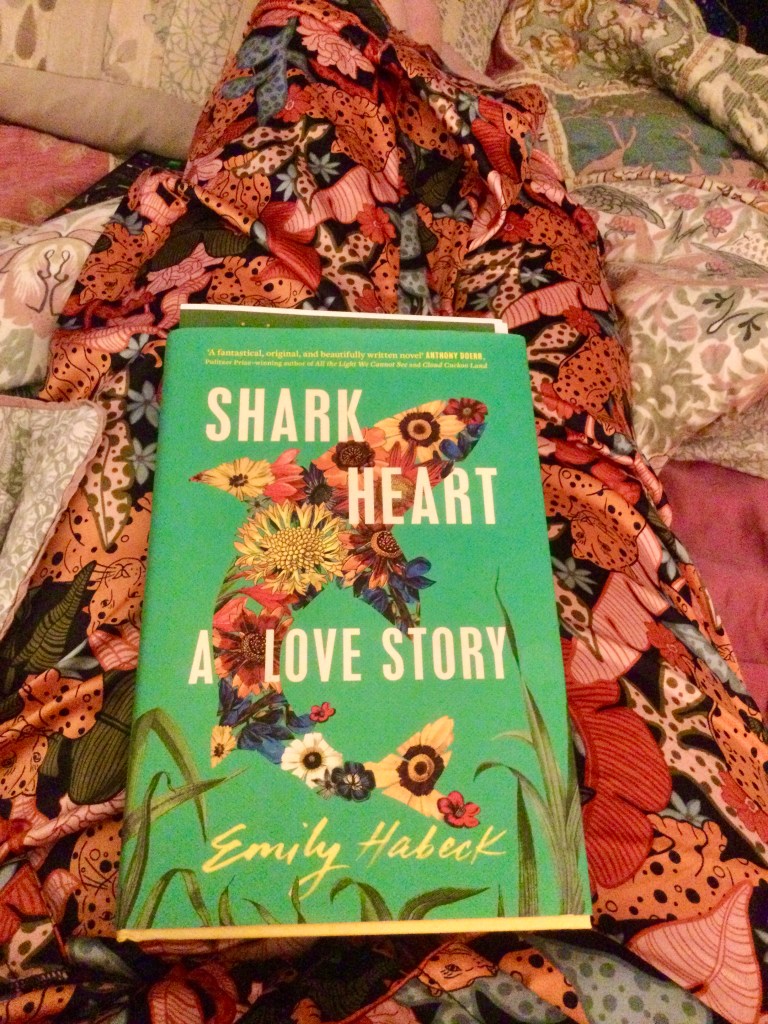
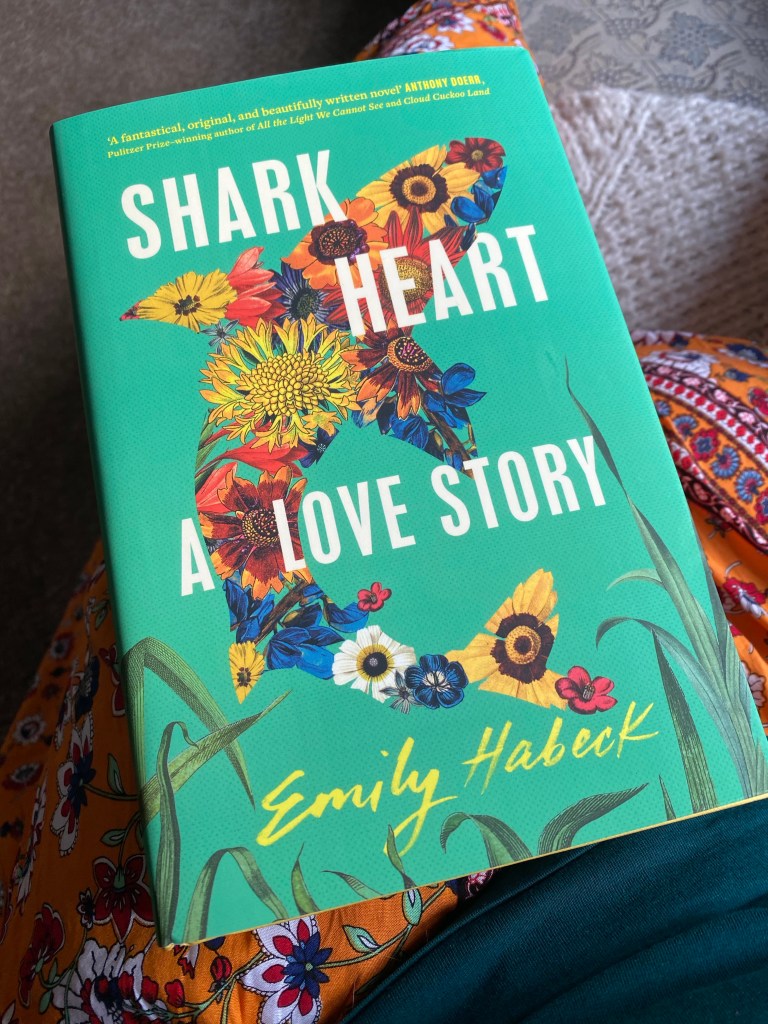
Shark Heart by Emily Habeck

When Ella from Hachette Books messaged me to say there was a book she thought would be right up my street I was a little surprised. I didn’t think the publicists would know me and my book choices well enough to make predictions about what I’d like. I was wrong. She knew exactly who this book was for. ‘It’s about a man turning into a Great White Shark’ she told me, well what’s not to like? I was hooked on the idea before the book even arrived. Lewis and Wren have fallen in love. They’ve no idea that their first year of marriage will also be their last. It’s only weeks after their wedding when Lewis receives a rare and shocking diagnosis. He has an unusual mutation. Although he might retain some of his consciousness, his memories and possibly his intellect, his body will become that of a Great White Shark. Lewis is complicated, an artist at heart he has always wanted to write the great American play for his generation. How will his liberal and loving heart beat on within the body of one of the earth’s most ruthless predators? He also has to come to terms with never fulfilling his dreams, but expressing that anger with shark DNA in his system has huge repercussions. He has to come to terms with leaving Wren behind, for her own safety. Wren wants to fight on. To find a way of living and loving each other as Lewis changes. She is told that there will come a point when this will be too dangerous. Lewis will then have to live in a state run facility or free in the ocean. It’s when she sees a glimpse of his developing carnivorous nature that a memory from her past is triggered. Wren has to make a terrible, heart-wrenching decision.
I felt emotionally devastated by this beautiful novel that uses a fantastical premise to unleash experiences of grief, love, loss and potentially, healing. Wren and Lewis reminded me of my relationship with my late husband. We married after six weeks and even then I knew I wouldn’t have him forever. I had almost seven years until I lost him. This book explained how my own grief experience felt. After Jez’s death I felt furious with anyone who said ‘Jez would think..’ or claimed they could sense his presence. I could feel nothing. No voice, no presence, nothing. It was as if he had never existed. For Lewis there becomes a point when his incessant desire to feed will become his overriding thought, strong enough to wipe out all others, will that include his love for Wren? He will not exist as Lewis anymore, the doctors tell Wren, he will not even know who she is, because he will be all shark. Wren has to come to terms with letting Lewis go, but how do you walk away from the most precious thing in your life? I had a point where I had to decide that I couldn’t look after my husband any more. I was exhausted, we had no carers in place and it didn’t feel safe to try and go it alone. Besides, as his brother told me, I had to start building a life without Jez. I cried more the night he went into nursing care, than when he died, because I felt I’d let him down and I knew he would die. He did, only six weeks later. Wren is told the same after a terrible violent incident occurs at the after-party for the play Lewis’s students have worked on. Wren calls the specialist nurse for advice, but she urges Wren that it’s time. Will they be able to say goodbye?

Despite these similarities to my life, it wasn’t Lewis’s story that broke my heart, It was Wren’s story. This is not the first time Wren has had to say goodbye. When she was barely a teenager her mother also had a rare diagnosis, but her mutation was that of a Komodo Dragon, equally deadly and impossible to live with. One scene between Wren and her mother, as she leaves her in the state facility, was so deeply moving I cried. I found it unbearable. This is what’s astonishing about Emily Habeck’s debut. It seems so fantastical, yet is utterly real in it’s experiences and emotions. Using such unusual animals as the mutation/illness creates a distance from the feelings involved. Some readers might even think the premise ridiculous – but the terrible anticipation, the moment of loss, the grief and relentless momentum of life are exactly the same. It doesn’t matter whether it’s the decision to put an elderly parent in a home or a Komodo Dragon into a facility, the guilt and pain as you walk away feels identical. It isn’t all relentless misery though. We meet Wren’s mother as the teenager she once was, experiencing love for the first time. We also go back to Lewis and his new life in the ocean, as his emotions flit between loss and what’s for dinner. His friendship with Margaret is so funny. She was once a human too and she’s been looking for another hybrid to talk to, and boy does she talk?! She’d try the patience of a shark. In a beautifully unusual way and in an almost poetic prose, this beautiful debut is about life. It’s ups and downs, the horrendous losses and the gains: the naivety of first love, becoming a mother, our love and care for an elderly parent, friendships and realising that a special little girl sees you as her dad. Life is constant adaptation, evolving and developing all the time. Every end is a beginning. This is such a special novel, an incredible debut with such a keen grasp of what being human is all about. I can see this becoming an all-time favourite for me. It quite simply took my breath away.

Meet the Author

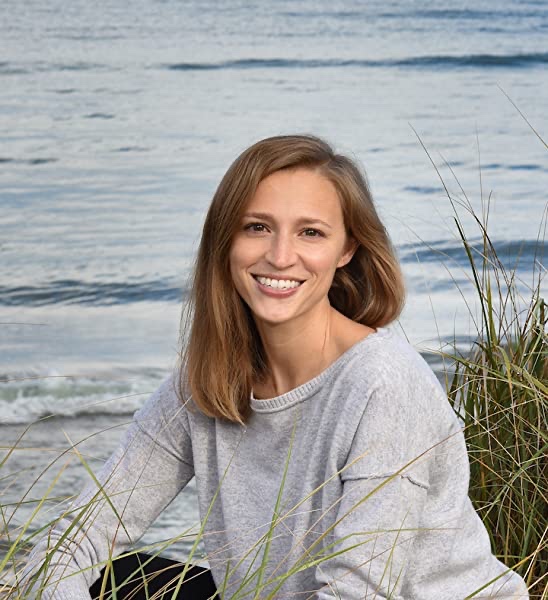
Emily Habeck has a BFA in theater from SMU’s Meadows School of the Arts as well as master’s degrees from Vanderbilt Divinity School and Vanderbilt’s Peabody College. She grew up in Ardmore, Oklahoma. Shark Heart is her first novel.

Published on 3rd August by Jo Fletcher Books

Posted in Publisher Proof

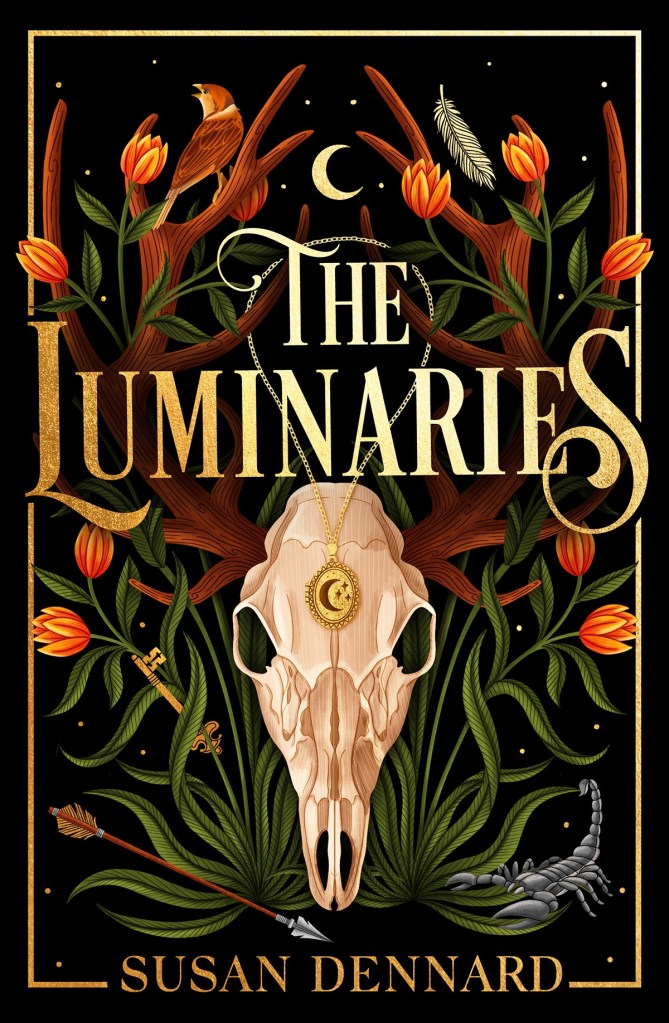
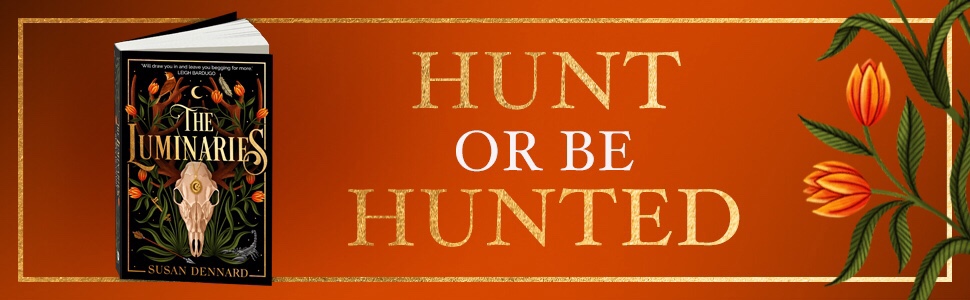
The Luminaries by Susan Dennard

From NYT bestselling author comes a haunting, high-octane contemporary fantasy for fans of The Chilling Adventures of Sabrina. Winnie Wednesday fights to take the deadly Luminary hunter trials in Hemlock Falls’ nightmare-filled forest.

Hemlock Falls isn’t like other towns. You won’t find it on a map, your phone won’t work here, and the forest outside town might just kill you…

Winnie Wednesday wants nothing more than to join the Luminaries, the ancient order that protects Winnie’s town—and the rest of humanity—from the monsters and nightmares that rise in the forest of Hemlock Falls every night. Ever since her father was exposed as a witch and a traitor, Winnie and her family have been shunned. But on her sixteenth birthday, she can take the deadly Luminary hunter trials and prove herself true and loyal—and restore her family’s good name. Or die trying.

But in order to survive, Winnie must enlist the help of the one person who can help her train: Jay Friday, resident bad boy and Winnie’s ex-best friend. While Jay might be the most promising new hunter in Hemlock Falls, he also seems to know more about the nightmares of the forest than he should. Together, he and Winnie will discover a danger lurking in the forest no one in Hemlock Falls is prepared for.

Not all monsters can be slain, and not all nightmares are confined to the dark.

I’m always going to be sucked into a story where my heroine is named Winnie Wednesday, it’s gone straight on my list of potential cat names for the future. Of course one of my other strange interests is monsters, I even studied the Grotesque and Monstrous at university, so the beautifully described and illustrated monsters were exquisite. The novel had immediate appeal and didn’t disappoint. Winnie’s clan are known for belonging to a secret monster hunting society. In fact her family and her entire clan outcasts, thanks to the betrayal of her father. This is a matriarchal society and Wednesday is hoping to become the next clan leader, just like every generation of strong women in her family. Winnie is willing to risk her life on a deadly monster hunting trial, just for the chance to win back her family’s reputation and to be recognised as the foremost hunter of her generation.

The world building here is so creative and I was aware that the author is setting the scene for a series of novels, not a stand alone story. I’m a sucker for beautiful detail and there’s an abundance of it here, in Winnie’s home of Hemlock Falls, the creatures and the action scenes that follow during her mission. The mythology is based on beings that inhabit the surrounding forest, including the spirits who produce nightmares. I loved how Dennard wove an entire bestiary of mythological and paranormal creatures together all inhabiting her mystical forest. Could there be something as yet undiscovered lurking in the trees and if so, how dangerous might it be? Wednesday suspects this being could be a danger, not only to her quest, but to all the inhabitants of her town and their way of life.

As a main character I would suggest it’s impossible not to fall in love with Winnie. Once you have, you’ll be completely beguiled by her quest and you will be behind her all the way. That doesn’t mean she’s perfect, but many of her flaws come from her outcast status. For four years she’s been ostracised by friends and family, so she’s very self-reliant even if she is a little indecisive at times. She’s disconnected from others at an emotional level and doesn’t trust anyone around her. This lack of solid family background shows in the way she doubts herself, but despite this she keeps going. Her determination is incredible especially since the isolation from her society has meant she’s had to train herself with no resources at all. Despite this disadvantage her courage and abilities shine through. Out of the other characters, I enjoyed Winnie’s friendships with Bretta and Emma, because they’re the only people who show support and kindness aside from her mum and brother. There’s also a hint of romance with Jay Friday, a past friend of Winnie’s who could become something more. He’s a bit of a bad boy and I think their dynamic could develop nicely in future novels. The relationships with all other characters are established, but not developed and this can seem a bit slow. This is Winnie’s book though and the author is building our relationship with her, although I could really see the promise in these early interactions.

I loved reading this novel, it’s setting of Hemlock Falls and it’s history, the careful descriptions of each clan and their nightmares, and I liked the characters, too. It felt like a perfect base for an exciting series and I can already imagine how storylines might be expanded as we go on. It was such an easy book to read and the short chapters kept a lively pace, as well as being rather addictive late at night – just one more chapter won’t hurt will it? I’m itching to know more about Jay and his bad boy status, as well as how he and Winnie develop their romantic feelings. Of course there was a cliffhanger ending too and enough loose ends to lead us neatly into the sequel. I’m already looking forward to it.

Published 1st November 2022 by Daphne Press.

Meet The Author

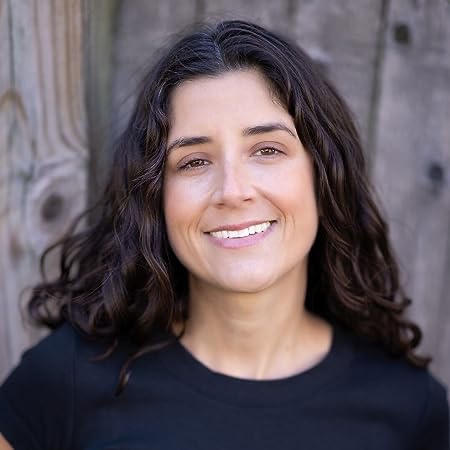
Susan Dennard has come a long way from small-town Georgia. Working in marine biology, she got to travel the world—six out of seven continents, to be exact (she’ll get to you yet, Asia!)—before she settled down as a full-time novelist and writing instructor.

She is the author of the Something Strange and Deadly series, as well as the New York Times bestselling Witchlands series, and she also hosts the popular newsletter for writers, the Misfits & Daydreamers. When not writing, she is slaying darkspawn (on her PS4) or earning bruises at the dojo.

She lives in the Midwestern US with her French husband, two spoiled dogs, and two grouchy cats.

Posted in Netgalley

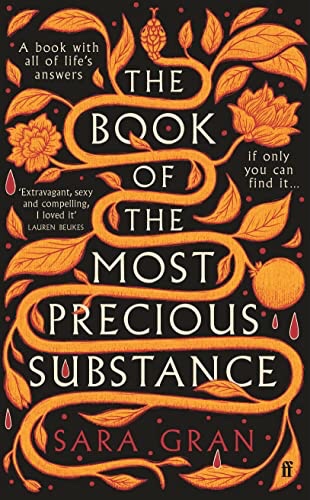
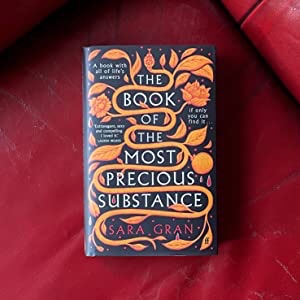
The Book of the Most Precious Substance by Sarah Gran.

This was one of the most unusual books I’ve ever read, with a mix of history, mystery, philosophy, magic and erotica that was most unexpected. Lily Albrecht is a writer turned book dealer who lives in a farmhouse in upstate New York. Several years ago she met husband Abel, the love of her life. Abe was a brilliant man, a writer and professor who inspired others and drew friends and colleagues to their home as guests. Then he started to forget things and after spending a fortune on neurologists, tests and treatments she’d come to accept that Abe was not getting better. It was like a form of dementia. He was now using a wheelchair and was completely mute, and Lily was left grieving for him while he was still alive. With full time nursing care from Awe, Lily is able to travel into NYC to run a stand at a book fair. It’s there she runs into Lucas, a librarian and book dealer friend, and it’s through him that Lily first hears of the book.

They are approached by a third party who knows someone willing to pay upwards of half a million dollars for the book. Some of the most wealthy book collectors in the world tend to covet books about magic or sex. Dissatisfied with the paltry millions they have, they want to look at ancient ways to manipulate and accumulate power. This book has both, something Lily jokingly refers to as ‘sex magic’, but as she listens to how the book works she does feel a stirring. Sex is something she and Abe had to lay aside a long time ago. She’s used to early nights, flannel pyjamas and a bed to herself. She wouldn’t consider herself sexy, but as she sits with Lucas and they talk about the steps to the magic of the book. It contains a symbol, something that’s not quite a circle and not quite a triangle. The first step requires the sweat from a woman’s neck and from there each step requires a bodily fluid elicited during sex. The final step is to anoint the book with the most precious substance – a substance that a woman produces at her most aroused. Once all the steps are complete, the pair will receive the thing they most wish for which is usually money and power beyond their wildest dreams.

Finding this book takes them on an erotic odyssey from New York to LA, the humidity of New Orleans, then on to Munich and Paris. Lily and Lucas will find the book, convince the collector to sell it to their buyer and hopefully make a lot of money. They will also embark on a sexual relationship with no boundaries and no restrictions and neither tells the other what they’re hoping for from the book. Of course the money will be incredible, it would help Abe enormously, but Lily wants something more. She wants Abe back. More than that, she wants Abe to return to himself with all the vitality, intelligence and allure he’s always had. She wants them to spend evenings talking about books and watch him hosting friends at their home. She wants Able to have his life back. In the meantime she’s going to enjoy her first vacation for a long time, staying in five star hotels and experimenting with Lucas while they try to find the elusive book.

This is an incredible, escapist, fantasy and travelogue, that could have been quite shallow and empty without the skill of the author. She has put so much genuine emotion and compassion into the story, along with the gritty realism of living with a loved one who is leaving you piece by piece. Lily’s memories of Abe and their relationship are heartbreaking when you realise he is now a motionless, mute, man unable to do anything but watch TV. Lily emphasises the loss of this man’s intelligence. He looms large in her memory and there’s a little bit of hero worship with the love she has for him. She describes the loss of his voice, their friends slowly disappearing, the loneliness of separating their sleeping arrangements and the torture of Abe being there, but not. It’s heartbreaking and I’ve been through exactly this experience as I slowly lost my husband fifteen years ago. Perhaps this is why I empathised with Lily so strongly and I understood why she was taken in by this adventure and by being desired for the first time in a long time. It’s like watching a flower bloom as she slowly awakens again, but even though I could understand her need I worried that somehow the book was exploiting her vulnerability. I didn’t get to know Lucas as well as Lily, so his motivations were slightly unclear. He mentioned being used to a five star lifestyle, but his money running low. This felt greedy or shallow when compared to Lily’s motivation. I worried that most people wanting to acquire the book were greedy and materialistic and there would be some sort of come-uppance, but I didn’t know if Lily deserved that. Each time they performed a step, the magic felt dark and it seemed to have an addictive quality. A new avenue would open up as if the book was drawing them closer and making their path easier. It wanted to be found, but why?

The pace towards the end really picks up and I was racing through the action with my jaw dropped open. However, it was the chapter after Paris that really hit me emotionally. It emphasised how much we look at the people we’ve lost with rose tinted spectacles. No matter how much we feel nostalgic for a certain place and time in our lives, it can’t be replicated. It reminded me of the saying ‘you can’t wade into the same river twice; because you have changed and so has the river’. I’ve read erotica where it’s all sexual acts with barely any story in between. This was an incredible story that I could have read happily without the sex, but to make the sexual acts an integral part of the story and the search was clever. The author has achieved an intelligent and fantastical book, that succeeds in being both erotic and a fascinating mystery.

Published 30th August 2022 by Faber and Faber

Meet The Author

Sara Gran is the author of The Book of The Most Precious Substance. Previous work includes Saturn’s Return to New York, Come Closer, Dope, Marigold, and the Claire DeWitt series. She is the founder of small press Dreamland Books and writes for television and film.

Posted in Squad Pod Collective

Heart of the Sun Warrior by Sue Lynn Tan

I never stop counting my lucky stars that I’m a member of the Squad Pod Collective – a group of friends formed organically on Twitter who have formed a book blogging community. Not only are they lovely women who support each other daily they are very talented writers and book reviewers. Each month we have a book club pick and I’ve been lucky enough to have time at the end of the year to read this stunning fantasy duology back to back and I’m so glad I did. I loved escaping into the clouds in Sue Lynn Tann’s first instalment, Daughter of the Moon Goddess because it lured me into a richly evocative world of goddesses, monsters, warriors and Chinese mythology. I’m so in awe of this author’s imagination and I was fascinated to see the next part of Xingyin’s journey. The first book has really set the scene for this sequel in terms of the relationships and character developments that are immediately picked up where we left them last time. We meet Xingyin, now reunited with her mother and living contentedly back on the moon. However, this is only a short moment of peace because there is a power shift in the Celestial Kingdom and Xingyin is forced to flee from her home again and defend the realm.

The author’s vivid imagination can be seen on every page, with such lush description that I fully believed in this incredible world she builds, but her attention to detail doesn’t stop at the setting. Once again she takes her heroine through ordeals and personal choices that build real character growth. Her journey is an emotional one and her growing maturity is shown in the tough decisions she makes both in her quest and in her personal life. I felt that the romance angle was more successful this time, with all characters in the love triangle showing more maturity. This could be just my age and experience though and young adult readers may well identify strongly with the set up of this storyline in the first book. Here she has to face betrayal and I was caught up in this powerful dynamic that threatens to tip over into enemies, rather than potential lovers. Her sadness and conflicted feelings over Wenzhi’s betrayal work well and he’s still very much part of the story. In my opinion he brings that spark of chemistry too. He really wants to make things right with Xingyin and shows this by devotedly sticking by her side to be there whenever she needs him. There is less instant chemistry between Xingyin and Liwei, but there is strong friendship and loyalty. He shows he is willing to defy his parents for her which removes the main obstacle to their potential romance. The mental push and pull between these very polarised relationships was definitely more engaging this time and I became more and more interested to see who, if anyone, she would choose.

The pace of the novel did ebb and flow, with a quieter middle section followed by a helter -skelter rush towards the conclusion. The battle sequences are incredibly effective because they feel dynamic and there’s genuine peril – characters do die here. The decision to make this a duology was a clever one. As the novel rushed towards it’s conclusion I worried that it might feel jumbled or sudden, but everything worked and I came away feeling satisfied. In many ways The Heart of the Sun Warrior worked better for me than the first novel, taking the story to new places with higher stakes and life-changing consequences. There was more tension, a faster pace and a few twists and turns to surprise the reader. As mentioned the romance seemed better worked out here too, but everything Sue Lynn Tan did well in the first novel is maintained. We didn’t lose any of the luscious description and lyrical language that she does so well, drawing the reader into her magical world. As with the first novel though, it was the heroine’s self-growth that I enjoyed most and those life lessons extended to the other characters too, who go on their own inner journey. Of course there’s the strength and courage you would expect from warriors, but that conflict also brought lessons in loss and coping with grief. Each character had to practice forgiveness and learn what it means to give unconditional love. These deeper emotional elements really elevated this book for me and along with the strength of Chang’e and Xingyin’s mother/daughter relationship, they give a very magical world it’s human heart. Sue Lynn Tan should be incredibly proud of these debut novels and her beautiful, poetic writing style. What finishes these books off beautifully are those stunning covers, both of which would look perfect as framed book posters on my bedroom wall (if anyone’s listening).

Published 10th November 2022 by Harper Voyager

Meet The Author

Sue Lynn Tan writes stories inspired by the myths and legends she fell in love with as a child. After devouring every fable she could find in the library, she discovered fantasy books, spending much of her childhood lost in magical worlds.

​Daughter of the Moon Goddess is her debut, the first in the Celestial Kingdom duology – a fantasy of immortals, magic and love, inspired by the beloved legend of the Chinese moon goddess, Chang’e. Its sequel, Heart of the Sun Warrior, is also out now.

When not writing or reading, she enjoys exploring the hills, lakes, and temples around her home. She is also grateful to be within reach of bubble tea and spicy food, that she unfortunately cannot cook.

Find her on Instagram and Twitter @SuelynnTan, or on her website http://www.suelynntan.com