Posted in Netgalley

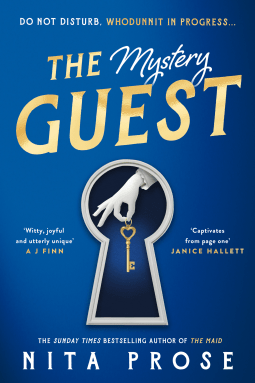
The Mystery Guest by Nita Prose

Molly the maid is back! Back in a new adventure, but still living in her grandmother’s apartment, which she now shares with partner Juan Marco, and still working at the Grand Regency Hotel. Juan is on a long awaited trip, visiting family, but Molly decided to stay behind in order to supervise a really important event at the hotel. Mystery writer Mr J.D. Grimthorpe is using the newly decorated Art Deco tea rooms to make an announcement to his fans and the press. Molly knows that Mr Grimthorpe is a very particular man, a knowledge that goes beyond the average bit of research, so it must be her that oversees how he’s looked after. Against most people’s judgement she has chosen her protege Lily to prepare his tea cart, because she’s sure that she’s passed on the requisite skills for her to make a success of it. However, at the crucial moment something goes badly wrong. As Mr Grimthorpe reaches out to his personal honey pot to add just a little sweetness to his tea, a hush descends. As he takes a drink however, chaos ensues. He suddenly plummets to the ground, dead. Molly knows that Lily will be terrified especially since it’s ‘always the maids fault.’ As a detective appears to take on the case, Molly’s skills in observation and brilliant memory turn out to be useful. Yet Molly has another insight that she hasn’t disclosed to her boss or the police. She has met J.D. Grimthorpe before and her memories of that time are not the most flattering to the famous author.

Nita Prose gives us a dual narrative, but both of are Molly. We follow the aftermath of Mr Grimthorpe’s death, but also go back to Molly’s childhood when she is taken to the Grimthorpe mansion by her grandmother who is their maid. Neither narrative is simple, but Molly’s different way of observing the world and her incredible memory create an exciting and complex journey. In one we see Molly’s childhood perspective and we understand that wide-eyed wonder of visiting such a rich house with all its treasures including a Faberge egg! Through a mishap with the egg, Molly is assigned a job in the silver room, polishing all the cutlery. This is supposed to be a punishment, but Mrs Grimthrope has no idea that cleaning is Molly’a idea of fun. I loved following this unique little girl as she uses her privileges to get into every nook and cranny of the house. It’s very atmospheric, quiet with just the steady tap tap of the keys on a typewriter as Grimthorpe creates his next masterpiece. Usually she uses his well stocked shelves to read, particularly the classics like Great Expectations. Molly discovers that if she attempts to take a particular book from the shelf it opens a secret door into his study. This proves to be a vital discovery that will shape their lives forever.

In the present, Molly is making great progress by thinking back to that time all those years ago for clues. When Grimthorpe keeled over nobody noticed what happened to the tea cart, but when it’s inspected they realise two items are missing – his particular honey pot and spoon plus a signed copy of his latest book. With so many super fans and book bloggers around that day, it could have been one of a hundred people, either looking for a macabre souvenir or looking for a good way to make some quick money – the moment Grimthorpe died his books suddenly became more valuable, especially the one he’d only just signed. Molly wants to check out local pawn shops and book collectors to see if anyone has recently brought the book in. Meanwhile suspicion falls on Lily as she knew it would, she needs all the support someone like Molly can give her.

I love Molly as a character and her development in the last novel was an important part of the story. Here we see her take another person under her wing. In the interviews, the others were not impressed by Lily but Molly knew she had all the skills to become the perfect maid. She might be quiet and introverted but that meant she wouldn’t waste time talking with colleagues or guests. She might have a polite and deferential way of talking to the customers too. Molly can clearly see something of her old self in this nervous and slightly strange girl. Molly is now head maid so has the hiring and firing power, and she’s certainly found some brilliant staff for the Regency so she is trusted. Lily shines under Molly’s directions which is lovely to see, but other members or staff are suspicious of her, especially Cheryl who is a loud and greedy chancer! I thought Lily’s manner became confusing, especially after Grimthorpe’s death. She keeps repeating that ‘loose lips sink ships’ but not elaborating on the meaning. She needs careful handling and Molly knows how to manage her. I loved how impressed the detective is with Molly, and the respect that builds between them.

Mr Preston, the doorman at the Regency, is still there and still having lunch every Sunday at Molly and Juan’s flat. His relationship with Molly becomes more significant here, not just because of the investigation but because Molly is delving into her past. Mr Grimthorpe had a very closed circle of people he trusted, including his wife, Molly’s grandmother and the secretary who faithfully turned his notes and verbal ramblings into a proper plot. It was her fingers making the steady clacking sound that was the heart beat of the house. Delving this far back brings up memories for Molly, including the reasons they were banished from this inner circle. She also has to process memories of her mother, someone barely mentioned during her upbringing. Despite having a happy and healthy family unit with her grandmother, Molly still missed her mum desperately and always wondered what happened to her. The mystery is interesting and kept me guessing throughout, with me almost thinking Nita might do something wholly unexpected and pin the blame on Molly. However it’s the love of Molly that will draw readers to this story and the fact that the mystery fills in some holes in her background is a huge bonus. I found myself finishing the book, hoping that Nita Prose would be kind enough to give us at least one more adventure with this charming and unique character.

Out on 18th Jan from Harper Collins

Meet the Author

Nita Prose is the author of The Maid, which has sold more than 1 million copies worldwide and was published in over forty countries. A #1 New York Times bestseller and a Good Morning America Book Club pick, The Maid won the Ned Kelly Award for International Crime Fiction and was an Edgar Award finalist. Her second novel, The Mystery Guest, publishes in November 2023 in North America (January 2024 in the UK). Prose lives in Toronto, Canada, in a house that is moderately clean.

Posted in Squad Pod

Her by Mira Shah

This has been my ‘in the bath’ book for the last three or four days and I don’t mind saying that I have been like a prune during that time because I kept reading ‘just another chapter’. I also drove my other half crazy by topping up the hot water every time I gave in to the story. I have to follow an unusual reading regime in my house. It was built in 1787 and has a lot of ‘quirks’, including the emptying of my entire tub of bath water into the kitchen below instead of the usual plumbed in route. A further quirk is that if I take my iPad into the bathroom to read from Kindle or NetGalley, it simply switches itself off. I can sometimes bypass this by putting the iPad into airplane mode before going into the bathroom, but it’s not a fail-safe method. So I tend to read real proof copies in the bath and downstairs, keeping my iPad for bed where I don’t want to wake my other half. I don’t like to put on a reading light or do what my sister-in-law does and go to bed in my brother’s night fishing hat with built in head-lamp. She didn’t like to keep him awake by reading with a light on in their camper van.

So now you know that we’re all a bit odd in my family, I’ll come back to the book, one that grabbed me straight away and kept hold of me till the final page. There’s just something compulsive about it. It could be the short chapters that are so snappy and often end on a cliffhanger. It could be the alternating narration between neighbours Natalie and Rani who live across from each other. The women have such strong narrative voices and are both in completely relatable positions in life; Natalie is the beautiful neighbour with the killer job and the lovely house across the road that Rani has been coveting since she moved here. In fact as soon as the For Sale sign went up she was over there with a different name and address, swanky clothes and great back story in order to view it. So when Natalie moves in Rani knows exactly which high end work tops she butters her toast at in the morning and the surprisingly sheltered garden made for children to play in. We all think the grass is greener at times, but few of us would go to the lengths that Rani will.

Natalie does appear to have everything going for her. She’s undeniably beautiful with honey blonde hair and designer clothing. Naturally she’s the high flyer in a corporate law firm, with the opportunity to become the youngest ever woman at her firm to become partner. Her handsome and older husband Charlie is attentive and thoughtful. The pair married in Tuscany and Charlie is keen to start a family, hence the beautiful home in just the right area. Sometimes, when people really love a house they’ve looked at, they might claim to feel immediately at home there or be able to see them living in these perfectly curated spaces but for Natalie it’s less of a feeling and more of a certainty. She has lived here before, right at the beginning of her life, before her dad left and when she had an imaginary friend, Noemi, to run around with. She knows she was running a risk not telling Charles, but when the elderly next door neighbour doesn’t seem to recognise her she seems to have a got away with it. What is luring her back there? Her mother Luella is unlikely to enjoy a trip down memory lane, in fact she’s the first to remind Natalie how her dad left them in a terrible state, financially as well as emotionally. She likes to remind Natalie what a good man Charles is: all Charles wants is to settle and have a family; to look after Natalie; to take the burden of her high-powered career away; help her cultivate the right sort of friends. Surely that can’t be bad?

Rani lives opposite in her cramped flat, being a full-time mum and wearing supermarket clothes. She watches Natalie settle in and we can see a perfect psychological storm starting to build. Rani will happily admit that, at times, Natalie’s lifestyle must be hard to keep up. Although that revelation only surfaces when she realises it does take work to be that put together and professional. At first though, Rani feels almost as if Natalie is a fantastical creature who simply drifts out of bed with not a hair out of place, naturally smelling of roses and never working for her enviable figure. Rani feels out of place next to her, in her daily mum uniform of leggings and a t-shirt. However, these thoughts come from Rani’s anxieties and feelings of inadequacy. Although she loves her beautiful girls, she does miss going to out to work and having something that is entirely hers. She also feels disconnected from Joel, although she loves him the years of babies and toddlers have wiped out any spontaneity or time for themselves. When Joel commits a huge betrayal Rani has a huge choice to make. Can they find a way back to each other?

Just like Rani, we are drawn in more and more by Natalie’s life. Cleverly the author has made sure that we get to see more than Rani, through Natalie’s chapters we get her inner thoughts while everyone else is still seeing the perfect exterior. We know that she’s having nightmares again, full of people close to her but who don’t look quite right. Noemi is back too, breaking into her thoughts and becoming so tantalisingly real. As the two women become friends, I was actually a little bit scared for Rani. She doesn’t know what she’s getting into, although she has an inkling the perfect marriage to Charles may not be all it seems. I was unsure where the danger was coming from, was Charles much more dangerous than he at first appears or is Natalie’s strange past all in her imagination? Why did she choose to live in this house, when her childhood seems like an endless nightmare and Luella comes across as a harsh and controlled woman? It’s as if she adopted the Royal family’s motto for her family; ‘never complain, never explain’. Rani is the first true friend Natalie has had in her adult life, so she’s not always as open as she could be or is so used to thinking what Luella’s take on the situation might be, she comes out with something that sounds wrong. As Natalie starts to enjoy a little freedom, what will Charles’s reaction be and what dangers might the two women face if they start to dig up her past? This book is so well paced and the tension just keeps building. I enjoyed the female characters in the book and the unflinching depiction of domestic abuse that forms part of the story. I found Rani a more engaging and rounded character than Natalie, but of course she would be – none of her past is missing. Natalie comes across as a borderline personality, she has no sense of her own identity and has always gone along with the strongest person in the room, adopting their values and attitudes as her own. Rani has a lot more to lose, not material possessions but a family and roots that she knows keep her grounded. It’s knowing the threat and knowing how much Rani has to lose that kept me reading, even if the bath water was getting a little cold.

Meet the Author

Mira V Shah is a writer, former City lawyer turned legal editor and the proud owner of three good dogs. She is the daughter of Indian African parents and lives in North London with her husband and the pack – merely a few miles from where she grew up, although she often dreams about retiring in Italy should her intermittent lottery entries prove successful.

She wrote her first ever novel in 2020 during the first UK lockdown after studying on the Curtis Brown Creative novel writing course. HER was published by Hodder and Stoughton in November 2023.

Posted in Squad Pod Collective

Silent Waters by L.V.Mathews

Is blood thicker than water?

At five a.m. one summer’s morning, police diver Jen Harper wakes to find herself submerged in the silt of a river with no memory of how she got there.

Forty-eight hours later, she’s called to dive in the same river in search of a missing woman, Claudia Franklin.

But for Jen, this is no ordinary job. Her and Claudia’s families were entangled for decades – there is unresolved resentment between them, unspoken secrets.

Jen hasn’t seen Claudia for twelve years now. Or has she?

This was an interesting and complex novel that feels part thriller and part family drama. From the mysterious opening, this is a book full of secrets and lies. It’s a slow burner and I wasn’t sure at first. I found myself more drawn in by the characters involved in the story. Told through Jen, a police diver, it was a perspective I’d never come across before in crime novels. My brain immediately went back to 2023 to the disappearance of Nicola Buller, who went to walk her dog as usual one morning and never came home. The unusual circumstances- her dog left alone, her phone left on a bench on an open work call – caused a media frenzy and people spread wild theories on social media. A diver, who was contracted for searches in waterways by other police forces, offered his services direct to the family saying ‘if she’s in there, I will find her’. He didn’t. Sadly she was found days later. Water behaves in unusual ways and that mysterious movement of tides can take bodies and conceal them for days. Jen’s work was a fascinating backdrop to the disappearance of local woman Claudia Franklin from the small town of Bourne. After two days with no sign of her, police divers are called to search the river – Jen included. However, Jen doesn’t disclose her family’s complicated relationship with the Franklins, or that where a member of the public has reported seeing something in the water is exactly where she woke up after sleepwalking.

Jen is intriguing and it was interesting to experience what could be seen as quite a macho job, from a woman’s perspective. Jen is definitely one of the boys, she doesn’t expect special treatment and even changes into her dive gear with the men, in the back of the van. There are also parts of the job where Jen has an advantage, she is a slimmer build and has smaller hands for tight spaces like drainage pipes. Jen’s also a mum and that makes such an interesting and varied job harder. She only has two people she can trust to step in and look after her little boy when she gets the call, her brother and her best friend. The men in her team just see her as one of them, but they can do the job they love without the mental load of running a household and arranging child care. Jen has to do both and I had some admiration for her courage and resilience, while never being completely sure of what she’s capable of. That ambiguity in Jen’s character, plus the strange unsolved nature of her sleepwalking left her so open to interpretation.

I found the best way of reading this story is not to try and solve things. I let it wash over me and when the twists happened, they were a revelation. From a slow start, the author did let the tension build beautifully, and the revelations don’t stop coming. What I loved was how the author kept our knowledge of the case within limits. Unlike some protagonists in crime fiction, Jen stays within her role. We only know what the police divers know and it kept us with the hard evidence rather than speculation. It brought authenticity to the case and we could be sure of what had happened, showing a depth of research into diving and forensics. In the background we are building up a picture of life in a small town, where everyone knows everyone else and pasts are intertwined and complicated. Having lived in a small Lincolnshire town since I was nine years old, I know how this works. I thought the author had created a great balance between the professional and the personal, the crime and the characters. Emotions of guilt, rivalry and obsession swirl around alongside the theme of protection, especially of those we love most. This is a story that slowly takes hold of you, it’s multiple strands like the weeds in a river that wind themselves around you and pull you under.

Published by Mountain Leopard Press 22nd June 2023

Meet the Author

For over ten years L V Matthews worked both in domestic and international sales for major UK publishing houses, before leaving to pursue a career in writing.

SILENT WATERS is her newest thriller novel (out July 2023)

THE TWINS was a Richard and Judy Bookclub pick.

Also available, Liv’s debut, THE PRANK.

Find Liv on:

Twitter @LV_matthews

Instagram @lv_matthews_author

Posted in Netgalley

The Island of Longing by Anne Griffin

One unremarkable afternoon, Rosie watched her daughter Saoirse cycle into town, expecting to hear the slam of the door when she returned a few hours later.

But the slam never came.

Eight years on, Rosie is the only person who believes that her child might one day return home. Will this belief come at the cost of everything she has left?

My previous work in mental health and my counselling training always lead me towards books that either portray dramatic life events or feature characters that are deep and three dimensional, with a flourishing inner life. Anne Griffin delivers this and more, so I was interested to read her latest novel because it goes into the character’s reactions to a highly dramatic and distressing event. The worst thing that can happen to a parent is to lose their child and this happens to Rosie. Her daughter, Saoirse Dunne, disappeared eight years ago and since then she has been unable to think straight or get on with life. Her heart and spirit are broken, So she heads back home, an island off the coast of Cork. There she’s hoping to find solace and some sort of healing from the natural world around her and the community she knows on the island. She and her husband Hugh have grieved differently over the last eight years, the loss has slowly separated them emotionally and now they continue to need different things. When we see a comparison of their relationship, before and after their daughter’s disappearance, the difference is stark.

Rosie still holds on to the belief that Saoirse might return and she isn’t ready to let go of this. She’s also taking her son Cullie with her and they share so those questions many people ask in grief – ‘what if I’d just…’ and ‘if only I had …’. There’s a sense of survivor’s guilt in these thoughts and I was hoping that they would both find some peace too. Rosie’s decision to return home to where she grew up and even her old work operating the ferry to the mainland, could be seen as a way of cutting out the most painful part of my life and returning to a time when life was more simple. When she’s operating the ferry she feels closer to her daughter than she has in a long while. Of course this gives her solace, but it’s also a barrier to her accepting reality.

I really enjoyed the sense of place created by the author and it’s meaning in the novel. I could visualise Roaring Bay Island completely and the surrounding sea even feels soothing. It’s a refuge, but only for the summer. I worried that after this idyllic interlude in her grief, going back to reality would be a terrible shock. The author acknowledges this, writing that it’s merely a chance to ‘step out of the world for a while’. I loved the freedom she feels while piloting the ferry, with the rocking motion of the waves like a cradle. It was wonderful to witness the kindness and thoughtfulness of the people on the island too. Is this something she isn’t getting in her current home. The place where Saoirse is still missing.

The author keeps Saoirse’s disappearance at the heart of the novel and the family’s experience of loss and pain is devastating but beautifully done. I have experienced loss and this was so raw and real, with incredibly authentic dialogue. I did feel tears coming here and there because Rosie’s feelings were so close to my own. It gives the reader a window into an experience they hope never to share. Please don’t be put off though, there are moments of lightness in the community, they really are an example of humanity at it’s best. There’s also such resilience in the characters, in the face of a loss that is unthinkable. When she returns from the island, she’s moved forward emotionally and Dublin feels like a dark place. It feels like the past. I loved the author’s addition of a sentence from Saoirse, on it’s own page and in a larger font. This lets us get to know Saoirse a little. It also seems to amplify that feeling that she’s gone, yet always there for those who love her. I won’t say this is an easy read. In fact some people may be uncomfortable witnessing the family’s grief. If people do push through that, they’ll gain an understanding of a universal human experience. We all experience loss. For people like me who have had their lives, like Rosie’s, divided into a before and after, this type of emotionally literate writing is a God send. A comfort and a reminder that we’re not alone.

Meet the Author

I’m the international bestselling author of three books: ‘The Island of Longing’, 2023, ‘When All Is Said’, 2019, and ‘Listening Still’, 2021.

I’ve been published all over the world, from the UK to the US and from Taiwan to Lithuania. It has been published in twenty-five territories. In 2019, I was honoured to be awarded Newcomer of the Year at the Irish Book Awards.

To me, writing is all about great storytelling and I hope you find that within the pages of my books, from Maurice Hannigan in ‘When All Is Said’ who sits to the bar of his local hotel to raise five toasts to the five most important people in his life, to Jeanie Masterson in ‘Listening Still’ who is struggling under the weight of obligation to the family funeral directors, and to Rosie Driscoll trying to find her daughter Saoirse who has been missing for eight years.

Thanks so much for all of the great support.

From Anne Griffin’s Amazon Author Page 1/11/23

Posted in Netgalley

Lady McBethad by Isabelle Schumer

I was first introduced to Macbeth thanks to my crush on Sean Bean. I was living in Milton Keynes at the time and studying for my English Lit degree. We knew that Macbeth was coming in our final year and when we found out that Sean Bean would be playing the title role at our local theatre we had to see it. It was a production that had some unusual choices, but an incredibly clever banquet scene that has stayed with me. However, it was the more recent Michael Fassbender and Marion Cotillard film that I found absolutely spellbinding and moving in it’s depiction of Macbeth and his wife as two grieving parents. It gave some context to their actions in the play, particularly Lady Macbeth who is often depicted as a power hungry harpy who coerces her husband into a violent act that he’s unable to live with. I’ve always thought Lady Macbeth was done a disservice, depicted rather like Eve in the garden of Eden as a woman dissatisfied with her lot who convinces her husband to eat apples from the only tree God expressly told them not to touch. According to most dramatists she’s greedy, dissatisfied and power hungry. She was ripe for a rewrite and here it is in Lady Macbethad.

Gruoch has druid heritage and her grandmother prophesied that she would be Queen of Alba. She believes in this prophecy and will try her best to fulfil it. She was born the daughter of a King, even though her father has now been ousted. Her heart and desires are with Macbeth but she is the betrothed of Duncan, the heir elect and marriage to him should enable her to fulfil her destiny. Yet life at court comes with it’s difficulties, it’s lonely and uneasy to know every woman at court would do anything to be in her position. He coronation approaches, with the women keeping her at a distance and giving her the cold shoulder. An unexpected turn of events tears her plans apart and she’s forced to run for her life and leave her ambitions for the crown behind. Now she must fight just to survive, never mind the crown.

This was a really interesting take on the tale of Macbeth and a woman whose motivations are always unclear. There’s a feel of Eve about her, it is Macbeth who wields the knife yet in many depictions I’ve seen, the emphasis is on Lady Macbeth as the instigator of the killings. The evil temptress whispering in the blameless man’s ear. I was intrigued by a retelling of the story, based on a real woman who did marry a man called Macbethad who became the king of Scotland. The book starts as a fiction about Gruoch, but becomes an origin story for the character of Lady Macbeth. I thought these two women were brought together well, creating one character. She does have aspects of character that Shakespeare establishes in the play, becoming a scheming, power hungry woman. She’s also rather paranoid and even violent in her own right. However, whereas in the play we don’t know why she is this way, here we get her back story and have an opportunity to understand her a little better. Even if we don’t necessarily like her.

Macbethad seemed to be more balanced and measured in character. He stands out for this, which seems an irony when I expected to respond to Gruoch more sympathetically. There are other characters in the book based on real people from history, covering their family allegiances and their conflicts. I think it’s so difficult to marry historical facts with a fictional story in this way and I was impressed with the author’s attention to detail. She sets the book firmly in it’s Scottish setting by using Scottish Gaelic, as well as the stories and folklore of the area. She brought to life the conflict between the established pagan traditions and the growing practice of Christianity, something I found really interesting. Her descriptions of the place felt vibrant and alive, I could actually see it. She is equally vivid when it comes to the more brutal aspects of the story. There were parts of this book that I enjoyed immensely and I would definitely recommend it to those interesting in historical fiction and Shakespeare.

Meet the Author

Isabelle Schuler is a Swiss Hawaiian-American actress, writer and former Waterstones bookseller. She has a BA in Journalism and her screenplayQueen Hereafter was longlisted by the Thousand Films Screenwriting Competition in 2019. In 2020, Schuler adapted Queen Hereafter into her debut novel, Lady MacBethad. She lives in Hertfordshire.

Posted in Netgalley

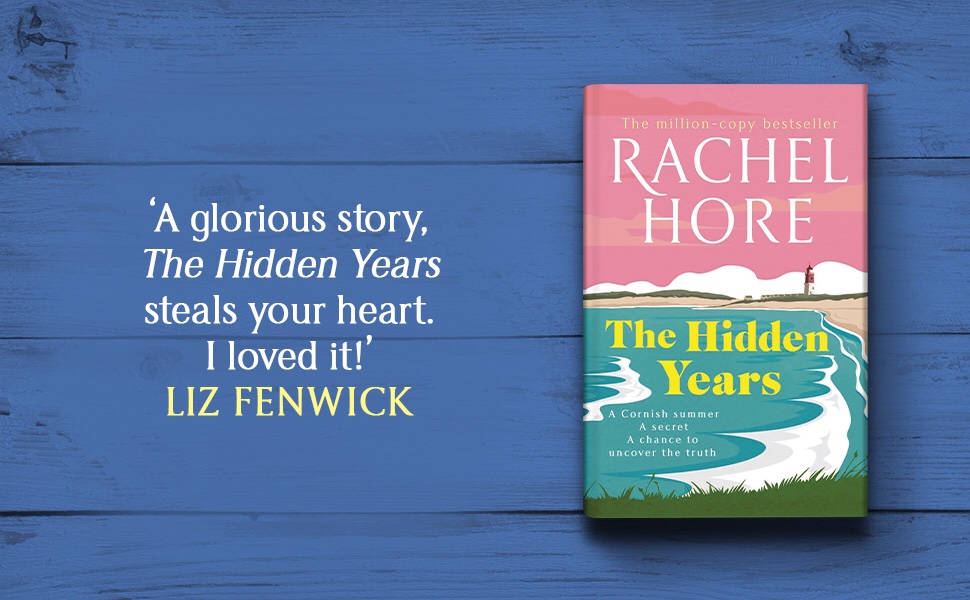
The Hidden Years by Rachel Hore

The Hidden Years is a tender-hearted and bitter sweet tale about how life can take unexpected turns. In fact John Lennon was right, life is what happens when you’re busy making other plans. She also explores how patterns emerge in life: we might find ourselves unconsciously choosing a path that repeats a pattern or takes us to somewhere that has a hidden importance in our lives. Belle has done something very impulsive. From the moment she met Gray they had a connection and now he’s invited her to Silverwood, a mansion next to the Helford River, where a group of his friends are living a different life. They are a creative collective, living as self-sufficiently as possible but dependent on the kindness of the house’s owner. Luckily he’s very fond of his nephew Arlo, one of the residents at Silverwood. As she leaves university and misses her exams for this uncertain life she has no idea that Silverwood holds secrets and some of them are quite close to home.

The author tells her story through a dual timeline; Belle’s story set in the 1960’s and then Imogen’s story, a young woman who visits Cornwall in the 1940’s. Imogen has been working for an agency that secures placements for young women who work with children. It’s mid- WW2 and Imogen is tasked with taking two young brothers down to Silverwood, a boy’s boarding school in beautiful and relatively safe surroundings. She soon finds out that life can change in an instant when she’s asked to temporarily for the school’s Matron who has fallen ill. Imogen takes the booking and finds she loves working with the young boys in the sick bay, feeling unwell and far from home. So, when she’s offered the chance to stay on she decides to take a chance and loves her work. She also makes friends with one of the teachers, Ned. They explore Cornwall on their days off and as the war comes ever closer Imogen makes the huge choice to serve her country, by training in nursing at a hospital in Truro. A bomb narrowly missing the school pushes her to use the skills she’s gained for the war effort. Meanwhile in the 1960’s Belle settles into life at Silverwood with Gray’s friends, trying to help out where she can and joining in with meditation sessions where the incense is more than a bit potent. She’s drawn naturally to Mrs Kitto, a lady of her parent’s generation who lives in a cottage on the estate. She’s slightly taken aback by Belle, because she reminds her of someone she once knew. Their afternoon visits become story sessions as Mrs Kitto tells Belle about a woman she used to know, back in the war.

I enjoyed both sections of this lovely story. Often with dual timelines the novel suffers because one narrative is much stronger than the other. Here I thought the author got the balance just about right. Since Imogen’s story is set during WW2 there’s obviously heightened drama and the decisions made can be life and death. However, I think the differences in the timelines complimented each other. The difference in moral expectations and behaviour is huge. There’s also a difference in how people make choices, creating a huge generation gap like the one between Belle and her parents. The fact that she leaves uni with her lover and is clearly living with him at Silverwood is difficult for her parents to understand and would have been unthinkable in the 1940’s when they were Belle’s age. It would be understandable to think that the 1960’s characters have it so much easier compared with their parents. Yet I could empathise with Belle, in fact without WW2 her generation wouldn’t have the freedom to make choices in the same way. Her father has high expectations for her and he wants her to buckle down and make life choices. After all, his generation had to lay their lives and their hearts on the line with often very little understanding of the person they were making promises to. Belle’s not quite ready to make a choice. Should Belle follow duty, when she could be an idealist and follow her heart? Singing with Gray’s folk band The Witchers comes very naturally to her when she’s got over her nerves. There are so many opportunities, how do you know which is the right path?

Imogen is doing her duty in her working life, but her heart is torn. She has a best friend in Ned. They love the same things, they’re comfortable together and have a similar outlook in life. She knows he’s starting to feel more for her than friendship, but also teaching at Silverwood is the rather enigmatic Oliver Dalton and there’s an immediate frisson between them. Although they don’t spend any time together, the pull towards him is hard to resist. When they finally do get a chance to spend time together during her work in Truro, could their spark develop into something more lasting? I found myself rooting for Ned, because he’s so kind and supportive. I thought they’d make a great team. There’s no denying her attraction to Oliver, but he’s more of a closed book and I felt life with him might be more turbulent. Which way would she choose?

I know this area of Cornwall well and it was very easy to imagine myself there as the author explores the scenery. The area was a Mecca for artists in the 1960’s and I loved the ideas that the Silverwood residents had for the place. It’s ripe to be an artistic retreat, offering creative and self- care workshops such as meditation. It’s such a now idea that I wanted to do it myself. I thought it was interesting how Belle reacted to these ideas, making decisions about which parts she’s supports and which isn’t for her. She’s intervened with one resident’s treatment of her son and calls an ambulance rather than watching her continue with homeopathic medicines and see the boy suffer, or perhaps die. That takes bravery and faith in her own convictions. When her family turn up in Cornwall will she get the space she needs to work out what’s best for her. As to Mrs Kitto, how does her story connect to Belle and what impact will this wartime story have on her choice? The historical detail shone through and seeing through Imogen’s eyes the arrival of the American soldiers, the preparations along the Cornish coastline for the D-Day landings and the bombing of Truro really does bring it alive. There’s a realisation that we’re all the product of our experiences and trauma can take a long time to heal, even several generations. I thought this was such such a bittersweet ending and it left me feeling a bit autumnal, sort of melancholy but glad for the experiences of love both women had known.

Out now in hardback from Simon and Schuster U.K.

Meet the Author

I came to writing quite late, after a career editing fiction at HarperCollins in London. My husband and I had moved out to Norwich with our three young sons and I’d had to give up my job and writing was something that I’d always wanted to try. I originally studied history, so it was wonderful finally to put my knowledge to good use and to write The Dream House, which is partly set in the 1920s in Suffolk and London.

Most of my novels are dual narrative, often called ‘time slip’, with a story in the present alternating with one set in the past. I love the freedom that they give me to escape into the past, but also the dramatic ways in which the stories interact. My characters are often trying to solve some mystery about the past and by doing so to resolve some difficulty or puzzle in their own lives.

The books often involve a lot of research and this takes me down all sorts of interesting paths. For The Glass Painter’s Daughter I took an evening class in working with coloured glass. My creations were not very amazing, but making them gave me insight into the processes so that my characters’ activities would feel authentic. For A Week in Paris I had to research Paris in World War II and the early 1960s through films and books and by visiting the city – that was a great deal of work for one novel. Last Letter Home involved me touring a lot of country houses with old walled kitchen gardens in search of atmosphere and to explore the different kinds of plants grown there.

Places often inspire my stories. The Memory Garden, my second novel, is set in one of my favourite places in the world – Lamorna Cove in Cornwall – which is accessed through a lovely hidden valley. A Place of Secrets is set in a remote part of North Norfolk near Holt, where past and present seem to meet. Southwold in Suffolk, a characterful old-fashioned seaside resort with a harbour and a lighthouse, has been a much loved destination for our family holidays and has made an appearance in fictional guise in several of my novels, including The Silent Tide and The Love Child.

Until recently I taught Publishing and Creative Writing part-time at the University of East Anglia, but now I’m a full-time writer, which felt like a bit step. My boys are all grown up now and finding their way in the world, but we still see a lot of them. My husband David is a writer, too (he writes as D.J. Taylor), so we understand each other’s working lives.

I find I have to have a regular routine with my writing, not least to keep the book in my head. My aim is to sit down at 9am every morning and write till lunchtime, then again the afternoon, but there is often something ready to interrupt this, not least our Labrador girl Zelda, so I go with the flow.

I hope that you are able to find my books easily and enjoy them – I am always happy to hear from readers!

Taken from Rachel’s Amazon author page on 18th Oct 23.

Posted in Publisher Proof

One Friday in Napa by Jennifer Hamm

The word Vene would have used to describe her mother was ‘cold’ because they’ve always been at odds, even in childhood. So when news of her terminal illness comes, Vene wonders what to do. Is a reconciliation out of the question? She returns to Napa only to find that Olivia is as harsh as she always was. Yet, when Vene finds a cookbook belonging to her mother, it’s like a window on a different woman. Upstairs her dying mother is judgemental and snappy, but between the pages of the cookbook she’s a young woman full of romance and longing, but also duty and a terrible heartache. This is the mum she’s never met and she wants to go on an emotional journey, to connect with the ‘real’ Olivia before it’s too late.

Using a dual timeline, half a century apart Vene tries to unearth the secrets and sacrifice of two different women. I loved the use of food as a medium to communicate emotion and nostalgia. We all have these tastes that rocket us back to childhood in one mouthful. In fact one of my favourite memoirs is Nigel Slater’s Taste which conjures up so many memories of his mother. We don’t always see our parents as people in their own right, especially when there are secrets and we don’t know the truth of everything they’ve endured. Mothers don’t always fully see their daughters, often because they’re so busy trying to protect them from a similar harm to the one they suffered when they were a young woman. In trying not to repeat our youthful mistakes and create a pattern, we make new ones. I thought there was so much insight into women’s emotional history here. There was a running theme of service and sacrifice that reminded me of Virginia Woolf’s A Room of One’s Own. Are women now able to make life choices completely for themselves or do they sacrifice this freedom to look after the needs of others? As an artist can we ever be fulfilled if we don’t write, paint or create? I thought the setting really emphasised the idea of food and nostalgia too, because just reading it I could imagine myself on holiday there. The place was beautifully described and the recipes with their accompanying wines between the chapters conjured up so many tastes and smells. Don’t read this when hungry! I love Italian food so it was wonderful to read those colours and tastes brought to life.

Emotionally and psychologically the author presents heartbreak in such a raw and honest way. Olivia’s past is full of loss and the pain of that has informed the way she brings up her daughter. The hurt of the past always affects our future relationships in some way, but is it possible to acknowledge that hurt and stop it shaping our future and that of our children? If not, a destructive pattern emerges and there is definitely trauma between these two generations. As our trips into Olivia’s past start to explain more about her present, I was hoping that Vene’s newly found knowledge of her mother’s motivations would open up a space for them to communicate honestly and truly know each other as women. I felt more involved in the past timeline, which often happens to me in dual timeline stories, and found the young Olivia a more engaging character. However, it was the dynamic between the two of them I loved and the sense that women have a lot to learn from each other when they communicate honestly. I wondered about how we value the older women in our families and whether we’ve lost that ability to prize them? Is there a collective wisdom we’re missing out on when we stop seeing our older relatives as people. Every so often it’s good to remind ourselves that these people who happen to be our parents, had lives long before they had us and I wondered whether there were incredible stories buried within the past generations of my own family.

Meet the Author

Born and raised in Los Angeles, Jennifer Hamm graduated with a BA in English at UCLA and began her writing career developing screenplays for movies and television. As a travel writer, she has covered the globe on assignment for various magazines and brands. She also writes It’s Only for A Year, a long-running blog chronicling her adventures raising her four boys in two countries. Hamm currently splits her time between London and Los Angeles. One Friday in Napa is her first novel.

Posted in Random Things Tours

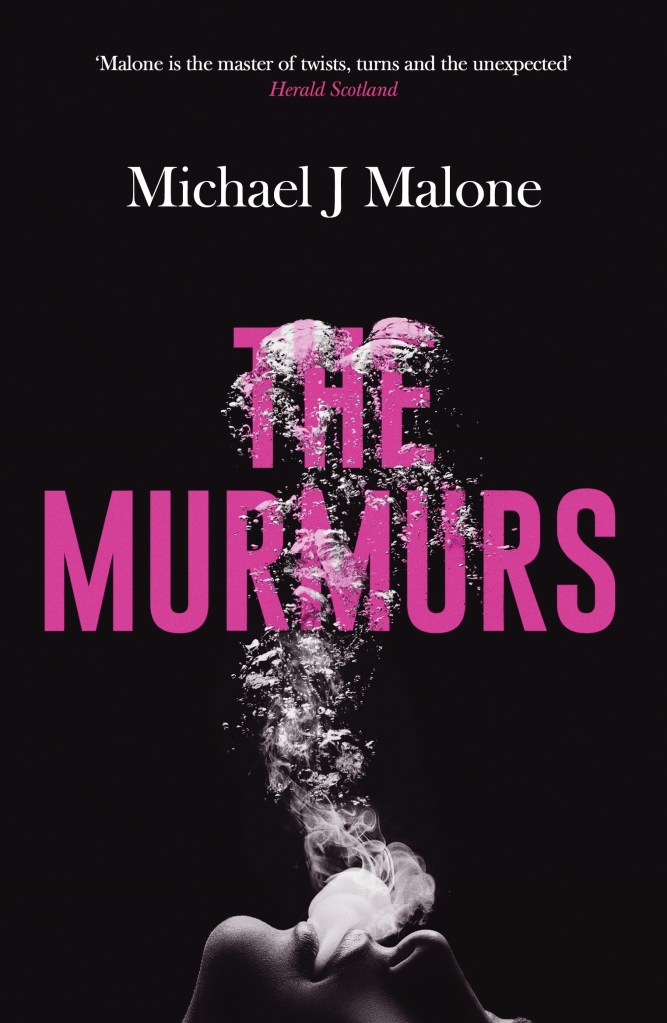
The Murmurs by Michael J Malone

I quickly became fascinated with this mix of historical fiction, psychological suspense and the paranormal. We meet Annie Jackson as she tentatively starts her new job in a nursing home in the West End of Glasgow, hoping to get her life back on track. Annie suffers with terrible nightmares where she’s stuck in a car underwater. She also has the sensation that someone is holding her head under water until her lungs feel ready to burst. She also has debilitating headaches and she can feel one threatening as her new manager introduces her to resident Steve. Then something very odd happens, as a blinding pain in Annie’s head is followed by Steve’s face starting to shake, then reform. A whispering sound begins in her head and she sees Steve as a skull, followed by a vision of him falling in his room and suffering a debilitating stroke. She desperately wants to tell him but how can she without seeming like a lunatic? He becomes agitated and upset, as Annie starts to describe the layout of Steve’s bathroom and he asks her to stop. As she’s sent home from another job she starts to think back to her childhood and the first manifestations of her debilitating problem. Annie survived the terrible car accident that wiped her childhood memories and killed her mother. This strange supernatural phenomenon is why Annie is alone and struggles to make friends. These are ‘the murmurs’.

I felt so much compassion for Annie, as the story splits into two different timelines: we are part of Annie’s inner world as a child, but also 0in the present as fragments of memory slowly start to emerge. We also go back even further to the childhood of Annie’s mother Eleanor and her two sisters Bridget and Sheila. We experience their lives through other people’s stories and written correspondence, especially that of a nun who also works in a residential home. I enjoyed how this gave me lots of different perspectives and how the drip feed of information slowly made sense of what was happening in the present day. Different revelations have a huge effect on the adult Annie and because her memories have been buried for so long she experiences the shock and surprise at exactly the same time as we do. This brings an immediacy to the narrative and I felt like I was really there alongside her, in the moment. With my counselling brain I could see a psyche shattered by trauma, desperately looking for answers, she is piecing herself back together as she goes.

Teenage Annie had a similar vision about a girl called Jenny Burn, who went missing never to return. The murmurs awakened when her mum’s sister Aunt Sheila came to visit them. She tried to openly discuss an Aunt Bridget who also had a ‘gift’ but has ended up in a home. Eleanor, Annie’s mother, asks Sheila to leave, but it’s too late because Annie has already seen that her aunt is dying of cancer. Annie evades her mum and makes her way to the hotel, the only place Sheila can be staying. Unfortunately, Jenny is working on reception. Annie can see her climbing into a red car and she desperately wants to warn her, but she knows she’ll come across as a crazy person. Eleanor is desperately looking for a way to deal with her daughter, she’s a person of importance in the church and she can’t be seen to have a daughter who has visions. Pastor Mosley has Eleanor exactly where he wants her. There’s a control and fanaticism in him that scared me much more than Annie’s murmurs. When Eleanor takes Annie to the pastor, he demonstrates his control by holding her head firmly under his head as he prays for her. When she almost faints, he’s convinced there’s a demon in her. Annie is scared of him, she gets a terrible feeling about him but doesn’t know why. Religion is portrayed as sinister and controlling, with fervent followers who never question, but live in the way they’ve been instructed is Christian? story takes an interesting turn when Annie’s brother Lewis, a financial advisor, becomes involved with the church once more and it’s new pastor Christopher Jenkins, the son of their childhood neighbour. He’s revolutionised the church and through the internet he’s turning it into a global concern. He’s not just interested in saving souls though, he’s also amassing money from his internet appeals. He also seems very interested in meeting Annie.

As the book draws to a close the revelations come thick and fast as both past and future collide. The search for Aunts Bridget and Sheila seems to unearth more questions than answers. Annie finds out that Jenny wasn’t the only woman who went missing in Mossgaw all those years ago. As she starts to have suspicions about her childhood home, Chris seems very keen to draw her back there. Might he be planning a huge surprise? I was a bit confused at first with all these disparate elements, but as all the pieces started to slot together I was stunned by the truths that are unearthed. Then as Annie’s childhood memories were finally triggered I felt strangely terrified but also relieved for her all at once. I hoped that once she’d regained that past part of herself she would feel more confident and free, despite the strange gift she seemed to have inherited. Maybe by facing the past and leaning in to her relationship with her brother, she might feel more grounded and strong enough to cope with her ‘gift’. I thought the author brought that compassion he’s shown in previous novels but combined it with a spooky edge and some intriguing secrets. I really loved the way he showed mistakes of the past still bleeding into the present, as well as the elements of spiritual abuse that were most disturbing. This book lures you in and never lets go, so be prepared to be hooked. Michael Malone is a natural storyteller and the fact this is billed as Annie Jackson Number One makes me think there may be others. I certainly hope so,

Out Now from Orenda Books.

Meet the Author

Michael Malone is a prize-winning poet and author who was born and brought up in the heart of Burns’ country. He has published over 200 poems in literary magazines throughout the UK, including New Writing Scotland, Poetry Scotland and Markings. Blood Tears, his bestselling debut novel won the Pitlochry Prize from the Scottish Association of Writers. Other published work includes: Carnegie’s Call; A Taste for Malice; The Guillotine Choice; Beyond the Rage; The Bad Samaritan; and Dog Fight. His psychological thriller, A Suitable Lie, was a number-one bestseller, and the critically acclaimed House of Spines and After He Died soon followed suit. Since then, he’s written two further thought-provoking, exquisitely written psychological thrillers In the Absence of Miracles and A Song of Isolation, cementing his position as a key proponent of Tartan Noir and an undeniable talent. A former Regional Sales Manager (Faber & Faber) he has also worked as an IFA and a bookseller. Michael lives in Ayr.

Posted in Publisher Proof

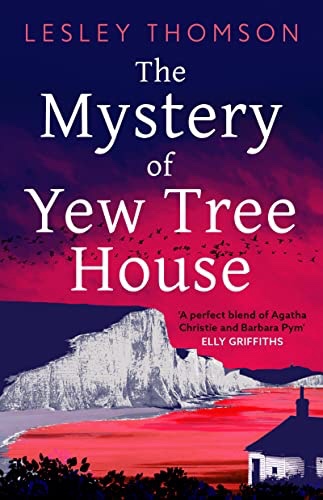
The Mystery of Yew Tree House. The Detective’s Daughter Series – Book 9

As Stella Darnell arrives at Yew Tree House, it seems like an idyllic little place to spend the summer. Like any village, Bishopstone has it’s past and a dark side lurking beneath the surface. The holiday is a trial of sorts for her, partner Jack Harmon and his seven-year-old twins, Milly and Justin, not forgetting Stanley the dog. Stella‘s thoughts and feelings around a more permanent living arrangement with Jack is always changing, but what better way to trial the arrangement? As they disembark and start to explore it’s clear that the house is a little dilapidated once you look closer. Stanley and Millie, both as lively and full-on as each other, are soon tramping round the garden making discoveries. The house belongs to the Stride family, two sisters Stevie and Rosa live in the annex while eking out their state pension by renting the main house for holidays. Perpetually single, the two women can’t afford to run Yew Tree House, but can’t afford to leave either. It’s clear that some parts of the house are past their best, but cleaning company owner Stella, can see past that and once the place has had a good scrub it will be adequate for a family holiday. However, the house has a complex history, especially the period during WW2 when Stevie and Rosa were girls, living with mum Adelaide and an evacuee called Henry. Their Dad Rupert is called up but loses his life at Dunkirk, leaving his family to make their own way in the midst of rationing and the bombings while their house is also used as a meeting place for the Home Guard. When Millie is exploring one day she finds an old pill box in the garden (a concrete guard post or dug-out from where volunteers would defend the coastline) putting past and future on a collision course. Inside is a skeleton, with a hole in it’s skull that’s been caused by serious force. Jack and Stella may have fallen upon a murder mystery for their popular podcast, but as the aged vicar glares at them from his cemetery across the road, it could be that not everyone wants the truth to be discovered.

This is a book within a series based around Jack’s true crime podcast and I would recommend reading the others to better understand the relationships in this story. I felt I connected better with the wartime section of the story and I think it was because regular readers will know these characters well. Jack is rather blindly optimistic about their first family holiday, leaving readers and Stella as the more doubtful parties on this journey, especially when we meet the redoubtable Milly. Despite being of primary school age, Millie is possibly in charge of every room she walks in and if I were Stella, I’d be imagining what this exuberance might look like when ramped up by teenage hormones! A terrifying thought. I didn’t pick up the chemistry between Stella and Jack at first, but they clearly have a joint passion for solving mysteries and presenting true crime stories that’s rather infectious. I really liked the fact that both characters were connected to the area, bringing an added element to their sleuthing as I felt they had a stake in the village’s history and a real thirst for the truth. I thought the author created an interesting balance, not only between the two timelines, but with a contrasting lightness and shade of the plot. Family life is very lively and full of fun, especially with Stanley’s antics, and there was an almost Famous Five style coziness to the mystery. However, as foreshadowed by the glowering vicar in the book’s opening, there are darker undertones that become even more pronounced as we travel back to the 1940’s.

War isn’t the only cloud over Rosa and Stevie’s family, there is a missing girl too and the anxiety felt by Adelaide Stride about her two girls is very real. I felt Adelaide’s uneasiness around some of the guard, who move freely around the downstairs at night. The house is split between normal family life upstairs, with the realties and tension of war downstairs. There’s a sense this is men’s business and the presence of them in her family home must have added to her worries about her girls. Can Adelaide trust them? It seems clear she has her instincts and one character definitely raised her hackles (and mine). Tension and suspense build in both timelines, with some creepy moments but the wartime sections were the more disturbing. The present day sections have plenty of humour, the directness and attitude of Miliie, as well as plenty of twists to keep the reader on their toes. The fact that some of the characters from the 1940’s still live in the vicinity added to the tension towards the end of the book, as I wondered if any of them were still a danger in the present day. What might they do to keep certain secrets buried? Stella and Jack would need to keep their little family safe, all the while uncovering a tale that holds the heartbreak and tragedy of WW2, alongside a vengeful and murderous secret.

Meet the Author

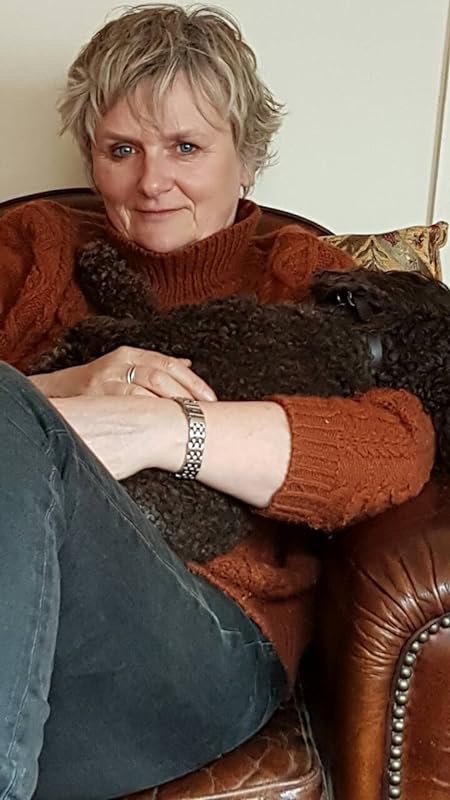
Lesley Thomson was born in 1958 and grew up in London. She went to Holland Park Comprehensive and the Universities of Brighton and Sussex. Her novel A Kind of Vanishing won The People’s Book Prize in 2010. Lesley combines writing with teaching creative writing. She lives in Lewes with her partner.

Posted in Random Things Tours

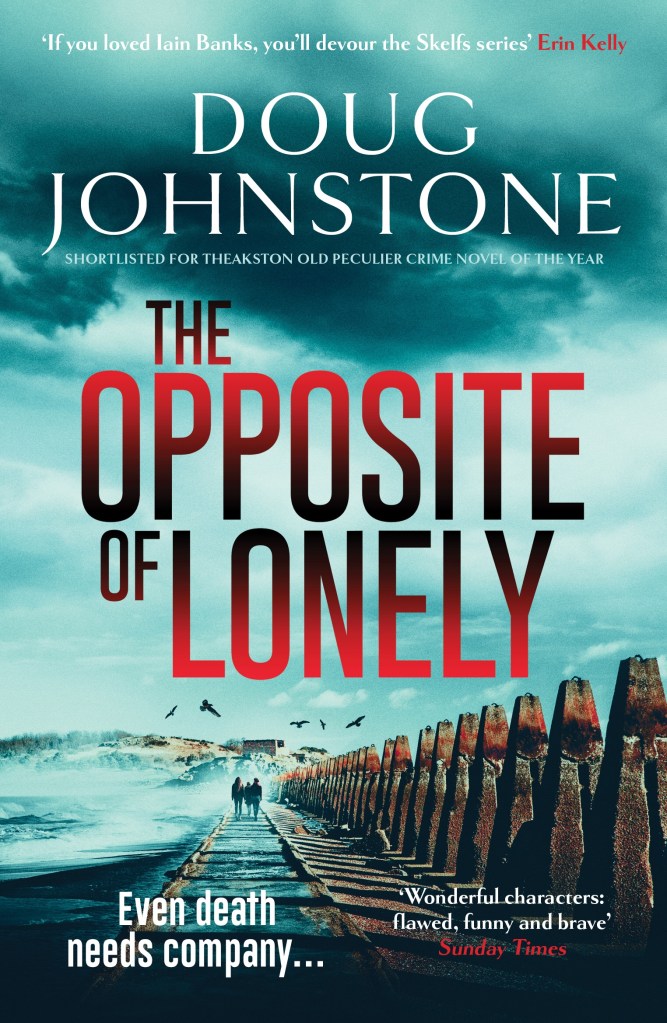
The Opposite of Lonely by Doug Johnstone

As many of you know I am a super fan of Doug Johnstone and particularly his Skelf series of novels, based in Edinburgh and following a family of women, running both a funeral home and a private investigation business. I love the Skelf women because they’re feisty, original, intelligent and incredibly compassionate. This is his fifth in the series and I’m in constant fear of it ending, though if it did this wouldn’t be a terrible way to bow out. In fact this may be the best in the series so far. As usual there’s an eclectic mix of people and cases. Dorothy is investigating a suspicious fire at an illegal traveller’s campsite, but also takes a grieving homeless man under her wing. Jenny is tasked with finding her missing sister-in- law who fled with the body of Jenny’s violent ex-husband Craig. Meanwhile, Hannah meets a women astronaut and is asked to investigate potentially dangerous conspiracy theorists who think she has returned from space ‘changed’. Add to that the new idea of water cremations, funerals for the lonely, strange happenings in space, a body lost at sea and a sexually adventurous man in a rabbit mask and you have all the ingredients to keep a Skelfaholic like me very happy indeed.

I love the Skelf’s outlook on life and other people, it chimes so well with my own family’s philosophy and is such a welcome change from the perspective of our current government. There’s an acceptance of others, whatever way they choose to live or love. They treat people with respect, in whatever circumstances they find themselves. There’s no judgement, something I especially love in Dorothy. She seems to have a knack for reading people and knowing when they’re trustworthy. She has a great track record too, having brought both Archie and Indy into the fold when both were in straitened circumstances. She has moments of exasperation when investigating, especially when she tries a pub local to the traveller camp where a fire happened. When gauging local feeling about the travellers she ends up in a long debate on their behaviour, most of which she dismisses as bigotry, but also their opinion of people ‘on benefits’, refugees, drug takers and women of easy virtue. They are the Daily Mail brought vividly to life and Dorothy notes how easy it can be for someone her age to accept the media narrative and become entrenched in their views. She doesn’t want to be like that and she’s certainly not going to be welcomed back to this pub. Jenny feels much the same.

‘everyone just trying to get to the end of the day and hoping tomorrow would be a little brighter. We didn’t need our homes torched, our dead ex-husbands disappearing, all the hate and bullshit in the world coming to kick us in the arse’.

This outlook also feeds into the sense of place Johnstone creates, something that made me drive around Edinburgh while on holiday earlier in the year. I wanted to get an idea of where these characters lived and was ecstatic to be able to walk on The Links, where Dorothy used to walk their dog and once encountered an escaped jaguar! He describes the strange juxtapositions in Edinburgh, something that happens in all big cities placing very different people up against each other. I was horrified to read once that there’s a street in NYC separating Harlem from the Upper West Side where the life expectancy differs by thirty years when you cross the street. As Dorothy and Archie drive out to Muirhouse she notices the stately home hidden by a high hedge from a caravan park, a halfway house for prisoners next to a posh golf course. It’s not planned of course, but it’s how all big cities grow and develop over time. However, what seems universal is that ‘the poorest people got the shitty end of the stick’ especially in Muirhouse. Johnstone’s current affairs and issues are bang up to the minute, here police officers become implicated in one of their cases. As the women meet for breakfast and a catch up, Jenny observes that cops tend to ‘circle their wagons’ when they’re accused of wrongdoing, especially sexual assault. She references the hundreds of sexual assault cases against police officers and the force’s mishandling of them, or even covering them up.

It’s wonderful to see Jenny in a calmer place, despite the ghost of her ex still hanging over her as she tries to find his sister. Her friendship with Archie, their mortuary assistant, has steadily become a regular part of her life. It feels like unofficial therapy, taking a long walk every couple of weeks and randomly choosing somewhere to eat. There’s something about Archie’s presence that seems soothing and she just enjoys sharing space with him. There’s nothing dramatic or addictive about it. Hannah has noticed them getting closer and observed that it seemed to have pulled her mother together somehow.

‘Maybe all you need is a friendly face once in a while, someone to listen to your bullshit and not judge. Hannah had read once about a man who succumbed to suicide on the Golden Gate Bridge. He left a note at home before walking there, which said that if one person smiled at him on the journey, he wouldn’t jump. Maybe all we need is a smile to stop us jumping’.

Hannah and Indy are tested a little by their new connection to Kirsty, an inspirational woman astronaut she met after her talk at the National Museum of Scotland. Kirsty invites Hannah and Indy to dinner where they meet her partner Mina. Mina is concerned about men who troll Kirsty online and at events, fuelled by a conspiracy theory that something happened to her on the International Space Station. Whether they think she’s had the alien probe up the butt or just some kind of first contact, the phrase used is that she ‘came back wrong’. Mina tells them they’ve had people outside the house, going through their rubbish and they’ve been doxxed. When Mina gets Hannah alone she asks her to do a little digging and to keep an eye on Kirsty. She’s been different since she came back, Mina explains and she’s worried that Kirsty is in danger. This had a strange dynamic to it and I was concerned that Hannah and Indy might be in danger too. I loved the theme of loneliness and dislocation, particularly the idea for The Lonely Funeral, sparked by the story of a middle aged woman who had no family or friends to make arrangements. Dorothy’s thinking had been inspired by projects in the Netherlands and New Zealand where they research the deceased and get a poet to write about them for the funeral. Dorothy has negotiated with the council so that the Skelf’s can carry out the funerals for the basic budget set aside. Brodie, the homeless man Dorothy meets and decides to help, tells her a moving story that I think explains how we all feel at times. I’ve certainly felt it in the depths of grief. It’s about a whale oceanographers had detected with a call that registered 52hz, a pitch that’s higher than other whales. It had no idea that other whales couldn’t hear it and it had spent decades singing out to no one. This story brought a lump to my throat and I’m not surprised that it touches Dorothy too. She decides then and there that Brodie is going to fit in.

It’s not everyday that the heroine of a book takes a walk into the woods to check out a mausoleum, taking the time to think about her father and how much she’s struggled since his death. Then in the next moment, stumbles upon a dogging scene, with one young woman and a quartet of men masked as a badger, deer, rabbit and fox. These juxtapositions keep the reader on their toes, we never really know what might come next or how it might make us feel. Johnstone can take us from tears to gallows humour in a couple of sentences. As he closes the book, with the first of the Skelf’s lonely funerals, Dorothy speaks on behalf of the man in the coffin who they hadn’t known anything about except his name and where he was born. She echoes Hannah’s astronaut friend, whose experience in a solar storm was both spiritual and grounding all at once. What she talks about is connection, in the E.M. Forster sense to ‘only connect’. To connect with others is the most vital thing we do in life. Connectedness is perhaps the best choice of word when trying to work out the opposite of loneliness. She talks about how we tend to close down as we age, to shut off from the world. I’ve observed this with people and noted recently the important of older people connecting with their younger family members using WhatsApp or Snapchat and how it brings daily joy to them, something those that who choose to dismiss new technology miss out on, to their detriment. We need to connect, both with the world we live in and with the people around us. We need to stay part of this great ‘human experiment’ in order to carry on living as fully as possible, for as long as we’re granted.

‘The idea of an impartial, unconnected observer watching the world was totally wrong. We’re all up to our necks in the universe, we can’t be separated from it’.

Out 14th September 2023 from Orenda Books

Doug Johnstone is the author of fifteen novels, most recently The Space Between Us (2023). Several of his books have been bestsellers, The Big Chill (2020) was longlisted for the Theakston Crime Novel of the Year, while A Dark Matter (2020), Breakers (2019) and The Jump (2015) were all shortlisted for the McIlvanney Prize for Scottish Crime Novel of the Year. He’s taught creative writing and been writer in residence at various institutions over the last two decades including festivals, libraries, universities, schools, prisons and a funeral directors.

Doug is a Royal Literary Fund Consultant Fellow and works as a mentor and manuscript assessor for many organisations, including The Literary Consultancy, Scottish Book Trust and New Writing North. He’s been an arts journalist for over twenty years and has also written many short stories and screenplays. He is a songwriter and musician with six albums and three EPs released, and plays drums for the Fun Lovin’ Crime Writers, a band of crime writers. He’s also co-founder of the Scotland Writers Football Club.