The year is 1939, and in Paris, France a young woman is about to commit a terrible betrayal…
For Iris, each visit to her mother in St Mabon’s Cove, Cornwall has been the same – a serene escape from the city. But today, as she breaths in the salt air on the doorstep of her beloved childhood home, a heavy weight of anticipation settles over her. Iris knows she’s adopted, but any questions about where she came from have always been shut down by her parents, who can’t bear to revisit the past.
Now, Iris can’t stop thinking about what she’s read on the official paperwork: BABY GIRL, FRANCE, 1939 – the year war was declared with Nazi Germany.
When Iris confronts her mother, she hits the same wall of pain and resistance as whenever she mentions the war. That is, until her mother tearfully hands her an old tin of letters, tucked neatly beside a delicate piece of ivory wool.
Retreating to the loft, Iris steels herself to at last learn the truth, however painful it might be. But, as she peels back each layer of history before her, a sensation of dread grows inside her. The past is calling, and its secrets are more intricate and tangled than Iris could ever have imagined.
I always say that we read books at the right time. Having COVID has left me in bed with very little to do except read between doses of Sudafed! So I’ve been catching up on some of those books still languishing unread on my NetGalley shelf, which is always overstuffed. How strange then that this pick had a link to a blog tour book I’m reading this month, both featuring mothers separated from their children but one set in a Cold War Berlin and this one set in pre-WWII Paris. I love books filled with emotion and those based in pivotal moments of history, especially disability history, so this one would sit perfectly within that Venn diagram. I was drawn in immediately by this gripping story, set across two timelines; one set in 1939 and the other in the 1960s. It didn’t take me long at all to get into ‘The Last Train From Paris’. In fact by the time I got to the end of the first few pages, I knew that I was in for a treat and from then on, I found it increasingly difficult to put the book to one side for any length of time. I was spot on too! I was moved by the story and by the bravery of these remarkable women. Nora and Sabine meet and a form a strong friendship in pre-war Paris, after Nora travels from the UK to join a catering course. In the later timeline, the early 1960s, we meet Iris, a young woman who has questions about the circumstances of her birth.
Juliet is a new author to me and I really enjoyed her style. Her characters feel genuine and show such bravery in turbulent times. She doesn’t stint on the gritty detail of wartime life in Paris and the darkness of occupation. She focuses on an aspect of the Nazi’s eugenicist policies that I think is only just coming to light in fiction. Many families were desperate to escape Europe, as the Nazis plans for the Jewish population start to become clear but Sabine’s little family have a different reason. To give you some background, it’s a lesser known fact that the Nazis targeted those with physical and mental disabilities by inciting a belief that they were a burden to the state. A programme of euthanasia was devised at a Tiergartenstrasse 4, the building giving the name of the plan as T4. In 1933 they passed a piece of legislation called The Law for the Protection of Hereditarily Diseased Offspring pushing forced sterilisation of those regarded as ‘unfit’. Their list ranged from conditions like epilepsy, but also suspected long-term illness and mental illness such as schizophrenia or addictions. They targeted nursing homes, asylums and special schools for their victims and over three years, even before the outbreak of war, had sterilised 360,000 people. Once war broke out they started to kill disabled children and adults, for this book the author has concentrated on the children. Children under three who had illnesses like Down’s Syndrome or Cerebral Palsy (or were thought to have an illness) were forwarded to a panel of medical experts to be assessed and approved for euthanasia. Parents were misled, told their children were receiving expert or enhanced care, then told they had died of illness or natural causes. The truth was they killed at least 200,000 people with disabilities in gas chambers that were also used to kill other marginalised people including, overwhelmingly, Jewish people from across Europe. This truth is deeply moving and horrifying to me as a disabled person and as someone who has spent their working life trying to support people coping with long term illness and disability. It is also why the disabled community fight so hard and shout so loud about any rhetoric from government that denigrates or devalues people with disabilities in today’s society. It is why many disabled people breathed a sigh of relief at the recent change in government as many perceive Conservative austerity measures and rhetoric to have led to the deaths of 180,000 disabled people since 2006. So you can imagine why this subject really spoke to my heart and my values.
If this sounds a little heavy, it really isn’t. The author weaves these historical facts into the story beautifully so we see it through the eyes of one of these horrified parents. Many of whom tried different ways of keeping their child away from the T4 programme, especially those who were developing disabilities. In 1939, as the Nazi march on Paris began, Nora is still in the middle of her chef’s training. This dream she has been realising has come to an end as she realises she has to take a last chance to escape. She really has left it until the last train leaving Paris before enemy arrives. As she gathers her things to leave and says goodbye to Sabine, out of the blue her friend has a last request. Having only just given birth, Sabine knows she must leave Paris too and will be travelling away from the city with her husband. She suspects one of her twins may have a disability and has heard about the T4 programme. She knows what could await her daughter if she’s right. Although it will break her heart, she has to put her daughter’s life first and asks Nora if she will take the baby back to England with her. She knows Nora well enough to be satisfied that her little girl will be safe, loved and well cared for. Nora agrees and takes the heart-wrenching choice to say goodbye to one of her daughters. Iris lives away from home, but often visits her adoptive parents in the the little fishing village in Cornwall where she grew up. She has always known she was adopted, but whenever she asks questions about the circumstances surrounding her birth her parents avoid or shut down the discussion. It has left Iris unsure about her identity and that inner feeling she has that something is missing. I kept thinking about the bond that twins have and how not knowing your other half would affect Iris’s sense of self. I desperately wanted her to find the answers she was looking for, but could understand how Nora might worry about how she would take the truth. I could also empathise with Sabine who must be desperately worried about how her daughter feels and also feel a desperate sense of loss for all those moments she wasn’t there. Would Iris feel betrayed? Would she understand the dangers they believed she was facing under occupation?
This was a story about an evil and previously unimaginable situation, faced by two friends whose trust in each other was absolute even at their most terrified. Most readers would empathise with Sabine’s sacrifice, but I could also see the sacrifice that Nora made. She expected to finish her training in the culinary capital of Europe and become a chef, instead she sacrificed all that out of love for her friend and for a little girl who could perhaps be saved from the fate of so many others. As Iris visits her mother, this time, Nora hands over a box full of letters and mementos, and Iris slowly discovers the true story of her life. She must also face the cruelty of what happened to children with disabilities in those years before the Germans invaded Iris’s origin story is one of bravery and a mother’s desperation, with secrets in store. These young women come alive in this story of a deep commitment made from one mother to another. It’s evocative and moving, reminding those of us who have never been in this position that such young women were capable and willing to make decisions like this that were heart-wrenching and ultimately life-saving. It reminds us that duty, often seen as such a dry word, is sometimes an expression of love and hope for the future.
Out now from Storm Publishing
Meet the Author
Juliet Greenwood is the author of eight historical novels, published by Orion and Storm Publishing. She has been a finalist for The People’s Book Prize, and her books have been top 100 kindle bestsellers in the UK and USA.
She has long been inspired by the histories of the women in her family, and in particular with how strong-minded and independent women have overcome the limitations imposed on them by the constraints of their time, and the way generations of women hold families and communities together in times of crisis, including during WW2.
Juliet now lives in a traditional quarryman’s cottage in Snowdonia, North Wales, set between the mountains and the sea, with an overgrown garden (good for insects!) and a surprisingly successful grapevine. She can be found dog walking in all weathers working on the plot for her next novel, camera to hand.
Pine Ridge is a small coastal village off the south coast, somewhere near Bournemouth and has that castaway feeling from the moment you cross on the car ferry. However, this idyllic village is the setting for discontent and divided loyalties between those DFL (down from London) residents and those who have grown up in Pine Ridge and mainly work servicing those August visitors. The ridge has a resort hotel, beach bar and spa to keep holiday makers happy, but some visitors have gone away dreaming of their own little slice of south coast heaven. One summer Pine Ridge becomes the centre of a dispute over second home ownership. This is a bad time for Amy and Linus who have just bought their own little bungalow with coastal views up on the ridge. It needs work, having been the home of an elderly couple, but she has a plan and builders starting this summer. She was inspired by friend Charlotte whose banker husband Perry used a huge bonus to buy their perfect holiday home with it’s own summer house overlooking the sea, nicknamed The Nook. It’s people like this that friends Robbie and Tate are angry about. They grew up here but are stuck living in static caravans on a temporary site because they can’t afford to buy or rent anywhere. The private rental market has shrunk as people refurb for the AirBnB market and no new houses are being built. People on service wages can’t hope to pay the prices of houses on the ridge, so they’re snapped up by Londoners who only come in August. This leaves huge homes empty all year while villagers are homeless, this is why the men have set up the NJFA – ‘Not Just For August’ Campaign. As tensions rise towards the August bank holiday, the NJFA are gearing up to make their final public protest of the summer. As the music festival gears up on the beach, people are interested in the design they’ve created on the sand, but they’re stopped in their tracks when half way through the day a summer house is bulldozed from the cliff and into the sea. Was this the NJFA plan all along or is something else going on?
Louise Candlish is brilliant at satirising the middle classes and she’s hit upon an issue that holiday destinations around the world are facing. I’ve always visited Venice in winter or early spring because I can’t stand cruise crowds and I was emotionally drawn in by the problem of keeping that balance between tourists and residents. They’ve addressed the cruise ship issue in recent years, have set up campaigns that show tourists which are the authentic Venetian restaurants and shops rather than the tourist traps. Authorities are now considering curbing numbers. Otherwise, it will become little more than a Disneyland experience; can Venice be the city it is, without it’s people? It’s a problem that areas like Devon and Cornwall have faced for years, with second home owners and holiday cottages turning whole villages into ghost towns in the winter. Even worse, it means the opinions of people who are not even year round residents, hold more sway in local matters than people trying to earn their livelihood. This came to the fore a few years ago in Cornwall where local fishermen’s need for a new jetty was being blocked by second home owners objecting to the planning application. There is always a tipping point and Candlish has demonstrated that exquisitely here. I had so much sympathy for Tate and his girlfriend Ellie, working in the beach bar and spa but not able to buy a home where they were born. They finished long shifts, only to broil all night in the heat of a static caravan. Tate’s friend Robbie is determined to take action and his NJFA campaign starts with throwing eggs and soup at DFL cars at the ferry stop. He pushes his agenda at council meetings and in the press, especially when he parks his caravan on the drive of a Pine Ridge home that’s been empty all year.
When we meet the DFL families their privilege is apparent. Candlish has this brilliant way of creating the stereotype we expect then subverting it. Perry is the archetypal banker – big car, egocentric and totally unapologetic about his banker’s bonus that allowed him to buy their holiday home and retire early. It’s easy to find fault with him; the drinking, the toxic masculinity and the absolute rejection of the type of ‘woke’ causes the younger people are hung up on. His son Benedict has brought girlfriend Tabitha to Pine Ridge, but she’s so ‘woke’ that she gets under Perry’s skin. Her sympathy for the NJFL cause grinds his gears, especially when she criticises his lifestyle while happy to enjoy the benefits for herself. Perry is simply incapable of keeping the peace, tearing up to the caravan park to give Robbie a piece of his mind and his fists. He’s also irritated by Linus, who is more aware of his impact on the world and travels everywhere in the village by bicycle. Perry finds his middle-aged Lycra wearing ridiculous and vents much of his rage on him and his bike. Yet there’s another side to Perry, a fear of being who he really is perhaps? He’s on the wagon after years of alcoholism and has formed an attachment to a resident at the halfway house for addicts where he volunteers in London. Charlotte is suspicious of his weekly drives back up to the city, but it’s fair to say doesn’t suspect the identity or gender of the object of his affections. It’s clear that Perry’s lies are starting to stack up and he won’t be able to hold his perfect life together for very long.
Another interesting character is Linus and Amy’s daughter Beatrice, who at 17 has blossomed into a goddess, something her mother realises when she sees her on the beach in a bikini. Beatrice could be an rich bitch, totally unaware of how privileged she is. Of course they’re not as well off as Perry and Charlotte, but still they can afford to renovate the bungalow as a second home and she has the usual teenage accoutrements of manicured nails, the latest iPhone and enough clothing to dress the whole family. Underneath Beatrice doesn’t seem happy though and when Charlotte notices a wrap she’s wearing on the beach is genuine designer and not the Vinted fake she claimed it was, her mind starts whirring. Where is Beattie getting the money for all these designer items? Candlish has all the right brands here including the designer collaboration Birkenstocks. It turns out that Beattie has a way of acquiring her goods that is less than savoury. I was expecting OnlyFans or an online sugar daddy! Yet what does Amy expect when she’s already going out of her way to keep up with Charlotte and Perry? It’s something that’s very apparent when she purchases her own summer house to sit overlooking the bay and christens it The Niche. Beattie has other secrets too, involving the The Niche and a certain beach barman. All hell will break loose if Linus finds out that this man, with a pregnant girlfriend, is hanging around his daughter. Tate is feeling ever more desperate and utterly trapped. He can’t bear the idea of the winter in the confines of their static with a screaming baby. He isn’t ready. While Ellie is planning to tell her parents and lobbying the council for more permanent housing, he is meeting his teenage lover and planning his escape.
There are so many strands to this story that by the time the summer house slides off the cliff and onto the beach I had no idea who had done it. The shockwaves ripple through the villagers when the police find a body in the wreckage and start a murder enquiry. Tate knows he and Robbie will be in the frame for their activist antics and their ability to use a bulldozer. I couldn’t help but think that it wouldn’t be as simple as that. Despite their circumstances driving them to criminal behaviour, they really aren’t bad boys. My money was on one of the DFL crowd: had Charlotte found out about Perry’s extra-curricular activities? Was Beattie so scared of her secrets coming to light she’d silenced someone? Had Perry been driven to distraction by Linus and his bike? We didn’t even know whose summer house was wrecked at first. This labyrinth of possibilities slowly unravels, including some fascinating twists and turns. I loved how Candlish highlighted a very real injustice, while weaving a unputdownable thriller around it. I genuinely felt for locals having to sofa surf, while huge houses stood empty all year. To then add insult to injury they then have to earn their money servicing these families and their houses, providing their massages in the spa and listening while they complain about their busy lives and seeing how much they spend without thinking on their food and drink. I could see why they were angry and it was interesting to see how those inequalities lead to other ideologies – when locals find out that asylum seekers might be housed nearby they are incensed. Their antipathy comes from fear that someone will jump them in the queue, but they’re missing who the real enemy is. Everybody has to do a lot of learning as we rush towards her conclusion, there’s some learning around respecting differing opinions, understanding why the other person thinks like they do and finding ways of working together. This is a fabulously current morality tale with some delicious satire and lots of secrets to uncover. The perfect summer read.
Out Now in Hardback from HQ
Meet the Author
Hello and welcome! You join me as my new thriller OUR HOLIDAY is published – it is out now in paperback, ebook and audio and was just announced as a Richard & Judy Book Club pick for the summer! It features my favourite ever love-to-hate characters (wait till you meet Perry and Charlotte!), second home owners in an idyllic beach resort who think they’re in town for another summer of sun, sea and rosé… But instead, they’re in for a bit of a reckoning…
I’m also celebrating my 20th year as an author this summer – that’s right, my first book came out in 2004, which somehow manages to feel both like yesterday AND a hundred years ago.
OUR HOUSE is the one you may know me for as it’s on our screens as a major four-part ITV drama starring Martin Compston, Tuppence Middleton and Rupert Penry-Jones (watch the full series free on ITVX). This is the novel that turned my career around – right when I was about to give up. It won the 2019 British Book Awards Book of the Year – Crime & Thriller and was shortlisted for the Goldsboro Books Glass Bell Award, the Capital Crime Amazon Publishing Best Crime Novel of the Year Award, and the Audible Sounds of Crime Award. It was also longlisted for the Theakston Old Peculier Crime Novel of the Year Award and the Specsavers National Book Awards.
It recently received a Nielsen Bestseller Silver Award for 250,000 copies sold and I feel so proud that readers are continuing to discover it and recommend it far and wide.
My 1990s-set thriller THE ONLY SUSPECT just won the 2024 Capital Crime Fingerprint Award for Thriller of the Year and I was recently nominated for a CWA Dagger in the Library Award, voted for by librarians and readers.
OUR HOLIDAY, THE ONLY SUSPECT, THE OTHER PASSENGER, THE SWIMMING POOL and THE DAY YOU SAVED MY LIFE have all been optioned for the screen – I’ll share development news on those as soon as I can.
A bit about me: I live in a South London neighbourhood not unlike the one in my books, with my husband, daughter (when she’s not at uni), and a fox-red Labrador called Bertie who is the apple of my eye. Books, TV and long walks are my passions – and drinking wine in the sun with family and friends. My favourite authors include Tom Wolfe, Patricia Highsmith, Barbara Vine and Agatha Christie.
Be the first to hear about new releases and price drops by clicking on the ‘Follow’ button under my pic or:
Venetia Hamilton-Hargreaves has just lost her husband Hawk and life is now going to be very different. Her son Heron and his wife are moving out to Paris for work and have decided that their son Kite will be attending his school as a boarder from now on. Hawk is worried about his mother and suggests that she employs a companion and home help. Liberty Bell is also grieving. Her mother has recently died after a short illness and a long-standing love affair has ended, but since her lover was also her married boss she has no job either. When she’s summoned to the solicitor she assumes it’s to deal with her mother’s will, but she’s shocked to find her mother’s wishes were not straightforward. She has left a photo album containing pictures of Liberty at different points in her life, alongside a cryptic message. She must commit to meeting with the solicitor every few weeks and when he is sure Liberty has met her mother’s expectations she will receive her inheritance. Yet with no idea of what those expectations are, how can Liberty succeed? Also, having moved in to look after her mother, she has now lost the roof over her head. She applies for the job with Venetia because it is a live-in position but isn’t sure that this vibrant and lively 74 year old actually needs help. Crow has been living in a hostel for some time, but struggles to deal with the chaos and noise. In the evenings he lets himself into a building that houses a spiritualist church and drop-in centre downstairs and an old ballroom upstairs. When the building is put up for sale he worries he may lose his sanctuary, not to mention all the people who receive help and support from the lady called Evangeline downstairs. When Venetia finds out that the old ballroom where she taught dance as a young woman is being sold for luxury flats she decides to take a look. So many of her memories are bound up in this place. It’s where she fell in love, with dance and with a very special man. She met her husband Hawk here and she can see the good work being done downstairs. She decides with the help of assistant Liberty that she will buy the building and restore the ballroom to its former glory, uncovering many secrets and changing lives along the way.
Ruth Hogan’s books are always whimsical, entertaining and uplifting so this book has been the perfect choice while battling COVID. She always creates fascinating and eccentric female characters who are going through a journey of personal growth. Here there was a very specific theme and a rather inspiring one, especially while feeling very unwell. This book was about what fear does to a person, whether that’s fear from a specific event or a long-standing fear of failure. Something I have learned the older I get is that you only fail if you stop trying. Liberty starts the book as quite a cautious person who is thrown totally out of her comfort zone. The job with Venetia gives her a roof over her head, but Venetia’s trust in her abilities really boosts her confidence. Soon she is helping with Kite, making lists for the renovation of the ballroom and supervising the work. However, I believe it is friendship that also makes the difference to Liberty. When Venetia’s eccentric sister-in-law Swan appears at the house Liberty finds her frankness and eccentricity a little startling, but they are soon a regular twosome with Swan even accompanying Liberty to her baffling meetings with the solicitor. I was hoping that some of Swan’s haughty and direct manner would rub off on Liberty and was rewarded with a startling display of assertiveness when Heron appears at the house. I also wanted some of Swan’s colour to inspire Liberty, giving her the courage to stand out and take up space. Venetia is less transparent and there were a few mysteries around her past life that I couldn’t work out. She’d clearly been an accomplished ballroom dancer until meeting her husband Hawk, but there was no real explanation for why she’d given it all up. She was a teacher as well as a competitor and Hawk didn’t seem to be the sort of man who would have insisted on her giving up something she loved. They were also incredibly different people and I didn’t feel that their relationship had been a lightning bolt of passion. There were little hints of a event in the past that changed Venetia and not just emotionally.
I thoroughly enjoyed untangling all these stories, including that of Crow, the homeless man who rescues Kite from bullies and spends his evenings in the quiet of the attic at the church. He’s mysterious and although he’s technically breaking and entering I didn’t get the feeling he was a bad guy, just in dire circumstances. I was interested to see where he would fit in to this group of characters who were very slowly becoming like family. Similarly, Venetia’s son Heron seems pompous and irritating but I sensed good intentions below the surface. He just needed some of these strong women to put him in his place and explain that his mother isn’t in her dotage. I was also fascinated with the mystery of two unknown men who’d appeared at Hawk’s funeral, along with the hidden book with a cryptic inscription. This was a beautiful side story that brought home the main theme of the book – we regret the things we haven’t done more than those we have. This is the sort of book that is perfect for summer holiday reading and which certainly cheered me up as I was stuck in bed with COVID.
Out Now From Corvus
Meet the Author
Ruth Hogan studied English and Drama at Goldsmiths College and went on to work in local government. A car accident and a subsequent run-in with cancer convinced her finally to get her act together and pursue her dream of becoming a writer. The result was her debut novel – The Keeper of Lost Things. She is now living the dream (and occasional nightmare) as a full-time author living with her husband and rescue dogs in a rambling Victorian house stuffed with treasure that inspires her novels.
I don’t often read short stories, because I’ve always got a novel on the go. So if I read them it’s usually in the same way I read poetry – keep them by the bed for when pain and insomnia hit and I want something short, that won’t have me tempted by one more page late at night. Or I carry them in my handbag for when I’m in a waiting room or on the train. I haven’t read a collection in one go since university when my American Fictions module introduced me to Katherine Mansfield, Zelda Fitzgerald and of course, Virginia Woolf. I’m so glad I read this collection in one go, because they are interrelated, but also because each story is like a jigsaw puzzle piece that once put together gives a picture of the lives lived by a group of young Black British Londoners.
Akilah’s writing is immediate: there are small visual chunks of description like Insta posts; short snappy dialogue like Tweets; never a character or a word too much. Yet they’re also incredibly romantic, something I didn’t expect from the Tinder generation. The opening introduction of a girl catching sight of a man on the Tube reading her favourite book is so lovely. She has a yearning to talk to him, but as she plucks up the courage to approach him she’s interrupted by a woman who notices she’s dropped her new bookmark. She’s intrigued by a man who chooses to read fiction and wonders what insights he might have. It’s a tiny moment of connection in an otherwise dislocated existence. Other passengers stay in their own bubble, either keeping their head down studying their phone or cut off by their AirPods. Some just have their eyes closed. There’s something almost intrusive about having to share space with others at this time in the morning, anything that creates some distance will do. I felt the chaos of the city in this opener, probably more pronounced because I’m 50 years old and live in a northern rural village that still has a little red phone box. I can opt out of the world whenever I want and I really felt that gap while reading – these young people have to live in this reality. It took me into a generation for whom life is lived in snippets of information whether it be a tweet, a WhatsApp or SnapChat message. Somehow they flit between them and keep it all in their head. As our narrator says, she can swap between iMessage and work mode with ease knowing that eventually her year will be all parcelled up in a Spotify playlist.
My heart broke for Gabby, in Good, Goodbye. At the age where everyone is getting married she’s always the bridesmaid – six times this year. She’s so obviously single that aunties commiserate with ‘your huzband is coming’. Obviously from the same friend circle, Jonathon is the resident clown, up for dancing, singing and even last minute MC’s duties. He played hard that summer and took so many photos for his Twitter Wedding Enjoyment posts. Yet he freezes at today’s wedding when he sees Gabby looking ‘like a goddess’. Gabby is the one who walked away from him five years ago. She felt like she wasted so much time on him and finally met up with him and drew a definite line under their ‘on again, off again’ relationship. I loved Gabby’s thoughts on the Maya Angelou quote about believing who people are the first time they show you. It’s a quote I kept in my mind in my younger, dating years, but a hard lesson to learn. Yet we also hear Jonathon’s thoughts – that Gabby was the one person who understood him and that actually he knows now she was the making of him. There’s such a gulf between what this young man says and what he deeply feels. He’s hiding behind polite conversation but inside remembers a wedding from years before, when her sister got married and he realised Gabby was the one. I yearned throughout this beautifully romantic story for one of them to tell the truth about their feelings.
We see more of Jonathon in a story called Ghana in December and we see the struggle of being split between London and the place that feels like home. The young men in the story are missing the food and the sun. He thinks about the expectations placed upon him as a young black man, especially once his father’s mental health declined, something he’s always kept to himself. He had to step up at home, be the man of the house and felt so much guilt for wanting to go to university. He tells his friend David that the London life ‘kills us in so many ways’. David gets it. It’s the micro-aggressions that chip away. Jokes passed off as banter. The hostility he felt from white and Caribbean kids. How he was talked down to as if all Africans are primitive and come from mud huts. He could never speak of his brother’s suicide and how returning to Accra brings out that grief. When he smells the food and sees the difference in the light he somehow feels united with him. It’s the place he needs to be in order to feel and allow himself to cry on a friend. I loved how the author shows the depths of these young men’s feelings and how they cope with this split identity. I really came up against my own privilege as the author wove the pandemic into her stories. There was so much able-bodied people took for granted in that period of time, my disability meant I had to shield for a year and become isolated from everyone. Yet black people were four times more likely to die from COVID than white and one story character is keen to set up a work support group for the 33% of employees who are black. She talks about the proportion of black and ethnicity minority people who work on the front line, the financial straits of the pandemic, the higher infection rates and she spends her spare time educating the employer about the disproportionate effect on black employees. Yet afterwards, when she’s encouraged to apply for a senior equalities post it goes to a white man. I could feel her powerlessness and the injustice of this decision. Our character doesn’t want to believe she’s facing racism and I’ve heard excuses made for these types of choices – it’s happened to me and I didn’t want to call it ableist in my younger years, but now I would. It’s a case of calling something what it is. Not letting yourself be gaslit about it.
My joy was unbounded when Gabby and Jonathon appear in the final story, set around a party. I had everything crossed for them, yet the author had other surprise reunions that I hadn’t expected. The stories that follow the pandemic have captured that sense of change. The reminder that we need to wear ‘proper clothes’ again made me smile because I’ve been aware of a big change in my wardrobe towards outfits that are really secret pyjamas. There’s nothing formal anymore, no high heels and certainly no work wear. There’s the strangeness of being with others, whilst knowing more social interaction is probably good for me. The author drops in these little clues and reminders of other places: the kente cloth bookmark; Ghana casually described as ‘home’; music used as a reminder of wider family and celebration. The references ground these stories within the community, the African diaspora in London. Not everything ends how we expect, but that just heightens the sense of realism and authenticity. This is a warm, inviting and illuminating collection that shows the pressures on young, Black British people. It was a different world from my own, a busy, urban city full of these sparky characters whose ambitions and dreams are so admirable, even if they are also tough on the character trying to achieve them. It shows how having your community and friends around you is vital, even if some of their expectations are grounded in a different time and place. Finally, it struck me how important it is to tap back into that home country through family, food, music or traditions because it’s something that keeps them grounded and replenished.
Out now from Magpie Publishing
Meet the Author
Shani Akilah is a Black-British Caribbean writer and screenwriter from South London. She is a book influencer, co-founder of the Nyah Network, a book club for Black women, and was a literary judge for the Nota Bene Prize 2023. Shani has a Masters degree in African Studies from Oxford University. For Such A Time As This is her debut short-story collection.
Thank you to the author, Magpie publishing and The Squad POD Collective for my copy of this collection.
This is one of those books that needs to be discussed. A perfect book club choice or book you can foist onto a friend because you will want to discuss it. As the cover suggests this is a marriage and a book that splits into two – one of life’s seismic fault lines that has a very definite before and after. Niklas and Bea have been married for over thirty years with two teenage daughters Alexia and Alma. They have what most people would consider the perfect life. They live in a beautiful and sought after area of Stockholm in an apartment that Bea has spent so much time perfecting. They are currently remodelling the kitchen, but it’s bespoke and at huge cost. Niklas is a doctor and has recently taking a job heading up a maternity department. Historically, Bea stayed home with the girls and more recently took a job with the Red Cross. It doesn’t pay a lot but with Niklas’s new wage they don’t need to worry about it. As we meet the family they are preparing to take their annual summer holiday to Holgreps and the home of Niklas’s parents. They go every year at the same time as his brother Henke because this is the only time the cousins get to be together. Niklas has forgotten to book the ferry tickets and Bea is furious. This means spending an extra week in the sweltering heat of the city with no outside space or a long drive to a different ferry crossing. He only has to do one thing, she does everything else and he’s so wrapped up in his new job he can’t do it.
“Bea is busy emptying the dishwasher in the kitchen, but she stops as he comes in. The look on her face is demanding […] Her jaw seems tense, and he can see her chest rising and falling rapidly beneath her blouse. She is disappointed. No, disappointed probably isn’t the right word. She’s angry. Furious. How the hell could you forget to pay the bill? This means we can’t go to Gotland tomorrow, the tickets are all sold out!”
“Niklas feels like shouting back at her, telling her there are worse things. Like being a single mother who has just found out that her newborn son has Down’s syndrome, for example. Or being the man on the ICU ward, watching over his wife as his stillborn daughter is taken down to a cold storage unit two floors below. He feels like roaring that his head is so full there isn’t room for the damn ferry tickets and all the terrible, exhausting planning she has apparently had to do. Niklas wants to shout, but instead he turns and walks away while she is mid-sentence. He can hear Bea’s agitated voice behind him, but to his surprise, he just keeps on walking […] Each step is a relief.”
Bea narrates the first part of the book and we get the sense she feels badly done too. Niklas wouldn’t be where he is without her and she has made sure he lives up to his potential. She talked him into accepting the new job because left to his own devices he would still be pottering along in his paediatrician role at the small local hospital. It’s the same with the apartment, he couldn’t see the problem with the existing kitchen. He’d have made do with it for years, never thinking about what the room could be. Bea looks forward to Hogreps every year, she never really had much of a family herself especially after her brother Jacob died. In the aftermath Niklas had taken her to stay with his parents and on her first mornings there, his mother Lillias took Bea wild swimming. She credits those mornings with saving her sanity, more effective than counselling. Niklas had been Jacob’s friend so they shared their grief and it brought them together. Bea has always thought that anything they do together becomes fun, even if it’s taking items to the recycling tip. So it comes as a huge surprise to her when Niklas sends her a text message to say he isn’t coming home. There’s no further explanation and she doesn’t know if he means he isn’t coming home that afternoon, till tomorrow or at all. Bea’s texts and voicemails are ignored so she tells him that their daughter was expecting him to take her out in the car and she’s upset. She’s still ignored and infuriatingly, when she checks in with their daughter Alma says it’s okay. Her dad has called her and said he’ll take her another time. As one night seems to be extending, Bea is beside herself. Niklas says he wants space, but what from and how long for? Where is he staying? She’s going through that strange feeling that the person you shared space with; the person you could touch whenever you wanted; the person who you spoke to several times a day, is now off limits. It was clear to me that the balance of power had shifted in this relationship but I couldn’t understand why.
“Bea picks up her phone again, staring at the screen as though she an coax Niklas into sending her another message. An explanation of why he is acting so oddly […] but the only messages in their chat thread are Bea’s own attempts to reach him. A long string of questions and exclamation marks. CAPS. Angry emojis. Furious red faces with slanting eyebrows and bubbling volcano heads. Demands for communication”.
“The condescending pat on the head, talking to him as though his choices are reprehensible. As though it’s him who is in the wrong, who is unhinged, when all he is trying to do is be true to himself. The clear subtext is that his feelings don’t matter, and nor do his choices or wishes.”
Halfway through the novel, as Bea sets off with her girls to Hogreps and their stay with the in-laws, Niklas takes over the narration. I’d got used to my narrator at this point and I was feeling some empathy with Bea who is clearly distraught. Yet now I started to hear her husband’s story and his inner world: the pressure he’s under at work; the diagnosis he feels he should have made that changed someone’s outcome; the responsibility of financially supporting his family and keeping up with Bea’s remodelling ambitions. He’s on the proverbial hamster wheel and feels totally trapped. The author puts across his tension and despair so beautifully and I could feel the panic in his mind. I started to feel that Bea’s needs were seen as more important than his, not just in the marriage but with his family too. This is a problem rooted in the way they became a couple, both were grieving for Bea’s brother Jacob but she had the claim of being his sister. He took her to his family as this lonely, wounded little bird and they all took her under their wing. Niklas was effectively pushed to one side, not only negating his grief for his best friend but piling on the pressure. He now feels held to account, forced to swallow his own needs and look after Bea at all costs. It isn’t until he ends up talking to one of their neighbours at a party that he even realises he has a choice. The sense of freedom he gets from someone listening to him is exhilarating. Everyone assumes he’s having a midlife crisis, but is he? As he and Bea go to couple’s therapy can they save their marriage?
‘She knows exactly what song Lillis means. ‘If You Love Somebody Set Them Free’ by Sting. Bea herself has never even a fan. Surely freedom also involves responsibility? Taking responsibility for those you love? She doesn’t have a problem with giving other people space, but leaving your partner in the lurch? That’s just cowardly.”
“She has liberated his mind somehow. Lifted the hundred-kilo weight from his chest. Sometimes he wonders what might have happened if they’d met earlier. Would he have been able to avoid all this? Would he have forgiven himself sooner? Realised that he isn’t responsible for other people – other than his children, of course – or at least not in a way that makes him a slave.”
I loved how the author shows us the difference in communication styles between these two characters. Bea is performative and you are never in doubt about how she’s feeling. He anger and distress leap out immediately, even all the way back to the beginning and Jacob’s death. Niklas seems shell-shocked by Jacob’s death and he internalises all of the feelings he has to look after Bea. However, it starts to become clear there are bigger things hidden deep inside this couple than tears. Grief is complicated and Niklas’s feelings have been discounted from the beginning, by his parents Lillis and Tores, by Bea and by himself. He hasn’t allowed himself to process what happened and this becomes his coping style. So, when he finally does start to express his feelings they come as a surprise to Bea and to him. He can’t blame her for not knowing how he’s felt, because he’s never tried to tell her. Or is it more that there’s never been room for anything but Bea’s feelings. As we go back and forth, especially section three which passes between the two of them, secrets come to surface that I really didn’t expect. It’s also interesting to see how the people around the couple adjust and cope with what’s going on, brought into sharp focus by the illness of Tores. I felt so much for Bea because she has a lot of catching up to do, it’s as if the world has moved on without out her suddenly. Then in Niklas’s sections of the story I could feel how free he is, exploring his likes and dislikes, changing long held traditions and doing things he never expected like having a tattoo. They might look like mistakes from the outside, but it’s his exploration and he’s finally finding his authentic self. This novel is so beautifully written and exquisitely structured to have impact on the reader. Reading this felt like a counselling session and I mean that in the best way possible. We delve deeply into these two characters and their shared history, looking for clues and patterns of behaviour till we can understand why they’ve reached this crisis point. The question of whether they can come together again and be a family I will leave you to find out.
“Maybe things are different for Bea and Niklas because their life together began in tragedy, with Jacob’s death. Because that, strangely enough, is what brought them together. Maybe that’s why she knows they can handle anything: because they fell in love at rock bottom. She wouldn’t have survived without Niklas”.
Out Now in hardback from Manila Press
Meet the Author
Moa Herngren is a journalist, former editor-in-chief of Elle Magazine and a highly sought-after manuscript writer. She is also the co-creator and writer on Netflix hit- show Bonus Family. Alice Menzies is a freelance translator based in London. Her translations include work by Jonas Hassen Khemiri, Fredrik Backman, Tove Alsterdal and Jens Liljestrand.
Wow! That was a busy book month. I read so much and enjoyed pretty much every book I read, but these were the stand outs for me this month. I think a combination of having a really painful back and the recent heatwave has meant a lot of resting and time to read. In fact I’ve read so much this month I’m slightly behind on reviews. My NetGalley account is looking seriously neglected though and one of my priorities for next month is to get some of those choices reviewed and tidied away. I hope you’re all enjoying the weather. I’m surgically attached to my new Shark fan which is so quiet I don’t feel like a jet engine is taking off next to the bed! Multiple Sclerosis and heat don’t mix well so I try and keep cool with cold drinks, a cooling mat, cooling spray and frozen strawberries or iced fruit lollies. I’m pretty much guaranteed to be having an afternoon nap each day too. I’m expecting similar conditions next month so lots more reading time. Here are some mini reviews of my June reading:
This excellent contemporary short story collection features an interlinked group of young Black British people. It opens strongly with an introduction to one woman’s tube ride to work and the emotions that arise when she sees an eligible man reading her favourite book. It sets the tone for the whole book with a narrative voice that’s immediate and modern. Reading this as a 50 year old in my rural village opens up a much younger generation to me and reminded me of the way my stepdaughters communicate – across so many social media apps I can barely keep up. There are bittersweet feelings of regret and love, the realisation that sometimes love isn’t enough. I loved the way that each story bled into the next, so while we meet a character like Jonathon in the context of the girl who’s always loved him in a later story we can see him visit Ghana with friends discussing how hard it is to be a young black man in Britain. So we know there’s so much more to him than at first appearance. I also love that these stories come full circle in an unexpected way within the final story. This beautiful writing is so immediate with no superfluous words or descriptions. My full review will be up this week.
I’ve never read a Jane Cory novel but was intrigued by the premise of this story revolving around a historic case. Janie tells us ‘on the day I died the sea was exceptionally flat’. She’s a young girl on the verge of exciting life changes, she’s been offered a publishing job in London. It’s something she has always wanted to do and she’s had a last early morning swim. Afterward she starts to cycle home when a 4×4 hurtles round the corner and knocks her off her bike causing horrendous injuries. Janie survives but is severely disabled, struggling to even communicate until she realises that although she can’t speak, she is able to sing. Years later, music legend Robbie is arrested for the offence. The clean living band member, then solo artist, wants to plead guilty but his solicitor is sure there’s something he’s not saying. Victim support volunteer Vanessa is assigned to Janie throughout the court process. Now a widow, she has spent most of her life unwittingly controlled by her husband. Her secret heartbreak is that she couldn’t have children because after a fall when pregnant she sadly had a stillborn baby that didn’t see due to being so unwell. So when a young man turns up claiming to be her grandson it throws her whole life into confusion. Luckily she has Judge, who she’s built up a friendship with after meeting at court, but he has his on secrets too. There are so many tangled threads in the stories of these people who revolve around a single court case. I was compelled to keep reading as the questions started to pile up and revelations came thick and fast. This was an interesting thriller with four narrators taking us into their own inner worlds and slowly revealing it’s darkest secrets.
I loved this story of a marriage gone wrong from Moa Herngren, set in Stockholm. Our narrator is Bea, the wife in this divorce, who is angry with husband Niklas because he forgot to buy the ferry tickets to take them on holiday. Bea does everything else so why couldn’t he remember this one thing? Now they’ll be stuck in the city for another week in the heat or they’ll have to take a car and drive to a different ferry. Bea is sometimes exasperated with her husband who has started a new job as doctor in a maternity department, in fact she even picked out the job for him knowing that he would happily stay working in paediatrics in their local hospital for life. If she didn’t push him he wouldn’t fulfil his potential and they’d never have a new kitchen. Niklas and Bea met as teens when Bea’s brother Jacob started to hang out with him. When Jacob killed himself both of them were grieving and he felt a natural pull towards Bea, wanting to look after her. They’ve been together for thirty years and have two teenage daughters Alexia and Alma. Niklas suddenly distances himself from Bea saying he’s not coming home, saying he needs some space. Bea is bewildered by his behaviour. Is it a mid-life crisis? He gets a tattoo and starts to rent an apartment belong to the Ericssons down the road. Bea doesn’t know what she’s done wrong and he won’t communicate, but she’s terrified because if she loses him she loses His family too – the only family she’s known. We’re team Bea at this point and then the author switches to Niklas’s point of view at the half-way point. This is a clever and subtle story of something many of us experience, but shown from two different and fascinating perspectives.
I loved The Phonebox at the Edge of the World and the idea of a place to go and talk to your lost people. It’s a ritual. A point and place of connection where all your anger and grief can be expressed. Then when you put the phone down and leave the box, you leave those feelings behind. Catharsis is very important, but as time goes on so is containment. It allows people to grieve, but at a time and place of their choice. Shuichi is an artist who returns to her home town of Kamakura after the death of her mother to do carry out the administrative tasks that follow a death, but also to sort her belongings. As she starts to sort the contents of her mother’s house into boxes in the garage, she isn’t expecting to find a young boy in there, going through the boxes and taking items out. As a friendship grows between Shuichi and this boy called Kenya, Shuichi’s parental feelings are stirred up by this new child in her life. Children are very healing, because they’re a beginning rather than an end, experiencing the world for the first time with joy and wonder. This book is about the inner journey and the human process of change. There are moments of exquisite descriptions and a philosophical element. It’s one of those books where you find yourself going back to re-read a sentence that’s so beautiful it stops you in your tracks. Although it starts with a feeling of sadness, I felt uplifted at the end. There’s nothing overwrought it sentimental about it either, and it’s because the writer has such a gentle touch that the full impact of the emotions really surprise you. I felt changed by this story and that’s how powerful literature can be.
It seems a long time since I last accompanied Jensen on her investigative adventures, so I was very pleased to receive a proof for this third instalment. As usual this was a complex plot involving politics, organised crime, hackers and headless bodies being fished out of the water. Jensen fears that one of the bodies might belong to a Syrian refugee named Aziz who was working as security for MP Esben Nørregaard, one of her friends. Esben asks Jensen and her assistant Gustav to look into it for him as he doesn’t yet want to involve the police. Meanwhile, detective Henrik Jungersen and his team try to find out who the bodies belong to and where their heads have gone. This complicated investigation means that Jensen and Henrik are going to cross paths. Jensen is in a good place, after a round of redundancies at her newspaper Dagbladet she has become chief crime reporter. Also, she has just moved in with her tech billionaire boyfriend Kristoffer Bro. Henrik can’t believe that Jensen has left him behind for good. He’s still married, just barely, and is due to go on holiday to Italy with his family when the first body is found. Guiltily he can’t imagine anything worse than the holiday, but if he doesn’t go he knows it’s probably the last straw for his long suffering wife and that’s before she knows Jensen is involved in his case. Jensen still feels slightly odd in Kristoffer’s flat and when she starts to look for something of Kristoffer’s that’s personal I could understand why, even if it is an invasion of his privacy. Jensen’s investigative urge could come between them and up until now this is the healthiest relationship she’s ever had. Henrik has never made himself available, but that attraction is still there. The story is compelling, well-structured and there were revelations I wasn’t fully expecting. What’s fascinating about Jensen is that by instinct she’s a lone wolf, suspicious of everyone and very headstrong. Yet she seems to be slowly collecting people in her work and private life. I think these ties make her feel vulnerable, but she’s starting to realise that without them she’d be in a much worse place. The ending was tooth-clenchingly tense and I’m already looking forward to their next adventure.
It seems to be a year of incredible debuts and this one is definitely going to stay with me. We open at a dinner party. Robyn and her wife Cat are hosting an evening for their friends Willa and Jamie, Robyn’s brother Michael and his partner Liv, and Cat’s brother Nat and his new girlfriend Claudette. It’s the first time the group will meet Claudette and Robyn hopes to make it a chilled, relaxed evening. Robyn had a scholarship for a private girl’s school and she ‘buddied’ with Willa who was a new sixth former. Robyn soon learns that Willa’s life is overshadowed by the disappearance of her sister Laika. Michael’s girlfriend Liv is a psychologist and she begins a discussion about implicit and explicit memories. Our explicit memories include times, dates and places and they tend to be from older children. Implicit memories are usually from unconscious emotional recollections and can be an amalgamation of several memories, as well as a few bits of what others have told us. These are memories created when we’re very small, usually pre-school age. Jamie isn’t convinced and Liv’s assertions seem to unsettle the party. As Jamie gets louder, Willa tells a memory of being tickled until she wets herself. She has always hated being tickled. However, someone in the party knows this isn’t actually Willa’s memory. It’s her sister Laika’s. The psychological dynamics of the dinner party are explored within narratives from Robyn, Willa and Laika. We each carry hidden histories within us and these ones are complex and affected by loss and trauma. While the compelling psychological thriller aspect is concerned with finding out what happened to Laika, I was fascinated with the upbringing of the characters and how they became the adults they are. I loved the analogy of the natural pool where Robin’s parents take everyone to bathe. It’s a direct contrast to the sterile and man made pool at Willa’s childhood home. The natural pool at Robyn’s family home is filled with this self-made family that includes their friends too. Robyn and Michael’s family have so much love that it can easily take in others, old friends and new generations. Their love is like the natural spring that feeds the pool, constantly flowing and endlessly replaced.
I love historical thrillers and this one really is bristling with menace. This novel pulls together so many things I love in one incredible story: the Victorians; a touch of the macabre; a spooky and unique house; a heroine who has her consciousness raised and a simmering tension that builds to a heart hammering conclusion. Bonnie is our heroine, a young woman who resides in St Giles and earns a living running a scam with her lover Crawford and their friend Rex. The trio hang around public houses looking for a man that Bonnie can lure to a quiet alley for sex, only for Crawford and Rex to appear, rough him up and steal anything they can sell on. However, one night as Bonnie lures a red-headed man to their usual place, Crawford and Rex don’t appear. Pressed up against the wall while the man tries to haul up her skirt, she has to fight him off herself. Bonnie knew as soon as head hit brick, he was dead. Crawford tells her lie low and shows her an advert for a lady’s maid at Endellion – a labyrinthine Gothic house on the outskirts of London. Bonnie goes to meet the owner, a Mr Montcrieffe. He’s a widower with a teenage daughter Cissie who desperately misses her mother. Bonnie gets the job and looks forward to working with Cissie. Yet there is so much more to these unrelated events than she knows and so much about Crawford that’s been hidden by her love for him. Now events are set in motion, Bonnie is caught in a spider web of lies, betrayals and the very darkest of intentions. I loved Bonnie’s development through the book, Crawford has definitely underestimated her. She feels trapped by Crawford but he doesn’t have the hold on her he once did. She wants to remove deceit from her life at Endellion. The revelations keep coming in the latter half of the book, some expected and others a complete shock to Bonnie and to us. I felt a physical sensation of holding my breath in parts and I devoured the final three sections in one afternoon, desperate to find out what happened. Bonnie has to be super-resourceful to survive and create a better life for herself. I was desperate for her to succeed! This novel is a brilliant thriller with an atmospheric and beautiful backdrop. We also have a resourceful heroine with more strength and intelligence than she realises. This is an absolute must read for those who love Gothic and historical fiction.
I started this book in bed at night, which turned out to be a big mistake because I didn’t want to go to sleep once I’d started. We’re introduced to the village of Tome (pronounced ‘tomb’ by the locals just to add a sense of foreboding) and the new wellness retreat created there by Francesca Woodland who inherited The Manor and it’s land from her grandfather. Her husband Owen has created woodland ‘hutches’ for guests, featuring outdoor showers and luxurious linens. The Manor itself is the central hub with classes in meditation and yoga, a spa and breakfast area. The opening weekend looms and while there’s a hint of anxiety Fran is sure she has everything under control. On the final night she has planned a mini-festival with live music, a meal out in the woods and crowns fashioned from twigs creating the look and feel of a pagan celebration. While the music is at it’s loudest she has given Owen the go ahead to start digging the foundations for the tree houses, in the hope the music drowns out the noise. However, that’s not the only problem on the horizon because when Owen arrives the workmen are confused by new symbols on the trees. They look like seagulls in flight. By the morning there’s a burned effigy and a body on the beach, a wrecked Aston Martin with blood inside and the manor has been rased to the ground by a ferocious fire. Everyone in Tome knows the local saying- ‘Don’t disturb the birds’. Could Francesca’s dream be over when it had only just begun? The book also goes back twenty years, when Francesca was a teenager living at the manor with her grandparents and twin brothers.
There are several narrators, but there are others who have reason to hate The Manor and some exact their revenge in amusing ways, while others want to end the retreat and Francesca for good. I loved the folk ritual element, reminiscent of Thomas Tryon’s Harvest Home mixed with a dose of Hitchcock’s killer birds. Except these birds are the size of a human, covered in black feathers and under their cloak is the huge beak. The villagers take them seriously, even the contractors who turn up to remove the trees don’t want to mess with those marked by the birds, they’d rather give the money back. Are the birds a simple folk tale that keeps Tome safe or are they real? Tome’s forest and it’s beaches are for the villagers and not to be fenced off for the use of rich visitors. As we countdown to what happened on the big night, two parties twenty years apart reveal their secrets and the birds will have their final say. The ending is terrifyingly final for some, while others will wake up hungover and wondering what exactly they witnessed. As for me, the final page reveal really made me smile.
One week in Cape Cod. The perfect family holiday. What could possibly go wrong…?
Rocky and her husband Nick have reached that middle point in life where adults seem to be at their most stretched. They’re coping with children who have left home or are living at university as well as increasingly elderly parents who need more help than they have before. Rocky is a great narrator because I was comfortable and believed in her world. In fact the book flowed so beautifully that I finished it in a day. The family trip to the Cape Cod holiday home they’ve rented since the children were small throws Rocky’s three generation family under one roof. Eldest child Tim is there with girlfriend Maya and student Willa has travelled from her college and meets them there. Later in the week grandma and grandad will join them for two days and of course there’s the ancient cat. They are rather piled in on tap of one another but they couldn’t come here to a different, bigger rental because so many of their memories have been made in this house. During the week Rocky will learn and divulge some secrets, all of them filtered through her anxiety and what husband Nick jokingly calls a hint of narcissism. Rocky is a passionate and emotionally intelligent mother, the sort of mum you might go to with a secret. She also happy to be schooled where she gets it wrong, especially where daughter Willa is concerned. She might use the wrong pronouns and need to check her privilege occasionally but largely she’s the sort of mum you want. She feels things almost too deeply and I understood that in her. I think Catherine Newman is brilliant when it comes to trauma and intergenerational family dynamics and every family has them. Rocky reminisces about the time she miscarried, the unresolved emotions are clear and perhaps stirred up by menopause symptoms and having her babies under one roof. I loved Rocky and Nick’s marriage too because it’s not perfect – they haven’t really connected for a while, physically or mentally. When he stumbles on a long held secret it throws their dislocation into the spotlight and gives them the opportunity to talk. He still loves her, despite the secrets and narcissism. She recognises that throughout the holiday Nick has been cooking, organising, driving and just quietly looking after everyone. They’ve been in their mum and dad roles for so long they’ve forgotten how to be Rocky and Nick. It’s something of a relief for Rocky to know that Nick still desires her, despite the expanding waistline and loss of libido. Each generation has it’s own issues: the grandparents are facing health issues, brought into sharp focus when grandma faints at the beach: Rocky’s son and girlfriend are facing some huge life choices; Willa is listening and helping where she can. Catherine Newman has once again written a novel about family that is truthful, funny and life-affirming. I can easily see this being on my end of year list because it’s raw, emotional and relatable.
If you haven’t had the pleasure of meeting Tracy Whitwell’s character Tanz yet, you’ve been missing out. This bold, sweary Geordie actress and accidental medium is a delight and this is her third adventure in the series. Tanz is being torn in two directions as she reluctantly agrees to do a fringe play in London, but is also suddenly ‘activated’ as her spirit guide Frank explains. She is sent a new guide who she calls ‘Soft Voiced Lass’ and her flat is suddenly teeming with visions and apparitions, including a nurse who is on duty and walks through into Tanz’s bedroom which is quite a feat when you don’t have any legs! Luckily she has friend and fellow medium Sheila to rely on, but there’s a lot of sleeping with the light on. Tanz is guided down to Southwark and a cemetery known as Cross Bones, the burial place of the prostitutes licensed by the Bishop of Winchester. However, Tanz is greeted by a horrific vision of the burial ground in the Victorian period, when overcrowded tenements spread diseases like wildfire and deaths from cholera, typhus and consumption were the daily norm. What Tanz sees isn’t an ordinary graveyard though. The smell hits her first; death, smoke and sewage creates a miasma that seems to cling to your clothes. In the yard Tanz can see a grave digger with a woman screaming at him, when she looks down she can see some fingers and a skull where he has been digging a body up to make room for more. She is overwhelmed and doesn’t really know what her purpose is here, just that it isn’t going to be easy.
I love Tanz because she’s one of the most real people I’ve ever met in a book, despite the spooky stuff that surrounds her. She’s very down to earth, independent and has a few vices. She thinks her visions relate to several generations of the same family. Between the spooky action there’s an injection of dark humour that I really appreciated. I love Tanz’s slightly prophetic phone calls from her ‘mam’ who strangely seems to know when her daughter’s up to something. Thank God she doesn’t find out about the black faced woman, the homeless man and the knife! There’s also a side order of romance in this novel, with a younger police officer stirring up rather unexpected feelings for Tanz. She’s developed some boundaries and her self-worth enough to accept that someone like this could like her. She’s also stopped the habit of keeping her eye on the exit in her romantic affairs. She’s also taking her gift seriously, starting to accept that it’s this type of work that she finds fulfilling. Although, she also makes a radical move in her acting career too. It’s lovely to see Tanz in such a strong position in life, she’s ready to take on the world and I can’t wait for her next adventures.
Judy left England as a teenager and lived with her aunt In New York City. Judy’s mother drummed it into her that it was wise for a woman to have her own money and never rely solely on a man. This lesson was well learned, but without any real qualifications or means of making money Judy has to be more creative. She’s a grifter, stealing here and scamming there. So when she sees a story in a newspaper about a rich resident of Cape Cod becoming a widower, she decides on her next mark. Judy finds her way to a vineyard in the same area, taking a job there and making herself known until the inevitable happens and she meets Rory. She plays it clever, doesn’t ask for anything and is never pushy or monopolises his time. She’s playing the long game because she wants him to fall for her, hook line and sinker. What she didn’t bank on was falling in love with him. When they marry she has access to some of the wealthiest people in the area so she’s easily sneaking the odd item from their home and from other society people to sell on through a fence. When Rory’s asked to hold the local Wine Appreciation Society ball at their chateau in France, Judy is left with a dilemma. Her fence in London is blackmailing her, asking her to provide details of the ball including exits and entrances of the chateau and a guest list of who’s attending. She doesn’t want to help, but when he threatens to tell husband Rory about her past she has no choice. When one of the robbers dies she laments that a young man has died because of her and can’t shake it off. It’s in her French home that Judy receives the phone call, the one she’s dreaded and expected all at the same time. The police are looking into a murder, but is the victim the man in France?
When Judy’s daughter Francesca gets a visit from the police and journalists it’s like a bolt from the blue. She’s a lawyer, in London and is aghast when police inform her that her mother seems to have fled the country and is wanted for murder. Francesca is left bewildered and unsure what to do. The author is very adept at giving out just enough information, drip feeding little clues here and there that keep you reading and keep you guessing. Then, suddenly, she wrong foots you with a different direction. I found Judy so fascinating that Francesca suffered a bit in comparison. She’s the female equivalent of the ruggedly handsome rogue, with a habit of stealing from the rich like a modern day Robin Hood. There is only one woman who suspects Judy might not be all she seems and she won’t let go of her suspicions, even taking them to the grave. I loved the allusions to Lady Audley’s Secret a Victorian ‘sensation’ novel based around the fact that Lady Audley is living a lie. It had pace and excitement just like a contemporary thriller and this book is in that tradition, except the heroine has less to lose, thanks to never relying solely on a man. I was pretty sure that Judy would try her hardest to find a cunning way out. Is it wrong that the thought of her getting away with it made me smile?
This novel is historical fiction, based during the reign of Elizabeth I and James VI of Scotland (James I of England). I knew of James VI’s obsession with witches after studying the Malleus Malificarum at university, the bible for witch finders, describing all the behaviour and characteristics of possible witches. It’s a guide to James VI, who was alarmed by news of witch hunts in Germany. His proposed bride, Princess Anna of Denmark, set sale for Scotland in 1590 and was driven back by catastrophic storms. The storms were blamed on witches in Denmark and when James travelled to meet her in Norway he heard allegations of witchcraft first hand. Around the same time, in North Berwick, a housemaid called Geillis Duncan was accused of sorcery and when tortured she implicated several other witches, allegedly conspiring with the Earl of Bothwell to take the throne from the King. Kate Foster has taken this history and weaves a story from three women’s points of view, giving a feminist slant on the witch trials that killed thousands over the next two centuries. As Kate points out in her historical notes, the majority of these were women over forty. There are three narratives in the book, from women in different positions of society. Princess Anna of Denmark was a young girl of fourteen when he was betrothed to James VI and attempted to reach Scotland with an enormous pressure on her shoulders. They will have a Scottish hand-fasting, if she should please him within the next year he will marry her. If not, she will be ruined for any other marriage and her future looks set to be a life within an abbey. Adding to the pressure, there is a witch burning just before they leave and Anna is compelled to watch, because burnings are a warning to all women.
The renowned witch finder Dr Hemmingsen from Copenhagen assures the king that he has a unique way to identify witches, using a bodkin to prick them and find the devil’s mark on their body. He also sends the king a golden amulet for protection, carved by a man who knows how to ward off evil. It seems signs and charms are only witchcraft when a man says they are. In fact Anna has never heard so much about the practises of witches as she does from the king, regaling her with tales of baby-killing and orgies with man, woman and beast. Her maid Kristen tells Anna that James is becoming a danger, his fervour is a kind of madness and a licence to abuse and degrade women. Anna has a realisation that a woman’s body is never truly her own, no matter what their position in society. Whether you’re a housemaid whose master decides you’re his property, a witch who can be stripped and examined by men who call themselves god-fearing, or a princess whose family hand-fasted her to James Stuart and didn’t ask her if it was what she wanted. Women must work together if they want to survive. These women are strong, but are they intelligent enough to try and outsmart a king? Kate is brilliant with twists and turns, so I wasn’t surprised to find a few revelations towards the end. I was driven to finish to know what happened to all three women and whether any of them would achieve the freedom they craved. This is historical fiction at it’s best.
That’s a lot of fiction for one month. I read around fifteen books in June and had to be choosy, but this tells me there’s a wealth of fantastic fiction out there, especially if you enjoy various different genres as I do. I’m behind in my Squad Pod reading so that’s the focus for July and catching up on my NetGalley reads too. I’m hoping to get my percentage up to 70% over the next couple of months. Here’s a little preview of what I’m hoping to read in July.
It seems to be a year of incredible debuts and this one is definitely going to stay with me. We open at a dinner party. Robyn and her wife Cat are hosting an evening for their friends Willa and Jamie, Robyn’s brother Michael and his partner Liv, and Cat’s brother Nat and his new girlfriend Claudette. It’s the first time the group will meet Claudette and Robyn hopes to make it a chilled, relaxed evening. Robyn and Michael grew up in a rambling and ramshackle farm house in the south west of the UK. Their father Chris was a potter and it was a bohemian, relaxed place to grow up. Robyn had a scholarship for a private girl’s school and she ‘buddies’ with Willa who was a new sixth former. They shared a study bedroom and Robyn soon learns that Willa’s life is overshadowed by the disappearance of her sister Laika. Her boyfriend Jamie is a wine merchant who lived in South Africa and his confidence can become overbearing. Michael’s girlfriend Liv is a psychologist and she begins a discussion about implicit and explicit memories. Our explicit memories include times, dates and places and they tend to be formed by older children. Implicit memories are usually from unconscious emotional recollections and can be an amalgamation of several memories, as well as a few bits of what others have told us. These are memories created when we’re very small, usually pre-school age. Jamie isn’t convinced and Liv’s assertions seem to unsettle the party. As Jamie gets louder, Willa tells a memory of being tickled until she wets herself. She has always hated being tickled. However, someone in the party knows this isn’t actually Willa’s memory. It’s her sister Laika’s.
One of Willa’s other memories is that her sister called their dad’s personal assistant his ‘sexetary’ but doesn’t know why. This shows us that we only ever know part of the bigger picture. The author uses several narrators to show us that we can be present at the same event but see it totally differently. Laika had a memory of knocking over a tiered cake full of sugar flowers. In fact she’d stepped into the pantry to pick off the flowers and let them melt on her tongue. Then her dad and his secretary stepped into the cupboard and start to fool around. Laika is horrified and tries to get out, but then her dad notices her and is furious. He grabs her arm and yanks her out from under the shelf with so much force there’s an audible snap as he breaks her arm. Laika is screaming from pain but also because her dad is naked from the waist down. When her mother appears she’s confused by his explanation that her arm just broke; ‘things don’t break on their own’ she replies. Willa is a witness to her father’s abuse of Laika and her mother, but she is his ‘PP’, short for prized possession. I hated this sense of ownership. In her own narrative Laika talks about feeling rage and there were places where I really felt it. On one occasion, when Laika has tried to trim her own fringe, her father pins her down and hacks her hair off with the scissors. The sense of powerlessness that comes across in this scene made me feel physically sick. At a family gathering Laika finds a baby bird and takes it to her parents for advice, but her aunt snatches it from her and throws it into the waiting jaws of her dogs. Willa submits and doesn’t provoke her father, but Laika won’t and this makes his treatment of her even worse. Willa doesn’t even realise they’ve spent their childhood utterly controlled, because she’s never been anywhere else. She thinks all families are the same until she stays with Robyn’s parents in the school holidays. Their easy way of being, the gentle nurturing love and the emphasis on people not things is a revelation to Willa. By contrast her home is a sterile mausoleum to her father’s achievements with pictures of him with important people and shelves of prized Chinese ceramics without a speck of dust.
Another theme in the book is that of kintsugi, a Japanese practice of putting broken pottery back together with glue mixed with liquid gold. The broken pot becomes more beautiful because of it’s cracks. Robyn’s family is like this. They each show each other their broken parts and that familial love, acceptance and non-judgemental compassion is the glue that makes a person whole. By contrast, Willa’s father’s ceramics are distant and pristine, not to be handled. They have the same brittle beautiful exterior he expects from the women in his family, because their behaviour reflects on him. When we move into Laika’s narrative, we see another show of love and what it can do for someone who’s never had it. As she leaves home that morning she hides at a house she’s often seen in passing. It stands alone and is the home of an elderly lady who has many cats. She plans to sneak in and stay just one night to think about her next steps, but ends up staying for a while. The lady, Frieda, has nobody. There’s a carer who’s supposed to stay till lunchtime but only stays half an hour. Laika feeds Frieda properly, cares for her and she also listens. Frieda’s last living relatives are avaricious and only come round to see if they can find the family jewellery. Frieda knows what it is to powerless at the hands of a tyrant. As a German Jew she had to escape to the UK during WW2, but her sister didn’t make it. She knows that people only leave their friends and family if they’re desperate.
At school Willa needed the closeness of another person and enjoyed the physical comfort of sleeping next to Robyn. This blossomed into a relationship. For Robyn this was first love and their break-up just before exams was hard for her. She didn’t get the grades she’d wanted for medicine so instead she studied radiography. As an adult, Robyn has found Cat, a woman she knows she can build a life with and maybe become parents. Willa comes back into her life fifteen years later and has made a website about her sister Laika where people can post any sightings and Willa can write to her. When someone claims to have seen her she comes to Robyn for support and they fly to Thailand at a moment’s notice, much to Cat’s surprise. Cat wants a commitment and not to be second best. So she makes a choice to keep Willa as a friend, but to put Cat and their family first. When the couple visit Willa’s home it’s like an out of body experience. Crammed into a tiny flat in London, the couple are overwhelmed by the scale of the house. The wealth on display is slightly shocking, but the women, including Willa’s mother, have a great time. They read by the pool, visit local landmarks and cruise around in their convertible with George Michael on full blast. When her dad appears unexpectedly, Cat and Robyn look on open mouthed as Willa and her mother run to get changed into flowery dresses and start to wait on his every whim. They have become Stepford wives. We realise that Willa has always conformed, whereas Laika disrupted the picture perfect family. After her visit to Robyn, Willa tries to push her father a little but it takes Frank Zappa at full volume to really get under his skin. It’s clear at the dinner party that Jamie is Willa repeating a pattern. He’s so like her father and the pair get on well, with Willa’s weekends filled with visits home so they can play golf together. In fact Jamie spends more time with her father than he does with Willa. They share so many attributes and behaviours: the drinking and womanising, long trips abroad, strident right wing views, lack of empathy and he breaks things. In fact it’s his assertion ‘it just broke’ that wakes Willa up and makes her realise this is not normal.
The psychological dynamics of the dinner party are explained by the narratives from Robyn, Willa and Laika. This is a thriller, finding out what happened to Laika, complex in its psychology and often philosophical too within it’s twisty thriller structure. We each carry hidden histories within us, some aspects of which are subconscious. There are parts of that history that give us strength and resilience, others that give us an outlook of loving life, and others that help us fulfil our potential. Other parts of our history can unravel us. In counselling there’s a brick wall analogy. Something happens to us that we don’t process or resolve, so it sits there like a faulty brick. We continue to build our wall, but because of that dodgy brick the wall isn’t stable, it wobbles and might even collapse. In order to rebuild a strong wall, we must use the counselling process to slowly take away each brick until we reach the one that’s faulty. Then we remove it and replace it with a much healthier brick that comes from talking therapy, helping the client process trauma so their new wall stands the test of time. I loved the analogy of the natural pool where Robin’s parents take everyone to bathe. It’s a direct contrast to the sterile and man made pool at Willa’s home, that her mother turns into a rose garden. By contrast the natural pool at Robyn’s family home is filled with this self-made family that includes their friends too. Robyn and Michael’s family have so much love that it can easily take in others, old friends and new generations. Their love is like the natural spring that feeds the pool, constantly flowing and endlessly replaced.
‘I think about my duties and obligations […] as a decent human being. The things I have always known and understood , the things I’m prepared to stand up for, put my name to, hold myself accountable for. I think about my beautiful parents and how their love has helped me grow into the person I am.’
Meet the Author
Sarah Easter Collins grew up in Kent and studied at Exeter University before moving to Botswana and later Thailand and Malawi. A mother to a wonderful son, she now lives on Exmoor with her husband and two dogs. She is a graduate of the Curtis Brown Creative novel-writing course and holds a diploma in creative writing from Oxford University. When not writing, she works as an artist.
What a year it’s been for debuts!! This is another excellent read that I’d put on the back burner because I had over committed myself to blog tours. I’m so sorry I didn’t read it sooner because I absolutely LOVED it. This is my absolute favourite genre – gothic, historic fiction – but when added to the elements of spiritualism, transgressive females and dysfunctional families this would definitely come up on Goodreads as highly recommended. In Paris, 1866, a couple of sisters are living very separate lives; Sylvia who is now Baroness Devereaux and Charlotte Mothe, the sister she left behind with a drunken, violent father. When Charlotte pays a heavily disguised visit to Sylvie’s home she assumes their father is ill, but it’s a different aspect of her past she’s bringing to her sister’s door. Their mother had a business as a spirit medium, but Sylvie promised to put such shady dealings in the past when she married the Baron. Charlotte needs her sister for one last con, to pay her father’s medical bills. The aristocratic de Jacquinot family think they are being haunted by an aunt killed in the revolution. They will need to use all their tricks to frighten money out of this family, but they didn’t bank on being absolutely terrified too.
The Perrault fairy tale underpinning this story is ‘The Fairies’ but the sisters don’t necessarily agree on the interpretation. One sister is asked a favour by an old crone, a glass of water from the well, but she ignores her and is cursed to expel toads every time he opens his mouth. On the next day the other sister is commanded to provide a glass of water by a young beautiful woman and grants her the favour. The second sister opens her mouth and gold coins spill out. Perrault says one sister is good and one is bad and Sylvie accepts this, but Charlotte thinks changing her disguise was a mean trick.
“The test is rigged from the start – even before the fairy turned up, when Perrault labelled one sister good and one bad on the very first page, before either got a chance.”
However, by the end Sylvie has changed her perspective. She muses that if she had a daughter would she be toads or gold? She decides not to read her Perrault; ‘I think I will let her decide for herself how a girl should be.”
The de Jacquinot family are dysfunctional and have narrowed all their problems down to the daughter, Josephine. They are clearly struggling to stay afloat, with clear spaces on the wall where there used to be paintings. Yet none of them are working or making any money, still living like the aristocrats they once were. The grandfather seems grumpy but is convinced they have a visiting spectre – Aunt Sabine who died in the revolution when her throat was cut. Brother Maximilien is cynical, in his book there is no such thing as spirits and his sister is suffering from a prolonged bout of lunacy brought on by a dalliance with a once trusted friend of his. Josephine is absolutely convinced there’s a spirit. Charlotte and Sylvie started their routine and I’d not expected them to be charlatans! I loved the details of their routine – the snuffing out of candles, the ring of salt. I thought that the story of creating waxed spectral hands with their mother was a brilliantly quirky childhood memory! Charlotte adopts the patter again straight away, talking about “penumbral disturbances” and “liminal spaces”. Sylvie almost admires her sister as she weaves a tale around the de Jacquinot home and their errant daughter.
However, everyone is shocked when Sabine appears to possess her niece. Josephine has become a different person, babbling about something being taken from her and spitting with anger at her grandfather. Then she’s overcome, with ectoplasm pouring from her mouth. This is something they’ve heard of but have never seen spontaneously like this. That night the library walls are trashed and the ancestral paintings are slashed to pieces, all expect Sabine’s. The family suspect a poltergeist but how could they have slept through such destruction? After this even Maximilien is on board, yet Sylvie suspects something isn’t what it seems. Charlotte was vociferous in her defence of Josephine, almost as if she actually cares. Sylvie knows that her sister has become unnaturally attached to young women before. Before they can go any further Sylvie’s husband confronts her at home. He’s had her followed and suspects an affair with Maximilien de Jacquinot who is closer to Sylvie in age. Sylvie tries to protest her innocence, but it’s difficult when she has betrayed her husband, just in a different way. She can’t reason with him and can only do what he asks, to leave. Now she is back in her miserable childhood home, listening to her father snoring as she lays awake and bereft.
Here the author pulls a brilliant ‘Fingersmith’ style twist, with a change of narrator and perspective of the same events. This narrative is what happens to the girl who spews toads and doesn’t conform. Charlotte is the daughter who stayed behind and still nurses the father who she suspects of killing her mother. In Charlotte’s story, instead of the aristocracy we meet an interesting set of characters who live and love outside the norms of society. I loved meeting Mimi who could fill a book of his own! The atmosphere and settings in the book are brilliant and give a very varied look at the city of Paris, from the poverty Sylvie and Charlotte come from to the remaining aristocrats and their crumbling mansions. This is a society recovering from the shock of revolution and a shift in the existing hierarchy. The de Jacquinot family are like their mansion, falling apart. I loved the dual staircase too, with Josephine and Charlotte using the servant’s exit together when surely they should use the main stairs? There’s are further tantalising hints of people who live outside the rules, quite lavishly if Mimi’s quarters are the example. I could see why Sylvie had opted to disappear into the money classes, because the difference between her rooms and the home she came from is stark. She also truly loves her husband and hasn’t married him for a comfortable life as her sister thinks. Charlotte does feel the dice was loaded when it came to their differing fortunes and I think she sees the Perrault fairy tale as an allegory for her sexuality. Sylvie is able to conform in this way and Charlotte can’t, she’s born the way she is into a world that doesn’t accept her. I was also sympathetic to her situation at home, trying to care for a man who is hard to love and has been violent towards them all. This was an amazing read, genuinely spooky but also a novel about families. Those who fit into their family and those who don’t. This is a fabulous ghost story with an unexpected twist and a wonderful glimpse of a society in flux.
Meet the Author
Carmella Lowkis grew up in Wiltshire and has a degree in English literature and Creative Writing from the University of Warwick. After graduating, she worked in libraries, before moving into book marketing. Carmella lives in North London with her girlfriend. You can follow her on social media @carmellalowkis. Spitting Gold is her first novel.
I was looking forward to the new Eve Chase novel, but really surprised to win a competition for a hardback copy plus a vase of my favourite flowers, peonies. All I’d done was describe what I loved about Eve’s writing: her female characters; the secrets from the past just waiting to spill out; the gothic feel and atmosphere she creates, especially around old houses; lastly, it’s the dynamics she creates between the characters particularly the mothers and daughters. I feel that in this novel she has gathered all those aspects together beautifully with an intriguing plot and such a relatable central character in Maggie. Maggie is an author, living in Paris and struggling with writer’s blog. Something from her shared past with brother Kit keeps coming into her mind. Her mother Dee Dee died from cancer recently and Maggie was there for her, until her last moments. Her mind keeps being drawn back to her late teenage years when Dee Dee was a famous model, living in the Notting Hill area of London, close to the Portobello Road with it’s antique and collectible traders.
One summer morning, Maggie wakes up to find that Dee Dee hasn’t come home. This isn’t too unusual, late parties and sometimes modelling shoots can drag on into the night and she isn’t worried. She loves spending time with Kit anyway. Kit is using his skateboard when he has a fall, breaking one of the wheels. A stranger comes to their aid, dusting Kit down and trying to repair the wheel. He introduces himself as Wolf and when his eyes lock with Maggie’s they’re the clearest blue she’s ever seen, his name becomes him. There’s also an instant spark between them and for Maggie it’s instantaneous, first time and first sight love. He recognises the connection too. It’s what makes him take the skateboard back to his uncle’s antique shop so he can use his tools to fix Kit’s skateboard properly. Just so he has an excuse to go back. These are emotional days as Maggie navigates this new feeling, but also concern for her mother who still hasn’t come home. She calls Dee Dee’s friends and they rally round but still no one knows where she is. Maggie needs to leave her Paris flat and travel back to England and Aunt Cora’s house in the country. It’s time to ask some questions and catch up with Kit. Once in London she makes her way to the old Notting Hill house with the pink door and bumps into a man on his way out. She’s surprised to see this is a much older Marco, Dee Dee’s hairdresser. He tells Maggie he’s digging out the basement of the house, sending her into a complete panic. Maggie knows that secrets lurk in the garden of their old home and it might not be long before they’re found.
Eve really gives us time to get to know Maggie and Kit. As a child Kit was the baby of the family, adopted by Dee Dee when Maggie was a little older. His blonde curls and sunny disposition give him an angelic demeanour and he’s certainly noticed by Wolf who dotes on him. Even grumpy Gav at the antiques shop falls under Kit’s spell, especially when he sees his polishing skills! As an adult Kit is more wary, now a dealer and collector himself, he has learned that not every customer is as honest as they appear. He does have a big heart though, so when an old gentleman comes into his life asking Kit to source some pieces for his new home, he wants to help. Roy appears a little down on his luck and Kit senses a loneliness under the surface. Of course someone’s appearance isn’t necessarily indicative of how wealthy they are, so Kit takes his request at face value. It’s only when Roy starts to turn up unannounced, wants to go for dinner and then talks his way into Kit’s flat that he starts to wonder if Roy is what he appears to be. In fact he isn’t even sure he likes him. He needs to be firm to shake him off but Kit dislikes confrontation and wonders whether he should trust his instincts, or is he just being paranoid? It’s lovely to have Maggie back in the country, they’re still close, but she seems consumed by that summer years ago when they first met Wolf. Kit isn’t sure what happened that summer, but he knows that one night Maggie took him from their home in a hurry and they ended up on a train to Aunt Cora’s in Paris. He knows she was protecting him but doesn’t know why and he knows his mum was missing for a while. They never returned to the Notting Hill house, instead moving to Cora’s in the country, into the house of their grandparents. Kit promises to look for Wolf, finding his real name helps and soon Kit has him tracked down to one of the better auctioneers in London. Will seeing Wolf again put Maggie back on track?
I fell in love with Maggie. I was a similar age when I first fell I love and reading about her summer with Wolf brought back all those feelings. The wonderment when someone suddenly becomes your absolute world. The beautiful surprise when they feel exactly the same. The discovery of sexual chemistry, totally losing yourself in another person, being vulnerable physically and emotionally, it’s all here. In very delicate strokes Eve sketches a teenage girl who is emotional and intelligent. Little hints about her physical appearance makes us aware that she is a curvy girl, she wears glasses and is a little lacking in confidence. She’s astonished that Wolf loves these things about her and Eve captures that self-consciousness, the apprehension about revealing her body to this young man totally swept away by his obvious desire for her. It’s honestly so beautifully captured that it took me right back there. Maggie’s an incredible sister to Kit and nurtures him with a fiercely maternal love that I think comes from him being so much younger. It takes days before she starts to struggle a little with the responsibility, because Kit’s that age where he’s on all the time. Her feelings for her mother range from concern, to anger and incomprehension. It’s Aunt Cora who has always been the fuck-up of the family, an addict who would arrive at Christmas and grace everyone with her acerbic tongue and disappear again. However, she’s been clean for some time when Maggie and Kit arrive in Paris and it seems strange to Maggie that she’s so together and furious with Dee Dee for leaving them alone. Cora concentrates everything on Kit and Maggie, who is heartbroken and possibly hiding something about the last days they were in London.
You will be swept up by the romance, the mystery and the relationships between the women. I loved the atmosphere of the Notting Hill setting and I always love the smell and sound of an antique or junk shop: the library feel of quietness and reverence; the smell of beeswax; the ticking and chiming of several clocks. I always find myself drifting into another time when I’m in an antique shop. The mystery of adult Kit’s visitor grabbed me too, because his influence is subtle and I found myself questioning just like Kit does. Is he being manipulative or is this a coincidence? Did he intend to do that? Is he lingering for genuine reasons or for some other nefarious purpose? I wasn’t sure, but felt an undercurrent of danger for Kit if he didn’t keep his wits about him. What the story tells us is a therapist’s mantra really – unresolved emotions and trauma will always bring themselves to the surface. Whether through a similar event happening or a big change in our lives, these memories float to the surface with more resonance than they should all this time later. This is because they weren’t processed properly the first time. So Maggie is feeling a torrent of emotions as if she’s still a teenager and they’re just as confusing, painful, beautiful and overwhelming. She and Wolf never had a proper ending and I found myself longing for that closure to happen when she comes back to England. This was a wonderful read, deeply emotional but also a compelling mystery. I honestly think this is Eve’s best novel yet!
Out Now from Michael Joseph.
Meet the Author
Eve Chase is an internationally bestselling British novelist who writes rich, layered and suspenseful novels, thick with secrets, unforgettable characters and settings. Her latest novel, The Midnight Hour – ‘Her best yet…I loved every word’ – Claire Douglas – publishes June ’24, in the UK. Other novels include, The Birdcage, The Glass House (The Daughters of Foxcote Manor, US) a Sunday Times top ten bestseller and Richard and Judy Book Club pick, The Vanishing of Audrey Wilde (The Wildling Sisters, US) which was longlisted for the HWA Gold Crown Award, and Black Rabbit Hall, winner of Paris’ Saint-Maur en Poche prize for Best Foreign Fiction. She works in the Writer’s Shed at the bottom of her garden, usually with Harry, her golden retriever.
Say hello @evepollychase on Instagram, X, and Facebook
One night, at Newington House, the Madley family are disturbed by intruders. It’s the mother who first realises someone is outside and calls the police, but it’s a remote location and it will take them some time to arrive. Once the intruders are in the house they accost the mother downstairs and she sees them for the first time, in sheep masks and carrying knives. She tells them to take anything they want, jewellery and antiques, but they haven’t come for that. Now she’s sure she’s going to die. That night the only survivor in the family was the baby, placed in the priest’s hole by their sister waiting quietly for someone to find them. Written in blood on the wall is ‘tell me where it is’. Several years later, Cass is staying with her boyfriend James for the weekend when he suggests they go out for a drive. She’s surprised when he takes her to a hidden manor house on the edge of a village and tells her they’ve come to view it. An agent comes to meet them and shows them around and it’s weirdly still full of contents. The agent explains that it’s owned by a company who hope to turn it into a retreat, and while this is in the planning stage they need someone to caretake the house. They must live in it, as well as looking after and creating an inventory of it’s many contents. James wasn’t going to tell Cass straight away about the house’s sad history, but the agent does and at first Cass isn’t sure she could live somewhere such a violent act occurred. However, they certainly couldn’t afford anything like this normally. James assures her it will be fine and they agree to take on the contract, an easy thing to do in broad daylight on a lovely day, but Cass will be here alone while James is at work. Can a house hold trauma within it’s bricks and mortar or is Cass just being fanciful?
It doesn’t help that Cass’s father is very protective and isn’t sure about James or Newington House. James and Cass met in a club when she was standing in the shadows watching her friend enjoy her hen night and she is surprised when the attractive man she has just met, stands beside her and holds her hand. Yet it feels completely natural, like they’ve held hands before. Since then, her distance from James has been an issue as they can only see each other at weekends and Cass’s father worries about her travelling so far and being away from his watchful eye. It felt Iike there was something we didn’t know about her because her father’s concern seems out of all proportion. We start to learn that Cass has had issues with her mental health and there’s an allusion to her worrying that someone might be watching or stalking her. This really muddies the waters when it comes to knowing what is real and what is imagination as the couple move into Newington House. Cass is the one who has some strange experiences, perhaps because she’s home more than James or maybe because she’s susceptible to suggestion. Or is something more sinister going on and the house is singling her out? The house itself doesn’t feel creepy at first, but there’s always a sense that something more is going on than meets the eye, as if it’s traumatic past is still playing out within it’s walls. Like a faulty video recording that’s imprinted forever, leaving glimpses and feelings behind.
The previous family’s belonging don’t help, with Cass finding a long dark hair in the silver hairbrushes on her dressing table and the name Rose scribbled on a piece of paper that’s been left in the family suggestion box. The clock in the hall seems to keep stopping at 8.30pm, despite them winding it daily. It’s as if the house has PTSD and keeps experiencing flashbacks. The crime itself is terrifying, the strange addition of sheep’s masks feel so odd and out of place. In between Cass’s narrative we delve into the past with a young girl called Rose who is back at the village after a stint at private school. She doesn’t know many people of her own age in the village and while looking after the baby is fun, she doesn’t want to be a nanny all summer. She takes a walk into the village and meets two boys on the playing field, one of whom is really good looking. I found these sections so bittersweet, because she is a teenager with everything going for her, but we can sense how unsure she is about herself. She hasn’t had many interactions with boys and her innocence leaves her open to exploitation. She desperately wants to be liked, wants her feel that first kiss and know someone desires her. She’s sure to bow to peer pressure all too easily. I thought this character was written beautifully, really conjuring up those awkward teenage feelings. We know the name Rose has a resonance in the house, Cass can sometimes feel a sudden draft and the name comes to mind. Could Rose be the murdered girl at the manor and what is she trying to tell it’s new resident?
I was worried for Cass that perhaps an inexplicable evil lurks at the house, rather like the Overlook Hotel in The Shining where a terrible trauma seems to have infected the very walls of the building compelling residents to repeat history again and again. As the past and present narratives come together there is so much tension. We know the facts of what happened that fateful night but we don’t know the ‘who’ or the ‘why’ because it seems to have come from nowhere. I’m always desperate to know the reasons behind something, more than the whodunnit at times. This is where I felt a little bit lost, because I wanted to know if any of characters was the surviving child but the further we delved into the past the more characters seemed to be involved. My pet theory on why Cass was so vulnerable before meeting James was totally wrong! As we flipped back and forth in time I did have to go back and do some re-reading because I was genuinely confused. There were revelations I didn’t expect at all, adding more aspects to the case and the house than my brain could handle. It was like opening a set of Russian dolls to find that none of them matched the outside. However, the reveal of who was behind the masks was excellent and added an extra layer of danger to the ending. I think the moral of the story is that when you’re offered money to look after a mansion where murders have occurred, think twice. The old adage of ‘if something seems to good to be true it probably is’ really does apply here. I felt the best thing about the book was that sense of foreboding in the place where trauma has occurred, as if the violent acts of that night were imprinted on time like a photograph.
Out now from HQ
Meet the Author
Louise Jensen has sold over a million English language copies of her International No. 1 psychological thrillers ‘The Sister’, ‘The Gift’, ‘The Surrogate’, ‘The Date’, ‘The Family’, ‘The Stolen Sisters’, ‘All For You’ and ‘The Fall’. Her novels have also been translated into twenty-five languages, as well as featuring on the USA Today and Wall Street Journal Bestseller’s List. Her next thriller publishes in Spring 2024.
Louise has been nominated for multiple awards including Goodreads Debut Author Of The Year, The Guardians ‘Not The Booker Prize’, best polish thriller of 2018 and she has also been listed for two CWA Dagger awards. All of Louise’s thrillers are currently under option for TV & film. She has also written short stories for various publications including ‘My Weekly’, ‘Hello’, ‘Best’ and ‘The Sun’, as well as having stories featured in multiple anthologies.
Louise also has a penchant for exploring the intricacies of relationships through writing heart-breaking and uplifting stories under the pen name Amelia Henley. ‘The Life We Almost Had’ and ‘The Art of Loving You’ were international best sellers. ‘From Now On’ is her latest Amelia Henley release.
Louise lives with her husband, children, madcap dog and a rather naughty cat in Northamptonshire. She loves to hear from readers and writers.
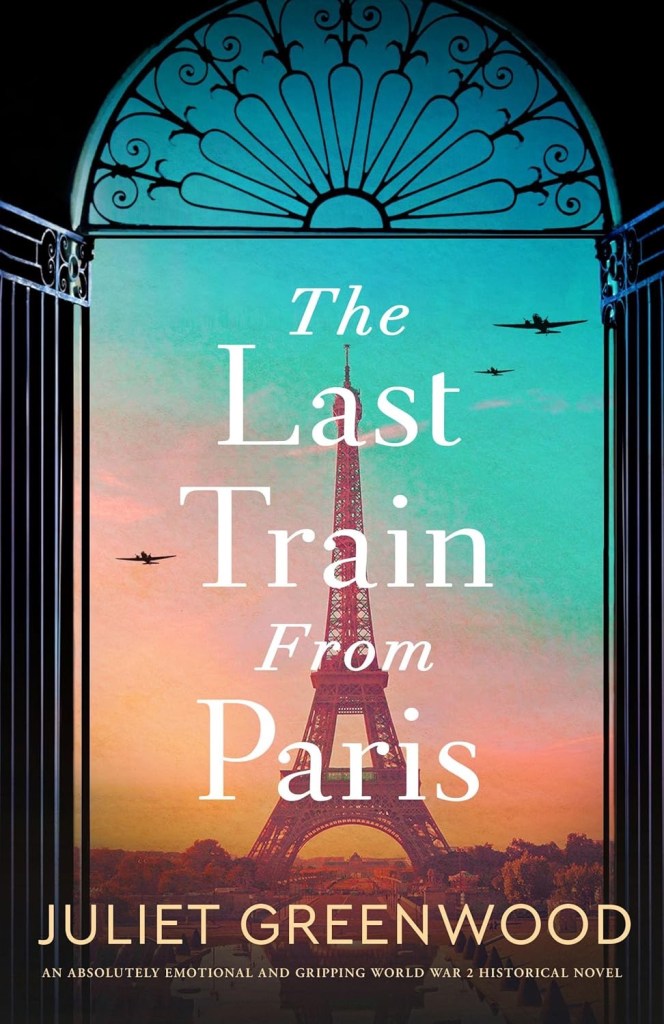



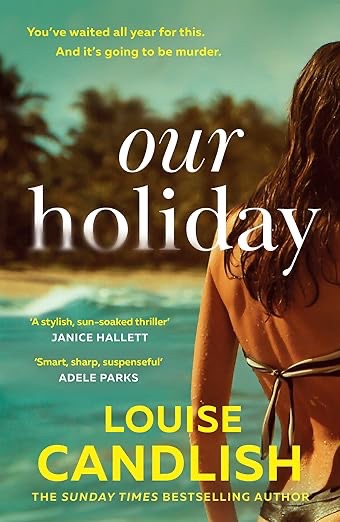








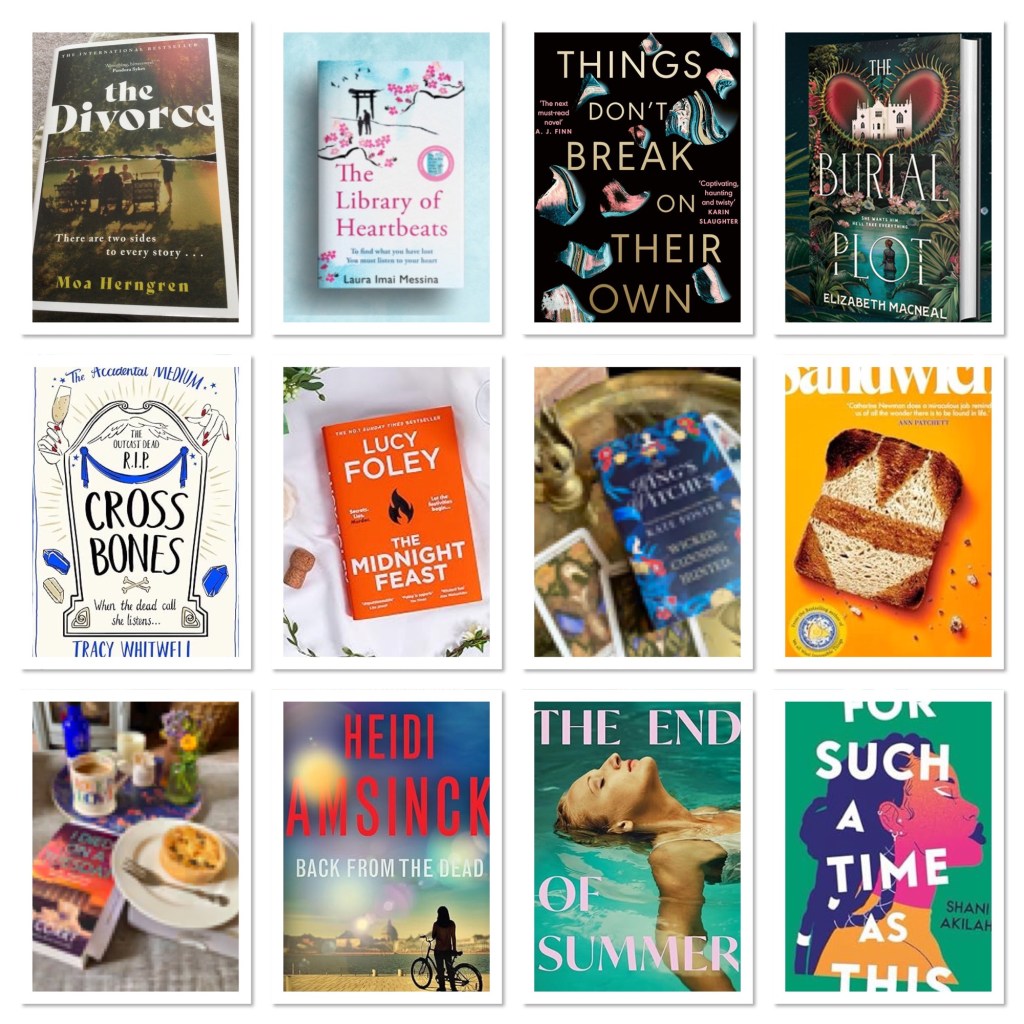
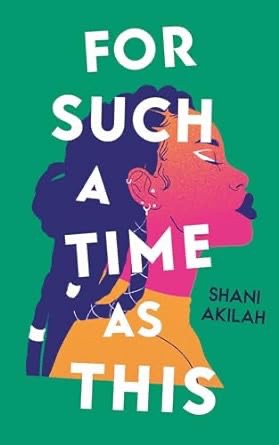

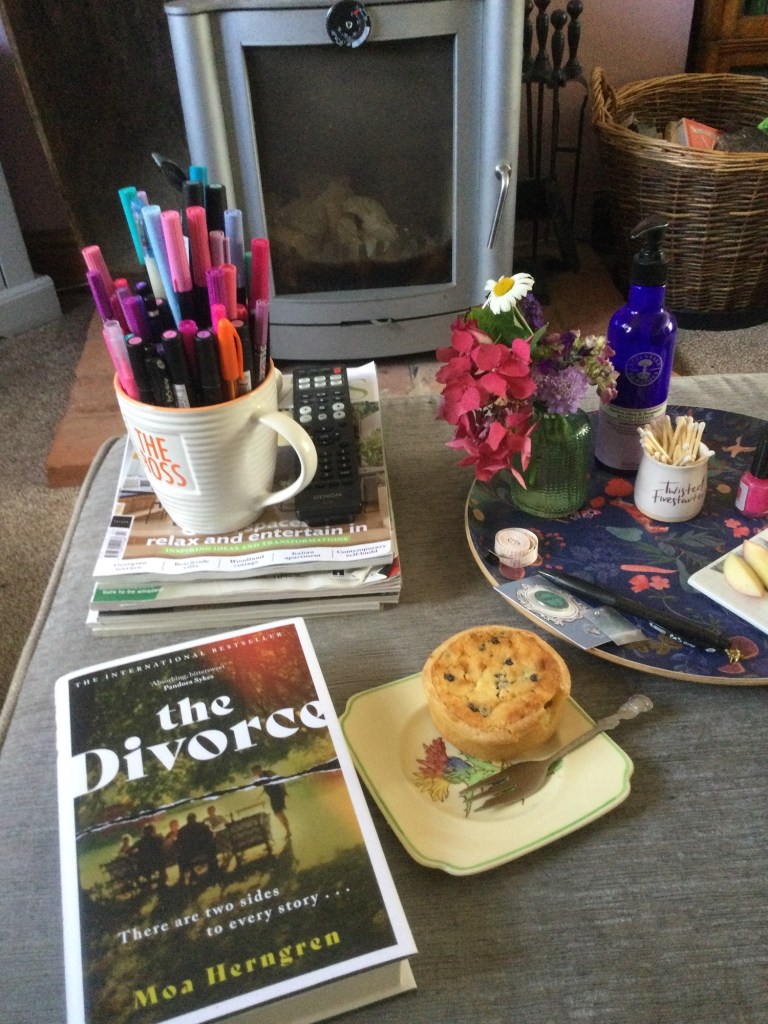


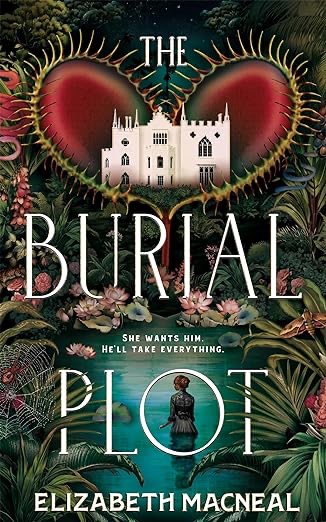
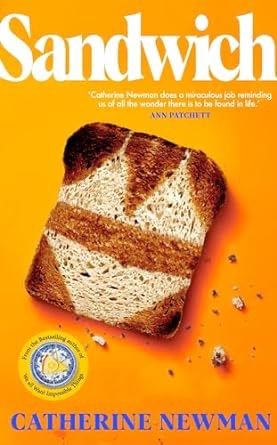






 The Lotus Readers