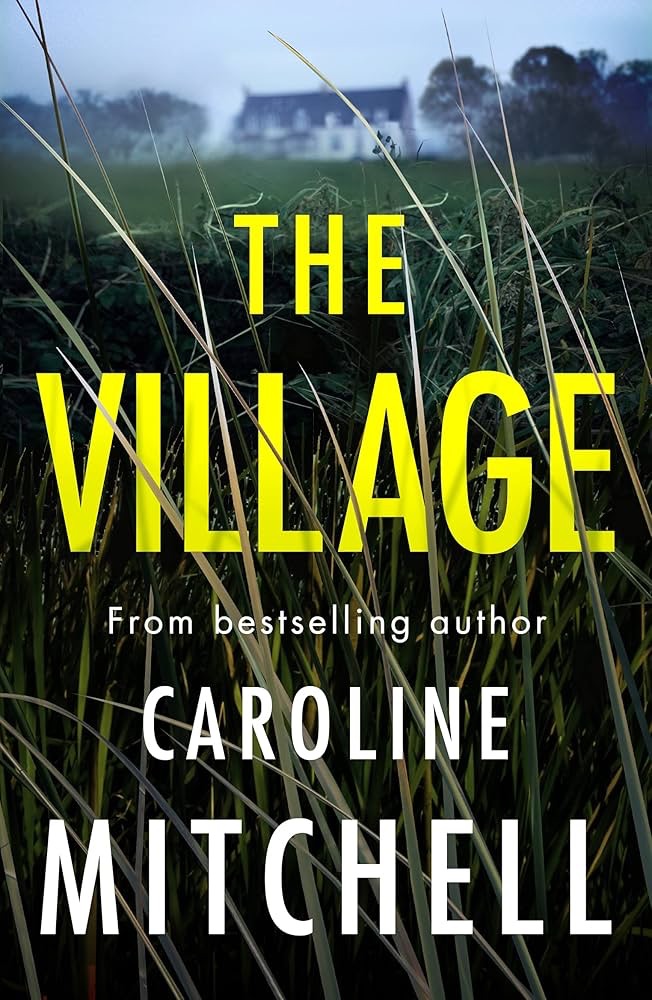
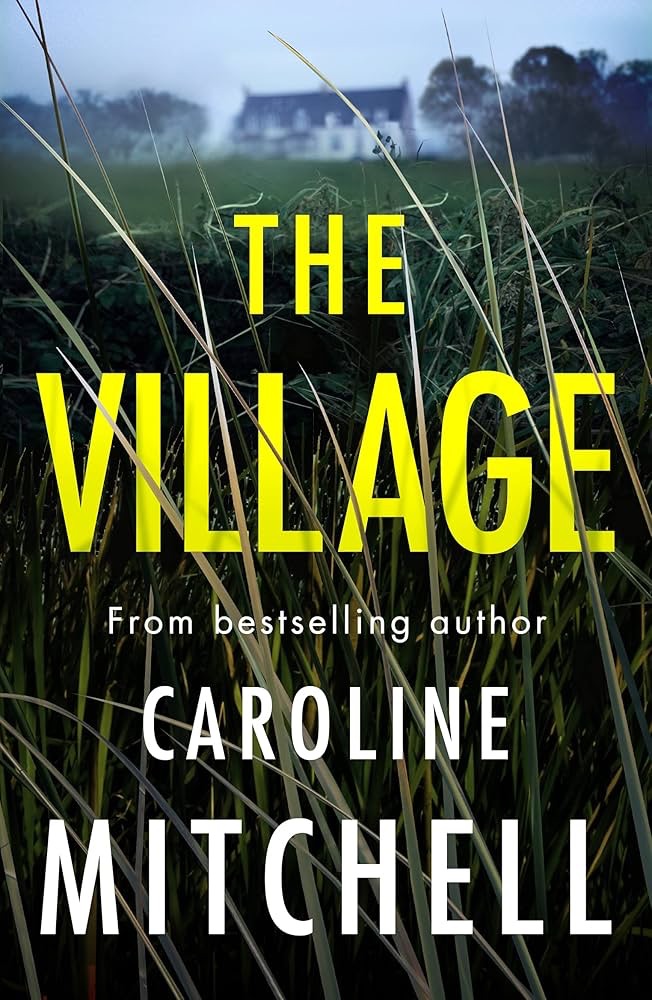
Ten years ago, the Harper family disappeared. Their deserted cottage was left with the water running, the television playing cartoons, the oven ready for baking. The doors were locked from the inside. Overnight, the sleepy village of Nighbrook became notorious as the scene of the unsolved mystery of the decade, an epicentre for ghoulish media speculation.
For crime journalist Naomi, solving the case has turned into an obsession. So now, with Ivy Cottage finally listed for sale, it’s her chance to mount an investigation like no other. And her husband and stepdaughter don’t really need to know what happened in their new home… do they? But Nighbrook isn’t quite the village she expected. No one wants to talk to her. No one will answer her questions. And as she becomes increasingly uneasy, it’s clear that the villagers are hiding something—that there is something very dark at the heart of this rural idyll. And the deeper she digs, the more it seems her investigation could be more dangerous than she ever imagined… In raking up the secrets of the past, has she made her own family the next target?
I came to this novel on the recommendation of another blogger and it’s certainly a page turner. Ivy Cottage isn’t the average house. It’s isolated from the village, tucked away in a forest clearing and inside it’s the archetypal haunted house – dated and untouched, full of cobwebs and creaking sounds. It feels like a house whose history is imprinted on the atmosphere. We also don’t know who can be trusted in this village. At first people are all smiles and welcome, so much so that Naomi takes cakes to the local cafe and the family gets to know local police officer Lloyd, who calls in to introduce himself. The tension is created by intervening chapters that delve into the past and cast doubt on characters that have seemed friendly in the present. They open up questions: why is a girl called Grace slipping out of the cottage in the dead of night and playing in the woods? Why is Lloyd watching? Is he trying to keep her safe or does he have more sinister motives for watching his ‘moonlight girl’. The author also creates disquiet in the reader with odd incidents that have no explanation. We don’t know who is responsible for locking Naomi in the attic one morning. Is her new stepdaughter Morgan resentful or actively dangerous? Who is the teenager talking to online? I found myself full of questions.
I did have a lot of sympathy for Morgan who doesn’t seem to be such a bad kid, considering her circumstances. I found myself cross with her father Ed and Naomi for destabilising her, especially when she’s already estranged from her mother. Naomi and Ed have married in a whirlwind, then have taken Morgan from everything she knows into the middle of nowhere. They’re barely in Ivy Cottage when Ed announces he’s travelling to Scotland to track down Morgan’s mother who we’re told is an addict and has a life full of drama. It’s not hard to work out that Morgan must feel abandoned by both parents and is now stuck in this creepy house with a woman she barely knows. I felt quite angry with Naomi already, but when we realise she’s dragged her new family into her scheme to investigate the previous owners it seems positively reckless. Not even Ed knows the house’s past so Naomi has started a marriage by lying to everyone. To put a vulnerable teenager into this dangerous environment is at best selfish and at worst callous. Morgan is sullen and angry, which is understandable. When Naomi’s sister turns up she encounters Morgan wandering in the night and decides to give her a few ‘home truths’ which I found particularly spiteful. It’s no surprise that Morgan has started talking to strangers on the internet and wanders outside at night to meet new friends like Dawn, not knowing that she’s putting herself in danger. Can she trust anyone in this village?
More tension is created by intervening chapters that delve into the past and the unusual life of a young teenage girl called Grace, part of the family who disappeared from this house. She has a very restricted life, plagued by unusual symptoms and even allergic to light. This level of control has led to her sneaking out at night and wandering through the forest, but out there she isn’t alone. Someone watches Grace and we’re not sure whether they’re benign or a danger. I’d worked out what was going on within the Harper family early on, but that’s only a small part of the mystery around Ivy Cottage and their disappearance. When Dawn asks Morgan to sneak out at night they play with an ouija board in the old church and Grace seems to speak to them. It unnerves Morgan but she’s not sure whether it’s a spectral Grace or Dawn she should be wary of. What we do realise is that there are still people lurking in the woods so Morgan and Naomi feel like sitting ducks. There are several twists and turns from here, with a double showdown coming – one for Naomi and Morgan and one in the past – it was nail-bitingly tense. I was also curious about the future of this whirlwind family if they came out of this alive. Would Ed forgive Naomi for lying to him and putting his daughter in unnecessary danger? Could they carry on living at Ivy Cottage? As the night of the Harper disappearance also unfolds I was on tenterhooks. The house was left with half-eaten food on the table as if they were spirited away with no warning. If Grace and her family came out of their ordeal alive, where are they and why did they leave the village? If they’re dead, then who is to blame? With mind games being played and a scene that may just have put me off cake, I’d have been packing my bags very quickly. I did feel there was a twist or two I didn’t need, but the author paints a brilliantly spooky atmosphere around the cottage and it’s hidden past. I didn’t know who to trust out of the villagers and my judgement was completely wrong! This was gripping and is one of those thrillers you’ll devour in a weekend.
Thomas and Mercer Jan 2022
Meet the Author
New York Times, USA Today, Washington Post and International #1 Bestselling Author. Shortlisted by the International Thriller Awards for best ebook 2017, the Killer Nashville Best Police Procedural 2018 and the Audie awards 2022. Over 1.8 million books sold.
Caroline originates from Ireland and now lives in a woodland village outside the city of Lincoln. A former police detective, she has worked in CID and specialised in roles dealing with vulnerable victims, high-risk victims of domestic abuse, and serious sexual offences. She now writes full time.
Caroline writes psychological and crime thrillers. Her stand alone thriller Silent Victim reached No.1 in the Amazon charts in the UK, USA and Australia and was the winner of the Reader’s Favourite Awards in the psychological thriller category. It has been described as ‘brilliantly gripping and deliciously creepy’.
The first in her Amy Winter series, Truth And Lies, is a New York Times bestseller and has been optioned for TV.
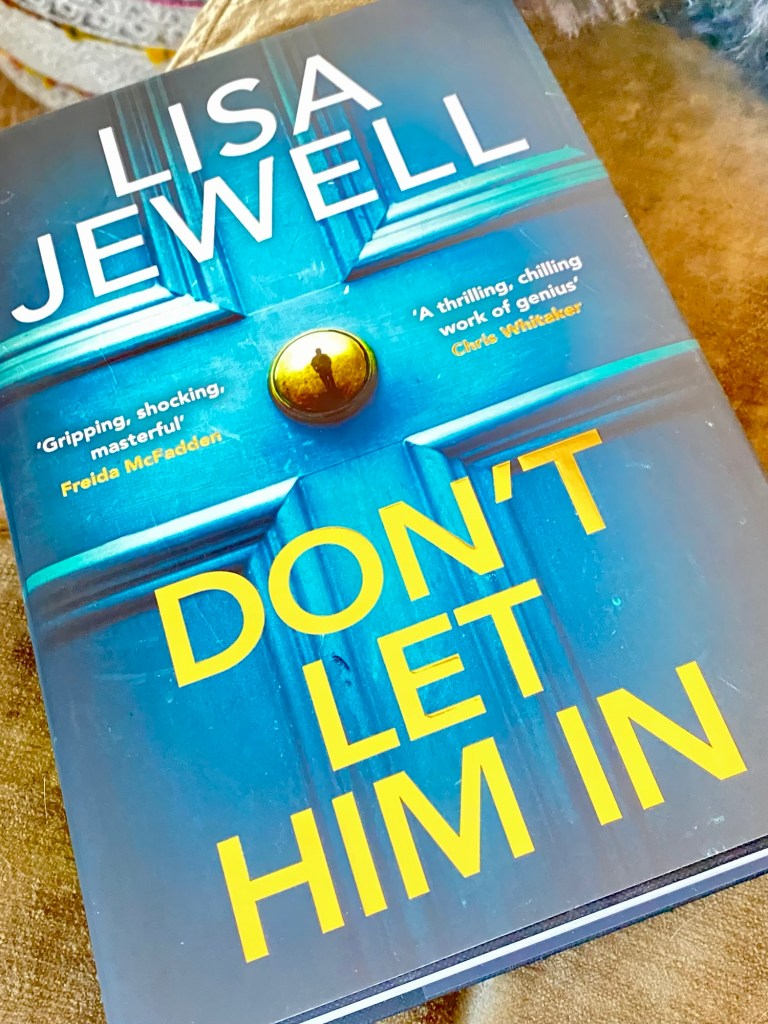
There was a pivotal moment in this book that made me go cold. It sent me back twelve years when I was trying to understand how someone could treat others so badly, in what seemed like a deliberately cruel way. I remembered something my counsellor said at the time; I was spending all my time trying to work out someone’s motivation and what had happened in life to make them behave that way, instead of considering the impact on me and how unacceptable the behaviour was. Some people just don’t think like others. Nick is a tall silver fox with a lot of charm and a knack with the ladies. He seems to know exactly what will please someone. Exactly the right gift to soften someone. To get under their defences. It’s almost as if he has empathy, but don’t be fooled. He’s just wearing a human suit.
Nina and her daughter Ash live in the bougie seaside town of Whitstable in Kent. They are grieving for husband and father Paddy, who was killed when a man having a mental health crisis pushed him into an oncoming train. Ash has been living at home since her own mental health deteriorated. She was living in a house in London with two other girls but she developed a crush on her boss, that turned into an obsession. She claimed to have letters from him, but it turned out she’d written them herself and she was eventually diagnosed with borderline personality disorder. She’d just come home to recover when Paddy was killed. When her mum receives a parcel in the post Ash is intrigued. It’s beautifully wrapped, with a note inside from a man who has heard about Paddy’s death. He used to work with him in the 1990s when Paddy was just starting out. The gift wrapped box contains a Zippo lighter he borrowed but never returned. Since then Paddy has built a restaurant empire, with his flagship restaurant in Whitstable and two others down the coast. He benefitted greatly from the area’s development into the weekend getaway spot for Londoners. Nick’s note explains he is now a troubleshooter, brought into eateries and hotels to assess what’s not working and put it right. There is of course a number, should Nina wish to thank him for his thoughtfulness. Over the next few months Nick and Nina start to WhatsApp each other and then go out for a drink. Ash is glad to see her mum with a glow, but there’s something about Nick that’s just ‘off’. She can’t be sure and maybe she’s viewing this situation through her own grief or her personality disorder, but something isn’t right. She needs to find out more about him before he becomes a permanent fixture.
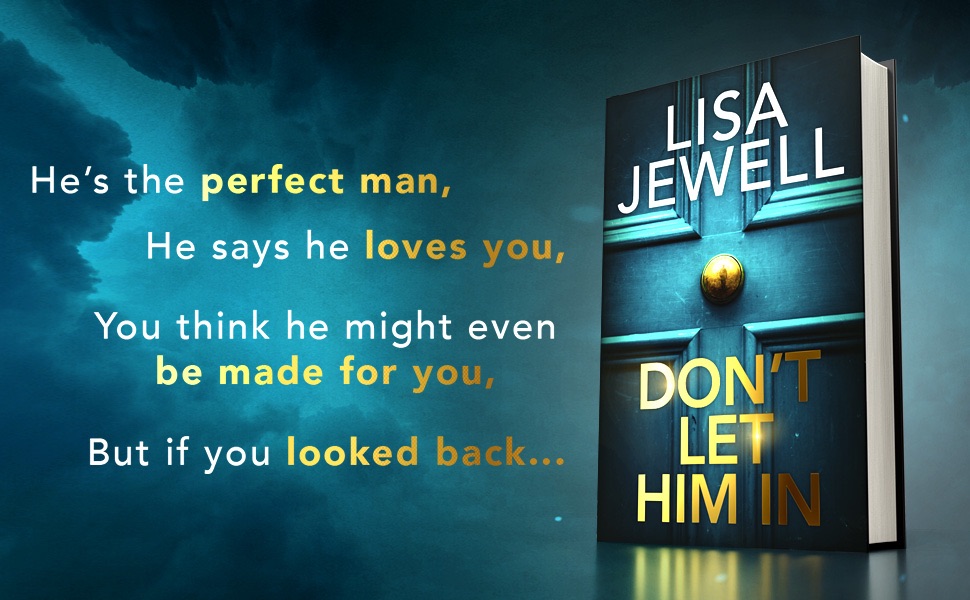
It’s so hard to review Lisa’s books without letting things slip, but I’ll try my best. Most authors might have written a thriller based purely on the scenario above – is it the mentally ill daughter or the mum’s new boyfriend that’s the problem? Slowly drawing out the tension of whether she’s right or so unwell that she’s dreadfully mistaken. Lisa Jewell isn’t most authors so she takes that premise and builds an absolutely labyrinthine mystery that’s absolutely spellbinding. In multiple narratives and timelines we meet various women who are struggling in their relationships, all of which are linked by strange or abusive behaviour. There are different behaviours: gaslighting, manipulation, financial embezzlement and even disappearances. In some cases these women are married and have children, in others they’re older and widowed. There were so many conundrums, not least how these men are affording the lifestyle they’re living. Meanwhile, Ash has decided to take help from ‘Mad’ Jane Trevally, her dad’s old girlfriend from the 1990s. Surely if Nick was around for a while, Jane would remember him. Jane did have some obsessive qualities of her own back in the day, so maybe she’s not the best person for Ash to be hanging out with. She knows her mum would be furious. However, when they do meet, Jane tells Ash that Paddy categorically did not have a lighter. He was always taking the matches from the kitchen or cadging a light from other people, so much so that it was an ‘in’ joke with friends and customers. So whose lighter was in that parcel and why did he send it?
I galloped through this book as we went backwards and forwards in time, every time learning a little more and inching towards the truth. I loved the fragile Ash who is at that stage of recovery where she doesn’t fully trust her own mind. Is she making too much of this? Is she just paranoid? Worst of all, if she finds something questionable, will her Mum even believe her? She’s so lonely at this point, she doesn’t have many friends to talk to and feels bad she’s had to bounce back home at her age. Her mum deserves to be happy and she might ruin it all. Just when you think you have all the answers, the author takes it to the next level! There were twists here that I wasn’t expecting and I felt very relieved that I got away from my own situation relatively easily, if not unscathed. This book is like a twisted knot in a necklace. It takes a long time to loosen it, but suddenly the whole thing unravels before your eyes. This is masterful thriller that absolutely begs to be devoured in a couple of sittings, from an author who gets better and better.
Meet the Author
LISA JEWELL was born in London in 1968.
Her first novel, Ralph’s Party, was the best- selling debut novel of 1999. Since then she has written another twenty novels, most recently a number of dark psychological thrillers, including The Girls, Then She Was Gone, The Family Upstairs, The Family Remains and The Night She Disappeared, all of which were Richard & Judy Book Club picks.
Lisa is a New York Times and Sunday Times number one bestselling author who has been published worldwide in over thirty languages. She lives in north London with her husband and two daughters.
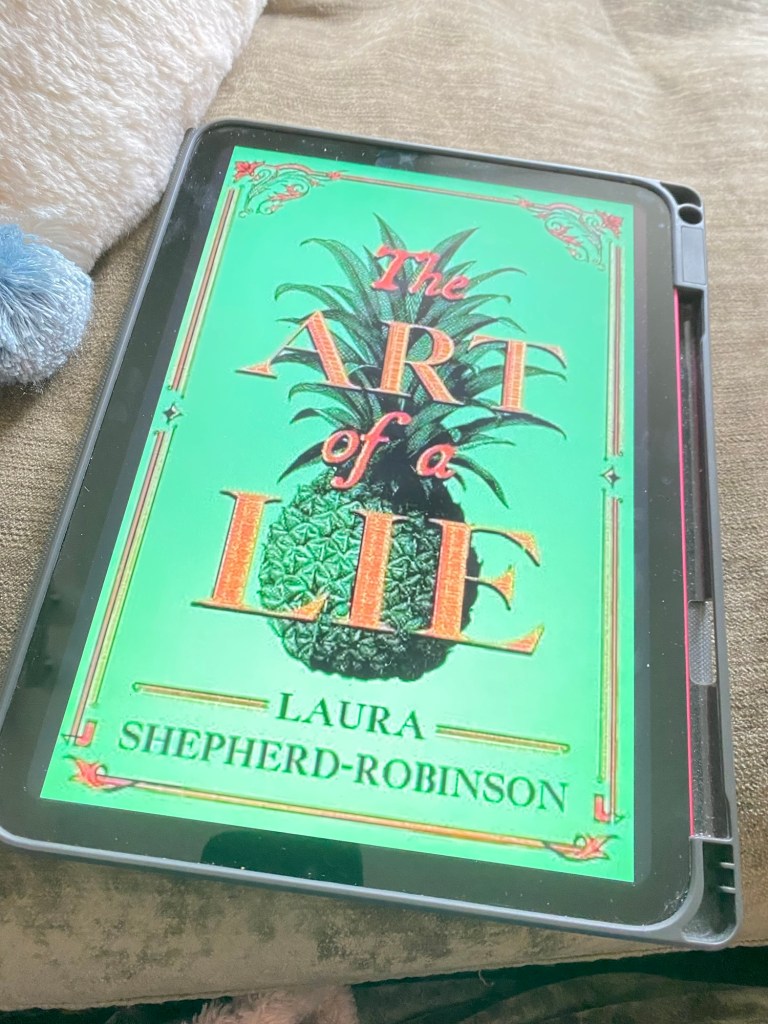
I loved this book. It drew me in immediately and two days after I finished it I can’t let go of it. I can’t start another book. It’s left me bereft. Our setting is 18th Century London and George II is on the throne. On St James’s Street is a confectioner’s shop called the Punchbowl and Pineapple and running it is the newly widowed Hannah Cole. This was her grandfather’s shop and has been handed down the family. Her father realised he needed an apprentice to pass on his skills and to work with Hannah, so he employed a young lad called Jonas Cole. Jonas and Hannah grew close and fell in love, with Hannah losing her father only a few days after they were married. So until a couple of days ago Hannah and Jonas ran the shop, with Hannah becoming quite an accomplished businesswoman. Jonas could be hard and ruthless in his business dealings and of recent years they had grown apart, with Jonas often spending evenings away from home. Then two nights ago he did not return and was found further down the Thames minus his money, his watch and several teeth. Hannah has had to borrow, especially to re-open after his death, something that caused a minor scandal so soon. She can’t afford to be closed and is waiting on their savings being released from the bank so she may pay her suppliers. Then Henry Fielding pays a call. In his role as magistrate rather than novelist, he explains that all money will remain frozen while he investigates Jonas’s death. He isn’t sure this is a simple robbery and wonders whether he should be looking into his business or personal dealings. He informs Hannah that Jonas had money in the bank, more than the £200 she knew about. Fielding explains he wants to be sure that the money was obtained legally and above board. Luckily, at Jonas’s funeral Hannah meets William Devereux. An acquaintance of Jonas, he has never met Hannah before but is very sympathetic to her plight. He promises to visit her shop and discuss how he may help her with Fielding and Jonas’s life outside the home – was he gambling, womanising or getting into shady business dealings? He also mentions a delicacy his Italian grandmother used to make called iced cream. It has all the ingredients of a custard, but flavoured with fruit or chocolate and is then frozen and eaten as a desert. Hannah resolves to let William help her and to master the art of ice cream, but are either of them being fully honest with each other about who they are and what their purpose is?
As with all Laura’s books we become fully immersed in the setting straight away and it’s the little details that stand out and make us believe in this world. I loved the descriptions of Hannah’s various confections and the way she can tell what people will choose, not to mention what it says about them.
“He paused to take a bite of his Piccadilly Puff, washing it down with a generous gulp of green walnut wine. It is a favourite choice of the sybarite: the silken sweetness of the custard, the crunching layers of puff paste, the dusky depths of the spices mingling with the sourness of lemon. I might have guessed that Mr Fielding was a man who struggled to keep his appetites in check.”
I believed in Hannah as a businesswoman and confectioner very quickly thanks to these details and as she narrates she tells us her hopes and dreams, including a joint dream of her and Jonas, to buy the empty premises next door and extend the shop so they could have more tables and chairs, especially when her iced cream starts to become popular. I think we always imagine that people from the 18th and 19th Century are very genteel and well behaved, this comes of too many Austen adaptations and strange hybrid historical settings like Bridgerton. While lovely to watch they give us little idea of what these centuries were like for those of the lower classes in society and women who worked. Real life 18th Century London was rather more colourful than Pride and Prejudice, as depicted in some of Fielding’s novels like Tom Jones and Daniel Defoe’s Moll Flanders. The author gives us the dirt and the bawdy side of London life when Hannah takes a trip to the theatre.
“The playhouse crowd gave a wide berth to the nest of alleys around the back of the Theatre Royal, home to brothels and bath houses, gin shops and squalid taverns. The residents started drinking over breakfast and then kept going. Groups of ragged men stood about on corners. One lot were fighting, skidding in vomit. Half-naked women leaned from the upper windows shouting encouragement.”
The King openly has a mistress and there are brothels and gaming rooms everywhere, operating just on the edge of the law. This is a book with every vice on display, even when if it is just cake. As Hannah points out when she’s evaluating Fielding, every man has his personal struggle. She is incredibly astute when it comes to assessing character and has Fielding’s own psychological make-up worked out through reading his novels. William Devereux appears to be equally astute, visiting Fielding’s rooms he notes the perfectly bound volumes of his own books and the wine glasses etched with the crest of Eton College, it’s students described beautifully as the “school of the most selfsatisfied fucksters in the kingdom.” I thought there were some brilliant choices in terms of the book’s structure and the way the story passed from Hannah to William was brilliant. Often when reading from NetGalley there are little mistakes or quirks to the format that can ruin the reading of the book, but here reading from NetGalley was a benefit because with no gaps or idea how far I was into the book, when the shocks came they were huge. The author has cleverly used aspects of modern thriller writing and applied them to her story, so there are twists and turns aplenty. She uses sudden unexpected confessions or statements that mean we know something no one else does. Other times a character suddenly changed their demeanour or had a different inner compared to their outer voice that made me go back a few pages in confusion. Then just as I become comfortable with my narrator, they switched back again.
This is definitely a cat and mouse game between three characters, a battle of wits where you’re never quite sure who is on the right side. Fielding appears to be pursuing this case to make his point to parliament that a national police force is needed to deal with crimes like murder. He also has a good point, Jonas’s watch had belonged to Hannah’s father and had a Russian Imperial Eagle on the case. If that had been stolen, every pawn shop and jewellers in London would have remembered someone trying to sell it. So where is it? Has the thief taken it to be sold elsewhere or is it still with a murderer rather closer to home? Devereaux seems like a gentleman, he introduces Hannah to friends who seem wealthy and of good status and they all vouch for his honesty and charity. He even seems to be thinking of making a young boy belonging to a distant relative his ward, in order to give him a better life. Hannah had a hard life at Jonas’s hands, especially when she found she was unable to have children something they both wanted. I loved the author’s detail of them both saving some urine to pour on a seedling and if the seedling grew they were believed to be fertile. Hannah’s didn’t grow and she felt her husband hardened his heart to her at that point and perhaps looked elsewhere. She has her head turned by the handsome gentleman who wants to find out where Jonas was going at night and intervening with Fielding on her behalf. He wants to help her keep her shop too and his iced cream idea is proving a huge hit, with even an impromptu visit from the King’s mistress who reassures Hannah that a hint of scandal is not necessarily a bad thing: “virtue matters rather less once you are rich.” Devereaux has some ideas in that area, that maybe rather than leave her money in the bank she might like to meet some of the people who’ve invested in a company of his called Arcadia, based in a place called Bentoo. Is he genuine or not? Does he have feelings for her, because Hannah’s starting to have stirring feelings she hasn’t had for years. Surely though Devereaux’s interest wouldn’t lie in the direction of an older widow?
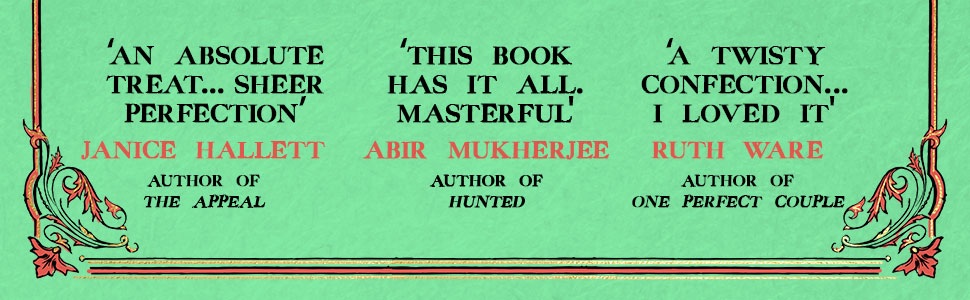
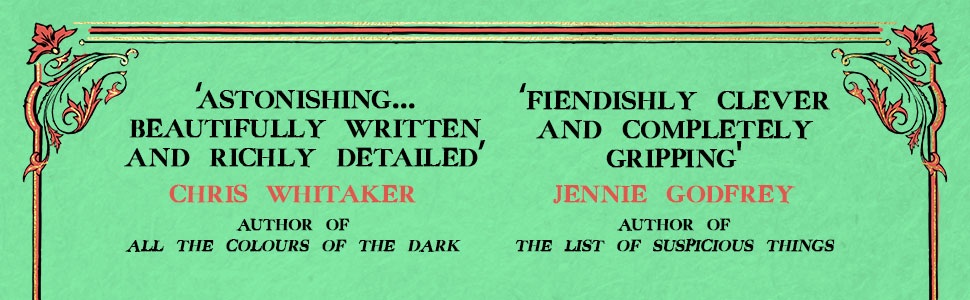
I was utterly entranced in this novel from the first page to the last, especially as the tensions mounted in the final third when Fielding makes his move. However, just when you think you’ve worked everything out another twist will come along and surprise you. I was rooting for Hannah to come out on top, but was very scared for her in parts. For both her heart and her liberty! I wanted her to live out her days as the grand proprietress of the Punchbowl and Pineapple. I very much feared that Fielding had the desire to see her face the hangman’s noose. While I didn’t trust Devereaux at first I did wonder if he had feelings for Hannah or whether he was some sort of confidence trickster. There is certainly sexual chemistry by the bucketload. I was working out in my head who might play Hannah in a film or TV adaptation because it would be a brilliant period thriller with lots of raunchy scenes perfect for Netflix. I was honestly hypnotised by this story and Laura’s talent. Bravo on such a fantastic story that I’m still thinking about four days after finishing it. Go beg, steal or borrow a copy of this one, it’s a cracker.
Out now from Mantle Books
Meet the Author
Laura Shepherd-Robinson is the award-winning, Sunday Times and USA Today bestselling author of three historical novels. Her books have been featured on BBC 2’s Between the Covers and Radio 4’s Front Row and Open Book. Her fourth novel, The Art of a Lie, will be published in Summer 2025. She lives in London with her husband, Adrian.
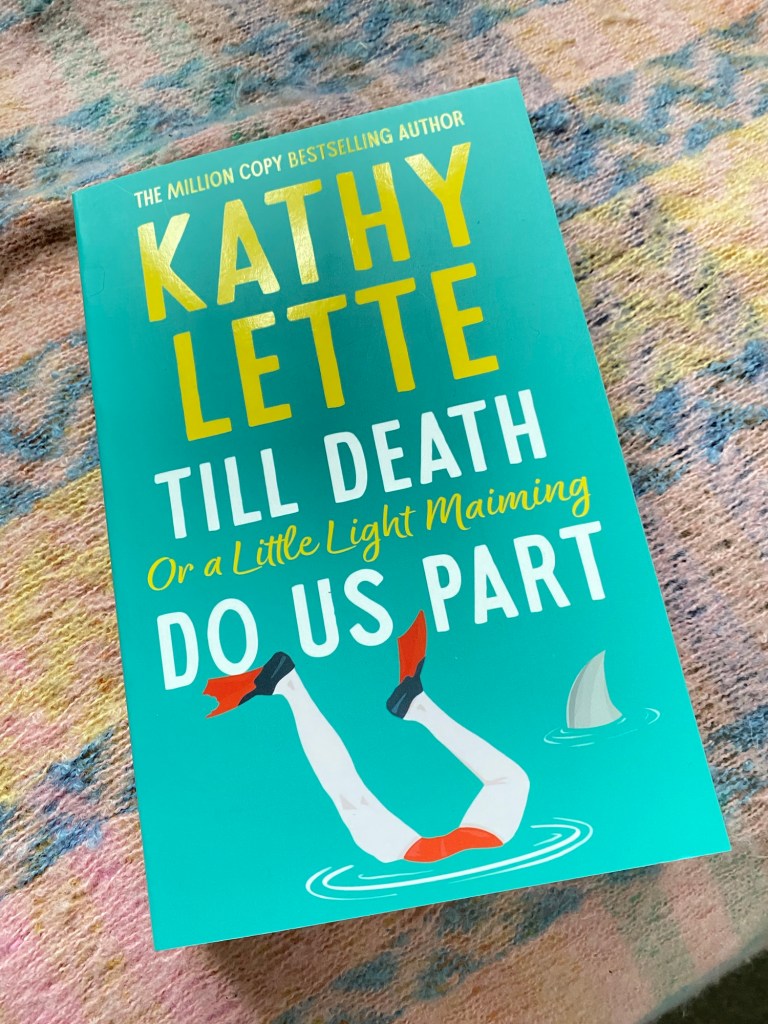
When she hears a man has been killed by a Great White shark, Gwen races to the beach only to find that all that remains of her husband is his swimming cap and a piece of torn, blood-stained wetsuit. Her grief is soon interrupted by Tish, screaming for information about the accident. When Gwen reassures her that it’s her husband, Jason Riley, who’s perished, Tish’s response is earth-shattering for them both: Jason was her husband too.
The women’s mutual animosity is not assuaged when they learn that Jason recently sent all his – make that their – money to a mysterious ‘business partner’ in Egypt called Skye. But when they fly to Cairo to confront her, they find another grieving widow whose life-savings have gone missing…
As this double-crossed threesome cross continents in their search for truth and retribution, they start to realise they’re embarking on a journey of self-discovery, renewal and friendship too.
I’ve read Kathy Lette before so I was expecting ballsy women, lots of wit, perhaps some raunchy behaviour and definitely laughter. I wasn’t disappointed. I’ve seen this described as a revenge caper and that is the perfect description. Gwen has a happy life with her children and second husband Jason, who’s a real hottie. He is a big blonde surfer type with a sprinkling of grey, but a body honed to perfection by Iron Man training. She sometimes wonders how they got together. She sees herself as a rather ordinary widow nearing her sixties, while he’s a lot younger and so fit. However, tragedy comes along when Jason is training. Gwen hears on the radio that there’s been a shark attack in the bay and she makes her way there immediately. When she arrives, she knows by the scrap of wetsuit on the sand that the lost man is Jason. She hardly has time to breathe before a leather clad ball of fury catapults herself into the situation. Tish is there because she thinks her husband is missing too, she’s married to a tall, blonde hunk called Jason. Surely they can’t both be married to the same man?
Gwen wants to quietly go home and cope with the double shock of Jason’s death and the news that he’s a bigamist. Tish has the grip of a small terrier and has about a million questions that Gwen is incapable of answering. She’s totally gobsmacked by Tish’s biker girl style, they couldn’t be more different so why was he attracted to both of them? It seems that when Gwen thought he was working or training, he was with Tish and vice versa. They’ve been together a similar amount of time. They make a very uncomfortable trip to Jason’s lawyer, Tish is adamant there should be a will and she wants to see it. She invested a large amount of money in a business start-up he was working on. Gwen is keeping her cards close to her chest but she too has invested some of her widow’s inheritance in his endeavours. Where has it gone? They soon find out. His lawyer tells them that Jason signed a document that transfers their joint investment to a woman in Cairo. Tish wants to be on the next plane and wants Gwen to go with her. Can they find this woman, solve the mystery of her connection to Jason and retrieve their money?
I found the novel intriguing and funny at first. Tish is an absolute ball of energy and her power as a character did overpower everyone else slightly. I wonder if Kathy based Tish on her most extrovert side. I felt a little bit like the momentum of the story was lost in long verbal exchanges between the two women that seemed more about the jokes than developing characters or their relationships. Some are admittedly very funny, but when they come thick and fast the humour sometimes misses the mark. It’s also difficult to change the tone and I think the novel could have done with some light and shade. However, it’s a madcap caper that takes on an escapist feel as we travel all over the world with the women and try to work out if Jason faked his own death and whether they’ll be able to retrieve their money. Cairo brings even bigger surprises, leading to Tanzania, the Maldives and throughout Europe. It’s an absurd plot, but it is fun and a great escape read. I read this in one afternoon and had some laugh out loud moments. There’s also some lovely female camaraderie as these women start to come together, overcoming their differences to bond and keep chasing their love rat husband. I really enjoyed the suggestion that there’s a re-evaluation of life as women reach middle-age. A realisation that if we are going to do the things we’ve always wanted we need to start planning now. It’s the chance to throw off things that no longer suit us – not just in our wardrobes! In amongst the action and the laughs is the very profound idea that just when you learn to make the most of your life, it is almost over.
For more information on Kathy Lette and her books visit
Emily and Freddie have been through the mill of late. After a terrible accident when they were on holiday, Freddie has surprised her with the home of their dreams. Emily fell from a cliff on a group holiday and not only did she break her leg in several places, she then developed sepsis and almost lost her life. Now she’s in recovery, still walking on a stick and has been thrust into a whole new life. Larkin Lodge sits just outside a village on the edge of the moors and could be their dream home, but Emily can’t believe Freddie made this huge decision without her. The house is gothic and in the mists and murk of winter it looks a little isolated and spooky. However, she can see that in spring the views will be incredible. As Freddie continues to work in London, Emily spends a lot of time alone and starts to feel uneasy. Sudden drafts and disgusting smells, then heavy footsteps moving across the second floor are unnerving. Freddie is convinced she’s struggling with post concussion syndrome and calls her ITU consultant for advice – much to Emily’s disgust for doing this behind her back. As she starts to look into the history of the house and questions some of the locals, all the different parts of her life start to fall apart. Secrets start to come to light and Emily wonders if the house is having an influence on her.
Freddie made me angry and I couldn’t understand what had kept them together so long. We hear both his and Emily’s viewpoint in alternate chapters. We don’t know how he felt about the ‘pre-accident’ Emily, but here he seems irritable and edgy. He makes Emily doubt her own sanity and even when he has experience of the same things he keeps it to himself. He talks behind her back to the vicar and her consultant – but we can’t help but wonder if it could it all be in Emily’s head? Yet even when she tries to forgive him for his actions he seems strangely disappointed and even angry. He says he hates her superior tone and victim mentality. Is he determined to think the worst of her or is he just a concerned husband looking for answers? They meet a married couple who once lived at the lodge and now live elsewhere in the village. They seem unscathed by their years at the house. He is an artist and loves to paint young models, with his incredibly chilled wife seemingly happy with any potential dalliance. Emily can’t imagine being that accepting of the same with her own marriage. How do they fit in to this strange puzzle?
Emily is a sympathetic narrator although she’s not entirely reliable. It must be so disorientating to wake from a coma and know that your body has been present but your mind has been somewhere else. Added to that is the risk of ICU psychosis – a common condition causing auditory hallucinations, nightmares, sleep disturbances and paranoia. One in three ICU patients are affected after spending five days in the unit so one of her experiences could be explained away. However it’s important that those who love her, listen to her and believe her experience, otherwise it feels like a betrayal. She is desperately looking for answers, researching the archives and talking to locals. Being disturbed in her sleep means she’s up and about in the night and after they throw a party at the lodge she stumbles across another secret and doesn’t know who trust. Would she ever have had thoughts like this before the house? The author cleverly creates tension between what we know about Freddie and Emily and what they know about each other. They’re both keeping secrets and Freddie projects all their problems on to her. Even when she’s quite measured and reasonable or accepts his apologies he becomes angrier. Just occasionally he pauses and wonders where these thoughts are coming from? Is it the shock of Emily’s fall still working on him or is something more insidious at work?
Of course it wouldn’t be a Sarah Pinborough novel without a supernatural element and this one is genuinely scary. It begins with the window on the landing, seemingly opening of it’s own accord. Then sounds on the stairs to the top floor where Emily can’t reach at the moment without severe pain. When she starts talking to older locals about the house there’s a moment that genuinely made the hair stand up on the back of my neck! The chapters from the raven’s perspective are very touching as well as creepy. He has lost his mate at the house and can’t seem to leave her, even with the promise of a new life with a beautiful young raven called Bright Wing. She can’t tempt him from the corpse of his mate, even though she’s no more than papery bones. His grief is so real and I was deeply sad for him. I was very keen to find out what link they both have to Larkin Lodge. Was this an edge of the seat thriller or a ghost story? We’re never quite sure, but i felt compelled to keep reading and find out. Sarah Pinborough is the Queen of this type of gothic thriller and this was another brilliant read, keeping you guessing till the very end.
Meet the Author
Sarah Pinborough is a New York Times bestselling and Sunday Times Number one and Internationally bestselling author who is published in over 25 territories worldwide. Having published more than 25 novels across various genres, her recent books include Behind Her Eyes which will air on Netflix in January 2021, Cross Her Heart, in development for UK television, and 13 Minutes in development with Netflix.
Sarah was the 2009 winner of the British Fantasy Award for Best Short Story and also the 2010 and 2014 winner of the British Fantasy Award for Best Novella, and she has four times been short-listed for Best Novel. She is also a screenwriter who has written for the BBC and is currently working on three TV projects and the film adaptation of her novel The Death House.
Her latest novel, DEAD TO HER and is a dark and twisty, sexy tale of hidden secrets and revenge in high society Savannah and has been sold for TV in the US.
Sarah lives in the historic town of Stony Stratford, the home of the Cock and Bull story, with her dog Ted.
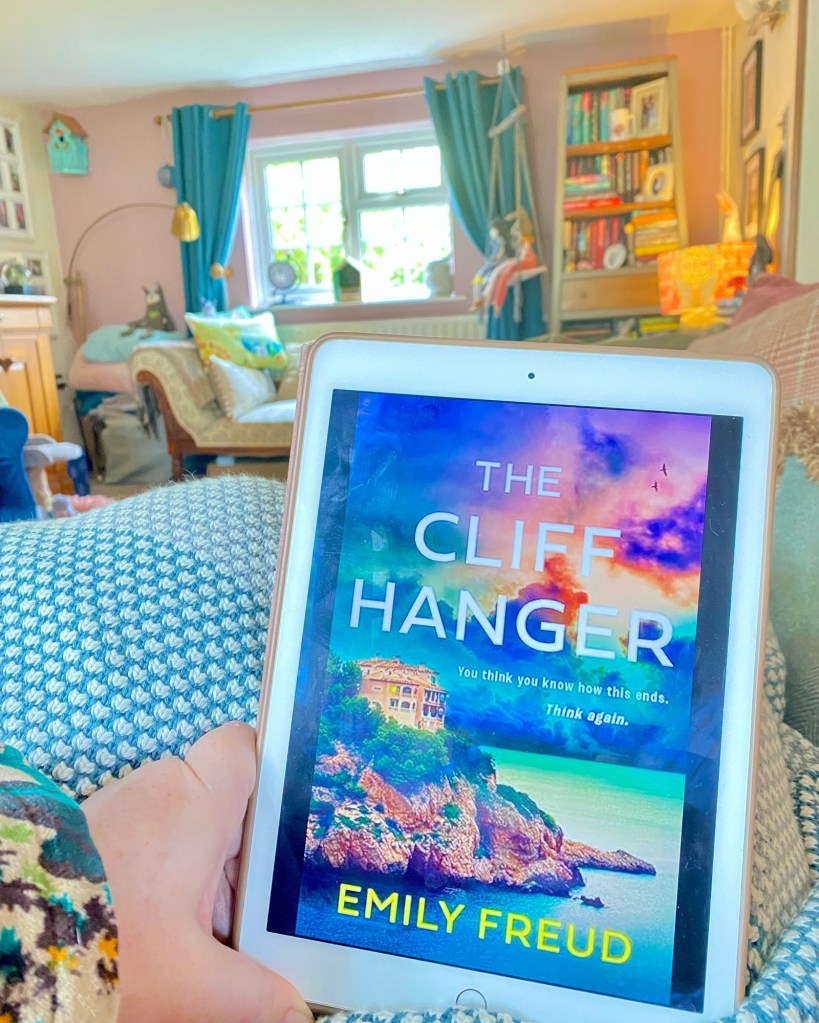
Goodness this was a wild ride, full of unexpected twists, characters that are pathological and a book being written within a book. Married couple Felix and Emma seem to have it all. They are the husband and wife team behind the hugely successful Morgan Savage thrillers. However, their latest novel isn’t coming as easily as their others. Felix is drinking to the point of blacking out and had an affair with a girl called Robin who worked for their publishing house. Emma is angry and popping anxiety pills any chance she gets. Their publisher Max, exiles them to the South of France in the hope that new surroundings for the summer will unlock their creativity. The house is beautiful, on a cliff overlooking the sea, when visiting housekeeper Juliette tells them a story about a painting that hangs in the house an uneasiness hangs in the air. The girl was prone to sleepwalking and one night got out into the garden and walked directly off the cliff edge. Sometimes, her cries can be heard at night. Under the sweltering sun, will the couple heal their differences or will they become trapped in a deadly game that beats the plot of any Morgan Savage bestseller.
This is a slow burn thriller, but when it does start to speed up it’s like a runaway train. Emma seems quite rigid and tightly controlled, almost as if she’s stifling her true feelings or self. Felix appears to be the more relaxed of the pair, sociable and happy to succumb to the pleasures of France. The couple met in a New York book shop, where Felix was sitting with his well worn copy of The Catcher in the Rye. Emma had a studious air, probably from the extra large glasses she wore. Both had always wanted to write but hadn’t yet succeeded. Years later Emma has become a neutral wearing, elegant and sophisticated woman who doesn’t like to be out of control. As an editor she knows what sells when it comes to fiction and how to jazz up or change the structure of a manuscript to create a bestseller. She writes early in the day, always sending her chapter of the book to Felix by 10am and then relaxing by the pool. Felix receives the chapter alongside little notes with suggestions or directions for Felix to follow. He falls out of bed (or wherever he slept) whenever he wakes, often nearer to lunchtime than breakfast. He has a leisurely start with plenty of coffee and when he’s feeling human again he gets to the book. He accepts that this is the way their joint writing works, but since they’re in France why not take the odd day off? He knows that without Emma starting the novel he would struggle. He had dreams of writing a great literary novel one day, but it’s never happened. His skills lend themselves to being the face of Morgan Savage. He does the festivals and book readings, because his charm and abilities lend themselves to being out front. He even signs their books as Morgan Savage, so it’s usually him people recognise. Emma stays behind the scenes, preferring the work to the publicity. She starts the new book on their first morning and then pushes Felix into his chapter each day to keep the momentum. Even in the quiet it’s clear there are resentments between them, a marriage’s worth of petty differences building towards a crescendo.
Over the days little snippets of their lives emerge until we finally see the full picture. The pace picks up and the chapters get shorter and I was soon racing through the chapters to see what would happen next. My other half found me sat on a kitchen stool, cooking and reading at the same time. It leaves you desperate to know what happens next. At one point I had to check how close I was to the end on my Kindle but found myself really confused when I still had 15% of the book left. I thought I’d reached the end, that’s how clever the twists and turns are. I loved the book within a book, especially the way they are writing characters that explored their own marriage. Each has their own version though and while Emma would signpost where Felix should go next, she would receive his chapter and find he’d develop a character with entirely the opposite emphasis and behaviour. They’re using their writing like couple’s therapy, working out the kinks and plot holes but also punishing and spiting their spouse at every turn. It gets even more exciting when the tone and quality of the writing start to change at one side of the partnership. There are mistakes in grammar and spelling, but is this a sign of deteriorating mental health, over use of drink or drugs or something more sinister. I found myself wondering whether I trusted either narrator.
Juliette is the girl who services the property. A carefree and natural young woman who cycles the area doing odds and ends for work. She’s the epitome of the term free spirit and could be a prime opportunity for Felix to continue his philandering ways. However, he’s confused when Emma befriends her, despite them being so different. Emma is also affected by Juliette’s story of the girl falling from the cliff and even has a bout of sleepwalking herself. Felix finds her in a trance in the living room and convinces her to go back to bed. Is this a reaction to Juliette’s story or something else? Emma was starting to remind me of Parker Posey’s character in the latest series of The White Lotus, uptight and reliant on pills to function. Could this be why the quality of the writing deteriorates or is Felix busier in his blackouts than previously thought? Just because he can’t remember doing anything, doesn’t mean he isn’t. This was a great story to get my teeth into and honestly, if they’d come to me as therapist, I might have asked them if they’d considered living apart. It’s a toxic atmosphere from the moment they arrive, but just when you think you’ve worked out why and what’s really going on it will surprise you again. As we go back in time, using flashbacks to important events, we can see how their romantic and professional lives began but these glimpses started to make me question what I thought I knew. I wanted to race back through the chapters to search for the clues that brought us to the unexpected conclusion. This was a thrilling and atmospheric read, with a brilliant portrayal of how a relationship has become toxic. If you love relationship dynamics partnered with a whole amusement park of twists and turns this will be your next completely unputdownable read.
Out 8th May from Quercus
Meet the Author
Emily Freud is the author of four thrillers: My Best Friend’s Secret, What She Left Behind, Her Last Summer and, coming in 2025, The Cliffhanger. She spent her career working on award-winning television programmes, including Educating Yorkshire, First Dates, and SAS: Who Dares Wins – as well as developing original programming for all the main broadcasters.
Every month this year seems to drift far away from my plans, for life in general and for reading! This last month my husband and I finally caught COVID as we welcomed his daughter back from university for the summer. We were both consigned to bed for a few days in his case and a whole week in mine. I’ve since had a sinus infection that’s caused nose bleeds and facial pain, plus I’m still struggling with my breathing so am on steroids, antibiotics and have an inhaler. We took a holiday to Wales and thankfully, took my carer and her children too. I spent a lot of time looking out at the view, reading and resting – what a view it was! While everyone else took turns looking after me. I did manage to get a couple of days in my favourite haunts of Beddgelert and Porthmadog, where I went to a favourite bookshop – Browsers Books. I made some great purchases from their second hand collection that I’ll show you in a few days when we’re fully unpacked. My dog Bramble had a lovely walk in the morning with my carer Louise before getting me organised and my husband managed to get some fishing done. I watched a lot of films that had been clogging up my watchlist on Netflix too. I came home on Thursday night and went straight to hospital on Friday morning for a radio frequency denervation on my back, so I’m now in bed recovering and trying to stay off my feet. I’ve managed to catch up on some Squad POD reads this month, which I was terribly behind on and I was late with blog tours. Sometimes book blogging doesn’t go according to plan, but luckily book people are some of the kindest I’ve ever met. Thanks to everyone for your patience and kindness this month ❤️❤️❤️
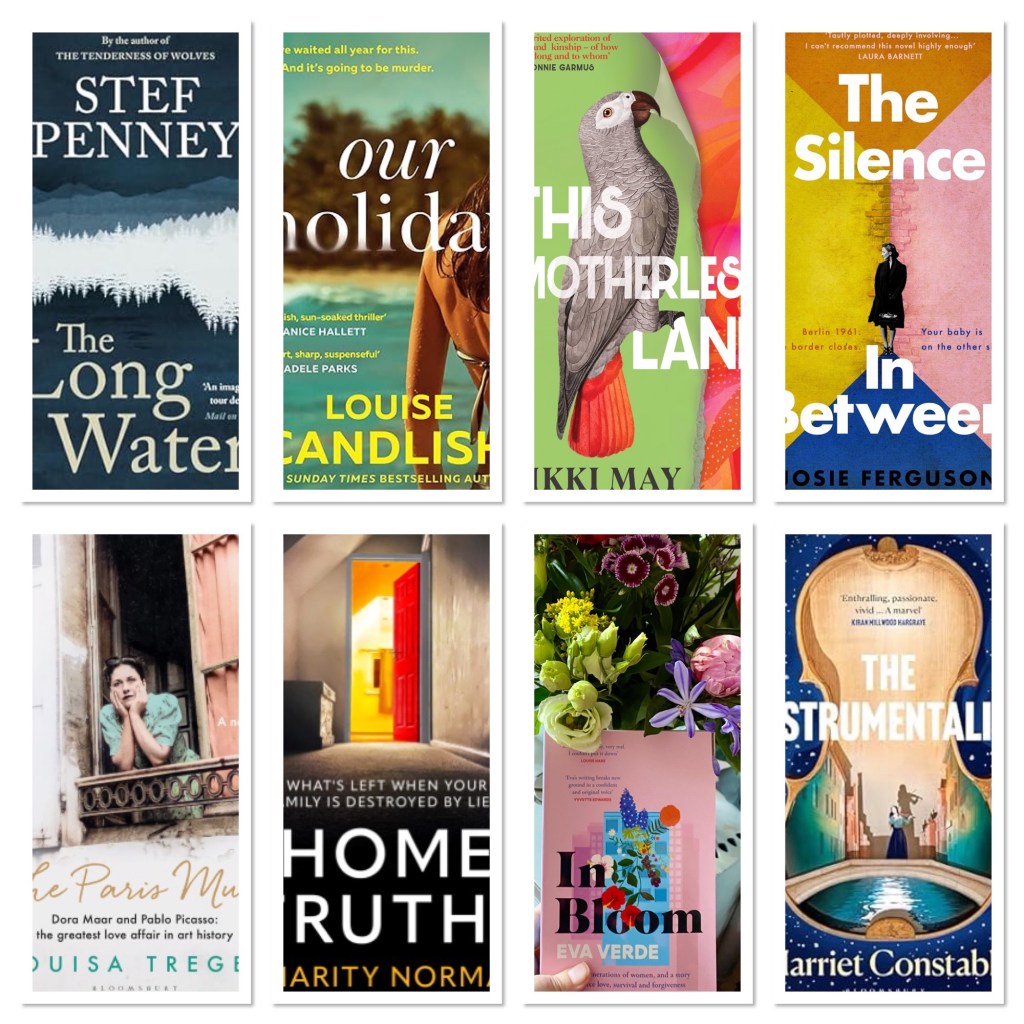
I loved this wonderful debut from Harriet Constable. Set in the magical city of Venice in the 18th Century, this shows a different side to the same place where Casanova was prowling the richest parties. We follow the fortunes of Anna, an orphan who was passed into the care of nuns at the Ospedale Della Pieta. The orphanage has a hatch in the wall, just big enough to accommodate a newborn baby and this is how Anna came to be at the orphanage with her friends. The girls are schooled but the specialism is music and Anna is playing the violin. She is a bright, sparky and ambitious girl absolutely bristling with energy and promise. When she catches the eye of the music master she hopes to reach the level where she can audition for the orphanages elite orchestra. Everyone knows that orchestra girls get special treatment, perform in the best venues in the city and receive gifts from patrons. She has definitely caught the eye of the master, who has organised for her to have her very own custom made violin. However, it isn’t until she’s a little older that she sees how precarious her position is. Those girls who don’t become elite musicians are introduced to eligible men, often rich but very old. For Anna this seems a fate worse than death, all she wants is to play the piano and be the best. In order to get there she will sacrifice everything… but will it be worth it? This is a fantastic debut, full of rich historical detail and brimming with tension.
In a remote region of the Norwegian arctic, a community struggles with its secrets when a young man called Daniel goes missing. This is the period called the Russ when teens who are about to leave school go through a period of partying, practical jokes and letting off steam. Svea is an elderly woman who has lived in the area for all her life. She has a simple life with her dog Aster and heads down to the cafe for her breakfast each morning. More often than not Odd Emil joins her, not that they have an arrangement. They’ve known each other all their lives and he was once in love with Svea’s beautiful younger sister Norah who disappeared many years ago, thought to be drowned. There are so many secrets here that it’s hard for the police to find Daniel. A fancy dress Russ party took place that weekend, Svea’s granddaughter Elin and her best friend Benny decide to attend in drag, with Elin surprised to find herself kissing Daniel despite her pink beard. Benny sees Daniel’s friends abandoning his car at a local hotel, so it looks like he started out on a walking trail. Can Benny tell the police what he’s seen without disclosing what he was doing there himself? When a body is found in a cave during the search, the police release that it has been there too long for it to be Daniel. But if it isn’t the missing teenager, who can it be? This was a brilliant thriller, depicting a seemingly ordinary town full of secrets and lies.
I loved this tale of Nigerian girl Funke, living a happy life on the university campus with her father and mother, plus brother Femi. Her life is turned upside down one ordinary morning on the way to school, when an accident kills both her mother and brother. Funke’s mother kept her in-laws at bay most of the time, knowing that her mother-in-law disapproved of her son’s marriage to a white woman. Now, with her father in shock, her grandmother is in charge and her ‘bush’ ways are having an influence. How could Funke have come out of the same crash without a single mark on her? Funke’s aunties can see which way the wind is blowing and make a decision that it would be best to send her to her mother’s family in England. The white side of her family. Totally out of her depth, Funke has never met her mum’s family or been to England. The Ring, her mum’s childhood home is an old mansion and not the fairy tale place she talked about to Funke and her brother. Even worse is Aunty Margot, a bitter and angry woman who blames her sister Lizzie for ruining her wedding; when Margot’s fiancé found out Lizzie had run away with a Nigerian man he broke off the engagement. If it wasn’t for her cousin Liv, Funke would have felt lost. She was determined to make Funke feel at home and wants to become her best friend. Can she succeed or is Funke’s life always going to be turbulent and changeable? This is a gorgeous book, vibrant and life affirming.
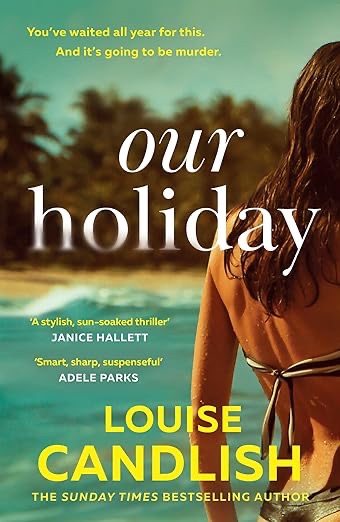
Pine Ridge is an idyllic coastal village on the south coast and it’s almost August so it’s time for the ‘Down from London’ crowd to start arriving on the ferry. This is one of those places struggling due to the amount of local property bought up as second homes and holiday lets. This August the two sides are set to clash more than ever as locals have set up a campaign group – the NJFA or Not Just For August movement. They have a series of publicity stunts set up for the coming month, starting with egging visitors cars as they come off the ferry. Amy and Linus are coming to stay in their new holiday home for the first time, sharing a week’s holiday together until work starts on their renovation. Having been introduced to Pine Ridge by friends Perry and Charlotte, Amy was determined to have a home with a sea view and a summerhouse just like theirs. Perry bought their house outright with his banker’s bonus and Charlotte created The Nook where everyone congregates for drinks in the evening. Locals Robbie and Tate live in the caravan park, only just able to afford the rent on a static home, which is boiling during the summer. They and their girlfriends have jobs that serve the incomers, but they’re not well paid and even the smallest flats have been pulled off the rental market to become AirBnB lets. The two sides will clash, but everyone seems shocked when a summerhouse is bulldozed over the cliff and on to the beach. Even more so when the police find a body inside! This a smart contemporary thriller with a perfect satirical look at the upper middle classes.
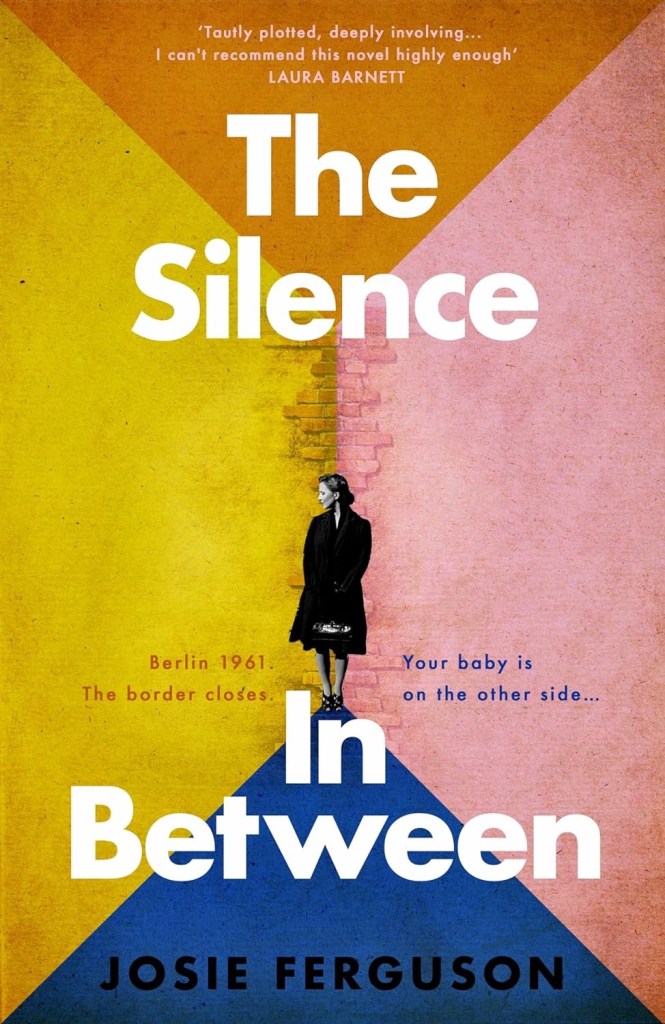
This is one of the most moving books I have ever read. Lissette’s baby son has been unwell and she’s had to take him to hospital on the west side of Berlin. When the medics try to get her to go home and sleep she’s very unsure, but they convince her to get some sleep and bring more supplies back in the morning. Lisette makes her way back to East Berlin, feeling more confident about her baby son’s recovery. When the household wakes the next morning a seismic change has happened. A barrier has been created between East and West Germany overnight. Lissette runs to where soldiers are guarding entry to the west and begs them, surely if she just explains that her baby is in a hospital just a few streets away they’ll let her through. He needs his mother. As the hours turn into days Lissette is grieving for her son and daughter Ellie wants to find a way to make things right again. She has a gift for music and hears people’s emotional state as a melody, but her mother’s music has gone. She makes a decision. She is going to find a way of getting across the new border and into the west. There she will find her brother. The historical research for this book is clearly extensive and I was actually ashamed of how little I knew about this time in history. We also go back to WW2 and Lissette’s teenage years in a city at war, giving us background on the family and how Berlin and Germany came to be separated. This is a heart-rending and emotional story showing how an historical event affected the real people living through it. Really exceptional writing.
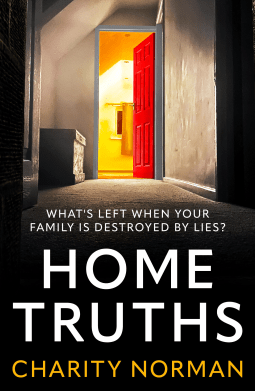
I’m a big fan of Charity Norman because she’s great at bringing the conflicting issues of society into family relationships, exploring whether they grow stronger or whether they crack. Livia Denby is a probation officer on trial for attempted murder and the jury have reached a verdict. Everything went wrong two years before, as Livia and her family are celebrating daughter Heidi’s birthday. Her gift is a new bike and she’s planned a bike ride to a local pub with her dad. Scott has promised to take her for a birthday lunch and she’s really excited to have her dad to herself. Scott has lots of responsibilities; he’s a father, an English teacher and cares for his brother who has Down’s Syndrome and diabetes. As Scott’s phone keeps ringing, Heidi can see their outing slipping away. Her uncle has already called twice because he’s confused they’re not going to Tesco as usual. Before the phone can ring again, Heidi slips it down the back of the armchair. It’s a momentary decision with terrible consequences. Livia awaits their return with terrible news. Scott’s brother accidentally locked himself out of the house and had a hypo. Despite help from passers by, the paramedics were unable to revive him. He died before he even reached the hospital. When Scott finally finds his phone there’s one plaintive, heartbreaking voice mail he can’t get over and his guilt complicates his grief. Scott starts looking for answers and fixates on one witness who said the ambulance took a long time and the paramedics were slow to act. He starts to research medical negligence, watching videos on YouTube and making links with content creators who talk about ‘Big Pharma.’ Before long he has fallen down the rabbit hole into conspiracy theories that separate him from his family. This is such a hot topic at the moment and the author has brilliantly portrayed how people can be brainwashed and radicalised by social media. I thought this was a fantastically tense and incredibly intelligent read.
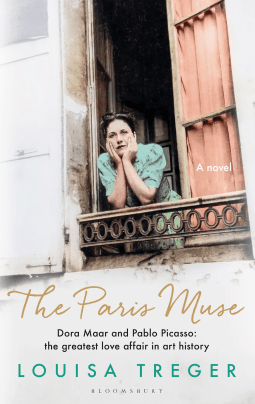
This is a fascinating story about Dora Maar, a photographer and artist who exhibited alongside some of the greatest artists in the Surrealist movement. She lived in Paris for most of her life, most notably, during the German occupation in WWII. Born Henrietta Theodora Markovitch in 1907, she used her photographic art to better represent life through links with ideas, politics and philosophy rather than slavishly photographing what was naturally there. She was exhibited in the Surrealist Exposition in Paris and the International Surrealist Exhibition in London in 1936. In the same year she was exhibited at MOMA in NYC. She first encountered Picasso while taking photos at a film set in 1935, but they were not introduced until a few days later when Paul Elduard introduced them at Cafe des Deux Magots. Dora is intent on catching his eye and sat alone, using a pen knife to stab between her splayed fingers. Where she missed, blood stained the gloves she wore and Picasso kept them with his most treasured mementoes. The gloves are a metaphor for their entire relationship – he fed off her emotions. We are inside Dora’s mind at all times giving her control of her story. In a world where Dora is known best through her relationship with a man, instead of her own work, Treger is simply redressing the balance. You’d have to be utterly blind to think there’s any other way of looking at his treatment of her and the other women he was involved with. In the nine years they were together, she was subjected to mental and psychological abuse. She was underestimated as an influence on his work, particularly Guernica and his politics. I felt that Picasso was drawn to her masochism and fed on the pain he caused her for his personal satisfaction and his art. Picasso comes across as a narcissist; constantly told he was a genius he believes everything revolves around his needs and his freedom to work. This is seen in The Weeping Woman series of paintings where she’s depicted as a woman who is constantly tortured and distressed, when she’s so much more than this. This is a brilliantly researched piece of art history told as a memoir.

This isn’t the first time I’ve read Eva Verde’s novel but I was asked to read it again for the paperback publication on 1st August. I worry about trigger warnings, they stop people reading books they might connect with emotionally and potentially prevent a healing process. If anyone should have avoided this book it was me, because I was Delphine. I lost the love of my life in my early thirties and then sleepwalked into a coercive and damaging relationship. So this was a hard read at times, but that wasn’t remotely negative. Moon, Delphine and Roche are three generations of a family. Each woman has her own issues, but they all stem from right back at the beginning. As the book opens Roche can no longer live with her mother and Itsy, the man she’s been living with for most of Roche’s life. So she decamps to her grandmother Moon’s house. Roche feels like Itsy dislikes her and wants Delphine all to himself. Of course it’s easier to control someone who’s isolated. Delphine has a ‘glazed over’ look and has done everything she can to keep Itsy happy. She’s changed how she dressed, made herself less beautiful, stayed at home and stopped going out with friends. Every day she makes herself smaller to make more space for him and Roche can’t watch it anymore. However, Delphine is changing, she has a job she enjoys at B & Q, new connections with her colleagues and today she has made a choice. Delphine is pregnant and she knows deep down in her soul that ‘the thought of more years, more life, tied to him’ is more than she can bear. She goes quietly on her own for an abortion, the quietest but most powerful act of rebellion she can make. Then comes an opportunity, Itsy receives a phone call from Jamaica. His mother is dying and he must jump straight on a flight. Delphine lets him go alone, knowing that now she has several weeks to herself. She doesn’t stop Roche from moving out and accepts this as her time to heal, time to be the parent that so often Roche has to be for her. However, this isn’t the only recovery needed in the three generations of this family thanks to the actions of men. This was such a real, emotionally engaging story that focused on relationships between mothers and their daughters especially those responses to trauma that we pass on to the next generation. This was so emotionally intelligent and uplifting.

This was a fascinating mystery, set within the art world and told from different points of view within three timelines. In 1938, Juliette Willoughby is living and painting alongside her lover Oskar in Paris. A British heiress, she left her family and their money behind for a life as an artist who is best known for her painting ‘Self-Portait as Sphinx’, thought to be lost in a studio fire where Juliette also lost her life. We meet our main characters Caroline and Patrick at Cambridge in 1991, where they are both studying art history and specialise in the Surrealists. They are sent to the same dissertation supervisor and while researching come across something sinister about Juliette’s death. Their investigations may expose terrible secrets about the Willoughby family, who are acquaintances of both students and an aristocratic family who don’t want their family history out in the open. Our final timeline is present day Dubai where Patrick is an art dealer and lives with his wife. Caroline is now an academic and expert on Surrealism, especially Juliette Willoughby so when a new ‘Self-Portrait as Sphinx’ is uncovered he asks her to fly to Dubai and authenticate the painting. A sale is on the cards and Patrick needs to know if this painting is definitely a second version by Juliette and potentially worth millions. He plans a night for collectors to view the painting and offer sealed bids, but the night ends with Patrick in a cell accused of murdering one of his closest friends – the last surviving member of the Willoughby family. There are now three suspicious deaths linked to this painting, but can Caroline unlock the mystery before Patrick is charged with a crime he didn’t commit? This book creeps up on you, a slow building tension grabs you and doesn’t let go. You will find yourself desperate to know about the painting and what happened in the Willoughby family.
Charity Norman is one of my must-buy authors, because although you don’t see many people talking about her work I find it really intelligent with a particular insight into difficult and dysfunctional relationships of all kinds. She’s also great at bringing the issues of modern day society to bear on those relationships, exploring whether they get stronger or whether they crack. Livia Denby is a probation officer on trial for attempted murder and the jury have reached a verdict. Everything went wrong two years before, on a particular Saturday morning as Livia and her family are celebrating daughter Heidi’s birthday. Livia and husband Scott have bought her a new bike and she’ll get to try it out on her planned bike ride to a local pub with her dad. Scott has promised to take her for a birthday lunch and she’s really excited to have her dad to herself. Scott is one of those people with lots of responsibilities; he’s a father, an English teacher and cares for his brother who has Down’s Syndrome and diabetes. The phone keeps ringing and Heidi can see their outing slipping away, her uncle has already called twice because he’s confused they’re not going to Tesco as usual. So before the phone can ring again, Heidi takes it and slips it down the back of the armchair. It’s a momentary decision with terrible consequences.
Livia awaits their return with terrible news. Scott’s brother accidentally locked himself out of the house and then had a hypo. Despite help from passers by, the paramedics were unable to revive him. He died before he even reached the hospital. When Scott finally finds his phone there are several missed calls and one plaintive, heartbreaking voice mail that Scott can’t stop listening to. Guilt complicates grief and Scott starts looking for answers. He fixates on something one of the passers by said about the ambulance taking a long time and the paramedics taking a while to make a decision. He starts to research medical negligence, watching videos on YouTube and making links with content creators who talk about ‘Big Pharma.’ I could already see the path he was on because it happened to my husband last year when our local air base was requisitioned by the government for asylum seeker accommodation. He did his basic training there and knew it had been used for refugees before after WW2. Sadly, right-wing racist group from a different part of the country hijacked local protests and turned the camp gates into a protest against all asylum seekers. My husband was so angry they were using images and the legacy of the Dam Busters to peddle hatred. It consumed him so much that he was constantly on social media fighting against their viewpoint and became sucked into a hellish echo chamber of Nazism. He felt like the whole world was racist, but he hadn’t realised that the algorithm behind social media channels is simply to give you more of what you’re viewing. I had to explain using BookTwitter which is mostly a lovely, benign and accepting part of Twitter/X. Thankfully he closed his account and instead is taking positive steps to support the asylum seekers when and if they arrive. As I was reading I could see that Scott was so vulnerable, so desperately sad and ripe for manipulation.
Scott finds a content creator called Dr Jack who claims to work in the NHS but in Scotland. He hides behind a mask, a voice simulator and a cartoon avatar. He talks about Big Pharma, the danger of vaccines and how health fears can be used to control the population. Behind it all is the global conspiracy of the New World Order, a shadowy cabal of billionaires, celebrities and politicians who are the real power in the world. They have the ability to control governments and democracy, both of which give us an illusion of control. It’s not long before he is messaging Scott directly and taking him deeper down the rabbit hole. Heidi is due to have her HPV vaccine at school and after contacting Dr Jack, Scott is keen to take direct action. Without talking to Livia he refuses to sign Heidi’s consent form. Then he uses a video suggested by Dr Jack in his English class, making a link between vaccines and fatal consequences. The video shows a supposedly dead girl in the morgue, a girl with long red hair rather like Heidi. By lunchtime the school is full of terrified teenage girls and the head is inundated with calls from angry parents. Poor Heidi is thrown into the spotlight and the head is left with no option but to suspend Scott. When Livia tries to talk to him she can’t get through and Scott tells her she’s just not listening to him. When she looks into her husband’s eyes all she can see is the fervour of the fanatic.
Meanwhile, Livia is acting slightly out of character too. She’s working with an old con called Charlie who’s about to be released from prison into a hostel, where Livia will act as his probation officer. He’s served most of his sentence with time off for good behaviour. Livia is sure they’ll make a strong team and she’s sure Charlie is reformed from his days as a gangland enforcer called The Garotter. Charlie is a great listener and once he’s in the community they meet at a local cafe for lunch and to check in, so it’s easy to slip into confidences. Something personal is disclosed and she immediately checks herself, she must keep her professional boundaries. However, as Scott’s obsession worsens Livia feels like she’s losing her best friend and the usual person she would talk to. Despite being off work, he isn’t pulling his weight at home. He’s up till the small hours, researching his theories and then haranguing people with them at parties. Livia is lost and embarrassed. She needs somewhere to offload and surely it can’t do any harm to disclose to Charlie now and again? At least Scott has his old university friend nearby, giving him someone to talk to and take him to the pub when it all gets too much for Livia. She is the only one keeping the family on track and the pressure is huge. She’s trying to shield Heidi from Scott’s wilder ideas and managing their son Noah’s asthma. The kids seem ok but it’s hard to know. In the section narrated by Heidi we realise she isn’t ok. She’s pouring herself into making music with her friend Flynn, but the guilt is killing her. She thinks she caused her uncle’s death and finds herself drawn to risky behaviour. There’s no doubt that this is a family in crisis; when will these hairline cracks finally give and begin to break apart? Slowly in the background, we learn about a new coronavirus outbreak in China and it creeps ever closer.
The tension built by the author is too much to bear. She builds her characters so well that they feel authentic and I could feel Livia’s heartbreak that the man she loves is slipping away. I could also feel Scott’s desperation as he tries to make sense of a tragedy that’s so difficult to comprehend there must be a reason. When faced with a tragedy humans have to make sense of what’s happened. We’re hard wired to detect patterns in events, because it’s terrifying to accept that life is random and chaotic. There must be a reason, because how could the King of rock and roll come to an undignified end in a bathroom? How could a politician and new president who’s filled his countrymen with hope have his life ended by one lucky shot from a random man? Surely a beautiful Princess can’t meet her end in a Paris tunnel because of a drunk driver? There must be something behind it, an intent, a missing clue, a conspiracy. I enjoyed the clever inclusion of experts in the field of online grooming and brain washing and that they were there to support Livia. When someone we love is behaving so illogically, it’s easy to wonder whether everything you’ve thought is wrong and maybe there’s actually some truth in what they’re saying. Livia needs people to say ‘it’s not you’. I was desperate for this lovely family to get through this. Yet I couldn’t help but think a further tragedy lay ahead and that Scott would fall so far out of reach, Livia wouldn’t be able to catch him. As we came closer finding out why Livia was on trial I wondered whether I would be able to understand her actions. I did understand and I hope I would have the courage to do the same in these circumstances. The author captures this whirlwind of feelings so well that I felt emotional. I thought she captured the strangeness and dislocation of the pandemic incredibly well too. This is a book that takes the most traditional of institutions, a nuclear family, then shows us how the dangers of modern life can literally tear it apart. This was an incredible read and I recommend it very highly.
Out on August 1st from Allen and Unwin
Meet the Author
Charity is the author of six novels. She was born in Uganda, brought up in draughty vicarages in the North of England and met her husband under a truck in the Sahara desert. She worked for some years as a family and criminal barrister in York Chambers, until, realising that her three children barely knew her, she moved with her family to New Zealand where she began to write.
After the Fall was a Richard & Judy and World Book Night title, The New Woman a BBC Radio 2 Book Club choice. See You in September (2017) was shortlisted for best crime novel in the Ngaio Marsh Awards. Her sixth, The Secrets of Strangers, was released on 7th May 2020 and is also a Radio 2 Book Club choice.
Charity loves hearing from readers. Please visit her on facebook.com/charitynormanauthor or Twitter: @charitynorman1
Pine Ridge is a small coastal village off the south coast, somewhere near Bournemouth and has that castaway feeling from the moment you cross on the car ferry. However, this idyllic village is the setting for discontent and divided loyalties between those DFL (down from London) residents and those who have grown up in Pine Ridge and mainly work servicing those August visitors. The ridge has a resort hotel, beach bar and spa to keep holiday makers happy, but some visitors have gone away dreaming of their own little slice of south coast heaven. One summer Pine Ridge becomes the centre of a dispute over second home ownership. This is a bad time for Amy and Linus who have just bought their own little bungalow with coastal views up on the ridge. It needs work, having been the home of an elderly couple, but she has a plan and builders starting this summer. She was inspired by friend Charlotte whose banker husband Perry used a huge bonus to buy their perfect holiday home with it’s own summer house overlooking the sea, nicknamed The Nook. It’s people like this that friends Robbie and Tate are angry about. They grew up here but are stuck living in static caravans on a temporary site because they can’t afford to buy or rent anywhere. The private rental market has shrunk as people refurb for the AirBnB market and no new houses are being built. People on service wages can’t hope to pay the prices of houses on the ridge, so they’re snapped up by Londoners who only come in August. This leaves huge homes empty all year while villagers are homeless, this is why the men have set up the NJFA – ‘Not Just For August’ Campaign. As tensions rise towards the August bank holiday, the NJFA are gearing up to make their final public protest of the summer. As the music festival gears up on the beach, people are interested in the design they’ve created on the sand, but they’re stopped in their tracks when half way through the day a summer house is bulldozed from the cliff and into the sea. Was this the NJFA plan all along or is something else going on?
Louise Candlish is brilliant at satirising the middle classes and she’s hit upon an issue that holiday destinations around the world are facing. I’ve always visited Venice in winter or early spring because I can’t stand cruise crowds and I was emotionally drawn in by the problem of keeping that balance between tourists and residents. They’ve addressed the cruise ship issue in recent years, have set up campaigns that show tourists which are the authentic Venetian restaurants and shops rather than the tourist traps. Authorities are now considering curbing numbers. Otherwise, it will become little more than a Disneyland experience; can Venice be the city it is, without it’s people? It’s a problem that areas like Devon and Cornwall have faced for years, with second home owners and holiday cottages turning whole villages into ghost towns in the winter. Even worse, it means the opinions of people who are not even year round residents, hold more sway in local matters than people trying to earn their livelihood. This came to the fore a few years ago in Cornwall where local fishermen’s need for a new jetty was being blocked by second home owners objecting to the planning application. There is always a tipping point and Candlish has demonstrated that exquisitely here. I had so much sympathy for Tate and his girlfriend Ellie, working in the beach bar and spa but not able to buy a home where they were born. They finished long shifts, only to broil all night in the heat of a static caravan. Tate’s friend Robbie is determined to take action and his NJFA campaign starts with throwing eggs and soup at DFL cars at the ferry stop. He pushes his agenda at council meetings and in the press, especially when he parks his caravan on the drive of a Pine Ridge home that’s been empty all year.
When we meet the DFL families their privilege is apparent. Candlish has this brilliant way of creating the stereotype we expect then subverting it. Perry is the archetypal banker – big car, egocentric and totally unapologetic about his banker’s bonus that allowed him to buy their holiday home and retire early. It’s easy to find fault with him; the drinking, the toxic masculinity and the absolute rejection of the type of ‘woke’ causes the younger people are hung up on. His son Benedict has brought girlfriend Tabitha to Pine Ridge, but she’s so ‘woke’ that she gets under Perry’s skin. Her sympathy for the NJFL cause grinds his gears, especially when she criticises his lifestyle while happy to enjoy the benefits for herself. Perry is simply incapable of keeping the peace, tearing up to the caravan park to give Robbie a piece of his mind and his fists. He’s also irritated by Linus, who is more aware of his impact on the world and travels everywhere in the village by bicycle. Perry finds his middle-aged Lycra wearing ridiculous and vents much of his rage on him and his bike. Yet there’s another side to Perry, a fear of being who he really is perhaps? He’s on the wagon after years of alcoholism and has formed an attachment to a resident at the halfway house for addicts where he volunteers in London. Charlotte is suspicious of his weekly drives back up to the city, but it’s fair to say doesn’t suspect the identity or gender of the object of his affections. It’s clear that Perry’s lies are starting to stack up and he won’t be able to hold his perfect life together for very long.
Another interesting character is Linus and Amy’s daughter Beatrice, who at 17 has blossomed into a goddess, something her mother realises when she sees her on the beach in a bikini. Beatrice could be an rich bitch, totally unaware of how privileged she is. Of course they’re not as well off as Perry and Charlotte, but still they can afford to renovate the bungalow as a second home and she has the usual teenage accoutrements of manicured nails, the latest iPhone and enough clothing to dress the whole family. Underneath Beatrice doesn’t seem happy though and when Charlotte notices a wrap she’s wearing on the beach is genuine designer and not the Vinted fake she claimed it was, her mind starts whirring. Where is Beattie getting the money for all these designer items? Candlish has all the right brands here including the designer collaboration Birkenstocks. It turns out that Beattie has a way of acquiring her goods that is less than savoury. I was expecting OnlyFans or an online sugar daddy! Yet what does Amy expect when she’s already going out of her way to keep up with Charlotte and Perry? It’s something that’s very apparent when she purchases her own summer house to sit overlooking the bay and christens it The Niche. Beattie has other secrets too, involving the The Niche and a certain beach barman. All hell will break loose if Linus finds out that this man, with a pregnant girlfriend, is hanging around his daughter. Tate is feeling ever more desperate and utterly trapped. He can’t bear the idea of the winter in the confines of their static with a screaming baby. He isn’t ready. While Ellie is planning to tell her parents and lobbying the council for more permanent housing, he is meeting his teenage lover and planning his escape.
There are so many strands to this story that by the time the summer house slides off the cliff and onto the beach I had no idea who had done it. The shockwaves ripple through the villagers when the police find a body in the wreckage and start a murder enquiry. Tate knows he and Robbie will be in the frame for their activist antics and their ability to use a bulldozer. I couldn’t help but think that it wouldn’t be as simple as that. Despite their circumstances driving them to criminal behaviour, they really aren’t bad boys. My money was on one of the DFL crowd: had Charlotte found out about Perry’s extra-curricular activities? Was Beattie so scared of her secrets coming to light she’d silenced someone? Had Perry been driven to distraction by Linus and his bike? We didn’t even know whose summer house was wrecked at first. This labyrinth of possibilities slowly unravels, including some fascinating twists and turns. I loved how Candlish highlighted a very real injustice, while weaving a unputdownable thriller around it. I genuinely felt for locals having to sofa surf, while huge houses stood empty all year. To then add insult to injury they then have to earn their money servicing these families and their houses, providing their massages in the spa and listening while they complain about their busy lives and seeing how much they spend without thinking on their food and drink. I could see why they were angry and it was interesting to see how those inequalities lead to other ideologies – when locals find out that asylum seekers might be housed nearby they are incensed. Their antipathy comes from fear that someone will jump them in the queue, but they’re missing who the real enemy is. Everybody has to do a lot of learning as we rush towards her conclusion, there’s some learning around respecting differing opinions, understanding why the other person thinks like they do and finding ways of working together. This is a fabulously current morality tale with some delicious satire and lots of secrets to uncover. The perfect summer read.
Out Now in Hardback from HQ
Meet the Author
Hello and welcome! You join me as my new thriller OUR HOLIDAY is published – it is out now in paperback, ebook and audio and was just announced as a Richard & Judy Book Club pick for the summer! It features my favourite ever love-to-hate characters (wait till you meet Perry and Charlotte!), second home owners in an idyllic beach resort who think they’re in town for another summer of sun, sea and rosé… But instead, they’re in for a bit of a reckoning…
I’m also celebrating my 20th year as an author this summer – that’s right, my first book came out in 2004, which somehow manages to feel both like yesterday AND a hundred years ago.
OUR HOUSE is the one you may know me for as it’s on our screens as a major four-part ITV drama starring Martin Compston, Tuppence Middleton and Rupert Penry-Jones (watch the full series free on ITVX). This is the novel that turned my career around – right when I was about to give up. It won the 2019 British Book Awards Book of the Year – Crime & Thriller and was shortlisted for the Goldsboro Books Glass Bell Award, the Capital Crime Amazon Publishing Best Crime Novel of the Year Award, and the Audible Sounds of Crime Award. It was also longlisted for the Theakston Old Peculier Crime Novel of the Year Award and the Specsavers National Book Awards.
It recently received a Nielsen Bestseller Silver Award for 250,000 copies sold and I feel so proud that readers are continuing to discover it and recommend it far and wide.
My 1990s-set thriller THE ONLY SUSPECT just won the 2024 Capital Crime Fingerprint Award for Thriller of the Year and I was recently nominated for a CWA Dagger in the Library Award, voted for by librarians and readers.
OUR HOLIDAY, THE ONLY SUSPECT, THE OTHER PASSENGER, THE SWIMMING POOL and THE DAY YOU SAVED MY LIFE have all been optioned for the screen – I’ll share development news on those as soon as I can.
A bit about me: I live in a South London neighbourhood not unlike the one in my books, with my husband, daughter (when she’s not at uni), and a fox-red Labrador called Bertie who is the apple of my eye. Books, TV and long walks are my passions – and drinking wine in the sun with family and friends. My favourite authors include Tom Wolfe, Patricia Highsmith, Barbara Vine and Agatha Christie.
Be the first to hear about new releases and price drops by clicking on the ‘Follow’ button under my pic or:
Wow! That was a busy book month. I read so much and enjoyed pretty much every book I read, but these were the stand outs for me this month. I think a combination of having a really painful back and the recent heatwave has meant a lot of resting and time to read. In fact I’ve read so much this month I’m slightly behind on reviews. My NetGalley account is looking seriously neglected though and one of my priorities for next month is to get some of those choices reviewed and tidied away. I hope you’re all enjoying the weather. I’m surgically attached to my new Shark fan which is so quiet I don’t feel like a jet engine is taking off next to the bed! Multiple Sclerosis and heat don’t mix well so I try and keep cool with cold drinks, a cooling mat, cooling spray and frozen strawberries or iced fruit lollies. I’m pretty much guaranteed to be having an afternoon nap each day too. I’m expecting similar conditions next month so lots more reading time. Here are some mini reviews of my June reading:
This excellent contemporary short story collection features an interlinked group of young Black British people. It opens strongly with an introduction to one woman’s tube ride to work and the emotions that arise when she sees an eligible man reading her favourite book. It sets the tone for the whole book with a narrative voice that’s immediate and modern. Reading this as a 50 year old in my rural village opens up a much younger generation to me and reminded me of the way my stepdaughters communicate – across so many social media apps I can barely keep up. There are bittersweet feelings of regret and love, the realisation that sometimes love isn’t enough. I loved the way that each story bled into the next, so while we meet a character like Jonathon in the context of the girl who’s always loved him in a later story we can see him visit Ghana with friends discussing how hard it is to be a young black man in Britain. So we know there’s so much more to him than at first appearance. I also love that these stories come full circle in an unexpected way within the final story. This beautiful writing is so immediate with no superfluous words or descriptions. My full review will be up this week.
I’ve never read a Jane Cory novel but was intrigued by the premise of this story revolving around a historic case. Janie tells us ‘on the day I died the sea was exceptionally flat’. She’s a young girl on the verge of exciting life changes, she’s been offered a publishing job in London. It’s something she has always wanted to do and she’s had a last early morning swim. Afterward she starts to cycle home when a 4×4 hurtles round the corner and knocks her off her bike causing horrendous injuries. Janie survives but is severely disabled, struggling to even communicate until she realises that although she can’t speak, she is able to sing. Years later, music legend Robbie is arrested for the offence. The clean living band member, then solo artist, wants to plead guilty but his solicitor is sure there’s something he’s not saying. Victim support volunteer Vanessa is assigned to Janie throughout the court process. Now a widow, she has spent most of her life unwittingly controlled by her husband. Her secret heartbreak is that she couldn’t have children because after a fall when pregnant she sadly had a stillborn baby that didn’t see due to being so unwell. So when a young man turns up claiming to be her grandson it throws her whole life into confusion. Luckily she has Judge, who she’s built up a friendship with after meeting at court, but he has his on secrets too. There are so many tangled threads in the stories of these people who revolve around a single court case. I was compelled to keep reading as the questions started to pile up and revelations came thick and fast. This was an interesting thriller with four narrators taking us into their own inner worlds and slowly revealing it’s darkest secrets.
I loved this story of a marriage gone wrong from Moa Herngren, set in Stockholm. Our narrator is Bea, the wife in this divorce, who is angry with husband Niklas because he forgot to buy the ferry tickets to take them on holiday. Bea does everything else so why couldn’t he remember this one thing? Now they’ll be stuck in the city for another week in the heat or they’ll have to take a car and drive to a different ferry. Bea is sometimes exasperated with her husband who has started a new job as doctor in a maternity department, in fact she even picked out the job for him knowing that he would happily stay working in paediatrics in their local hospital for life. If she didn’t push him he wouldn’t fulfil his potential and they’d never have a new kitchen. Niklas and Bea met as teens when Bea’s brother Jacob started to hang out with him. When Jacob killed himself both of them were grieving and he felt a natural pull towards Bea, wanting to look after her. They’ve been together for thirty years and have two teenage daughters Alexia and Alma. Niklas suddenly distances himself from Bea saying he’s not coming home, saying he needs some space. Bea is bewildered by his behaviour. Is it a mid-life crisis? He gets a tattoo and starts to rent an apartment belong to the Ericssons down the road. Bea doesn’t know what she’s done wrong and he won’t communicate, but she’s terrified because if she loses him she loses His family too – the only family she’s known. We’re team Bea at this point and then the author switches to Niklas’s point of view at the half-way point. This is a clever and subtle story of something many of us experience, but shown from two different and fascinating perspectives.
I loved The Phonebox at the Edge of the World and the idea of a place to go and talk to your lost people. It’s a ritual. A point and place of connection where all your anger and grief can be expressed. Then when you put the phone down and leave the box, you leave those feelings behind. Catharsis is very important, but as time goes on so is containment. It allows people to grieve, but at a time and place of their choice. Shuichi is an artist who returns to her home town of Kamakura after the death of her mother to do carry out the administrative tasks that follow a death, but also to sort her belongings. As she starts to sort the contents of her mother’s house into boxes in the garage, she isn’t expecting to find a young boy in there, going through the boxes and taking items out. As a friendship grows between Shuichi and this boy called Kenya, Shuichi’s parental feelings are stirred up by this new child in her life. Children are very healing, because they’re a beginning rather than an end, experiencing the world for the first time with joy and wonder. This book is about the inner journey and the human process of change. There are moments of exquisite descriptions and a philosophical element. It’s one of those books where you find yourself going back to re-read a sentence that’s so beautiful it stops you in your tracks. Although it starts with a feeling of sadness, I felt uplifted at the end. There’s nothing overwrought it sentimental about it either, and it’s because the writer has such a gentle touch that the full impact of the emotions really surprise you. I felt changed by this story and that’s how powerful literature can be.
It seems a long time since I last accompanied Jensen on her investigative adventures, so I was very pleased to receive a proof for this third instalment. As usual this was a complex plot involving politics, organised crime, hackers and headless bodies being fished out of the water. Jensen fears that one of the bodies might belong to a Syrian refugee named Aziz who was working as security for MP Esben Nørregaard, one of her friends. Esben asks Jensen and her assistant Gustav to look into it for him as he doesn’t yet want to involve the police. Meanwhile, detective Henrik Jungersen and his team try to find out who the bodies belong to and where their heads have gone. This complicated investigation means that Jensen and Henrik are going to cross paths. Jensen is in a good place, after a round of redundancies at her newspaper Dagbladet she has become chief crime reporter. Also, she has just moved in with her tech billionaire boyfriend Kristoffer Bro. Henrik can’t believe that Jensen has left him behind for good. He’s still married, just barely, and is due to go on holiday to Italy with his family when the first body is found. Guiltily he can’t imagine anything worse than the holiday, but if he doesn’t go he knows it’s probably the last straw for his long suffering wife and that’s before she knows Jensen is involved in his case. Jensen still feels slightly odd in Kristoffer’s flat and when she starts to look for something of Kristoffer’s that’s personal I could understand why, even if it is an invasion of his privacy. Jensen’s investigative urge could come between them and up until now this is the healthiest relationship she’s ever had. Henrik has never made himself available, but that attraction is still there. The story is compelling, well-structured and there were revelations I wasn’t fully expecting. What’s fascinating about Jensen is that by instinct she’s a lone wolf, suspicious of everyone and very headstrong. Yet she seems to be slowly collecting people in her work and private life. I think these ties make her feel vulnerable, but she’s starting to realise that without them she’d be in a much worse place. The ending was tooth-clenchingly tense and I’m already looking forward to their next adventure.
It seems to be a year of incredible debuts and this one is definitely going to stay with me. We open at a dinner party. Robyn and her wife Cat are hosting an evening for their friends Willa and Jamie, Robyn’s brother Michael and his partner Liv, and Cat’s brother Nat and his new girlfriend Claudette. It’s the first time the group will meet Claudette and Robyn hopes to make it a chilled, relaxed evening. Robyn had a scholarship for a private girl’s school and she ‘buddied’ with Willa who was a new sixth former. Robyn soon learns that Willa’s life is overshadowed by the disappearance of her sister Laika. Michael’s girlfriend Liv is a psychologist and she begins a discussion about implicit and explicit memories. Our explicit memories include times, dates and places and they tend to be from older children. Implicit memories are usually from unconscious emotional recollections and can be an amalgamation of several memories, as well as a few bits of what others have told us. These are memories created when we’re very small, usually pre-school age. Jamie isn’t convinced and Liv’s assertions seem to unsettle the party. As Jamie gets louder, Willa tells a memory of being tickled until she wets herself. She has always hated being tickled. However, someone in the party knows this isn’t actually Willa’s memory. It’s her sister Laika’s. The psychological dynamics of the dinner party are explored within narratives from Robyn, Willa and Laika. We each carry hidden histories within us and these ones are complex and affected by loss and trauma. While the compelling psychological thriller aspect is concerned with finding out what happened to Laika, I was fascinated with the upbringing of the characters and how they became the adults they are. I loved the analogy of the natural pool where Robin’s parents take everyone to bathe. It’s a direct contrast to the sterile and man made pool at Willa’s childhood home. The natural pool at Robyn’s family home is filled with this self-made family that includes their friends too. Robyn and Michael’s family have so much love that it can easily take in others, old friends and new generations. Their love is like the natural spring that feeds the pool, constantly flowing and endlessly replaced.
I love historical thrillers and this one really is bristling with menace. This novel pulls together so many things I love in one incredible story: the Victorians; a touch of the macabre; a spooky and unique house; a heroine who has her consciousness raised and a simmering tension that builds to a heart hammering conclusion. Bonnie is our heroine, a young woman who resides in St Giles and earns a living running a scam with her lover Crawford and their friend Rex. The trio hang around public houses looking for a man that Bonnie can lure to a quiet alley for sex, only for Crawford and Rex to appear, rough him up and steal anything they can sell on. However, one night as Bonnie lures a red-headed man to their usual place, Crawford and Rex don’t appear. Pressed up against the wall while the man tries to haul up her skirt, she has to fight him off herself. Bonnie knew as soon as head hit brick, he was dead. Crawford tells her lie low and shows her an advert for a lady’s maid at Endellion – a labyrinthine Gothic house on the outskirts of London. Bonnie goes to meet the owner, a Mr Montcrieffe. He’s a widower with a teenage daughter Cissie who desperately misses her mother. Bonnie gets the job and looks forward to working with Cissie. Yet there is so much more to these unrelated events than she knows and so much about Crawford that’s been hidden by her love for him. Now events are set in motion, Bonnie is caught in a spider web of lies, betrayals and the very darkest of intentions. I loved Bonnie’s development through the book, Crawford has definitely underestimated her. She feels trapped by Crawford but he doesn’t have the hold on her he once did. She wants to remove deceit from her life at Endellion. The revelations keep coming in the latter half of the book, some expected and others a complete shock to Bonnie and to us. I felt a physical sensation of holding my breath in parts and I devoured the final three sections in one afternoon, desperate to find out what happened. Bonnie has to be super-resourceful to survive and create a better life for herself. I was desperate for her to succeed! This novel is a brilliant thriller with an atmospheric and beautiful backdrop. We also have a resourceful heroine with more strength and intelligence than she realises. This is an absolute must read for those who love Gothic and historical fiction.
I started this book in bed at night, which turned out to be a big mistake because I didn’t want to go to sleep once I’d started. We’re introduced to the village of Tome (pronounced ‘tomb’ by the locals just to add a sense of foreboding) and the new wellness retreat created there by Francesca Woodland who inherited The Manor and it’s land from her grandfather. Her husband Owen has created woodland ‘hutches’ for guests, featuring outdoor showers and luxurious linens. The Manor itself is the central hub with classes in meditation and yoga, a spa and breakfast area. The opening weekend looms and while there’s a hint of anxiety Fran is sure she has everything under control. On the final night she has planned a mini-festival with live music, a meal out in the woods and crowns fashioned from twigs creating the look and feel of a pagan celebration. While the music is at it’s loudest she has given Owen the go ahead to start digging the foundations for the tree houses, in the hope the music drowns out the noise. However, that’s not the only problem on the horizon because when Owen arrives the workmen are confused by new symbols on the trees. They look like seagulls in flight. By the morning there’s a burned effigy and a body on the beach, a wrecked Aston Martin with blood inside and the manor has been rased to the ground by a ferocious fire. Everyone in Tome knows the local saying- ‘Don’t disturb the birds’. Could Francesca’s dream be over when it had only just begun? The book also goes back twenty years, when Francesca was a teenager living at the manor with her grandparents and twin brothers.
There are several narrators, but there are others who have reason to hate The Manor and some exact their revenge in amusing ways, while others want to end the retreat and Francesca for good. I loved the folk ritual element, reminiscent of Thomas Tryon’s Harvest Home mixed with a dose of Hitchcock’s killer birds. Except these birds are the size of a human, covered in black feathers and under their cloak is the huge beak. The villagers take them seriously, even the contractors who turn up to remove the trees don’t want to mess with those marked by the birds, they’d rather give the money back. Are the birds a simple folk tale that keeps Tome safe or are they real? Tome’s forest and it’s beaches are for the villagers and not to be fenced off for the use of rich visitors. As we countdown to what happened on the big night, two parties twenty years apart reveal their secrets and the birds will have their final say. The ending is terrifyingly final for some, while others will wake up hungover and wondering what exactly they witnessed. As for me, the final page reveal really made me smile.
One week in Cape Cod. The perfect family holiday. What could possibly go wrong…?
Rocky and her husband Nick have reached that middle point in life where adults seem to be at their most stretched. They’re coping with children who have left home or are living at university as well as increasingly elderly parents who need more help than they have before. Rocky is a great narrator because I was comfortable and believed in her world. In fact the book flowed so beautifully that I finished it in a day. The family trip to the Cape Cod holiday home they’ve rented since the children were small throws Rocky’s three generation family under one roof. Eldest child Tim is there with girlfriend Maya and student Willa has travelled from her college and meets them there. Later in the week grandma and grandad will join them for two days and of course there’s the ancient cat. They are rather piled in on tap of one another but they couldn’t come here to a different, bigger rental because so many of their memories have been made in this house. During the week Rocky will learn and divulge some secrets, all of them filtered through her anxiety and what husband Nick jokingly calls a hint of narcissism. Rocky is a passionate and emotionally intelligent mother, the sort of mum you might go to with a secret. She also happy to be schooled where she gets it wrong, especially where daughter Willa is concerned. She might use the wrong pronouns and need to check her privilege occasionally but largely she’s the sort of mum you want. She feels things almost too deeply and I understood that in her. I think Catherine Newman is brilliant when it comes to trauma and intergenerational family dynamics and every family has them. Rocky reminisces about the time she miscarried, the unresolved emotions are clear and perhaps stirred up by menopause symptoms and having her babies under one roof. I loved Rocky and Nick’s marriage too because it’s not perfect – they haven’t really connected for a while, physically or mentally. When he stumbles on a long held secret it throws their dislocation into the spotlight and gives them the opportunity to talk. He still loves her, despite the secrets and narcissism. She recognises that throughout the holiday Nick has been cooking, organising, driving and just quietly looking after everyone. They’ve been in their mum and dad roles for so long they’ve forgotten how to be Rocky and Nick. It’s something of a relief for Rocky to know that Nick still desires her, despite the expanding waistline and loss of libido. Each generation has it’s own issues: the grandparents are facing health issues, brought into sharp focus when grandma faints at the beach: Rocky’s son and girlfriend are facing some huge life choices; Willa is listening and helping where she can. Catherine Newman has once again written a novel about family that is truthful, funny and life-affirming. I can easily see this being on my end of year list because it’s raw, emotional and relatable.
If you haven’t had the pleasure of meeting Tracy Whitwell’s character Tanz yet, you’ve been missing out. This bold, sweary Geordie actress and accidental medium is a delight and this is her third adventure in the series. Tanz is being torn in two directions as she reluctantly agrees to do a fringe play in London, but is also suddenly ‘activated’ as her spirit guide Frank explains. She is sent a new guide who she calls ‘Soft Voiced Lass’ and her flat is suddenly teeming with visions and apparitions, including a nurse who is on duty and walks through into Tanz’s bedroom which is quite a feat when you don’t have any legs! Luckily she has friend and fellow medium Sheila to rely on, but there’s a lot of sleeping with the light on. Tanz is guided down to Southwark and a cemetery known as Cross Bones, the burial place of the prostitutes licensed by the Bishop of Winchester. However, Tanz is greeted by a horrific vision of the burial ground in the Victorian period, when overcrowded tenements spread diseases like wildfire and deaths from cholera, typhus and consumption were the daily norm. What Tanz sees isn’t an ordinary graveyard though. The smell hits her first; death, smoke and sewage creates a miasma that seems to cling to your clothes. In the yard Tanz can see a grave digger with a woman screaming at him, when she looks down she can see some fingers and a skull where he has been digging a body up to make room for more. She is overwhelmed and doesn’t really know what her purpose is here, just that it isn’t going to be easy.
I love Tanz because she’s one of the most real people I’ve ever met in a book, despite the spooky stuff that surrounds her. She’s very down to earth, independent and has a few vices. She thinks her visions relate to several generations of the same family. Between the spooky action there’s an injection of dark humour that I really appreciated. I love Tanz’s slightly prophetic phone calls from her ‘mam’ who strangely seems to know when her daughter’s up to something. Thank God she doesn’t find out about the black faced woman, the homeless man and the knife! There’s also a side order of romance in this novel, with a younger police officer stirring up rather unexpected feelings for Tanz. She’s developed some boundaries and her self-worth enough to accept that someone like this could like her. She’s also stopped the habit of keeping her eye on the exit in her romantic affairs. She’s also taking her gift seriously, starting to accept that it’s this type of work that she finds fulfilling. Although, she also makes a radical move in her acting career too. It’s lovely to see Tanz in such a strong position in life, she’s ready to take on the world and I can’t wait for her next adventures.
Judy left England as a teenager and lived with her aunt In New York City. Judy’s mother drummed it into her that it was wise for a woman to have her own money and never rely solely on a man. This lesson was well learned, but without any real qualifications or means of making money Judy has to be more creative. She’s a grifter, stealing here and scamming there. So when she sees a story in a newspaper about a rich resident of Cape Cod becoming a widower, she decides on her next mark. Judy finds her way to a vineyard in the same area, taking a job there and making herself known until the inevitable happens and she meets Rory. She plays it clever, doesn’t ask for anything and is never pushy or monopolises his time. She’s playing the long game because she wants him to fall for her, hook line and sinker. What she didn’t bank on was falling in love with him. When they marry she has access to some of the wealthiest people in the area so she’s easily sneaking the odd item from their home and from other society people to sell on through a fence. When Rory’s asked to hold the local Wine Appreciation Society ball at their chateau in France, Judy is left with a dilemma. Her fence in London is blackmailing her, asking her to provide details of the ball including exits and entrances of the chateau and a guest list of who’s attending. She doesn’t want to help, but when he threatens to tell husband Rory about her past she has no choice. When one of the robbers dies she laments that a young man has died because of her and can’t shake it off. It’s in her French home that Judy receives the phone call, the one she’s dreaded and expected all at the same time. The police are looking into a murder, but is the victim the man in France?
When Judy’s daughter Francesca gets a visit from the police and journalists it’s like a bolt from the blue. She’s a lawyer, in London and is aghast when police inform her that her mother seems to have fled the country and is wanted for murder. Francesca is left bewildered and unsure what to do. The author is very adept at giving out just enough information, drip feeding little clues here and there that keep you reading and keep you guessing. Then, suddenly, she wrong foots you with a different direction. I found Judy so fascinating that Francesca suffered a bit in comparison. She’s the female equivalent of the ruggedly handsome rogue, with a habit of stealing from the rich like a modern day Robin Hood. There is only one woman who suspects Judy might not be all she seems and she won’t let go of her suspicions, even taking them to the grave. I loved the allusions to Lady Audley’s Secret a Victorian ‘sensation’ novel based around the fact that Lady Audley is living a lie. It had pace and excitement just like a contemporary thriller and this book is in that tradition, except the heroine has less to lose, thanks to never relying solely on a man. I was pretty sure that Judy would try her hardest to find a cunning way out. Is it wrong that the thought of her getting away with it made me smile?
This novel is historical fiction, based during the reign of Elizabeth I and James VI of Scotland (James I of England). I knew of James VI’s obsession with witches after studying the Malleus Malificarum at university, the bible for witch finders, describing all the behaviour and characteristics of possible witches. It’s a guide to James VI, who was alarmed by news of witch hunts in Germany. His proposed bride, Princess Anna of Denmark, set sale for Scotland in 1590 and was driven back by catastrophic storms. The storms were blamed on witches in Denmark and when James travelled to meet her in Norway he heard allegations of witchcraft first hand. Around the same time, in North Berwick, a housemaid called Geillis Duncan was accused of sorcery and when tortured she implicated several other witches, allegedly conspiring with the Earl of Bothwell to take the throne from the King. Kate Foster has taken this history and weaves a story from three women’s points of view, giving a feminist slant on the witch trials that killed thousands over the next two centuries. As Kate points out in her historical notes, the majority of these were women over forty. There are three narratives in the book, from women in different positions of society. Princess Anna of Denmark was a young girl of fourteen when he was betrothed to James VI and attempted to reach Scotland with an enormous pressure on her shoulders. They will have a Scottish hand-fasting, if she should please him within the next year he will marry her. If not, she will be ruined for any other marriage and her future looks set to be a life within an abbey. Adding to the pressure, there is a witch burning just before they leave and Anna is compelled to watch, because burnings are a warning to all women.
The renowned witch finder Dr Hemmingsen from Copenhagen assures the king that he has a unique way to identify witches, using a bodkin to prick them and find the devil’s mark on their body. He also sends the king a golden amulet for protection, carved by a man who knows how to ward off evil. It seems signs and charms are only witchcraft when a man says they are. In fact Anna has never heard so much about the practises of witches as she does from the king, regaling her with tales of baby-killing and orgies with man, woman and beast. Her maid Kristen tells Anna that James is becoming a danger, his fervour is a kind of madness and a licence to abuse and degrade women. Anna has a realisation that a woman’s body is never truly her own, no matter what their position in society. Whether you’re a housemaid whose master decides you’re his property, a witch who can be stripped and examined by men who call themselves god-fearing, or a princess whose family hand-fasted her to James Stuart and didn’t ask her if it was what she wanted. Women must work together if they want to survive. These women are strong, but are they intelligent enough to try and outsmart a king? Kate is brilliant with twists and turns, so I wasn’t surprised to find a few revelations towards the end. I was driven to finish to know what happened to all three women and whether any of them would achieve the freedom they craved. This is historical fiction at it’s best.
That’s a lot of fiction for one month. I read around fifteen books in June and had to be choosy, but this tells me there’s a wealth of fantastic fiction out there, especially if you enjoy various different genres as I do. I’m behind in my Squad Pod reading so that’s the focus for July and catching up on my NetGalley reads too. I’m hoping to get my percentage up to 70% over the next couple of months. Here’s a little preview of what I’m hoping to read in July.