Posted in Monthly Wrap Up

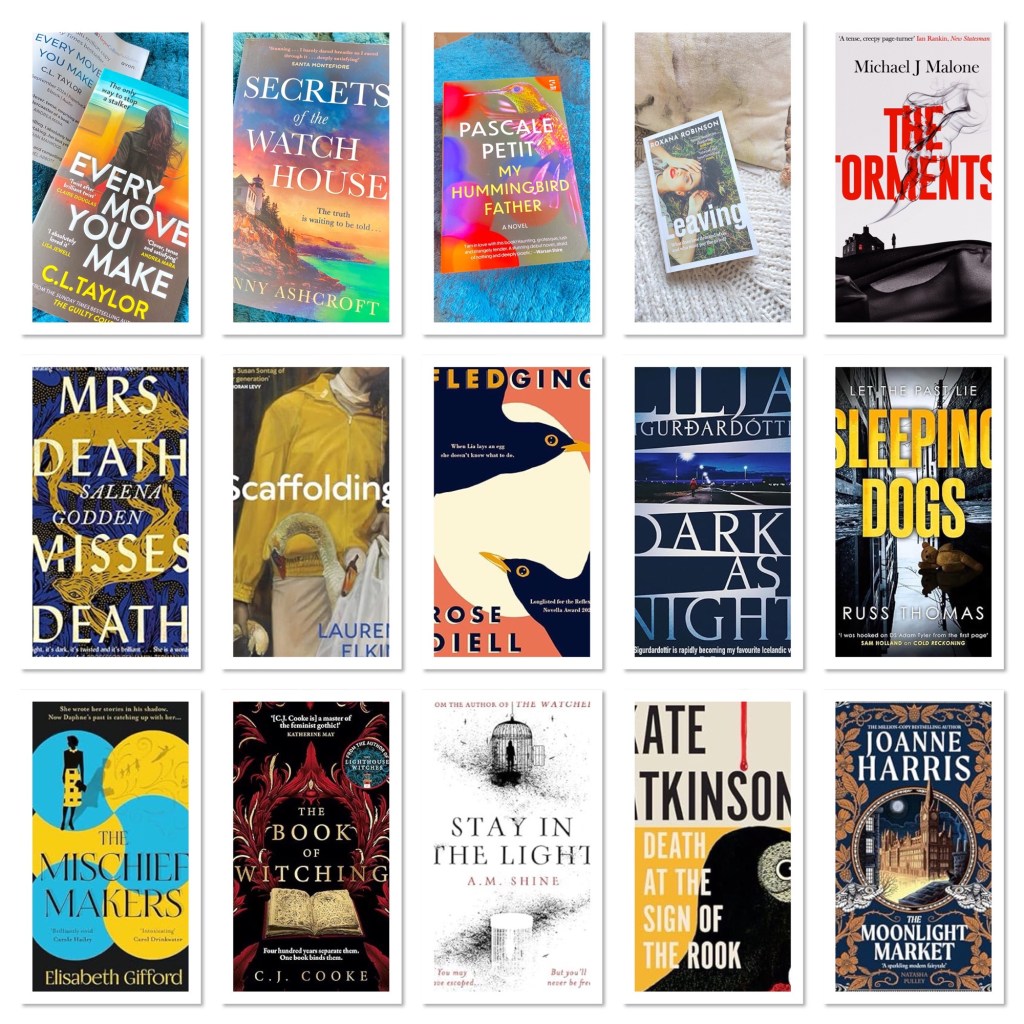
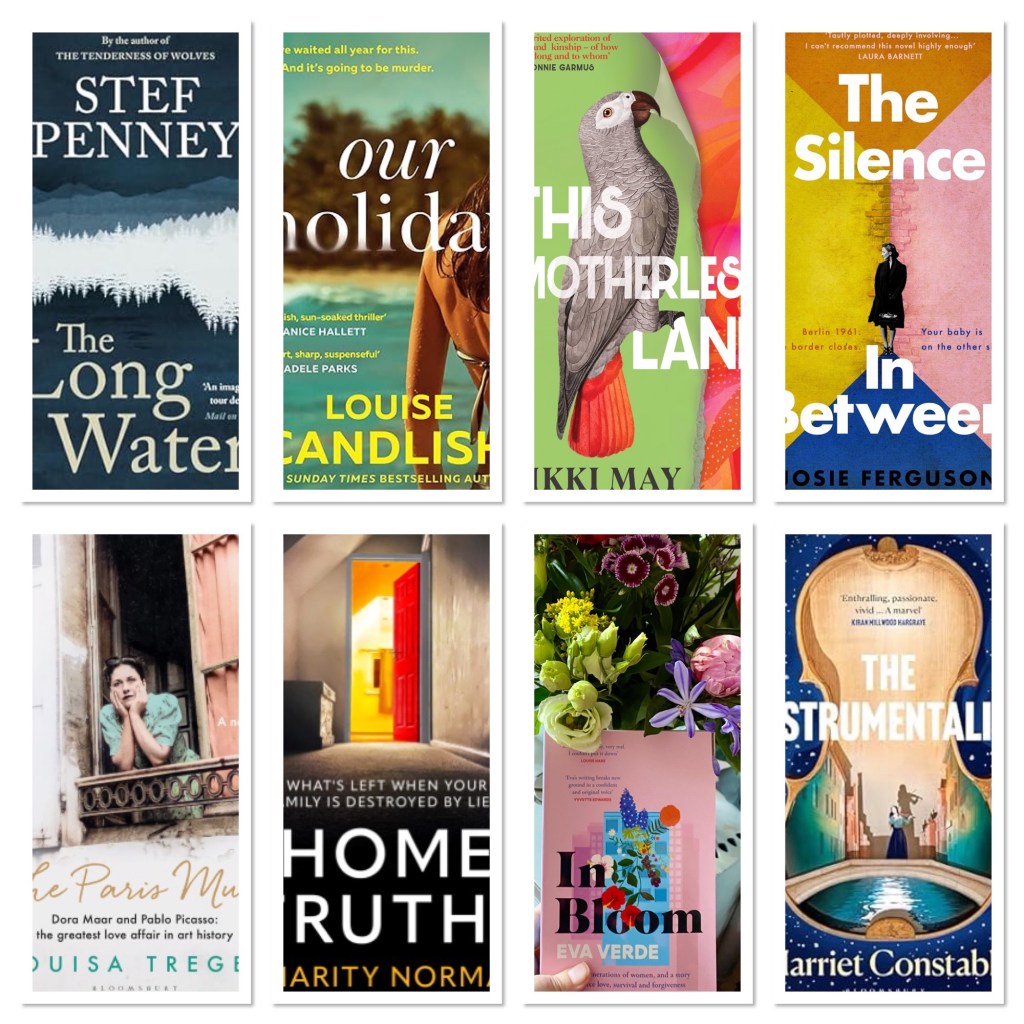
Best Reads October 2025

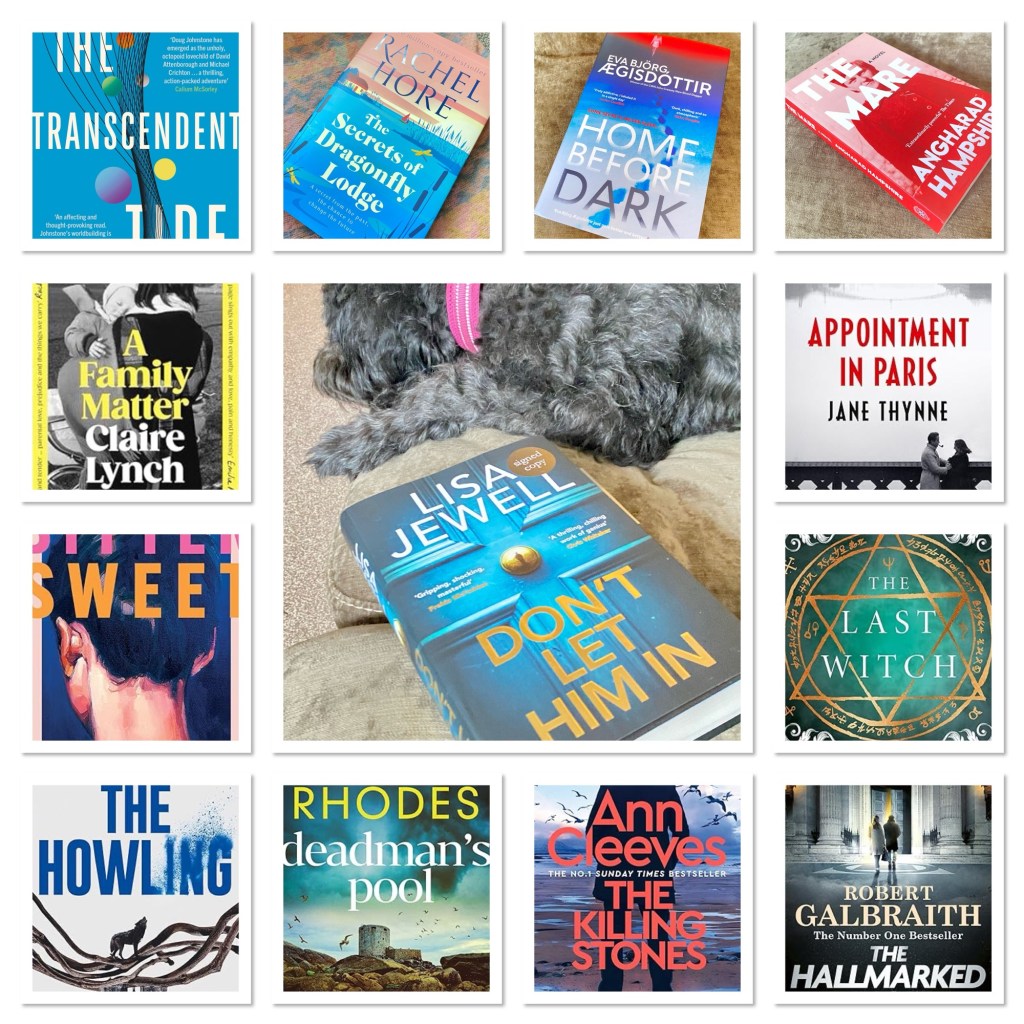
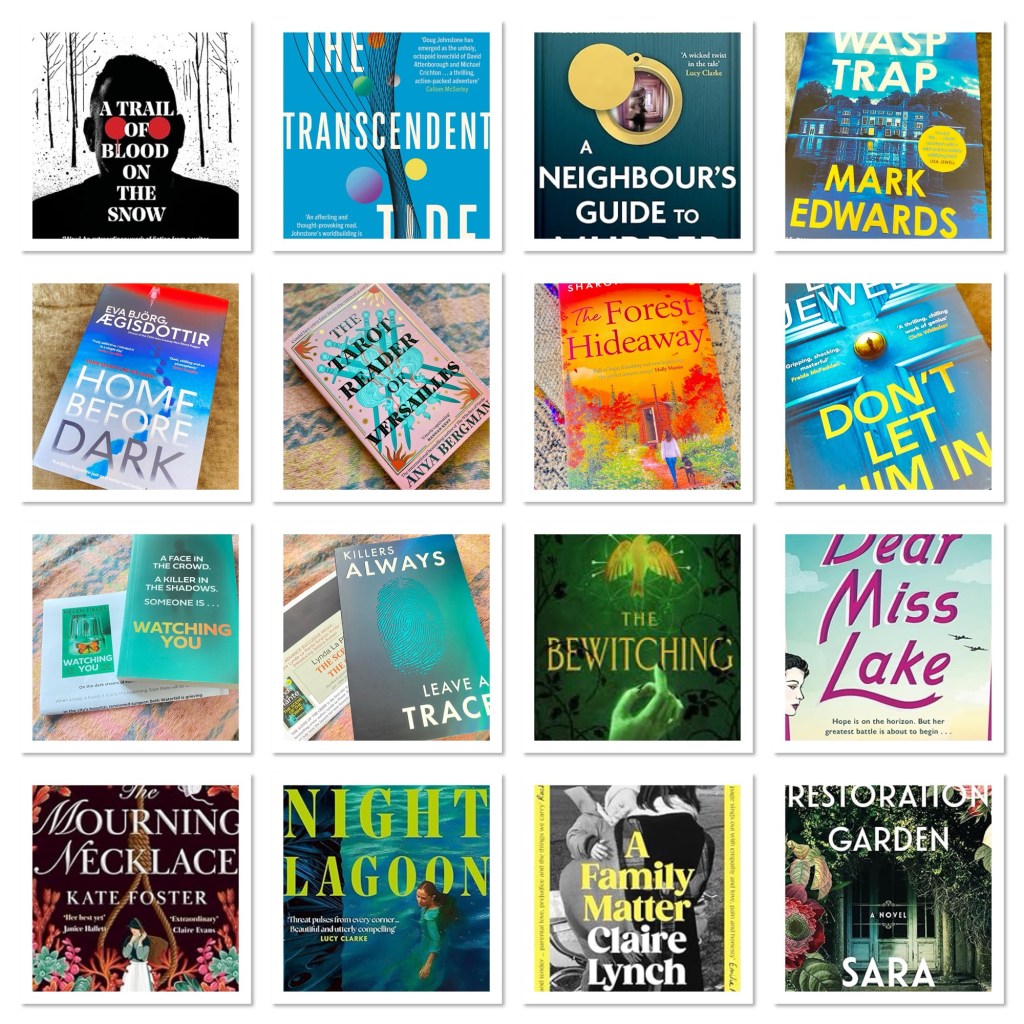
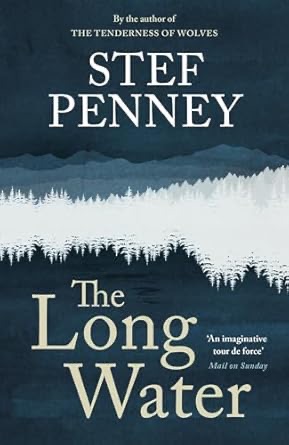
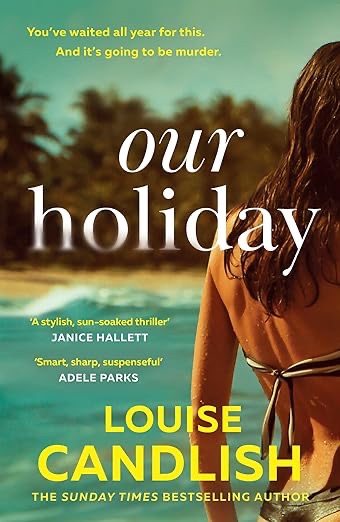
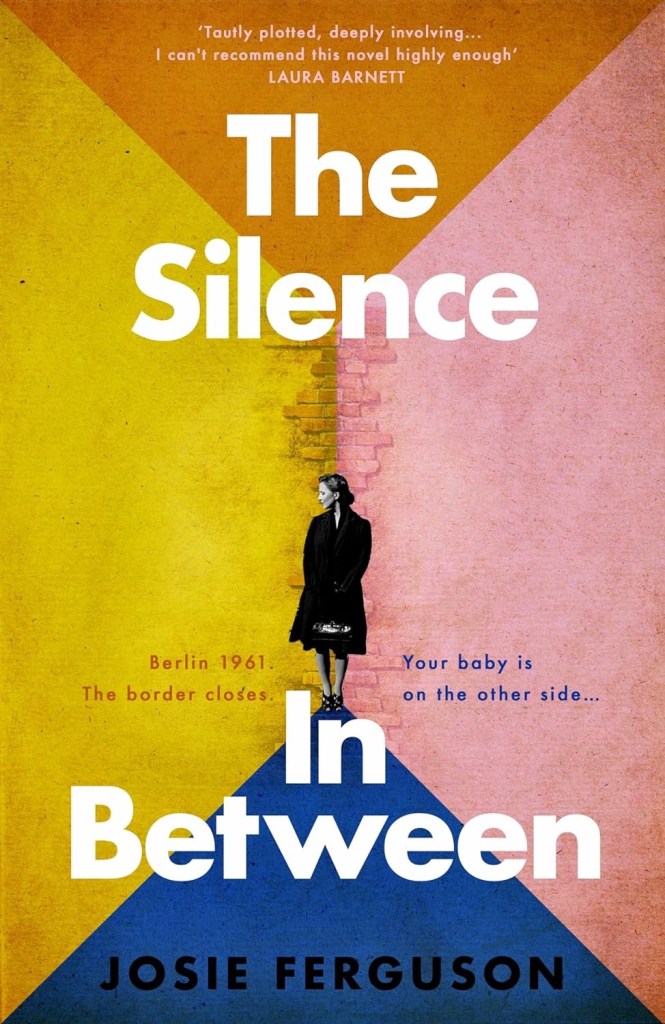
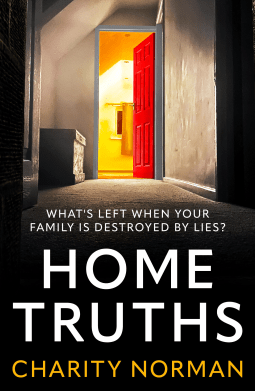
October brought many several wonderful things, as birthday months so often do. As always we went away, this time for two weeks in Dumfries and Galloway for book shopping at Wigtown and fishing for my other half. We knew we were onto a winner as we turned off the single track road onto a farm track that was a mile long! I’ve never stayed somewhere so quiet and because it was a Dark Skies area we got to stargaze too, with a meteor shower being a high point of the fortnight. I finally got to check out The Bookshop, run by author Shaun Bythell. The daily occurrences in the shop are depicted in his three books and I grabbed the latest one along with some second hand purchases too. As well as all the shops in Wigtown we stumbled across a little gem called Gallovidia Books in Kircudbright. This was a treasure trove of new fiction, poetry and children’s books as well as a good collection of biographies. The owner was very knowledgeable, definitely a real book lover and he recommended one of my choices above as his wife was reading it and was torn between savouring and devouring it. We alternate on holiday, when it’s a fishing day I stayed on the farm and had a fabulous view to enjoy while reading and getting some of my own writing done. After a couple of months without a kitchen it was a joy to come home to everything finished so I now have a functional kitchen again.

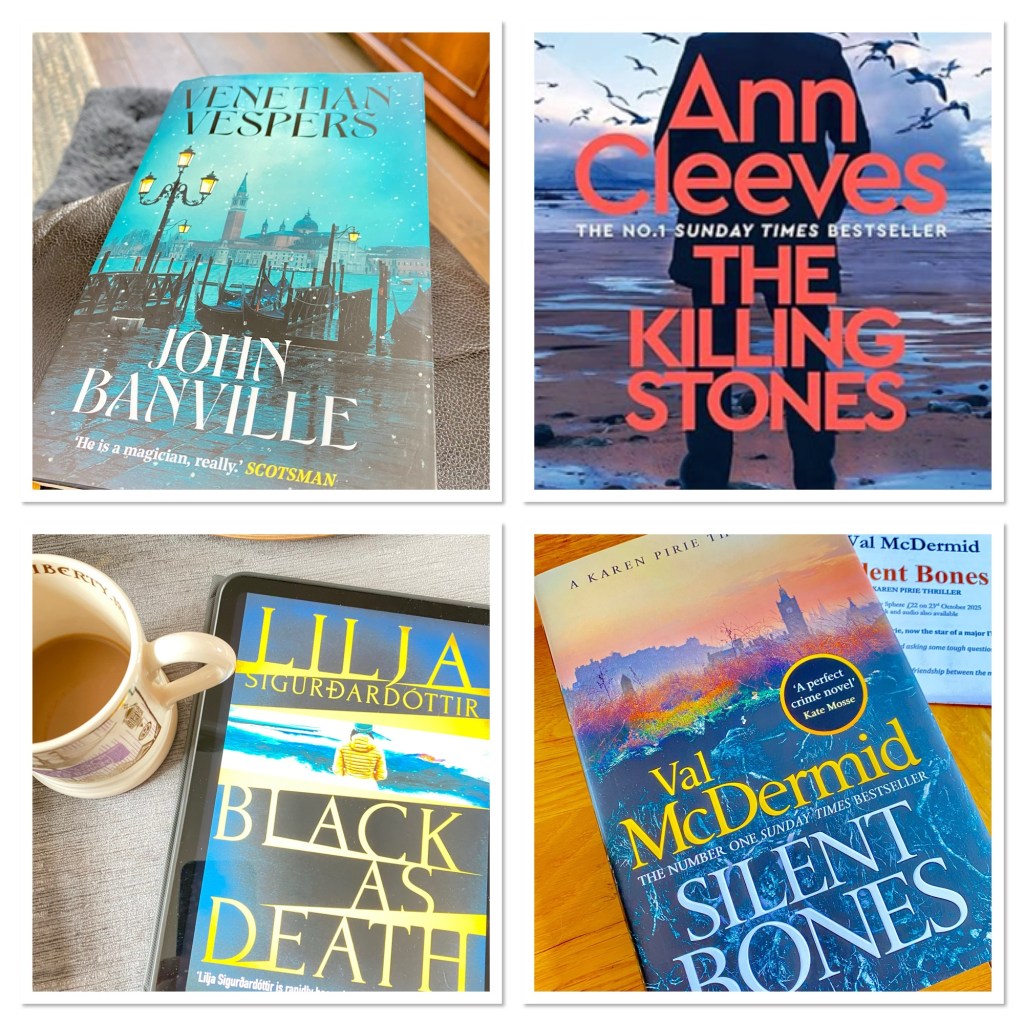
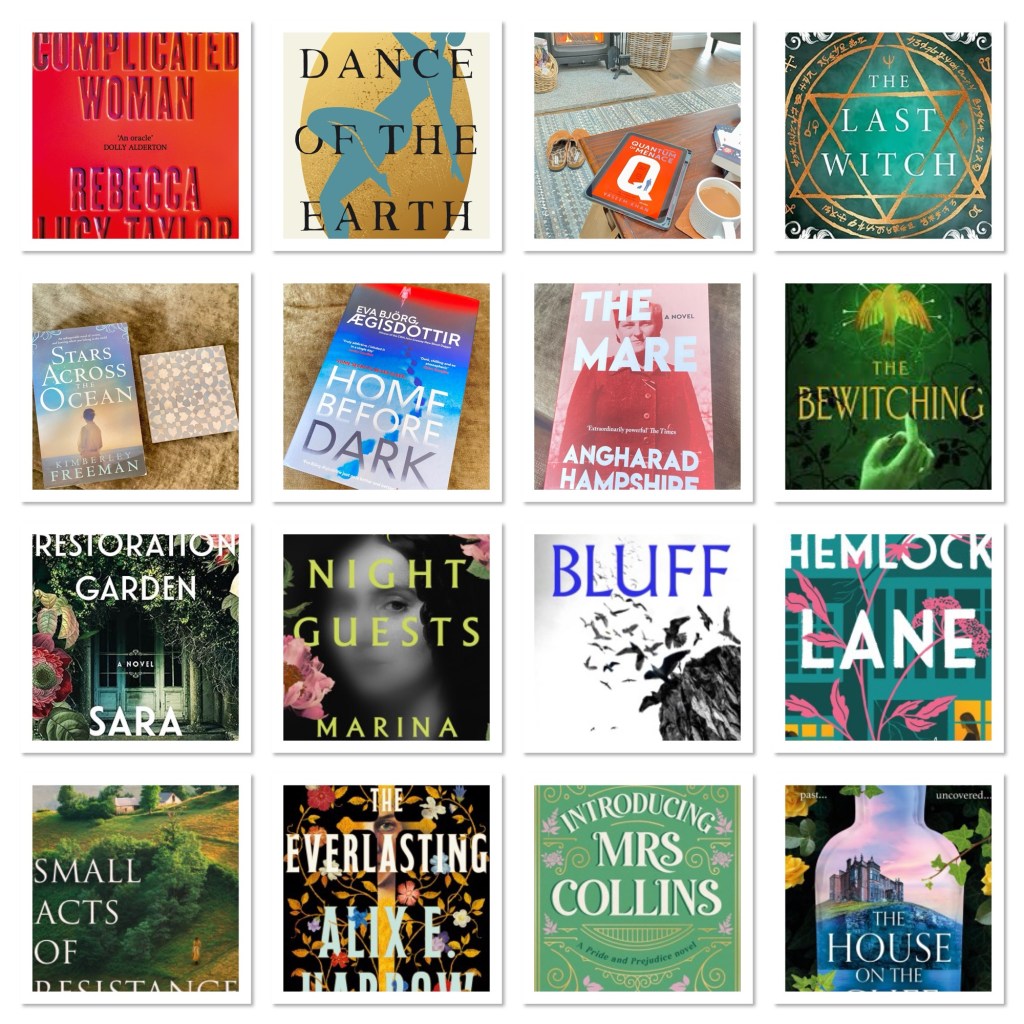
Bought on recommendation from the owner of Gallovedia Books I couldn’t wait to read this atmospheric book so dived straight in, This felt like the perfect autumn read – a sinister mystery filled with atmosphere and a slowly building sense of menace. Evelyn Dolman embarks on his honeymoon with his new wife Laura and it proves to be anything but the honeymoon he expected. With Laura settling in early for the night at Palazzo Dioscuri he decides to go for a walk and perhaps a drink somewhere close by and she suggests Florian, a cafe that first opened in 1720 and still serves Venetian visitors today. A chance meeting is followed by a night of drinking and one unforgivable act. So when he wakes in the morning, sluggish and nauseous and finds his wife isn’t next to him in bed, he imagines she has taken herself to another room. However, as the morning progresses it becomes clear that Laura has simply disappeared. 

There are clues to what is transpiring here but they are subtle. The writer has incredible sleight of hand and they seem inconsequential or at list explicable. Some completely passed me by. As I opened the book again for writing this review it made me think of The Sixth Sense and how no one saw the clues on their first watch of the film but when they watched for a second time they couldn’t believe they’d missed them. Each character is slippery and elusive with an unpredictable quality that felt dangerous. I lived this uncanny feeling the author created which grows organically from the city. This is a sparking jewel of a city that’s risen from the mud and brackish waters of the lagoon. Evelyn mentions the fin de siécle, that time of decadence towards the end of the 19th Century and that timing certainly informs some of the events in the book, particularly the fluid social order and sexual licentiousness. We’re told constantly that Venice is decaying and sinking. One day it may be completely under water, but the decay isn’t what you see when you first visit. Venice bewitches you with its golden domes, Morrison arches, coloured glass and the way sparkling light from the surface of the water bathes everything in a soft light. Then suddenly, only a street away you notice a tree growing out of someone’s house and at night most residences seem in darkness now that families can no longer live in the water logged lower floors. Banville captures this ‘double’ city utterly, describing the timeless romance of a gondolier serenading his passengers but also the jarring sound of the vaporetto. We see the sparkling water but also smell the mud as the passing boats churn it up. He links this duality with human nature, our surface selves and the real us, even the parts we avoid and keep locked away. Everything about this novel is a conjuring trick and I fell head over heels in love with it. 

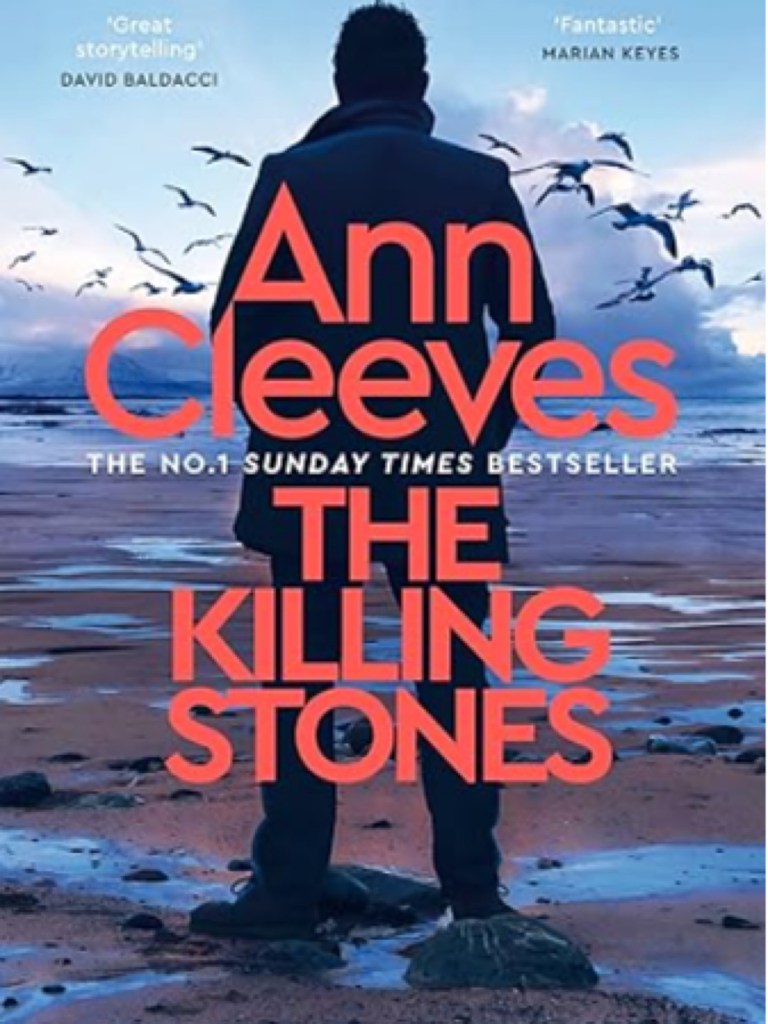
I can barely contain my happiness at being back in the world of Jimmy Perez, this time in the Orkney islands where he grew up. Jimmy is living with partner Willow Reeves, who’s both his boss and heavily pregnant with his child. It’s Christmas and the couple are looking forward to the celebrations. Jimmy’s stepdaughter Cassie is spending the holidays with her father Duncan and his family on Shetland, so it just the two of them and son James. For the police, Christmas isn’t a holiday and as a huge storm passes across the islands, terrible discoveries are made. Everywhere there’s storm damage, but when a body is found at an ancient archaeological site Jimmy is devastated to find out it’s his childhood friend Archie Stout. Archie is a well known ‘larger than life’ character who’s the centre of every gathering and runs the family farm with a wife and two teenage sons. Jimmy finds that Archie has suffered a blow to the head and the murder weapon is a Neolithic stone covered in ancient runes and Viking graffiti, one of a pair taken from the heritage centre. Now Willow and Jimmy must investigate their friends and neighbours to solve the murder in the run up to Christmas, where events will traditionally bring the whole island together. The uncomfortable truth is that the murderer is likely to be someone they know and that means nobody is safe. 

I really loved Willow and the atmosphere she creates at home, particularly around Christmas. Just as dedicated to her work as Jimmy she takes an active role in the investigation, her pregnancy not holding her back at all. She knows it’s a delicate situation, working together and being in a relationship, especially when she’s the boss. Somehow they manage to keep the personal and the work life separate and she seems to know which responsibilities she must let Jimmy bear and those she’s happy to share. As Christmas Eve approaches fast she’s not running around like a headless chicken trying to make sure they have all the right things, they have food and she points out something I say every year – the shops are only closed for one day. It’s the traditions and being together that are the most important thing. She’s a great interviewer though, brilliant at picking up what people are not saying. She reads their body language and their tone, plus knowing each islander’s history helps too. What she picks up on are the unexpected or secret alliances, such as Archie’s investment in the hotel or his in-law’s apparent friendship with a regularly visiting academic. The case is fascinating, covering potential adultery, family tensions, environmental disagreements and historical conflicts, as well as academic jealousy. As everyone gathers on Christmas Day for The Ba and someone goes missing, my nerves were like violin strings! It’s this gradually rising tension alongside the beautifully drawn relationships that make Anne Cleeves’s novels. Jimmy has always had incredible empathy for others, feeling his own loss alongside theirs and understanding behaviour that might at first glance seem inexplicable. This is a hugely welcome return for Jimmy, both in a different landscape and place in life. Hopefully it’s the first of many. 

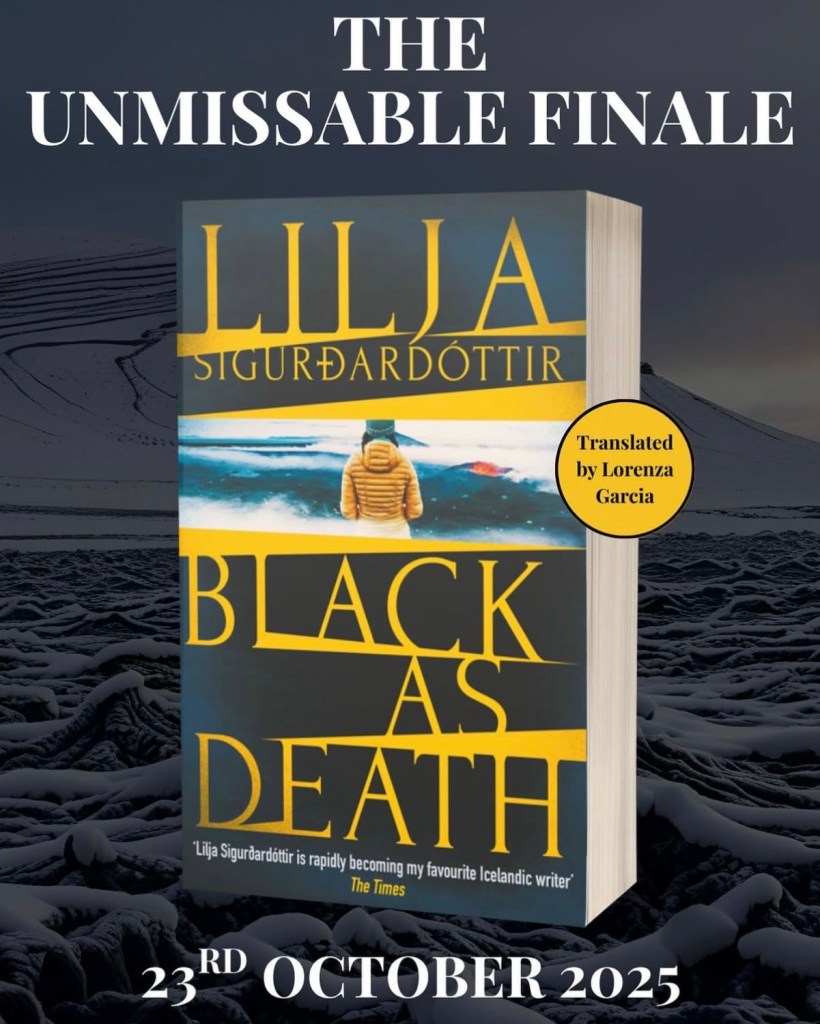
The haunting final chapter to an award-winning series

And a final reckoning…

With the fate of her missing sister, Ísafold, finally uncovered, Áróra feels a fragile relief as the search that consumed her life draws to a close. But when Ísafold’s boyfriend – the prime suspect in her disappearance – is found dead at the same site where Ísafold’s body was discovered, Áróra’s grip on reality starts to unravel … and the mystery remains far from solved. To distract herself, she dives headfirst into a money laundering case that her friend Daníel is investigating. But she soon finds that there is more than meets the eye and, once again, all leads point towards Engihjalli, the street where Ísafold lived and died, and a series of shocking secrets that could both explain and endanger everything…

I’ve been hooked on the story of Áróra and the case of her missing sister Ísafold for a few years now and the tension has slowly gripped the reader ever tighter with each novel as each one has brought it’s revelations. With this being the reason Àrora is in Iceland, it’s always been the over-arching narrative, but other cases run alongside. The combination of Áróra’s skills as a financial investigator plus the skills and powers of Daniel and Helena who are detectives, complex cases are profiled and attacked from different directions, making them a formidable team. We meet everyone after the discovery of Ísafold’s body in a suitcase deep within a fissure in a lava field. They were directed to it by an unusual little girl who claimed to be the reincarnation of Ísafold, something that was difficult for Daniel to accept. There’s so much more to understand and we get the narrative through different viewpoints, aside from Áróra, Daniel and his colleague Helena. Felix has fallen into working for a local dealer and we see his fear as the bag he has been sent to collect has disppeared from the car while he was getting some food. There are also flashbacks to the last few months Ìsafold was alive and we finally hear her story in her own voice, which I loved.

We’ve always had suspicions but have never known who killed Ísafold. The novel is gripping and of course we want this mystery resolved, but I didn’t feel any of that racing tension or triumph that I often get from thrillers when the killer’s revealed, especially when I’m right. This was just so desperately sad. I found myself taking a moment for this under confident woman who was so far out of her depth. A woman whose emotions dictated her life decisions. I was harrified and had that strange empty feeling of loss. A loss I knew Áróra would feel. The question is, if she does get all the answers she needs, what will Áróra do next? Unlike her sister Áróra has a clear sense of what she wants and needs to be happy and fulfilled. She makes decisions based on self-knowledge and it remains to be seen whether Daniel is a part of that eventual happiness. 

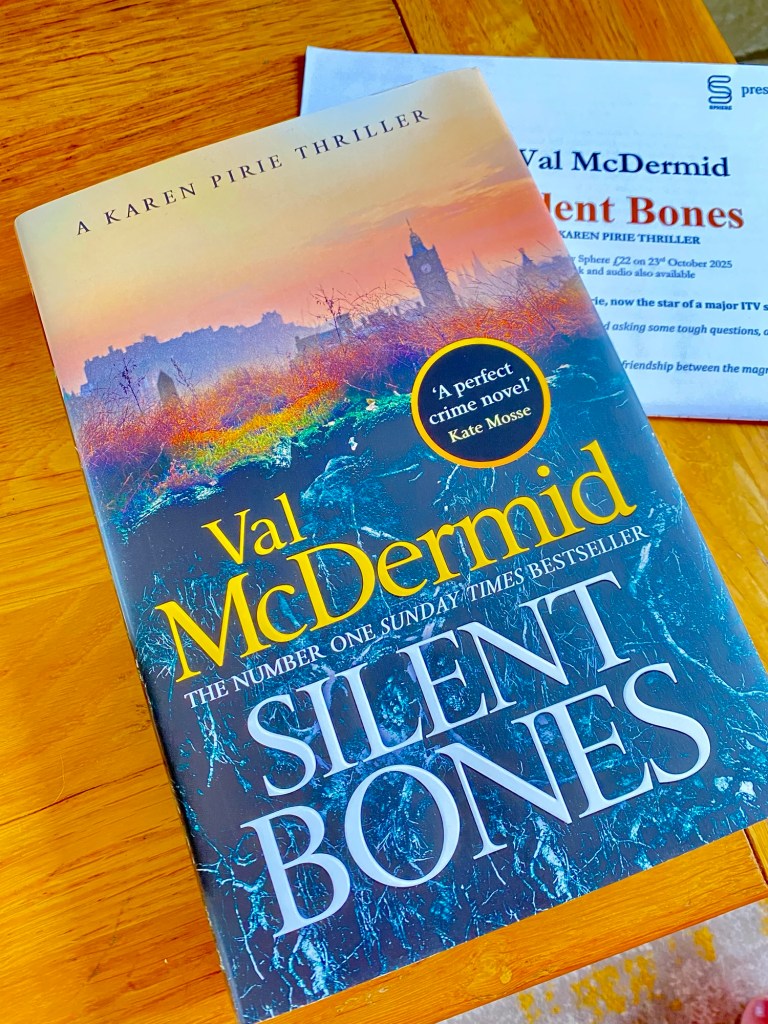
It’s delightful to be back in the hands of a consummate storyteller like Val McDermid. She takes us straight into the story and I always feel like these characters are real, going about their lives and then we drop into their world from time to time. Here the Historic Cases Unit are working two cases: the death of a high-end hotel manager and a body found after a landslip in heavy rain on the M73. Tom Jamieson’s death is flagged up by his brother in New Zealand. Thought to be an accidental death, Tom’s brother has footage that shows someone was behind Tom as he left the hotel after his shift and in the staircase where he met his death. If this man entered the steps after Tom and can be seen exiting then he must at least have seen Tom’s fall, or is there a more sinister explanation? The body in the M73 has to have been placed there deliberately. It turns out to be the body of investigative journalist Sam Nimmo, thought to have killed his pregnant girlfriend Rachel before going on the run about eleven years ago. The discovery opens up her murder case as well as Sam’s. I was hooked by the evidence that leads to a secretive book club of successful men who meet once a month in Edinburgh. They’re named the Justified Sinners, alluding to a James Hogg book that is based on the Calvinist principle that once a person is ‘saved’ they can commit any sin, even murder, and still enter the kingdom of heaven. Is this a joke between literary friends or something more sinister? Have they stumbled upon an unofficial Freemasons’ club where the members share business tips and inside knowledge? The team start to wonder about the potential benefits of becoming one of the twelve members and whether those benefits are worth subterfuge or even criminal acts. 

The book is rooted in the now with cancel culture, the MeToo movement, Covid and the corruption around it and the cost of living crisis all pertinent to these cases. I think the team are feeling overwhelmed, even without the quagmire surrounding the Justified Sinners and Sam’s quest for the truth. I thought that some characters did behave unpredictably, just like they do in life. The outcome isn’t straightforward and there were people to blame that I genuinely didn’t expect. This is an enthralling read from a writer at the very top of her game. Someone who knows exactly how to pitch a story and keep the reader engrossed until the final pages. She knows that the joy of a book is in the journey and that sometimes we don’t get the answers we expect. 

It’s getting quieter as we move into the last months of the year but here’s my expected reading for November:

Posted in Squad Pod Collective

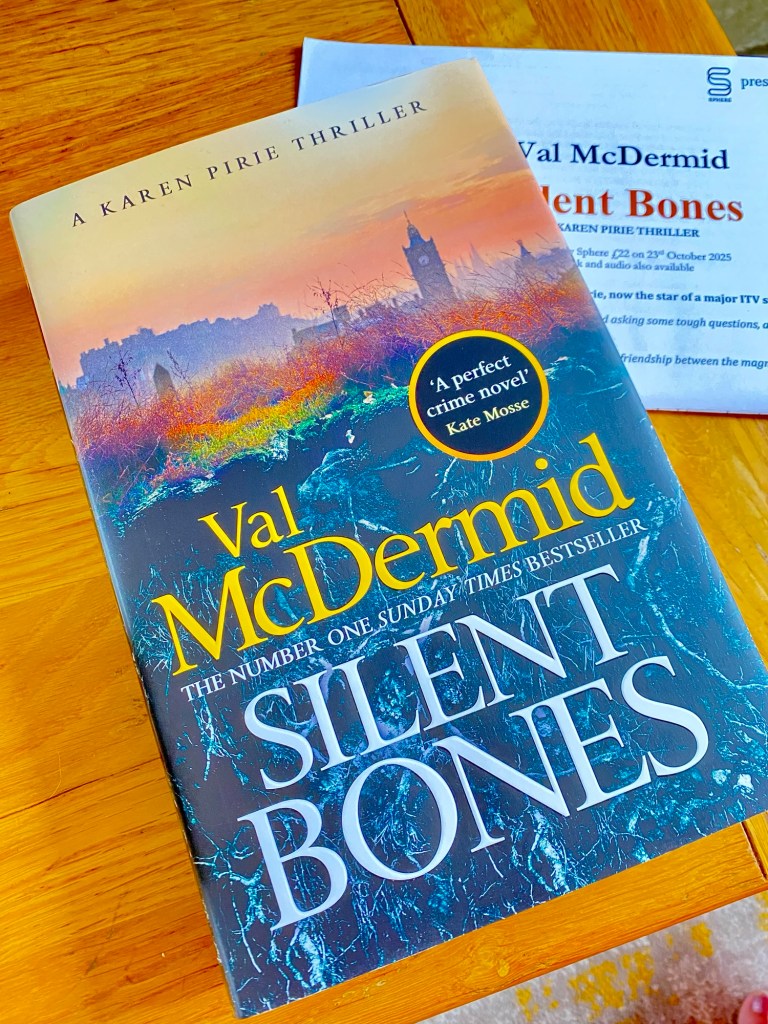
Silent Bones by Val McDermid 

It’s delightful to be back in the hands of a consummate storyteller like Val McDermid and to be reading with my fellow Squad Pod friends. She takes us straight into the story and I always feel like her characters are real people going about their business and we just drop into their world from time to time. Here the Historic Cases Unit are working two cases: the death of a high-end hotel manager and the identity of a body found after a landslip in heavy rain on the M73. Tom Jamieson’s death is flagged up by his brother in New Zealand. Thought to be an accidental death, Tom’s brother has footage that shows someone was behind Tom as he left the hotel after his shift and in the staircase where he met his death. If this man entered the steps after Tom and can be seen exiting then he must at least have seen Tom’s fall, or is there a more sinister explanation? The body in the M73 has to have been placed there deliberately. It turns out to be the body of investigative journalist Sam Nimmo, thought to have killed his pregnant girlfriend Rachel before going on the run about eleven years ago. The discovery opens up her murder case as well as Sam’s. I was hooked by the evidence that leads to a secretive book club of successful men who meet once a month in Edinburgh. They’re named the Justified Sinners, alluding to a James Hogg book that’s based on the Calvinist principle that once a person is ‘saved’ they can commit any sin, even murder, and still enter the kingdom of heaven. Is this a joke between literary friends or something more more? Have they stumbled upon an unofficial Freemasons’ club where the members share business tips and inside knowledge? The team start to wonder about the potential benefits of becoming one of the twelve members and whether those benefits are worth subterfuge or even criminal acts. 

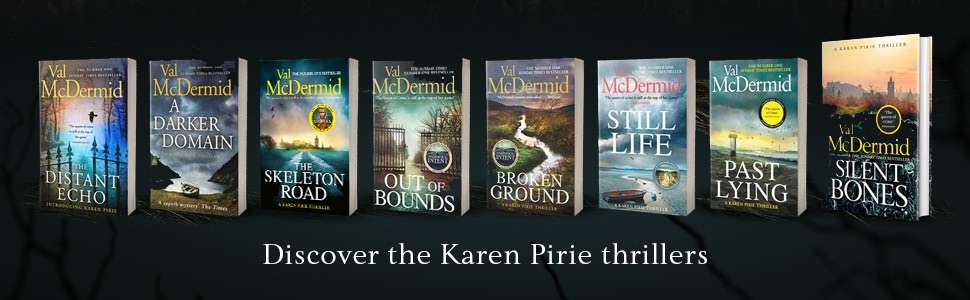
Every time I pick up one of the books in this series the same thing happens. I start off slowly, savouring each chapter until about halfway, then I’m racing all the way to the end. It’s superbly plotted, creating a build-up of tension through the short chapters. Each chapter flits to a different viewpoint or separate lead in the cases, causing cliffhangers that last for three or four chapters. This means ‘just one chapter’ at bedtime becomes just three more and finally – I may as well finish. As we near the end of the book those revelations come thick and fast and I had to keep reading till I couldn’t keep my eyes open. I loved the red herrings thrown up in Sam Nimmo’s case as they try to find out what story he was working on. Every lead has to be followed and Jason is tireless on his match fixing leads but is this the story that got Sam killed? The political intrigue is as always murky and fascinating. Between the Independence Referendum and COVID there are plenty of possibilities for corruption and cover-ups. 

What I love most about Karen is her tenacity and absolute belief in her own skills as a police officer. She knows she’s a good detective and believes in the team she’s built, even if Jason and Daisy do bicker and become competitive. She knows how to use their skills and how much free rein to give them. I loved her conversations with the boss, the Fruit Gum and other men who outrank her. She doesn’t allow them any room for misogyny or sexism. When she’s told mockingly that the force can do better than rely on ‘women’s intuition’, she’s quick to tell him that it’s no different from a hunch or copper’s nose, a phrase male officers use frequently. She also won’t be bulldozed into moving their office, stating that it would mean longer commutes and distance from the research and forensic teams they rely on most. She also pushes for what she wants in the course of the investigation. When she doorsteps the Justified Sinners, their facilitator mentions they have plenty of pull with the Chief Constable who calls Karen and tells her to back off. She insists on him supplying a list of members before she does and even follows up in the morning to make sure she wasn’t fobbed off. Even in her private life she’s very sure of what she needs. She is still involved with Syrian refugee Rafiq who’s currently working as a surgeon in Canada. With British and US politics ‘beyond satire’ and political funding becoming ever more shady Karen does worry about their future. She’s flown to Montreal several times but she can’t wait until he has Canadian citizenship and can visit Scotland again, maybe even returning for good at some point. When she has a heartbreaking choice to make she faces it by staying true to herself, because she can be romantic but has a hefty dose of realism too. She can also be ruthless, at one point perhaps a little too ruthless for a softy like me. She has her eye on the end goal, not the other person’s feelings because in her eyes the end justifies the means. The truth is not found by treading lightly. 

I enjoyed getting to know more about Daisy and Jason’s home lives and it’s here where a bit of humour creeps in. Jason and Meera’s stake-out of a football match with the aftermath being a ‘follow that cab’ tour of Scotland’s motorways made me smile. Especially when the reward that clinched Meera’s attendance was a match day pie. Food looms large in Daisy and Stephanie’s relationship too, in fact Daisy eats so much that Jason is sure she has a tapeworm. That’s not a problem for Daisy, in fact she ponders that it might be the only thing that ensures she stays thin. She’s always scoring leftovers from lunches out and between Italian biscuits, french pastries and the South Indian curry that lures a suspect out of hiding I kept feeling hungry. All of this is to balance the darkness at the heart of these cases, where we see powerful and rich people doing what they like, safe in the knowledge that their status and privilege will always protect them from answering to their crimes. It’s also set in dark times and the weariness Karen feels about what’s happening in the world is something I’ve felt myself for the last couple of years, finding myself thinking the world can’t get any worse. Not only is a sex offending, fraudulent, narcissist running the biggest country in the world, but we have politicians here happy to emulate him. The book is rooted firmly in the now with cancel culture, the MeToo movement, the Covid pandemic and all the corruption surrounding it, as well as the cost of living crisis all pertinent to these cases. I think the team are feeling overwhelmed, even without the quagmire surrounding the Justified Sinners and Sam’s quest for the truth. Some characters did behave unpredictably, just like they do in life. The outcome isn’t straightforward and there were people to blame that I genuinely didn’t expect. This is an enthralling read from a writer at the very top of her game. Someone who knows exactly how to pitch a story and keep the reader engrossed until the final pages. She knows that the joy of a book is in the journey not just those final revelations and that sometimes we don’t get the answers we expect and it’s a better read for that.

Out on 23rd October from Sphere

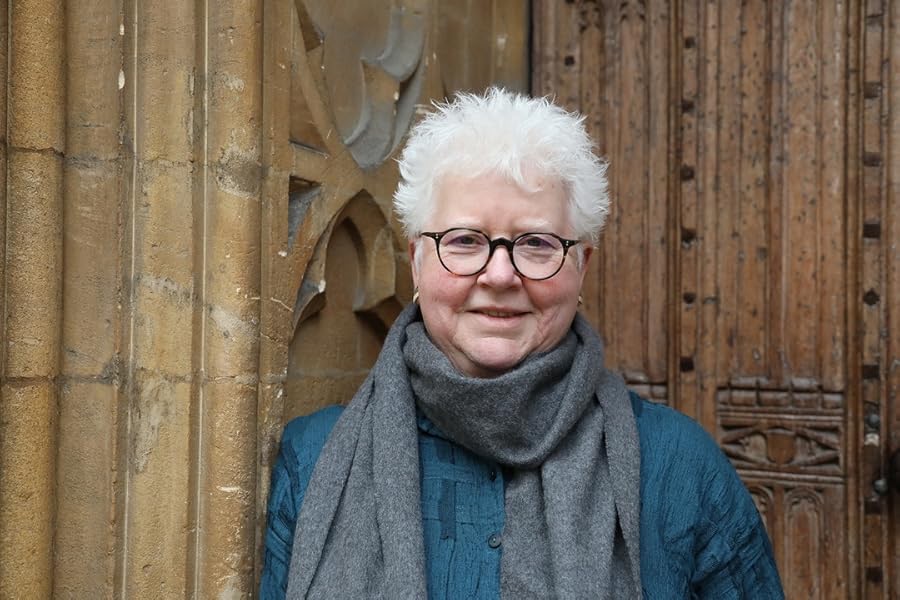
Meet the Author

Val McDermid is a number one bestseller whose novels have been translated into more than forty languages, and have sold over eighteen million copies. She has won many awards internationally, including the CWA Gold Dagger for best crime novel of the year and the LA Times Book of the Year Award. She was inducted into the ITV3 Crime Thriller Awards Hall of Fame in 2009, was the recipient of the CWA Cartier Diamond Dagger in 2010 and received the Lambda Literary Foundation Pioneer Award in 2011. In 2016, Val received the Outstanding Contribution to Crime Fiction Award at the Theakstons Old Peculier Crime Writing Festival and in 2017 received the DIVA Literary Prize for Crime, and was elected a Fellow of both the Royal Society of Literature and the Royal Society of Edinburgh. Val has served as a judge for the Women’s Prize for Fiction and the Man Booker Prize, and was Chair of the Wellcome Book Prize in 2017. She is the recipient of six honorary doctorates and is an Honorary Fellow of St Hilda’s College, Oxford. She writes full-time and divides her time between Edinburgh and East Neuk of Fife.

Posted in Monthly Wrap Up

Best Reads August 2025

It’s been a month of crime/thriller reads and historical fiction, plus a couple of crime and historical combinations which I really enjoy. It’s also been a month where I found it difficult to concentrate because finally, after five years of brown tiles, lime green walls and cupboards with no handles we have been able to afford to renovate the kitchen. So for two weeks we have had no ceiling, no floor and no hob. As of Monday, we will be cooking in the garden until everything is back together again. I am not good with chaos so if you can imagine me wedged into a corner on the sofa with the contents of every kitchen cupboard taking up the study and other end of the living room. Hopefully only two weeks left to go. It can’t come soon enough. The other half is building the seating area under the pergola at the bottom of the garden. It feels like a symphony of drills and hammers at times but it will be lovely to be able to go and sit outside and read with roses growing around me. So much to look forward to in September with some fantastic reads on the list too. ❤️ 📚

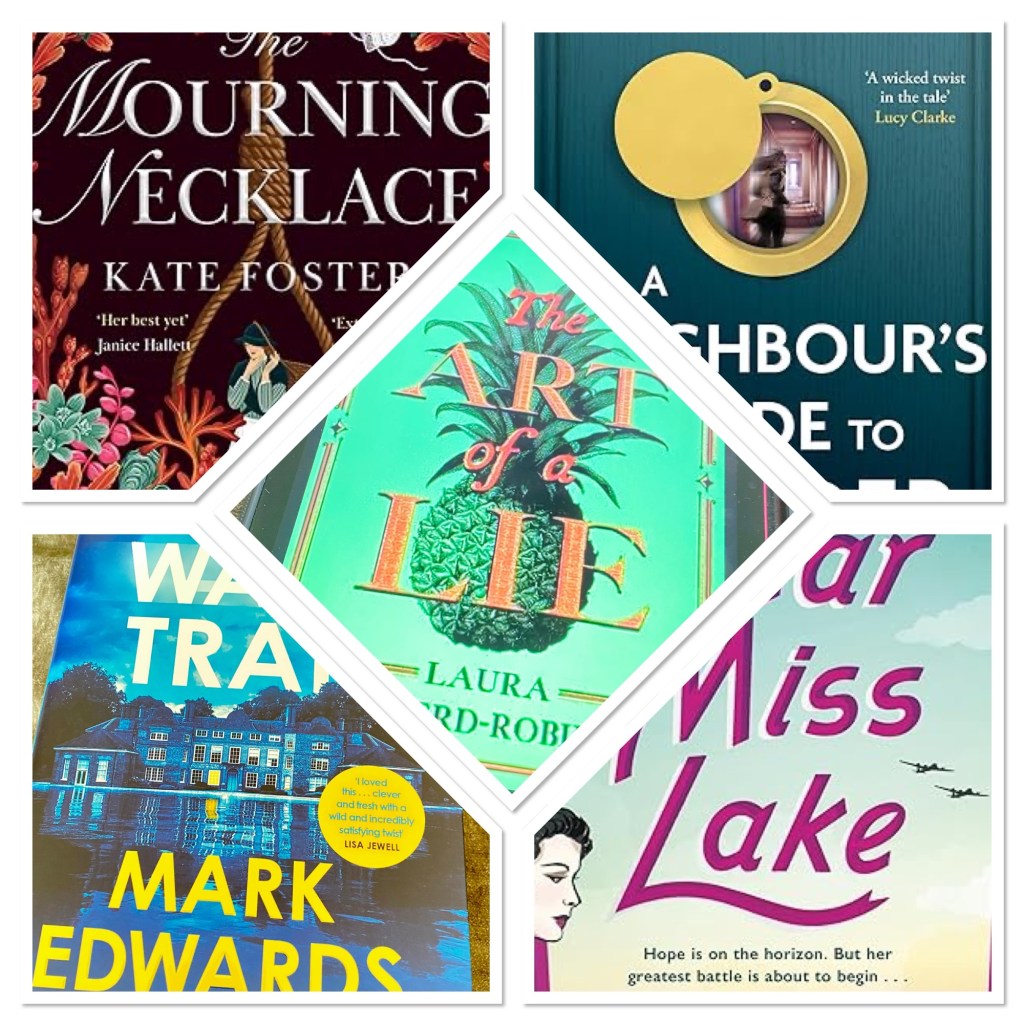
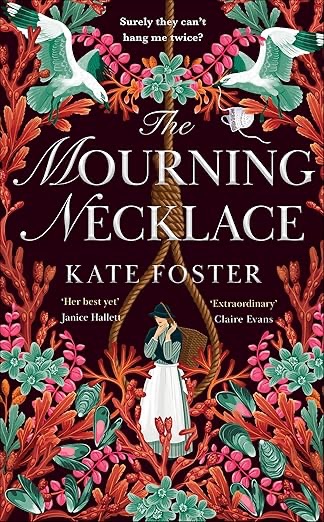
Unbelievably this is the third novel from Kate Foster and firmly puts her on my ‘must-buy’ authors list. They’ve all been worthy of a place on my best reads list but I think this is her best yet. Maggie is a young girl from Fisherrow whose father is a fisherman and her mother ons of the fishwives who help bring in the catch, clean it for market and then repair nets ready for the next day’s fishing. She, her parents and sister Joan live in a one bedroom cottage but Maggie dreams of a life so different to this, where there isn’t back breaking work and she’s not at the mercy of her father’s drunken temper. So when ambitious trader Patrick turns up at the door, looking for somewhere to keep goods for making perfume she senses a chance. She knows Joan is prettier but she would make a far better wife to help him in his business. Luckily he sees this in her and after a short courtship they become married and set up home in a cottage in the village. They are happy until suddenly Maggie gets the news that a press gang has been to the hotel and Patrick was one of the men taken for the navy. Somehow Maggie finds herself travelling to London, to build her new life. At a stopover in Kelso she takes a couple of weeks to stay and earn some money. She knows now she is pregnant and conceals it, to keep on working. So how does she come to be in Edinburgh a few months later, being sent to the gallows on charges of concealing a pregnancy and killing her baby. Yet miraculously she survives the hanging, how and what she chooses to do with her second chance at life are the main contents of this brilliant novel. I loved the history, the growing up that Maggie does on her journey and how brilliant an advocate Kate Foster is for these women she finds in historical documents, often in dire situations at that time for ‘crimes’ it’s hard to comprehend today. Most of all I loved the bold, feminist take on Maggie’s life and the links that could be made with modern day politics. Brilliant.

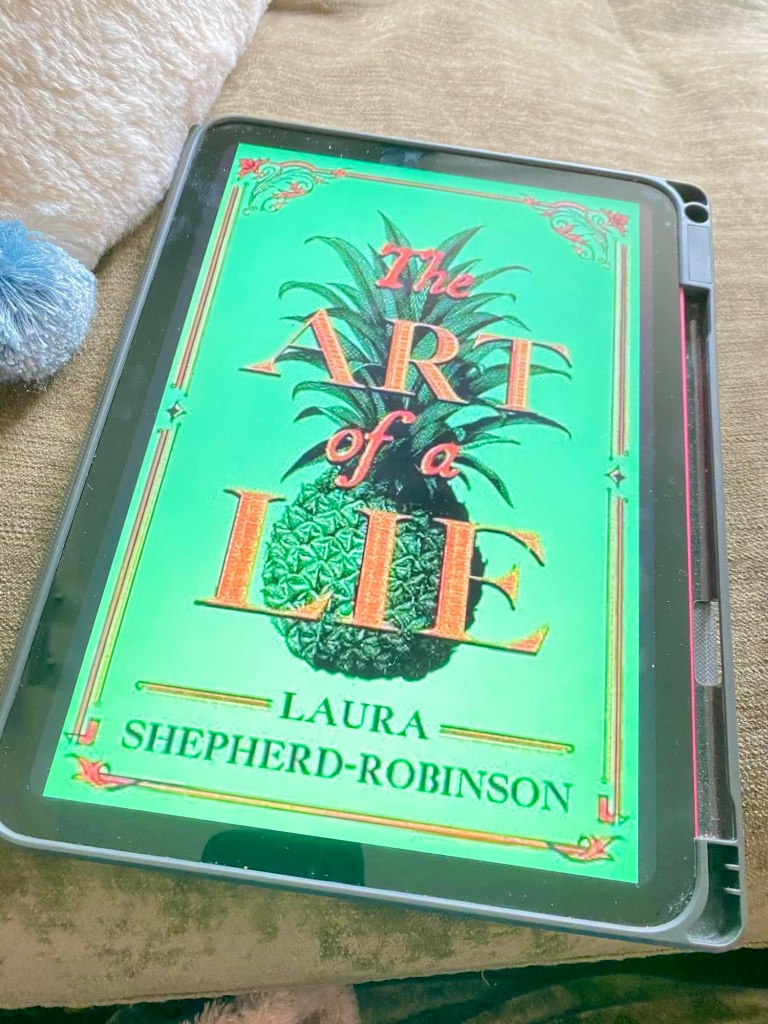
My second historical fiction read of the month was this mesmerising and clever thriller from Laura Shepherd-Robinson that’s jumped straight onto my books of the year list. The Art of A Lie begins in a confectioner’s shop called the Punchbowl and Pineapple, run by the newly widowed Hannah Cole. This is the late 18th Century and Hannah grew up in the shop that was started by her grandfather. Her husband Jonas had been her father’s apprentice and now she must keep their shop running for it to be handed to his cousin. Jonas was found down river, washed up by the Thames with head injuries and missing anything of value including a watch given to him by Hannah that used to belong to her grandfather. Novelist and magistrate Joseph Fielding visits Hannah to say he is investigating Jonah’s murder, for he doesn’t think it’s as cut and dried a case as it might seem. Thank goodness for the lovely William Devereux, a friend of Jonas’s who introduces himself ar the funeral. He calls on Hannah at the shop, hearing of Joseph Fielding’s interference in the case and hoping to be of help. He gives her his grandmother’s recipe for iced cream, thinking it may be a hit with her customers and could tied her over until the case is closed and Jonas’s estate is released. Laura tells this tale so cleverly, drifting between narrators and shocking us with an aspect of their characters or the case. Both are fascinating and not necessarily what they appear to be at first. With each revelation I became more and more intrigued with this cat and mouse game and the psychological make up of those involved. Hannah is an astute businesswoman, good at reading people quickly and usually accurately. It’s hard to tell at times who is scamming who and I was so utterly entranced I was still thinking about it a week later. Simply brilliant in its setting, historical background and the constant simmering tension.

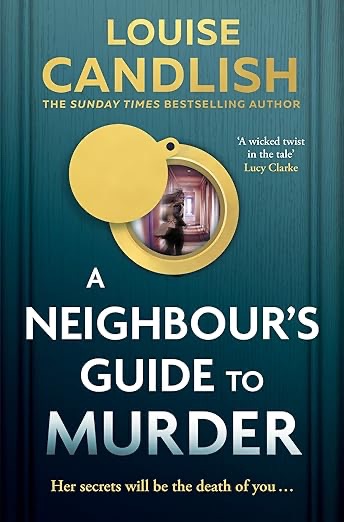
A modern thriller this time from one of the Queens of the genre and this really was an up to the minute tale of secrets, lies and murder. Gwen is an older widow, living in a complex of smart apartments in a nice area. She has decent neighbours, some of whom she might call friends. When her nearest neighbour Alex is looking for a new lodger she meets one of the candidates, Pixie. They start chatting and she is pleased to hear when the Britpop one hit wonder decides to offer her the room. Pixie gets a job at the bakery and cafe that Gwen frequents and they get on very well, so Gwen is disturbed to hear what sound like arguments from across the hall. She also catches a phrase that sounds like ‘you knew the deal when you moved in. When she catches up with Pixie she’s disturbed to hear that the deal involves sex in lieu of rent. She confronts Alex and takes Pixie in, writing a complaint to the building’s governing board. Her neighbour Dee tells her that she talked to her daughter Stella about it and she’s been making a documentary news item about the growing ‘sex for rent’ scandal. Would Pixie like to be interviewed? Soon the story is out of control, Alex is angry and denying everything and Gwen is public enemy number one. I loved how ‘of the moment’ this was with Gwen at a loss when it comes to freelance investigative journalism, sex for rent, trad wives and influencers. As she starts to feel out of her depth, those around her continue to manoeuvre and manipulate until life will never be the same again. This was so tense and the eventual murders most unexpected indeed.

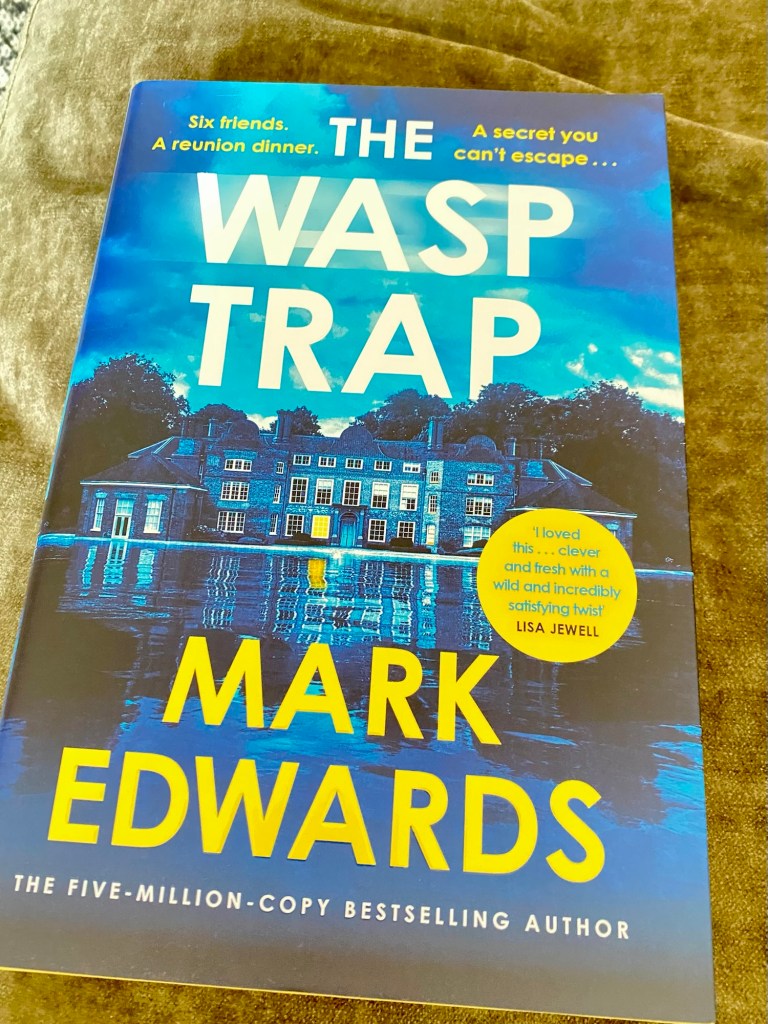
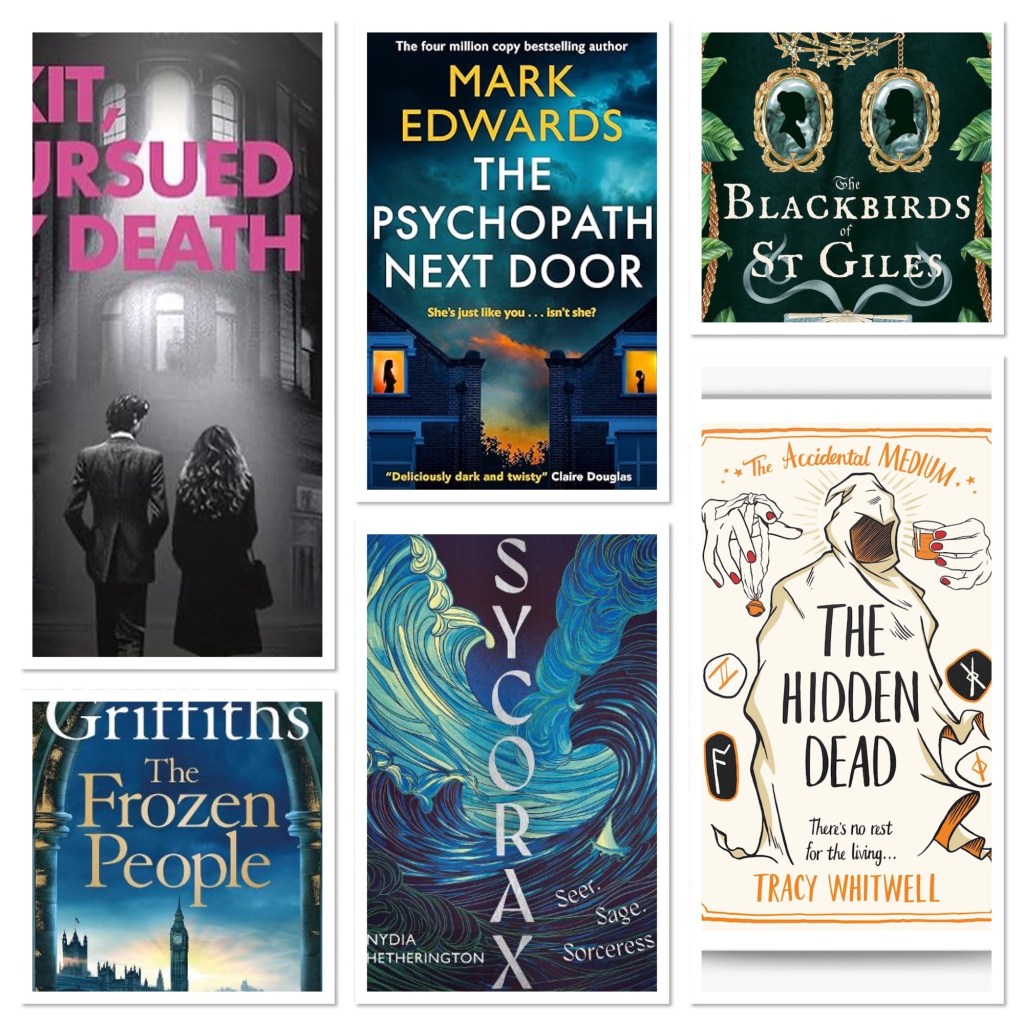
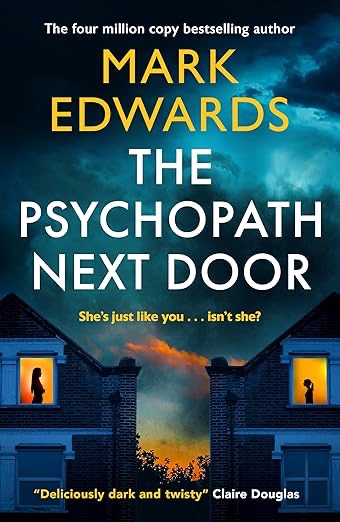
I had the luck to read two Mark Edwards novels in August. a throwback to last year and this, his brand new thriller. The Wasp Trap was the jokey name given to a side project. While trying to form an algorithm for one of the first ever online dating apps, a group of university students have another idea. Each one specifically chosen by their professor, Sebastian, they are the best in their fields and are spending their summer at his mansion in the country. Will tells our flashback story, the creative who is meant to be coming up with a name for their site he is also hopelessly un love with Sophie but too scared to make a move. Together they come up with ‘butterfly.net’ but it’s Lily who comes up with a side project – an algorithm that could identify psychopaths. Statistically one of them could be and since they’re serving as guinea pigs for the dating apps why not for this? Now decades later they are gathered again, this time at Theo and Georgina’s mansion – the couple got together that summer and are married with two daughters. Strangely, they announce that one of their daughters is missing so it seems an odd time to have a dinner party. They also have caterers which is unusual for them, so Will isn’t shocked when it turns out to be a cover. The fake chef is Callum and he gives them an ultimatum- he’s giving them an hour to think and when he returns he wants to know the secret from that summer. If the secret isn’t divulged then someone will die. The tension rises as the hour ticks down, who has a secret? How do they know which is the right one? As Callum comes back into the room they’re left in no doubt that he means business. The rising and falling of tension is pitch perfect and in between the action we get flashbacks to that summer where more than one person is holding a secret and we start to wonder who exactly was the psychopath that Lily was searching for.

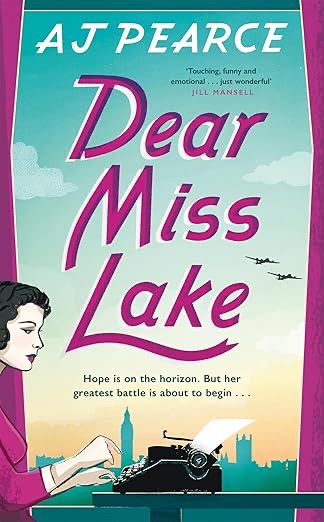
My final recommendation for last month is this last novel in the historical fiction quartet about the agony aunt of the Women’s Friend, a magazine running during WW2. It was lovely to be back with the gang and particularly Emmy Lake as they enter the final and arguably most difficult stretch of WW2. After five years of war both the team and their readers are tired. As a way of boosting morale at the magazine Emmy suggests they all decamp to Bunty and Harold’s in the countryside. As Hitler’s V1 and V2 bombs start to hit, it will certainly be safer. Emmy strongly feels they all need a boost in order to keep supporting and inspiring the women who read their magazine. If they’re tired and the magazine suffers, how will their readership keep the fight going? Emmy throws herself into rural life and is soon organising games nights, competitive knitting and planning the very important wedding of their officer administrator Hester and her fiance Clarence. She also has a phone call from the ministry to travel abroad and report from the French field hospitals and even manages to mastermind a break into husband Charles’s barracks before they’re both deployed. Emmy has no idea how much she’s going to need those around her in the coming months as her hardest test is yet to come. On their return to London she receives a telegram to say that Charles is missing, presumed captured in enemy territory and she has the agonising wait for the confirmation letter. Then Hester receives a blow when Clarence calls to say he’s being deployed in three days, two days before their planned wedding. Hester is inconsolable and after catching Emmy in a moment of frustration, she disappears. However, Emmy isn’t one to dwell on her misfortunes for long and I wondered what schemes and plans she would hatch next. 

The author doesn’t let us forget the sacrifice and loss in people’s lives, but still manages to bring in humour and a defiantly upbeat, make do and mend attitude. This is the closest I’ve seen Emmy come to breaking point and it’s hard to when you’re the one whose role it is to buoy everybody else up. As she finds out though, those who she’s helped and supported are so happy to be able to return the favour and support her. This is a set of books I always recommend, to women of all ages, because it’s so easy to relate to one of the characters and absolutely root for them. The main impression I take away from them is that sense of female solidarity. The instinct we have to come together, share the load and make each other’s lives a little easier from taking on someone’s children all the way down to being there with a meal or a shoulder to cry on. Emmy uses her writing to do the same and triumphs in being exactly what the magazine promises – the Woman’s Friend. 

Here’s a hint of what I’ll be reading in September:

Posted in Monthly Wrap Up

Best Books July 2025.

I’ve had a lovely reading month because even the books I had for blog tours, turned out to be fantastic reads. Any of these could easily make my end of the year list and some are by authors I’ve never read before. Others were from series I’d lost touch with and one has an incredible back story of the struggle the author had to get it published. I feel very privileged, looking back and realising what an incredible month of reading I’ve had. I’m already looking forward to next month’s choices.

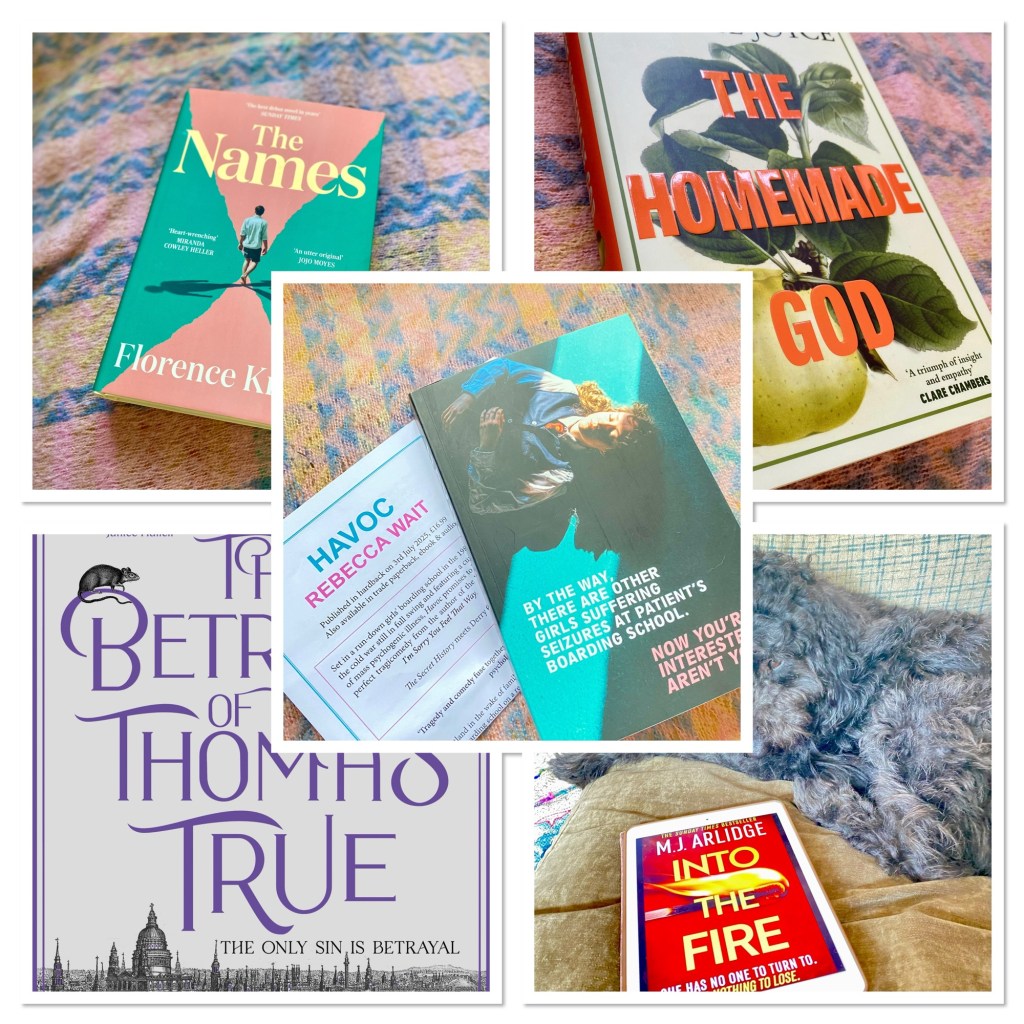
This was one of those unexpected joys, a book I’d heard very little about and chose to read with my Squad Pod just on a short synopsis. I had no idea whether I’d enjoy it or not, but it turned out to be fascinating and very apt, because I’d been reading about Functional Neurological Disorder. Havoc is a brilliant combination of school drama, mystery and dark comedy featuring a wonderful character called Ida who lives on a remote Scottish island with her mother and sister, after fleeing from her mother’s boyfriend Peter. What started as a lonely but safe place to live, became impossible when her mother did something unforgivable and the island’s inhabitants turned against them. Deciding she wants to leave, Ida looks for private boarding schools who provide scholarship places and discovers one, as far away from Scotland as she can find. St Anne’s sits on the south coast of England, so remote and underwhelming that the school are terribly surprised when their scholarship student actually turns up. No one ever has before, so they don’t have anywhere suitable to put her. The school is ramshackle and in danger of falling off the cliffs and the food is questionable and often tastes of fish, even when it isn’t. Ida is placed in a double room with school miscreant Louise and starts to settle in. However, things take a very strange turn when Head Girl Diane becomes unwell, starting with strange jerks of the arms and soon descending into full blown seizures. Soon after, Diane’s friend April is sick and then starts the familiar pattern of jerks. By the time a third girl has the same symptoms outside agencies such as environmental health, doctors and the police start to descend on the school. Is this illness a virus or is it environmental? Could it be something more sinister like poison? This was a fascinating and often amusing read, with an illness that shares the symptoms of FND – a syndrome where neurological symptoms are present and real, but are often somatic. Although it’s also possible some malign force is at work, especially when rat poison appears in an unexpected place. Louise and Ida are a dastardly duo and I also loved the friendship between the school’s geography teacher and her strident and rather cynical flatmate. Little surprises are everywhere and I would love to meet the characters again,

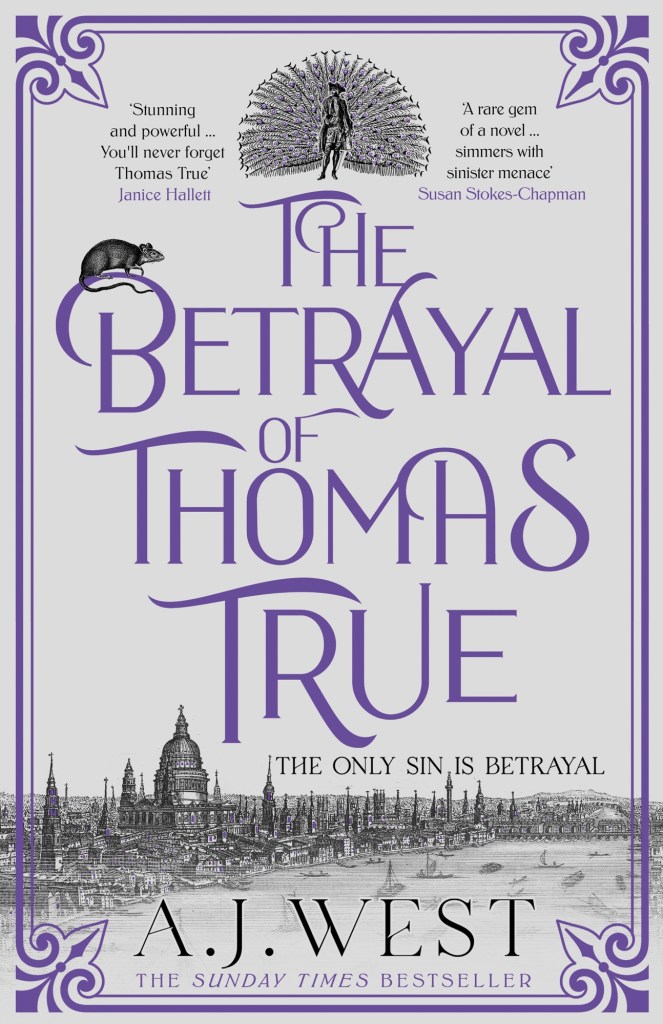
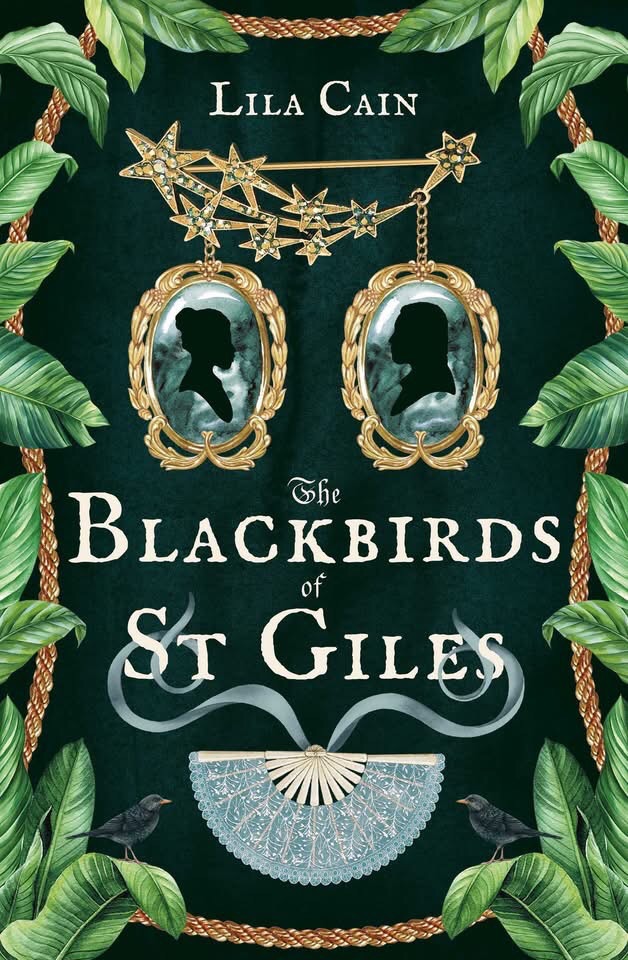
This book was the total opposite of the last in that I’ve heard nothing but praise for A.J.West’s newest novel. I’d loved The Spirit Engineer so much and I knew the struggle he’d had to get this published, but he believed in it and I’m so glad he was picked up by my favourite indie publisher Orenda Books. A match made in heaven. Having been supervised for my university dissertation by a lecturer who specialises in 18th Century Literature and secret sexualities, this was the perfect marriage of subject and style for me. I love when post-modern authors write back to a time in history to place people into their historical context. These are people who were erased from history due to their disability, sexuality or the colour of their skin. This has been done so well by authors like Sarah Waters who features 19th Century lesbians, Lila Cain whose main character were freed slaves in The Blackbirds of St Giles and Suzanne Collins, whose novel The Crimson Petal and the White is narrated by Sugar, a young prostitute with a disability.

Thomas True wears its vast amount of research lightly and definitely follows the style of the picaresque novel, where a young naive person makes their way into the big wide world with some humorous and rather risqué adventures. This young innocent travels to seek his fortune in London and is robbed on the highway, falling into the ‘wrong’ company – here this is the Molly House run by Mother Clap. A giant but gentlemanly man called Gabriel has brought him here and he is intrigued by the merriment, the wearing of women’s clothes and the safety of a place without scrutiny. This is above all a love story.  Thomas can’t possibly know how important this moment will be in his life, but it’s pivotal to his journey, his future and his heart. Far from the genteel worlds of Bridgerton and Jane Austen, the author creates a richly imaginative setting that brought all my senses to life – but not always in a good way. London is grim, overcrowded and disgusting. One scene where a body needs to be extracted from a ditch full of sewage is revolting. Even Mother Clap’s has a grotesque feel. These are not the preened and powdered men you might expect. Gabriel is huge, hairy and spends all day doing a heavy building job. He and Thomas have a complicated journey, one naive and optimistic and the other haunted by his past. You’ll be transfixed, hoping for their outcome to be a happy one but knowing this is a city that punishes ‘mollies’ by hanging and when the mysterious ‘rat’ betrays the men from Mother Clap’s the danger becomes very real. You can tell I loved it by the amount I write about it! It’s a definite must read.

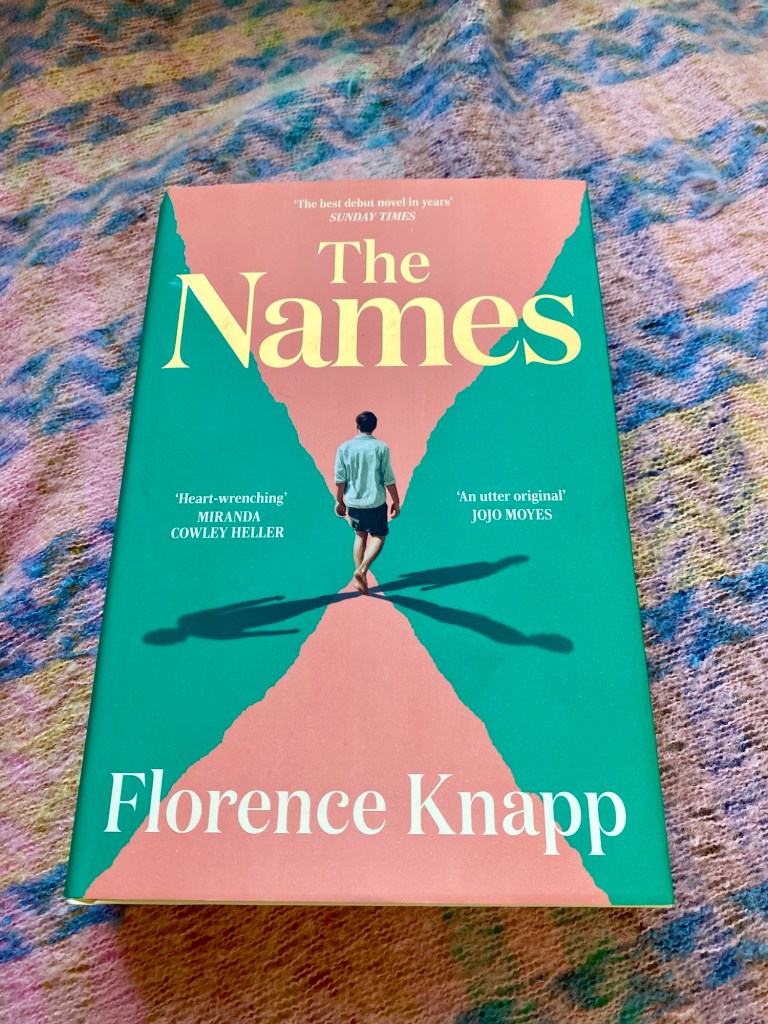
I knew from the first page that this novel was going to be special and it is utterly brilliant and an unbelievably good debut from Florence Knapp. It’s 1987 and Cora is going to register the birth of her baby boy. His name has been settled on because Cora’s husband has chosen his own name for his son – Gordon. But it wouldn’t be Cora’s choice. Cora’s choice would be something that doesn’t tie him so obviously to his father. She thinks Julian would suit him. Little sister Maia looks in the pram at her brother and decides he looks like he should be called Bear. All of these options swirl around in Cora’s head. In this moment, Cora has the power to make a choice and it’s done. It can’t be changed. What would happen if she went with Julian or even Bear? In the short term Gordon would be furious. How bad would it be this time? Long term, would it change her baby’s character or path in life? This is exactly what Florence Knapp does with her story. The book splits into three narratives and we discover what happens to this whole family, depending on Cora’s choice for her baby boy’s name. 

We then move on seven years and meet Bear, a name that proves to be a catalyst for change. We also meet Cora’s choice, Julian – the choice she hoped would break him free from domineering generations of Gordons. Although, what if he is called Gordon? Brought up by a cruel father to continue in the same mould perhaps? Or he might just break free from the shackles of his name? Each life is sparked by this one decision but it isn’t just Cora’s son’s story. This is the life of the whole family with all its ups and downs. It’s about how trauma shapes lives and whether love brings healing and hope to every version of who we are. Even her minor characters absolutely shine. Grandmother Silbhe and her friend Cian are so wonderful, modelling healthy male/female relationships for Julian and Maia. Cian is also Julian’s mentor at work, bringing out a creative side that needs nurturing. Julian needs to work with his hands and meeting fellow creatives helps him find his tribe. Lily is lovely character and we get to know her best during Bear’s narrative. I loved how she has to find a balance between giving Bear the freedom he needs without breaking her own boundaries in the relationship. It’s an utterly compelling debut and zooms straight into the list of best books I’ve read so far this year. The author brings incredible psychological insight to a story about how our names shape our identity, our relationships and our life choices. Something we didn’t even choose. Can it influence us to a huge extent, or do we become the same person no matter what the choice? 

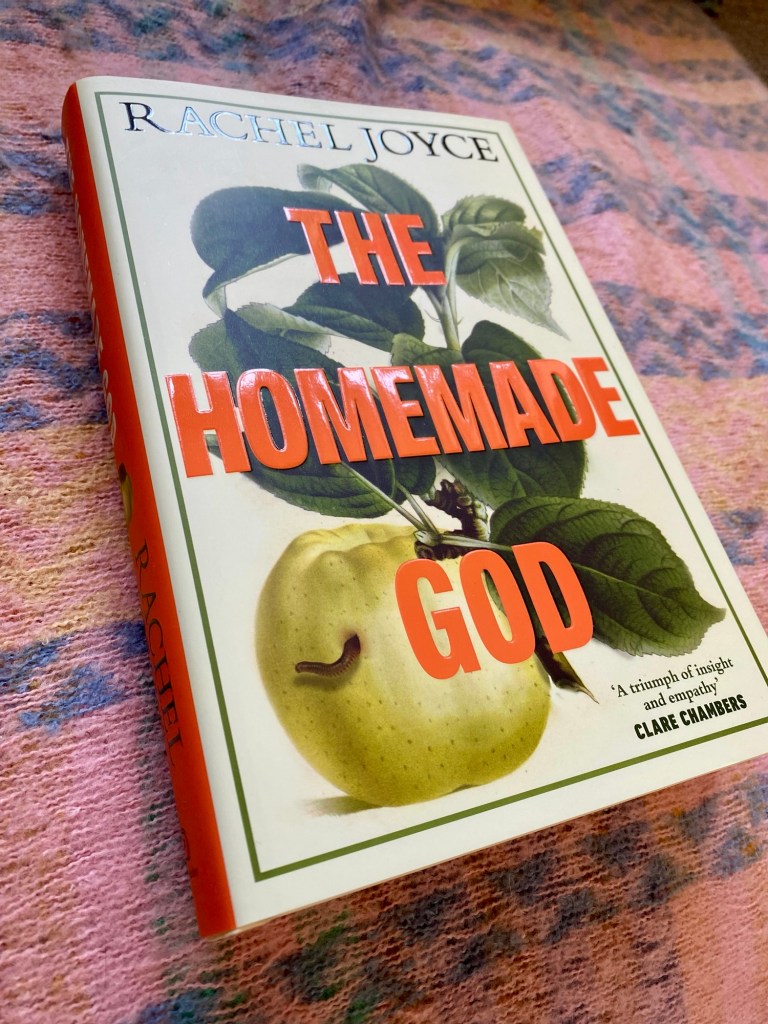
Rachel Joyce is a must-buy author for me and she gets better and better. This brilliant novel focuses on a bohemian family; Vic the father who is an artist and his four children – Netta, Susan, Iris and Goose (short for Gustav and the only boy). They’ve been parented by Vic and a series of au pairs after the sudden death not long after Iris was born. Their father’s art came first always and the conditions he needed in order to create were paramount so the oldest girls often played the mother role for Iris and Goose, especially when Vic inevitably slept with the au pairs. Vic was not an artist celebrated by the establishment. The description of his paintings brought Jack Vettriano to mind, criticised heavily by the art world, but very popular with the public. Now grown up, his children are stunned when Vic starts losing weight and drinking green, sludgy health drinks. His diet is being looked after by his new girlfriend, 27 year old Bella-Mae. None of his children have met her and she doesn’t seem keen to try. Within weeks Vic announces they’re engaged and Netta suggests that they all stand back and give this the space it needs to fizzle out. A couple of weeks later, Vic announces their marriage with a single photograph from the family home in Orta on Isola Son Guilio with Bella-Mae in such a heavy veil they can’t make out her face. They are staying at the house, situated on an island in the middle of a lake, but only two days later Netta is stunned by a phone call from a stranger called Laszlo, claiming to be Bella’s cousin. Vic has been dragged from the lake, drowned after a morning swim went wrong as the mist descended. Why would Vic go swimming in the mist? His children come together to travel to Orta, to finally meet their new stepmother and to find out whether she has killed their father. 

Bella isn’t what the siblings expect and nor is the villa, which has been changed in decor and atmosphere. She seems insubstantial and too fragile to have caused such an uproar. Especially when they’ve pictured her with an iron will, imposing her diet on their father and gaining their inheritance. She will prove to be a mirror through which each of them evaluate their lives. I love family sagas and this one is brilliant. It’s psychologically fascinating and I’m not going to ruin that for you by delving too deeply. I was absolutely transfixed! I couldn’t work out whether there was deliberate manipulation at play or if this was just a case of an outsider causing people to view everything through a different lens. Is Bella a destructive force or a helpful one? Whatever she is, the siblings will have to look at themselves, their choices and their relationship to their father. Some revelations will be explosive and take place in the open air- one particular meal is cataclysmic. Other revelations are quieter, insidious or internal but no less devastating. An utterly brilliant read for someone who loves complicated and tangled relationships. I LOVED it.

This book opened with a heart-stopping scene that set the pace for the rest of the story. Helen is relaxing after meeting her lover in a luxury hotel. While he has a shower, she is in her nightgown and robe enjoying the night time view over downtown Southampton. Movement suddenly catches her eye and she’s drawn to a woman who’s running down a darkened street towards a precinct of shops, pursued by two men. As they catch up, one of them pulls out a bicycle chain and starts to beat the woman. Helen doesn’t wait or think, tearing out of the hotel room and down several flights of stairs as she’s too impatient to wait for the lift. She tears down the dark street hoping that someone has called the police. Helen flies at one of the attackers, who is taken completely by surprise and she soon disables the second attacker before turning to the woman who has been badly beaten. She looks like she’s from the Middle East perhaps, with two very distinctive tattoos placed on her forehead and chin. Unfortunately, Helen has committed the cardinal sin of combat and has turned her back on her attackers. The next thing she feels is a huge bang to her head and then everything goes dark. This opening scene tells me this will be a gritty, modern thriller with a kick-ass heroine. 

This is the thirteenth novel in the DI Helen Grace series and I’m seriously out of touch with the character, having only read the first couple of novels after picking them up in a book swap. Helen is working on her own initiative after handing in her notice at the end of the last novel, with her protege Charlie being promoted in her place. Helen doesn’t know what the next step is, but she’s been enjoying the break. The only thing she misses is the camaraderie of a team and although she has enough money to really think about what’s next, she is anxious about it. Although life will bring it’s own answer soon enough and it might be the last thing she’s expecting. She starts to investigate alone, feeding into Charlie who is trying to target traffickers and their victims coming through the port in lorries and containers. The story is told mainly through Helen’s eyes, but also through the narratives of two other women. Viyan is another trafficked Kurdish Syrian woman and Emilia is a journalist whose father is dying in prison. At first we’re not sure how all of these narratives fit together but slowly they form a cohesive picture. Helen is formidable! You will hold your breath for the final showdown and all the women involved. Each short punchy chapter is action packed and will keep you reading ‘just the next chapter’ until it’s 2am. I now need to set aside time and read the ten novels between this and the last one I read. I’ll probably load up the kindle with them before I go on holiday so I can carry on without interruption. This was a belting, action-packed, female led, crime thriller and I recommend it highly. 

August TBR

Posted in Monthly Wrap Up

My Best Reads February 2025

Dear Book Lovers,

How did the month of love treat you? In typical form I’ve not been reading romance novels, but instead I’ve been reading about witches, murderous ghosts, grooming psychopaths, Icelandic spirits and a time detective. It’s been a very much needed month of distraction and escape. I’ve moved from London to Iceland, Manchester to Alaska, Victorian London and the island of Shakespeare’s The Tempest. All are a little scary in places, but I devoured all of them. So my health issues continue and I’ve been having tests so it’s great to have had some lovely proof copies to take along with me and enjoy in the waiting room.

 Fiona Smith is new on the street and is trying to get to know her neighbours. Ethan and Emma Dove seem like a lovely couple, in fact they’re the ideal family. Their kids Dylan and Rose are targeted by the two tearaways who live across the road who circle the other teenagers on their scrambler bikes, as their German Shepherds circle their terrified cockapoo Lola. Fiona intervenes and when later one of the boys has a terrible accident their parents are convinced someone caused the tyre blowout that resulted in a head injury. It couldn’t have been Fiona could it? The boy’s parents can’t find a trace of Fiona online so no red flags. However, the elderly lady called Iris who lives on the corner, she’s sure she’s seen Fiona before but can’t quite put her finger on where. When Fiona offers to look after Ethan and Emma’s daughter Rosie for the summer she has definitely become a feature in their lives. Their son Dylan is unsure. He definitely doesn’t need a babysitter, but it isn’t just that. Fiona unnerves him. He’s noticed that when no one is looking her expression becomes neutral, like a robot. Rose is enraptured though and they begin to visit Fiona’s favourite places and play chess together when it’s raining. All the time Fiona is monitoring Rose. Has she seen a glimmer of herself in this ordinary seeming teenage girl? As Fiona starts to test out Rose’s limits, Ethan and Emma are oblivious to what’s happening to their daughter. There are some heart-stopping moments as the novel comes towards the final showdown and I was absolutely gripped. In fact if you want a thriller thats hard to put down, go for any of Mark Edwards’s novels. You wont’s be disappointed.

Our story starts in 1768 on a sugar cane plantation in Jamaica, where a slave rebellion has been brewing. The signal will be sent to all the slaves by drum and Daniel has heard their rhythm. He needs to get to the house where his sweetheart Adanna works for the mistress. When Daniel realises the house is already ablaze he leaves with his little sister Pearl, hoping to find a way to get off the island. His story then jumps to 1782 and the aftermath of the War of Independence where free slaves who fought for the British were promised a new life in England. Daniel was one such soldier under Major Edward Fitzallen, whose life he saved. Edward and his wife Elizabeth have taken Daniel and Pearl under their wing, but when Edward is wounded he knows he wants to ensure that Daniel and Pearl have a future in England and calls witnesses to his signature on a new will and testament. It hands all his worldly goods over to Daniel, telling him to call on his brother James to inform him of Edward’s demise and Daniel’s new position as his heir. Daniel naively expects the Fitzallen brothers to be equally honourable and he underestimates James who drugs Daniel, then throws the new will and all proof of Daniel’s claim and rank into the fire. Now Pearl and Daniel are abandoned in London with nothing. This is such meticulously researched historical fiction, where you’ll become utterly immersed and enthralled by Daniel and Pearl’s struggle to survive.

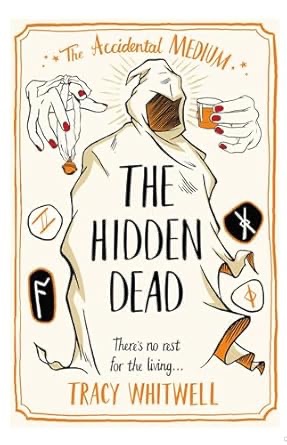
I couldn’t wait to read this, after reading the third book in this series earlier in the year. So I snagged it on NetGalley and read it immediately full of anticipation. I wasn’t disappointed. I love Tanzy and her adventures, usually she’s confined to the UK but this time she’s a little further afield. When she meets charming Icelandic giant Einar in a bar I did wonder whether vampires were about to debut in the series. His ability to ‘glamour’ Tanz seemed almost supernatural. Soon they’re sharing champagne and a bit of naked dancing too. When he invites her to his holiday cabin in Iceland to get some writing done, she decides to be impetuous and throw caution to the wind. This impulsive decision takes her to an isolated cabin with log burners, cosy decor and of course the odd spectre or two, After their first night together Tanz wakes up alone, without even a note and no plans for Einar’s return. She’s annoyed but not heartbroken. At the least she has a few days holiday in a country cabin for free and time to process her last case. Maybe she could start working on ideas for her own play? However, Iceland has its ghosts just as much as London. Did Tanz really think they would leave her alone? She will only succeed in this case if she relies on the help of others, neighbour Birta and taxi driver, Thor.

She also has a lot of self-reflection to do. Why won’t she let good men love her? It works well with the unfolding of the mystery around the cabin and how the choices we make because of desire are often destructive and life-changing. It seems we can be left with so many regrets that they follow us into the afterlife. I enjoyed some of the final revelations, particularly around the character of Birta. This is another solid addition to the Accidental Medium series and I felt like I’d spent a few hours with an old friend. I have a list of literary characters I’d love to have for dinner and Tanzy is definitely there at the table, possibly next to Mr Tumnus. Although she’d have to promise not to flirt with him.

This was a very spooky second visit to the unusual police department, housed in Manchester’s Tib Street Ballroom. We follow DI Andy Joyce, his team and their consultant Peggy who has some otherworldly skills and expertise. We’re at the Palace Theatre, where the cast are struggling to rehearse their play thanks to a dark, swirling and angry spirit. For some reason it wants them dead or the play cancelled at the very least. Lady Bancroft’s Rose has been performed only three times since 1922, but there has been a mysterious death each time. Particularly affected is Lavinia, a blonde actress who has taken over the play’s main role, since the original actress is now too traumatised to continue. Lavinia seems to be the focus of most of the spooky activity and she’s quite happy to cast Andy in the role of her rescuer – cue a few eye rolls from Peggy. More disturbing than the theatre is Andy’s home, the same cottage he grew up in with mum Agatha and brother Rob. While he knows Rob is there, he’s never been a difficult or angry ghost. Now strange things have started happening that make him think the ghost is angry, leading his guilt over Rob’s death to go into overdrive. With Andy and Peggy at odds with each other, will he ever found out what’s going on? I thought the author managed to combine all the elements of her story well, although it wasn’t the theatre case that caught my attention most. It was the terrifying scenes at Andy’s house and the ‘will they, won’t they” of him and Peggy. I love the humour laced through the action, especially the North West tone. I love that female characters are in the thick of the action and Marnie is honestly the ghost that keeps on giving. Part three of this fabulous series is coming soon.

I was utterly mesmerised by this unusual grown-up fairy tale. Having read the author’s work before I was expecting a certain strangeness and this story definitely delivered. It’s hard to write about without revealing anything and you need to go into this book without spoilers. The story is told through the eyes of Birdie and her little girl Emmaleen. Birdie is a young, single mum. She’s living in a cabin out behind the bar where she works for Della. Birdie is just getting by. She has a wild spirit and although she loves Emmaleen, she’s not the most consistent parent. We meet her on a beautiful morning where she has woken up from the night before relatively unscathed. Yes, she’s a bit hungover and she knows Della is going to have words for her when she goes into work. For now though, the woods and creek are calling her, so she takes her fishing rod and leaving Emmaleen asleep and alone she walks through the trees and down to the water. When she gets back to the cabin, Emmaleen is gone. It’s a man called Arthur who eventually emerges from the woods with Birdie’s daughter on his shoulders and she’s never been more relieved. She knows Della will have something to say about this and she does move her onto the day shift, as a comment on her partying and parenting lifestyle. She has to bring Emmaleen into the lodge with her, but she sits colouring and doesn’t pester while she’s trying to work. Arthur comes in most mornings. She’s fascinated by this strange, wild man. Birdie thinks he smells of wild places, mossy and like earth. When he asks Birdie if she and Emmaleen would like to make a home out there in the mountains, there is only one answer. Yes. But there’s a hidden animal pelt under the earth near the cabin and caribou bones under the bed. How long before Birdie and Emaleen learn the terrifying truth about Arthur? I had a real maternal fondness for this young woman and her acceptance of this taciturn young man. Love comes in so many different forms and even though I could feel something looming on the horizon for this new little family I was hoping against hope for the transformative power of love. 

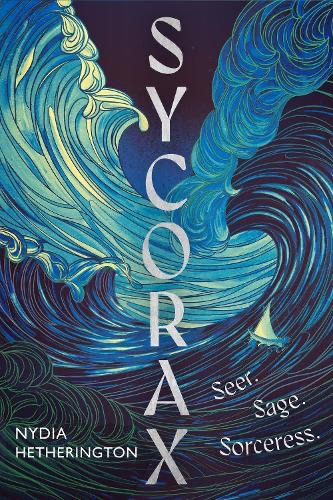
I was entranced by this beautifully lyrical tale of the unseen sorcerous of Shakespeare’s The Tempest. This is my favourite Shakespeare play because I love its atmosphere and the use of musical sounds to conjure up this enchanted island, ruled by the magician Prospero. Sycorax isn’t present in the play, but is mentioned as a sorcerous and mother of Caliban, who is depicted as a monster and a slave to Prospero. The author wants to give Sycorax a voice, one that she doesn’t have in the play, to tell us in her own words what it was like to be treated with suspicion and cruelty. Sycorax’s story is an emotional one as she wrestles with her identity, her illness, her powers and the loneliness of being an outcast. Each time her powers grow the more isolated she becomes.The author is clearly so passionate about this book and giving her central character a voice and I think she achieves it beautifully. 

The story unfolds slowly while the author immerses us in the world Sycorax inhabits, at first with her parents. I really felt like I was in the presence of a magical being and it was the sounds that really grabbed me – the tinkle of sea shells on her mother’s anklets, the sounds of the sea, the lazy buzz of the honey bees they keep. By creating this mindful and harmonious background the author makes sure that when something does interrupt, it tears through this idyll and comes as a shock. These shocks are usually driven by men. There’s a constant sense of give and take between Sycorax and her universe. Strangely the more she’s affected by illness, the more powerful she becomes. The power comes in the shape of wisdom and resilience, things that come with time and getting to know how your illness affects you. By working with it, Sycorax knows what her body can do and how much activities will take out of her. Beautiful young women with unusual powers rarely go unnoticed and unexploited. Nydia has written a beautiful piece of work that takes us full circle to The Tempest. She’s managed to bring 21st Century injustices to the forefront without losing any of the magical beauty of the original play.

That’s all for now, but here’s a quickly glimpse of my March TBR.

Posted in Monthly Wrap Up

Best Books September – November 2024

I suddenly realised today that I hadn’t done a monthly wrap-up since August! Since I last spoke to you all, a few things have gone wrong with my health. As you know I have multiple sclerosis, but for many years now I’ve had problems with my spine. I had a spinal injury when I was 11 years old. I’d read books like Pollyanna and What Katy Did where the heroine has an accident either falling from a tree or a swing and becomes paralysed. As soon as I landed the somersault I knew something was wrong and I stayed still, but a classmate ran over to the crash mat, grabbed my right arm and tried to pull me up. I had an excruciating pain near my shoulder blade around the level of my bra strap. It turned out I’d broken two vertebrae and crushed a disc. Years later when caring for my late husband, I tried to move him across the bed to stop him falling and had a searing pain in my lumbar area. I couldn’t move and he had to call my parents and admit ‘I broke my wife’. I had an injection in my spine and stayed in bed for two days. Thanks to these injuries I have chronic pain in my lumbar and thoracic spine where the nerves are impinged by the discs. Lately I’ve really struggled with the pain and I’ve been having a radio frequency denervation alongside strong painkillers to control it. At the end of August I had my latest procedure and it was so painful I struggled to tolerate it. I can’t be sedated for the procedure, because I have to be able to feel things so the consultant can ensure they’re burning the right nerve – not the motor nerves. Sadly this time the procedure hasn’t worked and I’ve had increased pain that’s moved from the right side of my spine into the left leg. I was struggling so much that I had an MS relapse too. So I’m taking a hiatus from blog tours and any other promotions, so that I can read slowly and pick what I want from the TBR pile. I’ve found the thought of being in this level of pain indefinitely very difficult to cope with. I’ve had a really low mood and had found it hard to read books that I either wasn’t enjoying or in the mood for because I’d made a commitment to read it by a deadline. So at least till the end of the year I’m picking what I fancy and reviewing when I can, with no pressure. Here are my favourite reads of the last couple of months.

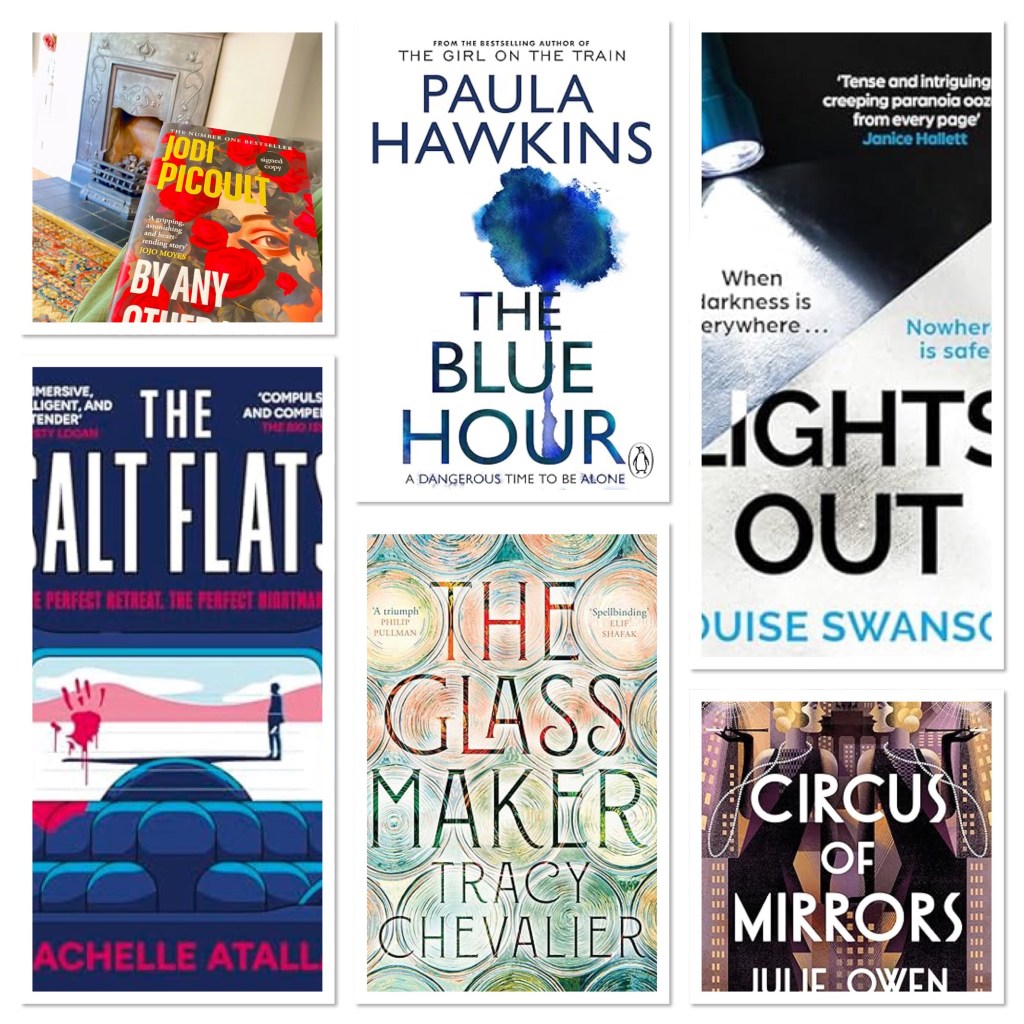
Married couple Martha and Finn are travelling in South America on what feels like a final attempt to save their marriage. Martha has been wrestling with severe anxiety about the climate emergency and wanted to come to Bolivia, specifically to visit the other-worldly salt flats. A place where the sky is so perfectly reflected in the wet surface that it feels like you’re walking in the clouds. She has found an eco-spa based on salt, promising group therapy work, salt drink rituals and lounging in the warm salt pools. Finn is sceptical, especially about the cost, but agrees to throw himself into the experience. Only 48 hours later, as the group wake from their salt drink ritual and a night of hallucinations, someone is found dead. The guests are at the mercy of their hosts and the inhospitable environment. How will they find their way out of the salt flats and which one of them is a murderer? This is a tense and psychologically brilliant thriller, with a strange and otherworldly backdrop that heightens the sense of isolation and fear.

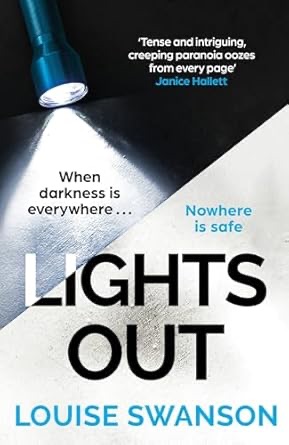
Set in the not too distant future, Lights Out focuses on a summer where electricity rationing has become a reality. The government shut down of power will begin at 8pm every night and every residential household is affected, only hospitals and hospices are exempt from the switch off. As the days count down Grace feels her anxiety start to build. She has had a phobia of the dark since she was a child when she remembers being locked into a pitch black space, an incident she believes happened at school. Most nights she’ll be on duty in her job at the local hospice but she’s home for the first switch off and begs her partner to be home before 8pm. He seems not to take her fear too seriously, even though he’s spent years since they moved in together sleeping in an eye mask to block out then constant light Grace needs. Then strange things start to happen. One morning Grace notices her goldfish Brad and Jennifer have a companion in their bowl. The next night some candlesticks appear in the kitchen. Who has heard of a break in where they add to your belongings instead of stealing them? No one takes her concerns seriously, but she’s unnerved by the accompanying note from ‘The Night’. This is a seriously tense thriller with an interesting premise that plays into current fears about energy usage and poses two mysteries: who is The Night and what does he want? What happened to make Grace so scared of the dark?

I thoroughly enjoyed this new thriller from Paula Hawkins and it’s isolated setting on the Scottish island of Eris, only reachable from the mainland at low tide across a causeway. This was the home of Vanessa, a celebrated painter and potter, but since her death has been owned by her friend and companion Grace. While the island was left to Grace, Vanessa’s works were unexpectedly left to her first agent who has an art foundation at a stately home where they are in the process of going on display. The story is set in motion when a visitor to the gallery makes them aware that one of Vanessa’s installations seems to contain a human bone. As the piece is pulled for forensic examination, everyone is thinking about Vanessa’s estranged husband who went missing after visiting her on Eris. He was thought to be lost from the causeway, but what if he never left the island? Becker is the curator of the gallery and an expert in Vanessa’s work. Grace will have to be informed and it could be just the opportunity to visit Eris, so that Grace is seen in person and Becker can approach her about artworks and diaries that the foundation believes she is withholding. Grace may seem to be a quiet and unassuming woman, even mousy, but once on Eris it’s twelve hours until the tide turns. The human bone came from someone who visited Vanessa’s studio, but did they ever leave? This is an atmospheric and obsessive thriller detailing the messy lives of those in the bohemian world of art.

This wonderful new novel from Tracey Chevalier captures the spirit of the Venetian islands and a heroine you will take to your heart. Orsola Rosso is the daughter of a glassmaker living on the island of Murano. She has to grow up quickly when her father is killed in the glass workshop when a flying shard from a chandelier hits him in the neck and cuts into his artery. Under her elder brother, the workshop starts to suffer a decline as he tries to pursue more artistic pieces than the consistently good tableware that was the Rosso’s main source of income. Desperately wanting to help she visits their merchant, Klingenhorn, for ideas and he sends her to the only female glassmaker in Venice to learn how to make glass beads with a lamp. Very soon she is able to create beautiful beads that Klingenhorn can sell. Orsola is a heroine that gets under your skin. She’s ambitious, fiercely loyal to her family but able to see how the workshop must diversify if they’re to survive. Chevalier shows us the magical islands of Venice and Murano through her eyes as she weathers grief, the plague, business woes and falling in love. Set, with magical licence, from the time of Casanova all the way up to the COVID pandemic this is an incredible story of a strong and bold woman who knows how to survive.

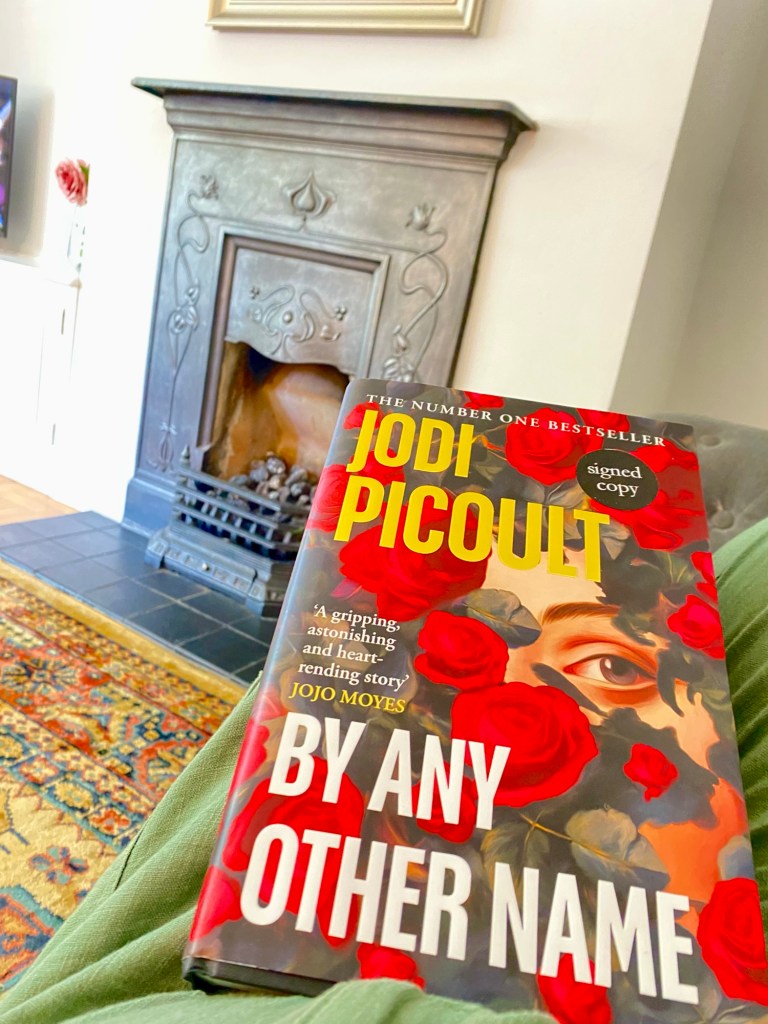
Another incredible woman heads up Jodi Picoult’s new novel, this time an Elizabethan playwright named Emilia Bassano. In a dual timeline narrative we see modern playwright Melina finding that it’s still difficult for your plays to reach the stage if you are a woman. Egged on by her best friend she starts to research and write about an ancestor, Emilia Bassano who was a published poet and also wrote for the stage. As the official mistress of the man placed in charge of the London theatres, Emilia has access to Elizabethan playwnights and poets like Spenser, Webster and Kit Marlow her best friend. Melina becomes drawn in by the conspiracy of whether Shakespeare was solely responsible for his incredible number of plays? Her research leads her to believe that the ‘real’ writer might have been a woman and the evidence points to Emilia as a possible candidate. She was a Jewish woman living as a Christian, part of a family of court musicians from Italy with an incredible talent for words. She has visited all the places that Shakespeare uses in his plays, understands how to fit in at court and on the street and knows what it is to be a strong woman – could Beatrice and Viola have come from her pen? This is a gorgeous piece of historic fiction with a heroine you’ll enjoy and a mystery that draws you in.

This incredibly emotional novel has to be Julia Owen Moylan’s best one yet. In Berlin 1926 sisters Leni and Annette have lost everything after the death of their parents and are living in a makeshift shelter in an abandoned garden. Leni finds work in a glamorously decadent nightclub as a cigarette girl. Babylon Circus is a glittering cabaret with provocative dancing girls, providing a staggering contrast between Leni’s nights and days. However, it does provide the means to find the sisters lodgings and regular food. When Leni meets Paul, the club’s pianist, a tentative love affair emerges that may challenge the fragile beginnings of a stable life for Annette. Their love plays out over forty years and changes the course of both sister’s lives forever. The author brilliantly captures the two distinct time frames of a country that’s struggling in the aftermath of two world wars and a city that’s physically and ideologically divided. For the sisters she shows how extreme circumstances, trauma and one split second decision can shape a life. The contrasts between the colour and sparkle of the cabaret at night and the shabbiness of the daylight hours are stark, echoing the poverty and grim utility of a city post war and under Communism. The sisters are so real heart-breakingly human, full of flaws and hovering between resignation and hope. This is definitely in contention for my book of the year.

That wraps up the last two months of powerful reading. I don’t have a tbr as I’m reading what I fancy on the day but here are some that are calling to me from my various to read piles, some on NetGalley plus the ones I’m physically tripping over at home.

Posted in Monthly Wrap Up

August Books of the Month

I’ve had a lovely reading month and I might finally be finding my equilibrium, rather than the frantic scramble of blog tours, blitzes, proofs and NetGalley reads I’m usually in. I’ve tried to say no a lot more and that’s given me some space to read what I want and that NetGalley pile is a little bit lower. I’ve also edged towards crime a bit, with four crime series on the list this month and some of my favourite characters: the Skelf family; Vera Stanhope; Sam Shephard; Tuva Moodysson. There are also four novels at least partially set in Scotland. I don’t think about these links when I’m choosing, it just occurs to me after the fact, but it shows me what I gravitate towards. We’re moving into the Autumn, so less holiday reads and more ‘cosy, curl up by a real fire’ reads to come, I’m enjoying the spooky ones already..

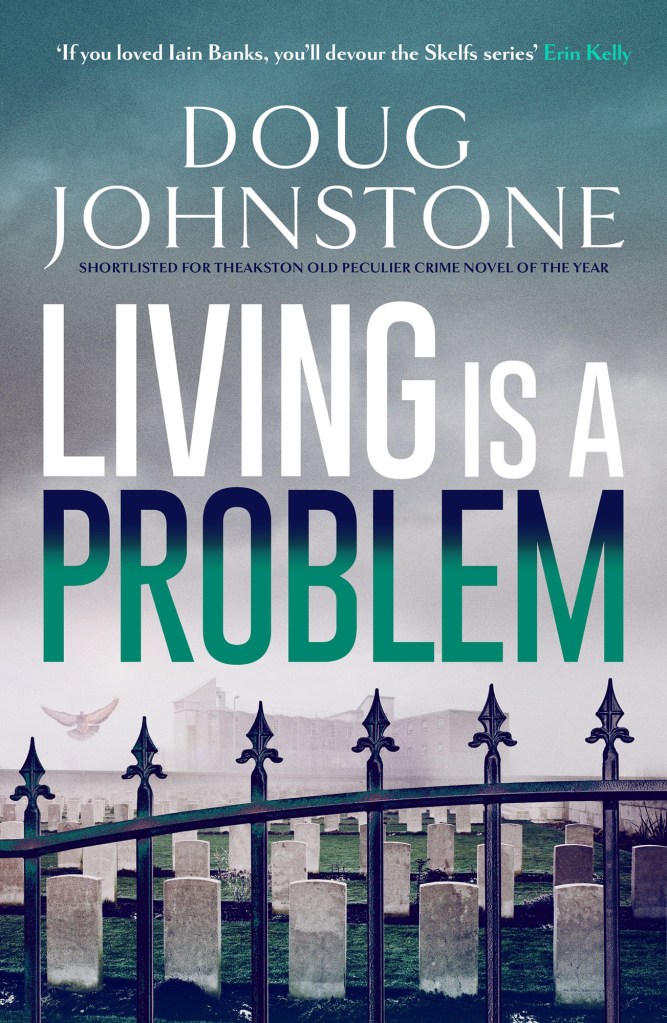
Oh how I love the Skelfs!! I want to be one of their waifs and strays so I can live in their big Edinburgh house, help Indy with the funerals and considering the people they encounter I think they probably need an on-site counsellor. This time round there are a couple of cases but also some serious repercussions from the last case where Jenny managed to discover two police officers involved in sexual exploitation. The attack that Dorothy and her partner Thomas were subjected too has left both of them traumatised, but is still eating away at Thomas who is now retired from the police. She is struggling to find a way to help him and is concerned at his preoccupation with letting go of things – after all he is from Sweden and Dorothy is aware of Swedish Death Cleaning. Jenny is monitoring the men involved. New recruit Brodie is grieving too, but has noticed something odd about his baby son’s grave. It looks like someone has been digging at the earth and he asks Jenny to help. She sets up some cameras, but having spoken to his ex-girlfriend she’s worried. She’s told that Brodie hears voices. Should she be worried and could he be unwittingly causing this himself? Finally, Dorothy is approached at the choir she plays for because one of the Ukrainian ladies has disappeared. Everyone’s busy, but they also feel vulnerable, even Hannah who feels a bit lost now that she’s completed her PhD. This is Doug’s usual mix of crime fiction, philosophy and family. I had a sense of foreboding throughout and I did shed a tear before the end of the story.

I really enjoy Fiona Valpy because her books are always a great mix of historical fiction, female characters and uplifting story. This one travels a bit further than most because it’s set in Scotland and Nepal. In the 1920’s Violet Mackenzie-Grant has grown up on the family estate in Scotland but doesn’t want the usual marriage and kids fate of most girls she knows. She joins the Edinburgh College of Gardening for Women and starts to do botanical drawings of the specimens coming in from all over the world to the botanic gardens. There she meets Callum Gillespie who shares her passion for plants and is her solid mate in every way. However, neither set of parents thinks it’s a good idea; Violet’s parents object that he’s not from 50th social circle or class, whereas Callum’s parents think Violet will be expecting more than Callum can give her. As Callum sets off an expedition to Nepal, Violet receives some surprising news and makes the decision, she wants to be with Callum, so sets off after him to Nepal. Nearly 100 years later Violet’s great-great niece Daisy wants to follow in her doorsteps. She’s dealing with a divorce and an empty nest and is looking for the next direction in her life, She arrives as the pandemic hits and as she’s trekking into the foothills of the Himalaya the country becomes locked down. Will the people of these remote villages look after her in the same way they did Violet? This is a beautifully uplifting tale about finding the place you belong.

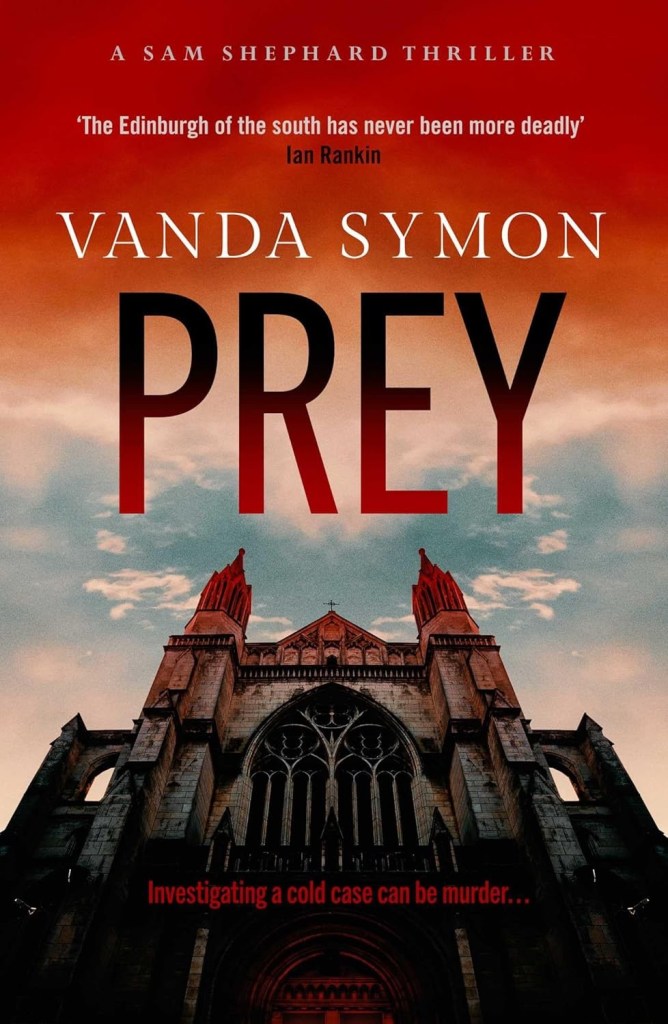
I absolutely loved the last novel in this Sam Shephard series and here she is on the verge of returning to work after maternity leave and the traumatic circumstances around Amelia’s birth. As is predictable, her boss DI Johns isn’t the most welcoming and gives her a cold case – the murder of Rev. Mark Freeman outside his own church. There’s one potential issue, Mark Freeman was the father of DI Johns wife Felicity. Felicity’s mother has been diagnosed with cancer and the boss would like her to go to her grave knowing who killed her husband. My first thought was that this had the potential to blow up in his face: he’d be all over her progress, creating a conflict of interest for Sam that would be exploited if a case ever went to court. He was also being his typical sensitive self by ensuring that his mother-in-law would spend her final months reliving the most terrible experience of her life. Rev. Freeman was found at the bottom of the stone stairs leading up to the church entrance. He had been stabbed in the stomach by a small knife, but that wasn’t the cause of death. His subsequent fall down the steps broke his neck, immediately cutting off his ability to breathe. He was found by his son Callum, who had ventured out because his father hadn’t returned home after the service. Yet we know at least one other person witnessed the killing, because the book begins with their anonymous account of the murder. The boss has handed Sam a poisoned chalice and she fears both outcomes. Either she won’t be able to solve the case, so will be held responsible for disappointing his wife and her mother or she will solve it, making the previous investigation seem incompetent and potentially tearing his family apart in the process. If we as readers know one thing, it’s that Sam will not rest until the case is solved. This was a belting thriller with Sam’s usual mix of curiosity, instinct and compassion getting people to open up and placing her in danger.

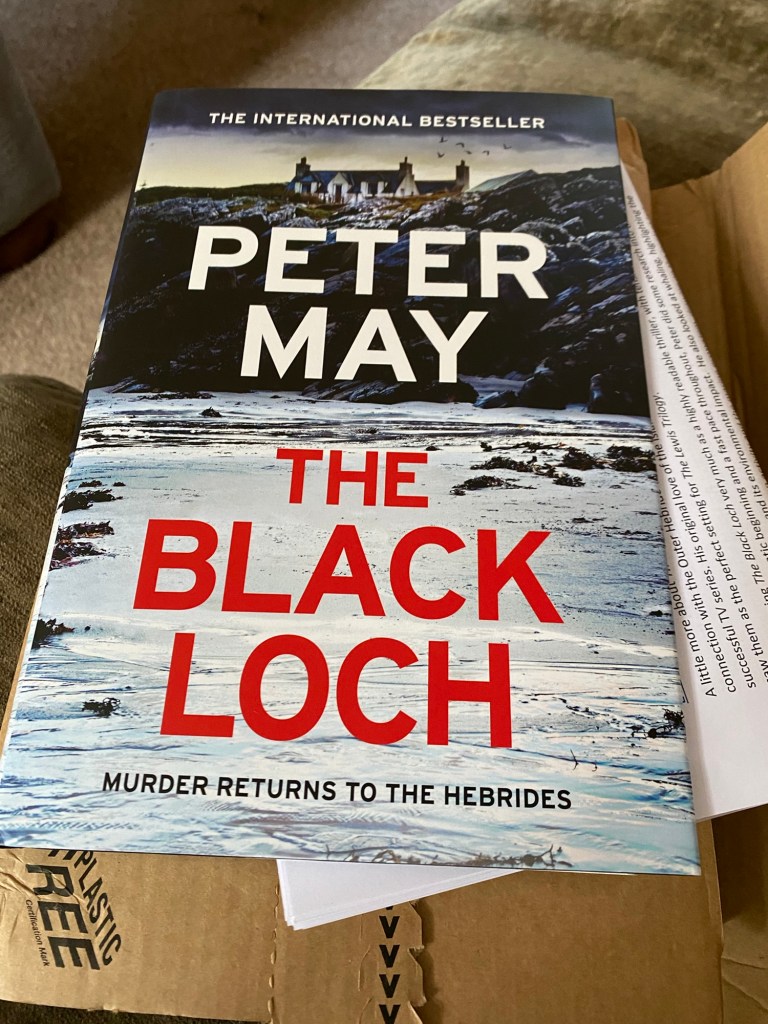
I’m so grateful to have been offered this brilliant crime thriller set on the Isle of Lewis. This is the fourth in a trilogy, so I’ve definitely got some catching up to do where Fin McLeod is concerned. Once a detective and now retired, Fin is drawn back to Lewis when Caitlin Black’s body is discovered on a remote beach. Only eighteen years old, Caitlin was a student at the Nicholson Institute. It emerges that she was having an illicit affair with Fionnlagh McLeod, her teacher and a married man twenty years her senior. Fionnlagh soon becomes the prime suspect and is arrested on suspicion of her rape and murder. He is also Finn’s son. Finn knows he must return to Lewis to support his daughter-in-law and granddaughter. He also knows, despite the evidence against him, that he must try to clear his son’s name. As Fin travels around the island, he is drawn into past memories and soon realises this crime has echoes back into his own teenage past on the island. A terrible accident at a salmon farm caused two deaths, just as the the farm started to expand and become a multi-million pound industry. All of it owned by Caitlin Black’s father Niall. This is such an atmospheric novel where Peter May has woven the history of Lewis, the ecological impact on the island and the damaging changes wrought by the salmon farming industry. This is a journey of family ties, secret relationships and a bleak and unforgiving landscape, where violence, revenge and relegations converge. So brilliant I’ve already bought the first three novels to binge when I take a break at Christmas.

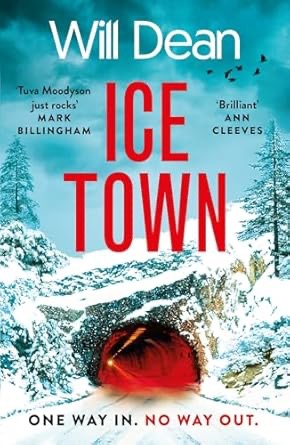
I really enjoyed this trip back into Tuva Moodysson world, even if at times it was tense, threatening and claustrophobic. Will’s intrepid reporter is enticed to a town further north than Gavrik because her famous instinct is telling her there’s a story. Dubbed ‘Ice Town’ it’s a minor ski resort with only one upscale and very empty hotel, stuck in it’s early Twentieth Century heyday. Tuva can only access the town via a tunnel through a mountain. Traffic queues at the tunnel mouth as drivers are alternately let through. It then closes at night leaving residents cut off from the outside world. Tuva has been drawn by a missing person’s report, a teenager called Peter has disappeared. Nothing unusual in that, but Peter is deaf and Tuva is imagining how isolated he must feel. She worries that his hearing aid batteries have run out of battery life and imagines him stuck somewhere in the dark, not even able to hear the search teams shouting his name. Tuva packs up her Hilux and heads north hoping to find out more about Peter and maybe help the search. She’s heading for the only B & B in town, but when she gets there it’s clear they should have dropped the second B – something Tuva points out with her usual tact! In actuality there are two bedrooms in the back of a sunbed shop with very thin walls, but Tuva does not need luxury and expenses are scrutinised carefully by her boss Lena. As she starts to acclimatise she starts to realise that, if possible, this is a quirkier town than Gavrik. She’s also without the long-standing relationship she usually has with the police. Can she find Peter without their help? Without her usual support system to call on, might she find herself in danger? My suspicion was running back and forth constantly and the clues come thick and fast here. I really didn’t know who to believe. We’re on tenterhooks and I remember thinking why does Tuva put herself and us through this? The ending coming in time for the Santa Lucia festival was beautifully done and those of us who’ve been reading since the beginning and love the weirder members of the Gavrik community will love a little cameo towards the end. When will someone pick this up for TV or a film series? It’s a fabulous franchise and it just gets stronger all the time. 

Another female detective I absolutely love! This was such an enjoyable read with an atmosphere that links back to the area’s history of witch trials. The dark wives of the title are three stones making up a circle just outside of Gilstead village, a place that seems to link strongly to the people in her case. Vera and her team have the case of a missing girl that’s linked to a murder. Chloe has been in a children’s home since her mother has been hospitalised due to her mental health. Her paternal grandparents offered to give her a home but their relationship is complex and while she gets on with her granddad her grandmother is constantly trying to change Chloe’s gothic look. Josh, the new support worker at the home, has encourage Chloe to write about her experiences and feelings in a journal, something she’s found really helpful. Now Chloe is missing and Josh is found in the park, killed by a head injury. Vera must find his killer, but even more urgently she needs to find Chloe who could be a second victim or the perpetrator. As they unravel the lives of these two young people it’s clear that there are secrets, both within the children’s home and within their lives. Vera’s search takes her to Gilstead, where Chloe’s grandparents used to own a farmhouse and still have a bothy where they’d take Chloe for picnics. Could she be hiding out in the middle of nowhere? The team are getting used to new recruit Rosie, who is what Vera thinks of as a proper Geordie girl – fake tan, false eyelashes and never goes out with a coat. She’s actually an empathic and intelligent investigator and her instinctual way of working puts Sergeant Joe’s nose out of joint. There’s a tense and thrilling conclusion set on the hills of Gilstead after dark as the villagers act out a local tradition of Hunt the Witch. It was also lovely to hear Vera’s thoughts about her own relationship with her father and his cottage where she’s lived ever since his death. Are changes afoot for this veteran detective?

I’m on the blog tour for this lovely book from Sharon Gosling who I’ve been reading for a couple of years now. I love her combination of female characters, personal growth and change, plus a little hint of romance too. Here we meet two very different sisters, Bette and Nina Crowdie who grew up on a farm in Scotland. There’s a ten year age gap between them and they’ve never been close. Nina feels that Bette left at the first opportunity she had and has rarely been back since. She’s had been distant since she left to study law at university and now works as a divorce lawyer in London. Whereas Nina and her little boy have lived at the farm for five years and she’s worked hard to help her father. Now their father has died and Bette returns for the funeral, poised to leave as soon as it’s over. However, she’s asked to stay for the will reading. Unexpectedly their father recently changed his will and has split the farm down the muddle giving both daughters an equal share. However, the farm has significant debts and they’ll need to work together if they want to save it. Nina is furious, but she finds out that Bette has not been as distant from their father as she thought. They exchanged regular emails and Bette had given him all of her savings to mend the barn roof. I kept wondering what could possibly have happened for Bette to leave everything she knew behind and start again? As she tries to make sense of their father’s office it’s clear they need to have the property valued and it’s while walking the perimeter that they find a secret orchard at the edge of the cliffs. Why is it there and who has disguised it so well that neither of the girls had found it before? They will have to look into a story from the past to understand the mystery. This is a story about family and how we can hold beliefs and judgements about each other that are completely wrong. I thoroughly enjoyed this, hoping that the sisters could open up to each other and Build a relationship. My full review will be out this month.

Finally comes Polly Crosby’s latest book, The House of Fever, a historical mystery set in a sanatorium for patients with tuberculosis. On a trip abroad with her mother, Agnes Templeton meets a handsome young doctor called Christian Fairhaven. He seems completely besotted with her and a romance soon develops, his his swift proposal can only mean one thing, it must be love. Seen another way, this could be a relationship of convenience. Dr Fairhaven needs a wife and a stepmother for his daughter Isobel, while Agnes needs an expert in tuberculosis for to look after her mother who is suffering from the disease. Christian is researching a new cure, something he’s working on at the institute he runs called Hedoné. He lives in a cottage alongside the institute, which is split into an infirmary for very unwell patients and ‘spa’ type accommodation for those TB patients who can benefit from the fresher air and rest that the institute provides. When Agnes arrives she finds that the guests are more glamorous and wealthy than she expected, with their part of the building adjoined by a swimming pool, beautiful grounds and many places for parties. Their access to alcohol and gourmet food gives the place the feel of a luxury hotel. Agnes’s mother is taken into isolation, to be monitored closely and have a period of quarantine. Agnes is allowed to visit her mother’s room as she seems to be immune to TB having nursed both her father and mother through the disease without succumbing herself. As she adjusts to the contrasts of lavish dinners and partying for some and the very authoritarian Matron and strict quarantine restrictions for others, Agnes starts to notice things. Isobel seems to flit around largely unmonitored and doesn’t live with them in the cottage. The beautiful actress Juno Harrington holds court here and seems to have unfettered access to Christian, even in his office. There’s nothing Agnes can put her finger on, but she feels uneasy. She senses there are secrets at Hedoné and perhaps in her marriage too. As the truth starts to unfold, I was desperate for Agnes to escape and not leave Isobel behind, because a definite bond was growing between them. Polly nails the historical background to her story and really emphasises the fate of women between two world wars. I wanted Agnes to be free, to explore her authentic self outside of her caring role and make the life she wants. I wasn’t sure, right up to the final chapters, what her fate would be. This is an entertaining and interesting novel from an author who understands the nuances of relationships and always creates fascinating characters within the most unusual settings. 

That’s all for now. There are some great full reviews coming up this month so keep a look out. I have a great tbr for September and I’m looking forward to sharing it with you. I might not get through all of them but I’m going to try.

Posted in Monthly Wrap Up

Best Books July 2024.

Every month this year seems to drift far away from my plans, for life in general and for reading! This last month my husband and I finally caught COVID as we welcomed his daughter back from university for the summer. We were both consigned to bed for a few days in his case and a whole week in mine. I’ve since had a sinus infection that’s caused nose bleeds and facial pain, plus I’m still struggling with my breathing so am on steroids, antibiotics and have an inhaler. We took a holiday to Wales and thankfully, took my carer and her children too. I spent a lot of time looking out at the view, reading and resting – what a view it was! While everyone else took turns looking after me. I did manage to get a couple of days in my favourite haunts of Beddgelert and Porthmadog, where I went to a favourite bookshop – Browsers Books. I made some great purchases from their second hand collection that I’ll show you in a few days when we’re fully unpacked. My dog Bramble had a lovely walk in the morning with my carer Louise before getting me organised and my husband managed to get some fishing done. I watched a lot of films that had been clogging up my watchlist on Netflix too. I came home on Thursday night and went straight to hospital on Friday morning for a radio frequency denervation on my back, so I’m now in bed recovering and trying to stay off my feet. I’ve managed to catch up on some Squad POD reads this month, which I was terribly behind on and I was late with blog tours. Sometimes book blogging doesn’t go according to plan, but luckily book people are some of the kindest I’ve ever met. Thanks to everyone for your patience and kindness this month ❤️❤️❤️

I loved this wonderful debut from Harriet Constable. Set in the magical city of Venice in the 18th Century, this shows a different side to the same place where Casanova was prowling the richest parties. We follow the fortunes of Anna, an orphan who was passed into the care of nuns at the Ospedale Della Pieta. The orphanage has a hatch in the wall, just big enough to accommodate a newborn baby and this is how Anna came to be at the orphanage with her friends. The girls are schooled but the specialism is music and Anna is playing the violin. She is a bright, sparky and ambitious girl absolutely bristling with energy and promise. When she catches the eye of the music master she hopes to reach the level where she can audition for the orphanages elite orchestra. Everyone knows that orchestra girls get special treatment, perform in the best venues in the city and receive gifts from patrons. She has definitely caught the eye of the master, who has organised for her to have her very own custom made violin. However, it isn’t until she’s a little older that she sees how precarious her position is. Those girls who don’t become elite musicians are introduced to eligible men, often rich but very old. For Anna this seems a fate worse than death, all she wants is to play the piano and be the best. In order to get there she will sacrifice everything… but will it be worth it? This is a fantastic debut, full of rich historical detail and brimming with tension.

In a remote region of the Norwegian arctic, a community struggles with its secrets when a young man called Daniel goes missing. This is the period called the Russ when teens who are about to leave school go through a period of partying, practical jokes and letting off steam. Svea is an elderly woman who has lived in the area for all her life. She has a simple life with her dog Aster and heads down to the cafe for her breakfast each morning. More often than not Odd Emil joins her, not that they have an arrangement. They’ve known each other all their lives and he was once in love with Svea’s beautiful younger sister Norah who disappeared many years ago, thought to be drowned. There are so many secrets here that it’s hard for the police to find Daniel. A fancy dress Russ party took place that weekend, Svea’s granddaughter Elin and her best friend Benny decide to attend in drag, with Elin surprised to find herself kissing Daniel despite her pink beard. Benny sees Daniel’s friends abandoning his car at a local hotel, so it looks like he started out on a walking trail. Can Benny tell the police what he’s seen without disclosing what he was doing there himself? When a body is found in a cave during the search, the police release that it has been there too long for it to be Daniel. But if it isn’t the missing teenager, who can it be? This was a brilliant thriller, depicting a seemingly ordinary town full of secrets and lies.

I loved this tale of Nigerian girl Funke, living a happy life on the university campus with her father and mother, plus brother Femi. Her life is turned upside down one ordinary morning on the way to school, when an accident kills both her mother and brother. Funke’s mother kept her in-laws at bay most of the time, knowing that her mother-in-law disapproved of her son’s marriage to a white woman. Now, with her father in shock, her grandmother is in charge and her ‘bush’ ways are having an influence. How could Funke have come out of the same crash without a single mark on her? Funke’s aunties can see which way the wind is blowing and make a decision that it would be best to send her to her mother’s family in England. The white side of her family. Totally out of her depth, Funke has never met her mum’s family or been to England. The Ring, her mum’s childhood home is an old mansion and not the fairy tale place she talked about to Funke and her brother. Even worse is Aunty Margot, a bitter and angry woman who blames her sister Lizzie for ruining her wedding; when Margot’s fiancé found out Lizzie had run away with a Nigerian man he broke off the engagement. If it wasn’t for her cousin Liv, Funke would have felt lost. She was determined to make Funke feel at home and wants to become her best friend. Can she succeed or is Funke’s life always going to be turbulent and changeable? This is a gorgeous book, vibrant and life affirming.

Pine Ridge is an idyllic coastal village on the south coast and it’s almost August so it’s time for the ‘Down from London’ crowd to start arriving on the ferry. This is one of those places struggling due to the amount of local property bought up as second homes and holiday lets. This August the two sides are set to clash more than ever as locals have set up a campaign group – the NJFA or Not Just For August movement. They have a series of publicity stunts set up for the coming month, starting with egging visitors cars as they come off the ferry. Amy and Linus are coming to stay in their new holiday home for the first time, sharing a week’s holiday together until work starts on their renovation. Having been introduced to Pine Ridge by friends Perry and Charlotte, Amy was determined to have a home with a sea view and a summerhouse just like theirs. Perry bought their house outright with his banker’s bonus and Charlotte created The Nook where everyone congregates for drinks in the evening. Locals Robbie and Tate live in the caravan park, only just able to afford the rent on a static home, which is boiling during the summer. They and their girlfriends have jobs that serve the incomers, but they’re not well paid and even the smallest flats have been pulled off the rental market to become AirBnB lets. The two sides will clash, but everyone seems shocked when a summerhouse is bulldozed over the cliff and on to the beach. Even more so when the police find a body inside! This a smart contemporary thriller with a perfect satirical look at the upper middle classes.

This is one of the most moving books I have ever read. Lissette’s baby son has been unwell and she’s had to take him to hospital on the west side of Berlin. When the medics try to get her to go home and sleep she’s very unsure, but they convince her to get some sleep and bring more supplies back in the morning. Lisette makes her way back to East Berlin, feeling more confident about her baby son’s recovery. When the household wakes the next morning a seismic change has happened. A barrier has been created between East and West Germany overnight. Lissette runs to where soldiers are guarding entry to the west and begs them, surely if she just explains that her baby is in a hospital just a few streets away they’ll let her through. He needs his mother. As the hours turn into days Lissette is grieving for her son and daughter Ellie wants to find a way to make things right again. She has a gift for music and hears people’s emotional state as a melody, but her mother’s music has gone. She makes a decision. She is going to find a way of getting across the new border and into the west. There she will find her brother. The historical research for this book is clearly extensive and I was actually ashamed of how little I knew about this time in history. We also go back to WW2 and Lissette’s teenage years in a city at war, giving us background on the family and how Berlin and Germany came to be separated. This is a heart-rending and emotional story showing how an historical event affected the real people living through it. Really exceptional writing.

I’m a big fan of Charity Norman because she’s great at bringing the conflicting issues of society into family relationships, exploring whether they grow stronger or whether they crack. Livia Denby is a probation officer on trial for attempted murder and the jury have reached a verdict. Everything went wrong two years before, as Livia and her family are celebrating daughter Heidi’s birthday. Her gift is a new bike and she’s planned a bike ride to a local pub with her dad. Scott has promised to take her for a birthday lunch and she’s really excited to have her dad to herself. Scott has lots of responsibilities; he’s a father, an English teacher and cares for his brother who has Down’s Syndrome and diabetes. As Scott’s phone keeps ringing, Heidi can see their outing slipping away. Her uncle has already called twice because he’s confused they’re not going to Tesco as usual. Before the phone can ring again, Heidi slips it down the back of the armchair. It’s a momentary decision with terrible consequences. Livia awaits their return with terrible news. Scott’s brother accidentally locked himself out of the house and had a hypo. Despite help from passers by, the paramedics were unable to revive him. He died before he even reached the hospital. When Scott finally finds his phone there’s one plaintive, heartbreaking voice mail he can’t get over and his guilt complicates his grief. Scott starts looking for answers and fixates on one witness who said the ambulance took a long time and the paramedics were slow to act. He starts to research medical negligence, watching videos on YouTube and making links with content creators who talk about ‘Big Pharma.’ Before long he has fallen down the rabbit hole into conspiracy theories that separate him from his family. This is such a hot topic at the moment and the author has brilliantly portrayed how people can be brainwashed and radicalised by social media. I thought this was a fantastically tense and incredibly intelligent read.

This is a fascinating story about Dora Maar, a photographer and artist who exhibited alongside some of the greatest artists in the Surrealist movement. She lived in Paris for most of her life, most notably, during the German occupation in WWII. Born Henrietta Theodora Markovitch in 1907, she used her photographic art to better represent life through links with ideas, politics and philosophy rather than slavishly photographing what was naturally there. She was exhibited in the Surrealist Exposition in Paris and the International Surrealist Exhibition in London in 1936. In the same year she was exhibited at MOMA in NYC. She first encountered Picasso while taking photos at a film set in 1935, but they were not introduced until a few days later when Paul Elduard introduced them at Cafe des Deux Magots. Dora is intent on catching his eye and sat alone, using a pen knife to stab between her splayed fingers. Where she missed, blood stained the gloves she wore and Picasso kept them with his most treasured mementoes. The gloves are a metaphor for their entire relationship – he fed off her emotions. We are inside Dora’s mind at all times giving her control of her story. In a world where Dora is known best through her relationship with a man, instead of her own work, Treger is simply redressing the balance. You’d have to be utterly blind to think there’s any other way of looking at his treatment of her and the other women he was involved with. In the nine years they were together, she was subjected to mental and psychological abuse. She was underestimated as an influence on his work, particularly Guernica and his politics. I felt that Picasso was drawn to her masochism and fed on the pain he caused her for his personal satisfaction and his art. Picasso comes across as a narcissist; constantly told he was a genius he believes everything revolves around his needs and his freedom to work. This is seen in The Weeping Woman series of paintings where she’s depicted as a woman who is constantly tortured and distressed, when she’s so much more than this. This is a brilliantly researched piece of art history told as a memoir.

This isn’t the first time I’ve read Eva Verde’s novel but I was asked to read it again for the paperback publication on 1st August. I worry about trigger warnings, they stop people reading books they might connect with emotionally and potentially prevent a healing process. If anyone should have avoided this book it was me, because I was Delphine. I lost the love of my life in my early thirties and then sleepwalked into a coercive and damaging relationship. So this was a hard read at times, but that wasn’t remotely negative. Moon, Delphine and Roche are three generations of a family. Each woman has her own issues, but they all stem from right back at the beginning. As the book opens Roche can no longer live with her mother and Itsy, the man she’s been living with for most of Roche’s life. So she decamps to her grandmother Moon’s house. Roche feels like Itsy dislikes her and wants Delphine all to himself. Of course it’s easier to control someone who’s isolated. Delphine has a ‘glazed over’ look and has done everything she can to keep Itsy happy. She’s changed how she dressed, made herself less beautiful, stayed at home and stopped going out with friends. Every day she makes herself smaller to make more space for him and Roche can’t watch it anymore. However, Delphine is changing, she has a job she enjoys at B & Q, new connections with her colleagues and today she has made a choice. Delphine is pregnant and she knows deep down in her soul that ‘the thought of more years, more life, tied to him’ is more than she can bear. She goes quietly on her own for an abortion, the quietest but most powerful act of rebellion she can make. Then comes an opportunity, Itsy receives a phone call from Jamaica. His mother is dying and he must jump straight on a flight. Delphine lets him go alone, knowing that now she has several weeks to herself. She doesn’t stop Roche from moving out and accepts this as her time to heal, time to be the parent that so often Roche has to be for her. However, this isn’t the only recovery needed in the three generations of this family thanks to the actions of men. This was such a real, emotionally engaging story that focused on relationships between mothers and their daughters especially those responses to trauma that we pass on to the next generation. This was so emotionally intelligent and uplifting.

This was a fascinating mystery, set within the art world and told from different points of view within three timelines. In 1938, Juliette Willoughby is living and painting alongside her lover Oskar in Paris. A British heiress, she left her family and their money behind for a life as an artist who is best known for her painting ‘Self-Portait as Sphinx’, thought to be lost in a studio fire where Juliette also lost her life. We meet our main characters Caroline and Patrick at Cambridge in 1991, where they are both studying art history and specialise in the Surrealists. They are sent to the same dissertation supervisor and while researching come across something sinister about Juliette’s death. Their investigations may expose terrible secrets about the Willoughby family, who are acquaintances of both students and an aristocratic family who don’t want their family history out in the open. Our final timeline is present day Dubai where Patrick is an art dealer and lives with his wife. Caroline is now an academic and expert on Surrealism, especially Juliette Willoughby so when a new ‘Self-Portrait as Sphinx’ is uncovered he asks her to fly to Dubai and authenticate the painting. A sale is on the cards and Patrick needs to know if this painting is definitely a second version by Juliette and potentially worth millions. He plans a night for collectors to view the painting and offer sealed bids, but the night ends with Patrick in a cell accused of murdering one of his closest friends – the last surviving member of the Willoughby family. There are now three suspicious deaths linked to this painting, but can Caroline unlock the mystery before Patrick is charged with a crime he didn’t commit? This book creeps up on you, a slow building tension grabs you and doesn’t let go. You will find yourself desperate to know about the painting and what happened in the Willoughby family.

Here’s my view on holiday:

Posted in Monthly Wrap Up

Best Reads May 2024

Finally some sunshine! This is my reading nook in the living room, where I disappear to when I want to be in the same room with everyone but away from the TV end. I love the way the sun streaks through this window in the late afternoon until it sets. It’s been busy again this month and next month is crazy! I guess this is just what being a book blogger is like. Here are my favourites this month, lots of crime fiction and a couple of brilliant historical/crime combinations too.

The Small Museum by Jody Cooksley

A shiver thrilled my spine at the thought of what might be contained in collections to be kept away from ordinary eyes…

London, 1873. Madeleine Brewster’s marriage to Dr Lucius Everley was meant to be the solution to her family’s sullied reputation. After all, Lucius is a well-respected collector of natural curiosities. His ‘Small Museum’ of bones and specimens in jars is his pride and joy, although firmly kept under lock and key. His sister Grace’s philanthropic work with fallen women is also highly laudable.

However, Maddie soon finds herself unwelcome in what is meant to be her new home. The more she learns about both Lucius and Grace, the more she suspects that unimaginable horrors lie behind their polished reputations.

Framed for a crime that would take her to the gallows and leave the Everleys free to continue their dark schemes, Maddie’s only hope is her friend Caroline. She will do anything to prove Maddie’s innocence before the trial reaches its fatal conclusion.

This is a cracking gothic thriller where Maddie has only two choices: shut up and remain complicit in a potentially horrific scheme or try to speak up and be labelled a madwoman. All in all, this is a really well written and researched novel with all the ingredients I love in an historical novel: a fantastic sense of time and place; strong female characters that break through the Victorian ‘Angel in the House’ stereotype; those Gothic elements to bring a sense of mystery. Then added to this are the addictive twists and turns of a crime novel. What an incredible debut this is!

The Maiden by Kate Foster

Kate Foster has taken a real life news report and turned it into an incredible read, full of historical detail and intrigue. It’s the late 17th Century and Lady Christian Nimmo lives with her sister Johanna and her mother at their lavish home in Scotland. Although their home is becoming less lavish by the month because since their father’s death she notices pale spaces where paintings or rugs once lived. Their fortunes are at the mercy of their uncle by marriage. James Forrester is laird of the neighbouring castle where he lives with Christian’s invalid aunt Lillias. James comes for dinner and departs with a little more of their family history packed away for sale. The girls must marry well and it is Johanna with her bubbly personality and pretty face who is proposed to first. For her wedding to Robert Gregory, Christian’s uncle sends her a beautiful brooch to wear and she is pleased at his kindness and the acknowledgement that she might feel left behind that day. However, she does enjoy the attentions of the fabric merchant Andrew Nimmo who brings them new fabric and entertains them with tales of sailing to far off lands and the night sky at sea. Marriage to him would be interesting andadventurous, all the things that Christian yearns for when she reads novels and poetry. So when he proposes she accepts happily, sharing her sister’s new found marriage advice and looking forward to being mistress of her own house. Yet only months later she is detained for the suspected murder of her Uncle James, killed by his own sword under a sycamore tree in the grounds of his castle. How has it come to this and will Christian have to face the infamous ‘Maiden’, a guillotine where Scotland’s aristocratic condemned meet their fate?

What the author does that makes this novel sing is combining the time period and story to the structure of a modern crime thriller. Just when we think we know everything, she trips us up with a different perspective or twist we didn’t see coming. Some revelations throw a completely different light on everything that has gone before bringing that excitement and compelling you to keep reading. I genuinely didn’t know how it would be resolved until we arrived there and once we did it was obvious this was the only way for it to end. Utterly brilliant and definitely a debut worthy of it’s accolades.

The Bookshop Ladies by Faith Hogan.

One sure way to entice us bookworms is to write a book about books and this one has all the warmth, friendship and female empowerment we would expect from a Faith Hogan novel. It’s like receiving a big warming hug, but in book form. Our central character is Joy and we meet her at a hugely traumatic point in her life. Joy lives in Paris with her husband Yves Bachand, a well-known art dealer who has made the career of many a new struggling artist. Joy has a very successful career of her own in public relations. Everything is turned upside down when Yves suffers a massive heart attack and in his dying moments manages to tell Joy he has a daughter. Over the next few weeks as Joy starts to comes to terms with losing her husband, she’s also trying to get her head around his dying words. Could he possibly have been unfaithful? The whole idea adds a new level of devastation because Joy and Yves couldn’t have children of their own. Their solicitor approaches Joy about an unusual request in his will, he has bequeathed a painting he owned to a girl called Robyn. We’re back in the gorgeous coastal village of Ballycove, where our other main character Robyn lives. Robyn has a small bookshop, with largely second hand books on various subjects from rare birds to trains. Although Robyn has put the stock onto online book sites she isn’t exactly turning a profit and she wonders if she’s made a big mistake. Her grandfather Albert suggests that she hire someone or find a volunteer to do a few hours in the shop to free Robyn up for business planning and working on her vision for the shop. Into this scenario walks Joy, renting the flat above Albert’s and hoping to stay for only a couple of weeks in order to pass on the painting. She can see that it belongs with Robyn as it was painted by her mother Fern. Joy both welcomes and dreads meeting Robyn and definitely her mother. If she can do it quickly, almost like ripping off a band aid, she can get the painting handed over and be back on a plane to Paris in no time. However, she hadn’t factored Robyn into the equation. She walks past the shop twice plucking up courage and when she does finally walk in she’s so taken aback by this girl who looks so much like Yves she could only be his daughter. Stunned into silence, Robyn’s chatter takes over and she assumes that Joy is there to apply for the position she advertised in the window. In her stunned state Joy doesn’t argue and soon she is Robyn’s new book assistant.

I really enjoyed the women in this novel, especially Joy who is so resilient and generous with her time, her emotions and her heart. I felt like Ballycove worked it’s usual magic, but Joy matches it, bringing her enthusiasm and joie de vive to the bookshop. She’s using her professional skills of course, but there is just that touch of enchantment about her too. She’s like a bookish Mary Poppins. However, would Robyn’s mum Fern immediately know who Joy was and what would it do to her relationship with Robyn? I felt sad that Joy might lose everything she’s built in Ballycove and the sense of family she’s enjoyed with Robyn and her grandfather. There’s a lovely little romantic subplot and a lot of personal growth on Robyn’s part, particularly the unresolved emotions around being bullied at school. The word that always best describes Faith’s writing is charming. It’s like making new best friends and although her stories are emotional and raise serious issues, they are always uplifting too. This felt like a lovely warm hug in a book and added lots of ideas to my imaginary future bookshop.

Toxic by Helga Flatland

When Mathilde is forced to leave her teaching job in Oslo after her relationship with eighteen-year-old Jacob is exposed, she flees to the countryside for a more authentic life.

Her new home is a quiet cottage on the outskirts of a dairy farm run by Andres and Johs, whose hobbies include playing the fiddle and telling folktales – many of them about female rebellion and disobedience, and seeking justice, whatever it takes.

Toxic was a perfect read for me because the author creates such psychologically detailed characters and a setting so real I felt like I was there. Helga never underestimates the intelligence of her readers, assuming we’ll make sense of these complex characters and their backgrounds. The story is structured using two narrative voices, that of Mathilde and Johs. Johs’s narrative establishes both his family and the setting of the farm where Mathilde will make her new home. At first the narratives seemed completely divorced from each other; life at the farm is only just starting to undergo change after the rather stifling management of their grandfather Johannes, whereas Mathilde is a city dweller who seems hellbent on pushing boundaries and pursuing freedom. It is that search for freedom, during the COVID pandemic, that starts Mathilde hankering after a more rural life and losing her job is the catalyst for taking action. Quickly I became so drawn in by the two narratives that I stopped worrying about a link and once Johs and Mathilde are on the same farm their differences create a creeping sense of foreboding.

The author uses local Nordic myths and songs to give us a sense of the history of the area, but also the attitudes towards modernity and women. I found these songs harmless at first, simply a part of a community where families have remained for generations. However, the more I heard, especially with their interpretations from granddad Johannes who performs them on his Hardinger fiddle, the more the content felt controlling and misogynistic. Johs and Mathilde show how different backgrounds and life experiences rub up against each other. Two different upbringings have created opposite values and lifestyles. Yet I felt a dangerous antipathy building towards Mathilde and that one wrong move could cause this tinder box to ignite. With her lack of boundaries, that wrong move seemed very possible. I was surprised by where the ending came, although not shocked. As I took a moment and thought back, every single second we spend with each character is building towards this moment. Utterly brilliant.

Boys Who Hurt by Eva Björg Aegisdottir

We’re back with Detective Elma in the fifth of the author’s Forbidden Iceland series and she is returning to work from maternity leave when a body is found in a holiday cottage by a lakeside. The victim’s name is Thorgeir, who has grown up in Akranes and in a coincidence typical to small towns, his mother is Elma’s neighbour. The cottage belongs to the family and the evidence suggests Thorgeir was not alone – there were two wine glasses and a lacy thong is found under the bed. He is found in the bed, with stab wounds and the line of a well known hymn is written on the wall behind the bed, in blood. With Saever on paternity leave with their daughter Adda, Elma works alongside her brilliantly grumpy boss Hörour to solve the murder. Several leads come to light. Thorgeir was working with his friend Matthías on an exercise and well-being app and had secured a large sum of money as an investment, but from an unexpected source. The hymn is well known, often sung at a popular Christian camp for teenagers and refers to the washing away of sin – had Thorgeir needed such forgiveness? Matthías and his wife Hafdis mentioned a young woman that Thorgeir had been seeing recently, but there is no sign of Andrea anywhere. The friends had attended camps together as teenagers, but on one such occasion a young man called Heioar had died out on the lake in the night, in similar circumstances to Thorgeir’s father’s death a few years before. It’s soon clear that many secrets are hidden in Akranes, some of them within Elma’s own home.

It sometimes feels like every home in Akranes holds an ocean of pain and unresolved trauma. There’s so much going on just under the surface, an intergenerational trauma that seems to come partly from religion and partly from rigid expectations. One of the most complex relationships is between Thorgeir and his new girlfriend. I was fascinated with her narratives showing how attraction and repulsion can co-exist between two damaged people. Also, how one terrible deed doesn’t define a person. This was a brilliant thriller, exposing a dark underside to Akranes and keeping me guessing to the very end.

Look out for my full review on the blog tour last month.

The Cuckoo by Camilla Lackberg

A community torn apart

As a heavy mist rolls into the Swedish coastal town of Fjällbacka, shocking violence shakes the small community to its core. Rolf Stenklo, a famous photographer, is found murdered in his gallery. Two days later, a brutal tragedy on a private island leaves the prestigious Bauer family devastated.

A town full of secrets

With his boss acting strangely, Detective Patrik Hedström is left to lead the investigation. Tensions rise threatening cracks in the team of officers at Tanumshede police station and pressure mounts as the press demand answers.

A reckoning in blood

In pursuit of inspiration for her next true-crime book, Patrik’s wife Erica Falck leaves behind their three children and travels to Stockholm to research the unsolved decades-old murder of a figure from Rolf’s past. As Erica searches for the truth, she realizes that her mystery is connected to Patrik’s case. These threads from the past are woven into the present and old sins leave behind long shadows.

This was my first Camilla Lackberg novel and I thoroughly enjoyed my introduction into the world of Detective Patrik Hedström and his wife Erica. At first it didn’t grab me. I couldn’t remember all of the characters and how they all related to each other at the party. Henning and Elizabeth Bauer are celebrating their wedding anniversary with family and friends, but sprinkled amongst the celebrations the author places little hints of menace or disquiet. As Henning’s son Rikard stands to make a speech we realise all is not well in their relationship. Even worse the couple’s oldest friend Rolf has declined to come, but is over in the gallery organising the photos for his exhibition with an ominous final pair entitled ‘innocence’ and ‘guilt’. Old secrets are stirring and when Rolf is found dead, killed by a nail gun, Patrik has to look at who had something against him. His wife Vivian is shocked and devastated, especially since she was partying the night away. Could there be a link to his exhibition? Or was there something to uncover at Blanche, the club that the friends owned together? Then the next day, when a terrible discovery is made on the Bauer’s private island the pressure mounts on Patrik to find out who could have committed such a sickening crime. Meanwhile his wife Erica has a link to the crime through Louise, Henning’s daughter-in- law. Erica finds herself drawn to a certain aspect of the crimes, through Rolf’s photographs which appear to have featured women in the transgender community. It seems that many years ago the group were linked to another terrible murder. I was fascinated by the narrative told to us by this previous victim, a transgender woman called Lola. She felt to me like the most developed of the characters and through her I became hooked on finding out who had done this and untangling the fascinating relationships between this lauded group. This was a tangled web and I thoroughly enjoyed unpicking it.

The Midnight House by Eve Chase

I love Eve’s writing: her female characters; the secrets from the past just waiting to spill out; the gothic feel and atmosphere she creates, especially around old houses; lastly, it’s the dynamics she creates between the characters particularly the mothers and daughters. Here she gathers all these aspects together with an intriguing plot and such a relatable central character in Maggie. Maggie is an author, living in Paris and struggling with writer’s block. Something from her shared past with brother Kit keeps coming into her mind. Her mind keeps being drawn back to her teenage years her mother Dee Dee was a famous model, living in the Notting Hill area of London, close to the Portobello Road with it’s antique and collectible traders. One summer morning, Maggie wakes up to find that Dee Dee hasn’t come home. This isn’t too unusual, late parties and sometimes modelling shoots can drag on into the night. She loves spending time with brother Kit anyway. They go out with Kit’s skateboard and he has a fall, breaking one of the wheels. A stranger comes to their aid, dusting Kit down and trying to repair the wheel. He introduces himself as Wolf and when his eyes lock with Maggie’s it’s instantaneous, first time and first sight love. He recognises the connection too, so he takes the skateboard back to his uncle’s antique shop to properly fix Kit’s skateboard. Just so he has an excuse to go back. Maggie navigates this new feeling, but is also concerned for her mother who still hasn’t come home. Adult Maggie needs to visit home and ask her Aunt Cora some questions. Once in London she makes her way to the old house with the pink door and bumps into a man on his way out. She’s surprised to see this is Marco, Dee Dee’s hairdresser. He tells Maggie he’s digging out the basement of the house and sends her into a complete panic. Maggie knows that secrets lurk in the garden of their old home and it might not be long before they’re found… I loved the depiction of first love in this beautiful novel and the mystery unwinds slowly like a maze. Her best yet.

Next month’s reading..

Posted in Monthly Wrap Up

My Best Reads April 2024

House of Mirrors by Erin Kelly

Another unusual family and a great mystery from Erin Kelly, my full review is coming this week, but the book is out now. Karen and Rex Capel seem like any normal couple nearing middle age, but there are many secrete in their past, particularly the truth about what happened ‘the night of…’ when two men were left dead, Rex’s sister Biba disappeared and Rex ended up in prison. The Capel family are rich, but Rex’s father found a younger wife and started a new family, leaving Rex adrift. Several things happen that destabilise this usually, rather quiet family. Rex and Karen’s daughter Alicia seems to be getting serious about eco warrior Gabe who she is dating and she also opens a vintage dress shop. Honestly, Erin Kelly had me as soon as I read the name of the shop – ‘Dead Girl’s Dresses.’ Roger Capel dies leaving her an inheritance including her grandmother and her aunt Biba’s wardrobe of clothes. A strange woman keeps appearing, even turning up at the shop in disguise and leaving several cryptic notes. Could Aunt Biba still be alive and might there still be secrets about ‘the night of’? An interesting and engaging mystery with a touch of Alice in Wonderland inspiration.

The Instrumentalist by Harriet Constable.

I’m not going to say too much about this novel because it’s not out until the end of the summer. It is an incredible debut though and I was utterly spellbound by it. Set in 18th Century Venice, our heroine is Anna Maria an orphan handed over to the Ospedale Della Piéta as a baby. This community of nuns have a recess in a wall where a baby can be anonymously passed into their care. The girls are brought up to work within the hospital, scrubbing floors and doing laundry, but they also have the chance to learn a musical instrument. The best musicians have a chance to be taught by the music master and be part of his elite orchestra. Anna leaps off the page, she’s lively, talented and ambitious. She’s determined that her violin playing will bring her to the attention of the famous music master, because the alternatives don’t bear thinking about. This really is a book to look out for and I loved it.

My Favourite Mistake by Marian Keyes

I loved this dive straight back into the Walsh family after Again, Rachel. Rachel has always been my favourite Walsh, but in this latest novel Anna really did steal my heart. Anna is nearing her fiftieth birthday and her high flying PR role in the beauty business is wearing a little thin. Although she’s always loved living in NYC, the pandemic left her feeling the distance from her family in Ireland. After losing her husband Aidan in a terrible car accident several years ago, her contact with his family in Boston has waned. Her subsequent relationship with Angelo – a ‘feathery stroker’ – has been conducted with respect, equality and a deep fondness, but never passionate, all consuming love. With a need to be near those she loves, she gives notice on her job, her apartment and her relationship. Back in Ireland she is offered an emergency PR role for family friend Bridie who is opening a resort on farmland she owns near the coast. Her daughter is seriously ill and their building works have been vandalised overnight. With disgruntled locals and no time for the delicate negotiations required Bridie is begging Anna to work her magic. There’s only one problem, the financial broker on the deal is Joey Armstrong. He and Anna have unfinished business, will they be able to work together without stirring up the past? This is a fantastic novel, full of Marian’s trademark wit and emotional intelligence. I absolutely devoured it.
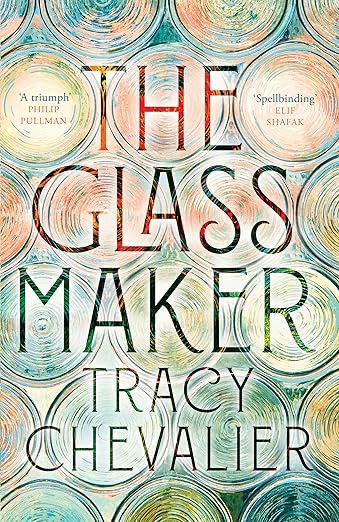
The Night in Question by Susan Fletcher

“Florrie learned, long ago, that society forgets an old person was ever young.”

Florrie Butterfield has been in poor health lately and her mobility starts to suffer, so rather sensibly she decides to sell her house and look for a residential home. She wants assisted living, where she can keep her freedom and independence but have help on hand if needed. When she finds Babbington Hall in the Oxfordshire countryside she thinks she’s found just the place. As she settles into her self-contained flat in the grounds she starts to make friends, when unexpectedly one of them is found dead near the compost heap. Arthur’s death could have been natural causes, but Florrie’s suspicions are aroused. Then something terrible happens. The home’s manager Renata approaches Florrie as someone she’d like to talk to about matters of the heart. It’s lovely to still be seen as someone useful, someone to confide in. Florrie looks forward to their get together, but that night as she looks out of her window at the storm brewing outside, she hears a scream. Then she sees a body fall from an upstairs window, from Renata’s room. So, Florrie sets out to investigate these deaths. Is there a murderer at large and if so what have they gained from killing a defenceless old man and the lovely Renata? This was a lovely mix of mystery and a woman looking back over her life, it brought back so many memories of working in nursing homes and the rich lives many of my residents had lived.
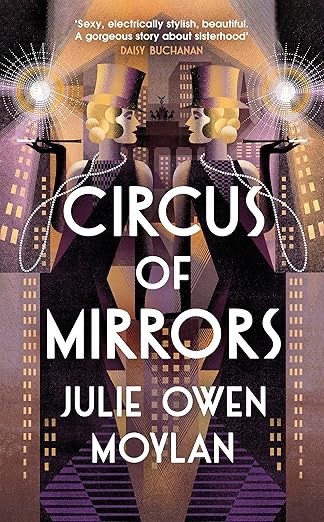
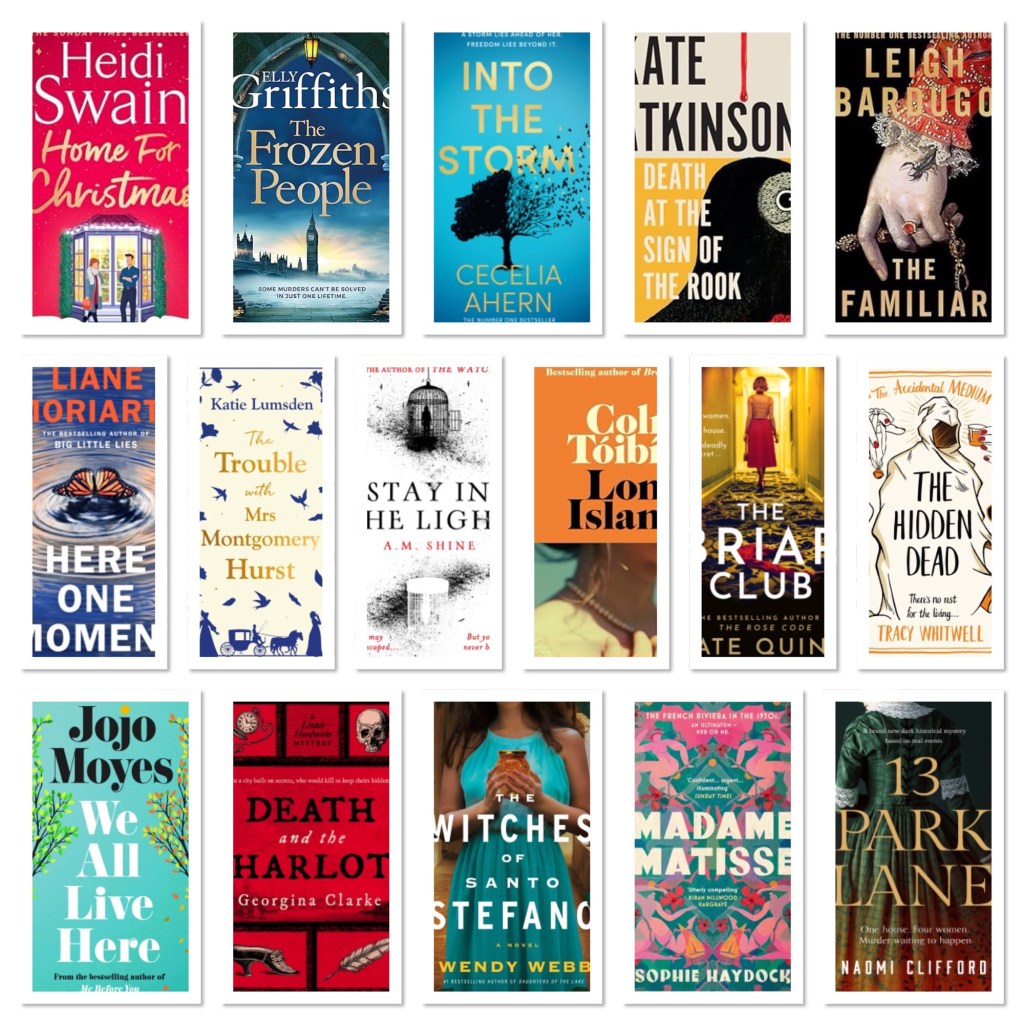
Goodbye Birdie Greenwing by Ericka Waller

I loved this beautiful story that revolved around an elderly lady called Birdie, who receives a terrible diagnosis from her doctor. Birdie is lonely. She has lived alone ever since an event that took away her sister and husband. She hasn’t been participating in life and even now she chooses to walk away from the hospital without the help or support offered. Birdie’s doctor Ada is also isolated. Having come to Brighton from Poland she has few friends, just the elderly man and his son who run the Polish shop nearby. When a new intern comes to work with her, this isolation is challenged and she is worried about Birdie who lives in the same road. She finds herself walking past and checking the house and garden for signs Birdie isn’t coping. Birdie also has new neighbours. Jane has moved to the south coast with her daughter Frankie to escape the rather claustrophobic influence of her mother Min. However, Frankie and Min are thick as thieves and share a rather abrupt and forthright manner. It’s sure that where Frankie has gone, Min will definitely follow eventually. It is Birdie’s predicament that brings all these women together in unusual ways. Ericka writes beautifully about mothers and daughters, the subtle cultural differences that influence how we support and help each other, as well as the personal growth that occurs when we let someone in. I thought this was a beautiful story and everyone I have recommended it to has enjoyed it too.

You Are Here by David Nicholls.

It’s been such a gift to have two of my favourite romantic writers with books out this month. Marian Keyes is a writing goddess! Equally David Nicholls writes about the experience of falling in love like no one else. As anyone who’s read or watched the Netflix series One Day can attest, David writes about those misunderstandings, obstacles, miscommunications and the minutia of relationships with such truth and charm. Here we have Michael and Marnie, each invited on a walking weekend in Cumbria by a mutual friend, Cleo, but with the intention of meeting someone else. Michael is closed off, hurt in the past and not able to let anyone in. Marnie is a great character, she’s funny, patient, and willing to go with the flow. The man she’s supposed to meet has a high stress and high paid job in London. He would suit her, geographically at least, but to be blunt he’s a bit of a dick. Marnie is a reader though, a translator of fiction and full of romantic ideals. She goes into the walk as a novice, breaking in new boots and not enamoured by the unfortunate weather. However, a transformation occurs over a couple of days as Marnie starts to appreciate the head space, the incredible views and just being out in the open air. Michael’s potential date doesn’t turn up, but he is still wrapped up in thoughts of his estranged wife. He does find himself drawn by Marnie though, noting how she looks when dressed for dinner at the hotel. He finds her perhaps a little too outspoken, she doesn’t hold back when finding the going a bit tough, but does respond to her sense of humour. As the main group make preparations to leave for the working week, Michael plans to walk on to the opposite coast and Robin Hood’s Bay. Marnie has nothing immediate in London and could easily walk alongside him a bit longer. How will they get along, just the two of them? This is a beautiful novel that’s somehow heartwarming thanks to it’s lack of traditional romance. This is two older people, who’ve been hurt, negotiating a challenge together and I was transfixed by the ‘will they won’t they’ of the story.

Next month’s reading: