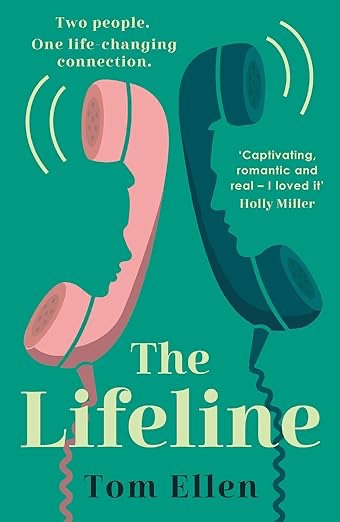
If I learned one life lesson from Tom Ellen’s lovely romance novel, it’s that I’m not the only one who has a weird celebrity crush on Richard Ayoade. What a relief! Usually I get quizzical looks and awkward questions when I admit this, so I felt vindicated. I often say I don’t like romances, but I really did enjoy this story about Annie and Will. They met one day in Paris when Will’s band The Defectors were the next up and coming Indie band. Annie is sent out to interview them before a gig and hits it off with cute frontman Will Axford, who I was imagining as my Indie crush Damon Albarn. Annie finds his floppy hair, dimples and the gap between his front teeth very sexy. He seems to be clicking with her, but she’s still surprised when he catches up with her after the interview and suggests they spend the day together. Later as they watch the sunset from the Pont Alexandre III bridge, he asks if they can meet after his gig on the same spot. So, Annie is standing there at 11pm waiting for Will to arrive but when he still isn’t there at 11.30pm she gives herself a good talking to, fancy falling for the patter of a rock star. He’s probably with another girl already or tries this on every girl he meets. How stupid to think he would genuinely like her! As she pays for an extortionate last minute hotel room on her credit card, she’s already mentally writing up her interview full of anger and disappointment.
Fast forward five years and Annie works for an internet magazine, one of those that suck us into a blur of 1980’s celebrities and what they look like now or the best ever one hit wonders. It’s not what she wanted to do when she started out, with a pile of short stories and novel proposals, but it pays the bills and she loves her colleague Lexi. So, when she’s asked by her boss to write a new “Where Are They Now?’ series to go with some very lucrative advertising revenue, she jumps at the chance to do something more interesting. Then her boss asks her to track down The Defectors. Behind the scenes Annie is having a hard time. Her father died just over a year ago and her different approach to his cancer diagnosis has left her estranged from her mother and sister. Her live-in boyfriend Dom isn’t her dream man, they’re just muddling along while friends are making huge life changes like marriage and baby. The thought of losing Dom or her job scares her, but maybe a big change is exactly what she needs? As she tries to track down The Defectors she sees one of them has shared a phone number on a black background, which stands out in the usual technicolour of Instagram. It’s for a lifeline called Green Shoots, a listening ear for those who are bereaved, anxious and lonely. Annie needs someone to listen to everything that goes round in her mind, so decides to call using her middle name Pia. When Jack answers she finally feels she can open up.
Jack volunteers at the lifeline as often as he can but he doesn’t use his real name. Of course he has regulars and I fell in love with these callers, perhaps because they reminded me so much of my own work in mental health. Work I’m not well enough to do at the moment. I understood that fondness for certain callers, because it’s hard to avoid clicking with people, however we meet them. There’s Eric who calls and often makes hilarious commentary on whatever he’s watching. Some of these programmes, despite his advanced years, are things like Love Island and Made in Chelsea. I fell in love with him straight away and those times when he called feeling low I was heartbroken. Then there’s the breathing lady, who calls just to have someone to breathe with, until she feels calmer. Jack and Pia hit it off on the phone straight away, there’s energy between them. So when she says she’ll call back, he finds himself looking forward to her call. I really felt for Jack because working with people and their deepest emotions can forge strong connections, it’s hard to be detached from some callers. I loved that his friend and colleague Tanvi felt the same way too. He had been avoiding the get togethers and catch ups with other volunteers, mainly because he’s struggling with making friends and being social. Years before, there was a friend that Jack wished he could have been there for and he finds the guilt is crippling.
I felt for Annie too, especially her journey through grief and the struggle to cope when her father was diagnosed with terminal cancer. The author presents beautifully how even the closest people can grieve in their very different ways. There’s a need to give each other space and respect what they need to do in order to cope. It’s so hard when someone is terminally ill and perhaps their wishes don’t align with our own. It’s hard to let go of someone we love, even when we know they’re ready. I thought the author paced the story perfectly and the misunderstandings on the road to romance were believable, rather than formulaic ones that sometimes make me groan in romance novels. I really liked and understood these characters, so I was truly into their story and didn’t notice the romance tropes as much. Equally, I loved the revelations along the way, because as Annie found more dead ends in her search for Will Axford and his band, I began to wonder whatever did happen to him? This was a thoughtful, bittersweet novel about love and the people we lose along the way, and I read every word hoping our two main characters would find each other.
Out now from HQ
Meet the Author
Tom is an author and journalist from London, England. He is the co-writer of three critically acclaimed Young Adult novels: LOBSTERS (which was shortlisted for The Bookseller’s inaugural YA Book Prize), NEVER EVERS and FRESHERS. His solo adult debut novel is the romantic comedy ALL ABOUT US (HQ/HarperCollins, published October 2020). His books have been widely translated and are published in 20 countries. He is a regular contributor to Viz magazine, and has also written for Cosmopolitan, Empire, Evening Standard Magazine, The Daily Mash, Glamour, NME, ESPN, ShortList, Time Out London, Vice, Stylist and many more.
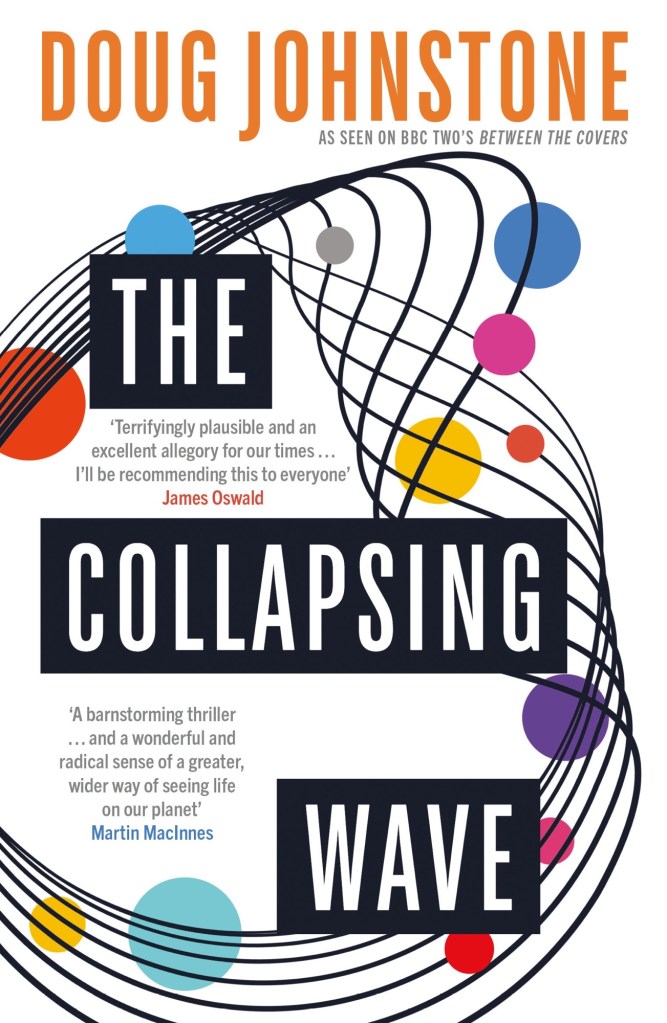
When I first met the incredible being Sandy in The Space Between Us I had no idea that there would be a sequel, never mind a trilogy. I grew up at the time when home VCRs were becoming affordable and we rented the Star Wars films so many times that I’m sure if we added up the hire fees we probably bought them. Doug Johnstone’s second novel has something in common with the original trilogy in that this second outing is much like The Empire Strikes Back, it’s darker in tone and it looks like our heroes may be beaten. Heather, Ava and Lennox come up against the worst traits of human nature; fear, hate and paranoid self-preservation seem to be winning and it’s the military’s role to carry this ideology through.We start several months after the last book ended as Sandy was reunited with the rest of his species at Ullapool and disappeared into the sea loch. Our three heroes seemed set for different fates as the research scientists and police who’d been tracking their journey finally caught up with them. Ava is confronted by and wreaks revenge on her abusive husband who pushed her to the edge of suicide and now tries to take her baby Chloe away. At the beginning of this novel we find her in Edinburgh for the court case, watched by her sister who is now Chloe’s guardian. As she’s given a suspended sentence Ava’s elation turns to terror as she’s swept up outside the court room by military officers with guns. Lennox and Heather have been in a makeshift compound that’s now become the biggest American military base on British soil, named New Broom it sits at one end of Ullapool’s sea loch in the middle of nowhere, like Guantanamo Bay rebuilt in a beautiful Highland setting. Heather and Lennox are detained, seemingly with no legal basis, as MI7 Agent Oscar and the American military attempt to capture partial enceladons and understand the way they work. Oscar at least has an academic interest, whereas the military seem more fixated on how to exploit their alien powers to overpower and control the Earth. Nothing could be further from the alien’s minds, they are simply looking for somewhere to live now that their oceanic home has become colonised by another species. They are refugees.
I think the political climate and local circumstances had me reading the book on two levels: as a great science fiction story, but also as an allegory. For those who don’t know my closest city is Lincoln and we’re currently experiencing community divisions. The government’s decision to requisition the recently closed RAF base of Scampton, home of the Dam-Busters, and turn it into a centre for asylum seekers has met with uproar. It’s terrifying to hear the opinions of people who drink in the same pub, deliver the mail or wash the windows, in case it’s far removed from your own. There were sensible arguments against the plan: there was already a plan to turn the base into a museum and heritage centre, for which local people had fundraised hard; the government are not using the actual existing barrack blocks to house the men, but putting portacabins on the runway instead; it’s so far away from any services in the city. Yet, instead of being able to protest these points at a local level, a far right extremist group from Yorkshire has hijacked the cause and set up a protest camp at the base’s main gate with racist signage and ideology. They are protesting against any asylum seekers: ‘coming in illegally for the benefits; to commit crime; to be terrorists; to groom children; to take social housing’. They don’t even understand that in order to claim asylum someone must first arrive in their chosen country. Maybe because this is now part of my everyday life, the parallels between the enceladons and asylum seekers/ refugees were undeniable. Both have been forced from their own country for whatever reason and the majority seek to live somewhere peacefully and in harmony with the existing population, not realising that to some people, their very arrival itself is a threat.
New Broom’s research staff are carrying out experiments that wouldn’t have been out of place in concentration camps. They are building Faraday Cages to capture partial enceladons and prevent them communing with others through telepathy. This silence is enough to depress and eventually kill them, because they can’t live separately only as part of the whole. Lennox and Heather miss the sense of communion they get from their telepathic communication with Sandy. They can commune with each other though and do so whenever they can. Heavily guarded wherever they go, they have no idea that Ava and Chloe are on their way, or that a camp of ‘Outwithers’ has built up on the edge of the loch filled with travellers, believers, anti-government protestors and anyone who despises the idea of such a huge military base on Scottish soil or the capture and torture of enceladons. There’s only one American soldier who shows a trace of empathy, the others are simply unquestioning drones taught to believe they are acting in the interests of National Security and the defence of the Western way of life. The two main men in charge are clearly in the grip of obsession, whether it’s a selfish intellectual curiosity or the terrifying birth of a megalomaniac. While I felt Oscar could perhaps be redeemed, General Carson is itching to exert authority over both security and experimentation. The only character who has their freedom is Sandy, but how can they be truly free with their family being captured bit by bit and their peace threatened by a man determined to destroy them all. Make no mistake, this is not the soft humorous story we might have expected from the first novel. In parts it was hard to read and made me feel physically sick, especially when Ava is finally reunited with her friends at New Broom. As Carson separates Ava from her daughter and proceeds to torture Chloe I felt so angry I was tearful. It is horrific and has the reader rooting for the overthrow of the Americans, by whatever means necessary.
It’s the feelings that Doug Johnstone’s writing conjures in the reader, that make this such an immersive read. The moments of love, friendship and sacrifice between these characters are beautiful and are but a small part of the collaborative existence the enceladons share. The moments where Sandy takes a human into the ‘whole’ are euphoric and more than a little trippy! The way the enceladons harness and work with nature to fight back against the military base has a similar feeling. The way Heather decides to stop resisting the cancer invading her body and just enjoy the life she has left living within the collective. All of these are pointing to the same life philosophy. We must work with something, not against it. The enceladons want to exist alongside humans, to become friends and communicate with them. After years of Thatcherism and the message that autonomy is the route to success and freedom, working together actually is an alien concept. It isn’t just the communication between the three friends that proves to be powerful. It’s the mother – daughter bond between Ava and Chloe. It’s the ‘Outwithers’ who have come together to create their protest camp and two women; Jodie, a lifelong activist for connection and Vonnie, whose love connection with Lennox creates it’s own power. Communication with the Outwithers is what changes Oscar, although whether this actually redeems his character overall I don’t know. These are the people who understand that connection with the colony can strengthen society as a whole, rather than destroy it. There are also those who choose not to see, whether that’s by building a fence and only caring about what’s in your own backyard, or by choosing to believe the government and mainstream media narrative, which only exists to manipulate. It reinforced my belief that language is so incredibly important. If we choose the word integration instead of infiltration, opportunity rather than threat, to embrace something changing for the better rather than hankering after a nostalgic past that mustn’t be destroyed, if it ever existed. If we realise that connection is more important than individual attainment we learn to grow, adapt and embrace new things. It’s amazing that E.M. Forster’s quote ‘only connect’, although now it’s over a 100 years old, still has such huge resonance.
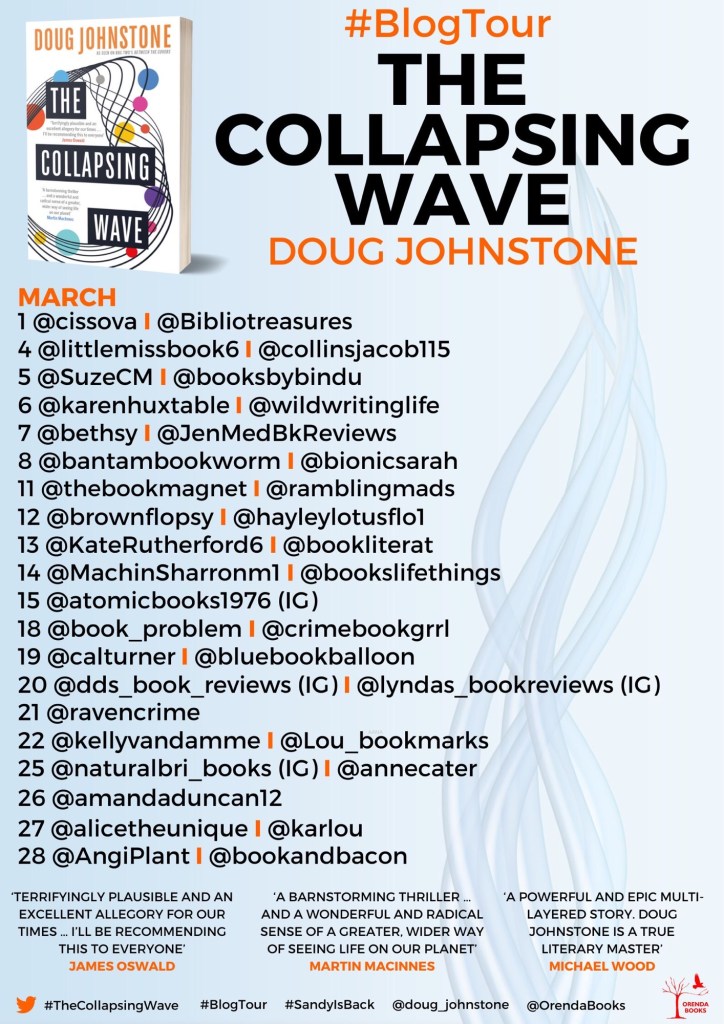
Published on 14th March by Orenda Books.
Meet the Author
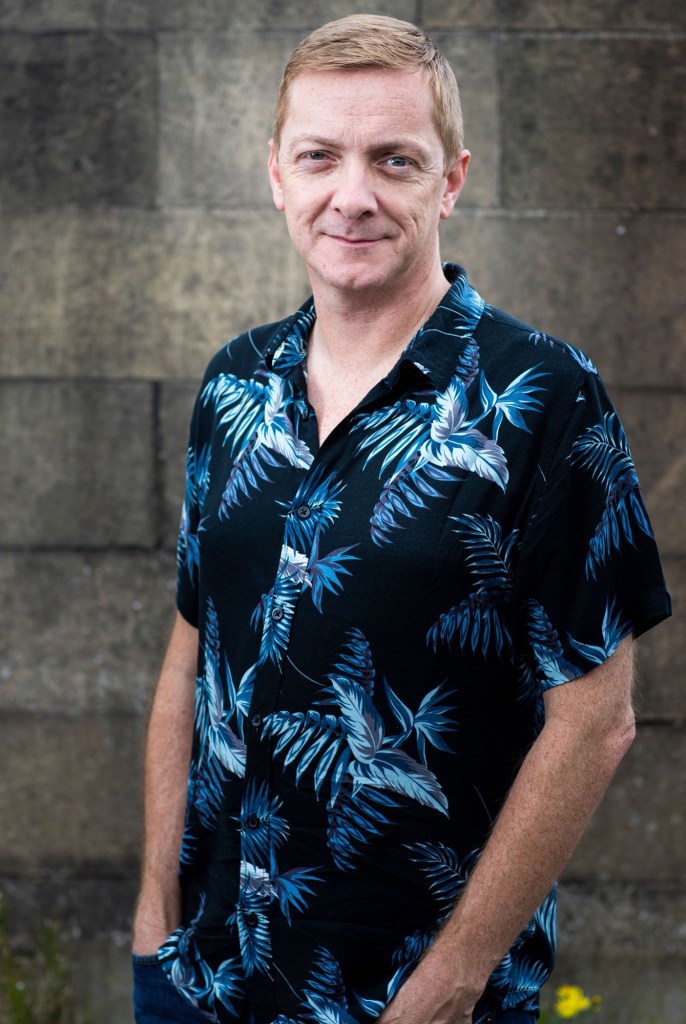
Doug Johnstone is the author of twelve novels, most recently The Great Silence, the third in the Skelfs series, which has been optioned for TV. In 2021,The Big Chill, the second in the series, was longlisted for the Theakston’s Old Peculier Crime Novel of the Year. In 2020, A Dark Matter, the first in the series, was shortlisted for the McIlvanney Prize for Scottish Crime Novel of the Year and the Capital Crime Amazon Publishing Independent Voice Book of the Year award. Black Hearts (Book four), will be published in 2022. Several of his books have been best sellers and award winners, and his work has been praised by the likes of Val McDermid, Irvine Welsh and Ian Rankin. He’s taught creative writing and been writer in residence at various institutions, and has been an arts journalist for twenty years. Doug is a songwriter and musician with five albums and three EPs released, and he plays drums for the Fun Lovin’ Crime Writers, a band of crime writers. He’s also player-manager of the Scotland Writers Football Club. He lives in Edinburgh.
I was completely engrossed by this incredible piece of historical fiction, covering a period of history and viewpoint I’d never read about before. All the Vietnam stories I’ve encountered have fallen into two categories and were made for the big screen; combat movies like Platoon and Full Metal Jacket, or the more domestic based aftermath of war at it’s best in the excellent Coming Home with Jane Fonda and Jon Voigt. I’d never considered that there would be women in Vietnam, which seems crazy since I’d avidly watched MASH when it was rerun in the 1980’s. The series set in a field hospital showed women in the operating theatres, as members of the US Army Medical Corps. Yet, I’ve never encountered anything that showed them in Vietnam, so I was fascinated by Frankie’s story; her personal experiences as well as the politics and societal changes around her tours of duty. What struck me most was how this war ripped the generation gap wide open. Most people my age will remember the Paul Hardcastle single ‘19’ and for me the most stark line in it was ‘none of them received a hero’s welcome’. It struck me how different the government and public response was to these veterans, the majority of whom were no less brave or noble than the WW2 veterans their fathers had been. The author deals with all these themes in a story about the women that served in Vietnam, the women that America forgot.
Frances McGrath is your typical All American teenage girl, living with her family on Coronado Beach. She has memories of growing up on that beach, swimming and surfing with her brother Finley. She is from a good family and expectations are that she will have the ‘right’ marriage and become a mother. However, things change when Finley makes a huge decision. He’s enlisted for Vietnam. It’s no surprise that he might go into military service at some point. Frankie’s dad has a wall in his office called the ‘Hero’s Wall’ where every family member’s military service is celebrated with cuttings, photos and medals. All the men, anyway. Yet not many of their friends and family members have sons who’ve voluntarily enlisted for Vietnam. There are ways of avoiding the draft, depending on who you know. Yet Finley enlists of his own accord, possibly believing the American government’s assertions that they must fight communism in Vietnam, lest it become even more widespread. Within weeks there’s a knock at the door; Finley has been killed in action. In a whirlwind of grief Frankie starts looking into her options. She wants to honour her brother and become a hero worthy of her father’s wall. Both the Air Force and Navy need a nurse to complete a long period of training before they’re posted to work in the field. However, if she enlists in the US Army, they’ll post her out to Vietnam after basic nursing training. Much to her parent’s shock Frankie is soon on her way to Vietnam.
The author creates such an incredible sense of place, I was in Vietnam with Frankie. The all pervading humidity and dampness of everything actually made me feel grubby. There’s a red dust blowing everywhere, that sticks to the constant sheen of sweat on Frankie’s skin and gets into every wrinkle. Frankie’s kitbag and everything she owns takes on the smell of mildew and she never feels dry. At first the bursts of gunfire and explosions in the jungle are surprising and Frankie is anxious, but soon they just become the everyday backdrop to her work. The ‘whump- whump’ of the helicopters arriving with MASCALS (mass casualties) control when she eats, sleeps and relaxes. The first experience of a MASCAL is shocking and Frankie does freeze, but the surgeon she’s working with talks her through it, let’s her know that he trusts her and she can do it. Gradually it becomes easier, although their injuries and the emotions of triaging these men can stay with her. If someone is beyond saving they are left to die, while they operate those they can save. It isn’t just the soldiers though, the unit treats Vietnamese soldiers and locals caught in the crossfire. The use of napalm and the injuries it caused really has stayed with me, the jelly like substance sticking to the casualty’s skin and keeps burning. Frankie is soon a first class combat nurse, that’s not to say these experiences become easy, they just become the norm. When we tuck trauma away in a box without processing it, it sits until we’re ready to open the lid or until a new experience forces that lid open. Usually when we least expect it. Her new relationships keep her going, especially those with her friends and fellow nurses Ethel and Barb. They are the glue that hold each other together and while men may come and go, the bond these women build is lifelong and loyal. That’s not to say there aren’t men. Frankie falls in love with Jamie, the surgeon she works with and the war only intensifies those feelings. There’s also the constant fear of losing them. Later on, a face from the past reignites feelings of first love but brings with it so many complications.
Frankie’s return and adjustment to everyday life on her return from war becomes yet another battle. Now she’s completely safe it’s as if all the feelings she had in Vietnam are bubbling to the service, manifesting in physical and mental symptoms. Her parents are relieved she’s home in one piece, but they don’t seem proud of what she achieved and her accolades don’t make the hero’s wall. She doesn’t seem to fit anywhere. Here Barb and Ethel are worth their weight in gold, taking Frankie in when she needs to get out of California and spending time talking through their experiences. No one else will ever get her like these women. Their lives do move forward though and Frankie just seems stuck. I thought this part of the story was beautifully done and represents so much research and care on the author’s part. She is very aware that although Frankie isn’t real, women did live through these experiences and had to find ways to reconcile their memories of war and their hurtful return to an ungrateful homeland they’d put their lives on the line for. It was as if the world had shifted on it’s axis while they were in the jungle. I was longing for Frankie to have a happy ending, because I thought she deserved it and I thought she still had so much to offer. I learned so much about a conflict I’d only experienced through film and usually from a male perspective. I was completely immersed in Frankie’s world and didn’t want to let it go.
Out now from MacMillan
Meet the Author
Kristin Hannah is the award-winning and bestselling author of more than 20 novels. Her newest novel, The Women, about the nurses who served in the Vietnam war, will be released on February 6, 2024.
The Four Winds was published in February of 2021 and immediately hit #1 on the New York Times, Wall Street Journal, USA Today, and Indie bookstore’s bestseller lists. Additionally, it was selected as a book club pick by the both Today Show and The Book Of the Month club, which named it the best book of 2021.
In 2018, The Great Alone became an instant New York Times #1 bestseller and was named the Best Historical Novel of the Year by Goodreads.
In 2015, The Nightingale became an international blockbuster and was Goodreads Best Historical fiction novel for 2015 and won the coveted People’s Choice award for best fiction in the same year. It was named a Best Book of the Year by Amazon, iTunes, Buzzfeed, the Wall Street Journal, Paste, and The Week.
The Nightingale is currently in pre-production at Tri Star. Firefly Lane, her beloved novel about two best friends, was the #1 Netflix series around the world, in the week it came out. The popular tv show stars Katherine Heigl and Sarah Chalke.
A former attorney, Kristin lives in the Pacific Northwest.
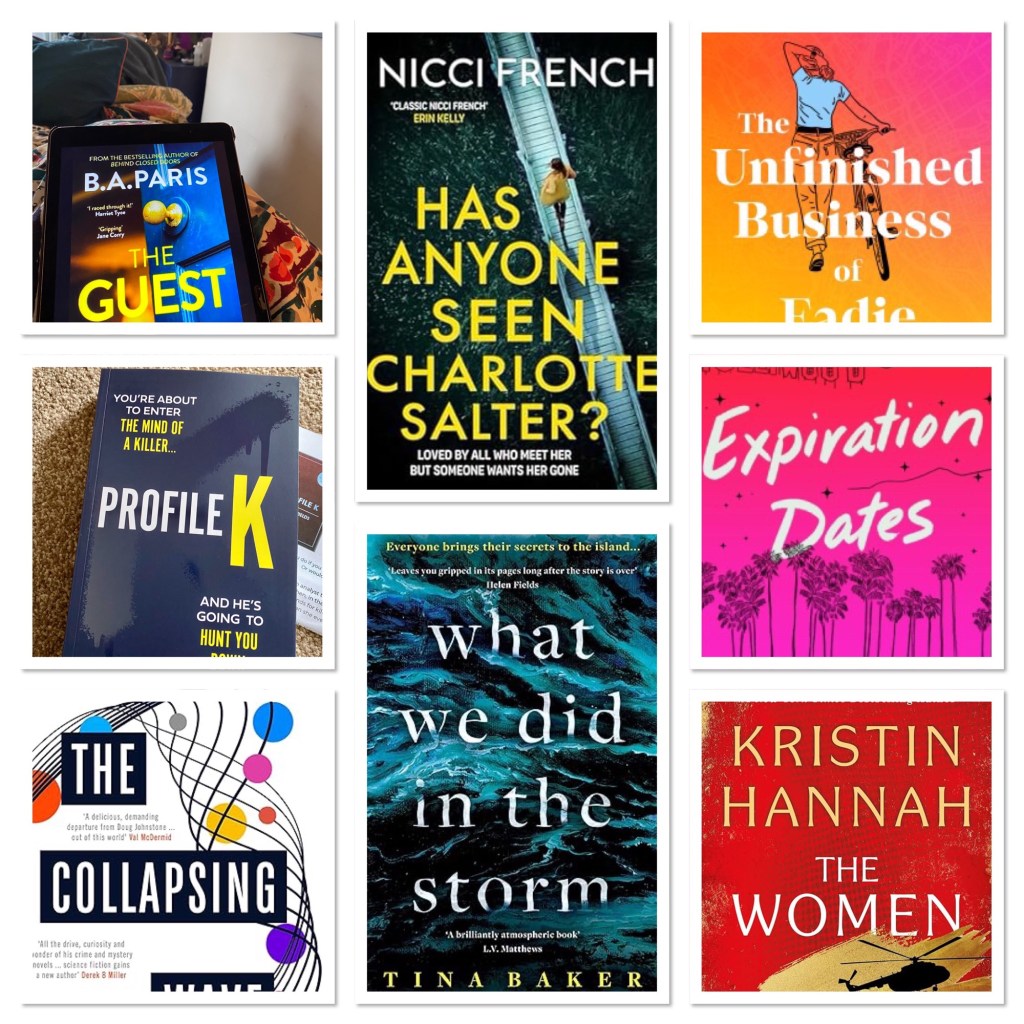
Hey there everyone and hope you’ve had a good February. This month has been an eclectic month where I’ve done very few blog tours but instead did a lot of reading by choice. I decided to pick and choose from my proof trolley and my NetGalley ARCs. What usually happens is these get neglected because I focus on so much on the most important deadlines. Then my NetGalley reviews are useless because they’re always after the fact and my percentage is appalling. I’ve actually read more books this month and I’ve enjoyed my reading more. That’s not to say I don’t enjoy a blog tour, particularly my friend Anne Cater’s tours because she’s lovely and gets great books. In fact my one blog tour choice is one of her Orenda Books titles and it’s brilliant. I thought January was good but February’s books have been even better. Some of these I have reviewed this month, others are due in a couple of months so I’m only going to give you a quick review of each. I loved every single one of these and hope you will too.
This book has been chosen by the BBC programme Between the Covers and I’m not surprised. I love Doug Johnstone, I think he’s a brilliant crime writer but this series is something completely different. This is the second in a series featuring a telepathic extraterrestrial octopus creature called Sandy and his journey with three human friends, Lennox, Heather and Ava. We left them as they reached Ullapool and reunited Sandy with his Enceladon friends. Yet, lurking on the horizon were M17 agents, Ava’s abusive husband and other authorities who want to capture the friends, but also take Sandy and study him. This novel deals with the aftermath, where Ava faces a trial for the murder of her husband and Lennox and Heather are incarcerated in a newly built American military base. The Americans, accompanied by M17 agent Oliver, are capturing partial Enceladons to study them and work out how they communicate with each other. This is a hard read in places as it puts our friends and the lovely Sandy in danger, but it’s also uplifting, life affirming and gives us some faith in humour nature. If you haven’t read part one order them both, you won’t be disappointed.
Out March 14th 2024 from Orenda Books
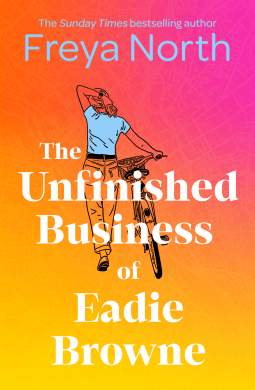
This novel is one of my most anticipated for the year and my full review will be on the blog this week. Eadie is an unusual little girl and she doesn’t have many friends. Not the live kind anyway. Her house is next to the cemetery and Eadie sits and talks to the inhabitants. There is also an elderly gentleman who tidies the cemetery and talks to the lonely little girl. At school she is bullied by Patrick Semple, but life starts to look up when she makes friends. Celeste and Josh are also bullied by Semple, although as Josh points out he seems to save his cruellest jibes for Eadie. These three kids form a close bond, then go their separate ways for university with Eadie ending up in Manchester just before the ‘Summer of Love’. Eadie and her housemates become devotees of dance music and the Hacienda. She’s happy, especially on those nights when they try Ecstasy. They haven’t realised that the club is being pulled apart by rival drug gangs. Life changes when there’s an unexpected meeting, a link to the past and events she still finds difficult to deal with. I fell in love with this character and the depiction of unprocessed trauma that follows her through life, until she can find a way to let it go. It’s about love, our formative experiences and how hard it can be moving forward when we’re dragging too much baggage.
Out now from Mountain Leopard Press
This book covers a subject that I’ve never read about before and I’ll give you a quick glimpse, because my review is coming later. The author takes the usual machismo in stories of the Vietnam war and shows us that women also served as part of the Army’s Medical Corps. When society girl Frankie is told that her brother has died in Vietnam only months after enlisting she wants to find a way to honour him. As the family gather at their home on Coronado Beach, Frankie is studying the wall in her father’s office dedicated to the McGrath men celebrated for their bravery and service. Finley’s friend Rye tells her that men aren’t the only ones who can be courageous. She’s been thinking the same thing and Rye’s words light a fire under her. The Air Force and Navy would need her to train for several years as a nurse before she could serve in combat zones. However, the Army will deploy her with just her basic nursing training, so Frankie signs up and within months she’s flown out to a field hospital in Vietnam. The author’s historical detail and sense of place is incredible. I felt like I was in the jungle with Frankie, covered with sweat and red dust and highly tuned to the distant ‘whump whump’ of approaching helicopters with casualties. I loved the combination of strong female friendships, loss, romance and the struggles of serving and returning from this particular conflict.
Out now from MacMillan Publishing
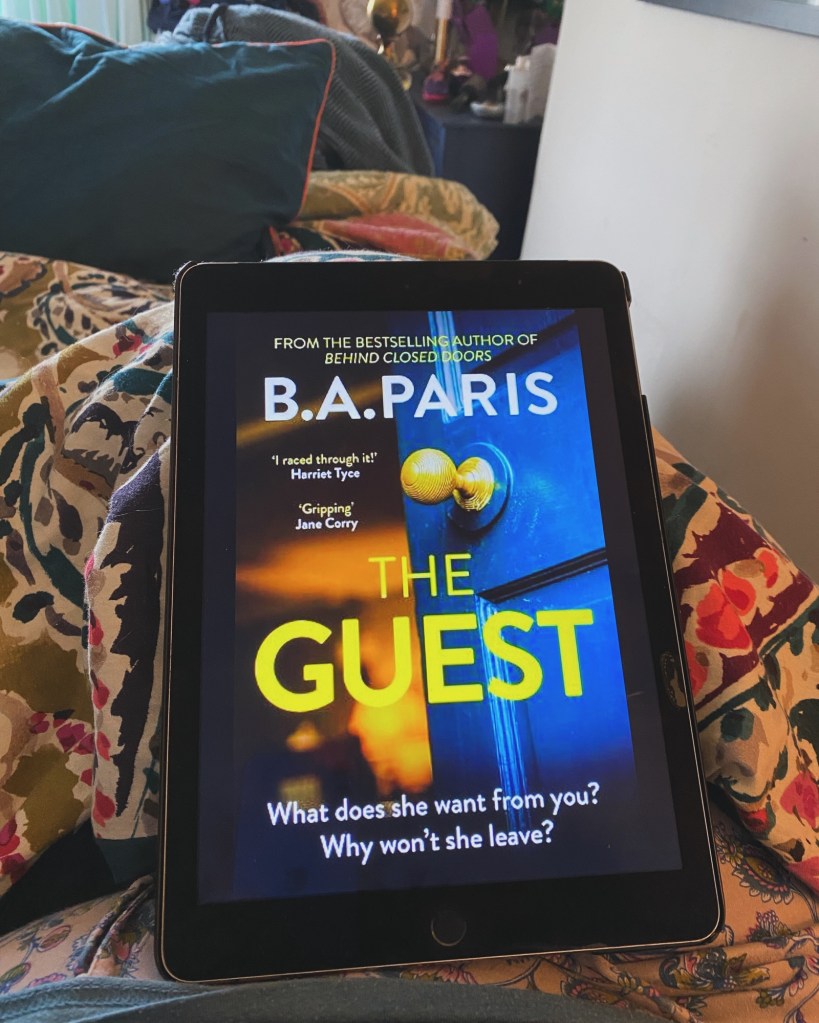
Another great thriller this month was the latest from B.A.Paris, a great domestic noir about two couples who have been friends for years. On holiday twenty years ago, Iris and Gabriel met a French couple called Laure and Pierre who were on their honeymoon. Their friendship and their marriages have lasted and the couples always meet at least once a year, either in Paris or the English countryside where Iris and Gabriel have settled with daughter Beth. The couple are surprised when Laure turns up alone and unannounced asking to stay for a few days. Pierre has just found out that he has a daughter from a brief liaison during their marriage. Laure is giving him space to think about this revelation, but she’s also very angry and suspects his best friend Clare who has a six year old daughter. Gabriel is on leave from work after a traumatic incident and he tries to get in touch with Pierre to support him, but gets no reply. In the meantime, Laure starts to settle in but her need for a listening ear seems endless, she is borrowing Iris’s favourite clothes and even rearranges their kitchen. When Pierre doesn’t show up for a meeting at their apartment in Paris, Laure comes straight back and Iris starts to wonder how long she’s going to stay. This is a great thriller which takes the discomfort of a guest overstaying their welcome and magnifies it, leading to adultery, betrayal and even murder. There are twists to this tale and you will not expect the outcome. Prepare to be reading this in one go!
Out now from Hodder and Stoughton.
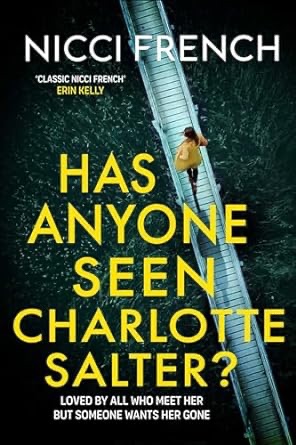
It’s Christmas and Charlotte Salter doesn’t turn up for her husband’s fiftieth birthday party leaving daughter Etty immediately alarmed. She’s sure that her mum wouldn’t choose to stay away from the event, even if her parents don’t always get along. Etty’s three brothers are less worried, thinking their parents may have had a row or she’s just gone for a walk. When Lottie still doesn’t appear the following morning, Etty insists on calling the police. It’s Christmas and the Salter family are paralysed, unable to do anything except search for their mother. Village rumours are linking Lottie with Duncan Ackerley, so when the Ackerley’s invite them for Christmas dinner only Etty turns up on time. In a strange twist, Duncan has gone for a walk and not returned for dinner. Etty sets off with one of the boys to look for him and he’s found dead, presumed drowned, next to his boat. The police find his glasses on a bridge further upstream and conclude that Duncan Ackerley killed Lottie and then committed suicide. Case closed. Twenty years later and the Salter siblings are clearing their childhood home before their father moves into nursing care. His dementia is worsening and it’s no longer safe for him to be at home. Meanwhile, Morgan Ackerley and his brother are back home recording a podcast about the death of their father and Lottie, who has never been found. What might be uncovered by this generation’s exploration into the past? This is an intelligent thriller, exploring the dynamics of families and traumatic events in childhood. I found it really hard to put down.
Out now from Simon and Schuster.
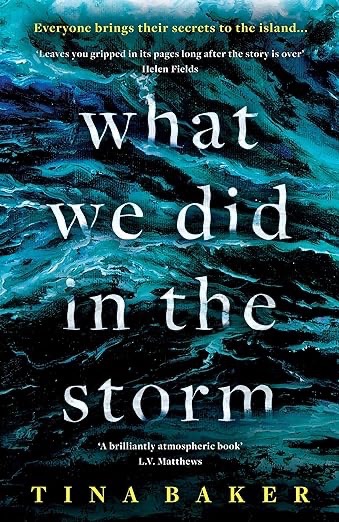
This was my first Tina Baker thriller and I loved it. Set on the island of Tresco off the Cornish coast, the author explores the tensions of this very unique place. Tresco’s community is always split because of it’s reliance on tourism and only wealthy families can afford to stay on the island, usually block booking a ‘cottage’ for several weeks at the same time each year. Residents are always seen as staff, either working directly in one of the cottages or in the shops and pubs on the island. The ‘family’ who own Tresco usually remain on their estate and have a staff of estate workers, gardeners and servants in the house. These groups usually don’t mix but rich playboy Kit and barmaid Hannah are about to break the rules. Hannah is seen by others on the island as a bit slutty, a home- wrecker and even a witch. When she and Kit spend the night together no one bats an eyelid, but when their flirtation blossoms into love problems start to arise. Kit’s widowed mother is unimpressed and constantly tries to dangle the right kind of girl in front of him. Wronged wives start to mutter about her behaviour, especially Christie, whose husband was Hannah’s last conquest. Alison just wishes Hannah would keep her jeans buttoned up and stop causing punch ups in the pub. When Hannah disappears in a storm, Kit is heartbroken and stays on the island. Hannah could have met with an accident, but so many islanders have a motive that she might have been murdered. This is a deliciously wicked romp through the lives of Tresco’s inhabitants, full of wit as well as some thrilling revelations.
Out now from Viper
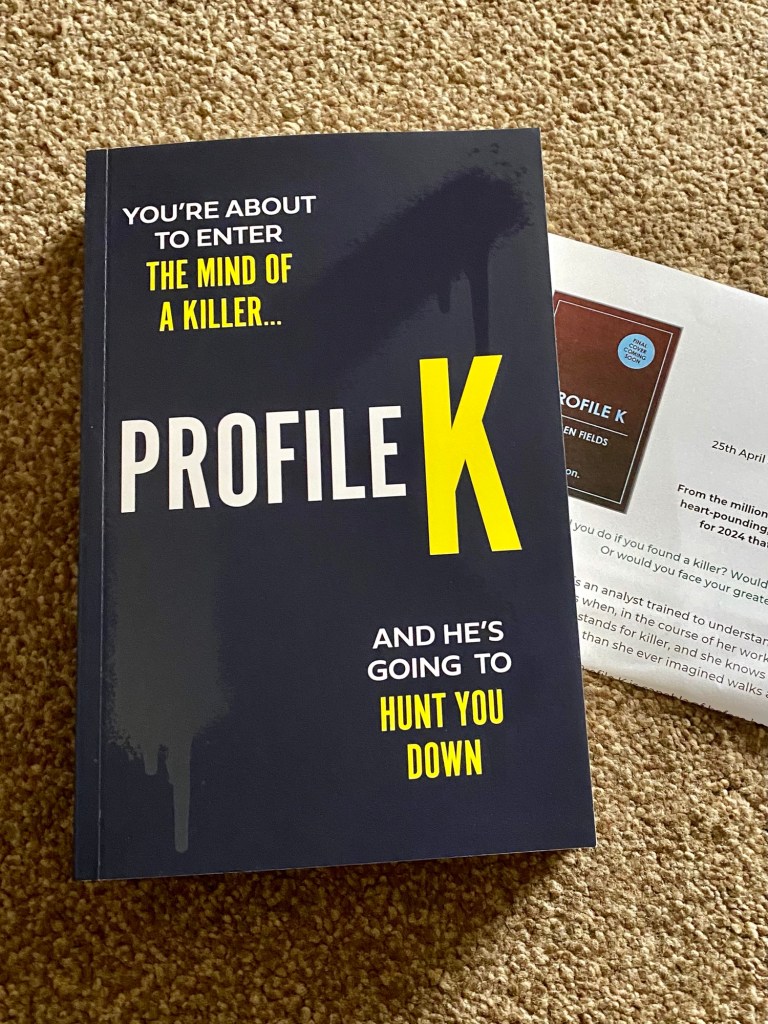
I love Helen Fields and this is a fascinating thriller coming in April, so I will just whet your appetite here. Midnight Jones works as an analyst, processing application forms for universities, the military and other institutions. She’s trained to psychologically profile, but she’s paid very well to check forms against the required criteria and accept or decline on the data provided. The applicant is assessed using a virtual reality headset showing images to illicit the required response, but on this day Midnight finds an anomaly. The applicant has no score for empathy. When she views the assessment footage, Midnight is shaken to her core. Some of the images are so graphically violent she feels sick, surely they aren’t on the system? The applicant has zero empathy. She has found a Profile K – K for killer. However, when Midnight tries to report it she meets with resistance. How far can she push this, knowing that her sister depends on her salary? Midnight has a twin sister called Dawn, who suffered a lack of oxygen during birth and is now affected mentally and physically by cerebral palsy. She needs round the clock care and if Midnight loses her job they’re going to struggle, especially since there are no friends and family to help. The stakes get higher when a woman is brutally murdered, in a way that was shown on the terrible recording. Who can Midnight turn to? This was complex and intelligent with a dystopian vibe and a cameo from Dr Connie Woolwine.
Out 25th April from Avon
I had been granted access to Rebecca Serle’s upcoming novel on NetGalley and I had to read it right away! I usually get bored with rom-coms, but I do enjoy those with a historical background or those that try to do something completely different and I think this author is especially inventive. Her novel In Five Years blew me away with it’s twist in the story and I’m always keen to see what she’s done next. Here we are introduced to Daphne, a young single woman living and working in L.A. Dating is never a mystery for Daphne because as soon as she meets a man she finds a little slip of paper with an expiration date on it – 6 months, a weekend, one night – she knows how long each liaison will last. Until she meets Jake, who has everything she could want in a man. He’s considerate, doesn’t play games and is happy to talk about his feelings. Daphne waits for her slip of paper, but when it comes it only says his name. No expiration date. Does this mean Daphne has found her happy ever after? Their relationship is quiet, loving and has only one snag. Daphne has another secret, one that will break Jake’s heart if she tells him. I loved this story and felt a real connection to the conundrum Daphne finds herself in. This was heartbreakingly romantic and full of surprises.
Out 19th March 2024 from Quercus
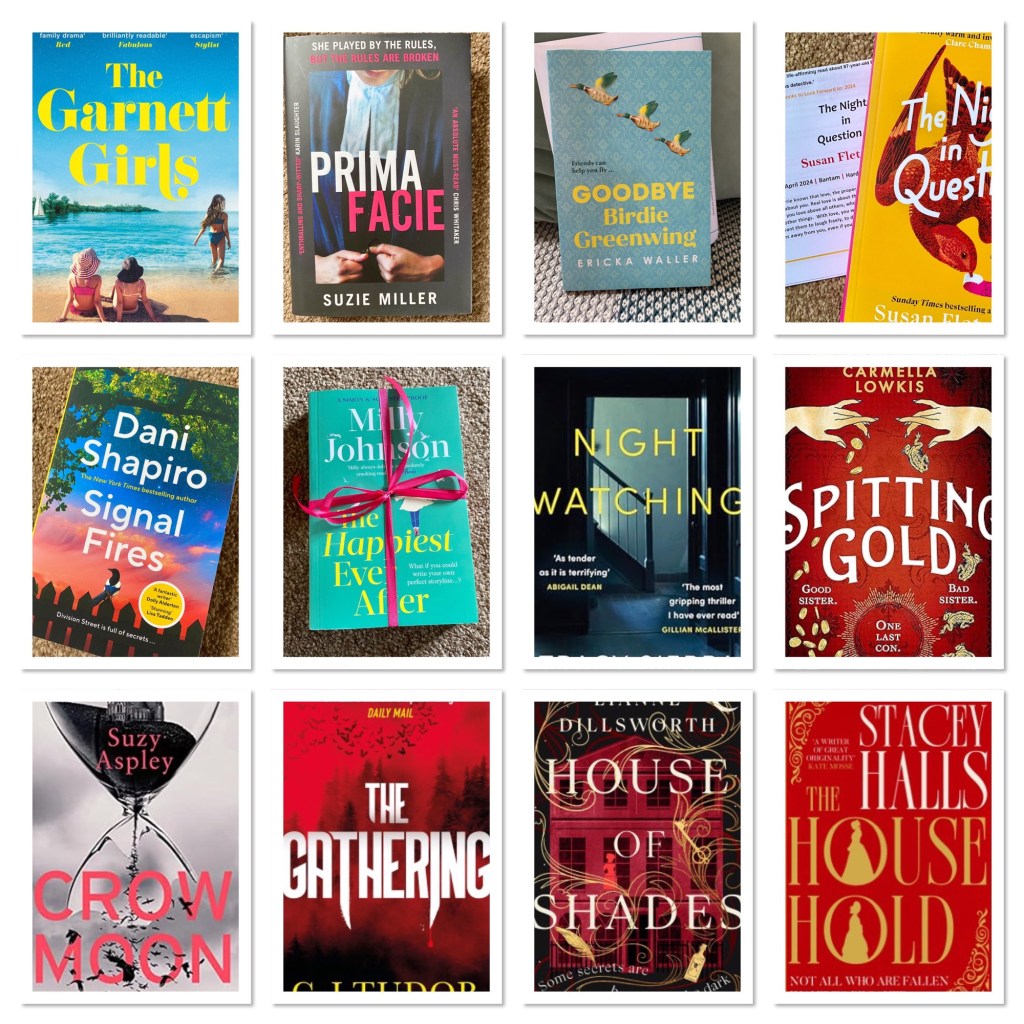
That’s all for February, keep a look out for the full reviews coming your way and here’s to a new reading month and hopefully a touch of spring. Here is my TBR for March.
I was so glued to this story about a group of friends and the entanglements between them that I read it in one sitting. The action focuses on two couples: Iris and Gabriel who live in a village with their daughter Beth who is currently enjoying a gap year at a dog rescue centre in Greece. Their friends are Laure and Pierre, who reside in Paris. The couples met on holiday, while Laure and Pierre were on honeymoon and Gabriel and Iris had only been married a year. They became firm friends, seeing each other every year and Laure even became their daughter Beth’s godmother. However, this visit is different. Laure has turned up alone, saying Pierre has confessed to having a daughter with a woman he spent the night with at the start of their marriage. Laure needs space to think and so does Pierre, could she stay with them for a short time? Of course the answer is yes, but it’s not an easy time. Gabriel is taking a long period of leave from his job as a GP, because he has struggled mentally after finding a teenage boy who fell into the nearby quarry. He did all he could for Charlie, but sadly he died before the ambulance arrived. Those last moments with the dying boy have weighed heavy on Gabriel, especially his final words. He has decided to use his time off restoring the walled garden that has grown wild over the years. Friends from their village, Esme and Hugh, offer their gardener and handyman Joseph to give Gabriel a hand with the more back breaking jobs. As these people collide over the summer, guests will outstay their welcome, relationships become strained, and huge secrets are on the verge of being disclosed as obsession and jealousy boil over.
Our story is mainly told by Iris, who throws herself into looking after their new guest in a lull she has between interior design jobs (although she calls herself an ‘enhancer’). Laure is petite and chic, sometimes making Iris feel ungainly by comparison. The irritations are small at first – for some reason Laure hasn’t brought many clothes with her, but when she borrows from Iris’s wardrobe she always seems to pick the very thing Iris was planning to wear and it looks better on their guest. Then after a couple of weeks Laure rearranges their kitchen, meaning everyone is opening the wrong drawers and cupboards and any job takes twice as long. Iris asks her to put it back, but Laure meant no offence, she just thought it made more sense the new way. There are no signs of her seeing Pierre either. In fact no sign of him at all. Gabriel had extended an offer of help, could he perhaps go over to Paris and give him a listening ear? There’s no reply. It’s uncharacteristic of him. When Laure finally goes to Paris for talks, she’s back by evening of the same day saying that he didn’t turn up at the flat. As the summer moves along, the constant presence of another person starts to chafe at Iris’s goodwill. There are only so many times she can listen to the same story, or pull apart their relationship in every detail. Gabriel is also struggling but at least he has his garden escape, but he’s under pressure to speak to the mother of Charlie. He had passed Charlie’s last words to paramedics at the scene, but actually meeting his mother would be difficult. In some ways it might bring closure, but unfortunately Gabriel has kept something to himself. To save his mother more grief he told them Charlie sent his love to her, but that isn’t what Charlie said at all.
The author has a brilliant way of creating our interest in these characters, even though I wasn’t particularly rooting for any one of them – although I did have enormous sympathy for Iris because Laure felt like an emotional vampire and I’m rubbish with houseguests too. However, I was addicted to finding out what would happen to them next. Which of the various secrets they were keeping from each other would actually be exposed? Joseph is very intriguing and seemingly very tempting for the women who meet him. He feels like a drifter, living in Hugo and Esme’s converted outhouse and picking up gardening jobs here and there. He’s rootless and very tight lipped about his life before arriving in the village, could he have something to hide? Iris certainly thinks so and wonders if there is a secret liaison going on, perhaps with Esme or even Laure as the summer lingers on with no sign of Pierre. As the tension grows and unease develops, you won’t want to stop reading. Even as events implode this small group of friends and you think you have all the answers, you don’t. This is a brilliant thriller, really cementing the author as a definite ‘must buy’ for me.
Published 20th February 2023 by Hodder and Stoughton.
Meet the Author
B.A. Paris is the New York Times and Sunday Times bestselling author of seven novels including the word-of-mouth hit, Behind Closed Doors, and her latest thriller, The Guest.
Over 7 million editions of her work have been sold worldwide and her books have been translated into 41 languages. Three of her novels have been optioned for major screen adaptations with films of Behind Closed Doors, The Breakdown and The Therapist in development.
Before becoming an author, B.A. Paris, who spent most of her adult life living in France, worked in finance as a trader before retraining as an English teacher. She and her husband then ran a language school together whilst bringing up their five daughters. Today, she writes from her cottage in Hampshire, England.
Follow B.A. on Twitter and Instagram at @baparisauthor. You can also find her on Facebook, Goodreads, and BookBub. Sign up to her newsletter for teasers, giveaways and updates.
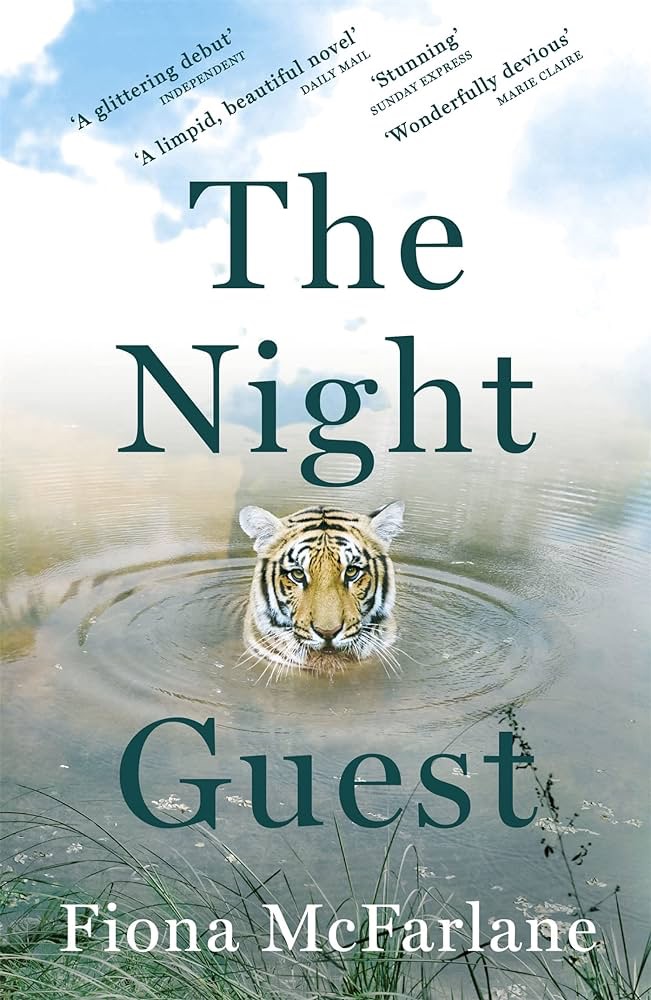
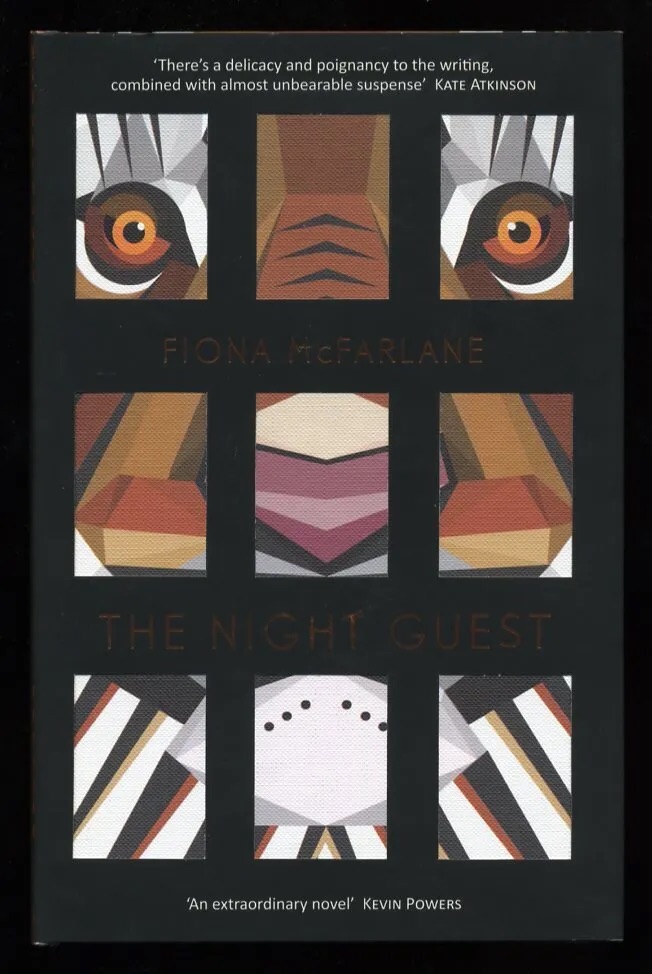
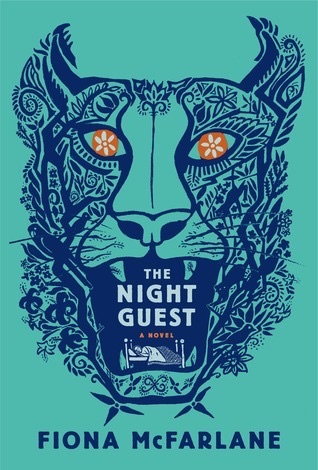
Booksellers often joke about customers who come into their shop and ask for help finding a book: they either don’t have the title but vaguely remember the author; they don’t know the author but know there was a bird on it or the book was blue; they saw the book on that programme, the one with Sara Cox but don’t know which episode or even the series it was from; it’s an old book, they read it at school; they think it was set in China, or maybe South America. On it goes and more often than not, once the mystery is solved, they ask the bookseller to write it all down on a slip of paper then go home and order it from Amazon. I was having that sort of experience with this unusual novel, in fact nobody I asked had ever heard of it. Possibly not helped by my description – ‘ it had an old lady in it and a tiger came to visit her at night.’ Inevitably most people heard ‘tiger’ in the story or on the cover and I’d be answered with Life of Pi or The Tiger Who Came To Tea, excellent books but not the one I was looking for. Then finally one day the title sort of came to me. I say sort of, because I kept calling it The Night Visitor which sounds like a creepy name for incontinence or night sweats! I’d taken the book out from the library originally and when funds allowed I wanted to have a copy on my shelves. It is there on Amazon, but maybe pop it on your charity shop list because it is a little gem.
The book tells the story of Ruth, an elderly lady who lives alone in a remote house on the coast of Australia. She has family but her son has relocated for work, meaning that day to day help isn’t something he can provide. Her sonphones regularly, but he’s busy with work, kids and a home of his own. However, he does start to worry when she rings to tell them she’s had a night guest; a large tiger came to visit in the night. At first she woke up scared there might be an intruder, but it was a handsome tiger instead. Her son suggests that perhaps she was dreaming? Ruth is adamant, the tiger woke her and she wasn’t asleep. Her son and his wife confer and decide they’re worried. What if their mother’s mind is going? How will they manage to get her the help she needs? Their mother can be low in mood at times, mainly because she’s spending so much time alone and that leads to ruminating on the past such as her girlhood in Fiji. One of my favourite tropes is the unreliable narrator and that’s what we have in Ruth. Her story is so implausible she must be losing her marbles. What unfolds is an unusual psychological thriller with a side order of magic realism, which I love.
The book tells the story of Ruth, an elderly lady who lives alone in a remote house on the coast of Australia. She has family but her son has relocated for work, meaning that day to day help isn’t something he can provide. Her sonphones regularly, but he’s busy with work, kids and a home of his own. However, he does start to worry when she rings to tell them she’s had a night guest; a large tiger came to visit in the night. At first she woke up scared there might be an intruder, but it was a handsome tiger instead. Her son suggests that perhaps she was dreaming? Ruth is adamant, the tiger woke her and she wasn’t asleep. Her son and his wife confer and decide they’re worried. What if their mother’s mind is going? How will they manage to get her the help she needs? Their mother can be low in mood at times, mainly because she’s spending so much time alone and that leads to ruminating on the past such as her girlhood in Fiji. One of my favourite tropes is the unreliable narrator and that’s what we have in Ruth. Her story is so implausible she must be losing her marbles. What unfolds is an unusual psychological thriller with a side order of magic realism, which I love. morning after the tiger visits a woman knocks on Ruth’s door. She introduces herself as Frieda and claims to have been sent by the government to help Ruth clean the house and stay on top of things. She’s also from Fiji, so Ruth can talk to her about the past and those memories and regrets that occupy her mind. It would seem that Frieda awakens something in Ruth that’s lain dormant till now. Her memories of Fiji become even more intense and flourish under Friedan’s gaze. In the back of my mind I was a little suspicious that much like the tiger, Frieda might not be everything she seems. Alternatively, she might be everything she seems and more. Ruth is more vulnerable than she cares to admit, a woman whose memory and understanding of events may not be accurate. Her mind wanders, but is she knowingly lapsing into daydreams or does she believe the fantasy? I felt concerned that while Ruth was narrating the more fantastical aspects of her daily life, like her visiting tiger, underneath there might be something more dangerous going on. Elderly people who have altered consciousness are so vulnerable to manipulation and abuse, whether it be sexual, physical, emotional, spiritual or financial. As changes were revealed, baby step by baby step, they were going unnoticed by Ruth. I was desperate for her to sit up and realise something odd was going on, before the results became permanent.
There are things in life that we choose not to see. We erect a wall to shield ourselves and never look over it so we can say ‘I didn’t know…’ This is often the case when someone we love is in deteriorating health, especially if they’re our parents who used to look after and support us. I think this is what Ruth’s son is doing, closing his eyes to the fact that their situations have reversed and now mum needs him. Ruth’s vulnerability is sad, because she’s so open to exploitation. It’s not just that her mind might be affected cognitively, but that she’s so lonely she craves someone to be interested in her. If someone enjoys spending time with her, they could quickly form a bond and shut everyone else out. As Frieda starts to infiltrate all parts of Ruth’s life, taking on more and more responsibility for her affairs, Ruth’s determination and independent spirit become worn down and she starts to depend on Frieda. In contrast with Frieda, Ruth does come across as mentally frail. Whereas the carer is the life and soul of the party. Ruth’s worsening nightmares of being stalked in her own home by a striped predator could be pure imagination, allegorical, magical or a manifestation of a sixth sense telling Ruth she’s in danger. This is a brilliantly complex debut, with layers of manipulation and deception that extend to the reader. All the way through I kept thinking I didn’t want my life to end up like this. Despite this, I was compelled to keep reading and I’ve never forgotten it. Now, thankfully, I have my own copy so I can re-read whenever I like.
Something bad happened last night. My best friend Posey is dead. The police think it was a tragic accident. I know she was murdered.
I’ve woken up with the hangover from hell, a stranger in my bed, and I’ve gone viral for the worst reasons.
There’s only one thing stopping me from dying of shame. I need to find a killer.
But after last night, I can’t remember a thing…
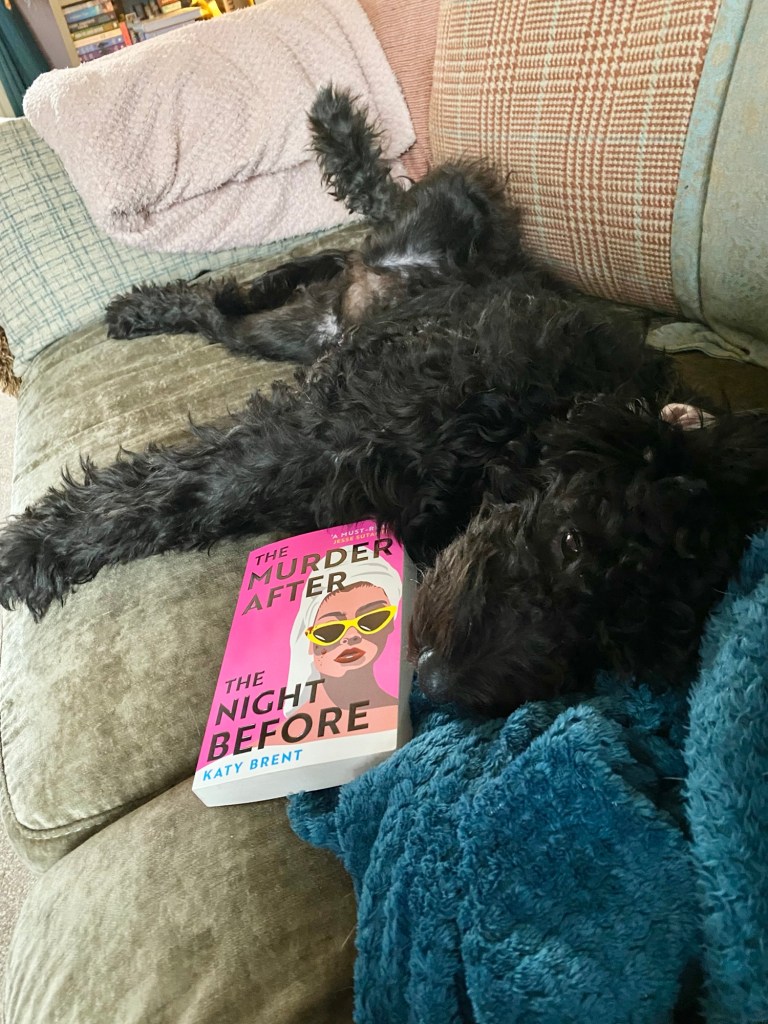
This was a delicious pick me up for a winter weekend with unexpected depth! It was the perfect mix of witty fun, but also an interesting thriller that captures the moment with some serious social commentary. When Molly wakes up after the Sparkle magazine Christmas party she’s expecting a hangover of epic proportions. What she isn’t expecting is to wake up next to a complete stranger with no memory of the night before. She has a strange combination of complete amnesia, but underneath that a feeling of unease that won’t go away. He tries to reassure her that all he wanted to do was make sure she got home safely, considering the amount that she drank. Yet, his account of the night before doesn’t make any sense to her either and she starts to question everything. Things only get worse when she staggers into work to hear the worst news she could ever hear. Firstly, there’s a sexually explicit video of her at the party going viral on social media. Worse than that she finds out her best friend and flatmate Posey is dead after an awful accident. The version the authorities give Molly just doesn’t ring true though and she suspects her friend may have been murdered. So Molly starts her own investigation, hoping to unearth the truth of what happened that night but also who would want Posey dead and why?
Molly is such a sparky, likeable character and she brings a lightness to this dark story, just enough to keep a good balance. I warmed to her as it becomes clear how much she cared about her friend and the lengths she’s willing to go to for justice on her behalf. She’s a little clumsy in her investigation skills and has flaws, but that makes her more endearing. She’s far from perfect at first, drinking a lot and dealing with loss, struggling to focus and not remotely motivated by her job on a teen magazine. Molly allows the author to tackle some heavy themes within the novel, it’s her personality that makes these difficult subjects accessible to the reader. This is also brilliant because it accesses readers who might not ordinarily pick up a more ‘serious’ novel on these themes. It’s a fine line to tread, remaining serious about a subject while writing an entertaining and engaging story, but the author has pulled it off here.
The author shows incredible skill by weaving some pertinent social commentary into the plot, about the dangers of social media and misogyny, both online and in real life. Since the murder of Sarah Everard by a serving Met Police officer, the rise of the Incel movement online and influencers like Andrew Tate, the depths of the misogyny in our culture have come to light. I’ve never been more aware of the divides in our society when it comes to race, disability and sexism. The recent and very public ableism and misogyny towards comedian Rosie Jones has been staggering and as a disabled woman I was affected by reading it, goodness only knows how Rosie had felt as their target. I expected the ableism, but felt it was tinged with sexism too because the comedian Lost Voice Guy, who has the same disability as Rosie, doesn’t face this relentless wave of hate. The Wild West that is Twitter has given a toxic platform to men who enjoy gaslighting women and putting them down in the most insulting ways possible. I love that Katy Brent has tackled this misogyny within her story line, from the toxic culture of social media through to the terrible experience of sexual assault. The embarrassing viral video of Molly giving a blow job in the street gets a torrent of disgusting, but very authentic comments from trolls and keyboard warriors, not all of them men. It was just like reading Twitter. None of them were levelled at the man, all the negativity is focused on Molly, effectively bullying and slut-shaming her. It really highlights how there are still different societal standards of sexual behaviour for men and women, but now proliferating on social media.
I really enjoyed Molly’s character growth, at the beginning she’s all over the place, but her love for Posey really makes her focus and get results. Molly realises that Posey was working on an investigation that might have been the cause of her murder. So she has to follow the clues her friend has found, working out answers to the questions she had, all in the hope it will bring her closer to finding her killer. Of course that puts Molly in the same danger, but she wants to find the truth for her friend and shows real loyalty and courage. Molly’s flaws and her self- awareness about them, just make her all the more endearing. There’s some snappy dialogue that keeps the story moving, but also introduces an element of wit and humour. Yes, there are moments here that are truly funny, but the balance between the humour and the darker aspects is maintained throughout. The emotional depth of the characters and particularly Molly’s feelings for her friend really did elevate this above the average thriller, but as the truth starts to unfold, there are twists and turns that leave you wondering if we ever know anyone as well as we think we do.
Published in paperback on 1st February 2023 from HQ
Meet the Author
Katy is an author and award-winning journalist from the UK. She has worked on newspapers, magazines and websites since 2005, writing about popular culture. How To Kill Men and Get Away With It was her first novel and The Murder After the Night Before is her second.
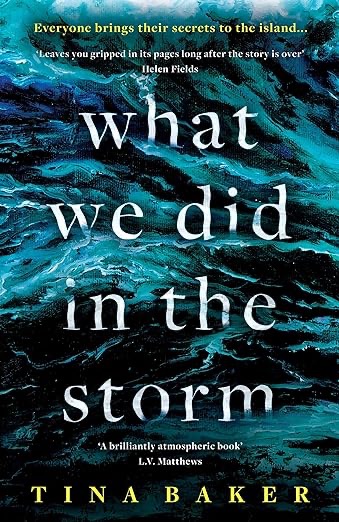
This is my first Tina Baker novel, although I’ve been aware of her others she’s been a new author I hadn’t managed to get on my TBR. Now I feel very stupid and sorry that I haven’t picked up one of her earlier thrillers because I enjoyed this one very much indeed. Tresco is a small island in the Scilly Isles that’s run almost like a club for the wealthy. Owned by ‘the family’ it’s main currency is tourism but often the same families own timeshares or block book the cottages, each named after a seabird, for the same times each year. Those that live there all year round are ‘the workers’ who look after the abbey gardens, work in the pub or the shop, or work directly as gamekeeper or groundsmen for the family estate. This creates a community where everyone knows everyone else, and each is very aware of their status in relation to each other. So when Kit, son of the very wealthy and regular cottage dweller Beatrice Wallace, starts a flirtation with Hannah the barmaid from The Old Ship tongues start wagging. There are many rumours about Hannah: that she’s been dallying with fellow worker Sam who is married with three boys; that she is easy with her favours, especially on poker nights with the boys; that she was spotted dancing naked by the full moon; that she’s possibly a witch. None of that bothers Kit, but as the young lovers become more than a quick fling it bothers other people. Kit’s mother is raging at her son’s choice of girlfriend, knowing the grief of a relationship with someone from a different class to you. She tries to push him towards her goddaughter Charlotte, who might be stupid enough to wear heels and off the shoulder tops on the island, but is at least in the same circles as the Wallace’s. Sam’s wife Christie should be ecstatic, but for some reason she isn’t, still fuming at Hannah any time she comes within an inch of her husband knowing that she has some sort of hold on him. Alison, Hannah’s boss, just wishes that Hannah would stop sleeping with the customers and causing drama in the pub. As a storm approaches and tensions are at their height, two women are attacked at a remote point on the island, but one woman is lost to the sea. But who?
The author uses different narrators throughout the story, which is difficult at first until you get to know each character and their place on Tresco. Interspersed with these voices is a separate narrative entitled ‘After the Storm’ that recounts the events of that day and what the speaker has seen. We don’t know who they are, but they seem to have been in the right place at the right time to have some of the answers, but not all. The rest of the narrative occurs in the lead up to the storm and we get to know all the residents, visitors and workers. Hannah and Kit aren’t the only ones potentially causing problems for the community. There’s John and Mary-Jane from Georgia in the USA, evangelical Christians who seem to have eyes only for each other. Why did they leave their hometown and families and what shameful secret does Mary-Jane impart to the island’s nurse? Thor works in the village shop, where a bottle of wine can cost as much as some of the worker’s weekly salary, but has a rather active internet life that would raise eyebrows. There’s quiet Maisie who cares for her mother’s needs 24/7 and seems devoted, but lays awake at night listening to her sleep apnoea machine helping her breath, just wishing she’d stop. There’s also a strange man who appears at bathroom windows wearing a balaclava and spying on unsuspecting ladies. Even Christie and Sam’s relationship isn’t what it seems, the long suffering wife whose husband drinks more than he should, neglects his family and strays when he can is the accepted narrative, but never assume that what you see is the truth. Beatrice is a horror though, although islanders are sympathetic when she loses her husband, she isn’t perhaps grieving as much as they would assume. She loves her son, but wants him to commit to something more than painting, sailing and cavorting with that barmaid in whichever cottage is free. None of these activities will make a living and although the family have money and he won’t be destitute she still wishes he had some direction.
I loved the way the author created these rigid boundaries between the different groups on the island and how it disrupts everything if they are broken. After the storm, Kit spends more time on the island painting and renting whatever cottage is free. He offers help where needed, even if it’s a shift in the pub or running errands for holiday makers. Yet he’s stuck in limbo. The workers don’t accept him, in fact they wish he’d bugger off and let someone who needs the money have a job. However, they do have to be careful because his mother is a rich timeshare owner and as such must be treated as a guest. As for him and Hannah, a quick bunk-up is overlooked but why did they have to fall in love? There are clever little faux pas that show someone up as an outsider, such as the plague of pink waterproof coats that islanders wouldn’t be seen dead in. Having come from a small village, I enjoyed the way gossip spread, usually via the pub, as one person tells someone else in confidence, then that person tells someone else in confidence, until it’s a chain of Chinese whispers with the truth lost somewhere in the telling. I also loved the incredible sense of place Tina has created, the crashing waves, exotic flora and incredible seabirds are romantic and enthralling to visitors, but islanders know this isn’t some sort of nature’s Disneyland. The wild weather and stormy seas can be lethal and only the workers know the endless maintenance it takes to keep the island to counteract the damage caused by the sea fret. They are stuck in a parasitic relationship, where they can’t do without the tourism but hate it at the same time. There are so many revelations and twists here I made sure I set aside enough time to finish it in one go and I’m glad I did. Right up until the end I was fairly sure what happened during the storm, but how wrong I was! I’m now going back to Tina’s other novels because I think I’ve just become a fan.
Published on 15th February from Viper.
Meet the Author
Tina Baker, the daughter of a window cleaner and fairground traveller, worked as a journalist and broadcaster for thirty years and is probably best known as a television critic for the BBC and GMTV. After so many hours watching soaps gave her a widescreen bum, she got off it and won Celebrity Fit Club. She now avoids writing-induced DVT by working as a Fitness Instructor.
Call Me Mummy is Tina’s first novel, inspired by her own unsuccessful attempts to become a mother. Despite the grief of that, she’s not stolen a child – so far. But she does rescue cats, whether they want to be rescued or not.
“Peach. Its shape floats on Mr Bell’s mouth. The pinch of the p, followed by a rounded push of the lips, sending the last syllable hard across the tongue. My hand nearly reaches for my pocket, as if the feather from our lessons might still be found there. It’s been a long time since I thought of the feather. I would balance it on my knuckles and make it quiver with the puff of my ps. Puh-puh-puh. I stop myself just in time, folding my hands against my skirts.”
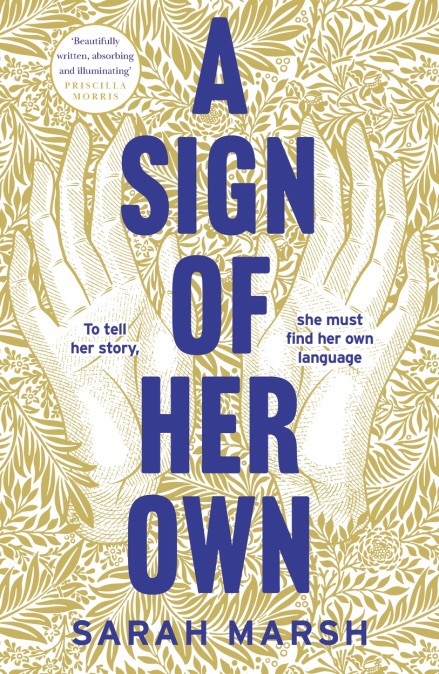
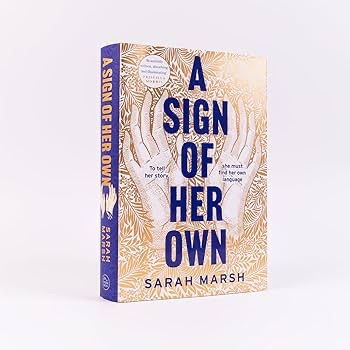
I found the opening scene of this novel incredibly moving and so skilful, placing us so close to our heroine that we understand the barriers she faced being deaf at that point in history. In it, Ellen and her fiancé receive an unexpected visit from Alexander Graham Bell. As the two men converse, Ellen is picking up body language and tone of voice which indicate a serious topic but she notices a repeated word ‘peaches’. Her attention moves to the beautiful jar of peaches preserved by her mother on the dining table. Yet she’s wrong, as she passes Mr Bell the jar and urges him to take it he tells her no, the word he was saying was ‘speeches’.
As Ellen reminisces, so did I. I was propelled back to the early years of my nephew Charlie, who was born visually impaired. Before we knew the full implications of his sight loss, we’d noticed he was behind in his development. He wasn’t moving round much, had put on weight and wasn’t speaking. It then occurred to us. In order to learn something for the first time, we tend to copy it. If you can’t see, you can’t imitate others and just as Ellen is struggling to get the full meaning of Mr Bell’s conversation, Charlie couldn’t form the words if he didn’t know how to use his mouth to make the noises. So Mum used the same technique she’d used with us when we were small. When a specific noise was needed like the ‘puh’ sound in the book, Mum would raise his hand to her mouth and make the sound against his fingers. He would then put his fingers to his own mouth a copy her. It was lovely to relive that memory and feel perhaps a tiny bit of what Ellen is feeling too.
A Sign of Her Own is narrated by Ellen Lark across two timelines and it’s an incredible feeling to be in her world, because it’s so different from the world we know. It felt similar to when actress Rose Ayling-Ellis did Strictly in 2021 and performed a ‘Couple’s Choice’ dance with Giovanni Pernice, choreographed to bring the audience into Rose’s world. At a certain point, the music stopped but the couple continued to dance and we realised that this was Rose’s world. For us the music would return, but she carried on dancing into the silence. She somehow used her trust in Giovanni and read his body to perfect her dance routines. It was moving, disorienting and a complete revelation so it was no surprise to me that they were winners of that year’s BAFTA for a memorable TV moment.
Ellen’s inner world is also a revelation and the author communicates it so beautifully. She lost her hearing as a child during a bout of scarlet fever and communicated with her mother using a language of signs they made up as they went along. It broke my heart to read how the sound of her speech was viewed by local children. Restricted to vowel sounds, because she couldn’t hear the precision of the consonants, Ellen feels shame about how she sounds. Her personal sign language seems to suit her, but it’s her grandmother who comes up with the idea of using Alexander Graham Bell’s ‘Visible Speech’. Students of his method were banned from using any sort of sign language, but were allowed to use a notebook. Family politics played their part in the decision, because the family were in debt to their grandmother. Luckily Ellen enjoyed studying and proved to be incredibly clever, even if she was unsure about Bell’s method and his motives. She has to be perceptive and learns to read people very quickly, including Bell. As we move into the present day, Ellen and her fiancé are visited by Bell who is embroiled in a fight to be recognised as the sole inventor of the telephone. He wants Ellen’s support as a character witness, but Ellen doesn’t have good memories of her time under his tutelage. She feels like he betrayed her and other deaf students for his own fame and recognition. How can she support him when she feels so conflicted?
During the later timeline Bell’s fight becomes all consuming. He is full of determination and I felt torn about his character because on one hand he appears to be paying attention to a group of people rather alienated by the rest of society so his work could be seen as altruistic. On the other hand it’s as if the people he’s helping don’t really matter to him. There’s a narcissism or selfishness in his character that means he only sees his students in terms of how they can help him potentially find fame. I felt like he didn’t appreciate their characters or individuality. I found myself disliking him intensely. By contrast, Ellen is instantly likeable and intelligent. Through her we are invited into the deaf community and the debate over sign language and visible speech is fascinating. As someone who has studied disability theory, I was very aware that some people don’t consider their deafness a disability. If they sign, they simply see themselves as speakers of a different language. I was interested in the politics and ethics of a speaking world imposing a method of communication on the deaf community, rather than the community coming to society with their own choice of language or speech method. I think there are many readers who might never have considered these issues and wondered how the book is being received in the deaf and/or disabled community. I was impressed that the author wanted to bring these issues to the fore and loved the enthusiasm she clearly has about her subject and her heroine. This is a well researched debut clearly inspired and informed by her own experiences of deafness as a child. It puts us into the centre of that experience and I came away feeling like I had a renewed awareness of sensory disability.
Thank you so much to the Squad Pod Collective and Tinder Press for my copy of A Sign of Her Own, published on Feb 1st 2024
Meet the Author
Sarah Marshwas short-listed for the Lucy Cavendish Prize in 2019 and selected for the London Library Emerging Writers Programme in 2020.A Sign of Her Ownis her first novel, inspired by her experiences of growing up deaf and her family’s history of deafness
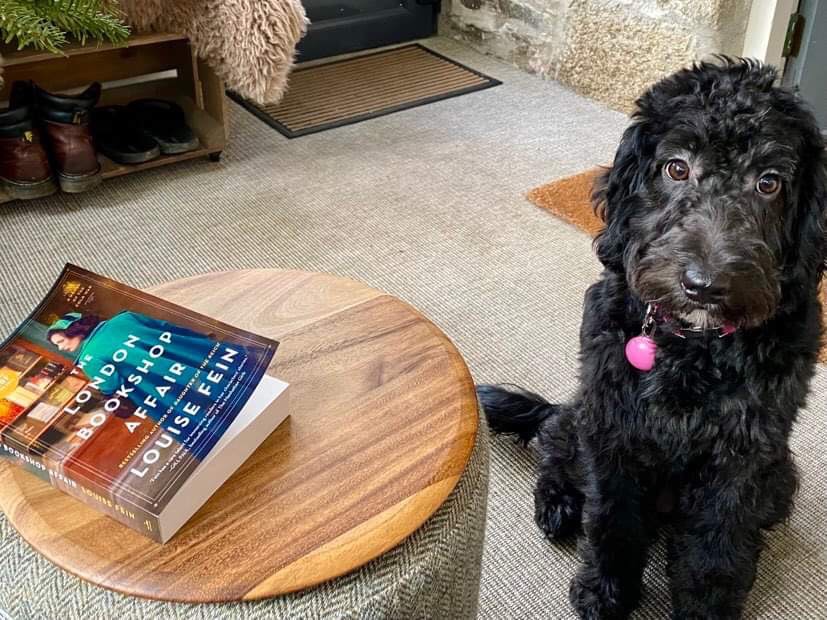
Historical fiction is one of the genres I enjoy most and I’m drawn to Louise Fein’s novels because she always finds an interesting time period then looks at it from an unexpected viewpoint. It makes you rethink events you thought you knew all about. Here she has chosen post-WW2 London and the dawning of the early 1960’s when Kennedy is president and the Cuban missile crisis is looming. Her heroine is Celia, an ordinary young woman with older parents who are stricter than most and perhaps don’t understand her modern preoccupations and ambitions. I always imagine the ‘swinging sixties’ when I think of London at that time, but progress like that hasn’t quite reached Southwark yet. Celia is working at a second hand bookshop, that specialises in antique and collectible books. Yet her heart yearns for adventure. The world is on the cusp of space travel, women’s liberation and the Beatles. It’s also rather closer to nuclear war than most realised as the USSR and USA start a terrifying game of brinkmanship. Celia wants to protest against the testing and gathering of weapons far more powerful than the Hiroshima bomb. She also chasing her dream career – she’s signed up for classes at Pitmans to gain the secretarial skills that might get her a job at the BBC. The little life her mum leads is not for her and she’s definitely not going to settle for Sam, the boy next door.
The catalyst for change is the bookshop’s new owner Mrs Denton, a dainty well dressed lady who is living alone in the flat above the shop. She seems more interested in shopping than books and offers Celia a raise to manage the shop as she sees fit. Mrs Denton has two regular male visitors: an older man called Mr Humphries who has wandering eyes and a scar down his face and a younger, handsome American called Septimus who Celia is drawn to. Could he be another pathway to a different life. The changes in Celia’s life are interspersed with a different timeline following a young woman called Anya Moreau who is dropped behind enemy lines in 1943. She’s been trained to help the French Resistance disrupt the Germans by sending messages back home via a wireless transmitter. She is betrayed by a double agent and faces torture to divulge her secrets, but she never betrays her cause. Meanwhile Celia finds a connection to this woman and in her desperation to know more she comes across the mysterious Miss Clarke who opens Celia’s eyes to the murky world of espionage running under the surface of everyday life. Possibly even in her own family. I felt for Celia’s parents who have always been protective of their girl, so much so that she sometimes feels suffocated. However their determination to keep Celia away from the past is understandable when we find out the truth.
I throughly enjoyed both timelines and Louise always has a wealth of research underpinning her story making it feel so real. I believed entirely in these two brave young women and their conviction to support their country. I loved seeing Celia’s political awakening as she talks to friend Daphne about the secret nuclear bunkers being dug out in the English countryside and the drastic measures to move works of art out of London – her shock at the immorality of a government that chooses to save art, but keeps it’s ordinary citizens in the dark is a real moment of growth. Her friendship with one of Mrs Denton’s visitors, Septimus, is also a place where she can freely discuss and share ideas about the world. This freedom to debate is new to Celia and you can see her growing all the time. At home her mum turns the tv off when the depressing news is on and Dad never talks about the war. In fact there seems to be a silence between them. I was excited and scared for Celia as her world opens up. The secrets she starts to discover will change her life forever, but will they leave her with the confidence to choose her own path and who will walk it with her? The emotional scenes between mum and daughter are really heart rending as finally everything is brought into the light. The pace of the novel really picked up towards the end as both stories come to their conclusions and different options start to open up before her. I really hoped Celia would choose wisely and not throw away everything about her home while still gaining some of the adventures she’s set her heart on. This was a great read and would make a fantastic film or TV series one day.
Published by William Morrow on Feb 29th 2024
Meet the Author
Louise writes historical fiction, focusing on unheard voices or from unusual perspectives. Her debut novel, Daughter of the Reich (entitled People Like Us in the UK edition) was published in 2020 into 13 territories and is set in 1930’s Leipzig. The book was shortlisted for the RSL Christopher Bland Prize 2021 and the RNA Historical Novel of the Year Award, 2021. Louise’s second novel, The Hidden Child, was published in 2021 and is centered around the eugenics movement in 1920’s England and America. It was a Globe & Mail bestseller in Canada. Her third novel, The London Bookshop Affair, about one woman’s journey to uncover secrets of her past, set against a backdrop of espionage and looming nuclear war in 1962 London, will be published in January 2024.
Louise, previously a lawyer and banker, holds an MA in Creative Writing from St Mary’s University and now writes full time. Equally passionate about historical research and writing, she loves to look for themes which have resonance with today’s world. Louise lives in the Surrey countryside, UK, with her family, and is a slave to the daily demands of her pets.
For more information, go to https://www.louisefein.com and sign up to Louise’s newsletter. She also posts regularly to her blog at













 The Lotus Readers