I really have been blown away by this story set just after WW1 and progressing to the mid-twentieth century. Our characters are two German sisters Leni and Annette who live in Berlin and are the last living members of their family. When we first meet them they’re in dire straits, living in a makeshift shelter in an abandoned garden. Thanks to war and the influenza epidemic they’ve lost their family, so are totally reliant on each other. Leni, the older sister, gets a chance to earn some money at a notorious and rather seedy cabaret club called Babylon Circus. There the naive and rather shy Leni becomes a cigarette girl in a second hand and pinned costume that just covers her modesty, but she is at first shocked by what she sees. With shades of the musical Cabaret the author creates a club that is a mirage of clever lighting, fairground mirrors and risqué musical numbers. It’s enchanting by dark and unwelcoming by day, but it doesn’t matter because this is the type of fun that can only be had at night. The girls are shameless on stage and nudity is everyday in the dressing room, but Leni sees something attractive in their boldness, bawdy gossip and loud raucous laughter. They have a freedom she’s never seen before in women, they’re not afraid of taking up space. The illusion extends to the girl’s costumes, covered at first glance but offering a cheeky glimpse here and there. This is what the crowd turn up for, but one girl manages to shock the audience by crouching on the table of a misbehaving customer and pissing in his face. Everything is overseen by owner Dieter, a man with his own disguise. He rarely enters the cabaret room, but sits in his office with it’s resident cat. Having left half his face on a battlefield he wears a tin mask which chafes at his wounds and leaves his expressions slightly lopsided. This gives a certain sense to the fairground mirrors, if everyone is distorted then no one stands out.
It’s Paul the pianist’s good looks that capture Leni; his talent, his smile and the lock of hair that escapes onto his forehead. When he starts to walk her home she’s evasive, how can she tell him he doesn’t have one? She invents a family, but then has to keep Annette out of her business. Paul’s also in trouble, as his brother has run up debts he can’t repay and the lenders are leaning on him to pay instead. After a warning in the form of a beating he knows he must leave, but what will he do about Leni? Leni and Annette now have rooms, with a landlady who doesn’t mind watching Annette in the evenings while Leni works. I had so many questions. Would Paul ask Leni to go with him? Does he even feel that strongly about her? Where would Annette fit into this? Even after all these questions are answered, jealousy and fate intervene changing everything.
In our second timeline we’re in the midst of the Cold War and a middle-aged Leni is living in Berlin with her teenage daughter, following the death of her husband. She’s surprised by a sudden visit from her sister Annette who now lives in the USA. She seems agitated and anxious, spending all her time in flat brooding and smoking. Leni’s daughter is in the throes of first love, using the guise of drama rehearsals to meet her boyfriend. With nowhere to go they find solace in a strange old cabaret club where there’s a fairground mirror amongst the ruins. This is the perfect place for secret assignations. Leni is concerned that with her sister here the past seems closer than it’s been for years. So many secrets are being kept between these women and when Leni sees a face from the past, it could all come tumbling down like a pack of cards.
Julie writes mid-century women like no one else. I feel like I know them. This is my grandmother’s generation and my grandad actually went to Germany after WWII to help rebuild the country. I remember being shocked by the utter devastation of German cities when they were depicted in the film The Aftermath. I was haunted by a woman getting her daughter ready for school, brushing her hair in their normal routine, but with the outer wall blown away. It was like looking into a doll’s house. The author made me feel the contrast of that wild decadence in the 1920’s with the Cold War period where everything feels grey and routine with nothing to look forward to. The bleakness of Leni’s flat really comes across as it seems to echo the desolation of Annette. Even the once rowdy and colourful club is now derelict and abandoned. I love the way the author plays with place and identity in this way, as well as how the characters see themselves. Their internalised sense of how they look forming part of their identity, but is often at odds with how we see them. Dieter and the girls at the club are almost gaudy grotesques, using appearance and performance to mask true feelings. As for Dieter, I kept thinking about his inability to express emotion in his face and how that affected his ability to connect with others. If we can’t express what we feel what effect does that have on our identity? Dieter can’t look at his new face because it doesn’t reflect the image he has of himself in his mind. It’s only once everyone else becomes distorted that he fits in, only the cat accepts him utterly as he is.
The secrets between the sisters are beautifully constructed. Annette’s adult behaviour is a faint echo of her childhood feelings. Her jealousy and fury when she discovers Leni with Paul is the fear of a child who has almost lost everything and everyone she knows. She only has Leni and what if she leaves her too? As an adult, pulling secrets or feelings from her is almost impossible. She has been holding the past inside herself so tightly and for so many years I was unsure if she would bring it’s truths to the surface without breaking. Towards the end, as another terrible event outside their control looms over Berlin, my heart was in my mouth! Not knowing whether the ending would be what I wanted had my heart racing. I couldn’t bear either sister to suffer any more heartache and this is the beauty of Julie’s writing. She makes you believe in this world and these characters so much, that you’re able to shed real tears for them. This novel is easily one of the best I’ve read this year and I’m in no doubt it will feature in my end of year list too. I’ve loved Julie’s first two novels, but this is certainly Julie’s best novel so far.
Published by Penguin on 12th September. Thanks to Julie and the Squad POD Collective for including me in this month’s book club.
Meet the Author
Her debut novel That Green Eyed Girl was a Waterstones’ Welsh Book of the Month and the official runner up for the prestigious Paul Torday Memorial Prize. It was also shortlisted for Best Debut at the Fingerprint Awards and featured at the Hay Festival as one of its TEN AT TEN debuts.
73 Dove Street was recently named as a Waterstones’ Book of the Year and Daily Mail Historical Fiction Book of the Year with the paperback still to come in April 2024.
As a filmmaker Julie won the Celtic Media Award for her graduation film “BabyCakes” before going on to win Best Short Film at the Swansea Film Festival.
Her writing and short stories have appeared in a variety of publications including Sunday Express, The Independent, New Welsh Review and Good Housekeeping.
She has a Masters in Filmmaking and an additional qualification in Creative Writing & English Literature. Julie is an alumna of the Faber Academy. Circus of Mirrors is the third novel.
I’ve really enjoyed Sharon’s last couple of novels, because I love their mix of strong female protagonists who are facing challenges and growing into themselves. This novel focuses on sisters Nina and Bette, set on their family’s farm in Scotland. When their father dies they have no choice but to be under the same roof for the funeral. The sisters are very different, Bette is ten years older than Nina so the age gap meant they weren’t very close anyway, but when Bette left for university she never came back to the farm. Living in London, Bette is a sought after divorce lawyer and her work is her life. She flies back to Scotland the day before the funeral and aims to leave the next day. Nina is hostile towards her sister, she has the opinion that Bette left the farm and never looked back. As their mother tries to smooth things over, Nina is shocked to discover that Bette and her father kept in regular contact by email and that Bette paid for the new roof on the barn. Both sisters are shocked at the will reading when they find out that their father left them both the farm in two equal shares. However, there are massive debts to manage and Nina has always left the finances to their father, preferring to do the farm work than sit in the office. This is the only safe place Nina and her son Barnaby have ever lived. Could they be about to lose it? When getting the farm valued, Bette and the agent walk the perimeter on the land and stumble across a secret orchard, tucked away with it’s entrance concealed off the coastal path. Could this hidden fruit be the answer to their money woes and possibly a mystery to bring both of them together?
We’re drawn in by an intriguing prologue that suggests an historic love story between two local but rival families. I was dying for Bette and Nina to do some digging on this story and unravel their orchard’s complex back story. The author leaves the crumbs of this story to tantalise us while we move through the present day and the emotional aftermath of Nina and Bette’s father’s death. It’s clear from the outset that these two sisters could be an incredible team. Nina is good at the day to day farming work, rushing between baling and milking while also being there for her son Barnaby. I was on board with Barnaby straight away because he wears his Spider-Man costume everywhere, possibly even to his grandfather’s funeral. This titbit of character and humour reminded me of a little boy who always attended our church for Saturday evening mass and would go up the aisle during communion dressed in costume. Watching his long tail wend it’s way up the aisle so the priest could give a blessing to a mini dragon absolutely made my week. His mum made him take the head off for the blessing, but it was straight back on as he skipped back to his seat. Barnaby is a delight and I enjoyed watching him build a relationship with his Aunt Bette. Bette is brilliant with the financial and legal details, something nether Nina or their father has been able to do. She sets herself the task of working methodically through their chaotic office and showing the bigger picture; they might have been working themselves to the bone, but was all this work actually generating profit?
Bette understands legal procedures and processes too. When she explains they’ll have to get the farm valued Nina immediately flares up, she doesn’t want to sell the farm. She assumes Bette is looking to cash in, but when Bette explains it’s just the first stage in any plan they make whether that’s to sell or to finance the farm better for the future. She’s calmer and more patient with the process and because Bette’s less attached to the land she can make sensible, dispassionate choices which is just as vital for the farm’s survival. Added to the main plot of saving the farm there are a couple of sub-plots. Nina is often helped out around the farm by neighbouring farmer Cam, who is very capable and good with Barney, not to mention easy on the eye. What would I take for friendship to turn into love. There’s also the mystery of why Bette left the farm so definitively all those years ago and when Ryan enters the picture her reaction left me wondering if he was involved. Cam suggests a visit from an expert he knows, to see if the orchard is viable and what would be the best way to bring some income from it. Nina has never known why her sister left, so her reaction to Ryan is puzzling for her. He has great ideas for the apple trees, some of which appear to be very old species that are rarely grown. He sets them on a programme of managing the trees, pruning and grafting them to enhance their health and yield. There isn’t an off putting amount of detail on how to turn the orchard into a cider business, but there’s enough to pique the reader’s interest and I was rooting for the sister’s success.
The sisters have such depth to their characters and their lack of communication with each other has led to so much misunderstanding between them. Nina comes across as quite bitter towards Bette and to some extent she sees her sister as someone who has everything: the job, the money and the fancy London lifestyle. Actually it’s Nina whose had everything – a wonderful relationship with her father and precious time working together. She has Barnaby and although her relationship with his father broke down, she loves her son more than anything. With her mother living abroad with her new husband, Nina has taken on the lion’s share of the work around the farm and keeping an eye of their father but Bette has never expected any financial gain from the business, assuming that it belongs to Nina. I could see how the new plans might bring about a better personal relationship between them and I was kept reading by the promise of a warmer relationship between them, the makings of a new generation of the family. There’s a lot of forgiving to do here, but once they’d discussed why Bette left in the first place I could see another life opening up, one in which she might stay. As always with this author, this was such an uplifting and heartwarming story. The potential for both sisters to have their own love stories was also joyous to read, especially if you’re a sucker for an ‘enemies to lovers’ scenario. There are setbacks of course, some of them natural disasters and others caused by deep-seated rivalry. Sharon Gosling writes this type of story beautifully, as she weaves the threads of the sister’s story and the mystery surrounding the orchard’s origin, not to mention why it had been hidden all these years. The setting is wonderful, particularly the orchard with the salt air and the sounds of waves crashing against the cliffs. It’s so romantic and I loved the detail of how the salt permeates and changes the taste of the fruit making it so unique. This was a wonderfully escapist novel, driven by the character’s of Bette, Nina and of course, Barnaby. I thoroughly enjoyed being in their world for a while and I’m sure you will too.
Out 12th September from Simon and Schuster
Meet the Author
I’ve been writing since I was a teenager, which is now a distressingly long time ago! I started out as an entertainment journalist – actually, my earliest published work was as a reviewer of science fiction and fantasy books. I went on to become a staff writer and then an editor for print magazines, before beginning to write non-fiction making-of books tied in to film and television, such as The Art and Making of Penny Dreadful and Wonder Woman: The Art and Making of the Film.
I now write both children’s and adult fiction – my first novel was called The Diamond Thief, a Victorian-set steampunk adventure book for the middle grade age group. That won the Redbridge Children’s prize in 2014, and I went on to write two more books in the series before moving on to other adventure books including The Golden Butterfly, which was nominated for the Carnegie Award in 2017, The House of Hidden Wonders, and a YA horror called FIR, which was shortlisted for the Lancashire Book of the Year Award in 2018. My last children’s book (to date) is called The Extraordinary Voyage of Katy Willacott, and was published by Little Tiger in 2023.
My debut adult novel, The House Beneath the Cliffs, was published by Simon & Schuster in August 2021. Since then I’ve written three more: The Lighthouse Bookshop, The Forgotten Garden, and The Secret Orchard, which is out in September 2024. My adult fiction tends to centre on small communities – feel-good tales about how we find where we belong in life and what it means when we do. Although I have also published full-on adult horror stories, which are less about community and more about terror and mayhem…
I was born in Kent but now live in a very small house in an equally small village in northern Cumbria with my husband, who owns a bookshop in the nearby market town of Penrith.
Every month this year seems to drift far away from my plans, for life in general and for reading! This last month my husband and I finally caught COVID as we welcomed his daughter back from university for the summer. We were both consigned to bed for a few days in his case and a whole week in mine. I’ve since had a sinus infection that’s caused nose bleeds and facial pain, plus I’m still struggling with my breathing so am on steroids, antibiotics and have an inhaler. We took a holiday to Wales and thankfully, took my carer and her children too. I spent a lot of time looking out at the view, reading and resting – what a view it was! While everyone else took turns looking after me. I did manage to get a couple of days in my favourite haunts of Beddgelert and Porthmadog, where I went to a favourite bookshop – Browsers Books. I made some great purchases from their second hand collection that I’ll show you in a few days when we’re fully unpacked. My dog Bramble had a lovely walk in the morning with my carer Louise before getting me organised and my husband managed to get some fishing done. I watched a lot of films that had been clogging up my watchlist on Netflix too. I came home on Thursday night and went straight to hospital on Friday morning for a radio frequency denervation on my back, so I’m now in bed recovering and trying to stay off my feet. I’ve managed to catch up on some Squad POD reads this month, which I was terribly behind on and I was late with blog tours. Sometimes book blogging doesn’t go according to plan, but luckily book people are some of the kindest I’ve ever met. Thanks to everyone for your patience and kindness this month ❤️❤️❤️
I loved this wonderful debut from Harriet Constable. Set in the magical city of Venice in the 18th Century, this shows a different side to the same place where Casanova was prowling the richest parties. We follow the fortunes of Anna, an orphan who was passed into the care of nuns at the Ospedale Della Pieta. The orphanage has a hatch in the wall, just big enough to accommodate a newborn baby and this is how Anna came to be at the orphanage with her friends. The girls are schooled but the specialism is music and Anna is playing the violin. She is a bright, sparky and ambitious girl absolutely bristling with energy and promise. When she catches the eye of the music master she hopes to reach the level where she can audition for the orphanages elite orchestra. Everyone knows that orchestra girls get special treatment, perform in the best venues in the city and receive gifts from patrons. She has definitely caught the eye of the master, who has organised for her to have her very own custom made violin. However, it isn’t until she’s a little older that she sees how precarious her position is. Those girls who don’t become elite musicians are introduced to eligible men, often rich but very old. For Anna this seems a fate worse than death, all she wants is to play the piano and be the best. In order to get there she will sacrifice everything… but will it be worth it? This is a fantastic debut, full of rich historical detail and brimming with tension.
In a remote region of the Norwegian arctic, a community struggles with its secrets when a young man called Daniel goes missing. This is the period called the Russ when teens who are about to leave school go through a period of partying, practical jokes and letting off steam. Svea is an elderly woman who has lived in the area for all her life. She has a simple life with her dog Aster and heads down to the cafe for her breakfast each morning. More often than not Odd Emil joins her, not that they have an arrangement. They’ve known each other all their lives and he was once in love with Svea’s beautiful younger sister Norah who disappeared many years ago, thought to be drowned. There are so many secrets here that it’s hard for the police to find Daniel. A fancy dress Russ party took place that weekend, Svea’s granddaughter Elin and her best friend Benny decide to attend in drag, with Elin surprised to find herself kissing Daniel despite her pink beard. Benny sees Daniel’s friends abandoning his car at a local hotel, so it looks like he started out on a walking trail. Can Benny tell the police what he’s seen without disclosing what he was doing there himself? When a body is found in a cave during the search, the police release that it has been there too long for it to be Daniel. But if it isn’t the missing teenager, who can it be? This was a brilliant thriller, depicting a seemingly ordinary town full of secrets and lies.
I loved this tale of Nigerian girl Funke, living a happy life on the university campus with her father and mother, plus brother Femi. Her life is turned upside down one ordinary morning on the way to school, when an accident kills both her mother and brother. Funke’s mother kept her in-laws at bay most of the time, knowing that her mother-in-law disapproved of her son’s marriage to a white woman. Now, with her father in shock, her grandmother is in charge and her ‘bush’ ways are having an influence. How could Funke have come out of the same crash without a single mark on her? Funke’s aunties can see which way the wind is blowing and make a decision that it would be best to send her to her mother’s family in England. The white side of her family. Totally out of her depth, Funke has never met her mum’s family or been to England. The Ring, her mum’s childhood home is an old mansion and not the fairy tale place she talked about to Funke and her brother. Even worse is Aunty Margot, a bitter and angry woman who blames her sister Lizzie for ruining her wedding; when Margot’s fiancé found out Lizzie had run away with a Nigerian man he broke off the engagement. If it wasn’t for her cousin Liv, Funke would have felt lost. She was determined to make Funke feel at home and wants to become her best friend. Can she succeed or is Funke’s life always going to be turbulent and changeable? This is a gorgeous book, vibrant and life affirming.
Pine Ridge is an idyllic coastal village on the south coast and it’s almost August so it’s time for the ‘Down from London’ crowd to start arriving on the ferry. This is one of those places struggling due to the amount of local property bought up as second homes and holiday lets. This August the two sides are set to clash more than ever as locals have set up a campaign group – the NJFA or Not Just For August movement. They have a series of publicity stunts set up for the coming month, starting with egging visitors cars as they come off the ferry. Amy and Linus are coming to stay in their new holiday home for the first time, sharing a week’s holiday together until work starts on their renovation. Having been introduced to Pine Ridge by friends Perry and Charlotte, Amy was determined to have a home with a sea view and a summerhouse just like theirs. Perry bought their house outright with his banker’s bonus and Charlotte created The Nook where everyone congregates for drinks in the evening. Locals Robbie and Tate live in the caravan park, only just able to afford the rent on a static home, which is boiling during the summer. They and their girlfriends have jobs that serve the incomers, but they’re not well paid and even the smallest flats have been pulled off the rental market to become AirBnB lets. The two sides will clash, but everyone seems shocked when a summerhouse is bulldozed over the cliff and on to the beach. Even more so when the police find a body inside! This a smart contemporary thriller with a perfect satirical look at the upper middle classes.
This is one of the most moving books I have ever read. Lissette’s baby son has been unwell and she’s had to take him to hospital on the west side of Berlin. When the medics try to get her to go home and sleep she’s very unsure, but they convince her to get some sleep and bring more supplies back in the morning. Lisette makes her way back to East Berlin, feeling more confident about her baby son’s recovery. When the household wakes the next morning a seismic change has happened. A barrier has been created between East and West Germany overnight. Lissette runs to where soldiers are guarding entry to the west and begs them, surely if she just explains that her baby is in a hospital just a few streets away they’ll let her through. He needs his mother. As the hours turn into days Lissette is grieving for her son and daughter Ellie wants to find a way to make things right again. She has a gift for music and hears people’s emotional state as a melody, but her mother’s music has gone. She makes a decision. She is going to find a way of getting across the new border and into the west. There she will find her brother. The historical research for this book is clearly extensive and I was actually ashamed of how little I knew about this time in history. We also go back to WW2 and Lissette’s teenage years in a city at war, giving us background on the family and how Berlin and Germany came to be separated. This is a heart-rending and emotional story showing how an historical event affected the real people living through it. Really exceptional writing.
I’m a big fan of Charity Norman because she’s great at bringing the conflicting issues of society into family relationships, exploring whether they grow stronger or whether they crack. Livia Denby is a probation officer on trial for attempted murder and the jury have reached a verdict. Everything went wrong two years before, as Livia and her family are celebrating daughter Heidi’s birthday. Her gift is a new bike and she’s planned a bike ride to a local pub with her dad. Scott has promised to take her for a birthday lunch and she’s really excited to have her dad to herself. Scott has lots of responsibilities; he’s a father, an English teacher and cares for his brother who has Down’s Syndrome and diabetes. As Scott’s phone keeps ringing, Heidi can see their outing slipping away. Her uncle has already called twice because he’s confused they’re not going to Tesco as usual. Before the phone can ring again, Heidi slips it down the back of the armchair. It’s a momentary decision with terrible consequences. Livia awaits their return with terrible news. Scott’s brother accidentally locked himself out of the house and had a hypo. Despite help from passers by, the paramedics were unable to revive him. He died before he even reached the hospital. When Scott finally finds his phone there’s one plaintive, heartbreaking voice mail he can’t get over and his guilt complicates his grief. Scott starts looking for answers and fixates on one witness who said the ambulance took a long time and the paramedics were slow to act. He starts to research medical negligence, watching videos on YouTube and making links with content creators who talk about ‘Big Pharma.’ Before long he has fallen down the rabbit hole into conspiracy theories that separate him from his family. This is such a hot topic at the moment and the author has brilliantly portrayed how people can be brainwashed and radicalised by social media. I thought this was a fantastically tense and incredibly intelligent read.
This is a fascinating story about Dora Maar, a photographer and artist who exhibited alongside some of the greatest artists in the Surrealist movement. She lived in Paris for most of her life, most notably, during the German occupation in WWII. Born Henrietta Theodora Markovitch in 1907, she used her photographic art to better represent life through links with ideas, politics and philosophy rather than slavishly photographing what was naturally there. She was exhibited in the Surrealist Exposition in Paris and the International Surrealist Exhibition in London in 1936. In the same year she was exhibited at MOMA in NYC. She first encountered Picasso while taking photos at a film set in 1935, but they were not introduced until a few days later when Paul Elduard introduced them at Cafe des Deux Magots. Dora is intent on catching his eye and sat alone, using a pen knife to stab between her splayed fingers. Where she missed, blood stained the gloves she wore and Picasso kept them with his most treasured mementoes. The gloves are a metaphor for their entire relationship – he fed off her emotions. We are inside Dora’s mind at all times giving her control of her story. In a world where Dora is known best through her relationship with a man, instead of her own work, Treger is simply redressing the balance. You’d have to be utterly blind to think there’s any other way of looking at his treatment of her and the other women he was involved with. In the nine years they were together, she was subjected to mental and psychological abuse. She was underestimated as an influence on his work, particularly Guernica and his politics. I felt that Picasso was drawn to her masochism and fed on the pain he caused her for his personal satisfaction and his art. Picasso comes across as a narcissist; constantly told he was a genius he believes everything revolves around his needs and his freedom to work. This is seen in The Weeping Woman series of paintings where she’s depicted as a woman who is constantly tortured and distressed, when she’s so much more than this. This is a brilliantly researched piece of art history told as a memoir.
This isn’t the first time I’ve read Eva Verde’s novel but I was asked to read it again for the paperback publication on 1st August. I worry about trigger warnings, they stop people reading books they might connect with emotionally and potentially prevent a healing process. If anyone should have avoided this book it was me, because I was Delphine. I lost the love of my life in my early thirties and then sleepwalked into a coercive and damaging relationship. So this was a hard read at times, but that wasn’t remotely negative. Moon, Delphine and Roche are three generations of a family. Each woman has her own issues, but they all stem from right back at the beginning. As the book opens Roche can no longer live with her mother and Itsy, the man she’s been living with for most of Roche’s life. So she decamps to her grandmother Moon’s house. Roche feels like Itsy dislikes her and wants Delphine all to himself. Of course it’s easier to control someone who’s isolated. Delphine has a ‘glazed over’ look and has done everything she can to keep Itsy happy. She’s changed how she dressed, made herself less beautiful, stayed at home and stopped going out with friends. Every day she makes herself smaller to make more space for him and Roche can’t watch it anymore. However, Delphine is changing, she has a job she enjoys at B & Q, new connections with her colleagues and today she has made a choice. Delphine is pregnant and she knows deep down in her soul that ‘the thought of more years, more life, tied to him’ is more than she can bear. She goes quietly on her own for an abortion, the quietest but most powerful act of rebellion she can make. Then comes an opportunity, Itsy receives a phone call from Jamaica. His mother is dying and he must jump straight on a flight. Delphine lets him go alone, knowing that now she has several weeks to herself. She doesn’t stop Roche from moving out and accepts this as her time to heal, time to be the parent that so often Roche has to be for her. However, this isn’t the only recovery needed in the three generations of this family thanks to the actions of men. This was such a real, emotionally engaging story that focused on relationships between mothers and their daughters especially those responses to trauma that we pass on to the next generation. This was so emotionally intelligent and uplifting.
This was a fascinating mystery, set within the art world and told from different points of view within three timelines. In 1938, Juliette Willoughby is living and painting alongside her lover Oskar in Paris. A British heiress, she left her family and their money behind for a life as an artist who is best known for her painting ‘Self-Portait as Sphinx’, thought to be lost in a studio fire where Juliette also lost her life. We meet our main characters Caroline and Patrick at Cambridge in 1991, where they are both studying art history and specialise in the Surrealists. They are sent to the same dissertation supervisor and while researching come across something sinister about Juliette’s death. Their investigations may expose terrible secrets about the Willoughby family, who are acquaintances of both students and an aristocratic family who don’t want their family history out in the open. Our final timeline is present day Dubai where Patrick is an art dealer and lives with his wife. Caroline is now an academic and expert on Surrealism, especially Juliette Willoughby so when a new ‘Self-Portrait as Sphinx’ is uncovered he asks her to fly to Dubai and authenticate the painting. A sale is on the cards and Patrick needs to know if this painting is definitely a second version by Juliette and potentially worth millions. He plans a night for collectors to view the painting and offer sealed bids, but the night ends with Patrick in a cell accused of murdering one of his closest friends – the last surviving member of the Willoughby family. There are now three suspicious deaths linked to this painting, but can Caroline unlock the mystery before Patrick is charged with a crime he didn’t commit? This book creeps up on you, a slow building tension grabs you and doesn’t let go. You will find yourself desperate to know about the painting and what happened in the Willoughby family.
Nordland. A region in the Norwegian Arctic; a remote valley that stretches from the sea up to the mountains and glaciers.
It is May in what was once a prosperous mining community. The snows are nearly gone and it’s a time of spring and school-leavers’ celebrations – until Daniel, a popular teenage boy, goes missing. Conflicting stories circulate among his friends, of parties and wild behaviour.
As the search for Daniel widens, the police open a disused mine in the mountains. They find human remains, but this body has been there for decades, its identity a mystery.
Everyone in this tight knit, isolated community is touched by these events: misanthropic Svea, whose long life in the area stretches back to the heyday of the mines, and beyond. She has cut all ties with her family, except for her granddaughter, Elin, an outsider like her grandmother. Elin and her friend Benny, both impacted by Daniel while he was alive, become entangled in the hunt for answers, while Svea has deep, dark secrets of her own.
After a move into historical fiction with her fabulous The Beasts of Paris, this feels like a more pared back novel set in modern day Norway. It is a crime novel, based around a missing teenage boy called Daniel. We see a lot of the action through the eyes of an elderly woman called Svea, who has lived here all her life with her two younger sisters. Her youngest sister Nordis, went missing many years ago, thought to have drowned herself in the sea. Svea lives with her puffin hound Asta and has a simple routine of walking into town with her dog for a coffee and pastry, often sharing her breakfast with Odd Emil, another elderly resident of the town who was once in love with the very beautiful Nordis. Daniel is Emil’s grandson and he’s struggling with his inability to do anything, he can’t help. Svea’s granddaughter Elin had been to a russ ball, a little like a senior prom. During russ, school leavers play pranks on each other and issue dares. It’s a time period that teachers tolerate with a roll of the eyes, but never usually goes too far. Both Elin and her friend Benny go in drag and become celebrated for the evening, the heroes of the popular kids. Elin even has a interlude with Daniel – she’s surprised to find this beautiful boy kissing her despite her pink beard! In the early hours of the next morning, Benny is having a liaison of his own when he sees Daniel’s friends parking his car behind the hotel. Then Daniel is reported missing on the trail and Benny is torn, he should mention that Daniel wasn’t in the car but what excuse can he give for being there? Benny has a secret, but he isn’t the only one and some secrets have lasted a lifetime.
I loved the sense of place the author created here. There’s a stillness and isolation about the landscape, it’s beautiful but unforgiving territory. It is like a lot of towns in the north of England, where mining was once the major industry and now they’re closed. There’s something missing in these places, a community that was once focused around the work they shared is gone. I felt this dislocation was an important part of the novel, because although it’s primarily a crime narrative it’s also a look at how much the small community has changed. As the mines closed and the outside world starts to bleed in through the internet and individual mobile phones the town has something of an identity crisis. It explores these contemporary changes in the younger characters like Elin and Benny, but by having Svea as our narrator we can see how seismic the changes have been within her lifetime. Also she breaks the fourth wall a lot which I love in a narrator. For Svea and Emil, who meet for coffee each day, their relationship is loose and undefined. They don’t even say they’ll see each other tomorrow, but usually do. It’s an understanding that’s taken a lifetime. Yet her narration, where she talks directly to us, is more conversational and intimate. Then the author lapses into text speak and emojis for the younger people’s communication. It’s instant, punchy and sometimes indecipherable by someone over forty.
“If you constantly express love as a red tiny heart – ‘bounceable’ and unbreakable – does that diminish the complexity and subtlety of your feelings?”
Svea doesn’t fully understand everything her granddaughter Elin is telling her, but there is an acceptance that shows wisdom rather than comprehension. On the evening of the ball with Benny in his dress and Elin in a suit complete with the pink beard, Elin informs her grandmother that she feels gender fluid. This is possibly an issue at home where her father is the local minister. Benny is openly gay, but his love life is extremely private. He has caught the eye of a hotel guest, a man much older than Benny. He sneaks out to the hotel to meet him, only Elin knowing where he’s going. There can’t be anything wrong with it, because the sex was enjoyable. He didn’t feel forced or taken advantage of, but it did feel strange when he left a huge sum of money for him as if it was a tip. He knows if he admits where he was when he witnessed Daniel’s friends, people will be jumping to all sorts of conclusions.
When a body is found in a cave, during the search for Daniel, people start to speculate. It’s been there for some time and it will take DNA testing to find the answers. I did wonder if it might be Svea’s sister Nordis, who didn’t succumb to the sea after all. The past is coming back to haunt them all and what a past it is. Svea explains that her own mother fell in love with a German prisoner of war, much to the disgust of villagers. Svea was known as a Nazi girl and this heritage stayed with her for life in more ways than one. We know something terrible happened because Svea’s father was the enemy, but she leads up to it very slowly, keeping us abreast of the investigation but also delving back into the past. It was this mystery as much as the unsolved crime that drew me in and kept me reading. This is a slow burn, but Svea relates the story as if we’re a friend or acquaintance. It’s as if she’s the spider at the centre of a very dark web and we’re drawn further and further in. The tension of Daniel’s disappearance starts to build as the days go by too. However, it’s not just this that’s fascinating. The interesting relationship between Elin’s father and Marylinn from the school, being conducted in secret so they don’t upset Elin who already has an inkling. Also, being let into the lives of these young people who are so vulnerable, dealing with their emotions, the pressures of school and popularity and trying to work out who they are when there are so many options. Then we’re shot back to Svea’s teenage years and the reminder of all that adolescent angst makes us realise the full implications of what she went through. This is a novel of relationships, romantic and familial as well as the deep bonds of friendship. We see both ends of the spectrum too, those trying to make sense of where they are by harking back to the past and those working themselves out for the first time. It’s also about how we love, whether in secret, in the open, with fireworks or a quiet love that doesn’t even identify itself.
Published by Quercus.
Meet the Author
Stef Penney is a screenwriter and the author of three novels: The Tenderness of Wolves (2006), The Invisible Ones (2011), and Under a Pole Star (2016). She has also written extensively for radio, including adaptations of Moby Dick, The Worst Journey in the World, and, mostly recently, a third installment of Peter O’Donnell’s Modesty Blaise series.
The Tenderness of Wolves won Costa Book of the Year, Theakston’s Crime Novel of the Year, and was translated into thirty languages. It has just been re-issued in a 10th anniversary edition.
Charity Norman is one of my must-buy authors, because although you don’t see many people talking about her work I find it really intelligent with a particular insight into difficult and dysfunctional relationships of all kinds. She’s also great at bringing the issues of modern day society to bear on those relationships, exploring whether they get stronger or whether they crack. Livia Denby is a probation officer on trial for attempted murder and the jury have reached a verdict. Everything went wrong two years before, on a particular Saturday morning as Livia and her family are celebrating daughter Heidi’s birthday. Livia and husband Scott have bought her a new bike and she’ll get to try it out on her planned bike ride to a local pub with her dad. Scott has promised to take her for a birthday lunch and she’s really excited to have her dad to herself. Scott is one of those people with lots of responsibilities; he’s a father, an English teacher and cares for his brother who has Down’s Syndrome and diabetes. The phone keeps ringing and Heidi can see their outing slipping away, her uncle has already called twice because he’s confused they’re not going to Tesco as usual. So before the phone can ring again, Heidi takes it and slips it down the back of the armchair. It’s a momentary decision with terrible consequences.
Livia awaits their return with terrible news. Scott’s brother accidentally locked himself out of the house and then had a hypo. Despite help from passers by, the paramedics were unable to revive him. He died before he even reached the hospital. When Scott finally finds his phone there are several missed calls and one plaintive, heartbreaking voice mail that Scott can’t stop listening to. Guilt complicates grief and Scott starts looking for answers. He fixates on something one of the passers by said about the ambulance taking a long time and the paramedics taking a while to make a decision. He starts to research medical negligence, watching videos on YouTube and making links with content creators who talk about ‘Big Pharma.’ I could already see the path he was on because it happened to my husband last year when our local air base was requisitioned by the government for asylum seeker accommodation. He did his basic training there and knew it had been used for refugees before after WW2. Sadly, right-wing racist group from a different part of the country hijacked local protests and turned the camp gates into a protest against all asylum seekers. My husband was so angry they were using images and the legacy of the Dam Busters to peddle hatred. It consumed him so much that he was constantly on social media fighting against their viewpoint and became sucked into a hellish echo chamber of Nazism. He felt like the whole world was racist, but he hadn’t realised that the algorithm behind social media channels is simply to give you more of what you’re viewing. I had to explain using BookTwitter which is mostly a lovely, benign and accepting part of Twitter/X. Thankfully he closed his account and instead is taking positive steps to support the asylum seekers when and if they arrive. As I was reading I could see that Scott was so vulnerable, so desperately sad and ripe for manipulation.
Scott finds a content creator called Dr Jack who claims to work in the NHS but in Scotland. He hides behind a mask, a voice simulator and a cartoon avatar. He talks about Big Pharma, the danger of vaccines and how health fears can be used to control the population. Behind it all is the global conspiracy of the New World Order, a shadowy cabal of billionaires, celebrities and politicians who are the real power in the world. They have the ability to control governments and democracy, both of which give us an illusion of control. It’s not long before he is messaging Scott directly and taking him deeper down the rabbit hole. Heidi is due to have her HPV vaccine at school and after contacting Dr Jack, Scott is keen to take direct action. Without talking to Livia he refuses to sign Heidi’s consent form. Then he uses a video suggested by Dr Jack in his English class, making a link between vaccines and fatal consequences. The video shows a supposedly dead girl in the morgue, a girl with long red hair rather like Heidi. By lunchtime the school is full of terrified teenage girls and the head is inundated with calls from angry parents. Poor Heidi is thrown into the spotlight and the head is left with no option but to suspend Scott. When Livia tries to talk to him she can’t get through and Scott tells her she’s just not listening to him. When she looks into her husband’s eyes all she can see is the fervour of the fanatic.
Meanwhile, Livia is acting slightly out of character too. She’s working with an old con called Charlie who’s about to be released from prison into a hostel, where Livia will act as his probation officer. He’s served most of his sentence with time off for good behaviour. Livia is sure they’ll make a strong team and she’s sure Charlie is reformed from his days as a gangland enforcer called The Garotter. Charlie is a great listener and once he’s in the community they meet at a local cafe for lunch and to check in, so it’s easy to slip into confidences. Something personal is disclosed and she immediately checks herself, she must keep her professional boundaries. However, as Scott’s obsession worsens Livia feels like she’s losing her best friend and the usual person she would talk to. Despite being off work, he isn’t pulling his weight at home. He’s up till the small hours, researching his theories and then haranguing people with them at parties. Livia is lost and embarrassed. She needs somewhere to offload and surely it can’t do any harm to disclose to Charlie now and again? At least Scott has his old university friend nearby, giving him someone to talk to and take him to the pub when it all gets too much for Livia. She is the only one keeping the family on track and the pressure is huge. She’s trying to shield Heidi from Scott’s wilder ideas and managing their son Noah’s asthma. The kids seem ok but it’s hard to know. In the section narrated by Heidi we realise she isn’t ok. She’s pouring herself into making music with her friend Flynn, but the guilt is killing her. She thinks she caused her uncle’s death and finds herself drawn to risky behaviour. There’s no doubt that this is a family in crisis; when will these hairline cracks finally give and begin to break apart? Slowly in the background, we learn about a new coronavirus outbreak in China and it creeps ever closer.
The tension built by the author is too much to bear. She builds her characters so well that they feel authentic and I could feel Livia’s heartbreak that the man she loves is slipping away. I could also feel Scott’s desperation as he tries to make sense of a tragedy that’s so difficult to comprehend there must be a reason. When faced with a tragedy humans have to make sense of what’s happened. We’re hard wired to detect patterns in events, because it’s terrifying to accept that life is random and chaotic. There must be a reason, because how could the King of rock and roll come to an undignified end in a bathroom? How could a politician and new president who’s filled his countrymen with hope have his life ended by one lucky shot from a random man? Surely a beautiful Princess can’t meet her end in a Paris tunnel because of a drunk driver? There must be something behind it, an intent, a missing clue, a conspiracy. I enjoyed the clever inclusion of experts in the field of online grooming and brain washing and that they were there to support Livia. When someone we love is behaving so illogically, it’s easy to wonder whether everything you’ve thought is wrong and maybe there’s actually some truth in what they’re saying. Livia needs people to say ‘it’s not you’. I was desperate for this lovely family to get through this. Yet I couldn’t help but think a further tragedy lay ahead and that Scott would fall so far out of reach, Livia wouldn’t be able to catch him. As we came closer finding out why Livia was on trial I wondered whether I would be able to understand her actions. I did understand and I hope I would have the courage to do the same in these circumstances. The author captures this whirlwind of feelings so well that I felt emotional. I thought she captured the strangeness and dislocation of the pandemic incredibly well too. This is a book that takes the most traditional of institutions, a nuclear family, then shows us how the dangers of modern life can literally tear it apart. This was an incredible read and I recommend it very highly.
Out on August 1st from Allen and Unwin
Meet the Author
Charity is the author of six novels. She was born in Uganda, brought up in draughty vicarages in the North of England and met her husband under a truck in the Sahara desert. She worked for some years as a family and criminal barrister in York Chambers, until, realising that her three children barely knew her, she moved with her family to New Zealand where she began to write.
After the Fall was a Richard & Judy and World Book Night title, The New Woman a BBC Radio 2 Book Club choice. See You in September (2017) was shortlisted for best crime novel in the Ngaio Marsh Awards. Her sixth, The Secrets of Strangers, was released on 7th May 2020 and is also a Radio 2 Book Club choice.
Charity loves hearing from readers. Please visit her on facebook.com/charitynormanauthor or Twitter: @charitynorman1
Like any good bookworm I have favourite bookshops wherever I go and with this being Independent Bookshop Week I thought I’d share some of them with you. Every single one of these bookshops is worth a visit for many different reasons and that’s the beauty of an independent bookshop. They have their own focus and place in the community, many specialise in the books they stock or have specific local interest sections. Some are a real hub and information point in their community, while others offer a great cafe alongside the books so you can lunch or have that vital piece of cake to keep your energy up while browsing. Others are beautiful little havens of peace and quiet, great for recharging and getting that library feel. Most have a smaller staff than the bigger chains so they really know their stock and are full of recommendations to add to your TBR. Some are just utterly beautiful and whimsical in their design. I’ve been a bookworm since I could read which adds up to almost 50 years of visiting bookshops and some of these I have been using for most of that time, so they’re very dear to me and yes, I do book holidays around my visits to my favourites.
Second Hand Books – Barter Books, Alnwick
I don’t think Barter Books can be beaten when it comes to second hand and collectible books. Run from the old station house at Alnwick in Northumberland you can easily spend a day in here and with an on-site cafe, that’s usually got a queue ten deep by 10am, you can take a pit-stop too. Every time we go to Northumberland, I take a bag of books I’d like to sell and on the day we leave our accommodation we go here for the day. I leave my books with the appraisers, go get a cooked breakfast and then come back to see what I’ve got to spend. Right at the back are the first editions and signed copies, then moving forward is an A-Z of fiction hardbacks followed by every subject you can think of and quite a lot you probably never imagined anyone writing about! There’s a good children’s section, crime and mystery novels where the tills are and this part has a huge mural of different authors and a little train track running above the book shelves – part can be chaotic so I keep it brief in here. Then in the entrance there’s a beautiful old fireplace, kept well stocked in winter to keep readers warm, with old armchairs where you can sit and enjoy a few pages of your latest acquisition. I meet the friendliest and most interesting people sitting here. The shelves in this front section are stuffed to the brim with fiction paperbacks and romances. This is absolutely my firm favourite when it comes to bookshops and I always look forward to my next visit.
Most Beautiful Bookshop – Scarthin Books Cromford.
While there are a few candidates for this I’m not sure they could beat this little gem in the Peak District. I used to come to Matlock Bath from being primary school age, when we would stay with my Uncle Ron and Aunty Linda who had a static caravan in walking distance of this shop. It was Mum who used to take me back then and I’ve carried on going ever since. I think it’s become more beautiful over the years. The shop is like the Tardis, with it’s endless rooms and corridors on three levels and even manages to hide a little cafe away inside. Each area of the shop is decorated differently with the music room wallpapered in old music scores and the art room filled with examples of the featured artists work. Throughout the shop there are big armchairs to sit down and look through your potential purchases. Each subject has it’s own area, with fiction just inside the entrance – when I can get upstairs ( my MS doesn’t always allow this) I start in the art room and work my way down. They also have a lovely collection of stationery and notebooks, another personal vice of mine. Situated next to the river Derwent, the views from the upper windows are beautiful. One of the best comments about this bookshop on the website is: ‘Every time I come, I’m going to spend NO MONEY – but I always do!’ Who tries to go to a bookshop without spending?? I always spend more than I want to, but I’m always happy with my diverse and quirky finds.
Why is it great?
Clever layout with subjects in different rooms
Beautiful decor and comfy reading chairs
Extensive art and music sections
Knowledgeable Staff – Cogito Books, Hexham.
Cogito Books in Hexham is a little gem. Tucked away from the main drag this bookshop is very well stocked and has great sections towards the front for gift books and children’s books – I’ve bought a lot of art and fashion books here. Plus they have all the trimmings, wrapping paper, gift boxes and cards. Then at the back it opens out into this huge room full of fiction and other subjects. It has a big chesterfield sofa for lounging, or for sitting and working out how much you’ve spent. They really know their stuff here, up to date with all the latest releases but really also good with recommendations based on your chosen purchases. I always spend more than I intend to and end up hanging around afterwards just chatting books. They’re also remarkably knowledgeable about Moomins which is always the way into my heart.
What makes it great?
Has a lovely quiet and restful feel
Has a great gift book section plus gift wrap and cards
Colourful and vibrant
Knowledgeable staff
Small but Beautiful – Atkinson-Pryce, Biggar, Scotland.
When we were on holiday in Scotland last year this perfect little bookshop was only ten minutes up the road and ideal for a bit of last day browsing. While it’s not the biggest shop I did find a lot of beautiful Virago classics here as well as the usual latest releases. It’s so pretty inside as you can see and really pushes Scottish authors and local interest books too. I could see it held lots of bookish events too for the locals. I whiled away a couple of hours here, browsing butalso chatting to the lovely friendly owners. I will make sure this is my go to shop when I’m around this part of Scotland again.
What makes it great?
Really beautiful visual displays
Good emphasis on Scottish authors and beautiful copies of classicS
Lovely friendly owners.
Events, Books and Cake- Linghams, Heswall.
I found this bookshop entirely by accident. My mum comes from the outskirts of Liverpool so we’ve visited the city since I was a small child. When I met my husband we took my stepdaughters there too and it’s a special place for the family. A couple of years ago I was looking for a particular special edition online and found they had one in stock here. I ordered it, but had accidentally marked it as a pick up rather than for posting. I spoke to the owner on the phone and thought since we would be in Liverpool the following week we’d drive over to the Wirral and collect it. I was surprised to arrive and find it was closed for filming and there was a very panicked looking director who said he knew nothing about books. Imagine my surprise months later when I was watching a new comedy on the iPlayer and saw a whole scene playing out in this very bookshop! I love this shop so much that when we go to visit my stepdaughter at university we now stay in the village. The cafe in the shop is amazing, particularly for breakfast and traybakes. Who doesn’t like a slice of cake while they’re deciding on final purchases? The layout of the shop is really well done and there’s a great children’s section with a little train and games to play. They run a brilliant list of events with visiting authors, book groups and community events too. I also recommend perusing the charity shops nearby, because I’ve found some great nearly new books and even a couple of signed editions inside.
What’s great about it?
Colourful and easily accessed layout
Great children’s section
Excellent coffee shop on site
Interesting program of events.
My Local Bookshop
This beautiful building houses my closest independent bookshop, set in the old part of Lincoln called the Bailgate area just round the corner from the castle and cathedral. This is a tiny bookshop so can’t hold a huge amount of stock, but it always has something interesting to offer. It was from a recommendation here that I found The Night Circus by Erin Morgenstern which is one of my all time favourite reads. I love the quirkiness of building and the history of this part of Lincoln so this is a great pit-stop when you’re visiting the tourist attractions. Nothing is too much trouble for the staff here and they do run a great series of author events using our local museum The Collection.
What’s great about it?
It’s my local, only 15 minutes drive away.
The historic building and area of Lincoln
Great author events and ordering service (particularly during COVID)
A Community Bookshop – News from Nowhere, Liverpool.
Situated on the very ‘studenty’ area of the city between cafes and vintage shops on Bold Street. I visit every time we’re in the city because it has a great fiction section, but also has great sections on counselling and psychology that I found really useful when I was a student. This is a left leaning bookshop with specialist sections on politics, feminism and LGBTQ+ interest. The huge noticeboard as you go in has community events, political events and local support services info for homelessness, mental health and people struggling financially. There’s an excellent section at the back with t-shirts and mugs, badges and books that are political satire and anti-Tory. There’s also an interesting second-hand section for both fiction and text books. When I go there I always feel like I’m going to learn something and read outside my comfort zone.
What makes it great?
It’s political stance and the way it supports minority and own voice authors.
The support it gives to students and it’s local community.
The sections that focus on politics, psychology and social policy.
It takes me out of my reading comfort zone
Children’s Bookshops
The Rabbit Hole is my other local independent, situated in the small market town of Brigg, North Lincolnshire. I was put onto the shop by my lovely friend Anne Cater and now I use it regularly, especially in the run up to Christmas. As you walk in the whole section is for children’s books and it’s beautifully laid out with books at toddler level, a doll’s house and a giant tiger. It’s a comfortable place for kids to browse and play where you’re not worried about them getting in the way. Up a few steps is the start of adult fiction and this ranges over a few different areas. My husband always finds something to read in the area upstairs for non-fiction, usually something around aviation, the RAF or the county’s contribution to WW2. I love that I can come here and find bookish gifts for most members of my family. They do have special editions and visiting authors, with A.J. West coming up in July. This is a lovely shop, with friendly and knowledgeable staff, and I love to support it whenever I can.
What makes it great?
The large browsing and playing area for kids.
Staff who know their stuff.
Varied subjects and genres covered.
Wonderland Bookshop, Retford.
This is another little market town bookshop situated in Retford, Nottinghamshire. This is a bookshop solely for children’s and YA books. It has a good range from picture books, to paperbacks and collector’s editions of children’s classics like Alice in Wonderland – it also had a good range of books inspired by Alice. I was blown away by the decor in this shop and the attentions to detail. The decor is perfectly Wonderland with an upside down Mad Hatter’s tea Party on the ceiling, a backwards clock above the fireplace as well as top hats, playing cards and teapots everywhere. It would be a magical bookshop visit for a small child. I also loved that they have a gift registry for children’s parties. I would have loved all my birthday presents to be books!
What’s great about it?
Specialist children’s bookshop
Amazing Alice in Wonderland decor
Where next?
So where am I planning a visit to next? I happen to love the city of York and I’m really desperate to visit the new Criminally Good Bookshop as crime is one of my favourite genres. We’re also planning a holiday around Hay-on-Wye which I’ve visited in the past but not for a number of years now. Another bucket list visit is Wigtown in Scotland, a place I fell in love with when I read Three Things You Need to Know About Rockets by Jessica Fox, which details her visit to the village when she was on a career break. She’d always wanted to work in a bookshop and flew from the USA to help out during the book festival. Since then I’ve read both of Shaun Bythell’s memoirs about the bookshop too. I’m very lucky to have a husband who is happy planning his holidays around bookshops. Why not tell me about a book shop you love in your area?
One night, at Newington House, the Madley family are disturbed by intruders. It’s the mother who first realises someone is outside and calls the police, but it’s a remote location and it will take them some time to arrive. Once the intruders are in the house they accost the mother downstairs and she sees them for the first time, in sheep masks and carrying knives. She tells them to take anything they want, jewellery and antiques, but they haven’t come for that. Now she’s sure she’s going to die. That night the only survivor in the family was the baby, placed in the priest’s hole by their sister waiting quietly for someone to find them. Written in blood on the wall is ‘tell me where it is’. Several years later, Cass is staying with her boyfriend James for the weekend when he suggests they go out for a drive. She’s surprised when he takes her to a hidden manor house on the edge of a village and tells her they’ve come to view it. An agent comes to meet them and shows them around and it’s weirdly still full of contents. The agent explains that it’s owned by a company who hope to turn it into a retreat, and while this is in the planning stage they need someone to caretake the house. They must live in it, as well as looking after and creating an inventory of it’s many contents. James wasn’t going to tell Cass straight away about the house’s sad history, but the agent does and at first Cass isn’t sure she could live somewhere such a violent act occurred. However, they certainly couldn’t afford anything like this normally. James assures her it will be fine and they agree to take on the contract, an easy thing to do in broad daylight on a lovely day, but Cass will be here alone while James is at work. Can a house hold trauma within it’s bricks and mortar or is Cass just being fanciful?
It doesn’t help that Cass’s father is very protective and isn’t sure about James or Newington House. James and Cass met in a club when she was standing in the shadows watching her friend enjoy her hen night and she is surprised when the attractive man she has just met, stands beside her and holds her hand. Yet it feels completely natural, like they’ve held hands before. Since then, her distance from James has been an issue as they can only see each other at weekends and Cass’s father worries about her travelling so far and being away from his watchful eye. It felt Iike there was something we didn’t know about her because her father’s concern seems out of all proportion. We start to learn that Cass has had issues with her mental health and there’s an allusion to her worrying that someone might be watching or stalking her. This really muddies the waters when it comes to knowing what is real and what is imagination as the couple move into Newington House. Cass is the one who has some strange experiences, perhaps because she’s home more than James or maybe because she’s susceptible to suggestion. Or is something more sinister going on and the house is singling her out? The house itself doesn’t feel creepy at first, but there’s always a sense that something more is going on than meets the eye, as if it’s traumatic past is still playing out within it’s walls. Like a faulty video recording that’s imprinted forever, leaving glimpses and feelings behind.
The previous family’s belonging don’t help, with Cass finding a long dark hair in the silver hairbrushes on her dressing table and the name Rose scribbled on a piece of paper that’s been left in the family suggestion box. The clock in the hall seems to keep stopping at 8.30pm, despite them winding it daily. It’s as if the house has PTSD and keeps experiencing flashbacks. The crime itself is terrifying, the strange addition of sheep’s masks feel so odd and out of place. In between Cass’s narrative we delve into the past with a young girl called Rose who is back at the village after a stint at private school. She doesn’t know many people of her own age in the village and while looking after the baby is fun, she doesn’t want to be a nanny all summer. She takes a walk into the village and meets two boys on the playing field, one of whom is really good looking. I found these sections so bittersweet, because she is a teenager with everything going for her, but we can sense how unsure she is about herself. She hasn’t had many interactions with boys and her innocence leaves her open to exploitation. She desperately wants to be liked, wants her feel that first kiss and know someone desires her. She’s sure to bow to peer pressure all too easily. I thought this character was written beautifully, really conjuring up those awkward teenage feelings. We know the name Rose has a resonance in the house, Cass can sometimes feel a sudden draft and the name comes to mind. Could Rose be the murdered girl at the manor and what is she trying to tell it’s new resident?
I was worried for Cass that perhaps an inexplicable evil lurks at the house, rather like the Overlook Hotel in The Shining where a terrible trauma seems to have infected the very walls of the building compelling residents to repeat history again and again. As the past and present narratives come together there is so much tension. We know the facts of what happened that fateful night but we don’t know the ‘who’ or the ‘why’ because it seems to have come from nowhere. I’m always desperate to know the reasons behind something, more than the whodunnit at times. This is where I felt a little bit lost, because I wanted to know if any of characters was the surviving child but the further we delved into the past the more characters seemed to be involved. My pet theory on why Cass was so vulnerable before meeting James was totally wrong! As we flipped back and forth in time I did have to go back and do some re-reading because I was genuinely confused. There were revelations I didn’t expect at all, adding more aspects to the case and the house than my brain could handle. It was like opening a set of Russian dolls to find that none of them matched the outside. However, the reveal of who was behind the masks was excellent and added an extra layer of danger to the ending. I think the moral of the story is that when you’re offered money to look after a mansion where murders have occurred, think twice. The old adage of ‘if something seems to good to be true it probably is’ really does apply here. I felt the best thing about the book was that sense of foreboding in the place where trauma has occurred, as if the violent acts of that night were imprinted on time like a photograph.
Out now from HQ
Meet the Author
Louise Jensen has sold over a million English language copies of her International No. 1 psychological thrillers ‘The Sister’, ‘The Gift’, ‘The Surrogate’, ‘The Date’, ‘The Family’, ‘The Stolen Sisters’, ‘All For You’ and ‘The Fall’. Her novels have also been translated into twenty-five languages, as well as featuring on the USA Today and Wall Street Journal Bestseller’s List. Her next thriller publishes in Spring 2024.
Louise has been nominated for multiple awards including Goodreads Debut Author Of The Year, The Guardians ‘Not The Booker Prize’, best polish thriller of 2018 and she has also been listed for two CWA Dagger awards. All of Louise’s thrillers are currently under option for TV & film. She has also written short stories for various publications including ‘My Weekly’, ‘Hello’, ‘Best’ and ‘The Sun’, as well as having stories featured in multiple anthologies.
Louise also has a penchant for exploring the intricacies of relationships through writing heart-breaking and uplifting stories under the pen name Amelia Henley. ‘The Life We Almost Had’ and ‘The Art of Loving You’ were international best sellers. ‘From Now On’ is her latest Amelia Henley release.
Louise lives with her husband, children, madcap dog and a rather naughty cat in Northamptonshire. She loves to hear from readers and writers.
I was so lucky to be offered a proof for this book after waxing lyrical about the author’s work on social media and I loved it so much that I’ve already splurged on the Goldsborough Books special edition with the most gorgeous spredges, for my collector’s cabinet. This novel pulls together so many things I love in one incredible story: the Victorians; a touch of the macabre; a spooky and unique house; a heroine who has her consciousness raised and a simmering tension that builds to a heart hammering conclusion. Bonnie is our heroine, a young woman who resides in St Giles and earns a living running a scam with her lover Crawford and their friend Rex. Crawford is handsome and a bit of a dandy as far as their limited means allow. The trio hang around public houses looking for their latest mark, a man that Bonnie can lure to a quiet alley with the promise of sex, only for Crawford and Rex to appear just in time to rough him up and steal anything they can sell on. However, one night as Bonnie lures a red-headed man to their usual place, Crawford and Rex don’t appear. Pressed up against the wall while the man tries to haul up her skirt, she realises they’re not coming and has to fight him off herself. As the mark falls and hits his head, the men suddenly appear but far too late. Bonnie knew that as soon as head hit brick, he was dead. Crawford tells her to leave and lie low, he and Rex will tidy this away. In the aftermath, Crawford shows her an advert for a lady’s maid at Endellion – a labyrinthine Gothic house on the outskirts of London. Maybe she could apply for this job and stay out of sight for a while? Bonnie goes to meet the owner, a Mr Montcrieffe. He’s a widower with a teenage daughter who desperately misses her mother and spends rather more time alone with her scrapbook than is healthy. To her surprise, Bonnie gets the job and looks forward to working with Cissie. Yet there is so much more to these unrelated events than she knows and so much about Crawford that’s been hidden by her love for him. Now events are set in motion, Bonnie is caught in a spider web of lies, betrayals and the very darkest of intentions.
I’ve already read one book this month that deals with this part of London and a burial ground known as Cross Bones where the prostitutes of the Southwark district were buried. Known as the Winchester Geese, due to being licensed by the Bishop of the parish, upon their deaths they were still banned from a burial in consecrated ground. The burial ground then became a place for the poor of the surrounding area to be buried, but in an area overrun with diseases like typhus and cholera it was soon over subscribed. Half decayed bodies were disinterred to make way for the new, with grave diggers losing their respect for the dead and using their bones as skittles and their skulls as balls! When Bonnie sees Mr Montcrieffe’s sketches of a mausoleum for his late wife, she encourages him to build it on an empty patch of land on the edge of the gardens of Endellion. She knows that the rich would pay to take their eternal rest in such beautiful surroundings and away from the miasma of death and sewage in the city. Between them they sketch out a cemetery, with Bonnie creating a planting scheme for the project. She’s inspired by the old greenhouse where she’s been spending her few hours of leisure potting up abandoned orchids and other cuttings. Bonnie also makes a difference with Cissie, who seems happier to have a mother figure in the house and spends more time outdoors. Her scrapbook of imaginary love letters sent from Lord Duggan are left aside for a time. Bonnie even enjoys her time spent with the kitchen maid Annette, building a female friendship that’s been missing from her life. Then there is news from Mr Montcrieffe that he’s received a letter from a man who worked on the cemetery at Highgate recently. He claims to know all the administrative loopholes and potential investors to benefit their endeavours at Endellion and he’s invited to stay. As soon as Bonnie enters the office she knows who their new guest is and the smell of peppermint and aftershave she knows so well fills the room. Crawford is keen to establish himself in the house, like a cancer at it’s centre. Although he claims to wish for Bonnie back in his life, she knows that isn’t the only reason. He wants Endellion and he doesn’t care about the chaos and pain he might cause to achieve his aim.
Horace Walpole’s Strawberry Hill
The setting is beautifully drawn by the author and modelled on Strawberry Hill, Horace Walpole’s gloriously gothic mansion near Twickenham. It’s a very fitting choice for this story, considering that Horace Walpole was the writer of the very first Gothic novel The Castle of Otranto. With it’s crenellated roof and romanticised interiors Endellion was extended and decorated to the taste of Mr Montcrieffe’s first wife Josephine who drowned in the garden pond. The house is labyrinthine in design with plenty of places to hide out, in fact Bonnie spends a lot of time looking for Crawford and wandering through these rooms following the scent of cigarette smoke or his distinctive aftershave but never quite seeing him. The redecoration of the Montcrieffe’s marital bedroom is done by Cissie but very in her mother’s style with it’s overblown and romantic pink. Only to be expected from a girl who writes imaginary love letters to herself in an ornately decorated scrap book. Bonnie prefers working in the earth, transforming the greenhouse and the cemetery with her more natural planting schemes when compared with Josephine’s fondness for cultivating pineapples. The gardener shows Bonnie the exotic plants grown before, including a Venus fly trap, which he opens up to reveal a partially digested beetle. There’s no more fitting metaphor for the situation Bonnie finds herself in, or for the house itself and it’s ability to draw someone like Crawford in and inspire envy.
Crawford is a classic abuser. He sought out Bonnie, as a girl with no prospects, money or family and using his romantic wiles has love bombed her into depending on him for everything. The death of the man in the alley has allowed him to hold something over her, using her fear of the hangman’s noose and of losing him to manipulate her. The pace of the novel changes when he joins her at Endellion; the fear and excitement of snatching moments together and his desire for her are like a drug. He tells a story of his early years, living in poverty on a barge just down the river from this house and an injustice linked to his parentage. This invokes pity in Bonnie and he hopes it gives him a sentimental Robin Hood feel – he wants to take things that aren’t his legally, but argues that morally he has every right to them. The risky behaviour builds and when Bonnie won’t go along with what he wants he suggests she doesn’t love him, that she’s falling in love with Mr Montcrieffe and when neither of those work he threatens, becoming more menacing than Bonnie has ever seen. He takes the household apart bit by bit, removing those who might oppose him, charming those who are taken in by his looks until his dirty boots are carelessly marking the floors and the furniture as if he owns them.
When he proposes a scheme to Bonnie that will make their situation more permanent and tells her his history with the house she believes that this is the reason he came here and feels obliged to help. However, he reckons on the Bonnie he knows from St Giles not expecting that her time at Endellion might have changed her. I loved Bonnie’s development through the book and Crawford has definitely underestimated her. She has developed self-worth from having the raised status of a steady job, earning honest money and using her skills on the cemetery project with Mr Montcrieffe. His belief in her abilities is touching and improves her self-esteem. She starts to feel a loyalty to him and to Cissie who has brought out strong maternal feelings in Bonnie and mothers always protect their cubs. Yes she feels trapped by Crawford but she’s unhappy with his plans, she wants to remove deceit from her life at Endellion and the constant feeling of being on edge is killing her. I started to wonder whether Crawford didn’t have the same hold over her he once did, she’s questioning his plan and his motives and decides to do some digging of her own. The revelations keep coming in the latter half of the book, some expected and others a complete shock to Bonnie and to us. I felt a physical sensation of holding my breath in parts and I devoured the final three sections in one afternoon, desperate to find out what happened. The scales fall from our eyes at the same time as Bonnie as bit by bit the revelations about Lord Duggan and the scrapbook, Crawford’s nocturnal adventures and even the red- headed man in the alley make us see everything in a new light. Bonnie will have to be super-resourceful to survive and create a better life for herself. I was desperate for her to succeed! This novel is a brilliant thriller with an atmospheric and beautiful backdrop. We also have a resourceful heroine with more strength and intelligence than she realises. This is definitely in my top five books of the year so far and an absolute must read for those who love Gothic and historical fiction.
Out now from Picador
Meet the Author
Elizabeth Macneal is the author of two Sunday Times-bestselling novels: The Doll Factory, which won the 2018 Caledonia Novel Award and has been adapted into a major TV series on Paramount+, and Circus of Wonders. Her work has been translated into twenty-nine languages. Born in Scotland, Elizabeth is also a potter and lives in Twickenham with her family. She can be found on instagram @elizabethmacneal.
Finally some sunshine! This is my reading nook in the living room, where I disappear to when I want to be in the same room with everyone but away from the TV end. I love the way the sun streaks through this window in the late afternoon until it sets. It’s been busy again this month and next month is crazy! I guess this is just what being a book blogger is like. Here are my favourites this month, lots of crime fiction and a couple of brilliant historical/crime combinations too.
The Small Museum by Jody Cooksley
A shiver thrilled my spine at the thought of what might be contained in collections to be kept away from ordinary eyes…
London, 1873. Madeleine Brewster’s marriage to Dr Lucius Everley was meant to be the solution to her family’s sullied reputation. After all, Lucius is a well-respected collector of natural curiosities. His ‘Small Museum’ of bones and specimens in jars is his pride and joy, although firmly kept under lock and key. His sister Grace’s philanthropic work with fallen women is also highly laudable.
However, Maddie soon finds herself unwelcome in what is meant to be her new home. The more she learns about both Lucius and Grace, the more she suspects that unimaginable horrors lie behind their polished reputations.
Framed for a crime that would take her to the gallows and leave the Everleys free to continue their dark schemes, Maddie’s only hope is her friend Caroline. She will do anything to prove Maddie’s innocence before the trial reaches its fatal conclusion.
This is a cracking gothic thriller where Maddie has only two choices: shut up and remain complicit in a potentially horrific scheme or try to speak up and be labelled a madwoman. All in all, this is a really well written and researched novel with all the ingredients I love in an historical novel: a fantastic sense of time and place; strong female characters that break through the Victorian ‘Angel in the House’ stereotype; those Gothic elements to bring a sense of mystery. Then added to this are the addictive twists and turns of a crime novel. What an incredible debut this is!
The Maiden by Kate Foster
Kate Foster has taken a real life news report and turned it into an incredible read, full of historical detail and intrigue. It’s the late 17th Century and Lady Christian Nimmo lives with her sister Johanna and her mother at their lavish home in Scotland. Although their home is becoming less lavish by the month because since their father’s death she notices pale spaces where paintings or rugs once lived. Their fortunes are at the mercy of their uncle by marriage. James Forrester is laird of the neighbouring castle where he lives with Christian’s invalid aunt Lillias. James comes for dinner and departs with a little more of their family history packed away for sale. The girls must marry well and it is Johanna with her bubbly personality and pretty face who is proposed to first. For her wedding to Robert Gregory, Christian’s uncle sends her a beautiful brooch to wear and she is pleased at his kindness and the acknowledgement that she might feel left behind that day. However, she does enjoy the attentions of the fabric merchant Andrew Nimmo who brings them new fabric and entertains them with tales of sailing to far off lands and the night sky at sea. Marriage to him would be interesting andadventurous, all the things that Christian yearns for when she reads novels and poetry. So when he proposes she accepts happily, sharing her sister’s new found marriage advice and looking forward to being mistress of her own house. Yet only months later she is detained for the suspected murder of her Uncle James, killed by his own sword under a sycamore tree in the grounds of his castle. How has it come to this and will Christian have to face the infamous ‘Maiden’, a guillotine where Scotland’s aristocratic condemned meet their fate?
What the author does that makes this novel sing is combining the time period and story to the structure of a modern crime thriller. Just when we think we know everything, she trips us up with a different perspective or twist we didn’t see coming. Some revelations throw a completely different light on everything that has gone before bringing that excitement and compelling you to keep reading. I genuinely didn’t know how it would be resolved until we arrived there and once we did it was obvious this was the only way for it to end. Utterly brilliant and definitely a debut worthy of it’s accolades.
The Bookshop Ladies by Faith Hogan.
One sure way to entice us bookworms is to write a book about books and this one has all the warmth, friendship and female empowerment we would expect from a Faith Hogan novel. It’s like receiving a big warming hug, but in book form. Our central character is Joy and we meet her at a hugely traumatic point in her life. Joy lives in Paris with her husband Yves Bachand, a well-known art dealer who has made the career of many a new struggling artist. Joy has a very successful career of her own in public relations. Everything is turned upside down when Yves suffers a massive heart attack and in his dying moments manages to tell Joy he has a daughter. Over the next few weeks as Joy starts to comes to terms with losing her husband, she’s also trying to get her head around his dying words. Could he possibly have been unfaithful? The whole idea adds a new level of devastation because Joy and Yves couldn’t have children of their own. Their solicitor approaches Joy about an unusual request in his will, he has bequeathed a painting he owned to a girl called Robyn. We’re back in the gorgeous coastal village of Ballycove, where our other main character Robyn lives. Robyn has a small bookshop, with largely second hand books on various subjects from rare birds to trains. Although Robyn has put the stock onto online book sites she isn’t exactly turning a profit and she wonders if she’s made a big mistake. Her grandfather Albert suggests that she hire someone or find a volunteer to do a few hours in the shop to free Robyn up for business planning and working on her vision for the shop. Into this scenario walks Joy, renting the flat above Albert’s and hoping to stay for only a couple of weeks in order to pass on the painting. She can see that it belongs with Robyn as it was painted by her mother Fern. Joy both welcomes and dreads meeting Robyn and definitely her mother. If she can do it quickly, almost like ripping off a band aid, she can get the painting handed over and be back on a plane to Paris in no time. However, she hadn’t factored Robyn into the equation. She walks past the shop twice plucking up courage and when she does finally walk in she’s so taken aback by this girl who looks so much like Yves she could only be his daughter. Stunned into silence, Robyn’s chatter takes over and she assumes that Joy is there to apply for the position she advertised in the window. In her stunned state Joy doesn’t argue and soon she is Robyn’s new book assistant.
I really enjoyed the women in this novel, especially Joy who is so resilient and generous with her time, her emotions and her heart. I felt like Ballycove worked it’s usual magic, but Joy matches it, bringing her enthusiasm and joie de vive to the bookshop. She’s using her professional skills of course, but there is just that touch of enchantment about her too. She’s like a bookish Mary Poppins. However, would Robyn’s mum Fern immediately know who Joy was and what would it do to her relationship with Robyn? I felt sad that Joy might lose everything she’s built in Ballycove and the sense of family she’s enjoyed with Robyn and her grandfather. There’s a lovely little romantic subplot and a lot of personal growth on Robyn’s part, particularly the unresolved emotions around being bullied at school. The word that always best describes Faith’s writing is charming. It’s like making new best friends and although her stories are emotional and raise serious issues, they are always uplifting too. This felt like a lovely warm hug in a book and added lots of ideas to my imaginary future bookshop.
Toxic by Helga Flatland
When Mathilde is forced to leave her teaching job in Oslo after her relationship with eighteen-year-old Jacob is exposed, she flees to the countryside for a more authentic life.
Her new home is a quiet cottage on the outskirts of a dairy farm run by Andres and Johs, whose hobbies include playing the fiddle and telling folktales – many of them about female rebellion and disobedience, and seeking justice, whatever it takes.
Toxic was a perfect read for me because the author creates such psychologically detailed characters and a setting so real I felt like I was there. Helga never underestimates the intelligence of her readers, assuming we’ll make sense of these complex characters and their backgrounds. The story is structured using two narrative voices, that of Mathilde and Johs. Johs’s narrative establishes both his family and the setting of the farm where Mathilde will make her new home. At first the narratives seemed completely divorced from each other; life at the farm is only just starting to undergo change after the rather stifling management of their grandfather Johannes, whereas Mathilde is a city dweller who seems hellbent on pushing boundaries and pursuing freedom. It is that search for freedom, during the COVID pandemic, that starts Mathilde hankering after a more rural life and losing her job is the catalyst for taking action. Quickly I became so drawn in by the two narratives that I stopped worrying about a link and once Johs and Mathilde are on the same farm their differences create a creeping sense of foreboding.
The author uses local Nordic myths and songs to give us a sense of the history of the area, but also the attitudes towards modernity and women. I found these songs harmless at first, simply a part of a community where families have remained for generations. However, the more I heard, especially with their interpretations from granddad Johannes who performs them on his Hardinger fiddle, the more the content felt controlling and misogynistic. Johs and Mathilde show how different backgrounds and life experiences rub up against each other. Two different upbringings have created opposite values and lifestyles. Yet I felt a dangerous antipathy building towards Mathilde and that one wrong move could cause this tinder box to ignite. With her lack of boundaries, that wrong move seemed very possible. I was surprised by where the ending came, although not shocked. As I took a moment and thought back, every single second we spend with each character is building towards this moment. Utterly brilliant.
Boys Who Hurt by Eva Björg Aegisdottir
We’re back with Detective Elma in the fifth of the author’s Forbidden Iceland series and she is returning to work from maternity leave when a body is found in a holiday cottage by a lakeside. The victim’s name is Thorgeir, who has grown up in Akranes and in a coincidence typical to small towns, his mother is Elma’s neighbour. The cottage belongs to the family and the evidence suggests Thorgeir was not alone – there were two wine glasses and a lacy thong is found under the bed. He is found in the bed, with stab wounds and the line of a well known hymn is written on the wall behind the bed, in blood. With Saever on paternity leave with their daughter Adda, Elma works alongside her brilliantly grumpy boss Hörour to solve the murder. Several leads come to light. Thorgeir was working with his friend Matthías on an exercise and well-being app and had secured a large sum of money as an investment, but from an unexpected source. The hymn is well known, often sung at a popular Christian camp for teenagers and refers to the washing away of sin – had Thorgeir needed such forgiveness? Matthías and his wife Hafdis mentioned a young woman that Thorgeir had been seeing recently, but there is no sign of Andrea anywhere. The friends had attended camps together as teenagers, but on one such occasion a young man called Heioar had died out on the lake in the night, in similar circumstances to Thorgeir’s father’s death a few years before. It’s soon clear that many secrets are hidden in Akranes, some of them within Elma’s own home.
It sometimes feels like every home in Akranes holds an ocean of pain and unresolved trauma. There’s so much going on just under the surface, an intergenerational trauma that seems to come partly from religion and partly from rigid expectations. One of the most complex relationships is between Thorgeir and his new girlfriend. I was fascinated with her narratives showing how attraction and repulsion can co-exist between two damaged people. Also, how one terrible deed doesn’t define a person. This was a brilliant thriller, exposing a dark underside to Akranes and keeping me guessing to the very end.
Look out for my full review on the blog tour last month.
The Cuckoo by Camilla Lackberg
A community torn apart
As a heavy mist rolls into the Swedish coastal town of Fjällbacka, shocking violence shakes the small community to its core. Rolf Stenklo, a famous photographer, is found murdered in his gallery. Two days later, a brutal tragedy on a private island leaves the prestigious Bauer family devastated.
A town full of secrets
With his boss acting strangely, Detective Patrik Hedström is left to lead the investigation. Tensions rise threatening cracks in the team of officers at Tanumshede police station and pressure mounts as the press demand answers.
A reckoning in blood
In pursuit of inspiration for her next true-crime book, Patrik’s wife Erica Falck leaves behind their three children and travels to Stockholm to research the unsolved decades-old murder of a figure from Rolf’s past. As Erica searches for the truth, she realizes that her mystery is connected to Patrik’s case. These threads from the past are woven into the present and old sins leave behind long shadows.
This was my first Camilla Lackberg novel and I thoroughly enjoyed my introduction into the world of Detective Patrik Hedström and his wife Erica. At first it didn’t grab me. I couldn’t remember all of the characters and how they all related to each other at the party. Henning and Elizabeth Bauer are celebrating their wedding anniversary with family and friends, but sprinkled amongst the celebrations the author places little hints of menace or disquiet. As Henning’s son Rikard stands to make a speech we realise all is not well in their relationship. Even worse the couple’s oldest friend Rolf has declined to come, but is over in the gallery organising the photos for his exhibition with an ominous final pair entitled ‘innocence’ and ‘guilt’. Old secrets are stirring and when Rolf is found dead, killed by a nail gun, Patrik has to look at who had something against him. His wife Vivian is shocked and devastated, especially since she was partying the night away. Could there be a link to his exhibition? Or was there something to uncover at Blanche, the club that the friends owned together? Then the next day, when a terrible discovery is made on the Bauer’s private island the pressure mounts on Patrik to find out who could have committed such a sickening crime. Meanwhile his wife Erica has a link to the crime through Louise, Henning’s daughter-in- law. Erica finds herself drawn to a certain aspect of the crimes, through Rolf’s photographs which appear to have featured women in the transgender community. It seems that many years ago the group were linked to another terrible murder. I was fascinated by the narrative told to us by this previous victim, a transgender woman called Lola. She felt to me like the most developed of the characters and through her I became hooked on finding out who had done this and untangling the fascinating relationships between this lauded group. This was a tangled web and I thoroughly enjoyed unpicking it.
The Midnight House by Eve Chase
I love Eve’s writing: her female characters; the secrets from the past just waiting to spill out; the gothic feel and atmosphere she creates, especially around old houses; lastly, it’s the dynamics she creates between the characters particularly the mothers and daughters. Here she gathers all these aspects together with an intriguing plot and such a relatable central character in Maggie. Maggie is an author, living in Paris and struggling with writer’s block. Something from her shared past with brother Kit keeps coming into her mind. Her mind keeps being drawn back to her teenage years her mother Dee Dee was a famous model, living in the Notting Hill area of London, close to the Portobello Road with it’s antique and collectible traders. One summer morning, Maggie wakes up to find that Dee Dee hasn’t come home. This isn’t too unusual, late parties and sometimes modelling shoots can drag on into the night. She loves spending time with brother Kit anyway. They go out with Kit’s skateboard and he has a fall, breaking one of the wheels. A stranger comes to their aid, dusting Kit down and trying to repair the wheel. He introduces himself as Wolf and when his eyes lock with Maggie’s it’s instantaneous, first time and first sight love. He recognises the connection too, so he takes the skateboard back to his uncle’s antique shop to properly fix Kit’s skateboard. Just so he has an excuse to go back. Maggie navigates this new feeling, but is also concerned for her mother who still hasn’t come home. Adult Maggie needs to visit home and ask her Aunt Cora some questions. Once in London she makes her way to the old house with the pink door and bumps into a man on his way out. She’s surprised to see this is Marco, Dee Dee’s hairdresser. He tells Maggie he’s digging out the basement of the house and sends her into a complete panic. Maggie knows that secrets lurk in the garden of their old home and it might not be long before they’re found… I loved the depiction of first love in this beautiful novel and the mystery unwinds slowly like a maze. Her best yet.
Another unusual family and a great mystery from Erin Kelly, my full review is coming this week, but the book is out now. Karen and Rex Capel seem like any normal couple nearing middle age, but there are many secrete in their past, particularly the truth about what happened ‘the night of…’ when two men were left dead, Rex’s sister Biba disappeared and Rex ended up in prison. The Capel family are rich, but Rex’s father found a younger wife and started a new family, leaving Rex adrift. Several things happen that destabilise this usually, rather quiet family. Rex and Karen’s daughter Alicia seems to be getting serious about eco warrior Gabe who she is dating and she also opens a vintage dress shop. Honestly, Erin Kelly had me as soon as I read the name of the shop – ‘Dead Girl’s Dresses.’ Roger Capel dies leaving her an inheritance including her grandmother and her aunt Biba’s wardrobe of clothes. A strange woman keeps appearing, even turning up at the shop in disguise and leaving several cryptic notes. Could Aunt Biba still be alive and might there still be secrets about ‘the night of’? An interesting and engaging mystery with a touch of Alice in Wonderland inspiration.
The Instrumentalist by Harriet Constable.
I’m not going to say too much about this novel because it’s not out until the end of the summer. It is an incredible debut though and I was utterly spellbound by it. Set in 18th Century Venice, our heroine is Anna Maria an orphan handed over to the Ospedale Della Piéta as a baby. This community of nuns have a recess in a wall where a baby can be anonymously passed into their care. The girls are brought up to work within the hospital, scrubbing floors and doing laundry, but they also have the chance to learn a musical instrument. The best musicians have a chance to be taught by the music master and be part of his elite orchestra. Anna leaps off the page, she’s lively, talented and ambitious. She’s determined that her violin playing will bring her to the attention of the famous music master, because the alternatives don’t bear thinking about. This really is a book to look out for and I loved it.
My Favourite Mistake by Marian Keyes
I loved this dive straight back into the Walsh family after Again, Rachel. Rachel has always been my favourite Walsh, but in this latest novel Anna really did steal my heart. Anna is nearing her fiftieth birthday and her high flying PR role in the beauty business is wearing a little thin. Although she’s always loved living in NYC, the pandemic left her feeling the distance from her family in Ireland. After losing her husband Aidan in a terrible car accident several years ago, her contact with his family in Boston has waned. Her subsequent relationship with Angelo – a ‘feathery stroker’ – has been conducted with respect, equality and a deep fondness, but never passionate, all consuming love. With a need to be near those she loves, she gives notice on her job, her apartment and her relationship. Back in Ireland she is offered an emergency PR role for family friend Bridie who is opening a resort on farmland she owns near the coast. Her daughter is seriously ill and their building works have been vandalised overnight. With disgruntled locals and no time for the delicate negotiations required Bridie is begging Anna to work her magic. There’s only one problem, the financial broker on the deal is Joey Armstrong. He and Anna have unfinished business, will they be able to work together without stirring up the past? This is a fantastic novel, full of Marian’s trademark wit and emotional intelligence. I absolutely devoured it.
The Night in Question by Susan Fletcher
“Florrie learned, long ago, that society forgets an old person was ever young.”
Florrie Butterfield has been in poor health lately and her mobility starts to suffer, so rather sensibly she decides to sell her house and look for a residential home. She wants assisted living, where she can keep her freedom and independence but have help on hand if needed. When she finds Babbington Hall in the Oxfordshire countryside she thinks she’s found just the place. As she settles into her self-contained flat in the grounds she starts to make friends, when unexpectedly one of them is found dead near the compost heap. Arthur’s death could have been natural causes, but Florrie’s suspicions are aroused. Then something terrible happens. The home’s manager Renata approaches Florrie as someone she’d like to talk to about matters of the heart. It’s lovely to still be seen as someone useful, someone to confide in. Florrie looks forward to their get together, but that night as she looks out of her window at the storm brewing outside, she hears a scream. Then she sees a body fall from an upstairs window, from Renata’s room. So, Florrie sets out to investigate these deaths. Is there a murderer at large and if so what have they gained from killing a defenceless old man and the lovely Renata? This was a lovely mix of mystery and a woman looking back over her life, it brought back so many memories of working in nursing homes and the rich lives many of my residents had lived.
Goodbye Birdie Greenwing by Ericka Waller
I loved this beautiful story that revolved around an elderly lady called Birdie, who receives a terrible diagnosis from her doctor. Birdie is lonely. She has lived alone ever since an event that took away her sister and husband. She hasn’t been participating in life and even now she chooses to walk away from the hospital without the help or support offered. Birdie’s doctor Ada is also isolated. Having come to Brighton from Poland she has few friends, just the elderly man and his son who run the Polish shop nearby. When a new intern comes to work with her, this isolation is challenged and she is worried about Birdie who lives in the same road. She finds herself walking past and checking the house and garden for signs Birdie isn’t coping. Birdie also has new neighbours. Jane has moved to the south coast with her daughter Frankie to escape the rather claustrophobic influence of her mother Min. However, Frankie and Min are thick as thieves and share a rather abrupt and forthright manner. It’s sure that where Frankie has gone, Min will definitely follow eventually. It is Birdie’s predicament that brings all these women together in unusual ways. Ericka writes beautifully about mothers and daughters, the subtle cultural differences that influence how we support and help each other, as well as the personal growth that occurs when we let someone in. I thought this was a beautiful story and everyone I have recommended it to has enjoyed it too.
You Are Here by David Nicholls.
It’s been such a gift to have two of my favourite romantic writers with books out this month. Marian Keyes is a writing goddess! Equally David Nicholls writes about the experience of falling in love like no one else. As anyone who’s read or watched the Netflix series One Day can attest, David writes about those misunderstandings, obstacles, miscommunications and the minutia of relationships with such truth and charm. Here we have Michael and Marnie, each invited on a walking weekend in Cumbria by a mutual friend, Cleo, but with the intention of meeting someone else. Michael is closed off, hurt in the past and not able to let anyone in. Marnie is a great character, she’s funny, patient, and willing to go with the flow. The man she’s supposed to meet has a high stress and high paid job in London. He would suit her, geographically at least, but to be blunt he’s a bit of a dick. Marnie is a reader though, a translator of fiction and full of romantic ideals. She goes into the walk as a novice, breaking in new boots and not enamoured by the unfortunate weather. However, a transformation occurs over a couple of days as Marnie starts to appreciate the head space, the incredible views and just being out in the open air. Michael’s potential date doesn’t turn up, but he is still wrapped up in thoughts of his estranged wife. He does find himself drawn by Marnie though, noting how she looks when dressed for dinner at the hotel. He finds her perhaps a little too outspoken, she doesn’t hold back when finding the going a bit tough, but does respond to her sense of humour. As the main group make preparations to leave for the working week, Michael plans to walk on to the opposite coast and Robin Hood’s Bay. Marnie has nothing immediate in London and could easily walk alongside him a bit longer. How will they get along, just the two of them? This is a beautiful novel that’s somehow heartwarming thanks to it’s lack of traditional romance. This is two older people, who’ve been hurt, negotiating a challenge together and I was transfixed by the ‘will they won’t they’ of the story.
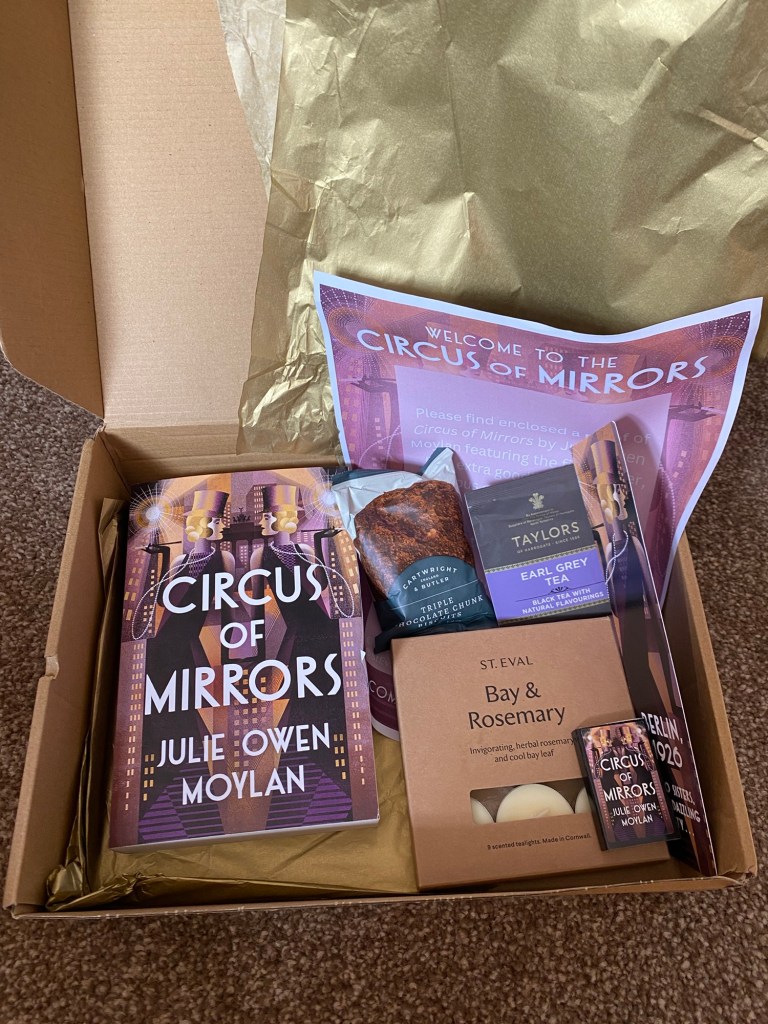
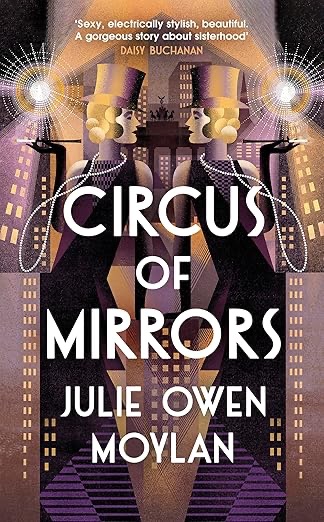

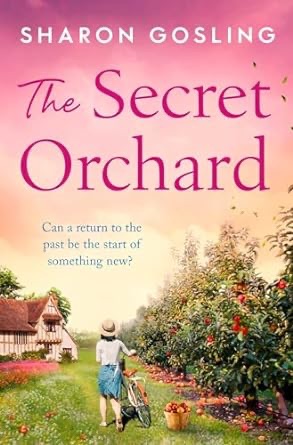
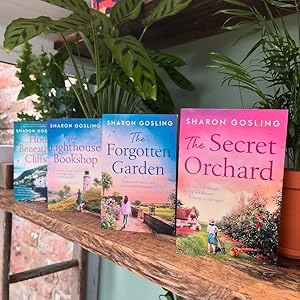
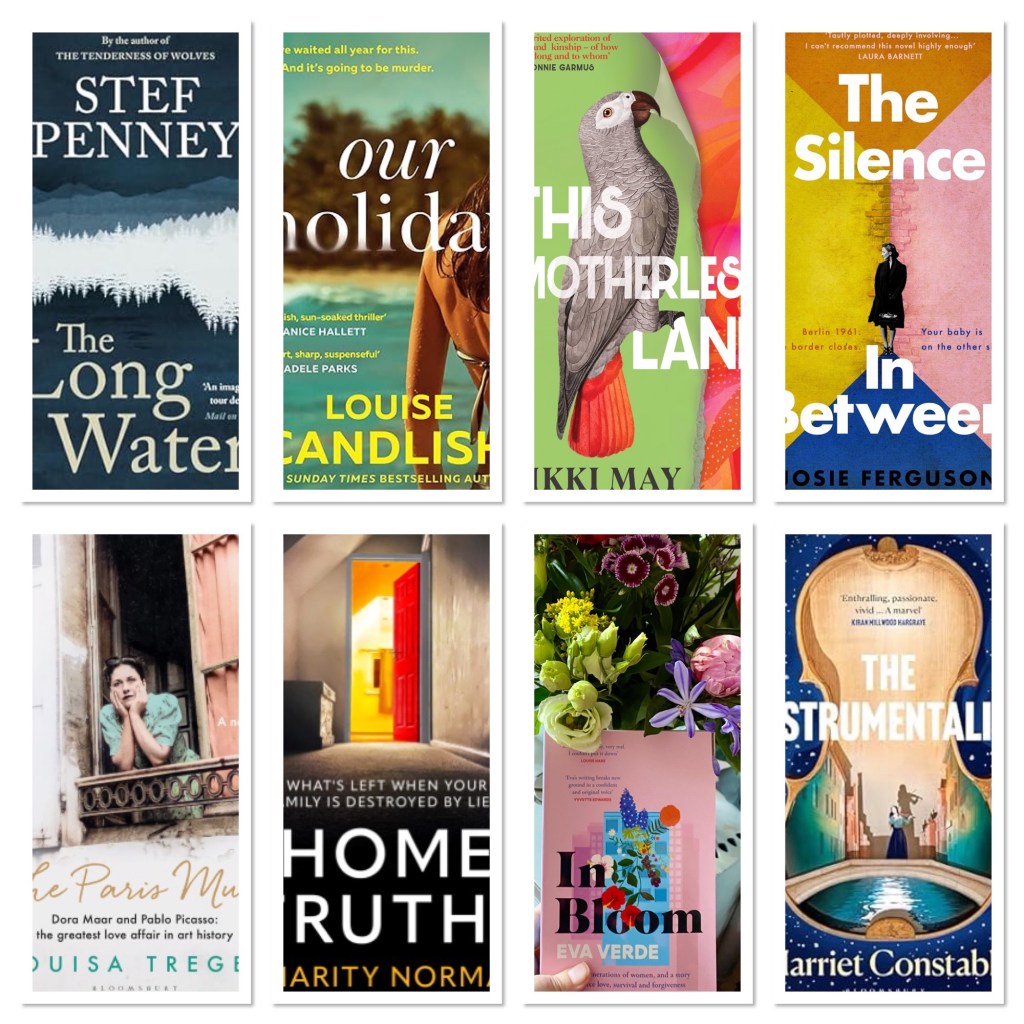

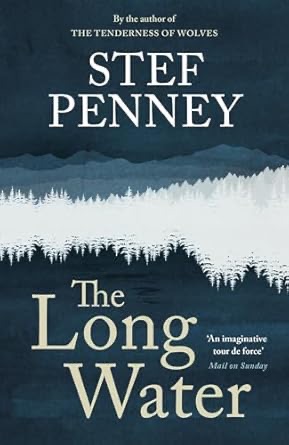

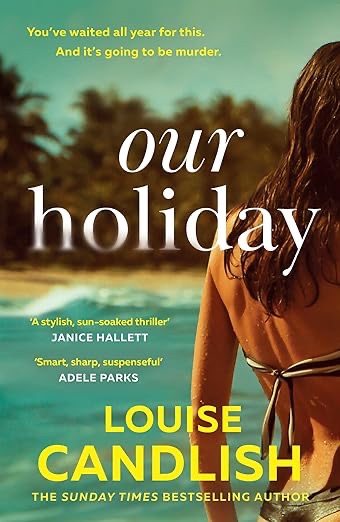
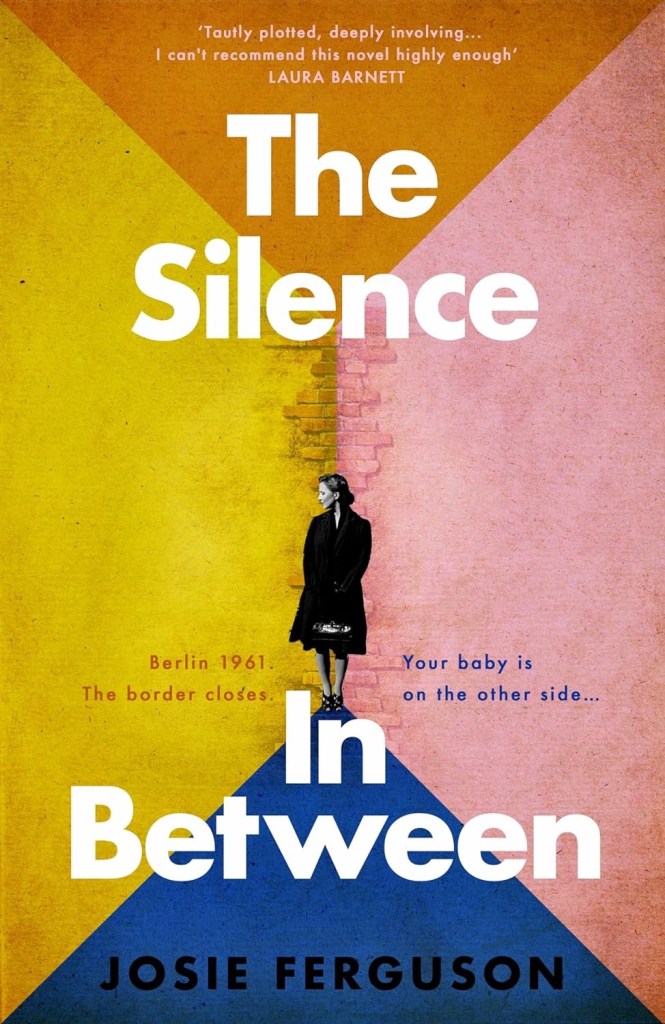
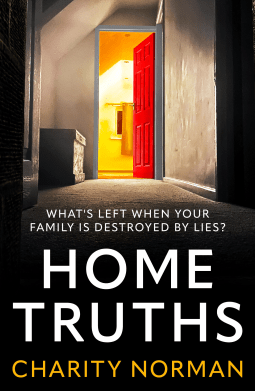
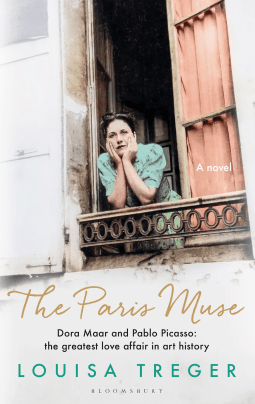


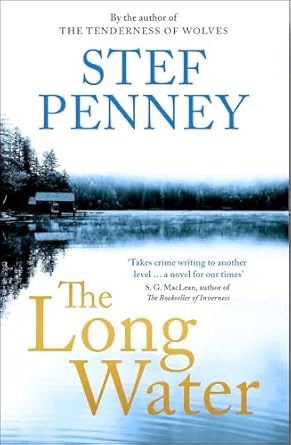





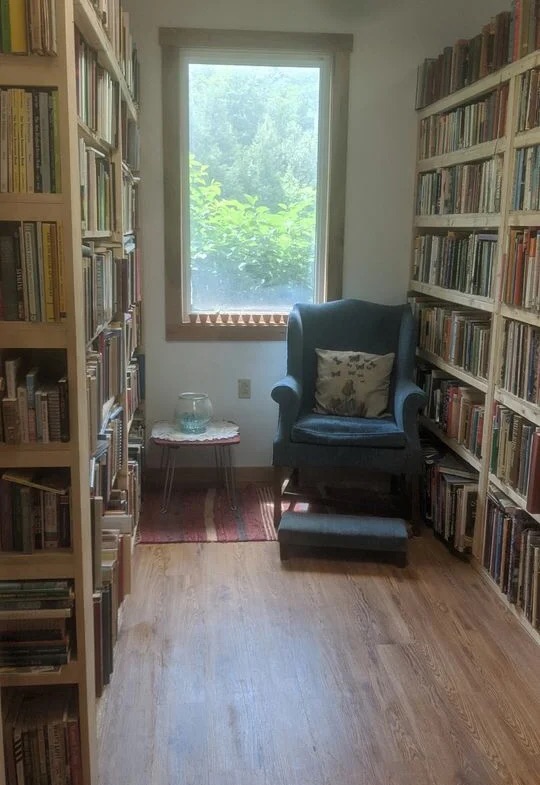


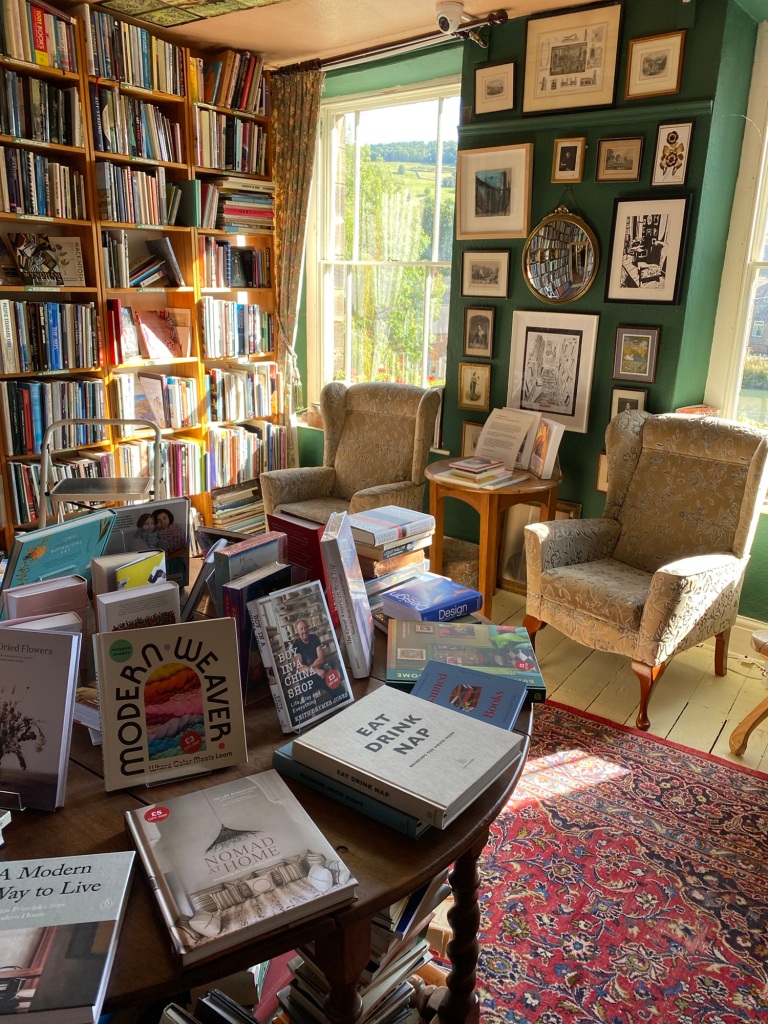
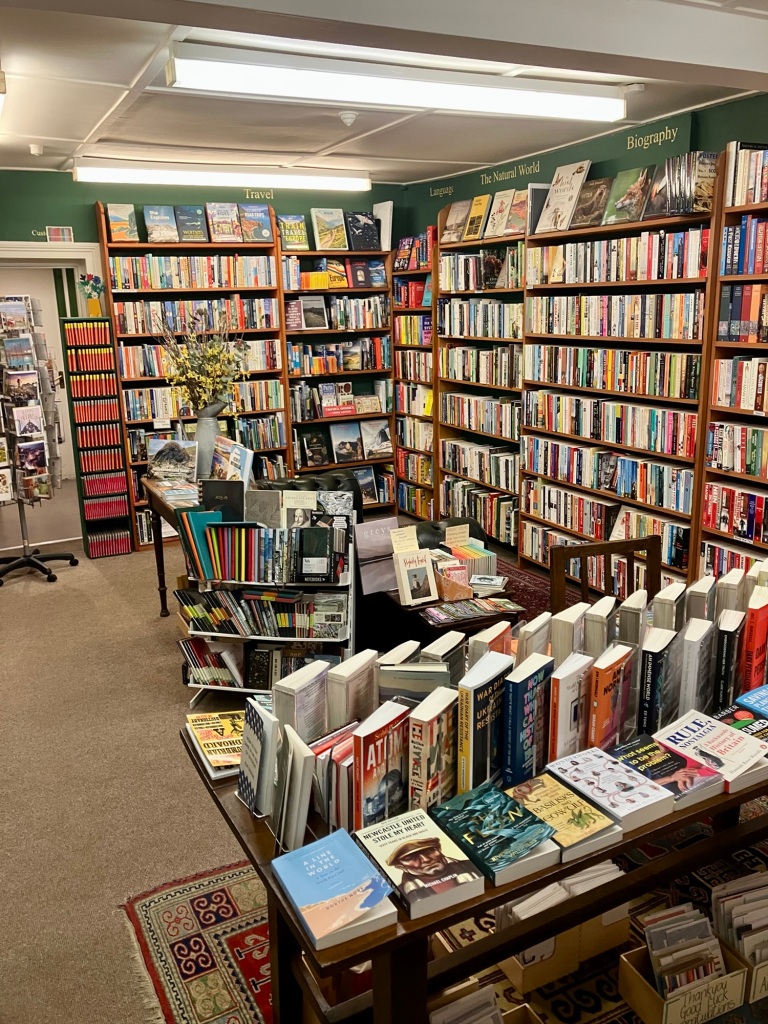


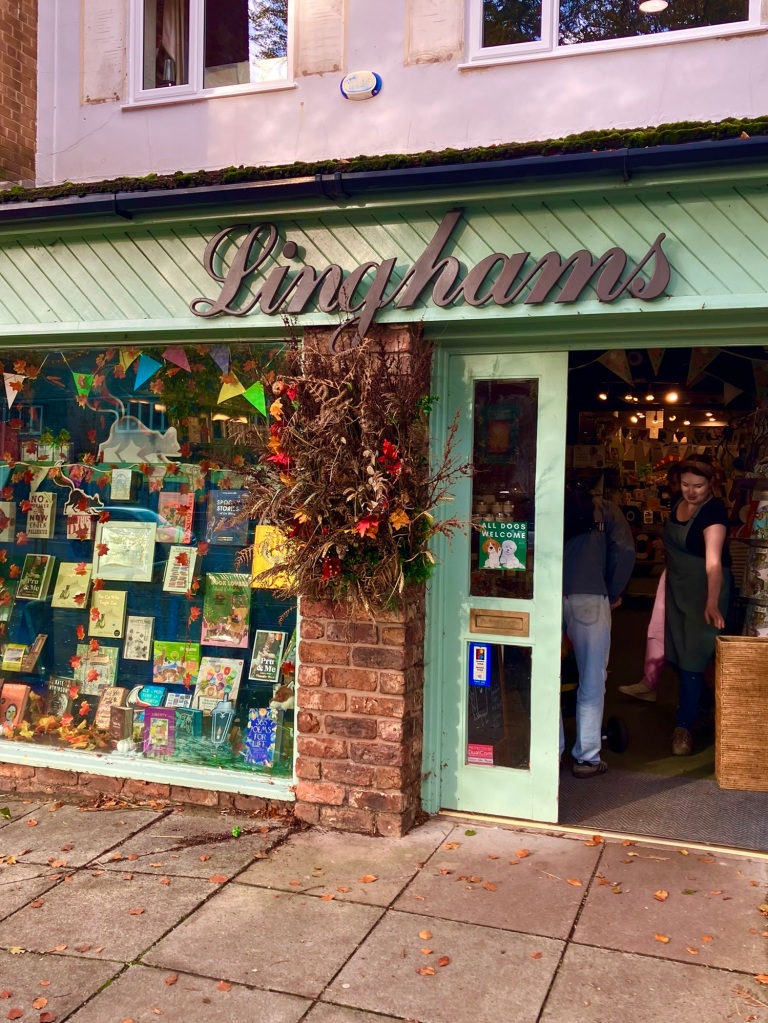


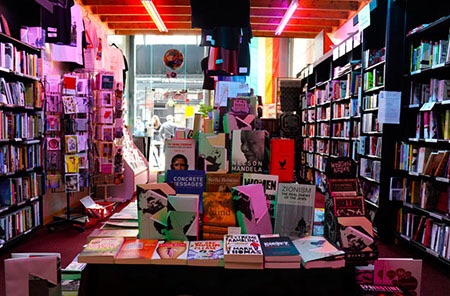
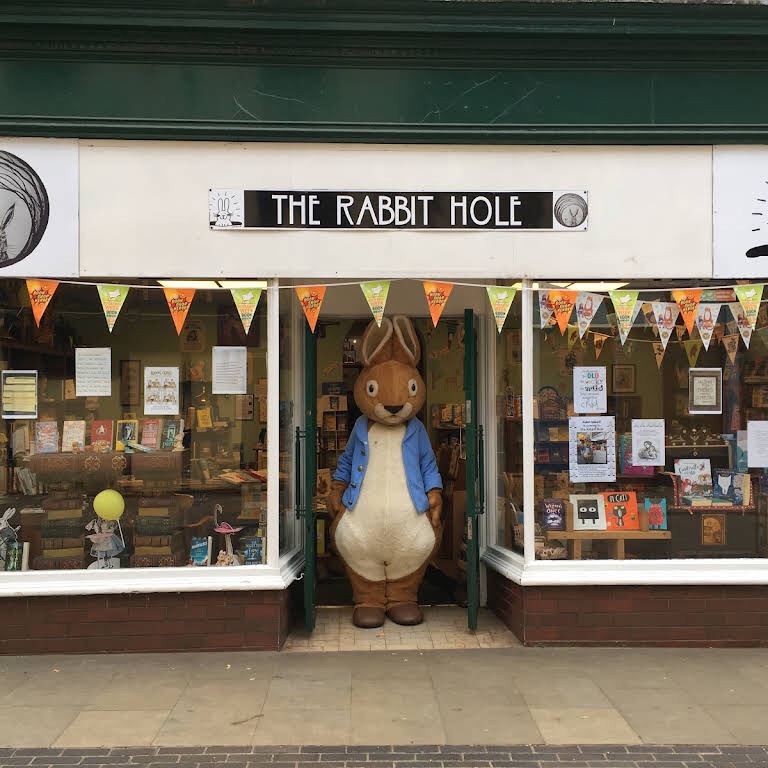


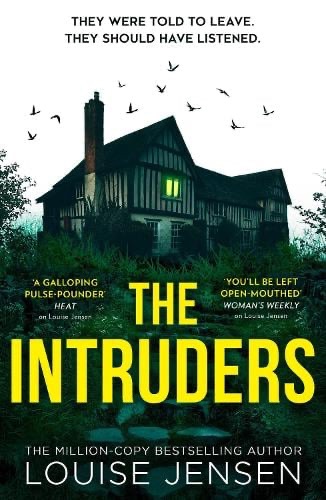


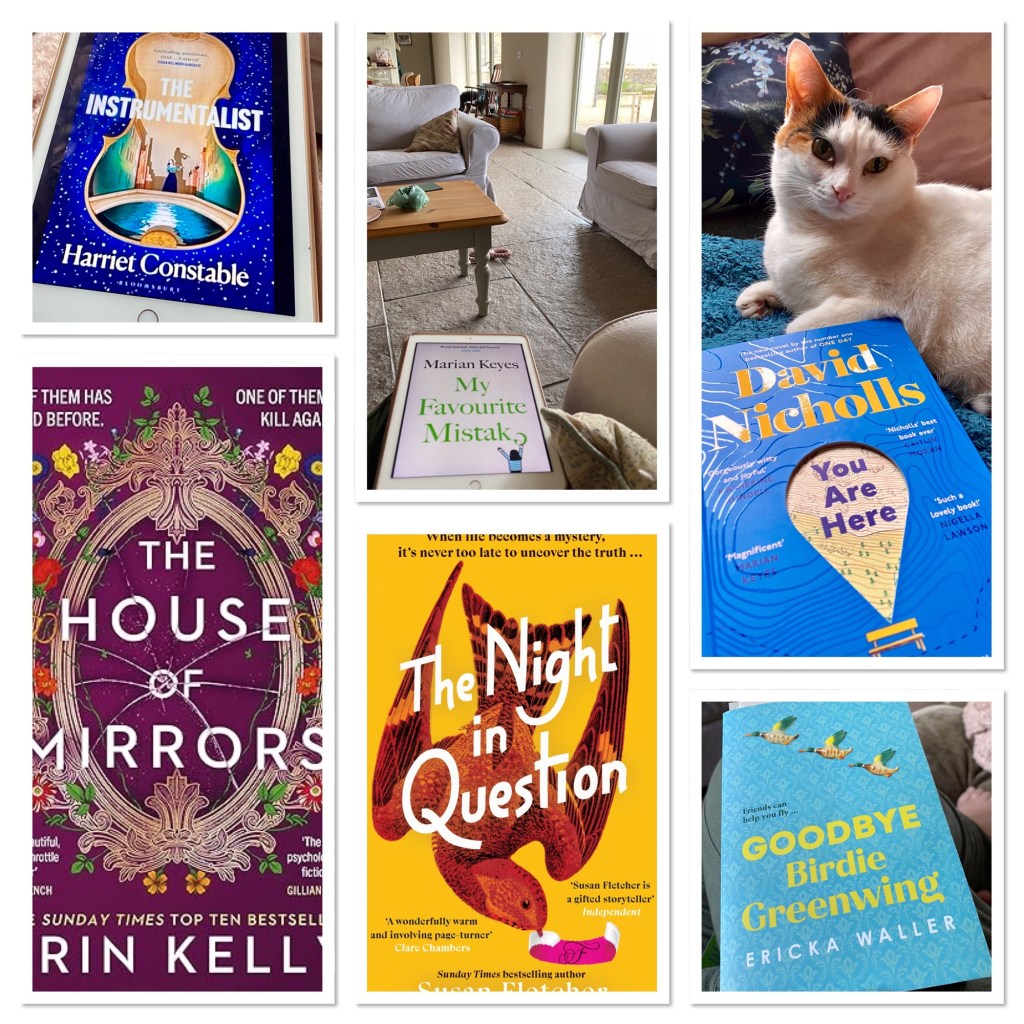
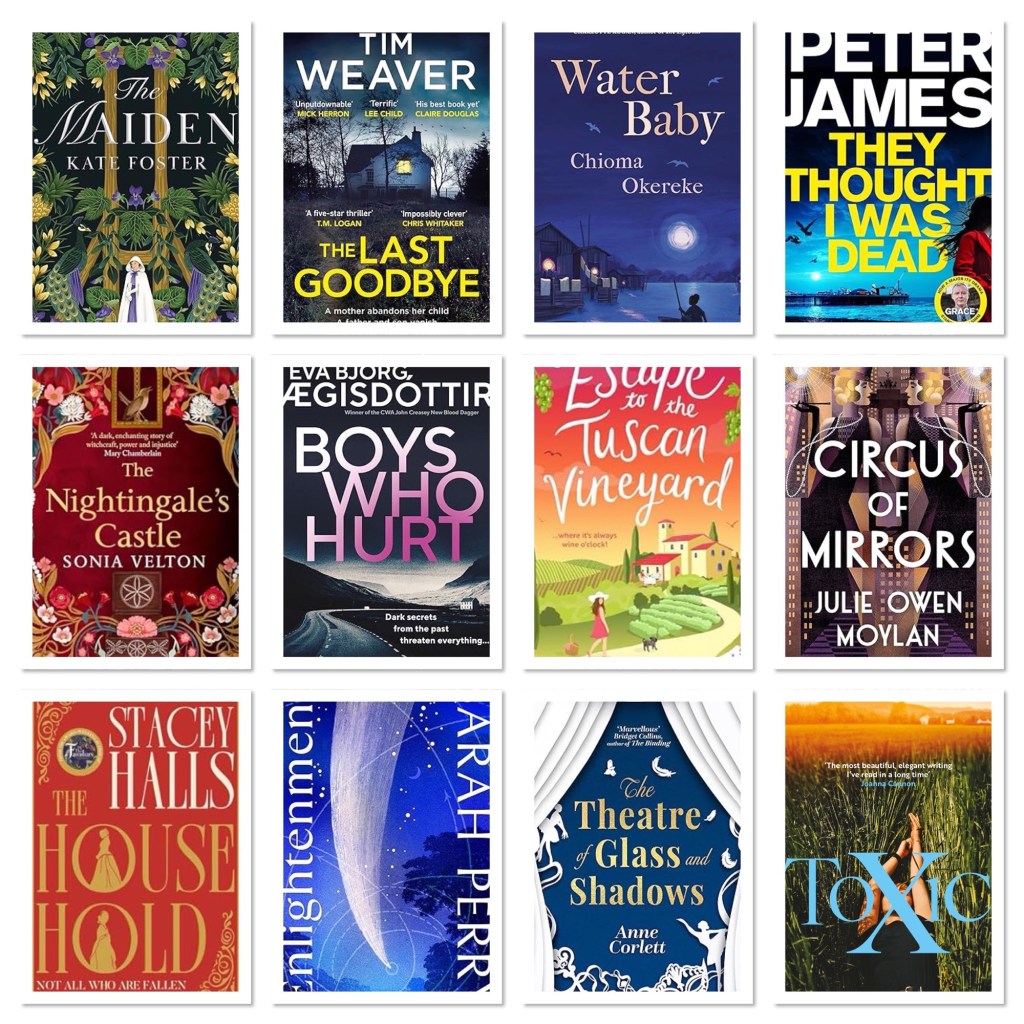
 The Lotus Readers