Posted in Random Things Tours

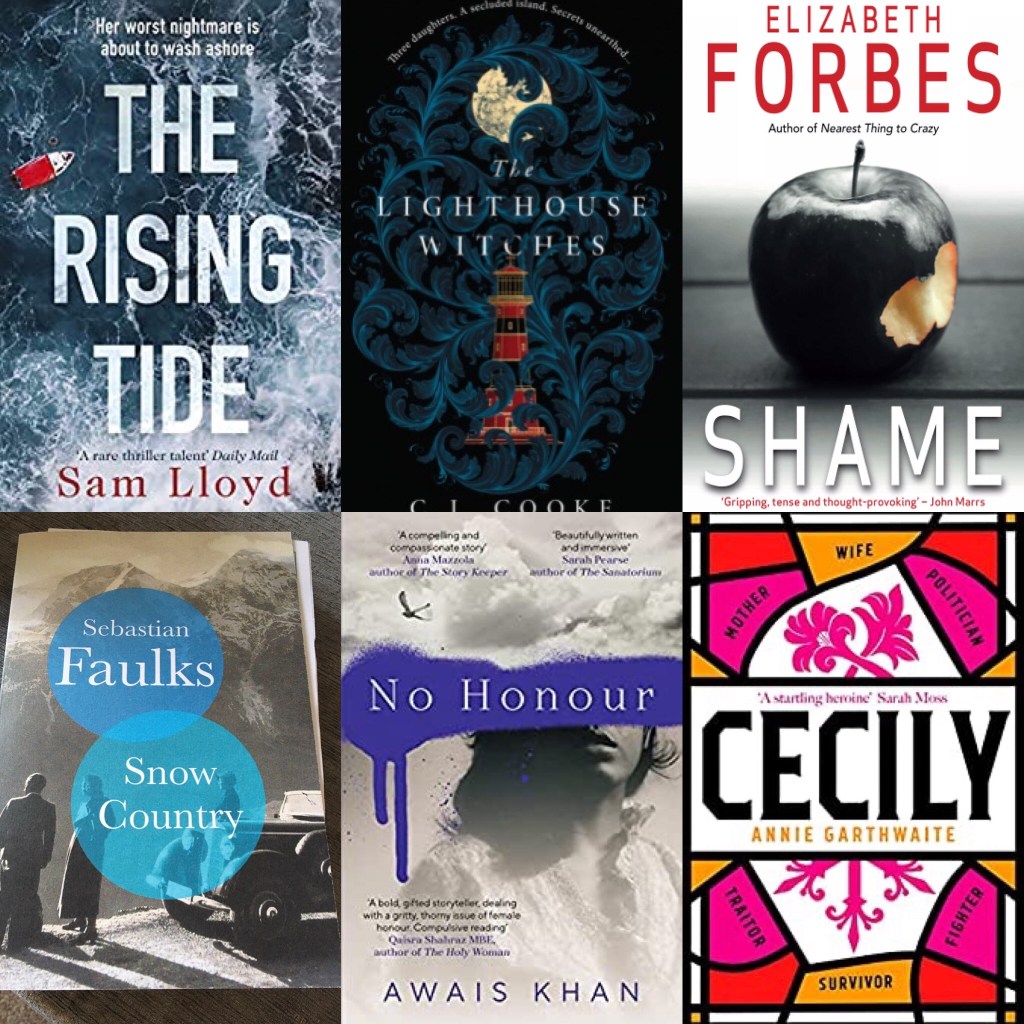
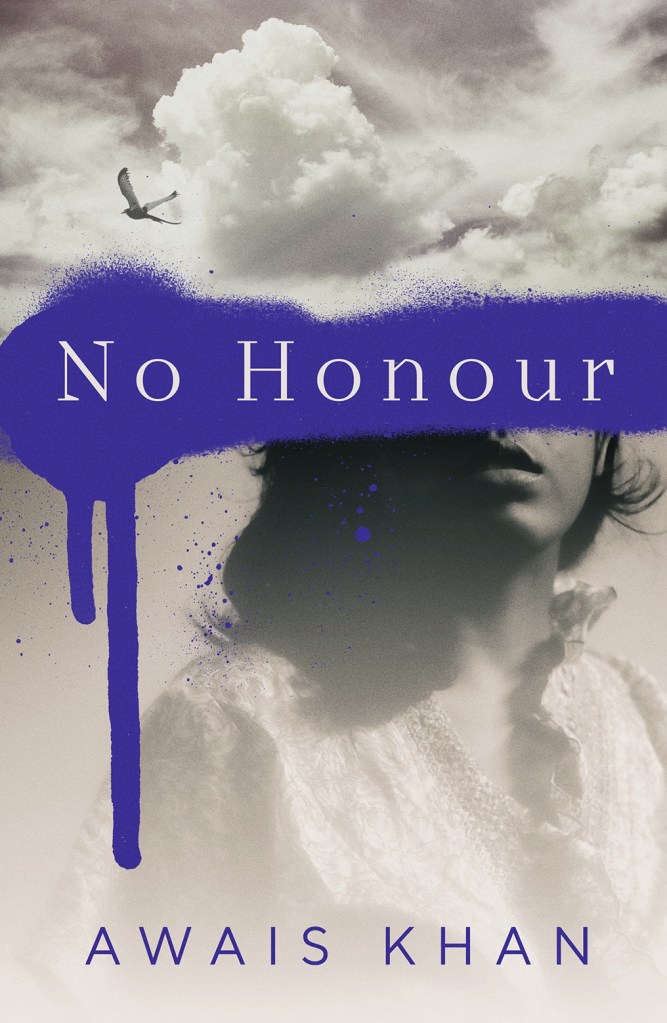
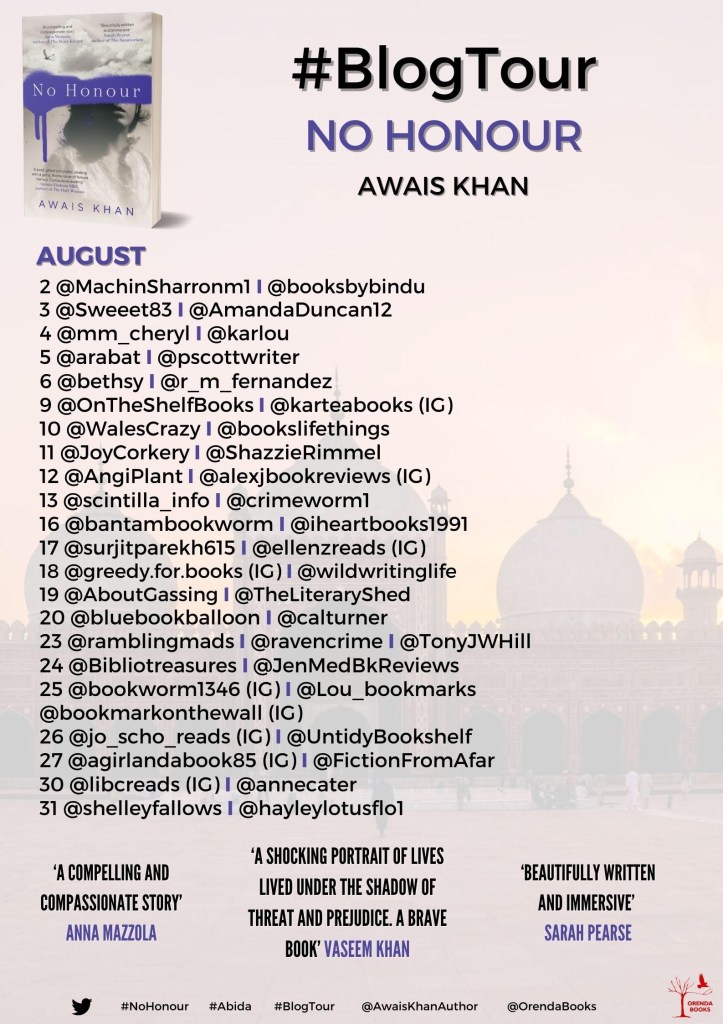
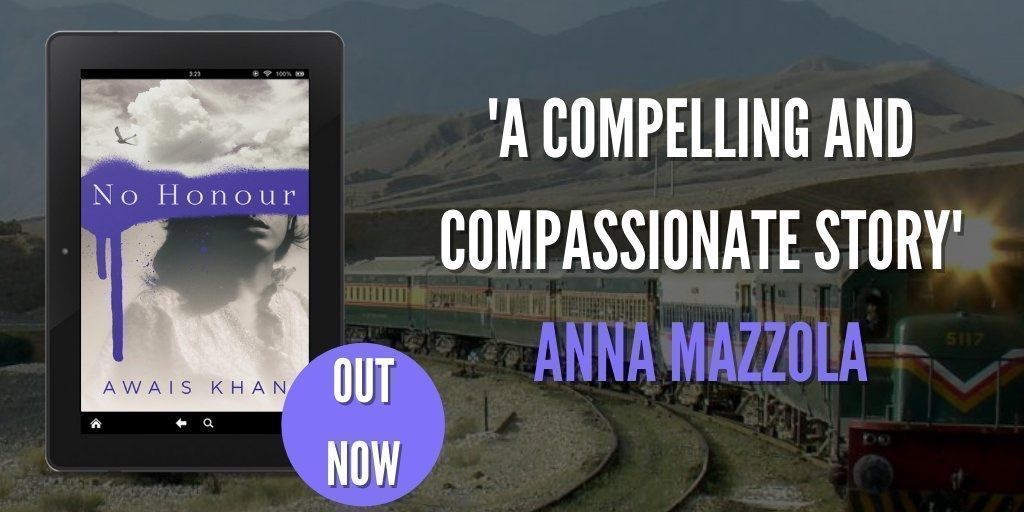
No Honour by Awais Khan.

Last year I was profoundly affected by the ITV series Honour. It was a dramatisation of the murder of a young Kurdish woman, carried out by the male members of her family and ordered by her father. Bahnaz Mahmod reported her fears to the police on five separate occasions, pleading with them to help her as she believed her family would kill her. Instead of fully investigating, she was dismissed as hysterical and over over-reacting. So instead of having their protection, she was raped and murdered by distant cousins who fled back to Iraq straight afterwards. Their reasoning was that she had besmirched the honour of her family, after divorcing her arranged husband and falling in love with another man. Real life police officer DI Caroline Goode was assigned the case and this was the story of her dogged determination to hunt down those responsible. I found myself moved, but also disturbed by the case. Days later I was still thinking about it, desperately trying to understand why her actions were so offensive to her family, but the men’s actions of raping and killing their own family member were not. I simply couldn’t get into the mindset of these men, and while on one hand I could see the point of view that it is simply murder, I wanted to understand more about what made Bahnaz Mahmod’s actions condemn her to death, and how such a dishonourable act on the men’s part could be seen to restore the family honour.

So, when I had the chance to read Khan’s book I started to read more about honour killing and it’s place in the culture of Pakistan. Pakistan is a collective, patriarchal society and family groups are policed by the male members of a family, a village or area. A woman’s honour is dependent on their modesty and a man’s honour is dependent on his masculinity. So, if a young woman refuses an arranged marriage or commits adultery she has behaved immodestly and has lost her honour. Her male family members are responsible for her and if they do nothing, their masculinity is in question and their honour is lost. So, by killing the immodest woman in their midst, they are seen to assert their masculinity and regain their honour. I was very shocked to read that at least a fifth of the world’s honour killings are carried out in Pakistan, bringing their figure to just over 1000 per year. However, this is often a rural practice and has widespread support in Pakistan, so killings are not always reported and the figures may well underrepresent the problem. Awais Khan takes these figures and ideas, and weaves the tale of a bright and ambitious sixteen year old village girl, with incredible insight and compassion.
The opening scene is a brutal look at the reality of rural village ‘justice’. A young woman is dragged to the river after giving birth to an illegitimate child. The pir, who is a village elder, lists the girl’s crimes against her family and demands that the villagers carry out her punishment. I was shocked at the punishment, especially that it extends to her baby who is drowned in a bucket of milk. Make no mistake, this is hard hitting and it needs to be, for readers to understand the reality of what is still happening in Pakistan and around the world. In the wake of this horror, is a feisty young woman called Abida and despite the horrific example in front of her, she’s headstrong and believes it would never happen to her. She can already see the unfairness of the society she’s been born into – a patriarchal system where her entire life is mapped out before her and she doesn’t have any agency. She will have a husband chosen for her, he will then decide where they live, how they live and the children they’ll have. The problem is Abida has already fallen in love. Her father Jamil has already worked this out and is desperately worried for his daughter. He’s noticed she sneaks out after everyone has retired for the night, he hasn’t followed her, but does listen for her return. He knows it’s likely she’s meeting a boy and he hopes that he’s wrong, but he has a terrible feeling the worst has already happened. What will he do if the pir comes for his daughter?

I don’t want to ruin the plot, so will keep details to a minimum, but although Abida escapes her home village she doesn’t have the happy ending she expects. In an interview with Eastern Eye, Khan explains that he chose fiction to shed light on the subject of honour killing, because it ‘allows for more creative freedom, and for more heightened emotions.’ This was true for me as I fell in love with Abida’s spirit and the hope she has for her life. Amazingly, that hope follows her to Lahore and through her whole experience. She keeps thinking that beyond the situation she’s in, she will survive. The relationship between Abida and her father was so familiar to me from my own Dad. Whatever I’ve gone through in life he’s been there and I have no doubt that he’d search for me in the way Jamil does. It’s the only pure love in the whole novel, unchanged by circumstance and completely unconditional. I found it very moving and for me he’s the most honourable man in the story. He’s decided that his own moral code is dependent on how he treats his children, rather than being dependent on the opinion of the men in his village. Although this doesn’t mean Abida will be safe. In his publicity for the book, Khan has mentioned the social media celebrity Qandeel Baloch. After appearing on Pakistan Idol, she created many video clips addressing controversial topics and women’s rights. In 2016, she was drugged and strangled by her brother Wazeem Aseem who felt she was disrespecting her family. If someone as high profile as Qandeel could be killed this way, what chance does a girl have if she’s from a conservative village, mired in poverty with income and status dependent on maintaining the honour system?
I found the book shocking and I think it will probably stay with me for a while. I’m considering looking for charities to support that help women in these dreadful situations. Khan’s writing pulls no punches, but it’s also incredibly compassionate. I loved some of the more complex female characters such as the servant Salma who has kept Abida locked up, but then helps Jamil. Rana Hameed’s first wife Nigaar is fascinating, she’s broken down physically and mentally, but desperate for a new wife with the will to destroy him, even if she has to die in the process. The complicity of women is needed to keep the status quo, whether they turn a blind eye through fear or because they’ve been beaten into thinking this is the norm and it won’t ever change. I’m glad I read this, to raise my awareness and help me grasp the cultural and historical background in Pakistan. It might also inspire people to be aware of this crime globally, because it isn’t restricted to Pakistan. I hope many more people read Abida’s story and that Khan achieves his aim of showing people ‘love is never a crime’. If he achieves that the whole world will be a better place.

You can read Awais Khan’s interview with Eastern Eye at:

https://www.easterneye.biz/hope-in-the-face-of-honour-killings/
Meet The Author
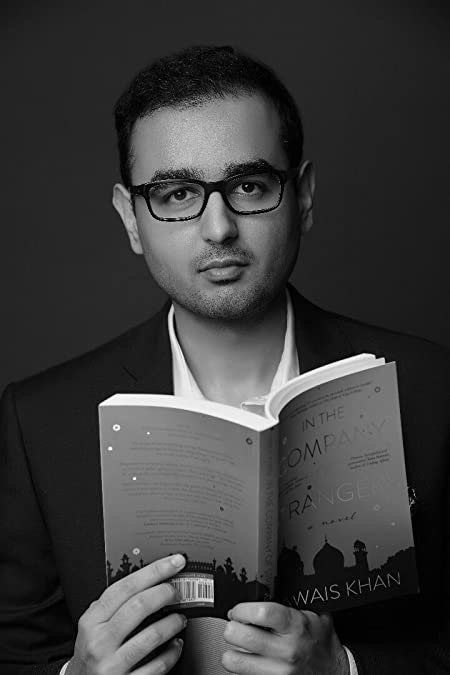
Awais Khan was born in Lahore, Pakistan. ‘In the Company of Strangers’ is his first novel published by Simon & Schuster and Isis Audio. His second novel ‘No Honour’ is published by Orenda Books and Isis Audio. He is a graduate of The University of Western Ontario and Durham University. He studied Creative Writing at Faber Academy. His work has appeared in The Aleph Review, The Missing Slate, MODE, Daily Times and The News International. He has appeared for Interviews on BBC World Service, Dubai Eye, Voice of America, Cambridge Radio, Samaa TV, City42, Maverix Media and PTV Home. He is represented by Annette Crossland (A for Authors Agency Ltd, London).

In his free time, he likes to read all types of fiction, especially historical fiction and psychological thrillers. He is hard at work on his forthcoming novels.
Posted in Netgalley, Publisher Proof

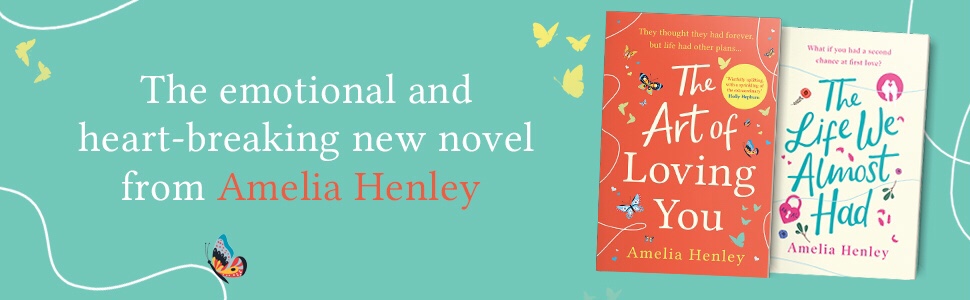
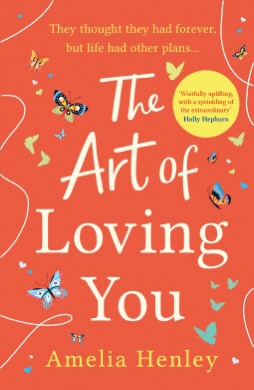
The Art of Loving You by Amelia Henry

Oh my goodness this beautiful novel really did pull at my heartstrings. It was stunningly romantic and reduced me to a hormonal weeping mess. I just knew something was going to happen to this lovely couple, because everything was perfect in their world and they were embarking on a project to help others. Libby and Jack were bringing to life his dream by developing an arts centre/retreat for underprivileged children. They already had the keys to the property and were ready to go, when a phone call changed everything. Just as I’d fallen in love with this gorgeous couple, the author shatters their lives. I don’t want to ruin the plot for everyone, so I’m not going to talk about what happens, but I am going to talk about the characters.

Libby is our narrator and I really felt for her so much. Her world has been so rocked that she’s struggling to trust anything or anybody. She’s scared of everything, because now she knows that the worst things we imagine can happen. The author cleverly lets Libby drop little hints and ideas about what’s coming next, they work like cliff hangers, so that I kept jumping to the next chapter and reading a bit more. Just a head’s up – can end up half way through without realising!

I loved Sid, just loved him. He has just moved into a care facility, because he needs extra support, and gifted Libby and Jack his house. This is the only way they’re able to realise Jack’s dream of opening the arts centre. Sid is like a surrogate grandfather to the couple, and the way his relationship develops with Libby as the novel progresses was really touching. At a time when she feels hopeless and lost, he is so supportive, positive and uplifting. I wanted my own Sid for his wise advice alone. I would love to read a whole book about Sid’s past, because I want to know how he came about his philosophy on life.

Although the book has an obvious film inspiration, I kept thinking of the moment at the end of the Steve Martin film Parenthood. He’s panicking because he walked out on his job and his wife has just announced she’s pregnant with baby No 4. His grandma starts to talk about the fairground, and while other people like safer rides like the dodgems, she loved the rollercoaster. He doesn’t get it at first, but later at his children’s play when everything starts to go wrong, he realises that instead of panicking, he could just laugh and go with it. Sit back and enjoy the ride. It makes you realise that how you view life is always a choice.

I don’t know much about the author, but I’d hazard a guess that this is someone who’s life experience has informed these characters and their situation. Truth and real pain shines out from these pages. Readers can tell if a person’s writing comes from their heart, and this truly does. It seems easy to dismiss ‘romance’ as something silly and frivolous when it isn’t. Love, real love, changes our lives. We move house for love, we change lifestyle, we make lifelong commitments. If we think about the love we have, from partners, friends, family, it’s without doubt the most uplifting thing in our lives. When we lose someone we love it’s devastating and life altering. Yet, we still love. This inner hope and endless capacity to love, is the most important thing we can write about, because it’s the most important thing in our lives. I felt the writer understood this. The story teaches us not to waste time, to hold on tight to those we love and to love life even when it isn’t ‘all beer and skittles’.

Published 21st July 2021 by HQ

Meet The Author

Amelia Henley is a hopeless romantic who has a penchant for exploring the intricacies of relationships through writing heart-breaking, high-concept love stories. 

Amelia also writes psychological thrillers under her real name, Louise Jensen. As Louise Jensen she has sold over a million copies of her global number one bestsellers. Her stories have been translated into twenty-five languages and optioned for TV as well as featuring on the USA Today and Wall Street Journal bestsellers list. Louise’s books have been nominated for multiple awards.

Posted in Publisher Proof

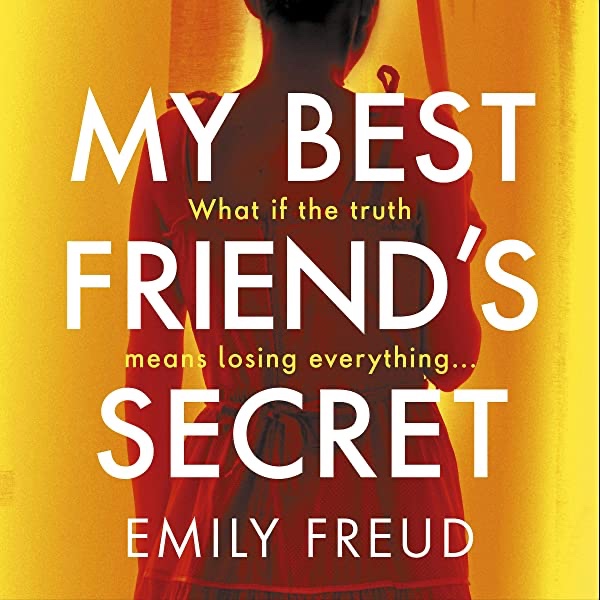
My Best Friend’s Secret by Emily Freud.

Kate Sullivan has a beautiful home, a job she loves and a handsome fiancé: all she’d ever dreamed of since getting sober and painstakingly piecing her life back together.

But a chance encounter with her old best friend Becky threatens Kate’s newfound and fragile happiness. Kate remembers nothing of their last drunken night out, the night Becky broke off their friendship without warning or explanation.

With Becky back in her life, Kate is desperate to make amends for the past. For the closure she craves, Kate needs to know what she did that ruined everything.

But what if the truth is worse than Kate could have imagined?

This novel gripped me from the beginning and I could relate this back to being a young woman, unsure of my place in the world and being uncomfortable in my own skin. It’s depiction of how our fears and demons can shape us if we let them, and the dangers of self-medicating our anxiety and lack of confidence. It was such a thoughtful and honest exploration of female friendship and what can happen when those bonds are broken. As is usually the case in this type of domestic noir when the novel opens Kate appears to have everything. She’s just about to marry her American fiancé Ben, they have a beautiful home and she’s settled into a job she loves as a teacher. However, all of this hasn’t come easily for Kate, because she spent a few of her young adult years totally out of control. Thanks to the 12-step programme she has found a way out of alcoholism, and is on an even keel.

Yet, her past does threaten her perfect future when she meets an old friend by chance. Back in her wilder, drinking, days Becky was a partner in crime. In fact the pair were best friends, until one drunken night out, after which Becky never spoke to Kate again. Kate has no memory of that night. On meeting Becky, she feels the need to make amends for whatever happened that night, even though she doesn’t remember what she’s done wrong.

What distinguished this book from the average thriller was Freud’s compassionate and thorough understanding of alcoholism and the psychological journey individuals take when they embark on their recovery with AA. It was beautifully written, slightly slow in parts, but infused with a creeping unease throughout. I loved the psychological ins and outs of Kate’s journey, because we are inside her mind as she battles her past and tries to hang on to the life she loves. Freud really does nail the complexity of our inner voices and how they can trip us up and knock us off balance. That endless negative chatter that tells us we can’t do this, we’re not worthy and don’t deserve the good things we have in our life. I felt so much empathy for Kate and wanted her to be resilient enough to resist the chatter, and stay on course. I thought the author showed incredible knowledge and compassion for how childhood trauma affects our lives, particularly the struggles to form good, solid relationships. This was a powerfully written thriller, and I will be looking out for whatever the author writes next.

Meet The Author

In her other life, Emily Freud makes TV. She has over ten years experience in development and production and has worked on some of the most loved, talked about and award-winning series in recent years. Credits include: Educating Yorkshire, First Dates, and SAS: Who Dares Wins. This lifelong fixation with story and character is the thread that runs through her work, and ultimately led to the pursuit of a writing career.

‘My Best Friend’s Secret’ is her debut novel, published by Quercus.

Posted in Netgalley, Personal Purchase

The Illustrated Child by Polly Crosby.

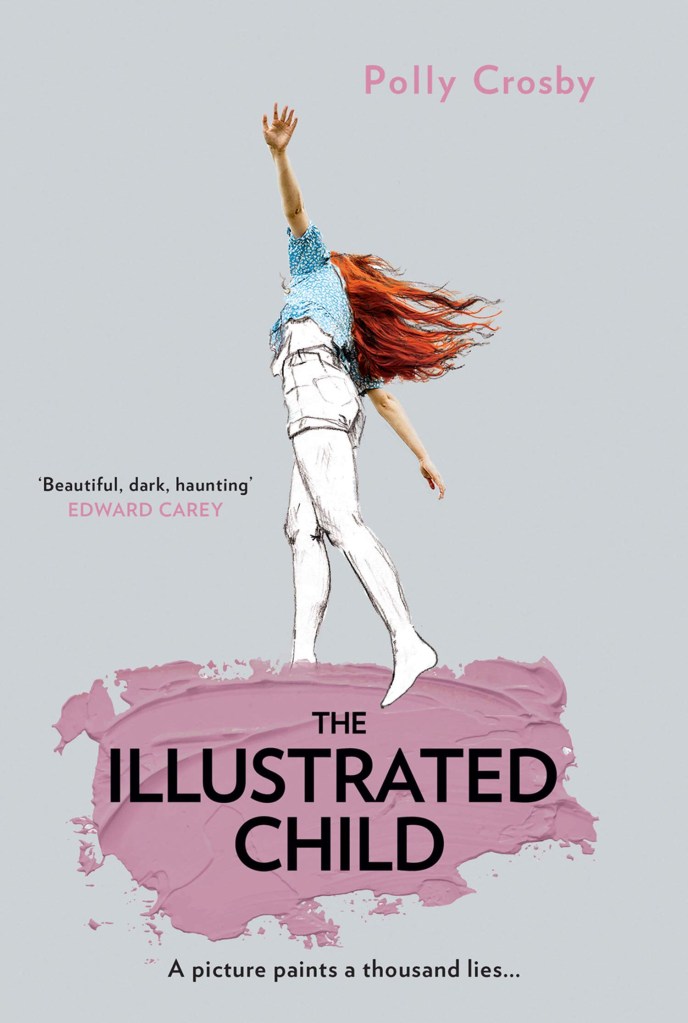
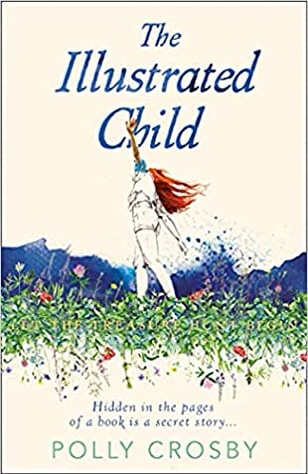
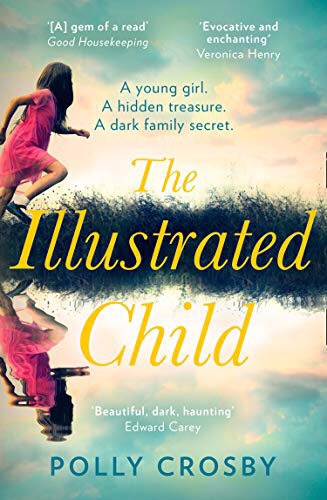
This beautiful and original book hit me straight in the heart and I was reading the last few pages with a massive lump in my throat. Romilly Kemp lives in the run down Bräer House with her father Tobias, an artist who is both inventive and eccentric in equal measure. This situation reminded me of a classic favourite I Capture the Castle, but Romilly’s story is much more than a coming of age tale. Romilly and her father live alone and are struggling for money, when Tobias has an idea for a children’s book based on his daughter. Featuring his original illustrations, the books follow Romilly and her Siamese cat Monty through a series of adventures at the circus, in a windmill and at Christmas. She is preserved forever as a 9 year old in her patchwork dress and her red hair flying behind her. Romilly loves looking for the tiny little additions to his main illustrations – a tiny mouse holding a forget-me- not, two miniature hares boxing, and sometimes Romilly herself being chased by a animal. The public fall in love with the books and the idea grows that there is some sort of treasure hunt contained in the pages leading to trespassers at Bräer and some horrible encounters with reporters and photographers.

Romilly can see secrets of a different kind in the pages her father has drawn, but she’s used to secrets. She hasn’t seen her mum for so long she’s largely forgotten her and they have no other family. Where does her friend Stacey go when she is missing for weeks? Who is the beautiful, pink costumed circus lady she meets who knows her father? She notices differences in the way she’s drawn in the book and also a very faintly painted lady in the background often with her head in her hands. Her dad gives her a puzzle box he’s made, which starts to tick when it’s her birthday releasing a memento or object that’s important to her – Monty’s silver bell, a pink feather. When her dad’s memory starts to fail, Romilly wonders if all these clues are for her, or are they triggers for her dad’s memory? More importantly, I was starting to wonder who would look after Romilly and what had torn this close family apart?

is meant to be home schooled, but has no real curriculum or structure. There are times when heat and food are scarce, and set mealtimes never seem to happen unless someone is visiting. As Tobias declines, Romilly is having to cope alone with no family to help. I wanted to swoop in and look after her and Monty. There’s no doubt that she’s independent, resourceful and intelligent, but is that innate or something she’s had to develop having been left to fend for herself so often? There’s a deep understanding of the psychology of a child in this position underlying Romilly’s story. Even her name means ‘strength’ and she has so much, using it to defend her tiny family and her home.

Underlying all of this is an understanding of trauma and how grief can tear apart the strongest families. In one part of the book Tobias explains to his daughter that people grieve in different ways and sometimes that means doing it apart. I know grief well, and at different stages in my journey I’ve done things differently, avoided certain places and people. At first I struggled to talk to anyone who was as shattered by my husband’s death as I was. I couldn’t deal with anyone else’s needs, only my own. I was very angry with people who turned out for the funeral claiming a relationship with my husband, who I had never met in the seven years we’d been married, the last four of I’d been caring for him 24/7. Later I wanted to seek out people who grieved as strongly as I did because we could reminisce and understand each other’s profound sadness. When reading the book I found myself both very angry with Romilly’s mother because I felt she was selfish, but I also sympathised and understood her decision that she shouldn’t be a parent. There were parts of the novel where I felt nobody understood or fully cared how much their decisions impacted on this little girl. I was so profoundly sad for her and at that point where she realised she needed help, she allowed herself to be vulnerable which must have been so difficult for her.

This is a beautiful book: it’s invocation of childhood and play; the magical atmosphere of Bräer and it’s surroundings; the stunning artworks done by Tobias and the complex history he’s trying to convey. I loved how the author showed objects sparking memories, for Romilly, but also for Tobias who, befuddled by dementia, recognises his daughter through Monty’s silver bell. I hadn’t unravelled the mystery so I could sit back and enjoy it as it played out and when the truth was finally revealed everything made sense, even if I did think Tobias could have handled it so differently. I have a particular affinity with hares, so his drawing under the book’s dust jacket of the two hares was particularly moving. What I loved most was the way the author showed a difficult childhood still being magical and full of memories. I think we can probably all look back and remember times that feel golden to us, but might be very different from our parent’s perspective. Romilly’s freedom, her ability to invent and imagine, to follow her own interests when mixed in with the magical circus, the panther stalking the area round the village and buried treasure seem magical. How much of this would she be willing to trade for security, routine and someone to care for her? This book will stay with me for a long time and is a definite candidate for my ‘forever shelves’.

Meet The Author


Polly Crosby grew up on the Suffolk coast, and now lives with her husband and son in the heart of Norfolk.

Her debut novel, The Illustrated Child (The Book of Hidden Wonders in the US and Australia) is out now.

In 2018, Polly won Curtis Brown Creative’s Yesterday Scholarship, which enabled her to finish her novel. Later the same year, The Illustrated Child was awarded runner-up in the Bridport Prize’s Peggy Chapman Andrews Award for a First Novel. Polly received the Annabel Abbs Creative Writing Scholarship at the University of East Anglia, and is currently working on her second novel.

Twitter: @WriterPolly
Instagram: @polly_crosby
Website: pollycrosby.com

Posted in Squad Pod Collective

We Are Animals by Tim Ewins.

I’m so happy to be part of the Squad Pod’s first blog tour for this unusual but uplifting book by Tim Ewins. To describe what it’s about is quite difficult, and I loved Tim Ewins’s own words in his interview with Emma from Emma’s Biblio Treasures blog: ‘I can tell you a bit about the book in a very literal sense: It’s about a bloke on a beach that meets a kid on a beach and tells that kid his life story. They both get drunk and watch a cow dance to dance music.’

Of course there’s much more to it than that, it’s philosophical, romantic, humorous and uplifting. A man called Jan and a teenager called Shakey meet on a beach in Goa. Shakey dismisses Jan as a ‘moustache’ – slightly boring, set in his ways and unable to have a good time. Jan dismisses Shakey as a vest. Vests are kids who come out to Goa and pretentiously think they have found themselves by visiting one beach and one club. They go back home, pretending to be enlightened and changed by their visit to Goa, despite having no experiences at all except alcohol and a bar. However, the two do meet and sit having a drink together. Shakey wants to know what has kept this moustache coming back to this beach time and time again. So he is told a love story, how Jan is in love with a woman (also called Jan). ManJan and WomanJan have come in and out of each other’s lives over the years, but this time she hasn’t come back in. So ManJan sits on this beach, that’s special to them both, and hopes for her to appear.

The only other living creature close to them on the beach is a cow and she gets her own short chapter. This may seem totally off the wall and quirky, but go with it. As I was reading I thought there were a lot of similarities between ManJan and the cow. Both have a set daily routine involving the beach and both are evolving alongside the place. When ManJan first came to Goa this place was unspoiled, much quieter and less commercialised. Now it’s full of vests like Shakey, dance music and glow sticks. Yet ManJan finds Shakey a good listening ear, so maybe there’s more to these vests than meets the eye? The cow meanwhile, weaves happily between tourists and even finds herself meditatively nodding along to the thumping dance music.

We hear ManJan’s story and the curious way certain things keep cropping up in his life, like the fishing he thought he’d left behind in England, but crops up again in Scandinavia. WomanJan also turns up for the first time in Sweden and steals his passport, leading to a caper through, Europe, Russia and India. Each destination is beautifully evoked, in very few words we know exactly where we are. In each location an unusual array of characters come into the orbit of this couple and have an influence on their journeys. Then between each section of the story are the animal scenes, throwing light on the human situation or a particular character in some way, which is so clever. Throughout, ManJan and WomanJan keep bumping into each other and eventually love happens. However, this is the longest time they’ve been away from each other, they’ve always found each other in the past. When tragedy ripped them apart, he assumed they’d simply run into each other again, but maybe they won’t this time.

I thought this was one of the more quirky novels I’d ever read and it is unusual in structure and characters. It’s a love story, travelogue, meditation, comedy and tragedy all in one. What Ewins does, rather brilliantly, is keep the balance between these elements, using the animal chapters as literary palate cleansers. In the end though, all these disparate strands come together to create a beautiful story about being human and doing what E.M.Forster suggested was our purpose on earth – to connect.

Meet The Author

Tim Ewins had an eight-year stand-up career alongside his accidental career in finance, before turning to writing fiction. He has previously written for DNA Mumbai, had two short stories highly commended and published in Michael Terence Short Story Anthologies, and had a very brief acting stint (he’s in the film Bronson, somewhere in the background). He lives with his wife, son and dog in Bristol. We Are Animals is his first novel.

Posted in Publisher Proof

The Heights by Louise Candlish.

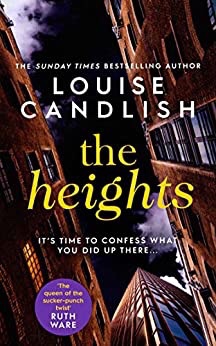
I feel slightly sucker punched only seconds after finishing this fantastic new thriller from Louise Candlish – a name I only came across when it appeared as a ‘you might also like’ recommendation on Amazon, but is now top of my list when it comes to twisty, delicious and impossible to put down thrillers. After the final twists in The Heights I think this might be her best yet. She has an incredibly incisive way of portraying middle class southern morés and the way they change and mutate under immense pressure. It’s like reading a weaponised Jane Austen for the 21st Century; what if Willoughby had been a killer or Wickham had kidnapped then killed Lydia? These are the same type of people, centuries apart, but still playing out gender and class politics. Except now it’s from a beautiful Victorian semi (with a large family room leading to bifold doors into the garden with pizza oven).

Kieran Watts has been dead for over two years. Yet, there he is, on the roof terrace of an exclusive building in Shad Thames. Called the heights – all lower case – this is a tall, thin building that you might not notice at all, had you not been standing in the window of the flat opposite. There are subtle changes. The physique for a start has had some work. There may even be a touch of plastic surgery here and there, but you know it’s him. Even though he’s meant to be dead. You were sure he was dead, because you were the one who had him killed.

Ellen Saint lives with husband Justin, their daughter Freya and Ellen’s son Lucas from her previous marriage to Vic. They really are the perfect family unit, with a shared parenting ethos for Lucas and everyone getting along well. Lucas is a bright teenager, possibly on course to apply to Oxbridge, who loves gaming and spending time with friends and girlfriend Jade. Then along comes Kieran Watts. Kieran moves nearby after being taking into care and placed into a foster home with Prisca. This puts him into the catchment area for Lucas’s school and on Kieran’s first day, Lucas is asked to ‘buddy’ Kieran and help him settle in. The two boys really hit it off and from here starts a spiral that’s only travelling one way, towards tragedy. Firstly, Lucas goes out a lot with Kieran and some older kids, who have cars. Then his grades start to slip and he uses bad language at home. Ellen fears his late nights, mornings in bed and red- rimmed eyes are down to drugs. She tries to reduce his time with Kieran, but only succeeds in pushing them together. Lucas and his girlfriend Jade, find Kieran funny. Ellen doesn’t. She sees the way Kieran looks at her. It’s bad enough when he’s dead behind the eyes, but when focused on her, Ellen sees defiance, challenge and threat. Tragedy strikes one evening, as the boys are out in Kieran’s car and veer off road into a lake. Kieran escapes, but Lucas’s seatbelt is jammed. Ellen can stop imagining her son in his final moments of realisation, panic and terrible fear. Kieran will be made to pay for this.

Ellen is a very single-minded character and I was never sure whether I liked her or not. There are times I think she was a snob, only wanting her son to be with other middle class kids. She also seems to be obsessed with Lucas at the expense of her daughter. Obviously she loves her children, but how much of her interest in Lucas is fuelled by his good looks, his academic prowess and future promise as a potential Oxbridge student. There is an element of Ellen’s concern which is caught up in what others think. She’s still very close with Vic, Lucas’s father, but he has a very different way of parenting. He has no qualms about Kieran, and let’s them hang out at his place. Ellen likes to think that she and Vic are on the same page and is proud of their ability to co-parent alongside her new husband Justin, but is Vic really in tune with Ellen’s values? I kept wondering if this small act of undermining Ellen, was a sign of greater betrayals to come. Similarly, Ellen acts unilaterally as soon as she sees Kieran at the heights. I was surprised that she never once talked with Justin, so they don’t work together on this discovery. After Kieran was sentenced for his part in Lucas’s accident, Ellen starts a media campaign about stronger sentencing for deaths caused by dangerous driving. However, Vic is her partner in this with Justin holding the fort at home. Don’t they agree? Or does Ellen simply disregard his feelings? Her love for her son and her deep sense of grief are driving her forwards and are stronger than her feelings for either husband or her daughter.

As usual Louise Candlish has written a fantastic thriller here. It has all the ingredients that keep you reading till the early hours. Short, snappy chapters keep the pace and tension throughout. There are twists and turns galore! Her incredible ability to analyse and dissect human nature is forensic in its detail. She lampoons middle class concerns here perfectly, from Ellen’s home that Vic remarks is just the right location and style for his ex-wife, to her determination that Lucas is Oxbridge material and shouldn’t be dragged backwards by someone like Kieran. Her children, on the other hand, are more than happy to mix with friends from different backgrounds. Ellen would probably consider herself liberal, but her actions and attitude betray other, perhaps more conservative values. Her very public campaign for longer sentencing seemed to be a distraction, something to throw herself into that potentially delays her grief. It was fascinating to see how such a seismic loss, affects each family member differently. This combination of raw family emotion and tense, thrilling, revelations makes for an incredibly intelligent and enjoyable read that’s impossible to put down until you read the final page.

Meet The Author

Louise Candlish is the author of 15 novels, a fact she can’t quite believe herself. THE HEIGHTS is her newest – Louise Candlish describes it as a ‘twisty revenge thriller whose narrator, Ellen, has a strange fear of heights known as ‘high place phenomenon’. You could say she’s my most Hitchcock-inspired character yet! I can’t wait for you to read it and share your thoughts.’

‘A bit about me: I live in a South London neighbourhood not unlike the one in my books, with my husband, teenage daughter, and a fox-red Labrador called Bertie who is the apple of my eye. Books, TV and long walks have been my top sanity savers during recent times. Oh, and wine’. From her Amazon Author page.

Posted in Monthly Wrap Up

Books Of The Month! July 2021.

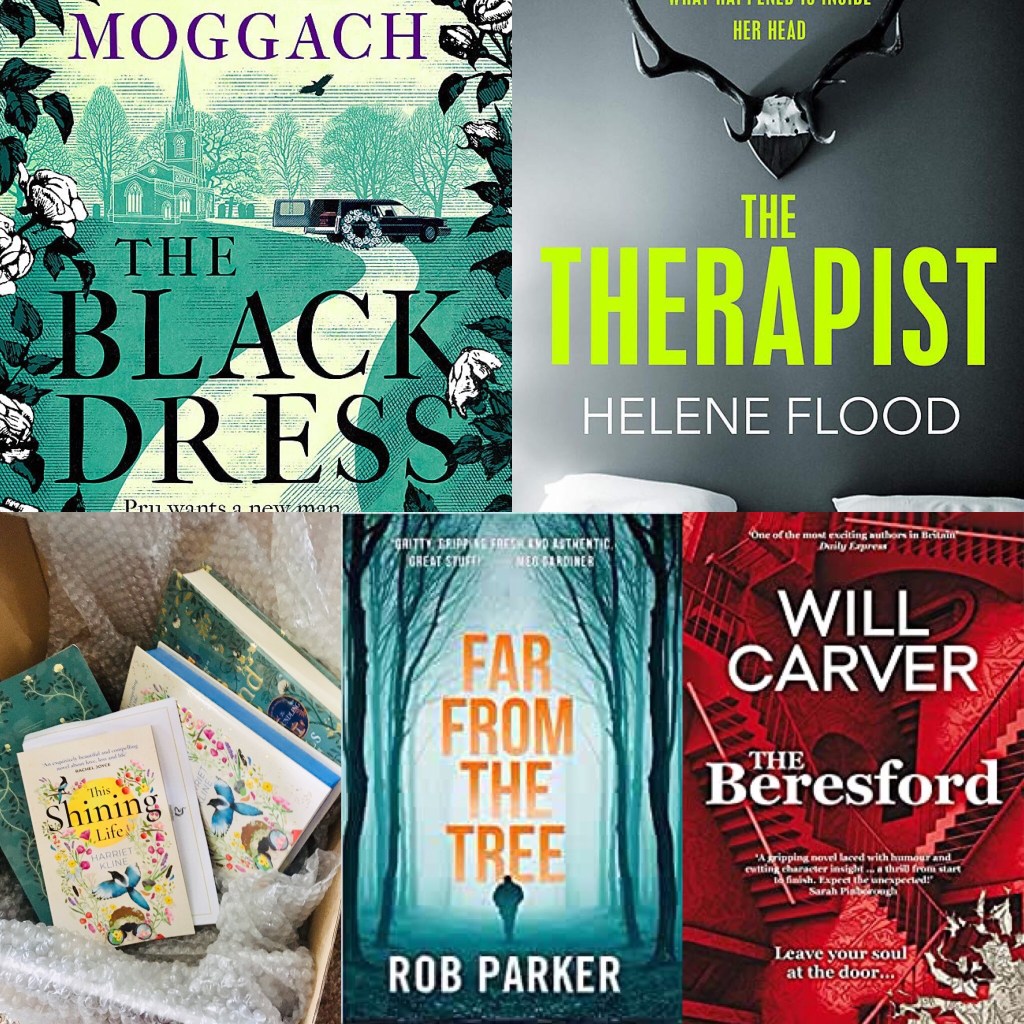
This month has been something of a break from writing, since a perfect storm seems to have hit our household. The opening up from restrictions hasn’t felt much like a reprieve to us, despite being double vaccinated. This may be because we know someone hospitalised with COVID-19 despite their vaccinations, and I still have an underlying condition that makes me vulnerable. The house had its obligatory ‘three things go wrong at once’ – the most spectacular being the afternoon I pulled the bath plug out, but instead of the water draining in the usual way it poured through a hole in the kitchen ceiling onto our island and hob. So when my partner suddenly became unwell a couple of weeks ago, I knew I had to take a break. It was just in time, because since then my multiple sclerosis has flared back up – probably due to stress and the weird jumps in temperature we’ve been having. So, instead of reading for blog tours, I’ve read what I wanted and I’m taking my time writing it up. I had enough drafts written to keep the blog ticking over, but not anything as organised as usual. We bloggers are a conscientious bunch, especially my fellow #SquadPod members, so having to let people down in this way really does hurt. Even when we know it’s for our own good. So I’ve been a bit frustrated, but despite this I have really enjoyed my reading picks this month and here are my favourites.

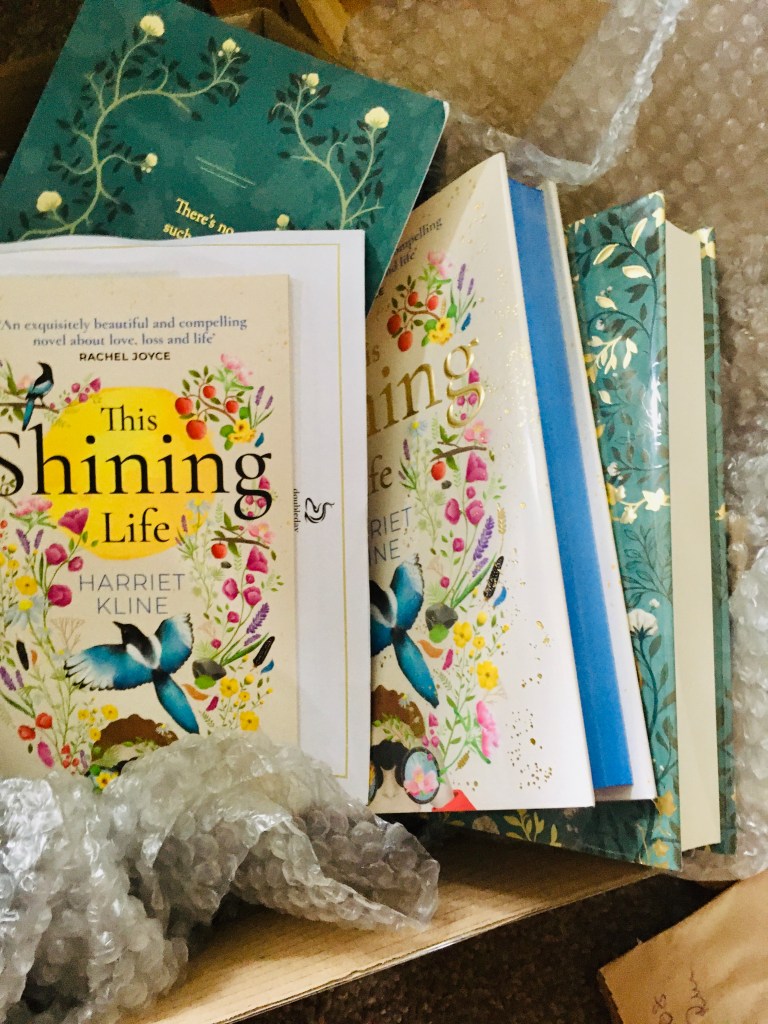
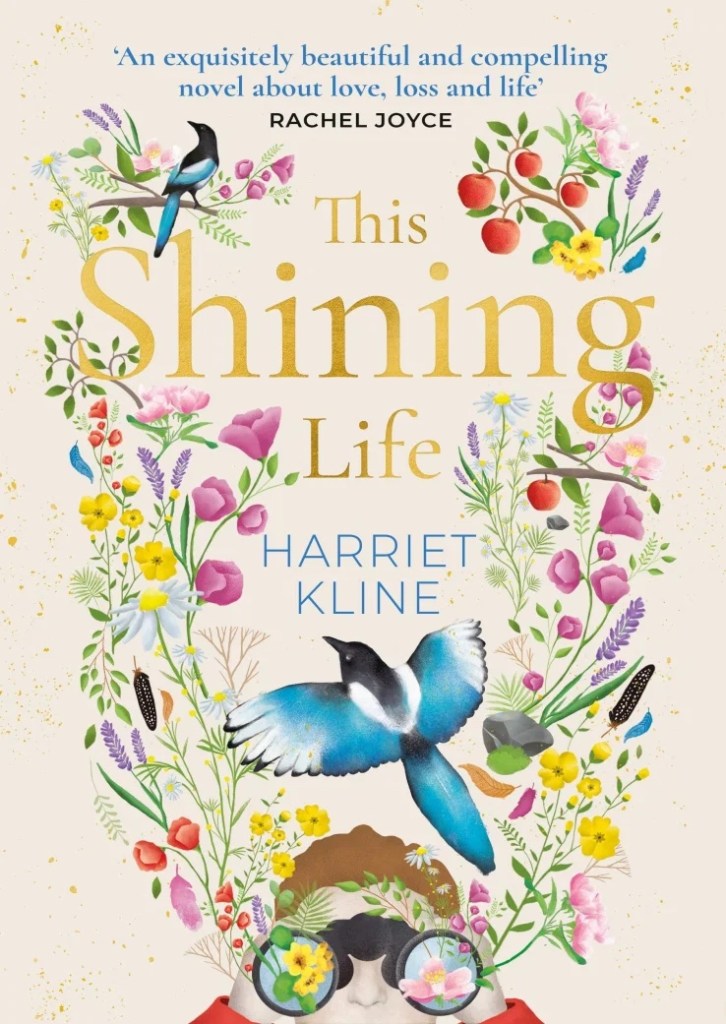
This Shining Life is one of those novels that I enjoyed so much and had such a beautiful cover that I splurged and bought the Goldsboro Books edition. I took this photograph to show people that bloggers do buy finished copies of books, even when they have a physical proof. I keep them all in a special cabinet in my dining room. This is a very special book about love and loss. Rich is a life and soul of the party type of man. So when he dies it’s very hard for his family to make sense of the huge Rich-shaped hole in their lives, especially for his son Ollie who is on the autistic spectrum. What the author shows brilliantly, is that when we face a huge upheaval or loss in our lives, we experience it through our own filter. Made up of our own experiences, the emotions we find it easy or difficult to express, our own bias or prejudice. The author has written such an authentic story of loss by exploring each character’s filters, their earlier life experiences and the unique relationship they had with Rich. We each grieve in a unique way because the way we connected with that person is unique. In dying, Rich has given them all the secret of the meaning of life. Ollie thinks the gifts Rich has left for them hold the secret. Rich has bought each person something he thinks will remind them of him, in the context of the relationship they had. Knowing each person will miss him in a different way. I thought the book was emotionally intelligent, full of complex and interesting characters and explored beautifully what happens when such a big personality is taken from a family. A final mention must go to that beautiful cover, with Ollie using his binoculars to focus on the beautiful variety of life in the world. Simply stunning.

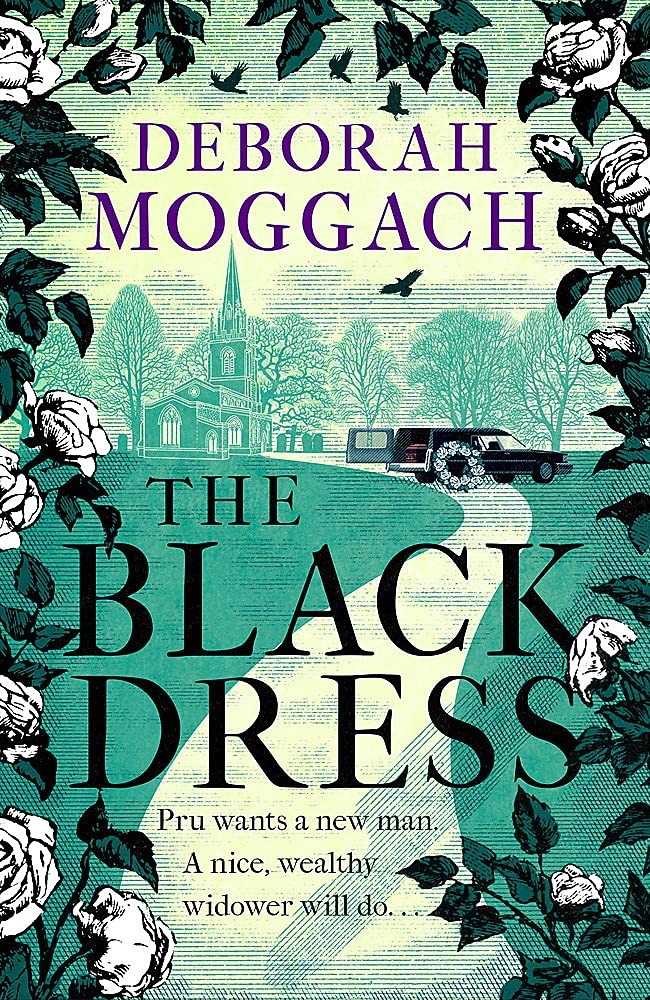
Next up is Deborah Moggach’s latest, The Black Dress. I loved her novel The Carer from last year so hoped this would be just as good. Actually this was better, probably her best novel to date. Pru’s husband has walked out and has set up home in their little holiday cottage by the sea. Her only consolation is her friend Azra, always a little too wild and boho for Pru’s husband’s taste, but a great solace as she contemplates living the rest of her life without her other spoon. To be honest with herself, it’s not really him that she misses. She misses their life together – the past memories of playing on the beach with the children, always having someone next to her in bed, and those in-jokes that they would only get together. Now the bed feels huge and Pru feels numb and bewildered. In something of a daze, she has to attend the funeral of an old friend, but at the church she notices that something’s not quite right. There are people she expected to see, who aren’t here. The eulogy doesn’t sound like the friend she knew. Then the penny drops – she’s at the wrong funeral. Yet somehow she gets swept along with it and finds she has a good time, conversation, a few drinks and banter with some of the other guests. So when she sees the black dress hanging in a charity shop, she allows herself to wonder why not? Maybe she will meet a nice widower to bring some excitement into her life. With this in mind she starts to buy the paper and circle the obituaries in the funeral section. Despite covering themes of infidelity, coercive control, death and grief it’s also warm and witty. I thoroughly enjoyed the black humour. The author does an excellent job of lampooning middle class morés, like a 21st Century Austen, then in the next breath she pulls off an incredible reveal, worthy of any thriller and I really hadn’t seen it coming. Pru is a central character you can’t help but fall in love with. She’s far from perfect, in fact at times she’s conniving, manipulative and full of revenge, but she’s also warm, caring, funny and at her best she’s full of zest for life. Yet underneath it all, she’s lonely and very vulnerable. I loved being able to read about a woman of a certain age, still having an exciting life, when often women over 50 are dismissed as uninteresting. Pru enjoys socialising, dressing up and having sex too. Despite her faults, I was hanging on till the last page hoping that Pru battled through – even if her methods were … unexpected. This wonderful book cemented the author’s reputation with me, as a writer whose next book I would buy without hesitation

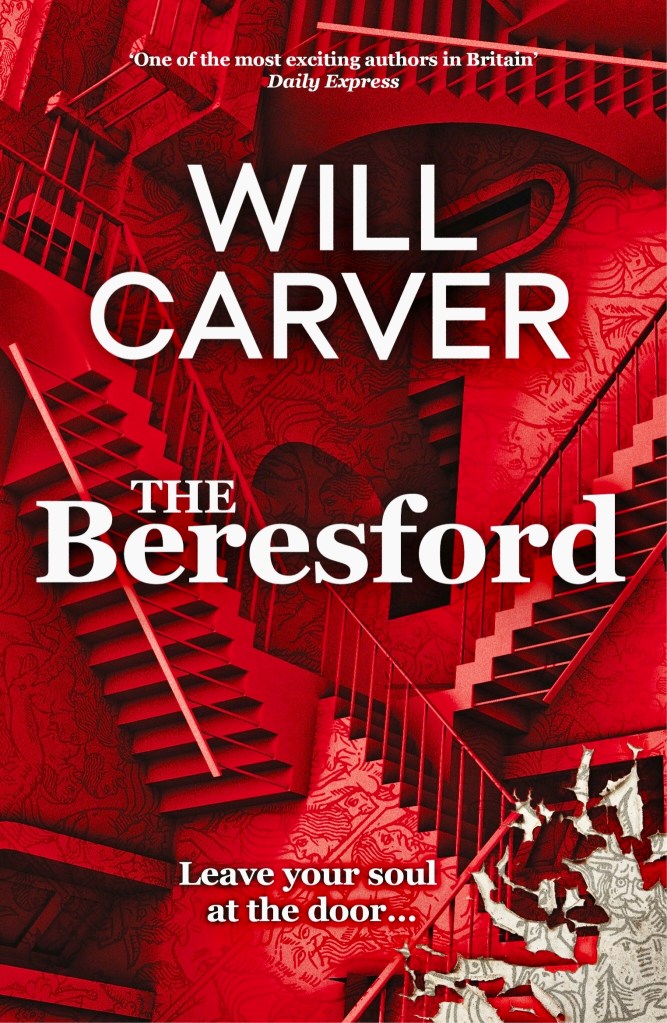
This was my very first Will Carver novel and I came away wondering where he’d been my whole life. This novel had such a darkly, delicious opening that I kept smiling to myself. The Beresford is an old forbidding looking building in the city. In my imagination this conjured up the Gothic looking Dakota Building, where John Lennon lived and was killed back in 1981. Inside The Beresford are a number of apartments, bigger and better appointed than you would expect for the money. They even have large roll top baths. The perfect size to dismember and dissolve a body. Resident Abe finds that as soon as one tenant ‘leaves’ another will ring the doorbell in sixty seconds. The building is presided over by a lovely old lady called Mrs May, who starts every day the same way. By brewing a coffee while the taps run, then enjoying a bath with bubbles, followed by eggs with her cold coffee. She has a routine, and is found at the same time every day pruning the roses in the front garden. As any fan of the film The Ladykiller’s knows, you should never underestimate sweet looking, little old ladies. She knows everything that happens at the Beresford because the same thing happens over again – some people leave and some people just disappear. Occasionally they stay. For a price. I loved the dark humour, the unexpected murders and the characters who pass through – sometimes in seconds! Maybe one day the author will venture further into the other side of The Beresford? The side Abe calls ‘the bad side’. If so, I’ll be waiting – but I’ll probably stick to reading in the daylight hours.

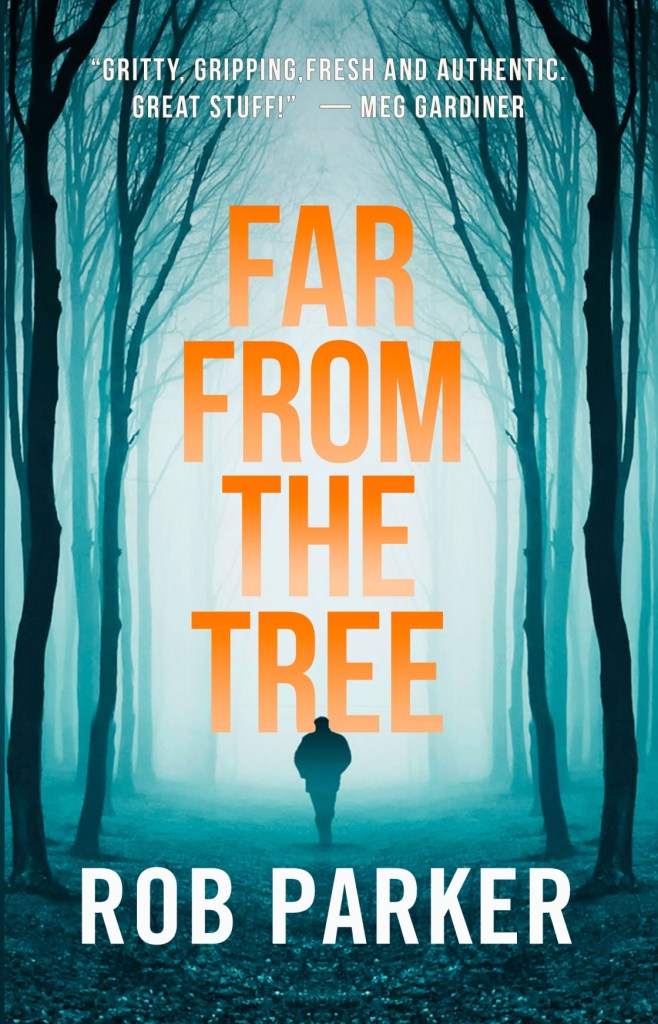
Rob Parker is another author I’ve never read before and I was told I would enjoy his writing. I jumped at the opportunity to read this and truly enjoyed it. I loved that this novel was partially set in my family’s stomping ground around Liverpool. The fact that I knew every setting as the story unfolded added to the gritty reality of this brilliant crime novel. DI Foley’s life becomes very complicated when a trench containing 27 bodies, in various states of decomposition, turns up in woodland on his Warrington patch. It encroaches on family life immediately as he has to leave his son’s own christening to attend and his wife Mim has to hold the fort. However, things become even more complicated, and terrible, for his family, when one of the 27 turns out to be Brendan’s nephew Connor. Criminality isn’t that far away when it comes to the male members of Brendan’s family, the most sinister being his father. What this novel shows is that whether you are a criminal or police officer, when your family are on the line, it’s surprising how blurred the lines between good and bad really get. There’s no holding back on how bloody and terrible these crimes can be, and it was slightly disorientating to see so much violence in a place I visit for fun. Even with something we imagine is very black and white, like the law, there are always shades of grey. It’s simply a case of how much compromise we can live with and how far the apple really does fall from the tree.

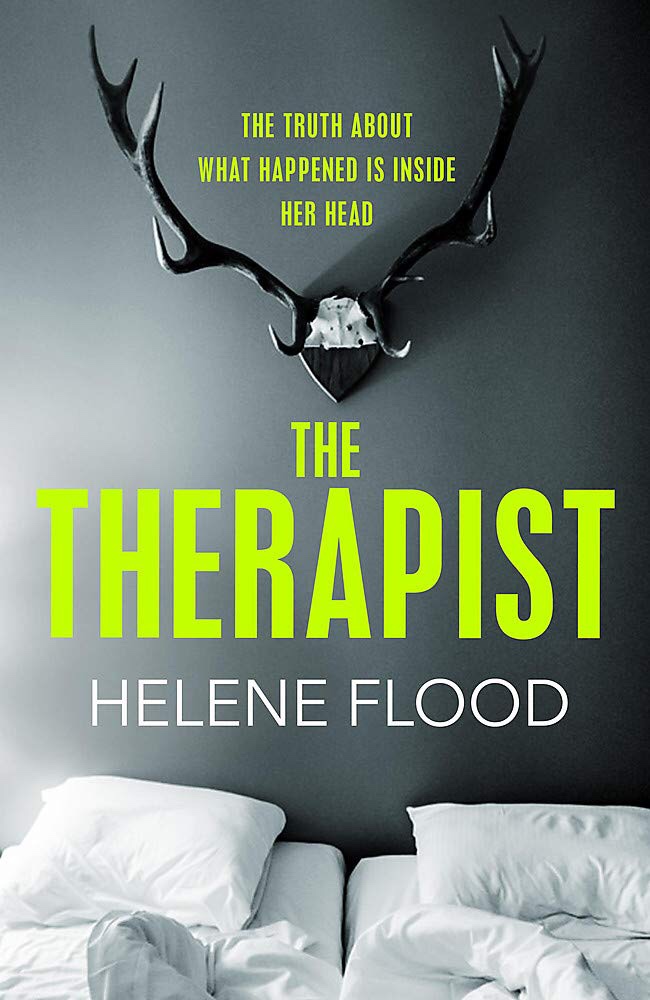
Helene Flood has written a fascinating thriller about a therapist, set in Oslo. It’s complexity of character and their motivations probably comes from the fact that the author is a psychologist. Straightaway, I was invested and really excited me to get inside the character’s minds. On a normal Friday when Sara is getting ready to see her three clients, her husband Sigurd is on a boy’s weekend. He has even called her by lunchtime to tell her he arrived safely. The truth is that Sigurd never arrived at all. The author keeps us brilliantly on edge with red herrings and reveals galore. We see the police through Sara’s eyes, which might explain why they seem curiously non-committal about everything. We never truly know how they feel about Sara or where the investigation is going. Obviously she is a possible suspect. However, there are points in the investigation, when Sara is sure there is an intruder at the house, where they seem indifferent to her worries and her safety. I was never quite sure whether Sara was the ultimate unreliable narrator and would turn out to be implicated in her husband’s disappearance. She seemed detached from the reality of it, even within the context that their relationship has deteriorated over time. The ending was a surprise and the double reveal was beautifully done, and very satisfying. I stayed up late to finish the last few chapters, because I was so hooked on the story. This was a psychological thriller I would definitely recommend.

So that’s this months recommendations. I’m not sure what August will bring, except for an Orenda blog tour so I have a lot of choice. Here’s my tentative TBR for August.

Posted in Personal Purchase

Woman of a Certain Rage by Georgie Hall.

Recently life had a started to get on top of me a little bit. I felt overwhelmed; with my partner being unwell, my MS not coping with the heat, and several things in the house going wrong. The dishwasher flooded the kitchen, then two weeks later the washing machine did the same, but lifted the entire floor too. Finally, I emptied my bath water and came downstairs to find it had christened the kitchen island and we had a lovely new hole in the ceiling. I’m immune-compromised so I’m still avoiding crowds and wearing masks. Finally, there’s the effect of the menopause when dealing with all those things. I’m far more likely to burst into tears these days. Masks mean I sweat more – not just a little glow, I can look like I’ve just got out of the shower in ‘tropical moments’. Then my reading glasses steam up, but I can’t take them off because I can’t read anything. I’ve taken a short break from blog tours and deadlines to deal with some of this and spending some time reading exactly what I want. So, I’m on the couch, a cold flannel on my neck, with two fans pointing at me, as few clothes as I dare to wear, and an ice cold can of coke in my hand. I was browsing my NetGalley shelf when this title jumped out at me. It could not have been more apt.

Eliza feels like she’s going crazy. She’s emotional, keeps forgetting things, feels angry and she’s hot, oh so hot.

This is a smart and funny novel about love, life and a second shot at freedom for rebellious women of a certain age. Late for work and dodging traffic, Eliza is still reeling from the latest row with husband Paddy. Twenty-something years ago, their eyes met over the class divide in oh-so-cool Britpop London, but while Paddy now seems content filling his downtime with canal boats and cricket, Eliza craves the freedom and excitement of her youth. Fifty sounds dangerously close to pensionable: her woke children want to cancel her, a male motorist has just called her a ‘mad old bat’ and to cap it all her hormones are on the run. Who knew menopause was puberty’s evil older sister? But then a moment of heroism draws an unexpected admirer, and Eliza sets out to discover whether the second half of life can be a glass half full after all. She might suffer mental fog and night sweats – and have temporarily mislaid her waist – but this is her renaissance.

I bonded with Eliza immediately and not just because of the menopause. We’re a similar age, so I could identify with growing up in the Britpop era – I fell totally in love with Damon Albarn, a love which has lasted a lifetime. All of our references points were the same, and having inherited two beautiful stepdaughters in their tweens and teens I could really appreciate Eliza’s relationship with her daughter. I also have a strong relationship with an elderly dog. Menopause is causing tension in Eliza’s marriage, particularly annoying for her is the loss of libido. That deep connection she and Paddy once had seems to have gone, lost in the logistics of family life and life stresses around their finances. Eliza’s realisation that she’s becoming invisible has extended into her working life too. She has always wanted to be a stage actress, but her career has never really taken off. Now she’s getting less and less work, and aside from one Japanese tourist who thinks she’s Emma Thompson, she feels very under appreciated. She’s doing voice work, reading audiobooks mainly, plus has a side job showing people around properties for a local estate agent. All of the everyday stresses in her life – marriage, family tensions mixed with financial concerns, having ‘woke’ children, her youngest son who is on the spectrum – leave her feeling exhausted. Into this low point steps a handsome Italian restauranteur, who happens to have taken over her family’s favourite bistro from his uncle. Exuding charm from every pore, he flatters Eliza and makes her feel desirable when of late she’s felt men’s eyes pass over her and to her teenage daughter. It’s like one big ‘hormotional’ perfect storm and I wondered whether anyone would come out of it unscathed.

It’s easy to love Eliza; she’s loving, caring, vivacious and witty. However, her husband Paddy grew on me too and I felt a great deal of empathy for his own middle aged struggles. There is growing evidence of male menopause, despite society being largely dismissive and calling it a ‘midlife crisis’. Jokes about middle-aged men trying to recapture their youth with hair transplants, sports cars and unwise affairs with younger women are still commonplace. Yet the NHS recognises a group of symptoms similar to those experienced by women – irritability, insomnia, weight gain, loss of muscle mass, erectile dysfunction, loss of libido and memory problems. Some doctors have questioned whether these are symptoms of a loss of testosterone, but the NHS classify it as a psychological syndrome characterised by increased levels of depression and raised anxiety amongst men in their late forties and fifties. Paddy is definitely going through something like this, but he has had a lot to contend with. His father’s death and the loss of the narrow boat they worked on together hit him hard. Eliza’s family bought the boat so he could still work on it, but that brings its own guilt and shame because Paddy could not afford to do this himself and run it. His wife earns more than he does and she’s starting acting like a crazy person. He thinks her loss of libido is down to him being a failure as a man. This book hinges on the fact that problems occur when couples stop communicating.

The author really pitched this book perfectly, balanced between the serious issues and the comic moments. Her other characters were well rounded, with interesting quirks to their personalities or hidden depths. I thought her sister was an infuriating superwoman who could juggle everything perfectly, but when she cooked Sunday dinner she was in a complaining, sweaty, heap like I am on Sundays! Her mum had depths of hidden wisdom and despite never seeming to ask, had a pretty accurate idea of what was going on. I found Eliza’s daughter infuriating though. She was very preachy and deeply committed to social justice and women’s rights. Despite agreeing with her in some cases I found her speeches annoying and the long Shakespeare quotes pretentious. I think this is how the author intended her though. She was an exaggeration of my stepdaughter’s generation and I could see a lot of our 15 year old in Summer’s causes and the way she spoke. I think the youngest son’s autism was handled well too. When she found out the real reason he wouldn’t use his allocated transport to get to school I was heartbroken for him. All anyone wants is for someone to understand them and listen to how it feels, rather than dismissing them with a lazy stereotype or the ableism on show here. The final adventure was both funny and poignant, and I left the book feeling like I’d been seen and acknowledged. I also had a huge smile on my face, because it had really lifted my spirits, so much so that I would really love another instalment of Eliza and her family in the future.

Posted in Publisher Proof

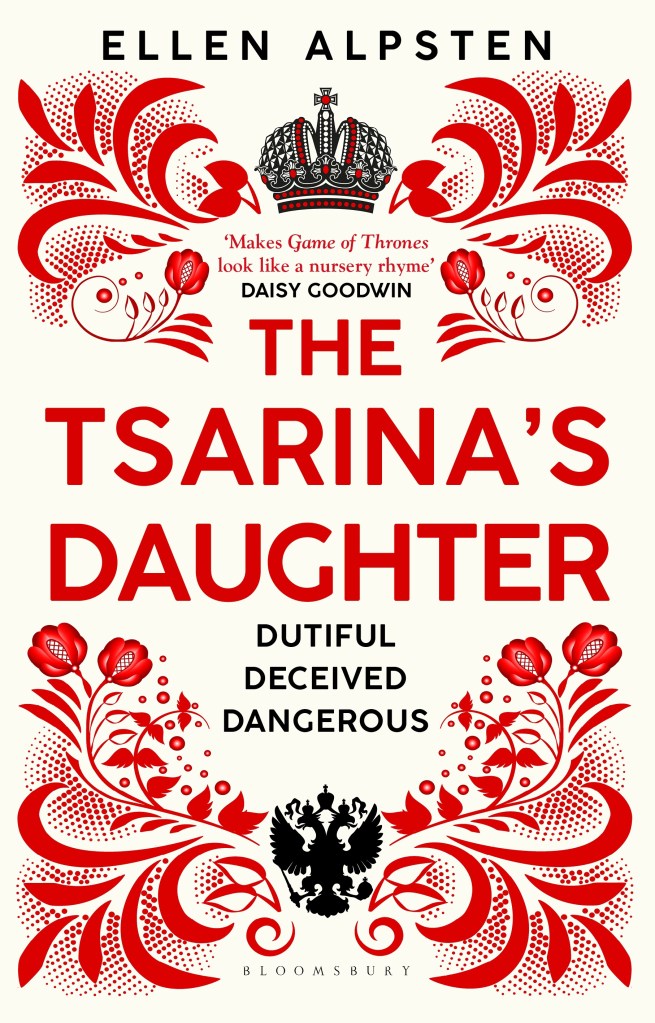
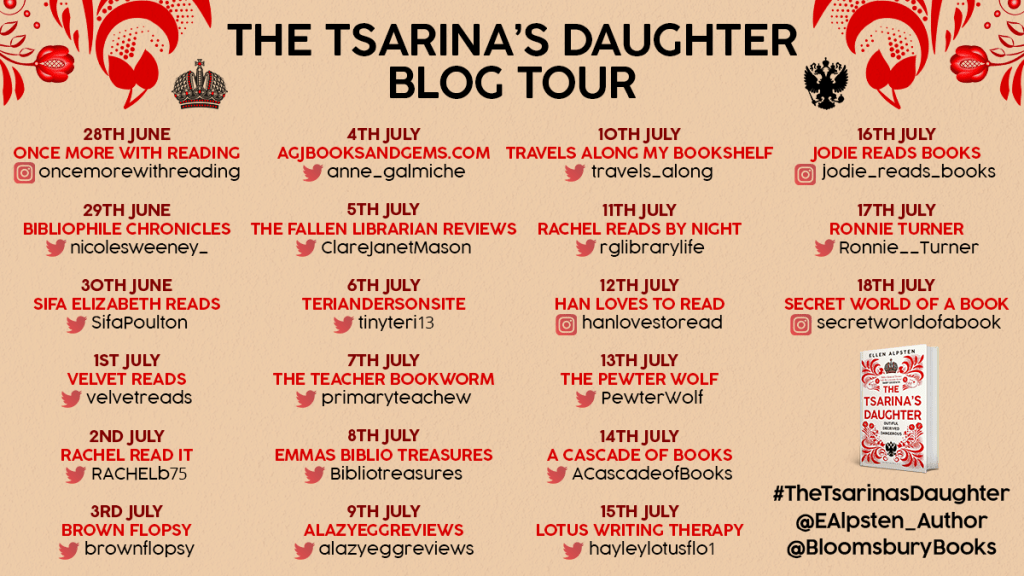
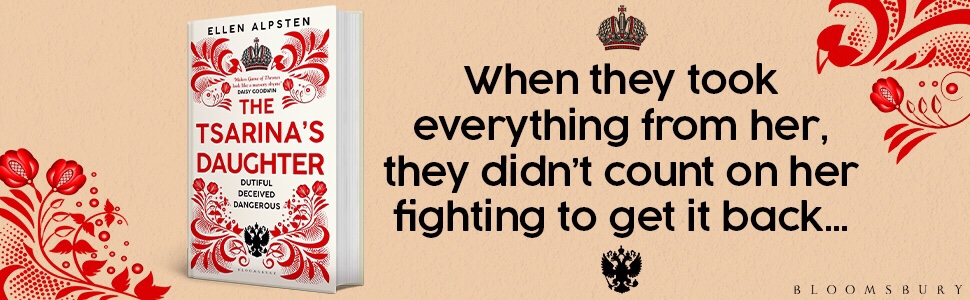
Tsarina’s Daughter by Ellen Alpsten.

Today I get to share with you an extract from this brilliant sequel to Ellen Alpsten’s novel Tsarina.

When they took everything from her, they didn’t count on her fighting to get it back…

Born into the House of Romanov to the all-powerful Peter the Great and Catherine I, beautiful Tsarevna Elizabeth is the world’s loveliest Princess and the envy of the Russian empire. Insulated by luxury and as a woman free from the burden of statecraft, Elizabeth is seemingly born to pursue her passions. 

However, a dark prophecy predicts her fate as inexorably twined with Russia. When her mother dies, Russia is torn, masks fall, and friends become foes. Elizabeth’s idyllic world is upended. By her twenties she is penniless and powerless, living under constant threat. As times change like quicksand, an all-consuming passion emboldens Elizabeth: she must decide whether to take up her role as Russia’s ruler, and what she’s willing to do for her country – and for love.

Prologue


THE TSARINA’S DAUGHTER

In the Winter Palace, St Nicholas’ Day 6 december 1741

My little cousin Ivan is innocent – he is a baby, and as pure as only a one-year-old can be. But tonight, at my order, the infant Tsar will be declared guilty as charged.
I fight the urge to pick him up and kiss him; it would only make things worse. Beyond his nursery door there is a low buzzing sound, like that of angry bees ready to swarm the Winter Palace. Soldiers’ boots scrape and shuffle. Spurs clink like stubby vodka glasses and bayonets are being fixed to muskets. These are the sounds of things to come. The thought spikes my heart with dread.
There is no other choice. It is Ivan or me. Only one of us can rule Russia, the other one condemned to a living death. Reigning Russia is a right that has to be earned as much as inherited: he and my cousin, the Regent, doom the country to an eternity under the foreign yoke. Under their rule the realm will be lost; the invisible holy bond between Tsar and people irretrievably severed.
I, Elizabeth, am the only surviving child of Peter the Great’s fifteen sons and daughters. Tonight, if I hesitate too long, I might become the last of the siblings to die.
Curse the Romanovs! In vain I try to bar from my thoughts the prophecy that has blighted my life. Puddles form on the parquet floor as slush drips from my boots; their worn thigh-high leather is soaked from my dash across St Petersburg.

Despite my being an Imperial Princess – the Tsarevna Elizabeth Petrovna Romanova – no footman had hooked a bearskin across my lap to protect me against the icy wind and driving snow while I sat snug in a sled; I had no muff to raise to my face in that special graceful gesture of the St Petersburg ladies, the damy. My dash towards my date with destiny had been clandestine: snowfall veiled the flickering lights of the lanterns and shrouded the city. Mortal fear drove me on, hurry- ing over bridges, dodging patrolled barriers – the shlagbaumy – and furtively crossing the empty prospects, where my hasty passage left a momentary trace of warmth in the frosty air.
This was a night of momentous decision-making that I would have to live with forever. An anointed and crowned Tsar may not be killed, even once he is deposed, as it sets a dangerous prece- dent. Yet he may not live either – at least not in the minds of the Russian people or according to the diplomatic dispatches sent all over Europe.
What then is to become of the boy?
I feel for Ivan’s limp little hand. I simply cannot resist – never could – nuzzling his chubby, rosy fingers, which are still too small to bear the Imperial seal. We call this game a butterfly’s kiss; it makes him giggle and squeal, and me dissolve with tenderness. I drink in his scent, the talcum powder blended for his sole use in Grasse – vanilla and bergamot, the Tsar’s perfume – carefully recording it to last me a lifetime. The men outside fall quiet. They are waiting for the decision that will both save and damn me. The thought sears my soul.
In Ivan’s nursery, the lined French damask drapes are drawn. Thick, pot-bellied clouds hide the December new moon and stars, giving this hour a dense and dreadful darkness. During the day, the seagulls’ cries freeze on their beaks; the chill of night grates skin raw. Any light is as scarce and dear as everything else in St Petersburg. The candle-sellers’ shops, which smell of beeswax, flax and sulphur, do brisk business with both Yuletide and Epiphany approaching. On the opposite quay, the shutters on the flat façades of the city’s palaces and houses are closed, the windows behind them dark. They are swathed in the same brooding silence as the Winter Palace. I am in my father’s house, but this does not mean that I am safe. Far from it – it means quite the opposite.

The Winter Palace’s myriad corridors, hundreds of rooms and dozens of staircases can be as welcoming as a lover’s embrace or as danger- ous as a snake pit.
It is Ivan or me: fate has mercilessly driven us towards this moment. The courtiers shun me: no one would bet a kopeck on my future. Will I be sent to a remote convent, even though I do not have an ounce of nun’s flesh about me, as the Spanish envoy, the Duke of Liria, so memorably recorded? I had once been forced to see such an unfortunate woman in her cell; as intended, the sight instilled a terror that would last me a lifetime. Her shorn head was covered in chilblains and her eyes shone with madness. A hunchbacked dwarf, whose tongue had been torn out, was her sole companion, both of them shuffling about in rotten straw like pigs in their sties. Or perhaps there is a sled waiting for me, destination Siberia? I know about this voyage of no return; I have heard the cries, seen the dread and smelled the fear of the banished culprits, be they simple peasants or even the Tsar’s best friend. By the first anniversary of their sentence, all had succumbed to the harsh conditions of the East. Maybe a dark cell in the Trubetzkoi Bastion, the place nobody ever leaves in one piece, will swallow me; or things will be simpler, and I am fated to end up face down in the Neva, drifting between the thick floes of ice, my body crushed and shredded by their sheer force.
The soldiers’ impatience is palpable. Just one more breath! Ivan’s wet-nurse is asleep, slumped on her stool, resting amidst his toys: the scattered pieces of a Matryoshka doll, wooden boats, a mechan- ical silver bear that opens its jaws and raises its paws when wound up, and a globe inlaid with Indian ivory and Belgian émaillé. One of the nurse’s pale breasts is still bare from the last feed; she was chosen for her ample alabaster bosom in Moscow’s raucous German Quarter. Ivan is well cared for: Romanov men are of weaker stock than Romanov women, even if no one ever dares to say so. I cele- brated his first year as a time of wonder, offering my little cousin a cross studded with rubies and emeralds for his christening, a gift fit for a Tsar, and put myself in debt to raise an ebony colt in my stables as his Yuletide present.

Ivan’s breathing is growing heavier. The regiment outside his door weighs on his dreams. As I touch his sides, his warmth sends a jolt through my fingers, hitting a Gold in my heart. Oh, to hold him one more time and feel his delightful weight in my arms. I pull my hands back, folding them, though the time for prayers has passed. No pilgrimage can ever absolve me from this sin, even if I slide across the whole of Russia on my knees. Ivan’s lashes flutter, his chin wobbles, he smacks his pink and shiny lips. I cannot bear to see him cry, despite the saying of Russian serfs: ‘Another man’s tears are only water.’
The lightest load will be your greatest burden. The last prophecy is coming to pass. Spare me, I inwardly plead – but I know this is my path, and I will have to walk it to the end, over the pieces of my broken heart. Ivan slides back into slumber; long, dark lashes cast shadows on his round cheeks and his tiny fists open, showing pink, unlined palms. The sight stabs me. Not even the most adept fortune-teller could imagine what the future has in store for Ivan. It is a thought that I refrain from following to its conclusion.
Beyond the door utter silence reigns. Is this the calm before the storm my father taught me to fear when we sailed the slate- coloured waters of the Bay of Finland? His fleet had been rolling at anchor in the far distance, masts rising like a marine forest. ‘This is forever Russia,’ he had proudly announced. ‘No Romanov must ever surrender what has been gained by spilling Russian blood.’ In order to strengthen Russia, Father had spared no one. My elder half-brother Alexey, his son and heir, had paid the ultimate price for doubting Russia’s path to progress.
Steps approach. My time with Ivan, and life as we know it, is over. I wish this were not necessary. There is a knock on the nursery door, a token rasp of knuckles; so light, it belies its true purpose. It is time to act. Russia will tolerate no further excuses. The soldiers’ nerves are as taut as the springs in a bear trap. I have promised them the world: on a night like this, destinies are forged, fortunes made and lost.


‘Elizabeth Petrovna Romanova?’ I hear the captain of the Imperial Preobrazhensky Regiment addressing me. His son is my godchild, but can I trust him completely for all that? I feel as if I am drowning and shield Ivan’s cradle with my body. In the gilt- framed mirrors I see my face floating ghostly pale above the dark green uniform jacket; my ash-blonde curly hair has slid down from beneath a fur cap. On a simple leather thong around my neck hangs the diamond-studded icon of St Nicholas that is priceless to me. They will have to prise it from my dead body to take it from me.
I am almost thirty-two years old. Tonight, I shall not betray my blood.
‘I am ready,’ I say, my voice trembling, bracing myself, as the door bursts open and the soldiers swarm in.
Everything comes at a price.


Meet The Author

Ellen Alpsten was born and raised in the Kenyan highlands, where she dressed up her many pets and forced them to listen to her stories. 

Upon graduating from the ‘Institut d’Etudes Politiques de Paris’, she worked as a news-anchor for Bloomberg TV London. While working gruesome night shifts on breakfast TV, she started to write in earnest, every day, after work, a nap and a run. So much for burning midnight oil! 

Today, Ellen works as an author and as a journalist for international publications such as Vogue, Standpoint, and CN Traveller. She lives in London with her husband, three sons, and a moody fox red Labrador.

Posted in Random Things Tours

This Shining Life by Harriet Klein

Wow, this is heartbreakingly sad, but so beautiful too. Rich is dying. Funny, charming, Rich has a love of cheese and throwing parties. He has a son called Ollie who is neuro-diverse and a wife called Ruth who is coping with so much anyway, how will she cope with his death? The book covers Rich’s attempts to live, while dying. There’s also the aftermath of his death where Ruth and Ollie have to learn how to cope without the most important person in their life. Ruth finds it very hard to accept that her time with Rich is now limited and she has no idea when he will die. As time passes, Ollie finds it harder too. He doesn’t understand what it means to die. So, Rich devises a plan and involves his son in choosing gifts for those he loves, as something to remember him by. Ollie loves puzzles and he sees the presents as clues – he thinks each gift has a hidden meaning that his Dad chose to teach him the meaning of life.

The story is told through the important people in Rich’s life and it begins with Ollie. Ollie has realised that the gifts went to the wrong people and he must rectify the mistakes, because otherwise he’ll never understand life or death. He is starting to come apart at the seams but has anyone noticed? Ruth is struggling to cope with his obsessive rituals and her grief is all encompassing. In counselling we refer to ‘complicated grief’ – this can happen when a death is: unexpected with things unresolved or left unsaid, a sudden decline or an accident, the result of a crime, long-term health related with caring roles attached, complicated by circumstances such as being out of touch or at odds with each other, or where a disease is hereditary. Here, Ruth and Ollie haven’t really had time to prepare and their lives have had to adapt very quickly. Ruth can’t fall apart because she has to be there for Ollie, but it is wearing her down and she needs to deal with her own feelings too. I liked the way the author brought in other voices, from Ruth’s family to Rich’s own mother and father, each with their own grief and needs.

The author is a great observer of human behaviour and family dynamics. We can see how grief passes through this family, less like ripples on a pond and more like a shockwave passing through everyone in the vicinity. I talk with clients about the circle of grief – this is a series of concentric circles with the person experiencing the bereavement in the centre, next their spouse or partner, then in layers outwards until we get to the wider community. This is a simple tool that works well in the context of working with an individual because in that space, they are the afflicted person. We show how grief is expressed outward – with people in the outer circles expressing grief outward to family, friends, then they go to workmates or the wider community. Then comfort is expressed inwards, with those in outer circle ‘shoring up’ those further in, giving them the strength to support those in the inner circle. People in the outer circles should not be expecting comfort from those in the centre. Yet, grief is rarely so neatly expressed and the circles are often breached. This could be because of narcissism or lack of boundaries. However, more likely, what happens is shown very clearly in this book. Everyone is at the centre of their own circle. Ruth has to show comfort outward to Ollie and to Rich’s parents who are both struggling with their own grief and the added complication of dementia. Some people simply can’t put another’s needs in front of their own.

When we face a huge upheaval or loss in our lives, we experience it through our own filter. Made up of our own experiences, the emotions we find it easy or difficult to express, our own bias or prejudice. The author has written such an authentic story of loss by exploring each character’s filters, their earlier life experiences and the unique relationship they had with Rich. We each grieve in a unique way because of the unique way we connected with that person. In dying, Rich has given them all the secret, of the meaning of life. It’s in the connections we have with another person and in a way Ollie is right – the gifts do hold the secret. Rich has bought each person something he thinks will remind them of him, in the context of the relationship they had. Knowing each person will miss him in a different way. His life was all about encouraging other’s to enjoy everything life offers and all its variety. I thought the book was emotionally intelligent, full of complex and interesting characters and explored beautifully what happens when such a big personality is taken from a family. A final mention must go to that beautiful cover, with Ollie using his binoculars to focus on the beautiful variety of life in the world. Simply stunning.

Meet The Author

Harriet Kline works part time registering births, deaths and marriages and writes for the rest of the week. Her story Ghost won the Hissac Short Story Competition and Chest of Drawers won The London Magazine Short Story Competition. Other short stories have been published online with Litro, For Books’ Sake, and ShortStorySunday, and on BBC Radio 4. She lives in Bristol with her partner and two teenage sons.