Posted in Random Things Tours

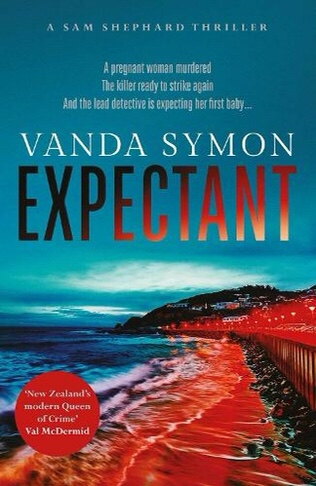
Expectant by Vanda Symon

Expectant is the fifth novel in Vanda Symon’s Detective Sam Shephard series and I finished this late last night so I can reveal it’s brilliant and full of tension as the countdown to catch a murderer coincides with the last weeks of Sam’s pregnancy. This great series, set in Dunedin New Zealand, never lets me down. Sam is a fantastic character, who I’d happily go for a drink with. She’s professional and has one of those faces that people trust immediately, meaning she can elicit new leads and confessions from the unlikeliest criminal. She’s stubborn and outspoken, very ballsy and, although she tries her best not to use it, has an incredible swearing vocabulary. She and partner Paul are expecting their first child and she’s working up to two weeks before her due date. They haven’t found time to organise their endless piles of baby kit into a nursery when a case comes in that Sam can’t help but be drawn into. A group of kids who are hoping to tag the wall down a quiet side street find a woman covered in blood and only one of them has the conscience to stay and ring an ambulance. He’s willing to face the music for the graffiti if he can save her. At first it’s thought to be a stabbing, but it soon becomes clear this is something more sinister. A pregnant woman has been subjected to a rudimentary Caesarian and left for dead, even worse there’s no sign of the baby. This must be someone with a certain amount of medical skill. For Sam, who’s at her most vulnerable, it’s scary to think this might have been someone the victim trusted and it makes her more determined to catch her killer.

I found the pace slightly slower than previous novels, but I found that fitting considering that Sam is slowing down too. The days are winding down towards her maternity leave and her due date. In fact the days are dragging as her boss is reluctant to have her start something as important as a murder case before her leave starts. He feels it would be disruptive to the family and her colleagues, so she’s on desk duty, trawling through evidence. That’s before we factor in her physical condition, she’s so big that she gets stuck in some automatic barriers; a brilliant comic moment in this dark subject matter. Luckily it’s partner Paul on hand to lift her clear. Also, with unusual sensitivity, the boss thinks that placing a pregnant woman with the family would be distressing for them. Especially until they find the baby. This isn’t just a murder case, the baby is missing and the reasons why someone would steal a newborn baby are running through the heads of every team member. However, this is where Sam’s pregnancy could be a super power, being an expectant mum means her thoughts are different to the others. Could they provide a breakthrough?

The theme of mothers and their children, particularly daughters, is front and centre in this story. Whether it is Sam’s relationship with her own mother who has concerns about her working this close to her due date. There’s also Sam’s best friend, currently still living with her but due to move away imminently. She has a unique position in Sam’s life and is always there as a shoulder to cry on, but here she provides some important psychological insight. Sam’s need to be involved with this case could be linked to the spare room full of decorating supplies and boxed nursery furniture. There are so many changes coming, might Sam be paralysed from moving forward? Of course it is Sam who makes some major breakthroughs in the case in the final moments before she clears her desk. One of which seems to be a coincidence at first. As the final chapters started to race and fill with tension my heart was pounding. Just as Sam has let her guard down and accepted what’s next in her life, everything she’s looking forward to could be ripped away from her. In fact, if you are pregnant, maybe keep this one for after the birth. I was genuinely scared for her and even though she’s the one who most understood the killer’s motivations, will she still be shocked by their identity? You’ll be holding your breath to the very end with this one. Sam’s vulnerability is terrifying and I was praying that she would be okay while reading. As if she’s a living and breathing human being. That’s the power of Vanda Symon’s writing and how much of that magic she’s poured into this brilliant character.

Published 16th Feb 2023 by Orenda.

Meet the Author

Vanda Symon lives in Dunedin, New Zealand. As well as being a crime writer, she has a PhD in science communication and is a researcher at the Centre for Pacific Health at the University of Otago. Overkill was shortlisted for the 2019 CWA John Creasey Debut Dagger Award and she is a three-time finalist for the Ngaio Marsh Award for Best Crime Novel for her critically acclaimed Sam Shephard series. Vanda produces and hosts ‘Write On’, a monthly radio show focusing on the world of books at Otago Access Radio. When she isn’t working or writing, Vanda can be found in the garden, or on the business end of a fencing foil.

Posted in Random Things Tours

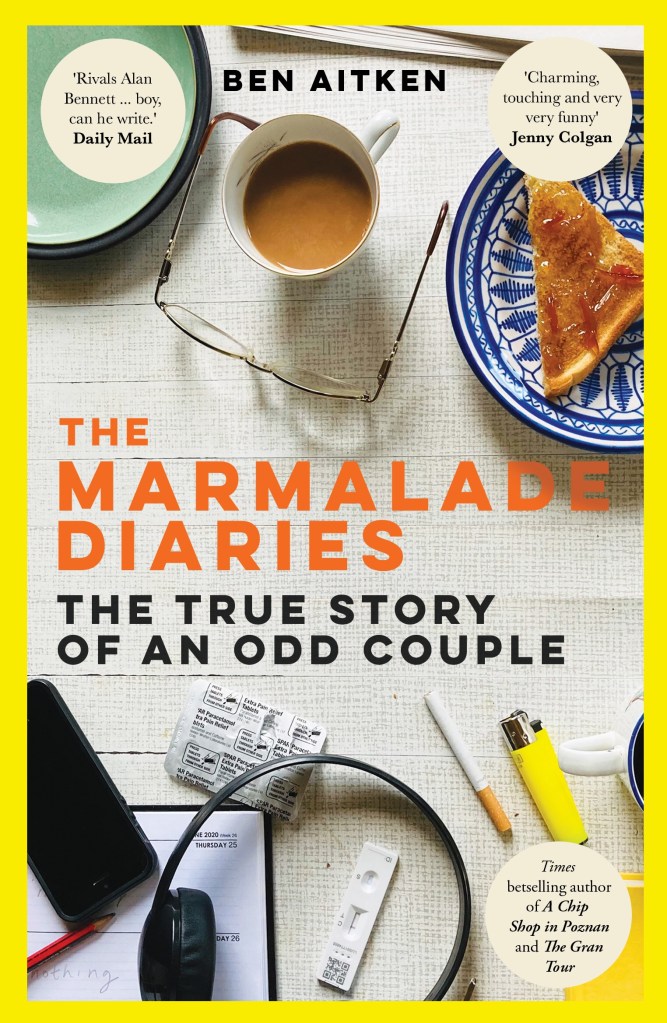
The Marmalade Diaries by Ben Aitken

I was so charmed by this wonderful book about writer Ben and his unusual experiences during the COVID lockdowns. Something I could truly understand as the lockdowns bonded me with my partner and his two girls at a speed and depth that couldn’t have happened at any other time. Ben is looking for a new place to live, when through a charity scheme he sees an apartment in a great part of town. There’s one catch. He will have a housemate. The charity places younger people in homes belonging to the elderly. The aim is to help the homeowner stay independent and in their own homes far longer than normally possible and in houses with way more room than they need. Winnie is 85 years old and a formidable woman with very set opinions about how things are done. Winnie doesn’t suffer fools and isn’t very gentle with her criticism. There’s a gulf between the pair in so many areas: their politics, their class and their ages. How can two people with so many differences live together harmoniously?

This is a book that can be read so quickly. It’s in a diary form so there’s always that temptation to read just one more entry. Ben’s previous work has been travel writing and he brings all of those skills to this book. Physically he’s in the same place, but he’s taking a voyage into this person, seeing her like no one else has and experiencing her in very different types of weather. Winnie is grieving her husband of 65 years. Henry died suddenly, in their marital bed upstairs, less than a year ago so she’s in a very emotionally vulnerable state. Of course Winnie doesn’t seem terribly vulnerable, unless you count ‘busyness’ as a response to grief. I think Winnie has always been a busy person, possibly through anxiety or perhaps a work ethic instilled by her upbringing, but this has been exacerbated by living alone. Her son Stewart and his family tried to move in for a few months over summer, but that didn’t work out and fairly quickly Ben can see why. Imagining that he would largely live upstairs and help when called upon, he’s surprised that as soon as they’re alone Winnie asks him what he’s cooking for tea? The apartment has a small kitchen, but it seems Winnie expects him to cook and eat with her downstairs. Not that these meals are appreciated, with Winnie dishing out critique that would seem harsh on Masterchef.

As soon as the dishes are cleared she lays the table for breakfast and lays it for two – something she says she still does without thinking. Ben gets into the habit of lighting the fire and then having breakfast, although there are rules to be observed here. Winnie makes her own marmalade, but only once a year when the Seville oranges are available, so she puts only the thinnest scraping of marmalade on the toast to make it last. Heaven forbid they run out and have to buy some. That wouldn’t be on at all. Eggs have a language all their own, with certain specimens warranting their own message written on the shell in pen and left in the fridge. One rather philosophically asks whether it is cooked or not? Another has been giving her nightmares because he’s ‘been harbouring it for yonks.’ It was her wry little comments on the newspaper that made me giggle. When she sees a picture of comedian Matt Lucas in the paper, she observes ‘well he won’t survive the pandemic’. She’s also remarkably cunning, willing to pull out the poor little old lady card when its to her advantage and let people think she didn’t hear or understand them. When she asks Ben to let the coal man through the side gate one day, there’s a misunderstanding about the delivery. Ben indicates they need it tipping into the bunker (an extra £10) but Winnie has only paid for it to be dropped at the edge of the property. Ben wonders if she’s forgotten or misunderstood, but the coal man says no, she does this every time. Once the coal is safely in the bunker and an extra invoice issued Winnie miraculously appears and denies all knowledge of the problem.

There’s some beautiful observation around the family, because Ben is in the perfect position to analyse their relationships as an outsider on the inside. Out of her three children, it is Arthur who seems to have her heart and most of her time. Arthur lives in a group home within walking distance for Winnie and even in a pandemic she’s not going to stop taking him the paper, the fruit from the garden or a daily yoghurt. Once a week she spends a good hour cleaning out his electric shaver, which always looks like he’s pruned the garden with it. Arthur had cerebral palsy and had a traumatic birth where Winnie’s pelvis was cut to get him out before he was deprived of any more oxygen. Maybe it’s his vulnerability due to his disability, or that shared traumatic experience right at the start of his life, but Winnie doesn’t seem complete until Arthur is there to look after. The other two children seem to have accepted this arrangement, but there is some underlying resentment, especially when it comes to Winnie forgetting theirs and their children’s birthdays. For Stewart and his family, their far more relaxed way of being clashed with Winnie’s distrust of anyone in bed past 9am, people who have their marmalade more than wafer thin and people who lounge for more than ten minutes without a schedule for their next task.

I guess Winnie is selfish in a lot of ways, she’s not self-aware and really finds it hard to prioritise other people’s way of doing things. Some of her habits would have driven me to distraction, particularly her ability to pick up new tasks just as it’s time to leave the house. Even after making a plan she could leave her housemate waiting for hours because the roses needed deadheading. My other half has a similar ability to be doing one thing, cooking tea for example, then pick up a second job that didn’t need prioritising, such as reprogramming the TV channels or syncing the car with his new phone, often leaving tea to burn to a cinder. So I felt Ben’s pain, but also understood the deep connection he started to form with this formidable woman. I feared what would happen when the arrangement came to an end and I found the ending so poignant. Ben’s feeling that he knows this person better than anyone, that her idiosyncrasies are just that and not a sign of something more sinister is beautiful considering where they started. A deep friendship and respect has formed, despite their difference in age and outlook. The pandemic and it’s lockdowns have bonded them in a way that couldn’t have happened at any other time. We fall in love with the Winnie he sees, without rose-tinted spectacles or sentimentality, and I think that’s the greatest compliment he could have given her.

Published by Icon Books 10th March 2022

Meet The Author

Ben Aitken was born under Thatcher, grew to 6ft then stopped, and is an Aquarius. He followed Bill Bryson around the UK for Dear Bill Bryson: Footnotes from a Small Island (2015) then moved to Poland to understand why everyone was leaving. A Chip Shop in Poznan: My Unlikely Year in Poland (2019) is the fruit of that unusual migration. For The Gran Tour: Travels with my Elders (2020), the author went on six package coach holidays – Scarborough, Llandudno, Lake Como et al – with people twice or thrice his age in order to see what they had to say for themselves and to narrow the generation gap a notch. The Marmalade Diaries (2022) is the story of an unlikely friendship during an unlikely time, and stems from the author’s decision to move in with an 85 year old widow ten days before a national lockdown.

Posted in Random Things Tours

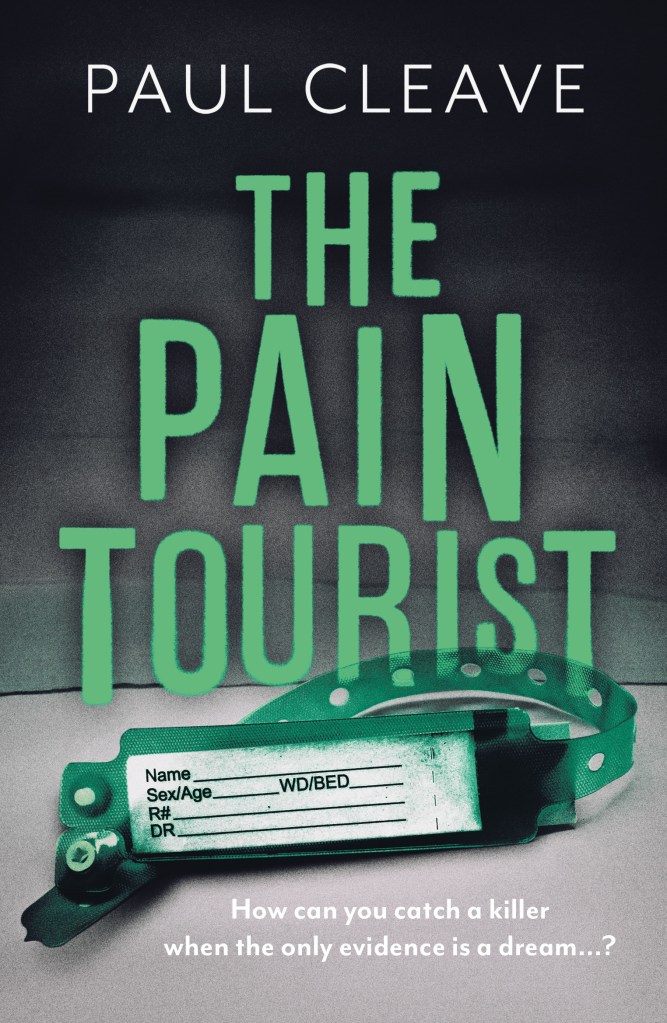
The Pain Tourist by Paul Cleave

‘In movies the monsters are always zombies, vampires, or some weird kind of mutant, but in this moment his eleven year old brain tells him he was wrong all this time. What he’s looking at now are monsters. Real monsters.’

I loved the central premise of this novel from Paul Cleave, the idea that there are pain tourists – people who gain satisfaction from soaking up the pain and misery of others. I’ve always used the term ‘emotional vampires’ to describe something similar and it has levels, from those who revel in reading lurid tabloid coverage of a celebrity break-up to something much more disturbing. We all know those people who have a tendency to insert themselves into other people’s life dramas and grief or who get a kick out of watching true crime or the accounts of serial killers, such as the page after page of obscene detail that filled the pages of tabloids following the discoveries at Cromwell Street, the home of Fred and Rose West. It seems lately as if everyone is watching serial killer documentaries and actors from Dominic West to David Tennant are queueing up to play them. I think here, by imagining the more disturbing lengths someone might go to in order to feel part of that crime or tragedy, the author really made me think about this trend.

The novel opens as a tense and violent crime is being committed. An eleven year old named James is watching his parents being threatened at gunpoint by three masked men who have broken into the family home in the night. As the intruders try to obtain the whereabouts of a safe from his parents, using whatever means to make them talk, James is trying to set up an escape plan for his sister Hazel. As both James and his mother’s lives were threatened, my heart was racing wondering why his parents don’t tell the gunmen! James’s quick thinking saves his sister, in a heart-stopping escape she gets to a neighbouring house, but it earns him a bullet to the head after watching both his parents killed. The terrible tragedy is compounded by the fact James’s family did not have a safe. However, one had been recently fitted a few doors away where a diamond dealer had just moved in with his family.

Cleverly, Cleave then splits the narrative in two directions, in an almost ‘sliding doors’ type story. James’s life continues into the future with his family intact or James comes out of a nine year coma, convinced he’s been living a life way beyond the four walls of his hospital room. For the cops who worked the case, a lot has happened in the last nine years since they failed to solve the murder of Hazel and James’s parents. Theo Tate left the force and is now a private investigator after a terrible tragedy touched his own family. Rebecca Kent is still a police officer, but is marked by tragedy in a more physical way, every reaction from strangers reminds her she now has a scar running down her face. The pair come together to revisit the case, when Kent is informed that James has woken up. Now, despite her relentless hunt for a serial killer nicknamed Copy Joe, Kent is tasked with reopening the cold case. Feeling hopeful that James may remember some new detail to add to existing evidence she also wonders if he could become a target for the killers, who are still at large? James can’t speak, but can communicate with pen and paper. The investigators are shocked by the detail packed into James’s story as he starts to write more. His ‘ComaWorld’ diary seems to flow out of him with very little thought or res. Nine notebooks, one per year, document a life unlived by anyone but James. Familiar names and events start to become apparent to his sister, such as his accuracy on each day’s weather or the book she was reading to him slipping into the narrative. What nobody expected him to reveal is that Kent has more than one serial killer on her hands.

This was such an original and complex thriller. As you might expect, considering I’m a writing therapist, the ‘Coma World’ stories were fascinating to me. The aspects of real life that Hazel notices are brilliant plot devices, but also play with the idea that the unconscious mind is still very much alive and picking up on what’s going on around it. From a therapy angle, James’s narrative could be seen as the mind’s way of healing itself while his body is asleep. One therapy technique I’ve seen involves the client writing a different narrative ending to something that’s happened. It helps the client discuss how a different ending might feel – would they feel more closure about the event for example? By exploring this, we can then discover and discuss why the real ending caused so many problems. The way James writes, in longhand and over a period of days fascinated me too. Is he scared if he doesn’t write it down it will be lost to the truth? The complex level of detail is incredible, as if he’s still seeing it running like a movie in his mind’s eye. I wondered how he kept it so rigidly to one year per book, suggesting there was a lot of detail he chose not to record. What we choose to edit out of a narrative is sometimes as important as what we leave in. When it becomes clear he’s been aware of other patients in the room, we can see how his mind is weaving their names and other facts into his narrative – he’s heard all their conversations too.

Tate and Kent were great characters to guide us through these complex interwoven cases. Kent is driven, but slightly less idealistic than Tate. She’s made peace with the fact that some cases don’t get solved in a way he hasn’t. It’s clear why she’s stayed inside the police force and he’s preferred to forge his own path. He’s an incredible investigator but perhaps not so good at office politics and coping with an imperfect system. Kent is desperately trying to solve the case of Copy Joe, a serial killer who copies the methods of previous serial killers, like the Christchurch Carver. Whoever he copies, he likes to leave the crime scene exactly the same way, almost like an homage to the murderers, showing his admiration. Are they looking for a fan of the ‘True Crime’ genre? Someone who perhaps started with the odd book, the podcasts, and the documentaries until he’s had to experience the same thrill. It’s an uncomfortable concept and made me question our enjoyment of such narratives, especially when true crime documentaries are constantly in the daily top ten on Netflix or other streaming service. When it comes to curiosity, how far is too far? When does an interest become an urge, an action. Tate’s private life was so devastatingly sad and I was moved by his visit with his wife. He loves her still and they sit and talk like any other married couple, the difference being, that as soon as Tate walks out of the room she will forget everything all over again. He chooses to bear a terrible loss alone. This showed another, devastating, side of brain injury -a patient who is physically capable, but with a brain that erases every interaction leaving a blank slate. She is happy in the moment, but that present moment is all she has.

From the explosive opening, which really gets the adrenaline flowing the tension ebbs and flows depending on the narrative or case we’re following that chapter. Towards the end, as all these cases come together in one terrible night, the heart really started pounding again. I did get a bit confused between locations and who was where towards the end. So I had to keep going back, desperately trying not to miss a moment as the twists and turns came thick and fast. I found it was Tate and Kent I was rooting for, not just that they would solve their cases, but that they would survive! I found the way James was constantly moved around in these final chapters a bit concerning. My experience in occupational health and care needs had me asking all sorts of questions. If James couldn’t walk how was he managing in these different spaces, using various different surfaces to sleep on from beds to couches? I kept wondering how he was getting to the loo – I’m laughing at myself as I write this, because honestly the way my brain works! This says so much about my inner life. I just kept thinking ‘how has he been discharged from hospital without an occupational therapy assessment and a multi-disciplinary meeting?’ Of course these facts are like the days James edits out of his narrative, not very interesting or helpful to the plot. The details of a character’s loo habits tend to dissipate the tension and excitement. This was an incredibly fast read, giving you some idea of the pace and that addictive pull you want in a thriller. Each character is cleverly written to draw you in, but you’re always left on edge and unsure. The multiple endings are brilliant, I just thought it was solved and I could breathe, then the author pulled the rug out from under me. Yet I loved that we get to have multiple endings, as James’s doctor suggests they write a book together, framing the narrative in yet another way.

Meet The Author


Paul is an award-winning author who often divides his time between his home city of Christchurch, New Zealand, where his novels are set, and Europe, where none of his novels are set. His books have been translated into over twenty languages. He’s won the won the Ngaio Marsh Award three times, the Saint-Maur Crime Novel of the Year Award, and Foreword Reviews Thriller of the Year, and has bee shortlisted for the Ned Kelly, Edgar and Barry Awards. He’s thrown his Frisbee in over forty countries, plays tennis badly, golf even worse, and has two cats – which is often two too many. The Pain Tourist is his (lucky) thirteenth novel

Posted in Monthly Wrap Up

Books of the Month! October 2022

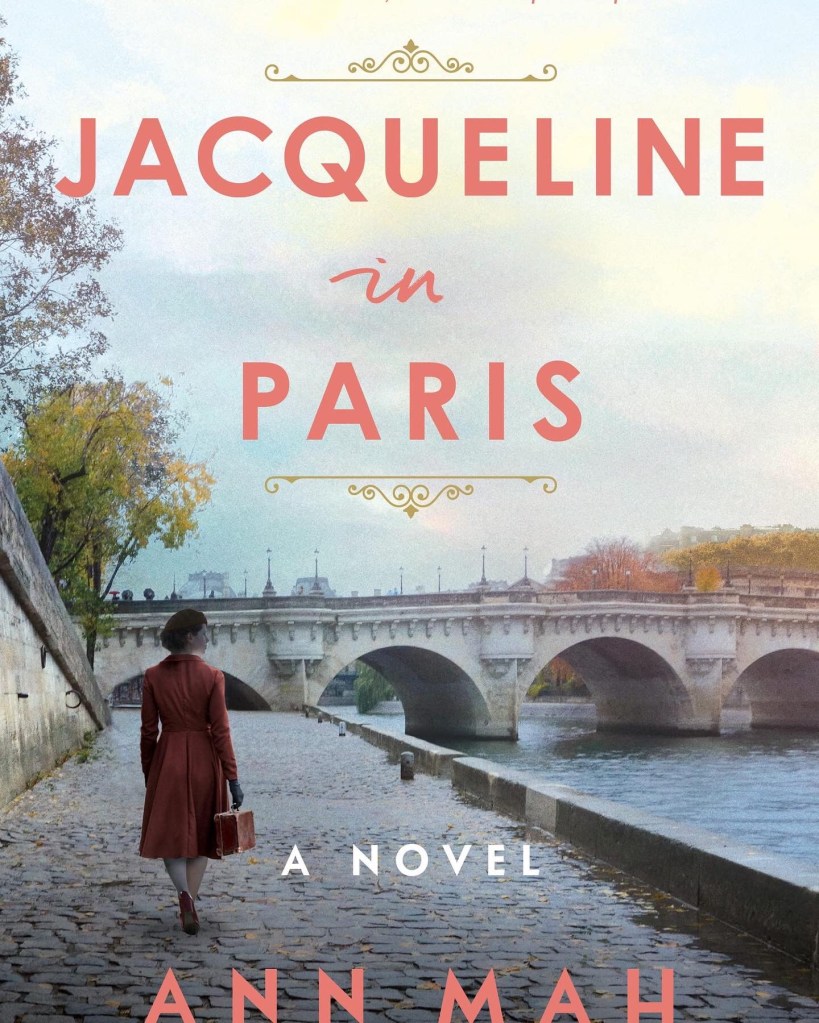
Jacqueline in Paris by Ann Mah

I truly enjoyed this beautiful piece of historical fiction, focused on one of the most iconic women of the 20th Century. I’ve read biographies on Jackie and watched many documentaries about the Kennedy family with my mum who is fascinated with the theories about the assassination of JFK. I’ve always had a picture in my head of a woman who didn’t fulfil her potential and had so much more to give than being a First Lady, supporting her husband. I’d most recently read a book focused on her life with Aristotle Onassis and his mistress Maria Callas. I always wondered why she married Onassis but felt it could have been a response to the assassination and a desire to be protected and live out of the spotlight. This book focuses on a single year in the life of Jacqueline Bouvier as she travels to Paris for the junior year of her degree course. She has a fascination with France and was interested in researching her family tree. Ann Mah shows us a girl torn between the life she wants and the life her family wants or needs her to have. Her mother has planned for Jacqui to marry someone in the political classes, preferably with family money behind them. This feels like her last year of freedom, in a Paris still recovering from the occupation of WW2 and with politics that are very different from the US. I thoroughly enjoyed reading about a new side to this fascinating woman.

Where I End by Sophie White

This was an extraordinarily powerful book, that I’m still thinking about several weeks later. On a remote island somewhere in the Irish Sea, an arts centre is being built to attract tourists, because the island is barren and without attractions. The first resident artist is Rachel, who arrives with her baby Seamus and while swimming on the beach meets local girl Aoileann. Aoileann is a strange girl, not used to strangers and fascinated with the way Rachel mothers her baby. Aoileen’s odd manner is due to her home life, where in a house with the front door and windows blocked up, she shares a caring role with her grandmother. The ‘bed thing’ needs round the clock care, with a Heath Robinson system of ropes and pulleys they haul her out of bed and into the bathroom. She does not move for herself, except the wearing away of her fingers, now bloody stumps. The line that sent a nasty shiver down my spine and changed the whole book for me, revealed the one finger where the bone protrudes from the skin. It’s this bone that the bed thing uses to scratch out messages on the floor. This is a disturbingly horrific book that shows the drudgery of caring, the effect of remote and superstitious communities, and the terrible power of secrets in a family. The author explores motherhood in such a clever way, contrasting Rachel’s love for Seamus with the neglect Aoileann has thought was the norm. This book isn’t for the faint-hearted, but it is utterly devastating in it’s effect.

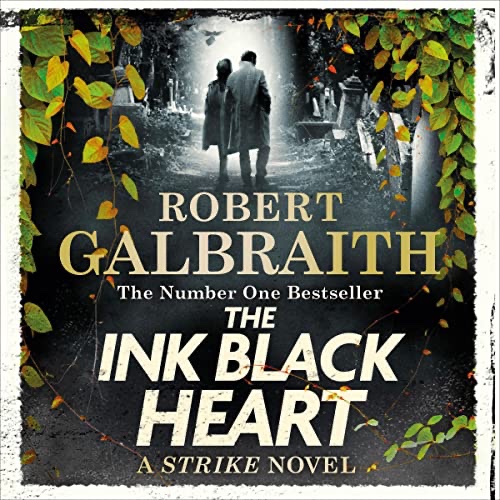
The Ink Black Heart by Robert Galbraith.

This instalment of the Cormoran Strike series is an absolute monster of a book. I had to give up reading the physical copy because it was like holding a brick! So I purchased the kindle copy so I could finish without breaking my thumbs. I’m a huge fan of Cormoran Strike, so although this wasn’t my favourite book of the series, it’s still up there as one of my favourites. This time Strike and Robin are drawn into the worlds of community arts and gaming. Two talented young artists from a community art centre create a cartoon called The Ink Black Heart, set in Highgate Cemetery and featuring unusual characters, one a wisp of a ghost and another that’s a human heart. An anonymous group of fans created an online game, where participants meet in Highgate Cemetery and complete challenges. Yet where there is success there are always people ready to tear it down and a person with the code name Anomie seems keen to do that. When the two creators are lured to the cemetery and attacked, things become serious. We’re privy to personal chats within the game and with Robin infiltrating the chat secrets will out. There are more complications in Cormoran’s love life as he dates a friend from ex-girlfriend Charlotte’s circle – can he shake off his feelings for good? Then there are those growing feelings between him and Robin, are they brave enough to follow those emotions or not?

The Pain Tourist by Paul Cleave.

I can’t stay too much about this thriller, because I’ve got a full review coming in a couple of days. This is such a fast paced thriller and it has such a tense opening! A family is woken in the night by masked men who are asking for the whereabouts of the safe. James is desperately trying to find a way to get his sleeping sister to safety. As she runs into the night, James watches the men shoot his mum and dad before he takes a bullet to the head. There is no safe. Nine years later, James wakes from a coma and his sister Hazel is soon by his side. The strange thing is James has been living all these years, in a different reality to this one and he is determined to capture it in writing. So he asks for nine notebooks, one for each year and begins to write his Coma World journal. Detective Rebecca Kent is assigned to his case and she has the help of Tate, the original detective who is now a private investigator. She is already chasing a meticulous serial killer called Copy Joe who likes to reproduce other killer’s crime scenes. What she doesn’t know is that James is recording events that happened in the real world in his journals, such as the books Hazel was reading to him or details of the weather. What else might he know? Rebecca is about to realise there’s more than one serial killer in town.

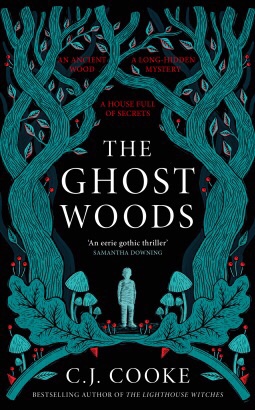
The Ghost Woods by C.J. Cooke

This is an intensely creepy novel from the beginning as we follow two young girls dealing with the consequences of becoming pregnant out of wedlock in the mid- Twentieth Century. Both choose to have their baby at Lichen Hall where the Whitlock family have been looking after young girls in trouble for several years. Mabel is the first, scared by her situation she doesn’t remember doing anything that might have led to pregnancy and concludes she must be having a ghost baby. The hall is strange, with Mr Whitlock who collects parasitic fungus and is often confused and in a state of undress. Wulfric, the Whitlock’s son, has unusual behaviour and becomes easily overwhelmed and angry. Mrs Whitlock is erratic, one moment she seems kind, but can also be snappish and dismissive. Only a few years later Pearl arrives, but the house is declining with the entire east wing seemingly overtaken by mould and fungus. Pearl has so many questions about this strange place, being a nurse she has more confidence and knowledge about having a baby. It seems strange that the Whitlock’s don’t have outside help for the girls giving birth. She wonders who the babies go to eventually and whether it’s legal. Who is the small boy she’s seen? Within a few chapter I was screaming at them to get out. They’re not restrained so it can only be the shame around their condition that holds them there. Each girl is infested by this destructive emotion and in one girl’s case, shame has made her put a lot of her experiences into a little box in her mind, under lock and key. Shame causes the denial of truths so scary, they could overwhelm us. It’s so sad that these girl’s shame creates an opening for others to exploit and exert power over them, but will they succumb? Or will they find strength from somewhere to resist and discover the truth about this mouldy house and family who live there.

Mad Honey by Jodi Picoult and Jennifer Finney Boylan

This is a return to the legal case format of earlier novels by Picoult and the addition of Jennifer Finney Boylan to make a writing team has led to this interesting look at transgender rights in America. Olivia fled her marriage with her young son Asher after her abusive husband directed his violence towards their son instead of her. Now Asher is getting ready to go away to college and has his first girlfriend Lily. Lily is a lovely girl and Olivia took her out to meet her honey bees. Olivia is impressed by the way Lily works with the hives and knows that the bees are a good judge of character. Asher is so in love with Lily, so Olivia is shocked when she takes a call to say Asher has been arrested and Lily is dead. Picoult introduces a familiar character from her earlier novels as Olivia calls her brother Josh to defend her son. It really does keep you on tenterhooks as you try to work out what went wrong at Lily’s house. There are twists and turns, right to the very end. You may have seen trigger warnings about this novel, but I didn’t agree with some of them. Yes, there is a transgender character and Picoult does explore some of the negative aspects of being trans. However, this is only done to highlight how hard it can be to transition and the prejudice faced by people who are transgender. While there were prejudice characters, there were also well-meaning but ignorant characters. I never doubted that these writers were trying to portray a true representation of the experience, especially the sections written by Jennifer Finney Boylan who is one of the most famous transgender writers in the USA. This is a great book club choice, because there’s so much to talk about.

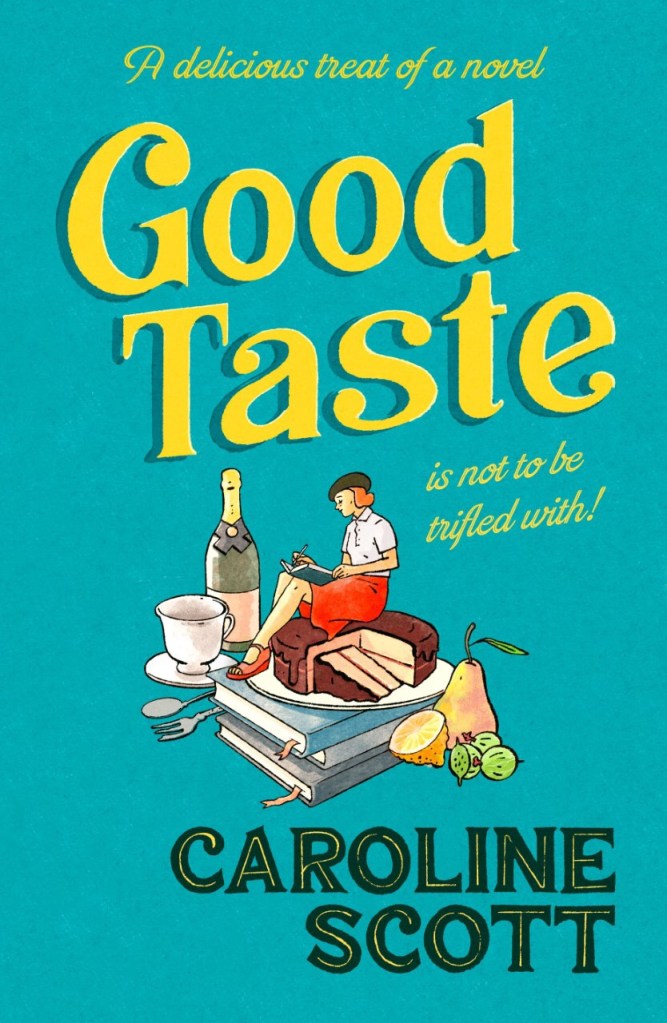
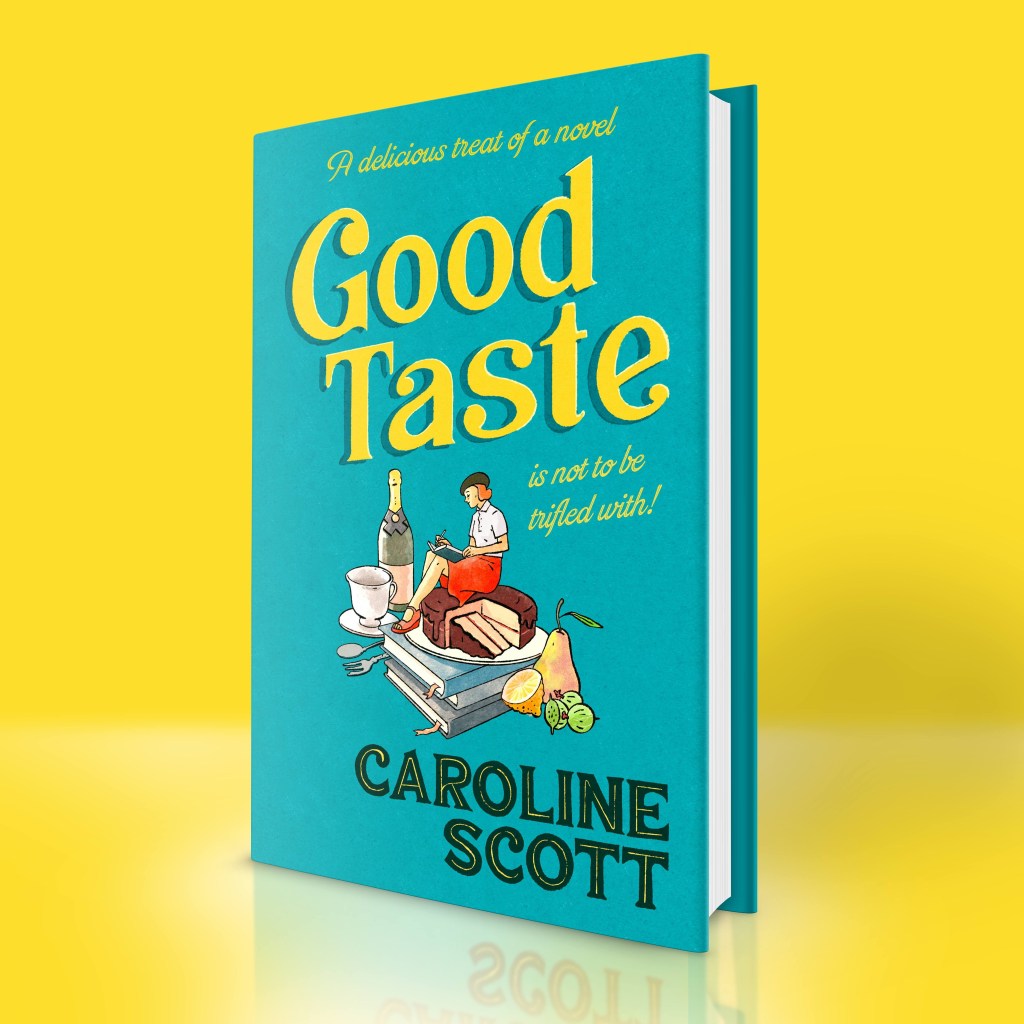
Good Taste by Caroline Scott

Caroline Scott enjoys writing about the period just after WW1 where Britain is in flux and people are going through huge changes within class, gender and the expected ‘family’ unit. England is struggling through a depression and our heroine Stella has had something of a life change. It’s 1932 and she is facing the first Christmas without her mother. With memories of her mother’s frailty last Christmas and the fear of that obvious empty chair, Stella has moved back from London to a small cottage in the West Riding of Yorkshire in order to be near her father. Money is tight, since her first book The Marvellous Mrs Raffald hasn’t done as well as she’d hoped. Celandine Cottage is rather shabby and Stella is surviving on the money she’s paid by a women’s magazine for writing a weekly article with five new recipes. When she’s summoned to London by her publisher, she’s half expecting her novel to be pulped and although she wants to write a biography of 18th Century cookery writer Hannah Glasse, she’s rather gloomy about her prospects. She’s shocked when he tasks her with a new idea – a history of English food. He wants a book that will inspire English housewives and remind English men of a nostalgic past. Although as Stella starts to think about her research, she realises that a lot of food people consider to be quintessentially English, is actually from elsewhere. Caroline has a wonderful way of balancing period detail, charming characters, and a touch of humour, while also showing us the grittier underbelly of life in a depression. There are also moments of grief for her mother, which are so beautifully rendered. Caroline makes this look incredibly easy when in reality it’s such a complex juggling act, one that she pulls off beautifully.

So, that wraps up October and since all my blog tours are read for November, i now have until the end of the year to catch up on NetGalley ARCs and publisher proofs I haven’t got to yet. Most exciting to me is that I get to choose which ones I read, so it feels like free reading all the way to January. I’m really excited for this! I might need that long to do my Books of the Year list.

Posted in Random Things Tours

Jacqueline in Paris by Ann Mah

Jacqueline Bouvier Kennedy Onassis is one of those iconic women that we can’t help but be curious about. From watching the film JFK and numerous documentaries about the death of President Kennedy with my mother, I started to be curious about the woman in the blood-stained pink suit. I think people are drawn to women who remain silent. As far as I’m aware she has never spoken directly about the horrific, life changing events of that day. She has almost seemed stoic. The perfect widow, in her lace mantilla at the funeral, still seeming numb and shell-shocked. When she surprised everyone by marrying Aristotle Onassis, the millionaire shipping magnate, I think it was driven by a need to hide. She needed a place to be without cameras following her every move and on his yacht she was definitely away from prying eyes. Perhaps his protection allowed her to grieve and come to terms with her trauma. I wanted to read this book, because I was fascinated to meet this version of Jackie – the Jacqueline before she was Jackie in. I always had the impression that she could have been a woman in her own right, more than the political wife she became.

Ann Mah has set her book in one particular year. In 1949 Jacqueline Bouvier travelled abroad for her junior year at college. It was to be her last year of freedom. She was aware that despite being poised and ready for society, her family were on the edge financially and she felt pressure from her mother to make a good match on her return. She met Jack Kennedy in 1952. Jacqueline lives in an apartment with a widowed French countess and her daughters. She finds a world of champagne, avant-garde theatre and jazz clubs and socialises with people she would never have met in her home town or the social circles at Vassar. There’s even romance with a man who loves literature like she does, but who would be totally unsuitable back home. Yet Paris isn’t all fun and glamour, because this is the aftermath of WW2 and its clear that the city’s people have suffered. The countess and her daughters have suffered too, as part of the resistance. The whole city is haunted by events during the Occupation and it will take many years for them to recover from the lies, betrayals and suspicion that lurk round every corner.

I love that Mah has written this novel in the first person, so we have Jacqui’s unguarded thoughts and emotions from the start. Even though it is a fictionalised self we’re getting to know, it still feels like a rare window into the innermost thoughts of a very private woman. It may sound strange to regard her as private when she was later married to the most powerful leader in America and arguably the world. Jacqui is private though. From this part of her life when she has the most freedom she’s ever known she’s testing people out for herself, but there’s still a natural reserve. She gets to decide who to spend time with and who to trust. On her return to the US and her subsequent relationship with John Kennedy, she is private by design. It’s part of the mystique of being a powerful politician’s wife who should show loyalty, discretion and control of her emotions. Once she’s in those circles, who can she trust to be a true friend? Where many might have seen her as the archetypal political spouse, this was the ambition of her mother rather than Jacqui’s own desire. Here we see her when she was naive and idealistic. Her love of art and for the city of Paris is evident. She’s also keen to make friends and experience real French life, but that reserve can make it hard for others to feel they know the real her.

She finds that one of the biggest differences between the US and Europe is a political one. During the war, Parisian people did what they had to in order to survive and there are still grudges against those forced to collaborate. She learns which subjects to avoid. Madame de Renty is a lively and colourfully dressed woman during the day, but she was imprisoned at Ravensbrück concentration camp during the war and Jacqui hears her crying in the night. Some truths can never be spoken. Aside from the post-war adjustments and the effects of trauma that will last for generations, Jacqui is most shocked by the Parisian’s politics. There is a lean towards communism here, something that’s unthinkable in the US where it’s considered in the same breath as Nazism. Her mind is broadened by friends who explain it’s underlying principles – an equal, fair society. This has huge resonance for us, because we understand she will be First Lady during the Cuban missile crisis, and the 1950’s saw a wave of suspicion about communism that fuelled the McCarthy era.

Despite these darker undercurrents there’s also the joy of seeing Paris through her eyes, for the very first time. The beautiful language, the smells of incredible food and early morning croissants. There’s also Jacqui’s love of learning and through this I could see glimmers or the different life she could have had, if her family had valued her as more than a marriage commodity. This is a well-researched account that held some of the answers I’d pondered about her life: that pull between the security of marriage and the more precarious life of her own; the love of Europe that would see her return there after Kennedy’s death; the education from a really great college versus the education of how to be a wife provided by her mother. I thought the author found a great balance between fleshing out a story and what we know of Jacqui’s year abroad through historical research. I understood this Jacqui and felt I’d met her before in my own reading. Now I have to give this straight to my mum so we can talk about it.

Meet the Author

Ann Mah is an American food and travel writer. She is the author of the USA
Today and Wall Street Journal bestseller The Lost Vintage, as well as three other books. She contributes regularly to the New York Times Travel section, and her articles have appeared in the Washington Post, Condé Nast Traveler, The Best American Travel Writing, The New York Times Footsteps, Washingtonian magazine, Vogue.com, BonAppetit.com, Food52.com, TheKitchn. com, and other publications

Posted in Random Things Tours

Suicide Thursday by Will Carver

I’m usually well ahead of time when it comes to my blog tour reviews, sometimes by a month, but this one ……. AAaaarrrghhh! I can’t put into words why I can’t put into words what I thought about this novel. If you’ve read the book you’ll understand. I don’t think there’s a literary convention Will Carver hasn’t wanted to subvert. It’s been difficult to write reviews for Will Carver’s books in the past, but I’ve never been down to the wire like this before. I’ve been trying to scribble down my thoughts only hours before the review is due. So, I’m sorry if this doesn’t always make sense, or if it doesn’t do justice to Carver’s inventiveness and originality, but it’s the best I can do. This writer is simply too clever for me!

Eli Hagin can’t finish anything.

He hates his job, but can’t seem to quit. He doesn’t want to be with his girlfriend, but doesn’t know how end things with her, either. Eli wants to write a novel, but he’s never taken a story beyond the first chapter.

Eli also has trouble separating reality from fiction.

When his best friend kills himself, Eli is motivated, for the first time in his life, to finally end something himself, just as Mike did…

Except sessions with his therapist suggest that Eli’s most recent ‘first chapters’ are not as fictitious as he had intended … and a series of text messages that Mike received before his death point to something much, much darker…

Mike can do something Eli can’t. Eli can’t commit to a narrative, leaving behind him reams of first chapters. He can’t commit to Jackie either, even though they’ve been together for the length of time it would take most people to live together or get engaged. Mike wanted to kill himself and he’s followed it through. Eli finds him sitting there, on his newly polished living room floor, with his hands embedded in the lacerations on his thighs. Even in his numbed and shocked state, there is jealousy that Mike has finished what he started.

Eli, Mike and Jackie are a trio. Eli and Mike are friends. Jackie and Eli are in a relationship that Eli doesn’t want, or does he? There are times when he could end it, but doesn’t. It is their anniversary two days after Mike dies. Two days after Jackie slept with Mike. Eli knows, but seems ambivalent. I found myself laughing at their ludicrous anniversary dinner, where Eli’s scrabbling on the floor for some dropped cutlery and Jackie semi- manipulates this into a proposal. Eli has turned indecision into an art. He has a job, but doesn’t enjoy it. He wants to leave, but just can’t make the first step. Eli feels a lot of the same emotions as his friend Mike. The ennui, the despair and the sense of being lost. Yet Mike had the guts to do something about it.

I was fascinated with the chapters headed ‘Fake Therapist’. In fact Eli has a session on Suicide Thursday and as he points out, just because it’s such an important day for Mike, it doesn’t mean he can miss therapy. Immediately, I wondered how he would know it’s the day that Mike is going to commit suicide. It seems to me that there’s a problem with the fake therapist? The problem being ….. there’s no therapist.

Eli then has to speak first (of course he does, no one else is there). He still regurgitates the same information he always does, almost as if each session is with someone new. There is no accumulation of knowledge or shorthand that comes from working with a therapist for a while. In fact each session is like one of his first chapters – the same stuff just expressed differently. I was interested in his knowledge of therapy, such as the comment on eye contact and his inhibitions. Has he had therapy in the past? Is that where he was confronted by things he didn’t want to talk about? The comment about any corporeal therapist directing the session, wanting to talk about Mum when he isn’t ready, is a bit of a giveaway. It seems therapy is great, as long as he can control it.

‘I pull the chair from beneath my desk in the first-chapter library and move it to a position where it can face the couch – my £2000 black, leather, archetypal therapist’s couch. It’s on a slight angle, a classic psychoanalyst’s trick to avoid eye contact, allowing me to overcome any inhibitions I may have. I place the Dictaphone on the seat, lie back and wait for the first question.’

I can’t tell you anymore of the story, not only would it ruin the reading experience, but I don’t really know where to begin. I can’t place it in a genre. I can’t really explain my reaction to it. The story unfolds in such an unorthodox way I’m scared of revealing something that I’ve dismissed as unimportant, but that opens up the whole story for someone else. I think it’s one of those books, where the meaning is dependent upon the reader. There were revelations that really made me rethink Eli, such as those text messages he sent to Mike before his suicide. It then changes everything you’ve read before. I would call this an ‘active’ reading experience. My brain, my emotions and often my ability to sleep were constantly engaged. As for trigger warnings, I can’t imagine that anyone who’s affected by suicide would pick up a book with this title. I didn’t find the subject matter triggering, despite personal experiences, but I was slightly disturbed that I wasn’t more triggered by Mike’s despair and eventual suicide. It think it’s because I was so engaged thinking ‘WTF?’ I was so busy thinking, I didn’t respond emotionally. If you like your books to be original, creative, mind-bending and tricksy, then this is the one for you. I didn’t respond to it at first. In fact it took a bit of work, but I can promise I’ll still be thinking about it weeks from now.

Published by Orenda Books 24th November 2022

Meet The Author


Will Carver is the international bestselling author of the January David series and the critically acclaimed, mind-blowingly original Detective Pace series that includes Good Samaritans (2018), Nothing Important Happened Today (2019) and Hinton Hollow Death Trip (2020), all of which were ebook bestsellers and selected as books of the year in the mainstream international press. Nothing Important Happened Today was longlisted for the Goldsboro Glass Bell Award 2020 and Theakston’s Old Peculier Crime Novel of the Year. Hinton Hollow Death Trip was longlisted for Guardian Not the Booker Prize, and was followed by three standalone literary thrillers, The Beresford, Psychopaths Anonymous (both optioned for TV) and The Daves Next Door. He lives in Reading with his family.

Posted in Random Things Tours

Good Taste by Caroline Scott.

In-between a couple of intense crime reads I was so ready for the comforting nostalgia of Caroline Scott’s new novel. Don’t let my description fool you though. Caroline has a wonderful way of keeping her writing light and soft, but the merest peek under that surface reveals themes that delve so much deeper into society and the historical period of our heroine Stella. Set in the fascinating time period between the two World Wars, England is struggling through a depression and Stella has had something of a life change. It’s 1932 and Stella is facing the first Christmas without her mother. With memories of her mother’s frailty last Christmas and the fear of that obvious empty chair, Stella has moved back from London to a small cottage in the West Riding of Yorkshire in order to be near her father. Money is tight, since her first book The Marvellous Mrs Raffald hasn’t done as well as she’d hoped. Celandine Cottage is rather shabby and Stella is surviving on the money she’s paid by a women’s magazine for writing a weekly article with five new recipes. When she’s summoned to London by her publisher, she’s half expecting her novel to be pulped and although she wants to write a biography of 18th Century cookery writer Hannah Glasse, she’s rather gloomy about her prospects. She’s shocked when he tasks her with a new project – a history of English food. He wants a book that will inspire English housewives and remind English men of a nostalgic past. Although as Stella starts to think about her research, she realises that a lot of food people consider to be quintessentially English, is actually from elsewhere. So she sends out a letter:

Sir,

Would any housewife in your region be kind enough to share a traditional recipe with which she may be acquainted? Is there a favourite pie made by your grandmother? A cake that you fondly recall from childhood? A dish that’s particular to your village? Perhaps a great-aunt left you a hand-written book of her recipes?

This knowledge and these flavours have been passed down to us through the generations. But an urgent effort is required to collect and catalogue these dishes. If you are able to assist with this task, you would be doing a great service.

Please correspond with the address below. I will gratefully acknowledge all contributions,

Stella Douglas

However, as she sets off on her planned route to meet food makers and the nation’s housewives her car breaks down. A dashing young man called Freddie comes to her rescue and her plans move in a different direction, perhaps toward something more imaginative.

I enjoyed Stella, mainly because she is very much the modern woman, living alone and paying her own way at a time when women’s lives changed enormously. During WW1 women were encouraged to work, because they were needed to fulfil job roles that men had left behind as they went to fight in the trenches. Women became more used to living alone, making their own way and working outside of the home so when the war ended and men returned, there was tension. Some men wanted their wives back in the home so they could be breadwinners of their family. However, so many men were lost and injured, so the changes did stand and the following generations of women were keen to shape their own destiny. Stella was enormously likeable and intelligent, very measured in her approach to the task and able to see immediately that it was much more complicated than expected. As she listed those foods seen as English she could see the influence of foreign imports in them, as well as in her spice rack. Even the humble potato conjured up images of the Crusader, Tudor explorers and Dutch horticulturist’s sailing off to the Far East for specimen plants. She spots the massive gap between the perception of Englishness and the reality. In her imagination, cricket teas and church spires clash with a colourful collection of influences, speaking more than a dozen languages. Which history does she want to write and which is her publisher expecting?

I was rooting for Stella from the start, especially when her plans started to go awry, and I found her reminiscences of her mother so touching. Caroline taps into that nostalgic aspect of food and the way foods from our childhood hold a particular place in our hearts, with just a whiff or taste bringing up strong emotions of where we were or who we were with. One sniff of a newly opened tin of Quality Street sends me rocketing back to the late 1970s and my Aunty Joan who would buy us one each year along with a goodie bag of colouring pens with colouring and puzzle books. Bread toasted under a gas grill with salted butter takes me to my grandma’s kitchen as she brushed my hair and put a bow in it. The beautifully hand-written notebooks that belonged to her mother are like a time machine for Stella, all the more emotive now her mother is gone after a battle with cancer. They cause tears to well up, but also allow Stella to smile at her precious memories of surreptitiously sharing the first slice of a roasted lamb joint. This is the first time she has been able to think of her mother with joy as well as sadness.

‘As Stella read, the shadows in the room lightened, the gramophone played again distantly and order seemed to return to the world

Another aspect of Caroline’s writing I love is the extensive research that lies underneath a relatively gentle tale. I felt immediately immersed in the 1930’s, with even little asides about fashion like Stella’s felt cloche with a frivolous ostrich feather and her Liberty & Co coat, placing her firmly in time. As Stella reminisces about her time in Paris with her friend Michael, we’re there as she wanders through cellar clubs and tastes cocktails in Montparnasse, it sounds like there’s a hint of romance in her memory of dancing barefoot with him on a warm pavement. Something about their relationship is alluring and it’s as if she’s only just started to really see her friend and his incredibly blue eyes. Her surprise when she finds out he’s in a new relationship is obvious and this isn’t just any woman he’s involved with, it’s Cynthia Palmer, a beautiful model and artist. Where will Stella fit in?

The historical detail of English food is fascinating and it was interesting to hear ideas from the early 20th Century that we still talk about today in terms of sustainability and frugality. When it comes to meat there’s ‘nose to tail’ eating, making sure every part of the animal is used – they clearly had a better stomach for offal than we do today. There’s the concept of eating locally and growing your own food. There were also criticisms that are obviously age old, such as feeling young people have forgotten how to cook from scratch and are becoming dependent on gadgets and what we now call time saving hacks. She seems to sense another trend that I thought was current; the concern that we almost fetishise food with our devotion to baking and other cooking shows, while at home we’re cooking from scratch less and less. When it comes to what and how we eat, and even what we call our mealtimes, there are definitely divides between town and country, between the wealthy and the poor, and variations between North and South. I loved the eccentricity of some of the characters she meets and neighbour Dilys was a favourite of mine. Having a mum who flirted with vegetarianism and haunted the health food shop, Dilys’s devotion to pulses and lentils stirred up a childhood food memory of my own – a terrible shepherd’s pie with no shepherds just acres of lentils, called Red Dragon Pie. The only red thing about it were the acres of ketchup we used to give it some flavour. I loved her bohemian air and she seemed startlingly modern compared to Stella who’s a little more ‘proper’. The roguish Freddie was also rather fun and very charming of course. Caroline has a wonderful way of balancing all this. She tantalises us with period detail and charming characters, throws in some humour, while also showing us the grittier underbelly of life in a depression and those moments of grief for her mother that Stella experiences, which are so beautifully rendered. Caroline makes this look incredibly easy when in reality it’s such a complex juggling act, one that she pulls off beautifully.

Meet The Author

Caroline completed a PhD in History at the University of Durham. She developed a particular interest in the impact of the First World War on thelandscape of Belgium and France, and in the experience of women during the conflict – fascinations that she was able to pursue while she spent several years working as a researcher for a Belgian company. Caroline is originally from Lancashire, but now lives in SouthWest France. Her book The Photographer of the Lost was a BBC Book Club pick.

Posted in Publisher Proof

Where I End by Sophie White

I don’t really know where to start with this extraordinary novel from Sophie White. I finished it and sat in a stunned silence for while, unsure what I’d just read. I love books that stir up feelings and there were so many: empathy, sadness and curiosity soon gave way to confusion, disgust and horror. This is a psychological horror that’s not for the faint hearted, but it’s also incredibly lyrical, atmospheric and strangely beautiful. We follow teenager Aoileann and her claustrophobic life on an island somewhere off Ireland, where there are few residents, even fewer visitors and a dialect that bears little relation to the outside world. Aoileann’s whole world is the house where she helps care for ‘the thing’ a wreck of a human being who never speaks and whose every need is met by others. Our unease, already awakened by the strange atmosphere and narration, is further aroused when we find out ‘the thing’ is Aoileann’s mother. How did she end up in this state, unable to do anything for herself, suffering from bed sores and her hands bloody stumps from scratching at the floor during her occasional nocturnal rambles? Why are they caring for her in this rudimentary way? Aoileann’s grandmother has instigating the care routine, a rather Heath Robinson affair done with no occupational therapy, no medical equipment or intervention.Why does her grandmother Móraí insist that Aoileann stay indoors, away from other islanders and with reminders to never talk about ‘the thing’? My mind was filled with so many questions, and alongside them grows Aoileann’s curiosity about why she’s never been to school and why she had to fight to be allowed to swim in the sea. Most confusing of all is that Móraí spits on the ground where Aoileann has walked, like a Romany warding off the evil eye.

Sophie White sets the scene so incredibly well with three sections that encompass Aoileann’s world, entitled my mother, my home and my house. The house has a forbidding look. Where once it had windows and a door that opened onto the sea view and towards their neighbours, these apertures are now blocked with stones. This is a house and a family that doesn’t look outward or admit visitors. When Aoileann talks of her home she talks about the island, not the house or her family. She is a wild thing. She belongs to the sea. She hates the land. The cliffs and beaches are perilous and Aoileann feels unnerved when she thinks about the small part of the island she can see and the deep expanse of land ‘lurking beneath us’. Yet in the water she feels free. Despite it being a watery grave for the island’s fishermen, as she slips under it’s silken surface she feels most like herself and swims like a Selkie. Their house is at the dangerous end of the island, the last dwelling on the road that ends with a sheer drop. Her mother is another landscape with it’s own treacherous drops and cavities to swallow one whole. Until now her she has been tended to by Móraí, but with a new visitor centre being built for bemused tourists, she is needed elsewhere for her knowledge of the island’s history. Caring for ‘the thing’ will become Aoileann’s main role. She already hates the thought of it, the monotony of an endless routine, just pushing things in and clearing them out of her ruined body.

The author’s depiction of the diseased or deformed body as a horror took me in two different directions. Intellectually my mind went to Kristeva’s essay on abjection ‘The Powers of Horror’ in which she theorises on the human response to a breakdown between subject and object; in this case our revulsion for the materiality and fragility of the decaying human body, reminding us of our own mortality and eventual decay. Viscerally I felt instant nausea, a type of bodily-felt memory of when I was a carer for my terminally ill husband. In my own writing about the experience I have struggled to be this raw and truthful about how repulsive caring for bodily functions can be, because of the love and sense of protection I still feel about him fifteen years later. I didn’t want people to display those aspects of his care, both for his privacy and because I didn’t want others to remember his declining physical body rather than his spirit, that indefinable ‘thing’ that made him who he was. I knew there were things I felt revulsion about, so what would others think? Here though, there are no tender feelings to complicate the reality of her mother Aoibh’s ruin, we can experience it all. These descriptions are strangely routine, the strange system of ropes and pulleys used to hoist the body from the bed are relayed to us with a detail that’s forensic and almost boring. It’s as if the person relaying the narrative is as worn down by this daily grind as the grooves in the wooden floor made by dragging the chair back and forth from bathroom to bedroom. Then the reality of caring for someone helpless hits us at full force, as she relates how ‘opportunistic bacteria and fungi find life enough in her to breed in places where her skin pleats and gathers’. I remember the drying of these places, the careful patting dry rather than rubbing, the application of barrier cream and the red welts left if a spot was missed. The part that provoked the most visceral reaction in me was the detail of her ruined hands, with just thumbs remaining untouched, her fingers mostly ‘end just passed the knuckle. The pad of her right index finger has worn away entirely and the bone extends like a tiny pick from the flesh’.

It’s with this implement that ‘the thing’ scratches marks in the floor, marks they must sand away before her Aoileann’s father visits and finds out his wife is moving. Aoileann starts to wonder if these marks are an attempt at communication so she records them in a journal and tries to piece them together. If she can, they will be the only words she has ever heard or seen from this wreckage of a mother, created the day something terrible happened and turned her grandmother into a permanent nurse maid, drove her father from the Ireland and left Aoileann with a mother who couldn’t communicate and a grandmother who had nothing left to give. Motherhood has been a fertile ground for horror ever since Frankenstein’s monster first opened it’s yellow eye and came to life. There are parallels here between Aoileann and the monster, firstly the idea of monstrous birth and that nature/ nurture debate on whether such creatures are born or made. There are vivid descriptions of pregnancy, casting a foetus as a parasite, growing inside with the potential to drain the life out of it’s host. Also, Frankenstein only thought about the creation of his monster, not what to do with it should he ever succeed. The monster’s abandonment and confusion is akin to Aoileann, craving love from the women she lives with or her distant father, whose attention is focused solely on the thing in the bed when he visits. Was she born cursed? Or was she cursed by others; her family or the islanders? There’s an emotionally devastating paragraph where she relates her desperate need to be held by a helpless mother and a grandmother who has always held herself apart.

‘if I did pull myself to her and laid my head against her belly, she became rigid and stayed that way until I understood moved away again. When the bed-thing didn’t respond to me, it felt ok because I had never seen it use it’s arms for anything, but Móraí’s arms were capable’.

This neglect has created a strange, damaged, girl and in psychological terms it is easy to see how she becomes attached to Rachel, a visiting artist staying at the new centre and tasked to produce artworks inspired by the island. Rachel is a new mother and Aoileann is fascinated by her bond with her baby Seamus. The love doesn’t fade, even when ‘it’ shrieks constantly and doesn’t let Rachel sleep at night. Aoileann is also drawn to Rachel’s fecund, maternal, body in stark contrast to her own mother’s wasting and slackness. Strange feelings start to stir in Aoileann, feelings she’s never felt and doesn’t understand. There’s excitement at the ideas and opportunities Rachel represents and the sheer productivity of someone who can nurture both her baby and her creativity. Yet there’s also a strangely curdled mix of lust and a neglected child’s need to be nurtured and cradled in the same way Rachel cares for Seamus. I felt for Aoileann, but strangely couldn’t like her. I could see the terrible void at the her centre, created by an unspoken tragedy that befell her family, but also a total lack of love and tenderness. A tenderness that’s missing in the way they care for her mother Aoibh, ‘the bed-thing’. Normally, I’d feel sadness for this girl and her strange, bleak, emptiness. What I actually felt was that the void inside was too big, an emotionless black hole that might swallow up anyone who tries to care. As the book comes towards it’s conclusion the tension is almost unbearable, the horror intensifies and I feared for for anyone who stood between Aoileann and what she needed. Bear in mind that this may be a difficult read if you are pregnant or a new mum. For everyone I’d say this is a raw, open wound of a novel. The gaping, open mouthed cry of a soul that doesn’t even know what is missing.

Meet The Author

SOPHIE WHITE is a writer and podcaster from Dublin. Her first three books, Recipes for a Nervous Breakdown (Gill, 2016), Filter This (Hachette, 2019), and Unfiltered (Hachette, 2020), have been bestsellers and award nominees, and have been described by Marian Keyes as ‘such fun – gas, clever stuff,’ and by White’s mother as ‘very good, of its type.’ Her bestselling memoir Corpsing (Tramp Press, 2021), was shortlisted for an Irish Book Award and the prestigious Michel Déon non-fiction Prize. Sophie’s publications include a weekly column ‘Nobody Tells You’ for the Sunday Independent LIFE magazine. She
has been nominated three times for Journalist of the Year
at the Irish Magazine Awards. She is co-host of the chart-topping comedy podcasts, Mother of Pod and The Creep Dive. Sophie lives in Dublin with her husband and three sons.

Where I End by Sophie White published on 13 October 2022 by Tramp Press as a Flapped Trade Paperback at £11.99
Sophie White is available for interview and to write pieces
For further information, please contact Helen Richardson at helen@helenrichardsonpr.com

Posted in Random Things Tours

Ahead of the Shadows by A.B. Kyazze

When a photographer witnesses war crimes, will she have to abandon her calling to save herself?

As Lena and Kojo work in conflicts across East and Central Africa, there is immense psychological pressure, and it’s not certain if their relationship will survive.

Eighteen years later, Bene walks the gritty back streets of Paris for one night in a music festival. He is on his way to meet his father in Kenya, a man he’s never met.

Ahead of the Shadows is about the intense relationships that come from work in war zones, the transmission of trauma from one generation to the next, and how one unconventional boy might be able to break the cycle.

It’s such a pleasure to close the blog tour for this small but powerful book about the dangers and struggles of working in conflict zones. I had a period in my teens where I wanted to be a journalist and was in awe of Kate Adie and Feargal Keane. My life didn’t go that way, but I remember reading Feargal Keane’s memoir and a long piece by Italian correspondent Janine di Giovanni that really impressed upon me the life long effects of being and working surrounded by danger. There are the effects of what they’ve seen such as PTSD and a terrible restlessness left over from living such an adrenaline fuelled existence. Many can’t overcome that restlessness and choose to live a peripatetic existence, endlessly wandering from one crisis to the next, using drink to avoid the worst of their memories. It destroys people and their relationships. So, when I saw the blurb for this novel I was interested to read it.

I think the author really captured how adrenalin fuelled these jobs can be as we follow Lena into the Democratic Republic of Congo. With her group she settles into their temporary accommodation for the night, only to be woken by the sound of a dozen phone alarms going off raised voices and activity. With very quick thinking she pushes a piece of furniture across her door and sits against it, eventually falling asleep on the floor. It shows the reader how alert Lena is to the possibility of violence at a moment’s notice. With no clear sides in the country’s conflict, as well as soldiers for hire, child soldiers and rape regularly used as a weapon, Lena doesn’t know from which side danger might come. There’s no clear wrong or right and danger could come from local bandits, not just men engaged in conflict. The next day, with most of her party having left in the night, Lena rings her lover Kojo for advice on what to do. He advises her to walk to the border and cross to Kigali in Rwanda where he can send someone to meet her. As she walks alone towards to border my heart was in my throat. The author creates so much tension and our own knowledge of corruption and violence in these regions adds to our fears for Lena. It seems to take forever for her to cross the no man’s land between the two countries and she seems so defenceless. Hours later in Kojo arms, she is awake as he sleeps, aware that she feels so much safer with him present, but she still has adrenaline coursing through her body.

When writing about such dramatic events and heightened emotions in one timeline of the book can leave the present day sections feeling flat by comparison. However, as we go to Paris with Bene who is on his way to meet his father for the first time in Kenya, the author doesn’t try to compete. She lets Bene’s world seem almost dreamlike in comparison, at least on the surface. As he wanders in Paris he meets a beautiful young woman called Fatima who takes him on a tour of her city. These sections are like a dream sequence within the harsh realities of Africa from almost two decades before. There’s a sense of going with the flow as Bene goes out with Fatima into the evening. This stop has been a hiatus in his journey out to Kenya to meet his father for the first time. He should be carefree, but here and there we get traces of anxiety. When she takes him to a party at her ex-boyfriend’s place he doesn’t look forward to being with strangers, especially if they’re fakes. Most are out on the apartment balcony, watching a singer in the square below. It’s not his type of party. He goes to find Fatima as he wants to leave and steps onto the heaving balcony and wonders at how easy it would be to throw oneself over the railings and what it would take to turn that urge into a reality? I wondered where these dark thoughts and anxieties came from in such a young man. As if he’s only just running one step ahead of the shadows.

Lena’s time in Sudan is a tough read, but an important one. There was a period of time when family and friends were fed up of hearing me ask why news programs and governments had forgotten what was happening in Sudan. I remember George Clooney funding a satellite to view areas where rumours abounded about the mysterious ‘Janjaweed’. The UN seemed reluctant to use the word genocide but it was happening. The author captures the fear these masked murderers on horseback generated in the villages. They were thought to be mercenaries, appearing with no warning, except for the sound of pounding hooves. They left no time for people to flee and showed no mercy. Men were killed, young boys rounded up and recruited or killed, young girls and women gang raped. Then the survivors rounded up and placed in camps. Lena travels there as an NGO worker, trusted to bring back her clear observations for Kojo’s project.

Kojo has trusted Lena to see exactly what’s happening, she has experience of travelling through conflict regions and knows how to find the truth. Even he is taken aback by her phone call, when she tells him that no other place they’ve travelled to holds the amount of fear expressed by survivors. She tells him there’s something more going on here, that even the workers are scared and the people to scared to speak. They’re petrified. Kojo has never known Lena use hyperbole, so when she suggests people are being rounded up, Kojo suggests they talk in person. The longer Lena spends in Darfur the more she thinks about her friend Stefan, another photographer, the one who killed himself. Kojo notices when they’re reunited, a mental distance, and a physical one too – as if she’s constantly on alert and ready to flee. It takes a catalyst to set, what has only been a feeling up till now, into reality. Something to force her into taking flight. The author brings all these strands together beautifully, a full eighteen years since Lena and Kojo were in Sudan. Will Kojo come to understand her urge to flee and find safety all those years ago? Will he forgive her for keeping secrets? This is a beautiful book about the horrors humanity is capable of and what it means to bear witness to these atrocities. It is about being broken down with no joy in life and a sense of despair that can kill and how those responses to trauma can pass to the next generation. However, it’s also about those things that happen to bring us back to ourselves. The things that help us to see the future again with a sense of joy and hope.

Meet The Author

A.B. Kyazze is a British-American writer and photographer. She spent two decades writing and taking photographs around the world in conflicts and natural disasters – in the Democratic Republic of Congo and Darfur, Sudan, where Ahead of the Shadows takes place, and other parts of Africa, Asia and the Balkans. Her photographs and non-fiction work have been published in travel magazines, The Huffington Post, The Washington Times, The International Review of the Red Cross, and by Oxfam, Save the Children, and the British Red Cross.Into the Mouth of the Lion, A.B. Kyazze’s debut novel, was published in May 2021. She has also published the Humanity in the Landscape photography book series, and a number of short stories, articles and book reviews. Today, she lives in southeast London with her young family. There she writes, mentors other writers, runs a freelance editing business, and facilitates creative writing workshops in schools and libraries. She serves as a Trustee for the Oxford Centre for Fantasy, a creative writing charity. For more information go to http://www.abkyazze.com

Posted in Monthly Wrap Up

Books of the Month! September 2022.

What an excellent reading month it’s been and a good mix of independent publishers as well as the majors. As part of the Squad Pod Collective, this month we’ve been reading Sandstone Press novels as part of our Sandtember feature. Next month will be Orentober – a celebration of Orenda Books, two of which feature here. I’ve been a lot busier and had so much more clarity this month, possibly something to do with us moving into the cooler months of autumn which are my favourite of the year, possibly due to it being Halloween, my birthday, Bonfire Night and the run up to Christmas. Plus Strictly is back on the telly. Here we have mainly thrillers and crime fiction, but very different from each other. I think some of this month’s books may easily reach my Books of the Year list in December. Hope you all have a great October!

This is an October review, but I read it as soon as it was delivered to my Kindle. I loved her first in the series so I was eager to see what Āróra was up to now. I won’t tell you too much, just a quick outline of what to expect from this excellent thriller. When entrepreneur Flosi arrives home for dinner one night, he discovers that his house has been ransacked, and his wife Gudrun missing. A letter on the kitchen table confirms that she has been kidnapped. If Flosi doesn’t agree to pay an enormous ransom, Gudrun will be killed. Forbidden from contacting the police, he gets in touch with Áróra, who specialises in finding hidden assets, and she, alongside her detective friend Daniel, try to get to the bottom of the case without anyone catching on.

Meanwhile, Áróra and Daniel continue the puzzling, devastating search for Áróra’s sister Ísafold, who disappeared without trace. As fog descends, in a cold and rainy Icelandic autumn, the investigation becomes increasingly dangerous, and confusing. Chilling, twisty and unbearably tense, Red as Blood is the second instalment in the riveting, addictive An Áróra Investigation series, and everything is at stake…

Out 13th October from Orenda Books

I thoroughly enjoyed this twisty thriller from an author I read automatically these days, knowing I’m going to get a quality thriller. Here we’re brought into the arty, bohemian world of the Churcher and Lally families and their adjoining houses on the edge of the heath. Frank Churcher and his friend Lal have been friends since the 1970s when they shared drugs, alcohol, women and ideas. Frank has called everyone together to celebrate the 50th Anniversary edition of his book The Golden Bones. This could be one reunion that tears the family apart…

Nell has come home at her family’s insistence to celebrate an anniversary. Fifty years ago, her father wrote The Golden Bones. Part picture book, part treasure hunt, Sir Frank Churcher created a fairy story about Elinore, a murdered woman whose skeleton was scattered all over England. Clues and puzzles in the pages of The Golden Bones led readers to seven sites where jewels were buried – gold and precious stones, each a different part of a skeleton. One by one, the tiny golden bones were dug up until only Elinore’s pelvis remained hidden.
The book was a sensation. A community of treasure hunters called the Bonehunters formed, in frenzied competition, obsessed to a dangerous degree. People sold their homes to travel to England and search for Elinore. Marriages broke down as the quest consumed people. A man died. The book made Frank a rich man. Stalked by fans who could not tell fantasy from reality, his daughter, Nell, became a recluse. But now the Churchers must be reunited. The book is being reissued along with a new treasure hunt and a documentary crew are charting everything that follows. Nell is appalled, and terrified. During the filming, Frank is set to reveal the whereabouts of the missing golden bone, but as one of his grandchildren climbs the tree for the treasure all hell is going to break loose. This was an addictive thriller, with complicated family dynamics and a brilliant final chapter.

Orenda Books must get so fed up with me banging on about the genius of Doug Johnstone and his wonderful creations; the Skelf women. Set in Edinburgh, Grandmother Dorothy, daughter Jenny and granddaughter Hannah live in the shadow of death every day. Jenny and Dorothy live literally above a morgue, as the family’s funeral business is run from the ground floor. They also run a private investigation business from their kitchen table. But now their own grief interwines with that of their clients, as they are left reeling by shocking past events. As usual there’s a shocking opening, with a fist-fight by an open grave. This leads Dorothy to investigate the possibility of a faked death, while a young woman’s obsession with Hannah threatens her relationship with Indy and puts them both in mortal danger. An elderly man claims he’s being abused by the ghost of his late wife, while ghosts of another kind come back to haunt Jenny from the grave … pushing her to breaking point.

As the Skelfs struggle with increasingly unnerving cases and chilling danger lurks close to home, it becomes clear that grief, in all its forms, can be deadly… you can look for my full review of this in my Sept 2022 archive, but it really is a cracker.

This was one of those blog tours I was asked to do and I went in blind. I knew nothing about the author or the book, but straight away I was intrigued. You are invited to cast your eye over the comfortable north London home of a family of high ideals, radical politics and compassionate feelings. Julia, Paul and their two daughters, Olivia and Sophie, look to a better society, one they can effect through ORGAN:EYES, the campaigning group they fundraise for and march with, supporting various good causes. But is it all too good to be true? When the surface has been scratched and Paul’s identity comes under the scrutiny of the press, a journey into the heart of the family begins. Who are these characters really? Are any of them the ‘real’ them at all? Every Trick in the Book is a genre-deconstructing novel that explodes the police procedural and undercover-cop story with nouveau romanish glee. Hood overturns the stone of our surveillance society to show what really lies beneath. Be prepared to never take anything at face value again.

Now I’d been waiting all year for this one. It’s been up there with Jessie Burtons House of Fortune as the ones I’ve most been looking forward to this year. I wasn’t disappointed. Kate Atkinson has written a crime novel that lays bare a decade in flux, a London that’s drowning in decadence and a generation determined to leave loss and grief behind them.

1926, and in a country still recovering from the Great War, London has become the focus for a delirious new nightlife. In the clubs of Soho, peers of the realm rub shoulders with starlets, foreign dignitaries with gangsters, and girls sell dances for a shilling a time. At the heart of this glittering world is notorious Nellie Coker, ruthless but also ambitious to advance her six children, including the enigmatic eldest, Niven whose character has been forged in the crucible of the Somme. But success breeds enemies, and Nellie’s empire faces threats from without and within. For beneath the dazzle of Soho’s gaiety, there is a dark underbelly, a world in which it is all too easy to become lost.With her unique Dickensian flair, Kate Atkinson brings together a glittering cast of characters in a truly mesmeric novel that captures the uncertainty and mutability of life; of a world in which nothing is quite as it seems. I loved the historical background to this fascinating story and my only complaint was that I wanted to spend more time with some of her characters. See my September archive for the full review, but I was dazzled and drawn deeply into Atkinson’s world.

Tuva Moodyson is another character I’m always banging on about on Twitter. I think she’s an incredible woman and I love the representation of her disability too. Here Tuva is back at work after the shooting of her girlfriend, police officer Noora. Noora survived but now exists in a persistent vegetative state, in bed and cared for round the clock by her mother. In the circumstances, Noora’s parents understood that Tuva needed to go back to work. Dean takes us straight into the action, as Tuva finds an armoured hunting dog wounded by the side of the road. In the course of taking the dog to the vet, Tuva leans of a farm further down the road where a group of survivalists live. It’s not long before she hears that a girl’s gone missing from Rose Farm, and while the police will be investigating, Tuva wants to find her story. There are two businesses on the farm, a café and spa, so Tuva visits to get to know a couple of the residents up there. Andreas, who patrols the compound with his dogs, shows Tuva the security system and training they have in place for their members, including underground bunkers if necessary. Are these people simply ‘preppers’, getting ready for the end of the world, or is something more sinister going on? Who is the mysterious Abraham? What was missing girl Elsa Nyberg to do with the preppers and is she still alive? As usual, Tuva throws herself in and soon her own life is in danger.

This was an interesting and addictive book from Lucy Banks and I loved it. The public think Ava is a monster. Ava doesn’t think she’s to blame. She’s spent twenty five years in prison and now it’s time to start a new life. With a changed identity, her name is now Robin, she has a roof over her head and she hopes for the quiet life she’s always wanted. However, her idea of quiet is an uninhabited island off the coast of Scotland, just her and the seabirds. This reminds her of the places they lived when she was small, when her father was working for a bird protection charity. He would teach her to catch and tag the puffins. There’s no hope for a quiet life, as probation officer Margot pops in unexpectedly pushing her to apply for jobs because ‘the state can’t keep you forever’. There’s Bill next door, who likes a chat and flirt over the garden hedge, not to mention his daughter Amber who really isn’t sure of their new neighbour. Finally there’s her unwanted visitor; the strange person in black who lurks and watches; the person who sent the poison pen letter; the person who throws a brick through the window. We see everything through Robin’s mind and a slow unease starts to creep in here and there. Is she the murderer she’s been painted as or is she misunderstood? I went from feeling sorry for Robin, to being terrified of her. Absolutely brilliant!

So that’s this month. I’m having a week’s break from blog tours to read Robert Galbraith’s The Ink Black Heart, which has been staring at me from the TBR shelf for past fortnight. Here are some of next month’s reads.