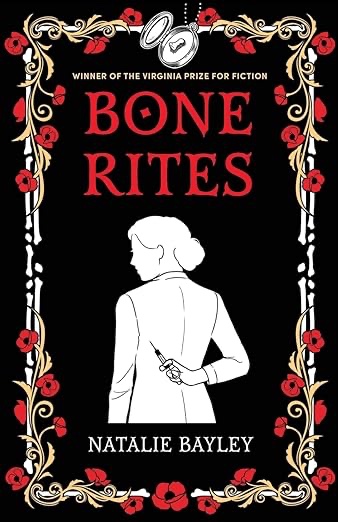
“I collected the first bone when I was twelve… Such a tiny little bone, more like a tooth. I only kept it to keep him safe.” Kathryn Darkling, imprisoned in Holloway, is facing death by hanging for her vengeance killing. Haunted by a spirit, she still hopes to perform the ancient black magic that will free her soul, or her struggle to punish the mighty will have been in vain. Will the love of her life come to her aid? Or can she find a way to escape her fate?
Bone Rites is a dual timeline story, split between the early 1900s and 1925 when Kathryn Darkling is in Holloway, the women’s prison, where she awaits the date of her own execution, by hanging. While waiting Kathryn starts to tell her story to a priest, assigned to hear her final words and offer solace as she awaits death. She begins with the first time she found a bone and performed a rite, then works her way through to her training as a doctor in Edinburgh. All the while she is developing her practice of performing bone rites, a black magic focused on freeing her soul. As she tells the stories of her bones, I started to wonder about her version of events. Clearly she’s an incredibly intelligent and determined woman and I admired that, but should I be taking the owned of a convicted murderer? Is she a reliable narrator? She seems to be slipping into madness as the tale goes, but does that mean everything she’s telling us is a lie? The thing I most enjoyed was getting inside Kathryn’s head and trying to work out what makes her tick, rather like holding a counselling session with this imaginary character. As we drifted back into her early childhood, I became won over by this obstinate little girl who won’t be deterred from her purpose. We learn about how tough her upbringing was, alongside her little brother Freddie. I love a dark story with a sense of foreboding and I thought this was perfectly pitched for a Halloween read. It’s not a traditional ghost story but Kathryn is certainly haunted, like many of us are by our pasts. I thought the book perfectly fitted it’s timelines, one before and one after WW1 considering how much change and trauma happened in-between. I also enjoyed the LGBTQ+ representation in the novel, it’s fascinating when authors ‘write back’ to a time where minority groups are under represented. All in all this was a well- written piece of historical fiction with a rather macabre edge and an admirable heroine.
Out on Nov 1st from Aurora Metro Books
Meet the Author
Natalie Bayley is author of ‘Bone Rites’, ‘Lolita’s Daughter’, ‘The Secret Life of Grandmothers’, ‘The Witch Who Saved Paris’ and ‘The Lady Lyttle Murder Mystery’ series. Her dark thriller ‘Bone Rites’ was selected for the 2019 Blue Pencil long list, went on to be shortlisted for the 2021 Blue Pencil First Novel Award and was long listed for the 2021 Caledonia prize before becoming the Winner of the Virginia Prize for Fiction. Natalie lives in NSW, Australia and enjoys ocean swimming and whispering to cats. Born in the UK, she’s been in sunny Australia since 2000. Her books are always about justice and how a seemingly powerless underdog can always find a way to fight back. My spooky historical fiction novel, BONE RITES, won the prestigious Virginia Prize for Fiction and is being published by Aurora Metro books October 2023. Enjoy!
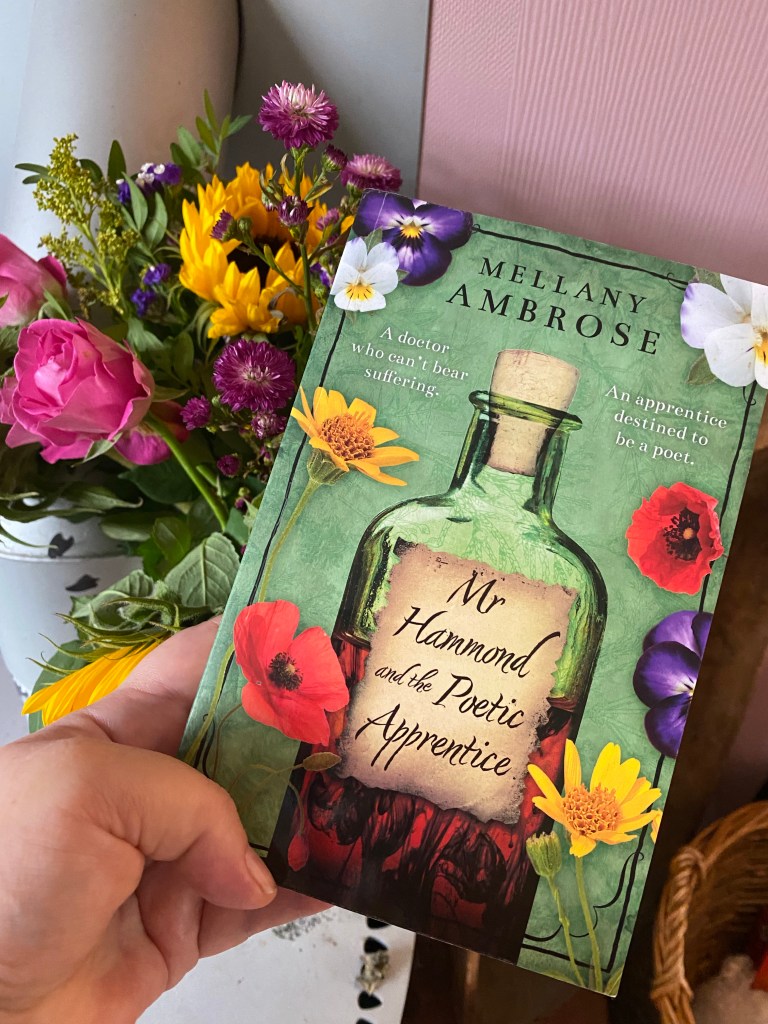
What were our great poets before they were great? Long-time NHS doctor Mellany Ambrose has penned a historical novel about the time John Keats spent training in medicine before he chose to follow poetry. She discovered Keats had been apprenticed to an apothecary surgeon a few miles away from where she was working as a GP and it sparked her curiosity.
“Why hadn’t he become a doctor? How would such a supposedly sensitive individual react to the horrors of medicine in an era with no anaesthesia, antibiotics or antisepsis?” Mellany asks, explaining, “I’d struggled in our modern era; his was far worse. In my first week as a nineteen-year-old medical student, I had to dissect a body. I felt unable to process the shock and enormity of it and wrote a poem to help me cope. Did he write poems to express his emotions as I had? And what would it have been like to have the young Keats as your apprentice?”
The story is set in 1814. Thomas Hammond is an apothecary surgeon whose apprentice is eighteen-year-old local orphan, John Keats. Thomas sees John as a daydreamer who wastes time reading. Thomas failed to save John’s mother four years earlier, and when John criticises Thomas’s methods tempers flare on both sides. Despite their differences, Thomas and John begin to develop a grudging respect for each other with Thomas seeing a humanity in the way John relates to patients. Their relationship deepens into one more resembling father and son while Thomas’s true son, Edward, disappoints his father. Thomas realises John is gifted and would make a skilled surgeon, but to help John succeed Thomas must confront his own past mistakes. On the verge of qualifying as a surgeon, John unexpectedly abandons medicine for poetry, ending all Thomas’s hopes. Thomas is devastated and struggles to find meaning in his life and work. As he faces one final challenge, can the master learn some valuable lessons about life from his poetic apprentice before it’s too late?
Out now from Troubadour Publishing
Meet the Author
I worked as a hospital doctor and general practitioner in the NHS for nearly 30 years. My interest in Keats’s medical career arose when I discovered he’d trained as an apprentice close to where I was working as a GP. I spent many happy hours researching in the British and Wellcome Libraries and visiting sites related to Keats’s life and Georgian era medicine.
See my website mellanyambrose.com for more on Keats and the history of medicine
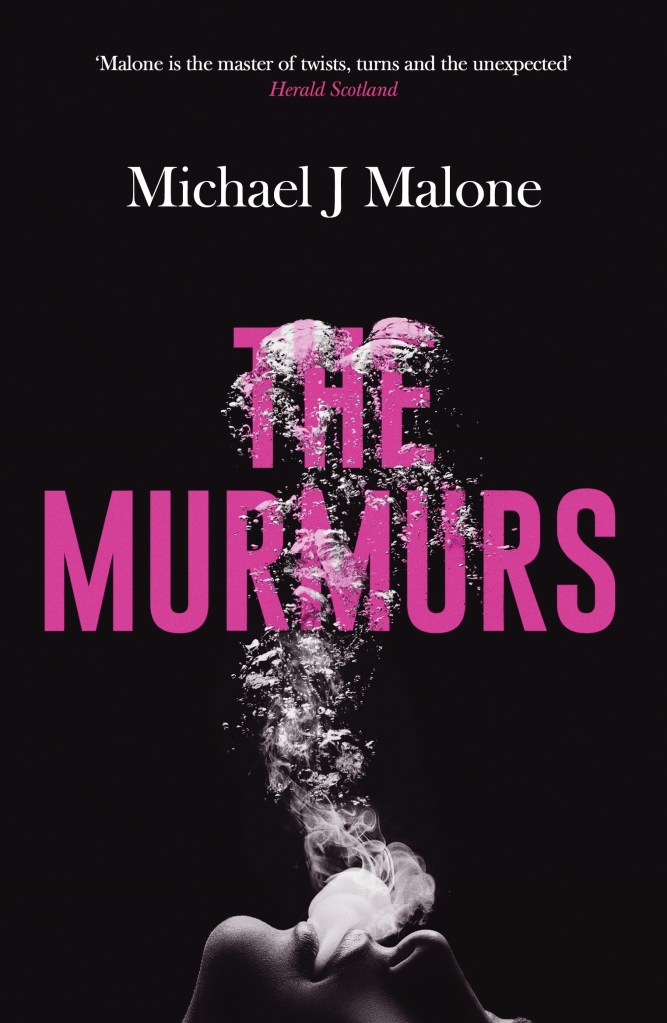
I quickly became fascinated with this mix of historical fiction, psychological suspense and the paranormal. We meet Annie Jackson as she tentatively starts her new job in a nursing home in the West End of Glasgow, hoping to get her life back on track. Annie suffers with terrible nightmares where she’s stuck in a car underwater. She also has the sensation that someone is holding her head under water until her lungs feel ready to burst. She also has debilitating headaches and she can feel one threatening as her new manager introduces her to resident Steve. Then something very odd happens, as a blinding pain in Annie’s head is followed by Steve’s face starting to shake, then reform. A whispering sound begins in her head and she sees Steve as a skull, followed by a vision of him falling in his room and suffering a debilitating stroke. She desperately wants to tell him but how can she without seeming like a lunatic? He becomes agitated and upset, as Annie starts to describe the layout of Steve’s bathroom and he asks her to stop. As she’s sent home from another job she starts to think back to her childhood and the first manifestations of her debilitating problem. Annie survived the terrible car accident that wiped her childhood memories and killed her mother. This strange supernatural phenomenon is why Annie is alone and struggles to make friends. These are ‘the murmurs’.
I felt so much compassion for Annie, as the story splits into two different timelines: we are part of Annie’s inner world as a child, but also 0in the present as fragments of memory slowly start to emerge. We also go back even further to the childhood of Annie’s mother Eleanor and her two sisters Bridget and Sheila. We experience their lives through other people’s stories and written correspondence, especially that of a nun who also works in a residential home. I enjoyed how this gave me lots of different perspectives and how the drip feed of information slowly made sense of what was happening in the present day. Different revelations have a huge effect on the adult Annie and because her memories have been buried for so long she experiences the shock and surprise at exactly the same time as we do. This brings an immediacy to the narrative and I felt like I was really there alongside her, in the moment. With my counselling brain I could see a psyche shattered by trauma, desperately looking for answers, she is piecing herself back together as she goes.
Teenage Annie had a similar vision about a girl called Jenny Burn, who went missing never to return. The murmurs awakened when her mum’s sister Aunt Sheila came to visit them. She tried to openly discuss an Aunt Bridget who also had a ‘gift’ but has ended up in a home. Eleanor, Annie’s mother, asks Sheila to leave, but it’s too late because Annie has already seen that her aunt is dying of cancer. Annie evades her mum and makes her way to the hotel, the only place Sheila can be staying. Unfortunately, Jenny is working on reception. Annie can see her climbing into a red car and she desperately wants to warn her, but she knows she’ll come across as a crazy person. Eleanor is desperately looking for a way to deal with her daughter, she’s a person of importance in the church and she can’t be seen to have a daughter who has visions. Pastor Mosley has Eleanor exactly where he wants her. There’s a control and fanaticism in him that scared me much more than Annie’s murmurs. When Eleanor takes Annie to the pastor, he demonstrates his control by holding her head firmly under his head as he prays for her. When she almost faints, he’s convinced there’s a demon in her. Annie is scared of him, she gets a terrible feeling about him but doesn’t know why. Religion is portrayed as sinister and controlling, with fervent followers who never question, but live in the way they’ve been instructed is Christian? story takes an interesting turn when Annie’s brother Lewis, a financial advisor, becomes involved with the church once more and it’s new pastor Christopher Jenkins, the son of their childhood neighbour. He’s revolutionised the church and through the internet he’s turning it into a global concern. He’s not just interested in saving souls though, he’s also amassing money from his internet appeals. He also seems very interested in meeting Annie.
As the book draws to a close the revelations come thick and fast as both past and future collide. The search for Aunts Bridget and Sheila seems to unearth more questions than answers. Annie finds out that Jenny wasn’t the only woman who went missing in Mossgaw all those years ago. As she starts to have suspicions about her childhood home, Chris seems very keen to draw her back there. Might he be planning a huge surprise? I was a bit confused at first with all these disparate elements, but as all the pieces started to slot together I was stunned by the truths that are unearthed. Then as Annie’s childhood memories were finally triggered I felt strangely terrified but also relieved for her all at once. I hoped that once she’d regained that past part of herself she would feel more confident and free, despite the strange gift she seemed to have inherited. Maybe by facing the past and leaning in to her relationship with her brother, she might feel more grounded and strong enough to cope with her ‘gift’. I thought the author brought that compassion he’s shown in previous novels but combined it with a spooky edge and some intriguing secrets. I really loved the way he showed mistakes of the past still bleeding into the present, as well as the elements of spiritual abuse that were most disturbing. This book lures you in and never lets go, so be prepared to be hooked. Michael Malone is a natural storyteller and the fact this is billed as Annie Jackson Number One makes me think there may be others. I certainly hope so,
Out Now from Orenda Books.
Meet the Author
Michael Malone is a prize-winning poet and author who was born and brought up in the heart of Burns’ country. He has published over 200 poems in literary magazines throughout the UK, including New Writing Scotland, Poetry Scotland and Markings. Blood Tears, his bestselling debut novel won the Pitlochry Prize from the Scottish Association of Writers. Other published work includes: Carnegie’s Call; A Taste for Malice; The Guillotine Choice; Beyond the Rage; The Bad Samaritan; and Dog Fight. His psychological thriller, A Suitable Lie, was a number-one bestseller, and the critically acclaimed House of Spines and After He Died soon followed suit. Since then, he’s written two further thought-provoking, exquisitely written psychological thrillers In the Absence of Miracles and A Song of Isolation, cementing his position as a key proponent of Tartan Noir and an undeniable talent. A former Regional Sales Manager (Faber & Faber) he has also worked as an IFA and a bookseller. Michael lives in Ayr.
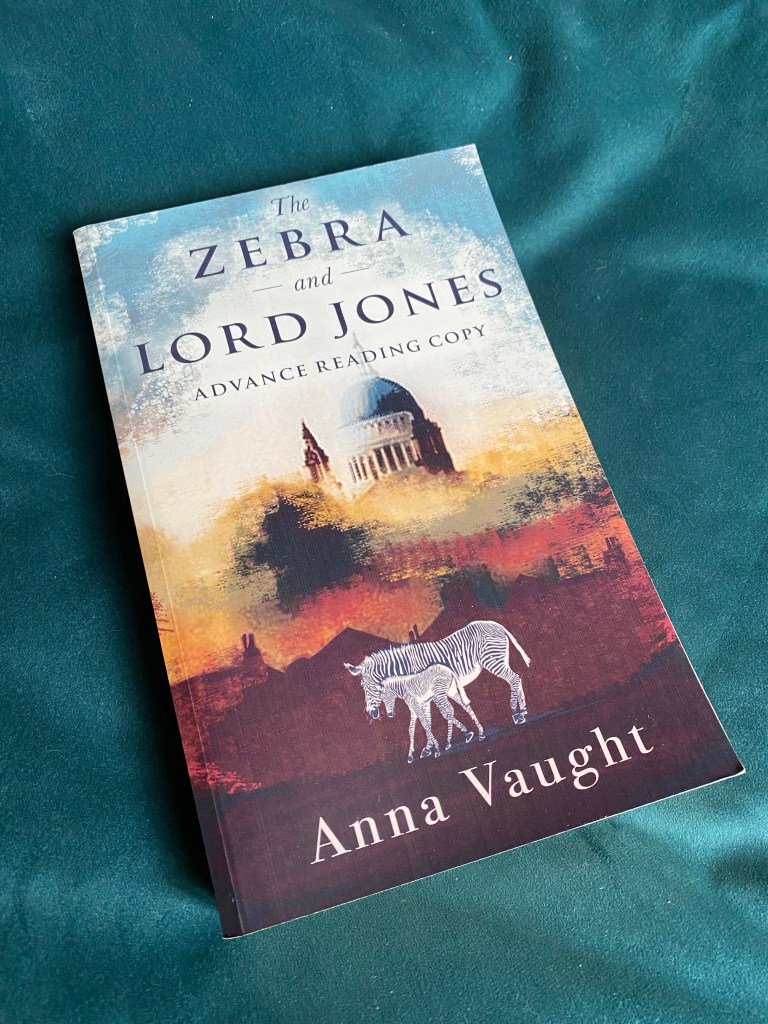
Autumn, 1940. As the Blitz rages in London, Lord Ashburn (known as Lord Jones) is conducting some family business in the capital. As he walks the streets of Knightsbridge he finds himself confronted with an amazing and incongruous sight; a zebra and her foal are sharing the sights and sounds of the city. They have have escaped from London Zoo after their enclosure is damaged. A strange but unforgettable connection is formed between Lord Jones and the animal, who begins to follow him. The instant connection sparks a rebellion in him and he can’t leave her, so decides to do the unthinkable instead. He takes the zebra and her foal, Sweetie, back to his family’s estate in Pembrokeshire.
These beautiful and exotic animals arrive at Cresswell Manor in rural Wales and immediately start working their magic. Slowly, they start to transform the lives of those who live on the estate. Lord Jones seems inspired and has a thriving sense of purpose for the first time in his life. He finds the courage to put some distance between himself and the family that have always treated him with coldness and disdain. Strangely he finds himself forming a friendship with Anwen Llewelyn, the feisty and independent housekeeper at Cresswell, while all the time these wise creatures look on…
I love books that are hard to pigeonhole into one category and this is a mix of personal growth, historical fiction, romance, and a sprinkle of magic realism. Anna Vaught seems to choose these fascinating and unusual events in history to explore a familiar trope from a unique perspective. Half of the appeal is in the beautiful way she writes, something that grabbed me with her novel Saving Lucia. The Zebra and Lord Jones is a simple boy-meets-girl, but made magical by the dangerous backdrop of bombs falling from the sky and one man’s destiny with two zebras. The zebra’s escape from London Zoo is part of historical record, but with her unique style and talent Anna uses this one event to explore so many aspects of life. She weaves these strands together, slowly creating a tapestry of love and loss, threaded with some much needed hope.
I had so much empathy for Lord Jones, who contracted polio as a child and has always had a limp. His aristocratic family have looked down on him all his life, withholding love and physical affection. In this historical period, the aristocracy in this country really were dreadful. Many were instrumental in the plan to appease Hitler prior to WW2 and Lord Jones’s father was friends with Mosley and his wife Diana Mitford, even attending their wedding at Joseph Goebbel’s home in Germany. The way they’ve treated their son has left him depressed and with low self-esteem. Despite being tremendously privileged materially he is emotionally malnourished and desperately in need of a focus, preferably something he can become good at and build his confidence. It is perfect timing for these beautiful creatures to appear in his life and his plan to take them back to Wales with him is his first confident and decisive step into a new way of living. A more hopeful one.
Hope is a precious commodity at this point in the war and it isn’t just London where people are in need of a magical uplift. Anna has woven some of these characters into her story, such as Ernest the evacuee, Talbot the dedicated zookeeper and his counterparts in Germany. All of them are just trying to live their ordinary day to day lives in extraordinary times. There’s even an unexpected cameo from the Emperor of Ethiopia, Haille Selassie. Most interesting of all to me is Anwen, who has a keen sense of justice and a fierceness that I admired immediately. The characters are the stars of this particular show and they are a joy, including Lord Jones and his slow transformation into a different man. At the centre, drawing all of these people together, are the beautiful zebras Mother and Sweetie, who feel like characters in their own right.
I love magic realism, it’s one of those genres that make me a little bit giddy when I’m reading. It’s possibly the closest thing an adult reader can have to the stories we encounter as children that fill us with wonder. It has a different effect to all out fantasy because it creates what I call ‘literary glimmers’ – those shimmery moments of wonder amidst the drudgery and routine of the everyday. The contrast between the magic and the ordinary, elevates the themes and emotions of the story. The narrator is also playing with the reader, they walk us through the story showing us what happens like a puppeteer, deciding what to show us and when to draw the curtain. They display a giddiness and excitement at what’s happening, as they place in front of us a new snippet of gossip or historical document. It’s as if they’re discovering it at the same time we are, so we’re inspired by their immediacy and excitement. It’s as if they run up to us, waving a letter and saying ‘wait till you hear this!’
I felt inspired by this childlike curiosity and I found myself actually smiling on the outside at the playful details, ghosts, owls and zebras communicating with humans. I felt comforted, provoked, happy and full of hope about life, which is a gift in itself. The backdrop is hard hitting. I’ve always remembered the Stephen Poliakoff piece Glorious 39 because it depicted people in London queueing up to have their animals put to sleep and our main character Anne feeling unable to part with their cat. I’d never seen this depicted in a war drama before or after, so to see it as part of the narrative here made it real for me. I couldn’t imagine letting go of my animals even for the war effort and it made me think about the all domestic sacrifices being made for the public good. This historical detail, as well as the changes being made at the zoo, were so important to include, but absolutely heartbreaking to read. This is the hard part of surrendering to her mix of reality and fairy tales, but it was beautifully offset with the humour around Operation Zebra too. In all this is a wonderful tale, told by a unique and playful writer at her most skilful.
Thanks to Renard Press for inviting me to join the tour. The book is out on 27/9/23. You can buy The Zebra and Lord Jones
Anna’s next publication is her new novel, Saving Lucia, about the Honourable Violet Gibson who tried to kill Mussolini; this will be published by Bluemoose Books in April, 2020. Anna also publishes her first short story collection in September 2020; this is Famished and published by Influx Press. At the time of writing, Anna has three further books in the area, various short fiction coming and is writing a new book. She is an English teacher, tutor and mentor to young people, volunteer with young people, editor, short fiction writer, creative writing tutor and copywriter. She currently lives in Wiltshire, with her husband and three boys.
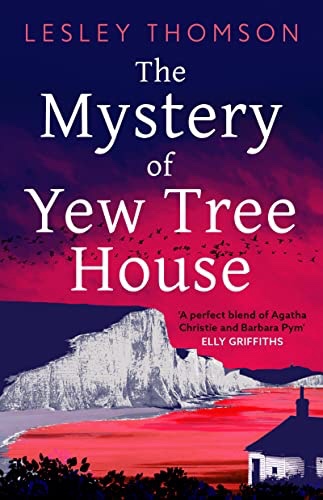
As Stella Darnell arrives at Yew Tree House, it seems like an idyllic little place to spend the summer. Like any village, Bishopstone has it’s past and a dark side lurking beneath the surface. The holiday is a trial of sorts for her, partner Jack Harmon and his seven-year-old twins, Milly and Justin, not forgetting Stanley the dog. Stella‘s thoughts and feelings around a more permanent living arrangement with Jack is always changing, but what better way to trial the arrangement? As they disembark and start to explore it’s clear that the house is a little dilapidated once you look closer. Stanley and Millie, both as lively and full-on as each other, are soon tramping round the garden making discoveries. The house belongs to the Stride family, two sisters Stevie and Rosa live in the annex while eking out their state pension by renting the main house for holidays. Perpetually single, the two women can’t afford to run Yew Tree House, but can’t afford to leave either. It’s clear that some parts of the house are past their best, but cleaning company owner Stella, can see past that and once the place has had a good scrub it will be adequate for a family holiday. However, the house has a complex history, especially the period during WW2 when Stevie and Rosa were girls, living with mum Adelaide and an evacuee called Henry. Their Dad Rupert is called up but loses his life at Dunkirk, leaving his family to make their own way in the midst of rationing and the bombings while their house is also used as a meeting place for the Home Guard. When Millie is exploring one day she finds an old pill box in the garden (a concrete guard post or dug-out from where volunteers would defend the coastline) putting past and future on a collision course. Inside is a skeleton, with a hole in it’s skull that’s been caused by serious force. Jack and Stella may have fallen upon a murder mystery for their popular podcast, but as the aged vicar glares at them from his cemetery across the road, it could be that not everyone wants the truth to be discovered.
This is a book within a series based around Jack’s true crime podcast and I would recommend reading the others to better understand the relationships in this story. I felt I connected better with the wartime section of the story and I think it was because regular readers will know these characters well. Jack is rather blindly optimistic about their first family holiday, leaving readers and Stella as the more doubtful parties on this journey, especially when we meet the redoubtable Milly. Despite being of primary school age, Millie is possibly in charge of every room she walks in and if I were Stella, I’d be imagining what this exuberance might look like when ramped up by teenage hormones! A terrifying thought. I didn’t pick up the chemistry between Stella and Jack at first, but they clearly have a joint passion for solving mysteries and presenting true crime stories that’s rather infectious. I really liked the fact that both characters were connected to the area, bringing an added element to their sleuthing as I felt they had a stake in the village’s history and a real thirst for the truth. I thought the author created an interesting balance, not only between the two timelines, but with a contrasting lightness and shade of the plot. Family life is very lively and full of fun, especially with Stanley’s antics, and there was an almost Famous Five style coziness to the mystery. However, as foreshadowed by the glowering vicar in the book’s opening, there are darker undertones that become even more pronounced as we travel back to the 1940’s.
War isn’t the only cloud over Rosa and Stevie’s family, there is a missing girl too and the anxiety felt by Adelaide Stride about her two girls is very real. I felt Adelaide’s uneasiness around some of the guard, who move freely around the downstairs at night. The house is split between normal family life upstairs, with the realties and tension of war downstairs. There’s a sense this is men’s business and the presence of them in her family home must have added to her worries about her girls. Can Adelaide trust them? It seems clear she has her instincts and one character definitely raised her hackles (and mine). Tension and suspense build in both timelines, with some creepy moments but the wartime sections were the more disturbing. The present day sections have plenty of humour, the directness and attitude of Miliie, as well as plenty of twists to keep the reader on their toes. The fact that some of the characters from the 1940’s still live in the vicinity added to the tension towards the end of the book, as I wondered if any of them were still a danger in the present day. What might they do to keep certain secrets buried? Stella and Jack would need to keep their little family safe, all the while uncovering a tale that holds the heartbreak and tragedy of WW2, alongside a vengeful and murderous secret.
Meet the Author
Lesley Thomson was born in 1958 and grew up in London. She went to Holland Park Comprehensive and the Universities of Brighton and Sussex. Her novel A Kind of Vanishing won The People’s Book Prize in 2010. Lesley combines writing with teaching creative writing. She lives in Lewes with her partner.
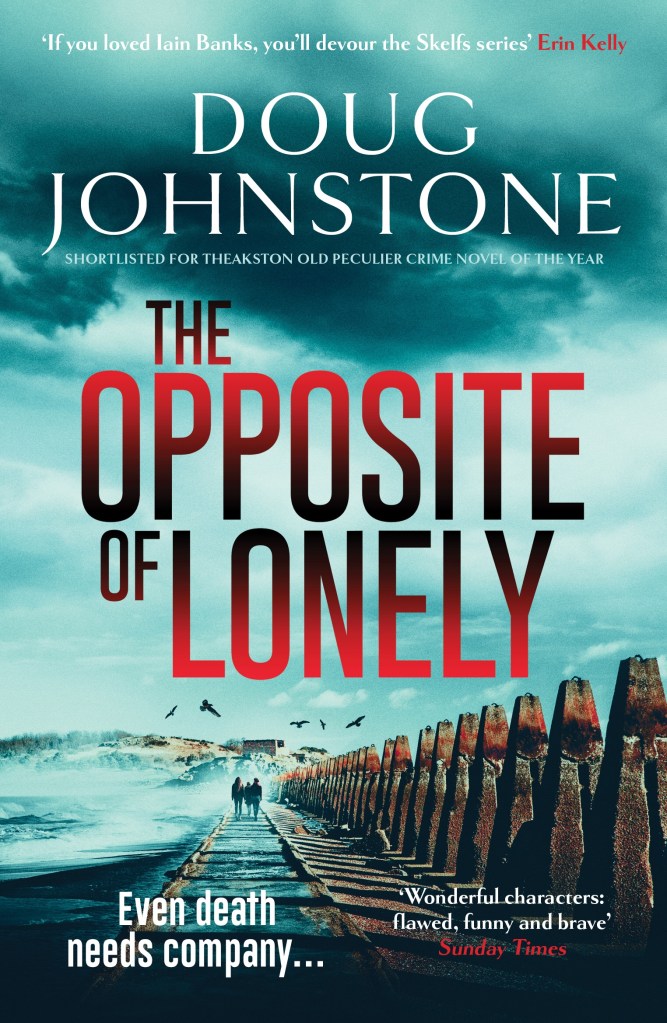
As many of you know I am a super fan of Doug Johnstone and particularly his Skelf series of novels, based in Edinburgh and following a family of women, running both a funeral home and a private investigation business. I love the Skelf women because they’re feisty, original, intelligent and incredibly compassionate. This is his fifth in the series and I’m in constant fear of it ending, though if it did this wouldn’t be a terrible way to bow out. In fact this may be the best in the series so far. As usual there’s an eclectic mix of people and cases. Dorothy is investigating a suspicious fire at an illegal traveller’s campsite, but also takes a grieving homeless man under her wing. Jenny is tasked with finding her missing sister-in- law who fled with the body of Jenny’s violent ex-husband Craig. Meanwhile, Hannah meets a women astronaut and is asked to investigate potentially dangerous conspiracy theorists who think she has returned from space ‘changed’. Add to that the new idea of water cremations, funerals for the lonely, strange happenings in space, a body lost at sea and a sexually adventurous man in a rabbit mask and you have all the ingredients to keep a Skelfaholic like me very happy indeed.
I love the Skelf’s outlook on life and other people, it chimes so well with my own family’s philosophy and is such a welcome change from the perspective of our current government. There’s an acceptance of others, whatever way they choose to live or love. They treat people with respect, in whatever circumstances they find themselves. There’s no judgement, something I especially love in Dorothy. She seems to have a knack for reading people and knowing when they’re trustworthy. She has a great track record too, having brought both Archie and Indy into the fold when both were in straitened circumstances. She has moments of exasperation when investigating, especially when she tries a pub local to the traveller camp where a fire happened. When gauging local feeling about the travellers she ends up in a long debate on their behaviour, most of which she dismisses as bigotry, but also their opinion of people ‘on benefits’, refugees, drug takers and women of easy virtue. They are the Daily Mail brought vividly to life and Dorothy notes how easy it can be for someone her age to accept the media narrative and become entrenched in their views. She doesn’t want to be like that and she’s certainly not going to be welcomed back to this pub. Jenny feels much the same.
‘everyone just trying to get to the end of the day and hoping tomorrow would be a little brighter. We didn’t need our homes torched, our dead ex-husbands disappearing, all the hate and bullshit in the world coming to kick us in the arse’.
This outlook also feeds into the sense of place Johnstone creates, something that made me drive around Edinburgh while on holiday earlier in the year. I wanted to get an idea of where these characters lived and was ecstatic to be able to walk on The Links, where Dorothy used to walk their dog and once encountered an escaped jaguar! He describes the strange juxtapositions in Edinburgh, something that happens in all big cities placing very different people up against each other. I was horrified to read once that there’s a street in NYC separating Harlem from the Upper West Side where the life expectancy differs by thirty years when you cross the street. As Dorothy and Archie drive out to Muirhouse she notices the stately home hidden by a high hedge from a caravan park, a halfway house for prisoners next to a posh golf course. It’s not planned of course, but it’s how all big cities grow and develop over time. However, what seems universal is that ‘the poorest people got the shitty end of the stick’ especially in Muirhouse. Johnstone’s current affairs and issues are bang up to the minute, here police officers become implicated in one of their cases. As the women meet for breakfast and a catch up, Jenny observes that cops tend to ‘circle their wagons’ when they’re accused of wrongdoing, especially sexual assault. She references the hundreds of sexual assault cases against police officers and the force’s mishandling of them, or even covering them up.
It’s wonderful to see Jenny in a calmer place, despite the ghost of her ex still hanging over her as she tries to find his sister. Her friendship with Archie, their mortuary assistant, has steadily become a regular part of her life. It feels like unofficial therapy, taking a long walk every couple of weeks and randomly choosing somewhere to eat. There’s something about Archie’s presence that seems soothing and she just enjoys sharing space with him. There’s nothing dramatic or addictive about it. Hannah has noticed them getting closer and observed that it seemed to have pulled her mother together somehow.
‘Maybe all you need is a friendly face once in a while, someone to listen to your bullshit and not judge. Hannah had read once about a man who succumbed to suicide on the Golden Gate Bridge. He left a note at home before walking there, which said that if one person smiled at him on the journey, he wouldn’t jump. Maybe all we need is a smile to stop us jumping’.
Hannah and Indy are tested a little by their new connection to Kirsty, an inspirational woman astronaut she met after her talk at the National Museum of Scotland. Kirsty invites Hannah and Indy to dinner where they meet her partner Mina. Mina is concerned about men who troll Kirsty online and at events, fuelled by a conspiracy theory that something happened to her on the International Space Station. Whether they think she’s had the alien probe up the butt or just some kind of first contact, the phrase used is that she ‘came back wrong’. Mina tells them they’ve had people outside the house, going through their rubbish and they’ve been doxxed. When Mina gets Hannah alone she asks her to do a little digging and to keep an eye on Kirsty. She’s been different since she came back, Mina explains and she’s worried that Kirsty is in danger. This had a strange dynamic to it and I was concerned that Hannah and Indy might be in danger too. I loved the theme of loneliness and dislocation, particularly the idea for The Lonely Funeral, sparked by the story of a middle aged woman who had no family or friends to make arrangements. Dorothy’s thinking had been inspired by projects in the Netherlands and New Zealand where they research the deceased and get a poet to write about them for the funeral. Dorothy has negotiated with the council so that the Skelf’s can carry out the funerals for the basic budget set aside. Brodie, the homeless man Dorothy meets and decides to help, tells her a moving story that I think explains how we all feel at times. I’ve certainly felt it in the depths of grief. It’s about a whale oceanographers had detected with a call that registered 52hz, a pitch that’s higher than other whales. It had no idea that other whales couldn’t hear it and it had spent decades singing out to no one. This story brought a lump to my throat and I’m not surprised that it touches Dorothy too. She decides then and there that Brodie is going to fit in.
It’s not everyday that the heroine of a book takes a walk into the woods to check out a mausoleum, taking the time to think about her father and how much she’s struggled since his death. Then in the next moment, stumbles upon a dogging scene, with one young woman and a quartet of men masked as a badger, deer, rabbit and fox. These juxtapositions keep the reader on their toes, we never really know what might come next or how it might make us feel. Johnstone can take us from tears to gallows humour in a couple of sentences. As he closes the book, with the first of the Skelf’s lonely funerals, Dorothy speaks on behalf of the man in the coffin who they hadn’t known anything about except his name and where he was born. She echoes Hannah’s astronaut friend, whose experience in a solar storm was both spiritual and grounding all at once. What she talks about is connection, in the E.M. Forster sense to ‘only connect’. To connect with others is the most vital thing we do in life. Connectedness is perhaps the best choice of word when trying to work out the opposite of loneliness. She talks about how we tend to close down as we age, to shut off from the world. I’ve observed this with people and noted recently the important of older people connecting with their younger family members using WhatsApp or Snapchat and how it brings daily joy to them, something those that who choose to dismiss new technology miss out on, to their detriment. We need to connect, both with the world we live in and with the people around us. We need to stay part of this great ‘human experiment’ in order to carry on living as fully as possible, for as long as we’re granted.
‘The idea of an impartial, unconnected observer watching the world was totally wrong. We’re all up to our necks in the universe, we can’t be separated from it’.
Out 14th September 2023 from Orenda Books
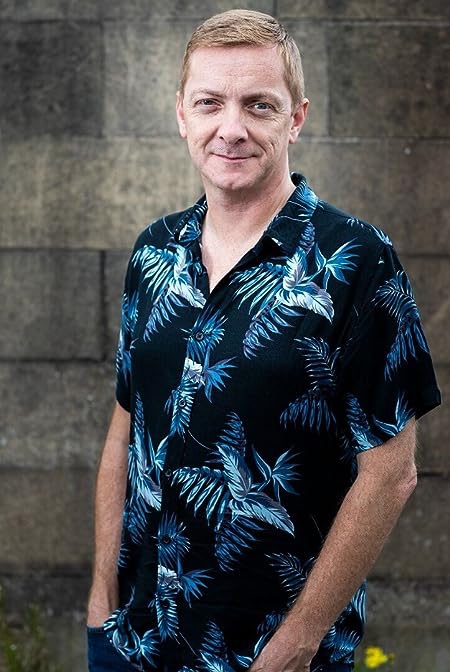
Doug Johnstone is the author of fifteen novels, most recently The Space Between Us (2023). Several of his books have been bestsellers, The Big Chill (2020) was longlisted for the Theakston Crime Novel of the Year, while A Dark Matter (2020), Breakers (2019) and The Jump (2015) were all shortlisted for the McIlvanney Prize for Scottish Crime Novel of the Year. He’s taught creative writing and been writer in residence at various institutions over the last two decades including festivals, libraries, universities, schools, prisons and a funeral directors.
Doug is a Royal Literary Fund Consultant Fellow and works as a mentor and manuscript assessor for many organisations, including The Literary Consultancy, Scottish Book Trust and New Writing North. He’s been an arts journalist for over twenty years and has also written many short stories and screenplays. He is a songwriter and musician with six albums and three EPs released, and plays drums for the Fun Lovin’ Crime Writers, a band of crime writers. He’s also co-founder of the Scotland Writers Football Club.
‘This is my family story. From all I’ve sown together, through all I couldn’t ask. I want to be the bud who makes it.’
In Blooms tells of strength, survival, forgiveness, resilience and determination, and the fierce love and unbreakable bonds between mothers and daughters.
Ever since Sol’s untimely death left her pregnant and alone at twenty-two, Delph’s kept herself small as a form of self-protection. Now, over a decade later, she lives with their daughter Roche and her new partner Itsy, a kind and protective cabbie, on the fourteenth floor of Esplanade Point on the Essex coast.
But Delph’s protective bubble bursts when Roche moves in with her estranged nan, Moon. Feeling on the outside of the bond between her fierce-yet-flaky tarot-reading mother and volatile martial-arts-champion daughter, Delph begins questioning her own freedom. And when Roche’s snooping into her grandmother’s past unearths a familial line of downtrodden women; a worrying pattern emerges. Has keeping small and safe truly been Delph’s choice all these years…?
I don’t believe in trigger warnings, despite their intended purpose to flag up material that may ‘trigger’ difficult emotions in the reader, I feel that they might stop someone experiencing a connection with a text. It might well be a trigger, but that doesn’t always have to mean it’s a negative one. It might be a trigger that starts a healing process. If anyone should have avoided this book it was me, because I was Delph. I lost the love of my life in my early thirties and then sleepwalked into a coercive and damaging relationship. Yes, it was a hard read at times, but it wasn’t remotely negative. Moon, Delph and Roche are three generations of a family. Each woman has her own issues, but they all stem from one place. Right back at the beginning. As the book opens Roche can no longer live with her mother and Itsy, the man she’s been living with for most of Roche’s life. So she decamps to her grandmother Moon’s house. Roche can’t stand Itsy, he dislikes her and wishes she wasn’t there. In fact what he wants is Delph all to himself, it’s easier to control someone who’s isolated. Delph has had a glazed over look ever since he arrived in her life and she doesn’t seem like her mum anymore. Delph has done everything she can to keep Itsy happy. She’s changed how she dressed, made herself less beautiful, stayed at home and stopped going out with friends. Every day she makes herself smaller to make more space for him and Roche can’t watch it anymore. However, things are changing slowly. Delph has a job she enjoys at B & Q, new connections with her colleagues and today she has made a choice. Delph is pregnant and she knows deep down in her soul that ‘the thought of more years, more life, tied to him’ is more than she can bear. She goes secretly on her own for an abortion, the quietest but most powerful act of rebellion she can make. Then comes her opportunity, Itsy receives a phone call from Jamaica to tell him his mother is dying. He must jump straight on a flight, so Delph lets him go alone, knowing that now she has several weeks to herself. She doesn’t stop Roche from moving out and accepts this as her time to heal, time to be the parent that so often Roche has to be for her. However, this isn’t the only recovery needed in the three generations of this family thanks to the actions of men.
I felt at first that I was slowly piecing together the story of a client. Being a person- centred therapist means letting the client choose what they want to talk about. I would use my counselling skills to tease out that story and ask questions where it needs to be clarified or where I might only be getting one perspective. Here the story has it’s own pace and each woman narrates her own section. We flit back and forth between the women, also delving into the past here and there. It’s like doing a jigsaw puzzle but only being handed one piece at a time, then another from a different place. It takes some time to perceive the whole and that was definitely the case here. Only we the reader can see where they all are in relation to one another. The reality of being a woman in today’s world is explored fully, there is no doubt that these women’s lives would have been immeasurably better had they not encountered the men they do. It takes Roche to articulate this properly with the words and wisdom of her generation.
“Roche knows, remembers, how her life changed at around the time she started secondary, and her bubble of invisibility popped. How, despite the school uniform screaming otherwise, she very suddenly became the inhabitant of a woman’s body, complete with a depressing self-awareness that this was now Roche’s life until one day men deemed her invisible again. In fairness, it’s not her contemporaries who usually do the perving – no, it’s men, grown–ass men who have always done the bulk of the wolf–whistling, the innuendoes and basic compliments that they expect her to ‘smile, love’ and be grateful for.”
As a middle aged woman I now know the power of that invisibility and how, in many ways, it’s a blessing.
I love how carefully the author drew the threads between generations, those behaviours that create a pattern of intergenerational trauma. There are moments in her journey where Delph needs her daughter by her side, but she recognises that it’s a selfish need. Delph’s lived experience stops her; “is not for a child to fix the parent. Nor is Roche the ointment to Delph’s current troubles”. She’s spent enough time trying to help Moon. Then we go back into Moon’s early years, when her grandmother is in hospital, suffering from mental ill health. Her name was still Joy back then and her job is to dispense sunshine to a women who can’t even remember her name. ‘Come on,’ Ma says, in a giddy-up way. ‘You know how happy your little face always makes her.’ This a learned behaviour, people pleasing and exactly what Delph is trying to avoid for her own daughter, three generations later. By sitting with her own pain, Delph is avoiding instilling that behaviour in Roche, she’s actively breaking the cycle. Yes, there are traumatic moments in these women’s lives, Moon’s story being particularly harrowing, but we can also see the women’s determination to change. It’s that change and what it means for Roche that brings such an uplifting feeling to the book. For me it’s Delph’s struggle that touched me deeply. The loss of Sol, who’d been there her entire life, is devastating. So moving out of Itsy’s orbit and the mental paralysis she’s been living with means opening up her emotions. That’s all of the emotions including her grief, but it’s a process that needs to happen so that Roche can talk about her father openly and in a joyful way. I found myself more engrossed in the later stages of the book as I had to see whether these women could heal together. This is beautifully written and manages to be funny, moving and hopeful.
Meet the Author
Eva Verde is a writer from East London. Identity, class and female rage are recurring themes throughout her work and her debut novel Lives Like Mine, is published by Simon and Schuster.
Eva’s love song to libraries, I Am Not Your Tituba forms part of Kit De Waal’s Common People: An Anthology of Working-Class Writers. Her words have featured in Marie Claire, Grazia, Elle and The Big Issue, also penning the new foreword for the international bestselling author Jackie Collins Goddess of Vengeance.
Eva lives in Essex with her husband, children and dog.
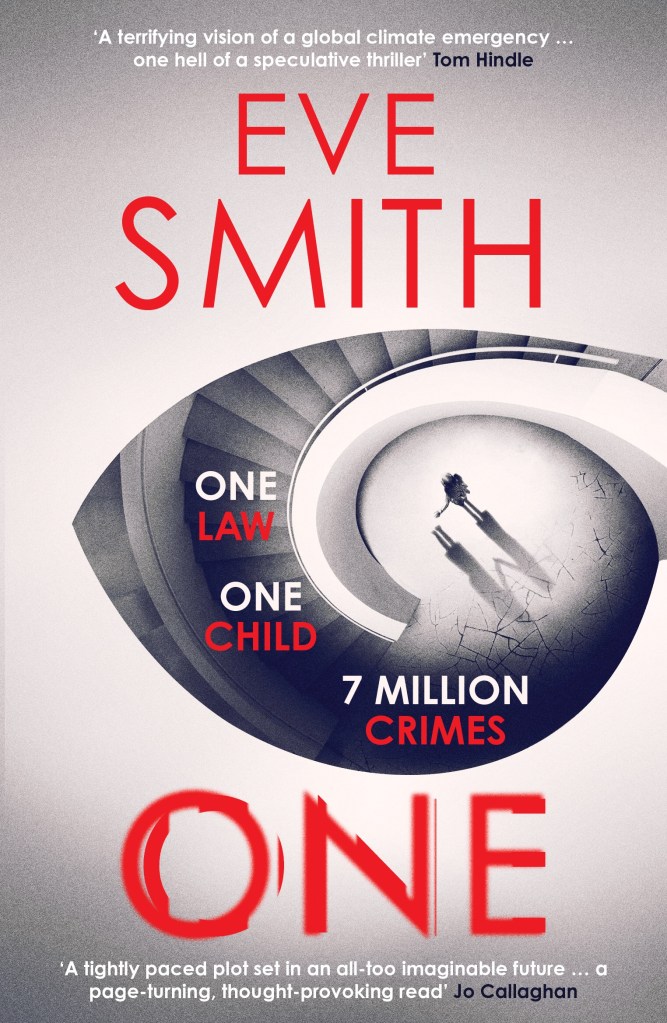
A catastrophic climate emergency has spawned a one-child policy in the UK, ruthlessly enforced by a totalitarian regime. Compulsory abortion of ‘excess’ pregnancies and mandatory contraceptive implants are now the norm, and families must adhere to strict consumption quotas as the world descends into chaos.
Kai is a 25-year-old ‘baby reaper’, working for the Ministry of Population and Family Planning. If any of her assigned families attempts to exceed their child quota, she ensures they pay the price.
Until, one morning, she discovers that an illegal sibling on her Ministry hit- list is hers. And to protect her parents from severe penalties, she must secretly investigate before anyone else finds out.
Kai’s hunt for her forbidden sister unearths much more than a dark family secret. As she stumbles across a series of heinous crimes perpetrated by the people she trusted most, she makes a devastating discovery that could bring down the government … and tear her family apart.
I LOVE the way Eve Smith doesn’t baby her readers. If there are hover cars that’s what she gives us. A two word description. No long flowery explanations of how they came to be, she just tells us what IS. She expects our own imaginations to keep up. The immediacy of her writing brings us slap bang in the middle of this alien world and it’s exhilarating.
Our narrator Kai is a perfect ministry operative. She’s brainwashed from birth into accepting the world as the ministry present it. The political party One came to power with an unusual mix of ecological and anti-immigration policies. We might expect that ecological parties are more left-wing and we expect our totalitarianism to come in a right wing package. The lack of resources has left the country without options (although other countries have less draconian regimes) and any political movement can become a totalitarian one. Due to the climate emergency there are now places it is impossible to live so immigration is rising. The government used predictions of climate disaster to ease the population in to accepting extreme policies to reduce consumption and the population. Each family has a consumption quota to cover things like food, travel and water usage. I loved little touches like Kai’s grandparents always being the ones to overuse their quota, still used to the old days. The one child policy is the most extreme and the administration and enforcement of the policy is down to officers like Kai. The reality of her job is devastating. Women’s fertility is controlled by the Destine implant, a contraceptive with a chip that means it can be switched off when a woman wants to start a family, it is then switched back on after her only pregnancy. All women of child-bearing age have their HCA levels monitored by the government and as soon as any change is detected Kai’s department would know. In the case of a second child they must schedule a termination, but if they don’t that’s where Kai’s job begins. She must visit the woman and ensure that a second appointment is kept. Termination even applies in cases of twins. Prison awaits anyone who conceals a second pregnancy.
The reality of their policies as they affect real people is hard to read and Kai seems as obedient and capable of free thought as her robotic pet dog. I have found the author terrifyingly prescient in the past and I hope that’s not the case here. This isn’t necessarily our future but it could be. Every terrible policy here has it’s roots in our current world and that’s what’s so scary. The effects of climate change can seem a long way away so it was very disconcerting to find out that in this world Horncastle was on the coast! My stepdaughter’s other home is there and it’s only a half hour journey up the road from me. My home county is essentially a wetland. Despite this, I loved the inventiveness of the resistance movement Free, from their houses on rafts and living walls to the ability to morph their features. Again the author gives us just enough information to see it, because everything we see comes through Kai and to Kai this is normal. She has no memories of a world we would recognise, because she hasn’t lived in it. A bit like the way my stepdaughters gasp when I tell them there was no internet when I went to university and I had to do all my dissertation research from books. The immigration policies are an obvious extension of comments like ‘we can’t take any more people we’re all full up’. There’s an immigration centre coming three miles from us on an old RAF base and although we object to the plan on humane grounds – the government plan to keep people on the runway in storage containers – we were shocked to find how racist a lot of the opposition was. On our return from holiday recently we found a large St George’s Cross with crusader had been placed at the gates and we’ve vowed to go back in the dead of night and take it down. I often wonder if our government’s alarmist immigration rhetoric is simply a precursor to warring over the world’s remaining resources. Kai’s world played on some of my worst nightmares.
Despite Kai’s blinkered perspective, I did find myself respecting her as the story developed. She fears the ministry and her rather formidable boss Minister Gauteng. Yet, Kai doesn’t report the sibling she has found at first, showing a loyalty to her parents above that she gives her workplace. She undertakes her own investigation and puts herself in some very risky situations. She faces up to her own parents and the choices they made and is willing to sacrifice herself for a family member. This shows incredible bravery and her fortitude in the face of the new version of the world her sister Senka is describing to her is incredible. As she learns she shows remorse for the women she’s forced into terminations. One member of Free tells Kai that opening your eyes to a new reality of the world is like going cold turkey. She copes with this admirably. The reality of Senka’s life is also horrific. Tales of reallocation, trafficking, abuse in the care system all have their root in the here and now. It’s an age old story of vulnerable children being failed and preyed upon. There was one scene that genuinely brought a lump to my throat, a future version of some of the horrors of the old Magdalene Laundries. If we don’t know the past, we can’t stop ourselves from repeating patterns. We like to think that we wouldn’t follow a government like this, but terrible times make people do terrible things.
Whether it’s a termination, finding out your husband has a baby with another woman so you can’t have one, or having to give your baby to be reallocated it is the women who most bear the grief of this life. As Kai works to uncover a further atrocity committed by her employers, we realise it’s a grief that will be repeated down the generations. As we hurtled towards an ending, full of action, I wanted One to be ousted and held to account. I think some of my anger at the regime was rooted in my real-life anger at where we are in the world. As the author says in her afterword the control of women’s bodies is becoming an issue again. As regimes become more controlling it is always women who are targeted – just like the recent clampdown on a woman’s right to choose in some states of the USA. There are states where certain books are banned, immigration is being reduced and I genuinely wondered how far are we from this future? This is an incredibly intelligent dystopian thriller. It’s a fantastic read and although it scared me I wouldn’t have put it down. Now I need to go put my house on the market and look for something further inland, on a big hill.
Meet the Author
Eve Smith writes speculative thrillers, mainly about the things that scare her (and me). Longlisted for the Not the Booker Prize and described by Waterstones as ‘an exciting new voice in crime fiction’, Eve’s debut novel, The Waiting Rooms, set in the aftermath of an antibiotic resistance crisis, was shortlisted for the Bridport Prize First Novel Award and was a Book of the Month in the Guardian, who compared her writing to Michael Crichton’s. It was followed by Off-Target, about a world where genetic engineering of children is routine. Eve’s previous job at an environmental charity took her to research projects across Asia, Africa and the Americas, and she has an ongoing passion for wild creatures, wild science and far-flung places. She lives in Oxfordshire with her family.
A mysterious First Lady. The intrepid journalist writing her biography. And the secret that could destroy them both. Tired of covering the grating dysfunction of Washington and the increasingly outrageous antics of President Henry Caine, White House correspondent Sofie Morse quits her job and plans to leave politics behind. But when she gets a call from the office of First Lady Lara Caine, inviting her to come in for a private meeting with Lara, Sofie’s curiosity is piqued. Sofie, like the rest of the world, knows little about Lara – only that she was born in Soviet Russia, raised in Paris, and worked as a model before moving to America and marrying the notoriously brash future president. When Lara asks Sofie to write her official biography, and to finally fill in the gaps of her history, Sofie’s curiosity gets the better of her. She begins to spend more and more time in the White House, slowly developing a bond with Lara.As Lara’s story unfolds, Sofie can’t help but wonder why Lara is rehashing such sensitive information.Why tell Sofie? And why now? Suddenly, Sofie is in the middle of a game of cat and mouse that could have explosive ramifications.
I read a very odd tagline to a review for this book that likened it to Emily in Paris and the TV series Scandal – the comparison to either is inaccurate, because while this has the addictive quality of a thriller it goes much deeper and is clearly well-researched. The blurb immediately took me to Donald Trump and his rather enigmatic First Lady, Melania. A very different First Lady from her predecessor Michelle Obama, she certainly didn’t fit the usual mould and curiosity about their relationship and her past is certainly perfect material for a good thriller. I’m not the first to wonder whether they met at the notorious parties in NYC where very young models were supplied to meet wealthy and powerful men. The potted biography of our character Lara Caine certainly seemed to echo Melania’s journey towards becoming the President’s wife, so this hooked me straight away.
The author sets her characters within the current political climate, the era of fake news, conspiracy and what seems like a complete lack of accountability. I’m not alone in wondering who to believe any more and constantly searching for the truth beneath the headlines. The author certainly conjures up this complicated present and what it’s like to be a journalist within this maze of misinformation, but she also weaves in the fascinating Cold War era, a time absolutely ripe with complicated plots and conspiracies. It’s a clever combination, because when we think back to America and the Cold War we think of the containment of Russia, the Berlin Wall, the arms and space race between the US and USSR, and the Cuban Missile Crisis. At this time even a hint of collaboration between East and West rising to the surface, was investigated robustly and punishments were harsh. McCarthyism was the epitome of the type of paranoia on display as actors and other people working in Hollywood were interrogated and their movements restricted if any socialist or communist sympathies were found. In this country the Profumo affair brought to light a sexual scandal where our Secretary of State for war was having an extra-marital affair with 19 year old model Christine Keeler, who was also sleeping with a Russian naval attaché. Again the root of the problem was secret parties held by osteopath Stephen Ward, where he introduced young models that he knew to powerful men in politics and possibly in the Royal Family too, as portrayed in the series The Crown. This book contrasts these two moments in history as we travel back and forth in time to uncover Lara’s story. It seems that where there were once barriers, there are now complex financial and political relationships between old enemies. Russian financing seems to be behind many Western political campaigns including our own Brexit referendum. Is this simply business or have our old enemies found a more creative way to destabilise the West? I find these complicated collaborations fascinating, so this was fertile ground for a very enjoyable novel as we moved through Paris, Moscow, Washington and New York.
Anna Pitoniak uses the character and background of Lara to explore these contrasting time periods in politics. She could have been a cipher, but she’s more than that and is definitely intriguing from the start. Why would the First Lady approach a journalist who is retiring from politics and whose own political leanings are at odds with the President? Why is she choosing to share her life now, especially when there are so many secrets and who is her reader? Is she perhaps getting ahead of a narrative she knows will come out anyway, creating a chance to influence the story and perhaps gain sympathy from the reader. Sofie has to wonder whether she’s been chosen because the First Lady has had a change in outlook or because her choice of a liberal journalist will influence readers into thinking the book is a fair account, more balanced than if she’d chosen a right wing author. All of these questions were running through my head while reading, as if there aren’t enough on the page. I was full of suspicion, but Lara seems open and welcoming, giving Sofie access to her life. Slowly a relationship builds between these two very different women, potentially a friendship. There is trust but does it really work both ways? Lara gives Sofie previously hidden stories from her childhood and adolescence with access to close family members as a back up. Yet I understand Sofie’s confusion, as she starts to like this woman but remains opposed to everything about Lara’s husband – his politics, morality and the way he’s conducted himself in office. So when Lara discloses a huge secret, something serious enough to upset not just her family but global politics too, she may as well have handed Sofie a ticking time bomb. It’s a journalist’s dream to have such a scoop, but there’s a certain amount of trepidation too. This is a slow burn of a novel, but it is engaging and once you’re hooked you’ll want to see what happens. There are some twist and turns to keep the reader entertained, but the author always keeps it intelligent and historically factual underneath, especially in the Cold War sections. While I didn’t form an attachment to either character I did enjoy the story, showing how the things most important to us like love and family become threatened when pulled into the world of espionage. There are also themes of complicity and the lack of integrity rife in modern-day politics, so current as we go through scandals such as Partygate and see the daily revelations from the COVID Enquiry. I also enjoyed reading a political thriller with two women as the focus, something often lacking in this genre. This is my first novel by this author and I look forward to reading others.
Released by No Exit Press in the UK on 29 June 2023.
Meet the Author
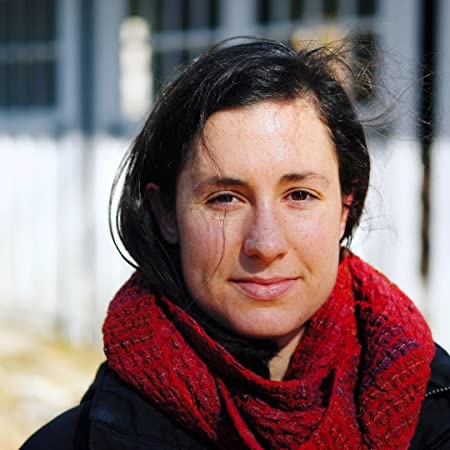
Anna Pitoniak is the author of The Futures, Necessary People, Our American Friend, and the forthcoming The Helsinki Affair. She graduated from Yale, where she majored in English and was an editor at the Yale Daily News. She worked for many years in book publishing, most recently as a Senior Editor at Random House. Anna grew up in Whistler, British Columbia, and now lives in East Hampton and New York City.
1939 – Grace Grey lives in Grosvenor Place in London, with her mother Edeline who is a friend of the notorious Mosleys and wears the uniform of the Blackshirts. As war comes ever closer, Edeline makes the decision to send Grace and the housekeeper’s daughter Rose Munro to stay with her brother Marcus and his wife Olive in the north west coast of Tasmania. After an eight week voyage the girls are welcomed to Towerhurst, an unusual house with a whole tower where Uncle Marcus writes his poetry. Olive immediately takes to the beautiful Rose, but Marcus forms a bond with Grace over the poems of Banjo Patterson, an Australian ballad poet. Grace is reserved and shy, but is slowly coaxed out of her shell by Daniel McGillycuddy an Irish lad working at his aunt and uncle’s sawmill for Huron Pine. As war creeps ever nearer to their part of the Pacific there are dangerous emotional games at play between these young people with fall out that will extend over the rest of the century.
1975 – out of the blue Willow and Ben have been summoned to the north west of Tasmania because of a mysterious legacy. Willow has been left a house called Towerhurst, by an anonymous benefactor who placed it in trust. They decide it’s a great place for Ben to write and Willow to paint, but on their first visit Ben goes missing in the rainforest having fallen down an old mine shaft. What he finds there sends him on a quest that ends in London chasing a story about two young girls who lived at Towerhurst during WW2.
2004 – Libby has flown from Tasmania to London, wanting to claim the belongings of her father who died in the Moorgate Tube Station accident before she was born. Staying with her eccentric aunts in Grosvenor Square, she starts to follow the clues she finds in her father’s satchel: a publisher’s address, a book of ballads by poet D. McGillycuddy and the name Molly Munroe. Her quest will take her to a gentleman’s club, a narrow boat and eventually out to Ireland to solve a mystery that’s been laid buried for half a century.
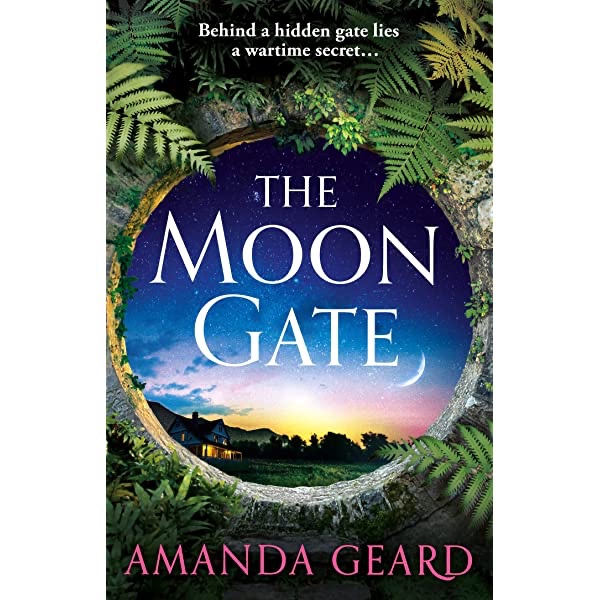
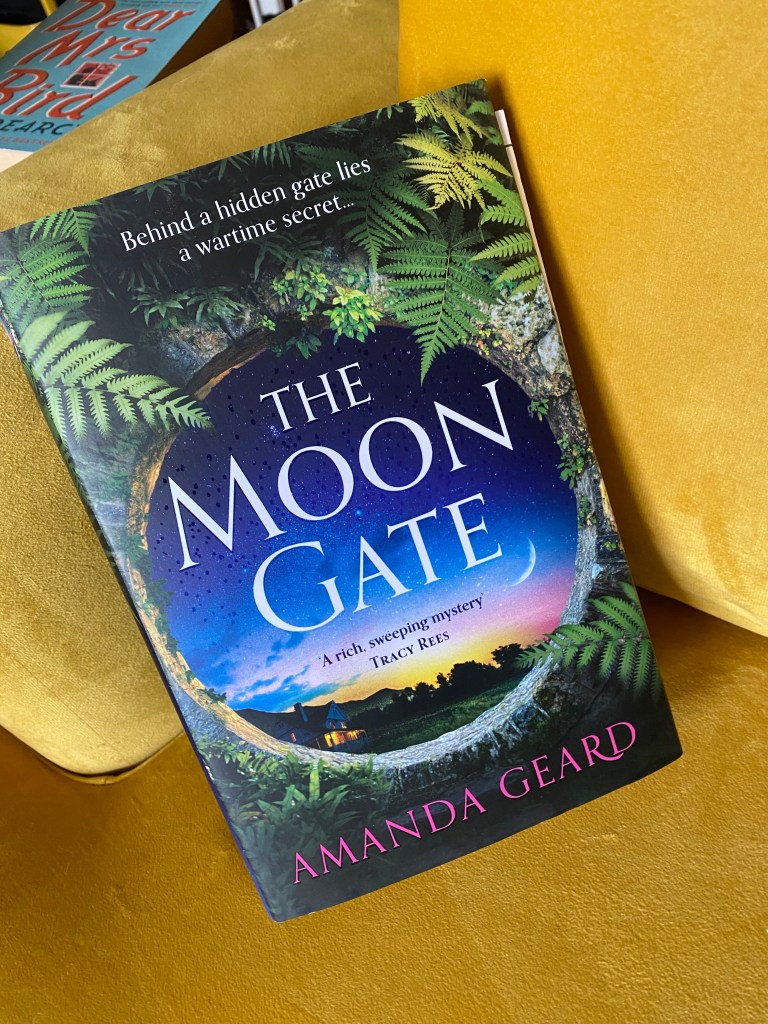
I enjoyed Amanda Gerard’s first novel last year, so looked forward to reading her new one for a while. I was interested to see how her writing had developed over the last couple of years. To undertake a novel that takes in most of the 20th Century, three timelines and three different settings takes enormous confidence and she has definitely grown in confidence. This is a more complex novel, combining historical fiction with mystery and some romance too, but she pulls it off beautifully and I’ve absolutely loved it. From the historical perspective I learned a lot about living through WW2 in the Pacific Ocean, a completely different experience compared to Europe and the U.K. particularly. I thought Amanda beautifully captured how transient lives were at that time. This wasn’t just about the two English girls, Grace and Rose, uprooted from everything they knew and sent to the other side of the world. It was about the chaos of war, never knowing where your loved ones were, particularly if they were away fighting and whether they would ever come home again. For women that was especially difficult, left at home to wait but also left outside the experiences their men were having. Many women did their own war work, both to do their bit but also to feel a little closer to their men and as if they’re helping them to fight. War displaces people and there were huge shifts across the years of WW2 and afterwards as prisoners of war were slowly released and women who’d married a G.I. or perhaps a Polish airman travelled back to their native countries to start a new married life. It was a good time for people to disappear or slip away under the radar. I already knew a lot about the Blackshirts and their admiration of Hitler’s Nazi Party, but here I learned more about the women recruits and their activities. There was a breadth of research here, underpinning and enhancing the story across three different generations.
The main love story is so touching as the slightly awkward Grace is lured down to the beach by neighbour Daniel where he tries to kiss her. Sadly though it’s for a five shilling bet and as his mates turn up in a boat to witness her humiliation she runs away into the sea. It’s his friend Puds who has to rescue her, as she can’t swim and finds herself caught in an undertow. Daniel regrets his actions deeply, apologising the very next day and asking if Grace would perhaps share the book of ballads she’d been telling him about. They pass through the Moon Gate, a perfectly round doorway made of Atlantisite that leads to the waterfall and a small freshwater pool. Uncle Marcus claims that to pass through the gate is to become a new person and that certainly seems the case with Grace who not only forgives Daniel, but shares the ballad poems and agrees that he can teach her to swim. It’s so beautiful to watch them become close friends, but Grace knows that it’s Rose that Daniel finds attractive as everyone does at first. I felt for Grace deeply and I think a lot of other bookworms will too because she’s so uncomfortable in company, prefers solitude and loves words so much. My therapist side wanted to help her, because how does she learn to be herself and be confident in that, when even her own mother preferred Rose? When we’re not shown love from our parents, a child can’t understand that it’s a fault of the parent, so they learn there is something wrong with themselves. Grace is shocked by the help and affection she gets from Uncle Marcus, because her own mother is so austere and critical.
It was Rose who spent time with Edeline and became a member of the Blackshirts alongside her. Whereas Rose’s mother, the housekeeper Molly, can see something wonderful in Grace and so can her Uncle Marcus, it just needed to be coaxed out and nurtured. I was so invested in her feelings for Daniel and desperate for him to be clear about whether he had feelings for her. Rose is doing her bit in undermining and leading Grace to believe that Daniel only has eyes for her. She makes sure Grace knows when he writes from wherever he is in the world and if Grace shares news of her friend, Rose makes it clear she knew first. I’ve never wanted to slap a book character more! I wasn’t even sure that she genuinely loved Daniel, she’s just so used to getting one over on Grace that she hasn’t stopped to think it through. There are rumours in town about Rose and Uncle Marcus, she even winds Puds round her little finger but I wasn’t sure to what end? She certainly keeps her cards close to her chest, but when Rose takes up war work and isn’t around as much Grace can actually breathe. As I read I wasn’t sure what Rose was up to but I was certain there was something behind her manipulations and out of character support for the war effort. It’s a shock when her name comes up again in Libby’s investigations, was her father Ben simply interested in her fascist connections or is it something more personal?
There are definite echoes through the different time periods and motherhood is one of those themes that recurs. It’s an inter-generational trauma that starts with Edeline’s treatment of her daughter. Grace knows she isn’t her mother’s favourite, but is confused when this animosity seems to recur with her Aunt Olive. She asks a devastating question of her Uncle Marcus – ‘am I unloveable?’ because if her own mother can’t love her, why would anyone else? Willow has never known her birth parents, instead brought up with her two sisters who are twins. She never asked the question, even though she can see how different she is physically from her sisters. So when Towerhurst comes along, she starts to be intrigued by who created the trust and whether it could be one of her real parents. She finds out she’s pregnant alone, while Ben is over in London, but manages to tell him on the phone just before he is killed and they are both so happy in that moment. To then become a single parent, in such tragic circumstances must have been so difficult to come to terms with. Willow has never tried to collect Ben’s belongings despite knowing they were found and Libby clearly thinks her mother will disapprove of her choice to follow in his footsteps. Willow hasn’t been a terrible mother, just rather aloof and deeply engrossed in her work as a painter, where she demonstrates her terrible grief by only painting in black and white. She hasn’t grieved fully and I could see that Libby’s findings might bring those feelings to the surface. Luckily, Libby has had her eccentric aunts for support and it’s clear they adore her, but I hoped that Libby and Willow would have chance to talk and heal together.
As the mystery begins to unravel, there are revelations about these three generations that keep coming and a twist I truly didn’t expect. There are small disclosures, like the local police sergeant who helps the search for Ben is actually Puds, Daniel’s best friend who suffered a serious injury in the war and had to return home. How will he go about investigating what Ben finds in the mine shaft, when it might be better if they’d stayed buried? I was desperate to find the whereabouts of Rose, because all the hints are pointing to an answer I simply couldn’t bear! It seems possible that Grace never returned to England, but when Rose’s mother tells Ben she definitely saw Grace after the war he starts his search afresh. Could she have disappeared on this side of the world? I was constantly holding out a little bit of hope for the ending I wanted, so I had to keep reading – up till 2am again! There are so many layers to this story and often with dual timelines there’s a weaker section, but every timeline is intriguing, evocative and emotional. Tasmania sounds wild, dangerous, magical and atmospheric all at once. I loved the reference to the creature that lurks around the pool beyond the moon gate, could it be a shy Tasmanian devil? There’s such a massive difference between Tasmania and London, which feels more domestic than wild with very curated spaces like the old fashioned gentleman’s club and the minimalist narrow boat where Libby meets Sam. Then there’s Ireland, waiting like a promised land with all the answers and the beauty that Daniel shares with Grace right back at the beginning. We are left with an incredible tapestry of places and people full of colour, emotion and a yearning for home whether home is a place or a person.
Meet the Author
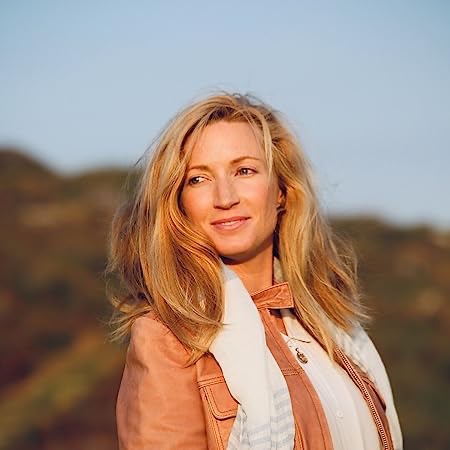
I have always loved dual-timeline novels, where stories from the past weave with those of the present day. I want to write books that transport you to another time and place, where secrets lie just beneath the surface if only the characters know where to look.
My new novel, The Moon Gate, is set across three locations I ADORE: Tasmania (my home state), London (where I rented a houseboat for many years) and County Kerry, Ireland (where I now live with my family). Each of these places is special to me and I hope you’ll feel you’re entering the temperate rainforest with Grace, opening the door to Towerhurst with Willow, walking through London’s layered history with Libby and stepping out to the heather-clad hills of County Kerry with … well, with several characters, the names of who I won’t reveal here!
The inspiration for my first novel, The Midnight House, appeared in the rafters of our Irish home, a two-hundred-year-old stone building perched on the edge of the Atlantic. Hidden there was a message, scratched into wood: ‘When this comes down, pray for me. Tim O’Shea 1911’. As I held that piece of timber in my hands, dust clinging to my paint-stained clothes, I was humbled that a person’s fingerprint could, in a thousand ways, transcend time, and I wanted nothing more than to capture that feeling of discovery on the page.
I’m also a geologist who loves to explore the world’s remote places. Luckily for me, writing novels provides a similar sense of wonder and discovery; but the warm office, fresh food and a shower in the evening make the conditions rather more comfortable! It’s also the perfect excuse to regularly curl up by a fire with a great book (often by the wonderful authors who write in my genre). I treasure my reading time, and I know you do too, so thank you for taking a chance on my books.
Come over to Instagram and Twitter (@amandageard) where I share plenty of photos of the wild settings in The Midnight House. You can also find me on Facebook (@amandageardauthor).
I love hearing from readers, so please get in touch!









 The Lotus Readers