Posted in Random Things Tours

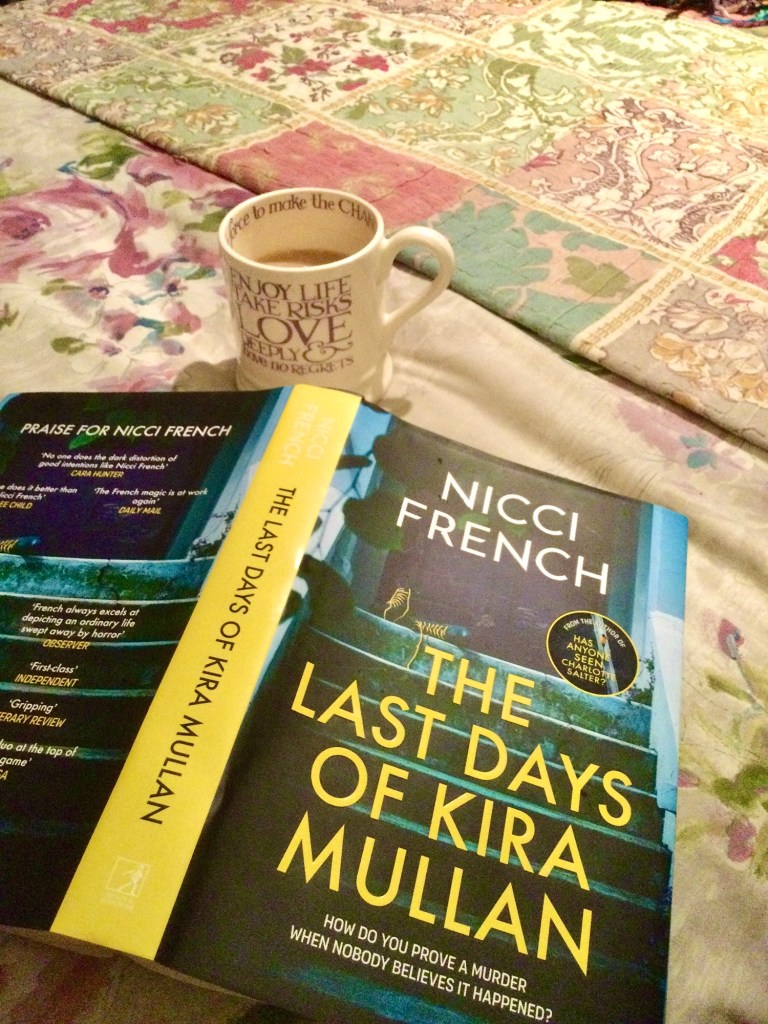
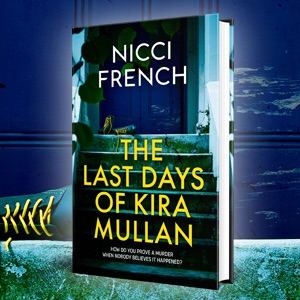
The Last Days of Kira Mullan by Nicci French

I always jump at the chance to read a new Nicci French book. Also they’re so prolific that it’s easy to find earlier novels in charity shops. This novel is set in a Victorian house split into flats and it’s newest residents are Nancy and her boyfriend Felix. Nancy is recovering after a psychiatric episode and a stay in hospital. Thankfully her voices have subsided but she’s fragile and moving to a new part of London has been destabilising. After venturing out for a walk she starts to experience voices again and in her confusion she rushes back to the flat. At the front door she bumps into a young woman wearing very striking green boots with yellow laces. The woman speaks to Nancy but it doesn’t make sense and it doesn’t help that she’s trying to distinguish between which voices are real. All she knows is that the woman was distressed and possibly needed help. Only 24 hours later the young woman is found hanging in the basement flat. Her name was Kira Mullan. Everyone seems sad that Kira committed suicide but for Nancy, something feels off. She isn’t sure that Kira did kill herself. How can she convince the others that she’s telling the truth when nobody trusts her?

This novel was absolutely gripping with brilliantly written main characters and a haunting central victim in Kira. I loved the idea of following the story through Nancy who has been struggling with her mental health and a clever, perceptive detective in Maud. The authors have cleverly placed Nancy on shifting sands – not only has she had a period of psychosis but she’s moved house and into an entirely strange area of London. She’s also lost her livelihood as a chef and could be living in a building with a murderer. She’s also without a touchstone in her life. I know exactly who to go to and ask whether I’m the asshole? I have friends who will tell the truth about whether I’m over-reacting or if something is genuinely wrong. This was invaluable when I found myself in an emotionally abusive relationship. I’d hoped that Nancy’s boyfriend Felix would be that person but I’d noticed a few red flags. He’s very attentive and seems to want her wrapped up in cotton wool, but Nancy is doing all the right things. On the day after she’s heard voices she asks to see the psychiatrist who changes the dosage of her medication and goes for counselling. She’s resting and doing her breathing exercises. In fact there’s very little else she can do. The authors leave us constantly wondering about her; is she paranoid or are the other residents out to get her?

Felix claims he only wants people to look out for her but Nancy feels like her space and autonomy are being encroached on. Felix tells the other residents everything about her history, including the psychosis, even the doctor who lives across the hall. He even gives next door neighbour Michelle their door key so she can let herself in, much to Nancy’s shock. His actions have actually left Nancy more vulnerable, leaving her open to abuse from others that they can deny. Who’s going to believe the mad girl? Nancy doesn’t think she’s paranoid but can see that her actions might seems excessive: she goes through Kira’s bin; steals a used condom from the flat and goes to look at the apartment with an estate agent; she also tells the police and Kira’s mother that she doesn’t think it was suicide. Just as she thinks she’s getting close to answers she is sectioned again after Michelle informs Felix that she threatened her. The authors show us how vulnerable mentally unwell women are in the care system and NHS, even though they’re designed to protect them. Not only is her liberty taken away and she’s prey to unscrupulous carers and nurses. In this upside down world, the more she protests her sanity the worse things become. She loses whole days to medication and is told by one male nurse that her life would be easier if she was ‘nice’ to him. So Nancy bites him. She has only one choice here. Be obedient, ignore the barbs and smile sweetly through visits she doesn’t want. It’s the only way she’ll be free. 

I loved the relationship between the detective Maud and Nancy. Maud is so perceptive and their experiences do mirror each other in a way. Maud knows that as a woman in the MET she is in the minority and she’s fully aware of the type of man that can be hiding behind a uniform or a title. In their respective institutions Nancy and Maud are trapped within a system they can’t change. Maud knows that if she becomes emotional or passionate about a particular case she will be seen as an irrational or hormonal woman. If she’s assertive and asks for what’s rightfully hers she’ll be called a bitch. In order to get the cases she wants and stand up for women like Kira and Nancy she has to play the game. It seemed to me that Maud saw the red flags with certain people whether in the flats or the house next door. She never holds Nancy’s illness against her and accepts that although she’s been struggling, she still might have something useful for solving the case. She also has a network of women within the system who will do her favours, such as looking over autopsy results and giving a second opinion. I loved the way she handles herself and her confidence in very dangerous circumstances. This was a gripping and psychologically brilliant read. I’d didn’t work out all of what had happened in Kira’s final days but the end was satisfying and I reached it very quickly because this is quite the page turner. 

Out in hardback from Simon & Schuster on Jan 16th 2025

Meet the Author

Nicci French is the pseudonym of English husband-and-wife team Nicci Gerrard and Sean French, who write psychological thrillers together.

Posted in Publisher Proof

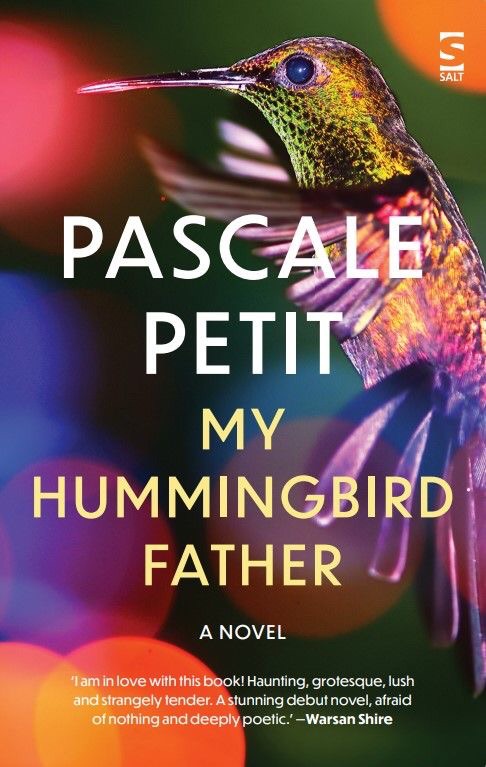
My Hummingbird Father by Pascale Petit

This extraordinary novel weaves a mystical and hypnotic spell around the reader, using the flora and fauna of our heroine’s home in Venezuela and slowly unravelling the truth about her childhood. Dominique is an artist who receives a vision of her father in her dream, so powerful she is able to recreate it on canvas. She hasn’t seen him since her early childhood, so it’s a surprise when he gets in touch and asks her to come to Paris. He is dying and wishes to reconcile with his daughter. Longing for paternal love Dominique travels to Paris, on a physical and spiritual journey to recover that part of her early childhood she spent in Paris with both her parents. There she uncovers repressed memories that reveal the truth of her parent’s marriage and her own birth. She also visits the Venezuelan Amazon where she meets Juan, a mystic and shaman who guides her journey. A gentle and tender love story emerges between them as Dominique tries to heal from what she has uncovered. 

I would have known this writer was a poet and an artist from the very beginning because she writes lyrically and creates such striking visual imagery. At first it’s an assault on the senses, a maelstrom of imagery from the Amazonian jungle filled with colour and fantastical animals. A beautiful example of magic realism, the author’s vivid imagery tells of jaguars, birds of paradise and in one case a very disturbing anteater I expected to see in my nightmares. It’s almost hypnotic and I was so overwhelmed and beguiled by the beauty of her words that I didn’t realise the pain and devastation underneath. It’s through her artwork, which is almost shamanistic at times, that she processes her trauma. Her childhood was tainted by her father leaving, seemingly without explanation when she was six years old. She then experienced abuse and resentment from her mother. The process of recovery from trauma is a major theme in the book and we can see how Dominique’s reintroduction to her father triggers the emotions that she hasn’t resolved. In fact his presence triggers nightmares and the re-emergence of events she’s kept locked away in her subconscious. She wants answers to the mystery of her father’s disappearance, but I feared she would be re-traumatised by the truth.These are dark, harrowing memories in parts but it’s clear that the beauty of nature really does have a healing effect on her. 

Her descriptions of Venezuela and the incredible Angel Falls made me want to see it for myself! Here things become more mystical as we see Dominique’s beautiful connection to this place and a man she meets from the Pemon community, indigenous to Venezuela. Juan helps her to go deeper inside herself and face whatever unresolved feelings lurk there. He is a shaman to the community and can ward off malevolent spirits, including the type of dark and disturbing emotions that can haunt people who’ve experienced abuse. This is an incredibly personal journey and her time in Venezuela, the rediscovery of her childhood home in Paris as well as reading her father’s correspondence all contribute to her recovery. I found her story deeply moving and challenging to read at times. However, I recognised the catharsis in Dominique’s artistic expression and the importance of documenting traumatic experiences. She needs others to bear witness to the truth of her childhood, because only then can she achieve acceptance and healing. This is a beautifully written novel, that’s lyrical and treads a line between poetry, visual art and prose. I was touched by it and by the deep connection Dominique has with the natural world. There she can be her true self, an imperfect human woven back together by animals who always accept us as we are.

Meet the Author


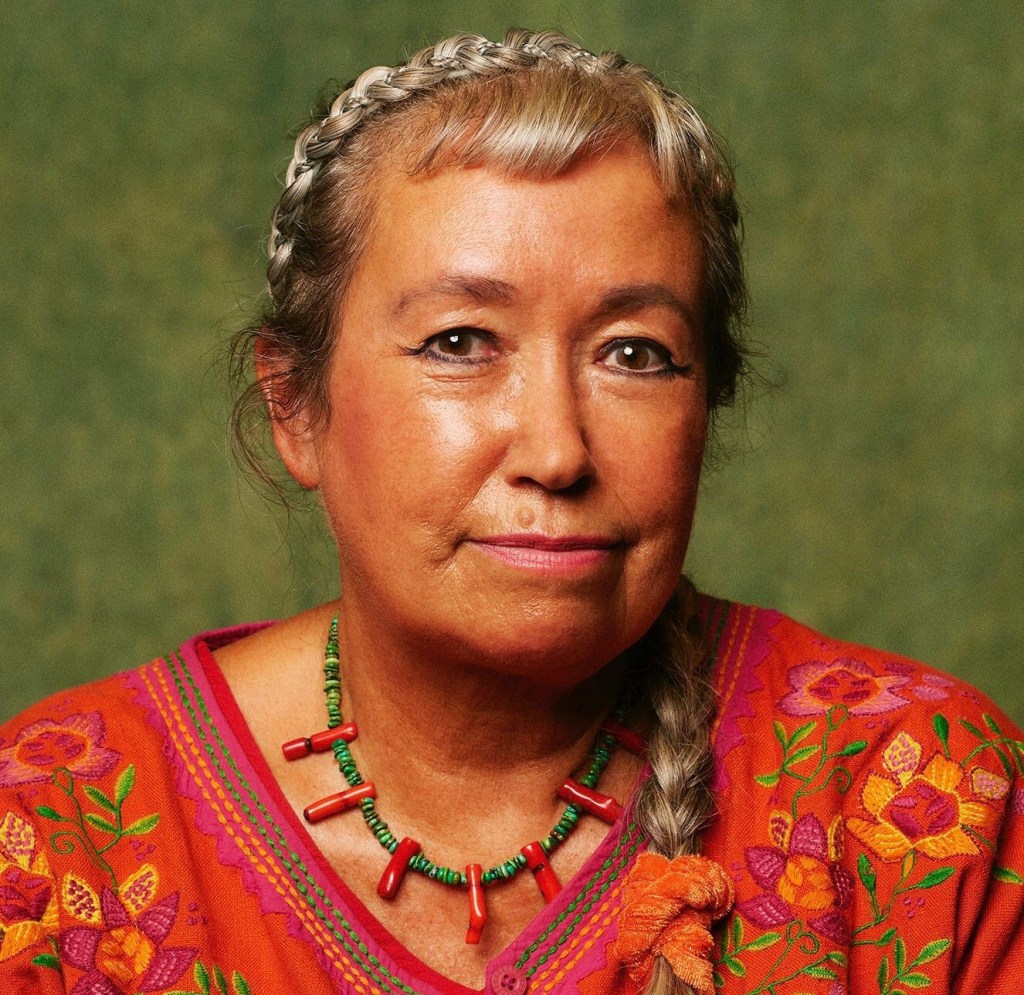
Pascale Petit’s eighth poetry collection, Tiger Girl (Bloodaxe, 2020), was shortlisted for the Forward Prize and for Wales Book of the Year. A poem from the book, ‘Indian Paradise Flycatcher’, won the 2020 Keats-Shelley Poetry Prize. Her seventh collection, Mama Amazonica (Bloodaxe, 2017) won the inaugural Laurel Prize in 2020, the 2018 Royal Society of Literature’s Ondaatje prize, was shortlisted for the Roehampton Poetry Prize and was a Poetry Book Society Choice. Her sixth collection, Fauverie, was her fourth to be shortlisted for the T. S. Eliot Prize and a portfolio of poems from it won the 2013 Manchester Poetry Prize. T. S. Eliot shortlisted What the Water Gave Me: Poems after Frida Kahlo (Seren, 2010), was also shortlisted for Wales Book of the Year. Salt published her debut novel, ‘My Hummingbird Father’, in 2024 and her ninth poetry collection, Beast, is forthcoming from Bloodaxe in 2025, and is awarded the Arthur Welton Prize.

Posted in Publisher Proof

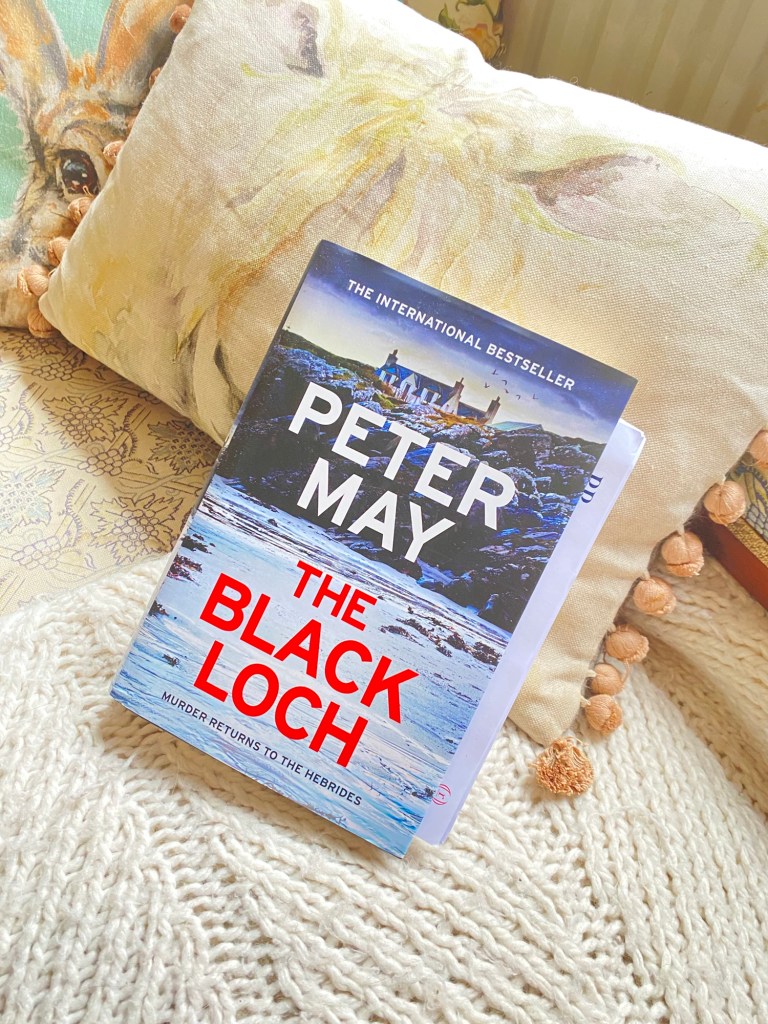
The Black Loch by Peter May

Readers probably won’t believe this but this is my first Peter May novel. I’ve had his books on my ‘authors to explore’ list for when I’m second hand book shopping, but something always gets in the way of me reading them. So, when I was offered this blog tour I jumped at the chance to finally read one. I love books set in Scotland and I am a particular fan of Tartan Noir – crime novels and mystery novels from authors like Doug Johnstone and Val McDermid. I was immediately drawn into the incredible scenery and atmosphere of the Isle of Lewis. This is the fourth in a trilogy, so I’ve definitely got some catching up to do where Fin McLeod is concerned. Once a detective and now retired, Fin is drawn back to Lewis when Caitlin Black’s body is discovered on a remote beach. Only eighteen years old, Caitlin was a student at the Nicholson Institute. It emerges that she was having an illicit affair with Fionnlagh McLeod, her teacher and a married man twenty years her senior. Fionnlagh soon becomes the prime suspect and is arrested on suspicion of her rape and murder. He is also Finn’s son. Finn knows he must return to Lewis to support his daughter-in-law and granddaughter. He also knows, despite the evidence against him, that he must try to clear his son’s name. As Fin travels around the island, he is drawn into past memories and soon realises this crime has echoes back into his own teenage past on the island. A terrible accident at a salmon farm caused two deaths, just as the industry started to expand on the island and become a multi-million pound concern. This is a journey of family ties, secret relationships and a bleak and unforgiving landscape, where violence, revenge and revelations converge. 

Fin and his wife Marsaili both grew up on the island, so it holds echoes of their relationship over the years. It’s strange for them to be back on Lewis after a ten year absence and awkward to turn up on Fionnlagh’s doorstep where his wife Donna is devastated by the possibility that her husband has killed his teenage lover. Their daughter Eilidh is happy to see her grandparents and currently oblivious about her father’s fate, but it’s clear to see the damage Fionnlagh’s exploits have had on Donna. These early chapters felt like being sucked down into a whirlpool of memories. There’s such an incredible sense of place and the use of Gaelic words and names feels foreign, strange and somehow magical at the same time. There are tourists enjoying the white sandy beaches, but we’re taken down below the surface to the realities of living somewhere so remote and bleak. Then further down to the horrors underneath where salmon are eaten alive by lice in their cages, where beached whales gasp their last agonising breath on the sand and a beautiful girl with her whole life ahead of her can be thrown over a cliff like rubbish.

He finally reached the Black Loch just before seven-thirty. He parked above the beach as sunlight fanned out towards him across cut-crystal water, revealing the secret colours that concealed themselves on the shore, among rocks and boulders and the seaweed washed up to dry along the high-tide mark. To his right, cliffs of Lewisian gneiss rose steeply out of the water and he could just see the gables and chimneys of the house that stood above them overlooking the bay. He cast his eyes down again to the water’s edge and left footprints in the wet sand as he followed the curve of the day towards the looming black of the cliffs. Somewhere here Caitlin’s body had been washed ashore.”

Peter May has portrayed the environment, whilst also showing the extent to which climate change and the eco- industry have impacted the surroundings he’s known for his whole life. The old cottages are damp and battered, some being refurbed by incomers with money either as family homes or holiday cottages. New houses are squat, one-storey dwellings built to blend with the sand and the heather with large  windows giving uninterrupted views of the landscape. Younger islanders are focused on eco-activism with Caitlin Black and her friend Isobel starring in a programme about the island’s ecology. They care about fish farming practices driven by the market across the globe for salmon. Practices that prevent wild salmon from swimming up river to spawn as well as terrible conditions for the farmed salmon too. Huge cages that once held a few hundred salmon now hold a hundred thousand, with such a high mortality rate they’re having to take them from the cages and dump them into rock crevices formed from by the tide. They lay there rotting until the sea washes them away.

The activist’s aerial shots exposing the illegal dumping of dead fish, and the zombie salmon, half eaten by sea lice, swimming listlessly around in cages where anything up to twenty-five percent of fish were already dead. She listened in horror as he conjured up an image of the stinking, maggot-ridden morts […] and the 1000-litre containers of formaldehyde that a desperate Bradan Mor was using to try to kill the sea lice.”

Fin’s narrative takes us on his investigations around the island, trying to find evidence to disprove the police’s theory that his son is a killer. A task made much more difficult when his DNA matches samples taken from Caitlin’s body. Why would he rape someone he’s been sleeping with for months? This is according to locals who’d noticed their clandestine comings and goings from a derelict cottage by the sea. Despite the urgency of the present moment, Fin is also pulled inexorably into the past, because this island has a huge hold and power. I felt centuries of history in the land it’s people and their relationships. This is sometimes positive, as Fin remembers beach parties where he first met Masaili as a teenager and they make love on the beach in the present, grasping a tiny moment of happiness and connection in the hurt and devastation. The most terrible memories involve a scheme to steal fish from the fish farm and pass them off as wild salmon, for a ghillie from the estate to sell on. Fin goes along with it despite his misgivings, but the scheme is originally suggested by Niall. A group of teenagers meet and drive to the fish farm several times, but one night there’s an awful storm and a sense of foreboding. This enterprise leads to two deaths and creates a suspicion in Fin about his friend Niall. If he is willing to steal from his own family and brush aside the death of a friend, is he capable of murder? Niall’s surname is Black and Caitlin is his daughter.

It feels as if the island has a consciousness. It sees your past and your future as clearly as the present, almost as if they’re happening simultaneously. I felt it when Finn walked across the very place he stood with Masaili when they were first meeting at six years old and she had two pigtails. She also called him Finn for the first time, christening him with a nickname he still uses. This is a thin place, unchanged for centuries. It also said something about how we experience the world. We are rarely solidly who we are in the present, with past and future forgotten. We are simultaneously all the selves we’ve ever been. In this way Fionnlagh can be a good father, a talented teacher and a suspect in a murder. There are also darker moments from Fin and Marsaili’s past that come alive here. Her narration is a rare moment in the novel but she relives a night in Glasgow from their university years, when she found Finn in bed with another girl in their student flat? It makes us realise that Finn isn’t wholly the upstanding man we think he is, he was also the cause of so much hurt, rather like his son. 

There’s a sense in which this trauma is generational, not just in individual families but in the island itself. The environment has always been harsh and people have found it to survive. It’s a hunting and fishing community and other nearby islands, like St.Kilda, became uninhabitable in the early Twentieth Century due to the difficulty of growing and catching enough food for the islanders. Fin takes us back to a conversation he had with his grandfather about the whaling industry, brutal tales of harpooning these majestic creatures and turning the sea red. It links to the beached whales in the bay, possibly drawn off course by one of them being unwell and in distress. As the vet assesses these giant creatures and people desperately try to save them he talks about a tradition in the Faroe Islands where they draw whales to the shore then hack them to pieces. Fin has violent memories of being forced to join a seasonal slaughter. In his last summer before university, Fin felt like a black cloud had descended because he and his friend Artair had been chosen to join the guga hunters. This was a four hundred year old tradition where twelve men would travel to An Sgeir, an island no more than a rock in the middle of the ocean. A guga was a young gannet, once hunted in a desperate need for food, their slaughter was now a rite of passage. Hunters killed two thousand birds in a fortnight, then they would be plucked and salted. Fin felt disgusted by the idea, but it seemed unavoidable and it would be dishonourable to give up your place.

“Neither Artair nor I wanted to spend two weeks on that bleak and inhospitable rock, scrambling among the blood and shit that covered the cliffs, slaughtering defenceless birds.”

This was a tense and complex case with so many possible suspects, and Peter May also keeps us guessing about Fionnlagh. Perhaps he could be the killer, after all he does confess. In a way this created a crime novel that didn’t revolve completely on whodunnit, but on the tensions between different characters and also their environment. He also creates a compelling picture of the beautiful and intelligent victim, Caitlin Black. A girl as embedded in the island as Fin, with a deep passion for the island’s environment and it’s flora and fauna. She epitomises the gap between generations, but also between those who want to protect the island and those who are making a generous living by exploiting and polluting it. I loved how deep the island and it’s history ran in these people, something I can understand having lived right next to the River Trent for most of my life. In fact the first thing I did when moving into my last village twelve years ago was go to the river bank and take off my sandals to feel the river bank under my feet. The river and it’s daily tidal bore, the smell of fresh cut hay, the cool of the forest, the crunch of dry pine needles underfoot as well as the smell of straw bales in the sun and freshly turned earth are all in my soul. They make up part of who I am and although I moved away for study, I have returned and unknowingly into the same village where my great-great grandmother is buried. Our ancestors call to us and this is definitely what Fin and Marsaili are feeling, as well as need to be close to Fionnlagh, Donna and Eilidh. This is something he couldn’t have imagined ten years ago, but now he wonders if it’s where they belong. Perhaps this means future additions to the series and on the basis of 5is novel, I’ll be the first in the queue if it does.

“He leaned over to kiss her and remembered that little girl with the pigtails who had walked him up the road from the school to Crobost Stores giving him the nickname that had stuck for the rest of his life.”

Out on 12th September from RiverRun Books, an imprint of Quercus.

Meet the Author

Peter May was born and raised in Scotland. He won Journalist of the Year at twenty-one and was a published novelist at twenty-six. When his first book was adapted as a major drama series for the BBC, he quit journalism and became one of Scotland’s most successful television dramatists. He created three prime-time drama series, led two of the highest-rated series in Scotland as a script editor and producer and worked on more than 1,000 episodes of ratings-topping drama before deciding to leave television and return to his first love, writing novels.

Posted in Publisher Proof

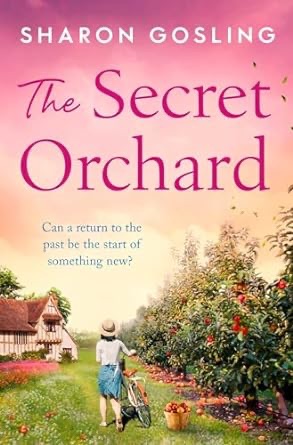
The Secret Orchard by Sharon Gosling 

I’ve really enjoyed Sharon’s last couple of novels, because I love their mix of strong female protagonists who are facing challenges and growing into themselves. This novel focuses on sisters Nina and Bette, set on their family’s farm in Scotland. When their father dies they have no choice but to be under the same roof for the funeral. The sisters are very different, Bette is ten years older than Nina so the age gap meant they weren’t very close anyway, but when Bette left for university she never came back to the farm. Living in London, Bette is a sought after divorce lawyer and her work is her life. She flies back to Scotland the day before the funeral and aims to leave the next day. Nina is hostile towards her sister, she has the opinion that Bette left the farm and never looked back. As their mother tries to smooth things over, Nina is shocked to discover that Bette and her father kept in regular contact by email and that Bette paid for the new roof on the barn. Both sisters are shocked at the will reading when they find out that their father left them both the farm in two equal shares. However, there are massive debts to manage and Nina has always left the finances to their father, preferring to do the farm work than sit in the office. This is the only safe place Nina and her son Barnaby have ever lived. Could they be about to lose it? When getting the farm valued, Bette and the agent walk the perimeter on the land and stumble across a secret orchard, tucked away with it’s entrance concealed off the coastal path. Could this hidden fruit be the answer to their money woes and possibly a mystery to bring both of them together? 

We’re drawn in by an intriguing prologue that suggests an historic love story between two local but rival families. I was dying for Bette and Nina to do some digging on this story and unravel their orchard’s complex back story. The author leaves the crumbs of this story to tantalise us while we move through the present day and the emotional aftermath of Nina and Bette’s father’s death. It’s clear from the outset that these two sisters could be an incredible team. Nina is good at the day to day farming work, rushing between baling and milking while also being there for her son Barnaby. I was on board with Barnaby straight away because he wears his Spider-Man costume everywhere, possibly even to his grandfather’s funeral. This titbit of character and humour reminded me of a little boy who always attended our church for Saturday evening mass and would go up the aisle during communion dressed in costume. Watching his long tail wend it’s way up the aisle so the priest could give a blessing to a mini dragon absolutely made my week. His mum made him take the head off for the blessing, but it was straight back on as he skipped back to his seat. Barnaby is a delight and I enjoyed watching him build a relationship with his Aunt Bette. Bette is brilliant with the financial and legal details, something nether Nina or their father has been able to do. She sets herself the task of working methodically through their chaotic office and showing the bigger picture; they might have been working themselves to the bone, but was all this work actually generating profit? 

Bette understands legal procedures and processes too. When she explains they’ll have to get the farm valued Nina immediately flares up, she doesn’t want to sell the farm. She assumes Bette is looking to cash in, but when Bette explains it’s just the first stage in any plan they make whether that’s to sell or to finance the farm better for the future. She’s calmer and more patient with the process and because Bette’s less attached to the land she can make sensible, dispassionate choices which is just as vital for the farm’s survival. Added to the main plot of saving the farm there are a couple of sub-plots. Nina is often helped out around the farm by neighbouring farmer Cam, who is very capable and good with Barney, not to mention easy on the eye. What would I take for friendship to turn into love. There’s also the mystery of why Bette left the farm so definitively all those years ago and when Ryan enters the picture her reaction left me wondering if he was involved. Cam suggests a visit from an expert he knows, to see if the orchard is viable and what would be the best way to bring some income from it. Nina has never known why her sister left, so her reaction to Ryan is puzzling for her. He has great ideas for the apple trees, some of which appear to be very old species that are rarely grown. He sets them on a programme of managing the trees, pruning and grafting them to enhance their health and yield. There isn’t an off putting amount of detail on how to turn the orchard into a cider business, but there’s enough to pique the reader’s interest and I was rooting for the sister’s success. 

The sisters have such depth to their characters and their lack of communication with each other has led to so much misunderstanding between them. Nina comes across as quite bitter towards Bette and to some extent she sees her sister as someone who has everything: the job, the money and the fancy London lifestyle. Actually it’s Nina whose had everything – a wonderful relationship with her father and precious time working together. She has Barnaby and although her relationship with his father broke down, she loves her son more than anything. With her mother living abroad with her new husband, Nina has taken on the lion’s share of the work around the farm and keeping an eye of their father but Bette has never expected any financial gain from the business, assuming that it belongs to Nina. I could see how the new plans might bring about a better personal relationship between them and I was kept reading by the promise of a warmer relationship between them, the makings of a new generation of the family. There’s a lot of forgiving to do here, but once they’d discussed why Bette left in the first place I could see another life opening up, one in which she might stay. As always with this author, this was such an uplifting and heartwarming story. The potential for both sisters to have their own love stories was also joyous to read, especially if you’re a sucker for an ‘enemies to lovers’ scenario. There are setbacks of course, some of them natural disasters and others caused by deep-seated rivalry. Sharon Gosling writes this type of story beautifully, as she weaves the threads of the sister’s story and the mystery surrounding the orchard’s origin, not to mention why it had been hidden all these years. The setting is wonderful, particularly the orchard with the salt air and the sounds of waves crashing against the cliffs. It’s so romantic and I loved the detail of how the salt permeates and changes the taste of the fruit making it so unique. This was a wonderfully escapist novel, driven by the character’s of Bette, Nina and of course, Barnaby. I thoroughly enjoyed being in their world for a while and I’m sure you will too.

Out 12th September from Simon and Schuster

Meet the Author

I’ve been writing since I was a teenager, which is now a distressingly long time ago! I started out as an entertainment journalist – actually, my earliest published work was as a reviewer of science fiction and fantasy books. I went on to become a staff writer and then an editor for print magazines, before beginning to write non-fiction making-of books tied in to film and television, such as The Art and Making of Penny Dreadful and Wonder Woman: The Art and Making of the Film.

I now write both children’s and adult fiction – my first novel was called The Diamond Thief, a Victorian-set steampunk adventure book for the middle grade age group. That won the Redbridge Children’s prize in 2014, and I went on to write two more books in the series before moving on to other adventure books including The Golden Butterfly, which was nominated for the Carnegie Award in 2017, The House of Hidden Wonders, and a YA horror called FIR, which was shortlisted for the Lancashire Book of the Year Award in 2018. My last children’s book (to date) is called The Extraordinary Voyage of Katy Willacott, and was published by Little Tiger in 2023.

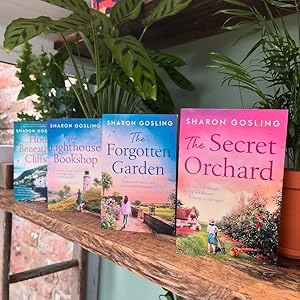
My debut adult novel, The House Beneath the Cliffs, was published by Simon & Schuster in August 2021. Since then I’ve written three more: The Lighthouse Bookshop, The Forgotten Garden, and The Secret Orchard, which is out in September 2024. My adult fiction tends to centre on small communities – feel-good tales about how we find where we belong in life and what it means when we do. Although I have also published full-on adult horror stories, which are less about community and more about terror and mayhem…

I was born in Kent but now live in a very small house in an equally small village in northern Cumbria with my husband, who owns a bookshop in the nearby market town of Penrith.

Taken from Sharon’s Amazon Author Page.

Posted in Paperback Publication

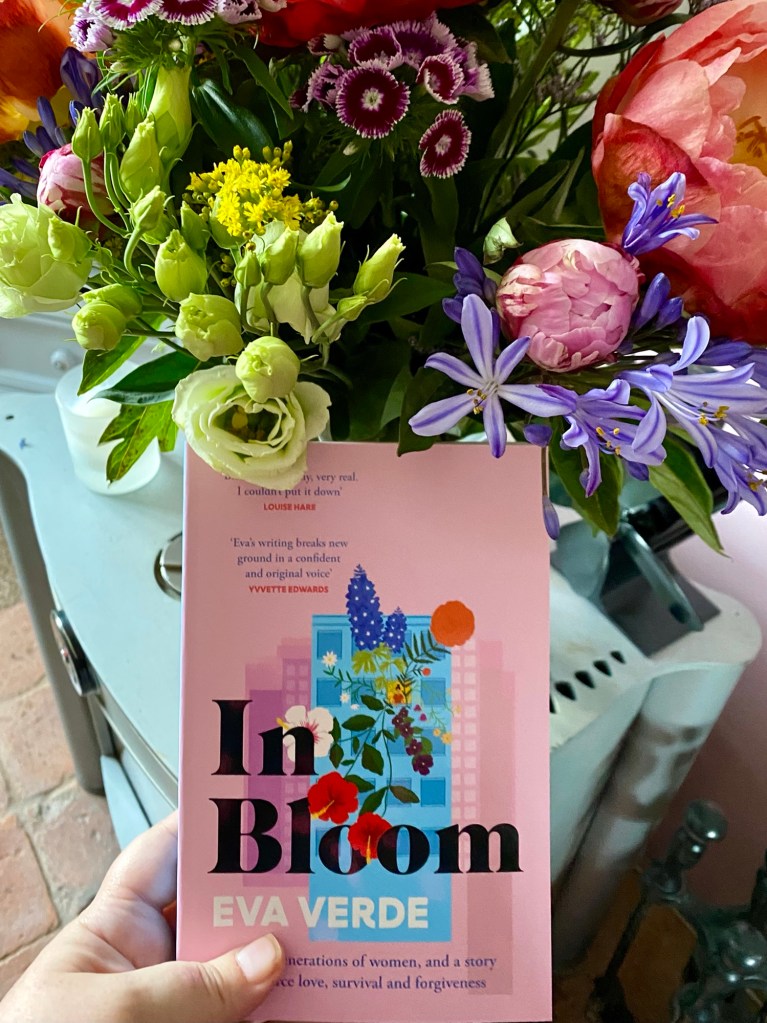
In Bloom by Eve Verde

‘This is my family story. From all I’ve sown together, through all I couldn’t ask. I want to be the bud who makes it.’

In Bloom tells of strength, survival, forgiveness, resilience and determination, and the fierce love and unbreakable bonds between mothers and daughters.

Ever since Sol’s untimely death left her pregnant and alone at twenty-two, Delph’s kept herself small as a form of self-protection. Now, over a decade later, she lives with their daughter Roche and her new partner Itsy, a kind and protective cabbie, on the fourteenth floor of Esplanade Point on the Essex coast.

But Delph’s protective bubble bursts when Roche moves in with her estranged nan, Moon. Feeling on the outside of the bond between her fierce-yet-flaky tarot-reading mother and volatile martial-arts-champion daughter, Delph begins questioning her own freedom. And when Roche’s snooping into her grandmother’s past unearths a familial line of downtrodden women; a worrying pattern emerges. Has keeping small and safe truly been Delph’s choice all these years…?

I’m hosting the paperback blog tour for this wonderful book today and it’s lost none of its charm and power since I read it last year. I don’t believe in trigger warnings, despite their intended purpose to flag up material that may ‘trigger’ difficult emotions in the reader, I feel that they might stop someone experiencing a connection with a text. It might well be a trigger, but that doesn’t always have to mean it’s a negative one. It might be a trigger that starts a healing process. If anyone should have avoided this book it was me, because I was Delphine. I lost the love of my life in my early thirties and then sleepwalked into a coercive and damaging relationship. Yes, it was a hard read at times, but it wasn’t a remotely negative experience. Moon, Delphine and Roche are three generations of a family. Each woman has her own issues, but they all stem from one place. Right back at the beginning.

As the book opens Roche can no longer live with her mother and Itsy, the man she’s been living with for most of Roche’s life. So she decamps to her grandmother Moon’s house. Roche can’t stand Itsy, he dislikes her and wishes she wasn’t there. In fact what he wants is Delphine all to himself, it’s easier to control someone who’s isolated. Delphine has had a glazed over look ever since he arrived in her life and she doesn’t seem like her mum anymore. Delphine has done everything she can to keep Itsy happy. She’s changed how she dressed, made herself less beautiful, stayed at home and stopped going out with friends. Every day she makes herself smaller to make more space for him and Roche can’t watch it anymore. However, things are changing slowly. Delphine has a job she enjoys at B & Q, new connections with her colleagues and today she has made a choice. Delphine is pregnant and she knows deep down in her soul that ‘the thought of more years, more life, tied to him’ is more than she can bear. She goes quietly on her own for an abortion, the quietest but most powerful act of rebellion she can make. Then comes her opportunity, Itsy receives a phone call from Jamaica to tell him his mother is dying. He must jump straight on a flight, so Delphine lets him go alone, knowing that now she has several weeks to herself. She doesn’t stop Roche from moving out and accepts this as her time to heal, time to be the parent that so often Roche has to be for her. However, this isn’t the only recovery needed in the three generations of this family thanks to the actions of men.

I felt at first that I was slowly piecing together the story of a client. Being a person- centred therapist means letting the client choose what they want to talk about. I would use my counselling skills to tease out that story and ask questions where it needs to be clarified or where I might only be getting one perspective. Here the story has it’s own pace and each woman narrates her own section. We flit back and forth, also delving into the past here and there and it’s like doing a jigsaw puzzle but only being handed one piece at a time, then another from a different angle. It takes some time to perceive the whole and that was definitely the case here. Only we the reader can see where they all are in relation to one another. The reality of being a woman in today’s world is explored fully, there is no doubt that these women’s lives would have been immeasurably better had they not encountered men. It takes Roche to articulate this properly with the words and wisdom of her generation.

“Roche knows, remembers, how her life changed at around the time she started secondary, and her bubble of invisibility popped. How, despite the school uniform screaming otherwise, she very suddenly became the inhabitant of a woman’s body, complete with a depressing self-awareness that this was now Roche’s life until one day men deemed her invisible again. In fairness, it’s not her contemporaries who usually do the perving – no, it’s men, grown–ass men who have always done the bulk of the wolf–whistling, the innuendoes and basic compliments that they expect her to ‘smile, love’ and be grateful for.”

As a middle aged woman I now know the power of that invisibility and how, in many ways, it’s a blessing.

I love how carefully the author drew the threads between generations, those behaviours that create a pattern of intergenerational trauma. There are moments in her journey where Delph needs her daughter by her side, but she recognises that it’s a selfish need. Delphi’s lived experience stops her; “is not for a child to fix the parent. Nor is Roche the ointment to Delph’s current troubles”. Then we go back into her mother Moon’s early years, when her grandmother is in hospital, suffering from mental ill health. Her name was still Joy back then and her job is to dispense sunshine to a women who can’t even remember her name. ‘Come on,’ Ma says, in a giddy-up way. ‘You know how happy your little face always makes her.’ This a learned behaviour, people pleasing and exactly what Delph is trying to avoid for her own daughter, three generations later. By sitting with her own pain, Delph is avoiding instilling that behaviour in her own daughter, she’s actively breaking the cycle. Yes, there are traumatic moments in these women’s lives, Moon’s story being particularly harrowing, but we can also see the women’s determination to change. It’s that change and what it means for Roche that brings such an uplifting feeling to the book. For me it’s Delph’s struggle that touched me deeply. The loss of Sol, who’d been there her entire life, is devastating. So moving out of Itsy’s orbit and the mental paralysis she’s been living with means opening up her emotions. That’s all of the emotions including her grief, but it’s a process that needs to happen so that Roche can talk about her father openly and in a joyful way. I found myself more engrossed in the later stages of the book as I had to see whether these women could heal together. This is beautifully written and manages to be funny, moving and hopeful.

Posted in Random Things Tours

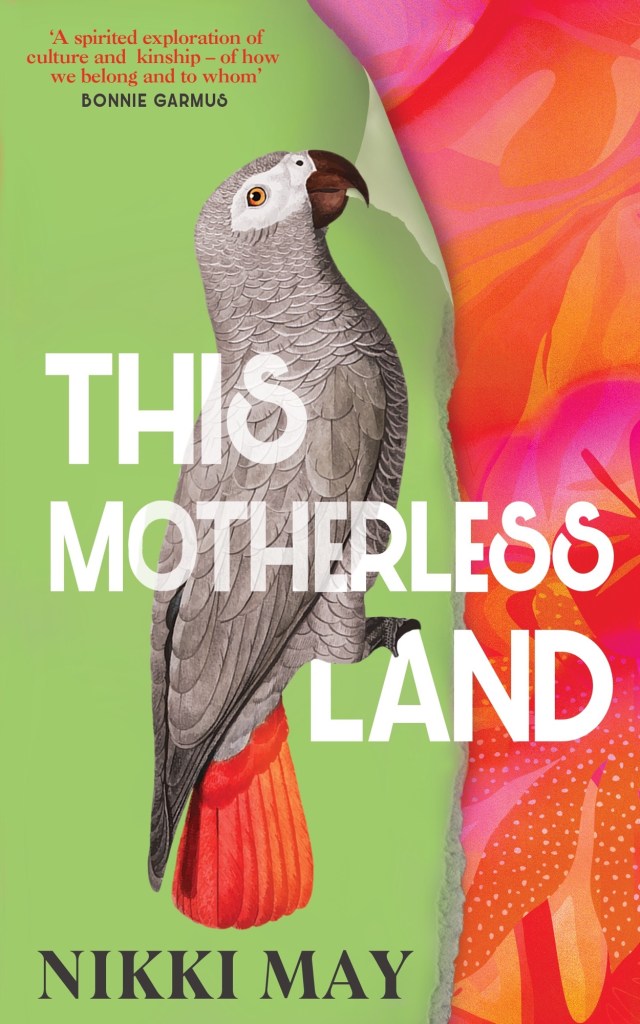
This Motherless Land by Nikki May.

This book was an absolute joy to read, which may sound strange considering the subject matter but somehow it awakened my senses, stirred my emotions and kept me reading. In fact I read it so quickly I was finished in an evening that turned into morning before I knew it. Funke lives in Nigeria with her mother, known as Misses Lissie to most people, her father and brother Femi. Mum is a teacher and Dad works at the university. Their entire world is shattered one morning as they make their normal run to school when their mother’s car fails to stop and ploughs directly under a lorry. The drivers side of the car is destroyed but Funke’s side is left completely unscathed. She loses her mother and brother in a moment. In his grief, her father Babatunde is inconsolable and he takes it out on Funke. How did she get out without a scratch? Encouraged by his superstitious mother, he calls Funke a witch and insists she must be protected by some magical being. Seeing how Funke will be treated by her grandmother, her aunties put their heads together and decide she should be sent for a while to her mother’s family in England. Her white family. Funke is ripped away from everything she knows and sent to The Ring, the mansion where her mother and Aunty Margot grew up. There, although she isn’t being hit or accused of evil spells, she feels the resentment of Aunt Margot and her cousin Dominic. They call her Kate, after all it’s easier than pronouncing Funke isn’t it? There’s no colour, bland food and where she was accused of being white in Nigeria, here she is seen as black – with all the racist connotations that come alongside it. Especially in white, upperclass Britain. England’s only saving grace is her cousin Liv. Liv scoops her up and feeds her comfort food. The problem is it’s not the food or the comfort she’s used to.

This is a book about being in between. Funke’s mother was ostracised by her family for marrying a Nigerian man. Aunt Margot sees Lizzie’s relationship with Babatunde as the reason for her own engagement being called off just before the wedding. In her eyes Lizzie was selfish, pursuing her own feelings at the expense of her family. She feels Lizzie had the looks, the charisma and the man she loved, while Margot was left heartbroken and with parents who seemed to miss Lizzie more than they enjoyed Margot’s presence. She sees Funke as her mother’s daughter and a threat to her own children. Her parents seem to love Kate, as they’ve christened her, and Margot doesn’t want her to take all the attention, the love and their eventual inheritance. She’s a bitter woman who is very hard to like. Sadly for Funke, history repeats itself and on the night of their prom a series of events mean they must drive home early. Liv is drunk and high. Yet even Funke, who is teetotal, feels unwell. Dominic throws caution to the wind and decides to drive them home, despite his own drinking, and a terrible accident occurs. Everyone survives but Liv suffers a bad break to her leg. In the aftermath Dominic asks Funke to admit to driving, which she agrees to, not knowing that covering for her cousins will lead to her life being uprooted for the second time.

Funke feels like she belongs nowhere. In Nigeria when her mother was alive they had a wonderful life, even if children would follow her singing a song about her pale skin. That’s nothing to the blatant racism she faces in England, but she faces it down and it fuels her will to succeed. Then she’s back in Nigeria and is again the odd one out. This time she’s in her dad’s new family and their lifestyle in the village is very different to the childhood she remembers on the university compound. His new wife and their children eat and live in ways her dad would have dismissed as ‘bush’ when Funke was a child. Her small brother and sister are black and fascinated with her pale, mixed race skin. Things are familiar, such as the spicy red stew and the heat, but it’s a changed land without her mother in it. At least in England she didn’t expect her mother to be there. Now she faced with the shock of her absence all over again. Will she ever find home? Meanwhile, back in Britain, when Liv finally comes round from the accident she asks for Kate. What will her mother tell her?

I thought the author brilliantly showed how different people cope with mental pain. Funke takes a bottle top from her mother’s hoard (for craft projects) and holds it in her hand so hard that it cuts into her palm. Liv is horrified that she’s hurt herself like this, but for Funke it’s the only thing that distracts her from the grief of losing her and her brother. Liv also deals with motherly absence, but externalises her feelings in a different way. She has a mother who is present, just not for her. Liv starts to drink excessively, uses marijuana and acid tabs to blank out the feelings that she isn’t loved and therefore isn’t worth anything. When we’re children and we’re rejected by a parent, we never assume it’s the parent’s fault and we don’t stop loving them. Instead we internalise their criticism and think we are the problem. Liv has a lot of casual sex because she thinks it sex is all she really has to offer. Meanwhile Funke struggles to give love and truly trust someone. She is in a relationship with a young man who is keeping his true sexuality under wraps, because it’s not accepted in his family or community. The younger people are aware he’s gay and call Funke his ‘beard’, but how far can she take this relationship? What if he suggests a more permanent arrangement and is Funke willing to give her life away so easily? The the same root cause, a loss of the mother figure they so needed, affects both girls, it just manifests in different ways. With them both on opposite continents, how will they ever find each other again? The spaces between can be painful and isolating places to be and the author depicts that with such tenderness and understanding. However, liminal spaces are also freeing. Being in-between gives us the space to choose, to take bits and pieces from each place, each family and make our own identity. I found the end chapter so uplifting and it gave me hope that we can each forge our own identity, once we’ve explored who we truly are. This is a fascinating, touching story about growing up and how we become who we are. It’s vibrant, atmospheric and an absolute must read.

Meet the Author

Born in Bristol, raised in Lagos, I’m proud to be Anglo-Nigerian. I ran a successful ad agency before turning to writing and now live in Dorset with my husband, two standard schnauzers, and way too many books.

My debut novel WAHALA was inspired by a long (and loud) lunch with friends. It was published around the world in January 2022 and is being adapted into a major BBC TV drama. This Motherless Land is my second novel.

Posted in Random Things Tours

The Divorce by Moa Herngren

There are two sides to every story…

This is one of those books that needs to be discussed. A perfect book club choice or book you can foist onto a friend because you will want to discuss it. As the cover suggests this is a marriage and a book that splits into two – one of life’s seismic fault lines that has a very definite before and after. Niklas and Bea have been married for over thirty years with two teenage daughters Alexia and Alma. They have what most people would consider the perfect life. They live in a beautiful and sought after area of Stockholm in an apartment that Bea has spent so much time perfecting. They are currently remodelling the kitchen, but it’s bespoke and at huge cost. Niklas is a doctor and has recently taking a job heading up a maternity department. Historically, Bea stayed home with the girls and more recently took a job with the Red Cross. It doesn’t pay a lot but with Niklas’s new wage they don’t need to worry about it. As we meet the family they are preparing to take their annual summer holiday to Holgreps and the home of Niklas’s parents. They go every year at the same time as his brother Henke because this is the only time the cousins get to be together. Niklas has forgotten to book the ferry tickets and Bea is furious. This means spending an extra week in the sweltering heat of the city with no outside space or a long drive to a different ferry crossing. He only has to do one thing, she does everything else and he’s so wrapped up in his new job he can’t do it.

“Bea is busy emptying the dishwasher in the kitchen, but she stops as he comes in. The look on her face is demanding […] Her jaw seems tense, and he can see her chest rising and falling rapidly beneath her blouse. She is disappointed. No, disappointed probably isn’t the right word. She’s angry. Furious. How the hell could you forget to pay the bill? This means we can’t go to Gotland tomorrow, the tickets are all sold out!”

“Niklas feels like shouting back at her, telling her there are worse things. Like being a single mother who has just found out that her newborn son has Down’s syndrome, for example. Or being the man on the ICU ward, watching over his wife as his stillborn daughter is taken down to a cold storage unit two floors below. He feels like roaring that his head is so full there isn’t room for the damn ferry tickets and all the terrible, exhausting planning she has apparently had to do. Niklas wants to shout, but instead he turns and walks away while she is mid-sentence. He can hear Bea’s agitated voice behind him, but to his surprise, he just keeps on walking […] Each step is a relief.”

Bea narrates the first part of the book and we get the sense she feels badly done too. Niklas wouldn’t be where he is without her and she has made sure he lives up to his potential. She talked him into accepting the new job because left to his own devices he would still be pottering along in his paediatrician role at the small local hospital. It’s the same with the apartment, he couldn’t see the problem with the existing kitchen. He’d have made do with it for years, never thinking about what the room could be. Bea looks forward to Hogreps every year, she never really had much of a family herself especially after her brother Jacob died. In the aftermath Niklas had taken her to stay with his parents and on her first mornings there, his mother Lillias took Bea wild swimming. She credits those mornings with saving her sanity, more effective than counselling. Niklas had been Jacob’s friend so they shared their grief and it brought them together. Bea has always thought that anything they do together becomes fun, even if it’s taking items to the recycling tip. So it comes as a huge surprise to her when Niklas sends her a text message to say he isn’t coming home. There’s no further explanation and she doesn’t know if he means he isn’t coming home that afternoon, till tomorrow or at all. Bea’s texts and voicemails are ignored so she tells him that their daughter was expecting him to take her out in the car and she’s upset. She’s still ignored and infuriatingly, when she checks in with their daughter Alma says it’s okay. Her dad has called her and said he’ll take her another time. As one night seems to be extending, Bea is beside herself. Niklas says he wants space, but what from and how long for? Where is he staying? She’s going through that strange feeling that the person you shared space with; the person you could touch whenever you wanted; the person who you spoke to several times a day, is now off limits. It was clear to me that the balance of power had shifted in this relationship but I couldn’t understand why.

“Bea picks up her phone again, staring at the screen as though she an coax Niklas into sending her another message. An explanation of why he is acting so oddly […] but the only messages in their chat thread are Bea’s own attempts to reach him. A long string of questions and exclamation marks. CAPS. Angry emojis. Furious red faces with slanting eyebrows and bubbling volcano heads. Demands for communication”.

“The condescending pat on the head, talking to him as though his choices are reprehensible. As though it’s him who is in the wrong, who is unhinged, when all he is trying to do is be true to himself. The clear subtext is that his feelings don’t matter, and nor do his choices or wishes.”

Halfway through the novel, as Bea sets off with her girls to Hogreps and their stay with the in-laws, Niklas takes over the narration. I’d got used to my narrator at this point and I was feeling some empathy with Bea who is clearly distraught. Yet now I started to hear her husband’s story and his inner world: the pressure he’s under at work; the diagnosis he feels he should have made that changed someone’s outcome; the responsibility of financially supporting his family and keeping up with Bea’s remodelling ambitions. He’s on the proverbial hamster wheel and feels totally trapped. The author puts across his tension and despair so beautifully and I could feel the panic in his mind. I started to feel that Bea’s needs were seen as more important than his, not just in the marriage but with his family too. This is a problem rooted in the way they became a couple, both were grieving for Bea’s brother Jacob but she had the claim of being his sister. He took her to his family as this lonely, wounded little bird and they all took her under their wing. Niklas was effectively pushed to one side, not only negating his grief for his best friend but piling on the pressure. He now feels held to account, forced to swallow his own needs and look after Bea at all costs. It isn’t until he ends up talking to one of their neighbours at a party that he even realises he has a choice. The sense of freedom he gets from someone listening to him is exhilarating. Everyone assumes he’s having a midlife crisis, but is he? As he and Bea go to couple’s therapy can they save their marriage?

‘She knows exactly what song Lillis means. ‘If You Love Somebody Set Them Free’ by Sting. Bea herself has never even a fan. Surely freedom also involves responsibility? Taking responsibility for those you love? She doesn’t have a problem with giving other people space, but leaving your partner in the lurch? That’s just cowardly.”

“She has liberated his mind somehow. Lifted the hundred-kilo weight from his chest. Sometimes he wonders what might have happened if they’d met earlier. Would he have been able to avoid all this? Would he have forgiven himself sooner? Realised that he isn’t responsible for other people – other than his children, of course – or at least not in a way that makes him a slave.

I loved how the author shows us the difference in communication styles between these two characters. Bea is performative and you are never in doubt about how she’s feeling. He anger and distress leap out immediately, even all the way back to the beginning and Jacob’s death. Niklas seems shell-shocked by Jacob’s death and he internalises all of the feelings he has to look after Bea. However, it starts to become clear there are bigger things hidden deep inside this couple than tears. Grief is complicated and Niklas’s feelings have been discounted from the beginning, by his parents Lillis and Tores, by Bea and by himself. He hasn’t allowed himself to process what happened and this becomes his coping style. So, when he finally does start to express his feelings they come as a surprise to Bea and to him. He can’t blame her for not knowing how he’s felt, because he’s never tried to tell her. Or is it more that there’s never been room for anything but Bea’s feelings. As we go back and forth, especially section three which passes between the two of them, secrets come to surface that I really didn’t expect. It’s also interesting to see how the people around the couple adjust and cope with what’s going on, brought into sharp focus by the illness of Tores. I felt so much for Bea because she has a lot of catching up to do, it’s as if the world has moved on without out her suddenly. Then in Niklas’s sections of the story I could feel how free he is, exploring his likes and dislikes, changing long held traditions and doing things he never expected like having a tattoo. They might look like mistakes from the outside, but it’s his exploration and he’s finally finding his authentic self. This novel is so beautifully written and exquisitely structured to have impact on the reader. Reading this felt like a counselling session and I mean that in the best way possible. We delve deeply into these two characters and their shared history, looking for clues and patterns of behaviour till we can understand why they’ve reached this crisis point. The question of whether they can come together again and be a family I will leave you to find out.

“Maybe things are different for Bea and Niklas because their life together began in tragedy, with Jacob’s death. Because that, strangely enough, is what brought them together. Maybe that’s why she knows they can handle anything: because they fell in love at rock bottom. She wouldn’t have survived without Niklas”.

Out Now in hardback from Manila Press

Meet the Author

Moa Herngren is a journalist, former editor-in-chief of Elle Magazine and a highly sought-after manuscript writer. She is also the co-creator and writer on Netflix hit- show Bonus Family.
Alice Menzies is a freelance translator based in London. Her translations include work by Jonas Hassen Khemiri, Fredrik Backman, Tove Alsterdal and Jens Liljestrand.

Posted in Publisher Proof

The Midnight Hour by Eve Chase.

I was looking forward to the new Eve Chase novel, but really surprised to win a competition for a hardback copy plus a vase of my favourite flowers, peonies. All I’d done was describe what I loved about Eve’s writing: her female characters; the secrets from the past just waiting to spill out; the gothic feel and atmosphere she creates, especially around old houses; lastly, it’s the dynamics she creates between the characters particularly the mothers and daughters. I feel that in this novel she has gathered all those aspects together beautifully with an intriguing plot and such a relatable central character in Maggie. Maggie is an author, living in Paris and struggling with writer’s blog. Something from her shared past with brother Kit keeps coming into her mind. Her mother Dee Dee died from cancer recently and Maggie was there for her, until her last moments. Her mind keeps being drawn back to her late teenage years when Dee Dee was a famous model, living in the Notting Hill area of London, close to the Portobello Road with it’s antique and collectible traders.

One summer morning, Maggie wakes up to find that Dee Dee hasn’t come home. This isn’t too unusual, late parties and sometimes modelling shoots can drag on into the night and she isn’t worried. She loves spending time with Kit anyway. Kit is using his skateboard when he has a fall, breaking one of the wheels. A stranger comes to their aid, dusting Kit down and trying to repair the wheel. He introduces himself as Wolf and when his eyes lock with Maggie’s they’re the clearest blue she’s ever seen, his name becomes him. There’s also an instant spark between them and for Maggie it’s instantaneous, first time and first sight love. He recognises the connection too. It’s what makes him take the skateboard back to his uncle’s antique shop so he can use his tools to fix Kit’s skateboard properly. Just so he has an excuse to go back. These are emotional days as Maggie navigates this new feeling, but also concern for her mother who still hasn’t come home. She calls Dee Dee’s friends and they rally round but still no one knows where she is. Maggie needs to leave her Paris flat and travel back to England and Aunt Cora’s house in the country. It’s time to ask some questions and catch up with Kit. Once in London she makes her way to the old Notting Hill house with the pink door and bumps into a man on his way out. She’s surprised to see this is a much older Marco, Dee Dee’s hairdresser. He tells Maggie he’s digging out the basement of the house, sending her into a complete panic. Maggie knows that secrets lurk in the garden of their old home and it might not be long before they’re found.

Eve really gives us time to get to know Maggie and Kit. As a child Kit was the baby of the family, adopted by Dee Dee when Maggie was a little older. His blonde curls and sunny disposition give him an angelic demeanour and he’s certainly noticed by Wolf who dotes on him. Even grumpy Gav at the antiques shop falls under Kit’s spell, especially when he sees his polishing skills! As an adult Kit is more wary, now a dealer and collector himself, he has learned that not every customer is as honest as they appear. He does have a big heart though, so when an old gentleman comes into his life asking Kit to source some pieces for his new home, he wants to help. Roy appears a little down on his luck and Kit senses a loneliness under the surface. Of course someone’s appearance isn’t necessarily indicative of how wealthy they are, so Kit takes his request at face value. It’s only when Roy starts to turn up unannounced, wants to go for dinner and then talks his way into Kit’s flat that he starts to wonder if Roy is what he appears to be. In fact he isn’t even sure he likes him. He needs to be firm to shake him off but Kit dislikes confrontation and wonders whether he should trust his instincts, or is he just being paranoid? It’s lovely to have Maggie back in the country, they’re still close, but she seems consumed by that summer years ago when they first met Wolf. Kit isn’t sure what happened that summer, but he knows that one night Maggie took him from their home in a hurry and they ended up on a train to Aunt Cora’s in Paris. He knows she was protecting him but doesn’t know why and he knows his mum was missing for a while. They never returned to the Notting Hill house, instead moving to Cora’s in the country, into the house of their grandparents. Kit promises to look for Wolf, finding his real name helps and soon Kit has him tracked down to one of the better auctioneers in London. Will seeing Wolf again put Maggie back on track?

I fell in love with Maggie. I was a similar age when I first fell I love and reading about her summer with Wolf brought back all those feelings. The wonderment when someone suddenly becomes your absolute world. The beautiful surprise when they feel exactly the same. The discovery of sexual chemistry, totally losing yourself in another person, being vulnerable physically and emotionally, it’s all here. In very delicate strokes Eve sketches a teenage girl who is emotional and intelligent. Little hints about her physical appearance makes us aware that she is a curvy girl, she wears glasses and is a little lacking in confidence. She’s astonished that Wolf loves these things about her and Eve captures that self-consciousness, the apprehension about revealing her body to this young man totally swept away by his obvious desire for her. It’s honestly so beautifully captured that it took me right back there. Maggie’s an incredible sister to Kit and nurtures him with a fiercely maternal love that I think comes from him being so much younger. It takes days before she starts to struggle a little with the responsibility, because Kit’s that age where he’s on all the time. Her feelings for her mother range from concern, to anger and incomprehension. It’s Aunt Cora who has always been the fuck-up of the family, an addict who would arrive at Christmas and grace everyone with her acerbic tongue and disappear again. However, she’s been clean for some time when Maggie and Kit arrive in Paris and it seems strange to Maggie that she’s so together and furious with Dee Dee for leaving them alone. Cora concentrates everything on Kit and Maggie, who is heartbroken and possibly hiding something about the last days they were in London.

You will be swept up by the romance, the mystery and the relationships between the women. I loved the atmosphere of the Notting Hill setting and I always love the smell and sound of an antique or junk shop: the library feel of quietness and reverence; the smell of beeswax; the ticking and chiming of several clocks. I always find myself drifting into another time when I’m in an antique shop. The mystery of adult Kit’s visitor grabbed me too, because his influence is subtle and I found myself questioning just like Kit does. Is he being manipulative or is this a coincidence? Did he intend to do that? Is he lingering for genuine reasons or for some other nefarious purpose? I wasn’t sure, but felt an undercurrent of danger for Kit if he didn’t keep his wits about him. What the story tells us is a therapist’s mantra really – unresolved emotions and trauma will always bring themselves to the surface. Whether through a similar event happening or a big change in our lives, these memories float to the surface with more resonance than they should all this time later. This is because they weren’t processed properly the first time. So Maggie is feeling a torrent of emotions as if she’s still a teenager and they’re just as confusing, painful, beautiful and overwhelming. She and Wolf never had a proper ending and I found myself longing for that closure to happen when she comes back to England. This was a wonderful read, deeply emotional but also a compelling mystery. I honestly think this is Eve’s best novel yet!

Out Now from Michael Joseph.

Meet the Author


Eve Chase is an internationally bestselling British novelist who writes rich, layered and suspenseful novels, thick with secrets, unforgettable characters and settings. Her latest novel, The Midnight Hour – ‘Her best yet…I loved every word’ – Claire Douglas – publishes June ’24, in the UK. Other novels include, The Birdcage, The Glass House (The Daughters of Foxcote Manor, US) a Sunday Times top ten bestseller and Richard and Judy Book Club pick, The Vanishing of Audrey Wilde (The Wildling Sisters, US) which was longlisted for the HWA Gold Crown Award, and Black Rabbit Hall, winner of Paris’ Saint-Maur en Poche prize for Best Foreign Fiction. She works in the Writer’s Shed at the bottom of her garden, usually with Harry, her golden retriever.

Say hello @evepollychase on Instagram, X, and Facebook

Posted in Random Things Tours

Boys Who Hurt by Eva Björg, Ægisdottir

Translated by Victoria Cribb

We’re back with Detective Elma in the fifth of the author’s Forbidden Iceland series and she is just returning to work from maternity leave when a body is found in a holiday cottage by a lakeside. The victim’s name is Thorgeir, he has grown up in Akranes and in a coincidence typical to small towns, his mother is Elma’s neighbour. The holiday cottage belongs to the family and the evidence suggests Thorgeir was not alone – there were two wine glasses and a lacy thong is found under the bed. He is found in the bed, with stab wounds and the line of a well known hymn written on the wall behind the bed, in blood. With Saever on paternity leave with their daughter Adda, Elma works alongside her boss Hörour to solve the murder. Several leads come to light. Thorgeir was working with his friend Matthías on an exercise and well-being app and had secured a large sum of money as an investment, but from an unexpected source. The hymn is well known, often sung at a popular Christian camp for teenagers and refers to the washing away of sin – had Thorgeir needed such forgiveness? Matthías and his wife Hafdis mentioned a young woman that Thorgeir had been seeing recently, but there is no sign of Andrea anywhere. The friends had often attended camps together as teenagers, but on one such occasion a young man had died out on the lake in the night, in similar circumstances to Thorgeir’s father’s death a few years before. It’s soon clear that many secrets are hidden in Akranes, some of them within Elma’s own home.

I love Elma’s character and what a refreshing change to read about a working woman whose partner is providing the childcare. There’s also none of the usual guilt or tension around her return to work, even as the case becomes more intense and late nights become the norm. She seems to have taken motherhood in her stride and she and Saever seem settled and happy. It’s sad that in the 21st Century this should stand out so much. Usually I read female characters caught between home and work, struggling from lack of sleep and feeling guilty. It’s great to see a woman who is a new mum, as well as a competent detective. The mothers in this novel and their relationships with their children were incredibly complex and psychologically fascinating. I was intrigued by Thorgeir’s elderly mother Kristjana, who happens to live next to Elma and Saever. She’s known as a drinker and is familiar to most people as the owner of a dry cleaners in town. She and Thorgeir didn’t seem close, but she had helped him financially. Was this out of love or guilt? There was something fishy about the business’s finances too, a thread that Höreur picked up and investigated. Kristjana’s home isn’t lavish and she doesn’t look like someone with the sort of money the accounts suggest. Saever finds her behaviour bizarre, even to the point of having to intervene one afternoon when he notices she’s dancing naked with the curtains open. She’s had tablets and alcohol, possibly due to grief and hinting at a troubled inner life but when questioned there’s a wall she puts up that’s metres and years thick. Hafdis is also a fascinating character, she asks for a divorce at the beginning of the book but where has she found the money to move on so quickly. Her relationship with Matthías is already over in her eyes, but I was shocked by her coldness towards her daughter Olof. The family have been having therapy, because Olof has been self-harming but Hafdis doesn’t even seem to have factored her daughter into her plans. Olof confides in her father about her mother, not that she gives her a hard time but that she looks at her daughter as if she’s nothing. What else might such a ruthless woman be capable of?

Saever is at home, but when he’s unpacking he comes across a box that doesn’t belong to them. In fact it belongs to previous residents, full of school exercise books and a holiday journal from the very year that the boy was killed on the lake. It belongs to Mani, one of the group staying in the same cabin as the dead boy, alongside Heioar, Hafdis, Thorgeir and Matthías. This draws him into the investigation and Elma isn’t surprised to find him at the station researching, while bouncing Adda on his knee. I loved the little Icelandic details on child care, such as wrapping the baby up warmly then popping them in the open air for a sleep. I didn’t expect to enjoy Elma working without Saever, but I really enjoyed Höreur being a part of the investigation and found myself amused by his grumpiness. His hip injury brings out a resistant and stoic side to his character, the pain making him increasingly snappish. The case has so many twists and turns that it’s hard to put down and little clues that seem to snag in your brain. I spent most of the book wondering about a second large bloodstain in Thorgeir’s family cottage, strategically covered with a rug. I was sure it was important and every time we got closer to the truth I kept thinking ‘but what about the bloodstain?’

Elma is perfect for the more complex investigative work because she occupies a liminal space in town, she’s both known and not known. Having been born in Akranes and having family that goes back generations in the town, there’s an element of belonging that gets her in the door. However, she’s spent her career so far in Reykjavik meaning she isn’t so involved that she can’t ask difficult questions. She doesn’t have the deference to the elders of the town that others might so she’s bold and doesn’t mind stirring things up a little. She definitely riles the old police chief Otto, so much so that he lets his true nature show. He is so angry that he verbally attacks Elma where it really hurts referring to her previous partner’s suicide and implying she should look closer to home for people who are keeping secrets. It sometimes feels like every home in Akranes holds an ocean of pain and unresolved trauma. There’s so much going on just under the surface, an intergenerational trauma that seems to come partly from religion and partly from rigid expectations. Elma is horrified when Heioar’s parents seem like good people, they adopted him and it seems to have been a good fit, but behind this surface is a very different family life and a total rejection of anything or anyone that doesn’t fit their ideals. I wondered how these women like Kristjana and Heioar’s mother were able to look the other way when their men are treating their children badly. Whether through religious conviction or control the fathers have ruled their homes quite literally with a rod of iron. One of the most complex relationships is between Thorgeir and his new girlfriend. I was fascinated with her narratives showing how attraction and repulsion can co-exist between two damaged people. Also, one terrible deed doesn’t define a person. This was a brilliant thriller, exposing a dark underside to Akranes and keeping me guessing to the very end.

Out from Orenda Books on June 20th 2024

Meet the Author

Eva is an Icelandic author of the bestselling Forbidden Iceland series and her books have been published all over the world. Her first book, The Creak on the Stairs, won the Crime Writers Association New Blood dagger, the Blackbird Award and was shortlisted for the Amazon Publishing Awards and the CrimeFest Specsavers Debut Awards.

In the series she writes about my hometown Akranes, a small town just forty minutes outside of Reykjavík with population of around 8000 people. She writes about dysfunctional families and relationships. She has a degree in Sociology and Criminology and is very much interested in human behaviour, which is perhaps evident in the books.

Eva grew up in Akranes and fell in love with reading at the age of 5. She moved to Norway in her twenties to study her Masters Degree and lived there for two years. When she moved back to Iceland she began writing her first novel, as she had always wanted to write a book. She has been a full time writer ever since it was published!

Posted in Publisher Proof

The Bookshop Ladies by Faith Hogan

One sure way to entice us bookworms is to write a book about books and this one has all the warmth, friendship and female empowerment we would expect from a Faith Hogan novel. It’s like receiving a big warming hug, but in book form. Our central character is Joy and we meet her at a hugely traumatic point in her life. Joy lives in Paris with her husband Yves Bachand, a well-known art dealer who has made the career of many a new struggling artist. Joy has a very successful career of her own in public relations. Everything is turned upside down when Yves suffers a massive heart attack and in his dying moments manages to tell Joy he has a daughter. Over the next few weeks as Joy starts to comes to terms with losing her husband, she’s also trying to get her head around his dying words. Could he possibly have been unfaithful? The whole idea adds a new level of devastation because Joy and Yves couldn’t have children of their own. Their solicitor approaches Joy about an unusual request in his will, he has bequeathed a painting he owned to a girl called Robyn. When Joy returns home she goes into Yves’s office where the painting hangs and studies it, trying to see what he saw in this particular work of the Seine. Joy takes in the muddy coloured water, the litter and the green surroundings and thinks it could be a river anywhere. There is nothing to suggest this is the Seine that lovers travelling to Paris dream of walking along. Where are the honey coloured stones, the lampposts and the bridges? It takes time for her to notice anything about it she likes, but there is a streak of light that catches her eye in the top corner. The more she looks at it the more she wonders whether it was this glimmer that kept bringing Yves back to the painting. A promise that the grey cloud would lift and the sun would break through changing the whole scene to something altogether more hopeful. In this moment she makes a decision, she will travel to a Ireland and put this painting in the hands of Robyn herself.

We’re back in the gorgeous coastal village of Ballycove, where our other main character Robyn lives. Robyn has a small bookshop, with largely second hand books on various subjects from rare birds to trains. It’s been just ticking over for several years and while Robyn’s family own the building, including her flat above the shop, she has taken over the stock from it’s previous owner Douglas who has retired. To say the shop is a little tired is an understatement and it really needs some pizzazz to bring it back to life again. Yet it is lovely in it’s own way with it’s floor to ceiling bookshelves and their carvings of animals, little rooms for every subject and a darling little children’s section in a small nook. Although Robyn has put the stock onto online book sites she isn’t exactly turning a profit and she wonders if she’s made a big mistake. Her grandfather Albert suggests that she hire someone or find a volunteer to do a few hours in the shop to free Robyn up for business planning and working on her vision for the shop. Into this scenario walks Joy, renting the flat above Albert’s and hoping to stay for only a couple of weeks in order to pass on the painting. She can see that it belongs with Robyn as it was painted by her mother Fern. Joy both welcomes and dreads meeting Robyn and definitely her mother. If she can do it quickly, almost like ripping off a band aid, she can get the painting handed over and be back on a plane to Paris in no time. However, she hadn’t factored Robyn into the equation. She walks past the shop twice plucking up courage and when she does finally walk in she’s so taken aback by this girl who looks so much like Yves she could only be his daughter. Stunned into silence, Robyn’s chatter takes over and she assumes that Joy is there to apply for the position she advertised in the window. In her stunned state Joy doesn’t argue and soon she is Robyn’s new book assistant. Joy walks away wondering what on earth she’s done and how she’ll cope if Robyn’s mum turns up before she leaves.

I really enjoyed the women in this novel, especially Joy who is so resilient and generous with her time, her emotions and her heart. I felt like Ballycove worked it’s usual magic, but Joy matches it, bringing her enthusiasm and joie de vive to the bookshop. She’s using her professional skills of course, but there is just that touch of enchantment about her too. She’s like a bookish Mary Poppins, thinking up events and little touches to brighten the place including a toy train track which is one of my favourite parts of the brilliant Barter Books in Alnwick, Northumberland. Yet it’s the fact that she’s giving her time and expertise freely to her husband’s secret daughter that makes her all the more extraordinary. Yet I think she gets something special from Robyn too. Robyn allows her to spend time with someone with the characteristics and mannerisms of Yves and in a sense it seems to comfort her that he’s still here in the form of this shy, bookish girl. I also think Robyn balances some of the grief Joy went through when they lost their own baby who would have been a similar age. I was waiting to see what would happen when Robin’s mother Fern arrived. Would Fern immediately know who Joy was and what would it do to her relationship with Robyn? I felt sad that Joy might lose everything she’s built in Ballycove and the sense of family she’s enjoyed with Robyn and her grandfather. There’s a lovely little romantic subplot and a lot of personal growth on Robyn’s part, particularly the unresolved emotions around being bullied at school. The word that always best describes Faith’s writing is charming. It’s like making new best friends and although her stories are emotional and raise serious issues, they are always uplifting too. This felt like a lovely warm hug in a book and added lots of ideas to my imaginary future bookshop.

Meet the Author

Faith Hogan is an award-winning, million copy best selling author. She is a USA Today Bestseller, Irish Times Top Ten and Kindle Number 1 Best Selling writer of nine contemporary fiction novels. Her books have featured as Book Club Favorites, Net Galley Hot Reads and Summer Must Reads. She writes grown up women’s fiction which is unashamedly uplifting, feel-good and inspiring.

Her new summer read The Guest House By The Sea is out now and it’s a great big welcome back to Ballycove for her readers.

She writes twisty contemporary crime fiction as Geraldine Hogan.

She lives in the west of Ireland with her family and a sausage-loving Labrador named Penny. She’s a writer, reader, enthusiastic dog walker and reluctant jogger – except of course when it is raining!

http://www.faithhogan.com

http://www.Facebook/FaithHogan.com

Twitter @gerhogan

Instagram @faithhoganauthor