Posted in Random Things Tours

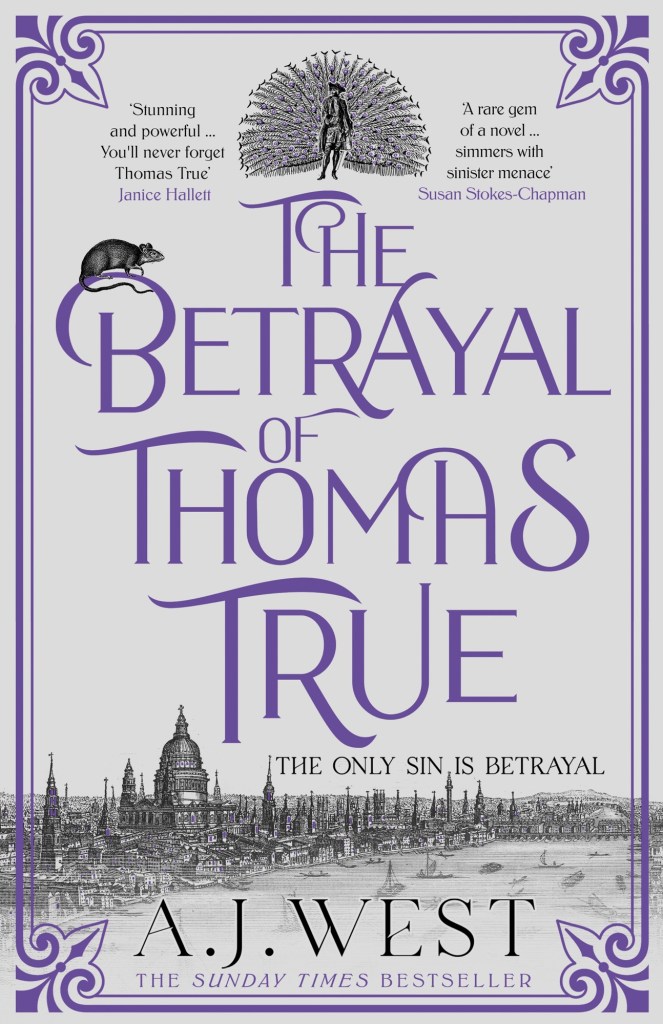
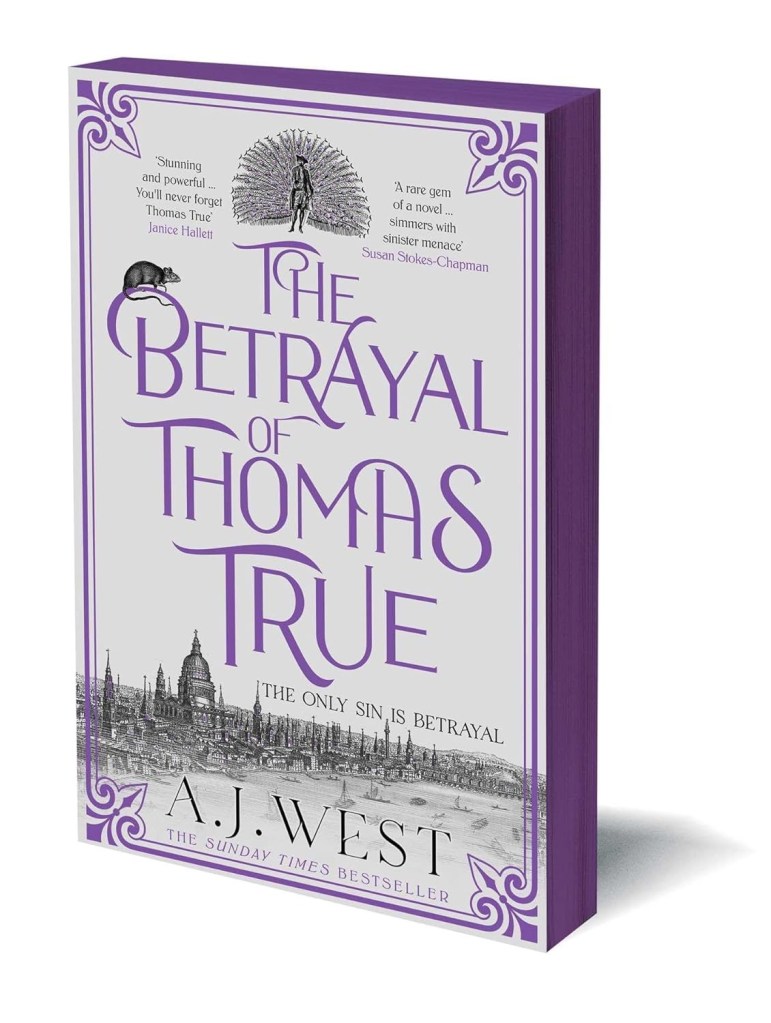
The Betrayal of Thomas True by A.J. West

In simple terms, this fascinating book is a love story. Two people meet in unlikely circumstances and fall in love. However, it’s so much more than that, but that’s what happens when something as simple as love is an act of subversion or rebellion. When I last read a novel like this I was on my 18th Century literature module at university and I had the luck to be taught and supervised for my dissertation by Dr. Ian McCormick who was an 18th Century literature specialist and also taught our Gothic, Grotesque and Monstrous module. He wrote a book called Secret Sexualities, a collection of 17th and 18th Century writing that covered cultural constructions of eunuchs, hermaphrodites, cross dressing, mannish women, female husbands, trials for sodomy and other legal injustices. I was absolutely fascinated because it was an utterly different picture from the 18th Century literature I’d read before. To be honest that was mainly Jane Austen and from her writing you might think that a fellow’s main preoccupation was finding a suitable wife and all women were waiting for Mr Darcy to come along – although I’m a Captain Wentworth girl, all day long. What my tutor’s book did for me was the academic equivalent of Sarah Water’s transgressive novelisation of the 19th Century. Variations in sexual preference is nothing new and taking a marginalised group and placing them firmly within their historical context is what is going in with A.J. West’s novel. Thomas True is well-researched, beautifully characterised and fits perfectly into its time period rather like an 18th Century version of Tipping the Velvet. 

The book that came most to mind, because of its bawdy humour and characterisation of a young innocent seduced into licentiousness on their adventures into the big city, was Moll Flanders by Daniel Defoe. However, I also had Tom Jones in mind by Henry Fielding, a picaresque novel where our hero embarks on a journey and is lured into bawdy and roguish adventures. A picaresque novel is also critical of the society it represents, using satire to make its point usually in the favour of the lower classes. Here our hero is drawn into the ‘Molly’ culture, practiced at Mother Clap’s house and while considered corrupt by some, it turns out to be less judgemental and violent than both the religious and legal communities, both seemingly riddled with cruelty and corruption. In this case they employ a spy known by the mollies as the ‘Rat’, his purpose is to give up individual mollies to the justices who would have them hung. The hangings are a horribly public spectacle with the crowd baying for blood and the selling of candles or other mementoes by shop keepers. This is where the novel sits for me, yes it’s crime fiction, historical fiction and also a love story, but it’s the picaresque novel’s bawdy, episodic and satirical mix that grounds Thomas firmly in the tradition of 18th Century literature. 

Thomas sets off for London to escape a miserable family life, where he’s clearly not the man his father would like him to be. On his journey he is accidentally parted from his coach and luggage, deciding to trust a huge bear of a man who offers him help. What he doesn’t know is that Gabriel is a Molly, one of a group of men who enjoy dressing in women’s clothes and have names for their alter egos. They also prefer the love of another man, something taboo and unnatural in contemporary society. The law would punish them by death. Thomas can’t possibly know how important this moment will be in his life, but it’s pivotal to his journey, his future and his heart. Far from the genteel worlds of Bridgerton and Jane Austen, the author creates a richly imaginative setting that brought all my senses to life – but not in a good way. London is grim, overcrowded and disgusting. One scene where a body needs to be extracted from a ditch full of sewage is revolting. The two rescuers slipping and sliding into faeces and almost losing the body to the depths. Even Mother Clap’s has a grotesque feel. These are not the preened and powdered men you might expect. Gabriel is huge, hairy and spends all day doing a heavy building job. The atmosphere is also dark and threatening, if the mollies are the light then their nemesis belongs in the shadows as do the curious urchins who are so ignored and forgotten they’ve literally become the darkness they inhabit in the menacing surroundings of Alsatia. The ever present fear of not knowing who the Rat is, make even the lighter scenes hum with tension. While the mollies are dancing, wearing their finery or even sneaking off to be ‘married’ – their euphemism for sex – no one knows if the Rat is among them, watching and biding his time. 
How far would the Rat go to gain information or incriminate the mollies? I was intrigued as to what their motive was? Religion, fear, money or more personal motives? Whatever the Rat, or the justice’s motives they mete out terrible violence. As if the public hangings were not enough, the Rat is handy with a knife too. One molly has his tongue cut out and another is stabbed and left in sewage. Being pilloried turned out to be way more violent than being popped in the stocks for the afternoon and being pelted with rotten vegetables. This is all told in the same detail the author describes the London streets running with urine and smelling so bad it takes a few days to become immune to it. It brings a reality into sharp focus, this isn’t just our current climate of punching down against the poorest and most vulnerable or venting hate on social media. This is wanting someone dead for the perceived crime of who they love. Thomas is naive, clumsy, endearing and ripe for the picking. He guides us through most of this in wide eyed wonder at first, but we also have Gabriel’s take on events and he really is the opposite of Tom. He is older, has known who he is for a long time and battles with regret, grief and shame. Gabriel is haunted, emotionally and literally. His profession means he’s in an intensely masculine environment, working on completing St. Paul’s and the chandlers where Tom is learning a trade. He’s drawn to Tom’s naivety and excitement at the new life he’s found and his molly name – Verity True Tongue. They’re so different but have that chemistry. It’s undeniable, but only Gabriel who fully understands the price they may pay for choosing each other. 

I was bowled over by the incredible detail in the setting but also the characters they meet. Every one of the mollies is different are so different from each other. Some are welcoming and nurturing, while others are cynical and suspicious. I have a hatred for people who want to control other’s behaviour through a moral or religious code. Thomas’s family believe they’re doing the right things to save their souls and to lie with a man is a sin against God. The justices are no better than- using the legal code to outlaw sodomy, but then resorting to punishments of horrific violence without irony. It’s inevitable that with such blood lust and religious fervour, we might have to say goodbye to some of the wonderful characters yet it is still devastating when it happens. This group of men, when in their safe environment, are full of joy, fun and laughter. When they are free to be themselves they create an incredible atmosphere. It’s a party I’d love to go to and I honestly can’t wait for it to become a film. The eventual ending might leave you needing a box of tissues, but the journey Thomas and A.J. West takes us on is glorious. 

Meet the Author


A.J. West’s bestselling debut novel The Spirit Engineer won the Historical Writers’ Association Debut Crown Award, gaining international praise for its telling of a long-forgotten true story. His second novel, The Betrayal of Thomas True, is published July 2024.

An award winning BBC newsreader and reporter, he has written for national newspapers and regularly appears on network television discussing his writing and the historical context of contemporary events.

A passionate historical researcher, he writes at The London Library and museum archives around the world.
Posted in Compulsive Readers

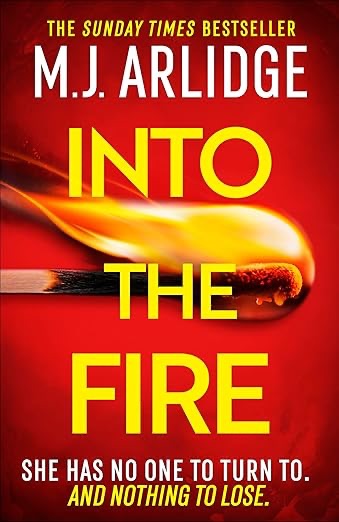
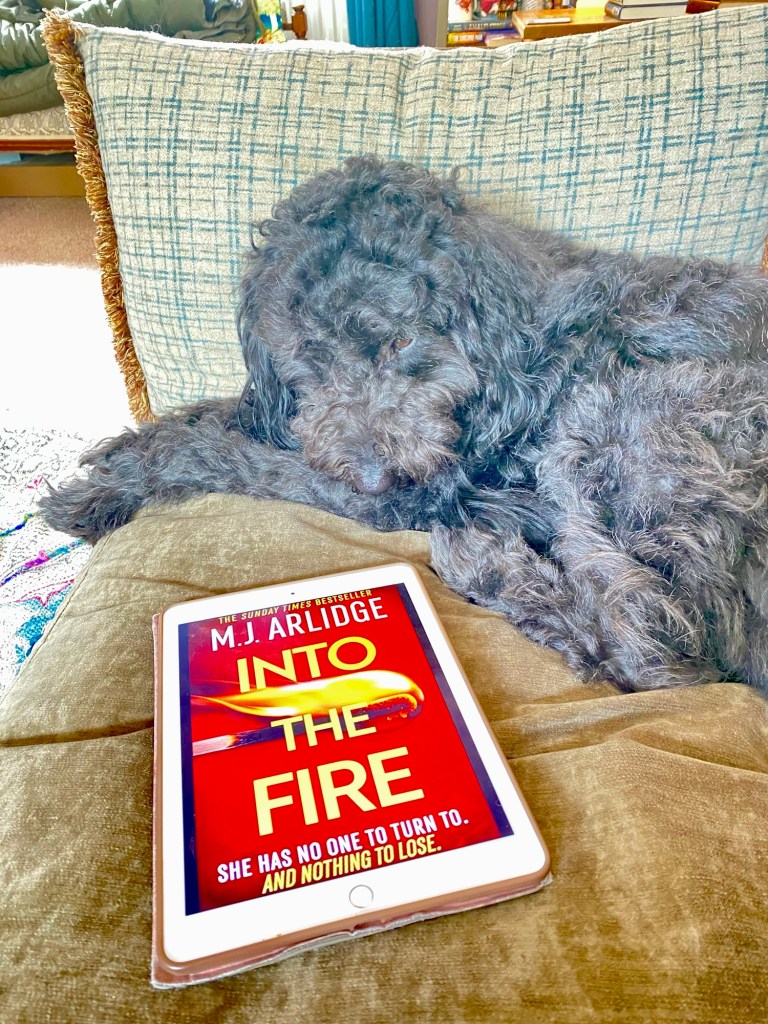
Into the Fire by M.J.Arlidge

This book opens with a heart-stopping scene that sets the pace for the rest of the story. Helen is relaxing after meeting her lover in a luxury hotel. While he has a shower, she is in her nightgown and robe enjoying the night time view over downtown Southampton. Movement suddenly catches her eye and she’s drawn to a woman who’s running down a darkened street towards a precinct of shops, pursued by two men. As they catch up, one of them pulls out a bicycle chain and starts to beat the woman. Helen doesn’t wait or think, tearing out of the hotel room and down several flights of stairs as she’s too impatient to wait for the lift. She runs down the dark street hoping that the only shop she saw with a light on has a customer or staff who’ve called the police. Helen flies at one of the attackers, who is taken completely by surprise and she soon disables the second, turning to the woman who has been badly beaten. She looks like she’s from the Middle East perhaps, with two very distinctive tattoos placed on her forehead and chin. Unfortunately, Helen has committed the cardinal sin of combat and has turned her back on her attackers. The next thing she feels is a huge bang to her head and then everything goes dark. This opening scene tells me this will be a gritty, modern thriller with a kick-ass heroine. 

This is the thirteenth novel in the DI Helen Grace series and I’m seriously out of touch with the character, having only read the first couple of novels after picking them up in a book swap. I’m sorry I didn’t read the rest. Helen is working on her own initiative in this novel. She handed in her notice at the end of the last, with her protege Charlie being promoted in her place. Helen doesn’t know what the next step is, but she’s been enjoying the break. The only thing she misses is the camaraderie of a team and although she has enough money to really think about what’s next, she is anxious about it. Although life will bring it’s own answer soon enough and it might be the last thing she’s expecting. She starts to investigate alone, feeding into Charlie who is trying to target traffickers and their victims coming through the port in lorries and containers. The story is told mainly through Helen’s eyes, but also through the narratives of two other women. Viyan is another trafficked Kurdish Syrian woman and Emilia is a journalist whose father is dying in prison. At first we’re not sure how all of these narratives fit together but slowly they form a cohesive picture. Viyan’s narrative is grim and brutal. I wanted everyone who moans about asylum seekers to read this novel and understand the desperation and the lies of the traffickers that drive them here.

This operation involves a Dutch trafficker and then a gang master who provides their labour for specific contracts, this one in the NHS. I was furious with the NHS procurement manager who has simply turned a blind eye when accepting an obviously low quote for services, knowing that somewhere along the line someone is being exploited. I think many people might be surprised if all migrants were removed from the labour market, because I think the care sector and the NHS would collapse. Here the migrants are working an NHS contract disposing of clinical waste. Not only are corners being cut where safety is concerned, but if she saw the conditions, the state of the workers and the brutality meted out the procurement manager would be ashamed. The beatings and whippings with chains are only the first in a series of punishments, leading up to the ultimate solution – the incinerator. In fact after hearing the horrific death of her friend, Viyan sees a chance to escape and takes it. Will she be able to escape the minders this time and if they catch up with her can she survive? 

Emilia is a journalist on the crime beat but we meet her as she visits her elderly father in hospital. He tells her he’s dying but wants her to know he has hidden some of his ill gotten gains at the home of his most recent partner. He wants Emilia to talk her way into the woman’s home, find his hiding place and bring out whatever’s inside the hold-all. Emilia knows there’s more to this than he’s saying, but sets out to try. This mission puts her in the path of Helen and the villains linked to her trafficking case. Having such strong women as our main characters was great and Viyan had all my empathy and admiration. I was so desperate for her to make it back to her family. Helen is formidable! Despite having horrendous violence dished out to her, she keeps going and can definitely hold her own when she’s not outnumbered. What I loved most about her, was her inability to turn away from injustice and suffering. She sees a terrible crime occurring and although she’s no longer in the force, she doesn’t walk away and hope someone else might deal with it. Where in the world could she use these natural skills that isn’t in the force? She’s also great at supporting and boosting other women, like her replacement Charlie, making sure she knows everyone has imposter syndrome and she does have what it takes. You will hold your breath for the final showdown and all the women involved. The short punchy chapters are action packed and keep you reading ‘just the next chapter’ until it’s 2am. I now need to set aside time and read the ten novels between this and the last one I read. I’ll probably load up the kindle with them before I go on holiday so I can carry one without interruption. This was a belting, action-packed, female led, crime thriller and I recommend it highly. 

Out 3rd July from Orion Books

Meet the Author

M.J. Arlidge is a novelist, screenwriter and producer. He is the author of the bestselling DI Helen Grace thrillers including: Eeny Meeny, Pop Goes the Weasel, The Doll’s House, Liar Liar, Little Boy Blue, Hide and Seek, Love Me Not, Down to the Woods, All Fall Down and Truth or Dare.

M.J. Arlidge has also worked in television for many years, specialising in high end drama production. In the last five years he has produced a number of prime-time crime serials for ITV, including TornThe Little House and Undeniable. He has written for Silent Witness and also pilots original crime series for both UK and US networks.

Posted in The Book Folks

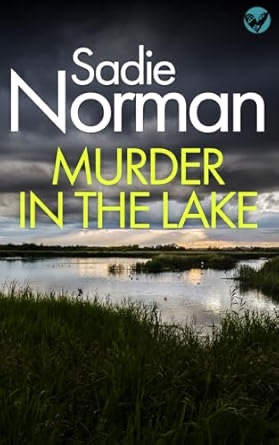
Murder in the Lake by Sadie Norman DC Anna McArthur No 3.

When a body is found in a Norfolk Lake it falls to the serious crime team to investigate whether this is an accident, suicide or murder. It’s identified as local man Barney King, who lives close to the lake in a row of worker’s cottages. It falls under the remit of DC Anna ‘Crazy’ McArthur who starts to investigate with her small team. The duty police officer has had a look around Barney’s cluttered cottage and has found a scrawled note laid on a pile of books and post on the dining table. 

“I killed her. I deserve this for what I did all those years ago”. 

This intrigues Anna because it brings up questions about the note and whether this might be a serious crime case after all. When they return to the station to report to their DCI Aaron Burns they’re shocked to find a coincidence. The derelict cottage next to Barney’s was once the home of Clara Burns and her sons Callum and Aaron and she was the focus of a missing person’s case. She disappeared when her boys were asleep upstairs and her husband was in the local pub. Anna is in a difficult position, her relationship with the DCI is a known secret in the team but not to the wider force. He has never told her about his mother, leaving her to believe both parents had died a long time ago. There’s no question that Aaron must distance himself from the investigation, but should Anna? If he wants Anna to find out what happened to his mother, he will have to distance himself professionally and emotionally. Now she’s under so much pressure, with a cold case linked to Barney King’s death and the need to solve them for both personal and professional reasons. Just to make things worse she’ll have to babysit a new DCI and Chase is a bit of a conundrum. He doesn’t know the area and could be here to spy for the Chef Constable. Finally, she has to do it without Aaron by her side for emotional support and to sound out ideas with.

I live in Lincolnshire so have some knowledge of the fen areas around King’s Lynn and Wisbech. They’re not that different from central Lincolnshire, having similar geography of flat farmland and dykes dug in the 14th Century to drain the land for farming. As you drive further south, rather than barley or oil seed rape, there are fields growing flowers and vegetables. In fact there are times of the year when you open the car windows and there’s a strong smell of brassicas in the air – cabbage, sprouts and broccoli. I also know the non-PC terms the used for the villagers that the author refers to. These are isolated and sometimes insular communities, quite some distance from a town, where everybody knows each other’s business and secrets are kept for generations. This is only part of our setting, with Norfolk being DC McArthur’s patch. It’s still a rural area though where wildlife, poaching, farm thefts and firearms licences would be a normal part of police work. The serious crime teams don’t usually touch on those daily matters but they do form part of this case. Barney King is elderly, a lonely man living in the middle of nowhere with a derelict house for a neighbour. His companion is his dog, which seems to have disappeared too. He lives by poaching to top up his pension and this forms one of the team’s first questions – why would a man who owned a shotgun choose to drown himself? 

The team meet some very interesting characters in the course of this investigation and the author carefully paces the secrets and lies that are uncovered. Barney’s landlord and local farmer Harry is now so unwell he has a full time carer, Luisa. His son Garrett is taking over the running of the farm. When they find out Barney had visited the neurology department at the hospital just before his death, they view the CCTV and get a surprise. Why would Garrett and Luisa be visiting the hospital together? Especially since Garrett is married to the local GP. What happened to Barney’s own family? Anna manages to track down his daughter Mags and her granddaughter. They’re a fierce pair, arguing at top volume as the police arrive. Why didn’t they have a relationship with Barney? Even stranger, why can’t Anna find the death certificate for Mag’s mother, if she died of cancer several years ago? 

The author paces this really well, slowly and methodically building the case, but with spurts of heart-stopping action including a firearms incident that shows us exactly why Anna earned her ‘Crazy’ nickname. All the while there are strange and uncomfortable undercurrents. As Aaron’s brother is drawn into the case, Anna is the awkward position of being connected to him but not able to say anything. She doesn’t know how to describe what she is to Aaron – girlfriend seems the wrong word for grown-ups, but so does partner when Aaron is asking for space. Are they anything to each other any more? Then there’s DCI Chase, sent as an outsider to oversee the team on this case. He partners up with Anna who can’t work out whether he’s socially awkward or has an ulterior motive. Occasionally he seems to stray into dangerous territory and Anna thinks he must know, but she’s also sure that no one on the team will disclose her and Aaron’s relationship. I couldn’t make up my mind about him, but he definitely set me on edge. This was a really compelling case and I didn’t guess how it would turn out. I was desperate throughout to find out where Barney’s dog was though. The final attempts to secure the murderer will definitely have you on the edge of your seat. I enjoyed this and will be going back to read the first two novels in the series.

Independently Published on 9th June 2025

Meet the Author

Sadie lives in West Norfolk with her husband, two children, and demanding cat named Random. She works in the education sector, but her real passion is for writing stories with a gripping mystery, attractive setting and a host of characters to love, hate, laugh with and root for.

Posted in Random Things Tours

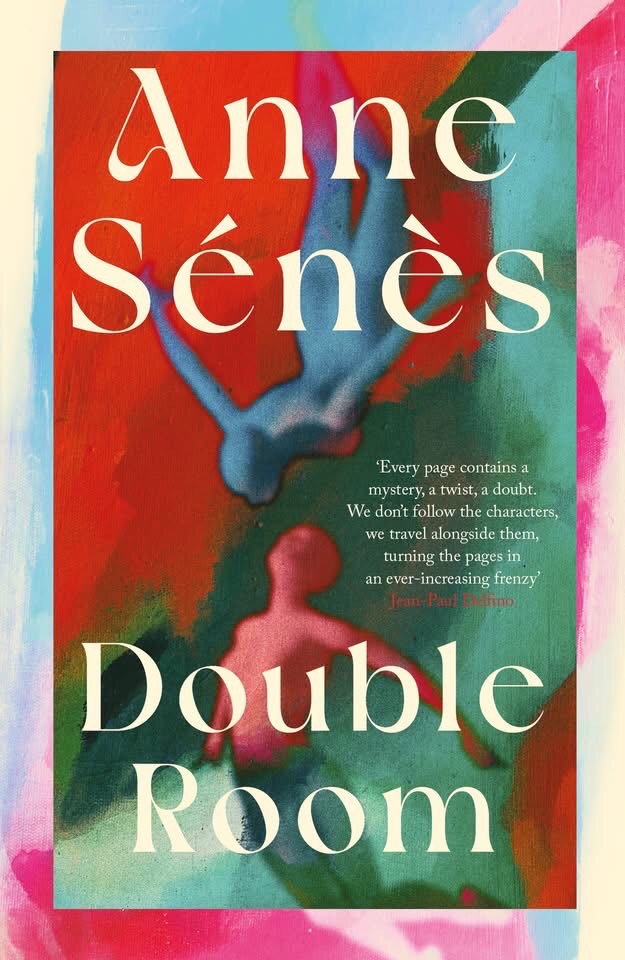
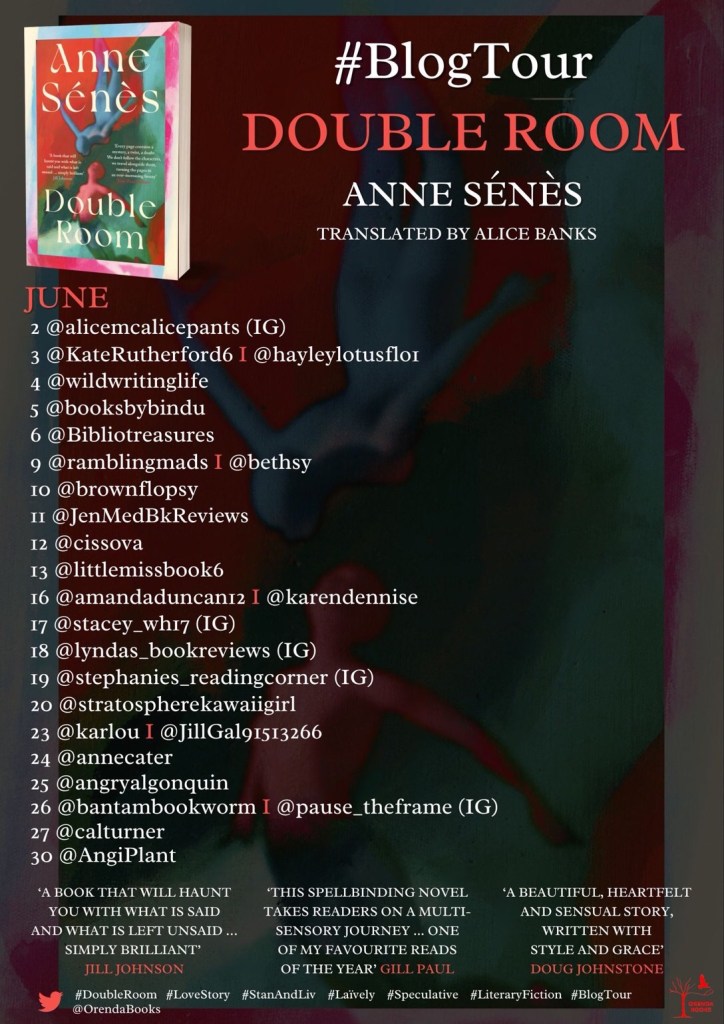
Double Room by Anne Sénès

London 1990s – An up and coming French composer called Stan is invited to arrange music for a stage production of Dorian Gray. Although the play is never staged, he does meet Liv and she becomes the love of his life. They live together, joined by a daughter called Lisa. Their happiness fuels his senses with vibrant colours and melodious music.

Paris, Present Day – Stan lives in France at the Rabbit Hole, a house left to him by his aunt. He now shares his life with Babette, a lifeguard and mother of a teenage boy of Lisa’s age. They also share their home with Laïvely, a machine built by Stan and given Liv’s voice. As Stan becomes more engrossed in his past Laïvely starts to take on a life of her own. His life is about to implode.

This is, at heart, a love story. Told in flashbacks Stan reminisces over a golden period of his life when he and Liv fall in love. It’s no accident that they meet through a production of Dorian Gray because the author does bring it’s style and it’s moral into her novel. The first thing I noticed was the fact that Stan has synaesthesia, a fascinating neurological condition where colours or images evoke tastes or smells. The opening of Dorian Gray is so heady with scent it could conjure a symphony:

“The studio was filled with the rich odour of roses, and when the light summer wind stirred amidst the trees of the garden, there came through the open door the heavy scent of the lilac, or the more delicate perfume of the pink-flowering thorn.”

Some of Stan’s descriptions, as colour turns to scent and then turn to melodies, bring the senses alive in a similar way. For Stan, music is simply an extension of his sensory abilities, like a form of ESP. There is also the doubling aspects of both novels, captured in the book’s title. Dorian Gray’s portrait is the sum of his dissolute lifestyle, freeing him to experience more and more without it showing on his face. Stan presents his life in two narratives, the present in France and the past where he was at his most creative, happy and in love. His relationship with Liv is almost idyllic. They seem to be naturally suited, in total harmony and without a cloud in the sky. Anything he relates of his present can only suffer in comparison. We learn that he and Babette are compatible, but there is none of the life and vivid colour that comes from his reminiscence. We are all nostalgic about the past, but no relationship can be perfect especially when cramped into the average London apartment with a small baby. While it is touching and romantic, the cynic in me wondered was this a true picture? As for Liv, she is in technicolour in Stan’s flashbacks with her vivid red hair. However, all that life is now reduced to a communication device and no matter how Stan cuddles Laïvely to him, she is inanimate, merely a machine. In what way is this a fitting representation of the love of his life? It seems like, in the present, neither Stan or Liv is truly alive. When Stan trips one morning the giggle that comes from the device is strange, a laugh he’s not a encountered before. Could it be there is a hint of malice?

The other book mentioned heavily is of course Alice in Wonderland, inspiration for the name of Stan’s home in France. Another book where there are versions of the self and a blurring between what is real and unreal, something the author has carried into this novel successfully. Stan’s past has all the colour that his present is missing, but there’s something equally unreal about his present. It’s not that there isn’t a fulfilling life to be had. It’s just that Stan isn’t fully engaged. I felt as if the rest of his family had a life, but Stan has started to detach from it. The author’s layers of description evoke the 1990s in a nostalgic way, something I’m apt to do from time to time because it was my era. Laïvely is meant to bring Liv into the here and now, but it feels more like a conduit to the past dragging Stan further and further away from reality. He rarely mentions his or Babette’s child, until he and Téo have a row. He tells us Babette organises everything: celebrations, days out and holidays. Is this a natural division of their lives or is it simply that if Babette didn’t do it their life would run aground? Their relationship seems more about companionship and choice rather than love. It’s as if he has found a calm, steady presence who won’t overpower his senses.

The author cleverly fragments things, very slowly. When I turned a page and realised Stan had been injured by a cupboard door, I had to go back and work out how this had happened. The story continues in past and present chapters but the past starts to feel more coherent and real. Loss is a strange thing, even when you’ve moved on in life because the previous one is still there, haunting you. It becomes a parallel existence where you think about what life would be like now if you hadn’t lost that person. Stan can tell us long detailed passages about what Liv was wearing, the colour of her hair barrettes. He can relate details of their friend Henry’s visits, the eccentric musician has a good relationship with Stan’s daughter Lisa and is there to the end of their relationship. At Rabbit Hole Stan is becoming as inanimate as Laīvely. He’s eating and playing music, often in the same room as his family without hearing a word they say. At times he seems almost catatonic, unable to answer Babette when she knocks at his door. Then she tells him she has booked a holiday without him, choosing to take her son. Stan says nothing, the tension rising. I felt we were building towards something with our past timeline catching us up to why he and Liv are no longer together. I could understand him coming apart a little as he relives his story but this is complete disassociation. I was ready to be heartbroken for him and his daughter, but things are not always as they seem.

The author brings the truth to light brilliantly and I feared Stan’s mind was splitting. He has always remembered his and Liv’s relationship as an ideal. Often when we lose someone the tendency is to rewrite history and paint them as a good person who everyone loved, even glossing over addictions, criminality and all manner of bad behaviour. I’ve occasionally been to a funeral and wondered if the speaker and me knew different people. I can’t see the point of remembering something that isn’t real. Stan seems to imagine that he and Liv would have lived in this harmonious way forever, then as the truth emerges Stan’s perception of himself starts to shatter. Babette finds him catatonic and soaking wet, having to place him in a hot bath and slowly bringing him back to himself. It’s the most nurturing, selfless and loving part of the book and it’s all the more sad that he hasn’t before recognised or rewarded her love and loyalty.

“My partner has behaved like a mother, a loving and devoted wife. She had cared for me, comforted me, given me all the tenderness she could muster”.

He also realises that there were times he was too distant and distracted with Liv, that he stopped paying her attention. It was as if he had imagined them always walking towards a common goal but truthfully, he knows they were out of pace with one another. As the ‘tick, tock’ of the clock at the Rabbit Hole reminds us that the end is approaching we fully comprehend this heartbreaking story. This is no ordinary loss and it’s clear that Stan has never faced the truth of their final days until now. This is an emotional end that has one final twist to impart and it is devastating. It seems that Stan has always held on to Liv’s portrait, but is was a ‘painting turned against the wall’, keeping it’s secrets until that final terrible reveal.

Out Now From Orenda Books.

Meet the Author

Anne Sénès is a writer, translator and former journalist. She was born in Paris and studied at the Sorbonne, where she obtained a PhD in English studies. Her passion for Anglo-Saxon literature and culture has taken her all over the world, from London to Miami, via the south of France. She is currently based on the French Mediterranean coast. Chambre Double (Double Room) is her first literary novel.

Posted in Random Things Tours

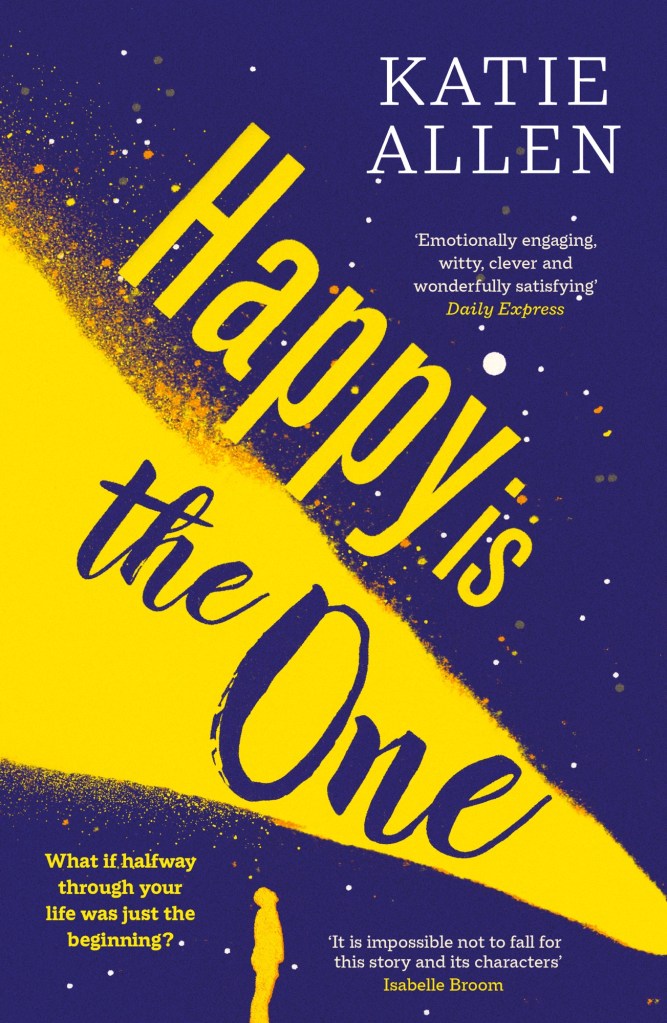
Happy Is The One by Katie Allen

Robin is exactly half way through his life. Like Mark Twain before him, Robin came into the world with Halley’s Comet in 1986 and fully expects to go out again when it returns in 2061. Recently he’s had a huge life change. He’s moved back to his home town of Eastgate to care for his sick father, who due to a disability has had one accident too many. Robin had a well-regimented life in London with girlfriend Gemma. He also had a boring well-paid job as an accountant. Now everything has been thrown up in the air and he’s living in a tiny bedroom surrounded by boxes he hasn’t unpacked. He’s trying to forge a relationship with a father who can’t communicate and who he never connected with as a child. There are childhood ghosts to face and a new connection with Astrid, fellow outsider and professor at a nearby university. She’s brutally straightforward and Robin has never met anyone like her. She’s also hiding something, but he’s hiding even more from her. Can Robin make friends, help his father and accept this is the next chapter of his life?

This was a great book that’s simply joyful to read, even while addressing some really difficult themes. Robin is a great character to spend time with. I found myself feeling quite protective of him, despite his rather pernickety ways. I could honestly feel his anxiety and he copes by planning for eventualities that might never happen. He ekes out money, setting a daily amount for a minimal food plan and then bulk shopping at Costco. He’s worked out how long his savings will last, trying to keep Dad’s care to a minimum so he can afford it for longer. He seems at odds with everyone; not communicating with his father, bickering with Jackie who is his father’s man carer, and not even trying to find old friends. I’ve been a carer and I felt how overwhelmed he is by everything when he climbs up on the roof for some peace. He has to connect in order to get this new chapter of life started. However, to do that he has to accept that this is his life for now. The daytime telly shows, the sorting of meds and lifting his dad off the loo is life. He doesn’t seem to realise that while he fights it, he remains standing still. If he accepts Astrid’s friendship, unpacks the boxes and breathes, life will get better. 

My two favourite characters are the forthright Astrid and Jackie. Astrid is a strong character and has a lot to say, but enough quirks to humour Robin and push him just a little into enjoying life. She embraces and accepts where he is in life, happily trawling Costco for savings. His relationship with her little boy is lovely too. No one can go through life as an island though and Eastgate is a small place. It’s almost inevitable that these new relationships are uncomfortably entangled with others he’s been trying to avoid. Jackie is wise and more of an asset than Robin realises as he spends weeks trying everything to avoid her – even climbing onto the roof. She’s brilliantly written because I’ve met carers like this and they’re worth their weight in gold. Nothing phases her and she is soon onto Robin’s ways. She reminded me of an incredible carer called Barbara who worked in a pair looking after my late husband. She was wider than she was tall and smoked like a chimney between calls. She was also matter of fact, never allowing him to be embarrassed about any aspect of his care. Barbara had seen it all and her stories had him in fits of laughter. I knew he was in safe hands with her, an incredible weight off my mind when I had to go in to University. Barbara passed out one day at work and died only a few days later, from a brain tumour she didn’t know she had. She was caring for people at the end of their lives, not knowing she was close to her own.

The wonderful relationship between Robin and old friend Danny felt so genuine and the way they talked to each other felt exactly like people who’ve known each other from childhood. There’s a shorthand and we start to realise some of Robin’s quirks have been there a while. You get the sense that if they were going on a bike ride Robin would spend so long getting prepped with wet weather gear and a puncture repair kit that they’d run out of time. Danny on the other hand would set off as is and get soaking wet, then tell everyone the story for years. Danny is full of life and has a great business idea to run past Robin, but can he be tempted to take the risk? Robin is eking out an existence that goes way off into the distant future, but our futures change all the time and one day he’ll start living yet another chapter. Living is right now! It’s not when we have money, or have lost weight, or when we have better health. It’s now, when we’re skint, fat and feeling ill. Whatever life looks like right now, we absolutely must live. Many people don’t get the time to waste. Of course, when we find out why Robin is so adamant about his comet theory – while being forced to evaluate his choices by a strident Astrid – it all becomes clear. A heart-breaking tale emerges, just as Robin is faced with yet another loss. He’s forced to admit why he jumped off a cliff into the water when he was a child. He thinks he can’t die, because once he survived something and can’t make sense of it. In fact immortality is the only explanation that does make sense to him. He’s doing what humans do, we subscribe meaning to events that have none. It’s just messy, terrifying, random and heart-breaking life. Katie infuses this difficult truth with beauty, humour and hope because life is beautiful and joyous too, if you let it be. 

Out 22nd May from Orenda Books

Meet the Author

Katie Allen was a journalist and columnist at Guardian and Observer, starting her career as a Reuters correspondent in Berlin and London. Her warmly funny, immensely moving literary debut novel, Everything Happens for a Reason, was based on her own devastating experience of stillbirth and was a number-one digital bestseller, with wide critical acclaim. Katie grew up in Warwickshire and now lives in South London with her family.

Posted in Random Things Tours

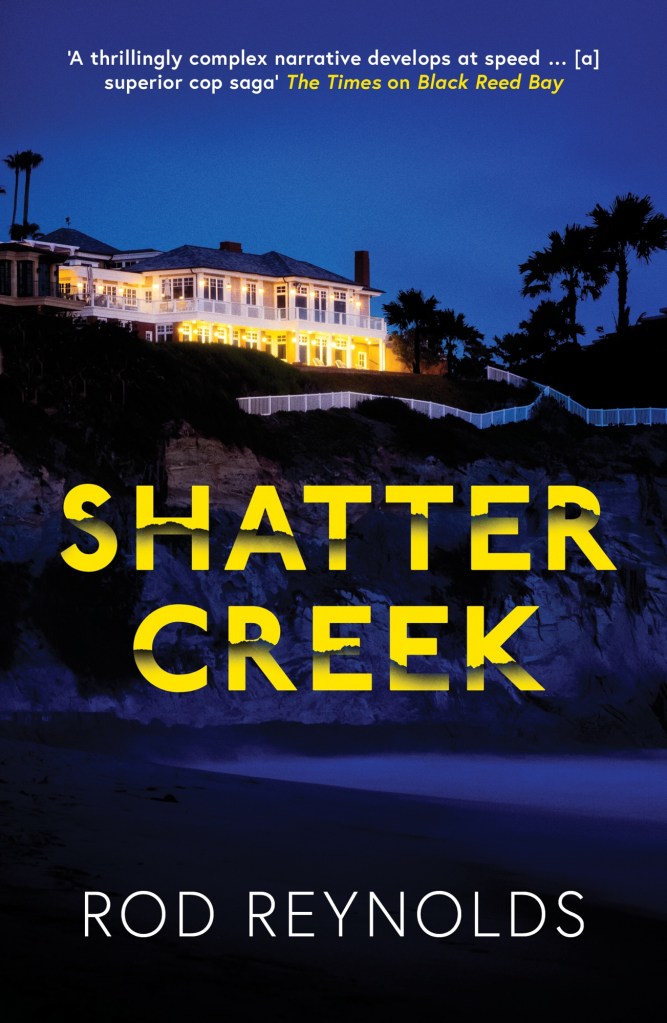
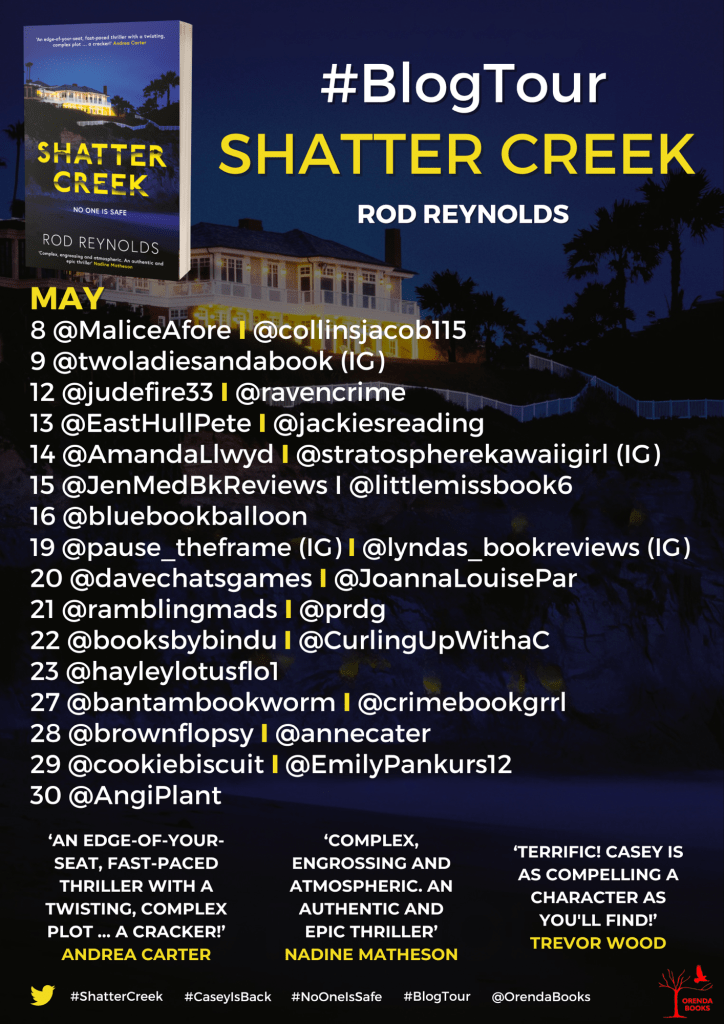
Shatter Creek by Rod Reynolds

Shatter Creek is the second novel in Reynold’s Casey Wray series, set in Hampstead County Police Department on Long Island. The department has been under investigation and the corruption reached to the very top. Casey’s boss and mentor, Ray Carletti, was found to be a dirty cop and it’s clear that she’ll have to do a lot of proving herself to the new Lieutenant. Until then she’ll suspect Casey of being a corrupt cop, who managed to elude the investigation. She’s also under pressure from the Mayor/DA’s office, in fact it seems like Casey is piggy in the middle between the two, vying over who gets the news first. When there’s a double shooting outside a gym in Rockport, Casey and partner Billy Drocker are first on scene. A woman has been shot just outside the gym entrance, but there’s also a second victim slightly further away down a side road. Luckily, Casey finds an off duty cop already there, tending to his wound so she’s free to chase down the shooter. After trying a few side streets, she realises that there are too many possible escape routes for her to cover. It’s like he disappeared and Casey is left trying to work out who was the target. The two victims have nothing in common. The male victim leaves a wealthy widow who has contacts in the mayor’s office – the last thing Casey needs. Surely a self-made man who could afford a home on Shatter Creek has his fair share of enemies though? Then comes the shooting of another woman outside her home and they uncover a link. Both female victims turn out to be just two in a line of women strung along by potential suspect, Adam Ryker. He has a reputation and not just as a womaniser but as a man who likes to control women. Casey has more questions than answers: Who are the couple seen in a car taking photographs? Could one of Ryker’s girlfriends have hired a hit? Why did the male victim have Casey’s phone number on a business card? This is an incredibly complex case, in particularly tough circumstances and Casey needs to solve it, not just to take a murderer off the streets but to prove she isn’t the cop that her new lieutenant thinks she is. 

Wow, this really was a labyrinthine case! Full of red herrings and distractions from an endless parade of women claiming to be in a relationship with their suspect and a lot of political machinations behind the scenes. Casey really is in a tough situation and I don’t mind saying that I might have gone for the potential transfer or the unexpected job offer she gets. It’s clear right from the start that her new Lieutenant doesn’t even want to give her a chance. Whatever happens, this case has placed her at a crossroads and if she stays she’s going to have to solve this fast and prove her worth. There is one key witness, a woman with red hair carrying a little girl who seemingly disappeared from the gym during the shooting. Where does she fit? Casey was already in an impossible situation and now she has to rein in her rookie partner who is a little over enthusiastic. She’s still grieving the death of her previous partner, a fact that still hits her hard in the gut whenever she thinks of him. When she meets ex-cop McTeague in a bar, both for information and a catch up, he offers her a way out. Would she want to come and work for him? She’d still be using her skills, but with steadier hours, less politics and doing things on her own terms. She allows herself to think about it, but knows that she has to solve this case first. I’m not sure whether it’s professional pride, a determination to show she’s not dirty or that urge to serve and protect the public. Probably a bit of all three.

Casey is a people pleaser underneath, someone who finds it hard to say no and struggles to let cases go. It’s the reason she becomes caught in the headlights of Rita Zangetty, the chief of staff to the County Executive Franklin Gates. Zangetty wants someone inside who can keep her abreast of this case, but also the ongoing review of the whole police department. A part of her had expected to be placed in the acting lieutenant’s role after being cleared of any wrong doing. She’d put in her application, not even expecting an acknowledgement so to be shortlisted and interviewed gave her hope. To be placed under someone completely new, with no warning was a blow to her confidence. The shootings happen only 24 hours later. When evidence emerges that puts Casey even further under the spotlight I was surprised. Could Casey possibly be as bad as Carletti? I loved her conversations with the dead man’s wife, out at their incredible home on Shatter Creek. There’s a sense that here are two opponents who have the measure of each other, they’ve finally met their match. As Casey starts to interview the previous partners of Adam Ryker it seems like she’s set on a direction, but she’s still juggling questions in her mind. Questions that won’t go away. Why is the woman she saw reading in a bar still on her mind? What was it about the meeting with McTeague that’s bugging her? Who is the man seen taking photographs, not just near the crime scene but at different locations throughout the case – almost like they’re working in parallel. When the truth slowly starts to dawn on Casey she takes us with her at a breathtaking pace, leading a totally unexpected and heart-stopping show down. This was a gritty, inventive and compelling thriller, with a lead detective who’s dogged and determined to find the truth – even when it’s a truth she doesn’t want to face.

Out now from Orenda Books

Meet the Author

Rod Reynolds is the author of five novels, including the Charlie Yates series. His 2015 debut, The Dark Inside, was longlisted for the CWA New Blood Dagger, and was followed by Black Night Falling (2016) and Cold Desert Sky (2018); the Guardian has called the books ‘Pitch-perfect American noir.’ A lifelong Londoner, in 2020 Orenda Books published his first novel set in his hometown, Blood Red City. The first in the Casey Wray series, Black Reed Bay, published in 2021, was shortlisted for the CWA Steel Dagger, with its long-awaited sequel, Shatter Creek, out in 2025. Rod previously worked n advertising as a media buyer, and holds an MA in novel writing from City University London. Rod lives with his wife and family and spends most of his time trying to keep up with his two daughters.

Posted in The Book Folks

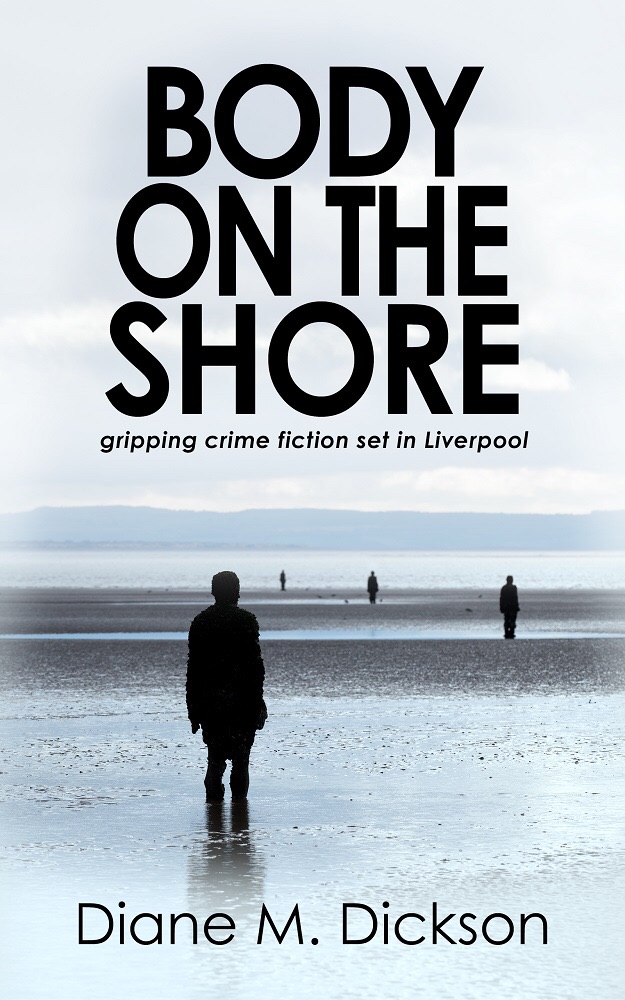
Body on the Shore by Diane M. Dickson

I jumped at the chance to read crime fiction set in my favourite city, Liverpool. I’m half Liverpudlian and half Lincolnshire Yellow Belly. It’s my mum’s home city and now it’s where my step-daughter lives while she’s at university. One of the first things I took my husband and step-daughters to see was Antony Gormley’s Another Place on Crosby Beach. 100 Iron Men stare out to sea, some submerge and reappear as the tide turns and I’ve always found them eerie but moving at the same time. Here they’re the backdrop to a body being found by a dog-walker (it’s always dog walkers bless them). The body is wrapped in a bin bag, caught on one of the sculptures, else they might never have found her. The author has really captured the other-worldly feel of the place and it’s bleakness on a cold day, especially as a place to end up discarded like waste. This is DI Jordan Carr’s new case and he’s joined by a new DC, Terry Venn, who just makes it through his first post-mortem without disgracing himself. To be honest I had to swallow a couple of times as the author described peeling the face down! 

The victim is a young woman by the name of Beatrice Sharp, a secretary for a printing company. She comes from Northumberland and moved to Liverpool quite recently so Jordan and his team need to understand why she’d made such a huge life change and how she’s ended up with such a terrible end, killed by blows from a hammer. The characters are slightly different from a lot of detective fiction where the main character is often old, washed up, and exhausted, with marriage or drink problems on the side. Jordan is stretched and he does work late, but his wife Penny is supportive and understanding about the pressures of his job. They have a baby boy called Harry, who Jordan absolutely dotes on. He stops and watches his son’s bedroom routine on FaceTime if he’s stuck at work and can’t be there. In his working life he comes across as thorough and by the book, keeping the over exuberant and frustrated DC Venn in check when he wants to jump the gun. 

As for the setting, I don’t think you can beat Liverpool because it ranges from the tourist trail and glitzy hotels of the city centre, to the industrial Baltic Quarter and the Wirral just a tunnel away, not to mention the poorer areas – I remember Toxteth in the 1980s. The police station itself is beautifully non-descript, serves absolutely shocking coffee and often gets buried under late night takeaway containers. There are no glass boards and panoramic views here. We concentrate mostly on the case and the author sets the scene by starting with the victim. Her final moments will stay with you as the story unfolds, reminding us that this isn’t just about twists and turns and tension. This is about a young woman’s life being taken away. There’s also a narrative from a character called Ben, cleaning his van and  lamenting over the sheer amount of blood. Having watched forensic programmes he’s aware he might have to torch the van because no matter how vigorously he cleans, will it really be spotless? He’d hoped just to scare her off, but it went too far. He’s also blackmailing someone, considering asking for more money and leaving his victim to stress a while. What is his connection to Beatrice and who is he blackmailing? 

The case is relatively speedy, despite it’s complexity and is very tense in parts with police chases, more victims and one very agitated pregnant woman. It was a really quick read for me, because it was such a great story that shows our past can and often does catch up with us. I really did enjoy Terry Venn on his first case. He’s quite the character and could just have easily turned out to be an absolute scally. Luckily, he’s more ‘poacher turned gamekeeper’, slipping into Scouse slang when the conversation demands, great for witnesses who are reluctant to talk. I’d happily read the rest of DI Carr’s cases. I hadn’t realised at first that this is just one of his many adventures, so I’m really going to enjoy seeing his character develop from book one. This reads well as a stand alone novel and I definitely recommend this to other readers who enjoy crime fiction. 

Posted in Monthly Wrap Up

My Best Reads March 2025

Hello Readers,

Spring is here!! Finally. Today is warm -ish, but sunny with daffodils and jasmine brightening up the garden. My other half is cutting the lawn and washing is going on the line for the first day this year. I’ve had a lot of chances to read this month as I still can’t move far, so I’ve taken on some new and some older reads too. My favourites of the new books I’ve read this month are a balanced mix of historical fiction and crime novels. Our historical offerings take us to the South of France and the home of Henri Matisse, to Paris on a train that might be lucky to arrive and a Scottish island that’s closer to Norway. The crime novels are set in two of my favourite places, Snowdonia and Northumberland, while the final one is a Scandinavian setting, written by two talented authors it’s an unforgettable novel.

Hope you’re all enjoying this beautiful weekend.

When in Northumberland I visit a couple of bookshops, Barter Books in Alnwick for second hand finds and Cogito Books in Hexham for their non-fiction and new releases. Last time I had some book vouchers so I went to Hexham and was recommended Mari Hannah’s Stone and Oliver series. I bought the first one then found more of the series in charity shops, but hadn’t got round to reading them yet. So when a publisher offered this I wondered whether I should, but I can’t resist and now Im setting aside time to read the rest of this series.

Frankie Oliver and David Stone have been working together in the same MIT for the a few years, but this book starts in a much darker place when another detective was called to a body found on some waste ground. Horrified, he drops to the floor unable to contain his devastation. The body on the ground is his daughter. It’s such a powerful and emotive opening, leaving us in no doubt that this is a defining event for the loved ones of this girl. An absence that the Oliver family feel every day. It’s arguable that this case is the very reason that Frankie Oliver became a detective. She and David Stone are an incredible team at work and have the potential to take their relationship further. It’s clear there’s been some ‘will they won’t they’ over the course of the previous novels. Now Frankie is taking a break from the team in Newcastle, a promotion to DI means she must fill a post back in uniform based out of the most northerly police station in the county, Berwick-Upon-Tweed. Frankie accepts and the team organise a leaving ‘do’. It’s there that Dave overhears an argument that immediately propels him back to the murder of Joanna, Frankie’s sister. What’s said between the two men outside the venue sparks an idea in Dave’s mind. He has had an idea of how to investigate the cold case, but knows that he doesn’t want to bring more pain to the family. Hopefully Frankie’s secondment to Berwick means they won’t have to. 

Meanwhile Frankie’s first job is an RTC on the A1 and in the total chaos she finds a little boy handcuffed in the back of a van. The driver and passenger are dead and the van is a write off so Frankie can’t believe this little boy has survived. As she rescues him, an onlooker tells her that a man escaped out of the back doors straight after the crash. This opens up a trafficking case that might take her straight back out of uniform again. The boy, Amir, takes to Frankie. Possibly the first person in a long time who has made him feel safe. As for the relationship between Frankie and Dave, I was very much invested despite not knowing everything that’s gone before. The setting is beautifully captured in it’s contradictions: the modernity and buzz of Newcastle with the contrast of the wild countryside and beautifully rugged coastline. This really is a nail-biting story, written in very short chapters that are easy to devour very quickly. So many have a brilliant cliff-hanger ending too. I can’t wait to read more.

The blurb on the back of this novel promises an electrifying blockbuster that will be the start of a ‘nerve shattering’ new series. So there’s a lot to live up to, but Son definitely delivers. To use a rather inelegant phrase, this novel is a therapist’s wet dream of a novel – hidden characters, unexplained black outs, grief, trauma and an investigator who is dubbed The Human Lie Detector. I was definitely in my element here. Kari Voss is the centre of this tangled web, a psychologist who specialises in memory and body language and acts as a consultant to Oslo’s police force. When two girls are brutally killed in a summer house in the village of Son, it’s a crime that’s closer to home than she would want. The girls, Eva and Hedda, were best friends with Kari’s son Vetle when they were younger. In fact it was while on a holiday seven years ago that Vetle disappeared in nearby woods and was never found. The girls are now teenagers and were planning a Halloween party for their friends, but were found tied to dining chairs with their throats cut. They were found by a third friend, Samuel Gregson, when he turned up to start the festivites and it is also an old friend of Vetle’s that police chief Ramona Norum arrests and starts to question. When Kari is asked to consult she knows this will be difficult, not only is she friends with the girl’s families, their lives are inextricably linked to her missing son. How will she negotiate all the emotions this case will unleash and find the girl’s killer? 

No one is what they appear here. As Kari starts to ask questions about Eva and Hedda, it turns out that they aren’t always the polite children or young teenagers they appear to be. The authors are very clever about the amount of introspection they use, creating a hidden layer to the crimes and a breathing space between the character driven chapters and the ones filled with nail-bitingly intense action. There’s even subterfuge in the title, Son is a place slightly north of Oslo, steeped in Nordic history and full of that unsettling atmosphere that I find Nordic Noir is so good at. Yet it’s also a person, so missed by those who love him and inextricably linked to this landscape, that has potentially become his final resting place. I was compelled to read this to the end, taking it everywhere with me on holiday so I could grab a chapter in a coffee shop or even in the car. This is an engrossing and addictive start to a promised new series and I’m already craving the next instalment.  

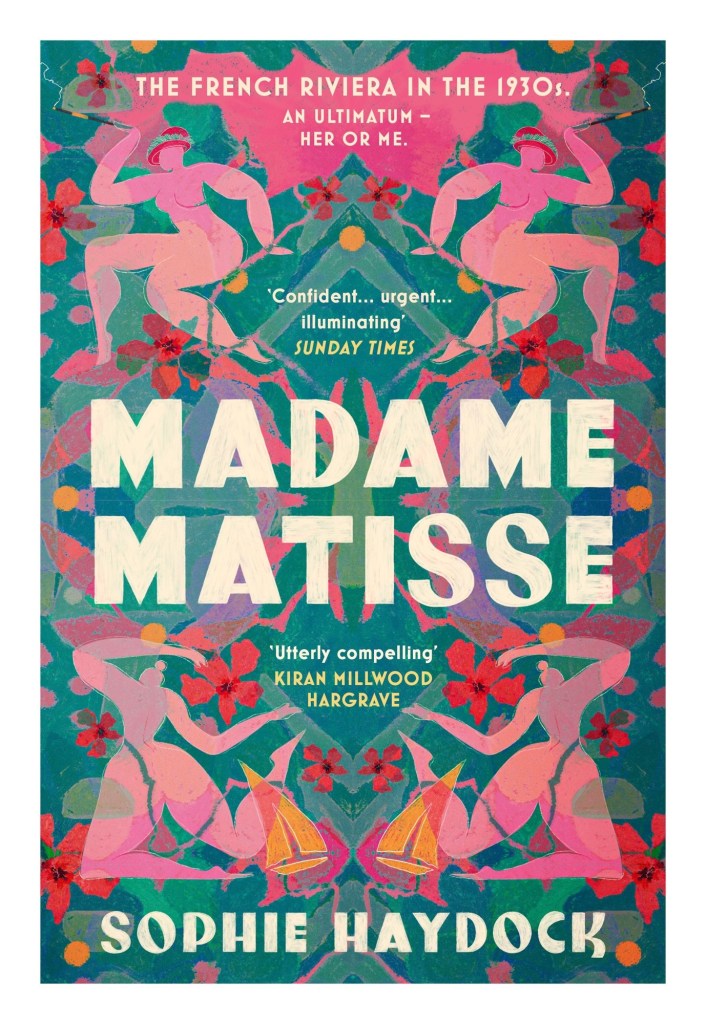
This is the story of three women – one an orphan and refugee who finds a place in the studio of a famous French artist, the other a wife and mother who has stood by her husband for nearly forty years. The third is his daughter, caught in the crossfire between her mother and a father she adores. Amelie is first drawn to Henri Matisse as a way of escaping the conventional life expected of her. A free spirit, she sees in this budding young artist a glorious future for them both. Lydia Delectorskaya is a young Russian emigree, who fled her homeland following the death of her mother. After a fractured childhood, she is trying to make a place for herself on France’s golden Riviera, amid the artists, film stars and dazzling elite. Eventually she finds employment with the Matisse family. From this point on, their lives are set on a collision course. Marguerite is Matisse’s eldest daughter. When the life of her family implodes, she must find her own way to make her mark and to navigate divided loyalties.

Based on a true story, Madame Matisse is a stunning novel about drama and betrayal; emotion and sex; glamour and tragedy, all set in the hotbed of the 1930s art movement in France. In art, as in life, this a time when the rules were made to be broken. I loved reading about these fascinating women, all of which step outside the traditional role of most women of the time. Sophie beautifully situates Matisse within his peer group, especially his great rival Picasso. Then situates each woman perfectly within their history, the most in depth being Lydia’s Russian background and Marguerite’s incredible bravery in WW2. I thoroughly enjoyed looking up the paintings mentioned and seeing Matisse’s representation of the three women who were closest to him and I found myself reading articles about him and Picasso. It left me with a sense of anger and empathy for how much women sacrifice so that men can excel at what they do, realising their ambitions while their wive’s ambitions are forgotten or buried under a suffocating mental load – still the thing women in my group talk about most. These women never take the limelight away from Matisse, even while stripped bare for people to view. The focus is always on the painter, their brush strokes, choice of colour and artistic decisions. I love that in this novel they are more than body parts, they’re shown as the vital, brave, complex and generous women they clearly were.  

Set in 1895 when a train did crash onto the platform at Montparnasse, Donoghue places us very definitely in the fin de siecle, with every little detail. It isn’t just her description of the train, which I could picture very clearly, it’s the character’s clothing and their attitudes. There’s certainly evidence of a shift in the Victorian ideals that held firm throughout the 19th Century. In one journey we can see women being more outspoken, having a definite sense of purpose, and a need to determine their own destiny. Women are travelling alone or for work, in the case of Alice she is travelling with her boss as the secretary for his photographic business. She takes the opportunity to talk to him about moving pictures, she has researched the subject and thinks it could be a new market for the firm. Marcelle is researching in the field of science and huge fan of Marie Curie who is so work focused that she went to get married in an everyday blue dress and returned to the lab.I was absolutely fascinated with Mado. She stands out more than she realises, with her androgynous clothing and short hair, not to mention the lunch bucket she’s clutching as if her life depends on it. She’s a feminist, an anarchist and seems to have an interest in reading other people. Her own internal struggle is so vivid that I could feel the tension in her body as I read. She seems contemptuous of many of her fellow passengers, particularly the men, knowing that the Victorian feminine ideal is simply a role women are forced to play. To step outside of the norm is brave and a deliberate outward show of her inner strength and determination to change women’s place in the world. How far might she go to show her resolve?

Gradually I was compelled to keep reading because the tension was rising with every new passenger and because as the reader I was omniscient: Donoghue gives her reader the full story and we know the potential fate of every character on this train. Brilliant as always!

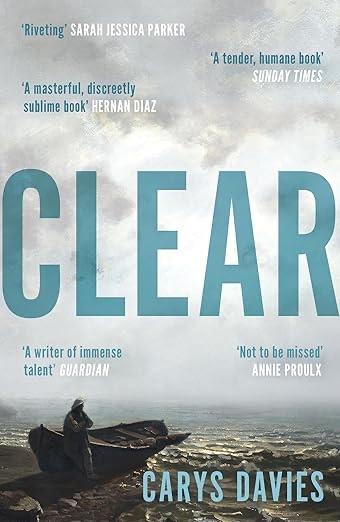
1843. On a remote Scottish island, Ivar, the sole occupant, leads a life of quiet isolation until the day he finds a man unconscious on the beach below the cliffs. The newcomer is John Ferguson, an impoverished church minister sent to evict Ivar and turn the island into grazing land for sheep. Unaware of the stranger’s intentions, Ivar takes him into his home, and in spite of the two men having no common language, a fragile bond begins to form between them. Meanwhile, on the mainland, John’s wife, Mary, anxiously awaits news of his mission.
Against the rugged backdrop of this faraway spot beyond Shetland, Carys Davies’s intimate drama unfolds with tension and tenderness: a touching and crystalline study of ordinary people buffeted by history and a powerful exploration of the distances and connections between us.

Clear is so beautifully set within some very significant events. In the 19th Century evangelical worshippers moved away from the Church of Scotland to form the Free Church of Scotland. Also, there was a second wave of Scottish landowners driving their tenants from the land, choosing to make a better profit grazing sheep. This was just one part the Highland Clearances. Our characters are deeply involved with these events. This is such a gentle story that contains so much. Instead of pushing an agenda or viewpoint, the author just lets it play out naturally. Ivar is part of this island, a bear of a man with only his animals for company. There’s a purity to his life that’s almost spiritual, an interesting contrast to John’s organised religion. There’s so much under the surface of the story, told in the tiny details of everyday life: their gestures, the intimacies they share and how those connections change as a language is formed between them. It’s interesting to see the established dynamic of John and Ivar affecting how Mary settles into the cottage. The men’s connection brings the three of them into a unit, so that they don’t feel like a married couple and a lone man any more. Each of them forms a strong connection with each other and the landscape. I found reading this an almost meditative experience, because it’s so slow and calm, until the sudden end.
Living and working in Snowdonia was always retired detective Frank Marshal’s dream. Until a phone call asking for his help turns it into his worst nightmare. Retired detective Frank Marshal lives in a remote part of Snowdonia with his wife Rachel who is suffering from dementia. Working as a park ranger, Frank gets a phone call from close friend Annie, a retired judge. Her sister Meg has gone missing from a local caravan park and she needs his help to find her.

As Frank and Annie start to unravel the dark secrets of Meg’s life, it seems at first that her disappearance might be linked to her nephew and a drug deal gone wrong. In a shocking twist, their investigation leads them to a series of murders in North Wales from the 1990s and a possible miscarriage of justice. Can Frank and Annie uncover the sinister truth so they find her sister in time to save her? Or will a brutal serial killer add Meg to his list of victims?

I’m always complaining about thrillers and crime novels that rely on their twists and turns without any depth to the characters or the story. I couldn’t complain at all here. There are twists, including one I only started to suspect few pages before it was revealed. This book was full of emotion: Frank and his wife sitting in bed and looking at old photos was so poignant since both know her dementia is progressing and she is slowly forgetting it all; the beautiful relationship between Frank and his grandson; Annie’s grief over her sister’s disappearance and her nephew’s accident. All felt like fully realised people, even those only in the novel a short time. I could see Frank locking horns with police chief Dewi in the future or the scouse drug dealers. I loved the setting too, the author has managed to capture it’s beauty and it’s bleakness. This was a cracking mystery that crept up on you slowly then didn’t let you put it down. I’m looking forward to many more adventures with Frank Marshal. 

So that’s all for March, but next month’s reading is busy as always. Here are a few books still lurking on my TBR for April. It’s going to be a great month.

Posted in Orenda, Random Things Tours

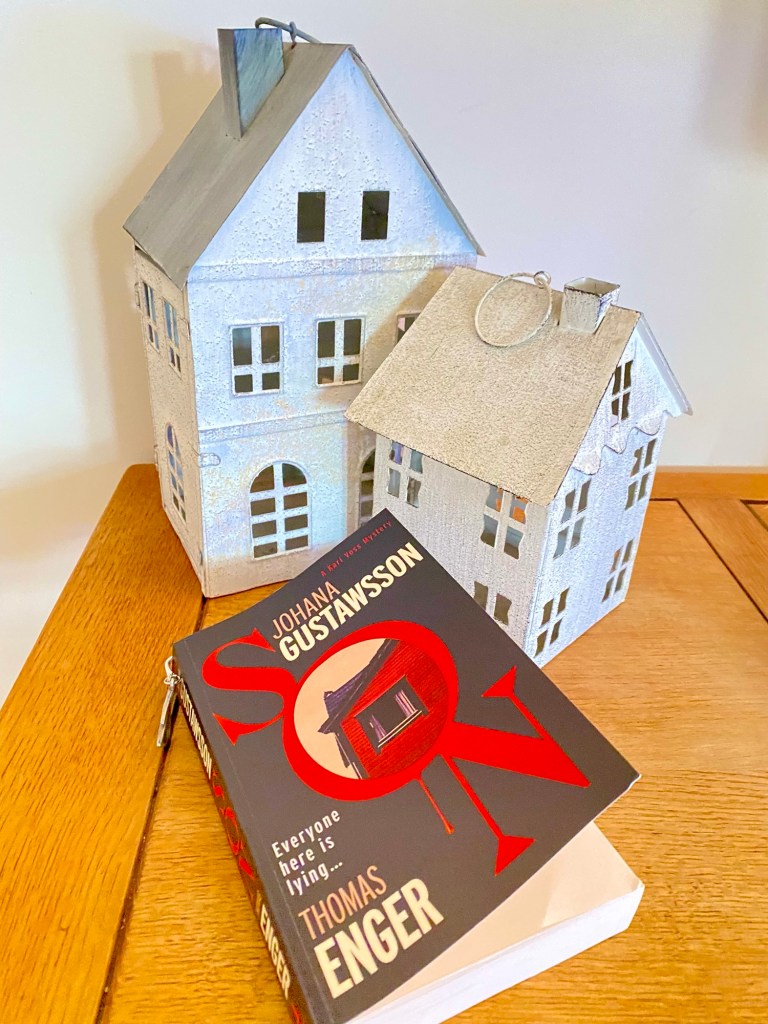
Son by Thomas Enger and Johana Gustawsson

The blurb on the back of this novel promises an electrifying blockbuster that will be the start of a ‘nerve shattering’ new series. So there’s a lot to live up to, but don’t worry Son definitely delivers. To use a rather impolite phrase, this is a therapist’s wet dream of a novel – hidden characters, unexplained black outs, grief, trauma and an investigator who is dubbed ‘The Human Lie Detector’. I was definitely in my element here. Kari Voss is the centre of this tangled web, a psychologist who specialises in memory and body language making her a perfect consultant to Oslo’s police force. When two girls are brutally killed in a summer house in the village of Son, it’s a crime that’s closer to home than she would want. The girls, Eva and Hedda, were best friends with Kari’s son Vetle when they were younger. In fact it was while on a holiday seven years ago that Vetle disappeared in nearby woods and was never found. The girls are now teenagers and were planning a Halloween party for their friends, but were found tied to dining chairs with their throats cut. They were found by a third friend, Samuel Gregson, when he turned up to start the festivities. However, there was someone else there, someone who left slippery marks in the blood that has poured onto the floor. He’s the first person that police chief Ramona Norum arrests and starts to question. When Kari is asked to consult she knows this will be difficult, not only is she friends with the girl’s families, but their lives are inextricably linked to her missing son. How will she negotiate all the emotions this case will unleash and stay focused enough to find the girl’s killer? 

Often with thrillers, I find they’re full of action, twists and turns that are really addictive, but have no emotional depth. The characters are often one dimensional and it’s hard to care about what happens to them. There’s no danger of that here. This is the perfect combination of twisty and unexpected, but underpinned with huge emotional weight. It’s deeply unsettling, with a questionable suspect and an equally unreliable narrator. Not only is Kari still dealing with the trauma of losing her son, she’s also grieving for the more recent loss of her husband. She can’t sleep and seems to running on empty from the start. Yet, the way she observes people is so detailed and it seems almost effortless. This goes way beyond the basics like crossed arms meaning someone feels defensive. In a lecture she tells students that in the space of an ordinary conversation we give away over eighty-five non – verbal signs about the mood we’re in. She’s not afraid of giving an unpopular opinion either. She absolutely backs the science and her ability to analyse people, whether they’re claiming to be innocent or guilty. I loved the tension created by the authors as they played with her expertise and her emotions. Is she detached enough to make a sound judgement here? As if that isn’t enough, there seem to be instances where Kari loses time. She wakes up in the car on her own driveway with no recollection of the journey home. She seems to have been on autopilot, so caught up in her own thoughts she hasn’t noticed the journey. She had similar blackouts after her husband died, but what has triggered them? When the young man arrested at the scene of the crime also seems to have experienced a black out I wondered whether he knew her history. Could he be deflecting attention from himself because he knows Kari’s secret? Or is Kari more liable to believe a story like that because she’s experienced it herself? It’s this complexity that makes the plot and Kari herself more fascinating. 

No one is what they appear here. As Kari starts to ask questions about Eva and Hedda, it turns out that they aren’t always the polite children or young teenagers they appeared to be to the adults in their lives. Everyone has different layers, choosing what to reveal and to whom they reveal it. The authors are very clever about the amount of introspection they use, creating a hidden layer to the crimes and a breathing space between the character driven chapters and the ones filled with nail-bitingly intense action. Then they throw in another twist, to keep you engaged, leaving me unsure of my own deduction skills. There’s even subterfuge in the title, Son is a place that’s slightly north of Oslo, steeped in Nordic history and full of that unsettling atmosphere that I find Nordic Noir is so good at. Yet it’s also a person, so missed by those who love him and inextricably linked to this landscape, that has potentially become his final resting place. I was compelled to read this to the end, taking it everywhere with me on holiday so I could grab a chapter in a coffee shop or even in the car. This is an engrossing and addictive start to a promised new series and I’m already craving the next instalment.  

Out on 13th March from Orenda Books

Meet the Authors

Known as the Queen of French Noir, Johana Gustawsson is one of France’s most highly regarded, award-winning crime writers, recipient of the prestigious Cultura Ligue de l`Imaginaire Award for her gothic mystery Yule Island. Number-one bestselling books include Block 46, Keeper, Blood Song and her historical thriller, The Bleeding. Johana lives in Sweden with her family. A former journalist, Thomas Enger is the number-one bestselling author of the Henning Juul series and, with co-author Jørn Lier Horst, the international bestselling Blix & Ramm series, and one of the biggest proponents of the Nordic Noir genre. He lives in Oslo. Rights to Johana and Thomas’ books have been sold to a combined fifty countries and, for the first time, two crime writers, from two different countries, writing in two different languages, have joined forces to create an original series together.

Posted in Random Things Tours

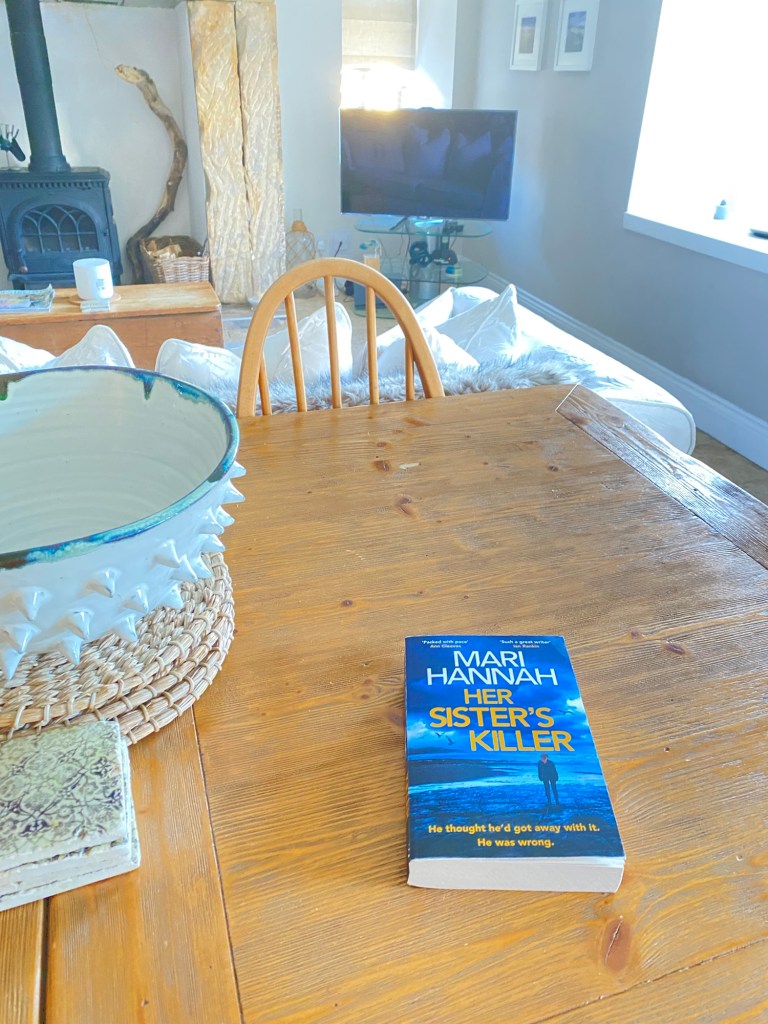
My Sister’s Killer by Mari Hannah

I’ve slowly been collecting the Stone and Oliver series over the past year, after one took my fancy in Northumberland’s famous Barter Books in Alnwick. Since then I’ve grabbed the paperbacks wherever I found one so I could read them all in order. Then this blog tour offer came along so I jumped at reading one completely out of sequence. Now I can’t wait for the rest of the story! 

Frankie Oliver and David Stone have been working together in the same MIT for the a few years, in their Newcastle headquarters jokingly referred to as ‘Middle-Earth’. However, the novel starts in a much darker place, many years before, when another detective is called to a body found on some waste ground. Horrified, he drops to the floor unable to contain his devastation. The body on the ground is his daughter. It’s such a powerful and emotive opening, leaving us in no doubt that this is a defining event for the loved ones of this girl. An absence that they still feel every day. For her dad it’s complicated by the fact he’s a murder detective and he missed Joanna’s last call. It’s arguable that this case is the very reason that her sister, Frankie Oliver, became a detective. She and David are an incredible team at work and have the potential to take their relationship further. It’s clear there’s been some ‘will they won’t they’ over the course of the previous novels. Now Frankie is taking a break from the team in Newcastle, a promotion to DI means she must fill a post back in uniform for a while, based out of the most northerly police station in the county, Berwick-Upon-Tweed. Frankie accepts and the team organise a leaving ‘do’. It’s there that Dave overhears an argument that immediately propels him back to the murder of Frankie’s sister. What’s said between the two men outside the venue sparks an idea in Dave’s mind. He has had an idea of how to investigate the cold case, but knows that he doesn’t want to bring more pain to the family. Hopefully Frankie’s secondment to Berwick means they won’t have to. 

Meanwhile Frankie’s first job is an RTC on the A1 and in the total chaos she finds a little boy handcuffed in the back of a van. The driver and passenger are dead and the van is a write off so Frankie can’t believe this little boy has survived. As she rescues him, an onlooker tells her that a man escaped out of the back doors straight after the crash. This opens up a trafficking case that might take her straight back out of uniform again. The boy, Amir, takes to Frankie. Possibly the first person in a long time who has made him feel safe. She shows a real maternal side with him and her sister-in-law Andrea is sure that Frankie’s sister Rae will feel the same. Andrea and Rae have been looking at fostering, much to Frankie’s surprise. Could they be the right fit for this terrified boy? Dave has been missing Frankie’s presence but he knows that solving the case of what happened to Joanne matters to her more than anything. He has just one officer -Indira- and a limited time scale to investigate. Frankie is the only person he wants to talks to but she can’t know until and if, they make an arrest. Especially since he suspects the murderer may have been closer than they ever imagined.

This really is a nail-biting story, written in very short chapters that are easy to devour very quickly. So many have a cliff-hanger ending too. The setting is beautifully captured in it’s contradictions: the modernity and buzz of Newcastle with the contrast of the wild countryside and beautifully rugged coastline. There are differences in policing too as we can see from Frankie’s time on the Scottish Borders. I really fell in love with Frankie’s family, because they are so loving and nurturing with each other. I could see how taking in Amir could be the best thing for him, but it could also put the tightly knit Olivers under stress or even into danger. I kept thinking about how distraught the family would be if something happened to him or to those like Andrea and Frankie who are trying to put the child trafficking gang out of business. The author cleverly uses these family dynamics, as well as Dave and Indira’s gentle and nuanced interviewing on the murder case, as a contrast or perhaps a breather between Frankie’s more nail-biting action sequences. The only drawback was that I’d be so desperate to know what happened next for Frankie that I might not take in all the detail of the quieter chapter in between. Of course that says more about my lack of patience than the book. As for the relationship between Frankie and Dave, I was very much invested despite not knowing everything that’s gone before. I can see both their perspectives and there are so many reasons not to take a risk, but if we never take a risk we might never know what might have been. It reminds me of the inspirational quote about fear of falling; ‘but imagine, what if you fly?’ 

Meet the Author

Multi-award winning Mari Hannah is the author of the Stone & Oliver crime series, the Ryan & O’Neil series and the DCI Kate Daniels series.

In July 2010, she won a Northern Writers’ Award for Settled Blood. In 2013, she won the Polari First Book Prize for her debut, The Murder Wall. She was awarded the CWA Dagger in the Library 2017 as the author of the most enjoyed collection of work in libraries. In 2019, she was awarded DIVA Wordsmith of the Year. In that same year, Mari was Programming Chair of the Theakston Old Peculier Crime Festival. In 2020, Mari was named as DIVA ‘Wordsmith of the Year’ and won Capital Crime’s ‘Crime Book of the Year’ award.

She lives in Northumberland with her partner, an former murder detective.

To find her or see where she’s appearing, visit her events page at: marihannah.com or follow her on Twitter @mariwriter.