Posted in Random Things Tours

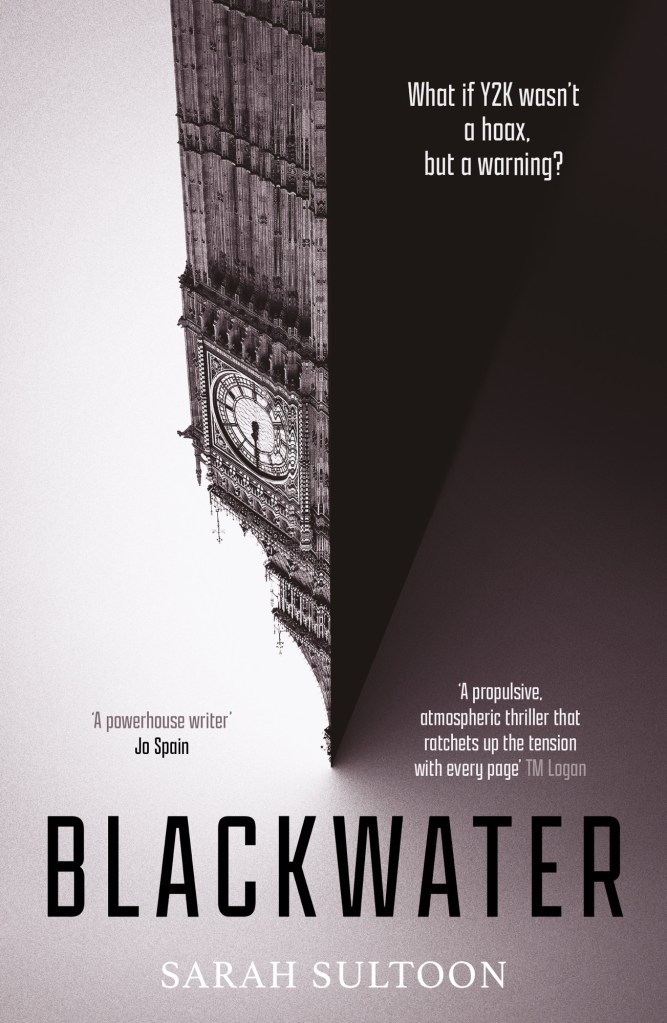
Blackwater by Sarah Sultoon 

As the clock ticks towards the millennium – and the threat of a potentially new apocalyptic reality – Jonny Murphy is sent to investigate the discovery of a child’s body on a deserted swamp island, fifty miles from London. What he finds is more than just a tragedy, it’s a warning. Something big is coming … Can Jonny stop it? Should he?

London, Christmas 1999. The world is on edge. With the new millennium just days away, fears of the Millennium Bug are spiralling – warnings of computer failures, market crashes, even global catastrophe. But fifty miles east, on the frozen Blackwater Island, a different kind of mystery unfolds. A child’s body is discovered on the bracken, untouched by footprints, with no sign of how he died. And no one has come forward to claim him.

At the International Tribune, reporter Jonny Murphy senses something is off. Police are appealing for relatives, not suspects. An anonymous call led officers to the scene, but no one knows who made it. While the world fixates on a digital apocalypse, Jonny sees the real disaster unfolding closer to home. With just twenty-hour hours before the century turns, he heads to Blackwater – driven by curiosity, desperation, and the sting of rejection from his colleague Paloma.

But Blackwater has secrets buried deep in the frozen ground. More victims – some dead, others still paying for past sins. And when Paloma catches up to him, they stumble onto something far bigger than either of them imagined. Something that could change everything. The millennium is coming. The clock is ticking. Can Jonny stop it? Should he?

I went into this novel quite late, so I was incredibly pleased to find that this is definitely a gripping, read in one sitting type of thriller. This is Sarah Sultoon’s third novel featuring investigative journalist Jonny Murphy, but could very easily be read as a standalone. For people like me, old enough to be an adult at the time of the possible ‘millennium bug’, I remember the panic and the predictions that planes would fall out of the sky, banking systems would collapse and the apocalypse would begin. I remember the money spent trying to mitigate its potential effects but like the British seem to do, we gathered with friends and family anyway and set off fireworks in the freezing cold and precisely nothing happened. It feels like an innocent time now, when we think that 9/11 came only 18 months later, followed by going to war in Afghanistan and Iraq and then years of austerity followed by a pandemic. It’s certainly been turbulent ever since. My dad was convinced that the bug was a made up bogeyman, allowing technology companies and their shareholders to clean up by proposing to ‘fix’ something that didn’t exist. Maybe he was right. We don’t call him Fox Mulder for nothing.

Here Sarah Sultoon has created a fast paced thriller that plays out in the days before Millennium Eve. The timing gives us a countdown, but believe me this story creates its own tension. The setting of Blackwater Island is familiar but alien at the same time. Situated in an inlet only 50 miles from London and with a direct route by boat into the Channel and the Thames this place is hiding in plain site. Beyond the last village, the terrain feels like the eerie marshlands at the beginning of Charles Dickens’s David Copperfield. The mist is so thick someone could be standing next to you and the black, viscous mud has the feel of quicksand. It sucks all explorers into its depths and is enough to put anyone off reaching the island itself. As if that wasn’t enough, the author brings elements of folk horror to the narrative as Jonny is warned off by very unfriendly and odd locals. The only place to stay is an old inn in the village, but the landlady isn’t very welcoming. She warns him that the only resident of Blackwater is Inka who is depicted in a framed picture behind the bar and on graffiti near the island:  

“it’s apparently a picture of a ghost that’s been haunting Blackwater since the Dark Ages. Our landlady told me some mad story about a mythical Icelandic warrior named Inka with a diamond-tipped spear and a mermaid’s tail.” 

Jonny is canny enough to know when he’s being warned away from something and it only sets his investigative skills tingling. On the other hand, actual protection for the crime scene is very thin on the ground. He meets the only police officer in the area and she feels like she’s been dumped in the backwaters of Essex with no support or back up. The facts are that the body of a boy was found on the island with no visible cause of death, but the weirdest part is that he was dressed like an extra from Oliver! His Victorian urchin clothing is so incongruous, but could mean anything from local amateur dramatics to time travel. It’s once Jonny manages to get on the island that answers start to come and it was nothing I’d considered. 

Jonny is a rather fascinating character. He’s absolutely determined to track down his story and has defensive walls a mile high where friendship and romance are concerned. Yet he does have empathy and tries to take the honourable route where possible. He clearly has feelings for photographer Paloma, but has been determined not to pursue them, not wanting to inflict himself on someone else. What does he know about himself that makes him hesitate? Will the story always come first? The scariest part of the whole story is that it’s believable and the afterword really does show that sometimes, what feels far fetched, is only the beginning. Taking in biological experimentation and weaponry, black ops, government conspiracies and the price paid by the locals caught up in it, it’s the writing and the very real atmosphere at the time that makes this a believable story. Jonny’s mission becomes unbearably tense as he has to make it to the centre of London with the city’s ’River of Fire’ fireworks display under threat. Thousands are gathered to hear Big Ben strike midnight and the start of a new century. Jonny fears they may be the target, but there’s also the press area where Paloma is hoping to catch the display on camera, no matter his reservations he’s determined to save her. Events and emotions build and I was half expecting a huge explosion, but Sarah Sultoon is more subtle than that and the fear here is insidious. It warns us not to trust those in authority, to question and investigate everything – an instinct that in real life seems to have been lost since the pandemic. Jonny is a brilliant hero because he has that instinct still and a moral compass that guides his work, something that’s a rare combination. This is incredibly tense, gripping and packed full of action with the added nostalgia of millennium memories. 

Out now from Orenda Books

Meet the Author

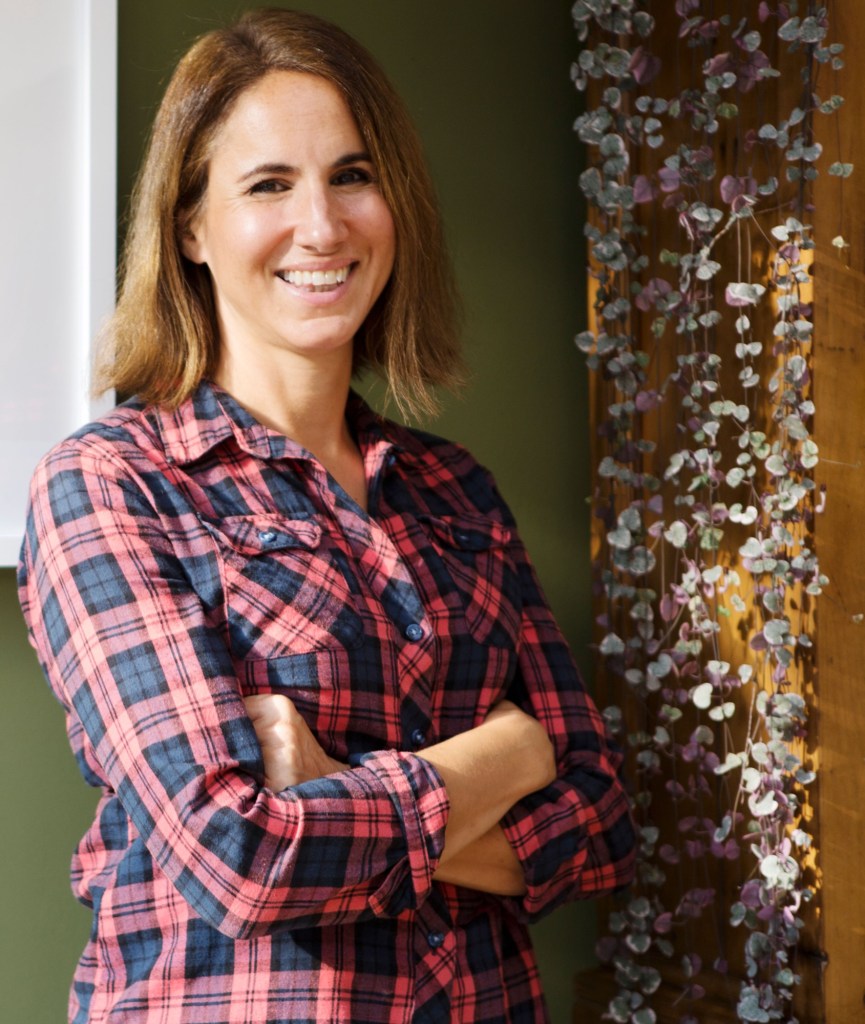
Sarah Sultoon is a novelist and journalist, whose prior work as an international news executive at CNN has taken her all over the world, from the seats of power in both Westminster and Washington to the frontlines of Iraq and Afghanistan. She has extensive experience in conflict zones, winning three Peabody awards for her work on the war in Syria, an Emmy for her contribution to the coverage of Europe’s migrant crisis in 2015, and a number of Royal Television Society gongs. As passionate about fiction as nonfiction, she recently completed a Masters of Studies in Creative Writing at the University of Cambridge, adding to an undergraduate degree in languages, chosen mainly so she could spend time itinerantly travelling the world. She likes running, Indian food, cocktails, playing sport with her children and throwing a ball for her dog, order dependent on when the cocktails are consumed.

Posted in Random Things Tours

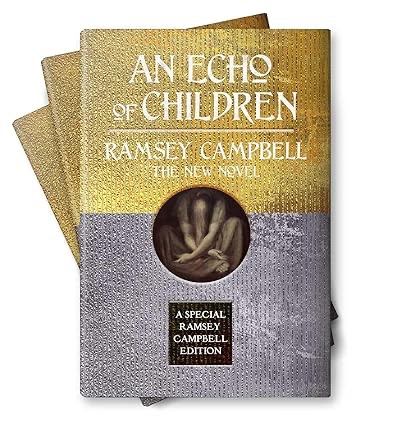
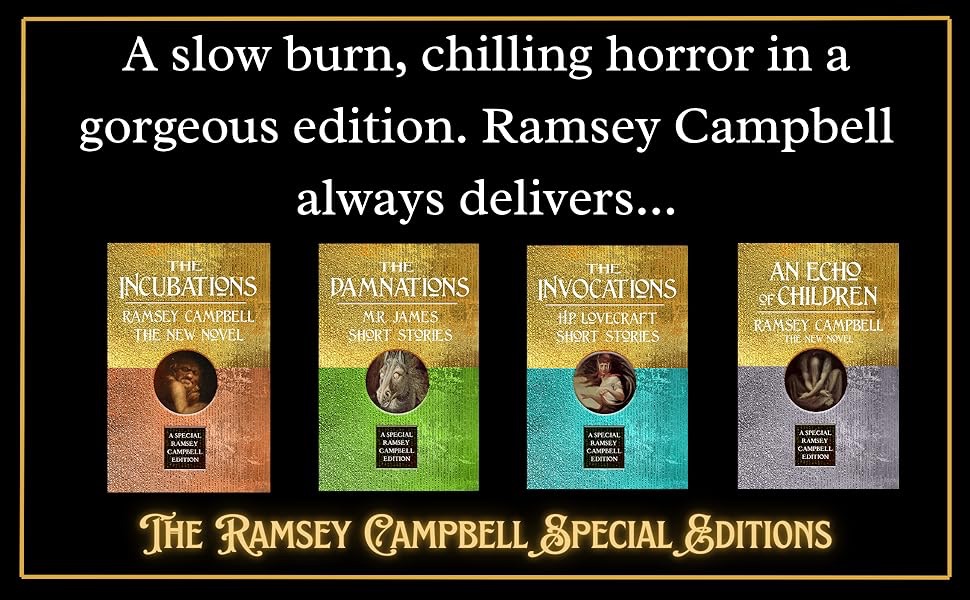
Spotlight Post: An Echo of Children by Ramsey Campbell

That title is enough to get the hackles raised because everyone knows that the most terrifying type of ghost is a child ghost! The novel’s opening does nothing to dissuade us of our fears. Thom and Jude are an elderly couple visiting their son Alan, his wife Coral and their grandson Dean. Recently moved to the seaside town of Barnwall, it’s an environment that should be perfect for children, but there is something right from the outset that feels ‘off’. While Thom and Jude seem natural and doting grandparents, they are warm and seem to have real affection for one another. However, the house feels stifling and distinctly unnatural. There are no toys scattered around and Alan and Coral’s dialogue is stilted and cold, even towards their son. As his other grandparents arrive, it doesn’t improve. As his grandparents give him a present Dean is reminded to thank them even before he’s had chance to do so. Jude’s quiet replies try to chip away at their reserve, thinking perhaps that they’re worried about how she and her husband will perceive Dean’s behaviour. She makes it clear that they’re fine, not at all concerned or bothered by a bit of mess or a late thank you. It simply does not matter. Yet as the day continues I began to think this is how they are all the time. There are so many rules, all of them contrary to how a child of that age would normally behave. It’s no surprise that he’s conjured up an imaginary friend called Heady, who he talks to from time to time. Although he does point out that it’s sometimes hard for Heady to hear him, because he doesn’t always have a head. It’s the first sign that something very weird is going on in this sterile and unpleasant atmosphere. All too soon the significance of Childer Close will be revealed. 

The author clearly has a knack for making the reader uncomfortable and I certainly was. The dialogue didn’t feel real to me and this company of people made me squirm. As someone who immediately sits on the floor with children and starts to play I’m afraid I’d have been very vocal. My first thought was intergenerational child abuse and there are certainly clues that Coral’s parents are disciplinarians when compared to Jude and Thom, but why would Alan go along with it? It really did stretch my belief when time after time Dean is told that his wants and needs don’t matter, in tiny little micro-aggressions from his parents – not being able to play with his present as it will be untidy, talking too much, not leaving his grandparents alone, not finishing his fish and chip dinner. It’s a slow drip drip drip of negativity that drove me crazy. Why wasn’t Thom taking his son aside and asking what the hell was going on? We learn that an unusual number of children have died in Barnwall’s history, so why would a loving parent move there? Alan and Coral believe the house may have a malevolent spirit and perhaps an exorcism needs to be performed. He seems the least likely child to be possessed and by focusing on him in particular, again he gets the message that he’s not like other children and something is wrong with him. What unfolds I will leave you to find out…. 

Meet the Author

The Ramsey Campbell Special Editions. Campbell is the greatest inheritor of a tradition that reaches back through H.P. Lovecraft and M.R. James to Mary Shelley’s Frankenstein and the early Gothic writers. The dark, masterful work of the painter Henry Fuseli, a friend of Mary Wollstonecraft, is used on these special editions to invoke early literary investigations into the supernatural.

Ramsey Campbell (born 4 January 1946 in Liverpool) is an English horror fiction writer, editor and critic who has been writing for well over fifty years. Two of his novels have been filmed, both for non-English-speaking markets. Since he first came to prominence in the mid-1960s, critics have cited Campbell as one of the leading writers in his field: T. E. D. Klein has written that “Campbell reigns supreme in the field today”, and Robert Hadji has described him as “perhaps the finest living exponent of the British weird fiction tradition”, while S. T. Joshi stated, “future generations will regard him as the leading horror writer of our generation, every bit the equal of Lovecraft or Blackwood.”

Posted in Monthly Wrap Up

Best Reads September 2025

September has been a month of crime fiction, with even my one historical read has a mystery at its heart. I’ve honestly been struggling to read and review this month because we are still living without a kitchen. We decided on a new one but it wasn’t as easy as popping in a new one – emptying the bath and having the water cascade through the kitchen ceiling is something I don’t recommend. So we have a new levelled ceiling and a new floor too. The kitchen is in and it’s now just tiling, painting and putting all the contents from the kitchen back! So my round up of September is a little late and a bit sparse!

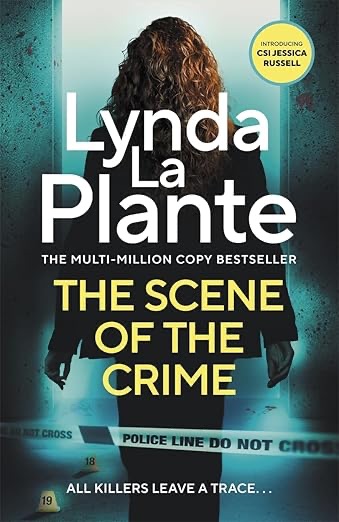
I’m quite the Prime Suspect fan so I was beyond pleased to receive a proof copy of the first in Lynda La Plante’s new series featuring CSI Jessica Russell. I’m fascinated with the psychology of profiling suspects and in awe of how every tiny bit of evidence has to be catalogued and checked. There has to be so much trust between a team of CSIs and the team of detectives they work alongside. Jessica Russell is another strong character for the author, although outwardly she feels a little softer than La Plante’s other heroines. However, she has great confidence in her abilities and intellect as a forensic psychologist and head of the Met’s new MSCAN team. Jess, Diane and Taff have a lot of experience in working together and are hired to create this fast-track forensic team reserved for the most serious of the MET’s cases and they have to hit the ground running. Johan de Clerk is a young South African man who has settled in London after marrying his wife Michelle and started a branch of his family’s wine company that supples their products direct to restaurants across the capital. An intruder disturbed him while sleeping and there was a fight. The intruder fled, leaving Johan with serious stab wounds and a head injury. His sixty-thousand pound Rolex watch was taken along with money from a safe. While Johan fights for his life in hospital, Jess and her team make a start forensically examining the scene. I think what the author has done is very clever in terms of setting up a new series. We’ve spent a lot of time with the central character and there was a fascinating case to get lost in, but there are also clear hints where this might go next. There were whispers of a course with the FBI in Quantico for Jess, some hints of potential romance and I was sure there was a lot more to Guy who’s had a fascinating working life before MSCAN. There were also interesting aspects of her personal life I’d love to explore more such as Jess and her brother’s family background. Her brother is also diagnosed with a life limiting disease that will affect them all. We also don’t get much in terms of Taff and Diane’s lives. All of which shows there is definitely room to grow here, which isn’t surprising given the author’s track record at plotting a series. I can see this being an addictive reading experience and I look forward to seeing where this series goes next. 

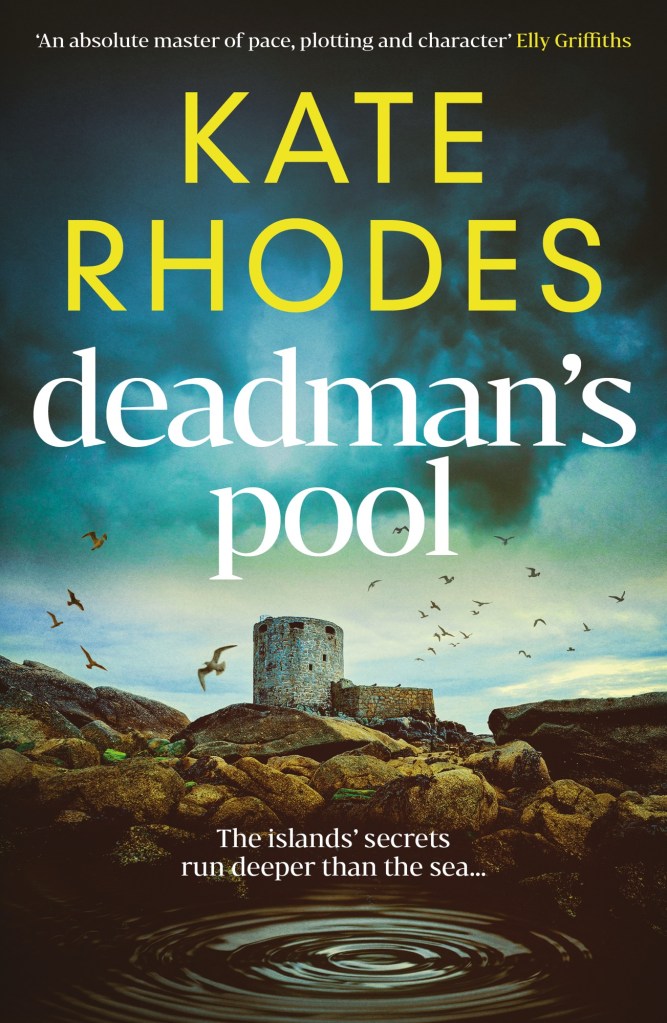
This was a totally new series to me, despite this being the seventh in the Ben Kitto novels. I absolutely loved it! Winter storms lash the Isles of Scilly, when DI Ben Kitto ferries the islands’ priest to St Helen’s. Father Michael intends to live as a pilgrim in the ruins of an ancient church on the uninhabited island, but an ugly secret is buried among the rocks. Digging frantically in the sand, Ben’s dog, Shadow, unearths the emaciated remains of a young woman. The discovery chills Ben to the core. The victim is Vietnamese, with no clear link to the community – and her killer has made sure that no one will find her easily. The storm intensifies as the investigation gathers pace. Soon Scilly is cut off by bad weather, with no help available from the mainland. Ben is certain the killer is hiding in plain sight. He knows they are waiting to kill again – and at unimaginable cost. This is a fantastic crime novel, acknowledging the savagery of someone who will traffic young women and keep them captive and the daily difficulty of living on an island that’s at the mercy of the weather, cut off in the Atlantic. I could see what Ben finds so special about this place, but it does taint his idea that the islands are a safe place. To have had a crime that’s so serious happen right under his nose, involving people he knows, has left him feeling unsure and more suspicious of his fellow islanders. It’s going to be fascinating to see where things go from here for Ben Kitto. In fact I’m so fascinated that I’ve bought all the previous novels in the series to take on holiday with me and have a binge read. I’ve fallen in love with this unusual and wild backdrop but also with this giant of a man who carries the weight of the crimes he investigates with him. 

Nina and her daughter Ash live in the bougie seaside town of Whitstable in Kent. They are grieving for husband and father Paddy, who was killed when a man having a mental health crisis pushed him into an oncoming train. Ash has been living at home since her own mental health deteriorated. She was living in a house in London with two other girls but she developed a crush on her boss, that turned into an obsession. She claimed to have letters from him, but it turned out she’d written them herself and she was eventually diagnosed with borderline personality disorder. She had come home to recover when Paddy, her dad, was killed. When her mum receives a parcel in the post Ash is intrigued. It’s beautifully wrapped, with a note inside from a man who has heard about Paddy’s death. He used to work with him in the 1990s when he Paddy was just starting out. The gift wrapped box contains a Zippo lighter he borrowed from Paddy but never returned. Since then Paddy has built a restaurant empire, with his flagship restaurant in Whitstable and two others down the coast. There is of course a number, should Nina wish to thank him for his thoughtfulness. Over the next few months Nick and Nina start to WhatsApp each other and then go out for a drink. Ash is glad to see her mum with a glow, but there’s something about Nick that’s just ‘off’. She can’t be sure and maybe she’s viewing this situation through her own grief or her personality disorder, but something isn’t right. She needs to find out more about him before he becomes a permanent fixture. 

I galloped through this book as we went backwards and forwards in time, learning a little more in each chapter and inching towards the truth. I loved the fragile Ash who is at that stage of recovery where she doesn’t fully trust her own mind. Is she making too much of this? Is she just paranoid? Worst of all, if she finds something questionable, will her Mum even believe her? She’s so lonely at this point, she doesn’t have many friends to talk to and feels bad she’s had to bounce back home at her age. Her mum deserves to be happy and she might ruin it all. Just when you think you have all the answers, the author takes it to the next level! There were twists here that I wasn’t expecting and I felt very relieved that I once got away from a similar situation relatively easily, if not unscathed. This book is like a twisted knot in a necklace. It takes a long time to loosen it, but then the whole thing suddenly unravels before your eyes. This is masterful thriller writing from an author who gets better and better. 

According to our narrator, a ‘bride stone’ is a precious stone given to the groom’s family as a dowry, although they were sometimes shown a beautifully made fake stone that they could only have checked when it was too late. It’s an apt title for a book where the women are traded in many different ways. It is set just after the French Revolution when many aristocrats left France for British shores and were welcomed in society. Edmée has somehow made her way to Britain, despite seemingly being an ordinary citizen. Yet she is being offered at a ‘wives’ sale’ by her husband’s brother, this chapter can’t be worse than the last. For Duval Harlington it’s something he would never usually countenance, but his circumstances are uniquely desperate. Having been captured by the French while treating wounded soldiers, on his return he is met by one of the family servants who bears bad news. Duval has become Lord Harlington as his father has recently died. Although he has the title, his right to the ancestral home of Muchmore and his father’s wealth is rather more complex. Duval had a tough relationship with his father who didn’t see the point of him training as a doctor. Once he departed for France, Duval’s father installed a distant relative, Mr Carson and his wife, to manage the day to day running of the estate. So his will has an interesting stipulation, in order to claim his inheritance Duval must be married and now he has only two days to achieve this. Otherwise the estate is Mr Carson’s. When his servant points out the wife sale it seems like a means to an end. Duval notices a young woman being led around the room by a scarf round her neck. Her hair looks like it’s been shorn away and she has a veil covering her face, but the buyers call out for it to be removed and he’s shocked to see that one side of her face is swollen and covered in bruises. Someone has recently beaten her very badly. On impulse he puts up his hand and bids for her, his intention being to marry her quickly and claim his inheritance. Then he could seek an annulment. However he does find Edmée fascinating and with the Mr and Mrs Carson ready for a fight this might not be as easy as he thinks. 

This isn’t just a love story, it’s a thriller. Just as Duval starts to settle in to being home, the unthinkable happens. The couple are talked into holding a ball to introduce the new Lady Harlington to society. Their guests come from the local area, but also from London and some are French emigrés including a Marquis. Mr and Mrs Carson are even invited and unbelievably accept. Edmée is a great success as the host in her new role as mistress of Muchmore, but the next morning she has simply vanished. Did she leave of her own accord – perhaps spooked by someone she saw the previous night. Or has something more sinister happened? It could be the work of someone closer to home though – a disgruntled lover of Duval’s or someone determined that their marriage won’t succeed. I was drawn so deeply into the story of these unlikely partners. Duval and Edmée have both had difficult starts in life. It’s a hard read when it comes to the ways women are mistreated but I was hoping for Edmée to have a happy ending. It was clear that this might not be the case, which made for a tense read in those final chapters. The book has a mix of hardship, adventure and mystery interlaced with the romantic possibility of an unlikely match being perfect, if only he can find his unlikely wife.

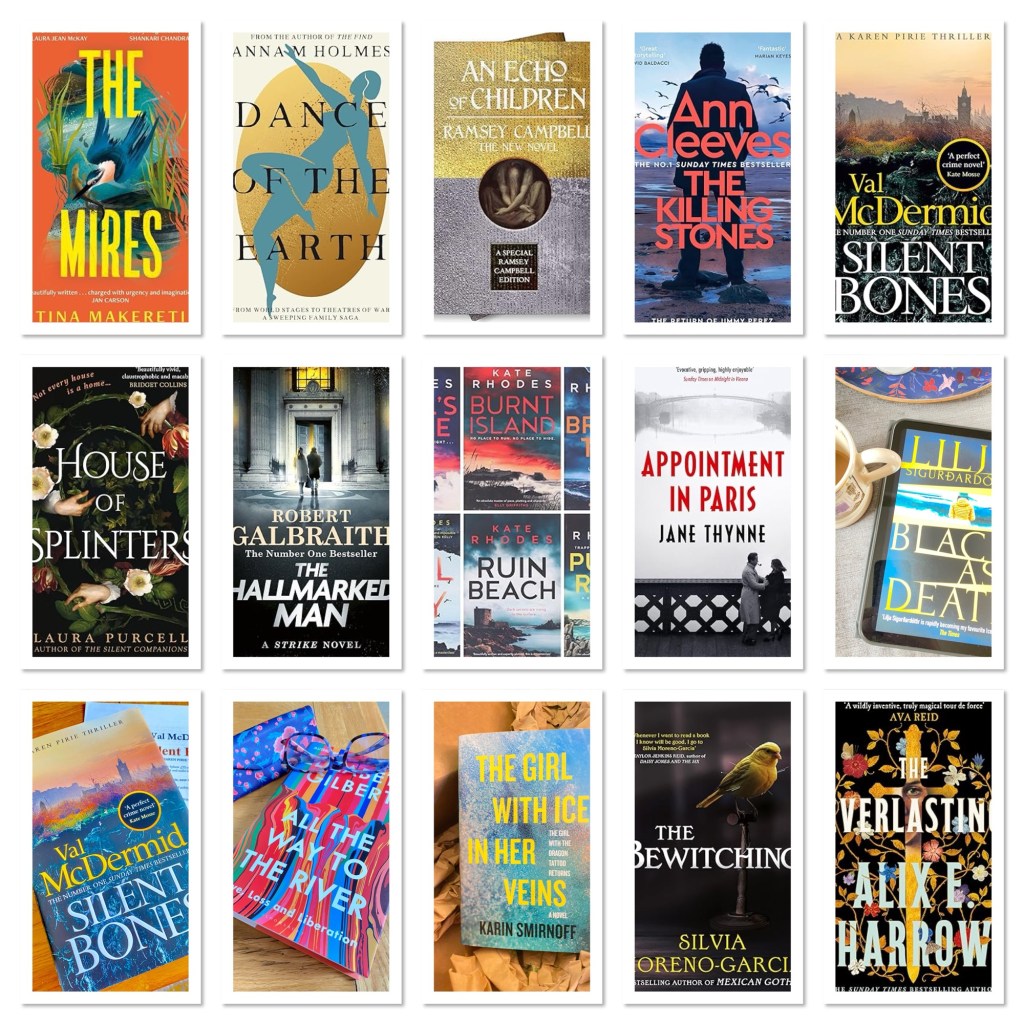
That’s all for this week but here’s my potential tbr for October.

Posted in Random Things Tours

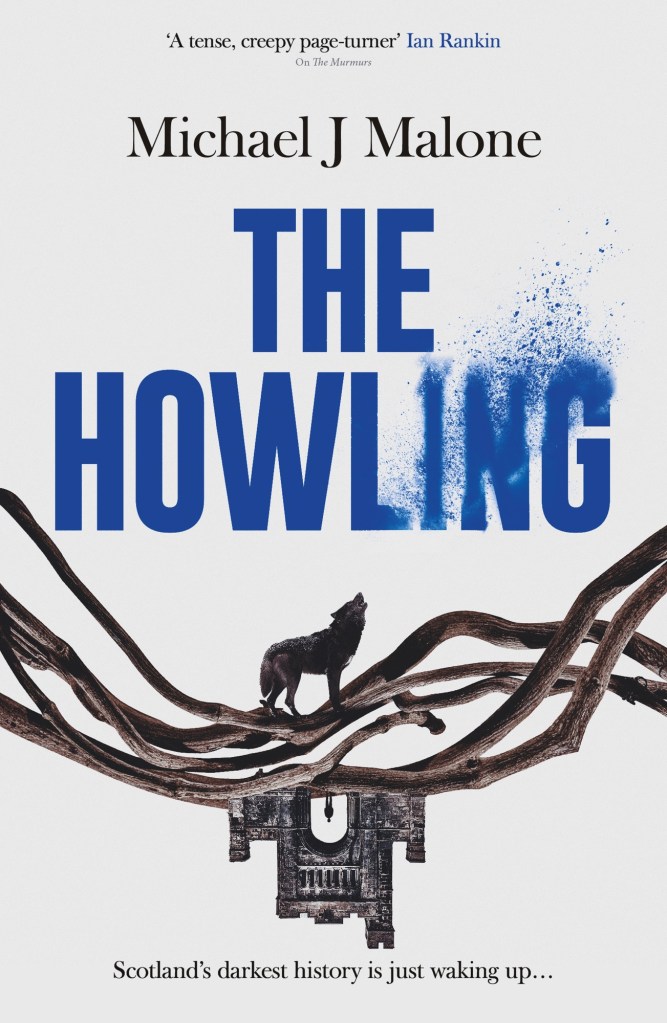
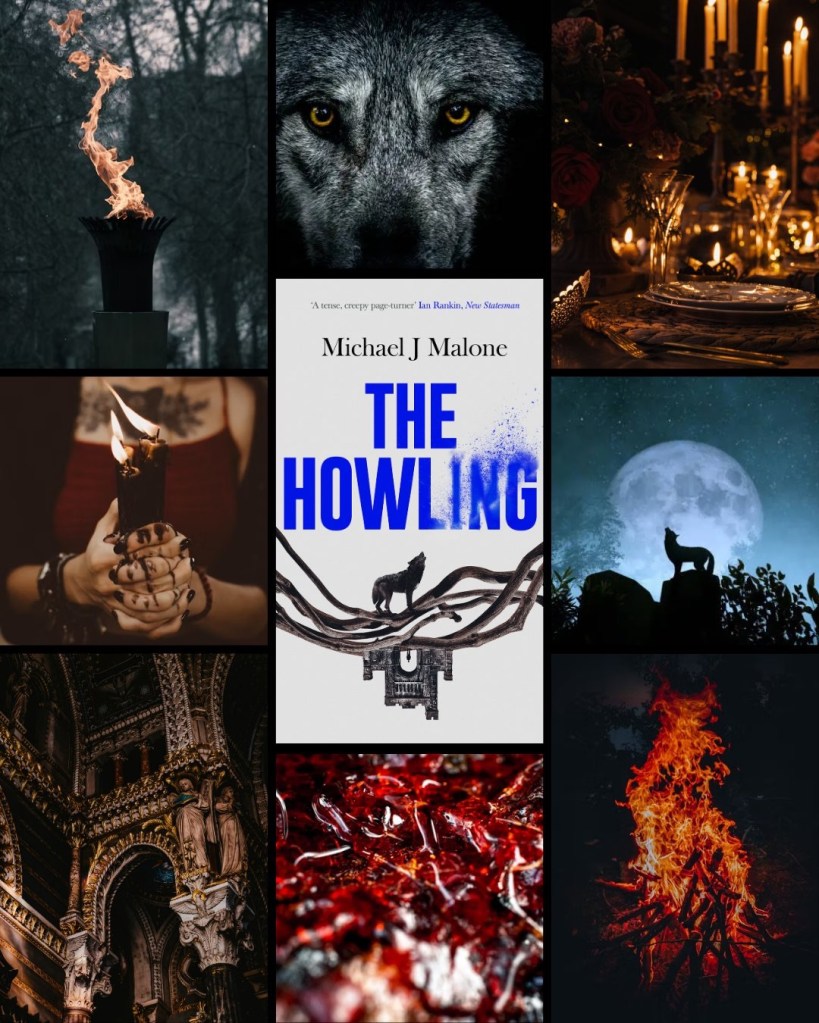
The Howling by Michael Malone 

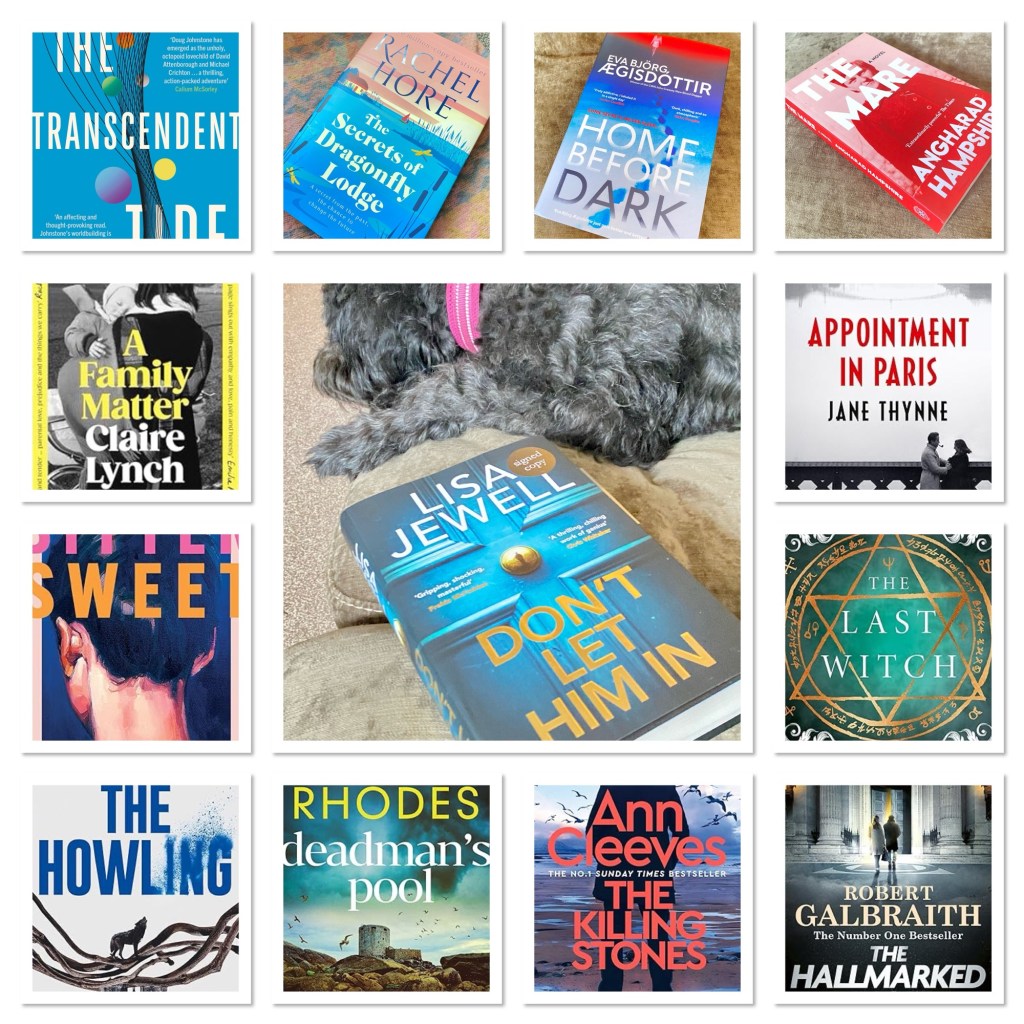
There was such an atmospheric opening to this last novel in the Annie Jackson series, setting up the link between the incredible scenery and Scottish folklore. Then we see Annie in her safe place, the little cottage she calls home nestled in the middle of nowhere. The only place where she gets some respite from the ‘murmurs’, the terrible portents of death she suffers when she meets someone who is going to die. They are a curse, not just because of the painfully loud noise in her head but because if she tells someone they rarely listen and if she doesn’t she’s left racked with guilt. She is taking in some fresh air outside, when she falls into the stream that runs at the front of the cottage. It’s freezing cold and reminds us that whenever Annie starts to feel safe, something comes along to challenge that sense of peace. This time it’s her brother Lewis and his girlfriend Clare with some brilliant news, they’re having a baby. Annie is so excited for them, but there is a downside. Even though it’s very early days, Annie is worried that this child will inherit the family curse of the murmurs. Maybe there’s a chance she can put the curse to bed? The woman who tried to kill her wants Annie to visit her in prison. Sylvia Lowry-Law was pulled into the dark arts by a professor at her university and believed that sacrificing Annie would raise an ancient demon to do her bidding. Now she needs Annie’s help in tracing the son she had adopted 17 years ago. Could this boy be the key to a future where she’s not waiting for the next murmurs to hit? That would be life-changing for Annie, not to mention Claire and Lewis’s baby. 

This is a complicated story that Michael Malone tells with multiple narrators and different time frames, slowly bringing them all together to solve the mystery. Linking with the opening section, there’s a boy called Drew who feels bonded with a wolf cub more than the family around him. 

“I was a wolf. And I was a boy. It was a long time ago. They wore funny clothes […] I would run away from my mother and be a wolf. And we were killed. They said we were witches”. 

It’s been quite a year for witches and books that hark back to King James VI of Scotland and all of them have been incredible reads. Here Malone alludes to the dangerous atmosphere in that time, where even the remotest villages were aware the King had given licence for witchfinders to root out anyone seen as different or troublesome. They would be tested against the king’s book Daemonologie then strangled and burned at the stake. Drew clearly has a similar ancestry to Annie and perhaps a long line of ancestors fighting against lycanthropy. His family are emigrating and as usual the author takes us deep inside the character. Drew’s childhood narrative is so emotive because I understood his feeling overwhelmed in an airport full of people and having to feel all the layers of their anxiety. All he wants to do is curl up quietly with his fellow wolf cubs and when he’s pushed, his shout sounds more like a wolf howl – a definite cold feeling down the spine moment. Then there’s Annie and Lewis who are a great investigative pairing, Annie has bags of empathy and insight even without the murmurs and Lewis is well versed in the technology side of investigation, but one thing they both have is a stubbornness that means once they’ve started looking they can’t stop until it’s done, even when the costs for Lewis become very high. They both go to Ashmoor Hospital, the psychological facility where Sylvia is being treated, but she wants to see Annie alone. What she asks for is help finding her son and puts them on to her lawyer Bernard Peters, a timid soul who has worked for her several years as his grandfather did before him. They were helping trace her family and a rather familiar and colourful tale emerges: 

“Witches and curses and twin sisters who fought over a man, leading to one of them being burned at the stake”. 

There is a sense here of history repeating itself through generations. It blends with Scottish folklore and it being a ‘thin place’, the term for places where the veil between this and the spirit world is almost transparent – those that believe and can tune into it of course. Bernard is astounded by the prominent people who are caught up in this strange ancient order that Sylvia belongs to. She tells him she owned his grandfather and that there are secret records that must be protected. Bernard’s grandfather dying suddenly, leaves some of this dark and dangerous business undone. Even as they try to help him they can’t wait to get into the secret room he’s been searching in. There are secrets in here that could bring down very powerful people, but why would the order keep them? Again it brings to mind current news, the Epstein Files and the buzz around having them released, bringing into the spotlight people we could never have imagined to be involved. I felt for Bernard because everyone else has some understanding of the background to this, but he’s blindsided. Also everyone else is here by choice, whereas he is thrust into the middle of it by birth and the death of someone he loved and looked up to. Now he’s implicated in a widespread network of influence and blackmail. The author balances all these narrative viewpoints so well and each section brings a little more information, with sudden little discoveries that fill in gaps and definitely drip feed tension to the story. 

This series has always been an unusual mix of thriller, family saga, horror, magic, folklore and crime. It defies being placed in a genre and I often find that’s where the best and most surprising reads are. It was lovely to have Sister Theresa make a cameo, with her sketchy grasp of data protection she’s a real asset in finding out about the past and nuns are often very quirky and unusual individuals I’ve always found. I left this novel less worried about Annie, I had always wondered if the isolation and loneliness of life with her gift would overwhelm her. Here I felt like Annie’s murmurs took a bit of a back seat, but she gets stronger with each book; a more resilient heroine who still has an otherworldly and mysterious air about her. I always imagine her rather like Kate Bush, which is always a compliment. The more she finds out about her family, the more settled she seems to be and is still working in the local café despite previous incidents with customers whose deaths she could see. However, as we raced towards the ending with tension in bucketloads I couldn’t be sure she’d be safe. The order is a many tentacled monster and I wondered if they would really be able to sever and destroy all its parts. As Sylvia says, they have ‘fingers in a lot of very interesting pies’. There is no depth they won’t stoop to and they operate very quickly indeed as Lewis finds out. I can’t ever imagine that Lewis and Annie will give up investigating and trying to help others, it doesn’t seem in their nature to kick back and enjoy the quiet life. Not for long anyway. 

Meet the Author

Michael Malone is a prize-winning poet and author who was born and brought up in the heart of Burns’ country. He has published over 200 poems in literary magazines throughout the UK, including New Writing Scotland, Poetry Scotland and Markings. Blood Tears, his bestselling debut novel won the Pitlochry Prize from the Scottish Association of Writers. His dark psychological thriller, A Suitable Lie, was a number-one bestseller, and is currently in production for the screen, and five powerful standalone thrillers followed suit. The Murmurs and The Torments, first in the Annie Jackson Mysteries series, were published to critical acclaim in 2023. A former Regional Sales Manager (Faber) he has also worked as an IFA and a bookseller. Michael lives in Ayr, where he also works as a hypnotherapist.

Posted in Random Things Tours

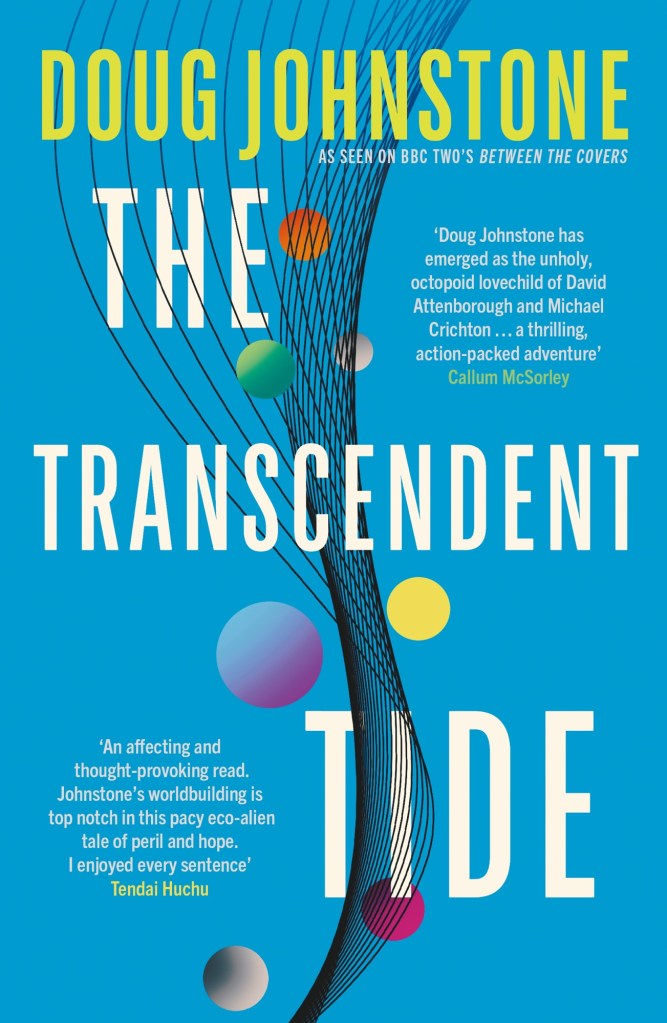
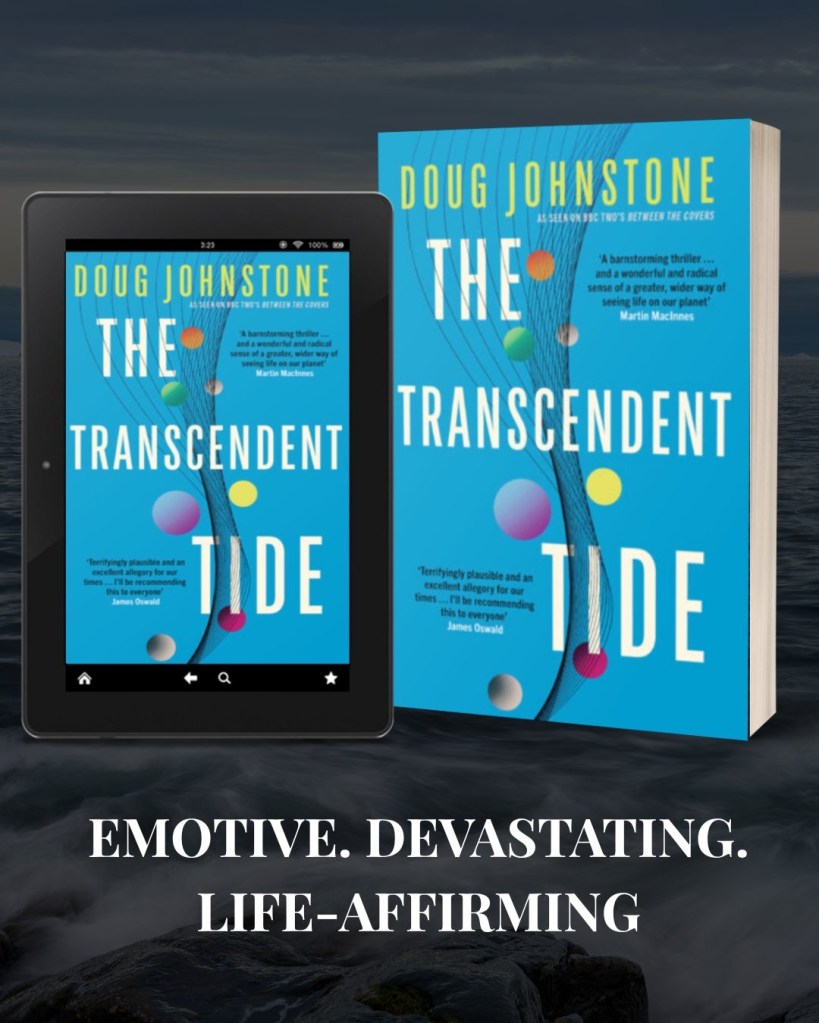
The Transcendent Tide by Doug Johnstone 

The Enceladons are back! We left them on the up, having destroyed the American facility that captured and tortured them with a tsunami wave. Lennox, Heather as well as Ava and her daughter Chloe were recovering from the torture they suffered and had to make a big decision, to leave for the Arctic as part of the Enceladon community or stay on land. Heather chose to leave with them. Now the remaining friends have established new lives. Lennox and his girlfriend Vonnie are studying together at university. Ava and Chloe are settled with Ava’s sister, but they all miss the group especially Heather, Sandy and Xander. It’s hard not to miss the extraordinary experiences they had, such as Lennox becoming part of Xander and flying off into space. It is Ava who brings everyone back together after Chloe appears to suffer a stroke, only to return back to normal, just as the friends did after first meeting Sandy. A follow-up MRI shows a brain tumour and Ava has a difficult decision to make: does she stay put and follow the medical route or does she try to find the Enceladons? She wonders whether the torture Chloe endured or her communications with the creatures could have caused this illness? She also remembers how Sandy cured Heather’s cancer and decides to take her daughter to Greenland. At the same time, Lennox and Vonnie are approached by an Norwegian tech billionaire who wants to meet the enceladons. Even the logo of his new company is a moon being held in giant tentacles. The couple are very unsure and inside I was screaming at them not to work with him, but when Ava contacts them about Chloe they both agree to work with him under certain conditions. Will those conditions be met and is this man as trustworthy as he seems? 

Niviaaq is our first new character, an Inuit woman who has lived in her small community on Greenland her whole life. The community still live like their ancestors with the principals of working with nature, not against it and they are feeling the effects of climate change. Glaciers are melting and species like polar bears are unable to hunt for food. Out on her boat, Niviaaq encounters another vessel, upturned and badly damaged. She also finds a man floating upside down in the water, hypothermic and barely alive. His coat has a symbol of a moon and octopus with the word ‘Sedna’, the name of an Inuit sea monster. She drags the man into her boat and takes him for medical help. The Inuit people have several legends of strange monsters  but lately the Northern Lights have been very active and people have seen strange glowing objects on the ice. Are these signals that something is going to happen? I loved this character throughout the book, mainly because she is so wholly and unselfconsciously her self. She is a strong woman, mentally and physically. She can take care of herself, taught from a young age how to use a rifle, to sail boats and fish on the ice floes. She doesn’t show off about this strength, it is simply part of her that can be used whenever it’s needed. She is used to long spells of time alone so she comes across as self-contained and very grounded. She is calm and gentle, not chatty but only speaking when necessary. I loved that she and Ava had an instant affinity and I could see how cozy and safe Ava would feel when with her, something she needs after her experiences with her violent husband. 

As always with Doug there are politics behind the actual story and setting it in Greenland, when it has been a constant topic in the media since Donald Trump came back into power had to be deliberate. It brought back to me how brash and ignorant the US Vice-President JD Vance appeared when he visited earlier this year. His first comment, that nobody had warned him how cold it was, just made me groan with embarrasment. It was no surprise that he was only welcome at the US Airforce Base. Their blatant and greedy desire for Greenland and parts of the Ukraine is all about mineral mining, taking what they need and further damaging the fragile ecosystem for its human and animal inhabitants. There are only two reasons a multi-billion dollar organisation would build a base there, either to exploit Greenland or the Enceladons. Probably both. Even though the business owner Karl Jensen initially impresses Lennox with his reaction to meeting the enceladons, while I was still very wary. He calls Sandy and Xander ‘they’ without prompting, because they don’t see themselves as individuals but as a collective. I loved this because it shows how easy it is to shift your perception and take care with other people’s feelings – it reminded me of the series of Taskmaster where I pointed out to my husband that Greg Davies had been using ‘they’ as Mae Martin’s pronoun for the whole series and he hadn’t even noticed. 

He seems to have a deep and profound experience on their first dive and when Sandy connects with him telepathically he suddenly understands everything that is wrong with the world. It’s the capitalism, the greed and simply exploiting every resource the earth has to give, without once considering whether it is ours to take. We don’t treat our fellow creatures as equals but as something we have dominion over and the right to kill for resources or for pleasure. We kill for yet more, when we already have so much. It’s an absolute tour de force of a speech and for a moment life is hopeful. However, as is pointed out by Vonnie, no one becomes a billionaire through philanthropy. Human nature intervenes suddenly and with finality, because it’s just so much easier to carry on as we are instead of making those personal and political changes. This is where Niviaaq is a brilliant contrast to mankind in general. When she and Ava have to take shelter in the hunting hut – one of several up and down the glacier, always ready for anyone to use – it made me realise how much the Inuit people have in common with the Enceladons. As she’s offered whale blubber to eat, Ava refuses it with a shudder. Niviaaq explains that the whale is suited to the environment they both live in and if they do hunt a whale, every single part of it is used. Eating two tiny chunks of it will give them the calories they need to survive the cold and the exertions of the journey ahead. To kill it, then refuse to use it for the purpose of staying alive is an insult. It made me realise that if people had stayed in their tribes and clans and used their original principles in this way – just like the Aboriginal and Māori people, and the Native Americans – we would have always lived in harmony with the earth. It’s possible certain animals wouldn’t be extinct and we might not have faced climate change. Their creation myths are so different too, not giving us dominion over the animals but being a harmonious whole. Or is human nature always determined to chase money and progress until we wipe ourselves out? 

I won’t divulge any more of the plot because that would ruin it for you. I get so excited about reading Doug’s books because reading them is a little like connecting with one of Sandy’s tentacles for a second. Ideas and light bulb moments appear in my brain and I have to write down all these weird notes and things to look up before I can review. Then I rabbit on about them to anyone who will listen for months to come! You can read these books on a surface level and they are still brilliant. The characters are full of heart and love for each other and their Enceladon friends. It’s also full of heart racing action sequences that would be amazing on screen – especially when all of the animals come along. You become so absorbed that you forget it’s all a bit weird, then you read a sentence like ‘Chloe was playing ball inside Sandy’ and it blows your mind. However, if you do delve under the surface it’s a profound comment on our times, our politics and capitalist lifestyles. Read the whole series and you’ll see how the author balances profundity, action, romance, sci-fi and humour like a magician. You’ll finish them, as I did, with a tear in your eye for these extraordinary creatures and a world with so much more variety and beauty than we’ll ever deserve. The Enceladons wake people up – yes I’m using that word ‘woke’ often thrown about as an insult these days, but why wouldn’t you want to shake an alien octopus’s tentacle and become enlightened, compassionate, open and perhaps your very best self? 

Out Now from Orenda Books

Meet the Author

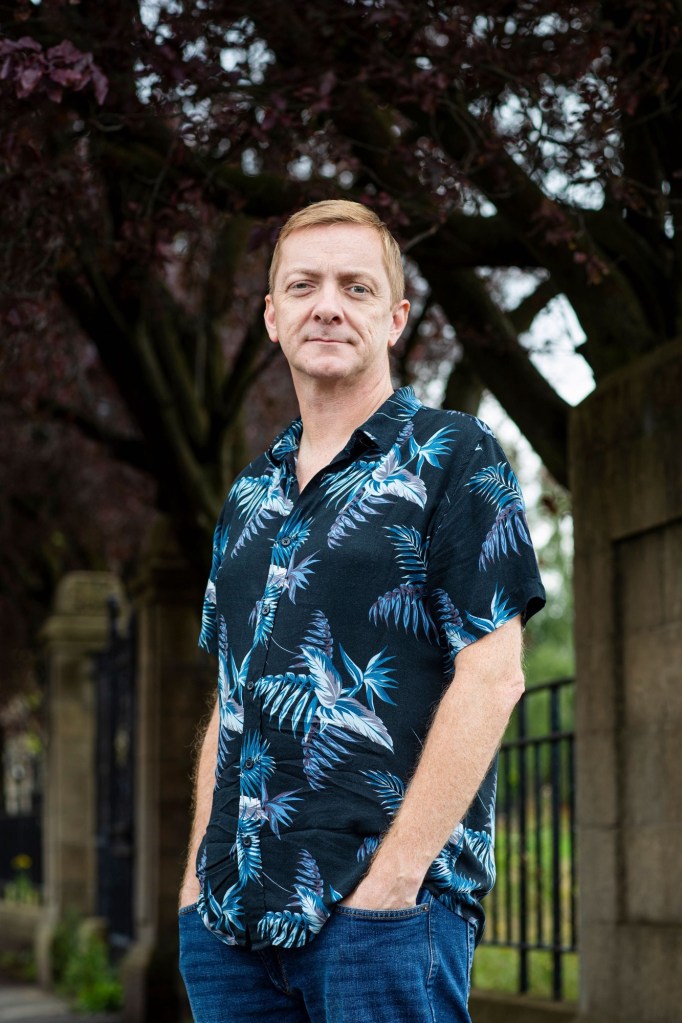
Doug Johnstone is the author of 18 previous novels, most recently Living Is a Problem (2024) and The Collapsing Wave (2024). The Big Chill (2020) was longlisted for Theakston Crime Novel of the Year, and Black Hearts was shortlisted for the same award. Three of his books, A Dark Matter (2020), Breakers (2019) and The Jump (2015), have been shortlisted for the McIlvanney Prize for Scottish Crime Novel of the Year.

He’s taught creative writing and been writer in residence at various institutions over the last decade, and has been an arts journalist for over twenty years. Doug is a songwriter and musician with six albums and three EPs released, and he plays drums for the Fun Lovin’ Crime Writers. He’s also co-founder of the Scotland Writers Football Club, and has a PhD in nuclear physics. He lives in Edinburgh.

Posted in Publisher Proof

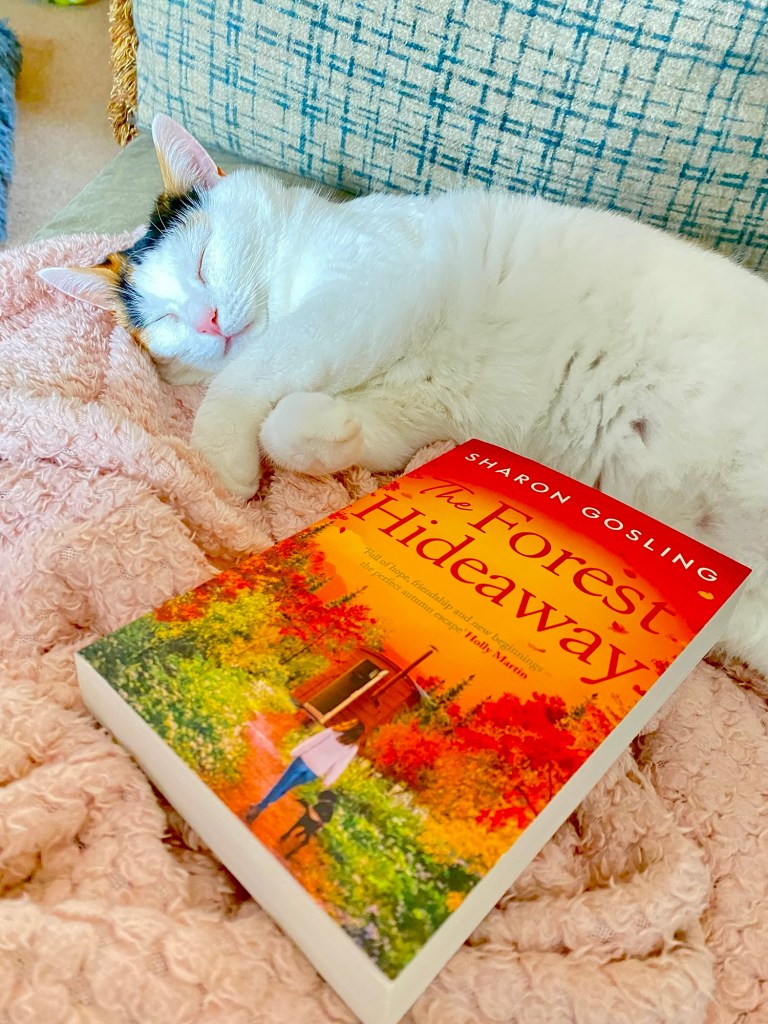
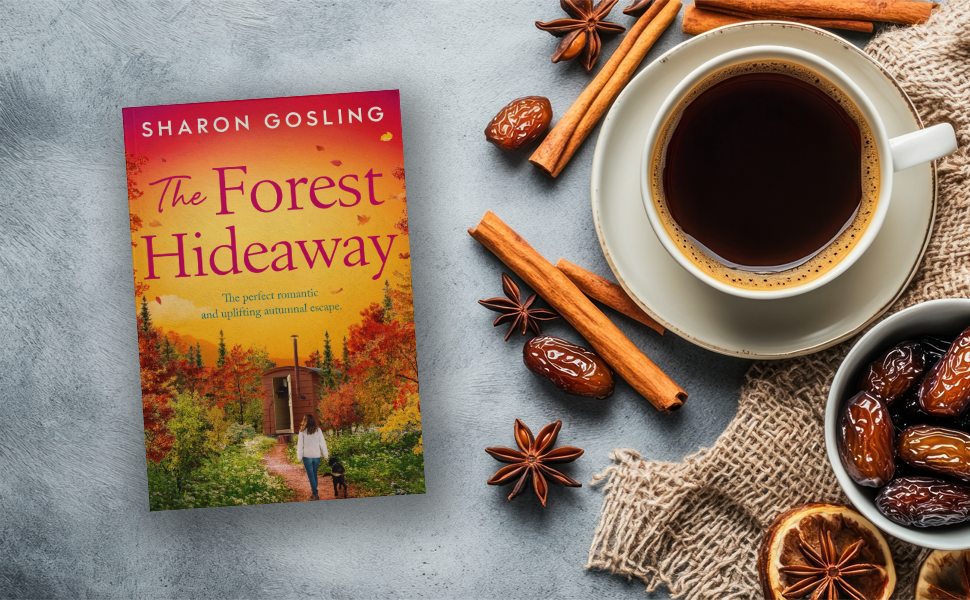
The Forest Hideaway by Sharon Gosling

Hidden away in Cumbria’s Gair Forest is the most romantic setting, a ruined castle. It’s a haven for local history lovers and a once in a lifetime project for architect Saskia Tilbury Martin. She’s finding it difficult to get a builder to take the project on so Owen is her last hope and she’s already running late to meet him. She knows that she’s overdressed for the great outdoors and she’s had to borrow her friend’s BMW sports car because her trusty Land Rover is in the garage. In a way this is Owen’s last chance too. Previously in the forces, he has been a builder for a number of years but the business is struggling and he knows he’s not pulling his weight with wife Tasha and their gorgeous little girl. They have debts and if he doesn’t take this job he’s looking at failure, but when Saskia turns up with her sports car, three inch heels and double-barrelled name he’s isn’t impressed. Especially since she’s an hour late. He dismisses her as a rich girl throwing her money around. However, when she gets the plans out he can’t help but be intrigued. Saskia assures him that she wants to preserve what’s here, to leave the ruin looking as it does now but create a number of platforms inside to house her living spaces. She even intends to leave the slightly dilapidated oak tree growing in the centre of the castle, with a glass roof that can open in good weather. She doesn’t tell him that she’s the architect because other builders have been unsure about working with an unproven architect before. Owen takes the night to think about it, but when she offers him ten grand up front to get started he knows he can’t turn her down. Saskia reflects that they don’t have to like each other, they just have to be a good professional team for the project and save this beautiful building that holds so many memories for her. 

Owen soon finds he has assumed a lot about Saskia. When he sees the cabin she tows onto the site with her Land Rover back on the road, he thinks it’s an affectation to need a whole kitted out living space for when she’s here in the day. The builders have to make do with bare sectional buildings with no comforts. When he’s there early one morning, he’s surprised to see her appear from the cabin in her old denim shirt and her hair tied back, all set to walk her dog. She’s living in the cabin when he’s assumed she had a boutique hotel booked for the duration of the build. I wouldn’t have blamed her, having half my house out of bounds for building work at the moment I’d give anything for a couple of nights in a nice hotel! The truth is Saskia doesn’t have many people or places she could say feel like home. Her inheritance is from a grandparent and she has no relationship with her mother, instead she has best friend Vivian. Owen isn’t doing any better on the family front, Tasha has put up with a lot and has decided that their relationship just isn’t working anymore and he’s bunking down with friend and fellow builder Stuart. I found Saskia interesting and loved that she had a dream she was seeing through. She seems very sure of her ability and has confidence in her design which I found inspirational because I’m not confident and I’m rubbish at finishing projects. I admired that perseverance because she isn’t just hanging around waiting for life to happen. Owen’s life path felt more passive, despite seeing different parts of the world his life hasn’t been his own, it belonged to the army. He’s also drifted in his relationship. It clearly hasn’t been right for some time and Tasha tells him that his long absences on detachment meant they never really built a life together. As soon as he left the army and was home full time, they could both see their differences. Neither of them have tried to address the decline and now it’s too late. Maybe he needs to spend some time with Saskia because her self-reliance and determination could inspire him. 

The setting is absolutely stunning. I love the Lakes, a love that was awakened again on a recent visit. I loved the idea of taking such a romantic ruin and making it into a home without taking away any of the decay that makes it so picturesque, the beauty being tied up with its imperfection. The isolation is fascinating too. I used to live in a large house in the middle of nowhere and friends would be aghast that I didn’t shut my curtains or check that all five doors were properly locked every night. Saskia isn’t afraid of the isolation either and I liked that about her. The history of the site is important too, both Saskia’s link to it but also the local history buff’s attachment to the building. So far they haven’t even given Saskia a chance, stating they want Gair preserved as it is without realising that’s exactly what she’s trying to do. I loved the idea that there are:

‘Two types of history here […] the castle ruins, the ancient oak tree. They both have worlds within them”.

This is so true because they hold the history of many people over centuries, enduring every new generation and what they bring. When we think about it like that it’s clear that making it a home again is exactly the right thing to do, reintroducing humans to the building and the nature surrounding it. I thought the added intrigue of Roman ruins under castle was fascinating and I was again impressed that Saskia had thought of this and ordered drone scans of the castle and underneath to see what the layers of soil revealed. I was hoping the local history lovers would give her a chance if she tried to her plans to them. 

There is a ‘will they, won’t they’ to this couple’s relationship and while a touch of romance is always nice it isn’t the main focus here. Owen slowly comes round to Saskia once he’s realised how much of his assessment of her was based on assumptions. She isn’t a rich girl playing at property development. Owen doesn’t know himself as well as Saskia does and part of that is because of his years in the army. It takes time after coming out, to get to know the person inside and decide what you want the rest of your life to look like. I imagined that if Tasha hadn’t been brave enough to say something that morning, Owen would have drifted along for years in an unfulfilling marriage never knowing any different. His growing inner world was very well written as he learns to read other people better and how to be a responsible co-parent with Tasha for the future. Whereas Saskia has worked on herself and needs Gair to be her home, somewhere to feel grounded. When she needs support she checks in with Vivian and I loved this idea of ‘found family’, the people you choose to support and sustain you in life when the family you’re born with can’t. They aren’t an obvious match and this is not one of those books that ends with a big fairytale wedding. We just have the sense that they’re gradually moving towards each other as the build progresses and they learn how to be a team. The oak tree felt like a metaphor for both these people, but also for life in general. It’s not the most beautiful tree, in fact part of it has been hit by lightning and someone had an abandoned attempt at pruning it once, very badly. Despite these setbacks the oak has kept growing, not in the most beautiful shape but still reaching for the sky. This is the perfect, cozy, autumnal read.

Out now from Simon & Schuster Uk

Meet the Author

I’ve been writing since I was a teenager, which is now a distressingly long time ago! I started out as an entertainment journalist – actually, my earliest published work was as a reviewer of science fiction and fantasy books. I went on to become a staff writer and then an editor for print magazines, before beginning to write non-fiction making-of books tied in to film and television, such as The Art and Making of Penny Dreadful and Wonder Woman: The Art and Making of the Film. 

I now write both children’s and adult fiction – my first novel was called The Diamond Thief, a Victorian-set steampunk adventure book for the middle grade age group. That won the Redbridge Children’s prize in 2014, and I went on to write two more books in the series before moving on to other adventure books including The Golden Butterfly, which was nominated for the Carnegie Award in 2017, The House of Hidden Wonders, and a YA horror called FIR, which was shortlisted for the Lancashire Book of the Year Award in 2018. My last children’s book (to date) is called The Extraordinary Voyage of Katy Willacott, and was published by Little Tiger in 2023. 

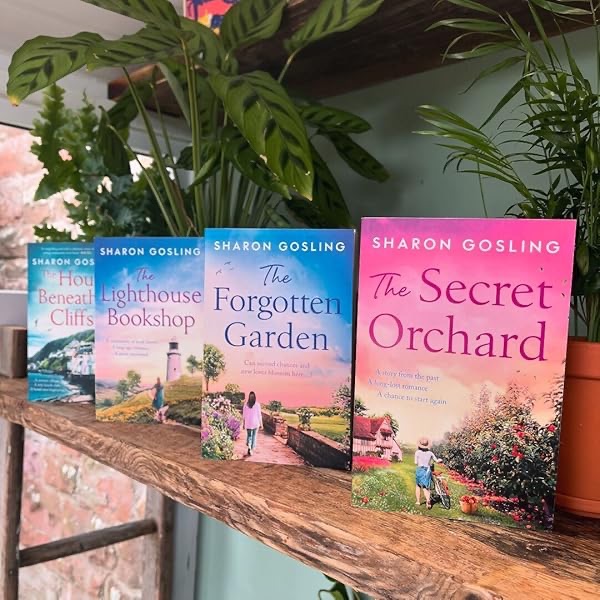
My debut adult novel, The House Beneath the Cliffs, was published by Simon & Schuster in August 2021. Since then I’ve written three more: The Lighthouse Bookshop, The Forgotten Garden, and The Secret Orchard, which is out in September 2024. My adult fiction tends to centre on small communities – feel-good tales about how we find where we belong in life and what it means when we do. Although I have also published full-on adult horror stories, which are less about community and more about terror and mayhem…

I was born in Kent but now live in a very small house in an equally small village in northern Cumbria with my husband, who owns a bookshop in the nearby market town of Penrith.

From Sharon’s Amazon Author Page 28th August 2023

Posted in Monthly Wrap Up

Best Reads August 2025

It’s been a month of crime/thriller reads and historical fiction, plus a couple of crime and historical combinations which I really enjoy. It’s also been a month where I found it difficult to concentrate because finally, after five years of brown tiles, lime green walls and cupboards with no handles we have been able to afford to renovate the kitchen. So for two weeks we have had no ceiling, no floor and no hob. As of Monday, we will be cooking in the garden until everything is back together again. I am not good with chaos so if you can imagine me wedged into a corner on the sofa with the contents of every kitchen cupboard taking up the study and other end of the living room. Hopefully only two weeks left to go. It can’t come soon enough. The other half is building the seating area under the pergola at the bottom of the garden. It feels like a symphony of drills and hammers at times but it will be lovely to be able to go and sit outside and read with roses growing around me. So much to look forward to in September with some fantastic reads on the list too. ❤️ 📚

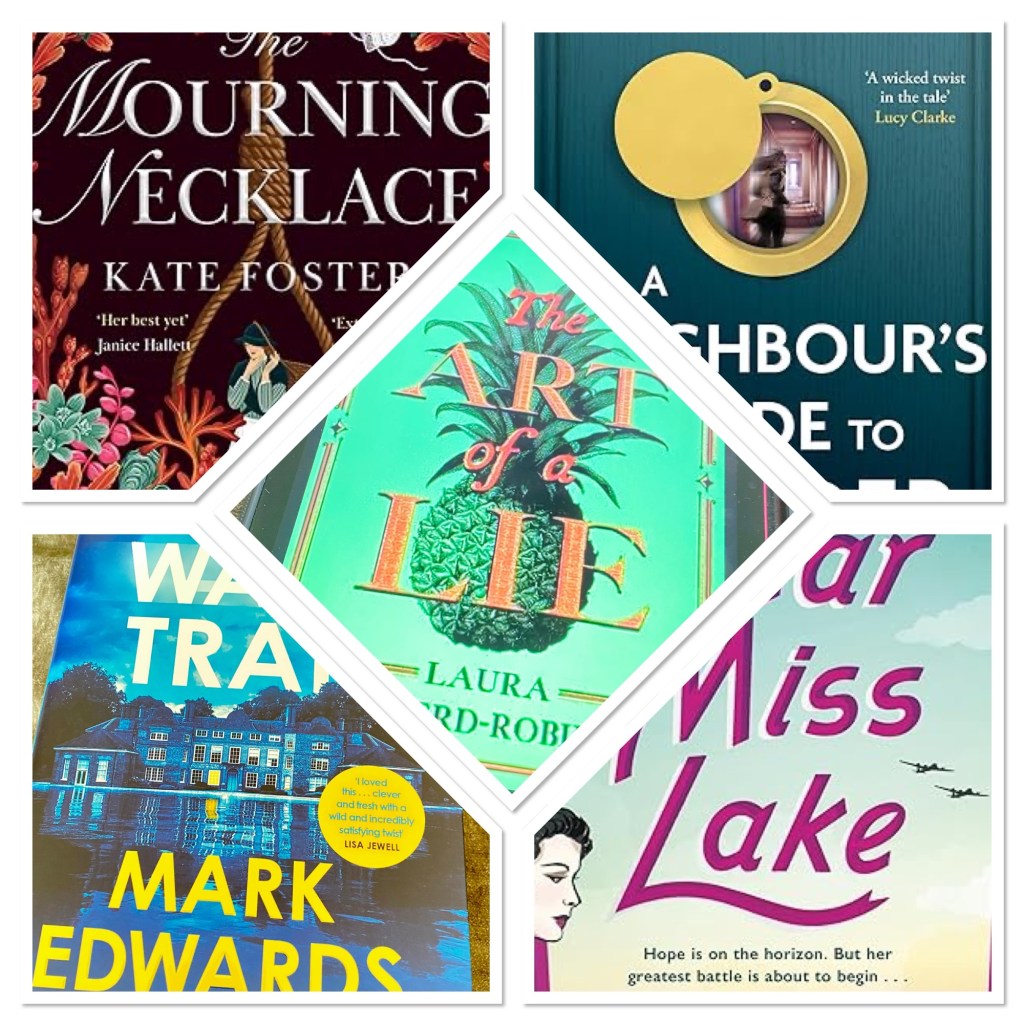
Unbelievably this is the third novel from Kate Foster and firmly puts her on my ‘must-buy’ authors list. They’ve all been worthy of a place on my best reads list but I think this is her best yet. Maggie is a young girl from Fisherrow whose father is a fisherman and her mother ons of the fishwives who help bring in the catch, clean it for market and then repair nets ready for the next day’s fishing. She, her parents and sister Joan live in a one bedroom cottage but Maggie dreams of a life so different to this, where there isn’t back breaking work and she’s not at the mercy of her father’s drunken temper. So when ambitious trader Patrick turns up at the door, looking for somewhere to keep goods for making perfume she senses a chance. She knows Joan is prettier but she would make a far better wife to help him in his business. Luckily he sees this in her and after a short courtship they become married and set up home in a cottage in the village. They are happy until suddenly Maggie gets the news that a press gang has been to the hotel and Patrick was one of the men taken for the navy. Somehow Maggie finds herself travelling to London, to build her new life. At a stopover in Kelso she takes a couple of weeks to stay and earn some money. She knows now she is pregnant and conceals it, to keep on working. So how does she come to be in Edinburgh a few months later, being sent to the gallows on charges of concealing a pregnancy and killing her baby. Yet miraculously she survives the hanging, how and what she chooses to do with her second chance at life are the main contents of this brilliant novel. I loved the history, the growing up that Maggie does on her journey and how brilliant an advocate Kate Foster is for these women she finds in historical documents, often in dire situations at that time for ‘crimes’ it’s hard to comprehend today. Most of all I loved the bold, feminist take on Maggie’s life and the links that could be made with modern day politics. Brilliant.

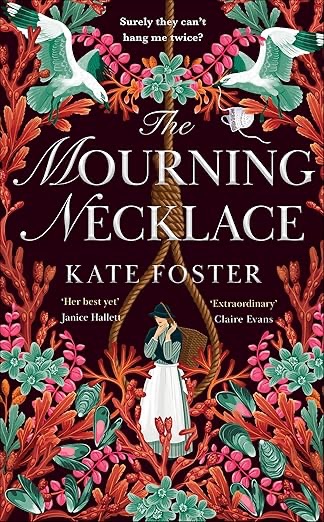
My second historical fiction read of the month was this mesmerising and clever thriller from Laura Shepherd-Robinson that’s jumped straight onto my books of the year list. The Art of A Lie begins in a confectioner’s shop called the Punchbowl and Pineapple, run by the newly widowed Hannah Cole. This is the late 18th Century and Hannah grew up in the shop that was started by her grandfather. Her husband Jonas had been her father’s apprentice and now she must keep their shop running for it to be handed to his cousin. Jonas was found down river, washed up by the Thames with head injuries and missing anything of value including a watch given to him by Hannah that used to belong to her grandfather. Novelist and magistrate Joseph Fielding visits Hannah to say he is investigating Jonah’s murder, for he doesn’t think it’s as cut and dried a case as it might seem. Thank goodness for the lovely William Devereux, a friend of Jonas’s who introduces himself ar the funeral. He calls on Hannah at the shop, hearing of Joseph Fielding’s interference in the case and hoping to be of help. He gives her his grandmother’s recipe for iced cream, thinking it may be a hit with her customers and could tied her over until the case is closed and Jonas’s estate is released. Laura tells this tale so cleverly, drifting between narrators and shocking us with an aspect of their characters or the case. Both are fascinating and not necessarily what they appear to be at first. With each revelation I became more and more intrigued with this cat and mouse game and the psychological make up of those involved. Hannah is an astute businesswoman, good at reading people quickly and usually accurately. It’s hard to tell at times who is scamming who and I was so utterly entranced I was still thinking about it a week later. Simply brilliant in its setting, historical background and the constant simmering tension.

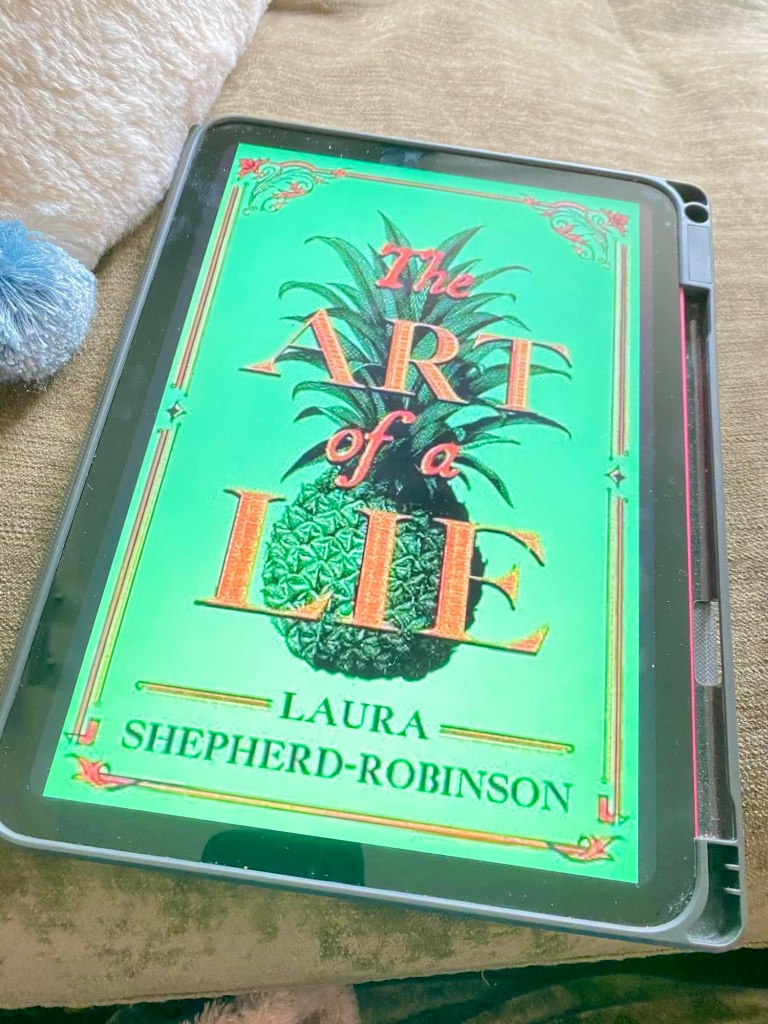
A modern thriller this time from one of the Queens of the genre and this really was an up to the minute tale of secrets, lies and murder. Gwen is an older widow, living in a complex of smart apartments in a nice area. She has decent neighbours, some of whom she might call friends. When her nearest neighbour Alex is looking for a new lodger she meets one of the candidates, Pixie. They start chatting and she is pleased to hear when the Britpop one hit wonder decides to offer her the room. Pixie gets a job at the bakery and cafe that Gwen frequents and they get on very well, so Gwen is disturbed to hear what sound like arguments from across the hall. She also catches a phrase that sounds like ‘you knew the deal when you moved in. When she catches up with Pixie she’s disturbed to hear that the deal involves sex in lieu of rent. She confronts Alex and takes Pixie in, writing a complaint to the building’s governing board. Her neighbour Dee tells her that she talked to her daughter Stella about it and she’s been making a documentary news item about the growing ‘sex for rent’ scandal. Would Pixie like to be interviewed? Soon the story is out of control, Alex is angry and denying everything and Gwen is public enemy number one. I loved how ‘of the moment’ this was with Gwen at a loss when it comes to freelance investigative journalism, sex for rent, trad wives and influencers. As she starts to feel out of her depth, those around her continue to manoeuvre and manipulate until life will never be the same again. This was so tense and the eventual murders most unexpected indeed.

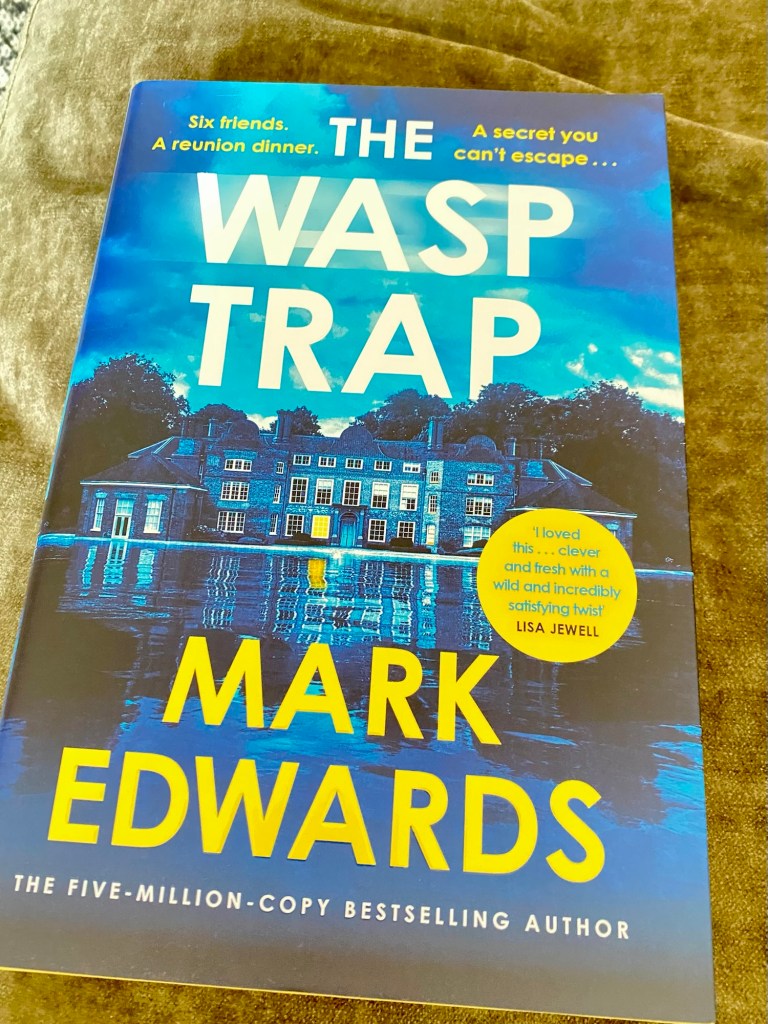
I had the luck to read two Mark Edwards novels in August. a throwback to last year and this, his brand new thriller. The Wasp Trap was the jokey name given to a side project. While trying to form an algorithm for one of the first ever online dating apps, a group of university students have another idea. Each one specifically chosen by their professor, Sebastian, they are the best in their fields and are spending their summer at his mansion in the country. Will tells our flashback story, the creative who is meant to be coming up with a name for their site he is also hopelessly un love with Sophie but too scared to make a move. Together they come up with ‘butterfly.net’ but it’s Lily who comes up with a side project – an algorithm that could identify psychopaths. Statistically one of them could be and since they’re serving as guinea pigs for the dating apps why not for this? Now decades later they are gathered again, this time at Theo and Georgina’s mansion – the couple got together that summer and are married with two daughters. Strangely, they announce that one of their daughters is missing so it seems an odd time to have a dinner party. They also have caterers which is unusual for them, so Will isn’t shocked when it turns out to be a cover. The fake chef is Callum and he gives them an ultimatum- he’s giving them an hour to think and when he returns he wants to know the secret from that summer. If the secret isn’t divulged then someone will die. The tension rises as the hour ticks down, who has a secret? How do they know which is the right one? As Callum comes back into the room they’re left in no doubt that he means business. The rising and falling of tension is pitch perfect and in between the action we get flashbacks to that summer where more than one person is holding a secret and we start to wonder who exactly was the psychopath that Lily was searching for.

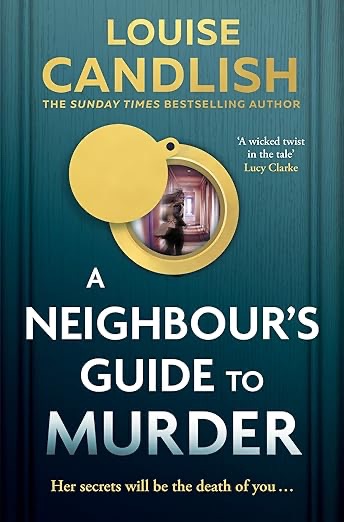
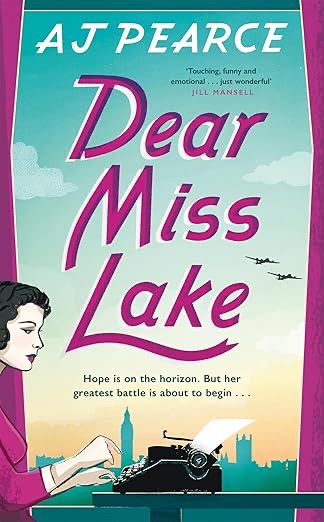
My final recommendation for last month is this last novel in the historical fiction quartet about the agony aunt of the Women’s Friend, a magazine running during WW2. It was lovely to be back with the gang and particularly Emmy Lake as they enter the final and arguably most difficult stretch of WW2. After five years of war both the team and their readers are tired. As a way of boosting morale at the magazine Emmy suggests they all decamp to Bunty and Harold’s in the countryside. As Hitler’s V1 and V2 bombs start to hit, it will certainly be safer. Emmy strongly feels they all need a boost in order to keep supporting and inspiring the women who read their magazine. If they’re tired and the magazine suffers, how will their readership keep the fight going? Emmy throws herself into rural life and is soon organising games nights, competitive knitting and planning the very important wedding of their officer administrator Hester and her fiance Clarence. She also has a phone call from the ministry to travel abroad and report from the French field hospitals and even manages to mastermind a break into husband Charles’s barracks before they’re both deployed. Emmy has no idea how much she’s going to need those around her in the coming months as her hardest test is yet to come. On their return to London she receives a telegram to say that Charles is missing, presumed captured in enemy territory and she has the agonising wait for the confirmation letter. Then Hester receives a blow when Clarence calls to say he’s being deployed in three days, two days before their planned wedding. Hester is inconsolable and after catching Emmy in a moment of frustration, she disappears. However, Emmy isn’t one to dwell on her misfortunes for long and I wondered what schemes and plans she would hatch next. 

The author doesn’t let us forget the sacrifice and loss in people’s lives, but still manages to bring in humour and a defiantly upbeat, make do and mend attitude. This is the closest I’ve seen Emmy come to breaking point and it’s hard to when you’re the one whose role it is to buoy everybody else up. As she finds out though, those who she’s helped and supported are so happy to be able to return the favour and support her. This is a set of books I always recommend, to women of all ages, because it’s so easy to relate to one of the characters and absolutely root for them. The main impression I take away from them is that sense of female solidarity. The instinct we have to come together, share the load and make each other’s lives a little easier from taking on someone’s children all the way down to being there with a meal or a shoulder to cry on. Emmy uses her writing to do the same and triumphs in being exactly what the magazine promises – the Woman’s Friend. 

Here’s a hint of what I’ll be reading in September:

Posted in Random Things Tours

The Betrayal of Thomas True by A.J. West

In simple terms, this fascinating book is a love story. Two people meet in unlikely circumstances and fall in love. However, it’s so much more than that, but that’s what happens when something as simple as love is an act of subversion or rebellion. When I last read a novel like this I was on my 18th Century literature module at university and I had the luck to be taught and supervised for my dissertation by Dr. Ian McCormick who was an 18th Century literature specialist and also taught our Gothic, Grotesque and Monstrous module. He wrote a book called Secret Sexualities, a collection of 17th and 18th Century writing that covered cultural constructions of eunuchs, hermaphrodites, cross dressing, mannish women, female husbands, trials for sodomy and other legal injustices. I was absolutely fascinated because it was an utterly different picture from the 18th Century literature I’d read before. To be honest that was mainly Jane Austen and from her writing you might think that a fellow’s main preoccupation was finding a suitable wife and all women were waiting for Mr Darcy to come along – although I’m a Captain Wentworth girl, all day long. What my tutor’s book did for me was the academic equivalent of Sarah Water’s transgressive novelisation of the 19th Century. Variations in sexual preference is nothing new and taking a marginalised group and placing them firmly within their historical context is what is going in with A.J. West’s novel. Thomas True is well-researched, beautifully characterised and fits perfectly into its time period rather like an 18th Century version of Tipping the Velvet. 

The book that came most to mind, because of its bawdy humour and characterisation of a young innocent seduced into licentiousness on their adventures into the big city, was Moll Flanders by Daniel Defoe. However, I also had Tom Jones in mind by Henry Fielding, a picaresque novel where our hero embarks on a journey and is lured into bawdy and roguish adventures. A picaresque novel is also critical of the society it represents, using satire to make its point usually in the favour of the lower classes. Here our hero is drawn into the ‘Molly’ culture, practiced at Mother Clap’s house and while considered corrupt by some, it turns out to be less judgemental and violent than both the religious and legal communities, both seemingly riddled with cruelty and corruption. In this case they employ a spy known by the mollies as the ‘Rat’, his purpose is to give up individual mollies to the justices who would have them hung. The hangings are a horribly public spectacle with the crowd baying for blood and the selling of candles or other mementoes by shop keepers. This is where the novel sits for me, yes it’s crime fiction, historical fiction and also a love story, but it’s the picaresque novel’s bawdy, episodic and satirical mix that grounds Thomas firmly in the tradition of 18th Century literature. 

Thomas sets off for London to escape a miserable family life, where he’s clearly not the man his father would like him to be. On his journey he is accidentally parted from his coach and luggage, deciding to trust a huge bear of a man who offers him help. What he doesn’t know is that Gabriel is a Molly, one of a group of men who enjoy dressing in women’s clothes and have names for their alter egos. They also prefer the love of another man, something taboo and unnatural in contemporary society. The law would punish them by death. Thomas can’t possibly know how important this moment will be in his life, but it’s pivotal to his journey, his future and his heart. Far from the genteel worlds of Bridgerton and Jane Austen, the author creates a richly imaginative setting that brought all my senses to life – but not in a good way. London is grim, overcrowded and disgusting. One scene where a body needs to be extracted from a ditch full of sewage is revolting. The two rescuers slipping and sliding into faeces and almost losing the body to the depths. Even Mother Clap’s has a grotesque feel. These are not the preened and powdered men you might expect. Gabriel is huge, hairy and spends all day doing a heavy building job. The atmosphere is also dark and threatening, if the mollies are the light then their nemesis belongs in the shadows as do the curious urchins who are so ignored and forgotten they’ve literally become the darkness they inhabit in the menacing surroundings of Alsatia. The ever present fear of not knowing who the Rat is, make even the lighter scenes hum with tension. While the mollies are dancing, wearing their finery or even sneaking off to be ‘married’ – their euphemism for sex – no one knows if the Rat is among them, watching and biding his time. 

How far would the Rat go to gain information or incriminate the mollies? I was intrigued as to what their motive was? Religion, fear, money or more personal motives? Whatever the Rat, or the justice’s motives they mete out terrible violence. As if the public hangings were not enough, the Rat is handy with a knife too. One molly has his tongue cut out and another is stabbed and left in sewage. Being pilloried turned out to be way more violent than being popped in the stocks for the afternoon and being pelted with rotten vegetables. This is all told in the same detail the author describes the London streets running with urine and smelling so bad it takes a few days to become immune to it. It brings a reality into sharp focus, this isn’t just our current climate of punching down against the poorest and most vulnerable or venting hate on social media. This is wanting someone dead for the perceived crime of who they love. Thomas is naive, clumsy, endearing and ripe for the picking. He guides us through most of this in wide eyed wonder at first, but we also have Gabriel’s take on events and he really is the opposite of Tom. He is older, has known who he is for a long time and battles with regret, grief and shame. Gabriel is haunted, emotionally and literally. His profession means he’s in an intensely masculine environment, working on completing St. Paul’s and the chandlers where Tom is learning a trade. He’s drawn to Tom’s naivety and excitement at the new life he’s found and his molly name – Verity True Tongue. They’re so different but have that chemistry. It’s undeniable, but only Gabriel who fully understands the price they may pay for choosing each other. 

I was bowled over by the incredible detail in the setting but also the characters they meet. Every one of the mollies is different are so different from each other. Some are welcoming and nurturing, while others are cynical and suspicious. I have a hatred for people who want to control other’s behaviour through a moral or religious code. Thomas’s family believe they’re doing the right things to save their souls and to lie with a man is a sin against God. The justices are no better than- using the legal code to outlaw sodomy, but then resorting to punishments of horrific violence without irony. It’s inevitable that with such blood lust and religious fervour, we might have to say goodbye to some of the wonderful characters yet it is still devastating when it happens. This group of men, when in their safe environment, are full of joy, fun and laughter. When they are free to be themselves they create an incredible atmosphere. It’s a party I’d love to go to and I honestly can’t wait for it to become a film. The eventual ending might leave you needing a box of tissues, but the journey Thomas and A.J. West takes us on is glorious. 

Meet the Author


A.J. West’s bestselling debut novel The Spirit Engineer won the Historical Writers’ Association Debut Crown Award, gaining international praise for its telling of a long-forgotten true story. His second novel, The Betrayal of Thomas True, is published July 2024.

An award winning BBC newsreader and reporter, he has written for national newspapers and regularly appears on network television discussing his writing and the historical context of contemporary events.

A passionate historical researcher, he writes at The London Library and museum archives around the world.

Posted in Compulsive Readers

Into the Fire by M.J.Arlidge

This book opens with a heart-stopping scene that sets the pace for the rest of the story. Helen is relaxing after meeting her lover in a luxury hotel. While he has a shower, she is in her nightgown and robe enjoying the night time view over downtown Southampton. Movement suddenly catches her eye and she’s drawn to a woman who’s running down a darkened street towards a precinct of shops, pursued by two men. As they catch up, one of them pulls out a bicycle chain and starts to beat the woman. Helen doesn’t wait or think, tearing out of the hotel room and down several flights of stairs as she’s too impatient to wait for the lift. She runs down the dark street hoping that the only shop she saw with a light on has a customer or staff who’ve called the police. Helen flies at one of the attackers, who is taken completely by surprise and she soon disables the second, turning to the woman who has been badly beaten. She looks like she’s from the Middle East perhaps, with two very distinctive tattoos placed on her forehead and chin. Unfortunately, Helen has committed the cardinal sin of combat and has turned her back on her attackers. The next thing she feels is a huge bang to her head and then everything goes dark. This opening scene tells me this will be a gritty, modern thriller with a kick-ass heroine. 

This is the thirteenth novel in the DI Helen Grace series and I’m seriously out of touch with the character, having only read the first couple of novels after picking them up in a book swap. I’m sorry I didn’t read the rest. Helen is working on her own initiative in this novel. She handed in her notice at the end of the last, with her protege Charlie being promoted in her place. Helen doesn’t know what the next step is, but she’s been enjoying the break. The only thing she misses is the camaraderie of a team and although she has enough money to really think about what’s next, she is anxious about it. Although life will bring it’s own answer soon enough and it might be the last thing she’s expecting. She starts to investigate alone, feeding into Charlie who is trying to target traffickers and their victims coming through the port in lorries and containers. The story is told mainly through Helen’s eyes, but also through the narratives of two other women. Viyan is another trafficked Kurdish Syrian woman and Emilia is a journalist whose father is dying in prison. At first we’re not sure how all of these narratives fit together but slowly they form a cohesive picture. Viyan’s narrative is grim and brutal. I wanted everyone who moans about asylum seekers to read this novel and understand the desperation and the lies of the traffickers that drive them here.

This operation involves a Dutch trafficker and then a gang master who provides their labour for specific contracts, this one in the NHS. I was furious with the NHS procurement manager who has simply turned a blind eye when accepting an obviously low quote for services, knowing that somewhere along the line someone is being exploited. I think many people might be surprised if all migrants were removed from the labour market, because I think the care sector and the NHS would collapse. Here the migrants are working an NHS contract disposing of clinical waste. Not only are corners being cut where safety is concerned, but if she saw the conditions, the state of the workers and the brutality meted out the procurement manager would be ashamed. The beatings and whippings with chains are only the first in a series of punishments, leading up to the ultimate solution – the incinerator. In fact after hearing the horrific death of her friend, Viyan sees a chance to escape and takes it. Will she be able to escape the minders this time and if they catch up with her can she survive? 

Emilia is a journalist on the crime beat but we meet her as she visits her elderly father in hospital. He tells her he’s dying but wants her to know he has hidden some of his ill gotten gains at the home of his most recent partner. He wants Emilia to talk her way into the woman’s home, find his hiding place and bring out whatever’s inside the hold-all. Emilia knows there’s more to this than he’s saying, but sets out to try. This mission puts her in the path of Helen and the villains linked to her trafficking case. Having such strong women as our main characters was great and Viyan had all my empathy and admiration. I was so desperate for her to make it back to her family. Helen is formidable! Despite having horrendous violence dished out to her, she keeps going and can definitely hold her own when she’s not outnumbered. What I loved most about her, was her inability to turn away from injustice and suffering. She sees a terrible crime occurring and although she’s no longer in the force, she doesn’t walk away and hope someone else might deal with it. Where in the world could she use these natural skills that isn’t in the force? She’s also great at supporting and boosting other women, like her replacement Charlie, making sure she knows everyone has imposter syndrome and she does have what it takes. You will hold your breath for the final showdown and all the women involved. The short punchy chapters are action packed and keep you reading ‘just the next chapter’ until it’s 2am. I now need to set aside time and read the ten novels between this and the last one I read. I’ll probably load up the kindle with them before I go on holiday so I can carry one without interruption. This was a belting, action-packed, female led, crime thriller and I recommend it highly. 

Out 3rd July from Orion Books

Meet the Author

M.J. Arlidge is a novelist, screenwriter and producer. He is the author of the bestselling DI Helen Grace thrillers including: Eeny Meeny, Pop Goes the Weasel, The Doll’s House, Liar Liar, Little Boy Blue, Hide and Seek, Love Me Not, Down to the Woods, All Fall Down and Truth or Dare.

M.J. Arlidge has also worked in television for many years, specialising in high end drama production. In the last five years he has produced a number of prime-time crime serials for ITV, including TornThe Little House and Undeniable. He has written for Silent Witness and also pilots original crime series for both UK and US networks.

Posted in The Book Folks

Murder in the Lake by Sadie Norman DC Anna McArthur No 3.

When a body is found in a Norfolk Lake it falls to the serious crime team to investigate whether this is an accident, suicide or murder. It’s identified as local man Barney King, who lives close to the lake in a row of worker’s cottages. It falls under the remit of DC Anna ‘Crazy’ McArthur who starts to investigate with her small team. The duty police officer has had a look around Barney’s cluttered cottage and has found a scrawled note laid on a pile of books and post on the dining table. 

“I killed her. I deserve this for what I did all those years ago”. 

This intrigues Anna because it brings up questions about the note and whether this might be a serious crime case after all. When they return to the station to report to their DCI Aaron Burns they’re shocked to find a coincidence. The derelict cottage next to Barney’s was once the home of Clara Burns and her sons Callum and Aaron and she was the focus of a missing person’s case. She disappeared when her boys were asleep upstairs and her husband was in the local pub. Anna is in a difficult position, her relationship with the DCI is a known secret in the team but not to the wider force. He has never told her about his mother, leaving her to believe both parents had died a long time ago. There’s no question that Aaron must distance himself from the investigation, but should Anna? If he wants Anna to find out what happened to his mother, he will have to distance himself professionally and emotionally. Now she’s under so much pressure, with a cold case linked to Barney King’s death and the need to solve them for both personal and professional reasons. Just to make things worse she’ll have to babysit a new DCI and Chase is a bit of a conundrum. He doesn’t know the area and could be here to spy for the Chef Constable. Finally, she has to do it without Aaron by her side for emotional support and to sound out ideas with.

I live in Lincolnshire so have some knowledge of the fen areas around King’s Lynn and Wisbech. They’re not that different from central Lincolnshire, having similar geography of flat farmland and dykes dug in the 14th Century to drain the land for farming. As you drive further south, rather than barley or oil seed rape, there are fields growing flowers and vegetables. In fact there are times of the year when you open the car windows and there’s a strong smell of brassicas in the air – cabbage, sprouts and broccoli. I also know the non-PC terms the used for the villagers that the author refers to. These are isolated and sometimes insular communities, quite some distance from a town, where everybody knows each other’s business and secrets are kept for generations. This is only part of our setting, with Norfolk being DC McArthur’s patch. It’s still a rural area though where wildlife, poaching, farm thefts and firearms licences would be a normal part of police work. The serious crime teams don’t usually touch on those daily matters but they do form part of this case. Barney King is elderly, a lonely man living in the middle of nowhere with a derelict house for a neighbour. His companion is his dog, which seems to have disappeared too. He lives by poaching to top up his pension and this forms one of the team’s first questions – why would a man who owned a shotgun choose to drown himself? 

The team meet some very interesting characters in the course of this investigation and the author carefully paces the secrets and lies that are uncovered. Barney’s landlord and local farmer Harry is now so unwell he has a full time carer, Luisa. His son Garrett is taking over the running of the farm. When they find out Barney had visited the neurology department at the hospital just before his death, they view the CCTV and get a surprise. Why would Garrett and Luisa be visiting the hospital together? Especially since Garrett is married to the local GP. What happened to Barney’s own family? Anna manages to track down his daughter Mags and her granddaughter. They’re a fierce pair, arguing at top volume as the police arrive. Why didn’t they have a relationship with Barney? Even stranger, why can’t Anna find the death certificate for Mag’s mother, if she died of cancer several years ago? 

The author paces this really well, slowly and methodically building the case, but with spurts of heart-stopping action including a firearms incident that shows us exactly why Anna earned her ‘Crazy’ nickname. All the while there are strange and uncomfortable undercurrents. As Aaron’s brother is drawn into the case, Anna is the awkward position of being connected to him but not able to say anything. She doesn’t know how to describe what she is to Aaron – girlfriend seems the wrong word for grown-ups, but so does partner when Aaron is asking for space. Are they anything to each other any more? Then there’s DCI Chase, sent as an outsider to oversee the team on this case. He partners up with Anna who can’t work out whether he’s socially awkward or has an ulterior motive. Occasionally he seems to stray into dangerous territory and Anna thinks he must know, but she’s also sure that no one on the team will disclose her and Aaron’s relationship. I couldn’t make up my mind about him, but he definitely set me on edge. This was a really compelling case and I didn’t guess how it would turn out. I was desperate throughout to find out where Barney’s dog was though. The final attempts to secure the murderer will definitely have you on the edge of your seat. I enjoyed this and will be going back to read the first two novels in the series.

Independently Published on 9th June 2025

Meet the Author

Sadie lives in West Norfolk with her husband, two children, and demanding cat named Random. She works in the education sector, but her real passion is for writing stories with a gripping mystery, attractive setting and a host of characters to love, hate, laugh with and root for.