Posted in Monthly Wrap Up

Best Books July 2025.

I’ve had a lovely reading month because even the books I had for blog tours, turned out to be fantastic reads. Any of these could easily make my end of the year list and some are by authors I’ve never read before. Others were from series I’d lost touch with and one has an incredible back story of the struggle the author had to get it published. I feel very privileged, looking back and realising what an incredible month of reading I’ve had. I’m already looking forward to next month’s choices.

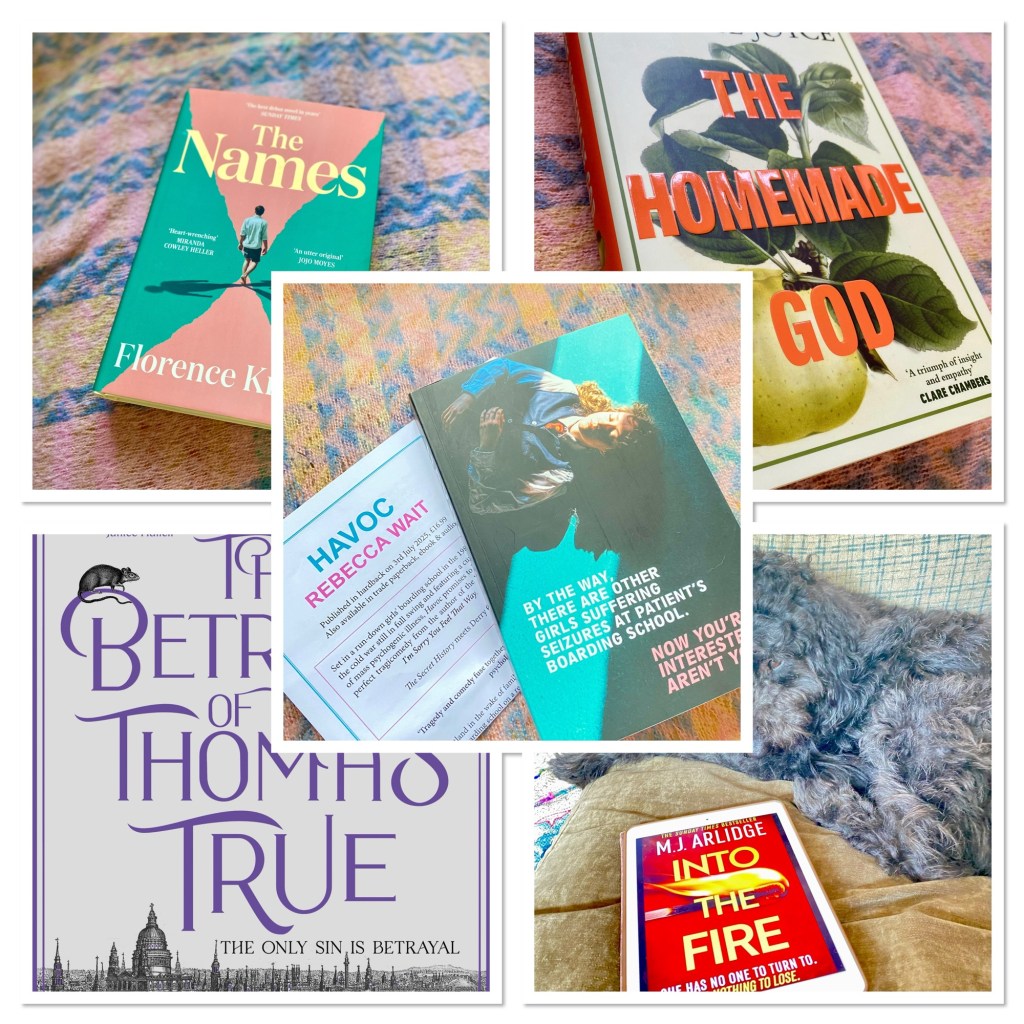
This was one of those unexpected joys, a book I’d heard very little about and chose to read with my Squad Pod just on a short synopsis. I had no idea whether I’d enjoy it or not, but it turned out to be fascinating and very apt, because I’d been reading about Functional Neurological Disorder. Havoc is a brilliant combination of school drama, mystery and dark comedy featuring a wonderful character called Ida who lives on a remote Scottish island with her mother and sister, after fleeing from her mother’s boyfriend Peter. What started as a lonely but safe place to live, became impossible when her mother did something unforgivable and the island’s inhabitants turned against them. Deciding she wants to leave, Ida looks for private boarding schools who provide scholarship places and discovers one, as far away from Scotland as she can find. St Anne’s sits on the south coast of England, so remote and underwhelming that the school are terribly surprised when their scholarship student actually turns up. No one ever has before, so they don’t have anywhere suitable to put her. The school is ramshackle and in danger of falling off the cliffs and the food is questionable and often tastes of fish, even when it isn’t. Ida is placed in a double room with school miscreant Louise and starts to settle in. However, things take a very strange turn when Head Girl Diane becomes unwell, starting with strange jerks of the arms and soon descending into full blown seizures. Soon after, Diane’s friend April is sick and then starts the familiar pattern of jerks. By the time a third girl has the same symptoms outside agencies such as environmental health, doctors and the police start to descend on the school. Is this illness a virus or is it environmental? Could it be something more sinister like poison? This was a fascinating and often amusing read, with an illness that shares the symptoms of FND – a syndrome where neurological symptoms are present and real, but are often somatic. Although it’s also possible some malign force is at work, especially when rat poison appears in an unexpected place. Louise and Ida are a dastardly duo and I also loved the friendship between the school’s geography teacher and her strident and rather cynical flatmate. Little surprises are everywhere and I would love to meet the characters again,

This book was the total opposite of the last in that I’ve heard nothing but praise for A.J.West’s newest novel. I’d loved The Spirit Engineer so much and I knew the struggle he’d had to get this published, but he believed in it and I’m so glad he was picked up by my favourite indie publisher Orenda Books. A match made in heaven. Having been supervised for my university dissertation by a lecturer who specialises in 18th Century Literature and secret sexualities, this was the perfect marriage of subject and style for me. I love when post-modern authors write back to a time in history to place people into their historical context. These are people who were erased from history due to their disability, sexuality or the colour of their skin. This has been done so well by authors like Sarah Waters who features 19th Century lesbians, Lila Cain whose main character were freed slaves in The Blackbirds of St Giles and Suzanne Collins, whose novel The Crimson Petal and the White is narrated by Sugar, a young prostitute with a disability.

Thomas True wears its vast amount of research lightly and definitely follows the style of the picaresque novel, where a young naive person makes their way into the big wide world with some humorous and rather risqué adventures. This young innocent travels to seek his fortune in London and is robbed on the highway, falling into the ‘wrong’ company – here this is the Molly House run by Mother Clap. A giant but gentlemanly man called Gabriel has brought him here and he is intrigued by the merriment, the wearing of women’s clothes and the safety of a place without scrutiny. This is above all a love story.  Thomas can’t possibly know how important this moment will be in his life, but it’s pivotal to his journey, his future and his heart. Far from the genteel worlds of Bridgerton and Jane Austen, the author creates a richly imaginative setting that brought all my senses to life – but not always in a good way. London is grim, overcrowded and disgusting. One scene where a body needs to be extracted from a ditch full of sewage is revolting. Even Mother Clap’s has a grotesque feel. These are not the preened and powdered men you might expect. Gabriel is huge, hairy and spends all day doing a heavy building job. He and Thomas have a complicated journey, one naive and optimistic and the other haunted by his past. You’ll be transfixed, hoping for their outcome to be a happy one but knowing this is a city that punishes ‘mollies’ by hanging and when the mysterious ‘rat’ betrays the men from Mother Clap’s the danger becomes very real. You can tell I loved it by the amount I write about it! It’s a definite must read.

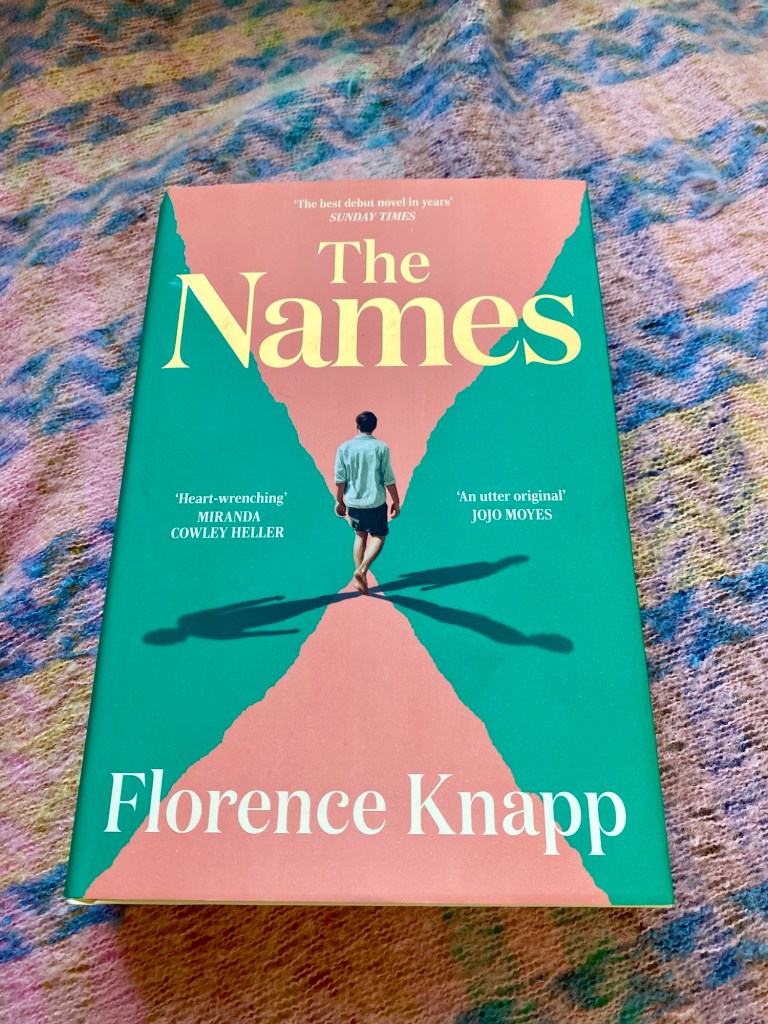
I knew from the first page that this novel was going to be special and it is utterly brilliant and an unbelievably good debut from Florence Knapp. It’s 1987 and Cora is going to register the birth of her baby boy. His name has been settled on because Cora’s husband has chosen his own name for his son – Gordon. But it wouldn’t be Cora’s choice. Cora’s choice would be something that doesn’t tie him so obviously to his father. She thinks Julian would suit him. Little sister Maia looks in the pram at her brother and decides he looks like he should be called Bear. All of these options swirl around in Cora’s head. In this moment, Cora has the power to make a choice and it’s done. It can’t be changed. What would happen if she went with Julian or even Bear? In the short term Gordon would be furious. How bad would it be this time? Long term, would it change her baby’s character or path in life? This is exactly what Florence Knapp does with her story. The book splits into three narratives and we discover what happens to this whole family, depending on Cora’s choice for her baby boy’s name. 

We then move on seven years and meet Bear, a name that proves to be a catalyst for change. We also meet Cora’s choice, Julian – the choice she hoped would break him free from domineering generations of Gordons. Although, what if he is called Gordon? Brought up by a cruel father to continue in the same mould perhaps? Or he might just break free from the shackles of his name? Each life is sparked by this one decision but it isn’t just Cora’s son’s story. This is the life of the whole family with all its ups and downs. It’s about how trauma shapes lives and whether love brings healing and hope to every version of who we are. Even her minor characters absolutely shine. Grandmother Silbhe and her friend Cian are so wonderful, modelling healthy male/female relationships for Julian and Maia. Cian is also Julian’s mentor at work, bringing out a creative side that needs nurturing. Julian needs to work with his hands and meeting fellow creatives helps him find his tribe. Lily is lovely character and we get to know her best during Bear’s narrative. I loved how she has to find a balance between giving Bear the freedom he needs without breaking her own boundaries in the relationship. It’s an utterly compelling debut and zooms straight into the list of best books I’ve read so far this year. The author brings incredible psychological insight to a story about how our names shape our identity, our relationships and our life choices. Something we didn’t even choose. Can it influence us to a huge extent, or do we become the same person no matter what the choice? 

Rachel Joyce is a must-buy author for me and she gets better and better. This brilliant novel focuses on a bohemian family; Vic the father who is an artist and his four children – Netta, Susan, Iris and Goose (short for Gustav and the only boy). They’ve been parented by Vic and a series of au pairs after the sudden death not long after Iris was born. Their father’s art came first always and the conditions he needed in order to create were paramount so the oldest girls often played the mother role for Iris and Goose, especially when Vic inevitably slept with the au pairs. Vic was not an artist celebrated by the establishment. The description of his paintings brought Jack Vettriano to mind, criticised heavily by the art world, but very popular with the public. Now grown up, his children are stunned when Vic starts losing weight and drinking green, sludgy health drinks. His diet is being looked after by his new girlfriend, 27 year old Bella-Mae. None of his children have met her and she doesn’t seem keen to try. Within weeks Vic announces they’re engaged and Netta suggests that they all stand back and give this the space it needs to fizzle out. A couple of weeks later, Vic announces their marriage with a single photograph from the family home in Orta on Isola Son Guilio with Bella-Mae in such a heavy veil they can’t make out her face. They are staying at the house, situated on an island in the middle of a lake, but only two days later Netta is stunned by a phone call from a stranger called Laszlo, claiming to be Bella’s cousin. Vic has been dragged from the lake, drowned after a morning swim went wrong as the mist descended. Why would Vic go swimming in the mist? His children come together to travel to Orta, to finally meet their new stepmother and to find out whether she has killed their father. 

Bella isn’t what the siblings expect and nor is the villa, which has been changed in decor and atmosphere. She seems insubstantial and too fragile to have caused such an uproar. Especially when they’ve pictured her with an iron will, imposing her diet on their father and gaining their inheritance. She will prove to be a mirror through which each of them evaluate their lives. I love family sagas and this one is brilliant. It’s psychologically fascinating and I’m not going to ruin that for you by delving too deeply. I was absolutely transfixed! I couldn’t work out whether there was deliberate manipulation at play or if this was just a case of an outsider causing people to view everything through a different lens. Is Bella a destructive force or a helpful one? Whatever she is, the siblings will have to look at themselves, their choices and their relationship to their father. Some revelations will be explosive and take place in the open air- one particular meal is cataclysmic. Other revelations are quieter, insidious or internal but no less devastating. An utterly brilliant read for someone who loves complicated and tangled relationships. I LOVED it.

This book opened with a heart-stopping scene that set the pace for the rest of the story. Helen is relaxing after meeting her lover in a luxury hotel. While he has a shower, she is in her nightgown and robe enjoying the night time view over downtown Southampton. Movement suddenly catches her eye and she’s drawn to a woman who’s running down a darkened street towards a precinct of shops, pursued by two men. As they catch up, one of them pulls out a bicycle chain and starts to beat the woman. Helen doesn’t wait or think, tearing out of the hotel room and down several flights of stairs as she’s too impatient to wait for the lift. She tears down the dark street hoping that someone has called the police. Helen flies at one of the attackers, who is taken completely by surprise and she soon disables the second attacker before turning to the woman who has been badly beaten. She looks like she’s from the Middle East perhaps, with two very distinctive tattoos placed on her forehead and chin. Unfortunately, Helen has committed the cardinal sin of combat and has turned her back on her attackers. The next thing she feels is a huge bang to her head and then everything goes dark. This opening scene tells me this will be a gritty, modern thriller with a kick-ass heroine. 

This is the thirteenth novel in the DI Helen Grace series and I’m seriously out of touch with the character, having only read the first couple of novels after picking them up in a book swap. Helen is working on her own initiative after handing in her notice at the end of the last novel, with her protege Charlie being promoted in her place. Helen doesn’t know what the next step is, but she’s been enjoying the break. The only thing she misses is the camaraderie of a team and although she has enough money to really think about what’s next, she is anxious about it. Although life will bring it’s own answer soon enough and it might be the last thing she’s expecting. She starts to investigate alone, feeding into Charlie who is trying to target traffickers and their victims coming through the port in lorries and containers. The story is told mainly through Helen’s eyes, but also through the narratives of two other women. Viyan is another trafficked Kurdish Syrian woman and Emilia is a journalist whose father is dying in prison. At first we’re not sure how all of these narratives fit together but slowly they form a cohesive picture. Helen is formidable! You will hold your breath for the final showdown and all the women involved. Each short punchy chapter is action packed and will keep you reading ‘just the next chapter’ until it’s 2am. I now need to set aside time and read the ten novels between this and the last one I read. I’ll probably load up the kindle with them before I go on holiday so I can carry on without interruption. This was a belting, action-packed, female led, crime thriller and I recommend it highly. 

August TBR

Posted in Sunday Spotlight

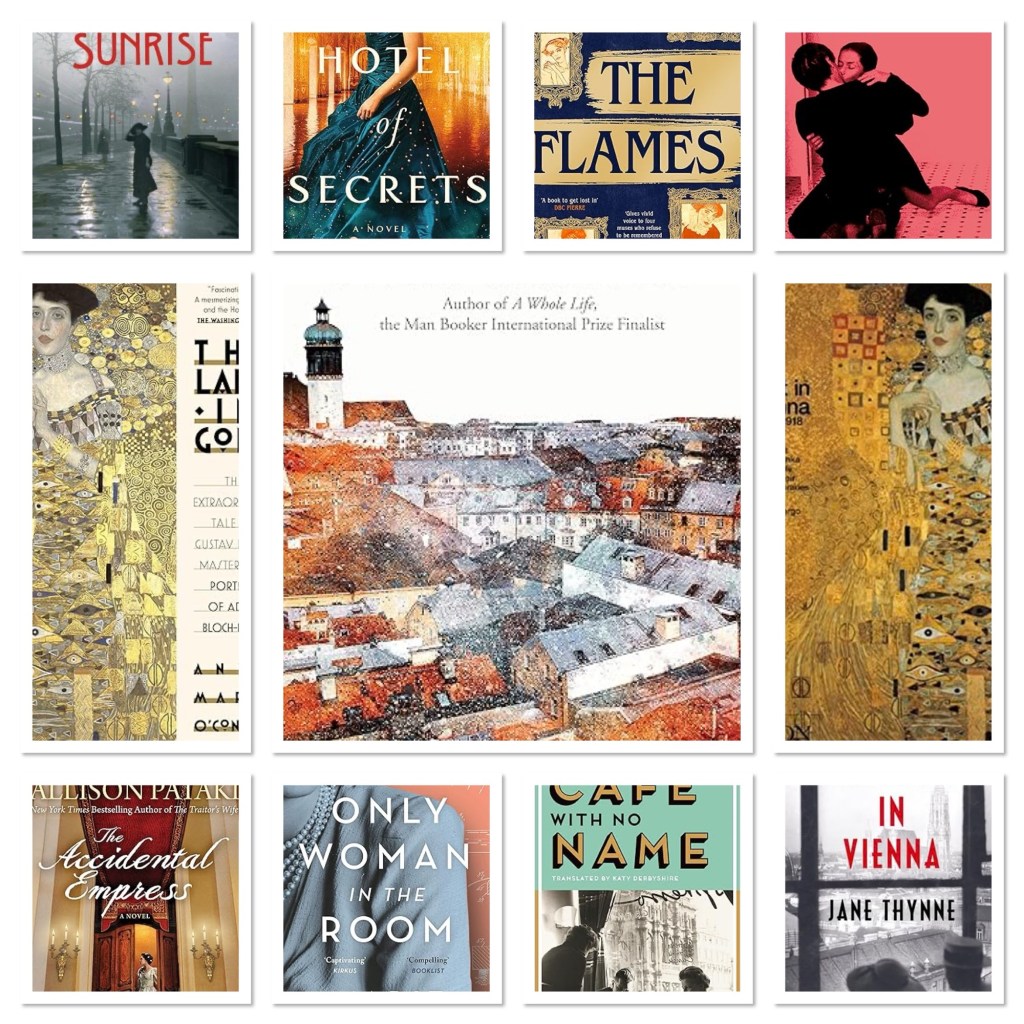
City Break in a Book: Vienna

I’ve never been to Vienna but it’s very firmly on my list of places I’d like to visit. Firstly I love Klimt with a passion and have been to any and every exhibition of his work, but never in his homeland. I’m also interested in Freud, for obvious reasons. I’d like to eat a piece of Sachertorte there too. For now I’ll have to keep reading books set in the city.

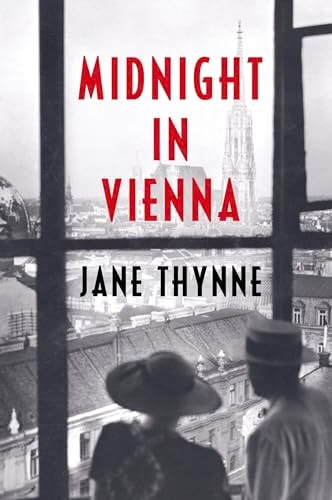
Set in 1938 in London and Vienna, this is a tense and atmospheric thriller told from within a climate of uncertainty and fear as World War Two threatens. As war looms over Britain and there is talk of gas masks and blackout, people are understandably jumpy and anxious. Stella Fry, has been working in Vienna for a Jewish family and returns home with no job and a broken heart. She answers an advertisement from a famous mystery writer, Hubert Newman, who needs a manuscript typed. She takes on the job and is shocked the next day to learn of the writer’s sudden, unexplained death. She is even more surprised when, twenty-four hours later, she receives Newman’s manuscript and reads the Dedication: To Stella, spotter of mistakes. Harry Fox, formerly of Special Branch and brilliant at surveillance, has been suspended for some undisclosed misdemeanor. He has his own reasons for being interested in Hubert Newman. He approaches Stella Fry to share his belief that the writer’s death was no accident. What’s more, since she was the last person to see Newman, she could be in danger herself.

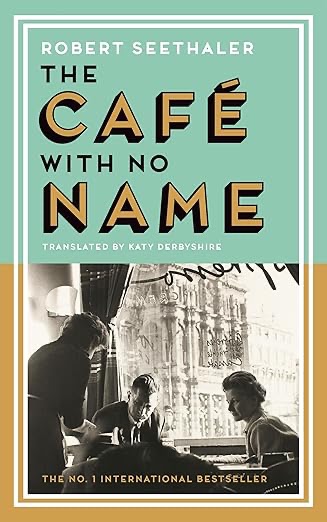
It is 1966, and Robert Simon has just fulfilled his dream by taking over a café on the corner of a bustling Vienna market. He recruits a barmaid, Mila, and soon the customers flock in. Factory workers, market traders, elderly ladies, a wrestler, a painter, an unemployed seamstress in search of a job, each bring their stories and their plans for the future. As Robert listens and Mila refills their glasses, romances bloom, friendships are made and fortunes change. And change is coming to the city around them, to the little café, and to Robert’s dream. 

A story of the hopes, kindnesses and everyday heroism of one community, The Café with No Name has charmed millions of European readers. It is an unforgettable novel about how we carry each other through good and bad times, and how even the most ordinary life is, in its own way, quite extraordinary.

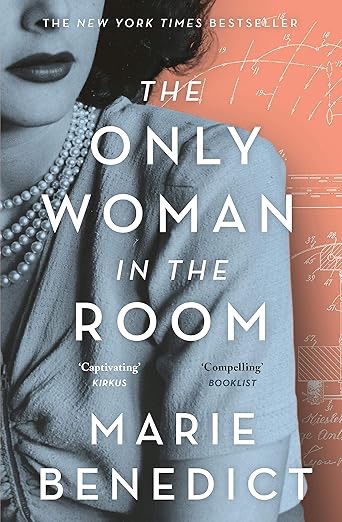
Hedy Lamarr possessed a stunning beauty. She also possessed a stunning mind. Could the world handle both?

Her beauty almost certainly saved her from the rising Nazi party and led to marriage with an Austrian arms dealer. Underestimated in everything else, she overheard the Third Reich’s plans while at her husband’s side, understanding more than anyone would guess. She devised a plan to flee in disguise from their castle, and the whirlwind escape landed her in Hollywood. She became Hedy Lamarr, screen star.

But she kept a secret more shocking than her heritage or her marriage: she was a scientist. And she knew a few secrets about the enemy. She had an idea that might help the country fight the Nazis…if anyone would listen to her.

A powerful novel based on the incredible true story of the glamour icon and scientist whose groundbreaking invention revolutionised modern communication, The Only Woman in the Room is a masterpiece.

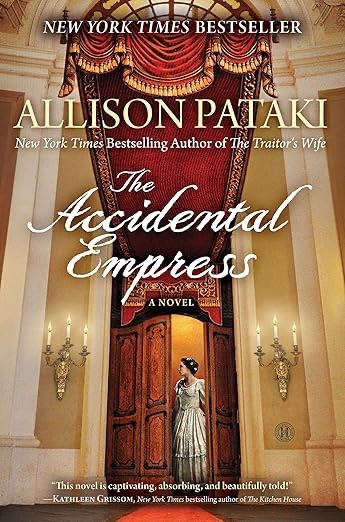
The year is 1853, and the Habsburgs are Europe’s most powerful ruling family. With his empire stretching from Austria to Russia, from Germany to Italy, Emperor Franz Joseph is young, rich, and ready to marry.

Fifteen-year-old Elisabeth, “Sisi,” Duchess of Bavaria, travels to the Habsburg Court with her older sister, who is betrothed to the young emperor. But shortly after her arrival at court, Sisi finds herself in an unexpected dilemma: she has inadvertently fallen for and won the heart of her sister’s groom. Franz Joseph reneges on his earlier proposal and declares his intention to marry Sisi instead.

Thrust onto the throne of Europe’s most treacherous imperial court, Sisi upsets political and familial loyalties in her quest to win, and keep, the love of her emperor, her people, and of the world.

With Pataki’s rich period detail and cast of complex, bewitching characters, The Accidental Empress offers a glimpse into one of history’s most intriguing royal families, shedding new light on the glittering Hapsburg Empire and its most mesmerizing, most beloved “Fairy Queen.”

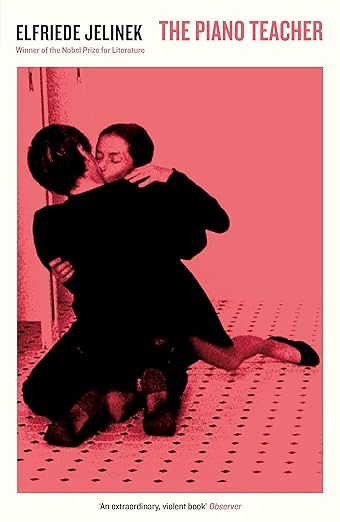
Erika Kohut teaches piano at the Vienna Conservatory by day. By night she trawls the city’s porn shows while her mother, whom she loves and hates in equal measure, waits up for her. Into this emotional pressure-cooker bounds music student and ladies’ man Walter Klemmer.

With Walter as her student, Erika spirals out of control, consumed by the ecstasy of self-destruction. A haunting tale of morbid voyeurism and masochism, The Piano Teacher, first published in 1983, is Elfreide Jelinek’s Masterpiece.

Jelinek was awarded the Nobel Prize For Literature in 2004 for her ‘musical flow of voices and counter-voices in novels and plays that, with extraordinary linguistic zeal, reveal the absurdity of society’s clichés and their subjugating power.

The Piano Teacher was adapted into an internationally successful film by Michael Haneke, which won three major prizes at Cannes, including the Grand Prize and Best Actress for Isabelle Huppert.

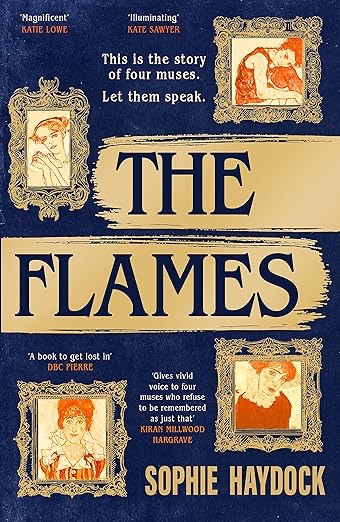
Vienna at the dawn of the 20th century. An opulent, extravagant city teeming with art, music and radical ideas. A place where the social elite attend glamorous balls in the city’s palaces whilst young intellectuals decry the empire across the tables of crowded cafes. It is a city where anything seems possible – if you are a man. 

Edith and Adele are sisters, the daughters of a wealthy bourgeois industrialist. They are expected to follow the rules, to marry well, and produce children. Gertrude is in thrall to her flamboyant older brother. Marked by a traumatic childhood, she envies the freedom he so readily commands. Vally was born into poverty but is making her way in the world as a model for the eminent artist Gustav Klimt. 

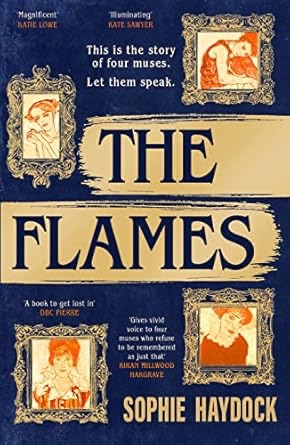
None of these women is quite what they seem. Fierce, passionate and determined, they want to defy convention and forge their own path. But their lives are set on a collision course when they become entangled with the controversial young artist Egon Schiele whose work – and private life – are sending shockwaves through Vienna’s elite. All it will take is a single act of betrayal to change everything for them all. Because just as a flame has the power to mesmerize, it can also destroy everything in its path…

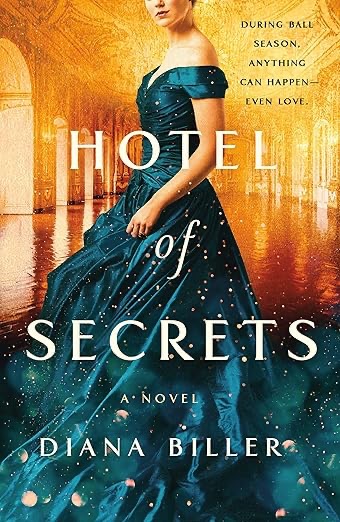
It’s Ball Season in Vienna, and Maria Wallner only wants one thing: to restore her family’s hotel, the Hotel Wallner, to its former glory. She’s not going to let anything get in her way – not her parents’ three-decade-long affair; not seemingly-random attacks by masked assassins; and especially not the broad-shouldered American foreign agent who’s saved her life two times already. No matter how luscious his mouth is. Eli Whittaker also only wants one thing: to find out who is selling American secret codes across Europe, arrest them, and go home to his sensible life in Washington, DC. He has one lead – a letter the culprit sent from a Viennese hotel. But when he arrives in Vienna, he is immediately swept up into a chaotic whirlwind of balls, spies, waltzes, and beautiful hotelkeepers who seem to constantly find themselves in danger. He disapproves of all of it! But his disapproval is tested as he slowly falls deeper into the chaos – and as his attraction to said hotelkeeper grows. Diana Biller’s The Hotel of Secrets is chock full of banter-filled shenanigans, must-have-you kisses, and romance certain to light a fire in the hearts of readers everywhere.

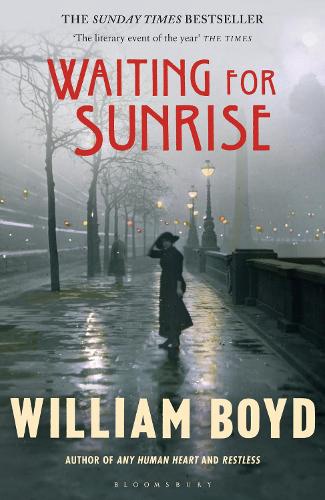
Vienna, 1913. It is a fine day in August when Lysander Rief, a young English actor, walks through the city to his first appointment with the eminent psychiatrist Dr Bensimon. Sitting in the waiting room he is anxiously pondering the particularly intimate nature of his neurosis when a young woman enters. She is clearly in distress, but Lysander is immediately drawn to her strange, hazel eyes and her unusual, intense beauty. Her name is Hettie Bull. They begin a passionate love affair and life in Vienna becomes tinged with a powerful frisson of excitement for Lysander. He meets Sigmund Freud in a café, begins to write a journal, enjoys secret trysts with Hettie and appears – miraculously – to have been cured. Back in London, 1914. War is imminent, and events in Vienna have caught up with Lysander in the most damaging way. Unable to live an ordinary life, he is plunged into the dangerous theatre of wartime intelligence – a world of sex, scandal and spies, where lines of truth and deception blur with every waking day. Lysander must now discover the key to a secret code which is threatening Britain’s safety, and use all his skills to keep the murky world of suspicion and betrayal from invading every corner of his life. Moving from Vienna to London’s West End, from the battlefields of France to hotel rooms in Geneva, Waiting for Sunrise is a feverish and mesmerising journey into the human psyche, a beautifully observed portrait of wartime Europe, a plot-twisting thriller and a literary tour de force from the bestselling author of Any Human Heart, Restless and Ordinary Thunderstorms.

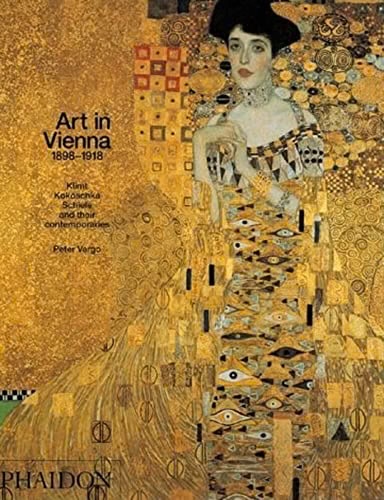
The artistic stagnation of Vienna at the end of the nineteenth century was rudely shaken by the artists of the Secession. Their works at first shocked a conservative public, but their successive exhibitions, their magazine Ver Sacrum and their dedication to the applied arts and architecture soon brought them an enthusiastic following and wealthy patronage. With 60 new colour illustrations, this classic book, now in its third edition, brilliantly traces the course of this development, of the Wiener Werkstätte that followed, and the individual works of the artists concerned. The result is a fascinating documentary study of the successes and failures, hopes and fears of the members of an artistic movement that is so much admired today.

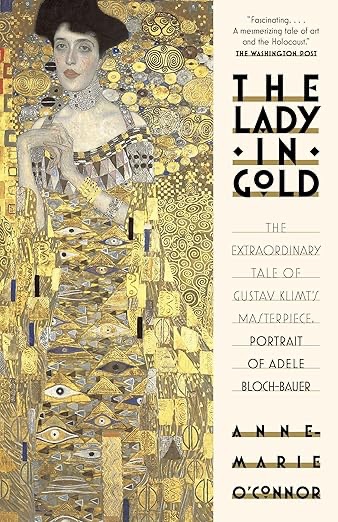
This is the true story that inspired the movie “Woman in Gold” starring Helen Mirren and Ryan Reynolds. Anne-Marie O Connor brilliantly regales us with the galvanizing story of Gustav Klimt’s 1907 masterpiece, the breathtaking portrait of a Viennese Jewish socialite, Adele Bloch-Bauer. The celebrated painting, stolen by Nazis during World War II, subsequently became the subject of a decade-long dispute between her heirs and the Austrian government.When the U.S. Supreme Court became involved in the case, its decision had profound ramifications in the art world. Expertly researched, masterfully told, “The Lady in Gold” is at once a stunning depiction of fin-de siecle Vienna, a riveting tale of Nazi war crimes, and a fascinating glimpse into the high-stakes workings of the contemporary art world.

Seventeen-year-old Franz Huchel journeys to Vienna to apprentice at a tobacco shop. There he meets Sigmund Freud, a regular customer, and over time the two very different men form a singular friendship. When Franz falls desperately in love with the music hall dancer Anezka, he seeks advice from the renowned psychoanalyst, who admits that the female sex is as big a mystery to him as it is to Franz.

As political and social conditions in Austria dramatically worsen with the Nazis’ arrival in Vienna, Franz, Freud, and Anezka are swept into the maelstrom of events. Each has a big decision to make: to stay or to flee?

Posted in Personal Purchase

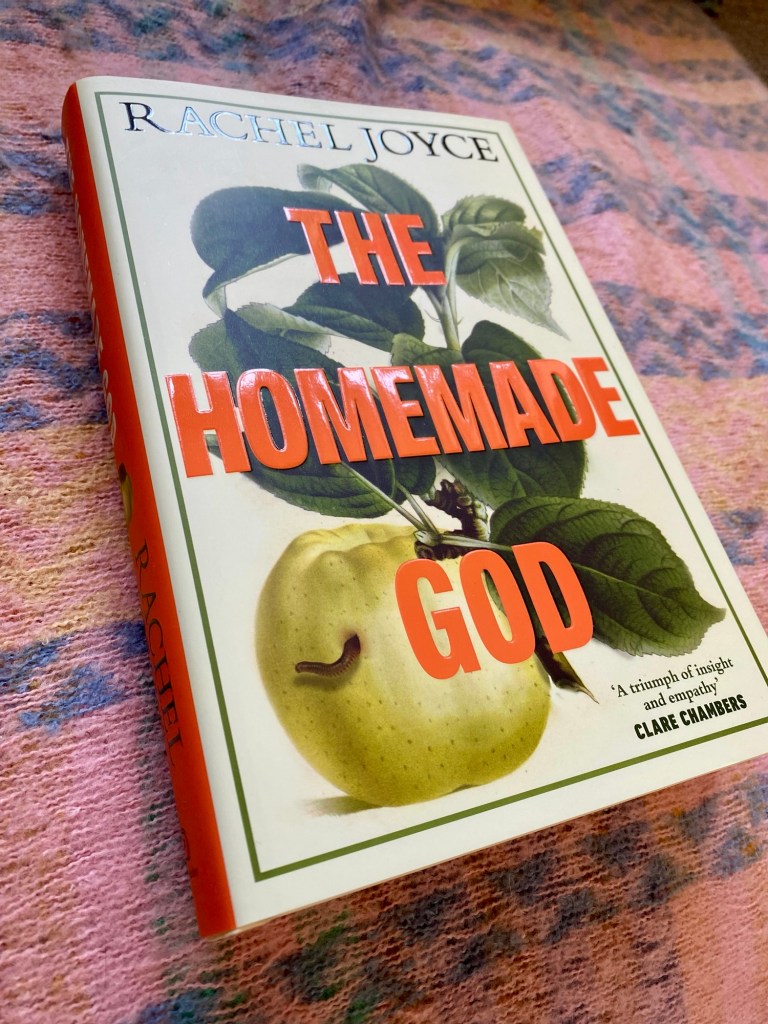
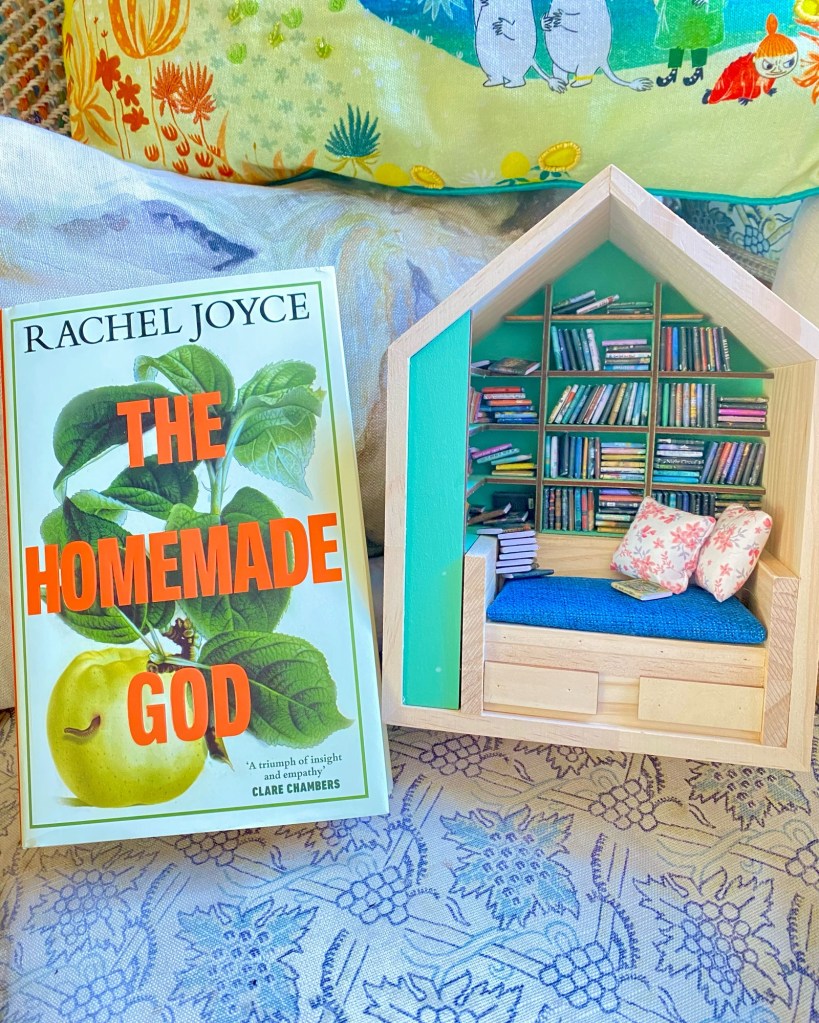
The Homemade God by Rachel Joyce

I have always loved Rachel Joyce’s work, especially the Harold Fry series, but I also adored her more recent novel Miss Benson’s Beetle. This novel was slightly different from her other work, while it did have an eccentric character on a very singular quest and kept that complexity of emotions she does so well, it also had an historical context which I loved. In A Homemade God we see similar complex relationships, but within a family who have a famous father. Vic Kemp is a painter and I have an absolute fascination with painter’s lives and relationships. I love art and have read widely on groups like the Pre-Raphaelite Brotherhood and the group who gathered around Vanessa Bell and Duncan Grant down at Charleston in Sussex. After seeing a Lucien Freud retrospective at the Tate I was intrigued by his family. His children seemed to be the epitome of that creative and eccentric family we come to expect from artists. Bohemian upbringings are just so interesting because of how the development and character of the children are affected by it and how that family copes with the ‘genius’ in their midst.

Here the family in question are Vic and his four children – Netta, Susan, Iris and Goose (short for Gustav and the only boy). They’ve been parented by Vic and a series of au pairs after the sudden death of their mother just after Iris was born. Their father’s art came first always and the conditions he needed in order to create were paramount, so the oldest girls often played the mother role for Iris and Goose, especially when Vic inevitably slept with the au pairs and they left. Vic was not an artist celebrated by the establishment. The description of his paintings brought Jack Vettriano to mind, criticised heavily by the art world, but very popular with the public. Many of Vic’s paintings had a sexual element to them, a sort of soft BDSM theme, except for his only painting of one of his children, Iris. Depicted on the beach with a sandcastle and a man in the background, it brings up mixed memories for Iris. Now grown up, his children are stunned when Vic suddenly starts losing weight and drinking green, sludgy health drinks. It’s just so out of character. His diet is being looked after by his new girlfriend, 27 year old Bella-Mae. None of his children have met her and she doesn’t seem keen on trying. Within weeks Vic announces they’re engaged and Netta suggests that they all stand back and give this the space it needs to fizzle out. A couple of weeks later, Vic announces their marriage with a single photograph from the family home in Orta on Isola Son Guilio with Bella-Mae in such a heavy veil they can’t make out her face. They are staying at the family villa, situated on an island in the middle of Lake Orta and only two days later Netta is stunned by a phone call from a stranger called Laszlo, claiming to be Bella’s cousin. Vic has been dragged from the lake, drowned after a morning swim went wrong as the mist descended. Vic knew that lake so well. Why would he go swimming in the mist? His children come together to travel to Orta, to finally meet their new stepmother and to find out whether she has killed their father. 

I really enjoyed the different personalities of the Kemp siblings and how they complement and clash with each other. Netta has definite older sister energy. She’s the most organised and ambitious of all the siblings with a background in law. She is the most cynical too, convinced Bella’s health drinks have poisoned her father and now after two days of marriage she could inherit everything. Her instinct was to ransack Vic’s London home for the anything resembling a will and to find Vic’s final painting. There’s nothing, but maybe he was painting in Orta? Susan is also older and very organised especially when it comes to food or her stepsons. Married to Warwick who is a much older man she has some empathy and understanding for her father’s relationship. She hasn’t worked, but stayed at home to look after Warwick’s boys which has been a thankless task as they’ve barely accepted her. Susan is passionate about food, but she chose a relationship without that same feeling. Perhaps viewing the volcanic nature of Vic’s relationships she decided to go for a calmer and more stable love. It has proved a successful partnership but there are wild depths underneath Susan’s calm exterior and when she meets Bella’s cousin Laszlo they might rise to the surface. 

Goose and Iris, the younger siblings, both seem lost somehow, perhaps because they don’t have those memories of their mother and only remember the erratic presence of Vic and the revolving au pairs. Since his father’s agent Harry set up Goose’s first exhibition, he has never painted again. When left alone just before his open view, he destroyed his canvasses and nobody knows why. He seemed catatonic and voluntarily checked into hospital for his mental health. He lives quite a lonely life and never talks about his sexuality or takes a partner home to meet family. He works quietly as his father’s studio assistant and lives alone. Iris lives alone too and she comes across a bit liked a startled fawn. She follows behind her sisters and dotes on her father more than others, struggling to keep her distance when Netta suggests it. She does keep secrets though, seismic in their power. As they all travel to their villa in Northern Italy, ready to confront their father’s 27 year old widow and her cousin, Netta tells them they have two objectives. Find anything that could be a will, even if it’s on the back of an envelope and find that last painting Vic claimed to be working on. 

Bella isn’t what the siblings expect and nor is the villa. The villa looks beautiful and tidy for once. Bella seems insubstantial and too fragile to have caused such an uproar. She looks like she might blow away in a breeze. Yet they’ve pictured her with an iron will, imposing her diet on their father and gaining their inheritance. She will prove to be a mirror through which each of them evaluate their lives. I love family sagas and this one is brilliant. It’s psychologically fascinating and I’m not going to ruin that for you by delving too deeply. I was absolutely transfixed! I couldn’t work out whether there was deliberate manipulation at play or if this was just a case of an outsider causing people to view everything through a different lens. Is Bella a destructive force or a helpful one? Whatever she is, the siblings will have to look at themselves, their choices and their relationship to their father. Some revelations will be explosive and take place in public – one particular meal is cataclysmic. Other revelations are quieter, insidious or internal but no less devastating. Goose’s story left me furious and devastated at the same time. The book works almost like therapy, but without the care and ethics. No one will come out of this trip unaffected.

The author made me think about how we view artists and our expectations of them – whether they are potters, painters or writers. We read about their messy and eccentric lives with fascination, but we don’t always consider the damage they do to those closest to them. I’ve always wondered how Lucien Freud’s daughters felt about posing for him, especially in their awkward teenage years. Iris’s story gave me some insight and made me feel deeply uncomfortable. This was such a beautifully complex study of a family’s dynamics and how each sibling positions themselves within it. Rachel Joyce has depicted the way we mythologise people within our family groups and the stories we choose to represent us. We choose stories to tell others who we are and when we do that we can embroider or edit for the effect we want. Think about the stories in your families and whether they’re honest or whether you are trying to represent yourselves within a particular class, religion or other social structure? Do we do this consciously or unconsciously? This is a very different novel for the author but it’s definitely built on her ability to present very deep emotions and the truth of human experience. I think it’s her best yet. 

After reading the novel, you might enjoy reading this article about Lucien Freud’s relationship with his daughter Annie.

https://www.vanityfair.com/culture/2013/10/lucian-freud-nude-portrait-daughter-annie#:~:text=His%20complex%20relationship%20with%20daughter,recalls%20the%20artist’s%20paternal%20demons.

Meet the Author

Posted in Netgalley

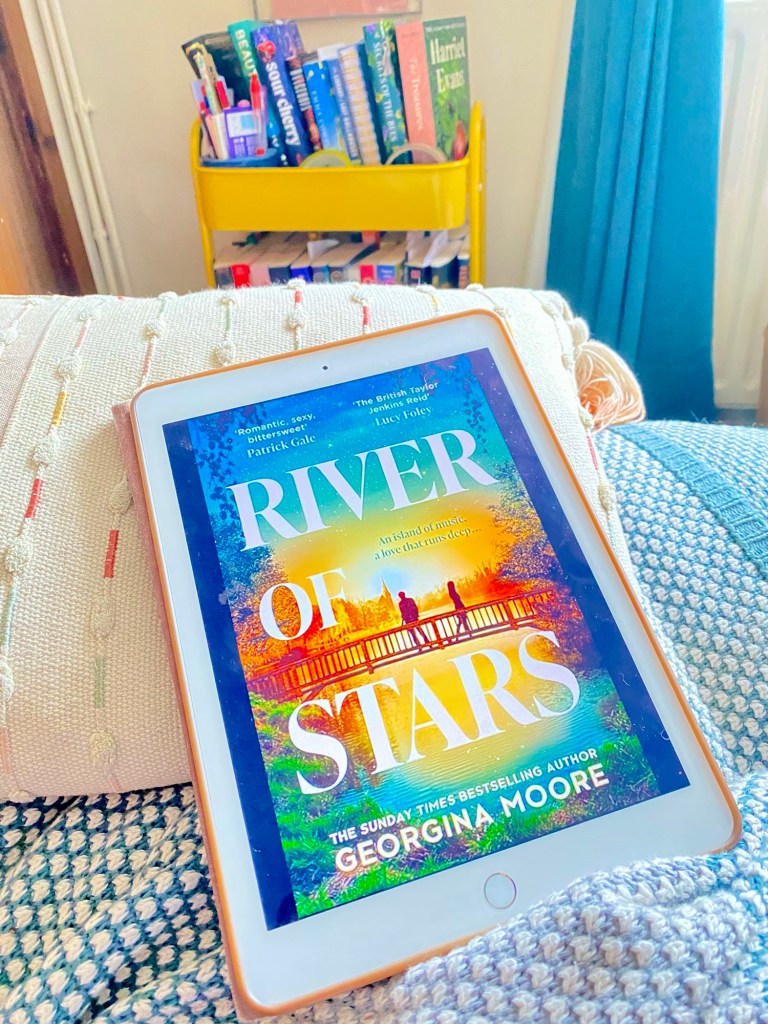
River of Stars by Georgina Moore

This book has the magical ability to captivate the reader. I found myself a fishing widow one night last week so I went to bed early and started reading. When I woke up the next morning I picked it straight back and read through to the end. I hadn’t even removed my glasses to sleep. The author has managed to make this feel like an escape, as well as heart-achingly romantic and with a bohemian setting that appealed to the creative in me. Walnut Tree Island is in a tributary of the Thames and back in the 1960s the owner, George, managed to turn a part derelict hotel into a sought after music venue. Based on Eel Pie Island, Walnut Tree is a harmonious combination of up and coming musicians, artists and picturesque riverboats and in 1965 is a weekly Mecca for young people. One of them is Mary Star, a young girl with a beautiful voice and a head full of dreams. It’s there one night when musician and up and coming front man Ossie Clark notices Mary in the crowd as she’s hoisted up on someone’s shoulders. Ossie is about to hit the big time, but he’s captivated by Mary and when he meets her he encourages her to sing with him. They are so in love and lay down in the grasses by the Wilderness – the most beautiful part of the island. When reality hits Mary knows she has to make a choice for both of them, although Ossie doesn’t reject the idea of becoming a father. He asks her to go to America with him, but the adults in her life, including George, make her realise how difficult that’s going to be. There will be compromises and although Ossie can’t see it now, what if he resents her and their baby? She’s left with her baby Ruby and a broken heart, but also a place to live on the island gifted by George. 

Years later her granddaughter Jo experiences first love on the island. Used to running wild between Mary’s cottage Willows and houseboats, she meets George’s grandson Oliver when he visits the island. He’s the island’s heir, but such things don’t matter to young people and they have a magical summer thinking their love is all they need to sustain them. Now Oliver has returned from NYC as the new owner of Walnut Tree Island which has become a thriving community of musicians and artists all supported by Mary who is the mother of the community. The whispers over what might happen to the island start fairly quickly, not least the ownership of Willows that has always been a verbal agreement with George. Jo now teaches art to children in one of the houseboats. Once an incredible artist she seems to lose her confidence in creating and her career never fully got off the ground. How will she cope with Oliver back on the island, as handsome as ever, but with a touch of New York sophistication. More to the point, how will Oliver feel seeing Jo again? It’s not long before the red-headed firebrand is at his door, fighting on behalf of Mary and the rest of the community. But does she really know what his plans are? Changes are coming to the island, but some things are as constant as the river flows. Could their love be one of them? 

As in her debut novel The Garnett Girls, Georgina has created a family of very strong women and allows them to tell their own tale. We also have the narrative of one of Jo’s closest friends, Sophie, who is another stalwart of the island community along with her husband Dave who runs the boatyard. I found Mary’s story so sad because she doesn’t get to fulfil her dreams of being a singer and loses the love of her life in Ossie. After that she has friends and protectors. Firstly there’s Oliver’s grandfather George who makes sure Mary and her baby have a roof over their head because he feels responsible for her and Ruby. Yet there’s no romance on her part and she still loves Ossie. I thought she made a huge sacrifice not going with him, but she doesn’t want to hold him back and as George points out he needs to be available to his adoring fan base. She never hears from him, until he makes the call no mother wants to receive. Then there’s Gotlibe, whose mixed-race relationship with Mary did raise eyebrows in the 1970s. She can’t remember when their relationship became more friends than lovers. Is now too late to change things? She is the undisputed Mother of the island, the first one called when something goes wrong or a resident needs advice, she’s the chair of the resident’s association and the first to volunteer for any of the island’s celebrations. I loved the island’s sense of community and their shared philosophy of finding joy in the small things and celebrating life whenever they get the opportunity. 

I thought Sophie’s husband Dave was a lovely man, happy with his lot in life and not really needing anything accept his boatyard, friends, a cold beer and Sophie. He was Oliver’s best friend that summer so it’s not long before they’re catching up. Sophie knows that her best friend Jo is struggling with his presence after all this time. She has a city job as a West End Theatres PR, a job that she loves despite it being stressful at times. She’s fascinated with Oliver, who has travelled, lived and worked in Manhattan. So when he calls and asks her for a drink in London after work she is tempted. Dave seems destined to settle even further into island life. Nearing 40 he wants to start a family but Sophie doesn’t want a baby and has secretly continued to take the pill. She’s drawn to Oliver, but is it really him or the sense of freedom he represents? However, it’s Jo you will root for throughout the novel, because despite her tendency to self-sabotage and fly off the handle she’s a truly lovely person and a loyal friend. I think I felt an affinity for her because I have a tendency to self-sabotage my writing. I start full of hope, then read it back and think ‘who would want to read this?’ Jo went to study in Florence, but ended up in a relationship with someone who derided her talent and put doubts in her mind. When they broke up she flew straight home without finishing her course and has never painted again. After Oliver’s return something clicks and she feels an urge to paint, including an abstract of her mother, Ruby. Gotlibe is hoping she’ll exhibit them when they open for the public in the summer. I loved Jo’s return to Italy because it elevated the novel beyond the romance and into the tough part of working on one’s self. Watching characters bloom is my favourite thing and Jo’s eyes are opened to her part in how her life has turned out. The realisation that other people might have had similar setbacks, but stayed and carried on is huge. She chose to believe the criticism and allowed it to affect half of her life. When she meets up with old friend Claudia it encourages her to take some risks, to settle into herself, wear some colour and own it. Is Oliver also a risk worth taking? 

Oliver and Jo originally bonded over a shared trauma, the loss of someone close. I was unsure whether the romance could or even should rekindle. The romantic in me wanted it, but he’s made choices that could derail their reunion. Jo doesn’t know if he’s still the Oliver she knows, or is he just playing at island life? He could turn round and evict them all tomorrow. I felt that Jo needed to see that Oliver knew the value of what he’d inherited, both it’s history and the unique community that now live there. If he commits to the island could they have a future? The island is magical, completely encapsulating the Japanese concept of ‘wabi-sabi’ with the beauty of it’s imperfections. The part derelict hotel was a perfect venue with it’s fairy lights and candles, giving off a nostalgic 1960’s boho that I loved and I know my mum will too. I was thinking of her throughout reading this book because in the early 1970s my mum travelled to London for a Neil Diamond concert with an invitation to meet him beforehand. My Grandad insisted on going with her, but waited outside when she went to meet him backstage. My mum said ‘if I don’t come back he’s asked me to run away with him and I’m going.’ I loved her innocence in thinking this and her guts for saying it to my rather anxious grandad. It was a time that was less cynical, where teenage girls did think dreams might come true and that love would conquer anything and it’s that spirit that this novel evokes. Of course Mum didn’t run off with Neil, affectionately called ‘Dima’ in our family because I couldn’t say his name properly, but they did correspond and she ran his UK fan club too. I hope there’s an alternate universe where my mum did get to run off with Neil. Just as I hope for one where Mary agreed to go on tour with Ossie and their daughter, living happily ever after. This is a gorgeous bitter sweet novel that will remind you of the posters you had on your bedroom wall, of those pangs of first love, of roads not taken. It also made me fall in love with the resilient and rebellious Star women and the community they called home. I’m happy to say this is the perfect summer read.  

Out Now from HQ Stories

Meet the Author

Georgina Moore grew up in London and lives on a houseboat on the River Thames with her partner, two children and Bomber, the Border Terrier.   The Garnett Girls was her debut novel and is set on the Isle of Wight, where Georgina and her family have a holiday houseboat called Sturdy. Georgina’s new novel River of Stars is published on 3rd July and is inspired by the legendary Eel Pie Island and its colourful history as a rock and roll haven in the 1960s, and by her own life on the river.

Posted in Netgalley

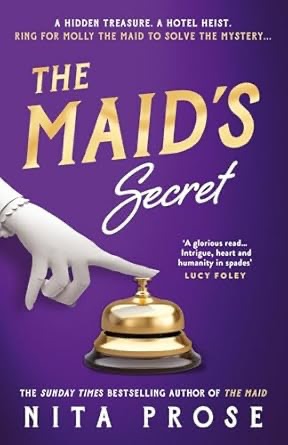
The Maid’s Secret by Nita Prose 

It was a joy to be back in Molly the Maid’s company again. It always takes just a couple of sentences for me to feel like I never left her world. In some ways her life could be seen as unchanged. She’s still Molly, as wholly herself as ever, living in her late grandmother’s flat with her fiancé Juan, chef at the Regency Grand. In other ways things have changed, Molly manages the maids and has become ‘Events Manager’ so she’s definitely gone up in the world at work. Two important events loom in the near future – Molly and Juan’s wedding at City Hall is on the horizon – but today the two darlings of the antique world are filming an episode of their TV show Hidden Treasures in the tearoom of the hotel. Beagle and Brown are known jointly as the Bees. They wear a lot of velvet, bow ties and smoking jackets and are the married presenters of the show that runs like our own Antiques Roadshow. People queue to have their valuables appraised in the hope of either owning a secret masterpiece or appearing on the TV. At the last moment, before they leave the flat that morning, Juan suggests Molly takes her grandmother’s box of treasures, including a highly decorated egg that came to her from the Grimsthorpe estate. When the Bees see this particular treasure their eyes light up. They seem to know immediately that this is very special and they must get it on camera. As the cameras roll they tell Molly that this looks like a lost Russian imperial egg, possibly the prototype for all the ones that followed. It’s one of a kind, decorated with rubies and emeralds by Fabergé himself. It’s worth could be several million dollars. Molly doesn’t seem to take the news in and wants to carry on as normal, but as the clip is shared online it becomes impossible and Mr Preston has to take them home. The couple sit in their flat utterly shell shocked. Will life ever be the same again?

Things go from bad to worse when Molly agrees to auction the egg at the hotel, again run by Brown and Beagle. It might be the only way to return things to normal. She can’t imagine being wealthy and so far has only committed to a slightly larger wedding. As the auction reaches fever pitch, all eyes are on the egg in it’s glass case on the podium. As the hammer goes down at ten million dollars there are celebrations across the room and no one notices, until the Bees draw attention back to the egg, that there’s just an empty case. The author follows this story as the police are called in and an investigations get underway, but between this narrative are chapters from the past. It isn’t long after the auction when Mr Preston reunites Molly with a different relic from the past – her late grandmother’s diary. The ornate key to open it has always been in her grandmother’s cabinet but Molly has never known what it was for and she isn’t ready to open it just yet. We still get the tale though, written directly to Molly in a series of letters. We might learn about her past with Mr Preston, but also why she was estranged from her whole family. We also might find out what might her give up her daughter, Molly’s mother Maggie. 

Molly is the heart and soul of the book though and she doesn’t disappoint. She is genuinely flummoxed by people’s reaction after the valuation. As guests and even fellow staff start to photograph her working, Molly just wants to get on. In the main people just want to congratulate her but Cheryl is her usual self, taking and selling pictures of NYC’s newest potential millionaire. Molly doesn’t understand what’s changed because she’s the same person with exactly the same values as before. When the egg is stolen, all she wants to do is help the police to recover it, although she isn’t necessarily happy about the chaos it’s brought to her life. Molly is a great detective though and admired by Police Detective Stark for her ability to notice patterns and follow the logic of a case. She also has an encyclopaedic knowledge of the hotel, which might be invaluable when working out how someone could steal something in plain sight. I did feel sorry for Molly, especially when she’s talked into trying on wedding dresses in a high end store by her protégée Lily. The pair are horrified to find out it is a publicity stunt for the TV cameras. Molly truly believes she has everything she could want – her job, Juan, Mr Preston, their home. She’s almost given up on her mother who does make an appearance here. A child never loses that tiny bit of hope when it comes to a parent and it’s so heartbreaking to see Molly taking this chance. I was desperately hoping Maggie was there for the right reasons. 

Molly’s grandmother’s narrative reads like a fairy tale. A young girl with wealthy but distant parents, becomes a pawn in their game when fortunes are running low. They know that their business is going to fail and a rival is trying to buy it up. As the money dries up their daughter might be the only way they can revive their fortunes. Unfortunately Molly’s grandmother is more interested in her education than making an advantageous marriage. She’s fallen in love already although she’s fighting it. John is the nephew of their housekeeper, has a scholarship at the same school and has been given access to family’s library for his studies. They have an instant spark with lots of banter and academic competition, but her head is turned when she has the chance to date the fabulously handsome and wealthy son of the man who’s buying their company. If she pleases him, maybe their fortunes will be saved. He’s certainly charming, but is that all surface? The dairy feels like a cautionary tale for young women and men do not come out of it very well. Molly doesn’t really need to read it as she’s always listened to her grandmother’s advice. However, it might just give her a clue…

This is a charming and heart-warming read that brings Molly full circle in terms of her background and having her life exactly where she wants it. There is a special joy in a character like this who you can absolutely root for. Her modest wants in life are refreshing and old fashioned in a way. As many point out, it’s rare to see one of the little people, rewarded by a quirk of fate. I knew there were so many obstacles to overcome, not just the theft but the question of ownership and provenance if it was returned. I knew that it would be a great read either way because Molly is the sort of character who will find her happiness with or without the golden egg. 

Meet the Author

Nita Prose is the author of the Molly the Maid series, including THE MISTLETOE MYSTERY, THE MYSTERY GUEST, and THE MAID, which has sold more than 2 million copies worldwide and was published in over forty countries. A #1 NEW YORK TIMES bestseller and a GOOD MORNING AMERICA Book Club Pick, THE MAID won the Ned Kelly Award for International Crime Fiction, the Fingerprint Award for Debut Novel of the Year, the Anthony Award for Best First Novel, and the Barry Award for Best First Mystery. THE MAID was also an Edgar Award finalist for Best Novel. Nita lives in Toronto, Canada, in a house that is moderately clean.

Posted in Monthly Wrap Up

My Best Reads March 2025

Hello Readers,

Spring is here!! Finally. Today is warm -ish, but sunny with daffodils and jasmine brightening up the garden. My other half is cutting the lawn and washing is going on the line for the first day this year. I’ve had a lot of chances to read this month as I still can’t move far, so I’ve taken on some new and some older reads too. My favourites of the new books I’ve read this month are a balanced mix of historical fiction and crime novels. Our historical offerings take us to the South of France and the home of Henri Matisse, to Paris on a train that might be lucky to arrive and a Scottish island that’s closer to Norway. The crime novels are set in two of my favourite places, Snowdonia and Northumberland, while the final one is a Scandinavian setting, written by two talented authors it’s an unforgettable novel.

Hope you’re all enjoying this beautiful weekend.

When in Northumberland I visit a couple of bookshops, Barter Books in Alnwick for second hand finds and Cogito Books in Hexham for their non-fiction and new releases. Last time I had some book vouchers so I went to Hexham and was recommended Mari Hannah’s Stone and Oliver series. I bought the first one then found more of the series in charity shops, but hadn’t got round to reading them yet. So when a publisher offered this I wondered whether I should, but I can’t resist and now Im setting aside time to read the rest of this series.

Frankie Oliver and David Stone have been working together in the same MIT for the a few years, but this book starts in a much darker place when another detective was called to a body found on some waste ground. Horrified, he drops to the floor unable to contain his devastation. The body on the ground is his daughter. It’s such a powerful and emotive opening, leaving us in no doubt that this is a defining event for the loved ones of this girl. An absence that the Oliver family feel every day. It’s arguable that this case is the very reason that Frankie Oliver became a detective. She and David Stone are an incredible team at work and have the potential to take their relationship further. It’s clear there’s been some ‘will they won’t they’ over the course of the previous novels. Now Frankie is taking a break from the team in Newcastle, a promotion to DI means she must fill a post back in uniform based out of the most northerly police station in the county, Berwick-Upon-Tweed. Frankie accepts and the team organise a leaving ‘do’. It’s there that Dave overhears an argument that immediately propels him back to the murder of Joanna, Frankie’s sister. What’s said between the two men outside the venue sparks an idea in Dave’s mind. He has had an idea of how to investigate the cold case, but knows that he doesn’t want to bring more pain to the family. Hopefully Frankie’s secondment to Berwick means they won’t have to. 

Meanwhile Frankie’s first job is an RTC on the A1 and in the total chaos she finds a little boy handcuffed in the back of a van. The driver and passenger are dead and the van is a write off so Frankie can’t believe this little boy has survived. As she rescues him, an onlooker tells her that a man escaped out of the back doors straight after the crash. This opens up a trafficking case that might take her straight back out of uniform again. The boy, Amir, takes to Frankie. Possibly the first person in a long time who has made him feel safe. As for the relationship between Frankie and Dave, I was very much invested despite not knowing everything that’s gone before. The setting is beautifully captured in it’s contradictions: the modernity and buzz of Newcastle with the contrast of the wild countryside and beautifully rugged coastline. This really is a nail-biting story, written in very short chapters that are easy to devour very quickly. So many have a brilliant cliff-hanger ending too. I can’t wait to read more.

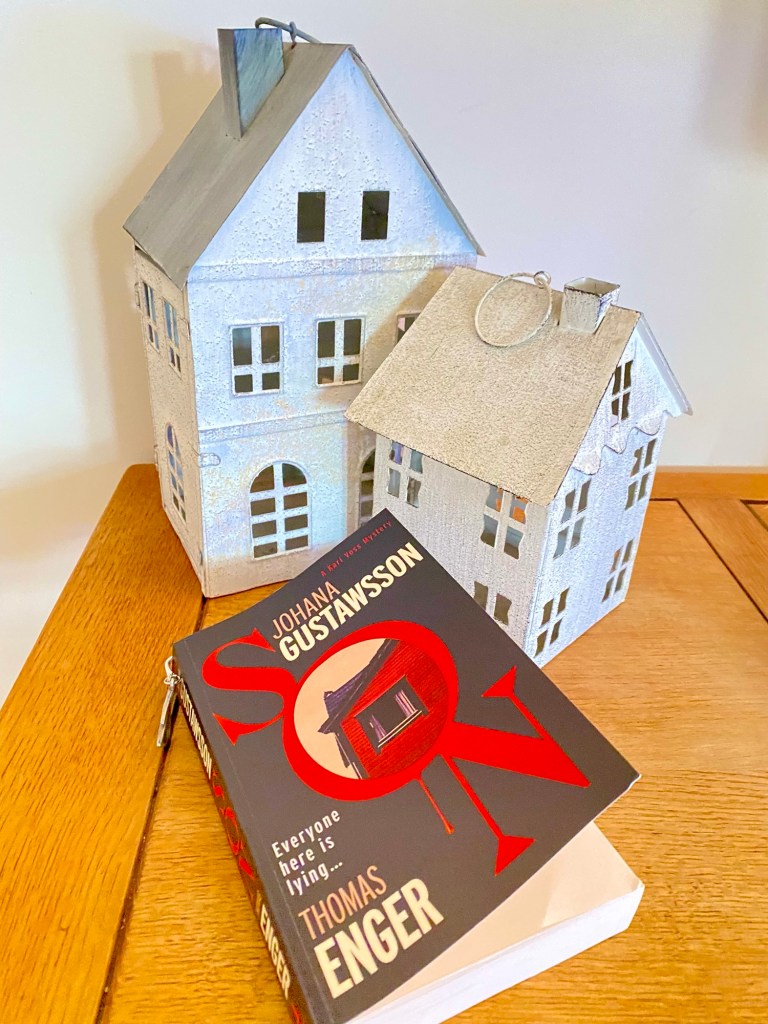
The blurb on the back of this novel promises an electrifying blockbuster that will be the start of a ‘nerve shattering’ new series. So there’s a lot to live up to, but Son definitely delivers. To use a rather inelegant phrase, this novel is a therapist’s wet dream of a novel – hidden characters, unexplained black outs, grief, trauma and an investigator who is dubbed The Human Lie Detector. I was definitely in my element here. Kari Voss is the centre of this tangled web, a psychologist who specialises in memory and body language and acts as a consultant to Oslo’s police force. When two girls are brutally killed in a summer house in the village of Son, it’s a crime that’s closer to home than she would want. The girls, Eva and Hedda, were best friends with Kari’s son Vetle when they were younger. In fact it was while on a holiday seven years ago that Vetle disappeared in nearby woods and was never found. The girls are now teenagers and were planning a Halloween party for their friends, but were found tied to dining chairs with their throats cut. They were found by a third friend, Samuel Gregson, when he turned up to start the festivites and it is also an old friend of Vetle’s that police chief Ramona Norum arrests and starts to question. When Kari is asked to consult she knows this will be difficult, not only is she friends with the girl’s families, their lives are inextricably linked to her missing son. How will she negotiate all the emotions this case will unleash and find the girl’s killer? 

No one is what they appear here. As Kari starts to ask questions about Eva and Hedda, it turns out that they aren’t always the polite children or young teenagers they appear to be. The authors are very clever about the amount of introspection they use, creating a hidden layer to the crimes and a breathing space between the character driven chapters and the ones filled with nail-bitingly intense action. There’s even subterfuge in the title, Son is a place slightly north of Oslo, steeped in Nordic history and full of that unsettling atmosphere that I find Nordic Noir is so good at. Yet it’s also a person, so missed by those who love him and inextricably linked to this landscape, that has potentially become his final resting place. I was compelled to read this to the end, taking it everywhere with me on holiday so I could grab a chapter in a coffee shop or even in the car. This is an engrossing and addictive start to a promised new series and I’m already craving the next instalment.  

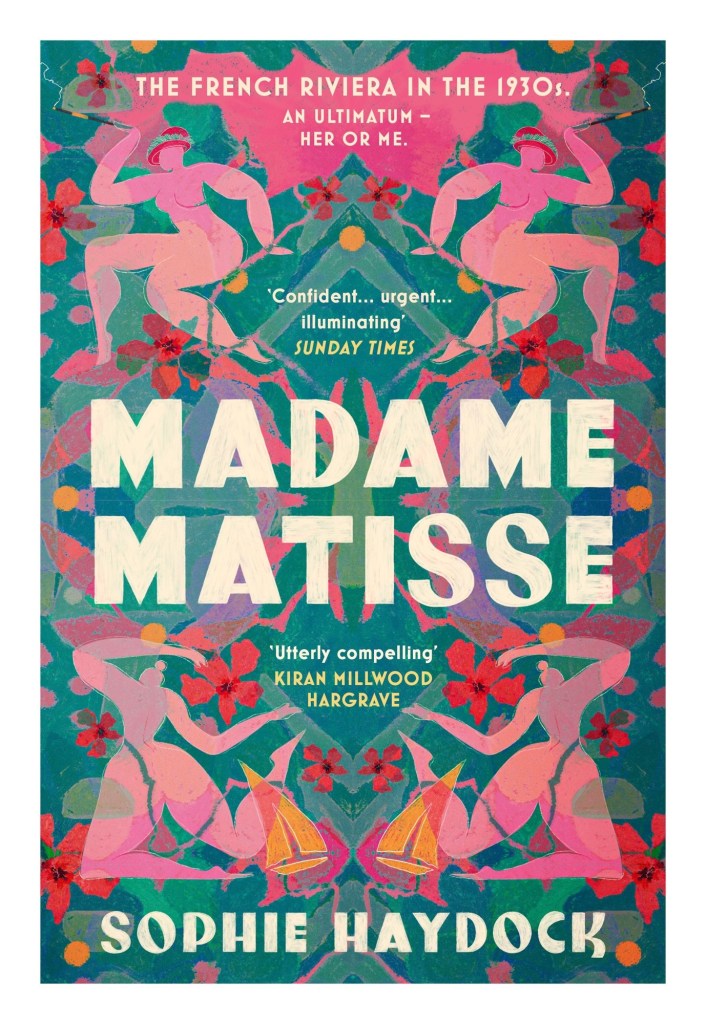
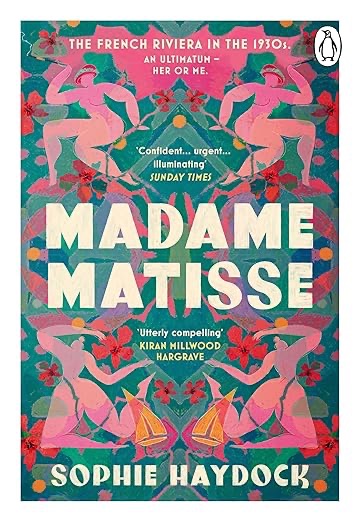
This is the story of three women – one an orphan and refugee who finds a place in the studio of a famous French artist, the other a wife and mother who has stood by her husband for nearly forty years. The third is his daughter, caught in the crossfire between her mother and a father she adores. Amelie is first drawn to Henri Matisse as a way of escaping the conventional life expected of her. A free spirit, she sees in this budding young artist a glorious future for them both. Lydia Delectorskaya is a young Russian emigree, who fled her homeland following the death of her mother. After a fractured childhood, she is trying to make a place for herself on France’s golden Riviera, amid the artists, film stars and dazzling elite. Eventually she finds employment with the Matisse family. From this point on, their lives are set on a collision course. Marguerite is Matisse’s eldest daughter. When the life of her family implodes, she must find her own way to make her mark and to navigate divided loyalties.

Based on a true story, Madame Matisse is a stunning novel about drama and betrayal; emotion and sex; glamour and tragedy, all set in the hotbed of the 1930s art movement in France. In art, as in life, this a time when the rules were made to be broken. I loved reading about these fascinating women, all of which step outside the traditional role of most women of the time. Sophie beautifully situates Matisse within his peer group, especially his great rival Picasso. Then situates each woman perfectly within their history, the most in depth being Lydia’s Russian background and Marguerite’s incredible bravery in WW2. I thoroughly enjoyed looking up the paintings mentioned and seeing Matisse’s representation of the three women who were closest to him and I found myself reading articles about him and Picasso. It left me with a sense of anger and empathy for how much women sacrifice so that men can excel at what they do, realising their ambitions while their wive’s ambitions are forgotten or buried under a suffocating mental load – still the thing women in my group talk about most. These women never take the limelight away from Matisse, even while stripped bare for people to view. The focus is always on the painter, their brush strokes, choice of colour and artistic decisions. I love that in this novel they are more than body parts, they’re shown as the vital, brave, complex and generous women they clearly were.  

Set in 1895 when a train did crash onto the platform at Montparnasse, Donoghue places us very definitely in the fin de siecle, with every little detail. It isn’t just her description of the train, which I could picture very clearly, it’s the character’s clothing and their attitudes. There’s certainly evidence of a shift in the Victorian ideals that held firm throughout the 19th Century. In one journey we can see women being more outspoken, having a definite sense of purpose, and a need to determine their own destiny. Women are travelling alone or for work, in the case of Alice she is travelling with her boss as the secretary for his photographic business. She takes the opportunity to talk to him about moving pictures, she has researched the subject and thinks it could be a new market for the firm. Marcelle is researching in the field of science and huge fan of Marie Curie who is so work focused that she went to get married in an everyday blue dress and returned to the lab.I was absolutely fascinated with Mado. She stands out more than she realises, with her androgynous clothing and short hair, not to mention the lunch bucket she’s clutching as if her life depends on it. She’s a feminist, an anarchist and seems to have an interest in reading other people. Her own internal struggle is so vivid that I could feel the tension in her body as I read. She seems contemptuous of many of her fellow passengers, particularly the men, knowing that the Victorian feminine ideal is simply a role women are forced to play. To step outside of the norm is brave and a deliberate outward show of her inner strength and determination to change women’s place in the world. How far might she go to show her resolve?

Gradually I was compelled to keep reading because the tension was rising with every new passenger and because as the reader I was omniscient: Donoghue gives her reader the full story and we know the potential fate of every character on this train. Brilliant as always!

1843. On a remote Scottish island, Ivar, the sole occupant, leads a life of quiet isolation until the day he finds a man unconscious on the beach below the cliffs. The newcomer is John Ferguson, an impoverished church minister sent to evict Ivar and turn the island into grazing land for sheep. Unaware of the stranger’s intentions, Ivar takes him into his home, and in spite of the two men having no common language, a fragile bond begins to form between them. Meanwhile, on the mainland, John’s wife, Mary, anxiously awaits news of his mission.
Against the rugged backdrop of this faraway spot beyond Shetland, Carys Davies’s intimate drama unfolds with tension and tenderness: a touching and crystalline study of ordinary people buffeted by history and a powerful exploration of the distances and connections between us.

Clear is so beautifully set within some very significant events. In the 19th Century evangelical worshippers moved away from the Church of Scotland to form the Free Church of Scotland. Also, there was a second wave of Scottish landowners driving their tenants from the land, choosing to make a better profit grazing sheep. This was just one part the Highland Clearances. Our characters are deeply involved with these events. This is such a gentle story that contains so much. Instead of pushing an agenda or viewpoint, the author just lets it play out naturally. Ivar is part of this island, a bear of a man with only his animals for company. There’s a purity to his life that’s almost spiritual, an interesting contrast to John’s organised religion. There’s so much under the surface of the story, told in the tiny details of everyday life: their gestures, the intimacies they share and how those connections change as a language is formed between them. It’s interesting to see the established dynamic of John and Ivar affecting how Mary settles into the cottage. The men’s connection brings the three of them into a unit, so that they don’t feel like a married couple and a lone man any more. Each of them forms a strong connection with each other and the landscape. I found reading this an almost meditative experience, because it’s so slow and calm, until the sudden end.

Living and working in Snowdonia was always retired detective Frank Marshal’s dream. Until a phone call asking for his help turns it into his worst nightmare. Retired detective Frank Marshal lives in a remote part of Snowdonia with his wife Rachel who is suffering from dementia. Working as a park ranger, Frank gets a phone call from close friend Annie, a retired judge. Her sister Meg has gone missing from a local caravan park and she needs his help to find her.

As Frank and Annie start to unravel the dark secrets of Meg’s life, it seems at first that her disappearance might be linked to her nephew and a drug deal gone wrong. In a shocking twist, their investigation leads them to a series of murders in North Wales from the 1990s and a possible miscarriage of justice. Can Frank and Annie uncover the sinister truth so they find her sister in time to save her? Or will a brutal serial killer add Meg to his list of victims?

I’m always complaining about thrillers and crime novels that rely on their twists and turns without any depth to the characters or the story. I couldn’t complain at all here. There are twists, including one I only started to suspect few pages before it was revealed. This book was full of emotion: Frank and his wife sitting in bed and looking at old photos was so poignant since both know her dementia is progressing and she is slowly forgetting it all; the beautiful relationship between Frank and his grandson; Annie’s grief over her sister’s disappearance and her nephew’s accident. All felt like fully realised people, even those only in the novel a short time. I could see Frank locking horns with police chief Dewi in the future or the scouse drug dealers. I loved the setting too, the author has managed to capture it’s beauty and it’s bleakness. This was a cracking mystery that crept up on you slowly then didn’t let you put it down. I’m looking forward to many more adventures with Frank Marshal. 

So that’s all for March, but next month’s reading is busy as always. Here are a few books still lurking on my TBR for April. It’s going to be a great month.

Posted in Random Things Tours

Madame Matisse by Sophie Haydock 

This is the story of three women – one an orphan and refugee who finds a place in the studio of a famous French artist, the other a wife and mother who has stood by her husband for nearly forty years. The third is his daughter, caught in the crossfire between her mother and a father she adores.

Amelie is first drawn to Henri Matisse as a way of escaping the conventional life expected of her. A free spirit, she sees in this budding young artist a glorious future for them both. Ambitious and driven, she gives everything for her husband’s art, ploughing her own desires, her time, her money into sustaining them both, even through years of struggle and disappointment.

Lydia Delectorskaya is a young Russian emigree, who fled her homeland following the death of her mother. After a fractured childhood, she is trying to make a place for herself on France’s golden Riviera, amid the artists, film stars and dazzling elite. Eventually she finds employment with the Matisse family. From this point on, their lives are set on a collision course….

Marguerite is Matisse’s eldest daughter. When the life of her family implodes, she must find her own way to make her mark and to navigate divided loyalties.

Based on a true story, Madame Matisse is a stunning novel about drama and betrayal; emotion and sex; glamour and tragedy, all set in the hotbed of the 1930s art movement in France. In art, as in life, this a time when the rules were made to be broken…

Almost eleven years ago my lovely arty friend Mandy wanted to visit the Matisse exhibit at Tate Britain. I really hope I didn’t ruin it for her. I probably did. I confess I’m not a lover of modernist art. We went to the Guggenheim in New York and I proclaimed it disappointing. We had to go across to the MET and see their collection of Impressionists to cheer me up. My loves are the Pre-Raphaelites and the Art Nouveau/ Arts and Crafts period so we’re a long way away from each other in preference. Art is her subject so I’m happy to own that she certainly knows a lot more than me. I was interested to read in her afterword that the author has always had an interest in Matisse, with a black and white postcard of him on her notice board for several years. I have one of Gustav Klimt wearing an artist’s smock and clutching a cat, with a look of devilment on his face. It makes me smile whenever I see it so I understand how a particular artist can inspire your imagination. Sophie’s first novel, The Flames, was about a protégé of Klimt. It was narrated by the women in the life of Egon Schiele, the subjects of four of his paintings. Here she takes a similar look at the women who surrounded Henri Matisse, showing how they advised, supported and sustained him in his endeavours, but remained completely in the background to his talent. 

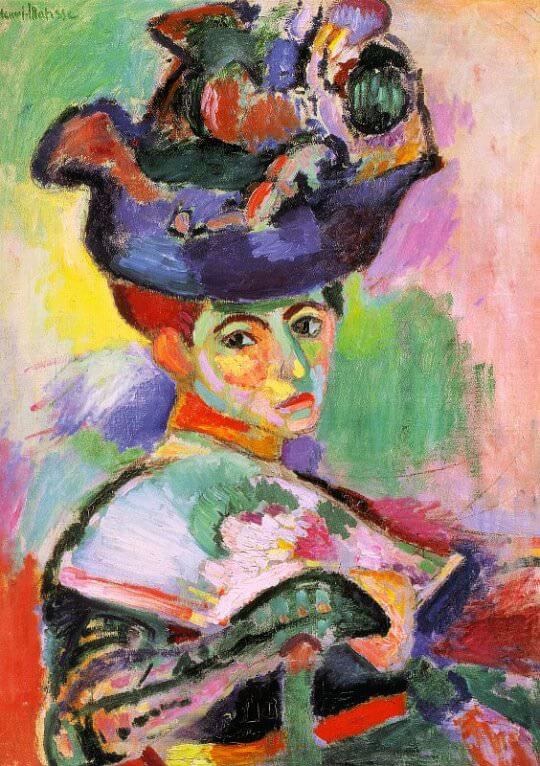
The story starts with Amélie, an incredibly brave young woman who takes a chance on marrying an artist rather than a more conventionally acceptable partner. She sees something in Matisse’s paintings, recognising the way his work could be at the forefront of modernism. Previously his colourful style has been rejected for exhibition in Paris, but Amélie knows that innovative artists often take a while to break through. In fact it is a painting of Amélie that is the catalyst for Henri’s career to take off. Woman in a Hat is exhibited in Paris and bought by siblings Gertrude and Leo Stein, a bohemian pair central to the art world throughout the early 20th Century. This is where Amélie makes the bravest and most important decision of her husband’s career. The Stein’s offered only two thirds of the asking price. Eager to make a sale to the influential pair, Henri is willing to give the discount but Amélie advises him to wait and hold out for the asking price. He takes her counsel and they go and meet the Steins, convincing them that Henri is central to the next great artistic movement. The Steins pay the full price. The couple are a great team with Amélie making all the household and business decisions, freeing Henri to paint and become a famous member of the Fauvist Movement. She also brings Henri’s daughter Marguerite into their growing family, when her own mother is struggling to care for her. Yet, not everything about their relationship runs smoothly. Once they are able to afford a family home with a garden and studio for Henri, Amélie’s help is no longer needed. Henri takes on a series of young assistants and Amélie has the more traditional wife’s role which doesn’t suit her. It’s fascinating to read about the changes, once their joint struggle is over they cease to become a team and the problems begin. 

Woman in a Hat

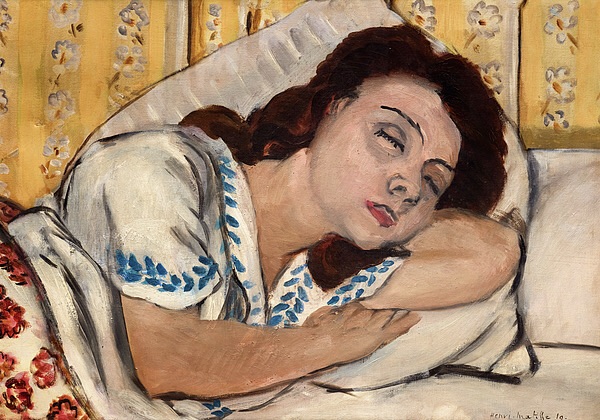
Another section of the novel is devoted to Marguerite, Henri’s illegitimate daughter. Once Amélie has brought her to live within their family, Marguerite seems to blossom under the care of her stepmother. She also makes herself useful to her father, tidying his studio and anticipating his needs. It is interesting to hear about Amélie and Henri’s relationship from her perspective and her anxieties that the family she’s been brought into, stays together. She shares a lot of Amélie’s suspicions about some of the assistants who breeze in and out of their lives. She’s also a strong advocate for her stepmother, even into her parent’s old age. Yet there were times when I felt she was taken advantage of by Amélie and her father. There’s a sense in which, despite seeming kind, loyal and trustworthy, Matisse does use the women around him. The household was entirely groomed to anticipate his needs and the women are sacrifices for his artistic genius. 

Most interesting to me was Lydia Delektorskaya, born in Tomsk, Russia, in the tumultuous period after the revolution. After the murders of the Royal family, Lydia has just lost her mother when her father decides she must leave the country. He gives her a gun with three bullets left in their chambers and sends her to China on the Trans-Siberian Express with her Aunt Berthe. After building a life there Lydia must make a choice between the Sorbonne in Paris or to marry her lifelong friend and stay. Lydia takes neither choice and instead aims for the South of France, a place that couldn’t be more different to the place she was born. She spends time working in a bar but when she sees a job with the Matisse family she decides to apply. The job is to look after Henri’s wife Amélie who has a chronic illness and is confined to their apartment. Lydia has experience of working with her mum and her aunt and felt fulfilled by her caring role. Once she starts work though, some of her duties are to assist Henri in his studio, eventually sitting for portraits and sketches. Amélie eyes their relationship with suspicion despite there being no evidence of impropriety. This is more than an affair, it’s a meeting of souls and when ultimatums are made they have terrible consequences. 

Marguerite Asleep

I loved reading about these fascinating women, all of which step outside the traditional role of most women of the time. Sophie beautifully situates Matisse within his peer group, especially his great rival Picasso. She situates each woman perfectly within their history, the most in depth being Lydia’s Russian background and Marguerite’s incredible bravery in WW2. Both are fascinating to read and show us the extreme cruelty and playbook of totalitarian regimes. She also shows us how incredibly brave and resourceful each woman is, more involved in the world and bigger risk takers than Matisse. Lydia’s realisation of what her father truly sacrificed to stay in Russia happens when she is older. First they came for the royal family and aristocracy, then those with intelligence and  the ability to challenge them, just as the Nazis did in Poland. This perhaps has more resonance thanks to current world events. I thoroughly enjoyed looking up the paintings mentioned and seeing Matisse’s representation of the three women who were closest to him and I found myself reading articles about him and Picasso. It left me with a sense of anger and empathy for how much women sacrifice so that men can excel at what they do, realising their ambitions while their wive’s ambitions are forgotten or buried under a suffocating mental load – still the thing women in my group talk about most. These women never take the limelight away from Matisse, even while stripped bare for people to view. The focus is always on the painter, their brush strokes, choice of colour and artistic decisions. I love that in this novel they are more than body parts, they’re shown as the vital, brave, complex and generous women they clearly were.  

Lydia Delectorskaya

Meet the Author


Sophie Haydock is an author, editor and journalist (Sunday Times, Financial Times, Guardian), based in Folkestone, Kent, where she is curator of Folkestone Book Festival. Her debut, The Flames – about the women who posed for the scandalous artist Egon Schiele in Vienna a century ago – was named by the Times as one of the Best Historical Fiction Books of 2022. It was longlisted for the HWA Debut Crown Award, and the Italian translation, Le Fiamme, won the Premio Letterario Edoardo Kihlgren for debut novels. She worked for the Sunday Times Short Story Award and is associate director of the Word Factory. Her Instagram @egonschieleswomen has 110,000 followers. Visit: sophie-haydock.com

Posted in Sunday Spotlight

Sunday Spotlight: A Work of Art

Artists are an endless source of material for novelists and have fascinated me for most of my adult reading life. I think we afford artists the right to behave badly, because what they do feels like alchemy. To be able to take mere pen and paint and turn it into something that’s beautiful or utterly new is magical to someone like me who can only just manage to sketch something if I have lots of time and patience. I stick to colouring for my artistic endeavours. If I think about it I’ve been going to art galleries since my teenage years when the chance to see Klimt’s work at Tate Liverpool was too exciting to pass on. I loved ‘The Kiss’ but this exhibit took his work and placed it into the context of the secessionist movement, just one branch of Art Nouveau. I continued to visit exhibits on Art Nouveau, at the Kelvingrove Gallery in Glasgow to see the Glasgow School exhibits, The Met in New York a few times, as well as the Guggenheim there and in Venice. I visited London for many exhibits at the V and A and the Tate including Lucian Freud, a painter I’ve come to appreciate more recently. One of my great loves are the Pre-Raphaelites, since having the chance to study their work at university. We visit my mum’s hometown of Liverpool very frequently and I’m a regular at the Walker Gallery and Lady Lever gallery in Port Sunlight both of which have a great collection of Pre-Raphaelite work. Artists are often unconventional, have complicated love lives and some have a reputation for being hellraisers. Is it any wonder that we love to read about them? I usually jump at the chance and have quite a collection! here are a few of my favourite novels that feature painters.

Mistral’s Daughter by Judith Krantz

I have a very cracked and broken copy of this novel and I’ve read it several times. I blame it for starting my fascination with painters, I used to swipe it off mum’s bookshelves when I was a teenager. It’s romantic and sexually explicit, two things teenagers are definitely interested in! It follows the story of three generations of women from Paris to New York. We first experience Maggie Lunel’s journey to become an artist’s model. She is chosen by Julian Mistral and becomes his muse, as well as his lover until his ego and arrogance make her walk out. Years later, Maggie’s daughter Teddy is working as a fashion model. Her father Perry Kilkullen was the last man Maggie would fall in love with. Teddy has a job in France posing with artists for a fashion shoot and as soon as she poses with Mistral it is love at first sight. Mistral is married, but he leaves and sets up home with Teddy, never returning to America. Fauve Lunel is Mistral’s daughter, brought up with her grandmother Maggie she visits Mistral in the summer at his villa in the south of France. Fauve is a talented artist and begins to look into her family roots, finding out they are Jewish. When she realise Mistral might have been a collaborator during WW2 the revelation tears father and daughter apart, will they ever reconcile? This is a great story, romantic and bit racy too.

The Marriage of Oppositesby Alice Hoffman

As you all know by now, I’m a big fan of Alice Hoffman, but when I first picked up this novel on publication day I found it was very different from her usual books. We always expect to find strong women in Hoffman’s novels but there’s usually an element of magic realism to her work. Our heroine Rachel is definitely a strong woman, but magic takes a back seat for this novel that reads more like an biography. Rachel lives on the stunning island of São Tomé or St Thomas and is the mother of Camille Pissarro, one of the founders of Impressionism. Rachel is brought up with a strict Jewish faith, but she has always dreamed of getting off the island and going to Paris. Unfortunately Rachel has no choice and is married off to a widower with three children. Nevertheless she makes of the best of things until her husband dies suddenly. When his nephew Frédéric comes from Paris to settle the will and there is an instant spark between them. For once Rachel decides to make decisions for her own life and begins a passionate affair. The scandal that ensues when they marry has the whole island in uproar, but Rachel stands firm and will not be moved. This is a beautiful story, set on a lush island that’s described in gorgeous detail by Hoffman – she made me want to go there. I loved her relationship with her son and hoped that one day she would get to go to Paris as she dreamed.

Notes From An Exhibition by Patrick Gale

Set in the beautiful county of Cornwall, around Newlyn and Penzance, this is the story of a family struggling with secrets, brought back to the place they were born after a tragedy. Their mother, celebrated artist Rachael Kelly, is found dead in her Penzance studio after struggling with the creative highs and devastating lows that have coloured her life. As her family try to make sense of their mother’s life and it’s effect on them, devastating secrets come to light. As always with Patrick Gale the level of empathy in this book is incredible, he understands how different people think and respond to events. His depiction of mental illness is so authentic and heart-breaking. Rachael’s bi-polar disorder is the source of her art, but Gale also explores how it affects the rest of her working life and how it impacts on her family, especially her children. This is a favourite of mine and I’ve read it several times, but it never loses it’s power.

The Flames by Sophie Haydock

I devoured this brilliant book by Sophie Haydock, where she takes four women painted by artist Egon Schiele. Set in Vienna in 1912, on the back of the secessionist movement and artists like Gustav Klimt, Schiele paints four women and Sophie gives them a voice. Gertrude is in awe of her brilliant older brother, often posing for him but envying his freedom and agency. Then there’s Vally, a model for Klimt who’s trying to work her way out of poverty. Then sisters Edith and Adele move into the apartment building opposite Schiele’s in Vienna. The daughters of wealthy parents, they are not the type of girls who usually model for an artist and are expected to marry well. Yet both become embroiled with Schiele, professionally and privately. A portrait is always how the artists sees or wants to present you to the world, here the women step out from behind that image and tell their own story.

The Paris Muse by Louise Treger

Louise Treger’s 2024 novel concerns the life, or more accurately the love, of Dora Maar – a photographer and painter who lived in Paris for most of her life and most notably, during the German occupation in WWII. Born Henrietta Theodora Markovitch in 1907, she was known as a surrealist photographer exhibiting alongside Dali and other notable surrealists. She used her photographic art to better represent life through links with ideas, politics and philosophy rather than slavishly photographing what was naturally there. She was exhibited in the Surrealist Exposition in Paris and the International Surrealist Exhibition in London in 1936. In the same year she was exhibited at MOMA in NYC. She first encountered Picasso while taking photos at a film set in 1935, but they were not introduced until a few days later when Paul Elduard introduced them at Cafe des Deux Magots. They met in quite a dramatic way that showed her intent to catch his eye. She sat alone and using a pen knife she drove the blade between her splayed fingers and where she missed, blood stained the gloves she wore. The fact that Picasso kept these gloves and packed them away with his treasured mementoes is a metaphor for their entire relationship – he fed from her emotions. The author allows Dora to tell her own story and we are inside her mind at all times. We could say this is only her viewpoint of their relationship, but in a world where she is most known through her relationship with a man instead of her own work, Treger is simply redressing the balance. This is tough to read in parts, showing the ego of Picasso and how his call for freedom in their relationship, means his freedom. I felt sad for Dora, possibly influenced by some of my own experiences. She seemed like a smaller woman at the end with none of her original vitality and flamboyance. I’m so glad to know that her art lives on and is still exhibited as part of the surrealist canon. 

The Blue Hour by Paula Hawkins

WELCOME TO ERIS – A TIDAL ISLAND WITH ONLY ONE HOUSE, ONE INHABITANT, ONE WAY OUT. . .

A place that is unreachable from the Scottish mainland for twelve hours each day. Once the hideaway of Vanessa, a famous artist whose husband disappeared twenty years ago. Now home to Grace. A solitary creature of the tides, content in her own isolation. Local GP Grace, often referred to as Vanessa’s companion or friend, might have inherited Eris. However, Vanessa’s artworks were left to an art foundation set up by her first agent. The curator of the foundation is Becker, hired for his expertise in Vanessa’s work. He is under pressure from the new owner to extract the last of Vanessa’s work from Eris. They have tried polite enquiries, legal letters and ultimatums but they are sure this has all been in vain and that Grace is deliberately holding back. Now a situation has arisen with one of Vanessa’s found object installations already on display in the gallery. A visiting doctor is convinced that the bone suspended in a glass box is human. They withdraw the box from view and contemplate having to break it open to have the bone properly tested. The unspoken thought on everyone’s mind is whether this might solve the mystery of Vanessa’s missing husband? It’s an opportunity for Becker to tell Grace face to face, but also to address the missing works that must be on Eris. He feels this is the best way forward; a last ditch attempt before legal action. However, visiting Eris is not without it’s risks. Are all of it’s secrets and lies about to be uncovered? This is a great thriller, full of questions about what an artist needs to be able to create, who owns an artwork and when does friendship become obsession?

New Reads To Look Out For …

Sophie Haydock is delving back into the art world with her novel about the women surrounding the artist Matisse.

This is the story of three women – one an orphan and refugee who finds a place in the studio of a famous French artist, the other a wife and mother who has stood by her husband for nearly forty years. The third is his daughter, caught in the crossfire between her mother and a father she adores. Amelie is first drawn to Henri Matisse as a way of escaping the conventional life expected of her. A free spirit, she sees in this budding young artist a glorious future for them both. Ambitious and driven, she gives everything for her husband’s art, ploughing her own desires, her time, her money into sustaining them both, even through years of struggle and disappointment. Lydia Delectorskaya is a young Russian emigree, who fled her homeland following the death of her mother. She is trying to make a place for herself on France’s golden Riviera, amid the artists, film stars and dazzling elite. Eventually she finds employment with the Matisse family. From this point on, their lives are set on a collision course. Marguerite is Matisse’s eldest daughter. When the life of her family implodes, she must find her own way to make her mark and to navigate divided loyalties. Based on a true story, Madame Matisse is a stunning novel about drama and betrayal; emotion and sex; glamour and tragedy, all set in the hotbed of the 1930s art movement in France. In art, as in life, this a time when the rules were made to be broken…

Out from Doubleday on 6th March 2025

PROVENCE, 1920

Ettie moves through the remote farmhouse, silently creating the conditions that make her uncle’s artistic genius possible. Joseph, an aspiring journalist, has been invited to the house. He believes he’ll make his name by interviewing the reclusive painter, the great Edouard Tartuffe. But everyone has their secrets. And, under the cover of darkness, Ettie has spent years cultivating hers. Over this sweltering summer, everyone’s true colours will be revealed.

Because Ettie is ready to be seen. Even if it means setting her world on fire. This book will transport you straight to the south of France and straight to the heart of one woman’s rage.

Out on 30th Jan from John Murray Press.

Posted in Netgalley

The Blue Hour by Paula Hawkins

Set on an isolated Scottish island called Eris, where the mainland is only accessible at high tide, an infamous artist has retreated from the world. Twenty years ago Vanessa’s notoriously unfaithful husband visited the island then went missing. After Vanessa’s death, the island became the home of local GP Grace, often referred to as Vanessa’s companion or friend. However, all her artworks were left to an art foundation set up by her first agent. The curator of the foundation is Becker, hired for his expertise in Vanessa’s work. He is under pressure from the new owner to extract the last of Vanessa’s work from Eris. They have tried polite enquiries, legal letters and ultimatums but they are sure this has all been in vain and that Grace is deliberately holding back. Now a situation has arisen with one of Vanessa’s found object installations already on display in the gallery. A visiting doctor is convinced that the bone suspended in a glass box is human. They withdraw the box from view and contemplate having to break it open to have the bone properly tested. The unspoken thought on everyone’s mind is whether this might solve the mystery of Vanessa’s missing husband? It’s an opportunity for Becker to tell Grace face to face, but also to address the missing works that must be on Eris. He feels this is the best way forward; a last ditch attempt before legal action. However, visiting Eris is not without it’s risks. Are all of it’s secrets and lies about to be uncovered. 

I’ve been waiting to love a Paula Hawkins novel ever since the brilliant The Girl on the Train, which was THE novel to be reading when it first came out. It was a successful film too, even though I felt it lost something when transferred to America rather than it’s London setting. Her following novels haven’t really stayed with me in the same way, even though they were page turners. This story really did grab me. I love reading about the lives of authors and artists, because they’re always interesting characters with depth and complexity. They also usually have atmospheric settings with the sort of rambling houses I dreamed of living in when I was little. This had all three and I truly couldn’t put it down, choosing it over TV in the evening and going to be early with it too. The story was intriguing too, with the mystery of the human bone to be solved but also the missing works of art, not to mention Vanessa’s husband. Vanessa has always insisted he left the island and his wallet was found washed up near the causeway suggesting his leaving was ill-timed and the tide came in as he was crossing. Becker is torn. He knows that they must test the bone, but he feels sick at the thought of destroying one of Vanessa’s works in the process. His boss agrees that he must travel to Eris to discuss it with Grace in person and take the opportunity to bring back any works he finds that should be in the gallery. 

I loved the complicated relationships in this story. Even Becker is in a strange relationship triangle. He arrived at the foundation specifically look after Vanessa’s legacy, but there was more change when Vanessa’s agent died and the house, grounds and art foundation passed from father to son. Also left behind were his frail and elderly wife and his son’s fiancée Helen. Becker was immediately attracted to Helen and to his surprise his feelings were reciprocated. This ultimately resulted in Helen leaving her fiancé for Becker and moving to his cottage on the estate. They are now married and Helen is pregnant with their first child. Becker had expected to lose his job over the affair, but his new boss was surprisingly gracious. Becker is from a modest background and he sometimes can’t believe that Helen chose him, besides her ongoing friendship with her ex-fiancé leaves him uneasy. This is a man who has everything and now he must leave Helen in his hands, so he’s feeling very conflicted about his trip to Eris. 

Grace is absolutely fascinating and her relationship with Vanessa is complex. She is aggrieved that Vanessa ‘left her with nothing’ neatly ignoring the fact that she now owns the house and island. The foundation’s position is that Grace has withheld certain paintings, sketches and Vanessa’s diaries. She comes across as a borderline personality. Her early experiences have left her feeling unwanted and inadequate leaving her unable to form healthy relationships. In order to be accepted she has learned to blend her personality to fit whoever she’s with, but sadly has no idea who she really is. When she wants to form an attachment she makes herself indispensable to the other person. In Vanessa’s case she becomes quietly present, in the background preparing meals, cleaning the house and making sure Vanessa has all the conditions she needs in order to create. In her way she feels she has contributed to the works Vanessa produces. There is no word for what Grace is – friend or companion is the usual – but really she’s like a servant, always anticipating their mistress’s needs. Most of the time she feels indispensable to Vanessa, but occasionally she is displaced from her position, by the latest lover or her ex-husband popping in and monopolising Vanessa, until she abandons work and spends time with him, often not leaving the bed for the duration of his visit. Grace hates him, often retreating to her cottage across the causeway until she sees his little red sports car departing the village. Then there are heated arguments and recriminations over his visit until the pair settle once more into their usual routine. Grace fears abandonment. She remembers the relief she felt when she found her tribe at university only to return home from lectures one day and find that her two friends have moved out of their shared house without even a note. As the village GP Grace is clearly intelligent and skilled but I worried about her access to vulnerable patients. I couldn’t decide whether she was a tragic figure, or a sinister one. 

Vanessa could be volatile. Her tempestuous friendship with her agent was well known and friends were surprised that she left him such a huge bequest on her death. Her marriage was also a rollercoaster of ups and downs, both of them drawn to each other but utterly incapable of living together. Could one of their legendary fights have gone wrong? As Becker arrives on Eris a battle of wills develops between him and Grace and secrets will out. The author keeps you guessing; is Grace the victim or persecutor? Is she holding on to the diaries because they incriminate Vanessa? Or is she trying to preserve the memories of her life with her friend, in the only place where Grace has felt like she’s home? The author pitched the tension perfectly and I devoured the final third of the book. We move between Becker’s narrative and Grace’s, alongside excerpts from Vanessa’s diary where each excerpt or reminiscence reveals about her clue or changes the story dramatically. Above it all is the artist – a figure we might imagine we know through their work, but art can be a mask, just a way of painting over the cracks. The diaries offer a less curated Vanessa, as well as the raw and unvarnished truth. Eris stands above all as a mystical landscape, like one of those places in a horror film that you can never leave no matter how hard you try. This was a brilliant thriller where you’re never sure about the truth until the very end.

Out Now from Doubleday

Meet the Author

PAULA HAWKINS worked as a journalist for fifteen years before writing her first novel. Born and brought up in Zimbabwe, Paula moved to London in 1989. Her first thriller, The Girl on the Train, has sold more than 23 million copies worldwide. Published in over fifty languages, it has been a Number 1 bestseller around the world and was a box office hit film starring Emily Blunt.

Paula’s thrillers, Into the Water and A Slow Fire Burning, were also instant Number 1 bestsellers.

Posted in Squad Pod Collective

The Final Act of Juliette Willoughby by Ellery Lloyd

Having just read about female surrealist artists in The Paris Muse by Louise Treager I was so ready for this story about the art world, women painters and a mystery surrounding British artist Juliette Willoughby. The writers tell their story across three timelines. In 1938, Juliette Willoughby is living and painting alongside her lover Oskar in Paris. A British heiress, she left her family and their money behind for a life as an artist who is best known for her painting ‘Self-Portait as Sphinx’, thought to be lost in a studio fire where she also lost her life. We meet our main characters Caroline and Patrick at Cambridge in 1991, where they are both studying art history and specialise in the Surrealists. They are sent to the same dissertation supervisor and while researching come across something sinister about Juliette’s death. Their investigations may expose terrible secrets about the Willoughby family, who are acquaintances of both students and aristocrats who don’t want their family history out in the open. Our final timeline is present day Dubai where Patrick is an art dealer and lives with his wife. Caroline is now an academic and expert on Surrealism, especially Juliette Willoughby so when a new Self-Portrait as Sphinx is uncovered he asks her to fly to Dubai and authenticate the painting. A sale is on the cards and Patrick needs to know if this painting is a second version by the artist and potentially worth millions. He plans a night for collectors to view the painting and offer sealed bids, but the night ends with Patrick in a cell accused of murdering one of his closest friends – the last surviving member of the Willoughby. There are now three suspicious deaths linked to this painting, but can Caroline unlock the mystery before Patrick is charged with a crime he didn’t commit?

I have a real interest in art history and the lives of artists, probably formed when I studied Victorian art history as part of my literature degree. My particular interests are the Pre-Raphaelites, the Arts and Crafts movement, Klimt and Frida Khalo, so it was brilliant to learn more about the Surrealists who are outside of my experience. My only understanding is that the artists may be representing the contents of their subconscious rather than the conscious. I can be a little bit scathing of some modern art, having my teenage years in the 1990s we were in the world of the YBAs – such as Damien Hurst and Tracey Emin. I have been to gallery openings where I could only conclude that other people had an ability to see something I couldn’t or that everyone was affected by a dose of the Emperor’s New Clothes – too scared to say anything negative they just nodded along and agreed it was good. I will never grasp why people spend a fortune on paintings that are nothing more than a red square on a beige background. As you can imagine, I drove my artist friend crazy when we visited the Guggenheim in NYC. I understand a piece that hits you in the emotions or a true passion to own and look at something incredibly beautiful every day, but it seems that more often than not investors pay millions for something that will sit in a storage unit. I thought I might find the art world in the book pretentious, but I could understand Caroline’s deep fascination with Juliette. There’s something about a female artist, often overshadowed by the man she lives with, that brings out the feminist in me. From Dora Maar whose photography and painting was eclipsed by Picasso to authors like Zelda Fitzgerald, thought to have contributed greatly to F. Scott Fitzgerald’s writing, there’s an urge to uncover their talent and put them in their historical context. This is the passion of Caroline, but Patrick is definitely complicit in trying to solve the mysteries the this particular painting found at a party in the Willoughby mansion.

This story has all the ingredients of a good old-fashioned mystery with the archetypal eccentric aristocratic family at it’s centre. Juliette’s father is an Egyptologist who never got over the death of her younger sister Lucy who drowned in the lake. Juliette is aware that she can never measure up to the baby of the family, who never reached her teenage years or tested her family. After her death, her father built a pyramid shaped sarcophagus on the island in the middle of the lake. Close to Lucy’s death, a maid disappeared from the house and then Juliette’s cat went missing too. Keeping the Egyptian theme was the club the Willoughby men formed at university, which had several similarities to the Bullingdon club. It was like an American college fraternity with it’s own initiation tests, pranks and hazing rituals. All members wear a signet ring with an Egyptian hieroglyph. Patrick was friends with both Harry and Freddie Willoughby, but the brother’ enmity for each other ran deep. At the party attended by Caroline and Patrick, Freddie disappeared after falling from some scaffolding during an argument with his brother. The amount of blood left behind would indicate a severe head injury but he is nowhere to be found, much to the distress of his girlfriend Athenia. It’s this same night when Caroline finds Juliette’s masterpiece and her diary. On impulse she takes the painting, wraps it carefully and places it in the boot of Patrick’s MG. What can she do with it from here and will the Willoughby’s know that it’s gone? Patrick suggests it’s placed in a small country sale where it’s value will go under the radar and they should be able to legitimately buy it, yet the unthinkable happens and the painting soars above when they can afford. Caroline still has the diary though and through it we can hear about her life with Oskar and the inspiration for the painting. She brings 1930s Paris alive for us a d provides clues to the symbolism of her Sphinx painting.

Finally, these sections are interspersed with the present day where Patrick has asked Caroline to come to Dubai. This is all the more tense because she is his ex-wife and Patrick has remarried. He wants her in Paris to answer questions that potential investors might ask. How can she know this piece is by the same artist as the 1930’s painting and is it from the same time period? There are differences in the smaller narrative parts of the painting in the background, why would the artist change them? Soon the presence of the painting brings other people from the past into Dubai, including Freddie’s girlfriend from the 1990’s Athenia. She is advising one investor who wants to remain nameless and as they all gather to make their bids in just one night it becomes clear that Patrick and Caroline’s reputations hang in the balance. However, it’s Patrick who finds himself in a cell, losing his standing, his financial future, his liberty and possibly even his marriage. What could have gone so wrong? This is such a complex mystery and as we get closer to unravelling some of the secrets, the tension starts to build. It definitely grips you and keeps the pressure on. I loved the history unravelled through Juliette’s diary and her take on what it’s like to live and work alongside another artist. There’s a certain point where I found myself reaching for the book in my downtime more than putting on the TV or radio. It’s a real skill to build tension like these authors do, slowly but surely sucking you in. You will find that you want the answers as much as Caroline and Patrick do. I also thought there were more tangled questions than they could ever resolve, but keep going. It’s definitely worth it and there are no loose ends left untied. I found myself focused on Juliette, Caroline and Patrick more than any other characters. Others are definitely hard to like – especially those with the hint of the Bullingdon Club in their pasts and a sense of elitist entitlement in their characters. These are people who will commit any sort of crime to keep their status and the respectability of their family. I found this attitude strangely believable in the recent political climate where lies and cover-ups seem to be the norm. I was amazed how well it was all tied-up and how the author used distraction and first person narrative to make sure we only read what they wanted us to. The novel moves effortlessly from writer to writer and I wouldn’t have known it was a writing team. They are masters at letting us into some secrets while shielding others until later on, right up until the last few pages.

Out now from Pan MacMillan

Meet the Authors

Ellery Lloyd is the pseudonym for New York Times bestselling husband-and-wife writing team Collette Lyons and Paul Vlitos.

Collette is a journalist and editor, the former content director of Elle (UK) and editorial director at Soho House. She has written for The Guardian, The Telegraph, and the Sunday Times.

Paul is the author of two previous novels, Welcome to the Working Week and Every Day is Like Sunday. He is the program director for Professor of Creative Writing at the University of Greenwich.