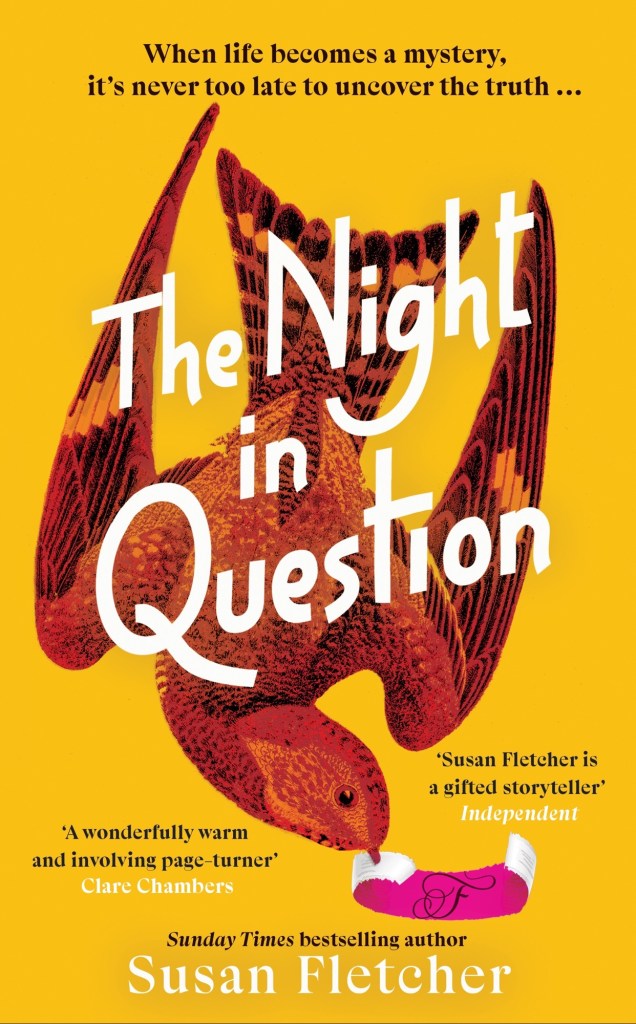
“Florrie learned, long ago, that society forgets an old person was ever young.”
When I was nineteen I started a summer job in a nursing home and went back to the work on and off for several years, both as a carer and an activities organiser. I was so fond of the first set of ladies I looked after, in fact I still have photos of them all and remember their quirks and their stories. I was deeply fond of Mary, an eighty year old lady with hair she could sit on. Other carers didn’t want to be bothered washing and drying her hair, but I loved it and would plait it for her and arrange it into the topknot she liked that left her looking like Little My from the Moomin books! She was convinced I was a boy, despite the dress that was our uniform. This was the nineties and I think she was confused by the crop I’d had, inspired by Demi Moore in Ghost. Having listened to a lot of stories from all my ladies, when I became an activities organiser I was determined to show carers that the people they looked after had once been young and full of dreams too. So many times I’d watched carers get someone out of bed and talk over them to each other instead of including them in their conversation. I worked with each resident on collecting photos and telling stories about their lives for a display that would hang outside the door on their room. It would give carers and visitors subjects to ask about but also help them see people instead of bodies. This lovely, gentle novel from Susan Fletcher reminded me of these times and some of the stories I uncovered from the residents I worked with – amazing, heart-breaking and life changing stories. Florrie Butterfield is one such resident. At the age of 87 and after losing her leg, she has decided to take charge of her future and move into a rather smart residential home called Babbington Hall, set within the beautiful Oxfordshire countryside with a church nearby. She’s now a wheelchair user, but still wants to keep some independence so chooses a place where she can have a ‘suite’ allowing her to manage for herself as much as possible. Florrie has just settled in to her new home in a converted apple store when one of her new friends, Arthur, is found dead in the gardens.
Suffering a bout of insomnia later that night, Florrie decides to take a look at an advancing thunder storm and makes her way over to the window. As she throws open the window she hears a scream and something falls heavily from the third floor of the hall. When Florrie looks down she realises with horror that it is Renata Green, the home’s young manager. Surely she can’t have survived such a fall? In the ensuing moments Florrie is helped back to bed, with many entreaties from the staff not to stand and wander around. Inside she is cursing her disability, she wants to race up the stairs to Renata’s room immediately and find whoever pushed this lovely young woman to what must surely be her death. As the day goes on, she is interviewed by the police and is confused by their questioning, they seem to be suggesting that Renata was depressed and had nothing to live for in the lead up to her fall. However, Florrie knows different, because that very day Renata had approached for for a discussion about matters of the heart. Renata was in love with someone and had singled out Florrie as a woman who might understand. Their exchange had made Florrie feel hopeful that she might make a friend, that she might be of some use. Renata chose her confidante well because Florrie does indeed have hidden depths. In her room is a box of keepsakes that remind her of the love affairs she’s had with some very different men. Florrie is pleased to be asked, charmed that Renata could see underneath her age and disability to the woman inside. The reader is taken on the journey into Florrie’s past lives and loves, while in the present she works alongside fellow resident Stanhope Jones to uncover the truth about what happened to Renata, treating it as attempted murder. She also hints at an incident in her past that she’s spent a lifetime trying to keep covered up, one night that looms so large in her life it splits it into before and after. Will we find out what happened on the night in question?
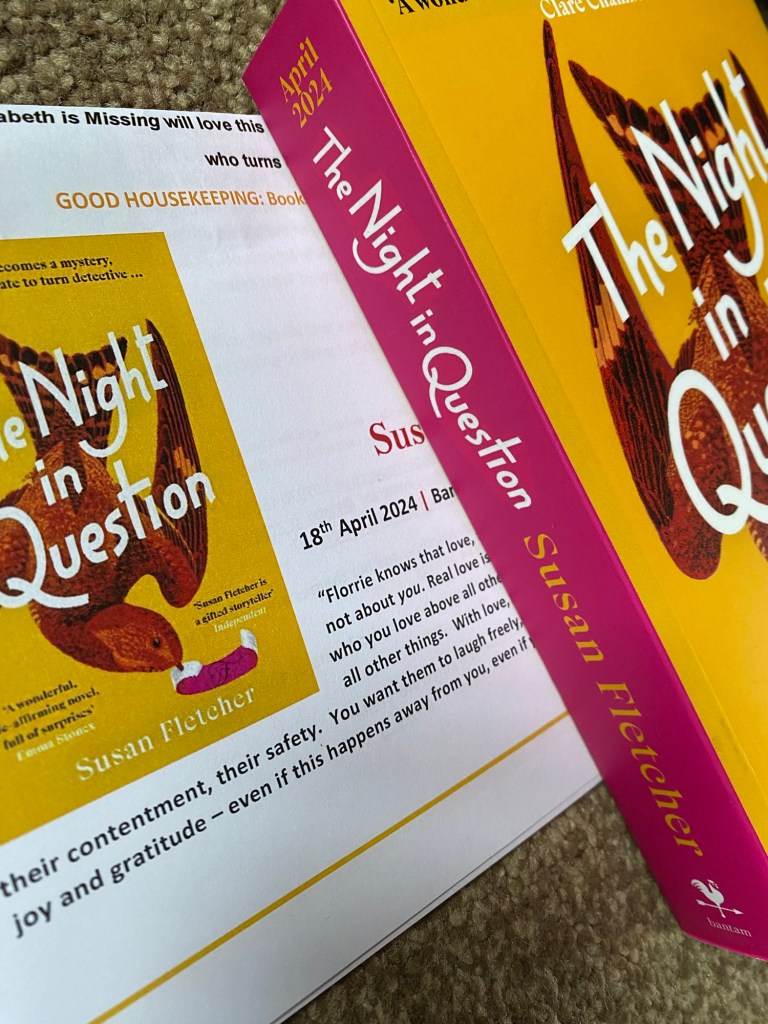
Florrie is a fascinating character and I loved that an elderly lady, who are often completely invisible to those younger than themselves, becomes our guide through this journey. She has a kindness and approachability about her that seems to set people at ease, but we shouldn’t let her sunny nature disarm us, because inside is a razor sharp mind. As she investigates the mystery I could see how good it was for her to have such a responsibility in her life again. Alongside the present mystery, we also get to know how Florrie reached this point in her life and I loved reading about her childhood, wondering which events shaped her into the woman she is today. There’s a depth and strength to her character that’s built up of so many layers and for me it was like working with a counselling client – while keeping the presenting issue in mind I delve deeply into the past, drawing out those events that have had the biggest impact and contribute to the client’s current problems. It’s rare to find book characters that are so reflective and self aware. The author also fills the rest of Babbington Hall with some interesting characters, each one detailed and with their own role in the community. While Florrie lives in her own apartment converted from an old apple store, residents with more complex needs are based within the main hall. There are those who are more introverted and keep to their own rooms, while others are the life and soul of the place. The so-called ‘Elwood twins’ keep the gossip mill in action, while simultaneously claiming that they never stick their nose where it isn’t wanted. Stanhope is also one of the more ambulant residents and is a great foil for Florrie, able to investigate parts of the home that Florrie can’t reach. She immediately dispatches him to Renata’s third floor room where she wants him to note the details of the crime scene and any clues to Renata’s last moments before the fall. He is equally unconvinced and confused as to why the police are willing to write the incident off as a fall. Florrie knows that any clues or evidence might be ruined if the staff get to Renata’s room first and start cleaning. However the only clue seems to be a single magenta envelope. It feels like Florrie has sensed a kindred spirit in this quietly spoken, kind woman who has found love in her forties. She wonders if Renata also has keepsakes that might hint at the person beyond her working role. Is she another woman who has lived an interesting life, grabbing hold of chances at love and adventure that might seem unexpected for someone so unassuming.
The pace and structure of the novel are perfectly crafted; the author reveals a little at a time, just enough to move the story along but keeping us waiting for the next clue. Florrie reveals her own story through the six loves of her life, from her diplomat husband of thirty years Victor Plumley, all the way back to her first love Teddy Silversmith. Of course Teddy was involved with ‘the night in question’, the happenings in Hackney that anchor this story and provide it’s title. Only when we know what happened that night and the cause of the scars on Florrie’s knuckles that have silvered with time, can we truly understand her life since. It was interesting to see that her childhood was governed by two very individual women, her mother Prudence who is probably best described as an eccentric and her Aunt Pip. Her father was a policeman, killed on duty when Florrie was very young and Aunt Pip moved in to help look after her and her older brother Bobs who was injured during WW2. It is lovely to read about Florrie’s relationship with her brother and how it changed after his return from war. We also find out that Aunt Pip left an abusive marriage to come live with them, showing a great strength and willingness to forge her own path that possibly brushed off on her niece. In all Florrie can count six loves in her unconventional life, all of whom are very different: the charming Gaston Duplantier who she meets in Paris: Jack Luckett, a very physical, good looking man in Africa; the mysterious sounding Hassan abu Zahra and Dougal Henderson. Through each love we learn about Florrie’s globe trotting life and her freedom of spirit, culminating in a wealth of experience and wisdom that might seem unexpected in the octogenarian lady she is now. It is these very experiences, that would probably go ignored by most younger people, that help Florrie and Stanhope solve the mystery of Renata’s ‘fall’. The author judges perfectly where to reveal the Hackney business, when it has most impact and brings a lump to the throat. It is a gift to be able to bring such depth and feeling to what could have been just another cozy crime novel about charming elderly residents playing detective. This book is so much more than that, revealing a rich and eventful life that could teach us so much about taking chances and not missing out on our potential. It also explores the corrosive nature of secrets, especially for the person holding on to them. I left Florrie the same way I used to feel after looking into the past with a resident – that I’d uncovered a treasure trove of experiences and met their young selves. I felt like I’d met a friend.

Meet the Author

Susan Fletcher was born in Birmingham and studied English Literature at the University of York.
Whilst taking the MA in Creative Writing at the University of East Anglia, she began her first novel, Eve Green, which won the Whitbread First Novel Award (2004) and Betty Trask Prize (2005). Since then, Susan has written seven novels – whilst also supplementing her writing through various roles, including as a barperson, a cheesemonger and a warden for an archaeological excavation site near Hadrian’s Wall. Most recently, she has been a Royal Literary Fund Fellow at the University of Worcester.
She lives in Warwickshire.
Thank you to Transworld Publishing, Alison Barrow, Susan Fletcher and Random Things Tours for inviting me to join the blog tour.




 The Lotus Readers