Posted in Sunday Spotlight

Sunday Spotlight. Sue Townsend and the Christmas Exploits of Adrian Mole.

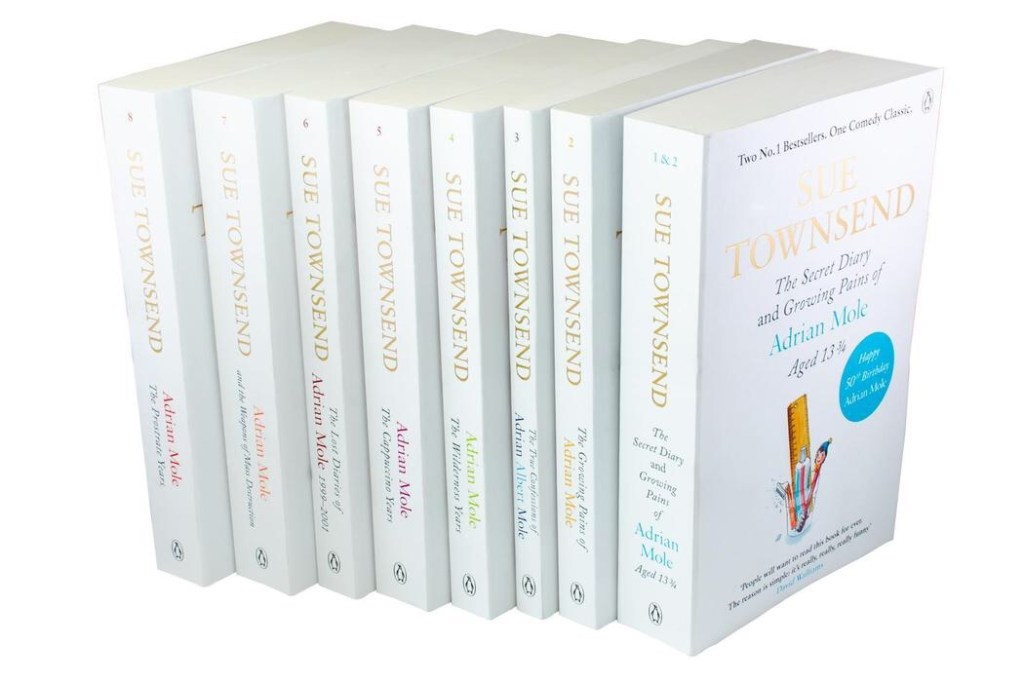
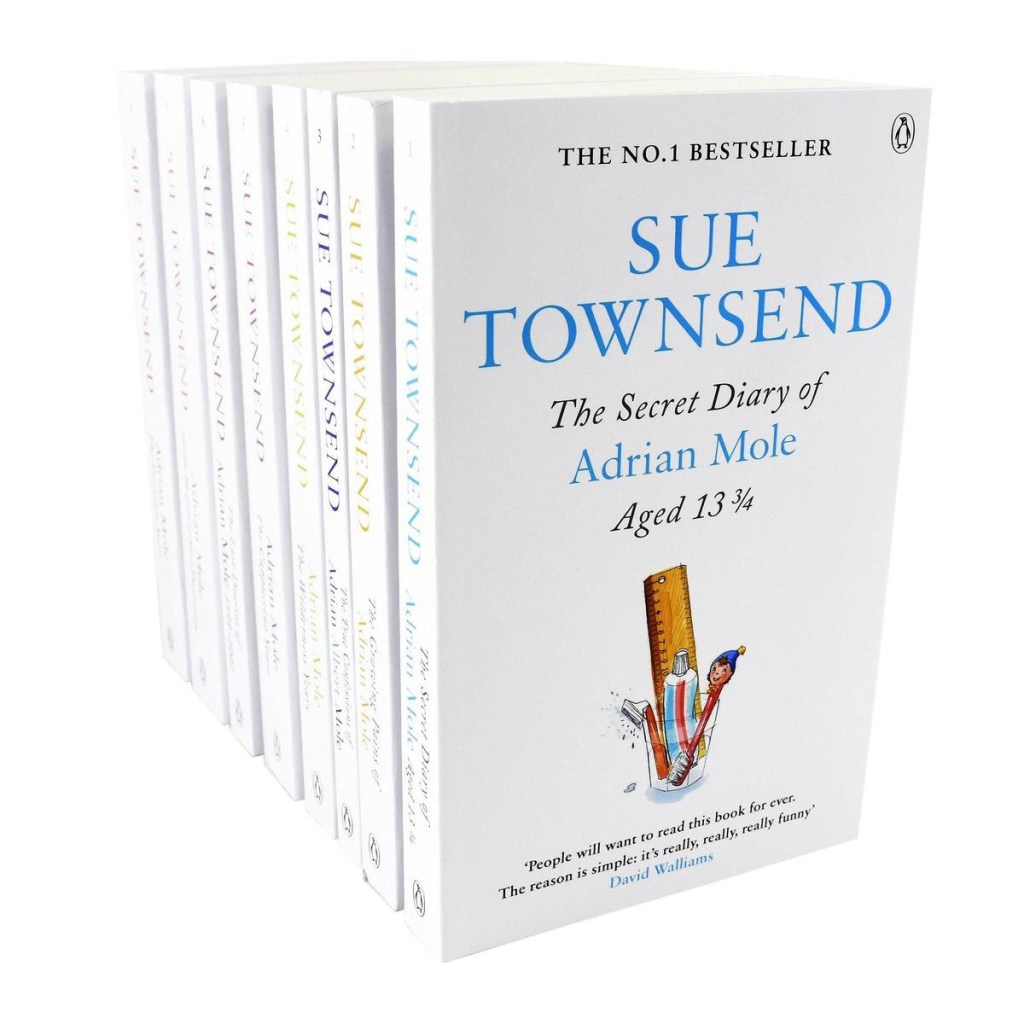
Maybe Adrian Mole isn’t the first thought most readers might have when thinking about Christmas books. For me they are right up there with the funniest and most realistic Christmas Days in literature. Every diary, starting with The Secret Diary of Adrian Mole Aged 13 3/4, contains a Christmas and each one is disastrous, but also laugh out loud funny. We’ve all had such Christmas disasters, perhaps not with such alarming regularity, and while a lot of us run ourselves ragged in December to ensure everyone has the perfect day, it’s good to read something like this to remind us that Christmas still happens whether your napkins match your tree decorations or not. The true joy of the Moles is that they are a (fairly) normal family, but their Christmas Days are always fraught. When they’re all together, Grandma Mole can always find fault with something her daughter-in-law has done, usually there’s something wrong with the food or her darling son George is being hen-pecked. In the later years, as his parent’s complicated sex life can mean some extra bodies at the table, there is a tug of war over the gravy. The Mole family gravy is made with stock from giblets and was his grandmother’s recipe. His mum Pauline would fight to the death over her right to make the gravy. Here, if anything can go wrong, it will, whether it’s a culinary mishap, an ill thought out present, or natural disaster. Christmas 1981 was our first with the Moles, but it sets a precedent.

Friday December 25th (1981)

‘I went up to the bathroom and found my mother crying and running the turkey under the hot tap. She said, “The bloody thing won’t thaw out, Adrian. What am I going to do?” I said, “Just bung it in the oven.” So she did.

‘We went down to eat Christmas dinner four hours late. By then my father was too drunk to eat anything.’

Adrian is one of life’s innocents, even in adulthood, and it’s delightful to read his completely oblivious observations of others. His friend Nigel receives presents that might indicate to most people that he’s thinking about his sexuality. He’s also oblivious during the years that both his father and mother are pursuing affairs, most notably with ‘Stick Insect’ Doreen Slater. His head is often so full of his attempts to be an intellectual, his love for Pandora Braithwaite and his various anxieties that he misses what’s going on under his nose. One year Adrian invites Bert Baxter and his girlfriend Queenie for Christmas but hasn’t informed his Mum and Dad. It’s Christmas morning when he wakes his hungover parents to say they have to pick them up. Bert usually spends the day in his bungalow with Alsatian Sabre, eating pickled beetroot in his underpants, so this is definitely a step up.
Whoever the guests are, they bring their own drama with them. His parents seem inclined to come on the same day, but bring a new lover whether it’s ‘Rat-Faced Lucas’, Pandora’s father Ivan or ‘Stick Insect’ with Adrian’s step-brother in tow. I find Adrian’s maternal grandparents hilarious. Used to living in a potato field in Norfolk, and not used to company, the pair are very Biblical and disapprove of drinking and fornicating. Their glum faces at the dinner table make everyone feel guilty for having a good time. At Christmas 1982 it’s the turn of Adrian’s Aunty Susan. She is a prison warden and has leave to join them for Christmas Day, along with her glamorous friend Gloria. Adrian is so flustered by Gloria’s impressive cleavage he can’t even tell his Dad what part of the turkey he wants.

Saturday December 25th (1982)

‘When my mother asked me which part of the turkey I wanted, I said, ‘A wing please!” I really wanted breast, leg or thigh. But wing was the only part of the bird without sexual connotations.

‘I was given a glass of Bull’s Blood wine and felt dead sensual I talked brilliantly and with consummate wit for an hour, but then my mother told me to leave the table saying, “One whiff of the barmaid’s apron and his mouth runs away with him.”

1982 is the first year that Adrian has to think about gifts for his family. With typical tact he buys his mother a cookery book, but Pandora’s gift is more difficult. As outsiders we know what Pandora will think of her Woolworth’s locket (2 days later it has turned her neck green) but Adrian has a budget. I loved this description of Christmas Eve panic because we’ve all done it. Sucked in by the Christmas music and the knowledge it’s his last chance to buy before the big day, he goes ‘off list’ convinced he needs something extra.

Friday December 24th 1982

‘At 5.25 I had a panic attack and left the queue and rushed into Marks and Spencer’s to buy something. I was temporarily deranged. A voice inside my head kept saying: “Only five minutes before the shops shut. Buy! Buy!
As the years go by and Christmas becomes Adrian’s responsibility, he has to face providing for his expectant and excited son with very little cash coming in. As we tip into the 21st Century, I found this poignant note. Trying to lower his son’s expectations while desperately trying to keep the magic of Christmas intact he writes the following note from Santa.

Thursday December 14th 2000

I had to forge the following note from Santa tonight. I laid it on William’s pillow before I put him to bed.

Dear William Mole

I have been watching you all year, and have been pleased with your behaviour. However, I’m sorry to have to tell you that my elves have failed to manufacture enough PlayStation 2s, therefore you will not find this item on the sofa on December 25th.

P.S. 2000 elves have received redundancy notices

Yours,

Santa Claus, Greenland

These later Christmas entries are full of drama. Two years later, joining his parents in their new country abode, the Mole Christmas is overshadowed by the events of the previous year. The weather is bleak, the fields are muddy and they are in the middle of nowhere, not to mention that Adrian killed the ‘new dog.’

Wednesday December 25th 2002

‘The atmosphere in my parent’s living room was more Pinter than Dickens. There was a Christmas tree in the corner of the room but it was a scraggy affair and looked as though it was apologising for it’s almost bare branches. My mother had done her best with three sets of Christmas lights, baubles and tinsel. My mother said ‘it’s the anniversary of the new dog’s death. ‘Christmas Day will never be the same again. I will never forget the sight of that poor dog choking to death on a turkey bone.’

My original copy of Adrian Moles first diary.

Our final Christmas with Adrian takes us up to 2007, where we find Adrian and his family are living next door to his parents at ‘The Piggeries’. It’s a pretty bleak outlook for Adrian, whose kindness means he is overloaded with worries, at a time when he needs some support. Adrian is having treatment for prostate cancer daily and feels unwell, but he’s looking after daughter Gracie, while his wife Daisy is working as PA at Fairfax Hall for the new heir, Hugh Fairfax-Lycett. Adrian’s usual inability to see the elephant in the room means he hasn’t noticed her weight loss, her Gucci dress or the fact that she works late several times a week. Their Christmas is hijacked by the accident prone Bernard, Adrian’s colleague at the bookshop where he’s been working till it’s recent closure. Wonder son Brett Mole is back, having lost all of his money, his home and his car. On Christmas Eve Adrian and Daisy are having a problem familiar to most parents.

Christmas Eve 2007

Gracie’s main present was a mini trampoline. When we opened the box from Toys ‘R’ Us we discovered that it contained eighty separate components and that it lacked the special tool with which to build the soddin’ thing and which was vital to the trampoline’s successful self-assembly. So the boast on the outside of the box that ‘Within minutes your child will be having healthy, happy, bouncy fun!’ was a lie. At one thirty in the morning, when we were practically weeping with tiredness and realized that we had connected the springs upside down, Daisy gave me a look of pure hatred and said, ‘A proper man would have realized that the springs were on upside down,’ and stomped off to bed.

It’s clear to the reader what’s going on between Daisy and her boss, but the ever sharp and blunt Pandora – now their local MP – picks up on it straight away. She asks if Daisy is still buying matching underwear and draws her own conclusion. This could be really bleak, but in Townsend’s hands this Christmas is both funny and poignant. I loved Bernard’s nocturnal disaster as he gets up to visit the toilet, steps on the trampoline, bounces off the ceiling light and is found naked except for a strategically placed cushion with his ankle still trapped between the springs of the trampoline. The New Year party at Fairfax Hall is a turning point. Adrian finally notices his wife’s dress, is puzzled that all Hugh’s London friends seem to have met her and sees Daisy and Hugh photographed together in a society magazine. Then Pandora walks in, sees everything in a glance and is the first person to notice that Adrian looks very unwell. After a call from his Dad to collect Gracie, Adrian is forced to walk home, but Pandora leaves with him and her kindness is touching.

When we went next door, Pandora ordered me to put some dry clothes on. While I was changing into my pyjamas and dressing gown she cooked bacon and eggs and made a pot of coffee.

I won’t ruin the ending of the book because some people might be tempted to go and read these later books that they might have missed. You won’t be disappointed if you do. I felt it was a fitting end to the series, even if Townsend didn’t know it was to be her last. It was sad to leave behind such a human, intelligent and loveable character. Adrian is the embodiment of that quote attributed to John Lennon, from his song Beautiful Boy (Darling Boy); ‘Life is what happens to you while you’re busy making other plans’. We’re just happy he allows us to come along for the ride:

The Mole Family

Posted in Sunday Spotlight

Books I’m Gifting This Christmas.

****SPOILER ALERT****

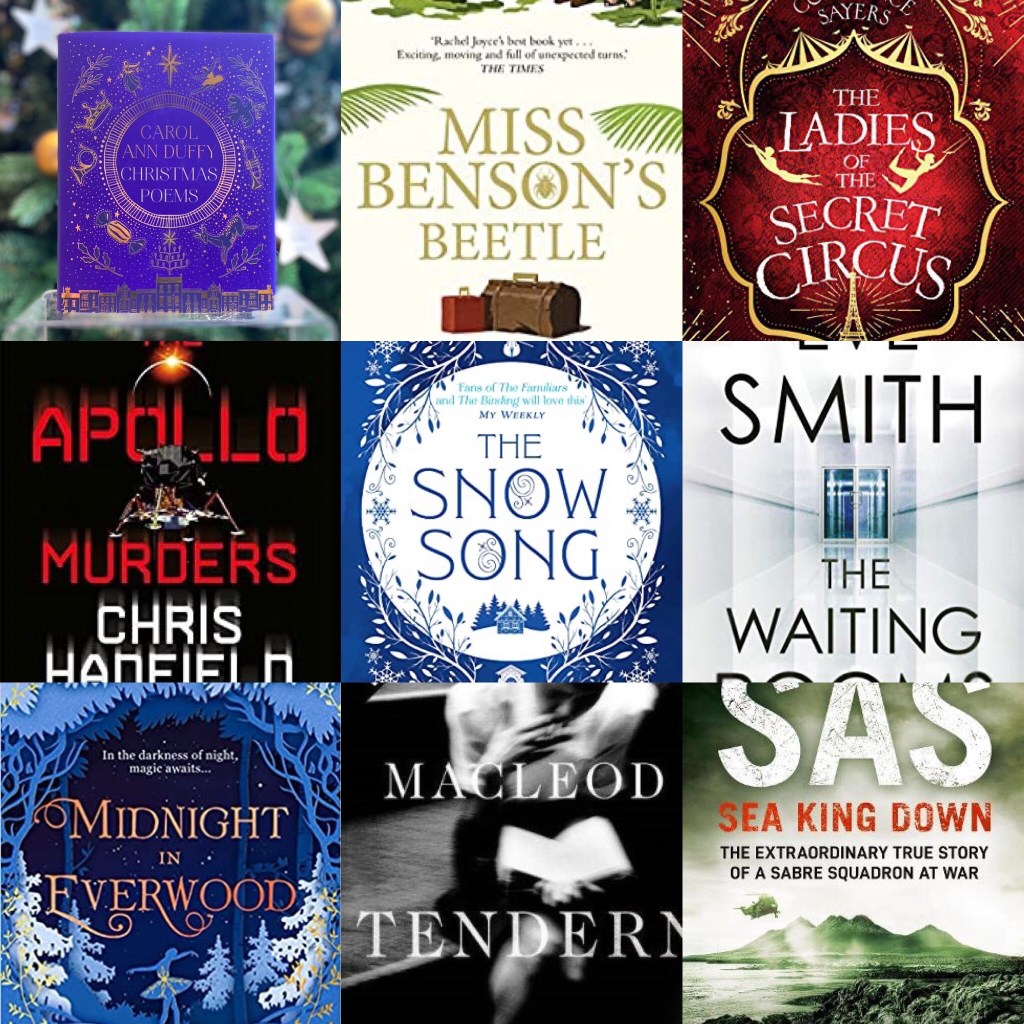
If you are someone who receives a present from me at Christmas, don’t read on! I don’t want anyone to ruin their surprise. I love giving and receiving books at Christmas. We have a rule in our house, that apart from the authors I LOVE and pre-order, I’m not allowed to buy books after October so that my wish list is up to date and can be used. My family know how much I appreciate their bookish gifts but they also know that we’re rapidly running out of book shelves and might have to adopt a ‘one in – one out’ policy for a while. Of course my ARC shelf gets fuller by the week, but I do like to have final copies and support the author, especially those published by small indie publishers. I always say to my stepdaughters, when they ask me what I want for Christmas ‘a book and some chocolate’ and they’re now used to Sundays where I’m in pyjamas, snuggled up on the chaise langue with Baggins the cat on my knee, chocolate at my side and a book on the go. If you give me a book at Christmas, it means so much because you’re giving me a doorway into another world. I stay home a lot, especially in recent times, due to being susceptible to viruses and my MS and back injury getting progressively worse. I feel less alone when I have a great book I can get into and I love to share my finds at Christmas. I also love to find that one book that suits someone perfectly and when we catch up and they tell me all about reading it, I am always so happy. Here are some of the books I’m gifting this year.

The Christmas Poems by Carol Ann Duffy.

I loved Carol Ann Duffy’s Rapture and gifted it a few times to different friends. I often avoid ‘themed’ books at this time of year but this is a beauty. For her last ten years as Poet Laureate, Duffy has produced an annual Christmas poem taking us to places as diverse as the famous 1914 Christmas Day truce where German and British soldiers played a game of football together, to a lesser known 17th Century festival held on the frozen River Thames. There are ten poems in all, each one beautifully illustrated by artists like Lara Hawthorne and my personal favourite Rob Ryan. I’ll be buying this for people who like poetry and art, but also in bundles of homemade goodies like iced gingerbread and chocolate pudding truffles that we make a couple of days before Christmas. This is a lovely family book to keep and look at whenever you need a hit of Christmas.

Carol Ann Duffy Christmas Poems Published on 25th November by Picador.

Miss Benson’s Beetle by Rachel Joyce.

This is a total change of pace. A fantastically adventurous story about one woman’s quest for a golden beetle, but also about female friendship, finding the confidence to place importance on your own dreams and ultimately carving out your own space to be a woman who’s truly herself. I love Rachel Joyce’s work so I had high hopes for this novel and it didn’t disappoint. We follow Margery Benson who has a devastating moment of clarity in 1950, leaves her dead-end job and advertises for an assistant to accompany her on an expedition. She is going to travel to the other side of the world to search for a beetle that may or may not exist. Enid Pretty, in her unlikely pink travel suit, is not the companion Margery had in mind. And yet together they will be drawn into an adventure that will exceed every expectation. They will risk everything, break all the rules, and at the top of a red mountain, discover their best selves. I’m going to buy this for my feminist friends who will fall in love with Margery and her courage. I’m also going to buy it for my friends stuck in rut after lockdown and needing some inspiration. I know it worked for me!

Published in paperback on 21st April 2021 by Black Swan.

The Ladies of the Secret Circus by Constance Sayers.

Those two words on the front cover of this novel were enough to whet my appetite and I know exactly which friends will be as drawn to it as I was. ‘Decadent and macabre’ is a good summary of this novel which I wasn’t sure of at first, but came to appreciate as we travelled back in time to Belle Epoch Paris and a secret circus who perform by invitation only. Just to give you a taste of what to expect, the special invite is alive so if you tear it, it will bleed. Lara’s boyfriend Todd disappears on the eve of their wedding, never to be seen again. His disappearance echoes that of another young man thirty years before. Lara has spent the past year trying to find out what happened, alongside Todd’s best friend Ben who is the sheriff of Kerrigan Falls. However, Lara isn’t an ordinary girl, something we see as she enchants her own wedding dress. There are powers that seem to be hereditary, as Lara discovers when her investigating uncovers one of her great-grandmother’s journals. As she reads, she learns of a secret circus, one that appears to the person with a ticket. What will she find there and will it bring her fiancé back? Just as she starts to develop feelings for another. This is a perfect book for those who love fantasy and magical. Give to fans of The Night Circus by Erin Morgenstern, Circus of Wonders by Elizabeth MacNeal and A Girl Made of Air by Nydia Hetherington.

Constance Sayers

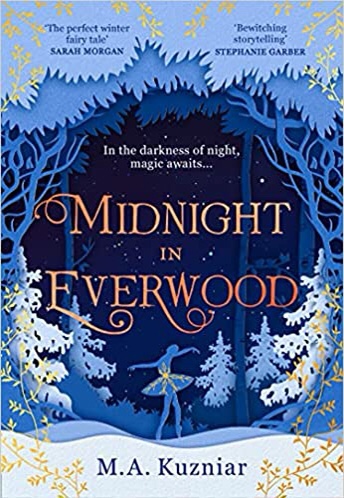
Midnight in Everwood by M.A. Kuzniar.

This is the perfect Christmas book because there are some beautiful special editions lurking at high street and indie book stores. This is one of those novels that splurging on a signed and special edition is absolutely worth it, especially for someone important to you. This is historical fiction, set in turn of the 20th Century Nottingham. It’s also a retelling of a Christmas story that most of us will know through Tchaikovsky’s beautiful music and grunge to the ballet. The author takes The Nutcracker and tells us a story of a young woman being confined by her class – Marietta Stelle wants to pursue her love of dancing and become a ballerina. However, Christmas is approaching and she must finish her Christmas Eve performance and take up her expected place in society. When a neighbouring townhouse is taken by Dr Drosselmeier, a mysterious toy maker, he becomes involved in the sets for the production. However, his work contains magic, very dark magic that transports Marietta to a sugar palace in an enchanted woodland. Will she ever get home again or is she trapped in Everwood for ever?

Published by HQ 28th October 2021

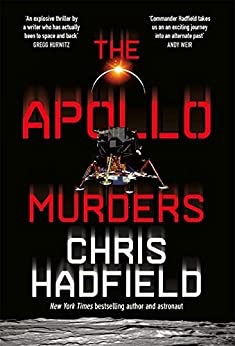
The Apollo Murders by Chris Hadfield.

I watched an interview with Chris Hadfield and knew this would be a great read for some of the men on my Christmas List. Chris was a test pilot in the Air Force when he was selected for astronaut training. He’s been up to the space station twice and in the interview he talked about doing a space walk to make repairs outside the station. In this thriller he takes us back to the Cold War and one final mission to the moon. Cleverly, this is history, but an alternate history. Three astronauts are trapped together in the lunar module, a quarter of a million miles from home. They’re also a quarter of a million miles from help. The political stakes are high for this mission and NASA are under pressure. There’s a rival Russian crew making for the moon at the same time, both hoping to retrieve an important bounty from the moon’s surface. Controller Kaz Zemekis must keep his crew on track, while feeling the pressure of the Russians hot on their heels. The Houston control room is close to breaking point. What they don’t know is not everyone on Apollo 18 is who they appear to be. I was lucky enough to have an ARC of this tense and fascinating novel, so I can vouch for it’s quality. Of course the technical know-how and experience the author has, bring this novel to life. It feels like you’re there and it really helps orientate you round this alien scene. I find it strangely freeing to imagine floating round in space, but here it’s incredibly claustrophobic too. This has a great write up from director James Cameron and Andy Weir, the author of The Martian. I agree with them that this is fascinating, heart-stopping and relentless.

Published by Quercus 12th October 2021.

Tenderness by Alison MacLeod.

I’m lucky enough to have a Mum who absolutely loved literature and without that I don’t think I’d be blogging and writing my own novel. Her favourite author was D.H. Lawrence and I remember being taken to see his house when I was little, and how happy that made her. We watched all the film adaptations together too. So this huge doorstep of a book is the obvious choice. Lady Chatterley’s Lover was always on our bookshelves, but it took me all the way to my late twenties before I read it for myself. What I was most stunned by was that this wasn’t a dirty book, it was so many things: an exploration of the aftermath of WW1; the disintegration of class boundaries, particularly the reduction of the aristocracy; disability and it’s effect on a person’s identity and their marriage; mechanisation and it’s effect on warfare, as well as positioning it opposite nature. Most of all it’s a story of love. I re-read it regularly and think it’s so complex, fascinating and tender. That’s where Alison McLeod’s book is pitched – is this a book that should be banned as obscene or is it a picture of tenderness? We jump the decades from Lawrence’s death bed where he takes account of his life, a betrayal committed in the war years and an image of red-headed woman in an Italian courtyard. Then we meet Jacqueline, travelling with her husband when she slips into a NYC court where a book is on trial. In a library, a young man and woman meet and make love. These stories are bound together by that one question; is it obscenity or is it tenderness? This is a moving book, beautifully written and a treatise on the power of fiction. This is wrapped ready for my Mum on Christmas Day.

Published on Bloomsbury Publishing 12th September 2021.

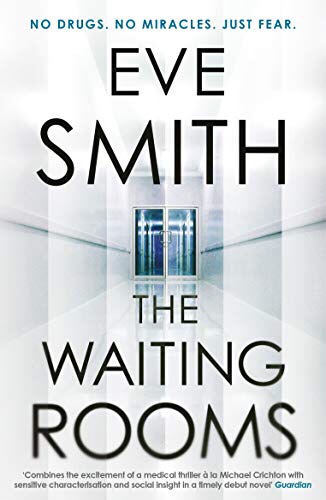
The Waiting Rooms by Eve Smith.

As my Dad gets older and his health has been getting worse, he’s had to do a lot of rest and recuperation and he has started reading more. I’ve learned a lot about what he enjoys reading and it turns out we both enjoy dystopian fiction. I bought him The Girl With All The Gifts one year and we got to have our first book conversation. This year I’m buying him another of my favourites, The Waiting Rooms. This is a tough read in a pandemic, but interesting, chilling and strangely prescient. In a not too distant future, a government ruling states that those over seventy-five years of age can’t have access to new antibiotics. Years of overuse have led to drug resistance so something as simple as a cat scratch can kill. Drastic action was needed to ensure that younger people have access to a small supply of newly created antibiotics. If an elderly person gets a scratch or infection it’s a death sentence. They have two choices, either wait to die a painful death in a state run hospital known as The Waiting Rooms. Alternatively you can visit a clinic where a doctor administers a lethal dose of medication, in a glass of whiskey should you choose. Kate works at such a clinic by day, but by night has been searching for her birth mother. However, her birth mother may hold many secrets about the crisis and Kate might not be the only one looking for her. I felt completely immersed in this world whether it was a version of our future or a pre-crisis South Africa which appears beautifully vivid against the bleak future. Haunting, tense and eerily recognisable, this book was one of my top 20 of 2020.

Published by Orenda Books April 2020

SAS Sea King Down by Mark ‘Splash’ Aston and Stuart Tootal.

This is another choice for my Dad, who served in the Royal Engineers and may have been selected for SAS training (he won’t confirm it, but certain things he says suggest this). He loves reading these series, even if he does grumble a bit about people revealing their experiences. Mark ‘Splash’ Aston joined the SAS in 1979 as part of D Squadron, SAS. This left him in prime position for deployment to the Falklands in 1982. They were at the frontline of taking back the islands, facing twin enemies of extreme weather and determined Argentinian troops. It was during one skirmish that the Sea King helicopter they were travelling in crashed into the freezing South Atlantic. Only nine survived and Splash was one of them, rescued and sent to a hospital ship nearby. Suspected of having a broken bones in his neck, he defied orders and hospital advice to return to his Squadron and finish what he’d started. Written with an experienced author, Stuart Tootal, the book gives us an insider view of an SAS unit and a war that was fought in my lifetime, in fact my cousin served out there in the RAF. I felt the tension and the hardship of serving in the SAS and I felt I was reading a truly authentic experience.

Published 13th May 2021 by Michael Joseph

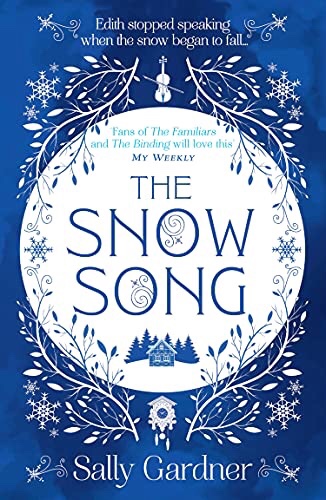
The Snow Song by Sally Gardner.

This is a stunningly beautiful book that has always been appreciated wherever I’ve gifted it. It’s a feminist fable, and a love story with a touch of magic realism. We’re taken to a land perched on a mountain, covered by forests, and to one tribal village. The village elders are all men and tradition is all, including marital tradition. Our heroine Edith has fallen in love with a shepherd who took a trip away, promising he would return to her. The elders want her to marry the local butcher, and start to apply pressure, but Edith turns mute just as the snow starts to fall. The elders agree that if the shepherd returns when the snow melts she can have her wish, but if not she must marry the butcher. She will not speak until her love returns and this enchantment has far-reaching consequences for the villagers as well as her. Her stand starts to inspire other women in the village. This is a fable about the power of speech, and of silence. When everyone around you is shouting, silence can be the best way to be heard.

Published 12th Nov 2020 by HQ.

Medusa: Girl Behind The Myth by Jessie Burton.

Finally, we have this little gem from one of my favourite writers. Jessie Burton has taken one of Greek myth’s most well-known monsters and given her a feminist retelling, one I’m dying to share with my oldest stepdaughter. The gods have exiled Medusa to a far-flung island and turned her beautiful hair into living snakes. They are the only company she has until one day a boat comes to shore with the most beautiful boy on board. Perseus arrives full of charm and has the luck of the gods with him. He disrupts Medusa’s lonely existence and brings with him a future full of desire and betrayal. I have purchased signed editions of this beautiful book for friends and family who I know will love it. The illustrations by Olivia Lomenech Gill are gorgeous and the foil front of the special edition is stunning.

Published 28th October 2021 by Bloomsbury YA.

Posted in Sunday Spotlight

Sunday Spotlight! Alice Hoffman.

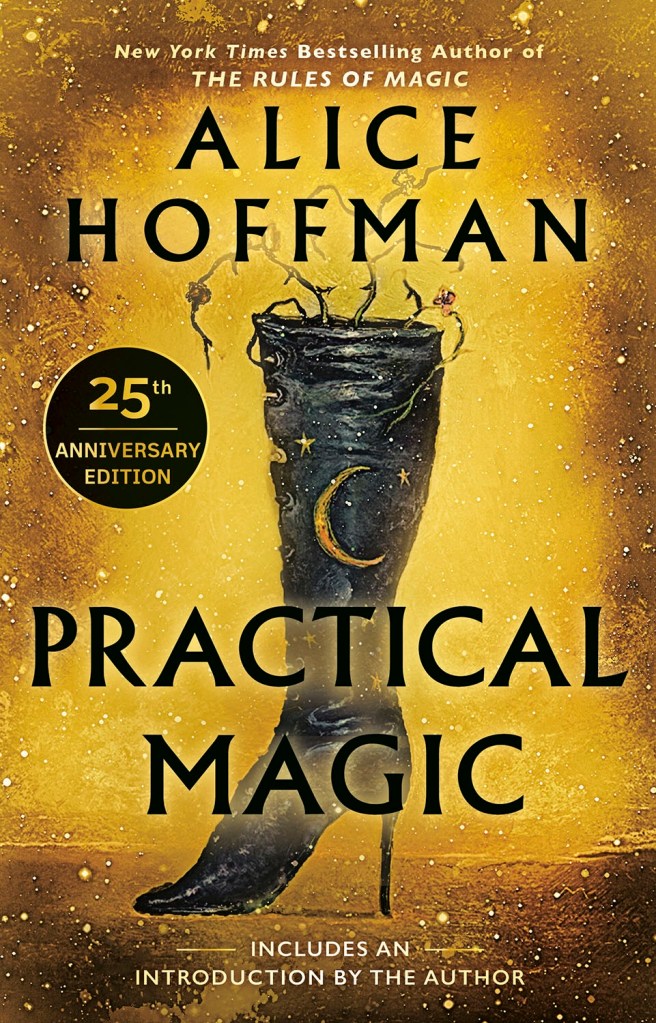
Last month I started a new feature on the blog where I shine a spotlight on one of my favourite authors. I feature the books I most enjoy from their back catalogue and in October I’d hoped to feature four authors who write books that are spooky, sinister, or magical in some way, hoping to give you some interesting Halloween reads. These featured everything from the evils that men do, to families of witches, cunning fairies, strange powers and other ghostly goings on. However, last weekend it didn’t happen because my other October evil crept up on me. I have MS and I always have an autumn relapse. I was just starting to pick up, but had a very dodgy weekend. So I’m bringing you last Sundays author today instead that’s Alice Hoffman. I’ve featured her book Blue Diary on Throwback Thursday before, but that’s a rare magic free novel. Magic realism flows through most of Hoffman’s works. Some of the strangest include a woman falling in love with a magical talking heron, angels descending to earth, a family of women who can see the future, a golem made from river mud protecting a girl fleeing the Nazis, a man struck by lightning leaving a pattern on his skin and a mermaid girl living in a freak show at Coney Island. However, for most people it’s the Practical Magic book, or the film starring Sandra Bullock and Nicole Kidman as two sisters coming to terms with their heritage as witches, that first comes to mind. This October sees the publication of the fourth and final book in the series, The Rules of Magic. So, I thought it was perfect timing to feature the whole Owens family series in chronological order.

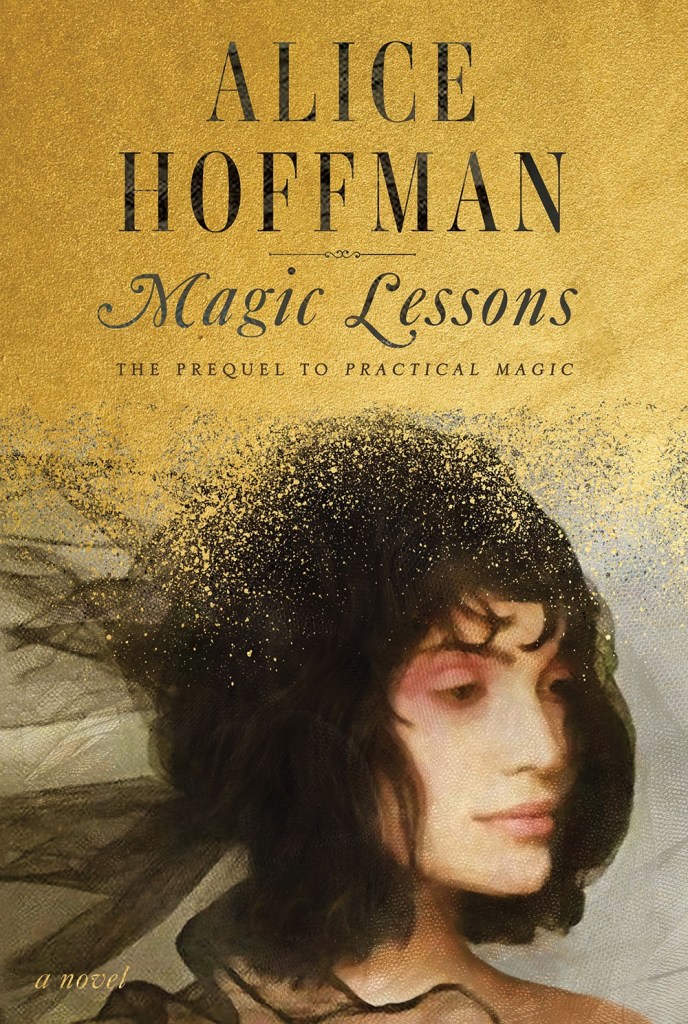
Despite being the most recent novel in the series, Magic Lessons is actually the first in the series chronologically. I was lucky enough to have a preview copy of this novel and reviewed it only last October. Maria is found as a baby by wise woman Hannah Owens, who brings her up in the old ways. Maria learns how to grow a healing garden, to use herbs for ailments of body and mind, and help women with problems caused by love. However, Maria’s power isn’t just learned. She has the mark of a blood witch from her birth mother, and has been chosen by her familiar Cadin who is a crow. Maria feels she must be the result of a woman being fooled by love and vows that she will never be taken in by a man. Tragically, Maria’s adopted mother Hannah is burned as a witch and Maria knows she must run to save her life. She then meets her mother and birth father, and realising there is no room in their love for a third person she takes a gift of red boots from them and sails to the island of Curacao where she has been sold into servitude for a period of five years. Here, her vow against love will be tested. Taking us through the dangerous years of the 17th Century, where Puritanical communities like Salem in Massachusetts were whipped to hysteria, and would not suffer a witch to live. Hoffman’s prequel to Practical Magic takes us back to the beginnings of the Owens family and the complicated relationship between their power and their very human need to be loved.

This was a thoughtful and atmospheric origins story for a family many fans have come to love. I think the strength of this series is in that combination of the mystical and the flawed human aspects of these women. Despite their powers Maria, her mother Rebecca and her daughter Faith experience the highs and lows of every woman’s life – the changes of adolescence, falling in love with the wrong man and the right one, motherhood, illness and ageing. I felt emotional when Maria saw her ‘mother figure’ Hannah murdered by men who feared her, when she realised the man she loved didn’t really exist, and when she lost Cadin her loyal companion. These women’s fight to be accepted and even acknowledged for their skills is a fight that continues today as we fight for women’s rights to equal pay, to save reproductive rights and to be seen as more than sexual objects. Their fight to stay alive is still echoed in our fight to stop child brides, exploitation of young girls and domestic abuse. This was a series coming full circle, as we see the formation of that mistrust of love that shapes Jet Owens’s journey or that sees Gillian Owens constantly pick the wrong man. I really enjoyed being back with these strong, powerful women once more.

This is the second in the series and my personal favourite of the four books. We meet the family on the cusp of the 1960’s in New York, where Susanna Owens has three very unique children, two sisters and a brother. Franny has deep red hair and the palest skin, which make her distinctive, but she’s also very difficult. Jet is so beautiful but terribly shy, and has the magical ability to read people’s thoughts. Vincent is trouble, from the moment he was born. Susanna knows that the Owens girls are unlucky in love and lays down the law to save them from heartbreak. She also wants to save them from the magical heritage: no walking in moonlight; no red shoes; have nothing black whether it’s crows, cats or clothes; no candles; no books about magic and most definitely no falling in love. Yet family secrets are still uncovered, back in the Massachusetts town where the Owens women have been scapegoats for anything that goes wrong. Aunt Isabelle doesn’t care what people think and the children open up for the first time to the truth of who they are. The two girls will become the fabulous aunts in Practical Magic and Vincent leaves an unexpected legacy. I loved the mix of ordinary teenage growing pains with the twist of something supernatural, and the magic even us mortals feel when we fall in love.
The Owens girls, who live in the strange house on the edge of the town, were always treated as different by the children and adults living alongside them. Gillian and Sally lived with their elderly aunts who did nothing to dissuade the townsfolk of their suspicions that witches lived among them. One look at the turrets on their house, the herd of black cats, and the aunt’s love potions would tell you there’s a possibility of magic. Unfortunately for the girls, the aunt’s freedom of expression has been their prison; schoolyard pointing, taunts and whispers have followed them through their childhood. The girls responded to this in different ways. Gillian ran away and became the beautiful, mysterious stranger always passing through and always falling in love with the wrong man. In losing the magic that was her birthright, she’s fallen for the charms of men and the magic of attraction. Sally disappeared too, but into a marriage with a respectable man in the hope of being ordinary and accepted. Now she has two girls and is determined they won’t have the same childhood she did. Then Gillian turns up, still running, but this time back to the family she left behind. She’s fallen in love with a very bad man and needs the help and comfort of her sister. Will Gillian’s troubles bring the sister’s closer? It might even bring their very elderly aunts back into their orbit. However, it also brings a detective into their midst. He could change their lives, in a very negative way if they let him. Yet the magic of love hasn’t finished with the Owens girls and maybe magic is the answer to all of their problems.

This is the last instalment of the series and involves the family, after the events of Practical Magic. Sally’s girls are now teenagers and the aunts are very elderly. However, it’s difficult knowing your time on earth is coming to an end. Aunt Jet has heard the Deathwatch Beetle ticking – a sure sign she only has a week left. However, the Owens family curse is at work and Jet isn’t the only one to hear it. The family must come together, for Jet’s sake but also to save another life. Much to the aunts surprise, a long lost brother returns to help. The family roam from Paris to London and deep into the English countryside where Maria Owens took her first tentative steps into magic. The youngest girls start to learn how much their Sally has kept from them, in terms of their heritage but also each tragic, family secret too. Kylie in particular relishes learning who she is and starts to dabble in some dark arts. Franny embarks on a journey of realisation, she will do anything for this family and Sally Owens will do anything for those she loves too. Magic comes in many forms and this is a very human type of magic – the magic of love within a family. This novel’s strength is in those well-known characters coming full circle and a new generation to explore. A magical tale of love and family lore passing from mothers to daughters.

.

Alice Hoffman was born in New York City on March 16, 1952, and grew up on Long Island. After graduating from high school in 1969, she attended Adelphi University, from which she received a BA, and then received a Mirrellees Fellowship to the Stanford University Creative Writing Center, which she attended in 1973 and 74, receiving an MA in creative writing. She currently lives in Boston. Hoffman’s first novel, Property Of, was written at the age of twenty-one, while she was studying at Stanford, and published shortly thereafter by Farrar Straus and Giroux. She credits her mentor, professor and writer Albert J. Guerard, and his wife, the writer Maclin Bocock Guerard, for helping her to publish her first short story in the magazine Fiction. Editor Ted Solotaroff then contacted her to ask if she had a novel, at which point she quickly began to write what was to become Property Of, a section of which was published in Mr. Solotaroff’s magazine, American Review.

Since that remarkable beginning, Alice Hoffman has become one of the most distinguished novelists. She has published over thirty novels, three books of short fiction, and eight books for children and young adults. Her novel, Here on Earth, an Oprah’s Book Club choice, was a modern reworking of some of the themes of Emily Bronte’s masterpiece Wuthering Heights. Practical Magic was made into a Warner Brothers film starring Sandra Bullock and Nicole Kidman. Her novel, At Risk, which concerns a family dealing with AIDS, can be found on the reading lists of many universities, colleges and secondary schools. Hoffman’s advance from Local Girls, a collection of inter-related fictions about love and loss on Long Island, was donated to help create the Hoffman Breast Center at Mt. Auburn Hospital in Cambridge, MA. Hoffman has written a number of novels for young adults, including Aquamarine, Green Angel, and Green Witch. In 2007 Little Brown published the teen novel Incantation, a story about hidden Jews during the Spanish Inquisition, which Publishers Weekly chose as one of the best books of the year.

Aside from the Practical Magic series, the novels I would recommend highly are:
Blue Diary – a picture perfect family in a small town is torn apart when Jory’s husband is accused of rape and murder.

The Marriage of Opposites – this stunning novel explores the difficult relationship between the painter Camille Pissarro and his mother. Set on the island of Sao Tomae this novel is an incredibly visual book, with stunning descriptions of Pissarro’s island home akin to impressionistic paintings.

The Museum of Extraordinary Things – set in a Coney Island freak show at the beginning of the 20th Century, this is the story of a girl who is shown as a mermaid by her father. As her confidence and self-belief grow and she falls in love, we also see the birth of Manhattan as we see it today.

Posted in Sunday Spotlight

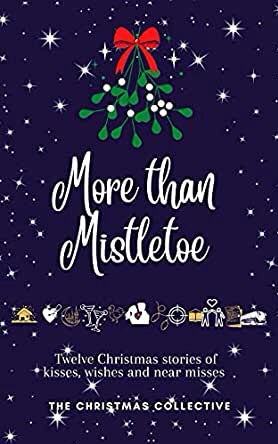
More Than Mistletoe – The Christmas Collective.

Today’s Sunday Spotlight is a little bit different because I want to bring a collective of authors to the reader’s attention and not just one. The most important thing about Christmas, especially this year, is being together. So in that spirit, I was very happy to be approached by the Christmas Collective with their beautiful collaborative work More Than Mistletoe.

Cosy up for Christmas with 12 very different tales of love with all the festive feels!

More than Mistletoe, the debut anthology from The Christmas Collective, is an eclectic and inclusive mix of stories, with swoon-worthy characters, second chances and happy endings.

Between the pages, you will discover classic romance, festive thrillers, LGBTQ+ love stories, hilarious romcoms and historical settings, these stories really do span the whole spectrum of festive fiction.

Featuring twelve up and coming new authors, this refreshing, diverse and romantic read, is a must-have for Christmas 2021 that will leave you reaching for your Christmas jumper, gingerbread cookies and a mug of hot chocolate!

• Lumikinos by Lucy Alexander

• The Ghost of Christmas Past by Michelle Harris

• Christmas for Two by Marianne Calver

• August in December by Joe Burkett

• Under the Christmas Tree by Cici Maxwell

• Killing Christmas Eve by Jake Godfrey

• Christmas and Cocktails by Jenny Bromham

• Christmas at The Little Blu Bookshop by Sarah Shard

• Not Today, Santa by Martha May Little

• Sealed with a Christmas Kiss by Bláithín O’Reilly Murphy

• Love Forever by Donna Gowland

• The Last Christmas by S.L.Robinson

I felt very lucky to be sent a preview of this short story collection, along with a festive box of goodies – a lovely little treat to enjoy. The thoughtfulness of this little parcel gave me a preview of the care and attention given to this enjoyable collection of short stories. Although I’ve had the collection a little while, I hadn’t had chance to read them until last week and I think I timed them perfectly. As we’re now in the early stages of the run up till Christmas, I could imagine someone coming home after a fraught afternoon Christmas shopping and reading this with a warming hot chocolate in front of a roaring fire. That’s exactly what I did. I made some hot chocolate with Cointreau and settled on my chaise langue with my kindle and my cat Baggins for a few hours. I think these would be perfect to pop into people’s rooms if you’re having family to stay this Christmas or if you have adopted the Icelandic tradition of Jolabokaflod, where books are given and read on Christmas Eve ( I mention this an annoying amount, because I’d love to do it ).

I tend to gravitate towards two different types of stories at Christmas; slightly spooky tales and cosy love stories. I’ve been reading a lot of thrillers and spooky tales this month, so the love stories in this collection were a very welcome change of pace for me. I’m a sucker for a Christmassy rom-com so these fitted the bill perfectly, but there were also one or two stories that were hard to categorise into genre, which I love! There really is something for every reader here, although I have to say I’ll be buying it for female rather than male friends. These were perfectly chosen to work as a collection, so there was an overall cosy and uplifting feel, although Killing Christmas Eve by Jake Godfrey was a great change of pace in the middle. It’s so hard to pick a favourite, because I liked each story for different reasons, but I think S.L Robinson’s The Last Christmas was the one that moved me most, in a deeply personal way.

I’ve been writing since I was a little girl, but have only just had the courage to let people know that I write. In fact I started my blog to gain confidence in sharing my writing and to get into the discipline of writing every day. I’ve been working on my MA in Creative Writing and Well-being and, although I’ve been running writing therapy groups for several years, there’s something very different and daunting about sharing your work with fellow writers. In my head, they are always way more experienced, talented and disciplined than me. However, sharing some of my writing in the workshop environment every week, has helped enormously. Taking criticism and ideas from other writers has been invaluable. My writing has grown along with my confidence. So, I loved the story of this talented group meeting at a writing group and working collaboratively to create this collection. I’m sure it’s been a brilliant experience for the authors involved and will prove helpful for those who’ve taken their story from a longer work in progress. It has certainly whetted my appetite for those completed novels some time in the future. I love it when authors work together this way, and it seemed strangely apt that the collective approached my fellow bloggers in the Squad Pod Collective to review their work. A really lovely background story for collection that felt like a hug in book form.

Posted in Sunday Spotlight

Sunday Spotlight Halloween Special. Stephen King.

I couldn’t have introduced my Sunday Spotlight feature in the month of October, without spotlighting the King of Horror himself, Stephen King. I’ve been reading King since my teenage years and I was horrified to learn that my first was at least 22 years ago.

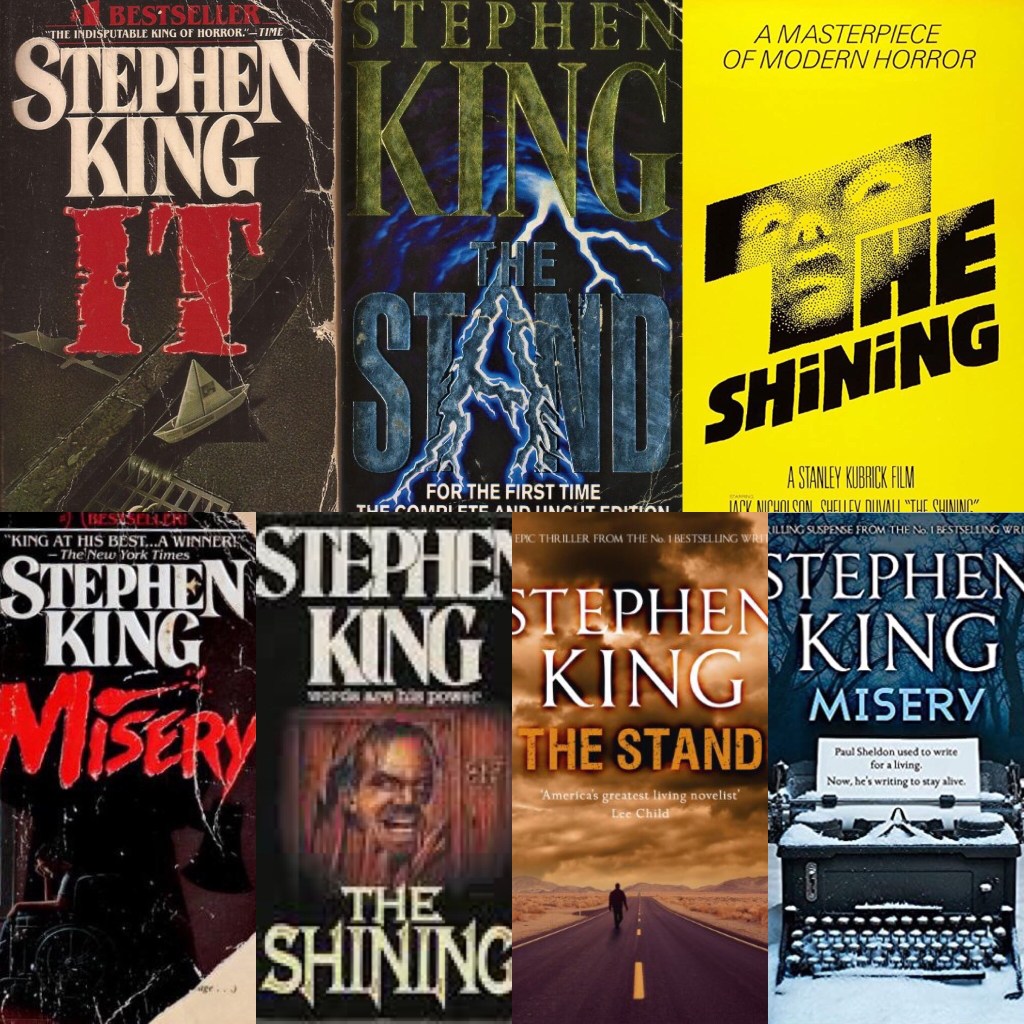
I first encountered Stephen King when I borrowed my mum’s copy of Salem’s Lot, but when I started to look back I was shocked to see how many copies of his books I’d ‘acquired’ from other people. I remember when I was 18 begging, borrowing or ‘acquiring’ most of his back catalogue and I’ve bought most of his novels since. This month though, I was very happy to receive my first ever hardback copy of a King book on publication day. I haven’t read Billy Summers yet, but I know it will always be special because I bought it brand new. I have many well-loved and well-thumbed copies of his back catalogue, because I’ve read most of them more than once, so I picked out the ones where I can talk about my relationship with the book.

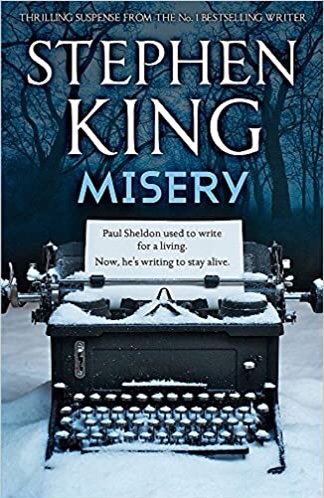
Well this is quite a colourful story. I’d read a bit of Stephen King before Misery arrived, and I was 17 when it did. Every summer, my friend would take me up to the Yorkshire Dales when she spent some of the summer holidays with her Dad. He always lived in quite remote villages, but this particular summer he was living in a small village called East Witton. It was a long village green with a row of cottages lined up on either side, facing each other. There was a tiny shop and at the bottom of the village a large pub with rooms. One night my friend and I went to the pub for a couple of drinks. My friend hit it off with the barman straight away and after a few freebie drinks, he introduced me to his friend who worked in the kitchens. I can’t for the life of me remember his name, which is awful, but he was a really quiet, sensitive guy, who read a lot so we had plenty to talk about. For some unknown reason we went to fetch our waterproofs and a torch and climbed a hill?! The view as the sun started to come up was beautiful. On the way back down we talked Stephen King and his favourite King novel was Misery. I hadn’t read it. So he was kind enough to lend me his copy and gave me his address to keep in touch (and return his book no doubt). I still have it. Misery is an incredible book, because of the tension and fear it creates in the reader, but also because it was weirdly prescient. In the novel Paul Sheldon is driving through ice and snow to post off his manuscript – the final book in the Misery Chastain series. He’s elated, because despite Misery’s popularity and the financial security she represents, he had started to hate her. Unfortunately for Paul, his manuscript will not end up in the hands of his editor. The terrible ice proves treacherous and Paul remembers nothing about the accident, but when he wakes he’s about to meet his number one fan, Annie Wilkes. The positive thing is that Annie is a nurse, capable of looking after his shattered bones and dosing the pain with some very potent painkillers. The negative is that Annie’s not a fan of all Paul’s writing, she’s the number one fan of the Misery Chastain series and now his provocative manuscript is in the hands of the person who might take Misery’s end badly. He has no idea just how badly. The tension is unbearable, the horror is visceral and the book is impossible to put down.

I found this old film tie-in copy of The Shining in a second hand bookshop and I had to be very brave to get it. This particular bookshop is a unit of our local Antiques and Collectibles Centre and the owner is always in residence, reading in a huge Windsor chair by the till. I didn’t know this the first time I went in and was stuck for forty minutes listening to him promoting the genius of L.Ron Hubbard. Forever afterwards known as ‘Fat Scientology Guy’ I used to try and avoid his eye and only browse around the back shelves, but he seemed to have eyes everywhere. Now I never shop there, but I do have this odd yellow copy of The Shining to remind me of my escape from Scientology. This is one of the most terrifying books I have ever read. It’s the combination of the supernatural horror like the creepy twins and whatever lurks in one of the rooms, and the horror of the person you love most becoming a monster. King brilliantly depicts a man on the edge in Jack Torrance and I love the little clues that show us his breakdown is looming. He starts to chew dry painkillers, his drinking increases, and once they reach The Overlook he starts to have hallucinations, or converses with ghosts depending on your perspective. Then there are the signs, like the wasps nest -a fascinating labyrinth of chambers and pathways, but with a nasty sting in its tail when Danny finds it’s still got the odd resident. I felt so sad for this little boy with his ‘shining’, it’s hard enough to have good perception and empathy in the moment, without seeing into the future. This book really did affect my sleep and made me feel a bit jumpy. I must have been 15 when I read it for the first time and at that point you’re breaking away from your parents a bit more. We start to see them differently, as people with their own personalities and faults. They’re like everyone else with the ability to make mistakes. Jack is a heightened version of that realisation, the family man who becomes killer. Aside from the supernatural elements, the fear is that anyone could boil over and become a monster.

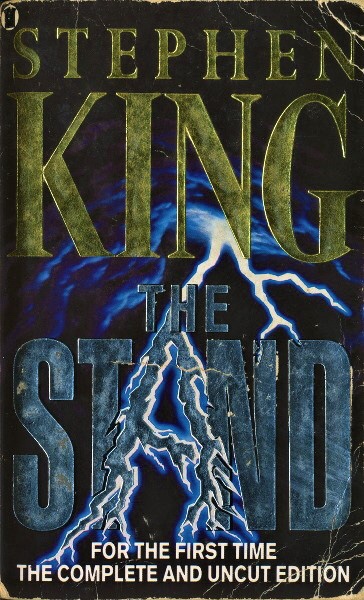
This is one of those huge bricks of a book that can be a daunting prospect and I definitely felt that for several years. My mum’s friend, who’s like an honorary godmother to me, knew I read King’s novels and recommended this as her favourite. It was one of those books that sat on the shelves for years, and I tried to read it several times before giving up. How interesting could it be, to read about people catching a cold? I’m aware of the irony. I finally picked this up three years ago and for some reason it just clicked with me. I now think it’s one of his best, not just because he captures perfectly the terror of a pandemic, but because of the strange supernatural elements behind the disaster. A bio-engineered virus escapes from a lab and spreads across the world with fierce speed. It acts like a ‘souped-up’ flu and most of humanity succumbs to it, except for a mysterious few who seem immune. However, they get something else, a legacy of nightmares. Their dreams focus around a strange old woman named Mother Abigail, who beckons them to follow her. Worse though are the nightmares of a figure called Randall Flagg also known as the Dark Man. Survivors start to amass around these two strange people: Flagg is in Las Vegas (of course) and his survivors pledge to annihilate anyone who doesn’t follow him, whilst Mother Abigail is in Boulder, Colorado, advocating the old ways and telling followers they’re chosen by God. I was fascinated with Flagg, who is a devilish figure and has seen the plague as an opportunity to cause more chaos and division. We even get God, but a scary Old Testament one who isn’t afraid of zapping his detractors. This is an epic novel, and feels almost Biblical in it’s theology and it’s incredible push and pull between good and evil.

Meet The Author.

Stephen Edwin King is an American author of horror, supernatural fiction, suspense, crime, science-fiction, and fantasy novels. His books have sold more than 350 million copies, and many have been adapted into films, television series, miniseries, and comic books

The other seven books in my top ten would be It, On Writing, Insomnia, The Green Mile, Salem’s Lot, The Outsider and The Institute

Posted in Sunday Spotlight

Sunday Spotlight! Susan Hill.

Many readers, especially those who love crime fiction, will know Susan Hill from her Simon Serrailler series of novels. I collect those too, but the first of her novels I read was actually at school. At the age of 12 we were told to read I’m The King of the Castle and then write the second chapter, developing the story as we thought it might go. I wrote a sinister piece suggesting that the main character might be on a path to becoming a serial killer. From there I was hooked on her ghost stories, they were sinister, dark and mysterious. They’re also very short, (novellas really) so they’re perfect for hospital and train journeys. They have a very interesting way of creeping up on the reader. Sometimes, I’ve been half way through a story, thinking it doesn’t feel spooky at all, only to be terrified two pages later. I’m sharing with you my thoughts on four of her books that had an effect on me and might leave you listening for a creak on the stairs.

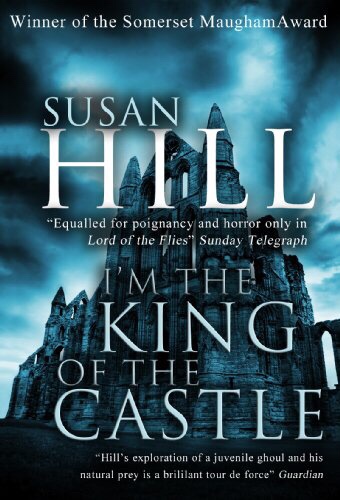
Edmund is an 11 year old boy who lives alone with his father after his mother’s death. Worried that Edmund is lonely, his father arranges for a live-in housekeeper who has a boy around the same age as Edmund. He hoped Charles would be a companion for Edmund, but Edmund isn’t thrilled and Charles is greeted with a note that says ‘I didn’t want you to come here’. There is an overwhelming feeling of claustrophobia in the novel and not just because of the remote location. I started to dread every moment the boys were left alone together, because I knew that Charles would be subjected to Edmund’s bullying. I felt Charles’s fear and despair that this would go on forever. I wanted their parents to notice what was happening, but the boys are alone a lot of the time. The parents are making eyes at each other, wrapped up in their own emotions. His mother admits to making a decision and to ignore Charles’s complaints that Edmund really doesn’t like him. She decides he’s being silly with this talk about them not being friends. Boys do this. It’s just a phase. Everyone remembers a time when they weren’t listened to and I could sense Charles’s anger and frustration at his impossible situation. The ending is a shock, but I think if it had ended any other way I’d have been disappointed. Sometimes things like this don’t blow over. This isn’t for people who like uplifting, happy, endings. It isn’t really horror, in that it’s very realistic. That realism is what makes Edmund and Charles’s story so chilling.

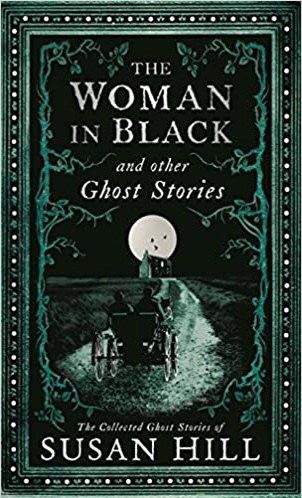
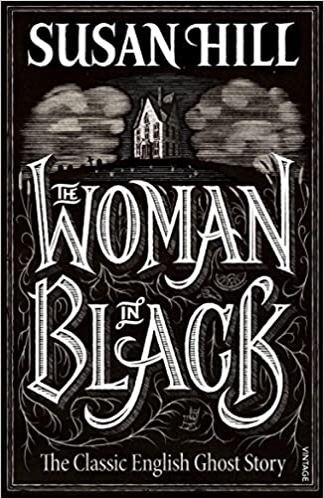
This is probably the most well known of Hill’s ghostly tales, especially since it’s other incarnations as a long running West End play and a successful film starring Daniel Radcliffe. This book was the one that really crept up on me. Since childhood I’ve had a recurring dream, where I’m standing in a corridor and I get an overwhelming sense of evil. Then a creeping blackness starts coming towards me, completely enveloping everything in it’s path. That’s exactly how I felt reading this. At first I was just interested in the story and despite the obvious signs that something is wrong with this house, I didn’t feel scared. Then I woke up in the middle of the night and felt a little bit scared about going to the loo. For some reason I kept thinking someone would be sat on the rocking chair. For some reason this book gets in your head. Even when you think it isn’t. This is the archetypal Gothic novel with an opening reminiscent of Dracula as Arthur Kipps is sent to sort out the estate of a very reclusive woman who died at Eel Marsh House. None of the locals are keen on travelling there and Kipps is too rational to listen to their warnings. He doesn’t believe in ghosts. So we feel his fear, as slowly this rational belief is called into question by every noise or movement, especially the ones that come from the resident poltergeist. Soon after his arrival he sees a mysterious woman, dressed all in black, who seems to be staring directly at him. Who is she and what does she want from Arthur? Hill builds the tension up perfectly, it’s a slow boil until you’re suddenly terrified, but never felt it creeping up on you.

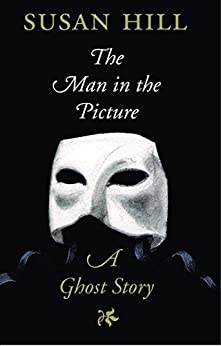
When I was in Venice with my mum, we managed to lose our way back to the hotel one evening. As we stumbled down darkened streets and into complete dead ends, we realised we’d come away from the tourist trail and into a more residential area. This was the book that kept coming to mind and I was waiting to be bundled into a gondola by plague masked men. This is one of those stories that begins with two people warming themselves by a fire on a dark evening. Oliver is at Cambridge University and on this particular night he is in the rooms of his professor, when he notices a painting on the wall. It is a beautifully painted scene of the carnival in Venice and Oliver stops to study it for a while. There is so much to take in, especially the beautiful masks and costumes. Yet this beautiful surface is itself a mask, because the painting has a very dark history. We have all been ‘caught’ by a picture, the one in the gallery window that makes us stop for a moment, but have you ever been captured? This story has a lot of detail in its 150-ish pages and so much atmosphere. Whether it’s Venice’s labyrinthine pathways and dead ends, or the eerie mist of the Cambridge Fens.

This book grabbed me straightaway because my mum had a visit from the small hand once. When in the house babysitting her younger sisters, she saw a small hand holding the open bedroom door, just as if a small child was going to peep round it. Neither sister was the right age for the mystery hand and alongside other strange sightings in the house it was put down to some sort of haunting. Even fifty years on she hasn’t forgotten it. There’s nothing scarier than a little child ghost (except a clown *shudder*). In this story, antiquarian bookseller Adam Snow is returning from a client visit one late evening when he takes a wrong turn. He stumbles across a derelict Edwardian house, and compelled by curiosity, approaches the door. Standing before the entrance, he feels the unmistakable sensation of a small cold hand creeping into his own, ‘as if a child had taken hold of it’. At first he is puzzled by the odd incident, but then begins to suffer attacks of fear and panic, and is visited by nightmares. He is determined to learn more ‘about the house and its once-magnificent, now overgrown garden but when he does so, he receives further, increasingly sinister, visits from the small hand. This is a classic ghost story, narrated by Adam as he tries to unravel the mystery. This one really feels like a period novel due to the linear storytelling, sole narrator and the slow drip feed of information so we can put the clues together. Maybe not as atmospheric as her usual stories, but a great read all the same.

One of the creepiest parts of the film version of The Woman in Black is when the toys in the nursery move – I think it’s a monkey with cymbals or is that just my fertile imagination? We’re back on the misty fens for this story, Two cousins are sent to stay with their Aunt in her isolated ancestral home for the summer. Edward and Lenora are the children of Aunt Kestrel’s warring siblings and their narrative is split into two time frames – the events of that childhood summer and the two cousins returning to Iyot House after their Aunt’s death. Hill manages to create a fairly forbidding atmosphere for the two children with constant rain, falling across a gloomy flat landscape where mist can stay over the fields all day. The house is very like Eel Marsh House in The Woman in Black, with an atmosphere of damp and decay. The two are quite different. Edward is the more stoic of the two, he is shy and polite and probably wouldn’t dream of opening his mouth if something is wrong. Leonora is a different prospect- she comes across as self-centred and spiteful. This could be down to a lifestyle drifting from hotel to stepfather for many years, she’s been awash with material things but hasn’t really been loved.

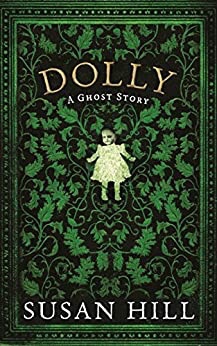
However, at Iyot House she starts to throw huge tantrums. Are they normal for her or is something at Iyot causing this? Housekeeper Mrs Mullen observes the tantrums are worsening and warns that she has the devil in her. Aunt Kestrel sets out to buy Leonora a birthday present she’s never had, a doll. Yet the doll has an effect no one expected. The opening to this story is really creepy and the atmosphere is incredible, perhaps more so than the actual story in parts. However creepy antique dolls really are terrifying so a haunted one is right up my street and this doll’s powers extend all the way through to Leonora and Edward’s adulthood. Scary and sure to make you avoid antique centres for a while.

Meet The Author.


Susan Hill‘s novels and short stories have won the Whitbread Book, Somerset Maugham, and John Llewellyn Rhys Awards and the Yorkshire Post Book of the Year and have been shortlisted for the Man Booker Prize. The play adapted from her famous ghost novel, The Woman in Black, has been running in the West End since 1989. –This text refers to an out of print or unavailable edition of this title.