Posted in Sunday Spotlight

Sunday Spotlight! Memoirs and Other Non-Fiction Lifesavers

I’ve been struggling over the last couple of weeks, probably since the procedure on my back and short term increase of medication, I’ve struggled to connect fully with a book and to remember all the plot points in those twisty – turny thrillers I usually love. Often when I’m like this I find the best thing to read is non-fiction, which in my case usually means history or memoirs. So for the next few Sundays I’m going to feature some of the non-fiction books I’ve enjoyed and those that have changed my life.

An Evil Cradling by Brian Keenan

I wouldn’t have read this amazing piece of writing, had it not been set for my Autobiography class at university. It is an absolutely stunning book, for it’s story, it’s language and how Keenan tries to hold on to his sense of self when everything that normally defines us is stripped away. The Irish writer was teaching in Beirut in the 1980’s, when he was taken hostage by Shi’ite Militia Men, he was held for four years, much of his time with the British writer John McCarthy. What Keenan manages to do is convey the fear, the indignities, the atrocities and the endless hours of waiting. He muses on what it is that makes us ‘us’. Usually when we are asked what makes us who we are we tend to list the foods, music, sport or pastimes we love. I might feel defined as a rock music fan, who loves Italian food, Woody Allen films and reading novels. However, if we imagine all those things taken away, who do we become? While keeping us abreast of day to day events, Keenan goes inside himself to ask who he is when he isn’t observed or compared to another. He has to consider whether it is easier to let his psyche split into many different pieces that may be impossible to assemble should he survive? Or should he try to keep his sense of a cohesive self, if indeed there is one, and if he reminds himself daily of who he is will it help him survive. It’s hard to imagine the situation Keenan is in and how deprived he is of sensory information, so much so that just seeing an orange inspires this passage:

‘I want to bow before it. Loving that blazing, roaring, orange colour … Everything meeting in a moment of colour and form, my rapture no longer abstract euphoria. It is there in that tiny bowl, the world recreated in that broken bowl. I feel the smell of each fruit leaping into me and lifting me and carrying me away. I am drunk with something that I understand but cannot explain. I am filled with a sense of love. I am filled and satiated by it. What I have waited and longed for has without my knowing come to me, and taken all of me.’

Three Things You Need to Know About Rockets by Jessica A Fox

This was one of those books I simply fell upon while on holiday in Northumberland as I was browsing in Cogito Books at Hexham. For some reason this appealed to me as a holiday read because it felt light and had an escapist quality. Fox is living a life I can’t imagine, in a sublet house that has a lovely garden for meditation and she has a job working as a story teller, at NASA of all places. When she’s hit with redundancy she feels a need for a change of direction and Googles ‘second hand bookshops in Scotland’, dreaming of a quiet bookish retreat. She finds a bookshop in Wigtown where there is a book festival in the summer and they want voluntary help, with accommodation included. She fires off an email which starts an incredible journey geographically and emotionally.

She arrives in Scotland and is welcomed into the home and shop of Euan, where she’s due to spend a month. It’s not long before it’s clear there are feelings between these two book lovers, but they are very different people. Jessica’s is enthusiastic and wears her heart on her sleeve whereas Euan is all reserve and doesn’t want to define or commit to the relationship. When she returns to Scotland for a second time, she makes it clear that she needs to know he is as committed to this as she is and sets an ultimatum. She will return to the US and if he wants a relationship with her he must come out to get her before a certain date. Heartbroken, she returns to her parents house and tries to put her life back together again, thinking that she must move forward in case he doesn’t come. This isn’t soppy or sentimental, as Jessica relates a good amount of personal growth too. She learns to slow down, after living in a city where everything is available at any time of day, and has to accept that in Wigtown going for a walk or seeing some Highland Cattle is quite enough incident in one day. I truly enjoyed this and look forward to reading Euan’s story, under his real name Shaun Bythell.

Small Dogs Can Save Your Life by Bel Mooney
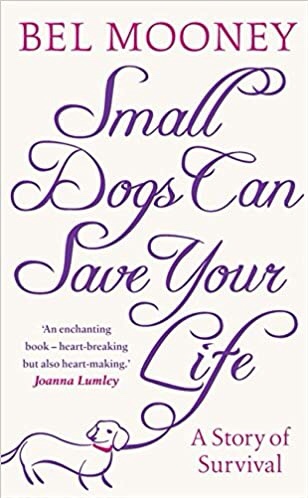
Although this is now packaged in a cutesy pink way, it’s quite a powerful memoir about loss and finding one’s identity against, written by journalist Bel Mooney and relating some of the most painful times in her life. Married for thirty-five years, Bel recounts the life shattering experience of her husband coming home and telling her he was in love with someone else. He had met an opera singer through his work and it had been an instant understanding between them. Through her pain, Bel could recognise this as love and he left the family home. While still in shock and starting to negotiate the terms of their divorce, Mooney rescued a small Maltese dog called Bonnie. Her story recounts the growth of her bond with this little rescue dog and how the simple act of looking after an animal can aid the process of recovery. The small steps it required to look after her small dog were the first tentative steps towards finding a new life, when she couldn’t even imagine what it might look like. When her husband’s new partner was suddenly diagnosed with terminal cancer, she even finds the strength to be loving and compassionate despite her own pain.

I know the power of a dog to heal. After the death of my husband I’d managed to do no more than put one foot in front of the other for about six months, when I bought a tiny cockapoo puppy. I collected him on New Year’s Eve and we settled in to a night in front of the fire with the TV on. I was watching the film Finding Neverland and the sequence where the boy’s mother slowly slips away while they perform a play for her really hit a nerve with me. The weight of the past six months seemed to suddenly become unbearable and for the first time in my life I actually considered what a relief it might be to not be here anymore. I knew I had enough medication in the house to do the job. The thing that stopped me was the bundle of fur I’d brought home that afternoon. In the battle going on inside my head I kept coming back to how scared and bewildered he would be. His first night away from his litter I couldn’t do that to him. Rafferty has been by my side ever since and on those days where I couldn’t face coming out from under the duvet, having to get up and let him out in the morning forced me to keep going. He’s now fifteen and his health is failing, but I’m still there each day supporting him like he’s supported me. Without him, I wouldn’t be here. So it seems that books and small dogs can save your life.

Posted in Sunday Spotlight

Sunday Spotlight! Self-Improvement Month.

I drive my family and friends crazy every January, complaining about New Year’s Resolutions and explaining why they rarely work. It’s a combination of: the proximity to Christmas – just the week before we’re being told to stuff our faces and fill our shopping trolleys to overflowing; the post-Christmas blues when everyone returns to life as normal; the cold weather and dark nights; the financial squeeze post- Christmas. We’re already dealing with so much this time of year, why would we decide this was the optimum time to start that boot camp or stringent diet? To start denying ourselves? I always say to clients that if they must make resolutions at all, make them positive resolutions. The only one I’ve ever kept was to go to the cinema once a week and that lasted several years, because it was adding something to my life rather than taking it away. I don’t know whether it’s years and years of conditioning as a child, but I always have more get up and go in the autumn. I had a childhood love of new stationery that has never left me, so it’s almost in my DNA that I organise myself at this time of year. The summer is so tough for people with MS, especially when the temperatures are creeping ever higher, so I feel a physical as well as a mental lift in September. It just so happens that September is ‘self-improvement month’ so I thought I’d share with you some of the books that have helped with my self-growth over the years and ones I recommend again and again to clients and friends.

The Happiness Project by Gretchen Rubin

This book brings back fabulous memories for me because I bought it in the gift shop of New York Public Library on my 40th birthday trip. That week was the start of new patterns in my life anyway, because I was recovering from widowhood swiftly followed by a disastrous abusive relationship. I’d bought my own home for the first time and I was looking for ways to work on my self. I had some counselling, started a weekly meditation class and was looking for a calmer, happier life. Gretchen Rubin’s original career was in law, but when she became an author she started the happiness project, inspired by a moment on a city bus when she looked out at the rainy day and thought ‘the days are long but the years are short’. She started by casting around for the latest research, theories, activities and programs that claimed to boost happiness. Taking us all the way back to ancient wisdom through to lessons in popular culture, she tries everything and reports back candidly on what worked for her and what didn’t. Some of the advice is practical – she looks into the catharsis of getting rid of belongings, the latest wisdom on organising life to reduce stress, and whether money really is the root of evil. In fact Rubin is very honest about this and admits that yes, having enough money to be comfortable does help in lifting mood. However, happiness doesn’t continue to rise the richer we get. The secret is to have just enough. Ultimately we would all gain from carrying out our own project, but the most universal advice for happiness Rubin found was novelty and challenge. We should never settle for routine or stop challenging ourselves, two things that also stop us from growing old mentally. The latest edition of this book has an interview with the author, an insight into other people’s happiness journeys, plus and a guide and free resources to plan your own happiness journey.
Harper Paperbacks, Anniversary Edition. 30th October 2018

The Gifts of Imperfection by Brené Brown.

What is it that stops us from taking risks and being vulnerable in life? Usually it is the fear of failure. The fear of falling flat on our faces in from of the world. We strive to appear perfect. I love all of Brené Brown’s work, but as someone who is trying to find the confidence to write, it’s this book that’s closest to my heart at the moment. Brown’s work is rooted in social science and while she’s an academic and rigorous researcher, she has a way of expressing her ideas that feels as if you’re talking to a friend over a coffee. It seems that all we do in this age of social media, is list our imperfections. Usually that means those on the outside, as we try to accept our bodies while looking at photographs that are edited and filtered until they bear no resemblance to the person to a human being. When it comes to our intelligence, fear of failure can actually impede our learning. Studies have shown that girls in their first couple of years at secondary school, a very vulnerable time of their development, are so self-conscious in front of their male classmates that they stop participating in school discussions. Even as adults we avoid trying new things because we don’t want to fail. Starting my blog was partly to get used to writing daily. I’d always wanted to write a book, but was so scared of finding out I wasn’t good enough. I had to build up confidence slowly, but it constantly plagues me that I might fail miserably, even though I tell my stepdaughters that they haven’t failed if they keep trying. Brené Brown’s book was a huge influence on my thinking, because she talks about those times where there’s risk and we are vulnerable. We tend to avoid vulnerability, because we see it as a weakness, almost as a negative feeling. She argues that vulnerability is actually a strength, because we’re vulnerable when doing something new or making a change. We can’t grow and learn, unless we allow ourselves to be vulnerable. When we hide ourselves, we’re actually shutting ourselves off from finding those true connections and the things that bring true meaning to our lives.

Published by Penguin 17th January 2013. Now on Netflix as The Call to Courage.

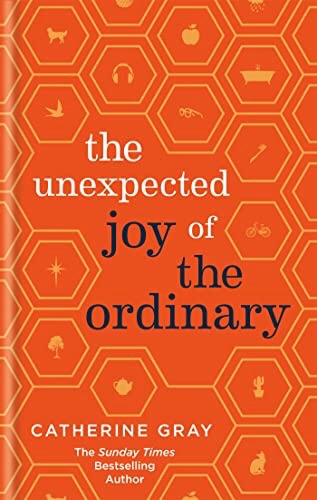
The Unexpected Joy of the Ordinary by Catherine Gray.

Something in society shifted during lockdown. It was probably the first time that adults of my age (mid-late 40’s) faced an international crisis. For weeks we were thrown back on our own resources, unable to socialise or go outside for entertainment. I felt I had a head start here because having had a disability for most of my life I already have to rely on myself for reassurance, comfort and entertainment. I’ve spent long periods in hospital or convalescing at home since I was about 11 years old so I can honestly say that through lockdown I was never bored or disenchanted with day to day life. I think I learned a long time ago to find happiness in the small stuff. So I was interested in this book that aims to teach people why they feel dissatisfied with everyday life and how to find happiness in ordinary existence.
The author claims it’s not us being brats. There are two deeply inconvenient psychological phenomenons that conspire against our satisfaction. We have ‘negatively-biased’ brains, which zoom in on what’s wrong with our day, rather than what’s right. Of course back in the mists of time, this negative bias kept us alert and stopped us being ambushed by the wildlife that used to eat us, but now it just makes us anxious. She also cites something called the ‘hedonic treadmill’ a drive we all have that keeps us questing for better, faster, more, like someone stuck on a dystopian, never-ending treadmill. Thankfully, there are scientifically-proven ways to train our brains to be more positive and to take a rest from this tireless pursuit. Catherine Gray knits together illuminating science and hilarious storytelling, unveiling captivating research that shows big bucks don’t mean big happiness, extraordinary experiences have a ‘comedown’ and budget weddings predict a lower chance of divorce. She reminds us what an average body actually is, reveals that exercising for weight loss means we do less exercise, and explores the modern tendency to not just try to keep up with the neighbours, but also the social media elite. I found this gave me the background to something I already knew in my heart, but for others this could be a life changing read.

Published by Aster 26th December 2019.

Living Well With Pain and Illness by Vidyamala Burch.

I’ve had chronic pain since I was eleven years old and I broke bones in my spine doing a somersault in school. Since then I’ve been diagnosed with Multiple Sclerosis. At the age of 40 I’d pretty much been round the block when it came to treatments and I was very wary of anything that promised to help or cure my condition. I was especially suspicious of anything that claimed to work on my physical condition through the mind. Any sort of faith healing or therapy that claimed to help me ‘think myself better’ was guaranteed to raise my blood pressure a few notches. So when I came across this woman I probably wasn’t the most receptive reader. However, Vidyamala Burch has suffered with chronic pain for over 30 years due to congenital weakness, a car accident and unsuccessful surgery. That made me sit up and listen. Knowing she is now a wheelchair user reassured me that she wasn’t trying to claim a cure or even that mindfulness would reduce my physical pain, only that mindfulness could reduce my instinct to fight with the pain. Burch identifies that it is our resistance to pain which causes it to be so distressing and miserable. We don’t want it to be happening to us, and we wish we weren’t experiencing it. Instead she suggests we accept it.

LIVING WELL WITH PAIN AND ILLNESS is her practical guide to living with and managing chronic pain through the principles of mindfulness. We must develop a calm awareness of our bodies and the pain we’re in. If we let go of the frustration and suffering that we associate with the pain, our perception of that pain will reduce.Vidyamala Burch uses easy-to follow breathing techniques and powerful mindfulness meditations to teach us how to live in the present moment. LIVING WELL WITH PAIN AND ILLNESS includes helpful illustrations, offers effective ways of managing chronic pain and is a must-read for all sufferers. I found it life changing, not because my pain went away, but because I stopped fighting and resenting it. I learned to meditate on my pain, to learn how it varies over a period of time and how much I can cope with.

Published by Piatkus 3rd March 2011. Vidyamala Burch is the founder of the Breathworks centre.

How To Be A Woman by Caitlin Moran.

I came across Caitlin Moran’s book at exactly the right time. I was hitting 40, coming out of an abusive relationship and buying a house to live by myself for the first time. I knew I needed to heal and along with the more practical and spiritual reads this one was much needed. It was honest, feisty and funny. Caitlin Moran is a breath of fresh air. I understood her background and that wildly romantic teenage fantasy life she had from her reading. I used to trudge the countryside in my wellies hoping to meet my very own Heathcliff. We had no money, untruly animals and a Labrador I could whisper all my secrets too. This book taught me that it was ok to do what I wanted and I could bypass all the rubbish that comes with the modern ideal of womanhood. I could spend time on looking nice, but not to take on the botoxed, contoured, epilated, pouting and filtered norm. I started to prefer photos that showed who I am inside. I took away from this book that it was okay to wear Dr Martens all the time, that maybe I needed to curb my spending and to accept my body as it is – it might never be better than this. In places, her honesty taught me to be brave about making decisions for my life and not to romanticise my love life. Instead, when I was ready, I would hope to meet a best friend; someone kind, caring and could make me laugh so much I nearly wet myself. This book takes us back to a feminism I could get on board with after twenty years of Spice Girls ‘girl power’ bullshit. She takes on the adolescent horror that comes with periods, a perfectly normal biological function, but overlaid with secrecy and shame. She also discusses body hair, the porn industry, childbirth and abortion. You might not agree with everything she says and does, but every woman can take something away from this book. I buy it for every young woman in my life too, when they reach an appropriate age to relate to those adolescent experiences.
Published by Ebury, 1st March 2012.

I think it’s best to take Self-Improvement Month as an opportunity for self-care. Self-care can be many things, but it’s not all afternoons at a spa – especially now that we’re in this cost of living crisis. It’s not necessarily about treating ourselves, but is more about creating time to take stock of life so far. Which areas of your life need work and how can you add time for self-reflection and recharging into daily life? I try to find time for a short journal entry every day. I still try to see a new film once a week. Since I recently had a back procedure I’m setting aside time to walk with the dog once a day, however far I can manage it. Again these all add to my life, instead of taking something away. Maybe the best thing we can do is accept ourselves as we are and learn to enjoy the small things in life. Be kind to yourself ❤️
Posted in Sunday Spotlight

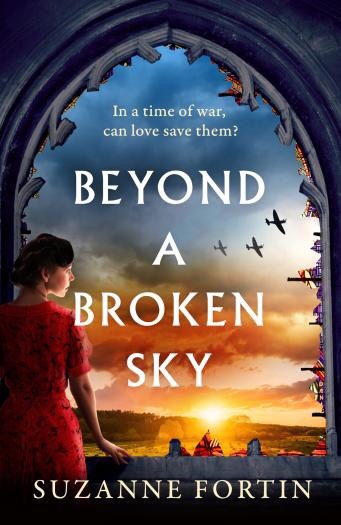
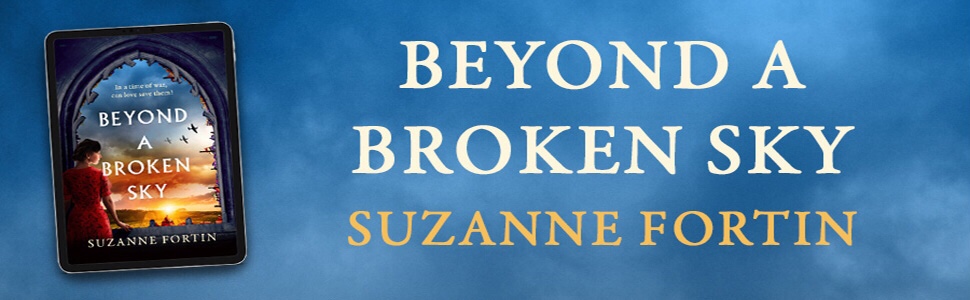
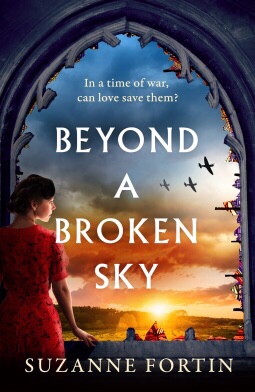
Sunday Spotlight! Beyond A Broken Sky by Suzanne Fortin.

Ever since I had the good fortune to fall upon a blog tour for The Secret Life of Arthur Pettigrew I have looked out for other works by Suzanne Fortin. It was such a well researched and emotional piece of historical fiction, it became one of my books of that year. Since then she has published two more novels, All That We Have Lost and now this novel, another piece of history from WW2 with an emotive dual-timeline story woven throughout. In 2022 we meet Rhoda Sullivan who works as a stained glass expert, called in by museums to value, then oversee and conserve important works in glass. She”s tasked to go to Telton Hall and assess a stained glass window that dates to WW2 and was designed by an Italian POW. There she end up at an impasse when the gates are blocked by an elderly man in a tractor, Jack is the hall’s last inhabitant and he’s lived there all his life. He’s making a final protest about the development at the hall, but his son Nate arrives to help Rhoda gain access. With Nate, Rhoda makes a terrible discovery – a body under the chapel’s flagstones. It has a huge effect on Rhoda who imagines someone missing this person, just as she still misses her twin brother who disappeared before their 18th birthday. A decade on she still looks for him everywhere,
In 1945 we are taken to Somerset and a young woman called Alice Renshaw. Alice is alone and pregnant. Shes been sent to a farm in Somerset where Louise Hartwell is running things with the help of POW’s. As well as the farm work, Louise helps young pregnant women. Alice soon starts to make friends, but not everyone at the hall is happy about this. As peace is declared, the war at Telton Hall is just beginning.

I’ve just started the book and I’m already hooked by Alice’s story and I love how the author pulls us straight back into the 1940’s with only a few lines. I am also fascinated by Rhoda’s job and the making and restoration of stained glass. I heartily recommend this author, even though I’ve only read a few chapters I know I’m in safe hands. If you love historical fiction and haven’t already encountered her work, go grab her first novel. You won’t regret it.

Meet The Author

Suzanne writes historical fiction, predominantly dual timeline and set in France. Her books feature courageous women in extraordinary circumstances with love and family at the heart of all the stories. 
Suzanne also writes mystery and suspense as Sue Fortin where she is a USA Today bestseller and Amazon UK #1 and Amazon US #3 bestseller. She has sold over a million copies of her books and been translated into multiple languages.

Posted in Publisher Proof, Sunday Spotlight

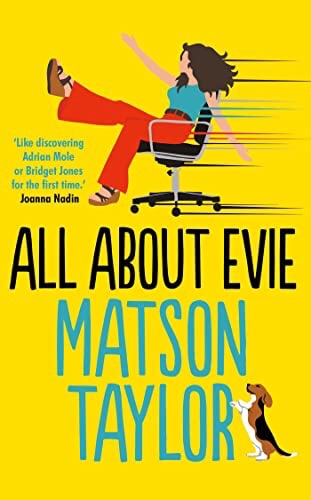
Sunday Spotlight: All About Evie by Matson Taylor

So I’m having a book blogger’s dilemma. The arrival of this book through the door made me do a little Snoopy dance! There are a few books I’ve earmarked as my most anticipated summer reads, but this is right up there as my mostest anticipated novel. I know, we bloggers do love to throw out superlatives here and there, but I’ve honestly been waiting for this book ever since I finished The Misadventures of Evie Epworth two summers ago. Now I’m in an awful quandary. I want to devour it in one go, but once I do, the moment will have passed and Evie is gone again. I don’t know whether Evie’s story ends this time, or whether there’s more to come, so I’m trying to hang on for a little while, at least until my fellow Squadettes are reading so we can talk about it.

If you haven’t read Matson Taylor’s first novel then where have you been? I think this is one book where reading the previous instalment of Evie’s adventures is really helpful. You have a whole new literary heroine to meet and I think knowing where Evie comes from is vital in understanding her. I’m not going to use spoilers so it’s safe to read on. In book one we met Evie in the 1960’s, the summer after O’Levels and before A Levels. Her only plans for the summer are reading, helping their elderly neighbour with her baking and, most importantly, getting rid of her dad’s girlfriend who would like to see Evie working through her summer at the local salon. Christine has moved in and is slowly trying to erase everything Evie loves about the farmhouse, including her Adam Faith wall clock and that won’t do. Evie and her dad would like things to stay as they were when her Mum was alive. They love their Aga and old country kitchen, but Christine wants Formica and a new cooker that’s easier to clean. Her wardrobes are wall to wall pink, synthetic fabrics and she colonises the kitchen with her Mum and lumpen friend, who’re usually in tow. Her dad can’t seem to see that his girlfriend and daughter don’t get along, there’s quite a lot of avoidance practised here, he’s often got his head in the newspaper or listening to the cricket scores, or just popping out for a pint. Whatever the tactic, it means he hasn’t heard anything. This problem needs another woman to solve it. So, when her neighbour has an accident and her daughter Caroline arrives to look after her, the three women put their heads together to deal with the problem, just in time for the village fete and baking competition.

All About Evie starts ten years on from the previous novel with Evie settled in London and working at the BBC. She has all the things a 70’s girl could wish for – including an Ozzie Clark poncho. Then disaster hits. An incident with Princess Anne and a Hornsea Pottery mug means she must have a rethink about her future. So what can she do next? Will she be too old to do it? Most importantly, will it involve cork soled sandals? I have no qualms in saying this is my most anticipated book of the summer. I think I’ll have to compromise and as soon as I have a two week gap from blog tours I’ll be delving in to find out what happens next….

I’ll keep you informed.

Published by Scribner U.K. 21st July 2022.

Posted in Sunday Spotlight

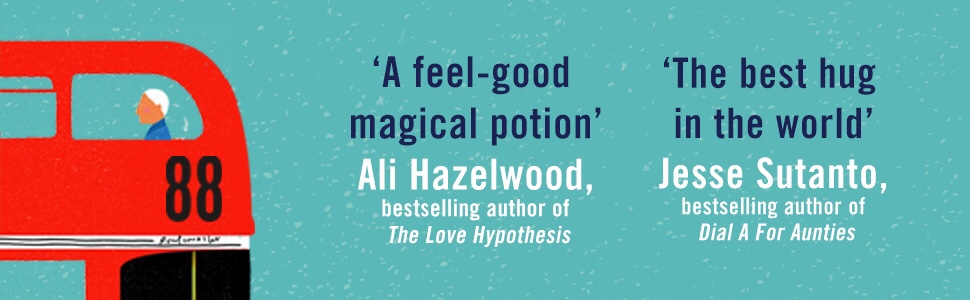
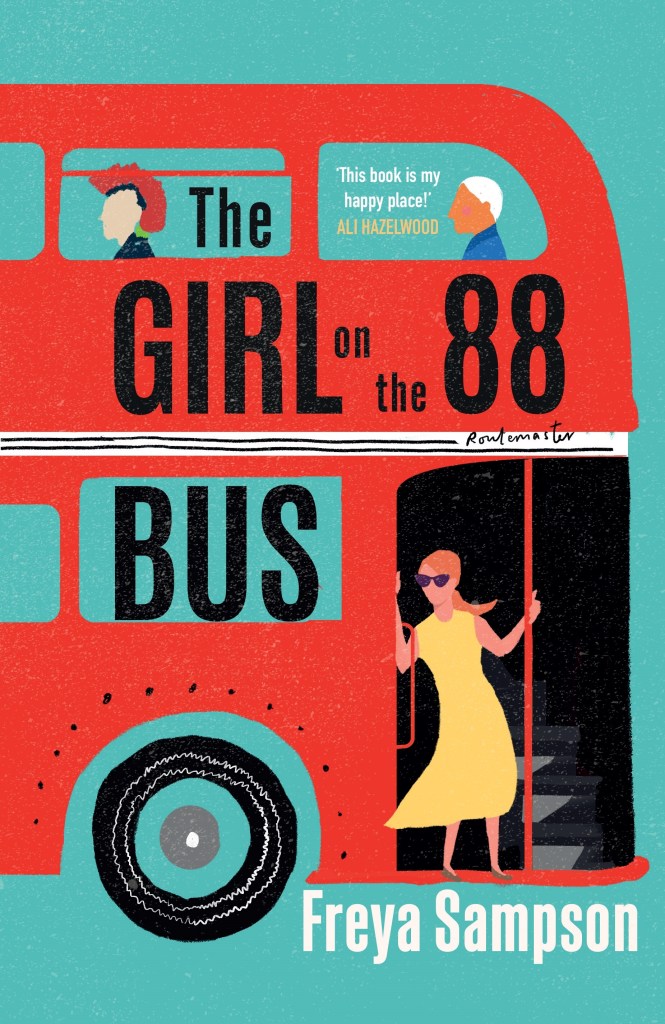
Sunday Spotlight! Freya Sampson Cover Reveal.

I don’t often do cover reveals or previews, but there are just so many books to look forward to I might start. I think it’s the only way I can tell show you the novels I’m excited about. Otherwise I have to wait till I’ve read and review them all and that can take a while! Sometimes just the blurb and the cover is enough to whet my appetite. Other times it’s the first page that I’ve been reading while stood up in the queue at the bookshop. Sometimes I’ve been granted the book on NetGalley and couldn’t resist peeking at the first chapter. Or it could be I’ve read the author’s first book and I’ve been waiting impatiently for that difficult second book, just knowing it will be great.

Today I’m talking about Freya Sampson’s new book The Girl on the 88 Bus. I loved reading her debut novel The Last Library last year because it was like a warm hug in a book. By the looks of early reviews this book has that same magical feel. Here’s the blurb:

When Libby Nicholls arrives in London, broken-hearted and with her life in tatters, the first person she meets on the bus is elderly pensioner Frank. He tells her about the time in 1962 he met a girl on the number 88 bus with beautiful red hair just like her own. They made plans for a date, but Frank lost the ticket with her number written on it. For the past sixty years, he’s ridden the same bus trying to find her.

More than anything, Libby wants Frank to see his lost love one more time. But their quest also shows Libby just how important it is to embrace her own chance for happiness – before it’s too late.

A beautifully uplifting novel about how one chance meeting can change the course of your life forever

Published in June 2022 by Zaffre Publishing. I can’t wait. Can you?

Meet The Author


Freya Sampson works in TV and was the executive producer of Channel 4’s Four in a Bed and Gogglesprogs. She studied History at Cambridge University and in 2018 was shortlisted for the Exeter Novel Prize. She lives in London with her husband, two young children and an antisocial cat

Posted in Sunday Spotlight

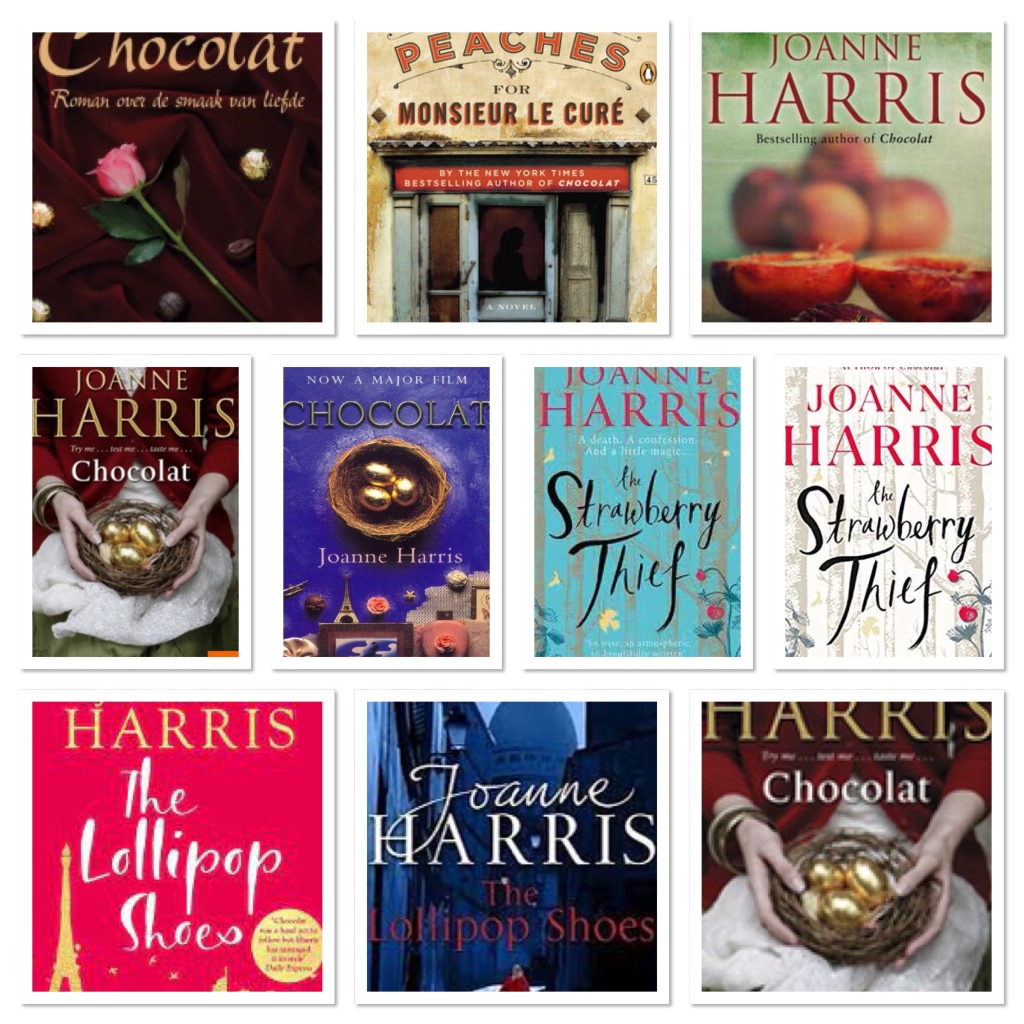
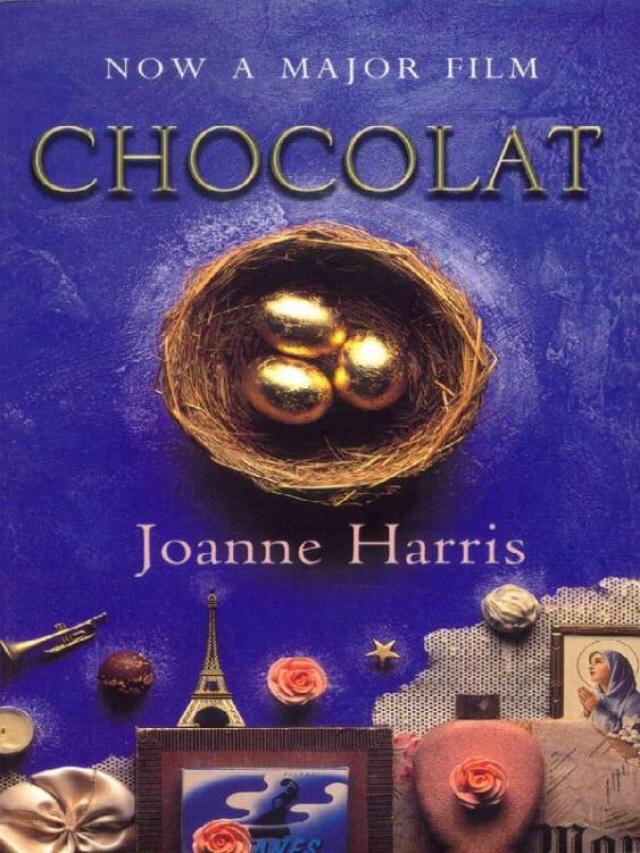
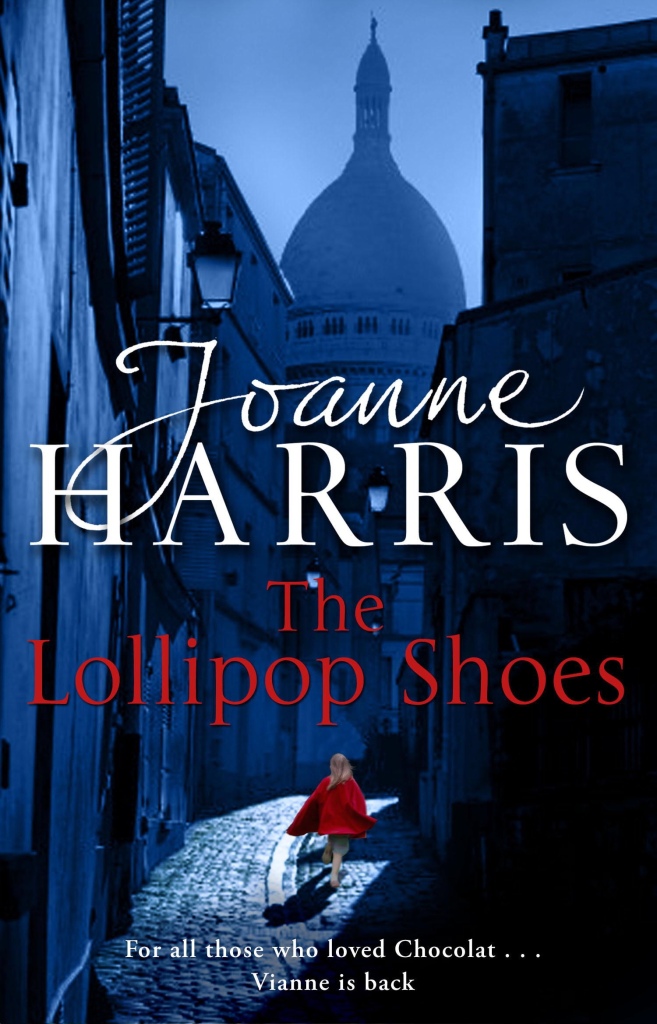
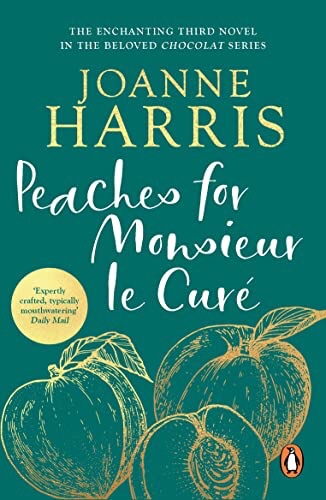
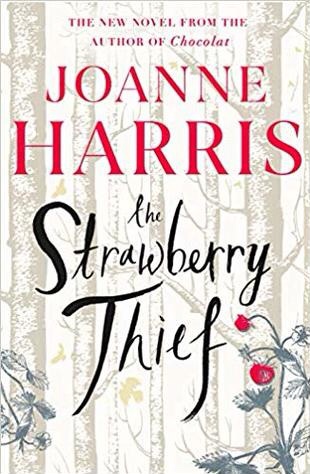
Sunday Spotlight. The Chocolat Series by Joanne Harris.

One of the most enduring series of books in my collection and one I never tire of re-reading is Joanne Harris’s Chocolat series of novels. So far there are four novels in the series and every one has that perfect combination for me – strong women, good food, a beautiful continental setting, and a little sprinkle of magic. Each one features the enigmatic and charming Vianne Rocher, mother, chocolatier and witch. Vianne takes us from Provence to Paris, then back and everywhere she goes people seem drawn to her warm nature. Since I always find myself rereading Chocolat in the run up to Easter, I thought it was an ideal time to review this extraordinary series for anyone who hasn’t read it yet (although there’s probably not many) and those who haven’t read the sequels, perhaps only visiting the series due to the successful film adaptation starring Juliette Binoche as Vianne and Johnny Depp as Roux. Here’s why I love this magical and strangely comforting world Harris has created.

“There is a kind of alchemy in the transformation of base chocolate into this wise fool’s-gold, a layman’s magic that even my mother might have relished. As I work, I clear my mind, breathing deeply. The windows are open, and the through-draft would be cold if it were not for the heat of the stoves, the copper pans, the rising vapor from the melting couverture. The mingled scents of chocolate, vanilla, heated copper, and cinnamon are intoxicating, powerfully suggestive; the raw and earthy tang of the Americas, the hot and resinous perfume of the rain forest. This is how I travel now, as the Aztecs did in their sacred rituals: Mexico, Venezuela, Columbia. The court of Montezuma. Cortez and Columbus. The Food of the Gods, bubbling and frothing in ceremonial goblets. The bitter elixir of life.” Chocolat

I read this first book in the series long before the film adaptation and I’m glad I did since there were aspects changed, and I think the book is perfect as it is. Vianne Rocher, a single mum with a young daughter, blows into the small village of Lansquenet-sous-Tannes on Shrove Tuesday. The villagers are still clearing away the last dregs of the carnival which heralds the beginning of Lent. Vianne and daughter Anouk, move into the disused bakery facing the church. Francis Reynaud, the young and opinionated curé of the parish, watches her arrival with disapproval and suspicion. When the priest realizes that Vianne intends to open a chocolate shop in place of the old bakery, thereby tempting the churchgoers to over-indulgence, Reynaud’s disapproval increases.

As the villagers of Lansquenet start falling under the spell of Vianne’s easy and charming ways, Reynaud feels that she undermines his own authority and he starts to see her as a danger. Yet Vianne’s influence is having a positive effect – an old woman embraces a new way of living, a battered wife finds the courage to leave her husband, children are rebelling against authority. Worse she’s even welcoming outcasts and strays such as the river gypsies. Reynaud feels like his tight and carefully ordered community is in danger of breaking apart. Easter approaches and both parties throw themselves whole-heartedly into the preparations; Vianne is creating delicacies for the chocolate festival she plans to hold on Easter Sunday. I think this is one of my favourite parts of the whole book, when Vianne is creating and you can tell that the author’s really luxuriating in the flavours and textures. There’s always that little touch of magic too. There’s her daughter Anouk with her little ‘shadow’ friend Pantoufle the rabbit who I adore. Vianne is naturally talented, but there’s a little touch of something that makes the fairy lights extra sparkly, or the delectable smell of hot chocolate drift that bit further up the road and into people’s homes.

It’s this something extra that Reynaud can sense, and it sends him looking for a way to win back his straying flock. Both factions have a great deal at stake and the village starts to feel divided, Some blame the river gypsies for the change in the air, but there is a power in the tension between Vianne and Reynaud that turns their emotions into a brisk wind stirring up the leaves in the church yard, or slamming doors as it goes. Vianne knows the danger of being different and she warns Anouk not to let Pantoufle become too visible. As Easter day comes closer their struggle becomes much more than a conflict between church and chocolate – it becomes an exorcism of the past, a declaration of independence, a showdown between pleasure and self-denial with an ending no one expects.

“The real magic – the magic we’d lived with all our lives, my mother’s magic of charms and cantrips, of salt by the door and a red silk sachet to placate the little gods – had turned sour on us that summer, somehow, like a spider that turns from good luck to bad at the stroke of midnight, spinning its web to catch our dreams. And for every little spell of charm, for every card dealt and every rune cast and every sign scratched against a doorway to divert the path of malchance, the wind just blew a little harder, tugging at our clothes, sniffing at us like a hungry dog, moving us here and moving us there.” The Lollipop Shoes

I was so excited to know that Vianne and her daughters were going to be back in another adventure, this time set in Paris. Tucked away in the cobbled streets of Montmartre, Yanne and her two daughters live peacefully, if not happily, above their little chocolate shop. Nothing unusual marks them out; no red sachets hang by the door. The wind has stopped – at least for a while. Then into their lives blows Zozie de l’Alba, the lady with the lollipop shoes – ruthless, devious and seductive. Set a few years after the events of Chocolat, Vianne has left Lansquent-sous-Tannes, and is now living in Paris with Anouk and her second daughter Rosette. Rosette is an unusual red haired child who doesn’t seem able to speak, but has her own special abilities like Anouk. Although we don’t know why at first, Vianne has changed her name to Yanne. Even more unexpectedly, she has suppressed her magic powers and is now contemplating a more conventional lifestyle, including marriage to the older, more traditional, Thierry le Tresset. Thierry is also their landlord and Anouk is concerned. She doesn’t like Thierry and wonders what has happened to her mother.

So much has changed and all the fun they used to have before is gone. Then Zozie de l’Alba turns up at Vianne’s chocolaterie with an air of magic and a trademark, she’s always wearing her bright red shoes. Anouk is ready for a friend and for some excitement so is easily to be seduced by Zozie’s charisma. This young woman becomes a part of the family’s lives and in the shop, but they don’t really know who she is. Against Vianne’s wishes, Anouk wants to practice with the magical power she has always had and Zozie uses this to create a wedge between mother and daughter. She encourages Anouk to use her magic, but what is her motivation in coming between mother and daughter? It feels personal, but Vianne doesn’t seem to know her. Then, Vianne’s previous lover arrives in Paris. One of the river gypsies from the village, and incidentally the father of Rosette, Roux and Vianne haven’t seen each other for four years. What does his arrival have to do with Zozie and why does she seem to creep ever closer into their lives?

This is the instalment of the series that comes closest to magic realism, and it definitely feels more fantastical and less warm than Chocolat. Yet there’s still something very readable about it and its still full of those long descriptions that send beautiful images dancing across my brain. Three characters narrate this sequel, and one of whom is Anouk which shows us how grown up she has become and gives her an independent voice from her mother. I loved how it shows the changes in the mother/ daughter relationship as the daughter grows up and wants to make her own mark on the world. It showed how households like this can come into conflict, often by not really listening. It was interesting to experience the three different perspectives and to see Anouk having her own voice. I did miss those other background characters that made Chocolat so special though, despite that this was a magical read and left me fully immersed in Harris’s world once again.

“I have never belonged to a tribe. It gives me a different perspective. Perhaps if I did, I too would feel ill at ease in Les Marauds. But I have always been different. Perhaps that’s why I find it easier to cross the narrow boundaries between one tribe and the next. To belong so often means to exclude; to think in terms of us and them – to little words that, juxtaposed, so often lead to conflict.” Peaches for Monsieur le Curé

It was a number of years before I read this book, the third in the Chocolat series, after finding a copy in a charity shop. I was happy and strangely soothed to find the village of Lansquenet still as lovely as ever. In fact I blame Joanne Harris for my urge to grow red geraniums for every hanging basket chapter’s narrator – a crescent for Vianne, a cross for M. le Cure. In fact the crescent is symbolic to the plot of the book as a new type of outsider now takes up residence at the other side of the river. The two differing populations in the village are the Catholics from one side of the river, and the Muslims from the other side. In fact there is even a minaret marking the mosque, just as the bells and spire mark out the church. As usual though, even though Vianne has allegiances in the village, she finds herself drawn to the far side of the river, where a plot develops involving the treatment of women that I enjoyed a lot. Vianne’s charm brings her friends within the Muslim community, as well as for Rosette and Anouk too. Rosette has her own spirit friend Bam, just like her sister had Pantoufle, but friendship with Maya really blossoms and Maya would love her own ‘djinn’ just like Bam. Vianne is intrigued by Ines, a woman who wears a black veil and who the locals believe is a dark spirit bringing fear and unrest. As Vianne knows too well, first impressions are seldom correct.

This book is a little darker in tone than the others, as Reynaud and his parishioner’s suspicion of the Muslim community, comes to a head. Vianne seems compelled to befriend her one time enemy. Now that she knows and understands Reynaud, she finds herself caring about him and as readers we do too, almost in spite of ourselves. Roux reminds Vianne that it isn’t her responsibility to fix things, but she can’t seem to help herself. I loved being back in this beautiful village and for me it’s the place where Vianne belongs. Harris brings the place alive with her beautiful descriptive passages and she also recreates some of those memorable characters I loved in the first book, However, the new community has its own interesting characters and I enjoyed getting to know them too. However, her girls are uneasy about making strong connections. They know all too soon the wind will change direction. Do they have to go with it this time?

“The almond blossom from the tree has gone, to be replaced by new green shoots. It smells of spring, and mown grass, and tilled earth from the fields beyond. Now is the month of Germinal in the Republican calendar: the month of hyacinth, and bees, and violet, and primrose. It is also the windy month; the month of new beginnings, and I have never felt it so strongly as I feel it now: that sense of possibility; that irresistible lightness.” The Strawberry Thief

This final instalment in the series is sitting on my TBR pile and it’s about time I went back to these incredible characters. Vianne Rocher has finally settled down! It’s Lansquenet-sous-Tannes, ironically the place that once rejected her, that has finally become her home. With the help of Rosette, her youngest child, she runs the chocolate shop in the square, talks to her friends on the river, and is part of the community. Even Reynaud, the priest, has now become a close friend. Then, old Narcisse, the florist, dies, leaving a parcel of land to Rosette and a written confession to Reynaud, throwing life in this sleepy village into disarray again. Then a mysterious new shop opens in the place of the florist’s across the square – one that strangely mirrors J hpidbdn, and has a strange appeal of its own – seems to herald a change: a confrontation, a turbulence – even, perhaps, a murder . . .

What will the wind blow in today?

Meet The Author

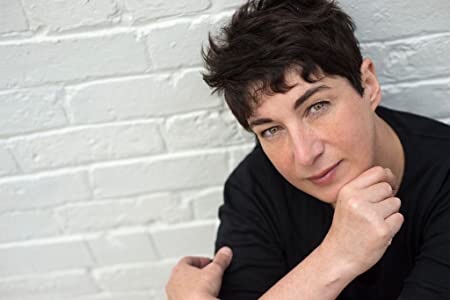
Joanne Harris is the internationally renowned and award-winning author of eighteen novels, plus novellas, scripts, short stories, libretti, lyrics, articles, and most recently, a self-help book for writers, TEN THINGS ABOUT WRITING. In 2000, her 1999 novel CHOCOLAT was adapted to the screen, starring Juliette Binoche and Johnny Depp. She is an honorary Fellow of St Catharine’s College, Cambridge, and is Chair of the Society of Authors.

Her hobbies are listed in Who’s Who as ‘mooching, lounging, strutting, strumming, priest-baiting and quiet subversion’. She is active on Twitter, where she writes stories and gives writing tips as @joannechocolat; she posts weekly writing seminars on YouTube; she performs in a live music and storytelling show with the #Storytime Band; and she works from a shed in her garden at her home in Yorkshire. 

She also has a form of synaesthesia which enables her to smell colours. Red, she says, smells of chocolate. Weirdly, I also have synaesthesia and at this time of year it’s very active, with every bunch of yellow daffodils, smelling or even tasting of lemon sherbet!

Posted in Sunday Spotlight

Summer 2022. My Books To Look Out For.

When I look at the covers above and realise these are just the summer releases I’m excited about I’m startled by what a great year this is for books so far. Some of them I’ve already read thanks to NetGalley and some very kind publishers, some are still on my TBR (I’ll be honest and admit I’m always behind) and others are pre-ordered and I’ll be reading them at the same time as everyone else. I also pre-order some when I’ve had a proof or NetGalley book, because some books are for keeps. Yes, I know I have a book problem. I’m going to give you a little taster of each one and why I’m so excited about it. If it means adding books to your TBR or wishlist I can’t apologise because I enjoy sharing the book love!

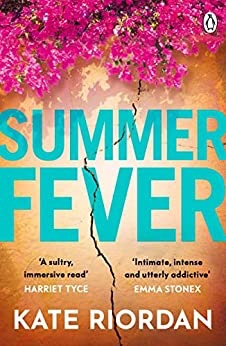
I really can vouch for this book because I’ve already experienced how tense and gripping it is. Nick and Laura have fulfilled their dream, owning an Italian villa as a holiday destination and trying to paper over the cracks in their marriage. When their first guests Madison and Bastian arrive, neither is who they claim to be. As the heat rises, the tension is unbearable. Could there be a betrayal before the summer ends? Just like her previous novel, this is full of atmosphere, secrets and a sizzling sexual tension. The perfect holiday read.

Out now from Penguin Michael Joseph

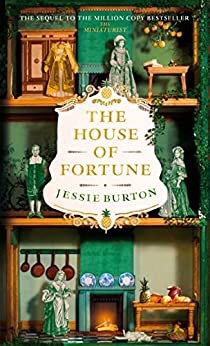
Oh my goodness I’ve been waiting for this. I am a huge fan of Jessie Burton and The Miniaturist is one of my all time favourite novels. I went to see Jessie at a Q and A in Lincoln and she was asked about the unanswered questions of the novel – mainly who was the Miniaturist and what was her purpose? What we do know is we are returning to Amsterdam and the same house, where Thea Brandt is reaching her 18th birthday. The family’s fortunes are in decline, with her father Otto and Aunt Nella arguing and struggling to pay the bills. When an invite arrives for a society ball, might their fortunes be turning or, as Nella wonders, could it be the miniaturist isn’t finished with her yet? I truly can’t wait.

Out7th July from Picador

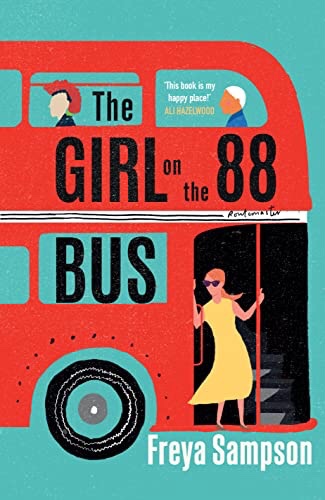
I was recently sent the cover reveal for this new book from Freya Sampson and it looks like another feel-good novel to look forward to. Libby Nicholls reaches London, broken-hearted and with life in tatters. Elderly pensioner Frank is the first man she meets on the bus. He tells her that in 1962 he met a red-haired girl on the number 88 bus. They planned a date at the National Gallery, but Frank lost the ticket with her number written on it. For sixty years, he’s ridden the same bus trying to find her. Libby gains the help of an unlikely companion and makes it her mission to help Frank’s search. As she begins to open her guarded heart to new connections, Libby’s tightly controlled world expands. But with Frank’s dementia progressing quickly, their chance of finding the girl on the number 88 bus is slipping away. Libby wants Frank to see his love one last time and her quest is teaching her to embrace life and love before it’s too late. I just know tears will be jerked and I will be uplifted by this lovely story.

Out 9th June from Zaffre Books

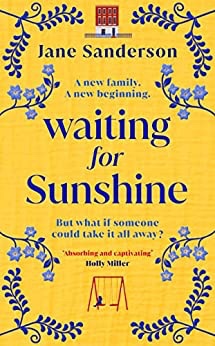
I truly loved Jane’s first novel MixTape so was given the chance to read this one early and what a thoughtful, emotional and compassionate read it is. As someone who can’t have children it really touched me personally. Chrissie has always wanted to be a mother. After months of trying to adopt, she and her husband Stuart finally get the news that a little girl named Sunshine is waiting for them.

Abandoned at a young age, the child comes to them without a family history, and it feels like a fresh start for all of them. But when fragments from Sunshine’s previous life start to intrude on her new one, the little girl’s mysterious past quickly becomes Chrissie’s greatest fear…

Published by 21st July 2022 by Bantam Press

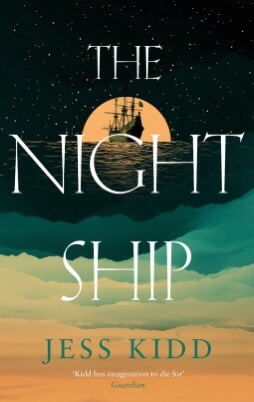
1628. Embarking on a journey in search of her father, a young girl called Mayken boards the Batavia, the most impressive sea vessel of the age. During the long voyage, this curious and resourceful child must find her place in the ship’s busy world, and she soon uncovers shadowy secrets above and below deck. As tensions spiral, the fate of the ship and all on board becomes increasingly uncertain. 1989. Gil, a boy mourning the death of his mother, is placed in the care of his irritable and reclusive grandfather. Their home is a shack on a tiny fishing island off the Australian coast, notable only for its reefs and wrecked boats. This is no place for a child struggling with a dark past and Gil’s actions soon get him noticed by the wrong people. The Night Ship is an enthralling tale of human brutality, providence and friendship, and of two children, hundreds of years apart, whose fates are inextricably bound together.

Published by Canongate Books 4th August.

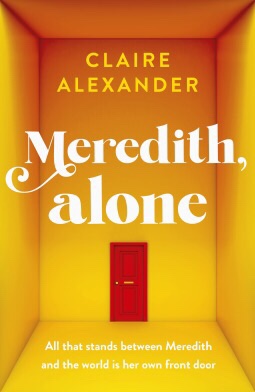
Meredith Maggs hasn’t left her house in 1,214 days.But she insists she isn’t alone.

She has her cat, Fred. Her friend Sadie visits when she can. There’s her online support group, StrengthInNumbers. She has her jigsaws, favourite recipes, her beloved Emily Dickinson, the internet, the Tesco delivery man and her treacherous memories for company.

But something’s about to change.

First, new friends Tom and Celeste burst into her life, followed by an estranged sister she hasn’t spoken to in years, and suddenly her carefully curated home is no longer a safe place to hide.

Whether Meredith likes it or not, the world is coming to her door. This sounds like an emotional but uplifting and hopeful read.

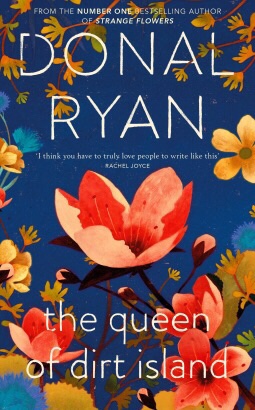
The Aylward women are mad about each other, but you wouldn’t always think it. You’d have to know them to know – in spite of what the neighbours might say about raised voices and dramatic scenes – that their house is a place of peace, filled with love, a refuge from the sadness and cruelty of the world. 

Their story begins at an end and ends at a beginning. It’s a story of terrible betrayals and fierce loyalties, of isolation and togetherness, of transgression, forgiveness, desire, and love. About all the things family can be and all the things it sometimes isn’t. More than anything, it is an uplifting celebration of fierce, loyal love and the powerful stories that last generations. This grabbed me with its gorgeous cover and the description of this family that sounds so much like my own.

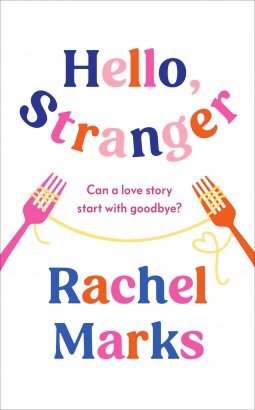
From their very first date, Jamie and Lucy know they’ve met THE ONE. They’re as different as night and day. Jamie’s a home bird, while Lucy’s happiest on holiday. He has a place for everything – she can never find her keys.

Yet, somehow, they make each other happier than they ever thought possible.
So why does their story start with them saying ‘goodbye’?
And does this really have to be the end. . . ?
Relatable, romantic and heartbreakingly real, HELLO, STRANGER proves that the best love stories often have the most unexpected endings. I love this author’s relatable characters and subtle humour about life. Published by Michael Joseph 18th August

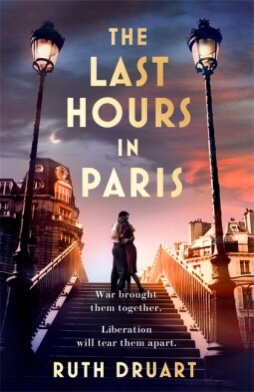
Paris 1944. Elise Chevalier knows what it is to love…and to hate. Her fiancé, a young French soldier, was killed by the German army at the Maginot Line. Living amongst the enemy Elise must keep her rage buried deep within. Sebastian Kleinhaus no longer recognises himself. After four years spent fighting a war he doesn’t believe in, wearing a uniform he despises, he longs for a way out. For something, someone, to be his salvation.

Brittany 1963. Reaching for the suitcase under her mother’s bed, eighteen-year-old Josephine Chevalier uncovers a secret that shakes her to the core. Determined to find the truth, she travels to Paris where she discovers the story of a dangerous love that grew as a city fought for its freedom. Of the last stolen hours before the first light of liberation. And of a betrayal so deep that it would irrevocably change the course of two young lives life for ever.

Published 7th July by Headline Review

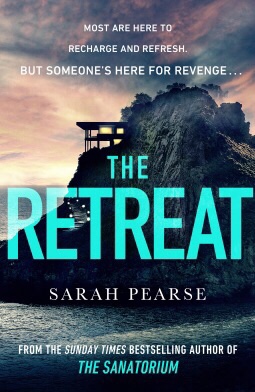
This is a warning for all our guests at the wellness retreat.

A woman’s body has been found at the bottom of the cliff beneath the yoga pavilion. We believe her death was a tragic accident, though DS Elin Warner has arrived on the island to investigate. A storm has been forecast, but do not panic. Stick together and please ignore any rumours you might have heard about the island and its history. As soon as the weather clears, we will arrange boats to take you back to the mainland.

In the meantime, we hope you enjoy your stay.

Published 21st July by Bantam Press
___________________________________

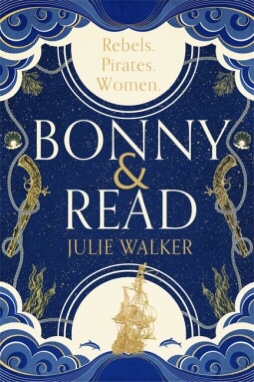
Rebels. Pirates. Women.

Caribbean, 1720. Two extraordinary women are on the run – from their pasts, from the British Navy and the threat of execution, and from the destiny that fate has written for them. Plantation owner’s daughter, runaway wife, pirate – Anne Bonny has forged her own story in a man’s world. But when she is involved in the capture of a British merchant ship, she is amazed to find another woman amongst the crew, with a history as unconventional as her own. Dressed as a boy from childhood, Mary Read has been a soldier, a sailor, a widow – but never a woman in charge of her own destiny.
As their exhilarating, tumultuous exploits find fame, the ballad of Bonny and Read is sung from shore to shore – but when you swim against the tide of history, freedom is a dangerous thing…

Published 3rd August by Hodder & Stoughton.


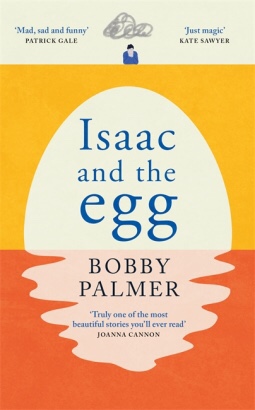
A young man walks into the woods on the worst morning of his life and finds something there that will change everything.

It’s a tale that might seem familiar. But how it speaks to you will depend on how you’ve lived until now.

Sometimes, to get out of the woods, you have to go into them. Isaac and the Egg is one of the most hopeful, honest and wildly imaginative novels you will ever read.

Published 18th August by Macmillan Review.


Ten years on from the events of The Miseducation of Evie Epworth, Evie is settled in London and working as a production assistant for the BBC. She has everything she ever dreamed of (a career, a leatherette briefcase, an Ossie Clark poncho) but, following an unfortunate incident involving a Hornsea Pottery mug and Princess Anne, she finds herself having to rethink her future. What can she do? Is she too old to do it? And will it involve cork-soled sandals?

As if this isn’t complicated enough, her disastrous love life leaves her worrying that she may be destined for eternal spinsterdom, concerned, as she is, that ‘even Paul had married Linda by the time he was 26’. Through it all, Evie is left wondering whether a 60s miseducation really is the best preparation to glide into womanhood and face the new challenges (strikes, power cuts, Edward Heath’s teeth) thrown up by the growing pains of the 70s.

With the help of friends, both old and new, she might just find a way through her messy 20s and finally discover who exactly she is meant to be…

Published by Scribner U.K. 21st July.

There are two men in my life. But this is not a love triangle.

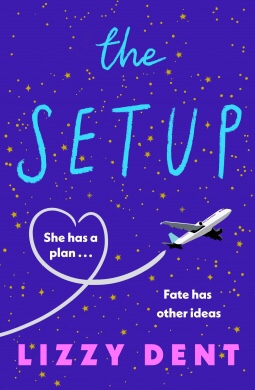
Mara Williams reads her horoscope every day – but she wasn’t expecting to be in a whole other country when destiny finally found her. Just as a fortune teller reveals that her true love is about to arrive, a gorgeous stranger literally walks into her life. And now Mara is determined to bring them together again . . . Surely even fate needs a nudge in the right direction sometimes?

But while Mara is getting ready for ‘the one’, the universe intervenes. Her new flatmate Ash is funny, and kind, and sexy as hell . . . There was no predicting this: it’s as if her destiny just arrived on her doorstep.

So will Mara put her destiny in fate’s hands – or finally trust herself to reach for the stars?

Published by Penguin 7th June

2022. Stained-glass expert Rhoda Sullivan is called to Telton Hall to examine a window designed by an Italian prisoner of war during WW2. It should be a quick job but when she and the owner’s son, Nate Hartwell, discover a body underneath one of the flagstones in the chapel, Rhoda cannot let the mystery go. She knows what it’s like to miss someone who is missing – her twin brother disappeared just before their eighteenth birthday, and she has been looking for him for nearly a decade. But when the threats start, it’s clear someone doesn’t want the secrets of Telton Hall to come to light.

1945. Alice Renshaw is in trouble. Pregnant and alone she is sent away to hide her shame and taken in by Louise Hartwell who has a farm in Somerset worked by prisoners of war. As the weeks pass, Alice finds solace in new friendships, but not everyone at Telton Hall is happy about it. And even though peace has been declared in Europe, the war at home is only just beginning…

Published by Aria 21st July

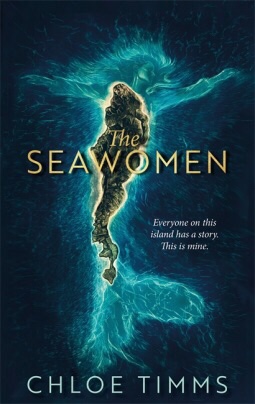
Esta has known nothing but Eden’s Isle her whole life. After a fire left her orphaned and badly scarred, Esta was raised by her grandmother in a deeply religious society who cut itself off from the mainland in the name of salvation. Here, fear rules: fear of damnation, fear of the outside world and fear of what lurks beneath the water – a corrupting evil the islanders call the Seawomen. But Esta wants more than a life where touching the water risks corruption, where her every move is watched and women are controlled in every aspect of their lives. Married off, the women of the island must conceive a child within their appointed motheryear or be marked as cursed and cast into the sea as a sacrifice in an act called the Untethering.

When Esta witnesses a woman Untethered she sees a future to fear. Her fate awaits, a loveless marriage, her motheryear declared. And after a brief taste of freedom, the insular world Esta knows begins to unravel…
I’m currently reading this and finding it deeply unsettling.

Published by Hodder Studio 14th June.


Maudie, why are all the best characters men?’
Maudie closes the book with a clllump. ‘We haven’t read all the books yet, Miss Cristabel. I can’t believe that every story is the same’


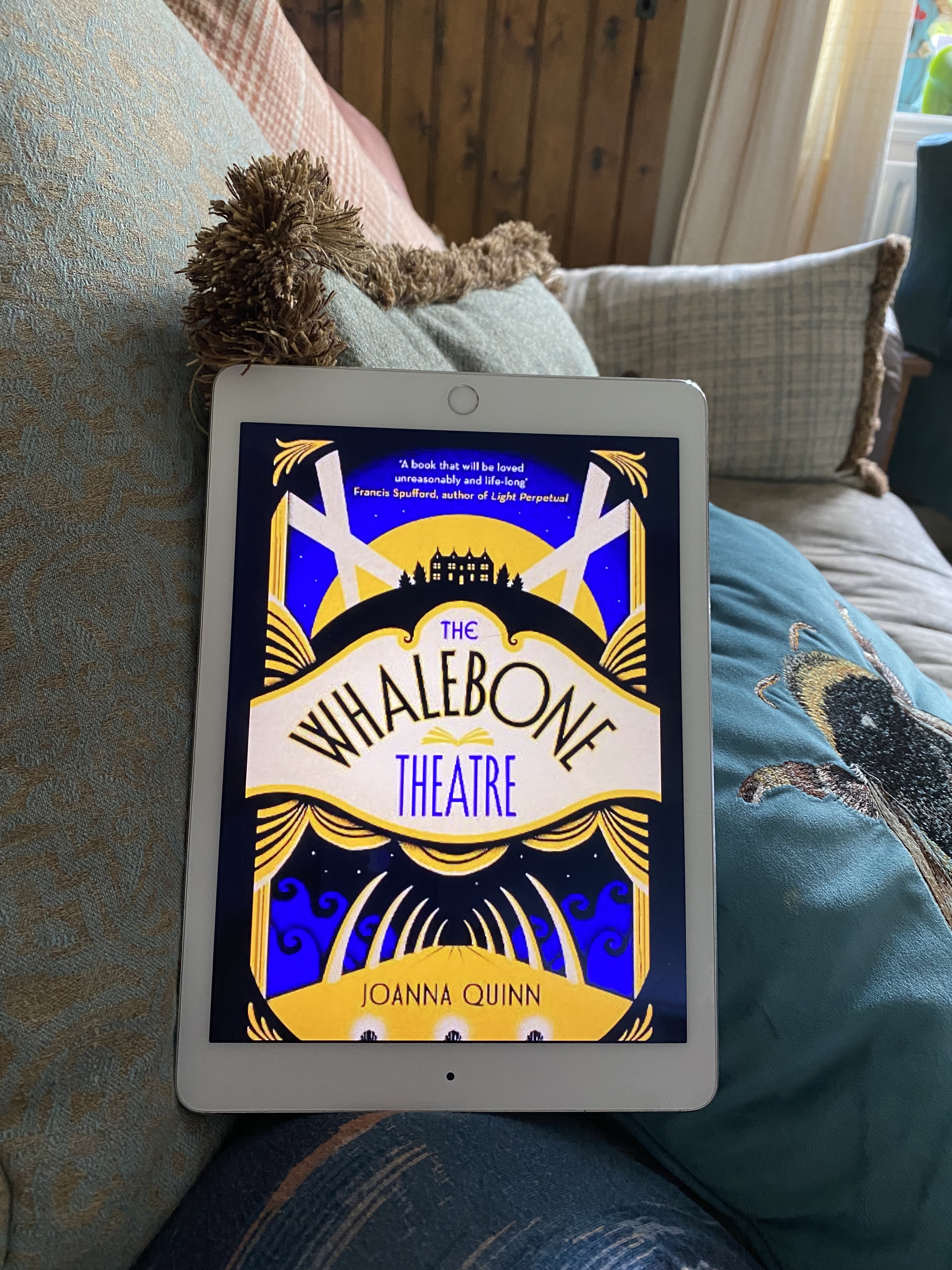
Cristabel Seagrave has always wanted her life to be a story, but there are no girls in the books in her dusty family library. For an unwanted orphan who grows into an unmarriageable young woman, there is no place at all for her in a traditional English manor.But from the day that a whale washes up on the beach at the Chilcombe estate in Dorset, and twelve-year-old Cristabel plants her flag and claims it as her own, she is determined to do things differently.

With her step-parents blithely distracted by their endless party guests, Cristabel and her siblings, Flossie and Digby, scratch together an education from the plays they read in their freezing attic, drunken conversations eavesdropped through oak-panelled doors, and the esoteric lessons of Maudie their maid. But as the children grow to adulthood and war approaches, jolting their lives on to very different tracks, it becomes clear that the roles they are expected to play are no longer those they want. As they find themselves drawn into the conflict, they must each find a way to write their own story…

Published by Fig Tree 9th June 2022.


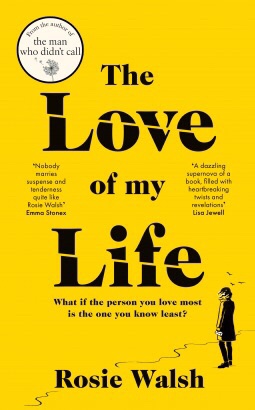
I have held you every night for ten years and I didn’t even know your name. We have a child together. A dog, a house.

Who are you?


Emma loves her husband Leo and their young daughter Ruby: she’d do anything for them. But almost everything she’s told them about herself is a lie.

And she might just have got away with it, if it weren’t for her husband’s job. Leo is an obituary writer and Emma is a well-known marine biologist, so, when she suffers a serious illness, Leo copes by doing what he knows best – reading and writing about her life. But as he starts to unravel her past, he discovers the woman he loves doesn’t really exist. Even her name is fictitious.

When the very darkest moments of Emma’s past life finally emerge, she must somehow prove to Leo that she really is the woman he always thought she was . . .

But first, she must tell him about the love of her other life.

Published by Mantle 23rd June 2022.

I’m so happy to have such an exciting and full summer of reading ahead of me, and this is just the books I’ve been expecting. I’m sure there will be many more that grab me by surprise. I’m hoping to avoid the siren call of blog tours so I have some free reading time. I’ve treated myself to a brand new garden parasol in hot pink so I’m imagining myself lounging around outdoors a lot, whiling away my staycation in the best way I know how. Happy Summer Reading! ❤️📚

Posted in Sunday Spotlight

Valentine’s Day! My Literary Crushes

I thought I’d celebrate Valentine’s Day by talking about our literary crushes. Let’s be honest, we all have them. Those literary heroes that draw us in and make us swoon. From a young age there have been literary heroes that have stuck in my mind, and probably informed some ill-advised dating choices over the years. Those formative literary heroes who made my adolescent heart flutter, have changed a lot as years have gone by. Perhaps because what I’ve learned through my real life relationships has started to change the characteristics that attract me in a hero. Those young, dashing, tortured souls don’t seem quite so attractive when you’ve encountered a few in real life. Of course, literary adaptations on film or TV often influence these crushes greatly – remember the endless banging on about a wet Colin Firth striding across the Derbyshire countryside? My mum’s expectation of that scene had obviously been honed by 1970’s literary adaptations like Women in Love where Oliver Reed and Alan Bates famously wrestled naked in front of a roaring fire. She expected Darcy to be wearing less clothes and couldn’t see what all the fuss was about. Anyway, I much preferred a slightly dishevelled Matthew McFadyen Mr Darcy, striding across a field at dawn. However, between the book covers, Mr Darcy simply doesn’t do it for me. Similarly, Mr Thornton from North and South was incredibly sexy when portrayed by the lovely Richard Armitage, but simply fails to light my fire when reading the book. So, with some trepidation, here are my reading crushes. Let me know yours. There’s no judgement here. ❤️❤️

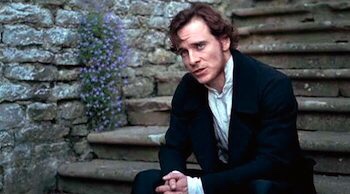
Mr Rochester – Jane Eyre

Michael Fassbender as Mr Rochester

“To women who please me only by their faces, I am the very devil when I find out they have neither souls nor hearts…but to the clear eye and eloquent tongue, to the soul made of fire, and the character that bends but does not break—at once supple and stable, tractable and consistent—I am every tender and true.”

Considering they barely left the surroundings of their home at Haworth, those Brontë girls knew how to write the brooding, Byronic, hero. Heathcliff is probably the best example, but I read Wuthering Heights again when I was older, and he was a bit too tortured soul for my liking, plus he hangs a woman’s dog for goodness sake! I first read Jane Eyre when I was ten, in my last year of primary school, and I’ve read it every couple of years since. When younger, I loved the slow burn of their romance. From the moment she saves him from burning in his bed, it’s clear there’s something about Jane that attracts him. For him, she seems like a cool drink on a hot day. Somewhere he can sit and find peace, and let’s face it, he has an awful lot of drama to escape from. Of course when I was young I couldn’t see the feminist or sexual implications of the novel – Bertha upstairs was a bit of a monster to me. She was the gothic, scary bit so I didn’t really think about her as a person or what Rochester had done to her, until I was in my teens. I liked his dark brooding character and when he appears out of the fog on his horse it is still a swoon moment for me. I think I also enjoyed that he loves the plain, poor governess rather than the decorative, but awful Blanche Ingram. I loved their conversations and the way he seems to enjoy that fiery part of Jane. In my teens I used to think she was mad for leaving Rochester, but later I could see why she left and sometimes wondered if it wouldn’t have been better for her to keep her fortune and take off on a trip across the world. At least when she does return to Rochester it’s as an equal, with her own fortune and experience

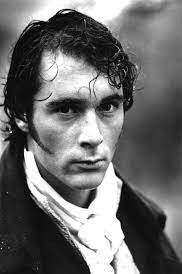
Willoughby – Sense and Sensibility

Greg Wise as Willoughby

In every meeting of the kind Willoughby was included; and the ease and familiarity which naturally attended these parties were exactly calculated to give increasing intimacy to his acquaintance with the Dashwoods, to afford him opportunity of witnessing the excellencies of Marianne, of marking his animated admiration of her, and of receiving, in her behaviour to himself, the most pointed assurance of her affection.

We’re still in bad boy territory here, with the ultimate cad who breaks Marianne’s heart and reputation in Sense and Sensibility. I have read the book, but I will admit that the Greg Wise version does play a large part in this choice. I loved the romantic way that Willoughby finds Marianne, having sprained her ankle on a hillside. He simply picks her up and carries her home. Factor in some rain, and Greg Wise being all dark and handsome, mastering a huge horse and a literary crush was born. No wonder Emma Thompson wrote in her diary on that particular day that Greg was setting all hearts fluttering as he was drippng wet an

a he loves Marianne, but in need of money he chooses status and an heiress above his heart. There’s no excuse for how he behaves, he’s an absolute rat, but that rush of chemistry can’t be denied. Would we have done any different to Marianne? In the film, when he rides to the hill in order to watch Marianne and Colonel Brandon leaving the church after their wedding, I think he’s truly sad and a little jealous.

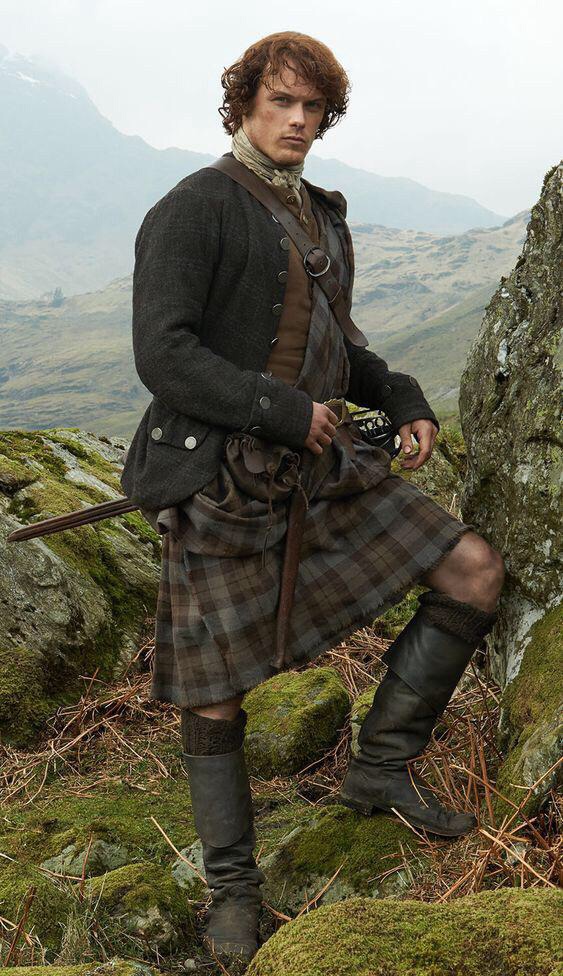
Jamie Fraser – Outlander.

Sam Heughan as Jamie Fraser

“I will find you,” he whispered in my ear. “I promise. If I must endure two hundred years of purgatory, two hundred years without you–then that is my punishment, which I have earned for my crimes. For I have lied, and killed, and stolen; betrayed and broken trust. But there is the one thing that shall lie in the balance. When I shall stand before God, I shall have one thing to say, to weigh against the rest. Lord, ye gave me a rare woman, and God! I loved her well.”

I couldn’t resist the giant photo of Jamie Fraser! I had barely started reading the Outlander series when the TV series started so now the literary character is always going to be linked with the lovely Sam Heughan. He’s a great choice for the character and the chemistry between him and Catriona Balfe as Claire is perfect. What I love about Jamie is the way Diana Gabaldon has written him and it’s something that spills over into the TV series. We as readers are firmly with Claire and everything Jamie does is viewed through the female gaze. Their wedding night sequence is good example. We experience him through Claire and it’s his body we’re undressing and enjoying. I think the allure of Jamie is that heady mix of tough outdoors warrior, with a vulnerability underneath. There’s the way he respects her ideas and opinions, unheard of in most men of Claire’s time, never mind the 18th Century. It’s also his deep loyalty to Claire, not just across the few years they’re together but all those years inbetween when they’re in a different time from each other. There’s nothing more romantic than that.

Cormoran Strike – The Cuckoo’s Calling Series

Tom Burke as Cormoran Strike

‘My best mate . . . ” For a split second he wondered whether he was going to say it, but the whisky had lifted the guard he usually kept upon himself: why not say it, why not let go? ‘. . . is you.”

Robin was so amazed, she couldn’t speak. Never, in four years, had Strike come close to telling her what she was to him. Fondness had had to be deduced from offhand comments, small kindnesses, awkward silences or gestures forced from him under stress. She’d only once before felt as she did now, and the unexpected gift that had engendered the feeling had been a sapphire and diamond ring, which she’d left behind when she walked out on the man who’d given it to her.She wanted to make some kind of return, but for a moment or two, her throat felt too constricted. ‘I . . . well, the feeling’s mutual,” she said, trying not to sound too happy.”

Finally, I actually fancy someone in this century! From the moment I picked up a dog eared copy of The Cuckoo’s Calling in a charity shop I was hooked on private investigator Cormoran Strike. Yes, there’s the old tortured soul aspect to his personality, but it’s not just the high pitched warning alarm of a damaged man that calls out to me. I remember how well the author described him having to care for the stump left when his leg was amputated. It felt realistic to me, because walking and standing a lot was painful for him. If he is tailing someone he would ache and his leg might have chafed against his prosthetic. I appreciated a hero with a disability, his heroism magnified by the fact he was injured in action. He’s a big man, broad and tall, so much so that you’d feel safe with him. He may be vulnerable, but he can handle himself if necessary and that’s a heady combination. He’s a great listener, full of empathy for people in a predicament and for those close to him. He’s deeply loyal to those who he can trust, like his business partner Robin. He’s been messed up by women, from his mother to his long term girlfriend Charlotte. However, he’s a very private about his relationships and seems to have his own code of honour which is very attractive.

Captain Wentworth – Persuasion

Ciaran Hinds as Captain Wentworth

“I can listen no longer in silence. I must speak to you by such means as are within my reach. You pierce my soul. I am half agony, half hope. Tell me not that I am too late, that such precious feelings are gone for ever. I offer myself to you again with a heart even more your own than when you almost broke it, eight years and a half ago. Dare not say that man forgets sooner than woman, that his love has an earlier death. I have loved none but you.”

Are there any more romantic words in literature? Wentworth’s letter is, for me, the most romantic I’ve read. I’d go as far as saying it’s the best declaration of love in the classics. It’s all the more wonderful because Anne is so unassuming and modest. She has spent months with Wentworth back in her circle, loving him from afar, but never presuming he might feel the same way. In fact she’s so sure he’s moved on from the feelings he had for her when they were younger, she thinks he’s in love with Louisa Musgrove. She has so little confidence that she misses the care and kindness he shows her. After a long walk he makes sure it is Anne who gets the seat on the carriage because he’s thinking of her comfort. She thinks he wants to be alone with Louisa or that he thinks she needs to sit as she’s older. I love Wentworth’s constancy and the passion he has been hiding under that polite exterior. The kiss that follows is wonderful, because we’ve been waiting for it so long.

Jackson Brodie – Case Histories Series

Jason Isaacs as Jackson Brodie


“He was officially a lunatic, she decided. Strangely, that didn’t make him less attractive.”

What is it about Kate Atkinson’s Jackson Brodie? He’s a slightly rumpled, middle-aged, private investigator. He’s been in the military and the police so is probably institutionalised. In fact he’s a bit of a hopeless case, often taking on the lame ducks he finds along the way, whether they’re human or canine. Marriage doesn’t seem to suit him, but he is a very loyal friend. He’s quite grumpy and set in his ways. I’m not really selling him well I know, but there is that indefinable something that’s attractive. Rather like Cormoran Strike, there’s that sense that he’s an honourable man. He’s old-fashioned and would want to make sure you got home ok. In fact he’s one of those men who would walk on the outside on the pavement so you’re safe, away from the traffic and don’t get splashed. I imagine he looks like life has knocked him around a bit, but if someone needs help he would still be the first one there. There are times when he does the right thing, not by the book, but by his own moral code and I love that.

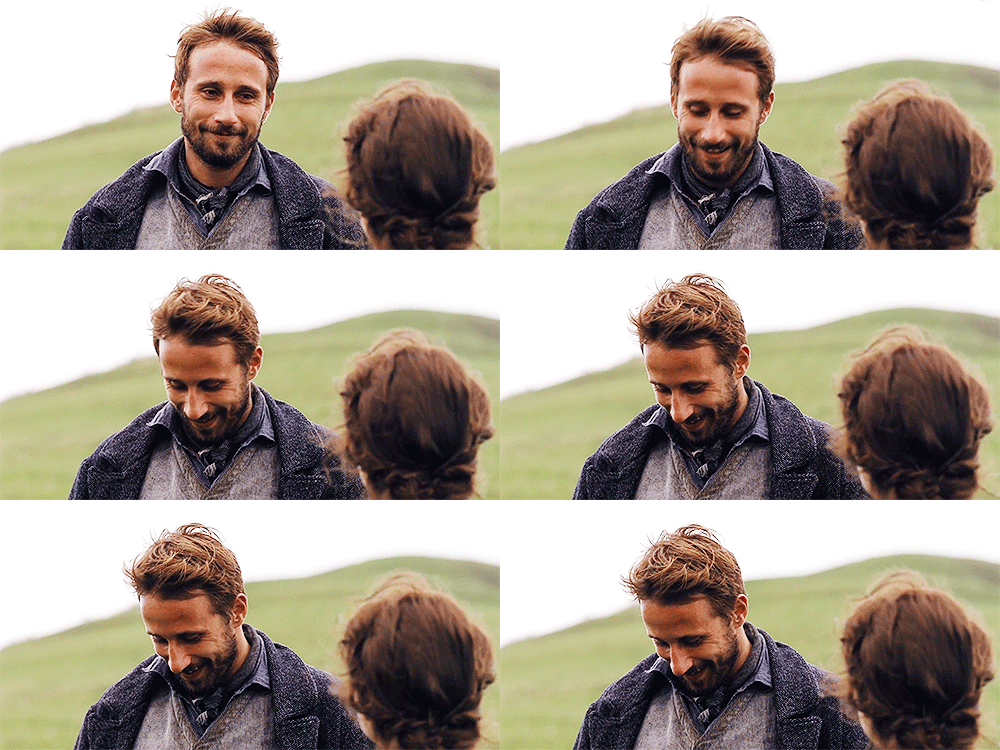
Gabriel Oak – Far From The Madding Crowd.

Matthias Schoenaerts as Gabriel Oak

“And at home by the fire, whenever you look up there I shall be— and whenever I look up, there will be you.”

I haven’t put my crushes in any sort of order, but I’ve definitely saved the best till last. If you ask me, for most of the book, Bathsheba Everdene needs her head examining. Near the beginning of the book, Gabriel visits her. They’ve been neighbours and he comes striding across the fields with a lamb under his arm. It’s an orphan and he thought she might like to feed and take care of him. He then proposes to her and she refuses! If a man brought me a lamb I’d be beside myself with excitement and I’d be saying yes before he’d finished his sentence. How can you turn down a man who brings you your very own lamb? However, their fates are intertwined. After a terrible tragedy where he loses his whole flock, Gabriel is forced to look for a job. It turns out that Bathsheba has become an heiress, inheriting a farm but luckily needing someone to manage it for her.

Gabriel proves himself to be a loyal employee and is constant even when she marries the ridiculous Sergeant Troy. Troy gambles her money and one night gets the whole workforce dangerously drunk. They are celebrating the harvest, but the hay stacks aren’t covered and a storm blows up. Bathsheba finds Gabriel desperately trying to save he harvest for her, while Troy is passed out cold in the barn. Bathsheba grows up a lot in the course of the novel and she starts to see and value the qualities Gabriel has. She has previously overlooked his steadfast loyalty, how hard he will work for her and what an incredible friend he can be. He listens to her and when she is silly enough to lead on Mr Boldwood, an older gentleman who owns the neighbouring land, he speaks to her and warns her that it isn’t fair. Of course, this being Hardy, this flirtation ends in tragedy. Yet Gabriel is still there and when he proposes a second time she’s finally ready for the love he’s offering.

Happy Valentine’s Day! I hope you have a literary crush you enjoy ❤️❤️

Posted in Sunday Spotlight

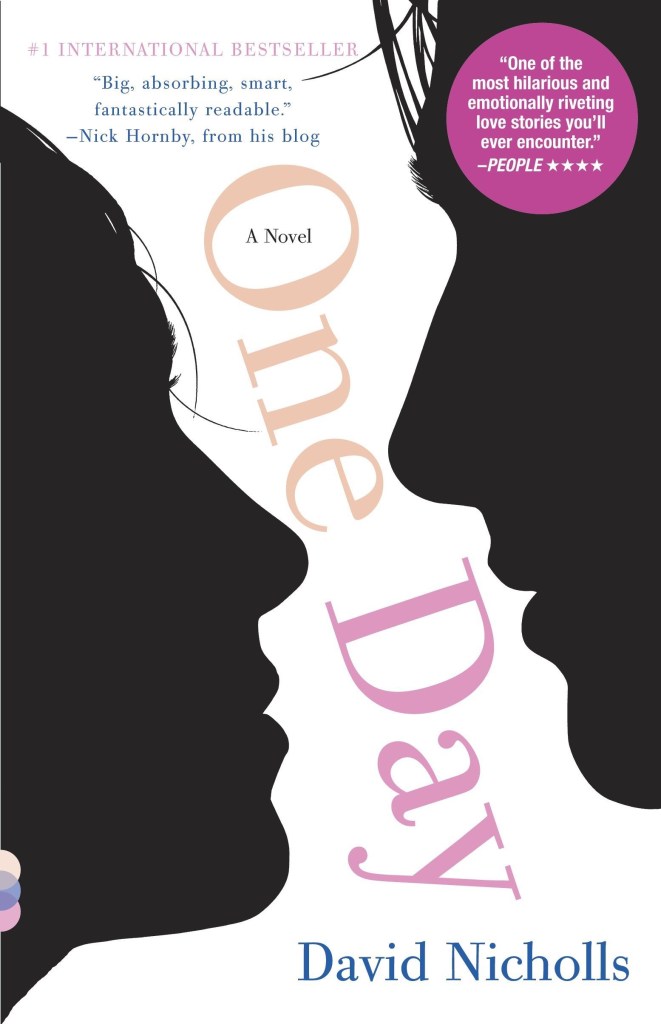
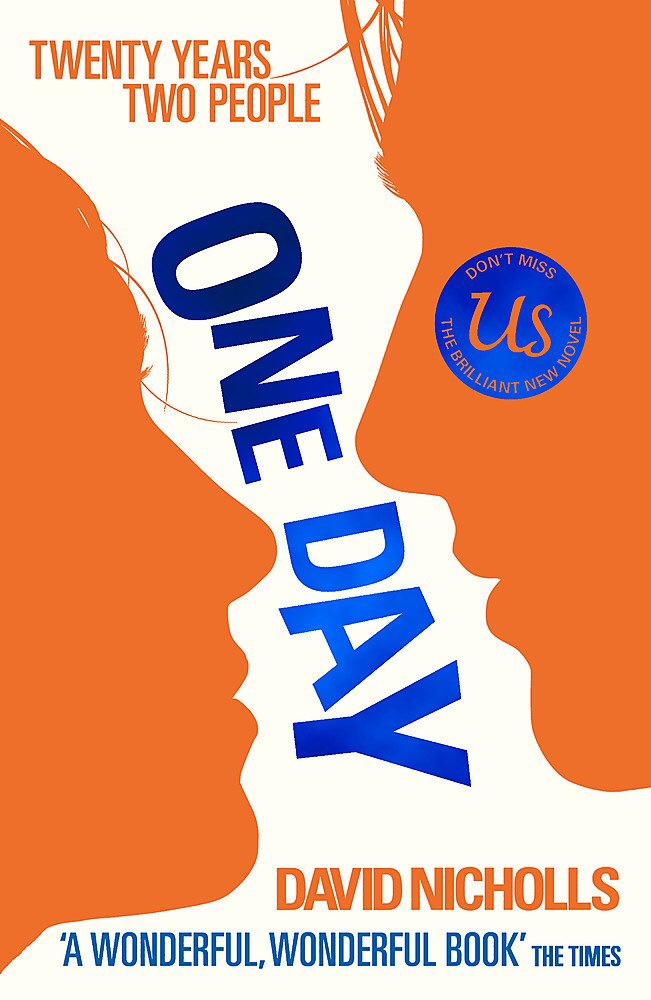
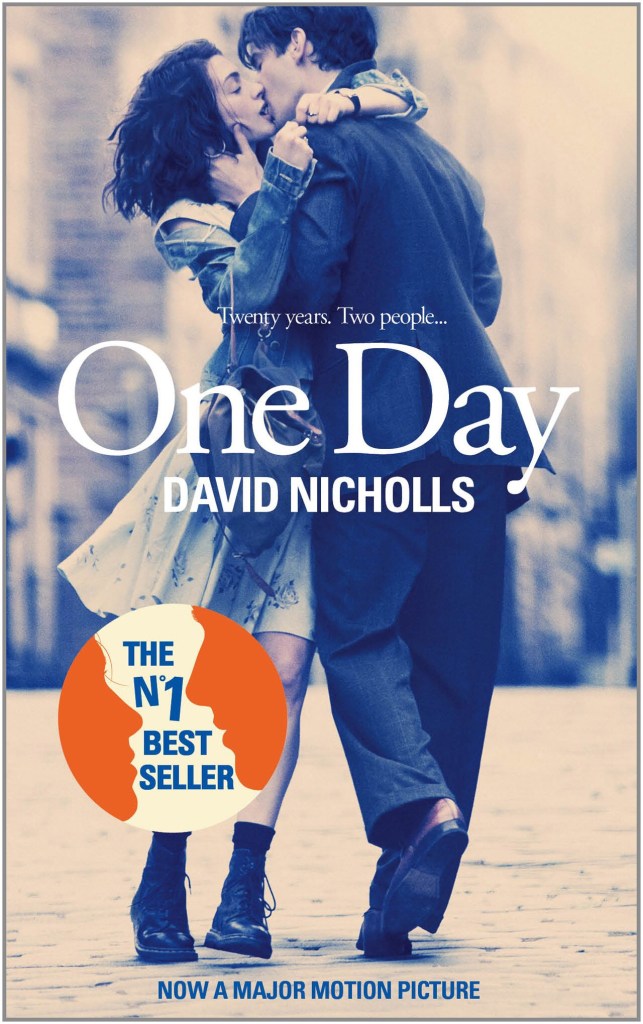
Sunday Spotlight! Romance, Love and One Day by David Nicholls

I wouldn’t say I’m a fan of romantic novels on the whole, not as a genre anyway. However, I’m also that annoying person who writes outside the boxes on forms, resists the Census and ticks ‘rather not say’ if there’s an option to do so. My objection is to categories and putting things in boxes. I don’t object to a love story, in fact some of my favourite books are love stories. It’s just I don’t like it when love stories are packaged as romantic fiction or women’s fiction, given candy pink or baby blue covers, and characters who have little depth or motivation beyond the ‘meet cute’. I understand that, since Shakespeare, there’s been a set formula to the love story, but this can be taken to extremes. I actively hate simple love stories with manufactured obstacles and I definitely hated Fifty Shades of Grey (which was in no way a love story, but marketed as one). Perhaps my problem isn’t with love, but with romance; a much more contrived hearts, flowers and happy endings sort of place.

I like real obstacles: the terrible coincidence in Rosie Walsh’s The Man Who Didn’t Call; the limits posed by Will’s attitude to his disability in Me Before You; the mad wife in the attic in Jane Eyre; the girlish mistake of refusing a proposal in Persuasion. My favourite romcom is When Harry Met Sally so I do enjoy a ‘friends to lovers’ scenario, but it’s also witty with snappy dialogue and Billy Crystal making a woman miaow in bed. I love stories that are based within a historical or time-slip setting like the Outlander series of novels by Diana Gabaldon. I also like it when characters are so real it’s painful like Sally Rooney’s awkward teenage fumbling in Ordinary People. The characters must have depth, genuine problems or some meaty psychological issues to get my teeth into. I enjoy love stories set in other cultures or those that could be written as forbidden. I loved the viewpoint of a man coming to terms with his homosexuality in A Place Called Winter by Patrick Gale and the transgressive love affair of D.H. Lawrence’s Lady Chatterley’s Lover. I enjoyed how love blossomed from a marriage of convenience during the Windrush era in Andrea Levy’s Small Island. I also loved the bittersweet tale of love gone wrong in David Nicholls’s other novel Us where our protagonist’s marriage breakdown comes into focus on a trip through Europe, interspersed beautifully with scenes from when they fall in love.

Several years ago, like thousands of others, I was blindsided by One Day. There was a time when you couldn’t move on public transport without knocking into someone reading this book. It’s a simple premise. Dexter and Emma were at Edinburgh University and as they graduate they spend the day together and forge a friendship, they climb Arthur’s Seat in their cap and gowns and talk about what they want for their futures. Dex would like to work in television and Emma would like to be a writer. The book then follows their story on the same day each year, sometimes together and sometimes apart, we see how life has changed them and the circumstances they find themselves in. Of course we know that Emma and Dex should be together, but will they ever find the right time or the courage to try?

I’ll be honest, at first I didn’t feel ‘grabbed’ by their story. My interest was mainly in their individual lives, especially considering that the book is set so that they’re both a similar age to me. I recognised the era, the reference points and also the struggles of life as they go through them. I thought Dex was a bit of a dick to be honest. He’s a player, egotistical and at times downright unpleasant. I really bonded with Emma though. A northern girl, she has a brand of kindness and an ability to see through bullshit that I liked. I saw some of me in her and I have always wanted to be a writer, but also went into teacher training (and didn’t finish). She clearly loves Dex, but will he ever see her? Mostly he sees her as a consolation prize, a shoulder to cry on, an advice giver and sometimes the great big kick up the arse he deserves. I can honestly say I hoped they never got together at several points in the book, because I didn’t think he deserved her. There’s a point where Emma has gone through a really tough time. She breaks off her engagement and goes through moving out and separating from her fiancé emotionally and financially. She goes out to Paris for a while and starts to write a children’s book. She has her hair cut short. She makes friends. I loved this Emma and I thought she’s built a new life from the ground up with no help from anyone. I wanted her to stay there.

As I know all too well, our love lives never simple. Often, where the decisions to be together seem very easy to make, it’s the right person. It’s reciprocal and committed. When we’re younger we’re learning about who we are in a relationship. We don’t know how much to compromise and how much to stick firmly to who we are or what we want for ourselves. We can get tangled up in relationships that are no good for us, are abusive, are with people who cheat, or people who put up obstacles and change their minds. We love people who aren’t ready, or who are too busy adding notches to the bed post. We can be so unsure of ourselves in our teenage years (and beyond) that we accept relationships that aren’t good for us and allow behaviour that’s demeaning or grinds down our self-worth. It’s also hard to love someone who doesn’t love you or who claims they can’t be with you. That great line from Sex and the City springs to mind – ‘he’s just not that into you’ – because when they are into you, they move mountains to be there. I felt that Dex was scared of real love and preferred empty encounters with beautiful women. Emma doesn’t value herself enough to set boundaries or ask for the love she deserves.

Everybody who knows the book will know the line I’m talking about. That one line I read and spontaneously burst into tears. That rarely happens with a book, but it did here. That’s when I knew this book had got me. My emotions were so invested in these characters that I had such a spontaneous response. I’m not sure how David Nicholls managed it, but I’ve spoken to other people who were similarly emotional. I think it’s the way he writes these two characters, they’re real and flawed. They struggle with life. We go through so many highs and lows with them, because even though we meet up with them on one day, we’re drawn in to how they got where they are. They’re not perfect either, far from it. Nichols weaves in addiction problems, affairs, career disasters and the difficulties of being a parent. There’s also huge loss to, and how the characters deal with these setbacks. One Day is a love story. Love is the primary theme of the novel. However, it’s also about being honest with ourself and others about our feelings and about recognising what love actually is. Perhaps I love One Day because it does go beyond the ‘falling in love’ stage, that even after years of yearning and kidding themselves about their feelings, Emma and Dex can still wake up one morning unnecessarily grumpy and tense with one another. Life is full of obstacles and love doesn’t stop them coming. Love isn’t always excitement, flinging your clothes off and swinging from chandeliers. Real love is always about being with your best friend.

Meet The Author


David Alan Nicholls (born 30 November 1966) is an English novelist and screenwriter. Nicholls is the middle of three siblings. He attended Barton Peveril sixth-form college at Eastleigh, Hampshire, from 1983 to 1985 (taking A-levels in Drama and Theatre Studies along with English, Physics and Biology), and playing a wide range of roles in college drama productions. Colin Firth was at the same College and they later collaborated in And When Did You Last See Your Father?. He went to Bristol University in the 1980s (graduating with a BA in Drama and English in 1988) before training as an actor at the American Musical and Dramatic Academy in New York. Throughout his 20s, he worked as a professional actor using the stage name David Holdaway. He played small roles at various theatres, including the West Yorkshire Playhouse and, for a three-year period, at the Royal National Theatre. He struggled as an actor and has said “I’d committed myself to a profession for which I lacked not just talent and charisma, but the most basic of skills. Moving, standing still – things like that.”

Since then, David has turned to writing full-time, and is the author of four novels. ‘One Day’ was an international bestseller and the follow-up, ‘Us’, was long listed for the Man Booker Prize. He’s also a screenwriter and TV dramatist; his credits include adaptations of ‘Far From The Madding Crowd’, ‘Great Expectations’, ‘Tess of the D’Urbervilles’ and feature film version of his own novels. ‘One Day’ and ‘Starter for Ten

Posted in Sunday Spotlight

The Box of Delights by John Masefield.

“Christmas ought to be brought up to date, Maria said. It ought to have gangsters, and aeroplanes and a lot of automatic pistols.”
John Masefield, The Box Of Delights

My Christmas fascination with this particular book may owe more to the BBC adaptation, broadcast in the run up to Christmas in the Sunday teatime slot, than it does to the book. Although I do still have a copy, one I bought with a gift token I’d won at school for trying hard, sometime in the mid 1980s. I read the book after the series aired and was captivated by this strange tale of wolves, clergymen, gangsters and Herne the Hunter. I think it captured my imagination because this was Christmas, but not the Christian version of events. This tale owes more to pagan winter festivals, fairy folk and ancient magic. I have always felt there’s something magical and transformative about Christmas Eve. I’ve never celebrated Halloween, we belonged to a restrictive church that frowned upon any sort of occult meddling, so we had to go to ‘Light Night’ instead. Instead of the magical witching hour, I felt that anything could happen on Christmas Eve. Before our swap to a ‘happy clappy church’ I’d been brought up Catholic. For me there was nothing like the excitement of being woken up late at night, bundled into the car and travelling to Midnight Mass in the frosty cold when others were in bed. I felt like a nocturnal creature, up and about just as rabbits and badgers were popping up from their burrows and sniffing the night air. My brother and I would press our faces up against our windows, looking up into the sky as far up as we could, just in case we saw Father Christmas. Miraculously, he would always have been when we arrived home again. We loved seeing everyone’s Christmas lights on and landscapes turned a glittery white with frost. I had a sense that the veil between this world and others was very thin at this time of year. That there was still magic afoot in the world and I might see something mystical and strange, much like Kay does in this novel as he travels home by train for the holidays.

The magic box

In fact Kay’s adventure starts as soon as he sets out on his homeward journey by steam train. Kay thinks he hears wolves, but that’s impossible. He does meet an old Punch and Judy man though, who inevitably draws him into an adventure.

“And now, Master Harker, of Seekings,’ the old man said, ‘now that the Wolves are Running, as you will have seen, perhaps you would do something to stop their Bite?”

The BBC adaptation

The wolves he speaks of are not the howling ones outside. The wolves are Abner Brown and his dastardly crew of henchmen. They’re after a magic box that the old man uses to go small (shrink) or go swift (travel), and which he now gives to Kay so he can keep it safe. This box sets Kay off on marvellous adventures and although I don’t remember it all, there are parts that have stuck with me. I remembered a mouse who enters Kay’s room via tiny archway in the skirting board. As Kay shrinks to avoid Brown’s henchmen, he finds himself having to navigate the ‘rapids’ in a paper boat and then disappears for a while after finding a fairy door. He’s welcomed into a fairy gathering, attended by the King and Queen of the fairies. He’s not completely alone in his adventures either and new friend Maria is a plucky little character who wants the exciting Christmas quoted above. She’s incredibly posh, cut from the same cloth as the ‘boy’s own’ heroes and has an excellent line in slang.

‘They know better than to try that game on me. I’ve been expelled from three and the headmistresses still swoon when they hear my name breathed. I’m Maria Jones, I am: somewhat talked of in school circles, if you take the trouble to enquire.’

Such intrepid characters are needed to foil the plans of Abner Brown and his men, who seemed truly evil when I first saw them. What I loved though was that sense of ancient magic – ‘I do date from pagan times’ – mixed with the public school language and sensibility. There’s a sense of Kay’s quest turning him into a man or at least trying it on for size. It’s hilarious when he adopts an important tone and asks the family servant if she knows how to make him a posset. There’s also the wonderful vocabulary that sounds like it’s come from a Roald Dahl novel, with words like splendiferous, scrobbled and purple pim. This truly is a little magic box of a novel, with richly painted scenes of nature and fairies as well as unnerving moments like the boy trapped behind a waterfall. The best thing is that every time I think about this book a huge wave of Christmassy nostalgia washes over me.

Kay meeting Herne the Hunter