Posted in Random Things Tours

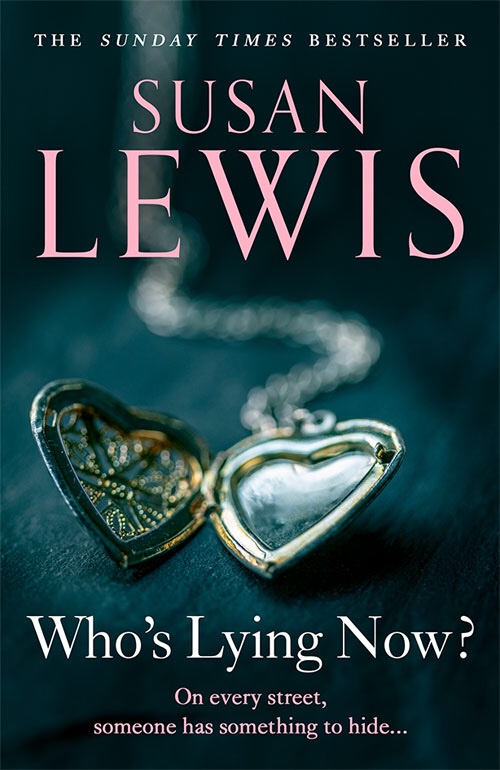
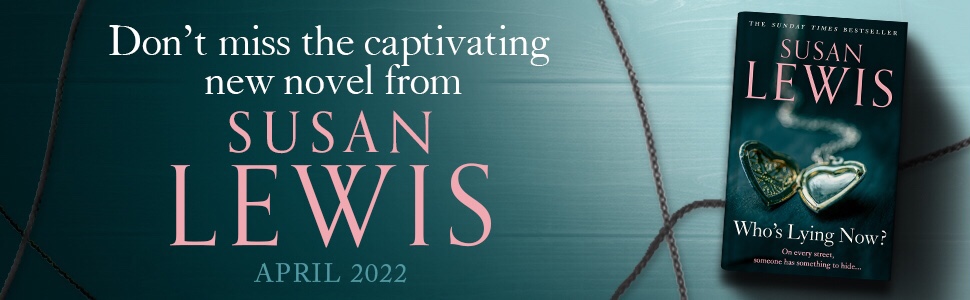
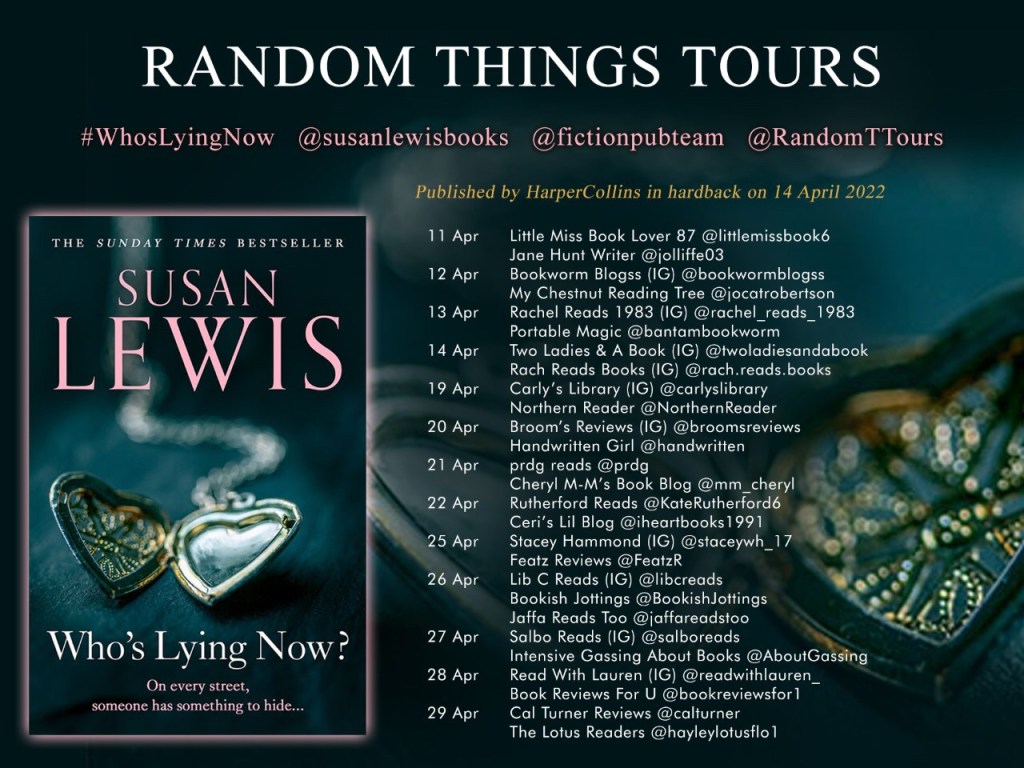
Who’s Lying Now? By Susan Lewis

Susan Lewis is so prolific. I first came across her writing when I was looking for something to read between counselling clients at work. At the MS Therapy Centre where I worked there was a charity shop and someone had brought in a huge pile of books for sale. There I found a few books by this author. I’d never read her before but soon found myself hooked and bought all the Susan Lewis books in the bag. I’ve read most novels since and love joining blog tours for her latest books. This is another delve into crime fiction for Lewis and is based around a community on the south coast called Kesterley-On-Sea, where a small group of people have cultivated some very complex relationships. There’s Jeannie, who works as a publisher, and her husband Guy who is a neurosurgeon and they live at Howarth Hall, a Manor House with beautiful gardens leading to the sea. Not far away, lives Estelle a celebrated debut novelist who hasn’t managed to produce a follow up as yet, and her husband Neil who is a landscape gardener. They have a daughter, Chloe and Estelle’s assistant Primrose lives in an annexe next door. Centre of the community is the Seaview Café where the owner Fliss lives in an apartment above with her son Zac. Jeannie used to be Estelle’s publisher. Neil is Jeannie’s gardener and friend. Fliss used to be married to Neil and he is Zac’s father. When Jeannie goes missing one January day all of these relationships will come under scrutiny. Trying to make sense of this is Cara Jakes, a new trainee investigator who is young, intelligent and eager to prove herself. When she teams up with detective Andee Lawrence to look into the disappearance, she is determined to find out what has really happened to Jeannie. Cara begins to question the residents of this close-knit community, sure that someone has a secret to hide. However, how can she separate the truth within these complicated connections, especially when some of them are lying?

Lewis has undertaken a very difficult task with this novel, not only does she have complicated relationships to untangle, she moves us back and forth to the months leading up to Jeannie’s disappearance and the weeks following. Then she sets it all within the pandemic, which must have been a nightmare to track considering the complicated rules and lockdown dates. I barely know what I was doing and where I was over the past couple of years, never mind following imaginary people through the same rules and regulations. It did make the story more believable though and I was amused to read how difficult these characters found it to interpret and stick to the rules. I don’t think there’s a single character who doesn’t break them at some point, but it’s café owner Fliss who is finding the pandemic the most difficult. Having started her business just before the outbreak, the lockdowns have damaged her financially and without the help of a group of volunteers taking food out in deliveries the business wouldn’t be making any money at all. Her son Zac is also helping and has moved in with her for lockdown, though he usually lives with his dad Neil and Estelle. I think Fliss was the character I most felt for and I was sure there was a secret to why she was living alone and how her marriage to Neil fell apart, when they are clearly both so fond of each other. Despite these secrets, Fliss and Neil feel the most understandable and empathic characters in the novel for me.
Our missing person, Jeannie, is a dynamic professional woman, who I found interesting but difficult to understand. When Cara and Andee first visit her husband Guy they’re confused about the delay in reporting her missing. He explains how their demanding jobs mean they can often miss each other for a couple of days, but he also says something very strange. He suggests that Jeannie might want him to think she’s missing as some sort of test. She’s also made it clear that she finds their gardener Neil attractive and takes long walks with him. There’s an element of game playing going on in their relationship and I’m not sure I liked either of them very much. There is a strained relationship between her and Estelle too, as Jeannie published her novel but then dropped her when a follow up wasn’t forthcoming. Their relationship never recovered so Jeannie’s long walks with Estelle’s husband seem unkind. Yet there are secrets in Jeannie’s past that might explain her character, and they explosively come to light when her brother arrives from New Zealand. I found Estelle a puzzle too. She seems fragile and easily distressed, but also self-centred and very difficult to bond with. Her only friend seems to be her assistant Primrose, but she’s paid to be there. I could see she was insecure in her relationship with Neil, believing him still in love with Fliss, so when she is offered friendship from an unlikely source she jumps at the chance of some outside support. Her relationship with her daughter seems awkward too, as if she’s almost scared to be her mum. Lewis untangles this particular thread slowly and with great care, and it’s clever how it’s woven into Estelle’s character, but also the case the police are pursuing.

I don’t want to reveal any more about the entanglements between these characters, but there are many revelations along the way, both in the past and the present. I found it hard to like any of them, aside from Fliss, but they are fascinating. The dual timeline is clever because it keeps the tension of the case and all it’s twists and turns, while also exploring characters and events in more detail in the past. The women’s characters and backgrounds are explored enough to answer a lot of the questions that cropped up in my mind as I was reading. I didn’t feel the men’s past or motivations were explored as closely so I came away feeling I didn’t know them as well. However, that did make it more exciting when they were questioned as suspects, because they were more of a mystery. We also saw how the female investigation team of Andee and Cara have to draw a line between their work and their private lives, very difficult in a small town where everybody knows each other and uses the same facilities. I didn’t work out what had happened to Jeannie before the team did, because when everyone is lying and holding secrets it’s hard to know what’s coming next. I felt like someone was hiding in plain sight, never showing their true character. This was an enjoyable thriller, full of psychologically complex characters making dreadful mistakes and one clever and manipulative suspect to unmask.
Meet the Author

Susan Lewis is the internationally bestselling author of over forty books across the genres of family drama, thriller, suspense and crime, including I Have Something To Tell You, One Minute Later, My Lies, Your Lies and Forgive Me. Susan’s novels have sold over three million copies in the UK alone. She is also the author of Just One More Day and One Day at a Time, the moving memoirs of her childhood in Bristol during the 1960s. 

Susan has previously worked as a secretary in news and current affairs before training as a production assistant working on light entertainment and drama. She’s lived in Hollywood and the South of France, but now resides in Gloucestershire with husband James, two stepsons and dog, Mimi. @susanlewisbooks
Posted in Random Things Tours

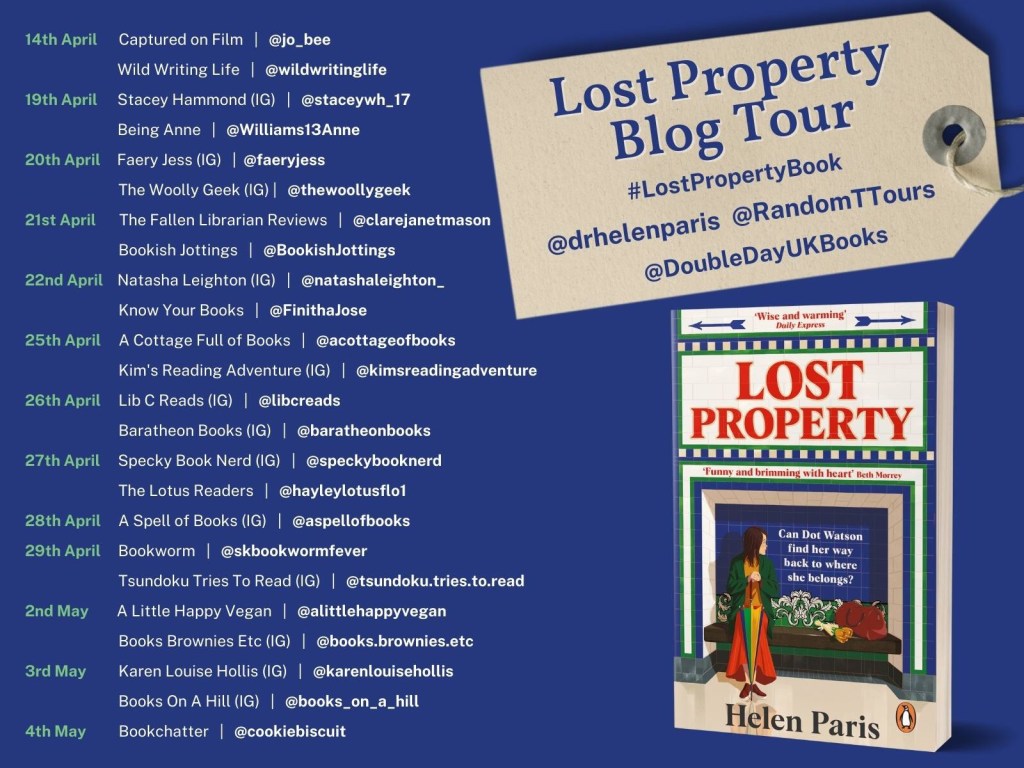
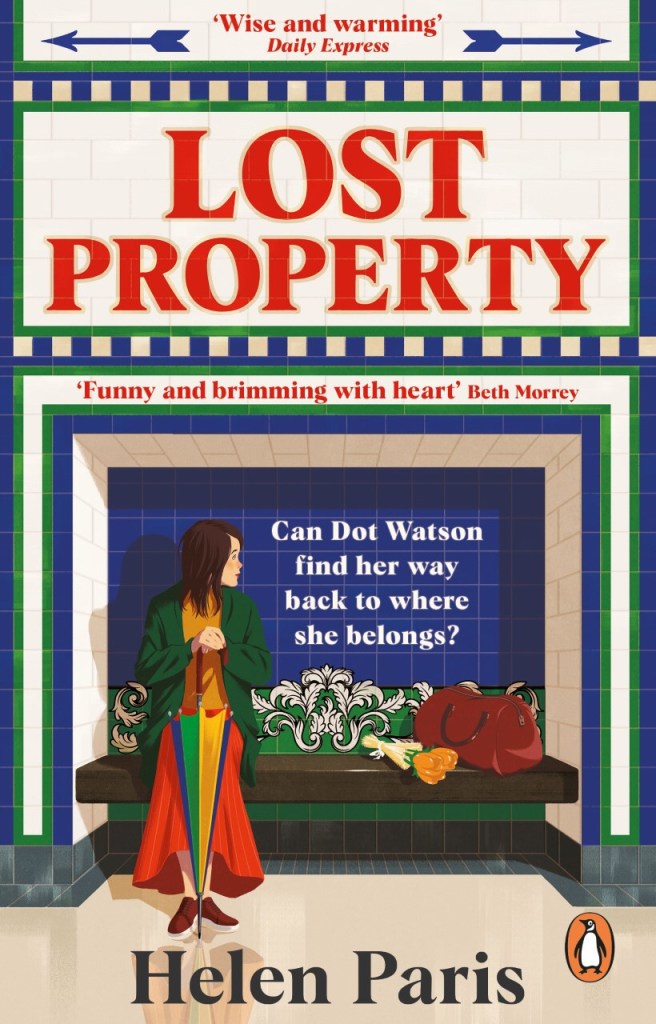
Lost Property by Helen Paris

It took me about five pages to be drawn into Dot Watson’s quirky world and her love for the lost property office in which she works for London Transport. If anything is lost, be it on a cab, bus or train this is where honest people bring their found items. Dot is like the backbone of the office and the other workers would be lost without her. A lover of proper procedure and organisation, Dot is the ‘go to’ employee for anyone starting work with the team, or just to answer a question about an item. Dot thinks lost things are very important, almost like an extension of that person. Their lost item can tell her a lot about the person they are and she fills the lost luggage tags with as much detail as possible so that they have the greatest chance of locating it. Dot believes that when a person is lost to us, their possessions can take us right back to the moment they were with us. When Mr Appleby arrives at the office to find his lost piece leather hold-all it is what the case contains that moves Dot. Inside is a tiny lavender coloured purse that belonged to his late wife and he carries it everywhere. Something inside Dot breaks for this lonely man and she is determined she will find his hold-all. Her search becomes both the driving force of Dot’s story and the key to unlocking her own memories.

Dot has been working at the lost property office for years, but it isn’t the life she expected to be living. In her early twenties, travel was her main driving force in life and she was living the dream in Paris. Being multi-lingual Dot had exciting plans to travel the world, but all her dreams come to a halt when her father dies suddenly and traumatically, by throwing himself in front of a train. Dot’s relationship with her father was complicated, as he doted on her and they spent a lot of time together. However, as the youngest child by some years and because she hero worshipped her father, she didn’t always see things clearly. There are secrets at the heart of the family, kept for all the right reasons, but causing misunderstanding and resentment. When her father died Dot rushed home, but the trauma of his death affects the whole family deeply and it seems to put Dot’s life on hold. Now her collection of travel guides are her window on the world she once wanted to explore, but she is firmly stuck in her mum’s flat and still working in a job that was once a stop gap. Her only other activity is her regular visit to her mum in the nursing home. While her sister lives further afield, she constantly rings Dot to remind her of things and get updates on their Mum. She is pressuring Dot to get the flat viewed and sold so their lives can start again, but Dot is avoiding her. To add to her family stress, Neil from work is promoted to be their manager and the changes he wants to bring in are also disturbing Dot. He wants to reduce the amount of time they keep items, but what if something goes to auction and they can’t get it back? Dot seems to freeze, staying in the lost property office at night and looking tirelessly for Mr Appleby’s hold-all.

Dot is such a sympathetic character. She’s funny, resourceful and actually quite formidable when at full strength. We go back and see a naïve young girl, for whom Daddy is the centre of the universe. They spend a huge amount of time together which she has always viewed as the result of having a special relationship. As she goes back its interesting to see how others viewed the same events, with totally different conclusions. Their family story is so sad and brings home to us the benefits of living in such a tolerant and open society today. If Dot has been viewing her life through the wrong lens, how will she cope when she finally sees it all? Dot thinks she’s weak, but she’s actually incredibly strong. Some of the things she goes through, not just in the past, but during her time sleeping at the property office are really traumatic. She will take more time to process it all, but I loved the author’s importance in the human power to change, to take stock and move forward with life. I think the writer has been clever in her debut novel to write a light, uplifting story, but with so many darker layers underneath. It’s a real accomplishment to imbue a character that could have become a caricature, with life and authenticity. I love her optimism too, leaving us with the knowledge that no matter what the trauma, we have the power to change ourselves and our lives for the better. I heartily recommend this book to other readers, but they must prepare to fall in love with it as I did.

Meet The Author


Helen Paris worked in the performing arts for two decades, touring internationally with her London-based theatre company Curious. After several years living in San Francisco and working as a theatre professor at Stanford University, she returned to the UK to focus on writing fiction. As part of her research for a performance called ‘Lost & Found’, Paris shadowed employees in the Baker Street Lost Property office for a week, an experience that sparked her imagination and inspired this novel.

Posted in Random Things Tours

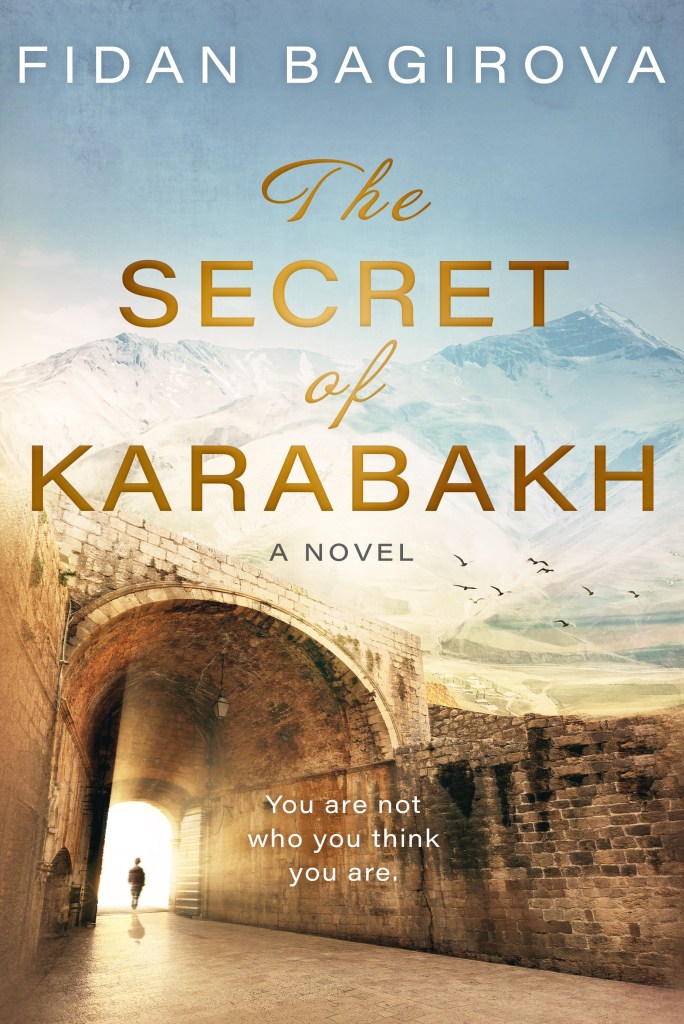
The Secret of Karabakh by Fidan Bagirova

The Secret of Karabakh had a very intriguing blurb and a powerful opening prologue that drew me in. The horrifying image of a child killed by soldiers while trying to flee a war had a deep resonance, due to reports of such atrocities coming out of Ukraine every day. The way the author describes the child’s ‘pink woolen scarf decorated with chocolate-brown rabbits and butter-yellow ducklings’ contrasts the innocence and softness of the child with the rocky terrain, the gunshots and the lack of mercy shown. It’s a vivid and terrible scene that stays with you throughout.

Then we meet Alana Fulton a committed and gifted student of archaeology completing her PhD at Cambridge University. Her background is surprisingly privileged and we see her meeting her mother at the Dorchester Hotel in London. Her parents find it difficult to understand her fervour for her studies when she could have had all the opportunities their wealth offered her. There’s even a film star boyfriend who she’s keeping at bay with her devotion to study, much to her mother’s confusion. Yet this tea with her mother marks the day her life turns upside down. First she notices a strange man staring intently at her on the street and to avoid him she jumps into a cab for Kings Cross station. Her relief as the doors of her train close and they set off for Cambridge, is wiped out when she sees the same man running down the platform after the train. Her fear is compounded when she reaches her university rooms. Usually her college is the place where she finds calm and feels most like the real her, but when she finds her room wrecked she is shaken. Nothing seems missing at first, and it’s only after the police have gone and Alana starts to tidy that she realises her hair brush and toothbrush are missing. The police start investigating, but there are two questions at the forefront of her mind: who was the man asking for her at the porter’s gate? Who sent the anonymous note, telling her she’s not who she thinks she is and warning her she’s in danger?


Alana isn’t sure who she can trust and she’s shocked to find out the identity of the man asking for her at university. Someone she knows well is now the focus of the police. These early sections didn’t gel with me at first, because I didn’t connect with Alana. Despite that I thought the author had paced the action and revelations very well. As Alana and her boyfriend go on the run, there was a very spy film feel to the action, at they take a private jet to Switzerland. The pace doesn’t let up as they are followed by foreign attackers and if this were a movie, Alana would definitely be the star. She doesn’t come across as a damsel in distress type and seems completely capable of rescuing herself. This makes it even more ironic when we find out her boyfriend has accepted payment in diamonds for keeping her safe. But who has made the payment and which side of this unknown conflict are they on? I was most interested in the psychological journey of Alana, arising from her confusion about the message questioning her identity. Like many people she has memories of childhood, but if she tries to think back to her pre-school years it’s not just hazy, there’s a great big blank. Underneath that blackness is an emotion, a combination of ‘bewilderment and simmering fear’ that she can trace throughout her early school years, but gradually fritters away until she hits adolescence, when it’s gone. This is a raw emotion, the result of a base or primal fear, and this kept me invested in the story, because I really wanted to know where that feeling was from.

In-between the action are personal stories from a war I knew nothing about, the Nagorno-Karabakh war between Azerbaijan and Armenia. This is a real life border conflict, but when we look deeper it’s not just about territory, but natural resources and cultural histories too. The conflict has been ongoing since the 1980s, with various flares into full scale war over the years and has only recently been more settled, but with only some of the issues resolved. It was the dissolution of the Soviet Union that sparked rising ethnic tensions between Armenian and Azerbaijani people especially in the Nagorno-Karabakh region – an enclave of South-West Azerbaijan with majority ethnic Armenian people. It seemed clear that this area was linked to Alana, but how?

From Switzerland onwards these questions are answered in a story filled with action and discovery for Alana, and I found this part of the book much more gripping and memorable. I was interested in how Alana copes with these revelations mentally, as her past and present collide. Those vague emotional memories from childhood come to the fore again as she learns the truth of who she is. More terrifying and muddled childhood experiences start to emerge and Alana will have to find reserves of determination and courage to piece everything together. I thought it was great that those qualities Alana’s parents really didn’t understand, came from this history she knew nothing about. It was also interesting how the author showed our emotional memories as stronger and longer lasting – it’s why sometimes a piece of music makes us feel a certain way, but we don’t know why. Alana’s memory still carried emotional trauma, despite her not remembering the details or the place. I thought the author’s use of research really added to the story and helped my understanding of the complex history of the region. I finished the book satisfied with the story, but wanting to know more about Nagorno-Karabakh and other areas left in difficulties as the Soviet Union disbanded. This was a clever mix of historical fiction and action thriller, with an incredibly strong sense of place.

Meet The Author

Fidan Bagirova is a writer, sculptor and multimedia artist. She was born in Geneva, to parents from Azerbaijan. They, like hundreds of thousands of others, lost everything during the Armenian invasion described in The Secret of Karabakh, and for Fidan, writing this novel has been a way of expressing her longing for the Azerbaijani people’s identity and stolen heritage.

Posted in Random Things Tours

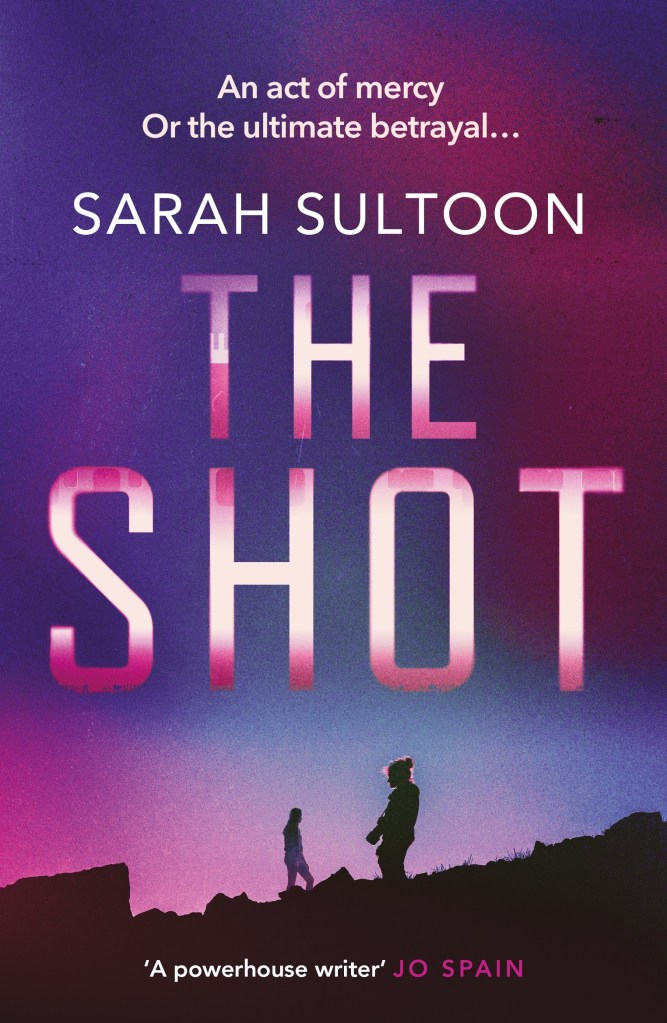
The Shot by Sarah Sultoon.

Samira is an up-and-coming TV journalist, working the nightshift at a major news channel and yearning for greater things. So when she’s offered a trip to the Middle East, with Kris, the station’s brilliant but impetuous star photographer, she leaps at the chance
In the field together, Sami and Kris feel invincible, shining a light into the darkest of corners … except the newsroom, and the rest of the world, doesn’t seem to care as much as they do. Until Kris takes the photograph. With a single image of young Sudanese mother, injured in a raid on her camp, Sami and the genocide in Darfur are catapulted into the limelight. But everything is not as it seems, and the shots taken by Kris reveal something deeper and much darker … something that puts not only their careers but their lives in mortal danger.
Sarah Sultoon brings all her experience as a CNN news executive to bear on this shocking, searingly authentic thriller, which asks immense questions about the world we live in. You’ll never look at a news report in the same way again…

Sarah Sultoon’s debut was a hard hitting belter of a novel so I was really looking forward this one, set in the world of war journalism -something that seems so pertinent right now as I watch Orla Guerrin and Jeremy Bowen on my TV screen, showing us the evidence of what can only be called war crimes in the Ukraine. Having read some of Janine di Giovanna’s writing about covering the genocide in Rwanda, Bosnia and now in Syria, I had a good idea of what the war correspondent’s life looks like. She describes lots of waiting around, mixed with personalities that are driven and easily bored. When you combine that with the things they’ve experienced it can be a potent mix, leading to abuse of drink or drugs in order to cope. It means being shipped off to one of the most dangerous places in the world at a moment’s notice, living on adrenaline and even the risk of being seriously injured, as happened to BBC Security Correspondent Frank Gardener. It’s the type of work that can become addictive, ruin relationships and damage health. I saw that dynamic being played out in Sultoon’s novel following hardened correspondent and star of the show Kris, and his producer Samira who is eager and new to the job.

Kris has something of the hero about him, always looking slightly battered and dishevelled, and ready to jump back into the fray before his injuries have healed from the last mission. He’s loud and full of machismo, but this is a surface layer. He does care about the people he’s reporting on and wants to express to the world everything he is seeing in conflict, but it also takes a toll. We see it as he returns home injured, he’s already desperate to get back out there and his mind is barely on his wife, or her concerns about their son and what he understands about his father’s job. Sami is ambitious, stuck on night shifts but lurking around the news room for that elusive shot at an overseas production role. She finds it when Kris saunters back in looking for trouble and there’s news that the American president is making a flying visit to Afghanistan. Kris is up for a quick trip and Sami is in the right place at the right time. He’s quickly impressed by how organised and well researched she is. Even before they reach Afghanistan, Sami is already thinking about the opportunities to land a big story and with Kris on board, she asks to be taken around an Afghan hospital. In the women’s hospital they find the hidden victims of the Taliban, women who have tried self-immolation as a way out of their restricted lives, but only succeeded in creating a world of agonising pain.

Sami and Kris are praised back at home and become a close team, although Sami does feel that no matter what they report, viewers are not waking up and taking notice. It’s all a journalist wants, ‘the shot’, the one that has impact worldwide and changes the way people think about a place, or a war. The one that has people approaching their MP and protesting for change. They find it covering the conflict in in Darfur, Sudan. A shot of a young mother, the victim of a devastating assault by the armed Arab militia the ‘Janjaweed’, one picture representing a dark, genocide lurking just under the surface of what we know. A way to refocus the eyes of the world on a truly terrible and largely forgotten war, crime. The author has a brilliant way of bringing us right into the moment, without long flowery descriptions, such as the way the sheer beauty of Afghanistan is described with its ring of snowy mountains round Kabul. This gives an eternal feel to the place, it is ancient and will stand here long after the war is over and everyone has returned home. In other scenes it’s something as simple as the clean clothing Kris puts on when he returns home; his cargo trousers and a fleece top, always the same. In barely any words it tells us Kris has a ‘uniform’ and that he’s never off duty and won’t be staying for very long. This isn’t an easy read. War is brutal and should be depicted that way. This really shines the spotlight on those supporting staff, the war correspondents are risking their lives of course, but so are their guides and interpreters. It really brought home to me the fear these men must have felt when America withdrew from Afghanistan suddenly and power was back in the hands of the Taliban. Those who’d worked with the foreign correspondents and without who’s help we wouldn’t have known the raw truth of the conflict, were abandoned and turned away from the airport in those chaotic last days for not having the right papers. I often wonder how many of them are alive now. This is urgent, brutal writing and the pace never lets up, giving us a taste of the adrenalin rush for the correspondents and the terrible fear that their families must live with at home. All of them are the emotional casualties of war.

Meet The Author

Sarah Sultoon is a journalist and writer, whose work as an international news executive
at CNN has taken her all over the world, from the seats of power in both Westminster and Washington to the frontlines of Iraq and Afghanistan. She has extensive experience in conflict zones, winning three Peabody awards for her work on the war in Syria, an Emmy for her contribution to the coverage of Europe’s migrant crisis in 2015, and a number of Royal Television Society gongs. As passionate about fiction as nonfiction, she recently completed a Masters of Studies in Creative Writing at the University of Cambridge, adding to an undergraduate language degree in French and Spanish, and Masters of Philosophy in History, Film and Television. When not reading or writing she can usually be found somewhere outside, either running, swimming or throwing a ball for her three children and dog while she imagines what might happen if… Her debut thriller The Source is currently in production with Lime Pictures, and was a Capital Crime Book Club pick and a number one bestseller on Kindle.

Published on 28th April 2022 by Orenda Books.

Posted in Random Things Tours

The Diamond Eye by Kate Quinn

She’s the war’s most lethal sniper. And the one they least expect…

In the snowbound city of Kiev, aspiring historian Mila Pavlichenko’s life revolves around her young son – until Hitler’s invasion of Russia changes everything. Suddenly, she and her friends must take up arms to save their country from the Fuhrer’s destruction.

Handed a rifle, Mila discovers a gift – and months of blood, sweat and tears turn the young woman into a deadly sniper: the most lethal hunter of Nazis.

Yet success is bittersweet. Mila is torn from the battlefields of the eastern front and sent to America while the war still rages. There, she finds an unexpected ally in First Lady Eleanor Roosevelt, and an unexpected promise of a different future.

But when an old enemy from Mila’s past joins forces with a terrifying new foe, she finds herself in the deadliest duel of her life.

The Diamond Eye is a haunting novel of heroism born of desperation, of a mother who became a soldier, of a woman who found her place in the world and changed the course of history forever.

I found this novel a compulsive and totally immersive read. So much so that if I was interrupted I would often look up in surprise to find that I wasn’t in a freezing cold trench, aching and covered with mud. Kate Quinn really gives us a vivid picture of WW2 in Russia, a front of the war I knew little about. In Lyudmila Pavlichenko, Quinn has a complex heroine, but she creates a nuanced, three dimensional woman, who is so much more than her nickname of Lady Death. I’d imagined a rather joyless, dour individual who was strong and almost masculine. However, instead I was shown a rather diminutive figure, with dark eyes and her long hair hacked off for practicality. This is the soldier. A woman with so much self-discipline she put me to shame, not only working on her university dissertation and looking after her son, while taking a year long marksmanship course so she could be the one to teach her son to shoot. However, when war breaks out Milla feels she must leave her beloved Ukraine and sign up for frontline duty. I loved the way the novel brought up the issues of womanhood in Russia, both Mila and her friend Lena are shocked by how few women were signed up. It never occurred to Mila to let men fight for her, she had the ability and as she mentions on her visit to Washington – Russian women are equal as human beings. I loved how Quinn focused on her vulnerability as much as her strength and the fact she’s only fighting out of necessity; she doesn’t revel in her 309 kills. She is a cultured woman, often enjoying the ballet and opera in Odessa before the war and very proud of her student status – her half written dissertation being the only personal thing she takes with her to the front.

I felt that the book wore it’s extensive research lightly. The story was grounded within the history, but doesn’t lecture or give huge amounts of exposition. This is a personal story about one woman’s war, within that larger history. Battles are mentioned and ground is won or lost, but it’s the character we focus one and those around her. I loved her relationship with Kostia, her shadow and fellow sniper, who keeps her warm on night long stake-outs by letting her lie along his back for body heat. He is of Siberian/Irish heritage, taciturn and serious, but when he finds his childhood friend Lyonya they are soon laughing and wrestling like a pair of ten year olds. Mila relationship with Lyonya was beautiful and probably the only mutual and equal romantic relationship she’d had to that point. Their story broke my heart, but it also broke for Kostia too. The detail is brutal, shrapnel injuries are described in raw, bloody ways because it’s necessary to show the dangers our characters are in. These terrible injuries also provide a contrast to the swift, clinical and clean kills carried out by Mila and Kostia. There are times where I thought their victims were the lucky ones. Mila’s ex-husband is written so well, because he infuriated me. Always with an eye on the main chance, Alexei is a brilliant surgeon and a shitty husband. Having seduced Mila at 15 years old, he then womanised his way to the divorce courts and has no intention of building a proper relationship with his son. His teasing and little digs at Mila felt like the tip of the iceberg to me and I wondered how manipulative and emotionally abusive he had been within the marriage.

The book is structured with Mila’s time fighting in Russia, sandwiched with chapters that show the delegation of students, including Mila, visiting Washington to elicit US support to open a second front in the war. Inbetween are excerpts from Mila’s diary (official and personal), Eleanor Roosevelt’s diary and notes written for her husband Franklin. There’s a humour in these scenes I enjoyed immensely, especially when Americans underestimate Mila, in her ability to understand them and her talent for sarcasm. These parts made me smile and I also loved the section where Eleanor Roosevelt drives Mila to an event personally, and navigates the streets of Washington like a racing driver! These later chapters are also tense as Mila has to learn to cope with the media, weird marriage proposals and threatening notes posted under her bedroom door by someone travelling with the delegation. The question of who they are and what they’re up to kept me alert and wary of everyone. What Quinn does so breathtakingly well is to breathe life into this woman, who I’d never heard of two weeks ago. She made me care about her and want to investigate her story more. She takes Russia’s poster girl and makes her human, a complex woman with courage, hopes and desires. She shows us that all Mila really wanted from life was to be a history professor, but war got in the way.

Meet The Author

Kate Quinn is a native of southern California. She attended Boston University, where she earned a Bachelor’s and Master’s degree in Classical Voice. A lifelong history buff, she has written four novels in the Empress of Rome Saga, and two books in the Italian Renaissance detailing the early years of the infamous Borgia clan. All have been translated into multiple languages. She and her husband now live in Maryland with two black dogs named Caesar and Calpurnia.

Posted in Random Things Tours

Remember Me by Charity Norman

Emily is a children’s illustrator, who spent her childhood in Hawke’s Bay but now lives in London. One evening she receives a call from her father’s neighbour, Raewynn, letting her know that his Alzheimer’s has progressed and he needs a little help. Despite both her brother and sister still living in New Zealand, Raewynn thinks Emily is the one best disposed to make the right decision. Emily’s father is well known in the area and is still known as Dr. Fitzgerald despite his retirement. He still lives on the family’s homestead with his two dogs and next door Raewynn and her son Ira who rents and farms the Arapito land. Until now they’ve managed to look after Dr. Fitzgerald, but trusting Raewynn’s opinion Emily decides to travel to New Zealand and check on her father.

When she arrives she knows all is not well. She realises her father has become very adept at seeming okay. He’s worked out which stock questions to ask when someone’s on the phone, using listening skills to let the caller think they’ve had a deep conversation. She thinks he’s rather like a magician, creating a Dr Fitzgerald who everyone knows and recognises, while underneath feeling confused, bewildered and frightened. As Emily spends time in her childhood home, memories rise to the surface: the unhappiness of her mother; her father’s distraction and avoidance of his family; the terrible state of Manu, Raewynn’s husband, who deteriorated and died from Huntington’s; the disappearance of Raewynn’s daughter Leah, who was lost on their range of mountains and has never been found. Emily was the last one to see Leah alive and the loss of this vibrant and beautiful girl still haunts the whole valley, including Emily’s father.

Norman writes about Alzheimer’s with knowledge and compassion. I spent some time working in nursing homes and Dr Fitzgerald is in the cruellest stage of his disease; he knows it is happening and he’s embarrassed, scared and exhausted from trying to appear like his old self. As Raewynn observes, it will be a blessing when he’s gone past this stage and reaches the place where he doesn’t remember his old self any more. It’s like watching the tide recede and as Emily settles in she can see this happening, layers and layers of what she recognises as her dad slowly drifting away towards the evening and then rolling back in the next morning when he’s at his most lucid. She can see the symptom of ‘sun downing’ as her dad becomes more anxious and confused in the evening. Then there are terrifying nights where he wakes screaming, doesn’t recognise her and can become violent. Then there are the family conflicts over care, as her brother and sister feel he would be better off in the ominous sounding St. Patrick’s where he’d be safe. Of course the other benefit to St.Patrick’s is that the house and land could be sold, meaning they would receive their inheritance. Emily doesn’t want to think her siblings are mercenary, but they have always stuck together and don’t have any interest in the land or the family’s long relationship with Raewynn and Ira who farm their land.

I had a huge soft spot for Raewynn, she feels like a real ‘earth mother’ type of woman and is a pillar of quiet strength. It takes a strong woman to come through the slow deterioration of her husband’s health, until he wasn’t the man she loved any more. She doesn’t complain and they all loved him fiercely, but those who know the family closely, know how much Manu’s illness took out of them all. For them to go through the loss of Leah only two years later seems unspeakably cruel. For Emily there is survivor’s guilt and her sadness for Ira, who was her best friend. Now there may be change coming, on the twenty year anniversary of her disappearance. Raewynn and Emily are interviewed, in the hope of jogging someone’s memory, that a change of allegiance might urge someone to talk, or that someone’s conscience finally forces someone to speak. In the meantime Emily is battling her siblings over her father’s wishes. Firstly, he gives her a living Will drawn up by his solicitor and much to her surprise, the person he wants to speak for him at the end, is Emily. It’s a revelation that her rather remote and unavailable father trusts her to do the right thing. It’s also a revelation that he’s been keeping a file of her memories in the box next to his bed, all the way back to her hospital baby bracelet. However, this isn’t the only revelation in the box and what Emily finds here will blow so many lives wide open.

This is what Charity Norman does best. She shows how relationship dynamics change and even break when something unexpected happens. Her characters are real, because they are so well constructed psychologically. Her sense of place is also incredible from the forbidding mountain range that backdrops the farm, to the bitter cold and the incredible micro-climate of a lush gully and waterfall hidden away. Oh how unbelievably emotional I felt at the end of this book, not just a lump in my throat, but actual tears. Yet I also felt such a feeling of ‘rightness’ that it ended the way it should. I was also deeply touched by the unique combination of Haka and bagpipes at Leah’s memorial. The New Zealanders I know seem to celebrate people for their unique traits and this memorial took me back to my brother in law’s funeral in Gisborne where a chainsaw and work boots adorned the coffin and the guttural roar of a stag heralded his departure. This writer is one of my favourites, because she understands the uniqueness of human beings, their incredible strengths and their hidden weaknesses. There is such emotional intelligence in this latest novel and it was my absolute pleasure to read it.

Meet The Author

Charity Norman was born in Uganda and brought up in successive draughty vicarages in Yorkshire and Birmingham. After several years’ travel she became a barrister, specialising in crime and family law. In 2002, realising that her three children had barely met her, she took a break from the law and moved with her family to New Zealand. REMEMBER ME is her seventh novel.

Posted in Random Things Tours

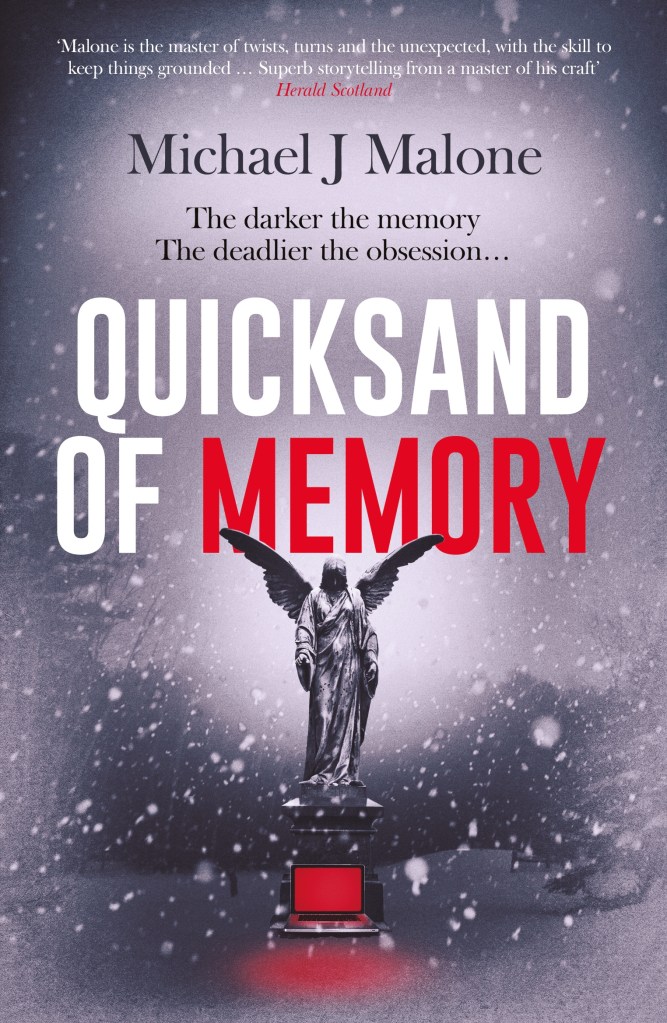
Quicksand of Memory by Michael J. Malone

Jenna is trying to rebuild her life after a series of disastrous relationships. Luke is struggling to provide a safe, loving home for his deceased partner’s young son, following a devastating tragedy. When Jenna and Luke meet and fall in love, they are certain they can achieve the stability and happiness they both desperately need.

And yet, someone is watching. Someone who has been scarred by past events. Someone who will stop at nothing to get revenge…

I was looking forward to this latest novel from Michael Malone, because he writes intelligent thrillers that unfold at their own pace. Some thrillers move so quickly I have to re-read the ending to work out what happened, but he never prioritises action or quick shocks over the story or development of character. This grounded and realistic way of letting the story unfold is what really works about his writing and I was eager to get started. Loss and the ways it affects generations of families is the central theme of this latest novel, where we meet Luke who has just lost his partner and become sole parent to his young stepson. Luke is trying to cope with his own grief while supporting his stepson and trying to establish his own counselling practice. However, there are other losses in Luke’s past, some of which he’d rather not revisit. He had terrible car accident as a young man which left his best friend dead. While we’re wondering about Luke’s version of the accident and exactly what was going on between him and his friend, he starts working with a new client. When she was a teenager, Jenna had a boyfriend who was killed. She still feels bad over where their relationship was when she lost him, because she had doubts about being with him and there were huge secrets she hadn’t shared with him. Jenna isn’t sure whether Luke is the counsellor for her and doesn’t book another appointment with him. Does Luke pursue his client and is his interest purely in helping her?

Grief has kept him away from the therapy room, but now Luke needs to prioritise creating a reasonable income for him and stepson to live on. He takes a client by the name of Jamie, but is Jamie who Luke thinks he is? From a counsellor’s perspective Luke doesn’t have great boundaries and the counsellor in me could see he was setting himself up for costly law suits or a hearing about his professional standards and fitness to practice. He sees Jenna after she was a patient and thinks they have a spark, but can he pursue feelings for her without repercussions? He also spends time with Jamie outside of sessions and even trusts him with his stepson incredibly quickly. Luke doesn’t allow time for a person’s character to reveal itself and instead depends on his own gut when making judgements about others, but that judgement seems impaired. He isn’t consulting with a supervisor and we don’t see him consulting his ethical framework. The three basic principles of counselling are empathy, unconditional positive regard and authenticity and while Luke certainly has skills in the first two areas, his authenticity is non-existent.

Luke has secrets. In fact he has a link to his clients that’s hidden and not just from the reader either. Luke isn’t being honest with himself about who he is and while counsellors shouldn’t tell clients their life story, his background should have been disclosed to his professional body. How can Luke expect a client to trust him, when he isn’t even honest with himself? He’s not being authentic in his own life and relationships. Jenna is looking forward to working on herself when she arrives at Luke’s garden counselling room, but something stops her from returning. It’s when they later form a friendship that Luke might have discussed his past, but he doesn’t. Luke does have some great counselling qualities and is an incredible stepfather, but its almost as if he feels these life changes have cancelled out everything that went before. His past unveils itself like a set of Russian dolls, each one looking finished, but with yet more revelations to come. What he ultimately learns is that by compartmentalising certain experiences and keeping secrets, he has even been kept from the full truth about his own actions and could have been saved from years of self-criticism and guilt.

Malone is brilliant at creating characters, with unexpected pasts and incredibly human flaws. I love that conflict his characters create within me about who I’m rooting for and why. Jamie’s sister Amanda feels incredibly vengeful, but there’s some empathy in me for the way she was changed forever by a series of losses when she was a child. Having lost her family she is buffeted about by the care system and further separated from her brother Jamie. Her entire energy is focused on revenge and she manages to pull Jamie into her machinations by triggering his guilt for getting an easier ride as a child. Jamie is torn between loyalty to his sister and anger at the people he’s been told are responsible and on the opposite side, his own more measured judgement on events and the people he meets on her quest for revenge. It’s clever how Malone links everyone in the book and carefully drip feeds information on them, allowing our opinion to twist and turn. There are sequences that are meandering, letting us find out piece by piece what happened in the past, or slowly revealing a character. Then there are gripping events that have your heart racing and the pages turning quicker so you can find out what happens next. Every single character is bogged down in the quicksand of the title, trying to shake free from those historic events that trigger disturbing memories. Only when they resolve these memories can they start to live in the present and they are all at a different point in their journeys. Counsellors believe that every client is capable of change and I like the way that this hope of resolution is woven into the book, even for those characters who think themselves irredeemable. This is another complex, gripping and emotionally intelligent work from Malone who is fast becoming one of my ‘go to’ writers.

Published 9th December 2021 Orenda Books
Michael Malone is a prize-winning poet and author who was born and brought up in the heart of Burns’ country. He has published over 200 poems in literary magazines throughout the UK, including New Writing Scotland, Poetry Scotland and Markings. Blood Tears, his bestselling debut novel won the Pitlochry Prize from the Scottish Association of Writers. His psychological thriller, A Suitable Lie, was a number-one bestseller, and the critically acclaimed House of Spines, After He Died, In the Absence of Miracles and A Song of Isolation soon followed suit. A former Regional Sales Manager (Faber & Faber) he has also worked as an IFA and a bookseller. Michael lives in Ayr.

Posted in Random Things Tours

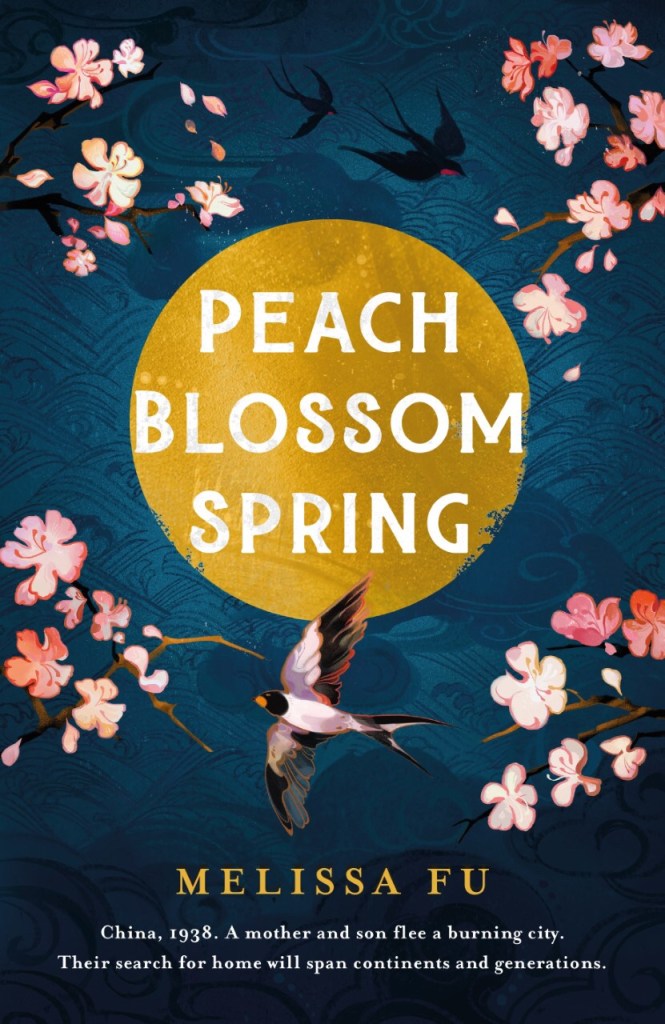
Peach Blossom Spring by Melissa Fu

With every misfortune there is a blessing and within every blessing, the seeds of misfortune, and so it goes, until the end of time.

It is 1938 in China, and the Japanese are advancing. A young mother, Meilin, is forced to flee her burning city with her four-year-old son, Renshu, and embark on an epic journey across China. For comfort, they turn to their most treasured possession – a beautifully illustrated hand scroll. Its ancient fables offer solace and wisdom as they travel through their ravaged country, seeking refuge.

Years later, Renshu has settled in America as Henry Dao. His daughter is desperate to understand her heritage, but he refuses to talk about his childhood. How can he keep his family safe in this new land when the weight of his history threatens to drag them down?

Spanning continents and generations, Peach Blossom Spring is a bold and moving look at the history of modern China, told through the story of one family. It’s about the power of our past, the hope for a better future, and the search for a place to call home.

As they are torn from the only home he has ever known, Renshu’s mother Meilin, tells him stories from a scroll she has carried with them as their most precious possession. One story she tells is that of Peach Blossom Spring, a fisherman passes through a cave that becomes so narrow he can only just squeeze to the other side. There he finds a kind of Eden, with flowering peach trees and the all the wonders of nature. It’s a peaceful place, but eventually there is a dilemma to solve. Once he leaves this place, he cannot return. If he stays, he can never return to his old life. Meilin tells him the fisherman stays and builds a life in this new place, leaving everything that came before. The book is divided into sections from WW2 to the latter part of the 20th Century, as we follow events from China when Renshu is a little boy, to his middle age and the life of his daughter Lily in the USA. This structure shows how his early experiences shape the man he becomes, but also the parent he becomes and the daughter he shapes along with his wife Rachel. The author weaves together themes of identity, women’s history, politics and conflict, as well as inter- generational trauma so beautifully, yet all the while framing Renshu’s life through this ancient Chinese story that’s still relevant today.

I think that reading this while watching the horrific images of war in Ukraine, really brought the plight of Meilin and her son more vividly to life for me. That fear, the desperation of grasping what you can, then running with only the things you carry. I’ve been thinking about it a lot. The trauma and displacement these characters, and the real people who inspired them, went through fleeing from city to city as the war crept closer and the only option was escape to Taiwan. The author’s descriptions of fire bombed cities, cramped underground shelters, and the terrifying trip down the white waters of a narrow river in a deep ravine conveyed the panic and desperation of Meilin and her family. I found the descriptions of sheltering underground so claustrophobic, with that many people crammed into the space the air becomes limited and the bombs above so loud you can’t even think. I could imagine being a child in that situation, totally powerless and trying to make sense of what you’re being told – that the dark, cramped space that scares you more than anything is the only thing that might keep you alive. Renshu’s panic is described so well I felt it, so it was no surprise when these panics resurfaced in middle age. Renshu (or Henry as he becomes known) is a curious, intelligent boy who loses his father before really knowing him and is reliant on his Mum for his very survival. We read these early turbulent experiences through Meilin’s eyes and what stayed with me so strongly was her quiet strength. There are situations where it is impossible to have a voice, where all she can do is endure. Through her section of the books what stayed with me is that the price of war is very different for women than it is for men.
Meilin does not even have time to process the loss of her husband, and has to live under the charity and protection of her brother- in -law. Even though he constantly tells her that they are family and it is his pleasure to look after them, she knows his wife does not feel the same way. She’s uncomfortable and thinks of returning to her own family, but in the chaos of conflict how does she know they’re even alive? The risks she takes to be independent from her husband’s family are huge and they don’t always pay off. I was particularly affected by the ordeal she endures while trying to sell their family scroll – the only thing of value they have left. Yet she’s resourceful, always looking for work and a roof over their heads, working hard to keep Renshu safe and financially provided for. All the sacrifices she is making for him, to go to a good school and university, are clouded by the painful realisation that every step of her effort will take him further away from her. She must be lonely, especially when the companionship and support she receives from other women is broken when their men slowly return. She learns to rely on herself instead of others, especially men who always want something in return and curtail her freedom. She only relies on her brother-in- law where she knows his government connections will help Renshu get to school in America. Yet she doesn’t take any of his offers for herself, of marriage and she never asks for anything from Renshu either. In the 1970s when President Carter wins the US election, then officially recognises the communist government of China, it’s Renshu who worries about bringing her to the US. In fact when they realise there’s a mix up in his own official paperwork, Meilin is quietly resigned to living out her days in Taiwan. She doesn’t seem angry at the ‘mistake’ made by her brother-in-law, even though I felt it was a deliberate ploy to keep her close by. All she asks is for Renshu to plant an orchard, but it will take several years for him to fully understand her meaning.


The settings are so incredibly full of life and it was fascinating to compare Renshu’s surroundings in China and Taiwan with his new home in America. I experience synaesthesia and I found the settings of Shanghai and Taiwan an overload on the senses. In fact when Renshu reached his lodgings in America it felt like a sudden silence as if I’d gone deaf. Renshu himself has to go outside and marvel at the quiet of his empty street with everyone inside their homes. Compared to Meilin’s visit to market, filled with people, vendors shouting, the colour and variety of produce, it seems to lack colour and life. I saw one place in colour and one in black and white. I wondered if the noise and bustle had simply followed on from the noises of war for Renshu, but in his first months in the US it is simply the sound of home. He might have experienced less culture shock in a bustling city like New York or Chicago, but in the mid-west it must have felt like the colour and music had been drained from the world. However, quiet doesn’t necessarily mean safe and there are insidious dangers in an anti-communist America of the 1950’s with McCarthyism in the air. Renshu’s Uncle has given him a contact in America who warns him of the dangers of seeming too sympathetic to his home country and it’s politics. He suggests he stick to Henry, the Western name that Renshu chose on a friend’s advice, but also to avoid gatherings with other Chinese students. Anything anti-Communist could see him in trouble with the government at home, whereas anything pro-Communist might mark him out as trouble to the American authorities. So, even as Henry, he is walking a tightrope, constantly on alert and perhaps missing out on friendships that might have made him less alone. His regular listening to Chopin in the university library is an expression of his emotions, he feels an affinity with the music as if it articulates something he can’t as yet.

In this epic story the author has beautifully portrayed inter-generational trauma, something that can’t be escaped no matter how many oceans you put between you and your past. There is a psychological theory that society’s seemingly expanding mental health issues are caused by trauma from as far back as the early Twentieth Century and is a legacy of two world wars. Men who went to war became distant and emotionally closed off fathers, a problem that then passes to another generation who don’t know how to be affectionate, emotional and available. The effect of that stiff upper lip mentality of the 1940s can be seen in a generation’s rebellion of the 1960’s. Just as the author describes the giant destructive force of the two bombs dropped on Hiroshima and Nagasaki, trauma creates a shockwave that rapidly spreads outward affecting everyone in its path. It takes a strong person to stand up and say I will not pass this trauma on to my children. Renshu is traumatised by war. His existence started with minute to minute thinking, the mind fully occupied with the basic needs of food, shelter and safety. Never in one place for long, Meilin and Renshu are powerless and can never really stop to enjoy any period of good fortune, because they know it can be taken away from them again in a click of the fingers. Meilin understands this. She sees that her boy has struggled to move fully away from that short term thinking – he has been able to have some aspirations though and the relative luxury of safety, a constant income and roof over his head, a long and happy marriage. Yet she sees that he still struggles to trust it all. This is why Meilin tells him to plant an orchard, because a man who plants an orchard knows there will be a tomorrow and that he will still be in the same place, watching them grow.

Meet The Author

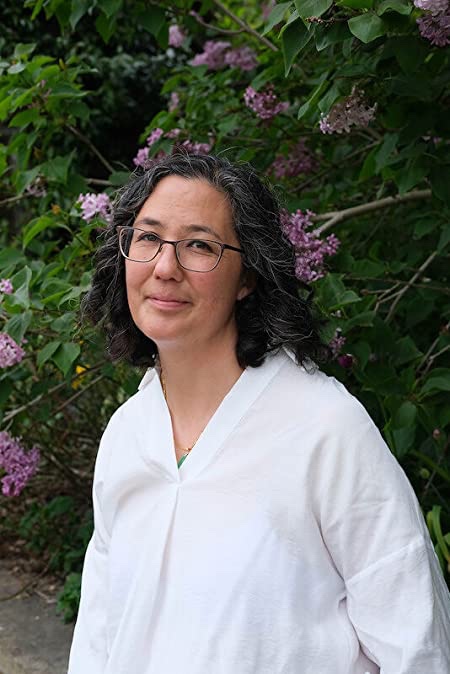
Melissa Fu grew up in Northern New Mexico and now lives near Cambridge, UK, with her husband and children.With academic backgrounds in physics and English, she has worked in education as a teacher, curriculum developer, and consultant.
Melissa was the regional winner of the Words and Women 2016 Prose Competition and was a 2017 Apprentice with the London-based Word Factory. Her work appears in several publications including The Lonely Crowd, International Literature Showcase, Bare Fiction, Wasafiri Online, and The Willowherb Review. In 2019, her debut poetry pamphlet, Falling Outside Eden, was published by the Hedgehog Poetry Press. In 2018/2019, Melissa received an Arts Council England, Developing Your Creative Practice grant and was the David TK Wong Fellow at the University of East Anglia.

Posted in Random Things Tours

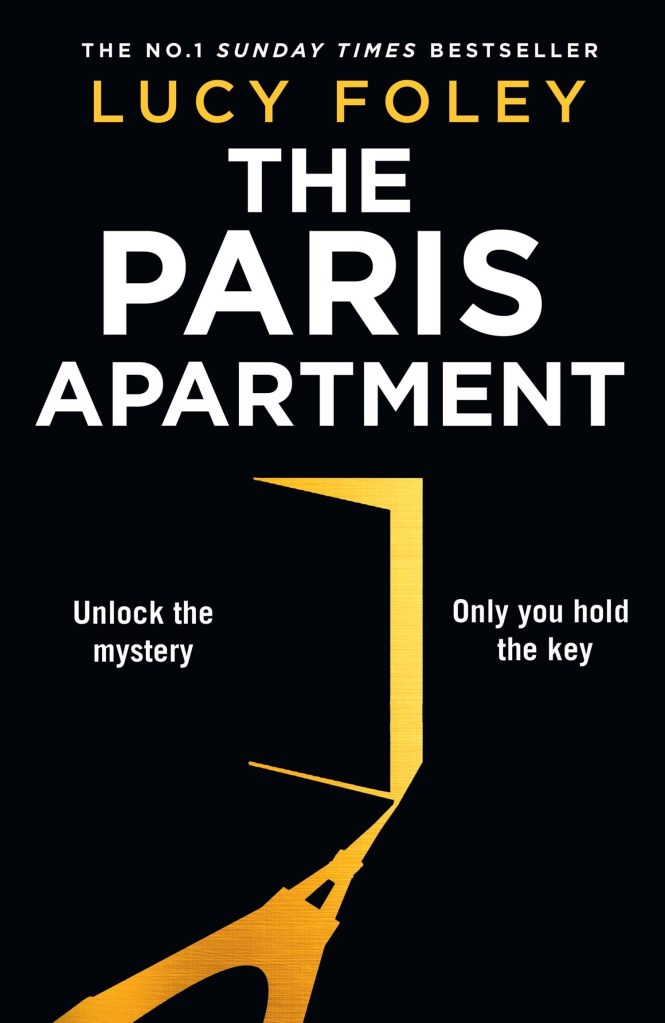
The Paris Apartment by Lucy Foley

Welcome to No 12 Rue des Amants

A beautiful old apartment block, far from the glittering lights of the Eiffel Tower and the bustling banks of the Seine.

Where nothing goes unseen, and everyone has a story to unlock.

The watchful concierge
The scorned lover
The prying journalist
The naïve student
The unwanted guest

There was a murder here last night.
A mystery lies behind the door of apartment three.

When things go wrong at home in London, Jess is ready for a fresh start. She’s broke, and she’s suddenly left her job. Maybe things would look better from somewhere else? Jess jumps on the train to Paris and makes a quick call to her brother Ben to say she’s on her way. Ben should be set with work and an apartment now, but he did seem unimpressed or distracted when she called. Or was there someone with him? Either way she’s here now and for some reason Ben isn’t answering her calls or messages. She’s also taken aback by the size and luxury of his apartment block, surely Ben can’t afford to live somewhere like this? So with no money and nowhere else to stay, she manages to pick the lock and get in. Next morning there’s still no word from him and the questions keep coming. Why is the cat bloodstained? Why are his neighbours so unfriendly and mysterious? Jess is sure that her brother has been harmed, but by who and why?

This was an enjoyable thriller and I liked the structure, that allowed us behind the other doors at apartment building No 12 and into the worlds of these strangely eclectic residents. We were also taken back in time to Ben’s arrival at the apartments so we could see how his relationship built with the other residents. Who did he get on with and why? It also showed up my own misconceptions about people: I expected Ben to have made a beeline for the beautiful Camille in her tiny bikini; that the grumpy man Jess sees at the beginning to be a relative of the concierge; that Mimi would be the kind, girl next door type. Nothing is what it seems with these residents. However, the residents were not the only ones with secrets. Ben had never told Jess what he was working on in Paris. As for Jess, we don’t know exactly what forced her to flee England or how she’s ended up alone and penniless. We do find that they are half-brother and sister, forced into care at an early age and very close to each other, because their experience of parents is that they can’t be trusted. It is very out of character for Ben to forget or ignore her in this way. Jess is very resourceful, soon finding people she can talk to about her brother, including the residents, although they were less than welcoming. She has good investigative skills that she’s possibly learned from her brother and meets with a friend of his who may be helpful. I couldn’t decide whether I liked her or not, but kept reminding myself that no one is above suspicion, even family.

The writer immerses us in the less salubrious side of Paris. No fairy lit boat rides on the Seine for Jess as she heads deeper into the city’s underbelly. This is not a pretty Paris, but it is compelling and different especially when compared to the apartment building. Although we don’t have to go into the streets, the difference in social class can be see in the courtyard garden where the concierge lives in what sounds like a shed. It’s a humble home and it seems Ben is the only resident who treats her like an equal. She’s shocked by his kindness and is the person who gives us the most snippets about what’s really going on with the residents of these luxury flats. She is invisible to these wealthy people, but she’s always watching, eager to catch those little indiscreet moments that happen when people think you’re invisible. I had a lot of empathy for her, because she’s stuck. She knows too much and has too little to move on in life. I didn’t really like or connect with any of the other characters and that makes it hard to care about what happens to them. However, I’m not sure we’re meant to like them. We’re obviously drawn to Jess because of the position she’s in and her tenacity (and sometimes recklessness) in pursuit of the truth. This book hangs on the mystery and it’s twists and turns. I did enjoy the revelations and the cliffhangers, because there were things I didn’t expect, especially Ben’s life in the building and interactions with other residents. This is a fast, addictive thriller where you’re never sure what will happen next, but when it does everything can be turned on it’s head.

Meet the Author

Lucy Foley is a No.1 Sunday Times bestselling author. Her contemporary murder mystery thrillers, The Hunting Party and The Guest List, have sold over a million copies worldwide and also hit the New York Times and Irish Times bestseller lists. The Guest List was a Waterstones Thriller of the Month selection, a Reese’s Book Club pick, it was chosen as one of The Times and Sunday Times Crime Books of the Year, and it won the Goodreads Choice Award for best mystery/thriller.
Lucy’s novels have been translated into multiple languages and her journalism has appeared in publications such as Sunday Times Style, Grazia, ES Magazine, Vogue US, Elle, Tatler and Marie Claire. Lucy lives in Brussels with her husband their baby.

Posted in Random Things Tours

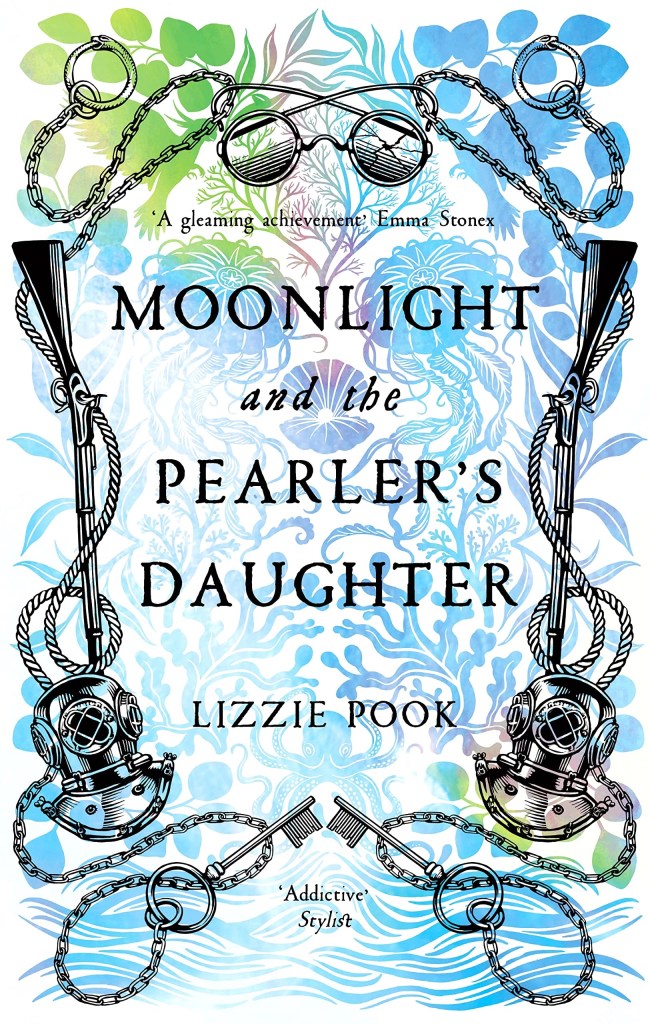
Moonlight and the Pearler’s Daughter by Lizzie Pook.

Fortune favours the brave . . .

It is 1886 and the Brightwell family has sailed from England to make their new home in Western Australia. Ten-year-old Eliza knows little of what awaits them in Bannin Bay beyond stories of shimmering pearls and shells the size of soup plates – the very things her father has promised will make their fortune. Ten years later, as the pearling ships return after months at sea, Eliza waits impatiently for her father to return with them. When his lugger finally arrives however, Charles Brightwell, master pearler, is declared missing. Whispers from the townsfolk point to mutiny or murder, but Eliza knows her father and, convinced there is more to the story, sets out to uncover the truth. She soon learns that in a town teeming with corruption, prejudice and blackmail, answers can cost more than pearls, and must decide just how much she is willing to pay, and how far she is willing to go, to find them.

This incredible debut is richly atmospheric from the get go, throwing us straight into the strangeness of 19th Century Western Australia as if it is an alien landscape. In fact that’s exactly what it is for the Brightwell family, particularly Eliza whose childhood eyes we see it through for the the first time as, in a particularly disgusting parody of baptism, a bucket of fish guts is thrown into her face. Of course the fisherman apologises for the accident, but we’re left wondering if it’s anything but as he says the words ‘welcome to Bannin Bay’. It foreshadows that immediate imbalance between those who do the work and those who aim to make the money. Eliza’s father has been full of dreams, not just of pearls, but the pearl shells to be turned into buttons, hat pins and pistol handles. Yet their unsuitability for this rough and ready environment can be seen as soon as they arrive in the fine clothing they must keep lifted away from the red earth, especially when compared to the stevedores dirty vests and cut off trousers. Eliza describes her mother as ‘a dragonfly, once resplendent, marooned in a bucket of old slop water.’ Delicate Victorian ladies are not built for this environment that stinks of sweat, fish guts and the mineral tang of sea kelp. With this alien landscape the author creates a vivid backdrop for the incredible historical detail of her story, whilst also creating a mythic, almost fairy tale quality to the story.

Only ten years after the prologue we meet an older Eliza, who’s wiser to the ways of the Bay and has developed into a interesting character. Women are either categorised as polite society -‘white glove wearers’ – or harlots and it’s a source of irritation to most women in the community that Eliza refuses to be either. She is ploughing her own furrow and whereas her friend Min’s childhood dreams develop, from escapades on the high seas to the type of sailor she might marry, Eliza still craves the adventure. She can see no use for a husband, although she doesn’t deny an interest in men, which is quite a scandalous notion even if her main interest is the contents of his library. Eliza’s knowledge of sailing and pearl diving is forensic in its detail and through exploring with her father she has developed a keen interest in the areas flora and fauna too. She is quite unlike the respectable women who still look like wedding cakes in the impossible heat. Her father has been on a voyage for the past three months and a lonely Eliza has been looking forward to his return, but as she sits and waits doubt starts to set in about whether the ship is returning. The light is fading as his lugger appears on the horizon, but her stomach fills with dread when she realises something is wrong. The ship’s flag is at half-mast. When her brother Thomas emerges she learns that her father is gone. While Thomas rushes to secure the business Eliza is left to find out the truth and while she’s told he went overboard, there are also tales of mutiny and murder. Eliza has to visit the sergeant to convince him that she suspects their father’s death was not an accident. Sergeant Archibald Parker is an unpleasant racist and his immediate action is to arrest aboriginal man Billy Balaari, but Eliza is told that Billy wasn’t even on the boat. When Billy escapes, the sergeant is completely focused on finding him, leaving Eliza to do the detective work herself. She finds her father’s diary and eventually sets sail on Father McVeigh’s lugger Moonlight with Axel Kramer and an aboriginal boy called Knife, determined to find the truth of what happened.

I wasn’t surprised to find a very seedy underbelly to the trade where Eliza’s father had hoped the build the family fortune. Where incomers make large amounts of money, there is always exploitation and in this case the workers have a very tough working life. Of course it’s the native Australians who are exploited the most and the author doesn’t pull her punches when it comes to portraying the terrible treatment they receive. Aboriginal families are torn apart as the strong are enslaved for labour on the Pearler’s boats, usually as pearl divers, the most dangerous job on board. The sheer weight of their gear is terrifying as they don lead boots and copper chest plates. It felt so claustrophobic to imagine them sinking slowly to the bottom of the sea, with only a line connecting them to the ship above. The relief of being winched back to the surface must have been tempered by the danger of the bends, caused by the pressure of resurfacing too quickly, forcing organs upward in the body leaving the diver dead or ‘agonisingly crippled’. It made me feel a little bit anxious as I was reading their potential fates. If this wasn’t enough, aboriginals were treated as worthless, beaten and even killed without consequence. Eliza has to negotiate her way through the community’s corruption, violence, blackmail and the criminal elements of the pearling business. All the while reading her father’s diary for clues and guiding us to a cast of fascinating characters, some of which are based on historical figures. I loved Eliza’s early feminist stance and her sense of adventure, not to mention the gripping twists and turns that pull you even deeper into the story. This is a fantastic debut full of life and death, just like it’s setting. The richness and depth of her storytelling marks Lizzie Pook out as a talented writer I’ll keep watching out for in the future.

Published by Mantle Books 3rd March 2022

Meet The Author

Lizzie Pook is an award-winning journalist and travel writer contributing to The Sunday
Times, Lonely Planet, Rough Guides, Condé Nast Traveller and more. Her assignments have taken her to some of the most remote parts of the planet, from the uninhabited east coast of Greenland in search of roaming polar bears, to the foothills of the Himalayas to track endangered snow leopards.
She was inspired to write Moonlight and the Pearler’s Daughter, her debut novel, after spending time in north-western Australia researching the dangerous and fascinating pearl-diving industry. She lives in London.
You can find Lizzie on Twitter and Instagram: @LizziePook.