Posted in Random Things Tours

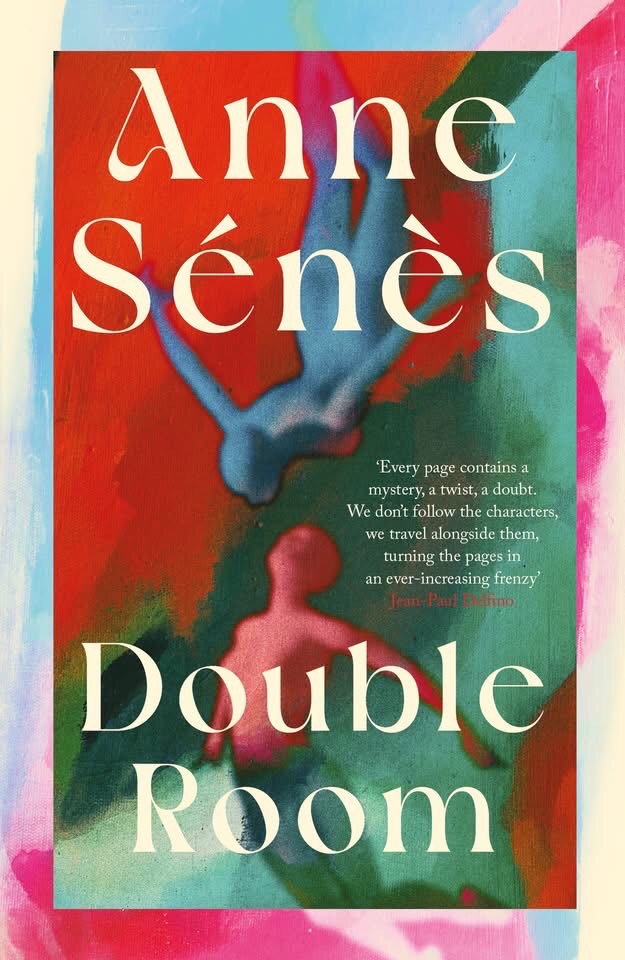
Double Room by Anne Sénès

London 1990s – An up and coming French composer called Stan is invited to arrange music for a stage production of Dorian Gray. Although the play is never staged, he does meet Liv and she becomes the love of his life. They live together, joined by a daughter called Lisa. Their happiness fuels his senses with vibrant colours and melodious music.

Paris, Present Day – Stan lives in France at the Rabbit Hole, a house left to him by his aunt. He now shares his life with Babette, a lifeguard and mother of a teenage boy of Lisa’s age. They also share their home with Laïvely, a machine built by Stan and given Liv’s voice. As Stan becomes more engrossed in his past Laïvely starts to take on a life of her own. His life is about to implode.

This is, at heart, a love story. Told in flashbacks Stan reminisces over a golden period of his life when he and Liv fall in love. It’s no accident that they meet through a production of Dorian Gray because the author does bring it’s style and it’s moral into her novel. The first thing I noticed was the fact that Stan has synaesthesia, a fascinating neurological condition where colours or images evoke tastes or smells. The opening of Dorian Gray is so heady with scent it could conjure a symphony:

“The studio was filled with the rich odour of roses, and when the light summer wind stirred amidst the trees of the garden, there came through the open door the heavy scent of the lilac, or the more delicate perfume of the pink-flowering thorn.”

Some of Stan’s descriptions, as colour turns to scent and then turn to melodies, bring the senses alive in a similar way. For Stan, music is simply an extension of his sensory abilities, like a form of ESP. There is also the doubling aspects of both novels, captured in the book’s title. Dorian Gray’s portrait is the sum of his dissolute lifestyle, freeing him to experience more and more without it showing on his face. Stan presents his life in two narratives, the present in France and the past where he was at his most creative, happy and in love. His relationship with Liv is almost idyllic. They seem to be naturally suited, in total harmony and without a cloud in the sky. Anything he relates of his present can only suffer in comparison. We learn that he and Babette are compatible, but there is none of the life and vivid colour that comes from his reminiscence. We are all nostalgic about the past, but no relationship can be perfect especially when cramped into the average London apartment with a small baby. While it is touching and romantic, the cynic in me wondered was this a true picture? As for Liv, she is in technicolour in Stan’s flashbacks with her vivid red hair. However, all that life is now reduced to a communication device and no matter how Stan cuddles Laïvely to him, she is inanimate, merely a machine. In what way is this a fitting representation of the love of his life? It seems like, in the present, neither Stan or Liv is truly alive. When Stan trips one morning the giggle that comes from the device is strange, a laugh he’s not a encountered before. Could it be there is a hint of malice?

The other book mentioned heavily is of course Alice in Wonderland, inspiration for the name of Stan’s home in France. Another book where there are versions of the self and a blurring between what is real and unreal, something the author has carried into this novel successfully. Stan’s past has all the colour that his present is missing, but there’s something equally unreal about his present. It’s not that there isn’t a fulfilling life to be had. It’s just that Stan isn’t fully engaged. I felt as if the rest of his family had a life, but Stan has started to detach from it. The author’s layers of description evoke the 1990s in a nostalgic way, something I’m apt to do from time to time because it was my era. Laïvely is meant to bring Liv into the here and now, but it feels more like a conduit to the past dragging Stan further and further away from reality. He rarely mentions his or Babette’s child, until he and Téo have a row. He tells us Babette organises everything: celebrations, days out and holidays. Is this a natural division of their lives or is it simply that if Babette didn’t do it their life would run aground? Their relationship seems more about companionship and choice rather than love. It’s as if he has found a calm, steady presence who won’t overpower his senses.

The author cleverly fragments things, very slowly. When I turned a page and realised Stan had been injured by a cupboard door, I had to go back and work out how this had happened. The story continues in past and present chapters but the past starts to feel more coherent and real. Loss is a strange thing, even when you’ve moved on in life because the previous one is still there, haunting you. It becomes a parallel existence where you think about what life would be like now if you hadn’t lost that person. Stan can tell us long detailed passages about what Liv was wearing, the colour of her hair barrettes. He can relate details of their friend Henry’s visits, the eccentric musician has a good relationship with Stan’s daughter Lisa and is there to the end of their relationship. At Rabbit Hole Stan is becoming as inanimate as Laīvely. He’s eating and playing music, often in the same room as his family without hearing a word they say. At times he seems almost catatonic, unable to answer Babette when she knocks at his door. Then she tells him she has booked a holiday without him, choosing to take her son. Stan says nothing, the tension rising. I felt we were building towards something with our past timeline catching us up to why he and Liv are no longer together. I could understand him coming apart a little as he relives his story but this is complete disassociation. I was ready to be heartbroken for him and his daughter, but things are not always as they seem.

The author brings the truth to light brilliantly and I feared Stan’s mind was splitting. He has always remembered his and Liv’s relationship as an ideal. Often when we lose someone the tendency is to rewrite history and paint them as a good person who everyone loved, even glossing over addictions, criminality and all manner of bad behaviour. I’ve occasionally been to a funeral and wondered if the speaker and me knew different people. I can’t see the point of remembering something that isn’t real. Stan seems to imagine that he and Liv would have lived in this harmonious way forever, then as the truth emerges Stan’s perception of himself starts to shatter. Babette finds him catatonic and soaking wet, having to place him in a hot bath and slowly bringing him back to himself. It’s the most nurturing, selfless and loving part of the book and it’s all the more sad that he hasn’t before recognised or rewarded her love and loyalty.

“My partner has behaved like a mother, a loving and devoted wife. She had cared for me, comforted me, given me all the tenderness she could muster”.

He also realises that there were times he was too distant and distracted with Liv, that he stopped paying her attention. It was as if he had imagined them always walking towards a common goal but truthfully, he knows they were out of pace with one another. As the ‘tick, tock’ of the clock at the Rabbit Hole reminds us that the end is approaching we fully comprehend this heartbreaking story. This is no ordinary loss and it’s clear that Stan has never faced the truth of their final days until now. This is an emotional end that has one final twist to impart and it is devastating. It seems that Stan has always held on to Liv’s portrait, but is was a ‘painting turned against the wall’, keeping it’s secrets until that final terrible reveal.

Out Now From Orenda Books.

Meet the Author

Anne Sénès is a writer, translator and former journalist. She was born in Paris and studied at the Sorbonne, where she obtained a PhD in English studies. Her passion for Anglo-Saxon literature and culture has taken her all over the world, from London to Miami, via the south of France. She is currently based on the French Mediterranean coast. Chambre Double (Double Room) is her first literary novel.

Posted in Random Things Tours

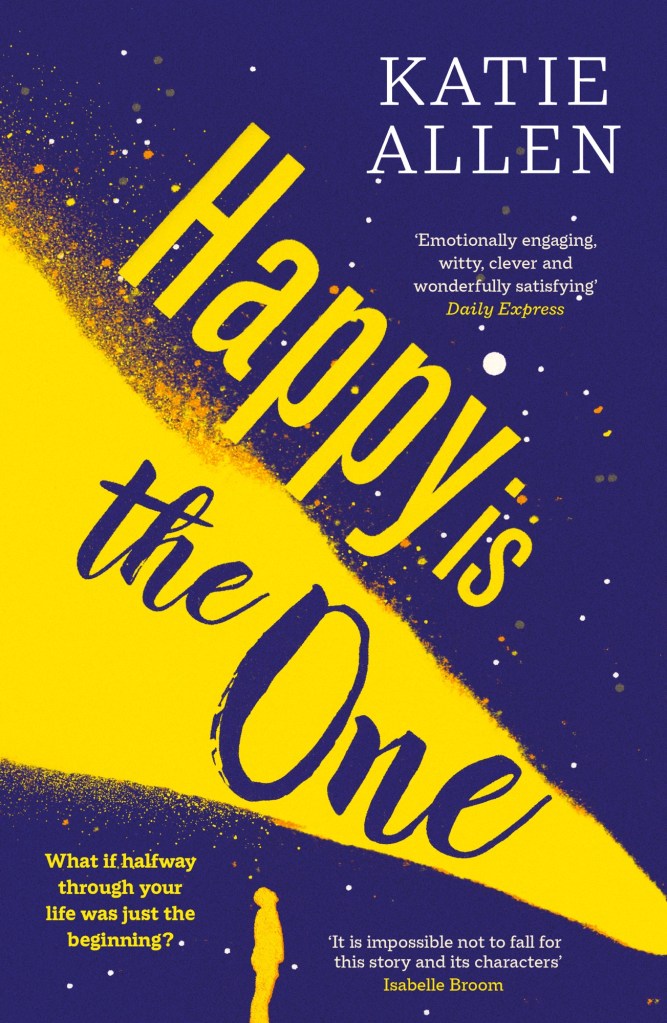
Happy Is The One by Katie Allen

Robin is exactly half way through his life. Like Mark Twain before him, Robin came into the world with Halley’s Comet in 1986 and fully expects to go out again when it returns in 2061. Recently he’s had a huge life change. He’s moved back to his home town of Eastgate to care for his sick father, who due to a disability has had one accident too many. Robin had a well-regimented life in London with girlfriend Gemma. He also had a boring well-paid job as an accountant. Now everything has been thrown up in the air and he’s living in a tiny bedroom surrounded by boxes he hasn’t unpacked. He’s trying to forge a relationship with a father who can’t communicate and who he never connected with as a child. There are childhood ghosts to face and a new connection with Astrid, fellow outsider and professor at a nearby university. She’s brutally straightforward and Robin has never met anyone like her. She’s also hiding something, but he’s hiding even more from her. Can Robin make friends, help his father and accept this is the next chapter of his life?

This was a great book that’s simply joyful to read, even while addressing some really difficult themes. Robin is a great character to spend time with. I found myself feeling quite protective of him, despite his rather pernickety ways. I could honestly feel his anxiety and he copes by planning for eventualities that might never happen. He ekes out money, setting a daily amount for a minimal food plan and then bulk shopping at Costco. He’s worked out how long his savings will last, trying to keep Dad’s care to a minimum so he can afford it for longer. He seems at odds with everyone; not communicating with his father, bickering with Jackie who is his father’s man carer, and not even trying to find old friends. I’ve been a carer and I felt how overwhelmed he is by everything when he climbs up on the roof for some peace. He has to connect in order to get this new chapter of life started. However, to do that he has to accept that this is his life for now. The daytime telly shows, the sorting of meds and lifting his dad off the loo is life. He doesn’t seem to realise that while he fights it, he remains standing still. If he accepts Astrid’s friendship, unpacks the boxes and breathes, life will get better. 

My two favourite characters are the forthright Astrid and Jackie. Astrid is a strong character and has a lot to say, but enough quirks to humour Robin and push him just a little into enjoying life. She embraces and accepts where he is in life, happily trawling Costco for savings. His relationship with her little boy is lovely too. No one can go through life as an island though and Eastgate is a small place. It’s almost inevitable that these new relationships are uncomfortably entangled with others he’s been trying to avoid. Jackie is wise and more of an asset than Robin realises as he spends weeks trying everything to avoid her – even climbing onto the roof. She’s brilliantly written because I’ve met carers like this and they’re worth their weight in gold. Nothing phases her and she is soon onto Robin’s ways. She reminded me of an incredible carer called Barbara who worked in a pair looking after my late husband. She was wider than she was tall and smoked like a chimney between calls. She was also matter of fact, never allowing him to be embarrassed about any aspect of his care. Barbara had seen it all and her stories had him in fits of laughter. I knew he was in safe hands with her, an incredible weight off my mind when I had to go in to University. Barbara passed out one day at work and died only a few days later, from a brain tumour she didn’t know she had. She was caring for people at the end of their lives, not knowing she was close to her own.

The wonderful relationship between Robin and old friend Danny felt so genuine and the way they talked to each other felt exactly like people who’ve known each other from childhood. There’s a shorthand and we start to realise some of Robin’s quirks have been there a while. You get the sense that if they were going on a bike ride Robin would spend so long getting prepped with wet weather gear and a puncture repair kit that they’d run out of time. Danny on the other hand would set off as is and get soaking wet, then tell everyone the story for years. Danny is full of life and has a great business idea to run past Robin, but can he be tempted to take the risk? Robin is eking out an existence that goes way off into the distant future, but our futures change all the time and one day he’ll start living yet another chapter. Living is right now! It’s not when we have money, or have lost weight, or when we have better health. It’s now, when we’re skint, fat and feeling ill. Whatever life looks like right now, we absolutely must live. Many people don’t get the time to waste. Of course, when we find out why Robin is so adamant about his comet theory – while being forced to evaluate his choices by a strident Astrid – it all becomes clear. A heart-breaking tale emerges, just as Robin is faced with yet another loss. He’s forced to admit why he jumped off a cliff into the water when he was a child. He thinks he can’t die, because once he survived something and can’t make sense of it. In fact immortality is the only explanation that does make sense to him. He’s doing what humans do, we subscribe meaning to events that have none. It’s just messy, terrifying, random and heart-breaking life. Katie infuses this difficult truth with beauty, humour and hope because life is beautiful and joyous too, if you let it be. 

Out 22nd May from Orenda Books

Meet the Author

Katie Allen was a journalist and columnist at Guardian and Observer, starting her career as a Reuters correspondent in Berlin and London. Her warmly funny, immensely moving literary debut novel, Everything Happens for a Reason, was based on her own devastating experience of stillbirth and was a number-one digital bestseller, with wide critical acclaim. Katie grew up in Warwickshire and now lives in South London with her family.

Posted in Random Things Tours

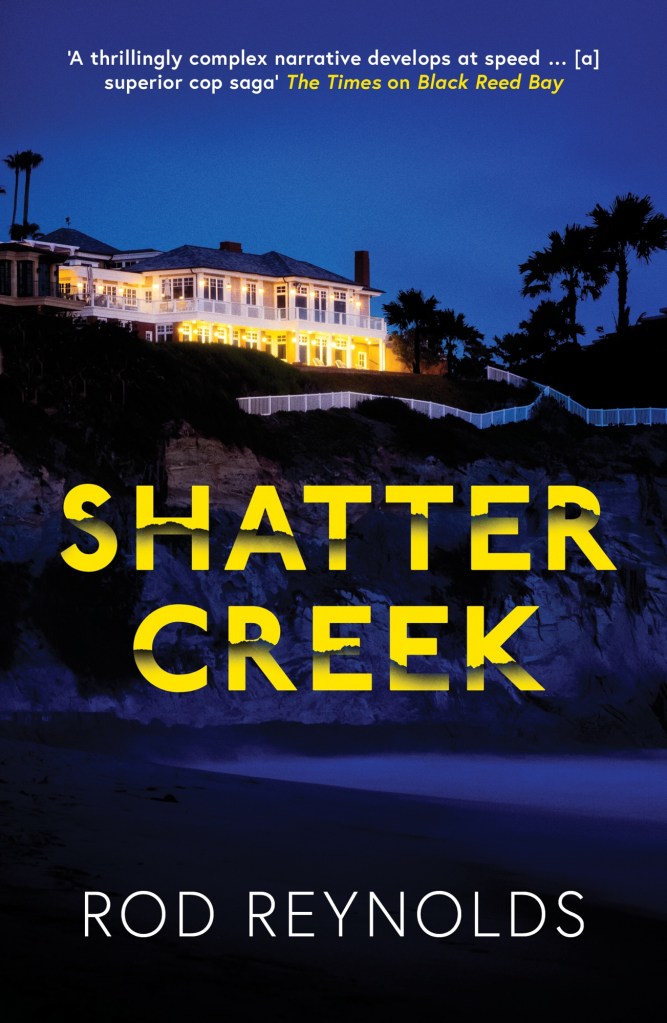
Shatter Creek by Rod Reynolds

Shatter Creek is the second novel in Reynold’s Casey Wray series, set in Hampstead County Police Department on Long Island. The department has been under investigation and the corruption reached to the very top. Casey’s boss and mentor, Ray Carletti, was found to be a dirty cop and it’s clear that she’ll have to do a lot of proving herself to the new Lieutenant. Until then she’ll suspect Casey of being a corrupt cop, who managed to elude the investigation. She’s also under pressure from the Mayor/DA’s office, in fact it seems like Casey is piggy in the middle between the two, vying over who gets the news first. When there’s a double shooting outside a gym in Rockport, Casey and partner Billy Drocker are first on scene. A woman has been shot just outside the gym entrance, but there’s also a second victim slightly further away down a side road. Luckily, Casey finds an off duty cop already there, tending to his wound so she’s free to chase down the shooter. After trying a few side streets, she realises that there are too many possible escape routes for her to cover. It’s like he disappeared and Casey is left trying to work out who was the target. The two victims have nothing in common. The male victim leaves a wealthy widow who has contacts in the mayor’s office – the last thing Casey needs. Surely a self-made man who could afford a home on Shatter Creek has his fair share of enemies though? Then comes the shooting of another woman outside her home and they uncover a link. Both female victims turn out to be just two in a line of women strung along by potential suspect, Adam Ryker. He has a reputation and not just as a womaniser but as a man who likes to control women. Casey has more questions than answers: Who are the couple seen in a car taking photographs? Could one of Ryker’s girlfriends have hired a hit? Why did the male victim have Casey’s phone number on a business card? This is an incredibly complex case, in particularly tough circumstances and Casey needs to solve it, not just to take a murderer off the streets but to prove she isn’t the cop that her new lieutenant thinks she is. 

Wow, this really was a labyrinthine case! Full of red herrings and distractions from an endless parade of women claiming to be in a relationship with their suspect and a lot of political machinations behind the scenes. Casey really is in a tough situation and I don’t mind saying that I might have gone for the potential transfer or the unexpected job offer she gets. It’s clear right from the start that her new Lieutenant doesn’t even want to give her a chance. Whatever happens, this case has placed her at a crossroads and if she stays she’s going to have to solve this fast and prove her worth. There is one key witness, a woman with red hair carrying a little girl who seemingly disappeared from the gym during the shooting. Where does she fit? Casey was already in an impossible situation and now she has to rein in her rookie partner who is a little over enthusiastic. She’s still grieving the death of her previous partner, a fact that still hits her hard in the gut whenever she thinks of him. When she meets ex-cop McTeague in a bar, both for information and a catch up, he offers her a way out. Would she want to come and work for him? She’d still be using her skills, but with steadier hours, less politics and doing things on her own terms. She allows herself to think about it, but knows that she has to solve this case first. I’m not sure whether it’s professional pride, a determination to show she’s not dirty or that urge to serve and protect the public. Probably a bit of all three.

Casey is a people pleaser underneath, someone who finds it hard to say no and struggles to let cases go. It’s the reason she becomes caught in the headlights of Rita Zangetty, the chief of staff to the County Executive Franklin Gates. Zangetty wants someone inside who can keep her abreast of this case, but also the ongoing review of the whole police department. A part of her had expected to be placed in the acting lieutenant’s role after being cleared of any wrong doing. She’d put in her application, not even expecting an acknowledgement so to be shortlisted and interviewed gave her hope. To be placed under someone completely new, with no warning was a blow to her confidence. The shootings happen only 24 hours later. When evidence emerges that puts Casey even further under the spotlight I was surprised. Could Casey possibly be as bad as Carletti? I loved her conversations with the dead man’s wife, out at their incredible home on Shatter Creek. There’s a sense that here are two opponents who have the measure of each other, they’ve finally met their match. As Casey starts to interview the previous partners of Adam Ryker it seems like she’s set on a direction, but she’s still juggling questions in her mind. Questions that won’t go away. Why is the woman she saw reading in a bar still on her mind? What was it about the meeting with McTeague that’s bugging her? Who is the man seen taking photographs, not just near the crime scene but at different locations throughout the case – almost like they’re working in parallel. When the truth slowly starts to dawn on Casey she takes us with her at a breathtaking pace, leading a totally unexpected and heart-stopping show down. This was a gritty, inventive and compelling thriller, with a lead detective who’s dogged and determined to find the truth – even when it’s a truth she doesn’t want to face.

Out now from Orenda Books

Meet the Author

Rod Reynolds is the author of five novels, including the Charlie Yates series. His 2015 debut, The Dark Inside, was longlisted for the CWA New Blood Dagger, and was followed by Black Night Falling (2016) and Cold Desert Sky (2018); the Guardian has called the books ‘Pitch-perfect American noir.’ A lifelong Londoner, in 2020 Orenda Books published his first novel set in his hometown, Blood Red City. The first in the Casey Wray series, Black Reed Bay, published in 2021, was shortlisted for the CWA Steel Dagger, with its long-awaited sequel, Shatter Creek, out in 2025. Rod previously worked n advertising as a media buyer, and holds an MA in novel writing from City University London. Rod lives with his wife and family and spends most of his time trying to keep up with his two daughters.

Posted in Random Things Tours

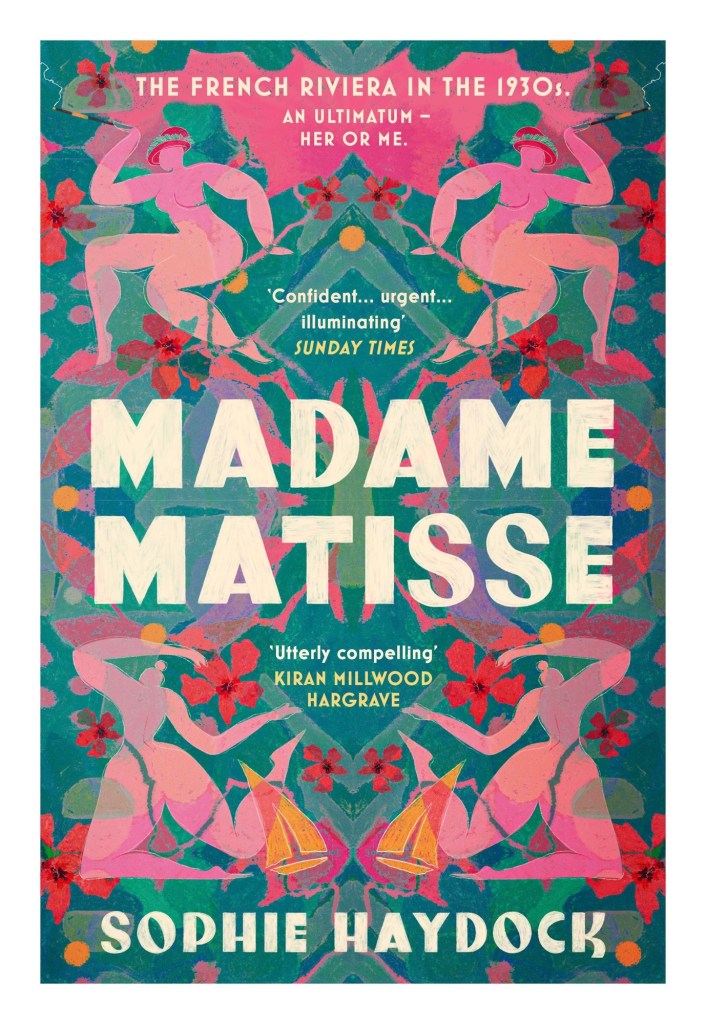
Madame Matisse by Sophie Haydock 

This is the story of three women – one an orphan and refugee who finds a place in the studio of a famous French artist, the other a wife and mother who has stood by her husband for nearly forty years. The third is his daughter, caught in the crossfire between her mother and a father she adores.

Amelie is first drawn to Henri Matisse as a way of escaping the conventional life expected of her. A free spirit, she sees in this budding young artist a glorious future for them both. Ambitious and driven, she gives everything for her husband’s art, ploughing her own desires, her time, her money into sustaining them both, even through years of struggle and disappointment.

Lydia Delectorskaya is a young Russian emigree, who fled her homeland following the death of her mother. After a fractured childhood, she is trying to make a place for herself on France’s golden Riviera, amid the artists, film stars and dazzling elite. Eventually she finds employment with the Matisse family. From this point on, their lives are set on a collision course….

Marguerite is Matisse’s eldest daughter. When the life of her family implodes, she must find her own way to make her mark and to navigate divided loyalties.

Based on a true story, Madame Matisse is a stunning novel about drama and betrayal; emotion and sex; glamour and tragedy, all set in the hotbed of the 1930s art movement in France. In art, as in life, this a time when the rules were made to be broken…

Almost eleven years ago my lovely arty friend Mandy wanted to visit the Matisse exhibit at Tate Britain. I really hope I didn’t ruin it for her. I probably did. I confess I’m not a lover of modernist art. We went to the Guggenheim in New York and I proclaimed it disappointing. We had to go across to the MET and see their collection of Impressionists to cheer me up. My loves are the Pre-Raphaelites and the Art Nouveau/ Arts and Crafts period so we’re a long way away from each other in preference. Art is her subject so I’m happy to own that she certainly knows a lot more than me. I was interested to read in her afterword that the author has always had an interest in Matisse, with a black and white postcard of him on her notice board for several years. I have one of Gustav Klimt wearing an artist’s smock and clutching a cat, with a look of devilment on his face. It makes me smile whenever I see it so I understand how a particular artist can inspire your imagination. Sophie’s first novel, The Flames, was about a protégé of Klimt. It was narrated by the women in the life of Egon Schiele, the subjects of four of his paintings. Here she takes a similar look at the women who surrounded Henri Matisse, showing how they advised, supported and sustained him in his endeavours, but remained completely in the background to his talent. 

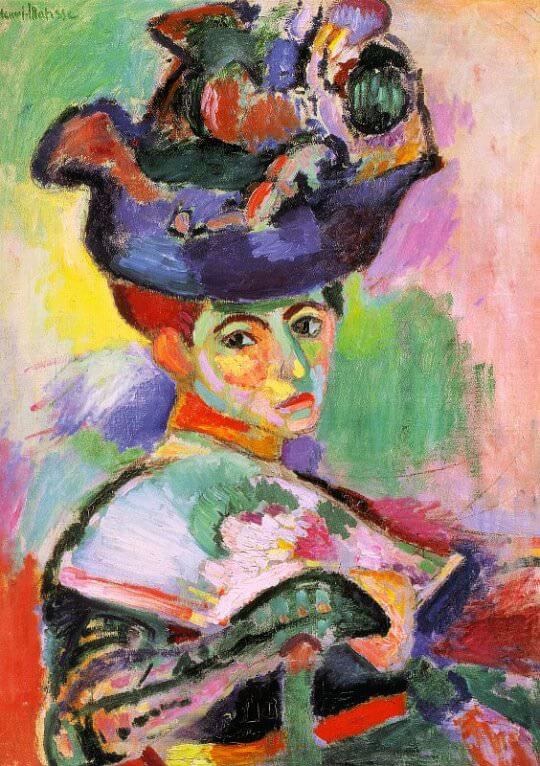
The story starts with Amélie, an incredibly brave young woman who takes a chance on marrying an artist rather than a more conventionally acceptable partner. She sees something in Matisse’s paintings, recognising the way his work could be at the forefront of modernism. Previously his colourful style has been rejected for exhibition in Paris, but Amélie knows that innovative artists often take a while to break through. In fact it is a painting of Amélie that is the catalyst for Henri’s career to take off. Woman in a Hat is exhibited in Paris and bought by siblings Gertrude and Leo Stein, a bohemian pair central to the art world throughout the early 20th Century. This is where Amélie makes the bravest and most important decision of her husband’s career. The Stein’s offered only two thirds of the asking price. Eager to make a sale to the influential pair, Henri is willing to give the discount but Amélie advises him to wait and hold out for the asking price. He takes her counsel and they go and meet the Steins, convincing them that Henri is central to the next great artistic movement. The Steins pay the full price. The couple are a great team with Amélie making all the household and business decisions, freeing Henri to paint and become a famous member of the Fauvist Movement. She also brings Henri’s daughter Marguerite into their growing family, when her own mother is struggling to care for her. Yet, not everything about their relationship runs smoothly. Once they are able to afford a family home with a garden and studio for Henri, Amélie’s help is no longer needed. Henri takes on a series of young assistants and Amélie has the more traditional wife’s role which doesn’t suit her. It’s fascinating to read about the changes, once their joint struggle is over they cease to become a team and the problems begin. 

Woman in a Hat

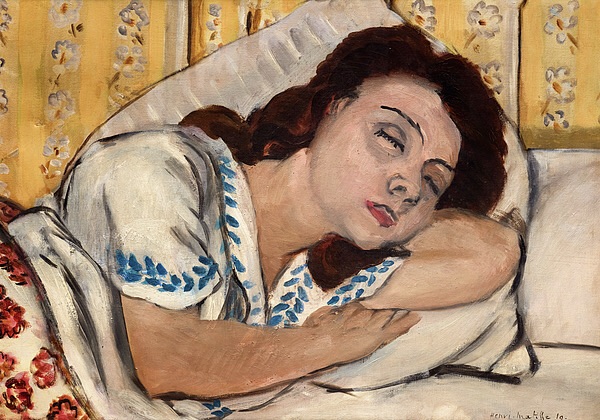
Another section of the novel is devoted to Marguerite, Henri’s illegitimate daughter. Once Amélie has brought her to live within their family, Marguerite seems to blossom under the care of her stepmother. She also makes herself useful to her father, tidying his studio and anticipating his needs. It is interesting to hear about Amélie and Henri’s relationship from her perspective and her anxieties that the family she’s been brought into, stays together. She shares a lot of Amélie’s suspicions about some of the assistants who breeze in and out of their lives. She’s also a strong advocate for her stepmother, even into her parent’s old age. Yet there were times when I felt she was taken advantage of by Amélie and her father. There’s a sense in which, despite seeming kind, loyal and trustworthy, Matisse does use the women around him. The household was entirely groomed to anticipate his needs and the women are sacrifices for his artistic genius. 

Most interesting to me was Lydia Delektorskaya, born in Tomsk, Russia, in the tumultuous period after the revolution. After the murders of the Royal family, Lydia has just lost her mother when her father decides she must leave the country. He gives her a gun with three bullets left in their chambers and sends her to China on the Trans-Siberian Express with her Aunt Berthe. After building a life there Lydia must make a choice between the Sorbonne in Paris or to marry her lifelong friend and stay. Lydia takes neither choice and instead aims for the South of France, a place that couldn’t be more different to the place she was born. She spends time working in a bar but when she sees a job with the Matisse family she decides to apply. The job is to look after Henri’s wife Amélie who has a chronic illness and is confined to their apartment. Lydia has experience of working with her mum and her aunt and felt fulfilled by her caring role. Once she starts work though, some of her duties are to assist Henri in his studio, eventually sitting for portraits and sketches. Amélie eyes their relationship with suspicion despite there being no evidence of impropriety. This is more than an affair, it’s a meeting of souls and when ultimatums are made they have terrible consequences. 

Marguerite Asleep

I loved reading about these fascinating women, all of which step outside the traditional role of most women of the time. Sophie beautifully situates Matisse within his peer group, especially his great rival Picasso. She situates each woman perfectly within their history, the most in depth being Lydia’s Russian background and Marguerite’s incredible bravery in WW2. Both are fascinating to read and show us the extreme cruelty and playbook of totalitarian regimes. She also shows us how incredibly brave and resourceful each woman is, more involved in the world and bigger risk takers than Matisse. Lydia’s realisation of what her father truly sacrificed to stay in Russia happens when she is older. First they came for the royal family and aristocracy, then those with intelligence and  the ability to challenge them, just as the Nazis did in Poland. This perhaps has more resonance thanks to current world events. I thoroughly enjoyed looking up the paintings mentioned and seeing Matisse’s representation of the three women who were closest to him and I found myself reading articles about him and Picasso. It left me with a sense of anger and empathy for how much women sacrifice so that men can excel at what they do, realising their ambitions while their wive’s ambitions are forgotten or buried under a suffocating mental load – still the thing women in my group talk about most. These women never take the limelight away from Matisse, even while stripped bare for people to view. The focus is always on the painter, their brush strokes, choice of colour and artistic decisions. I love that in this novel they are more than body parts, they’re shown as the vital, brave, complex and generous women they clearly were.  

Lydia Delectorskaya

Meet the Author


Sophie Haydock is an author, editor and journalist (Sunday Times, Financial Times, Guardian), based in Folkestone, Kent, where she is curator of Folkestone Book Festival. Her debut, The Flames – about the women who posed for the scandalous artist Egon Schiele in Vienna a century ago – was named by the Times as one of the Best Historical Fiction Books of 2022. It was longlisted for the HWA Debut Crown Award, and the Italian translation, Le Fiamme, won the Premio Letterario Edoardo Kihlgren for debut novels. She worked for the Sunday Times Short Story Award and is associate director of the Word Factory. Her Instagram @egonschieleswomen has 110,000 followers. Visit: sophie-haydock.com

Posted in Orenda, Random Things Tours

Son by Thomas Enger and Johana Gustawsson

The blurb on the back of this novel promises an electrifying blockbuster that will be the start of a ‘nerve shattering’ new series. So there’s a lot to live up to, but don’t worry Son definitely delivers. To use a rather impolite phrase, this is a therapist’s wet dream of a novel – hidden characters, unexplained black outs, grief, trauma and an investigator who is dubbed ‘The Human Lie Detector’. I was definitely in my element here. Kari Voss is the centre of this tangled web, a psychologist who specialises in memory and body language making her a perfect consultant to Oslo’s police force. When two girls are brutally killed in a summer house in the village of Son, it’s a crime that’s closer to home than she would want. The girls, Eva and Hedda, were best friends with Kari’s son Vetle when they were younger. In fact it was while on a holiday seven years ago that Vetle disappeared in nearby woods and was never found. The girls are now teenagers and were planning a Halloween party for their friends, but were found tied to dining chairs with their throats cut. They were found by a third friend, Samuel Gregson, when he turned up to start the festivities. However, there was someone else there, someone who left slippery marks in the blood that has poured onto the floor. He’s the first person that police chief Ramona Norum arrests and starts to question. When Kari is asked to consult she knows this will be difficult, not only is she friends with the girl’s families, but their lives are inextricably linked to her missing son. How will she negotiate all the emotions this case will unleash and stay focused enough to find the girl’s killer? 

Often with thrillers, I find they’re full of action, twists and turns that are really addictive, but have no emotional depth. The characters are often one dimensional and it’s hard to care about what happens to them. There’s no danger of that here. This is the perfect combination of twisty and unexpected, but underpinned with huge emotional weight. It’s deeply unsettling, with a questionable suspect and an equally unreliable narrator. Not only is Kari still dealing with the trauma of losing her son, she’s also grieving for the more recent loss of her husband. She can’t sleep and seems to running on empty from the start. Yet, the way she observes people is so detailed and it seems almost effortless. This goes way beyond the basics like crossed arms meaning someone feels defensive. In a lecture she tells students that in the space of an ordinary conversation we give away over eighty-five non – verbal signs about the mood we’re in. She’s not afraid of giving an unpopular opinion either. She absolutely backs the science and her ability to analyse people, whether they’re claiming to be innocent or guilty. I loved the tension created by the authors as they played with her expertise and her emotions. Is she detached enough to make a sound judgement here? As if that isn’t enough, there seem to be instances where Kari loses time. She wakes up in the car on her own driveway with no recollection of the journey home. She seems to have been on autopilot, so caught up in her own thoughts she hasn’t noticed the journey. She had similar blackouts after her husband died, but what has triggered them? When the young man arrested at the scene of the crime also seems to have experienced a black out I wondered whether he knew her history. Could he be deflecting attention from himself because he knows Kari’s secret? Or is Kari more liable to believe a story like that because she’s experienced it herself? It’s this complexity that makes the plot and Kari herself more fascinating. 

No one is what they appear here. As Kari starts to ask questions about Eva and Hedda, it turns out that they aren’t always the polite children or young teenagers they appeared to be to the adults in their lives. Everyone has different layers, choosing what to reveal and to whom they reveal it. The authors are very clever about the amount of introspection they use, creating a hidden layer to the crimes and a breathing space between the character driven chapters and the ones filled with nail-bitingly intense action. Then they throw in another twist, to keep you engaged, leaving me unsure of my own deduction skills. There’s even subterfuge in the title, Son is a place that’s slightly north of Oslo, steeped in Nordic history and full of that unsettling atmosphere that I find Nordic Noir is so good at. Yet it’s also a person, so missed by those who love him and inextricably linked to this landscape, that has potentially become his final resting place. I was compelled to read this to the end, taking it everywhere with me on holiday so I could grab a chapter in a coffee shop or even in the car. This is an engrossing and addictive start to a promised new series and I’m already craving the next instalment.  

Out on 13th March from Orenda Books

Meet the Authors

Known as the Queen of French Noir, Johana Gustawsson is one of France’s most highly regarded, award-winning crime writers, recipient of the prestigious Cultura Ligue de l`Imaginaire Award for her gothic mystery Yule Island. Number-one bestselling books include Block 46, Keeper, Blood Song and her historical thriller, The Bleeding. Johana lives in Sweden with her family. A former journalist, Thomas Enger is the number-one bestselling author of the Henning Juul series and, with co-author Jørn Lier Horst, the international bestselling Blix & Ramm series, and one of the biggest proponents of the Nordic Noir genre. He lives in Oslo. Rights to Johana and Thomas’ books have been sold to a combined fifty countries and, for the first time, two crime writers, from two different countries, writing in two different languages, have joined forces to create an original series together.

Posted in Random Things Tours

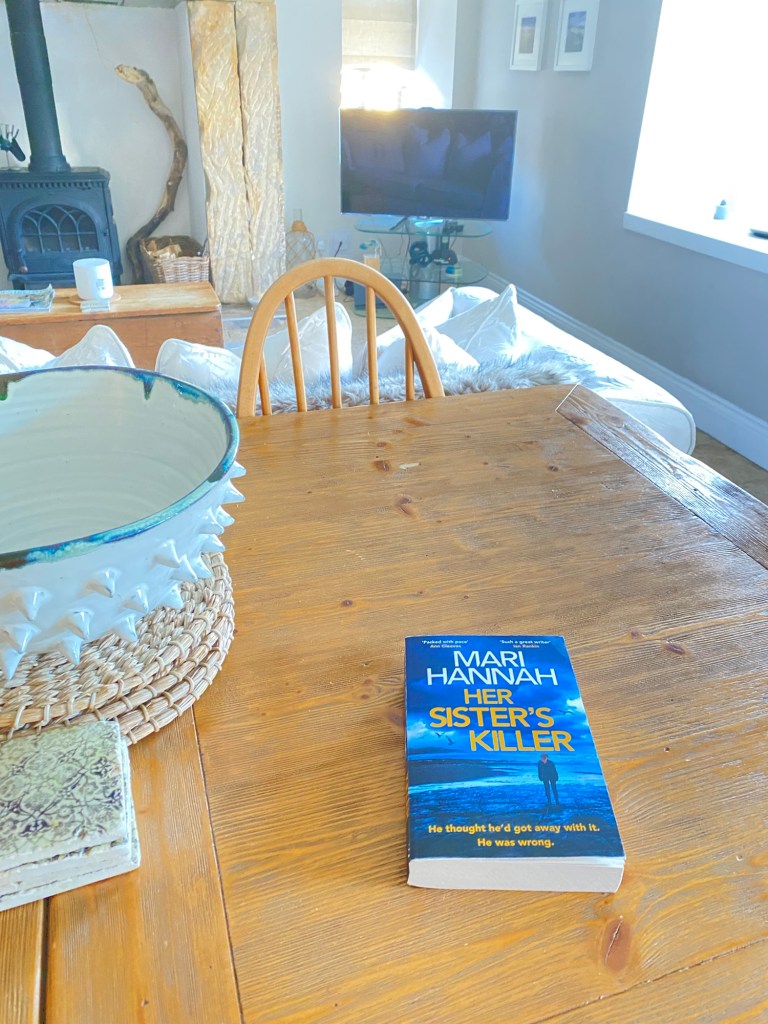
My Sister’s Killer by Mari Hannah

I’ve slowly been collecting the Stone and Oliver series over the past year, after one took my fancy in Northumberland’s famous Barter Books in Alnwick. Since then I’ve grabbed the paperbacks wherever I found one so I could read them all in order. Then this blog tour offer came along so I jumped at reading one completely out of sequence. Now I can’t wait for the rest of the story! 

Frankie Oliver and David Stone have been working together in the same MIT for the a few years, in their Newcastle headquarters jokingly referred to as ‘Middle-Earth’. However, the novel starts in a much darker place, many years before, when another detective is called to a body found on some waste ground. Horrified, he drops to the floor unable to contain his devastation. The body on the ground is his daughter. It’s such a powerful and emotive opening, leaving us in no doubt that this is a defining event for the loved ones of this girl. An absence that they still feel every day. For her dad it’s complicated by the fact he’s a murder detective and he missed Joanna’s last call. It’s arguable that this case is the very reason that her sister, Frankie Oliver, became a detective. She and David are an incredible team at work and have the potential to take their relationship further. It’s clear there’s been some ‘will they won’t they’ over the course of the previous novels. Now Frankie is taking a break from the team in Newcastle, a promotion to DI means she must fill a post back in uniform for a while, based out of the most northerly police station in the county, Berwick-Upon-Tweed. Frankie accepts and the team organise a leaving ‘do’. It’s there that Dave overhears an argument that immediately propels him back to the murder of Frankie’s sister. What’s said between the two men outside the venue sparks an idea in Dave’s mind. He has had an idea of how to investigate the cold case, but knows that he doesn’t want to bring more pain to the family. Hopefully Frankie’s secondment to Berwick means they won’t have to. 

Meanwhile Frankie’s first job is an RTC on the A1 and in the total chaos she finds a little boy handcuffed in the back of a van. The driver and passenger are dead and the van is a write off so Frankie can’t believe this little boy has survived. As she rescues him, an onlooker tells her that a man escaped out of the back doors straight after the crash. This opens up a trafficking case that might take her straight back out of uniform again. The boy, Amir, takes to Frankie. Possibly the first person in a long time who has made him feel safe. She shows a real maternal side with him and her sister-in-law Andrea is sure that Frankie’s sister Rae will feel the same. Andrea and Rae have been looking at fostering, much to Frankie’s surprise. Could they be the right fit for this terrified boy? Dave has been missing Frankie’s presence but he knows that solving the case of what happened to Joanne matters to her more than anything. He has just one officer -Indira- and a limited time scale to investigate. Frankie is the only person he wants to talks to but she can’t know until and if, they make an arrest. Especially since he suspects the murderer may have been closer than they ever imagined.

This really is a nail-biting story, written in very short chapters that are easy to devour very quickly. So many have a cliff-hanger ending too. The setting is beautifully captured in it’s contradictions: the modernity and buzz of Newcastle with the contrast of the wild countryside and beautifully rugged coastline. There are differences in policing too as we can see from Frankie’s time on the Scottish Borders. I really fell in love with Frankie’s family, because they are so loving and nurturing with each other. I could see how taking in Amir could be the best thing for him, but it could also put the tightly knit Olivers under stress or even into danger. I kept thinking about how distraught the family would be if something happened to him or to those like Andrea and Frankie who are trying to put the child trafficking gang out of business. The author cleverly uses these family dynamics, as well as Dave and Indira’s gentle and nuanced interviewing on the murder case, as a contrast or perhaps a breather between Frankie’s more nail-biting action sequences. The only drawback was that I’d be so desperate to know what happened next for Frankie that I might not take in all the detail of the quieter chapter in between. Of course that says more about my lack of patience than the book. As for the relationship between Frankie and Dave, I was very much invested despite not knowing everything that’s gone before. I can see both their perspectives and there are so many reasons not to take a risk, but if we never take a risk we might never know what might have been. It reminds me of the inspirational quote about fear of falling; ‘but imagine, what if you fly?’ 

Meet the Author

Multi-award winning Mari Hannah is the author of the Stone & Oliver crime series, the Ryan & O’Neil series and the DCI Kate Daniels series.

In July 2010, she won a Northern Writers’ Award for Settled Blood. In 2013, she won the Polari First Book Prize for her debut, The Murder Wall. She was awarded the CWA Dagger in the Library 2017 as the author of the most enjoyed collection of work in libraries. In 2019, she was awarded DIVA Wordsmith of the Year. In that same year, Mari was Programming Chair of the Theakston Old Peculier Crime Festival. In 2020, Mari was named as DIVA ‘Wordsmith of the Year’ and won Capital Crime’s ‘Crime Book of the Year’ award.

She lives in Northumberland with her partner, an former murder detective.

To find her or see where she’s appearing, visit her events page at: marihannah.com or follow her on Twitter @mariwriter.

Posted in Random Things Tours

Black Woods Blue Sky by Eowyn Ivey

“Now are the woods all black, but still the sky is blue. May you always see a blue sky overhead.”  Proust. 

I was utterly mesmerised by this unusual grown-up fairy tale. Having read the author’s work before I was expecting a certain strangeness and this story definitely delivered. It’s hard to write about without revealing anything and you need to go into this book without spoilers. The story is told through the eyes of Birdie and her little girl Emmaleen. Birdie is a young, single mum. She’s living in a cabin out behind the bar where she works for Della. Birdie is just getting by. She has a wild spirit and although she loves Emmaleen, she’s not the most consistent parent. We meet her on a beautiful morning where she has woken up from the night before relatively unscathed. Yes, she’s a bit hungover and she knows Della is going to have words for her when she goes into work. For now though, the woods and creek are calling her, so she takes her fishing rod and leaving Emmaleen asleep and alone she walks through the trees and down to the water. She rationalises that she won’t be long and Emmaleen will sleep for a while yet. She catches a rainbow trout, guts and cleans it in the creek, before setting off back to the cabin. When she gets there, Emmaleen is gone. Birdie goes into panic mode, desperate to find her daughter but terrified to admit to Della that she’s left her alone. It’s a man called Arthur who eventually emerges from the woods with Birdie’s daughter on his shoulders and she’s never been more relieved. She knows Della will have something to say about this, but for now she’s just happy that Emmaleen is safe. When Della moves her onto the day shift, it’s a comment on her partying and parenting lifestyle. She has to bring Emmaleen into the lodge with her, but she sits colouring and doesn’t pester while she’s trying to work. 

Arthur comes in most mornings, he sits through the bar side of the lodge alone and orders toast. She’s fascinated by this strange, wild man. He has scarring and only the remains of an ear one side of his face. Birdie thinks he smells of wild places, never artificial scent. He smells mossy and like earth. From time to time she brushes his shoulder and if Della is out getting supplies, she might take a moment and sit with him. He’s so natural and gentle with Emmaleen too. He’s quiet and when he does say something it’s strangely, always in the present. She asks him why and he tells her that for him the world is like that. He’s always in the here and now. He understands the wildness in Birdie and her yearning to be out in the mountains. His parents have had a cabin in the woods since before he was born and it’s become his more or less. For several months of the year he takes himself up into the mountains and lives off the land and whatever supplies his dad flies in. It’s total isolation, off grid and without comforts. When he asks Birdie if she and Emmaleen would like to make a home out there in the mountains, there is only one answer. Yes.

“That’s how it was with Arthur. Getting close to him, feeling his eyes on her – like touching something dark and wild, then watching it dart away.’

Between the pages of this book I was totally lost in the wildness of Alaska. The author’s descriptions are vividly beautiful and I found myself wondering about a place I’d imagined as being full of snow. All of my senses were engaged and I became entranced by Emmaleen’s discovery of nature as Arthur shows her the forest floor with it’s springy moss and tiny wildflowers. There’s a strangeness and even a danger to being so far away from civilisation. Arthur’s cabin has been needing a woman’s touch for a long time. The floor is covered with leaves and dirt from the forest and mosquitoes are squeezing through the gaps round the windows. Birdie sets about cleaning the cabin and Emmaleen gets used to her environment, playing with her gnome friends and tasting bluebell flowers. The days are harsh, but Birdie’s enjoying the challenge of cooking and laundry out here without heating or electricity. She likes not knowing what time it is and working to her own body clock. She feels like part of the place. Yet underneath these drowsy and idyllic warm days, there’s a sneaky sense of unease. Arthur’s father Warren seems reluctant to leave the woman and her daughter alone in such a secluded place with Arthur. He’s never seen his son  be so tender as he is with this little girl. He even flies over 48 hours later and sees all three of them hiking up one of the mountains and they wave to him. Maybe he’s worrying about nothing. Yet Arthur does disappear and reappear without warning and sleeps on the floor. He seems curiously unsure when it comes to sex. There’s a mound near the cabin where Arthur yells at Emmaleen, telling her not to play there.
There’s a hidden animal pelt under the earth and caribou bones under the bed. How long before Birdie and Emaleen learn the terrifying truth about Arthur? 

This incredible story fits it’s unusual background perfectly. I loved how accepting Birdie was, despite the fact that she’s making risky decisions she doesn’t doubt Arthur for a moment. She accepts his unusual and seemingly inexperienced caresses without question. I didn’t know what to expect from the sections where we’re in Emmaleen’s world, but they are really strong, with bags of imagination and inventiveness. She’s so innocent and precious. I’ve lived in rural Lincolnshire as a child, mainly on farms so her wanderings and imaginary games reminded me of being small. I used to draw flowers and bark patterns or lie in a willow tree that hung over the water and read all day while my brother fished. I was fascinated with wild flowers so the details of plants and berries, which to eat and which were poisonous are so familiar. I also grew a strong stomach, having sat and watched my Dad gut rabbits and pheasants. I loved that Birdie could do these things, she has basic survival skills but that’s for expected dangers. I had a feeling that the potential threat would be out of the ordinary. Even though she makes mistakes I had a real maternal fondness for this young woman and her acceptance of this taciturn young man. Love comes in so many different forms and even though I could feel something looming on the horizon for this new little family I was hoping against hope for the transformative power of love. 

Out Now from Tinder Press

Meet the Author

Eowyn Ivey’s debut novel, THE SNOW CHILD, was published in twenty-six languages, and became an international bestseller. It was a finalist for the Pulitzer Prize 2013, and Eowyn won the International Author of the Year category at the 2012 National Book Awards. A former bookseller, Eowyn lives in Palmer, Alaska, with her family.

Posted in Random Things Tours

The Blackbirds of St Giles by Lila Cain

Our story starts in 1768 on a sugar cane plantation in Jamaica, where a slave rebellion has been brewing. The signal will be sent to all the slaves by drum and Daniel has heard their rhythm. He needs to get to the house where his sweetheart Adanna works for the mistress, the house slaves aren’t in on the secret and he wants to get there in time. The field slaves might harm the house slaves along with their masters, perceiving their lives to be easier and their loyalties divided. When Daniel realises the house is already ablaze he leaves with his little sister Pearl, hoping to find a way to get off the island. His story then jumps to 1782 and the aftermath of the War of Independence where free slaves who fought for the British were promised a new life in England. Daniel was one such soldier fighting with the British under Major Edward Fitzallen, whose life he saved. Edward and his wife Elizabeth have taken Daniel and Pearl under their wing, meaning that both brother and sister have a level of education and independence one might think unusual for Jamaican slaves. When Edward is wounded he knows he won’t make the voyage home and calls Daniel to his side. He wants to ensure that Daniel and Pearl have a future in England and calls witnesses to his signature on a new will and testament. It hands all his worldly goods over to Daniel, telling him to call on his brother James to inform him of Edward’s demise and Daniel’s new position as his heir. Daniel naively expects the Fitzallen brothers to be equally honourable and he underestimates James who drugs Daniel, then throws the new will and all proof of Daniel’s claim and rank into the fire. Now Pearl and Daniel are abandoned in London with nothing.

There were many black soldiers shipped over here with the promise of a new life, without any provision made for them when they arrived. Many ended up in the area of St Giles, home to the infamous Rookery which was a warren of corridors and rooms under Covent Garden and accessed through St Giles church crypt. Here lived those forgotten black slaves, Irish immigrants escaping famine and others who had no means to live. People like Daniel and Pearl were outcasts from civilised society and known as the Blackbirds of St Giles, living in dark caves where sewage ran in channels through the rooms. The book was so beautifully detailed, taking us effortlessly into the late 18th Century like time travellers. I could sense absolutely everything from the steady thrum of the drums in Jamaica to the smells of London squalor and it’s poorest residences. The divide between those in poverty and those who are rich is a deep canyon, all the more shocking to Daniel who has become used to a certain deference and to Pearl who barely remembers the plantation and has grown up by Elizabeth Fitzallen’s side with all the privileges of a middle class young woman. Daniel and Pearl’s new home is a dark underground cave where it’s a choice between breathing or being cold because smoke from the fire can’t dissipate and simply sits in the room with them, making them cough and their eyes water. The rooms are filled with a sense of dark foreboding, worsened when Daniel sees the first ceremony with their self-styled King. I loved how the Black Apollo club is a haven by contrast with such an open and accepting feeling. Here black men are relaxed, having a drink or playing chess with friends. It’s a glimpse into the far future, because many of their customers can only dream of a time they’re not a servant, regarded with suspicion or hidden as a dirty secret. There’s also a contrast with Elias’s lodgings as King of the Rookery, he doesn’t share the dark caves of his subjects but instead enjoys plush lodgings policed by a beautiful, prowling cheetah called Infanta. 

The sense of terrible injustice is palpable and I was desperate for Daniel to get what is owed to him. Daniel and Pearl have been defrauded and it all feels worse because of the dignity and command he’s had under Edward Fitzallen. I found myself rooting for them both pretty quickly. Their friendship meant that Pearl was always well-dressed and learned to read, something of a privilege for a young black woman born into slavery. The only man who could have corroborated Daniel’s claim is back on his ship by the time Daniel wakes from being drugged. There’s no way to get what he’s owed now. It’s only when he starts training with ex-boxer Melkie Trimme at his St Giles gym that Daniel starts to feel a sense of purpose and pride again. If he can beat the European champion then he and Pearl can get better lodgings and start to repay the kindness shown to them by young girl Jen who has organised their place at The Rookery, brought them food from her pub job and introduced him to some of the most influential men she knows. Daniel is drawn to her, but is still plagued with guilt about Adanna.

For me the women were particularly interesting. In the literature written or set in the 18th Century we’re used to the upper and middle classes, not people like these at the bottom. If we think of the Regency novels of Jane Austen and the more contemporary Bridgerton series the women are accomplished, but it’s all focused on making a good marriage. Women who are poor have no time for accomplishments as they’re too busy surviving, but they have more agency and autonomy. Jen is such a pretty girl but she’s fiery and used to making her own decisions. She has very little but she’s surviving and shows kindness and generosity to those she cares about. Having survived an horrific childhood she is keen for rebellion and knows that Daniel might have what it takes to lead people out of The Rookery and end Elias’s tyranny. She also takes Pearl under her wing and guides her into earning her own money for herself. Daniel wants to protect Pearl and keep her in the middle-class propriety she’s been used to, but this is no use to her when they’re living in a squalid underground cavern. Pearl really rises to the occasion with very little complaint, starting to work at the pub with Jen, then sneaking out in the evening for singing engagements. She has a beautiful voice and Jen thinks it might be her ticket out of the slums. As for the Marquise, she has used her beauty and poise to get where she is. When we’re let into her opulent townhouse Daniel is shocked at the squalor most black immigrants are living in compared to her. How could a black woman reach the heights she has? That’s without mentioning the residence in France or her wardrobe, full of all the gowns and perfumes she can wear. Could there be hints of a darker truth underneath the opulence?

All in all this is a fantastic historical novel; vivid and dark, but ultimately hopeful. I love it when authors take a character and write them back into the period of history they’ve been erased from. Middle class writers would rarely write about the people of The Rookery. Even Charles Dickens didn’t hint at this underground life, despite his interest in those living in poverty. Obadiah is such a great character, a disabled resident of the Rookery whose intellect and philosophies are articulate and inspiring. The fact that he runs the brotherhood at the Black Apollo and has a place at the head of the planning table is amazing. The other men do look up to him as their oracle. It seems strange to imagine that the novels of Jane Austen are only a few years away, because in them we never hear of people like this. It’s easy to forget that not everyone lives in the countryside and working class women are out there making things happen, working everyday and not at home with an embroidery hoop on their lap hoping for a gentleman caller. There’s no one from a different country and even the poor are ‘distressed gentlefolk’. Comparing this world with Austen’s shows how urban, dynamic and exciting London is, especially if women and people of all races have an opportunity to create their own future. Some did, like Olaudah Equiano who was enslaved to a master and a role in the Royal Navy. He came to Britain at the same time as Daniel and once he’d bought back his freedom had become a merchant. Sadly he had to stop travelling when he was almost captured and sold back into slavery in Georgia. However, he did write a memoir that’s still in print today. I came away from this book with everything crossed for Daniel and Pearl, as well as Jen. I was so immersed in the story that it felt strange to look up and find myself back in my own living room. 

Meet the Author

Writing together as Lila Cain, Marcia Hutchinson and Kate Griffin are the co-writers and creators of The Blackbirds of St Giles, the first of two books centred on the lives of members of the little-known black community in Georgian London. United by their passion for history and a strong desire to tell an unfamiliar – and hugely resonant – story, Kate and Marcia are delighted that ‘Blackbirds’ and its sequel will be published by Simon & Schuster.

Marcia Hutchinson worked as a lawyer before founding educational publishing company Primary Colours and was awarded an MBE for services to Cultural Diversity in 2010. Her solo debut novel Mercy is due for publication in summer 2025. 

Kate is the author of Fyneshade (Viper), a stand-alone Neo-Victorian gothic novel of witchcraft in a house of dark secrets. She is also the writer of the popular Kitty Peck thriller series (Faber and Faber) set in the Music Halls of Victorian London. After studying English Literature at university, Kate worked as assistant to a London antique dealer, as a journalist and in PR. Until recently she was Head of Communications for Britain’s oldest conservation charity, The Society for the Protection of Ancient Buildings (SPAB). Her love of old buildings and the stories they tell continues to inspire her.

Posted in Random Things Tours

The Last Days of Kira Mullan by Nicci French

I always jump at the chance to read a new Nicci French book. Also they’re so prolific that it’s easy to find earlier novels in charity shops. This novel is set in a Victorian house split into flats and it’s newest residents are Nancy and her boyfriend Felix. Nancy is recovering after a psychiatric episode and a stay in hospital. Thankfully her voices have subsided but she’s fragile and moving to a new part of London has been destabilising. After venturing out for a walk she starts to experience voices again and in her confusion she rushes back to the flat. At the front door she bumps into a young woman wearing very striking green boots with yellow laces. The woman speaks to Nancy but it doesn’t make sense and it doesn’t help that she’s trying to distinguish between which voices are real. All she knows is that the woman was distressed and possibly needed help. Only 24 hours later the young woman is found hanging in the basement flat. Her name was Kira Mullan. Everyone seems sad that Kira committed suicide but for Nancy, something feels off. She isn’t sure that Kira did kill herself. How can she convince the others that she’s telling the truth when nobody trusts her?

This novel was absolutely gripping with brilliantly written main characters and a haunting central victim in Kira. I loved the idea of following the story through Nancy who has been struggling with her mental health and a clever, perceptive detective in Maud. The authors have cleverly placed Nancy on shifting sands – not only has she had a period of psychosis but she’s moved house and into an entirely strange area of London. She’s also lost her livelihood as a chef and could be living in a building with a murderer. She’s also without a touchstone in her life. I know exactly who to go to and ask whether I’m the asshole? I have friends who will tell the truth about whether I’m over-reacting or if something is genuinely wrong. This was invaluable when I found myself in an emotionally abusive relationship. I’d hoped that Nancy’s boyfriend Felix would be that person but I’d noticed a few red flags. He’s very attentive and seems to want her wrapped up in cotton wool, but Nancy is doing all the right things. On the day after she’s heard voices she asks to see the psychiatrist who changes the dosage of her medication and goes for counselling. She’s resting and doing her breathing exercises. In fact there’s very little else she can do. The authors leave us constantly wondering about her; is she paranoid or are the other residents out to get her?

Felix claims he only wants people to look out for her but Nancy feels like her space and autonomy are being encroached on. Felix tells the other residents everything about her history, including the psychosis, even the doctor who lives across the hall. He even gives next door neighbour Michelle their door key so she can let herself in, much to Nancy’s shock. His actions have actually left Nancy more vulnerable, leaving her open to abuse from others that they can deny. Who’s going to believe the mad girl? Nancy doesn’t think she’s paranoid but can see that her actions might seems excessive: she goes through Kira’s bin; steals a used condom from the flat and goes to look at the apartment with an estate agent; she also tells the police and Kira’s mother that she doesn’t think it was suicide. Just as she thinks she’s getting close to answers she is sectioned again after Michelle informs Felix that she threatened her. The authors show us how vulnerable mentally unwell women are in the care system and NHS, even though they’re designed to protect them. Not only is her liberty taken away and she’s prey to unscrupulous carers and nurses. In this upside down world, the more she protests her sanity the worse things become. She loses whole days to medication and is told by one male nurse that her life would be easier if she was ‘nice’ to him. So Nancy bites him. She has only one choice here. Be obedient, ignore the barbs and smile sweetly through visits she doesn’t want. It’s the only way she’ll be free. 

I loved the relationship between the detective Maud and Nancy. Maud is so perceptive and their experiences do mirror each other in a way. Maud knows that as a woman in the MET she is in the minority and she’s fully aware of the type of man that can be hiding behind a uniform or a title. In their respective institutions Nancy and Maud are trapped within a system they can’t change. Maud knows that if she becomes emotional or passionate about a particular case she will be seen as an irrational or hormonal woman. If she’s assertive and asks for what’s rightfully hers she’ll be called a bitch. In order to get the cases she wants and stand up for women like Kira and Nancy she has to play the game. It seemed to me that Maud saw the red flags with certain people whether in the flats or the house next door. She never holds Nancy’s illness against her and accepts that although she’s been struggling, she still might have something useful for solving the case. She also has a network of women within the system who will do her favours, such as looking over autopsy results and giving a second opinion. I loved the way she handles herself and her confidence in very dangerous circumstances. This was a gripping and psychologically brilliant read. I’d didn’t work out all of what had happened in Kira’s final days but the end was satisfying and I reached it very quickly because this is quite the page turner. 

Out in hardback from Simon & Schuster on Jan 16th 2025

Meet the Author

Nicci French is the pseudonym of English husband-and-wife team Nicci Gerrard and Sean French, who write psychological thrillers together.

Posted in Random Things Tours

Dark as Night: Forbidden Iceland 4 by Lilja Sigurdardóttir

I always look forward to a new book in the incredible Àrora series and this one really delivers! It takes two long-standing mysteries in the novels and sheds new light on everything we thought we knew. The disappearance of Àrora’s sister was the only reason she came to Iceland from the UK. She works as a financial investigator, usually in the area of tax. She’s built a life here, including a relationship with detective Daniel. Now she’s contacted by a woman who says her young daughter has memories of being Arora’s sister Isafold and they’d like to meet with her. Àrora is a straightforward and rational woman, but I remembered those lonely months where she trawled old lava flows with a drone, based on nothing but a feeling. She knows that Isafold is dead but finding her has been a compulsion for so long. How can she ignore what this little girl has to say? Lady Gugulu has been living in Daniel’s garage conversion for a long time. Once a science student and potential academic, he leads a quiet life and makes his money performing as a drag artiste. He and Daniel have become close so he’s shocked to find that his tenant has suddenly vacated the garage without a forwarding address. When three men turn up, Daniel has a sense that they’re investigators or secret service. Whoever they are, they’re leaving no stone unturned. A black eye and split lip later, he enlists Àrora to look into his friend’s finances in the hope of finding his whereabouts.

In turn Daniel convinces his superiors to take another look at the missing person case opened on Isafold and her violent boyfriend, nicknamed the ‘Ice Bear’. He also wants to look into the parents and background of the little girl who knows things only those closest to Àrora and her sister would know. How does she know these details and could she possibly be genuine? I loved how the author played with doubt and belief when it came to this little girl. Àrora is very shocked that she knows Bjorn’s nickname and that their father called Àrora his troll girl and Isafold his elf girl. Their father was a weight trainer and Àrora definitely took after him. She still trains and is currently trying to increase her lifting weight. She’s been having steroid injections but knows they’re having an affect on her libido and emotions. She’s been irritable and takes her moods out on Daniel at times. Now she’s transfixed by the little girl and genuinely feels like she’s back with her sister when they meet. Every time they talk I felt she left Àrora on a cliffhanger. Just when Àrora is trying to stay rational, she reveals something that only Isafold could know, even confirming that Àrora is right and her sister is lying in black lava. Daniel is sceptical and suspects the parents of coaching their daughter. He brings in a child psychologist and I was absolutely glued to their session, dying to see what would come next with so many unexpected twists! 

I’d always been intrigued by Daniel’s lodger but I’d never imagined this background and I was so worried for him. Having been treated to a second visit from the men in black, Daniel knows he’s dealing with either foreign agents or interpol. The best thing is to put Àrora on the trail and as she sets off to the Canary Islands to talk to Lady Gugulu’s mother. She’s suspects he’s used several identities over the years, but what exactly is he running from? As the men in black turn over the whole garage, Daniel gets the feeling they’re not just looking for his friend, they’re looking for something. It’s great to see Daniel and Àrora going the extra mile for each other in their investigations. There’s an incredible trust built up between them, because these people are so precious to them and the outcome of the investigations could be life-changing. They’re also confronting a reality that stretches their credulity: Daniel has to suspend his disbelief around all things mystical. He sets out expecting to find a rational explanation for the little girl’s apparently supernatural knowledge, treating the family as suspects rather than witnesses. I was glued to this part of the story, truly expecting evidence that they were scamming Àrora in some way. Similarly the revelation that Lady Gugulu has been on the run from the authorities is utterly unexpected. Daniel’s always known that his friend was intelligent but as Àrora starts to uncover an academic background at Oxbridge and a very unexpected career path Daniel has to accept the possibility that his friend is not what he seemed. As he says, it’s as if he has James Bond on his trail. It was lovely to spend some time with a character who always been in the background up till now. I enjoyed learning about his academic and romantic past, moving beyond his sexuality and drag persona. He proves himself incredible resourceful and resilient on this journey and my admiration for him grew enormously. 

This was an enthralling addition to the Forbidden Iceland series. I loved that the author isn’t easy on her heroine, allowing the reader to see her flaws and her vulnerabilities and how they drive her actions. She’s a proper three dimensional character and hard to like in parts, particularly in the way she treats Daniel. Although, their teamwork is incredible and their ability to lean on and trust each other speaks volumes. We all know thrillers that are addictive at the time, but instantly forgettable. Here the writing was tense and addictive, but the deep and intelligent characters stay with you. The unifying story across all these novels has been Àrora’s loss of her sister so to see her search potentially moving forward was quite emotional. While someone is missing there’s always an element of hope and this is the first breakthrough in a long search. This could tip Àrora and her mother from hope, into the depths of grief. It also opens up the question of Àrora’s prolonged stay in Iceland which might come to an end if Isafold is found. The little girl who holds all this potential knowledge is a fascinating character, beautifully written with a feeling of the uncanny and otherworldly about her. Could she genuinely hold the key to Isafold’s disappearance? A strange separate narrative that’s unattributed took me all the way back to the first book and a potential clue about what might have happened to Àrora’s sister. I didn’t want to put this book down at any point. It is simply the best so far in a series that gets better and better. 
Published by Orenda Books 10th October 2024

Meet the Author

Icelandic crime-writer Lilja Sigurdardottir was born in the town of Akranes in 1972 and raised in Mexico, Sweden, Spain and Iceland. An award-winning playwright and screenwriter, Lilja has written eleven crime novels, many of which have been translated into multiple languages and hitting bestseller lists worldwide. Lilja has won The Icelandic Performing Arts Award for ‘Best Play of the Year’, The Icelandic Crime Fiction Awards twice, been longlisted for the CWA International Dagger, been shortlisted for the prestigious Glass Key Award twice and had a Guardian Book of the Year. The film rights for the Reykjavik Noir trilogy (Snare, Trap and Cage) have been bought by Palomar Pictures in California. She lives in Reykjavík, Iceland, with her partner but also spends considerable time in Scotland.