Posted in Random Things Tours

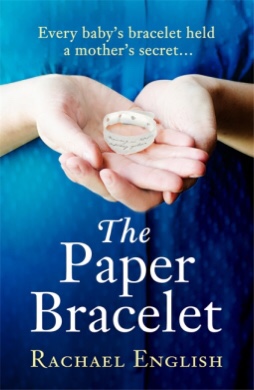
The Paper Bracelet by Rachael English. #RandomThingsTours #blogtours #ThePaperBracelet #Headline

Rachael English tells a very powerful story about a shameful part of Ireland’s history; the Catholic Church’s homes for ‘wayward girls’. We meet a young girl who has an affair with a married man from her village and becomes pregnant. Her devout parents send for the parish priest and follow his advice to send her to Carrigbrack, a home run by nuns for unmarried mothers. This was one of the now infamous Magdalene Laundries or Asylums that housed upwards of thirty thousand women from the late 18th to the late 20th centuries. The scandal around these institutions broke in the late 1990s when a mass grave was found at one home containing approximately 155 bodies. Since then a formal apology has been given by the Irish government to the women who survived and a compensation scheme set up to acknowledge the damage done by allowing the practice to continue unchallenged for so long. The stories of some of these women have made it into incredibly powerful films such as Philomena where Judi Dench plays a woman trying to find the son taken from her and given to an American family. However, what Rachael English has done incredibly well is create multiple characters showing varied experiences within this history, but also how these institutions affected the women’s families for generations.

There are two timelines across the novel: a present day setting where a retired nurse has a hidden box of paper bracelets, but also flashbacks to the mid-20th Century where we follow the young girl sent into Carrigbrack. In the present day, Kate is recently widowed and when attempting to tidy her husband’s things from the wardrobe comes across a box of tiny paper bracelets. Her niece Beth is staying with her and for the first time Kate tells another member of her family about the origin of all these bracelets. She explains being a nurse in an institution called Carrigbrack, and how saving the baby’s identity bracelets was her small way of preserving the only proof they existed. With them is a tiny notebook where she has recorded any small detail she can remember of their birth mother, date and given name. Beth becomes our equivalent in the book, the modern reader placing 21st Century values onto the past. She is very shocked that her aunt would have anything to do with a practice that now seems barbaric.

Kate describes a very different Ireland, where obedience to the church was paramount and people were more deferential and trusting of those in authority. Then, in a small community, it would be perfectly normal to ask the parish priest to intervene in family matters. More often than not it would have been unthinkable not to take his advice. Beth can’t imagine a country being so judgemental on it’s young women. For some of the youngest girls sex would have been non-consensual and their pregnancy a product of rape or abuse. Yet they were still treated as ‘fallen women’ and punished with heavy work, often right up to their due date. Many girls were kept for up to six months after giving birth to pay the home back for the care they’d received. Then, even if they’d formed a bond, their baby would be adopted, often illegally, and with no warning. Meanwhile, their rapist could still be a pillar of the community back home, maybe enjoying their legitimate family and still going to church with the very same parish priest who placed his victim in these institutions.

In order to portray a breadth of experience, the author has created many, very memorable, characters. My heart belongs to Winnie. Freckled, funny and incredibly mischievous with beautiful curly black hair, she is Patricia’s first real friend at Carrigbrack. Together, when they’re allowed to, they can share experiences and really laugh like the young girls they are. Even having her hair hacked off for insubordination doesn’t dull her spirit, but it tragically means that her cries that she’s in labour go ignored by the nuns while she’s working in the laundry. The consequences are heartbreaking and genuinely made me cry. I found myself desperately hoping that despite being broken with grief, Winnie would find her spirit again and we’d meet her in the later parts of the book. I did struggle a little bit with people’s names on occasion as we went back and forth. The women’s names were changed by the nuns so might have reverted to their own name. Nuns change their names when they join an order. The babies were named by their mother, often renamed by the nuns and again by their adoptive parents. I did get a sense of the bureaucratic nightmare these women faced to find their children again and why many survivor’s of the institutions might struggle with their identity. I found myself being drawn into solving this mystery of which characters belonged to each other. I was also more than a little intrigued by Katie herself. What had led her to work in such a place? Why did she feel so strongly about keeping the bracelets? Beth’s mother is very reticent to talk about the years Katie spent there. Does she simply still subscribe to the old ways and believe that the scandal was best left, swept under the carpet? I couldn’t stop thinking there was more to this frosty relationship.

The children who are found also have very varied experiences and are in different places in life, yet all have felt this yearning to find their roots. Some have been blessed in their adoptive families and are well supported in their search. Others have always felt rudderless and a little bit lost in life; without that sense of being grounded. I was interested in the story of Brandon whose wife Robyn has been urging him to follow up on Katie’s post. What he finally finds explains his lifelong sense of someone or something being missing from his life. He is very conflicted about his birth family, because it comes with what he sees as complications. Ailish is also memorable as she illustrates one possible result of a lifelong lack of self-confidence, borne from the knowledge she was an ‘unwanted’ baby. There is room to heal when these characters find out the truth: they were very much wanted, but stolen; their origins were complicated; or their mothers were forced into accepting they couldn’t care for a child. The reunion is only a beginning. I loved that these characters didn’t just find their birth family. These survivors start to form a network, another type of family, that can only be borne out of shared experience. Now a set of roots intertwined and grown strong from those terrible events that happened to them as young women or babies.
Posted in Random Things Tours

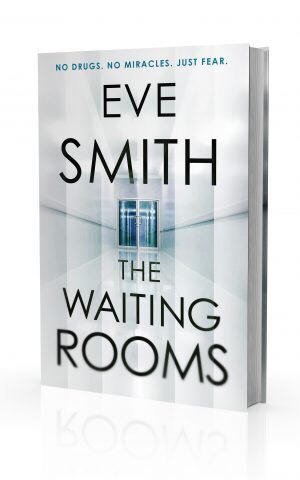
The Waiting Rooms by Eve Smith #OrendaBooks #TheWaitingRooms

Wow! This was a tough read in lockdown. There was one point where I was really sweating because it was making me so anxious. Last week I went out for the first time in eight weeks. It was a beautiful sunny day. With the windows down and the music on, it felt like any other summers day. Then we reached the medical centre. The queue outside the pharmacy was ten people deep, all of them were wearing masks. It was so disorientating. Eve Smith creates a world like this. It’s ours, but not quite. There’s a sense of the uncanny. It’s familiar, yet changed completely. This is a world ‘post-Crisis’ and three different women tell the story.

Lily is an older woman, living in a nursing home facility. She is nearing her 70th birthday and this is a huge milestone. After the ‘Crisis’ an act was passed to reduce access to antibiotics for the over 70s. The world became overrun with a resistant form of TB, seemingly spread at a series of large concerts where thousands were exposed to the virus. Life has now changed completely. People no longer keep cats, just in case they are scratched or bitten. Pets were declawed or simply put down. If they have money, elderly people can be cared for well and in comfort. If not or if they get infection they can be bundled off to dormitories of the dying. The author’s description of these wards and how they treat those who die there had me in tears it was so powerful. This is what happens when certain groups in society are devalued. Our treatment of them becomes less humane. They become objects, not people capable of being loved.

Kate is a nurse, working within this changed healthcare system. She works with people who are terminally ill and palliative care is very different to what we’re used to. If someone is over 70 and has a terminal diagnosis they have a choice; they can take their chances in an imperfect system with no interventions possible or they can come to a room with their family and end their life. Again, the author describes such a powerful scene when a man comes with his daughter and son-in-law to die. Kate is so professional, talking his choice through with his devastated daughter and explaining why treatment isn’t available for his cancer. Once he’s ready Kate hands him a glass of whiskey flavoured drug and waits until he’s ready to drink it. Only minutes pass before his pulse slows down and he peacefully passes away. Kate carries this out efficiently and with empathy. In fact it’s preferable to the alternative. No matter how humane it seems, it’s still chilling and sterile. We find out that Kate was adopted, and since the death of her adoptive Mum she’s been looking for her birth mother in her spare time. She’s looking for a woman over 70, who knows if she’s still alive.

Mary takes us back to pre-crisis times and her post-graduate days in South Africa. Mary is a botanist with an interest in finding new species of plant that may have medical applications. She meets Piet in a close call with a rhinoceros and he introduces her to the growing TB crisis in South Africa. He explains that AIDS has suppressed people’s immune systems to the point that they’re vulnerable to other infection. This form of TB is resistant and American drug companies aren’t queueing up to help. Could her research help him find a plant suitable for TB drugs? Piet has talked about radical ways of making the world look at what is going on. They spend more time together and have a trip out to his lookout where you can hear and see incredible wildlife. This is where their affair begins.

Every single thread of this story is compelling. I knew they were connected, but kept reading to find out how and why they were all separated. There was the added mystery of who was targeting Lily with newspaper cuttings, and cards. The eventual reveal was a surprise, but it was the revenge that was particularly devastating. The research that must have gone into the medical and scientific aspects of this novel is staggering. The short, factual sections that are either news reports, or scientific articles feel almost real. Every so often I needed to take my head out of the book and see the world as it is, not that it was much better once I turned on the news. I had to take a few deep breaths in the garden from time to time. This author created a credible dystopia, one that’s closer to the truth than a lot of people would like to think. Within that world we follow three interesting and intelligent women, trying their best in an imperfect system. The cold, sterile present contrasts sharply with the lush descriptions of South Africa. It scared me, made me think about my old age and the way we treat those older and sicker than us. I think it is a staggering work of genius, delicate and detailed, but inside a huge vision. I found it incredible.

Posted in Random Things Tours

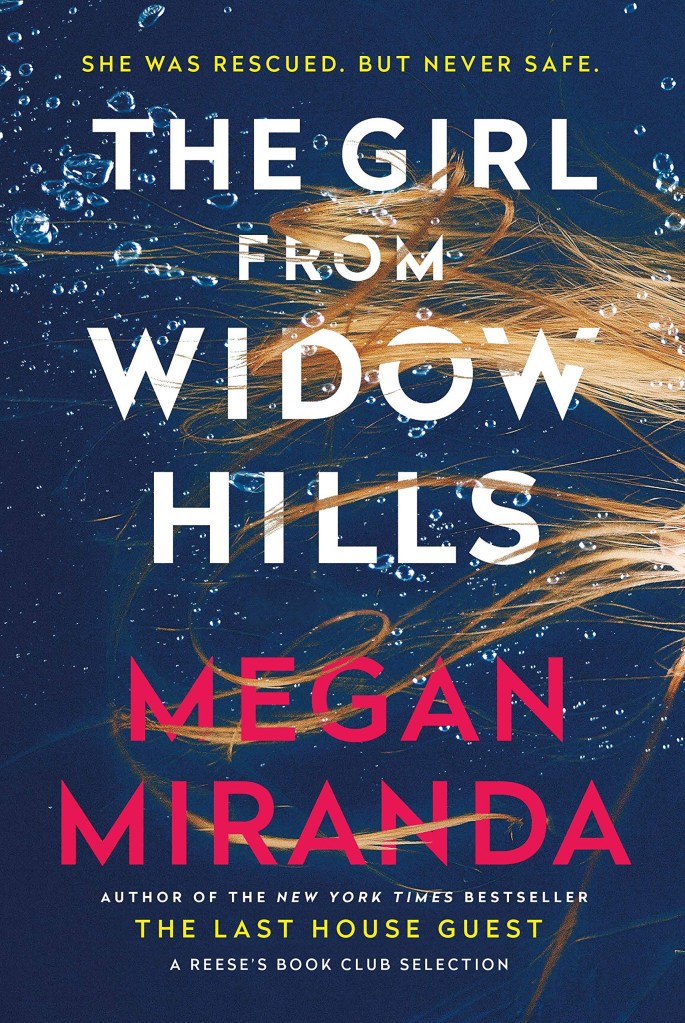
The Girl from Widow Hills by Megan Miranda. #blogtour #CorvusBooks #RandomThingsTours #TheGirlFromWidowHills

Taking the missing child narrative and turning it into something different and new is quite a challenge, but I think this author is successful in exploring what happens beyond the initial drama, where most novels end. Arden Maynor disappeared when she was six years old. Thought to have left the house while sleepwalking, she is washed away by a flash flood and isn’t found till three days later, hanging onto the grate of a storm drain. In those moments, absolutely everyone in Widow Hills is focused on her and everyone is affected. From her and her mother, to the man who finds her, the journalists and photographers, rescue teams, police officers and those who treat her terrible shoulder injury at the hospital. There’s a flurry of publicity for all those concerned. Arden’s mother gets a book deal and a fund is set up to support Arden into the future. Then the next crisis happens and the Maynors are forgotten.

Twenty years on and Arden is renamed Olivia Meyer. She has used the remains of her fund to buy a house on the edge of a new town near the woods. She also has a job in administration at the local hospital and lives a fairly quiet life. She has a routine of work, dinner, a small glass of wine while watching TV and then bed. On Fridays she goes for a drink in a local bar with her friend from work, Bennett, and a new nurse called Elyse. She also has a friend in Rick, an older guy who lives next door, and they keep an eye on each other. This routine is unsettled when she receives a phone call telling her that her mother died seven months before and they need an address to send her belongings to. When the box arrives and she opens it, a cascade of memories come out with the objects. There isn’t much, but Olivia is most touched by the small bracelet with a silver ballet slipper charm attached. It’s something good she remembers from her childhood. She doesn’t remember much of the three days she was missing, apart from the dark, cold and wet. Afterwards, she feels her mother frittered money away, mainly into drug abuse and they drifted apart. That very night Olivia starts to sleepwalk again.

I enjoyed the author’s depiction of someone who is post-trauma. I understood Olivia’s need for quiet, security and routine. I did start to have questions as I read further. It seemed that Olivia’s narrative of her childhood and the trauma was very rote and something she’s defensive about. When she visits the sleep clinic about her sleepwalking, she can’t elaborate on it more than repeating her mother’s description. It’s almost as if she can’t recall the trauma from her own point of view. Even her memories of being missing seem strangely one note. She was missing for three days, but can only remember a small proportion of it. She couldn’t have been in the same place for three days, because the team searched there, so why can’t she remember where she was? As the stress builds, the big wall Olivia has around her memories and feelings starts to crumble and it’s interesting to see her start to question herself. Especially as the bodies start to appear.

I loved that the author showed us the flip side of Olivia’s experience; what it’s like to witness a trauma. Olivia meets the son of the man who found her and while she’s not sure if she can trust him she does listen. Nathan saw his Dad do something heroic, be plunged into a whirlwind of publicity, then left with nothing. There was no fund for the rescuer, no fund for his children, and there is a bitterness that Olivia might have had it easier with her funded education. Similarly, she meets one of the journalists who was there and helped with her mother’s book. She has adopted a lifestyle very like Olivia’s – quiet, and tucked away where she can’t be found. Olivia starts to see how a trauma she thought was hers, exclusively, has affected others like ripples on a pond. All the people she meets ask questions, till she can see there’s something about her experience that’s missing, and even goes as far as revisiting Widow Hills to remember. I had my suspicions, but the final revelation did surprise me. The author taught me that when reading thrillers I can’t trust anything I’m told, from the opening chapter, right up to the final page.