Posted in Random Things Tours

When I Come Home Again by Caroline Scott

Published: 29th October 2020

Publisher: Simon and Schuster

ISBN: 978-1471192173

This was an exquisite, slow-paced, historical novel that moved me so much. It was a window on both individual, and collective, grief. It also explores the psychological rehabilitation process which is my day job, as a counsellor. Regular visitors to my blog will know that I am fascinated with this period of history depicted in novels as varied as Emma Donoghue’s recent novel The Pull of The Stars and in the last few years Sarah Water’s The Paying Guests, Adele Park’s Spare Brides and Kate Atkinson’s Life After Life. All deal with a different aspect of this period of huge social change. The nation is grieving, for lost sons, husbands and brothers but also for a time of innocence now lost to them. Young women struggle to find husbands as the policy of neighbours fighting together meant villages losing whole generations of men. Distinctions between the classes come tumbling down as men from all backgrounds fought together for a common purpose. Many estates were crippled by death duties, often for two generations at once, and men who never expected to shoulder the burden of a family estate were suddenly dukes, but without any means. Institutions like the debs ball seemed trivial and outdated, with many new heirs marrying money from abroad bringing Americans and their new money into the ranks. Others lost their estates altogether and had to consider working for the first time ever. Women who had held the fort, while the men went to Europe to fight, did not want to return to the home and wifely duties. Even men who had jobs held for them, faced a fight to get them back. Women were not the same, they’d been stretched and depended upon in wartime and wanted more equality at home, work and in the political system. The upheaval in our class system, in gender roles and working life is unimaginable. When set against the backdrop of national mourning and a worldwide flu pandemic we can perhaps imagine a little the seismic psychological shifts happening. On the plus side it’s a dynamic time, where the old order is overturned, people born in poverty or the wrong gender could change their lives because of the social mobility created.

We see these issues through the characters in Caroline Scott’s book and understand how some want to recover a lost past however unlikely it is, whereas others want to blank out their experiences and start again without memories or baggage. Scott starts her book with an epigraph from the tomb of the unknown soldier in Westminster Abbey. Also used as a focal point for Anna Hope’s wonderful post WWI novel Wake, the burial of this young man is full of symbolism. One man chosen from the many lost in France, to symbolise both those who died and those who would never be recovered or identified. His burial in the abbey would be broadcasted in cinemas and over 100,000 visited his grave to pay their respects in the next few weeks. In Durham, another anonymous young man is found using chalk to write on the flagstones in the cathedral. He is arrested and taken for treatment with Dr James Haworth who aims to slowly help his patient recall who he is and what has brought him to Durham. Named Adam Galilee by the police who found him, he is subject to many different methods, including covering the walls of his room with mirrors. They spend so much time talking and questioning, gently in case they force him into distressing memories. As Haworth observes ‘something strong within him is resisting recalling the pertinent parts’.
As a counsellor and writer I think a lot about the concept of ‘self’ and how it’s constructed, and I loved how Scott explores this in the chapters marked as belonging to Adam. He talks about how they ask him for a first memory and he knows they’re avoiding more recent times, despite there being a complete void where his time as a soldier is concerned. He knows they’re looking for a beginning to who he is and all he does know is that it doesn’t work like that.

‘It isn’t linear. That’s not the way it works. It doesn’t have momentum, or a narrative arc, and he doesn’t know where it starts. It surprises him, if they are doctors of minds, that they can’t understand that’.

I thought this was so clever, because it questions the very nature of the self. Are we ever one fixed set of characteristics or are we fluid and ever changing? If any of us are asked to describe who we are we tend to come up with a list of things we love to eat, listen to, wear and watch. As if the self can somehow be captured and solidified by these objects. When asked who we are, we refer back. So what happens when we cast our minds back and there is nothing there to hang on to. All Adam can do is ‘be’. To exist, try things and see what sticks. Rebuild from now. Maybe this is preferable to remembering before, the trauma and the hell of the battlefield? It was beautiful to see Adam gain a love of nature, whether rediscovered or a new appreciation it has a healing quality. He also has a talent for sketching and he captures the nature around Fellside, as well as the repeating a young woman’s face, which may be a clue to who he is. Supporting him through this self-discovery is James, himself a lost man due to his war experience and very much a wounded healer in these circumstances. His marriage to Caitlin is struggling under the weight of grief, I wanted him to share his war with his wife, but also understood his need to forget.

Just like the unknown soldier, Adam is a cipher for every young man lost in the war. When James puts his picture in a national newspaper, he hopes that someone will recognise him – what he didn’t expect was that three people claim that Adam is theirs; Mark, Robert or Ellis. Caroline weaves the women’s narratives into this tale so we see what war has done to the women left behind. My heart ached for them all and I wanted Adam to belong to each of them in turn; to be Celia’s son, to smooth away the rough edges of Lucy’s tough existence, to absolve Anna and bring resolution to her life. Of course he can’t be all things to all people. This is an intricate balance of viewpoints and Scott weaves a beautiful tapestry from them. Through these people we see a snapshot of post-WWI Britain that is truthful. Art is able to move beyond the patriotism and glory, to see the real cost of war. This is an incredible piece of work. Haunting and complex, a society laid bare emotionally through the tale of a warrior, unknown by name and rank.

Meet The Author


Caroline completed a PhD in History at the University of Durham. She has a particular interest in the experience of women during the First World War, in the challenges faced by the returning soldier, and in the development of tourism and pilgrimage in the former conflict zones. Caroline is originally from Lancashire, but now lives in south-west France.

Posted in Random Things Tours

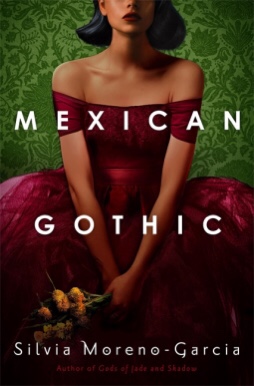
Halloween Reads : Mexican Gothic by Silvia Moreno-Garcia.

Publisher: Jo Fletcher Books

Published: Paperback Edition 30 Jun. 2020

ISBN: 1529402670

Wuthering Heights and Jane Eyre, those were Catalina’s sort of books. Moors and spiderwebs. Castles too, and wicked stepmothers who force princesses to eat poisoned apples, dark fairies cursing maidens and wizards who turn handsome lords into beasts.

I read this earlier in the year for a blog tour, so it is probably the most recent horror that has given me goosebumps and kept me up at night. The only saving grace is that our bedroom doesn’t have wallpaper or I’d have been up all night expecting it to move. When I first started this novel I was a little bit unsure, but I read the above paragraph and trusted it was the book for me. I have a smidgen of Catalina’s gothic, romantic sensibility about me and this book had all the elements I usually enjoy: a plucky heroine, a suitably wealthy but eccentric family, the possibly hysteric friend/family member who needs rescuing, a crumbling gothic mansion. So far, so usual. Then the first dream sequence happened and I sat straight up in bed, wondering what sort of dark, twisted fairytale I’d let myself in for. From that point on I found it curiously addictive – the sort of ‘still reading at 2am addictive’. By the end, I was awake because I was too scared to sleep!

Noemi Tabouda is dispatched by her uncle to High Place, the estate of the wealthy Doyle family. Virgil Doyle is the new husband of Noemi’s cousin and it is Catalina who has written an alarming letter begging to be rescued from a strange supernatural fate. The letter mentions fantastical happenings, such as people in the walls and a spectral voice speaking to her. Noemi wonders if her cousin needs to see a psychiatrist, because even though Catalina has a flair for the dramatic, she has never sounded so scared. The family know very little about the Doyle’s because Catalina and Virgil’s romance was a bit of a whirlwind. In Noemi’s limited time with him, he seemed very charming and had the dark brooding looks of a Byronic hero. This is a good chance to help Catalina get well, but also get to know the Doyle family a little better.

The author has created a brilliant setting in the Doyle family mansion High Place. It has a strange dual effect on Noemi of being luxurious and comfortable, but almost suffocating and overpowering. The past wealth of the family can be seen in every piece of silver, swish of velvet curtain and the eyes of past Doyle’s following her around the room. Noemi’s room is luxurious but shabby, as if the wealth has started to run out. The wallpaper has a curious pattern, but is also decorated with patches of damp. The bath is deep enough for a good soak but the fixtures and fittings are a little rusty. There are servants, but they are strangely silent and don’t even catch Noemi’s eye. The whole regime of the house seems very regimented to Noemi who is an informal, modern woman. Virgil’s father is definitely head of the house, but his sister Florence is the gatekeeper who makes sure his wishes are carried out. Noemi expected to breeze in and immediately pop in on her cousin, but finds she is barred. Apparently, the family doctor has decided she needs rest and a very quiet atmosphere. Noemi is told her cousin has TB, which has never been mentioned before, and doesn’t really account for the strange things Catalina mentioned in her letter.

Noemi is a great central character to follow through the story. She is sassy, intelligent and very determined to bring a little 20th Century thinking into High Place. I love that she isn’t afraid to ask questions, especially of the men who aren’t used to being held to account by women. This is how the author starts to subvert the gothic /fairytale genre – Catalina is the more ‘traditional’ heroine. Noemi brings in the local doctor to give her a second opinion, befriends the younger cousin Francis and enlists his help in understanding the family. She recognises that’s a lot of women have struggled to live with the Doyle’s regime. Howard had two wives, who were sisters and both died at High Place. A cousin, Ruth, took a shotgun to the family leaving Uncle Howard alive but horribly disfigured. From the village Noemi unearths stories of hundreds of silver miners going missing in the Doyle mines. It seems the family consume people, encapsulated by their horrible emblem of a snake eating its own tail.

The incredible nightmare sequences are vivid and visceral. At first I wasn’t sure which was real: was the regimented, almost Puritan, daily order of High Place the reality, or was it a thin veil of decency obscuring something more deadly and decadent. Just as mould was starting to be visible on the wallpaper, Noemi’s nightmares signal something breaking through, threatening to take over. This underlying force seems to understand the very soul of the person it tries to corrupt. In Noemi’s case her modern attitude to dating and female sexuality is used to draw her in against her will. She is a serial dater, choosing short dalliances where no one can get too close. So her nightmares have a strong sexual element, where Virgil Doyle lulls and seduces her, in her bath or in the middle of the night. She questions herself. Virgil repulses her, but does she desire him? Are these dreams conjured from her own subconscious or is something able to infiltrate her sleep and lure her down the corridors in her nightdress?

The truth of High Place and what happens there, when it is revealed, is truly horrific. There was a scene that literally made me gag! This may be one of those occasions when I truly hope they don’t make the book into a film – I wouldn’t be able to watch it! I felt that the author was playing with the reader and our own push and pull between fascination and revulsion. I found this very reminiscent of Dracula. There was an equally interesting tension around social change. The local miners exploited by the Doyle’s are part of the past, along with the family’s rules and position in society and their adherence to the ‘family doctor’. The new is represented by characters like Noemi and the mentions of her wardrobe full of the new styles and the young local doctor who tries to help Catalina. In the town the Doyle family are seen as weird eccentrics, possibly sinister, but no longer able to command respect as they would have a generation before. Their time is waning and these horrific acts are a fight, both for the family and the entity that lives alongside them. The author subverts the fairy tales Catalina loved in her youth and the original Gothic trope of a damsel in distress, rescued by a man. I truly enjoyed this novel, despite the fact it kept me awake at night worried that mushrooms were coming out of the wallpaper. Now, finally, I’d like to go and get some dreamless sleep.

Meet The Author

Silvia Moreno-Garcia (born 25 April 1981) is a Mexican – Canadian author, short story writer, editor, and publisher.

Moreno-Garcia was born April 25, 1981, and raised in Mexico. She moved to Canada in 2004, where she presently lives with her family in Vancouver. She began her career publishing in various fiction magazines and books, and was a finalist for the 2011 Manchester Fiction Prize. Her first short story collection This Strange Way of Dying was published in September 2013 by Exile Editions. Her second collection, Love and Other Potions came out in 2014 from Innsmouth Free Press.Her debut novel Signal To Noise was published in 2015. She serves as publisher of Innsmouth Free Press, an imprint devoted to weird fiction. In 2016, she won a World Fantasy Award for the anthology She Walks in Shadows and a Copper Cylinder Award for her novel Signal to Noise. In February 2020 she was announced as a finalist for the Nebula Award 2019 in the Best Novel category for her book Gods of Jade and Shadow.

Posted in Random Things Tours

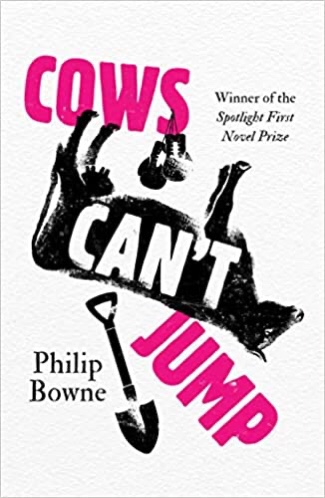
Cows Can’t Jump by Phillip Bowne

Synopsis | 17-year-old Billy has just left school with no A levels and he’s desperate to escape middle England. As a grave-digger, he’s working the ultimate dead-end job. Billy’s home life isn’t any better. In the evenings, he observes his dysfunctional family: his Grandad’s engaged to a woman half his age, his xenophobic Dad’s become obsessed with boxing, and he suspects his deeply religious Mum is having an affair.

All the while, celebrities are dropping like flies and Britain is waiting for the EU referendum. Everything is changing, and Billy hates it.

Meeting Eva, though, changes everything. She’s Swiss, passionate about Russian literature, Gary Numan, windfarms and chai tea, and Billy gambles everything for a chance to be with her.

When things start to go wrong, Billy’s journey across Europe involves hitch-hiking with truckers, walking with refugees, and an encounter with suicidal cows. But the further he goes, the harder it is to be sure what he’s chasing – and what he’s running from.

My Thoughts | I cant imagine that when he wrote his debut novel, Phillip Bowne imagined it being published during a global pandemic. There was already a sense of foreboding in the book, considering it’s set in the heated atmosphere leading up to the Brexit referendum where celebrities seem to dying at an alarming rate. Yet the reader knows that things are only going to get worse. So, for me, this book felt like a lifeline in very trying times. I was ready for some light relief, to really laugh with a character, and I certainly did that with Billy. At turns hilarious, then poignant, then darkly humorous, this is just the book I needed to lift me right now.

Billy is a fascinating character with a brilliant story arc; he does some serious growing up throughout the novel. At first he seems a little lost. He leaves school with no plans and his mum gets him a job as a gravedigger – the very embodiment of a dead end job. His family are dysfunctional at best. Dad has a bit of a temper and Grandad (GG) is adding to family strife by planning to marry a woman nobody likes. Bowne creates comedy out of the way this family rub along together, but they’re not one note characters. Bowne knows when to floor the reader with some seriously black humour and when to let us inside these characters and situations with real depth and poignancy. GG has some interesting ways of making money. Billy manages to get an unfortunate nickname at work. However, when we’re party to Billy’s inner world, there’s bewilderment and even sadness at times. The contrast between these feelings, and the hilarious situations Billy can get himself into, are what kept me engaged with his story.

The same can be said about the world Billy finds himself in. Once he finds himself another job, Billy’s world starts to open up. Beyond the realms of his family and village Billy starts to understand that people have very different life experiences than his, often tragic and difficult. He meets Swiss student Eva and experiences the shifts in society due to the referendum from her perspective. She’s unsettled and scared. They form a friendship, one which could turn into something more. This relationship feels very real, it develops slowly and although there are obstacles, I did find myself rooting for them both. When Eva leaves, Billy decides to follow in an attempt to be reunited with her. This incredible trip through Europe adds to Billy’s growth. He encounters Syrian refugees whose terrible misfortune are beyond anything he has experienced. Whether he reunited with Eva or not, this incredible trip will change him forever. I truly enjoyed his journey and found myself laughing out loud at some points, whilst feeling terribly awkward at others – the fish and chip supper made me squirm a bit. This debut shows a deft writing style from Bowne and was uplifting and touching in equal measure.

About the Author

Philip Bowne lives in London and works as a writer for The Wombles, a children’s entertainment brand. 

Like his protagonist, Billy, Phil attended a failing and severely under-resourced school in Bicester, Oxfordshire.However, unlike Billy, Phil ended up studying English Literature and Creative Writing at university.

While studying, Phil published short stories in literary magazines and anthologies in the UK, US, Canada and Germany. After graduating, Phil spent time in Europe and the US, working and volunteering in various roles and settings: repairing boats at Lake Como, housekeeping at a mountain lodge in California and working with charity Care4Calais in the former Calais ‘jungle’ refugee camp.

Cows Can’t Jump is Phil’s debut novel, which he worked on while managing a bar in London. As well as a writer for The Wombles, Phil also works on a number of independent writing projects, including a musical set in 1970’s Soho and a sitcom set in a failing leisure centre.

Posted in Random Things Tours

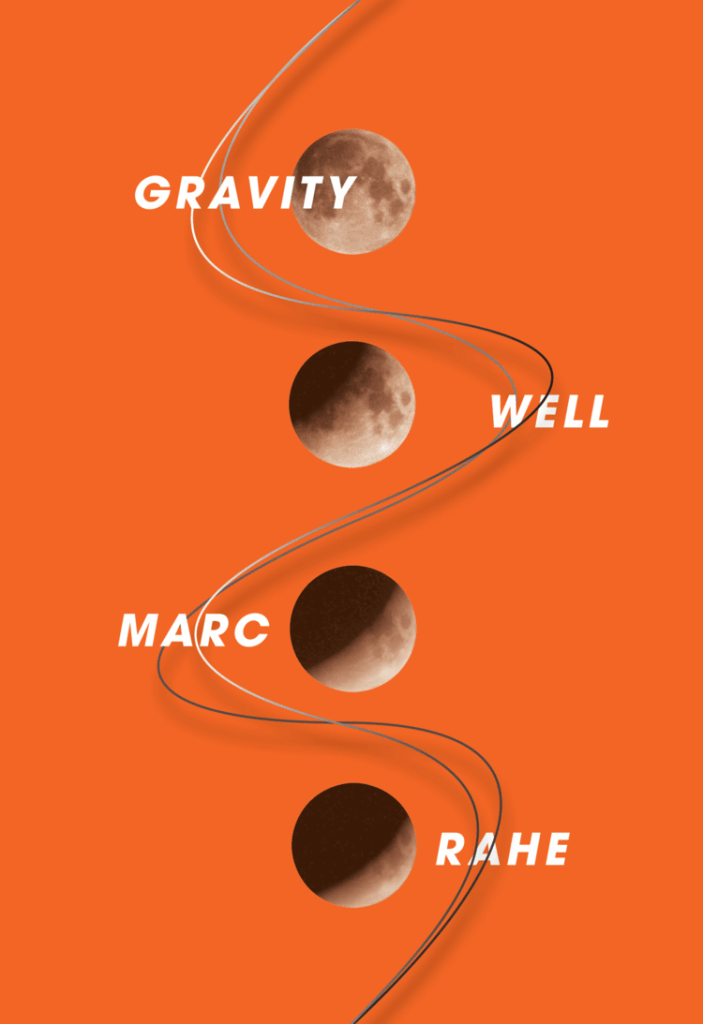
Gravity Well by Marc Rahe

#RandomThingsTours #GravityWell #Poetry #BlogTour

My Thoughts | I haven’t read any new poetry for a long time so I jumped at the chance to read this new collection. For me, poetry is very emotional. It’s about whether a poem connects with my feelings in some way; is the poet describing something I recognise, something I’ve felt or seen? There tend to be certain images that make me stop and think and Marc Rahe’s new collection Gravity Well did all of these things and resurrected my interest in poetry.

Some images made me smile because of how clever they were or because of the beautiful combination of words. In Writer Friend the narrator describes an unsettled afternoon as a ‘forecast-come-true afternoon of cloudy and scattered’. I also loved the Schroedinger reference in Our Shared Life of ‘The bee trapped with you inside/ your helmet in traffic, will or will not’. It made me think of that moment before something happens. In that moment, playing simultaneously in the biker’s mind, are the bee that stings and the bee he successfully releases back into the world unharmed. We get another sense of the in-between reading his poem Stellar, as if moments in time are simply Russian dolls with each possibility stacked within each other – touching but separate:

‘This tree was my favorite the day it rained during my walk. Uncanny when it’s raining and it’s sunny at the same time. As if being in someone’s presence and feeling the presence of their ghost’.

Another line I loved was ‘the air was as wet as dog’s breath’ because it made me feel the humidity of a wet day in August, that moisture hangs like warm misted breath in the air.

There were also themes running through the work that interest me greatly, because of my own writing work which is focused on how the body, particularly a faulty or malfunctioning body, interacts with the world. Rahe has a way of describing age and the changes of the body that are surprising and moving. In his poem Appetite I loved the following section:

‘I’ve been reopened along the same incision

and though metal plates and wires, metal screws,

can only be said to ache, I say

it is the metal in this leg that tells me

the sky is so full of mountains and trenches

as the ocean, metal that warns me

of my own weight held past a certain angle from the center.’

I love how he describes the constant ache of the structure that holds the speaker’s leg together, but it isn’t a negative statement, it’s just something that’s there. Also it’s a way of gauging the world, like I know if my joints ache it’s going to be wet or if my muscles seize it’s going to be cold. The unnatural pins and wires he needs for his limb to work naturally, actually link him to the natural world too – to the heights and lows of the lands, and even how the force of gravity can be sensed as he finds the balance of walking with these metal supports.

In Fable of the Cephalopod he uses humour to describe a sense of coughing up a foreign body, something that feels like ‘an octopus that was trying to wear a sweater’ giving the reader a sense of how stuck it feels, trying to force eight woollen legs from the ‘wrong bronchial tree’. Later he describes the moment of having a blood test, very routine for me and others who are ill, but tense all the same. He perfectly describes that moment when you almost hate yourself for trying to make the medics life easier. When you feel guilty for being difficult, as if you could control the way your veins and body work:

‘at a blood draw my vein resisted the needle. The needle

slipped aside inside my arm, despite repeated attempts. I made,

for the phlebotomist, a joke I hoped would defuse her growing anxiety.’

I felt a connection with parts of the work, and as always with poetry, I know that re-reading will bring further meaning and interpretation, depending on my mood. Poetry’s meaning lies with the readers once it has left the author’s pen. It may well have had an original meaning, but really the beauty of poetry comes out when the reader brings their ‘stuff’ to the poem. I’m sure there are other bloggers who have had totally different experiences with the images and themes but that’s the beauty of it, it can touch a multitude of people very differently. I thought this was an imaginative and thoughtful collection from a poet I’d never read before. It sparked my interest in poetry again and I am looking forward to reading more for the blog and for my own enjoyment.

Other Reviews | Marc Rahe’s luminous poems find grace in acts of intentional remembrance, in turning back to sing ‘what can be seen / looking behind.’ The speaker’s world resembles our own fraught moment–fallen, divided–but never numb. These poems hum with moments of transcendence, between body and weather, air and breath, between today’s pain and the deep wounds of the past. In precise, lucid lyrics, this voice insists that our capacity to feel is what binds us, ecstatically, to our planet and to one another.–Kiki Petrosino

Ever since his first book, THE SMALLER HALF, was published, I’ve kept my eyes open for new work by Marc Rahe, and whenever new work has come, I’ve celebrated, actually celebrated. No poet writing in English today is better at making poems stuffed full of being and of things seen, things heard, things touched, things tasted, and things thought hard about nonetheless quiet. And yet, though they approach silence, these poems resonate, and, like Rahe’s previous work, they will resonate for years.–Shane McCrae

Biography | Marc Rahe is the author of THE SMALLER HALF (Rescue Press, 2010), ON HOURS (Rescue Press, 2015), and GRAVITY WELL (Rescue Press, 2020). His poems have appeared in The Iowa Review, jubilat, MAKE Literary Magazine, PEN Poetry Series, Sixth Finch, and other literary journals. He lives in Iowa City.

Posted in Random Things Tours

The Peacock Room by Anna Sayburn-Lane.

#RandomThingsTours #BlogTour #ThePeacockRoom

Literary sleuth Helen Oddfellow has started her new job as a lecturer in an English Literature department of the university and is hoping for a quiet life. What she gets is anything but. When she is asked to cover a module for Professor Petrarch Greenwood she expected the students to be a little underwhelmed. He is something of a literary celebrity, having followed his lifelong love of William Blake into TV opportunities and book deals. Yet his students behaviour seems strange to Helen. They are subdued and one is genuinely emotional about him, which rings alarm bells to Helen. Petrarch is flamboyant, holds swish parties at his London flat and has very little time for new feminist theories regarding his hero. On the dark web, a strange literary obsession is being used to stir unrest in its largely male following, and an underground police officer is trying to break into the online community by sharing a love of Blake. Their focus is a an artist who produces a graphic novel based on a Blake character, with a disrespectful and violent attitude towards women. How many of his followers even know or understand Blake? As this unrest grows will Helen be able to come between the innocent and a disturbed gunman bent on making his point with bloodshed?

This is one of those times when I really didn’t need to have read the first novel to enjoy this second instalment in the Helen Oddfellow series. The start was slow but I was intrigued with the larger than life and potentially dangerous Petrarch Greenwood. He’s clearly living a rather decadent lifestyle of bedding young students, and stretching his professional ethics. Officially Helen is covering his classes as he has a book deadline to meet, but we get the sense that really he’s being removed to cover up a scandal. The university can’t afford to lose him as he’s their celebrity professor but they also can’t be seen to do nothing. I sensed a really unpleasant character underneath the charm and wondered if he or his assistant was behind the Blake website.

Running through the book is the treatment of women, from the misogyny on the dark web to gender politics within the university. Helen recounts her own reading on Blake and his wife. The question of how involved his wife was in his work is one that’s been at the forefront of feminist theory, something Professor Greenwood is very dismissive about. He’s dismissive about women in general, in fact one is being physically dismissed from his office when we meet him. The behaviour of the female students in his class is worrying too, some are very subdued and don’t want to meet Helen’s eyes. There’s an unpleasant atmosphere, and an undercurrent that I feared didn’t bode well for some of these women. The story started to focus around the events of Professor Greenwood’s party and this is where the book gripped me.

I’m clearly very dark, because when the truth of the party was revealed I was pleased the author had pushed the story to such a disturbing place. It was a great contrast to the tamer beginning of the book and I think it needed it. I didn’t manage to guess all that had happened so I was able to enjoy all the twists and turns to the end. I enjoyed guessing who had the talent and knowledge to be behind the artwork, but the mind to plan such a terrible act of mass murder. However, this wasn’t the only person with secrets and it seemed only Helen was who she professed to be. She is like the calm centre to the novel, but everything around her felt chaotic and changeable. I worried early on that this would be a novel where women were victims, but actually the ending was quite empowering. The women took control, which was a great way to end. I would have liked to know more about some of the characters so maybe some differing perspectives on events would have been interesting. However, I think it was deliciously dark and turned a light on the type of misogyny that seems to be a constant undercurrent on the internet these days. This was intelligent, surprising and as a literary mystery, quite unique.

Meet The Author

Anna Sayburn Lane is a novelist, short story writer and storyteller, inspired by the history and contemporary life of London. Her first two novels introduce the literary sleuth Helen Oddfellow.
Anna shares Helen’s love of literature – mysteries surrounding the Elizabethan playwright Christopher Marlowe and the Romantic poet William Blake feature in the books. She’s pleased her History and English Literature degree finally came in handy!
Anna has published award-winning short stories in magazines including Mslexia, Scribble and One Eye Grey.

Posted in Random Things Tours

Throwback Thursday! The Accidental Medium/ Gin Palace by Tracey Whitwell.

Synopsis | Tanz is living in London and still grieving her friend Frank, who died in a car crash three years ago. As acting jobs dry up, she has to find a normal job to fund her cocktail habit. When she starts work in a new age shop, Tanz discovers that the voices she’s hearing in her head are possibly real psychic messages, not the first signs of schizophrenia. Alarmed, she confronts her little mam and discovers she is from a long line of psychic mediums. Despite a whole exciting new avenue of life opening up to Tanz, darkness isn’t far away and all too soon there’s murder in the air. In book two, after her fast paced introduction to the world of clairvoyance, Tanz is hiding in bed, having nightmares about a suicidal psychopath, drinking red wine, irritating her cat and waiting to be evicted. Life as she knew it seven months ago has turned on its head and only the prospect of a new TV job in Newcastle and a month with her best friend Milo can help pick her up off the floor. But when she gets home, the Newcastle of more than a century before decides to haunt her bringing all kinds of spooks and horrors with it

Review | Tanz is a cocktail drinking, straight talking, Geordie actress, with a talent for swearing. She is an absolute breath of fresh air. Within pages she felt like my long lost friend and I was mentally inviting her to my fantasy dinner party (alongside Mr. Tumnus, Ruth Galloway, Sugar from The Crimson Petal and the White, Jo March, and Vianne Rocher).

I read both of these short novels in a weekend and have been left longing for more. The story begins as Tanz is working at a new age shop, between acting jobs. She has made friends with one of the ‘readers’ in the shop, but is starting to have an inkling that her own family might have their own gift. Her Mam seems to have prophetic dreams, but doesn’t make a big thing of it even though her grandmother was a Romany. Tanz had started hearing voices, but wondered if it was a symptom of grief following the sudden death of her friend Frank three years before. She even starts to worry if she could he schizophrenic. Luckily she has a great mentor at hand – Sheila is another reader at the shop, an older woman with years of experience in this strange world of mediumship. She describes Tanz as a ‘natural’ and her strong reaction to an odd couple who visit the shop seems to set them on an investigative path. Sheila is vital to Tanz and their friendship grows as the mystery becomes disturbing and dangerous. What are this strange couple hiding and why is Tanz hearing a woman wailing every time they’re near? Despite being terrified Tanz and Sheila let their spirit guides lead them towards the answers and into danger.

Gin Palace situates Tanz back in her hometown of Gateshead, where she has a role in a TV series after months without work. She would have loved the main role, but is playing the tart with greasy hair, dark circles under the eyes and the shortest skirt. She’s the only one with a genuine Geordie accent. After her introduction to clairvoyance, she was hoping for a quieter time, but it seems the spirits aren’t ready to leave her alone. Tanz finds herself haunted by visions of an 18th Century Gateshead and the tenements down by the docks. On a ghost walk she finds out about the brutal murder of a prostitute, the terrible warehouse fire that razed the tenements to the ground, and the role gin played in the lives of these unfortunate residents. This gives her some background but doesn’t explain the violent man who keeps beating her to death in terrifying dreams. Nor does it explain her visions of a little boy who looks like the Artful Dodger, with the face of a pitiful waif one moment, and eyes that burn like the coals of hell the next. Is she being warned off? Or is there another mystery the spirit world like her to unearth?

I loved both of these books for their characters and the company of Tanz. I loved her Mam and Dad, who are traditional Northerners through and through. They were very like my parents – always half way down a cup of tea, have tea at 5pm and seemingly happy to potter at home together. Tanz’s dad has his shed to tinker in, but her ‘little Mam is always there with some very down to earth and wise advice. I love how Whitwell presents mediumship and it’s effects on the practitioner. Sheila teaches Tanz how to protect herself against certain types of spirits, but there are still times when she is terrified by what transpires in her own mind and in front of her. Her nightmares affect her sleep, she feels unnerved and often wonders if her gift is worth it. It’s great if it helps someone, but otherwise it’s very inconvenient and not making her any money. It made me think of taking a counselling session, it can be exhausting and the counsellor needs a self-care regime in place to replenish their reserves. I enjoyed Tanz’s loyalty, not just to her close friends, but to those people she picks up along the way and even those from the spirit world who need release. Her bravery in confronting the scarier paranormal events, while being absolutely terrified, is endearing. By the second book she is starting to trust her powers a little, to understand the strength of her gift and her guides. These books are fresh, modern and comfortingly Northern. The mix of gothic and supernatural subjects, with this down to earth, 21st Century heroine is different and such great fun. Tanz is a woman you’d like to go for a few cocktails with and the mingling of her familiar worldly worries and her other worldly gift is irresistible.

Biography|Tracy Whitwell was born, brought up and educated in Gateshead in the north east of England. She wrote plays and short stories from an early age, then had her head turned and ran off to London to be an actress. By 1993 she was wearing a wig and an old fashioned dress and pretending to be impoverished on telly in a Catherine Cookson mini-series, whilst going to see every indie/rock band she could afford.

After an interesting number of years messing about in front of the camera and traveling the world though, Tracy discovered she still loved writing and completed her first full length play. A son, many stage-plays, screenplays and two music videos followed until one day she realised she was finally ready to do the thing she’d longed to do since she was six. She wrote her first novel. A crime/horror/comedy tale about an alcohol-soaked, gobby, thrill-seeking actress who talks to ghosts. (Who knows where the inspiration came from, it’s almost like she based it on her own ridiculous life.) Then she wrote a follow up and realised she couldn’t stop writing books.

Now Tracy lives in north London with her son, still travels whenever possible and has written novel number four. Now being edited.

Posted in Random Things Tours

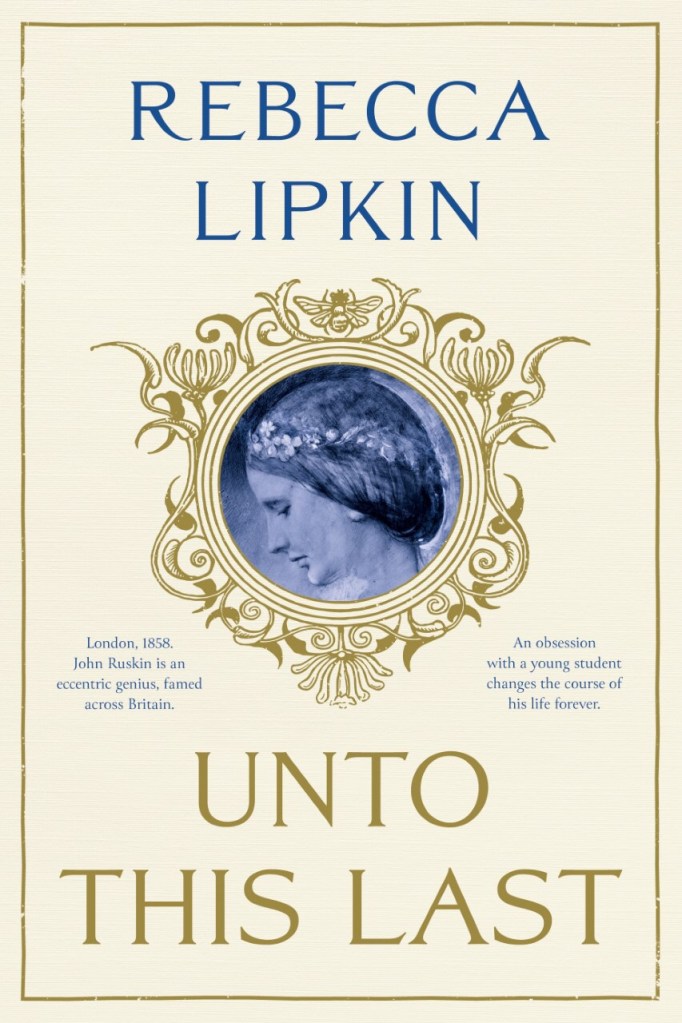
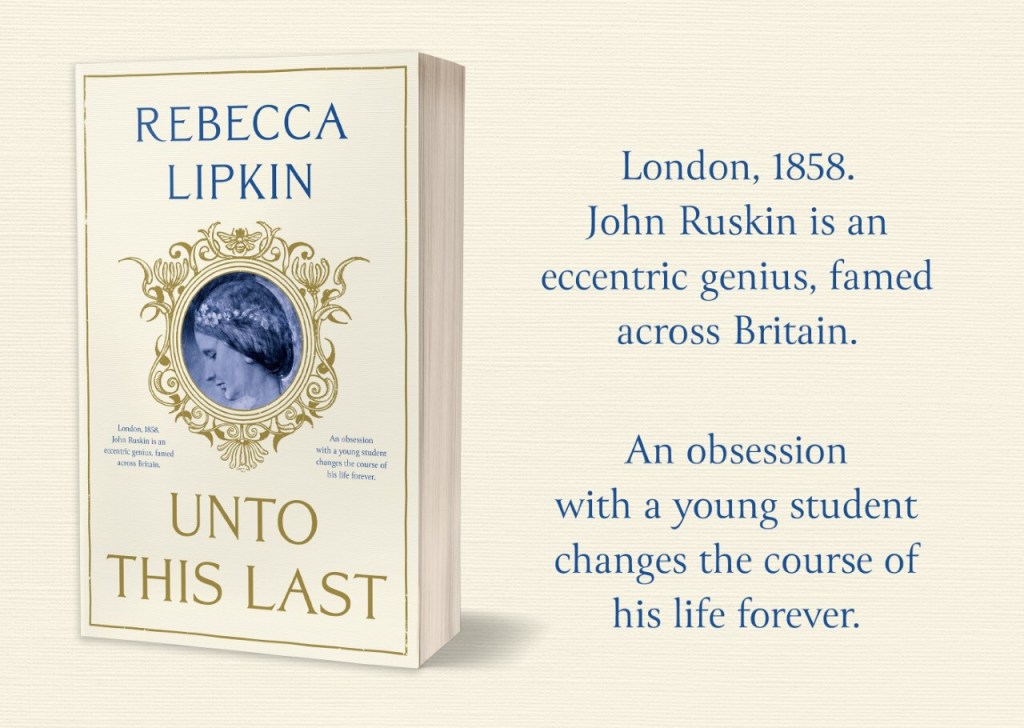
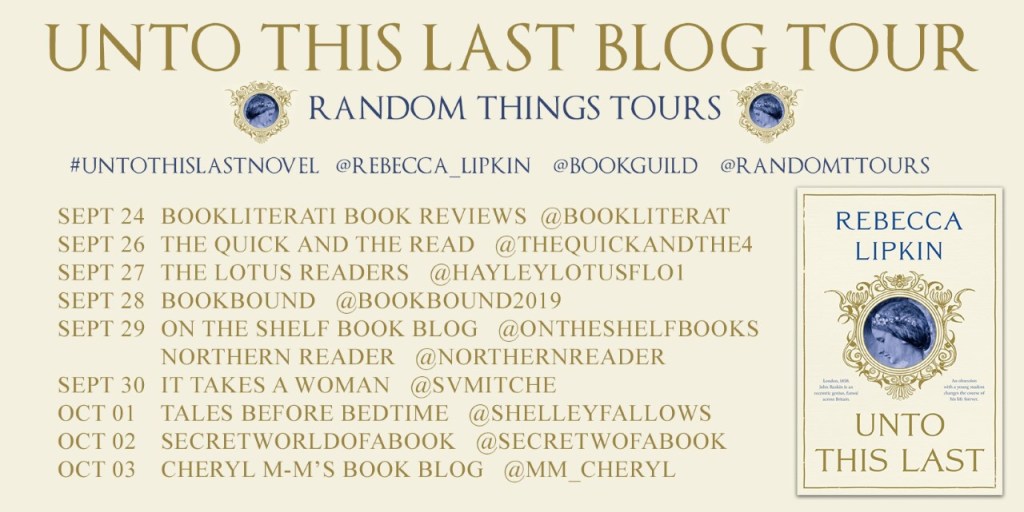
Unto This Last by Rebecca Lipkin.

#RandomThingsTours #BlogTour #UntoThisLast

Publication Date: 28th August 2020

Publisher: Book Guild Publishing Ltd

ISBN: 1913208826

Background and Synopsis |John Ruskin was a complicated and controversial man, mostly with regards to his relationships with young women. However, he was also a brilliant artist, important patron and critic of art and architecture. He championed the painter J.M.W Turner and the Pre-Raphaelite Brotherhood whose progressive work had all but barred them from the Royal Academy and polite society. In 1860 he shifted focus from writing about art and architecture, towards social issues including inequality within society. In a series of essays published under the title ‘Unto This Last’ he wrote that the only true wealth is society is the happiness of its people.

‘That country is the richest which nourishes the greatest number of noble and happy human beings’.

Rebecca Lipkin’s novel focuses on Ruskin’s personal happiness, in the period after the disastrous annulment of his marriage to Effie Gray, followed swiftly by her marriage to Pre-Raphaelite painter John Everett Millais. Ruskin was asked by the Marchioness of Waterford if he would give art lessons to her friend’s two daughters. Maria La Touche was a poet and novelist, and her daughters Emily and Rose are interested in art. Rose is only ten years old but shows prodigious talent. Ruskin plans to politely refuse the job, but something about Rose touches him deeply and before he knows it he’s soon visiting their mansion three times a week to give art tuition and spend time with the girls. This novel focuses on that relationship, but within the wider context of their families, his previous marriage and the views of the wider Victorian society.

My Thoughts | Ruskin’s affections for Rose La Touche were a bewildering source of joy, but also anxiety and depression at times. He found that he looked forward to her company and suffered greatly when she was away. Her mother Maria, was astonished by the usually reserved Ruskin allowing Rose to tease him, draw him into childish games and even lure him into a snowball fight in the garden. It was rare to see such a fastidious and serious man, so out of breath and disheveled. However, it is only when Rose takes a three month trip to Europe and falls ill that he truly realises the depth of his feelings. Yet, Rose is still only an adolescent and Ruskin is just over forty years old. The author takes us deep into the mind of this brilliant but troubled man, as he wrestles with himself and feelings he’s deeply unsure about.

Having read Ruskin’s work at university, I was worried that the prose would be long-winded and laborious to read in order to establish it within the Victorian setting. Yet the author made Ruskin’s mind accessible and uncluttered, while still grounding us firmly in the 19th Century. I have always been very interested in the strange relationship between Ruskin and his parents and there was plenty to think about here. Ruskin has an increasingly fractious relationship with his father John James, especially arguing about the placing of the Turner paintings owned by the family. In the 2014 film Effie Gray, written by Emma Thompson, we see a very dysfunctional relationship between Ruskin and his mother; when Effie and Ruskin return from honeymoon he is whisked upstairs by his mother for a bath. This novel shows a more nuanced relationship, but still a stifling only child/over-involved mother dynamic. John has been the apple of their eyes and their entire lives have been devoted to ensuring he excels in his field. They do worry about his feelings for this young girl and whether his life’s work is being side-lined so he can teach a child to draw a still life. They are also sceptical about the teaching he does for working class men, but he is adamant that it helps them lead fuller and happier lives.

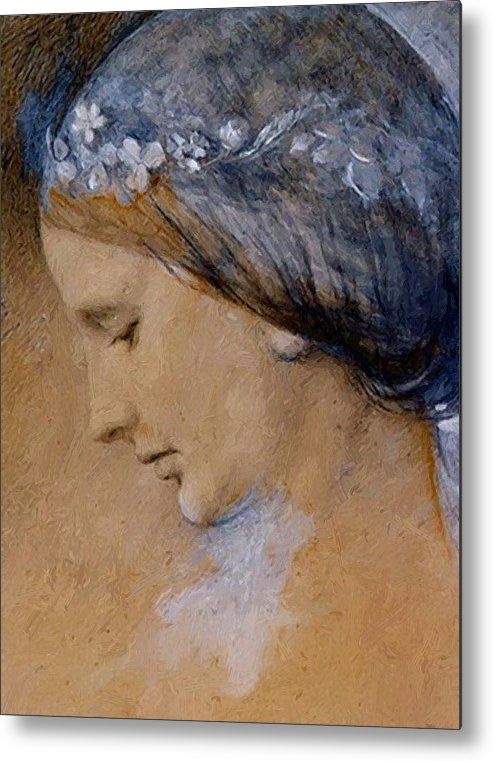
John Ruskin painted by John Everett Millais

There are times when it’s hard to reconcile the man who has this type of empathy for those in a more lowly position, with the man who has developed feelings for such a young child. There is no record made of when Ruskin’s feelings begin to change towards her. I kept wondering why Mrs La Touche allowed the developing friendship, knowing the rumours surrounding the collapse of his first marriage? In fact we know that Effie Gray did contact and warn Rose’s family. He had also known Effie from childhood, befriended the family and eventually married when she came of age. This troubled part of his life is covered in the third part of the book so we can make comparisons. His devotion seems to be known in society because he even reproduced some of Rose’s earliest letters in his writings to preserve them. The scandal resonates through the decades and is even alluded to in Nabokov’s Lolita. He is such an introspective man and seems so earnest in his feelings that I actually worried about his mental health – what would happen if this should go wrong? I was impressed with the author’s ability to take us so deep within the psyche of this complicated man, to the point where I started to feel as if I knew him.

Rose is presented so vividly that it’s easy to see why Ruskin might be innocently charmed by her. Ruskin write of her:

‘Sometimes she had a surprising understanding of adult attitudes: at the next moment she was once more completely a child. She had a pretty way of making herself engaging, even coquettish, but could also be rather solemn […] I don’t know what to make of her […] She wears her round hat in the sauciest way possible—and is a firm—fiery little thing.’

Rose La Touche

So in his mind she is a precocious young lady with a very definite character. It’s hard to know if this is how all adults viewed her or whether this is Ruskin’s mindset showing; the words ‘coquettish’ and ‘sauciest’ suggesting a sexual connotation. Is this what he perceives because he has a troubling attitude towards girls? Or is it his life’s quest to find a wife who will behave as he wants? If he is looking for the Victorian ideal of an ‘Angel in the House’ maybe he feels he can mould a younger girl into this image of saintly womanhood.The author brings Rose to life so we are not confined to Ruskin’s gaze. I felt for this ‘fiery’ girl because she is so controlled, by Victorian society, but also by her very religious and dominant father. Her mother often seems elusive, which may be why Rose has such an independent air about her. However, Mrs La Touche also controls – through manipulation. I enjoyed the scenes where Rose lets go and plays with Ruskin and her sister, she needs to let loose and she is teaching him to do the same. Because of this sense of release they get from each other I found myself looking forward to those scenes where they can do this, he allows her to tease him and seems to drop his rather pompous guard. Yet, if he does propose marriage, would he continue to let Rose be this free and determined? I found myself alternating between relief that Ruskin was able to get outside his own head and enjoy himself in the moment, and concern that marriage to Ruskin would confine and depress Rose.

The author really has produced an amazing piece of work here; as rich in historical research as it in imagination I enjoyed the way the book includes letters between them and the atmosphere created as Rose moves through different countries from France to Italy and Switzerland. The vivid descriptions of these places are very painterly and I could really see how it must look to Rose. I didn’t fully know the ending to the story and won’t reveal it here, but as we compare the older man with his younger counterpart in part 3 we can see that Ruskin has mellowed with age. Yes his inner world is full of angst but outwardly he seems less petulant and guarded. I found empathy for him, where previously I thought he was a dreadfully pompous and repressed individual with a strange mix of arrogance and lack of confidence. The depth this author has gone to in order to uncover the hidden aspects of Ruskin is admirable. He now has some sympathy from me, despite my concerns about his need to control and perhaps groom young girls whose personality is not yet fully formed. This book has been an incredible undertaking and is an intelligent, interesting and admirable piece of work.

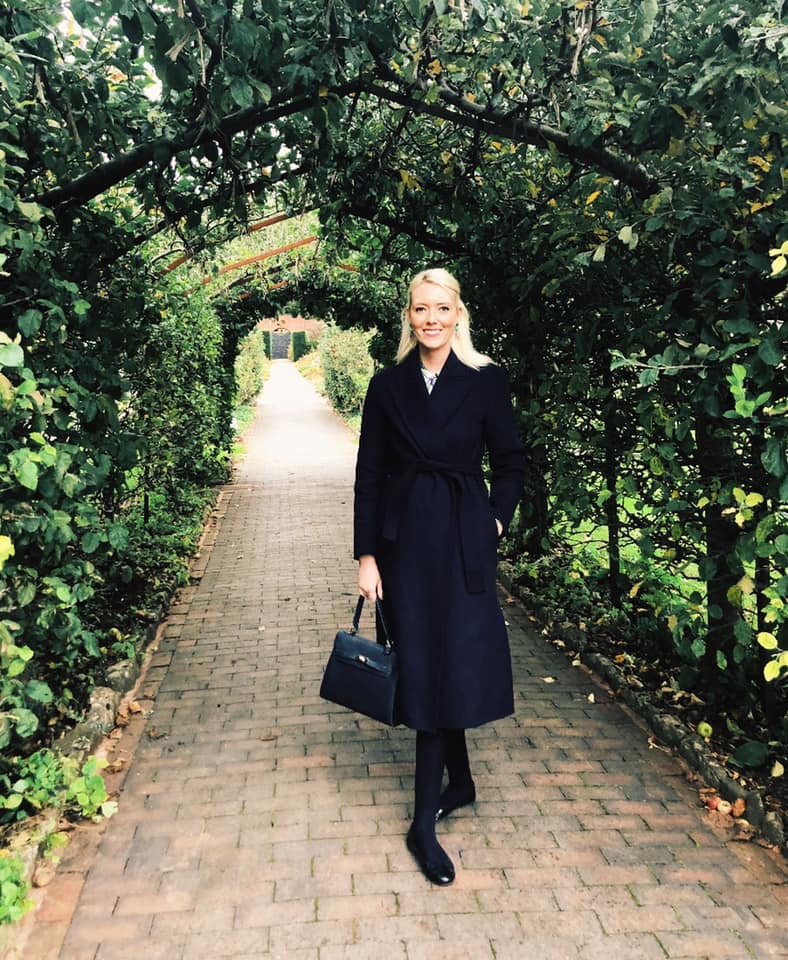
Meet The Author | Rebecca Lipkin had a passion for Victorian art and literature from a young age. She first discovered John Ruskin through E.M. Forster’s novel, ‘A Room with a View’, and later joined the Ruskin Society at the age of seventeen to learn more about Ruskin’s work. Rebecca pursued a career in journalism, specialising in arts writing and theatre reviews, and has worked for a number of national publications.

Posted in Random Things Tours

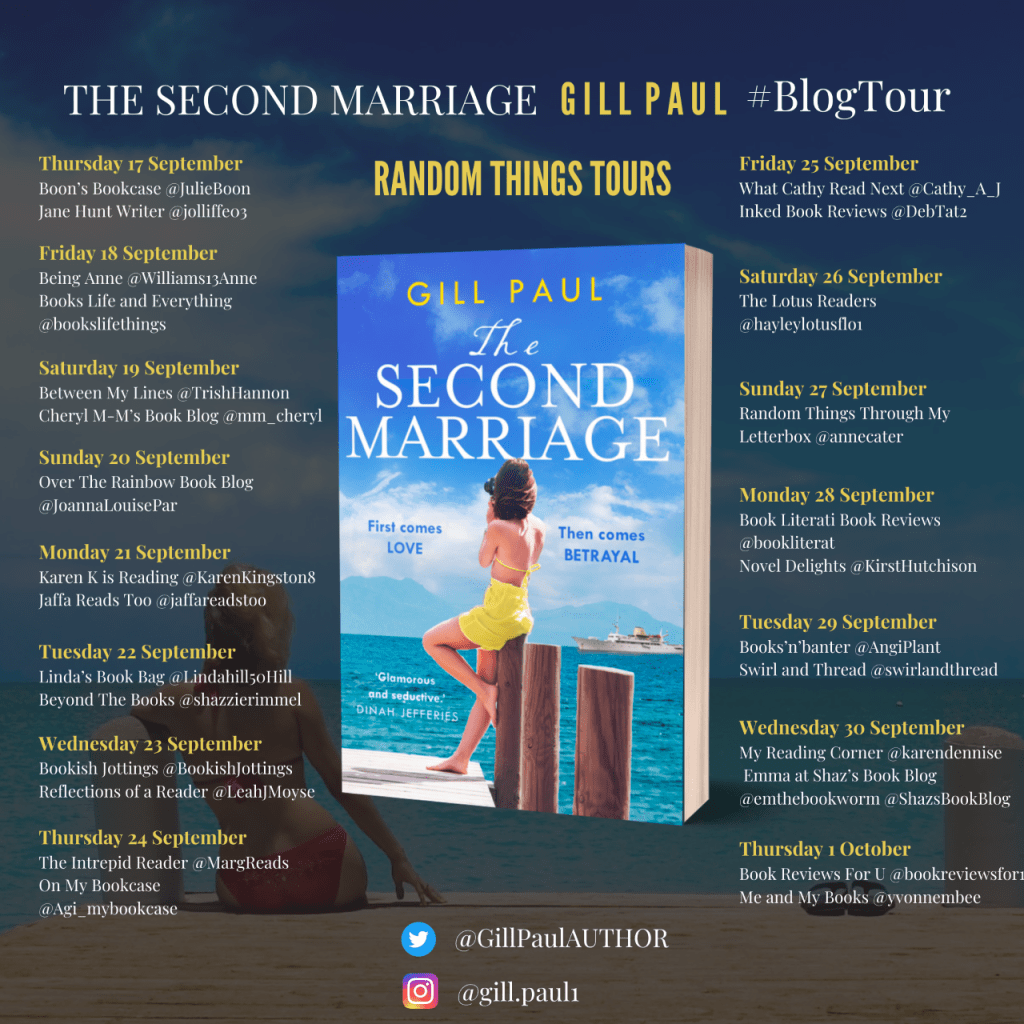
The Second Marriage by Gill Paul.

#RandomThingsTours #TheSecondMarriage #BlogTour @gillpaulAUTHOR

Published in UK: 24th August 2020

Publisher: Avon Books

ASIN: B084WS53XZ

Synopsis: From the internationally bestselling author of The Secret Wife comes a tale of love, sacrifice and betrayal, available now.

Published in the US as Jackie and Maria.

JACKIE | When her first marriage ends in tragedy, Jackie Kennedy fears she’ll never love again. But all that changes when she encounters…

ARI | Successful and charming, Ari Onassis is a man who promises her the world. Yet soon after they marry, Jackie learns that his heart also belongs to another…

MARIA | A beautiful, famed singer, Maria Callas is in love with Jackie’s new husband – and she isn’t going to give up.

Little by little, Jackie and Maria’s lives begin to tangle in a dangerous web of secrets, scandal and lies. But with both women determined to make Ari theirs alone, the stakes are high. How far will they go for true love?

My Thoughts | I was drawn to this book because I’ve always had an interest in the Kennedys and have read a lot of fiction and biography around Jackie and JFK. However, I didn’t know a lot about her marriage to Aristotle Onassis or how their relationship started considering he was in a long term relationship with opera star Maria Callas. I was interested to read a story I knew, but from the perspective of the two women involved rather than the men. I was quickly drawn into the narrative told in alternate chapters from both women and starting when they were still in their first marriages. Jackie is trying to cope with marriage into the politically obsessed Kennedy clan as well as grieving over a lost child and Jack’s indiscretions. Maria is married to Battista Menighini who manages her career, but feels unfulfilled without a child and misrepresented as a diva by the press. Both women have met Onassis and been invited to his yacht, since he likes to entertain the most famous people in the world. I wondered if either woman ever imagined in only a few years they would be rivals.

Both women’s characters were well drawn and I felt I really did get to know the real them, although I felt more of an affinity with Maria – possibly because she was led more by her emotions than Jackie. Although not the diva she was often portrayed as in real life, Maria acts on her emotions and seems more in touch with what she needs. As soon as she falls in love with Ari (Onassis) she acts on it, breaks the news to her husband and risks her reputation to be true to her heart. I also felt a kinship in her grief over struggling to be a mother, something she does have in common with Jackie who has had a miscarriage and loses a daughter at the beginning of the novel. In fact the women have more in common in their backgrounds than I realised, mainly in their relationships with their mothers.

Litsa Callas was a cold and distant mother, in fact such was her disappointment that Maria wasn’t a girl she didn’t even look at her baby daughter for four days. Throughout the novel we see her engage in manipulation, abuse and betrayal of her daughter including selling details of her relationship with Onassis to the world’s press and eventually writing a ‘tell-all’ book about her daughter. In a radio interview Callas recalls the lack of confidence she had in her looks, especially her weight, compared to her mother who was very slim. Callas felt ‘ugly and unwanted’ as a girl, added to this her mother pressed her into relationships with occupying Italian and German soldiers in order to gain money and food during the Axis occupation. Some sources claim that Maria came to no harm, but she sees it as a form of prostitution and the author writes about Maria telling Onassis that she was manhandled by soldiers and on one occasion was almost raped. In a moving account Maria claims her mother had no warmth or sympathy for her daughter on her return from this assault, just continued to put them at risk to earn money.

I was saddened by the scene where Jackie’s daughter is stillborn, adding to her pain Jack is on a flight and she only has her mother for support. Janet Auchincloss was authoritarian and austere, believing in money, beautiful homes and status rather than love and insisting on this for her daughters, regardless of the man. Jackie adored her father ‘Blackjack’ Bouvier who showered her with affection and presents. After her parents divorce, her mother was left short of cash until her remarriage and this left a big impression on Jackie. It was impressed upon her that security was more important than love, but there was still a touch of idealism in Jackie who thought she’d found both love and security in Jack. The author does a great job of showing the reader the differences that open up between Jackie and her in-laws. Jackie is a big reader, intelligent and interested in culture whereas the Kennedys live and breathe politics. She’s more of an introvert, who wouldn’t normally court the limelight and often wishes that Jack’s ambition could be curbed. She worries about the type of First Lady she will be, feeling under constant scrutiny from the Kennedys who think Jack’s wife should appeal more to the average American woman. Jackie’s interest in fashion is shown as a way she expresses herself and I felt this was maybe her only means of expression. Her mother stifles any emotion and she’s encouraged to ignore Jack’s indiscretions too. She isn’t allowed to be honest with anyone about how heartbroken she truly feels. I felt for her so much in the scene where she takes a call from Marilyn Monroe who makes it quite clear she is involved with Jack. Jackie recognises that Marilyn is very fragile and could damage his career irreparably, even in her heartbreak she is thinking of him. Even worse is the part where Jackie overhears a conversation that brings his indiscretions closer to home than she ever imagined in a double betrayal.

This is an immersive piece of historical fiction that completely transported me to the 1960s and the rich elite of the period. Using fashion, interiors and an in-depth knowledge of her characters Gill Paul drew me into a world of privilege I could never have imagined. She drew parallels between these two extraordinary women, but also between families who were as cursed as they were wealthy and powerful. I felt that both women’s upbringings drew them to men who were rich and powerful, but also controlling and possessive. There was no question of Maria or Jackie enjoying the sort of affairs that Kennedy and Onassis conducted. The intense control of their mothers almost groomed them for the lives they chose as women. Although it might have appeared more respectable, it’s not hard to draw parallels between Janet pushing the Bouvier sister towards rich husbands and Litsa pushing her daughters towards occupying soldiers. There was also a connection between their dislike of the limelight, and the ability to have their voices heard – ironic in the case of Callas with her incredible sound. I found myself feeling sad for both of them throughout. This is a great read, with interesting supporting characters and a series of beautiful settings such as Venice, the Greek Islands and the Kennedy Bouvier estates. I felt like one of the jet set while reading and the author added to my knowledge of these women with newly discovered evidence, such as the revelation that Onassis and Callas may have had a son, Omero, who died at birth. Using a depth of background research, the author has created an accessible, enjoyable and enlightening novel about two of the most famous women in the 20th Century.

The Author

Gill Paul’s historical novels have reached the top of the USA Today, Toronto Globe & Mail and kindle charts, and been translated into twenty languages. They include THE SECOND MARRIAGE (titled JACKIE AND MARIA in the US), two bestselling novels about the Romanovs – THE SECRET WIFE and THE LOST DAUGHTER – as well as WOMEN AND CHILDREN FIRST, which was shortlisted for the 2013 RNA Epic Novel of the Year award, NO PLACE FOR A LADY, shortlisted for a Love Stories award, and ANOTHER WOMAN’S HUSBAND, about links you might not have suspected between Wallis Simpson and Princess Diana.

Gill is also an author of historical non-fiction, including A HISTORY OF MEDICINE IN 50 OBJECTS. As well as writing, she speaks at libraries and literary festivals on subjects ranging from the Titanic to the Romanovs. Gill lives in London, where she is working on her tenth novel, and she swims daily in an outdoor pond.

 Follow the Author: 

www.gillpaul.com

Twitter @GillPaulAUTHOR

Instagram @gill.paul1

Do have a look at the other stops on the blog tour.

Posted in Random Things Tours

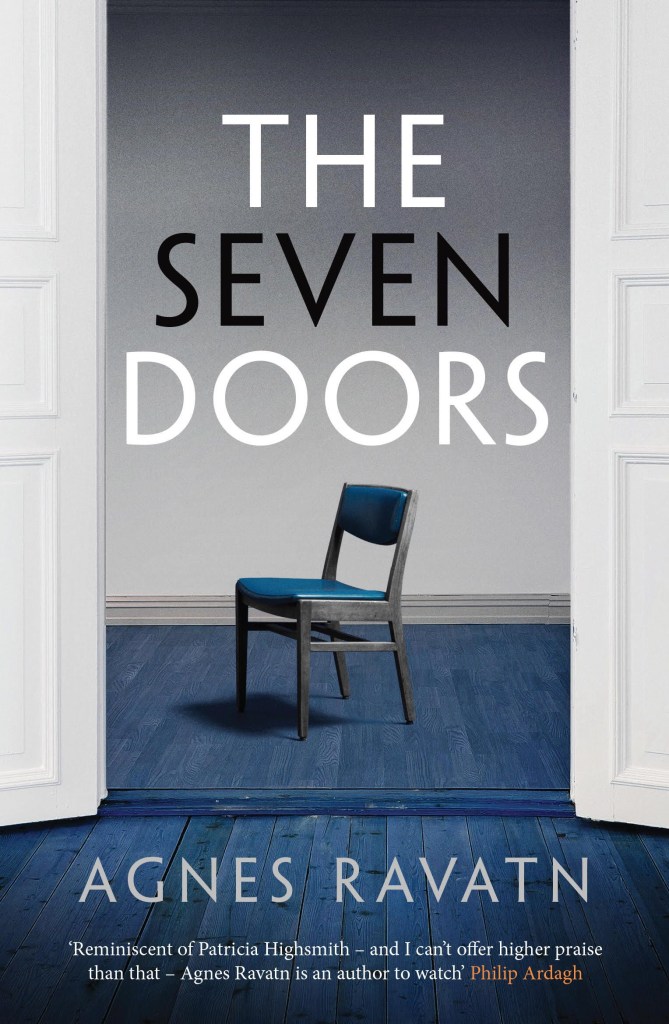
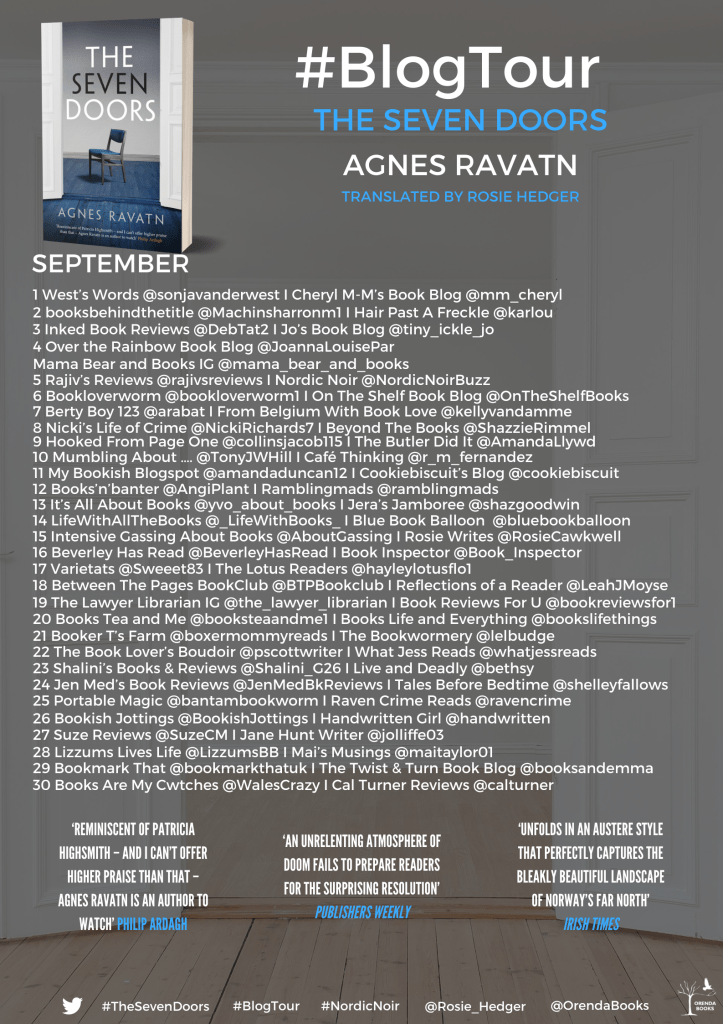
Seven Doors by Agnes Ravatn.

#OrendaBooks. #RandomThingsTours #blogtour #SevenDoors

While reading this book I had one of those odd reading experiences that only happens on Kindle or other e-reader. When I’m reading a proper physical copy of a book, I’m constantly aware of how much book is left. I’m literally holding it in my hand. I read this in one sitting, only realising how quickly time had passed when I stopped to mark a page and saw 93% in the bottom corner! Time really flew because I was so absorbed into Ravatn’s world.

Set in Bergen, Oslo, this is a thriller with so many possible outcomes. Our main character Nina follows a labyrinthine trail to find the killer of a musical prodigy. Nina is a professor of literature and gives a speech at a symposium about the futility of studying literature. Lit students are following their own, selfish lines of academic enquiry she argues, but their study doesn’t help anyone or bring anything important to the world. It doesn’t make a difference, except to the student. She proposes that in order to be useful, literature students make them self available as investigators to the police force. They are trained to analyse documents, to read between the lines, to apply psychoanalytic theory to texts and understand character’s motivations. All skills that might be useful when investigating a crime. Little does she know, she will soon be using those very skills in the real world.

Nina and her husband Mads have an absolutely insufferable daughter Ingeborg. When she announces that her home has silverfish, and she is three months pregnant, she asks Nina to intercede with Mads for an advance on her inheritance. Nina idly observes they have a house in town that belonged to an aunt, but she needs to talk to Mads. They are in their own difficult living situation, as their home is being compulsory purchased to make room for a railway. This is affecting Nina much more than Mads because of the emotional attachment; it was her family home, she grew up there. They are negotiating a settlement with the council, but Nina can’t see any property she would want to purchase. She needs to live in something with soul, not a slick waterfront retirement pad. Ingeborg convinces her mum that they should go and look at the house, but Nina warns that there is a tenant that they shouldn’t disturb. Despite the tenant telling her it’s a bad time, Ingeborg goes bustling in, badgering the tenant about the end of her lease and offering her money to leave as quickly as possible. The tenant, a single mother with a little boy, is blindsided by this forceful woman. Nina feels terrible and makes her apologies, sure that the tenant looks familiar to her.

Later, she realises where she has seen the woman. Their tenant is concert violinist Mari Bull, world renowned and now dropped out of sight. Strangely, she then does the same thing again, exiting the property within a couple of days and leaving no forwarding address. Surely this can’t be solely to do with their visit? Not long after, her disappearance is reported by local then national newspapers. She went to her parents place out on one of the islands, where Nina has a holiday cabin, but left her son and went for a walk, never to return. Nina finds herself intrigued by the case and follows clues, from the opera her ex-husband plays as her requiem to a small notebook with musical terms she finds in a box at the house. Fairytales also play a role in the book and like most literature students I am familiar with the work of Bettelheim quoted by Nina. Using this and Freud’s work on transference Nina starts to construct a theory and follows each clue like the breadcrumb trail of Hansel and Gretel. I liked the play on our usual ideas about fairy tales, which tend to be very Disney-fied, and everything comes to a completed happy ending. The original tales Nina starts to tell her granddaughter Milja are far more dark and bloodthirsty. In fact, the darker they are the sooner Milja will quiet down and go to sleep. They include anxious, suicidal hares and a murderous husband who gaslights his wives then kills them when they find out the truth.

From a psychological perspective there are interesting theories around transference and counter-transference, not just in the therapeutic relationship but in any relationship with a power balance that’s heavily in one person’s favour. I was also interested in the theorising around the Oedipus and Electra complexes. Nina is discussing the theory with her students and they don’t see the point of learning about a concept that started in Ancient Greek theatre and seems to bear no relevance to the present day. Yet, there’s a definite unease in Nina’s own relationship with her daughter – Ingeborg has been more likely to confide in or ask favours from her father. For Mari too there is a complicated mother – daughter relationship in that her parents sacrificed their own relationship to make sure their daughter had opportunities with the best teachers and orchestras. Mari and her father were often away together, touring Europe, leaving her mother at home. There is resentment over this and a definite coolness between mother and daughter.

Ravatn’s writing is spare, it gets to the point quickly and without poetry. She can establish a feeling or setting in just a few words, such as how the light changes when it snows or how it must feel to give ourselves up to the water, like Virginia Woolf with the stones in her pockets. Her characters are well defined and psychologically complex, such as Ingeborg’s narcissism and inability to gauge other’s feelings. I have real worries for her daughter Milja, a future psychopath if ever I met one. As I felt the book build in pace and tension towards the end, I knew Nina was getting close to the answers, but is the answer getting closer to her? The end, when it comes, is satisfyingly unexpected and shocking. I love Nordic Noir and this was a great addition to my collection. This was a clever and psychologically literate thriller. I would love to read more of Nina in the future.

Posted in Random Things Tours

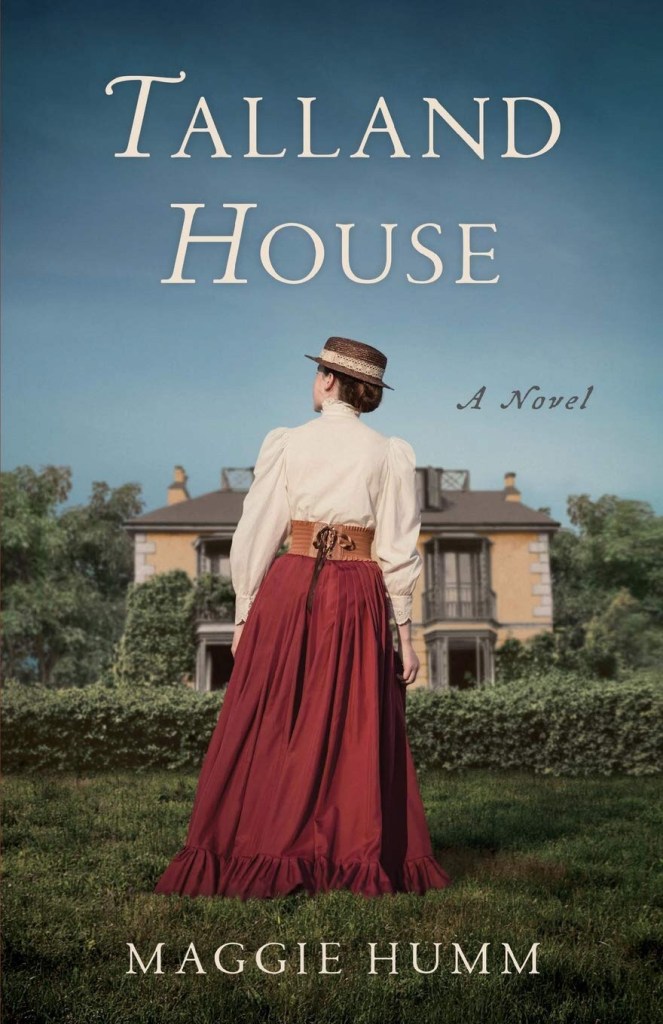
Talland House by Maggie Humm.

#TallandHouse #RandomThingsTours

In Virginia Woolf’s famous novel To The Lighthouse we visit the Ramsay family at Talland House in St Ives, Cornwall. I remember a particular dinner scene in the novel, often used as an example of how subjective the sense of self is, as we float between dinner guest’s perspectives of the dinner and each other. Maggie Humm takes one of Talland House’s guests, Lily Briscoe, and weaves a tale of love and friendships across the turbulent decades at the beginning of the 20th Century. We start at the Royal Academy in 1919, when Lily has a painting on display and runs into her one time tutor Louis Grier. This meeting takes Lily back to a time when she attended a painting school in St Ives. Now Lily is a successful artist, and in the time since her student days has been a nurse and a suffragette. She is much more self-assured than back then, when she was lacking confidence and still struggled with the loss of her mother. At a student art show, Mrs Ramsay and her husband buy one of Lily’s paintings and the two women become close. Lily attends dinner at Talland House and asks if she might paint Mrs Ramsay’s portrait. Lily has become fascinated with her hostess who has all the elegance of the model she used to be, but also the soft calming nature integral to her role as hostess, wife and mother. With Mr Ramsay’s violent outbursts, Lily suspects she needs to be patient more often than not. As they meet Louis in 1919, Lily realises two things; she is still in love with Louis, and she must explore what happened to her beloved Mrs Ramsay, who has died suddenly without Lily knowing.

From a historical perspective this novel is fascinating. Not only is this an interesting time in history, but To The Lighthouse was a turning point in the history of the novel – showing a lean towards Modernism in its various perspectives and informal structure. Historically, this is a time when women start to become independent and we see this in Lily’s student years – she studies in Paris before Cornwall and now trudges around the Cornish coastline, sketching with her friend Emily at the weekends. She chooses how she spends her time and with whom, although there are some constraints within her class and gender. With the advent of WW1 women are working in men’s roles as they join up and go to the front, working in retail and in factories to ensure the country keeps running. Lily’s wartime job as a nurse further emphasises her competence and independence. It’s a time of huge change and upheaval for everyone, but on a personal level Lily is shocked to be told about the sudden death of her former friend Mrs Ramsay. Her mind is drawn back to those sudden outbursts of her friend’s husband when she was visiting. It is Lily’s interest in this mystery as well as her potential love story that kept me reading.

The pace is slow, full of beautiful detailed descriptions of surroundings and the art being created. The colours are vivid and I can almost see a particularly colourful part of the Ramsay’s garden where delphiniums flower in a blue haze in contrast to the purple hedge. I loved the descriptions of St Ives, especially the depiction of Pilchard Day with all its activity and noise. Although these descriptions slow the story down, they are very important. Humm is creating a painting with words. The difficulties of women’s roles in society are depicted beautifully in Lily; there is tension between her status as an independent woman and a woman in love. Can both of these roles exist in conjunction with one another? She has the example of Mrs Ramsay before her, a once celebrated model, with her role now confined to mother and wife. Any artistic sensibilities she had now restricted to making Talland House the perfect place to entertain her husband’s contacts. Every skill she has is now used to create the perfect back drop, making her husband more successful in society. Instead of furthering her own independent skills and interests. Does Lily want that same role? There is also the similarity Lily sees between Mrs Ramsay and her mother, whose loss seems to haunt her in some way. Is there a way in which these two women’s fates are linked and what does this mean for Lily?

This novel is a beautiful elegy to the world Virginia Woolf created at Talland House. There is something dreamlike about those early days in St Ives, as if this lifestyle has now been lost in the wake of WW1. This feeling also extends to the love story; can Lily’s infatuation with Louis survive all that has happened since they last met? Would the reality of their relationship be those traditional roles or would Lily be free to pursue her independent career? Everything that has happened gives her room to ask these questions. This is a thoughtful, leisurely novel with bags of historical detail and painterly descriptions. It was a perfect summer story, in the same way as LP Hartley’s The Go-Between. It drifts like a summer breeze, and captures its moment perfectly.