Posted in Random Things Tours

Gold Light Shining by Bebe Ashley.

I would describe Bebe Ashley’s collection as a poetic collage. It ranges across subjects as diverse as fashion, fandom, and families. Ashley elevates the internet into a poetic subject, puncturing the enduring snobbery of high and low culture. She shows us that the internet and some of its subjects are not the cultural wasteland people fear. Rather it is a window on whatever we choose to view from celebrity culture, to youthful yearnings, obsession, awakening sexuality and Harry Styles. The internet can be the cultural rainbow that lights up our grey lives. The focus may well be on our journey into adulthood, but there is another, wiser, voice too. The voice that knows some of this is momentary and that it is in building connections and communities that we find meaning. She also never forgets the meaning in our own families.

I grew up in the eighties, and we had to drive five or six miles to another village to the newsagent who reserved my copy of Look-In magazine, and then Smash Hits. This was my little window into the world and more specifically Adam Ant. My life might have been very different had I been able to access information and my fingertips. I loved the poem ‘Give Pop Music, Give Peace a Chance.’ It’s a grandmother, standing on a hill with her grandchildren reminiscing about this place, the seasons and her awakening to music and celebrity. As she sits in a sunken garden amongst the bluebells a young ranger starts to point out the beauty of the place. She knows. She knew it was beautiful before he was even born. She remembers that age of listening to music and feeling full of potential:

‘’a telegram from John and Yoko/ The thrill of running coloured chalk through the ends of her hair/She remembers sticking her thumb pad against the pin back/of a badge that served as her first concert ticket.’

She includes notes and allusions to Harry Styles, suggesting listening to his music while reading the poetry here. She starts the book with a quote of what looks like song lyrics, where he talks directly to his fans saying that he doesn’t understand or feel exactly what they do, but that he does ‘see’ each and every one of them. This assures the fans that they are noticed, that he appreciates them and this state of ‘fandom’ which is such a strong feeling as a teenage girl. In her poem The Boy Who the narrator gives a brilliant depiction of the chaos of a teenage party. She meets a boy in a Jesus T-shirt who is hiding in the bathroom to get away from people, but to enjoy the music. She lays in the bath and she listens to a tale of finding a friend ‘who he met in a gay club that he definitely didn’t know was a gay club’ and how this friend offered him their couch to sleep on while things were difficult at home.

Although these are longer poems than haiku, it feels like the poet is trying to do the same thing. All of these are brief moments in time, beautifully observed, and structured. The Boy Who is written as a long stream of consciousness with no punctuation or breaths. It’s like a story you’d quickly tell a friend about the party you attended the other night and where you disappeared to. In the final poem she imagines the object of her fandom in Japan, wearing an embroidered hoody and curls that are in need of a cut. The last two lines describe one such moment:

This is the one I’d most like to meet /Of all the moonstruck moments

This is a beautiful collection of poetry that imagines that rush of teenage hormones, burgeoning sexual feelings and the perfect pop star as an object of affection. There is a reverence and respect to how she describes Harry Styles here that I found really endearing. I loved though how the poet describes he importance of music and how we use it to complement or change our emotions. In Breakdown she brilliantly pinpoints the way we might use songs for heartbreak and it reminded me of my friend who was heartbroken and kept playing Coldplay’s The Scientist over and over in the car until me and her other friend stole the CD to break her mood. We were worried that the repetitive playing of it, was hampering her recovery. Here Ashley writes:

‘There was something serendipitous/ About being heartbroken during the release/ Of a heartbreak album, with the postman/ already tired of square sleeved parcels/ And the neighbours already sick of hearing/ Heartbreaker’s twelve songs on repeat.’

Music does affect and influence our emotions profoundly. If I hear certain Snow Patrol songs I’m reminded of a bereavement I had. If I hear ‘Yes’ by McAlmont and Butler it reminds me of feeling positive, hopeful and full of excitement for a new start in my life. Like most of us I even have mood playlists on Spotify for when I need cheering up, motivating or having a good cry. Ashley captures that feeling as well as teenage fandom and the inspiration she gets from Harry Styles’s lyrics. It’s a very readable and relatable collection, that I can tell I’m going to enjoy with further readings.

Meet The Author

Bebe Ashley lives in Belfast. She is a AHRC – funded PhD candidate at the Seamus Heaney Centre for Poetry. Her work can be found in Poetry Birmingham Library Journal, Poetry Ireland Review and others. When procrastinating from her PhD she takes British Sign Language and Braille classes, and writes pop culture articles for United by Pop, specialising in Harry Styles.
Posted in Random Things Tours

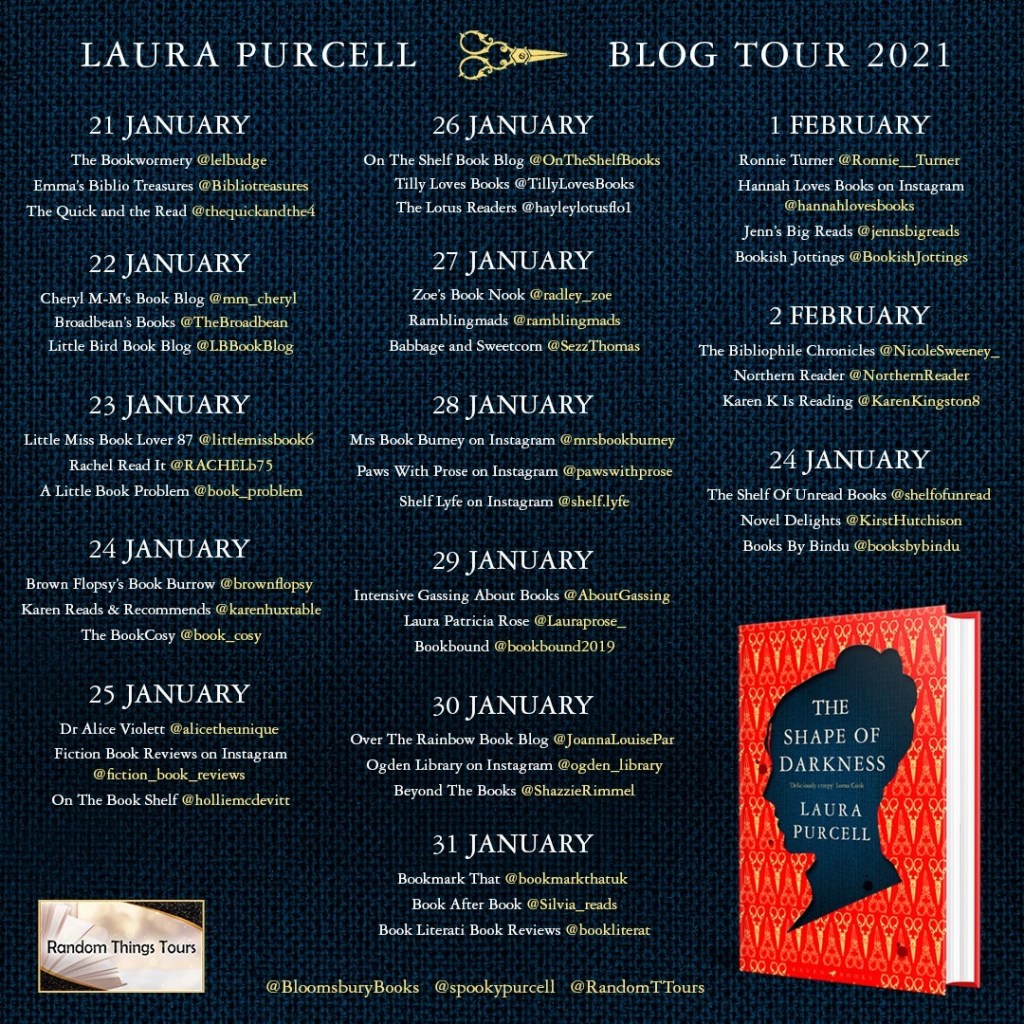
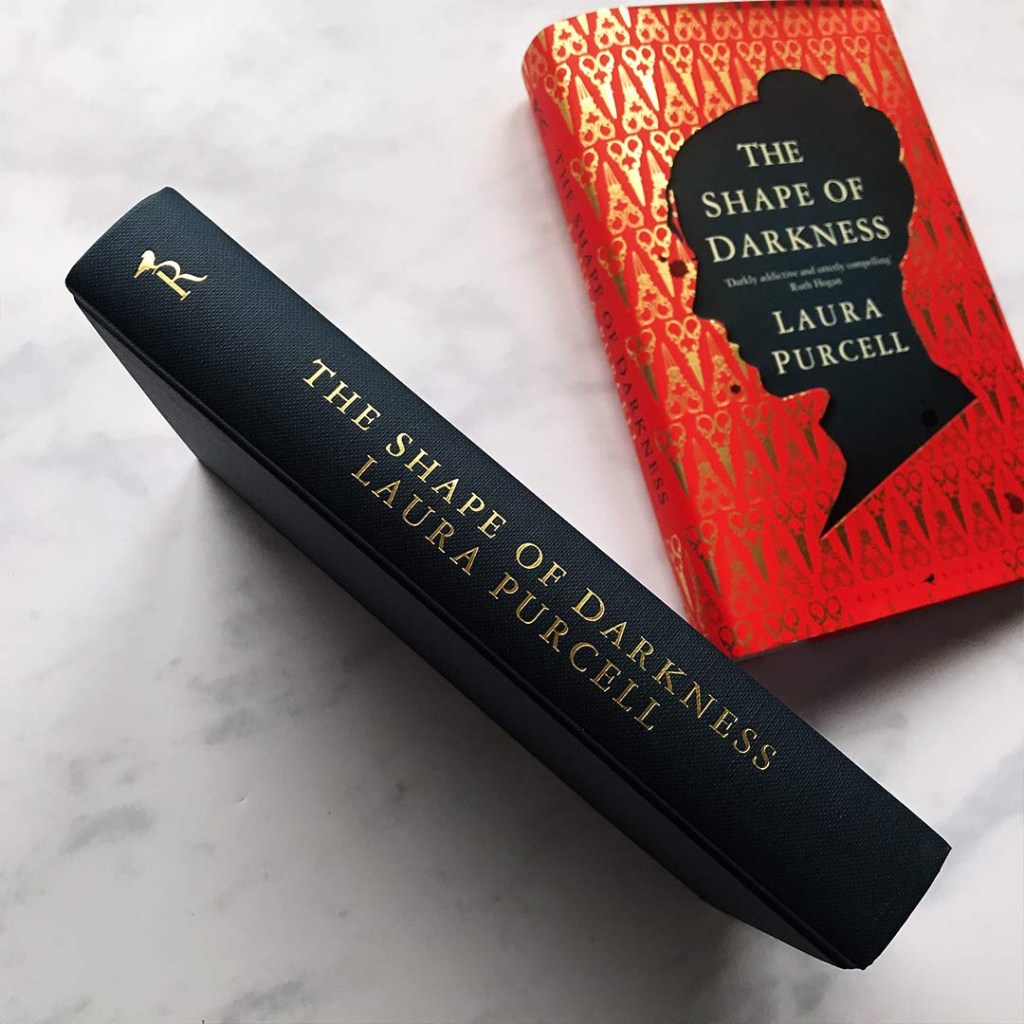
The Shape of Darkness by Laura Purcell.

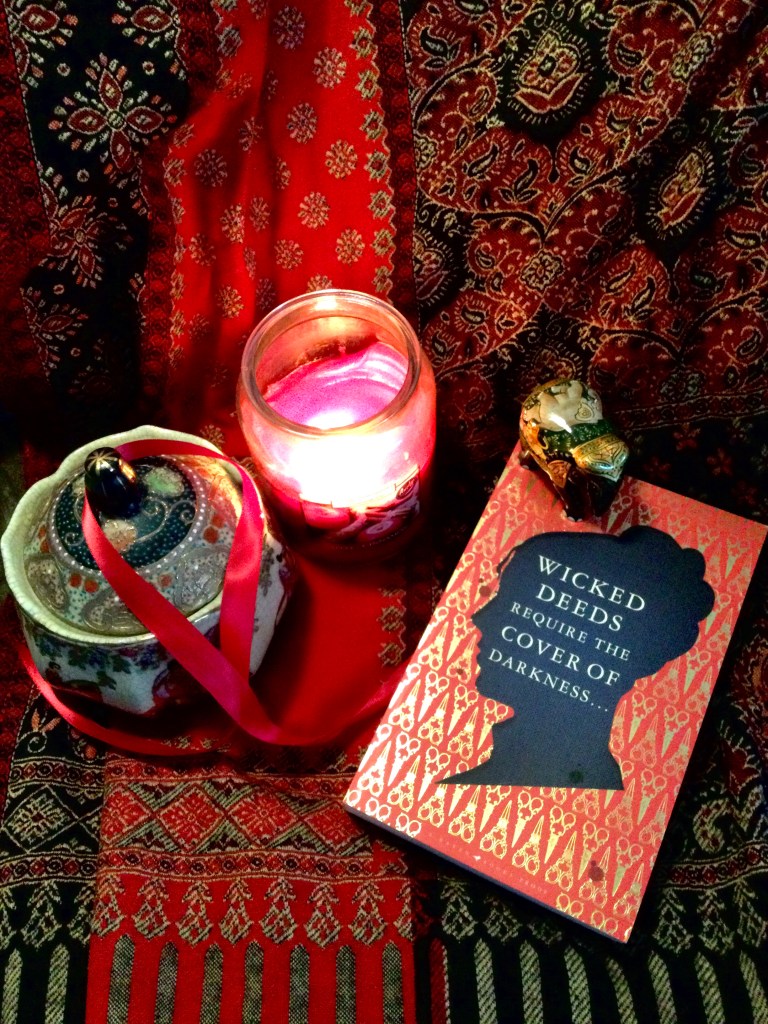
I must admit to being a bit of a fan girl when it comes to Laura Purcell. The mix of historical and gothic fiction is probably my favourite genre, so I had been impatiently awaiting the publication of her latest novel anyway. I jumped at the chance to join the blog tour, because she’s one of my favourites – in fact I had already pre-ordered a signed edition of this two months ago. So I came to it full of anticipation. I was hooked by the end of the first chapter and didn’t put it down. Our narrator is Miss Agnes Darken, living in Bath with her invalid mother and nephew Cedric. Agnes earns her money cutting silhouettes or ‘shades’ for people, but her art is put under threat not just by newer inventions, but by a mysterious killer stalking the people who have sat for her. Desperate for answers, Agnes visits a spirit medium – an albino child named Pearl who lives with her sister Miss Myrtle West, and an invalid father. Agnes and Pearl try to conjure the spirit of one of her murdered sitters, so they can find the killer. Unfortunately, they have underestimated the power of what they have unleashed.

The story is full of little twists and turns that unsettled me and kept me guessing. When Agnes finds the shade she cut of her first sitter with a squashed face, she ends up with the police on her doorstep. She was his last appointment before he was killed and the murder weapon was a mallet, in fact his face is quite ruined. Agnes is shocked, but could perhaps write this off as a coincidence. Maybe she simply caught the silhouette as she closed the book? I thought the awkward relationship with Simon, who is there when the police come, was really interesting. He is Agnes’s friend, but also a doctor and was married to her sister Constance. Yet it is Agnes and her mother who have Cedric, her sister’s son, living with them. I kept wondering how this had happened and it was these awkward relationships and the whiff of scandal that really caught my attention just as much as the supernatural element. Simon is deeply protective of Agnes and her health since she’d had pneumonia a few years previously. Yet there’s another concern underneath, her mental health and whether certain things are ‘too much’ for her delicate nerves.

The horror in Pearl’s household comes from poverty and working in dangerous environments as much as it does the supernatural. Pearl’s father has worked in a match factory and has succumbed to the horrific disease of ‘phossy jaw’ where the phosphorus used for the match heads, eats into the mouth and slowly poisons the victim. The descriptions of being able to see the workings of his jaw and of Simon trying to clean the area and burst abscesses on the gums is visceral and left me far more horrified than the seances held by Pearl and her half-sister Myrtle. Myrtle has named Pearl The White Sylph, which only adds to the air of mystery created by her snowy white hair and skin and the wispy glow of ectoplasm that can be seen emanating from her body when the lights are off. Pearl is exhausted and drained afterwards, and her fear of the spirits who take control of her is obvious. She fears them sitting in her body or speaking through her mouth. It seems her gift is involuntary and all the more genuine for that. When Agnes visits they have no idea what they may summon up together, whether in terms of the spirits or a plan that may prove even more deadly.

Agnes is haunted by her sister whether she visits Pearl or not, but the pair do have something in common; sisters who try to control their lives. Agnes’s sister Constance has wronged her sister terribly in life, but continues to be there in death. I love the tiniest details that are placed by the author to echo the relationship:

‘Agnes scrubs at her eyes with the handkerchief. She has gone through so many of them lately that she’s been forced to use Constance’s old ones; she has picked the initials out but the ghost of the letter C still marks the corner’.

I saw an echo of Daphne Du Maurier’s Rebecca in this, they way her initials are all over the house, marking everything the new wife has to touch. Here it is a way for Constance to be ever present for Agnes. Constance is like Agnes’s shadow, and just like Myrtle and Pearl there is a yin and yang to these sisterhoods. One sister the innocent and other the dominant, rule breaking force. It’s as if they’re two halves making a whole. I enjoyed the description of Constance’s wardrobe towards the end of the book and the bright colours of her gowns contrast strongly with Agnes’s jet black, almost Puritan style of dress. Agnes is giving off that sense of grief and this uniform of mourning can mask who someone is as effectively as a disguise.

I also loved the period detail in the book, not just the clothing, but the etiquette and position of women. Although Agnes struggles financially she does have some measure of freedom and runs her own household. She has Simon, her brother in law, as her protector and because he is a doctor and a widower there is no impropriety in this. However, she does need him for certain things such as talking to the police and dealing with other men, who simply don’t consider a woman as an equal. I also loved the descriptions of Agnes’s craft, the cutting machine that she barely uses in order to keep cutting by hand alive. There is an alchemy in the descriptions of her work, the magical way she’s able put a person’s character into what seems like a very flat, characterless medium. There is a great description of a session with a young man, who admits he would prefer the new- fangled photograph, but his mother prefers the old ways. Photography is a threat to Agnes’s business, and there’s an interesting thought process around the belief that too many photographs could diminish you as each photograph takes a bit of your soul.

‘Part of your soul would remain forever imprisoned in the glass lens. Sit for too many and you might be depleted. More alive in the photograph than in real life.’

I thought that could be my thought process when I’m worrying about my niece or stepdaughter’s ‘addiction’ to social media. I like to take breaks from social media, but I sometimes worry that they’re so obsessed with their online personas that they miss out on what’s actually happening in real life. Social media is an edited or even purposely cultivated idea of who we are, not our real selves. It’s good to hear that each generations worries about the same things.

This is an excellent gothic mystery, that grabbed me from the start and didn’t let go. I thought the characters were well developed and fascinating – even the ones who are no longer there! I liked that were transgressive females who had their own agency and independence. I enjoyed the author’s sense of place, the evil portents like the magpies and the build up of tension. I also liked the contrast between those living in poverty and those with a more middle class lifestyle. The supernatural elements are always spooky with Purcell, so the seances and visitations are unsettling, but so are the real life people. As the mystery deepens you won’t be able to stop reading, because you’ll have to know what’s going on. There’s a saying we use about timid people – afraid of your own shadow – and that’s what this book does, it makes us afraid of what others might see in us, and who we can become in the dark. An utterly brilliant addition to Laura Purcell’s work.

Why not check out some of the reviews of my fellow bloggers?

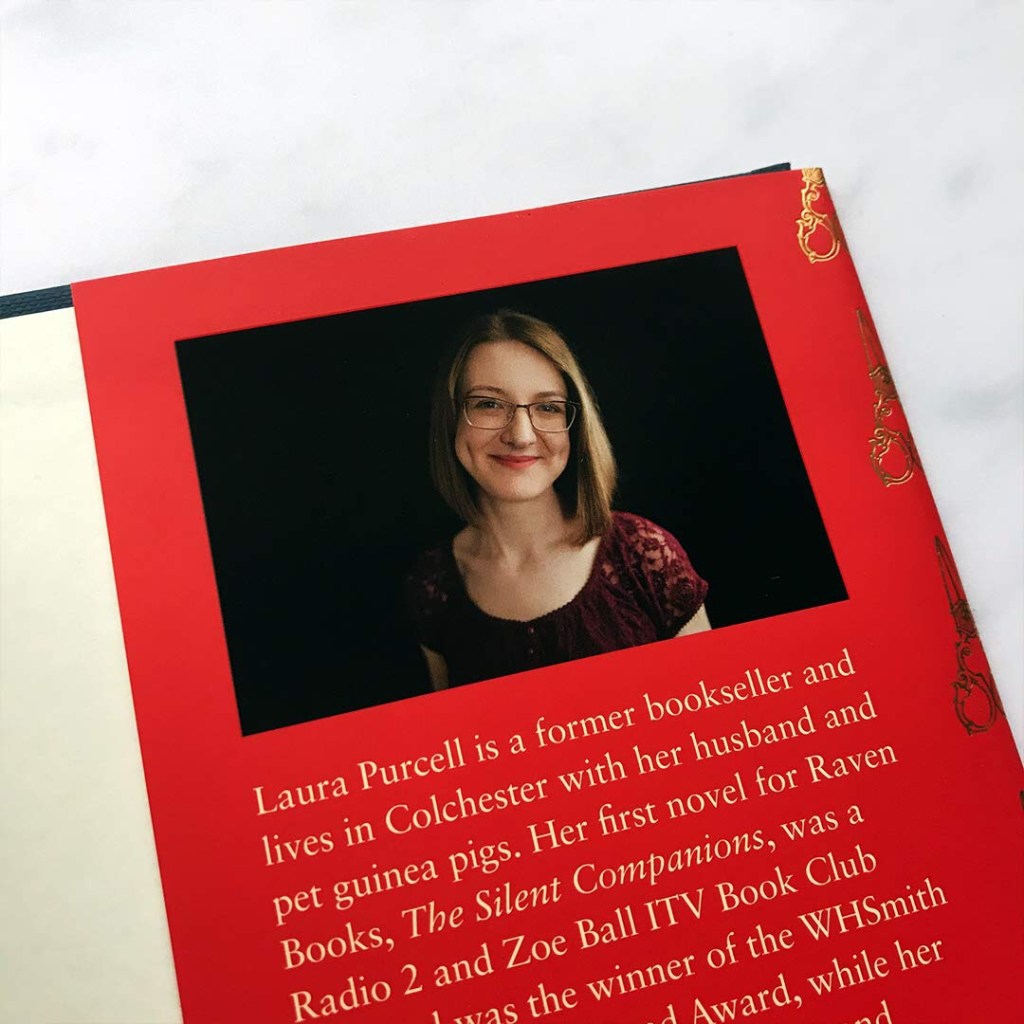
Meet The Author

Laura Purcell is a former bookseller. She now lives in Colchester with her husband and their pet guinea pigs. Her first novel for Raven Books, The Silent Companions was a Radio 2 and Zoe Ball ITV book club choice. It was also the winner of the Thumping Good Read award. Her next novels The Corset and Bone China have cemented her reputation as the queen of the spooky but sophisticated page turner.

Posted in Netgalley, Random Things Tours

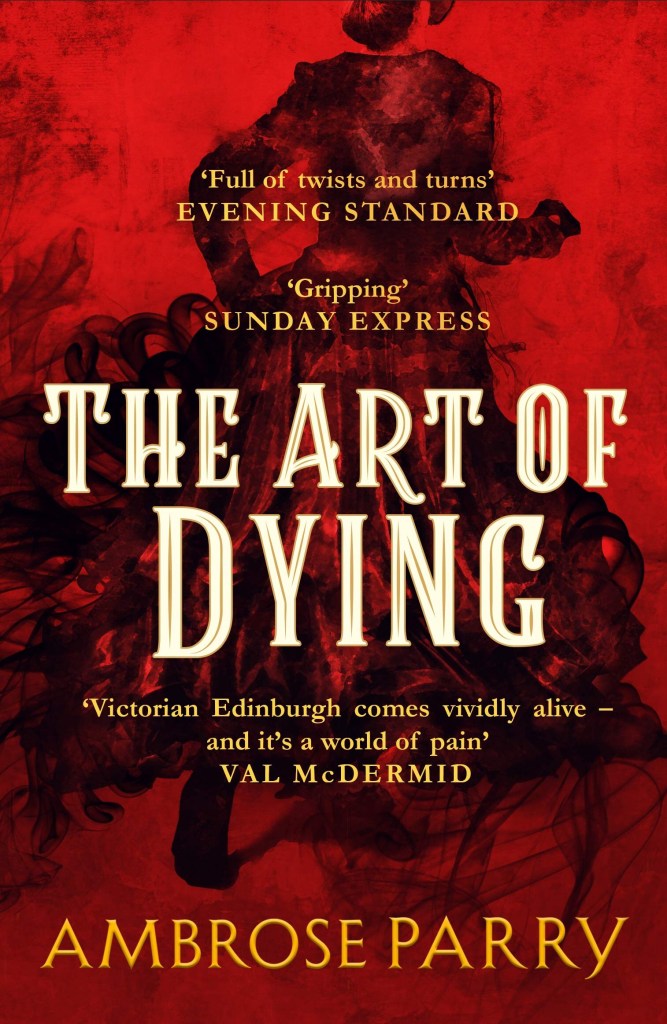
The Art of Dying by Ambrose Parry.

Today, I’m happy to be on the closing day of this blog tour for The Art of Dying. This interesting mix of murder mystery, historical/ medical drama and romance, creeps up on you slowly, until you’re determined to keep reading and see whether a killer is stalking the sick of Edinburgh. In fact at what point I couldn’t decide what I wanted to know more: would the killer face justice, would Raven reconcile with the woman he loved, who was stealing money from the surgery, would Sarah live and what the hell was Quinton up to? It’s hard to sleep with all that going round in your brain! I hadn’t read the first novel featuring Dr. Wilberforce Raven, but it was easy to catch up with this instalment set in Edinburgh in 1849. We really do hit the ground running as Raven is attacked in an alley way in Prague. In the dark and confusion one of the attackers draws a gun, Raven draws his knife and a shot rings out ricocheting off the narrow brick walls. Raven slashes his knife in the air from left to right. He thinks he made contact with an attackers throat, but he doesn’t know if he struck a fatal blow and doesn’t know who is shot.

This chaotic existence seems to be the way Raven lives, but will it follow him back to the streets of Edinburgh. He’s been offered a place under the prestigious obstetrician Dr. Simpson, who he trained under at medical school. He’s looking forward to being back in Edinburgh and in the hospitable, but slightly chaotic, family household. He’s also looking forward to getting away from the guilt that he may well have killed a man in Prague. The only downside involves women. He will be leaving Gabrielle behind – the woman he’s been seeing in Prague – but they’ve both known it was a short term relationship. More pressing than that, he’s wondering whether Sarah is still part of Dr. Simpson’s household. Sarah was originally the Simpson’s housemaid, but did assist the doctor in clinic at times. Raven was attracted to her intelligence and determination. They seemed drawn together by an invisible bond and the closer he gets to his old city, he can feel that bond tugging again. They way they’d been in the past, Sarah might have confidently expected a proposal and had it just been about love, Raven would have had no qualms. However, as a young doctor starting out in a profession where reputation is everything, could he risk marrying a house maid? What would Edinburgh society think and would he be risking his career?

I can’t say I warmed to Raven as a character. I found him arrogant and apt to jump to conclusions, especially where it would benefit him. More importantly, I found him cowardly. Especially in his dealings with Sarah. I had such a moment of satisfaction when he enquired after Sarah when arriving, using her maiden name. When the new house maid explains she is now Mrs Sarah Banks, I actually smiled. To find out that her new husband, Archie Banks, is also a doctor and has a comfortable lifestyle, is a huge life lesson for Raven. Here was a man with strength of his convictions. He had loved Sarah and married her, with no regard to his position or social standing. Of course, we find out later on, that Archie has a reason for not caring about such things but he’s still a man of honour. Sarah is an intelligent, but also perceptive woman, and this is her advantage as she and Raven come together to restore Dr Simpson’s reputation. During a difficult delivery, Simpson is rumoured to have missed a haemorrhage and the dead woman’s mattress was said to be so soaked with blood it had to be disposed of. Simpson expressly asks Raven not to look into the matter and certainly not to bother the grieving widower in his defence. Raven even has the odd worry about Simpson himself, especially his potential overuse of chloroform – Raven is served a drink laced with it on his first evening. Sarah, however, feels that Simpson is a good doctor and that there is something else underlying this need to discredit him.

This is not the only investigation going on in the household. A new employee, Mr. Quinton, is there to look after the admin and keep the books for the practice. Unofficially, he is trying to find the culprit for money going missing in the house. He wants to book drugs in and out too, and research patterns in the practice’s spending. There’s something about his persnickety nature and constant presence that’s very off putting. He doesn’t work in harmony with the house, but rather against it. He isn’t at the Uriah Heap level of obsequiousness, but that’s who I kept thinking of when he came into the story. I liked how the author brought in all these levels of surveillance. Quinton watches the household and practice, but he’s been under the steely eye of the butler since he arrived. Sarah is watching both Dr. Simpson, but also stumbles into another investigation while trying to clear his name. Raven is being watched, but is also watching others with Sarah. Their focus is split though: Sarah thinks Simpson’s name can be cleared and as the deaths pile up, the same name keeps cropping up, a nurse called Mary who has cared for people who seem to have lost their lives in suspicious circumstances. A sudden illness that involves seizures, unconsciousness, fatigue and weakness appears out of the blue, killing people in a matter of hours. Could this Angel of Mercy be an Angel of Death? Or could there be a rare new disease for Raven to discover? He daydreams about the acclaim it could bring if he has uncovered an unidentified disease. With the title Raven’s Malady running through his head, the two are on the look out for different things, but who will be proved right? More importantly will the investigators themselves be safe, as they trail all over Edinburgh to find answers?

If we add to this: a moneylender with a giant as his right hand man and some unexpected debtors on his books; a pregnancy; a bereavement; and a breakneck race to save someone’s life. The book is definitely jam packed with incident and tension, whether that be the tension of the race to find our culprit or the more ‘slow burn’ tension between Raven and Sarah. Our writers leave us with enough answers to feel satisfied and enough cliffhangers to look forward to the next book. This isn’t an easy balance to strike and I felt it was well – judged here. I was intrigued by the period detail when it came to surgery and obstetrics. I found myself won over by most of the characters. Sarah leapt off the page and when I read Mary’s chapters I was drawn into her upbringing and the terrible effect this had on her psychologically. This is a series I will look forward to revisiting and maybe even Raven might win me over next time.

Meet The Authors

This book is the second in the series featuring Dr Raven. This one is published by Canongate (Blackthorn) and will be available on March 2nd 2021. Ambrose Parry is a pseudonym for a collaboration between Chris Brookmyre and Marisa Haetzman. The couple are married and live in Glasgow.

Chris Brookmyre is the international bestselling and multi-award-winning author of over twenty novels, including Black Widow, winner of both the Theakston’s Old Peculier Crime Novel of the Year and the McIlvanney Prize for Scottish Crime Novel of the Year.

Dr Marisa Haetzman is a consultant anaesthetist of twenty years’ experience, whose research for her Master’s Degree in the History of Medicine uncovered the material upon which The Way of All Flesh was based.

Posted in Random Things Tours

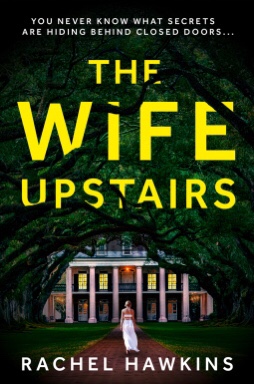
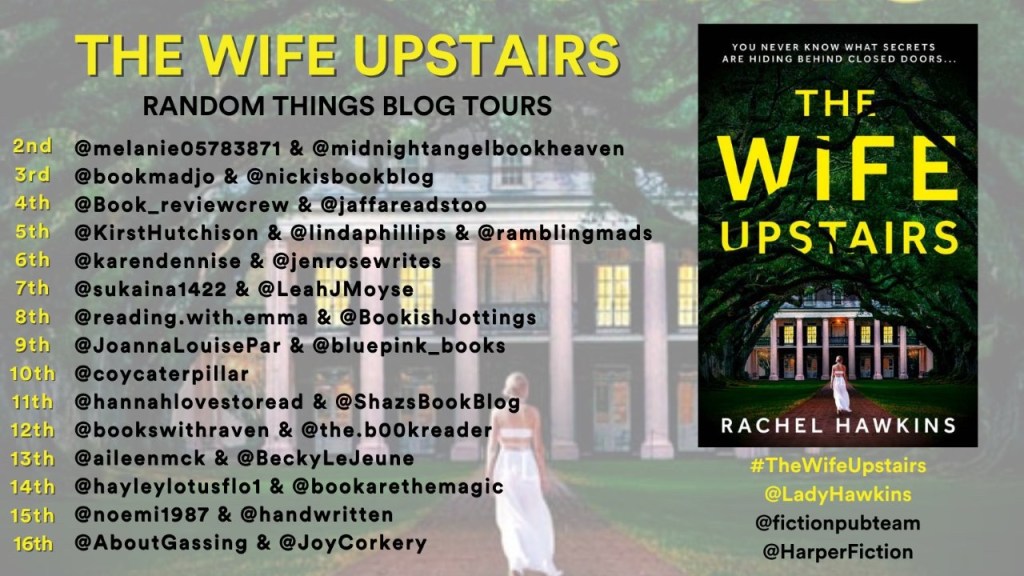
The Wife Upstairs by Rachel Hawkins

Publication: St.Martins Press (5th Jan 2021) ISBN: 1250245494

Jane Eyre is my favourite classic novel, and coming very close is Rebecca by Daphne Du Maurier – a retelling of the Jane Eyre themes relocated to Monte Carlo and large stately home in Cornwall in the 1930s. Over the years I’ve seen plays and ballets of the book, the inevitable film and tv adaptations ( Michael Fassbender as Mr Rochester – be still my beating heart). I love Jean Rhys’s novel Wide Sargasso Sea which is written as a prequel to Jane Eyre, telling the story of Rochester and Antoinette ‘Bertha’ Mason and their whirlwind marriage in the West Indies. The book has something new to say to every generation it seems and it is remarkable successful in most incarnations. So I jumped at the chance to read Rachel Hawkin’s novel The Wife Upstairs, where the author relocates Jane to the southern states of America and updates it to the present day. It’s clear that the author loves the original novel and knows it well. Here she has created an ambitious retelling which is Jane Eyre as a compelling murder-mystery, via ‘The Real Housewives of Alabama’.

Jane lives in the bad end of a Southern town, with slimy landlord John who despite being youth worker at his local church, isn’t above spying, leering and even a touch of blackmail. Jane’s background is chequered, but we know she aged out of the care system and has been going it alone with no family since. She ended up lodging with John out of desperation when she finds herself with nowhere to go. She creates a job walking the dogs of the wealthy residents of nearby Thornfield Estates – a gated community where the wives are far too busy with their beauty regimen, lunches and charity work to walk their own dogs. Jane envies their well-kept hair, their nails, their stunning homes and enviable lifestyles. What would she look like, if she had nothing to do all day but go the gym and spa?

It’s on one of her dog walks that she meets the widowed Mr Rochester. He is a self- made millionaire, with his own building contracting business, but it is his wife’s money that has really helped him climb to the status of his neighbours. Bea Rochester, was the creator and director of interiors catalogue business Southern Manors – a play on the famed hospitality and etiquette of the Southern states. Bea died just over a year ago in a boating accident with her best friend Blanche. Her way with interiors can be seen in the marital home, but also in most fashionable homes on the estate. Jane is surprised at how well she and Ed get along, and when he buys his own setter puppy for her to walk she takes it as a sign he wants her around. Very quickly, their easy chit chats over coffee become more. Jane describes herself as normal and ordinary, even plain, whereas Bea was a beauty – why would he want to go out with her? They keep their fledgling romance a secret and for a while Jane enjoys listening to the neighbourhood women wondering if Ed is dating, and who the mystery woman is. Just occasionally though, she gets the odd hint that everything wasn’t what it seemed with Bea and her friend Blanche who died with her. Together since college, to hear most of the women talk the two were like two happy peas in a pod. It’s only Eddie, and sometimes Blanche’s husband (drowning himself in drink) that hint otherwise – one suggestion being that Bea owes all she knows to Blanche and that a rivalry existed between them.

Rachel Hawkins

As Jane and Ed’s relationship becomes more serious and goes public, each one is keeping their own secrets. Jane doesn’t want Ed to know about where she’s lived with John so has left all her belongings behind. It turns out that John once shared a foster home with Jane and he knows a little more about her than she would like. Blanche’s husband Tripp seems devastated by his wife’s death, often disheveled and definitely drinking so much that Jane is on edge around him. Yet Ed doesn’t really talk about his late wife at all, and Jane can’t understand why. She’s seen pictures and they look like the perfect couple; Blanche was so beautiful and such a great businesswoman. I was starting to suspect that, just as her business was all about appearances, so was their marriage. Plus her body has never been found, Jane ponders over this and thinks that must surely disturb him? She sometimes has the crazy thought that Blanche isn’t really dead. When Ed secretly follows Jane back to her former flat and meets John, she is sure their relationship will be over. However, Ed seems unfazed by the grotty surroundings and knows just what to do to deal with John. It’s almost as if he’s more at home with Jane and the type of background she’s struggling to get away from. Maybe Jane is a better fit for for Ed, than his first wife was? Yet she doesn’t feel fully secure – even though she has access to the money, lives in the house and no longer walks dogs. Now the women who employed her to walk their dogs are having to get used to her in their social circle. They have been very gracious, but they do keep asking whether Ed will put a ring on it.

Further on, besides the main narrative where Ed does put a ring on it, we get a first person narrative from Bea with all the intricacies of her college life including meeting Blanche. This brought even more questions into my mind. If this was more of a ‘frenemy’ situation then is there more to their deaths than meets the eye? Bea reads like someone with a personality disorder, without a core sense of self and attaching herself to people she admires in order to emulate them. This reveal reminded me of Gone Girl, and from here the story really does twist and turn. The author plotted this well and really built the tension. It’s as if Jane has unknowingly stepped into a trap that is slowly and inexorably closing around her, until there’s no escape. The closer she gets to the truth of all the relationships here, the more danger she finds herself in. By this point I was constantly reading to see how this would end. Was Bea murdered and by whom? What was Blanche’s part in this tragedy? Will Ed’s secrets finally be revealed and what will he do to keep them hidden? This is a fast addictive read that will keep you guessing to the very end.

Posted in Random Things Tours

The Art of Creativity: Seven Powerful Habits to Unlock Your True Potential by Susie Pearl.

I was so excited to be offered a copy of this book to review because, when I’m not blogging, I’m a counsellor and writing therapist. Trying to unblock people’s potential is exactly what I do. I’m in the middle of an MA in Creative Writing and Well-being, so I’m also discovering the blocks to my own creativity too. I was looking forward to getting stuck into some of the exercises in Susie’s book and I was delighted to find they were more in depth and helpful than expected. They don’t just delve into the psyche, but give solid, practical advice too. This works like a one stop guide to taking risks, ignoring critics, releasing blocks and forming daily creative habits. It looks after the artist physically, mentally and even spiritually. I had expected a simple gift book, but it soon proved this was much more than that.

One exercise involved confronting fear and I decided to try this out because I have a lot of fears around the creative process – mainly lack of confidence in my writing ability, fear of revealing too much, offending someone or just embarrassing myself. Being an artist exposes us, not just to criticism, but to being really seen as we are – good and bad bits. It was interesting to write about things I fear – I have a terrible fear of clowns thanks to Stephen King – but in writing about it I realised it’s not the clown, but the disguise that’s the problem. Any sort of mask, face make-up or disguise had a similar effect. It’s a fear of people not being authentic, not showing me their true selves. So, the very thing I fear in other people, is what I fear in my writing. I had to ask if maybe I was the one wearing the disguise. I was then asked to use a journal to answer questions about the creative process and what scares me about it, and what my inner voice was like. I remembered trying a different handwriting when I was at primary school, only to have my work held up as an example of what not to do with our work. By trying something different I had ruined my work and needed to return to my usual writing. I remembered being so embarrassed. The same teacher used to make us do Mastermind every Friday morning where we would sit in a black chair at the front of the class and he would fire times tables sums at us on the clock. I used to dread Friday mornings and wanted to be ill so I didn’t have to take part. To move forward I need to work out my negative core beliefs about my creativity and then challenge them with positive affirmations.

Since encouraging people to journal is a major part of the work I do – in fact I’ve been teaching journaling and scrapbooking for mental health for eight years now – I was pleased to see it here as a cornerstone for creativity. I loved this explanation of why it works:

Allowing ideas and words to flow naturally from your brain to the page, without editing, helps the unconscious mind to swim to the surface and become seen and heard.’

It allows us to explore unfettered, not only the contents of our day and how we’re feeling, but in a creative context to explore what stops us creating. Surely if we can journal, we can write? The author suggests we use lists to determine what creative activity we want to do, list everything we think stops us from carrying this out, whether it’s an internal or external block. Then we can work out and suggest solutions for these blocks – I often find it helps to imagine to blocks and issues belong to someone else because that gives us the right mindset to solve them. If solving our own issues, we can have unconscious blocks that follow us even into our journal. In fact the author herself suggests it can help to imagine we are trying to help a friend rather than answering our own problems.

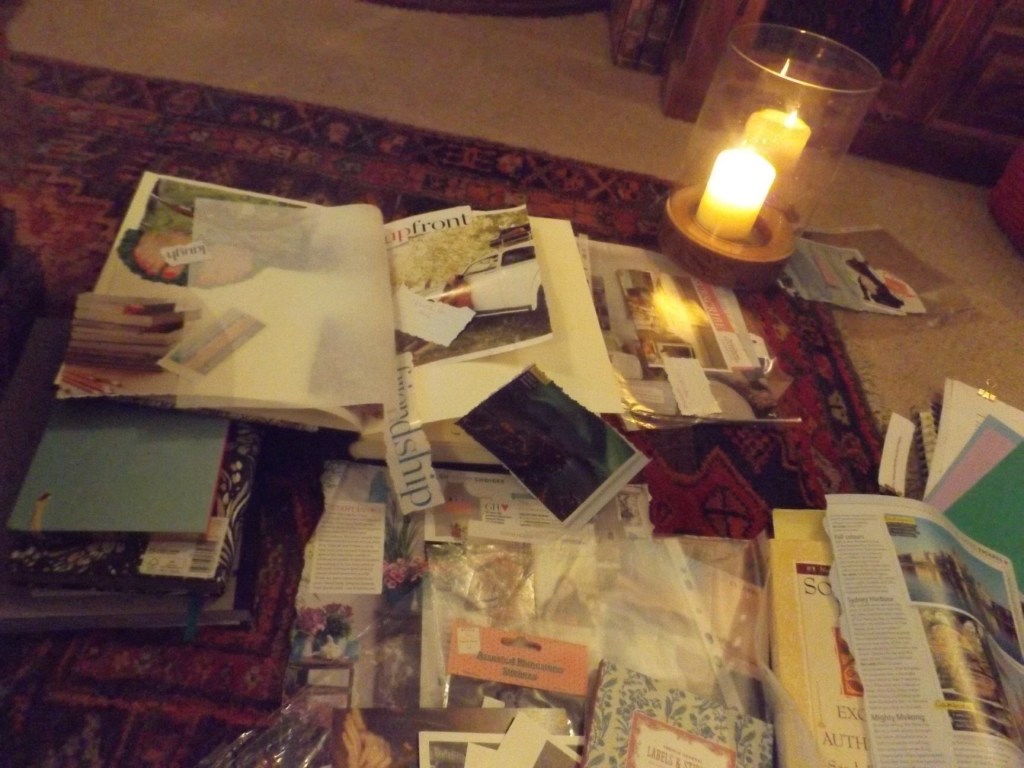
Scrapbooking on my authentic self

For me, the most useful section on a practical level is the section on mind maps. I am currently writing a series of pieces for my MA that explore my experiences nursing my late husband, but also the dynamics within his family and their flight from Poland during WW2. I hope that this will become a novel, because I have always wanted to be a writer. The author suggests a mind map and I use my scrapbook for these so I can use colour and collage and make it a piece of art in its own right. I want it to inspire me when I’m struggling, so aim to use family photos and pictures of the places I need to research or visit. She suggests using meditation for 15 minutes before starting, something I do in writing workshops because it stops chatter, calms the room and lets people focus on their own intentions. Usefully, she suggests key questions to ask yourself such as key themes, chapters and intention. However, she also suggests including questions about yourself such as – what are my unique credentials for writing this book? Why does it need to be written? What has inspired me to write this book? These are really positive questions because they get us to think positively about our skills and knowledge and can be used as encouragement when we’re feeling like we don’t have the skills, knowledge, or talent to do this! Something all writers feel at times.

At the back there’s a brilliant section on references and further reading that I know are really helpful because they’re all in my reference library at home. I think this is a really useful little book, great to fit in a bag to carry with you and will be useful for the future, not just as you work through it the first time. I’m looking forward to using it alongside my upcoming work, but also adding it to the libraries of other potential creators I know. It delivers much more than it promises as first glance. The most important concept it introduces is that of the ‘flow-state’ – ‘the mental state of being completely immersed in a task’. This stage isn’t just important for people creating a specific piece of work, because it links to that other buzz word for mental well-being- mindfulness. When we become so immersed in a task we lose track of time, we are practising mindfulness because we’re focused on only one thing at a time. We’re not checking the time, or social media and becoming distracted by everyday cares. We are simply being. This is something that everyone can benefit from.

Completed collages

Connect with the author by signing up for a newsletter at:

http://www.susiepearl.com

You can also connect with her at:

@susiepearlwriter

info@susiepearl.com

Posted in Random Things Tours

Winterkill by Ragnar Jonasson (Dark Iceland Book 6).

Publisher: Orenda Books (21 Jan. 2021)

ISBN:1913193446

When given the opportunity to read an Orenda book I rarely pass it up. My only misgiving with this one, was that it was the sixth in a series I didn’t know whether I’d ever be able to catch up and fully understand what was going on. Once I’d done my research and read a few reviews of the Dark Iceland series, I was in! Described as ‘creepy, chilling and perceptive’ by Ian Rankin and full of ‘poetic beauty’ by Peter James, this instalment comes highly recommended. The New York Times review blew me away and made this a must read.

Jónasson’s true gift is for describing the daunting beauty of the fierce setting, lashed by blinding snowstorms that smother the village in a thick, white darkness that is strangely comforting’ New York Times

That image of the setting grabbed me because I’ve lived in some isolated locations here in the U.K. and have written myself about that strange sense of safety a huge snow fall brings. All falls quiet and you are safe, sheltered and warm. The world becomes muffled as you are slowly cut off from civilisation, under a think blanket. I knew I would connect with the setting at least. Of course, I shouldn’t have worried, because this was a great read in its own right and I managed perfectly well without the reading the others first – obviously as soon as I finished this one I ordered them all since so I could have an Orenda Christmas!

The hero of the Dark Iceland series is Ari Thor Arason, the police inspector of a small town in Iceland called Siglufjörður. He is recently separated from his girlfriend, who now lives in Sweden with their three year old son. As Easter approaches Ari Thor is looking forward to spending some time with them both when they come to stay for the weekend. However his plans are thrown into disarray when the body of a young girl turns up to claim his attention. A nineteen year old girl appears to have jumped from the balcony of a building, but seems to have no connection to anyone who lives there. Why would she travel to this particular building to commit suicide? Ari can’t help wondering and his wondering leads him to dig a little deeper and find out whether she was pushed. His suspicions are aroused further when an old flame, now working in a local nursing home, gives him a call because she’s concerned about an elderly resident. She shows Ari the old man’s room, and he’s shocked to see the words ‘she was murdered’ written over and over again. As a huge storm heads towards Siglufjörður, Ari is left pondering whether these two events are connected and also whether he can salvage his family or even reconcile any sort of private life with his job.

Ari Thor isn’t an ‘action man’ type hero, he’s thoughtful, perceptive and investigates gently. The awkwardness of his Easter plans are really painful; he books his ex-partner and son in at the hotel, but is excited when they want to stay at the house. Ari misunderstands and thinks they might all stay together, but he ends up in the hotel. He feels excluded, but also awkward as other guests and staff know him well (this is a small remote town after all). He wonders what they will be thinking about their local detective. He knows that the job he loves has to command all his attention, when an important case comes in and so does his estranged partner. However, there is a large gap between knowing this and the reality of living it. Can he ever promise his family what they need? This conflict becomes ever clearer over the weekend when he is pulled from one place to another as new evidence comes to light.

I loved the atmosphere of this small town, where everyone knows each other. Yet there’s also the uneasy thought that many residents could be in this remote place to disappear and keep secrets. There’s so much going on under that polite layer of familiarity, even where Ari thinks he knows someone well. In one sense Siglufjörður has changed enormously, new road links have made it more accessible so even tourists have started to visit for ski-ing and to stay in new luxury holiday chalets. However, once the blizzard descends it becomes bleak, remote and strangely more beautiful. Ari’s investigation takes him into the even more rural area of Siglunes, where two men live in a small wood cabin inaccessible by road. I found Siglunes quite sinister, but Siglufjörður feels remote too and even claustrophobic as the weather pulls in. The author skilfully ratchets the tension up a notch, just at the same time as the community becomes more isolated. Yet we never feel rushed, Ari Thor does not panic or hurry the investigation- every move is well thought out and measured and he shows great compassion to the bereaved and those involved.

I thought it was so clever that, without knowing it at first, Ari is slowly uncovering more than one crime. We are forced to learn the lesson that people are not always what they seem, as the manager of the nursing home is called on for questioning. Ari Thor would say he knows him, likes him even and there has been no indication that he has been doing anything but noble, humanitarian work for the elderly of the town. However, just under the surface are financial worries, difficulties gaining government funding and enough residents to make the venture pay. If you’re looking for high octane action, or the endless twists and turns of a convoluted plot then this is the wrong book for you. The pace is gentle, the motive uncomplicated, and our detective is a contemplative sort rather than an action hero. What compels here (as it should) is the human tragedy – the loss of a girl on the brink of adult life and full of promise, for her family and the whole town. There is even an element of humanity and complex, conflicting, motives within our criminals too, when they are unmasked. This doesn’t take away from the chilling nature of their crimes though – in fact I find the thought that killers walk among us, with the same worries and preoccupations that we have, even more disturbing than some of the more obvious monsters we see in crime fiction. I would recommend this book and the whole series, as a fabulous introduction to Nordic Noir, and I could easily imagine sitting with my feet up, a glass of whiskey in hand, being compelled by these stories on BBC4. This book was beautifully written, has an evocative setting and a detective I truly enjoyed spending my Christmas with.

Meet The Author

Ragnar Jónasson was born in Reykjavík, Iceland, where he works as a writer and a lawyer and teaches copyright law at Reykjavík University. He has previously worked on radio and television, including as a TV news reporter for the Icelandic National Broadcasting Service, and, from the age of seventeen, has translated fourteen of Agatha Christie’s novels. He is an international Number One bestseller

Posted in Random Things Tours

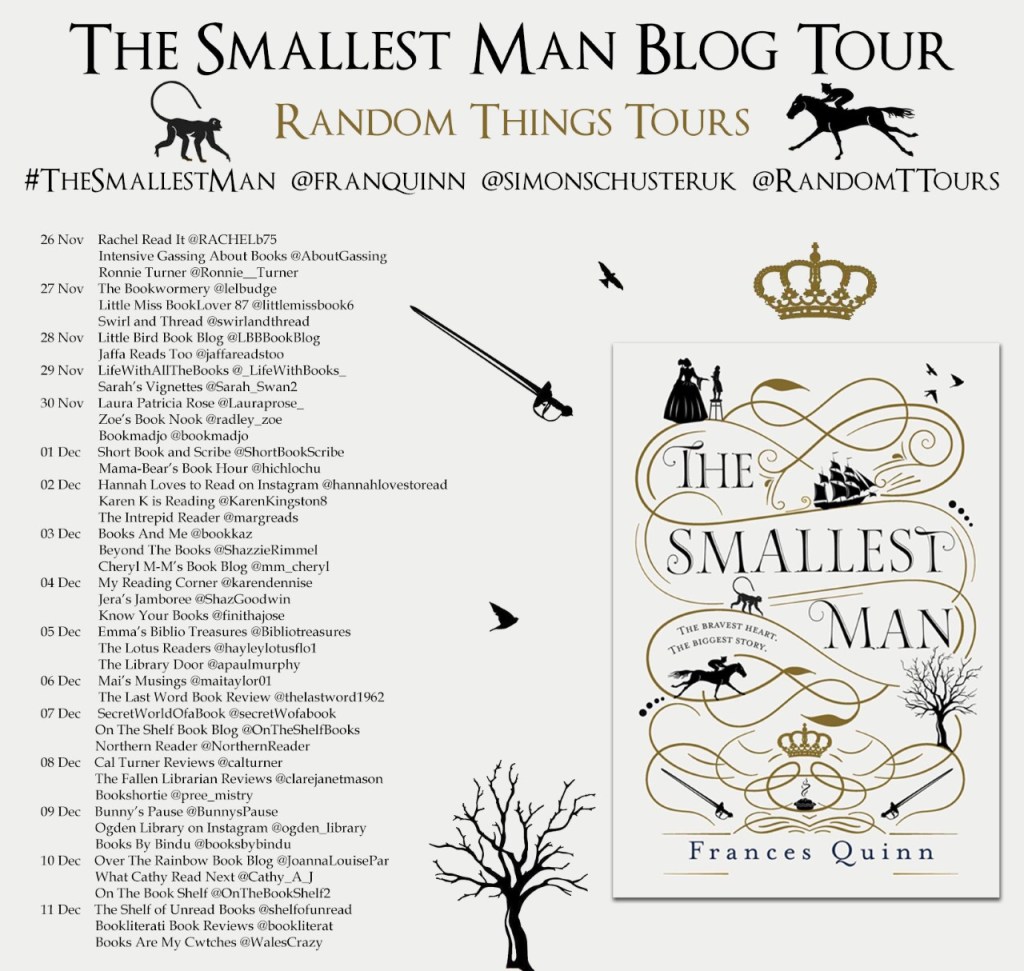
The Smallest Man by Frances Quinn

Published: 7th Jan 2021

Publisher: Simon and Schuster

ISBN: 978-1471193408

Maybe it’s because I have a disability or because I worked on a PhD in Disability Theory, but I love books like this that cover a familiar part of history but from a disability perspective. The author has given herself freedom to create by using an interesting and unusual character, through which she can tell the story of a very tumultuous period of history. The book is set in the 17th Century, prior to the Civil War, in the royal court of King Charles I. Nat Davy is based on Sir Jeffrey Hudson, immortalised with the Queen in a painting by Van Dyck. Nat wants to be ‘normal’, but even when he reached adulthood he was only eighteen inches tall. He was born in Oakham and when the circus visited the town he was almost sold to them by his own father. However, his eventual fate is even more bizarre! He is sold by his father to the Duke of Buckingham and taken to the court of King Charles 1st. The Duke had him put into a pie to surprise Queen Henrietta Maria, who is only 15 and desperately unhappy and homesick. Nat becomes her ‘pet’ and he joins an existing menagerie of dogs and monkeys. However, the Queen and Nat are are both outsiders and they are both lonely, so the two form a bond, becoming close friends. I loved that he is seen as a harmless pet in the court, when actually he’s in a very powerful position; he has the ear of the woman who could trigger a Civil War. He will never be accepted by other boys his age at court, he can’t participate in masculine pursuits like hunting, but he is about embark on an epic adventure – much greater than his size might suggest.

Queen Henrietta Maria with Sir Jeffrey Hudson (1633)

Nat becomes the Queen’s closest protector and I found it fascinating that she trusts him in this role. They go on the run and he is looking after her all the way, determined to keep the Queen safe. There is something very satisfying in the fact he is underestimated at every turn, but always manages to surprise people. He has two friends, Henry and a girl named Arabella who is the most beautiful young woman at court. Nat loves her, but would she see past his disability and return his love? Nat wonders if the best plan would be to see her marry Henry, then he could still keep her close. Even now, the subject ołth disabilities as sexual beings, capable of being desired. The fact that this is the 17th Century shows us these types of relationships did possibly happened, just quietly and in the background. However, this wasn’t the most successful part of the novel. The success is in the way Nat copes in this world, considering how hard it can still be to be different in the 21st Century. Even though he is physically small, he stands head and shoulders above anyone else in the book.

The first part had the most pace and set the scene beautifully. The rest of the novel is slower and didn’t fully hold my attention in the same way. The depth of research is undeniable here and I learned a lot about this period of history, beyond the basic Royalist/Roundhead split. I loved that the author drew a parallel between Nat’s servitude and the situation the Queen is in. Even though she has riches and might seem lucky to some, she too is living in a form of slavery and this is why they connect. She was sent away from her home and loved ones, to marry a man she’d never met and didn’t love. I have seen reviews criticising the latter half for focussing too much on Nat’s love story, whilst glossing over huge historical events like the beheading of Charles 1st, but I think that misses the point. This isn’t the history of the royal court or the Civil War, that history has been written by the victors, who are primarily male, able-bodied and Parliamentarian. This novel is Nat’s story, not theirs and the biggest thing in his life is that he’s in love. That’s the whole point of ‘writing back’ – it takes a minority narrative and makes it centre of attention. It gives us a different window to view events through and imagines someone who would normally be without agency, having power over their own story.

Meet The Author

Frances Quinn read English at King’s College, Cambridge and is a journalist and copywriter. She has written for magazines like Prima and Good Housekeeping. She lives in Brighton with her husband and Tonkinese cats. The Smallest Man is her first novel.

Posted in Random Things Tours

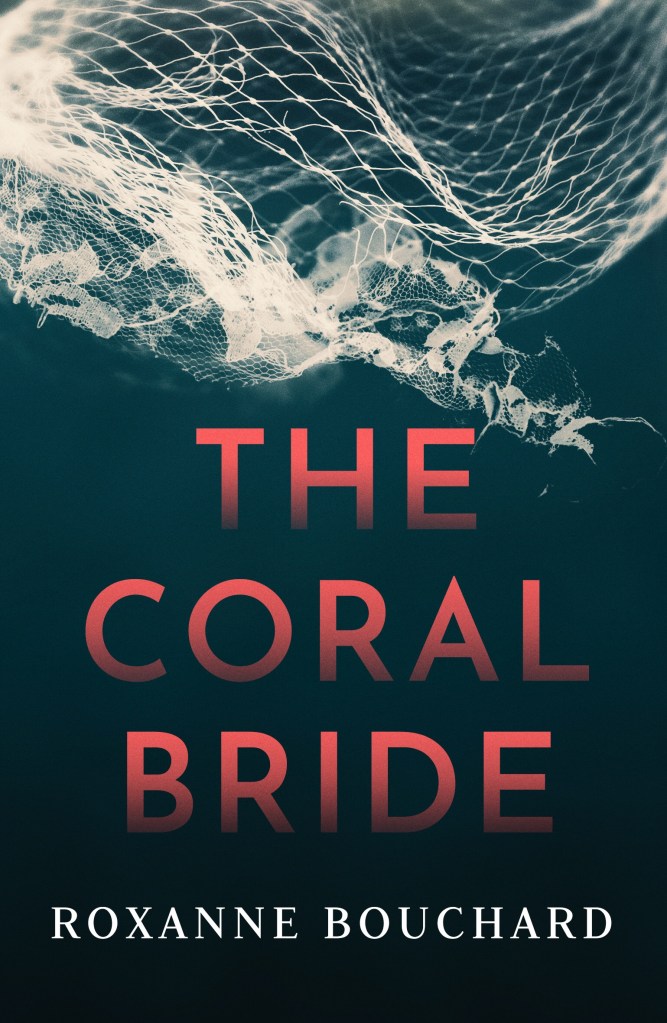
The Coral Bride by Roxanne Bouchard.

Publisher: Orenda

Published:

ISBN:

The Coral Bride is the second novel in Roxanne Bouchard’s D.S Morales series, the first being We Are The Salt Of The Sea. I think this easily read as a stand alone novel, but I enjoyed it so much that I’m going to read the first one. I’m not surprised, because I’ve never met an Orenda book I didn’t like!

The opening to the novel is haunting as a woman lies on the deck of a fishing boat. Somehow she has been rigged up so that she will eventually be dragged from the trawler and under the freezing cold water. She knows these are her final moments. As an opening it is very effective and sets up the main character in the novel: the sea. The sea is the life’s blood of people in this region – a small fishing village in Quebec. Angel Roberts is a very rare thing in this community, a woman with her own trawler who fishes for lobster. She’s named her boat Close Call II showing a good sense of humour too. The sea is her livelihood and there’s definitely an affinity with it. She is treated with suspicion by the rest of the trawlermen, because fishing here has always been a male dominated industry. However, the sea doesn’t just separate, it also brings people together, even Detective Morales and his son Sebastien.

Another recurring character is the moon, depicted as a silvery path reflecting off the water. Angel has always been told the moon is a liar and not to be trusted. However, it seems there may be another character in Angel’s life who isn’t what they seem. Morales finds out that every year Angel and her husband would dress up in their wedding finery and have a celebration on their anniversary. If her husband is to be believed he drove his wife home when she was tired and then returned to the bar. Then after 1am, it seems that Angel drove herself down to the harbour and took the boat out, still in her wedding dress? Detective Morales is a quiet and thoughtful man, who doesn’t jump to conclusions and I loved the way the author let the mystery breathe in the same way. You have chance to really think about peope’s stories alongside Morales, and I liked that the pace seemed to fit with the landscape and community. This is much more than a ‘whodunnit’. It explores the spirit of this community, and I especially enjoyed the loyalty and bravery of the fisherman. They really respect the sea and I respect them because it is such a tough way to earn a living. We get to explore the tribal aspects of this community, how relationships between people develop and change over the years. But as always, where there are old relationships there are old resentments.

Familial relationships are explored too as Morales’ son Sebastien has turned up unexpectedly with his car full of pots and pans. He’s a chef and he’s had a fall out with his girlfriend. I got a sense that Morales doesn’t really know his son, or Sebastien is acting out of character. Sebastien flirts with a female constable on his team; Morales has only seen her buttoned up, but ten minutes in Sebastien’s company and her hair is down and she’s doing salsa. There was sense that Sebastian will bring chaos to his life. Yet they have a shared experience, Morales is currently living alone and away from his wife. Maybe this is where father and son could understand each other better. These relationships gave the book depth and elevated it above the average thriller. I enjoyed the police team, the conflicts and allegiances. I loved the section where Morales was shown to his temporary office and it’s packed to the rafters with files stacked everywhere. It’s like this quiet, thoughtful, man has escaped to an out of the way place and people are challenging him on all sides. The space he has enjoyed is being encroached upon – Sebastien inviting him to salsa and let his hair down, the chaos of police files surrounding him, his son sleeping on his couch. It’s not long before, in his life and the investigation, he feels blocked in on all sides. I found this novel had a great sense of place and a thoughtful, intelligent hero. It was atmospheric, lyrical in parts and emotionally literate. The image of a woman being slowly pulled into the water, with her wedding dress glowing in the moonlight until she is swallowed up by the dark will stay with me for some time.

Meet the Author

Ten years or so ago, Roxanne Bouchard decided it was time she found her sea legs. So she learned to sail, first on the St Lawrence River, before taking to the open waters off the Gaspé Peninsula. The local fishermen soon invited her aboard to reel in their lobster nets, and Roxanne saw for herself that the sunrise over Bonaventure never lies. We Were the Salt of the Sea is her fifth novel, and her first to be translated into English. She lives in Quebec.
Follow Roxanne on Twitter @RBouchard72 and on her website: roxannebouchard.com

Posted in Random Things Tours

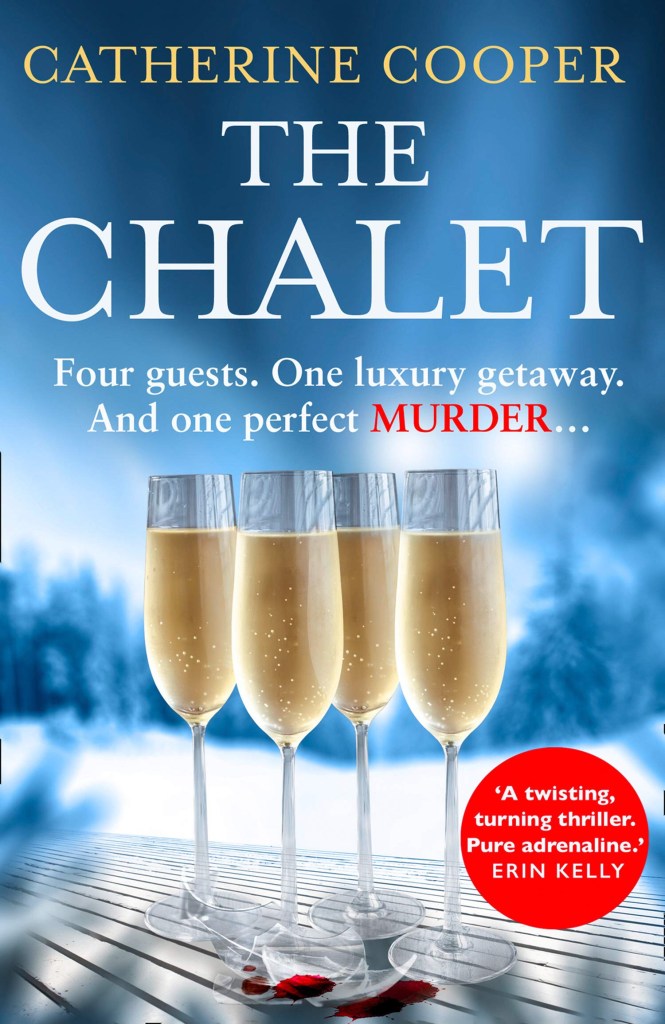
The Chalet by Catherine Cooper

Published: 12th November 2020

Publisher: Harper Collins

ISBN: 0008400229

I have always felt that skiing was for a very different breed of people to me – people with money, balance and the ability to look stylish while dressed like the Michelin man. This book has confirmed my suspicions as well as leaving me addicted to the twists and turns of a dark thriller set in motion when two brothers go on a ski break in the 1990s. Adam and brother Will visit La Madiere in France with their girlfriends Nell and Louisa. Louisa and Will met at university, and she’s delighted to be asked to go on holiday but skiing isn’t something she’s done before. Will and Andy’s parents are middle class and the boys were on skis as soon as they could walk. They also have the sort of money that allows for quick ski breaks while at university whereas Louisa doesn’t. When Will says he will pay for it as her Christmas gift she starts to look forward to lazy mornings in fur covered beds, hot chocolate, plenty of sex and beautiful, romantic snowy views. What she gets is a more like a wooden dormitory with stodgy food and the boys bouncing out of bed at 7am in order to ski. Yet something terrible will happen on this holiday, that reverberates through the next twenty years.

The narrative zips back and forth between the 90s and the present day when a different group are on holiday in La Madiere. We meet Hugo, the slightly awkward owner of a travel company who has brought his wife Ria and friends to try out a luxury ski lodge, before adding them to his portfolio. In this narrative I was suspicious of everyone. Hugo’s wife Ria is more attractive than he is and knows it. She’s targeted him and accepted his marriage proposal on the basis that it’s better than living in poverty. She can think of worse men to be with and the lifestyle is exactly what she wants. We know that they’ve agreed to have children, but does she really want a family and what was she running from when they met? Their friends Simon and his wife have a small baby, but this first time Mum seems to be struggling and even disappears one morning. Hanging around are the staff from Powder Puff: Cameron the boss; Matt the lusty ski instructor and Millie the chalet girl with great cooking skills who caters to their every whim. There are simmering tensions between each couple, and possible diversions from both the skiing and their partners. I found myself unable to resist these chapters when I went back to them because I kept waiting for things to implode.

Finally, there is the interspersed narrative of a lonely little girl. She has been left alone by her Mum and is getting her own breakfast and holding tightly to her teddy for comfort. It’s clear that her mother isn’t coping, but this little girl’s distress is hard to read. I found myself wondering about what might have brought her mother so low. Even more addictive was trying to work out which character this little girl might be in the future. I jumped from one character to another and only fixed on one towards the end when a particularly big clue was dropped. I can honestly say I didn’t see every twist coming and I didn’t make every link from past to present. The author really did keep me guessing. The catalyst that brings past and future together is a huge storm, which closes the ski lifts and keeps everyone in their lodge, ratcheting up the tension. When the weather clears, a body is found. Disturbed by a fall of snow from a ledge, the body appears to be a man and has been buried under the snow for many years. This could possibly be the body of one of two brothers, missing since they were lost in a storm back in the 1990s. Past now meets up with the present as his brother is jetted in to identify the body. Who is going to recognise who? Finally, what of the ski guides employed to look after these brothers when they decided to ski off piste? Were they fired and if not, where are they now?

Cooper really does keep the tension throughout this complex narrative; handling several time frames and various narrative voices with ease. The luxury setting is lush, full of delicious descriptions of food, and lashings of alcohol that loosens tongues and possibly morals. The men are largely rich, arrogant and stupid. The woman more quietly manipulative, such as using a seemingly subservient position to assert power. There’s a lot of passive aggression here. I felt most for Louisa in the past narrative, she’s unsure, feels inferior in terms of money, status and looks. I also felt for Hugo who is a quiet man, ruled by his personal assistant Olivia and terribly awkward with customers. He has no idea that his wife engineered their meeting, or that she’s still taking her pill while he thinks they’re trying for a baby. He’s thoroughly decent and this book is about what happens when decent people come up against the unscrupulous and immoral, but in a thoroughly glamorous setting. Great, escapist reading.

Meet The Author

I am a freelance journalist living in the South of France with my husband and two teenage children. We moved from London in 2009 so that the children could grow up bilingual and we could all ski more, and to enjoy a more relaxed pace of life. I learned to ski on a school trip when I was 14 and have loved it ever since. I’m an avid thriller reader and have been since I discovered Agatha Christie as a child.

The Chalet is my first published full-length novel, though I have also written several (unpublished) thrillers for teens and a (what used to be called) chick lit novel set in TV production. Other than skiing and reading I love travel, rollercoaster, and I spend far too much time on social media. Some of my other favourite things include Alan Partridge, sparkly flip flops and salt and vinegar crisps.

You can follow me on Twitter @catherinecooper, Instagram @catherinecooperjournalist or Facebook @catherinecooperauthor

Posted in Random Things Tours

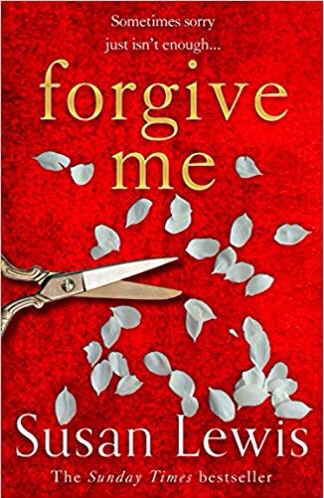
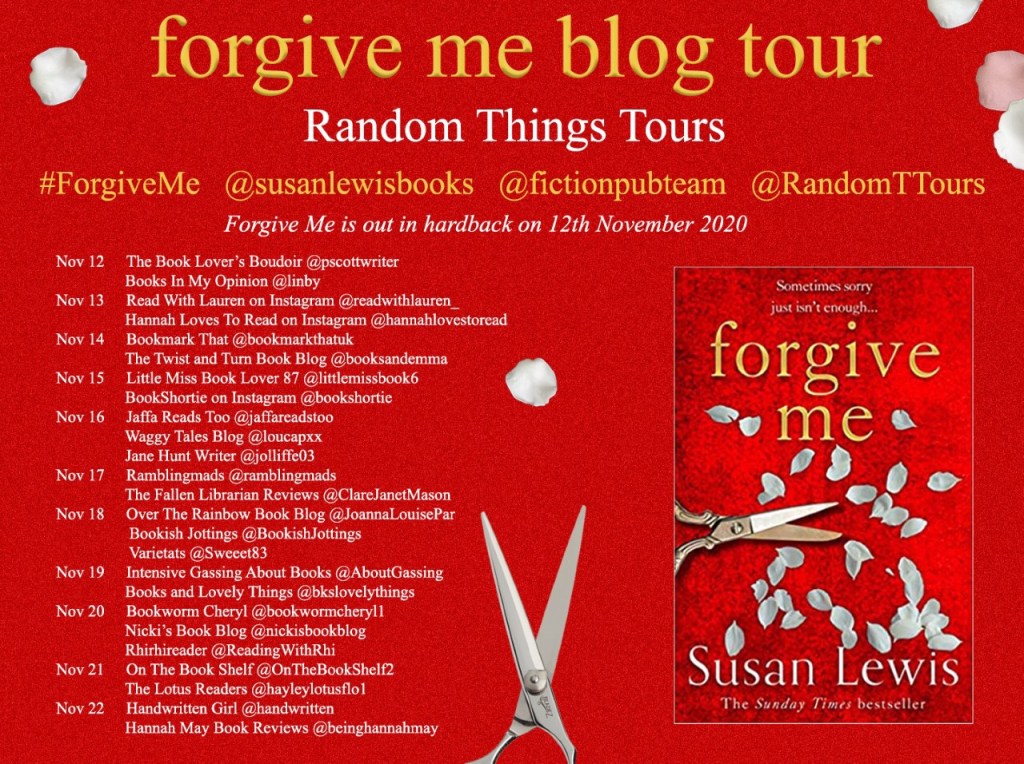
Forgive Me by Susan Lewis.

I’ve been reading this book for two days straight. Firstly because I had a fall a few nights ago so I’ve been recuperating from being very sore and bruised. Secondly, once the story started to unfold I found it hard to move away from. The concept of forgiveness is one that has always fascinated me and confused me in equal measure. As a child brought up in a religious household it was a requirement of Christianity, rather than a choice I could think about and there was no discussion about the understandable negative feelings surrounding it – anger, bitterness, hurt – because those were wrong too. As an adult I’ve had to talk myself out of this blanket approach to forgiveness and give myself permission not to forgive. I’ve also had to think about when holding onto that anger and bitterness might be more harmful to me than the other person – ‘holding onto anger is like holding a fiery coal’. I also had to learn that just because I forgive an action, doesn’t mean I have to keep that person in my life. Forgiveness does not always mean everything neatly slots back to the way it did before. This is something the characters in this book come to learn and it is Marcy who ends up with the most to forgive.

After her abusive husband is arrested and held on remand for dodgy business dealings, Rebecca decides to take her daughter, and her mother Marcy, and relocate somewhere totally new, leaving no trace. She goes as far as to change her name to Claudia and her daughter’s to Jasmine, dropping their Huxley-Browne surname. Marcus Huxley-Browne was a controlling bully, who had slowly sucked all of the confidence and joy out of Claudia over several years. He met her when she was a vulnerable widow and his kindness led her to trust him. Then once they were married all that sensitivity and care seemed to melt away. Then slowly he took a chisel to every part of her personality and chipped away until she started to doubt who she was. With a lot of help from Marcy, they take the opportunity of Marcus being remanded in prison to flee to the coast. There, in a flat by the sea, the three of them feel able to breathe again. Away from the constant criticism, Claudia finds she can make friends easily and even starts working again as an interior designer. She sees an incredible coach house for sale that would make a wonderful forever home for the family and she sets to work. The world seems to finally be opening up for Claudia and her family. However, will Marcus ever truly let go of them?

A terrible event does occur in the book that no one could have foreseen. It’s here where the theme of forgiveness, as a possible part of the restorative justice process, comes into the story and I found this part really interesting. Restorative justice is about victims and offenders communicating within a safe and mediated environment to talk about the harm that has been caused and finding a way to repair that harm. It gives the victim the chance to talk about the impact the crime has had on them directly to the offender. It gives the offender the chance to relate the crime they committed to an actual person and see how the victim has been affected. It also holds them accountable for their actions in a way that doesn’t always happen in the normal court process. Government research demonstrates that restorative justice provides an 85% victim satisfaction rate, and a 14% reduction in the frequency of reoffending. Here the author gives us both sides of the process by showing us in stark detail the effect of the crime on the victim, but also the background of the offender. Here and there through the narrative we read letters from the offender – how the restorative process begins- that detail his home life, the brutal hold of a family member on him and his mother, and a life of crime forced upon him from a young age. We know that this person is really the bottom of a long chain, a criminal subcontractor hired by someone powerful to do his dirty work. Essentially he is expendable, simply there to carry the can. Although in this case, the crime is much worse than was planned or expected.

This was a really engaging read. I quickly became invested in the family’s story and found myself very worried that their past would catch up with them, especially since a couple of their new friends started to work out who they really were. When there is a confrontation I found myself holding my breath, wondering what retribution would follow. I loved Marcy’s new romance with Henry and the fearless way she throws herself into the relationship. She was by far my favourite character and her story the most moving. I was imagining this funky, ballsy grandmother as Helen Mirren. It was a bit of a shock to hear one character to describe her as like Emma Thompson – I can’t imagine a world where Emma Thompson is old enough to have a 17 year old granddaughter! However, in terms of Marcy’s intelligence, beauty and grace it really made sense. Next to her, Claudia seems a lot quieter, cautious and sometimes invisible – something that’s not surprising given the experience she’s gone through with Marcus. It’s wonderful to see her come to life which tends to happen when she’s working on a project, especially The Coach House which is an incredible labour of love. I always feel on safe ground with Lewis. I know I’ll get a good read and I love that a lot of her heroines are women in middle life, dealing with their own problems, while supporting teenagers and parents who often need help. Far from being uninteresting and invisible, it’s women in mid-life who are often holding everything together while trying to hold down a job as well. But we’re also resilient, brave and ran out of damns to give a long time ago. I like that Lewis writes this mid-life characters and gives them strong, complex storylines like this one to get our teeth into.

Meet The Author

Susan Lewis has over thirty books to her name. She grew up in a council house on the edge of Bristol and was sent to boarding school after her mother died when she was 9. She has lived all over the world and started writing when she was advised by a boss at Thames Television to ‘go away and write something’. After time in the South of France and Hollywood she now lives in a barn in the Cotswolds with her husband and two dogs Coco and Lulabelle. Her website can be found at:

Home

If you’d like to know more about restorative justice, follow this link:

https://restorativejustice.org.uk/what-restorative-justice

Look out for these other fantastic bloggers on the tour.