Posted in Random Things Tours

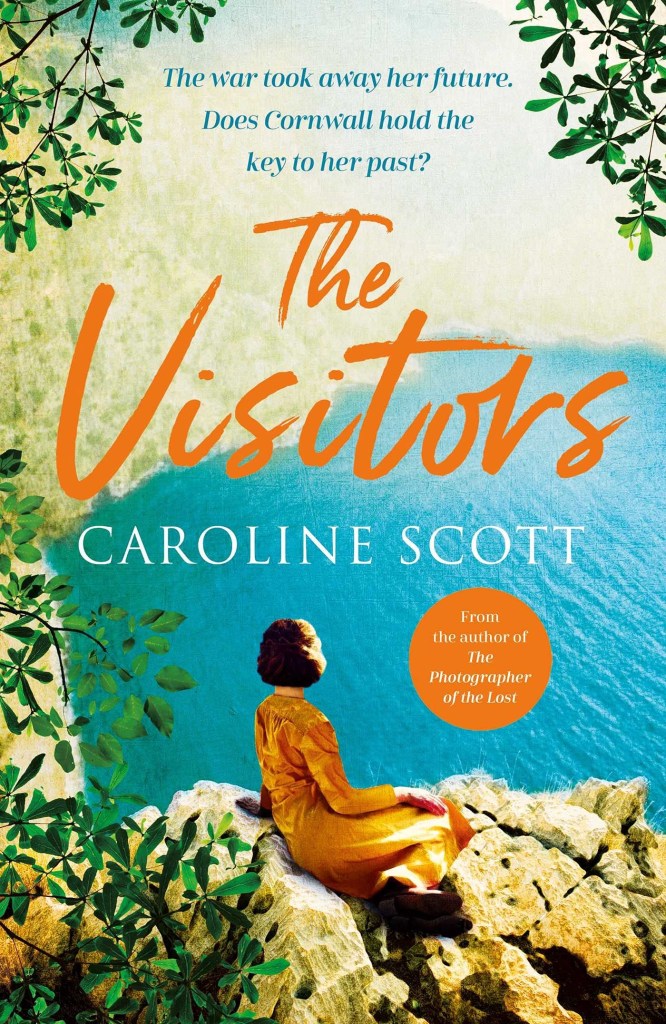
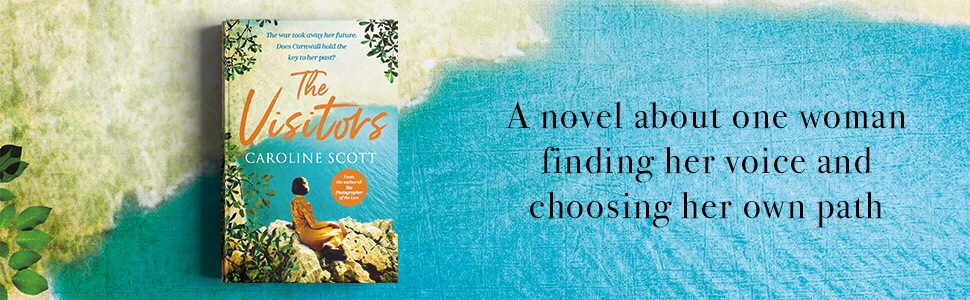
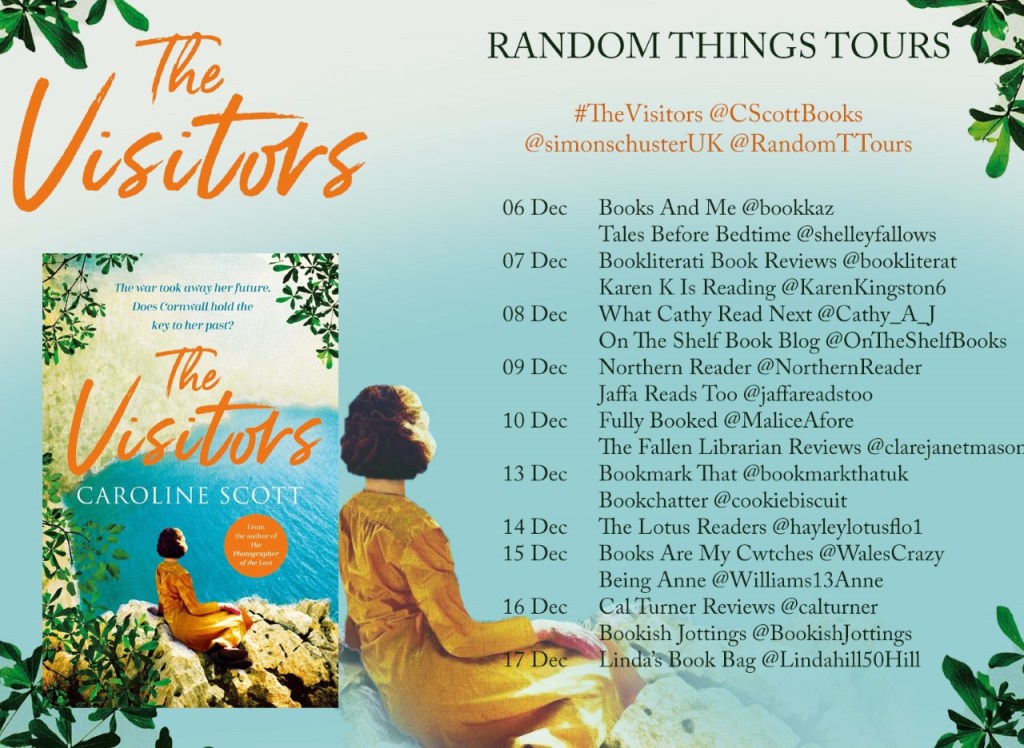
The Visitors by Caroline Scott.

I’ve been a huge fan of Caroline Scott’s last two novels and share an interest with her in the historical period following WW1. This novel touches upon some of the most important issues of the period, while telling a story that touches the heart strings and holds some surprises for the reader. It shows just how chaotic relationships can become during and post wartime, as well as how much people change when faced with terrible and traumatic experiences. We follow one young war widow called Esme whose whole life changed after she received news that her husband Alec had been killed. No longer able to afford to live in their marital home and needing to find work, Esme finds herself in the employment of Mrs Pickering as companion and helper, while also writing nature columns for her local newspaper. As the summer of 1923 approaches Esme is packing her employer’s clothes for a trip down to Cornwall. Mrs Pickering’s brother Gilbert, has established an artist’s residence in his large country house, and the artists have all served together in the war. As Esme meets Gilbert, Rory and the others she hopes to get an insight into what Alec might have experienced and maybe feel closer to him. What she finds there is certainly transformative, but in a very different way.

Esme is a very likeable character. She’s intelligent, resourceful and has really struggled to pick herself up again from nothing. She’s had no support system to help in her grief or her financial difficulties, in fact this is something she and Alec had in common, they were each other’s family. The author tells us this story in three separate narratives and each gives us a new perspective on the characters. Alongside the main narrative in which we follow Esme to Cornwall, we read the nature column she writes and it’s sublime in its descriptions of this place she’s visiting for the first time. We can see what a talented writer Esme is and how much nature means to her. I kept thinking how lovely these passages will sound on audiobook, almost like poetry. The observations she makes made me feel Cornwall again and in quite an emotional way considering I first visited there almost fifteen years ago when I was newly widowed. I felt like Esme’s Cornwall and mine were the same. I remember consciously walking round thinking that this was the first new memory I was making without my husband and Cornwall’s beauty seemed to make that even more poignant. The third narrative is a book written by Rory, one of Gilbert’s residents and close friend, in which he describes his experience of fighting in France. I was interested in the way he also describes nature as a blighted landscape, ruined by the ravages of warfare. There are vivid descriptions that will stay with me, such as the corruption of the very soil from constantly being churned up, contaminated by mustard gas and almost viscous in it’s consistency. Rory ponders whether this land would recover and how long it would take nature to return. It shows us the utter destruction caused and creates a link between the land the war was fought on and the men who fought it; how long might it take them to recover from the terrible things they have seen and done?
The author depicts PTSD in all of the men who live together in Cornwall, they are each affected by their experiences, but show that in different ways. There’s a vulnerability to them and a need to be with others who have shared their experiences. How else can they be understood and allowed to heal without the pressures of having to find work and cope with the demands of returning to a family? They are each very lucky to have Gilbert and this idyllic setting to slowly recover in. Although each must have another life, one that they belonged to pre-war, potentially leaving behind people who needed or might have asked something of them. It places them in a slightly privileged position over those who had returned straight into full-time work or job seeking by necessity, either because they belong to a different class or have a family to support. The excerpts of Rory’s book are also beautifully written, but don’t hold back from the horrors these men have seen. His descriptions are both vivid and visceral, and through reading his book Esme gains more understanding of these men than perhaps a lot of women would have at the time. How many times do we hear of war veterans who have kept all of this bottled-up inside with family member’s noting they didn’t like to talk about it much? At least here the men have a therapeutic outlet, whether by painting or writing, through which to understand or process these memories, but also communicate them to others without having to say them outright.

All of this would have been enough for a great novel, but the author also places a huge surprise part way through that I hadn’t expected. Through this we see the strength and restraint of Esme, the way she thinks things through before acting and never puts her own needs first. She needs a therapeutic outlet too, showing how the initial effect of war on the person who served ripples outwards to effect their loved ones and even future generations. Just as the land needs time to recover from the physical effects of warfare, there is a shockwave created that blasts through society as a whole. We are shown: how rigid Edwardian class structures are broken down; how marriage as an institution and way of constructing society is outdated and broken; how gender roles become more fluid allowing women more freedom and choice. I really did enjoy seeing how Esme negotiates this new world and makes bold choices for her life moving forwards. This book is another triumph for the author, because it’s a beautiful piece of historical fiction that tries to capture a moment in time where everything’s in flux. These constantly shifting sands of time show us the formation of our 20th Century and the resilience of the human spirit. It gave this reader hope that, just as nature found a way and those battlefields are now meadows and farmland, humans do have the capacity to heal and be reborn.

Meet The Author.

Caroline completed a PhD in History at the University of Durham. She developed a particular interest in the impact of the First World War on thelandscape of Belgium and France, and in the experience of women during the conflict – fascinations that she was able to pursue while she spent several years working as a researcher for a Belgian company. Caroline is originally from Lancashire, but now lives in southwest France. The Photographer of the Lost was a BBC Radio 2 Book Club pick.
Posted in Random Things Tours

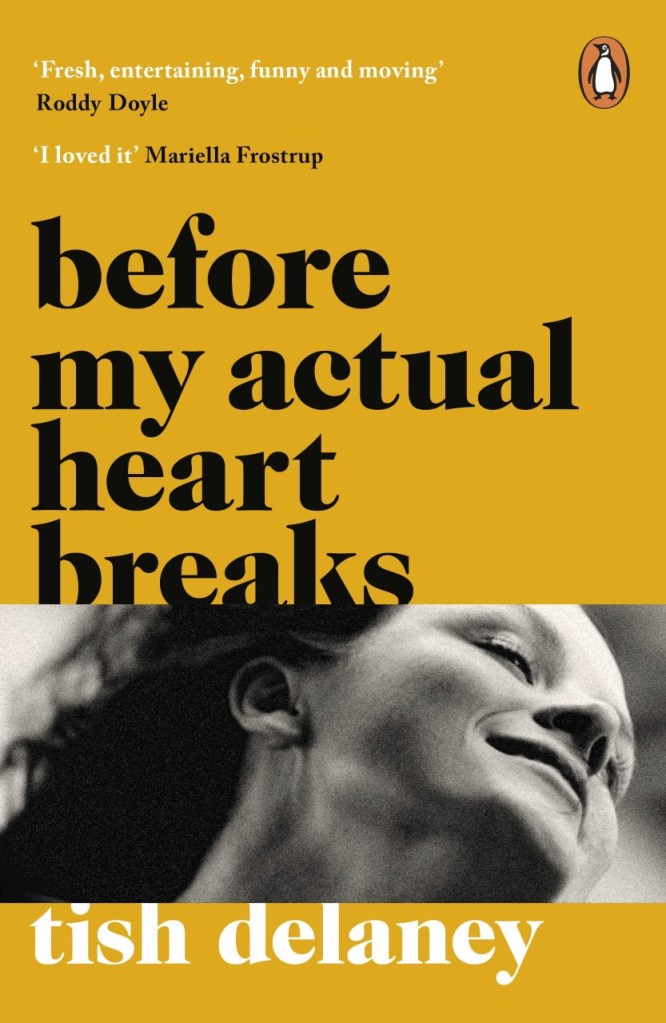
Before My Actual Heart Breaks by Tish Delaney.

‘If I could go back to being sixteen again, I’d do things differently.’

‘Everyone over the age of forty feels like that, you total gom,’ says my best friend Lizzie Magee.

Oh my goodness, my heart did break for the intelligent, spirited and strangely beautiful Mary Rattigan. She is a character who will stay with me, especially the childhood Mary and her battles with Mammy – a woman who I hated so strongly it was as if she was a real person! The Rattigan’s life on her parent’s farm in Ireland is at odds with her romantic and wild nature. She wants to fly. She will not be satisfied until she flies out of her dirty and dangerous surroundings, leaving ‘The Troubles’ behind her. She doesn’t care where she goes, as long as she’s free and lives happily ever after. However, life has a way of grounding us and Mary is no exception. In a life punctuated by marriage, five children, bombings, a long peace process and endless cups of tea Mary learns that a ten minute decision can change a whole life. These lessons are hard won and she’s missed a hundred chances to make a change. Can she ever find the courage to ask for the love she deserves, but has never had?

This book really did play with my emotions and there were times I felt completely wrung out by Mary’s life. It was emotionally and physically exhausting. Her Mammy is physically and psychologically abusive. Not above a slap, when hateful words aren’t having the effect she wants, Mammy is a ‘bitch’. Often turning up at the tea table with a bruised face or black eye, Mary longs for her father to intervene. However, he never opens his mouth, unless it’s to smoke his pipe. She loves him but at the same time, hates him for his silence and his cowardice. Mammy is a hypocrite, playing the perfect Catholic matriarch on the surface – always loving or feeding her sons, cooking perfect chicken roasts for her family and getting out the best china when the priest comes for tea. It broke my heart when she left Mary without tea, then next morning as the boys all line up for their lunch boxes Mary is given an empty one. I felt so emotional for this girl, who doesn’t expect any better. There are two women she can rely on for a little bit of maternal support and love, her Aunt Eileen who ruined herself and now lives with her illegitimate daughter Bernie and Bridget Johns who lives at the next farm across and is always ready with a cuppa and a shoulder to cry on. Both know what’s going on at Mary’s home and have taken her under their wing. Eileen goes as far as bringing the priest down to the farm when she feels Kathleen has gone way too far in disciplining Mary.

I was desperate for Mary’s eventual flight from the farm, following in the footsteps of her brothers. Sadly, she doesn’t get to fly as far as she expects; it seems she swaps one imprisonment for another. The emotionally gutting thing about Mary is that she always has a tiny kernel of hope. She underestimates her mother’s capacity for evil – but as long as everything looks ok to others and the parish priest, then her daughter’s happiness is Mammy’s top priority. There’s a point where Mary knows she’s done wrong, she expects to be punished and is willing to take it, but she hadn’t banked on giving up everything – her dreams, her education, her future. She doesn’t dream that her Dad would let that happen even if she does expect it from her Mammy. As a result she’s more angry with him than anyone. I don’t want you to think that this book is a drag to read. It really isn’t. There are some passages that are hilariously funny. Mary is irreverent, mischievous and has a few sayings that made me laugh out loud. I loved her description of her Mum backing out of the room so she didn’t ‘show her backside to the priest’. I went to a Roman Catholic primary school, but when we moved to a different area for my Dad’s work there wasn’t a school close enough and I went to the local school, followed by a grammar school when I passed my eleven plus. My mum was worried that I wouldn’t have the same teaching I did at primary, so I did lessons at the convent after school. Then I got to go on a Catholic kid’s retreat, in Derbyshire. We did loads of outdoor activities and had mass every evening at 6pm, with a young monk called Declan who everyone fancied and a rather bohemian priest who played guitar and had us singing every night. I remember being very proud that when the bishop came for tea, I was chosen to sit next to him. Our idea of fun was pretending to baptise each other in bed! So, Delaney’s description of Mary’s school holiday felt very familiar and made me laugh.

‘The groups would be mixed so we could hear what boys our own age, from the same religion, and the same class background for the most part, had to say about the Troubles and how they affected life in Carncloon, and what we had to say back. Fascinating stuff. Then after dinner, when we’d settled the cons and cons of people blowing ten bags of shite out of each other on a daily basis for twenty years, we were going to have a sing-song. Hymns and popular folk songs as Father Kevin, apparently, was a dab hand on the guitar’.
There’s a blasé tone to Delaney’s writing about ‘The Troubles’, but it’s clear from Mary’s narration that they have a huge impact on those that live alongside the unpredictability, hate, protests and rising violence. It comes very close to home on a couple of occasions and Delaney describes historical events that I remember vividly, particularly the murder of two undercover police officers who drove into an IRA funeral. I remember the headlines, the pictures and the descriptions of violence that no one could condone and how they caused friction in our family, between the Irish Catholic background of my Mum and the loyalty to the British Army instilled in my father. There were subjects we didn’t venture into or talk about. The hunger strikes were something I was very aware of and the conditions of the Maze Prison. I had a huge amount of admiration for Mo Mowlam who negotiated a peace process despite her cancer diagnosis. I am probably a similar age to Delaney so I felt an affinity with her and understood her. Mary’s need to be loved is so raw she can’t even articulate it. How can she understand or recognise love when she’s never felt it? She has been told she’s nothing, so nothing is what she deserves. Delaney writes about love and the realities of marriage with such wisdom and tenderness that I was rooting for Mary Rattigan till the very last page.

Meet The Author.

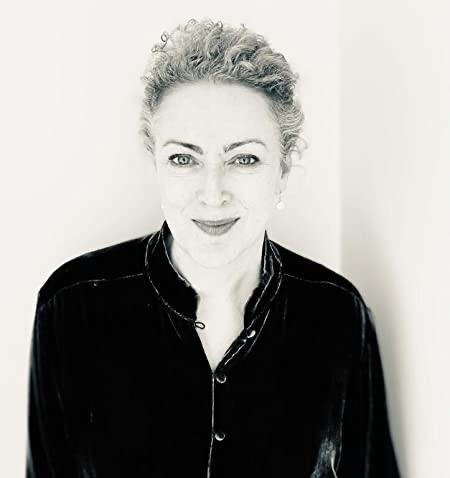
Tish Delaney was born and brought up in Northern Ireland at the height of the Troubles. Like a lot of people of her generation, she left the sectarian violence behind by moving to England. After graduating from Manchester University, she moved to London and worked on various magazines and broadsheets as a reporter, reviewer and sub-editor. She left the Financial Times in 2014 to live in the Channel Islands to pursue her career as a writer. Before My Actual Heart Breaks, her debut novel, will be published by Hutchinson in 2021.

Posted in Random Things Tours

On the Edge by Jane Jesmond.

I was thoroughly gripped by this tense thriller set in Cornwall and concerning Jenifry Shaw – an experienced free climber who is in rehabilitation at the start of the novel. She hasn’t finished her voluntary fortnight stay when she’s itching for an excuse to get away and she finds one when her brother Kit calls and asks her to go home. Sure that she has the addiction under control, she drives her Aston down to her home village and since she isn’t expected, chooses to stay at the hotel rather than go straight to her family home. Feeling restless, she decides to try one of her distraction activities and go for a bracing walk along the cliffs. Much later she wakes to darkness. She’s being lashed by wind and rain, seemingly hanging from somewhere on the cliff by a very fragile rope. Every gust of wind buffets her against the surface causing cuts and grazes. She gets her bearings and realises she’s hanging from the viewing platform of the lighthouse. Normally she could climb herself out of this, most natural surfaces have small imperfections and places to grab onto, but this man made structure is completely smooth. Her only chance is to use the rapidly fraying rope to climb back to the platform and pull herself over. She’s only got one go at this though, one jerk and her weight will probably snap the rope – the only thing keeping her from a certain death dashed on the rocks below. She has no choice. She has to try.

I don’t know about you, but my heart was racing and this was just the opening! I thoroughly enjoyed this intense thriller, so much in fact, I read it in one sitting. This was too good to put down. Jen can trust no one, as she tries to investigate her own attempted murder. The dark, taciturn, Nick Crawford has to be dodgy. He’s not from the village and claims to be a carpenter, but Jen has her suspicions that his business is a cover. After all, she should know, she has been dealing with drug dealers her whole life. Could it be him who drugged her, then left her for dead at the lighthouse not knowing about her past; the talent for climbing she inherited from her father and the buzz she’d get from free climbing the seemingly impossible. Even man made structures were no match for her and the rush was incredible, hanging out with other adrenaline junkies – the base jumpers, the parkour and free running enthusiasts. The way the author wrote about this world was fascinating and very beguiling. I’m fond of saying to clients in workshops that as adults we forget to play, I now fulfil that by crafting, sewing and writing stories. My early readers will know that I broke my back when I was 11 doing somersaults in the playground when I should have been high jumping. The author truly made me think of a time before my accident when I was largely free to do as I liked. My brother and I would climb a pair of willow trees, bent so far over one of rural Lincolnshire’s many drainage dykes, that a child could lie full length in them. He would be fishing. I would take a sketchbook or journal and spend the day scribbling or sketching flowers. In the descriptions of Jen’s climbing days I remembered the freedom of a body that was loose and easy to use. The body that took me up Snowdon and other mountains, or went wild swimming and could take on any challenge without fear of pain or exhaustion. Times where it’s just you and nature. Jen promised her brother Kit that she would give up free climbing after a terrible accident left one of their friends paralysed. I understood giving up something that’s such a huge part of who you are and the need to replace that adrenaline rush with something, to self-medicate.

The sense of place was incredible. The author conjured up my Cornwall almost immediately with her descriptions of the tin mine, the crashing sea on the cliffs and fog on the moors. I recognised the sea mist that seems to coat your car and your windows. The weather was hugely important, with storms amping up the tension in the opening chapters and the fog of the final chapters adding to the mystery. Will we find out who is behind the strange and dangerous events Jen has uncovered or will it remain obscured? Cornwall is the perfect place to hide criminal activity, hence the history of smuggling and piracy, so why would it be any different today? Has the cargo changed? I loved that the author wove modern events and concerns into the story, because it helped the story feel current and real. The concerns around development and tourism are all too real for a county, dependent on the money tourism brings, but trying to find a balance where it doesn’t erode the Cornish culture. Local young people are priced out of the property market and we get a sense of that here with Kelly who left to become a dancer until a knee injury forced her home to live with her brother Talan. Kit and Jen both left in order to make their way in life, setting up a climbing business that Jen managed. Yet they are in financial dire straits after Kit and his wife try to renovate the family home into a well-being centre. Jen and Kit’s home, Their house is more of a stately home, but not an attractive one – Jen refers to it as a grey block or brick with none of the embellishments expected of a historic building. Their mum says Kit has renovated the soul from the house, and since the family spend most of their time in the unrenovated kitchen I was inclined to agree. However, without the new business opening and attracting tourists they’ll be ruined. It’s a constant love hate relationship between Cornishman and incomer.

The final chapters, as Jen discovers what’s going on in her home village, is absolutely nail-biting. I was also holding my breath in parts. I won’t give anything away but the revelations are startling and no one is who they seem. I was surprised by most of the twists and it made for a fantastic conclusion. As I usually do with a author thats new to me, I didn’t read any of the promo stuff until I’d finished the book. When I’d recovered from holding my breath, I looked the author up because I was keen to read her back catalogue. Surprisingly, this is her first novel. I’d be incredibly proud of it. It’s well-paced, exciting, and has a great central character who doesn’t need a rescuer. She can save herself. I loved the way the author built atmosphere and that simmering tension that grabs you at the outset and doesn’t let up. I’m not surprised this was picked out of a pile of submissions; it stands out. If this is what Jane Jesmond is opening with, I can’t wait to see what she’s doing next.

Meet the Author

On The Edge is JANE JESMOND’s debut novel and the first in a series featuring dynamic, daredevil protagonist Jen Shaw. Although she was born in Newcastle Upon Tyne, raised in Liverpool and considers herself northern through and through, Jane’s family comes from Cornwall. Her lifelong love of the Cornish landscape and culture inspired the setting of On The Edge. Jane has spent the last thirty years living and working in France. She began writing steadily six or seven years ago and writes every morning in between staring out at the sea and making cups of tea. She also enjoys reading, walking and amateur dramatics and, unlike her daredevil protagonist, is terrified of heights!

Why not check out some more reviews from these lovely bloggers.

Posted in Random Things Tours

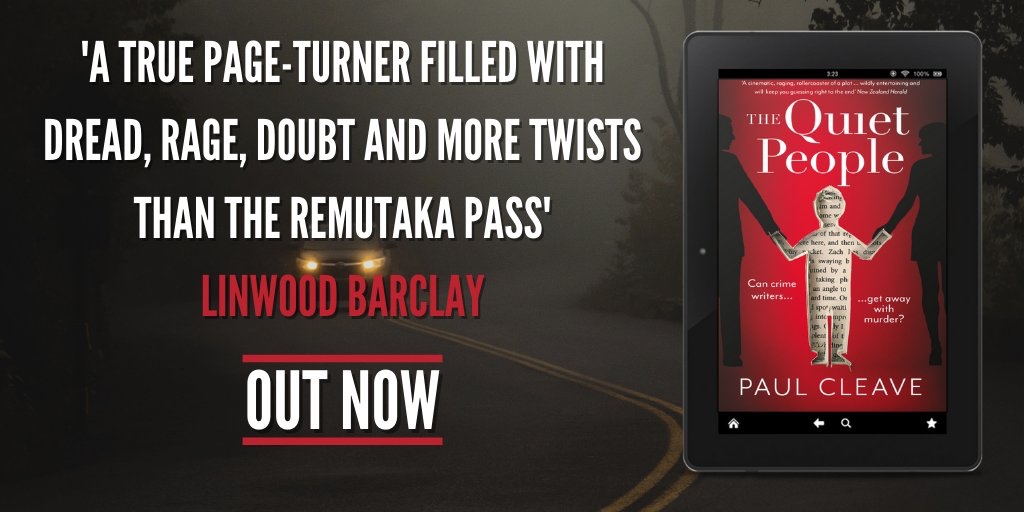
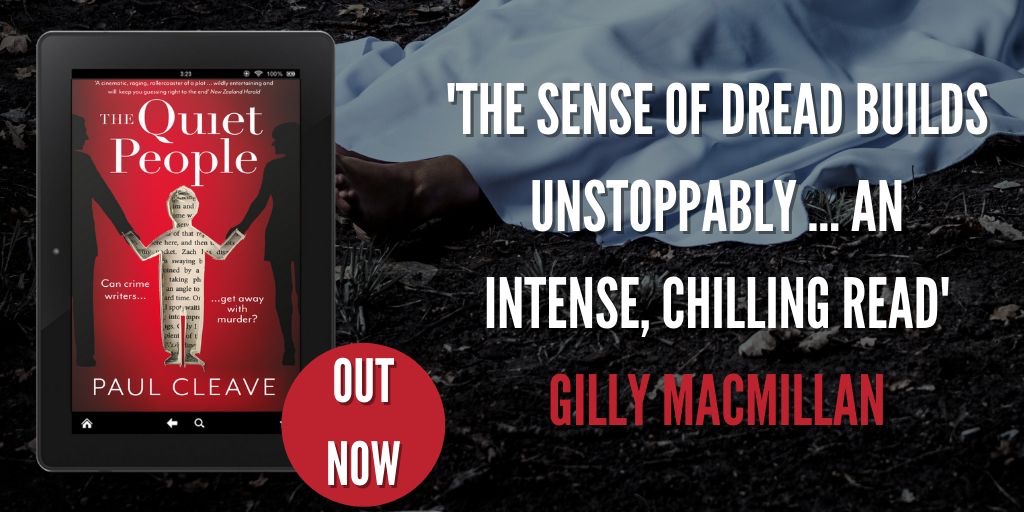
The Quiet People by Paul Cleave

Whenever I go to literature festival or author events through my local bookshop, people always ask where the writer gets their ideas from. In the case of crime writers we really want to know, because we’re thinking: is this what real life crime is like? Are there people who commit these terrible (and usually highly creative) crimes? How does the writer know this much about the crimes they depict? We want to know if they have ever been tempted to commit a crime and if anybody could commit the perfect crime, surely it’s people who’ve been writing and researching it for years? They know the pitfalls and have the forensic know-how to get away with it. So,could a crime writer commit the perfect crime? This is the corner that Cam and Lisa Murdoch find themselves in, when their son Zach goes missing one night. As a crime writing duo the two are well known, but live a quiet family life with their son in Christchurch, NZ. In a meltdown the night before, Zach has told his father he wants to run away and in an exasperated moment Cam tells him to go ahead. Could he really have climbed out of the window and gone? Cam and Lisa don’t think so, then when a footprint is found outside his bedroom window their fears are confirmed – this must be an abduction. Yet everyone knows, in child disappearances, the first suspects are always the parents. But will they be the last?

This is my first Paul Cleave novel, and I was drawn in by the premise. We read the story through the narration of Cam and one of the investigating officers DI Rebecca Kent. The chapters are short and alternate between the two perspectives, creating an interesting narrative where one moment I was on the Murdoch’s side and the next moment I could understand the police’s outlook. The first half of the book was really slow, with a drip feed of information. The second half was like a car with no brakes, careering towards an inevitable explosion. I thought DI Kent was a decent, honest officer, with great instincts and a lot of compassion for the Murdochs. I loved being inside her professional mindset, seeing how she kept a polite demeanour with suspects, while questioning or even disbelieving everything they’re telling her. The author shows how every action can have multiple interpretations. Early on in the book, when Zach is playing on a bouncy castle, Cam’s attention wanders for a moment and he can’t see his son anywhere. Frantically looking for him, he goes onto the bouncy castle looking for him, accidentally knocking a girl over in his hurry. He then grabs hold of another boy and tries to show him a picture of Zach on his phone, an actions that’s completely misinterpreted by the boy’s father. Is Cam just an anxious, frantic parent who isn’t thinking clearly or is he a deliberate abuser of children? It depends on who you are in the scenario. Kent keeps an open mind – suspect everyone, expect anything and don’t take one person’s word. She’s always calculating in her head, checking and balancing actions and behaviour.

Cam is an interesting character who goes through an enormous amount of change in the novel. We see how his son’s disappearance slowly alters his personality and he’s hard to root for. It’s as if he’s woken up inside one of his own books, fully experiencing what he might put one of his characters through. He depends on Lisa, his writing mate and wife, but are they going to be made stronger by this tragedy or does it have the power to tear them apart? They certainly have different temperaments, with Lisa being the calmer one, but I was fascinated to see how she would respond when Cam tells her about Zach’s threat to leave and his answer. The author creates such a tense atmosphere building both inside and outside their home. He depicts the frenzied attention around the case of a missing child, that reminded me of the public’s interest in the Madeleine McCann or the Shannon Matthew’s cases. It was horrible to see how the general public congregated outside the family’s homes, shouting for justice and piling pressure on the family and police alike. This chaos was so well depicted in the novel and ended up spawning one of the most explosive and memorable scenes.

This was a compulsive page turner, especially once you reach the half way point. The short, snappy chapters help with this, there’s always that temptation of just one more. There were also brilliant cliff hangers, places where it felt the book was about to end, but didn’t, and then took things in another direction entirely. I loathed the journalist Lockwood who starts out with a vendetta against the Murdochs for apparently stealing a book idea from him. Could he be taking the ultimate revenge? Could the Murdochs really be the villains after all? The truth, when it is finally laid bare, is a massive shock for the reader. I couldn’t have suspected and even DI Kent is completely taken by surprise. This is the sort of case that would never leave the investigating officer and I felt that so much about her would change from this point. I loved the way that Cleave showed the influence of the press and social media on cases that catch the public imagination. No one is innocent until proven guilty any more. Worryingly, it felt like there was no privacy either with devices like mobiles, spy cameras and our addiction to social media placing so much of our private sphere into the world. It also makes things more difficult for Cam and Lisa, who have been recorded at festivals and on TV for a number of years. It’s so easy to watch them and to discredit the couple with a well chosen statement taken totally out of context. It’s also scary to see the influence and tragic consequences that the media circus can have. Although, I did laugh at the pyramid of nuns and priests that turn up in the mob, it’s the image from the book that will stay with me. This was a fascinating thriller, with a complex investigation at it’s centre. Prepare for a twisty tale, full of red herrings and tiny clues, where you’ll struggle to trust anyone.

Meet The Author


Paul Cleave is currently dividing his time between his home city of Christchurch, New Zealand, where all of his novels are set, and Europe, where none of his novels are set. His eight novels have so far been translated into over a dozen languages and nearly 20 territories. He has won the Saint-Maur book festival’s crime novel of the year in France, has been shortlisted for the Ned Kelly award, the Edgar Award, the Barry Award, and has won the Ngaio Marsh award for NZ crime fiction three times.

Posted in Random Things Tours

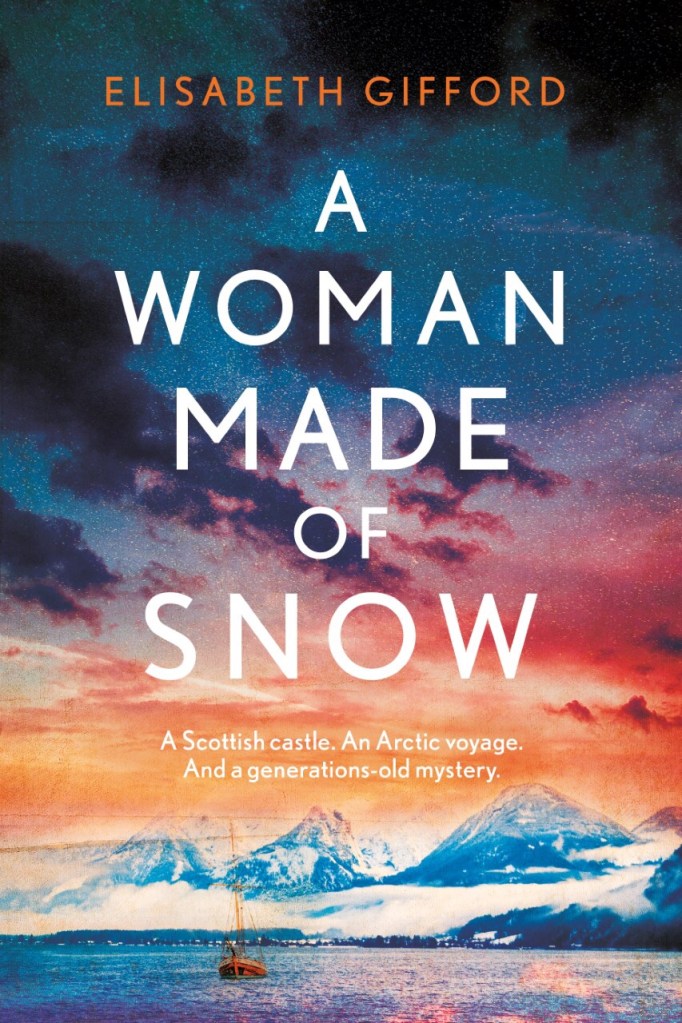
A Woman Made of Snow by Elizabeth Gifford.

I slowly became more and more intrigued by Elizabeth Gifford’s new novel. Even the title whetted my appetite for more of the same beautiful writing that made The Lost Lights of St Kilda such a memorable book. We’re still in Scotland, this is the late 1940’s and our heroine Caro lives with her husband Alasdair and baby Felicity in the Laundry Cottage situated in the grounds of his ancestral home. They met at Cambridge University and married less than six months later much to his mother Martha’s surprise. She was expecting him to marry someone of their class, maybe even their family friend Diana who’s valuing heirlooms at the family’s castle. Caro’s mother-in-law wanted her and Alasdair to live at the castle with her, but Caro wanted a little bit of privacy and distance. At Laundry Cottage she can still be in her dressing down at lunchtime or having a sleep while baby Felicity has a nap. Yet, the past is about to make it’s way into the present both physically and mentally. Caro is asked to research the family archives for a mysterious, missing member of the family. A great-grandmother seems to have been scrubbed from the archives, along with a missing diary from her husband Oliver’s trip to the Arctic. When the Laundry Cottage floods suddenly and workers inspect the Victorian drainage system they find a body of a woman. Could this be the missing bride?

It seems formidable mothers are the norm at Castle Kelly, because when I read the second narrative it took me back to the late Victorian period and tension between Oliver and his mother. From early childhood Louisa and Charlotte Strachan have been summer visitors to the castle and Oliver’s playmates. However, as they get older it’s clear that feelings have developed between Oliver and Louisa. Could she be the missing grandmother from the archives and the body found in the grounds? How come Oliver ended up in the Arctic? What effect will Caro’s findings have on the family and her marriage? With so many questions I was compelled by the story and some of the characters caught up in these dramatic circumstances. Also the historical shifts behind these stories was fascinating too, showing how much the world changed over two world wars.

Caro is such a sympathetic character and I felt immediately on her side in this very difficult situation she finds herself in. She’s an intelligent woman and understands a lot about how the world is changing. Her expectation of life after the war is that she and Alasdair will live in London as lecturers at one of the city’s universities. She didn’t bank on having Felicity so quickly or for Alasdair’s only offer of employment coming from St Andrew’s university. She describes feeling ‘ambushed’ by her own fertility, but she loves Felicity and wants to be a good Mum. I understood her need to be separate from the castle – it’s a compromise between his obligations and the total freedom they expected in London. I also empathised with her feelings of struggling as a new mum and being isolated from everyone and everything she knows. It’s a huge leap from being organised, full of energy, totally independent and career minded, to living in a cottage with a new baby feeling tired and slightly inadequate. She can’t understand why looking after Felicity seems so arduous and exhausting, when she’s always been so lively and alert. She also finds her emotions difficult; she’s struggling to understand why she wants to keep mother-in-law Martha at bay, or why she feels threatened by the presence of Diana. Her interest in the missing grandmother is linked to these emotions, maybe they were both outsiders in this family. It’s painful to her when she hears Martha say she’d hoped Alasdair would marry someone of his own class, surely those barriers don’t exist any more?

When I started to compare it with the 1940’s I could see that there is change, but within the Gillan family it has been minimal compared to the rest of society. Early in the novel Caro remarks that ‘she was secretly rather proud of her ability to make good friends across the classes’ because ‘once the war was over, class was not going to mean anything after all the country had been through together’. This was probably true in more metropolitan areas, but it hasn’t reached the upper class residents of rural Scotland. Martha is trying, but her true feelings are old-fashioned. The mistress of Kelly Castle in the Victorian period is Sylvia and she resents her husband’s adherence to an old obligation. He invites the daughters of old family friends, Charlotte and Louisa Strachan, to the castle every summer. Whereas Louisa tries desperately to fit in, Charlotte is a more fiery and independent character and I fell in love with her. As soon as she cut her own hair off I knew I would enjoy her way of being in the world.

To Sylvia’s disgust, Charlotte brings a young girl called Mary into the children’s circle. They run wild in the grounds and don’t seem to notice the differences between them. This changes as they get older until one summer Mary’s aunt asks Charlotte not to run in and out of Laundry Cottage where they live, tempting Mary to play when this year she had to work. As far as Sylvia’s concerned the girl is lucky to be merely helping her aunt, because the true destiny of the poor girls of Dundee is in the jute mills that pay for Kelly Castle. When Charlotte defies her, bringing Mary along on an outing to see the family’s new whaling ship and dinner in the Castle Hotel. When Sylvia asks Charlotte to remove her beret at dinner, she sees her unseemly cropped hair. Charlotte knows a punishment is coming, but what her aunt does next makes her sick and heartbroken. Without any emotion she tells the driver to take them home via the jute mill. There, she ushers Mary into the office as a new mill girl for the foreman to set to work. Sylvia has wanted Mary in her proper place for some time, but the opportunity to put Charlotte in her place at the same time was too good to miss. Charlotte is devastated. Sylvia now has to find a way of dealing with the Strachan girls, she has her eye on a young lady for Oliver and she doesn’t want her plans scuppered by a crush on someone unsuitable.

I found it interesting how patterns seemed to have formed down the generations. Some brides were suitable to be the next mistress of Kelly Castle, and others were not. Caro’s mother-in-law kept her misgivings and disappointment over her son’s choice to private conversations. Sylvia had been so determined and cruel in her treatment of Charlotte and Louisa that I wondered what fate awaited Oliver’s unsuitable bride, whoever she was. Since there are family rumours surrounding the Arctic voyage with hints of cannibalism, I was worried for this unnamed woman.

This author always creates an incredible sense of place and the beautifully atmospheric opening is reminiscent of Daphne Du Maurier’s Rebecca and the ghostly walk up the drive of Manderley. A woman sees Caro and tries to call out to her from her place beneath the earth.

‘Wrapped in darkness beneath the trees I watch rain falling on the earth where I have slept for so long. Light from the Cottage windows stretches across the lawns, but it does not reach me. Find me, I whisper. Give me my name.’

Her need for Caro to hear her showed a spirit undimmed by death. I was really interested in this and the theme of women being controlled or even erased by forces or expectations beyond their control. As the unnamed woman sits beneath the earth, Caro feels removed from the life she wanted by motherhood. Mary is taken from a carefree childhood to the responsibilities and restrictions of adulthood overnight. It had been hoped that she might be given a maid’s position in the castle, but her destiny is at the jute mill. Charlotte isn’t even allowed to cut her hair, and she hates the prissy dresses she’s expected to wear as a guest of the Gillan family. She doesn’t understand why her friendship with Oliver has to change, just because she’s older.

‘Angry tears pricked her eyes.While they were away at school that year it seemed that someone had decreed that childhood was over, a closing down of what a girl may or may not do – and a forewarning of the hardening of roles to come that she saw in the lives of the adults around her. Well, Charlotte was not going to accept it. She would stay true to herself and true to the things she loved.’

I was sad for her, and her sister Louisa. It’s interesting to see how both girls react to the effects of being from a poorer and lower class background. I was compelled to read on and find out about these girls in adulthood, not just their relationship with Oliver, but how they were making their way in the world. I wanted Charlotte to have retained that fire and attitude and hoped that circumstances hadn’t tamed her. There is just so much to love about this novel: the well written characters; the intriguing mystery of the unnamed woman; the depth of research into the two time periods especially into societal changes, class difference and the lives of women. I heartily recommend it to all lovers of historical fiction, women’s lives and family secrets. This is one of those books that I loved so much, I will be buying a finished copy, despite having the proof. It’s so atmospheric, romantic, and deeply poignant.

Meet The Author.

Elisabeth Gifford grew up in a vicarage in the industrial Midlands. She studied French literature and world religions at Leeds University. She has a Diploma in Creative Writing from Oxford OUDCE and an MA in Creative Writing from Royal Holloway. She is married with three children, and lives in Kingston upon Thames. A Woman Made of Snow is her fifth novel.

Posted in Random Things Tours

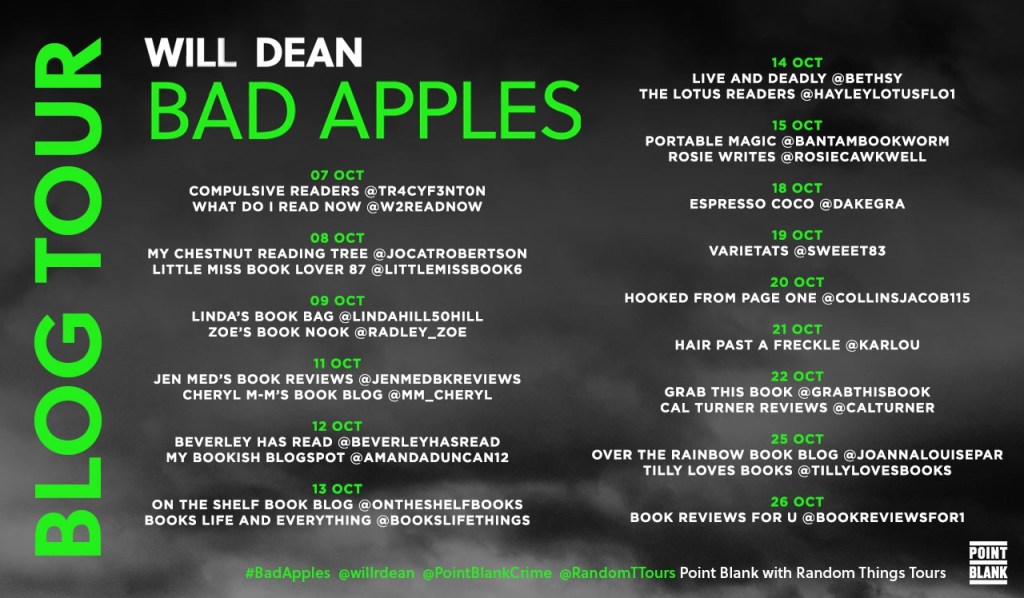
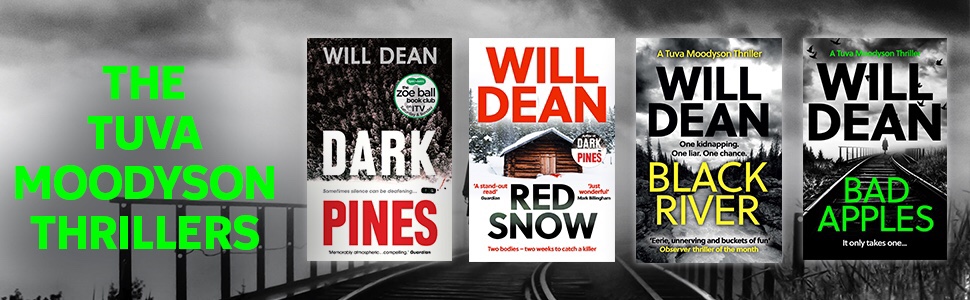
Bad Apples by Will Dean.

Wow! Will Dean does like to put his heroine in some terrifying situations. There is so much about this series that I love, then a good 20% that makes me feel a bit sick or unsettled. In the last book it was snakes that had me a bit on edge. This time? Well it’s saying something when a severed head is the most comfortable thing about Tuva’s investigation.

We’re back in Gavrik, deep in the northern most part of Sweden and Tuva is back at the local newspaper, but has a more senior role and a new colleague to oversee in the shape of eager young newbie Sebastian. In fact, things are pretty good in Tuva’s world. Best friend Tammy is back in her food truck dishing up the best Thai food around. Tuva is in a steady relationship with police officer Noora, which works really well although they have to keep a boundary between police work and what ends up in the paper. As part of her new role, the Gavrik newspaper will now also cover the nearby hilltop community of Visberg. With a treacherous ascent road through the forest, there’s really enough danger in this assignment, but when Tuva stops for a moment in her truck, she winds down the window and hears a terrified human scream. Never one to run away from danger, she hurries towards the noise and finds a woman covered with blood and a body, without it’s head. The man is Arne Persson: resident of Visberg; local plumber; member of the choir and the town’s chamber of commerce. Tuva’s introduction to Visberg is going to be an unpleasant one. Instead of getting to know the residents and building trust, every one of them will know she discovered Persson’s headless body and every one of them could be a possible suspect.

Dean has a wonderful way of describing these remote northern towns and their eccentric residents. I often wonder whether it is living in such an inhospitable environment breeds eccentricity or whether odd individuals are attracted to it’s remoteness. Quirky details are brought into the narrative that feel surreal and put the reader on edge. Local pizza maker Luke Kodro obliges residents with the oddest pizza toppings I’ve ever heard of – ‘fillet steak, onion, mushroom, bearnaise, peanuts and banana’. However, many view him with suspicion because he’s from Bosnia and one even names him as the ‘our local, friendly, war criminal’. There’s also Hans Wimmer who has a shop in the town square selling all sorts of timepieces, but down in the basement has rare clocks including some handmade ‘organic’ examples. We also meet old friends like the Sorlie sisters, running a pop-up shop selling their unique trolls and masks for the town’s peculiar celebration Pan Night. Tuva asks about this festival, but most residents are secretive about what it entails. Even the sisters warn Tuva that it’s a celebration for hill folk only and that outsiders aren’t welcome after dark. This piques Tuva’s curiosity and she overcomes her revulsion enough to buy an animal mask from the sisters and plans to gate crash. The Pan Night chapter is a highlight of the book for me and the way the author covers all the senses gives the reader a truly immersive experience. There a bonfires, falling apples being crushed underfoot, animal masks, people walking backwards or getting frisky under park benches and the most disgusting balloons it’s ever been my misfortune to imagine. In this town, any one of the residents might have killed Arne Persson and I was a long way from solving the case.

I love how Tuva has changed since the first novel. There was a guarded quality to her at first, a sense of keeping herself separate that might have something to do with her deafness or possibly life experiences. Here there’s a softening to her character. She’s still brave and resilient, with an intrepid sense of adventure, but her ties to people have always been minimal. Her friend Tammy has recovered well from her kidnap ordeal and they are still close, looking after each other as family. Her boss Lena also looks after Tuva in a motherly way that’s very different to the difficult relationship Tuva had with her late mother. I noticed a relationship building between Tuva and the little boy at the flat next door, who isn’t having the easiest family life and seems to trust Tuva. She agrees to baby sit him on a couple of occasions and is touched by his faith in her. I guess most importantly, the biggest change is her long term relationship with Noora. This seems to have a stabilising effect on Tuva, although the relationship terrifies her as much as it makes her happy. What is the future for the couple? Could Tuva be comfortable even sharing her living space with another person? She isn’t sure, even though she knows she loves Noora.

This book picks you up and takes you on a fascinating and thrilling ride that builds in tension to a terrifying ending that I didn’t see coming at all. I had to stop reading at one point, because I realised I was so tense I was gritting my teeth! I’m sure the author has a hotline to my fears and this ending tapped into them perfectly. Needless to say, if I was Tuva, I’d be packing up the Hilux and leaving the hill folk to murder each other! I think the way the author depicts Tuva’s deafness is interesting. Usually Tuva uses it to her own advantage – taking her hearing aids out when she’s writing a piece means she can focus and taking them out at home means she can’t hear next door. However, it can also leave her vulnerable and the author uses it to intensify the horror element of the book, particularly towards the finale. There’s something about another person touching her hearing aids that feels so personal and also like a violation, depending on who it is. Every time I know a Tuva Moodyson book is coming, the excitement starts to build. By the time it’s in my hands I’m ready to drop all my other reading to dive in. Of course when something is so anticipated there’s also a fear about whether the book will live up to expectations. Bad Apples did not disappoint and is a fabulous addition to this excellent series.

Published by Point Blank on 12th October 2021.

Why not check out the other reviews on the blog tour..

Meet The Author.

If you don’t already follow Will Dean on Twitter you’re missing out on fantastic photos, including those of his huge St Bernard and the country surrounding his cabin in the woods. He grew up in the East Midlands and had lived in nine different villages before the age of eighteen. His debut novel, Dark Pines, was selected for Zoe Ball’s Book Club, shortlisted for the Guardian Not the Booker prize and named a Daily Telegraph Book of the Year. The second Tuva Moodyson mystery, Red Snow, won Best Independent Voice at the Amazon Publishing Readers’ Awards, 2019, and was longlisted for the Theakstons Old Peculiar Crime Novel of the Year 2020. His third novel, Black River, was chosen as Observer Thriller of the Month. Will Dean lives in Sweden where the Tuva Moodyson novels are set.

Posted in Random Things Tours

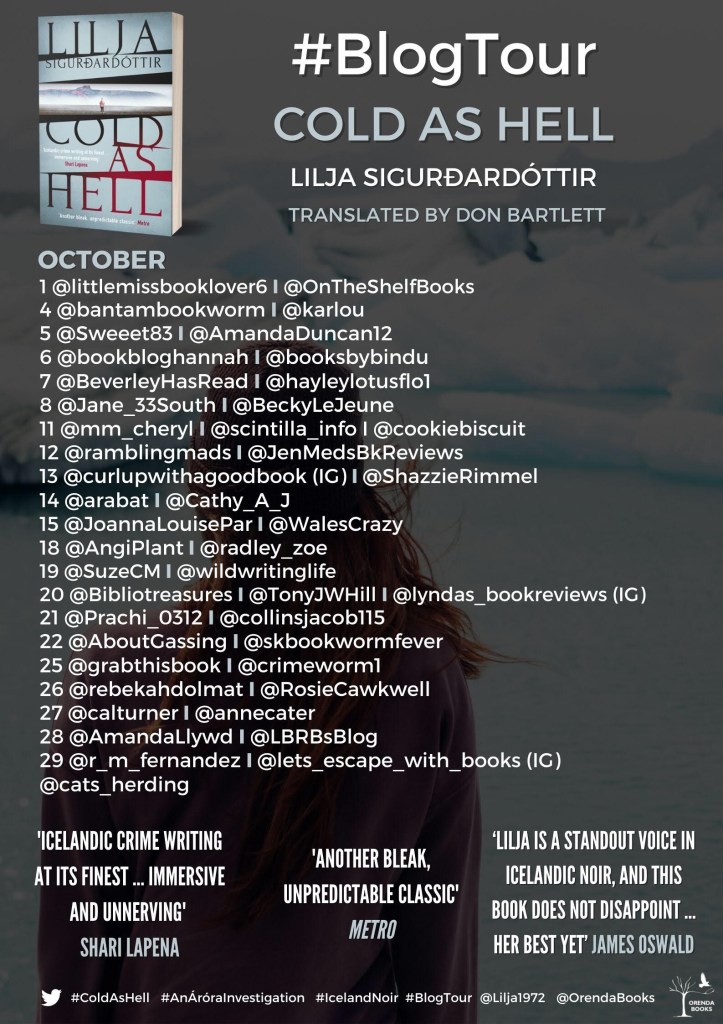
Cold as Hell by Lilja Sigurdardóttir.

‘Now I regret everything. I regret making Ísafold’s favourite Barbie doll do the splits and breaking it. I regret sneaking into her make-up and ruining her new eye-liner by experimenting with it. I regret the times I called her short-arse once I had grown taller than her. I regret losing the scarf that was a gift from her first boyfriend. I regret the time we had a row, and I called her a whore. I regret not calling her. I regret not getting the first flight to Iceland the last time she needed help.’

I’ve found myself reading more Scandi and Scottish Noir of late and Icelandic Noir has many of the same traits that draw me to the genres; intelligent and independent female protagonists, an unflinching look at death and loss, and the unapologetic darkness at the heart of the tale. I’ve had the pleasure of reading Lilja Sigurdardóttir before and this novel grabbed my attention very early on with it’s reluctant protagonist, quirky characters, and an almost lunar landscape lit up by twenty four hour daylight. Āróra is being pestered by her mother. She hasn’t heard from Āróra’s sister Īsafold for over two weeks now and she’s very worried. She wants Āróra to fly out to Iceland and find out what’s going on from Īsafold’s partner Björn and their family who are still based there. Āróra lives in the north east of England and rarely goes back to Iceland, despite being born there. She mainly travels there when Īsafold needs rescuing from Björn. The whole family have known for some time that she is suffering domestic violence, but despite several attempts to help and convince her to leave, Īsafold always returns to Björn. Āróra has given up trying to help her sister; you can’t help someone who doesn’t want to be helped. Even now she is reluctant to drop everything and intervene, but her mother is insistent and two weeks is a long time to be silent.

I enjoyed spending time in Āróra’s company and her narration is our main view of the story, although there are short chapters from the perspective of other characters that either add to our knowledge of Īsafold’s life, or contain a clue or twist in the tale. The two sisters have never had an easy relationship and Āróra sees herself as very different from her sister. She describes Īsafold as tiny, almost elfin, with long brown hair and a beauty that she feels is far removed from her own looks. Āróra feels almost giant-like in comparison to her sister, she has a strong body and is statuesque with lighter hair. There’s a sense of inferiority here, as Āróra weighs up her own looks, even if she is thought of as attractive by others she doesn’t see it herself. Other characters however, do describe her as beautiful like her sister and while she’s definitely taller and of a stronger build, many have known she is Īsafold’s sister as soon as they’ve seen her, including the neighbours at Īsafold’s building. In fact, she hasn’t been in Iceland long before attracting a man called Hákon at her hotel. As Āróra starts to question Īsafold’s neighbours about her disappearance she is disturbed to be told that Īsafold has flown to be with her family in the U.K; she never arrived, but did she even leave? Some neighbours have their own reasons for remaining hidden or cagey about Īsafold’s business, but one thing rings true in all their statements. Īsafold was in danger every day she chose to stay with Björn. Grimur in particular gave Īsafold a safe space to come when Björn had attacked her and he would patch her up while trying to talk her into leaving. It never worked.

The author cleverly sets us on edge with certain characters in subtle ways, such as a throwaway line that makes you stop and think or a behaviour that seems suspicious, like a literary double-take. This was a particular favourite:

‘He zipped his jacket up to the neck and walked away. There were only ten minutes before the bus was due. He had finished the walk around the city centre he had decided to take after the film was over. But seeing Björn with a new woman had wrecked any pleasure he might have had from his walk, and now he just wanted to go home and shave all over.’

He seems genuinely upset by Björn’s new girlfriend, who he stumbles on in a nearby restaurant. Everything written in this passage has a sense of real concern and introduces us to someone who must have cared for his friend a great deal. The end line though, is a stroke of genius, and tells us there is something very unusual or possibly disturbed about this character. Olga who lives opposite, hasn’t really noticed much, but she’s trying not to arouse suspicion as she has an asylum seeker living with her who might be denied leave to remain any day. She and Omar are like mother and son. He looks after her with more care than her own family and she trusts him. However, when he is told he can’t remain in Iceland there’s a sudden rage she’s never seen before. When she finds out he used the passport of a murdered man to enter the country she isn’t sure what to think. Olga has never felt scared of Omar but she does start to wonder what he might be capable of. At first my money was on Björn being the killer, then Grimur, and every time there was a new revelation I found myself questioning what I knew and shifting allegiance. In this way the author keeps the reader on their toes. I loved that the book was intelligent and didn’t give up information too easily.

The sense of place was well developed and had an almost alien quality to it that is so strange and adds atmosphere. First of all the reader is wrong footed with twenty four hour daylight, because it is Sumarsólstöður. This is the peak mid-summer solstice, in a whole summer of the midnight sun. Research seems to show that Icelanders actually benefit from this period, because they are outside longer each day. However, I felt the author used it very effectively to add to an eerily strange sense of place. We see Āróra’s Uncle Daniel, compulsively weeding round the edges of his driveway in the early hours of the morning when he can’t sleep. He’s trying to be quiet because he doesn’t want to wake the neighbours, and I felt a sense of loneliness in him being the only person awake. Yet there would also be something special about it, as if the sun had risen to create an extra day just for you. Along with other countries close to the Arctic Circle, there’s a magical aspect to this place where water shoots out of the ground and lava fields look like a barren moonscape. The author also sets the events of the book within recent history. Āróra is a financial investigator and happens upon some interesting accounting irregularities when researching one character. The banking crisis looms over this subplot where she has to decide whether to follow her investigative hunch or let it go and concentrate on her sister.

Most importantly and very moving, is the depiction of the relationship between two sisters. The sibling rivalries, the roles of eldest and youngest, and that push and pull between loving and resenting each other. Āróra has always felt second best to her sister, particularly in terms of their appearance. There are times when she feels obligated to check on Īsafold, rather than wanting to do it for herself. Āróra hates having the role of the sister who ‘rescues’ because she’s aware of how a drama triangle works. Īsafold is continuously putting herself in the role of victim and even though she’s been given nothing but positive encouragement and support from Āróra she can soon flip the switch and say she’s being pushed and persecuted into leaving. I actually wondered whether this behaviour had lead to her death? Had someone become so tired of helping, only to hear her being beaten again the following week, that they’d snapped? Yet Āróra reminisces about the last time Īsafold called her and she chose not to come. Would that have been the turning point? What if she’d said the right thing this time and her sister chose to return to England, safe and sound. In fearing her loss, Āróra stops seeing a problem and starts seeing her sister. The barrier between them melts away as she lists her regrets and acknowledges she hasn’t been the perfect sister either. But is it too late? This was a fascinating tale, from a clever author whose words can manipulate us into racing through the thrilling twists and turns, then stop us in our tracks with a moving tribute from one sister to another.

Published by Orenda Books and out now.

Meet The Author.


Icelandic crime-writer Lilja Sigurdardóttir was born in the town of Akranes in 1972 and raised in Mexico, Sweden, Spain and Iceland. An award-winning playwright, Lilja has written four crime novels, with Snare, the first in a series and Lilja’s English debut shortlisting for the CWA International Dagger and hitting bestseller lists worldwide. Trap soon followed suit, with the third in the trilogy Cage winning the Best Icelandic Crime Novel of the Year, and was a Guardian Book of the Year. Lilja’s standalone Betrayal, was shortlisted for the Glass Key Award for Best Nordic Crime Novel. The film rights have been bought by Palomar Pictures in California. Lilja is also an award-winning screenwriter in her native Iceland. She lives in Reykjavík with her partner.

Posted in Random Things Tours

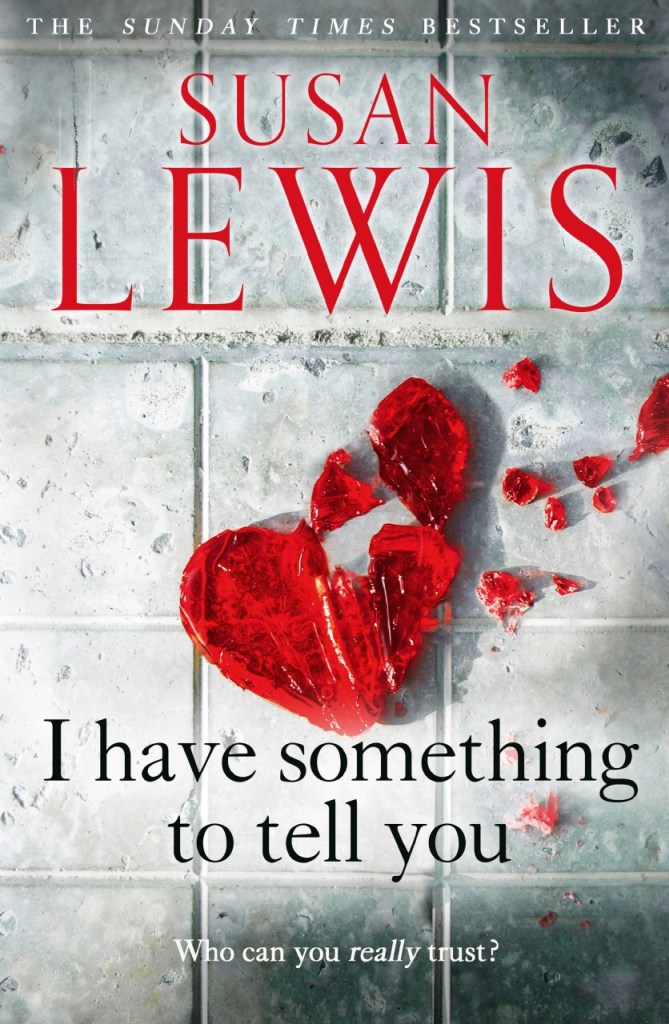
I’ve Got Something To Tell You by Susan Lewis.

With her usual focus on families and relationships, this prolific author has turned her hand to crime fiction for new novel I Have Something To Tell You and she’s created a very competent murder mystery. Jay and her husband Tom work in the law; Jay is the senior solicitor in her father’s old law firm and Tom is a barrister in chambers across town. They live in Clifton, and have two teenage children who are very excited to be taking a gap year in their education and going travelling. When a new case comes to Jay, everything in her perfect world starts to shift. Edward Blake, local architect and property developer, has been arrested for the murder of his wife Vanessa. The details are perfect tabloid fodder, young beautiful wife is found strapped to her bed with stirrup straps, naked and it looks like she’s been strangled. Jay knows this is going to be an interesting case and immediately leaves for the police station, where she meet DI Ken Bright and his right hand woman DS Hamble. He’s quite clear that it does not look good for her client. Last night he had arrived home, realised his wife was not there but didn’t find that odd. Possibly because their house splits at the top of the stairs – to the right is a master bedroom suite where Edward Blake retires and to the left the guest bedrooms. It is only the next morning when Blake starts to become concerned for his wife’s welfare and when checking the guest bedrooms, just in case she came in late and didn’t want to disturb him, he finds his wife’s body. He now finds himself the prime suspect and he’s relying on Jay to keep him out of jail. Who has killed Vanessa and can Jay succeed in helping her client?

I enjoyed the double storyline, as time was split equally between the case and Jay’s personal life which hits rock bottom as she works with her client. With their children’s imminent departure on their travels, Jay and husband Tom have been looking forward to some quality time together. Both work long hours and this is their chance to slow down, maybe take some time off here and there, and start to enjoy their time together again. Daughter Liv has been struggling in an ‘on again – off again’ relationship with the son of one of their friends and Jay is there as a listening ear. However, it’s Tom who lobs an absolute bombshell into their lives and we get to see how Jay copes under the double pressure of a tough murder case, and trouble at home. At home Jay finds it difficult to sleep and to keep her head. At least work, tough as it is, gives her some respite from troubles at home. She finds an unlikely listener in her client, no matter what state his case is in, Blake notices if Jay is off colour or has things on her mind. He enquires whether she is ok and Jay admits to feeling emotional and being concerned for her marriage. However, this is only a moment of weakness, I was fascinated by the way Jay is usually able to put her game face on and lose herself in the case, undertaking investigations with her trusty P.I. Joe, and becoming embroiled in all the twists and turns.

I thought I’d identified the murderer at the halfway point, but I got it wrong which was a great surprise. Blake and Vanessa’s lives were complicated by another death in the family, and grief had eaten away at their lives and relationship. Vanessa is very troubled and vulnerable from that point on. I found myself a little uneasy with Blake and his position as ‘victim’ in their marital problems. Motives range from sexual jealousy to wrangling over money and potential inheritance. We meet a whole host of characters during the investigation, some of them real horrors that it must have been great fun to write. Vanessa’s stepmother sticks in my mind, because she’s a manipulative and vindictive old woman. She’s sitting on a fortune thanks to the ruined, Gothic, pile she insists on living in even though she can barely afford to heat it. This should be inherited by Vanessa, but could other members of the family have resented that? Especially since Blake and Vanessa already own three incredible properties where they live.

The author pitched her characters perfectly, whether it’s the professional, middle-classes or those who’ve had their money a bit longer. These characters all have beautiful, elegant, homes that sport giant kitchens/ family rooms where they can cook, dine and watch TV together. Blake’s a property developer so his own home is spectacular and very seductive. It’s real Country Homes and Interiors perfection, with it’s well placed riding boots in the hallway and bifold doors in the rear extension with incredible views of the Cotswolds. I wanted to live there. I’d have even taken the guest bedroom where the body was found! Each character had something that made the reader suspicious of them, and I looked forward to each new revelation in the case. I liked Jay’s relationship with her investigator Joe, ex police officer and friend of her father’s, he is a solid presence in her life when everything else is shifting. The author brings in themes of empty nest syndrome, infidelity, betrayal, and the impact of trauma. I thought her portrayal of long-term relationships was probably very realistic. She showed how we change as we get older, but also how life events change people and their priorities, creating the potential to derail even the strongest of marriages. The ending was unexpected, leaving one final twist for last which is always satisfying and not tying up every loose end neatly in a bow. This was an enjoyable read and a successful foray into crime fiction and domestic noir.

Published 16th Sept by Harper Collins.

Posted in Publisher Proof, Random Things Tours

Freckles by Cecilia Ahern

It seems a strange admission to start a review with, but I’ve never liked Cecilia Ahern’s books. In fact P.S. I Love You brings me out in a rash. There has always been something too saccharin and sweet about them. So, when I was browsing NetGalley and saw her new novel I had pretty low expectations, but the blurb piqued my interest and here I am swallowing my words. So, when I had a chance to come on the blog tour, I had to take it. I wanted to let other readers, maybe those who hadn’t liked her other novels, know that Freckles is a fantastic read and I absolutely LOVED it.

Five people.

Five chances.

One woman’s search for happiness.

Allegra Bird’s arms are scattered with freckles, a gift from her beloved father. But despite her nickname, Freckles has never been able to join all the dots. So when a stranger tells her that everyone is the average of the five people they spend the most time with, it opens up something deep inside.

The trouble is, Freckles doesn’t know if she has five people. And if not, what does that say about her? She’s left her unconventional father and her friends behind for a bold new life in Dublin, but she’s still an outsider.

Now, in a quest to understand, she must find not one but five people who shape her – and who will determine her future.

Told in Allegra’s vivid, original voice, moving from modern Dublin to the fierce Atlantic coast, this is an unforgettable story of human connection, of friendship, and of growing into your own skin.

Our heroine, Allegra Bird, is quirky, surprising, incredibly loveable, and finds other human beings quite difficult to understand. She’s a parking warden in her little corner of Dublin and every day has a strict routine. She walks down to the bakery where owner, Spanner, greets her with a coffee and a Belgian waffle. She then follows her route, making sure that the same car is parked outside a certain hairdressers, then makes her way to where a yellow Ferrari is constantly illegally parked. She has a small flat in a large family home, with babysitting duties as part of the deal. On Fridays she goes to a small art gallery in town where there’s a life drawing class. It turns out she’s the regular model – I said she was surprising – and she is fascinated with how the artists approach her freckles. There are some freckles that she used to scratch into star constellations, and she’s fascinated to see if they ignore them or over dramatise them as if they’re huge, angry slashes. This is her daily routine, but when she gives the man with the yellow Ferrari his umpteenth ticket, something changes. He tells her she’s the sum of the five people she’s closest too and he doesn’t mean it as a compliment. As a reader we can see that from his perspective Allegra is a pernickety, humourless, jobsworth. However, we also know that Allegra is sensitive and this really hits home with her. She doesn’t have five people – but what if she could curate her five from people who inspire her or who are really successful? If the theory is correct, then by curating her five she could curate her life, becoming more successful in the process.

The joy I felt in this novel was from seeing how Allegra related to other people. For her, other people behave in totally illogical ways (and I have to say I was in agreement with her about some of them – particularly her dreadful landlady). I loved the relationship with Tristan, built from his inability to park his Ferrari legally. She thinks she’s simply being helpful by taking him forms for permits, so is baffled when he illogically persists in paying from hour to hour, relying on his rather lazy staff to keep an eye on the time. These two hate each other at first, but watching as they try to understand each other is wonderful. When Allegra goes back home to visit her Dad she thinks she might slot back into island life easily. She imagines, like people do when they move away, that nothing will have changed when they return. Will old friends be there for Allegra and make up her five? When she’s with her Dad, we see where some of her quirks come from, because he isn’t the best at picking up other people’s signals either. She finds out he’s been stopped from attending his choir because he’s made a pass at one of the administrators, who has felt uncomfortable and made a complaint. He’s a man stuck in the behaviour of an earlier decade, he seems baffled that just touching a woman on the knee is enough to be labelled a pervert. He has brought Allegra up by himself, but she had come to an age where she wanted to know more about her mother and life beyond this place stranded in the Atlantic. When the results of her search are revealed, I was genuinely surprised. I felt so protective of Allegra by this point, I was desperate for everything to work out the way she wanted. It was this hope that created so much tension towards the end, and I couldn’t stop reading.

I loved Allegra’s unique voice as she lets us into her mind and her world. This wouldn’t be a Cecilia Ahern book without being heartwarming and full of humour, but this story is more complex than that. There are darker characters, parts that are more painful or remain unresolved, that show a real maturity and development. It’s about being proud of where you’re from, but also finding your authentic self – a journey that sometimes needs some distance from where we grew up. The author contrasts genuine, warm and accepting people with the false, Instagram brigade who are more interested in how life looks than how it is. Her characters are brilliant here, more complex and nuanced than I’ve seen before. There are even some that turn out to be deeply narcissistic and I wanted to protect Allegra from them. I loved the contrast between the city streets of Dublin and the wild Atlantic island Allegra calls home. In a way this is the decision she has to make. Where is home? Which place truly suits the person she is instead of the woman she thought she had to be in order to be accepted. Does she know that when we are our authentic selves, we attract people to us anyway. Our true five perhaps? All through the novel I found myself responding emotionally to the story, but Allegra’s character simply made me smile and perspective on her world made me smile inside. Not that she needs it, because I know millions love her writing, but if Ahern keeps writing characters like Freckles, she has found herself a brand new fan.

Meet The Author


After completing a degree in Journalism and Media Communications, Cecelia wrote her first novel at 21 years old. Her debut novel, PS I Love You was published in January 2004, and was followed by Where Rainbows End (aka Love, Rosie) in November 2004. Both novels were adapted to films; PS I Love You starred Hilary Swank and Gerard Butler, and Love, Rosie starred Lily Collins and Sam Claflin. 

Cecelia has published a novel every year since then and to date has published 15 novels; If You Could See Me Now, A Place Called Here, Thanks for the Memories, The Gift, The Book of Tomorrow, The Time of My Life, One Hundred Names, How To Fall in Love, The Year I Met You, The Marble Collector, Flawed, Perfect and Lyrebird. 

To date, Cecelia’s books have sold 25 million copies internationally, are published in over 40 countries, in 30 languages. 

Along with writing novels, Cecelia has co-created the US ABC Comedy Samantha Who? and has created many other original TV projects.

Posted in Random Things Tours

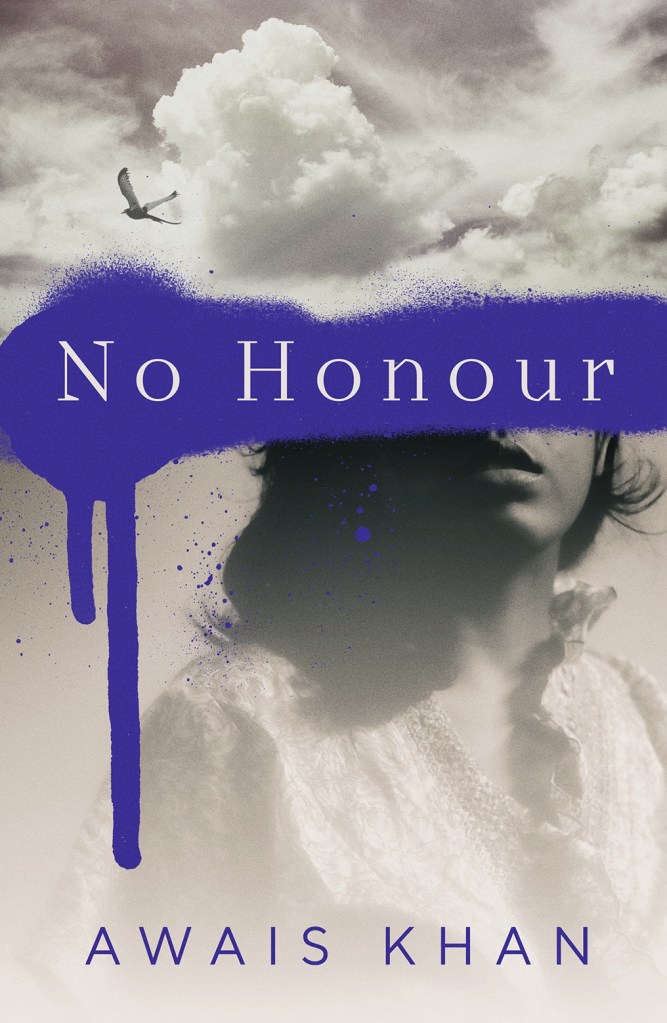
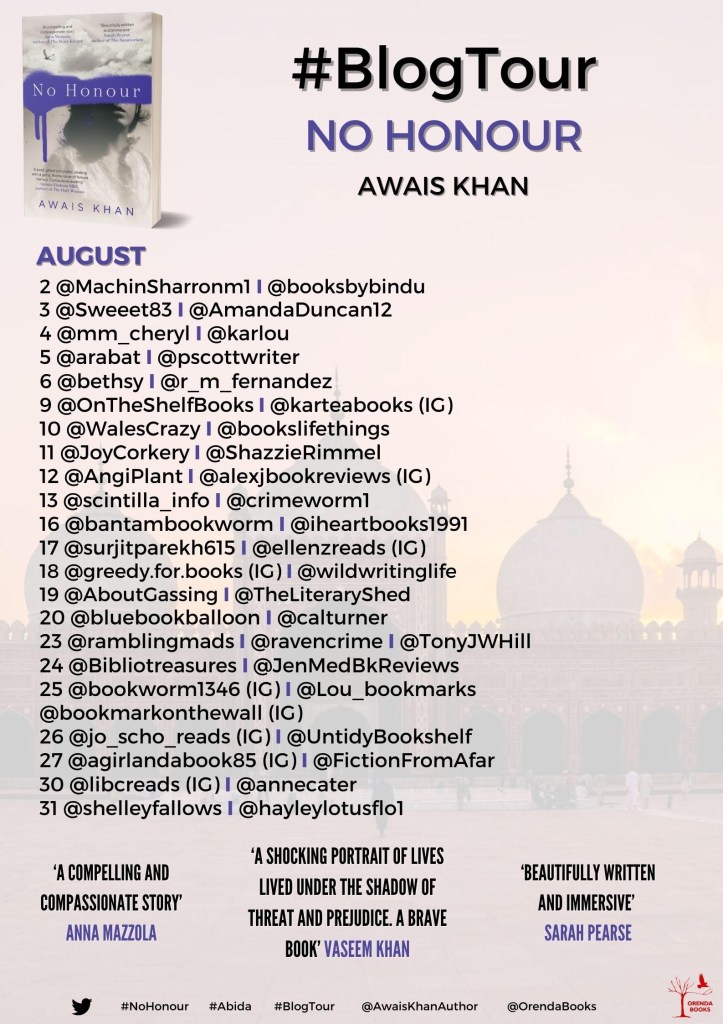
No Honour by Awais Khan.

Last year I was profoundly affected by the ITV series Honour. It was a dramatisation of the murder of a young Kurdish woman, carried out by the male members of her family and ordered by her father. Bahnaz Mahmod reported her fears to the police on five separate occasions, pleading with them to help her as she believed her family would kill her. Instead of fully investigating, she was dismissed as hysterical and over over-reacting. So instead of having their protection, she was raped and murdered by distant cousins who fled back to Iraq straight afterwards. Their reasoning was that she had besmirched the honour of her family, after divorcing her arranged husband and falling in love with another man. Real life police officer DI Caroline Goode was assigned the case and this was the story of her dogged determination to hunt down those responsible. I found myself moved, but also disturbed by the case. Days later I was still thinking about it, desperately trying to understand why her actions were so offensive to her family, but the men’s actions of raping and killing their own family member were not. I simply couldn’t get into the mindset of these men, and while on one hand I could see the point of view that it is simply murder, I wanted to understand more about what made Bahnaz Mahmod’s actions condemn her to death, and how such a dishonourable act on the men’s part could be seen to restore the family honour.

So, when I had the chance to read Khan’s book I started to read more about honour killing and it’s place in the culture of Pakistan. Pakistan is a collective, patriarchal society and family groups are policed by the male members of a family, a village or area. A woman’s honour is dependent on their modesty and a man’s honour is dependent on his masculinity. So, if a young woman refuses an arranged marriage or commits adultery she has behaved immodestly and has lost her honour. Her male family members are responsible for her and if they do nothing, their masculinity is in question and their honour is lost. So, by killing the immodest woman in their midst, they are seen to assert their masculinity and regain their honour. I was very shocked to read that at least a fifth of the world’s honour killings are carried out in Pakistan, bringing their figure to just over 1000 per year. However, this is often a rural practice and has widespread support in Pakistan, so killings are not always reported and the figures may well underrepresent the problem. Awais Khan takes these figures and ideas, and weaves the tale of a bright and ambitious sixteen year old village girl, with incredible insight and compassion.

The opening scene is a brutal look at the reality of rural village ‘justice’. A young woman is dragged to the river after giving birth to an illegitimate child. The pir, who is a village elder, lists the girl’s crimes against her family and demands that the villagers carry out her punishment. I was shocked at the punishment, especially that it extends to her baby who is drowned in a bucket of milk. Make no mistake, this is hard hitting and it needs to be, for readers to understand the reality of what is still happening in Pakistan and around the world. In the wake of this horror, is a feisty young woman called Abida and despite the horrific example in front of her, she’s headstrong and believes it would never happen to her. She can already see the unfairness of the society she’s been born into – a patriarchal system where her entire life is mapped out before her and she doesn’t have any agency. She will have a husband chosen for her, he will then decide where they live, how they live and the children they’ll have. The problem is Abida has already fallen in love. Her father Jamil has already worked this out and is desperately worried for his daughter. He’s noticed she sneaks out after everyone has retired for the night, he hasn’t followed her, but does listen for her return. He knows it’s likely she’s meeting a boy and he hopes that he’s wrong, but he has a terrible feeling the worst has already happened. What will he do if the pir comes for his daughter?

I don’t want to ruin the plot, so will keep details to a minimum, but although Abida escapes her home village she doesn’t have the happy ending she expects. In an interview with Eastern Eye, Khan explains that he chose fiction to shed light on the subject of honour killing, because it ‘allows for more creative freedom, and for more heightened emotions.’ This was true for me as I fell in love with Abida’s spirit and the hope she has for her life. Amazingly, that hope follows her to Lahore and through her whole experience. She keeps thinking that beyond the situation she’s in, she will survive. The relationship between Abida and her father was so familiar to me from my own Dad. Whatever I’ve gone through in life he’s been there and I have no doubt that he’d search for me in the way Jamil does. It’s the only pure love in the whole novel, unchanged by circumstance and completely unconditional. I found it very moving and for me he’s the most honourable man in the story. He’s decided that his own moral code is dependent on how he treats his children, rather than being dependent on the opinion of the men in his village. Although this doesn’t mean Abida will be safe. In his publicity for the book, Khan has mentioned the social media celebrity Qandeel Baloch. After appearing on Pakistan Idol, she created many video clips addressing controversial topics and women’s rights. In 2016, she was drugged and strangled by her brother Wazeem Aseem who felt she was disrespecting her family. If someone as high profile as Qandeel could be killed this way, what chance does a girl have if she’s from a conservative village, mired in poverty with income and status dependent on maintaining the honour system?

I found the book shocking and I think it will probably stay with me for a while. I’m considering looking for charities to support that help women in these dreadful situations. Khan’s writing pulls no punches, but it’s also incredibly compassionate. I loved some of the more complex female characters such as the servant Salma who has kept Abida locked up, but then helps Jamil. Rana Hameed’s first wife Nigaar is fascinating, she’s broken down physically and mentally, but desperate for a new wife with the will to destroy him, even if she has to die in the process. The complicity of women is needed to keep the status quo, whether they turn a blind eye through fear or because they’ve been beaten into thinking this is the norm and it won’t ever change. I’m glad I read this, to raise my awareness and help me grasp the cultural and historical background in Pakistan. It might also inspire people to be aware of this crime globally, because it isn’t restricted to Pakistan. I hope many more people read Abida’s story and that Khan achieves his aim of showing people ‘love is never a crime’. If he achieves that the whole world will be a better place.

You can read Awais Khan’s interview with Eastern Eye at:

https://www.easterneye.biz/hope-in-the-face-of-honour-killings/

Meet The Author

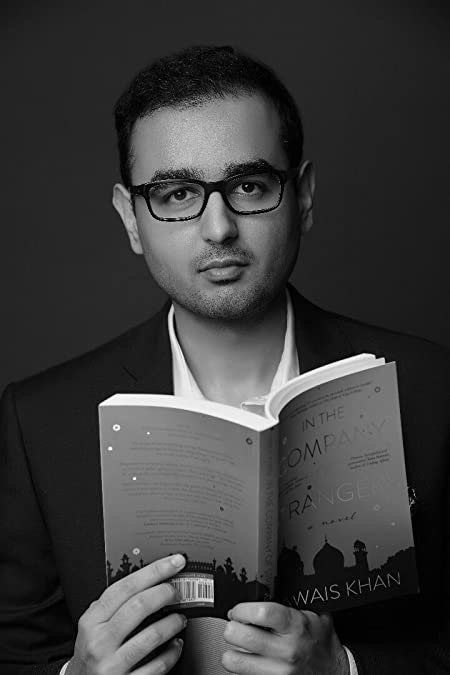
Awais Khan was born in Lahore, Pakistan. ‘In the Company of Strangers’ is his first novel published by Simon & Schuster and Isis Audio. His second novel ‘No Honour’ is published by Orenda Books and Isis Audio. He is a graduate of The University of Western Ontario and Durham University. He studied Creative Writing at Faber Academy. His work has appeared in The Aleph Review, The Missing Slate, MODE, Daily Times and The News International. He has appeared for Interviews on BBC World Service, Dubai Eye, Voice of America, Cambridge Radio, Samaa TV, City42, Maverix Media and PTV Home. He is represented by Annette Crossland (A for Authors Agency Ltd, London).

In his free time, he likes to read all types of fiction, especially historical fiction and psychological thrillers. He is hard at work on his forthcoming novels.