Posted in Random Things Tours

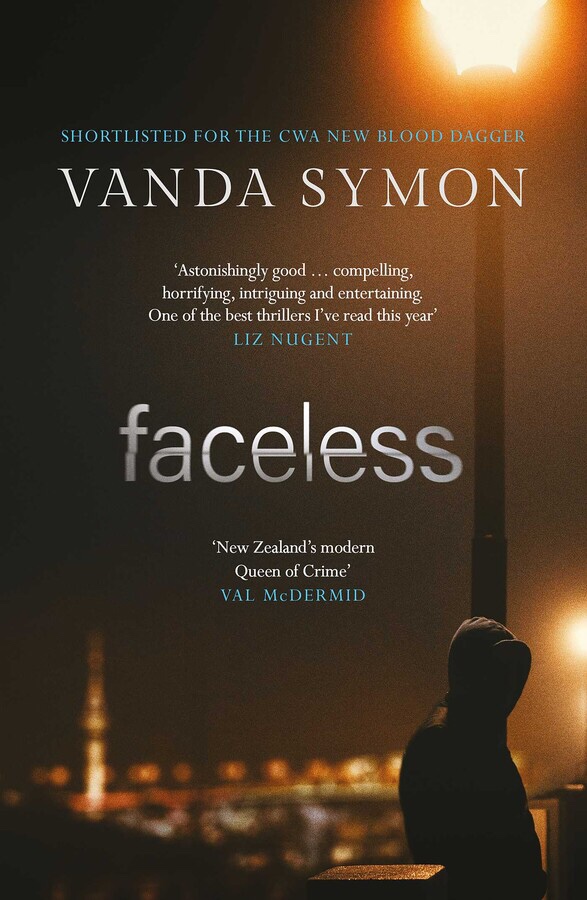
Faceless by Vanda Symon.

I devoured this fast paced novel set on the streets of Auckland and focused on a young street girl called Billy and a hardened homeless veteran called Max. Ever since Billy stumbled into the same doorway one cold night, she and Max have had a connection. He showed her how to use cardboard boxes to keep warm and where to find the best thrown out food. They have a pact to take care of each other and wherever they go in the day, they always make their way back to the same adjoining doorways at night. So, when Billy doesn’t appear one night, Max knows something is wrong. He needs to find her, but where to start in a city of this size and will anyone take him seriously?

Meanwhile, Billy has stumbled into the path of someone having a very bad day. Bradley is exhausted. Over-mortgaged, overworked and under appreciated, he is reaching the end of his tether. Having neglected his family all weekend to work, Bradley has been in the doghouse with his wife Angie. Yet it’s not enough for his boss who doesn’t seem to appreciate that five people used to do the same job Bradley is now doing alone. Bradley sees the prostitutes on their usual patch as he drives home, wondering idly what sort of man actually has the nerve to drive up and do it, to actually pay a woman to do what he wants. He wouldn’t have the nerve. Then he sees a young, tomboyish girl standing a little way from the others. She’s not a regular and he is less intimidated by her. So he picks her up and she directs him to an industrial area where no one will disturb them. He doesn’t know what impulse drives him to hit her, possibly the amusement in her eyes when he isn’t ready for her, but the feeling it gives him is better than anything he’s felt in a long time. There’s a rush of power and it’s intoxicating. So he takes her to an empty industrial unit he owns and using cable ties he makes sure she doesn’t escape. He might come back tomorrow.

Told from both Max, Billy and Bradley’s points of view in short chapters that prove rather addictive, the story unfolds of how both these people ended up on the streets and how an ordinary family man becomes a monster. I was constantly thinking ‘just one more chapter’ until I was half way through the story in my first sitting. I finished the book the next morning. The story is gritty. It doesn’t pull its punches when it comes to describing life living on the streets, or the realities of being kidnapped and left with nothing for your comfort. I could actually feel the cold, smell the mustiness of not showering for several weeks, and understand the shame of being left with no toilet facilities. It is vivid and because it’s a first person experience it’s very confronting in parts. I was so caught up in Max’s search for his friend, linked somehow to an old trauma and another young girl, and how desperate he becomes to have someone listen to him. So desperate that he has to overcome embarrassment and maybe even face whatever terrible experience has kept him running all this time. Billy is running too, but being alone and captive gives her ample time to explore what’s happened to her. Although it will take the police investigation to find out the full truth of Billy’s need to run. Through these two people we see just a couple of the reasons that people end up on the streets, but no matter why it’s a tough life that no one would choose unless they were desperate.

As for Bradley, he raises a lot of questions about the making of violent offenders, particularly those who commit crimes against women. Would anyone in Bradley’s position make the same choices he does? Or was there something latent in him, triggered by stress and what he saw as a girl from the streets looking down on him? He doesn’t fully understand the changes himself, all he knows is that the more he takes out his stresses and strains on Billy, the better he feels. He also seems to have regained his libido too, as he and Angie cavort like teenagers. He has just the right sort of happily married suburban man vibe to get away with what he’s done. I found myself rooting for Billy and whatever strength she could summon to survive just long enough for Max to find her. The visions of her grandmother are touching, providing context for Billy and an insight into her culture. Auckland is a strong presence in the novel too, from the rough, deserted areas where Billy creates her spray paint portraits of mythical women to the over-mortgaged suburbs where Bradley is lucky enough to live. We see the multi-cultural mix of kids hanging out in the park and the life of a suburban wife with their book club, exercise class lifestyle. It’s very clear that for most people in this life how you look and what you have defines you. Thankfully thats not the case for everyone and I loved Meredith, a snappy and intelligent detective who would rather wear heels than the regulation shoes. She looks beyond the surface and her investigative skills are the best, but she doesn’t have much to go on. Through her we get Max’s back story and her respect and trust in him doesn’t depend on his status – although she does insist on a shower. This book will keep you up at night to find out what happens to these characters. There isn’t a word wasted here and the pace is perfect. If you like your crime gritty, with great characterisation and empathy then this is for you. I loved it.

Meet The Author

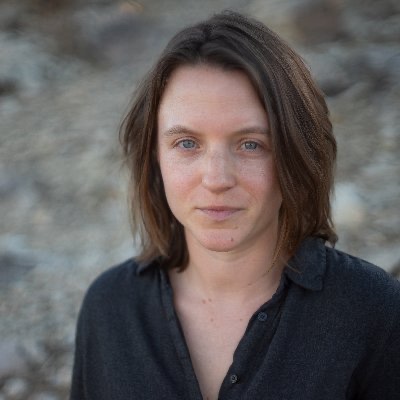
Vanda Symon is a crime writer, TV presenter and radio host from Dunedin, New Zealand, and the chair of the Otago Southland branch of the New Zealand Society of Authors. The Sam Shephard series, which includes Overkill, The Ringmaster, Containment and Bound, hit number one on the New Zealand bestseller list, and has also been shortlisted for the Ngaio Marsh Award. Overkill was shortlisted for the CWA John Creasey (New Blood) Dagger.
Twitter @vandasymon, Instagram @vanda-symon, Facebook, @vandasymonauthor, http://www.vandasymon.com.

Posted in Random Things Tours

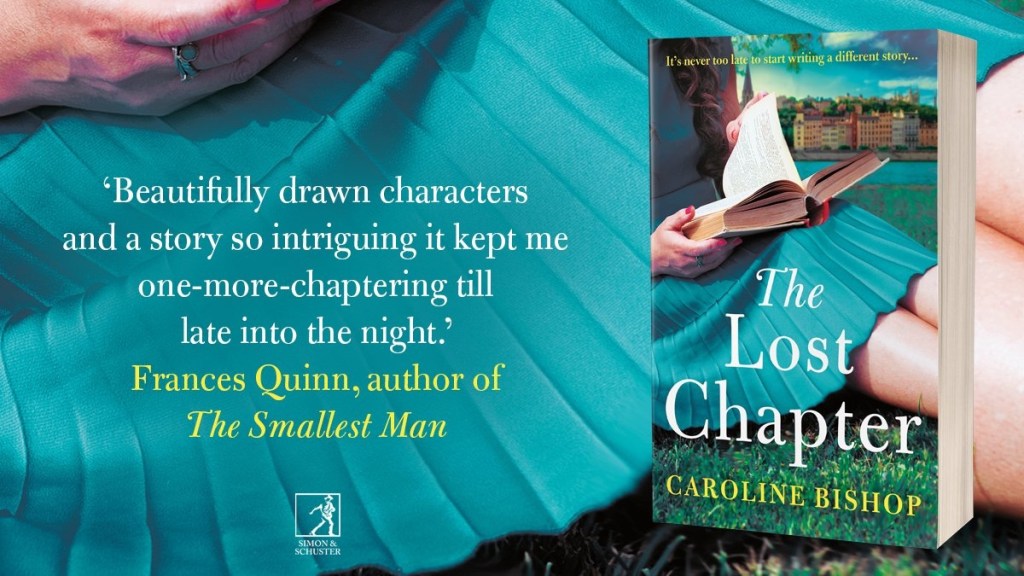
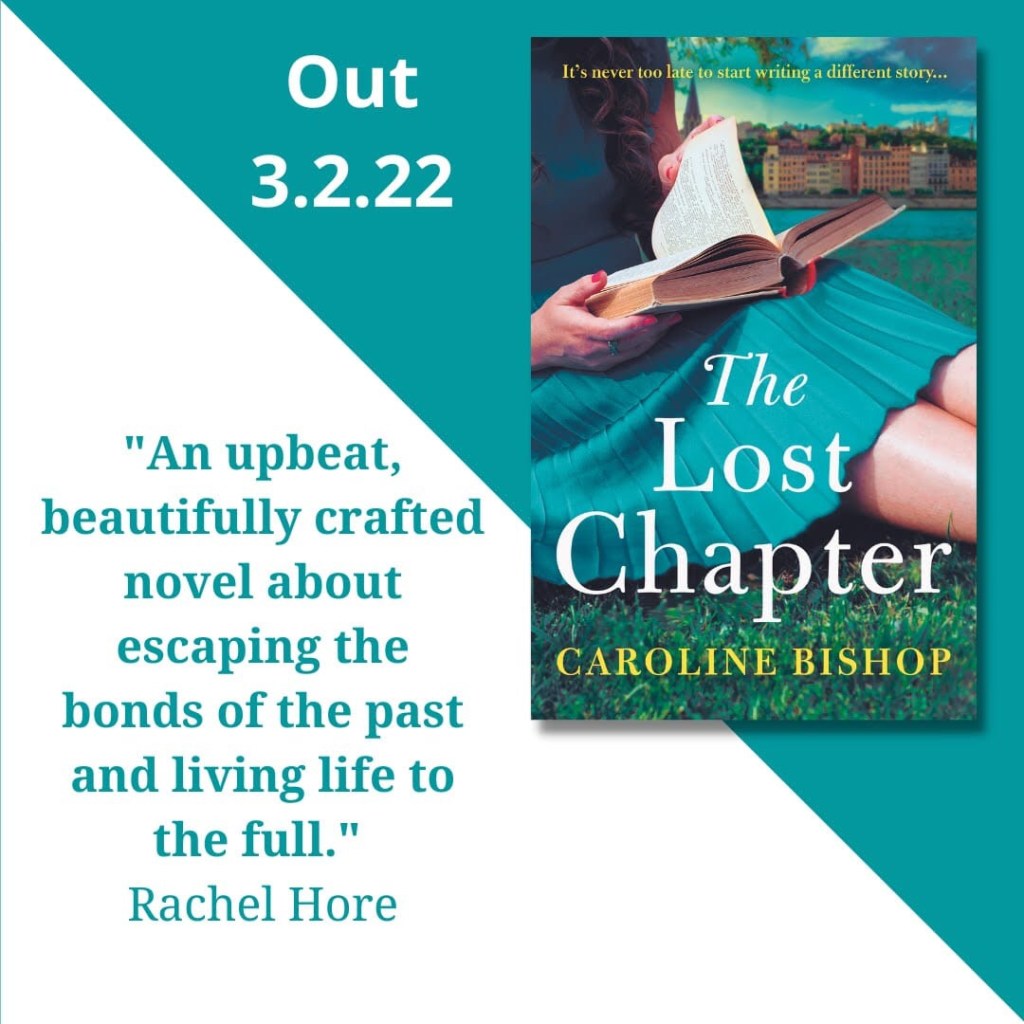
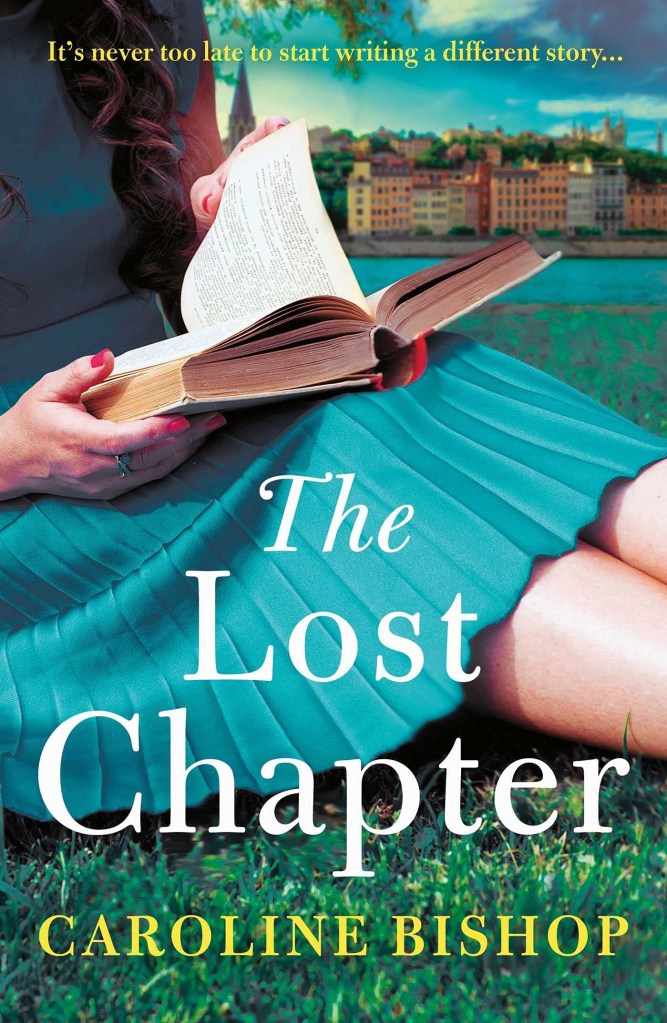
The Lost Chapter by Caroline Bishop

Teenager Alice has escaped a terrible accident that left her friend Ella dead, hit by a lorry and killed outright. Her mum Carla worries about her so much and noticed a huge change in her daughter’s behaviour, even before the accident, but is unsure how to broach the subject and too nervous to push her into moving on in life. Carla doesn’t know how Ella’s parents have coped with her death, but she does know that if Alice had been take from her, she would have fallen to pieces. Constrained by their grief and anxieties, both mum and daughter are too scared to fully live. Then Alice ends up walking Flo’s dog. Flo is in her eighties and knows a thing or two about choosing to live life. She rues spending years married to a man she didn’t love, scared of taking a leap into the unknown till years later when his affair ended the marriage. Alone and free to do anything for the first time, Flo thought back to the example of her friend Lilli at finishing school and decided to take more chances. She’s had a long life with times of pure happiness, but some incredible lows too. Now she lives with her dog, Ernie, and earns a living creating lino prints in her garden studio to sell in local outlets. She can feel the anxiety in Alice and convinces her to try printing. Flo can see that she needs to learn mistakes don’t matter – in fact it’s the mistakes that often make the picture. She encourages Alice into applying for art college, but when that plan is pushed aside for a safer option, Flo knows she needs time with both mum and daughter. So she invites Alice and Carla to travel to France with her and meet her friend Lilli. They have been apart for 60 years, will they still know each other and will that friendship be there after what Flo did?

Flo has been inspired to find Lilli because of a book she wrote based on the girl’s shared past. Through each chapter the author takes us back to when the girls were roommates at finishing school in Lyon. Their families were of a similar class and had only one expectation of their daughters – that they marry well and be ready to run a household. However different Flo and Lilli were on the surface, both were stifled by the minutiae of table settings (three forks on the left of the plate must not be more than one inch from the edge of the table) flower arranging and party planning. Yet only one of them had the courage to risk her family’s wrath for some freedom and adventure. When Lilli meets a young man named Hugo there’s a spark between them, but the school would never allow them to meet. She uses her brother to write a letter, granting permission for her to be taken out once a week by their cousin. The couple are now allowed out more easily and spend their stolen afternoons in bed more often than not. A young woman called Celeste who is in the same circles, takes Lilli aside and warns her that Hugo might not be as in love as he seems. A warning that Lilli brushes aside, thinking Celeste is perhaps jealous. It isn’t long before she finds out that men can often walk away from an affair unscathed and women are left with the consequences.

I loved how these fundamental inequalities in society are picked up in the novel – that women are held to account, while men can simply move on and pick their next mark. I felt the fear of Flo and Lilli, terrified to step outside the rigid lines that their society dictates, but also full of regret for the time they wasted being conventional. I thought the author had a brilliant grasp of human psychology, showing beautifully how mental ill health can be passed on to the next generation. Carla is so fearful I sometimes found myself wincing as she spoke to her daughter, because I could see the damage her words would do. She’s so intent on protecting her daughter that she’s actually harming her. The sense of place created, whether in the surroundings of the artist studio or the incredible heat of the South of France, is incredible and so evocative. The stunning setting of Lilli’s home is idyllic and made me want to visit France. Aside from the character of Hugo, this is a novel peopled by women and it was great to see such a celebration of female friendship. Even Celeste, in her way, had tried to be a friend to Lilli and share some female wisdom. I loved how the author showed, with the benefit of hindsight, how important that shared wisdom is. Often we only see the benefits of learning from the women around us when we’re older. I also enjoyed the age difference between these friendships. This allowed the older friends learn about things that are current and new. Whereas the wisdom and past experience of the older friend filters down and supports the younger. Flo wants to make sure that neither Carla or Alice live in fear of their future, like she did. What she most admired about her friend Lilli was that she always took responsibility for her actions, even when the outcome was going to cause difficulty or even change her life forever. She simply embraced every challenge that came along. I read this so quickly, because I simply couldn’t tear myself away from the story of these four women. This book is beautifully written, moving and really celebrates the joy of female friendship.
Meet The Author

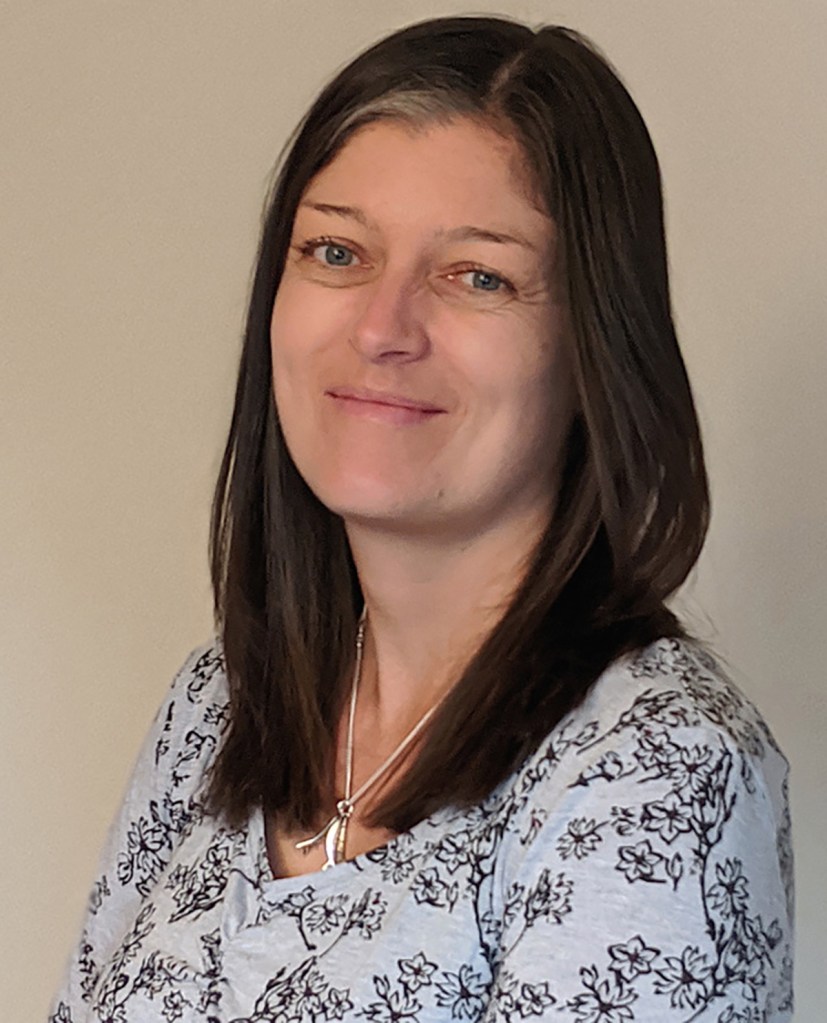
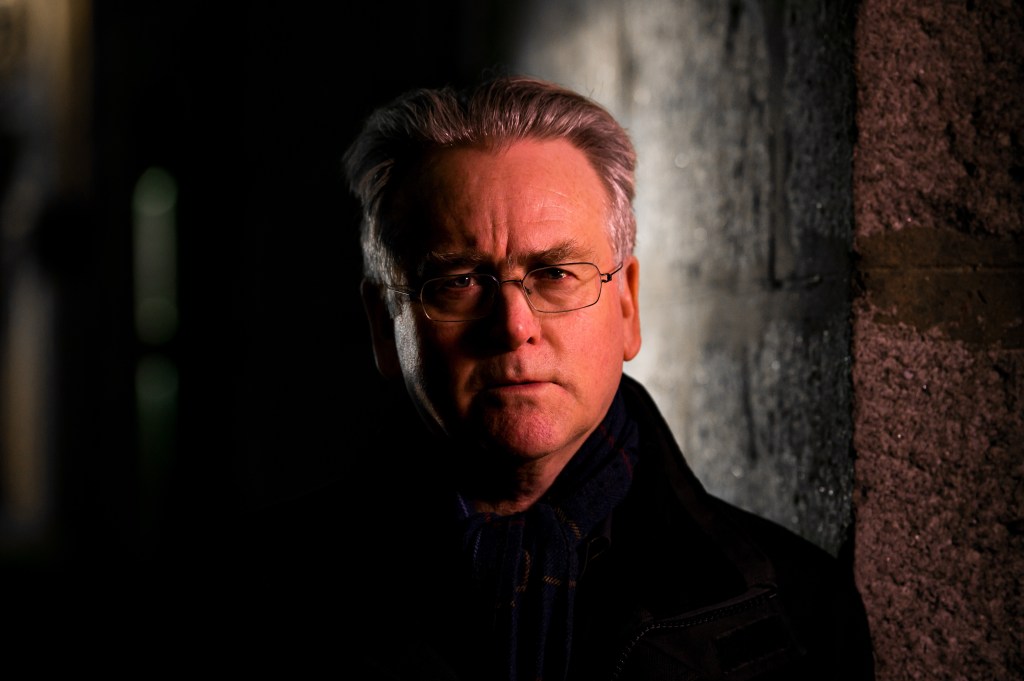
Caroline Bishop began her journalism career at a small arts magazine in London, after a brief spell in educational publishing. She soon moved to work for a leading London theatre website, for which she reviewed shows and interviewed major acting and directing stars. Caroline turned freelance in 2012 and a year later moved to Switzerland, where her writing veered towards travel and she has contributed to publications including the Guardian, the Independent, the Telegraph and BBC Travel, writing mainly about Switzerland, and co-wrote the 2019 edition of the DK Eyewitness Guide to Switzerland. For two years Caroline was editor of TheLocal.ch, an English-language Swiss news site, and it was during this time that she became fascinated with aspects of Swiss history and culture, particularly the evolution of women’s rights.

Posted in Random Things Tours

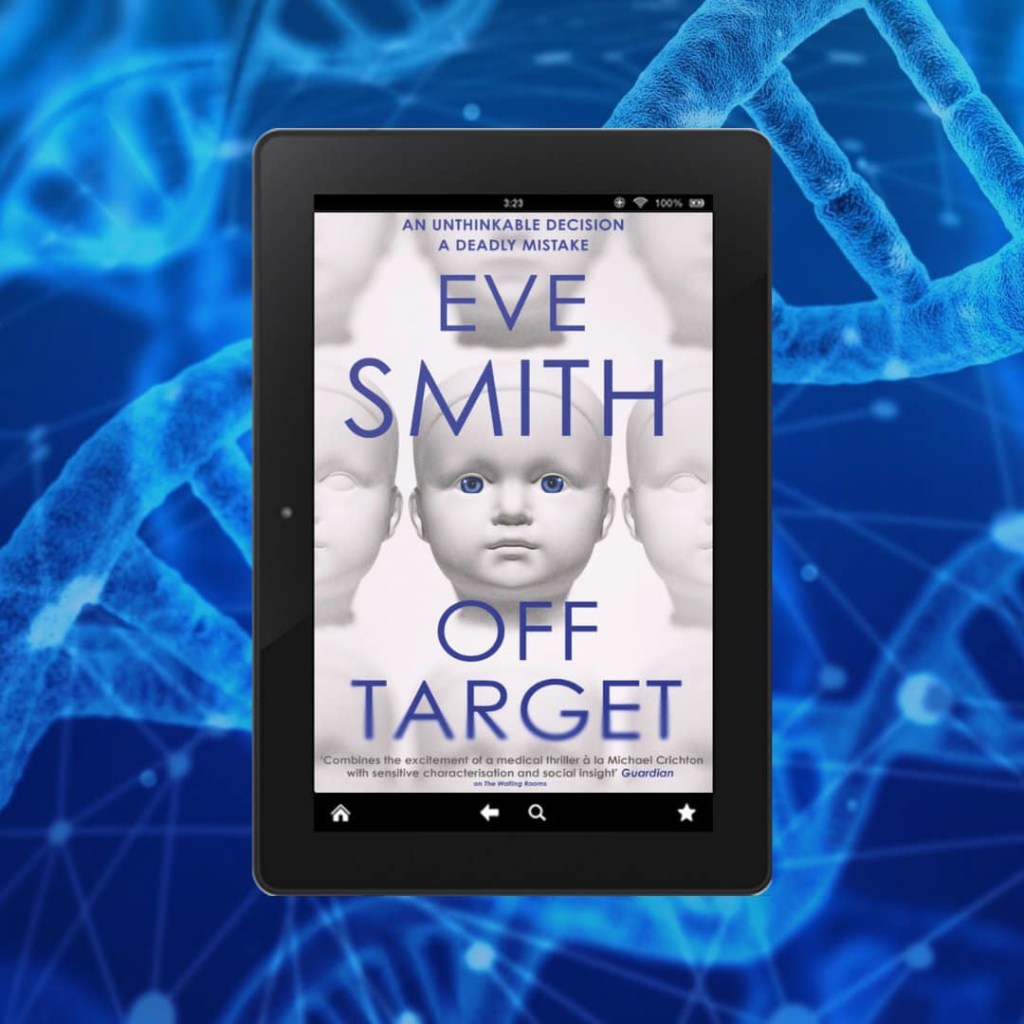
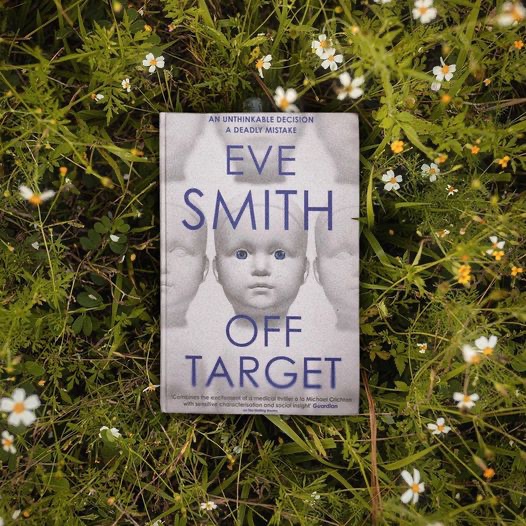
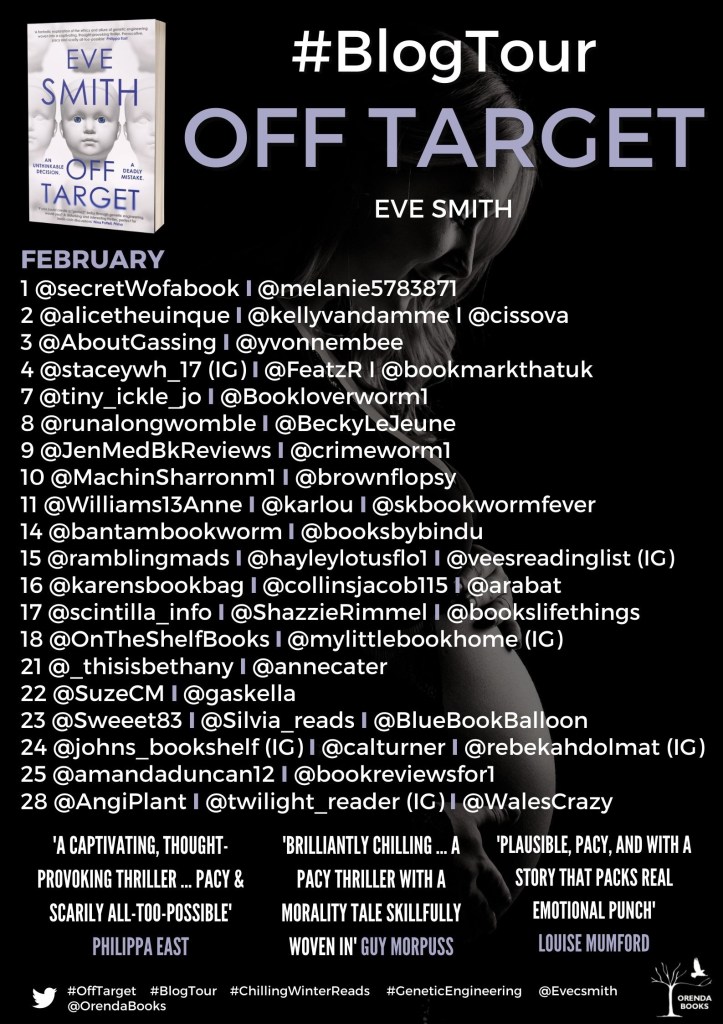
Off Target by Eve Smith.

A longed-for baby
An unthinkable decision
A deadly mistake

In an all-too-possible near future, when genetic engineering has become the norm for humans, not just crops, parents are prepared to take incalculable risks to ensure that their babies are perfect … altering genes that may cause illness, and more…

Susan has been trying for a baby for years, and when an impulsive one-night stand makes her dream come true, she’ll do anything to keep her daughter and ensure her husband doesn’t find out … including the unthinkable. She believes her secret is safe. For now.

But as governments embark on a perilous genetic arms race and children around the globe start experiencing a host of distressing symptoms – even taking their own lives – something truly horrendous is unleashed. Because those children have only one thing in common, and people are starting to ask questions…

Bestselling author of The Waiting Rooms, Eve Smith returns with an authentic, startlingly thought-provoking, disturbing blockbuster of a thriller that provides a chilling glimpse of a future that’s just one modification away…

I loved Eve Smith’s last dystopian novel The Waiting Rooms. I read it during the first days of lockdown number one, which exacerbated the novel’s strange feeling of being set in our world, but not quite. The author manages this feat again in Off Target, a dystopian thriller set again in the not too distant future. Everything about this world is perfectly recognisable as ours, except for the one area of progress that the author focuses on. Ever since Frankenstein in 1818 there has been a tradition of horror writing around pregnancy and motherhood. This shows that Mary Shelley had hit upon something deeply embedded in the human psyche. Monstrous births are part of the gothic and grotesque tradition and from Frankenstein’s creature onward they all ask a similar question. Who is the more monstrous, the child or their creator? The creature starts out gentle and enquiring, but Frankenstein was only interested in the moment of creation, not in how his creature would go on to live. The abandonment by his parent and the cruel way humans treat him are what shape the creature’s later behaviour. I think the author plays into this tradition, with her tale of meddling with babies in utero. Here the ‘creator’ becomes a geneticist who knows he can, but doesn’t stop to ask if he should and a parent more concerned with covering her own mistakes, than how her child might feel. The villagers with torches become the media, the protestors and eventually the terrorists.

However, I feel the author also uses great empathy when capturing those fears that grip you when coping with possible infertility. I had recurrent miscarriages in my twenties and remember all too clearly the combined joy and fear of seeing the second blue line on the pregnancy test. Joy because I wanted to be a mum, but straight afterwards a creeping dread that this baby would be lost too. For Susan, her fear is she will never become pregnant and this is killing her relationship with her husband. She fears the infertility is her fault and that she will never be able to have a child of her own. Her drunken one night stand with a colleague is a world away from the sex she’s been having, which sometimes feels like a means to an end rather than something to enjoy and express love. Once she finds out she’s pregnant, there’s no question of her not keeping the baby. She can’t imagine terminating the pregnancy she’s waited so long for. Yet her husband looks very different to her colleague; he has very tanned skin and dark eyes so what if her baby looks like him? She won’t be able to hide her indiscretion then.

Susan confides in her best friend who suggests genetic engineering, already approved in the UK for ruling out possible illnesses and disabilities. All it takes is a simple DNA screening to identify any problems and they can be eradicated. What her friend is suggesting goes much further though and means swapping out the biological father’s DNA for the preferred father’s. Offered in clinics in Eastern Europe, these more extreme modifications are not approved in the UK, but Susan is assured that just one weekend in Kiev could see her infidelity covered up for good. Susan’s only concern are those reported ‘off target’ side effects of such extensive genetic engineering. There are underground reports of modified children suffering depression, becoming aggressive, or even committing suicide. How can the clinic ensure that this won’t happen to Susan’s child? If they can’t, will the urge to keep her own secret overcome any concerns or scruples she may have?

The story was believable and gripping, especially as we moved into the portion of the story where Susan’s daughter is a teenager. Zurel has stopped speaking and with no physical problem apparent it seems this is due to psychological trauma. She is offered extra support from the school’s new SEN teacher and they develop a strong bond. Susan is already concerned that this may just be the beginning of the type of symptoms reported in other genetically modified children. I felt deeply for Zurel who is at an age where so much is changing anyway and I feared her facing a complete identity crisis. If her mother’s choice came out how would Zurel know which parts of her character are original and which are engineered? Would there be any of her biological character left or is she all engineered to be the way she is? It would feel something like finding out you are a programmed robot!

Underneath these emotions are some wider issues to consider. Should we be engineering disability out of existence? There are disability activists who would argue that no one else can decide for them whether their life is worth living. There is also an argument that a person is worth more than the money they can make, something which seems lost in todays politics and society where everything is measured with a monetary value and disabled people cost too much. As a disabled person I feel undervalued and unwanted by our government and a society that begrudges both the tax they pay to ‘fund my lifestyle’ and the wearing of a simple mask that might protect me from serious illness or death. I believe there is a social value in having disabled people in society. If we move towards eradicating all ‘faults’ from a baby’s DNA, there would only be acquired disability and how much more ostracised would those people be? Aside from these very personal musings, I thought the author asked interesting questions about nature and nurture. There are connections between certain characters that pose questions about the science, can a birth parent’s genetic material ever be totally removed? It’s clear that the scientists are working beyond what has been tried, tested and approved. As always, profit is the driving factor.

Betrayal is a central theme to the story and Susan’s betrayal of her husband’s trust is beautifully balanced with other betrayals. Her best friend betrays her for a better share price and there’s a final betrayal exposed towards the end that made me furious for Susan. As is often the case in these situations, it would have been far better if she’d faced up to the consequences of her actions in the first place. I also found the story of Susan’s blackmailer moving. From that first encounter outside the clinic where Susan goes to discuss her options, it might seem like her blackmailer is someone full of hate. Yet, despite what may seem like despicable actions, these extreme views can be covering fear, trauma and deep seated psychological problems. The revelations are thrilling, but that isn’t where the novel stops. The author takes us into the aftermath, showing that this isn’t one family’s problem. Using news articles and enquiry reports we see how the world deals with the fallout. The protests, marches and acts of terrorism, the vigils and church services for all the children affected by this quest for the ‘perfect’ child. It feels like a warning and an important exploration of a subject many people are already uneasy about, especially with the backward steps in the area of women’s reproductive rights in the USA. This is the best kind of book because the story was fascinating and tense, but also made me think deeply too. Like her novel The Waiting Rooms this book will stay with me as a glimpse into the future we might be already be engineering.
Meet The Author

Eve writes speculative fiction, mainly about the things that scare her. In this world of questionable facts, stats and news, she believes storytelling is more important than ever to engage people in real life issues. She attributes her love of all things dark and dystopian to a childhood watching Tales of the Unexpected and black-and-white Edgar Allen Poe double bills. Her new thriller, Off Target, is another chilling, prophetic page-turner set in a near future, when genetic engineering has become the norm for humans, not just crops, and parents are prepared to take incalculable risks to ensure their babies are perfect.

Eve’s previous job as COO of an environmental charity took her to research projects across Asia, Africa and the Americas, and she has an ongoing passion for wild creatures, wild science and far-flung places. When she’s not writing, she’s chasing across fields after her dog, attempting to organise herself and her family or off exploring somewhere new.

Find out more at http://www.evesmithauthor.com

Follow Eve: @evecsmith on Twitter, EveSmithAuthor on FB & Instagram

Posted in Random Things Tours

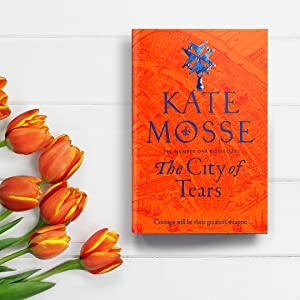
The City of Tears (The Burning Chambers 2) by Kate Mosse.

I’ve been reading Kate Mosse since Labyrinth all those years ago and I’m always impressed by the level of detail and knowledge of French history she weaves into her books. Every detail is considered and you have the impression straight away that you’re in safe hands. In The City of Tears she combines her fictional narrative with fascinating real events focusing on the Catholic and Huguenot conflicts of the 16th Century. This is the second book in the Burning Chambers series and I did choose to go back and read the first book. However, due to Mosse’s ability to immerse you in her world, I think this could be read as a stand alone novel. It continues the adventures of Minou Reydon-Joubert and Piet Reydon, characters caught up in a period beset by complicated religious and political wars. Mosse walks the tightrope between these warring factions carefully, illustrating that there is honour and corruption on both sides, but keeping the focus on the family at the centre of these conflicts.

We return to the Languedoc region of France and the wars have now raged for ten years. It’s May 1572 and Minou and Piet travel with their two children, Marta and Jean Jacques, to Paris for the royal wedding of Charles IX’s sister, Catholic Marguerite de Valois, and Protestant Henry III of Navarre. This wedding has the political and religious benefits of uniting both Catholic and Protestant factions, so could mark the start of peace, but it’s a fragile accord. Piet’s old acquaintance Cardinal Valentin (Vidal) is in Paris too, but he’s now an enemy, unbeknownst to Piet he has a plan to kill all important Huguenots during the celebrations. The terrible violence that follows was known as the St Bartholomew’s Day Massacre and thousands of Huguenots were murdered. Seven year old Marta is separated from her parents in the chaos and goes missing. It’s a parent’s worst fear, but unable to find her, Minou and Piet have to flee the city without her. The pair are devastated as they cross the border and make their way to safety in Amsterdam. I loved the way Mosse depicted the strain this decision places on the couple’s relationship. They have managed to ensure the safety of their two year old son, but are filled with guilt for leaving their daughter behind.

Minou and Piet only return to France twelve years later after hearing of a woman who bears a resemblance to Minou. Could it be Marta? They have to take a chance and search for their daughter, but danger is still everywhere. They don’t know that family enemy Vidal is there, with his collection of fake relics, that he intends to use with the ambition of gaining power and position. He believes Piet is in possession of a stolen relic and is driven by bitterness and revenge. His evil nature and conviction he is carrying out God’s work, is beautifully offset by Minou who is a strong willed and opinionated woman doing the best for her family rather than a religion. Piet is also more logical and open-minded, he’s a Huguenot by religion, but doesn’t believe there is only one way to God, particularly when religious difference is used as an excuse to oppress and murder. The couple’s return has raised the tension and jeopardy for all their friends and family, and Mosse delivers some suspense filled twists and turns where the hunted and hunter just miss each other.

I felt like I was in the hands of a master storyteller here. Mosse is able to bring historical fiction to life, and really makes the reader care about the lives of people long gone. She delivers the drama at such a pace, her characters barely have time to draw breath. The depth of her research is truly impressive, even if sometimes I found myself having to read very carefully so I didn’t become confused – but that’s my failing, not hers. The family are so well drawn I truly cared about their outcome and the dynamics between them are written with emotional intelligence. The character’s emotions feel so real and add depth to an already absorbing story. My heart broke for Minou at the loss of her daughter, and I was so invested in her grief that I couldn’t see how she would adjust to living without her. The strain they were under and the constant danger they’re in added an intensity to Minou and Piet’s relationship that was so romantic. Mosse’s incredible skill is to make the reader care about and feel a connection with people who lived in the 16th Century. They are so different to us in dress, daily life and beliefs but the themes of family, parenthood and loss are so universal that they cross the centuries. It will be interesting to see where these fascinating characters go next.

Check out the other reviews from these great bloggers:

Meet The Author

Kate Mosse is a number one international bestselling novelist, playwright and non-fiction writer. The author of eightnovels and short story collections –including the multimillion-selling Languedoc Trilogy (Labyrinth, Sepulchreand Citadel) and Gothic fiction The Winter Ghosts and The Taxidermist’s Daughter, which she is adapting for the stage –her books have been translated into thirty-eightlanguages and published in more than forty countries. She is the Founder Director of the Women’s Prize for Fiction and a regular interviewer for theatre & fiction events. Kate divides her time between Chichester in West Sussex and Carcassonnen in south-west France.

Posted in Random Things Tours

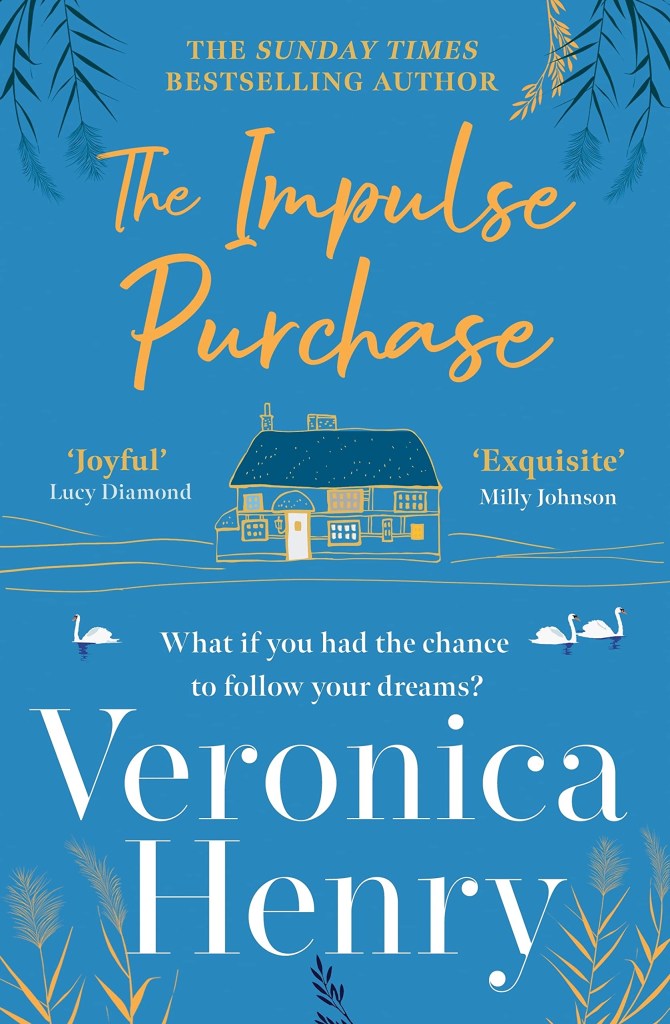
The Impulse Purchase by Veronica Henry

I spent a lovely escapist couple of days reading about this interesting family of women all at a crossroads in life. Julia, great-grandmother and owner of the beautiful Wisteria House in the village of Rushbrook, has died. She has left behind four generations of women: grandmother Cherry who was a model in the 1960’s; mother Maggie, the redoubtable owner of a food PR company; daughter Rose who is a new mum and volunteers at the local homeless charity; finally there’s Gertie, three years old and the apple of everyone’s eye. Aside from great-grandmother Julia’s death and Gertie’s birth, this is a family facing a lot of change. Maggie is still mourning the death of the love of her life, husband Frank. It’s been a couple of years now, but both Maggie and Rose miss him every day. Maggie also faces change at work, as her apprentice has absconded taking some of the business with her. Rose has struggled with grief, but her job is giving her more confidence even though she cares and gets involved more than she should. Cherry is organising a party to celebrate her husband’s retirement, something she’s very good at. Mike is an artist and photographer, retiring from teaching and looking forward to spending more time travelling with Cherry. They just need to finish the sale of Cherry’s childhood home at Wisteria House, but Cherry sees something at the party that changes her mind and sets in place a new plan for all the women of the family.

The Swan is Rushbrook’s public house and has been a family haunt for as long as they can remember, from Cherry’s teens to recent family celebrations with her mother. In fact, even though they live in Avonminster, this village is very important to the women. Rose was particularly close with her great-grandmother and when she’s feeling anxious closes her eyes and imagines the smells of the roses in her garden. In fact Gertie is even named after two of her favourite roses from the garden at Wisteria House. The Swan has become run down since the landlord’s wife has been ill and on an impromptu visit he tells Cherry he’s going to sell The Swan. Cherry has just completed on Wisteria House and partly because of Mike’s party, but also because she wants to take on a project for herself, she buys the pub on impulse. She knows she can make it work, but what will Mike think? Also, how will she do this on her own? With both Maggie and Rose at a crossroads too, they decide to help and all three women uproot themselves and move to the boathouse behind the pub. Soon all three are busy: Cherry with the refurb; Maggie in the kitchens; Rose in the gardens. Can this team of women make The Swan a success?

I found this book a delight from start to finish, so uplifting and full of formidable female characters. Cherry is a ray of sunshine and I enjoyed going back to the 1960’s to her meeting with Mike. They’re a lovely couple who have been devoted to each other for years, but as they both face changes and keep secrets from one another, they might be looking at a different relationship going forward. Maggie is a force of nature, hard working and full of ideas for the menu. She’s also coping with complicated feelings, that pull between missing the person you’ve lost while also becoming excited about moving forward with your life. She’s attractive and dynamic so isn’t short of attention from men, but finds dipping her toe in the water more complicated than she expected. I loved Rose, she has such a big heart and is stronger than she imagines. Her move to Rushbrook is something of an escape from overstepping the boundaries with a homeless client. Rose’s story arc is uplifting and joyful, especially her struggles to understand anxiety and live with her negative inner voice. She also has a tiny hint of romance for good measure.

One of the most powerful aspects of this novel is the inter generational relationships, so it was interesting to read this alongside my Mum. These women are wonderfully open with each other, they give each other support both emotionally and to succeed in life. Their support for Rose as she becomes a young single mum is crucial to Gertie being the carefree little soul she is. I know this because my parents, especially my Mum, did the same for my brother as he became a father at 17. I know that the way my mum helped bring up my niece and nephew, has been the inspiration and example for my niece now that she’s an incredible mum to two small boys. People think it’s instinctive, but I can see both my parents in the way she plays with her boys and encourages their development. We are in the lucky position of having four generation of family and I love seeing my dad playing football with his great-grandsons.

I have a similar, very open relationship with my mum and now I’m older we really are friends. People are often surprised when I say my parents would be the first names I’d put on any party list and my mum comes to my book club, workshops and we go to meditation together. Then I sit back and watch how she nurtures the younger members of these groups, particularly those who struggle with depression or social anxieties. In the same way, I enjoyed reading about the effects these women have on the residents of the village, particularly the lovely Chloe. They provide work for some, start unexpected friendships with others and give the inspiration for some to make changes of their own. They really are a force for good and I was hoping they could make the pub a success, that it would become a community hub for the village and that Cherry and Mike would find a way to assimilate The Swan into their relationship. These relationships are underpinned by an incredibly picturesque village, wonderful descriptions of interior designs and stunning gardens that feed all the senses. This is a gem of a book, full of hope and with a great sense of fun. I loved reading and discussing it with my mum too. I found myself smiling all the way through and at the end I felt like I’d been on a lovely weekend away.

Meet The Author

Veronica Henry has worked as a scriptwriter for
The Archers, Heartbeat and Holby City amongst many others, before turning to fiction. She won the 2014 RNA Novel of the Year Award for A Night on the Orient Express and is a Sunday Times bestselling author of over twenty books. Veronica lives with her family in a village in north Devon and can often be found
cooking up the perfect seaside feast.
Find out more at veronicahenry.co.uk or follow her on social media:
@veronica_henry @veronicahenryauthor @veronicahenryauthor

Posted in Random Things Tours

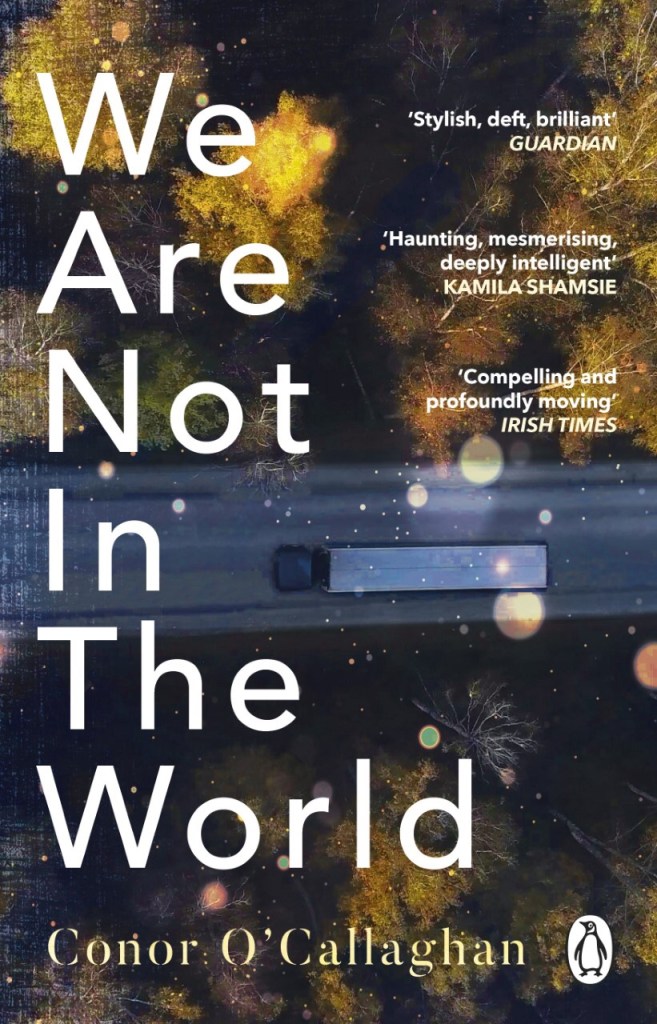
We Are Not In The World by Connor O’Callaghan.

‘The cargo door opens. It opens incrementally. It falls forward, away from us, into foreign day. There are men down there, stevedores in hi-viz and hardhats shouting to one another. I rotate the ignition to halfway, to check for evidence of light. The instrument panel flashes and falls still. There are chains. There is shrieking of iron like gates of hell. Then this fluorescence gradually floods the floor between rows and creeps towards us and feels warm.’

As soon as I read these lines, following Paddy as he and his lorry emerges from the ferry and out into the light, I knew the writing was going to be spectacular and that this was a poet’s novel. Paddy is travelling from England to France, with his stowaway daughter in tow. It’s hard to explain, but this is a book that manages to be both bitter and beautiful. There’s a bleakness to Paddy’s existence, but such a richness in the language used to describe it. It feels bang up to date too, despite the fact no pandemic is mentioned, the author captures a sense of unreality that is all too commonplace these days. The feeling that the world we know and understand has gone, and we are plunged into something other, like Alice down her rabbit hole. We Are Not In The World is an apt title indeed. We follow Paddy on his mundane journey, punctuated by graphic brief encounters and interactions with his daughter Kitty. However, we are also taken into Paddy’s memories of the past and into his relationships, which are largely disastrous. This is an intelligent rendering of psychological damage wrought within families. His marriage is broken, his brother is more successful than he is and there is a complex, almost Oedipal, relationship between him and his mother – also named Kitty. His daughter is wild and rebellious, and in another nod to Paddy’s mother, she wears her gran’s mink coat at all times.

This is not an easy read, but the right readers will love it. Having searched out some of the author’s poetry, it’s clear that the novel touches on some of the same themes. Family and sibling rivalry are represented in Paddy’s relationship with his brother. There’s a jealousy of his apparent successes, but Paddy has still made him the godfather of his daughter. There’s a sense that family is inevitable and no matter how much we wish to escape it we can’t. Separation is explored too – separateness from the land where he grew up, from family and even from his own self. There’s a sense of wanting to be home, but not being able to and the feeling of homesickness that pervades Paddy’s daily existence. He describes it as like a ‘low level virus’ that he permanently lives with. To me it felt like a low-level depression, one that would drop under the radar of most GP’s charts, but is debilitating nonetheless. There’s a numbness in Paddy. He’s on auto-pilot in his daily life, only living in his head until an interaction jolts him out of his memories. The separateness he describes is something I’ve felt when depressed or going through grief. I was physically in the world, but felt no connection to my surroundings or other people. It was like looking at the world through glass.

The only thing Paddy seems to look forward to is some sort of homecoming. He looks at the family home of Tír na nÓg as both a rose-tinted past and a future redemption. Situated on a shingle beach in Ireland, it feels like his chance of happiness or at least a respite from the homesickness that plagues him. Can it be a place of things coming full circle? A completion of this endless mental push and pull between past and future. It feels like a pipe dream, far removed from the reality he’s in and the way he thinks about certain family events, referred to by him and Kitty as ‘the thing we never mention.’ There are times when I wondered if Kitty was real, or whether her birth from the hiding place of his bunk behind the cab was purely metaphorical. I had moments of confusion, moments of being unsure how these fragmented memories and feelings fit together. I was even unsure of what was real and what was imagined occasionally. However, I loved the feelings it induced in me and the sheer beauty of the prose. There’s a haunting quality to the novel that will stay with me. It was a reading experience that I let wash over me, rather like listening to an opera or viewing a beautiful painting. This is for those readers who like their novels to be strange, and bleak, but beautiful at the same time.

Published by Doubleday 18th February 2022

Meet The Author

Conor O’Callaghan is originally from Dundalk, and now divides his time between Dublin and the North of England. His critically acclaimed first novel Nothing on Earth was published by Doubleday Ireland in 2016.

Posted in Publisher Proof, Random Things Tours

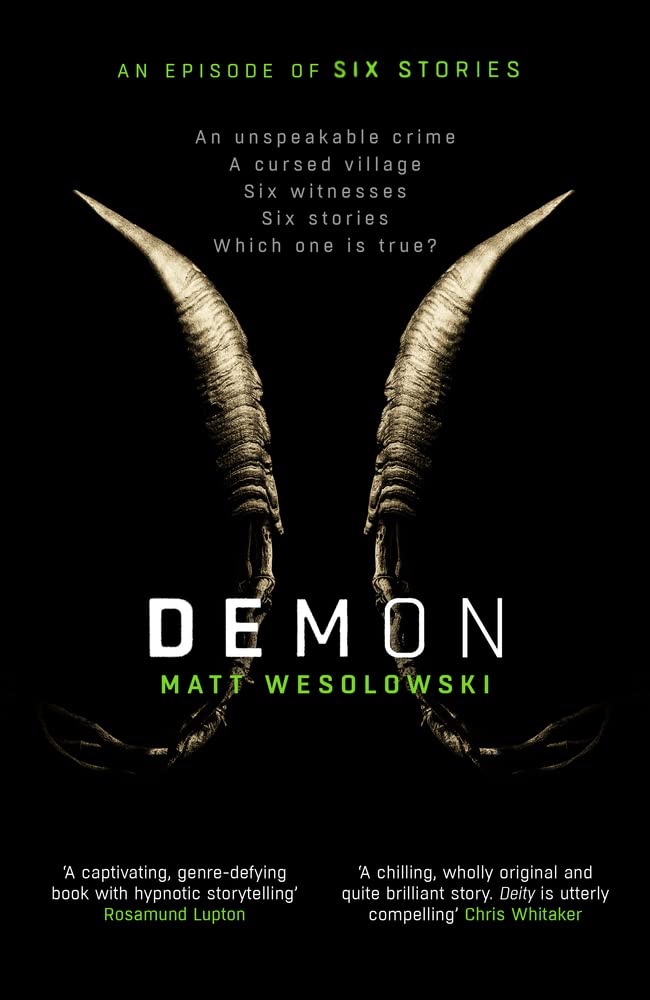
Demon by Matt Wesolowski

I was fascinated and blown away by this sixth novel in the author’s Six Stories series. As always the novel’s structure is based on a podcast format, where Scott King presents his investigation into a true crime case. Each podcast consists of six stories told by six people associated with the case, with additional emails, news reports and documents on the crime. This time King has chosen a highly emotive crime that reminded me of the James Bulger case. The novel takes us to the old mining village of Usslethwaite in Yorkshire, where a terrible crime was committed, one that shocked the world. In 1995 the murder of twelve year old Sidney Parsons, by two boys his own age, was front page news. The murderers were dubbed the ‘Demonic Duo’ by the press and as well as the usual speculation about both the boy’s upbringing and mental state, there was a whisper of something more sinister. The hills above Usslethwaite were reknowned as a place where witches congregated, all the way back to the 17th Century when witch-hunting was rife. Rumours of something dark and disturbing lurking in the caves near the crime scene had plagued the village for centuries, as well as more contemporary plagues of flies, animal deaths and a strange black shape seen nearby. Is there something supernatural and demonic about this crime? Or are they just hysterical excuses for a crime so savage no one can understand it? Now that the murderers have reached adulthood, they’re quite possibly rehabilitated and living somewhere in the U.K. Maybe now it’s time to hear the truth about what happened when Robbie and Danny formed a friendship and proceeded to commit this unspeakable crime.

I love the originality of this author’s work and his audacity in writing about subjects other writers might avoid. I was 20 years old when Robert Thompson and Jon Venables lured James Bulger away from his mother at a Liverpool shopping centre, then murdered him and left him on the train line in Walton. Everything I remember from that case also comes up in the course of King’s interviews about Usslethwaite. I remember being shocked by the murder, the age of Thompson and Venables, but also the savagery of the press and public towards the accused who were still children. Whilst the anger the crime aroused was understandable, I couldn’t understand grown men gathering outside a court to attack the prisoner transport. I kept wondering what their goal was. What would they do if they actually broke through to those boys? Even now, the mention of either boy, their incarceration or the new lives they now have kicks up a frenzy of controversy and rage. While Demon isn’t based on the Bulger case I did wonder if Wesolowski had it in mind, because he has managed to capture a lot of those conflicting feelings in this novel. Through his podcast guests we can look at different aspects of the Usslethwaite murder, and consider the differing perspectives on what happened. Although there is outrage that Scott King is even featuring this case, I can see that all he is trying to do is answer that universal question: Why? What drove these two boys to kill?

The psychological and paranormal aspects of the case are carefully intertwined here. Robbie is a newcomer to the village, fostered by a lovely, community minded couple who haven’t been able to have children. There is speculation on what Robbie went through before he was taken into care and whether he is the disruptive force behind the crime, with Danny simply taken along for the ride. However, Danny is quite a sad, lonely and disturbed little boy even before Robbie comes along. He found his mother when she had hung herself from the rafters of the barn. Rumours abound about his mother who was a herbalist and reiki healer – something rather frowned upon and misunderstood by some members of the village. In fact she was well regarded by her patients and it could be said that the suspicion was raised due to her occupation and how lucrative it seemed to be, more than anything she did. There were reports of her coming down from the caves with another person, scandalously naked. She was also thought to set fires and dance around them. However, to Danny she was the parent who brought warmth, love and softness to his life. Without her, he is left in the care of his father who is not a bad man, but is absorbed by work and struggles to show affection. Danny visits the caves to speak to his Mum, and thinks he might hear her, but in this dark place it’s hard to know who or what might reply.

The author is incredibly skilled at ratcheting up the tension, whether with more detail of the case or the next eerie happening. I often found myself reading yet another chapter so I could find out what was next. I found the paranormal elements clever, I wasn’t scared at first, but after a while the atmosphere built and I found myself uneasy. One night, my other half asked me to turn the bedside light off since it was late and I found myself unsure whether I wanted to carry on reading in the dark. The strange happenings in Robbie’s room at his foster home were very unsettling, from phantom footsteps to flies and a horrible smell that seems to permeate everything. There’s so much in this village that can’t be explained and is witnessed by lots of different people. Were these boys influenced by demons or was this a case of two very mixed up and lost boys doing something so terrible it would destroy the village, the victim’s family, and the rest of their lives. I loved the varied perspectives, especially those unexpected ones that took our understanding to another level. While never losing sight of the victim and his family’s loss, we get to explore the ideas of rehabilitation and how a perpetrator lives with their crime, especially ones so young. Can they ever make a life for themselves and get over the guilt? Or are they forever doomed to keep moving, constantly looking over their shoulder for fear of being exposed? I was fascinated with the question of whether a demon influenced these boys or whether we could call the boys demons. They are labelled monsters, but are they? Perhaps we just label them this way, because we can’t accept one human being could do this to another, let alone a child. This is another incredible read from this inventive and original author. I devoured it so quickly that I’m buying the whole series with this month’s book budget.

Meet The Author.

Matt Wesolowski is an author from Newcastle-Upon-Tyne in the UK. He is an English tutor for young people in care.

‘Six Stories’ was published by Orenda Books in the spring of 2016 with follow-up ‘Hydra’ published in the winter of 2017, ‘Changeling’ in 2018, ‘Beast’ in 2019 and ‘Deity’ in 2020.

‘Six Stories’ has been optioned by a major Hollywood studio and the third book in the series, ‘Changeling’ was longlisted for the Theakston Old Peculier Crime Novel of the Year, 2019 Amazon Publishing Readers’ Award for Best Thriller and Best Independent Voice.

‘Beast’ won the Amazon publishing award for Best Independent voice in 2020.

Posted in Random Things Tours

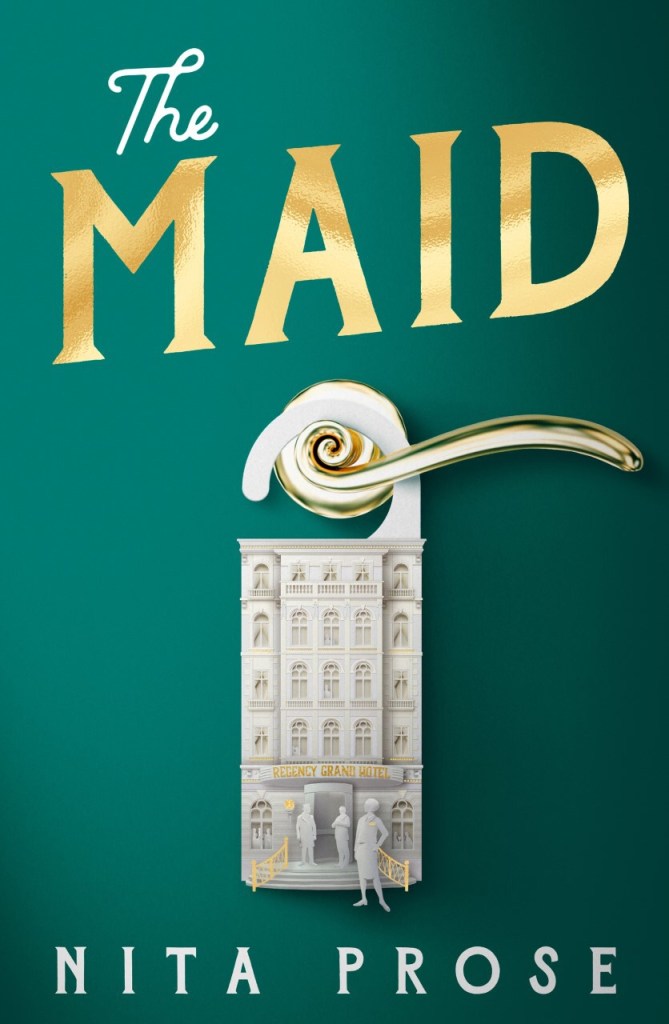
The Maid by Nita Prose.

I’m an absolute sucker for books where the narrator addresses the reader directly. I loved Molly the Maid from the first page and the book was an absolute delight from start to finish. Molly works as a maid at the Regency Grand Hotel and she is very proud of her skills as a cleaner, skills she learned from her grandmother who died a few months ago. Many of her colleagues find Molly a little bit odd – in fact she knows they call her Roomba after a robot hoover – but she thinks they call her Rumba after the dance on Strictly although she doesn’t know why. Molly likes things to follow a routine, things must be in their place and there are ways to clean everything. In fact her Gran said that cleanliness was next to Godliness. Even at home they had a cleaning schedule, something different each night before dinner, and Molly has carried that into her work. She does have some friends, Mr Preston who works on the door, Juan who washes dishes in the kitchens and Rodney who works behind the bar. Her friends are very important to her and if it does good, it’s occasionally okay to bend the rules. So, when Rodney takes her out for a meal and asks for a favour she’s only too happy to help.

Juan has lost his work visa and needs a place to stay, so could she slip him a key each day to an unoccupied room? Rodney gives her a bag, she doesn’t check, but assumes they are Juan’s things and deposits them in the chosen room on her rounds. Her last friend is Giselle, the glamorous second wife of Mr Black, who stays in a suite at the hotel so regularly that Giselle and Molly have interacted a lot. She has all those qualities that Molly values in a person – she acknowledges the little people, she’s polite and treats Molly like a real human being, rather than looking past her. The story begins as one day Molly doubles back on her normal route to clean the Black’s bathroom. She’s done the rest of the suite, but Giselle was in the shower. Molly makes her way through the suite, noticing that cushions are disturbed, the safe is open and Mr Black is taking a nap on the bed. Yet when she looks closer, perhaps he isn’t sleeping? Maybe he’s dead?

This was a clever way of merging a thriller, with a genuinely uplifting story about someone who has gone through an enormous change in her life. I truly felt gripped by the thriller aspects of the story, but also touched by the personal journey that Molly is facing. She has lost someone close to her and is learning to negotiate life as a fully fledged adult. She doesn’t have that ability to read people’s moods and motivations so she’s perhaps an easy mark for people who want to exploit her. I thought the author had a very difficult line to tread with the tone of the novel. We know that Molly thinks in an individual way and there are times when we do understand more than she does about what’s going on at the hotel. Molly refers to this with a jigsaw analogy – she knows she has all the pieces, but hasn’t put them in the right order yet. This could have been disastrous if the reader was superior to Molly, but we never are. The author keeps us firmly with our heroine, even while other characters treat her badly and underestimate her intelligence. The story was gripping and I wanted to know what was really going on at the hotel, and which of Molly’s friends were truly fighting her corner. Molly is a heroine who will stay with me a long time. Even though the goings on at the hotel are sleazy and dangerous, her personal story is touching, charming and ultimately joyful.

Meet The Author.

NITA PROSE is a long-time editor, serving many bestselling authors and their books. She lives in Toronto, Canada, in a house that is only moderately clean.

http://www.nitaprose.com
@NitaProse

Posted in Random Things Tours

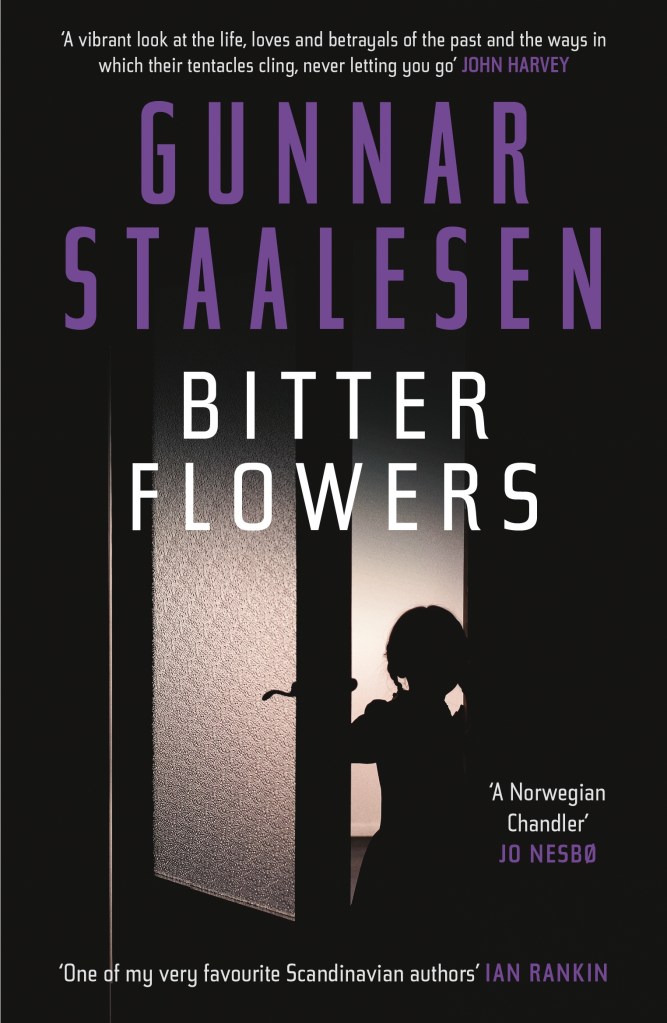
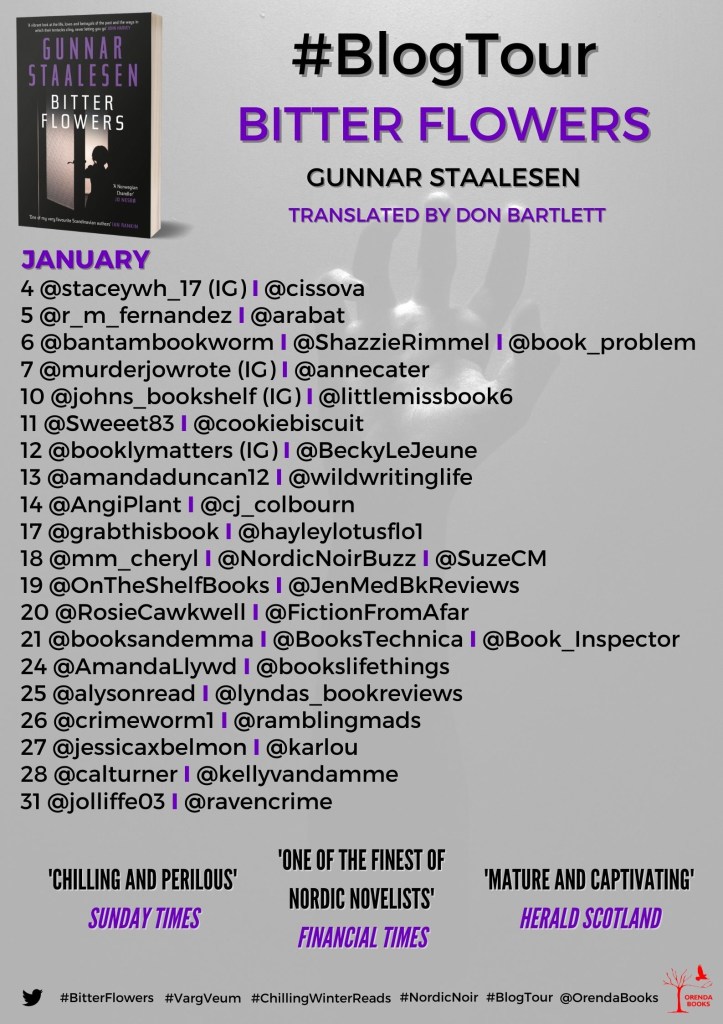
Bitter Flowers by Gunnar Staalesen

PI Varg Veum has returned to duty following a stint in rehab, but his new composure and resolution are soon threatened when a challenging assignment arrives on his desk. He is offered a job by his physical therapist Lisbeth, with whom he has built a friendship during treatment. She has a friend who needs a house sitter and she drives Varg out there to look around, only to find a man dead, floating in the elite swimming pool. As Varg leaps in to check for signs of life, Lisbeth goes missing. Most chillingly, Varg Veum is asked to investigate the ‘Camilla Case’: an eight-year-old cold case involving the disappearance of a little girl, who was never found. As the threads of these apparently unrelated crimes come together, against the backdrop of a series of shocking environmental crimes, Varg Veum faces the most challenging, traumatic investigation of his career.

This is one of those slow burn thrillers and we find Veum at a pivotal moment in his life, just out of rehab and fighting a reliance on Aquavit. Whilst not fully back to his investigative peak, Lisbeth’s idea of a simple house sitting would have suited him perfectly, with no pressure. The circumstances he then finds himself in are really not going to help his recovery, it’s enough to find himself embroiled in a murder investigation, but even worse, could he actually be a suspect? Instinct takes over though and Varg can’t help looking into the victim’s life, once he is identified as Tor Aslaksen. He is also very concerned about the disappearance of Lisbeth, as he battled to save the dead man’s life. Needless to say he faces some very awkward questions from Inspector Hamre about how he ended up there, alone in a strange house with a dead man. His digging reveals a connection to a case from some years before, that of a missing child. As if that wasn’t enough, when he looks into the victim’s employer, his company is under suspicion for environmental crimes, namely the alleged improper disposal of toxic waste. There are noisy protestors demonstrating on site and within the conflict there are two brothers, who were childhood friends of Aslaksen and stand on opposing sides of the demonstration. These strands seem so disparate, but the author cleverly threads them back to the murder victim with so much care, taking his time to unwind the truth. Yet, he also keeps a steady tension and occasionally surprises the reader as Varg’s curiosity takes him into dangerous and threatening places. is enough to heighten Veum’s interest. Nobody’s fool and uncompromisingly persistent, Veum is intrigued enough to take a closer look, thereby uncovering a connection to the unsolved disappearance of a seven-year-old girl nearly a decade earlier in the dead of night. Casting his net wider and following the threads back to their fruition, Veum tries to make sense of the past and it’s significance on current events, specifically the murder of Tor Aslaksen and all that follows.

Gunnar Staalesen

I gradually started to bond with Varg, possibly due to the first person narrative; we’re with him all the way because we make discoveries at exactly the same time he does. His narrative can be abrupt at times, but always questioning and challenging those around him. As we experience his inner voice, unedited and raw, we can feel his struggles and the way his personal demons affect his life and his investigations. Yes, he has weaknesses, but his intelligence and determination are undimmed. I felt that, despite these struggles, I was safe with him as a narrator. I was firmly on his side throughout and didn’t doubt his innocence once. I didn’t work out the reasons for the murder, nor the tragic events which followed, but I did feel a constant sense of foreboding even from the first chapter. The author has a good grasp of human nature and how trauma affects people in very different ways. The psychology of addiction was also well observed and I enjoyed seeing Varg’s progress as he tries to recover while investigating a complex and emotional case. His developing relationship with Karen and friendship with Siv are handled with care and a gentleness I didn’t expect.

The case itself is emotive, allowing the reader to learn about Varg’s fragility, as he faces the horror of a child missing for eight years. By taking us back into Varg’s past, we can really see progression in his character; how did he get from there to his current stint in rehab? His previous career in child welfare has left him cynical, but he isn’t completely jaded yet. Everything he has experienced makes him more humane with an automatic reflex to fight for the underdog. I loved his underlying thirst for social justice too, something that could remain hidden from others, behind that calm and focused exterior. Staalesen provides the reader with a steady drip feed of Varg’s discoveries and this pace helps us understand the key characters better, especially where he becomes a nuisance by popping up to question certain people time and again. Even threats and constant police pressure can’t stop him from interfering and he is dogged in his determination to discover the truth. This is not a high octane thriller, but it’s more thorough and compelling because of that. Varg is not one of those showy, ‘on the edge’ investigators either, but the gradual opening up of his character allows us to trust him and truly know him. This felt like to me like a real PI might have worked back in the 1980’s, investing the time and noting the small details that crack a case. We never get the sense, as with other, flashier, P.I. characters, that he is more important than the case. There’s only a hint of fast action and real danger, but it has more impact and authenticity because of that restraint. This is complex, intelligent and authentic storytelling with a hero I enjoyed getting to know.

Posted in Random Things Tours

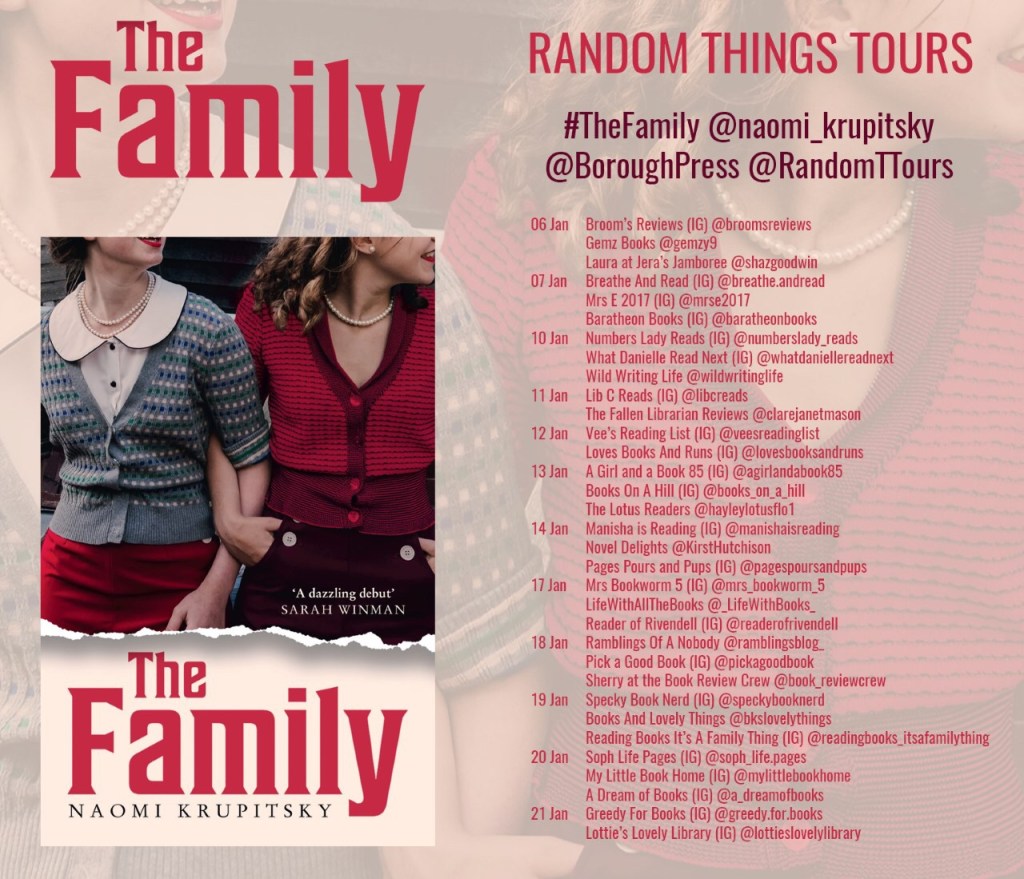
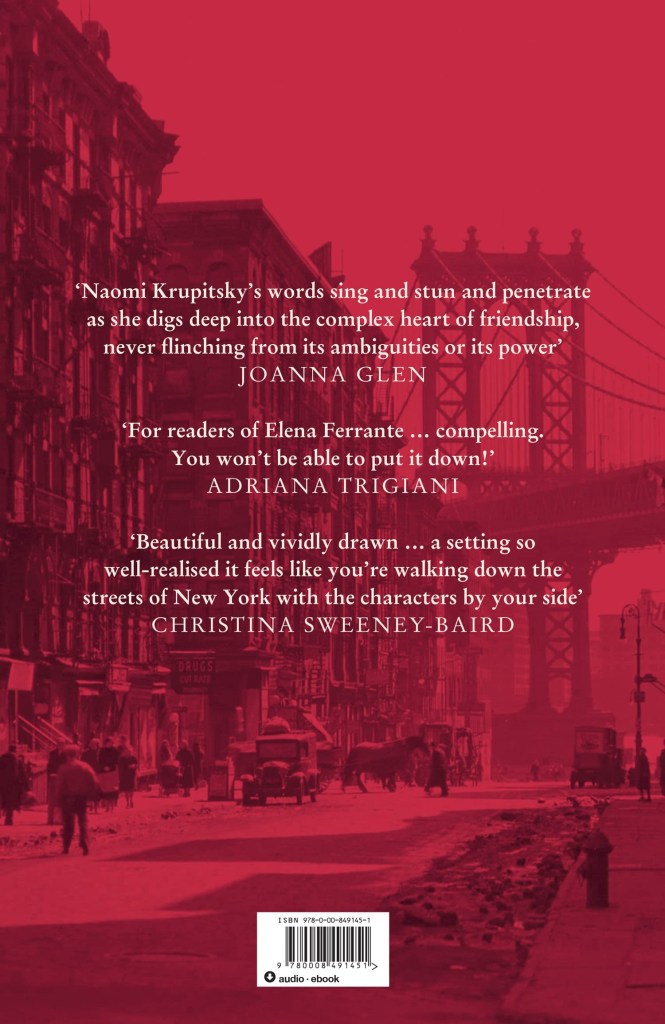
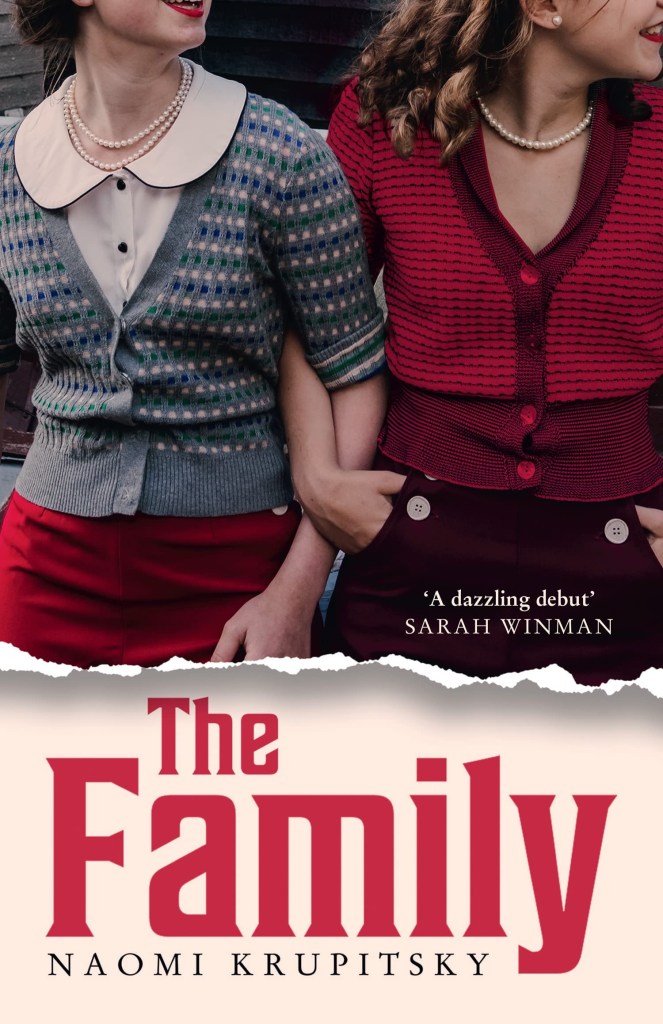
The Family by Naomi Krupitsky

A captivating debut novel about the tangled fates of two best friends and daughters of the Italian mafia, and a coming-of-age story of twentieth-century Brooklyn itself.

Two daughters. Two families. One inescapable fate.

Sofia Colicchio is a free spirit, loud and untamed. Antonia Russo is thoughtful, ever observing the world around her. Best friends since birth, they live in the shadow of their fathers’ unspoken community: the Family. Sunday dinners gather them each week to feast, discuss business, and renew the intoxicating bond borne of blood and love. But the disappearance of Antonia’s father drives a whisper-thin wedge between the girls as they grow into women, wives, mothers, and leaders. And as they push against the boundaries of society’s expectations and fight to preserve their complex but life-sustaining friendship, one fateful night their loyalty to each other and the Family will be tested.

I loved the way Naomi Krupitsky embedded me emotionally into the heart of Sofia and Antonia’s world, two little girls belonging to two Italian immigrant families. However, the term ‘family’ has two meanings in this community: your immediate family, or that you are a family with connections. Sofia Colicchio and Antonia Russo, live in side by side apartments and are best friends. Of course it was pre-ordained that they’d be best friends, because their fathers work together and their mothers were pregnant together. We join them at an innocent time in their lives and they’re both oblivious about what their fathers do, even if they do notice their mother’s tension and even tears when their fathers work late. Sofia and Antonia are focused on playing together, making each other laugh by making up silly games. By bringing the reader into their lives at this age we feel their innocence, and I found myself thinking about my girls and other young family members. I felt bonded to these girls and immediately felt a strong sense of foreboding. What fate might their parents have wrought on these girls?

They have been enough for each other and haven’t needed a wider group of friends, but when they start school that they notice that they are treated differently. On the first day they make friends with two other little girls from the neighbourhood and run towards their mothers at the school gates holding hands with their new playmates. Next day they’re excited to see their new friends again and are surprised when they don’t reciprocate, pointedly joining different girls at lunchtime. It seems that mothers will warn their sons and daughters to stay away from Antonia and Sofia and gossip about their fathers. However, the girls are mostly innocent to the to the world they live in. They don’t know that in 1920s New York City ‘The Family’ and their influence spreads far and wide. They know that on Sundays they have to join other families for lunch with their father’s boss in his huge Manhattan apartment. These children play with them and they’re told to call the men ‘Uncle’, but these people are not blood family, no matter what they call them. The truth shatters their lives one day when Antonia’s father goes missing and his body is never found. Of course the girls don’t understand what the adults know; the reason for the sudden fracture between the Russos and the Colicchios. Of course the truth does come out over the following years, but will the two girls struggle to keep that friendship?

As she turns into a woman, Antonia becomes reserved and sees a different life for herself. She can’t live with the people she knows were responsible for her father’s death. Her mother doesn’t recover from the trauma and as a result Antonia lives a very lonely life. This absence of parental support allows Antonia to slip away from reality into the worlds of her books. She wants to go to university and be someone other than herself. However, not even the loss of her father and the warnings of her mother can stop her heart being won by a Family man. It is love that takes her back to where she comes from. As for Sofia, she never left. She is in awe of The Family and has grown up bold and ambitious. Sofia seems fated to make dangerous, reckless, decisions. Their friendship is distant at times, eroded by the past, but it never seems to break. Underneath the trauma and complicated history, inside these women are two little girls who swore friendship and loyalty to each other. What they have is like a marriage, a promise to always be there even when life’s at it’s toughest. Perhaps it’s an even stronger bond than that. I love how this is a family drama, with the tensions all families have, but the author concentrates on that very specific tension between mother and daughter. Then there’s that outer layer of family, applying yet more pressure and creating a massive fissure between these girls born into something they never asked for. The Mafia is not open to everyone, but once you’re in that’s it. This is family with extra power and benefits, but with a sense of fear that always keeps you looking over your shoulder. With power comes terrifying risks and the knowledge there’s only one way to leave.

This is unlike any other Mafia story I’ve ever read because it concentrates on what it’s like to be female in this most macho of worlds. Here the gender roles are predetermined due to the time period and the set rules of the organisation. It’s a coming-of-age novel where these two girls are always going to be chafing against the confines of the roles the Family will allow. As the story moves from the 1920’s into 1940’s and WW2, we can see how Antonia and Sofia change from young girls to women, but also how society’s expectations of women change in that time period. Krupitsky also writes a realistic portrait of how the Mafia changed during the war. This historical detail and the character of Saul made me think about people fleeing Europe who bring with them their own strong sense of identity. Can they identity survive in a new place, where the opportunities may not always be the escape they were looking for? This made me think of my late husband’s family who ended up displaced separately, affected by their loss and wanting to grow up honouring their heritage, but finding themselves shaped by the society they’ve joined too. I felt so involved in these girl’s lives and the organisation they’ve grown up in, schooled in the essentials of staying loyal and keeping secrets. It was strange to leave their world and I wonder if there will be more from Antonia and Sofia in the future. This is a great Mafia novel, one that sets the organisation in social and historical context, but also gives us a rare female perspective on growing up as a mob daughter.

Meet The Author

Naomi Krupitsky attended NYU’s Gallatin School of Individualized Study and is an assistant editor at the Vida Review and a bookseller at Black Bird Bookstore. She lives in San Francisco
but calls many places home. The Family is her first novel.