Posted in Publisher Proof

The Apple and the Tree by Clemmie Bennett

For her debut novel Clemmie Bennet has chosen to write something so complex I have to take my hat off to her. Ella has recently lost her beloved grandmother, Lolly. They used to spend a lot of time together, exploring stately homes and royal residences, particularly those from the Tudor period. Lolly left her granddaughter a beautiful gold and sapphire ring, one that’s very precious to Ella as she remembers her grandmother wearing it every day on a chain around her neck. However, it’s when Ella puts the ring on her finger that something very strange happens. Ella feels dizzy and passes out, waking up in a field next to what looks like Eltham Palace. As a man walks towards her, Ella thinks she’s fainted in the middle of an historical reenactment. He’s dressed in the rich robes of a member of the Tudor court and his manners are impeccable, offering to let Ella rest in the palace until her memory returns. As Ella finds herself in the court, becoming one of Katherine of Aragons ladies, she is a fly on the wall for some of the most dramatic events in royal and religious history. Is it possible to remain an observer, or will Ella find herself tempted to intervene and perhaps change the course of history.

I’m fascinated by Tudor history, ever since I a painting (that was after Hans Holbein) of Henry VIIII in the Chatsworth library when I was a child. Henry seemed like a curiosity in our royal history with so many wives and scandals to his name. Once I’d read the David Starkey books and Phillipa Gregory’s novels from The Other Boleyn Girl onwards. I was also drawn to the glamour and dubious historical content of the Showtime series The Tudors, with Jonathon Rhys Meyers Henry and his best friend the Duke of Suffolk, as portrayed by the rather delicious Henry Cavill. What all these sources brought home to me was how uneven his marriages were – he was married to Katherine of Aragon for as long as he was to every other wife combined. That’s without noting his devotion to her from the moment she reached England for her marriage to Henry’s elder brother Arthur, a devotion that survived his teenage years, their marriage and his brother’s death. They were in love, he wasn’t faithful but Kings were not expected to be faithful. The idea of a character time travelling to that period threw up all sorts of questions and I was so impressed by the bravery of the writer. Writing historical fiction means researching your period throughly, so to do that and put your character in the middle of such a well- known series of events is brave.

I also applaud the author’s bravery in ripping up the rule book on time travel – we all know that it is important not to change anything in the past, but Ella ignores that rule. It’s a great choice because it gives her character more freedom, but I also think it makes an historical point too. I have always said that had I been in the Tudor court, I would do a Mary Boleyn and marry someone of little importance and get the hell out of there. I have always wondered while reading about the wives and friends of Henry why you would involve yourself in the political and religious machinations of the time. Wouldn’t a life in the country as a nobody be preferable? I think that the author allows Ella to get involved because she’s making the point that it would be impossible to live in that court and not become involved. It’s a game of survival and women are both marginalised and limited in their choices. They have a choice, to withdraw for a quiet life like Mary Boleyn or fight for their place and power like her sister Anne. Ella’s choices certainly raise the tension level! She’s playing a living game of chess, trying to keep within the rules but think three steps ahead of her opponent. Of course she has the benefit of hindsight and all the Tudor history her grandmother Lolly taught her, so she might be able to win.

I thought the book really brought to life the difficulties of the time period and being a subject of Henry VIII, particularly for women. We know there are ladies in waiting, but they’re often portrayed as companions the Queen and possible lovers of the King, but here we see more of their day to day activities and their emotional lives. Ella is a 21st Century woman and because of that we can see these women as being just like us. I loved the way she formed friendships and how the women supported each other. They are portrayed as emotionally open about their marriages and the dangers they face, whether from men or from their own bodies. Fertility plays a major part in the huge decisions of this court, in fact it still does today if we think of Prince Harry’s book Spare and the importance placed upon his father to marry and have both heir and spare. It’s always a huge part of the ‘King’s Great Matter’ that Katherine had not produced a male heir, but here the author explores what these struggles were like for the ordinary women at court. There’s a moment where Ella has to cope with getting her period in a time where underwear isn’t worn and she’s having all the same worries I remember having when starting my periods, all over again. It made me realise how vulnerable women were to sexual assault as well. It broke my heart to see how terrified women were of becoming pregnant, then dreading childbirth or losing their child. Having Ella there as a 21st Century comparison really heightened how different a woman’s lot really was and how the aristocratic practice of handing your child to someone else to look after caused such pain and grief.

I came away from this book with a different understanding of both the time and the court, even Henry himself. This Henry was intelligent, tender and seductive. Despite his shortcomings, there’s a compassion in Henry that seems missing from his actions in later years. It’s interesting to see how different the course of history might have been with just a few small changes. As Ella builds a friendship with Henry, I wondered how far her influence might reach and what might happen if she ever returned to her own time. This kept me reading and there was also a huge twist I didn’t expect! This was such an interesting premise and had me intrigued enough to keep me reading to the end. I recommend this to anyone who enjoys this time period and maybe thinks they know all there is to know about the court.

Independently Published and available on Kindle and in paperback.

Meet the Author

Clemmie Bennett is a writer, author of the historical fantasy “The Apple and the Tree.” A professional London-based French nanny, Clemmie has been working on her debut novel for over three years, but writing a book has been on her bucket list for as long as she can remember. When she is not writing or reading, she can be found wandering about ancient royal palaces or abbey ruins, most likely despairing that time travel is not a reality – like it is for her main character.
Posted in Publisher Proof

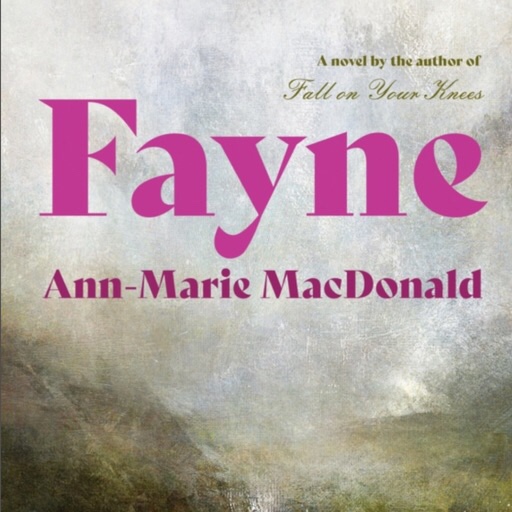
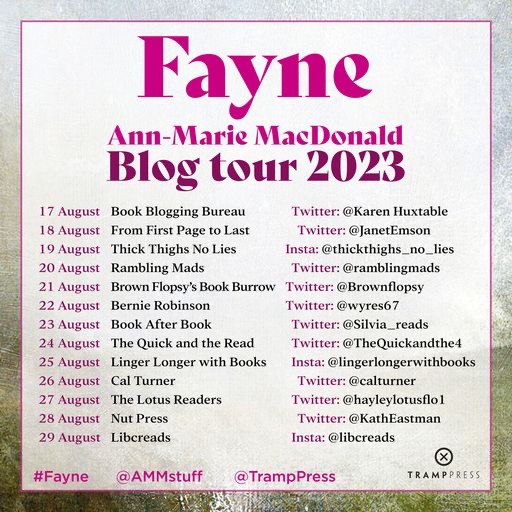
Fayne by Ann-Marie MacDonald

Fayne by Ann-Marie Macdonald

‘I do not wish to be a woman.’

‘My dear. I’m afraid we none of us has the choice.’

I do not wish to be a lady, then.’

‘I cannot blame you.’

The vast estate of Fayne lies to the southern border of Scotland, ruled by the Lord Henry Bell, Seventeenth Baron of the DC de Fayne, Peer of Her Majesty’s Realm of the United Kingdom of Great Britain and Ireland. The mysterious Lord Bell keeps to his rooms by day, appearing briefly at night to dote over his beloved and peculiarly gifted child. But even with all her gifts – intelligence, wit and strength of character – can Charlotte overcome the violently strict boundaries of contemporary society and establish her own place in the world? Fayne is the page-turning queer story of longing and belonging you’ve been waiting for.

I must admit to being slightly daunted when this novel came to the door. I say ‘to the door’ because it wouldn’t fit through the letterbox or into our postbox. It’s an absolutely brick of a novel, so much so that I had trouble holding it. Feeling a little overwhelmed I spoke to a fellow blogger who suggested that I mark it off into readable sections of about 150 pages. It was great advice and I’m glad I persevered with the novel, because it really was intriguing and original. Set in the late 19th Century and written in a similar style to a Victorian novel, Fayne is the story of Charlotte Bell. Charlotte is a precociously intelligent young woman with an insatiable curiosity that is starting to overcome the bounds of what her father and the estate’s library can teach her. This could be a dream existence, but there are shadows in her childhood. Charlotte’s mother died giving birth to her and her brother, the heir to Fayne House died at the age of two. Her father makes a break with tradition on her twelfth birthday, when a young woman would usually have a governess, he hires her a tutor instead. Lord Bell gives him one command for the education of his daughter, to teach her ‘as you would my son, had I one’. Charlotte’s only restriction up till now has been staying within the bounds of the estate. This is because she has a mysterious condition that may make her prone to catching illnesses from others. However, when she takes her tutor out to the bog, they find an unexpected artefact and take it home. Lord Bell suddenly announces he has arranged for her to be cured of this condition, turning Charlotte’s world completely upside down.

There is a feyness to her character, with her love of the boggy moorland and it’s mysterious mists that envelop walkers. She has learned both the ways of the bog and local folklore from Bryn, an elderly servant who seems to come with the estate. Yet the artefact she finds seems to be a mystery. The other mystery that confused me from the outset was the nature of Charlotte’s condition. Also, despite her curiosity about everything else, Charlotte seem strangely unaware of what it is and how it manifests. Her old nurse tells her there are all manner of miasmas and droughts that might carry off her ‘darling pet’. I kept waiting for her to ‘feel’ ill but that never seemed to happen. Another curiosity was her mode of dress, at a time when women were terribly restricted by their clothing which would have included a corset, possibly a bustle, and long cumbersome skirts and petticoats. Yet Charlotte is leaping around the moor, seemingly wearing a form of trousers, that she describes as a scarlet tunic and leggings. I was totally intrigued, imagining a type of female Robin Hood. In fact Charlotte herself says that if she did miss her footing in the bog and was discovered years later, she might be mistaken for a Roman centurion complete with a cape! She’s such an interesting and completely different Victorian female character I was fascinated with her. While still wondering what the mystery around her was, I became beguiled by her wit, intelligence and her endless wonder. As the answers started to come I was rooting for her to escape the rigid gender boundaries of her time and fulfil her potential. The author’s assertion that Charlotte is normal, it’s the world that’s trying to impose it’s order upon her, chimed very strongly with my disability theory background. The social model of disability asserts that all bodies are normal, but the way society is organised creates the disability. For example, if all exits and entrances to a building were ramped everyone can use it. It doesn’t matter if you’re sitting or standing.

It’s clear that the landscape at Fayne and Charlotte are inextricably linked. Despite eventually travelling away from it’s borders, it stands out as the one place she was allowed to be her true self with no restrictions or arbitrary boundaries. She didn’t have to choose who she was at Fayne, she could just be Charlotte. Fayne is a liminal space, existing somewhere between mythology and reality, between England and Scotland. I loved the way the author positions Fayne and the estate’s old folklore as authentic, as natural as Charlotte is before she moves to Edinburgh, which is a sharp contrast to the wilds of her childhood. I was desperate for Charlotte to retain this authenticity, but everything about a city imposes order – the signs, the roads, the hard surfaces. Then there’s ‘society’ and it’s arbitrary rules about gender. There are so many rigid ideas about how a woman should look and behave. The imprisonment of a Victorian woman’s clothing is so stifling that when we think of Charlotte’s tunic and leggings, it feels like being restrained. Yet there are other ways of being, even here, you just have to know where to look. It was great to be on that journey with Charlotte, as she finds that other people also defy expectations. There is so much more to the novel, different viewpoints and characters as well as some plot twists and turns. However, I was always happy to come back to the ever curious and irrepressible Charlotte. It will take all of Charlotte’s ingenuity and intelligence to unearth her family’s secrets and discover her own identity. In some ways I was reminded of another novel with an intersex character delving into her family history, Middlesex by Jeffrey Eugenides. I enjoyed both character’s journeys to find themselves, but also each book is so rich and full of history. I have read Middlesex more than once and Fayne will also benefit from a re-read, hopefully at a slower pace, as I’m sure there’s so much I missed or didn’t fully appreciate on first reading. Ann-Marie MacDonald is an extraordinary storyteller and I’m now interested to explore her other novels.

I knew from a very young age that I was wrong in the world. And the idea of looking through the eyes of somebody who’s born with an intersex trait has been quite compelling to me for a very long time. It’s not an exotic quality. That’s why I’ve decided not to treat it as a “spoiler.” That’s just who Charlotte is, that’s her body. That’s normal. It’s the world that has a problem and is going to make it a problem for her’.

Ann-Marie MacDonald Press Release from Tramp Press.

Meet the Author

Ann-Marie MacDonald is a novelist, playwright, actor and broadcast host. She was born in the former West Germany. After graduating from the National Theatre School of Canada in Montreal, she moved to Toronto where she distinguished herself as an actor and playwright. In 1996 her first novel Fall On Your Knees became an international bestseller, was translated into nineteen languages and sold three million copies. It won a Commonwealth Prize, the People’s Choice Award and the Libris Award. In 2002 it was an Oprah’s Book Club choice. In 2023, The Way the Crow Flies appeared and in 2014 Adult Onset, both of which had international success. In 2019 she was made an Officer of the Order of Canadafor her contribution to the arts and her LGBTQ25+ activism. She is married to theatre director Alisa Palmer with whom she has two children.

Posted in Publisher Proof

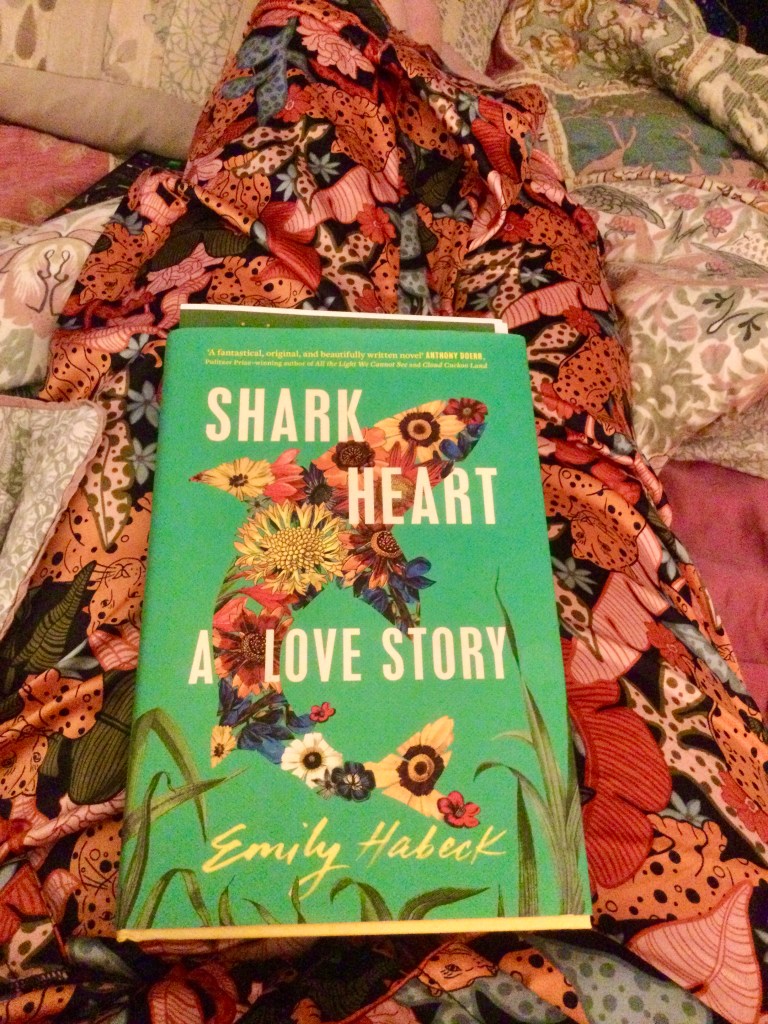
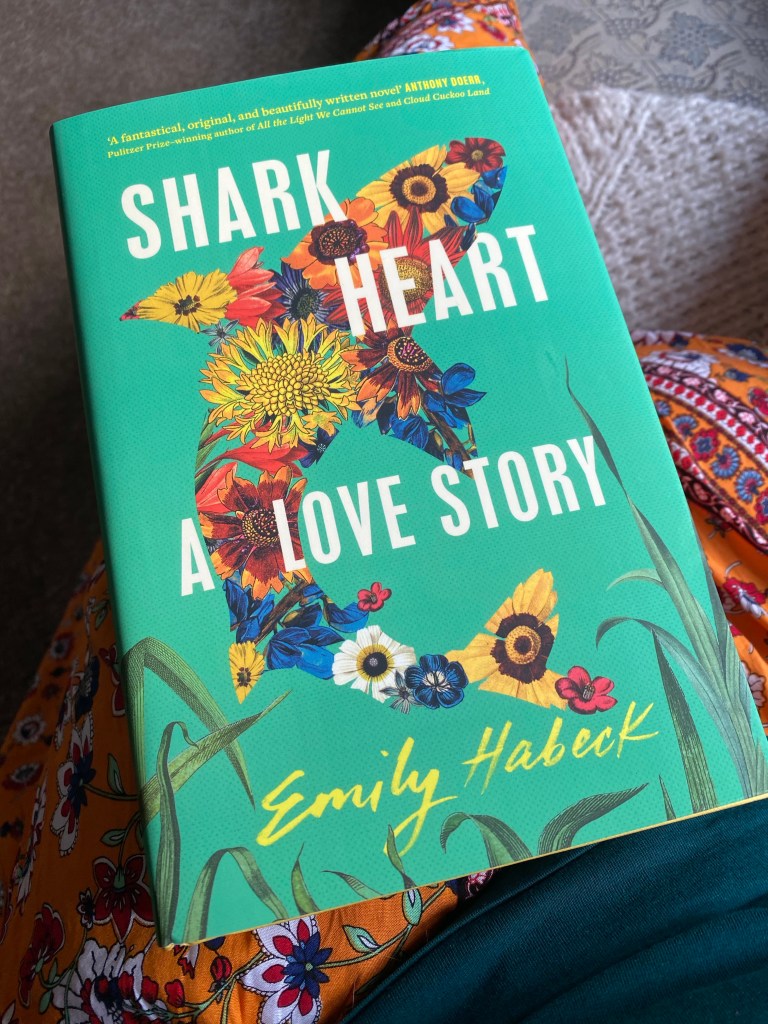
Shark Heart by Emily Habeck

When Ella from Hachette Books messaged me to say there was a book she thought would be right up my street I was a little surprised. I didn’t think the publicists would know me and my book choices well enough to make predictions about what I’d like. I was wrong. She knew exactly who this book was for. ‘It’s about a man turning into a Great White Shark’ she told me, well what’s not to like? I was hooked on the idea before the book even arrived. Lewis and Wren have fallen in love. They’ve no idea that their first year of marriage will also be their last. It’s only weeks after their wedding when Lewis receives a rare and shocking diagnosis. He has an unusual mutation. Although he might retain some of his consciousness, his memories and possibly his intellect, his body will become that of a Great White Shark. Lewis is complicated, an artist at heart he has always wanted to write the great American play for his generation. How will his liberal and loving heart beat on within the body of one of the earth’s most ruthless predators? He also has to come to terms with never fulfilling his dreams, but expressing that anger with shark DNA in his system has huge repercussions. He has to come to terms with leaving Wren behind, for her own safety. Wren wants to fight on. To find a way of living and loving each other as Lewis changes. She is told that there will come a point when this will be too dangerous. Lewis will then have to live in a state run facility or free in the ocean. It’s when she sees a glimpse of his developing carnivorous nature that a memory from her past is triggered. Wren has to make a terrible, heart-wrenching decision.

I felt emotionally devastated by this beautiful novel that uses a fantastical premise to unleash experiences of grief, love, loss and potentially, healing. Wren and Lewis reminded me of my relationship with my late husband. We married after six weeks and even then I knew I wouldn’t have him forever. I had almost seven years until I lost him. This book explained how my own grief experience felt. After Jez’s death I felt furious with anyone who said ‘Jez would think..’ or claimed they could sense his presence. I could feel nothing. No voice, no presence, nothing. It was as if he had never existed. For Lewis there becomes a point when his incessant desire to feed will become his overriding thought, strong enough to wipe out all others, will that include his love for Wren? He will not exist as Lewis anymore, the doctors tell Wren, he will not even know who she is, because he will be all shark. Wren has to come to terms with letting Lewis go, but how do you walk away from the most precious thing in your life? I had a point where I had to decide that I couldn’t look after my husband any more. I was exhausted, we had no carers in place and it didn’t feel safe to try and go it alone. Besides, as his brother told me, I had to start building a life without Jez. I cried more the night he went into nursing care, than when he died, because I felt I’d let him down and I knew he would die. He did, only six weeks later. Wren is told the same after a terrible violent incident occurs at the after-party for the play Lewis’s students have worked on. Wren calls the specialist nurse for advice, but she urges Wren that it’s time. Will they be able to say goodbye?

Despite these similarities to my life, it wasn’t Lewis’s story that broke my heart, It was Wren’s story. This is not the first time Wren has had to say goodbye. When she was barely a teenager her mother also had a rare diagnosis, but her mutation was that of a Komodo Dragon, equally deadly and impossible to live with. One scene between Wren and her mother, as she leaves her in the state facility, was so deeply moving I cried. I found it unbearable. This is what’s astonishing about Emily Habeck’s debut. It seems so fantastical, yet is utterly real in it’s experiences and emotions. Using such unusual animals as the mutation/illness creates a distance from the feelings involved. Some readers might even think the premise ridiculous – but the terrible anticipation, the moment of loss, the grief and relentless momentum of life are exactly the same. It doesn’t matter whether it’s the decision to put an elderly parent in a home or a Komodo Dragon into a facility, the guilt and pain as you walk away feels identical. It isn’t all relentless misery though. We meet Wren’s mother as the teenager she once was, experiencing love for the first time. We also go back to Lewis and his new life in the ocean, as his emotions flit between loss and what’s for dinner. His friendship with Margaret is so funny. She was once a human too and she’s been looking for another hybrid to talk to, and boy does she talk?! She’d try the patience of a shark. In a beautifully unusual way and in an almost poetic prose, this beautiful debut is about life. It’s ups and downs, the horrendous losses and the gains: the naivety of first love, becoming a mother, our love and care for an elderly parent, friendships and realising that a special little girl sees you as her dad. Life is constant adaptation, evolving and developing all the time. Every end is a beginning. This is such a special novel, an incredible debut with such a keen grasp of what being human is all about. I can see this becoming an all-time favourite for me. It quite simply took my breath away.

Meet the Author

Emily Habeck has a BFA in theater from SMU’s Meadows School of the Arts as well as master’s degrees from Vanderbilt Divinity School and Vanderbilt’s Peabody College. She grew up in Ardmore, Oklahoma. Shark Heart is her first novel.

Published on 3rd August by Jo Fletcher Books

Posted in Netgalley, Publisher Proof

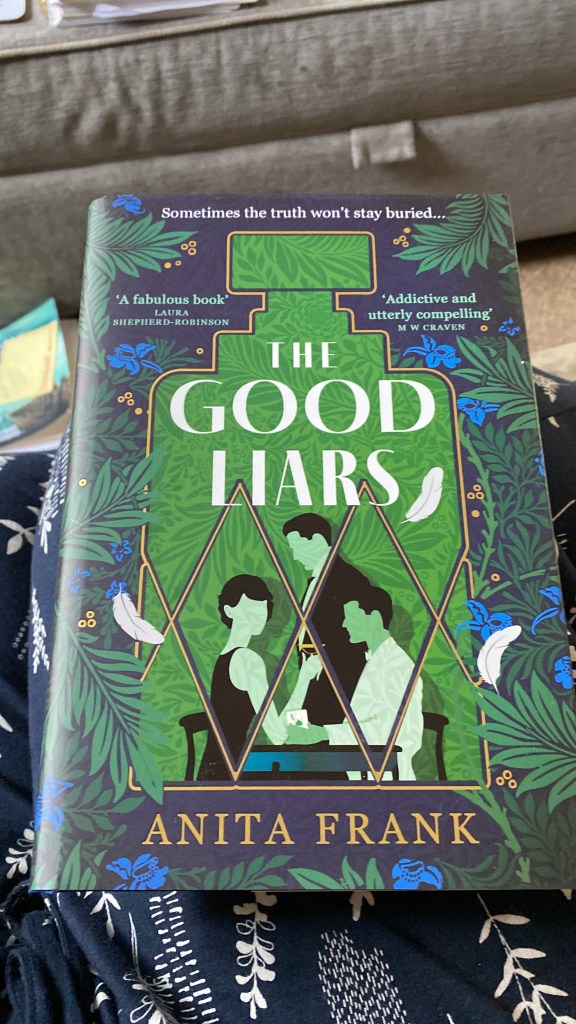
The Good Liars by Anita Frank

This is my favourite of Anita Frank’s novels so far. She’s chosen a fascinating period of history to set this gothic mystery and it adds something a little different to the ‘new servant in a creepy old house’ story. This is time when the country is traumatised, mired in grief and adjusting to the changes wrought by World War One. A time when loss looms large and people are searching for answers. Sarah is the new employee arriving at Darkacre, the family seat of the Stilwells. Like many aristocratic families, WW1 has wreaked havoc on the men in this family. When their father died, the eldest son Hugo became the heir of Darkacre. Yet his time as heir was very short, as he was killed on his return to the front leaving middle brother Maurice as heir to the Stilwell estate. Maurice was not prepared to be the master of the house and with double death duties already crippling the estate, he has learn fast. Unfortunately Maurice has returned from war a changed man, plagued by nightmares, flashbacks and extreme responses to loud noises, he has PTSD or what was then referred to as shell shock. With youngest brother Leonard severely disabled by his war injuries and struggling to come to terms with the loss of his limbs, the family are depleted and barely coping. However, as Leonard so cryptically tells us, perhaps it is no more than they deserve? Sarah’s arrival is the catalyst for this story and it isn’t just the relationship between family members that points to there being issues at Darkacre, soon a series of unexplained happenings start to gnaw away at the nerves of even the most stoic inhabitants.

Darkacre is the perfect gothic setting for the story and to some extent she represents the changes wrought on the aristocracy during this time period. Where before the war the family would have had several house servants, as well as gardeners, land agents, farm managers and so on, there is now just the brothers, Maurice’s wife Ida and Victor, a lifelong friend of Maurice. Due to the way army units were organised, Hugo Stilwell would have found himself the officer to a group of men he knew well, comprised of his brothers, tenants, young men and boys from the village. The losses were astronomical and not a single family in the parish missed out on their share of grief. This also left Maurice facing families of the young men he led to their deaths on a regular basis, including the upcoming ceremonies at the new war memorial. Servants were now in short supply and the tradition of going ‘into service’ had started to decline. We can see how social groupings have become blurred in the way Ida invites Sarah to eat with the family, instead of in the kitchen alone. They converse as equals, often as sitting together after dinner in the parlour. We can see how Ida has been craving female friendship and where it would be unsuitable to be passing confidences on to village women, Ida does start to confide in Sarah. Up till now it has very much been Victor’s role to inject a little levity into the proceedings and to amuse Ida. He confides to Sarah that both he and Maurice fell in love with her on sight, but she was more interested in Maurice and possibly the house and land that have her a title she craved.

On Sarah’s part there are few confidences shared and I found her rather mysterious and enigmatic. I was at first sure this was only a residue of the deference she had always shown employers in the past, but perhaps there is more to it than that. In a therapy situation, silence tends to draw the client forward and share confidences. In fact silence has often been my most powerful skill in terms of growth for the client and Sarah seemed to be using it for good effect. Is she simply trying to forge good relationships with her employers or is there something more sinister going on? The growing closeness between her and Leonard definitely feels genuine and I wondered what it was about their relationship that made Sarah relate to him differently. Was it that she saw him differently due to his disability, or is it a natural affinity? He seems to have different world views to the rest of the group, more compassionate and accepting of human imperfections. This is ironic given the family skeletons hiding out in closets and cupboards all over Darkacre. What was behind the sense of collaboration I felt between Ida and Victor? Why was Maurice so disturbed, not just by flashbacks and dreams, but possibly by his own conscience? Why is Ida unwelcome at the village’s ceremony for the new war memorial and does it have something to do with the disturbing parcel of an animal’s heart covered feathers that she receives?

Since I have a disability it would be remiss of me not to mention the veterans of WW1 left disabled by this horrifying war. Over one million men were killed in combat, but a further two million were left with some form of disability, 40,000 of which were amputees like Leonard Stilwell. He sits alongside such contemporary literary characters as Clifford Chatterley with a lot of the same emotional issues coping with the change of self-identity. Sarah represents a new stage in Leonard’s recovery, one he might resent, but yet they do become friends. On her first morning, Sarah arrives at Leonard’s room to find Victor smoking and Maurice laid across his brother’s bed rather like they’re still in barracks or the hospital. It’s a little glimpse into the institutionalisation of the men, more used to other male company in a military setting than the domestic sphere. Sarah could be seen as a barrier between Leonard and his fellow veterans, whereas before his care was kept within the sphere of the family now it is contracted out for money. Leonard could have felt as if he belonged, that his brother and Victor were still in the trenches with him, sharing the seismic shift his life has taken. His getting up routine was part of family life, whereas now it’s a job. A stranger has to perform the most intimate care for him and they are obliged to do it for money. He is now facing his disability alone. Yet he and Sarah muddle on quite well together, helped in part by Sarah’s training and professionalism, but also because they perhaps share the same anger and disdain for the futility of war.

Early on in the novel we see that Maurice is tormented by the memory of a young soldier who has half his face blown away. He can’t forget the horror of it, so it is perhaps fitting that the visiting Sergeant who arrives in the storm has a facial disfigurement. It’s as if Maurice’s worst nightmare has come knocking on the door. The inspector has only visited the day before and the sergeant seems to be following up, carrying out orders by interviewing the family. His disfigurement is covered by a copper mask, it’s smoothness belying the tangled and complex injuries underneath. For Maurice it almost seems worse that his injury is covered, because he can imagine in detail what’s actually there and imagination is worse than the reality. His mask also gives that element of disguise, it conceals his expression and leaves people wondering what he’s really thinking. There’s a definite Agatha Christie feel as a storm cuts the house off from civilisation and the family are trapped with these two outsiders. One of them a detective, trained to uncover secrets and the other has shown herself to have psychic tendencies. There are twists and turns, more than I expected in fact! I loved the atmosphere and Anita is brilliant at those little creepy happenings, that might have an innocent explanation, but start to unnerve you. The battle scenes are so well written too, perfectly capturing the chaos, the fear and a different kind of horror. This is a great read and Anita goes from strength to strength.

Published 17th August by HQ Stories.

Meet the Author

Born in Shropshire, Anita studied English and American History at the University of East Anglia. She now lives in Berkshire with her husband and three children.

You can connect with Anita via social media:

Twitter – @Ajes74

Instagram – @anitafrankauthor

Posted in Squad Pod

Lowbridge by Lucy Campbell

This story really crept up and took hold of me. It’s a slow burn, dual timeline mystery set in small town Australia. Katherine has moved to her husband James’s hometown of Lowbridge, a town with a very clear line between ‘the haves and have-nots’. Katherine is struggling with her mood and self-medicating with drink. James is hoping that the move will help her and has made it clear that they can’t continue as they are. He encourages her to get dressed and leave the house or go for a run like she used to. It’s clear something momentous has happened and their lives have imploded, but they are each dealing with it in different ways. In fact their teenage daughter Maggie was killed in a car accident, where the designated driver had been drinking. When Katherine does leave the house she accidentally stumbles across the town’s historical society and shows an interest in the exhibition they’re putting together. It’s something she can potentially help with and it’s enough to get her motivated. However, when she comes across a thirty year old mystery, problems start to arise. The disappearance of a young girl called Tess during the summer of 1987 has remained unsolved and Katherine thinks it may be time to highlight the case and perhaps jog people’s memories. She knows she must involve Tess’s family in the decision, but she doesn’t expect opposition from anyone else. It’s James’s opposition that surprises her most. He tells her to leave the mystery alone, that it will stir up trouble and it’s would be unhealthy for her to become wrapped up in another family’s grief. Katherine is determined though and with Tess’s family on board she starts to research what happened in 1987.

From the beginning, the author really gives us the sense of what it’s like to live in a small town where everyone knows each other. Having grown up in a small market town I know it’s rare for me to run errands without seeing someone I know. I still have friends that I had when I was thirteen and when I was sixteen a friend of mine was murdered, a few days before Christmas. A death like that sends a shockwave through the whole town and I could clearly imagine the collective grief and anger that Katherine would unearth as she investigates what happened. In the summer of 1987 the town was already at odds over a women’s clinic being proposed by a local doctor. This has enraged the anti-abortion lobby leading to protests and appeals to the locals authorities to stop the development. Three teenagers from the ‘right side’ of town are reaching an age where they’re asserting their independence and finishing their leaving certificates at school. Tess and Sim are friends with the slightly younger Luisa who is from an Italian family. The girls try to keep the clinic out of their conversation because it is Sim’s mother fighting to get the clinic open and Luisa parents are Roman Catholics, utterly opposed to abortion. Because they’re from the more middle class part of town they tend to keep separate from the ‘Pitsville’ kids, the area mainly inhabited by miners and their families. The author has really captured what it’s like to be a teenage girl on the cusp of womanhood. In the girl’s conversations there are all those insecurities about how they look and what they wear, their popularity and how boys view them. All three acknowledge that one girl at school really does capture the boy’s attention.

Jac is thought of as ‘easy’ by other girls, mainly because of the attention she receives from boys but also because of her sexy clothes. A lot of the derision also comes from the fact she’s a miner’s daughter from Pitsville, but they rarely think about what her life is actually like. The author takes us into her home, with a father who works and drinks heavily, often bringing other miners back to the house to continue drinking late into the night. Unbeknownst to anyone it’s on one of these nights that something terrible happens to Jac, setting in motion a sequence of events that will change her life. As Tess disappears off the face of the earth, Jac also goes missing but no one notices. I enjoyed this angle on the story very much, because it injects a element of social injustice into the mystery. We know that when girls go missing, even now, there are all sorts of social factors that play into the way the police investigate and the media report on the story. Often girls from black british and other minority communities go missing and don’t even make the evening news. Sim and Tess take Luisa to a house party after drinking a lot of home made ‘punch’. When they lose sight of their friend they go searching and find a brawl going on in an upstairs bedroom. Luisa is on the bed and two boys are fighting, each one claiming to be the knight in shining armour who’s found Luisa being attacked. It’s such a big story that everyone at school knows by Monday morning. It’s a big story because it’s Luisa. If it was a Pitsville girl would the popular kids get to know? Would they even care?

Katherine is a complicated heroine. She’s trying to avoid grief by drinking and I had a huge amount of empathy for her. Yet in a vicious argument with husband Jamie, he tells her a few home truths that made me think about it a different way. She wants him to grieve the same way she does, but he points out that he’s never been able to. It’s not that he doesn’t want to cry and shut the world out, it’s that he’s never had the luxury of falling apart. When their daughter Maggie was killed Katherine was able to keep her wonderful memories. She can imagine their daughter’s beautiful face when she thinks of her, but only because he had to see her broken and bleeding. He identified Maggie so that Katherine could keep her memories intact. He went to the inquest, so she didn’t have to hear the horrific details. She has felt alone, but so has he. I found this really powerful and I could understand why he thought involving herself in another family’s grief was unwise. Yet that’s not the full story, because Jamie has been keeping something from Katherine. That last summer when Tess disappeared, Jamie was secretly in a relationship with her. Maybe it’s in Jamie’s interest to stop Katherine from digging up the past. Could it be that he knows more than he’s letting on? The story dragged me in different ways, as each revelation came to light. I loved that the more we found out about Tess, the more special she became. It was wonderful to see her offer support and practical help to others, even to people others might have overlooked. She’s aware of the popular crowd’s opinion, but doesn’t let it sway her. She makes her own decisions and sets aside judgement. I had to have an early night to finish the book in one go, because I didn’t want to miss anything. This is a fascinating mystery, with a powerful theme running throughout about women’s rights over their lives and their own bodies.

Thank you to the Squad Pod Collective and Ultimo Press for my copy of this book.

Posted in Netgalley, Publisher Proof

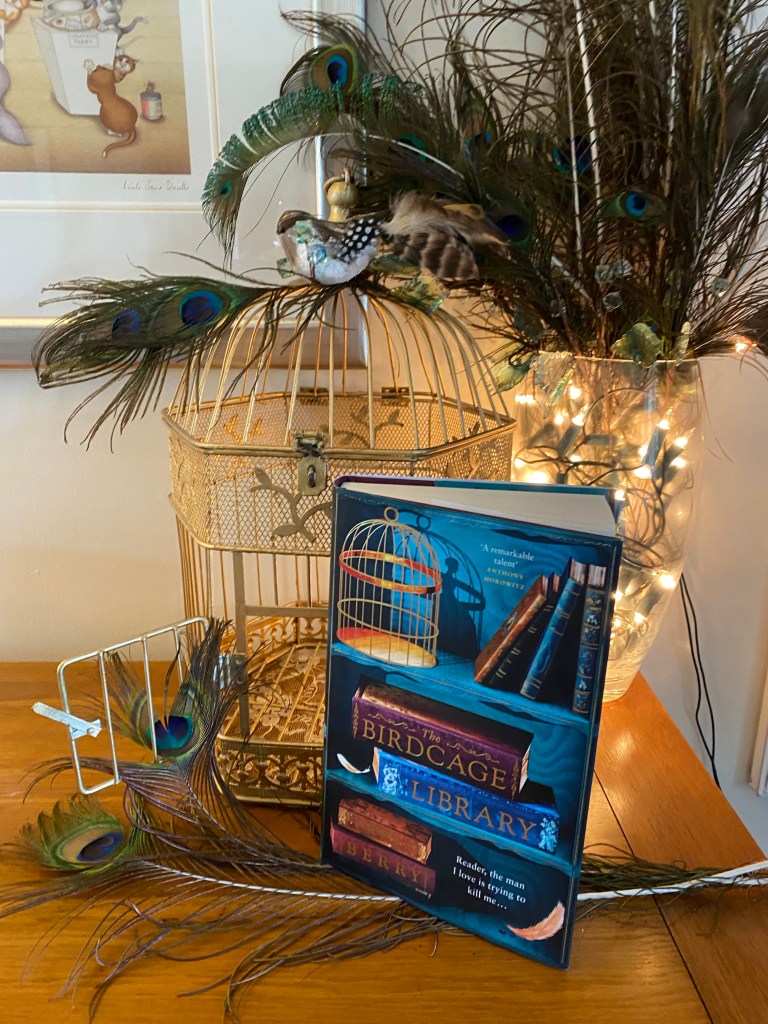
The Birdcage Library by Freya Berry

Dear Reader, the man I love is trying to kill me ….

In 1932 Emily Blackwood, an adventurer and plant collector, is employed by Heinrich Vogel to solve a puzzle. A treasure is hidden in his remote Scottish castle and he has employed her to find it. Her excavations take us back several years to New York and a young woman called Hester caught between two brothers and the family business of supplying rare animals to society homes and show business. As Emily follows the clues she discovers torn out clumps of pages from their hiding places around the castle. These tell Hester’s story in her own words and Emily starts to piece together this part of the Vogel’s family history. However, the discovery means she also starts to question her host, the isolated place she’s staying and whether or not she is safe within it’s walls. As Emily solves the clues and we race towards her final conclusions I found myself anxious and thoroughly addicted to Freya Berry’s intriguing and puzzling mystery.

I also found myself rather spellbound by the a book because it features one of my more macabre favourite things – I have to admit that vintage taxidermy has a strange fascination for me and the quirkier it is the better. Victorian tableaux with their anthropomorphised animals really do make my heart flutter. Rationally, I know it’s horrible and undignified for these beautiful creatures but I can’t resist a squirrel tea party. This book is set at a time when killing these beautiful living creatures and posing them for the collections of rich men is huge business. The Scottish castle has it’s owncollection, but we are also taken back a few years to Heinrich Vogel’s youth when he and his brother were the source of all these wondrous creatures. In one example, sourcing a vast collection of hummingbirds to be the talking point of an exotically themed gathering for the great and good of New York Society.

Emily rather reminded me of another incredible heroine, botanist Alma Whittaker in Elizabeth Gilbert’s wonderful novel The Signature of all Things. Like Alma she is intelligent, curious and forges her own path in the world of scientific discovery. I loved that Emily wasn’t like other women in society, usually depicted in fiction as diverted by dances and adorning themselves for the marriage market. She is an academic and sets foot in places across the world that many men haven’t yet reached, never mind the supposed fairer sex. That said, her biggest adventure and challenge is trying to be acknowledged for her expertise within an academic system that’s firmly a patriarchy. It is a lack of funds that put Emily in Vogel’s orbit, when he hears of her employment cataloguing the Rothschild’s butterfly collection. He feels that only the intelligent and ingenious Miss Blackwood will do as he wishes to catalogue his own incredible collection of taxidermy creatures. It doesn’t take long for Emily to discover there’s a more intriguing task though. Heinrich Vogel’s sister-in-law Hester famously threw herself to her death from the Brooklyn Bridge. From an old book entitled The Birdcage Library, Emily deciphers clues that lead her to the remains of Hester’s diary and her words pull Emily into a past filled with clues, explaining all that happened to the Vogel brothers and Hester’s relationship with them.

The highest form of love is indistinguishable from liberty.

Freya Berry uses her historical knowledge perfectly. It grounds the story within it’s time, using real people and places to anchor Hester’s account until it feels like part of history rather than fiction. The world she describes is so rich, alive with sound and colour, creating an all round sensory experience for the reader. I felt like I knew this world inside out. As many of you know, the birdcage is a potent symbol for me, one that I have tattooed on my body as a reminder to never let anyone put me inside one again. Here Freya Berry uses it as a metaphor for the way high society and wealth keep women from living the fullest lives they could. A cage is a cage, even if it’s a gilded one. The women in New York society may have money enough to adorn themselves with the feathers of birds of paradise, but they would never have the freedom that Emily has had to travel abroad and see these birds living in their native habitat – something infinitely more valuable than wearing them as a hat. Despite having a central role in the Vogel’s business operations, Hester is soon relegated to the parlour when her brother-in-low returns to New York. The business is going in a different direction, as her husband pursues the kind of fame and fortune earned by Barnum. Her creativity, business acumen and financial know how are sidelined and she finds herself bored and dissatisfied. Her distraction from the boredom and bewilderment of being relegated to the parlour, is a destructive one.

As Emily gets closer and closer to the final parts of Hester’s diary, she realises that the repercussions of what happened in New York are still playing out, but now she is in the middle. I was actually starting to be scared for her safety. The arrival of Vogel’s nephew Yves made me wonder if Emily could find an ally in this isolated castle? Or is she doomed to live out Hester’s life, caught between two Vogel men? The novel is the perfect combination of historical novel and mystery, with just the right edge of gothic darkness. There are echoes of both Jane Eyre and Rebecca here, two of my all time favourites. Freya Berry has created two interesting and intelligent heroines in Hester and Emily, and I was enthralled by their stories till the final page. I think you will be too.

I am no bird; and no net ensnares me

Jane Eyre by Charlotte Brontë

Meet the Author


Freya Berry always loved stories, but it took several years as a journalist to realise she loves the kind of truth that lies in fiction, not reality. (Or, to put it another way, making stuff up is more fun.) 

Her second novel, The Birdcage Library, is out now, a gothic mystery and literary treasure hunt packed with twists. A 1930s adventuress discovers an old book containing clues about the disappearance of a woman who vanished 50 years before. Set between a Scottish castle in the 1930s and an exotic animal emporium in Gilded Age New York, it’s a gothic tale of secrets, obsession and murder. Oh, and taxidermy. 

Her first novel The Dictator’s Wife, a high-stakes exploration of power, glamour and complicity, was published in 2022. It was shortlisted for the Authors’ Club First Novel Award, a pick for the BBC’s flagship book show Between The Covers, and The New European’s novel of the year. 

Freya lives in London and graduated with a double first in English from Cambridge. She spends more time reading smutty fantasy novels than she likes to admit.

Posted in Squad Pod

73 Dove Street by Julie Owen Moylan

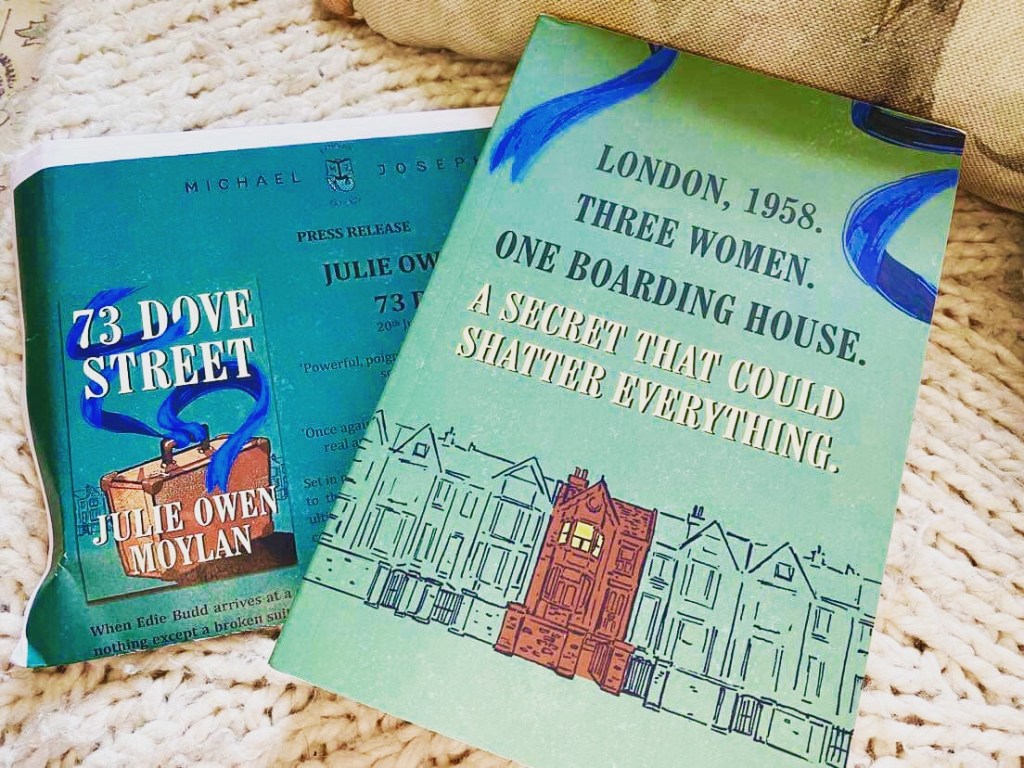
What an incredible writer Julie Owen Moylan is, because within a few pages of starting her new novel I was absolutely immersed in 1950’s London. This is a London I haven’t visited too often in literature, the haunted and broken post-WW2 period rather than the supposed glory or the drama of the the war itself. Here the war has a ghostly presence, shown by children climbing piles of rubble or an incomplete street that looks like a mouth with one of it’s teeth missing. The story is told through three women; Edie, Tommie and Phyllis. It’s Edie we follow to 73 Dove Street where she hopes to look at a room, with just a single suitcase and an envelope full of cash. Edie is almost put off by the mattress and pile of men’s clothes burning fiercely just outside the yard, but a voice summons her from an upstairs window and she recognises a place she can lie low. What is she hiding from? Tommie lives in the room below and works for an eccentric socialite who was once wealthy and popular. Outside work Tommie is lured to the seedy nightlife of Soho and the man she can’t quit. Phyllis is the landlady of 73 Dove Street, burning her husband’s belongings in the street after she discovered a terrible betrayal. She puts on a good front, an armour that she needs to cope with a past she won’t talk about.

This author is absolutely brilliant at creating a feeling and time period, from the dark and depressing post-war London to the interiors of both No 73 and the more upmarket house where Tommie works.

“It was one of those London streets that had become a canvas of tatty boarding houses: windows filled with crooked pieces of cardboard saying ‘Room to Let’. The houses all looked the same: bay-fronted with scruffy front gardens filled with dustbins, and children loitering on doorsteps with their runny noses and scraped knees.“

She makes a beautiful observation about these streets, that where once there were hints of colour, London is now bombed back to dreary black and white. People are trying to drag their lives out of wartime monochrome, but fail every time. There are houses with the front ripped off and the contents still inside, looking like a grotesque full-size doll’s house. Through Tommie’s childhood experiences we can see what it was really like to be in one of those houses as she remembers a direct hit on her family home and being sat in the suffocating dark rubble until a hand breaks through to save her. These memories are so powerful and evocative, they really bring the reality of the Blitz to life. It’s clear that one of the reasons why London is so bleak is that it’s people are traumatised and numb. As well as the lack of money, rationing and their surroundings, these people haven’t even begun to recover. They’re vulnerable and in the case of our main characters, they’re trying to battle on alone.

I was immediately on board with Edie and loved the way the author built up her relationship with Frank. It was one of those situations where I could clearly see what was going to happen and I was mentally screaming at Edie to walk away. This is a man who knows how to choose the right woman, the one who will fall for his charms and become hooked on the way he operates. He likes to keep a woman on edge, waiting for his affection and easily moulded to what he wants by withholding that affection. Sadly it’s a pattern that’s only noticeable when you’ve been through it and Edie is a quiet, inexperienced girl who’s bowled over by his subtle manipulations. She’s so unformed and brought out such a protective mode in me. In a typical pattern he follows any glimpse of anger or violence with apologies and huge gestures.

“Frank’s pale blue eyes never left Edie’s face. Pleading with her without saying a word, desperate to make everything right between them. ‘Will you marry me, Edie? Say you will . . .’ The words tumbled out before Edie could stop and think about them. ‘Yes, of course I will.’ Her arms wrapped around his neck; her good wrist covering the bruises on the other one. His mouth felt tender and warm on hers and for that moment she couldn’t hear the daft comments or applause from the pub, it was just her and Frank”.

The abuse Edie suffers is a hard read, but such an authentic representation of domestic violence in all it’s forms. I am from a working class family, with some very strong women on both sides especially in those aunties old enough to get married during the war. They often comment on how the generations beneath theirs are too quick to split up or divorce and that marriages in their generation tended to stay together. Yet, when I hear the reality of some of their marriages – the drinking, gambling, physical and sexual violence, financial abuse and infidelity – I wonder what’s the point of a long marriage that has only left them grieving and traumatised? The author shows how economic and psychological difficulties prevented women from leaving terrible relationships. I was interested to read the author’s comments about her own family and how the strong women in it had given her inspiration for the book.

I haven’t spoken about Phyllis much, although towards the end of the book it was her experience that had tears pouring my down my face. At the beginning we see through Edie’s eyes the burning pile of men’s clothes outside No 73 and we could guess at what had happened in her marriage. She’s full of anger at her husband, but as the story develops we get the feeling there is something more underlying her feeling of being wronged. We get the picture of a marriage rather like the bombed out houses – a facade remains but it’s been empty for some time. When we hear the full story it is so emotional, I found it deeply moving and could identify with this woman whose abrupt manner is simply the amount of protection she needs to get through each day. It isn’t just the bombed houses that are missing. There are people locked in wartime, trying to carry on by avoidance, distraction or stepping around something there’s only one way through. I found this part of the book so beautifully rendered and deeply felt. Julie has dedicated this book to her grandmother and the strong, working class women in her family. She has really done them proud with this wonderful historical novel.

Published by Michael Joseph 20th July 2023

Meet the Author

Julie Owen Moylan was born in Cardiff and has worked in a variety of jobs, from trainee hairdresser and chip shop attendant at sixteen to business management consultant and college lecturer in her thirties.

She then returned to education to complete her Master’s degree in Film before going on to complete a further Master’s degree in Creative Writing. Julie is an alumna of the Faber Academy’s Writing a Novel course. She lives in Cardiff with her husband and two cats.

Julie can be found on Twitter: @JulieOwenMoylan

Posted in Publisher Proof

The Apple and the Tree by Clemmie Bennett

For her debut novel Clemmie Bennet has chosen to write something so complex I have to take my hat off to her. Ella has recently lost her beloved grandmother, Lolly. They used to spend a lot of time together, exploring stately homes and royal residences, particularly those from the Tudor period. Lolly left her granddaughter a beautiful gold and sapphire ring, one that’s very precious to Ella as she remembers her grandmother wearing it every day on a chain around her neck. However, it’s when Ella puts the ring on her finger that something very strange happens. Ella feels dizzy and passes out, waking up in a field next to what looks like Eltham Palace. As a man walks towards her, Ella thinks she’s fainted in the middle of an historical reenactment. He’s dressed in the rich robes of a member of the Tudor court and his manners are impeccable, offering to let Ella rest in the palace until her memory returns. Her rescuer is Henry VIII. As Ella finds herself in the court, becoming one of Katherine of Aragons ladies, she is a fly on the wall for some of the most dramatic events in royal and religious history. Is it possible to remain an observer, or will Ella find herself tempted to intervene and perhaps change the course of history?

I’ve been fascinated by Tudor history, ever since I saw one of the Hans Holbein portraits of Henry VIIII in the Chatsworth library when I was a child. Henry seemed like a curiosity in our royal history with so many wives and scandals to his name. Once I’d read the David Starkey books and Phillipa Gregory’s novels from The Other Boleyn Girl onwards. I was also drawn to the glamour and dubious historical content of the Showtime series The Tudors, with Jonathon Rhys Meyers Henry and his best friend the Duke of Suffolk, as portrayed by the rather delicious Henry Cavill. What all these sources brought home to me was how uneven his marriages were – he was married to Katherine of Aragon for as long as he was to every other wife combined. That’s without noting his devotion to her from the moment she reached England for her marriage to Henry’s elder brother Arthur, a devotion that survived his teenage years, her first marriage and his brother’s death. They were in love, he wasn’t faithful but Kings were not expected to be faithful. The idea of a character time travelling to that period threw up all sorts of questions and I was so impressed by the bravery of the writer. Writing historical fiction means researching your period throughly, so to do that and put your character in the middle of such a well- known series of events is such a risk.

I also applaud the author’s bravery in ripping up the rule book on time travel – we all know that it is important not to change anything in the past, but Ella ignores that rule. It’s a great choice because it gives her character more freedom, but I also think it makes an historical point too. I have always said that had I been in the Tudor court, I would do a Mary Boleyn and marry someone of little importance and get the hell out of there. I have always wondered while reading about the wives and friends of Henry why you would involve yourself in the political and religious machinations of the time. Wouldn’t a life in the country as a nobody be preferable? I think that the author allows Ella to get involved because she’s making the point that it would be impossible to live in that court and not become involved. It’s a game of survival and women are both marginalised and limited in their choices. They have a choice, to withdraw for a quiet life like Mary Boleyn or fight for their place and power like her sister Anne. Ella’s choices certainly raise the tension level! She’s playing a living game of chess, trying to keep within the rules but think three steps ahead of her opponent. Of course she has the benefit of hindsight and all the Tudor history her grandmother Lolly taught her, so she might be able to win.

I thought the book really brought to life the difficulties of the time period and being a subject of Henry VIII, particularly for women. We know there are ladies in waiting, but they’re often portrayed as companions the Queen and possible lovers of the King, but here we see more of their day to day activities and their emotional lives. Ella is a 21st Century woman and because of that we can see these women as being just like us. I loved the way she formed friendships and how the women supported each other. They are portrayed as emotionally open about their marriages and the dangers they face, whether from men or from their own bodies. Fertility plays a major part in the huge decisions of this court, in fact it still does today if we think of Prince Harry’s book Spare and the importance placed upon his father to marry and have both heir and spare. It’s always a huge part of the ‘King’s Great Matter’ that Katherine had not produced a male heir, but here the author explores what these struggles were like for the ordinary women at court. There’s a moment where Ella has to cope with getting her period in a time where underwear isn’t worn and she’s having all the same worries I remember having when starting my periods, all over again. It made me realise how vulnerable women were to sexual assault as well. It broke my heart to see how terrified women were of becoming pregnant, then dreading childbirth or losing their child. Having Ella there as a 21st Century comparison really heightened how different a woman’s lot really was and how the aristocratic practice of handing your child to someone else to look after caused such pain and grief.

I came away from this book with a different understanding of both the time and the court, even Henry himself. This Henry was intelligent, tender and seductive. Despite his shortcomings, there’s a compassion in Henry that seems missing from his actions in later years. It’s interesting to see how different the course of history might have been with just a few small changes. As Ella builds a friendship with Henry, I wondered how far her influence might reach and what might happen if she ever returned to her own time. This kept me reading and there was also a huge twist I didn’t expect! This was such an interesting premise and kept me intrigued enough to read to the end. I recommend this to anyone who knows a bit about the time period and maybe thinks they know all there is to know about Henry’s court. I would be interested to know what the author would change if she went back to Henry’s court, or whether she would choose to lie low? This is such an interesting debut and I hope to see Clemmie flourish as a writer of historical fiction.

Meet the Author

Clemmie Bennett is a writer, author of the historical fantasy “The Apple and the Tree.” A professional London-based French nanny, Clemmie has been working on her debut novel for over three years, but writing a book has been on her bucket list for as long as she can remember. When she is not writing or reading, she can be found wandering about ancient royal palaces or abbey ruins, most likely despairing that time travel is not a reality – like it is for her main character.
Posted in Publisher Proof

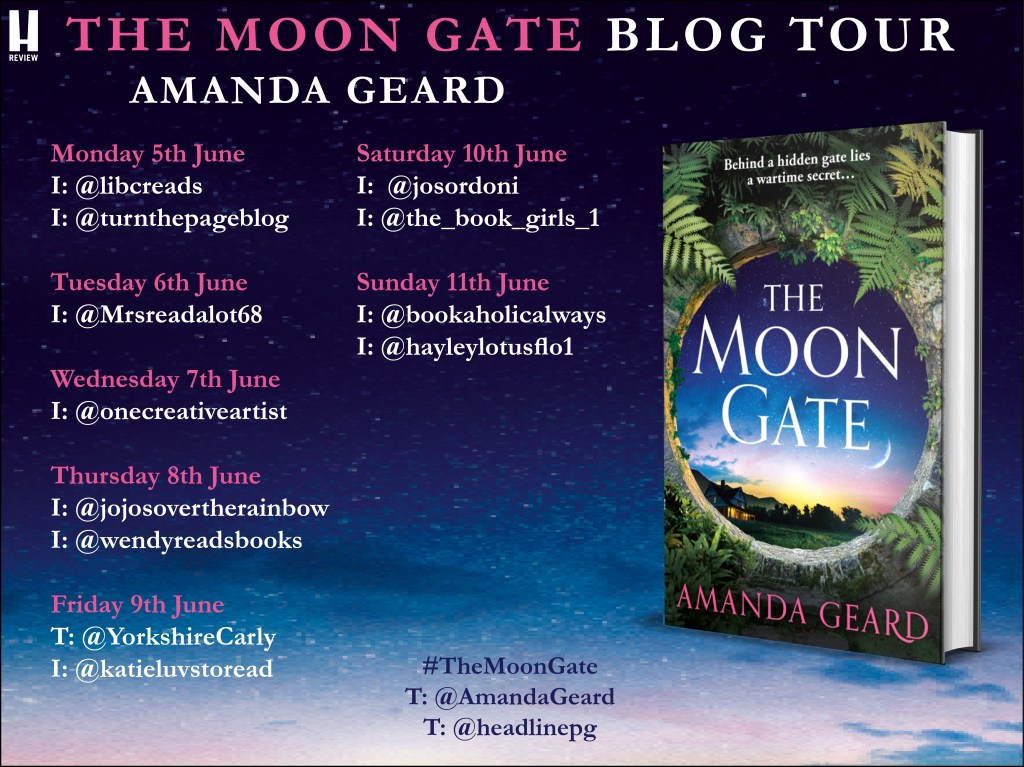
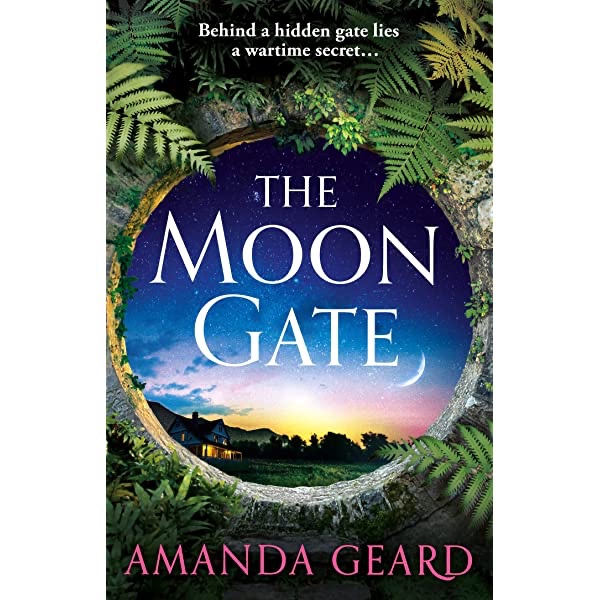
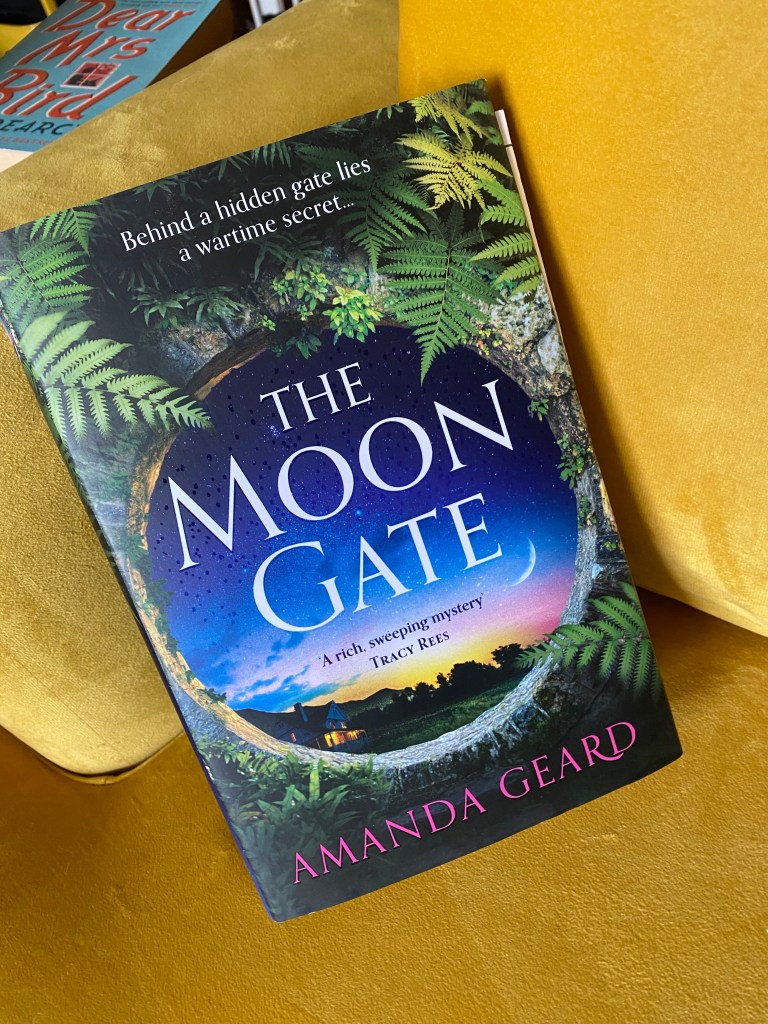
The Moon Gate by Amanda Geard.

1939 – Grace Grey lives in Grosvenor Place in London, with her mother Edeline who is a friend of the notorious Mosleys and wears the uniform of the Blackshirts. As war comes ever closer, Edeline makes the decision to send Grace and the housekeeper’s daughter Rose Munro to stay with her brother Marcus and his wife Olive in the north west coast of Tasmania. After an eight week voyage the girls are welcomed to Towerhurst, an unusual house with a whole tower where Uncle Marcus writes his poetry. Olive immediately takes to the beautiful Rose, but Marcus forms a bond with Grace over the poems of Banjo Patterson, an Australian ballad poet. Grace is reserved and shy, but is slowly coaxed out of her shell by Daniel McGillycuddy an Irish lad working at his aunt and uncle’s sawmill for Huron Pine. As war creeps ever nearer to their part of the Pacific there are dangerous emotional games at play between these young people with fall out that will extend over the rest of the century.

1975 – out of the blue Willow and Ben have been summoned to the north west of Tasmania because of a mysterious legacy. Willow has been left a house called Towerhurst, by an anonymous benefactor who placed it in trust. They decide it’s a great place for Ben to write and Willow to paint, but on their first visit Ben goes missing in the rainforest having fallen down an old mine shaft. What he finds there sends him on a quest that ends in London chasing a story about two young girls who lived at Towerhurst during WW2.

2004 – Libby has flown from Tasmania to London, wanting to claim the belongings of her father who died in the Moorgate Tube Station accident before she was born. Staying with her eccentric aunts in Grosvenor Square, she starts to follow the clues she finds in her father’s satchel: a publisher’s address, a book of ballads by poet D. McGillycuddy and the name Molly Munroe. Her quest will take her to a gentleman’s club, a narrow boat and eventually out to Ireland to solve a mystery that’s been laid buried for half a century.

I enjoyed Amanda Gerard’s first novel last year, so looked forward to reading her new one for a while. I was interested to see how her writing had developed over the last couple of years. To undertake a novel that takes in most of the 20th Century, three timelines and three different settings takes enormous confidence and she has definitely grown in confidence. This is a more complex novel, combining historical fiction with mystery and some romance too, but she pulls it off beautifully and I’ve absolutely loved it. From the historical perspective I learned a lot about living through WW2 in the Pacific Ocean, a completely different experience compared to Europe and the U.K. particularly. I thought Amanda beautifully captured how transient lives were at that time. This wasn’t just about the two English girls, Grace and Rose, uprooted from everything they knew and sent to the other side of the world. It was about the chaos of war, never knowing where your loved ones were, particularly if they were away fighting and whether they would ever come home again. For women that was especially difficult, left at home to wait but also left outside the experiences their men were having. Many women did their own war work, both to do their bit but also to feel a little closer to their men and as if they’re helping them to fight. War displaces people and there were huge shifts across the years of WW2 and afterwards as prisoners of war were slowly released and women who’d married a G.I. or perhaps a Polish airman travelled back to their native countries to start a new married life. It was a good time for people to disappear or slip away under the radar. I already knew a lot about the Blackshirts and their admiration of Hitler’s Nazi Party, but here I learned more about the women recruits and their activities. There was a breadth of research here, underpinning and enhancing the story across three different generations.

The main love story is so touching as the slightly awkward Grace is lured down to the beach by neighbour Daniel where he tries to kiss her. Sadly though it’s for a five shilling bet and as his mates turn up in a boat to witness her humiliation she runs away into the sea. It’s his friend Puds who has to rescue her, as she can’t swim and finds herself caught in an undertow. Daniel regrets his actions deeply, apologising the very next day and asking if Grace would perhaps share the book of ballads she’d been telling him about. They pass through the Moon Gate, a perfectly round doorway made of Atlantisite that leads to the waterfall and a small freshwater pool. Uncle Marcus claims that to pass through the gate is to become a new person and that certainly seems the case with Grace who not only forgives Daniel, but shares the ballad poems and agrees that he can teach her to swim. It’s so beautiful to watch them become close friends, but Grace knows that it’s Rose that Daniel finds attractive as everyone does at first. I felt for Grace deeply and I think a lot of other bookworms will too because she’s so uncomfortable in company, prefers solitude and loves words so much. My therapist side wanted to help her, because how does she learn to be herself and be confident in that, when even her own mother preferred Rose? When we’re not shown love from our parents, a child can’t understand that it’s a fault of the parent, so they learn there is something wrong with themselves. Grace is shocked by the help and affection she gets from Uncle Marcus, because her own mother is so austere and critical.

It was Rose who spent time with Edeline and became a member of the Blackshirts alongside her. Whereas Rose’s mother, the housekeeper Molly, can see something wonderful in Grace and so can her Uncle Marcus, it just needed to be coaxed out and nurtured. I was so invested in her feelings for Daniel and desperate for him to be clear about whether he had feelings for her. Rose is doing her bit in undermining and leading Grace to believe that Daniel only has eyes for her. She makes sure Grace knows when he writes from wherever he is in the world and if Grace shares news of her friend, Rose makes it clear she knew first. I’ve never wanted to slap a book character more! I wasn’t even sure that she genuinely loved Daniel, she’s just so used to getting one over on Grace that she hasn’t stopped to think it through. There are rumours in town about Rose and Uncle Marcus, she even winds Puds round her little finger but I wasn’t sure to what end? She certainly keeps her cards close to her chest, but when Rose takes up war work and isn’t around as much Grace can actually breathe. As I read I wasn’t sure what Rose was up to but I was certain there was something behind her manipulations and out of character support for the war effort. It’s a shock when her name comes up again in Libby’s investigations, was her father Ben simply interested in her fascist connections or is it something more personal?

There are definite echoes through the different time periods and motherhood is one of those themes that recurs. It’s an inter-generational trauma that starts with Edeline’s treatment of her daughter. Grace knows she isn’t her mother’s favourite, but is confused when this animosity seems to recur with her Aunt Olive. She asks a devastating question of her Uncle Marcus – ‘am I unloveable?’ because if her own mother can’t love her, why would anyone else? Willow has never known her birth parents, instead brought up with her two sisters who are twins. She never asked the question, even though she can see how different she is physically from her sisters. So when Towerhurst comes along, she starts to be intrigued by who created the trust and whether it could be one of her real parents. She finds out she’s pregnant alone, while Ben is over in London, but manages to tell him on the phone just before he is killed and they are both so happy in that moment. To then become a single parent, in such tragic circumstances must have been so difficult to come to terms with. Willow has never tried to collect Ben’s belongings despite knowing they were found and Libby clearly thinks her mother will disapprove of her choice to follow in his footsteps. Willow hasn’t been a terrible mother, just rather aloof and deeply engrossed in her work as a painter, where she demonstrates her terrible grief by only painting in black and white. She hasn’t grieved fully and I could see that Libby’s findings might bring those feelings to the surface. Luckily, Libby has had her eccentric aunts for support and it’s clear they adore her, but I hoped that Libby and Willow would have chance to talk and heal together.

As the mystery begins to unravel, there are revelations about these three generations that keep coming and a twist I truly didn’t expect. There are small disclosures, like the local police sergeant who helps the search for Ben is actually Puds, Daniel’s best friend who suffered a serious injury in the war and had to return home. How will he go about investigating what Ben finds in the mine shaft, when it might be better if they’d stayed buried? I was desperate to find the whereabouts of Rose, because all the hints are pointing to an answer I simply couldn’t bear! It seems possible that Grace never returned to England, but when Rose’s mother tells Ben she definitely saw Grace after the war he starts his search afresh. Could she have disappeared on this side of the world? I was constantly holding out a little bit of hope for the ending I wanted, so I had to keep reading – up till 2am again! There are so many layers to this story and often with dual timelines there’s a weaker section, but every timeline is intriguing, evocative and emotional. Tasmania sounds wild, dangerous, magical and atmospheric all at once. I loved the reference to the creature that lurks around the pool beyond the moon gate, could it be a shy Tasmanian devil? There’s such a massive difference between Tasmania and London, which feels more domestic than wild with very curated spaces like the old fashioned gentleman’s club and the minimalist narrow boat where Libby meets Sam. Then there’s Ireland, waiting like a promised land with all the answers and the beauty that Daniel shares with Grace right back at the beginning. We are left with an incredible tapestry of places and people full of colour, emotion and a yearning for home whether home is a place or a person.

Meet the Author

I have always loved dual-timeline novels, where stories from the past weave with those of the present day. I want to write books that transport you to another time and place, where secrets lie just beneath the surface if only the characters know where to look.

My new novel, The Moon Gate, is set across three locations I ADORE: Tasmania (my home state), London (where I rented a houseboat for many years) and County Kerry, Ireland (where I now live with my family). Each of these places is special to me and I hope you’ll feel you’re entering the temperate rainforest with Grace, opening the door to Towerhurst with Willow, walking through London’s layered history with Libby and stepping out to the heather-clad hills of County Kerry with … well, with several characters, the names of who I won’t reveal here!

The inspiration for my first novel, The Midnight House, appeared in the rafters of our Irish home, a two-hundred-year-old stone building perched on the edge of the Atlantic. Hidden there was a message, scratched into wood: ‘When this comes down, pray for me. Tim O’Shea 1911’. As I held that piece of timber in my hands, dust clinging to my paint-stained clothes, I was humbled that a person’s fingerprint could, in a thousand ways, transcend time, and I wanted nothing more than to capture that feeling of discovery on the page.

I’m also a geologist who loves to explore the world’s remote places. Luckily for me, writing novels provides a similar sense of wonder and discovery; but the warm office, fresh food and a shower in the evening make the conditions rather more comfortable! It’s also the perfect excuse to regularly curl up by a fire with a great book (often by the wonderful authors who write in my genre). I treasure my reading time, and I know you do too, so thank you for taking a chance on my books.

Come over to Instagram and Twitter (@amandageard) where I share plenty of photos of the wild settings in The Midnight House. You can also find me on Facebook (@amandageardauthor).

I love hearing from readers, so please get in touch!

From Amanda’s Amazon author page.

Posted in Squad Pod

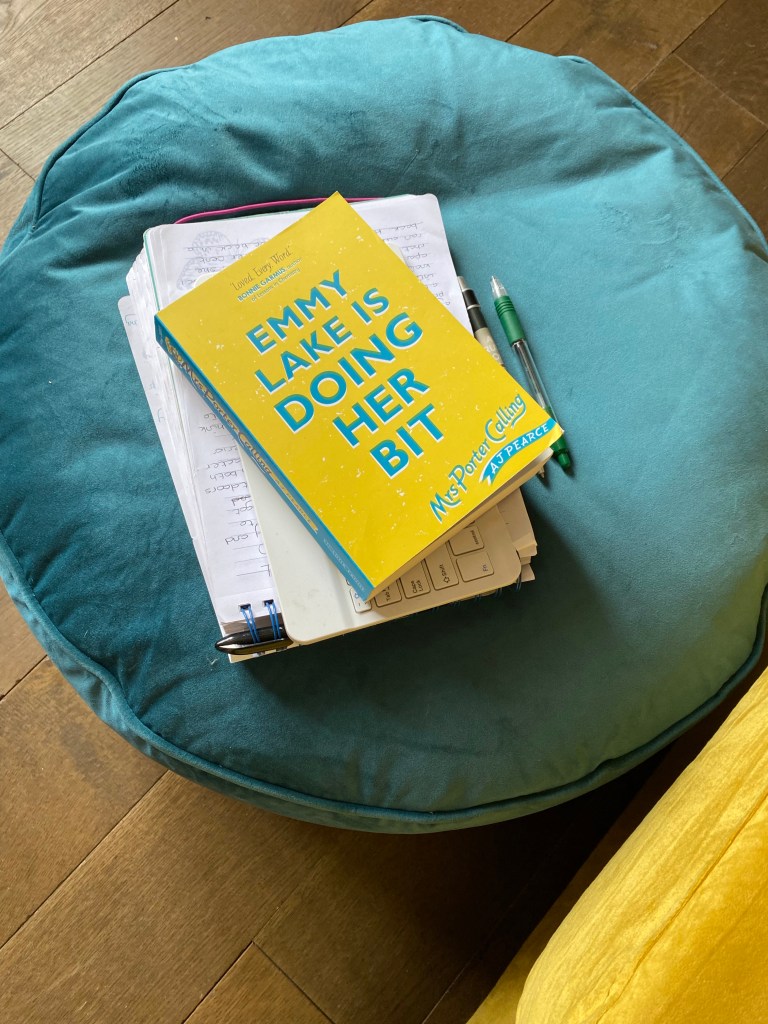
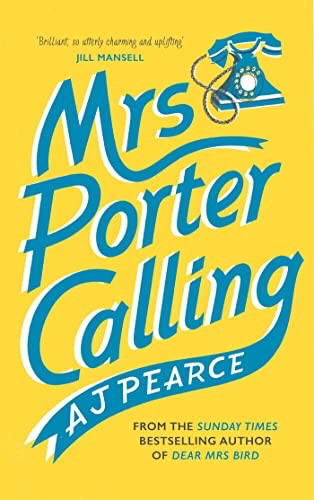
Mrs Porter Calling by A.J. Pearce.

I was new to A.J. Pearce’s world and her character Emmy Lake, so before reading Mrs Porter Calling, I decided to read the previous two novels; Dear Mrs Bird and Yours Cheerfully. Set in WW2, the books follow Emmy as she moves to London to start a career in journalism and soon finds herself in the middle of the Blitz, working for the fire brigade by night and living in her friend Bunty’s grandmother’s house. In Dear Mrs Bird, Emmy has taken up a job offer from Woman’s Friend magazine, working on the problem page. The formidable Mrs Bird is the agony aunt and Emmy must sort through the letters and weed out those that are deemed unsuitable – no funny business at all, not even a hint! Through the novel she moves from being engaged to single status, takes big risks in her job and works hard for the fire service at night dealing with the aftermath of the German bombing. I fell in love with this brave young woman who wants to move with the times and use her writing to help an extraordinary generation of women cope with the difficult situations they find themselves in. Over this and the next book, Yours Cheerfully, Emmy faces some serious challenges: being in love with someone far away and in danger; dealing with terrible loss; helping other young women who have been widowed or find themselves without a home. Yet this isn’t a tale of misery and hardship, there’s an almost relentless positivity to Emmy Lake that I absolutely loved. She’s perky, but not brittle. Her optimism and resilience seem to come completely naturally.

Yet in this latest book, Mrs Porter Calling, she will be facing some of her biggest challenges yet. Emmy has settled into being the lead on the magazine’s problem page and is continuing her series of articles on women who have taken on war work. Everything changes when the owner gifts Women’s Friend to his niece Mrs Porter in lieu of her inheritance. At first the team are optimistic about having a woman at the helm, but it soon becomes clear that Mrs Porter doesn’t want the magazine because of what it is. She wants to turn the magazine into her own scrapbook with society weddings and events alongside beauty and fashion articles that are a distraction from the war. Telling women what they should be rather than being a support. For a team who are used to teaching their readers to reuse and repurpose, this jump to expensive fashions and aspirational articles feels all wrong and Emmy thinks Mrs Porter has missed the whole point of the magazine. Women’s Friend is not aspirational, they don’t want to be dangling fripperies in front of their readers who can’t afford them. Emmy knows that if they change this much they will lose their readership. Even worse, Mrs Porter doesn’t want any more ‘dreary’ war work articles either. It seems that the realities of war haven’t reached her, the nightly bombs Emmy deals with must be muffled by all that jewellery and designer clothing. The team make a pact, to try and keep their beloved magazine as normal as possible while also introducing Mrs Porter’s ideas. In the meantime they will try everything to dishearten their new owner. Hopefully, if things become boring or difficult, she might drop her new hobby and move on. They just have to hope they have enough of a readership left when she does.

Away from the magazine, Bunty is still grieving for her fiancé and continuing her rehabilitation following the bomb blast they were caught in. However, there are signs that she is stating a tentative friendship with another fireman and Emmy has her fingers crossed that things may develop. Emmy and her husband Charles only had a two night honeymoon before he had to return to his posting, now he is moving into North Africa and Emmy depends on his letters. Both girls are forging new friendships with the women who work in a munitions factory and finding out it isn’t always easy to do your bit. I loved this aspect of the novel, because it taught me a lot about what WW2 was really like for women. Despite advocating that all women should find war work, to support their men overseas or help out on the home front, there were difficulties with this that the government seem to have overlooked. The author shows this through the factory women who have issues with childcare and finances. I was shocked to learn that when a Navy husband went missing his salary stopped immediately, but because he was missing and not dead, his wife couldn’t receive a widow’s pension. This loophole left women with no income and potentially homeless. If the factory women had children and worked awkward hours, they often couldn’t get childcare. Some women sneak their children into the factory and hide them so they can still work their shift and get paid, but if found they would be dismissed immediately. Emmy becomes involved in campaigning for factories to apply for the government grants available to set up a nursery for worker’s children. These are the women she wants to celebrate and help in her own time, but also in the magazine. These factory women don’t care about the lavish wedding of some honourable or other, they care about doing their bit, being able to keep a roof over their head and their man coming home.

Emmy has become a team player. Long gone are the early days of her career where she ran away with an idea without thinking of what it meant for those around her. What struck me so strongly was this sense of camaraderie and the sharing of everything – not just the hard stuff that the fire service go through together, but the food, celebrations, home, shelter and even families. I could see that Emmy was in exactly the right place to help when an unexpected loss devastates the factory women and Emmy herself. This tragedy could bring her the biggest challenge she’ll ever have, but I had no doubt she would rise to the occasion. I asked my partner whether he thought our current generation would pull together as well as this generation did and we weren’t sure, although we hoped so. Watching Emmy, exhausted from a day working, change into her uniform and put in a night shift on the fire service switchboard, then go home and reassure children whose house has been bombed out, made me wonder if I could do the same. The perky, excitable girl has become a woman, a woman with a core of steel. If you love historical fiction or just want an uplifting read about women dealing with daily adversity then this is the perfect book for you. I loved all three novels and have happily added them to my forever bookshelves.

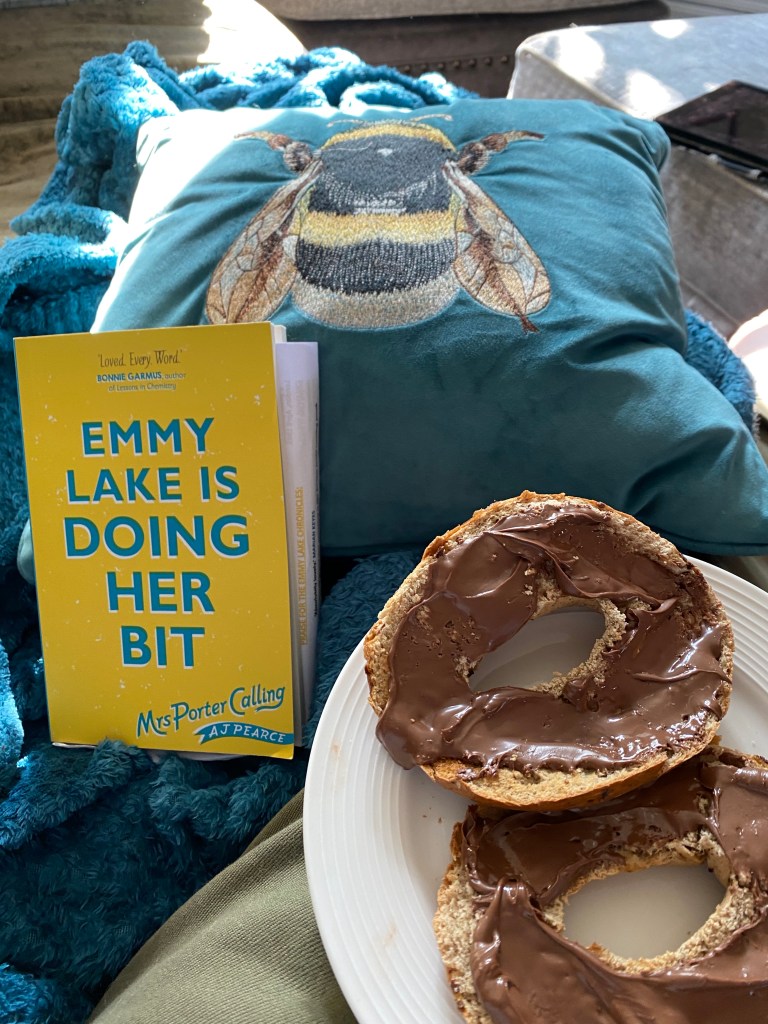
Weekend breakfast and a great book. Bliss!

Meet The Author

Pearce

AJ Pearce is the author of the Sunday Times Top 10 bestseller DEAR MRS BIRD, which was a Richard and Judy Book Club pick and shortlisted for Debut of the Year at the 2019 British Book Awards. It has been translated into fifteen languages and optioned for development for TV.Born in Hampshire, her favourite subjects at school were English and History, which now (finally!) seems to be making some sense. Her novel, Yours Cheerfully is the sequel to Dear Mrs Bird and is now available in paperback. AJ has just released the third novel in the Emmy Lake Chronicles series, Mrs Porter Calling. Follow AJ on Twitter, Instagram and Facebook: @ajpearcewrites