Posted in Publisher Proof

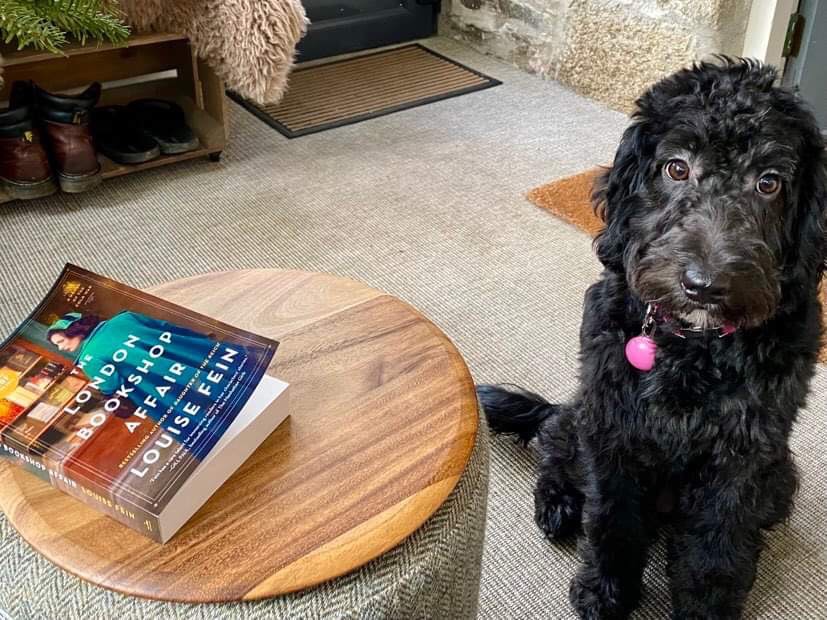
The London Bookshop Affair by Louise Fein

Books and Bramble, the perfect combination.

Historical fiction is one of the genres I enjoy most and I’m drawn to Louise Fein’s novels because she always finds an interesting time period then looks at it from an unexpected viewpoint. It makes you rethink events you thought you knew all about. Here she has chosen post-WW2 London and the dawning of the early 1960’s when Kennedy is president and the Cuban missile crisis is looming. Her heroine is Celia, an ordinary young woman with older parents who are stricter than most and perhaps don’t understand her modern preoccupations and ambitions. I always imagine the ‘swinging sixties’ when I think of London at that time, but progress like that hasn’t quite reached Southwark yet. Celia is working at a second hand bookshop, that specialises in antique and collectible books. Yet her heart yearns for adventure. The world is on the cusp of space travel, women’s liberation and the Beatles. It’s also rather closer to nuclear war than most realised as the USSR and USA start a terrifying game of brinkmanship. Celia wants to protest against the testing and gathering of weapons far more powerful than the Hiroshima bomb. She also chasing her dream career – she’s signed up for classes at Pitmans to gain the secretarial skills that might get her a job at the BBC. The little life her mum leads is not for her and she’s definitely not going to settle for Sam, the boy next door.

The catalyst for change is the bookshop’s new owner Mrs Denton, a dainty well dressed lady who is living alone in the flat above the shop. She seems more interested in shopping than books and offers Celia a raise to manage the shop as she sees fit. Mrs Denton has two regular male visitors: an older man called Mr Humphries who has wandering eyes and a scar down his face and a younger, handsome American called Septimus who Celia is drawn to. Could he be another pathway to a different life. The changes in Celia’s life are interspersed with a different timeline following a young woman called Anya Moreau who is dropped behind enemy lines in 1943. She’s been trained to help the French Resistance disrupt the Germans by sending messages back home via a wireless transmitter. She is betrayed by a double agent and faces torture to divulge her secrets, but she never betrays her cause. Meanwhile Celia finds a connection to this woman and in her desperation to know more she comes across the mysterious Miss Clarke who opens Celia’s eyes to the murky world of espionage running under the surface of everyday life. Possibly even in her own family. I felt for Celia’s parents who have always been protective of their girl, so much so that she sometimes feels suffocated. However their determination to keep Celia away from the past is understandable when we find out the truth.

I throughly enjoyed both timelines and Louise always has a wealth of research underpinning her story making it feel so real. I believed entirely in these two brave young women and their conviction to support their country. I loved seeing Celia’s political awakening as she talks to friend Daphne about the secret nuclear bunkers being dug out in the English countryside and the drastic measures to move works of art out of London – her shock at the immorality of a government that chooses to save art, but keeps it’s ordinary citizens in the dark is a real moment of growth. Her friendship with one of Mrs Denton’s visitors, Septimus, is also a place where she can freely discuss and share ideas about the world. This freedom to debate is new to Celia and you can see her growing all the time. At home her mum turns the tv off when the depressing news is on and Dad never talks about the war. In fact there seems to be a silence between them. I was excited and scared for Celia as her world opens up. The secrets she starts to discover will change her life forever, but will they leave her with the confidence to choose her own path and who will walk it with her? The emotional scenes between mum and daughter are really heart rending as finally everything is brought into the light. The pace of the novel really picked up towards the end as both stories come to their conclusions and different options start to open up before her. I really hoped Celia would choose wisely and not throw away everything about her home while still gaining some of the adventures she’s set her heart on. This was a great read and would make a fantastic film or TV series one day.

Published by William Morrow on Feb 29th 2024

Meet the Author

Louise writes historical fiction, focusing on unheard voices or from unusual perspectives. Her debut novel, Daughter of the Reich (entitled People Like Us in the UK edition) was published in 2020 into 13 territories and is set in 1930’s Leipzig. The book was shortlisted for the RSL Christopher Bland Prize 2021 and the RNA Historical Novel of the Year Award, 2021. Louise’s second novel, The Hidden Child, was published in 2021 and is centered around the eugenics movement in 1920’s England and America. It was a Globe & Mail bestseller in Canada. Her third novel, The London Bookshop Affair, about one woman’s journey to uncover secrets of her past, set against a backdrop of espionage and looming nuclear war in 1962 London, will be published in January 2024. 

Louise, previously a lawyer and banker, holds an MA in Creative Writing from St Mary’s University and now writes full time. Equally passionate about historical research and writing, she loves to look for themes which have resonance with today’s world. Louise lives in the Surrey countryside, UK, with her family, and is a slave to the daily demands of her pets.

For more information, go to https://www.louisefein.com and sign up to Louise’s newsletter. She also posts regularly to her blog at

https://www.louisefein.com/blog-and-news, or follow her on Facebook, https://www.facebook.com/louisefeinauthor; Twitter, https://twitter.com/FeinLouise; or Instagram, https://www.instagram.com/louisefeinauthor

Posted in Netgalley, Publisher Proof

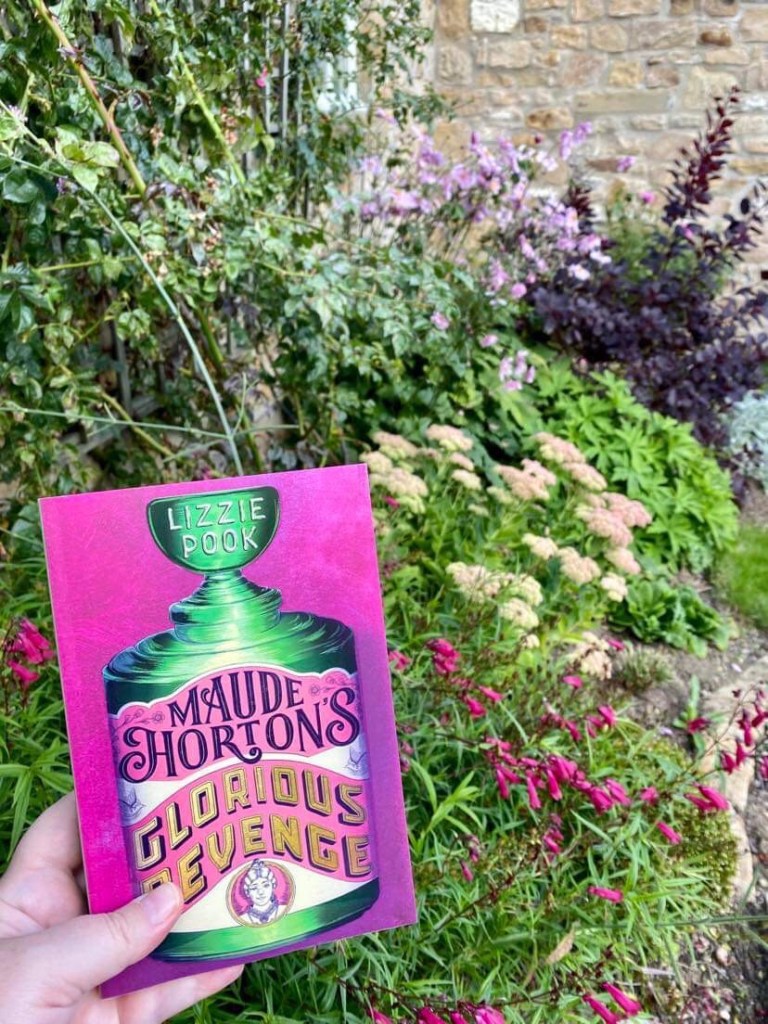
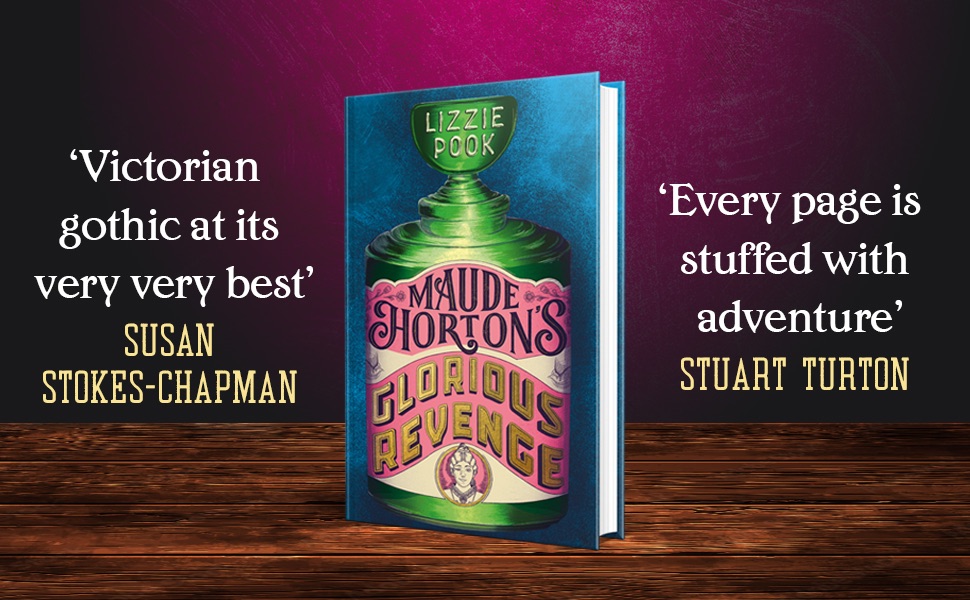
Maud Horton’s Glorious Revenge by Lizzie Pook.

Maud’s sister Constance is on a ship sailing to the Northern Passage, on a mission to find Franklin’s expedition ship. She has always craved adventure and climbed out of her bedroom window, taking the disguise of a cabin boy called Jack Aldridge. Does she really comprehend the dangers that could befall her should the men on board discover a woman on their vessel? On the same voyage is the rather strange and macabre Edison Stowe who has managed to get aboard as a scientific officer – mainly involving the killing and gathering of animals, as bone specimens or in jars. When Constance is lost on the voyage, the rather quiet and timid Maud is determined to find out what has happened to her sister. She devises a plan to get close to and expose Edison Stowe. Telling her grandfather she’s on a trip to the country, she embarks on a rather ghoulish steam train journey. Stowe has a money making scheme to turn various public hangings into a tourist attraction and Maud becomes one of his tourists. The author uses three different narrative voices to tell her story. A diary written by Constance on the voyage was returned to her family and gives us a front row seat for the horrors but also the wonders of the voyage complete with edible arctic creatures, ‘esquimaux’ women and the northern lights playing overhead. Then in the present day there’s Edison Stowe’s narrative of his day to day life, living in Mr Inchbold’s bone shop and dodging debt collectors. His debts being the reason behind his execution tourism. Finally, there’s Maud, whose narrative hangs everything together and provides context with memories of the sister’s lives and her own relentless quest for the truth.

Maud and Constance are fascinating characters, both sisters with the hearts of lions and nerves of steel. It just takes Maud longer to realise she is every bit as adventurous and brave as her sister. Maud has the disarming advantage of beauty and a composed, modest manner that makes her seem the ideal ‘Angel in the House’. Her knowledge of pharmacy and toxicology is honed by years of helping her grandfather in his shop. She is proud of her sister and has never believed the official version of her death, but we never realise the extent of her plotting and planning until the final few chapters. What an opponent she has in the villainous Edison Stowe! Not since Uriah Heep have I felt so uncomfortable while reading about a character. He constantly made me want to wash my hands. He’s a strange contradiction in all sorts of ways: dressed like a gentleman but absolutely penniless; seemingly genteel but capable of moments of extreme violence against those weaker than himself, people or animals. He seems oddly unmoved by inflicting violence, but has strange fits of illness, where he appears to pass out as well as seeing and hearing things, including people long dead.

I was absolutely fascinated by this novel from start to finish. I love books that subvert what we think about the supposedly straight laced Victorians, especially women. She doesn’t downplay the dangers women faced, especially those that try and move outside of their boundaries. It was interesting that it was far more successful for Maud to use her strengths as a woman, than to try and be like a man like Constance. I enjoyed the more macabre and decadent tastes of the Victorians such as Mr Inchbold having a shop full of animal skeletons and a bear welcoming people at the door, the popularity of the gruesome murder room at Madame Tussaud’s and the fascination with collecting such ghoulish souvenirs as Staffordshire figures of the people they’ve just watch hang. Lizzie always creates such a fabulous sense of place and I was feeling the arctic cold and really smelling the crowds, both at the hangings and in the pub at the quay where sailors come unwashed and straight off the boats and monkeys are racing round the tables. These little extra details keep you immersed in her worlds. We even get an unexpected love story that further breaks the image people have of the Victorians. This is such an incredible story and a must for people who love their historical fiction to surprise and compel them.

Published by Picador, Hardback and Kindle Editions 1st Feb 2024.

Meet the Author

Lizzie is an award-winning writer and journalist. She is the author of Moonlight and the Pearler’s Daughter, a STYLIST and WOMAN & HOME ‘Best Books of 2022’ pick.

Lizzie began her career in women’s magazines, covering everything from feminist motorcycle gangs to conspiracy theorists, before moving into travel writing, contributing to publications including Condé Nast Traveller, Lonely Planet and the Sunday Times.

Her assignments have taken her to some of the most remote parts of the world, from the uninhabited east coast of Greenland in search of polar bears, to the trans-Himalayas to track snow leopards. She was inspired to write Moonlight and the Pearler’s Daughter, her debut, after taking a road trip through Australia with her twin sister after the death of their father. A chance visit to the Maritime Museum in Fremantle led her to an exhibition about a family of British settlers involved in the early pearl diving industry. Thus began an obsession and a research journey that would take Lizzie from the corridors of the British Library to isolated pearl farms in the farthest reaches of northwest Australia.

She lives in London.

Posted in Squad Pod

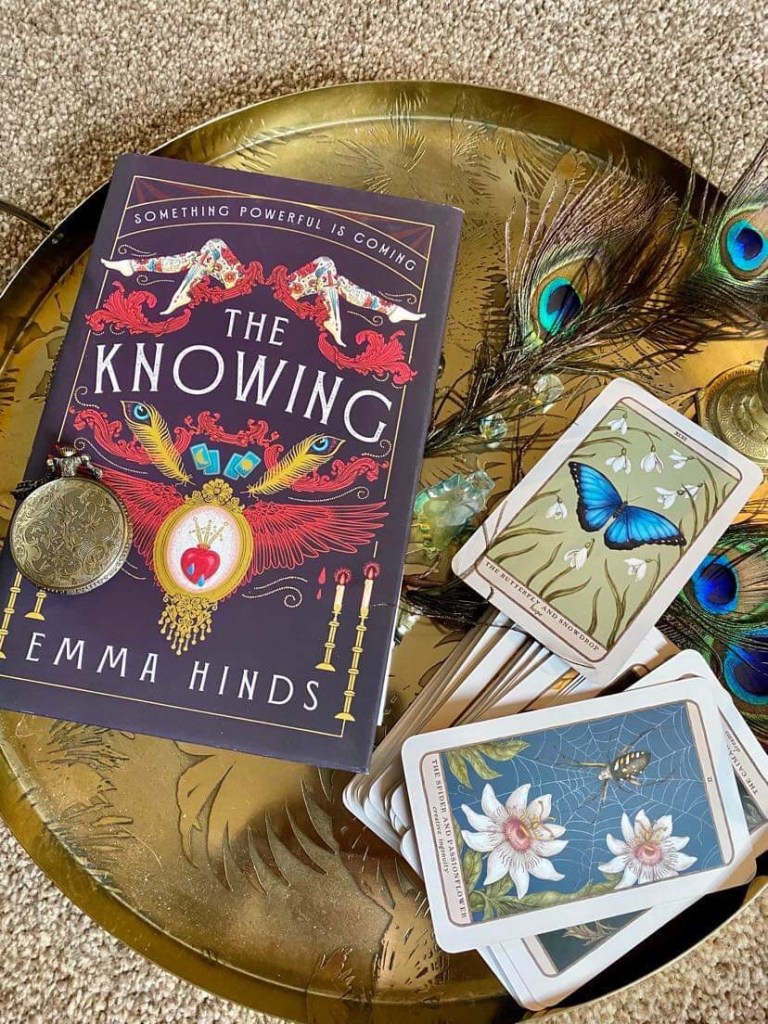
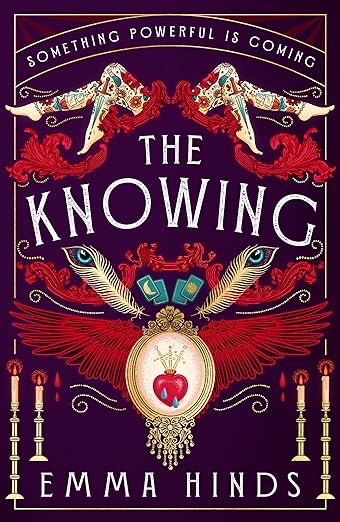
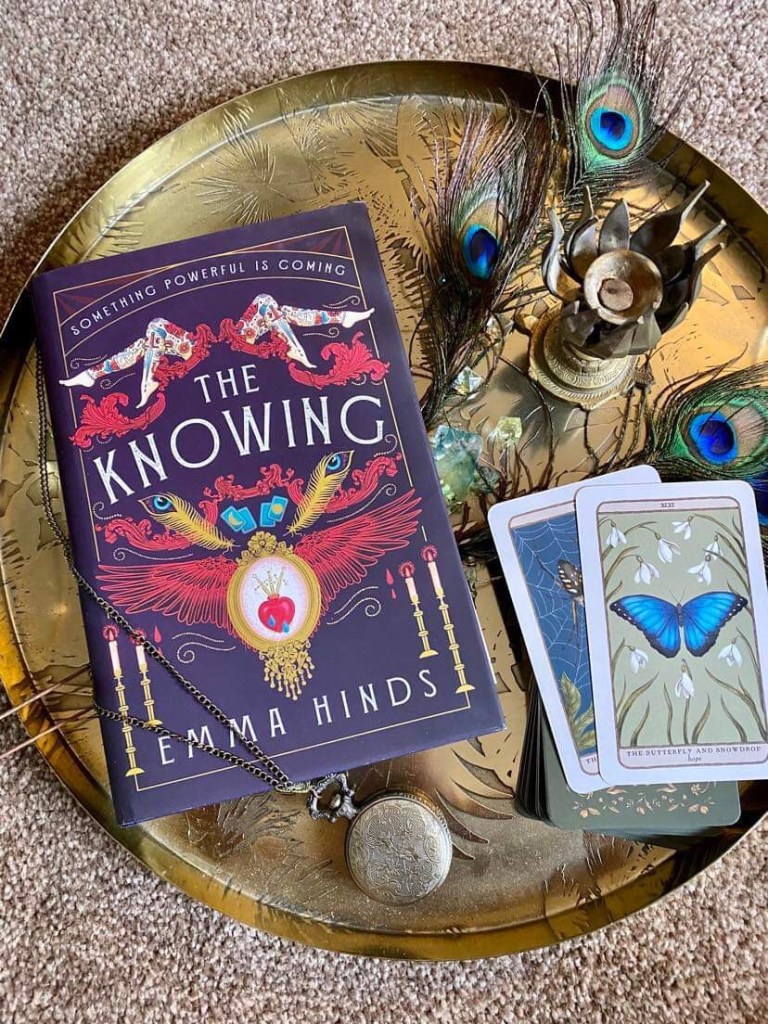
The Knowing by Emma Hinds

If this author had a certain readership in mind when writing this debut novel, she might as well have had a picture of me. I would have picked this book up on the strength of the cover alone. Three of my all time favourite books are: The Crimson Petal and the White set in the seedier areas of 19th Century London with a heroine is a prostitute called Sugar; The Night Circus that appears without warning, held together by real magic and the result of an epic battle between two magicians; The Museum of Extraordinary Things where our heroine is a mermaid, exhibited in a freak show at Coney Island. See what I mean? It’s perfect for me. The blurb promised me a tattooed mystic, a show run by a prostitute with dwarfism and real life New York gangs and Barnum as their contemporaries. It’s quite a heady mix and I was enthralled from page one. Flora is a tattoo artist and mystic, in an abusive relationship with a tattooist called Jordan, a member of an Irish gang the Dead Rabbits. She longs for escape from the slums of Five Points and the degrading relationship she’s been in since she was a teenager. Then she meets Minnie, a beautifully dressed woman whose dwarfism has led her to a career as a circus and freak show performer. Minnie promises Flora a career and life in an opulent town house uptown, not to mention her freedom. However, the freedom she’s promised comes with certain conditions.

Flora stays with Minnie, in her palatial bedroom and bathroom within the townhouse that belongs to her lover, Chester Moreton. Avoiding Chester’s advances seems to be one condition of Flora’s freedom, along with constant worry about being found by Jordan’s friends in the Dead Rabbits gang. She’s to earn her keep as a mystic, with her tattoos and tarot cards the centre of attention. Minnie knows that Flora’s skills run deeper, although she’s always been warned to hide them and ‘tell nuthin’. Flora’s gift is ‘the knowing’ an ability to summon the dead that’s always on the periphery of her performances, but kept at bay by Flora’s willpower. It’s when she’s pushed into allowing her spirit guide to break through that the trouble begins. At the Hotel du Woods she exposes the abuser and killer of a young boy, setting in motion a chain of events including suicide, murder and madness. Flora and Minnie escape and voyage to Manchester, where they try to survive on what they can earn from sex work and Flora’s tarot readings, but the past is never far behind and once again Flora finds herself at the centre of a love triangle where obsession and betrayal are medicated with drugs and alcohol and a tragic end seems inevitable.

I felt fully immersed in the novel immediately as the author creates an incredible sense of place. Five Points is grimy, deprived and controlled by gangs. I loved how the author used the grotesque throughout the novel and particularly where she’s describing the slums of New York and Manchester, filled with rats, unwashed bodies and an ever present grime that’s sticky on the skin. This took me straight back to university and Kristeva’s theory of abjection. The things that women’s bodies can do are magical or monstrous. Flora’s body is a conduit, allowing the dead to speak through her. Minnie’s body is seen as grotesque by others, but she wears angel’s wings and when she’s in bed with Flora it’s the softness of her skin that’s noticed first. All women have a transformative power to produce another life, when their pregnancy isn’t terminated by the men in their lives. The author doesn’t hold back when describing the reality of life for women, particularly women like Flora who haven’t had choices. Bodies seem divorced from minds when it comes to sex with men, as torsos become slabs of meat, breaths are whisky sour and skin is raw, red and broken. Sex is rarely consensual and always comes with violence. It’s a grim world so any chance to escape into a better future is welcome. The gentle and pleasurable attentions of Minnie are a promise of things to come, where Flora could have choices and sexual experiences that come from a loving place instead of a place of ownership.

No one here is perfect. Each character is morally grey and I loved that complexity in their personalities and the ambiguity it brought to their actions. I was also transfixed by the sheer power of Flora’s ‘knowing’. Mediumship has become something of a joke these days, a formulaic stage show where people are picked out of the audience and told that Grandad left the priceless clock in the attic or under the floorboards. It’s always benign and a little bit boring. Flora’s spirits are not there to guide her and they’re definitely not benign. They want to expose truths, tell the subject’s darkest secret and even mete out punishment where necessary. The first seance at Hotel du Woods is successful from one viewpoint – the spirits do come through – but a disaster from the other side when a vengeful spirit talks a man into killing himself. No one will be booking them again! Flora will have to learn how to control the spirit’s power and keep the vengeful ones at bay. Strangely, for a story where our main character is prevented from carrying children, this felt like a story about mothers too. It’s about the lack of a mother when growing up and how the lack of motherly love and protection feels, but it also shows the people who fill that void and become mother figures. This could be a difficult read for some, especially the sexual violence, but it would have been the daily reality for women living in 19th Century slums and for some women in upper Manhattan townhouses. I desperately wanted Flora to survive and have the right people around her, to give her the feeling of being loved and wanted. This is an addictive read of vengeance, betrayal and obsessive love and I couldn’t stop reading until I knew the truth of Flora’s fate.

Meet the Author

Emma Hinds is a queer novelist and playwright from Manchester. She focuses on untold historical Queer narratives and her debut novel, The Knowing, from Bedford Square Publishers is coming in January 2024.

Posted in Squad Pod

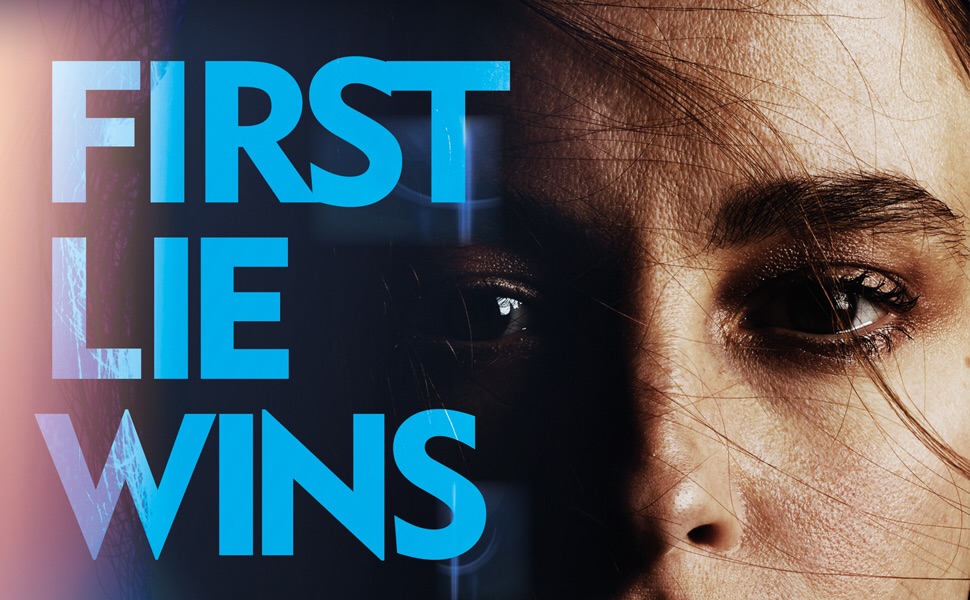
First Lie Wins by Ashley Elston

Everything she is about to tell them is a lie…

Evie Porter has everything a girl could want: a doting boyfriend, a house with a picket fence, a fun group of friends.

The only catch: Evie Porter doesn’t exist.

First comes the identity. Once she’s given a name and location by her employer, she learns everything there is to know about the town and the people in it.

Then the mark: Ryan Sumner.

The last piece of the puzzle is the job. For Evie, this job feels different. Ryan has gotten under her skin and she’s started to picture another kind of life for herself – one where her boss doesn’t pull the strings. But Evie can’t make any mistakes. Because the one thing she’s worked her entire life to keep clean, the one identity she could always go back to – her real identity – just walked right into this town. A woman, who looks just like her, has stolen her name – and she wants more. As Evie’s past begins to catch up with her, can she stay one step ahead to save her future?

Evie has never seen herself as the sort of girl who could have everything. The things many young girls dream of -marriage, security, family – have never really factored in her life, especially since she started working for the man on the end of the telephone. They’ve never met in person, but he is able to control her whole life even the person she’s going to be. From petty theft and credit card fraud she has been noticed by the boss and honed into one of his best operatives, able to throw on a new identity and slip into the mark’s life within a matter of days. Strangely, despite her criminality, the writer managed to make me feel empathy for Evie and even root for her a little bit. Her relationship with Ryan is at a stage where the friends are asking questions and want to meet this new woman. It’s a small town where everyone knows everyone else, especially the moneyed circles that Ryan grew up in. The rules dictate that he can dabble where he likes when it comes to liaisons, but when it comes to settling down it should be within their hallowed circles. An outsider might be tolerated if they’re rich, but Evie isn’t and neither is she one of them. As she dresses for a lunch date with the women from his circle of friends I found myself willing her to succeed. She’s clever in how she dresses – a bit like them but with a boho edge, enough to be accepted but still seem as an individual. I was nervous for her because it felt like she was being dropped into a shark tank and I had to keep reminding myself that Evie is the shark. As the weeks go by she’s starting to think she can relax, when she’s thrown a curve ball. At a horse racing event Ryan introduces her to a couple she’s never met before, a man who he clearly knows well with a woman who is closer to home than either of them realise. This is an old friend, but he’s with a woman Ryan doesn’t know and when she introduces herself Evie realises that her boss is playing games. The woman introduces herself as Lucca, Evie’s real name. Could she be about to lose the only thing that belongs to her – her true identity?

The author cleverly uses shorter chapters in between the main timeline that take us back through Evie’s previous jobs. They are glimpses into her past, teasing the reader with tidbits of information until we finally meet the real Evie. Sometimes our questions are answered and other times we’re surprised by a revelation that takes us in a different direction. We see how she’s pulled into her boss’s orbit, then tested until she’s the best operative he has. There’s a sadism and an element of gaslighting in what he does, sometimes sending multiple people on the same job to see who gets there first – the first prize is staying on his payroll. Although, people don’t get to just walk away from his employment because they know too much. So far Evie has had a great track record, earning well and staying on his good side, but on the last job something went wrong, could this new game be her punishment? There are only two people who Evie trusts, one is her fellow operator Devon – a man she employs to keep her safe and one step ahead of the competition. They have become close over time and he is her family. The other person is George, a messenger man for the boss who brings her the paperwork for each new identity. Can she really trust both of them? Oddly, even though she knows there must be something dodgy about him, she’s starting to trust Ryan more too and that’s a dangerous place to be. She knows there must be something dodgy about his haulage operation, because why else would she be here? Yet, even though this started as a job she feels they’re growing closer. It’s a rare feeling that’s never happened to her before. Could her fake relationship be developing into something real? The author keeps us guessing to the final pages and it’s so tense as Evie has to question the loyalties of those closest to her and juggle her burgeoning feelings for Ryan. Could he be playing her too? Has the boss pitted them against each other to see who comes out on top?

I enjoyed the back story of how Evie had ended up in this life of criminality. It was interesting to see her pluckiness and street smarts pitted against the women in Ryan’s circle. They’re so awful that I was rooting for her. The author has created an original and pacy thriller, full of intrigue and adrenaline filled moments. I found my usual loyalties and moral code turned completely on their head and was left hoping the con artist would win.

“There’s an old saying: The first lie wins. It’s not referring to the little white kind that tumble out with little to no thought; it refers to the big one. The one that changes the game. The one that is deliberate. The lie that sets the stage for everything that comes after it. And once the lie is told, it’s what most people believe to be true.”

Published by Headline 2nd January 2024

Ashley Elston lives in North Louisiana with her husband and three sons. She was a wedding and portrait photographer for ten years so most of her Saturday nights included eating cake, realizing no shoe is comfortable after standing for more than six hours and inevitably watching some groomsman do the alligator across the dance floor. Now, Ashley helps her husband run their small business and she writes as often as possible.

Posted in Squad Pod

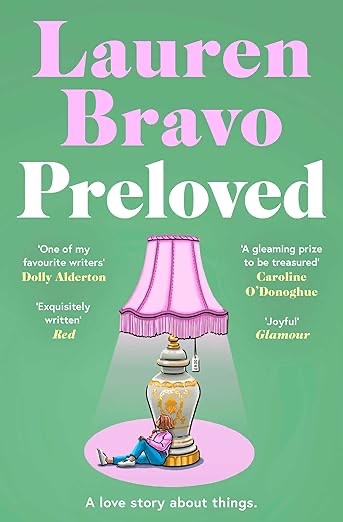
Preloved by Lauren Bravo

Gwen is coasting through life. She’s in her mid-thirties, perpetually single, her friends are busy procreating in the countryside and conversations with her parents seem to revolve entirely around the council’s wheelie-bin timetable.

And she’s lonely. But then, isn’t everyone? 

When she’s made redundant from a job she hardly cares about, she takes herself out for a fancy dinner. There she has the best sticky toffee pudding of her life and realises she has no one to tell. She vows to begin living her life fully, reconnect with her friends and family, and finally book that dentist’s appointment. 

Gwen decides to start where all things get a second chance: her local charity shop. There, with the help of the weird and wonderful people and donated items bursting with untold stories, Gwen will find a way to move forward with bravery, tenacity, and more regular dental care.

Dazzlingly witty, Preloved is a tale about friendship, loss and being true to yourself no matter the expectations. Lovingly celebrating the enduring power and joy of charity shops.

I absolutely loved this charming book about Gwen’s experiences volunteering in a charity shop, but so much more besides. Gwen has lost her job and this catalyst starts a new train of thought. Maybe instead of jumping into the next thing that comes along, she could budget her redundancy money and spend the summer taking stock. Gwen lives alone and some distance from her family, but she hasn’t struck up any meaningful friendships either. She’s alone a lot of the time. She desperately wants change but doesn’t know how to get there. So she takes a voluntary role at her local charity shop a couple of days a week, giving her time to work out what’s next in a more focused way. I felt for Gwen immediately and identified with the life crisis she’s in, having just turned 50 and facing the very real possibility that I might never be well enough to work has felt strange. I’ve never been a focused, goal setting type so I got Gwen’s tendency to drift into work without a plan. As everyone else was leaving sixth form knowing what they wanted to do, I had no clue. It took years for me to move into mental health and my own ill health provided the emotional kick up the bum – if I didn’t choose something I could do flexibly and get some training completed – my MS could advance and I was going to run out of time. Some people do simply drift, but with Gwen I knew there was an underlying reason. Her inability to call her parents and tell them about her redundancy was a powerful first clue. Did she want to avoid making them worry? Would they be angry or disappointed in her? 

Gwen tells her story and she’s a great narrator. We slowly start to build up a picture of the way she relates to others and how limited her support system seems to be. As mentioned she seems estranged from her parents and her best friend Suze has become a mum, such a big life change that means there’s less room for friends. As she gets to know the other volunteers at the shop there’s an opportunity to make friends. One lady in particular strikes up a friendship, inviting Gwen round for dinner to get to know her. The charismatic and energetic Connie is a blast of fresh air rather than a breath. She’s full of ideas to Gwen participating in life again which is inspiring and exciting, but also ever so slightly exhausting. There’s even a touch of romance too, although that’s never the real focus. The author knows this is Gwen’s story and if there is change it has to come from within herself. Only Gwen has the power to change her life and make it fulfilling again. In between the chapters there are small, magical snippets about objects or clothing that’s found it’s way to the charity shop, invariably telling a story about the person that’s donated it or the person who decides to buy it. I loved these little gems because they highlight the importance of these transitional items in their owner’s lives, but also the role of the charity shop in it’s community. They serve a practical purpose in terms of recycling, but also a community purpose because staff know people who pop in on certain days, whether they might need some company and if they don’t turn up, checking if they’re okay. They are places where lonely people can expect a cheery smile and a chat. It sounds simple, but these little interactions can be the highlight of someone’s day. 

However, what the author captures most beautifully is the magic of charity shops. How many of us bookish types have been thrilled with a find from the bookshelves – for me it was a pristine folio society edition of Isak Dennison’s gothic tales. We might find: the perfect pair of vintage shoes; a 1990’s grunge dress that’s come full circle again; old China tea sets that will look beautiful at an afternoon tea party. You never know what might jump off the rails or shelves and become a precious ‘find’ rather than someone else’s clutter or trash. I love that, in a way, Gwen is like one of these objects – made redundant and sitting patiently in place until a new future opens up before her. However, before that happens she must go through the process of clearing out, sorting through the rubbish and throwing out what’s broken. For Gwen that means confronting a life changing event that’s so painful it’s blocking her whole life. I was rooting for her, right up to the very last page.

Published on 18th January 2024 by Simon and Schuster UK

Posted in Squad Pod

One of the Good Guys by Araminta Hall

Cole is the perfect husband: a romantic, supportive of his wife, Mel’s career, keen to be a hands-on dad, not a big drinker. A good guy.

So when Mel leaves him, he’s floored. She was lucky to be with a man like him.

Craving solitude, he accepts a job on the coast and quickly settles into his new life where he meets reclusive artist Lennie.

Lennie has made the same move for similar reasons. She is living in a crumbling cottage on the edge of a nearby cliff. It’s an undeniably scary location, but sometimes you have to face your fears to get past them.

As their relationship develops, two young women go missing while on a walk protesting gendered violence, right by where Cole and Lennie live. Finding themselves at the heart of a police investigation and media frenzy, it soon becomes clear that they don’t know each other very well at all.

This is what happens when women have had enough.

Wow! This blows your eyes wide open. I warn you not to start reading at night, unless like me you have a total disregard for tomorrow. Even if I wasn’t actively reading it, I was thinking about it. Cole has moved to a remote part of the coast for a total life change after the collapse of his marriage. Cole considers himself one of the good guys. In fact he would probably call himself a feminist. So the marriage breakdown and Mel’s reasons are inexplicable to him. He was proud of Mel, who was launching her own business, but as they crept towards their late thirties he was starting to wonder if they were leaving it a bit late to start the family they both wanted. After trying for a while, they’d decided on IVF which he knows was more gruelling for Mel than him, but was she really giving their embryos their best chance? Always working late, not eating properly and popping back to work after implantation were all endangering their chances of a viable pregnancy. Despite cooking and caring for her, and supporting her business dreams, Cole is now facing a pile of legal papers on the kitchen table – divorce papers, financial settlements and perhaps most hurtful, a form agreeing to destruction of their final three embryos. What can he have done to deserve this?

As he slowly heals he notices someone is living in the old coastguard’s cottage, a woman he can’t stop watching. She seems so feminine, but yet grounded enough to put her wellies on with her dress while she’s gardening. She is an artist and when they meet a party she introduces herself as Lennie. When he asks what it’s short for she tells him it’s Leonora. No one calls her that but Cole insists. It suits her better he tells her, softer and more feminine. Could the two of them strike up a friendship, or even more? In the background, getting air time on radio and television, are two young women in their twenties who have decided to take on a challenge – a fitting continuation of the work done by women’s movement in the 1970’s. They want to highlight the daily misogyny and violence against women that’s endemic in society. So they plan to walk over 300 miles of the coastal path, camping out each night in a tent. They know that this is dangerous but they want to support a domestic violence charity and raise as much awareness as possible for those women and girls living in daily fear of violence. However as the girls go missing one night it seems they may have fallen victim to their own cause. Could they have become lost and died from exposure? Could they have misjudged their steps and fallen from the cliffs? Or has something far more sinister happened – one of their online trolls following through on comments like ‘you deserve to be raped’.

I loved the way the author put her story together, using fragments from lots of different stories and different narrators. Just when we get used to one and start to see their point of view, the perspective shifts. I thought this added to the immediacy of the novel, but also reflected life and the constant bombardment of information and misinformation we sift through every day. As well as Cole we have narration from Lennie and Mel interspersed with transcripts of radio shows and podcasts, Twitter threads and TV interviews. All give their perspective or commentary on the casual misogyny and violence against women that almost seems like the norm these days. Just like real life the book sometimes felt like a merry-go-ground of opinion, counter argument and trolling. Sometimes I was left so twisted around I wasn’t sure what I thought any more. The only thing I was sure about was much I disliked every single character, but I couldn’t stop reading them either. I would believe one narrator, but then later revelations would blow what I thought right out of the water. As the missing person’s case continues, everyone is weighed up then torn apart on social media and in the press. It made me ask questions: about the nature of art and it’s ethics; about whether all men truly hate women; to what lengths do we go to protest; when is enough, enough? It’s been over a week since I finished this extraordinarily controversial story and I still can’t stop thinking about it. Is it too early to predict a book of the year? I don’t think so.

Thanks to Macmillan and The Squad Pod Collective for my proof copy of this amazing novel.

Meet The Author

Hello, I’m a writer of thrillers and a lover of stories. 

My latest book, ONE OF THE GOOD GUYS, was inspired by a groundswell of anger I’ve been feeling myself and amongst the women I know. Because if we don’t feel safe in the world, then it’s still a very unequal world. This is my answer to what happens when women have had enough of being scared.

I hope you enjoy this tense story set in a remote seaside location. I’d love to know if you guess the twist – I’m on instagram and X @aramintahall 

And, if you do enjoy this one, I’ve published five other novels, EVERYTHING & NOTHING (2011), DOT (2013), OUR KIND OF CRUELTY (2017), IMPERFECT WOMEN/PERFECT STRANGERS (2019) & HIDDEN DEPTHS (2021

Posted in Squad Pod

Her by Mira Shah

This has been my ‘in the bath’ book for the last three or four days and I don’t mind saying that I have been like a prune during that time because I kept reading ‘just another chapter’. I also drove my other half crazy by topping up the hot water every time I gave in to the story. I have to follow an unusual reading regime in my house. It was built in 1787 and has a lot of ‘quirks’, including the emptying of my entire tub of bath water into the kitchen below instead of the usual plumbed in route. A further quirk is that if I take my iPad into the bathroom to read from Kindle or NetGalley, it simply switches itself off. I can sometimes bypass this by putting the iPad into airplane mode before going into the bathroom, but it’s not a fail-safe method. So I tend to read real proof copies in the bath and downstairs, keeping my iPad for bed where I don’t want to wake my other half. I don’t like to put on a reading light or do what my sister-in-law does and go to bed in my brother’s night fishing hat with built in head-lamp. She didn’t like to keep him awake by reading with a light on in their camper van.

So now you know that we’re all a bit odd in my family, I’ll come back to the book, one that grabbed me straight away and kept hold of me till the final page. There’s just something compulsive about it. It could be the short chapters that are so snappy and often end on a cliffhanger. It could be the alternating narration between neighbours Natalie and Rani who live across from each other. The women have such strong narrative voices and are both in completely relatable positions in life; Natalie is the beautiful neighbour with the killer job and the lovely house across the road that Rani has been coveting since she moved here. In fact as soon as the For Sale sign went up she was over there with a different name and address, swanky clothes and great back story in order to view it. So when Natalie moves in Rani knows exactly which high end work tops she butters her toast at in the morning and the surprisingly sheltered garden made for children to play in. We all think the grass is greener at times, but few of us would go to the lengths that Rani will.

Natalie does appear to have everything going for her. She’s undeniably beautiful with honey blonde hair and designer clothing. Naturally she’s the high flyer in a corporate law firm, with the opportunity to become the youngest ever woman at her firm to become partner. Her handsome and older husband Charlie is attentive and thoughtful. The pair married in Tuscany and Charlie is keen to start a family, hence the beautiful home in just the right area. Sometimes, when people really love a house they’ve looked at, they might claim to feel immediately at home there or be able to see them living in these perfectly curated spaces but for Natalie it’s less of a feeling and more of a certainty. She has lived here before, right at the beginning of her life, before her dad left and when she had an imaginary friend, Noemi, to run around with. She knows she was running a risk not telling Charles, but when the elderly next door neighbour doesn’t seem to recognise her she seems to have a got away with it. What is luring her back there? Her mother Luella is unlikely to enjoy a trip down memory lane, in fact she’s the first to remind Natalie how her dad left them in a terrible state, financially as well as emotionally. She likes to remind Natalie what a good man Charles is: all Charles wants is to settle and have a family; to look after Natalie; to take the burden of her high-powered career away; help her cultivate the right sort of friends. Surely that can’t be bad?

Rani lives opposite in her cramped flat, being a full-time mum and wearing supermarket clothes. She watches Natalie settle in and we can see a perfect psychological storm starting to build. Rani will happily admit that, at times, Natalie’s lifestyle must be hard to keep up. Although that revelation only surfaces when she realises it does take work to be that put together and professional. At first though, Rani feels almost as if Natalie is a fantastical creature who simply drifts out of bed with not a hair out of place, naturally smelling of roses and never working for her enviable figure. Rani feels out of place next to her, in her daily mum uniform of leggings and a t-shirt. However, these thoughts come from Rani’s anxieties and feelings of inadequacy. Although she loves her beautiful girls, she does miss going to out to work and having something that is entirely hers. She also feels disconnected from Joel, although she loves him the years of babies and toddlers have wiped out any spontaneity or time for themselves. When Joel commits a huge betrayal Rani has a huge choice to make. Can they find a way back to each other?

Just like Rani, we are drawn in more and more by Natalie’s life. Cleverly the author has made sure that we get to see more than Rani, through Natalie’s chapters we get her inner thoughts while everyone else is still seeing the perfect exterior. We know that she’s having nightmares again, full of people close to her but who don’t look quite right. Noemi is back too, breaking into her thoughts and becoming so tantalisingly real. As the two women become friends, I was actually a little bit scared for Rani. She doesn’t know what she’s getting into, although she has an inkling the perfect marriage to Charles may not be all it seems. I was unsure where the danger was coming from, was Charles much more dangerous than he at first appears or is Natalie’s strange past all in her imagination? Why did she choose to live in this house, when her childhood seems like an endless nightmare and Luella comes across as a harsh and controlled woman? It’s as if she adopted the Royal family’s motto for her family; ‘never complain, never explain’. Rani is the first true friend Natalie has had in her adult life, so she’s not always as open as she could be or is so used to thinking what Luella’s take on the situation might be, she comes out with something that sounds wrong. As Natalie starts to enjoy a little freedom, what will Charles’s reaction be and what dangers might the two women face if they start to dig up her past? This book is so well paced and the tension just keeps building. I enjoyed the female characters in the book and the unflinching depiction of domestic abuse that forms part of the story. I found Rani a more engaging and rounded character than Natalie, but of course she would be – none of her past is missing. Natalie comes across as a borderline personality, she has no sense of her own identity and has always gone along with the strongest person in the room, adopting their values and attitudes as her own. Rani has a lot more to lose, not material possessions but a family and roots that she knows keep her grounded. It’s knowing the threat and knowing how much Rani has to lose that kept me reading, even if the bath water was getting a little cold.

Meet the Author

Mira V Shah is a writer, former City lawyer turned legal editor and the proud owner of three good dogs. She is the daughter of Indian African parents and lives in North London with her husband and the pack – merely a few miles from where she grew up, although she often dreams about retiring in Italy should her intermittent lottery entries prove successful.

She wrote her first ever novel in 2020 during the first UK lockdown after studying on the Curtis Brown Creative novel writing course. HER was published by Hodder and Stoughton in November 2023.

Posted in Publisher Proof

Strong Female Character by Fern Brady

When I received an email asking if I’d be interested in a finished copy of Fern Brady’s memoir I was typing ‘Yes please’ before I’d even finished reading the email. Something about Fern made me sit up and take notice when I was half-watching a late night showing of Live at the Apollo. She was such an interesting mix of intelligence, wit, forthrightness and that little bit of indefinable magic that captures an audience and takes them with you. By the time she appeared in Taskmaster I was a big fan. If you listen to my partner, this was because of her approach to tasks, which is very like my own. She dissected tasks in a very analytical way that was completely obvious to her, then when her team mates didn’t catch on (quite often in one case) she would speak to them as if they were insufferably stupid. Apparently the look in Fern’s eyes and her tone of voice reminded him of me watching a quiz show or reality series. Every Monday I become inexplicably wound up by Mastermind, especially when contestants pass questions instead of just throwing an answer out there. It’s obvious to me that if passes count against you in the tie-break situation, it would be better to simply shout ‘banana’ if you don’t know the answer. They might look stupid but they’d have no passes. So I guess I felt something of a kinship with her and the way our brains work, although in other respects we couldn’t be more different.

I had heard that Fern was recently diagnosed as on the autistic spectrum, a very hard won diagnosis for women and something I’ve had some experience of in my mental health work. Any mental health team has it’s share of people who are neuro-divergent, especially older people whose schools were simply unaware of the condition, whatever gender the individual might be. I’ve seen first hand the devastation that can be caused by undiagnosed autism. The inability to fit in at school, the crippling ‘shyness’ that leads to bullying, subsequent depression and anxiety, institutionalisation from long periods on psychiatric wards, coping strategies such as self-imposed isolation, drinking or drug taking. Then all the social issues that come along with these difficulties, like struggling to find or keep employment, poverty, neglect or even being preyed upon by those in society who look out for people to cuckoo or subject to modern slavery. This may sound extreme to some, but I’ve personally seen all of the above happen to people who were not diagnosed early. Not that diagnosis is the cure for all of these terrible life circumstances, but labelling does help because it enables the individual to access benefits, housing, support and some degree of protection in society. Fern was one of these people, born in an era when diagnosis was more common, but usually reserved for boys. The problem is that autism looks very different in women – women don’t fall into the Sheldon Cooper, no girlfriend, obsessive, Star Trek loving, nerd stereotype.

Fern was diagnosed exactly twenty years after she first told a doctor she had autism. Prior to that doctors told her she couldn’t possibly be autistic because she made eye contact and she’d had boyfriends (as if the ability to maintain a heterosexual relationship inoculated you from being neuro-divergent). One night after performing, Fern told her boyfriend that an audience member thought she might have Asperger’s and she should read a book called Aspergirls. She wasn’t sure she wanted to, but as her boyfriend started to read up on it he said to her ‘this is an exact description of you’. Often the signs of autism are simply missed in women because we have become too good at disguising or masking how we truly feel in a situation. Women are able, particularly in a work environment, to put on a mask. For example, all through school and university I was terrified of public speaking. I didn’t want everyone’s eyes on me, I would start to feel hot, sweaty and go completely purple in the face. Eventually I became so embarrassed about being purple in the face I became anxious about that too. These symptoms were exacerbated by a terrifying exercise at the beginning of teacher training where we had to pick a song that told a story and then sing it, unaccompanied in our seminar group. I felt like my mum’s pressure cooker, shuddering with heat and pressure until it gave a high pitched whistle and she would let the steam out. It felt like that but with nobody on hand to release the pressure. When things like this happened and even now when I’m involved in confrontation I’m right back there sweating, with a face like a giant blueberry. I didn’t last a term. However, if I am teaching a whole class of people, like one of my therapeutic writing workshops, I barely break a sweat. I have put on the mask of an expert, someone who knows what they’re talking about and how much it can help. So, as an expert, I can do the task.

Fern struggles to fit in wherever she goes in life, whether it’s school, college or work. She can’t fathom the unspoken social codes that govern our existence, especially in groups of women. Her obsessions are not the archetypal trains, sci-fi or comics. As a child she was obsessed with learning languages, culminating in a successful application to Edinburgh University to study Arabic and Persian. She had no desire to visit the countries where these languages were spoken, she just loved doing verb drills and was running out of languages. She played the piano incredibly well at a young age too, but because these were seen as ‘positive’ pastimes it never occurred to anyone to label them as autistic tendencies. She funded her studies at university by stripping, somewhere she felt that she fitted in. Although that was probably due to the fact that most stripper’s dressing rooms have their fair share of misfits. She didn’t have to be herself in the club, she put on a persona and got on with it. The early years of her comedy career were harder, mainly because there were more social codes to navigate, such as having to pretend she would like to have coffee and ‘get to know’ someone instead of just asking if she could be considered for a panel show slot. Sometimes it felt as if people wasted years playing games just to work with someone, when a simple ‘do you want to work together?’ Would have sufficed. She noticed that people didn’t like her to be so direct, particularly standing up in meetings and asking what the point was? This was something I used to do regularly in my last job as an advocate for people with disabilities. I had a huge case load on part-time hours so if someone called a meeting with no obvious point I would ask if they could quickly get to the point so I could assess if it was worth me sitting there. I remember saying that I’d like to get back to my desk and ‘do some real work’. I was there for the clients who needed me, not my colleagues. In hindsight I can see why our receptionist was terrified of me.

I loved the honesty of this book. Fern is brutally honest, even about those things that perhaps don’t show her in the best light. Her frankness about the autism, but also the mental health problems and addictions she experienced as a result of remaining undiagnosed, is admirable because it will help people who are in that destructive cycle. Her teenage years are particularly fraught and painful to read, mainly because she’s totally misunderstood by those who are supposed to love her. I found Fern’s retrospective take on those years and her post-diagnosis discussion with her mother was particularly moving. Fern is staunchly feminist and I loved that her inability to read social cues meant she didn’t internalise some of the bullshit that still exists in society about how women should behave. When in a shared flat at university, her flat mates basically slut-shamed her for having too many men at the flat. Hilariously, Fern replies that there seven days in a week and she’s shown restraint by only bringing a man back four times. There are other laugh out loud moments like this, where Fern is more than happy to create humour from her situation. There were some similarities in religious upbringing that resonated with me and made me smile.

This is not the typical redemptive narrative arc memoir where someone transcends their illness/situation in order to tie up any loose ends and become the ‘superhuman’ that we should all emulate. I have a disability and this is a narrative trope I can’t stand to see in disability memoirs. People don’t overcome a permanent disability, whether it’s visible or invisible; physical or mental. We learn to accommodate it and live alongside it if we’re lucky. Fern shows that beautifully by describing her difficulties working within her industry with her diagnosis. She describes the Taskmaster experience brilliantly and it’s refreshing to read a celebrity admitting to ongoing issues with their health. It’s more of that brutal honesty she’s famous for and it helps to know that what we see on TV doesn’t come without it’s difficulties, particularly the meltdowns which are a result of the stresses and strains of filming. As you can probably tell I identified strongly with this book and I have wondered if it might be worth mentioning to my GP that I have struggled with social codes; have been told that people are scared of my rather forthright opinions and ideas; have physical crashes after periods of stress; avoid parties; have repetitive mind games or movements that calm me and help me go to sleep; prefer to deal with people in writing; watch repetitive programs that are calming to me; prefer to see friends one to one rather than socialise in groups of women. These may just be personality quirks, but I have wondered and could see how a label might help me understand some of my behaviours. I really welcomed Fern’s story in terms of understanding myself better, whether diagnosed or not, but I also admired her ability to bare her soul and find the funny in her difficulties.

Meet the Author

Fern Marie Brady (born 26 May 1986) is a Scottish comedian, podcaster, and writer. Before becoming a stand-up comedian Brady worked as a journalist. She achieved fame as a stand-up comedian by entering stand-up competitions such as at the Edinburgh Film Theatre. As a result of her success as a stand-up she was invited on to comedy panel shows such as 8 Out Of Ten Cats. In 2020 she became a podcaster when she co-created a podcast entitled Wheel of Misfortune.

Brady was diagnosed as being on the autistic spectrum in 2021, as an adult. She has been active within the field of autism education since learning of her diagnosis. She has written how she has been dealing with the diagnosis in her 2023 memoir Strong Female Character.

Posted in Squad Pod

Past Lying by Val McDermid. Karen Pirie Series.

I was so blown away by my first Val McDermid novel last month that I couldn’t settle to any other reading when I knew that this sequel was waiting for me on the book trolley! So in the end I gave in. We left DCI Karen Pirie at the beginning of lockdown, which she’d decided to spend in her lover Hamish’s huge Edinburgh flat with her new constable Daisy. It was a hurried and unexpected choice, with Hamish retreating to his Croft in the Highlands where he was now making hand sanitiser and profiting nicely. The team are officially stood down from working, but Karen had ordered some cold case files to be taken to the flat so they could at least read and review them. She isn’t known for being good at following rules so lockdown is a challenge, with her midnight walks and checks on the old flat she bends things a little to suit her. It would be impossible to imagine her not working though and luckily her DS Jason gets an unexpected call that triggers something. A librarian is using lockdown to file away items donated to the archive and she has been working on the papers of the late author Jake Stein. In them she found an unfinished manuscript that bothered her. The narrator is a crime writer and he abducts an aspiring writer from one of his workshops, a young girl called Laurel Oliver. He describes taking her to a shack in the woods and strangling her, then planting her body in the garage of another crime writer, Rob McEwan. Rob and Jake met at a festival and became friends, with Jake being the big name and Rob just starting out. They discovered a mutual love of chess and would play each other each week at Jake’s house, where he has the classic car, the high end kitchen decor and a beautiful wife. A beautiful wife who seems to get along with Rob very well. Stars in any creative field can fall as well as rise and as the tables start to turn for these two could Jake have carried out this murderous blueprint? All the way down to the detail of concreting her body into the inspection pit of Ron’s swanky new house? Since once of their cold cases is a young girl called Lara Hardie who did disappear in Edinburgh at the time of this manuscript, Karen can’t afford to take any chances.

It must have been very hard to write tension and excitement into a situation where people can’t go far and are largely researching online and in archives. It’s not fast paced activity and I always remember laughing out loud at a moment in one of Dan Brown’s thrillers where his hero tries to make running to the library sound macho and full of action. It could have gone horribly wrong, but somehow Val McDermid brings real tension to the case. That’s without the anxieties of every day life at this very surreal time, which are captured perfectly by the author. She relates to us the strange emptiness of a busy capital city and the difficulty of having to apply the intricacies of COVID legislation to your every movement, even if it’s just looking at papers in a library. Karen is possibly even more impatient in her working life, so there are times to bend the rules a little, but it means she never slips into the slapdash lazy ways of other people who seem to think it’s an excuse to shut down. Her boss ‘the Dog Biscuit’ thinks she could easily stay at home because HCU cases can wait; the case has no urgency, since the main suspect, Jake Stein, will never come to trial. However, maybe because she lost the love of her life to murder, Karen understands that the sooner a victim’s family finds out the truth, the better. This applies whether the suspected killer is alive or not. Besides, despite what the manuscript suggests, she’s not going to pigeon hole the case just yet. Things aren’t always what they seem.

Her relationship with Hamish is proving difficult and not because he’s in the Highlands on his croft. They actually have more problems when they see each other, probably because they shouldn’t be. There’s something about Hamish’s cheerful ability to make money out of other people’s misery that rankles with Karen. He’s angry to find Karen isn’t home in the night, but she’s out walking. Unbeknownst to Hamish, there’s an asylum seeker staying in Karen’s flat after threats were made against his life. It’s a favour for a good friend and Karen is so moved by his situation that she buys him new clothes and stocks the cupboards. We see a side to Hamish we’ve never seen before when he has a confrontation with Daisy after turning up at the flat with no warning and against regulations. This time he threatens Daisy, but on a second illegal visit he becomes violently angry to find this strange man staying in Karen’s flat. When he tries to break the door down Karen is furious: it’s her flat and it’s not Hamish’s place to tell her who can be in it; he has no empathy for the man’s plight and zero understanding of his own privilege. Plus, he shouldn’t be here in the first place. Could this be the end for their relationship? Despite this, the COVID journey that Daisy and Karen have is a lot better than most. They have plenty of room in the flat they’ve borrowed from Hamish and their frustrations are small ones, mainly confined to how difficult it is to investigate a case when every establishment seems to be working to their own idea of the rules. Jason has a truly terrible experience when his mum is hospitalised with the virus, because they can’t see her or reassure her unless the staff organise a FaceTime session. Jason’s brother takes his frustration to the extreme while Jason is just terribly sad and scared for her. The snippets of her small team’s personal lives are more apparent now that their living and working spaces are in one place. Jason is in lockdown with girlfriend Eilidh, but has proximity made their relationship stronger? Daisy has been hiding a secret about her personal life and finds lockdown a difficulty when embarking on a new romance.

Karen’s grief for Phil ebbs and flows, not helped by the extra time she has to overthink. She has to think about whether her relationship with Hamish gives her what she needs. They miss a shared outlook on the world, something she had and lost with Phil. The case didn’t go the way I expected at all, making the last sections really gripping. Karen’s ability to get results in a global pandemic doesn’t surprise me. Where some potential witnesses try to fob her off, using COVID as an excuse, Karen always tries to find a way to stay within the law while still getting the job done. I love seeing her come across petty bureaucracy, it makes me laugh because they have no idea what they’re dealing with if they take on Karen. This is crime fiction at it’s best and I’m now starting back at the beginning with the first novel featuring this interesting and incredibly insightful detective.

Out on 12th October 2023 from Sphere

Meet the Author

Val McDermid is a number one bestseller whose novels have been translated into more than forty languages, and have sold over eighteen million copies. She has won many awards internationally, including the CWA Gold Dagger for best crime novel of the year and the LA Times Book of the Year Award. She was inducted into the ITV3 Crime Thriller Awards Hall of Fame in 2009, was the recipient of the CWA Cartier Diamond Dagger in 2010 and received the Lambda Literary Foundation Pioneer Award in 2011. In 2016, Val received the Outstanding Contribution to Crime Fiction Award at the Theakstons Old Peculier Crime Writing Festival and in 2017 received the DIVA Literary Prize for Crime, and was elected a Fellow of both the Royal Society of Literature and the Royal Society of Edinburgh. Val has served as a judge for the Women’s Prize for Fiction and the Man Booker Prize, and was Chair of the Wellcome Book Prize in 2017. She is the recipient of six honorary doctorates and is an Honorary Fellow of St Hilda’s College, Oxford. She writes full-time and divides her time between Edinburgh and East Neuk of Fife.

Posted in Publisher Proof

Bone Rites by Natalie Bailey

“I collected the first bone when I was twelve… Such a tiny little bone, more like a tooth. I only kept it to keep him safe.” Kathryn Darkling, imprisoned in Holloway, is facing death by hanging for her vengeance killing. Haunted by a spirit, she still hopes to perform the ancient black magic that will free her soul, or her struggle to punish the mighty will have been in vain. Will the love of her life come to her aid? Or can she find a way to escape her fate?

Bone Rites is a dual timeline story, split between the early 1900s and 1925 when Kathryn Darkling is in Holloway, the women’s prison, where she awaits the date of her own execution, by hanging. While waiting Kathryn starts to tell her story to a priest, assigned to hear her final words and offer solace as she awaits death. She begins with the first time she found a bone and performed a rite, then works her way through to her training as a doctor in Edinburgh. All the while she is developing her practice of performing bone rites, a black magic focused on freeing her soul. As she tells the stories of her bones, I started to wonder about her version of events. Clearly she’s an incredibly intelligent and determined woman and I admired that, but should I be taking the owned of a convicted murderer? Is she a reliable narrator? She seems to be slipping into madness as the tale goes, but does that mean everything she’s telling us is a lie? The thing I most enjoyed was getting inside Kathryn’s head and trying to work out what makes her tick, rather like holding a counselling session with this imaginary character. As we drifted back into her early childhood, I became won over by this obstinate little girl who won’t be deterred from her purpose. We learn about how tough her upbringing was, alongside her little brother Freddie. I love a dark story with a sense of foreboding and I thought this was perfectly pitched for a Halloween read. It’s not a traditional ghost story but Kathryn is certainly haunted, like many of us are by our pasts. I thought the book perfectly fitted it’s timelines, one before and one after WW1 considering how much change and trauma happened in-between. I also enjoyed the LGBTQ+ representation in the novel, it’s fascinating when authors ‘write back’ to a time where minority groups are under represented. All in all this was a well- written piece of historical fiction with a rather macabre edge and an admirable heroine.

Out on Nov 1st from Aurora Metro Books

Meet the Author

Natalie Bayley is author of ‘Bone Rites’, ‘Lolita’s Daughter’, ‘The Secret Life of Grandmothers’, ‘The Witch Who Saved Paris’ and ‘The Lady Lyttle Murder Mystery’ series. Her dark thriller ‘Bone Rites’ was selected for the 2019 Blue Pencil long list, went on to be shortlisted for the 2021 Blue Pencil First Novel Award and was long listed for the 2021 Caledonia prize before becoming the Winner of the Virginia Prize for Fiction. Natalie lives in NSW, Australia and enjoys ocean swimming and whispering to cats. Born in the UK, she’s been in sunny Australia since 2000. Her books are always about justice and how a seemingly powerless underdog can always find a way to fight back. My spooky historical fiction novel, BONE RITES, won the prestigious Virginia Prize for Fiction and is being published by Aurora Metro books October 2023. Enjoy!