Posted in Publisher Proof

The Bookshop Ladies by Faith Hogan

One sure way to entice us bookworms is to write a book about books and this one has all the warmth, friendship and female empowerment we would expect from a Faith Hogan novel. It’s like receiving a big warming hug, but in book form. Our central character is Joy and we meet her at a hugely traumatic point in her life. Joy lives in Paris with her husband Yves Bachand, a well-known art dealer who has made the career of many a new struggling artist. Joy has a very successful career of her own in public relations. Everything is turned upside down when Yves suffers a massive heart attack and in his dying moments manages to tell Joy he has a daughter. Over the next few weeks as Joy starts to comes to terms with losing her husband, she’s also trying to get her head around his dying words. Could he possibly have been unfaithful? The whole idea adds a new level of devastation because Joy and Yves couldn’t have children of their own. Their solicitor approaches Joy about an unusual request in his will, he has bequeathed a painting he owned to a girl called Robyn. When Joy returns home she goes into Yves’s office where the painting hangs and studies it, trying to see what he saw in this particular work of the Seine. Joy takes in the muddy coloured water, the litter and the green surroundings and thinks it could be a river anywhere. There is nothing to suggest this is the Seine that lovers travelling to Paris dream of walking along. Where are the honey coloured stones, the lampposts and the bridges? It takes time for her to notice anything about it she likes, but there is a streak of light that catches her eye in the top corner. The more she looks at it the more she wonders whether it was this glimmer that kept bringing Yves back to the painting. A promise that the grey cloud would lift and the sun would break through changing the whole scene to something altogether more hopeful. In this moment she makes a decision, she will travel to a Ireland and put this painting in the hands of Robyn herself.

We’re back in the gorgeous coastal village of Ballycove, where our other main character Robyn lives. Robyn has a small bookshop, with largely second hand books on various subjects from rare birds to trains. It’s been just ticking over for several years and while Robyn’s family own the building, including her flat above the shop, she has taken over the stock from it’s previous owner Douglas who has retired. To say the shop is a little tired is an understatement and it really needs some pizzazz to bring it back to life again. Yet it is lovely in it’s own way with it’s floor to ceiling bookshelves and their carvings of animals, little rooms for every subject and a darling little children’s section in a small nook. Although Robyn has put the stock onto online book sites she isn’t exactly turning a profit and she wonders if she’s made a big mistake. Her grandfather Albert suggests that she hire someone or find a volunteer to do a few hours in the shop to free Robyn up for business planning and working on her vision for the shop. Into this scenario walks Joy, renting the flat above Albert’s and hoping to stay for only a couple of weeks in order to pass on the painting. She can see that it belongs with Robyn as it was painted by her mother Fern. Joy both welcomes and dreads meeting Robyn and definitely her mother. If she can do it quickly, almost like ripping off a band aid, she can get the painting handed over and be back on a plane to Paris in no time. However, she hadn’t factored Robyn into the equation. She walks past the shop twice plucking up courage and when she does finally walk in she’s so taken aback by this girl who looks so much like Yves she could only be his daughter. Stunned into silence, Robyn’s chatter takes over and she assumes that Joy is there to apply for the position she advertised in the window. In her stunned state Joy doesn’t argue and soon she is Robyn’s new book assistant. Joy walks away wondering what on earth she’s done and how she’ll cope if Robyn’s mum turns up before she leaves.

I really enjoyed the women in this novel, especially Joy who is so resilient and generous with her time, her emotions and her heart. I felt like Ballycove worked it’s usual magic, but Joy matches it, bringing her enthusiasm and joie de vive to the bookshop. She’s using her professional skills of course, but there is just that touch of enchantment about her too. She’s like a bookish Mary Poppins, thinking up events and little touches to brighten the place including a toy train track which is one of my favourite parts of the brilliant Barter Books in Alnwick, Northumberland. Yet it’s the fact that she’s giving her time and expertise freely to her husband’s secret daughter that makes her all the more extraordinary. Yet I think she gets something special from Robyn too. Robyn allows her to spend time with someone with the characteristics and mannerisms of Yves and in a sense it seems to comfort her that he’s still here in the form of this shy, bookish girl. I also think Robyn balances some of the grief Joy went through when they lost their own baby who would have been a similar age. I was waiting to see what would happen when Robin’s mother Fern arrived. Would Fern immediately know who Joy was and what would it do to her relationship with Robyn? I felt sad that Joy might lose everything she’s built in Ballycove and the sense of family she’s enjoyed with Robyn and her grandfather. There’s a lovely little romantic subplot and a lot of personal growth on Robyn’s part, particularly the unresolved emotions around being bullied at school. The word that always best describes Faith’s writing is charming. It’s like making new best friends and although her stories are emotional and raise serious issues, they are always uplifting too. This felt like a lovely warm hug in a book and added lots of ideas to my imaginary future bookshop.

Meet the Author

Faith Hogan is an award-winning, million copy best selling author. She is a USA Today Bestseller, Irish Times Top Ten and Kindle Number 1 Best Selling writer of nine contemporary fiction novels. Her books have featured as Book Club Favorites, Net Galley Hot Reads and Summer Must Reads. She writes grown up women’s fiction which is unashamedly uplifting, feel-good and inspiring.

Her new summer read The Guest House By The Sea is out now and it’s a great big welcome back to Ballycove for her readers.

She writes twisty contemporary crime fiction as Geraldine Hogan.

She lives in the west of Ireland with her family and a sausage-loving Labrador named Penny. She’s a writer, reader, enthusiastic dog walker and reluctant jogger – except of course when it is raining!

http://www.faithhogan.com

http://www.Facebook/FaithHogan.com

Twitter @gerhogan

Instagram @faithhoganauthor

Posted in Squad Pod

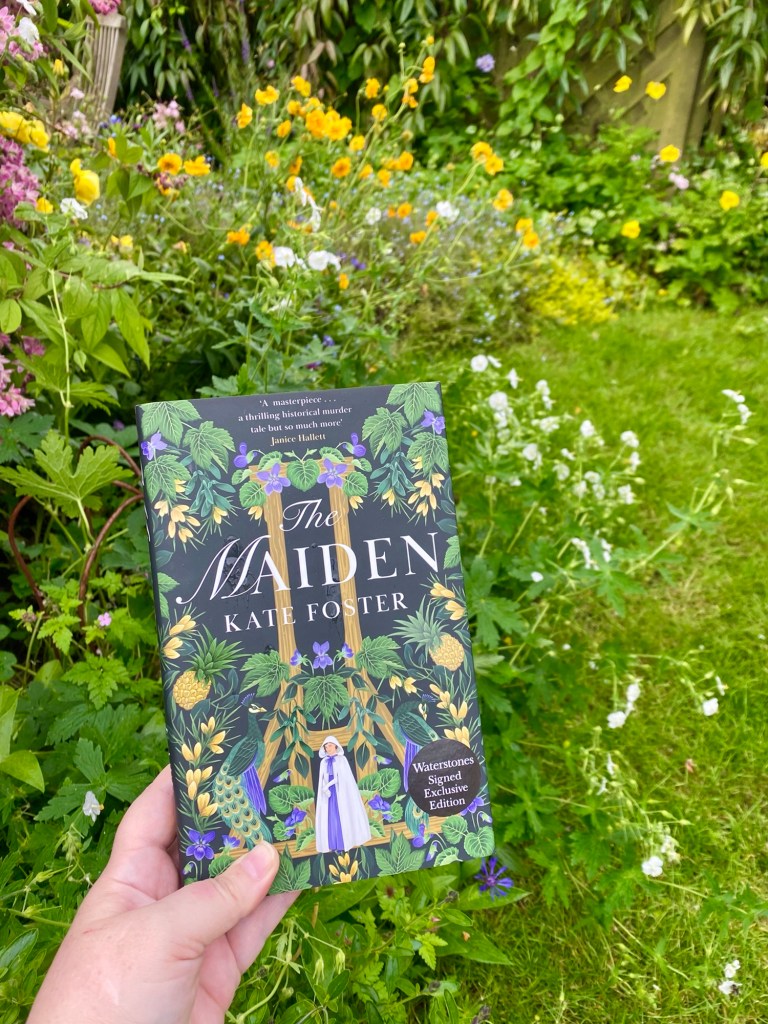
The Maiden by Kate Foster

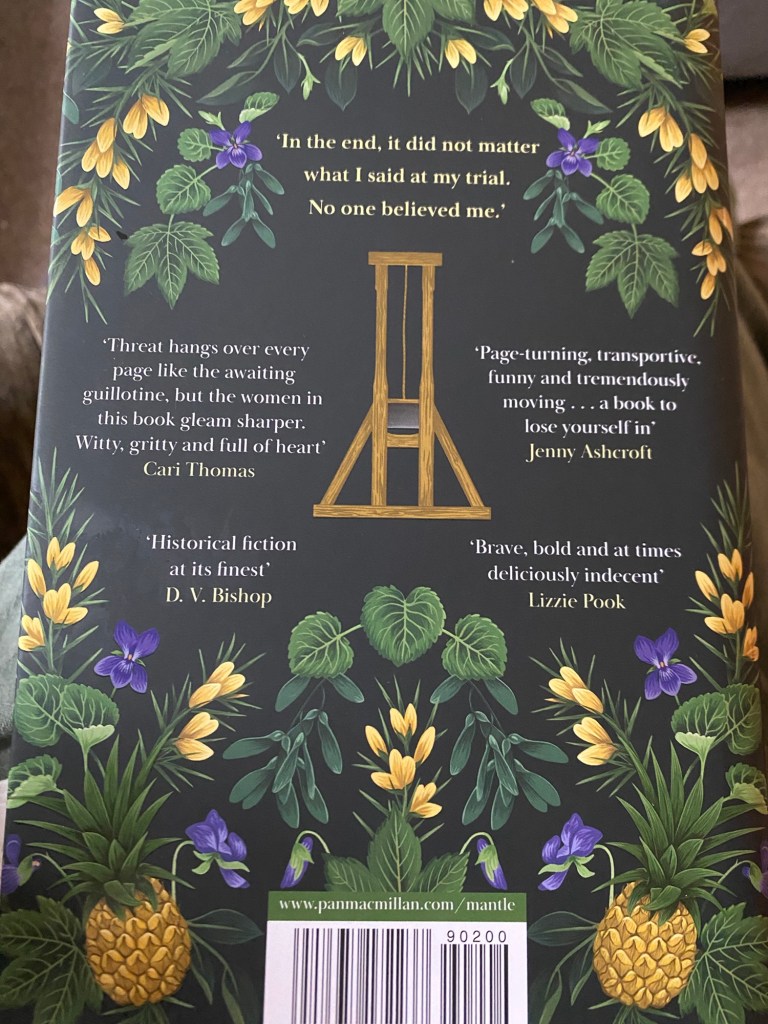
Kate Foster has taken a real life news report and turned it into an incredible read, full of historical detail and intrigue. It’s the late 17th Century and Lady Christian Nimmo lives with her sister Johanna and her mother at their lavish home in Scotland. Although their home is becoming less lavish by the month because since their father’s death she notices pale spaces where paintings or rugs once lived. Their fortunes are at the mercy of their uncle by marriage. James Forrester is laird of the neighbouring castle where he lives with Christian’s invalid aunt Lillias. James comes for dinner and departs with a little more of their family history packed away for sale. The girls must marry well and it is Johanna with her bubbly personality and pretty face who is proposed to first. For her wedding to Robert Gregory, Christian’s uncle sends her a beautiful brooch to wear and she is pleased at his kindness and the acknowledgement that she might feel left behind that day. Not all of her uncle’s attentions are welcome though and although he keeps pressing her to visit his castle to sketch and paint with her aunt she isn’t sure. However, she does enjoy the attentions of the fabric merchant Andrew Nimmo who brings them new fabric and entertains them with tales of sailing to far off lands and the night sky at sea. Christian daydreams about sailing alongside him and seeing some of these sights. Noticing her enthusiasm he cuts her a piece of silvery fabric that is the colour of a stormy sea. Next time he brings a sample of midnight blue velvet, shot through with an ocean green and she is very charmed. Marriage to him would be interesting and adventurous, all the things that Christian yearns for when she reads novels and poetry. So when he proposes she accepts happily, sharing her sister’s new found marriage advice and looking forward to being mistress of her own house. Yet only months later she is detained for the suspected murder of her Uncle James, killed by his own sword under a sycamore tree in the grounds of his castle. How has it come to this and will Christian have to face the infamous ‘Maiden’, a guillotine where Scotland’s aristocratic condemned meet their fate?

However, this isn’t just Lady Christian’s story. The novel is split into two narrators: Christian and Violet, a prostitute from Mrs Fiddes’s brothel in Edinburgh. For both, there are two timelines; the present after the death of the laird and the events leading up to it. Until finally past and present come together. Violet is a very young girl, and has been resident at the brothel since Mrs Fiddes sold off her virginity. The scenes within the brothel are brilliant; bawdy, coarse and incredibly colourful. Mrs Fiddes knows every customer’s taste and predilection, she’s shrewd and knows that this gives her a certain amount of power. She’s keeping their secrets close until she really needs them. Violet’s friend is fellow resident Ginger, a skinny young girl with red hair who lives on the same corridor. One evening a rather distinctive man comes in to choose a girl, a man who doesn’t wear a wig which is unusual. He looks past Violet and chooses Ginger, but it’s not long before she is also occupied. It’s not long before Violet hears a terrible commotion and she rushes down the corridor, but it’s too late. The man is gone and Ginger is left like a broken doll on the floor. In the aftermath Violet longs for her luck to turn. When she’s out one morning she notices a wedding taking place and lingers to watch because sometimes men who are celebrating and have had a few drinks might look for a girl. She’s in luck when a very wealthy looking man catches her eye. Before long he’s slipped into the parlour and is so pleased with Violet that he makes an offer. He would like to take her back to his castle for the weekend. As he shows her a secret room in one of the castle’s turrets she is amused by the illuminating art work, but amazed by the lavish surroundings she will be staying in and the maid who will bring her meals and make sure she has what she needs.

Like all the servants Oriana knows the laird has his amusements and they are kept quite separate from the lady of the house whose illness usually keeps her tucked away upstairs. Violet could get used to this sort of treatment, but the power lies with the laird. She might have fallen on her feet for now, but what if he loses interest? When he starts to receive visits from a lady of quality, Violet fears it’s the end for their liaison and starts to think up a scheme to get the upper hand. Meanwhile, Lady Christian’s marriage is not what she expected, not only is Andrew often away for long periods leaving her behind, there has been no physical contact between them. She and her sister often read and giggled over the ‘marriage book’ they found in the library at home, especially when Johanna was engaged. However, Andrew has never made an advance to his wife. Christian is still untouched and although she has a wonderful home and wants for nothing, she can’t help but want to be desired. As her uncle invites her to his castle for a visit she can’t help but think about the special attention he has paid her over the years and her pulse quickens. Could she really think about having an affair with her aunt’s husband? I could understand her need to be wanted, why should she be satisfied with simply being the lady of the house. For many the huge house, the money and the security for them and their family would be enough. It’s interesting to see the interplay between the two characters; Violet would probably be happy to settle for the things Christian has, but Christian could be contemplating risking it all for the freedom to express her sexuality. I felt she was chasing just a glimmer of the adoration that her sister Johanna has enjoyed all her life thanks to the luck of being born beautiful.

The author has created two incredible characters in these very different women, both are bravely sexually transgressive but sadly live in a world where men hold all of the power. The settings are wonderfully evocative and range from lavish to squalid, a combination we see clearly in the city of Edinburgh. As Violet observes the wedding, noting the quality of the guest’s clothing she is also aware of watching her footing lest she slip in the contents of a chamber pot flung from a window into the street below. The gap between rich and poor is more of a canyon, best expressed when Violet finds an opportunity to roam the castle and finds a brooch in the shape of a sword. It’s just one of many that the residents have left languishing in a drawer, but Violet sells it she would have enough money to start a new life. The threat of sexual violence is always close by, not just for Violet and Ginger but for Christian too once she has lost the respectability her title and her husband gave her. What the author does that makes this novel sing is combining the time period and story to the structure of a modern crime thriller. Just when we think we know everything, she trips us up with a different perspective or twist we didn’t see coming. Some revelations throw a completely different light on everything that has gone before bringing that excitement and compelling you to keep reading. I genuinely didn’t know how it would be resolved until we arrived there and once we did it was obvious this was the only way for it to end. Utterly brilliant and definitely a debut worthy of it’s accolades.

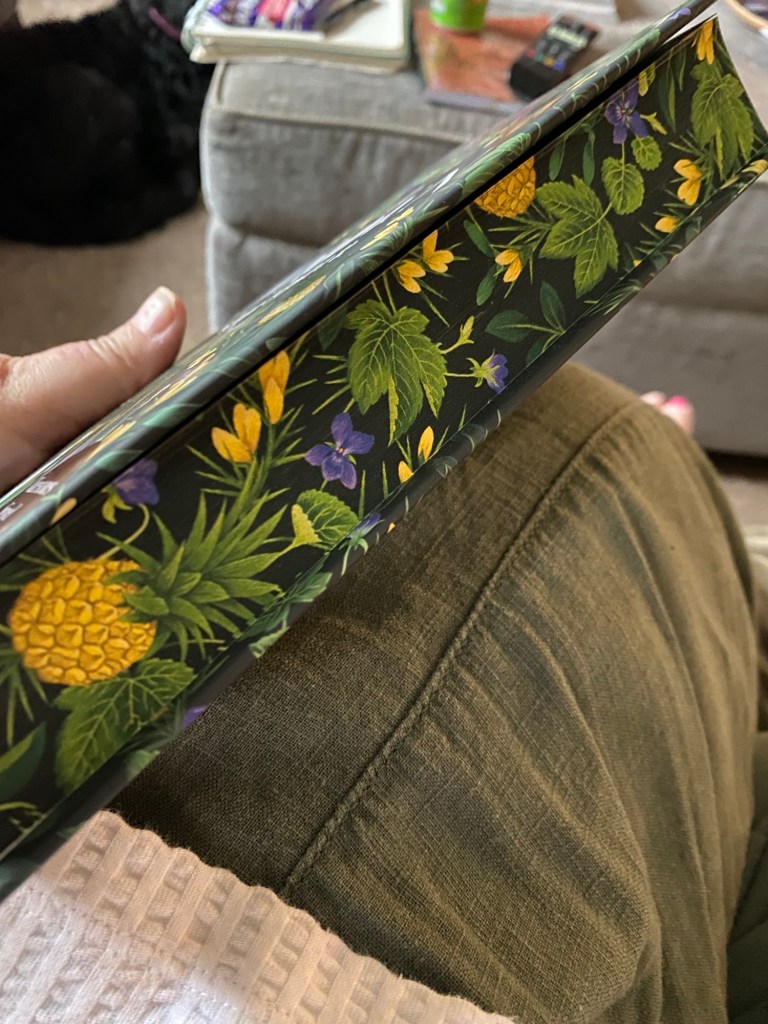
Out now in paperback. Pictured copy is the Waterstones special signed edition.

Meet the Author

Kate Foster has been a national newspaper journalist for over twenty years. Growing up in Edinburgh, she became fascinated by its history and often uses it as inspiration for her stories. The Maiden won the Bloody Scotland Pitch Perfect 2020 prize for new writers. She lives in Edinburgh with her two children.

Kate’s new novel The King’s Watch is out on 6th June and is a Squad POD Collective book club pick for next month.

Posted in Netgalley, Publisher Proof

The Small Museum by Jody Cooksley

A shiver thrilled my spine at the thought of what might be contained in collections to be kept away from ordinary eyes…

London, 1873. Madeleine Brewster’s marriage to Dr Lucius Everley was meant to be the solution to her family’s sullied reputation. After all, Lucius is a well-respected collector of natural curiosities. His ‘Small Museum’ of bones and specimens in jars is his pride and joy, although firmly kept under lock and key. His sister Grace’s philanthropic work with fallen women is also highly laudable.

However, Maddie soon finds herself unwelcome in what is meant to be her new home. The more she learns about both Lucius and Grace, the more she suspects that unimaginable horrors lie behind their polished reputations.

Framed for a crime that would take her to the gallows and leave the Everleys free to continue their dark schemes, Maddie’s only hope is her friend Caroline. She will do anything to prove Maddie’s innocence before the trial reaches its fatal conclusion.

When choosing novels I have two favourite genres, historical and crime fiction. Author Jody Cooksley has combined the two in his compelling novel that was the winner of the Caledonia Novel Award. In Victorian London 1873, Madeleine Brewster, the daughter of a doctor, is courted by Dr. Lucius Everly a man seemingly intent on finding the missing link that will prove the evolutionary step between fish and mammals. He collects fossils and curiosities at his London home, hidden away in his ‘Small Museum’. His sister Grace undertakes work with fallen women at a house called The Evergreens which is held in high regard.

Madeleine accepts his proposal, imagining her life as a doctor’s wife will be similar to that of her mother and father. However, when she reaches her new home, life is very different to what she expected. She feels unwelcome in her new home, with housekeeper and gardener Mr and Mrs Barker seemingly in charge, keeping exactly the same routine from when Lucius’s father was alive. There is no space for her to organise or manage her own house and if it isn’t the Barkers, her sister-in-law Grace drops in unannounced and chooses the drapes or orders tea as if she is the mistress of the house, despite having her own. Having dreaded the wedding night, Lucius begs her forgiveness for his tiredness and departs to his own bedroom. Despite their reputations, Madeleine starts to suspect Lucius and Grace of unimaginable horrors. She hears a baby’s cry in the night, her husband arguing with his sister and items seem to appear and disappear from her room with alarming regularity. Despite trying to help her husband in his work and fitting in with the Barker’s schedule, Madeleine finds herself labelled as ‘nervous’ and then framed for the most terrible of crimes. A crime she did not commit. As she faces a trial Madeleine’s only hope is her friend Caroline, but can she prove her friend’s innocence before she is hanged?

This was an absolute cracker of a gothic mystery with a heroine who is in a terrible catch 22; either shut-up and be complicit in something horrific, or keep asking questions and be labelled mad by her in-laws. She is utterly powerless, but tries everything within her limited options to improve her situation. Madeleine is intelligent and no one could say she hasn’t tried in her marriage. When finally Lucius does come to her room it is a perfunctory act where she might as well have been an inanimate object. She tries to get used to these new couplings but there is certainly no love or even tenderness in it. The outcome is further tragedy for Madeleine and a means for Lucius to control her movements even further and an excuse for their nightly encounters to stop. Once physically recovered, she tries to use the only gift she has, her ability to draw in a style that would work for scientific illustrations. She is then let into Lucius’s small museum, a veritable treasure trove of nature’s oddities and anomalies, but also bleached bones of various different creatures that he hopes will prove his theory that fish developed into birds and mammals. He is gratified that Madeleine has a strong stomach, able to converse freely about the best ways of bleaching bone. He has lost many a servant girl who accidentally discovered the museum or his workshop where he prepares the animals whose bones he uses. They embark on a trip to Dorset together where he is showing his latest finds to his peers and Madeleine hopes they will enjoy combing the beach for fossils and she can do some more sketching. However, she has underestimated Lucius’s fanaticism about his theory and the terrible lengths he will go to in order to prove it.

The author brings all of these strands together beautifully, the glimpses into the past finally catching up with the present and Madeleine’s terrifying predicament. Will she be found guilty of infanticide? Caroline is desperately trying to uncover the truth and proves herself to be an incredibly loyal friend. I had so many questions as the book neared it’s end and the tension was riveting. Was Madeleine really seeing her sister Rebecca in the streets around Evergreens? Were items genuinely disappearing and appearing in her room? Was she sane or had she succumbed to mental illness? What were the noises in the house at night and can she really hear a baby crying? In fact the answers involved new maid Tizzy, a down to earth girl who’d had her baby at Evergreens and she provides an incredible light bulb moment! Everything around me disappeared (including the housework and cooking tea) as the first glimmer of truth came to light. I had to finish this book right now! I loved the elements of feminist thinking that were brought into the text including the use of Christina Rosetti’s poem ‘Goblin Market’ which tells of men who will take away and ruin any young maiden who isn’t on her guard:

‘Dear you should not stay so late, Twilight is not good for maidens; Should not loiter in the glen In the haunts of goblin men.

‘Goblin Market’,Christina Rosetti, 1862

Rossetti worked as a volunteer in a religious house helping ‘fallen women’ for eleven years, women like Tizzy and Madeleine’s sister Rebecca. Although Rebecca is seen as the fallen woman by respectable people, Madeleine realises that her own marriage simply gives her a mask of respectability. It does not mean they are happy, in fact it disguises what is truly going on behind closed doors. She knows it would take irrefutable evidence to save her and this is why she is in utter despair during her trial. She can’t imagine anyone breaking through that polite veneer of respectability to help her, because they risk their own reputation. Yet she needs someone respectable to vouch for her because housemaids and fallen women hold no power. Caroline is a liminal person in this respect, she is accepted in society as the daughter and wife of doctors, but her father and Ambrose are psychiatrists, dismissed as ‘mind benders’ by Lucius and this sets them apart. They’re respectable enough to be believed, but not so restricted by their standing in society that they daren’t speak up. Caroline is well aware of how powerless women are and the fates that can befall them. When she first sees marks on Madeleine’s wrists she knows she’s seen them before, on Ambrose’s recovering patients; ‘they were women too’. I loved Madeleine’s relationship with Tizzy too, they clicked immediately and talked with a freedom Madeleine’s never had before. She is her one friend in a house where the wife’s place is to keep quiet and only appear when necessary. All in all, this is a really well written and researched novel with all the ingredients I love in an historical novel: a fantastic sense of time and place; strong female characters that break through the Victorian ‘Angel in the House’ stereotype; those Gothic elements to bring a sense of mystery. Then added to this are the addictive twists and turns of a crime novel. What an incredible debut this is!

Out now from Allison and Busby.

Meet the Author

Jody Cooksley is an author represented by literary agent Charlotte Seymour at Johnson & Alcock.

In 2023 she won the Caledonia Novel Award with The Small Museum, a chilling Victorian thriller that’s due for publication with Allison&Busby in May 2024. Sequel to follow in 2025.

Previous novels include award-nominated The Glass House, a fictional account of Victorian pioneer photographer, Julia Margaret Cameron (Cinnamon Press, 2020), and How to Keep Well in Wartime (Cinnamon Press, 2022)

She is currently working hard on her next novel, another Victorian gothic set by The Thames. She has previously published essays, short stories and flash fiction.

Jody works in communications and lives in Surrey with her husband, two sons, two forest cats and a dangerous mountain of books.

Posted in Squad Pod

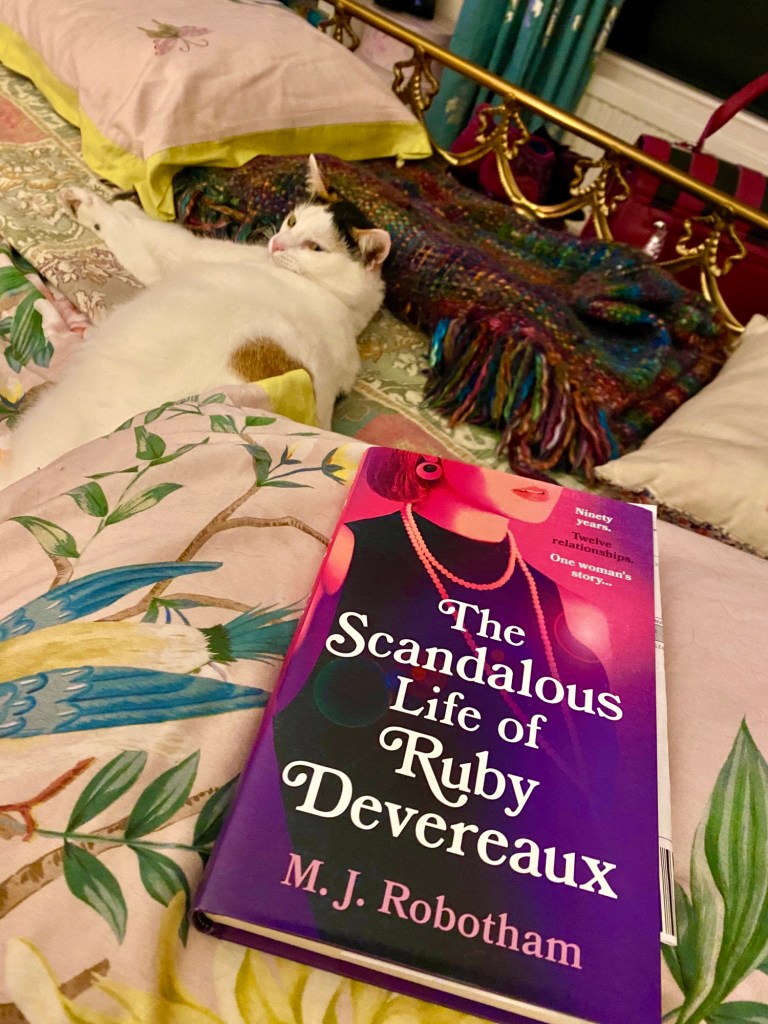
The Scandalous Life of Ruby Devereaux by MJ Robotham

Everyone knows Ruby Devereaux’s books. But no one knows her story… until now.

From a teenager in wartime England to a veteran of modern-day London – via 1950’s New York, the Swinging Sixties, Cold War Berlin, Venice and Vietnam – Ruby Devereaux has lived one hell of a life: parties, scandals and conflict zones, meeting men and adventure along the way. In a writing career spanning seven decades and more than twenty books, she’s distilled everything into her work. Or has she?

There were times during this novel where I wished I was the transcriber in the room, just so I could be the first to hear this lifetime of stories. Ruby Devereaux’s editor is under pressure from above. Ruby is almost 90 years old and the publisher is determined to get the one last book she owes them. So her editor suggests that she closes her illustrious writing career with a memoir. Ruby was on the verge of packing up her typewriter, but she does perhaps have one story left in her, or maybe twelve…

The bulk of the book is Ruby’s memoir as told to her transcriptionist Jude, each chapter named after a man in her life and telling the story of their relationship. Although it’s not as simple as that, through these affairs she takes us through the latter half of the 20th Century and right across the world. It takes us through one woman’s history, but also the ever changing landscape of the world around her, taking in those unforgettable moments and some fascinating social history too. I used to be fascinated with my 90 year old grandmother and the changes she’d seen over a lifetime in the countryside: from horse drawn ploughs to huge tractors; from cycling everywhere to her children owning cars; from handwritten letters to online communication. This has similar vibes, but on a bigger scale as Ruby moves from peacetime to war and across three continents with the world constantly changing beneath her. The author weaves together the social history, world events and Ruby’s growing up with romance and scandal. Ruby has spent seventy years telling her character’s stories, but now it’s time for her own. It’s definitely a life well lived as it’s taken her to the 1950’s New York of the Mad Men, Berlin and Budapest during the Cold War, into Vietnam and into relationships with twelve different men. These are the men who’ve inspired her novels. Make no mistake though, this isn’t really about the men in her life, this is about Ruby. Each relationship captures where Ruby is at that point in her life; a chapter in her personal growth. Ruby easily outshines her male counterparts because she has such a zest for life and breaks society’s rules and expectations about women everywhere she goes. As a young girl in post-war England she’s very matter of fact about her first sexual experience, wanting it out of the way before she leaves home. She’s an incredibly resilient character, despite experiencing loss and heartbreak at a very young age. She makes a promise to herself and the person she’s lost to keep going, grabbing opportunities whenever they arise. Never realising that all along she’s writing the most exciting story she’ll ever tell.

It’s this resilience and insistence on saying yes to experiences that take her across the globe. Starting in London, she lives and falls in love in the romantic city of Venice, via a terrible experience in New York that spawns her second book. She then explores Saigon and Budapest, before finally ending up in Cornwall. She spends time in a commune, dabbles in the world of spying and has assignments in war zones. Just as in her love life, she’s tough and doesn’t dwell on failures or knock backs, she chalks it up to experience and moves on. There is a danger of some of the men in her life becoming a mere backdrop to Ruby and her escapades, it’s very hard to keep up with her energy. However the later sections in England felt a little more detailed and because they’re not as filled with adventures, the men have more room to develop. Their relationships with Ruby feel deeper and more real. Ruby is always at the centre though and I loved following her character development. We can see which experiences have given her strength and a sense of boundaries. I love a scandal so this was definitely a fun romp in parts, whilst also having a sense of reflection and self-awareness as Ruby becomes an older lady. There’s a bravery in her willingness to share her life, particularly her emotions and those difficult parts of her life – relationships that went wrong, the loss, motherhood and her mental health. However, despite this we’re caught up in Ruby’s humour and ability to heal. I think the author has created a brilliant character and blended actual history with her life very well. Ruby is such an incredibly memorable character and I enjoyed spending time in her company.

Published by Aria 11th April 2024

Meet the Author

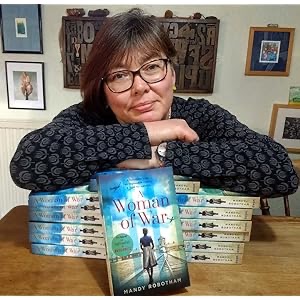
M J Robotham had wanted to write from a very young age, inspired by the book ‘Harriet the Spy’. However life got in the way and it was journalism and having a family keeping her occupied. She was a midwife for several years, but started to write seriously after completing an MA in Creative Writing. her first novel was A Woman of War followed by The Secret Messenger set in occupied Venice.

Her next two books were set in pre and post war Berlin, then wartime Norway, both are places she loves to visit. In her spare time she visits the gym, to knit unusual things and enjoys the music of Jack Savoretti,

Posted in Netgalley, Publisher Proof

House of Shades by Lianne Dillsworth

Hester is a doctoress, using her mother’s skills and recipes to treat the ladies of the night around her Kings Cross home. She’s offered a commission to work in the Fitzrovia home of Gervaise Cherville, a rich factory owner with declining health.

If Hester can diagnose and treat his illness he will pay her ten pounds, a life changing amount of money in 1833. Thinking that the fee will help them move to a better area of London, she leaves behind husband Jos and slightly wild sister, Willa, to work at Tall Trees the Cherville mansion. However there’s a dark energy in this old house, as if there’s a curse on Cherville and his mansion.He asks if Hester will track down two women who worked in the house – Aphrodite and Artemis. However, they weren’t servants but slaves and Cherville’s treatment of them torments him and keeps him awake at night. If Hester can find the women, allowing him to make reparation before he dies, he will raise her fee to twenty pounds. Hester is torn, twenty pounds would allow them to move to the country, removing Willa from the temptations that keep her out at night. Yet, will these women want to found, especially given Cherville’s abuses of power? Also, can Hester as a black woman, put another black women in danger without the consequences being on her conscience forever?

Inheritance is a huge theme in the novel and especially, the way in which characters receive their portion. Of course an inheritance isn’t always financial and the intentions of the giver play a large part in what it can do. Hester’s mother has given her an incredible inheritance, her doctoress’s bag of herbs and potions that can ease sicknesses of the mind and body. This of course helps her earn a living, tending to the prostitutes around their part of town at night. Kings Cross is known as a red light district and Hester tends to their venereal diseases, but also their bruises when men take what they want without paying. However, she also has the keeping of her younger sister Willa which isn’t easy. Willa is wild, easily led and naive when it comes to the intentions of men. Hester’s husband Jos finds it difficult living with Willa, especially when the sisters are at odds with each other. Willa works at the Cherville’s factory and has been noticed by Gervaise Cherville’s son, Rowland. It’s clear to Hester that his intentions aren’t honourable, but can she convince her headstrong sister that he isn’t as in love with her as he claims? When working at the Cherville’s house can she stop Rowland from recognising who she is, while also taking care that he doesn’t put undue influence on his father. Rowland isn’t happy with Gervaise giving away ‘his money’ in reparations, after all their plantation has hundreds of slaves and where will his charity end?

I loved the double meaning of the title House of Shades; the shades or ghosts of the past play their part here, especially in the mahogany furniture Cherville had made from the trees on the plantation. However, it also refers to shades of skin colour. I loved how the author explored the concept of ‘passing’ and colourism, especially in the light skinned character Lady Raine. Hester herself is very dark skinned, a colour that immediately places her in an unusual category. Her position as a doctoress situates her far higher in a house’s hierarchy than we might expect. There would be darker skinned slaves on Cherville’s plantation who are confined to working in the fields and bear the brunt of the ill treatment meted out, whereas those slaves considered lighter skinned might get to work in the household. Traditionally house slaves were thought to be higher in status than field workers, but whereas field workers get to leave the crops and spend time with their families in the village in he evenings, house slaves are at the beck and call of their master or mistress and even sleep in the house away from their families. They’re also closer to the male family members and therefore very vulnerable. There is a moment where Margaret is startled when she bumps into Hester on the landing, lurking in the darkness. She would only expect to meet servants of her own status on the master’s floor, not a black woman with her herbs and potions. I wondered how light skinned Willa was, to make her ‘palatable’ to Rowland Cherville, who appears to think slaves are expendable. He certainly doesn’t want them taking ‘his’ money.

Reparations are a huge theme in the novel and potentially the cause of Gervaise Cherville’s illness, as he admits the concerns and guilt around his treatment of slaves. Could his disturbing symptoms of insomnia, hallucinations and sleepwalking be put down to the end stage syphillis he’s suffering, or are the women he’s wronged in that house haunting him? When Hester first finds a dark, cold room off the kitchen she feels straight away that this isn’t a cold larder. There’s something about the space that she can feel and isn’t remotely surprised that slaves were sleeping in there, deemed unfit to be housed in the attic rooms with the servants. If all he wants to do is make reparations and apologise would it help the women to hear it? Or will the mention of their former master be so terrifying it disturbs their lives and leads to them fleeing once again? I suspected Gervaise hadn’t told Hester all that transpired between him and the women, in fact I doubted he even fully understood the extent of what he’d done. Yet it was Rowland Cherville who made my blood run cold, not only is he entering into exploitative relationships with young women who work in his factory but he doesn’t appear to have any empathy at all. His entire focus is on his own needs. He refers to his father’s money as his own, even though his father is still alive, and seems to have no feeling for his illness or imminent death. In fact he’d rather his father died, before he’s able to give all his money away. He also cares nothing for any of the slaves on whose backs the factory, Tall Trees and his inheritance have been built. They’re simply incidental to his own plans.

I really enjoyed the way this novel took me into the reality of Victorian England for black women. It gave me a new perspective, after Lianne’s first novel which looked at the rise of freak shows and the display of black women’s bodies. The private showings being another insidious and secret experience like rich men using women as domestic slaves and the objects of their desire behind closed doors, while seeming like a respectable businessman to society. Yet, the freak shows seemed to be freer and more in the control of the individual performer. One of the things I hated most when I visited the Slavery Museum in Liverpool, was the taking away of identity, so the way Cherville gave his slaves the names of goddesses made me shiver. It shows his desire for them on one hand, while keeping them in a cupboard, locked away all night like animals. While Hester is searching for them I was wondering whether they’d found their identity again, reclaimed their names and found a space to be relatively free. I feared that they’d had to adopt yet another identity, to disappear, constantly looking over their shoulder. Hester is a heroine that it’s easy to become involved with and I really sympathised with her feeling of being in-between: torn between being a wife and a sister; between her patient and her fellow women; not a servant, but not entirely free either. There’s even a revelation that draws her further into the history of Tall Trees. I wanted a happy ending for Hester, that she might be able to leave London and live that simpler life she and Jos have been craving. This is another triumph for Lianne Dillsworth and neatly places her on the list of authors whose books I would buy without question in future.

Published on 16th May 2024 from Random House

Meet the Author

Lianne Dillsworth lives and works in London. She has always loved anything and everything to do with books and her earliest memories involve reading and being read to. At school Lianne’s favourite subjects were English and History, so when she started writing, historical fiction was a natural choice. In Theatre of Marvels, her debut novel, Lianne indulges her love for the Victorian period evoking London in all its mid-nineteenth century glory. She is currently working on her second book under the watchful eye of her tiny terrier.

Posted in Squad Pod

Darling Girls by Sally Hepworth

Sally Hepworth is a new author to me, so I was interested in reading this thriller based within the Australian child protection system, most notably one foster home called Wild Meadows. Three girls grew up there under the care of Miss Fairchild, described like an 1980’s Barbie doll, and thought to be one of the best foster parents in the system. The three girls are now grown women. Jessica was the first long term foster child and now runs a home organising business and is married to Phil. Lately, she’s been suffering panic attacks and is using benzodiazepines to control her anxiety. Norah is a ballsy and confrontational woman who doesn’t stand for any nonsense. She is currently being blackmailed by a taxi driver whose nose she broke in an altercation. She sent him a picture of her breasts so he didn’t go to the cops, but now he wants more. Alicia is a social worker in a child protection team, trying to save children who might otherwise end up with a childhood like hers. She has a tentative relationship with her housemate Meera who she has just kissed, but struggles to be vulnerable and accept that she’s worthy of love. They are called back to Wild Meadows when building work unearths the body of a baby. As they travel back to where they spent their childhood, memories start to emerge about their traumatic childhoods at the hands of Miss Fairchild. It becomes clear that their present problems are an echo of that terrible start in life. How will they cope with digging up everything that happened back then and what will happen when Miss Fairchild arrives?

I felt incredibly sorry for Jessie who was the first foster child, conditioned to love Miss Fairchild (who she calls Mum) and to do anything that pleases her including cleaning the house from top to bottom. She and Miss Fairchild are a team and even though the work is sometimes hard, she knows Miss Fairchild loves her. Jessie is the favourite and being the favourite is wonderful – until someone else comes along. When Norah arrives without warning, Jessie is put out. So she tries even harder to please her mother and doesn’t understand when she’s rejected. It’s hard to watch, because even Norah can see it’s like kicking a puppy. Jessie’s confusion and feelings of dejection have turned her into a people pleaser. She’s now married to Phil, who seems kind but still Jessie is compelled to please him and appear perfect at all times. If she’s not perfect, no one will love her. Before she leaves with her sisters Jessie reaches a new low by stealing benzodiazepines from a client’s bathroom cabinet. When she’s rumbled, Jessie switches off her phone and leaves with her sisters. I really enjoyed Norah, who comes to Wild Meadows second and ousts Jessica from the favourite position. It’s not that Norah dislikes Jessie, it’s just that she’s been in other homes and knows that it’s best to be the popular kid. Despite this the girls start a tentative friendship and soon Norah is sleeping next to Jessie and sticking up for her at school. They are sisters and sisters stick together. Norah is now single and lives with her three rescue dogs, named after the first thing they destroyed after they arrived; Converse, Thong and Couch. liked her sense of humour and her ability to look after herself, although the taxi driver issue is out of hand and Norah knows that if he goes to the police she’s breached her good behaviour

order and may go to prison. Alicia, made the least impression on me as a child but perhaps the greatest impression as an adult. She soon bonds with the other two girls and they give each other some semblance of a normal home, playing music together, staying up late talking and devising ways to deal with their foster mother. Now Alicia is battles everyday for kids in the system. It’s as if in saving them, she saves herself. Her friendship with Meera is strong but when it starts to become something more she panics. Never used to the full package when it comes to relationships, she can’t believe that she can keep everything she and Meera already have plus have a romantic relationship too. Sex and love don’t go together in Alicia’s world. She’s avoiding the issue by travelling with her sisters, but when Meera turns up out of the blue she has to bring her past and present together.

Between these timelines there are small chapters that I found really interesting because although we don’t know who is speaking, we know it’s with a psychiatrist or therapist. This unnamed woman is talking about her childhood, which is truly horrific to read and a heads up for anyone who is triggered by reading about child abuse, this is a really tough. To be honest the abuse depicted across the book is physical, sexual, mental, financial and spiritual. I think this narrative really got to me because I grew up in an evangelical church and even though my experience there wasn’t abusive, it was as if women were second class citizens only there to be good, supportive wives and defer to men. What this woman goes through is much worse and as she relates it to the psychologist he seems to have weird ‘tells’ that the also speaker notices. As her story progresses he leans forward, perhaps more interested then neutral. She can see emotions in his eyes as she talks. He’s sympathetic. He’s distraught about what she’s been through. Is she telling the truth or is her story embroidered, gathering momentum as she sees him react. Playing his emotions, but to what end? I was hooked by this narrative, horrified but fascinated in equal measure because there was definitely something going on.

As news reports start to bring in a stream of younger women the authorities refer to them as ‘the babies’. The three sisters hadn’t remembered them except for Amy, a cute two year old who fell in love with her older sisters, infuriating Miss Fairchild who wanted the babies to love only her. What if Amy is the baby under the house? Surely now Miss Fairchild will be taken in for questioning? Sally Hepworth has written three women here that you will really be rooting for, in fact you might even identify with one of them. Miss Fairchild is the perfect villain, with her angelic looks and ability to manipulate any story to place her in a better light. Does this make her a murderer though? It isn’t just the central mystery that keeps you hooked though. Will Norah’s altercation with the taxi man catch up with her? The tension slowly builds around Jessie whose latest client noticed some diazepam missing and isn’t letting it go. When Meera arrives unannounced Alicia has to face her friend, but also explain their close relationship to her sisters. Can she accept Meera’s love and her own sexuality? The author keeps this tension up to the very end, with a couple of revelations and a twist that was really clever and I didn’t expect. I read this so quickly, desperate to see some characters get their comeuppance and others to see justice done. I especially enjoyed the resolution of the therapy sessions. This book will definitely keep you reading, but be prepared. You might not be able to put it down.

Out now from MacMillan

Meet the Author

Sally Hepworth is the New York Times bestselling author of nine novels, including The Good Sister and The Soulmate. Her latest novel, Darling Girls, was released in Australia in September 2023, and will be released in North America in April 2024.

Drawing on the good, the bad and the downright odd of human behaviour, Sally writes incisively about family, relationships and identity. Her domestic thriller novels are laced with quirky humour, sass and a darkly charming tone. They are available worldwide in English and have been translated into twenty languages.

Sally lives in Melbourne, Australia, with her three children and one adorable dog. She has recently taken up ocean swimming (or to put it more accurately, ocean dipping)

Posted in Netgalley, Publisher Proof

Profile K by Helen Fields 

I’m going to say up front that I’m a massive Helen Fields fan, with The Last Girl to Die being a particular favourite of mine. Her last novel introduced us to the unusual and complex psychologist and profiler Dr. Connie Woolwine at The Institution. Connie makes a cameo here, but the undoubted heroine of this tale is Midnight Jones. Midnight lives with her twin sister Dawn ( see what the parents did there) and is her main carer, since their parents chose to go travelling when Midnight finished university. Dawn was affected by lack of oxygen at birth leading to Cerebral Palsy. It’s effects are very individual to the patient, but it can cause both physical and intellectual disabilities. Dawn is profoundly affected, needing care 24/7 and that’s why Midnight is desperate to keep her job at Necto. She needs their higher than average pay packet to cover the costs of care. The company like to present themselves as an ethical firm, starting with their space age offices, filled with plants and trees that help create a better work environment. They have their fingers in many pies, but Midnight is a profiler and every day works through thousands of applications for universities, the military and other organisations, passing some applicants through to be interviewed and rejecting others based on assessment data alone.

Necto’s testing systems are so sophisticated, there’s nothing about the applicant they don’t know. In assessments, virtual reality head sets show images and the applicants every response is recorded from intelligence to levels of empathy. Then, dependent on the parameters for the particular institution they’re applying to, they are accepted or not. However, on this particular day Midnight finds a candidate who isn’t run of the mill, in fact he’s a one-off. In training, a candidate like this is jokingly dubbed a ‘Profile K’- for killer – Midnight finds a man who has recorded as showing zero empathy. When she watches the footage he was shown through her own headset, she is sickened by what she sees. This is way beyond the normal films shown to illicit empathy, it’s as if the machine couldn’t get a reading so has chosen more and more disturbing and violent images that should provoke empathy and disgust. Yet none comes. Unable to compute the response and also where such extreme footage could have come from, Midnight decides to take this further but her supervisor Richard Baxter isn’t interested. So she goes over his head, telling his boss that she’s found a Profile K. Surely they have a duty to report him, what if he’s dangerous? What if he kills? 

I’ve read three great thrillers this weekend in quick succession but this was by far the most inventive, with a hint of dystopia and a touch of social justice that was right up my street. I empathised with Midnight’s situation, determined not to let down her sister Dawn but struggling to pay for just enough care that Midnight can go to work. There is no room for a social life or romance. Their heads are just above water, but there’s no flexibility or empathy for her care role within her company, despite it’s apparent ethics. She takes a big risk taking her findings higher than Richard Baxter, because if she loses her job how will she afford the care Dawn needs? Yet she can’t ignore what she knows. Especially when the worst happens. A young woman is killed very close to where she and Dawn live and although Midnight doesn’t know this at first, the torture methods used are very close to a scene from the film shown during the Profile K’s application process. The victim was subjected to the death of a thousand cuts, which would have been both a painful and long drawn out way to die. Midnight is horrified to find that her boss would rather keep her discovery under wraps and she’s reminded of her non-disclosure agreement. What reason could they have that’s better than saving the lives of future victims? Midnight has read about the psychologist and profiler Dr Connie Woolwine and has a theory to run past someone with her expertise. Not expecting a response, she sends a message and is pleasantly surprised when the unusual doctor calls her late at night to talk it through. Midnight is scared of the consequences, but sure of her theory – could Necto have known about the Profile K? What if they showed the violent material on purpose to trigger a response? To turn someone with killer potential into a killer for real. 

I absolutely loved this belting thriller, because it was complex and intelligent but also full of human feeling. I guess this might sound strange when there’s quite graphic violence involved in some scenes, but they’re balanced by the pure depth of feeling Midnight has for her sister and later on for the elderly lady they begin a friendship with. I loved how authentic Midnight’s caring situation was, with a very clear struggle between wanting to provide the best help for someone she loves but feeling the fear of that sole responsibility. The anger she feels towards her parents is very real, because although she understands their need to follow their dreams, their freedom has curtailed her own. She can’t make any life decision without factoring Dawn in. How could she have a romantic relationship? What if she falls ill herself? Having been a carer I know how lonely and exhausting it can be. We can see the pull between home and work life, in that they both hinder and are dependent on each other. Parts of the book are genuinely terrifying. There is a scene that’s going to stay with me, like that episode of Luther where a woman gets undressed and climbs into bed followed by a ceiling shot where a man slowly slides out from underneath as if he’s been working under a car. It’s that combination of vulnerability and evil. We’ve all done that walk home where we get inside and lock the door, then take a deep breath and know we’re safe. To be attacked in that moment is heart-stoppingly scary! In the end, everything had to stop for those final chapters as I raced through to find out what happens. I was glued to these scenes, made all the more terrifying because the victim doesn’t have a clue how much danger she’s in. It’s one of those finales where I put the book down and realised every muscle in my body was tense! I needed some yoga stretches and a few episodes of Friday Night Dinner before bed to unwind. This is an absolute cracker of a read and I highly recommend it.

Published by Avon 25th April 2024

Meet the Author

A Sunday Times and million copy best-selling author, Helen is a former criminal and family law barrister. Every book in the Callanach series has claimed an Amazon #1 bestseller flag. ‘Perfect Kill’ was longlisted for the Crime Writers Association Ian Fleming Steel Dagger in 2020, and others have been longlisted for the McIlvanney Prize, Scottish crime novel of the year. Helen also writes as HS Chandler, and has released legal thriller ‘Degrees of Guilt’. In 2020 Perfect Remains was shortlisted for the Bronze Bat, Dutch debut crime novel of the year. In 2022, Helen was nominated for Best Crime Novel and Best Author in the Netherlands. Now translated into more than 20 languages, and also selling in the USA, Canada & Australasia, Helen’s books have won global recognition. She has written standalone novels, The Institution, The Last Girl To Die, These Lost & Broken Things and The Shadow Man. She regularly commutes between West Sussex, USA and Scotland. Helen can be found on X @Helen_Fields.

Posted in Netgalley, Publisher Proof

Nightwatching by Tracy Sierra

Yesterday upon the stair I met a man who wasn’t there,

He wasn’t there again today, oh how I wish he’d go away.

Antagonish by Hugo Mearns

My grandad taught me the first few lines of the poem above. I think it appealed to his sense of humour. I thought it was a riddle and I used to ask ‘but is he there or not?’ This is the very question this whole book revolves around from the first line – ‘there is someone in the house’. Our unnamed narrator wakes in the night as a strange noise breaks through her sleep. I was told by a book reviewer I respect enormously that this was brilliant and she was absolutely right. Although I drove my husband crazy by waking him up to ask if he remembered locking the door. He hadn’t always and I knew I wouldn’t sleep until one of us had crept downstairs and checked. Preferably not me. This is the situation all of us dread, waking to that unexpected noise in the night and finding there is an intruder. Our narrator is at her secluded home with her two small children in a blizzard. The sound she hears is a familiar one, a tread on the stairs to her room, but it’s unusually heavy and slow. She has a split second to make the decision – does she hide, try to run or stay and fight. Will all three of them get out alive and if they do will anyone believe her?

The first thing that hit me about this book was the unique voice this mother has. We see everything through her eyes and experience everything her body goes through – mainly fear. There’s the heart-stopping tension of that first night, the immediate threat rendering everything else unimportant. Yet there are other fears lurking underneath – will the police believe her, will it stir up questions about her husband’s absence, what will her father-in-law make of what has happened? She is waiting for people to doubt her and the reader doubts her too. Always on the lookout for unreliable narrators, I did wonder whether I should trust what she was experiencing. It’s just so incredibly odd. This tall intruder seems to have two voices: a raspy harsh voice when he’s angry then more of a soft, weedling voice. A voice you might use for children as he asks them to ‘come out little pigs, little pigs are more delicious’. As he does this right next door to their hiding place, it’s even more terrifying. Her little girl whispers to her mum that it’s the ‘Corner Man’ from her nightmares, he sits in the corner of her bedroom at night and whispers to her. My heart was in my throat at this point! Was he real or something supernatural? Could he possibly be real if this is true? I wondered if this overwrought mother is imagining this person, but that opens up a more frightening prospect – is she hallucinating and terrorising her own children with her delusions? The author plays with the reader beautifully. Just as I was starting to think the narrator is completely crazy, she addressed my concerns.

‘How nice it would be to be crazy instead of correct. For t all to be a psychotic break. To have her husband come down those stairs. She’d pop out of the hidden place relieved – rated – to meet his look of confusion’.

This is a woman who is used to being misunderstood and there’s no shortage of men around, happy to convince her that she’s strange, hysterical and marked as different in some way. There’s an awful moment, recalled while hiding, when her husband told his father he was not going to continue studying law. She hears his father’s fury down the phone:

‘You never behaved this way before you met that girl. Christ. She’s disfigured’.

Our narrator has vitiligo – a long term skin condition where areas of skin lose melanin and become paler, creating a patchy complexion. People stare and perhaps mistrust her, worried they may catch a skin disease or worse. Added to this, she’s a newish mum full of hormones, perhaps she’s a bit anxious and over-protective. She’s recently bereaved, having nursed her terminally ill mother-in-law. Maybe she’s not in the best frame of mind. All of this and the fact that she’s a woman, mean the police will be unsure or just plain rude about her. They keep explaining there’s no evidence: no footsteps in the snow; nothing of any value is stolen – in fact the items she does mention are probably lose or mislaid by the children. They don’t sound like the type of things someone would steal. They’ll turn up.

While hiding from one monster, we learn that she’s battling another in the shape of her father-in-law. Honestly, I have never wanted to climb into a book and punch someone more. He is a bully, but everyone else placates him. He is ashamed of his son, even more ashamed of his disfigured daughter-in-law. He hates the noise of his newborn grandson and his wife apologises! Even while his wife is dying, he sits with his feet up watching television and creates holy hell if he’s disturbed. His daughter-in-law does all the work and is rarely appreciated or thanked. He wants his grandson to man up and stop being a wuss. Worst of all he’s aggressive, violent even. Having him in charge of her children is the worst outcome of all. This mother is also fiercely protective. A passing incident where a stranger commented on her daughter and pulled the drooping strap of her sundress back onto her shoulder, really bothers the mother. You can feel her hackles rising in much the same way she reacts when her father-in-law criticises her son. She has very keen instincts and it’s fascinating to see how those instincts can be eroded, mainly by men who still consider women a hair’s breadth away from hysteria and the asylum. It shows that we’re not just gaslighted by individuals, it can be institutional, perpetuated by organisations like the police force or as I’ve found in my own life, the medical profession.

The whole setting is brilliantly eerie. A secluded mansion house with woods behind and five acres of open pasture between them and the next house. The house was built in 1722 with two staircases, higgledy-piggledy rooms and even it’s very own graveyard. She loves the house, even though it’s totally impractical and a nightmare to heat. She’s got to know each creak and bang, it’s night noises, but never imagined when she viewed the house that she’d be fleeing into the secret space next to the chimney, where the builders walled in the labyrinthine brick work. They never imagined being walled in. It’s a place where ghostly presences and hidden secrets would be easy to believe. Yet it’s not all scary. There are some wonderfully tender moments between the mother and her children and we can feel how torn she is when she has to be sharp with them, to keep them quiet and safe. I had no idea where this story might go and the author was one step ahead of me all the way. I might have finished this incredible thriller, but I’m still carefully locking the doors at night and when the cat decided she’d rattle our door to upstairs at 3am my heart did beat a little faster. I can’t believe how assured and psychologically complex it was for a debut! If you only buy one thriller this year, make it this one.

Out now from Viking

Meet the Author

Tracy Sierra was born and raised in the Colorado mountains. She currently lives in New England in an antique colonial-era home complete with its own secret room. When not writing, she works as an attorney and spends time with her husband, two children, and flock of chickens. Nightwatching is her debut novel.

Posted in Squad Pod

A Sign of Her Own by Sarah Marsh

“Peach. Its shape floats on Mr Bell’s mouth. The pinch of the p, followed by a rounded push of the lips, sending the last syllable hard across the tongue. My hand nearly reaches for my pocket, as if the feather from our lessons might still be found there. It’s been a long time since I thought of the feather. I would balance it on my knuckles and make it quiver with the puff of my ps. Puh-puh-puh. I stop myself just in time, folding my hands against my skirts.”

I found the opening scene of this novel incredibly moving and so skilful, placing us so close to our heroine that we understand the barriers she faced being deaf at that point in history. In it, Ellen and her fiancé receive an unexpected visit from Alexander Graham Bell. As the two men converse, Ellen is picking up body language and tone of voice which indicate a serious topic but she notices a repeated word ‘peaches’. Her attention moves to the beautiful jar of peaches preserved by her mother on the dining table. Yet she’s wrong, as she passes Mr Bell the jar and urges him to take it he tells her no, the word he was saying was ‘speeches’.
As Ellen reminisces, so did I. I was propelled back to the early years of my nephew Charlie, who was born visually impaired. Before we knew the full implications of his sight loss, we’d noticed he was behind in his development. He wasn’t moving round much, had put on weight and wasn’t speaking. It then occurred to us. In order to learn something for the first time, we tend to copy it. If you can’t see, you can’t imitate others and just as Ellen is struggling to get the full meaning of Mr Bell’s conversation, Charlie couldn’t form the words if he didn’t know how to use his mouth to make the noises. So Mum used the same technique she’d used with us when we were small. When a specific noise was needed like the ‘puh’ sound in the book, Mum would raise his hand to her mouth and make the sound against his fingers. He would then put his fingers to his own mouth a copy her. It was lovely to relive that memory and feel perhaps a tiny bit of what Ellen is feeling too.

A Sign of Her Own is narrated by Ellen Lark across two timelines and it’s an incredible feeling to be in her world, because it’s so different from the world we know. It felt similar to when actress Rose Ayling-Ellis did Strictly in 2021 and performed a ‘Couple’s Choice’ dance with Giovanni Pernice, choreographed to bring the audience into Rose’s world. At a certain point, the music stopped but the couple continued to dance and we realised that this was Rose’s world. For us the music would return, but she carried on dancing into the silence. She somehow used her trust in Giovanni and read his body to perfect her dance routines. It was moving, disorienting and a complete revelation so it was no surprise to me that they were winners of that year’s BAFTA for a memorable TV moment.

Ellen’s inner world is also a revelation and the author communicates it so beautifully. She lost her hearing as a child during a bout of scarlet fever and communicated with her mother using a language of signs they made up as they went along. It broke my heart to read how the sound of her speech was viewed by local children. Restricted to vowel sounds, because she couldn’t hear the precision of the consonants, Ellen feels shame about how she sounds. Her personal sign language seems to suit her, but it’s her grandmother who comes up with the idea of using Alexander Graham Bell’s ‘Visible Speech’. Students of his method were banned from using any sort of sign language, but were allowed to use a notebook. Family politics played their part in the decision, because the family were in debt to their grandmother. Luckily Ellen enjoyed studying and proved to be incredibly clever, even if she was unsure about Bell’s method and his motives. She has to be perceptive and learns to read people very quickly, including Bell. As we move into the present day, Ellen and her fiancé are visited by Bell who is embroiled in a fight to be recognised as the sole inventor of the telephone. He wants Ellen’s support as a character witness, but Ellen doesn’t have good memories of her time under his tutelage. She feels like he betrayed her and other deaf students for his own fame and recognition. How can she support him when she feels so conflicted?

During the later timeline Bell’s fight becomes all consuming. He is full of determination and I felt torn about his character because on one hand he appears to be paying attention to a group of people rather alienated by the rest of society so his work could be seen as altruistic. On the other hand it’s as if the people he’s helping don’t really matter to him. There’s a narcissism or selfishness in his character that means he only sees his students in terms of how they can help him potentially find fame. I felt like he didn’t appreciate their characters or individuality. I found myself disliking him intensely. By contrast, Ellen is instantly likeable and intelligent. Through her we are invited into the deaf community and the debate over sign language and visible speech is fascinating. As someone who has studied disability theory, I was very aware that some people don’t consider their deafness a disability. If they sign, they simply see themselves as speakers of a different language. I was interested in the politics and ethics of a speaking world imposing a method of communication on the deaf community, rather than the community coming to society with their own choice of language or speech method. I think there are many readers who might never have considered these issues and wondered how the book is being received in the deaf and/or disabled community. I was impressed that the author wanted to bring these issues to the fore and loved the enthusiasm she clearly has about her subject and her heroine. This is a well researched debut clearly inspired and informed by her own experiences of deafness as a child. It puts us into the centre of that experience and I came away feeling like I had a renewed awareness of sensory disability.

Thank you so much to the Squad Pod Collective and Tinder Press for my copy of A Sign of Her Own, published on Feb 1st 2024

Meet the Author


Sarah Marshwas short-listed for the Lucy Cavendish Prize in 2019 and selected for the London Library Emerging Writers Programme in 2020.A Sign of Her Ownis her first novel, inspired by her experiences of growing up deaf and her family’s history of deafness

Posted in Publisher Proof

The London Bookshop Affair by Louise Fein

Books and Bramble, the perfect combination.

Historical fiction is one of the genres I enjoy most and I’m drawn to Louise Fein’s novels because she always finds an interesting time period then looks at it from an unexpected viewpoint. It makes you rethink events you thought you knew all about. Here she has chosen post-WW2 London and the dawning of the early 1960’s when Kennedy is president and the Cuban missile crisis is looming. Her heroine is Celia, an ordinary young woman with older parents who are stricter than most and perhaps don’t understand her modern preoccupations and ambitions. I always imagine the ‘swinging sixties’ when I think of London at that time, but progress like that hasn’t quite reached Southwark yet. Celia is working at a second hand bookshop, that specialises in antique and collectible books. Yet her heart yearns for adventure. The world is on the cusp of space travel, women’s liberation and the Beatles. It’s also rather closer to nuclear war than most realised as the USSR and USA start a terrifying game of brinkmanship. Celia wants to protest against the testing and gathering of weapons far more powerful than the Hiroshima bomb. She also chasing her dream career – she’s signed up for classes at Pitmans to gain the secretarial skills that might get her a job at the BBC. The little life her mum leads is not for her and she’s definitely not going to settle for Sam, the boy next door.

The catalyst for change is the bookshop’s new owner Mrs Denton, a dainty well dressed lady who is living alone in the flat above the shop. She seems more interested in shopping than books and offers Celia a raise to manage the shop as she sees fit. Mrs Denton has two regular male visitors: an older man called Mr Humphries who has wandering eyes and a scar down his face and a younger, handsome American called Septimus who Celia is drawn to. Could he be another pathway to a different life. The changes in Celia’s life are interspersed with a different timeline following a young woman called Anya Moreau who is dropped behind enemy lines in 1943. She’s been trained to help the French Resistance disrupt the Germans by sending messages back home via a wireless transmitter. She is betrayed by a double agent and faces torture to divulge her secrets, but she never betrays her cause. Meanwhile Celia finds a connection to this woman and in her desperation to know more she comes across the mysterious Miss Clarke who opens Celia’s eyes to the murky world of espionage running under the surface of everyday life. Possibly even in her own family. I felt for Celia’s parents who have always been protective of their girl, so much so that she sometimes feels suffocated. However their determination to keep Celia away from the past is understandable when we find out the truth.

I throughly enjoyed both timelines and Louise always has a wealth of research underpinning her story making it feel so real. I believed entirely in these two brave young women and their conviction to support their country. I loved seeing Celia’s political awakening as she talks to friend Daphne about the secret nuclear bunkers being dug out in the English countryside and the drastic measures to move works of art out of London – her shock at the immorality of a government that chooses to save art, but keeps it’s ordinary citizens in the dark is a real moment of growth. Her friendship with one of Mrs Denton’s visitors, Septimus, is also a place where she can freely discuss and share ideas about the world. This freedom to debate is new to Celia and you can see her growing all the time. At home her mum turns the tv off when the depressing news is on and Dad never talks about the war. In fact there seems to be a silence between them. I was excited and scared for Celia as her world opens up. The secrets she starts to discover will change her life forever, but will they leave her with the confidence to choose her own path and who will walk it with her? The emotional scenes between mum and daughter are really heart rending as finally everything is brought into the light. The pace of the novel really picked up towards the end as both stories come to their conclusions and different options start to open up before her. I really hoped Celia would choose wisely and not throw away everything about her home while still gaining some of the adventures she’s set her heart on. This was a great read and would make a fantastic film or TV series one day.

Published by William Morrow on Feb 29th 2024

Meet the Author

Louise writes historical fiction, focusing on unheard voices or from unusual perspectives. Her debut novel, Daughter of the Reich (entitled People Like Us in the UK edition) was published in 2020 into 13 territories and is set in 1930’s Leipzig. The book was shortlisted for the RSL Christopher Bland Prize 2021 and the RNA Historical Novel of the Year Award, 2021. Louise’s second novel, The Hidden Child, was published in 2021 and is centered around the eugenics movement in 1920’s England and America. It was a Globe & Mail bestseller in Canada. Her third novel, The London Bookshop Affair, about one woman’s journey to uncover secrets of her past, set against a backdrop of espionage and looming nuclear war in 1962 London, will be published in January 2024. 

Louise, previously a lawyer and banker, holds an MA in Creative Writing from St Mary’s University and now writes full time. Equally passionate about historical research and writing, she loves to look for themes which have resonance with today’s world. Louise lives in the Surrey countryside, UK, with her family, and is a slave to the daily demands of her pets.

For more information, go to https://www.louisefein.com and sign up to Louise’s newsletter. She also posts regularly to her blog at

https://www.louisefein.com/blog-and-news, or follow her on Facebook, https://www.facebook.com/louisefeinauthor; Twitter, https://twitter.com/FeinLouise; or Instagram, https://www.instagram.com/louisefeinauthor