Posted in Publisher Proof

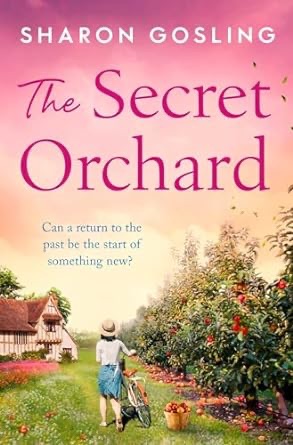
The Secret Orchard by Sharon Gosling 

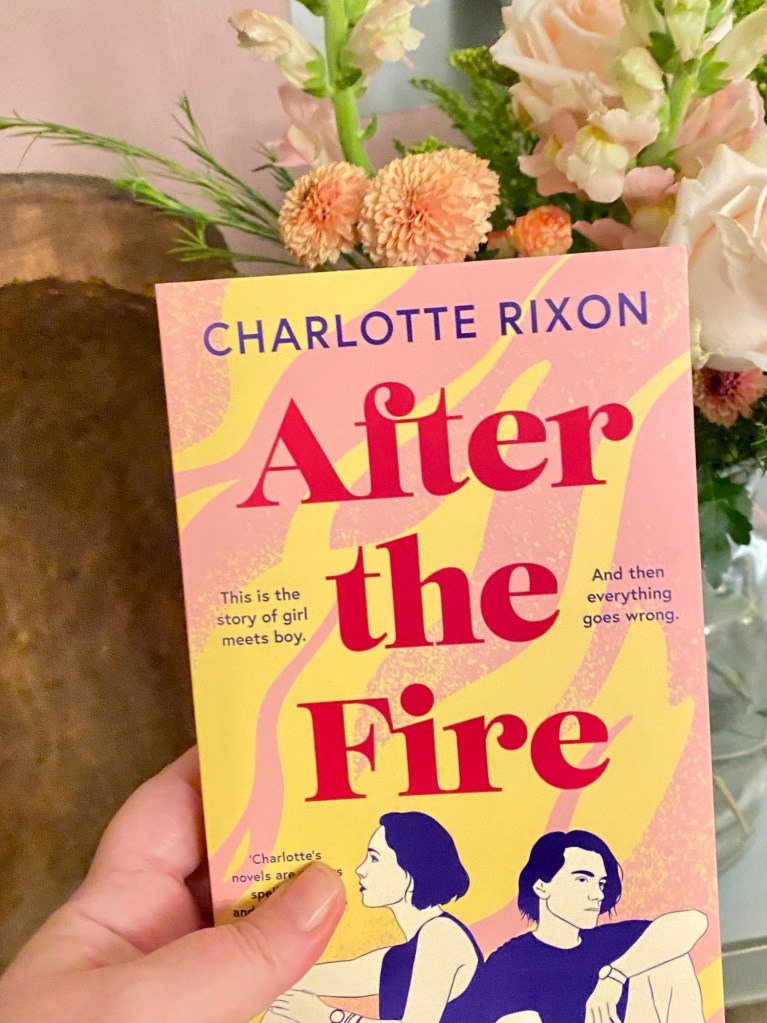
I’ve really enjoyed Sharon’s last couple of novels, because I love their mix of strong female protagonists who are facing challenges and growing into themselves. This novel focuses on sisters Nina and Bette, set on their family’s farm in Scotland. When their father dies they have no choice but to be under the same roof for the funeral. The sisters are very different, Bette is ten years older than Nina so the age gap meant they weren’t very close anyway, but when Bette left for university she never came back to the farm. Living in London, Bette is a sought after divorce lawyer and her work is her life. She flies back to Scotland the day before the funeral and aims to leave the next day. Nina is hostile towards her sister, she has the opinion that Bette left the farm and never looked back. As their mother tries to smooth things over, Nina is shocked to discover that Bette and her father kept in regular contact by email and that Bette paid for the new roof on the barn. Both sisters are shocked at the will reading when they find out that their father left them both the farm in two equal shares. However, there are massive debts to manage and Nina has always left the finances to their father, preferring to do the farm work than sit in the office. This is the only safe place Nina and her son Barnaby have ever lived. Could they be about to lose it? When getting the farm valued, Bette and the agent walk the perimeter on the land and stumble across a secret orchard, tucked away with it’s entrance concealed off the coastal path. Could this hidden fruit be the answer to their money woes and possibly a mystery to bring both of them together? 

We’re drawn in by an intriguing prologue that suggests an historic love story between two local but rival families. I was dying for Bette and Nina to do some digging on this story and unravel their orchard’s complex back story. The author leaves the crumbs of this story to tantalise us while we move through the present day and the emotional aftermath of Nina and Bette’s father’s death. It’s clear from the outset that these two sisters could be an incredible team. Nina is good at the day to day farming work, rushing between baling and milking while also being there for her son Barnaby. I was on board with Barnaby straight away because he wears his Spider-Man costume everywhere, possibly even to his grandfather’s funeral. This titbit of character and humour reminded me of a little boy who always attended our church for Saturday evening mass and would go up the aisle during communion dressed in costume. Watching his long tail wend it’s way up the aisle so the priest could give a blessing to a mini dragon absolutely made my week. His mum made him take the head off for the blessing, but it was straight back on as he skipped back to his seat. Barnaby is a delight and I enjoyed watching him build a relationship with his Aunt Bette. Bette is brilliant with the financial and legal details, something nether Nina or their father has been able to do. She sets herself the task of working methodically through their chaotic office and showing the bigger picture; they might have been working themselves to the bone, but was all this work actually generating profit? 

Bette understands legal procedures and processes too. When she explains they’ll have to get the farm valued Nina immediately flares up, she doesn’t want to sell the farm. She assumes Bette is looking to cash in, but when Bette explains it’s just the first stage in any plan they make whether that’s to sell or to finance the farm better for the future. She’s calmer and more patient with the process and because Bette’s less attached to the land she can make sensible, dispassionate choices which is just as vital for the farm’s survival. Added to the main plot of saving the farm there are a couple of sub-plots. Nina is often helped out around the farm by neighbouring farmer Cam, who is very capable and good with Barney, not to mention easy on the eye. What would I take for friendship to turn into love. There’s also the mystery of why Bette left the farm so definitively all those years ago and when Ryan enters the picture her reaction left me wondering if he was involved. Cam suggests a visit from an expert he knows, to see if the orchard is viable and what would be the best way to bring some income from it. Nina has never known why her sister left, so her reaction to Ryan is puzzling for her. He has great ideas for the apple trees, some of which appear to be very old species that are rarely grown. He sets them on a programme of managing the trees, pruning and grafting them to enhance their health and yield. There isn’t an off putting amount of detail on how to turn the orchard into a cider business, but there’s enough to pique the reader’s interest and I was rooting for the sister’s success. 

The sisters have such depth to their characters and their lack of communication with each other has led to so much misunderstanding between them. Nina comes across as quite bitter towards Bette and to some extent she sees her sister as someone who has everything: the job, the money and the fancy London lifestyle. Actually it’s Nina whose had everything – a wonderful relationship with her father and precious time working together. She has Barnaby and although her relationship with his father broke down, she loves her son more than anything. With her mother living abroad with her new husband, Nina has taken on the lion’s share of the work around the farm and keeping an eye of their father but Bette has never expected any financial gain from the business, assuming that it belongs to Nina. I could see how the new plans might bring about a better personal relationship between them and I was kept reading by the promise of a warmer relationship between them, the makings of a new generation of the family. There’s a lot of forgiving to do here, but once they’d discussed why Bette left in the first place I could see another life opening up, one in which she might stay. As always with this author, this was such an uplifting and heartwarming story. The potential for both sisters to have their own love stories was also joyous to read, especially if you’re a sucker for an ‘enemies to lovers’ scenario. There are setbacks of course, some of them natural disasters and others caused by deep-seated rivalry. Sharon Gosling writes this type of story beautifully, as she weaves the threads of the sister’s story and the mystery surrounding the orchard’s origin, not to mention why it had been hidden all these years. The setting is wonderful, particularly the orchard with the salt air and the sounds of waves crashing against the cliffs. It’s so romantic and I loved the detail of how the salt permeates and changes the taste of the fruit making it so unique. This was a wonderfully escapist novel, driven by the character’s of Bette, Nina and of course, Barnaby. I thoroughly enjoyed being in their world for a while and I’m sure you will too.

Out 12th September from Simon and Schuster

Meet the Author

I’ve been writing since I was a teenager, which is now a distressingly long time ago! I started out as an entertainment journalist – actually, my earliest published work was as a reviewer of science fiction and fantasy books. I went on to become a staff writer and then an editor for print magazines, before beginning to write non-fiction making-of books tied in to film and television, such as The Art and Making of Penny Dreadful and Wonder Woman: The Art and Making of the Film.

I now write both children’s and adult fiction – my first novel was called The Diamond Thief, a Victorian-set steampunk adventure book for the middle grade age group. That won the Redbridge Children’s prize in 2014, and I went on to write two more books in the series before moving on to other adventure books including The Golden Butterfly, which was nominated for the Carnegie Award in 2017, The House of Hidden Wonders, and a YA horror called FIR, which was shortlisted for the Lancashire Book of the Year Award in 2018. My last children’s book (to date) is called The Extraordinary Voyage of Katy Willacott, and was published by Little Tiger in 2023.

My debut adult novel, The House Beneath the Cliffs, was published by Simon & Schuster in August 2021. Since then I’ve written three more: The Lighthouse Bookshop, The Forgotten Garden, and The Secret Orchard, which is out in September 2024. My adult fiction tends to centre on small communities – feel-good tales about how we find where we belong in life and what it means when we do. Although I have also published full-on adult horror stories, which are less about community and more about terror and mayhem…

I was born in Kent but now live in a very small house in an equally small village in northern Cumbria with my husband, who owns a bookshop in the nearby market town of Penrith.

Taken from Sharon’s Amazon Author Page.

Posted in Squad Pod

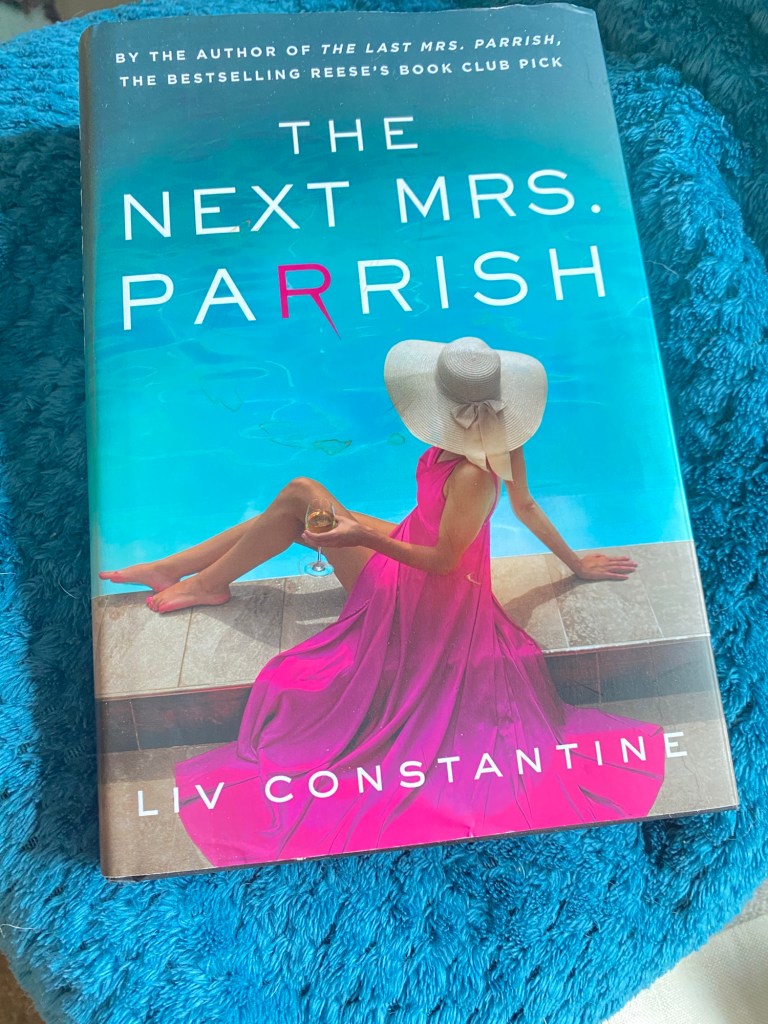
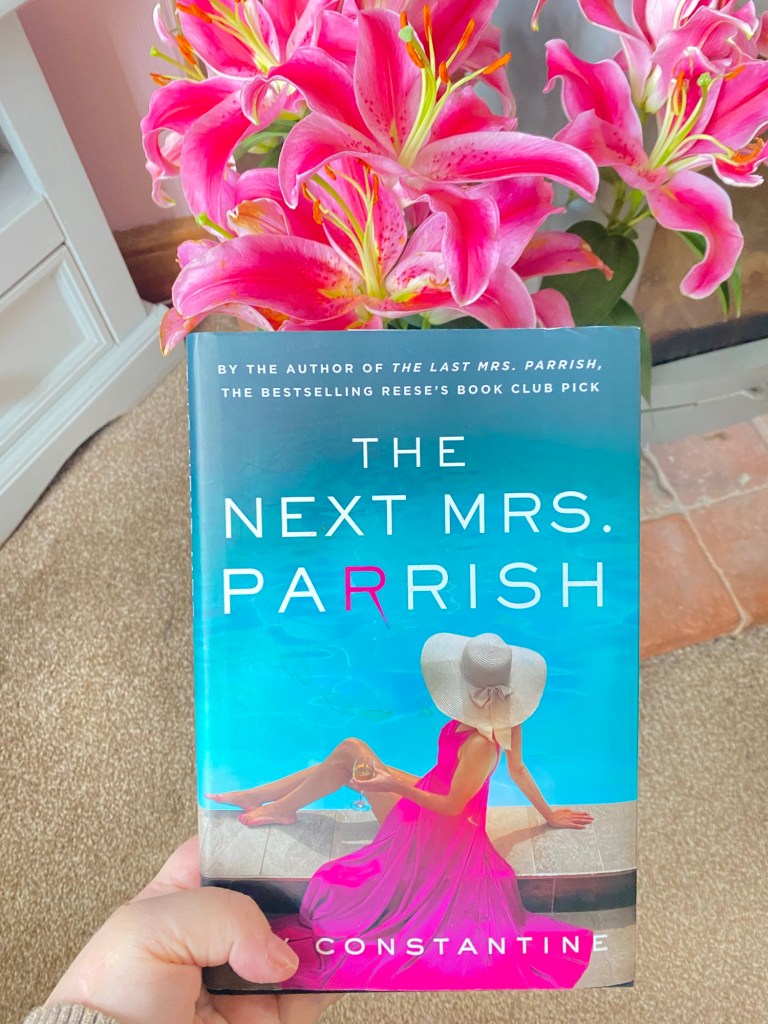
The Next Mrs Parrish by Liv Constantine 

Amber Parrish has worked her way up from being invisible nobody Lana Crump, to prominent socialite over a number of years. There have been many bumps along the way but now she’s made it. Even her husband Jackson’s current status hasn’t stopped her reigning supreme over the Bishop’s Harbour community on the Long Island Sound. Jackson is coming to the end of a prison sentence for tax evasion, but with a month or so left to serve Amber is fast running out of money. Daphne, the first Mrs Parrish, left Bishop’s Harbour after her divorce from Jackson and swore she would never return. She believed that he would never change. His abuse was psychological, physical and emotional, but she has tried to keep the truth of her marriage secret from her girls until they’re older. When she sees daughter Tallulah struggling and desperate to see her father, Daphne relents and agrees to spend the summer in Bishop’s Harbour. For as long as Jackson agrees to her boundaries and rules. Jackson proclaims he is a changed man and agrees to family therapy, but Daphne is on her guard, unsure whether a man like him can ever change. Daisy Anne lives in Texas with husband Mason and their children and enjoys a very close relationship with her in-laws, especially her mother-in-law Birdie. Even so, Daisy Anne feels the loss of her father very deeply, especially since she suspects foul play. After her mother’s death he jumped into an ill-advised relationship with a younger woman and was killed while they were elk hunting. The death was ruled an accident, because his wife claimed she’d mistaken movement up ahead for an elk, but Daisy Anne knows it was murder. When this woman walks into an exhibition for Daisy Anne’s White Orchid jewellery company in New York, she is furious and has her thrown out. The incident hardens her resolve to bring this woman to justice. Amber, Daphne and Daisy Anne’s lives become interlinked, in a dangerous game with complicated motives of revenge, justice and greed.  

This is one of those books where it’s hard to like any of the characters, instead it’s driven by it’s complicated and thrilling plot of deceit and betrayal. I found myself mentally berating some characters and hating others with a passion, but still I felt compelled to keep reading. I’ll admit this was mainly because I wanted to see some people get their comeuppance. I did a lot of internal screaming if I thought one of the women was doing something stupid. My husband will tell you it wasn’t all silent screaming, because I honestly wanted to give others a swift slap. I had sympathy for Daphne, especially when learning the extent of the abuse she suffered while married. I desperately wanted to intervene and tell her not to return to Bishop’s Harbour ever. I could understand her concern about her daughters, but when the abuse was so extensive and he showed signs of starting to control their children it has to be non-negotiable. I would have had to draw a line. Instead of allowing him access to the family, she needed to have a very hard, but honest conversation with her eldest daughter. Once they knew the truth, she needed to work on blocking his access and maybe relocating. Daphne came across as wary one moment then far too trusting the next. When she made the decision to stay close to Jackson for the summer and he stepped over her first boundary, I was screaming at her to get back on a plane. I probably had a huge reaction to this storyline because I have been through psychological abuse and I had to set hard boundaries after leaving. It was great to see the author use this subject in one of her novels and portraying it so accurately, because she shows how pervasive and relentless coercive control is. She covers all the red flags too, showing the initial love bombing – something that’s really off the scale with a man as wealthy as Jackson Parrish. Then she shows him slowly ramping up the control, starting with what Daphne wears and weighs. It isn’t clear if he continues this pattern with current wife Amber, but she’s quite the operator herself having used every trick in the book to end up in such a wealthy position as the second Mrs Parrish. 

As Jackson comes out of prison, their relationship deteriorates over Amber’s solution to their short term cash flow problems. Seemingly having no jealousy or feelings for her husband, Amber agrees to help with his plan to get Daphne and the girls back. Only if she gets the right terms of divorce of course – the guarantee of this standard of living for life. She aims to get her own back on someone from the past, someone who got in the way of her social climbing and humiliated her. She’s determined to buy into their business, setting up a dummy company to buy the controlling share and ruin it from the inside. She is utterly ruthless and there’s a definite pleasure in knowing that she got one over on Jackson but it’s hard to empathise with her, especially when she knows Jackson plans for Daphne. Meanwhile, Daisy Anne continues to be suspicious of the woman who married her father. His sudden death left Daisy Anne without either parent and although she’s since had a family of her own, she’s missed out on that grounding and support we get from our parents. She starts looking into his death in more detail, searching out CCTV and witnesses to the shooting ‘accident’. She also puts out feelers to find out where his widow came from, someone with her father’s interests of fly fishing and shooting would probably have lived on a large estate or been known in their social circle. She can feel in her bones there was a scam involved and she’s not going to let it go. You’re not quite sure how these women overlap at first, as the author ekes out the revelations and takes us on a rollercoaster of twists and turns. Often books have twists just for the sake of it but this was a belter and totally unexpected. I devoured the last few chapters, desperate to get the ending I wanted; finally I could find out how these women link together and watch certain characters get their just desserts. This is the perfect summer read with a great combination of serious issues, the beautiful Long Island beach backdrop and those delicious glimpses into the lives (and wardrobes) of the wealthy women who live there. Definitely one for your suitcase if you’re popping off for some late summer sun.

Meet the Author

Liv Constantine is the pen name of sisters Lynne Constantine and Valerie Constantine. Lynne and Valerie are New York Times and international bestselling authors with over two million copies sold worldwide. Their books have been translated into 29 languages, are available in 34 countries, and are in development for both television and film. Their novels have been praised by The Washington Post, USA Today, The Sunday Times, People Magazine, and Good Morning America, among many others. Their debut novel, THE LAST MRS. PARRISH, is a Reese Witherspoon Book Club selection.

Posted in Squad Pod

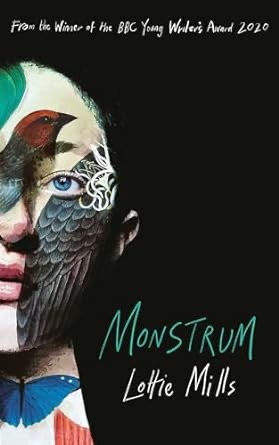
Monstrum by Lottie Mills

This is a very personal review, because when you have a disability it’s impossible to read a collection of stories about bodily difference and it not feel personal. I was diagnosed with Multiple Sclerosis in 1995, but originally broke my back at 11 years old and after years of pain developed Myofascial Pain Syndrome and disc degeneration. Disability and difference have been part of my life for so long but yet I never feel fully part of that world. That’s because my disabilities are usually invisible and I don’t really belong in either world. I even read this while struggling with my health and finally catching COVID. I’m typing up my review while in bed after a radio frequency denervation, where a heated needle is guided towards the compressed nerves and burns them to disrupt the pain messages that refer nerve pain to my legs and lower abdomen. All this goes on behind closed doors because I’m simply unable to get up and out. Then when I can go out, I appear to have very little wrong with me unless I’m using my stick or a crutch. I’m doing what’s called ‘passing’ – able to look like everyone else while having disabilities. So it’s hard to put across how moved I was by this collection portraying ‘otherness’ and how able-bodied people respond to it. Using mythology, fairy tales and a touch of Shakespeare, Lottie Mills has managed to put across so much about life with a disability and what happens when it brushes up against an able-bodied society that’s considered the norm. However, in her world these disabilities become abilities, sometimes magical ones.

The first story in the collection introduces us to a magical island where Cal and his daughter have a beautiful life of warm sand, sea and a night sky glittering with stars. He tells her stories about bear people and she asks him if they are bear people? Yes they are he says, although her mother wasn’t. She was from a human world that’s about to clash disastrously with theirs. In the human world, there’s so much that Cal can’t do because it isn’t set up like their island. In the human world Cal becomes disabled. We then see what happens when human agencies come up against their little family with disastrous consequences. Instead of concentrating on what he can do, they look at him through the prism of their own abilities and only the things he can’t do. How can he possibly look after his daughter properly when he’s so disadvantaged? Mills takes disability theory here and applied it to her character’s lives, which judging by the name Cal (Caliban) come from the type of magical island Shakespeare describes in The Tempest. Caliban has been more recently portrayed in productions of the play as a black man, a slave, or an asylum seeker rather than a monster. Mills makes the point that Caliban is only a monster when we make him one. The original model of disability is a medical one that assumes there is one ideal healthy body and anything that differs from that is wrong and needs to be fixed. When used in a social context it tells you that the things you can’t do in the world are down to your difference from the norm. However, the social model tells us that it is the way the world is set up that creates the disability. For example if all buildings eradicated stairs, creating ramps and lifts within the normal building model, the environment becomes accessible to all. If Cal is viewed in his own environment, he is capable of looking after his daughter. I was desperate for them to be reunited and I also felt a personal yearning to be part of Cal’s world. This fairy tale explains that while agencies like social services and the NHS might think they are doing the right thing for someone, there is often a better solution. That solution champions individuality and concentrates on what the person can do, rather than what they can’t.

In another story we meet a young disabled woman who craves the perfect pain- free body, something I could definitely identify with right now. However, when her wish is granted she finds it difficult to let go of her disabled identity. This was a fascinating exploration of how disability affects the person psychologically. If a disability is innate then it’s the only body that person has ever known. They know the world’s expectations of that body, their own perception of what they might achieve within that body and how able-bodied people perceive them. If the disability is acquired it can be a long and painful process to come to an acceptance of your new body. You must grieve the body you have lost, as well as all the things you expected to do with that body. I have heard many friends tell me that while they’d happily give up chronic pain or a particular aspect of their disability, they wouldn’t want to go through a reverse change and be able-bodied again. There is even a fear of becoming able-bodied again, with all the expectations that places on a person. This story perfectly encapsulates that fight within the self and how far our disabilities are assimilated into our idea of who we are. I loved Lottie’s use of horror and settings where disability has often found a home such as the circus or fairground. Freak shows were popular in the 19th Century, in both the UK and USA, with different bodies placed on show for entertainment and wonder. In fact Coney Island in New York was a hugely successful venue for such shows, where businessmen and entertainers like Barnum were making money from the display of people with differences and disabilities. It certainly wasn’t the wonderful musical extravaganza portrayed in The Greatest Showman. However, it was a place where someone with a disability could make their own money, live in a community where difference was appreciated and accommodated and achieve a level of fame. She lets us know that these issues are complex and look very different from person to person.

There is a beauty in this world of ‘otherness’ and it’s a world made up of an incredible mix of ingredients. Every person with a disability is different so the variety of experience is endless and hybrid bodies, unusual pairings/families and queer love thrives here. Lottie has found a way of balancing how the world sees us and how we see ourselves. She has used magic realism and alternative communities to show the strength there is in accepting disability and making a life with it, rather than constantly fighting to change yourself and remain in the able-bodied world. What was the most interesting thing to me was her understanding of how these issues affect the world of writing and how there are accepted narrative tropes around disability. I studied for a PhD, sadly never completed, where I was looking at how disability is portrayed in autobiography and memoir and whether this was driven by an author’s internalisation of society’s expectations or whether the publishing industry is biased towards narratives that are acceptable to able-bodied readers and they know will sell widely. The public like people who battle against their disability and illness, preferring words like ‘fight’, ‘overcome’ and ‘survive’. The accepted narrative trope is that of a journey from the dark days of diagnosis towards the rehabilitation and a triumphant ending of cure or a successful life, despite the disability. Often people with disabilities read these narratives and feel inadequate for struggling, for not achieving a similar level of ability and success. Mainly they don’t feel represented. Here Lottie shows us these stereotypes and gives us something different – individuality, community and love. Her narratives don’t follow the accepted tropes, instead focusing on acceptance, owning a disability and living with it in a way that works for the character rather than an able-bodied reader. Lottie’s writing manages to latch onto the reader and not let go, but for me it was her refusal to conform and instead confront people’s perceptions of disability. I’m hopeful for much more from this talented writer and that publishers are starting to see the value of individual and adventurous disability narratives that truly represent such a vibrant and varied community.

Published by Oneworld Publications May 2024.

Meet the Author

Lottie Mills was born in Hampshire and grew up in West Sussex, Hertfordshire, and Essex. She studied English at Newnham College, Cambridge, and contributed to Varsity and The Mays during her time there. In 2020, she won the BBC Young Writers’ Award for her short story ‘The Changeling’, having been previously shortlisted in 2018. Her work has been broadcast on BBC Radio 1 and BBC Radio 4, and she has appeared on programmes including Look East, Life Hacks, and Woman’s Hour to discuss her writing. Monstrum is her debut book.

Posted in Squad Pod

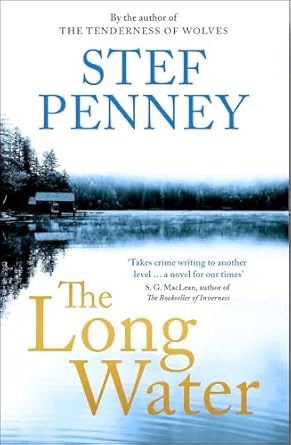
The Long Water by Stef Penney

Nordland. A region in the Norwegian Arctic; a remote valley that stretches from the sea up to the mountains and glaciers.

It is May in what was once a prosperous mining community. The snows are nearly gone and it’s a time of spring and school-leavers’ celebrations – until Daniel, a popular teenage boy, goes missing. Conflicting stories circulate among his friends, of parties and wild behaviour.

As the search for Daniel widens, the police open a disused mine in the mountains. They find human remains, but this body has been there for decades, its identity a mystery.

Everyone in this tight knit, isolated community is touched by these events: misanthropic Svea, whose long life in the area stretches back to the heyday of the mines, and beyond. She has cut all ties with her family, except for her granddaughter, Elin, an outsider like her grandmother. Elin and her friend Benny, both impacted by Daniel while he was alive, become entangled in the hunt for answers, while Svea has deep, dark secrets of her own.

After a move into historical fiction with her fabulous The Beasts of Paris, this feels like a more pared back novel set in modern day Norway. It is a crime novel, based around a missing teenage boy called Daniel. We see a lot of the action through the eyes of an elderly woman called Svea, who has lived here all her life with her two younger sisters. Her youngest sister Nordis, went missing many years ago, thought to have drowned herself in the sea. Svea lives with her puffin hound Asta and has a simple routine of walking into town with her dog for a coffee and pastry, often sharing her breakfast with Odd Emil, another elderly resident of the town who was once in love with the very beautiful Nordis. Daniel is Emil’s grandson and he’s struggling with his inability to do anything, he can’t help. Svea’s granddaughter Elin had been to a russ ball, a little like a senior prom. During russ, school leavers play pranks on each other and issue dares. It’s a time period that teachers tolerate with a roll of the eyes, but never usually goes too far. Both Elin and her friend Benny go in drag and become celebrated for the evening, the heroes of the popular kids. Elin even has a interlude with Daniel – she’s surprised to find this beautiful boy kissing her despite her pink beard! In the early hours of the next morning, Benny is having a liaison of his own when he sees Daniel’s friends parking his car behind the hotel. Then Daniel is reported missing on the trail and Benny is torn, he should mention that Daniel wasn’t in the car but what excuse can he give for being there? Benny has a secret, but he isn’t the only one and some secrets have lasted a lifetime.

I loved the sense of place the author created here. There’s a stillness and isolation about the landscape, it’s beautiful but unforgiving territory. It is like a lot of towns in the north of England, where mining was once the major industry and now they’re closed. There’s something missing in these places, a community that was once focused around the work they shared is gone. I felt this dislocation was an important part of the novel, because although it’s primarily a crime narrative it’s also a look at how much the small community has changed. As the mines closed and the outside world starts to bleed in through the internet and individual mobile phones the town has something of an identity crisis. It explores these contemporary changes in the younger characters like Elin and Benny, but by having Svea as our narrator we can see how seismic the changes have been within her lifetime. Also she breaks the fourth wall a lot which I love in a narrator. For Svea and Emil, who meet for coffee each day, their relationship is loose and undefined. They don’t even say they’ll see each other tomorrow, but usually do. It’s an understanding that’s taken a lifetime. Yet her narration, where she talks directly to us, is more conversational and intimate. Then the author lapses into text speak and emojis for the younger people’s communication. It’s instant, punchy and sometimes indecipherable by someone over forty.

“If you constantly express love as a red tiny heart – ‘bounceable’ and unbreakable – does that diminish the complexity and subtlety of your feelings?”

Svea doesn’t fully understand everything her granddaughter Elin is telling her, but there is an acceptance that shows wisdom rather than comprehension. On the evening of the ball with Benny in his dress and Elin in a suit complete with the pink beard, Elin informs her grandmother that she feels gender fluid. This is possibly an issue at home where her father is the local minister. Benny is openly gay, but his love life is extremely private. He has caught the eye of a hotel guest, a man much older than Benny. He sneaks out to the hotel to meet him, only Elin knowing where he’s going. There can’t be anything wrong with it, because the sex was enjoyable. He didn’t feel forced or taken advantage of, but it did feel strange when he left a huge sum of money for him as if it was a tip. He knows if he admits where he was when he witnessed Daniel’s friends, people will be jumping to all sorts of conclusions.

When a body is found in a cave, during the search for Daniel, people start to speculate. It’s been there for some time and it will take DNA testing to find the answers. I did wonder if it might be Svea’s sister Nordis, who didn’t succumb to the sea after all. The past is coming back to haunt them all and what a past it is. Svea explains that her own mother fell in love with a German prisoner of war, much to the disgust of villagers. Svea was known as a Nazi girl and this heritage stayed with her for life in more ways than one. We know something terrible happened because Svea’s father was the enemy, but she leads up to it very slowly, keeping us abreast of the investigation but also delving back into the past. It was this mystery as much as the unsolved crime that drew me in and kept me reading. This is a slow burn, but Svea relates the story as if we’re a friend or acquaintance. It’s as if she’s the spider at the centre of a very dark web and we’re drawn further and further in. The tension of Daniel’s disappearance starts to build as the days go by too. However, it’s not just this that’s fascinating. The interesting relationship between Elin’s father and Marylinn from the school, being conducted in secret so they don’t upset Elin who already has an inkling. Also, being let into the lives of these young people who are so vulnerable, dealing with their emotions, the pressures of school and popularity and trying to work out who they are when there are so many options. Then we’re shot back to Svea’s teenage years and the reminder of all that adolescent angst makes us realise the full implications of what she went through. This is a novel of relationships, romantic and familial as well as the deep bonds of friendship. We see both ends of the spectrum too, those trying to make sense of where they are by harking back to the past and those working themselves out for the first time. It’s also about how we love, whether in secret, in the open, with fireworks or a quiet love that doesn’t even identify itself.

Published by Quercus.

Meet the Author

Stef Penney is a screenwriter and the author of three novels: The Tenderness of Wolves (2006), The Invisible Ones (2011), and Under a Pole Star (2016). She has also written extensively for radio, including adaptations of Moby Dick, The Worst Journey in the World, and, mostly recently, a third installment of Peter O’Donnell’s Modesty Blaise series.

The Tenderness of Wolves won Costa Book of the Year, Theakston’s Crime Novel of the Year, and was translated into thirty languages. It has just been re-issued in a 10th anniversary edition.

Posted in Netgalley, Publisher Proof

The Paris Muse by Louisa Treger

Treger’s latest novel concerns the life, or more accurately the love, of Dora Maar – a photographer and painter who lived in Paris for most of her life and most notably, during the German occupation in WWII. Born Henrietta Theodora Markovitch in 1907, she was known as a surrealist photographer exhibiting alongside Dali and other notable surrealists. She used her photographic art to better represent life through links with ideas, politics and philosophy rather than slavishly photographing what was naturally there. She was exhibited in the Surrealist Exposition in Paris and the International Surrealist Exhibition in London in 1936. In the same year she was exhibited at MOMA in NYC. He first encountered Picasso while taking photos at a film set in 1935, but they were not introduced until a few days later when Paul Elduard introduced them at Cafe des Deux Magots. They met in quite a dramatic way that showed her intent to catch his eye. She sat alone and using a pen knife she drove the blade between her splayed fingers and where she missed blood stained the gloves she wore. The fact that Picasso kept these gloves and packed them away with his treasured mementoes is a metaphor for their entire relationship – he fed from her emotions.

The author allows Dora to tell her own story and we are inside her mind at all times. We could say this is only her viewpoint of their relationship, but in a world where she is most known through her relationship with a man instead of her own work, Treger is simply redressing the balance. Also you’d have to be utterly blind to think there’s any other way of looking at his treatment of her and the other women he was involved with. But the nine years they were together, she was subjected to mental and psychological abuse. She was underestimated as an influence on his work, particularly Guernica and his politics. I feel on reading the book that he was drawn to what he saw as her masochism and drew on the pain he caused her both for his personal satisfaction and his art. He comes across as a narcissist; constantly told he was a genius he believes everything revolves around his needs and his freedom to work. This is seen in The Weeping Woman series of paintings where she’s depicted as a woman who is constantly tortured and distressed.

Picasso ‘The Weeping Woman’.

We can see how their affair had a distinct honeymoon period. The mistake she made was thinking this would be a template for the rest of their affair. She knew he had a wife, Olga, who’d had a nervous breakdown. There was also Marie Therese, who was his mistress and had his son Paulo. It seems Picasso never turned down an offer, having liaisons with many of their friends and group sexual experiences when they were on holiday in the South of France. These encounters caused Dora extreme emotional distress and being in her head was a painful experience. I desperately wanted Dora to walk away, but she wasnt being true to herself in accepting her behaviour. It felt like their relationship moved in a toxic pattern of infidelity, followed by distress and recrimination. The more distressed she became, Picasso would withdraw, telling her theyd made a bargain, that she was free to leave and that her distress was preventing him from working. Consequently we can see her feelings discounted. He gaslights her by saying she doesn’t have to feel the way she does; her feelings were always the problem, never his behaviour. In one scene in the book Dora suspects her mother is unwell after a dropped phone call but it’s after curfew during the German occupation an they can’t leave the house. Although Dora has paper saying she’s Catholic and Aryan, they won’t save her if she’s found out in the middle of the night. I found Picasso terribly cold towards her when they find her mother dead the next day, he doesn’t touch her and seemed more fascinated rigor mortis and the unearthly sheen of her skin, than comforting Dora. There were times when I felt he was doing things to keep Dora in her place, but there were other times when he seemed genuinely unmoved. It was as if once he looked at something with his artist’s eye it became an object.

The Years Lie In Wait For You by Dora Maar

It was no surprise when Dora’s mental health began to decline and being in that space with her felt suffocating and scary. I loved the way the author had missing sections in the text to signify time Dora has lost and where others have to step in. Treger represents Dora’s declining mental health as a direct product of Picasso’s actions. It’s as if he slowly takes her apart until her mind resembles one of his portraits, distorted and unnatural. Dora is a square trying to fit into a round hole. She is in love with Picasso and craves a life with him based on friendship, passion and fidelity. Picasso wants to have everything Dora is offering, but without the fidelity. He can’t understand why she is unhappy at his visits to Marie Therese, because when he’s with Dora he is wholly with her. His assertion that they should both be free almost sounds plausible until you realise that he holds all the power: he sees Dora when it suits him not her; he reserves the right to sleep with her friends even when she’s there; he also gets to decide when she should return to her apartment and let him work. I almost wanted him to have a taste of his own medicine. I wanted Dora to turn him away when she’s working or sleep with one of her male friends while they were on holiday, but she doesn’t get to dictate in the same way. That’s when you realise that his call for freedom in their relationship, means his freedom. I felt sad for Dora, possibly influenced by some of my own experiences. She seemed like a smaller woman at the end with none of her original vitality and flamboyance. I’m so glad to know that her art lives on and is still exhibited as part of the surrealist canon.

Out now from Bloomsbury Publishing

For more on Dora Maar’s work and legacy…

https://www.dazeddigital.com/art-photography/article/46781/1/why-artist-dora-maar-was-much-more-than-picassos-weeping-woman

Meet the Author

Louisa Treger, a classical violinist, studied at the Royal College of Music and the Guildhall School of Music and worked as a freelance orchestral player and teacher.

She subsequently turned to literature, earning a Ph.D. in English at University College London, where she focused on early-twentieth-century women’s writing and was awarded the West Scholarship ‘for distinguished work in the study of English Language and Literature.’

Louisa’s first novel, The Lodger, was published in 2014, and her second novel, The Dragon Lady, was published by Bloomsbury in 2019. She lives in London.

Find out more about Louisa at louisatreger.com or https://www.facebook.com/louisatregerwriter or @louisatreger

Dora and Picasso

With grateful thanks to Louise Treger for my early copy of this novel.

Posted in Squad Pod

For Such A Time As This by Shani Akilah

I don’t often read short stories, because I’ve always got a novel on the go. So if I read them it’s usually in the same way I read poetry – keep them by the bed for when pain and insomnia hit and I want something short, that won’t have me tempted by one more page late at night. Or I carry them in my handbag for when I’m in a waiting room or on the train. I haven’t read a collection in one go since university when my American Fictions module introduced me to Katherine Mansfield, Zelda Fitzgerald and of course, Virginia Woolf. I’m so glad I read this collection in one go, because they are interrelated, but also because each story is like a jigsaw puzzle piece that once put together gives a picture of the lives lived by a group of young Black British Londoners.

Akilah’s writing is immediate: there are small visual chunks of description like Insta posts; short snappy dialogue like Tweets; never a character or a word too much. Yet they’re also incredibly romantic, something I didn’t expect from the Tinder generation. The opening introduction of a girl catching sight of a man on the Tube reading her favourite book is so lovely. She has a yearning to talk to him, but as she plucks up the courage to approach him she’s interrupted by a woman who notices she’s dropped her new bookmark. She’s intrigued by a man who chooses to read fiction and wonders what insights he might have. It’s a tiny moment of connection in an otherwise dislocated existence. Other passengers stay in their own bubble, either keeping their head down studying their phone or cut off by their AirPods. Some just have their eyes closed. There’s something almost intrusive about having to share space with others at this time in the morning, anything that creates some distance will do. I felt the chaos of the city in this opener, probably more pronounced because I’m 50 years old and live in a northern rural village that still has a little red phone box. I can opt out of the world whenever I want and I really felt that gap while reading – these young people have to live in this reality. It took me into a generation for whom life is lived in snippets of information whether it be a tweet, a WhatsApp or SnapChat message. Somehow they flit between them and keep it all in their head. As our narrator says, she can swap between iMessage and work mode with ease knowing that eventually her year will be all parcelled up in a Spotify playlist.

My heart broke for Gabby, in Good, Goodbye. At the age where everyone is getting married she’s always the bridesmaid – six times this year. She’s so obviously single that aunties commiserate with ‘your huzband is coming’. Obviously from the same friend circle, Jonathon is the resident clown, up for dancing, singing and even last minute MC’s duties. He played hard that summer and took so many photos for his Twitter Wedding Enjoyment posts. Yet he freezes at today’s wedding when he sees Gabby looking ‘like a goddess’. Gabby is the one who walked away from him five years ago. She felt like she wasted so much time on him and finally met up with him and drew a definite line under their ‘on again, off again’ relationship. I loved Gabby’s thoughts on the Maya Angelou quote about believing who people are the first time they show you. It’s a quote I kept in my mind in my younger, dating years, but a hard lesson to learn. Yet we also hear Jonathon’s thoughts – that Gabby was the one person who understood him and that actually he knows now she was the making of him. There’s such a gulf between what this young man says and what he deeply feels. He’s hiding behind polite conversation but inside remembers a wedding from years before, when her sister got married and he realised Gabby was the one. I yearned throughout this beautifully romantic story for one of them to tell the truth about their feelings.

We see more of Jonathon in a story called Ghana in December and we see the struggle of being split between London and the place that feels like home. The young men in the story are missing the food and the sun. He thinks about the expectations placed upon him as a young black man, especially once his father’s mental health declined, something he’s always kept to himself. He had to step up at home, be the man of the house and felt so much guilt for wanting to go to university. He tells his friend David that the London life ‘kills us in so many ways’. David gets it. It’s the micro-aggressions that chip away. Jokes passed off as banter. The hostility he felt from white and Caribbean kids. How he was talked down to as if all Africans are primitive and come from mud huts. He could never speak of his brother’s suicide and how returning to Accra brings out that grief. When he smells the food and sees the difference in the light he somehow feels united with him. It’s the place he needs to be in order to feel and allow himself to cry on a friend. I loved how the author shows the depths of these young men’s feelings and how they cope with this split identity. I really came up against my own privilege as the author wove the pandemic into her stories. There was so much able-bodied people took for granted in that period of time, my disability meant I had to shield for a year and become isolated from everyone. Yet black people were four times more likely to die from COVID than white and one story character is keen to set up a work support group for the 33% of employees who are black. She talks about the proportion of black and ethnicity minority people who work on the front line, the financial straits of the pandemic, the higher infection rates and she spends her spare time educating the employer about the disproportionate effect on black employees. Yet afterwards, when she’s encouraged to apply for a senior equalities post it goes to a white man. I could feel her powerlessness and the injustice of this decision. Our character doesn’t want to believe she’s facing racism and I’ve heard excuses made for these types of choices – it’s happened to me and I didn’t want to call it ableist in my younger years, but now I would. It’s a case of calling something what it is. Not letting yourself be gaslit about it.

My joy was unbounded when Gabby and Jonathon appear in the final story, set around a party. I had everything crossed for them, yet the author had other surprise reunions that I hadn’t expected. The stories that follow the pandemic have captured that sense of change. The reminder that we need to wear ‘proper clothes’ again made me smile because I’ve been aware of a big change in my wardrobe towards outfits that are really secret pyjamas. There’s nothing formal anymore, no high heels and certainly no work wear. There’s the strangeness of being with others, whilst knowing more social interaction is probably good for me. The author drops in these little clues and reminders of other places: the kente cloth bookmark; Ghana casually described as ‘home’; music used as a reminder of wider family and celebration. The references ground these stories within the community, the African diaspora in London. Not everything ends how we expect, but that just heightens the sense of realism and authenticity. This is a warm, inviting and illuminating collection that shows the pressures on young, Black British people. It was a different world from my own, a busy, urban city full of these sparky characters whose ambitions and dreams are so admirable, even if they are also tough on the character trying to achieve them. It shows how having your community and friends around you is vital, even if some of their expectations are grounded in a different time and place. Finally, it struck me how important it is to tap back into that home country through family, food, music or traditions because it’s something that keeps them grounded and replenished.

Out now from Magpie Publishing

Meet the Author

Shani Akilah is a Black-British Caribbean writer and screenwriter from South London. She is a book influencer, co-founder of the Nyah Network, a book club for Black women, and was a literary judge for the Nota Bene Prize 2023. Shani has a Masters degree in African Studies from Oxford University. For Such A Time As This is her debut short-story collection. 

Thank you to the author, Magpie publishing and The Squad POD Collective for my copy of this collection.

Posted in Publisher Proof

Spitting Gold by Carmella Lowkiss

What a year it’s been for debuts!! This is another excellent read that I’d put on the back burner because I had over committed myself to blog tours. I’m so sorry I didn’t read it sooner because I absolutely LOVED it. This is my absolute favourite genre – gothic, historic fiction – but when added to the elements of spiritualism, transgressive females and dysfunctional families this would definitely come up on Goodreads as highly recommended. In Paris, 1866, a couple of sisters are living very separate lives; Sylvia who is now Baroness Devereaux and Charlotte Mothe, the sister she left behind with a drunken, violent father. When Charlotte pays a heavily disguised visit to Sylvie’s home she assumes their father is ill, but it’s a different aspect of her past she’s bringing to her sister’s door. Their mother had a business as a spirit medium, but Sylvie promised to put such shady dealings in the past when she married the Baron. Charlotte needs her sister for one last con, to pay her father’s medical bills. The aristocratic de Jacquinot family think they are being haunted by an aunt killed in the revolution. They will need to use all their tricks to frighten money out of this family, but they didn’t bank on being absolutely terrified too.

The Perrault fairy tale underpinning this story is ‘The Fairies’ but the sisters don’t necessarily agree on the interpretation. One sister is asked a favour by an old crone, a glass of water from the well, but she ignores her and is cursed to expel toads every time he opens his mouth. On the next day the other sister is commanded to provide a glass of water by a young beautiful woman and grants her the favour. The second sister opens her mouth and gold coins spill out. Perrault says one sister is good and one is bad and Sylvie accepts this, but Charlotte thinks changing her disguise was a mean trick.

“The test is rigged from the start – even before the fairy turned up, when Perrault labelled one sister good and one bad on the very first page, before either got a chance.”

However, by the end Sylvie has changed her perspective. She muses that if she had a daughter would she be toads or gold? She decides not to read her Perrault; ‘I think I will let her decide for herself how a girl should be.”

The de Jacquinot family are dysfunctional and have narrowed all their problems down to the daughter, Josephine. They are clearly struggling to stay afloat, with clear spaces on the wall where there used to be paintings. Yet none of them are working or making any money, still living like the aristocrats they once were. The grandfather seems grumpy but is convinced they have a visiting spectre – Aunt Sabine who died in the revolution when her throat was cut. Brother Maximilien is cynical, in his book there is no such thing as spirits and his sister is suffering from a prolonged bout of lunacy brought on by a dalliance with a once trusted friend of his. Josephine is absolutely convinced there’s a spirit. Charlotte and Sylvie started their routine and I’d not expected them to be charlatans! I loved the details of their routine – the snuffing out of candles, the ring of salt. I thought that the story of creating waxed spectral hands with their mother was a brilliantly quirky childhood memory! Charlotte adopts the patter again straight away, talking about “penumbral disturbances” and “liminal spaces”. Sylvie almost admires her sister as she weaves a tale around the de Jacquinot home and their errant daughter.

However, everyone is shocked when Sabine appears to possess her niece. Josephine has become a different person, babbling about something being taken from her and spitting with anger at her grandfather. Then she’s overcome, with ectoplasm pouring from her mouth. This is something they’ve heard of but have never seen spontaneously like this. That night the library walls are trashed and the ancestral paintings are slashed to pieces, all expect Sabine’s. The family suspect a poltergeist but how could they have slept through such destruction? After this even Maximilien is on board, yet Sylvie suspects something isn’t what it seems. Charlotte was vociferous in her defence of Josephine, almost as if she actually cares. Sylvie knows that her sister has become unnaturally attached to young women before. Before they can go any further Sylvie’s husband confronts her at home. He’s had her followed and suspects an affair with Maximilien de Jacquinot who is closer to Sylvie in age. Sylvie tries to protest her innocence, but it’s difficult when she has betrayed her husband, just in a different way. She can’t reason with him and can only do what he asks, to leave. Now she is back in her miserable childhood home, listening to her father snoring as she lays awake and bereft.

Here the author pulls a brilliant ‘Fingersmith’ style twist, with a change of narrator and perspective of the same events. This narrative is what happens to the girl who spews toads and doesn’t conform. Charlotte is the daughter who stayed behind and still nurses the father who she suspects of killing her mother. In Charlotte’s story, instead of the aristocracy we meet an interesting set of characters who live and love outside the norms of society. I loved meeting Mimi who could fill a book of his own! The atmosphere and settings in the book are brilliant and give a very varied look at the city of Paris, from the poverty Sylvie and Charlotte come from to the remaining aristocrats and their crumbling mansions. This is a society recovering from the shock of revolution and a shift in the existing hierarchy. The de Jacquinot family are like their mansion, falling apart. I loved the dual staircase too, with Josephine and Charlotte using the servant’s exit together when surely they should use the main stairs? There’s are further tantalising hints of people who live outside the rules, quite lavishly if Mimi’s quarters are the example. I could see why Sylvie had opted to disappear into the money classes, because the difference between her rooms and the home she came from is stark. She also truly loves her husband and hasn’t married him for a comfortable life as her sister thinks. Charlotte does feel the dice was loaded when it came to their differing fortunes and I think she sees the Perrault fairy tale as an allegory for her sexuality. Sylvie is able to conform in this way and Charlotte can’t, she’s born the way she is into a world that doesn’t accept her. I was also sympathetic to her situation at home, trying to care for a man who is hard to love and has been violent towards them all. This was an amazing read, genuinely spooky but also a novel about families. Those who fit into their family and those who don’t. This is a fabulous ghost story with an unexpected twist and a wonderful glimpse of a society in flux.

Meet the Author


Carmella Lowkis grew up in Wiltshire and has a degree in English literature and Creative Writing from the University of Warwick. After graduating, she worked in libraries, before moving into book marketing. Carmella lives in North London with her girlfriend. You can follow her on social media @carmellalowkis. Spitting Gold is her first novel.

Posted in Publisher Proof

The Midnight Hour by Eve Chase.

I was looking forward to the new Eve Chase novel, but really surprised to win a competition for a hardback copy plus a vase of my favourite flowers, peonies. All I’d done was describe what I loved about Eve’s writing: her female characters; the secrets from the past just waiting to spill out; the gothic feel and atmosphere she creates, especially around old houses; lastly, it’s the dynamics she creates between the characters particularly the mothers and daughters. I feel that in this novel she has gathered all those aspects together beautifully with an intriguing plot and such a relatable central character in Maggie. Maggie is an author, living in Paris and struggling with writer’s blog. Something from her shared past with brother Kit keeps coming into her mind. Her mother Dee Dee died from cancer recently and Maggie was there for her, until her last moments. Her mind keeps being drawn back to her late teenage years when Dee Dee was a famous model, living in the Notting Hill area of London, close to the Portobello Road with it’s antique and collectible traders.

One summer morning, Maggie wakes up to find that Dee Dee hasn’t come home. This isn’t too unusual, late parties and sometimes modelling shoots can drag on into the night and she isn’t worried. She loves spending time with Kit anyway. Kit is using his skateboard when he has a fall, breaking one of the wheels. A stranger comes to their aid, dusting Kit down and trying to repair the wheel. He introduces himself as Wolf and when his eyes lock with Maggie’s they’re the clearest blue she’s ever seen, his name becomes him. There’s also an instant spark between them and for Maggie it’s instantaneous, first time and first sight love. He recognises the connection too. It’s what makes him take the skateboard back to his uncle’s antique shop so he can use his tools to fix Kit’s skateboard properly. Just so he has an excuse to go back. These are emotional days as Maggie navigates this new feeling, but also concern for her mother who still hasn’t come home. She calls Dee Dee’s friends and they rally round but still no one knows where she is. Maggie needs to leave her Paris flat and travel back to England and Aunt Cora’s house in the country. It’s time to ask some questions and catch up with Kit. Once in London she makes her way to the old Notting Hill house with the pink door and bumps into a man on his way out. She’s surprised to see this is a much older Marco, Dee Dee’s hairdresser. He tells Maggie he’s digging out the basement of the house, sending her into a complete panic. Maggie knows that secrets lurk in the garden of their old home and it might not be long before they’re found.

Eve really gives us time to get to know Maggie and Kit. As a child Kit was the baby of the family, adopted by Dee Dee when Maggie was a little older. His blonde curls and sunny disposition give him an angelic demeanour and he’s certainly noticed by Wolf who dotes on him. Even grumpy Gav at the antiques shop falls under Kit’s spell, especially when he sees his polishing skills! As an adult Kit is more wary, now a dealer and collector himself, he has learned that not every customer is as honest as they appear. He does have a big heart though, so when an old gentleman comes into his life asking Kit to source some pieces for his new home, he wants to help. Roy appears a little down on his luck and Kit senses a loneliness under the surface. Of course someone’s appearance isn’t necessarily indicative of how wealthy they are, so Kit takes his request at face value. It’s only when Roy starts to turn up unannounced, wants to go for dinner and then talks his way into Kit’s flat that he starts to wonder if Roy is what he appears to be. In fact he isn’t even sure he likes him. He needs to be firm to shake him off but Kit dislikes confrontation and wonders whether he should trust his instincts, or is he just being paranoid? It’s lovely to have Maggie back in the country, they’re still close, but she seems consumed by that summer years ago when they first met Wolf. Kit isn’t sure what happened that summer, but he knows that one night Maggie took him from their home in a hurry and they ended up on a train to Aunt Cora’s in Paris. He knows she was protecting him but doesn’t know why and he knows his mum was missing for a while. They never returned to the Notting Hill house, instead moving to Cora’s in the country, into the house of their grandparents. Kit promises to look for Wolf, finding his real name helps and soon Kit has him tracked down to one of the better auctioneers in London. Will seeing Wolf again put Maggie back on track?

I fell in love with Maggie. I was a similar age when I first fell I love and reading about her summer with Wolf brought back all those feelings. The wonderment when someone suddenly becomes your absolute world. The beautiful surprise when they feel exactly the same. The discovery of sexual chemistry, totally losing yourself in another person, being vulnerable physically and emotionally, it’s all here. In very delicate strokes Eve sketches a teenage girl who is emotional and intelligent. Little hints about her physical appearance makes us aware that she is a curvy girl, she wears glasses and is a little lacking in confidence. She’s astonished that Wolf loves these things about her and Eve captures that self-consciousness, the apprehension about revealing her body to this young man totally swept away by his obvious desire for her. It’s honestly so beautifully captured that it took me right back there. Maggie’s an incredible sister to Kit and nurtures him with a fiercely maternal love that I think comes from him being so much younger. It takes days before she starts to struggle a little with the responsibility, because Kit’s that age where he’s on all the time. Her feelings for her mother range from concern, to anger and incomprehension. It’s Aunt Cora who has always been the fuck-up of the family, an addict who would arrive at Christmas and grace everyone with her acerbic tongue and disappear again. However, she’s been clean for some time when Maggie and Kit arrive in Paris and it seems strange to Maggie that she’s so together and furious with Dee Dee for leaving them alone. Cora concentrates everything on Kit and Maggie, who is heartbroken and possibly hiding something about the last days they were in London.

You will be swept up by the romance, the mystery and the relationships between the women. I loved the atmosphere of the Notting Hill setting and I always love the smell and sound of an antique or junk shop: the library feel of quietness and reverence; the smell of beeswax; the ticking and chiming of several clocks. I always find myself drifting into another time when I’m in an antique shop. The mystery of adult Kit’s visitor grabbed me too, because his influence is subtle and I found myself questioning just like Kit does. Is he being manipulative or is this a coincidence? Did he intend to do that? Is he lingering for genuine reasons or for some other nefarious purpose? I wasn’t sure, but felt an undercurrent of danger for Kit if he didn’t keep his wits about him. What the story tells us is a therapist’s mantra really – unresolved emotions and trauma will always bring themselves to the surface. Whether through a similar event happening or a big change in our lives, these memories float to the surface with more resonance than they should all this time later. This is because they weren’t processed properly the first time. So Maggie is feeling a torrent of emotions as if she’s still a teenager and they’re just as confusing, painful, beautiful and overwhelming. She and Wolf never had a proper ending and I found myself longing for that closure to happen when she comes back to England. This was a wonderful read, deeply emotional but also a compelling mystery. I honestly think this is Eve’s best novel yet!

Out Now from Michael Joseph.

Meet the Author


Eve Chase is an internationally bestselling British novelist who writes rich, layered and suspenseful novels, thick with secrets, unforgettable characters and settings. Her latest novel, The Midnight Hour – ‘Her best yet…I loved every word’ – Claire Douglas – publishes June ’24, in the UK. Other novels include, The Birdcage, The Glass House (The Daughters of Foxcote Manor, US) a Sunday Times top ten bestseller and Richard and Judy Book Club pick, The Vanishing of Audrey Wilde (The Wildling Sisters, US) which was longlisted for the HWA Gold Crown Award, and Black Rabbit Hall, winner of Paris’ Saint-Maur en Poche prize for Best Foreign Fiction. She works in the Writer’s Shed at the bottom of her garden, usually with Harry, her golden retriever.

Say hello @evepollychase on Instagram, X, and Facebook

Posted in Publisher Proof

The Burial Plot by Elizabeth MacNeal

I was so lucky to be offered a proof for this book after waxing lyrical about the author’s work on social media and I loved it so much that I’ve already splurged on the Goldsborough Books special edition with the most gorgeous spredges, for my collector’s cabinet. This novel pulls together so many things I love in one incredible story: the Victorians; a touch of the macabre; a spooky and unique house; a heroine who has her consciousness raised and a simmering tension that builds to a heart hammering conclusion. Bonnie is our heroine, a young woman who resides in St Giles and earns a living running a scam with her lover Crawford and their friend Rex. Crawford is handsome and a bit of a dandy as far as their limited means allow. The trio hang around public houses looking for their latest mark, a man that Bonnie can lure to a quiet alley with the promise of sex, only for Crawford and Rex to appear just in time to rough him up and steal anything they can sell on. However, one night as Bonnie lures a red-headed man to their usual place, Crawford and Rex don’t appear. Pressed up against the wall while the man tries to haul up her skirt, she realises they’re not coming and has to fight him off herself. As the mark falls and hits his head, the men suddenly appear but far too late. Bonnie knew that as soon as head hit brick, he was dead. Crawford tells her to leave and lie low, he and Rex will tidy this away. In the aftermath, Crawford shows her an advert for a lady’s maid at Endellion – a labyrinthine Gothic house on the outskirts of London. Maybe she could apply for this job and stay out of sight for a while? Bonnie goes to meet the owner, a Mr Montcrieffe. He’s a widower with a teenage daughter who desperately misses her mother and spends rather more time alone with her scrapbook than is healthy. To her surprise, Bonnie gets the job and looks forward to working with Cissie. Yet there is so much more to these unrelated events than she knows and so much about Crawford that’s been hidden by her love for him. Now events are set in motion, Bonnie is caught in a spider web of lies, betrayals and the very darkest of intentions.

I’ve already read one book this month that deals with this part of London and a burial ground known as Cross Bones where the prostitutes of the Southwark district were buried. Known as the Winchester Geese, due to being licensed by the Bishop of the parish, upon their deaths they were still banned from a burial in consecrated ground. The burial ground then became a place for the poor of the surrounding area to be buried, but in an area overrun with diseases like typhus and cholera it was soon over subscribed. Half decayed bodies were disinterred to make way for the new, with grave diggers losing their respect for the dead and using their bones as skittles and their skulls as balls! When Bonnie sees Mr Montcrieffe’s sketches of a mausoleum for his late wife, she encourages him to build it on an empty patch of land on the edge of the gardens of Endellion. She knows that the rich would pay to take their eternal rest in such beautiful surroundings and away from the miasma of death and sewage in the city. Between them they sketch out a cemetery, with Bonnie creating a planting scheme for the project. She’s inspired by the old greenhouse where she’s been spending her few hours of leisure potting up abandoned orchids and other cuttings. Bonnie also makes a difference with Cissie, who seems happier to have a mother figure in the house and spends more time outdoors. Her scrapbook of imaginary love letters sent from Lord Duggan are left aside for a time. Bonnie even enjoys her time spent with the kitchen maid Annette, building a female friendship that’s been missing from her life. Then there is news from Mr Montcrieffe that he’s received a letter from a man who worked on the cemetery at Highgate recently. He claims to know all the administrative loopholes and potential investors to benefit their endeavours at Endellion and he’s invited to stay. As soon as Bonnie enters the office she knows who their new guest is and the smell of peppermint and aftershave she knows so well fills the room. Crawford is keen to establish himself in the house, like a cancer at it’s centre. Although he claims to wish for Bonnie back in his life, she knows that isn’t the only reason. He wants Endellion and he doesn’t care about the chaos and pain he might cause to achieve his aim.

Horace Walpole’s Strawberry Hill

The setting is beautifully drawn by the author and modelled on Strawberry Hill, Horace Walpole’s gloriously gothic mansion near Twickenham. It’s a very fitting choice for this story, considering that Horace Walpole was the writer of the very first Gothic novel The Castle of Otranto. With it’s crenellated roof and romanticised interiors Endellion was extended and decorated to the taste of Mr Montcrieffe’s first wife Josephine who drowned in the garden pond. The house is labyrinthine in design with plenty of places to hide out, in fact Bonnie spends a lot of time looking for Crawford and wandering through these rooms following the scent of cigarette smoke or his distinctive aftershave but never quite seeing him. The redecoration of the Montcrieffe’s marital bedroom is done by Cissie but very in her mother’s style with it’s overblown and romantic pink. Only to be expected from a girl who writes imaginary love letters to herself in an ornately decorated scrap book. Bonnie prefers working in the earth, transforming the greenhouse and the cemetery with her more natural planting schemes when compared with Josephine’s fondness for cultivating pineapples. The gardener shows Bonnie the exotic plants grown before, including a Venus fly trap, which he opens up to reveal a partially digested beetle. There’s no more fitting metaphor for the situation Bonnie finds herself in, or for the house itself and it’s ability to draw someone like Crawford in and inspire envy.

Crawford is a classic abuser. He sought out Bonnie, as a girl with no prospects, money or family and using his romantic wiles has love bombed her into depending on him for everything. The death of the man in the alley has allowed him to hold something over her, using her fear of the hangman’s noose and of losing him to manipulate her. The pace of the novel changes when he joins her at Endellion; the fear and excitement of snatching moments together and his desire for her are like a drug. He tells a story of his early years, living in poverty on a barge just down the river from this house and an injustice linked to his parentage. This invokes pity in Bonnie and he hopes it gives him a sentimental Robin Hood feel – he wants to take things that aren’t his legally, but argues that morally he has every right to them. The risky behaviour builds and when Bonnie won’t go along with what he wants he suggests she doesn’t love him, that she’s falling in love with Mr Montcrieffe and when neither of those work he threatens, becoming more menacing than Bonnie has ever seen. He takes the household apart bit by bit, removing those who might oppose him, charming those who are taken in by his looks until his dirty boots are carelessly marking the floors and the furniture as if he owns them.

When he proposes a scheme to Bonnie that will make their situation more permanent and tells her his history with the house she believes that this is the reason he came here and feels obliged to help. However, he reckons on the Bonnie he knows from St Giles not expecting that her time at Endellion might have changed her. I loved Bonnie’s development through the book and Crawford has definitely underestimated her. She has developed self-worth from having the raised status of a steady job, earning honest money and using her skills on the cemetery project with Mr Montcrieffe. His belief in her abilities is touching and improves her self-esteem. She starts to feel a loyalty to him and to Cissie who has brought out strong maternal feelings in Bonnie and mothers always protect their cubs. Yes she feels trapped by Crawford but she’s unhappy with his plans, she wants to remove deceit from her life at Endellion and the constant feeling of being on edge is killing her. I started to wonder whether Crawford didn’t have the same hold over her he once did, she’s questioning his plan and his motives and decides to do some digging of her own. The revelations keep coming in the latter half of the book, some expected and others a complete shock to Bonnie and to us. I felt a physical sensation of holding my breath in parts and I devoured the final three sections in one afternoon, desperate to find out what happened. The scales fall from our eyes at the same time as Bonnie as bit by bit the revelations about Lord Duggan and the scrapbook, Crawford’s nocturnal adventures and even the red- headed man in the alley make us see everything in a new light. Bonnie will have to be super-resourceful to survive and create a better life for herself. I was desperate for her to succeed! This novel is a brilliant thriller with an atmospheric and beautiful backdrop. We also have a resourceful heroine with more strength and intelligence than she realises. This is definitely in my top five books of the year so far and an absolute must read for those who love Gothic and historical fiction.

Out now from Picador

Meet the Author


Elizabeth Macneal is the author of two Sunday Times-bestselling novels: The Doll Factory, which won the 2018 Caledonia Novel Award and has been adapted into a major TV series on Paramount+, and Circus of Wonders. Her work has been translated into twenty-nine languages. Born in Scotland, Elizabeth is also a potter and lives in Twickenham with her family. She can be found on instagram @elizabethmacneal.

Posted in Squad Pod

The King’s Witches by Kate Foster

Having only just read her debut The Maiden, I was very keen to get started on this second novel from Kate Foster. This novel is based during the reign of Elizabeth I and James VI of Scotland (James I of England). I knew of James VI’s obsession with witches after studying the Malleus Malificarum at university while writing about disability representation in fiction. I looked at witches while discussing how disfigurement and disability in novels is used as a symbol for evil. The Malleus Maleficarum was the bible for witch finders, describing all the behaviour and characteristics of possible witches and signs to look out for. The book features in this novel as a guide for James VI, who had been alarmed by news of witch hunts in Germany. His proposed bride, Princess Anna of Denmark, set sale for Scotland in 1590 and was driven back by catastrophic storms. The storms were blamed on witches in Denmark and when James travelled to meet her in Norway he heard allegations of witchcraft first hand. Around the same time, in North Berwick, a housemaid called Geillis Duncan was accused of sorcery and when tortured she implicated several other witches, allegedly conspiring with the Earl of Bothwell to take the throne from the King. Kate Foster has taken this history and weaves a story from three women’s points of view, giving a feminist slant on the witch trials that killed thousands over the next two centuries, the majority of them women over forty.

There are three narratives in the book, each one from women who hold different positions in society. Princess Anna of Denmark was a young girl of fourteen when he was betrothed to James VI and attempted to reach Scotland. This has been updated to seventeen in the novel, but at either age there’s an enormous pressure on her shoulders. She has been sent on the basis of a Scottish hand-fasting, if she should please James within the next year he will marry her. If not, she will be ruined for any other marriage and her future looks set to be a life within an abbey. Adding to the pressure, there is a witch burning just before they leave and Anna is compelled to watch, because burnings are a warning to all women. Anna is sickened by what she sees and can’t forget it, convinced as they set sail that the witch is stood on the harbour cursing the voyage and her union with the Scottish king. As it is the sailing does feel cursed because the weather is terrible, sea-sickness is rife and when Anna meets her Scottish tutor Henry every thought of the king is driven from her mind. Anna’s companion and lady-in-waiting is Kristen Sorenson, a pious woman who once lived in Scotland. She is charged with keeping Anna focused on her duty, but she also has her own personal reasons for wanting the royal marriage to be a success. Jura is a housemaid working in the house of the local bailie in North Berwick. Her mother was a cunning woman, treating local women’s ailments with natural ingredients and she passed her knowledge on to Jura. She heals the daughter of the house from a rash and redness on her face using an oatmeal poultice and soon other women in their circle are asking for cures of their own. However, she and the daughter clash over a dalliance with a local farmer’s son and when Baillie Kincaid starts to force his attentions on Jura she decides to flee to Edinburgh. All three women are now caught up in the witchcraft rumours and may have to come together in order to save themselves.

Within a few chapters of the book I felt taken right back to the 16th Century. The witch burning scene in Denmark is see through Anna’s eyes and it is sickening and barbaric to imagine people killed in this way. Before she sees Doritte Olsen burned Anna mentions that even though she is to be betrothed, she doesn’t feel like a woman yet. She doesn’t fully know who she is. She can’t eat and can’t sleep, smelling the smoke on her own hair and knowing that on the beach, Doritte Olsen is still burning down to ash. She starts to see that women have no power in this world and the burning is a lesson – this is what happens if women step outside their role. It left me knowing I was in a different world, where women’s roles are wholly defined by men. Jura senses freedom as she flees to the capital city. Her descriptions of Edinburgh are so vivid as she marvels at houses with four storeys that put the whole street in shadow. She is dazzled by Canongate with it’s gleaming shop fronts, tennis courts and cork-fighting pits. She marvels that her mother never told her such variety existed in one place. The use of Scottish dialect in Jura’s narrative really helps ground the reader in that place and her use of bawdy language made me smile and feel warm towards her.

Here and there, Kate uses letters between the chapters and they had the effect of reminding me that a true story lies behind this novel. After their first night together, she strategically places a letter to the king from his friend Douglas Murray, a fictional character who stands in for a series of lovers the king is known to have had. In a letter that is mainly keeping the king up to date with news from court, he signs off with a curious line:

‘Mostly I await your return […] so that we might embrace each other once more in the manner to which we have become so dearly accustomed’.

The consensus among 21st Century historians is that the king was homosexual or bisexual, but in the context of this story it makes us realise that Anna’s task is a difficult one. She truly will be a wife in duty only and she knows this as she tells Kristen it feels unnatural to be intimate with someone she doesn’t care for in the right way. Her role is to stay quiet and bear children, turning a blind eye to the king’s extra curricular activities. Anna’s description of their intimate relations made me feel sick for her, she senses there is no ‘longing’ in him and I realised that should she become Queen this is her life. She won’t be able to have lovers and her only romance in life would be the way she feels for her tutor Henry. In fact James seems more aroused when torturing potential witches. How I wanted her to run away.

The only women in the novel with a small amount of freedom are those able to earn their own money like Jura and her Aunt Mary who is a healer and cunning woman in Edinburgh. Mary lives alone on what she earns, not in any sort of luxury but at least she has autonomy. The ability to consult a cunning woman is vital for women who might want to stop a pregnancy, boost their fertility or need a charm for love or protection. In this way these autonomous women empower the women around them and accusations of witchcraft subdue not just the woman accused, but every woman in that area. When Jura heals Hazel Kincaid’s facial rash and gets the chance to meet with other local women who gather at the house, she glimpses the chance of a better life:

‘I like healing far better than I like polishing and sweeping and mibbie, one day, soothing grumbling guts and easing flaking skin will help me out of horrible Master Kincaid’s house and away from his prick, and able to rent a dwelling of my own.’

The hypocrisy of the men in the book is infuriating at times. The renowned witch finder Dr Hemmingsen from Copenhagen assures the king that he has a unique way to identify witches, using a bodkin to prick them and find the devil’s mark on their body – the only spot where it won’t hurt. In the same package he has sent the king a golden amulet for protection, carved by a man who knows how to ward off evil. It seems signs and charms are only witchcraft when a man says they are. In fact Anna has never heard so much about the practises of witches as she does from the king, regaling her with tales of baby-killing and orgies with man, woman and beast. Kristen tells Anna that James is becoming a danger to ordinary women and his fervour is a kind of madness, or a licence to abuse and degrade women. Anna has a realisation; a woman’s body is never truly her own, no matter what their position in society. Whether you’re a housemaid whose master decides you’re his property, a witch who can be stripped and examined by men who call themselves god-fearing, or a princess whose family hand-fasted her to James Stuart and didn’t ask her if it was what she wanted. Women must work together if they want to survive. These women are strong, but are they intelligent enough to try and outsmart a king? Kate is brilliant with twists and turns, so I wasn’t surprised to find a few revelations towards the end. I was driven to finish to know what happened to all three women and whether any of them would achieve the freedom they craved. This was a compelling and atmospheric read and cements Kate Foster’s position as a writer of historical fiction at it’s best.

Published on 6th June by Mantle Books

Meet the Author

Kate Foster has been a national newspaper journalist for over twenty years. Growing up in Edinburgh, she became fascinated by its history and often uses it as inspiration for her stories. The Maiden won the Bloody Scotland Pitch Perfect 2020 prize for new writers and is long-listed for the Women’s Prize for Fiction. She lives in Edinburgh with her two children.