Posted in Publisher Proof

Ladies Midnight Swimming Club by Faith Hogan.

It might be a surprise to her many fans, but I’ve never read a Faith Hogan novel before. I can’t think why, because I absolutely loved this literary mix of the deeply emotional, yet uplifting and funny book set in a small seaside village in Ireland. It focuses on a lifelong friendship between two older women – Jo and Elizabeth. Jo lives in a small cottage overlooking the bay and has one daughter, Lucy. Lucy is a doctor whose having a long break over the summer from working long hours in a busy hospital. She’s still struggling with the aftermath of a divorce and a husband who has a new wife and relocated to the much sunnier and glamorous sounding Australia. Elizabeth is still grieving her husband, the village GP, but is still keeping his secrets. All three women meet in the bay at midnight for a dip in the freezing cold Atlantic. Finally, there’s Dan, a young writer taking a break from script-writing and hoping inspiration hits in the quaint Irish village of Ballycove.

This book hinges on the strength of its characters and I was destined to love Elizabeth. Up until now she seemed to hold herself apart from the village, apart from the abiding friendship she shares with Jo, who knew her before she became the doctor’s wife. Remote from other villagers in her large house with adjoining doctor’s surgery she is in the strange position of knowing some of the most personal aspects of her neighbour’s lives, yet not a single one knows her story. Many might have thought she was destined for the big house and the status it brings, but nothing could be further from the truth. Elizabeth finds her house cold and never truly feels at home there, preferring instead the cosiness of Jo’s small cottage. As the novel progresses she creates a corner for herself with the comfiest chair and the evidence of her hobbies laying round about her. It’s the most comfortable she’s ever been in her beautiful house, that’s never really been a home. She has just lost her husband and is going through all the upheaval that brings, but there were secrets about her marriage that nobody knows. The young doctor’s proposal for Elizabeth’s hand had conditions attached, more than she could ever have realised at the time. It was the only way out of a terrible situation she found herself in – pregnant and afraid she made the bargain, then paid a terrible price for the rest of her life. What we experience with her is an awakening and so many new experiences start to open up, signified powerfully by the midnight skinny dipping she’s enticed into by her friend Jo. She emerges ready to take on the problems she finds herself in, not least the gambling debts racked up by her late husband and the ailing practice he left behind. Firstly hiring Jo’s daughter Lucy as an interim GP for the summer, making plans to sell the house and helping visiting author Dan in his quest to find out more about the local home for unwed mothers. There is more heartache to come, but will Elizabeth have the strength to face it?

Lucy is another character dealing with the aftermath of huge life changes, after the collapse of her marriage. She’s taking a break from work and hoping to reconnect with her son Niall. He finds it hard to accept the quieter pace of life in Ballcraig and hates that he’s left friends behind. He has a heartbreaking conversation with his mum where he discloses that he’d rather go live with his Dad in Australia. He’s imagining his father’s cool apartment overlooking the Sydney harbour and the excitement that living back in a city might bring. Lucy knows her ex- husband will say yes, not because he has a burning need to spend time with his son, but because it will score points. It takes a strong woman to put aside her misgivings and make that phone call, but she does. However, as Niall forms a relationship with Dan after visiting his cottage out on the cliff, then meets the piano seller’s daughter will the magic of this little village rub off on him? Lucy also starts to find friendship, firstly with Elizabeth and also with her mother who encourages her to join the midnight swimming club. She also starts to confide in Dan who is a great listener, but since both of them are only visiting the coast, is this a friendship that can flourish.

Lastly Jo, who is one of those characters who seem to sustain everyone else. She’s the friend with the cosy home that people want to visit, the starter of social gatherings, and the great listener with a cup of tea never far away. As always with good listeners and people used to caring for others, she isn’t always good at sharing her own worries and problems. She’s fiercely loyal to her friends, the evening long ago, where she started an altercation with Elizabeth’s husband over how he was treating her friend is long remembered and talked about. Without seeming to do much she is the lynchpin of this group and is thought well of by her fellow villagers. When it’s clear she does need help, the support comes from all around her. I really enjoyed her acceptance of life with all its heartbreak and absurdities, as well as the way she values her female friends.

These characters are so well drawn I feel that they might exist somewhere. The setting is beautifully romantic, even if the sea is absolutely freezing! Dan’s quest is well handled too, with an honesty about the awful cruelty that did happen within mother and baby homes in Ireland, the true extent of which still hits the headlines today. The author uses her older characters to describe what it is like when a country is so ruled by any religion, and how in small villages the word of the parish priest or Mother Superior was law. I enjoyed the humour though too, often just in the way the characters talk to each other but also in little ‘in-jokes’ with the reader such as Dan imagining the swimming club as one of those films like Calendar Girls. I can imagine this as a film, but until then I have quite a back catalogue to dive into. Thanks to this novel, Faith Hogan has a new fan.

Meet The Author

Faith Hogan is an Irish award-winning and bestselling author of five contemporary fiction novels. Her books have featured as Book Club Favorites, Net Galley Hot Reads and Summer Must Reads. She writes grown up women’s fiction which is unashamedly uplifting, feel good and inspiring. She lives in the west of Ireland with her husband, four children and a very busy Labrador named Penny. She’s a writer, reader, enthusiastic dog walker and reluctant jogger – except of course when it is raining!

Posted in Publisher Proof

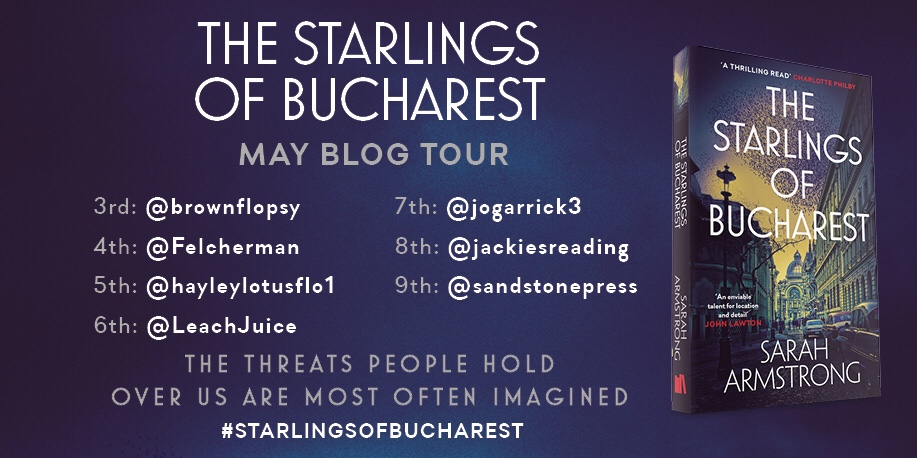
The Starlings of Bucharest by Sarah Armstrong.

This is the second in the Moscow Wolves series of novels, following on from The Wolves of Leninsky Prospekt. I’ve been told by other readers that here we meet some of it’s characters, but from a different perspective. Our hero is Edward Walker, known as Ted. He’s trying to make his way as a journalist in London, after leaving the working class fishing area he grew up in for something different. His career hasn’t taken off as he would have liked and he’s drifting into debt. So when he gets the chance to work for a film magazine, with an assignment to travel to Romania and interview a famous film director he jumps at the opportunity. However, this is the 1970s and Romania is in the grip of Communism. A visiting Westerner is very likely to be treated with suspicion and his plans to travel on to the Moscow film festival could be equally eventful. This sets the scene for an intelligent and different thriller.

For the first few chapters of the book I felt thoroughly confused by what was going on, but I started to realise that Ted is equally confused. He has a driver/ guide and each day he expects to meet with his interviewee, but it doesn’t seem to happen. There was a random comical moment where his guide asked if he could have Ted’s trousers when he left. The author creates an atmospheric picture of this complex destination and all it’s contradictions. Ted notes that people are picking lime blossom in the park and observes that they’re so hungry they’re eating from the trees. His guide corrects him, they’re picking lime blossom to make tea. The author conveys the lovely, well maintained public spaces. Yet, there is also a drabness to everything. The food is bad, the clothes are dull and shops seem empty. Ted observes: ‘It was just a place of waiting and brown paint’. Then there are the restrictions and the guide who’s really a minder, ready to challenge every wrong or damaging assumption made.There were moments where I was just an unsure as Ted about what was really going on. The first time was very early on in Bucharest, when his guide diverts him to a lakeside where a group of men are fishing. All at the same time, Ted observes how beautiful it is but also how isolated, just the sort of place you might take someone to kill them. I really felt like I was in Cold War Europe. Equally, the sections in London felt like the 1970s, slightly worn and decaying, with seedy bedsits, a sense of desperation and simmering violence.

I was interested in the incredible detail the security services go into when looking for recruits. It’s a master class in psychological manipulation. They consider everything about the subject – his clothing, his food and drink choices, his likes and dislikes. They watch behaviour. Who do they trust? Who is important to them? They look in their waste bins and listen to their phone calls. What they’re looking for is a weakness. A way in. Whatever it takes to turn them. Then they bring in the bait – if he has a weakness for women, then a beautiful woman to tempt him from the straight and narrow. I’m a trained therapist and I could learn a thing or two from the listening skills employed here. They’re looking for chinks in the armour. Something they can exploit. For Ted that could be a case of never feeling heard or valued. His concern about wanting to get on. It could even be his naivety, decency and willingness to help. So, Ted is noticed by security services and when he returns to Moscow for the film festival he is watched carefully.

What was most interesting to me, was how Soviet agents used class difference as leverage. We’re used to public schoolboy spies, recruited at Oxbridge and I think this difference was used really well. Ted notices that there are opportunities for people from working class backgrounds in Moscow, perhaps more than in England. This is the chink in Ted’s armour and leaves him open to exploitation in a regime where security services have an ideology to push. There were sections that plodded a bit, but that’s maybe because Ted is a very steady, plodding sort of character. He wants to break into Fleet Street as a journalist but I doubt that he has the sheer brass neck and ambition it takes to get there. He seems like a man who will always end up where he is by accident rather than design. As one character observes ‘any idiot can be a useful one’. The author kept me guessing all the way through. We are learning as Ted is learning, and he does a lot of growing up too. Aside from the George Smiley series, the historical era of the 1970s Cold War hasn’t often been depicted in spy fiction, so I felt I was reading something new in the genre. All in all the stage is set for an interesting book three in this intelligent and unusual series.

Meet The Author

Sarah Armstrong is the author of four novels, most recently The Wolves of Leninsky Prospekt and The Starlings of Bucharest. She is also the author of A Summer of Spying, a short non fiction work about her experience of jury service during the Covid-19 pandemic, authority, truth, and the surveillance we are all exposed to. Sarah teaches undergraduate and postgraduate creative writing with the Open University. She lives in Essex with her husband and four children.

Posted in Publisher Proof

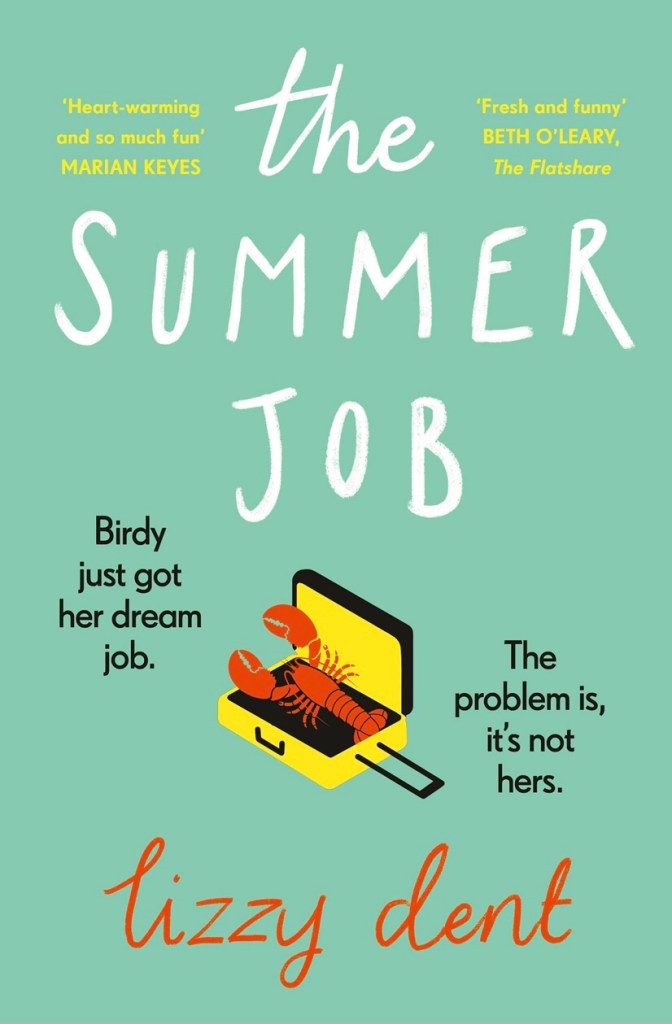
The Summer Job by Lizzy Dent.

I defy anyone to not fall in love with Elizabeth ‘Birdy’ Finch. She’s the fantastic literary creation I was rooting for so hard in this great novel from Lizzy Dent. Having had a tough upbringing in Plymouth, Birdy is pretty much alone in life, except for loyal friend Heather. She and Heather have been friends for life, understanding each other’s difficult family situations and providing undying support for each other. However, Heather’s family were financially better off than Birdy’s, so despite being without the emotional support and presence of her family, Heather has been able to rely on a financial cushion to train as a sommelier or wine expert, working in hospitality. Birdy hasn’t had the same education, so tends to drift from job to job without ever finding a passion of her own. Now, Heather is going to Italy with her current boyfriend and Birdy feels lost. With no sofas left to surf, Birdy may have to do the unthinkable and return to Plymouth, when an idea strikes her. Before the Italy opportunity, Heather had the chance of a summer job at a hotel near Loch Dorne in Scotland. For some reason, she’d been keen to go, then changed her mind. She gives Birdy tickets to the British Wine Awards at the Ritz and Birdy goes with her on/off boyfriend Tim. It’s there, where an idea takes shape. While wearing Heather’s name badge, Birdy runs into Irene – the manager of the Loch Dorne hotel. They get along and Birdy starts to wonder – could she do Heather’s job for the summer? It would take a lot of studying, but maybe she could pull it off and surely anything’s better than going back to Plymouth?

I loved the hotel and the surrounding Scottish scenery. The author describes the area with love and with such detail I could truly imagine it. The way Birdy connects with the place really surprises her. Having always lived in a city, Birdy has never really experienced being in nature and at first turns up in all the wrong clothes. Her first hike, which she undertakes in Converse trainers is a bit of a disaster as she sprains her ankle. Scotland’s beauty has a slow, but remarkable, effect on her mental health, seeming to soothe her anxiety and allow her to ‘be’. For someone with such a busy brain it’s amazing to see how she grows to love walking and travelling to Skye, both on her own at times. Birdy has never really been confident enough to do things on her own, but now she starts to try it, either hiking or going to the coast for fish and chips. It seems to give her the space and quiet she needs to sort things out in her own mind. She even tries foraging, horse riding and fishing! There’s a stillness about her when she’s outdoors that she’s never had before and perhaps a growing sense of belonging to this place.

Of course, her plan doesn’t go without incident and she’s permanently exhausted from studying the wine list in her room. Yet there is a new found confidence about her. She loves being part of this small team who work like a family. Nobody is without their weaknesses but they help each other along and they’re united in their concern about the executive chef Russell and his modern ideas. The pub has been redecorated and the menu changed from the ‘neeps, tatties and whiskey’ destination it was previously. The staff seem so pleased to have Heather there and she quickly makes friends. I could imagine how these people could become a little family for Birdy – if she hadn’t been deceiving them of course. There are just so many hurdles for her to jump, not to mention the little tiny spark of something she can feel with the chef James. Will she succeed and will this spark grow into something more real than Birdy’s used to?

Lizzy Dent is clearly astute when it comes to how a difficult start in life, can affect someone into adulthood. If the people who bring you into the world don’t love and value you it’s very hard to understand how anyone else might. Children whose parents neglect or emotionally abuse them, don’t wonder what’s wrong with their parents, they wonder what’s wrong with themselves. This is Birdy all over. She knows her family aren’t great, but yet she still can’t see the good in herself. Those moments Birdy has, when she’s walking in her new hiking boots or eating fish and chips on the harbour, are moments when she’s discovering her genuine self for the first time. As you read, you will be rooting for those seeds to grow. This book is absolutely joyous. So, if you’re going on holiday this summer, make sure you have this little gem packed in your hand luggage. You won’t regret it.

Meet The Author

Lizzy Dent (mis)spent her early twenties working in Scotland in hospitality, in a hotel not unlike the one in this novel. She somehow ended up in a glamorous job travelling the world creating content for various TV companies, including MTV, Channel 4, Cartoon Network, the BBC and ITV. But she always knew that writing was the thing she wanted to do, if only she could find the confidence. After publishing three young adult novels, she decided to write a novel that reflected the real women she knew, who don’t always know where they’re going in life, but who always have fun doing it. The Summer Job is that novel.

Posted in Publisher Proof

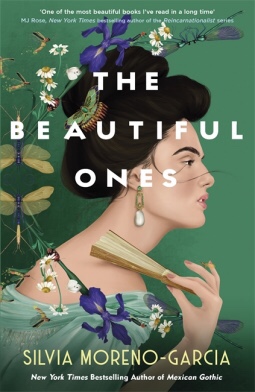
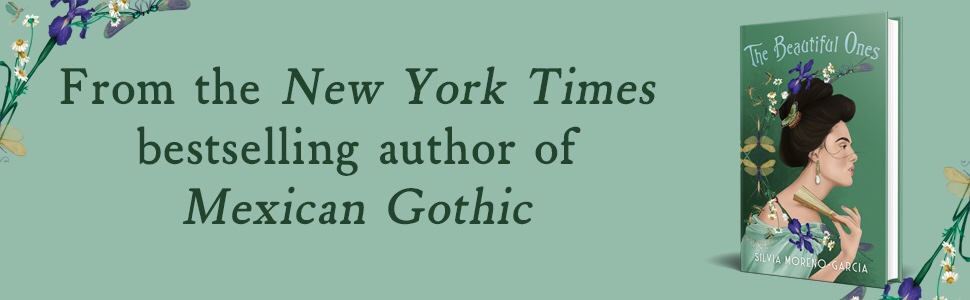
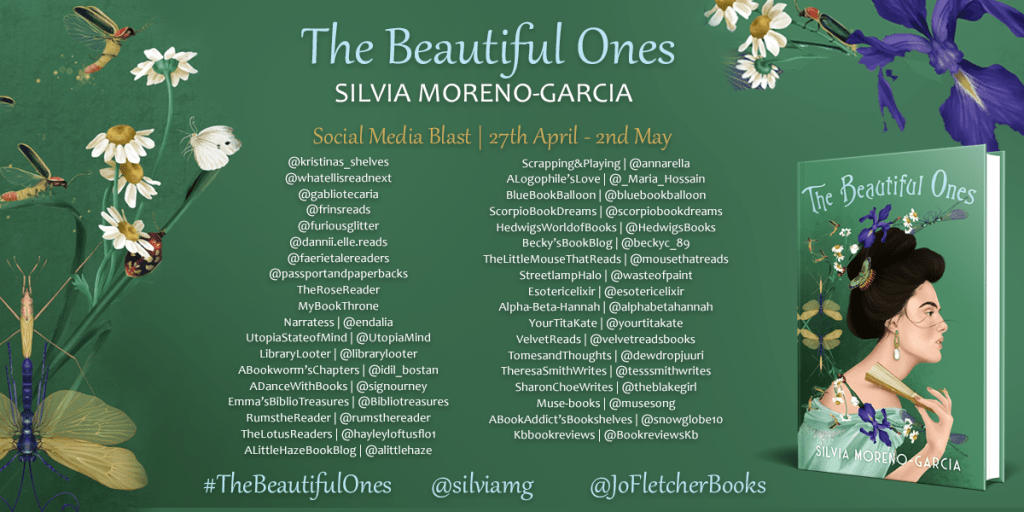
The Beautiful Ones by Silvia Moreno-Garcia.

Last year I read Silvia Moreno-Garcia’s incredible novel Mexican Gothic and I absolutely loved it. So when I was offered the chance to read one of her earlier novels, being reissued in a beautiful hard back copy this week, I was really excited to tell you all about it as part of the blog blast.

They are the Beautiful Ones, Loisail’s most notable socialites, and this spring is Nina’s chance to join their ranks, courtesy of her well-connected cousin and his calculating wife. But the Grand Season has just begun and already Nina’s debut has gone disastrously awry. She has always struggled to control her telekinesis: the haphazard manifestations of her powers have long made her the subject of gossip – malicious neighbours even call her the Witch of Oldhouse.

But Nina’s life is about to change, for there is a new arrival in town: Hector Auvray, the renowned entertainer, who has used his own telekinetic talent to perform for admiring audiences around the world. Nina is dazzled by Hector, for he sees her not as a witch, but ripe with magical potential. Under his tutelage, Nina’s talent blossoms – as does her love for the great man.

But great romances are for fairy-tales, and Hector is hiding a secret bitter truth from Nina – and himself – that threatens their courtship.

This book is different from either Mexican Gothic or Gods of Jade and Shadow. This is a romance, brim full of melodrama and heartache. Yet there are also those wonderful threads that seem to exist through her work: feminism, awakening sexual desire, an eye for women’s self-expression through clothing, and a sprinkle of the paranormal. I didn’t know where the book was set at first, because the city name Loisail and personal names have a French feel to them, but certain word usage such as fall for autumn made me think of North America. The manners and etiquette seem almost British regency in date (this could give Bridgeton a real run for its money on the small screen), but the far off place Iblevard sounds like South America. This is our world, just not as we know it.

I absolutely adored Nina from the start, because I’ve felt like the slightly awkward girl who doesn’t fit. Next to her cousin’s wife Valerie she seems a bit of an ugly duckling, but she’s chaperoning Nina through the Loisail season in hope of finding her a suitable husband. Valerie is the stereotypical blonde, blue-eyed, perfectly coiffed, graceful beauty and her marriage to Gaetens was a great match, because he was a steady, slightly older man with financially stability. His finances have kept her family afloat. Whereas Nina has none of the superficial qualities of Valerie. Her hair is raven black and there’s more of a handsomeness to her than prettiness. Worse still, she is awkward, often saying the wrong thing, but she’s physically clumsy too and there’s more to Nina’s clumsiness than meets the eye.

From a young age Nina has been able to move objects with the power of her mind. Sometimes it’s involuntary, such as when her emotions are roused in anger or sadness. Nina doesn’t know much about telekinesis, it has simply always been with her and back at the family home in the country she is known as the Witch of Oldhouse. Here in Loisail though, nobody knows about her strange ability and if she is dressed well, schooled in how to behave and tries her hardest to be ‘normal’ maybe she could make a good marriage. Nina is inexperienced and naive, but trusts Valerie implicitly. Her cousin Gaetens has always had her best interests at heart so she happily puts her future in Valerie’s hands, but there’s a bitterness and envy in Valerie that runs very deep. She knows that her husband dotes on his cousin and he wouldn’t force her to marry anyone she didn’t consent to, but she thinks that Nina is spoiled. Valerie had to make a decision, to marry a man she didn’t love to get better conditions for her family. She had to grow up, put thoughts of love and romance aside, and take the best decision rationally as if marriage is a business. If she had to do this, why shouldn’t Nina be expected to grow up and accept someone chosen for her?

Then Hector Auvray comes into the picture, gentlemanly, handsome and, because he’s a performer, just a whiff of scandal about him. He’s definitely not the sensible choice, but controlling her emotions has never been one of Nina’s strengths. I loved that the pair shared this talent, Hector as the mentor and Nina as the ingenue, just starting out. When he calls on Nina at home, they can easily spend hours talking about telekinesis and practicing control. Nina visits his show which is quite glitzy, and he has an incredible finale of dancing mirrors. For me, there wasn’t quite enough magic. It’s as if magic realism was something she was toying with, then in later novels she really had the confidence to go for those paranormal elements. I knew this was a reissue, but those who don’t could be disappointed there isn’t more made of Nina’s skills. It’s almost as if she learned to control it rather than celebrate it. I’d have loved the author to write sections where they perform together, because I know how incredible they would have been.

There was something very Jane Austen about this society, it’s manners and it’s dilemmas for women. I thought of the disappointment a lot of readers feel when Lizzie Bennett’s friend Charlotte Lucas accepts the proposal of the ludicrous vicar Mr Collins in Pride and Prejudice. Lizzie has rejected him and by doing so, placed her family in financial uncertainty, but Charlotte is more pragmatic. She knows he’s ridiculous, but she also knows he has a living, the patronage of a fine Lady, and a large enough house to lose him in. This is the decision that Valerie has made, but is very angry about. Her anger is at her family, but is also directed inward. She doesn’t like to face the truth; that she was the one who made this choice.

“She wanted to cry and could not. She wanted to weep for that proud girl who had broken her own heart and tossed it to the dogs, and she wanted to weep for the woman who had been left behind with a gaping hole in her soul. But if she could do it again, she knew she’d still retrace her steps. She was not Antonina Beaulieu, who offered herself like a sacrificial lamb, who gave everything of herself to the world for the world to devour. She was Valérie Véries. She hated herself sometimes for it, but she was Valérie Véries, a Beautiful One, not some weakling nor a halfwit”.

I also got hints of The Great Gatsby, every time I saw a character allude to an elite group of ‘Beautiful Ones’ the Lana Del Ray song ‘Young and Beautiful’ kept floating through my head. I felt it in this passage when Hector talks of the love he had when he was younger, the girl he asked to wait for him. He thinks he’s still in love with this woman, but he’s really still in love with his idea of this girl and what they could have had.

“He was chained to her, to this brilliant ideal of a perfect love. Because he had always known that if he could have (her) in his arms again, all would be well. It would be as though the decade that separated them had never happened and they would return to the happy days of their youth when everything was possible. It was as if he could unwind the clock with her aid. And once this happened, there would be nothing but joy.”

The first part of the novel is quite slow and as Hector and Nina meet and form their friendship, but I enjoyed getting to know them. I felt as if I was watching them fall in love very slowly, but it’s as if only the reader knows it. Then comes a terrible betrayal, and Nina loses that innocence of youth, but grows so much as a person. She starts to have pride in who she is, because she has space to be herself. When she returns to Loisail the following season she is a different woman, confident enough to make her own choices. There’s a new found confidence and experience in her character as she steps out into city. She’s refusing to be the ugly duckling of this story and has blossomed, but from the inside. There’s a feminist soul in Nina and I loved seeing that awakening. She’s also more comfortable with her ‘talent’ even if it isn’t on display very much. Before long a very suitable young man starts to court her; it would be a great match, but not love. As Hector Auvray drifts back to the city again, and wishes to resume their friendship, what effect on Nina will he have? I enjoyed this novel because it’s unashamedly romantic, and magical. It’s a coming of age story, showing this young woman’s awakening conscience as well as her desire. Nina Beaulieu learns to live life on her own terms and makes her own choices, especially where her heart is concerned.

Meet the Author

Silvia Moreno-Garcia is the New York Times bestselling author of the novels Mexican Gothic, Gods of Jade and Shadow, Untamed Shore, and many other books. She has also edited several anthologies, including the World Fantasy Award-winning She Walks in Shadows (a.k.a. Cthulhu’s Daughters).

Posted in Publisher Proof

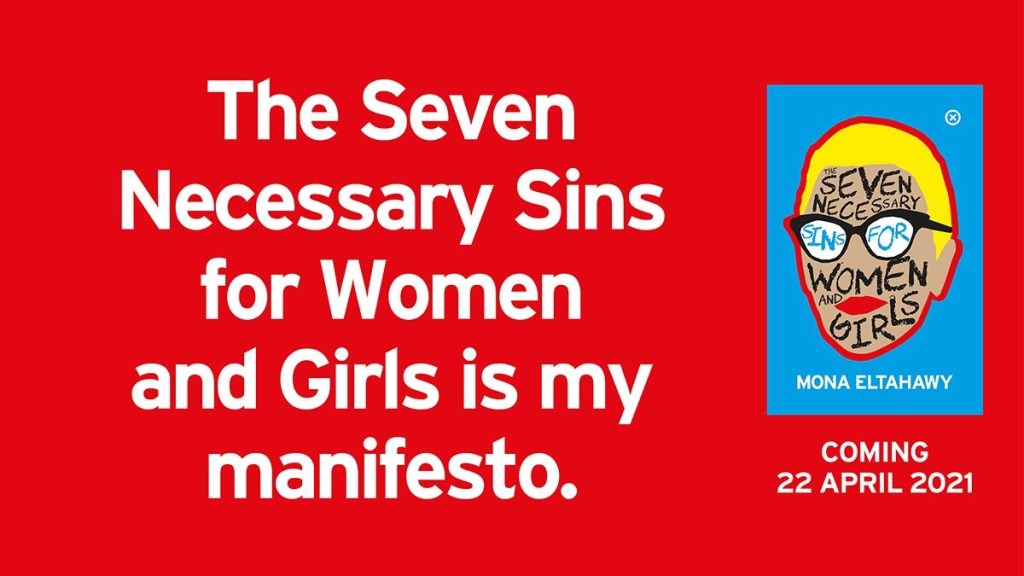
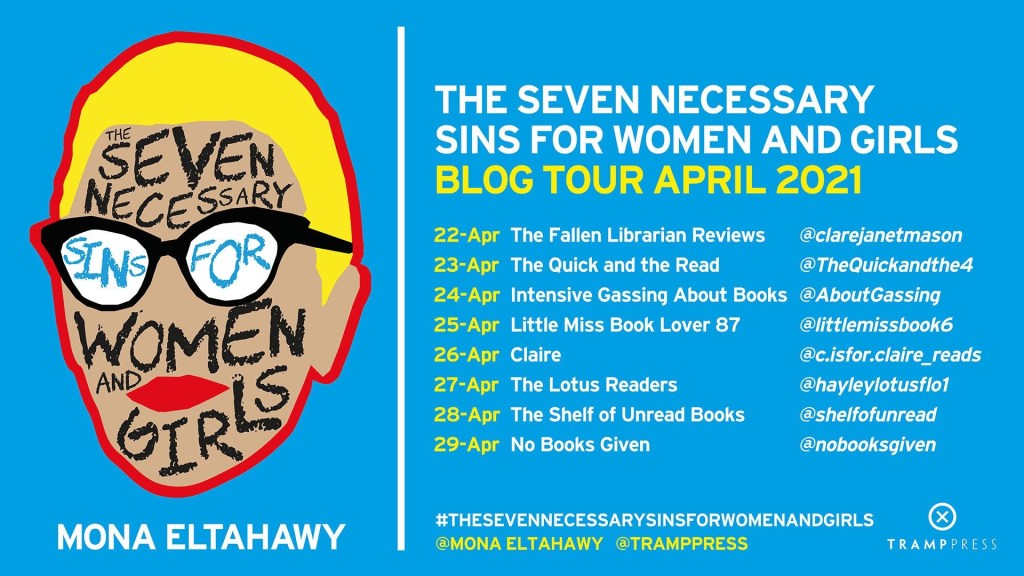
The Seven Necessary Sins For Women and Girls by Mona Eltahawy.

Fuck the Patriarchy!

This incredible book is a battle cry. So I thought I’d start with one. The one Mona uses whenever she is asked to speak at a podium on feminism. I started reading this morning, thinking I would sample a couple of chapters each day over the weekend, but before I knew it, the clock said 3pm and I’d read the whole thing. Once finished, I felt a renewed anger about things that had happened in my life, some of which chimed with the author’s experience. She shows that the patriarchy isn’t just ‘over there’ in the restrictions women live with in Saudi Arabia or in conflicts like the Balkan War or the massacre in Rwanda where rape was used as a weapon. It isn’t just with the celebrities and actors who accused Harvey Weinstein, it’s just that their voices were heard louder than the young black teenagers who accused R.Kelly. Every woman, regardless of race, colour, religion, class, sexuality or the gender they were assigned at birth, are ruled by a global patriarchy. It’s here, with a 47 year old middle class, disabled woman living in the rural wilds of Lincolnshire. You can shop at Waitrose and still be fucked by the patriarchy.

In case you wondered about the profanity, it’s one of the seven necessary sins the author would like women to reclaim and use to fight for equality. So I’m reclaiming it, because this book roused me and made me angry (another necessary sin).

‘Patriarchy is universal. Feminism must be just as universal. I want patriarchy and all who benefit from it to have the same look of terror, as that man in a Montreal club who, before he ran away, took a look at me so he could see the woman who dared strike back. I want patriarchy to know that feminism is rage unleashed against its centuries of crimes against women and girls around the world, crimes that are justified by ‘culture’ and ‘tradition’ and ‘it’s just the way things are’, all of which are euphemisms for ‘this world is run by men, for the benefit of men’. We must declare a feminism that is robust, aggressive and unapologetic. It is the only way to combat a patriarchy that is systemic.’

Every woman who reads this book must be roused by these words and understand that unless we all fight this, unless we all fight dirty and loud, nothing will change.

I could tell you about the author’s arguments, the incredible and eloquent rage that comes through in her writing, and the journey that brought her to who she is today, but I want you to discover this for yourself. I want you to read it and find your own connections to the arguments, the events she describes and have your own awakening. I can tell you about two ways I felt a personal connection with the author’s story and as I was reading how a righteous anger started to awaken within me.

I had a late awakening, about ten years ago really. That sounds terribly late, but there are reasons for that. I believe my mother was a feminist. Until I was around ten years old, she subscribed to Spare Rib magazine and read feminist books. However, our parents then discovered a new church – an offshoot of the American Evangelicals that the author talks about in her book – and everything changed. Despite having been in the Roman Catholic Church previously I hadn’t been old enough to feel it’s restrictions and I had always felt the ability to argue with it’s teachings, encouraged by the visits of our priest to school every week for question and answer sessions. So unfortunately, just as I was becoming a teenager, I came up against one of the most fanatical and restrictive forms of Christianity we could find. I was taught I should be quiet, demure, pure, and ruled by my father. I was taught a shame I’d never felt before, an awkwardness about a body that was growing, sprouting, forming curves too obvious to fit into their rigid boxes. I had to cover up, be modest, but still dress like a girl. Then as I grew older, I was taught the most important rule of all; I should not share my body with anyone else. The author describes this from the Islamic perspective:

‘My upbringing and faith taught me that I should abstain until I married. I obeyed this until I could not find anyone I wanted to marry and grew impatient. I have come to regret that it took my younger self so long to rebel and experience something that gives me so much pleasure.’

It’s a reminder that the ‘cult of virginity’ isn’t restricted to just one religion or culture.

For me, weird youth group sessions ensued where we were taught about which sexual activities were ‘acceptable’ -kissing – and that everything else should be saved for marriage. I was told about the ‘Silver Ring Thing’ phenomenon sweeping America, where a teenage girl would go through a ceremony where she pledged to her father that she would remain a virgin until she married. A silver pledge ring was then placed on her wedding finger, until it was removed for her wedding ring; one symbol of ownership replaced by another. I remember feeling that this was beyond creepy. My sexuality had nothing to do with my father. He didn’t own my body. Eventually I made the decision for myself that what I did with my body was my own business. I couldn’t imagine that God would truly be that interested in what a young woman did with her body. Evangelicals believe that the Bible is the actual word of God, but the truth was the Bible was written by men, edited by men, for the benefit of men. I reasoned that a supreme being had better things to do than police my vagina! So I did what I wanted and lied about it for a quiet life. Once old enough to decide I stopped going to church. This was the 90s, and I would sometimes drive to pick up Mum from church playing Rage Against the Machine and wearing my Hello Boys T-shirt and Wonderbra. We thought we had it sussed, that our mothers had sorted out this feminist lark. We were ladettes. We thought we could drink like men, have sex like men, and do any job we liked. The Spice Girls told us we had girl power and we believed it, but it was all surface and no substance. The patriarchy remained.

Years later, now a 35 year old widow with a disability, and in a very vulnerable place, I met up with my old youth pastor from the church. He didn’t attend any more and assured me he didn’t hold any of the beliefs he’d been trying to in-still us with as teenagers. I realise now that my world had turned upside down and I was looking for safety, but I mistook control for security. As we embarked on a relationship I felt happy and I really needed something positive in my life, not realising that given time, I could find my own happy. I thought the church was the origin of his patriarchal ideas, but really he’d been searching for a community that thought like he did. A place he could find a good, quiet, chaste girl who wouldn’t question walking three steps behind. The abuse started as soon as we were engaged, phases of total withdrawal of attention, time, and sex. Followed by rages if I questioned his behaviour, kicking furniture, throwing things and threats to leave. He was master of this house, he made the decisions, just like at work where he employed seven workers – all women. He isolated me from family and friends and made it quite clear that I was fat, ugly and nobody else would want me if he left me. If I’d had a bad spell with my multiple sclerosis he said I was lazy, needed to try a bit harder and did I realise how hard it was to find me attractive when I was ill? He flaunted cards and Facebook contact from other women and raged if I dared to complain. Luckily my family are persistent, so to get rid of them he took a huge gamble. Behind my back he made sexual advances to my Mum who was ‘more his type and age’ he admitted he liked her ‘quiet nature’ and had ‘fancied her for some time’. When I found out, a huge rage took hold of me so I drove home and asked ‘why haven’t you packed your bags yet?’ I ran round like a whirlwind, packing his bags and I threw them and him out onto the drive. I told him that I knew about his antics and that he had been psychologically abusive for the past three years. I told him I was done. That I wasn’t scared of him leaving any more. I’d rather be alone.

I couldn’t stop thinking about the letter he sent me afterwards, still controlling the situation by telling me he didn’t want to be with me any more, as if I hadn’t thrown his arse out on the driveway. He wrote that he found me ‘too much’. He wanted a Madonna and had found a whore. That he’d tried and tried but he simply couldn’t control me. Everything he wanted in a wife, was described by Mona in her chapter on profanity.

‘Women are supposed to be ‘less than’ and not ‘too much’. Women are meant to be quiet, modest, humble, polite, nice, well-behaved, aware of the red-lines. They are supposed to tread softly and within their limits. I am proud to be described as ‘too loud, swears too much, and goes too far’. When a woman is ‘too much’ she is essentially uncontrollable and unashamed. That makes her dangerous’.

At first his letter made me cry, I was hurt and vulnerable. Then that anger was roused again as I realised I liked the woman he described in that letter. She sounded fun, ballsy and exciting. She was intelligent and didn’t take any shit. She was formidable. So I made a pact with myself that I would always be that formidable woman and teach other women to do the same. Now I have two stepdaughters and I encourage them to speak up, to get angry, to be feisty and loud. This is the passage I read to them this weekend:

‘What would the world look like if girls were taught they were volcanoes, whose eruptions were a thing of beauty, a power to behold and a force not to be trifled with’.

I want my girls to know this. To go out into the world unashamed, uncontrollable and ready to smash the patriarchy for themselves and their sisters around the world. This book reignited my fervour. It may challenge you and your beliefs, but you must read it. Mona Eltahawy is a force to be reckoned with and I applaud her for this manifesto. It is moving and comes from a deeply felt sense of injustice. It is necessary. It’s impolite, brave, forthright and packs a mighty punch. Read it, then give it to your daughters, your nieces and your friends, because every woman should read this.

Meet The Author.

Mona Eltahawy is a feminist author and award-winning commentator and public speaker. Her work has been published in The Guardian, The New York Times, The Washington Post and other publications around the world. She is a frequent commentator on current affairs on the BBC, CNN and Al Jazeera and other media outlets, where her goal is always to disrupt patriarchy. She is the author of Headscarves and Hymens and recently launched her feminist newsletter Feminist Giant. Follow her on Twitter and Instagram: @monaeltahawy

About Tramp Press

Tramp Press was launched in 2014 to find, nurture and publish exceptional literary talent. Based in Dublin and Glasgow, they publish internationally. Tramp Press Authors have won, been shortlisted and nominated for many prizes including the Irish Post Book of the Year, the Booker Prize, the Costa, the Desmond Elliot Prize and the Guardian First Book Award.

Please check out the other bloggers on the tour:

Posted in Publisher Proof

Let In The Light by Gerard Nugent.

I truly enjoyed this story based around the music scene in Glasgow, most specifically Hope Street where Richie Carlisle works in a music shop. We first meet him after he’s had his big musical break and is now back in his home town. Despite working all day alongside musical instruments he doesn’t play much these days, so it’s only when Ally comes into the shop with an idea for a community music group using the local pub as a venue that he thinks of picking up the guitar again. Richie has settled into his life, where he lives alone,but has his son Finn on weekends and has Sunday dinner round at his mums. He knows everyone on Hope Street by name and it feels as if Richie has a little community around him.

It’s a far cry from a few years before when one night playing in the local pub’s Friday Night Jukey! changes the course of his life. A handful of musicians would come ready to play and the audience would shout out requests – always starting with the Proclaimers o”f course. On this night Richie notices a beautiful woman and when she asks for Crowded House he decides to go for a more obscure track, w.hich gets them talking afterwards. There’s something special about her. On the same night he is approached by a manager in the music industry looking for a vocalist for Karl King’s band. He thinks Richie might fit the bill, despite having a complicated past with Karl. Here are two chances in one night: to start a relationship with Penny and see where it goes, or to head down to London and the possibility of music stardom. He tries a compromise and promises to give it five months, and if the band hasn’t taken off he will come back to Glasgow. Penny agrees to a long distance relationship and when his song Let in the Light is recorded both of them think this is it, they are bound for the charts. However, that isn’t what fate has in store for them.

Richie is such a likeable character, in the present day it’s clear he cares about his family and his much older boss at the music shop. He still cares about Penny, even though they’ve broken up and their son Finn ( the Finn brothers from Crowded House) is his absolute world. He’s a little melancholic and stuck in a routine, so the music group could be good to take him out of that head space. It may also shake off his fear of performing, performing in front of others causes huge anxiety ever since he seize up on stage years before at a festival. It’s like he can feeling his throat closing and he can’t even gasp for breath, never mind get out a tune. Ally’s group seems to bring him out of himself and as he closes his eyes to sing he feels at one with performing again. He’s noticed Ally, giving out a bit of encouragement here and listening to another person’s problems there. Whenever she pops into the shops she’s a little ray of sunshine and I started to get the feeling she might be very good for Richie. Yet, he still can’t get Penny out of his mind. When she suddenly announces that she might return down under to her home country of New Zealand Richie can’t believe that she would take Finn away with her.

Everything is changing. The pub may be closing. His old music manager is back in the picture with news about Karl King. Penny puts the house up for rent. He’s at his most vulnerable when he’s asked to perform one final gig at the pub in Hope Street. Can he do it? This might seem a light story, and the writing certainly is. It’s funny in parts too. Yet it has a central message about being true to who you are, and where you’re from. It’s very positive about mental health and how it’s possible to find ways to manage these emotions when they get out of proportion. It suggests looking to our communities for help and support too, many other people have the same struggles and can have the best tips. I really wanted Richie and Finn to succeed. However, I did find myself a bit irked with Penny. So much so I was hoping he’d end up with Ally. When Penny decides to move back home, it’s like she hasn’t even thought of how devastating this will be, not just for Richie, but for the wider family. Finn belongs to all of them and needs them all in his life. The story of Karl King, tells us that we need roots and ways of belonging to get by in life. None of us can stand alone. This is a great novel, with moving, realistic characters and an enjoyable musical plot. Now I need to go and create a Spotify playlist of the songs featured and inspired by reading this book.

Meet The Author

Gerard was born and raised in Edinburgh, Scotland. He moved to England in his 20s and worked in various northern towns before settling in beautiful Yorkshire with his family and two guinea pigs. He has written three albums (two of which will never be released!) In 2019, he attended a writing class to help him generate ideas for further songwriting, but, instead, started writing a novel.

And this is where it’s ended up. Stay tuned.

Posted in Publisher Proof

Backstories by Simon Van der Velde

What I want is to find the spark, to dig down into their pain, their passions and their imperfections, and show you our heroes as they truly are.

Backstories is a unique collection of stories each told from the point of view of a famous, (or notorious) person at a pivotal moment in their lives. The writing is literary but accessible and the voices vividly real. The settings are mostly 60’s and 70’s UK and USA, and the driving themes are inclusion, social justice and of course, nostalgia – but the real key to these stories is that the protagonists’ identities are withheld. This means that your job is to find them, leading to that Eureka moment when you realise who’s mind you’ve been inhabiting for the last twenty minutes.

Dreamers, singers, talkers and killers; they can dazzle with their beauty or their talent or their unmitigated evil, but inside themselves they are as frail and desperate as the rest of us. But can you see them? Can you unravel the truth?

These are people you know, but not as you know them.

Peel back the mask and see.

I read a lot of books and hear the words ‘unique reading experience’ all too often, but this really is just that. A great premise that makes a series of short stories about celebrities, an intriguing psychological puzzle. The author withholds their identities, taking us back to a time before they were famous, potentially giving us insights into who they were and even what made them become the stars we know and love. A lot of fun can be had sharing them with friends and working out who can identify which star first, or discussing which story you enjoyed most.

However, this collection of short stories is much more than a gimmick or party game. Simon Van der Velde is a great writer with an uncanny ability to get inside the mind of each of his subjects. He constructs their ‘selves’ beautifully, giving us fully rounded people behind the star status. He has a keen understanding of what it means to be human and how events may affect someone psychologically. In one story he shows how childhood bullying leads our character to a particular friendship, perhaps also the insight into human emotions that eventually make his song lyrics so poetic and beloved.

What the author does is almost filmic, in the same vein as the film Rocket Man, where the Elton John we know in the extravagant costumes strolls into a group therapy session. Then as he reminisces to the group we see a series of flashbacks, to the drink and drug fuelled 1970s. He takes us even further back to a lonely childhood with a mother preoccupied with how things look, and a severe father who can’t show love. Each time we return to the therapy group a little bit of his costume has fallen away, until at the end the costume is gone and he’s able to reconnect with that hurt little boy and give him comfort. It’s a beautiful way of framing an biopic and it’s exactly what the author does here. He creates those flashback moments or snapshots for each of his characters, so that we can piece together their ‘true’ personality, possible motivations and know them in a way we haven’t before. It’s almost like inhabiting another person and that’s how versatile the author is here. He’s a literary shapeshifter, jumping into each new incarnation with skill and insight. There’s something voyeuristic about looking this far into someone’s psyche, but it’s compelling and illuminating too.

I know these stories will send many readers to the internet to check how close to the truth some of the stories are and that’s definitely the fun part. However, it’s great to sit back and read the stories again to fully appreciate the brilliant sense of place and time across the collection. These people are fully grounded in a real world that I believed in. Despite these worlds being on different continents, time periods and encompassing varied family backgrounds, they all felt like real spaces. With each story being self-contained, this is a great collection to carry with you and read on the go. Each story might only take twenty minutes to read, but that’s perfect for spending your lunch hour or commute home totally immersed in someone else’s life experience. Its a chance to examine what made each person, become the household name they are. This collection is fun and intriguing, but also psychologically astute and a masterclass in how to construct a ‘self’ within fiction.

Published by Smoke and Mirrors Press, 25th March 2021

The Author’s Vision.

MY BACKSTORIES QUEST 

“Whatever happened to, all of the heroes?”  The Stranglers 1977  

I was twelve years old when I first heard this song and although there was something in the feral tone that grabbed me, I didn’t really understand it. I do now. I get the angst and the loss and the emptiness, which is why, in Backstories, I aim to answer the question.

I’m not interested in simplistic tabloid truths. They clung on too long, drank too much, lost their looks and their charm and generally reminded us that we’re all getting older. That’s not what I want from my heroes.  

What I want is to find the spark, to dig down into their pain, their passions and their imperfections, and show you our heroes as they truly are.  

So join me on my quest. Let’s bypass the obvious, the tedious,and the dull. Brave the deeper, darker paths where the treasures can be found, and together we’ll uncover the fears and doubts that made our heroes what they were and perhaps catch a glimpse of ourselves along the way.

Whatever happened to all of the heroes?

They turned out to be human beings, in all their diverse glory.

Simon Van der Velde January, 2021

Meet The Author.

Simon Van der Velde has worked variously as a barman, laborer, teacher, caterer and lawyer, as well as traveling throughout Europe and South America collecting characters for his award-winning stories. Since completing a creative writing M.A. (with distinction) in 2010, Simon’s work has won and been shortlisted for numerous awards including; The Yeovil Literary Prize, (twice), The Wasafiri New Writing Prize, The Luke Bitmead Bursary, The Frome Prize, and The Harry Bowling Prize – establishing him as one of the UK’s foremost short-story writers.

Simon now lives in Newcastle upon Tyne, England, with his wife, labradoodle and two tyrannical children.

www.simonvandervelde.com

Posted in Publisher Proof

The Deception of Harriet Fleet by Helen Scarlett.

When I’m looking at the blog tours that are available to me, nothing makes me jump on board quicker than the words ‘atmospheric Victorian chiller’. I can’t get enough of this genre, so I was really looking forward to spending the weekend immersed in this debut novel.

1871. An age of discovery and progress. But for the Wainwright family, residents of the gloomy Teesbank Hall in County Durham the secrets of the past continue to overshadow their lives.

Harriet would not have taken the job of governess in such a remote place unless she wanted to hide from something or someone. Her charge is Eleanor, the daughter of the house, a fiercely bright eighteen-year-old, tortured by demons and feared by relations and staff alike. But it soon becomes apparent that Harriet is not there to teach Eleanor, but rather to monitor her erratic and dangerous behaviour – to spy on her.

Worn down by Eleanor’s unpredictable hostility, Harriet soon finds herself embroiled in Eleanor’s obsession – the Wainwright’s dark, tragic history. As family secrets are unearthed, Harriet’s own begin to haunt her and she becomes convinced that ghosts from the past are determined to reveal her shameful story.

For Harriet, like Eleanor, is plagued by deception and untruths….

This ‘governess sent to brooding gothic mansion’ story is becoming a genre of its own. Having read modern versions of the tale such as Madam and The Turn of the Key recently, it was good to go back to Victorian England and the roots of this tale that has its origins in Turn of the Screw and Jane Eyre. The structure is clever, in that we start in 1849 with a prologue and a narrator that doesn’t introduce themselves. As I read, I started to feel intrigued, but that soon turned into an uneasy feeling that this character was shifty and manipulative. Their narration doesn’t flow, but the scene that follows has impact, even though it is brief. We then jump forward and the author gives us a bit of distance from events – an older Harriet recounting the tale in her old. The parts she relates are pacey and tense, so when I was jerked back to the present, I wanted the next instalment and what came next. All of this creates a novel that is very hard to put down once started and led to a lot of boxes left unpacked in my new house!

The tale Harriet tells moves us to 1871, to Co Durham and the country house Teesbank Hall. Far away from the urban areas and deep into the countryside, it’s remoteness gives us the sense that anything could happen and no one would know – the Victorian equivalent of ‘in space no one can hear you scream’. Added to the sense of isolation and foreboding in the environment we learn that no one has lasted long in the role of governess here. However, we’re not sure that Harriet has many other choices. She’s running from something and that means she may not have been too vigilant about what she’s running towards. She ignores warnings from locals about the house’s macabre history and the isolation, but does feel a little apprehensive as she walks up the drive. What if they aren’t the respectable, ordinary family they have led her to believe they are? Yet, Harriet Caldwell is an assumed name, suggesting that she hasn’t been too free with the truth about her own past.

Her pupil Eleanor, the daughter of the Wainwright family, is incredibly bright, but also obsessed by her own family history. She’s plagued by dark secrets and tragic incidents in their past. Eleanor draws Harriet into their heritage, but is it a heritage she wants any part of, especially when her own secrets are haunting her? Harriet soon finds that Eleanor’s breadth of knowledge is good, perhaps even better than her own, so she doesn’t need a teacher. Her role seems more like that of a guardian or carer, observing Eleanor’s behaviour and being vigilant against the angry, hysterical fits she apparently suffers with.The family would like Harriet to observe and report back to them, and even though she feels like a spy she knows she has no choice, if she wants to stay hidden. The feeling in the house is oppressive, with the parents almost at war with each other and the grief over their tragically murdered son twenty years before still affecting them deeply. In fact, the only welcoming and calm presence seems to be that of their other son Henry.

There are a lot of aspects to the mysteries here, but all of them are hauntings in a way. There are some potentially ghostly goings on, but also the lingering emotions of past events, the fear of something or someone catching up with you and the way secrets, lies and even intense marital discord can leave an impression on a house and it’s inhabitants. As Harriet slowly reveals her reasons for fleeing Norfolk on one hand, she is also uncovering the terrible murder of Samuel Wainwright back in 1849. However, it isn’t just the suppression of these secrets that are highlighted in the novel, its the psychological damage caused when someone can’t be their true self, openly and without judgement. There’s also an element of gaslighting in the denial of certain truths and the frightening ease with which men will declare their wives and other female relatives insane when they become inconvenient or dangerous.

I think the book succeeds beautifully in showing 21st Century readers how powerless women really were in the 19th Century. This thread in the novel reminded me of the Wilkie Collins’s The Woman in White. Another novel where, once used, a woman is consigned to an asylum if she threatens a man’s status or respectability. However, married women like Mrs Wainwright were also stuck, unable to own their own property or have their own money. A husband could have a sympathetic doctor label his wife as insane or hysterical, and sign her away to an asylum without censure. Even the word hysteria has gender implications in that it’s linked to the word for the uterus – hystera – only women can be labelled hysterical. A man is allowed to be angry, upset and even lash out without any judgement or negative connotations relating to his gender. Whereas women are still labelled unstable, unbalanced and insane. This is how the original madwoman ended up in the attic.

I found myself deeply sympathetic towards Eleanor, who is trapped by the house, by the past and by her father. On first meeting her, she seems a little paranoid and distrustful of most of the family. However, as the story develops I started to admire her intelligence and her desire to speak out. I felt she was stifled by her family, and almost imprisoned at the hall, where memories of 1849 still haunt her. This girl will never flourish if she doesn’t get away and I had such hopes for her time in London with her brother Henry. I hoped it would create an escape for her and a chance to meet like-minded, progressive people. There is also a burgeoning friendship developing between Harriet and Eleanor, that’s broken when the trip comes to an end and Eleanor feels Harriet is to blame. It is after this trip, when she is at her most vulnerable, that the past comes back to taunt her and I found myself holding my breath, waiting for the consequences.

This is an absorbing novel, with several mysterious strands to follow and I think readers will be split over the characters and whose story they are most invested in. While I wanted the mystery surrounding Samuel’s murder to come to light, it was the women’s fates that kept me engrossed to the very end. This was an enthralling gothic mystery, with the pace of a modern thriller and strong feminist overtones. It’s a fantastic debut and I can’t wait to see what’s next for this author.

Published Quercus 1st April 2021 Paperback Edition

Helen Scarlett is a writer and English teacher based in the north east of England. Her debut historical novel, The Deception of Harriet Fleet, is a chilling take on nineteenth-century classics such as Jane Eyre seen through modern eyes. It is set in County Durham, close to where Helen lives with her husband and two daughters.

Posted in Publisher Proof

Another Life by Jodie Chapman.

Published by Michael Joseph, 1st April 2021.

Nick and Anna work the same summer job at their local cinema. Anna is mysterious, beautiful and from a very different world to Nick.

She’s grown up preparing fot the end of days, in a tightly-controlled existence where Christmas, getting drunk and sex before marriage are all off limits.

So when Nick comes into her life, Anna falls passionately in love. Their shared world burns with poetry and music, cigarettes and conversation – hints of the people they hope to become.

But Anna, on the cusp of adulthood, is afraid to give up everything she’s ever believed in and everyone she’s ever loved. She walks away and Nick doesn’t stop her.

Years later, a tragedy draws Anna back into Nick’s life.

But rekindling their relationship leaves Anna and Nick facing a terrible choice between a love that’s endured decades, and the promises they’ve made to others along the way.

Wow! I expected a love story and received so much more from this wonderful read. Jodie Chapman has managed to capture all of life’s stages as we to and fro through the years with Anna and Nick. Told mainly by Nick, we begin on Christmas Eve in NYC 2018, then we tumble back through the years: to when he meets Anna; to his childhood years and everything beyond. Everything we come to learn about Nick’s personality, his closed off manner and inability to let anyone close, is made clear by one childhood event. So dreadful and emotional that it brought me up short. I had to close the book for a moment to process it and think about what such a loss could do to a young boy.

Nick and Anna first meet in their early twenties, while working at their local cinema. In the heat soaked days of summer 2003, their love burns with a similar intensity, as only young love can. They seem opposites. Nick is quiet and has a solidity to his character. Anna is more intense and emotion driven. These differences could balance each other out, but instead they mean the relationship never fully catches light. Anna’s fervency could come from her deeply religious upbringing. Her beliefs are strong and part of her, not just as a religion but as a culture, a way of being. If she’s to throw that life away she doesn’t just lose her church, she loses her friends, her family, her certainty in the way she sees the world. Only promises of Nick’s real feelings could persuade her to let go of these ties. Yet Nick isn’t built for such intensity of feeling. His calmness and solidity come from a place of not wanting to feel such extremes of emotion. He closes off just when Anna needs assurances. It is a short lived romance that never fully gets off the ground. Yet, this is not the last time they will meet, as they are thrown together again several times over a lifetime.

Love in all its forms is celebrated here, not just romantic love, but sibling love, family love, and love of a religion or way of life. Nick and his brother Sal have such a special relationship, condensed into that opening section, which is set in Manhattan. Nick pours a lifetime of shared love and memories into just a few pages and it grabs you, it pulls you into the story. In a way Sal is more like Anna, more fiery and quick to share his thoughts and feelings. Despite this difference in their characters the brothers are very close. We’re taken deeper into their lives together later in the novel, almost as if Nick has had to take the time to open up to the reader. These chapters are infused with nostalgia for the late eighties and early nineties – probably because I was a teenager back then, but also because they have the feel of faded home movies and I could almost here the sound of an old-fashioned projector running in the background. The author lulls us into a sepia toned dream and then shatters our emotions again as we revisit that terrible life changing event, but in greater detail. We see that this has affected both brothers, but in different ways. It also feels like one of those moments where everything clicks into place and our understanding of Nick’s behaviour and personality opens up completely.

I understood the young Anna well, because I was brought up within the confines of religion. My primary school years were spent partly in Catholic school and I made my first communion and confession, then inexplicably my Mum jumped to an evangelical church which became all encompassing. It was our Sundays, then weekly prayer meetings, house group, youth group and social events. In hindsight I was being indoctrinated and at times my parents actually scared me, because their behaviour was so out of character. If I liked a boy, my head would start whirling with how much my parents might disapprove, how they would act, the constant teaching of purity and dating exclusively within the faith and its rules. Often I found myself in the painful position of ‘just friends’ with someone I really liked, because I was too frightened to go out with them. I understood that Anna needed to hear more about how Nick felt. Did he love her? She couldn’t wait and let things play out because she didn’t have the freedom.

Personally, I realised that I needed to face whether or not I believed in this system of religion, independent from my parents. Not for a relationship, but for me. Then, although we didn’t always agree, I could make my own life choices based on my moral compass and not someone else’s. This is something Anna needed to learn too, whether she wanted that religious life or something different for herself in the future, because within some religions there is no compromise. I did appreciate the author’s autobiographical influence here, because I learned more about the Jehovah’s Witnesses and their faith. It gave me a more nuanced picture than I had previously and helped me understand Anna’s choices. I also loved the touch of having Anna’s emails and poems throughout, because it is the only way we hear her voice unmediated by Nick.

The background of Nick’s parents marriage was a great addition to the novel, because it shows us how two very different people can be together. Eve is one of those people whose warmth can light up a room. She’s also keenly intelligent, not just intellectually but emotionally too. She can definitely read the men in her life. Her husband Paul is hard to like, because he’s more austere and can be unpredictable. It’s as if he’s resentful of something, and while it’s hard to understand what that might be at first, Nick does eventually discover why his father was so difficult. From the outside, people would shake their heads and wonder why this couple are together and how the relationship works. Marriage is a secret room, and only the two people inside it truly have the key to open its door. This book also feels like a key. A key to the inside of Nick and how he sees his life and relationships. A privileged and rare look into how he truly thinks and feels, but only for those who open it’s pages. I feel very lucky to be one of those few and I hope you will too.

Meet The Author

Born and raised in England, Jodie spent a decade as a photographer before returning to her first love of writing. She lives in Kent with her husband and three sons. Another Life is her first novel, coming April 2021.

Instagram: @jodiechapman
Twitter: @jodiechapman

Posted in Publisher Proof

The Existence of Amy by Lana Grace Riva

This book is a great insight into something a lot of readers will relate to, especially at the current time when we’re in the middle of the third lockdown of this pandemic. Mental health referrals are soaring, particularly for anxiety, OCD and depression, and although I’m not counselling at the moment I know there are clients who would really benefit from reading this book. It definitely helped me too. Some people expect counsellors to have their mental health in tip top condition, but often we’re ‘wounded healers’ who have experienced mental ill health. I’ve had bouts of depression and anxiety in the past, and so do others in my family, which lead me to a career in mental health. I encourage clients to read books like this one. There’s a great sense of solidarity in knowing you are not alone, gaining an insight into what someone else’s inner thoughts are like, and how they affect their day to day lives.

Amy is the narrator of the novel and despite functioning well on the surface, she has all three of the conditions I’ve already mentioned. Amy works full time, has a home to maintain and manages to keep up with friends. On the outside she is coping. Inside though, she is battling against a constant, exhausting, barrage of intrusive and dark thoughts. I thought the author did an incredible job of creating this relatable and loveable character, because it helps the reader empathise with her daily difficulties and journey moving forwards. It’s a very difficult balancing act to show the reader how it feels to be in Amy’s shoes while creating an easy and engaging read that never felt too heavy. The writer shows us how simply daily living, like going on a bus journey. Amy has to somehow negotiate paying, balancing while the bus is moving, and getting the bus to stop while all the time her brain is screaming ‘Don’t touch that handrail’ or ‘don’t press the button’. Then the hardest part of all is keeping a serene, swan-like surface so that nobody around her notices anything different. Followed by the constant worry about whether people noticed or thought she was weird.

I felt Amy was in a position a lot of people with these mental health conditions face; she could identify her anxieties and concerns as ‘wrong thinking’ but she needed coping strategies for day to day. At lot of readers might identify this as a time when they were part way through therapy, or when facing a flare-up of their symptoms and needing to update or refresh their coping skills.

I found Amy very difficult to leave within the pages of the book when finished. She played on my mind for a few days as I thought about her struggle and what insights I’d gained from the novel. Therapists read case studies all the time, but it was impactful to experience Amy in the format of a novel. Clients bring to therapy their frame of reference. The therapist sees events through their eyes and accepts their account as their ‘lived experience’ without judgement. There are times when we might sense another version of events, and this is what the novel gave me. I felt more immersed in her life, could see how she functioned with family and friends, and in her work situation. The author stripped away all the medicalised jargon and the impersonal language of a case study and instead gave me a fully-fledged person to know inside and out. I did find myself running through how I would help and support Amy.

The novel emphasised something I’ve always thought vital for someone experiencing these conditions; the existence of a strong, support network. In fact, Amy hits her lowest point when her closest friend announces she’s moving overseas. When we’re feeling mentally unwell we don’t always recognise or feel able to accept offers of help. Being honest with friends and family about how we feel and allowing them to support and help us as we move on is so important I felt a lot of hope for Amy going forward, and for the clients I will be able to help more fully after reading her journey.

Meet The Author

Lana Grace Riva has written two books, one nonfiction the other fiction, both based on her experiences of mental health. Her first book ‘Happier Thinking’ is a short collection of tips and exercises to maintain a healthy mind. Her second book ‘The Existence Of Amy’ is a fictional story based on a very real depiction of mental illness. 

Website: https://lanagraceriva.com/
Instagram: @lanagraceriva
Twitter: @lanagraceriva

If you enjoyed this I would also recommend the memoir Pure by Rose Cartwright for an insight into Pure OCD.