Posted in Netgalley, Publisher Proof

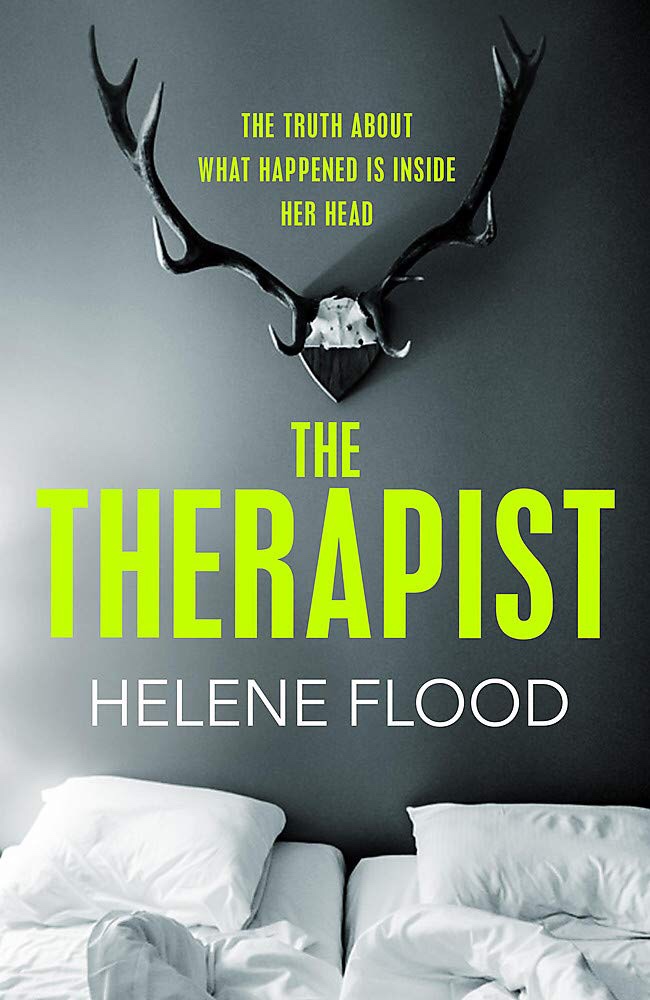
The Therapist by Helene Flood.

Helene Flood has written a fascinating thriller about a therapist, set in Oslo. It’s complexity of character and their motivations probably comes from the fact that the author is a psychologist. Straightaway, I was invested and really excited me to get inside the character’s minds. Sara. and her husband Sigurd live in his family home, a large three storey house they’re currently renovating. Next door is a small addition to the property, housing Sarah’s office and therapy room. On this Friday, Sara is seeing three clients and then settling in for a quiet weekend while Sigurd is on a boy’s weekend away with his best friendS. At lunchtime he leaves Sara a message to say they’ve arrived safely at his family’s cabin and his friend is gathering firewood. She expects to speak to him that evening, so is shocked when one of his friends calls to ask where Sigurd is, as he hasn’t arrived yet. In the days following Sigurd’s disappearance Sara must cope with a very thorough detective searching her house and dissecting her relationship, an intruder breaking into the house, breaking the news to her distracted and narcissistic father, and constantly wondering where Sigurd has gone. On top of everything, she has clients to see.

The story is told in two narratives from Sara’s point of view. In one, we’re in the present day, experiencing the investigation and Sara’s interactions with family and friends in the wake of Sigurd’s disappearance. In the second we meet a very different Sara, as she first meets Sigurd, spends time with friends and makes the decision to move to Oslo. This Sara seems lighter mentally, she’s obviously younger but not by much, so what has changed? The past Sara seems to be enjoying life, despite a stressful clinical post with drug users. Sigurd is also completing his training in architecture and is incredibly busy. The distance between them is something she hadn’t anticipated, she knew they would both be busy, but thought the strength of their feelings would keep them on track. A brief interlude away at a festival with friends sees Sara’s mood lift completely. She starts to relax and enjoy herself. However, there will be secrets kept about this weekend that have huge implications for her future.

Present day Sara seems very controlled and reserved. The author creates this interesting gap between Sara’s interior world and the way she presents herself to the world outside. She is always thinking, analysing and wondering, but her conversation is minimal and gives very little away about how she feels. There’s something called cognitive dissonance going on here, a huge gap between the Sara she presents to others and how she truly feels. There are three core values a therapist should have when seeing clients: authenticity, non-judgement and prizing the client. Sara seems strangely detached from her emotions – still seeing clients even after Sigurd’s disappearance as if nothing’s happened. While this is great for continuity, it isn’t very authentic and I felt that instead of practicing authentically she is wearing her therapist’s role like a mask. Even before she knows about her husband, Sara’s thinking is very ordered. She has the day split into therapy hours, admin time, lunch until she can throw on some pyjamas and chill out. It feels like she’s listing tasks just to get through the day, mentally ticking it off seems like a habit borne out of anxiety or trying to keep motivated when depressed. I wouldn’t say she’s enjoying life much. Their home seems the same, with plans for a beautifully finished house, that are currently a list of tasks they can’t afford. In trying to achieve something ambitious and beautiful, they’ve made their current lives very uncomfortable and messy. The state of the house seems to get Sara down and Sigurd wants her to take on more clients so they have more money to get on with the plans. However, I don’t think Sara is in the mental state to cope with more therapy hours.

I loved the author’s creation of Sara’s narcissistic father, a professor and philosopher with controversial right wing views about crime, family and vigilantism. Sara describes talking to her father, almost like an audience with royalty. It’s so rare to have all his attention on you, it’s difficult just to be his daughter. He seems to give off the sense they should be grateful for his unwavering attention and if either daughter struggles to make use of the time, conversation soon turns to him, his work or one of the many students who seem to loiter round the house like acolytes. In fact Sara is so bewildered by his attention on this occasion she doesn’t tell him her devastating news, but instead debates something totally unrelated with him then goes home again. It’s no surprise that she keeps her vulnerabilities and worries to herself – there’s never been anyone interested in hearing them. Even her sister Annika, although she looks after Sara, drops into her role as lawyer as well as sister. This is partly to remind Sara how she’s being viewed by the police, to remind the police not to take liberties, but also to give herself a professional role to hide behind. It is only when one of Sara’s friends arrives and acts naturally by hugging her, that she even feels like crying.

As Sara starts to undertake her own investigation, secrets start to emerge about the couple’s life together. There has been some distance between them for a while. Her relationship with his family is not a warm one, with Sigurd’s mother resentful that they live in her childhood home – left to Sigurd by his grandfather. They don’t even attempt to look after h er and she foresees a long wrangle over Sigurd’s will. There were arguments at Sigurd’s work with differences in architectural perspectives, and who is the mystery blonde that sometimes wait for Sigurd after work? If his work on the Atkins house was finished long ago, why is it still in his diary and where is he really spending his time. The author keeps us brilliantly on edge with red herrings and reveals galore. We see the police through Sara’s eyes, which might explain why they seem curiously non-committal about everything. We never truly know how they feel about Sara or where the investigation is going. Obviously she is a possible suspect. However, there are points in the investigation, when Sara is sure there is an intruder at the house, where they seem indifferent to her worries and her safety. I was never quite sure whether Sara was the ultimate unreliable narrator and would turn out to be implicated in her husband’s disappearance. She seemed detached from the reality of it, even within the context that their relationship has deteriorated over time. The ending was a surprise and the double reveal was beautifully done, and very satisfying. I stayed up late to finish the last few chapters, because I was so hooked on the story. This was a psychological thriller I would definitely recommend.
Meet The Author

Helene Flood is a psychologist who obtained her doctoral degree on violence, revictimization and trauma-related shame and guilt in 2016. She now works as a psychologist and researcher at the National Centre for Violence and Traumatic Stress. She lives in Oslo with her husband and two children. The Therapist is her first adult novel. It has been sold in 27 counties and film rights have been bought by Anonymous Content. Her second novel, The Lover, will be published in English in 2022.

Posted in Publisher Proof

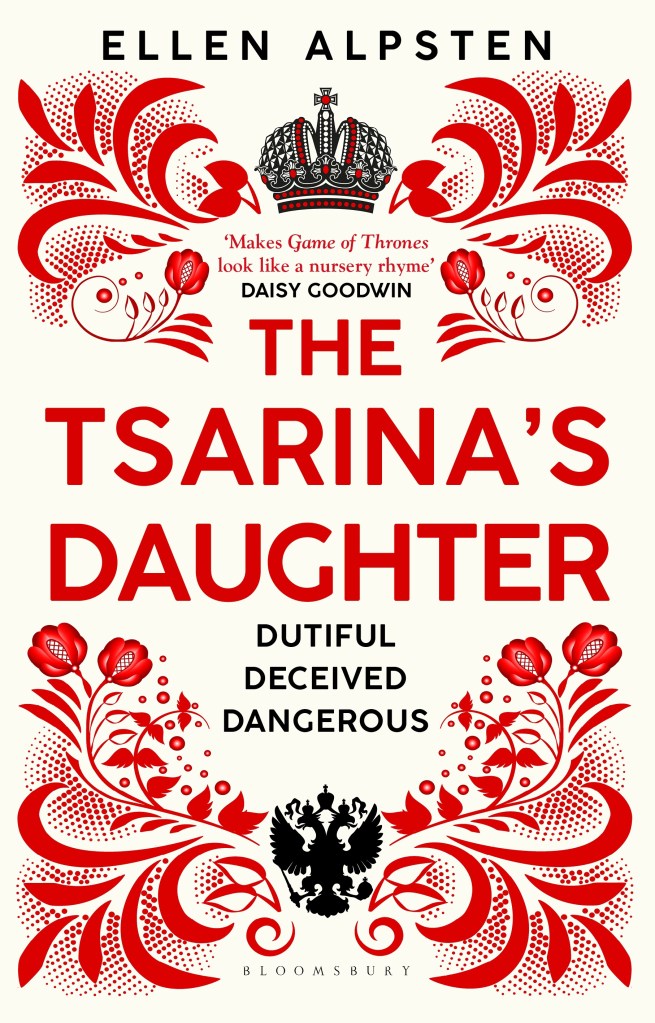
Tsarina’s Daughter by Ellen Alpsten.

Today I get to share with you an extract from this brilliant sequel to Ellen Alpsten’s novel Tsarina.

When they took everything from her, they didn’t count on her fighting to get it back…

Born into the House of Romanov to the all-powerful Peter the Great and Catherine I, beautiful Tsarevna Elizabeth is the world’s loveliest Princess and the envy of the Russian empire. Insulated by luxury and as a woman free from the burden of statecraft, Elizabeth is seemingly born to pursue her passions. 

However, a dark prophecy predicts her fate as inexorably twined with Russia. When her mother dies, Russia is torn, masks fall, and friends become foes. Elizabeth’s idyllic world is upended. By her twenties she is penniless and powerless, living under constant threat. As times change like quicksand, an all-consuming passion emboldens Elizabeth: she must decide whether to take up her role as Russia’s ruler, and what she’s willing to do for her country – and for love.

Prologue


THE TSARINA’S DAUGHTER

In the Winter Palace, St Nicholas’ Day 6 december 1741

My little cousin Ivan is innocent – he is a baby, and as pure as only a one-year-old can be. But tonight, at my order, the infant Tsar will be declared guilty as charged.
I fight the urge to pick him up and kiss him; it would only make things worse. Beyond his nursery door there is a low buzzing sound, like that of angry bees ready to swarm the Winter Palace. Soldiers’ boots scrape and shuffle. Spurs clink like stubby vodka glasses and bayonets are being fixed to muskets. These are the sounds of things to come. The thought spikes my heart with dread.
There is no other choice. It is Ivan or me. Only one of us can rule Russia, the other one condemned to a living death. Reigning Russia is a right that has to be earned as much as inherited: he and my cousin, the Regent, doom the country to an eternity under the foreign yoke. Under their rule the realm will be lost; the invisible holy bond between Tsar and people irretrievably severed.
I, Elizabeth, am the only surviving child of Peter the Great’s fifteen sons and daughters. Tonight, if I hesitate too long, I might become the last of the siblings to die.
Curse the Romanovs! In vain I try to bar from my thoughts the prophecy that has blighted my life. Puddles form on the parquet floor as slush drips from my boots; their worn thigh-high leather is soaked from my dash across St Petersburg.

Despite my being an Imperial Princess – the Tsarevna Elizabeth Petrovna Romanova – no footman had hooked a bearskin across my lap to protect me against the icy wind and driving snow while I sat snug in a sled; I had no muff to raise to my face in that special graceful gesture of the St Petersburg ladies, the damy. My dash towards my date with destiny had been clandestine: snowfall veiled the flickering lights of the lanterns and shrouded the city. Mortal fear drove me on, hurry- ing over bridges, dodging patrolled barriers – the shlagbaumy – and furtively crossing the empty prospects, where my hasty passage left a momentary trace of warmth in the frosty air.
This was a night of momentous decision-making that I would have to live with forever. An anointed and crowned Tsar may not be killed, even once he is deposed, as it sets a dangerous prece- dent. Yet he may not live either – at least not in the minds of the Russian people or according to the diplomatic dispatches sent all over Europe.
What then is to become of the boy?
I feel for Ivan’s limp little hand. I simply cannot resist – never could – nuzzling his chubby, rosy fingers, which are still too small to bear the Imperial seal. We call this game a butterfly’s kiss; it makes him giggle and squeal, and me dissolve with tenderness. I drink in his scent, the talcum powder blended for his sole use in Grasse – vanilla and bergamot, the Tsar’s perfume – carefully recording it to last me a lifetime. The men outside fall quiet. They are waiting for the decision that will both save and damn me. The thought sears my soul.
In Ivan’s nursery, the lined French damask drapes are drawn. Thick, pot-bellied clouds hide the December new moon and stars, giving this hour a dense and dreadful darkness. During the day, the seagulls’ cries freeze on their beaks; the chill of night grates skin raw. Any light is as scarce and dear as everything else in St Petersburg. The candle-sellers’ shops, which smell of beeswax, flax and sulphur, do brisk business with both Yuletide and Epiphany approaching. On the opposite quay, the shutters on the flat façades of the city’s palaces and houses are closed, the windows behind them dark. They are swathed in the same brooding silence as the Winter Palace. I am in my father’s house, but this does not mean that I am safe. Far from it – it means quite the opposite.

The Winter Palace’s myriad corridors, hundreds of rooms and dozens of staircases can be as welcoming as a lover’s embrace or as danger- ous as a snake pit.
It is Ivan or me: fate has mercilessly driven us towards this moment. The courtiers shun me: no one would bet a kopeck on my future. Will I be sent to a remote convent, even though I do not have an ounce of nun’s flesh about me, as the Spanish envoy, the Duke of Liria, so memorably recorded? I had once been forced to see such an unfortunate woman in her cell; as intended, the sight instilled a terror that would last me a lifetime. Her shorn head was covered in chilblains and her eyes shone with madness. A hunchbacked dwarf, whose tongue had been torn out, was her sole companion, both of them shuffling about in rotten straw like pigs in their sties. Or perhaps there is a sled waiting for me, destination Siberia? I know about this voyage of no return; I have heard the cries, seen the dread and smelled the fear of the banished culprits, be they simple peasants or even the Tsar’s best friend. By the first anniversary of their sentence, all had succumbed to the harsh conditions of the East. Maybe a dark cell in the Trubetzkoi Bastion, the place nobody ever leaves in one piece, will swallow me; or things will be simpler, and I am fated to end up face down in the Neva, drifting between the thick floes of ice, my body crushed and shredded by their sheer force.
The soldiers’ impatience is palpable. Just one more breath! Ivan’s wet-nurse is asleep, slumped on her stool, resting amidst his toys: the scattered pieces of a Matryoshka doll, wooden boats, a mechan- ical silver bear that opens its jaws and raises its paws when wound up, and a globe inlaid with Indian ivory and Belgian émaillé. One of the nurse’s pale breasts is still bare from the last feed; she was chosen for her ample alabaster bosom in Moscow’s raucous German Quarter. Ivan is well cared for: Romanov men are of weaker stock than Romanov women, even if no one ever dares to say so. I cele- brated his first year as a time of wonder, offering my little cousin a cross studded with rubies and emeralds for his christening, a gift fit for a Tsar, and put myself in debt to raise an ebony colt in my stables as his Yuletide present.

Ivan’s breathing is growing heavier. The regiment outside his door weighs on his dreams. As I touch his sides, his warmth sends a jolt through my fingers, hitting a Gold in my heart. Oh, to hold him one more time and feel his delightful weight in my arms. I pull my hands back, folding them, though the time for prayers has passed. No pilgrimage can ever absolve me from this sin, even if I slide across the whole of Russia on my knees. Ivan’s lashes flutter, his chin wobbles, he smacks his pink and shiny lips. I cannot bear to see him cry, despite the saying of Russian serfs: ‘Another man’s tears are only water.’
The lightest load will be your greatest burden. The last prophecy is coming to pass. Spare me, I inwardly plead – but I know this is my path, and I will have to walk it to the end, over the pieces of my broken heart. Ivan slides back into slumber; long, dark lashes cast shadows on his round cheeks and his tiny fists open, showing pink, unlined palms. The sight stabs me. Not even the most adept fortune-teller could imagine what the future has in store for Ivan. It is a thought that I refrain from following to its conclusion.
Beyond the door utter silence reigns. Is this the calm before the storm my father taught me to fear when we sailed the slate- coloured waters of the Bay of Finland? His fleet had been rolling at anchor in the far distance, masts rising like a marine forest. ‘This is forever Russia,’ he had proudly announced. ‘No Romanov must ever surrender what has been gained by spilling Russian blood.’ In order to strengthen Russia, Father had spared no one. My elder half-brother Alexey, his son and heir, had paid the ultimate price for doubting Russia’s path to progress.
Steps approach. My time with Ivan, and life as we know it, is over. I wish this were not necessary. There is a knock on the nursery door, a token rasp of knuckles; so light, it belies its true purpose. It is time to act. Russia will tolerate no further excuses. The soldiers’ nerves are as taut as the springs in a bear trap. I have promised them the world: on a night like this, destinies are forged, fortunes made and lost.


‘Elizabeth Petrovna Romanova?’ I hear the captain of the Imperial Preobrazhensky Regiment addressing me. His son is my godchild, but can I trust him completely for all that? I feel as if I am drowning and shield Ivan’s cradle with my body. In the gilt- framed mirrors I see my face floating ghostly pale above the dark green uniform jacket; my ash-blonde curly hair has slid down from beneath a fur cap. On a simple leather thong around my neck hangs the diamond-studded icon of St Nicholas that is priceless to me. They will have to prise it from my dead body to take it from me.
I am almost thirty-two years old. Tonight, I shall not betray my blood.
‘I am ready,’ I say, my voice trembling, bracing myself, as the door bursts open and the soldiers swarm in.
Everything comes at a price.


Meet The Author

Ellen Alpsten was born and raised in the Kenyan highlands, where she dressed up her many pets and forced them to listen to her stories. 

Upon graduating from the ‘Institut d’Etudes Politiques de Paris’, she worked as a news-anchor for Bloomberg TV London. While working gruesome night shifts on breakfast TV, she started to write in earnest, every day, after work, a nap and a run. So much for burning midnight oil! 

Today, Ellen works as an author and as a journalist for international publications such as Vogue, Standpoint, and CN Traveller. She lives in London with her husband, three sons, and a moody fox red Labrador.

Posted in Publisher Proof

The Lock-In by Phoebe Luckhurst.

Ellen and Alexa have survived hangovers, dodgy landlords and most of their twenties together.

But can they survive this?

After waking up with a terrible hangover, Ellen’s day is about to get much worse. It’s Saturday morning and a flooded kitchen leads best friends Ellen and Alexa into their attic looking for a stopcock. Their scream, after finding a mouse, leads their friend and housemate Jack up there too. But when Ben – Alexa’s date from the night before – walks in, the handle breaks, and all are trapped.

While Ellen nurses her hangover, she watches her best friend fall for this gorgeous stranger. Only to come to the horrifying realisation that she knows him from somewhere. Frantically searching her memories, Ellen wonders: is Ben really who she thinks he is?

And more importantly, what on earth is she going to do about it . . . ?

This is a fun rom-com and one of those deceptively light novels, that’s actually very difficult to write. It feels light-hearted and restricts the characters to one space – an attic within their shared home. I need a wee every five minutes, so I’d have ransacked every box in the attic for something to force the door open! I can’t possibly wee in a room with strangers! On a more serious note, the attic is a great dramatic device because it heightens tensions and seeing how that affects characters, is so interesting.

To create a good sense of the shifting perspectives in the room, the author gave each character their own narrative in the novel. It worked brilliantly because we could get a sense of how the existing relationships in the house worked, and how Ben’s presence changed that dynamic. It gave us different perspectives on what was happening too – who is panicking, who is a natural leader in a group, who comes up with creative solutions to the situation they’re in? It also showed how Alex’s presence with a man, a man she seems to be falling for, affects the others. When friends fall in love we’re happy for them, it’s a good thing, but will it change our relationship with them? Is the beginning of their relationship, necessarily the end of an era as single twenty-somethings sharing a home? I felt for Jack, who feels like an outsider in the house. Everything about him told me he was a warm-hearted and kind. Yet he seemed shy and a little bit awkward to. My heart went out to him.

There were some times I felt so old and I’m also completely out of touch with urban Iiving. I’m 47 years old and I’ve lived in a rural county my whole life. There were many references lost on me. Their teenage years may well have been spent on MSN messenger, mine was spent drinking on a riverbank and dancing in a psychedelic hoody to the Happy Mondays. My teenage years are pre-internet, which makes me feel prehistoric. I enjoyed the stories of internet dating, but my dates had to run the gauntlet of my Dad and suffer stifled, anxious, phone calls taking place in our living room with my whole family listening. I’ve heard stories of terrible landlords from friends who have lived in London, but here no one can afford to rent anything till they’re in their thirties. So I had to enjoy this as an amused older generation, learning about the world as it is now or might be for my stepdaughters (although that’s slightly worrying).

This is a great summer read, if you’re looking for something light-hearted with characters you’ll enjoy stuck in a very awkward situation. It’s a very modern room-com, bringing the genre bang up to date with some good laughs along the way.

Meet The Author


Phoebe Luckhurst is a journalist and author, who has written for publications including the Evening Standard, ES Magazine, ELLE, Grazia, Sunday Times Style, Guardian, Telegraph and Grazia. The Lock In is her first novel, and she is currently writing her second.

Posted in Publisher Proof

Sleepless by Romy Hausmann.

Reading this book was a little like trying to get a knot out of a necklace chain, it seems impossible to unravel, until suddenly one move loosens it and the whole thing unknots very quickly. Our central character, Nadja Kulka, was convicted for a terrible crime in her native Poland, many years ago. Now she’s out of prison she’s looking for the simple everyday things that others have: a job, a nice flat to live in and eventually a few friends. She just wants a ‘normal’ life. She does make one friend. Laura Von Hoven is her boss’s wife and a beautiful woman, who’s very free spirited. When she asks for Nadja’s help, of course she wants to give her friend a hand. However, Laura has killed someone and wants Nadja’s help to conceal the body. Nadja doesn’t feel like she can refuse, showing how her earlier trauma, from the original crime and punishment, has affected her emotionally. She’s full of anxiety, awkward with people and easily talked into bad ideas. Nadja isn’t a likeable character at first, there’s a stand-offish, prickly sort of manner she has that keeps people at a distance. Yet, underneath these defences, she’s vulnerable and naive. When they find the perfect place to hide the crime, an abandoned cabin in the woods, the rest seems easy. However, their seemingly simple plan falls apart and Nadja finds herself in a game of cat and mouse. It’s a deadly game and one that’s stacked against Nadja, because she’s the perfect murderer as well as a perfect victim.

I was very disorientated at first by the disparate strands of this complex thriller. We have three separate narratives, two different narrators plus a set of letters that don’t sound like they belong. I thought there were three different people here, because the author of the letters feels different to the others. Unlike her novel Dear Child, these separate threads feel a long way apart and it’s impossible to make them diverge into one clear narrative. I found the chopping and changing too ‘bitty’. I would pick it up after a break and found I couldn’t pick up the thread without going and re-reading previous pages. It was only when I read a good third of the book that I really started to make sense of the story and these narrative voices clicked into place. However, after sitting back and thinking, I wondered if this confusion wasn’t deliberate? Haussmann doesn’t strike me as a writer who makes mistakes, I think her plotting and structure are very deliberate, so what is she trying to telling the reader with this complicated beginning?

In retrospect, I feel that the author likes to manipulate and control her readers. She was giving us the same experience as her characters, like we’re in the centre of a complicated web waiting for a spider to strike. I was exasperated with certain characters here and there, but I found myself willing Nadja to come out of this okay, despite her past and her faults. My advice is to keep reading; things become clearer and after that prepare to set aside a whole evening to finish the story in one go. The pace quickens, increasing the tension and rushing us towards a conclusion. By this point I was intensely invested in the characters and how this would play out. I wasn’t disappointed and Hausmann kept a few final twists in reserve, that I didn’t expect. This isn’t an easy read at first, but it’s clever and psychologically astute. I loved trying to work out who had the upper hand in the web of lies. So in the end, this book firmly places Hausmann as a must read author for me.

Meet The Author

Romy Hausmann was born in the former GDR in 1981. At the age of twenty-four she became chief editor at a film production company in Munich. Since the birth of her son, Romy has been working as a freelancer in TV. Dear Child is her thriller debut. She lives with her family in a remote house in the woods near Stuttgart.

Posted in Publisher Proof

The Night She Disappeared by Lisa Jewell

Lisa Jewell has slowly become one of those writers whose books I buy without even reading the synopsis or any reviews. They are always intriguing, well paced and full of interesting characters who may not be who they seem. This book was no exception and I read it over a weekend – TBR be damned – just for sheer enjoyment. I felt so lucky to get a proof that I read it immediately! Crime writer Sophie is moving into a tiny cottage in the country, into the grounds of exclusive private school Maypole House. It has been a hasty decision to move with Shaun to his new place of work, because they haven’t been together very long. They knew they had something special, but since Shaun had already accepted the job and Sophie could write anywhere, they jumped in with both feet. Their cottage is situated on the edge of the woods. Exactly one year ago teenage couple Tallulah and Zach went missing from a mansion situated in the woods. They had gone to the pub for dinner, but were invited to a party at the house, by a girl called Scarlett Jacques who had been a student at Maypole, but now studied art at Tallulah’s college. They left at 3am to get a taxi, but never arrived home. Zach’s mum, Meg, thinks they’ve run away together to escape life. However, Tallulah’s Mum knows that’s not the truth, she knows something bad has happened, because they left their baby son Noah behind and she knows they would never do that.

Just a week or so before Sophie arrived, Kim had organised a vigil for Tallulah and Zach, to keep them in the public consciousness and to remember her daughter. Sophie had seen a picture in the paper, when she was browsing. She can’t seem to find her rhythm to write yet and this year old mystery seems to keep drifting into her mind. She didn’t expect to become so involved, but when a sign saying ‘Dig Here’ turns up on her garden fence with an arrow pointing downwards she finds a trowel and starts digging, bracing herself for what she might find. She is relieved to find a small jewellery box, and inside is a modest diamond ring. She notes down the jeweller and pays the shop a visit on the high street. Luckily, it’s a small local jeweller and he keeps track of every purchase in old fashioned ledgers. The buyer was Zach. So was Tallulah the intended recipient? Did she say no? Sophie knows she must take the information to someone and realises that Kim works in the pub. Within days the case is re-opened and once again the the spotlight is on Scarlett Jacques family home – Dark Place.

The character I connected with most was Tallulah. The structure of the novel is split into before the disappearance and then a year later when Sophie starts to look into the case. In the before sections, I could sense Tallulah feeling overwhelmed. She’s adjusted to becoming a mum so young and her love for Noah can be felt through the pages. There are times when she just wants to be her and Noah, getting home from college and picking him up for a cuddle she feels complete and calm. It’s everything else that unsettles her and there are times when her entire life feels mapped out for her. A life she doesn’t want. She’s in a perfect frame of mind to be enticed by an unusual new friendship with Scarlett from the bus. Scarlett is fascinating, older, rich and with a bohemian lifestyle. She has a charm or allure about her that’s hard to quantify and she clearly enjoys having an adoring entourage. So, what does she want with Tallulah? I’ve been where Tallulah is, feeling trapped by circumstances you can’t change, or even by your own mistakes. It leaves you open to taking drastic action and I wondered if that had happened.

Tallulah’s mother, Kim, is a strong woman who desperately wants to keep her daughter’s disappearance in the public eye. She has weathered the storm of her daughter’s pregnancy and her up and down relationship. The two are incredibly close and I enjoyed those moments when mother and daughter are sharing a moment. Kim knows her daughter so well that she has guessed parts of what happened in the lead up to the disappearance, which is more than I managed. I was hopelessly wrong, looking in the wrong place completely for answers. The author throws in red herrings, suspicious clues and people. I found teaching assistant Liam particularly creepy. The mystery is unravelled slowly as the before storyline hinges on one dreadful night and it’s aftermath. The after sequences are based on how quickly Kim and Sophie can find those involved using social media and follow the clues. The tension was really ramped up here and I was sucked into reading it so quickly, watching the pages reduce and wondering when the answers would come. Then, just when I thought I’d worked it out, the author went in another direction entirely. When I finished and put it down, my other half said ‘oh hello, you’re back in the room’ because I was utterly absorbed and when I wasn’t reading it, I was thinking about it. It was a dark tale of what can happen when people have no moral compass or conscience, and was riveting to the last page.

Posted in Publisher Proof

Diamonds at the Lost and Found by Sarah Aspinall.

This memoir sounded so intriguing and had such a great write up from other authors who I love, so I was very keen to read it. This is the story of a woman who didn’t live life by society’s rules. Even with a child in tow, she lived life on a knife edge in the hope of fulfilling the childhood belief she was destined for greater things than the poverty she was born into in 1930s Liverpool. My mum’s side of our family are from Liverpool and this was my grandmother’s era so I had a real sense of the sort of poverty the author’s mother might have experienced. As one of five in an Irish Catholic family with a father who was a miner, it can’t have been an easy life. I had thought my Great-Aunt Connie must have lived an interesting life having become pregnant as a teenager, yet managing to keep her daughter and bring her up as single mum. It would have been brave of my great-grandfather and ‘Mother’ (as she was known) to accept the stigma from neighbours and their church community. Connie had earrings that looked like mint imperials and was incredibly glamorous, always ready with a laugh or a joke and always had an admiring gentleman in tow, right up into her seventies. I thought she was fabulous. However, this author’s mother was in another league altogether and I loved hearing these incredible and mysterious escapades.

The best word I can think of to describe Sarah Aspinall’s mother Audrey is incorrigible. Our opening chapter takes us to a Hong Kong hotel bar in 1965 when Sally (now Sarah) is eight years old. The opening conversation between mother and daughter really sets the tone for the type of woman Audrey is. A piano player is softly running through his repertoire of Frank Sinatra tunes. Sally knows them all, she’s heard them in every piano bar she’s been to, but something about this song makes her ask her mother:

‘Why is she a tramp? I ask.

‘ She wants to be free to do her own thing’ she says, ‘you know’, then she croons about having the wind in our hair and being without a care’.

This small conversation opens a window onto a life that is far from conventional and often, shocking, like what transpires next. Audrey calmly identifies a lone man at the bar to her little apprentice who lets her Mum know she’s going to the bar for a Coke. Sally then wedges herself onto a bar stool next to the man and calmly asks him if he will ‘look after’ her Mummy when she goes to bed. When she’s pointed out, Audrey pretends to be bemused, but in a heartbeat turns herself into a fascinating femme fatale. She apologises for her bothersome daughter and says she must get her settled in bed. The man is hooked – could they possibly have a nightcap? Back in their room, Sally watches her mother refresh her smokey eye make-up and step into a mist of perfume, then she departs. Sally knows she won’t be back till morning, so settles to read herself a book, wondering what scent she will wear when she is older. Books are Sally’s only education and she is fascinated with love, currently studying the love story in Somerset Maugham’s Of Human Bondage.

I didn’t want to ask my mother, as she didn’t like to talk about things in books, but […] why didn’t one of those men who my mother met ever love her, when she was so beautiful and could sing and dance and tell funny stories and make the room light up? It must have been a run of terrible luck.

The author is brilliant at occupying the mind of a child, who is by turns naïve and innocent, but also knowing and wise beyond her years. Often she can see when an ‘opportunity’ is going sour before her mother. She is definitely a willing accomplice, but is that down to her mother’s training or simply a family trait? The pair flee from one country (and prospect) to another, via luxury travel and the best hotels if lucky, or on a wing and a prayer if not. It is glamorous, exciting and full of adventure, as Sally mostly presents it. However, it must have been destabilising and possibly even scary at times, especially in her youngest years. For me there was something touching about this little girl, taking herself to bed in a strange hotel while her mother works on their chosen ‘mark’ down in the bar. Sally treads a very careful line; this is no misery memoir, as she makes clear in the afterword. She writes truthfully, but stops short of outright criticism of her mother. Nevertheless, I sensed loneliness in a little girl who only has adults to converse with and is reading books she manages to find left in hotels, some of which are way beyond her years and understanding. This is how she gets an education of sorts. Although the book really does celebrate the glamorous and irrepressible Audrey, there is a hint of anger and resentment too.

Even back in Southport, Audrey isn’t the settling down, cosy type of woman at first. She’s something of a local celebrity. What she doesn’t seem to recognise is the void opening up in her daughter – that need to know who you are and where you’re from – coming from the lack of knowledge around her father and his death. She doesn’t remember him, but has enough skill at reading people to know that just under the surface of her mother’s party personality, is a deep sadness and even perhaps, depression that surfaces from time to time. This keen sense of perception is what drives Sally forward, into completing the jigsaw puzzle that is her mother’s life, for herself and for the reader. I was deeply engaged at this point, eager to understand both of these incredible women. When, finally, Audrey does find some contentment in life and Sarah has the settled family she has always craved, the anger and resentment does start to surface. Audrey appears none the worse for her escapades, but Sarah has paid a heavy price including her lack of education and structure. Now she rebels against rules that are being imposed for the first time. Yet, this is such a generous book. Although she tells the story honestly, Aspinall never judges and shows incredible compassion towards her mother. Yes, this is a very unorthodox mother and daughter relationship, but she didn’t want her memoir to be a grenade lobbed backwards, detonating the past. She allows Audrey to shine out of the pages as the beautiful, dazzling and vivacious woman she was. Meanwhile she shows herself at peace with the past and her mother, by becoming a smart, capable woman with a beguiling set of storytelling skills.

Meet The Author

Sarah Aspinall is a producer and documentary maker. She has four children and lives with her partner in London and on the South coast.

Posted in Publisher Proof

Songs in Ursa Major by Emma Brodie.

Today I’m spotlighting a wonderful book from author Emma Brodie, the perfect antidote to the Glastonbury blues. This is one of a few proofs I’ve received recently that are based in the world of music. It had me thinking about the best gigs I’ve gone to and how much I’ve missed seeing live music. My last gig before lockdown was Manic Street Preachers in Manchester. I hadn’t seen them since the nineties so it was like revisiting my teenage years and they were just as incredible. However, the gig I remember most as one of those ‘where were you when…’ moments was in 1994 at Alexandra Palace. The main act was my favourite nineties band, Blur and just around the same time as the big Blur V Oasis battle. Just as exciting, the support act was Pulp, only months before they released Common People and became huge. This really was a zeitgeist moment in Britpop and I was there.

The Blurb

THE SUMMER OF 1969

From the moment Jane Quinn steps barefoot onto the main stage at Island Folk festival, her golden hair glinting, her voice soaring into the summer dusk, a star is born – and so is a passionate love story.

Jane’s band hits the road with none other than Jesse Reid, the musician whose bright blue eyes are setting hearts alight everywhere. And as the summer streaks by in a haze of crowds, wild nights and magenta sunsets, Jane is pulled into the orbit of Jesse’s star.
 
But Jesse’s rise could mean Jane’s fall. And when she discovers a dark secret beneath his music, she picks up her guitar and writes her heartache into the album that could make or break her: Songs in Ursa Major.

Set against the heady haze of the 70s and alive with music, sex and sun-soaked hedonism, SONGS IN URSA MAJOR is an unforgettable debut and the soundtrack to a love story like no other.

I would like to thank Zaffre and Bonnier Books for my proof copy and I look forward to telling you all about it.

Posted in Publisher Proof

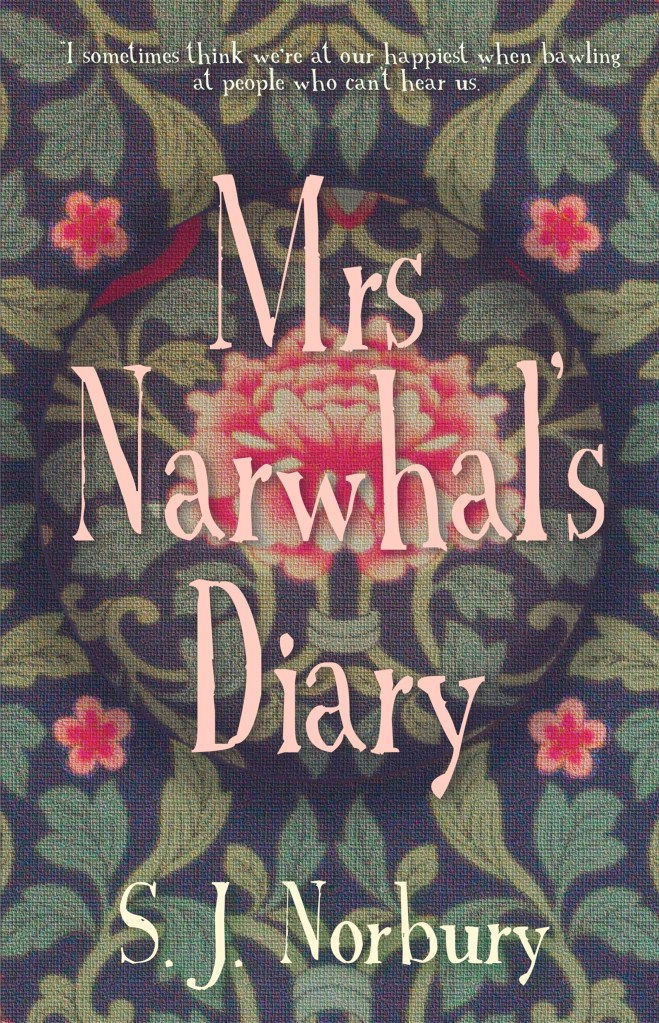
Mrs Narwhal’s Diary by S.J. Norbury.

“It was Woman’s Hour who suggested I keep a diary. They said it was good for mental health, and I must say I did feel much less frazzled after writing everything down yesterday. The frustrations were all still there, but somehow smoothed out – as if by a really good steam iron.”

Mrs Narwhal is overwhelmed. Her husband, Hugh, is unkind and unhappy – working every hour at a job he hates to save the ancestral home he never wanted. Then there’s Hugh’s sister, Rose, who’s spurned her one true love, and ricochets from crisis to crisis; and not to mention two small boys to bring up safely in a house that could crumble around their ears at any moment…

When Hugh’s pride receives a fatal blow, and he walks out, Mrs Narwhal is plunged into a crisis of both heart and home. With help from Rose she sets out to save the house her husband couldn’t. But can she save her marriage? And does she really want Hugh back?

Funny, charming, and moving, Mrs Narwhal’s Diary is an irresistible story which will enchant and delight its readers.

I always romp really quickly through books that are in diary format. Then regret I didn’t take my time. I think it’s because they’re in short chronological chunks so the brain keeps thinking – ‘just one more can’t hurt’. It’s also something to do with the solitary narrator letting us inside their head and view their world from that perspective. We’re not confused by other perspectives and we can trust that this is their truth. We get to know them deeply, and I certainly loved getting to know Mrs Narwhal. Yes, I was initially attracted by the unlikely and eccentric sounding name. These are the faded upper classes, living in their crumbling mansions, and going about their business while the house falls down around their ears. People like this make up some of my favourite bookish characters. I think it comes from a childhood of reading I Capture the Castle by Dodie Smith and Helen Cresswell’s Bagthorpe Series. This novel had all the character, charm, and humour of those books along with a dollop of romance and a very big heart.

The eccentric Narwhal family were once very wealthy, but their fortunes have diminished over the centuries. However, the traditions, expectations and responsibilities of the family remain. Hugh, current head of the Narwhal family, is at a complete loss as to how they can change their fortunes. He remembers a childhood of coming home and seeing a dark outline where a picture used to be, but that was when they still had things worth selling. He wants to respect the past, but previous Narwhals have committed terrible sins against the house: sixties wallpaper; a prop holding the ceiling up in the hall; a laundry basket for a bedside table; plumbing pipes sprawling across wood panels. One poor and exasperated ancestor simply tore half the house down to cut costs! Hugh Narwhal lives in this relative chaos, with his wife (our narrator) and their two young sons Billy and Peter. Hugh’s sister Rose, a walking tumult of emotions, drifts through from time to time. There’s Ian, who seems to be a faithful retainer from better times, and still hangs around the place guarding Narwhal treasures and the house’s long history. There’s also a rather formidable cleaner, who’s schedule can’t be changed or diverted for anyone.

The narrator lets us into the day to day chaos of living in an historic building where nothing works, but nor can it be thrown away. There’s a treehouse and bell – integral to a Narwhal bell ringing ceremony, but becoming too dangerous to hold its participants, a lake full of weeds, and various experiments at gardening. Every Narwhal has taken on the mantle with their own ideas and improvements, but no overall vision. The result is rather like a patchwork quilt coming apart at the seams. Hugh was working for a furniture makers in London, when he became head of the family. He promptly moved back to the family home on the Welsh Borders, with the idea of creating his own furniture and upholstery business in a workshop in the grounds. It takes a lot of upholstery to pay the bills, but Hugh feels the responsibility of his inheritance. He doesn’t know what to do with the place, but he doesn’t want anyone else to do it either. Every day the responsibility and his own pride begin to depress him. Mrs Narwhal knows their relationship is suffering, but can’t seem to reach him.

I really enjoyed the narrator, but as I started to write this blog I realised I couldn’t remember her first name. This is how invisible she has become. She’s always there, just a part of the furniture. She is a fixer, but has spent so long going from one disaster to another, she’s forgotten about the bigger picture. When she meets with Rose’s ex-husband we start to see a bit of a support group forming. The pair address each other with a warmth that only two outsiders within a family can. She’s actually very capable, witty, and intelligent but feels like Hugh has stopped seeing her that way. It was so sad, when she dashes to London on a ‘Rose rescue’ mission, that she sees a young couple in a bar and thinks they look familiar. As she’s sat wracking her brain to work out who they look like, she realises that this was her and Hugh before they inherited the hall. Young, vibrant and so interested in each other. She has been worried about whether Hugh loves her anymore, when the truth is he’s just stopped seeing her. More worryingly, as her mind becomes clearer, she starts asking herself the right questions. ‘Do I still love Hugh and is this enough for me?’ This is when change starts to happen.

Change does come to the family, but by different methods for everyone involved and with varying results. It comes about from each character knowing who they are in an authentic way and being honest about what they want. The results are by turns startling (the new tree house for example), creative and exactly right for this family to move forwards. For example, instead of constantly worrying about the mysterious, but stubborn, Ian and his constant disapproval of change. Someone needed to become head of the house and simply tell him what was going to happen. Ultimately, this is how every generation of Narwhal copes – by stating they are now head of the Narwhals and this is what’s going to happen. It takes a formidable character to bring about change in such an institution, although I did retain a small hope that they would reinstate the polar bears either side of the staircase – one holding drinks and one holding canapés. This was a charming, funny, story that touched on some serious issues, but ever so lightly. The ending was uplifting and I loved being in Mrs Narwhal’s company.

Meet The Author

S J Norbury lives in Herefordshire with her family. Mrs Narwhal’s Diary is her first novel.

Posted in Publisher Proof

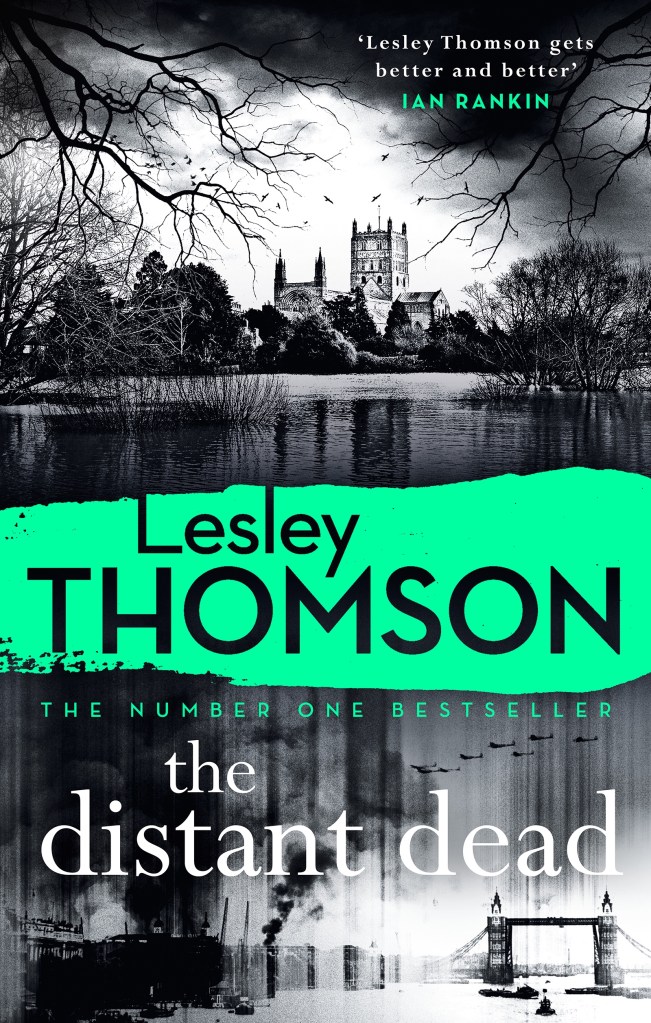
The Distant Dead by Lesley Thomson.

A woman lies dead in a bombed-out house. A tragic casualty of the Blitz? Or something more sinister? Sixty years later, the detective’s daughter unearths the truth… From the number 1 bestselling author of The Detective’s Daughter.

LONDON, 1940

Several neighbours heard the scream of the woman in the bombed-out house. One told the detective she thought the lady had seen a mouse. Another said it wasn’t his business what went on behind closed doors. None of them imagined that a trusting young woman was being strangled by her lover.

TEWKESBURY, 2020

Beneath the vast stone arches of Tewkesbury Abbey, a man lies bleeding, close to death. He is the creator of a true-crime podcast which now will never air. He was investigating the murder of a 1940s police pathologist – had he come closer to the truth than he realised?

This is the first time I’ve read Lesley Thomson and her Detective’s Daughter series, of which this is the eighth novel. At first it felt a little like coming into the room in the middle of a conversation, but once the second timeline began I’d been drawn into the atmosphere of an interesting story, full of character and historical detail. In the now section of the novel, Stella is settling in Tewkesbury and trying to finally come to terms with the death of her father in a place where she isn’t reminded of him at every turn. It was a tough choice to completely uproot herself, leaving behind her business Clean Slate and a long term relationship with Jack. She has moved with journalist Lucie, who also loved her father, and the women are dealing with their grief in their own ways. Stella has started visiting The Death Cafe, run by pathologist Felicity Branscombe. It’s a space to meet others struggling with grief and they discuss their experiences of death. While on one of her cleaning jobs – at Tewkesbury Abbey – she meets a man called Roddy Marsh and they pass the time of day as he asks her questions about how she keeps a place like this clean. However, she then meets him again at her second visit to the Death Cafe group. Is this a coincidence, or did Roddy want to meet Stella? Straight after the group meeting, Stella returns to the Abbey only to find poor Roddy, dying from a stab wound in his back. He has something important to say to her, but sadly Stella can’t catch his words.

In our past storyline we are taken to the London Blitz and the murder of young mother Maple Greenham. For some reason, my connection to Maple was instant and I really enjoyed her part in the story. We meet her as she is getting ready for a night out and we sense her parent’s trepidation that she’s stepping out with a man who doesn’t pick her up or even walk her home. They’ve never met him at all. After an evening of dancing, her beau produces a key for a friend’s house and they have a tryst. I loved the small details Thomson evokes in these glimpses of the past. Here, Maple has a moment of irritation as she notices a snag in the toe of her silk stocking and mentally tots up how much time she’s had to spend working to afford them. This told me that the man she’s with wouldn’t understand that sort of concern, because he’s from a different class to her. Maple’s scream is dismissed by those who do hear it. No one imagined it was the sound of this young woman being strangled by her lover. DI George Cotton is the investigating officer and finds incontrovertible evidence of her killer’s identity, but finds his case and his career shelved. This is a man too important to the war effort to be hauled up on a murder charge. Put simply, it’s decided his life and the potential lives his work will save, are more important than Maple. The link between cases is a podcast, titled The Distant Dead, featuring murder cases where the real culprits were never caught. The presenter of this true crime series was Roddy Marsh and he was featuring the death of a 1940s police pathologist. Is there someone in the present day who wants these truths to stay buried?

Now, the Clean Slate staff alongside Stella, Lucie and Jack decide to investigate past and present murder cases. This is not without it’s dangers and leads us to an interesting cast of characters, none of which are exactly what we expect. Stella realises again, that it seems impossible for her to leave her father’s world behind. There’s even a connection to the SIO on Roddy’s murder, a WPC who worked with Stella’s dad. I enjoyed tracing the links between past and present cases and watching how Stella works – no matter that she doesn’t want to fall into her father’s work and habits, she does seem to have a talent for it. I loved the historical detail from the 1940 case too. This was an atmospheric tale, full of the twists and turns a modern reader expects. However, there’s also a feel of a much earlier mystery novel, possibly a 1930s/40s cozy murder mystery. It has elements like the eccentric characters, gatherings in tea rooms and unusual methods of murder. Some aspects are spooky, such as the cathedral or the dark and narrow country lanes. Others, such as the dialogue, are almost comical. There’s also Stanley the dog’s antics too of course. It is an enjoyable read, slightly slow in some parts, but with a great sense of place and characterisation.

Meet The Author.

Lesley Thomson is the author of the Detective’s Daughter series of West London-set mysteries featuring private investigators Stella, a cleaner, and Jack, a tube driver. The first novel, The Detective’s Daughter, became an ebook phenomenon in 2013, staying at number 1 in the digital charts for 3 months. Since then, the series has gone on to sell 800,000 copies worldwide. Lesley is an active member of the UK crimewriting community, and appeared at several crime festivals in 2019, including CrimeFest, Harrogate, Morecambe & Vice and Capital Crime. She lives in Lewes with her partner and her dog

Follow Lesley:

Facebook: @LesleyThomsonNovelist

Twitter: @LesleyjmThomson

Website: lesleythomson.co.uk

Buy links:

Amazon: https://amzn.to/3eCVO6O

iBooks: https://apple.co/3y3A8Zf

Kobo: https://bit.ly/3hmq47F

Google Play: https://bit.ly/3uMuAjS

Waterstones: https://bit.ly/3y7IRtC

Bookshop.org: https://bit.ly/3y3O6dN

Follow Head of Zeus

Website: www.headofzeus.com

Twitter: @HoZ_Fiction

Facebook: @headofzeus

Instagram: @headofzeus

Posted in Netgalley, Publisher Proof

The Perfect Lie by Jo Spain

This thriller kept me guessing and a couple of times, even had me going back to previous chapters so I could be sure of what I’d read! Our heroine is Erin Kennedy, an Irish girl working in publishing in NYC and living with her husband of three years out on Long Island. She narrates her story across two timelines: one is the present and Erin is on trial for murdering her husband, and the other is a year earlier around the third anniversary of her marriage to Danny, a detective from Long Island. Our second narrator is a younger woman called Ally, a PhD student and proctor at Harvard University. My confusion arose from how these characters related to each other and the author is clearly a master of telling her readers just enough to keep us reading, but not enough to ruin the later revelations, twists and turns – and there are plenty of them!

The Erin from a year before is a very different person and early on in a shock scene, Erin and Danny are starting their day at their sea front apartment when his partner turns up at the door. Ben has two uniformed cops with him and when Erin answers the door he is not his usual self. He apologises but tells her they are there to arrest Danny. Erin thinks this is some elaborate joke, but her confusion gives way to horror as she realises Ben is serious. However, instead of being confused, Danny looks guilty and scared as hell. Before Erin’s eyes Danny runs to their fourth floor balcony, apologises to her, and throws himself from the edge. Ben doesn’t let her see, and she stands a little distance away, watching with disbelief as a small crowd gathers and paramedics work on her husband. Although Ben spares her the final image of Danny, broken on the sidewalk, she already knows he’s head. Through shock, and that awful first numb state of grief, she forgets to ask why Ben turned up that morning to arrest his own partner, why they take away papers and his laptop, and exactly what Danny is supposed to have done.

Those questions do come later though, especially when Erin has that realisation, that she isn’t being afforded the same support she’s seen other police widows receive from the precinct and the other wives. It’s almost as if she’s been cut off and they’re embarrassed by her, most notably not turning up for the funeral. It doesn’t take long for her to realise she’s going to need a lawyer. The police’s attitude tells her that Danny must have been suspected of corruption, and she needs someone who knows the system. Firstly they need to find out whether she’s still entitled to a widow’s pension, but next she wants them to do some digging into exactly what Danny was being investigated for. Her journey has her asking so many questions and she starts to wonder whether she knew her husband at all. With a small trusted group of friends and her sister Tanya, she starts to piece together the truth.

By now you’ve probably noticed the glaring big question mark in this story; if Danny committed suicide, how is Erin on trial for murdering her husband? I’m not going to ruin the story for you all so I’m not going to reveal any more. This question, and many others do get answered eventually. The author’s timing, in choosing what to conceal, what to reveal and when, is absolute perfection.

It takes a while for Ally and Erin’s stories to intersect, so after every one of Ally’s chapters I was racking my brains to work out where they fit. Ally is writing her PhD on crime novels and as proctor she is charged with taking care of one student hall of residence on the campus. It’s an unusual role that seems to cover mentoring, mothering, but also showing students how to have a good time. In fact, Ally’s hall parties have become so renowned that girls from other blocks want to get in on the guest list – so many that they’ve had to place a restriction on the amount of invites they can have per girl. We meet her as she tries to support a girl called Lauren, an undergraduate, who has been the victim of a crime. Luckily, Ally knows someone who may be able to help, and she offers to bring her boyfriend in to help with results neither of them expect.

I did struggle to understand Erin at times and her decision making. Of course she’s in shock and shouldn’t be making decisions anyway, but there were times when I was screaming at her not to do something. There was an element of her drifting along, rather than making well thought out decisions. Her grief is complicated by the manner of Danny’s death, but also because she’s angry he made this choice to lie to her, leave her behind and leave her haunted by that final image of him disappearing over their balcony. I think her confusion over where to be and who to spend time with was well done. To be with his family is difficult because their grief is different and not complicated by betrayal. She is shunned by the other detective’s wives so seeing them makes her angry. She feels abandoned in a country that isn’t her own, and she gathers a disparate group of new friends who offer support. There’s Bud, the owner of their local bar, her new firecracker of a lawyer, Karla, Danny’s psychotherapist and a man called Cal who knew Danny. These people seem to keep her afloat, but I didn’t trust anyone and treated all of them with suspicion. In feeling angry and betrayed with the one man she thought she knew, and his police colleagues, is she in danger of trusting all the wrong people? I found her story entertaining, compelling and the author paced it well. This would be a great read by the pool this summer and you’ll probably find yourself reading it in a couple of sittings, because like me, you’ll want to know exactly what’s going on. This book is a rollicking good thriller, that I’m sure you’re going to enjoy this summer.