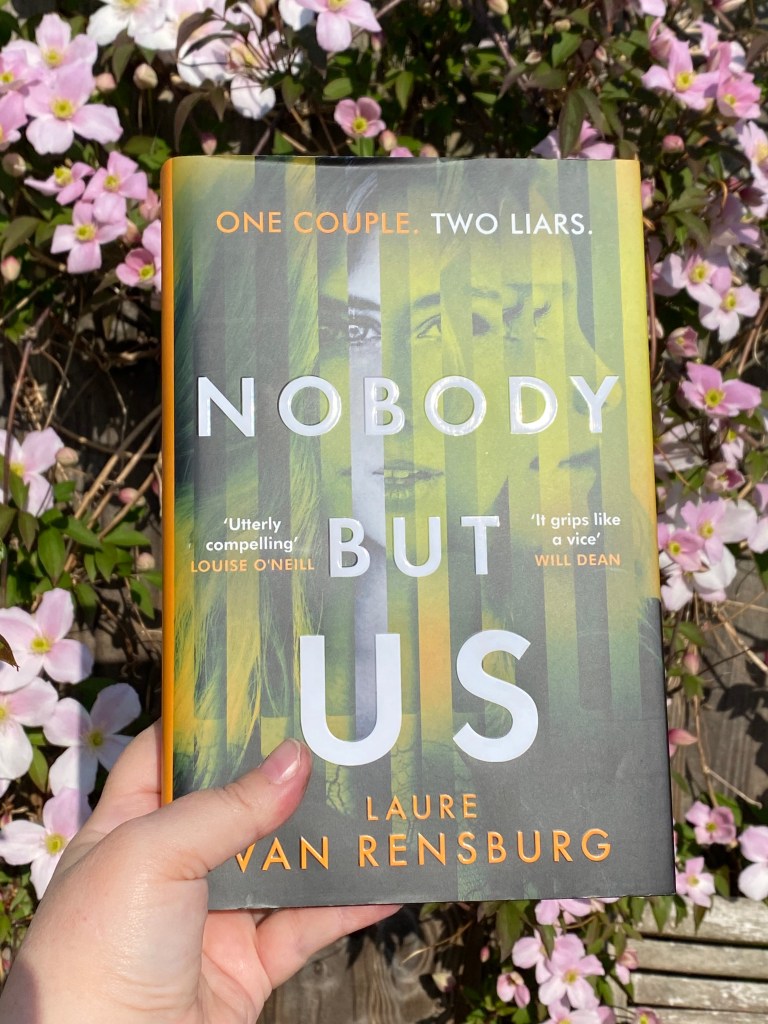
I heard such great things about this dark thriller that I’ve been chomping at the bit to read it asap! It was our Squad Pod read for last month and as usual I’m late. The blurb grabbed me right away and my mind went immediately to Gone Girl so I expected some twisted people and storylines. That tagline is designed to draw us in, but also has a hint of humour as if she’s mocking the genre – meet 2022’s most f*cked up couple. I was waiting for a gap in blog tours and managed to get a sunny weekend, my day bed set up in the garden and a willing slave to keep me supplied with drinks and adjusting my parasol. It didn’t take long to hook me.
Ellie and Steven have finally managed to find a gap in their busy schedules to get away for a few days and celebrate their six month anniversary. They’re heading to an isolated cabin in the woods, many miles away from the hustle and bustle of New York. It will be the perfect opportunity to spend some quality time together and really get to know each other. A perfect weekend for a perfect couple. Except, that’s not quite the truth. Ellie and Steven are far from perfect. They both have secrets. They’re both liar. Steven isn’t who he says he is. But then neither is she …
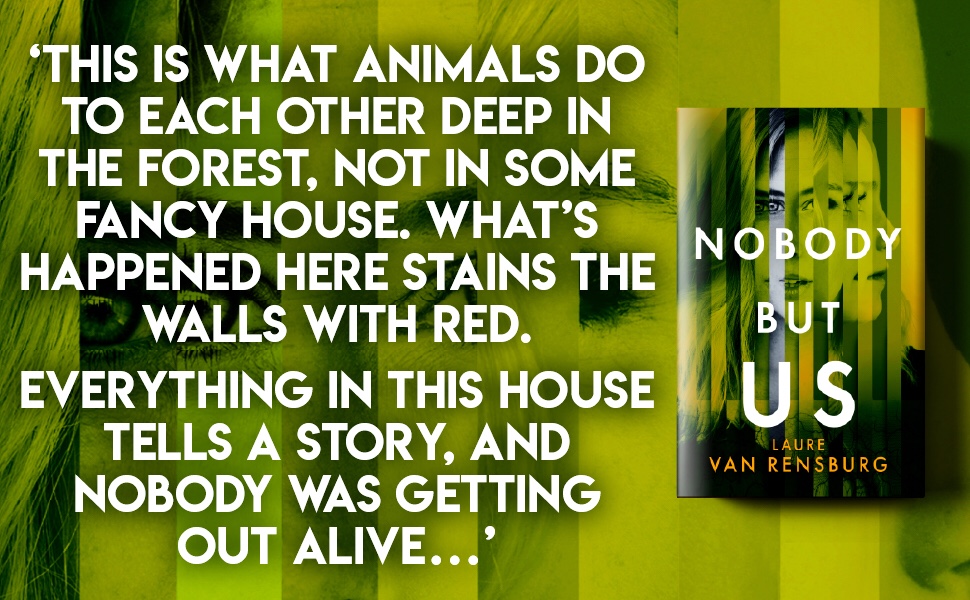
The setting was clever too, usually I’d expect a log cabin in the woods or a period house as a background, but this is a contemporary, architect’s house. I didn’t think a modern house could be scary, but I found it’s glass and steel exterior very unwelcoming – there’s nothing cosy about this weekend. In fact the perfection, the materials used and the sheer amount of space seem strangely oppressive. The contrast with the forest outside is jarring, the natural surroundings make it feel like the owner is pitting his house against the elements, imposing man made order on the natural chaos outside. Yet, when the storm sets in, nature seems to be getting it’s own back, with the large glass panels showing the storm’s fury. Trees are lashing against each other and the snow is coming thick and fast. In fact the weather adds to the sense of isolation, no one is coming to save them, no matter how much they scream.
The story is told by the two characters in turn, relating the details of their weekend away, but also drifting into their pasts so we get some idea of how Steven and Ellie came to this point. Still, the biggest revelations are kept back from us so we don’t have the full picture. This drip feed of information kept me hooked. I needed to know what happened next and who the characters really were under their facades. Mostly though I wanted to know what had set these dramatic events in motion. I couldn’t love these characters, so I wasn’t invested in one side or the other at first, but as the flashbacks came I was surprised to find I did have flashes of sympathy for Ellie or Steven, depending on what had happened to them.
I enjoyed the way the author played with that edge, between what was once acceptable and now isn’t. In light of the #MeToo movement many women in my 40+ age group who can look back at events from the 1990’s and think they wouldn’t be acceptable now: a stolen kiss at a party; a hand on the backside while waiting on a table; pressure to go further sexually than we might have been comfortable with. Now, relationships where there is any form of power imbalance are viewed as wrong. The married man and the teenage babysitter, the older boss and young employee, or student and tutor relationships were happening around me at that time and I don’t remember thinking they were intrinsically wrong, just a bit dodgy. Now, thirty years later, the mood is very different. But of course that’s only one aspect of this complicated story. This is a gripping, atmospheric and explosive novel. If you love thrillers this should definitely be on your summer reading list.
Powerful men can get away with murder…for only so long.
After a life of hardship, Mary Jane McCord’s life in Rapid City, South Dakota, finally hits a sweet spot. She finds happiness and her singing career takes off. Everything is looking up until she uncovers the dark and secret obsessions of two high-profile men.
Twenty years pass but the people closest to Mary Jane have not forgotten.
Will they bring the truth out into the light?
I had never read this author before and found this latest novel an unusual reading experience. Told in fragments, this is the story of a South Dakota town full of tensions and secrets. There isn’t even one main thread, but what links each fragment and each character is the death of MJ McCord. Mary Jane was as beautiful as Marilyn Monroe, more beautiful even some would say. After a difficult and unsettled childhood with mum Marjorie, MJ’s life looks like it’s finally coming good. She’s married to a lovely man who’s older, but gives her kindness, stability and wisdom. He thinks that MJ is beautiful on the inside as well as the outside, and its that inner beauty that captivates him, because it’s a rare thing in his experience. His money helps her with a dream of becoming a singer and she’s just on the cusp of being known. He knows she’s looked elsewhere of late, but it’s her age and he can overlook it. Then he gets some devastating news, MJ goes to a party at the home of one of the town’s superstar football players, Jordan Pinault, but never comes home. It seems that MJ has been playing away with Jordan, they had a row and MJ picked up a gun. She shot herself in the head.
The fragments of the story meander around this event, moving back and forth in time, to people close to MJ and those with only a tangential connection to that tragic night. I’ll be honest and say that first of all I was confused. The structure and order of the chapters doesn’t always make sense and it’s only when you start to get closer to the events of that night, that things become clearer. In fact the sections in the second half of the novel, seem to fit together easier and make more sense. Each fragment is told by a different person, but not everyone uses their given name, instead using a nickname, or they have a Native American name as well as a more Americanised/Anglicised name for work. This confused me even further. However, when it does become clear it’s like a fog lifting. I’m guessing this structure was deliberate and echoes the confusion and layers of half truths around Jordan Pinault and Ricky Nwafo. They have hidden their secrets behind layers of money, respectability, knowing the right people and the hero worship many in the town still have for them.
This town only has a surface sheen. The author shows us how there are people who matter in Rapid City and people who don’t. Despite America claiming not to have a class system, it certainly does have a hierarchy and here it seems the Lakota people are at the bottom of the pile. The Lakota people are also known as Teton Sioux and live the furthest West of any of the Sioux tribes. The author depicts the Lakota as an integral part of the town, but a struggling one. One character remembers being told in school of the ‘Lazy Lakota’ and one of the Lakota characters hates seeing this characteristic in his nephews who sit around in a trailer, drinking most of the day. There is also petty criminality, such as small time drug dealing and theft. We get the impression that discrimination does still exist, in the job market particularly, which leaves Lakota families in poverty compared with the rest of the population.
There’s also a streak of misogyny throughout, with physical and sexual violence still the norm. I felt so deeply for Celena, a Lakota girl who is friends with MJ and crops up at different points in the book. We see her sleeping at parties when she’s younger, in rooms where her unconscious state leaves her very vulnerable. In later years we see her sleeping in the trailer she shares with family, despite the noise of the TV and the kids around her. My first impression, from her teenage years, was that she must be really drunk or perhaps experimenting with drugs? Of course this is other people’s assumption too. Back in her teens, men joke about what they could do to her in this state, and as a woman her family despair of her. In a section narrated by her Uncle, he finds her asleep in their trailer alongside her grandmother, with the TV on and her cousins drinking and shouting in another room. He marvels at how she can sleep in so much noise and calls her lazy. It’s only when we finally hear Celena’s voice that we find out she has narcolepsy, a neurological condition where the brain can no longer regulate the patient’s sleep cycle. She is so used to people not understanding or believing she has a medical condition, that she doesn’t even bother correcting them anymore. Having had secondary narcolepsy, due to having MS and a viral infection, I know how scared and vulnerable it feels to be unable to stop yourself falling asleep. I did it on busy trains, in cafes and even at the opera. Sometimes I could hear everything around me, but couldn’t speak or open my eyes. So my heart went out to her, because once when she feel asleep at a party, her best friend MJ killed herself with a gun. What happens when those half remembered moments start coming back to her?
The author weaves a complex story here and the best thing to do is not worry too much about whether you have the story straight. Just go along with it, from person to person and slowly the truth starts to emerge. There is an incredible sense of place, almost dreamlike in places, but a town immersed in the surrounding nature, especially for the Lakota. There’s a real sense of shabbiness, poverty and sleaze just below the surface. While Jordan and Ricky are just as culpable, the character of town counsellor Beverley Burgess made me feel sick and there were sections that are a hard read. The author showed how certain people become revered in small isolated towns. We know from contemporary cases of rape and abuse that in many cases, ball players are shielded from scrutiny and have the money to afford the best lawyers. In fact it’s this culture of hero worship that allows these crimes to flourish in the first place. There are always people who know the full truth of what’s going on at the time, but no one wants to point the finger at the star. Young ball players have those ideals of being athletic and good looking, popular with girls and can get to good schools with their skills. They are like the alpha males in a town, and ball teams become part of the fabric of society with local sponsorship and charity work. The ball players gain a sense of entitlement that can allow them to mistreat and manipulate others, especially girls who are blinded by their looks and popularity. There is an element of nostalgia and escapism for the spectators, reliving their own past glories or just wishing they’d fulfilled their potential when they were young. I would hope, in the wake of the #MeToo movement that some change has taken place with people looking long and hard as to why they hero worship athletes.
This novel takes a hard look at small town America through this one incident. What is it that’s positive in these small communities, but also what’s missing? If we liken them to areas in the UK, they seem like our old mining communities where the work that’s been guaranteed for generations dries up and people are left in poverty, unable to afford or aspire to university. Young people have to settle for the work that’s available or move away and in these areas there are many young men who yearn to be footballers, boxers, MMA fighters and young women who want to be models, singers or reality TV stars, because it seems more attainable than expensive years of university education. I thought the book was atmospheric, mysterious and complex. It wasn’t like anything else I’ve read this year and left me thinking long after the book ended.
Published 6th May 2022 by Friday Press
Meet the Author
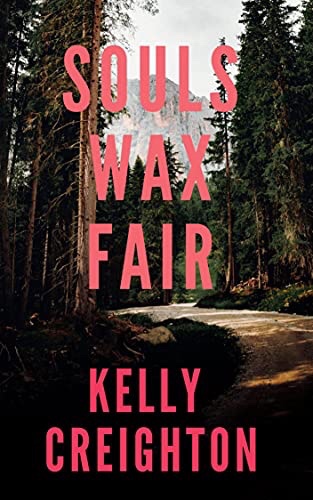
Kelly Creighton facilitates creative writing classes and teaches English as a foreign language. She is the author of the DI Harriet Sloane series, two standalone crime novels (Souls Wax Fair and The Bones of It), two short fiction collections (Bank Holiday Hurricane and Everybody’s Happy), and one book of poetry. Kelly lives with her family in County Down, Northern Ireland.
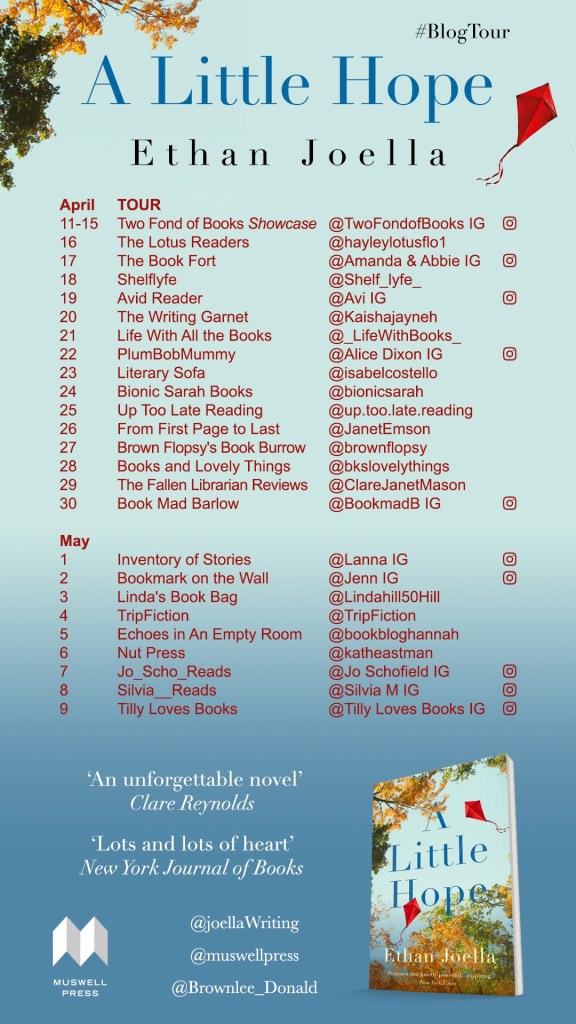
Set in an idyllic Connecticut town over the course of a year, A LITTLE HOPE follows the intertwining lives of a dozen neighbours as they confront everyday desires and fears: an illness, a road not taken, a broken heart, a betrayal.
Freddie and Greg Tyler seem to have it all: a comfortable home at the edge of the woods, a beautiful young daughter, a bond that feels unbreakable. But when Greg is diagnosed with a rare and aggressive form of cancer, the sense of certainty they once knew evaporates overnight. Meanwhile, Darcy Crowley is still coming to terms with the loss of her husband as she worries over her struggling adult son, Luke. Elsewhere, Ginger Lord returns home longing for a lost relationship; Ahmed Ghannam wonders if he’ll ever find true love; and Greg’s boss, Alex Lionel, grapples with a secret of his own.
Ethan Joella’s novel feels perfect for this moment in life. Since 2020 our world has changed irreparably, for some this means that every day life has changed so they no longer work in an office full of other people, or they’ve missed going out over the past two years, or had their exams cancelled. For others it means learning to live with loss, coping mentally with the work they did on the NHS frontline or dealing with the challenges of long COVID. For me it has meant still being super careful when I go out, avoiding large and crowded gatherings and my mobility being reduced because of treatment that’s been postponed indefinitely. Thanks to long periods of isolation, we are all used to living in our own world and can even be overwhelmed by what we’re facing inside our own front doors. To some degree, the plight of the Ukrainian people has brought us out of our own concerns and back into a collective again. We want to help and take action. It has given us perspective. This novel works in the same way. It feels inspired by the realisation we are only a small part of the jigsaw that makes up life. It’s the literary equivalent of that feeling I always get on the train in the dark, when I can see the human theatre of everyday life through the glowing windows of people who don’t shut their curtains. Every passing window is a snapshot of life. Ethan Joelle gives us a different life per chapter, as we meet the residents of the small US town of Wharton, Connecticut. Each chapter is separate, but related, and through the author’s lens we are granted access to the extraordinary lives captured within each unremarkable window.
We start with Freddie, who is coping with the fact that husband Greg has just been diagnosed with a cancer of the white blood cells called multiple myeloma. Not only that, they haven’t yet told their young daughter Addie. Freddie is just trying to process the news, but is worrying about what Greg’s diagnosis will do to their daughter at the same time. The author then takes us into Greg’s world, into his working life, where he has concerns that haven’t even crossed Freddie’s mind yet. His worries are caught up with what kind of man he is if he can’t work and provide for his family. His boss is trying to support him, but there’s a wall of denial and false optimism to get through, and what if that wall is the only structure holding him up? We weave through the lives of other Wharton residents, such as Iris, Darcy, Ginger, Luke and Ahmed. Each life is so preciously unique, their take on their world so different and beautifully human.
We are all familiar with the hashtag #BeKind and memes that remind us we never know what others are going through. Through these stories this really is brought home to the reader, as our characters touch on each other’s lives, sometimes without knowing what they’re coping with just under the surface. Yet, while taking us through every experience from infidelity to loss, the book never feels overwhelming or melancholy. Yes I wanted to shed tears from time to time, but somehow there is always a ray of hope. It reminded me that things like community, friendship, shared experiences and compassion can change everything. The author doesn’t hold back on how difficult and painful life can be, but yet always finds some element of joy that reminds us what a gift it is too. This book is poetic, achingly beautiful and full of empathy for the human condition.
Meet The Author
Ethan Joella teaches English and Psychology at the University of Delaware and specialises in community writing workshops. His work has appeared in River Teeth, The International Fiction review, The MacGuffin, Delaware Beach Life and Third Wednesday. He lives in Delaware with his wife and two daughters and is of Irish heritage.
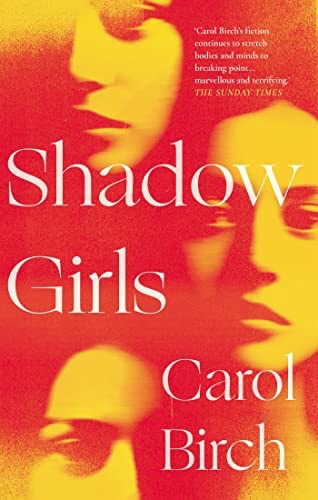
Manchester, 1960s. Sally, a cynical fifteen-year-old schoolgirl, is much too clever for her own good. When partnered with her best friend, Pamela – a mouthy girl who no-one else much likes – Sally finds herself unable to resist the temptation of rebellion. The pair play truant, explore forbidden areas of the old school and – their favourite – torment posh Sylvia Rose, with her pristine uniform and her beautiful voice that wins every singing prize.
One day, Sally ventures (unauthorised, of course) up to the greenhouse on the roof alone. Or at least she thinks she’s alone, until she sees Sylvia on the roof too. Sally hurries downstairs, afraid of Sylvia snitching, but Sylvia appears to be there as well.
I was drawn to reading this novel by the promise of a ghostly story, but it wasn’t at all what I expected. The novel is split into three parts: penumbra, umbra and anteumbra. All I understood from this and my teenage Latin lessons was that part two would be shadowy and opaque, umbra being the shadow cast during an eclipse. So the opening section would be the lead up to these events and this was the unexpected part. Birch begins her novel with an ordinary everyday tale of Sally’s school days. Set in Manchester in 1960’s, the author spends a lot of time setting up her characters and letting us get to know them. Sally and her best friend Pamela are fifteen years old and somewhat rebellious. Pamela is troubled and disliked by most of the pupils as well as Sally’s family, who are concerned about this girl’s influence over their daughter. There was a lot about this opening that I recognised from my own school days 20 years later; pushing the boundaries, forming friendships, first relationships and a bit of bullying. Together they bend the rules by playing hooky from P.E, climbing on the roof at lunchtime to smoke and eat their pack-ups and eating all the free samples in the food hall at Lewis’s Department Store. Like all girls of this age she is coping with the challenges of growing up, and has doubts about her first serious boyfriend, Rob. However, they really enjoy tormenting Sylvia Rose, an old-fashioned, slightly upper-class girl in their class who has a promising classical voice. Sally could have made a friend of Sylvia, because they do have some of the same interests, but instead she follows Pamela and makes fun of Sylvia. The girls do escalate, so some of their tricks go too far, leaving Sylvia humiliated in front of the entire school.
The girls are attracted by superstition and obtain a ouija board to secretly use during their breaks. The ouija board predicts a dark season approaching, but the girls do not want to believe it. They are also warned by one of their teachers, but the unthinkable does happens and the consequences could haunt Sally for the rest of her life. The author, slowly and cleverly, charts the course of these fun loving and boisterous girls as they become anxious and fearful young women. Since we’re told the story from Sally’s point of view, we get to know her best and her inner world is built. It is not easy to be a teenager, because we’re always in conflict and easily influenced by others through peer pressure. It’s a time when mistakes are made and we have to hope we don’t regret them forever. I was drawn to the novel because of the blurb that describes it as having “elements of the ghost story” and these all take place in the second part of the book. Rather than a ghost story, I would call suggest that there are uncanny or supernatural events within a story about adolescence and growing up. There is so much emotional energy around teenagers and that definitely plays into this story. The terrible tragedy that ensues will affect Sally badly, but also the whole school and in the final part of the book, set around twelve years later, the past really does start to haunt her. Sally returns to Manchester after working around the country and starts to re-connect with old school friends. the area where she grew up and reconnects with several of her old schoolmates. The pace picks up here and we’re definitely in “ghost story” mode, as the author really does use supernatural elements to terrify, quite effectively in parts. What’s most effective for me is that underlying ambiguity; do we take these events literally or does this narrator have some serious mental health issues?
Carol Birch’s novel is a clever combination of school tale, coming of age drama and ghost story. I think that readers coming to this for a straightforward ghost story, should be warned that the thrill and the fear do come, but not for a while. It’s a slow burn rather than a twisty, turny thriller that keeps readers on the edge of their seat. When the ghostly elements did come, they were effective and left me feeling a bit edgy, not knowing what was real and what was a figment of Sally’s imagination. There is a feeling of foreboding, something is going to turn out badly; but is that a ghostly payback or the just the product of Sally’s diseased imagination? The final part also has important reflections on mental health and the psychological aftershocks of grief. The haunting atmosphere will stay with you long after I turned the final page.
Children’s books aren’t my usual fare, but I decided to make an exception for this book based around childhood fears just in time for Mother’s Day. This is the third book in Fransie Frandsen’s Alexander’s Questions series, written with the purpose of helping parents and children explore emotions. Frandsen’s work as an art psychotherapist has given her so much insight into the need for tools like this for opening up communication. From my experience as a counsellor for adults, I know that it isn’t always an event that affects a child into their adult years, but being unable to talk about it. Frandsen knew that to foster healthy bonding or attachment good communication is vital so made these books in the form of questions and answers the cornerstone of her book series.
There are many reasons why healthy communication isn’t established. It could be through lack of opportunity to talk or a parent who doesn’t know how to initiate that conversation. Children may also lack the emotional language to express how they’re feeling. This is where a picture book like this is an incredible tool for establishing healthy communication between parent and child. It allows parent and child to look at the book and make meaning out of the pictures alongside the words together. Small children don’t always have a word for how they feel emotionally, but might recognise physical symptoms of that emotion such as crying and sadness. Reading together helps to explore feelings and start to put names to them. Frandsen believes this is an investment into their future, teaching them to have open conversations about emotions both with you and within their own adult relationships.
The book has lovely illustrations that introduce us to Alexander and his observations about monsters. He starts to make a list of all things monstrous – the monster under his bed, Daddy’s monstrous problems at work. Baby T is scared of his rumbling tummy and cries for his dinner. The neighbour is scared of finding poo in his garden. What he really wants to know though, is about Mummy, is she afraid of monsters? He finds out there are famous monsters and she’s not scared of those. He realises some monsters can be hidden, others can be seen and some live only in our heads. I think probably the most important thing he learns is that everyone’s monsters are different. They are in unusual shapes and different sizes, but what some people are scared of others don’t find frightening at all. We are all individuals with different monsters and that’s okay.
Frandsen’s experience as an artist makes this a thoroughly engaging book full of colour, different fonts, photographs and illustrations to engage young children. The story is funny – Alexander’s quest is started so he can avoid eating his broccoli. It showcases all of Frandsen’s skills in her field, working as a story while also helping parents foster better communication with their child. She has used the form of reading a book together, common in most households, so it doesn’t put pressure on the child to speak directly about their fears. It just opens the door to exploring what can be seen as a negative emotion, something that as adults we might dismiss (there are no monsters under the bed) or take away (mummy will keep the monster away). It is better to be there and help the child to conquer their own fear. Perhaps by inviting them to talk about what scares Alexander and whether it scares them. It could go onto interesting work in drawing or making their monster – something I’ve done just as successfully with adults who have disabilities. This lets the child know we all have things we’re scared of and ways of coping with that, the first one being to talk.
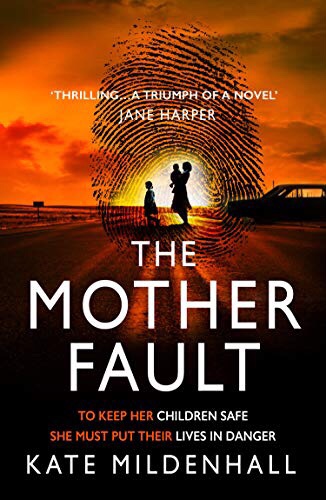
To keep her children safe, she must put their lives at risk … In suburban Australia, Mim and her two children live as quietly as they can. Around them, a near-future world is descending into chaos: government officials have taken absolute control, but not everybody wants to obey the rules. When Mim’s husband Ben mysteriously disappears, Mim realises that she and her children are in great danger. Together, they must set off on the journey of a lifetime to find Ben. The government are trying to track them down, but Mim will do anything to keep her family safe – even if it means risking all their lives. Can the world ever return to normality, and their family to what it was?
Every time I read a new dystopian novel I end up feeling a little disturbed about how close it is to the world we’re in now. Especially with the extreme weather events, potential for WW3 and the lingering pandemic all competing for our attention. Yet for some reason I’m drawn to them and when they’re done well they blow me away. There have been a few dystopian novels sitting high on my ‘Books of the Year’ list for the past two years running.
This was another novel set in the near future, where severe climate change events and continued terrorist attacks have made the government take drastic action. They now have a totalitarian government, run under the sinister title of the “Department”. Humans have been installed with the type of microchips anti-vaxxers are terrified by, allowing the government to keep tabs of every single citizen. All civil liberties and freedoms have been swept aside for the false promise of round the clock security provided by their privacy being invaded. Any dissent is dealt with quickly and without mercy, and there are purpose built compounds ready to house anyone who speaks out. Many go in, but nobody comes out again, a though that fills me with dread considering I’m writing this as Russia is dismantling any left-wing TV or radio station and announcing new laws to curb anyone even labelling their invasion of the Ukraine as a war instead of a ‘special military operation.’
So when officials from the Department tell Mim is tell Mim that her husband Ben is missing, she has to think quickly and tactically about the best plan of action for her and their children Essie and Sam. When officials arrive at her home to department to “help and advise’ she knows that she’s being trapped. Their advice warns her to stay home and they offer her some official looking forms to sign, but without giving her a chance to read them. Finally, they’re asked to surrender their Passports. This might be run of the mill stuff in a dictatorial regime, but Mim isn’t so easily controlled or fobbed off. Ben had been working in Indonesia, at a gold mine, so Mim is used to him being away from home, but he’s never been unexpectedly delayed or kept at his place of work without some notice. However, his return ‘in the next few days’ allows Mim time to think and delay telling anyone they know. The only other person who. knows the truth is Raquel – a foreign, independent journalist who had happened to ring because she had heard Ben had disappeared on the grapevine. Mim decides to run, knowing that officials will take them as security to lure Ben to them if they don’t already have him.
The story of this family on the run makes a great thriller, the pace is mostly superb and I was rooting for this family. The Department are relentless though, and Mim finds her way blocked, not just by the confiscated passports, but by frozen bank accounts and phone calls where her children are threatened if she doesn’t return home. I felt torn about Mum’s decision making. I applauded her for sticking to her principles and the belief that her children are in more danger living within this totalitarian regime than by running any. The other half of me was thinking she was crazy to risk their lives this way. An old friend of Mim’s takes the family on a treacherous sea voyage to find Ben, but I kept wondering whether she could trust her friend or if there are ulterior motives. I found some of Mim’s choices here difficult to understand and the story seemed to slow as they tried to reach Borneo. However, once there and towards the end the pace changed suddenly and my only criticism of the book would be that this huge change in pace made the final section feel like it passed too quick, giving me a bit of an anti-climactic feel. I thought the Big Brother elements of the novel were well established and the government felt truly terrifying in their scope and methods of punishment. I enjoyed the fact that it made me think, not just about the politics, but about being a mother in this oppressive situation and the decisions I would have made for my children. Was it worth putting their lives in immediate danger to avoid the potential future consequences of staying put? I found it involving, intelligent and eerily prescient, with the ability to start a few dystopian nightmares of my own.
Published in paperback by Harper Collins on 3rd March 2022.
Meet the Author
Kate Mildenhall is a writer and education project officer, who currently works at the State Library of Victoria. As a teacher, she has worked in schools, at RMIT University and has volunteered with Teachers Across Borders in Cambodia.
Skylarking was her debut novel. She discovered the story while on a camping trip and she wishes for more such fruitful adventures. She lives with her husband and two young daughters in Hurstbridge, Victoria.
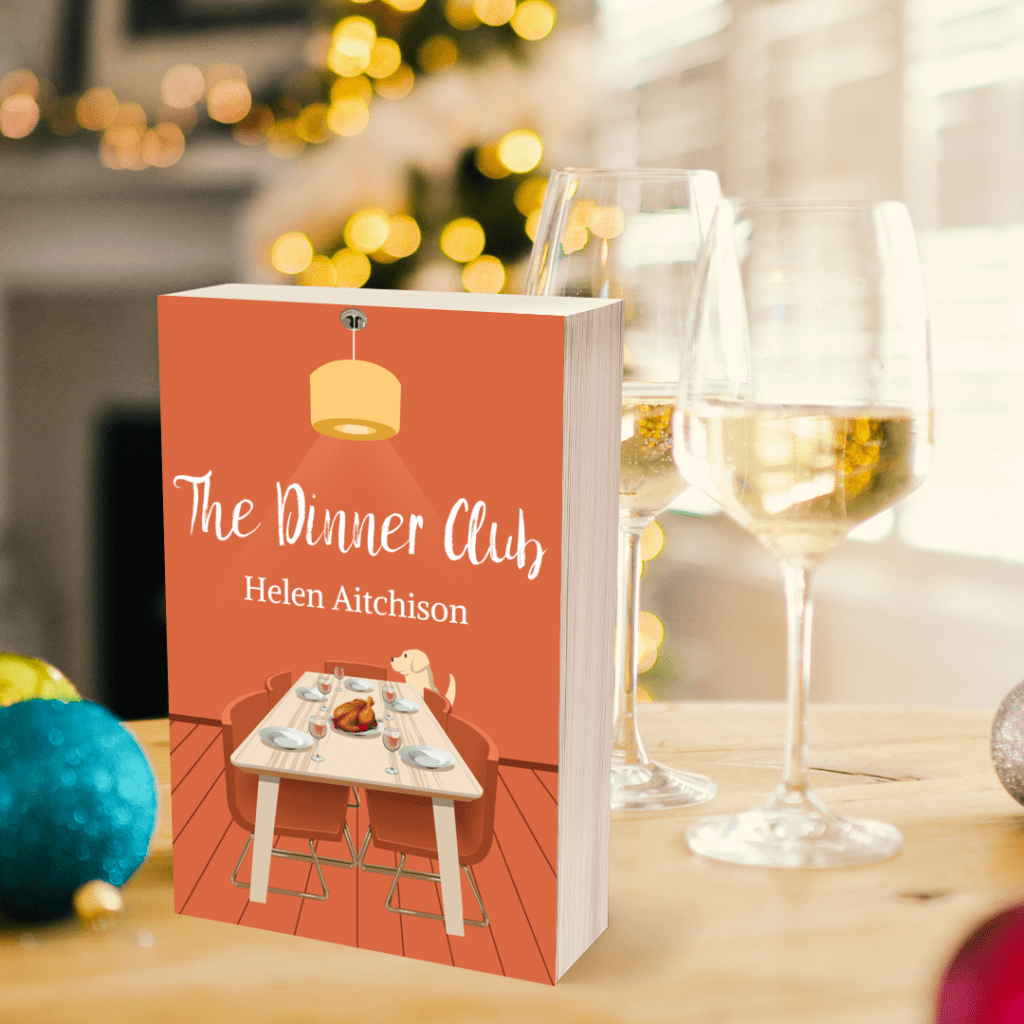
I love my food and food based books are some of my favourite reads, in fact my book club have been dealing with my book based bakes for some time now. I would either find a recipe in the book and replicate it or, even if all I had was a list of the main ingredients, I would create something very unexpected. That’s how I ended up with my recipe for Honesty Cake, an Alice Hoffman book invention with sour cherry and star anise as the only named ingredients. Here it wasn’t so much the food that would have brought me to the table, but the five characters brought together by a card on the notice board of a local supermarket. Each of these characters has a secret and in a way it’s these secrets that bring them together as much as the food. They need a stranger to hear them, to accept their secret without judgement and give support. It’s Derek who is inspired to start the club after his wife of forty years leaves him suddenly. After constant control and criticism, her absence is almost a relief, buts it’s also a loss and Derek is floundering a little with household tasks like cooking and food shopping. After a lifelong struggle with his weight Derek decides to try some different foods and teach himself how to cook. However, there’s something else Derek has been keeping under wraps and would like to experiment with more, maybe with new friends he can do that?
Alongside Derek are four other people, each carrying their own secret. Grieving widower Eddie, is becoming so focused on what’s missing from his life he’s forgotten to concentrate on what he does have, as his relationship with his young daughter starts to be swallowed up by the black hole inside him. Florence is an octogenarian looking for one last adventure and helped by her carer Jessie. Violet needs somewhere to go that isn’t ruled by her abusive husband, in the hope she can make friends and build her confidence enough to leave one day. Cara is in a very lonely place after ageing out of the care system, so she wants to meet people she can make friends with. A disparate group of people, all longing for the same things, but worried that their secrets might hinder that search for connection.
I fell a little bit in love with Derek, being on the plump side myself I could really identify with how he felt. Having had a partner who would use my weight to knock my confidence, I could feel how confused he was when his wife would cook Friday night ‘feasts’ for them both, then moan about how fat he was getting. She was setting him up to fail and I really couldn’t stand her. I could connect with his sense of food as a celebration so strongly and when he started to plan meals and cook from scratch I felt so proud of him, even though we’d only just met. I could see his life opening up as we followed him joyfully wandering the supermarket and, even though he’s nervous, getting ready to reveal his secret to an old friend.
The point of view changes every few chapters so we are party to the richness of these character’s inner worlds: their dreams and hopes for the future; their fears; then their growing self-love as the group progresses. It’s uplifting to hear and see each one becoming more confident and even moving towards self – acceptance. The issues covered are difficult and as the dinner club becomes a support group we see the character’s facing grief, domestic violence, and loneliness. Yet it never feels too much. It’s moving and poignant, but balanced with the joy and positivity that can only come from living as your authentic self. These people are warm, generous and kind to each other, all wrapped up with some very good food. What more could a reader ask for? This is one that I’ll keep in mind, for the when someone on BookTwitter asks for a fun, uplifting read, because this book is definitely joyous.
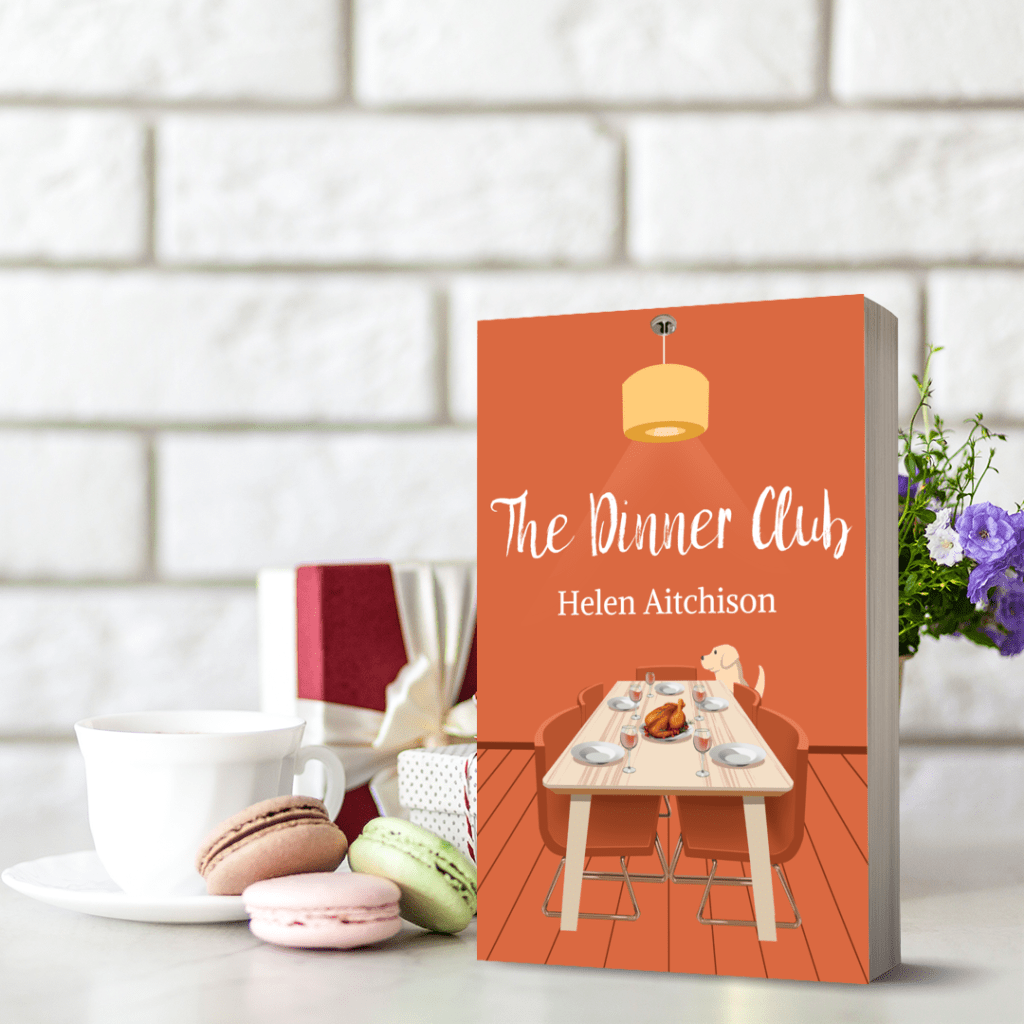
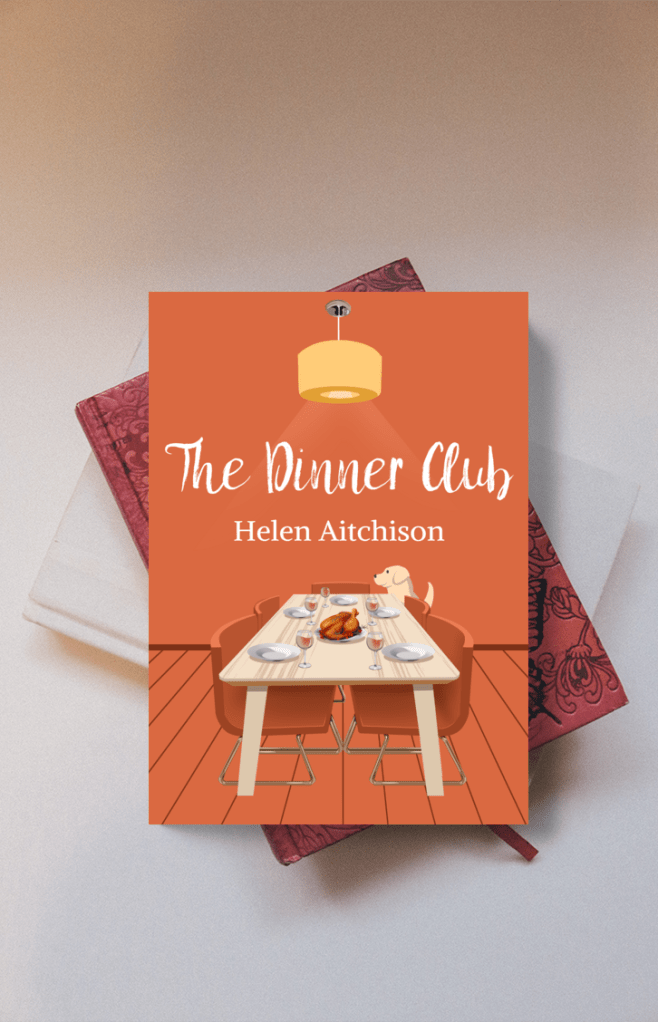
The Dinner Club by Helen Aitchison Release date: 11th March 2022
If you love a juicy gossip about your fellow villagers or friends, or watching rich people’s lives implode, then this is definitely the book for you. Based around an elite Colorado private school, a tangled web connects three women. Brooke, the archetypal private school mum, fiercely protective and an filthy rich heiress with a creative approach to her wedding vows. Asha is a realtor, staging and selling houses while juggling children, hormones and an increasingly distant husband who she fears is having an affair. Then there’s Natalie, a lowly office assistant, watching the parents and children at the school taking for granted a life she could only dream about. Brooke has probably passed Natalie hundreds of times since she started working at the school, but probably doesn’t even know her name. Asha has noticed her, but only because Natalie has turned up at lots of her open house events. This is strange because there’s no way she could afford the types of properties Asha is selling. These women are bound by their relationships with the handsome, charming assistant athletic director Nicholas. Brooke wants him, in the way she wants any handsome man to notice her, but also because he has the contacts to get her daughter Sloane into one of the best colleges based on her talent at football. Asha uneeds him to get daughter Mia ready for the competitive world of college applications, because the best school won’t take two girls from the same school and Brooke seems several steps ahead. Natalie’s motives are the purist, she’s falling in llove with him and he’s making all the right noises, but is it just lip service? When two bodies are carried out of the school early one morning, it looks like the jealousy between mothers and daughters, or rival lovers, or the haves and have-nots has boiled over. The truth will shatter the surface of this isolated, affluent town, but whose version of the truth counts in a town where people will stop at nothing to get what they want?
I’ll be honest, it was hard to like anyone in this novel. Even the kids were awful; they were spoiled, entitled and self-centred. Asha’s daughter Mia, being the best of the bunch, is unsure what it will take to get into a good college until Brooke brings it to the family’s attention when she buys a state of the art camera to film Sloan’s soccer matches and create a reel for her application. Once Asha realises and approaches Coach Nick for help, Brooke becomes furious, worried that Mia’s Indian heritage will ensure her a place thanks to the positive discrimination built into the application process. Meanwhile, it’s clear there’s something brewing in the girl’s social circle of students who are particularly gifted at sport. I was shocked by just how sophisticated their sports programme was with gym work, massages, physiotherapy, and even anti-inflammatory injections happening on school premises. Are these kids simply rebelling over the level of control the coaches seem to have in their lives? I wondered whether they were plotting revenge against Coach Nick. Sloan’s boyfriend Reade, is fed up with Nick’s control over his athletes, hinting that he may want to get rid of Nick or at least have him reprimanded and he wants to recruit Mia to their plan.
Natalie is meant to be the most sympathetic character I think and on the morning she drives to the school to find it swarming with police she is in genuine shock. Then we go straight back to her reasons for being in Colorado; her brother had an accident and broke his leg so badly he couldn’t get around. So Natalie has been caring for him and took the job at the school when he started doing more for himself. She’s a painter by trade, with a shop on Etsy selling quirky pet portraits. She starts seeing Nick, almost accidentally, after a bit of flirtation at her desk when he’s been in to se the Headteacher. He invites her to his home and Natalie is blown away by how beautiful it is. Yet I was seeing red flags everywhere about their relationship going long term: Nick is a lot older and possibly wants different things; he’s previously been a womaniser; they never go anywhere but his place; he asks Natalie to keep their relationship secret. Yet Natalie seems to be falling in love and I had to admit he talked a good game. Is Nick just super careful because of his teaching role and what are these private sessions he seems to be conducting with elite kids?
The best thing about not really warming to anyone in the novel meant I could genuinely enjoy the tension and these people getting their comeuppance! The structure worked really well with an excerpt from a police interview, then going back to the events in question. The move back in time a few months illuminated the case going forward and the interview drew together many of the things I’d been concerned about. The drip feed of new information definitely kept me reading and gave me sudden changes of opinion on some characters. I was so invested in what the kids were up to and why Mia seemed to be under pressure from the others to join in. I kept wondering if they really had the measure of their opponent or was someone going to get hurt? I was also wondering if the mystery of the memorial Natalie had seen on her walk would be explained? Who was the crying woman and would new revelations shed light on this old story? With it’s luscious settings, opulent homes and beautiful people the best way to describe the book is to say this was like a particularly indulgent dessert. Strangely, even though the subject matter is dark, it’s delicious, decadent and rather thrilling.
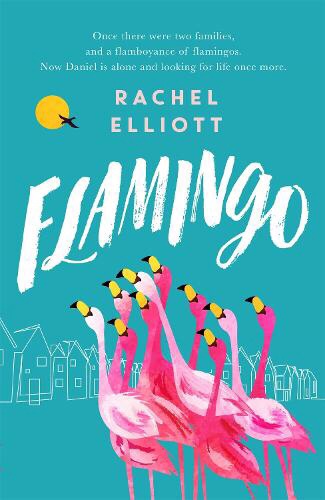
We bloggers like lists. Every year we list our favourites, then we list the books we most anticipate for the following year and to an extent that can dictate what we read. When we leave ourselves some gaps in the TBR to have a breathing space, browse and pick up what we fancy we can find unexpected gems. That’s what happened with Flamingo, the latest novel from Rachel Elliot and it really is a gem. I don’t know if I can find the right words to express how much I loved this book and why. I knew, just a few pages in, that it was going to be a joy to read. In split time frames, narrated mainly by Eve and Daniel we hear the story of two families who once lived next door to each other. Eve, and her six year old son Daniel, move in next door to Leslie and Sherry who have two daughters Rae and Pauline, and some ornamental flamingoes on their front lawn. Eve isn’t used to making friends because she and Daniel move around a lot, but for some reason Eve feels compelled to make an effort. She goes to a specialist off-licence to find just the right bottle of sherry as a witty present to take to her new neighbour. Sherry is delighted and immediately welcomes the wandering pair into her home. That summer is the happiest Eve and Daniel have ever had, as they are enveloped by this wild, eccentric and loud family – Eve uses the word rambunctious to describe them. Then Eve and Daniel leave and all the colours seem to bleach out of the world. We then meet Daniel as an adult, wandering and broken. Deeply affected by some kind words and affection from a woman in a public library, he decides to return to where he was happiest. He stands at Sherry’s door and it feels like coming home, but where is Eve and what is the real story underneath the fragments Daniel knows.
It’s disconcerting to read a character’s narration, and feel as though the author has opened up your head and borrowed your thoughts. That’s how I felt when reading Eve’s sections of the novel. I have a jumble of thoughts and ideas all at once, and I’ve learned that I need periods of quiet to counteract the amount of stimulation I have. If I go to London for the day and see a show, its exhausting and it can take a couple of days to quiet the jumble of sights, sounds, and inspiration. In fact it was using journal writing to process these thoughts that inspired me to use writing therapy in my practice as a counsellor. For years I thought everyone had my ‘busy brain’. When Eve visits the off—licence and meets the owner, Franklin, they have a shot of rum togther and she’s intoxicated by his shop, the coloured glass, the smells, the guitar playing and the wall of paintings in a back room. Eve notices all these things in seconds and Franklin asks if she likes the place.
“She tells him she likes it. It’s sort of hypnotic, like being in a chemists and a bar and a gallery all at once, and also sort of like being in church somehow, not that she ever goes to church, not that she’s religious, not that she ever goes to church, but a tiny old church in France maybe, not that she’s ever been to France”.
I loved the way the author expresses the speed of Eve’s thoughts and speech, where they come out too quickly for punctuation and you know she would have to take a deep breath at the end. I recognised it straight away, because it was me when I get enthusiastic and excited about something. In fact I sounded similar when telling my partner how much I loved the book. I know when I’m doing it, because it usually makes people smile. We learn so much about who Eve is from that one quote. I loved her enthusiasm, her eye for colour and her ability to make things. Sherry marvels when she mends Rae’s cords, by sewing a patch of Wonder Woman underneath the tear. Rae’s reaction is pure joy and Sherry is astounded that Eve has thought of such a thing, but to Eve it’s normal. She simply knew the cords needed mending and she had remembered that Rae loved Wonder Woman. It’s these little bursts of creativity and thoughtfulness that make her so endearing as a character. It probably stood out to me because I have just embroidered denim jackets for my stepdaughter’s birthdays – one of Frida Kahlo and one of Alice in Wonderland. What’s so special to Rae is that Eve has seen her, listened, and created something she would love.
These parts of the novel, where the characters connect, are its strength and it was no surprise to find out the author is also a psychotherapist. Rae is an introvert and Eve has seen and understood. She knows from Rae’s shining face that she loves the cords but understands the that Rae doesn’t want to be effusive about it, because it just isn’t her.
‘It’s her way to play things down; she is naturally reserved, understated or so it seems. Her mother, who expresses every emotion with intense theatricality, who takes up all the space, calls her eldest daughter the quiet one, as if this quietness is a kind of fragility – not a powerful act of disobedience and unruliness’.
Sometimes, in a house of very loud voices, whispering is the only way to be heard. Rae’s head is crammed with thoughts and it takes an awful lot of effort to keep them in sometimes and Eve has seen a kindred spirit in her.
Daniel is also a fascinating and the dynamic between him and his mum, suggests there’s more to their back story than meets the eye. He has an anxiety around people that concerns Eve and she is protective. Before they go to Sherry’s house for the first time, she prepares him for the social interaction. She wants to prepare him, but she also wants to be careful and avoid her own anxiety rubbing off on him. She explains that this is a thing people do, take a gift to their new neighbours and introduce themselves properly. At Sherry’s door she stands back with a reassuring hand on Daniel’s shoulder and talks about the ornamental flamingoes on the lawn. She tells him their collective noun is a flamboyance of flamingoes, a little game they play together. Eve is so surprised when Sherry opens the door and her boy walks straight in – ‘shy little Daniel stepping towards a stranger.’ Eve doesn’t seem to realise that Daniel is struggling with the impermanence of their lives; they have moved every year since Daniel was born. This was another thing I could identify with since we moved six times before I was in secondary school. I know how difficult it was to walk into a new classroom and see thirty pairs of eyes looking at you. Eve has a map on the kitchen wall and from time to time would simply close her eyes and pop a pin in it to choose their next destination. When she gives Daniel the chance to choose, it’s too much and his imagination runs haywire: what if there are monsters where he chooses? What if its horrible? What happens to their home? Will strangers take their things?
‘Trouble was she hadn’t left it up to chance. She had left it up to a six year old boy, who already hated that map on the wall. In some homes a map would evoke an atmosphere of learning, open-mindedness; lets be aware of the world, there are more places than home. But for Daniel it triggered fear and a sense of transience; always on the go, never know when’.
There are so many touching moments in the book I can’t possibly list them all, but the budding relationship between the boy Daniel and Sherry’s husband Leslie is just so moving. The confidence he gets from time spent with Leslie (who is not a girl) playing cards and learning to swim is obvious. When Leslie leaves the broken fence down so Daniel can appear from his garden and scare them at the window it feels different from other places they’ve been. Daniel blooms with this unconventional extended family and describes it to his Aunty as like having two homes. I was dreading the map coming out again. We meet adult Daniel at a crossroads in life physically and emotionally. As their tenancy ends on their flat, Daniel’s girlfriend Erica decides this is a good time to reassess their relationship and leaves. Instead of picking himself up, Daniel seems unable to cope with this double loss and ends up walking the streets with a rucksack and only a ceramic sheep for company. When he turns up at Sherry’s door she is blown away by the man he’s become, like a ‘matryoshka’ where she can see the boy inside the man and the woman inside the boy. I loved this description because it beautifully describes the ever changing selves inside us, but also the effect of previous generations and incarnations of who we are. Daniel is carrying so much more than his rucksack, but also the baggage of being left behind by the women in his life, the loss of this family where he felt at home and the original secret, the one that always compelled Eve to move them on, from place to place. Can this family, once again, give Daniel the space to heal and process a lifetime of hurt?
This is a slow burn novel, told in fragments like half forgotten memories and with such beauty it could be a poem. The writer conveys perfectly how certain people can hold space for and heal wounds in each other. Even if they’re only with us for a short time. In light of recent events it’s important to remember that to live fully we must connect with each other. The book shows humans in their best light and at their most powerful, when showing love and accepting others for who they are. When Daniel is a child he is taught that flamingoes are not actually born pink, but attain their colour through their diet. Their beauty comes from what’s put into them and humans are the same – we are the sum of what we are fed from parents and caregivers right through to a kind woman in a library acknowledging Daniel’s suffering. Through Daniel, and Rae to an extent, there’s an acknowledgment of how painful this life can be, but that healing and change is possible. I was enchanted by this story and it will keep a special place in my heart.
In the garden, there were three flamingos. Not real flamingos, but real emblems, real gateways to a time when life was impossibly good. They were mascots, symbols of hope. Something for a boy to confide in.
Meet The Author
Rachel Elliott is the author of WHISPERS THROUGH A MEGAPHONE (2015, Pushkin Press, longlisted for the Women’s Prize for Fiction 2016) and DO NOT FEED THE BEAR (2019, Tinder Press). Her third novel, FLAMINGO, was published on 3 Feb 2022 by Tinder Press and is out now in hardback, ebook & audiobook. She is also a psychotherapist.
It’s night, and the walls of Rachel’s home creak in the darkness of the Australian bush. Her fear of other people has led her to a reclusive life as far from them as possible, her only occasional contact with her sister.
A hammering on the door. There stand a mother, Hannah, and her sick baby. They are running for their lives from a mysterious death sweeping the Australian countryside – so soon, too soon, after everything.
Now Rachel must face her worst fears to help Hannah, search for her sister, and discover just what terror was born of us. . . and how to survive it.
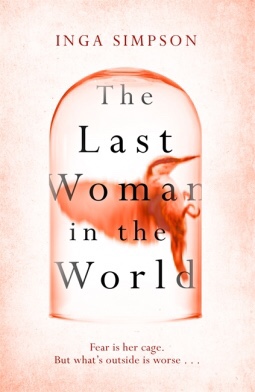
I felt slightly breathless reading this story of destruction and apocalypse. So much so, that by the end I had very mixed feelings. I was glad to have finished the book, because I’d been feeling a low level panic and despair. However, it was so prescient and close to our current existence that I felt it needed to be read, however uncomfortable. This is a book borne of a fury that we treat our world the way we do. I write this as I’m laid on my bed – I’ve been unwell this week – watching Storm Eunice attempting to tear the roofing felt from the neighbour’s shed. It was only yesterday that I watched in disbelief as a town in Brazil was completely engulfed by a massive landslide. As I think of the state of our politics, the dreaded virus and the scenes from the Australian bushfires that left me distraught I know that the world Inga Simpson is writing about isn’t something far off future Armageddon. This could happen tomorrow. It is our now, not our future.
Yet still I veer between thinking I must do better and feeling that whatever I do will never count while those who actually have power can hold a ‘landmark’ climate change summit and not decide on anything worth the paper it’s typed on. Simpson has clearly felt a need for change for a very long time and this novel is her retort to our complacency and really does hit home. She uses the medium of the thriller to make our hearts race, our fears run rampant and spells out that this is our future if we don’t change right now. Where the films and books of my childhood concentrated on possible threats from outside – nuclear war in War Games, aliens in Close Encounters of the Third Kind and Alien. Here the threat is so real, because it’s already coming true. It comes from within. We are killing our own planet.
The setting is the city of Canberra, but it’s the incredible and unique flora and fauna of the Australian bush that’s so powerful in the novel. The author’s love for her homeland is so evident in her descriptions of the bush and it’s clear that the basis of the novel comes out of those terrible bushfires and the pandemic. I felt her pain at the loss of wildlife and their habitat. There are themes that flow through all of the authors writing – solitude, the need for quiet, a dislike of large crowded spaces and a total mistrust of elements of modern culture such as social media. The way Rachel feels as one by one these aspects of modern life disappear shows exactly how dependent we’ve all become on constant information and confirmation of events, beliefs and what other’s think.
‘It was a world gone silent. Silenced. There was no help. No news. No advice. No solution.’
I know people who might implode if they were left by themselves without a constant echo chamber of validation. Who do we become when our self is not reflected back to us? Already we can all see people’s standard of living slipping, their security eroded, their sense that someone is in charge and knows what to do about this, is shattered. We have all slipped down the scale from trying to be fully self-actualised beings, to being unable to keep ourselves warm. If there is no one to tell us how to cope we become very basic versions of a human – scraping by to survive and without the tools we once had to be self sufficient or alone. These are the aspects Simpson considers between the action and the conclusion the reader draws might be confronting and upsetting for some. At the very least it will make you think about the way you treat the world and your fellow humans, especially those who have to live in the future we’ve created. I have to say I felt like a product of capitalism when I read the following section:
‘Now it was too late and Isaiah, if he survived, would never see half the things she had seen, taken for granted, gulped down.’
There’s a great thriller here that is addictive, frightening and full of heart-stopping moments. Underneath is just as powerful, but quietly so. For this reader, that made it even more profound.











 The Lotus Readers