I have been a fan of Silvia Moreno-Garcia’s writing since I did the blog tour for her novel Mexican Gothic. It was a heady mix of fear, desire, and strange happenings, with a feisty heroine with fabulous dress sense. Of course it also had a gothic mansion, decorated with wallpaper printed with wandering mushrooms. Since then I’ve become less keen on wallpaper and mushrooms! I also went back to her previous novels- one of the greatest pleasures a bookworm like me can have is to find a new author then find they have a long back catalogue of books to get your teeth into. I went back to the incredible Gods of Jade and Shadow and The Beautiful Ones, then was lucky enough to be sent Velvet Was the Night. I love the vivid colours and unusual design of her book covers too and have each one sitting on my shelf in hardback. I’m trying to resist buying the signed edition of The Daughter of Doctor Moreau with the bright pink spredges It’s perhaps no surprise that I love the art of the Mexican painter Frida Kahlo because this cover is very reminiscent of her work. Mainly I love (and envy) Morena-Garcia’s incredible imagination and the way she changes genre with each book.
The Daughter of Doctor Moreau is a feminist retelling of H.G. Wells’s original sci-fi novel. Our main character is not Dr. Moreau, instead it is his 14 year old Carlota Moreau, brought up on an island off Mexico by her scientist father. I love the technique of ‘writing back’, especially with the theme of disability in my case, but there have been a lot of books reframing Greek myths such as Elektra and Ariadne. They bring women into the frame and show events from their perspective, which is often very different from the male ‘heroes’. Carlota has a childhood illness which her father is treating with a drug regime of his own invention. Dr Moreau keeps his daughter close by and she is very naïve about the outside world, but also about her father’s work. With the help of his estate overseer, Montgomery Laughton, Dr. Moreau has created ‘the hybrids’, half human and half animal creatures who blindly obey their creator. Seven years later Eduardo Lizaldi arrives, the son of Dr. Moreau’s patron has come to see his work, but sets in motion the events of the novel. I can’t go into much more without ruining the story, but there is a touch of romance woven into the tale as well.
Silvia Moreno-Garcia talks about the setting and themes of her novel in the afterword, including the ethics of scientific work and the effects of colonialism. As part of her backdrop she addresses the treatment of the Mayan population, as well as the Caste War which raged for years against incomers. There is also a look at the rigidly controlled lives of the 19th Century women. All in all a truly ambitious undertaking, but then I wouldn’t expect any less from this gifted writer.
Meet The Author
Silvia Moreno-Garcia is the author of the novels The Daughter of Doctor Moreau, Velvet Was the Night, Mexican Gothic, and many other books. She has also edited several anthologies, including the World Fantasy Award-winning She Walks in Shadows (a.k.a. Cthulhu’s Daughters).
Evie Del Rio was the one, as far as Ed Nash was concerned.
Their teenage love was the inspiration for his song ‘Used to Be’ and helped Ed’s indie band, The Mountaineers, to international fame.But when Evie and her family suddenly up sticks and leave their London home without a forwarding address, she leaves a heartbroken Ed behind too.
Over thirty years later, washed up rocker Ed is suddenly back in the limelight when Evie’s love song is used as the theme tune for a new TV drama. Once the song is later featured on TV documentary ‘Musical Muses: The Girl in the Song’ it’s suddenly not just Ed who’s asking…
What happened to Evie Del Rio?
As a child of the 90’s I loved how this book opened with teenager Cassie finding out her mum is the inspiration behind one of the songs of the decade. Thanks to the 90’s becoming all the rage and an inspiration for TV, ‘Mum’s Song’ as Cassie and her brother now call it, is having a resurgence. Written back when her mum and musician Ed Nash were dating in the 1980’s, it wasn’t released until his band The Mountaineers produced their debut album ten years later. Now it’s one of the most downloaded songs of 2018. Cassie thinks the song isn’t bad, but the lyrics that have graced many a wedding become a bit cringe when you realise they’re about your Mum. As a teen I dreamed of meeting Damon Albany, who of course would fall madly in love with me and I would become his muse. So there was an element of nostalgia and wish fulfilment drawing me in from the first page.
Then we see the same situation from Genie’s point of view. Genie is Cassie’s mum and was once Evie Del Rio. Now she’s Genie, mum of two and with ‘a lovely big hunk of a husband’ called Gray. I was intrigued by what had made Evie’s family leave London all those years ago. Along with the change of name, there seemed to be something more going on than avoiding embarrassment over a song and a long ago romance with a rock star. Son Will is really taking the brunt of his mum’s newfound notoriety. Even adults think Genie was some sort of sex kitten and teenage boys don’t hold back. They chant about how many pop stars his mum has shagged on the football field, well they did until he broke someone’s nose. Yet Ed keeps blithely on, talking about his relationship with Evie and the origin of the song. Genie says he’s embellishing, but something about that time clearly gets under her skin. As we travel back and forth to Genie’s teens, when she’s still Evie, we slowly see more of their story revealed and secrets emerge that have been kept for a long time.
I thought this was an interesting idea for a book and as a middle aged stepmum to teenage girls I loved the idea of them getting an insight into the past. Imagine suddenly finding out that the person they see every day was once as exciting and full of promise as they are now. The multiple perspectives kept my interest, because it showed how the situation affects different members of the family. I loved Genie’s husband Gray, a lovely, solid and reliable anchor in a difficult time for his family. There are sensitive issues, but they are handled with care and empathy. I would recommend this nostalgic read, full of endearing characters and with a central mystery that unfolds slowly and with sensitivity.
Published by Cahill Davies 8th July 2022
Meet the Author
I’ve always enjoyed the written word and I have a great passion for music so I decided to put the two together and the result is my debut novel ‘What Happened to Evie Del Rio?’
I like to think I’m enjoying my ‘middle youth’ rather than my ‘middle age’. I’m married and Mum to two sons and a black rescue cat called Hector.
I enjoy going to gigs and discovering new music. I also love reading women’s fiction but I do have a bit of a penchant for crime and psychological thrillers! If I’m not on social media, reading or listening to music then you will probably find me on a football pitch cheering on my youngest son and his team.
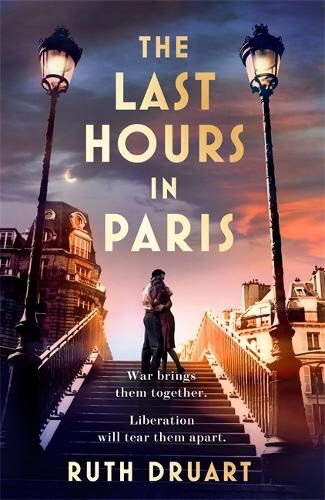
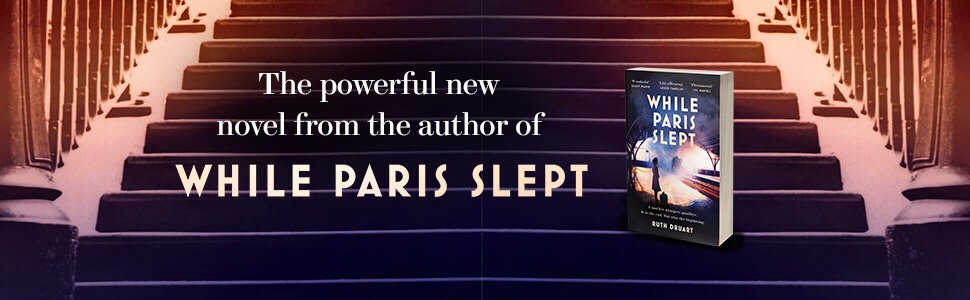
After Ruth Druart’s previous WW2 novel While Paris Slept I’d been so embedded in the story that I felt emotionally drained from the terror and trauma experienced by her characters. While that novel gave us WW2 from the perspective of a French police officer and a Jewish mother, her latest novel comes from a very interesting and possibly less explored voice of the conflict. Our novel centres around young French woman and a German soldier who cross each other’s paths due to a love of books. We roam from Paris to Brittany and to England, hearing the stories of our main characters from both points of view at different times in their lives. However, the novel starts several years later with Joséphine, a young woman who has just finished her baccalaureate and is looking forward to summer. She wants to visit England because it’s where the Beatles are from, but her mum Élise and the woman they lodge with, Soizcic seem very resistant. It’s the usual teenage argument, made all the more dramatic because the women are carrying a huge secret. One that will be uncovered if Joséphine keeps to her plan to find her birth certificate, so she can obtain a passport. She intends to go with or without her mother’s permission. Élise had always promised herself to tell Joséphine the truth she’s been hiding, but the time never seemed right and besides it was easier to keep the illusion. Élise has always told her daughter that her father’s name was Fredéric and he died in the war. The truth is more complex and shrouded in the secrecy and shame of another time. If Joséphine finds out, will she ever forgive her mother?
Our story moves back in time to the 1940’s when Élise is living in an apartment in occupied Paris with her Mum and younger sister Isabelle. She hates ‘the Boche’ who have taken over her beautiful city and filled it with fear and hatred. Jewish families have disappeared and just as hated as the German occupiers are people who collaborate with the enemy, whether they’re bar owners whose tills ring with German money or the women who serve as their mistresses. Élise has noticed them walking with officers in the gardens, wearing perfume and sporting real stockings rather than a painted and often wobbly line drawn down the back of the legs. Élise has a secret, she has been working at an orphanage and helping Jewish children escape across the border. I loved the bravery of this young woman and her ability to see most people as human beings, at a time when the hatred of others due to their race or religion was at it’s devastating worst. She meets a young German soldier in her friend Monsieur Le Bolzec’s bookshop and at first is horrified that the elderly bookseller is finding sympathy for him. Sébastian may sound German, but his mother was French and his fluency in the language means he’s working in an office translating letters. Élise is cool towards him at first, but then he warns her that she’s in danger. She has been helping Jewish children pass from an orphanage and over the boarder. Sébastian translates a letter denouncing the orphanage, he keeps it and warns Élise, even organising a car to remove the remaining children. This act of service and his willingness to put himself in grave danger brings them closer together, but will anyone accept their feelings for each other.
Ironically it’s the danger of war that brings these two characters together, but the liberation of Paris that will tear them apart. The author’s research is impeccable and I learned things I hadn’t realised about the war and particularly it’s aftermath. I had some idea of the treatment meted out by the French on women thought to be collaborators, but Ruth Druart’s vivid description brought out a huge sense of injustice in me. These women made choices due to their situation: if a German soldier approached me to be his mistress, I might do it if my children were starving or I’d lost my home. There was no mercy or insight into why such a choice might be made. I was also surprised at how long the British kept prisoners of war beyond the ceasing of hostilities. The Geneva Convention states that they should be released immediately, but here we see men kept for three years beyond the war ending. I think the author really captured the chaos of an occupying force retreating and how people have become displaced from their homes, their families and their lovers, especially where the relationship is controversial. People lost each other for decades – my mother-in-law was taken out of the Warsaw Ghetto when she was a child and was taken to England, separated from both parents. Her father looked for her and his wife straight after the war with no luck and eventually settled in America and moved on with his life, coming to terms with the fact they had probably been killed. They were still alive though and his wife was finally reunited with their daughter in England and her father’s other family in America. Druart shows how our links to each other can be lost, but for Élise there are particular betrayals that have kept her apart from Sébastian . Betrayals that are hard to forgive. I found this part of the book so poignant and I loved how Paris needed time to heal, both it’s buildings and it’s people. They had adjusted to occupation and now must rebuild their city, bringing back it’s joi de vive. As Élise observes the difference war has made to her beloved city I could almost hear the oppressive sound of jackboots echoing off the buildings and reminding every citizen they are no longer free.
I was drawn to Sébastian and truly understood his feelings of oppression. He was no more free than Élise, forced to join the Hitler Youth, he was trained as a soldier so had no choice but to serve. It was so moving to see him post-war in an English cinema watching film of what the Allies found when they liberated Auschwitz. He his horrified and is filled with guilt for serving a leader who could do this to others. He knows he is different, but to a Frenchman or an Englishman there is no difference between him and the SS; they are all Nazis and are all responsible. He carries that shame with him into all he does. I also felt for Élise and her loneliness, because despite having Joséphine and their friend Soizcic she has a solitary existence. I hoped for a happy ending for her, but I won’t spoil your reading pleasure by revealing what does happen in Joséphine’s timeline. I urge you to read it, because it has real impact. Hearing the voice of the enemy is unusual and impresses upon us that no matter what side we’re compelled to be on we’re all human. We don’t choose who we fall in love with and that love never dies, no matter how much time has passed or how far apart we are.
Published by Headline 7th June 2022.
Meet the Author
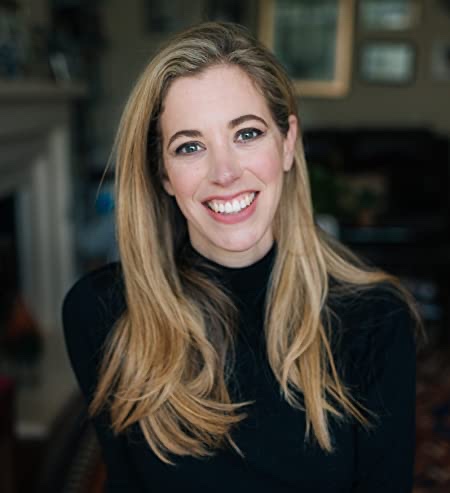
Living in Paris for the last thirty years inspired me to write, and my debut novel, While Paris Slept, came out in 2021, followed by The Last Hours in Paris, to be released in July 2022. Both books are set during the occupation of World War II, a time which intrigued me as I imagined the French having to live and work alongside the occupiers.
I love the power of story, and believe that sharing stories from different perspectives and different backgrounds can help us understand the world better. Having studied psychology at Leicester University, I have always been interested in the workings of the mind, and especially in what motivates people. I find people fascinating and love creating my own characters, each one flawed and touching in their own way.
I don’t believe in the single story, and in my books I like to present different perspectives, leaving the reader to make up their own mind as the characters face moral dilemmas and difficult choices. I hope you enjoy reading them.
My other half was worried when he saw my bookmark.
Twelve-year-old Sophie and her mother, Amelia-Rose, move to London from Massachusetts where they meet the charismatic Matty Melgren, who quickly becomes an intrinsic part of their lives. But as the relationship between the two adults fractures, a serial killer begins targeting young women with a striking resemblance to Amelia-Rose.
When Matty is eventually sent down for multiple murder, questions remain as to his guilt — questions which ultimately destroy both women. Nearly twenty years later, Sophie receives a letter from Battlemouth Prison informing her Matty is dying and wants to meet. It looks like Sophie might finally get the answers she craves. But will the truth set her free — or bury her deeper?
I found this a truly compelling read, shot through with moments of fascination and revulsion. I don’t think I’ve ever read a book that looks at serial murder from this perspective. I remember reading one of Sue Townsend’s first Adrian Mole books, set in the early eighties they cover a period when Peter Sutcliffe, the ‘Yorkshire Ripper’, was eventually caught. Adrian observed in his diary that his wife must have known what her husband was. Or did she think ‘Peter home covered in blood, says he was run over by an offal cart’. Humour aside, we often think this when serial killers are caught and it turns out they’ve been a ‘normal family man’ at home. We want our killers to be monsters, strange looking loners, men who have always ‘kept to themself’. It’s unimaginable to think they might have murdered, then gone home and had a family barbecue. This is such rich territory to exploit and Victoria Selman has done it beautifully here in her narrator Sophie and in her creation of Matty Melgren.
I’m going to share a personal response to one of the aspects of the book I found so beautifully constructed that it rang completely true. My ex-partner was emotionally and psychologically abusive. We were together five years and I had therapy for several years afterwards to feel completely myself again. I’d been gaslighted for so long that my sense of self was broken and I didn’t even trust my own judgement anymore. People always ask why you stay with someone like this and the answer is always that they weren’t like this at first. People like this know how to manipulate, to love-bomb you at first and charm everyone around you. The change is subtle, barely noticeable. Then if you do notice, it was a joke or it came out wrong. By the time they really show their true colours you’re so nervous, under confident and broken that you see yourself differently. Maybe you deserve this? Maybe this is just what relationships are like. The author captures this perfectly in Matty Melgren’s relationship with Sophie’s mum, Ams. Told from Sophie’s perspective, Matty dances her mother round the living room and leaves her loving little Post-It notes, surprises her with flowers and takes her breakfast in bed. Sophie describes the change:
“Things started to change; gradually, the way the tide comes in. Inching closer so you don’t notice it until your shorts are wet and your sandcastle’s a shrinking mound.’
We see Ams start to doubt herself. One scene that really unsettled me for being exactly what my ex would do concerned Ams getting dressed for a works drink party. She puts on a red dress that’s off the shoulder and Sophie thinks she looks pretty. Matty agrees, but wonders whether she might want to wear something ‘less showy’ for a party her boss is attending. She has a black tunic, but it’s a bit frumpy. She puts on the black and leaves for her party and once she’s gone Sophie challenges him. She thought her mum looked pretty in the red. ‘Me too’ Matty replied, commenting that she ought to have more confidence in herself. It’s subtle, but it has Ams doubting her judgement and is driving a wedge between her and her daughter. He encourages Sophie in rebellion and cheeky come backs. Sophie’s fear that he will leave like her father, is a easy thing to exploit and he does. He uses Sophie to pile shame on her mother when she’s ‘demanding’ which translates as Ams asking for her needs to be met. I found his manipulation of Sophie uncomfortable reading, but Sophie presents it differently. She blames her burgeoning hormones and admits it might have been an unconscious desire to draw him to her and isolate her mother. It’s perhaps the success of this bonding process that makes Matty think he can push the boundaries; to exploit her age and natural curiosity in an uncomfortable and completely inappropriate way.
In between Sophie’s story, are contemporary opinions of Matty Melgren and those around him. There are also the terrible facts about the murders and the female victims who are otherwise eclipsed by the fascination into how the killer’s mind worked. I loved the way the author would juxtapose events to place a spotlight on the killings. It brought up a feeling of revulsion, even though the two events are really unrelated. What Sophie and Ams were doing while these murders took place has no connection, but somehow we feel it and it’s a technique many newspapers use to push their agenda. Ams is creaming butter and sugar to make a birthday cake, with the radio playing in the background reporting that two more bodies had been found strangled by their underwear and one almost decapitated by a shovel. Sophie connects the timing years later. Matty suggested that they celebrate Sophie’s birthday properly and make a fuss. Ams thinks that she’s creating patterns that weren’t there, but it’s easy to see why. She’s remembering them, obliviously celebrating her birthday, while two women lay brutalised and their killer was sat charming her school friends.
Sophie couldn’t possibly have known, but she’s heard so much criticism over the years that she’s internalised it. Why didn’t she know? They must have been stupid not to see it. She’s still being manipulated and gaslighted, this time by the press and general public. The tension builds, compelling the reader on towards a resolution to Sophie’s musings and to her scheduled prison visit. It’s an insight into how murder destroys two families, that of the victim but also that of the murderer. Being left with all these internal questions and a sort of survivor’s guilt. I wondered whether it is ever possible to go through an experience like this and trust a man again. Would Sophie have been able to live a normal life after this experience in her formative years? Victoria Selman has written a novel that made me feel so many different things and had enough psychological trauma to keep a counsellor like me thinking long after the book was closed. She also deserves congratulations for concluding it in a way I never saw coming.
Published by Quercus 7th July 2022
Meet The Author
Victoria Selman is the author of the critically acclaimed Ziba MacKenzie series. Her debut novel, Blood for Blood, was shortlisted for the prestigious CWA Debut Dagger Award and an Amazon Charts #1 bestseller for five weeks, selling over half a million copies.
Victoria has written for the Independent, co-hosts Crime Time FM with critics, Barry Forshaw and Paul Burke, compiles the Afraid of the Light charity anthology series and was shortlisted for the 2021 CWA Short Story Dagger Award.
Her first standalone thriller, TRULY DARKLY DEEPLY, is being published by Quercus in July 2022.
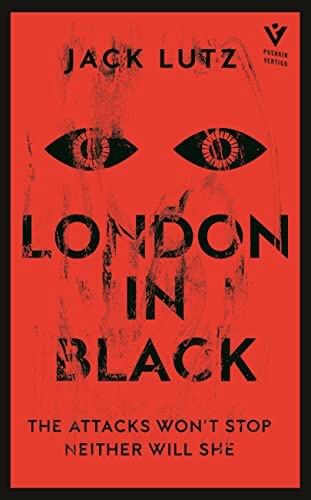
A TENSE, TICKING-BOMB THRILLER SET IN A GRITTY NEAR-FUTURE LONDON
LONDON 2027
Terrorists deploy London Black, a highly sophisticated nerve gas, at Waterloo Station. For ten percent of the population – the ‘Vulnerables’ – exposure means near-certain death. Only a lucky few survive.
LONDON 2029
Copy-cat strikes plague the city, its Vulnerable inhabitants kept safe by regular Boost injections. As the anniversary of the first attacks draws near, DI Lucy Stone, a guilt-ridden Vulnerable herself, is called to investigate a gruesome murder of a scientist. Her investigation soon unearths the possibility that he was working on an antidote – one that Lucy desperately needs, as her Boosts become less and less effective. But is the antidote real? And can Lucy solve the case before her Boosts stop working?
I felt thrust into a post-apocalyptic London in this mix of dystopian thriller and police procedural. I was immediately on board with our narrator Lucy, a super sweary and ballsy detective. A very young DI who’s well known amongst colleagues for not taking any bullshit, but also bringing with her a huge amount of baggage. She has a tough exterior, even using boxing to cope with her mental health, but is constantly treading a fine line between losing her temper and having a panic attack. She is also a ‘super recogniser’ – able to recognise anyone if she has seen them before, even if it was just passing them in the street. It’s quite something to read how her brain works as she almost shuffled through the faces stored in her brain like a game of Guess Who. Her constant medical issues are enough to induce panic as she faces measuring her Boost levels constantly, then worries when they seem low for that time of day. There’s also the event that happened – a terrible trauma that she hates to recall and doesn’t talk about. All of this creates quite a flawed and frustrated character, but I did see past a lot of the guarded behaviour and found her quite endearing. Maybe because she has this huge vulnerability. Flashbacks take us to her life before the Waterloo Station event and the normal life she’s known is suddenly eroded. Her pharmacist boyfriend realises she’s a ‘Vulnerable’, but thinks she’s safe because of all the Boosts they have at the hospital pharmacy. It’s when he realises that there aren’t enough and doses will have to be rationed that the scale of what has happened hits him. They have gone from a world where anything they need is accessible to them to one where their security, health and welfare is in doubt. It’s such a massive shift in their living standards it’s hard to comprehend. When we come back to Lucy’s present and see her psyching herself up to inject, the reality of how reliant she is on these booster injections is visible in her black and bruised abdomen.
I found it hard to believe that this is a debut novel, it’s incredibly well plotted and so imaginative. It’s hard enough to create a dystopian thriller that’s believable, but I think the plausibility was helped by recent terrorist attacks and the pandemic. We know now that these things can happen so the deployment of London Black seems like a possible future event, as scary as that is. I thought it was clever that even society’s language has been changed by the attack, in much the same way that we have new phrases and words in common use since the start of the pandemic. The idea of being a ‘vulnerable’ scared me, so Lucy’s determination to take part in the world and investigate this murder impressed me. The severity of the symptoms is horrifying so I’d be locked in my flat with a food delivery service on speed dial. I really did have a constant low level anxiety throughout. However, the murder case is so intriguing I couldn’t put the book down. Who would kill a man that might have the antidote the world is looking for? It’s Lucy’s only hope for a normal life so her determination to solve the murder is understandable. I really loved her developing relationship with DI King and would love to see more of them both going forward in future novels. The author has plotted a great crime novel on the back of a dystopian thriller. It’s anxiety inducing, compelling and has a complex heroine that I was rooting for throughout.
Published by Pushkin Vertigo April 2022.
Meet The Author
Jack Lutz lives in London with his wife and daughter. He is fascinated by the city he calls home and loves to read about and explore it. The idea for London in Black came to him as he changed trains on the Tube. London in Black is his first novel.
Ever since reading Lisa Jewell’s novel The Family Upstairs I’ve been hoping she’d write a sequel. The book was certainly satisfying as a standalone, but the characters were so complex and their situation so traumatic I was certain it would bubble up to the surface sooner or later. Detective Samuel Owusu thinks the same, when human remains are found washed up on the banks of the Thames by a mud lark. When he sends the bones for forensic examination it’s clear that she was murdered; there’s an injury to the skull that could only have come from blunt force trauma. The other clue from the bag is a mulch of leaves, unusual ones for London, taking him to a mansion house in Chelsea. There, thirty years ago, three people were found dead in a kitchen and upstairs was an unharmed baby girl with a rabbit’s foot tucked into her cot. The clues are pointing to two missing teenagers, Henry and Lucy Lamb, belonging to two of the deceased. Yet, neighbours had said they hadn’t seen the children for years. We follow DCI Owusu’s investigation, but also this missing brother and sister who are doing some investigating of their own. They’re looking for a third teenager, Phinneas Thomsen, son of the third deceased adult and also a resident of the Chelsea mansion, hoping he can make sense of their childhood. Why was the Thames body separate from the other three and what was her link to the adults living there? The house has just sold for over seven million pounds and it’s owner is a young woman called Libby, so she must be their first port of call. This is just the first step in untangling a very dark web of trauma, murder and a family who have tried to bury secrets that just won’t stay dead.
Lisa Jewell really is the master of this domestic noir genre. She could have plodded along, unravelling secrets from long ago and it would still have been a very good book. However, she doesn’t take the easy option, she chooses to introduce new characters and storylines that are equally compelling and link into to the Cheyenne Walk mystery. As well as Samuel, Henry and Lucy narrating the story, we have a woman called Rachel narrating a present day storyline too. Rachel is a jeweller, just waiting for a big store to pick up her designs and thrust her work into the limelight. After years of dating and not finding the one, she meets a man called Michael who seems almost perfect for her. He is attractive, attentive, wealthy and seems available emotionally, which makes a change from other men she’s dated. He’s been married before, to a woman he met while she was busking in France and he was staying at his home in Antibes. Rachel doesn’t really pry into his past and all Michael volunteers is that she was musical and ‘a nightmare.’ Her name was Lucy. In a whirlwind, Rachel and Michael get married and she’s of an age where people don’t tend to take you aside and ask if its all moving a bit fast. Perhaps friends are just glad that this has finally happened for her and her father seems happy for her too, believing Michael to be that rare thing – an older, unmarried, great bloke. On honeymoon, amongst the rose petal strewn sheets and days spent reading by the ocean, Rachel thinks she might suggest a bit of fun in the bedroom. She’s happy with vanilla sex, but wonders if some light BDSM games might bring variety. She unpacks some special underwear, some ties and a leather whip and is looking forward to a fun night, but Michael looks embarrassed, then furious. He flies into a rage, accusing her of having no class, sleeping around and ruining their honeymoon. Rachel is bewildered as he storms off to sleep separately and refuses to talk about it. All she can hope is that he calms down, but she is starting to feel like she must apologise, although she doesn’t really know why. How can she return from her honeymoon and tell anyone her husband is disgusted by her?
I loved how these four narratives were interwoven, because they cleverly show us how abuse in all it’s forms leaves it’s legacy. Whether it’s self-hatred and body dysmorphia, a deep seated rage thats ready to boil over, or a desperate need for love and a tendency to repeat the patterns of childhood. I thought Rachel’s story was particularly compelling, because I’ve experienced that pattern of abuse – the love bombing, rejection, gaslighting and fits of rage. I hated Michael and really understood her need to find Lucy and talk to her. It felt like she’d lost the ability to trust her own judgement, so if there was someone else he was abusive to, she could start to accept and own her own truth. Her confidence had sunk so low she was struggling to fight for herself, but as soon as Michael’s behaviour affected someone else she loved she was able to stand up to him. Henry is also struggling with what happened in childhood, his twisted and confused emotions surrounding Phinn were complex. Phinn was held up as an example of what a boy should be, with Henry receiving punishments and neglect for not being more like him. We might expect Henry to feel hatred and even harbour harmful thoughts about Phinn, and to an extent he does feel these things. There’s a part of him that never wants to see Phinn again. However, there is a part of him that is still the little boy who wants to please, so he has changed the way he looks and now looks at Phinn in the mirror every morning. There’s definitely an element of hero worship and sexual desire too. I was actually scared of what Henry might do if he ever found Phinn, who is thought to be working on a game reserve in Africa. Lucy is living with her brother at the start of the book, along with her two children. Henry’s upmarket flat with it’s high thread count sheets and all the right TV packages is the height of luxury to her two children. They have slept in some terrible places while homeless and they don’t want to be on the run again. Lucy is scared and not just about the events in her childhood, because she’s been replicating the pattern of abuse she learned to endure at Cheyne Walk, into her adult relationships. She’s also used to running from people she owes money to. She hopes that now the house is sold, she can find a secure and happy home for her children close enough to keep in touch with her brother. She knows that Henry is more fragile than he seems, but also that there’s a darkness at his centre and she doesn’t know what might happen if he ever lets it come to the surface.
The pace of the novel is pretty fast and I almost read it in one sitting. Short chapters mean it’s very easy to get caught by that little voice that goes ‘just one more chapter won’t hurt’ when it’s gone midnight and you have to be up in the morning. The tension is builds, then decreases, then builds again by using clever tactics like finding something out at the end of a chapter, then the next chapter going back in time or dismissing what you’ve just found out. Although the storyline seems clear she throws in little curveballs like a spot of blackmail here or an unexpected murder there, to take us off the main track. I found some dark humour in two people turning up to murder the same person. I thought that the author also managed to inject some hope for the future too, in what has been a very dark and painful story. If you’ve been through childhood abuse, domestic violence and sexual violence there are some tough paragraphs here and there. I must admit I found some of the coercive control and verbal abuse difficult, and I found myself holding my breath in parts, but that’s how I knew the author had got it absolutely right. This was a fantastic sequel, that I would say needs to be read after the first novel and not as a stand-alone. It really stands up to the power of the first novel with it’s tension, darkness and psychological game playing but also offers some measure of healing too. A fantastic sequel from an author at the top of her game.
Meet The Author
Lisa Jewell has written and published another sixteen books, since her debut Ralph’s Party, from the ‘curry and flatmates’ novels of the nineties and noughties like Thirtynothing, One Hit Wonder, A Friend of the Family and Vince & Joy, to more family-themed novels like After The Party, The Making of Us and The House We Grew Up In and more recently, psychological thrillers such as I Found You, Then She Was Gone, Watching You and The Family Upstairs, which charted in the summer of 2019 at number one in the hardback charts.
Lisa lives in London with her husband, two daughters, two hairy cats, two nervous guinea pigs and a lovely auburn dog. She writes every day, a minimum of one thousand words, in a cafe, with no access to the internet, in two to three hour sessions
So I’m having a book blogger’s dilemma. The arrival of this book through the door made me do a little Snoopy dance! There are a few books I’ve earmarked as my most anticipated summer reads, but this is right up there as my mostest anticipated novel. I know, we bloggers do love to throw out superlatives here and there, but I’ve honestly been waiting for this book ever since I finished The Misadventures of Evie Epworth two summers ago. Now I’m in an awful quandary. I want to devour it in one go, but once I do, the moment will have passed and Evie is gone again. I don’t know whether Evie’s story ends this time, or whether there’s more to come, so I’m trying to hang on for a little while, at least until my fellow Squadettes are reading so we can talk about it.
If you haven’t read Matson Taylor’s first novel then where have you been? I think this is one book where reading the previous instalment of Evie’s adventures is really helpful. You have a whole new literary heroine to meet and I think knowing where Evie comes from is vital in understanding her. I’m not going to use spoilers so it’s safe to read on. In book one we met Evie in the 1960’s, the summer after O’Levels and before A Levels. Her only plans for the summer are reading, helping their elderly neighbour with her baking and, most importantly, getting rid of her dad’s girlfriend who would like to see Evie working through her summer at the local salon. Christine has moved in and is slowly trying to erase everything Evie loves about the farmhouse, including her Adam Faith wall clock and that won’t do. Evie and her dad would like things to stay as they were when her Mum was alive. They love their Aga and old country kitchen, but Christine wants Formica and a new cooker that’s easier to clean. Her wardrobes are wall to wall pink, synthetic fabrics and she colonises the kitchen with her Mum and lumpen friend, who’re usually in tow. Her dad can’t seem to see that his girlfriend and daughter don’t get along, there’s quite a lot of avoidance practised here, he’s often got his head in the newspaper or listening to the cricket scores, or just popping out for a pint. Whatever the tactic, it means he hasn’t heard anything. This problem needs another woman to solve it. So, when her neighbour has an accident and her daughter Caroline arrives to look after her, the three women put their heads together to deal with the problem, just in time for the village fete and baking competition.
All About Evie starts ten years on from the previous novel with Evie settled in London and working at the BBC. She has all the things a 70’s girl could wish for – including an Ozzie Clark poncho. Then disaster hits. An incident with Princess Anne and a Hornsea Pottery mug means she must have a rethink about her future. So what can she do next? Will she be too old to do it? Most importantly, will it involve cork soled sandals? I have no qualms in saying this is my most anticipated book of the summer. I think I’ll have to compromise and as soon as I have a two week gap from blog tours I’ll be delving in to find out what happens next….
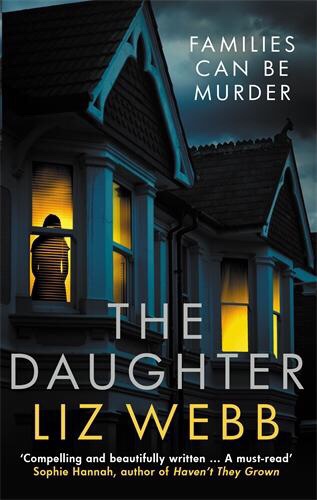
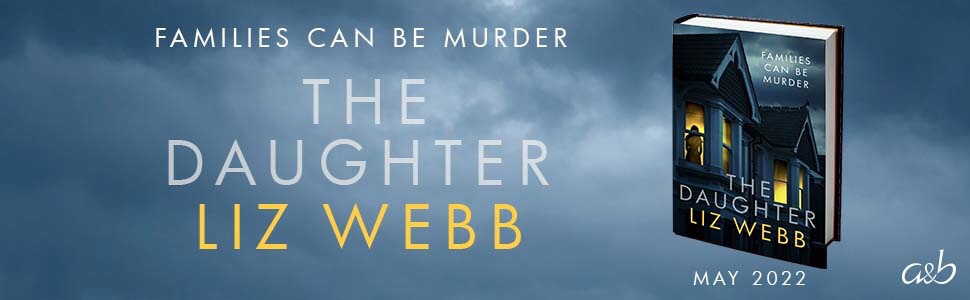
One of the first things my therapy supervisor said to me was ‘no two kids have the same childhood, even those who grow up together’. This kept going through my mind as I started to read Liz Webb’s book and grew ever more apt as the story unfolded. As regular readers know I do like to indulge in a good thriller and despite knowing nothing about the book or the author, something drew me in when I read the blurb. I’m so glad I took the chance to read it because it is a dark, psychological, and unsettling domestic noir based around the violent death of the charismatic mum in the Davidson family. Hannah doesn’t always have her life on track and she lives away from her physicist father Phillip, but is called when he ends up in hospital. Now suffering with Alzheimer’s and at the end of his life, Hannah has to make a tough choice; does she leave him in the hands of strangers or should she be the one to nurse him in his final months? It’s not long before Hannah finds herself back home and falling into a time warp. Not only has her father left the decorating and furnishings back in the 1990’s, there are piles of magazines and other detritus still littering the same place. It’s as if he stopped when his wife Jennifer was found in the woods at the back of the house, with a kitchen knife plunged into her chest. Hannah finds her surroundings bringing memories and inevitable questions to the forefront of her mind; no one was ever charged for her mum’s murder. This house is haunted. Her mum’s most successful photographs are still hung on the walls and her dark room is untouched, the wardrobe is full of her colourful clothes with the ghost of Chanel No 5. Just the faintest trace touches the air when Hannah runs a hand over her mother’s clothes. Hannah’s very presence completes the picture, she’s a waif compared to the overweight woman she’s been for most of her life. Now she’s the image of her mum, so much so that an unexpected glimpse in a mirror makes her jump. Her brother Ryan, now a famous actor, has commented on her ‘stuckness’, her inability to move beyond that day in the 1990’s. Hannah doesn’t think she’ll ever be able to move forward and pursue a life for herself, until she can resolve what truly happened that day and who killed her mother.
I did find myself rooting for Hannah, despite her flaws and her past behaviour – with more revelations popping up when I didn’t expect them. She feels more vulnerable and is honest about how broken she is by the past. The author carefully keeps her on that edge so I was mostly on board with her version of events, but every now and again I would question whether she was truly a reliable narrator. There was her drinking and the impression she has of her family life and her mother. She sees her mother as a beautiful free spirit, with her gorgeous rainbow clothes, her glamorous and creative career as a photographer with it’s world of gallery openings and meeting other artists. She sees her parents as very different, her father being much older and in a more steady career as a physics professor. When her parents couldn’t be there, Mrs Roberts and her husband from next door would step in with her more old-fashioned parenting style and her good looking son Marcus. This return home and her father’s deterioration seem to trigger something in Hannah and her brother is convinced she’s in a downward spiral where her mental health is concerned. He now stars in a BBC murder mystery series based in Spain, where his wise-cracking detective solves murders within the ex-Pat community and has famous co-stars happy to swap a guest starring role for a week in the sun. He’s also written a book titled Solving Me which Hannah thinks is pompous at best, but probably arrogant and a potential challenge. His childhood is peppered with incidents of their parents arguing, usually about their mother’s behaviour and he’s completely convinced that their father murdered her after years of being pushed too far.
I loved how the author balanced the story with the darkness and tension, broken by the realties of being a carer and the humorous little allusions to her father’s research subject. Their pets are named after Feynmann (the dog) and Schrödinger (the cat of course) á la Sheldon’s cats in The Big Bang Theory. The Schrödinger reference is very apt with Hannah alluding to their mother as potentially living and dead at the same time. For years her head has been full of simultaneous movie reels, each one with a different ending to the story, she would love to be able to shut down all those other screens and see what really happened. The caring details, everything she’ll need to bring Dad home from the hospital, are spot on. One detail I loved because it showed experience, or at least talking to those with it, and it was the ‘shit-stained’ sole of her father’s foot visible to to a person standing at the bottom of the bed but often missed by the busy healthcare assistant doing this morning’s strip wash. The investigation she conducts gives her a lot more questions about her mother, as she remembers her. She’s warned by the original detective on the case that she might not like what she finds. Even her mum’s art seems to hold clues: the close-ups of tiny domestic objects till it’s hard to know what they are; the fascination with motorcycle stuntman Evil Knieval and the moment of being in free fall; an entire series called Falling showing objects in that moment before they land. What she seemed to forget is that Evil Knieval’s stunts finally went too far with disastrous consequences. As the revelations about Jennifer Davidson begin the story becomes even more fascinating, because Hannah gets to see the person her mum was before becoming a parent and whether motherhood changed her at all. I enjoyed the interplay between the siblings and was engrossed in finding out whose version of events was closer to the truth. This was incredibly well-written, tense and psychologically very clever. It left me thinking about how others see our parents and who they truly are when they’re not being mum and dad.
Meet the Author
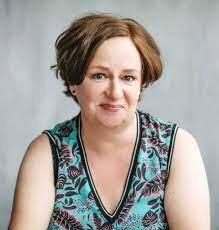
Liz Webb originally trained as a classical dancer, then worked as a secretary, stationery shop manager, art class model, cocktail waitress, stand-up comic, voice-over artist, script editor and radio drama producer, before becoming a novelist. She lives in North London with her husband, son and serial killer cat Freddie.
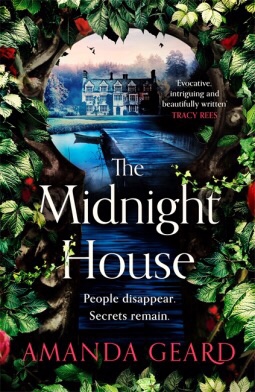
I enjoyed this book much more than I’d expected to. It’s not that there was anything wrong with the blurb or the cover, but I thought it might be just another ‘stately home + mystery’ novel with no huge surprises. However, the depth of characterisation and complexity of the story drew me in and kept me reading for two straight days. Ellie is our present day narrator and she’s having to take leave from work as an investigative journalist after trying to expose an important businessman ended badly. So she returns to her family home in County Kerry, Ireland to spend time with her mother. Trying to keep a low profile and prevent all and sundry from knowing about her return, is a lost cause in a small Irish village. It’s only because she’s desperate for reading material that she braves the charity shop and her mother’s chatty friend Tabby Ryan. Tabby has set aside a box of books that have come from the large stately home nearby, Blackwater Hall. Ellie is grateful to see a few Agatha Christie novels on the top and takes the whole box. Inside is a mysterious letter, addressed only to ‘T’ but clearly belonging to the Rathmore family. It ignites a spark in Ellie, but she tries to do the right thing and return it. At the hall she meets Albert, the lone member of the Rathmore family left behind, but he seems confused about who Ellie is and keeps asking for his mother. Her concern for Albert leads her to his son Milo, but also the mystery surrounding the family. Charlotte Rathmore disappeared during the early part of WWII leaving a broken string of pearls by the lake. The official version is that Charlotte killed herself, but Ellie senses a story and starts to seek out other remaining members of the family. Can she solve the mystery of Charlotte’s disappearance and what changes will the truth bring to Blackwater Hall and the Rathmore family?
The author tells the story across three timelines. We travel back to Blackwater Hall and Nancy’s first visit to meet her boyfriend Teddy Rathmore’s family. This timelines really establishes the characters within the Rathmore family and the beginning of a friendship between Nancy and Teddy’s sister Charlotte. This is before WWII and the aristocratic family are thriving, but there are little hints of a change on the horizon. Charlotte has rebellion and adventure in her soul, while Teddy is ready and somewhat relieved to strike out into a new life with Nancy, since elder brother Hugo carries the pressure of being the heir apparent. The present day timeline with Ellie shows she is an interesting character in her own right. There’s some resistance to becoming comfortable back home, even though she’s finding it suits her in some respects. She may be uprooting other people’s secrets, but theres a sense she has some of her own lurking under the surface; a possible broken relationship and a reluctance to talk about it that intrigued me and made me want to know more. In these split timeline narratives there’s often a lack of character or strong storyline in the present day, leaving the reader more intrigued with the past and creating an imbalance to the story. The reader can find themselves racing through the present bits to get to the ‘real’ story. The author doesn’t fall into that trap here, Ellie is interesting in her own right and her journey feels important too. The third timeline is something of a surprise as we follow a little girl called Hattie at Blackwater House and her emerging friendship with gardener and handyman Tomas. She is interested in how he makes things grow and starts to help him planting the potato crop in the garden. There’s a connection between these two that’s immediate and I was touched by them, possibly remembering days in the garden shed with my Grandad, tying onions up and hanging them from the ceiling and chitting potatoes. Tomas isn’t always the calm and shy man he is with Hattie and if he hears a bang, particularly a gunshot, he is back at war in an instant. His solitary and quiet work is clearly important in managing his PTSD. I was immediately drawn to this character and intrigued by his possible importance to the Rathmore’s story.
There are other flashbacks too, a section from the Blitz in London is particularly tense and heartbreaking. The author describes the air raids from the Lufwaffe so clearly I felt I was there with the characters. I thought the sense of foreboding was incredible and the slow realisation of the danger the characters were in was beautifully written. She captures the terrifying sense that the help needed, the help that’s usually there, is out of reach and something terrible might happen. The damage wrought in these streets and the fortitude of the people caught up there was powerfully portrayed and really gripped my emotions. I felt the author balanced those moments of terrible tension and drama beautifully with the lightness of rural Ireland and the people Ellie meets in her old neighbourhood. This is a place where only those in the big house were able to keep their secrets and everyone knows everyone. The people are strong, community minded and often Ellie’s interactions with them have a light humour about them, while avoiding caricature. I enjoyed her growing friendship with Milo Rathmore – another returnee to the village, now the village GP and carer for his father Albert. He is from Ellie’s world and the pair can look at the place with a critical eye, but also a good humoured and fond heart. I was interested in whether Ellie’s more recent personal issues would come to light. Could she finally confide in her mother and accept someone’s comfort and care, despite that solid streak of independence? I also wondered whether her career would ever be restored and if she could return, would she want to? Mostly though I was interested in what had happened to Charlotte, this beautiful, rebellious girl with so much spirit. I couldn’t believe she would kill herself, but feared that her true end was even more heartbreaking. That extra timeline post WWII also held surprises I really didn’t expect. Despite wanting all the answers I was sorry when this novel ended and there’s no better compliment than that.
Meet the Author
The inspiration for The Midnight House appeared in the rafters of our home, a two-hundred-year-old stone building perched on the edge of the Atlantic. Hidden there was a message, scratched into wood: ‘When this comes down, pray for me. Tim O’Shea 1911’. As I held that piece of timber in my hands, dust clinging to my paint-stained clothes, I was humbled that a person’s fingerprint could, in a thousand ways, transcend time, and I wanted nothing more than to capture that feeling of discovery on the page. I have always loved dual-timeline novels, where stories from the past weave with those of the present day. I want to write books that transport you to another time and place, where secrets lie just beneath the surface if only the characters know where to look.
Before all this, I was a geologist exploring the world’s remote places. Luckily for me, writing novels provides a similar sense of wonder and discovery; but the warm office, fresh food and a shower in the evening make the conditions rather more comfortable! The wild weather of County Kerry, where I live with my husband and two red setters, gives me the perfect excuse to regularly curl up by a fire with a great novel. I treasure my reading time, and I know you do too, so thank you for taking a chance on my books.
Come over to Instagram and Twitter (@amandageard) where I share plenty of photos of the wild settings in The Midnight House. You can also find me on Facebook (@amandageardauthor).
“A year never passes without me thinking of them. India. Erica. Their names are stitched inside every white coat I have ever worn. I tell this story to stitch their names inside your clothes, too.”
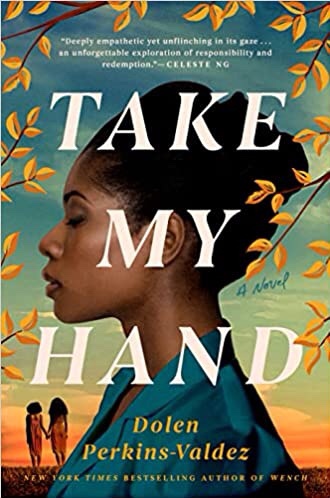
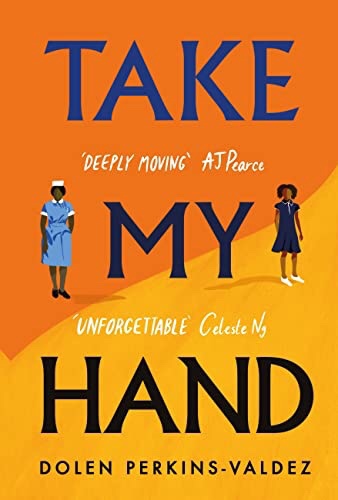
Wow! This novel absolutely blew me away. In fact I loved it so much that my other half kept asking whether I was ok and I couldn’t understand why, until I looked at the clock and three hours had gone past without me speaking. I was three quarters of the way through the book and even went to bed early so I could finish the story. This writer pulled me in from the very first page and Civil was as real to me as my poor other half. I’ve been interested in eugenics since I wrote my undergraduate dissertation on disability and 20th Century literature. I knew a lot about the movement in the U.K., US and Germany in the lead up to WW2, but this book shocked me because I had no idea that forced sterilisations were still happening in the 1960s and 70s. I knew this had happened in earlier in the century with Native American communities, so I shouldn’t have been surprised that it was still happening to African American women, especially where the woman has a disability too. I think this jumped out at me, because people with disabilities are having a very hard time currently, something that able-bodied people aren’t always aware about. For example, the University of York published research in the BMJ Open that concluded the joint impact of cuts to healthcare, public health and social care since 2010 caused at least 57,550 more deaths of disabled people than would normally have been expected between 2010 and 2014. Disability groups place the figure at 120,000 deaths over a seven year period and some activists even think that the government’s COVID policies were based on herd immunity and eugenics. It seems like eugenics never really goes away.
This novel shows how our biases and emotions feed into the work we do within the caring professions. Having worked in mental health and disability as a support worker, advocate and counsellor, I did identify strongly with Civil and the way she became involved with the Williams family. As a nurse, Civil is professional and is aware of things like codes of practice and ethics, but we are never the finished article and Civil’s naïvety plays a huge part in how she works. Civil has been brought up to care for and look after others as part of her Christian faith. However, there are other personal circumstances that she isn’t aware of taking into work with her. Civil’s mother struggles with depression and events that took place in her personal life have also left her vulnerable, particularly where it comes to her nurturing instincts. Her very name brings to mind civil rights, equality and fairness, so it’s not a surprise that where she sees injustice she’s willing to fight. The Williams girls are her very first patients and she is sent out on a home visit to give them a Depo Provera injection, a long term method of contraception. When she notices that India is only 11 years old her brain immediately starts questioning, who put this little girl on this injection, has anyone asked if she has a boyfriend or worse, is she being preyed upon? We are privy to her thoughts and her shock at the way the family are living is evident. Her first thought is that she must do something for them, get them away from the dirty shack where their clothes seem to be stored on the floor. What she does notice is that the girls smell and when she finds out they don’t have sanitary towels, she decides to buy some for them from her own money. This is the first line crossed and although Civil’s actions are generous and could change the family’s lives for the better, it’s a boundary crossed. This makes it so much easier to cross even further as time goes on.
I thought the author grasped the complexity of Civil’s feelings and her role in the girl’s lives beautifully. Civil knows that she should be following instructions, asking her supervisor the questions that have come to mind, and advocating for the girls. Yet she knows that just by talking to the right people and calling in a few favours she could get the girls some clothes, find a job for their father, perhaps get them a new flat in town. What she doesn’t realise is that she’s acting from a bias, not racism but a classism of sorts. Civil’s parents are a doctor and an artist, they live in a nice home and have a certain status. She has walked in to the Williams’s home and assumed they want to move, go to school, and have better things. She’s looking at them through her own world view, instead of moving into theirs and then takes their agency away by filling in forms on their behalf. Her heart is in the right place, but she’s mothering the girls; the girls have lost their mother and Civil has maternal feelings to spare. It’s a co-dependent dynamic that could get complicated and painful on both sides. Her nursing instinct is to gain the girl’s trust and find out who put them on contraceptive injections, especially when India hasn’t even started her period. There are no boys around where they live and neither girl goes to school. As she confides in fellow nurse Alicia and friend Ty, they start doing some research. There are many conclusions they could draw: the federal government could be experimenting on poor black communities; there could be a programme of stopping certain groups in society from reproducing; the government are leaving local employees to make decisions based on their own biases about poor communities; their supervisor believes the Williams girls aren’t safe and could be open to abuse from within the family. All are based on so many assumptions, but what was angering me was that no one had sat down with the family and asked the questions about the girl’s development, access to the opposite sex, or India’s ability to make decisions. Life changing decisions are being made, based on judgments made with no real evidence.
Judgement is at the heart of this terrible case, I won’t reveal more about the decisions made, but it does lead to a court case and repercussions for everyone involved. The colour of the family’s skin, their poverty and the death of the girl’s mother has led to assumptions about the girl’s morals and safety but also the possibility that a black man is not safe, even around his own children. India is non-verbal, but whether that’s through trauma or a learning disability is not clear. Civil’s superiors have decided that it would be disastrous to bring a child into this family, but it’s amazing to see how much the Williams do change over the course of the novel. Civil has taken the decision to act on behalf of the girls, rather than making suggestions and motivating them to advocate for themselves. The changes we see in them, just from having different surroundings, is incredible. Civil believes that we adjust our standards according to where are in life, so once their home becomes a clean, dry space they start to look after it. Civil’s happiness when she sees the girl’s grandmother has bought guest towels for the bathroom is so funny, because these are her standards, what she sees as the correct way to do things, without question. I could see her attachment to the girls growing, the way she brings her support network into their lives also leaves their lives further enmeshed with hers. How will they separate themselves? If Civil takes their part in their court case, she may lose everything, so what happens when the Williams start to have confidence to make their own decisions? What if Mace meets a woman – a potential stepmom for the girls? I wondered if Civil would cope were these girls taken away from her, whether by her work or by changes in the Williams’s circumstances.
The author weaves fact into fiction so seamlessly here, with contemporary medical research questioned and the family’s meeting with real life senator Teddy Kennedy. This grounds the book beautifully and it feels even more true to life; the girls aren’t real, but I’m guessing that this story could be the reality for many poor, young, African American women. I thought Civil’s home life was really interesting, especially when her Aunty arrived and talked plainly about her Mum’s depression. Even in a household where there are always guest towels, there are struggles and issues that are overlooked, either due lack of understanding or through avoidance of something too painful to acknowledge. In fact there’s a way this whole episode is fuelled by avoidance, because if Civil buried herself in this family’s trouble she could avoid her own loss. The present day sections are evidence of that avoidance, because we see Civil finally having to confront and process feelings long buried. She’s close to retirement, yet is still haunted by what happened back then. There are positives in her visit back home, in that her relationships have adjusted so there’s more equality with some people than there was back then. I was left with a sense of how incredible women are, the strength we have to survive life altering circumstances and what can be achieved when we support each other.
Meet The Author
Dolen Perkins-Valdez is the New York Times bestselling author of WENCH, BALM, and the forthcoming TAKE MY HAND. *USA Today* called WENCH “deeply moving” and “beautifully written.” *People* called it “a devastatingly beautiful account of a cruel past.” *O, The Oprah Magazine* chose it as a Top Ten Pick of the Month, and NPR named it a top 5 book club pick of 2010. Dolen’s fiction has appeared in The Kenyon Review, StoryQuarterly, StorySouth, and elsewhere. In 2011, she was a finalist for two NAACP Image Awards and the Hurston-Wright Legacy Award for fiction. She was also awarded the First Novelist Award by the Black Caucus of the American Library Association. Dolen received a DC Commission on the Arts Grant for her second novel BALM. Publishers Weekly writes “Her spare, lyrical voice is unsentimental yet compassionate.” Library Journal writes “No sophomore slump is in evidence here. Readers who were captivated by Perkins-Valdez’s first novel, Wench, will be intrigued by the post–Civil War lives of three Southern transplants to Chicago.” Dolen is an Associate Professor of Literature at American University. A graduate of Harvard and a former University of California President’s Postdoctoral Fellow at UCLA, Dolen lives in Washington, DC with her family.
















 The Lotus Readers