Posted in Publisher Proof

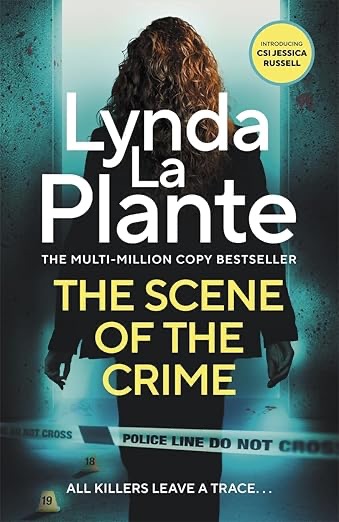
The Scene of the Crime by Lynda La Plante 

Jane Tennison was one of my tv heroines growing up. I was asked on my first ever counselling course to write down three characters who I admired and why – so I choose Linda from Press Gang (Julia Sawhala), Dana Sculley (Gillian Anderson) and Jane Tennison (Helen Mirren). They are characters and actresses I still admire today. I think it was their resolve, their competence and passion for their work and their intelligence. I wanted to have that belief in who I was and what I wanted to do. Jessica Russell is another strong character for the author, although outwardly she feels a little softer than La Plante’s other heroines. However, she has great confidence in her abilities and intellect as a forensic psychologist and head of the Met’s new MSCAN team. Jess, Diane and Taff have a lot of experience in working together and are hired to create this fast-track forensic team reserved for the most serious of the MET’s cases and they have to hit the ground running. A wine dealer has experienced a home invasion while he was sleeping upstairs. Johan de Clerk is a young South African man who has settled in London after marrying his wife Michelle and started a branch of his family’s wine company that supples their products direct to restaurants across the capital. The intruder disturbed him and when he came down to confront him there was a fight and the intruder fled, leaving Johan with serious stab wounds and a head injury. His sixty-thousand pound Rolex watch was taken along with money from a safe. While Johan fights for his life in hospital, Jess and her team make a start forensically examining the scene. This means working alongside DCI ?? Who seems almost personally affronted by the MSCAN team and is very brusque in his manner. Luckily they have his deputy DS Dave ?? Who seems very happy to work with the team and gels straight away. This is the case that will define whether the cost of their department is worth it’s while and whether Jess’s much talked about abilities are up to scratch. DCI Woods was on the interviewing panel for her job and didn’t want to appoint her, but was outvoted. This case is not going to be as straightforward as it seems because once you’ve thrown in a mystery late night visitor drinking in the cinema room, a furious and forensically aware spouse and Jess’s own personal link to the case there are a lot of variables. Oh, and the team have a leak too. Will Jess manage to bring this offender to justice?

I always look forward to a new Lynda La Plante character and Jess is going to be an interesting woman to get to know. She’s whip smart and confident when it comes to her job but rather more hesitant when it comes to her private life. She’s currently living with brother in their mother’s bungalow, an arrangement that works because although they’re quite different, they do understand one another. They have an interesting dynamic, having recently lost their mother they’re both grieving and Jess’s response to trauma is trying to control other parts of her life, such as her home environment. Chris has to intervene over the matter of hoovering first thing in the morning before work, when he’s trying to stay asleep. She’s wiping down surfaces as soon as something has touched them and insists on rinsing everything before it is stacked in the dishwasher, something Chris is more than happy to leave to the dishwasher. Although it’s possibly this need for correct procedure that makes her so good at her job and this one is creating more anxiety than most since it is the team’s first, but also because Jess is going to meet someone she hoped never to see again. Despite her rather fragile pre-raphaelite exterior (I see Kelly Reilly here) Jess has a core of steel and a willingness to place herself in very uncomfortable situations if it’s going to get the right result. This is especially important when she has an SIO who lacks experience, Woods was fast-tracked as a graduate and quickly promoted, but has no experience in uniform or with the minutiae of forensics, he relies very heavily on his deputy Dave who does most of the liaising with MSCAN. On Dave’s part that might have a lot more to do with Jess than his work ethic. Jess is loyal to her team, even to Guy who she doesn’t know well yet. She doesn’t hover over what they’re doing, she simply trusts them to do their jobs well and report in. Her mix of skills from the psychology of human behaviour to managing a crime scene are formidable. I think, if I’d been Dave I’d have been a little bit in awe of her. 

I found the case fascinating, solving only a small part of it before the end. I felt sure there was more to this married couple than met the eye. Nobody is known as ‘that bitch Belsham’ without a reason and I wondered if the victim’s wife’s reputation was built on more than her court appearances as a KC. She will certainly know criminal law as well as, if not better than, the police. She would be a formidable rival to them in court, although she can’t represent her husband, they would certainly talk about the best strategy together. This suspect can’t stop talking though, even overriding his solicitor’s advice. Even worse he’s known to a member of the team. Yet listening to his evidence they wonder whether this man could ever have been the dark shadow that invaded their nights and left them changed. Although he’s clearly been involved in criminal behaviour could he really have planned and executed that break in or overpowered a huge man like Johan de Clerk?                                                                                                                         

It was clever that the case kept moving in two different directions, drip feeding us a little about the investigation into their suspect and following the forensic evidence, but also investigating Johan de Clerk and even his family back in South Africa along with their wine business. The pacing is pitch perfect, just enough revelations to keep you reading but not so much that you’re running ahead of the team. Then there are the sections where there would be a CSI type montage of scientific testing and nerdy types delving into the devices like phones and tablets. It showed that every breakthrough in a case must be backed up by evidence – can they prove someone was where they claim to be? Can they prove a suspect’s alibi? Can they prove a connection between subjects? Everything has to be proved beyond reasonable doubt. I must admit there were places where I found the evidence overwhelming to keep track of and even though the characters are constantly in touch by phone I couldn’t imagine how they keep hold of all this information in their heads! Taff and Diane have bags and bags of things to test for DNA, Guy must have an inbox a mile deep because he is finding evidence to lock down the case against a suspect and also having the follow up theories and hunches the team might have. I had to let go sometimes and accept that I wasn’t going to understand or lock down every detail, just as long as it sounded plausible. I was reading a book, not running a forensic unit – a job I was more than happy to leave for Jessica. I was surprised by how much Jess actually did in terms of investigating and I could understand that she and DS Dave were coming a bit close to having the investigation blow up in their face. She questions people alongside Dave and offers profiling insights during interviews. I wasn’t sure whether the manager of a forensic team would be so involved with that side of a case, but I have the same criticism of Silent Witness and it’s still entertaining regardless and this is too. 

I think the author has achieved her goal of setting up a new series and a central character with a lot more to give. We’ve spent a lot of time with Jess, there was a fascinating case to get lost in and there are also clear hints where this might go next. There were whispers of a possible course with the FBI in Quantico for Jess, some hints of potential romance and I was sure there was a lot more to Guy who’s had a fascinating working life before MSCAN. There were also interesting aspects of her personal life I’d love to explore more such as Jess and her brother’s family background. Her brother is diagnosed with a life limiting disease that will affect them all in future books. We don’t learn much about Taff and Diane’s lives yet. All of which shows there is definitely room to grow here, which isn’t surprising given the author’s track record at plotting a series. I can see this being an addictive reading experience and I look forward to seeing where this series goes next. 

Meet the Author

Lynda La Plante was born in Liverpool. She trained for the stage at RADA and worked with the National Theatre and RDC before becoming a television actress. She then turned to writing – and made her breakthrough with the phenomenally successful TV series WIDOWS.

Her novels have all been international bestsellers. Her original script for the much-acclaimed PRIME SUSPECT won awards from BAFTA, Emmys, British Broadcasting and Royal Television Society as well as the 1993 Edgar Allan Poe Writer’s Award. 

Since 1993 Lynda has spearheaded La Plante Productions. In that time the company has produced a stunning slate of innovative dramas with proven success and enduring international appeal. 

Based on Lynda’s best selling series of Anna Travis novels, Above Suspicion, Silent Scream, Deadly Intent and Silent Scream have all adapted into TV scripts and received impressive viewing figures.

Lynda has been made honorary fellow of the British Film Institute and was awarded the BAFTA Dennis Potter Writer’s Award 2000.

On 14th June 2008 Lynda was awarded a CBE in the Queen’s Birthday Honours List (Writer and Producer for services to Literature, Drama and to Charity).

On 3rd October 2009, Lynda was honoured at the Cologne Conference International Film and Television Festival with the prestigious TV Spielfilm Award for her television adaptation of her novel, Above Suspicion.

Books penned by Lynda La Plante include: The Legacy, The Talisman, Bella Mafia, Entwined, Cold Shoulder, Cold Blood, Cold Heart, Sleeping Cruelty, Royal Flush, Above Suspicion, The Red Dahlia, Clean Cut, Deadly Intent and Silent Scream, Blind Fury (this entered the UK Sunday Times Bestsellers List at number 1 having sold 9,500 copies in its first two weeks), Blood Line, Backlash, Wrongful Death, and Twisted, which have all been international best-sellers. 

In Feb 2012 Lynda’s chilling tale of THE LITTLE ONE was published in conjunction with Quick Reads through Simon & Schuster UK.

Lynda’s latest book, Tennison, was published on 24th September 2015 and is the prequel the highly acclaimed Prime Suspect. The story charts Jane Tennison’s entry into the police force as a 22 year old Probationary Officer at Hackney Police Station in 1973.

Lynda La Plante is published in the UK by Simon & Schuster.

Lynda La Plante is published in the US by HarperCollins Publishers.

Please visit http://www.lyndalaplante.com for further information. You can also follow Lynda on Facebook and Twitter.

Posted in Publisher Proof

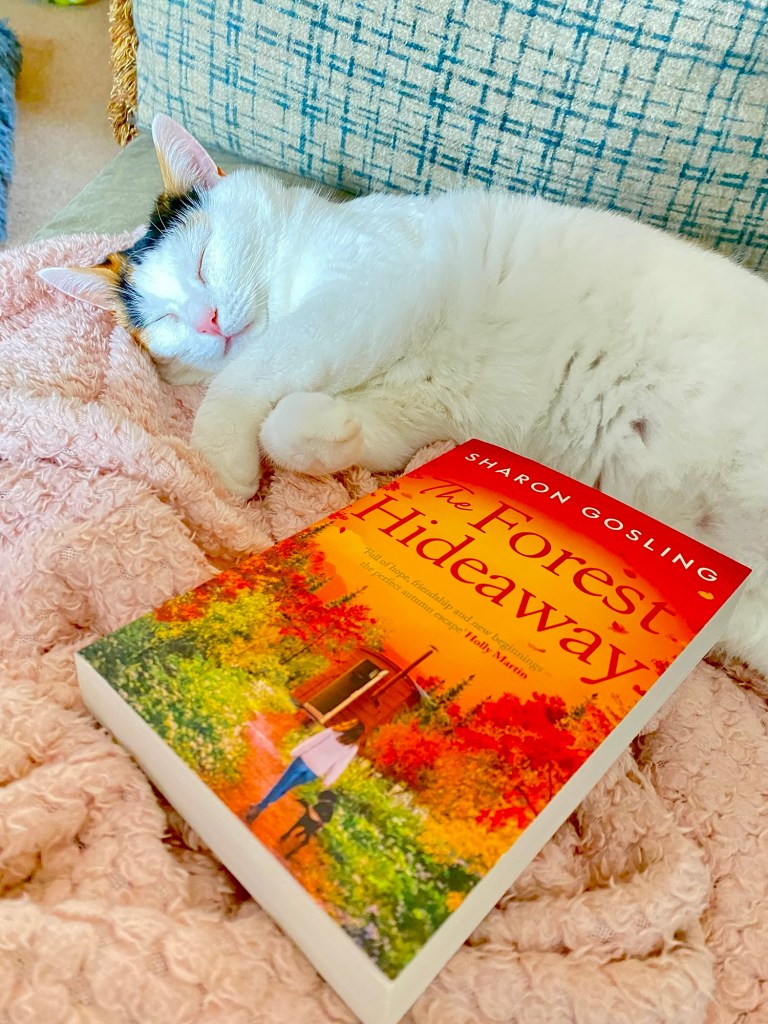
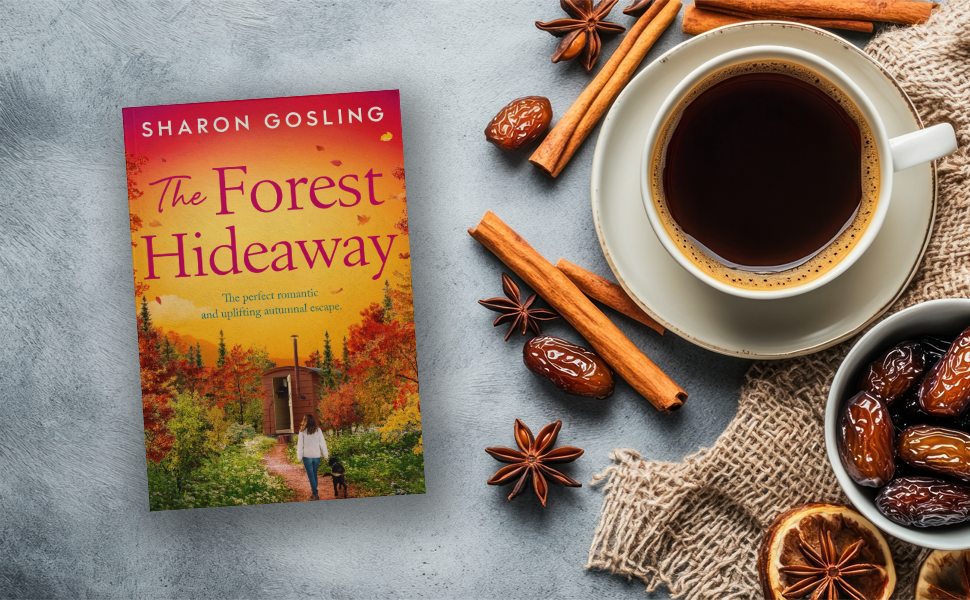
The Forest Hideaway by Sharon Gosling

Hidden away in Cumbria’s Gair Forest is the most romantic setting, a ruined castle. It’s a haven for local history lovers and a once in a lifetime project for architect Saskia Tilbury Martin. She’s finding it difficult to get a builder to take the project on so Owen is her last hope and she’s already running late to meet him. She knows that she’s overdressed for the great outdoors and she’s had to borrow her friend’s BMW sports car because her trusty Land Rover is in the garage. In a way this is Owen’s last chance too. Previously in the forces, he has been a builder for a number of years but the business is struggling and he knows he’s not pulling his weight with wife Tasha and their gorgeous little girl. They have debts and if he doesn’t take this job he’s looking at failure, but when Saskia turns up with her sports car, three inch heels and double-barrelled name he’s isn’t impressed. Especially since she’s an hour late. He dismisses her as a rich girl throwing her money around. However, when she gets the plans out he can’t help but be intrigued. Saskia assures him that she wants to preserve what’s here, to leave the ruin looking as it does now but create a number of platforms inside to house her living spaces. She even intends to leave the slightly dilapidated oak tree growing in the centre of the castle, with a glass roof that can open in good weather. She doesn’t tell him that she’s the architect because other builders have been unsure about working with an unproven architect before. Owen takes the night to think about it, but when she offers him ten grand up front to get started he knows he can’t turn her down. Saskia reflects that they don’t have to like each other, they just have to be a good professional team for the project and save this beautiful building that holds so many memories for her. 

Owen soon finds he has assumed a lot about Saskia. When he sees the cabin she tows onto the site with her Land Rover back on the road, he thinks it’s an affectation to need a whole kitted out living space for when she’s here in the day. The builders have to make do with bare sectional buildings with no comforts. When he’s there early one morning, he’s surprised to see her appear from the cabin in her old denim shirt and her hair tied back, all set to walk her dog. She’s living in the cabin when he’s assumed she had a boutique hotel booked for the duration of the build. I wouldn’t have blamed her, having half my house out of bounds for building work at the moment I’d give anything for a couple of nights in a nice hotel! The truth is Saskia doesn’t have many people or places she could say feel like home. Her inheritance is from a grandparent and she has no relationship with her mother, instead she has best friend Vivian. Owen isn’t doing any better on the family front, Tasha has put up with a lot and has decided that their relationship just isn’t working anymore and he’s bunking down with friend and fellow builder Stuart. I found Saskia interesting and loved that she had a dream she was seeing through. She seems very sure of her ability and has confidence in her design which I found inspirational because I’m not confident and I’m rubbish at finishing projects. I admired that perseverance because she isn’t just hanging around waiting for life to happen. Owen’s life path felt more passive, despite seeing different parts of the world his life hasn’t been his own, it belonged to the army. He’s also drifted in his relationship. It clearly hasn’t been right for some time and Tasha tells him that his long absences on detachment meant they never really built a life together. As soon as he left the army and was home full time, they could both see their differences. Neither of them have tried to address the decline and now it’s too late. Maybe he needs to spend some time with Saskia because her self-reliance and determination could inspire him. 

The setting is absolutely stunning. I love the Lakes, a love that was awakened again on a recent visit. I loved the idea of taking such a romantic ruin and making it into a home without taking away any of the decay that makes it so picturesque, the beauty being tied up with its imperfection. The isolation is fascinating too. I used to live in a large house in the middle of nowhere and friends would be aghast that I didn’t shut my curtains or check that all five doors were properly locked every night. Saskia isn’t afraid of the isolation either and I liked that about her. The history of the site is important too, both Saskia’s link to it but also the local history buff’s attachment to the building. So far they haven’t even given Saskia a chance, stating they want Gair preserved as it is without realising that’s exactly what she’s trying to do. I loved the idea that there are:

‘Two types of history here […] the castle ruins, the ancient oak tree. They both have worlds within them”.

This is so true because they hold the history of many people over centuries, enduring every new generation and what they bring. When we think about it like that it’s clear that making it a home again is exactly the right thing to do, reintroducing humans to the building and the nature surrounding it. I thought the added intrigue of Roman ruins under castle was fascinating and I was again impressed that Saskia had thought of this and ordered drone scans of the castle and underneath to see what the layers of soil revealed. I was hoping the local history lovers would give her a chance if she tried to her plans to them. 

There is a ‘will they, won’t they’ to this couple’s relationship and while a touch of romance is always nice it isn’t the main focus here. Owen slowly comes round to Saskia once he’s realised how much of his assessment of her was based on assumptions. She isn’t a rich girl playing at property development. Owen doesn’t know himself as well as Saskia does and part of that is because of his years in the army. It takes time after coming out, to get to know the person inside and decide what you want the rest of your life to look like. I imagined that if Tasha hadn’t been brave enough to say something that morning, Owen would have drifted along for years in an unfulfilling marriage never knowing any different. His growing inner world was very well written as he learns to read other people better and how to be a responsible co-parent with Tasha for the future. Whereas Saskia has worked on herself and needs Gair to be her home, somewhere to feel grounded. When she needs support she checks in with Vivian and I loved this idea of ‘found family’, the people you choose to support and sustain you in life when the family you’re born with can’t. They aren’t an obvious match and this is not one of those books that ends with a big fairytale wedding. We just have the sense that they’re gradually moving towards each other as the build progresses and they learn how to be a team. The oak tree felt like a metaphor for both these people, but also for life in general. It’s not the most beautiful tree, in fact part of it has been hit by lightning and someone had an abandoned attempt at pruning it once, very badly. Despite these setbacks the oak has kept growing, not in the most beautiful shape but still reaching for the sky. This is the perfect, cozy, autumnal read.

Out now from Simon & Schuster Uk

Meet the Author

I’ve been writing since I was a teenager, which is now a distressingly long time ago! I started out as an entertainment journalist – actually, my earliest published work was as a reviewer of science fiction and fantasy books. I went on to become a staff writer and then an editor for print magazines, before beginning to write non-fiction making-of books tied in to film and television, such as The Art and Making of Penny Dreadful and Wonder Woman: The Art and Making of the Film. 

I now write both children’s and adult fiction – my first novel was called The Diamond Thief, a Victorian-set steampunk adventure book for the middle grade age group. That won the Redbridge Children’s prize in 2014, and I went on to write two more books in the series before moving on to other adventure books including The Golden Butterfly, which was nominated for the Carnegie Award in 2017, The House of Hidden Wonders, and a YA horror called FIR, which was shortlisted for the Lancashire Book of the Year Award in 2018. My last children’s book (to date) is called The Extraordinary Voyage of Katy Willacott, and was published by Little Tiger in 2023. 

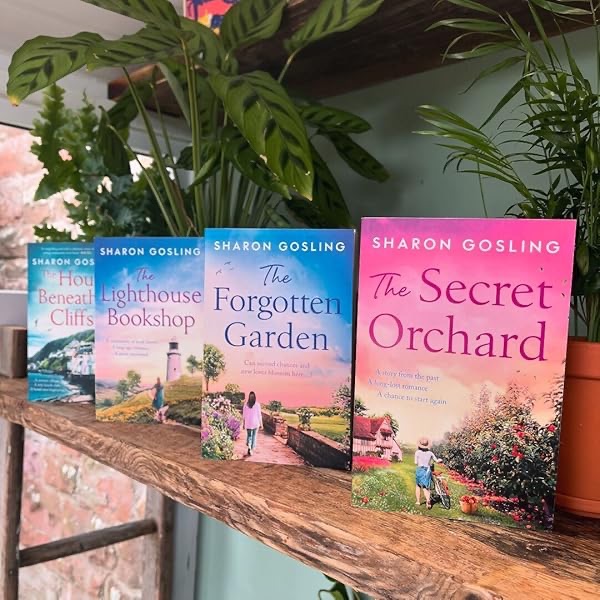
My debut adult novel, The House Beneath the Cliffs, was published by Simon & Schuster in August 2021. Since then I’ve written three more: The Lighthouse Bookshop, The Forgotten Garden, and The Secret Orchard, which is out in September 2024. My adult fiction tends to centre on small communities – feel-good tales about how we find where we belong in life and what it means when we do. Although I have also published full-on adult horror stories, which are less about community and more about terror and mayhem…

I was born in Kent but now live in a very small house in an equally small village in northern Cumbria with my husband, who owns a bookshop in the nearby market town of Penrith.

From Sharon’s Amazon Author Page 28th August 2023

Posted in Netgalley, Publisher Proof

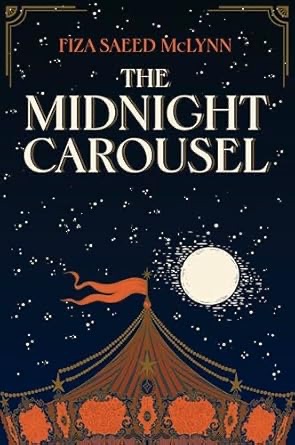
The Midnight Carousel by Fiza Saeed McLynn

Maisie spent her early childhood in a ramshackle shed of a house belonging to her foster parents. It isn’t a home though, when the adults in charge are happy to collect the money but not provide the care. The children are cold, hungry and dressed in rags. Luckily she has best friend Tommy to dream about a better future with. One day they find a fairground flyer with a beautiful illustration of a carousel. Maisie keeps it with her and many years later, across the Atlantic Ocean, she meets the carousel again. Her wealthy guardian Sir Malcolm ships it over to America and sits it in the grounds of his mansion. When Maisie decides to hold a party for local children she is so happy to see the carousel being used. It’s finally full of happy smiling faces, but when the ride stops there is one less child on the ride. The little boy on the caramel horse is nowhere to be seen. Maisie finds this particular horse hypnotic, it’s different to the others with the blue diamond decoration on it’s forehead and surrounded by the letters OEHT. She has no idea what it means. Maisie is taken in for questioning, but she’s surprised when a French detective arrives. Someone has already disappeared from this very carousel and a man went to the guillotine, found guilty of murder. Could there be a US accomplice? Or is there something magical about this particular carousel after all? 

The novel is set in the early 20th Century and takes us from Paris to Chicago. Maisie certainly has a varied life after such humble beginnings, plucked from the shack by her Aunt Mabel who introduces her to Sir Malcolm and his daughter Catherine. Maisie only just starts to trust her new life when it is ripped away by Spanish influenza. As Maisie slowly recovers, she’s told that both her aunt and new friend Catherine didn’t survive. Maisie is sure she’ll be sent back to her foster home, so she’s surprised when Sir Malcolm asks if she’d like to accompany him to the USA. He’s bought a large house and land near Chicago. Once they’re settled in, Maisie feels like she has a home for the first time and like she has a father figure. I found Maisie smart and resourceful, very capable of helping out with business especially when time has passed since the terrible disappearance of the little boy and they start to discuss a business opportunity. They decide to build a theme park, with the carousel at the centre and call it Silver Kingdom. Maisie throws herself into work and while there’s still the residual trauma of losing her parents and then her aunt, she does start to find her feet. She jumps into the next choice far too quickly at times, but it’s an instinct born of trauma. The anxiety of feeling unsafe is too much so she is vulnerable to people who prey on that and makes bad choices. 

She also struggles with fitting in. She is often asked about her heritage because of her dark complexion, but having no memory of her parents she can’t answer. The milk lady, Mrs Papadopolous, says she’s Greek. The fairground runners think she might be one of them, or possibly Italian. She feels rootless, as if a wind might whisk her away at any moment. Continuation and motherhood are themes that run throughout and the women made an impression on me. Mrs Papadopolous is warm and loving towards Maisie, giving her a sense of belonging by saying that home isn’t a place, it’s knowing who you are. There’s also a fortune teller who is always keen to tell Maisie her future, but notices that she’s the only person on the fairground who’s never asked. She makes is clear that Maisie does need to be on her guard, especially where the fairground is concerned. Whereas Sir Malcolm’s sister-in-lane seems to pit herself against Maisie from the start. Perhaps always expecting to inherit his money, she is put out by this orphan who seems to have usurped them. Nancy struggles to conceive and doesn’t cope, descending into alcoholism and bitterness. When Maisie is pregnant the rivalry worsens although she does try to be gentle, knowing that she has everything Nancy wants. 

A love story weaves through the mystery very well, with all the traditional obstacles and absences you would expect. There were times I was screaming at Maisie to open her post! Especially when there were misunderstandings and having the whole picture was dependent on the next letter. Her love for Laurent is all encompassing, that once in a lifetime love that lasts forever. They do miscommunicate a lot, mainly due to not expressing their true feelings or not being free. The ‘will they – won’t they’ does last years and I so wanted them to find a way back to each other. There were some parts where I was so engrossed in the romance that I totally forgot there was a mystery to solve. There was also her husband’s bootlegging, the search for Maisie’s birth parents, the drama surrounding a character’s will and each of these strands did take my mind away from the central case a little. After the carousel claims another victim, Maisie decides to encase the caramel horse in glass, so no one else can ride it. I was so looking forward to a magical explanation or for the mystery never to be solved. I wanted to see Maisie’s original vision realised. When she first rode the horse she had a vision or hallucination with stars and what she thinks might be a glimpse of another time or dimension. It was this magical element that kept me reading, rather than an urge to solve the case. That said, the author found a way to do both leaving me with a sense of satisfaction but also a little touch of intrigue. 

Out now from Penguin Michael Joseph

Meet the Author

Fiza Saeed McLynn is a British novelist born in Karachi to an English mother and a Pakistani father. She moved to London as a child. After reading Modern History at Oxford University, she had a brief career in finance and then spent the next twelve years helping the bereaved as part of her work as a complementary therapist. Fiza now writes full time from her home in London, which she shares with her American husband, and two children.

Posted in Publisher Proof

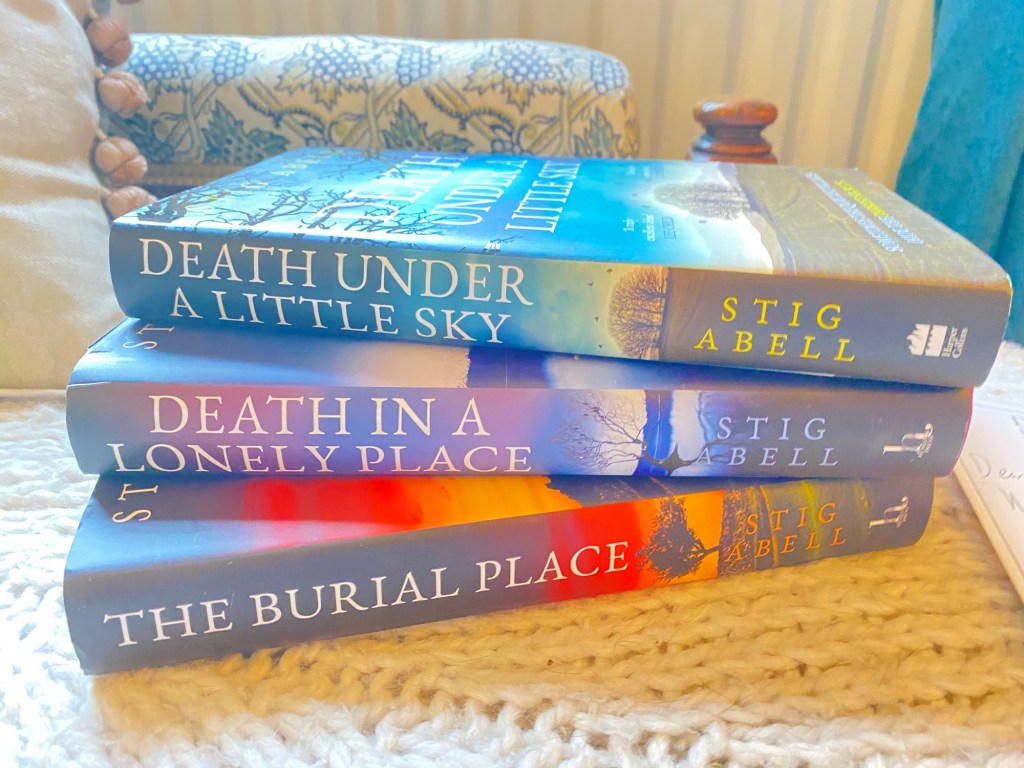
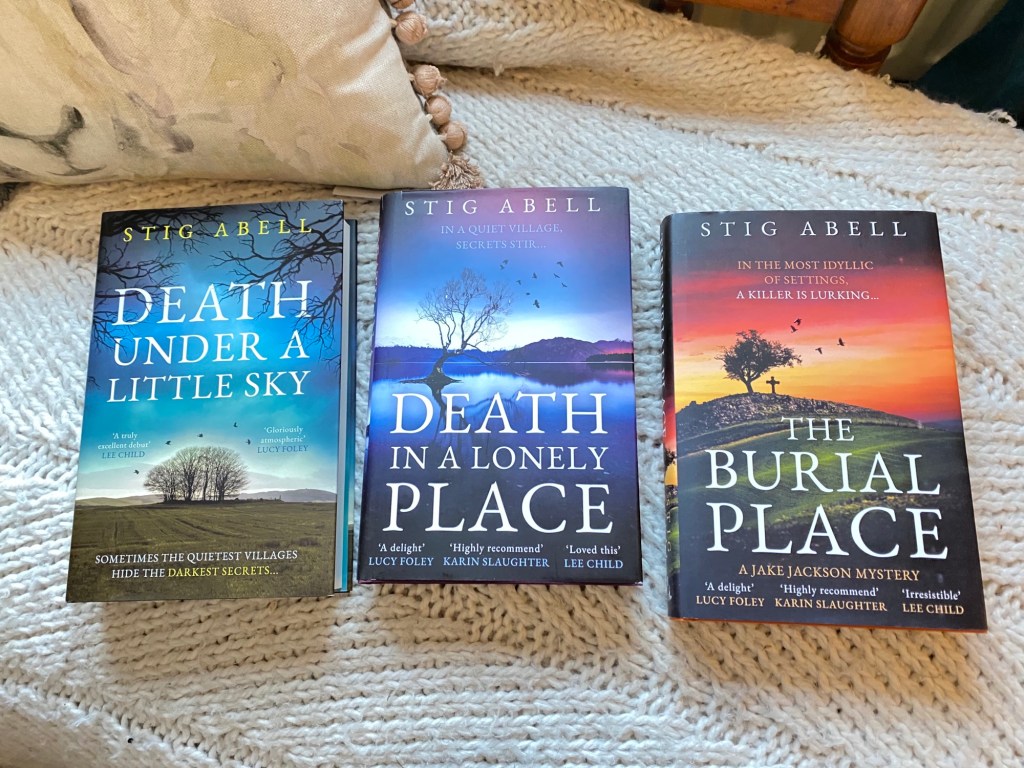
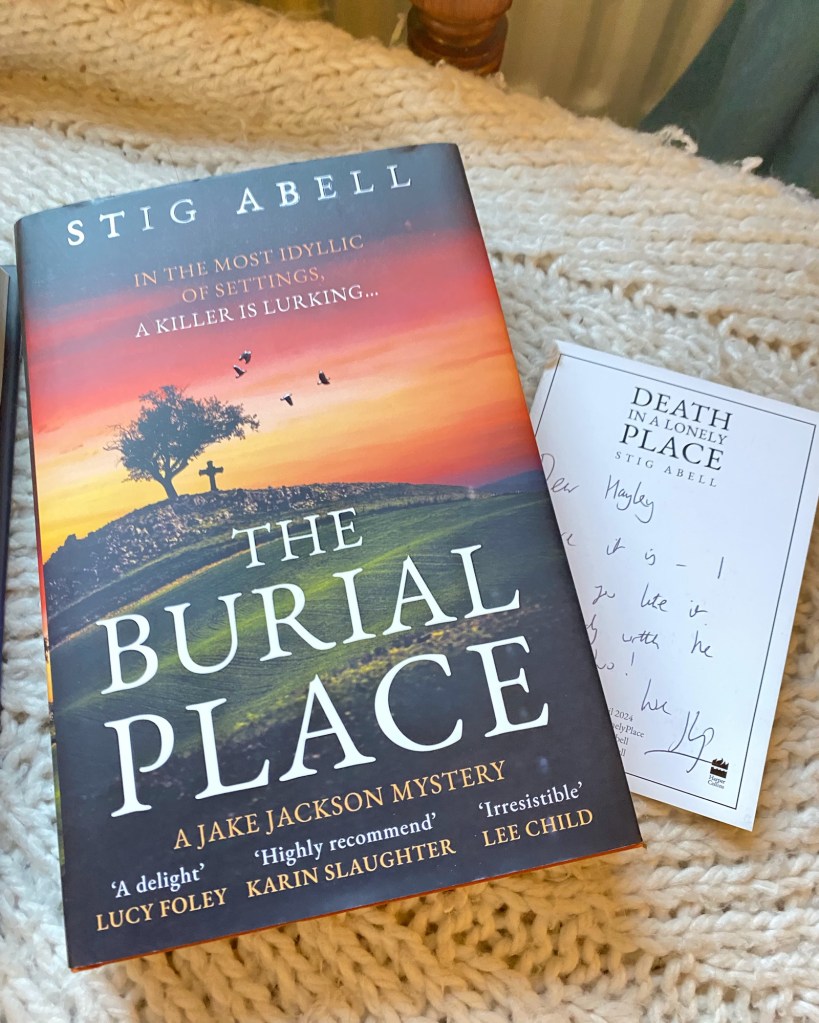
The Burial Place by Stig Abell

I was so lucky to be sent a copy of this new book in the Jake Jackson series, based on a conversation about my love of Martha – an abrupt but super intelligent analyst and crime writer. I love a no nonsense woman and Martha is one of the best bits of this series. After Jake and his ‘team’ tangled with an international criminal gang in the last book, this is more of a home grown mystery but just as dangerous. There has been an archaeological dig close to Little Sky and a recent hoard of treasure found close by. The ownership of this treasure is in dispute because it’s unclear who owns the land it was found in. Meanwhile, work carries on for the archaeologists, academics and local enthusiasts who have been working on the site, but when a body is found it must shut down. It’s hard for new DCI McAllister to understand the motive and being new to the area he enlists Jake’s help, both for his investigative skills and his local knowledge. The community are aware that several nuisance letters have been sent to the dig office and various people who’ve worked on the site. They’re a strange mix of threats, Bible verses and ancient prophecies signed off by Wulfnoth – an ancient Briton purportedly from the area. The writer promises a terrible end for the dig and whoever benefits from the treasure found. Can Jake find the killer before anyone else is hurt? 

Again it’s mainly the brilliant characters that attract me in this novel. Although it’s also interesting to see Jake working with his team, I noticed that Livia is fully committed this time and has definitely earned a chair at the table with Jake, Martha and Aletheia. They are definitely growing closer, since the finale of the last case ended with Livia driving through the wall of her own front room to save their lives. She and her daughter have relocated to Little Sky while the house is being repaired. I must admit I didn’t fully take on board all the dig characters, but the dig itself and the history behind it was really interesting. I’ve often wondered how digs are run and they’re every bit as complex as I thought, with a real mix of motivations and different pressures. Some people have their jobs and reputations on the line, while others seem to have more personal reasons for taking part. What’s difficult for Jake to understand is the gap between letters written when the first dig started and those that came when the second dig site and treasure were discovered. It’s as if Wulfnoth comes out of retirement for some reason, possibly the treasure or could it be more complex than that?

One of the other interesting aspects of the story is the importance of belonging and the sacredness of land. The fact that the burial place of the title holds both ancient and recent burials shows an interesting continuation of the land’s purpose. Jake hears one of the academics talking about different layers or strata of soil, but it all looks like mud to him. The same can be said of the ancient remains, having newly buried bodies on top, as if years of history is mimicking the layers of soil. We live upon years and years of history, something I think about regularly having never moved far away from the River Trent. I have ancestors who are Dutch and arrived in the area with engineer Vermuyden in the 14th Century, designing and creating a system of drainage that would create much of Lincolnshire’s farmland. The fact that my father has spent more than thirty years of his life working as a land drainage engineer, without knowing this history, feels like an echo but also a sense of belonging to that particular land. If I’m ever feeling a bit lost I go the river, take off my shoes and stand barefoot on the bank. Then I know I’m home and on the bank of the same river where I took my first steps. Jake talks about how human spirituality is linked to water, from sacred springs to floating lanterns and wishing wells. Humans have cast their prayers and wishes on water for generations. Livia brings up belonging in one of their case discussions. She doesn’t understand how anyone could feel so connected to ‘patches of ground’. Aletheia points out that Livia has a rare ability to belong, to fit exactly where she is. Her own family roots are in Ghana, but points out that she is now where she is because her ancestors were uprooted. People who are removed or separated from land that belonged to their ancestors for generations can struggle to belong. It’s Livia’s ability to belong, as another woman of colour that she’s really commenting on, because Aletheia does understand that if someone is cheated out of their birthright it can become an obsession. 

Across the book, new relationships are being built and I love that, in what could have been a very lonely place, Jake’s has a healthy support system around him. I did worry a little for Martha though, even though the author writes her with great affection I did feel her ‘aloneness’ in this novel, something I’m describing carefully because there’s a difference between alone and lonely. I feel he writes about her disability with great understanding. Martha lost both her legs in a shoot out when working as a detective and he describes her as suffering constant pain. I’ve suffered chronic pain for many years, particularly nerve pain so I know how strange and maddening it can be. I have had referred pain, very similar to phantom limb pain, where the site of pain bears no relation to the actual problem. Without my medication I have constant burning sensation outside my body – for those of you who are a certain age I often describe this as my ‘Ready Brek’ feeling. The author refers to Martha’ ability to function on drugs that are prescription and those that aren’t. Her skill is a sad one, known to most pain patients, where she copes with a certain level of pain and can still function but there are also days where functioning is impossible. There’s a real sense of sadness that while she can numb the pain it is ever present. I found this portrayal so authentic and possibly researched through lived experience. 

Jake is already an introspective man but he has a lot to think about in this book. He and Livia have decided to start a family together, much to Diana’s disgust. It almost seems like fate when his ex-wife Faye needs to see him. He’s just starting to have concerns about infertility, because he and Faye split up after a traumatic time trying to have a family. He’s worried that it’s taking a while for him and Livia. What if he’s the problem? It’s immediately obvious when they meet that Faye is pregnant and they have a lovely heart to heart in the park. It’s clear that Faye is in a good place and Jake is so happy for her, but nagging doubts are creeping in. If Faye can get pregnant without him, what does it mean for him and Livia’s chances? I still find many male detectives and investigators who don’t have this complex inner life and I love that Jake does. He might seem like a moody loner at times, someone who keeps his feelings hidden even from himself, but he’s just a deep thinker and so empathic. Even when he finds a body, his response is different. He is appalled by the body of one murdered woman who has been left exposed and was potentially murdered during sex. He feels for her dignity and has an urge to cover her up, even though he knows he can’t and must preserve the crime scene as is. It’s as if he takes on the shame this woman might have felt at being left exposed and perhaps taken for a fool by her lover. He has such a strongly developed feminine side and this helps enormously when dealing with Diana. She is clashing with Livia about potentially having a new baby around. Jake is the one who manages to calm her down and show her the positives. I’m so glad Jake has Little Sky and all it offers to balance out these tumultuous feelings. I think his Uncle Arthur knew him very well. 

Posted in Publisher Proof

Marshal of Snowdonia by Simon McCleave 

Living and working in Snowdonia was always retired detective Frank Marshal’s dream. Until a phone call asking for his help turns it into his worst nightmare.

Retired detective Frank Marshal lives in a remote part of Snowdonia with his wife Rachel who is suffering from dementia. Working as a park ranger, Frank gets a phone call from close friend Annie, a retired judge. Her sister Meg has gone missing from a local caravan park and she needs his help to find her.

As Frank and Annie start to unravel the dark secrets of Meg’s life, it seems at first that her disappearance might be linked to her nephew and a drug deal gone wrong. In a shocking twist, their investigation leads them to a series of murders in North Wales from the 1990s and a possible miscarriage of justice.

Can Frank and Annie uncover the sinister truth so they find her sister in time to save her? Or will a brutal serial killer add Meg to his list of victims?

I love Snowdonia and have visited at least once a year since I was a child, even now staying in or close to the farmhouse we’ve booked since I was 12 years old. I also enjoy crime fiction so I can’t believe I haven’t come across Simon McCleave before. This is the start of a new series so I have the joy of going straight to the beginning of his other novels and devouring them. Frank Marshal is an interesting man, the ex-detective and mountain ranger lives in Snowdonia with wife Rachel who has dementia. For most of the novel their daughter Caitlin lives in the annexe with her son after fleeing an abusive relationship. It was quite a slow start to the novel but I could see what the writer was doing, setting the scene of the awe-inspiring landscape and also sowing seeds for future novels. I could see family issues and heartbreaking choices ahead for Frank, as well as some future rivals in the force and the criminal world. Annie was an interesting character too, an ex-judge and described as a close friend of Frank’s, he definitely shows his commitment and loyalty to that friendship as he puts himself in danger to find her sister Meghan. In a lot of ways Frank reminded me of my own father who has spent his life climbing all over Welsh mountains as a youth worker and climbing instructor. Frank’s desire to protect his family, as well as forgetting his age in the process was very familiar to me. Thank goodness my dad doesn’t have his guns anymore, but he’s not afraid to put his bare knuckle fighting and boxing skills to use when necessary. He’s a real worry. So I could imagine being Frank’s daughter and I recognised his determination when he realises half way through a fight that he’s feeling almost all of his 71 years. 

The story really picks up speed after the first few chapters and as it became more addictive, I admit I stayed up until 1am this morning to finish. I had a hunch and I had to see how it played out. Frank and Annie’s investigation starts as Meghan goes missing and her son Callum turns up in hospital with amnesia. Annie doesn’t want to think that her nephew has anything to do with this, but at first they make a couple of discoveries that seem to point in his direction. However there are other potential avenues. The murky world of a 1990s serial killer, convicted when Frank was still on the force and a drug boss who dresses like a Boden model but is a Scouse gangster underneath. Frank’s police connections get them places most people couldn’t, including visiting a serial killer. They have a couple of nasty skirmishes too and I had to keep reminding myself that this was a couple of OAPs! Annie is equally ballsy and has some connections of her own, including a youth offender who now works in IT so he can care for his elderly mum. I’m fascinated with cold cases, in terms of the science we now use to convict offenders decades later, but also because of the things that are missed and dismissed. There’s a detail that’s so important to finding the truth that was completely dismissed by officers due to the witness being a sex worker. I watched a documentary about the Yorkshire Ripper where the police’s attitude to first killings was almost a shrug of the shoulders because they were sex workers. Yet when he killed a young woman on her way home after a night out both police and press said it was his first ‘innocent’ victim which made my blood boil. Frank and Annie find the witness, who has two very pertinent clues ignored for thirty years that could be the key to the case. 

I’m always complaining about thrillers and crime novels that rely on their twists and turns without any depth to the characters or the story. I couldn’t complain at all here. There are twists, including one I only started to suspect few pages before it was revealed. However, the book was also full of emotion: Frank and his wife sitting in bed and looking at old photos was so poignant since both know she is slowly forgetting it all; the beautiful relationship between Frank and his grandson; Annie’s grief over her sister’s disappearance and her nephew’s accident. All felt like fully realised people, even those only in the novel a short time. I could see Frank locking horns with police chief Dewi in the future. I felt totally creeped out by Meghan’s rather unsettling neighbour at the caravan park. I was even interested in the scouse drug dealers and could imagine them finding their way into future storylines. I loved the setting too, the author has managed to capture it’s beauty and it’s bleakness, plus I look forward to visiting the Barmouth chippy when I go there later this year. This was a cracking mystery that crept up on you slowly then didn’t let you put it down. I’m looking forward to many more adventures with Frank Marshal. 

Out now from Stanford Publishing

Meet the Author

Simon McCleave is a multi million-selling crime novelist who lives in North Wales with his wife and two children.

Before he was an author, Simon worked as a script editor at the BBC and a producer at Channel 4 before working as a story analyst in Los Angeles. He then became a script writer, writing on series such as Silent Witness, The Bill, EastEnders and many more. His Channel 4 film Out of the Game was critically acclaimed and described as ‘an unflinching portrayal of male friendship’ by Time Out.

His first book, ‘The Snowdonia Killings’, was released in January 2020 and soon became an Amazon Bestseller, reaching No 1 in the UK Chart and selling over 400,000 copies. His twenty subsequent novels in the DI Ruth Hunter Snowdonia Series have all been Amazon bestsellers, with most of them hitting the top of the digital charts. He has sold over 3 million books to date. 

‘The Dark Tide’, Simon’s first book in an Anglesey based crime series for publishing giant Harper Collins (Avon), was a major hit in 2022, becoming the highest selling Waterstone’s Welsh Book of the Month ever. 

This year, Simon is releasing the first in a new series of books, ‘Marshal of Snowdonia’ with several more planned for 2025. 

Simon has also written a one-off psychological thriller, Last Night at Villa Lucia, for Storm Publishing, which was a major hit, The Times describing it as ‘…well above the usual seasonal villa thriller…’ with its ‘…empathetic portrayal of lives spent in the shadow of coercion and abuse.’ 

The Snowdonia based DI Ruth Hunter books are now set to be filmed as a major new television series, with shooting to begin in North Wales in 2025.

Posted in Squad Pod

After the Fire by Charlotte Rixon 

This is the story of girl meets boy.

And then everything goes wrong . . .

Ever since they first met at university, Beth and Nick have circled in and out of one another’s lives: supporting each other through grief, marriage, divorce, career crises and family dramas.

Fourteen years ago, when they were on the cusp of adulthood, they both survived a devastating fire that sent their lives in different directions. And they’ve been running ever since: from the pain, from the memories, and most devastatingly of all, from the guilt.

But no matter how hard they try, there’s something else they can’t run from. The inescapable, terrifying truth: they’re in love with each other.

But how can they move forward, when neither of them can stop looking back?

I always say I don’t like romance, then a book like this comes along and I’m all in. Maybe it’s being over 50, but stories of first love grab me in the feels. Especially tragic first love. The thing is we’ve all had the experience of love that’s come at the wrong place or the wrong time, so reading a love story like Beth and Nick’s brings up memories and feelings of nostalgia. Our first love experiences are so intense and when feeling are unrequited or interrupted they can stay with us for the rest of our lives. Beth and Nick have a brilliant first meeting. They’re placed in the same flat at university and Beth walks into the shared bathroom and gets an eyeful! Beth is the last person to join the flat because she’s been ill so relationships have already been established. The other two girls, Rosa and Anna, were best friends before university and Nick is already in a relationship with Anna. Beth senses some chemistry between her and Nick, but she tries hard to ignore it. Nobody wants to be the girl who steals their flatmate’s boyfriend in the first weeks of the first term. When he turns up to watch her in drama club she thinks he must feel the same. 

It’s Nick who takes action. He breaks up with Anna and invites Beth on a late night walk. As they walk there’s just so much anticipation. The author builds to their first kiss with all that yearning and tension around who will make the first move. When they spot the fire in their building it’s already well ablaze and Anna is killed. 

Wracked with survivor’s guilt, Nick leaves university. Beth struggles to cope, feeling like Nick has abandoned her. She decides to stay and finish her drama course. Lives move on. Yet feelings for each other and about the tragic start to their time at university, still linger. The author tells the story through both characters and over 15 years as they build careers and relationships. They both think of each other. They try to keep in touch as friends and their paths do meet from time to time, but they’re always held back by the past. They do try to support each other, so when Beth’s long-term relationship breaks down, she finds herself wanting to talk to Nick. I really felt their longing for that first love and their thoughts that maybe it could have worked. Then reality crashes in and those feelings of guilt cloud their hopes. Yet the novel isn’t schmaltzy. There are meaty issues here like domestic violence and mental health, not to mention those trauma related feelings they’ve never really shared with each other.  

If there was ever a book to emphasise the importance of counselling or simply talking to each other, it’s this one. Until Nick and Beth talk through what happened and how it’s affected them since, they will always be haunted by Anna’s death. When trauma is left unresolved people find unhealthy ways to deal with those hidden emotions. Nick has a rescuer personality, developed because he never again wants to feel like he did back then as the cause of Anna’s sadness in her final hours. I love that Beth writes about what happened and her feelings for Nick because at least she’s processing the trauma, because the more we talk about it the less power it has. The tension in the novel comes from wondering if this pair will ever come together at the right time and place. Will they get the chance to put things right? Can they ever find their way back to each other? I was deeply invested and filled with hope for them. The author has written a beautiful love story, but it has impact because it isn’t a fairy tale and these two characters feel absolutely real. At the end I felt like comparisons to One Day, the archetypal friends to lovers classic, are entirely justified. 

Out now in paperback from Aria.

Meet the Author


Charlotte Rixon is the pen name of Charlotte Duckworth, USA Today-bestselling author of suspense fiction published by Quercus. Charlotte studied Classics at Leeds University and went on to gain a PGDip in Screenwriting. She worked for many years as a magazine journalist, and is a graduate of the Faber Academy ‘Writing A Novel’ course. You can find out more about her on her website: charlotterixon.com.

Posted in Publisher Proof

The Lifeline by Libby Page

Libby Page novels always touch on interesting and difficult subjects, but through a very cosy lens – a balance that’s very hard to achieve. Her focus is women’s lives and here our main characters are Kate and Phoebe, both of whom are going through big life changes. Kate has recently given birth to daughter Rosie and moved from London to a small village, nearer to her family. Kate and her husband wanted Rosie to grow up with a garden and to spend time with her wider family. While her husband sets up his photography business, Kate has found the first few months of motherhood hard and hasn’t bonded with her daughter in the way she hoped. She’s also missing her job in journalism, her best friends and the buzz of her London life. Phoebe has lived in the village for a while, in a flat above some shops with her boyfriend Max. She is a mental health nurse with flame red hair and visits her patients on a motorbike. It’s all change when Max decides he’s leaving and takes all the furniture. Phoebe doesn’t give herself time to process the break-up and keeps pushing herself to visit patients. She doesn’t realise that right now, she also needs help. Could the village’s wild swimming group be what both women need to restore them back to themselves? 

I was immediately attracted to the character of Phoebe, having worked in similar roles most of my life. I thought this was a slightly sugar coated version of mental health work, that touched some of the realities without changing the feel of the book. It did show that no two days are the same and the difficult juggling act of seeing regular patients when another has a crisis and needs to seen immediately. Phoebe is very conscientious and usually ends up working longer hours and eating into her own downtime to ensure everyone is seen. I could see Phoebe was heading for burn out, always putting her own needs last and missing the people and activities that restore her soul. Ive never had a baby, but I have seen what a seismic change it is from my friend’s experiences. Their world’s shrink because they’re so overwhelmed by this small person who is so dependent on them. I didn’t always understand why friends hadn’t called or couldn’t come to events, but having stepdaughters has made me realise how all consuming parenthood is. I’ve definitely seen less of friends and sacrificed my own needs for theirs, and babies need so much more. What I noticed about both women was how difficult it was for them to admit they’re struggling. Phoebe is conditioned by her job to always put someone else first. Kate has been influenced by the Instagram yummy mummies and the perfection of her sister’s life. She feels inadequate next to them, not realising that social media is edited to show the best photos and most interesting experiences. It’s a case of comparison is the thief of joy. Could both these women change their lives by finding a moment for themselves by the river? 

The story is set in an idyllic little village with cozy details like a coffee and cake van down by the river, an Italian deli under Phoebe’s flat and picturesque stone cottages. It’s clearly affluent but as Phoebe’s clients show, sorrow and illness can come into any home. It’s these cute and cozy details that make the book feel like a warm hug. I loved the camaraderie of the wild swimming group and the way they all pulled together when their swimming spot is threatened due to contaminated water. There’s a touch of romance too, in the rather gorgeous shape of Italian Luca from the deli. I enjoyed the humour too, especially the bridal boutique incident – the most disturbing boutique incident since Bridesmaids. Above everything it’s the female friendship that absolutely sings in this novel, confirming something I know to be true; it’s the women in our lives that hold us up when we fall, celebrate when we’re happy and stick with us through the seismic changes women experience in life. 

Meet the Author

Libby Page is the Sunday Times bestselling author of The Lido and four other warm-hearted novels. She lives in Somerset, England with her family. Before becoming an author she worked in journalism and marketing. When not writing she can be found reading, and swimming outdoors.
Posted in Publisher Proof

My Hummingbird Father by Pascale Petit

This extraordinary novel weaves a mystical and hypnotic spell around the reader, using the flora and fauna of our heroine’s home in Venezuela and slowly unravelling the truth about her childhood. Dominique is an artist who receives a vision of her father in her dream, so powerful she is able to recreate it on canvas. She hasn’t seen him since her early childhood, so it’s a surprise when he gets in touch and asks her to come to Paris. He is dying and wishes to reconcile with his daughter. Longing for paternal love Dominique travels to Paris, on a physical and spiritual journey to recover that part of her early childhood she spent in Paris with both her parents. There she uncovers repressed memories that reveal the truth of her parent’s marriage and her own birth. She also visits the Venezuelan Amazon where she meets Juan, a mystic and shaman who guides her journey. A gentle and tender love story emerges between them as Dominique tries to heal from what she has uncovered. 

I would have known this writer was a poet and an artist from the very beginning because she writes lyrically and creates such striking visual imagery. At first it’s an assault on the senses, a maelstrom of imagery from the Amazonian jungle filled with colour and fantastical animals. A beautiful example of magic realism, the author’s vivid imagery tells of jaguars, birds of paradise and in one case a very disturbing anteater I expected to see in my nightmares. It’s almost hypnotic and I was so overwhelmed and beguiled by the beauty of her words that I didn’t realise the pain and devastation underneath. It’s through her artwork, which is almost shamanistic at times, that she processes her trauma. Her childhood was tainted by her father leaving, seemingly without explanation when she was six years old. She then experienced abuse and resentment from her mother. The process of recovery from trauma is a major theme in the book and we can see how Dominique’s reintroduction to her father triggers the emotions that she hasn’t resolved. In fact his presence triggers nightmares and the re-emergence of events she’s kept locked away in her subconscious. She wants answers to the mystery of her father’s disappearance, but I feared she would be re-traumatised by the truth.These are dark, harrowing memories in parts but it’s clear that the beauty of nature really does have a healing effect on her. 

Her descriptions of Venezuela and the incredible Angel Falls made me want to see it for myself! Here things become more mystical as we see Dominique’s beautiful connection to this place and a man she meets from the Pemon community, indigenous to Venezuela. Juan helps her to go deeper inside herself and face whatever unresolved feelings lurk there. He is a shaman to the community and can ward off malevolent spirits, including the type of dark and disturbing emotions that can haunt people who’ve experienced abuse. This is an incredibly personal journey and her time in Venezuela, the rediscovery of her childhood home in Paris as well as reading her father’s correspondence all contribute to her recovery. I found her story deeply moving and challenging to read at times. However, I recognised the catharsis in Dominique’s artistic expression and the importance of documenting traumatic experiences. She needs others to bear witness to the truth of her childhood, because only then can she achieve acceptance and healing. This is a beautifully written novel, that’s lyrical and treads a line between poetry, visual art and prose. I was touched by it and by the deep connection Dominique has with the natural world. There she can be her true self, an imperfect human woven back together by animals who always accept us as we are.

Meet the Author


Pascale Petit’s eighth poetry collection, Tiger Girl (Bloodaxe, 2020), was shortlisted for the Forward Prize and for Wales Book of the Year. A poem from the book, ‘Indian Paradise Flycatcher’, won the 2020 Keats-Shelley Poetry Prize. Her seventh collection, Mama Amazonica (Bloodaxe, 2017) won the inaugural Laurel Prize in 2020, the 2018 Royal Society of Literature’s Ondaatje prize, was shortlisted for the Roehampton Poetry Prize and was a Poetry Book Society Choice. Her sixth collection, Fauverie, was her fourth to be shortlisted for the T. S. Eliot Prize and a portfolio of poems from it won the 2013 Manchester Poetry Prize. T. S. Eliot shortlisted What the Water Gave Me: Poems after Frida Kahlo (Seren, 2010), was also shortlisted for Wales Book of the Year. Salt published her debut novel, ‘My Hummingbird Father’, in 2024 and her ninth poetry collection, Beast, is forthcoming from Bloodaxe in 2025, and is awarded the Arthur Welton Prize.

Posted in Publisher Proof

The Black Loch by Peter May

Readers probably won’t believe this but this is my first Peter May novel. I’ve had his books on my ‘authors to explore’ list for when I’m second hand book shopping, but something always gets in the way of me reading them. So, when I was offered this blog tour I jumped at the chance to finally read one. I love books set in Scotland and I am a particular fan of Tartan Noir – crime novels and mystery novels from authors like Doug Johnstone and Val McDermid. I was immediately drawn into the incredible scenery and atmosphere of the Isle of Lewis. This is the fourth in a trilogy, so I’ve definitely got some catching up to do where Fin McLeod is concerned. Once a detective and now retired, Fin is drawn back to Lewis when Caitlin Black’s body is discovered on a remote beach. Only eighteen years old, Caitlin was a student at the Nicholson Institute. It emerges that she was having an illicit affair with Fionnlagh McLeod, her teacher and a married man twenty years her senior. Fionnlagh soon becomes the prime suspect and is arrested on suspicion of her rape and murder. He is also Finn’s son. Finn knows he must return to Lewis to support his daughter-in-law and granddaughter. He also knows, despite the evidence against him, that he must try to clear his son’s name. As Fin travels around the island, he is drawn into past memories and soon realises this crime has echoes back into his own teenage past on the island. A terrible accident at a salmon farm caused two deaths, just as the industry started to expand on the island and become a multi-million pound concern. This is a journey of family ties, secret relationships and a bleak and unforgiving landscape, where violence, revenge and revelations converge. 

Fin and his wife Marsaili both grew up on the island, so it holds echoes of their relationship over the years. It’s strange for them to be back on Lewis after a ten year absence and awkward to turn up on Fionnlagh’s doorstep where his wife Donna is devastated by the possibility that her husband has killed his teenage lover. Their daughter Eilidh is happy to see her grandparents and currently oblivious about her father’s fate, but it’s clear to see the damage Fionnlagh’s exploits have had on Donna. These early chapters felt like being sucked down into a whirlpool of memories. There’s such an incredible sense of place and the use of Gaelic words and names feels foreign, strange and somehow magical at the same time. There are tourists enjoying the white sandy beaches, but we’re taken down below the surface to the realities of living somewhere so remote and bleak. Then further down to the horrors underneath where salmon are eaten alive by lice in their cages, where beached whales gasp their last agonising breath on the sand and a beautiful girl with her whole life ahead of her can be thrown over a cliff like rubbish.

He finally reached the Black Loch just before seven-thirty. He parked above the beach as sunlight fanned out towards him across cut-crystal water, revealing the secret colours that concealed themselves on the shore, among rocks and boulders and the seaweed washed up to dry along the high-tide mark. To his right, cliffs of Lewisian gneiss rose steeply out of the water and he could just see the gables and chimneys of the house that stood above them overlooking the bay. He cast his eyes down again to the water’s edge and left footprints in the wet sand as he followed the curve of the day towards the looming black of the cliffs. Somewhere here Caitlin’s body had been washed ashore.”

Peter May has portrayed the environment, whilst also showing the extent to which climate change and the eco- industry have impacted the surroundings he’s known for his whole life. The old cottages are damp and battered, some being refurbed by incomers with money either as family homes or holiday cottages. New houses are squat, one-storey dwellings built to blend with the sand and the heather with large  windows giving uninterrupted views of the landscape. Younger islanders are focused on eco-activism with Caitlin Black and her friend Isobel starring in a programme about the island’s ecology. They care about fish farming practices driven by the market across the globe for salmon. Practices that prevent wild salmon from swimming up river to spawn as well as terrible conditions for the farmed salmon too. Huge cages that once held a few hundred salmon now hold a hundred thousand, with such a high mortality rate they’re having to take them from the cages and dump them into rock crevices formed from by the tide. They lay there rotting until the sea washes them away.

The activist’s aerial shots exposing the illegal dumping of dead fish, and the zombie salmon, half eaten by sea lice, swimming listlessly around in cages where anything up to twenty-five percent of fish were already dead. She listened in horror as he conjured up an image of the stinking, maggot-ridden morts […] and the 1000-litre containers of formaldehyde that a desperate Bradan Mor was using to try to kill the sea lice.”

Fin’s narrative takes us on his investigations around the island, trying to find evidence to disprove the police’s theory that his son is a killer. A task made much more difficult when his DNA matches samples taken from Caitlin’s body. Why would he rape someone he’s been sleeping with for months? This is according to locals who’d noticed their clandestine comings and goings from a derelict cottage by the sea. Despite the urgency of the present moment, Fin is also pulled inexorably into the past, because this island has a huge hold and power. I felt centuries of history in the land it’s people and their relationships. This is sometimes positive, as Fin remembers beach parties where he first met Masaili as a teenager and they make love on the beach in the present, grasping a tiny moment of happiness and connection in the hurt and devastation. The most terrible memories involve a scheme to steal fish from the fish farm and pass them off as wild salmon, for a ghillie from the estate to sell on. Fin goes along with it despite his misgivings, but the scheme is originally suggested by Niall. A group of teenagers meet and drive to the fish farm several times, but one night there’s an awful storm and a sense of foreboding. This enterprise leads to two deaths and creates a suspicion in Fin about his friend Niall. If he is willing to steal from his own family and brush aside the death of a friend, is he capable of murder? Niall’s surname is Black and Caitlin is his daughter.

It feels as if the island has a consciousness. It sees your past and your future as clearly as the present, almost as if they’re happening simultaneously. I felt it when Finn walked across the very place he stood with Masaili when they were first meeting at six years old and she had two pigtails. She also called him Finn for the first time, christening him with a nickname he still uses. This is a thin place, unchanged for centuries. It also said something about how we experience the world. We are rarely solidly who we are in the present, with past and future forgotten. We are simultaneously all the selves we’ve ever been. In this way Fionnlagh can be a good father, a talented teacher and a suspect in a murder. There are also darker moments from Fin and Marsaili’s past that come alive here. Her narration is a rare moment in the novel but she relives a night in Glasgow from their university years, when she found Finn in bed with another girl in their student flat? It makes us realise that Finn isn’t wholly the upstanding man we think he is, he was also the cause of so much hurt, rather like his son. 

There’s a sense in which this trauma is generational, not just in individual families but in the island itself. The environment has always been harsh and people have found it to survive. It’s a hunting and fishing community and other nearby islands, like St.Kilda, became uninhabitable in the early Twentieth Century due to the difficulty of growing and catching enough food for the islanders. Fin takes us back to a conversation he had with his grandfather about the whaling industry, brutal tales of harpooning these majestic creatures and turning the sea red. It links to the beached whales in the bay, possibly drawn off course by one of them being unwell and in distress. As the vet assesses these giant creatures and people desperately try to save them he talks about a tradition in the Faroe Islands where they draw whales to the shore then hack them to pieces. Fin has violent memories of being forced to join a seasonal slaughter. In his last summer before university, Fin felt like a black cloud had descended because he and his friend Artair had been chosen to join the guga hunters. This was a four hundred year old tradition where twelve men would travel to An Sgeir, an island no more than a rock in the middle of the ocean. A guga was a young gannet, once hunted in a desperate need for food, their slaughter was now a rite of passage. Hunters killed two thousand birds in a fortnight, then they would be plucked and salted. Fin felt disgusted by the idea, but it seemed unavoidable and it would be dishonourable to give up your place.

“Neither Artair nor I wanted to spend two weeks on that bleak and inhospitable rock, scrambling among the blood and shit that covered the cliffs, slaughtering defenceless birds.”

This was a tense and complex case with so many possible suspects, and Peter May also keeps us guessing about Fionnlagh. Perhaps he could be the killer, after all he does confess. In a way this created a crime novel that didn’t revolve completely on whodunnit, but on the tensions between different characters and also their environment. He also creates a compelling picture of the beautiful and intelligent victim, Caitlin Black. A girl as embedded in the island as Fin, with a deep passion for the island’s environment and it’s flora and fauna. She epitomises the gap between generations, but also between those who want to protect the island and those who are making a generous living by exploiting and polluting it. I loved how deep the island and it’s history ran in these people, something I can understand having lived right next to the River Trent for most of my life. In fact the first thing I did when moving into my last village twelve years ago was go to the river bank and take off my sandals to feel the river bank under my feet. The river and it’s daily tidal bore, the smell of fresh cut hay, the cool of the forest, the crunch of dry pine needles underfoot as well as the smell of straw bales in the sun and freshly turned earth are all in my soul. They make up part of who I am and although I moved away for study, I have returned and unknowingly into the same village where my great-great grandmother is buried. Our ancestors call to us and this is definitely what Fin and Marsaili are feeling, as well as need to be close to Fionnlagh, Donna and Eilidh. This is something he couldn’t have imagined ten years ago, but now he wonders if it’s where they belong. Perhaps this means future additions to the series and on the basis of 5is novel, I’ll be the first in the queue if it does.

“He leaned over to kiss her and remembered that little girl with the pigtails who had walked him up the road from the school to Crobost Stores giving him the nickname that had stuck for the rest of his life.”

Out on 12th September from RiverRun Books, an imprint of Quercus.

Meet the Author

Peter May was born and raised in Scotland. He won Journalist of the Year at twenty-one and was a published novelist at twenty-six. When his first book was adapted as a major drama series for the BBC, he quit journalism and became one of Scotland’s most successful television dramatists. He created three prime-time drama series, led two of the highest-rated series in Scotland as a script editor and producer and worked on more than 1,000 episodes of ratings-topping drama before deciding to leave television and return to his first love, writing novels.

Posted in Squad Pod

Circus of Mirrors by Julie Owen Moylan

I really have been blown away by this story set just after WW1 and progressing to the mid-twentieth century. Our characters are two German sisters Leni and Annette who live in Berlin and are the last living members of their family. When we first meet them they’re in dire straits, living in a makeshift shelter in an abandoned garden. Thanks to war and the influenza epidemic they’ve lost their family, so are totally reliant on each other. Leni, the older sister, gets a chance to earn some money at a notorious and rather seedy cabaret club called Babylon Circus. There the naive and rather shy Leni becomes a cigarette girl in a second hand and pinned costume that just covers her modesty, but she is at first shocked by what she sees. With shades of the musical Cabaret the author creates a club that is a mirage of clever lighting, fairground mirrors and risqué musical numbers. It’s enchanting by dark and unwelcoming by day, but it doesn’t matter because this is the type of fun that can only be had at night. The girls are shameless on stage and nudity is everyday in the dressing room, but Leni sees something attractive in their boldness, bawdy gossip and loud raucous laughter. They have a freedom she’s never seen before in women, they’re not afraid of taking up space. The illusion extends to the girl’s costumes, covered at first glance but offering a cheeky glimpse here and there. This is what the crowd turn up for, but one girl manages to shock the audience by crouching on the table of a misbehaving customer and pissing in his face. Everything is overseen by owner Dieter, a man with his own disguise. He rarely enters the cabaret room, but sits in his office with it’s resident cat. Having left half his face on a battlefield he wears a tin mask which chafes at his wounds and leaves his expressions slightly lopsided. This gives a certain sense to the fairground mirrors, if everyone is distorted then no one stands out. 
It’s Paul the pianist’s good looks that capture Leni; his talent, his smile and the lock of hair that escapes onto his forehead. When he starts to walk her home she’s evasive, how can she tell him he doesn’t have one? She invents a family, but then has to keep Annette out of her business. Paul’s also in trouble, as his brother has run up debts he can’t repay and the lenders are leaning on him to pay instead. After a warning in the form of a beating he knows he must leave, but what will he do about Leni? Leni and Annette now have rooms, with a landlady who doesn’t mind watching Annette in the evenings while Leni works. I had so many questions. Would Paul ask Leni to go with him? Does he even feel that strongly about her? Where would Annette fit into this? Even after all these questions are answered, jealousy and fate intervene changing everything. 

In our second timeline we’re in the midst of the Cold War and a middle-aged Leni is living in Berlin with her teenage daughter, following the death of her husband. She’s surprised by a sudden visit from her sister Annette who now lives in the USA. She seems agitated and anxious, spending all her time in flat brooding and smoking. Leni’s daughter is in the throes of first love, using the guise of drama rehearsals to meet her boyfriend. With nowhere to go they find solace in a strange old cabaret club where there’s a fairground mirror amongst the ruins. This is the perfect place for secret assignations. Leni is concerned that with her sister here the past seems closer than it’s been for years. So many secrets are being kept between these women and when Leni sees a face from the past, it could all come tumbling down like a pack of cards. 

Julie writes mid-century women like no one else. I feel like I know them. This is my grandmother’s generation and my grandad actually went to Germany after WWII to help rebuild the country. I remember being shocked by the utter devastation of German cities when they were depicted in the film The Aftermath. I was haunted by a woman getting her daughter ready for school, brushing her hair in their normal routine, but with the outer wall blown away. It was like looking into a doll’s house. The author made me feel the contrast of that wild decadence in the 1920’s with the Cold War period where everything feels grey and routine with nothing to look forward to. The bleakness of Leni’s flat really comes across as it seems to echo the desolation of Annette. Even the once rowdy and colourful club is now derelict and abandoned. I love the way the author plays with place and identity in this way, as well as how the characters see themselves. Their internalised sense of how they look forming part of their identity, but is often at odds with how we see them. Dieter and the girls at the club are almost gaudy grotesques, using appearance and performance to mask true feelings. As for Dieter, I kept thinking about his inability to express emotion in his face and how that affected his ability to connect with others. If we can’t express what we feel what effect does that have on our identity? Dieter can’t look at his new face because it doesn’t reflect the image he has of himself in his mind. It’s only once everyone else becomes distorted that he fits in, only the cat accepts him utterly as he is. 

The secrets between the sisters are beautifully constructed. Annette’s adult behaviour is a faint echo of her childhood feelings. Her jealousy and fury when she discovers Leni with Paul is the fear of a child who has almost lost everything and everyone she knows. She only has Leni and what if she leaves her too? As an adult, pulling secrets or feelings from her is almost impossible. She has been holding the past inside herself so tightly and for so many years I was unsure if she would bring it’s truths to the surface without breaking. Towards the end, as another terrible event outside their control looms over Berlin, my heart was in my mouth! Not knowing whether the ending would be what I wanted had my heart racing. I couldn’t bear either sister to suffer any more heartache and this is the beauty of Julie’s writing. She makes you believe in this world and these characters so much, that you’re able to shed real tears for them. This novel is easily one of the best I’ve read this year and I’m in no doubt it will feature in my end of year list too. I’ve loved Julie’s first two novels, but this is certainly Julie’s best novel so far. 

Published by Penguin on 12th September. Thanks to Julie and the Squad POD Collective for including me in this month’s book club.

Meet the Author

Her debut novel That Green Eyed Girl was a Waterstones’ Welsh Book of the Month and the official runner up for the prestigious Paul Torday Memorial Prize. It was also shortlisted for Best Debut at the Fingerprint Awards and featured at the Hay Festival as one of its TEN AT TEN debuts.

73 Dove Street was recently named as a Waterstones’ Book of the Year and Daily Mail Historical Fiction Book of the Year with the paperback still to come in April 2024.

As a filmmaker Julie won the Celtic Media Award for her graduation film “BabyCakes” before going on to win Best Short Film at the Swansea Film Festival.

Her writing and short stories have appeared in a variety of publications including Sunday Express, The Independent, New Welsh Review and Good Housekeeping.

She has a Masters in Filmmaking and an additional qualification in Creative Writing & English Literature. Julie is an alumna of the Faber Academy. Circus of Mirrors is the third novel.