Posted in Netgalley

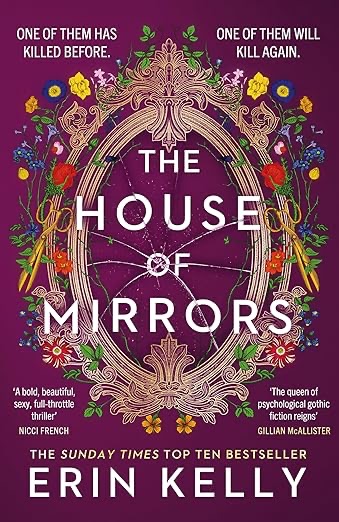
House of Mirrors by Erin Kelly

Erin Kelly’s latest novel is a return to characters who started life in The Poison Tree. Rex and Karen are a bohemian couple, who like a quiet life and love their daughter Alice who has flown the nest to live in London with her boyfriend Gabe. Karen is still living with the secret of what she did years ago, constantly worrying that Rex or Alice will discover the truth. Rex came from the wealthy Capel family, but the couple are far from comfortable. Rex is estranged from his wealthy father Roger Capel who has new and much younger wife and family. There’s a reason the couple keep a low profile, as a young man Rex was convicted of double murder. What happened on ‘The Night Of’ has overshadowed them all. Rex and his sister Biba were alone at the family home, when Biba’s boyfriend turned up and an argument ensued. The disturbance alerted the neighbours and one came round to see if everything was okay. Within minutes both Biba’s boyfriend and the neighbour are dead. There are so many questions about what happened that night. What was the argument about? Where did the gun come from? Were Rex and his sister the only ones there that night? Rex took the blame for the murders and served his time, with Karen staying faithfully by his side throughout. Did Rex really commit the crime? However, the mystery that has haunted the family for years is what happened to Biba? After that night she has never been seen again.

Rex and Karen’s daughter Alice is starting a vintage dress shop called Dead Girls Dresses. Strange things have happened since the opening though. Alice has had dropped phone calls at the shop and an oddly dressed woman with her face covered visited the shop. Could it be her Aunt Biba? Then Alice’s grandfather Roger Capel dies and leaves his granddaughter all of the womens clothes from the family home and it’s a treasure trove! Trawling through these pieces and trying them on brings Alice even closer to Biba. I thoroughly enjoyed the Alice in Wonderland details in the book, from the mirrors and chequered floors of the ‘the night of..’ to an Alice themed event at the dress shop. There is a sense, as the story goes on, that we are falling further and further down a rabbit hole. I’m a sucker for fashion and vintage so Alice’s shop was a glorious pick ‘n’ mix of beautiful pieces. This was a shop I would visit and the aesthetic sounded like my study – taxidermy, a white rabbit, antique inkwells, Venetian masks and a candlestick that’s in the shape of a monkey wearing a dress are just some of my weird objects! I thought the general shabbiness of Alice’s apartment was very believable. It’s in a large house where the ground floor is uninhabitable, so they have to squeeze upstairs having no money for repairs. I thought that the author captured Alice’s naivety very well and I could easily believe she would end up in a relationship with Gabe who’s a militant climate change activist. I felt like his activism and relationship with best friend Stef came first in his life, despite professing to be madly in love with Alice. I know that once you start siding with parents in novels and films you’ve reached ‘old’, but I had the same misgivings as Karen. I thought Gabe was gaslighting Alice and making her doubt herself, I just didn’t know why. I kept wishing that Alice would have the strength to recognise and resist him.

Erin Kelly is an author I’ve read since her very first novel and she has a way of writing something utterly compelling and full of tension, but also full of unusual details. There’s the quirky references to Lewis Carroll’s Alice and funny little everyday instances, like trying to unmask the dog constantly using the opposite shop’s doorstep as a toilet. There were also those ideas about twinning, doppelgängers and mirrors that added an uncanny element to the story. Using Alice and Karen to narrate the story in alternate chapters means we can see the relationship between mother and daughter. Karen’s fears for Alice with regards to Gabe and his coercive control really amplified the tension. We see Alice’s frustration with her mum, but also her concern for her father who she believes was innocent of murder. She knows that Rex is loyal to those he loves and she starts to suspect he may have been covering for someone else. I also sensed that there was so much more to the double murder then either Rex or Karen were admitting to, especially to Alice. Possibly something to do with aunt Biba? As Biba started to overshadow Alice’s thinking and the strange calls continued I was on tenterhooks waiting for the truth to be revealed. It’s a massive shock when someone from the past does turn up, but it’s not anyone the family expected. For Karen and Rex this newcomer is an eerie reminder of his sister. They also upset the dynamic of Alice’s relationship and Gabe feels very put out when his attempts to control their role in the group fails and it looks like Alice might become influenced by someone else. I would have thought that Gabe being pushed out would be exactly what Karen wanted but strangely she seems concerned too. I kept remembering that someone in this family is a murderer and they could strike again. I also wondered what those involved might be driven to, in order to keep their secrets. As the final pages came I was still shocked by what actually happened! It’s amazing the lengths people might go to for someone they love.

Out now from Hodder & Stoughton

Meet the Author

Erin Kelly is the Sunday Times bestselling author of The Poison Tree, The Sick Rose, The Burning Air, The Ties That Bind, He Said/She Said, Stone Mothers/We Know You Know, Watch Her Fall and Broadchurch: The Novel, inspired by the mega-hit TV series. In 2013, The Poison Tree became a major ITV drama and was a Richard & Judy Summer Read in 2011. He Said/She Said spent six weeks in the top ten in both hardback and paperback, was longlisted for the Theakston’s Old Peculier crime novel of the year award, and selected for both the Simon Mayo Radio 2 and Richard & Judy Book Clubs. She has worked as a freelance journalist since 1998 and written for the Guardian, The Sunday Times, Daily Mail, New Statesman, Red, Elle and Cosmopolitan. Born in London in 1976, she lives in north London with her husband and daughters. erinkelly.co.uk twitter.com/mserinkelly

Posted in Netgalley, Publisher Proof

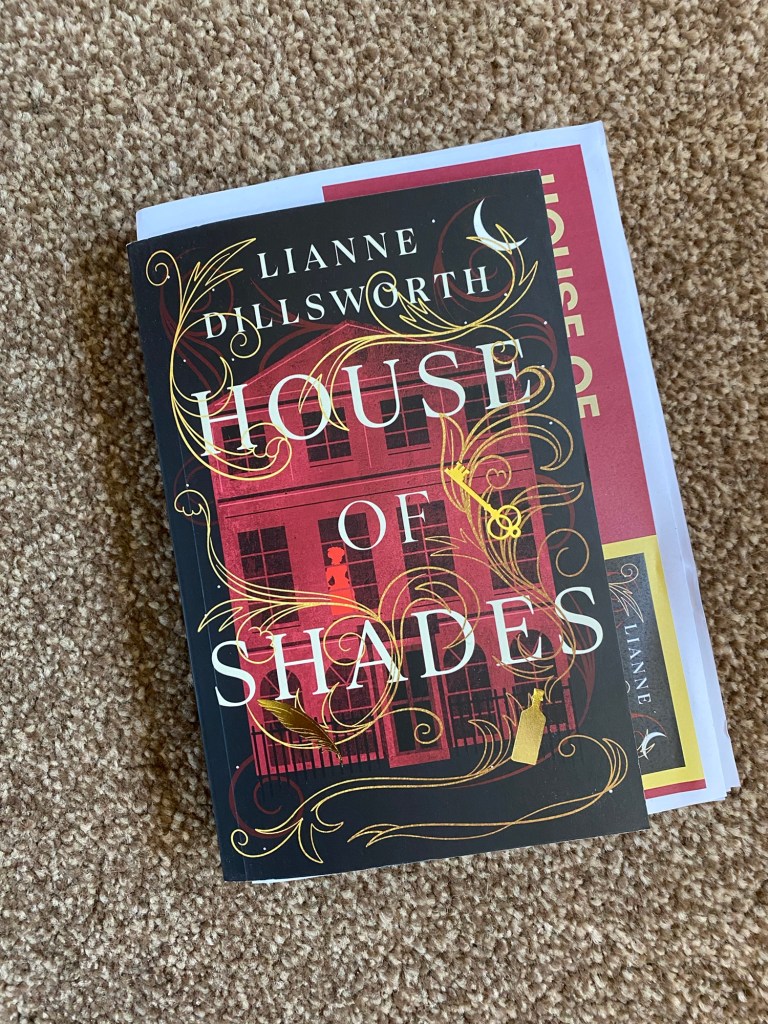
House of Shades by Lianne Dillsworth

Hester is a doctoress, using her mother’s skills and recipes to treat the ladies of the night around her Kings Cross home. She’s offered a commission to work in the Fitzrovia home of Gervaise Cherville, a rich factory owner with declining health.

If Hester can diagnose and treat his illness he will pay her ten pounds, a life changing amount of money in 1833. Thinking that the fee will help them move to a better area of London, she leaves behind husband Jos and slightly wild sister, Willa, to work at Tall Trees the Cherville mansion. However there’s a dark energy in this old house, as if there’s a curse on Cherville and his mansion.He asks if Hester will track down two women who worked in the house – Aphrodite and Artemis. However, they weren’t servants but slaves and Cherville’s treatment of them torments him and keeps him awake at night. If Hester can find the women, allowing him to make reparation before he dies, he will raise her fee to twenty pounds. Hester is torn, twenty pounds would allow them to move to the country, removing Willa from the temptations that keep her out at night. Yet, will these women want to found, especially given Cherville’s abuses of power? Also, can Hester as a black woman, put another black women in danger without the consequences being on her conscience forever?

Inheritance is a huge theme in the novel and especially, the way in which characters receive their portion. Of course an inheritance isn’t always financial and the intentions of the giver play a large part in what it can do. Hester’s mother has given her an incredible inheritance, her doctoress’s bag of herbs and potions that can ease sicknesses of the mind and body. This of course helps her earn a living, tending to the prostitutes around their part of town at night. Kings Cross is known as a red light district and Hester tends to their venereal diseases, but also their bruises when men take what they want without paying. However, she also has the keeping of her younger sister Willa which isn’t easy. Willa is wild, easily led and naive when it comes to the intentions of men. Hester’s husband Jos finds it difficult living with Willa, especially when the sisters are at odds with each other. Willa works at the Cherville’s factory and has been noticed by Gervaise Cherville’s son, Rowland. It’s clear to Hester that his intentions aren’t honourable, but can she convince her headstrong sister that he isn’t as in love with her as he claims? When working at the Cherville’s house can she stop Rowland from recognising who she is, while also taking care that he doesn’t put undue influence on his father. Rowland isn’t happy with Gervaise giving away ‘his money’ in reparations, after all their plantation has hundreds of slaves and where will his charity end?

I loved the double meaning of the title House of Shades; the shades or ghosts of the past play their part here, especially in the mahogany furniture Cherville had made from the trees on the plantation. However, it also refers to shades of skin colour. I loved how the author explored the concept of ‘passing’ and colourism, especially in the light skinned character Lady Raine. Hester herself is very dark skinned, a colour that immediately places her in an unusual category. Her position as a doctoress situates her far higher in a house’s hierarchy than we might expect. There would be darker skinned slaves on Cherville’s plantation who are confined to working in the fields and bear the brunt of the ill treatment meted out, whereas those slaves considered lighter skinned might get to work in the household. Traditionally house slaves were thought to be higher in status than field workers, but whereas field workers get to leave the crops and spend time with their families in the village in he evenings, house slaves are at the beck and call of their master or mistress and even sleep in the house away from their families. They’re also closer to the male family members and therefore very vulnerable. There is a moment where Margaret is startled when she bumps into Hester on the landing, lurking in the darkness. She would only expect to meet servants of her own status on the master’s floor, not a black woman with her herbs and potions. I wondered how light skinned Willa was, to make her ‘palatable’ to Rowland Cherville, who appears to think slaves are expendable. He certainly doesn’t want them taking ‘his’ money.

Reparations are a huge theme in the novel and potentially the cause of Gervaise Cherville’s illness, as he admits the concerns and guilt around his treatment of slaves. Could his disturbing symptoms of insomnia, hallucinations and sleepwalking be put down to the end stage syphillis he’s suffering, or are the women he’s wronged in that house haunting him? When Hester first finds a dark, cold room off the kitchen she feels straight away that this isn’t a cold larder. There’s something about the space that she can feel and isn’t remotely surprised that slaves were sleeping in there, deemed unfit to be housed in the attic rooms with the servants. If all he wants to do is make reparations and apologise would it help the women to hear it? Or will the mention of their former master be so terrifying it disturbs their lives and leads to them fleeing once again? I suspected Gervaise hadn’t told Hester all that transpired between him and the women, in fact I doubted he even fully understood the extent of what he’d done. Yet it was Rowland Cherville who made my blood run cold, not only is he entering into exploitative relationships with young women who work in his factory but he doesn’t appear to have any empathy at all. His entire focus is on his own needs. He refers to his father’s money as his own, even though his father is still alive, and seems to have no feeling for his illness or imminent death. In fact he’d rather his father died, before he’s able to give all his money away. He also cares nothing for any of the slaves on whose backs the factory, Tall Trees and his inheritance have been built. They’re simply incidental to his own plans.

I really enjoyed the way this novel took me into the reality of Victorian England for black women. It gave me a new perspective, after Lianne’s first novel which looked at the rise of freak shows and the display of black women’s bodies. The private showings being another insidious and secret experience like rich men using women as domestic slaves and the objects of their desire behind closed doors, while seeming like a respectable businessman to society. Yet, the freak shows seemed to be freer and more in the control of the individual performer. One of the things I hated most when I visited the Slavery Museum in Liverpool, was the taking away of identity, so the way Cherville gave his slaves the names of goddesses made me shiver. It shows his desire for them on one hand, while keeping them in a cupboard, locked away all night like animals. While Hester is searching for them I was wondering whether they’d found their identity again, reclaimed their names and found a space to be relatively free. I feared that they’d had to adopt yet another identity, to disappear, constantly looking over their shoulder. Hester is a heroine that it’s easy to become involved with and I really sympathised with her feeling of being in-between: torn between being a wife and a sister; between her patient and her fellow women; not a servant, but not entirely free either. There’s even a revelation that draws her further into the history of Tall Trees. I wanted a happy ending for Hester, that she might be able to leave London and live that simpler life she and Jos have been craving. This is another triumph for Lianne Dillsworth and neatly places her on the list of authors whose books I would buy without question in future.

Published on 16th May 2024 from Random House

Meet the Author

Lianne Dillsworth lives and works in London. She has always loved anything and everything to do with books and her earliest memories involve reading and being read to. At school Lianne’s favourite subjects were English and History, so when she started writing, historical fiction was a natural choice. In Theatre of Marvels, her debut novel, Lianne indulges her love for the Victorian period evoking London in all its mid-nineteenth century glory. She is currently working on her second book under the watchful eye of her tiny terrier.

Posted in Netgalley

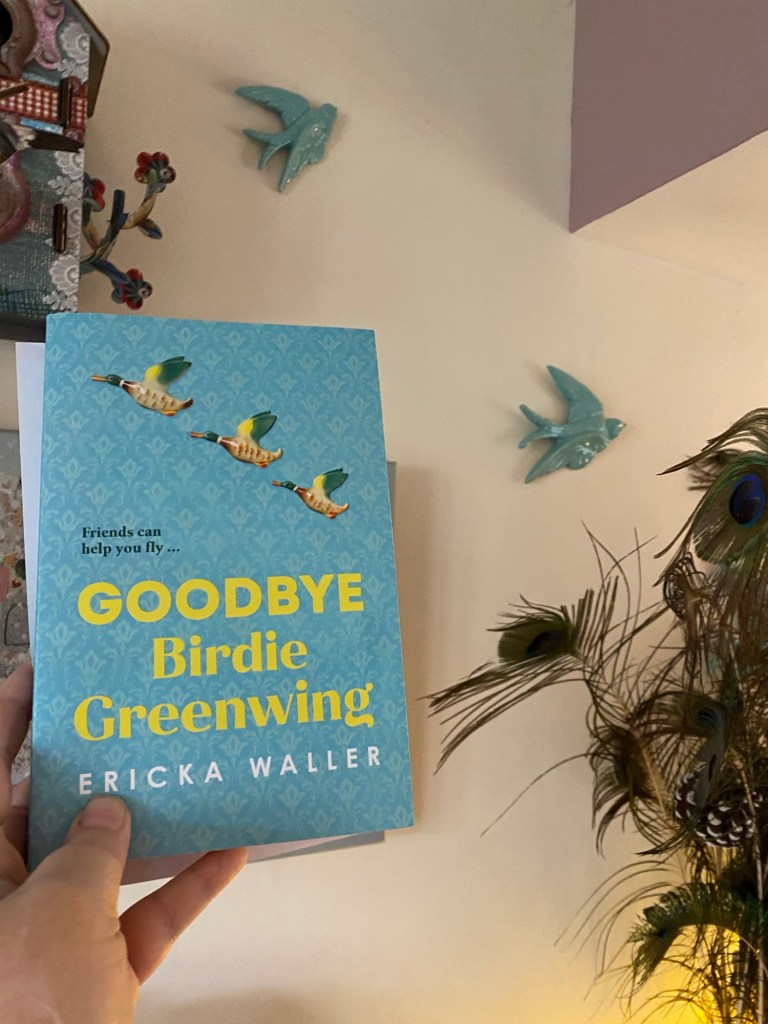
Goodbye Birdie Greenwing by Ericka Waller


Birdie Greenwing has been at a loose end ever since her beloved twin sister and husband passed away. Too proud and stubborn to admit she is lonely, Birdie’s world has shrunk. But then some new neighbours move in to the house next door. 

Jane has come to Brighton for a fresh start, away from her ferociously protective mother Min. While Jane finds it hard to stand up for herself, her daughter Frankie has no problem telling people what she does and doesn’t want. Ada Kowalski has come to England to follow her dreams, but her new life is harder than she expected.

When a series of incidents brings their lives crashing together, the three find that there is always more to a person than meets the eye …

Goodbye Birdie Greenwing celebrates relationships in all their quirky, complicated uniqueness. It is a story about the choices we make and how we justify them. About finding out who we are, not who other people think we should be.

I read Ericka’s novel in a day because I simply loved being in the presence of these lovable and contrasting characters. As I met each one I could see the impact they could have on each other’s lives. As the author takes us inside their everyday lives, their inner worlds and their pasts she looks at family dynamics, sisters, mothers and daughters, but also the whole question of being a woman in the 20th and 21st Century. In fact there was a point when I was reminded of America Ferrara’s speech in the film Barbie. It addresses the choices we make, the expectations placed on us within our families, by other women and by society at large. She takes us into that contrast of who we are, how we compare that to our internal and learned ideas of what the word ‘woman’ means. Birdie, our central character, is a elderly woman living alone in Brighton with her little dog Audrey. She lost her sister Rose and husband Arthur several years ago. She is stunned when tests at hospital confirm she has cancer, but before the doctor can give her more information and make a plan Birdie has walked out. Her oncologist Ada recognises that determined walk and the lift of Birdie’s chin. She realises that Birdie is going to face this alone and she worries that she will struggle without the help that can be offered. In fact Ada realises that Birdie lives on her street, so takes to walking past and checking for telltale signs that Birdie is struggling. Ada is also lonely after relocating to Britain from Poland. Used to life on an isolated farm and a very different society, Brighton can be a lot to take on. Despite friendly overtures from her secretary Denise and Connie in the WRVS cafe Ada is solitary, except for the time she spends helping Aleksey and Lech in the Polski Sklep. When a new intern starts on her team Ada’s teamwork skills will be tested, not to mention her social skills. Finally, there’s Jane and her daughter Frankie who have recently moved in next to Birdie from Bristol. Jane is struggling with the guilt of moving away from her mother Min, although her sister Suki is out in Asia just living her life as she chooses. They used to be so close, but now all she gets are emojis. Her daughter Frankie’s bluntness and practical nature might seem like a hindrance when forming new connections, it certainly gets Jane called into school enough, but could her lack of inhibitions and tact actually help them make friends?

There are two mysteries in the novel and I enjoyed watching them slowly unravel. There’s the mystery of what has happened to Birdie’s husband and sister, Arthur and Rose. At first I wondered if they’d run away together but Birdie’s guilt seems to have lasted for decades. The other mystery is what has broken the relationship between Jane and her sister Suki? Suki is distant and even when she rings to speak to Min, she’s very quick to end the call if Jane is present. Jane tries hard, sending her sister funny videos, memories of their childhood and information about Min but only gets emojis or a thumbs up in return. Each of the women have a sister and their relationships with them are fascinating. Birdie always felt responsible for Rose as she had rheumatoid arthritis. When she met Arthur and fell in love she hadn’t imagine she might have to make a choice, so when Arthur asks her to marry him she hesitates. What about Rose? Luckily Arthur had realised that the two sisters were a package deal. Birdie felt guilty that Rose wouldn’t have the same choices in life and whether there was something she did wrong, before they were born, that led to her sister’s disability. Birdie worried that she’d somehow pushed herself forward in the womb and take more than her share. Now Rose was ill as a result. Jane and Suki’s rift seems to date back to when the sisters went travelling together. Jane returned from Thailand with Frankie and moved back in with Min, but Suki stayed. They are very different women, with contrasting life choices but that shouldn’t stop them being sisters. Ada has a sister called Ania, but she has chosen a very different life. While Ada is saving lives in a different country, Ania lives close to their parents and is married with children.

I’ve never had a sister, but it seems as if they provide an instant comparison; they are the mirror in which your own life is reflected. Ada feels like the ‘bad’ sister, the one who followed her own dreams rather than staying to work the family farm. This choice has cut her off from the family in a way. She knows they sacrificed a lot for her education, so she sends part of her salary home every month and when she visits takes them gifts. She wants to show them that their sacrifice was worth it and she is doing well. However, this changes her standing in the family and while there’s no red carpet for Ania, when Ada comes home she is treated like a guest, placed in the best room and given the special soap saved for visitors. She feels like a stranger in her childhood home. She would be happy to throw on jeans and help with the animals but they won’t let her. It’s hard for her to accept these two sides of herself; the Ada who would happily muck out the cows and the Ada who wears a suit and saves lives. She thinks that her parents value Ania more because she made the ‘right’ choices and is still part of the community. Whereas Ada’s life is outside their experience and difficult to understand, her ambitions are perhaps unnatural as opposed to motherhood. Similarly, Jane had wanted to have children, a revelation that took her by surprise, whereas Suki knew she didn’t want motherhood. Could there misunderstanding be explained by this difference? Could Suki feel guilty or even selfish for not having children and making life choices based on what she wants? However, just because you’re childless, it doesn’t mean you can’t ‘mother’ people. There’s also a generational difference in the way they mother, with Min’s tactless and sometimes hurtful words seeming like they belong in another century. There’s a way in which Min and Frankie are very similar in character, but now everything has to have a label. Jane wonders why Frankie has to be pigeon-holed and defined in some way. Why is it always Frankie that’s in the wrong? She has a much softer way of mothering that ironically Frankie often sees as fussing and she much prefers the more practical attitude of grandmother Min.

Where Waller really moved me, was where these quirks of character benefitted someone else. Where even those aspects that you’d struggle to call positive found their place in the world. Frankie has no inhibitions and Jane is called into school when she gives a classmate a frank assessment of her braces, including the trapped cabbage. She doesn’t understand why the things she says are wrong when they’re true. When Birdie has a short stay in hospital and has the realisation that she might be in her final days it’s not medical professionals Jane or Ada that she needs. At first it’s Frankie who goes in and decides to help, making Birdie comfortable and making her some lunch. The two rub along nicely together, probably because there’s no fuss with Frankie and I understood that need for someone who isn’t flowery, overly chatty or phased by her illness. Similarly Min is the perfect carer for Birdie, she suggests that being of the same generation might make Birdie feel more comfortable and even Ada has to agree that their dynamic works. Min and Frankie’s help reminded me of how Ada’s parents would help their neighbours out. On her visit to family in Poland, Ada noticed how her mother’s farmhouse provided a quiet place for people to get away, like the neighbour who comes in on Saturday mornings to read his paper. This communal way of living is echoed by Aleksey and Lech who happily feed Ada; their fondness is shown in a practical way. Ada’s secretary Denise is stunned when, after years of finding her a bit of a cold fish, Ada offers her a home after the split from her husband. It shows we should accept people as they are, because we all show emotion and affection in different ways.

I felt like this was another book about connection, both with others and with ourselves. It’s a subject I find fascinating and I’m picking it up a lot lately in fiction. I wonder whether this is an unconscious response to the isolation of the pandemic. The author is brilliant at depicting those little inhibitions and we hear them in each woman’s narration. Jane hovers on the edge of a ‘huddle’ at work because she doesn’t know if she’ll be welcome or not. Ada doesn’t knock on Birdie’s door for professional reasons but also because she doesn’t want to impose. They all have to learn how to connect with who they are. Jane needs to learn to assert herself more, to accept her life choices and explore why she’s spent years of her life as a single woman. Suki’s guilt over the choices that were right for her stop her having a relationship with Jane and Frankie, but it was the right choice. As Ada compares herself with Ania she needs to see that it was right for Ania to stay near family and become a mum, but that moving away and using her skills to help others was the right choice for her. Even Birdie, who is the central character around which these interesting women revolve but she too has a lot of acceptance to do. She must accept this new vulnerability and need for help from others, as well as accepting she deserves it. Mostly she needs to forgive herself, for something that wasn’t even her fault. She has punished herself for years and it is the lovely Connie (whose collection of innuendo laden mugs rivals my own) in the hospital’s WRVS café who helps her see that while she still has time this is her time. While we still have life, we must live it. Whether we have months, days or hours left, we must live them.

Meet the Author

Ericka Waller is 38 and lives in Brighton with three daughters, too many pets and a husband.

She is an award winning blogger and columnist.

When not writing she can be found walking her dogs, reading in the bath or buying stuff off eBay.

Posted in Netgalley, Publisher Proof

Profile K by Helen Fields 

I’m going to say up front that I’m a massive Helen Fields fan, with The Last Girl to Die being a particular favourite of mine. Her last novel introduced us to the unusual and complex psychologist and profiler Dr. Connie Woolwine at The Institution. Connie makes a cameo here, but the undoubted heroine of this tale is Midnight Jones. Midnight lives with her twin sister Dawn ( see what the parents did there) and is her main carer, since their parents chose to go travelling when Midnight finished university. Dawn was affected by lack of oxygen at birth leading to Cerebral Palsy. It’s effects are very individual to the patient, but it can cause both physical and intellectual disabilities. Dawn is profoundly affected, needing care 24/7 and that’s why Midnight is desperate to keep her job at Necto. She needs their higher than average pay packet to cover the costs of care. The company like to present themselves as an ethical firm, starting with their space age offices, filled with plants and trees that help create a better work environment. They have their fingers in many pies, but Midnight is a profiler and every day works through thousands of applications for universities, the military and other organisations, passing some applicants through to be interviewed and rejecting others based on assessment data alone.

Necto’s testing systems are so sophisticated, there’s nothing about the applicant they don’t know. In assessments, virtual reality head sets show images and the applicants every response is recorded from intelligence to levels of empathy. Then, dependent on the parameters for the particular institution they’re applying to, they are accepted or not. However, on this particular day Midnight finds a candidate who isn’t run of the mill, in fact he’s a one-off. In training, a candidate like this is jokingly dubbed a ‘Profile K’- for killer – Midnight finds a man who has recorded as showing zero empathy. When she watches the footage he was shown through her own headset, she is sickened by what she sees. This is way beyond the normal films shown to illicit empathy, it’s as if the machine couldn’t get a reading so has chosen more and more disturbing and violent images that should provoke empathy and disgust. Yet none comes. Unable to compute the response and also where such extreme footage could have come from, Midnight decides to take this further but her supervisor Richard Baxter isn’t interested. So she goes over his head, telling his boss that she’s found a Profile K. Surely they have a duty to report him, what if he’s dangerous? What if he kills? 

I’ve read three great thrillers this weekend in quick succession but this was by far the most inventive, with a hint of dystopia and a touch of social justice that was right up my street. I empathised with Midnight’s situation, determined not to let down her sister Dawn but struggling to pay for just enough care that Midnight can go to work. There is no room for a social life or romance. Their heads are just above water, but there’s no flexibility or empathy for her care role within her company, despite it’s apparent ethics. She takes a big risk taking her findings higher than Richard Baxter, because if she loses her job how will she afford the care Dawn needs? Yet she can’t ignore what she knows. Especially when the worst happens. A young woman is killed very close to where she and Dawn live and although Midnight doesn’t know this at first, the torture methods used are very close to a scene from the film shown during the Profile K’s application process. The victim was subjected to the death of a thousand cuts, which would have been both a painful and long drawn out way to die. Midnight is horrified to find that her boss would rather keep her discovery under wraps and she’s reminded of her non-disclosure agreement. What reason could they have that’s better than saving the lives of future victims? Midnight has read about the psychologist and profiler Dr Connie Woolwine and has a theory to run past someone with her expertise. Not expecting a response, she sends a message and is pleasantly surprised when the unusual doctor calls her late at night to talk it through. Midnight is scared of the consequences, but sure of her theory – could Necto have known about the Profile K? What if they showed the violent material on purpose to trigger a response? To turn someone with killer potential into a killer for real. 

I absolutely loved this belting thriller, because it was complex and intelligent but also full of human feeling. I guess this might sound strange when there’s quite graphic violence involved in some scenes, but they’re balanced by the pure depth of feeling Midnight has for her sister and later on for the elderly lady they begin a friendship with. I loved how authentic Midnight’s caring situation was, with a very clear struggle between wanting to provide the best help for someone she loves but feeling the fear of that sole responsibility. The anger she feels towards her parents is very real, because although she understands their need to follow their dreams, their freedom has curtailed her own. She can’t make any life decision without factoring Dawn in. How could she have a romantic relationship? What if she falls ill herself? Having been a carer I know how lonely and exhausting it can be. We can see the pull between home and work life, in that they both hinder and are dependent on each other. Parts of the book are genuinely terrifying. There is a scene that’s going to stay with me, like that episode of Luther where a woman gets undressed and climbs into bed followed by a ceiling shot where a man slowly slides out from underneath as if he’s been working under a car. It’s that combination of vulnerability and evil. We’ve all done that walk home where we get inside and lock the door, then take a deep breath and know we’re safe. To be attacked in that moment is heart-stoppingly scary! In the end, everything had to stop for those final chapters as I raced through to find out what happens. I was glued to these scenes, made all the more terrifying because the victim doesn’t have a clue how much danger she’s in. It’s one of those finales where I put the book down and realised every muscle in my body was tense! I needed some yoga stretches and a few episodes of Friday Night Dinner before bed to unwind. This is an absolute cracker of a read and I highly recommend it.

Published by Avon 25th April 2024

Meet the Author

A Sunday Times and million copy best-selling author, Helen is a former criminal and family law barrister. Every book in the Callanach series has claimed an Amazon #1 bestseller flag. ‘Perfect Kill’ was longlisted for the Crime Writers Association Ian Fleming Steel Dagger in 2020, and others have been longlisted for the McIlvanney Prize, Scottish crime novel of the year. Helen also writes as HS Chandler, and has released legal thriller ‘Degrees of Guilt’. In 2020 Perfect Remains was shortlisted for the Bronze Bat, Dutch debut crime novel of the year. In 2022, Helen was nominated for Best Crime Novel and Best Author in the Netherlands. Now translated into more than 20 languages, and also selling in the USA, Canada & Australasia, Helen’s books have won global recognition. She has written standalone novels, The Institution, The Last Girl To Die, These Lost & Broken Things and The Shadow Man. She regularly commutes between West Sussex, USA and Scotland. Helen can be found on X @Helen_Fields.

Posted in Netgalley, Publisher Proof

Nightwatching by Tracy Sierra

Yesterday upon the stair I met a man who wasn’t there,

He wasn’t there again today, oh how I wish he’d go away.

Antagonish by Hugo Mearns

My grandad taught me the first few lines of the poem above. I think it appealed to his sense of humour. I thought it was a riddle and I used to ask ‘but is he there or not?’ This is the very question this whole book revolves around from the first line – ‘there is someone in the house’. Our unnamed narrator wakes in the night as a strange noise breaks through her sleep. I was told by a book reviewer I respect enormously that this was brilliant and she was absolutely right. Although I drove my husband crazy by waking him up to ask if he remembered locking the door. He hadn’t always and I knew I wouldn’t sleep until one of us had crept downstairs and checked. Preferably not me. This is the situation all of us dread, waking to that unexpected noise in the night and finding there is an intruder. Our narrator is at her secluded home with her two small children in a blizzard. The sound she hears is a familiar one, a tread on the stairs to her room, but it’s unusually heavy and slow. She has a split second to make the decision – does she hide, try to run or stay and fight. Will all three of them get out alive and if they do will anyone believe her?

The first thing that hit me about this book was the unique voice this mother has. We see everything through her eyes and experience everything her body goes through – mainly fear. There’s the heart-stopping tension of that first night, the immediate threat rendering everything else unimportant. Yet there are other fears lurking underneath – will the police believe her, will it stir up questions about her husband’s absence, what will her father-in-law make of what has happened? She is waiting for people to doubt her and the reader doubts her too. Always on the lookout for unreliable narrators, I did wonder whether I should trust what she was experiencing. It’s just so incredibly odd. This tall intruder seems to have two voices: a raspy harsh voice when he’s angry then more of a soft, weedling voice. A voice you might use for children as he asks them to ‘come out little pigs, little pigs are more delicious’. As he does this right next door to their hiding place, it’s even more terrifying. Her little girl whispers to her mum that it’s the ‘Corner Man’ from her nightmares, he sits in the corner of her bedroom at night and whispers to her. My heart was in my throat at this point! Was he real or something supernatural? Could he possibly be real if this is true? I wondered if this overwrought mother is imagining this person, but that opens up a more frightening prospect – is she hallucinating and terrorising her own children with her delusions? The author plays with the reader beautifully. Just as I was starting to think the narrator is completely crazy, she addressed my concerns.

‘How nice it would be to be crazy instead of correct. For t all to be a psychotic break. To have her husband come down those stairs. She’d pop out of the hidden place relieved – rated – to meet his look of confusion’.

This is a woman who is used to being misunderstood and there’s no shortage of men around, happy to convince her that she’s strange, hysterical and marked as different in some way. There’s an awful moment, recalled while hiding, when her husband told his father he was not going to continue studying law. She hears his father’s fury down the phone:

‘You never behaved this way before you met that girl. Christ. She’s disfigured’.

Our narrator has vitiligo – a long term skin condition where areas of skin lose melanin and become paler, creating a patchy complexion. People stare and perhaps mistrust her, worried they may catch a skin disease or worse. Added to this, she’s a newish mum full of hormones, perhaps she’s a bit anxious and over-protective. She’s recently bereaved, having nursed her terminally ill mother-in-law. Maybe she’s not in the best frame of mind. All of this and the fact that she’s a woman, mean the police will be unsure or just plain rude about her. They keep explaining there’s no evidence: no footsteps in the snow; nothing of any value is stolen – in fact the items she does mention are probably lose or mislaid by the children. They don’t sound like the type of things someone would steal. They’ll turn up.

While hiding from one monster, we learn that she’s battling another in the shape of her father-in-law. Honestly, I have never wanted to climb into a book and punch someone more. He is a bully, but everyone else placates him. He is ashamed of his son, even more ashamed of his disfigured daughter-in-law. He hates the noise of his newborn grandson and his wife apologises! Even while his wife is dying, he sits with his feet up watching television and creates holy hell if he’s disturbed. His daughter-in-law does all the work and is rarely appreciated or thanked. He wants his grandson to man up and stop being a wuss. Worst of all he’s aggressive, violent even. Having him in charge of her children is the worst outcome of all. This mother is also fiercely protective. A passing incident where a stranger commented on her daughter and pulled the drooping strap of her sundress back onto her shoulder, really bothers the mother. You can feel her hackles rising in much the same way she reacts when her father-in-law criticises her son. She has very keen instincts and it’s fascinating to see how those instincts can be eroded, mainly by men who still consider women a hair’s breadth away from hysteria and the asylum. It shows that we’re not just gaslighted by individuals, it can be institutional, perpetuated by organisations like the police force or as I’ve found in my own life, the medical profession.

The whole setting is brilliantly eerie. A secluded mansion house with woods behind and five acres of open pasture between them and the next house. The house was built in 1722 with two staircases, higgledy-piggledy rooms and even it’s very own graveyard. She loves the house, even though it’s totally impractical and a nightmare to heat. She’s got to know each creak and bang, it’s night noises, but never imagined when she viewed the house that she’d be fleeing into the secret space next to the chimney, where the builders walled in the labyrinthine brick work. They never imagined being walled in. It’s a place where ghostly presences and hidden secrets would be easy to believe. Yet it’s not all scary. There are some wonderfully tender moments between the mother and her children and we can feel how torn she is when she has to be sharp with them, to keep them quiet and safe. I had no idea where this story might go and the author was one step ahead of me all the way. I might have finished this incredible thriller, but I’m still carefully locking the doors at night and when the cat decided she’d rattle our door to upstairs at 3am my heart did beat a little faster. I can’t believe how assured and psychologically complex it was for a debut! If you only buy one thriller this year, make it this one.

Out now from Viking

Meet the Author

Tracy Sierra was born and raised in the Colorado mountains. She currently lives in New England in an antique colonial-era home complete with its own secret room. When not writing, she works as an attorney and spends time with her husband, two children, and flock of chickens. Nightwatching is her debut novel.

Posted in Netgalley, Personal Purchase

The Star and the Strange Moon by Constance Sayers.

Constance Sayer’s latest book has a lot of her literary trademarks: time slip narratives; a mystery to solve; magic realism and romance. She places her story in the world of Hollywood and film-making, with two main characters – the actress Gemma Turner and young film-maker Chris Kent. In 1968 Gemma is staying in London with her rock star lover Charlie Hicks when she is offered an unexpected film opportunity. Until now Gemma has been making a series of surfing films based in California, but she’s been longing to make something that has more critical acclaim. French director Thierry Valden is part of the nouvelle vague or new wave movement and has offered her the lead role in his next film L’Etrange Lune a vampire film set in 19th Century France. He seems open to changes and often works with improvisation so her long held skills as a writer might be needed too. However, when she gets to Thierry’s chateau the mood seems to have changed. She is greeted by Manon Valden, who warns Gemma off her husband immediately which isn’t very welcoming. Thierry doesn’t seem like the man she met before and when she reads the up to date script it still has the same stilted dialogue, despite the potential changes she had sent him. When she finally speaks to Thierry alone, he makes it clear that something has changed. He had envisioned more of a collaboration both on the script and possibly in the bedroom, but L’Etrange Lune will be his final film and he can’t afford to take risks. Gemma will have other opportunities for scriptwriting but he won’t. The next day as they’re filming in the nearby town of Amboise, Gemma has a scene where she runs down a darkened and cobbled alleyway, seconds after calling action the camera has suddenly lost her. Has she fallen on the cobbles? Are the dark shadows concealing her? Maybe she’s walked off in a huff. Yet it seems Gemma is genuinely gone and as they look back over the scene on film, frame by frame, she’s simply disappeared in front of their eyes.

Christopher Kent has had a strange fascination with the actress Gemma Turner since he was a child. Now at film school in 2007, his attachment to the actress stands out because she was never one of the greats – students aren’t usually hung up on obscure actresses from a handful of surf films. He remembers the day he first saw her, in a hotel where vintage black and white photos of actors were hung next to every door. In a very chaotic and traumatic childhood, this was one of those moments where he and his mum were without a roof over their heads. Chris could sense his mum was edgy and on the verge of a mood change, but as they approached their room and she saw the photo by the door she flew into a rage. She pulled the picture of Gemma Turner off the wall and smashed it, shouting personal insults and expletives. What was her link to the actress? Knowing Chris’s fascination with Gemma, his girlfriend and fellow student Ivy comes to him with a strange proposition. Every ten years Gemma’s final film, L’Etrange Lune, is shown to a select group of 65 guests at a randomly chosen cinema. Ivy’s father is one of the 65, but for this viewing he has offered Ivy his two place. They must wear a mask and cloak, but most importantly of all they must never approach or try to identify other members, nor can they talk about what they’ve seen. Chris doesn’t know what to make of the film. It seems to be a rather formulaic vampire movie, but there’s something odd about Gemma’s performance, almost haunting in fact. While in some places it’s fairly average, in other scenes there’s an incredible intensity to her acting. It’s almost as if she’s genuinely terrified.

I found the book a little slow at first, but once we reached Gemma’s disappearance I was hooked by this strange story. As we reach Gemma’s timeline in France and Chris starts investigating her disappearance several decades later, the pace of both timelines really picks up. There are suddenly enough strange and impossible happenings for the reader to start wondering what’s coming next. To be honest it felt like anything might happen! I loved the sense of evil created by the film – the strange melancholy that falls over those who see it, something that worsens if you keep going back every ten years. The rumours that the film changes in that decade are intriguing and suggest someone is still behind the lens. Could one of the 65 be playing tricks on the rest? Perhaps not letting on they have extra scenes that Thierry discarded, or that they have found an actress who is the double of Gemma Turner. Is something magical at work here? Despite all the warnings, I did understand Chris’s need to investigate, even when those he interviews start to feel the consequences of talking. This is such a clever concept and the author creates a real sense of mystery with wonderful period detail, especially in the 19th Century when there’s much discussion on the restriction and discomfort of women’s fashion especially in the summer. I also enjoyed 1960’s London where Gemma’s lover Charlie is part of a Fleetwood Mac-esque band where partners are swapped as readily as song lyrics. There’s even a very unexpected romance woven within this magical and unexpected series of times and worlds. What I wanted to see more than anything was for Chris to overcome the trauma of his childhood and fulfil his potential, wherever and whenever that might be.

Out in paperback from Piatkus 28th March 2024

Meet the Author

Constance Sayers is the author of A Witch in Time, The Ladies of the Secret Circus, and The Star and the Strange Moon from Hachette Book Group.

A finalist for Alternating Current’s Luminaire Award for Best Prose, her short fiction has been nominated for the Pushcart Prize and Best of the Net.

She received her master of arts in English from George Mason University and graduated magna cum laude with a bachelor of arts in writing from the University of Pittsburgh. She attended The Bread Loaf Writers Conference where she studied with Charles Baxter and Lauren Groff. A media executive, she’s twice been named one of the “Top 100 Media People in America” by Folio and included in their list of “Top Women in Media.”

She splits her time between Alexandria, Virginia and West Palm Beach, Florida.

Posted in Netgalley

Has Anyone Seen Charlotte Salter? by Nicci French.

Charlotte and Alec Salter have four teenage children and live in the small village in East Anglia. We meet them on Alec’s 50th birthday where a big evening party is planned for most of the village as well as family. Yet at the beginning of the party there are no Salters present. Charlotte went for a walk and hasn’t returned. Alec did same, but they didn’t go together or in the same direction. Fourteen year old Etty is worried. The last of the Salters and yet to leave home she is starting to panic. She loves her mum, but if she is gone, for whatever reason, that means she has to spend two years at least in the company of her father. Just the two of them. Alone.

In the days that follow as the police investigate, there are rumours that Charlotte and family friend Duncan Ackerley were having an affair. Of course it was more widely known that Alec was seeing villager Mary Thorne, in fact his own daughter heard him on the phone to her from the other line the night of the party. When the Ackerleys invite the Salters for Christmas Day, only Lottie turns up at first, her brothers are late and Paul is probably giving it a swerve altogether. Yet Etty thinks it would be worse to sit at home, staring, worrying and jumping at every sound. As dinner time approaches, the Ackerley’s start to wonder where Duncan has got to. He’s been out for a walk, possibly down to the boat as there is a super high tide and he needs to move it. It’s Etty and Giles that start to look for him and he does try to shield her eyes as they come closer and see that Duncan is slumped in the water, dead. We move between the party night and the Christmas days that follow and twenty years later when all the Salters are once again in residence at the family home.

Everything about the house is dated and dilapidated, including their father Alec who is succumbing to dementia. Etty, ever the lawyer, is organising his move into a nursing home and the clearance of their parents possessions. For this job she has found a bright and organised woman called Bridget. She gathers the siblings and tells them that the easiest way is for them to put specific coloured post-its on their must have items, then she takes away the rest for sorting, selling and recycling. It’s emotional, especially since there are now only three of them. Their brother Paul never coped with life and the loss of their mother and sadly committed suicide on the anniversary of her disappearance. Meanwhile, now a TV personality, Morgan Ackerley is home to record a podcast on that Christmas, speculating on what happened to Charlotte and his father. This is going to stir up the village and make life difficult for both families. When a sudden event leads to yet another death, the police are called and a new detective looks at the old files as well as this new case. Are they linked in some way? Despite her boss seeming to warn against digging up what’s been long buried, this detective is determined to find out what happened to Charlotte Salter.

Seeing how much these families have changed over time is so interesting and I found myself wondering how different the Salters and Ackerleys might have been if this crime hadn’t happened. Etty melted my heart a little bit because she’s clearly so close to her mum and on the night of the party she’s the one who’s trying to raise the alarm because she knows something isn’t right. The boys are largely off doing their own thing and seem almost inured to the state of their parent’s marriage. The consensus is they’ve probably had a row, but Etty knows that despite a row, or their dad being on the phone to Mary Thorne at 2am the night before, there is no way that her mum wouldn’t turn up to his birthday party. She has always kept up appearances in that way. She even looks at her father and wonders whether he could have killed her. Her relationship with each parent couldn’t be more different, there’s a distance between Etty and her father both in the past and the present. In fact he doesn’t seem that invested in any of his children. Yet Etty can still imagine the smell of her mum’s perfume and what she would be wearing and I could imagine Charlotte hugging her daughter, her perfume just one of the many scents that signify home. With only the boys and her distant father left who will she go to for hugs? I could feel her panic as realises that after Christmas, the boys will go back to jobs and university and she will be left alone with their father for two years. I could also see the shadow of this huge loss in the adult Etty: an awkwardness about whether the family kiss to greet each other or not; keeping a lawyer’s professional manner at all times; doing all the organising and keeping busy so she can remain detached. She doesn’t cry, even when finding memories of their childhood. She holds herself stiffly, almost brittle and I wondered how much it would take for her to break.

There are many ghosts here. It’s not just Etty who was changed. They all feel the loss of their brother Paul deeply and he’s the empty chair at the table, even now. They tiptoe around each other, trying not to open old wounds but when a fire is started at Bridget’s home a new murder investigation is opened. Either the arsonist didn’t realise Bridget was at home, or didn’t care. Was their aim to kill the house clearer or was it to hide evidence that she’d unwittingly taken into her home alongside the Salter’s belongings? I found this mystery so intriguing that I couldn’t stop reading and I loved the psychological aspects of how these unsolved crimes had affected the families and the village as a whole. There were a couple of crucial points past and present where everyone I suspected seemed to be going for a walk alone – without even having a dog as an excuse! I was suspecting that Lottie’s husband wasn’t as advanced in dementia as she seemed, but couldn’t be sure. The reveals were satisfying, but it was the methods of concealment that really blew me away and I loved how thorough the investigating detective was. She wanted to be sure, whether or not it disturbed or upset some people and I loved that about her. Mainly I thought about how the author successfully showed the long term effects of a crime like this, even years on from the actual incident. These children were all changed forever and the villagers have lived under a fog of suspicion for years. Etty particularly left me thinking of all the events I’ve been able to enjoy with my mum over the last 50 years, that she and Charlotte had missed out on. Finding a balance between the real emotions that surround a crime and creating a page-turning mystery is difficult, but here I think the authors have really pulled it off.

Out 29th Feb in Hardback from Simon and Schuster

Meet the Author

Nicci French is the pseudonym of English husband-and-wife team Nicci Gerrard and Sean French, who write psychological thrillers together

Posted in Netgalley

The Unfinished Business of Eadie Browne by Freya North

Eadie lives an unusual life in her garden city home, situated next to a cemetery. Far from being macabre and frightening, the dead are often this lonely little girl’s best friends. They provide her with somewhere to go and talk, without censorship or interruption. Her Mum and Dad work jobs outside the home, one in the day and one at night, but the rest of their time is spent at their desks in the family living room each completely engrossed in their writing work. She is an outsider at school, without friends and a target for kids like Patrick Semple. Patrick is relentless in his bullying of Eadie and it takes her a long time to find her little tribe. Her friend Josh lives with his grandfather who has a convenience shop, he’s also a concentration camp survivor. She also makes friends with Celeste, who’s lived in France and her mother, Sandrine, is an alcoholic. These are her first friends her own age, as up until now she’s mainly hung out with Michael, an elderly man who tidies the cemetery and Ross who plays the bagpipes at funerals. Eadie is feeling so settled with her life, but these three young friends are on the cusp of a huge change. All three will be going to different universities and while Eadie likes to think nothing will change, distance does have an effect on relationships and the whirlwind of Fresher’s Week will immerse them in their new lives. Will they still have time for each other? More importantly, will Eadie be able to leave the difficulties of her childhood behind her and make a life in Manchester?

Freya North beautifully inhabits the world of a young child and the fears and preoccupations that are their daily lives. It immediately swept me back to my own childhood and moments when I was afraid or felt like I didn’t belong. In my first year of primary school at age 5 we lived so rurally I had to get on a public service bus and remember when to get off and how much to pay the driver. It left me anxious about public transport ever since. I was also bullied, being poor but having a place at the local grammar school wasn’t easy and I never had the right clothes. My family also went to an evangelical church which made me different and restricted my social life. I really identified with Eadie, for feeling that her background was less than perfect. I felt Eadie’s pain. As children, if people tell us we’re odd or wrong in some way we internalise that feeling and assume they’re right. Eadie’s parents are not neglectful, but they are a very definite twosome, seemingly unaware that their only daughter is achingly lonely and suffering from immensely low self-esteem. As adults we can step back and see that her bully is probably suffering too, but children don’t realise this. As the group of friends grow towards leaving school, the changes are not easy for Eadie to cope with. What will happen to their trio as they all go their separate ways? While Josh and Celeste are excited about what’s coming, Eadie is anxious. What will Manchester hold? Will she be accepted?

I love the North West of England, my family are originally from Liverpool but my best friend is a Mancunian and we’ve spent an enormous amount of time there over the years, mainly seeing gigs from Manchester bands like Elbow. However, I grew up in the late 1980s and early 1990s and I was an indie kid. I started with The Smiths and Morrissey through to the Madchester scene and although I was too young for the halcyon days of the Hacienda I did love New Order with a passion and Bizarre Love Triangle is one of my favourite ever tracks. I felt immediately transported back to the reign of Tony Wilson, when New Order would be in residence and the club was heaving. North captures perfectly the heady days of the summer of love – the advent of Acid House and Ecstasy. Here, having made friends, Eadie finds her place of worship. She loves ‘the Hac’. She can be found on the dance floor in just a sports bra and shorts combo, able to dance all night with a raging thirst from E and a feeling of well-being to the whole world. This is before and the terrible deaths that occurred. Eadie and her friends rent a house on Hathersage Road, across the road from the amazing Baths with its art nouveau interiors. This is her home now. In fact she becomes so comfortable in her life here that she stops going home, she stops writing to friends and lives completely in the moment. It’s when things start to change that Eadie begins to struggle. Housemates have plans for their second year, placements abroad, moving back into halls and Eadie starts to fall apart. An unexpected face from the past comes back to haunt her too. After a warning from the barman at the local pub where she works, that the Hacienda is being run by drug gangs and that means violence. This leads to an unexpected blast from the past and is the catalyst for a breakdown. Eadie finds herself unable to complete work and even starts to question whether to stay at university. With her housemates making different plans for next year, Eadie can feel the foundations of her life shaking.

Freya North captures perfectly how secrets and traumatic experiences can follow us through life. If left unaddressed, our life is like a wall with a fault in it’s foundations. It can only be fixed by removing the upper layers until you reach and remedy the original fault. Eadie has covered her trauma over with many different layers: her friendships with the residents of the cemetery; alcohol and E; the Hacienda and acid house. I felt something with Eadie’s story, because of my own recent experiences with old friends. We can experience so much difficulty and pain in life that we feel far removed from those friends we’ve had in the past, but often they’re still there, just waiting for a sign that they can help or support us. I loved Eadie’s relationship with Kip, which isn’t perfect but the love is all the more real for those imperfections. His love is shown in actions rather than words and is stretched to it’s limits at times. Eadie is one of those people who takes a long time to work out who she is and what she wants to do in life, that is until she takes care of her unfinished business and then she flies.

Out now from Mountain Leopard Press

Meet the Author

I’m the author of 15 bestselling novels and am so excited to bring you my 16th novel: THE UNFINISHED BUSINESS OF EADIE BROWNE. I know you can read the blurb here – but I wanted to tell you how important and personal this book is to me… Much of it was drawn from my own memories of leaving home for Manchester Uni in the late 80s and remembering what that FELT like. Also, I live outside Welwyn Garden City in Hertfordshire – and I became interested in the visionary ethos of the Garden City movement. Because lockdown cancelled all the lovely centenary celebrations planned for Welwyn Garden City, this novel also serves as my tribute to the town and its Founder. I hope you’ll enjoy the novel – unlike Little Wing, my previous novel which flew out of me in 4 months flat, I really toiled over Eadie Browne; writing and rewriting and REWRITING until I was confident I’d written my best book yet… this much I owe to you, my lovely readers.

2021 marked the 25th anniversary of the publication of my first novel Sally! My 15th novel Little Wing was written during the first lockdown. Set partly in the Outer Hebrides and interweaving the secrets and lies of two families over two time frames – it was a joy to research and write and certainly kept me sane during the Pandemic. I’ve always been focussed on a sense of place being a key feature of my writing – settings being a leading character, not merely a backdrop. Previous locations have included North Norfolk, British Columbia, Derbyshire, Vermont, France, Scotland, Wales, Cornwall… I’m an avid reader too – and the novels of Barbara Trapido, Jane Gardam, Rose Tremain and Mary Wesley inspired me to write. I hope you enjoy my books – please keep in touch via my website, Facebook, Twitter and Insta! Happy Reading! Sign up for my newsletter (via my website)

Posted in Netgalley

Expiration Dates by Rebecca Searle

It’s been a while since a romantic novel has made me shed tears but I reached just over half way through Rebecca Searle’s new novel and I felt a lump forming in my throat. My reaction was possibly more emotional than the average, because I felt seen. Rebecca has this habit of taking what seems like a simple romance and adding an element that immediately elevates it to something more. Daphne lives in L.A. and works as an assistant to a film maker, outside of work she is a busy bee flitting between visiting her parents, spending time with her dog Murphy and roaming flea markets for quirky household items. However, her favourite weekend mornings are those she spend with her ex-boyfriend Hugo: he wakes her early, they get to an early farmer’s market for the best choices such as the sunflowers that are always gone by ten am. Her career hasn’t changed much over time and she has chosen to stay in the area to be close to her family. Daphne is single, at a point in life where people she knows are staying together, having babies and getting married. Daphne tends to have short term relationships, but she is starting to wonder about all these things. Are they something she’ll ever find? Her friends can’t understand it, she’s a great girl, and have started to offer to their friends and work colleagues as potential dates. What they don’t know is that Daphne keeps a box under her bed and in it are post-it notes, drinks coasters and theatre tickets all which have the name of a boyfriend and a length of time, an expiration date. From one night to several months these cards enter her life around the same time as a new man and Daphne knows the finite amount of time they have together. This bit of magic from the universe is amazing in some ways, but in other ways she’s starting to think they hold her back. Are they starting to become a self fulfilling prophecy? Then her friend Kendra sets her up with Jake and Daphne waits for her expiration date to arrive. This time though, it’s just a name; no date. Does this mean Jake is the one?

Aside from the magical expiration dates, I was beginning to wonder whether this was a straightforward romance. Much as I was enjoying Daphne’s life, I was missing that extra element that grabs me and makes me feel something. I shouldn’t have doubted the author, because when it did arrive the impact was huge. Having had a similar experience at the same age as Daphne made her story even more compelling because I ‘got’ it and completely understood her emotions and reasoning. There are momentous experiences in life that divide it into a very clear before and after and you can never return to who you once were. Yet on the outside, the change isn’t visible. There is always something there to be revealed, something that can be ‘outed’ and only you can choose when and if you reveal it. Jake’s open ended expiration date is ambiguous, but what it does is leave Daphne to make choices in a way she never has before. Previously, short expiration dates have meant she doesn’t have to make a choice. If it’s one night, the chance to know another person is limited. If it’s three months Daphne doesn’t have to invest too much emotionally. It’s both freeing and restricting at the same time. Daphne doesn’t have to change or make too much effort, because whatever she does or doesn’t do it changes nothing. However, her emotions are restricted. If she didn’t see the expiration date, might she have invested more, took a risk or perhaps even fallen in love?

That’s why being with Jake is so different, it’s the only open ended relationship she’s ever had. Don’t get me wrong, Jake couldn’t be more perfect. He’s attractive and intelligent. More importantly he’s kind and considerate. At first, Daphne isn’t sure but for once they have all the time in the world for her to explore and see where the relationship and her feelings go. Jake has emotional depth and a willingness to put those emotions on the line. Jake was married once and his wife died. Daphne marvels at his ability to be vulnerable when he has lost so much. It also worries her, because she holds a secret that has the ability to shatter this fragile and tentative relationship they’ve built. She has a perfect man who wants to live together, to marry and build a future. Everyone says he’s perfect, but is he perfect for Daphne? I couldn’t help but keep thinking back to Hugo, who seems like the one who got away. He knows everything about Daphne, the secret and the expiration dates, but he’s still here. Their official romantic relationship may have come to an end at their proscribed three month deadline, but he’s still here and to me he felt like the person who is closest to Daphne. If they’d had the chance of an open ended relationship, might they have been perfect for each other? There were things I didn’t like about Hugo, but to me he felt more vibrant and alive than Jake. I felt like Daphne glows when she’s with Hugo, whereas with Jake she is the epitome of the phrase ‘settled down’. For Daphne, falling in love has never been simple and I really related to that. I think a lot of other readers will too.

Out on 14th March from Quercus

Meet the Author

Rebecca Serle is the New York Times bestselling author of Expiration Dates, One Italian Summer, In Five Years, The Dinner List, and the young adult novels The Edge of Falling and When You Were Mine. Serle also developed the hit TV adaptation Famous in Love, based on her YA series of the same name. She is a graduate of USC and The New School and lives in Los Angeles with her husband.

Posted in Netgalley

The Lifeline by Tom Ellen

If I learned one life lesson from Tom Ellen’s lovely romance novel, it’s that I’m not the only one who has a weird celebrity crush on Richard Ayoade. What a relief! Usually I get quizzical looks and awkward questions when I admit this, so I felt vindicated. I often say I don’t like romances, but I really did enjoy this story about Annie and Will. They met one day in Paris when Will’s band The Defectors were the next up and coming Indie band. Annie is sent out to interview them before a gig and hits it off with cute frontman Will Axford, who I was imagining as my Indie crush Damon Albarn. Annie finds his floppy hair, dimples and the gap between his front teeth very sexy. He seems to be clicking with her, but she’s still surprised when he catches up with her after the interview and suggests they spend the day together. Later as they watch the sunset from the Pont Alexandre III bridge, he asks if they can meet after his gig on the same spot. So, Annie is standing there at 11pm waiting for Will to arrive but when he still isn’t there at 11.30pm she gives herself a good talking to, fancy falling for the patter of a rock star. He’s probably with another girl already or tries this on every girl he meets. How stupid to think he would genuinely like her! As she pays for an extortionate last minute hotel room on her credit card, she’s already mentally writing up her interview full of anger and disappointment.

Fast forward five years and Annie works for an internet magazine, one of those that suck us into a blur of 1980’s celebrities and what they look like now or the best ever one hit wonders. It’s not what she wanted to do when she started out, with a pile of short stories and novel proposals, but it pays the bills and she loves her colleague Lexi. So, when she’s asked by her boss to write a new “Where Are They Now?’ series to go with some very lucrative advertising revenue, she jumps at the chance to do something more interesting. Then her boss asks her to track down The Defectors. Behind the scenes Annie is having a hard time. Her father died just over a year ago and her different approach to his cancer diagnosis has left her estranged from her mother and sister. Her live-in boyfriend Dom isn’t her dream man, they’re just muddling along while friends are making huge life changes like marriage and baby. The thought of losing Dom or her job scares her, but maybe a big change is exactly what she needs? As she tries to track down The Defectors she sees one of them has shared a phone number on a black background, which stands out in the usual technicolour of Instagram. It’s for a lifeline called Green Shoots, a listening ear for those who are bereaved, anxious and lonely. Annie needs someone to listen to everything that goes round in her mind, so decides to call using her middle name Pia. When Jack answers she finally feels she can open up.

Jack volunteers at the lifeline as often as he can but he doesn’t use his real name. Of course he has regulars and I fell in love with these callers, perhaps because they reminded me so much of my own work in mental health. Work I’m not well enough to do at the moment. I understood that fondness for certain callers, because it’s hard to avoid clicking with people, however we meet them. There’s Eric who calls and often makes hilarious commentary on whatever he’s watching. Some of these programmes, despite his advanced years, are things like Love Island and Made in Chelsea. I fell in love with him straight away and those times when he called feeling low I was heartbroken. Then there’s the breathing lady, who calls just to have someone to breathe with, until she feels calmer. Jack and Pia hit it off on the phone straight away, there’s energy between them. So when she says she’ll call back, he finds himself looking forward to her call. I really felt for Jack because working with people and their deepest emotions can forge strong connections, it’s hard to be detached from some callers. I loved that his friend and colleague Tanvi felt the same way too. He had been avoiding the get togethers and catch ups with other volunteers, mainly because he’s struggling with making friends and being social. Years before, there was a friend that Jack wished he could have been there for and he finds the guilt is crippling.

I felt for Annie too, especially her journey through grief and the struggle to cope when her father was diagnosed with terminal cancer. The author presents beautifully how even the closest people can grieve in their very different ways. There’s a need to give each other space and respect what they need to do in order to cope. It’s so hard when someone is terminally ill and perhaps their wishes don’t align with our own. It’s hard to let go of someone we love, even when we know they’re ready. I thought the author paced the story perfectly and the misunderstandings on the road to romance were believable, rather than formulaic ones that sometimes make me groan in romance novels. I really liked and understood these characters, so I was truly into their story and didn’t notice the romance tropes as much. Equally, I loved the revelations along the way, because as Annie found more dead ends in her search for Will Axford and his band, I began to wonder whatever did happen to him? This was a thoughtful, bittersweet novel about love and the people we lose along the way, and I read every word hoping our two main characters would find each other.

Out now from HQ

Meet the Author

Tom is an author and journalist from London, England. He is the co-writer of three critically acclaimed Young Adult novels: LOBSTERS (which was shortlisted for The Bookseller’s inaugural YA Book Prize), NEVER EVERS and FRESHERS. His solo adult debut novel is the romantic comedy ALL ABOUT US (HQ/HarperCollins, published October 2020). His books have been widely translated and are published in 20 countries. He is a regular contributor to Viz magazine, and has also written for Cosmopolitan, Empire, Evening Standard Magazine, The Daily Mash, Glamour, NME, ESPN, ShortList, Time Out London, Vice, Stylist and many more.