Posted in Netgalley

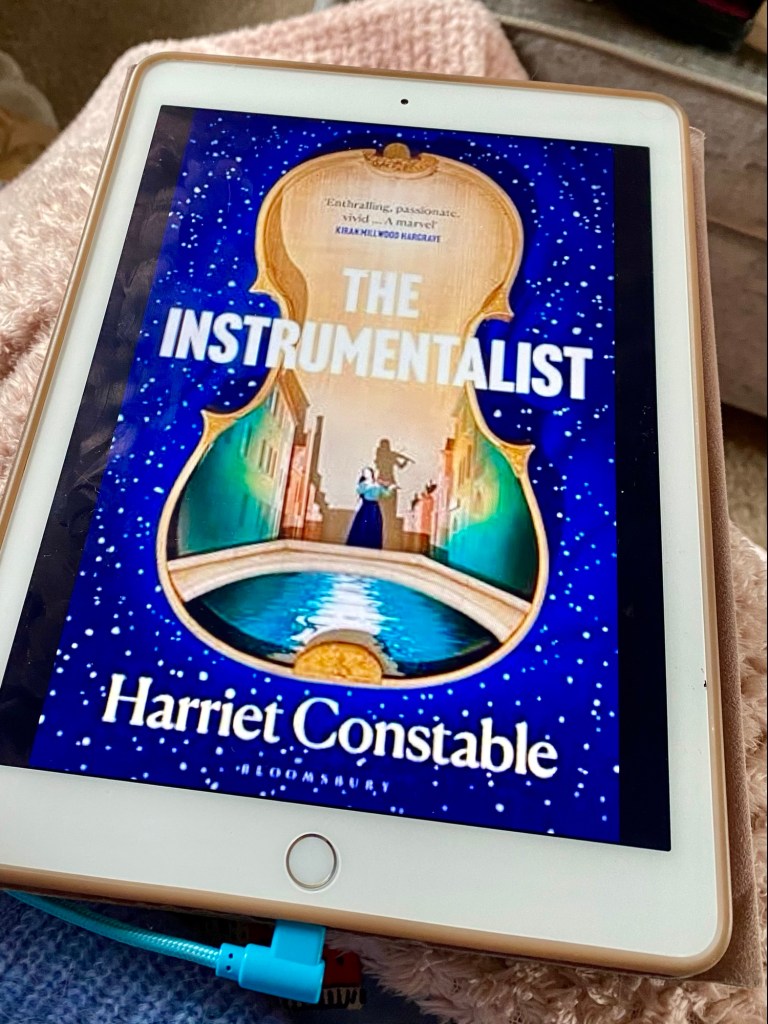
The Instrumentalist by Harriet Constable

Wow! What an incredible debut this is. I absolutely consumed this book and even found myself furtively reading in the middle of the night with a tiny torch. Anna Maria della Piétro is a fascinating heroine and while not always likeable, I found myself rooting for her. Like all the girls at the Piétro, Anna Maria is an orphan, posted through the tiny hatch in the Ospedale Della Pietá often with a note or keepsake from the unlucky girl who had leave her child behind. The author shows us the incredible splendour of Venice, a place I fell completely in love with, contrasted with it’s destitution and desperation. A state that seems more likely for women, especially those from a poorer background. The convent brings up it’s girls very strictly, according to the Catholic faith and the virtues of hard work from scrubbing the floors or working in the nursery. It is also a college of music. Each girl is taught at least one instrument with the best trying out for the orphanage’s orchestra, the figlio. Those chosen will work with the master of music and they will play in the some of the most beautiful basilicas and palazzos in all of Venice. Anna Maria’s great love is the violin and there’s no doubt she will try to become the best.

Anna Maria is a bundle of youthful exuberance, fireworks, talent and ambition. She practically leaps off the page and it seems impossible for her to fail. She starts by aiming to be noticed by the master of music and after that to be the youngest member of the figlio. No sooner is one ambition fulfilled then she’s already thinking of the next. The rewards are also intoxicating – not that Anna Maria cares much for the lace shawls from Burano, but she is partial to the small pastries with candied peel and spices that she loves to share with friends Paulina and ?? Through them we see the girl rather than the musician. They bring out a lightness of spirit, playfulness and a sense of sisterhood. The love she has for her custom made violin is absolutely infectious and when she becomes the favourite of the music master will those girlish aspects of her character remain? Constable shows us a dark underbelly, both to the Ospedale and their music programme. Although the alternatives are even worse. She also shows us huge disparity between the rich and poor in Venice. As visitors we only see the beauty and history of this incredible city, but once I did catch a glimpse of the systems that keep the city going. While waiting on a jetty to catch my water taxi one early morning I met the dustbin men of the city, having to negotiate tiny lanes and creaking jetties to clear up after all the visitors. When Anna Maria gets to play at private palazzos, the grandeur is overpowering. After her performances she is showered with lavish gifts that are at home where she plays but out of place in her bare room. She also notices that those orphans who don’t excel are easy pickings for the rich patrons of the Ospedale. Unsurprisingly, Anna Maria wants to escape the fate of becoming a wife to a much older man and putting aside her talent. As she is taken under the wing of a female patron, Elizabetta ?? She’s impressed by incredible dresses and Elizabetta’s elegant palazzo, but this patron also uses her wealth for good. She shows Anna Maria another fate for the cities’ poor women, by taking her to a brothel where the wealthy woman helps with supplies ensuring these women can make their living in safe and clean surroundings. She points out to Anna the danger in becoming a favourite – there are always people lining up to replace you. When the master is fickle or arrested by a newer, talented young girl what would happen to Anna? It makes her think about the person she replaced for the first time.

I loved the synaesthetic aspect to Anna Maria’s talent because it really added to my understanding of why she loves it so much. I have tastes that are related to colour, so if I see a garden full of beautiful yellow daffodils my mouth begins to water and I get the sensation and taste of lemon sherbet sweets. As Anna Maria plays, colours dance through her and the flurry of colour gives us a sense of how transformative it is for her to play. She is utterly lost in this moments. She’s floating within a rainbow of colour. Even when she begins to compose the written notes on the page are hastily drawn because she’s somewhere else experiencing a unique explosion of sound and colour. Even though she’s not always likeable I was still rooting for her. However some of her tougher decisions are made from within the context of survival. Only by being ruthless and getting to the position of power she craves can she feel safe. Then she can make better, more equitable decisions from a place of safety. This is an incredible story, made all the more powerful because Anna did exist. While this is a novelisation rather than an autobiography she was real and so was her music master . He is a mercurial and sometimes cruel man whose identity remains unspoken – although I did realise who he was part way through. I loved that this is written as a feminist counterpoint to his fame, highlighting a woman of equal talent who is cheated in a creative partnership and ends up with her woke stolen and uncredited. This is an abusive relationship characterised by manipulation, exploitation and a fascination with talented pre-pubescent young girls. Harriet has created a brilliant work of historical fiction that gives voice to one such young woman full of spark, talent and incredible drive to succeed. Her book is totally immersive, plunging us into a world where women were expendable, only there to parrot and enhance a man’s talent. It’s a powerful and compelling tale that I’m sure I’ll still remember when it comes to my end of year favourite books.

Out on 15th August from Bloomsbury

Meet the Author

Harriet Constable is an award-winning journalist and filmmaker living in London. Her work has been featured by the New York Times, the Economist, and the BBC, and she is a grantee of the Pulitzer Center. Raised in a musical family, The Instrumentalist is her first novel. It has been selected as one of the Top 10 Debuts of 2024 by the Guardian.

Posted in Netgalley

Home Truths by Charity Norman

Charity Norman is one of my must-buy authors, because although you don’t see many people talking about her work I find it really intelligent with a particular insight into difficult and dysfunctional relationships of all kinds. She’s also great at bringing the issues of modern day society to bear on those relationships, exploring whether they get stronger or whether they crack. Livia Denby is a probation officer on trial for attempted murder and the jury have reached a verdict. Everything went wrong two years before, on a particular Saturday morning as Livia and her family are celebrating daughter Heidi’s birthday. Livia and husband Scott have bought her a new bike and she’ll get to try it out on her planned bike ride to a local pub with her dad. Scott has promised to take her for a birthday lunch and she’s really excited to have her dad to herself. Scott is one of those people with lots of responsibilities; he’s a father, an English teacher and cares for his brother who has Down’s Syndrome and diabetes. The phone keeps ringing and Heidi can see their outing slipping away, her uncle has already called twice because he’s confused they’re not going to Tesco as usual. So before the phone can ring again, Heidi takes it and slips it down the back of the armchair. It’s a momentary decision with terrible consequences.

Livia awaits their return with terrible news. Scott’s brother accidentally locked himself out of the house and then had a hypo. Despite help from passers by, the paramedics were unable to revive him. He died before he even reached the hospital. When Scott finally finds his phone there are several missed calls and one plaintive, heartbreaking voice mail that Scott can’t stop listening to. Guilt complicates grief and Scott starts looking for answers. He fixates on something one of the passers by said about the ambulance taking a long time and the paramedics taking a while to make a decision. He starts to research medical negligence, watching videos on YouTube and making links with content creators who talk about ‘Big Pharma.’ I could already see the path he was on because it happened to my husband last year when our local air base was requisitioned by the government for asylum seeker accommodation. He did his basic training there and knew it had been used for refugees before after WW2. Sadly, right-wing racist group from a different part of the country hijacked local protests and turned the camp gates into a protest against all asylum seekers. My husband was so angry they were using images and the legacy of the Dam Busters to peddle hatred. It consumed him so much that he was constantly on social media fighting against their viewpoint and became sucked into a hellish echo chamber of Nazism. He felt like the whole world was racist, but he hadn’t realised that the algorithm behind social media channels is simply to give you more of what you’re viewing. I had to explain using BookTwitter which is mostly a lovely, benign and accepting part of Twitter/X. Thankfully he closed his account and instead is taking positive steps to support the asylum seekers when and if they arrive. As I was reading I could see that Scott was so vulnerable, so desperately sad and ripe for manipulation.

Scott finds a content creator called Dr Jack who claims to work in the NHS but in Scotland. He hides behind a mask, a voice simulator and a cartoon avatar. He talks about Big Pharma, the danger of vaccines and how health fears can be used to control the population. Behind it all is the global conspiracy of the New World Order, a shadowy cabal of billionaires, celebrities and politicians who are the real power in the world. They have the ability to control governments and democracy, both of which give us an illusion of control. It’s not long before he is messaging Scott directly and taking him deeper down the rabbit hole. Heidi is due to have her HPV vaccine at school and after contacting Dr Jack, Scott is keen to take direct action. Without talking to Livia he refuses to sign Heidi’s consent form. Then he uses a video suggested by Dr Jack in his English class, making a link between vaccines and fatal consequences. The video shows a supposedly dead girl in the morgue, a girl with long red hair rather like Heidi. By lunchtime the school is full of terrified teenage girls and the head is inundated with calls from angry parents. Poor Heidi is thrown into the spotlight and the head is left with no option but to suspend Scott. When Livia tries to talk to him she can’t get through and Scott tells her she’s just not listening to him. When she looks into her husband’s eyes all she can see is the fervour of the fanatic.

Meanwhile, Livia is acting slightly out of character too. She’s working with an old con called Charlie who’s about to be released from prison into a hostel, where Livia will act as his probation officer. He’s served most of his sentence with time off for good behaviour. Livia is sure they’ll make a strong team and she’s sure Charlie is reformed from his days as a gangland enforcer called The Garotter. Charlie is a great listener and once he’s in the community they meet at a local cafe for lunch and to check in, so it’s easy to slip into confidences. Something personal is disclosed and she immediately checks herself, she must keep her professional boundaries. However, as Scott’s obsession worsens Livia feels like she’s losing her best friend and the usual person she would talk to. Despite being off work, he isn’t pulling his weight at home. He’s up till the small hours, researching his theories and then haranguing people with them at parties. Livia is lost and embarrassed. She needs somewhere to offload and surely it can’t do any harm to disclose to Charlie now and again? At least Scott has his old university friend nearby, giving him someone to talk to and take him to the pub when it all gets too much for Livia. She is the only one keeping the family on track and the pressure is huge. She’s trying to shield Heidi from Scott’s wilder ideas and managing their son Noah’s asthma. The kids seem ok but it’s hard to know. In the section narrated by Heidi we realise she isn’t ok. She’s pouring herself into making music with her friend Flynn, but the guilt is killing her. She thinks she caused her uncle’s death and finds herself drawn to risky behaviour. There’s no doubt that this is a family in crisis; when will these hairline cracks finally give and begin to break apart? Slowly in the background, we learn about a new coronavirus outbreak in China and it creeps ever closer.

The tension built by the author is too much to bear. She builds her characters so well that they feel authentic and I could feel Livia’s heartbreak that the man she loves is slipping away. I could also feel Scott’s desperation as he tries to make sense of a tragedy that’s so difficult to comprehend there must be a reason. When faced with a tragedy humans have to make sense of what’s happened. We’re hard wired to detect patterns in events, because it’s terrifying to accept that life is random and chaotic. There must be a reason, because how could the King of rock and roll come to an undignified end in a bathroom? How could a politician and new president who’s filled his countrymen with hope have his life ended by one lucky shot from a random man? Surely a beautiful Princess can’t meet her end in a Paris tunnel because of a drunk driver? There must be something behind it, an intent, a missing clue, a conspiracy. I enjoyed the clever inclusion of experts in the field of online grooming and brain washing and that they were there to support Livia. When someone we love is behaving so illogically, it’s easy to wonder whether everything you’ve thought is wrong and maybe there’s actually some truth in what they’re saying. Livia needs people to say ‘it’s not you’. I was desperate for this lovely family to get through this. Yet I couldn’t help but think a further tragedy lay ahead and that Scott would fall so far out of reach, Livia wouldn’t be able to catch him. As we came closer finding out why Livia was on trial I wondered whether I would be able to understand her actions. I did understand and I hope I would have the courage to do the same in these circumstances. The author captures this whirlwind of feelings so well that I felt emotional. I thought she captured the strangeness and dislocation of the pandemic incredibly well too. This is a book that takes the most traditional of institutions, a nuclear family, then shows us how the dangers of modern life can literally tear it apart. This was an incredible read and I recommend it very highly.

Out on August 1st from Allen and Unwin

Meet the Author

Charity is the author of six novels. She was born in Uganda, brought up in draughty vicarages in the North of England and met her husband under a truck in the Sahara desert. She worked for some years as a family and criminal barrister in York Chambers, until, realising that her three children barely knew her, she moved with her family to New Zealand where she began to write.

After the Fall was a Richard & Judy and World Book Night title, The New Woman a BBC Radio 2 Book Club choice. See You in September (2017) was shortlisted for best crime novel in the Ngaio Marsh Awards. Her sixth, The Secrets of Strangers, was released on 7th May 2020 and is also a Radio 2 Book Club choice.

Charity loves hearing from readers. Please visit her on facebook.com/charitynormanauthor or Twitter: @charitynorman1

Posted in Netgalley

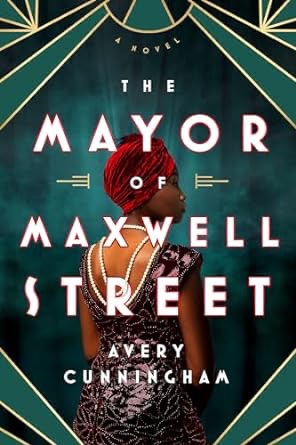
The Mayor of Maxwell Street by Avery Cunningham

This fascinating debut is set in 1920’s Chicago and concerns an heiress called Penelope ‘Nelly’ Sawyer, described by the author as the ‘wealthiest Negro in America’. Her father, Ambrose Sawyer, has managed to catapult his family into the upper echelons of black society. Nelly is getting over the death of her brother Elder, who has been killed in a road accident but her mother wants her to attend a Cotillien in the city at the end of summer. This is the American equivalent of a Debutante Ball, where the most prominent young women in society are presented in high society. Suddenly, and against her wishes, Nelly becomes the season’s ‘diamond’ – to use a Bridgerton term. This honour means that Nelly is now the most eligible young woman in society, but her ambitions don’t end at a society marriage. For the past year she has been indulging her passion for journalism, researching and anonymously submitting articles to a Black-run newspaper called The Chicago Defender. Her brother Elder was her co-conspirator and sounding board for her articles. He was the go-between, taking Nelly’s articles to the editor Richard Norris. Now she faces a choice, not only is she unexpectedly involved in a love triangle, she must decide to reveal her true identity to the newspaper, or allow her journalistic ambitions to end.

I really enjoy a plucky and transgressive heroine, so I was immediately on Nelly’s side. She’s been looking into the underworld of Chicago society and the leader of an organised crime group called the Mayor of Maxwell Street. This is the prohibition era and the dark but glamorous world of the secret ‘speakeasy’. She has already met one club owner through her brother. Jay Shorey is intriguing and first caught her eye at Elder’s funeral, where they seemed to spark a mutual attraction despite the unusual surroundings. Jay is the archetypal bad boy, but does find many young people from high society visit his club. He doesn’t have their family connections but has access to so many people in Chicago through the club and his ‘god-uncle’ who is a bit of a gangster. His ability to move between the darker parts of Chicago society and her own, more elevated, circles means he’s invaluable to Nelly and her investigations, but is there more to their relationship than that? Yet he isn’t the only suitor on the horizon.

As Nelly bursts onto the socialite scene, she meets Tomás Escalante y Roche at a polo match. He is one of the polo players with an uncle who is a French marquis, and a father who “owns half of Mexico” according to the wonderfully sardonic and witty Sequoia McArthur. Tomás rides a horse that Nelly happened to raise on the Sawyer ranch and she doesn’t mind giving her sharp feedback on what he’s doing wrong! Needless to say he isn’t used to hearing such criticism, especially from a young woman but her honesty makes her memorable. Tomás is hooked and he intends to court her. As far as Nelly’s family are concerned she’d be crazy not to reciprocate his affections and should jump at the chance to come out of the Cotillion summer with a fiancé. So, it’s a bit of a love triangle but also a young woman’s choice between the the life she wants and the life her family wants for her. I was rooting for her.

She chooses to face things head on by meeting Her editor in a cafeteria, and has to convince him that yes, she did write the articles. However, she comes up against a very sharp reality. Norris tells her he can’t publish articles under her real name because of her family’s position in society. He knows that the Ambrose Sawyer would soon be knocking on his door if he did. Nelly is so disappointed that Norris makes a deal. He gives her an assignment and if she succeeds he promises she can publish under her own name. Of course it’s impossible. He tells her about the Mayor of Maxwell Street, a secretive figure in gangland who seems to have achieved the impossible and brought different organisations together across the race divide. Usually Irish, Italian, Jewish and Black gangsters are having turf wars and killing each other, but that’s stopped and he thinks this new Mayor is behind it. He tells Nelly that if she can correctly identify this man he will publish her article and take the consequences of using her real name. Of course she accepts his challenge.

This is a page turner and it’s impossible not to like Nelly and admire her guts. I over the way the author handled the attitudes and outright racism of a hundred years ago. She even highlights the experiences of diverse characters on a spectrum of issues, such as poverty, class, education and skin tone. Jay’s relatively light skin enables him to ‘pass’, yes it opens doors but then you’re participating with your own oppressor. Nelly is very disapproving of living life on those terms. Jay is mixed race and he explains to her:

“There are two candy jars, right? One marked for Negroes, and one for white folk. The Negro — under penalty of death — can only take from one jar. The white man, though, he can take from one or the other. He can take from both. Never mind that the jars have the exact same candy; the white man still gets to choose. That is all I want, Nelly. The freedom to choose. I don’t want to look like them, or act like them, or be them. But I want their options.”

These issues come organically from the characters and they’re inclusion really add some weight to the historical background of the novel. Her depiction of Chicago in the 1920’s feels authentic, rather than the stylised razzle dazzle of the musical, but they come from the same world. There’s even a nod to The Great Gatsby too. This is an entertaining novel with a plucky heroine and some gravitas behind the compelling story and a compulsive need to keep reading. I look forward to seeing what the author does next.

Out Now from Thorndike Press

Meet the Author

Avery Cunningham is a resident of Memphis, TN, and a 2016 graduate of DePaul University’s Master of Arts Writing & Publishing program. She has over a decade of editorial experience with various literary magazines, small presses, and best-selling authors. Avery grew up surrounded by exceptional African-Americans who strived to uplift their communities while also maintaining a tenuous hold on prosperity in a starkly segregated environment. The sensation of being at once within and without is something she has grappled with since childhood and explores thoroughly in her work of historical fiction. When not writing, Avery is adventuring with her Bernese Mountain Dog, Grizzly, and wading waist-deep in research for her next novel. She aspires to tell the stories of complex characters fighting for their right to exist at the fringes of history. THE MAYOR OF MAXWELL STREET is her debut novel.

Posted in Netgalley

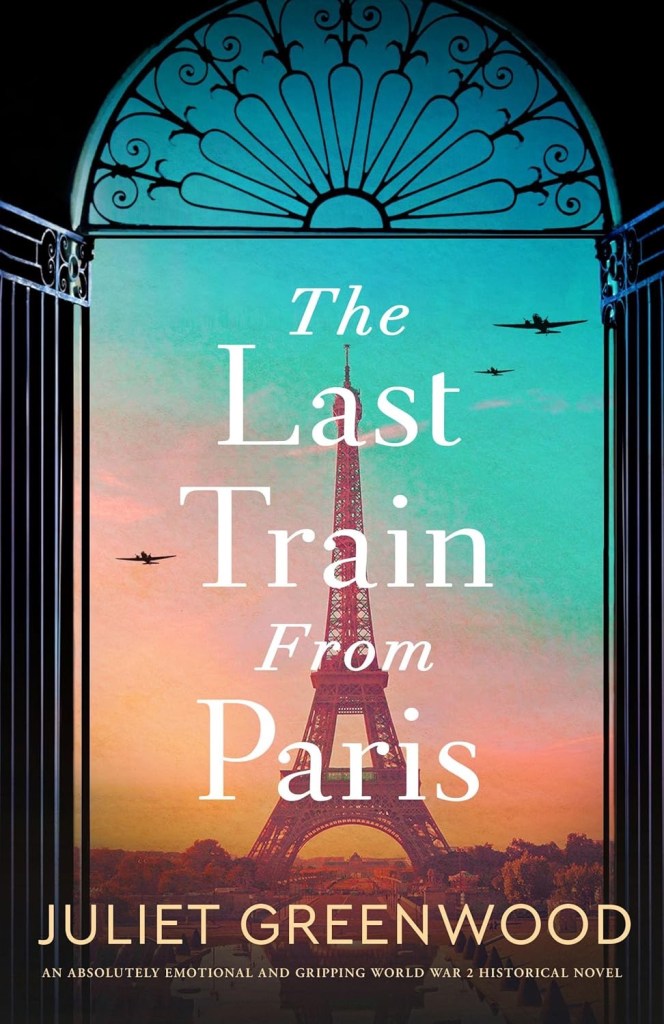
The Last Train from Paris by Julie Greenwood

The year is 1939, and in Paris, France a young woman is about to commit a terrible betrayal…

For Iris, each visit to her mother in St Mabon’s Cove, Cornwall has been the same – a serene escape from the city. But today, as she breaths in the salt air on the doorstep of her beloved childhood home, a heavy weight of anticipation settles over her. Iris knows she’s adopted, but any questions about where she came from have always been shut down by her parents, who can’t bear to revisit the past.

Now, Iris can’t stop thinking about what she’s read on the official paperwork: BABY GIRL, FRANCE, 1939 – the year war was declared with Nazi Germany.

When Iris confronts her mother, she hits the same wall of pain and resistance as whenever she mentions the war. That is, until her mother tearfully hands her an old tin of letters, tucked neatly beside a delicate piece of ivory wool.

Retreating to the loft, Iris steels herself to at last learn the truth, however painful it might be. But, as she peels back each layer of history before her, a sensation of dread grows inside her. The past is calling, and its secrets are more intricate and tangled than Iris could ever have imagined.

I always say that we read books at the right time. Having COVID has left me in bed with very little to do except read between doses of Sudafed! So I’ve been catching up on some of those books still languishing unread on my NetGalley shelf, which is always overstuffed. How strange then that this pick had a link to a blog tour book I’m reading this month, both featuring mothers separated from their children but one set in a Cold War Berlin and this one set in pre-WWII Paris. I love books filled with emotion and those based in pivotal moments of history, especially disability history, so this one would sit perfectly within that Venn diagram. I was drawn in immediately by this gripping story, set across two timelines; one set in 1939 and the other in the 1960s. It didn’t take me long at all to get into ‘The Last Train From Paris’. In fact by the time I got to the end of the first few pages, I knew that I was in for a treat and from then on, I found it increasingly difficult to put the book to one side for any length of time. I was spot on too! I was moved by the story and by the bravery of these remarkable women. Nora and Sabine meet and a form a strong friendship in pre-war Paris, after Nora travels from the UK to join a catering course. In the later timeline, the early 1960s, we meet Iris, a young woman who has questions about the circumstances of her birth.

Juliet is a new author to me and I really enjoyed her style. Her characters feel genuine and show such bravery in turbulent times. She doesn’t stint on the gritty detail of wartime life in Paris and the darkness of occupation. She focuses on an aspect of the Nazi’s eugenicist policies that I think is only just coming to light in fiction. Many families were desperate to escape Europe, as the Nazis plans for the Jewish population start to become clear but Sabine’s little family have a different reason. To give you some background, it’s a lesser known fact that the Nazis targeted those with physical and mental disabilities by inciting a belief that they were a burden to the state. A programme of euthanasia was devised at a Tiergartenstrasse 4, the building giving the name of the plan as T4. In 1933 they passed a piece of legislation called The Law for the Protection of Hereditarily Diseased Offspring pushing forced sterilisation of those regarded as ‘unfit’. Their list ranged from conditions like epilepsy, but also suspected long-term illness and mental illness such as schizophrenia or addictions. They targeted nursing homes, asylums and special schools for their victims and over three years, even before the outbreak of war, had sterilised 360,000 people. Once war broke out they started to kill disabled children and adults, for this book the author has concentrated on the children. Children under three who had illnesses like Down’s Syndrome or Cerebral Palsy (or were thought to have an illness) were forwarded to a panel of medical experts to be assessed and approved for euthanasia. Parents were misled, told their children were receiving expert or enhanced care, then told they had died of illness or natural causes. The truth was they killed at least 200,000 people with disabilities in gas chambers that were also used to kill other marginalised people including, overwhelmingly, Jewish people from across Europe. This truth is deeply moving and horrifying to me as a disabled person and as someone who has spent their working life trying to support people coping with long term illness and disability. It is also why the disabled community fight so hard and shout so loud about any rhetoric from government that denigrates or devalues people with disabilities in today’s society. It is why many disabled people breathed a sigh of relief at the recent change in government as many perceive Conservative austerity measures and rhetoric to have led to the deaths of 180,000 disabled people since 2006. So you can imagine why this subject really spoke to my heart and my values.

If this sounds a little heavy, it really isn’t. The author weaves these historical facts into the story beautifully so we see it through the eyes of one of these horrified parents. Many of whom tried different ways of keeping their child away from the T4 programme, especially those who were developing disabilities. In 1939, as the Nazi march on Paris began, Nora is still in the middle of her chef’s training. This dream she has been realising has come to an end as she realises she has to take a last chance to escape. She really has left it until the last train leaving Paris before enemy arrives. As she gathers her things to leave and says goodbye to Sabine, out of the blue her friend has a last request. Having only just given birth, Sabine knows she must leave Paris too and will be travelling away from the city with her husband. She suspects one of her twins may have a disability and has heard about the T4 programme. She knows what could await her daughter if she’s right. Although it will break her heart, she has to put her daughter’s life first and asks Nora if she will take the baby back to England with her. She knows Nora well enough to be satisfied that her little girl will be safe, loved and well cared for. Nora agrees and takes the heart-wrenching choice to say goodbye to one of her daughters. Iris lives away from home, but often visits her adoptive parents in the the little fishing village in Cornwall where she grew up. She has always known she was adopted, but whenever she asks questions about the circumstances surrounding her birth her parents avoid or shut down the discussion. It has left Iris unsure about her identity and that inner feeling she has that something is missing. I kept thinking about the bond that twins have and how not knowing your other half would affect Iris’s sense of self. I desperately wanted her to find the answers she was looking for, but could understand how Nora might worry about how she would take the truth. I could also empathise with Sabine who must be desperately worried about how her daughter feels and also feel a desperate sense of loss for all those moments she wasn’t there. Would Iris feel betrayed? Would she understand the dangers they believed she was facing under occupation?

This was a story about an evil and previously unimaginable situation, faced by two friends whose trust in each other was absolute even at their most terrified. Most readers would empathise with Sabine’s sacrifice, but I could also see the sacrifice that Nora made. She expected to finish her training in the culinary capital of Europe and become a chef, instead she sacrificed all that out of love for her friend and for a little girl who could perhaps be saved from the fate of so many others. As Iris visits her mother, this time, Nora hands over a box full of letters and mementos, and Iris slowly discovers the true story of her life. She must also face the cruelty of what happened to children with disabilities in those years before the Germans invaded Iris’s origin story is one of bravery and a mother’s desperation, with secrets in store. These young women come alive in this story of a deep commitment made from one mother to another. It’s evocative and moving, reminding those of us who have never been in this position that such young women were capable and willing to make decisions like this that were heart-wrenching and ultimately life-saving. It reminds us that duty, often seen as such a dry word, is sometimes an expression of love and hope for the future.

Out now from Storm Publishing

Meet the Author

Juliet Greenwood is the author of eight historical novels, published by Orion and Storm Publishing. She has been a finalist for The People’s Book Prize, and her books have been top 100 kindle bestsellers in the UK and USA.

She has long been inspired by the histories of the women in her family, and in particular with how strong-minded and independent women have overcome the limitations imposed on them by the constraints of their time, and the way generations of women hold families and communities together in times of crisis, including during WW2.

Juliet now lives in a traditional quarryman’s cottage in Snowdonia, North Wales, set between the mountains and the sea, with an overgrown garden (good for insects!) and a surprisingly successful grapevine. She can be found dog walking in all weathers working on the plot for her next novel, camera to hand.

Posted in Netgalley, Publisher Proof

The Paris Muse by Louisa Treger

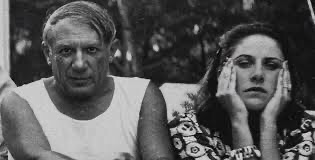
Treger’s latest novel concerns the life, or more accurately the love, of Dora Maar – a photographer and painter who lived in Paris for most of her life and most notably, during the German occupation in WWII. Born Henrietta Theodora Markovitch in 1907, she was known as a surrealist photographer exhibiting alongside Dali and other notable surrealists. She used her photographic art to better represent life through links with ideas, politics and philosophy rather than slavishly photographing what was naturally there. She was exhibited in the Surrealist Exposition in Paris and the International Surrealist Exhibition in London in 1936. In the same year she was exhibited at MOMA in NYC. He first encountered Picasso while taking photos at a film set in 1935, but they were not introduced until a few days later when Paul Elduard introduced them at Cafe des Deux Magots. They met in quite a dramatic way that showed her intent to catch his eye. She sat alone and using a pen knife she drove the blade between her splayed fingers and where she missed blood stained the gloves she wore. The fact that Picasso kept these gloves and packed them away with his treasured mementoes is a metaphor for their entire relationship – he fed from her emotions.

The author allows Dora to tell her own story and we are inside her mind at all times. We could say this is only her viewpoint of their relationship, but in a world where she is most known through her relationship with a man instead of her own work, Treger is simply redressing the balance. Also you’d have to be utterly blind to think there’s any other way of looking at his treatment of her and the other women he was involved with. But the nine years they were together, she was subjected to mental and psychological abuse. She was underestimated as an influence on his work, particularly Guernica and his politics. I feel on reading the book that he was drawn to what he saw as her masochism and drew on the pain he caused her both for his personal satisfaction and his art. He comes across as a narcissist; constantly told he was a genius he believes everything revolves around his needs and his freedom to work. This is seen in The Weeping Woman series of paintings where she’s depicted as a woman who is constantly tortured and distressed.

Picasso ‘The Weeping Woman’.

We can see how their affair had a distinct honeymoon period. The mistake she made was thinking this would be a template for the rest of their affair. She knew he had a wife, Olga, who’d had a nervous breakdown. There was also Marie Therese, who was his mistress and had his son Paulo. It seems Picasso never turned down an offer, having liaisons with many of their friends and group sexual experiences when they were on holiday in the South of France. These encounters caused Dora extreme emotional distress and being in her head was a painful experience. I desperately wanted Dora to walk away, but she wasnt being true to herself in accepting her behaviour. It felt like their relationship moved in a toxic pattern of infidelity, followed by distress and recrimination. The more distressed she became, Picasso would withdraw, telling her theyd made a bargain, that she was free to leave and that her distress was preventing him from working. Consequently we can see her feelings discounted. He gaslights her by saying she doesn’t have to feel the way she does; her feelings were always the problem, never his behaviour. In one scene in the book Dora suspects her mother is unwell after a dropped phone call but it’s after curfew during the German occupation an they can’t leave the house. Although Dora has paper saying she’s Catholic and Aryan, they won’t save her if she’s found out in the middle of the night. I found Picasso terribly cold towards her when they find her mother dead the next day, he doesn’t touch her and seemed more fascinated rigor mortis and the unearthly sheen of her skin, than comforting Dora. There were times when I felt he was doing things to keep Dora in her place, but there were other times when he seemed genuinely unmoved. It was as if once he looked at something with his artist’s eye it became an object.

The Years Lie In Wait For You by Dora Maar

It was no surprise when Dora’s mental health began to decline and being in that space with her felt suffocating and scary. I loved the way the author had missing sections in the text to signify time Dora has lost and where others have to step in. Treger represents Dora’s declining mental health as a direct product of Picasso’s actions. It’s as if he slowly takes her apart until her mind resembles one of his portraits, distorted and unnatural. Dora is a square trying to fit into a round hole. She is in love with Picasso and craves a life with him based on friendship, passion and fidelity. Picasso wants to have everything Dora is offering, but without the fidelity. He can’t understand why she is unhappy at his visits to Marie Therese, because when he’s with Dora he is wholly with her. His assertion that they should both be free almost sounds plausible until you realise that he holds all the power: he sees Dora when it suits him not her; he reserves the right to sleep with her friends even when she’s there; he also gets to decide when she should return to her apartment and let him work. I almost wanted him to have a taste of his own medicine. I wanted Dora to turn him away when she’s working or sleep with one of her male friends while they were on holiday, but she doesn’t get to dictate in the same way. That’s when you realise that his call for freedom in their relationship, means his freedom. I felt sad for Dora, possibly influenced by some of my own experiences. She seemed like a smaller woman at the end with none of her original vitality and flamboyance. I’m so glad to know that her art lives on and is still exhibited as part of the surrealist canon.

Out now from Bloomsbury Publishing

For more on Dora Maar’s work and legacy…

https://www.dazeddigital.com/art-photography/article/46781/1/why-artist-dora-maar-was-much-more-than-picassos-weeping-woman

Meet the Author

Louisa Treger, a classical violinist, studied at the Royal College of Music and the Guildhall School of Music and worked as a freelance orchestral player and teacher.

She subsequently turned to literature, earning a Ph.D. in English at University College London, where she focused on early-twentieth-century women’s writing and was awarded the West Scholarship ‘for distinguished work in the study of English Language and Literature.’

Louisa’s first novel, The Lodger, was published in 2014, and her second novel, The Dragon Lady, was published by Bloomsbury in 2019. She lives in London.

Find out more about Louisa at louisatreger.com or https://www.facebook.com/louisatregerwriter or @louisatreger

Dora and Picasso

With grateful thanks to Louise Treger for my early copy of this novel.

Posted in Netgalley

Our Holiday by Louise Candlish

Pine Ridge is a small coastal village off the south coast, somewhere near Bournemouth and has that castaway feeling from the moment you cross on the car ferry. However, this idyllic village is the setting for discontent and divided loyalties between those DFL (down from London) residents and those who have grown up in Pine Ridge and mainly work servicing those August visitors. The ridge has a resort hotel, beach bar and spa to keep holiday makers happy, but some visitors have gone away dreaming of their own little slice of south coast heaven. One summer Pine Ridge becomes the centre of a dispute over second home ownership. This is a bad time for Amy and Linus who have just bought their own little bungalow with coastal views up on the ridge. It needs work, having been the home of an elderly couple, but she has a plan and builders starting this summer. She was inspired by friend Charlotte whose banker husband Perry used a huge bonus to buy their perfect holiday home with it’s own summer house overlooking the sea, nicknamed The Nook. It’s people like this that friends Robbie and Tate are angry about. They grew up here but are stuck living in static caravans on a temporary site because they can’t afford to buy or rent anywhere. The private rental market has shrunk as people refurb for the AirBnB market and no new houses are being built. People on service wages can’t hope to pay the prices of houses on the ridge, so they’re snapped up by Londoners who only come in August. This leaves huge homes empty all year while villagers are homeless, this is why the men have set up the NJFA – ‘Not Just For August’ Campaign. As tensions rise towards the August bank holiday, the NJFA are gearing up to make their final public protest of the summer. As the music festival gears up on the beach, people are interested in the design they’ve created on the sand, but they’re stopped in their tracks when half way through the day a summer house is bulldozed from the cliff and into the sea. Was this the NJFA plan all along or is something else going on?

Louise Candlish is brilliant at satirising the middle classes and she’s hit upon an issue that holiday destinations around the world are facing. I’ve always visited Venice in winter or early spring because I can’t stand cruise crowds and I was emotionally drawn in by the problem of keeping that balance between tourists and residents. They’ve addressed the cruise ship issue in recent years, have set up campaigns that show tourists which are the authentic Venetian restaurants and shops rather than the tourist traps. Authorities are now considering curbing numbers. Otherwise, it will become little more than a Disneyland experience; can Venice be the city it is, without it’s people? It’s a problem that areas like Devon and Cornwall have faced for years, with second home owners and holiday cottages turning whole villages into ghost towns in the winter. Even worse, it means the opinions of people who are not even year round residents, hold more sway in local matters than people trying to earn their livelihood. This came to the fore a few years ago in Cornwall where local fishermen’s need for a new jetty was being blocked by second home owners objecting to the planning application. There is always a tipping point and Candlish has demonstrated that exquisitely here. I had so much sympathy for Tate and his girlfriend Ellie, working in the beach bar and spa but not able to buy a home where they were born. They finished long shifts, only to broil all night in the heat of a static caravan. Tate’s friend Robbie is determined to take action and his NJFA campaign starts with throwing eggs and soup at DFL cars at the ferry stop. He pushes his agenda at council meetings and in the press, especially when he parks his caravan on the drive of a Pine Ridge home that’s been empty all year.

When we meet the DFL families their privilege is apparent. Candlish has this brilliant way of creating the stereotype we expect then subverting it. Perry is the archetypal banker – big car, egocentric and totally unapologetic about his banker’s bonus that allowed him to buy their holiday home and retire early. It’s easy to find fault with him; the drinking, the toxic masculinity and the absolute rejection of the type of ‘woke’ causes the younger people are hung up on. His son Benedict has brought girlfriend Tabitha to Pine Ridge, but she’s so ‘woke’ that she gets under Perry’s skin. Her sympathy for the NJFL cause grinds his gears, especially when she criticises his lifestyle while happy to enjoy the benefits for herself. Perry is simply incapable of keeping the peace, tearing up to the caravan park to give Robbie a piece of his mind and his fists. He’s also irritated by Linus, who is more aware of his impact on the world and travels everywhere in the village by bicycle. Perry finds his middle-aged Lycra wearing ridiculous and vents much of his rage on him and his bike. Yet there’s another side to Perry, a fear of being who he really is perhaps? He’s on the wagon after years of alcoholism and has formed an attachment to a resident at the halfway house for addicts where he volunteers in London. Charlotte is suspicious of his weekly drives back up to the city, but it’s fair to say doesn’t suspect the identity or gender of the object of his affections. It’s clear that Perry’s lies are starting to stack up and he won’t be able to hold his perfect life together for very long.

Another interesting character is Linus and Amy’s daughter Beatrice, who at 17 has blossomed into a goddess, something her mother realises when she sees her on the beach in a bikini. Beatrice could be an rich bitch, totally unaware of how privileged she is. Of course they’re not as well off as Perry and Charlotte, but still they can afford to renovate the bungalow as a second home and she has the usual teenage accoutrements of manicured nails, the latest iPhone and enough clothing to dress the whole family. Underneath Beatrice doesn’t seem happy though and when Charlotte notices a wrap she’s wearing on the beach is genuine designer and not the Vinted fake she claimed it was, her mind starts whirring. Where is Beattie getting the money for all these designer items? Candlish has all the right brands here including the designer collaboration Birkenstocks. It turns out that Beattie has a way of acquiring her goods that is less than savoury. I was expecting OnlyFans or an online sugar daddy! Yet what does Amy expect when she’s already going out of her way to keep up with Charlotte and Perry? It’s something that’s very apparent when she purchases her own summer house to sit overlooking the bay and christens it The Niche. Beattie has other secrets too, involving the The Niche and a certain beach barman. All hell will break loose if Linus finds out that this man, with a pregnant girlfriend, is hanging around his daughter. Tate is feeling ever more desperate and utterly trapped. He can’t bear the idea of the winter in the confines of their static with a screaming baby. He isn’t ready. While Ellie is planning to tell her parents and lobbying the council for more permanent housing, he is meeting his teenage lover and planning his escape.

There are so many strands to this story that by the time the summer house slides off the cliff and onto the beach I had no idea who had done it. The shockwaves ripple through the villagers when the police find a body in the wreckage and start a murder enquiry. Tate knows he and Robbie will be in the frame for their activist antics and their ability to use a bulldozer. I couldn’t help but think that it wouldn’t be as simple as that. Despite their circumstances driving them to criminal behaviour, they really aren’t bad boys. My money was on one of the DFL crowd: had Charlotte found out about Perry’s extra-curricular activities? Was Beattie so scared of her secrets coming to light she’d silenced someone? Had Perry been driven to distraction by Linus and his bike? We didn’t even know whose summer house was wrecked at first. This labyrinth of possibilities slowly unravels, including some fascinating twists and turns. I loved how Candlish highlighted a very real injustice, while weaving a unputdownable thriller around it. I genuinely felt for locals having to sofa surf, while huge houses stood empty all year. To then add insult to injury they then have to earn their money servicing these families and their houses, providing their massages in the spa and listening while they complain about their busy lives and seeing how much they spend without thinking on their food and drink. I could see why they were angry and it was interesting to see how those inequalities lead to other ideologies – when locals find out that asylum seekers might be housed nearby they are incensed. Their antipathy comes from fear that someone will jump them in the queue, but they’re missing who the real enemy is. Everybody has to do a lot of learning as we rush towards her conclusion, there’s some learning around respecting differing opinions, understanding why the other person thinks like they do and finding ways of working together. This is a fabulously current morality tale with some delicious satire and lots of secrets to uncover. The perfect summer read.

Out Now in Hardback from HQ

Meet the Author

Hello and welcome! You join me as my new thriller OUR HOLIDAY is published – it is out now in paperback, ebook and audio and was just announced as a Richard & Judy Book Club pick for the summer! It features my favourite ever love-to-hate characters (wait till you meet Perry and Charlotte!), second home owners in an idyllic beach resort who think they’re in town for another summer of sun, sea and rosé… But instead, they’re in for a bit of a reckoning…

I’m also celebrating my 20th year as an author this summer – that’s right, my first book came out in 2004, which somehow manages to feel both like yesterday AND a hundred years ago. 

OUR HOUSE is the one you may know me for as it’s on our screens as a major four-part ITV drama starring Martin Compston, Tuppence Middleton and Rupert Penry-Jones (watch the full series free on ITVX). This is the novel that turned my career around – right when I was about to give up. It won the 2019 British Book Awards Book of the Year – Crime & Thriller and was shortlisted for the Goldsboro Books Glass Bell Award, the Capital Crime Amazon Publishing Best Crime Novel of the Year Award​, and the Audible Sounds of Crime Award. It was also longlisted for the Theakston Old Peculier Crime Novel of the Year Award and the Specsavers National Book Awards. 

It recently received a Nielsen Bestseller Silver Award for 250,000 copies sold and I feel so proud that readers are continuing to discover it and recommend it far and wide.

My 1990s-set thriller THE ONLY SUSPECT just won the 2024 Capital Crime Fingerprint Award for Thriller of the Year and I was recently nominated for a CWA Dagger in the Library Award, voted for by librarians and readers. 

OUR HOLIDAY, THE ONLY SUSPECT, THE OTHER PASSENGER, THE SWIMMING POOL and THE DAY YOU SAVED MY LIFE have all been optioned for the screen – I’ll share development news on those as soon as I can.

A bit about me: I live in a South London neighbourhood not unlike the one in my books, with my husband, daughter (when she’s not at uni), and a fox-red Labrador called Bertie who is the apple of my eye. Books, TV and long walks are my passions – and drinking wine in the sun with family and friends. My favourite authors include Tom Wolfe, Patricia Highsmith, Barbara Vine and Agatha Christie.

Be the first to hear about new releases and price drops by clicking on the ‘Follow’ button under my pic or: 

Website: louisecandlish dot com

X/Twitter: louise_candlish

Instagram: louisecandlish

FB: LouiseCandlishAuthor

Author photos: ©Neil Spence; ©Johnny Ring; ©Joe Lord/Archant

From Louise’s Amazon Author Page.

Posted in Netgalley

The Beasts of Paris by Stef Penney

Anne is a former patient from a women’s asylum trying to carve out a new life for herself in a world that doesn’t understand her. Newcomer Lawrence is desperate to develop his talent as a photographer and escape the restrictions of his puritanical upbringing. Ellis, an army surgeon, has lived through the trauma of one civil war and will do anything to avoid another bloodbath.

Each keeps company with the restless beasts of Paris’ Menagerie, where they meet, fight their demons, lose their hearts, and rebel in a city under siege.

A dazzling historical epic of love and survival, Stef Penney carries the reader captivated through war-torn Paris.

This was my first Stef Penney novel, but it certainly won’t be my last. I was so happy to get an early ARC through NetGalley and thrilled to receive a beautiful proof copy in the post. I must admit I did that thing of being drawn in by the beautiful and eye-catching cover art. I love animals too, so although I’ve come to this later than I should, it was always hovering around and I yearned to read it and see it live up to the promise of that cover. This historical novel opens in May 1870 within the city of Paris. This isn’t the city of culture and romance, it’s a city on the verge of revolution and war. The three characters are also in transition: Anne Petitjean has been released from a women’s asylum and is now trying hard to begin her new life; Lawrence Harper has moved to the city from Canada, running away from a strict and puritanical upbringing and hoping to become known for his photography; Ellis Butterfield has lofty American connections and is an aspiring poetry, but as an Army medic he’s just escaped one civil war and may be about to get stuck in another. These very different figures met at the Paris Menagerie and feel a connection to the animals there.

Probably due to my mental health background and history of supporting a lot of people at this halfway stage of recovery, Anne’s experience really touched me. She tried to come to terms with her experiences in hospital and I thought the benefits she got from spending time with the animals in the menagerie really rang true. Her relationship with the tigress Marguerite was wonderful. I felt sympathy for Lawrence too, trying to come to terms with his homosexuality in a time when it really wasn’t accepted. There were other background characters too, all revolving around animals, but these two seemed to stay on my mind. The author has chosen this turbulent, transition point in history because it throws our characters into change. It’s a tense and dangerous period of unrest but also so complicated period as the city is placed under siege by Prussian forces, until eventually the French force surrender. Following this, radicals who were ordinary Paris citizens, staged a revolution under the banner of the ‘Paris Commune’. They managed to hold the city for several months and I thought the author weaved the tale of her individual characters into this tense historical background with great skill. She manages to represent the reality of this difficult time for the ordinary people in Paris who just wanted to live their lives. To some extent, their energy would have been taken up with basic survival, but our characters are trying to map out a future too. If you are very sensitive towards animals and our treatment of them, I will say there are some themes you might struggle with. The author has included allusions to the keeper’s struggle to feed the animals during the food shortages. Unfortunately, some would have to be destroyed and there were people who traded their meat on the black market. I love animals so this was hard, but I understood that this is a story of survival for the people as well as the animals. I usually read books set in the aftermath of war, but this made me think about the beginnings and how the calm and routine of everyday life is suddenly ripped apart. I thought the author told the tale well and while I was reading I was completely immersed in the powerful sense of place she created and found it very hard to drag myself away. It’s a book I’ve continued to think about in the weeks since and that’s a testament to the evocative atmosphere and the powerful story the author created.

Out now in paperback from Quercus

Meet the Author

Stef Penney is a screenwriter and the author of three novels: The Tenderness of Wolves (2006), The Invisible Ones (2011), and Under a Pole Star (2016). She has also written extensively for radio, including adaptations of Moby Dick, The Worst Journey in the World, and, mostly recently, a third installment of Peter O’Donnell’s Modesty Blaise series.

The Tenderness of Wolves won Costa Book of the Year, Theakston’s Crime Novel of the Year, and was translated into thirty languages. It has just been re-issued in a 10th anniversary edition.

Posted in Netgalley

The Phoenix Ballroom by Ruth Hogan

Venetia Hamilton-Hargreaves has just lost her husband Hawk and life is now going to be very different. Her son Heron and his wife are moving out to Paris for work and have decided that their son Kite will be attending his school as a boarder from now on. Hawk is worried about his mother and suggests that she employs a companion and home help. Liberty Bell is also grieving. Her mother has recently died after a short illness and a long-standing love affair has ended, but since her lover was also her married boss she has no job either. When she’s summoned to the solicitor she assumes it’s to deal with her mother’s will, but she’s shocked to find her mother’s wishes were not straightforward. She has left a photo album containing pictures of Liberty at different points in her life, alongside a cryptic message. She must commit to meeting with the solicitor every few weeks and when he is sure Liberty has met her mother’s expectations she will receive her inheritance. Yet with no idea of what those expectations are, how can Liberty succeed? Also, having moved in to look after her mother, she has now lost the roof over her head. She applies for the job with Venetia because it is a live-in position but isn’t sure that this vibrant and lively 74 year old actually needs help. Crow has been living in a hostel for some time, but struggles to deal with the chaos and noise. In the evenings he lets himself into a building that houses a spiritualist church and drop-in centre downstairs and an old ballroom upstairs. When the building is put up for sale he worries he may lose his sanctuary, not to mention all the people who receive help and support from the lady called Evangeline downstairs. When Venetia finds out that the old ballroom where she taught dance as a young woman is being sold for luxury flats she decides to take a look. So many of her memories are bound up in this place. It’s where she fell in love, with dance and with a very special man. She met her husband Hawk here and she can see the good work being done downstairs. She decides with the help of assistant Liberty that she will buy the building and restore the ballroom to its former glory, uncovering many secrets and changing lives along the way.

Ruth Hogan’s books are always whimsical, entertaining and uplifting so this book has been the perfect choice while battling COVID. She always creates fascinating and eccentric female characters who are going through a journey of personal growth. Here there was a very specific theme and a rather inspiring one, especially while feeling very unwell. This book was about what fear does to a person, whether that’s fear from a specific event or a long-standing fear of failure. Something I have learned the older I get is that you only fail if you stop trying. Liberty starts the book as quite a cautious person who is thrown totally out of her comfort zone. The job with Venetia gives her a roof over her head, but Venetia’s trust in her abilities really boosts her confidence. Soon she is helping with Kite, making lists for the renovation of the ballroom and supervising the work. However, I believe it is friendship that also makes the difference to Liberty. When Venetia’s eccentric sister-in-law Swan appears at the house Liberty finds her frankness and eccentricity a little startling, but they are soon a regular twosome with Swan even accompanying Liberty to her baffling meetings with the solicitor. I was hoping that some of Swan’s haughty and direct manner would rub off on Liberty and was rewarded with a startling display of assertiveness when Heron appears at the house. I also wanted some of Swan’s colour to inspire Liberty, giving her the courage to stand out and take up space. Venetia is less transparent and there were a few mysteries around her past life that I couldn’t work out. She’d clearly been an accomplished ballroom dancer until meeting her husband Hawk, but there was no real explanation for why she’d given it all up. She was a teacher as well as a competitor and Hawk didn’t seem to be the sort of man who would have insisted on her giving up something she loved. They were also incredibly different people and I didn’t feel that their relationship had been a lightning bolt of passion. There were little hints of a event in the past that changed Venetia and not just emotionally.

I thoroughly enjoyed untangling all these stories, including that of Crow, the homeless man who rescues Kite from bullies and spends his evenings in the quiet of the attic at the church. He’s mysterious and although he’s technically breaking and entering I didn’t get the feeling he was a bad guy, just in dire circumstances. I was interested to see where he would fit in to this group of characters who were very slowly becoming like family. Similarly, Venetia’s son Heron seems pompous and irritating but I sensed good intentions below the surface. He just needed some of these strong women to put him in his place and explain that his mother isn’t in her dotage. I was also fascinated with the mystery of two unknown men who’d appeared at Hawk’s funeral, along with the hidden book with a cryptic inscription. This was a beautiful side story that brought home the main theme of the book – we regret the things we haven’t done more than those we have. This is the sort of book that is perfect for summer holiday reading and which certainly cheered me up as I was stuck in bed with COVID.

Out Now From Corvus

Meet the Author

Ruth Hogan studied English and Drama at Goldsmiths College and went on to work in local government. A car accident and a subsequent run-in with cancer convinced her finally to get her act together and pursue her dream of becoming a writer. The result was her debut novel – The Keeper of Lost Things. She is now living the dream (and occasional nightmare) as a full-time author living with her husband and rescue dogs in a rambling Victorian house stuffed with treasure that inspires her novels. 

Instagram: @ruthmariehogan

Posted in Netgalley

Things Don’t Break On Their Own by Sarah Easter Collins.

It seems to be a year of incredible debuts and this one is definitely going to stay with me. We open at a dinner party. Robyn and her wife Cat are hosting an evening for their friends Willa and Jamie, Robyn’s brother Michael and his partner Liv, and Cat’s brother Nat and his new girlfriend Claudette. It’s the first time the group will meet Claudette and Robyn hopes to make it a chilled, relaxed evening. Robyn and Michael grew up in a rambling and ramshackle farm house in the south west of the UK. Their father Chris was a potter and it was a bohemian, relaxed place to grow up. Robyn had a scholarship for a private girl’s school and she ‘buddies’ with Willa who was a new sixth former. They shared a study bedroom and Robyn soon learns that Willa’s life is overshadowed by the disappearance of her sister Laika. Her boyfriend Jamie is a wine merchant who lived in South Africa and his confidence can become overbearing. Michael’s girlfriend Liv is a psychologist and she begins a discussion about implicit and explicit memories. Our explicit memories include times, dates and places and they tend to be formed by older children. Implicit memories are usually from unconscious emotional recollections and can be an amalgamation of several memories, as well as a few bits of what others have told us. These are memories created when we’re very small, usually pre-school age. Jamie isn’t convinced and Liv’s assertions seem to unsettle the party. As Jamie gets louder, Willa tells a memory of being tickled until she wets herself. She has always hated being tickled. However, someone in the party knows this isn’t actually Willa’s memory. It’s her sister Laika’s.

One of Willa’s other memories is that her sister called their dad’s personal assistant his ‘sexetary’ but doesn’t know why. This shows us that we only ever know part of the bigger picture. The author uses several narrators to show us that we can be present at the same event but see it totally differently. Laika had a memory of knocking over a tiered cake full of sugar flowers. In fact she’d stepped into the pantry to pick off the flowers and let them melt on her tongue. Then her dad and his secretary stepped into the cupboard and start to fool around. Laika is horrified and tries to get out, but then her dad notices her and is furious. He grabs her arm and yanks her out from under the shelf with so much force there’s an audible snap as he breaks her arm. Laika is screaming from pain but also because her dad is naked from the waist down. When her mother appears she’s confused by his explanation that her arm just broke; ‘things don’t break on their own’ she replies. Willa is a witness to her father’s abuse of Laika and her mother, but she is his ‘PP’, short for prized possession. I hated this sense of ownership. In her own narrative Laika talks about feeling rage and there were places where I really felt it. On one occasion, when Laika has tried to trim her own fringe, her father pins her down and hacks her hair off with the scissors. The sense of powerlessness that comes across in this scene made me feel physically sick. At a family gathering Laika finds a baby bird and takes it to her parents for advice, but her aunt snatches it from her and throws it into the waiting jaws of her dogs. Willa submits and doesn’t provoke her father, but Laika won’t and this makes his treatment of her even worse. Willa doesn’t even realise they’ve spent their childhood utterly controlled, because she’s never been anywhere else. She thinks all families are the same until she stays with Robyn’s parents in the school holidays. Their easy way of being, the gentle nurturing love and the emphasis on people not things is a revelation to Willa. By contrast her home is a sterile mausoleum to her father’s achievements with pictures of him with important people and shelves of prized Chinese ceramics without a speck of dust.

Another theme in the book is that of kintsugi, a Japanese practice of putting broken pottery back together with glue mixed with liquid gold. The broken pot becomes more beautiful because of it’s cracks. Robyn’s family is like this. They each show each other their broken parts and that familial love, acceptance and non-judgemental compassion is the glue that makes a person whole. By contrast, Willa’s father’s ceramics are distant and pristine, not to be handled. They have the same brittle beautiful exterior he expects from the women in his family, because their behaviour reflects on him. When we move into Laika’s narrative, we see another show of love and what it can do for someone who’s never had it. As she leaves home that morning she hides at a house she’s often seen in passing. It stands alone and is the home of an elderly lady who has many cats. She plans to sneak in and stay just one night to think about her next steps, but ends up staying for a while. The lady, Frieda, has nobody. There’s a carer who’s supposed to stay till lunchtime but only stays half an hour. Laika feeds Frieda properly, cares for her and she also listens. Frieda’s last living relatives are avaricious and only come round to see if they can find the family jewellery. Frieda knows what it is to powerless at the hands of a tyrant. As a German Jew she had to escape to the UK during WW2, but her sister didn’t make it. She knows that people only leave their friends and family if they’re desperate.

At school Willa needed the closeness of another person and enjoyed the physical comfort of sleeping next to Robyn. This blossomed into a relationship. For Robyn this was first love and their break-up just before exams was hard for her. She didn’t get the grades she’d wanted for medicine so instead she studied radiography. As an adult, Robyn has found Cat, a woman she knows she can build a life with and maybe become parents. Willa comes back into her life fifteen years later and has made a website about her sister Laika where people can post any sightings and Willa can write to her. When someone claims to have seen her she comes to Robyn for support and they fly to Thailand at a moment’s notice, much to Cat’s surprise. Cat wants a commitment and not to be second best. So she makes a choice to keep Willa as a friend, but to put Cat and their family first. When the couple visit Willa’s home it’s like an out of body experience. Crammed into a tiny flat in London, the couple are overwhelmed by the scale of the house. The wealth on display is slightly shocking, but the women, including Willa’s mother, have a great time. They read by the pool, visit local landmarks and cruise around in their convertible with George Michael on full blast. When her dad appears unexpectedly, Cat and Robyn look on open mouthed as Willa and her mother run to get changed into flowery dresses and start to wait on his every whim. They have become Stepford wives. We realise that Willa has always conformed, whereas Laika disrupted the picture perfect family. After her visit to Robyn, Willa tries to push her father a little but it takes Frank Zappa at full volume to really get under his skin. It’s clear at the dinner party that Jamie is Willa repeating a pattern. He’s so like her father and the pair get on well, with Willa’s weekends filled with visits home so they can play golf together. In fact Jamie spends more time with her father than he does with Willa. They share so many attributes and behaviours: the drinking and womanising, long trips abroad, strident right wing views, lack of empathy and he breaks things. In fact it’s his assertion ‘it just broke’ that wakes Willa up and makes her realise this is not normal.

The psychological dynamics of the dinner party are explained by the narratives from Robyn, Willa and Laika. This is a thriller, finding out what happened to Laika, complex in its psychology and often philosophical too within it’s twisty thriller structure. We each carry hidden histories within us, some aspects of which are subconscious. There are parts of that history that give us strength and resilience, others that give us an outlook of loving life, and others that help us fulfil our potential. Other parts of our history can unravel us. In counselling there’s a brick wall analogy. Something happens to us that we don’t process or resolve, so it sits there like a faulty brick. We continue to build our wall, but because of that dodgy brick the wall isn’t stable, it wobbles and might even collapse. In order to rebuild a strong wall, we must use the counselling process to slowly take away each brick until we reach the one that’s faulty. Then we remove it and replace it with a much healthier brick that comes from talking therapy, helping the client process trauma so their new wall stands the test of time. I loved the analogy of the natural pool where Robin’s parents take everyone to bathe. It’s a direct contrast to the sterile and man made pool at Willa’s home, that her mother turns into a rose garden. By contrast the natural pool at Robyn’s family home is filled with this self-made family that includes their friends too. Robyn and Michael’s family have so much love that it can easily take in others, old friends and new generations. Their love is like the natural spring that feeds the pool, constantly flowing and endlessly replaced.

‘I think about my duties and obligations […] as a decent human being. The things I have always known and understood , the things I’m prepared to stand up for, put my name to, hold myself accountable for. I think about my beautiful parents and how their love has helped me grow into the person I am.’

Meet the Author


Sarah Easter Collins grew up in Kent and studied at Exeter University before moving to Botswana and later Thailand and Malawi. A mother to a wonderful son, she now lives on Exmoor with her husband and two dogs. She is a graduate of the Curtis Brown Creative novel-writing course and holds a diploma in creative writing from Oxford University. When not writing, she works as an artist.

Posted in Netgalley

Back from the Dead by Heidi Amsinck

A Missing person … a headless corpse … Jensen is on the case. 

June, and as Copenhagen swelters under record temperatures, a headless corpse surfaces in the murky harbour, landing a new case on the desk of DI Henrik Jungersen, just as his holiday is about to start. 

Elsewhere in the city, Syrian refugee Aziz Almasi, driver to Esben Nørregaard MP has vanished. Fearing a link to shady contacts from his past, Nørregaard appeals to crime reporter Jensen to investigate. 

Could the body in the harbour be Aziz? Jensen turns to former lover Henrik for help. As events spiral dangerously out of control, they are thrown together once more in a pursuit of evil, more dangerous than they either could have imagined.

It seems a long time since I last accompanied Jensen on her investigative adventures, so I was very pleased to receive a proof for this third instalment. As usual this was a complex plot involving politics, organised crime, hackers and headless bodies being fished out of the water. Jensen fears that one of the bodies might belong to a Syrian refugee named Aziz who was working as security for MP Esben Nørregaard, a friend of Jensen. Esben asks Jensen and her assistant Gustav to look into it for him as he doesn’t yet want to involve the police. Meanwhile, detective Henrik Jungersen and his team try to find out who the bodies belong to and where their heads have gone. This complicated investigation means that Jensen and Henrik are going to cross paths. Jensen is in a good place, after a round of redundancies at her newspaper Dagbladet she has become chief crime reporter. Also, she has just moved in with her tech billionaire boyfriend Kristoffer Bro. Henrik can’t believe that Jensen has left him behind for good. He’s still married, just barely, and is due to go on holiday to Italy with his family when the first body is found. Guiltily he can’t imagine anything worse than the holiday, but if he doesn’t go he knows it’s probably the last straw for his long suffering wife. That’s before she knows Jensen is involved in his case.

The story is told from both of their perspectives alternately, giving us all the case action but also their private lives too. Inevitably, their paths will cross although Henrik doesn’t know about Aziz’s disappearance at first. When the second body turns up in the harbour it’s clear that this is much more complex than either of them expected. I always find myself very unsure about Henrik. He’s a competent detective even where he doesn’t always play by the rules. Once he knows Jensen is investigating, he can’t get her out of his head. I find their relationship very like those old Rock Hudson – Doris Day movies where they seem to hate each other, but not really. Even though this is a crime novel, there are witty exchanges and Jensen aggravates him to a comical level. This is especially obvious at press conferences where Henrik can be a liability and Jensen can really press his buttons. He’s also furious that she hasn’t told him about the disappearance of Aziz, because he’s a Syrian refugee there are national security implications. The story moves fast and I loved how much Gustav has come on with his investigative skills. He seems to intuitively know what Jensen needs him to do now, but his aunt (and Jensen’s boss) wants him to return to school in the autumn. I think I would miss him if this comes to pass.

I’ve been suspicious of Kristoffer Bro from the start, based on the premise that if something looks too good to be true it usually is. His flat just isn’t Jensen. In fact she’s kept her small flat that she was renting from him and a lot of her stuff is still there. Their shared home is pristine, with clean lines and absolutely zero clutter. Like Jensen I tend to collect piles of books, magazines and other stuff so I certainly couldn’t live in such an austere place. If I go into a home and there are no belongings, nothing to tell me who this person is, it makes me really uncomfortable. When Jensen starts to look for something of Kristoffer’s that’s personal I could understand why, even if it is an invasion of his privacy. How do people get through life without things? However, Jensen’s investigative urge could come between them and up until now this is the healthiest relationship she’s ever had. Henrik has never made himself available, but that attraction is still there. The story is compelling, well-structured and there were revelations I wasn’t fully expecting. What’s fascinating about Jensen is that by instinct she’s a lone wolf, suspicious of everyone and very headstrong. Yet she seems to be slowly collecting people in her work and private life. I think these ties make her feel vulnerable, but she’s starting to realise that without them she’d be in a much worse place. The ending was tooth-clenchingly tense and I’m already looking forward to their next adventure. I want to end with a plea to Muswell Press to release the covers of these books as prints, I need them on my wall at home.

Out now from Muswell Press

Meet the Author

Heidi Amsinck won the Danish Criminal Academy’s Debut Award for My Name is Jensen (2021), the first book in a new series featuring Copenhagen reporter sleuth Jensen and her motley crew of helpers. She published her second Jensen novel, The Girl in Photo, in July 2022, and the third in April 2024. A journalist by background, Heidi spent many years covering Britain for the Danish press, including a spell as London Correspondent for the broadsheet daily Jyllands-Posten. She has written numerous short stories for BBC Radio 4, such as the three-story sets Danish Noir, Copenhagen Confidential and Copenhagen Curios, all produced by Sweet Talk and featuring in her collection Last Train to Helsingør (2018). Heidi’s work has been translated from the original English into Danish, German and Czech.