Posted in Netgalley

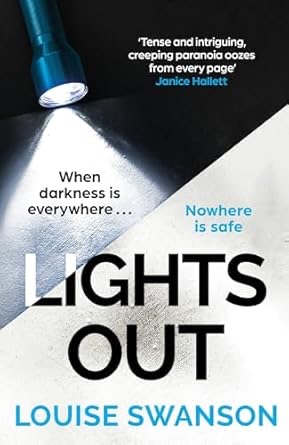
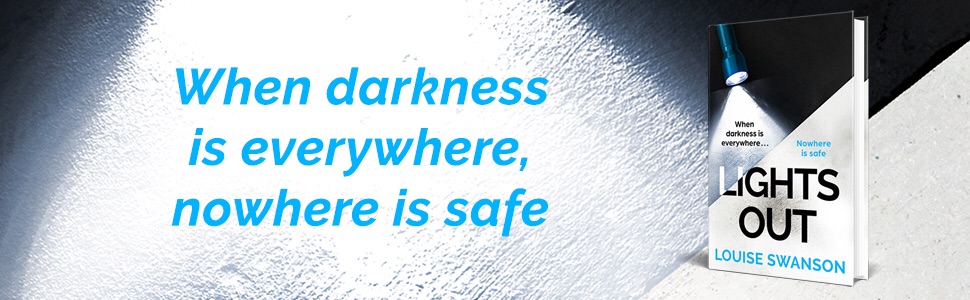
Lights Out by Louise Swanson

The Government have declared a state of emergency in this tense and thought provoking thriller from Louise Swanson. They’re introducing a temporary policy of electricity rationing, so at 8pm every night the lights and all other electrical power will turn off. For Grace this is her worst nightmare, because she’s terrified of the dark and no reassurance or safety measure from her husband is going to change that. She knows that at some point she will be forced to face the dark alone. An experience of being enclosed in the dark as a child has left it’s mark. All she can do is take as many night shifts at the hospital as possible, where they’re exempt from the switch off. In the house she will have to carry a torch and try to be alone as little as possible. When the switch off comes it’s effects are worse than she could possibly have imagined. Someone is coming into her home. Late at night when she’s shivering under the covers, too scared to move. Someone is leaving behind strange gifts – a third goldfish is swimming beside Brad and Jennifer in the bowl, a horrible painting of a dragon has replaced her own photo on the stairs, a pair of candlesticks in the kitchen. With them he leaves a strange and unsettling note: 

‘I have you in my sights. Love, the Night.’

Where can Grace feel safe if not in her own home? She’s an interesting character, clearly badly affected by childhood trauma and the memories of her previous, abusive relationship. The author opens with a first person account of being locked in a small pitch black space, it’s so vivid I could feel her fear. Grace tells us she was locked in a cupboard by the other children at school, where they continue taunting her until she wets herself. Since then she has always kept the lights on after dark and her partner sleeps in an eye mask to avoid the constant light. She also works at night where she can and sleeps in the day at home. She works as a carer in the hospice, spending a lot of time sitting beside those who are close to death, once her other tasks are completed. She didn’t go to university because she had a baby boy while very young and he has recently left home to live with his partner. Grace moved in with her own boyfriend and he has promised to be home in time for first big switch off. However, when she’s counting down the minutes, torch in hand, her partner is nowhere to be seen. 

The author shows brilliantly how even a strong and capable woman can be triggered by something that others barely notice. She touches on how the lights out policy affects the wider population – hypothermia in the elderly, rotting food defrosting and causing waste, a rise in crime. For others the lack of power has some positives, people can’t hide or be distracted by screens and communication within families will improve. Grace has been a single mum and she works well with people who are dying, so we know she isn’t scared of the big stuff. So why has one experience from childhood left such a huge impression? Her mother had always hoped she’d grow out of it and now the twelve hours of darkness must surely mean she must face the fear? It’s like state sponsored exposure therapy. Then ‘the night’ starts visiting and suddenly the dark covers up worse fears, new ones that are very real indeed. Even worse, her night visitor isn’t breaking in, so surely they must have a key. She is unsure how to deal with it and ringing the police is pointless when they’re dealing with a darkness induced crime wave. 

In between Grace’s sections of the story we meet a man who is in therapy. He left me feeling very on edge and I found myself wondering how I’d react if he were my client. He seems very unaware how counselling works, despite it being a fairly common concept these days. He also responds strangely to the therapist’s standard introduction. He fidgets, stands and paces round the room and I was uneasy on the therapist’s behalf. He seemed agitated. He’s convinced that his girlfriend is seeing another man. Is he paranoid? We have no idea how he fits into the story, but I was intrigued by him. Grace’s world becomes even more confusing when someone from her past turns up at the hospice as a patient. She knows she should disclose their connection, but if she does she knows she won’t be able to work with them. She decides to keep it to herself so she can sit with them. What clues, if any, might they have about her childhood and could what they know help her fear of the dark? As the pages turned I became more and more suspicious of her partner. Never home when he says he will be, distracted and very unsympathetic. I didn’t like him from the start and wondered if he was exercising coercive control over her. The moments when she’s under the covers with her heart racing as she hears her intruder moving around downstairs are truly terrifying. Yet he doesn’t seem malicious. He seemed to enjoy her fear and I even wondered if the night was closer to home than she thought. The truth was even stranger than expected and I found myself rooting for Grace, wanting her to get some resolution about her night visitor but also more long term relief from her phobia. That could only come from openness and facing the truth of her childhood and that time in the pitch dark cupboard. This is an enjoyable thriller with interesting insights on how childhood trauma affects us and how early relationships can inform the attachments we form in later life. 

Out Now from Hodder and Stoughton

Meet the Author

Louise Swanson’s debut, End of Story, was written during the final lockdown of 2020 – also following a family tragedy, it offered refuge in the fiction she created. The themes of the book – grief, isolation, love of the arts, the power of storytelling – came from a very real place. The second Swanson book will arrive in hardback and eBook spring 2024. Watch this space. 

Swanson, a mother of two who lives in East Yorkshire with her husband, regularly blogs, talks at events, and is a huge advocate of openly discussing mental health and suicide.

She also writes as Louise Beech. Beech’s nine books have won the Best magazine Book of the Year 2019, shortlisted for the Romantic Novel of the Year, longlisted for the Polari Prize, and been a Clare Mackintosh Book Club Pick. Her memoir, Daffodils, was released in audiobook in 2022, and the paperback version, Eighteen Seconds, in April 2023..

Posted in Netgalley

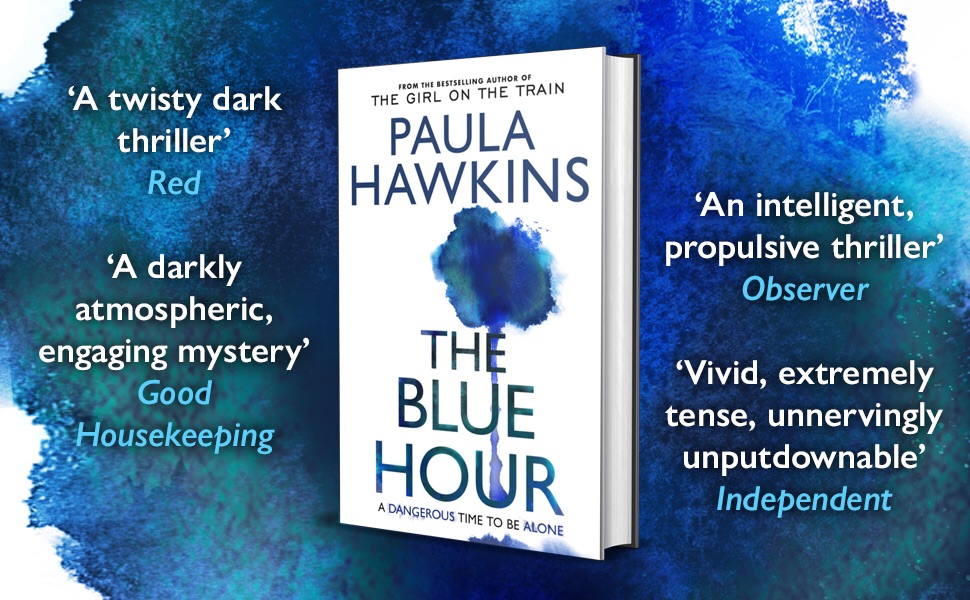
The Blue Hour by Paula Hawkins

Set on an isolated Scottish island called Eris, where the mainland is only accessible at high tide, an infamous artist has retreated from the world. Twenty years ago Vanessa’s notoriously unfaithful husband visited the island then went missing. After Vanessa’s death, the island became the home of local GP Grace, often referred to as Vanessa’s companion or friend. However, all her artworks were left to an art foundation set up by her first agent. The curator of the foundation is Becker, hired for his expertise in Vanessa’s work. He is under pressure from the new owner to extract the last of Vanessa’s work from Eris. They have tried polite enquiries, legal letters and ultimatums but they are sure this has all been in vain and that Grace is deliberately holding back. Now a situation has arisen with one of Vanessa’s found object installations already on display in the gallery. A visiting doctor is convinced that the bone suspended in a glass box is human. They withdraw the box from view and contemplate having to break it open to have the bone properly tested. The unspoken thought on everyone’s mind is whether this might solve the mystery of Vanessa’s missing husband? It’s an opportunity for Becker to tell Grace face to face, but also to address the missing works that must be on Eris. He feels this is the best way forward; a last ditch attempt before legal action. However, visiting Eris is not without it’s risks. Are all of it’s secrets and lies about to be uncovered. 

I’ve been waiting to love a Paula Hawkins novel ever since the brilliant The Girl on the Train, which was THE novel to be reading when it first came out. It was a successful film too, even though I felt it lost something when transferred to America rather than it’s London setting. Her following novels haven’t really stayed with me in the same way, even though they were page turners. This story really did grab me. I love reading about the lives of authors and artists, because they’re always interesting characters with depth and complexity. They also usually have atmospheric settings with the sort of rambling houses I dreamed of living in when I was little. This had all three and I truly couldn’t put it down, choosing it over TV in the evening and going to be early with it too. The story was intriguing too, with the mystery of the human bone to be solved but also the missing works of art, not to mention Vanessa’s husband. Vanessa has always insisted he left the island and his wallet was found washed up near the causeway suggesting his leaving was ill-timed and the tide came in as he was crossing. Becker is torn. He knows that they must test the bone, but he feels sick at the thought of destroying one of Vanessa’s works in the process. His boss agrees that he must travel to Eris to discuss it with Grace in person and take the opportunity to bring back any works he finds that should be in the gallery. 

I loved the complicated relationships in this story. Even Becker is in a strange relationship triangle. He arrived at the foundation specifically look after Vanessa’s legacy, but there was more change when Vanessa’s agent died and the house, grounds and art foundation passed from father to son. Also left behind were his frail and elderly wife and his son’s fiancée Helen. Becker was immediately attracted to Helen and to his surprise his feelings were reciprocated. This ultimately resulted in Helen leaving her fiancé for Becker and moving to his cottage on the estate. They are now married and Helen is pregnant with their first child. Becker had expected to lose his job over the affair, but his new boss was surprisingly gracious. Becker is from a modest background and he sometimes can’t believe that Helen chose him, besides her ongoing friendship with her ex-fiancé leaves him uneasy. This is a man who has everything and now he must leave Helen in his hands, so he’s feeling very conflicted about his trip to Eris. 

Grace is absolutely fascinating and her relationship with Vanessa is complex. She is aggrieved that Vanessa ‘left her with nothing’ neatly ignoring the fact that she now owns the house and island. The foundation’s position is that Grace has withheld certain paintings, sketches and Vanessa’s diaries. She comes across as a borderline personality. Her early experiences have left her feeling unwanted and inadequate leaving her unable to form healthy relationships. In order to be accepted she has learned to blend her personality to fit whoever she’s with, but sadly has no idea who she really is. When she wants to form an attachment she makes herself indispensable to the other person. In Vanessa’s case she becomes quietly present, in the background preparing meals, cleaning the house and making sure Vanessa has all the conditions she needs in order to create. In her way she feels she has contributed to the works Vanessa produces. There is no word for what Grace is – friend or companion is the usual – but really she’s like a servant, always anticipating their mistress’s needs. Most of the time she feels indispensable to Vanessa, but occasionally she is displaced from her position, by the latest lover or her ex-husband popping in and monopolising Vanessa, until she abandons work and spends time with him, often not leaving the bed for the duration of his visit. Grace hates him, often retreating to her cottage across the causeway until she sees his little red sports car departing the village. Then there are heated arguments and recriminations over his visit until the pair settle once more into their usual routine. Grace fears abandonment. She remembers the relief she felt when she found her tribe at university only to return home from lectures one day and find that her two friends have moved out of their shared house without even a note. As the village GP Grace is clearly intelligent and skilled but I worried about her access to vulnerable patients. I couldn’t decide whether she was a tragic figure, or a sinister one. 

Vanessa could be volatile. Her tempestuous friendship with her agent was well known and friends were surprised that she left him such a huge bequest on her death. Her marriage was also a rollercoaster of ups and downs, both of them drawn to each other but utterly incapable of living together. Could one of their legendary fights have gone wrong? As Becker arrives on Eris a battle of wills develops between him and Grace and secrets will out. The author keeps you guessing; is Grace the victim or persecutor? Is she holding on to the diaries because they incriminate Vanessa? Or is she trying to preserve the memories of her life with her friend, in the only place where Grace has felt like she’s home? The author pitched the tension perfectly and I devoured the final third of the book. We move between Becker’s narrative and Grace’s, alongside excerpts from Vanessa’s diary where each excerpt or reminiscence reveals about her clue or changes the story dramatically. Above it all is the artist – a figure we might imagine we know through their work, but art can be a mask, just a way of painting over the cracks. The diaries offer a less curated Vanessa, as well as the raw and unvarnished truth. Eris stands above all as a mystical landscape, like one of those places in a horror film that you can never leave no matter how hard you try. This was a brilliant thriller where you’re never sure about the truth until the very end.

Out Now from Doubleday

Meet the Author

PAULA HAWKINS worked as a journalist for fifteen years before writing her first novel. Born and brought up in Zimbabwe, Paula moved to London in 1989. Her first thriller, The Girl on the Train, has sold more than 23 million copies worldwide. Published in over fifty languages, it has been a Number 1 bestseller around the world and was a box office hit film starring Emily Blunt.

Paula’s thrillers, Into the Water and A Slow Fire Burning, were also instant Number 1 bestsellers.

Posted in Netgalley

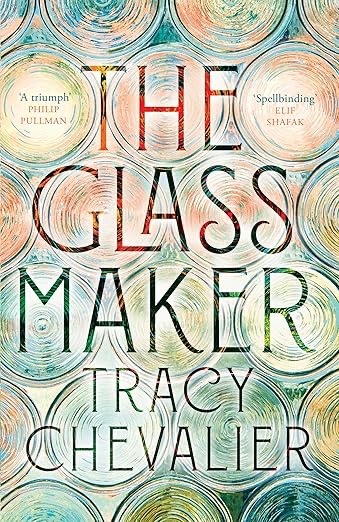
The Glass Maker by Tracey Chevalier

Orsola is the spirited teenage daughter of the Rosso family, all glassmakers from the tiny Venetian island of Murano. She’s very young when she sees her father bleed out in the workshop after he’s struck in the neck by a shard of glass while making pieces for a chandelier. Out of his two sons, the youngest is quiet, solid and dependable and would have made the perfect maestro, while his eldest Marco is loud, egotistical and very proud of his skill with glass. Now the entire family’s fortunes lie on his shoulders as the eldest always inherits the title of maestro from their father. He needs to support everyone from his widowed mother Laura and her youngest daughter Stella. His promotion leaves room for another servente to become the apprenticed glassmaker, second only to the maestro. In an unusual move Marco employs Antonio, originally a fisherman he has always wanted to work with glass. For Orsola it is love at first sight. Meanwhile, she is looking for ways to supplement the family’s income and visits their patron and merchant, a Dutchman called Klingenhorn. He suggests that she approach the only female glassmaker in the city to teach her how to make glass beads over a heated lamp. Once her beads are of the right quality, Klingenhorn agrees to place an order and she sets to work with determination. Orsola is our window on the Rosso family and she imparts both their history and the history of the island with it’s amazing glassmaking heritage. It is a history filled with love, passion, duty, tragedy and ingenuity, plus a little touch of the magic that Venice has in abundance. 

It’s hard not to fall in love with Orsola because she’s so brave and independent, attacking life with a fearlessness that aligns her with the most important woman working in glass, Maria Barrovier. The family business is run by the men of the family, leaving the women powerless. Her mother has a great business brain and younger brother Giacomo would have definitely been a safer pair of hands, churning out the same simple glassware for daily use. Yet thanks to a circumstance of birth they are all at the mercy of the mercurial Marco. He is so dissatisfied with their usual output of plates and goblets that have been the Rosso’s bread and butter, he wants to make more ornate and decorative glass, but misses the fact that it still has to be functional.  Orsola keeps her own business dealings with Klingenhorn a secret from her family, telling them her bead making is merely a hobby. Her budding romance with Antonio is intoxicating, but she knows immediately that he wouldn’t be her brother’s choice for a husband. They spend moonlit nights marooned on Antonio’s boat dreaming of a life where they can be together, away from the rivalry his presence has caused in the workshop. The Rosso’s business is a rollercoaster and they have to face hardship, change focus and rebuild several times. The author takes us from the 17th Century plague that hit Venice hard, all the way through to the COVID pandemic. While centuries pass in the real world, somehow everything happens within Orsola’s lifetime. When I visited Venice for the first time, particularly in the evening, I had a strange feeling I might turn a corner and be in another century. Orsola rarely leaves Murano and Venice, only once venturing to the mainland, rowed by Klingenhorn’s slave. I felt that if Orsola actually set foot on the mainland she would suddenly age by decades. 

The time difference felt strange at first, but it soon felt completely normal. We get to experience the city’s heyday as a bustling port, filled with merchants and people of all races and places. We see that dwindle as time goes on and slowly native Venetians leave and tourists move in. The author explores issues that are important to the island today: the worsening of the acqua Alta; the building of flood defences in the lagoon; cruise ships dwarfing the city and disgorging hundreds of tourists into San Marco at once; the shops selling cheap Chinese versions of local crafts such as mask makers, leather workers and glass makers, undercutting local artists; the changing flora and fauna, illustrated by the dolphins reported in the lagoon during COVID when only residents were left in the city. The author explores that conundrum of the negative impact of tourism on the city, while also acknowledging the city’s absolute dependence on it’s visitors. The endless lament that Venice is sinking, only serving to heighten people’s desire to see it. There are those who feel Venice has become a theme park of of it’s original self. I utterly adore Venice and I’m going next year for what will probably be the last time as it is difficult for a disabled person to get around. The author mentions a Las Vegas hotel where a microcosm of Venice has been created, with some visitors thinking they no longer need to travel to see the city. Yet it’s picture perfect bridges and clean canals are miles away from the real Venice. Of all my memories of Venice, the most important are those that are far from perfect. It’s the churn of the mud in the Grand Canal and silty smell of the mud, the washing hanging above your head, meeting locals and their dogs walking after dinner and the sound of squeaking rubber against the dock as the vaporetto leaves it’s stop. We always laugh about the old man we met crossing a bridge into Castello who farted loudly, before laughing uproariously! I feel that spooky sensation I had walking round the back of La Fenice after dark and the smell of candles and incense as we heard mass in an unexpectedly beautiful church. It was watching everyday things that gave me an idea of living in Venice: the grocery deliveries; being rushed to hospital or having the rubbish collected by boats. It’s all these things that make Venice real and not a film set. 

Of course I was longing for Orsola to reunite with her one love Antonio and I won’t ruin your enjoyment by telling all, except to say that just like the real Venice, real life is rarely a romantic novel. However, what I enjoyed most was Orsola herself because she is a pioneer and an incredible business woman. In fact she succeeds precisely because she is a woman. While Marco inherits the business, his ego and inability to change could have derailed the whole family. The women in this novel ‘manage’ the men, working around them and often slowly drip feeding ideas and solutions to the men until they adopt the idea as their own. Whereas Marco never asks for advice and rarely takes it, Orsola recognises the shortcomings of the business or when a crisis is looming. She knows who to ask, consulting with Klingenhorn and his replacement Johnas, Maria Barovier and the women of Cannaregio about threading and stacking seed beads. Even as the novel comes up to date she’s still diversifying, opening a second shop in a busy tourist Calle of Venice itself and employing someone to crate the glass balloons and trinkets that are easily packaged and stowed in a suitcase. She survives by being pragmatic, recognising when to challenge and when to do her duty, even if her temper does get the better of her at times. The depth of research that’s gone into her story and the author recommends many sources in her brilliant afterword. She creates a Venice I recognise, full of beauty and history but also a real and imperfect place, reliant on the very thing that destroys it. She captures the soul of the island and of Murano too and the people who feel themselves as Muranese first and foremost. I loved the magic of these places and how it attracts the eccentric and eclectic characters who have made it their home over the years. From Casanova, to Peggy Guggenheim and the previous owner of her home, the Marchessa and her pet Cheetahs. It is a moving, vibrant and intelligent novel that I know I will want to read again and again.  

The Borough Press 12th September 2024

Meet the Author

Tracy is the author of 11 novels, including the international bestseller GIRL WITH A PEARL EARRING, which has sold over 5 million copies and been made into an Oscar-nominated film starring Scarlett Johansson and Colin Firth. American by birth, British by geography, she lives in London and Dorset. Her latest novel, THE GLASSMAKER, is set in Venice and follows a family of glass masters over the course of 5 centuries.

Posted in Netgalley

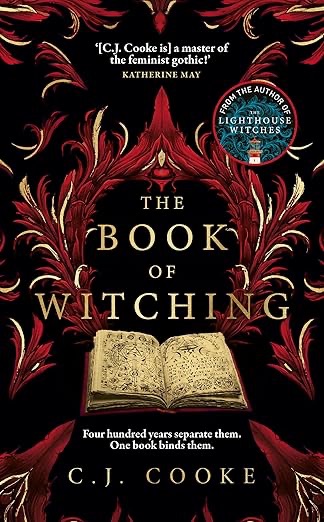
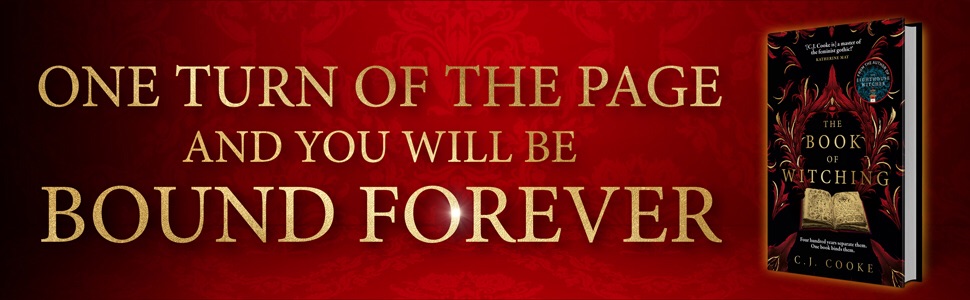
The Book of Witching by C.J.Cooke

On a small uninhabited island off Orkney, the body of a young man is found burned alongside a girl who is barely alive. She has suffered terrible burns to her arms and hands. When Clem receives the call that her daughter Erin is in the burns hospital in Glasgow, she races to her bedside and is horrified to find her in a coma with her damaged eyes stitched shut. Erin had been on a trip to Orkney with her boyfriend Arlo and a new friend Senna, leaving her daughter Freya with Clem. Arlo has been found dead, but Senna is missing. Erin desperately looks for clues as to how this has happened and is startled by a sudden vision of a strange book, with a bark cover and black pages that appear to be blank. Searching her daughter’s room she finds a note that reads ‘Arlo’s hands will need to be bound’. Could Erin have harmed her friends? We’re taken back to 16th Century Orkney as Alison Balfour wakes up and finds both of her children missing in the middle of the night. She tracks them to a clearing where masked and robed figures are holding a ceremony, initiating her children into the Triskele, just as she once was. Her own mother steps forward with the Book of Witching, inviting her grandchildren to ‘sign’ the book with a primal scream. Only a few weeks later she is approached by a nobleman when visiting her husband, who is working as a stone mason on the cathedral. He asks if Alison could create a powerful hex that would end the life of a powerful Earl. She refuses, so it’s a huge shock when she is arrested for practising witchcraft and thrown into a dungeon. Alison knows she has only ever used herbs and charms to help people with their ailments, particularly women. However, she knows what will follow; interrogation, violation and torture unless she confesses to something she didn’t do. Then she faces burning, with her only hope that she is strangled before the fire takes hold. Alison’s story is interwoven with Clem’s story, set in present day Glasgow where she lives with her daughter Erin. Clem is devastated when out of the blue she receives a call from the city’s burns unit. Erin has been admitted to the unit with serious burns and is in an induced coma. Clem is confused because Erin was on a trip to Orkney with her boyfriend Arlo and her friend Savannah. Now Arlo is dead, Savannah is missing and Erin has terrible burns to her arms and hands. She was found on the beach of Gunn, an uninhabited island off Orkney. Why were they in such a remote place and why is Clem had a vision of a blackened, bark covered book which opens to reveal a woman burning at the stake? 

C.J. Cooke combines these two stories into a narrative about Scottish heritage, the history of witchcraft and of women. She creates an eerie atmosphere where supernatural abilities abound, based within a breadth of research around the 17th Century moral panic about witches spearheaded by King James himself. These earlier sections are an unusual mix that ground us within the history of a place, but also creates a sense of unease. Alison renounced the Triskele years before and is angry with her mother for going behind her back, so when she’s arrested for witchcraft it’s a shock. The period where Alison is interrogated is incredibly accurate and hard to read in parts. She is entirely at the mercy of the powerful men who keep her in a filthy dungeon, restrict food and water, then use intimidation, violation and torture to elicit a confession. The historical background to the witch trials in Scotland has come up in a couple of novels this year and it might seem strange to the reader that such a belief in witchcraft existed. King James VI of Scotland had a marriage contract with a Danish princess, but her voyage to Scotland is threatened by fierce storms. Witch burnings had already swept across Germany and into Scandinavia and there are rumours that a witch had cursed the princess’s voyage. The North Berwick trials started a wave of panic over witches who might be accused of something as silly as causing a farmer’s cows to stop giving milk. King James voyaged across the North Sea to collect his bride, but does become obsessed with witchcraft using the Malleus Maleficarum as his witch finder’s bible. It includes the idea that witches will have a mark on their body where the devil has left his mark. One of the men interrogating Alison uses a pin to test marks on her naked body, looking for one that doesn’t produce pain when stabbed by the needle. He claims to have found the mark under Alison’s tongue, but also perceives the outline of a hare that turns into a shadowy figure. They are so sure of what they’ve seen that Alison almost thinks she’s seen it herself, but she’s starving, dehydrated, filthy and exhausted from being walked up and down all night to prevent her sleeping. Yet every time she denies their accusations, until they start hurting the people she loves. 

Clem meanwhile is horrified by the state of her daughter who is on a ventilator to protect her airway. She’s so vulnerable that she’s even grateful for the presence of her ex-husband at Erin’s bedside. She’s devastated for Arlo’s parents and for those waiting to hear news of Savannah. They’d only become friends very recently and there had been no red flags. Now the police are sniffing around the ICU, waiting for Erin to wake up and give them her account of what happened. When Clem pops home she goes into Erin’s room to feel her daughter. As she looks around she finds a slip of paper and written in Erin’s hand is he instruction that ‘Arlo’s hands must be bound ‘. That is exactly how Arlo was found. Instinctively, Clem pockets the evidence before the police ask to search their home. She must protect her daughter. Yet when Erin wakes up she claims to be someone else. Someone called Nyx. Clem only has to hear her voice to know that this is not her daughter. For me Alison’s narrative is more compelling, possibly because we’re in the midst of the action and everything is so immediate as we experience it through her eyes. By contrast we come into Clem’s story after the terrible event has happened. She’s in the dark, desperately trying to work out what has happened to her daughter. This only gets more complex as Erin wakes up different and she isn’t sure whether it is a case of ICU psychosis as her nurse suggests. This is a psychiatric response to the strange environment where sleep deprivation, being dependent on others and the sensory overload from the various machines and lights being on constantly. It’s also disorientating to wake up and find part of your life is missing. Yet there’s clearly a paralysing fear that something much worse is wrong. Erin has been through something so traumatic she’ll never recover or never be Erin again. The more Clem uncovers the more she feels something paranormal is at play. 

I was so impressed with the historical detail put into this novel and how real it made Alison’s experience. The punishments she and her family go through are more horrific than any of the paranormal stuff. We might fear the unexplained and the unknown but the things humans do to each other are far worse. I’ve loved this writer since her first novel and this one had me utterly gripped because she captures the fear of being labelled, noticed as different and blamed for things you haven’t done. Many witches served a purpose in their community, particularly for fellow women and I think she captured the complexity of that position. What’s the difference between giving a herbal remedy, a harmless charm or a spell and who makes that decision? Certainly not women and not those who are powerless or living in poverty. Even the most altruistic intention can be misconstrued or twisted by someone malicious. This was a dangerous time to be a wise woman. I also loved how the author based her story in a magic that was so powerful it could still wreak havoc today. This is another solid read from a fascinating author who has rapidly become a favourite of mine and a ‘must buy’ writer.

Published by Harper Collins 10th Oct 2024

Meet the Author

C J Cooke (Carolyn Jess-Cooke) lives in Glasgow with her husband and four children. C J Cooke’s works have been published in 23 languages and have won many awards. She holds a PhD in Literature from the Queen’s University of Belfast and is currently Senior Lecturer in Creative Writing at the University of Glasgow, where she researches creative writing interventions for mental health. Two of her books are currently optioned for film. Visit http://www.cjcookeauthor.com

Posted in Netgalley

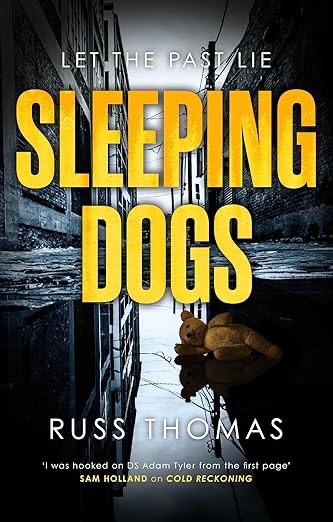
Sleeping Dogs by Russ Thomas

It’s a very brave author who spends three novels establishing a fascinating and complex character, then chooses to leave him out of the fourth novel in the series. We’re back in Sheffield where Adam Tyler is searching an old cinema when he’s hit from behind and falls from a high gantry. He reaches the Northern General in a coma and the strange thing is that his team have no idea what he was investigating. None of their current cold cases even mention the place, but it’s not unusual for Tyler to investigate an avenue of enquiry alone. As Tyler clings onto life, with his old boss Diane by his side, we follow DC Mina Rabbani as she tries to cover the CCRU’s open cases, while surreptitiously looking into Tyler’s movements and locking horns with DC Doggett who is the official investigator of Tyler’s attempted murder. Meanwhile, at an artist’s event, Mina meets an awkward young woman called Ruth. She also stands out in this group of yummy mummies who’ve been taking a pottery class. She suggests they meet for coffee and Mina agrees half-heartedly, knowing it’s likely her job will prevent it from going ahead. As Mina and Doggett find a barely literate note, written in Sheffield dialect on Tyler’s desk they’re sure that this is what he’s been chasing. The note is a strange confession to a potential murder, but holds none of the details that might give them something to work with. More to the point, what is it about this note that made Tyler keep it to himself, especially from Mina who felt they’d developed trust. Our case splits into two timelines; the present investigations told through Mina’s eyes and a flashback to six months ago where we follow in Tyler’s footsteps. Each timeline inches forward slowly, drip feeding clues to the reader and ensuring we keep turning the pages. 

There’s also a third narrative voice following Ruth, the young woman from Mina’s arty party. Both had felt out of place at the event and this could be the innocent reason she sought Mina out for conversation. However, when she bumps into the same woman in the street a short while later I started to wonder if this was the coincidence it seemed. Mina is still unsure but does agree to coffee, feeling sorry for the young woman who seems a little awkward and unsure of herself. As Ruth’s circumstances begin to unfold I felt sorry for her. She lives in the home where her father recently died, but he still feels very present, both in the fixtures and fittings but also in Ruth’s mind. His chair still seems to embody him, marked forever by his hair oil and a halo of yellow nicotine. It’s clear that he was a huge presence, a domineering father who bullied his daughter. His need for care and to control her have kept her indoors and alone for so long that she’s scared to meet people. The scene where a group of girls befriend her in a bar and mooch drinks from her is particularly sad because she’s clearly vulnerable. Her desperation is written all over her face, so when a much younger man takes an interest in her I was immediately suspicious. I had a strange sensation of feeling protective of Ruth, but very wary at the same time. Mina really does develop into an excellent investigator in this novel. She’s always had great instincts, but here she steps out of Tyler’s shadow and really shines. She is shocked when the ACC puts her in temporary charge of the cold case unit in his absence, but determined to prove herself. Doggett warns her that her loyalty to Tyler is admirable, but could also hold her back. He wonders if the ACC is testing her and that a possible promotion could be on the cards. She has some interesting chemistry with the new uniformed liaison officer Danny that made me smile. We also see a lot more of her family and community in Sheffield, giving us insight into how determined and independent she has been to get where she is. This case will have her questioning every part of her world, even those closest to her. 

As for Tyler, even though his insular and secretive ways have carried on there have been some changes since the revelations of the last novel including his difficult childhood. The crime ring known as The Circle were shown to have influence even inside South Yorkshire police. We see again how protective he is of those he’s come to trust – such as bringing ex-ACC into the CCRU. As usual he doesn’t mind rattling even the most gilded of cages; he comes into conflict with previous local MP Lord Beech, who warns him off digging into the kidnap of his first wife. As soon as he reaches hospital Diane is by his side, but so is Scott. Tyler met Scott in the last novel, but we see in the flashbacks the ups and downs of their tentative relationship. It’s good to see Adam being more vulnerable with someone and Scott’s training as a counsellor might help him understand this complex man. I read late into the night to finish because I was desperate to see all those puzzle pieces slot into place. As the complex truth is finally revealed it’s life changing for one of the team and has implications for every character we meet in the course of the investigation. The Lord, a schoolteacher, a lawyer and a carer can all be traced back to a crime that isn’t what it seems. I wanted to know how far Tyler had come with his enquiries and most of all who met him at the disused cinema of the opening pages. This was a tense, intelligent and complex thriller that had so much emotional depth too. 

Published by Simon and Schuster 24th October 2024

Meet the Author

Russ Thomas was born in Essex, raised in Berkshire and now lives in Sheffield. After a few ‘proper’ jobs (among them: pot-washer, optician’s receptionist, supermarket warehouse operative, call-centre telephonist and storage salesman) he discovered the joys of bookselling, where he could talk to people about books all day. His highly acclaimed debut novel, Firewatching, is the first in the DS Adam Tyler series and published in February 2020. Nighthawking and Cold Reckoning, the second and third books in the series, followed in 2021 and 2022.  To find out more, visit his website or follow him on Twitter:  https://russthomasauthor.com T: @thevoiceofruss

Posted in Netgalley

Ice Town by Will Dean

I’m convinced that I’m fated to never meet Will Dean. Despite booking to meet him twice this year both COVID and MS relapses have had ridiculously accurate timing and I didn’t manage either event. It’s so frustrating because I really am such a Tuva fangirl. I really enjoyed this trip back into her world, even if at times it was tense, threatening and claustrophobic. Will’s intrepid reporter is enticed to a town further north than Gavrik because her instinct is telling her there’s a story. Dubbed ‘Ice Town’ it’s a minor ski resort with only one upscale and very empty hotel. Stuck in its mid-century heyday it is now losing out to the bigger resorts and the hotel must be on its knees. Tuva can only access the town via a tunnel through a mountain. Traffic queues at the tunnel mouth as drivers are alternately let through. It then closes at night leaving residents cut off from the outside world. Tuva has been drawn by a missing person’s report, a teenager called Peter has disappeared. Nothing unusual in that, but Peter is deaf and Tuva is imagining how isolated he must feel. She worries that his hearing aid batteries have run out of battery life. She imagines him stuck somewhere in the dark, in freezing temperatures and not even able to hear the search teams shouting his name. Tuva packs up her Hilux and heads north hoping to find out more about Peter and maybe help the search. She’s heading for the only B & B in town, but when she gets there it’s clear they should have dropped the second B – something Tuva points out with her usual tact! It’s actuality two bedrooms in the back of the a sunbed shop with very thin walls, but Tuva does not need luxury and expenses are scrutinised carefully by her boss Lena. As she starts to acclimatise she starts to realise that, if possible, this is a quirkier town than Gavrik. She’s also without the long-standing relationship she usually has with the police. Can she find Peter without their help? Without her usual support system to call on, might she find herself in danger? 

She rounds out that Peter lived with his grandmother and seems quite isolated in then community. Kids at school thought he was weird and girls mention that he made them uneasy, always staring at their mouths. Tuva is quick to point out that this isn’t sexual, he’s just trying to lip read. The church seems to be the gathering point for the community, with the Deacon organising the search parties. Instead of the police, once the tunnel is closed at night, the residents are protected by the Wolverines, a local biker gang. Tuva meets one of them at the only watering hole in town and finds out he’s actually a poet, an unexpected hobby for a huge mountain of a man dressed in leather. Tuva has managed to shack up next to the only other outside journalist, a girl called Astrid who has the other room beyond the sun beds. Tuva feels an urge to find Peter quickly and when a body is found near the tunnel she fears the worst. When news comes through that the body isn’t Peter, the search is based on two possibilities: either Peter and another resident have gone missing at around the same time and died from exposure, or Peter is in hiding, because he is the killer. This change from victim to possible perpetrator worries Tuva, she knows how disorientating it is to have no hearing out in the wilderness. She also worries that if the police do catch sight of him he won’t be able to hear their commands and they’ll shoot him. She asks the police chief to remind her officers that Peter can’t hear them. 

It’s not long before Tuva is plunged into disorientating situations herself, in one scene when she’s staying at the resort hotel her isolated lobby falls into darkness and she can’t find the right bedroom door. For a moment she’s terrified and knocks a picture off the wall in her panic. It made me very jumpy because it seemed targeted because she’d been placed in such a remote part of the building. When waking up one night after a dream she feels around the bedside table and can’t find her hearing aids or her phone. As she feels her way around the unfamiliar room, I had the uncanny sense that she might be being watched. Anyone could be lurking in the dark. Who has moved her stuff and is someone in the dark watching her panic? That definitely had my heart racing. Then she finds them on the desk, remembering she’d had one too many at the pub and must have left them in the wrong place. Another scene that kept me glued to the book was when she took the ski lift down to the town and for some reason the power goes out. She hears what she thinks is a shot and the overhead light goes out. Now she’s just swinging silently in the dark and in the cold. She knows it doesn’t take long for frostbite to set in and she tries to protect her face. She is so vulnerable at this moment and I was scared for her. I felt like someone was playing with her, like a cat does with a mouse. I had to finish this scene before I could get up and do anything else. 

Will writes the quirkiest characters and here there are a few. There’s Ingvar who comes across like a college professor and lives halfway down the slope with his dogs. Could he have tampered with the ski lift, after all he might seem respectable now but he has served a sentence for murder. The poet bouncer is another surprise, especially when Tuva unexpectedly wakes up in his house. There’s a pod-caster who is becoming quite well known, but his listeners don’t know that he keeps the slopes smooth by day and keeps large numbers rabbits in his basement for food. Once it becomes clear that they have a spree killer on their hands, the odds are a lot more serious. Could Tuva end up being a target due to her snooping around the town and asking too many questions? Maybe Peter’s position as an outsider has created resentment and a desire for revenge? For some reason Tuva doesn’t think he’s the killer, although he still hasn’t been found and bodies are starting to pile up. The claustrophobic feeling of the town isn’t helped when the killer’s methods become known. They disarm people with bear spray, several times more powerful than ordinary pepper spray which is banned in Sweden. Other items they use are military grade so could this be someone who served in the army? The victims are asphyxiated with a tourniquet used on the battle field that has a clever gadget attached. It can be turned to create the necessary pressure, even if you can only use one hand? It’s an unusual piece of kit and Tuva wonders whether the killer is a medic or has used one on the battlefield. Or is it the ability to adjust the pressure that’s key? To allow a few breaths then cut the victim off again, playing God. 

I enjoyed the realisations Tuva has about her own life. She recognises that Lena and Tammy have kept her on track since her partner Noora died. To the extent of making sure she’s eating and getting some sleep. Despite losing her mum she certainly has some substitutes. I loved how Will lets thoughts of Noora just wander across her mind from time to time, sometimes happy memories and sometimes deeply sad ones. I’m glad that she gets to hear Nora’s heart beat from time to time. There is a strange coincidence that may have a huge impact on her personal life going forward. The tense few chapters that bring us to the finale are so confusing! My suspicion was running back and forth constantly and the clues come thick and fast here. I really didn’t know who to believe. We’re on tenterhooks and I remember thinking why does Tuva put herself and us through this? The ending coming in time for the Santa Lucia festival was beautifully done and those of us who’ve been reading since the beginning and love the weirder members of the Gavrik community will love a little cameo towards the end. When will someone pick this up for TV or a film series? It’s a fabulous franchise and it just gets stronger all the time. 

Out on 7th November from Point Blank.

Meet the Author

Will Dean grew up in the East Midlands, living in nine different villages before the age of eighteen. After studying law at the LSE, and working many varied jobs in London, he settled in rural Sweden with his wife. He built a wooden house in a boggy forest clearing and it’s from this base that he compulsively reads and writes.

Posted in Netgalley

The Mischief Makers by Elizabeth Gifford


The Mischief Makers tells the story of author J.M Barrie’s relationship with the du Maurier family, including their daughter Daphne. I had a vague idea there was a connection between he two but hadn’t realised what the connection actually was. The film Finding Neverland always makes me cry, especially where the boy’s mother dies and makes her way into heaven/ Neverland. I knew that all the brothers were adopted by J.M.Barrie but I’d not realised that the boys were Daphne Du Maurier’s cousins. Their mother Sylvia was Gerald du Maurier’s sister, so my first thought was why weren’t the boys adopted by their own family? The author tells the story from Daphne’s perspective from her childhood all the way to middle-age. It’s a psychological study in a lot of ways, because Gifford really takes us into Daphne’s inner world as her life unfolds. Daphne herself filters the world through her psychological readings of Jung and Adler. We move back and forth in time as she examines incidents from her childhood with the benefit of experience and new discoveries she makes. We gain insight into her character and her process as an author, which was wonderful for me because I’m a huge fan of her work. 

Daphne grows up in a very complicated situation where she has a very attentive father and a cold, distant mother. This is something she examines closely later o with her adult knowledge of what’s appropriate and her father’s philandering ways with young actresses he starred with in theatre productions. The boys and J.M. Barrie are constant presence too, particularly in the nursery where Daphne would be waiting for the writer to weave stories. She is an imaginative child and Barrie teaches her to use her imagination, conjuring her ‘shadow self’ very like his most famous creation, Peter Pan. Tomboy Daphne is his real life principle boy and their play gives her space to sword fight, climb and take to the high seas in a way that’s frowned upon for girls in her class. There’s a fluidity to Daphne, in terms of both her gender and sexuality. In adulthood her pirate side becomes the bold, beautiful and sexually adventurous Rebecca de Winter. This was a character I’d always associated with Jane Eyre’s Bertha Mason – the original madwoman in the attic. Similarly, the second Mrs de Winter also represents Daphne but the quiet side that’s rarely seen in London. This is the side that craves time alone in Cornwall where she dresses in men’s tweeds and romps through the countryside or goes out sailing from their home in Fowey. As I was reading about this side of her character I was reminded of the young Mrs de Winter’s tweed skirts and her new sister-in-law’s observation that she couldn’t give a fig what she looks like. Fowey is where she goes to be herself, o hunker down with her children and husband Tommy. It’s where she writes and is most at home. 

I was very interested in the methods Barrie used to visualise the scenes from his books and plays. It also unlocks the imagination of his young charges, as the boys act out certain scenes such as hanging certain characters in the woods. With Daphne he has an almost hypnotic way of getting her to imagine an island rising from the lake. Could his techniques, which could be seen as hypnotism, have caused Daphne constant sense of being split. What effect did Uncle Jim’s imagination and techniques have on the boys in his care? Daphne remembers Michael being plagued by night terrors about drowning and a stubborn aversion to learning to swim. Are they all too imaginative? It’s clear that mental illness has run in the family, but is this an innate problem or unintentionally learned behaviour? 

I loved how Daphne comes across as a very new type of woman, especially in her own society and class. She epitomises the ‘flapper spirit’ but her progression goes much further than the drinking and dancing of the Bright Young Things. She’s different from previous generations of women in her very own way. She wants to write, to live alone in Cornwall and earn her own money. She has never fancied the idea of a husband and children, and has chafed against all the rules of being a young lady set by a mother she refers to as ‘Edwardian’. We get what she means in one sentence – the generation gap is huge. There’s also her fluid sexuality , something that I’ve always suspected as an undercurrent in her most famous novel Rebecca. Mrs Danver’s obsession with her mistress, telling her new mistress about Rebecca’s lustrous hair and showing her the sheer lace of her nightdress. When Daphne visits New York for a plagiarism case about the novel she meets Ellen, the wife of her publisher. She is immediately struck by her hostess’s resemblance to the character both in looks and her ability to look after a guest and put them at their ease. Daphne is overwhelmed by feeling and interprets it as desire, but I could see the second Mrs de Winter gazing out at Rebecca wishing she could be like her. Wouldn’t life be easier if she was this smart, perfect hostess and Tommy’s trophy wife? Although, Tommy largely accepts his rather less organised and talented wife.

Elizabeth Gifford brought Daphne to life for me and having visited the du Maurier home at Ferryside and Menabilly, I could easily imagine her there.  It was fascinating to take a trawl through her upbringing and how she ended up down in Cornwall writing. There is also this brilliant sinister edge to the story, with odd psychosexual tension and the questions around J.M. Barrie’s motives in adopting the du Maurier boys. Despite her mother’s wishes, her parents are generous enough to let her live down in Fowey as a young woman. Through her own journals we can see that she is troubled, constantly torn between the self she wants to be and the self she feels she should be. This is the gap between Rebecca and the second Mrs de Winter who is young, inexperienced and not equipped to run a great household in the same way as her predecessor. She questions herself constantly when the truth is that much like Maxim de Winter, her husband loves her for all the qualities she sees as faults. I thoroughly enjoyed this novel, that filled in the gaps in my knowledge about a brilliant writer and the psychological place her work came from. 

Meet The Author

Elisabeth Gifford studied French literature and world religions at Leeds University. She has an MA in Creative Writing from Royal Holloway College. She is married with three adult children and lives in Kingston upon Thames.

Posted in Netgalley

The Dark Wives by Anne Cleeves

Vera is another of my favourite female detectives. She’s like a little, inquisitive bird. She’s generally a bit grumpy and sharp when the occasion demands it. She’s stubborn and lives for her job, knowing instinctively which of her team is best for which task and often expecting long days and nights. That’s definitely the case when a missing person report comes in for a young girl called Chloe living in care. Even more disturbing is the discovery of a body in the nearby park. This young man with a head injury turns out to be a new recruit to the children’s home called Josh Woodburn. Josh was a student but had recently taken a part-time post as a support worker and had worked closely with Chloe. She had come to the home after her mother was hospitalised with mental health problems. Despite the offer to stay with her paternal grandparents Chloe chose the home. She was learning to express herself, trying things on and seeing what fitted. Josh had encouraged her to write about her feelings, so she was journaling daily and dabbling with poetry. The social workers at the home had noticed she maybe had a slight crush on the new worker, so they can’t imagine her harming Josh. On the night Chloe disappeared Josh had come into work and then popped out again, everyone else was enjoying film night and pizza. Their only clue is that a dark, high end Volvo had been seen parked outside the home a few times recently. At the moment, Vera and the team don’t know if they’re looking for a vulnerable witness who is missing or the fleeing perpetrator. Either way they need to find her as soon as possible, before anyone else is harmed. 

The team are getting used to new girl Rosie, as they lost one of their own on the last case. Rosie is what Vera considers a proper Geordie with the obligatory fake eyelashes, fake tan and never going out with a coat. Vera is determined she will have to get used to the breadth of their patch which takes in both cities and vast countryside. Joe is suspicious and is watching her closely, but actually she has good instincts and her empathic manner with the victim’s families yields results and they seem to trust her. Chloe’s grandparents live in Whitley Bay, after selling up their farmhouse in the country. Her granddad tells them how sorry he is that they haven’t made more effort with her. Sadly her parent’s difficult split lead to bitterness and Chloe’s father felt she blamed him for her mother’s mental health. Her grandad would message her and take her out to the hills where they used to live and an old bothy that he still owned with an incredible view. They would take a picnic and simply enjoy being in the open air together. He admits that her relationship with her grandma was more difficult. His wife owns a boutique and was always trying to get Chloe to make more of herself, disliking the Goth look that Chloe had adopted. Vera can see that Chloe doesn’t fit the stereotype of a child in care; she still has connections with family and hasn’t been drawn into drink, drugs or violence. Vera keeps asking herself – what is Chloe running away from? 

Josh’s parents are obviously shocked and grief stricken, but also confused. They had no idea he’d taken a job and financially he didn’t need to work. He could have lived at home and gone into university, but he wanted the full student experience and they could afford it so why not? Josh’s big love was film so the work isn’t even linked to his course at all. His father wonders if he was still trying to impress a girl he’d been involved with called Stella. Stella’s family ran an organic farm where people with mental health issues or who were homeless could help out and gain work experience. Stella seemed almost embarrassed by Josh’s comfortable, middle-class background and put him on the spot. What was he doing to make a difference in the world? Maybe taking this job was a way of showing her he did have a social conscience. Coincidentally the farm is near the village of Gilstead, where Chloe’s granddad’s bothy is. Could Chloe be hiding out there until she can get away. When they arrived at the bothy the next day, Vera is horrified by what they find. There’s another body and the suggestion that someone has been living here. This body must have something that links it to Josh and Chloe, not just that they’re from the same care home but something they seem to be missing at the moment. Gilstead is a pretty village that tourists like to take a look at and this week is no exception. This week sees the annual witch hunt in the village, where children search for the ‘witch’ on the hills and in the dark. Outside the village are three monolithic stones, the so-called ‘Dark Wives’ of the title. Eerie posters of an all seeing eye appear in cottage windows to repel witches and let them know the villagers have their eye on them. It seems a little odd and creepy but essentially harmless. 

The relationships in the team are interesting and Joe’s relationship with Vera is problematic, not least because he feels stuck between his boss and his wife. Sometimes he feels like he’s always trying to please women, whether he’s at work or home. Vera lives alone and doesn’t always understand that responsibility to another person. She seems to assume everyone is as free as she is when she suggests a pie and ping after work. Other times she’s almost motherly and affectionate towards him. It was really interesting how this case seemed to get under Vera’s skin and bring back memories of her father. She still lives in his old cottage with all his things surrounding her and never seems to make it her own. Is she just camping there? Or setting down roots? She thinks about her relationship with her father and how difficult he could be when drunk. Maybe she understands Chloe’s need for a stable and loving parent who’s there for her, instead of the other way round. Sometimes police work is a thrilling chase and other times it’s doing the boring background checks and looking at the detail. This case is a bit of both, but the finale of the Gilstead Witch Hunt is genuinely spooky. With the monolithic Dark Wives in the background and the sun setting, the village comes alive with people taking to the hills to look for the witch. It’s dark and menacing, so as Vera, Joe and Rosie set out with them there’s real tension in the air. Chloe could be out here in the dark, but so could a killer. As they stumble around in the cold, with Rosie finally wearing a coat, it was hard to know whether screams were just excited kids or something more sinister. I love Anne Cleeves’s plots because they’re like a labyrinth, looping round and back on themselves. There are always secrets to unravel within families and these ones are no exception, they’re also emotional because these families are struggling or have broken apart. Most of all I love Vera. She’s like a little terrier and leaves no stone unturned in her determination to find a killer. 

Out now from Pan McMillan

Meet the Author

Ann is the author of the books behind ITV’s VERA, now in it’s third series, and the BBC’s SHETLAND, which will be aired in December 2012. Ann’s DI Vera Stanhope series of books is set in Northumberland and features the well loved detective along with her partner Joe Ashworth. Ann’s Shetland series bring us DI Jimmy Perez, investigating in the mysterious, dark, and beautiful Shetland Islands…

Ann grew up in the country, first in Herefordshire, then in North Devon. Her father was a village school teacher. After dropping out of university she took a number of temporary jobs – child care officer, women’s refuge leader, bird observatory cook, auxiliary coastguard – before going back to college and training to be a probation officer. In 1987 Ann moved to Northumberland and the north east provides the inspiration for many of her subsequent titles.

For the National Year of Reading, Ann was made reader-in-residence for three library authorities. It came as a revelation that it was possible to get paid for talking to readers about books! She went on to set up reading groups in prisons as part of the Inside Books project, became Cheltenham Literature Festival’s first reader-in-residence and still enjoys working with libraries.

In 2006 Ann Cleeves was the first winner of the prestigious Duncan Lawrie Dagger Award of the Crime Writers’ Association for Raven Black, the first volume of her Shetland Quartet. The Duncan Lawrie Dagger replaces the CWA’s Gold Dagger award, and the winner receives £20,000, making it the world’s largest award for crime fiction.

Ann’s books have been translated into sixteen languages. She’s a bestseller in Scandinavia and Germany. Her novels sell widely and to critical acclaim in the United States. Raven Black was shortlisted for the Martin Beck award for best translated crime novel in Sweden in 200.


Posted in Netgalley

The Sky Beneath Us by Fiona Valpy 

Fiona Valpy is a newish author to me, someone that I’ve come across while blogging and I always request her books on NetGalley. I know I’m going to get a read that’s focused on women, their history and characters going through an experience that changes their outlook on life. I love the psychology behind these stories and this new novel was no exception, taking our main character through her family history to explore her identity and her direction now she’s in middle life. In two timelines we meet Violet Mackenzie- Grant and her great niece Daisy almost a century later. In 1927, Violet is leaving the family estate to focus on a new and exciting career path for women. Having watched her sister settle into the role of wife, Violet wants her life to be different and enrols at The Edinburgh School of Gardening for Women. Manual labour isn’t really what her family had in mind for her daughter, but Violet is so excited especially when she gets the chance to use her drawing skills to sketch plant specimens for the Edinburgh Botanical Gardens. She is thrilled to see the amazing plants being brought back from expeditions all over the world. Little does she know that this work will inspire a journey of her own; the trek of a lifetime to Kathmandu and beyond. In 2020, her great niece Violet Loverack has always dreamed of retracing Violet’s steps ever since she discovered her journals at the family home in Scotland. Her plant hunting exploits inspired Daisy’s own career as a landscape gardener, but from her tiny flat in London, Kathmandu has always seemed a long way away. Now divorced and with her last daughter leaving home for university, she’s made the decision to go on the trip of a lifetime. As she arrives in Nepal, ready for her trek into the Himalaya, fate has a different plan in store for her in the shape of the COVID pandemic. It prevents her mother joining her on the trip and soon after her arrival, the country is shut down leaving her stuck mid-way to the village Violet mentions with her two Sherpas. She must now undertake her journey alone with her guides, hoping for shelter at the same village. As she starts to piece together all the parts of Violet’s story she uncovers long held family secrets, can they inspire Daisy to find her own path forward and build a new life for herself? 

I was so inspired by this story, especially the adaptability and courage of these women. It gave me the travel bug too and I booked a little trip to Venice half way through! Violet is an incredible character, brave and perhaps a touch naïve at first. She doesn’t want to be restricted by what her family and society expect for her, but isn’t quite prepared by how strong their beliefs and rigid class structure is. Even going away to study us a massive step away from that path of marriage and children her parents were hoping for and manual labour for a woman of Violet’s class is possibly unheard of. There’s an openness and freedom to how she thinks that’s partly being young, part never challenging the status quo before and partly her own restless spirit. Things changed rapidly after WW1 for both women and the rigid class structure of the Edwardians. There’s a definite generational gap between those who remember those early years of the early Twentieth Century and those born after the war. Men were more scarce and that applied particularly to women of Violet’s social standing. There were more spinsters at that time, but the war also had an effect on class. It’s a change watchers of Downton Abbey saw between the dowager Duchess played by Maggie Smith and her granddaughter Sybil, who elopes with the young chauffeur. The family also struggled to keep the estate financially viable and many aristocratic families at this time had to give up their stately homes or married American heiresses who were only to keen to gain a British title in return for fixing the stately home’s roof or paying the multiple death duties. Young people of the 1920’s were the flappers and bright young things of the ‘Roaring Twenties’. Violet’s parents seem relatively relaxed about her studying, but probably assume Violet will give it all up when the right man comes along. In finding him, I’m not sure Violet understood how restricted her choices actually were. 

When Violet meets Callum Gillespie at the botanic gardens it’s a meeting of minds as well as hearts. Both love gardens and are inspired by the intrepid plant hunters who travel all over the world to bring back the specimens that Violet is sketching. They are experimenting by cultivating seeds and cuttings to see which plants grow well in the Scottish climate. Violet’s home is situated where the Gulf Stream brings milder temperatures and along with it”s mountainous countryside it could be the perfect site to cultivate plants coming from Nepal. Violet has fallen in love with the stunning Himalayan poppy, it’s sky blue petals and orange centre jumps out from the page and she’d love to grow it back home. Callum is going on the next expedition to Nepal, but first Violet takes him to meet her parents. It’s fair to say she’s stunned by their reaction. They insist that there’s no future in their relationship. He’s so far beneath them in class, that they couldn’t possible give their blessing to the relationship. Violet must break off their relationship. Determined to be with Callum, they both leave and spend the night in a nearby bothy together, cementing their union before a trip to Callum’s parents where they expect a better reception . Sadly things are equally awkward. Callum’s mother is uncomfortable when Violet tries to help out with tea. They are more used to working for people of Violet’s class, and to Callum’s embarrassment they act more like servants than family. They tell Callum he should look for a wife from his own class because this will never work and he could ruin Violet’s chances of a more suitable marriage. As Callum leaves for Nepal the pair are downcast and worry for their future. They continue to write to each other over the weeks and Violet becomes ever more sure that he is her soulmate. Surprise news makes Violet realise she wants to be with him, wherever he is and with the help of her sister she sets off to Nepal where life changing events await her. 

Years later Daisy is setting out on the same journey. She’s recently been very uncertain about the direction of her life now she’s no longer a wife or a full-time Mum. I loved following her journey, taking Violet’s steps into the Himalaya and at such an extraordinary time too. While the landscape itself is unchanged, more and more tourists have made their own attempts to conquer Everest. Previously, the Nepalese people thought it disrespectful to the mountain goddess to climb her, but since then both the Tibetan and Nepalese governments have allowed tourism in the area. Of course this has opened up the small communities to the rest of the world and allowed communication links to and from the area. It was fascinating to read about the effects of tourism on the people and the delicate eco-system around them. Sherpas are now employed to to tackled the most dangerous aspects of climbing Everest. They know the mountain, the weather and the best paths to take. Some are employed to create paths of ladders across the glaciers and many lives are lost, depriving families of their fathers and the income. It was clever to set Daisy’s journey in the pandemic because she gets to see the valley where Violet lived without tourists. The place feels untouched and even more remote as tourists have rushed home and the villages are locked down. So Daisy gets to experience the trek very much like Violet did, it’s quiet, there’s nobody on the same path and when she reaches the village she’s so surprised to a warm welcome. She’ll have to quarantine of course, but she has a family here with so many cousins she’s lost count. She also has access to the rest of Violet’s journals and will be able to read what remains of her life story. Just as these people did for Violet when she arrived a century ago, they now take Daisy in and look after her, 

I loved the equality of the village and I’m sure this is what Violet enjoyed too. There’s no class structure and seemingly no judgement either. She was taken in and as soon as a house becomes available it is cleaned and given to her for as long as she needs it. They don’t find industrious and hard working women an anomaly. This is somewhere Violet can settle and now Daisy can meet Violet’s descendants. Their societal structure is based on community and sharing. No one is without, but equally no one has ownership either. I loved how Daisy is inspired by the villagers and their generosity. It sparks a fire in her for community garden, partly to put something back into this wonderful place, a replacement for what years of visitors have taken. She also thinks it could work back home in Scotland, sharing some of the land that’s been her privileged birthright with the community. She inspires her daughters to improve the estate with an organic gardening project and more ethical values. The settings in the novel are incredible, equally beautiful but it’s hard not to be in awe of the incredible landscapes Daisy uncovers on each day’s trek. The valley between the mountains has its own climate and a unique combination of plants. I was blown away by the author’s description of the flower meadow which I pictured as a living rainbow of roses, rhododendrons and climbers. Of course there are also those vivid blue poppies and yes, I have already sourced some seeds. The idea of being above the clouds was incredible, almost as if it’s a magical, heavenly place. 

Of course there are some darker moments. COVID hits the family hard, just as typhoid hit Violet’s plans a hundred years earlier. The trek is challenging as Daisy struggles with the altitude and the stamina required to reach the village, in fact she’s stunned by how sure footed and physically fit the older members of the community are. This was heartbreaking in parts but also incredibly uplifting. It left me thinking I could start to tick off those bucket list items and fulfil those dreams I had for my life but set aside when I first became ill. Daisy’s Sherpa has a great way of combatting her fears and anxieties about completing the trek. He tells her to keep taking small steps, one in front of the other and I think this is great advice for any overwhelming task and life in general. You only fail if you give up. 

 Out 10th September from Lake Union Publishing.

Meet the Author

Fiona is an acclaimed number 1 bestselling author, whose books have been translated into more than thirty different languages worldwide.

She draws inspiration from the stories of strong women, especially during the years of World War II. Her meticulous historical research enriches her writing with an evocative sense of time and place.

She spent seven years living in France, having moved there from the UK in 2007, before returning to live in Scotland. Her love for both of these countries, their people and their histories, has found its way into the books she’s written. Fiona says, “To be the first to hear about my NEW releases, please visit my website at http://www.fionavalpy.com and subscribe to the mailing list. I promise not to share your e-mail and I’ll only contact you when there’s news about my books.”


Posted in Netgalley

House of Fever by Polly Crosby

On a trip abroad with her mother, Agnes Templeton meets a handsome young doctor called Christian Fairhaven. He seems completely besotted with her and a romance soon develops. Surely his swift proposal can only mean one thing,it must be love or this a relationship of convenience? Dr Fairhaven needs a wife and a stepmother for his daughter Isobel, while Agnes needs an expert in tuberculosis for to look after her mother who is now dying from the disease. Christian is researching a new cure, something he’s working on at the institute he runs called Hedoné. He lives in a cottage alongside the institute, which is split into an infirmary for very unwell patients and ‘spa’ type accommodation for TB patients who can benefit from the fresher air and rest that the institute provides. When Agnes arrives she finds that not everything is as she imagined. The guests are more glamorous and wealthy than she expected, with their part of the building adjoined by a swimming pool, beautiful grounds and many places for parties. Their access to alcohol and gourmet food gives the place a feel of a luxury hotel. Agnes’s mother is taken into isolation, to be monitored closely and have a period of quarantine. Agnes is allowed to visit her mother’s room as she seems to be immune to TB having nursed both her father and mother through the disease without succumbing herself. As she adjusts to the contrasts of lavish dinners and the sound of partying with the very authoritarian Matron and strict quarantine restrictions, Agnes starts to notice things. Isobel seems to flit around largely unmonitored and doesn’t live with them in the cottage. The beautiful actress Juno Harrington holds court here and seems to have unfettered access to Christian, even in his office. There’s nothing Agnes can put her finger on, but she feels uneasy. She senses there are secrets at Hedoné and perhaps in her marriage too. 

The book is largely narrated by Agnes, with small chapters every so often that seem to be narrated by a child. Through this we see the institute in two different ways; Agnes’s conflicting and unexpected impressions alongside those of a person who knows this place inside out and has explored every nook and cranny. I was very interested in the hare motif that repeats itself throughout the book as a symbol for the institute. It’s the keyring on which matron keeps her keys as well as the keys to the cottage, it’s on the signage and repeats throughout the building. I’m very interested in hares as a mystical symbol and a spirit animal, ever since my father found a leveret on the farm and let a four year old me touch it’s silky fur. For me it’s a symbol of huge leaps I have taken in life, some of which paid off and others that didn’t – something you have to accept if you are one of life’s ‘jump in with both feet’ people. I wondered if it had been chosen as a symbol of renewal, recovery and potentially the cure that Christian thinks he may be on the verge of discovering. However, it’s also a fertility symbol, having possible implications for his expectations of Agnes and their marriage. Agnes has jumped in to this marriage with a very short courtship away from the institute that dominates her husband’s life. There is a lot to learn about each other and where Agnes saw a competent and successful doctor, able to run an institute and bring up his daughter alone, the real picture is more complex. Isobel seems to be brought up by whoever is available, but spends a huge amount of time alone. Agnes wants to be a mother to her, but doesn’t want to impose and change what’s clearly a familiar routine. She hadn’t expected formal dinners with a new dress magically appearing each time. Who is choosing them? Christian courts investors for the institute, all drawn in by his claim of a cure. It starts to feel like the 

man she met and married was something of an illusion, incidentally that’s one of the risks of taking ‘hare leaps’. 

I thought the author cleverly placed doubts in the reader’s mind very slowly and strategically. I was immediately alert to a couple of characters: Juno Harrington who seems to run the social aspects of the institute and Matron, who at first gives off Mrs Danvers vibes and reprimands Agnes if she isn’t following the rules. I could see red flags popping up with Christian, who is clearly not as financially successful as the institute might suggest and the revelation that it is Juno Harrington’s family who are the largest investors answers one or two questions. Being very fond of fashion, I didn’t like the fact someone was choosing Agnes’s clothes, always placing just one new dress in her room as her only option for the evening. It showed a element of control that had my senses pinging straight away. Christian’s strange obsession with her colouring and complexion seemed odd too, constantly referring to her as his ‘English Rose’. When she finally sees a picture of Isobel’s mother, Agnes finds herself eerily similar. He’s also very quick to ask whether she could be pregnant. Agnes has been learning to enjoy their love-making and finds herself actively looking forward to it in their honeymoon period. Is his attention to her genuine or purely based on the potential outcome of having a child? He’s also very cagey about his claims of a potential cure and if the graveyard Agnes finds in the woods is a measure of his competence, it clearly isn’t working. 

I wasn’t surprised when the idea of eugenics started to come up, especially considering the period the book is set. It started as a theory in the late 19th Century and was the catalyst for horrific crimes against people deemed genetically inferior. In the USA it was used as the justification for sterilising huge numbers of Native American and young African-American women, especially those living in poverty in the southern states. In the UK it became a way of herding out those who were degenerate, linking criminality to certain facial features. Obviously, the Holocaust was the single biggest crime against humanity based in eugenicist theory. Hitler’s obsession with creating an Aryan master race, was used as a justification for mass murder of those he deemed as ‘life, unworthy of life’. This was mainly those of the Jewish faith, but also included Roma people, Catholics and people with disabilities. His program of sterilising those with disabilities and removing disabled children from their families started in the early 1930’s. In this novel, eugenics are linked to the institute and possibly Agnes’s particular traits – her immunity to tuberculosis and her English Rose colouring. I was becoming worried that the graveyard where Christian’s first wife is buried, alongside so many of his patients, might be the result of experimentation or simply weeding out those too far advanced for him to cure. I loved how these ideas unfolded. We only see what Agnes does so we might suspect, but we 

only discover the truth as she does which brings an immediacy to the revelations. 

I loved Agnes’s burgeoning relationship with Isobel who felt to me like an abandoned little soul, wandering the grounds and all the secret spaces within the institute, trying to to help sick people where she could and spending time at her mother’s grave. Christian seems to have no plan for her and doesn’t even discuss what his parenting strategy is, probably because he doesn’t have one. He leaves Agnes to get on with it and she does well, simply assuring Isobel that she is there for her and showing a willingness to share the memories she has of her mother and their life together. I think Agnes shows her more love than anyone else. Juno Harrington seems very interested in her but treats her almost as a little pet. I thought Sippy was interesting too, a nightclub singer and the institute’s only black patient. She is valued for her entertainment potential and her voice is incredible, but I didn’t feel she was included as part of the creative and bohemian crowd. She could be on display but not one of them, and I had the sense she was quite lonely day to day. Her friendship with Agnes is based on a real understanding and connection between the women. She’s also enough of a friend to warn Agnes that everything here is not as it seems. As the closing chapters began, secrets unravelled and the tension really did build. I loved how these women helped each other and how the most help came from a totally unexpected source. It is a timely reminder that people can surprise you, especially the ones you are most afraid of. One of the most interesting things for me was the subversion of the Romantic trope of the beautiful, frail and young artist wasting away from consumption. This quote from Byron sums it up beautifully: 

‘I look pale. I should like to die of a consumption’. ‘Why?’ asked his [Byron’s] guest. ‘Because the ladies would all say, Look at that poor Byron, how interesting he looks in dying.’

The pale complexion, the fatigue and the ‘rosy’ cheeks of advanced TB were a Romantic staple in fiction, whereas the truth of dying from this disease was different according to gender, race and most particularly, social status. The reality is often saved in literature for those in dire poverty and terrible living conditions. This excerpt from Liberty Hall gives a more accurate picture of the disease: 

‘Her body was bent forward on her knees; the joints of this body so thin, that it was almost deformed, were swelled and red and painful. She laboured and coughed for her breath; each time that she breathed she coughed up blood …’ 

Despite this, TB was a Romantic fashion and the figure of the beautiful, young woman slowly giving her soul up to God was a staple of 19th Century literature – just think of Dora in David Copperfield or Beth in Little Women. I felt like these two contrasting views of TB were embodied by the two types of patient; the free, bohemian and intellectual party-going patients and those locked down in the basement, having a very different experience of the same disease. The visible parts of Hedoné are based on the Romantic ideal and the illusory cure, while the locked and hidden parts contain secrets and patients whose outlook is at best poor and with only matron to tend to them in their final hours. One is an ideal and one is the truth, rather like Agnes’s expectations of her marriage and the strange reality. As the real horror starts to unfold, I was desperate for Agnes to escape and I was desperate for that she not leave Isobel behind, because a definite bond between them. Polly nails the historical background to her story and really emphasises the fate of women between two world wars. Agnes is of a social status where earning a living as a nightclub singer like Sippy or an actress like Juno isn’t possible. In fact she seems in that liminal space where becoming a governess or nurse like matron might be her only working options. I wanted her to be free though, to explore her authentic self and make the life she wants. I wasn’t sure, right up to the final chapters, what her fate would be. This is an entertaining and interesting novel from an author who understands the nuances of relationships and always creates fascinating characters within the most unusual settings. 

Meet the Author

Polly Crosby grew up on the Suffolk coast, and now lives with her husband and son in the heart of Norfolk.

Polly writes gothic historical mysteries for adults. Her first novel for young adults – This Tale is Forbidden – a dystopian fractured fairytale with hints of the Brother’s Grimm and The Handmaid’s Tale, came out in January with Scholastic.

In 2018, Polly won Curtis Brown Creative’s Yesterday Scholarship, which enabled her to finish her debut novel, The Illustrated Child.

Later the same year, she was awarded runner-up in the Bridport Prize’s Peggy Chapman Andrews Award for a First Novel. Polly received the Annabel Abbs Creative Writing Scholarship at the University of East Anglia.

Polly can be found on Twitter, Instagram & Tiktok as @WriterPolly