Posted in Netgalley

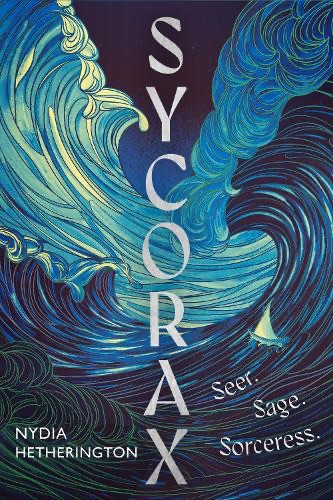
Sycorax by Nydia Hetherington

Seer. Sage. Sorceress.

“I know the power of stories and of voices. Even silenced ones. So let me end mine with what I have seen of Sycorax, and assure you again that once, she had a voice, and it was loud and melodious and filled with magic”. 

I was entranced by this beautifully lyrical tale of the unseen sorcerous of Shakespeare’s The Tempest. This is my favourite Shakespeare play because I love its atmosphere and the use of musical sounds to conjure up this enchanted island, ruled by the magician Prospero. Sycorax isn’t even present in the play, but is mentioned as a sorcerous and mother of Caliban, who is depicted as a monster and a slave to Prospero. The author wants to give Sycorax a voice, one that she doesn’t have in the play, to tell us in her own words what it was like to be treated with suspicion and cruelty. Sycorax’s story is an emotional one as she wrestles with her identity, her powers and the loneliness of being an outcast. Each time her powers grow the more isolated she becomes.The author is clearly so passionate about this book and giving her central character a voice and I think she achieves it beautifully. 

The story unfolds slowly while the author immerses us in the world Sycorax inhabits, at first with her parents. Taking her cue from Shakespeare her prose is lyrical and poetic. I really felt like I was in the presence of a magical being and it was the sounds that really grabbed me – the tinkle of sea shells on her mother’s anklets, the sounds of the sea, the lazy buzz of the honey bees they keep. I felt as if I was cocooned on a Caribbean island and strangely relaxed too. Everything is so aligned with nature and nothing interrupts, because even the market is just laying a blanket at the side of the road and selling in the open. By creating this mindful and harmonious background the author makes sure that when something does interrupt, it tears through this idyll and comes as a shock. So when Sycorax goes down to the marina and sailors are unloading goods, the noise is a huge contrast and the roughness of these men who are filthy and covered with lice makes us realise what a feminine energy the rest of the book has. This assault on her senses is violent and the unmistakably male. Despite the beauty of it’s language there are tough subjects here, that are based in misogyny and how women with healing skills are misunderstood by society. There’s also an element of colonialism here, over women’s bodies as well as where they live. 

“Women are used as an instrument of war. Our bodies are another land to be invaded, destroyed and conquered.”

There’s a big hint that her mother was aware of men’s need to conquer and control. In fact, her mother blindfolds Sycorax from a young age, covering the incredible violet colour – I imagined them like Elizabeth Taylor’s amazing eyes. Yet she doesn’t hide them because something is wrong with them, but more because they are extraordinary and it might draw male attention. This could mean a sexual possession, such as the attention Sycorax experiences from Afalkay the Beautiful. However, nothing makes men more fearful than a woman with knowledge and if she won’t behave or remain hidden might they attempt to silence her? In spite of everything she faces, Sycorax remains strong, a strength that could be attributed to her upbringing with her tenacious and otherworldly mother. Sycorax’s ongoing inner strength and determination to find her own identity in a world that shuns her, is something to truly admire. Because of this she is vehemently hated among the townsfolk, especially men because she won’t disappear.

I admired Sycorax’s strength, just her ability to keep getting up each day and going on. Everything they try to be rid of her just doesn’t work. Described as born of the sun and moon and shaped by fire and malady gives us a sense of her resolve, she’s hard as forged iron. Of course my main interest would be disability and chronic illness, being a fellow sufferer. I wrote my English Lit dissertation on disability representation and my Renaissance literature exam on Caliban and a potential reading of his character as someone with a disability. Yet somehow I hadn’t picked up on his mother and here we see her as stiffened, bent over and in chronic pain. This is Nydia’s purpose in writing this story, she beautifully dedicates her book to readers with chronic illness. This is so moving to me because we’re so rarely seen these days in an empathic or positive way. We’re so rarely seen at all. I mean really seen by someone who knows our struggle. It’s important to point out that Sycorax is a woman with chronic illness and this is a very different experience to a man – it’s shown in research that women’s pain is taken less seriously when presenting at A and E. Even when when women visit multiple times, doctors are slower at ordering tests or referring to a consultant. 

There’s a constant sense of give and take between Sycorax and her universe. Strangely the more she’s affected by illness, the more powerful she becomes. The power comes in the shape of wisdom, because people with chronic illness understand things about life that other people won’t get in a lifetime. It’s also about resilience, something that comes with time and getting to know how your illness affects you. By working with it, Sycorax knows what her body can do and how much activities will take out of her. Everything is a bargain and when she has to take to her bed she counts rest as an activity. I love that Nydia puts her own wisdom into the character, in the need to measure out energy daily and live with constant pain. Everything Sycorax goes through and learns about her illness, we follow and it was moving to hear words that have gone through my own head. I’ve woken up in agony, out of nowhere, trying to work out what tasks are absolutely necessary and which can wait. I was moved when Sycorax was taken to a woman in labour by a friend of her mother’s, teaching her how to help and support. The woman is screaming and thrashing, so Sycorax goes and kneels by her head, holding it gently and singing a song in a rhythm. She slows down the woman’s breathing and draws her attention to the ebb and flow of the pain. It calms the woman and allows her to work with contractions rather than fight them. This is something I do when in pain and something I’ve taught clients with chronic pain. Even severe pain is rarely continuous agony. It has a pattern, a shift, an ebb and flow. If you tune into the ebb and flow of pain you can go with it rather than fight it. That’s what I’m going to take away from this beautiful book, to remind myself of the ebb and flow in life and in my own body. Nydia has written a beautiful piece of work that takes us full circle to The Tempest. She’s managed to bring 21st Century injustices to the forefront without losing any of the magical beauty of the original play.

Meet the Author

From Leeds — although born on Merseyside and spending the first few years of life on the Isle of Man — Nydia Hetherington moved to London in her early twenties to embark on an acting career. Later she moved to Paris where she created her own theatre company. When she returned to London a decade later, she completed a creative writing degree graduating with first class honours.


Posted in Netgalley

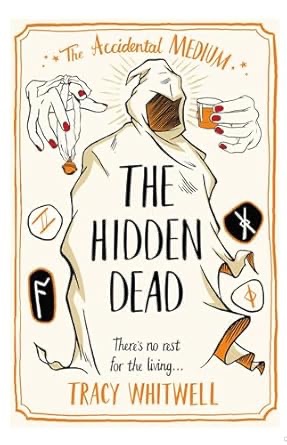
The Hidden Dead by Tracy Whitwell 

I couldn’t wait to read this, after reading the third book in this series earlier in the year. So I snagged it on NetGalley and read it immediately full of anticipation. I wasn’t disappointed. I love Tanzy and her adventures, usually she’s confined to the UK but this time she’s a little further afield. When she meets charming Icelandic giant Einar in a bar I did wonder whether vampires were about to debut in the series. His ability to ‘glamour’ Tanz seemed almost supernatural. Soon they’re sharing champagne and a bit of naked dancing too. When he invites her to his holiday cabin in Iceland to get some writing done, she decides to be impetuous and throw caution to the wind. This impulsive decision takes her to an isolated cabin with log burners, cosy decor and of course the odd spectre or two, After their first night together Tanz wakes up alone, without even a note and no plans for Einar’s return. She’s annoyed but not heartbroken. At the least she has a few days holiday in a country cabin for free and time to process her last case. Maybe she could start working on ideas for her own play? However, Iceland has its ghosts just as much as London. Did Tanz really think they would leave her alone? 

In a nightmare, Tanz sees a man staring over the edge of a cliff. Is he going to jump? Before she can act a second person appears, a strange man whose eyes seem bottomless and hold universes. She can hear a woman crying outside her cabin and eventually a vision comes of this woman and her empty relationship with a man who doesn’t appear to love her. She follows him to work and finds him in bed with another woman, she screams and Tanz can hear his roaring anger as she wakes. It’s clear there’s a mystery here and she’s going to have to find the crying woman to work out why she needs her help. She doesn’t know if it’s going to be dangerous, especially without her friend Sheila in tow. Yet there are signs of protection: the rowan tree at the front porch; the feeling in the bedroom as if there’s a protection spell around her; the strange man from her dream who seems to be magical. Tanz knows she must help the woman, who becomes increasingly desperate and starts to bang on all the lodge’s windows to make herself heard. Tanz just doesn’t know how to help. When her distant neighbour pays a call there’s an instant connection and Tanzy puts it down to the fact they’re both a bit witchy. Birta has the most amazing cabin a short hike away with a seventies style interior that’s retro and cozy. With their combined knowledge and skills surely they can find what their distressed ghost is looking for? 

I loved the character of Thor who is Einar’s friend but also a cab driver. He helps Tanz escape the cabin for a while. He has such a wholesome feel about him and is the complete gentleman. He listens to Tanzy’s story and doesn’t seem fazed by her experiences, although the knocking at the cabin is a bit unsettling. Tanzy feels very comfortable and safe around him, as he takes her under his wing. He really does take care of her, cooking for her and showing her some of the sights too. He has been friends with Einar for many years and knows how he operates. He wants Tanzy to feel like her time in Iceland hasn’t been wasted and his care of her really makes her examine why she is drawn towards unavailable men rather than those that show her how much they care. She tends to put nice men in the friend zone before anything has had a chance to develop. There’s part of her that’s addicted to the adrenaline that comes with a ‘bad boy’ and she hasn’t realised before that love doesn’t have to come with a side order of drama. Thor also accepts every bit of Tanz, her charisma and attitude but also the spooky and paranormal side of her life too. He doesn’t ridicule or belittle her psychic abilities, showing real interest and a willingness to help as far as he can. He really does take on her quest as his own, but also knows when to step back – when and where it’s her time to shine. He’s not overwhelmed by her and for someone who might be described as too much, there’s safety and security in that. But can safety and security be sexy? 

I’d guessed some of the mystery brought by the distressed woman but thoroughly enjoyed the journey as Tanzy looked for a way of fulfilling her wishes. This takes help from Thor, new friend Birta and the ‘hildunfolk’. All our usual characters are here, including Sheila and Tanzy’s delightful ‘little mam’ whose always there at the end of the phone. She is often more aware of her daughter’s exploits than you’d expect from all the way over in Newcastle. I thought the author delved beautifully into Tanzy’s character and her romantic choices particularly. She has to examine her choices; to follow an unsuitable and unavailable man all the way to Iceland, but to banish a kind, available and warm man to the couch. Why won’t she let good men love her? It works well with the unfolding of the mystery around the cabin and how the choices we make because of desire are often destructive and life-changing. It seems we can be left with so many regrets that they follow us into the afterlife. I enjoyed some of the final revelations, particularly around the character of Birta. This is another solid addition to the Accidental Medium series and I felt like I’d spent a few hours with an old friend. I have a list of literary characters I’d love to have for dinner and Tanzy is definitely there at the table, possibly next to Mr Tumnus. Although she’d have to promise not to flirt with him.

Out on 13th February Pan MacMillan

Meet the Author

Tracy Whitwell was born, brought up and educated in the north-east of England. She wrote plays and short stories

from an early age, then moved to London where she became a busy actress on stage and screen. After having her son, she wound down the acting to concentrate on writing full time. Many projects followed until she finally found the courage to write the first in her Accidental Medium series, a work of fiction based on a whole heap of crazy truth​. Apart from the series, Tracy has written novels in several other genres and also writes mini self-help books as the Sweary Witch.

Tracy is nothing like her lead character Tanz in The Accidental Medium. (This is a lie.)

Posted in Netgalley

The Psychopath Next Door by Mark Edwards

When I want a thriller that I’ll absolutely devour in one or two sittings, I always reach for Mark Edwards and his latest is very unsettling. Fiona Smith is new on the street and is trying to get to know her neighbours. Ethan and Emma Dove seem like a lovely couple, in fact they’re the ideal family. Their kids Dylan and Rose are targeted by the two tearaways who live across the road who circle the other teenagers on their scrambler bikes, as their German Shepherds circle their terrified cockapoo Lola. Fiona intervenes and when later one of the boys has a terrible accident their parents are convinced someone caused the tyre blowout that resulted in a head injury. It couldn’t have been Fiona could it? The boy’s parents can’t find a trace of Fiona online so no red flags. However, the elderly lady called Iris who lives on the corner, she’s sure she’s seen Fiona before but can’t quite put her finger on where. When Fiona offers to look after Ethan and Emma’s daughter Rosie for the summer she has definitely become a feature in their lives. Their son Dylan is unsure. He definitely doesn’t need a babysitter, but it isn’t just that. Fiona unnerves him. He’s noticed that when no one is looking her expression becomes neutral, like a robot. Rose is enraptured though and they begin to visit Fiona’s favourite places and play chess together when it’s raining. All the time Fiona is monitoring Rose. Has she seen a glimmer of herself in this ordinary seeming teenage girl? As Fiona starts to test out Rose’s limits, Ethan and Emma are oblivious to what’s happening to their daughter. 

The action takes place over one summer, with steadily rising tension. I can promise you that you’ll reach a certain point and won’t want to put this down. Ethan and Emma have a fairly ordinary family life with the usual ups and downs. I felt Ethan was much more fleshed out than Emma, he’s recently taken the risk of opening a vinyl record store and taking the move further out of London. They had a recent crisis in their relationship after Emma became close to a work colleague – something Ethan describes as an ‘emotional affair’. Fiona is very amused by this description and sees it as a potential opportunity to drive a wedge between them. I was surprised that they so readily agreed to leaving Rose with their new neighbour, after all their knowledge of her is vague at best. They haven’t even been inside her house. However, I did understand the financial pressures and needing to be two working parents with teenagers pushing to do different things. Fiona is a godsend, a very rare adult that Rose enjoys being with. They definitely seem to have a bond, but is that down to a shared psychology? Rose could just be doing that teenage girl thing of being fascinated with a woman who isn’t her mum. Fiona allows little slivers of rebellion, like watching a horror film that her mum wouldn’t approve of. This builds a web of secrets between them and lets Rose feel like a grown-up. 

Psychologically, the story is fascinating. The word ‘grooming’ has to be applied here. Fiona is very aware of the protection her gender affords and a further layer is afforded to mothers. No one suspects a mother and her daughter, it’s the same reason that female murderers become so infamous: women are creators not destroyers. There’s also the nature versus nurture debate, is Fiona simply harnessing a tendency already present in Rose or will her grooming bring out behaviour that would have otherwise stayed dormant. There are some heart-stopping moments as the novel comes towards the final showdown and I was absolutely gripped. I love that Mark Edwards doesn’t follow the usual tropes of thrillers, because I kept thinking that once Rose realises her full potential there would be no going back. Psychopathy has some treatment options available, but current thinking is that it’s an inherited or genetic condition where the areas of the brain controlling behaviour and impulse control are underdeveloped. Treatment is a combination of psychotherapy, behavioural training and an emphasis on the importance of connection to family and the wider community. However, it is a disorder that can only be controlled rather than cured. Once someone has been shown that society’s rules can be broken can they ever truly go back to how they were before? One thing that really stood out to me was that Fiona’s house has no books! Always a bad sign I think and as a piece of advice on dating it was invaluable; if you go home with someone and they don’t have books, don’t sleep with them. I won’t ruin the book by saying too much, but I highly recommend it to those who enjoy devouring thrillers. In fact if you’ve never read Mark Edwards before go and take a look at his previous books too. You won’t be disappointed. 

Out now from Thomas and Mercer

Meet the Author

I write books in which scary things happen to ordinary people, the best known of which are Follow You Home, The Magpies, and Here To Stay. My novels have sold over 5 million copies and topped the bestseller lists numerous times. I pride myself on writing fast-paced page-turners with lots of twists and turns, relatable characters and dark humour. My next novel is The Wasp Trap, which will be published in July in the UK/Australia and September in the US/Canada. 

I live in the West Midlands, England, with my wife, our three children, two cats and a golden retriever.

Posted in Netgalley

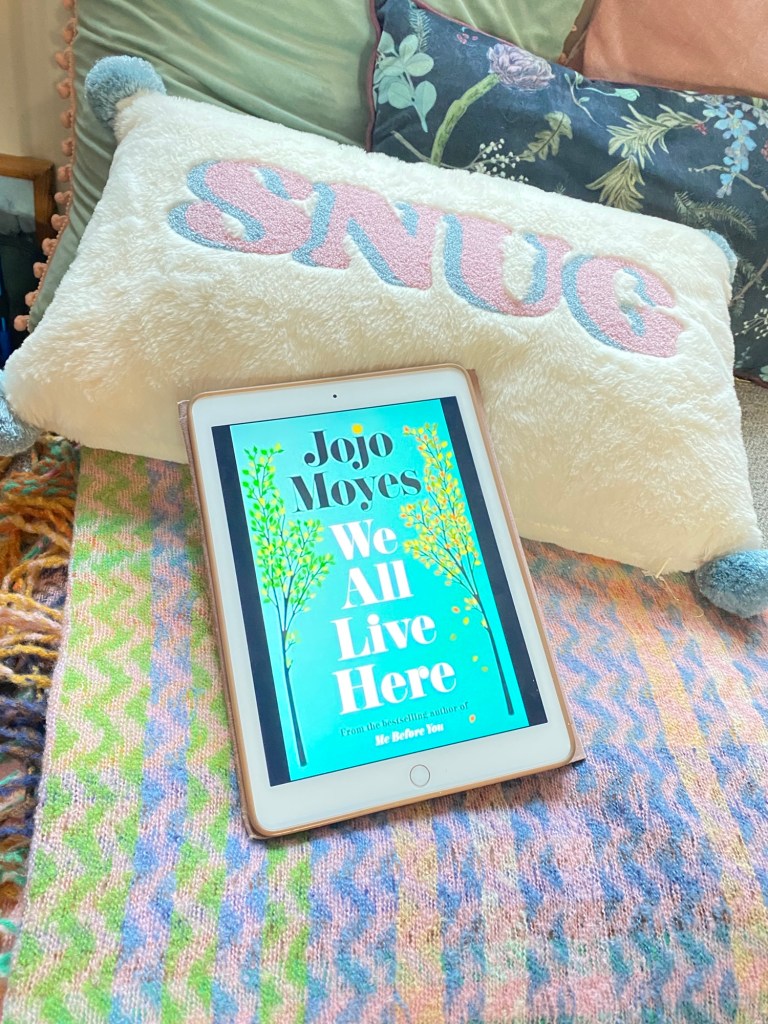
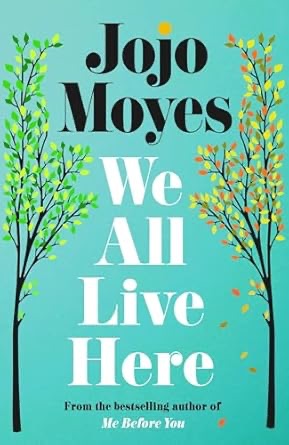
We All Live Here by Jojo Moyes 

Lila’s life is built on shifting sands at the moment. Lila is a single mum to Celie and Violet since her husband died revealed his affair with Mayja, a yummy mummy from the school gates. His betrayal was made worse by the fact Lila was promoting her book, on how to have a successful marriage. Her mum died recently and stepdad Bill and has slowly moved himself from their bungalow a few doors away, into Lila’s house along with his piano and healthy eating regime. To add a further unexpected surprise her biological father Gene turns up looking for a bed. Gene is a hellraiser, a drinking and partying actor whose claim to fame is playing the captain of a starship in a 1960’s sci- fi series. He’s still living off that fame and Lila is unsure whether she can trust him. Bill and Gene can’t stand each other. However, she gives him the sofa bed in her office, where she’s trying to produce three chapters of a new book that her agent is chasing. Lila wanted to write something honest, but the publisher is looking for the humorous and sexy exploits of a newly divorced woman. How can she write in one dad’s bedroom, while her other dad is practising his piano and planning garden renovations. Not to mention dreading school pick-up and having to see her husband’s girlfriend wafting around like a butterfly, waiting for her son Hugo. The final nail in the coffin comes when Mayja announces she’s pregnant. The last thing Lila feels like doing is pursuing romance, but to keep her agent and publisher happy and the roof over their heads she is going to have to come up with some sexy exploits. Enter Jensen the gardener and Gabriel the architect, but can Lila carve out any time for them or herself? 

Lila’s house is something quite rare in fiction, which sometimes feels full of American fridge freezers and Quooker taps. It has quirks like ancient coloured bathroom suites and a toilet that blocks regularly. Celie is 16 and clearly dealing with something at school that she won’t talk about. Violet has had to cope with a boy in her class now being her step-brother, not to mention no longer being the baby. Pressure builds for them all as Mayja becomes unwell and has to be at hospital until the birth of their baby. They are living of the last of Lila’s money from her first book, but it won’t last forever and submitting one of the most raw and honest pieces of writing she’s ever done only to see it rejected, is very hard to take. I had my hear set on Jensen from the minute he came to do the garden because there’s no barrier or mask with him, what you see is what you get. As he and Lila start to talk about Bill’s plans for the garden, often sharing a brew outdoors and chatting, there’s a clear friendship growing. He’s so easy to talk to and remarkably open. Gabriel is his polar opposite in a lot of ways, there’s an instant attraction for Lila and a lot of messaging back and forth but I could sense that he wanted to be in control of their interactions. I am very wary of men who pick you up and then put you away when they’re done, like a worn and boring plaything. There’s a lot of humour in Lila’s attempts to gather sexploits for her book, but there’s clearly potential for people to get hurt too. I also learned a few terms, most notably ‘bread crumbing’ which I’ve been subjected to a couple of times. Similarly, a previous partner described me as ‘too much’ so I had a t-shirt made with ‘too much’ on it and wore it proudly, sad for myself that I spent time on someone who wasn’t enough. This is something Lila comes to realise, maybe Dan’s affair was a symptom of their relationship going wrong? If only she’d known it was ok to take up space.

‘She thinks sometimes that she always felt she was a little too much for him, too needy, too angry, too sad, too hysterical.’

I really fell in love with this family, as unwieldy as it is somehow it does work. I admired Lila, who tries her best to be on board with the changes in her life especially around her marriage. She knows that the girls will have a sibling but can she accept Dan and Mayja as part of that family? Their relationship does hurt her, but her feelings aren’t going to stop them becoming parents and she wants her girls to have a good relationship with the baby. I thought she was incredibly brave to try and put herself back in the dating pool, something I’ve always avoided. I used to say that if someone comes into my life that’s fine, but I’m not wasting my free time on people I potentially don’t like, especially when there are good books waiting on my TBR! Luckily my husband did just that. He walked (fell) into my front door and I feel like we’ve never stopped talking since. You can see the work Lila has done on herself as she dispenses little bits of wisdom on the way: 

The dynamic between Gene and Bill is funny too, it’s immediately antagonistic but their bickering made me smile. Bill is angry thanks to all the things Lila’s mother, Francesca, has told him and for his desertion of his wife and daughter. Bill sees Lila as his daughter and has never had any competition for her affections. There’s obviously a fear that Gene will pick Lila up and then drop her again, even worse there’s now Celie and Violet to consider. Bill has always shown love in the way he cooks healthy meals for the girls, picks them up from school and spends time with them. Gene wants to have fun with them, Violet is especially fond of snuggling up on the couch after school and watching her new Grandad’s old sci-fi series. Celie is more difficult to befriend, but Gene is surprisingly perceptive and works out what’s wrong, giving her good solid advice that works. Far from this being a bed for a couple of nights, Lila can actually see him fitting in with their family and that scares her. Especially when she finds out there are secrets about his relationship with her mother that surprise her and potentially hurt Bill. 

I read this books so quickly because I felt I was observing a real family, with all the chaos and the rollercoaster of emotions that comes with it. I loved that in a family with so many people, there was always someone who could be there for somebody else, like Gene is there for Celie. There’s so much acceptance in this novel and it’s a great message for a New Year where we are pushed into thinking we need to detox, eat less, go the gym, run 5k and all that other rubbish. Lila learns to accept the change in her life, but will she move on when she’s ready, rather than for a book deal? She also has to accept that a person can have huge flaws, but still have a place and the ability to be a support for others. Bill has to accept Francesca is not coming back and the Gene who hurt Francesca all those years ago isn’t the Gene in front of him now. Both the girls have to accept that they now share their father, but could build a new relationship with Mayja and their new sibling that enhances their life. There are so many breakthroughs here that I can’t list them all, but I did identify hugely with a scene where Lila finally takes some time for herself and has a massage, encouraged by her friend. In the final throes of my last relationship I visited a Bowen Therapist and had a similar experience. 

‘something wells in her, an emotion unlocked by the reality of another human being touching her, listening to Lila’s body, feeling its pain and its tensions and carefully remedying them. Suddenly, she feels a great swell of something overwhelming her. Grief ? Gratitude? She isn’t sure. She becomes aware that she is weeping, the tears running unchecked through the hole where her face is nestled, dropping onto the floor, her shoulders vibrating with an emotion she can no longer hold back.’

This was a beautifully written moment where someone is just there for Lila and the weight of holding everybody up can fall from her shoulders. It’s the first time she has taken for herself and all the emotions she’s kept in check can come out. I love how Jojo Moyes writes women and the mental load we carry for everyone around us. A load more exhausting than childcare, housework, career all rolled into one. Here she lets go and it’s the point at which she starts to rebuild her life. Does she pick the gardener or the sexy architect? I’ll leave that for you to find out. 

Out on 11th Feb from Michael Joseph.

Meet the Author

Jojo Moyes is a novelist and journalist. Her books include the bestsellers Me Before You, After You and Still Me, The Girl You Left Behind, The One Plus One and her short story collection Paris for One and Other Stories. The Giver of Stars is her most recent bestseller and Reese Witherspoon Book Club Pick. Her novels have been translated into forty-six languages, have hit the number one spot in twelve countries and have sold over thirty-eight million copies worldwide.

Me Before You has now sold over fourteen million copies worldwide and was adapted into a major film starring Sam Claflin and Emilia Clarke. Jojo lives in Essex with her family.

Posted in Netgalley

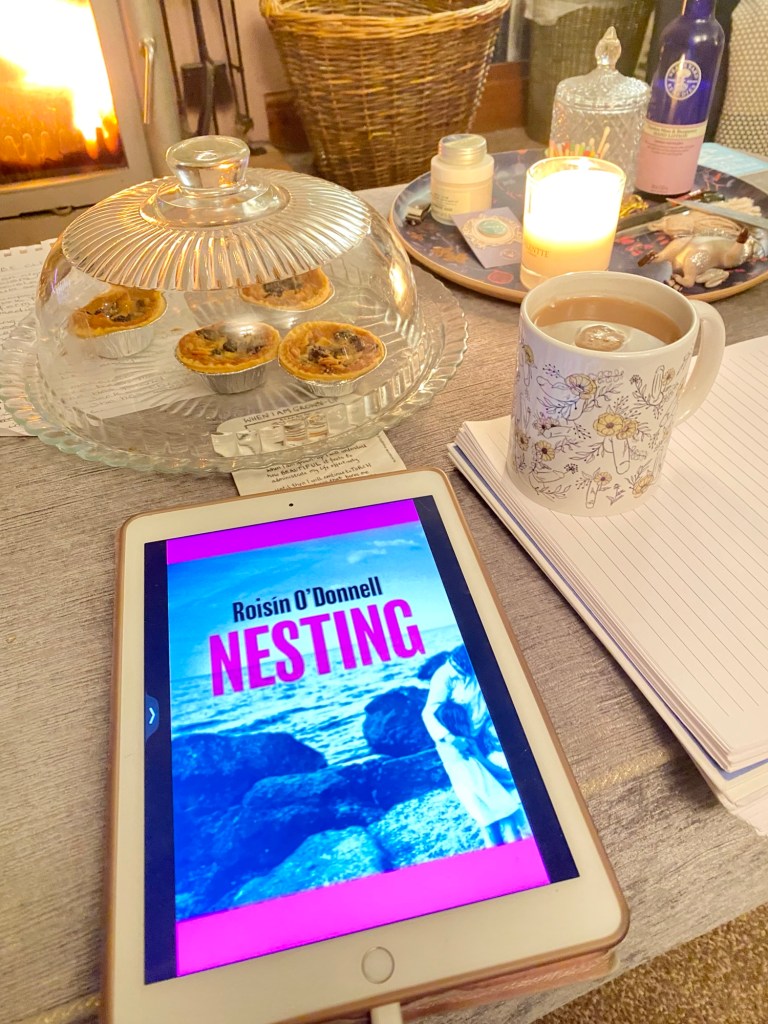
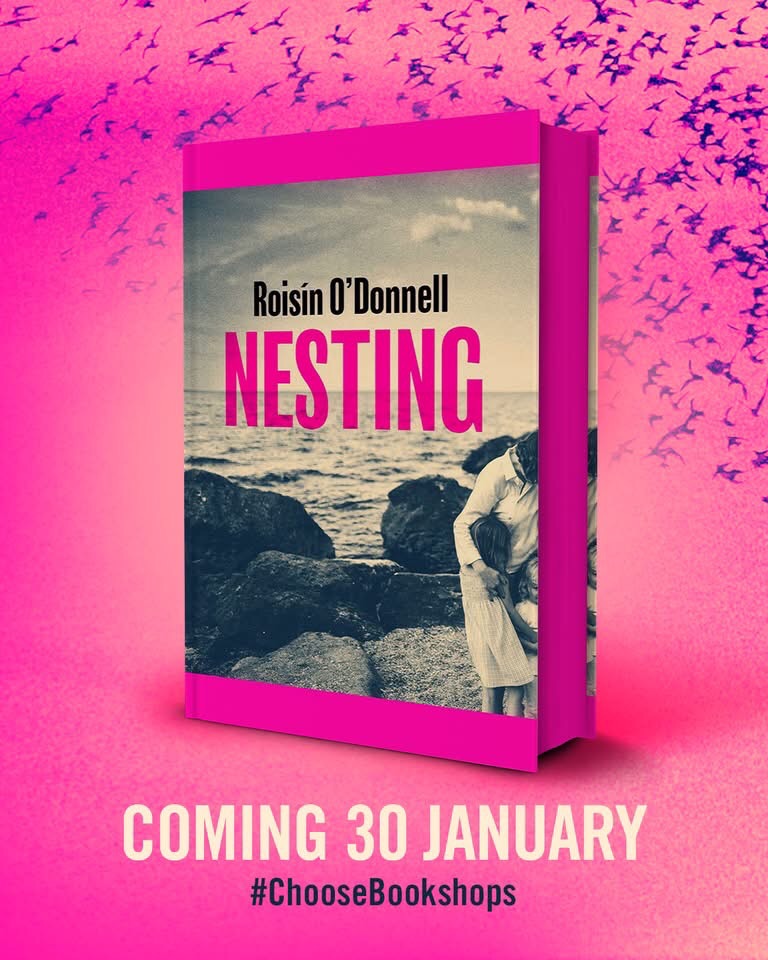
Nesting by Roisin O’Donnell


This book was so beautifully written and so deeply painful that I was out of breath towards the end. When I put it down I had to sit in silence for a while and just digest it all. It’s the story of a woman trying to leave a relationship that is tying her down and eating her alive. Everything she was before – bright, intelligent and full of life – has been worn away. Enduring her husband’s treatment, as well as having two children in four years, mean Ciara has had enough. She can see his behaviour as a pattern and despite being absolutely terrified she needs to find the strength to go. Ciara has no real support, her family is Irish but live in London and despite her yearning to see her mum sister the law states that she can’t take the children out of Ireland without the written permission of their father. Her only option is the housing office, present as homeless and hopefully get some emergency accommodation. As she meets other women in the same situation, she founds out that emergency and temporary have a very different meaning to the housing department. They offer her a temporary hotel room, but some women on the floor have lived there for a year so it’s going to be a long slog. This small double room with one bed and no view is the first place they’ve felt even remotely safe, even if they do have to go down a separate staircase so they don’t bump into tourists. Will Ciara have the strength to stay away and build a new life for herself? 

Money is something else she needs to work on because she knows nothing will come from him, even when she knows she is pregnant for a third time. They can’t live on what the government provides. It’s only going to cover day to day subsistence and she needs to be able to put money aside, to rent somewhere that’s a new home for them all. She needs to find a place where they can put themselves back together. I loved the solidarity between the women living in the hotel. They work together, being there for each other’s kids when they need to interview or view houses. They make each child’s birthday special, as well as decorating the whole corridor for Halloween and Christmas. Some of the hotel staff help too, particularly the porter Diego. Ciara lands a job doing what she did before the girls, teaching English as a foreign language and having to learn Irish on the side. It’s a hard way to live, having to get about on foot and working on her Irish after she’s put the girls to bed. I was saying in my head ‘please don’t go back’ over and over. 

Ciara’s husband terrified me. He follows a pattern, having love-bombed Ciara in a whirlwind romance he changes straight after she moves to Ireland and they’re married. His restrictions and rages, plus the birth of both girls have left Ciara stuck at home, friendless and a constant target. I recognised the fear she was feeling on a daily basis, quietly tip-toeing around him, desperate to avoid igniting his unpredictable rage. Trying to keep her girls shielded from the worst. I have to make an admission here so that you can understand the strength of my reaction to this novel. For four years, after I lost my husband, I was in an abusive relationship. I was incredibly vulnerable and although he didn’t touch me physically I was terrified of him. I was subjected to manipulation, rage and withdrawal of affection all because I was terrified of being left alone. I was so scared he would leave if I didn’t keep him happy and then I’d be left alone with my grief. I’d needed a happy ending so badly, I sleepwalked into a nightmare. I allowed myself to be totally disrespected and abused. I know it wasn’t my fault. He is responsible for his own actions, but I still felt so much guilt about when the relationship was failing. So for me this book was really personal and it was so well-written that I felt Ciara’s story bodily. When I finished my chest was tight and my throat was sore. I felt absolutely wrung out. 

Ciara wondered what would happen when he was awarded visitation by the courts? She knows he won’t hurt the girls but he might use them against her. What if he doesn’t bring them back? This particular fear heightens after she goes into labour early. How can she hand over a completely defenceless baby? It’s clear to see his misogyny when he reacts to finally having a son and I feared that he might keep him. I felt really uncomfortable about the nestling crows he brings home to Ciara when they’re still together. They’re in their nest, barely a few days old and he wants to hand rear them. They are so bald and vulnerable and I was scared he would hurt them, but he seems to enjoy the control he has over these helpless creatures. After Ciara flees he is left with one crow, now feathered and able to leave the nest he keeps it in the house, shitting and shedding feathers everywhere. He tethers it with a long lead outside, showing it the freedom it could have but keeping it for himself. It feels unbearably cruel. It’s such a clever and chilling metaphor. This is not a comfortable read, especially if you’ve been through an ordeal like Ciara’s. What helps is when an author is brave enough to use their own experience or research to get it right for readers who’ve survived abuse. He author has written this so carefully and made Ciara’s life so real that I felt seen. I find that the more I read about other experiences of coercive control and psychological abuse the stronger I feel. Yes, I was left with tension, but I was also left with triumph. It is possible to leave men like this. It’s possible to live a full and happy life. I read on hoping with all my heart that Ciara would make it through and build a new life for her and her children. Underneath my fear I was storing up hope for her. I hoped she knew how much strength she had. She could leave. After all, I did.

Out on 30th Jan from Simon & Schuster

Meet the Author

Roisín O’Donnell is an award-winning Irish author. She won the prize for Short Story of the Year at the An Post Irish Book Awards in 2018, and was shortlisted for the same prize in 2022. She is the author of the story collection Wild Quiet, which was longlisted for the Edge Hill Short Story Prize and shortlisted for the Kate O’Brien Award. Her short fiction has featured in The Stinging Fly, The Tangerine, the Irish Times and many other places. Other stories have been selected for major anthologies such as The Long Gaze Back, and have featured on RTÉ Radio. Nesting is her first novel. She lives near Dublin with her two children.

Posted in Netgalley

Crescendo by Joanna Howat

I love reading debuts because you’re never sure what you’re going to find and this tale of two adult siblings who lose their parents suddenly has all the family dynamics and trauma that I love to untangle in a novel. Jamie and Caz are used to their parents being top of the social scale in their area, a small village close to a market town in Yorkshire. Their family home is a hall in the centre of the village, where Jamie still lives alongside his parents having not found his career path yet. Caz has left home, but has a chequered history of teen pregnancy and alcoholism. She married husband Steve after he came to work on the hall’s electrics when her first little girl was only a baby and she had been sober for several months. Now they live in a cottage a short drive away from her childhood home and recently she’s had another baby. The catalyst to their problems is the loss of their parents. One Sunday both siblings are there for lunch when Jamie and his father clash over what he sees as his son’s fecklessness when it comes to making a life for himself. Jamie has secured a job with the local estate agents but desperately needs to sell a house this month. The best thing in his life is his recent relationship with local vet Zoe. What Jamie loves is his piano, but he doesn’t think he has the skill of a concert pianist. This Sunday he decides not to take his father’s criticism and storms out in a huff. That night the hall goes up in flames, so fast that no one could escape and the hall is burned to the ground. 

For both siblings the village now looks like a set of teeth with one missing. The huge gap left in the centre is soon boarded so no one can see the wreckage, but it doesn’t allay the shock. Caz is immediately emotional, dazed even and takes refuge with Ruth, their housekeeper who lived next to the hall. Jamie seems frozen. The only thing he wants to save is his piano but it is damaged, maybe beyond repair. Insurance will take care of it and will hopefully rebuild the hall, but do they want that? They have no idea about their parent’s wishes, for the meantime Jamie has to buy some clothes and moves in with Zoe. It’s very early in their relationship but Jamie thinks they’ll get along fine. As he moves through life like an automaton, Caz starts to slide downhill. Gin was her usual tipple, but avoiding that she thinks an occasional glass of wine won’t hurt. One glass soon becomes a bottle and as she starts to hide her stash from Steve we can see that this could be a serious relapse. So can Jamie, but he’s having his own problems. The turmoil in his life is too heavy for the early stages of a relationship. Zoe had no relationship with his parents and although she can listen, she still has her own routine of riding and looking after her horse, whereas at the moment Jamie is sleepwalking through work and every time they are intimate, visions of the hall burning down come into his mind and ruin the moment. He’s not sure if he’s dealing with his grief at all. When Zoe decides they need some space from each other, he moves out to Caz and Steve’s house. Now he’s noticing that his sister isn’t coping either and his nieces are suffering. How can the siblings best help each other to cope? 

I loved how the author shows grief hitting people in different ways. In some ways Jamie has never had to grow up. Living under his parent’s roof has enabled to try jobs and leave them with minimum consequences, while away hours in the village pub and not think beyond tomorrow. Caz has also depended on her parents, dropping out of university pregnant and with an alcohol problem. She moved home and had her baby there, until Steve actually walked through the door for a contracting job and they fell in love. For both of them, there’s now no safety net and the place filled with all those memories has gone too. Jamie also fears the loss of his piano, which has been lifted from the wreckage and been sent to a specialist repairer by the insurers. Music was the way that Jamie processed his emotions and without it he seems strangely neutral all the time, occasionally tapping out melodies using his fingers on whatever surface he find. Caz is more erratic, grabbing convenience foods instead of her usual home cooked meals and forgetting the girls activities or even to wash their uniforms. When the drinking starts Steve stays away from it, leaving Jamie with a full time job and two small children to feed and get out of the door in the open. He knows teachers have noticed the girls are a bit unkempt, but he doesn’t want to drop his sister in it. He just keeps smiling and nodding that everything’s okay. There’s only one person that won’t have the wool pulled over their eyes and that’s their parent’s housekeeper Ruth. Caz fears not letting the emotions out. Jamie thinks if he gives in and feels his emotions he might fall apart completely.

Through Jamie the author shows how grief can change our outlook on life completely. He becomes sentimental about an old couple looking for a house. He has a beautiful Georgian house on the books and he’s shown it to a rude and superior client with an enormous dog who didn’t seem interested. Then he has an adorable old couple who want to downsize and be closer to amenities, but he needs a studio to work in and it is in town. When he shows it to them he knows it should be theirs and when they offer he is ecstatic and shakes hands. Then the first woman comes back and offers 10k over the asking price, but Jamie says it’s already sold and turns her offer down, much to the fury of his manager. Jamie feels different, where once he might have taken the high offer now he can’t. Does he see his own parents in the old couple? Or is it that loss has given him a conscience? I really identified with this because after being seriously ill I returned to my work as an advertising rep only to struggle with selling newspaper space. It felt so trivial in the scheme of things I simply didn’t have the killer instinct. This was when I was sacked but went on to train as a counsellor and worked with the Mental Health Team in my area. It felt like I’d helped someone every day I went to work and it felt more in tune with my changing values. 

I really felt for Jamie and wanted him to get his piano back and be able to express himself more. I was also so happy at his care for his nieces and his loyalty to his sister. Underneath the immaturity Zoe was concerned about, he’s a kind, perceptive and caring man. I was hoping they would find a way back to each other. Similarly I wanted Steve to reconnect with his wife and family and realise that while keeping a roof over their head was important, so was spending time together as a family. The author’s setting is perfect and having lived in villages all my life, I knew they come with beautiful countryside around them, but also residents who want to know all of your business. As my parents get older I do wonder what it might be like when they’re gone and I’m now the oldest member of the family. They’re my anchor, but so is my brother and I know our relationship will probably be stronger. I think the author makes it clear how seismic a shock it is when someone close to us dies. I loved the play on musical terms because the storyline has a tempo and Jamie is our conductor, desperately trying to keep the orchestra together towards the crescendo and beyond. This is a thoughtful and real story that had a lot of heart in it. 

Out now from Flying Dog Press

Meet the Author


Joanna Howat trained as a journalist and worked as a news producer for BBC Radio 5 Live. She now lives in her native North Yorkshire with her family and two spaniels, and is a keen classical pianist. Crescendo is her first published novel.

Posted in Netgalley

The Heiress by Rachel Hawkins 

When Ruby McTavish Callahan Woodward Miller Kenmore dies, she’s not only North Carolina’s richest woman, she’s also its most notorious…

This addictive thriller was set in the Blue Ridge Mountains and gave off distinct Saltburn vibes with it’s resident family and the outsiders who’ve come to stay. Camden was adopted by the infamous Ruby McTavish, Carolina’s richest woman and childhood victim of a kidnapping plot. Camden has been estranged from his adoptive mother for years, walking away from the family money and living an ordinary life with wife Jules. When he receives a visit from his cousin he can’t ignore his family any longer. Ruby has left Ashby House, the family home, to Camden despite the fact he doesn’t live there or speak to any of the family that do. His first instinct, on being asked to return to his childhood home is to refuse, but Jules persuades him that they should take the trip. Ashby House is famous because Ruby McTavish was kidnapped from the grounds when she was a small child, but then returned. Ruby was famous locally: for the kidnapping, for the wealth she inherits from her father Alexander McTavish who was a lumber magnate and for the amount of times she was married. Can Camden make peace with his eccentric step-family members who rely on Ashby House for a roof over their heads? Or will he sign away his inheritance and turn his back on them forever? 

Ashby House is as eccentric and jumbled up as the family that remains and is set in a beautiful spot with the Blue Ridge Mountains providing it’s backdrop. 

‘Built in 1904 by lumber magnate Alexander McTavish, the house is as eccentric as the family who owns it. Part Victorian, part Palladian, it features smooth gray stone and peaked roofs, marble patios and leaded windows. It should not work and yet, miraculously—almost mystically—it does. Guests of the home have commented that there’s something about Ashby House that makes you feel as if the rest of the world does not exist. As if you could stay safely tucked behind its walls forever and want for nothing else.’

Jules is charmed by the house, particularly the view from the porch up to the mountains. Up till now she has been satisfied with their life and their cosy little flat. She was used to being anonymous. Now she can’t shop in town without special treatment, everyone seems to know that she’s Camden McTavish’s wife. Even if some family members thought Cam shouldn’t inherit, not being a blood McTavish, the town seemed to accept him. As the remaining family members at Ashby start to manipulate and jostle for position, I wondered whether Jules was growing rather fond of the life that her husband had vowed to leave behind. Though it was becoming clear that being part of this particular family is a bit of a poisoned chalice. It felt all the time that a game was being played out but I had no idea who had devised it. I loved Ruby’s letters, beautifully placed between the main narrative, explaining her motivations and serving up some brutal honesty about her husbands. Strangely, although her behaviour is reprehensible, it’s hard not to like Ruby. She’s audacious, daring and has a dark humour I really enjoy. However, she’s also self-centred and devious. In fact most members of the family could be described this way. Ashby House is a viper’s nest of ego, deception, manipulation and avarice. I worried that Cam and Jules would submit to it’s deathly grip. Could that incredible porch view and the ease of a life with money win them over? 

The first chapters of the book are a little slow and I was unsure about where it was going at first. After that we get Ruby’s letters, but also the family history that Cam wants no part of, as well as a build up in the tension between the family members. This starts to grab you and the pace picks up all the way to the end. I started to wonder where revelations might come from next! While everyone was under one roof it started to feel like an old-fashioned detective novel/film with an ensemble cast and a plot straight from a Knives Out or Agatha Christie film. This unusual mansion is something of a labyrinth, with each family member quietly plotting and conspiring in their own corner of the building. The slightly overgrown grounds, mountains and sheer cliffs gave plenty of opportunities for ‘accidents’. The author was brilliant at a quick reveal, then immediately hitting you with another suspicion or question. I loved the long running theme of nature or nurture. Is deception in the McTavish blood or is it simply learned by watching generations of machinations nesting in Ashby House? 

Out now from Headline

Meet the Author

Rachel Hawkins (www.rachel-hawkins.com) was a high school English teacher before becoming a full-time writer. She lives with her family in Alabama, and is currently at work on the third book in the Hex Hall series. To the best of her knowledge, Rachel is not a witch, though some of her former students may disagree….

Posted in Netgalley

Into the Storm by Cecilia Ahern

One wild night in the middle of December, local GP Enya is driving home from a house call in a dreadful storm and visibility is poor. She comes across a taxi parked in the middle of the road and a boy lying motionless on the wet ground. Oscar, the taxi driver, tells her he has just found the boy like this and he doesn’t know if he’s breathing. As the rain pours down Enya kneels in the road and performs CPR, desperately hoping she can save his life. After she’s questioned by the police and returns home she sits in the car for moment, soaked to the skin and thinks about her mother. Brigid, a rather eccentric and free-spirited woman, died at the age of 47 while swimming in the sea. For a while, as Enya battled to save the teenage boy’s life she felt the water running down her face and wondered if this was how her mother felt? Enya struggles in the aftermath of the incident and can’t seem to put it out of her mind. Is it because the boy was so like her son, of a similar age and wearing the same clothes? The storm propels her into huge life changes as she walks away from her loveless marriage and takes a job in the small town of Abbeydooley. There she lives in a remote spot, but with a rag tree in the garden that brings people from far and wide to tie their ribbons and fabric to it’s branches. Even though her days are filled with patients and she starts to make friends, that night in the rain just won’t leave her. As she looks out of the window at the sacred tree she is faced with the stories of all the people who’ve tied a memento there. Could it be time to face the truth of her own story as well as the memory of her mother? 

We meet Enya in the middle of a crisis and the night of the storm is really the breaking point of that crisis. Enya is 46 and the day after her 47th birthday she will be older than her mother ever was. She has always had the sense that her mother was still going before her but from that day it’s only her. Alone. The grief hits her like a tsunami wave. There’s also the matter of her marriage and living situation. Xander made me feel cold. He comes across as clinical and controlling. The house they live in doesn’t feel like a home to Enya. Their home was the new build that she poured all her effort into, it’s where she had Ross and where she learned him to ride a bike in the garden. Now it’s their GP surgery and they’ve lived in Xander’s inherited family home ever since his parent’s death. There is nothing of Enya in the house and every ornament and painting is exactly where it was when Xander was a boy. If she moves the coat rack slightly or repositions an ornament it is soon quietly placed back where it should be. He even controls her relationship with Ross, having chosen his boarding school and at home telling her not to disturb him when all she wants is to spend time with her son. There’s an invisible barrier there and I could feel her sense of powerlessness. Enya has been struggling for some time: feeling overwhelmed at work; making small mistakes with forms and requests; desperately trying to find an escape, somewhere she can breathe. She has also struggled to let the injured boy go and has visited the hospital and made contact with the boy’s mum. When the offer comes to relocate to Abbeydooley she jumps at the chance. 

Her introduction to Abbeydooley life isn’t a smooth one. The tree is baffling to her. It has filthy and torn rags all over it and completely obstructs her view from the window, taking all her light. She sees it as an eyesore and asks the maintenance person to come out and remove it. Margaret is a brilliant character and the women don’t get off to the best start. Margaret has assumed the tree is damaged and turns up the next morning with a chainsaw, but when she sees the tree is intact she refuses to touch it. Doesn’t Enya realise this is a rag tree, a sacred tree that’s watered by a spring from the site of the original abbey? People believe it’s a sacred site, that their prayers will be answered if they leave something to represent the person or problem they’re facing. It seems ridiculous to Enya, especially when a tour mini-bus arrives with a group of pensioners excited to see this symbol of pagan traditions. Alongside this observance of pagan religion, Enya also has to contend with the church. A visit from the parish priest makes her realise that traditionally the GP and priest have worked quite closely together, sharing information and forming a team to help parishioners and patients. Enya is reluctant, but is starting to learn that in these remote rural areas being a GP is a very different thing to the app led computerised system she and Xander used. Maybe she will have to adapt to a new way of working and living. 

The whole book is a combination of a woman trying to find her way in the world and navigate emotional challenges, with a darker mystery woven in. The backdrop of Abbeydooley is almost like the light relief in the story, with it’s old-fashioned ways and humorous characters like Handyman Willy. I wondered whether it would be a redemption arc, where the town’s quirky ways would win Enya over and change her life. However it’s more complex than that. Abbeydooley becomes a space for Enya to breathe and think, but her demons have definitely followed her. We’re not sure whether she’s a narrator we can rely on. It’s not Xander’s opinion or the little slips at work that concerned me, it’s more about her rising paranoia and the small reveals that prove she isn’t telling us everything. When an agitated man turns up at the surgery to confront Enya we have no idea who he is or what bearing he might have the story. She sees another man through her window late at night, are they the same man or is someone making a late night visit to the tree? All this time Xander keeps her from her son so she’s reduced to leaving voice notes for him in the hope he’ll listen to them alone. Xander claims he’s protecting their son, but from what? I really enjoyed Margaret because she sees Enya at her worst and remains her friend. Margaret knows what it’s like to make a mistake and blow your own life apart. So she’s the best person for Enya to spend time with. What I found sad is that Enya has had support there all along. Although Xander has slowly controlled her, she has allowed her life to restrict her to the point where she felt her only choice was total escape. Yet she has her sister and brother-in-law, they are warm and welcomed her into their home when she first left. She could have made changes, been closer to her son and faced up to everything. Enya seems like a person who runs away: from grief, from her marriage, from the truth. I didn’t always understand her as a character, but her journey was fascinating. With my counsellor head on I wanted her to find a way to break free from all the restrictions she placed on herself. She would certainly make a fascinating client.


Meet the Author

Cecelia Ahern is an Irish novelist who wrote her debut novel PS, I LOVE YOU at the age of 21 years old, which was published in 2004. It became one of the biggest selling novels in recent years and was made into a hit film starring Hilary Swank, as was her second novel LOVE, ROSIE starring Lily Collins. She is published around the world in 40 countries, in over 30 languages and has sold over 25 million copies of her novels. She has published 19 novels, including a Young Adult series FLAWED and PERFECT, and the highly acclaimed collection of short stories ROAR. Her 20th novel INTO THE STORM will be published in October 2024.

She is the co-creator of TV comedy series SAMANTHA WHO? starring Christina Applegate and ROAR, the TV series, is streaming now on Apple TV+ starring Nicole Kidman.

Posted in Netgalley

The Trouble With Mrs Montgomery Hurst by Katie Lumsden

A single man in possession of a large fortune must be in want of a wife – so why choose her?

Katie Lumsden’s first novel – The Secrets of Hartwood Hall – was a fantastically addictive Gothic mystery where nothing was as it seemed. This second novel has the feel of Jane Austen; light, witty and full of gossip. In this comedy of manners, where class and family reputation is everything, scandal is just around the corner. Amelia Ashpoint is comfortable with her life as it is. She and her brother Diggory live at home with their wealthy father and younger sister Ada in their newly built mansion in the county of Wickenshire. Summer 1841 and at the start of marriage season Amelia is 23 and her father has decided he wants to secure a husband for her. He has his hopes for Mr Montgomery Hurst, the most eligible bachelor in their social set and the owner of stately home Radcliffe Park. At previous dinners and dances, he has sought Amelia for his dance partner and they chat comfortably together at dinner. Their easy manner has been noted in society. However, at the next society ball there is intrigue and shock. Mr Hurst has been secretly engaged elsewhere, to an unknown widow with three children. Their friends are appalled but Amelia feels nothing but relief. She has no interest in marriage at all. It seems society has big expectations for Amelia, but her heart lies in a very different direction.

There’s so much to like in this Regency tale and Amelia is the centre of the centre of that. She’s an intelligent young woman who really knows her own mind and accepts who she is. She also knows where her heart lies but realises it can never be made public. It’s interesting to watch her slowly realise that she’s no longer a girl but is considered a grown-up and there are expectations on young women to marry. She imagined spending her days at the family home with her father, never having to marry but hasn’t realised what her father already knows. He isn’t going to be here forever. He’s becoming anxious about making sure she is settled, because the truth is all of them will have to marry. The house and estate will go to her brother and whoever he chooses to marry will become the mistress of Ashpoint Hall. Ada is still a girl but there won’t necessarily be room for Amelia. If only everyone could have as simple and happy a marriage as the new Mrs Hurst. When Amelia visits Radcliffe she is heartened by their easy manner with each other and the very natural relationship he seems to have built with his new stepchildren. Everyone around Amelia, including her best friend Clara and even her brother Diggory, appears to understand this unwritten rule – it’s time to find a mate.

The author portrays Wickenshire society beautifully, detailing how much traditional country society has changed. The differences can be seen in the village’s gentleman’s club The Lantern, where one floor is for those deemed gentlemen and downstairs is for tenants and tradespeople. People like the foreman of the Ashpoint Brewery Mr Lonsdale and military men like Major Alderton. The Ashpoints are not aristocracy themselves, in fact Ashpoint Hall is relatively new despite it’s grandeur. They may be new money, but the fact they have so much of it qualifies them as acceptable in polite society. The Earl and Countess of Wickford are the pinnacle of county society, so when they have a ball, they invite everybody, including the Major and Mr Lonsdale, but they can only get away with this behaviour because they’re aristocracy. If anyone else invited such men to a soirée it could reflect badly on the host. However, the author shows very strongly that just because someone is viewed as a gentleman it doesn’t mean they behave as one. Amelia’s brother Diggory is horrified to find that his best friend Alistair, Viscount of Salbridge and heir to the current Earl, has a guilty secret. His behaviour shows he has no regard for those reliant on him for their wages, the roof over their head, or even for a woman’s honour. This discovery leads to such a parting of the ways that Diggory starts to frequent downstairs at The Lantern. The usual downstairs clientele would be considered beneath him normally, but he’s growing up quickly and making his own life choices. Ever since he decided to propose to Lady Rose he’s started a steep learning curve, working every day in the brewery and preparing to take over from his father. He’s also keen on showing Lady Rose’s parents that his intentions are serious, realising that men are not born with integrity and honour. Money is also no guarantee of a man’s good character. Falling in love has set Diggory on the path to be a better man, also abstaining from drinking and the dangerous levels of gambling that have been the norm for him and the Viscount.

Amelia also has to grow up a lot throughout the novel. The subject of a woman’s honour and her marriageability are the strongest theme in the novel. It’s clear that societies like Wickenshire are in flux. Amelia has been insulated by her father’s money, so up until now the reality of a woman’s choices in life haven’t touched her. It is only her money that makes Mr Hurst a possible mate, otherwise he would be completely out of reach. Meanwhile, some titled families are beginning to find themselves financially unstable, meaning they are having to cast their nets wider to find suitable marriage partners. Where once only a title would do, families might need to consider new money and potential grooms may have to support the whole family or maintain a huge mansion. This could be good news for Diggory and Lady Rose, who is horrified to find her parents in dire straits and in a hurry to find her a husband. If Diggory doesn’t secure his bride, anyone reasonably respectable might do! For Amelia it’s her best friend Clara’s potential suitors that shock her the most as she’s always assumed they were of the same mind. However, Clara’s family don’t have the financial stability of the Ashpoints so she doesn’t have the luxury of turning down good offers, even if it isn’t her inclination to marry. Amelia grows up and gains a lot of perspective listening to her friend’s dilemma, realising how lucky she is to have a family who can support her for life and a fledgling writing career to fall back on should her father’s plans come to nothing. When rumours start to spread about Mrs Montgomery Hurst, Amelia realises how even a whiff of scandal can ruin a woman and how polite society shuns those who stray from the accepted conventions. Could there be a way for Amelia to use her position to still the gossiping tongues and sway polite society to accept the family? This is also a timely reminder that her own perpetual single status could be the cause of gossip.

I loved this wonderful homage to Austen. It has everything: characters of all classes; light comedy; smart social events; a dissection of Regency love and the marriage market. The author then brings in themes that we might consider more modern, such as infidelity, domestic abuse and LGBTQ+ relationships too. Just as Sarah Waters did with the Victorian novel, Katie uses the format of a Regency novel to show us that these types of relationships did exist when Austen was writing. It’s a form of writing back; she’s placing people and themes that were not included in literature of the time back into their historical context and exploring how they might fit in that time period. It gives us a richer and more varied sense of how society might have been, touching on subjects that didn’t really start to appear in literature until Queen Victoria was on the throne. It was only a few decades later that the Brontë’s wrote about more complex relationships: Jane Eyre’s love for a married man, Anne Brontë’s Tenant of Wildfell Hall escaping from an abusive and violent marriage or Emily Brontë’s slightly incestuous and abusive relationship between Cathy and Heathcliff. These are very different novels though with a darker tone.

Katie has instead taken all the lightness and wit of Austen, making her novel such a pleasure to read, but brining darker and more complex themes under the surface. The opening scene of chaos as the Ashpoint family get ready for a ball while Ada sobs at the unfairness of having to stay at home, is reminiscent of the Bennett sisters in a similar situation. For Austen, the comedy of Mrs Bennett’s nerves, the preposterous Mr Collins and Mr Elton, as well as the romance of the storylines disguised more complex themes of a woman’s place in society and their inability to inherit, not to mention the awful fate of an unhappy marriage. Upon the death of their father, girls were often left at the mercy of distant male relatives and had no say over their own fate. Our heroine Amelia simply wants to achieve the best outcome for herself, knowing she doesn’t want to marry. All she wants is to live in her childhood home, write her books and to enjoy the company of her brother’s family when he inherits. Most of all she wants to have the personal freedom that characters like Lady Rose and her friend Clara sadly can’t have. You’ll keep turning the pages, hoping she can achieve it.

Meet the Author

Katie Lumsden read Jane Eyre at the age of thirteen and never looked back. She spent her teenage years devouring nineteenth century literature, reading every Dickens, Brontë, Gaskell, Austen and Hardy novel she could find. She has a degree in English literature and history from the University of Durham and an MA in creative writing from Bath Spa University. Her short stories have been shortlisted for the London Short Story Prize and the Bridport Prize, and have been published in various literary magazines. Katie’s Youtube channel, Books and Things, has more than 25,000 subscribers. She lives in London and works as an editor.

Posted in Netgalley

The Salt Flats by Rachelle Atalla

Fin and his wife Martha are travelling in South America. Their eventual destination are the salt flats in Bolivia, an other worldly natural phenomenon where the horizon becomes endless and you’re standing in the sky. Martha and Fin are not just sight-seeing, although the urge to take photographs and capture the illusion is strong. Having been together for 11 years, lately they’ve struggled as Martha has been in the grip of an obsessive anxiety over the climate crisis. They are booked into a retreat on the salt flats, found by Martha and extortionately expensive, it promises a transcendent experience using salt to purify mind and body. So the couple find themselves crammed into a pick-up truck alongside Rick and Barb, a middle aged and out of shape American couple, and partners Hannah and Zoe. They are now in the hands of their driver who doesn’t speak a word of English and an elusive shaman called Oscar. They will spend the next few days meditating, relaxing in warm salt pools and participating in a series of salt ceremonies where hallucinogenic visions bring them face o face with their subconscious reality. Yet the final ceremony descends into chaos, Martha and Fin need to grapple with Martha’s anxiety and the moral implications of their trip. As for their marriage, could this nightmare bring them together or are some wounds too deep to heal?

I’ve been fascinated with the salt flats after seeing them on an episode of World’s Most Dangerous Roads. It was incredible to see the sky reflected in the shallow saltwater surface, giving the impression of standing in the sky. It’s an image recently repeated on Race Across the World and even on a small screen it’s an incredible landscape. The author recreates that otherworldly and alien environment so well, creating an atmosphere of dislocation from the normal world even before any hallucinogens. It struck me as an odd place for a spa or well-being centre, something I always imagine as comfortable and with lush surroundings. This landscape is hard and barren. It left me dubious about the benefits of such a place and how professional it would be. As they’re collected by a taciturn driver I half expected him to rob them and leave them in the middle of nowhere. When they break down en route it doesn’t help, giving an impression of something run on a shoestring in a very inhospitable place. The building is much less luxurious than the group imagined, considering the high price they’ve paid to be there. It’s an igloo type structure built from blocks of salt. Even the beds in the dormitory have salt bases and the group are less than impressed to be sleeping in the same room. Each of the group have personal reasons to be there and the first salt ritual brings up themes of infidelity, assault and intrusive negative thoughts about the future. By confronting these issues, Oscar tells them they can process the trauma and move on. Trust has to build very quickly between the group who are letting each other into their personal spaces, both physical and mental. They’re baring their souls to each other. It’s clear that none of them will come out of this experience unchanged. Whether that’s a negative or positive change is hard to say. When Fin wakes up with a blooded face he is completely confused about how he got there. He knows he interacted with Zoe and that Barb had an accident, but the rest is fluffy and unclear. Where is the blood from and what horrors has he blacked out from his memory. 

I didn’t bond with all of the characters but I was definitely intrigued by them. I could understand why all of them needed change in their lives. It was easy to understand Martha’s concerns about the direction the world is taking. Although her preoccupations are with climate change, Brexit, Covid and wars breaking out across the world have left me with anxieties about the future, especially for the younger members of our family. It only takes a few swipes of the iPad to see how climate is changing the lives of those in low lying countries. However, that proximity to information can radicalise people as the most extreme viewpoints shout loudest online and I felt this had happened to Martha. Finn couldn’t keep living with constant anxiety about the future and needed Martha to meet him in the present every so often. The author’s depiction of their relationship felt very real, showing how people in long term relationship can change over time. Sometimes out takes a conscious choice to re-commit to that person or a bit of compromise that reminds why you committed to each other in the first place. Agreeing to the salt spa was Finn’s act of commitment, to show that he can give Martha a little of what she needs in the hope it will be enough. However, he ruins that a little with his scepticism and his shock at how spartan the spa is for the money spent. As horrors start to unfold will he blame Martha or will everything they’ve experienced bring them closer together? That’s if they both get out alive. The monumental stupidity of allowing themselves to be taken into the middle of nowhere at the mercy of people who don’t speak their language and have taken a huge chunk of their savings, starts to sink in. As things start to unravel you won’t be able to put this fascinating debut down.

Out Now from Hodder and Stoughton

Meet the Author

Rachelle Atalla is a Scottish-Egyptian novelist, short story writer and screenwriter based in Glasgow. Her debut novel The Pharmacist was published by Hodder & Stoughton in May 2022.