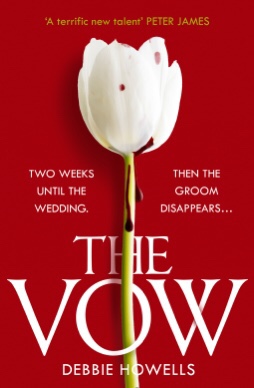
Several years ago I was in London for the Alexander McQueen Savage Beauty exhibit at the Victoria and Albert Museum. We were staying in Kensington and spent a day browsing the second hand shops for clothes but also for books. In a second hand bookshop I came across a proof copy of Debbie Howell’s first book. I read it that evening in the hotel, and finished it on the train home the next day. My friend was equally gripped. So, I was delighted to be granted the ARC copy of her latest novel The Vow on NetGalley.
This was a very quick read, mainly due to fact I struggled to put it down! Amy, a herbalist who lives near Brighton, is looking forward to her dream wedding. She never imagined she’d be lucky enough to get a second chance at love, but here she is living with the man she’s about to marry. Her daughter Jess has just gone to university so it’s just the two of them. Upstairs hangs the pink wedding dress she chose alongside a soft grey gown for her daughter. One morning, as she delivers an order to a patient, Amy is stopped by an old lady in the street who tells her to be careful because her fiancé isn’t what he seems. Slightly shaken Jess takes a call from her fiancé Matt, he seems distracted and tells her he’ll be late home because he’s out with a client. He says ‘take care, babe’ – something he never says. Jess is unsettled, but tries to carry on as normal. When Matt doesn’t return that night she goes to bed fully expecting him to be next to her as she wakes. However, his side of the bed is still empty. This is just the start of a nightmare scenario for Amy and her daughter Jess – where is Matt, who is he and do the secrets of the past always come back to haunt us?
This is an engaging thriller from Debbie Howells. I love the way she builds the kind, gentle character of Amy, to the point where we believe in her fairy tale wedding and relationship. When the narrator changes to a second character it allows us to re-evaluate everything we know. Is Amy telling us the truth or is she deluded and dangerous? I really wasn’t sure till the very end. I think her job as a herbalist also helps to make her trustworthy, because when someone is a healer we imagine them as empathic, kind and gentle – certainly not capable of murder. The other narrator also has a credible role. She works as a solicitor so the police might lean towards believing her version of events. I loved the opposing chapters, especially when we start to encounter a third, unnamed narrator. We have no idea which woman is speaking about the events of 1996, or whether it’s a third party. Howells drops enough red herrings to distract us – the WPC’s strangely selective answering machine, Amy’s friend who claims to have been propositioned by Matt at a party, or even one of the other women that have become Matt’s victims over the years.
The subject of coercive control has been utilised a lot in fiction of late and here it is only part of the story, but explained well nevertheless, The discussion of gaslighting was accurate and explains why we have a fairytale narrative about Matt from Amy whereas her daughter and her friends have seen a slightly different picture. The scene where he has convinced the normally vegan Amy to eat meat was particularly chilling. The ending, when it came, was slightly too sudden. I find this often happens when reading kindle books because if I don’t keep the word count displayed I don’t have any idea where I am in the book. On the whole this was a very enjoyable and rather addictive thriller that can easily be devoured greedily in a weekend.
Meet The Author
After self-publishing three women’s commercial fiction novels, Debbie wrote The Bones of You, her first psychological thriller. It was a Sunday Times bestseller and picked for the Richard and Judy book club. Three more have followed, The Beauty of The End, The Death of Her and Her Sister’s Lie, all published by Pan Macmillan
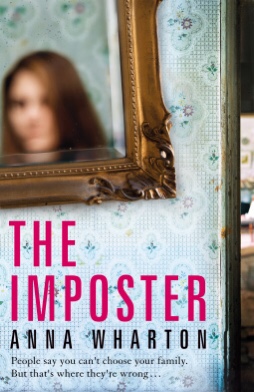
Anna Wharton’s debut, The Imposter, is a gripping story of obsession, loneliness and the lies we tell ourselves in order to live with ourselves . . .
I wanted to put out a preview of this debut novel by Anna Wharton because I enjoyed it so much. The novel follows a young woman by the name of Chloe whose background in care has lead to an isolated and lonely existence in the world.
Chloe lives a quiet life. Working as a newspaper archivist in the day and taking care of her Nan in the evening, she’s happy simply to read about the lives of others as she files away the news clippings from the safety of her desk.
But there’s one story that she can’t stop thinking about. The case of Angie Kyle – a girl, Chloe’s age, who went missing as a child. A girl whose parents never gave up hope.
When Chloe’s Nan gets moved into a nursing home, leaving Chloe on the brink of homelessness, she takes a desperate step: answering an ad to be a lodger in the missing girl’s family home. It could be the perfect opportunity to get closer to the story she’s read so much about. But it’s not long until she realizes this couple aren’t all they seem from the outside . . .
But with everyone in the house hiding something, the question is – whose secrets are the most dangerous?
I loved this book because of its portrayal of someone potentially living with borderline personality disorder. Chloe is rootless and with her Nan taken away, she is also purposeless. Losing her job at her beloved archive is disastrous, because it is as if her last mooring rope is cut. When she becomes obsessed with finding out what happened to Angela Kyle. Borderline personalities tend to have a disorganised background, and exhibit impulsive behaviour. They also have very intense but short relationships, a description that fits Chloe perfectly. She moves into the Kyle’s home and forms an intense bond with Maureen; they are a mother who has lost a daughter and a daughter who has never known maternal love. As the tension builds I couldn’t stop reading and went on late into the night. It also has a double reveal at the end – one of which had me wanting to start reading again!
My review will be out near publication day, but I want to thank Anna Wharton and NetGalley for my proof copy in exchange for an honest review.
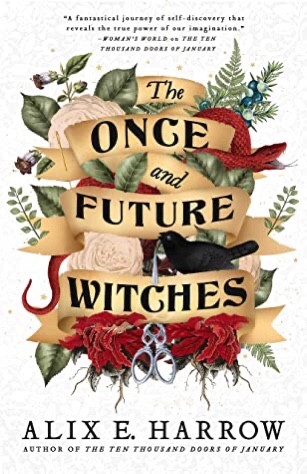
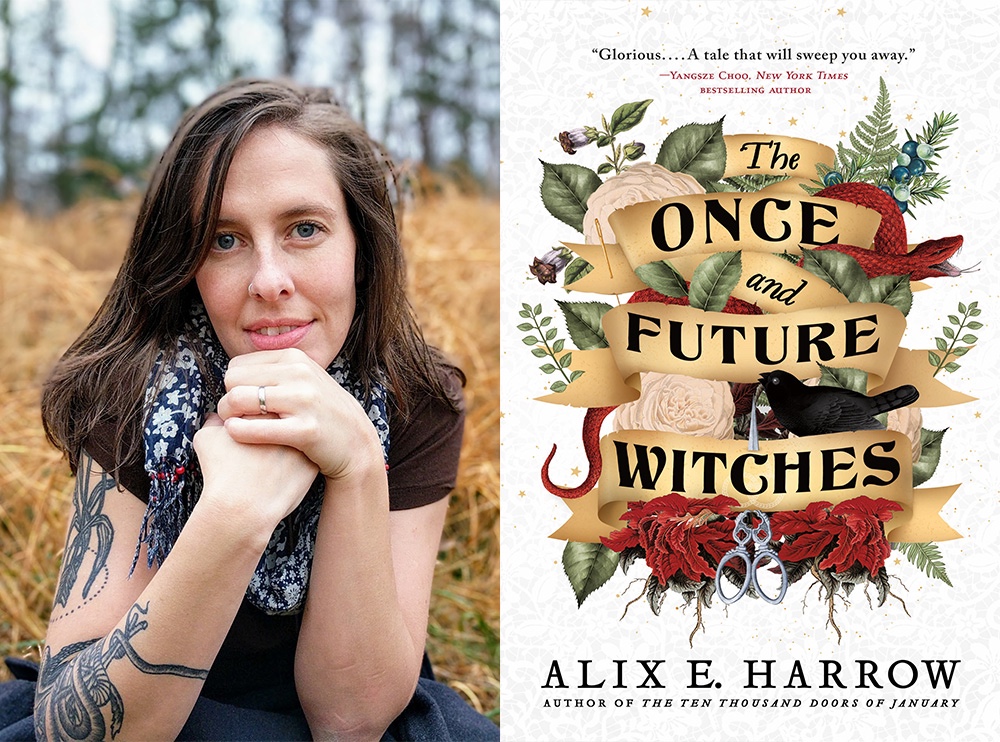
I loved Alix E. Harrow’s Ten Thousand Doors of January so much that it was in my top ten books of last year, so I approached her new novel with excitement, but some trepidation too. Could it possibly live up to her last work? Yet with promises of suffragettes, spells, anarchy and sister witches how could it possibly fail? I soon realised that this was going to be a very different book, embedded in American history but from a magical and feminist angle. Our main protagonists are the Eastwood sisters – Agnes Amaranth (the mill girl), Beatrice Belladonna (the librarian and researcher) and finally James Jupiter, the youngest sister with a wild streak and fierce loyalty to her sisters. This is New Salem, 1893, and since the burnings there haven’t been witches in this part of the world. However, snippets of the words and ways of witchcraft remain, hiding in plain sight. In the lullaby a mother uses to soothe her child, in the rhyme from a children’s game and even in recipe books. These are women’s spaces, and this old wisdom, that sits within the fairytale women tell their children at bedtime is accessible to anyone, once you realise it is there. The power lies dormant at a time when women are fighting more than ever to have a share in power at the ballot box. When the three sisters join the suffragettes of New Salem, they start to realise some of the power that Bella has been researching at the library. They each possess a different type of power and with the right ways and words they could wield it against those shadowy figures who would rather not see a witch live, let alone vote.
Although I struggled a little at first with the girls names, especially where there were other characters to remember, it was Bella who seemed to stick with me most at this point in the story. I think it’s because she was a gatherer of stories, so I felt an affinity with her. She comes to understand witchcraft from re intellectual perspective, she is studying and making sense of it from books, but gradually through first hand research. I loved that her research takes her to every corner of the community: from the local mill women and children’s rhymes; to the more marginalised black and Native American communities. She finds that women have been hiding their wisdom in a wealth of ways. On her travels she also finds the alluring Miss Cleopatra Quinn, who trusts Bella enough to disclose a society of black women, possibly the most marginalised group in society, who have a lot of shared knowledge including a set of secret tunnels under New Salem that prove very useful as the story progresses. The relationship between these women is one of the high points of the book for me and shows that the usually bookish and almost spinsterish Bella has unexpected reserves of passion.
This is a very character driven novel and comes alive when the sisters are together on the page. Agnes is the mill working girl, fired up by the rights of the women she works side by side with. Her need for witching comes from that lack of power, from knowing what it’s like to be hungry and not wanting that for her own children. I love that these girls don’t come from the big house on the hill with pots of money behind them; they come from a family blighted by poverty, the loss of their mother and a violent father. Jupiter particularly seems haunted by that past and there are secrets to be uncovered here. She is the more natural witch, the wild barefoot girl who has magic in her bones. She is furious when the other sisters get a familiar before she does. I also love that she walks with a cane and this cane is her strength throughout, not just something to lean on. Very cleverly the author weaves these marginalised people into the narrative and it’s refreshing to see these characters where their colour, sexuality or disability isn’t the story.
Harrow weaves together so much history here with folklore, myth and fairy tales. Our villain of the piece is an aspiring politician – which probably says more about our times than the story – but underneath he is something altogether different. He hates witches and possibly women too. He wants to use the ballot box for legitimacy, but his actions are those of a dictator. He amasses a group of enforcers for weeding out sedition, suffragettes and witchcraft. It is Jupiter who first sees what he truly is in a horrifying scene in the ‘Deeps’ – a basement prison that fills with water. Like the sisters he appears to have a ‘glamour’, a way of appearing to other people that masks the true face. It takes time for the sisters to realise they are in an age old battle, replayed across the centuries but they are determined that this time the witch will win. There are heart stopping scenes such as Agnes going into labour, or final confrontation that are visceral and heart rending. Harrow doesn’t hold back on the horror of how witches have been treated historically and their nemesis here is particularly cruel. The final confrontation isn’t just heart rending, it’s heart stopping. I couldn’t put the book down at that point because I was so emotionally invested in the sisters and their cause. Harrow does this to me. I always think that the fantasy elements will distance me from my heroes suffering, but then something will happen that floors me emotionally. I think there’s an incredible skill in creating this whole world of magic, but then connecting the reader to your characters so strongly that they feel their pain and their triumphs. I have loved spending time in this particular world and I’m so happy that for this reader, Harrow has done it again.
This month I took some time off from blog tours and other commitments to spend a couple of weeks reading my own choices. Not only did this give me a lot of freedom, it allowed me to read one of my all time favourite authors followed by one of my most recent loves; Alice Hoffman and Alix E. Harrow. Even more of a coincidence is that both have written books based within the folklore of witches, healers, and wise women. In Hoffman’s case this is her third novel in the Practical Magic series, which delves back further than ever before to the origins of the Owens family and the formation of communities whose religion will not suffer a witch to live. Harrow also creates a world of sisters, three separated sisters who come together at the very beginning of the 20th Century and the suffragette movement.
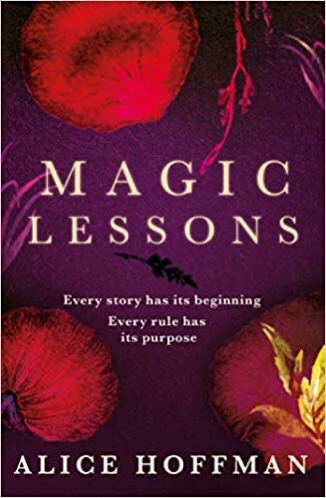
In Magic Lessons, Maria is found as a baby by wise woman Hannah Owens, who brings her up with the old ways. Maria learns how to grow a healing garden, to use herbs for ailments of body and mind, and help women with problems caused by love. However, Maria’s power isn’t just learned. She has the mark of a blood witch from her birth mother, and has been chosen by her familiar Cadin who is a crow. Maria feels she must be the result of a woman being fooled by love and vows not to be taken in by a man. Tragically, Hannah is burned as a witch and Maria knows she must run to save her life. She meets her mother and birth father, and realising there is no room in their love for a third person she takes a gift of red boots and sails to the island of Curacao where she has been sold into servitude for a period of five years. Here, her vow against love will be tested. Taking us through the dangerous years of the 17th Century, where Puritanical communities like Salem in Massachusetts were whipped to hysteria, and would not suffer a witch to live. Hoffman’s prequel to Practical Magic takes us back to the beginnings of the Owens family and the complicated relationship between their power and the very human need to be loved.
I had been waiting for this prequel for a long time and I wasn’t disappointed. It only took me moments to be in Hoffman’s magical world thanks to the layers of description she uses to create an unusual atmosphere. In some senses she creates an instantly recognisable sense of place. Her descriptions of Massachusetts, and later, Brooklyn are full of local floral and fauna, the sense of wilderness and pioneering spirit within these early settlers of the Americas. It is dark, foggy, wet and often icily cold with dangerous animals and even more dangerous people. By contrast the time spent travelling to the West Indies and the beautiful island of Curacao are vivid. In the daytime full of colour, exotic flowers and birds and I could feel the sun on my face, the warm sand beneath my feet and the incredible animals such as the turtles and tiny hummingbirds. By night, when Maria and her friend explore the island, it is still warm, with a vast sky full of stars. On the other hand there are times when these places seem otherworldly as we see them through the eyes of a witch: the magical properties of plants, the incredible loyalty of an wild animal like Keeper the wolf, and the witches’ power to control these elements to their advantage. It’s our world but not quite. The difference is viewing it through the lens of history, but most unimportantly, by magic.
There were times I didn’t fully understand Maria, although she’s the more sympathetic character of the three generations. She protects herself against love after seeing what it did to her mother, but then later says she couldn’t protect herself against love. I think this is almost a push and pull between the human and more magical signs of her character. She tries to use her power to prevent love, but perhaps her heart truly longs for it. The tragedy is in protecting herself against the right man, while letting the wrong one in. I find her choice to go to Massachusetts with her daughter Faith inexplicable given that she has friends and support in Curacao. John Hathorne is a very dangerous man, to women in general and not just the witches he persecutes. He drags young girls into a battle he is constantly fighting between his appetites and his conscience. There is part of him that emerged in Curacao that wants to shed his responsibilities, to throw off inhibition and dive into the sea as well as give in to his passions for a woman he desires. In Massachusetts he is a pillar of the Puritan community, yet he marries his wife Ruth when she is just 14 and his ward. She describes crying as he takes her to the marital bed, but her fear and young age does not stop him. It’s worth mentioning that in a historical context this isn’t unusual, but to me it shows a lack of compassion and respect for women. He turns his back on his daughter, both when she’s a baby and when she returns as a young woman. Maria, his wife Ruth and his daughter Faith are all his victims. Samuel, or Gogo as Faith calls him, is a good man and I was desperate for him to win Maria over. He is not scared of Maria or her power. He loves her intelligence, her fortitude and her power. I could have cried for how much time is wasted as Maria fights him.
I enjoyed the way Hoffman weaves in the historical context for America in this period. These are early settlements, some first colonised by the Dutch then by the English. She doesn’t forget the indigenous tribes either, often completely massacred by these ‘Christian communities’ who hold themselves in such high regard. They hold women with healing knowledge in the same regard as these natives of USA, as if they are cleansing their area of magical and primitive beliefs. Hoffman doesn’t forget her Jewish heritage either, situating them as a persecuted race often moved on from areas they’ve settled and treated with suspicion. We see this in the characters of Samuel and his father, who have chosen a life on the sea instead, but still hold their heritage close to their hearts. There’s a sense in which Christianity is anti-magic whereas Judaism is closer to ancient magic and respectful of its power, especially in its capacity to do good. The only time Samuel stops Maria from practicing her magic is when it’s in a darker form, as she tries everything to keep his father alive. The Christian beliefs practised by the Dutch and English settlers has become corrupted and Hoffman presents their acts as the very evil they fear. When Maria is taken for the trial by drowning in Massachusetts, there is a frenzy and mob like mentality that is seen later in real life witch trials of Salem and the fictional arrest and trial endured by Faith. When Faith is taken by a Christian woman, confined and forced to live as her daughter we again see obsession and evil. Her captor never seems to doubt she is doing God’s work removing Faith from her mother, taking her far away and putting her in irons to remove her power. Yet this evil, begets more evil as Faith escapes and uses her freedom to practice blood magic steeped in anger and revenge. Yet she still has a conscience. Faith is haunted by the death of her captor, despite helping women to wreak revenge and enchantment by night.
I would have liked to see a more time between John Hathorne’s wife Ruth and Maria, because they were both exploited by the same man. I also think that there was perhaps too much complex detail in the women’s appearances such as Faith’s changing hair colour or the different colours of thread used for different purposes. I found myself becoming confused at times, but it’s a small issue in a magical story. I think this was a thoughtful and atmospheric origins story of a family many fans have come to love. I think the strength of this series is in that combination of the mystical and the very human elements of the story. Despite their powers Maria, her mother Rebecca and her daughter Faith experience the highs and lows of every woman’s life – the changes of adolescence, falling in love with the wrong man and the right one, motherhood, illness and ageing. I felt emotional as Maria saw her ‘mother figure’ Hannah murdered by men who feared her, as she realised the man she loved didn’t really exist, and as she lost Cadin her loyal companion. These women’s fight to be accepted and even acknowledged for their skills is a fight that continues today as we fight for women’s rights to equal pay, to save reproductive rights and to be seen as more than sexual objects. Their fight to stay alive is still echoed in our fight to stop child brides, exploitation of young girls and domestic abuse. It was a series coming full circle, as we see the formation of that mistrust of love that shapes Jet’s journey or that sees Gillian constantly pick the wrong man. I truly loved my time back with the Owens women again.
Meet The Author
Alice Hoffman is the author of thirty works of fiction, including Practical Magic, The Red Garden, The Dovekeepers and, most recently,The Museum of Extraordinary Things. She lives in Boston. This book is the prequel to Practical Magic and The Rules of Magic.
Emily Proudman’s life is imploding. She’s lost her acting agent, job and home all in one day. Scott Denny also has a problem, one he doesn’t think he can fix. He is a wealthy and successful CEO but neither of these things can help him. Then he meets Emily and she is perfect. He takes her on for a summer job, as housekeeper for his rambling estate in the South of France. Emily thinks she has fallen on her feet and charmed by his wife Nina, and their unusual daughter Aurelia, she throws herself into her summer role. Yet all is not what it seems. The family have dark secrets and
if Emily doesn’t play her part, the summer and even her life could be in danger.
Nina is keen to have Emily there, so greets her enthusiastically when she arrives. The mansion is eerie but then so is Nina, who seems to be a quiet and obedient wife. Aurelia is more of a shock. She’s shy to the point of introversion, but that could be down to living in such a remote location. Communication with others seems to be frowned upon as there’s no phone line or internet connection. What if something goes wrong out here? Emily tries to use her time well in looking after Aurelia and even turning her hand to a bit of renovation, but she feels herself becoming little more than a companion to Nina, sometimes losing whole days drinking wine by the pool. Aurelia is difficult to get to know, she flinches if touched possibly down to the rare skin disease she has, but it felt more like she simply wasn’t used to physical affection. Her silence could be shyness, but Emily starts to feel that there is something odd about this girl and the problems she has.
This is a modern Gothic novel, with definite shades of Jane Eyre – the remote mansion, the stepdaughter, a slightly odd wife and a new, young housekeeper/governess. However, instead of the usual first person narration we get multiple narratives but how many of them are reliable? The cover jumped out at me, making me long for sunnier climates and a chance to explore – something that’s even more of a fantasy at the moment! I think the reader is lulled into this holiday feeling, alongside Emily. We know something is wrong here, so does Emily, but working it out, when instead you could lie by the pool with a cold cocktail and a good book, seems unnecessary. When the secrets are finally exposed, Emily might find it’s too late. The characters have more depth than appears at first. Although Nina might seem like the perfect rich man’s wife, there is something else going on underneath. There’s a brittle edge to her character that allows us to glimpse her fragile mental health. Even Emily, turns out to be more intelligent and resourceful than I gave her credit for at first.
When the secrets of Scott Denny and his estate are revealed weren’t too much of a shock. This isn’t one of those twists that makes you rethink the whole book, but nor did it disappoint. Scott reminded me of the estate owner in Henry James’s The Turn of the Screw – working away a lot, only briefly at the estate and even then doesn’t really engage with his wife or stepdaughter. Furthermore, when it’s mentioned that Emily has briefly worked for Scott before I wondered whether their meeting was a coincidence or whether it was calculated. Perhaps Emily is the perfect person for this role? I think this was a great beach read and shows great promise for a debut author. I will be looking out for her future work.
What an incredibly emotional read this was for me. I found myself having a good old cry at 4am over Jen and her family’s story. It begins when Jennifer is adopted by a childless couple and four years later gets an unexpected little sister. Kerry is a determined, mischievous and curious little girl and the pair are incredibly close. In adulthood, the two are still inseparable. Jen now has husband Ed and two children while Kerry has a long term partner in Nessa, who she is hoping to propose to. When a terrible accident happens while the sisters are on a shopping trip for an engagement ring, Kerry is killed. Now Jen needs to find a way to carry on living, but the survivor’s guilt and grief are very strong. As Jen starts to lose herself in her memories of her sister, it becomes clear that Jen can’t let Kerry go. Yet, by keeping hold of her sister, will she end up losing her own family?
This is my second book by Emma Cooper and after reading this she has been bumped up to my list of favourites – those authors where I know I’m guaranteed a great story, emotional impact and believable characters. She has the talent to combine a big emotional punch, with a sprinkling of humour which isn’t easy to do. I honestly fell in love with these characters and their relationships with each other. Jen is a very organised and capable woman, who loves spending time with her family and creating a beautiful home. I loved her with Ed and the way the author has created a balance of the romantic and the mundane into their relationship. There’s enough of a love story to draw us in, but we see the normality too as they get the children ready for school, do the grocery shop and get involved with school activities. Underneath the daily grind though is a strong love and passion for each other. Yet it is becoming tested by changes in Jen. Ed has noticed that Jen doesn’t seem as organised as usual and is often staring off into space. Then at other times she is almost over-excited and far be it from him to complain about more sex, but well, he wasn’t complaining exactly… it just isn’t like his wife. He worries, but labels these changes as part of the grieving process. He doesn’t know what we know. Jen can still see Kerry and talk to her. Kerry has been fuelling the recklessness he’s seen such as daring Jen to leap off a cliff into the sea. There’s a point when Ed realises that this isn’t just getting lost in memories. For Jen, Kerry is as real as he is or even the children and what will he do when this starts to affect them?
This was a tough, but loving and humorous portrayal of the journey relationships take when one partner is struggling mentally. I found the alternate chapters between Jen and Ed so effective because we can see the same events through both sets of eyes, sometimes with very conflicting results. I was so torn because I loved both of them, I wanted them to be together but I could understand each viewpoint too. Ed wants his wife back, the person he fell in love with and his best friend. He wants to be a family, but wants to protect their children too. Jen has a heartbreaking dilemma. Does she follow medical advice and take the pills that might make Kerry disappear forever? The psychiatrist who sees Jen and diagnoses complicated grief understands what she’s feeling. This is survivor’s guilt; Jen wonders why she survived and Kerry didn’t. Kerry saved her life by pushing her away from the oncoming vehicle. In Jen’s mind she’s already killed her once. Now she feels like she’s killing her all over again.
This was a tough read because I struggle with complicated grief. In 2007, as regular readers will know, my husband died from pneumonia as a complication of Primary Progressive Multiple Sclerosis. It had been coming for some time, but for the final year of his life I was his carer for 24 hours almost every day, unless I had a Marie Curie nurse. He was dependent on me for food, drink, medication and all bodily functions, even breathing. Three months before he died I agreed that he needed to be admitted to a nursing home from hospital. One of our carers was injured and I couldn’t have managed alone. I knew when I made that choice it was very likely he would die. For a few weeks after his death, I would see him out of the corner of my eye, sitting in his wheelchair looking out into the garden. I could also hear the mechanism of his wheelchair and a little beep it used to make. I realised that this wasn’t really Jerzy, this was me being unable to let go. In therapy I talked about survivor’s guilt and how I felt I had killed him by sanctioning the nursing home. I knew rationally I couldn’t have done anything else, but emotionally it’s been very hard to accept my own choice. I also have multiple sclerosis but in a milder form and I discuss choices and possibilities at length with my new partner, because I would hate him to go through the same thing. Reading this was emotional, I did cry, but I also felt less alone with my experience.
The author has taken a really tough subject, but made it warm and humorous. I love the way Kerry is often doing things she did as a little girl like standing on her head or blowing bubblegum. She also sits in the oddest places and actively tries to make Jen laugh. The wider family were lovely too, willing to support and help out with the children or Jen. Her mum is always full of good sensible advice and their acceptance of this peculiar phenomenon is brilliant. The final scenes choked me up. They made me sad for what I lost back then as well as for Jen. I was desperate for her and Ed to make it and come back together as a family. The night I finished the book I was an angling widow! My partner and my brother went night fishing, so I was alone for the final chapters. I had a good cry on the dog – he’s very absorbent. I found myself very thankful for the new chance of love that I’ve had with my partner over the last couple of years. All I wanted to do was hold him close and tell him how much I loved him. This is an honest story about how complicated grief can be, but never lets us forget that where there is grief there is always great love.
Biography
Emma Cooper is a former teaching assistant, who lives in Shropshire, with her partner and four children. Her spare time consists of writing novels, drinking wine and watching box-sets with her partner of twenty-four years, who still makes her smile every day.
Her debut, The Songs of Us was snapped up in multiple pre-empts and auctions and is now being translated into seven different languages. Her last novel The First Time I Saw You was also a bestseller.
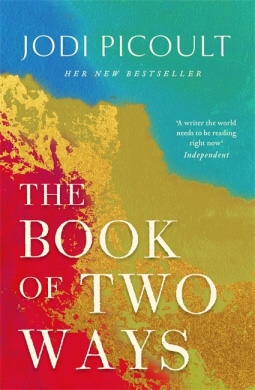
A few years ago I was lucky enough to meet Jodi Picoult, and ask her some questions. She was promoting her novel Sing You Home and the question I asked was about the ideas she has for her novels; do the characters or the issue come to her first? Most of her novels are based round a controversial issue – from childhood illness, to abortion, racism and the rights to IVF embryos. These are not easy issues to tackle, particularly in the USA. Picoult replied that it was usually the issue that came first. She would mull it over for a while and if it stayed with her for a few weeks, she would know it had the potential for a novel. Then, slowly, the characters would start to come and tell their story. I have now read all of her novels so I was really excited to have an ARC of this via NetGalley.
The background to her latest work is Egyptology, most specifically The Book of Two Ways – an ancient text that tells of the two ways a Pharoah had of successfully reaching the Underworld, one by water and one by land. Picoult uses this as the PHD research subject for our main character Dawn, but it also informs the structure of the novel. Two narratives are told side by side, representing a split in Dawn’s life where she could have turned in a different direction. So we appear to be following parallel lives. Dawn has been married to Brian for several years and they have a teenage daughter, Meret. They are comfortably sliding into middle age and a mature stage of marriage, where Dawn observes love is not just a feeling, it’s a choice. Brian is a scientist, teaching at university and Meret takes after him, also having an interest in scientific experiments. From the outside they must look like a steady, settled marriage, but as always it’s a different story beneath the surface. The catalyst seems to come when a woman at Brian’s workplace strikes up a friendship, asking him to help with DIY around the flat and eventually offering the chance of an affair. Brian doesn’t take it, but for some reason even the possibility shakes Dawn to the core. It sends her spiralling back to her graduate years when she went to Egypt in pursuit of her PhD research and met Wyatt. Wyatt was a fellow researcher, their lines of enquiry complement each other, but he’s everything she hates in a person – arrogant and privileged. However, just as their dislike turns to passion, Dawn is dragged back to the USA for her mother’s death. She leaves Egypt with no idea whether she will be able to return. Now, in light of Brian’s revelations, Dawn wonders whether she made the right choice back then and is it too late to change her mind? Our other narrative follows that route.
I was fascinated by Dawn’s job as death doula – I’m only just aware of the existence of birth doulas so this was totally new to me. Once I’d read what her job entailed, I realised it would suit my experience and skills. I have had the privilege to be with someone as they’ve died a few times, through my husband’s final weeks but also when I’ve worked in a nursing home both as carer, and years later as an advocate for people with complex disabilities. Occasionally, if there was a resident I was fond of and they had no relatives to sit with them I would go in on my day off to be with them. I was young, and not always sure of what to do but sensed instinctively that someone needed to be there as these people left the world. Dawn fulfils a role many other professionals can’t and liaises between those professionals and the patient. She makes sure that what that person wants – whether it’s ice cream at midnight or to contact a long lost love – they get. Her relationship with client Win was one of best parts of this novel for me. To respond to a dying person with total focus and compassion, whilst making sure their final wishes and their dignity is intact, is a skill that can’t be taught. It is a great example of a therapeutic relationship because the women affect each other, this isn’t a one way street. Win has wisdom and counsel for Dawn.
The women can see echoes of each other’s lives in their early passionate first loves, followed by their stable, loving and respectful marriages. The care that Win gets from her husband is a world away from the affair she had as an art student with Thane Bernard, a famous painter. It reminded me of the UEA Fanthorpe poem ‘Atlas’ which begins ‘ there is a kind of love called maintenance’ and details the many practical ways people show love. Win proposes that we each have experience of these different kinds of relationships and the one we have last is wiser, more nurturing and understanding. The things we need as we’re older are very different from our idealistic and impulsive younger years, but we must never doubt that both are types of love. The Egyptian return narrative is interesting because we’re never fully sure where it fits or even whether it’s real or Dawn’s day dreaming. It’s also fascinating to see what her reception will be. All the time we’ve been listening to Dawn’s version and now we see the effect her sudden departure had on Wyatt. The rascally Indiana Jones I’d been expecting was really Dawn’s view of him. In reality he was shattered by her choice not to return. There’s a sense of time standing still in this ancient place, not just for the Pharaoh’s tombs but for the dig itself. Dawn finds the same house, serviced by the same family, but will her hope, that Wyatt hasn’t moved on either, come to pass? Even if his feelings haven’t changed what hope is there for a relationship that belonged in this temporary home, thousands of miles away. How will Wyatt respond to her marriage and her daughter? He doesn’t seem like the kind of person who will drop his work and become the family man.
This wasn’t my favourite Jodi Picoult novel, but it’s far from her worst. The research for the Egyptian sections alone must have been painstaking and I did have a belief in her characters – particularly in sections between Dawn and Win. I did feel there was a bit too much academic Egyptian detail too early and it prevented me getting into the emotions of the story. It was an interesting background to Dawn’s current work and how death rituals are very important and vary so much in different cultures. There were also a couple of aspects of Dawn’s return to the US that I didn’t understand, such as the timing of her return and meeting Brian. The big revelation towards the end of the book seemed unlikely. I couldn’t imagine that Dawn had never asked herself or even suspected. It was also amazing that her relationship to Brian had endured despite such a hurried start. I wondered if her strong reaction to his student’s crush was more about finding a way out. Brian has been a bit oblivious to this woman’s advances, but there is something endearing about that. He wouldn’t expect anyone to be interested and as soon as it’s apparent how she feels, he leaves and tells Dawn. There is a sense that Dawn wants out of this relationship, but is struggling to be the one who ends it. She doesn’t want to be the bad guy. This worry about hurting others can be seen as she tries to carry out Win’s final wishes too.
Often with Picoult’s books you can see that the ‘issue’ has come first, and I did wonder if the exploration of Ancient Egypt was something she’d wanted to write about for some time. It sat neatly with Dawn’s job and the whole novel’s theme of the end of life. It was interesting to think about the rituals carried out by the Egyptians – I’ve always wondered how they got a whole brain out of someone’s nose – and our squeamish response to death. We don’t talk about it, so we never express our feeling about the sort of death and funeral we want. It’s almost as if our enduring fascination with the burial chambers of the Pharaohs is in direct contrast to our avoidance of the subject in relation to ourselves. Dawn’s job cuts through that and in its way is a lot like counselling, in that she asks the questions and has the conversations that the dying person can’t have with their family. Interestingly, despite her role to be open about death, Dawn isn’t being honest or open about life. She’s settled herself into a default position where she’s felt safe, but a brush with death changes everything. I think I wanted a different ending. I felt for Meret who doesn’t seem to get much quality time with her mother and I can’t remember a point in the novel where they simply have fun together as a family. She’s expected to get her head round massive changes very quickly too. I would have liked Dawn to take some time with her daughter, just the two of them and get settled on their own terms. While it just doesn’t reach the heights of Small Great Things or The Storyteller for me, there was a lot to like here. The depth of research, the themes of life and death, and her characterisation of the central characters are strong and as always with Picoult you can relax knowing you’re with an absolute master at storytelling.
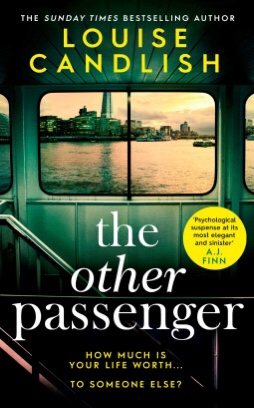
I’ve started to think of Louise Candlish as one of my ‘go to’ authors for classy thrillers with unexpected twists. As always she drew me in with the characters, but at first I wasn’t quite feeling it. I was curious, but I found myself waiting for something to happen. Then there was a moment – if you’ve read it you’ll know where I mean – where everything changed and I realised everything I thought I knew about a character was wrong! After that I had to keep reading, and I kept reading till I finished at 3.20am precisely.
Our narrator is Jamie Buckby, who lives with his partner Clare in a beautiful home near the River Thames. Clare is a partner in an estate agency and Jamie.. well, Jamie is between jobs at the moment. After an incident on the tube made him infamous, he is working as a barista in a small, independent coffee house. Since the tube incident, Jamie has been commuting to work on the riverboat. Open air, a beautiful view of the city and a great way to relax on your way to work. Also, passengers aren’t crammed in like sardines, sweating in the heat, stuck in a tunnel, panicking and pulling the emergency cord. Anyway, the book begins in that weird week begin Christmas and New Year when two detectives meet Jamie off the boat before work. They’re concerned about the whereabouts of one of Jamie’s fellow passengers, Kit. However, Kit isn’t simply a fellow passenger. Clare and Jamie have been together a while and felt in need of some excitement, so invited one of Clare’s new employees and her partner over for drinks. Melia and Kit are young, attractive and have that hint of danger. They drink, but also dabble in a bit of coke. Melia is stunningly beautiful and on one evening in Clare and Jamie’s kitchen, she corners Jamie and says she finds him attractive. Jamie is twice her age at 50 years old and very flattered, but has a lot to loose. Not only his long standing relationship with Clare, but everything that comes with it – her family, her financial support, and the large Georgian house with communal garden that they share, but Clare owns. Will he be tempted to risk everything?
The book’s structure brings us back and forth, to the Christmas week and Kit’s disappearance, then back into the past few months and what’s really been going on in plain sight and in secret. Then, just when I was starting to get a handle on what’s really happened, Candlish pulled the rug right out from under me! Then I had to reevaluate everything I’d read before.
I love books that surprise me. Especially when I’ve become very invested in the story and have started running up my own theories on what’s going on. I became very interested in Jamie’s partner Clare. To some degree she has led a very privileged lifestyle both in London and back in her family’s home in Edinburgh. However, she has been a great partner for James and has supported him through the tube incident, his period not earning and even further into the novel as the questioning about Kit’s disappearance becomes more focused on James. Her strength and dignity shows when she still firmly supports him, despite their relationship being on shaky ground at times. Meanwhile, Melia is a master manipulator and actress – I will never trust anyone who’s performed Cat on a Hot Tin Roof. This is not just a book about being deceived though. This book is about self-deception. About thinking you can party like twenty year olds when you’re middle-aged. About ignoring the reality of your situation, your finances, the roof over your head. About ignoring the reality of how attractive and how desirable you are. It was great to read a book where the women have all the power, whether it’s because they’re young, smart and beautiful, or whether they’re classy, wealthy and dignified. Even the seemingly quiet, unassuming, riverboat passenger Gretchen, has some tasty secrets of her own. This is a very taut, well-written thriller, that is difficult to put down and even harder to second guess.
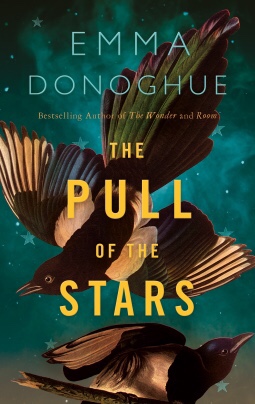
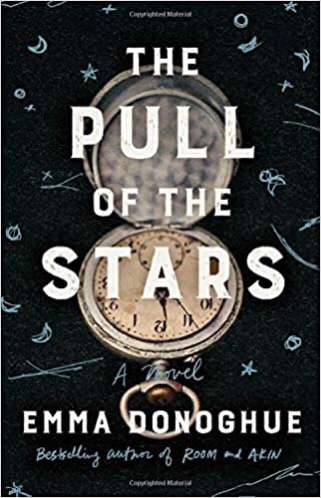
Before the novelist Emma Donoghue gained worldwide renown for her incredible novel Room, I was already a fan of her historical fiction such as Slammerkin and The Sealed Letter. Her brand new novel, The Pull of the Stars, is another well researched and immersive historical novel that concentrates on 3 days in 1918 Dublin. One cover of this novel is a beautiful depiction of an open silver pocket watch with tiny scratched drawings of the moon and stars. This watch belongs to our heroine Nurse Julia Power and those scratches have huge significance to her. Julia works as a midwife and every scratch represents a life lost on her watch; the lost mothers appear as full moons and the crescent moons are lost babies, either still births or those born too soon. The year is significant, because as wounded men return from the battlefield in France, they bring with them a new type of influenza. Named ‘Spanish Flu’, by 1918 it is a global pandemic and by its end it will have killed 6% of the world’s population. It is highly unpredictable, passing through some people with relatively few symptoms and killing others within hours. Due to a shortage of staff, Julia is left in charge of a small ward of pregnant women with flu. Some are full term and will deliver their babies, while others are mid- pregnancy, but affected by severe flu symptoms. Julia can run her ward with great efficiency, but not single handed, and into her world come two outsiders. Volunteer helper Bridie Sweeney is all mischief with bright red hair and a glint in her eye. Dr Kathleen Lynn is an intelligent and competent doctor, but is unfortunately on the run after taking part in an uprising against the King. Together, these three women must shepherd lives in and out of the world under extreme pressure and through their shared experiences lives will change in unexpected ways.
I found the novel so well grounded in time and place, with even the smallest details thought about from public information posters about the flu, to the drugs and methods used during childbirth, to the histories of each character and how their actions are so firmly based within their experiences of that period. Donoghue writes in the acknowledgements that her book is stitched together from facts and imagination. Dr Lynn was a real doctor in this time period, but also an activist and Sinn Fein politician who set up health facilities with her female lover. Barbaric practices such as the symphisiotomy and pubiotomy (unhinging or sawing through the pubic joint) were common in Ireland, even up into the 1980s. These were sometimes conducted without consent, and left women in agony with unstable pelvic joints, but capable of continuing to bear children – the usual recommended medical treatment at the time for women who had more than three Caesareans due to obstructed deliveries was a hysterectomy. This is still a cause for controversy in Ireland, where it is felt that hospitals run by the Catholic Church allowed their own ethos to come before women’s physical health and contemporary medical recommendations. The equipment on the wards, food shortages, porters with disfigurements from the battlefield, men with shellshock and political upheaval create such a rich background that the reader is pulled into era and firmly believes in this situation and these characters.
The Catholic Church looms large in the novel, especially regarding its attitude towards women. We see it in small ways through characters like night nurse Sister Luke and her harsh attitude towards some of the women, for their morals if they’re unwed and for any questioning of the church. She treats Bridie, who was brought up and still lives in a ‘home’ run by the nuns, as a slave who should feel beholden to the church for her upkeep. Decisions within the hospital are made by doctors but with adherence to church teaching and under the watchful eye of the parish priest. The controversy of the Magdalen Laundries is touched upon as one patient is back there for a second time and seen as beyond redemption by the nuns. Bridie fills Julia in on what it was like growing up in one of these institutions: being loaned out to work; physically abused; sexually assaulted by the nuns or worse ‘loaned out’ to a man for a period of time; the open pits where the dead babies were laid with no names and no markers. The belief that the mother’s sins are paid for by the child can be seen in the birth of Barnabas White. His mother was unmarried and he is born with a hare lip. When one of her patients dies and Julia readies her for burial she notices terrible marks where she has been burned and scarred all over her body in the care of the church.
Feminism is a strong theme in the novel, whether Donoghue is showing us what poverty and church are doing to women, or signalling hope for the future in certain characters. There is a feeling that this is both a national and personal turning point for women trying to shape their own future and making choices for themselves. Dr Lynn is a key figure because she is educated, political, professional and also a lesbian. Julia admires the doctor despite her status as a wanted criminal. She can see that female doctors could change obstetrics and women’s lives enormously by making the best and most compassionate medical choices, rather than moral judgements. Julia refers to the male doctor as a ‘butcher’ and the book doesn’t pull any punches when it comes to the visceral reality of childbirth in the early 20th Century. These women are ravaged by poverty and sometimes on their twelfth birth, leaving them worn out shadows who can barely stand let alone make autonomous choices. Dr Lynn also represents a different type of sexuality, something that Julia has never thought of before, until Bridie tells her about the doctor’s private life. It opens a door for Julia, where lifelong companionship doesn’t have to come with regular beatings and endless child rearing. Julia is 30, still unmarried and has never been in love, until someone walks into her world and changes how she looks at things.
Bridie is also important because she never lets the darkness of her living situation and past cloud the here and now. She is spontaneous and gives Julia permission to live in the moment. The night they spend talking on the roof, under the stars, is a brief oasis of calm and friendship in a nightmare situation. They learn so much about each other, but also for Julia, who has been quite regimented in her life. Bridie brings out a playfulness and a sense that she can change and make her own choices. Julia marvels that, despite everything that has happened to her and from people she trusted, Bridie is still open and willing to give hope to others. She even has time for the porter, who Julia finds irritatingly cheerful and often inappropriate, and learns he has lost his whole family. Her generosity of spirit prompts Julia to make a bold and life changing choice of her own. Those final tense moments when we don’t know if Julia will be granted that new future she wants, are so hard to read, My heart was in my mouth as I was willing her on.
Donoghue is a master storyteller. Her characterisations, even those of minor characters like Julia’s brother, are so detailed even down to their rich inner lives, Here in 1918, she has laid bare the horrors of a different battlefield, one that women have been fighting in since time began. I was startled by the depiction of a pandemic, whilst in a pandemic. There were so many things about the handling of the pandemic that echoed through the ages. The flimsy suggestions for home cures, jaunty government posters that in one breath downplay the severity of the flu, then in another place blame on the patient for not being strong minded or fit enough to escape infection all resonated with me today. Mainly the book left me astounded by the strength and determination of my fellow women. These women faced a backdrop of poverty, persecution, a world war and a pandemic yet were still bringing new life into the world. Reading these accounts of childbirth, it astounded me that when at their lowest ebb, they pick up their babies and immediately give more: sustenance, nurturing and love. It is also a miracle that in these circumstances, amidst so much death and loss, a moment of love can grow,
I fell in love with this absolutely beautiful book and have immediately gone out to buy a copy for my collection. I’m a widow, so a book that addresses love and loss so eloquently speaks to me emotionally. It is devastating, but also uplifting and life enhancing at the same time.
The Japanese tsunami in 2011 is something that has lived long in my memory, maybe because it was captured so comprehensively through filming on mobile phones and CCTV. I remember staring at the TV screen in a strange mix of awe and horror. It was the first time I had fully comprehended the power of such a huge tidal wave. I had always thought a tsunami was exactly like the painting by Hokusai where a single huge wave sweeps over the coastline then stops. I have lived next to the River Trent for my whole life, and my father who is a land drainage engineer showed me a large Aegir one autumn and explained that a tsunami is like a huge wall of water that doesn’t stop. Seeing the footage from Japan really brought that home to me as whole coastal towns were simply washed away in a series of waves reaching up to 128 feet high and encroaching up to 10 km inland. I think I watched it so many times because I couldn’t comprehend the enormity of the disaster. This author took this event and brought it down to a human level, so we can see the effect of this life changing disaster on the Japanese people, but also show us that heartbreak and loss is universal.
Yui is living the terrible aftermath of the tsunami where she lost both her daughter and her mother, her past memories and hope for the future wiped out in a moment. As she tries to make sense of this loss, she carries out day to day life quietly and on the surface, keeping her deepest feelings within herself. It’s like living under a veil or fog where people can’t reach you. Whilst doing her radio show she hears about a man who keeps a telephone box in his garden, where people can go and say the things they need to say to lost loved ones. She wonders if this could really console people, to speak down a disconnected phone line and let those unspoken words go into the ether? Could it console her? If she had the chance to speak, what could she say to her daughter?
She travels out to the garden at Bell Gardia, but can’t bring herself to go inside. However, she does meet a man who has and spoke to his late wife, who died leaving him with a young daughter, Hana. He explains that he gets to tell her about the plans he has for their daughter as well as normal everyday things he was so used to telling her. This is one of the things many bereaved people miss, that ability to come home and share your day with someone. The silence can be deafening. So, instead of using the telephone, Yui travels to Bell Gardia every month and meets Takeshi for lunch. He becomes the person she chats to as they share their grief and their hopes for the future. Slowly they start to message each other back in Tokyo, just little messages about their day and how they’re feeling. They become each other’s person, the one they touch base with every day. However, this brings its own complexity, because feelings are starting to grow between the two of them. Their fledgling relationship is so tender and fragile. Falling in love during grief is so complicated. Love lifts our heart and makes us hopeful, while grief makes us look back and brings sorrow. The heart is being pulled into two directions at once. There’s a strange survivor’s guilt on both sides; Takeshi is developing tender feelings for a woman who is not his wife, while Yui is starting to feel attached to a young girl who is not her daughter.
Inbetween this beautiful story are interludes that seem unrelated to the main story. However, they are integral to the experience of the tsunami. These are washed up fragments of people’s lives appearing in the narrative, in the same way that debris from the tsunami washed up as far as North America years later. Some of them belong to Yui – parts of a book she once bought Hana, a list of her favourite Brazilian music. There are also receipts, descriptions of clothing, random memories that remind us this is not just two people’s experience. There are millions of other stories out there, just as tender and full of sorrow.
This is a beautiful, moving meditation on love and loss. The story is tentative, even the dialogue is delicate. It’s like a fragile piece of lace, held together by tiny threads, but creating a beautiful whole. If you’re looking for action and plot twists this isn’t your book. At times it’s like reading poetry. However, if you have ever lost someone you will find common experiences and universal feelings about life moving on. Simply a stunning piece of writing that I will treasure.






 The Lotus Readers