Posted in Netgalley

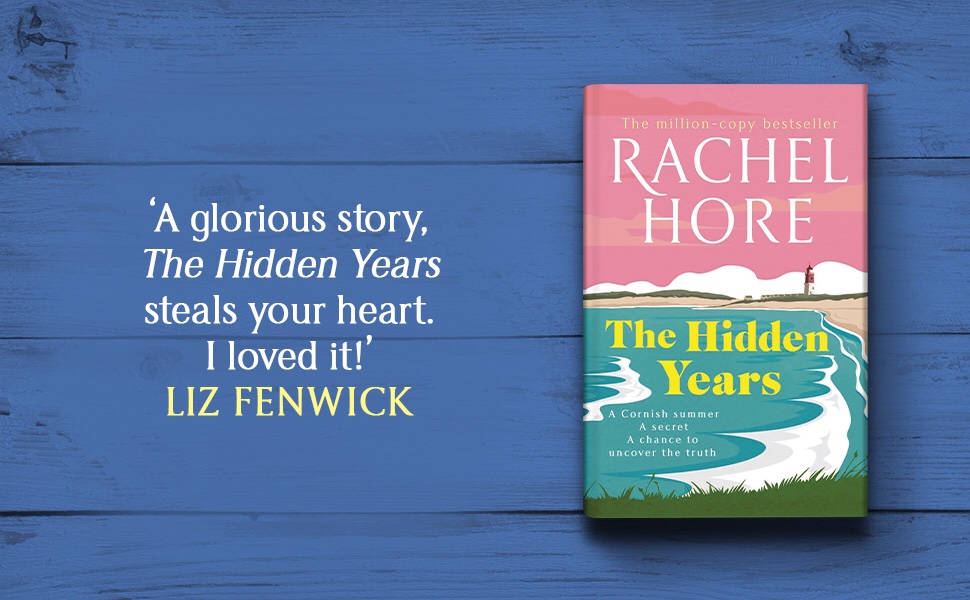
The Hidden Years by Rachel Hore

The Hidden Years is a tender-hearted and bitter sweet tale about how life can take unexpected turns. In fact John Lennon was right, life is what happens when you’re busy making other plans. She also explores how patterns emerge in life: we might find ourselves unconsciously choosing a path that repeats a pattern or takes us to somewhere that has a hidden importance in our lives. Belle has done something very impulsive. From the moment she met Gray they had a connection and now he’s invited her to Silverwood, a mansion next to the Helford River, where a group of his friends are living a different life. They are a creative collective, living as self-sufficiently as possible but dependent on the kindness of the house’s owner. Luckily he’s very fond of his nephew Arlo, one of the residents at Silverwood. As she leaves university and misses her exams for this uncertain life she has no idea that Silverwood holds secrets and some of them are quite close to home.

The author tells her story through a dual timeline; Belle’s story set in the 1960’s and then Imogen’s story, a young woman who visits Cornwall in the 1940’s. Imogen has been working for an agency that secures placements for young women who work with children. It’s mid- WW2 and Imogen is tasked with taking two young brothers down to Silverwood, a boy’s boarding school in beautiful and relatively safe surroundings. She soon finds out that life can change in an instant when she’s asked to temporarily for the school’s Matron who has fallen ill. Imogen takes the booking and finds she loves working with the young boys in the sick bay, feeling unwell and far from home. So, when she’s offered the chance to stay on she decides to take a chance and loves her work. She also makes friends with one of the teachers, Ned. They explore Cornwall on their days off and as the war comes ever closer Imogen makes the huge choice to serve her country, by training in nursing at a hospital in Truro. A bomb narrowly missing the school pushes her to use the skills she’s gained for the war effort. Meanwhile in the 1960’s Belle settles into life at Silverwood with Gray’s friends, trying to help out where she can and joining in with meditation sessions where the incense is more than a bit potent. She’s drawn naturally to Mrs Kitto, a lady of her parent’s generation who lives in a cottage on the estate. She’s slightly taken aback by Belle, because she reminds her of someone she once knew. Their afternoon visits become story sessions as Mrs Kitto tells Belle about a woman she used to know, back in the war.

I enjoyed both sections of this lovely story. Often with dual timelines the novel suffers because one narrative is much stronger than the other. Here I thought the author got the balance just about right. Since Imogen’s story is set during WW2 there’s obviously heightened drama and the decisions made can be life and death. However, I think the differences in the timelines complimented each other. The difference in moral expectations and behaviour is huge. There’s also a difference in how people make choices, creating a huge generation gap like the one between Belle and her parents. The fact that she leaves uni with her lover and is clearly living with him at Silverwood is difficult for her parents to understand and would have been unthinkable in the 1940’s when they were Belle’s age. It would be understandable to think that the 1960’s characters have it so much easier compared with their parents. Yet I could empathise with Belle, in fact without WW2 her generation wouldn’t have the freedom to make choices in the same way. Her father has high expectations for her and he wants her to buckle down and make life choices. After all, his generation had to lay their lives and their hearts on the line with often very little understanding of the person they were making promises to. Belle’s not quite ready to make a choice. Should Belle follow duty, when she could be an idealist and follow her heart? Singing with Gray’s folk band The Witchers comes very naturally to her when she’s got over her nerves. There are so many opportunities, how do you know which is the right path?

Imogen is doing her duty in her working life, but her heart is torn. She has a best friend in Ned. They love the same things, they’re comfortable together and have a similar outlook in life. She knows he’s starting to feel more for her than friendship, but also teaching at Silverwood is the rather enigmatic Oliver Dalton and there’s an immediate frisson between them. Although they don’t spend any time together, the pull towards him is hard to resist. When they finally do get a chance to spend time together during her work in Truro, could their spark develop into something more lasting? I found myself rooting for Ned, because he’s so kind and supportive. I thought they’d make a great team. There’s no denying her attraction to Oliver, but he’s more of a closed book and I felt life with him might be more turbulent. Which way would she choose?

I know this area of Cornwall well and it was very easy to imagine myself there as the author explores the scenery. The area was a Mecca for artists in the 1960’s and I loved the ideas that the Silverwood residents had for the place. It’s ripe to be an artistic retreat, offering creative and self- care workshops such as meditation. It’s such a now idea that I wanted to do it myself. I thought it was interesting how Belle reacted to these ideas, making decisions about which parts she’s supports and which isn’t for her. She’s intervened with one resident’s treatment of her son and calls an ambulance rather than watching her continue with homeopathic medicines and see the boy suffer, or perhaps die. That takes bravery and faith in her own convictions. When her family turn up in Cornwall will she get the space she needs to work out what’s best for her. As to Mrs Kitto, how does her story connect to Belle and what impact will this wartime story have on her choice? The historical detail shone through and seeing through Imogen’s eyes the arrival of the American soldiers, the preparations along the Cornish coastline for the D-Day landings and the bombing of Truro really does bring it alive. There’s a realisation that we’re all the product of our experiences and trauma can take a long time to heal, even several generations. I thought this was such such a bittersweet ending and it left me feeling a bit autumnal, sort of melancholy but glad for the experiences of love both women had known.

Out now in hardback from Simon and Schuster U.K.

Meet the Author

I came to writing quite late, after a career editing fiction at HarperCollins in London. My husband and I had moved out to Norwich with our three young sons and I’d had to give up my job and writing was something that I’d always wanted to try. I originally studied history, so it was wonderful finally to put my knowledge to good use and to write The Dream House, which is partly set in the 1920s in Suffolk and London.

Most of my novels are dual narrative, often called ‘time slip’, with a story in the present alternating with one set in the past. I love the freedom that they give me to escape into the past, but also the dramatic ways in which the stories interact. My characters are often trying to solve some mystery about the past and by doing so to resolve some difficulty or puzzle in their own lives.

The books often involve a lot of research and this takes me down all sorts of interesting paths. For The Glass Painter’s Daughter I took an evening class in working with coloured glass. My creations were not very amazing, but making them gave me insight into the processes so that my characters’ activities would feel authentic. For A Week in Paris I had to research Paris in World War II and the early 1960s through films and books and by visiting the city – that was a great deal of work for one novel. Last Letter Home involved me touring a lot of country houses with old walled kitchen gardens in search of atmosphere and to explore the different kinds of plants grown there.

Places often inspire my stories. The Memory Garden, my second novel, is set in one of my favourite places in the world – Lamorna Cove in Cornwall – which is accessed through a lovely hidden valley. A Place of Secrets is set in a remote part of North Norfolk near Holt, where past and present seem to meet. Southwold in Suffolk, a characterful old-fashioned seaside resort with a harbour and a lighthouse, has been a much loved destination for our family holidays and has made an appearance in fictional guise in several of my novels, including The Silent Tide and The Love Child.

Until recently I taught Publishing and Creative Writing part-time at the University of East Anglia, but now I’m a full-time writer, which felt like a bit step. My boys are all grown up now and finding their way in the world, but we still see a lot of them. My husband David is a writer, too (he writes as D.J. Taylor), so we understand each other’s working lives.

I find I have to have a regular routine with my writing, not least to keep the book in my head. My aim is to sit down at 9am every morning and write till lunchtime, then again the afternoon, but there is often something ready to interrupt this, not least our Labrador girl Zelda, so I go with the flow.

I hope that you are able to find my books easily and enjoy them – I am always happy to hear from readers!

Taken from Rachel’s Amazon author page on 18th Oct 23.

Posted in Netgalley

The Haunting in the Arctic by C.J.Cooke

All I could say after reading the final sentence of the book was WOW! I couldn’t stop reading, the housework is completely neglected and I even forgot to eat lunch! Yes, I read this in 24 hours. This is the absolute best of her novels and I’ve enjoyed them all.

Dominique is making her way through Iceland to an old whaling ship called the Ormen. Stranded in a bay, the ship is going to be sunk out at sea and Dom wants to document it before it disappears from view together. Ormen was an unusual whaling ship being a sail and steam hybrid that became beached in the early days of the 20th Century near the small village of turf houses called Skúmaskot. When she reaches the ship she sets about turning the cabin into a base to explore from and puts up her tent. There’s one door in the ship that she wonders about, it’s made of carved oak and when she touched the handle it emitted such a feeling of evil she was taken aback. As she settles, she hears someone walking about on deck and she realises she’s not alone. Three more explorers join her – Jens, Samara and Leo. They have more up to date equipment and soon the four are documenting the ship and their discoveries as well as Leo’s parkour sessions. The questions start to mount though, is she wrong or are the other three suspicious or even slightly scared of her? What are the strange noises she can hear – banging could be gunfire or chains banging against the ship? There’s also a strange mix of footsteps and dragging something heavy in a steady rhythm. Who is the woman in the dress that she’s seen standing in the shallows? This is a strange place where light is limited, the village is deserted and there is a strange stone throne by the beach, said to be a Mermaid’s Throne. These are not Disney mermaids though, these mermaids have teeth and a song that will lure a man to his death.

There are different types of haunting in this tale. I could see examples of my own theory of hauntings in the woman seen by the edge of the sea. She feels like an imprint on the landscape. A place where heightened emotion and terrible events have left such a strong imprint that defies time. The sounds also seem to come from another place, a repetitive echo from time past. This is what I call a proper ghost story. It isn’t gory or a slasher’s tale, it’s old-fashioned creepy and blended beautifully with local folklore. The ship is from Scotland and this is where the folklore of selkies comes from, a race of seal women who have a dual nature. They can be nurturing and helpful, such as saving a child who’s in trouble in the sea. They can communicate with other aquatic creatures and assume a human form when on land. However, selkies can also be seductive luring men to her and often having hybrid children. At their worst Selkies can be violent and vengeful, but their need for revenge gives us a clue about why; people seeking revenge have usually been wronged in some way. Mermaids are also depicted as sirens, luring ships and men with their singing and often thought to lure ships onto the rocks. However, there is also a terrible element of coercion in their mythology, stories where a man steals an item from the mermaid and while he has that item in his possession she belongs to him and lives as his wife. If she finds the object the spell is broken and she can return to the sea. Of course in the fairy tale we have a mermaid who has to choose between her land and sea lives, she can have love but to have legs she must suffer excruciating pain and she can never use her voice. It’s a hard price to pay. Icelandic mermaids have all these qualities, but use their seductive charms to lure sailors to their deaths – a nice reversal of their capture by human men. The author describes Icelandic mermaids as having rows of pointed teeth too. There’s a sense of devouring their enemies, particularly those who have wronged them. Is this Nicky’s end?

I loved the tension between the group of four on the Ormen. Samara seems fine with Dom, but then she overhears a conversation with Leo where Samara seems terrified of her. She talks about ‘this time’ being different, but Dom can’t remember meeting them before. I loved this mix of psychological tension, the real dangers of the landscape around them and then the truth of what has happened to the previous crew of the ship and previous explorers who’ve also left their echoes here. I sensed a possible kinship between Jens and Dom, almost as if he already knew her. I was scared of Leo. There’s so much nervous energy in him, a rage running just under the surface that I feared might ignite at any point. Yet they’re also dependent on each other for their survival creating what feels like a truce between them, but how can a truce exist if they’ve never met? There are so many strange happenings, such as Dom’s dream of ponies running off a cliff followed by finding the skeletons of Icelandic ponies in a deep cave. I loved the bits of magic realism, such as Nicky’s leg. Everything about the voyage from Scotland is historically accurate and gives us such an incredible sense of place I can see it. However, Nicky’s broken ankle and wound start to heal in an usual way. She notices the grey colour of her newly healing skin and thinks she has an infection. The sensation is altered too, feeling rubbery and a little cold. As time goes on this patch of skin grows and she’s aware that the gap between her legs is becoming webbed. Could her legs be joining together? This could be a magical sort of protection against the assaults she suffers on a daily basis. It could also be a transformation. As the past starts to inform Dominique’s present I couldn’t leave the story and I was left with the worst kind of book hangover where I was stuck in the world and the feeling of the ending. It’s taken me two days to start another book but I can’t stop thinking about this one. In fact I’m already thinking about reading it again, a bit like watching The Sixth Sense again once you know the twist. This is a dark, disturbing ghost story of hauntings but also about the worst things human beings can do to one another, particularly men against women and the extraordinary ways they exact their revenge.

Out in Hardback now from Harper Collins

C J Cooke (Carolyn Jess-Cooke) lives in Glasgow with her husband and four children. C J Cooke’s works have been published in 23 languages and have won many awards. She holds a PhD in Literature from the Queen’s University of Belfast and is currently Senior Lecturer in Creative Writing at the University of Glasgow, where she researches creative writing interventions for mental health. Two of her books are currently optioned for film. Visit http://www.cjcookeauthor.com

Posted in Netgalley

The Little Venice Bookshop by Rebecca Raisin

A bundle of mysterious letters, a trip to Venice, and a journey that will leave a lasting impression.

When Luna loses her beloved mother, it feels as if she’s lost her identity She’s rootless and can’t ground herself. Once she has these doubts, she’s begins to question everything around her. They have enjoyed a rather nomadic way of living up till now, probably because home has been where her mother was, but as she tries to cope with grief, the lack of roots is a struggle.The discovery of a collection of letters in her mother’s possessions seems to signal the way forward and she embarks on a most unexpected adventure. Taking clues from the letters, Luna travels to Venice, in the hope of unraveling her mother’s mysterious past. Maybe if she finds the answers, she might find her own place in the world.

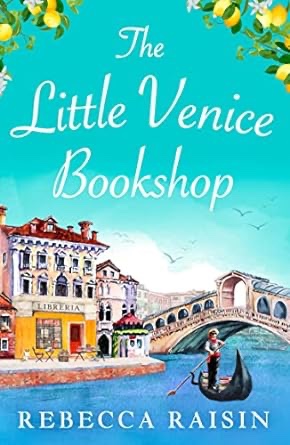
I love Venice. I’ve been lucky enough to spend two weeks there, once in the spring and then a couple of years later in the winter when it actually snowed. I actually travelled with my mum the first time and it was wonderful to see this place we’d always dreamt about come to life in front of our eyes. Venice is obviously a place of wonder, but it’s also got a spooky edge that’s been explored in literature many times. This is more of a ‘cozy’ Venice and I think the cute cover really sets the tone for that. It focuses on the quaint and romantic side of the city, so it’s an easy read, but enjoyable nevertheless. The bookshop is a lovely setting for the story and the rather grumpy owner is clearly crying out for something new, perhaps an antidote to loneliness? As Luna begins to work at the shop mentioned in her mother’s letters she tries to work out how her bohemian mother and the owner, Giancarlo, were connected. She also persuades him to let her develop the shop, improving its visibility through use of social media – to make it a destination place for bookish travellers.

There’s nothing better for an avid reader than a book about books. Luna is definitely a lover of stories and she appreciates what books mean to their readers and collectors. I love that this celebrated second hand books too, something I love too, especially ones that have dedications or messages inside them. Often they tell a story that’s all their own, separate from the printed pages. It’s an interesting thought that these books have been through so many different hands, each with their stories to tell. It was a joy to spend time with a character who’s so passionate about books and Luna’s bookish initiatives are great fun. The family of cats named after authors are particularly whimsical. The idea that her bereavement has made her think about her own life is such a relatable one and the realisation she wants her own family is understandable. The urge to set down roots comes from wanting to make connections, permanent ones that are entirely opposite to the traveller’s existence she’s grown up with. I enjoyed the romance between Luna and Oscar and wondered if perhaps she’d found her forever home?

Although I normally enjoy books that go a little deeper, I did come away from this with a smile on my face. This was a relaxing and soothing read for me. It had a magical feel and I guess it does read like a book lover’s fairytale. I have often daydreamed of a life far different to my own and Italy, books and handsome men are an irresistible combination for this reader. Yes there’s the sadness of loss, but the emphasis is on healing and the result is hopeful and uplifting.

Published on 30th March by HQ

Meet the Author

Rebecca Raisin writes heartwarming romance from her home in sunny Perth, Australia. Her heroines tend to be on the quirky side and her books are usually set in exotic locations so her readers can armchair travel any day of the week. The only downfall about writing about gorgeous heroes who have brains as well as brawn, is falling in love with them – just as well they’re fictional. Rebecca aims to write characters you can see yourself being friends with. People with big hearts who care about relationships and believe in true, once in a lifetime love. Her bestselling novel Rosie’s Travelling Tea Shop has been optioned for film with MRC studios and Frolic Media.

Come say hello to Rebecca on her Facebook page : https://facebook.com/RebeccaRaisinAuthor

Posted in Netgalley

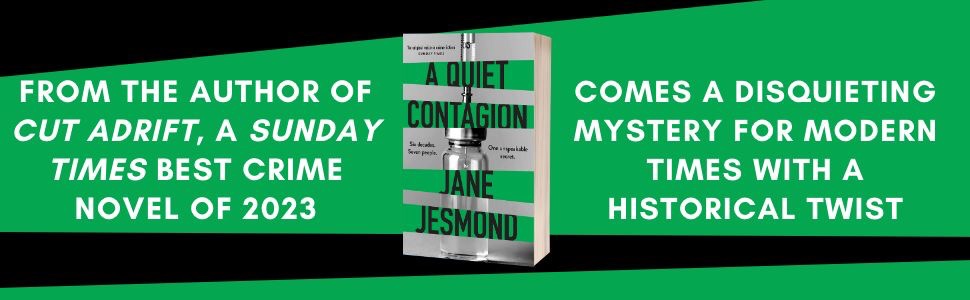
A Quiet Contagion by Jane Jesmond

I was introduced to Jane Jesmond’s writing by a blog tour and I thoroughly enjoyed her series, the most recent of which was Cut Adrift – a novel I reviewed earlier this year. A Quiet Contagion is an inventive stand-alone thriller that brings together dark history and medical ethics for a fast paced and well-researched mystery. Phiney’s grandfather Wilf, committed suicide after an incident at the pharmaceutical company where he worked. Using a dual timeline narrative and six different narrators we jump between 1957 and 2017 to uncover the truth around work to find a vaccine during the polio epidemic. The author combines the tension of a thriller with extensive historical research to unearth the secrets of the past and ask questions about healthcare ethics in public health emergencies, never forgetting the human cost of the choices made.

There are obviously parallels to the the COVID pandemic here, including many lessons that still haven’t been learned. In contrast to the modern parallels, the author has grounded her narrative very successfully in the historic sections, creating a great balance. Having had oxygen therapy for MS, I’m very aware of the use of hyperbaric chambers and the antiquated ‘iron lungs’ that were used to treat polio patients in the 1950s. I thought the descriptions of the epidemic were outstanding, really bringing home to the reader the terrible truth of a disease most people younger than me have ever seen. I’ve met people with post-polio syndrome and there’s no denying the life-long disabling effects of this awful disease. The author’s medical knowledge brings the realities of the epidemic to life, but also brings an authenticity to the characters whether they’re affected by this disease or treating it.

I thought the challenges created by a real medical crisis were well-presented and illuminating. There’s a range of voices to represent the medical/scientific outlook and these resonated particularly with contemporary issues around the COVID pandemic, such as the race against time to produce a vaccine and get as many vulnerable people vaccinated as soon as possible. We can see the origins of ‘big pharma’ with profit becoming the main goal, rather than public health. I don’t know if the author used the recent pandemic to inform her character’s thoughts and feelings, but the anxiety and panic felt very real and timely. The novel’s characters were well-developed and at home in their world, but I connected particularly to Phiney and her determination to unravel the mystery of happened to her beloved grandfather. I admired her. but worried that she was taking too many risks in her search for the truth and this kept me hooked. I enjoyed the moral dilemmas faced by her friends and family too. The struggles of each character added so much depth to the novel and their individual perspectives, created some thought provoking contrasts. I love it when I find myself thinking about a book days later and I this one has stayed with me. Sometimes, thrillers are full of action and tension but feel empty because they stick to one perspective or the characters just aren’t developed enough. This story still had tension, but it was also intelligent and full of emotion. This combination made the book hard to put down and equally hard to forget once it was back on the shelf.

Out 7th November 2023 from Verve Books


Meet the Author

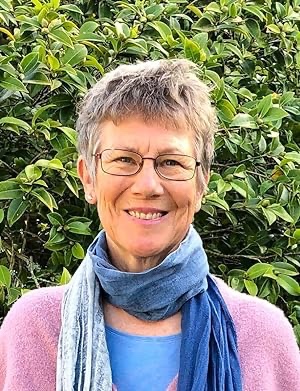
Jane Jesmond writes psychological suspense, thrillers and mysteries

Her debut novel, On The Edge, the first in a series featuring dynamic, daredevil protagonist Jen Shaw was a Sunday Times Crime Fiction best book. The second in the series, Cut Adrift, was The Times Thriller Book of the Month and The Sunday Times Crime Book of the Month. Her latest novel, Her, a psychological thriller will be published in May 2023.

Although she loves writing (and reading) thrillers and mysteries, her real life is very quiet and unexciting. Dead bodies and danger are not a feature! She lives by the sea in the northwest tip of France with a husband and a cat and enjoys coastal walks and village life.

Stay connected to Jane and receive news about her books and giveaways by signing up for her newsletter – https://jane-jesmond.com/contact/

You can find Jane:

On Twitter – @AuthorJJesmond

On Facebook – http://www.facebook.com/JaneJesmondAuthor

On Instagram – http://www.Instagram.com/authorjanejesmond

Posted in Netgalley

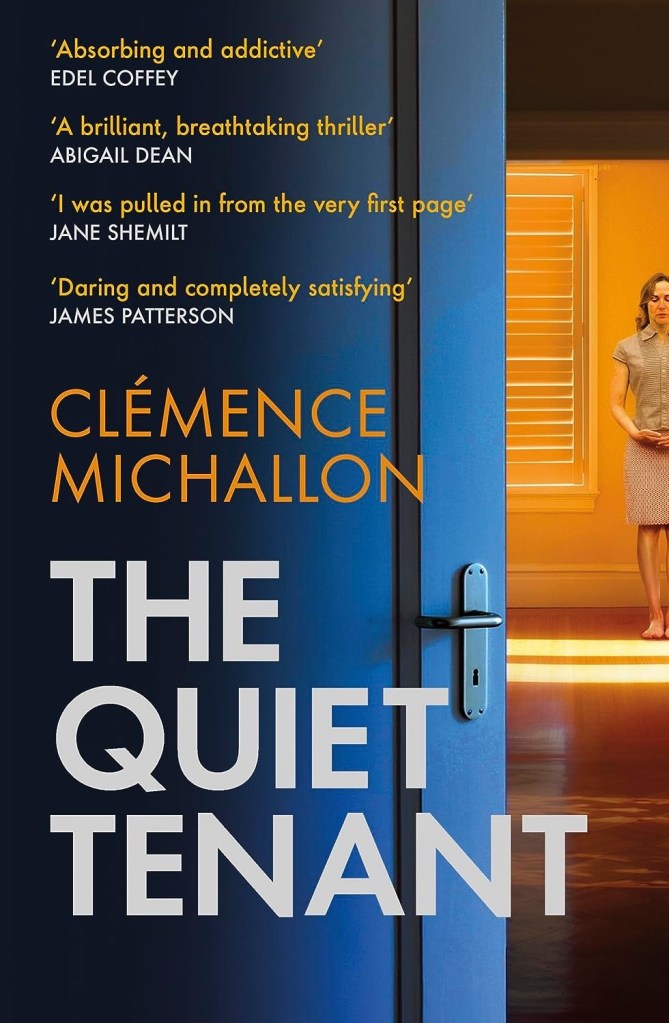
The Quiet Tenant by Clémence Michallon

He took you and you have been his for five years. But you have been careful. Waiting for him to mess up. It has to be now.

Reading this novel was quite an experience! I didn’t want to put it down, I was reading so fast to get to the next bit that I sometimes had to go back and re-read a paragraph. I had to tell myself to read slower and take it in, because the urge to devour this story is so strong. The writer has chosen an interesting viewpoint, that of the women in a killer’s life. I loved that contrast to other serial killer novels where a male serial killer and a male detective often narrate the story. Where the only women are the dead ones. Women are not expendable here. Even the murdered ones.

This is still the story of Aiden, a serial killer, but told from the perspective of the women in his life: his daughter, the woman he has abducted and imprisoned in a shed, and the bartender who is infatuated with him. There are also small sections from the women he imprisoned before, now dead. Each woman’s narrative gives the reader a different side to this hidden monster. It’s an intimate reading experience, because I felt like I knew everything about this woman: how she thinks, how she feels and even the details of her dreams. It feels like you’re with her in that tiny space, sharing her experience. It’s a very tense existence, knowing that you’re here at the whim of a man who’s already killed so many times you mean nothing to him. As someone who gets claustrophobic it felt almost too close and I felt her fear that it might just take one wrong move for him to kill again.


Aiden’s wife has just died, so he and his daughter Cecelia need to move house and his captive moves with them. She goes from her place in the garden shed to being chained to a radiator in the house. If she puts a foot wrong he will kill her and somehow he does know everything she’s doing even while he’s out of the house. How is he watching her? Incredibly, he has a daughter in the main part of the house as well as a souvenir stash in the basement. This only adds to the tension. What is hard to understand is how he rationalises his killing of women when he’s father to a daughter.– to a place with no shed. After years of isolation, Rachel is allowed inside a house again, and meets her captor’s child. I had so many questions though. Why is she still alive? It’s been five years now and he’s always killed his victims. He also seems to be out stalking a new victim, Emily, a local restaurant owner. Is this good news for the captive, or is he looking for a replacement?

Since the book Rebecca I’ve always been intrigued by characters that we don’t see, but even more so, by characters without the right name or a name at all. We know this woman as Rachel, but the choice not to use her own name makes you think. It seems common sense that he wouldn’t use it, he’s trying to distance himself. To make her an object rather than a human being. Yet she doesn’t mention her name either. Maybe even she can’t remember it or maybe every one of his captives is ‘Rachel’. This is part of the mystery that I wondered about when I was going about my day. It has allowed the author to place emotion and the victims at the centre of this thriller, making it stand out. As others have noted there’s a hint of Emma Donoghue’s Room here, where the four walls you’re in become your whole world and you become whatever you’re called. Rachel is a complicated character, and it’s clear that she’s suffered at the hands of Aiden. There are moments where I was rooting for her escape. She has time and opportunity, but can’t take it out of fear. From reading cases of abductions and long captivity, this isn’t unrealistic. Yes, she’s a strong woman, but she’s been manipulated and terrorised by this man so has to be sure before she takes a chance.

In the local area Aiden is seen as a good husband and father, in fact there’s probably an element of hero worship. So, local restaurateur Emily is aware of him already and might even be a little into him. She’s also young and alone, so it doesn’t take long for till she’s under his spell completely. Through these three narratives, Aiden’s captive, his daughter and the new love interest, Aiden’s dark truths are unravelled. This is not about considering his motivation or perspective, all of this story is about his victims and the mess the man like this leaves in his wake. I loved how the style of the author’s writing, which is mesmerising and poetic contrasts strongly with the dark subject matter. I doesn’t rush like thrillers often do. The contrast shows us that life can be beautiful, but what Aiden does is twisted and sadistic. I was desperately hoping that Rachel would survive and we might know who she really is.

Meet the Author

Clémence Michallon was born and raised near Paris. She studied journalism at City University of London, received a master’s in Journalism from Columbia University, and has written for The Independent since 2018. Her essays and features have covered true-crime, celebrity culture, and literature. She moved to New York City in 2014 and recently became a US citizen. She now divides her time between New York City and Rhinebeck, NY.

Posted in Netgalley

Harlem After Midnight by Louise Hare

Ever since the final page of Miss Aldridge Regrets I’d wondered what would happen next to Lena, who had managed to escape the clutches of a murderer, find her birth mother and become the lover of band leader Will all on board ship. She was sailing to New York to audition for a new musical on Broadway, but became embroiled in the life of a rich NYC family after being placed with them for dinner. Now in New York, what would become of her relationships – both with her mother and with Will? Would she be able to find work after finding out the Broadway job was a ruse to get her on the voyage? I was shocked when the novel began with a woman, sprawled on the sidewalk after failing from a high rise window. As the police arrived and start to look at the body they notice she’s clutching something in her hand. It’s a passport in the name of Lena Aldridge. The author then takes us back to Lena’s arrival in NYC nine days earlier, when Will had taken her to stay with friends of his until the return voyage. What could possibly have gone so wrong?

Lena has found herself dragged into Will’s world, perhaps a little sooner than would be expected in a conventional relationship. As Will takes leave she wonders if this will give them time to test their relationship out and whether they could have a future. His friends Claudette and Louis are a lovely couple who live in a good neighbourhood in Harlem. Claudette is a librarian and she settles Lena into their spare bedroom, telling her about how long they have known Will and that they’re looking forward to getting to know her. Will’s only family is his sister Belle and niece Joey, who he stays with when the ship’s on a fortnight turnaround. The five are pretty close knit, apart from the obvious tension between Will and his sister, despite which he absolutely adores his niece. Even though she’s wary, Lena and Belle get along enough to go out shopping and have cocktails in a fancy bar. I started to feel this creeping sensation that Lena was on the outside of something. The three friends have secrets and so does Belle, is it because Lena is new to the group and maybe not quite trusted yet? Is there something about her being British that makes them think she won’t get it? She is surprised to find out That despite their animosity, Will does go to any lengths to protect his sister. Lena is patient though, she has concerns about her own situation and doesn’t want to delve too far into their secrets, without knowing what’s going to happen between her and Will. It’s too early to say love or talk about permanence. She doesn’t even know if she could find herself living in Harlem. Lena’s also looking for people who knew her father to learn about his early life and if there’s family that Lena’s never met. There are also financial and emotional issues in her relationship with her mother that must be resolved. It’s a huge crossroads to negotiate and the tension builds as we start rooting for her future and worrying she’s plummeted to her death.

I love this combination of historical crime mystery, especially those set in such a stylish city and time period. I think in a lot of ways this was a more successful novel than the first and I definitely felt the time period in the social life of Harlem and the contrasting Sunday church going. The glamour of New York was set beautifully against those less fortunate and I was interested in the way colour had some bearing on this; Lena and Belle can ‘pass’ as white enough to get into a fancy bar, but the much darker skinned Will would have struggled. I enjoyed these deeper looks into racial divisions, class and privilege, as well as how they differed in the earlier timeline. Lena being bi-racial didn’t seem to have the same complexity in London as it did in New York, but she is reminded a few times that it would be worse in the south. There are references to lynchings, the prejudice around mixed race relationships (both for Alfie and his daughter) and the exploitation of black women by wealthy white men. In this earlier timeline I enjoyed this exploration of young black women’s lives as well as the contrast with the relative freedom Lena and Belle are enjoying. Have things changed or is it their lighter skin?

I thought the historical element really came to life and I enjoyed these sections that went back even further to 1908, when her father Alfie suddenly fled New York for London. As both of these storylines started to reveal their secrets, the novel became intense and gripping. I had suspicions around both Claudette and her husband, because although they were there for Lena in a practical sense they didn’t give much of themselves emotionally. There were also certain morals to their way of life, such as Will not staying with Lena at their flat. I wasn’t sure that they actually liked her, but wanted to do a favour for Will. The central mystery really held my attention and remained tense even with the flashbacks in-between. The more building blocks we had to construct Lena’s, the more I felt I knew her and the hope she’d have a happy ending grew for me. I would suggest reading the first novel before this one as there are links and recurring characters throughout. There was an open ended feel to the final chapter so who knows we may be able to spend time with Lena again. I’d be more than happy to join her.

Meet The Author

Louise Hare is a London-based writer and has an MA in Creative Writing from Birkbeck, University of London. Originally from Warrington, the capital is the inspiration for much of her work, including This Lovely City, which began life after a trip into the deep level shelter below Clapham Common. This Lovely City was featured on the inaugural BBC TWO TV book club show, Between the Covers, and has received multiple accolades, securing Louise’s place as an author to watch.

Posted in Netgalley

The Stargazers by Harriet Evans

The Stargazers does something I’ve been trying to put across in my own WIP. It shows us that our own story, as we have experienced it and tell it to others, is only one strand of an infinite tapestry. Sarah Fox and her husband Daniel are moving in to their new house on The Row. It’s a ‘proper house’, meaning that as you walk through it you can imagine your child taking their first steps in the hallway or using the tree swing in the garden. It reminded me of when we were looking at houses and we viewed an incredible place that felt to me like a grown up house. It had all the children’s heights written on the wall next to the kitchen door and also a little family of llamas, painstakingly cut out and coloured in, then clear varnished onto a beam in the living room. It was a proper family home and I think this is a little bit of what Sarah feels as they cross the threshold of No 7. Does this make them grown-ups? Perhaps amplified by the fact that Sarah has never known a real family home until now. Sarah and her sister Victoria (Vic) spend their early childhood in the family home of Fane Hall, one of the most splendid stately homes in the south of England. When their grandfather, the heir, dies. They are awaiting the return of Great Uncle Clive. He will become the Earl because Sarah’s mother, Iris, cannot inherit the house being a woman. Iris has doubts, but hopes that since the death of both her father and her husband, Uncle Clive will be benevolent and allow them to remain living in the west wing of Fane. Yet the man who returns from war with a new wife, Aunt Dotty, does not see things the same way. Fane is his, and instead he grants them a small flat in Kensington.

Years later, after Iris has repeated endlessly to her daughters that Fane is her house regardless of inheritance law, they fall on hard times. So she tells the girls to pack and brazenly moves into Fane, occupying a different wing to Clive. Time has been hard on Fane and it seems like her Uncle has allowed it to fall down around him. Every room feels ransacked and amazing collections like the taxidermy animals have been thrown on the floor, their glass cases broken and the smell emerging into the house. There’s also a far worse smell. Many of the toilets are blocked, the bathrooms unusable and their smell permeating throughout. This is the legacy of WW2 and Fane being used by the British forces, not very carefully it would seem. Uncle Clive is dirty, shambling and penniless. A game seems to resume between her Uncle and her mother Iris, with the girls caught in-between, often forgotten and at times completely neglected. Then Iris sends the girls to boarding school and settles in at Fane waiting for him to die. This means that for long periods Sarah has to leave her only friend in the world. The only one who understands her home situation and gets to know her one to one. They are the stargazers. Sarah climbs out of her window in the middle of the night to meet him at a large tree, big enough to sit in and watch the night sky. There they don’t have to talk about their home lives, it’s simply understood. This young boy lives with the lady who runs the post office, but she’s a foster mum. He tells her they need to look forward to their futures not their pasts, to their dreams of being a musician and a film maker.

As we work our way through these different layers of family history, it works like a set of Chinese boxes, one story tucked inside another and we learn a little more from each. Sometimes, an event in Sarah’s childhood helps us understand the present. Then we read a snippet from Iris’s past that informs us about why she treats her own children badly. The adult Sarah we meet in her house in London is very different, as her life shrinks a little. She has two small children and spends all day taking care of them. She doesn’t have time for daily music practice and her hands become stiff so she can’t stretch to pluck the cello strings. Where once she played cello professionally, it now sits in the corner of a room upstairs untouched. Husband Daniel is a bit clueless about how Sarah feels. He’s a fellow artiste, but he’s an actor and television producer and he still gets to leave the house each day. He also starts a long Sunday lunch tradition for the neighbours which seems to a euphemism for come into the house, drink all day and neglect to clear up after themselves. Sarah struggles a bit in this chaos, especially when something outside of their daily routine happens – like her sister turning up to stay when Sarah had completely forgotten them. Instead of embracing the chaos and simply saying ‘I’ve forgotten completely, come on into the madhouse’ she tries to cover the fact that she’s not remembered, putting untold pressure on herself.

There’s a saying in counselling that no two children have the same parent, that applies strongly to Vic and Sarah. They are very different people, possibly due to the way they responded to emotional abuse as children: one was compliant and the other, despite being scared, was defiant. Not only was Iris psychologically damaging, she was neglectful. She is constantly forgetting to feed them, doesn’t buy them the right clothes for school and ensures they are seen as different both by the children of the village and even their school friends. At school Vic becomes a huge hit with the popular group and seems worshipped by the younger girls. When asked to show her loyalty to the group she doesn’t hesitate, even when that loyalty means shunning her little sister. There is bullying that’s uncomfortable to read and gave me the shivers. In choosing the popular girls, Vic has ensured her safety but has also signed up for a lifetime of putting on a front. Sarah may be shunned but at least she can be herself. I felt sorry for Vic, after all she is also the product of abuse, but in turning into an abuser herself she started to lose my sympathy. Especially when it comes to their treatment of Sarah’s music teacher and an act that has lifelong repercussions.

I thought this book was fascinating from a psychoanalytic perspective showing how we find ways of surviving abuse childhood that become part of our personality. In a twist I didn’t expect, a Sunday dinner at Sarah and Daniel’s goes south fast when their little girl disappears. The reasons why surprised me, because I was never quite sure where the stories were going to join up or who might be lurking from the past. Sarah’s eventual return to Fane in adulthood doesn’t work out in the way she might have hoped, but it helps her finally face up to what happened there. The final paragraphs show us the irony of Iris clinging to Fane and to life. She is still muttering to herself that Fane is hers and what would have happened had she been a boy? Did she get what she wanted in the end? Is the estate viable or have terrible compromises been made? As we find the answers to these questions we also see Iris’s decline as compared with the little girl she must have been when she first visited the house. This final flashback is brilliantly thought out and placed. That first visit can’t fully vindicate Iris, there is never an excuse for her actions towards her own children, but it could shed some light on what happened to set these wheels in motion. It might even explain her unshakable belief that Fane is hers. This is a great book about family, intergenerational trauma and the adults we grow up to be, because of the children we once were.

Published by Headline Review 14th September 2023

Harriet is the author of thirteen novels, two of them are Richard and Judy book club selections, several have been Top Ten Bestsellers, one won the Good Housekeeping Book of the year prize, but the accolade she’s most proud of is the lady on Twitter who wrote last month that she thought my books were real ‘knicker grippers’. As Harriet says on her Amazon author page ‘I suppose that’s all you can hope for isn’t it?’

Her first novel, Going Home, came out in 2005 and her last was The Beloved Girls, published in paperback in April 2022. She wishes she’d tried another job sometime but she can’t imagine not writing. She has written since she was a child, first on books I stapled together with paper then notebooks, then a laptop that crashed and lost all of the novel she was writing in secret back in 2002. (So now she backs her work up properly) Her first novels were more about relationships and people in London and had more chicklit themes and the later ones are darker and more about families and secrets and houses and the past. Those themes have always been in her books, but as she’s grown older she’s enjoyed exploring them more. She has so many stories in her head all the time and adores knowing that her job means that she can carry on telling them.

If asked how she’d describe her books she’d say she wants them to be gripping, involving, heartwarming stories about families and mysteries in the past with a Gothic tinge. This one definitely fits that description.

Posted in Netgalley

What’s That Lady Doing? By Lou Sanders

I’ve felt over the last year that every comedian has a book out. This is the result of the pandemic, where comedians could write material but had no way of testing it out on audience. It seems that a lot of them decided to use this time to write a memoir and this is up there with the best of them. One of the most important things about a memoir written by a celebrity is that it feels authentic and this book feels like a rambling conversation with Lou. She has such a strong narrative voice. I must admit to being a bit fascinated with Lou Sanders for a while now. I’d seen snippets of her stand-up, appearances on panel shows and a gloriously deranged turn as Mel Giedroyc’s sidekick on Unforgivable. However, it was her appearance on another Dave comedy show that cemented her in my memory as someone I’d like to know more about. On Outsiders, she was in a team with Ed Gamble, tackling activities out in the woods to earn Scout-style badges devised by David Mitchell. It was her effect on Ed that absolutely floored me. She slowly drove him to distraction by agreeing a plan, then as he struggled with it, she would get bored and wander off to start a Plan B by herself. His exasperation is delightful. Similarly, on Chris and Rosie Ramsay’s BBC2 show, she dissolved the presenters to puddles of uselessness by beautifully relaying a story about a dog’s back end while visibly gagging! I felt like this was a lady with a gloriously quirky and unapologetic way of being herself in the world that I simply loved. I learned while reading this memoir that her ease with herself, her authenticity, has been very hard won. I now admire her all the more and plan on buying this book for all the teenage girls in my life by the bucketload.

Lou tells her story with no frills or filter and that led to a really intimate reading experience. I could hear her voice immediately and that is the best thing about it. She tells the story of a difficult early life – struggles with ADHD and a very late diagnosis, coupled with devastatingly low self-esteem. Totally misunderstood at home, she was drinking and drug-taking from an early age. All to mask feeling different and as if she didn’t belong anywhere. Leaving home at 15 and working in pubs, she learned to use drink to create a new persona, one that made people laugh. She used whatever it was that made her feel different and strange for laughs. Drama followed her and some of her stories, especially around the opposite sex are starkly told and are all the more devastating for their honesty. She only realises in reverse that it’s impossible to give consent when you’re incapacitated. She’d learned that it was sometimes easier to give in and drink numbed the reality of what had happened. Each wound is almost unnoticed and that’s not just because she was obliterated. She’s totally unaware that she has the ability to keep to her boundaries, in fact I don’t think she was aware of her ability to set them. People who are worth nothing can’t ask for things. They’re not even aware they have the right to say no.

Lou is very matter of fact and unshowy about choosing to get sober and change her life. She credits AA with her success and it took a few false starts to get passed the times she kidded herself – ‘I’ve not had a drink for months, surely one or two would be okay?’ She learned that for her, one leads to many so she can’t have any. Ever. It only became clear for her when she realised she was ruining her own chances, self-sabotaging her career. She would ask comic friends why new comics were getting TV gigs and she wasn’t. After shows where she was obliterated, threw things into the audience and even bit someone, it took a good honest friend to tell her the truth. TV producers didn’t trust her, she was too unpredictable. That friend probably saved her career, in act they saved her life. I found her clarity around this part of her life really admirable, but she doesn’t want to see herself as a heroine or an example. This book doesn’t have a self-help vibe. She knows that she is a work-in-progress and only sticking with AA and practicing abstinence will work for her. In fact she also realises that therapy keeps her life ticking over, it gives her a release – like the pressure valve for her life. I loved the raw honesty of Lou’s writing. This is a book that never could have happened if she hadn’t learned to love every bit of herself. Well, most bits anyway. Some celebrity books are a list of achievements or a ‘how I became famous’ journey, but you don’t really meet the person. I’m not very good at surface stuff. Small talk is impossible for me, because it feels totally inauthentic. I put this book down feeling like I’d really met the person between it’s covers and we’d had a long, honest conversation about life.

Meet the Author

Lou Sanders is a British comedian. She is the champion of series eight of Taskmaster, co-hosts Mel Giedroyc: Unforgivable and has made a host of other television appearances from Live at the Apollo to The Late Late Show.

Lou has performed stand up around the world, including venues in New York, LA, Berlin and sell-out runs in Edinburgh and Soho. Lou has written articles for The Guardian, Time Out and GQ magazine.

More from Lou

Cuddle Club – The podcast where each week Lou Sanders (Taskmaster, QI, Would I Lie To You) asks a special guest the hard hitting questions that other non-cuddle based podcasts don’t dare to. Hot stuff like: Which kid did your parents prefer? Why are we all pretending massages are normal? And, can you ever trust anyone to order for you?

https://www.lousanders.com/gigs

Posted in Netgalley

Black Thorn by Sarah Hilary

Black Thorn by Sarah Hilary

Sarah Hilary has this amazing ability to leave the reader floundering between law, morality and ethics. I never quite know who I’m rooting for. Who’s in the right or the wrong? I come to different answers depending on the lens I’m viewing it through – someone can be within the law whilst being morally questionable. I often find myself stopping to wonder if I even like any of the characters. This is one of those stories that expose the dark underbelly of what looks like the dream neighbourhood. The houses at Black Thorn are like those you see in the Omaze giveaway adverts. The opening scenes of a neighbourly barbecue show us two very different narratives: the jolly and friendly neighbours enjoying each other’s hospitality; the neighbour who breaks into the party with a grudge. Is Luke Dearborn a nutter and a conspiracy theorist? Is there something rotten at the heart of this dream housing development?

The timeline slips back and forth from pre to post-abandonment. Both timelines race towards Day 0, the day of ‘abandonment’ and possibly the truth about what has been happening, both to the houses and the people living there. I was interested in the word ‘abandonment’ because it feels as if it’s in the wrong context. It describes the development as something with feelings rather than bricks and mortar. Also ‘abandonment’ suggests an element of choice, when actually the residents were forced to leave by the authorities. It was an evacuation more than abandonment, a word that gives the sense of an unloved child rather than an inanimate house. Adrian is affected the most because not only did he sell the development, he bought one for his family. This leaves him on site for all the problems to come to his door, creating enormous stress for all of them. It’s almost as if Adrian fell for his own sales patter. He’s sold the units as state of the art living with coastal views through the huge glass sections at the back of the house. It seems a bleak setting to me, the last places before you drop off the edge of the world! They’re also described as luxury, but it feels like a Scandi design, more minimalist. To me luxury means softness, comfort, colour and warmth. These rooms seem to be more about impressing others than thinking what is comfortable for long term residents. Maybe they’d be better holiday homes. Even their gimmick of fake diamonds scattered throughout seems wrong, they’re hard and cold and not something you’d want to tread on in bare feet. Trevor, his business partner, manages to escape this by going off site or bedding down in one of the unsold units where he can’t be seen. In our flashbacks we know that six people die, but what of? Is there poison in the heating systems or is it carbon monoxide poisoning? Adrian clearly feels responsible, falling into a deep depression. Trevor is still hanging around, being cocky and unwilling to admit that corners were cut or mistakes made. Through Agnes we slowly untangle a whole web of deceit and lies, but Trevor is one of those people where nothing sticks. It’s Adrian who might end up taking the blame.

The character I seemed to view things through was Agnes, because I think she represented the reader – an outsider, lost, in the dark and vulnerable. She’s part of a family – her father Adrian was the salesman for this development – but has lived in London for a number of years. She’s had some distance from the project and can look at it with fresh eyes. Yet for a girl whose in her twenties, Agnes seems very naïve and a bit lost. We know that Agnes has split with her girlfriend so may be feeling vulnerable, but she is suspicious of her family’s new home at once. It’s almost as if her nervous system is affected by them. There’s something in the walls, there are trenches in the gardens and her pet rabbit dies. In the aftermath, her family are now living in a caravan park near her friend Errol and his grandmother Bette who was the cleaner at Black Thorn. Her friendship with Errol is warm and open and she’s welcomed into their caravan in a way that feels natural compared to the fractured and strained relationships elsewhere. Her father is almost catatonic and her mother is working round the clock trying to keep her family safe. Agnes is desperately trying to keep younger brother Christie safe, but he is lured back to the development. He walks along the coast road every day and breaks into a house, slowly going through what’s left and choosing his favourite items to take back to the caravan. Agnes feels she must protect him, particularly from Trevor who seems to exert a malign influence over Christie. Agnes knows first hand exactly how far Trevor will go to get what he wants.

As always the author’s writing is incredible. She keeps the reader on edge, never knowing who is lying or who’s in the wrong. She gives us ambiguous characters like Erica who masqueraded as a butcher’s assistant to deliver meat for the BBQ, keen to stay to show them how best to cook it and get to know the residents. Yet she’s not who she says she is and her deceit will place her in danger. Even the person we spend most time with, Agnes, is hard to connect with. As in real life, everyone has their faults, but it isn’t just that. I struggled because no one seemed to be showing human feelings or genuineness. As a result there were a couple of points in the book where I didn’t feel enough for the characters to be completely invested in the story so it stalled a little for me. However, I did want to know what exactly had happened in the houses and it was that need to know the truth that kept me reading. I had to wait till the very end for some characters to show how they really felt; until now feeling totally numb and shocked, or trying to hold it together and be the strong one for everyone else. This was an addictive read and did keep me guessing till the final page.

Published by Macmillan 13th July 2023

Meet the Author

Sarah Hilary’s new novel BLACK THORN will be published in summer 2023 by Pan Macmillan. Her first standalone FRAGILE came out in 2021. Mick Herron called it ‘a dark river of a book’ while Erin Kelly said, ‘Timeless, tense and tender, Fragile will worm its way deep into your heart.’

Sarah’s debut SOMEONE ELSE’S SKIN won Theakstons Crime Novel of the Year 2015. It was a World Book Night selection and Richard & Judy Book Club pick. The latest in her D.I. Marnie Rome series NEVER BE BROKEN was published by Headline in 2019.

Visit http://www.sarahhilary.com for news, updates and reviews.

Posted in Netgalley, Publisher Proof

The Good Liars by Anita Frank

This is my favourite of Anita Frank’s novels so far. She’s chosen a fascinating period of history to set this gothic mystery and it adds something a little different to the ‘new servant in a creepy old house’ story. This is time when the country is traumatised, mired in grief and adjusting to the changes wrought by World War One. A time when loss looms large and people are searching for answers. Sarah is the new employee arriving at Darkacre, the family seat of the Stilwells. Like many aristocratic families, WW1 has wreaked havoc on the men in this family. When their father died, the eldest son Hugo became the heir of Darkacre. Yet his time as heir was very short, as he was killed on his return to the front leaving middle brother Maurice as heir to the Stilwell estate. Maurice was not prepared to be the master of the house and with double death duties already crippling the estate, he has learn fast. Unfortunately Maurice has returned from war a changed man, plagued by nightmares, flashbacks and extreme responses to loud noises, he has PTSD or what was then referred to as shell shock. With youngest brother Leonard severely disabled by his war injuries and struggling to come to terms with the loss of his limbs, the family are depleted and barely coping. However, as Leonard so cryptically tells us, perhaps it is no more than they deserve? Sarah’s arrival is the catalyst for this story and it isn’t just the relationship between family members that points to there being issues at Darkacre, soon a series of unexplained happenings start to gnaw away at the nerves of even the most stoic inhabitants.

Darkacre is the perfect gothic setting for the story and to some extent she represents the changes wrought on the aristocracy during this time period. Where before the war the family would have had several house servants, as well as gardeners, land agents, farm managers and so on, there is now just the brothers, Maurice’s wife Ida and Victor, a lifelong friend of Maurice. Due to the way army units were organised, Hugo Stilwell would have found himself the officer to a group of men he knew well, comprised of his brothers, tenants, young men and boys from the village. The losses were astronomical and not a single family in the parish missed out on their share of grief. This also left Maurice facing families of the young men he led to their deaths on a regular basis, including the upcoming ceremonies at the new war memorial. Servants were now in short supply and the tradition of going ‘into service’ had started to decline. We can see how social groupings have become blurred in the way Ida invites Sarah to eat with the family, instead of in the kitchen alone. They converse as equals, often as sitting together after dinner in the parlour. We can see how Ida has been craving female friendship and where it would be unsuitable to be passing confidences on to village women, Ida does start to confide in Sarah. Up till now it has very much been Victor’s role to inject a little levity into the proceedings and to amuse Ida. He confides to Sarah that both he and Maurice fell in love with her on sight, but she was more interested in Maurice and possibly the house and land that have her a title she craved.

On Sarah’s part there are few confidences shared and I found her rather mysterious and enigmatic. I was at first sure this was only a residue of the deference she had always shown employers in the past, but perhaps there is more to it than that. In a therapy situation, silence tends to draw the client forward and share confidences. In fact silence has often been my most powerful skill in terms of growth for the client and Sarah seemed to be using it for good effect. Is she simply trying to forge good relationships with her employers or is there something more sinister going on? The growing closeness between her and Leonard definitely feels genuine and I wondered what it was about their relationship that made Sarah relate to him differently. Was it that she saw him differently due to his disability, or is it a natural affinity? He seems to have different world views to the rest of the group, more compassionate and accepting of human imperfections. This is ironic given the family skeletons hiding out in closets and cupboards all over Darkacre. What was behind the sense of collaboration I felt between Ida and Victor? Why was Maurice so disturbed, not just by flashbacks and dreams, but possibly by his own conscience? Why is Ida unwelcome at the village’s ceremony for the new war memorial and does it have something to do with the disturbing parcel of an animal’s heart covered feathers that she receives?

Since I have a disability it would be remiss of me not to mention the veterans of WW1 left disabled by this horrifying war. Over one million men were killed in combat, but a further two million were left with some form of disability, 40,000 of which were amputees like Leonard Stilwell. He sits alongside such contemporary literary characters as Clifford Chatterley with a lot of the same emotional issues coping with the change of self-identity. Sarah represents a new stage in Leonard’s recovery, one he might resent, but yet they do become friends. On her first morning, Sarah arrives at Leonard’s room to find Victor smoking and Maurice laid across his brother’s bed rather like they’re still in barracks or the hospital. It’s a little glimpse into the institutionalisation of the men, more used to other male company in a military setting than the domestic sphere. Sarah could be seen as a barrier between Leonard and his fellow veterans, whereas before his care was kept within the sphere of the family now it is contracted out for money. Leonard could have felt as if he belonged, that his brother and Victor were still in the trenches with him, sharing the seismic shift his life has taken. His getting up routine was part of family life, whereas now it’s a job. A stranger has to perform the most intimate care for him and they are obliged to do it for money. He is now facing his disability alone. Yet he and Sarah muddle on quite well together, helped in part by Sarah’s training and professionalism, but also because they perhaps share the same anger and disdain for the futility of war.

Early on in the novel we see that Maurice is tormented by the memory of a young soldier who has half his face blown away. He can’t forget the horror of it, so it is perhaps fitting that the visiting Sergeant who arrives in the storm has a facial disfigurement. It’s as if Maurice’s worst nightmare has come knocking on the door. The inspector has only visited the day before and the sergeant seems to be following up, carrying out orders by interviewing the family. His disfigurement is covered by a copper mask, it’s smoothness belying the tangled and complex injuries underneath. For Maurice it almost seems worse that his injury is covered, because he can imagine in detail what’s actually there and imagination is worse than the reality. His mask also gives that element of disguise, it conceals his expression and leaves people wondering what he’s really thinking. There’s a definite Agatha Christie feel as a storm cuts the house off from civilisation and the family are trapped with these two outsiders. One of them a detective, trained to uncover secrets and the other has shown herself to have psychic tendencies. There are twists and turns, more than I expected in fact! I loved the atmosphere and Anita is brilliant at those little creepy happenings, that might have an innocent explanation, but start to unnerve you. The battle scenes are so well written too, perfectly capturing the chaos, the fear and a different kind of horror. This is a great read and Anita goes from strength to strength.

Published 17th August by HQ Stories.

Meet the Author

Born in Shropshire, Anita studied English and American History at the University of East Anglia. She now lives in Berkshire with her husband and three children.

You can connect with Anita via social media:

Twitter – @Ajes74

Instagram – @anitafrankauthor